
Solarpunk Presents
144 episodes — Page 3 of 3
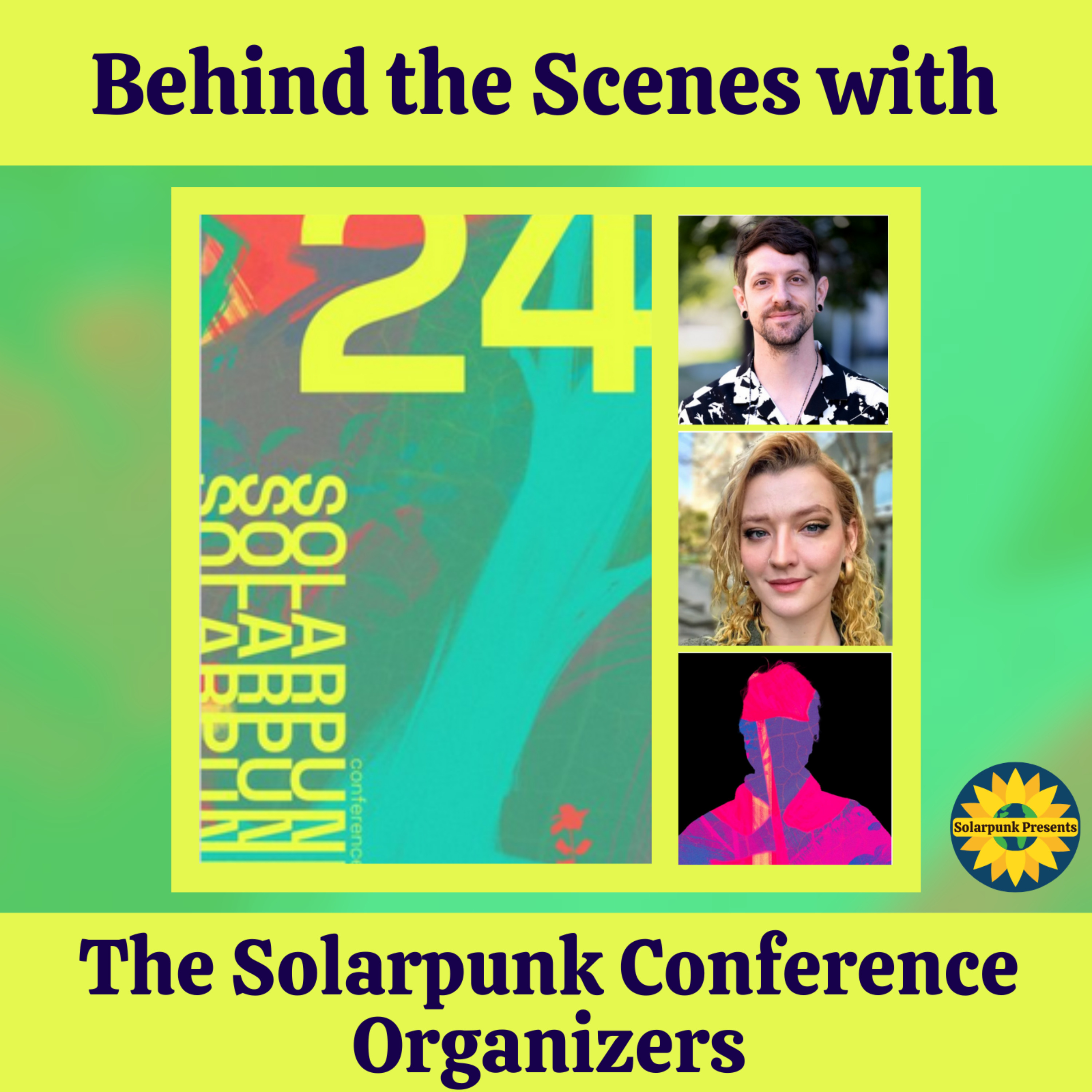
S5 Ep 4Behind the Scenes with the Solarpunk Conference Organizers
In 2023, the inaugural Solarpunk Conference was held in virtual space, bringing together over 150 attendees, 18 presenters, and creating a palpable sense of the solarpunk community. This episode, Ariel chats with conference organizers Charles Valsechi, Lindsay Jane, and Kees Schuller about the genesis of the conference, the inspiration for its theme, as well as a little preview of what they are hoping to see at the 2024 Solarpunk Conference: Rays of Resilience.You can go to https://www.solarpunkconference.com/ to check out The Solarpunk Conference, access The Solarpunk Conference Journal, and buy tickets. You can also check out the channel on YouTube for recordings of last year’s presentations, and stop by Lindsay Jane's channel @TheSolarpunkScene for more solarpunky content!Support Solarpunk Presents on Patreon or make a one-time donation via PayPal. Hosted on Acast. See acast.com/privacy for more information.

S5 Ep 3Solarpunk, Lunarpunk, Crypto, & Web3
In Season 5 Episode 3 of Solarpunk Presents, Christina chats with transdisciplinary technologist Stephen Reid about relationship solarpunk and lunarpunk have to crypto and web3. If lunarpunk is what solarpunk gets up to in the shadows of a moonlit night, that suggests that lunarpunk is inherently more interested in privacy, security, and anonymity, especially from the watchful eye of the state. That would further mean that where solarpunk is interested in renewable energy, sustainability, appropriate technology, and social justice, lunarpunk is interested in the tools, like cryptography, cryptocurrencies, and web3, that safeguard our privacy and anonymity and potentially protect us from tyranny. Do we need lunarpunk’s fixation with using tech to protect our privacy to counterbalance solarpunk’s sunny optimism that everything will all be fine to break through to a better world? To learn more about Stephen, his philosophies, and his work, check out https://stephenreid.net/Disclaimer: Neither Christina, Ariel, nor the Solarpunk Presents podcast agree with nor support the use of cryptocurrencies or web3. For sound critiques of these technologies, check out the videos The Line Goes Up - The Problem With NFTs and Web3.0: A Libertarian Dystopia and the website https://www.web3isgoinggreat.com/. Hosted on Acast. See acast.com/privacy for more information.

S5 Ep 2Podcasting Dreams of the Solacene
In this podcast, host Ariel has a chat with Aaron and Alicia, the team behind Solacene podcast in Montreal, Canada. They talk about the meaning of “Solacene”, their goals, the semester-structure of their show, zines, community, upcycled clothing, embodied reality, environmental positivity, and a sneak peek at what is next for Solacene in the future… just to name a few topics. Tune in on your favourite podcatcher or streaming service today!Links:Solacene YouTube: https://youtube.com/@solacene?si=iyP9ae71VypNQ-SZWebsite: https://solacene.bigcartel.com/Support Solarpunk Presents on Patreon or make a one-time donation via PayPal. Hosted on Acast. See acast.com/privacy for more information.
S5 Ep 1Let's Talk Tech, Solarpunks! With Ariel & Christina
If tech wasn’t such a central aspect of solarpunk, we’d all just be hippies redux. Yet not all tech, right? Because solarpunk is also about living the good life while building a just, inclusive, and sustainable society. So, what is solarpunk’s attitude toward and relationship with tech? How do solarpunks decide what’s worth it and what’s beyond the pale? And what’s all this about appropriate technology?Support Solarpunk Presents on Patreon or make a one-time donation via PayPal. Hosted on Acast. See acast.com/privacy for more information.
S4 Ep 10What Does the Punk in Solarpunk Even Mean? Ariel & Christina Discuss
Why is solarpunk called solarPUNK? What is so punk about it, and does it have anything to do with the original meaning of punk… or cyberpunk, or steampunk, or any -punk for that matter? In this episode, Christina and Ariel dive into the thorny question of what exactly it is that they are talking about when they say “solarpunk” … because as it turns out, they both have very different points of reference. Neither Christina’s Gen-Xer ideas of the ‘80s punk-rocker or Ariel’s Millennial idea of the Hot Topic pop-punk fit in with solarpunk… or do they? Tune in to find out more!Links:A Solarpunk ManifestoSupport Solarpunk Presents on Patreon or make a one-time donation via PayPal. Hosted on Acast. See acast.com/privacy for more information.
S4 Ep 9The Fantasies of Post-apocalyptic Dystopian Fiction, with Ariel Kroon
Classic, post-apocalyptic, dystopian fiction is a type of fantasy where we’re dreaming of starting over in an empty landscape from a societal and cultural slate wiped clean by some devastating event that we don’t have to feel guilty about having happened—at least, it is according to our very own Ariel Kroon, who does, yes, have a PhD in it.* Yet, at the same time, these fantasies generally suffer from a strange lack of imagination, wherein the characters use the “fresh new start” to recreate the same old society, albeit with themselves at the top, with the same old systemic socioeconomic, environmental, and structural problems. It’s almost as if it is easy to dream up apocalypse but next to impossible to envision a different way of living. Although a failure of imagination would most likely look different for solarpunk, can solarpunk creators and dreamers of a positive future avoid falling into the same sort of trap?*Post-apocalyptic Canadian science-fiction 1948-1989, she wants to clarify. She’s even got the thesis to prove it.Support Solarpunk Presents on Patreon or make a one-time donation via PayPal. Hosted on Acast. See acast.com/privacy for more information.

S4 Ep 8Easing the Housing Crisis By Saying Yes, in My Backyard
You’ve heard of NIMBYs and NIMBYism, and you probably are living with the consequences of neighbourhood planning or city policies influenced by landowners who say “Not in My Backyard” to new developments planned in their area. But what about YIMBYs? The name might be strange, but the homeowners who make up these groups say “Yes In My Backyard” to normalize the goals of affordable housing advocates, transit planning, tenants’ rights organizations and others who are working towards making the city a more liveable place to be for everyone. Today on the podcast, Ariel talks to Melissa Bowman, cofounder of the group Waterloo Region Yes In My Backyard (WRYIMBY) about what a YIMBY group is, what some actions are that it might take, the issues that it might address, and how to start up a YIMBY group in your area, if there’s not one already!Support Solarpunk Presents on Patreon or make a one-time donation via PayPal. Hosted on Acast. See acast.com/privacy for more information.
S4 Ep 7Creating Community While Regenerating Soil, with Nick Schwanz of Solarpunk Farms
Taking action on their solarpunk dreams, Nick Schwanz and Spencer Scott bought a degraded agricultural plot and have been turning it into a food forest, an explosion of flowers, and a demonstration of regenerative farming that brings the local community together and creates a network of prosperity and opportunities for other farmers, creatives, and makers. Join us as we talk soils, how their project is going, and what they mean by their intention to queer the agricultural endeavor.For all the fun and their latest news, follow Solarpunk Farms on their Instagram @solarpunkfarms.Support Solarpunk Presents on Patreon or make a one-time donation via PayPal. Hosted on Acast. See acast.com/privacy for more information.
S4 Ep 6On Solarpunk Spirituality (& Humanity's Intangible Squishy Bits) with Navarre Bartz
Today Ariel sits down with Navarre Bartz to talk about solarpunk spirituality. Solarpunk’s emphasis on respecting and valuing human and non-human life includes the totality of a being’s existence, and that includes the “squishy bits” of the experience that we can’t quite quantify. Navarre recently hosted a series of guest posts on his blog, Solarpunk Station, all about the spiritual angle of solarpunk, and what a solarpunk style of spirituality might look like.Read more:Solarpunk Station Episode 1.1 “Must Solarpunk Should?”artisans.coop Etsy alternative!Support Solarpunk Presents on Patreon or make a one-time donation via PayPal. Hosted on Acast. See acast.com/privacy for more information.
S4 Ep 5Scientists Tell Stories Too (and That's a Good Thing), with Prof. Jenni Barclay
In this episode, Prof. Jenni Barclay explains the importance of storytelling by scientists to themselves, other scientists, and the general public. Has that got you thinking, hey, wait, WHAT?! Everyone knows that scientists should never tell stories! If we expect them to show up like Back off man, I’m a scientist! and guide us through difficulties, then they’d best stick strictly and dryly to the facts, because everyone knows that scientists should never tell stories, right? But scientists even need to tell stories to themselves and to each other to more effectively process the information contained in their data, observations, and experiences. Human beings are not computers: we need stories to grasp the meanings of things, and that also goes for scientific facts. This means scientists need to be storytellers, too, if they want people to understand not just what the facts are, but what they mean for society and the world at large. Then people would better be able to see what our options are for responding to environmental and technological developments and emergencies. Learn more about Jenni and her research on volcanoes and scientists here https://research-portal.uea.ac.uk/en/persons/jenni-barclay or follow her on social media at @volcanojenni on xitter and bluesky.Support Solarpunk Presents on Patreon at https://www.patreon.com/solarpunkpresents Hosted on Acast. See acast.com/privacy for more information.
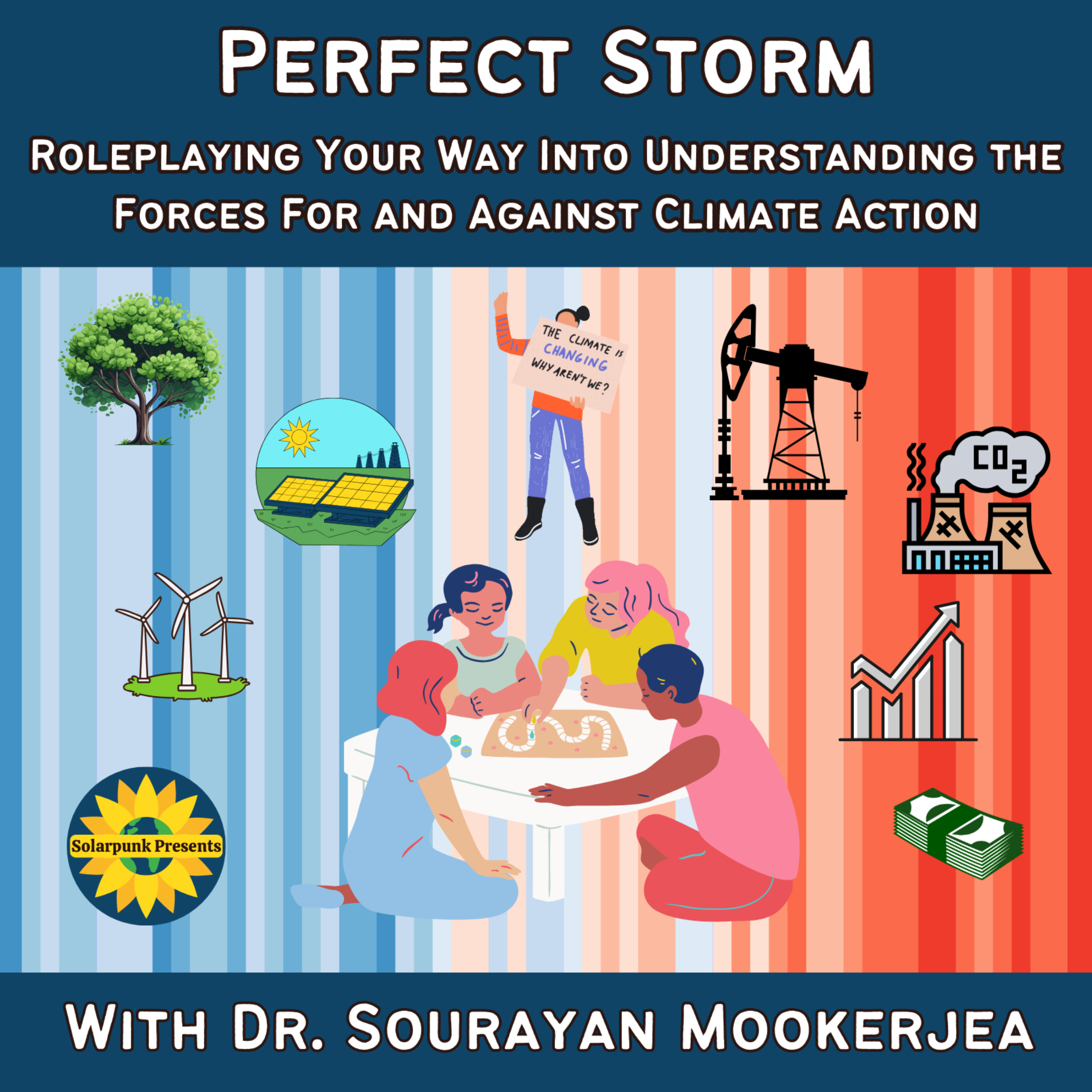
S4 Ep 4Perfect Storm: Roleplaying Your Way Into Understanding the Forces For and Against Climate Action, With Dr. Sourayan Mookerjea
On today’s episode, we’re talking about board games! Ariel interviews Dr Sourayan Mookerjea, Professor of sociology at University of Alberta, about the game “Perfect Storm”, which he uses in his classes and beyond to teach players about the complexities of a sustainable energy transition in the province of Alberta, and Canada more widely. We talk about the different meanings of “energy”, green capitalism, degrowth, decommodifying housing, and more!Links:Dr Mookerjea’s profile at U of A“Perfect Storm” description via Just Powers Hosted on Acast. See acast.com/privacy for more information.
S4 Ep 3The Radical Democratizing Power of a Better Way to Make Things, With Sarah Hutton
Have the inhumanity and environmental destructiveness of global supply chains got you down? What about the rapaciousness of multinational corporations who have twisted globalization into a nightmare for so many people on Earth? Here’s one thing you can do about it: you can support the growing movement known as distributed production. In Episode 3 of Season 4, researcher Sarah Hutton of the Internet of Production Alliance explains what distributed production is, why it’s all about people power, and exactly why it is a completely radical and powerfully democratizing activity that is also better for local jobs, local communities, and the environment. Join the Internet of Production Alliance’s Community Forum at https://community.internetofproduction.org/Support Solarpunk Presents on Patreon or make a one-time donation via PayPal. Hosted on Acast. See acast.com/privacy for more information.
S4 Ep 2Solarpunk Considers Cohousing, With Hermina Joldersma
In this episode, Ariel talks to Hermina Joldersma, professor emerita at University of Calgary, about alternative housing arrangements, focusing on co-housing. They discuss not only Hermina’s experiences living in different types of housing, but the mindset necessary to co-housing and communal life, and the way that community often has to be intentionally created. Tune in now!Links:Hermina Joldersma’s profile page at University of CalgaryHermina Joldersma at Fibre Art NetworkUrban Green CohousingCBC article on Urban Green and co-housing in CanadaCoHo BC official websiteSupport Solarpunk Presents on Patreon or make a one-time donation via PayPal. Hosted on Acast. See acast.com/privacy for more information.
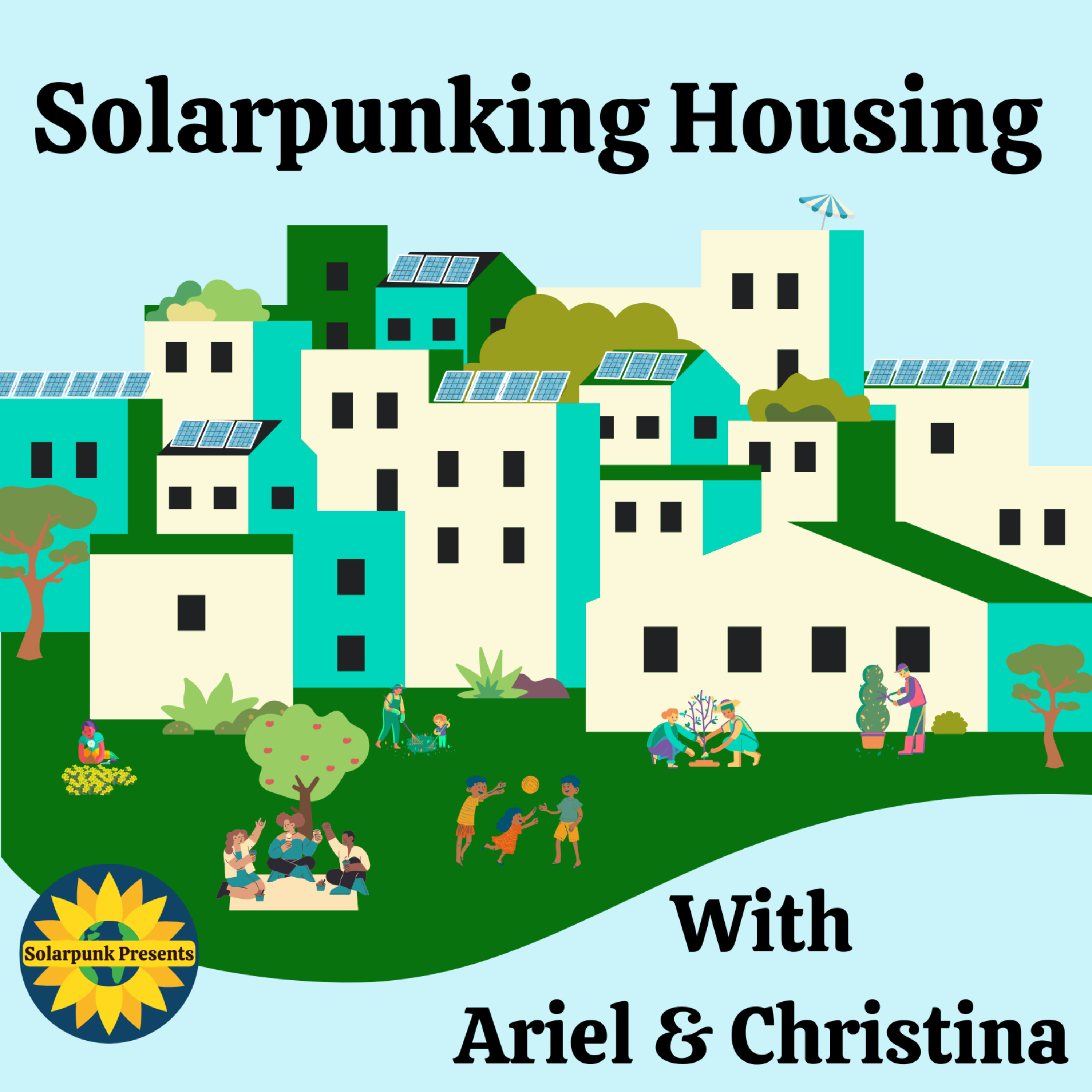
S4 Ep 1Solarpunking Housing, With Ariel & Christina
In this kick-off of Season 4, Ariel and Christina tackle the topic of housing. It is one of the central imaginings of solarpunk, after all. And it’s something we’re not doing very well in the present. How could solarpunk expand its dreams of housing beyond the aesthetic and into the realm of the practical? Can solarpunk envision not just greenery and solar-panel-draped dwellings, but housing that would meet people’s needs, not just for shelter, but comfort, mental health, emotional and physical support, ease of access, friendship and community, and culture, while also being affordable to everyone, energy efficient, and not contributing to urban sprawl? It seems like a tall order, but we want to make it a present reality. Tune in as we discuss! Hosted on Acast. See acast.com/privacy for more information.
S3 Ep 10How to Change Cultural Norms: Ariel and Christina Discuss
Solarpunk’s envisioning of a future that we’d like to live in isn’t just about providing a vision for us to aim for, it’s also about changing cultural norms in the present so that we can actually get to that future. Solarpunk storytelling is in no small part about normalizing the things we want to support and develop, such as sustainability, wild and productive gardens, social justice, and cohesive, supportive communities. On the flip side, solarpunk strives to make taboo or erase completely the attitudes and entire industries that are anti-human and anti-planet; we’re thinking about racism, homophobia, transphobia, sexism, misogyny, fossil fuels, petrochemical pesticides, overly industrialized agriculture, etc. But, aside from storytelling, how do we change the norms of the cultures that we’re living in at all, much less to be more in line with a solarpunk ethos? Is there a secret sauce that works every time? And if we knew the answer, would we be even having this conversation in the first place? Tune in as we discuss.Links:Flying pumpkin wear your seatbelt adArticle on Swiss behaviour changes due to Fridays for Future Hosted on Acast. See acast.com/privacy for more information.
S3 Ep 9Bri Castagnozzi of Solarpunk Magazine on Solarpunk, Art, and AI
In this episode, Brianna Castagnozzi, one of the editors-in-chief of Solarpunk Magazine, is here to give up the solarpunk artist’s eye view on solarpunk art and AI; a very different take than the solarpunk hacker’s view given to us by John Threat in season three episode seven. As much as I (Christina) was convinced by John’s advice not to stick your head in the sand but to master the tools of your capitalist overlords, Bri has equally compelling points about not joining into an activity that exploits the work of artists without their consent and without compensating them.Join us!You can follow Bri and her art at @mosshawkarts on xitter and Tumblr and at @mosshawk_arts at YouTube and Instagram. Hosted on Acast. See acast.com/privacy for more information.
S3 Ep 8Protecting the Environment With GIS: Mapping WWII's Sunken Ships with Paul Heersink
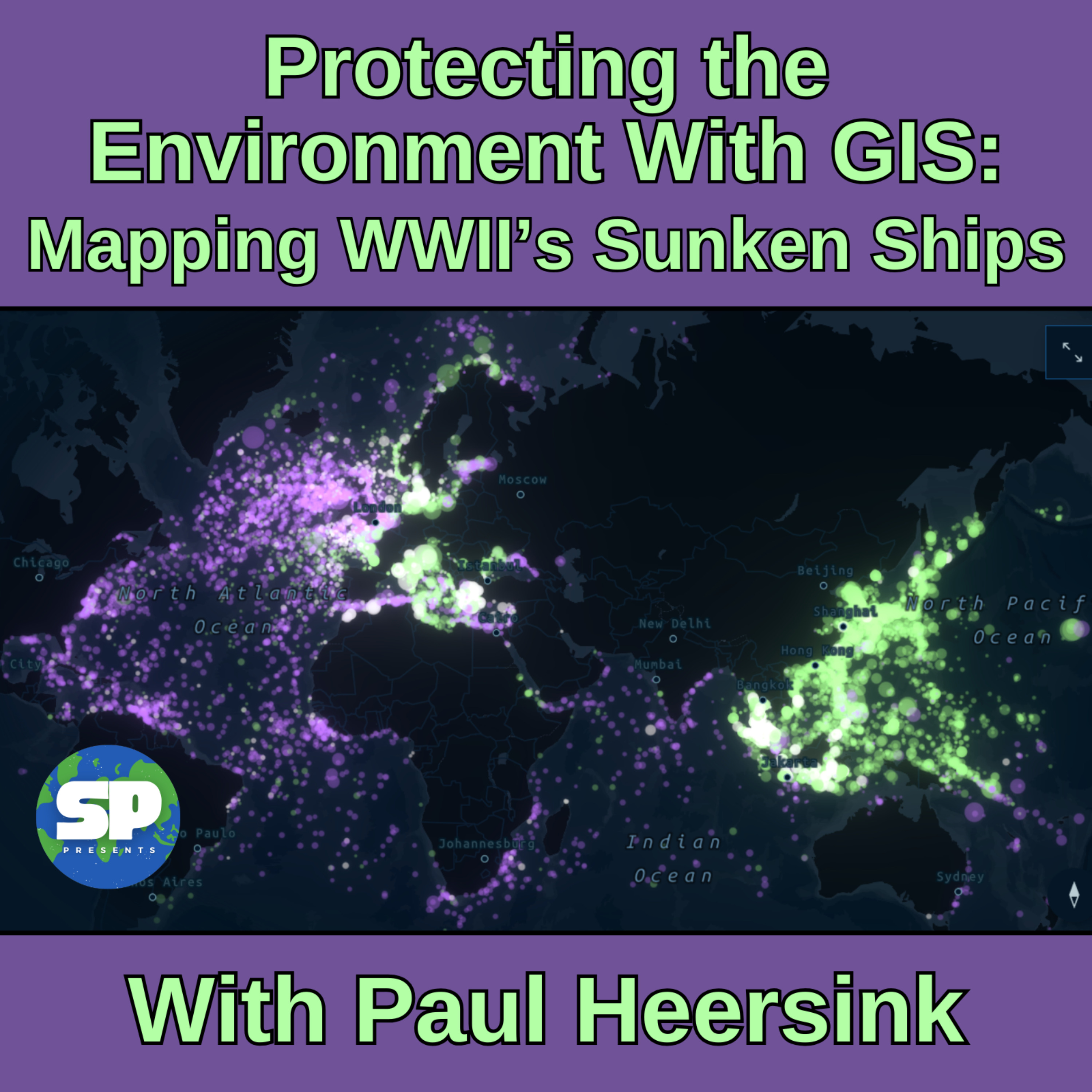
This week, Ariel chats with Paul Heersink, cartographer and Program Manager for the Roads and Addresses program at ESRI Canada. Formerly, he was Production Manager of the Community Maps Program: an initiative that is aiming to build a seamless topographic basemap of Canada using contributor data, and the Roads and Addresses program aims to do the same with community-sourced data, building a navigable map of Canada with the most up-to-date information provided by those who know it best.Paul also personally maintains and updates a map of the sunken battleships (and other naval vessels) that were downed during World War Two. Paul’s map combines two of his interests - cartography and WWII history and, though it started as a passion project outside of work, Paul has been approached by numerous organizations since publishing his data that are very interested in using it to support salvaging and reclamation efforts. The ships have been called “ticking ecological time bombs” as they are carrying crude oil, munitions, and other toxic materials that can leach into the water around them as the hulls degrade. That said, some also contain traditional treasure! Join us for a discussion about the details.Links:Paul’s official ESRI bio page.The ESRI Community Map of CanadaResurfacing the Past article on Paul’s work from ESRISunken Ships of the Second World War (interactive map)YouTube video of the animated mapNews and other articles featuring Paul’s work.Uboat.net - The site that kicked off Paul’s curiosityDocumentary on this topic Hosted on Acast. See acast.com/privacy for more information.
S3 Ep 7Come Play in Solarpunk’s Future Garden, With John Threat
Between September 15 to 24, 2023, you can go be a part of renowned hacktivist, writer/director, and creative futurist John Threat’s Zukunft Garden—a solarpunk future garden—that’s part of Vision2030’s Earth Edition festival at CalArts, in Santa Clarita, near Los Angeles. Join us for this episode, where John talks to Christina about this social art installation, what it means and can signify for participants, and the inspiration behind it. They discuss John's background as a hacker, an activist, a cyberpunk and, most recently, a solarpunk dedicated to thinking outside of the systems of this world.Stay tuned also for what John has to say about what solarpunk can do with AI art and why we should be engaging with AI technology, rather than ignoring it outright - as John points out, corporations will still be using AI, and it's incumbent on solarpunks to know thy enemy ... or at least, to be able to know enough about new technologies to decide whether or not to use them as tools for community support and envisioning better futures, rather than taking advantage of others.Useful links:Zukunft Garden official siteEarth Edition Festival official siteVisions 2030 official site"What Is Solarpunk?" YouTube video by AndrewismThe Solarpunk Conference official site Hosted on Acast. See acast.com/privacy for more information.
S3 Ep 6Propaganda and Petroturfing with Dr Jordan Kinder
What is petroturfing? What is an energy imaginary? If, as Thomas King says, we are all stories, how can we make sense of which stories are leading us to an understanding of things as they are, rather than misrepresenting reality or persuading us to take a biased view? And what can we do when we learn to critically interpret the world around us? What are some concrete actions we can take as regular folks if we decide that we want to push back against this narrative of “ethical oil” and intervene in the reactionary oil culture war?Dr Jordan Kinder has spent the last decade of his life thinking about these questions, specifically in the context of the Canadian oil industry and Alberta. The result? His new book Petroturfing: Refining Canadian Oil, which covers these topics and more, forthcoming from University of Minnesota Press in spring 2024. Join Ariel and Jordan to learn about the many competing narratives about (and even by!) Canadian oil and gas—including but not limited to being labelled dirty oil, ethical oil, one of the world’s leading polluters, an underdog industry under attack, a Canadian success story, the ball and chain around Canada’s neck as it tries to avert climate catastrophe, and the list goes on…References:Just Powers Petrocultures Research GroupSolaritiesEnergy HumanitiesKinder, Jordan “Mystifying Oil Today” for HeliotropeKinder, Jordan “Tailings, Unconventional: Sedimented Horizons for More Equitable Energy Futures” for Against CatastropheSocials:Connect with Jordan at jbkinder.github.ioConnect with Solarpunk Presents Podcast on Twitter, Mastodon, or at solarpunkpresents.com.Support the show on Patreon or make a one-time donation via PayPal. Hosted on Acast. See acast.com/privacy for more information.
S3 Ep 5Birdwatching as a Gateway to Environmental Activism: A Conversation With Prof. Cin-Ty Lee
Birdwatchers. They’re both easy to envy (They know so much!) and laugh at (What nerds!). Yet birdwatching is one of the easiest and cheapest ways to connect with nature. Yes, as we discuss with Cin-Ty Lee, professor of geology at Rice University in Texas and author of the Field Guide to North American Flycatchers: Empidonax and Pewees, you could go buy all the books and gear and then book trips all over the world to start checking off boxes on your life list. Or you could just sit and watch out the window at whatever birds are out there where you live. All birds are interesting! And, as Christina and Prof. Lee discuss in this episode, watching them is habit-forming in a way that makes people of all political stripes want to start protecting their habitats. This doesn’t need to mean lying down in front of tractors. Instead, it could mean working to improve small patches of nature within cities and in your own backyard to make them better for birds and the plants and insects the birds need to thrive. Before you know it, you’ll be heading up neighborhood or citywide initiatives to better the spaces around you for the sake of the birds. Socials:You can find Cin-Ty Lee at @CinTyLeeEarth on Twitter, at @cintylee on Instagram, and at http://www.cintylee.org/. Or check out his YouTube channel: https://www.youtube.com/c/cintylee.Connect with Solarpunk Presents Podcast on Twitter, Mastodon, or at our blog.Support the show on Patreon or make a one-time donation via PayPal. Hosted on Acast. See acast.com/privacy for more information.
S3 Ep 4Capitalism, Community, and Friendship with Joey Ayoub
Why is it easier to imagine a zombie apocalypse than it is a generative, sustainable future? This question drives Joey Ayoub, host of The Fire These Times: in fact, this season of his pod is partially about solarpunk and generative futures. Tune in today to listen to Ariel and Joey discussing imaginative expansion of solarpunk, the “realist” impulse, climate anxiety and grief, and community building in a crisis. Also The Office. Trust us, it’s an important part of this whole conversation. In this episode, Ariel speaks with Joey Ayoub, host of The Fire These Times podcast and someone who’s been focusing his podcasting and thinking on solarpunk quite a bit in the last while. Joey is a Lebanese writer, researcher, scholar, editor and podcaster currently based in Switzerland since 2020. He is a research associate at the Center for Social Sciences Research and Action and a member of Sustainability Transitions Research Network (STRN), and Degrowth Switzerland, to name just a few organizations he is involved with, and he has been published in more places than I can list here. Join us for this thought-provoking and entertaining conversation.Links/References:SP episode 2.3 on Beirut and the history of Lebanon with JD Harlock SP episode 1.4 on climate grief and chaplaincy with Gabrielle Gelderman Capitalist Realism by Mark Fisher A Paradise Built in Hell by Rebecca Solnit Socials:Check out The Fire These Times website, as well as Joey’s personal site, and connect with him on Twitter, Instagram, and Mastodon.Connect with Solarpunk Presents Podcast on Twitter, Mastodon, or at our blog.Support the show on Patreon or make a one-time donation via PayPal. Hosted on Acast. See acast.com/privacy for more information.
S3 Ep 3Carbon Capture and Storage with Prof Mike Bickle
Conquering climate change for our survival and that of much of the rest of the biosphere calls for more than attaining net zero emissions of greenhouse gasses to the atmosphere. We also need to actively remove much of the 140 extra parts per million of carbon dioxide currently up there in the atmosphere thanks to our burning of fossil fuels and destruction of so much of Earth’s biosphere. Both attaining net zero and going beyond it will take carbon capture and storage. This means capturing carbon dioxide from power plants and other point sources and from our agricultural activities before it gets into the atmosphere, as well as capturing carbon dioxide already in the atmosphere. Then, we need to store that carbon somewhere safely away from the atmosphere for at least a few thousand years. Join us for this episode of Solarpunk Presents, in which Christina talks to Dr. Mike Bickle, professor emeritus at the Earth Sciences Department at the University of Cambridge. We’ll be discussing what methods for carbon capture and storage are the most promising (and the most likely for us to engage in), what some of the dangers are, what it would take to deploy carbon capture and storage at the scale required, and how long it might take us to bring an end to the global warming we’ve created.Links:Overview of carbon capture and storage from the International Energy AgencyEuropean legal framework for carbon capture and storageFact sheet for the Sleipner gas field carbon capture and storage project (last updated 2016)Scientific paper on 20 years of carbon storage in the Sleipner gas field. The effects of a carbon dioxide pipeline leak in MississippiA moving, informative article on the Lake Nyos disasterSupport the show on Patreon or make a one-time donation via PayPal. Hosted on Acast. See acast.com/privacy for more information.
S3 Ep 2Thinking About How We Think About Animals with Dr Chloë Taylor
Today’s episode is all about animal ethics—or do we mean critical animal studies? Ariel discusses this linguistic nuance and the difference between them (and much, much more!) with Dr Chloë Taylor, professor of women and gender studies at the University of Alberta. Dr Taylor has been involved in a five-year-long project researching the “Intersections of Animality” and is a trained philosopher who works in gender studies, and sees a lot of intersections between the way that we think about and treat animals and the way that we think about and treat minoritized subjects. Come join us for a thought-provoking and highly educational discussion!LinksDr Chloë Taylor’s profile at University of Alberta Peter Singer and Tom ReganNorth American Association for Critical Animal StudiesWhere Disability Rights and Animal Rights Meet: A Conversation with Sunaura TaylorMaking Kin: An Interview with Donna Haraway Auroch de-extinction and rewildingConnect with Solarpunk Presents Podcast on Twitter, Mastodon, or at our blog.Connect with Ariel at her blog, on Twitter at @arielletje, and on Mastodon.Connect with Christina at her blog, on Twitter, and on Mastodon Support the show on Patreon or make a one-time donation via PayPal. Hosted on Acast. See acast.com/privacy for more information.
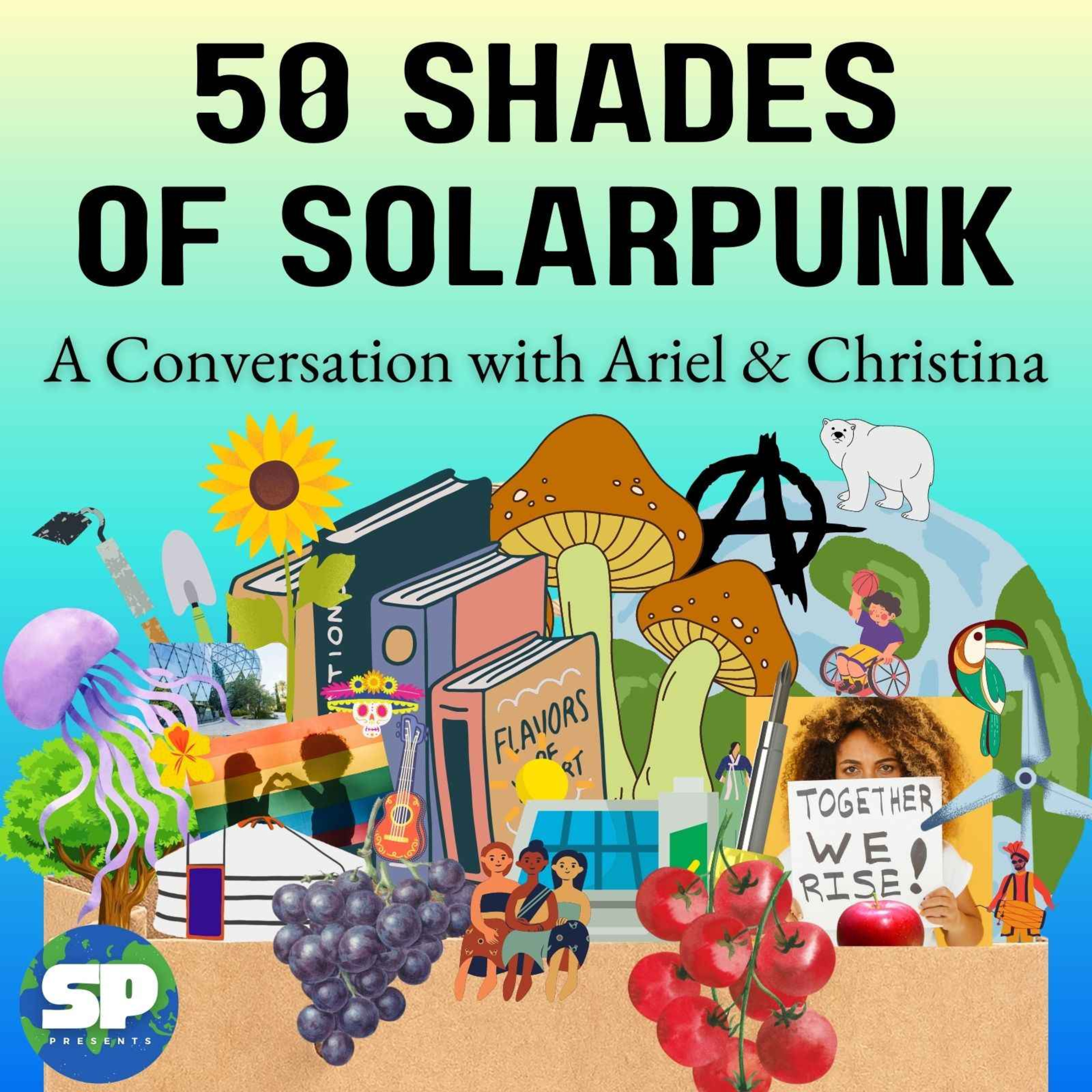
S3 Ep 150 Shades of Solarpunk
Ariel and Christina open Season 3 with a chat about what solarpunk, or, at least this solarpunk podcast, is setting out to achieve… according to how Ariel sees it. With her occasionally curmudgeonly devil’s advocacy, Christina provides the nuance we need as we push through topics, including the definition of solarpunk in a time of slippery postmodern language (that, in true solarpunk fashion, changes according to cultural context and locale), the Anthropocene and its multiple issues, mix-tape metaphors, Ursula K LeGuin’s Carrier Bag Theory of Fiction, aesthetics (of course), infrastructure as resistance, and a liiiiittle bit of academic theory. Join us!LinksAlmanac for the Anthropocene "Solarpunk: A Container for More Fertile Futures" by Jay Springett in Solarpunk Magazine Listen to Season 1 here!Listen to Season 2 here!The Solarpunk Presents Pinterest has examples of solarpunk aesthetics we dig.Cruising Utopia by José Esteban MuñozPosthuman feminism definitionPostmodern linguistics / language plus a more philosophical definition of postmodernismConnect with Solarpunk Presents Podcast on Twitter, Mastodon, or at our blog.Connect with Ariel at her blog, on Twitter at @arielletje, and on Mastodon.Connect with Christina at her blog, on Twitter, and on Mastodon Support the show on Patreon or make a one-time donation via PayPal. Hosted on Acast. See acast.com/privacy for more information.
S2 Ep 10Ecofascism and Rewilding: A Conversation With Ariel Kroon and Christina De La Rocha
There’s no question that the biosphere is in crisis right now thanks to human-driven global warming, our hostile takeover of most of Earth’s land area, and our pollution and overfishing of the seas. Slowing down—never mind outright stopping—the collapse of the Earth’s ecosystems and the mass extinction currently gaining pace calls for aggressively protecting the environment, or possibly even giving half of the Earth’s land surface back to nature in a process known as rewilding. But how will we manage to share the Earth with the rest of the biosphere when history shows that we’re pretty terrible at sharing it with each other, with some states even going so far as to have used the preservation of wilderness as a tool of genocide and white supremacy? There are still those who would use environmental protection as an excuse to block immigrants, reject refugees, and expel “undesirable” people from the land. What will it take to value human and non-human life and the land all equally, without using one as an excuse to persecute the other?Getting urgently-needed environmental protection and rewilding right requires facing the evils that have been historically committed in the name of conservation, so that we don’t repeat those grave mistakes, even with the best of intentions. As solarpunks, we need to learn from the past in order to shape futures that are intentionally better than our pasts and presents.And that’s a wrap for season 2! Season 3 will be coming along in the last week of June for Patreon supporters, and to the public in the first week of July. Until then, keep dreaming, and keep up the good work!LinksReframing Narratives with Ecocriticism, with Dr Jenny Kerber Against the Ecofascist Creep webzine teaching resource and explainerRead about the 100-Mile Diet book and phenomenon on WikipediaRead about the locavore movement on WikipediaA great article on philosophical questions with The Sneetches from the Prindle Institute for EthicsSome articles on food forestsThe Half-Earth Project Hosted on Acast. See acast.com/privacy for more information.
S2 Ep 9Reframing Narratives With Ecocriticism, With Dr Jenny Kerber
In this episode, Ariel discusses the topic of ecocriticism with Dr Jenny Kerber, Associate Professor of English at Wilfrid Laurier University.What is ecocriticism? Why is it important, especially for environmental activists and solarpunks, as a narrative reframing device? Solarpunks work very closely with speculation and imagination and as architects of the narratives by which we live our lives, it helps to have tools like ecocriticism at our disposal. Join Ariel and Dr. Kerber to think through terms like “wilderness” and “nature” and “the Anthropocene”. How do we hold on to hope, despite critical engagement with the dark side of our environmental narratives? References:● A bit more about the WLU Land Acknowledgement● Dr Kerber’s profile at Wilfrid Laurier U● “The Trouble with Wilderness” by William Cronon● Elizabeth May● Kerber, Jenny. "Tracing One Warm Line: Climate Stories and Silences in Northwest Passage Tourism." Journal of Canadian Studies 55.4 (July 2022): 271-303.● Timothy Clark, The Cambridge Introduction to Literature and the Environment● Kate Soper, What is Nature? Culture, Politics and the Non-Human ● David Huebert's Chemical Valley ● Lord Byron's "Darkness"● Don McKay, Vis à Vis: Field Notes on Poetry and Wilderness ● Amitav Ghosh, The Great Derangement: Climate Change and the Unthinkable● Nicole Seymour, Bad Environmentalism: Irony and Irreverence in the Ecological Age● Phoebe Wagner and Brontë Christopher Wieland, Almanac for the Anthropocene: A Compendium of Solarpunk Futures Hosted on Acast. See acast.com/privacy for more information.
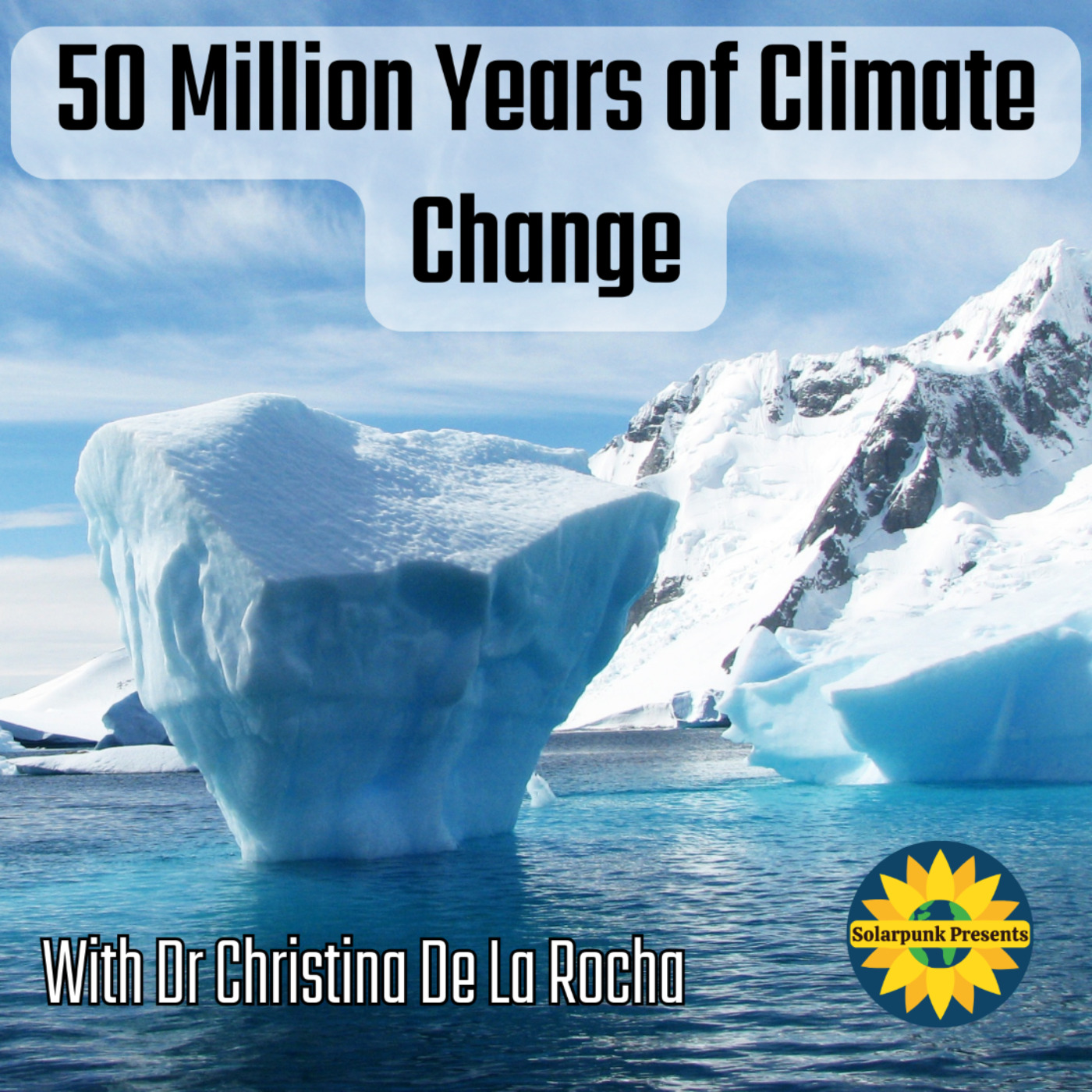
S2 Ep 850 Million Years of Climate Change with Dr Christina De La Rocha
Have you ever thought about how dinosaurs lived on a warm, swampy Earth and how we live on one that’s cold enough to keep pretty much the entirety of Greenland and Antarctica buried under kilometers-thick sheets of solid ice and wondered, hmm, how did we get from there to here? The short answer is that it took 50 million years of declining atmospheric carbon dioxide concentrations and dropping temperatures, not to mention building an ice sheet or two. For the longer story of the last 50 million years of climate change, including some of the reasons why, catch this episode of our podcast with Dr De La Rocha! You’ll hear about plate tectonics and continental drift, silicate weathering, carbonate sedimentation, and the spectacular effects the growth of Earth’s ice sheets have had on Earth’s climate. There are also lessons here for where anthropogenic global warming is going and whether or not its effects have permanently disrupted the climate system. Fun fact: the total amount of climate change between 50 million years ago and now dwarfs what we’re driving by burning fossil fuels, and yet, what we’re doing is more terrifying, in that it’s unfolding millions of times faster. Bonus content: If you want to see sketches and plots of the data discussed in this episode, you can do so here!!!Nerd alert!! If you're interested in the primary scientific literature on the subject, these four papers are a great place to start.Dutkiewicz et al (2019) Sequestration and subduction of deep-sea carbonate in the global ocean since the Early Cretaceous. Geology 47:91-94.Müller et al (2022) Evolution of Earth’s plate tectonic conveyor belt. Nature 605:629–639.Rae et al (2021) Atmospheric CO2 over the last 66 million years from marine archives. Annual Review of Earth and Planetary Sciences 49:609-641.Westerfeld et al (2020) An astronomically dated record of Earth’s climate and its predictability over the last 66 million years. Science 369: 1383–1387.Connect with Christina at her blog and on Mastodon Support the show on Patreon or make a one-time donation via PayPal. Hosted on Acast. See acast.com/privacy for more information.
S2 Ep 7Science and Christianity: Is There a Conflict? With Norm Nelson
Although the battle lines have shifted down through the years from heliocentrism to evolution (and let’s not get started on the age of the Earth), it feels like there’s a fundamental conflict between science and religion, especially with respect to the Abrahamic religions like Christianity and Islam. I (Christina), the host of this podcast episode, as a scientist and atheist who tends to assume all scientists are atheists—because how could they not be?—am definitely guilty of thinking this.Yet, there is a long tradition of curiosity, inquiry, and, yes, science within the Abrahamic religions and no shortage of devout scientists working hard to this day to understand the workings of the world and cosmos. I decided that it was time to confront my assumptions by talking to one of my religious colleagues. Thank you in advance to Dr Norm Nelson—an oceanographer whose Christianity is a core part of his life—for discussing whether or not there is a conflict between science and Christianity, and where the roots of that conflict might lie.Don’t forget, dear listener, we need your support! So, recommend us to a friend and/or sign up for our Patreon or make a one-time donation via PayPal. Hosted on Acast. See acast.com/privacy for more information.

S2 Ep 6Gentle Gardening on Limited Spoons with Erin Alladin
Erin Alladin’s new e-book “Gentle Gardening: A Guide for Uncooperative Bodies” is transformative, specifically covering the issues of gardening with chronic fatigue and the other complex disabilities that can accompany it, and reframing gardening as an accessible and fun activity. Ariel talks to Erin in this episode about her journey with gardening to where she is now, the book, a bit about gardening on Turtle Island as a settler, and tackling the gardener’s mindset and impostor syndrome that may come with it. References:Native Land’s resource on what land acknowledgements are and why they are important, plus linked articles contextualizing and foregrounding Indigenous scholars’ and activists’ support and critiques of the practiceSpoon theoryNorth Bay and Parry SoundErin’s post on chronic pain and permaculture principles is an excellent companion to Gentle Gardening.You can visit Erin’s blog at EarthUndaunted.com to learn more, and check out GENTLE GARDENING: A GUIDE FOR UNCOOPERATIVE BODIES. You can connect with her at TikTok, Twitter, and Instagram @ErinAlladin.Connect with Solarpunk Presents Podcast on Twitter, Mastodon, or at our blog.Connect with Ariel at her blog, on Twitter at @arielletje, and on Mastodon.Connect with Christina at her blog, on Twitter, and on Mastodon Support the show on Patreon or make a one-time donation via PayPal. Hosted on Acast. See acast.com/privacy for more information.
S2 Ep 5Creating a Solarpunk Society in the Big City with Lindsay Jane
On today’s episode, Ariel talks to Lindsay Jane of The Solarpunk Scene, where she showcases her solarpunk life in Toronto, as well as shining a spotlight on solarpunk projects locally and internationally. Lindsay tells us about how she discovered solarpunk and the ways that she lives a solarpunk life in the city - both the upsides (gardens! architecture! effective transit!) and the downsides (sky-high rent, expensive food, difficulty cultivating outdoor gardens). She also emphasizes the importance of getting involved in your local community and politics as a city-dweller, and lets listeners in on the behind-the-scenes inspiration for The Solarpunk Scene: tune in to learn more!LinksToronto Beltline TrailHousing/Rental prices in TorontoCloud GardensEating Japanese KnotweedTurtle IslandSolarpunk Facebook GroupSocialsCheck out The Solarpunk Scene website, YouTube (+ stream channel!), plus Patreon, Facebook, Instagram, TikTok, and Twitch.Connect with Solarpunk Presents Podcast on Twitter, Mastodon, or at our blog.Support the show on Patreon or make a one-time donation via PayPal. Hosted on Acast. See acast.com/privacy for more information.
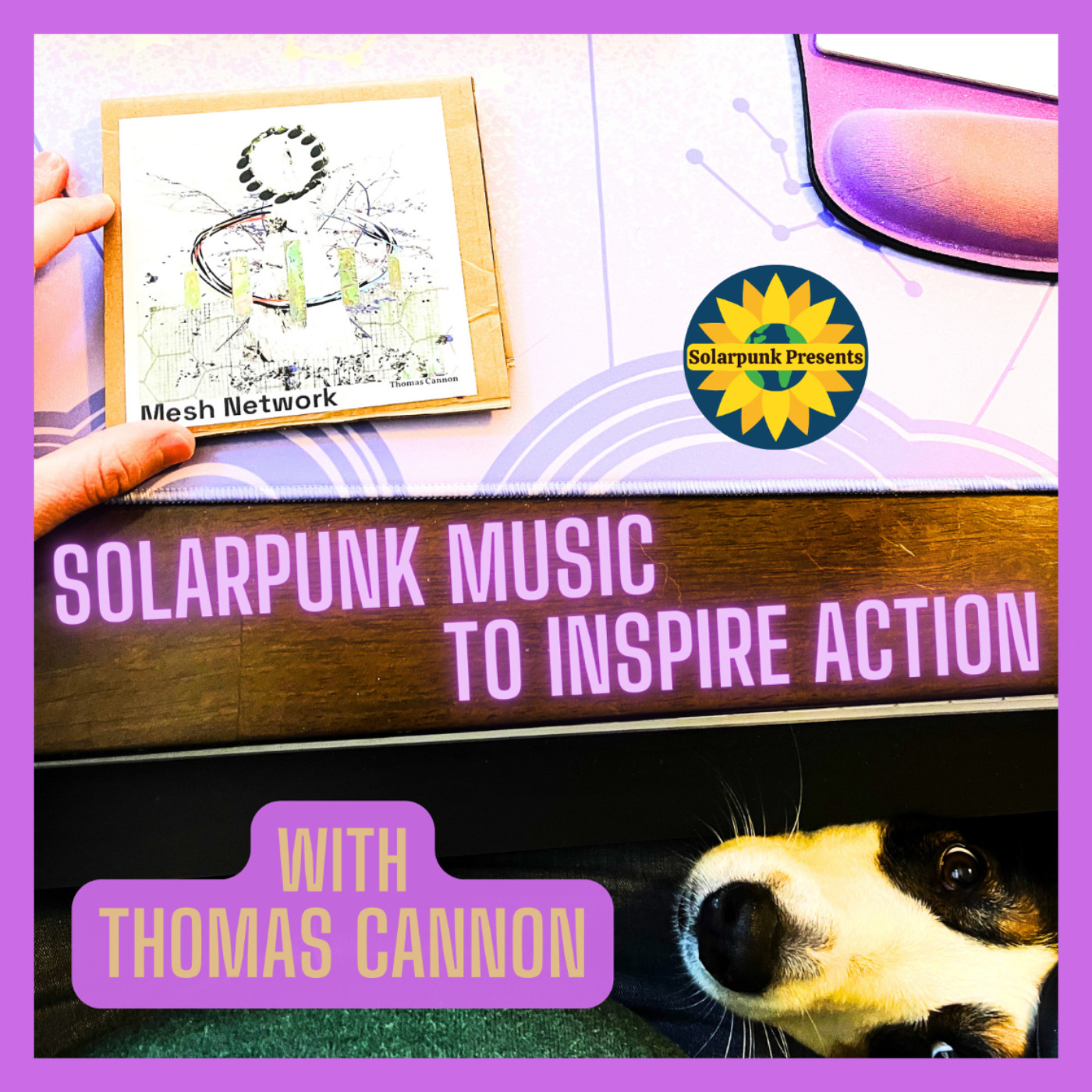
S2 Ep 4Solarpunk Music to Inspire Action with Thomas Cannon
On today’s episode, Ariel talks with Thomas Cannon about solarpunk music and his new album MESH NETWORK. What was the inspiration behind this work of solarpunk ambient music? What is solarpunk music, anyway, and how can it help us today to create the just, sustainable, and equitable future that we all want to live in? Join us for a discussion of the album tracks, artwork, instruments, the process of collaborative music-making, and more.References:AlexisNicole / @blackforager on Instagram’s post on culturally-specific consumption of meat and veganism:Food prices in Canadian north articles.Country food definition from the Canadian Encyclopedia.You can stream or buy MESH NETWORK at Bandcamp.com; bundled with the album purchase are the liner notes for each track as well as a beautiful art book.EXCLUSIVE: Solarpunk Presents podcast listeners can get 50% off at checkout with the code “solarpunkpresents”You can find and follow Thomas Cannon on his Bandcamp profile and at his personal website, thomascannon.meConnect with Solarpunk Presents Podcast on Twitter @SolarpunkP, Mastodon @[email protected], or at our blog https://solarpunkpresents.com/Connect with Ariel at her blog, on Twitter at @arielletje, and on Mastodon @[email protected] with Christina at her blog, on Twitter @xtinadlr, and on Mastodon @[email protected] the show on Patreon or make a one-time donation via PayPal. Hosted on Acast. See acast.com/privacy for more information.
S2 Ep 3Beirut: Finding Your Future in a Nearly Failed State, With JD Harlock
The situation in Lebanon today is bleak. Carved out of the remains of the Ottoman Empire and subjected to years of colonialism-lite administration by France, its economy and infrastructure have been devastated by a long civil war, overlapping occupations by Syria and Israel, and corruption on a massive scale. Since 2019, Lebanon has been in the midst of a severe financial crisis, with widespread unemployment and hyperinflation. Now 80% of the population is poor and Lebanon is on the brink of becoming a failed state.And yet, JD Harlock, Poetry Editor at Solarpunk Magazine, who lives in Beirut, believes in solarpunk. Join us for this episode to find out how that can be and what day to day life is like in Beirut right now.You can find JD on Twitter and Instagram at @JD_Harlock.#Lebanon #EconomicCrisis #SolarpunkConnect with Solarpunk Presents Podcast on Twitter @SolarpunkP, Mastodon @[email protected], or at our blog https://solarpunkpresents.com/Connect with Ariel at her blog, on Twitter at @arielletje, and on Mastodon @[email protected] with Christina at her blog, on Twitter @xtinadlr, and on Mastodon @[email protected] the show on Patreon or make a one-time donation via PayPal. Hosted on Acast. See acast.com/privacy for more information.
S2 Ep 2Libraries: A Community Endeavor, With Don Gardner
Is there anything more solarpunk than public libraries? Serving at the heart of communities, they’re a place where anyone regardless of income, ability, race, class, or gender can go to read books, listen to music, use the internet, learn things, hear story hour, get out of the weather for a while, and ask librarians for information on just about anything, including what organizations to turn to for additional support in your life or endeavor. In Episode 2 of Season 2 of Solarpunk Presents, Christina talks to Don Gardner, a librarian for many years for the Salinas Public Libraries in Monterey County, California. Hear about how people rescued the library after the city council tried to close it down to save money, about what libraries can do for you and your community, and about what you can do for your local library.Check out Salinas Public Libraries at https://salinaspubliclibrary.org/ and connect with them @salinaslibrary on Facebook, Twitter, and YouTube, or @salinaspubliclibrary on Instagram and TikTok.Connect with Solarpunk Presents Podcast on Mastodon @[email protected], or at our blog https://solarpunkpresents.com/Connect with Ariel at her blog and on Mastodon @[email protected] with Christina at her blog, on Twitter @xtinadlr, and on Mastodon @[email protected] the show on Patreon or make a one-time donation via PayPal. Hosted on Acast. See acast.com/privacy for more information.
S2 Ep 1Urban Versus Rural Solarpunk: Ariel & Christina Discuss
Does solarpunk dream utopic dreams of clean, just, green cities that are great places to live in vibrant communities with other people? Or is solarpunk about getting back to the land, having your own chickens, being self-sufficient, and helping out your neighbors? City dweller Ariel, who dreams of life in the countryside, and countryside dweller Christina, who sees the advantages of city life, consider the pros and cons of trying to live urban versus rural solarpunk lives.Here are links to some of the literature we discussed:https://www.williamcronon.net/writing/Trouble_with_Wilderness_Main.htmlhttps://archive.org/details/boston-hearth-project-by-tjwatson/mode/2up?view=theaterConnect with Solarpunk Presents Podcast on Twitter @SolarpunkP or Mastodon @[email protected] or solarpunkpresents.comConnect with Ariel at her blog, on Twitter at @arielletje, and on Mastodon @[email protected] with Christina at her blog, on Twitter @xtinadlr, and on Mastodon @[email protected] the show on Patreon or make a one-time donation via PayPal.Ariel's note: this is a constructed debate, and not necessarily reflective of the opinions of all solarpunks everywhere, but a debate that Christina and I see fairly often in solarpunk spaces, so we wanted to duke it out in a fun and engaging way to provoke thought. Hosted on Acast. See acast.com/privacy for more information.
S1 Ep 10Let's Talk Solstice, Solarpunks! -- with Ariel & Christina
In the finale of Solarpunk Presents' first-ever season, Ariel and Christina sit down to chat together about the Winter Solstice - Christina brings the scientific knowledge, Ariel brings a few book recommendations, and we discuss traditions of celebrating the return of the sun (as we've experienced them in the northern hemisphere). What are your favourite solstice traditions? Do you have recommendations of good solarpunk solstice stories to cozy up with? Hosted on Acast. See acast.com/privacy for more information.
S1 Ep 9Building Climate Resilience in the Western US, with Prof. Lisa Dilling
As the changing climate increasingly disrupts our ways of life, we have three choices: do nothing, attempt to stop or even reverse climate change, and/or figure out how to withstand it. Option one is a terrible idea and the ship has (mostly) sailed on option two. But option three is how we learn to live—and maybe even thrive—in our changing world. Part of this is figuring out how to convey the information that climate researchers have gathered to the people—like farmers, water managers, and urban planners—who need to make decisions now—about things like what crops to plant, where to get water for everyone and how to allocate it, and where to plant trees—for both the near and slightly distant future. In this episode, we’re talking to Professor Lisa Dilling, of the University of Colorado, Boulder, about building networks of people through which information about regional climate predictions can flow to people and information about the needs, predicaments, and questions of people can flow to climate researchers.You can follow Lisa Dilling on Twitter at @LisaD144, and the Western Water Assessment program at University of Colorado here: @WWAnews or visit their website at https://wwa.colorado.edu/ Hosted on Acast. See acast.com/privacy for more information.
S1 Ep 8Shining Bright in the Heart of Oil Country, With Heather MacKenzie of Solar Alberta
In today’s episode, Ariel chats with Heather MacKenzie, Executive Director of Solar Alberta, about transitioning to renewable energy deep in the heart of oil and gas country - in a just and sustainable way. Join us to learn about the history of the Solar Alberta organization, from its grassroots beginnings in neighbourhood solar projects, to dealing with (government-funded!) trolls online, all the way up to being the leading non-profit solar organization in Alberta and providing worker upskilling in a unique market.You can go to https://solaralberta.ca to learn more, or connect with and follow them on Instagram, Facebook, Twitter, and LinkedIn. Hosted on Acast. See acast.com/privacy for more information.
S1 Ep 7Bioluminescence: The Soft Glow of the Deep Sea, With Dr Steve Haddock
You don't have to be a solarpunk—or a lunarpunk—to dream of bioluminescence, from twinkling phytoplankton to glowing lamps, phosphorescent fungi, and jellyfish lit up like space ships. To honor those dreams, we talked to Dr. Steve Haddock, Senior Scientist at the Monterey Bay Aquarium Research Institute (MBARI) and leading expert on the things that glow, flash, and train headlights through the dark waters of the deep sea. Join us for this conversation about how bioluminescence works, what critters are capable of it and what they use it for, and whether or not our visions of bioluminescent street lamps stand a chance of coming true.You can also follow Steve Haddock on Twitter @beroe and learn more about bioluminescence at https://biolum.eemb.ucsb.edu/. Hosted on Acast. See acast.com/privacy for more information.
S1 Ep 6Talking About "Bioluminescent: A Lunarpunk Anthology", With Justine Norton-Kertson
On this episode, Ariel sits down with Justine Norton-Kertson, editor of the forthcoming BIOLUMINESCENT: A LUNARPUNK ANTHOLOGY. They discuss what lunarpunk is in contrast to solarpunk, what inspired Justine to put together an anthology of lunarpunk fiction, and a sneak peek at some of the participating authors and the content that fans can expect to encounter! Hosted on Acast. See acast.com/privacy for more information.

S1 Ep 5Defending Democracy Via Urban Planning, With Dr Jayde Lin Roberts
Solarpunk is all about vibrant, beautiful, livable cities filled with plants, public transportation, and solar panels—in other words, nothing like the congested, polluted, inhospitable messes we live in today. How do we start making the great transformation? Simply by starting. Join us for a conversation with Dr Jayde Lin Roberts about having a voice in the development (or redevelopment) of your neighborhood or city. Hosted on Acast. See acast.com/privacy for more information.
S1 Ep 4Coping With Climate Grief, With Chaplain Gabrielle Gelderman
In this episode of Solarpunk Presents, nonfiction co-editor Ariel Kroon sits down for a virtual chat with Gabrielle Gelderman, an Edmonton, Alberta-based climate grief chaplain and climate justice organizer. They talk about what climate grief chaplaincy even is, the necessity of holding communal safe spaces for grieving especially for organizers, the necessity of feeling grief in order to feel more positive emotions, and climate despair as a corollary of solarpunk hope.Links:Gabrielle's Instagram: @theclimatechaplainGabrielle’s LinkTree: https://linktr.ee/gabthechaplainClimate Justice Edmonton (CA)Faith Matters Network (US)Sunrise Youth Organization (US)*Note: During the interview, Ariel mentions episode 4.30 of Secret Feminist Agenda; the name of the theorist she cites is Eugenia Zuroski. Hosted on Acast. See acast.com/privacy for more information.
S1 Ep 3Climate Change and the Marshall Islands, With Dr Helene Jacot Des Combes
In this episode, Christina talks to Dr Hélène Jacot Des Combes, Disaster Risk Management and Climate Change Adaptation Advisor to the National Disaster Management Office of the Republic of the Marshall Islands. They discuss sea level rise, infrastructure that can adapt to climate change, and land reclamation and protection. Dr Des Combes speaks passionately about reparations (for decades of colonialism, the US’s testing of atomic weapons on the atolls of the Marshall Islands, forced relocation of the Marshallese people, climate injustice, and much more) and advocates for the Marshallese peoples’ right to their own lands. Hosted on Acast. See acast.com/privacy for more information.
S1 Ep 21.2: Interview With John Okhiulu From the Decolonizing Wealth Project
In this episode of Solarpunk Presents, Ariel sits down with John Okhiulu from the Decolonizing Wealth Project to talk about the role of philanthropy in addressing racial capitalism and reparations, and how the DWP is working to change the narrative around charitable giving and wealth-transfer. Also, John tells us about how he personally found himself in the world of philanthropy, as well as his vision of a solarpunk future.To learn more, visit decolonizingwealth.com, read about its founder Edgar Villanueva on his site, or follow the organization for updates on their Twitter @decolonizwealth.Download the full transcript here: https://www.patreon.com/posts/124123344 Hosted on Acast. See acast.com/privacy for more information.

S1 Ep 1Must Solarpunk Should?
In this soft-launch of Solarpunk Presents, the companion podcast to Solarpunk Futures, hosts and Solarpunk Magazine nonfiction editors Ariel Kroon and Christina De La Rocha tackle the question of “Must Solarpunk Should”? This is a dilemma that unconsciously or consciously comes through in a lot of the nonfiction submissions that we receive in our slush pile, and we have Thoughts about it. So many thoughts! Possibly controversial one! But one of the best things about solarpunk is the space that it gives us to explore and think through new paradigms, new systems thinking, new ideas – some of which maybe we don’t necessarily love, but that are part of our world regardless of whether we like it or not. We’re learning and growing with every new day as solarpunks - come join us!PS: The audio is bumpy in parts. Please excuse the technical hiccups. At the time, Christina had the world's worst internet connection, which made recording bi-continental discussions prone to glitches.Connect with Solarpunk Presents Podcast on Twitter, Mastodon, or at solarpunkpresents.com.Support the show on Patreon or make a one-time donation via PayPal. Hosted on Acast. See acast.com/privacy for more information.