
Solarpunk Presents
144 episodes — Page 2 of 3
Carbon Neutral Strike Update 19: Jan 2026
Carbon Neutral Strike Update 18: Dec 21 2025 to Jan 1 2026
Carbon Neutral Strike Update 17: Nov to Dec 19 2025
Special Episode: The Stellar Pollination Campaign 4/20 2026
Carbon Neutral Strike Update 16: Oct 10 to 31, 2025
Carbon Neutral Strike Update 15: Days 161 to Oct 10 2025
Carbon Neutral Strike Update 14: Days 131 to 160
The Stellar Lunarpunk 4/20 Live Action Roleplay (LARP)
Carbon Neutral Strike Update 13: Days 121 to 130
Carbon Neutral Strike Update 12: Days 111 to 120
Carbon Neutral Strike Update 11: Days 101 to 110
Carbon Neutral Strike Update 10: Days 91 to 100
Carbon Neutral Strike Update 9: Days 81 to 90
Carbon Neutral Strike Update 8: Days 71 to 80
Carbon Neutral Strike Update 7: Days 61 to 70
EHi! This is the summary of days 61 to 70 where we discuss critters and critter control, coding games, spinning plates, missing my pet, performing badly on TV, the expenses of modern life, looks versus real, saying 'lol' and trying not to cringe when I hear it loool, solarpunk answers to the polycrisis, and more.I’m Aleya, and I founded Fastfrwrd.info. I have been carrying out a Carbon Neutral Strike where I avoid oil, gas and plastic as much as I can. I have been posting daily updates since Earth Day, April 22, 2025 on this process as well as my musings about the world as it is now.Website: https://fastfrwrd.infoMusic (also on Fastfrwrd): https://aleya.bandcamp.comSolarpunk Presents Patreon: https://www.patreon.com/cw/solarpunkpresents Hosted on Acast. See acast.com/privacy for more information.
Carbon Neutral Strike Update 6: Days 51 to 60
Hi! This is the summary of days 51 to 60 where we discuss plastic-free shopping, tasty salad tests, performing on TV (and not being good at it), the true cost, protesting but still serving the system by driving with fossil fuels to get there, manifestos and omens, sentencing the exploiters of the planet, 666 in my payslip and the way watermelon should be.I’m Aleya, and I founded Fastfrwrd.info. I have been carrying out a Carbon Neutral Strike where I avoid oil, gas and plastic as much as I can. I have been posting daily updates since Earth Day, April 22, 2025 on this process as well as my musings about the world as it is now.Website: https://fastfrwrd.infoMusic (also on Fastfrwrd): https://aleya.bandcamp.comSolarpunk Presents Patreon: https://www.patreon.com/cw/solarpunkpresents Hosted on Acast. See acast.com/privacy for more information.
Carbon Neutral Strike Update 5: Days 41 to 50
EHi! This is the summary of days 41 to 50 where we discuss not wanting to worship nature, natural remedies and skepticism, self promo or pride? Speaking life through stories, being the Avatar, Freudian Slips, ants trying to keep me from cheating on the strike, Instinct Trust, trying my hand at programming, textiles having memory and traumatic experiences, the illusion of choice and the need for a Climate Commons to save our lives by revealing how to make and thereby render sustainable the materials and products we use everyday.I’m Aleya, and I founded Fastfrwrd.info. I have been carrying out a Carbon Neutral Strike where I avoid oil, gas and plastic as much as I can. I have been posting daily updates since Earth Day, April 22, 2025 on this process as well as my musings about the world as it is now.Website: https://fastfrwrd.infoMusic (also on Fastfrwrd): https://aleya.bandcamp.comSolarpunk Presents Patreon: https://www.patreon.com/cw/solarpunkpresents Hosted on Acast. See acast.com/privacy for more information.
Carbon Neutral Strike Update 4: Days 31 to 40
EHi! This is the summary of days 31 to 40 where we discuss the right to land, access to food and water, fair wages, self-censorship and cancel culture, billionaire bosses, my swollen lymph node, reputation economies, alternative currencies and bubbles, rights to life, solar generators, blood, National Housing Trust, Permaculture’s slave problem, weird rituals, and 1.5 to Stay Alive.I’m Aleya, and I founded Fastfrwrd.info. I have been carrying out a Carbon Neutral Strike where I avoid oil, gas and plastic as much as I can. I have been posting daily updates since Earth Day, April 22, 2025 on this process as well as with my musings about the world as it is now.Website: https://fastfrwrd.infoMusic: https://aleya.bandcamp.comSolarpunk Presents Patreon: https://www.patreon.com/cw/solarpunkpresents Hosted on Acast. See acast.com/privacy for more information.
Carbon Neutral Strike Update 3: Days 21 to 30
EThis is the summary of days 21 to 30 of my Carbon Neutral Strike where we discuss eco porn, socialist mental healthcare, becoming someone who can go to work everyday (ish), Climate Sins, and Parseltongue.I’m Aleya, and I founded Fastfrwrd.info. I have been carrying out a Carbon Neutral Strike where I avoid oil, gas and plastic as much as I can. I have been posting daily updates since Earth Day, April 22, 2025 on this process as well as with my musings about the world as it is now.Website: https://fastfrwrd.infoMusic: https://aleya.bandcamp.comSupport the Solarpunk Presents Patreon: https://www.patreon.com/cw/solarpunkpresents Hosted on Acast. See acast.com/privacy for more information.
Carbon Neutral Strike Update 2: Days 11-20
EThis is the summary of days 11 to 20 where we discuss Elon Musk’s obscene wealth, scams and the lack of access to payment portals in Jamaica, Direct Democracy possibilities, welfare and leisure, LPG gas in Jamaica and a salad recipe at the end.I’m Aleya, and I founded Fastfrwrd.info. I have been carrying out a Carbon Neutral Strike where I avoid oil, gas and plastic as much as I can. I have been posting daily updates since Earth Day, April 22, 2025 on this process as well as with my musings about the world as it is now.Music featured in these episodes are from me under the name Aleya Jobson. The songs can be found on most music streaming services, bandcamp and Fastfrwrd.infoSo much more to say, but as you listen, I'm sure you'll find out. Thanks so much.Update lengths vary based on what I have to say on a given day. I will be releasing 2025's clips in chunks of 10 and then when we're all caught up, I aim to release regularly as much as possible as long as I am not repeating myself too much, or feeling unwell, or need to reflect. Are you ready? Then let's go.Links:Website: https://fastfrwrd.infoMusic: https://aleya.bandcamp.com Hosted on Acast. See acast.com/privacy for more information.
Carbon Neutral Strike Update 1: Days 1-10
EHey Solarpunk Presents listeners, my name is Aleya Jobson. While your regular listening material is on hiatus, I thought I would pop in and provide some material of my own that have accumulated since April 22, 2025. Starting Earth Day 2025 I commenced or recommenced, rather, my Carbon Neutral Strike and Challenge, where at least one choice per day avoids needless oil, gas or plastic. During the process I began to share musings, emotions, opinions, and findings around the central tenet of what is essentially a 'clean' lifestyle. One that is truly aware of its wastes and excesses. This process, I believe, is eye opening and very interesting to observe, even if you don't do it yourself. It was made all the more fun and engaging because I was acquiring points called 'Dews' on my platform Fastfrwrd.info for sharing my findings and keeping a green lifestyle. Dews can buy user-generated goods and unlock games, while still surfing green on Fastfrwrd, which is a sustainable oasis on the internet with green energy credits powering it. As you listen, I hope you feel, as I do, that the process is a worthwhile method for figuring out where you stand in the Anthropocene, and what really matters in life. Ariel and Christina have been so gracious to platform me, and I am forever grateful.Music featured in these episodes are from me under the name Aleya Jobson. The songs can be found on most music streaming services, bandcamp and Fastfrwrd.infoSo much more to say, but as you listen, I'm sure you'll find out. Thanks so much.Update lengths vary based on what I have to say on a given day. I will be releasing 2025's clips in chunks of 10 and then when we're all caught up, I aim to release regularly as much as possible as long as I am not repeating myself too much, or feeling unwell, or need to reflect. Are you ready? Then let's go.Episode includes: Mangoes from the neighbourhood, climate sins, 666 sightings, plastic brick plans that (spoilers) still haven't come true, and attempts at carbon neutrality through offsets, emissions avoidance and waste prevention.Links:Website: https://fastfrwrd.infoMusic: https://aleya.bandcamp.comThe Stellar (Lunarpunk TTRPG): https://fastfrwrd.info/the-stellar-%c2%a4-lunarpunk-ttrpg-%e2%98%86/ Hosted on Acast. See acast.com/privacy for more information.
S8 Ep 38.3: Fastfrwrd to the Solarpunk Future
We’re back! (Kind of…) In this episode, Ariel interviews Aleya Jobson about gamifying climate action with the Fastfrwrd website, where people can be rewarded for positive climate actions in their own lives. They also discuss Aleya’s Carbon Neutral Strike: how Aleya started it, how it’s going, and its pros and cons. Starting next week, Aleya will be taking over the feed with reflections on her Carbon Neutral living; Christina and Ariel are still s t r u g g l i n g but Aleya is willing and able to keep the solarpunk content going in the meantime. Tune in - you won’t want to miss this.Read more here: https://www.patreon.com/posts/we-are-so-back-152321240 *At 2:48 Aleya mentions IRL, which is short for “In Real Life”.Links:Fastfrwrd website: https://fastfrwrd.infoGame makers group: https://fastfrwrd.info/groups/fastfrwrd-games-group-for-game-makers/The Stellar TTRPG: https://fastfrwrd.info/the-stellar-%c2%a4-lunarpunk-ttrpg-%e2%98%86/Carbon-neutral game jam: https://itch.io/jam/fastfrwrd-twine-game-jamBrowsers/search engines that plant trees or remove plastic from the ocean: https://wavebrowser.com/; https://www.searchfortrees.com/#gsc.tab=0; https://www.ecosia.org/ Hosted on Acast. See acast.com/privacy for more information.
S8 Ep 28.2: Solarpunk in the Library with Joseph Brannan
In today’s episode, Ariel chats with Joseph Brannan about sustainability workshop series at the Kitchener Public Library, unionizing library workers, and bringing solarpunk into the sustainability conversation.Links:Everyday Permaculture by Anna MatildaWaterloo Region NatureBuilding for people : designing livable, affordable, low-carbon communities by Michael EliasonLow Tech Magazine articleReep Green Solutions Article on the neighbourhood effect and solar panels Hosted on Acast. See acast.com/privacy for more information.
S8 Ep 18.1: Ariel & Christina Discuss: What History Says About What It Takes to Level Inequality
We like to think that a rising tide lifts all boats. But, according to Stanford University historian Dr. Walter Scheidel, wealth and income inequality have almost always only grown drastically toward the maximum level a society can sustain in times of peace and prosperity. Instead, as he outlined in his book The Great Leveler: Violence and the History of Inequality from the Stone Age to the Twenty-First Century, true leveling of inequality between, for example, the rich and the poor, has almost always happened as a result of exceptionally catastrophically violent events that take the lives of a good chunk of the population (see, for instance: the Black Death, World War II, and the communist revolutions of the 21st century). This has shattered Christina’s previously strong faith in democracy, and we discuss just how and why that happened. Does human society stand any chance of leveling inequality voluntarily, intentionally, and peacefully aka, which is to say, without having to go through an event of widespread death, turmoil, destruction, and suffering? Join us as we wonder whether, in order to reach a solarpunk future world of justice, equality, and harmony, we will ever be able to escape this historical pattern.Links:The Great Leveler by Walter SchiedelThe Four Horsemen of the Apocalypse Encyclopedia Britannica Entry“Government accused of hoarding Canadian history in 'secret' archives” CBC News articleEa-Nasir meme explainerMartyr! by Kaveh Akbar Hosted on Acast. See acast.com/privacy for more information.
7.10: Ariel & Christina Discuss the Merits of "Walkaway" by Cory Doctorow
Cory Doctorow’s 2017 novel Walkaway has a reputation in solarpunk circles as a great example of a solarpunk lifestyle, and a must-read book for everyone from the individual who lives and breathes solarpunk to the solarpunk-curious to general science fiction fans. But what is it about Walkaway that gives it solarpunk cred? Ariel and Christina ponder this, discussing features of the novel that could be considered solarpunk, and some that might be more post-cyberpunk than anything, and how some of the ideologies and technologies are or have been applied in our present world. Is the world of Walkaway an achievable solarpunk paradise, or a nice hopeful story featuring very cool gadgets and bites of lefty philosophy? Or something else entirely? What is the draw, here, anyway? Join us to think through some of the quandaries and ideas the book raises.Links:https://catholicworker.org/aims-and-means/https://www.reddit.com/r/solarpunk/comments/79r7c7/is_cory_doctorows_book_walkaway_solarpunk/?rdt=44395https://www.reddit.com/r/solarpunk/comments/1fgv88h/has_anyone_on_this_sub_read_walkaway_by_cory/https://theportalist.com/solarpunk-bookshttps://alxd.org/solarpunk-lenses-and-foundations.htmlhttps://us.macmillan.com/books/9780765392770/walkaway/https://edgeryders.eu/t/solarpunk-and-permaculture/12079https://www.reddit.com/r/solarpunk/comments/18ajw7y/solarpunk_fiction_where_to_start/https://www.reddit.com/r/solarpunk/comments/1bfrpy6/solarpunk_fictionutopias/https://en.wikipedia.org/wiki/Tang_pinghttps://pmc.ncbi.nlm.nih.gov/articles/PMC10384867/https://www.bbc.co.uk/future/article/20230120-how-gut-bacteria-are-controlling-your-brainhttps://www.news-medical.net/health/Signals-from-Gut-Biome-to-Brain-and-Behavior.aspxhttps://www.scientificamerican.com/article/whats-so-funny-the-science-of-why-we-laugh/ Hosted on Acast. See acast.com/privacy for more information.
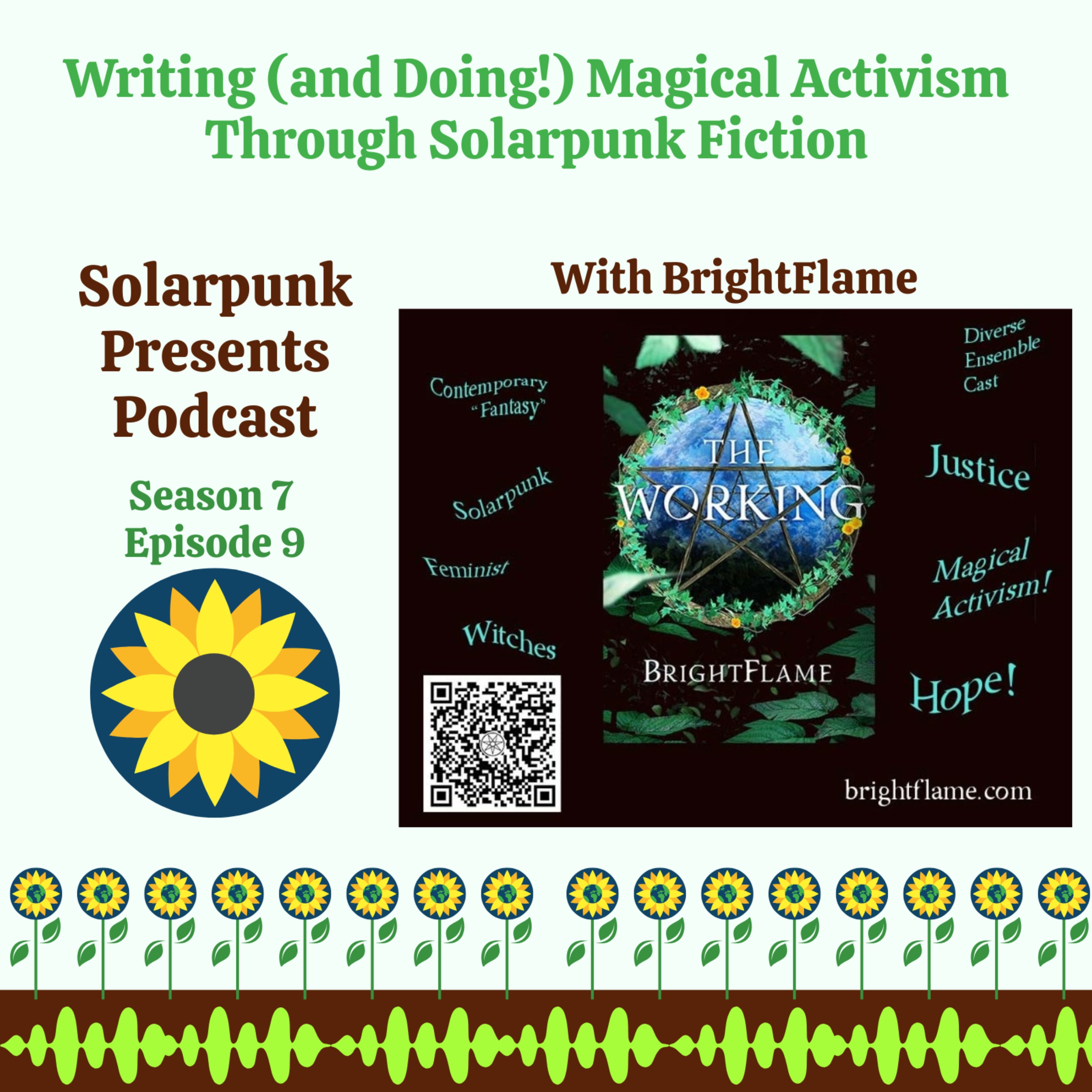
S7 Ep 97.9: Writing (and Doing!) Magical Activism Through Solarpunk Fiction With BrightFlame
In this episode, Ariel talks with BrightFlame: witch, workshop leader, co-founder of the Center for Sustainable Design at Columbia University, and author of solarpunk witchcraft short stories and now a new novel, called The Working. They discuss what solarpunk witchcraft looks like and how, though witchcraft’s manipulation of energy on the astral plane is extremely important, magic is only one half of the equation: the other is activism - actually getting out there and doing the thing, whether it’s attending a protest, contributing to a potluck to strengthen community bonds, or making something with a specific intent in mind. BrightFlame (she/they) writes, teaches, and makes magic towards a just, regenerative world. In her debut novel, The Working, a modern coven must thwart a looming eco-cataclysm and find the key to the bright futures we need. She's a member of the Climate Fiction Writers League and SFWA, and her solarpunk stories are featured in Bright Green Futures, Solarpunk Creatures, Bioluminescent, and Solarpunk Magazine. She’s known for her teaching in the worldwide pagan community and co-founded the Center for Sustainable Futures at Columbia University that features her workshops and nonfiction. She lives on Lenape territory (Turtle Island/U.S.) with a human, a forest, a labyrinth, the Fae, bees, turtles, fungi, and many other nonhumans. Visit brightflame.com for musings, doodles, workshops, and more.Links:https://brightflame.comhttps://waterdragonpublishing.com/product/working/https://starhawk.substack.com/https://starhawk.org Hosted on Acast. See acast.com/privacy for more information.
S7 Ep 87.8: Why Do These Cancelled Science Grants Matter?
In this episode, Christina talks to Dr Gabriel Filippelli - one of the first scientists to have a running project canceled by the Trump administration. This fascinating interview reveals just how important internationally and domestically these American grants can be, and Dr Filippelli passionately describes this unprecedented attack on science and education and what we all lose when the work that scientists do grinds to a halt or is extremely politically curtailed. It's important, he tells us, to support the institutions that you care about and are vital to the continued knowledge of how to survive our climate-changed future.Dr Filippelli is the Chancellor’s Professor of Earth Sciences at Indiana University Indianapolis and the Executive Director of the Indiana University Environmental Resilience Institute. He works at the junction between biogeochemical cycles, climate change, and human health.Dr Filippelli has also written the book Climate Change and Life: The Complex Co-evolution of Climate and Life on Earth, and Beyond, which explores Earth's ecological resilience to the great changes in climate that have occurred over the history of the Earth. He was also part of the driving force behind Climate Change and Resilience in Indiana and Beyond, which details local efforts to reduce the risks and lessen the harmful impacts of climate change, as well as prepare for the unavoidable consequences of climate change. Hosted on Acast. See acast.com/privacy for more information.
S7 Ep 77.7: Ariel & Christina Discuss Living with a Disability as a Solarpunk
Today Christina talks to Ariel about what it's been like to live as a solarpunk with a visible - and then invisible - disability. Science fiction has spent decades dreaming of how future tech will make disabled people able to function as if they were fully abled. Now solarpunk has arrived on the scene to ask why should disabled bodies have to always be the ones to adapt? It can be uncomfortable, intrusive - not to mention expensive. Solarpunk wonders why can't cities, society, workplaces, and the like be the ones to use the tech to make themselves more accessible to and inclusive of disabled people?Tune in as Ariel and Christina discuss the portrayal of disability in science fiction and solarpunk and how having to suddenly live with a disability opens your eyes to many of the ways cities fail people with disabilities.Links:The Spoon Theory: https://www.butyoudontlooksick.com/articles/written-by-christine/the-spoon-theory/The Place of Disability in a Solarpunk Future: https://sammylincroft.medium.com/the-place-of-disability-in-a-solarpunk-future-1db5e40ddb55r/solarpunk plea for solarpunk not to exclude the disabled: https://www.reddit.com/r/solarpunk/comments/oxpj34/please_dont_exclude_disabled_folks_from_a/Disability Justice page by Sins Invalid: https://sinsinvalid.org/10-principles-of-disability-justice/"Disabled People Destroy Science Fiction" Uncanny Magazine: https://www.uncannymagazine.com/article/the-disabled-people-destroy-science-fiction-manifesto/ Hosted on Acast. See acast.com/privacy for more information.
S7 Ep 67.6: Abundance, Inclusion, Resilience: The One Million Neighbours Project with Sam Nabi
This episode, Ariel speaks to Sam Nabi about One Million Neighbours, a project bringing together the voices of local non-profits that envisions the future of Waterloo Region once the population has reached one million. Sam discusses the impetus for the project, providing a voice for the voiceless, the issue with grant applications, funding the future, being proactive instead of reactive to harsh policies, and much more. What might an abundant, inclusive, resilient (Ariel says: solarpunk) city look like on the human level? Who lives there, what do they value, and what are their daily lives like? And what does it look like to take action now at the regional/municipal level to ensure that utopian vision?Links:https://onemillionneighbours.ca/https://samnabi.com/https://www.holdthelinewr.org/ Hosted on Acast. See acast.com/privacy for more information.
S7 Ep 57.5: Ariel & Christina Discuss: Four Great Things We Take for Granted and Ought to Fight to Keep
In these dark times of (American) political backsliding/the general rise of fascism in the Global North, Ariel and Christina consider four things that we'd made great progress on, to the point of taking those achievements for granted. Let's take the time to acknowledge them and the danger we are in of losing them. Because how can we fight for what we don't recognize as being incredible yet fragile? Links:"From White Guilt to Race Traitors": https://illwill.com/talk-amongst-yourselves-from-white-guilt-to-race-traitors "What Does it Really Mean to be a White Ally?": https://www.linkedin.com/pulse/what-does-really-mean-white-ally-cecily-rodriguez/.Exploring Actor -> Ally -> Accomplice: https://www.whiteaccomplices.org/ Hosted on Acast. See acast.com/privacy for more information.
S7 Ep 47.4: Enhancing the local values chain with community gardens feat. Doug Jones
In this episode, Ariel interviews Doug Jones from Waterloo Region Community Garden Network, and he discusses about how the Network was started, what it does, and the benefits of gardening for the health and wellbeing not only for you but for your entire community. We discuss gleaning, food insecurity, access to land, and much more; this is an episode you’re going to want to listen to, especially if rising cost of food and food security are concerns for you these days.I (Ariel) have included some links to the local organizations he mentions, as well as some that expand on some of the topics we discussed.*Carol Popovich was the public health nurse who worked with Doug to create the original Waterloo Region Community Garden Council.Links:Waterloo Region Community Garden Network official site: https://wrcgardennetwork.ca/ Facebook: https://www.facebook.com/WRCGN/“Cost of a Healthy Diet: A Population-Representative Comparison of 3 Diet Cost Methods in Canada” - https://pubmed.ncbi.nlm.nih.gov/39270849/“Every hour children spend on screens raises chance of myopia, study finds” https://www.theguardian.com/society/2025/feb/21/every-hour-children-spend-on-screens-raises-chance-of-myopia-study-finds“Cura Annonae” aka grain dole: https://en.wikipedia.org/wiki/Cura_annonae“Addressing vitamin D deficiency in Canada: a public health innovation whose time has come” - https://pubmed.ncbi.nlm.nih.gov/20413135/Iodine Deficiency on the rise in Canada- https://blog.mdpi.com/2022/08/19/iodine-deficiency-canada/The Raw Carrot: https://therawcarrot.com/Eat With Afia: https://www.instagram.com/eatwithafia/ Hosted on Acast. See acast.com/privacy for more information.
S7 Ep 37.3: They Sent Us to Camp: My Family's Experience of Internment During WWII, With Chie Furuya
If you meet a Japanese American, depending on their age, it’s a pretty good bet that they, their parents, and/or their grandparents (or great-grandparents) were imprisoned by the US government in so-called internment camps for several years during World War II. Most families lost everything they had built up: farms, homes, businesses, jobs, possessions, and whatever wealth they had accrued. If you meet a Japanese American, it’s also a pretty good bet, they probably won’t spontaneously start talking about what they or their family went through, how they feel about it, and how they or their family recovered from the ordeal. I (Christina) wanted to rectify that by sitting down with my old friend Chie Furuya, whose parents (as tiny children), grandparents, and other family members were “sent to camp”, to ask her about it. The answers and stories she had for me were both fascinating and unexpectedly heartening. Her people are a resilient, cheerful people and I feel like there are life lessons for all of us here, in terms of withstanding and recovering from severe injustice (and coming out on top).Ariel’s addition to this episode description is to point out that Japanese internment occurred in Canada in the early 20th century as well. We (by which she means Canada, or perhaps so-called Canada, as she likes to call it) aren't some bastion of anti-racism and tolerant plurality (if we ever were). Here are a few links for further edification if you are interested or want to know more about the Canadian side of the story:-"Where is Japantown?" a Secret Life of Canada podcast that describes this history in detail: https://www.cbc.ca/listen/cbc-podcasts/203-the-secret-life-of-canada/episode/15776151-s3-where-is-japantown-Obasan by Joy Kogawa is an incredibly famous work of Canadian Literature - or at least, it was, back in the day, as it came out in 1981. But IYKYK. It describes the fallout of the Japanese internment camps through the eyes of a young girl growing up in Alberta and it galvanized the nisei community to stand up to the Canadian government and demand accountability and reparations for the atrocities of the internment camps. Link here: https://www.goodreads.com/book/show/9723.Obasan-Here is a link to the Japanese-Canadian centre in Toronto, the only Japanese cultural centre that I know of in central/eastern Canada: https://jccc.on.ca/ and the Nikkei Museum in BC: https://centre.nikkeiplace.org/Download the transcript for free here: https://www.patreon.com/posts/125524354?collection=1380839 Hosted on Acast. See acast.com/privacy for more information.
S7 Ep 2Ariel & Christina Discuss: Why Must Utopia Be Cruel?
In this episode, Ariel and Christina try to get to the bottom of why our fictional visions of utopia are so negative. They often involve mindless acquiescence to an authoritarian nanny state, the oppression and labor of an underclass, or both. It’s as if we can’t imagine a situation in which we all voluntarily treat each other (reasonably) decently and life can be good for everyone. We discuss the literary origins of utopia, how it has evolved (or not) as a concept, and Ariel gives a few examples of sci-fi futures that are about as close to her style of solarpunk utopia as can be. Ultimately, the topic of utopia raises more questions than answers!Links:Original blog on the concept of a protopia: https://kk.org/thetechnium/protopia/Audio dramatization of "Kitaskinaw 2350": https://www.cbc.ca/listen/cbc-podcasts/1020-this-place/episode/15862270-kitaskinaw-2350"This Place" publisher's page: https://www.portageandmainpress.com/Books/T/This-PlaceEpisode 6.10: the Dilemma of Utopian Joy: https://www.youtube.com/watch?v=saBnIh3jZq4 Hosted on Acast. See acast.com/privacy for more information.
S7 Ep 1Ariel & Christina Discuss the Truth About Biofuels
Back in summer of 2024, in a bonus chat, Ariel & Christina tackled the question of whether or not hydrogen is a sustainable fuel. In this Season 7 opener, Ariel & Christina tackle the next obvious question: are biofuels any better? Join us while we shatter any dreams you might have had of biofuels being a sustainable, carbon-neutral fuel. As we discovered when we started digging, they do far more harm than good. Hosted on Acast. See acast.com/privacy for more information.
S6 Ep 10The Dilemma of Utopian Joy: Ariel & Christina Discuss
S6E10: The Dilemma of Utopian JoyWhile solarpunks often choose to stand in direct opposition to selfishness, greed, and systemic problems, the choice to be kind and to prioritize joy, sympathy, and understanding is also central to solarpunk in fiction and in real life. As Christina and Ariel discuss, while acts of kindness occur in all sorts of fictions, even cyberpunk and dystopian fictions, acts of kindness in solarpunk stories tend to be transformative, especially for the person or group on the receiving end. They then explore the sacrifices that it takes (and who has to make them) in order to maintain peace, prosperity, and joy in society by two famous solarpunk–adjacent stories set in utopias, “The Ones Who Walk Away From Omelas” by Ursula K. LeGuin and “The Ones Who Stay and Fight” by N.K. Jemisin. Christina is not sure if she’s on board for either of these stories, but she agrees with the premise that now is the time not to walk away in disillusionment, but to fight hard for human rights, justice, and fairness in all of our different political systems and societies.Links:The Ones Who Walk Away From OmelasThe Ones Who Stay and Fight Hosted on Acast. See acast.com/privacy for more information.
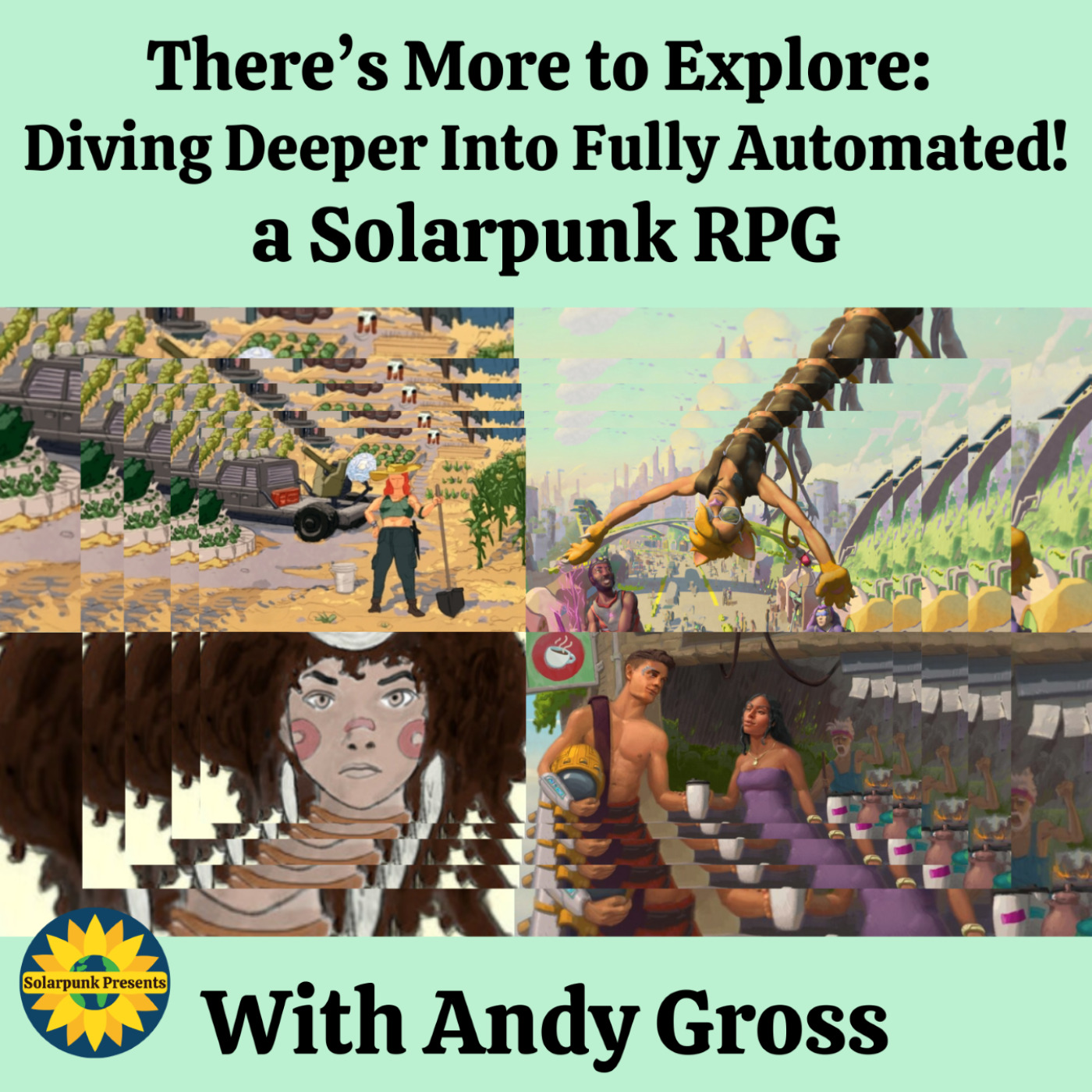
S6 Ep 9There's More to Explore: Diving Deeper Into Fully Automated! a Solarpunk RPG, With Andy Gross
Due to personal issues, Christina couldn't take part in the original interview with Andy Gross about the solarpunk role playing game Fully Automated! that made up S6E2. But she had questions. In this episode, she had a chance to ask them. Before you grab your dice and download the game (for free!) at https://fullyautomatedrpg.com/ have a listen! Hosted on Acast. See acast.com/privacy for more information.
S6 Ep 8Fighting the Far Right's Attack on Public Education with Dr Sam Myovitch
Across the USA, the far right candidates have been getting themselves elected to local and county school boards. Their goals include financially choking public schools by diverting government funds toward charter schools, often religious in orientation. Tune in to hear what Dr Sam Myovich, retired history teacher turned school board candidate campaign field coordinator, has to say about what’s at stake, the far right’s deployment of fascist tactics in their fight to destroy public education, and what we ordinary citizens can do to fight back against them, save our schools, and protect our very democracy itself. Hosted on Acast. See acast.com/privacy for more information.

S6 Ep 7Restorative Justice & Reconciliation with Rev. Nora Jacob
Join us for a conversation with Rev. Nora Jacob on a better way to dispense justice than to subject offenders to a strictly brutal prison experience. A way that, by recognizing that hurt people hurt people, aims to empower, not just victims, but also offenders, to heal. This isn’t just showing mercy to incarcerated people, it significantly lowers the chances that they’ll end up back in prison after their release. That's a win for us all. Hosted on Acast. See acast.com/privacy for more information.

S6 Ep 6Emotional Literacy with Dr Tiffany Millacci
In this week’s episode, Ariel quizzes guest Dr Tiffany Millacci about emotional literacy. What is this relatively new phrase? How can being emotionally literate help us to navigate difficult conversations, awkward interactions, or even generally just having relationships in the first place? Isn’t all this talk of emotions just a different way for the self-help industry to get us to buy stuff? Join us for a fascinating conversation about a complex topic - we barely skim the surface! But never fear, Dr Millacci has your back; listen in for some good places to start learning more.Links:Dr Millacci's author profile on positivepsychology.comEmotional literacy in the context of applying it to relationshipsEmotional literacy vs emotional maturity Hosted on Acast. See acast.com/privacy for more information.
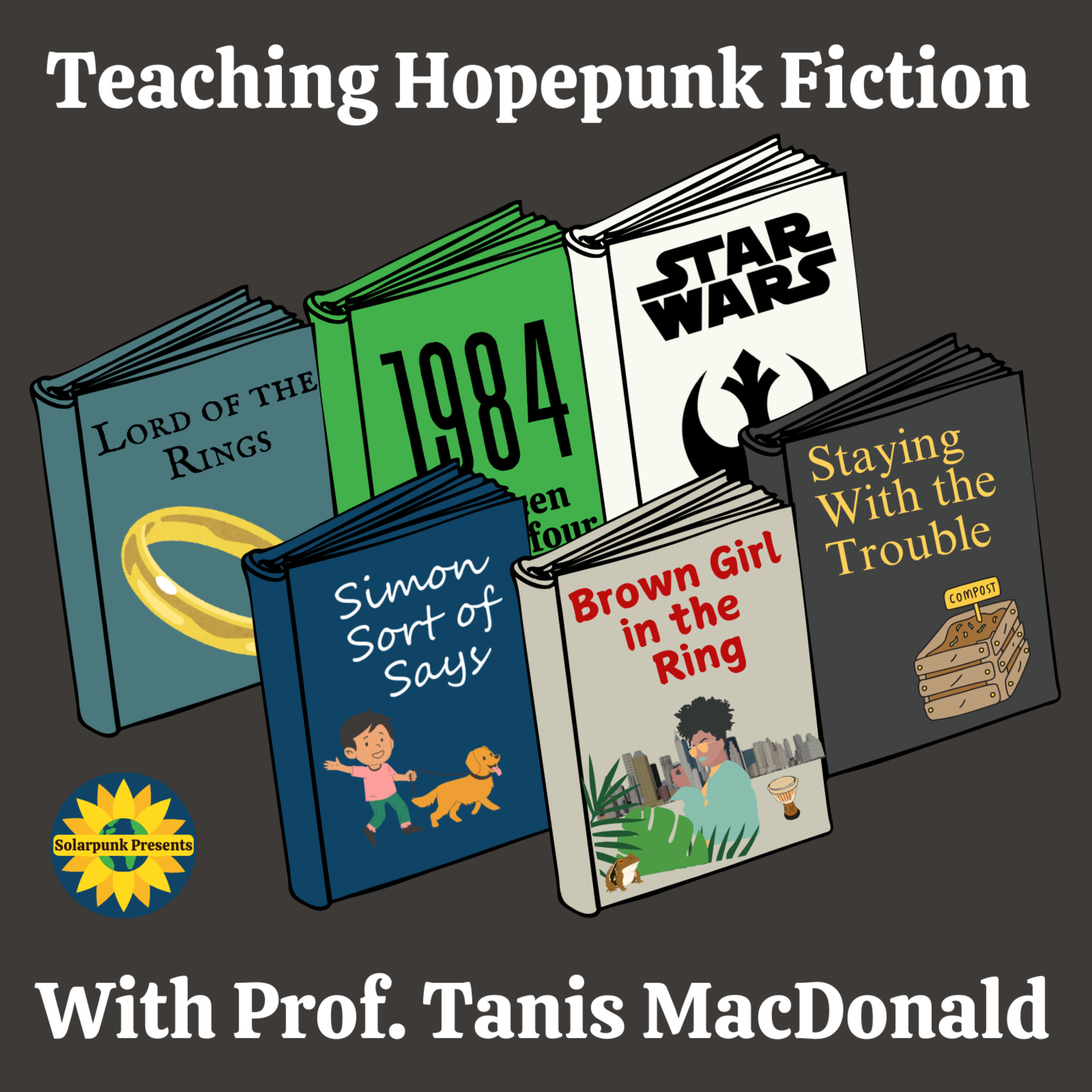
S6 Ep 56.5: Teaching Hopepunk Fiction with Dr Tanis MacDonald
On this episode of the podcast, Ariel chats with Dr Tanis MacDonald about her upcoming course in winter 2025 on hopepunk. What exactly is so punk about this kind of hope? Can hopepunk even be said to be a genre in its own right, or is it an aesthetic or lens that we can use to think through just why the characters are deciding to have hope in bleak situations? Tune in for recommendations of hopepunk novels (and poetry!), ruminations on political hope, the centrality of relationships and radical empathy to these stories, and more. Plus some academic theories informing the formulations of hope, of course. Links:Tanis MacDonald | Author of Straggle: Adventures in Walking While FemaleWatershed Writers with Tanis MacDonald | Podcast on SpotifyHopepunk, explained: the storytelling trend that weaponizes optimism | VoxCompanion Species ManifestoThe Carrier Bag Theory of FictionS2.9 Reframing Narratives With Ecocriticism, With Dr Jenny Kerber Hosted on Acast. See acast.com/privacy for more information.
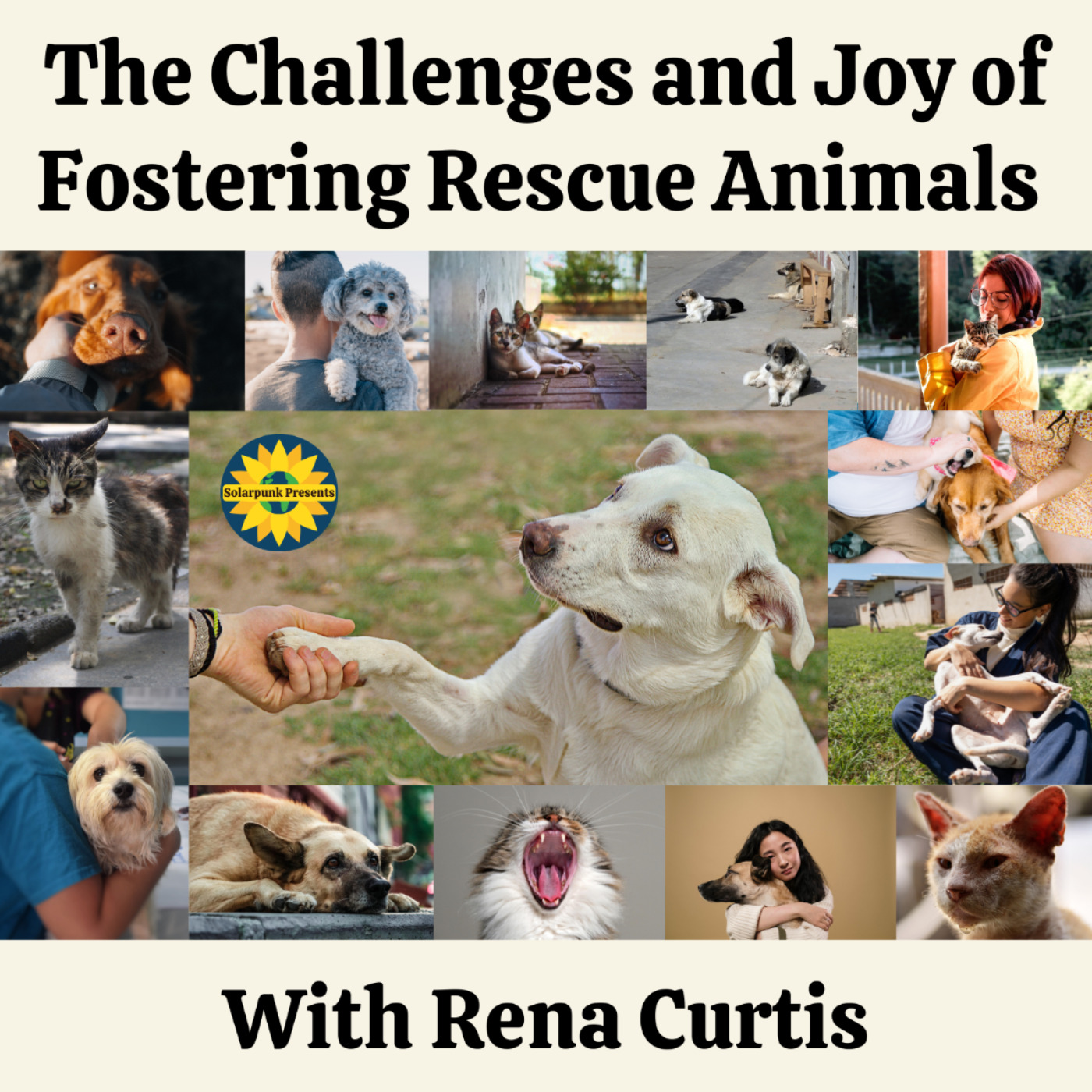
S6 Ep 4The Challenges and Joys of Fostering Rescue Animals: With Rena Curtis
If you’re a no-kill animal shelter or an animal rescue group and you’ve got more rescue animals than kennels to keep them in, or you’ve got dogs or cats with health or behavioral problems that need sorting out to make the beasts adoptable, what are you going to do? You’re going to call an animal fosterer like Rena Curtis to take that animal in, de-traumatize it, teach it some manners, and get its health problems sorted out so it can go a-courtin’ its forever people. Tune in as we discuss this hard, sometimes frightening, occasionally heart-wrenching, but ultimately satisfying work, why there are so many more dogs and cats than homes to put them in, and what we can do to change that situation. You can follow Rena on Instagram at @sockmonkeylove33To learn more about the animal rescue organizations she has fostered for, visit https://www.yavapaihumanetrappers.org/ and https://yavapaihumane.org/ Hosted on Acast. See acast.com/privacy for more information.
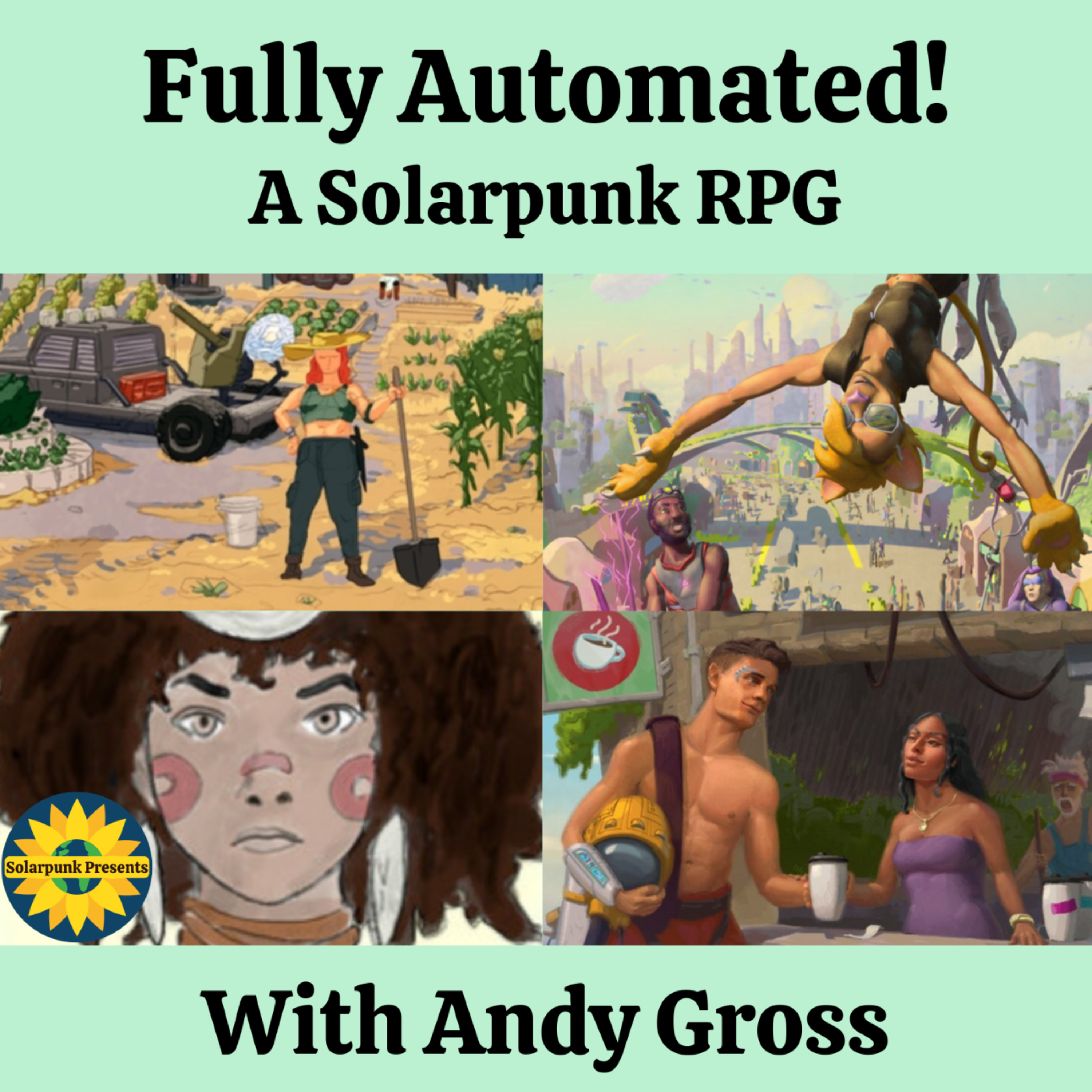
S6 Ep 36.3: Fully Automated! A Solarpunk RPG, with Andy Gross
This week on Solarpunk Presents, we’re bringing you an interview with Andy Gross, one of the brilliant minds behind Fully Automated! A Solarpunk TableTop RPG (Role-Playing Game). Don’t worry, you don’t need to know game jargon to follow along for this one - solarpunk storytelling comes in a lot of different forms, and this is yet another kind for people to use to imagine a kinder, greener future that strives towards a utopia … of sorts.RPGs get a reputation for being all about fighting. How does that work if the RPG is solarpunk? Or utopian even? What is an RPG, in the first place? What is the usefulness of a solarpunk RPG? Join us as we discuss these questions and more.Art used in episode cover is by https://patreon.com/seanbodley and...Links:You can find Fully Automated at https://fullyautomatedrpg.com/The Sogorea Te Land Trust: https://sogoreate-landtrust.org/Solarpunk 2050: http://solarpunk2050.de/ Solarpunk Pioneers Fund: http://solarpunk-pioneers.org/ Coyote & Crow: https://coyoteandcrow.net/ Lunar Echos: https://affinity-games.itch.io/ Neon Black: https://notwriting.itch.io/ Legacy: Life Among the Ruins: https://ufopress.co.uk/legacy-life-among-the-ruins/ Fighting for the Future: https://www.android-press.com/product-page/fighting-for-the-future-ebook “Murder in the Tool Library” by AE Marling: https://www.barnesandnoble.com/w/murder-in-the-tool-library-a-e-marling/1144354144 “Fully Automated Luxury Communism: A Manifesto” by Aaron Bastani: https://www.versobooks.com/products/476-fully-automated-luxury-communism “Four Futures: Life After Capitalism” by Peter Fraise: https://www.versobooks.com/products/59-four-futures Hosted on Acast. See acast.com/privacy for more information.
S6 Ep 26.2: Publishing Eco-horror & Solarpunk with Selena Middleton of Stelliform Press
This week on Solarpunk Presents Podcast, Ariel chats with Selena Middleton, Publisher and Editor of Stelliform Press, all about publishing eco-fiction. What is eco-horror, and how does it relate to solarpunk fiction? What are the hallmarks of a good solarpunk story, according to Selena? How does history fit into visions of the future, and what does character have to do with it? Join us as we discuss all this and more.Links: Stelliform Press websiteDepart! Depart! by Sim KernAnother Life by Sarena UlibarriGreen Fuse Burning by Tiffany MorrisThe House of Drought by Dennis Mombauer Hosted on Acast. See acast.com/privacy for more information.
S6 Ep 1How Dare Solarpunks Do OUTRAGE?!!! Ariel & Christina Discuss
Now streaming: some hot takes from your solarpunk aunties. Ariel and Christina consider why wallowing in negative feelings is just so delicious ... as opposed to wallowing in, you know, acts of kindness and feelings of compassion, which are just a bit more solarpunk. We live in an age of outrage, it seems: cancelling, social media mobbing, cyberbullying ... but also drawing attention to human rights violations, or dodgy political happenings, or just straight-up illegal goings-on! How can we tell whether our outrage is justified or not? How can we avoid emotional manipulation? Can we think of outrage as a solarpunk tool?Links:What is Affect Theory?Cultivating Emotional Literacy Hosted on Acast. See acast.com/privacy for more information.
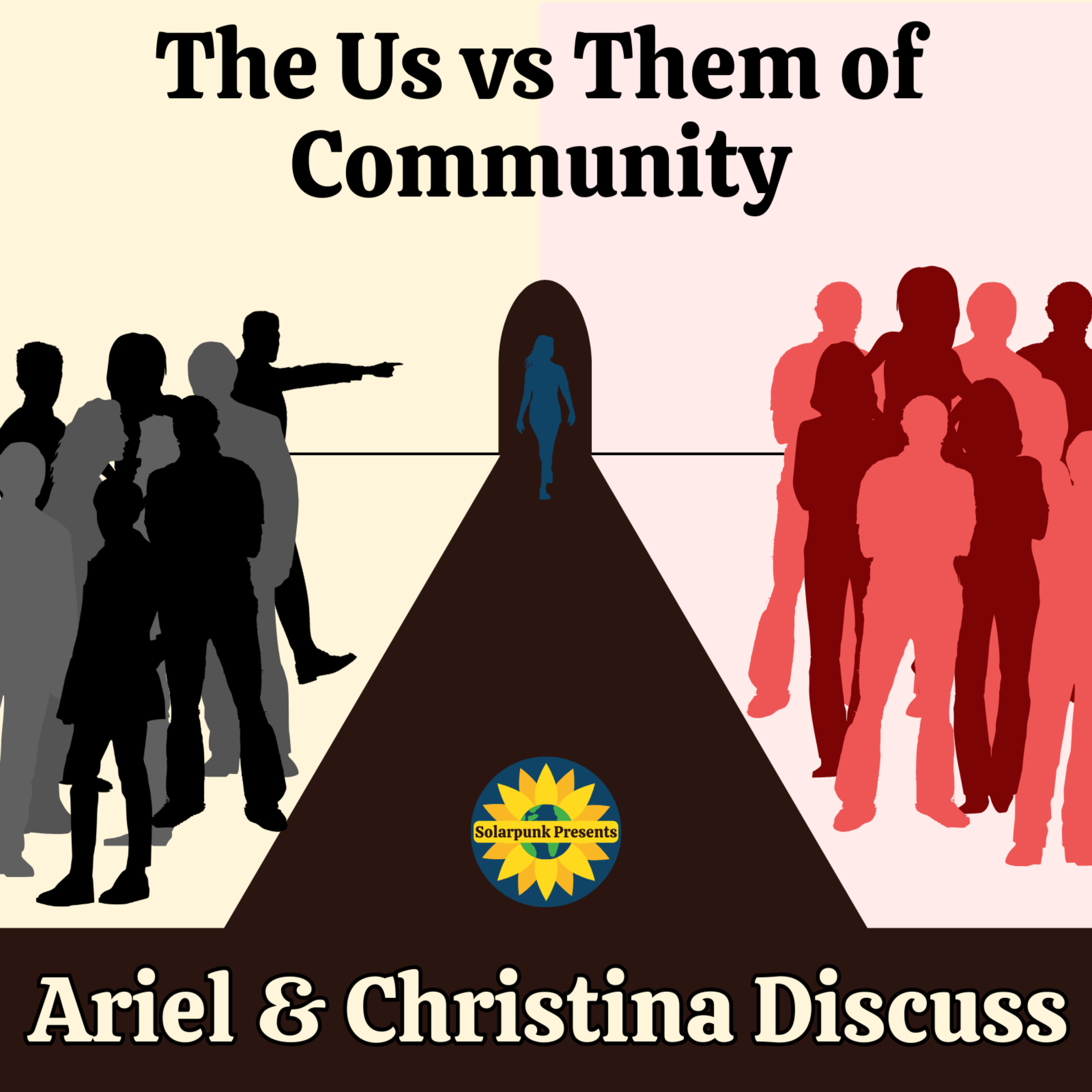
S5 Ep 10The Us vs Them of Community: Ariel & Christina Discuss
On some very serious level, it’s just not solarpunk if it’s not about a community taking action to make the world a better place. Individualism: it’s just so wrong. It’s fair to say that, not just in solarpunk, but in our cultures, “community” is right up there with “children” as an idea of something inherently good, moral, and wonderful. Community is worshiped as an answer to our problems. But Christina gets a sinking feeling every time she reads a solarpunk story that idolizes community.In this episode, Christina tries to figure out why she’s so suspicious of community and so afraid of being suffocated by the rules, regulations, and norms of community. Join us for our Season 5 closer in which she and Ariel peek at community’s darker sides, like infighting, conformity, the potential for ostracizing people who don’t conform, and the fact that the existence of a community automatically creates a them.Links: https://www.newyorker.com/news/on-religion/losing-a-beloved-communityImportant announcement: We will be going on a short break for August, but stay tuned for season six in September! Hosted on Acast. See acast.com/privacy for more information.
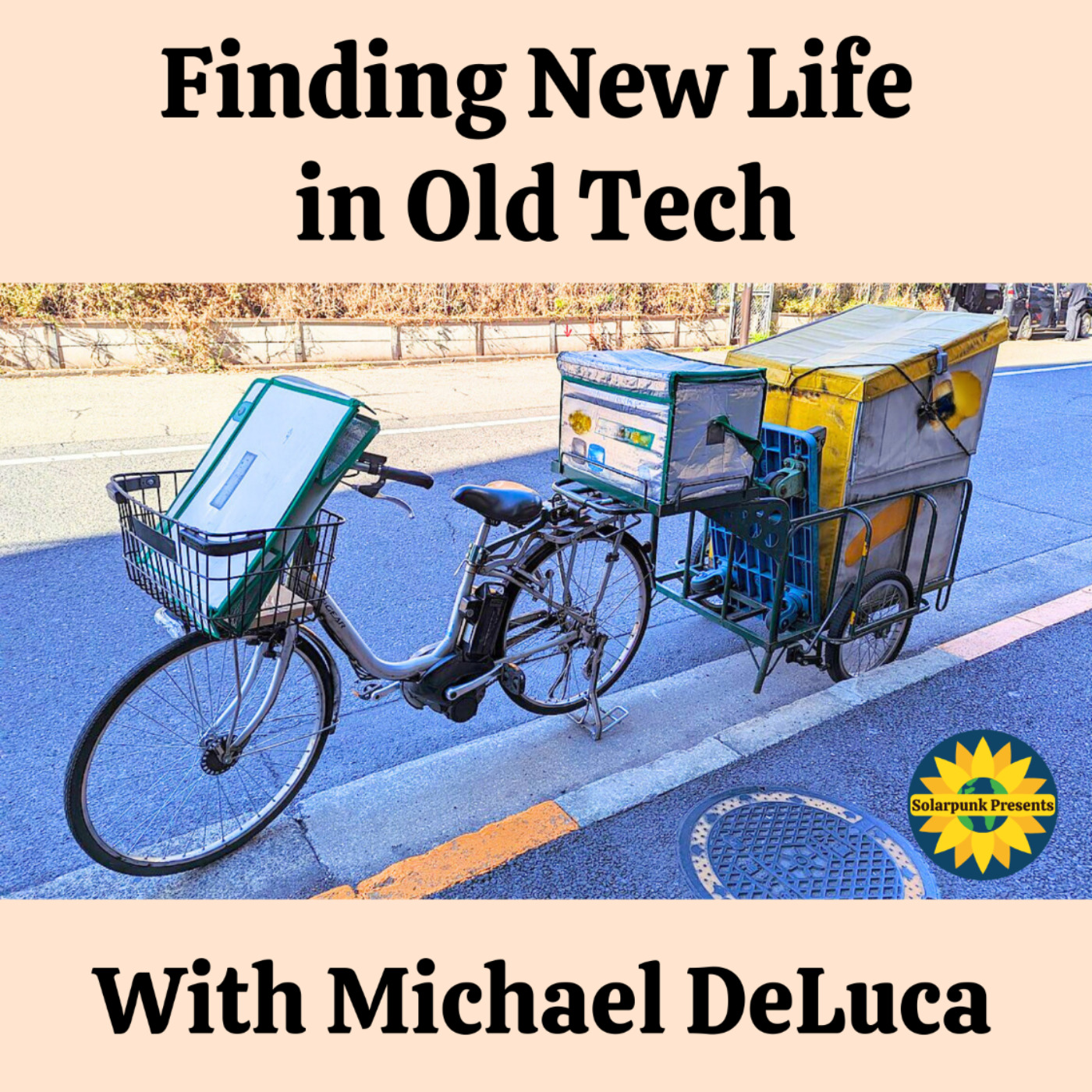
S5 Ep 9S5E9: Finding New Life in Old Tech, With Michael DeLuca
Join us for the final interview of this season, as we talk with Michael DeLuca, publisher of Reckoning, a yearly journal of creative writing on environmental justice, and author of The Jaguar Mask. Michael, impressed by the creative uses of cast off technology in the Global South, would like us to also adopt old tech. He recommends that we follow their lead and adapt old tech to suit our needs, as well as find creative new uses for old tech. We should do better than just be passive consumers of the tech that is sold to us more to the needs and convenience of the companies that produce it than to ours. You can follow Michael via his website (mossyskull.com), Mastodon (@[email protected]), and Bluesky and X (@michaeljdeluca). Here are some links relevant to our discussion......about the hand-cranked laptop...concerning the (reindeer) who ate all the food on the island...regarding a degrowth strategy to reach net zero carbon dioxide emissions to the atmosphere Hosted on Acast. See acast.com/privacy for more information.
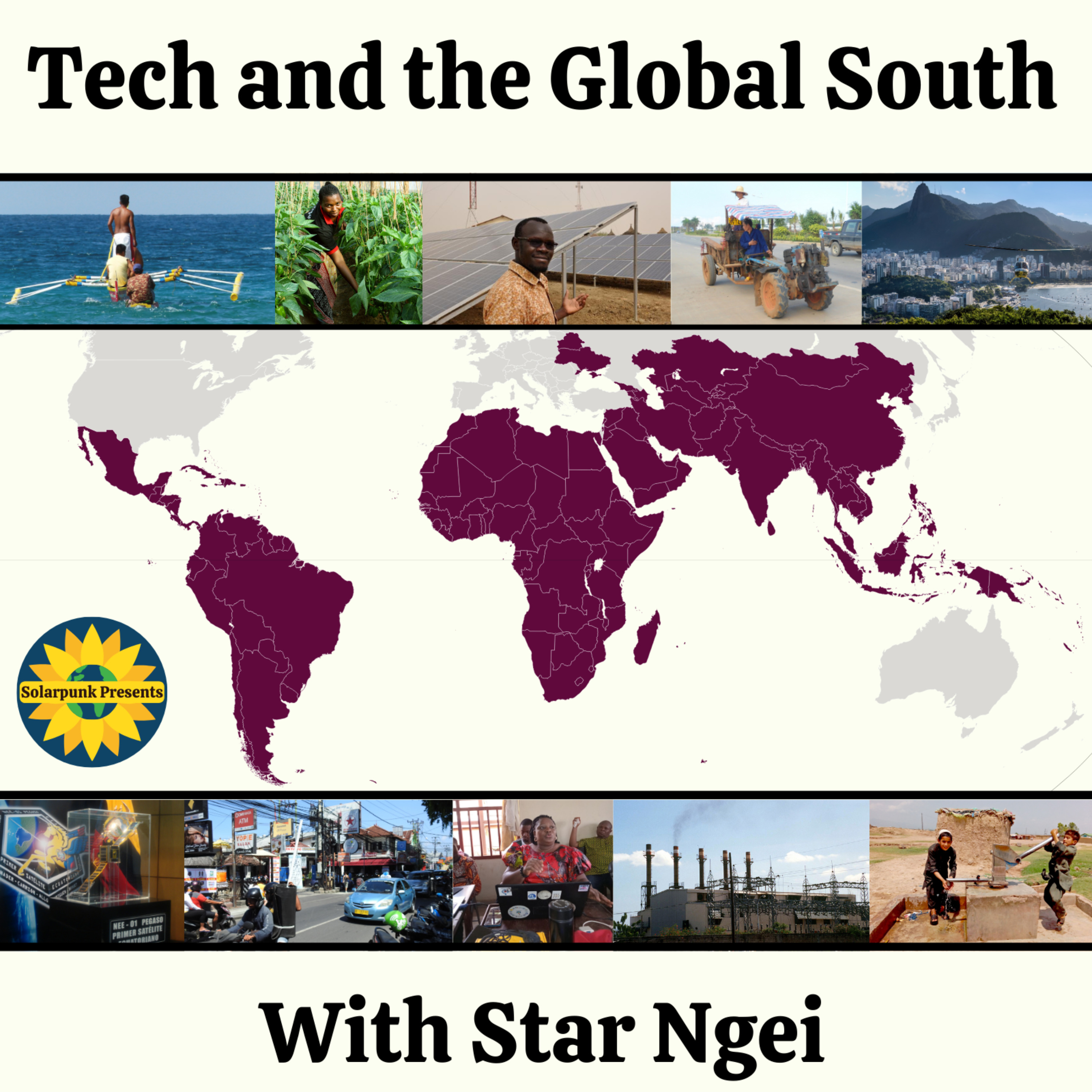
S5 Ep 8Tech and the Global South with Star Ngei
In this episode, Christina talks with Star Ngei, a maker/hacker who helps raise awareness of Global South technology and innovation through the NGO Global Innovation Gathering (GIG), which hosts a network of makers and makerspaces throughout the Global South. Although it’s hard to generalize across a space as culturally, politically, economically, and geographically diverse as the Global South, Christina and Star discuss how the access of people in the Global South to tech is limited compared to that of people in the Global North and so they have a more creative, non-linear approach to technology. They’re far more open to modifying a piece (or pieces) of technology to fit their specific needs, rather than just using it as it comes out of the box and merely specifically for its intended use. Christina and Star also talk about climate change and what the Global North can learn from the Global South in terms of dealing with it. Lastly, they talk about building community and how, if you’re interested in working to decrease global inequality by helping people in the Global South, the best place to start is by striking up a relationship with a community there first. Unless you want your efforts to be a waste of your time, their time, and resources, don’t just give a group of people in the Global South what you think they need, find out what they think they would find useful.To join, support, or learn more about Global Innovation Gathering, check out https://globalinnovationgathering.org/ Hosted on Acast. See acast.com/privacy for more information.
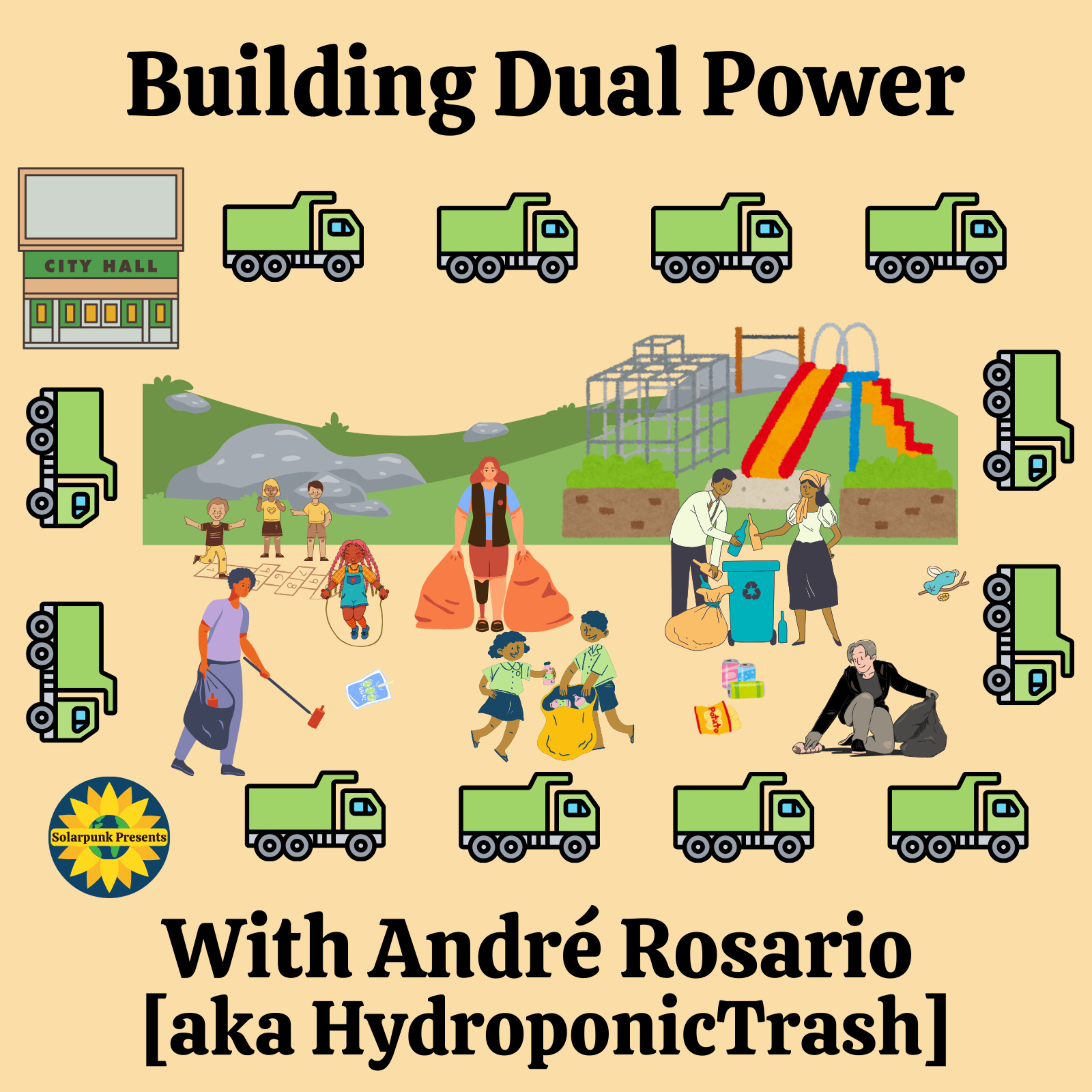
S5 Ep 7Building Dual Power, with Andre Rosario [aka HydroponicTrash]
André Rosario (aka HydroponicTrash) joins us this week on the podcast to tell Ariel all about dual power - what it is, how it fits in with solarpunk, and how people can mobilize it in their daily lives. Their conversation ranges from the history of the term dual power, to examples from André’s own life, to the concept of mutual aid, the importance of imagining a better world, how to build relationships as an introvert, and even includes a discussion of human nature. Hosted on Acast. See acast.com/privacy for more information.
S5 Ep 6Low Carbon Methods for Doing and Communicating Research With Dr Anne Pasek
This episode’s guest is Dr Anne Pasek, Canada Research Chair in Media, Culture, and Environment, and an Assistant Professor in the Department of Cultural Studies and the School of the Environment at Trent University. Dr Pasek is co-founder of the Low Carbon Research Methods Group, and she talks to Ariel all about what Low Carbon Research is (and can look like!), the “carbon footprint” of academic research, new innovative ways for research to respond to the climate crisis, the importance of zines, and even hosting her own solar server in her backyard! Links:Dr Pasek’s personal websiteLow Carbon Research MethodsEMM LABSolar Protocol Hosted on Acast. See acast.com/privacy for more information.
S5 Ep 5Tech and the Power of Solarpunk Narratives, with Paweł Ngei
In this episode, Christina talks with hacker and enthusiastic solarpunk Paweł Ngei about the power of solarpunk narratives to open our eyes to the ways in which we do things and invite us to critically examine them. Why is tech built this way? Who are we disenfranchising by not having more or different designs for things? Who are we handing over too much power over our lives to mindlessly letting them thrust their tech into our lives without us knowing how it works? For more info about and thoughts from Paweł, can check out his blog (https://alxd.org/), be inspired by his podcast (https://podcast.tomasino.org/@SolarpunkPrompts), read his short story about a disabled inventor at https://glider.ink/, or read his review of Kim Stanley Robinson’s The Ministry for the Future (https://alxd.org/ministry-for-the-future-review.html#ministry-for-the-future-review). Other links Paweł recommends are about the book A Half Built Garden by Ruthanna Emrys and to a great solarpunk engineering wiki.Support Solarpunk Presents on Patreon or make a one-time donation via PayPal. Hosted on Acast. See acast.com/privacy for more information.