
Soil Health Labs
94 episodes — Page 2 of 2
Ep 4444 How Climate Smart Ag Can Make Your Land Work For You
What’s the soil food web got to do with it? This is a special podcast to prepare our audience for the upcoming Climate Smart Agriculture enhancements to the EQIP and CSP programs, amongst others. In our previous podcast recorded in November 2022, we spoke to South Dakota NRCS’s Jessica Michalski and Kent Vlieger about some of the programmatic and practical aspects of the Climate Smart initiative, the potential opportunities for producers and what you as a producer can do to best prepare for the enhanced funding opportunity. In this podcast, we speak to soil scientist/biogeochemist Dr. Andrea Jilling from Oklahoma State University’s Plant & Soil Sciences about some of the scientific underpinnings of the effect of climate smart practices that are extensively discussed in the previous podcast. Yes, we nerd out a little, but we think that you, our listeners are ready and will take this discussion in their stride and see how it may benefit you, especially as you think about your conservation plan and how the Climate Smart enhancements may benefit you. Topics that we discuss include: • What does the soil food web have to do with climate smart ag? Can you use climate smart ag to enhance nutrient efficiency? Just how diverse is organic matter, what is the rhizosphere? • How plants harness solar energy, and why they invest so much in below ground development, especially root exudates. • What do root exudates have to do with enhancing nutrient efficiency? • What does it mean when we say “carbon is the energy currency of the soil”? • How diverse is organic matter? Can we distinguish between particulate organic matter (POM) and mineral, or clay/silt associated organic matter? • What and has recent science done to shed more light on how view mineral associated organic matter? • How do POM and mineral associated organic matter work together to immobilize and release nutrients? • What do plant-soil interactions look like over the lifecycle of the plant in releasing and immobilizing nutrients, what are the management possibilities in the future, and what can we do now to optimize plant-soil interactions? • How do these principles work with soil minerals like phosphorus and why are pH hot spots at a microscopic scale are a big deal? • What kinds of change could you expect in your soils if you decided to go all in for climate smart ag? • What are scientists like Dr. Jilling thinking about for the future in agriculture? Will new research try to leverage more producer collaboration? Also, Dr. Jilling provides some parting words on resilience. Dr Jilling can be found at: https://experts.okstate.edu/andrea.jilling For related articles on how soil health (and climate smart practices) can add real value to the farm see: Successful farming’s: “Living Roots, Low input costs: Turning Cover Crops into Cash Crops Boosts Profits and lowers costs” https://www.agriculture.com/crops/cover-crops/living-roots-low-input-costs No Till Farmer’s “How No-till improves land values” https://www.no-tillfarmer.com/articles/12090-how-no-till-improves-land-values
Ep 4343 How to Build Farm and Ranch Resilience with Climate Smart Practices
Get Ready to take Advantage of the Climate-Smart Practice Incentives. In this special podcast episode, we get together with the South Dakota NRCS’s Jessica Michalski and Kent Vlieger to discuss what the upcoming climate smart agriculture and forestry package looks like, what we know, and as of December 2022, what we also don’t yet know. NRCS uses conservation practices to do business with their farmers, ranchers and foresters and in the last two years, many of those conservation practices have been defined as ‘climate smart’. Many of those practices are already in use in South Dakota; these include conservation crop rotation, residue and tillage management, reducing tillage or using no-till, cover crops, nutrient management, grass seeding practices like field borders, filter strips, grassed waterways, pasture and hay, land plantings, and range seedings are defined as some of the practices. In short, most of these practices have been shown to put more carbon into the soil; more importantly to producers, more carbon (typically 60% of organic matter is carbon) in the soil means better soil function, namely better infiltration, water retention, nutrient recycling and healthier crops and animals. In this recording, we speak to Jessica and Kent about the following: 1. What are examples of climate-smart practices? 2. Demystifying the “climate smart” label and how do climate smart practices benefit the producer, keeping in mind that these practices already have a proven track record on South Dakota farms and ranches 3. While there is a lot we don’t know, it’s important to understand that producers can prepare themselves to take advantage of the funding before any announcements are made. Jessica’s main advice? Go to your field office and make sure your conservation plan is up to date! 4. Kent Vlieger gets a little more granular on how these climate smart practices may benefit you and how you can use these incentives to think outside the box. 5. The funding for climate smart practices has the potential to be transformative for many farms and ranches, Jessica gives advice for what else a produce can do to be prepared to take advantage of this program (announcement is set for January 2023). 6. Finally, Kent touches on why the producer may want to become more educated about the soil food web, and how that may be an advantage when choosing which conservation practices may fit a particular operation. To end, what does Jessica Michalski advise? “So when it comes to the EQIP program, right after the first of the new year, we'll probably be getting out our payment schedule information, …and start looking at the practices that would really help you address your resource concerns. I think the more educated a producer can make themselves, again, a more successful conservation plan, a more successful contract they're going to have if they do their homework.” Useful links to help you get started, watch out for new announcements in January 2023! Stay tuned to the SD NRCS website: https://www.nrcs.usda.gov/conservation-basics/conservation-by-state/south-dakota Farmers.gov: https://www.farmers.gov/conservation/climate-smart
Ep 4242 Rangeland Specialist Encourages Grassland Diversity to Achieve Resilience
“.. everything works together. The more diverse a pasture or grassland is, the healthier it is, the more resilient it is to any disturbance that comes at it. So, if we can have that diversity it’s going to reduce the inputs needed and the landscape can be more resilient as well”. - Emily Helms USDA-NRCS’s State Rangeland Management Specialist in South Dakota. If you find yourself in a meeting or in the field where farmers or ranchers are demonstrating or discussing good grazing practice (like Rotate, Rest, Recover), whether East or West River, you’re likely to find Emily Helms, USDA-NRCS’s State Rangeland Management Specialist in South Dakota. While Emily is not one to draw attention to herself, anyone who is interested in rangeland function and diversity would do well to pay close attention to what Emily says. While most of us would walk by an obscure-looking plant, Emily is likely to stop and say “Oh! This is a …..” and she’d take you to school about the plant above and belowground, it’s story, its function in the prairie and how or when it can be grazed. Soil Health Lab’s Joe Dickie and Buz Kloot sit down to chat with Emily Helms about rangeland, it’s value, the threats to rangeland, what can be done to mitigate the threats and we discuss a number of examples of what folks are doing right to restore function to grasslands in South Dakota. In the podcast, Emily walks us through four threats namely: 1. Woody encroachment on rangeland 2. Urban encroachment 3. Conversion to cropland 4. Cool season invasive species Finally, in the last few minutes of the interview, Emily walks us through why the grasslands are important, why diversity is important to resilience and why this groundswell of partners and partnerships has the potential to restore grasslands in the state, and elsewhere. We hope you enjoy the podcast! Other Links Mentioned in the Podcast: USDA-NRCS South Dakota Range and Pasture website that includes the SD Drought Status and Drought maps, Drought Tool, South Dakota Range Planning Tools and South Dakota Prescribed Burning - https://www.nrcs.usda.gov/wps/portal/nrcs/main/sd/technical/landuse/pasture/ SD Grasslands Coalition - https://sdgrass.org/ The Central Grasslands Roadmap: https://www.grasslandsroadmap.org/ Book by Owen Wormsley - Lawns to Meadows Mid Missouri River Prescribed Burn Association: https://www.midmissouririverpba.com/ Prescribed Burn Videos, Podcasts and Blogs: https://www.growingresiliencesd.com/prescribed-burn Drought Management Videos, Podcasts and Blogs: https://www.growingresiliencesd.com/drought-management
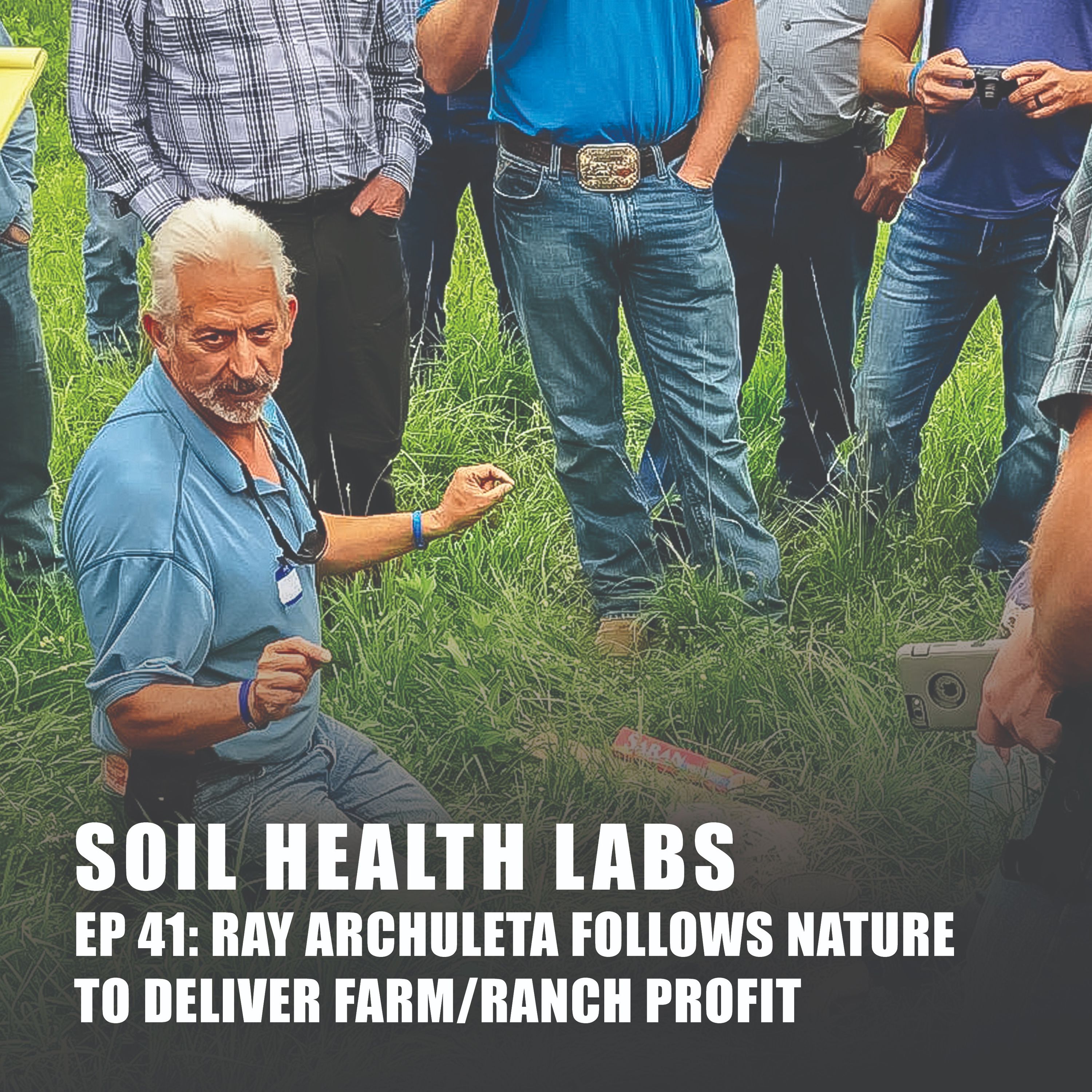
Ep 4141 Ray Archuleta Follows Nature to Deliver Farm/Ranch Profit
It is a rare pleasure to speak with a person of consequence and have their undivided attention for an hour. Ray Archuleta, who needs little introduction, has been a person of consequence in the lives of Buz Kloot (Soil Health Labs at the University of South Carolina) and Tanse Herrmann, NRCS Grazing Lands Soil Health Specialist working out of Rapid City, South Dakota. In this podcast, Buz and Tanse host Ray Archuleta and catch up with him, but before that, both Buz and Tanse tell their stories of how they first met Ray and how he has impacted their lives. A theme that runs through the podcast is The Goal of farming/ranching – making money is an outcome, but The Goal is to Follow the Pattern that Mother Nature has provided. We talk to Ray about his journey since he left the USDA-NRCS (where he served for 3 decades) and what he’s been up to since then. Ray now has land near Seymour, Missouri and talks about having “Skin in the Game” now that he has his own land payment and his own livestock to manage! Ray talks about having skin in the game as being a great tool to make him more empathetic to the ranchers and farmers he speaks to, and he still does a lot of that. Ray also speaks from his own experience of farming with sheep, the mistakes he has made and what he’s learned in the process – infrastructure, animal safety and health, epigenetics and simplicity of design are discussed. The conversation turns to the work that Alejandro Carrillo has done on the Las Damas Ranch in the Chihuahua desert and how transformational this has been to the landscape (see the Las Damas Case Study at the end of these show notes). Ray uses the discussion about Alejandro’s land as an opportunity to educate us on the principle of ecological context (often considered the 6th principle of soil health), in this case, he discusses ecological context in terms of the difference between rainfall on his land (~45” a year) versus Alejandro’s (8” - 10” a year). Note that the first five principles of soil health are: 1. Minimum disturbance; 2. Cover the soil; 3. Keep a live root in the soil as many days as possible; 4. Add diversity of plants (e.g., grasses and broadleaves, warm and cool season, annuals, and perennials); 5. Incorporate livestock back to the land. The discussion of ecological context also led us to spend some time discussing the very important human dimension of rangeland and farmland management, and how people make decisions. We make a few references to Dr. Ellen Davis’s Book “Scripture, Culture and Agriculture” and the work by Hannah Gosnell and others in a paper called “Transformational adaptation on the farm: Processes of change and persistence in transitions to ‘climate-smart’ regenerative agriculture” where “dimensions of transformation [are] associated with beliefs, values, emotions, worldviews, structures of meaning-making, and consciousness” are discussed. See below for the links to these two references. References from the Podcast: Alejandro Carrillo: Las Damas Ranch Case Study, Las Damas Ranch, Aldama County, Chihuahua, Mexico https://understandingag.com/case_studies/las-damas-ranch-case-study/ Ray discusses infrastructure, and there is no better network on rangeland and farmland advice than the SD Grasslands Coalition Mentoring Network where mentors on fencing and water placement, among other things, are provided: https://sdgrass.org/mentoring-network/ SoilHealthLab’s podcast with Shannon Kulseth-Iverson: “39 How Rangeland Health and Livestock Work to Solve Environmental Issues” https://www.growingresiliencesd.com/podcasts/episode/c506bbc6/39-how-rangeland-health-and-livestock-work-to-solve-environmental-issues Books Discussed in Podcast: Note we have links for convenience- there are other outlets that carry these books as well. André Lund. The Wonder of UHDSG (Ultra High Density Strip Grazing): Elandsfontein Beaufort West - Central Karoo South Africa. https://www.goodreads.com/book/show/40894069-the-wonder-of-uhdsg-ultra-high-density-strip-grazing Ellen Davis. Scripture, Culture and Agriculture. https://www.goodreads.com/en/book/show/5941497-scripture-culture-and-agriculture Movies: “Kiss the Ground.” Understanding Ag’s Ray Archuleta, Gabe Brown and Kris Nichols, Ph.D. https://kissthegroundmovie.com/kiss-the-ground-understanding-ags-ray-archuleta-gabe-brown-and-kris-nichols-ph-d/ Recommended Podcast: The Regenerative Agriculture Podcast – hosted by John Kempf. https://regenerativeagriculturepodcast.com/ Books Recommended by Ray Archuleta (these are all searchable, some of them available in pdf format) 1) Allan Savory - Holistic Management 2) Eugene P. Odum - Fundamentals of Ecology (3rd or 4th edition) 3) David Gleissman -Agroecology by 4) Weil and Brady - Nature and Properties of Soils (15th edition I available) 5) Martin Alexander - Introduction to Soil Microbiology 6) Patrick Lavelle and Alister V. Spain - Soil Ecology 7) David Coleman, mac Callaham and D.A. Crossley, Jr. Fundamental of Soil Ecology 8) Sir Alber
Ep 4040 Unlock Year-Round Grazing through Common Sense Forage Plans
In this, our second chat with Bart Carmichael, rancher out of Faith SD, we quizzed Bart on his approach to year-round grazing where Bart walks us through why he aims to graze year-round, what he does to make this possible and what benefits he sees from this practice. Given the dry conditions experienced at the time of the podcast, the conversation also turned to drought; Bart is always planning for drought he agrees with fellow rancher Pat Guptill who says (paraphrased) “when we call it a drought plan, we get scared, a drought plan is nothing other than a forage plan”. We discussed a very interesting innovation with Bart, namely destocking without selling off his herd – how does that work? Find out in the podcast. Keep in mind that to be able to support year-round grazing, land needs good management, one of the keys to Adaptive Grazing management is long rest time coupled with high stocking densities. We highlight a quote from Bart in the first 30 seconds of the podcast where he says “I figured up last fall that 99% of my land that I'm in control of is in rest. You know, we're only ever on like 1% of it at any given time. So that way there's always something there and we graze it once and then give it plenty of time to recover and send down the roots and build up soil, and once the soi temperature is up, it’s ready to grow grass...[even] in a drought”. More about Bart: Bart Carmichael and his wife Shannon run the Wedge Tent Ranch (https://www.wedgetentranch.com/) seed stock operation with their family just north of Faith, SD. Bart is also an educator at heart and is extremely active in the SD Grassland Coalition (see https://sdgrass.org/ ) . For more information from our sponsor, the USDA-NRCS in South Dakota please visit https://www.nrcs.usda.gov/wps/portal/nrcs/main/sd/
Ep 3939 How Rangeland Health and Livestock Work to Solve Environmental Issues
We’re excited to introduce our good friend, Shannon Kulseth-Iverson. Shannon is a native of North Dakota and ranches with her husband, Eric Iverson and her three teenage children out of White River, SD. We caught up with Shannon (yes, she is always on the move) and talked about ranching, native range restoration, and her work as a consulting biologist. Shannon is passionate about rangeland and the environment, and because of her diverse background, she has a really important message. Shannon runs a consulting company called Native Range Resources, LLC where she consults on environmental compliance, agricultural monitoring, stormwater compliance, and integrated pest management; she also started a new company called Westslope Corporation that focuses on native prairie restoration projects. If that’s not enough, Shannon also has a podcast called “The Business of Barrel Racing” which is available on Apple, Spotify, Amazon Music, Google Podcasts, Audible, Stitcher and Gaana. Check out here podcast site at https://www.thebusinessofbarrelracing.com/ or find the podcast on your favorite podcast app.
Ep 3838 Biologist-Rancher Promotes Ranch Health with Prairie Dog Ecosystem
Dr. Shaun Grassel is a wildlife biologist who works out on the Lower Brule Indian Reservation’s headquarters for the tribe’s Department of Wildlife, Fish and Recreation. In addition, Shaun has recently taken a more active role in managing his family land in Lower Brule. In this episode, we discuss Dr. Grassel’s work with prairie dogs and the re-introduction of the black footed ferret, the natural predator of the prairie dog. There is a wide range of attitudes toward prairie dogs amongst ranchers and how they deal with them, and Dr. Grassel discusses this in the podcast. There is a very interesting part where he discusses the dynamic nature of prairie dog's interactions with their predators, black footed ferrets and their interactions with livestock. We are posting this as a special feature because we think this discussion, especially looking at re-introducing black footed ferrets into P-dog towns may be of interest to west river ranchers. Dr. Grassel can be reached at the Lower Brule Department of Wildlife, Fish and Recreation https://www.lowerbrulesiouxtribe.com/copy-of-enviromental-protection-office Dr. Shaun Grassel’s Research Gate profile also provides one with an insight into his research interests https://www.researchgate.net/profile/Shaun-Grassel Also please visit the SD NRCS Range and Pasture website for more information at: https://www.nrcs.usda.gov/wps/portal/nrcs/main/sd/technical/landuse/pasture/
Ep 3737 Biologist-Rancher Renovates Pasture for Wildlife and Livestock
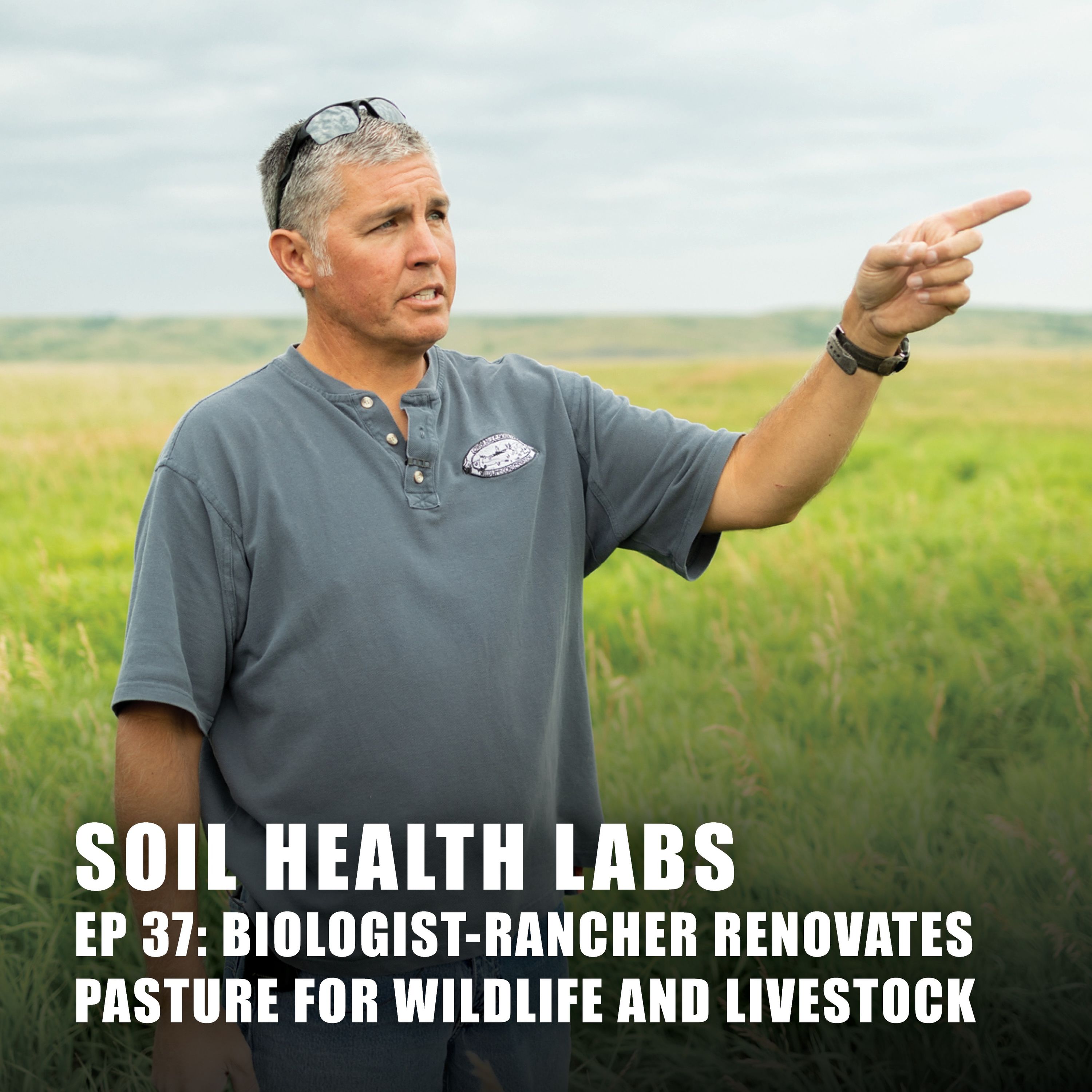
Dr. Shaun Grassel is a wildlife biologist who works out on the Lower Brule Indian Reservation’s headquarters for the tribe’s Department of Wildlife, Fish and Recreation. In addition, Shaun has recently taken a more active role in managing his family land in Lower Brule, both in ranching and experimenting with growing native grasses, including big bluestem, side oats grama and western wheatgrass for seed. This is a fairly new venture and Shaun talks about applying his wildlife biology knowledge to understanding the rangeland, much of which was not fenced off and watered. Shaun provides his perspective as someone new to this venture and remains mindful about finding ways to ranch profitably while attending to soil health, animal health, wildlife migration, novel fly and pest control practices, and getting fencing and water infrastructure onto the family land. We also discuss how some of Shaun’s native grass fields provide him with multiple sources of income in a good year and serve as a backstop in bad years. Finally, we touch on mindset and the fact that Shaun changes his operation every year to adapt to circumstances and to what he learned in the previous season. This is reminiscent of many of our adaptive grazers we talk to who are known for doing something new every year. In the next podcast, we do a special feature on Shaun’s work with the black footed ferret and their influence over prairie dog downs, if you are a rancher and this is something that concerns you, stay tuned! Dr. Grassel can be reached at the Lower Brule Department of Wildlife, Fish and Recreation https://www.lowerbrulesiouxtribe.com/copy-of-enviromental-protection-office Dr. Shaun Grassel’s Research Gate profile also provides one with an insight into his research interests https://www.researchgate.net/profile/Shaun-Grassel Also please visit the SD NRCS Range and Pasture website for more information at: https://www.nrcs.usda.gov/wps/portal/nrcs/main/sd/technical/landuse/pasture/
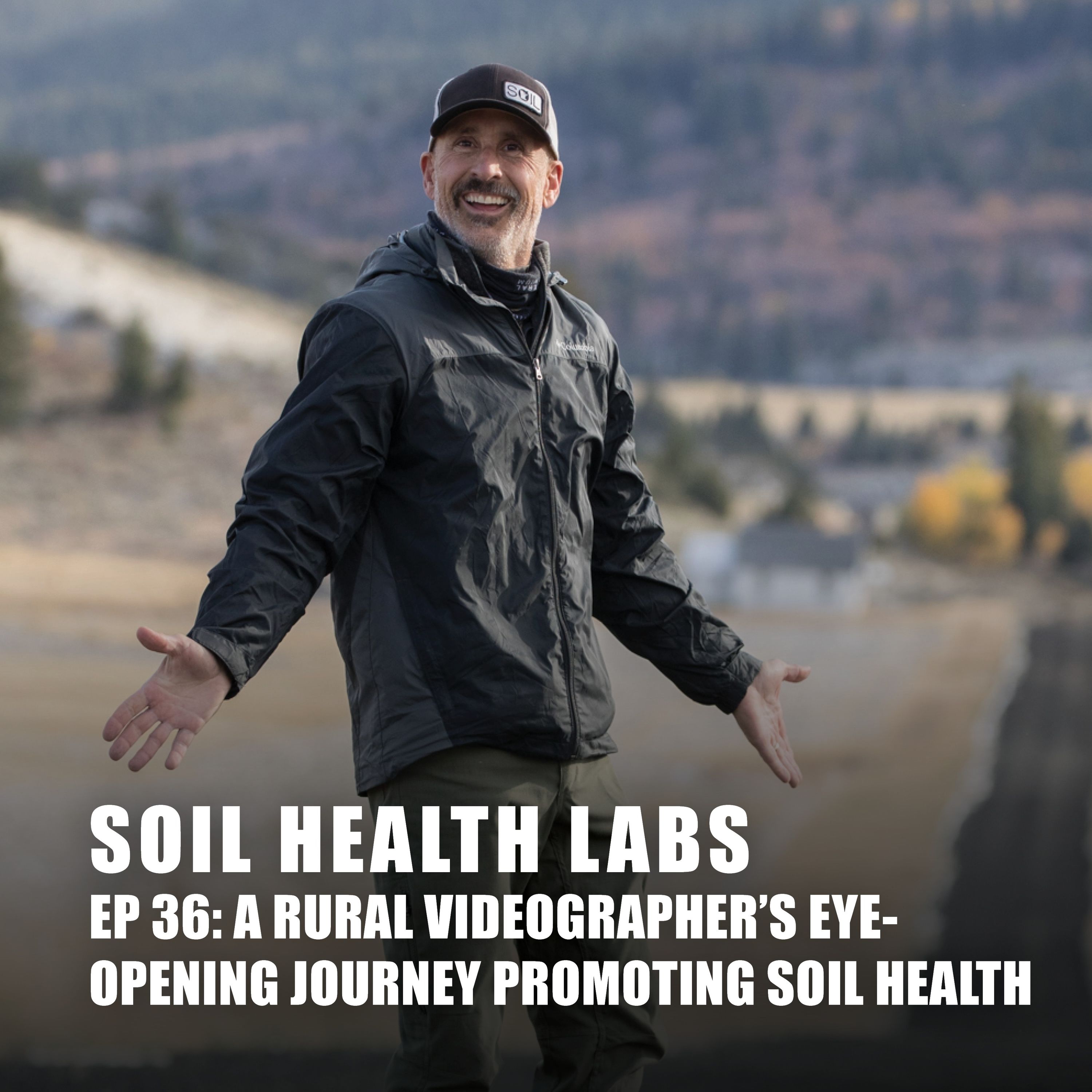
Ep 3636 A Rural Videographer's Eye-Opening Journey Promoting Soil Health
In the last seven years, the name of Joe Dickie has become more and more synonymous with high quality video that highlights outstanding farmers and ranchers in South Dakota. Many in the South Dakota agricultural community know and trust Joe, but he is a busy man and doesn’t always get to share his whole story. Since Joe works with us at the Soil Health Labs on the SD Growing Resilience Project, we thought it would be worthwhile discussing how Joe got into videography and ended up working on so many South Dakota projects. This is not in the podcast, but did you know that at one time Joe was a DJ before he started down the visual creativity path? Joe brings with him a wonderful sense of humor and stories of some of his travels in South Dakota and elsewhere. In this episode, which takes an unexpected turn, Joe shares about his life, and a very recent tragedy in the family, and how that tragedy has renewed his sense of purpose in spreading the good news about soil health to farmers and ranchers not only in South Dakota, but other parts of the world. Visit Joe's website at: https://www.joedickiephotography.com/ Joe has also created the Our Amazing Grasslands Series with the SD Grassland coalition and Soil Stories with the SD Soil Health Coalition. All these videos can be found on the SD NRCS YouTube site. Joe has also worked on the SD NOLO (Non-Operating Landowner) project and has produced many videos for this project as well as the NOLO/Tenant partnership stories. These can be found at: https://www.nolosd.org/ Also please visit the SD NRCS Range and Pasture website for more information at: https://bit.ly/SDGrasslands
Ep 3535 State Grazing Lands Specialist Reveals Top Tips for Driving Soil Health
In this second of two podcasts with Tanse Herrmann, State Grazinglands Soil Health Specialist in South Dakota, we discuss a number of topics including: How can rangeland managers think about soil health principles as applied to rangeland and not just cropland? What makes adaptive grazing managers so successful, what is their secret? What goes on in the soil-plant-animal ecosystem and how can we use rangeland plants as carbon pumps to get more organic matter in the soil and increase soil health? Where to start on the rotational grazing journey? Tanse ends the podcast with some advice you can’t afford to miss, so stick with it. Tanse can be reached at the NRCS Service Center in Rapid City, SD, the Service Center guide will help you to get to his information: https://www.nrcs.usda.gov/wps/portal/nrcs/main/sd/contact/local/ Remember Tanse’s words – “WE WANT TO MEET PEOPLE WHERE THEY ARE” so “DON’T BE TOO PROUD TO ASK”, calling up your NRCS Service Center and Speaking to a Grazingland Specialist costs nothing. What do you have to lose? Watch for an announcement from SD Grassland Coalition for the 2022 Grazing School https://sdgrass.org/ Watch for Soil health Workshops and Conferences at: https://www.sdsoilhealthcoalition.org/ Watch also for Ranching for Profit Schools: https://ranchmanagement.com/ranching-for-profit-school-2/ Also please visit the SD NRCS Range and Pasture website for more information at: https://www.nrcs.usda.gov/wps/portal/nrcs/main/sd/technical/landuse/pasture/
Ep 3434 Ranchers Rethink Rangeland Soil Health for Profit
We caught up with Tanse Hermann, NRCS’s newly appointed State Grazinglands Soil Health Specialist in South Dakota; to our knowledge, this is the first appointment of its kind in the country, and we were thrilled to talk with Tanse. Before we dive into the subjects at hand, Tanse, a man whose love for the FFA, horses, rodeo and livestock, first walks us through his own background; you’ll find that Tanse is a born teacher. In the rest of the podcast we discuss a number of questions including: Why is soil health more emphasized in cropland than rangeland? What makes rangeland the blueprint for soils and cropping systems? As a seasonal grazer who feels overwhelmed with the prospect of going to rotational grazing, but who really feels it’s time to make the shift, how would Tanse or another NRCS representative talk to me? Finally, Tanse talks about the changing definitions of what it takes to be a good farmer and rancher. Because Tanse had so much to share, we added a second part of this interview as our next podcast, Tanse opens up with telling us how we think of the soil health principles to rangeland. Tanse can be reached at: [email protected] For more contact information, visit NRCS Service Center in Rapid City, SD: https://www.nrcs.usda.gov/wps/portal/nrcs/main/sd/contact/local/ Remember Tanse’s words – “WE WANT TO MEET PEOPLE WHERE THEY ARE” so “DON’T BE TOO PROUD TO ASK”, calling up your NRCS Service Center and Speaking to a Grazingland Specialist costs nothing. What do you have to lose? Watch for an announcement from SD Grassland Coalition for the 2022 Grazing School https://sdgrass.org/ Watch for Soil Health Workshops and Conferences at: https://www.sdsoilhealthcoalition.org/ Watch also for Ranching for Profit Schools: https://ranchmanagement.com/ranching-for-profit-school-2/ Also please visit the SD NRCS Range and Pasture website for more information at: https://www.nrcs.usda.gov/wps/portal/nrcs/main/sd/technical/landuse/pasture/
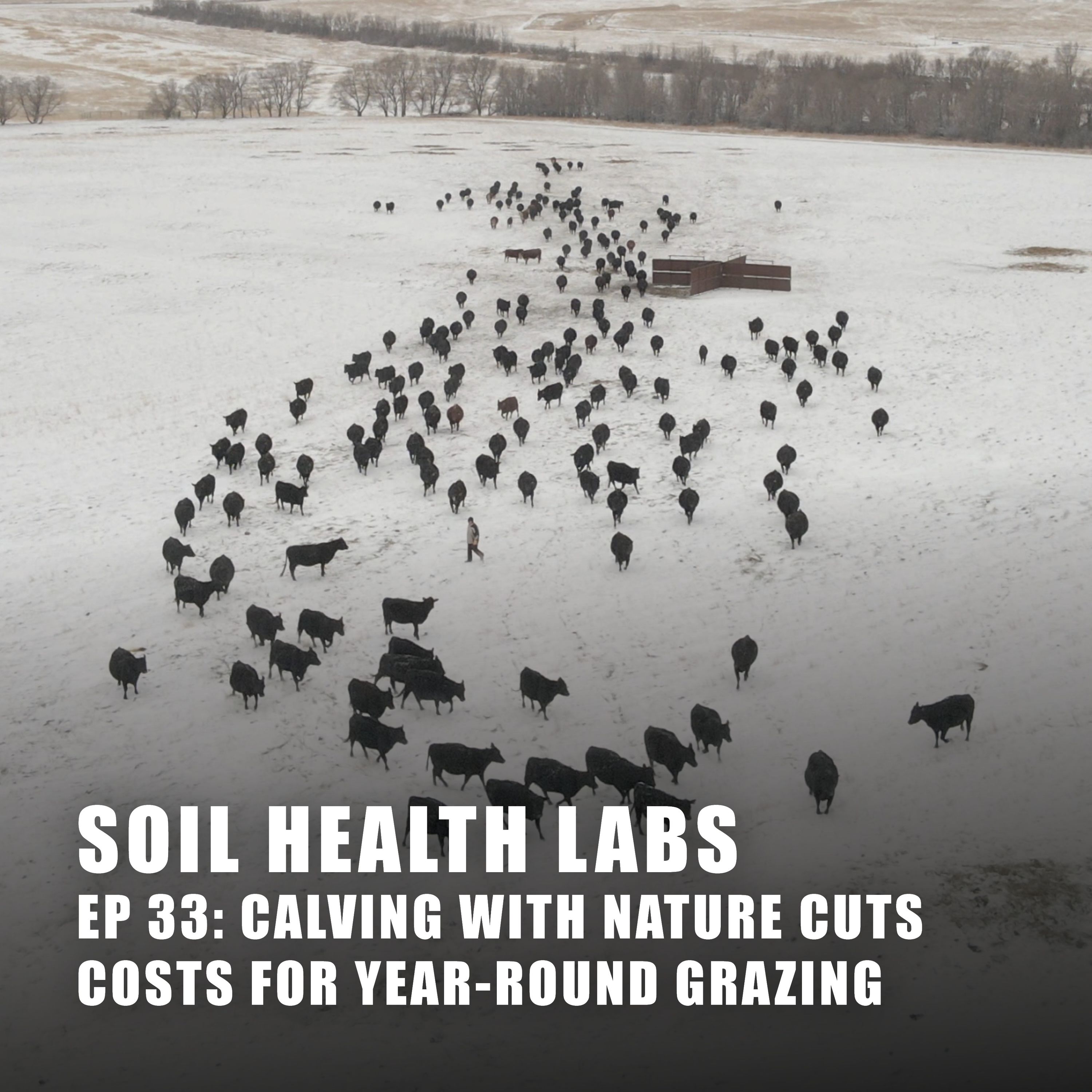
Ep 3333 Calving with Nature Cuts Costs for Year-Round Grazing
In this second of two chats with rancher, Pat Guptill (Quinn, SD), we discuss how he can graze his livestock year-round and (to us, at least) the surprising link between year-round grazing and calving on grass (so when you see fawns out on the prairie, that’s the time to calve in your area). Pat’s basic philosophy on year-round grazing and calving on grass is “we can’t make our calves worth more, so we need to figure out how to raise that calf with less inputs”. Listen with us as Pat discusses how he does that in this podcast and provides some helpful tips on how one begins down the year-round grazing path. Pat also addresses weaning times, concerns like low Body Condition Score (BCS) for mama cows in March (and how that looks to others) and calf weights at market time hint: Pat’s calves may be lighter than others, but he sells more beef because his calf survival rates are so much higher. Pat is passionate about mentoring folks who are interested in improving their land and is a board member of the SD Grassland Coalition. Pat can be contacted through the SD Grassland Coalition website (https://sdgrass.org/). Pat is a big proponent of grazing schools and Ranching for Profit Workshops: Watch for an announcement from SD Grassland Coalition for the 2022 Grazing School: https://sdgrass.org/ Watch for Soil Health Workshops and Conferences at: https://www.sdsoilhealthcoalition.org/ Watch also for Ranching for Profit Schools: https://ranchmanagement.com/ranching-for-profit-school-2/ In addition, we provide some video links that feature Pat: 2013 SD Leopold Award: https://www.youtube.com/watch?v=DGsjUdScWZM A 2014 video by SDSU visits with Pat about High Stock Density grazing (Pat doesn’t necessarily like to use the words “Mob Grazing”): https://www.youtube.com/watch?v=fWC9qkYdDNA In 2021, Pat and wife Mary Lou (through the SD NOLO project) discuss “Understanding the Connection: Stress Reduction Through Soil Health”: https://www.youtube.com/watch?v=FfIJp-M1K5U Check out free resources at the NRCS: https://www.nrcs.usda.gov/wps/portal/nrcs/site/sd/home/
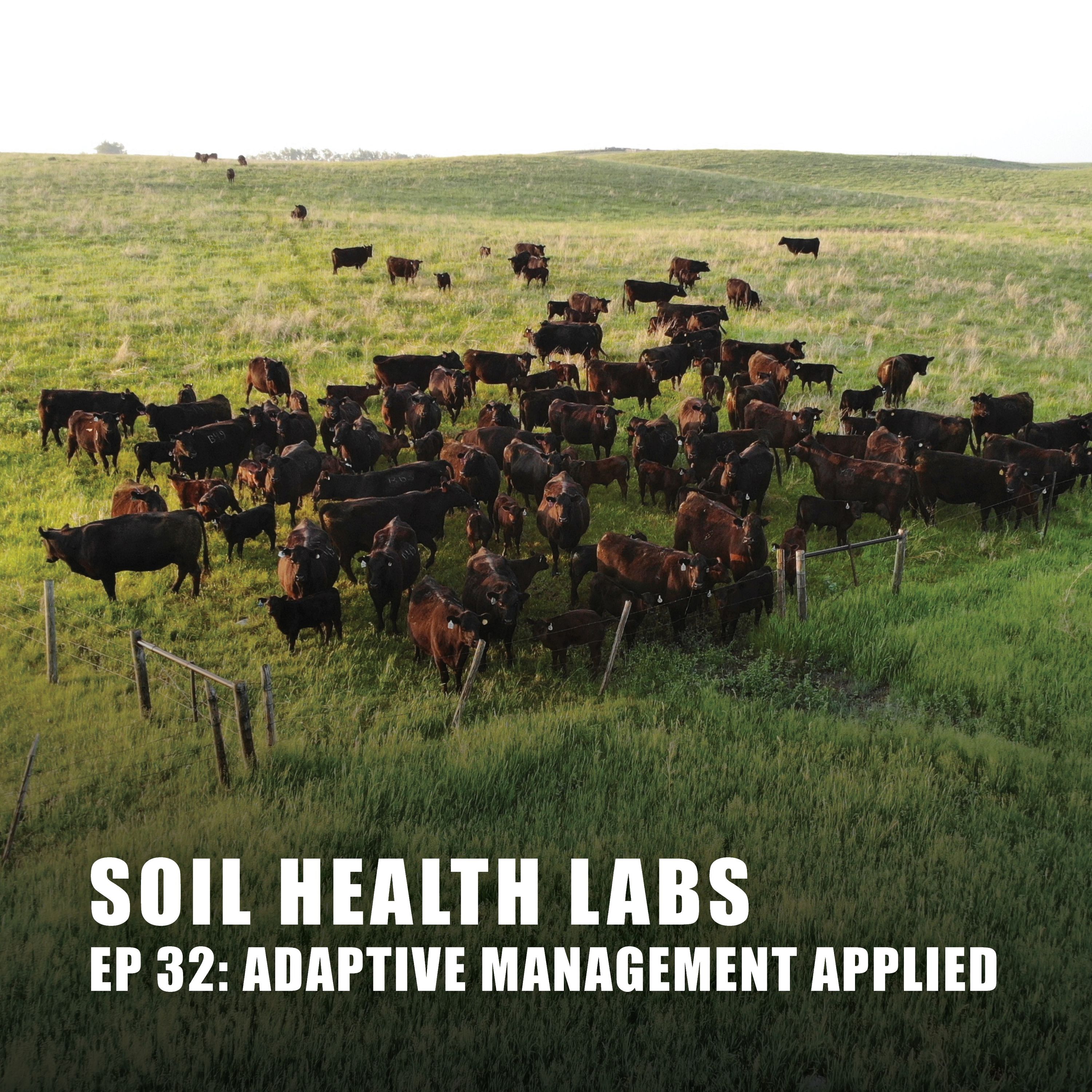
Ep 3232 Adaptive Management Applied
We catch up with Pat Guptill, rancher from Quinn, SD, Pat grazes his base herd year-round and when he has enough grass in the summer, will take on additional stockers. Pat discusses his basic operating philosophy and business model, he shares with us the number 1 thing he attends to: spoiler alert, these are livestock but not cows! Pat rotates almost daily using high stocking densities and he provides thoughts on why he wants every square inch of land covered by hooves. We discuss recovery times between his land and land that has been left bare, the use of temporary and permanent fencing as a tool. Pat is a keen observer not only of his land but his livestock and talks about “setting their plates” every day, very handy when it comes to controlling things like Canada thistle. Stockmanship is important as well, Pat talks about trust between man and animal, how he can tame new stockers on the land in a matter of days, how this helps with labor and sick livestock (which are rare in his case), and how human and animal stress can be a two-way street. Finally, we discuss some of the concrete (and to many, surprising) actions that Pat has taken to improve his soil and animal health, we include a little discussion on the many dung beetles he has on his land and how they act to recycle nutrients and help reduce fly pressure. Pat is passionate about mentoring folks who are interested in improving their land and is a board member of the SD Grassland Coalition. Pat can be contacted through the SD Grassland Coalition website (https://sdgrass.org/). Pat is a big proponent of grazing schools and Ranching for Profit Workshops: Watch for an announcement from SD Grassland Coalition for the 2022 Grazing School https://sdgrass.org/ Watch for Soil Health Workshops and Conferences at: https://www.sdsoilhealthcoalition.org/ Watch also for Ranching for Profit Schools: https://ranchmanagement.com/ranching-for-profit-school-2/ In addition, we provide some video links that feature Pat: 2013 SD Leopold Award: https://www.youtube.com/watch?v=DGsjUdScWZM A 2014 video by SDSU visits with Pat about High Stock Density grazing (Pat doesn’t necessarily like to use the words “Mob Grazing”) https://www.youtube.com/watch?v=fWC9qkYdDNA n 2021, Pat and wife Mary Lou, through the SD NOLO (Non-Operating Land Owner) project, discuss “Understanding the Connection: Stress Reduction Through Soil Health” https://www.youtube.com/watch?v=FfIJp-M1K5U Also please visit the SD NRCS Range and Pasture website for more information at: https://bit.ly/SDGrasslands
Ep 3131 Growing Rangeland Resilience
In this podcast, we talk with Miranda Meehan, NDSU Extension Livestock Environmental Stewardship Specialist. We chat with Miranda about a wide range of subjects that include environmental stewardship and livestock-environmental interactions including: range and riparian ecology, grazing management, integrated crop livestock systems, water quality, and reclamation. Miranda grew up in the agricultural community in North Dakota and brings a practical edge to her academic work, along with a sense of intellectual humility, a fabulous quality in any human being, but important for the work in which she is engaged. While Miranda is located and works in North Dakota, we believe that ranchers in South Dakota and other places can learn form this wonderful talk we had with her. Miranda earned B.S and M.S degrees in Animal and Range Science and a Ph.D. in Natural Resource Management, all from NDSU. Miranda’s Bio in her own words reads as follows: “I am the Extension Livestock Environmental Stewardship Specialist in the Animal Sciences Department at North Dakota State University. My appointment is 65% extension and 35% research. Extension responsibilities include development of statewide livestock environmental stewardship program materials, conduct meetings, offer training for livestock producers, extension personnel, and other professionals in the livestock industry. The objective of my research is to increase our understanding the ecology of rangeland ecosystems and assisting landowners in managing their resources in a profitable and sustainable manner. Some of my research interests include riparian ecology and management, grazing management, integrated crop livestock systems, and the influence of energy development on livestock production.” We include links to Miranda’s NDSU page, her research gate page (we discuss a number of her publications in the podcast, and they are available in the ResearchGate link), and her Twitter feed. NDSU Page: https://www.ndsu.edu/agriculture/ag-home/directory/miranda-meehan ResearchGate: https://www.researchgate.net/profile/Miranda-Meehan Twitter: https://twitter.com/ndsu_ex_steward Check out free resources at the NRCS: https://www.nrcs.usda.gov/wps/portal/nrcs/main/sd/technical/landuse/pasture/
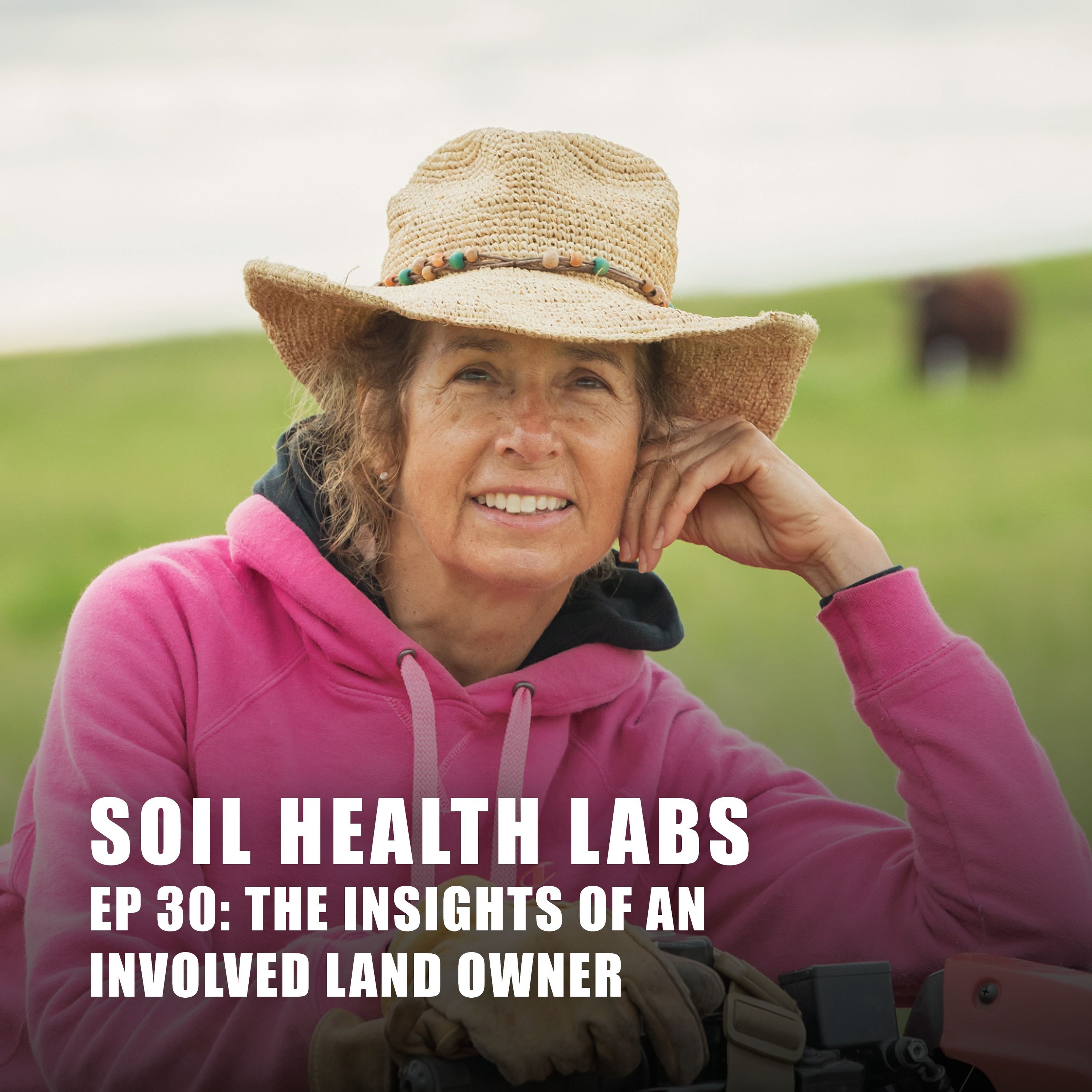
Ep 3030 The Insights of an Involved Land Owner
South Dakota NRCS and the Conservation Districts have identified that Non-Operating Landowners (or NOLOs) are one of the key s to moving the soil health needle in that state. Jeannie Franceus is a landowner, yes, but we’d like to coin a new term, she is a Super-Involved Landowner (or SILO) – Jeannie did grow up in South Dakota and went to SDSU but left for the big city and raised a family but was drawn back to her family land a while ago. While Jeannie does not own cattle herself, she has cultivated excellent relationships with her tenants and works alongside them in the summer while livestock are on her farm. In this fun and entertaining podcast, Jeannie tells us her story and her motivations behind why she does what she does, we think this is an excellent podcast for ranchers and non-operating landowners alike and possibly a model for some who may not necessarily want to own cattle, but who still want to use cattle as a tool to improve their land “the cows are my gardeners and my landscapers!”. Jeannie wrote this in a couple of emails to me after listening to our interview: “After we finished recording, I realized my error in focusing on Canada thistles, and neglecting to mention Muskies which had been an equally serious problem for us. (We were covering a lot of ground in the interview. I could do a whole podcast on nothing but weed control.)” “…my big regret is neglecting to mention the hundreds and hundreds of man-hours that the boys [Jeannie’s now adult sons] and I put into manual labor on Musk thistle control. When the soil is moist enough, they easily pull with leather gloves. When you get tired of that, or it gets too dry, we used a small hoe (made by a local rancher specifically for this job) to hack them off, about an inch below the soil surface. There are many good things that we can say about manual labor that connects us to the land: physical exercise, outdoors in the sunshine and fresh air, and seeing and feeling the land. I always do my best to inspire people that the secret to successful weed control is: DON'T LET THEM GO TO SEED. I would also add that MANY people are not aware that if you chop (or pull) a musk thistle that is close to blossoming, that dying plant will lay on the ground and pour all of its dying energy into that blossom...actually making it possible for the plant to produce fertile seeds as it lays on the ground!!! When our local veterinarian taught me that, we REALLY started to make progress on Musk thistle control. IF the buds start to show color, we now pluck, bag and burn them.” Jeannie is a member of the SD Grasslands Coalition, and we also provide a link to a 6 ½ minute “Amazing Grasslands” video that gives you an idea of Jeannie’s land, how she moves on it and her working relationship with tenant, Mark Guericke – this is well worth the watch: https://www.youtube.com/watch?v=VIj07FFdk28 For more information on Non-Operating Landowners (NOLOs) in South Dakota, please go to https://www.nolosd.org/ and check out the new NOLO/Tenant Partnership Stories! Check out free resources at the NRCS: https://www.nrcs.usda.gov/wps/portal/nrcs/site/sd/home/
Ep 2929 Integrating Livestock Back on the Land: Perennials (2/2)
Dr. Cody Zilverberg is not your ordinary rangeland scientist who grew up on the ranch knowing this was exactly what he wanted to do. Cody’s path was somewhat more circuitous – he grew up in Central South Dakota on a registered beef cattle ranch that his parents, brother, and sister-in-law still operate. Cody studied computer science at St. John's University in Collegeville, MN and had no intention of returning to agriculture. It was in Guatemala, where Cody experienced hand-planting corn that he came to rethink agriculture. Cody returned to study Agricultural Economics at Texas A&M then went to Texas Tech where he received his PhD in studying crop livestock systems. Cody’s PhD and postdoctoral work put him in a unique position to help Dakota Lakes Research Farm’s quest to find ways to integrate (or re-integrate) livestock back into cropping systems. In our previous podcast, Cody walked us through some of the methods that Dakota Lakes has been looking at in terms of livestock integration as a tool, especially with annuals. In this podcast Cody shares with us his experience of introducing perennials into cropland systems as well as reestablishing native grasslands in pasture that was overrun with cool season exotics. Apart from links to Dakota Lakes, we include a link to Cody’s Research Gate page which gives one an idea of his background and interests. Cody Zilverberg Research Gate page - https://www.researchgate.net/profile/Cody-Zilverberg Livestock Integration at the Dakota Lakes Research Farm https://www.youtube.com/watch?v=3Eyq93SqnNc Dakota Lakes Research Farm - http://www.dakotalakes.com/ Dakota Lakes Virtual Field Day - https://www.youtube.com/watch?v=Xc66Z_FEyOM&list=PLTZDoxH1GkisubbRzKxg2XA_PIzzPE8PM&index=1 Check out free resources at the NRCS: https://www.nrcs.usda.gov/wps/portal/nrcs/site/sd/home/
Ep 2828 Integrating Livestock Back on the Land: Annuals (1/2)
Dr. Cody Zilverberg is not your ordinary rangeland scientist who grew up on the ranch knowing this was exactly what he wanted to do. Cody’s path was somewhat more circuitous – he grew up in Central South Dakota on a registered beef cattle ranch that his parents, brother, and sister-in-law still operate. Cody studied computer science at St. John's University in Collegeville, MN and had no intention of returning to agriculture. It was in Guatemala, where Cody experienced hand-planting corn that he came to rethink agriculture. Cody returned to study Agricultural Economics at Texas A&M then went to Texas Tech where he received his PhD in studying crop livestock systems. Cody’s PhD and postdoctoral work put him in a unique position to help Dakota Lakes Research Farm’s quest to find ways to integrate (or re-integrate) livestock back into cropping systems. In this podcast, Cody walks us through some of the methods that Dakota Lakes has been looking at in terms of livestock integration as a tool to make more money on and to improve the land while being mindful of the fact that in South Dakota weather, especially rainfall is so often a limiting factor. Subjects we discuss include swath grazing, bale grazing, grazing of cover crops, grazing in snow conditions, nutrient recycling and soil biology amongst other things. In our next podcast, we’ll continue to chat with Cody about using perennials in cropping systems and reestablishing native grass systems. Apart from links to Dakota Lakes, we include a link to Cody’s Research Gate page which gives one an idea of his background and interests. Cody Zilverberg Research Gate page - https://www.researchgate.net/profile/Cody-Zilverberg Livestock Integration at the Dakota Lakes Research Farm https://www.youtube.com/watch?v=3Eyq93SqnNc Dakota Lakes Research Farm - http://www.dakotalakes.com/ Dakota Lakes Virtual Field Day - https://www.youtube.com/watch?v=Xc66Z_FEyOM&list=PLTZDoxH1GkisubbRzKxg2XA_PIzzPE8PM&index=1 Check out free resources at the NRCS: https://www.nrcs.usda.gov/wps/portal/nrcs/site/sd/home/
Ep 2727 Exploring the Future of Ag with Dr. Dwayne Beck
To most farmers in South Dakota, Dr. Dwayne Beck needs very little introduction, Dwayne is the manager of the Dakota lakes Research Station near Pierre, SD and has been an influential force in promoting no-till farming and an awareness of soil biology with farmers. While Dwayne has written a good bit on no-till farming, he is in his element at Dakota Lakes with farmers, doing things like turning on the pivot irrigation system, putting 2” of water on the n-till ground and immediately following the pivot with producers so they see that on this land, infiltration happens so fast that they can keep their shoes clean! We got together with Dwayne in the fall of 2021 to talk about Dakota lakes and specifically his interest in integrating livestock into cropping systems. This has been a dream of his for some time, but it was made a reality through a gift of the Howard Buffet foundation. Dr. Dwayne Beck is a natural storyteller and in this podcast, we get a 30,000 ft view of how Dakota Lakes is working on re-integrating livestock into cropping systems and why these things are important – Dwayne is open about failure and successes “it says research on the gate” is one of his expressions and he shares both with equal candor. Most of Dwayne’s principles are illustrated with a story of some sort or another and we end the discussion with why we often need a “brain transplant” or an attitude shift to “see” or benefit from out of the box thinking. Rather than rehash Dr. Beck’s Pedigree, we are providing some links to those of our listeners who don’t know him as well: No-till on the plains – Dwane Beck Bio - http://www.notill.org/dwayne-beck SD Hall of fame – the legacy of Dwayne Beck - https://sdexcellence.org/Dwayne_Beck_2007 Dakota Lakes Research Farm - http://www.dakotalakes.com/ Dakota Lakes Virtual Field Day - https://www.youtube.com/watch?v=Xc66Z_FEyOM&list=PLTZDoxH1GkisubbRzKxg2XA_PIzzPE8PM&index=1 “Reversing Soil Degradation with Dwayne Beck” on the Regenerative Agriculture Podcast: http://regenerativeagriculturepodcast.com/2020/11 Check out free resources at the NRCS: https://www.nrcs.usda.gov/wps/portal/nrcs/site/sd/home/
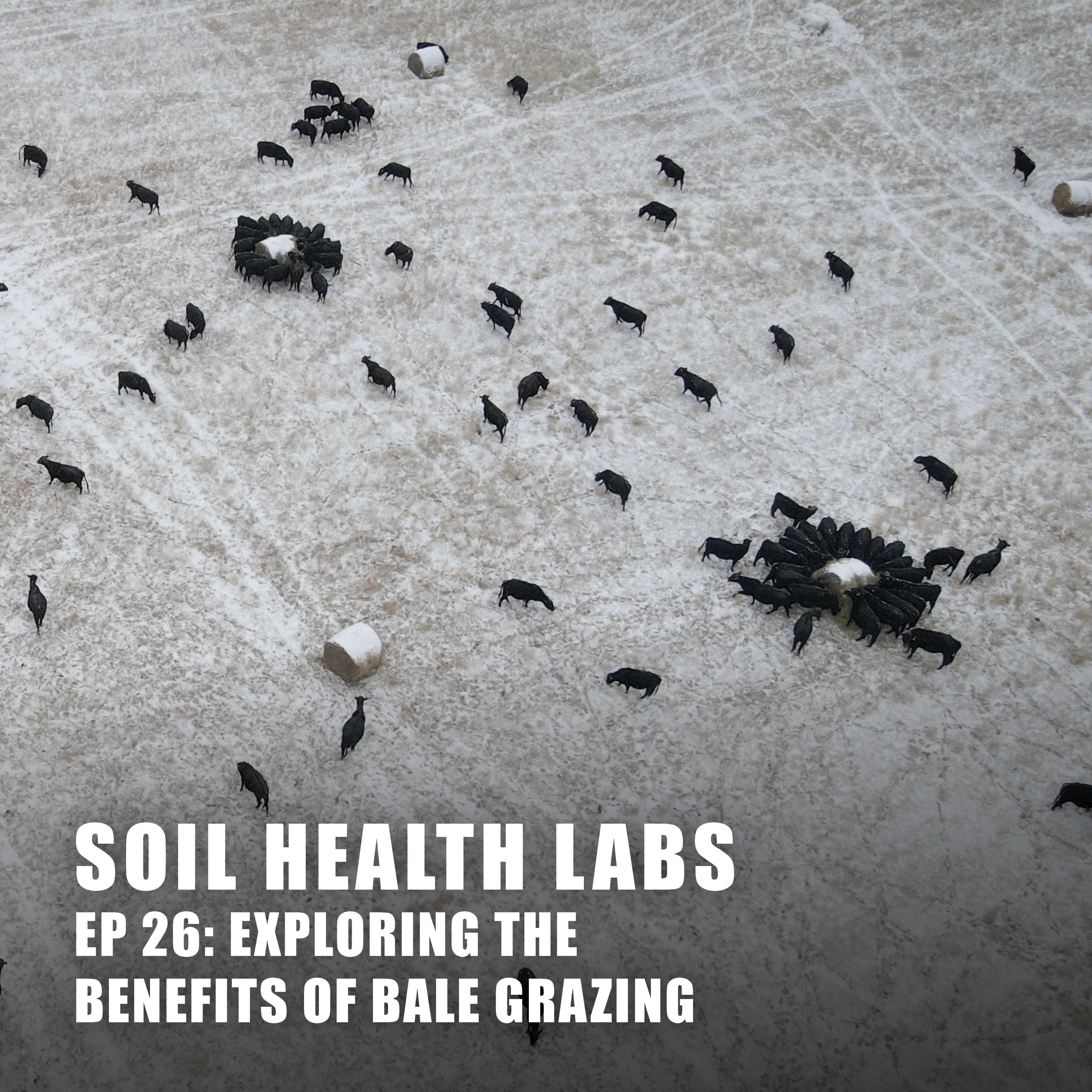
Ep 2626 Exploring the Benefits of Bale Grazing
Jessalyn Bachler is an Extension Range Field Specialist with SDSU, based in Lemmon, SD. Jessalyn graduated from NDSU with her Masters in Range Science with her thesis entitled “Winter Feeding Beef Cattle: a Review on Bale Grazing in the Northern Great Plains”; Jessalyn did her research out at NDSU’s Streeter REC in North Dakota. Apart from Jessalyn’s schooling, she grew up on a ranch in North Dakota. As part of our bale grazing campaign we launched in early December 2021, we asked Jessalyn to join us in a discussion on this emerging subject. In the podcast we discuss her thesis work, the good and the bad, including a disastrous first year where deep snow put an end to the first year of the project. The podcast continues where Jessalyn talks on a number of practical issues that include: the type of producer who may best benefit from bale grazing; wind breaks, extreme weather contingency plans, labor, fuel costs, infrastructure, soil health benefits, the type of hay one may want to feed on cropland vs rangeland; design of the bale grazing system, location of bales, types of wire and fence posts. Jessalyn also discusses some of the common objections and barriers to bale grazing namely the issues of waste, up-front expense for infrastructure, fence and water and she provides advice for those who may want to start out – the key here is to start small. Jessalyn’s professional profile, along with some of her wok may be seen at https://extension.sdstate.edu/about/our-experts/jessalyn-bachler , also contact your local NRCS offices to have a rangeland management specialist visit with you to see if bale grazing can work for you. Check out free resources at the NRCS: https://www.nrcs.usda.gov/wps/portal/nrcs/site/sd/home/
Ep 2525 Increasing Grass Production Despite Drought
Bart Carmichael and his wife Shannon run a seed stock operation with their family in Northwest SD, just north of Faith SD. In this interview we kick off with drought – in a 12” rainfall area, Bart says they’re either preparing for a drought or in a drought. In the last 28 years, the Carmichaels have trebled their grass production in this cold, dry climate, so it’s worth listening to just how Bart has made this journey! We discuss management a lot, Bart typically moves animals every day and has a wonderful story about how a mentee of this timed him moving the fence and setting up a new fence – the short amount of time taken to do this will shock you. While Bart’s labor is down, he spends a lot of time managing and like Lealand Schoon in the previous podcast, observing – don’t be surprised to see Bart on his hands and knees when he is in the field! Bart is also an educator at heart and is extremely active in the SD Grassland Coalition (see https://sdgrass.org/ ) . https://www.nrcs.usda.gov/wps/portal/nrcs/main/sd/
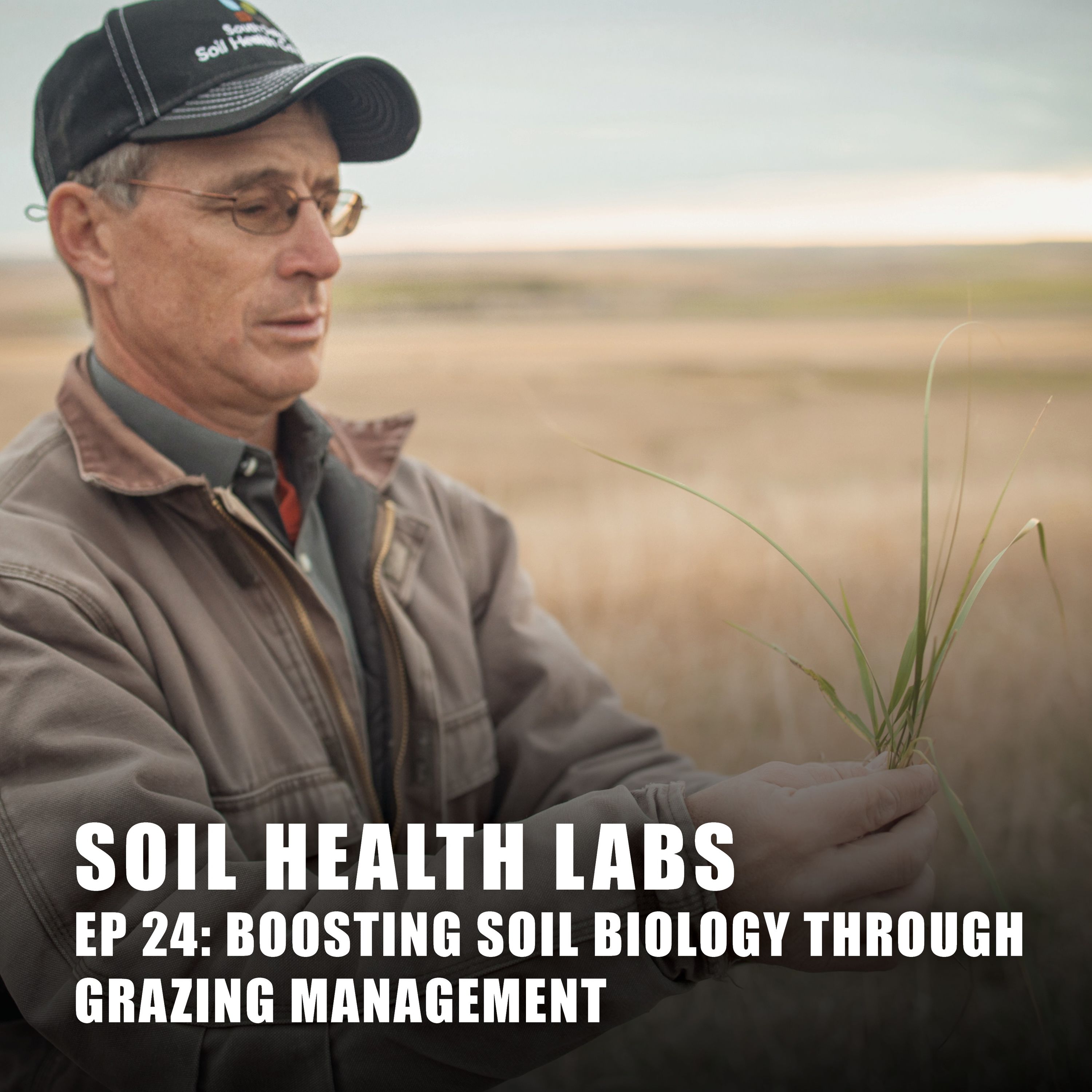
Ep 2424 Boosting Soil Biology through Grazing Management
Lealand Schoon is a 28 year veteran of the NRCS and works as an Area Rangeland Specialist out of Murdo, SD. Leland also has some land, and runs 150 head of sheep along with 30 cows, putting the grazing management and soil biology expertise he has acquired to work. Lealand’s ultimate question is “what is this action going to do for the soil biology?” We dive into some soil biology, but with the aim of how grazing management actually can increase photosynthesis and grass production and feed soil microbes. The heart of this discussion I imagine for the grazier is just to look at the terms like grazing readiness, partial defoliation, primary, secondary and fall tillers, rest and regrowth/recovery after defoliation – Lealand has a great way of explaining this wonderful mutualistic relationship that man, cattle and grass have with one another and how they interact with the elements. We discuss a lot of other things but at the end of the day, Lealand is a keen observer and was the first one to help me to look at rangeland with new eyes. Remember that access to knowledge of people like Lealand’s is free through the NRCS please go to your closest NRCS office or visit them at https://www.nrcs.usda.gov/wps/portal/nrcs/site/sd/home/
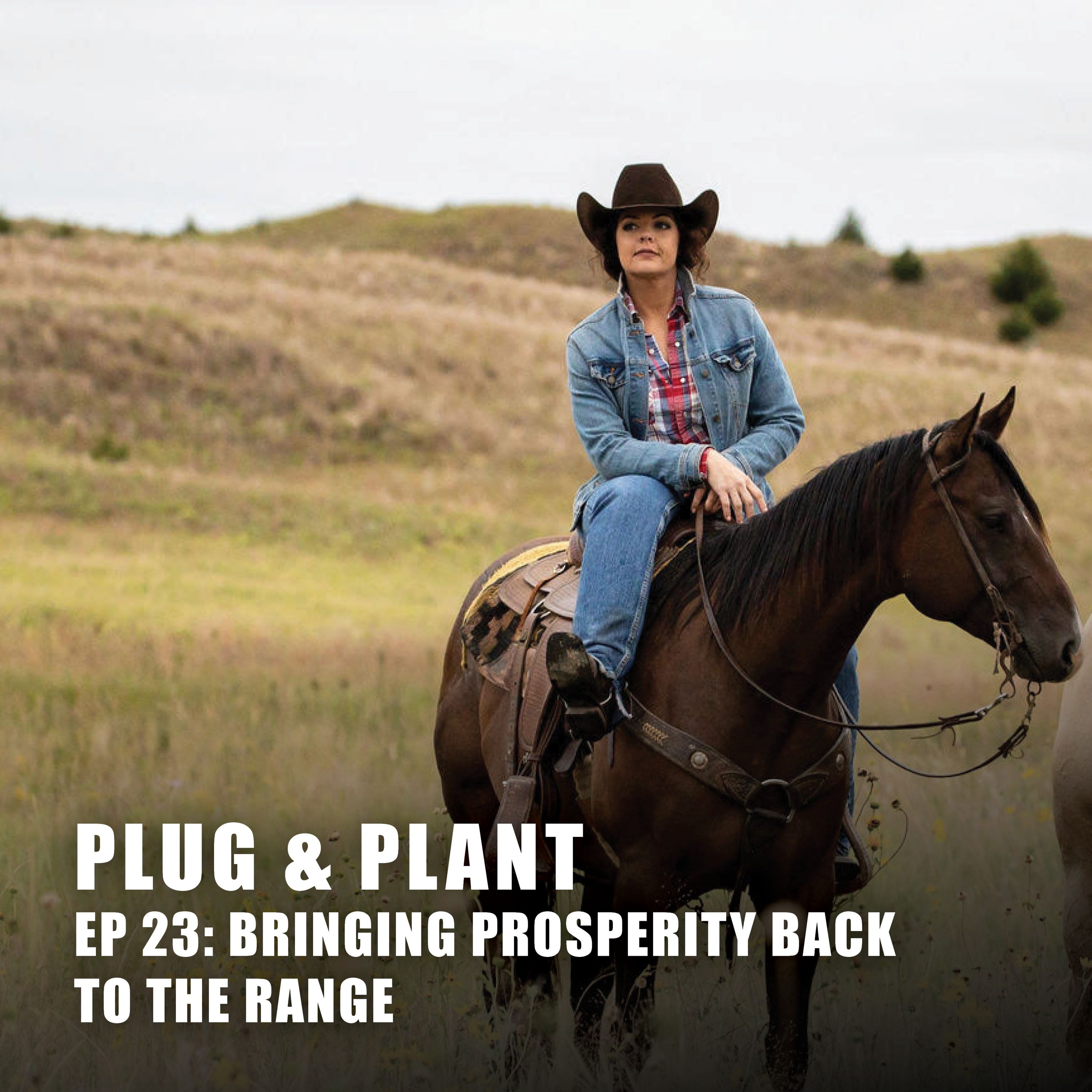
Ep 2323 Bringing Prosperity Back to the Range
It's often thought that being a rancher is a noble profession—but not one that easily pays the bills. In this episode, Jenita Qualm (current Farmers Network Pasture, Rangeland, and Forage Specialist) calls on us to question this old way of looking at the ranching profession and invites us to step into a reality where ranchers can take their fortune into their own hands.
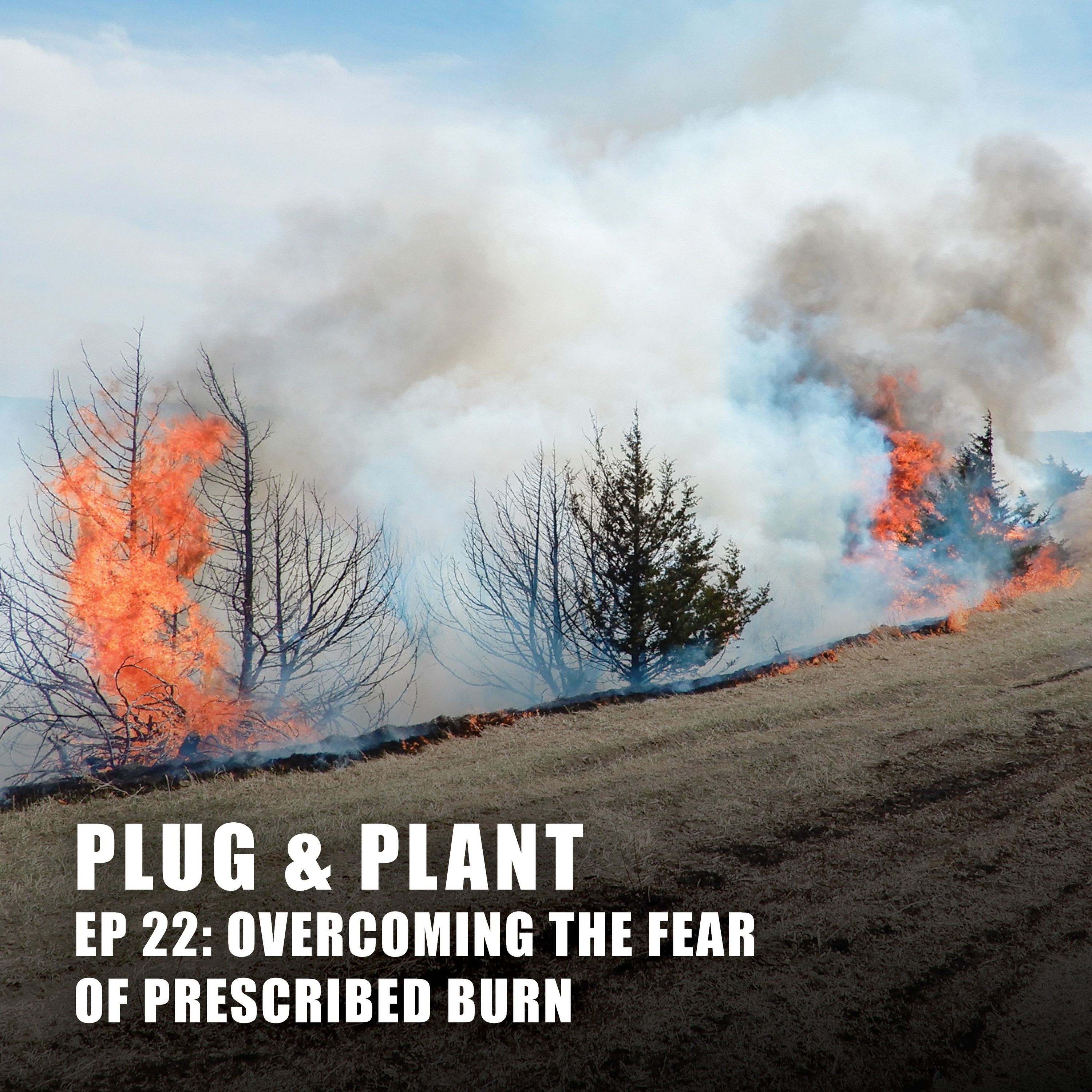
Ep 2222 Overcoming the Fear of Prescribed Burn
“The Eastern Red Cedar invasion is happening right in my backyard. It affects many of my friends, landowners, ranchers, and people I work with in the county." Sean Kelly, South Dakota State University (SDSU) Extension Range Management Field Specialist, Winner, South Dakota, discusses the process of a prescribed burn to showcase the safe use of fire to rid pastures of grass-choking and water-stealing red cedar trees.
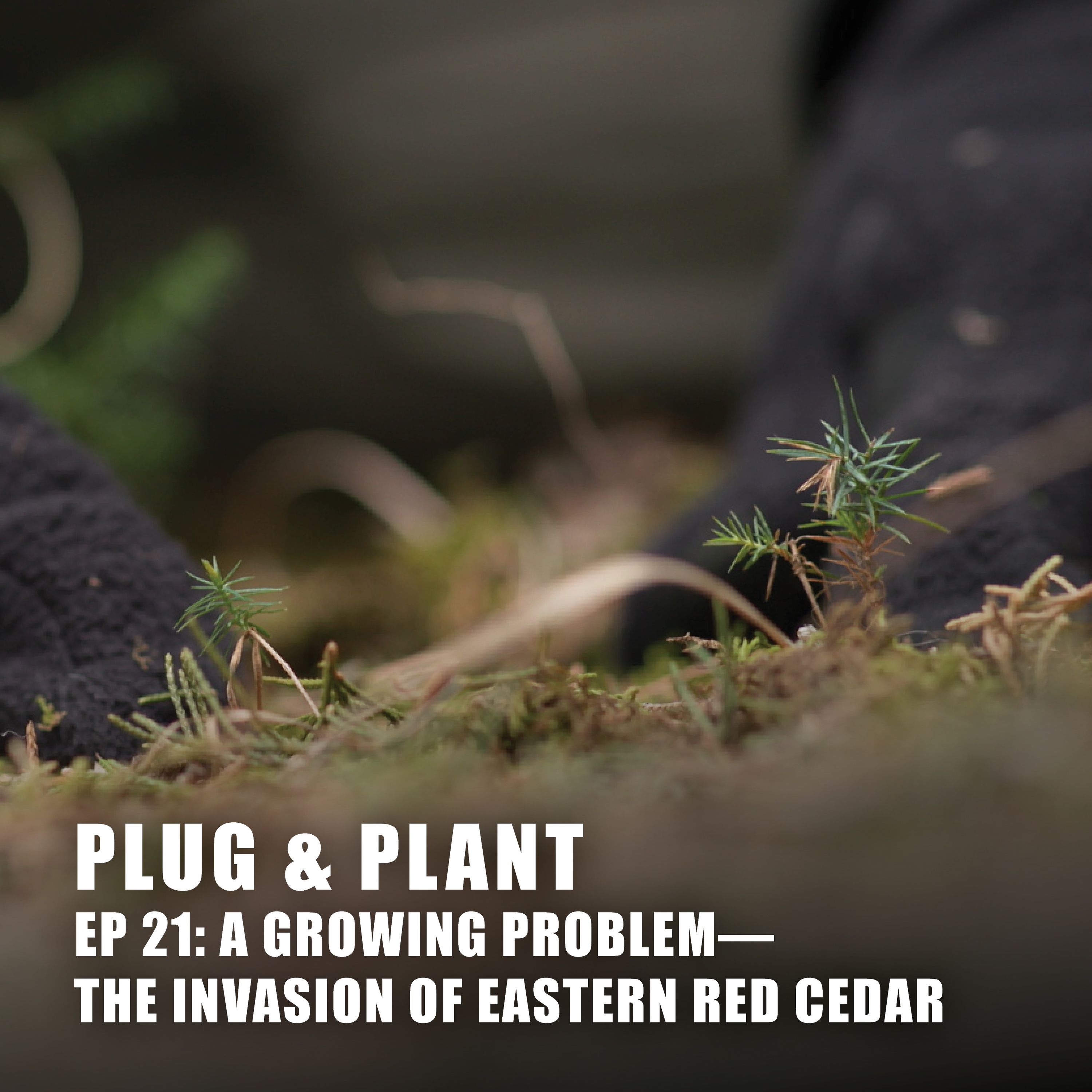
Ep 2121 A Growing Problem: The Invasion of Eastern Red Cedar
In this podcast Dr. Buz Kloot and Rangeland Management Specialist Rod Voss talk about the eastern red cedar (or green glacier) invasion and what it means to rangeland, the problems the invasion occurs and why its with us in South Dakota. After we discuss the problem (invasion of eastern red cedar) Rod walks us through the option of using fire (as opposed to simple mechanical treatment) and how this can be done safely through prescribed fire. Rod touches on the burn plan, which, if followed will reduce the risk of a wildfire. Apart from the burn plan, we also touch on how to prepare the land, and this depends on the size of trees you have, the concept of fuel load, fuel ladders (that’s where we have forests with trees of 20 ft and taller0 and the notion of fire return interval. Rod also gives a good explanation of why its important to control cedars when they are small, rather than wait for them to get big. Finally, Rod discusses why neighboring up in burn association is the only way we are going to get the eastern red cedar issue under control in South Dakota. Right now the Mid Missouri River Prescribed Burn association (Gregory, Charles Mix, Lyman and Brule Counties) is the only one of its kind in the state and we are going to have to see more burn associations organize to take care of this significant problem.
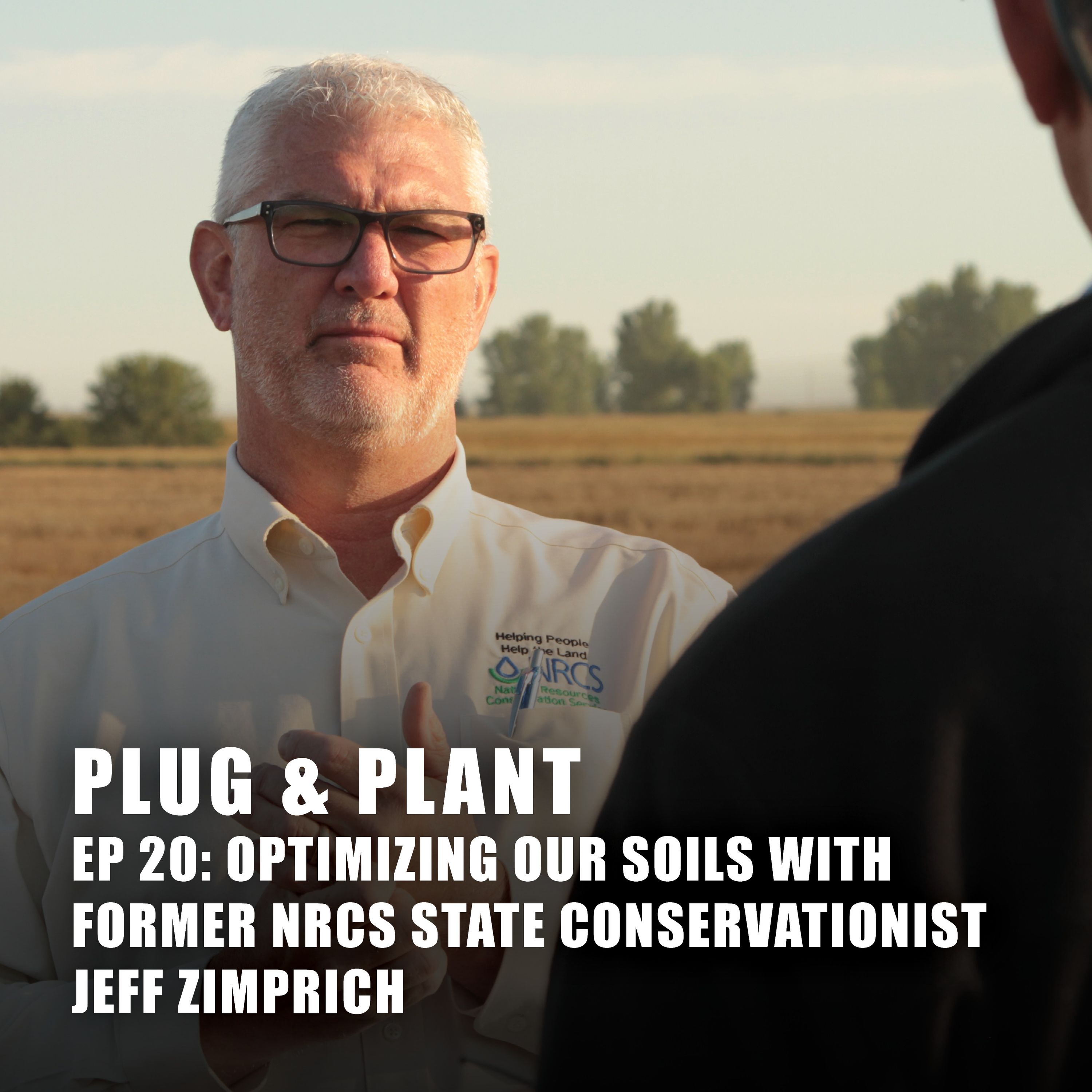
Ep 2020 Optimizing our Soils with Former NRCS State Conservationist Jeff Zimprich
“Soil health knows no bounds,' says Jeff Zimprich, the recently retired NRCS State Conservationist in South Dakota. "It can be accomplished on the front lawn and is alive and well in our grasslands and our croplands. But we can always do more to become more resilient to handle the weather patterns coming our way.” Hear the whole story of rangeland and cropland soil health from the former NRCS State Conservationist in this episode.
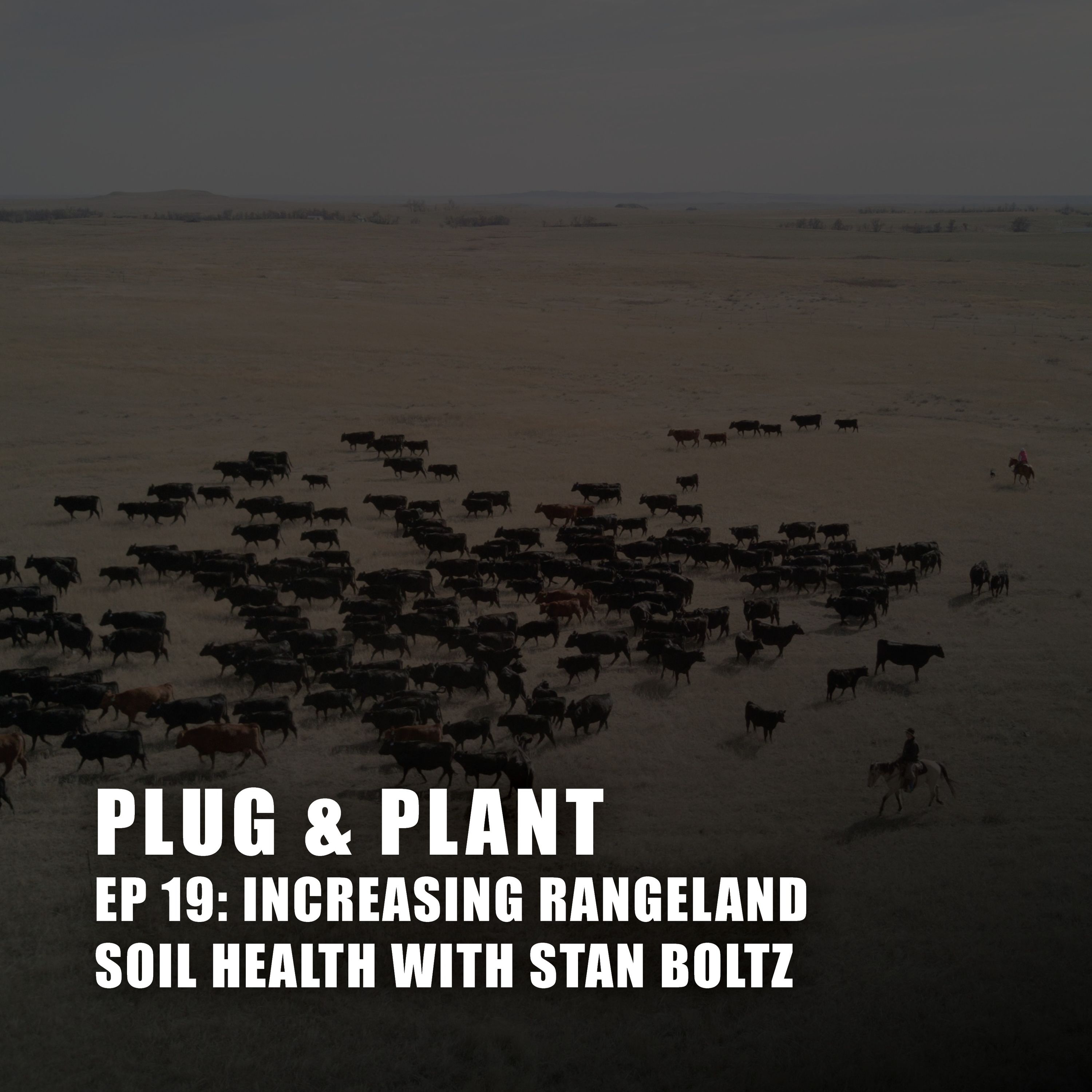
Ep 1919 Increasing Rangeland Soil Health with Stan Boltz
Stan Boltz, a USDA NRCS rangeland management specialist in South Dakota for 33 years, describes how healthy soil and cattle grazing management can reduce invasive species, bring back native rangeland and increase stocking rates. Listen to the podcast interview with Robin “Buz” Kloot on Growing Resilience podcasts or Soil Health Labs podcast.
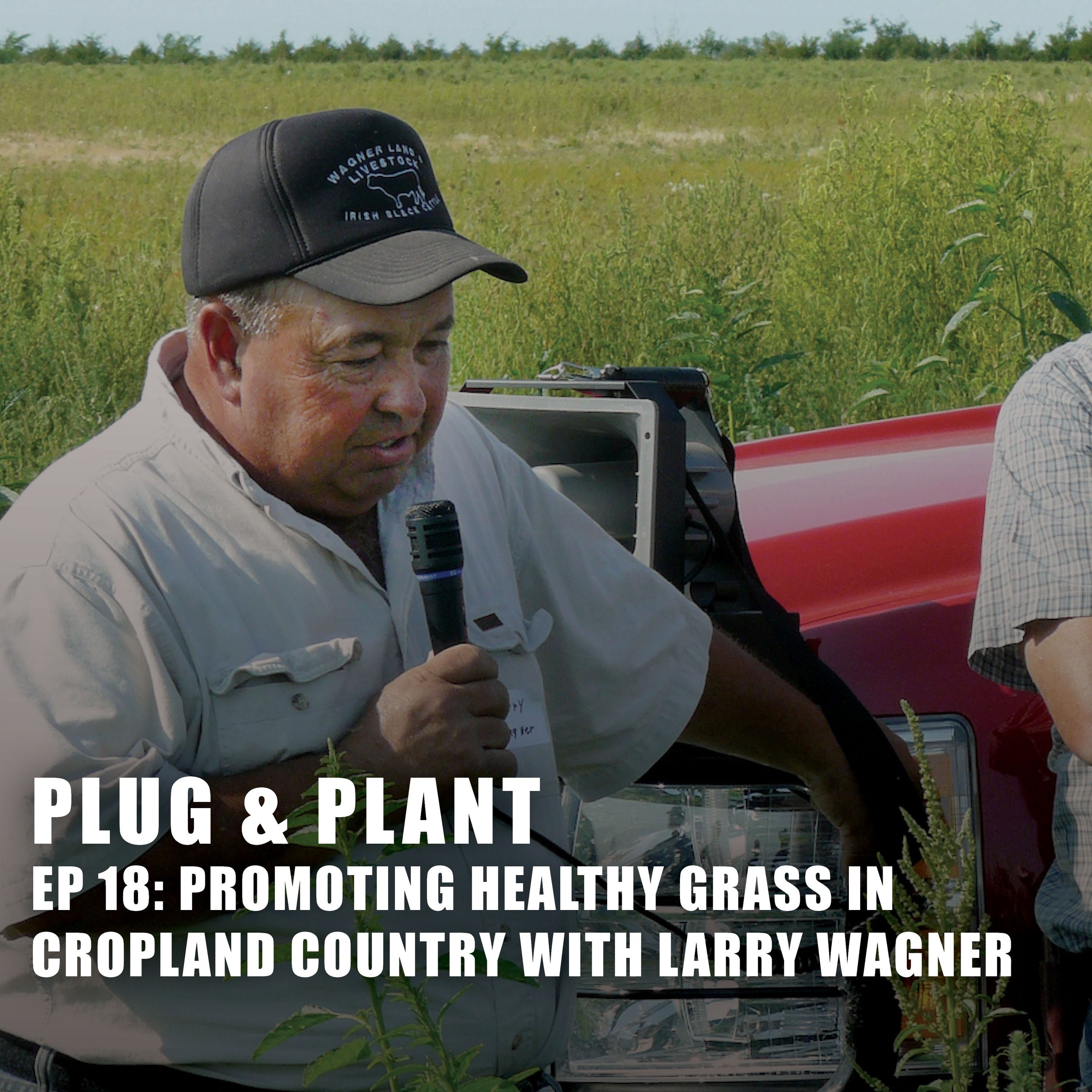
Ep 1818 Promoting Healthy Grass in Cropland Country with Larry Wagner
“Here in South Dakota, we always say we’re two weeks away from a drought. Having your soil in good condition in wet years helps store more water than having it runoff. You get through a really dry year pretty well.” Larry Wagner, a rancher who grows grass in cropland country southeast of Chamberlain, SD, has readily shared his journey to grassland health. Hear Larry's seasoned wisdom on promoting healthy, resilient soils in this episode!
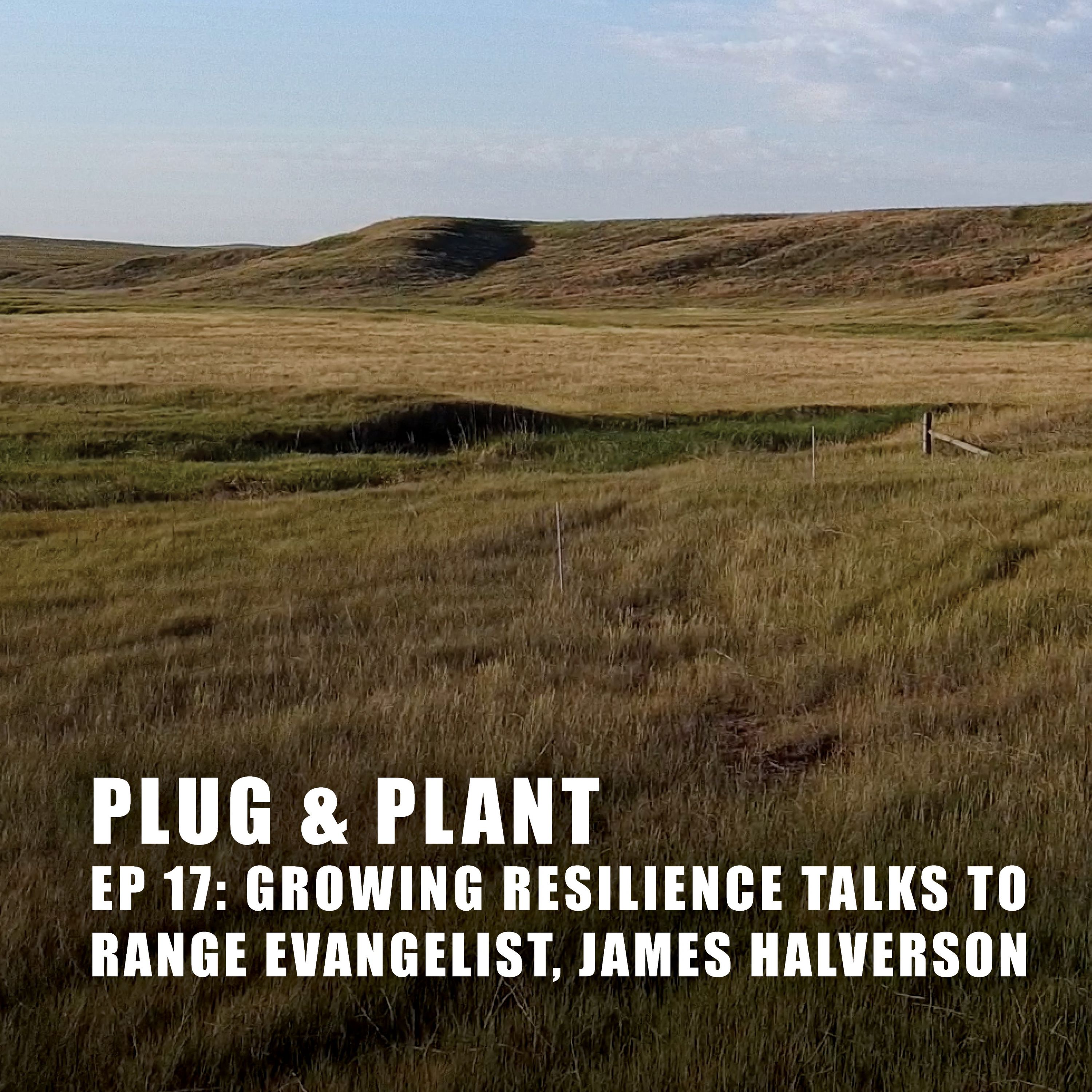
Ep 1717 Growing Resilience Talks to Range Evangelist, James Halverson
The Stockgrowers is a wonderful organization trying to do some great things, trying to help ranchers and help our independent cattle producers of this country and trying to save our rural towns, which are in decline. And so we need to help these things economically and ecologically. And I think those things can all work together in the future to help save the ranching industry and save our way of life. “ In this episode we talk to rangeland evangelist, James Halverson, executive director of SD Stockgrowers association. James, originally from eastern South Dakota, fell in love with the ranching lifestyle and rangeland when he was teaching ag education in Belle Fourche, SD. James’s opening statement (in quotes above) encapsulates so much of what James believes; namely helping independent producers, human communities, and improving ecological communities with livestock. James sees that by improving rangeland and soil health the health the financial well-being of the prosperity of the producer will follow. James can be contacted at the SD Stockgrowers Association at https://southdakotastockgrowers.org/
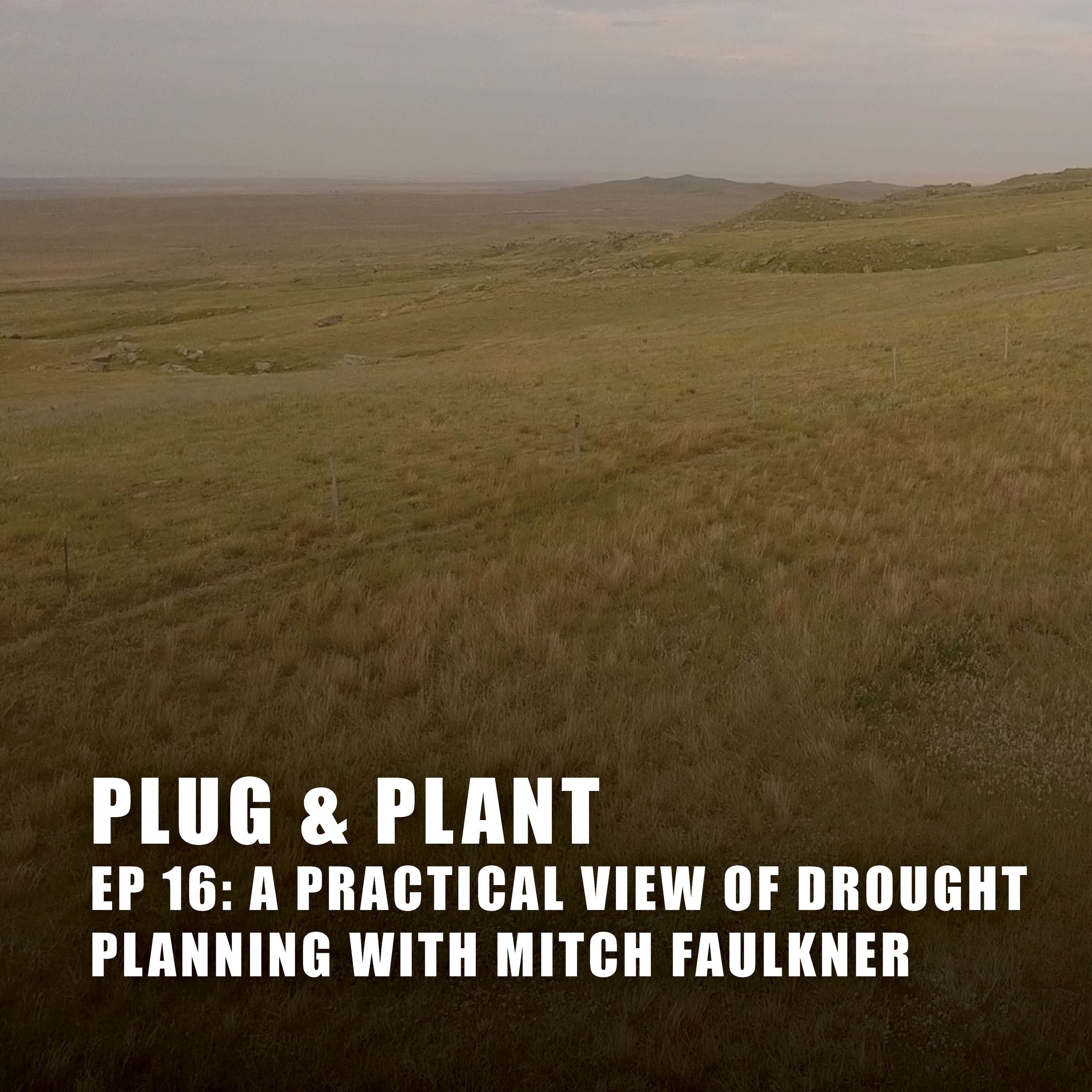
Ep 1616 A Practical View of Drought Planning with Mitch Faulkner
In this podcast we take a deep dive into drought management and the South Dakota Drought tool. Our guest is Mitch Faulkner, USDA Natural Resources Conservation Service (NRCS) Rangeland Management Specialist, out of Belle Fourche, SD where he talked to us about his own background in rangeland in dry areas, why we need to think of drought planning and how what happens aboveground affects the soils, especially in dry years. Mitch also does a nice job of Explaining the South Dakota Drought tool, a very simple-to-use Excel spreadsheet which is an excellent fist step to being proactive in drought management. Just search “South Dakota Drought Tool” to go download from the NRCS website site. At the time of this podcast’s release (March 2021), it looks like this growing season will be a dry one. Now is the best time to begin to think about drought planning to begin the process of building resilience on your operation– visit https://bit.ly/GrowingResilience for more information on drought planning. Remember the R’s for Rangeland Resilience: Rotate, Rest, Recover

Ep 1515 Integrating Drought Management with Jim Faulstich
Our guest, Jim Faulstich, producer from Highmore, SD, needs very little introduction. Jim takes us on a deep dive into how he integrates drought management planning in every aspect of his operation. Apart from 2019, Jim’s operation has always experienced a dry patch some time during the year and he is always prepared for that. While Jim always has a drought plan in place, his strategy to increase his land’s resilience to drought hinges around diversity which he discusses at length in the podcast. At the time of this podcast’s release (March 2021), it looks like this growing season will be a dry one. Now is the best time to begin to think about drought planning to begin the process of building resilience on your operation– visit https://bit.ly/GrowingResilience for more information on drought planning. Remember the R’s for Rangeland Resilience: Rotate, Rest, Recover
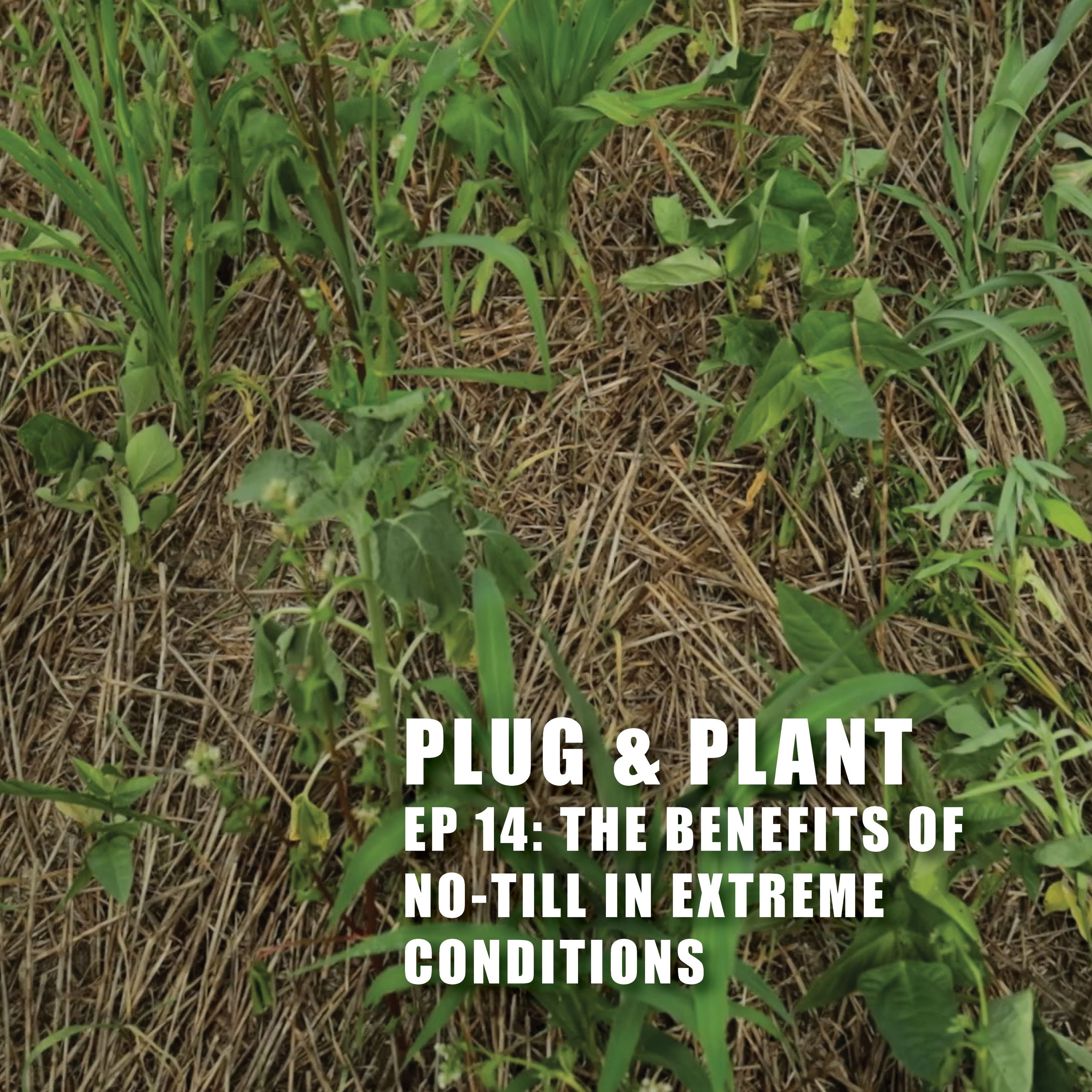
Ep 1414 The Benefits of No-Till in Extreme Conditions
This podcast is the sixth in the series 6 “Resilience” podcast series. We recorded this one in Crooks, SD the backdrop was the extremely wet weather on 2019. In this podcast, Kent Vlieger (NRCS-SD) facilitates a discussion with farmers Kurt Stiefvater, Ryan Larson, Nate Stroschein, Ross Hanson and SDSU’s field soils specialist Anthony Bly. We wanted to feature this episode because we were struck by the different reasons each farmer feels no-till is working for them. Ultimately this comes down to money and time and the general message from these farmers to others is that patience pays off! If you’d like to our selected video material from these conversations, please visit SD NRCS’s 'Growing Resilience with Soil Health' playlist on YouTube. This podcast was made possible by sponsorship from the USDA-NRCS in South Dakota. The views and opinions of the farmer participants expressed herein do not necessarily state or reflect those of the United States Government and shall not be used for advertising or product endorsement purposes. The USDA is an equal opportunity provider, employer and lender.
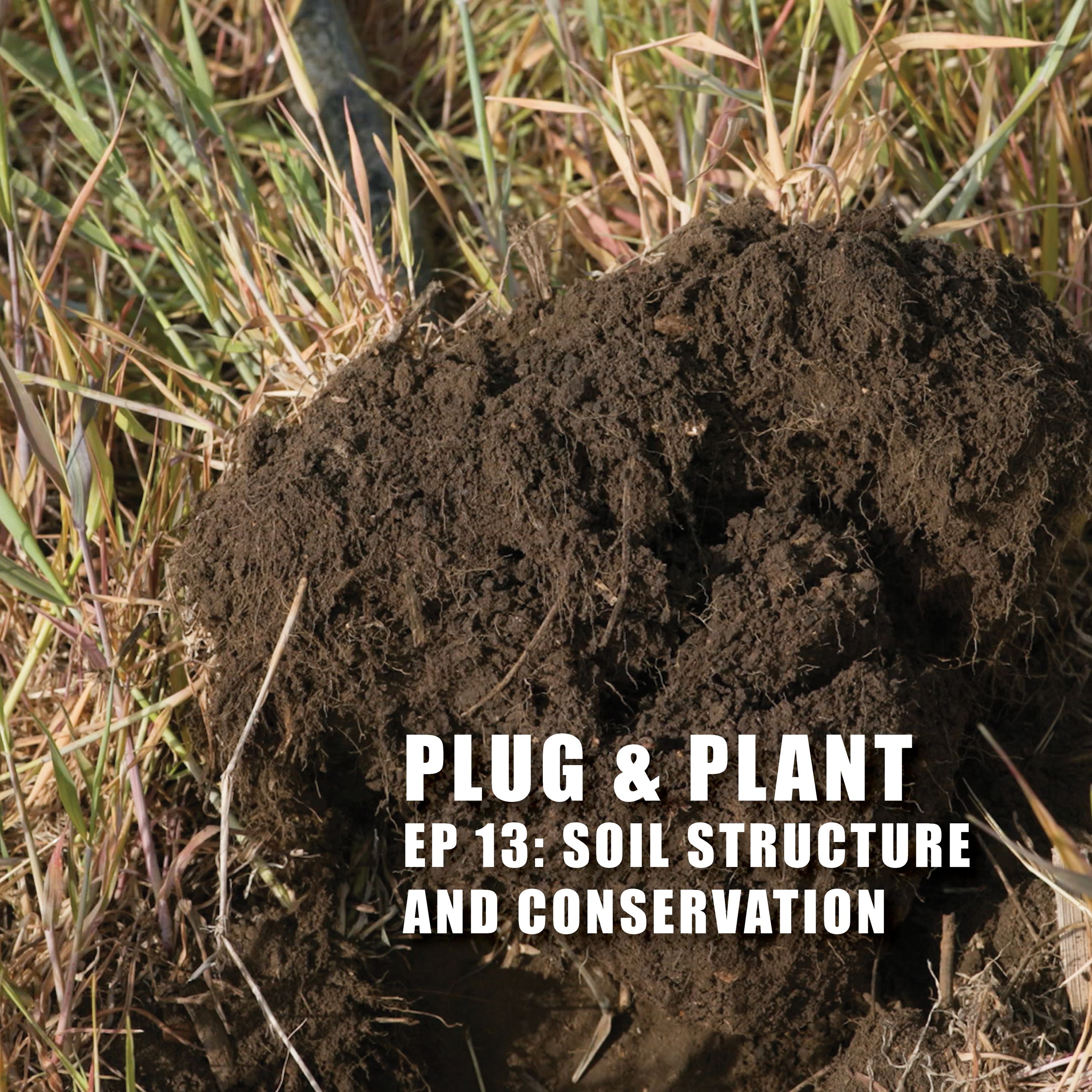
Ep 1313 Resilience (Soil Structure, Conservation)
This podcast is the fifth in the series 6 “Resilience” podcast series we recorded in Mitchell, SD (podcasts 1-5) and Crooks (Podcast 6), the backdrop was the extremely wet weather on 2019; at the time of recording the James River had frozen outside of it’s banks and there was every expectation of another wet summer. In this podcast, farmers Charlie Edinger, Daniel Harnisch, Craig Stehly and Bryce Rabenhorst discuss the ideas of resilience and soil structure in the context of their operations and the conversation also turns to the use of perennials in marginal areas. Charlie, Daniel, Craig and Bryce are joined by Kent Vlieger (facilitator) Brent Woods and Eric Barsness from the NRCS in South Dakota and by Sara Bauder from SDSU. If you’d like to our selected video material from these conversations, please visit SD NRCS’s 'Growing Resilience with Soil Health' playlist on YouTube. This podcast was made possible by sponsorship from the USDA-NRCS in South Dakota. The views and opinions of the farmer participants expressed herein do not necessarily state or reflect those of the United States Government and shall not be used for advertising or product endorsement purposes. The USDA is an equal opportunity provider, employer and lender.
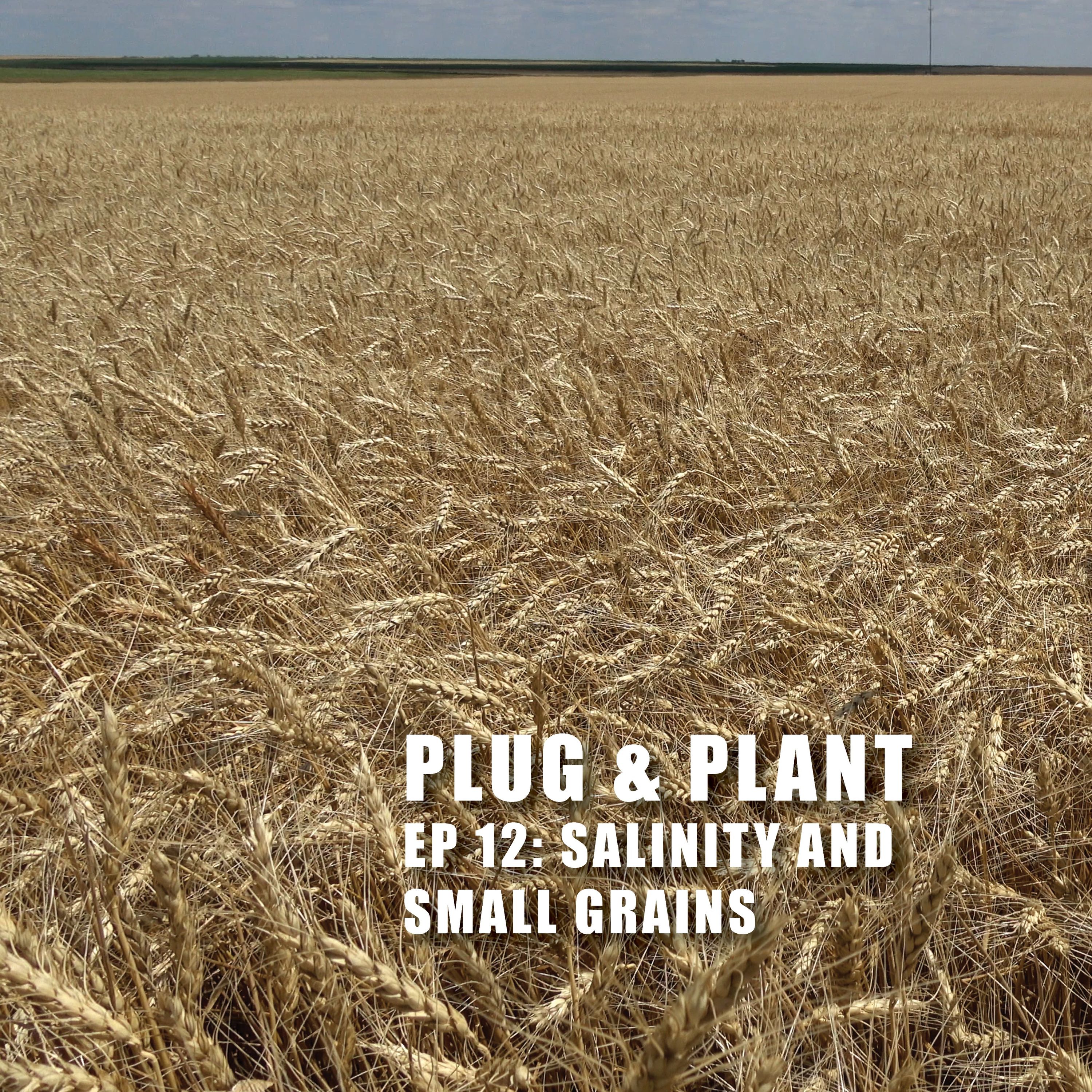
Ep 1212 Resilience (Salinity, Small Grains)
This podcast is the fourth in the series 6 “Resilience” podcast series we recorded in Mitchell, SD (podcasts 1-5) and Crooks (Podcast 6), the backdrop was the extremely wet weather on 2019; at the time of recording the James River had frozen outside of it’s banks and there was every expectation of another wet summer. In this podcast, farmers Charlie Edinger, Daniel Harnisch, Craig Stehly and Bryce Rabenhorst discuss salinity (a big issue in the James River Valley). Salinity is a multifaceted, long-term problem that needs understanding – the farmers talk about the use of perennials, livestock and the use of annuals to mitigate salinity, but it must be understood that there are no easy fixes. Young farmer, Bryce Rabenhorst asks his fellow farmers advice on how to include small grains into the rotation and keep the cash flow going. Charlie, Daniel, Craig and Bryce are joined by Kent Vlieger (facilitator) Brent Woods and Eric Barsness from the NRCS in South Dakota and by Sara Bauder from SDSU. If you’d like to our selected video material from these conversations, please visit SD NRCS’s 'Growing Resilience with Soil Health' playlist on YouTube. This podcast was made possible by sponsorship from the USDA-NRCS in South Dakota. The views and opinions of the farmer participants expressed herein do not necessarily state or reflect those of the United States Government and shall not be used for advertising or product endorsement purposes. The USDA is an equal opportunity provider, employer and lender.
Ep 1111 Resilience (Weeds, Covers and Termination)
This podcast is the third in the series 6 “Resilience” podcast series we recorded in Mitchell, SD (podcasts 1-5) and Crooks (Podcast 6), the backdrop was the extremely wet weather on 2019; at the time of recording the James River had frozen outside of it’s banks and there was every expectation of another wet summer. In this podcast, farmers Charlie Edinger, Daniel Harnisch, Craig Stehly and Bryce Rabenhorst discuss the nuts and bolts of cover crops including timing, seed mix selection, planting depth and seed size, and trafficability related to the use of covers. Charlie, Daniel, Craig and Bryce are joined by Kent Vlieger (facilitator) Brent Woods and Eric Barsness from the NRCS in South Dakota. If you’d like to our selected video material from these conversations, please visit SD NRCS’s 'Growing Resilience with Soil Health' playlist on YouTube. This podcast was made possible by sponsorship from the USDA-NRCS in South Dakota. The views and opinions of the farmer participants expressed herein do not necessarily state or reflect those of the United States Government and shall not be used for advertising or product endorsement purposes. The USDA is an equal opportunity provider, employer and lender.
Ep 1010 Plug and Plant - 2020 Planting Season and Priorities
This podcast is the second in the series 6 “Resilience” podcast series we recorded in Mitchell, SD (podcasts 1-5) and Crooks (Podcast 6), the backdrop was the extremely wet weather on 2019; at the time of recording the James River had frozen outside of it’s banks and there was every expectation of another wet summer. In this podcast, farmers Charlie Edinger, Daniel Harnisch, Craig Stehly and Bryce Rabenhorst discuss topics related to priorities for a wet 2020 growing season. Topics ranged from equipment to fallow syndrome, weeds versus cover crops and native prairie grasses. A good discussion of various ways of planting into covers (also planting green) emerge from this discussion. Charlie, Daniel, Craig and Bryce are joined by Kent Vlieger (facilitator) Brent Woods and Eric Barsness from the NRCS in South Dakota. If you’d like to our selected video material from these conversations, please visit SD NRCS’s 'Growing Resilience with Soil Health' playlist on YouTube. This podcast was made possible by sponsorship from the USDA-NRCS in South Dakota. The views and opinions of the farmer participants expressed herein do not necessarily state or reflect those of the United States Government and shall not be used for advertising or product endorsement purposes. The USDA is an equal opportunity provider, employer and lender.
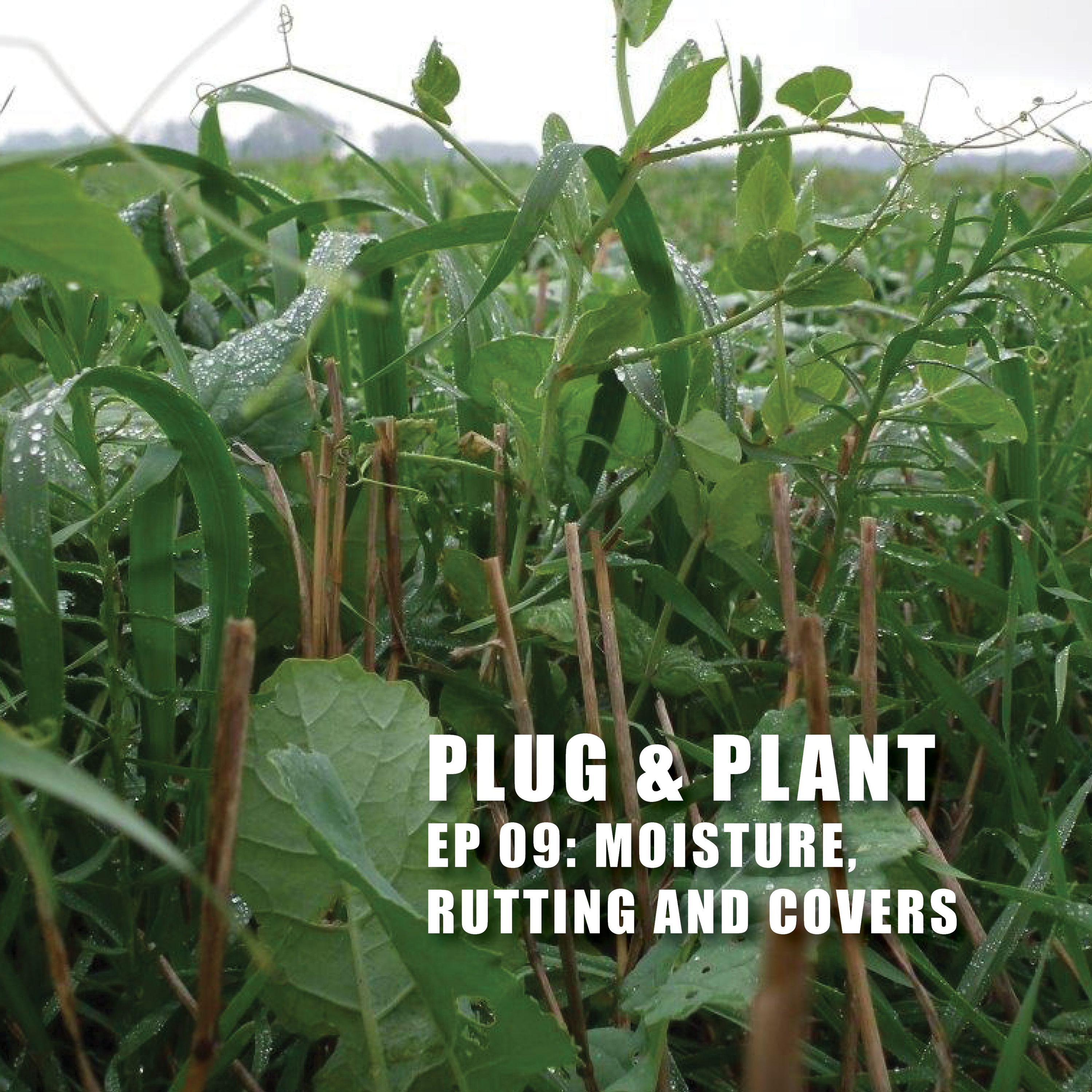
Ep 909 Plug and Plant - Moisture, Rutting and Covers
This podcast is the first in the series 6 “Resilience” podcast series we recorded in Mitchell, SD (podcasts 1-5) and Crooks (Podcast 6), the backdrop was the extremely wet weather on 2019; at the time of recording the James River had frozen outside of it’s banks and there was every expectation of another wet summer. In this podcast, we are joined by farmers Charlie Edinger, Daniel Harnisch, Craig Stehly and Bryce Rabenhorst and well and Kent Vlieger (facilitator) Brent Woods and Eric Barsness from the NRCS in South Dakota. The discussion centered around some of the operational frustrations that were experienced (rutting, planting difficulties) in the James River Valley during the extremely wet summer of 2019 and toward the end of the podcast the discussion moved toward using cover crops to manage moisture. If you’d like to our selected video material from these conversations, please visit SD NRCS’s 'Growing Resilience with Soil Health' playlist on YouTube. This podcast was made possible by sponsorship from the USDA-NRCS in South Dakota. The views and opinions of the farmer participants expressed herein do not necessarily state or reflect those of the United States Government and shall not be used for advertising or product endorsement purposes. The USDA is an equal opportunity provider, employer and lender.

Ep 808 Plug and Plant - Jesse Hall
In this episode, we sit down with Jesse Hall out of Arlington, South Dakota to explore his journey into no-till, cover crops and livestock integration!
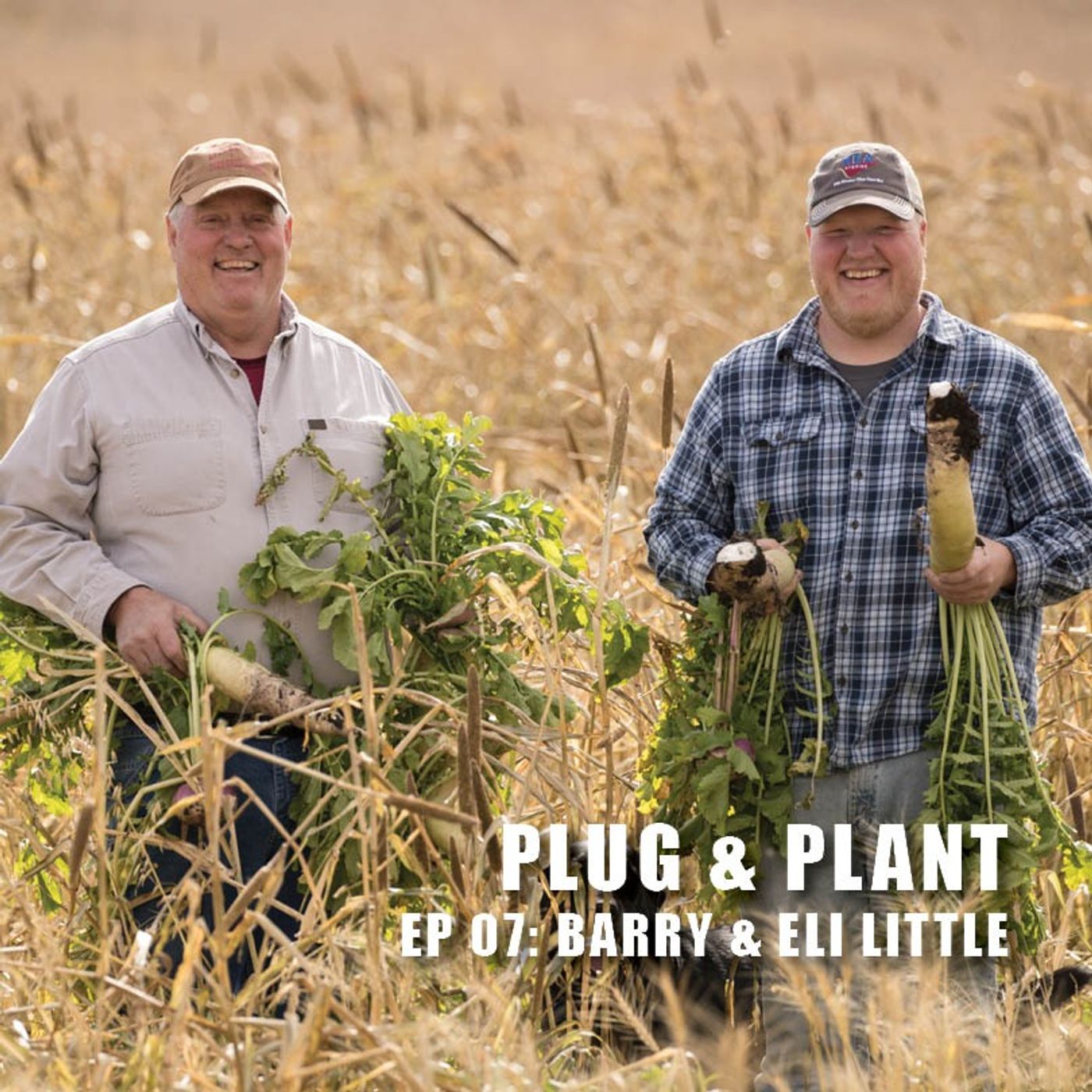
Ep 707 Plug and Plant - Barry and Eli Little
We sit down with regenerative farmers Barry and Eli Little out of Castlewood, South Dakota to discus soil health, cover crops, livestock and economics.
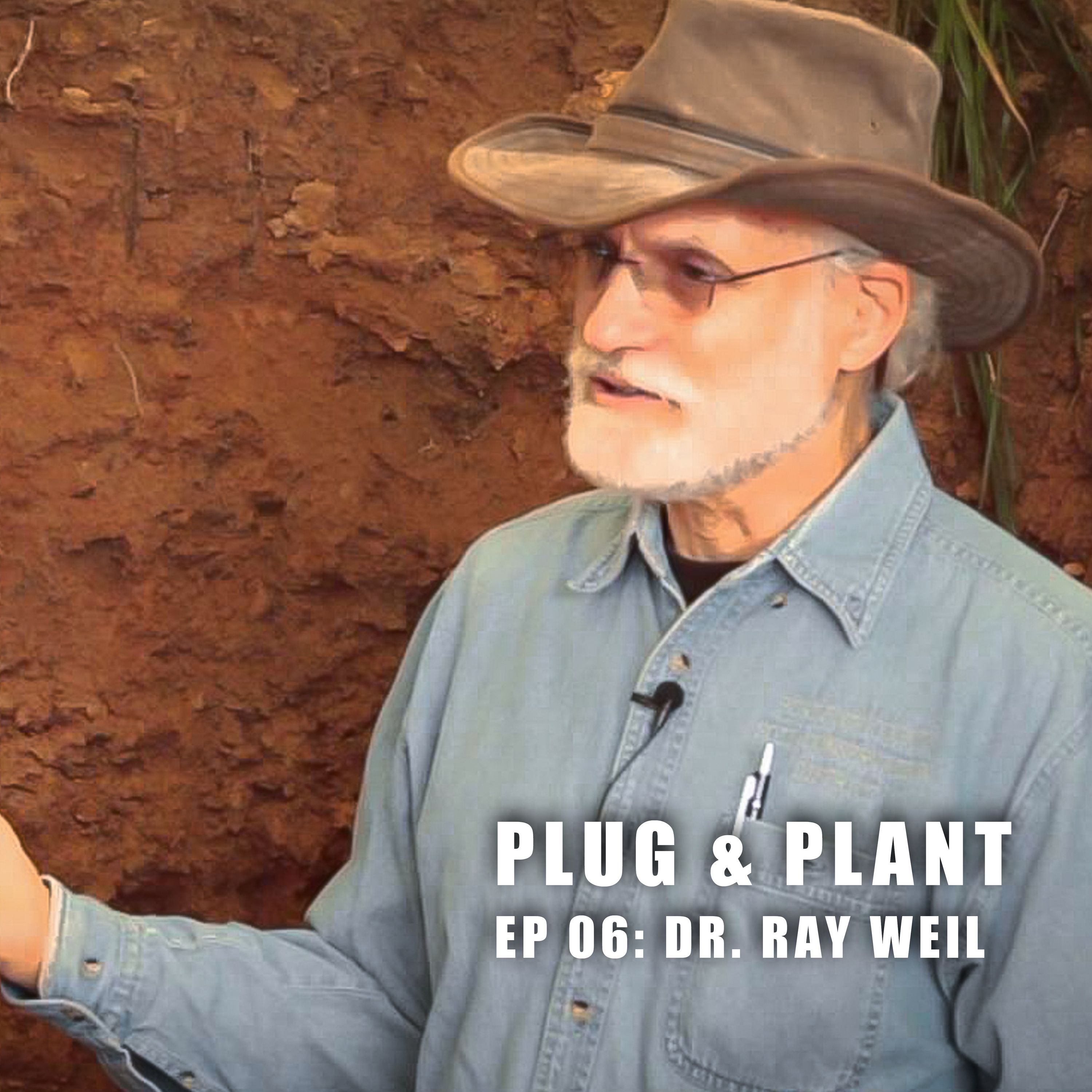
Ep 606 Plug and Plant - Dr. Ray Weil
In this podcast, we sit down with soil scientist Dr. Ray Weil. Dr. Weil is a leader in researching and promoting the adoption of more sustainable agricultural systems in both industrial and developing countries. His research focuses on soil organic matter management for enhanced soil ecosystem functions and nutrient cycling for water quality and agricultural sustainability.
Ep 505 Plug and Plant - Dr. Kris Nichols (2/2)
Dr. Kristine Nichols is a world-renowned leader in the movement to regenerate soils for healthy food, healthy people and a healthy planet. Hear our chat with Dr. Nichols where she unpacks the benefits of regenerative agriculture for healthy soils in this second part of our two-part interview.
Ep 404 Plug and Plant - Dr. Kris Nichols (1/2)
Dr. Kristine Nichols is a world-renowned leader in the movement to regenerate soils for healthy food, healthy people and a healthy planet. Hear our chat with Dr. Nichols where she unpacks the benefits of regenerative agriculture for healthy soils!
Ep 303 Plug and Plant - Dr. Mark Liebig (2/2)
USDA-ARS Soil Scientist Dr. Mark Liebig shares with us his insights on crop diversity and the benefits of dynamic cropping systems.
Ep 202 Plug and Plant - Dr. Mark Liebig (1/2)
Mark Liebig, Research Soil Scientist with the USDA-ARS in Mandan, ND shares with us some of his insights on crop diversity.
Ep 101 Plug and Plant: Dwayne Beck
Dwayne Beck, Research Manager at the Dakota Lakes Research Farm, sits down with us to discuss everything soil health... or as he likes to put it, "soil resiliency"!