
Show overview
Soil Health Labs has been publishing since 2018, and across the 8 years since has built a catalogue of 94 episodes. That works out to roughly 80 hours of audio in total. Releases follow a monthly cadence.
Episodes typically run thirty-five to sixty minutes — most land between 36 min and 1h 2m — though episode length varies meaningfully from one episode to the next. None of the episodes are flagged explicit by the publisher. It is catalogued as a EN-language Science show.
There hasn’t been a new episode in the last ninety days; the most recent episode landed 5 months ago. The busiest year was 2024, with 19 episodes published.
From the publisher
The Soil Health Labs are located in the Environmental Health Sciences Department in the School of Public Health at the University of South Carolina. That may be surprising to most, especially since the University of South Carolina has no Ag School! Our mission is to promote soil health, not only as something that’s good for the farmer and the environment, but we also want to highlight soil health as a public health tool. Think about it. Healthy soils and healthy crops, mean healthy farmers and consumers, never mind an ever-improving environment. One idea we are embracing is that of Regenerative Farming where we embrace the idea that if farmers change the way they manage the soils, they can actually improve, or regenerate environmental conditions through less disturbance, keeping soils covered with residue or canopies, keeping live roots I the soil year round and be reintroducing animals into the whole system. While we cut our teeth promoting soil health through video and social media (Soil Stories; Under Cover farmers: Science of Soil Health; Merit or Myth; Growing Resilience) we do have several research and outreach projects that we are doing with farmers in South Carolina.
Latest Episodes
View all 94 episodesTop Drought Strategies That Help Farms and Ranches Recover Faster
The Drought Playbook for Resilient Farms and Ranches
Soil Salinity Solutions: What Farmers Can Do Right Now
Ep 91Soil Salinity: The Biggest Problem Growing in Your Fields
Salinity hasn’t gone away—and in some parts of South Dakota, it may be setting up for a comeback. In this short, focused episode, Buz Kloot sits down with conservationist Shane Jordan to unpack why conditions are aligning for salinity to re-emerge as a serious issue this year. What looks like a dry start may actually be the trigger for something deeper—literally. This episode sets the stage for understanding the problem before diving into solutions in Part 2. What You’ll Learn Why last year’s wet conditions are still affecting fields today How a rising water table + dry conditions can amplify salinity The role of capillary rise in bringing salts to the soil surface Why bare soil and lack of living roots make the problem worse How management decisions (tillage, crop loss, inputs) contribute to risk Why salinity is ultimately a water cycle problem, not just a soil issue “When we get a really wet year followed by a dry one… we actually see a lot of these salts get enhanced.” Key Insight Salinity is not just a patch problem—it’s a systems problem. What shows up as a white patch in a field is often just the symptom. The cause lies in how water moves (or doesn’t move) across the entire landscape. Why This Year Is Different Extremely wet conditions in parts of the region last year (30+ inches in some areas) Saturated soils leading to elevated water tables Limited plant growth or destroyed crops in affected areas Fields left bare and vulnerable to evaporation Early signs of a potentially dry season Together, these create the perfect conditions for salts to move upward and accumulate at the surface. What to Watch For This Spring Areas with standing water last year Field edges near wetlands, ditches, and drainages Spots where crops were stressed, drowned out, or chemically terminated Expanding patches of white or crusted soil Learn More We’ve compiled practical resources, videos, and producer insights here: 👉https://www.growingresiliencesd.com/soilsalinity Coming Next (Part 2) In the next episode, we move from problem to practice: What you can do right now to slow salinity Short-, medium-, and long-term strategies Why early intervention makes all the difference About Shane Jordan Shane Jordan is a Resource Conservationist with the NRCS Brookings Area Ecological Team, specializing in salinity management, soil health, and whole-farm conservation planning. He grew up on a diversified farm in Iowa and holds a B.S. in Range Management from South Dakota State University. Over a career spanning more than three decades, Shane has worked across the Northern Plains in roles including range conservationist, district conservationist, and watershed project specialist. He served 23 years as District Conservationist in Redfield, South Dakota, working directly with producers to implement conservation systems on working lands. In 2025, Shane was awarded the Hugh Hammond Bennett National Planner Award, one of NRCS’s highest honors. The award recognizes outstanding leadership in conservation planning, long-term commitment to working with landowners, and excellence in applying resource management to real-world agricultural systems. Known for his practical, relationship-based approach, Shane emphasizes whole-system thinking—helping producers move beyond treating symptoms to addressing the underlying causes of resource challenges.
Ep 90Agroecologist: Why Crop Rotations Outperform Both Tillage and No-Till in Long-Term Studies
This is a short-form episode featuring Natalie Sturm, pulled from our recent interview and focused on one of the most important—and often overlooked—drivers of soil health: crop rotations.We’re launching these short-form episodes to better serve our audience. Instead of listening to a full 60–90 minute conversation, you can now jump straight into the most valuable insights—practical, research-backed takeaways you can apply immediately.In this segment, Natalie explains why the tillage vs. no-till debate misses the bigger picture. Drawing from her research at the Dakota Lakes Research Farm, she shares how two side-by-side no-till fields—managed with the same equipment and soil type—can perform completely differently based on rotation history alone. The difference shows up not just in yields, but in soil structure, organic matter, and resilience.For the full interview with Natalie, please stream the long-form episode here.Natalie Sturm didn’t grow up in agriculture—she’s originally from suburban Chicago. Her early concern for climate, biodiversity, and human health led her to Montana State University, where she earned a B.S. in Agroecology through the Sustainable Food and Bioenergy Systems program.She went on to complete her M.S. at South Dakota State University, studying long-term no-till crop rotations at Dakota Lakes Research Farm. Her thesis demonstrated that rotation diversity, small grains, cover crops, and livestock are key to improving soil quality and yields—not just no-till.Natalie is currently pursuing a Ph.D. at Washington State University, where she studies the effects of cropping systems on soil compaction in the Palouse region. In 2025, she will return to Dakota Lakes as its new Research Farm Manager.📌 Resources Mentioned in This Episode:📄 Natalie’s full M.S. thesis: “It’s Not Just No-Till: Crop Rotations Are Key to Improving Soil Quality and Grain Yields at Dakota Lakes Research Farm”👉Read or download here🎥 Natalie’s video on crop rotations👉Watch here on Dakota Lakes site🎥 Dakota Lakes 2020 Virtual Field Day Playlist (20 videos)👉View full playlist here📝 Related Blog Post:Beyond No-Till: Why Crop Rotations Matter More Than You Think👉Read the blog post
Ep 84Rethinking No-Till: Why Rotations, Residue, and Diversity Matter More Than We Thought
Guest: Natalie SturmHosts: Dr. Buz Kloot and Dr. Gabe KenneRunning time: 62 mins“We could take a shovel, and shovel up some soil in one field, and then just go across the dirt road, and the soils would look completely different... it kind of blew my mind that the only difference between those two fields was the crop rotation they had been under for the past 20 to 30 years.”—Natalie SturmEpisode Summary:Natalie Sturm is a rising voice in cropping systems and soil health. She joins us to reframe the tillage conversation—not as a binary between conventional and no-till, but as part of a broader system that includes crop rotation, residue management, livestock integration, and long-term soil function. Drawing on her M.S. research at the Dakota Lakes Research Farm, Natalie shares insights about why no-till alone isn’t enough and how thoughtful rotation design can drive both soil quality and profitability.We talk about:Why two side-by-side no-till fields can look dramatically differentHow biomass, not just crop diversity, builds better soilsThe drought resilience of long rotationsHow longer rotations can reduce herbicide and pesticide useThe economics of dryland vs. irrigated systemsPractical tips for transitioning into more resilient systems, one step at a timeNatalie's journey from suburban Chicago to the helm of Dakota LakesFeatured Guest Bio:Natalie Sturm didn’t grow up in agriculture—she’s originally from suburban Chicago. Her passion for climate, biodiversity, and human health led her to Montana State University, where she earned a B.S. in Agroecology. She then completed her M.S. at South Dakota State University studying long-term no-till crop rotations at Dakota Lakes Research Farm. Natalie is currently pursuing a Ph.D. at Washington State University on the effects of cropping systems on soil compaction in the Palouse region. In 2026, she will return to Dakota Lakes as its new research farm manager.📌 Resources Mentioned in This Episode:📄 Natalie’s full M.S. thesis: “It’s Not Just No-Till: Crop Rotations Are Key to Improving Soil Quality and Grain Yields at Dakota Lakes Research Farm”👉Read or download here🎥 Natalie’s video on crop rotations👉Watch here on Dakota Lakes site🎥 Dakota Lakes 2020 Virtual Field Day Playlist (20 videos)👉 View full playlist here📝 Related Blog Post:Beyond No-Till: Why Crop Rotations Matter More Than You Think👉Read the blog postAdditional Resources:✨ BONUS ARTICLE: What Are We Really Arguing About When We Talk About Tillage: growingresiliencesd.com/post/what-we-re-really-arguing-about-when-we-talk-about-tillage
Ep 87A Path for Grassland Restoration that Benefits Producers, Land and Wildlife
Featuring:Liz Kierl, Executive Director, Second Century Habitat FundBuz Kloot, Soil Health Lab, University of South CarolinaJoe Dickie, Videographer and Conservation Storyteller, Soil Health Lab📝 Episode SummaryIn this episode, we sit down with Liz Kierl, Executive Director of the Second Century Habitat Fund (SCHF), to talk about one of South Dakota’s most effective and underappreciated conservation tools: the Working Lands Habitat Program. Liz unpacks how this unique initiative blends private lands stewardship, strategic habitat restoration, and flexible grazing options—all while keeping landowners in the driver’s seat.With videographer and conservation storyteller Joe Dickie sharing observations from years of working alongside ranchers, and Buz guiding the conversation, we explore how pheasants, pollinators, and producers all benefit when marginal cropland is converted back to native grasses and forbs. Liz also shares how SCHF’s funding model—including the famous Can-Am raffles—is helping build a lasting conservation legacy.Whether you're a landowner curious about signing up, or someone who just loves South Dakota’s prairies, this is a conversation about habitat that works with producers, not against them. 🔑 Key TopicsThe mission of the Second Century Habitat FundWhy marginal cropland is key to grassland restorationWhat makes the Working Lands Habitat Program different (hint: haying, grazing, and seed incentives)How Can-Am raffles and habitat decals help fund conservationLiz’s personal connection to hunting, habitat, and heritageThe South Dakota habitat funding model: voluntary, local, effective🧑🌾 Guest Bio: Liz KierlLiz Kierl is Executive Director of the Second Century Habitat Fund, a nonprofit dedicated to restoring South Dakota’s grasslands and sustaining wildlife through voluntary private lands partnerships. Originally from Nebraska, Liz grew up in a family of pheasant hunters and conservationists. She brings deep experience in nonprofit leadership, fundraising, and landowner outreach.Since taking the helm at SCHF, Liz has expanded fundraising programs (like the Can-Am UTV raffles), built partnerships with agencies and NGOs, and helped landowners tap into the powerful incentives of the Working Lands Habitat Program—an effort that aims to restore grassland on over 100,000 acres.Additional Resources:✨BONUS ARTICLE: What Are We Really Arguing About When We Talk About Tillage: growingresiliencesd.com/post/what-we-re-really-arguing-about-when-we-talk-about-tillage
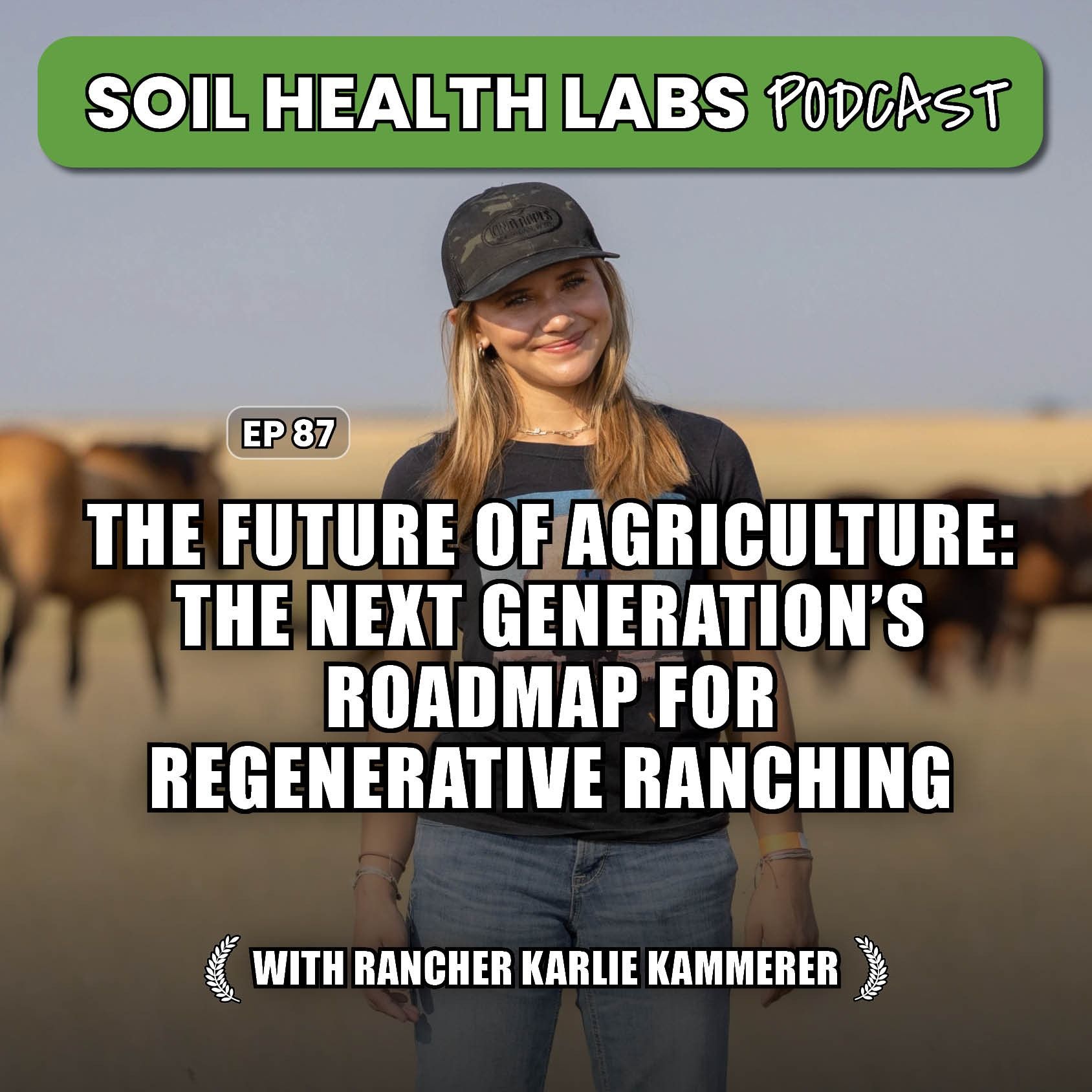
Ep 84The Future of Agriculture: The Next Generation’s Roadmap for Regenerative Ranching
In this episode, Joe Dickie and Buz Kloot sit down with Karlie Kammerer, a rising senior from western South Dakota whose wisdom and clarity around regenerative ranching belies her age. Karlie grew up on a cow-calf operation near Rapid City where her family, including parents Riley and Jimmie and sisters Katelyn and Kimball, is embracing holistic management and regenerative agriculture with open arms—and open minds.Though still in high school, Karlie has already presented at national rangeland competitions, been a featured voice in Amazing Grasslands, and dreams of running a consulting business with her dad (where he’ll work for her, of course). In this episode, Karlie shares what she’s learning on the land and in the classroom—lessons about livestock, soil health, and the importance of context, context, context.But she doesn’t stop there.We talk about how her dad’s paradigm shift reshaped their entire operation—allowing both her parents to come home full-time to the ranch—and how the mental and spiritual health of the family improved alongside the land. Karlie reflects on the influence of mentors like Mitch Faulkner and the power of intergenerational learning. She shares her thoughts on what the ag industry needs to do to keep young people not just interested—but inspired.You’ll hear Karlie speak with grace, humor, and a refreshing blend of scientific precision and deep, soulful connection to land. As she says: “We look at things on a microscopic level and at a huge level—and I think with all of us, it's like, how could there not be a Creator?”Whether you're a seasoned rancher, new to regenerative ag, or simply curious what the future looks like, this conversation will leave you hopeful—and maybe even a little humbled.Highlights:Karlie’s family’s transition from conventional to regenerative ranchingThe spiritual and emotional transformation of the land and peopleWhy livestock integration and context are critical for soil healthHow Karlie overcame public speaking fears to win a national rangeland competitionThe enduring influence of mentors like Mitch FaulknerA vision for the future of agriculture—and the role of young people in shaping itQuote of the Episode:“We all kind of have that further appreciation and understanding for something that isn't quite of this world... You feel something different when you're around animals and surrounded by pasture. I couldn’t explain it—but you feel at peace.” — Karlie Kammerer🎧 Listen now and meet a young woman whose voice is already shaping the range.Karlie’s Advice for Aspiring RanchersIf you're a young person interested in rangeland management or regenerative ranching, here are a few things that helped me on my journey:SD Grassland Coalition: The SDGC provided me with numerous learning opportunities that not only helped light my spark for range but also educated me about a lot of what I know about the topic.Society for Range Management High School Youth Forum (SRM HSYF): The speaking competition that I won was put on by the SRM HSYF. This link directs you to the 2023 winners (note that they haven't updated it for 2024 and 2025), where you can read their essays and find the necessary information for the competition itself.SD Rangeland and Soil Days: This is the competition in which I won the state delegate position for SRM HSYF. You need to win something in your state (whether that's a Rangeland Days, FFA competition, speaking, or essay competition... it depends on the state) to go on and compete at the national level.Reach out to NRCS and local ranchers who are practicing regenerative or holistic management and ask if you can tag along and learn.Find learning and speaking opportunities near you. The more you learn, the better!Additional Resources:Our Amazing Grasslands - Young and Upcoming Generations Feature: youtube.com/watch?v=S_VlBwG9aks&ab_channel=USDANRCSSouthDakota✨ BONUS ARTICLE: What Are We Really Arguing About When We Talk About Tillage: growingresiliencesd.com/post/what-we-re-really-arguing-about-when-we-talk-about-tillage
Ep 86How Ranchers are Reviving Native Grasslands and Creating More Resilient Operations
🧲 Quotable Quotes “When people don't understand much about the prairie, it just kind of looks like this monolith… just one FLAT thing. But really, it's like an old growth forest — full of life.” - Kate Rasmussen“Once you learn about it, your brain can look for it — and it completely changes how you see your place.” - Kate Rasmussen👩🌾 Meet Our GuestKate Rasmussen grew up ranching in the South Dakota Badlands on her family's cattle operation. Today, she's a Grasslands Conservationist with the World Wildlife Fund (WWF) based out of Spearfish, SD. Drawing from deep personal experience, Kate bridges the worlds of wildlife conservation and sustainable ranching across South Dakota, Montana, Nebraska, and Wyoming.🌾 Episode Highlights🐄 Reconciling Ranching and ConservationKate speaks candidly about the lingering perception that livestock and conservation are at odds.Through WWF’s Sustainable Ranching Initiative, she’s helping producers see how managing for wildlife and profit can go hand in hand.Her team works at the intersection of grazing management, prairie restoration, and community resilience.💡 Program Spotlight: WWF’s Sustainable Ranching InitiativeKate outlines two core programs:Grassland Reseeding Program: Funds and supports native reseeding efforts with technical guidance.RSVP (Ranch Systems and Viability Planning): Offers infrastructure cost-share, education stipends, ecological monitoring, and peer networking.📍 Geography MattersTheir focus area includes:Western South DakotaEastern MontanaNebraska SandhillsNortheast Wyoming🧠 Insights & Advice for LandownersStart where you are: Kate encourages a judgment-free, continuum-based approach to grazing changes — from season-long grazing to adaptive strategies.Peer learning is key: Real change happens when ranchers talk to ranchers, not from prescriptive outside voices.Pain points drive change: Crisis often catalyzes innovation, but support networks make the transition manageable.🌱 Reseeding: Hope and Hard TruthsReseeding is slow, uncertain, and resource-intensive.Projects like those with the Lower Brule Sioux Tribe show it can work with good prep and patience.Kate urges understanding of succession — that weeds and forbs are part of nature’s recovery plan.Seedbanks may hold surprises — prairie species can emerge decades later!🔬 Monitoring & CarbonWWF gathers soil and vegetation data (including organic matter), but does not run a carbon offset program to avoid restricting producers’ future opportunities.🤝 Ecology Meets EconomyKate sees sustainable ranching as a circular model — one that supports community, wildlife, and good food production.She’s passionate about facilitating relationships between ranchers, organizations, and conservation partners.🐦 Closing ReflectionsGet curious: Kate encourages landowners to explore what’s already living on their land.Tools like Merlin Bird ID make learning easy — and fun for kids too!Discovering wildlife shifts your perception of place and makes change exciting.🔗 Mentioned in This EpisodeSouth Dakota Grassland Coalition – Mentor NetworkSouth Dakota Grassland InitiativeLaura Kahler’s Podcast EpisodeMerlin Bird ID app – Free download for bird identification🙌 Thank You, Kate!From prairie reseeding to sheep shearing to rolling up sleeves in Spearfish, Kate Rasmussen reminds us that conservation begins with community and that we all have a role to play — no matter where we are on the journey.
Ep 85Bridging Conservation and Profitability on the Prairie: What Every Rancher Should Know
In this episode, we sit down with Dawn Butzer to discuss her journey from her early life and career to her current work and future aspirations. Dawn shares insights into her deep connection with conservation and land management, emphasizing partnerships with the NRCS, South Dakota Grassland Coalition, and Ducks Unlimited.Early Life and CareerDawn Butzer’s roots in agriculture and conservation run deep. Growing up, she developed a strong appreciation for the land, learning firsthand about the challenges and opportunities in sustainable agriculture. Her early career saw her working in various capacities, where she gained valuable experience in land management, conservation programs, and working with producers to improve soil and water health.Current WorkDawn is currently involved in conservation efforts that focus on grassland restoration, soil health improvement, and sustainable grazing practices. Through her work with the NRCS, she collaborates with ranchers and landowners to implement conservation plans tailored to their needs. She is also actively engaged with the South Dakota Grassland Coalition, which promotes voluntary conservation efforts among producers. Additionally, her work with Ducks Unlimited aligns with large-scale restoration efforts, ensuring that grasslands remain viable for wildlife and agriculture.Future AspirationsDawn is passionate about continuing to bridge the gap between conservation initiatives and agricultural operations. She aims to expand her outreach, working closely with producers to adopt practices that benefit both the land and their bottom line. With increasing challenges such as climate variability and land-use changes, she hopes to play a crucial role in advocating for policies and programs that support long-term sustainability.Key Partnerships and ProgramsNRCS (Natural Resources Conservation Service): Dawn works with the NRCS to provide technical and financial support for landowners looking to implement conservation practices. These efforts include rotational grazing systems, soil health initiatives, and grassland preservation.South Dakota Grassland Coalition (SDGC): This producer-led organization promotes grassland management techniques that balance productivity with ecological health. Dawn collaborates with SDGC to support ranchers in adopting regenerative grazing methods.Ducks Unlimited: Recognizing the vital role grasslands play in water conservation and wildlife habitat, Dawn works alongside Ducks Unlimited on projects that protect these ecosystems while ensuring economic viability for ranchers.Resources Mentioned in This EpisodeDawn and the hosts discussed several books and articles that provide further insight into conservation and sustainable agriculture. Here are a few key recommendations:Native Grass Forages by Patrick Keyser – Native Grass Forages for the Eastern U.S." by Patrick Keyser is a comprehensive guide focusing on the establishment, management, and benefits of native warm-season grasses as forage in the eastern United States. Designed for farmers, technical advisors, scientists, and conservationists, the book offers practical, science-based information on this topic. See: https://nativegrasses.tennessee.edu/native-grass-forages/Scripture, Culture, and Agriculture by Ellen F. Davis: LinkCotton, Country Conservation: An 8-Year Case Study in Regenerative Agriculture (Following SC Farmer Sonny Price's path of reducing input costs, increasing organic matter, and saving over $2.5 million): soilhealthlabs.com/projects/cotton-country-conservation

Ep 79New Research Reveals Why Fertilizer Efficiency Depends on More Than Nitrogen Rates and Soil Chemistry
In Part 2 of our series with Dr. Bhupinder Farmaha, we go deeper—literally. Dr. Farmaha joins us again to talk about what’s happening below the topsoil and why it matters more than ever in nutrient decision-making. From soil testing at deeper depths to assessing the biological activity of soil microbes, Bhupinder's research is showing that one-size-fits-all recommendations just don’t cut it anymore.He shares a bold finding: only 50% of cotton production sites in his trials respond to nitrogen application. That insight could shake up fertilizer recommendations in a big way. Bhupinder also dives into chicken litter studies, the promise and risks of micronutrient buildup, and the long-term effects of organic amendments on sandy South Carolina soils.Highlights include:Working with USDA partners to integrate biological indicators into soil testsChicken litter vs. synthetic fertilizer: trade-offs and recommendationsHow climate-smart practices can stabilize yields in unpredictable weatherRethinking seed selection in light of resilient management systemsThe episode ends with a look at where this work is headed—toward more holistic, systems-based nutrient management. Bhupinder makes a strong case for moving beyond chemistry alone and embracing biology and farmer experience as critical parts of the fertility equation.Resources Mentioned in This EpisodeCotton, Country Conservation: An 8-Year Case Study in Regenerative Agriculture (Following SC Farmer Sonny Price's path of reducing input costs, increasing organic matter, and saving over $2.5 million): soilhealthlabs.com/projects/cotton-country-conservation

Ep 83How to Cut Fertilizer Inputs Without Sacrificing Yield: Soil Fertility Specialist Shares New Soil Health Data
In Part 1 of our two-part conversation with Dr. Bhupinder Farmaha, we dig into the reality of shifting farmer mindsets around nutrient management. As Clemson Extension’s Soil Fertility Specialist, Bhupinder walks us through his journey from studying soil science at the University of Illinois to on-farm research in Minnesota and across South Carolina—where he’s working side-by-side with farmers to reevaluate how much (and what kind of) fertilizer is really necessary.We explore the difficulty of challenging generational practices and the importance of building trust through local, participatory research. Bhupinder shares stories of farmers like Sonny Price, who haven’t applied potash for nearly a decade—without any loss in yield—and how that’s pushing the envelope on conventional wisdom.Topics covered include:Why scaling back fertilizer use is as much cultural as it is agronomicThe importance of working on real farms, not just research stationsBuilding peer-to-peer farmer networks for changeHow soil health practices like cover crops impact profitability, pH, and nutrient cyclingLearning from farmer-led experiments and shifting extension modelsThis episode lays the groundwork for a broader conversation about nutrient efficiency, soil health, and what it takes to bring about real-world change in agricultural systems. Whether you're conventional, curious, or fully regenerative, there’s something here for everyone interested in growing smarter.Resources Mentioned in This EpisodeCotton, Country Conservation: An 8-Year Case Study in Regenerative Agriculture (Following SC Farmer Sonny Price's path of reducing input costs, increasing organic matter, and saving over $2.5 million): soilhealthlabs.com/projects/cotton-country-conservation
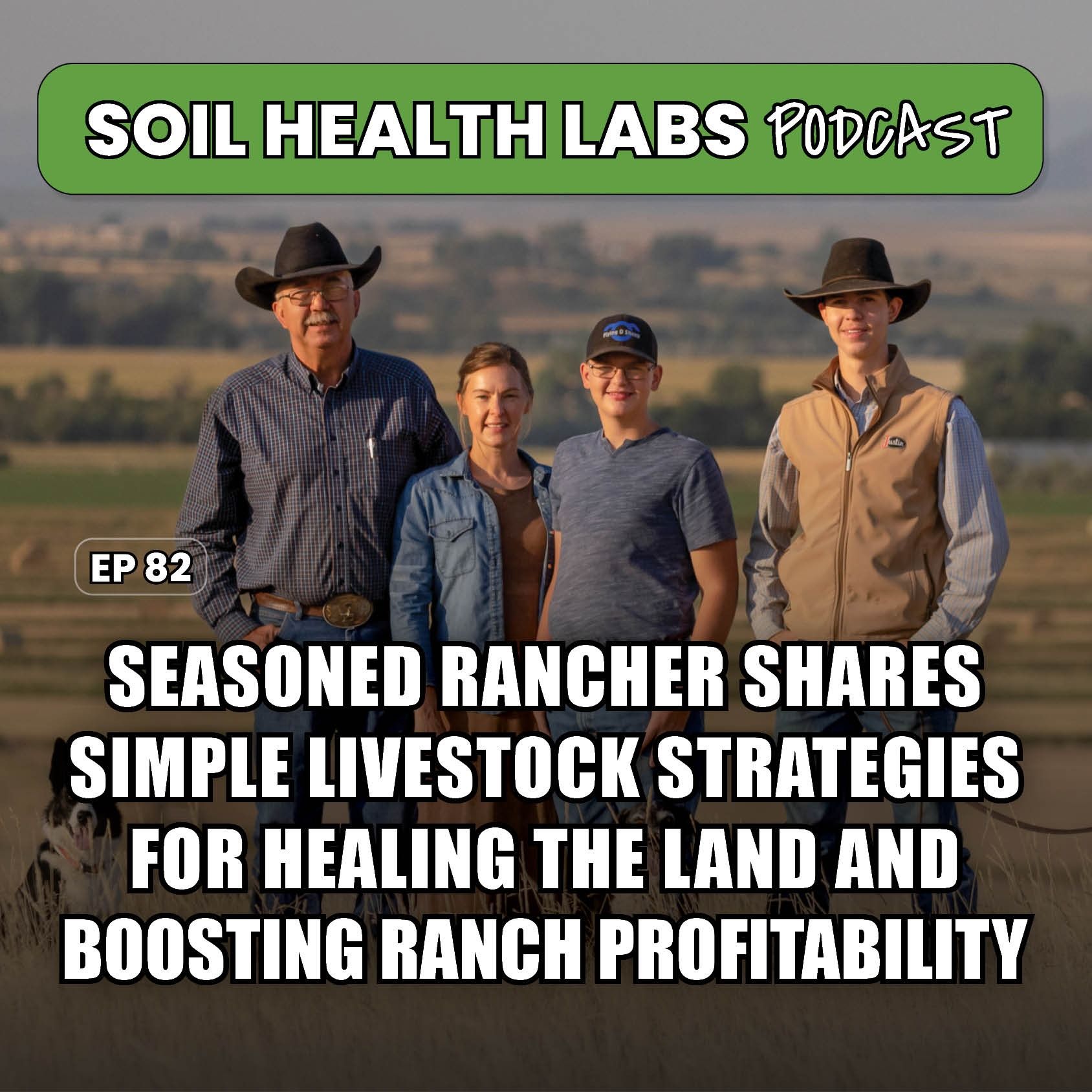
Ep 80Seasoned Rancher Shares Simple Livestock Strategies For Healing the Land and Boosting Ranch Profitability
🧲 Quotable Quotes“You can’t graze a landscape unless you understand what that landscape wants to be.” — Dave Ollila“We’ve got a chance to tell a story—to show that red meat can come from stewardship, not just consumption.” — Dave Ollila“The biology in the rumen is the same biology in the soil. That’s no accident. That’s design.” — Dave Ollila👩🌾 About our GuestDave Ollila is a seasoned rancher and agricultural educator in Butte County, South Dakota. With a career spanning over 25 years, he has made significant contributions to sustainable livestock management, particularly in multi-species grazing and soil health.Dave’s great-grandfather immigrated from Finland and homesteaded in Butte County in 1916. Dave and his wife, Holly, continue this legacy by raising sheep and cattle on the same land, emphasizing practices that align with the region's semi-arid conditions (South Dakota Magazine.)Professionally, Ollila served as the South Dakota State University (SDSU) Extension Sheep Field Specialist until his retirement in February 2020. He then joined the South Dakota Soil Health Coalition (SDSHC) as a Soil Health Technician, focusing on assisting producers in western South Dakota with soil health consultations (South Dakota Soil Health Coalition).🌾 In this EpisodeIn this deeply engaging conversation, Dave Ollila shares hard-won wisdom from decades of grazing and ranching in western South Dakota. We dive into the ecology of the prairie, how sheep and cattle mimic native herbivores, and how integrating multiple species—and technologies—can regenerate landscapes, boost ranch income, and reconnect producers to the land’s natural rhythms.🐑 Topics CoveredWhy context matters in livestock integrationEastern SD = tallgrass prairie; Western SD = shortgrass prairieMatching livestock species (e.g., sheep vs. cattle) to land, rainfall, and forage typeMulti-species grazing as ecological mimicryCattle as analogs to bison: bulk grazers of coarse grassSheep and goats as browsers akin to deer and elkBetter soil biology and insect/bird diversity through livestock diversityVirtual fencing in practiceUsing “No Fence” GPS collars to control small ruminantsHow virtual fences help manage weed outbreaks and reduce fencing costsCurrent limitations: signal strength, battery life, and trainingTraining livestock to graze invasive speciesHow sheep learn to consume Dalmatian toadflax through experienceLessons from Dave's cooperative research with BLM and insights from the Targeted Grazing ManualBenefits of sheep in dry countrySheep’s ability to thrive on snow as a water sourceTheir lower infrastructure needs and suitability for women and youthIncome diversity through meat and wool (up to 200% lambing rates)Why we need to educate our "city cousins"Comparing prairie biodiversity to the AmazonUrban lawns, golf courses, and parks can also sequester carbon“We’re not enemies—we’re partners with nature.”📚 Resources Mentioned1. Targeted Grazing 101: Starting and Sustaining a Grazing Service EnterpriseA new handbook from the American Sheep Industry Association (ASI) is available for download from SheepUSA.orgAlso supported by the Society for Range Management2. 2006 "Targeted Grazing" ManualComes included with the new supplement (PDF or USB)Research-backed chapters on targeted grazing practices3. Dave Ollila’s 2024 Soil Health Conference TalkCovers virtual fencing with visuals [Watch it on YouTube]4. WWF’s Case Study on Grazing InnovationsFeatures Dave’s work with virtual fencing and multispecies grazing (Read the WWF Vlog here)
Ep 80How to Boost Animal Health and Farm Productivity with Ecological Principles
Guest: Dr. Gustavo Lascano, Associate Professor of Ruminant Nutrition, Clemson UniversityHost: Drs. Gabe Kenne & Buz KlootLength: ~70 minutesIn this conversation with Dr. Gustavo Lascano, Ruminant Nutrition Specialist at Clemson University, we discuss integrating ecological principles like succession and diversity into farm management to improve animal, soil, and human health. Dr. Lascano describes intricate details of ruminant nutrition and reinforces that it should focus not only on calories but also on proper nutrient balance and feeding the microbial ecosystem within the rumen. His expertise in this field comes not only from advanced degrees and field and laboratory research, but also from experiencing indigenous agricultural systems firsthand and seeing how they offer valuable insights into sustainable, low-input food production systems.Episode Highlights:Rethinking Production Systems with Ecological SuccessionDiverse Background with Global RootsFree Choice Feeding & Ruminant EfficiencyRumen Microbiology & Soil ParallelsIndustrial vs. Regenerative Feeding ModelsAgroecological Inspirations from the AmazonThe Role of Animals in Regenerative AgTo learn more about Dr. Lascano and ruminant nutrition, check out the below links:Gustavo Lascano at Clemson UniversityFaculty ProfileSoil Health Lab Podcast ArchivesVisit WebsiteFeatured in the episode: Cotton, Country, Conservation (8-year regenerative agriculture study)

Ep 79How Real-World Farmers are Boosting Profits: Cover Crops, Cost Cutting, & Yield Bumps
In this episode, Carl Coleman continues his deep dive into the lessons learned from years of soil health experimentation—and how they changed not only his farm but his entire career. Carl shares how the pushback he received from scientists and extension professionals led him to set up a randomized, replicated study on his farm, proving that regenerative practices could reduce inputs without sacrificing yield.We explore some of the biggest surprises from these trials, including how fields with no applied potassium actually maintained or increased soil test levels over five years—completely contradicting conventional wisdom. Carl also discusses the economic and agronomic benefits of cover crops, including how they have helped farmers reduce subsoiling, cut back on herbicide passes, and save thousands in input costs.Carl’s transition from farming to the seed business was not planned, but as demand for high-quality, affordable seed grew, he saw an opportunity to help other farmers navigate the complexities of cover cropping. Now, as the owner of Choice Ag, Carl provides tailored cover crop blends based on individual farm needs, ensuring that growers avoid common mistakes and maximize their returns.If you’re wondering how real-world farmers are making regenerative agriculture work economically, this episode is packed with practical insights and hard-earned wisdom.📌 Check the show notes for links to Carl’s seed business, research studies, and resources mentioned in this episode!Resources Mentioned in This EpisodeHow much fertilizer do we really need? https://experiment.com/projects/how-much-fertilizer-do-we-really-needNo but seriously now, how much fertilizer do we really need? https://experiment.com/projects/no-but-seriously-now-how-much-fertilizer-do-we-really-needCotton, Country Conservation: An 8-Year Case Study in Regenerative Agriculture (Following SC Farmer Sonny Price's path of reducing input costs, increasing organic matter, and saving over $2.5 million): soilhealthlabs.com/projects/cotton-country-conservation

Ep 79The Economic Impact of Regenerative Agriculture: Practical Wisdom from a Seasoned Farmer
In this episode, Carl Coleman continues his deep dive into the lessons learned from years of soil health experimentation—and how they changed not only his farm but his entire career. Carl shares how the pushback he received from scientists and extension professionals led him to set up a randomized, replicated study on his farm, proving that regenerative practices could reduce inputs without sacrificing yield.We explore some of the biggest surprises from these trials, including how fields with no applied potassium actually maintained or increased soil test levels over five years—completely contradicting conventional wisdom. Carl also discusses the economic and agronomic benefits of cover crops, including how they have helped farmers reduce subsoiling, cut back on herbicide passes, and save thousands in input costs.Carl’s transition from farming to the seed business was not planned, but as demand for high-quality, affordable seed grew, he saw an opportunity to help other farmers navigate the complexities of cover cropping. Now, as the owner of Choice Ag, Carl provides tailored cover crop blends based on individual farm needs, ensuring that growers avoid common mistakes and maximize their returns.If you’re wondering how real-world farmers are making regenerative agriculture work economically, this episode is packed with practical insights and hard-earned wisdom.📌 Check the show notes for links to Carl’s seed business, research studies, and resources mentioned in this episode!Resources Mentioned in This EpisodeHow much fertilizer do we really need? https://experiment.com/projects/how-much-fertilizer-do-we-really-needNo but seriously now, how much fertilizer do we really need? https://experiment.com/projects/no-but-seriously-now-how-much-fertilizer-do-we-really-needCotton, Country Conservation: An 8-Year Case Study in Regenerative Agriculture (Following SC Farmer Sonny Price's path of reducing input costs, increasing organic matter, and saving over $2.5 million): soilhealthlabs.com/projects/cotton-country-conservation
Ep 78South Dakota Rancher Shares Alternative Strategy for Managing Invasive Species & Boosting Land Health
In this episode, Buz and Dickie chat with Clinton Rasmussen about the innovative use of goats for land management, particularly in combating the spread of eastern red cedar in South Dakota. Clinton shares his journey from growing up on a ranch to returning after his military service and discovering the power of goats to clear invasive brush. He discusses how these goats thrive in rough terrain and how their grazing habits can significantly reduce unwanted vegetation, including cedar trees, yucca, and other tough plants.The conversation highlights Clinton’s use of electric fencing and his experiments with no-fence collars to manage his goats across different paddocks. The effectiveness of goats in land restoration is contrasted with the challenges posed by eastern red cedar, which not only competes with grazing lands but also contributes to dangerous wildfires.Clinton explains how goats can fit into traditional cattle operations and how they offer a great opportunity for younger ranchers or anyone looking to diversify their operations. For those who may not have the capital to purchase large tracts of land or invest in a big cattle herd, goats provide a way to get started with smaller investments. Running goats alongside cattle allows you to use the same land without the need for major infrastructure or large upfront costs. It’s an ideal way for younger ranchers to gain experience and build their business over time, especially since goats can thrive in areas where cattle struggle. Clinton’s own experience shows how goats can be a stepping stone to eventually expanding into other livestock, creating a sustainable and profitable operation.One of the great advantages of goats is their relatively low water needs, especially compared to cattle. Clinton points out that once goats are established on a piece of land, they can often go quite a while without a constant water source, relying on moisture from the plants they eat, like yucca and cedar. This can significantly reduce the need for water infrastructure, as goats can be moved across the land without the need to set up multiple water points, which can be a costly part of managing cattle. This flexibility makes it easier to rotate goats through different paddocks and access areas that might be difficult to reach or impractical for cattle. For younger ranchers looking to minimize their infrastructure costs while maximizing their land use, goats offer a smart, cost-effective solution.For further reading, check out the AgUpdate article on "Tackling the Green Glacier" here and the prescribed burn resource here. You can also learn more about Nathan Marker from Plum Creek Ranch and his goat-based land management practices in this 2020 Gathering Talk. Follow Clinton’s journey on his Firewatch Ranch Facebook page.AgUpdate article: “Tacking the Green Glacier” https://agupdate.com/tristateneighbor/news/livestock/tackling-the-green-glacier/article_28fc9f42-ab57-11ef-b3f9-33537e86c82e.htmlhttps://www.growingresiliencesd.com/prescribed-burnNathan Marker ~ Plum Creek Ranch ~ 2020 Gathering Talk: https://www.youtube.com/watch?v=FuBzbTEkSQ8Firewatch ranch: https://www.facebook.com/profile.php?id=100085769701718
Ep 78Rangeland Specialist's Top Grazing Strategies to Drought-Proof Your Pasture
In this episode, we chat with Lealand Schoon from the South Dakota NRCS about drought management, grazing strategies, and the long-term health of pasturelands. Lealand covers how subtle factors like trigger dates and residue levels impact grazing decisions, stressing that if land is left with less than 1,000 pounds of residue per acre, it can be much slower to recover. This makes it crucial for ranchers to manage grazing carefully, especially during drought conditions. He also distinguishes between droughts and dry cycles, explaining that while droughts are more extreme, dry cycles are a natural part of the landscape and require adaptive management to cope with.Lealand also touches on the current beef market, where prices are solid, and the availability and cost of hay are favorable. However, he warns against becoming complacent just because things are looking good right now. The market can shift quickly, and the right grazing and land management decisions today will determine how well ranchers are set up for future years, particularly when it comes to managing land during drought. He also talks about de-stocking strategies, noting that if the land is in poor condition, de-stocking will need to be more aggressive to avoid further damage.Throughout our discussion, Lealand emphasizes the importance of being proactive with land management—especially when conditions are good. He stresses that staying on top of things today can help ensure that ranchers can handle the challenges of tomorrow. The ability to adapt to changing conditions now will make all the difference when the inevitable droughts or market shifts arrive.This episode offers essential advice for ranchers looking to maintain healthy, resilient land, no matter the market conditions.For more on drought management and range conservation, check out the links in the show notes:Growing Resilience – Drought Managementhttps://www.growingresiliencesd.com/drought-managementNatural Resources Conservation Service- Range and Pasturehttps://www.nrcs.usda.gov/conservation-by-state/south-dakota/range-pastureAg-Wxhttps://www.ag-wx.comMesonet SD (Go to tools to see Ag Weather, Degree Days, Livestock Stress, etc.)https://climate.sdstate.edu/Rangeland Analysis Platform (RAP)https://rangelands.app/Alexjandro Carillohttps://www.cuencalosojos.org/alejandro-carrillo
Ep 77Reimagining Agriculture: Dr. Fred Provenza on Rethinking Our Relationship with Nature and the Land
Our third and final interview with Fred Provenza unfolds like a symphony in four parts, each movement resonating with deep reflections on human connection, nature, and the inner workings of the mind. With a cadence that mirrors the unfolding of a well-composed piece, Fred takes us through a journey of shifting perspectives and shifting lives, inviting us to hear the music of the earth as it teaches us to reconnect, simplify, and grow. Like the slow movement of a piece, the interview reflects the wisdom of experience, with Fred sharing lessons learned through years of work, struggle, and discovery. Together, these four movements create a harmony of ideas that echo the timeless truths of our relationship with the world around us.Movement 1: Fred Provenza on the Role of Mindsets in Shaping Our Relationship with NatureFred explores how mindsets, shaped by polarized perspectives, can be transformed through respectful dialogue and open-mindedness. Reflecting on his experience as a teacher, he recalls how he helped students transcend the boundaries of their differing views, fostering a deeper understanding of the complex issues surrounding livestock, rangelands, and the land itself.Movement 2: Fred Provenza on Stories that Connect and Inspire ChangeFred delves into the power of stories in creating connections and inspiring transformation. He emphasizes how the act of nurturing relationships with the land can foster a sense of community, grounding individuals in something larger than themselves, while also illustrating how personal experiences—like the shared beauty of a native garden—can bring people together in mutual appreciation.Movement 3: Fred Provenza on the Purpose of His Work and Bringing JoyReflecting on his legacy, Fred speaks candidly about his life's work and its true purpose: to inspire joy and awe in others. He highlights how reconnecting with a sense of wonder, especially after facing life's challenges, can bring peace and meaning. Fred reveals his desire not for grand accomplishments, but for helping people rediscover the joy of being alive.Movement 4: Fred Provenza on the Wisdom of Letting Nature Self-OrganizeIn response to the quotes from John Kenneth Galbraith and Charles Massey, Fred offers profound insights into the wisdom of stepping back as we grow older. He discusses the gift of reduced energy levels and how this shift allows us to embrace a simpler, more hands-off approach to life—allowing nature to regenerate on its own. Reflecting on the importance of humility and learning, Fred advocates for changing mindsets and simplifying life to connect with what truly matters.As you listen to the final movement of this symphonic conversation with Fred Provenza, we encourage you to stay with us until the end. Sometimes, it’s not the facts and figures that resonate the most, but the deeper, intuitive understandings that unfold as we reflect, shift, and grow. Fred’s insights challenge us to reconsider the way we approach life, nature, and even our own existence—asking us to embrace the wisdom of simplicity, connection, and change. Stay with us to the end, because the most important lessons aren’t always found in what we know, but in how we come to understand it.
Ep 72Ecologist Fred Provenza's Top Tips for Unlocking Livestock and Land Potential
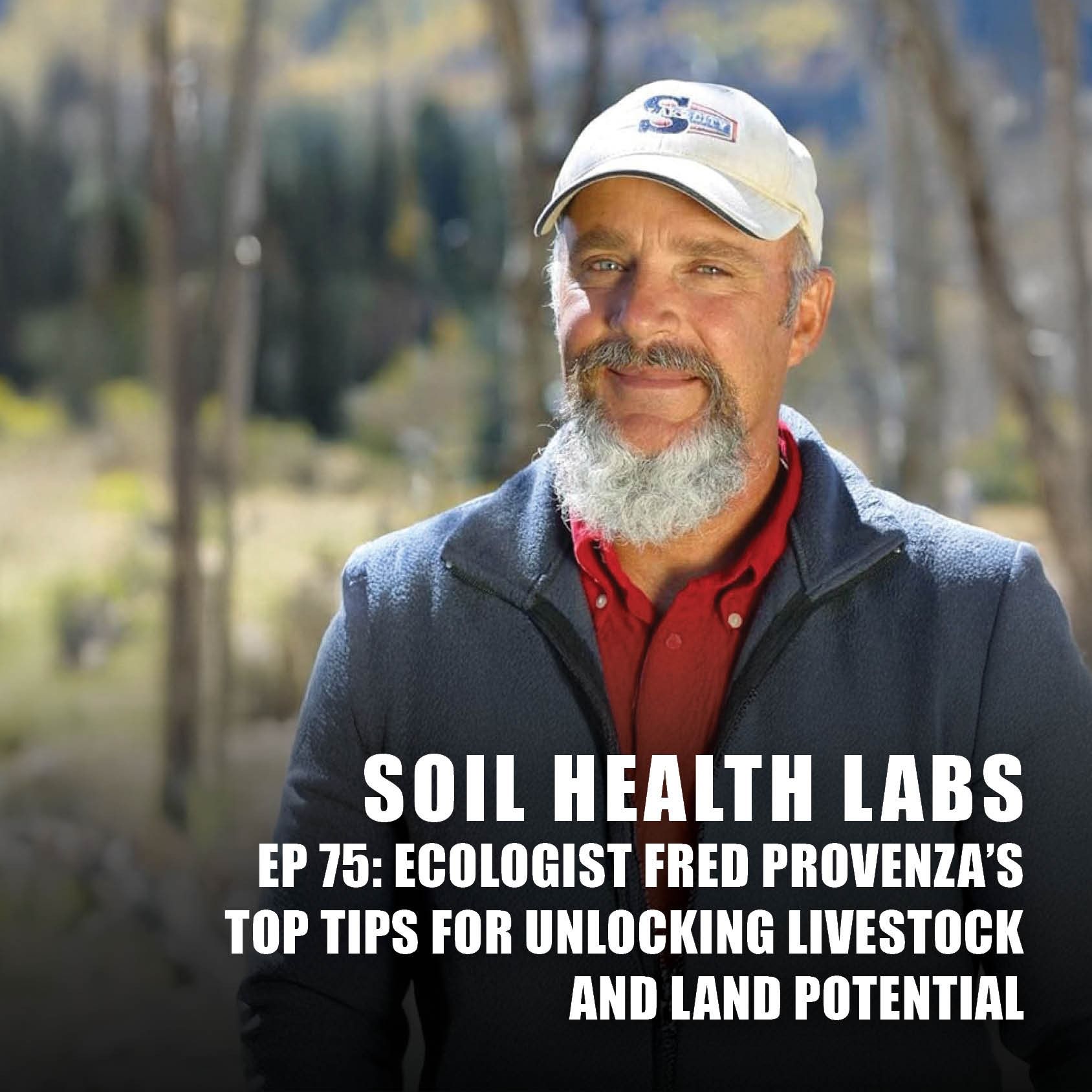
In this second podcast with Dr. Fred Provenza, professor emeritus of Behavioral Ecology at Utah State University, and author of several important books on animal behavior and land stewardship, we discuss key themes include wildlife nutrition, ecological practices, and the interconnectedness of animal behavior and plant diversity. The discussion opens with Provenza detailing the Welfare Elk Program implemented at Deseret Land and Livestock, a large ranch on the Wyoming-Utah border. Faced with the challenge of elk wintering on neighboring lands and health issues like brucellosis and chronic wasting disease, the ranch transitioned from supplemental feeding to promoting natural foraging. By strategically using cattle to graze specific areas, elk were encouraged to self-sustain, breaking a cycle of dependency on human-provided food. This shift not only benefited the elk but fostered a new generation of calves unfamiliar with artificial feeding, establishing a "culture of welfare elk."Provenza also elaborates on the importance of diverse landscapes for livestock health. He highlights how animals instinctively seek a variety of plant species, which contain secondary compounds (physochemicals) that play a vital role in their nutrition and health. These compounds, once dismissed as mere plant defenses, are now recognized for their potential health benefits, serving as antioxidants and aiding in self-medication. By grazing diverse plant species, animals reduce their reliance on veterinary care, demonstrating a deep-rooted nutritional wisdom that connects them to their environments.A significant anecdote shared is Claire Sylvia’s experience following her organ transplant, as recounted in her book "A Change of Heart." Sylvia’s story illustrates how organ recipients often experience changes in food preferences that align with those of their donors, suggesting a profound connection between body and identity. Provenza draws parallels between this and the dietary choices of animals, emphasizing that the feedback mechanisms within both animal and human bodies guide their nutritional decisions.Throughout the interview, Provenza emphasizes the importance of understanding animal behavior and ecology as interconnected systems. The wisdom animals demonstrate in selecting their diets reflects an intimate knowledge of their landscapes, akin to the complexities of the human microbiome. He notes that, just as plants transform soil into a diverse ecosystem of nutrients, animals thrive by foraging from varied plant sources, reinforcing the idea that both species are part of a larger ecological web.In essence, the discussion highlights how fostering a more holistic view of animal nutrition—grounded in ecological practices, diverse landscapes, and understanding the innate knowledge of animals—can lead to healthier ecosystems and livestock. Provenza’s insights encourage a reevaluation of conventional agricultural practices, promoting a deeper appreciation for the natural instincts that guide animal foraging and well-being.Fred reflects on the limitations and complexities of scientific inquiry, especially in fields like ecology, economics, and sociology. He discusses the concept of "trans-science," which refers to questions and phenomena that lie beyond the capabilities of traditional scientific methods to fully answer. Early in his career, Fred believed that rigorous study would lead to predictable and controllable outcomes, akin to the precision of physics. However, he gradually recognized that science can only provide provisional insights into complex systems.Fred emphasizes that the interactions within ecological systems often defy reductionist approaches. He illustrates this with the example of studying secondary compounds in foods: while individual compounds can be analyzed, the sheer complexity of combinations in real meals makes it impossible to fully understand their effects in isolation. He champions the idea that "food, not nutrient" is the basic unit of nutrition, highlighting that the synergistic effects of various compounds in whole foods are crucial for health.He critiques the historical emphasis on competition within ecological theories, which he argues stems from economic models. Instead, he promotes the concept of cooperation and synergies among diverse species as essential for ecological health. This perspective informs his approach to agriculture, advocating for polycultures over monocultures, as diversity fosters greater resilience and nutrient density.Fred also explores the philosophical underpinnings of scientific inquiry, discussing how science is inherently limited and tentative. He encourages scientists to remain open-minded and to adapt based on data rather than clinging to preconceived hypotheses. He shares personal anecdotes of frustration and learning throughout his research journey, underscoring the importance of integrity in scientific practice.Lastly, Fred highlights the significance of creativity in both