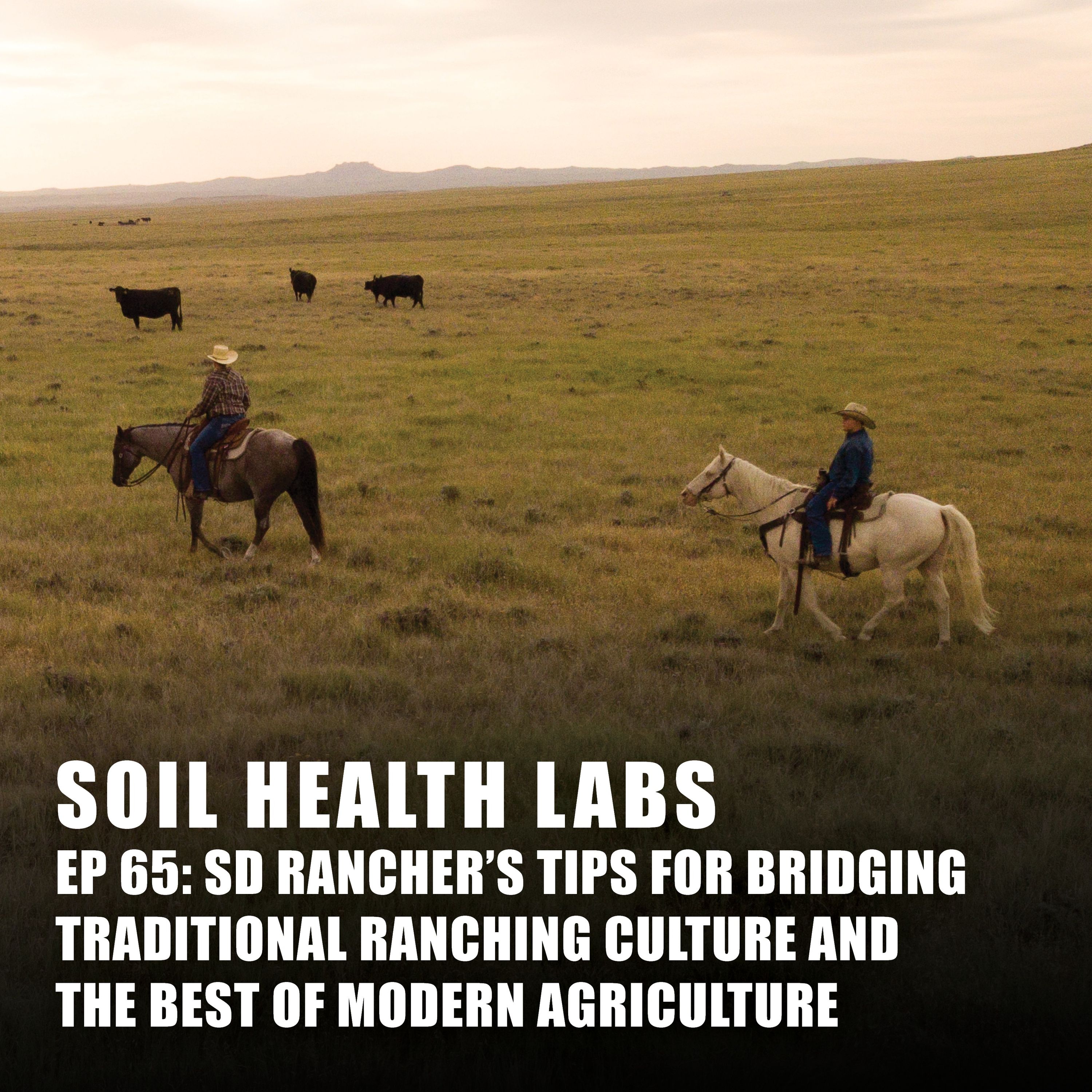
65 SD Rancher's Tips for Bridging Traditional Ranching Culture and The Best of Modern Agriculture
Audio is streamed directly from the publisher (cdn.simplecast.com) as published in their RSS feed. Play Podcasts does not host this file. Rights-holders can request removal through the copyright & takedown page.
Show Notes
In this episode, South Dakota rancher Dan Rasmussen discusses the evolution in practice and mindset needed to sustain ranching in South Dakota. Rasmussen emphasizes the importance of maintaining certain traditional elements of cowboy culture, like community cooperation, while adapting modern, sustainable practices for the benefit of the land, people, and livestock.
Rasmussen's family has been on their South Dakota ranch since 1914. He expresses the need for ranchers to operate their businesses efficiently to preserve the prairie and its ecosystem. He highlights the role of healthy soil, achieved through improved grazing management, as the key to sustainable ranching. Rasmussen's approach involves increasing stocking rates, protecting native prairie, and enhancing soil health to maintain the ranching culture and benefit the environment.
Rasmussen's involvement with the South Dakota Grassland Coalition, where he manages a consulting program to help ranchers implement conservation practices, reflects his commitment to these principles. He discusses the value of education, openness and curiosity in transitioning from conventional season-long grazing to rotational grazing practices that enhance soil health.
Rasmussen also emphasizes the importance of working with nature within ranch management. He discusses the value of rotational grazing, explaining how moving cattle through different pastures in a systematic way helps maintain soil health and supports natural processes. This method allows grass to grow, get grazed, and recover, which ensures better insulation for the soil and longer periods of microbial activity, even in winter.
When addressing the challenges ranchers face in transitioning to new grazing practices, Dan introduces the Dunning-Kruger effect. This psychological phenomenon describes how people with limited knowledge often overestimate their competence, while those with more experience recognize the complexity and feel less confident. Dan explains that new ranchers often get excited and invest heavily after attending a grazing school, only to face difficulties and become disillusioned. To combat this, he stresses the importance of making small, manageable changes and building a support network of mentors and consultants.
Overall, Dan advocates for gradual change, continuous education, and collaboration to achieve healthy soil and successful ranch management while preserving the beneficial elements of traditional ranching culture.
Links:
Downloadable file with 3 graphics that Dan discusse namely (1) Cowboy Life (2) continuum of grazing practices and (3) Dunning-Kreuger effect.
Our Amazing Grasslands Video of the 33 ranch: https://www.youtube.com/watch?v=iXWZhkOiyZ4
SD Grasslands Coalition: https://sdgrass.org/
SD Grasslands Coalition Range Consulting program: https://sdgrass.org/range-consulting-program/
SD Grasslands Grazing School: https://sdgrass.org/grazing-school/