
Sidedoor
Sidedoor is a podcast only the Smithsonian can bring you.
Smithsonian Institution
Show overview
Sidedoor has been publishing since 2016, and across the 10 years since has built a catalogue of 258 episodes, alongside 16 trailers or bonus episodes. That works out to roughly 120 hours of audio in total. Releases follow a fortnightly cadence, with the show now in its 12th season.
Episodes typically run twenty to thirty-five minutes — most land between 25 min and 32 min — and the run-time is fairly consistent across the catalogue. It is catalogued as a EN-language Society & Culture show.
The show is actively publishing — the most recent episode landed 1 weeks ago, with 22 episodes already out so far this year. Published by Smithsonian Institution.
From the publisher
More than 154 million treasures fill the Smithsonian’s vaults. But where the public’s view ends, Sidedoor begins. With the help of biologists, artists, historians, archaeologists, zookeepers and astrophysicists, host Lizzie Peabody sneaks listeners through the Smithsonian’s side door, telling stories that can’t be heard anywhere else. Check out si.edu/sidedoor and follow @SidedoorPod for more info.
Latest Episodes
View all 258 episodesThe Baby Elephant and The Elixir of Poo
It's Season 13!
The Accidental Rise of Botox
The Art of Slowing Down
A Nature Lover Confronts Her Fear of Spiders
America, Meet America
The Gunboat Philadelphia
The Missing Bison
American Aspirations: A Nation in Pursuit
U.S. History in 100 Objects (with Roman Mars)
How Can You Forget Me
High Art, Low Ride
The People in the Pictures
May the 4th Be With You
Broad Stripes, Bright Stars, and White Lies
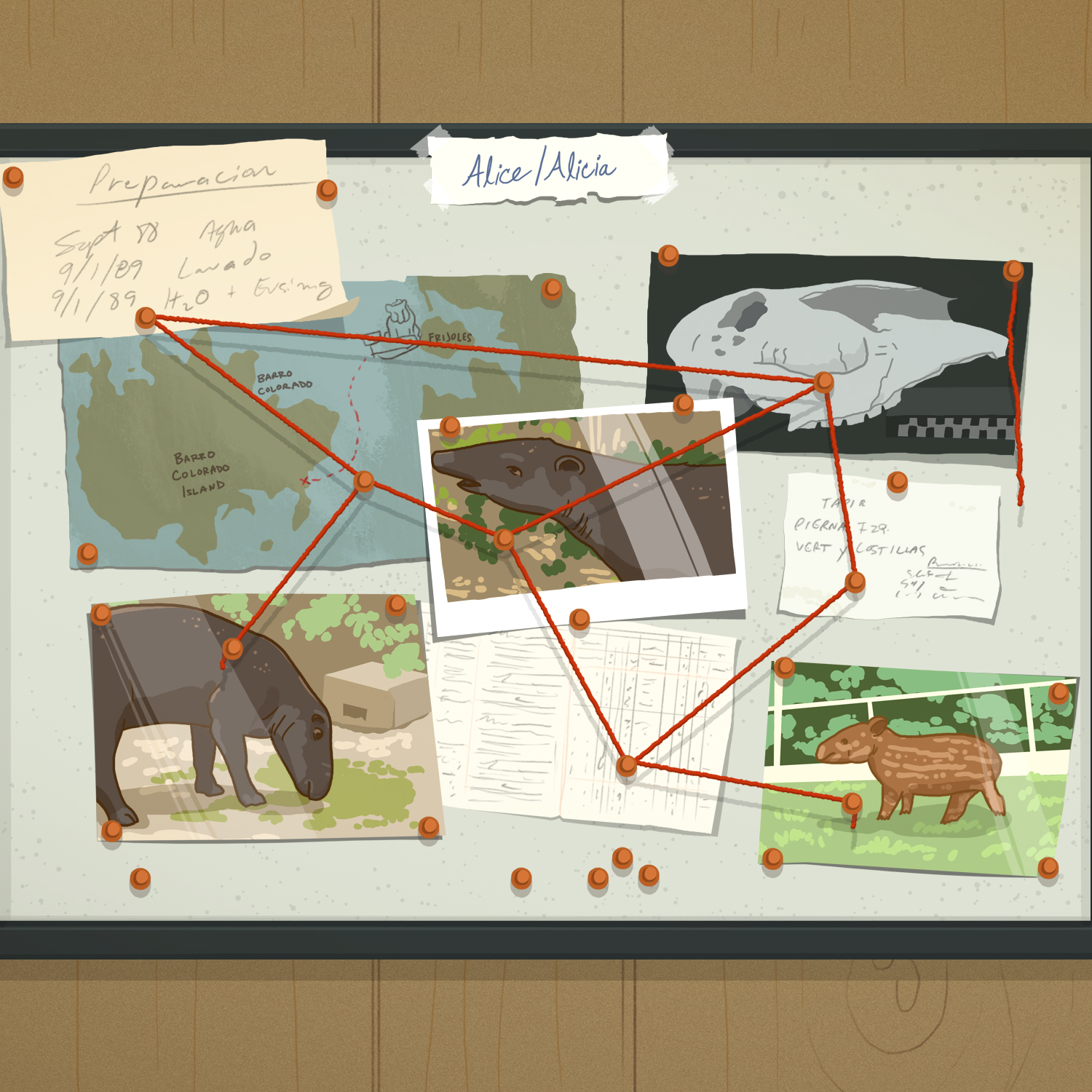
S12 Ep 10Tapir Caper
When a Smithsonian archaeology intern opened a dusty box of bones in a Panamanian warehouse, she didn't expect to find a mystery, let alone a potential crime scene. But Nina Hirai’s discovery of a tapir skull riddled with what appeared to be bullet holes sparked an investigation that would lead her several miles up the Panama Canal and nearly forty years into the past. Join us as we unspool the strange, unresolved story of a tapir named Alice, and ask what it means to live with uncertainty when the past refuses to explain itself.Guests:Nina Hirai, former archeology intern at the Smithsonian Tropical Research Institute Nicole Smith-Guzmán, archeology curator at the Smithsonian Tropical Research Institute Ashley Sharpe, research archeologist at the Smithsonian Tropical Research Institute Aureliano Valencia (“Yeyo”), archeological research technician at the Smithsonian Tropical Research Institute Phyllis (Lissy) Coley, professor emerita in the School of Biological Sciences at the University of Utah and research associate at the Smithsonian Tropical Research Institute Monica Brenes Lynan, former veterinarian at Parque Municipal Summit in Panama Andres Ramos, lider de guardabosques del Monumento Natural Barro Colorado / head park ranger at Barro Colorado Island
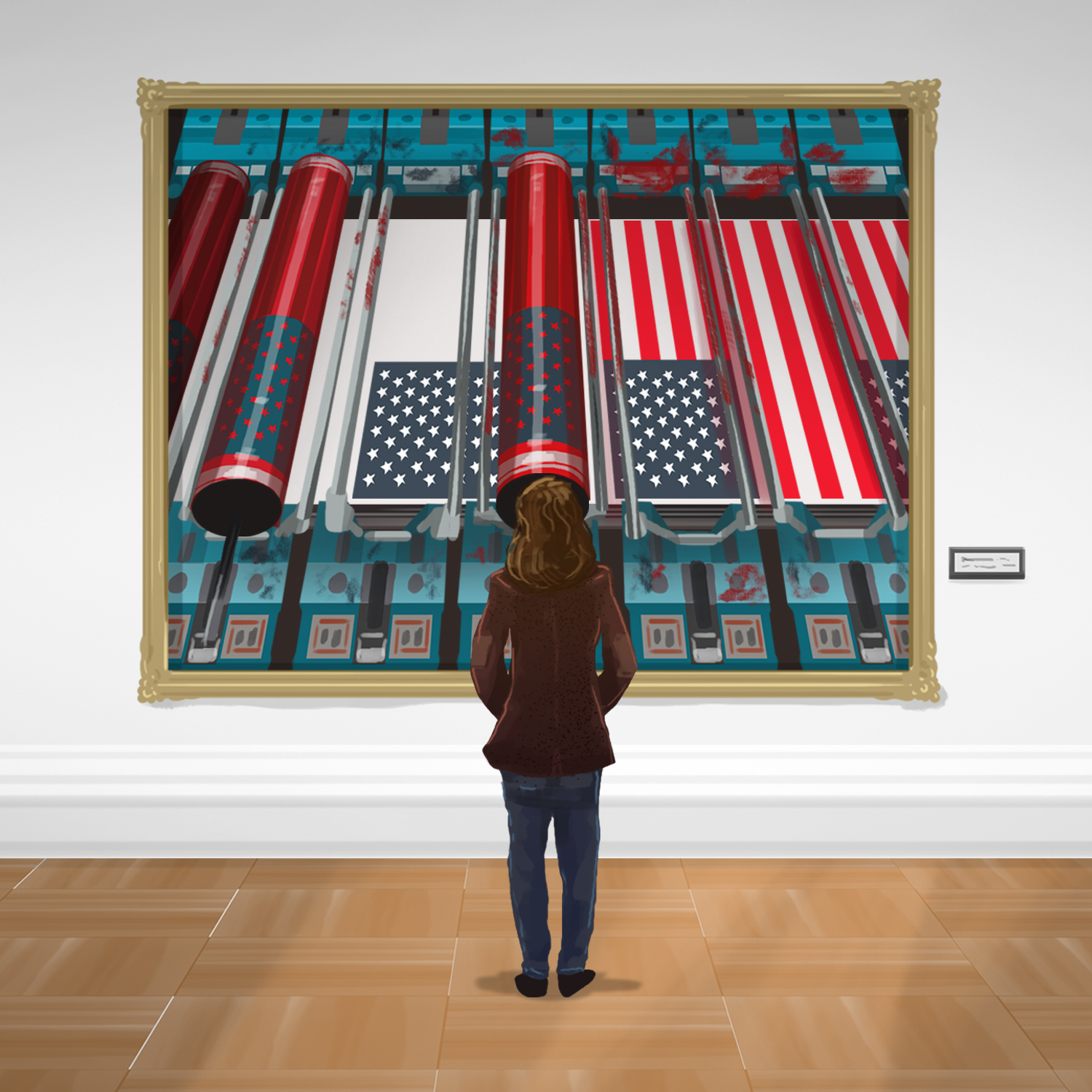
S12 Ep 9Made in America
What does it look like for something to be made in America? Through the photography of Christopher Payne, we journey across the past, present and future of American manufacturing to answer this question. From centuries-old textile mills to modern assembly lines, Payne’s photographs offer a rare, behind-the-scenes view of how everyday objects—from pencils to airplanes to marshmallow Peeps—are made. With the help of Smithsonian curator, Susan Brown, and author, Rachel Slade, we also explore the history behind these factories, and how the story of American manufacturing is the story of our nation itself. Guests: Christopher Payne, Industrial photographerSusan Brown, associate curator, and acting head of textiles at Cooper Hewitt Smithsonian Design Museum; curator of the exhibition Made in AmericaRachel Slade, author of the book Making it in America: The Almost Impossible Quest to Manufacture in the U.S.A. (and How it Got That Way)

S12 Ep 8Dark Matter, Bright Mind: How Vera Rubin Saw the Unseen
Something dark and invisible makes up as much as 90 to 95 percent of the universe—and it took a little girl staring out a bedroom window at the night sky to bring it to light. As a child, Vera Rubin built her own telescope. As an adult, she uncovered a problem no telescope could solve: stars at the edges of galaxies were moving just as fast as those near the center. The math contradicted everything astronomers expected to see...unless the universe was filled with unseen matter.This is the story of how Vera Rubin pushed through the gender barriers of the 1950s and turned a fringe idea into one of astronomy’s biggest open questions. What is dark matter? How did Rubin help prove it was real? And what does it mean that most of the universe is made of something we can’t see?Guests: Ashley Yeager, Associate News Editor at Science News and Author of Bright Galaxies Dark Matter and Beyond: The Life of Astronomer Vera RubinRamona Rubin, Granddaughter of Vera Rubin Deidre Hunter, Astronomer at the Lowell Observatory in Flagstaff, Arizona Amruta Jaodand, Astrophysicist at the Chandra X-Ray Center in the Smithsonian Astrophysical Observatory
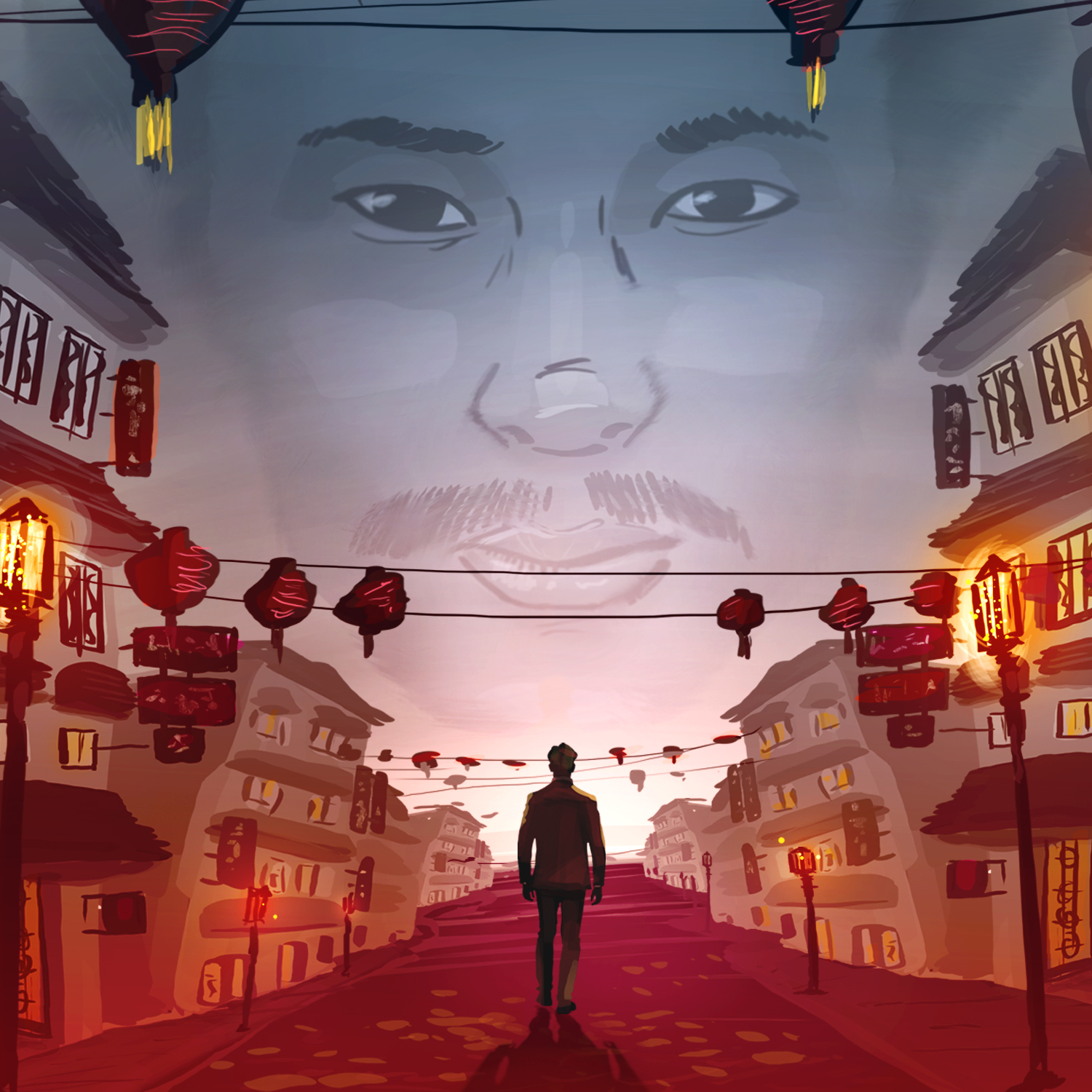
S12 Ep 7Chinatown Murder Case
A string of unsolved murders in San Francisco's Chinatown in the 1970s led police to the door of a young Korean immigrant named Chol Soo Lee — who was quickly arrested and sentenced to life in prison. But when investigative journalist K.W. Lee started digging into the case, he discovered a world of twisted law and order that went far deeper than one man. The articles K.W. wrote about what he uncovered in Chinatown shocked Asian Americans across Northern California to stand up and demand justice for Chol Soo Lee — and themselves. Corrections:In this episode we state that Chol Soo Lee had a mustache in the photo that appeared in the mug book. Correction: He did have a mustache at the time of the killing, but he did not have a mustache in that photo.We state that K.W. Lee learned of Chol Soo Lee stabbing a fellow inmate from a TV news segment. Correction: He learned about it in a news briefing. We state that K.W. Lee was at the premiere of the documentary “Free Chol Soo Lee.” Correction: He attended the premiere virtually in January of 2022. He physically attended a screening in August of 2022 when the film was released in theaters.Guests: Sojin Kim, curator at the Smithsonian Center for Folklife and Cultural HeritageRanko Yamada, friend of K.W. Lee and Chol Soo Lee Julie Ha, journalist, writer and co-director of the documentary film "Free Chol Soo Lee"
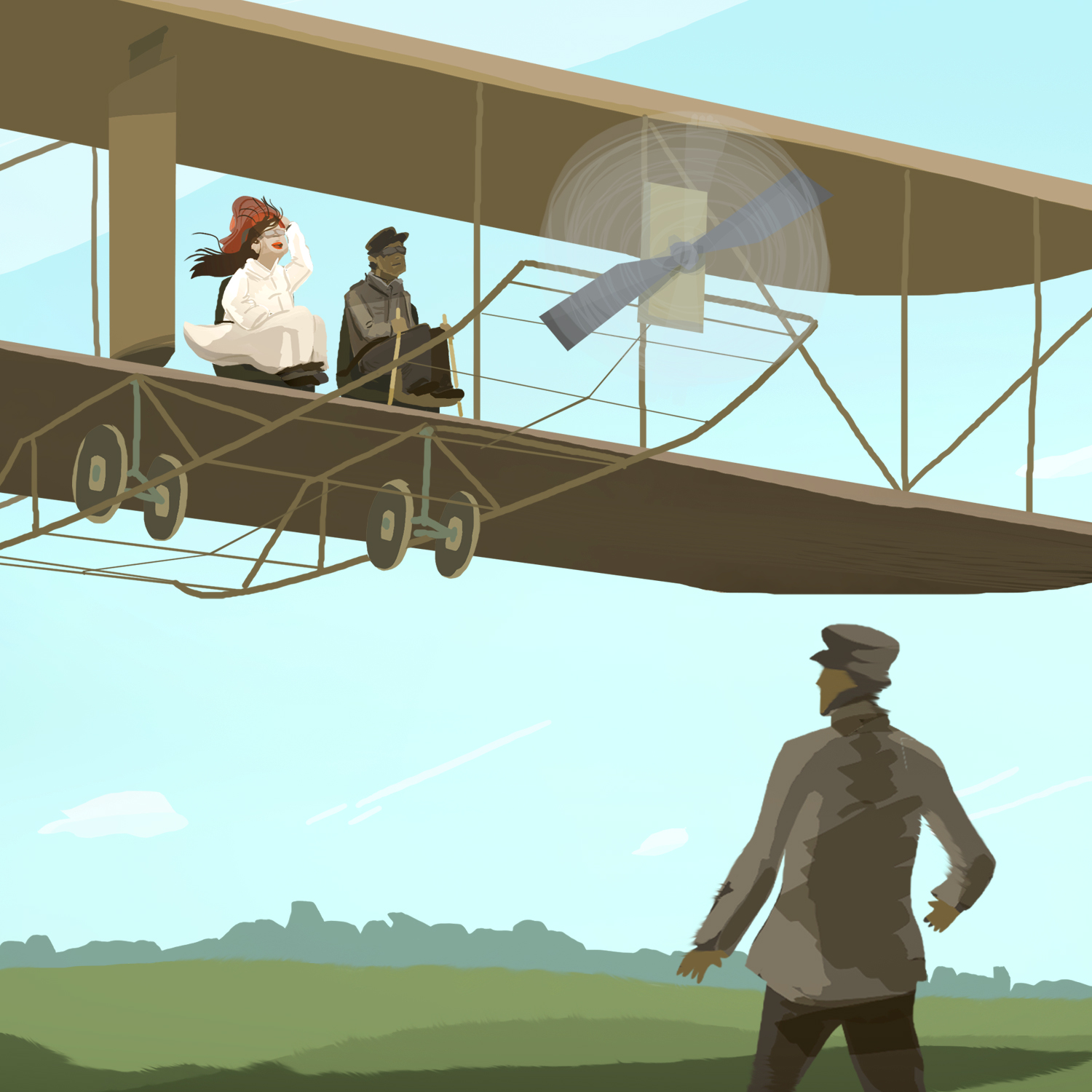
S12 Ep 5The Wright Sister
Orville and Wilbur Wright have been immortalized as the men opened the skies to human flight. But could they have achieved such great heights without the wind beneath their wings — their sister? Katharine Wright was her brothers' biggest champion, official spokesperson, closest confidante and the only one of the Wright siblings with a college degree. For years, Katharine, Wilbur and Orville were inseparable — until tragedy and a love affair upended everything. This is the story of the Wright sibling that history almost left out.Guests:Thomas Paone, museum specialist at the Smithsonian's National Air and Space MuseumTom Crouch, curator emeritus of the aeronautics division at the Smithsonian's National Air and Space Museum and author of The Bishop’s Boys: A Life of Wilbur and Orville Wright