
Sidebar
403 episodes — Page 5 of 9
TikTok flip-flop: What’s the president’s power over foreign companies?
If you’d never heard of TikTok before the coronavirus pandemic sent us all into our homes for months, you’ve probably heard of it now. With little to do at home, millions of Americans turned to TikTok to create and watch short, fun videos of mostly teenagers mostly dancing, lip syncing or pranking their parents.While this social video app may seem harmless when you’re somehow mindlessly scrolling through hours of 30-second antics, the Trump administration insists it might not be so harmless after all.See, TikTok is owned by a Chinese company, ByteDance. For months, the Trump administration has worried that the Chinese government could gain access to to the user data of Americans who use the app. The United States has also raised concerns over the potential for Chinese censorship on TikTok.Late last week, in response to all of this, President Trump said that he planned to ban TikTok altogether — that he would outright ban a very popular social media app used by 100 million Americans. So, naturally, many of our listeners asked,“Can he do that?”It turns out, that answer might be moot. Because, in typical Trump fashion, pretty soon after he threatened the ban, the president changed his mind.On Sunday, Trump backtracked and said he might not ban the app altogether. Instead, he might force ByteDance to sell its U.S. portion of TikTok. Microsoft confirmed that it is in talks with ByteDance to buy those U.S. assets, and the president says the two companies have 45 days to come to a deal.So, how does the president have the power to force a foreign company to sell a portion of itself? And TikTok is a social media tool — a speech tool — used by individual Americans … how does that complicate the president’s power over it? Plus, and perhaps most critically, is TikTok a serious national security threat to the United States?On this episode of the“Can He Do That?” podcast, technology reporter Rachel Lerman explains why the president wants to block TikTok and James Lewis, senior vice president at the Center for Strategic and International Studies, explains how he can take steps to change things for the Chinese-owned app.Related episodesTrump’s latest trade war escalation: Ordering businesses out of China. Can he do that?Trump threatened to"take a look" at Google for"rigged" results. Can he do that?Does Trump’s urging China to investigate the Bidens complicate the impeachment inquiry?
How America votes is inherently unpredictable. So why do polling?
In the run-up to any modern presidential election, assessing a candidate’s successes and failures has served as fodder for political pundits, analysts and campaign advisers. And in part, those assessments of who is winning and which messages are working are drawn from a whole sprawling effort designed to take the pulse of the American voter: political polling.These days, there are public polls, private polls and polling shops out of news organizations, universities and research centers. There’s also internal polling specifically conducted for candidates with a stake in a given race. Each kind of poll serves a different purpose and often a different audience. But they have in common an effort to learn more about how Americans make choices about what issues to value, what causes to believe in and about which candidates to support.Reporting shows that President Trump has been watching polls closely as the November election nears. And, at this point, things are not looking great for Trump, who trails Joe Biden in most national polls. Trump’s team has argued that many polls that show a Biden lead are skewed, that a“silent majority” of voters will turn out for him in the fall, and that 2020 polling is just a repeat of 2016 polling, which showed Hillary Clinton leading nationally.Of course, as 2016 showed, polls aren’t perfect. And the ways they are interpreted can also present problems. But they remain critical to the American electoral process.On this episode of the“Can He Do That?” podcast, The Post’s polling team, Scott Clement and Emily Guskin, delve into conducting and interpreting polls during an election season. How exactly can polls be representative of the electorate? And are polls predictive of how a country will eventually vote?Related episodesWill the Court’s decision on electors prevent(at least some) election mayhem?U.S. elections are being tested like never before. What comes next?How Trump is leveraging the presidency to campaign against Biden
A double down on federal force, a do-over on coronavirus
The United States is in search of leadership on many significant challenges we face at this difficult moment in our country.And on two major issues — the handling of the coronavirus pandemic and protests against racism and police brutality — most Americans are dissatisfied with the leadership they’ve seen thus far.As cases rise across the country and fears persist, a Washington Post-ABC News poll found that 60 percent of Americans disapprove of President Trump’s handling of the virus.Meanwhile, polls also show that a majority of Americans disapprove of Trump’s handling of protesters and race relations. In fact, a Post-Schar School poll last month showed that a large margin of voters said it was more important to have a president who could heal racial divisions than one who could restore security by enforcing law.Trump started off this week seemingly with hopes of turning polls around. But his strategy has been somewhat perplexing.On the coronavirus, Trump is seemingly attempting to reset, almost start over. He has reintroduced coronavirus-focused press briefings, he’s even put on a mask a few times and tweeted pictures of himself wearing one.But on protests, it seems like the president is doubling down. Trump has sent federal law enforcement officials into Portland, Ore., escalating clashes on the city’s streets between protesters and authorities. And he’s threatening to send more federal agents into Democratic-led cities experiencing spates of crime across the country.So why is Trump taking such different approaches to these two issues, both where he’s met with public disapproval? Can his attempts at a coronavirus do-over help contain the virus? And, on the other hand, how much power does the president have to send federal forces into American cities? As Trump casts himself as a law-and-order strongman, what are the consequences?On this episode of the“Can He Do That?” podcast, White House reporter Ashley Parker explains Trump’s latest messaging on the coronavirus and national security reporter Matt Zapotosky discusses where Trump’s power is limited when it comes to federal force.Want to share your feedback on this show and other Washington Post podcasts? Go to washingtonpost.com/podcastsurveyRelated reading and episodesFacing unrest on American streets, Trump turns Homeland Security powers inwardVirus cases are surging in the U.S. Is our government better prepared now?Public sentiment on police reform has shifted dramatically. Will it matter?
Conventions vs. covid-19: Trump’s push for a spectacle while the virus surges
The 2020 presidential nominating conventions will look little like the political mega-events we’ve seen in this country for the past few decades.The novel coronavirus pandemic has made the notion of huge stadiums full of cheering supporters plus countless meetings, rallies and after parties, unadvisable under U.S. public health guidelines.Now, for both parties, rejiggering their conventions has been a significant challenge.Democrats have decided to take a largely virtual approach to their party’s event after initially pushing it from July into August.Republicans, led by urging from President Trump, hoped to hold as close to a normal convention as possible. So much so that they changed the location of the Republican National Convention celebrations from Charlotte, N.C., to Jacksonville, Fla. The original site in Charlotte refused to go along with Trump’s demands for a crowded large-scale event. So Republicans searched for a city that would disregard health guidance and let thousands of people from all over the country gather in one place. They ultimately chose Jacksonville largely because the city’s political leadership aligns with Trump.But that was all back in mid-June. When the RNC chose Florida, coronavirus cases in the state were much lower. Since then, Florida’s case numbers have surged, setting record highs and complicating things for those planning the event.After many iterations, Republicans announced this week that they’ll hold some sort of scaled-back convention in Jacksonville, with a mix of indoor and outdoor events.The whole saga has been a tug of war between the Trump team’s desire to get Trump in front of a large crowd of supporters, where he politically thrives, and the public health restrictions designed to slow the spread of the coronavirus.On this episode of the“Can He Do That?” podcast, reporter Michael Scherer helps tackle some big questions around this year’s conventions: Why has Trump been so adamant about holding a convention that’s at least partially in person, amid a pandemic? Why might his campaign team view the convention moment as so critical this election cycle? Plus, if significantly pared down or virtual versions of conventions can work just fine, what might the parties learn for the future of these events?Want to share your feedback on this show and other Washington Post podcasts? Go to washingtonpost.com/podcastsurveyRelated reading and episodesRepublican convention in Jacksonville will be scaled back next monthThe delegate math questions you were too embarrassed to askHacks, chaos and doubt: Lessons from the 2016 election revisited
Will the Court’s decision on electors prevent (at least some) election mayhem?
Much of American democracy runs on precedent. How things have worked in the past helps us understand how they ought to work now. Many parts of our democracy function because years of established norms guide them.But sometimes that precedent and those standards face the courts — a chance to take long-standing norms and codify them into law. We saw one of those moments at the Supreme Court this week with a vote on the role of electors in our presidential elections.Presidential electors cast a vote in the electoral college that ultimately determines the presidency. These electors usually, almost always, vote for the winner of their state’s popular vote. So if Donald Trump wins the popular vote in Oklahoma, for example, all of Oklahoma’s electors vote for Trump in the electoral college.But in many states, it’s just an assumption that electors will vote as they’ve pledged. And that leaves open a question: What happens if an elector decides to go rogue — to cast a vote in the electoral college for someone else? And furthermore, what happens if those votes go against the people’s votes and alter the outcome of a presidential election?The Supreme Court on Monday weighed in to quash some of these questions before they arise.The court ruled unanimously that states can require presidential electors to support the winner of its popular vote and may punish or replace those who don’t.This decision carries weight for our upcoming presidential election in November, but what exactly are its implications? Who are the winners and losers in this case? And what does it mean for the future of our electoral college system?On this episode of the“Can He Do That?” podcast, election law expert Paul Smith of the Campaign Legal Center unpacks the Supreme Court decision and what it means for November’s election.Related reading and episodesSupreme Court says a state may require presidential electors to support its popular-vote winnerU.S. elections are being tested like never before. What comes next?Hacks, chaos and doubt: Lessons from the 2016 election revisited
July 4 special: 'The Framers would not recognize the modern presidency.’
Over the past few years making the“Can He Do That?” podcast, a few episodes have stuck with us. In particular, the episodes that keenly capture the role of the U.S. president that offer particular insight into the ways the presidency was designed to work in our country and how that design is incredible and also flawed.Now, we are bringing back one of those episodes.This show, which originally aired on July 4 last year, is a deep look at what the Founding Fathers wanted the American presidency to be. Jeffrey Rosen, president of the National Constitution Center, offers explanations for why there aren’t more limitations on what the president can do, and how the role has evolved over time.RELATED EPISODESA whistleblower. A phone call. A tipping point.What happens when a president asserts executive privilege?How does Attorney General Barr view presidential power?
Virus cases are surging in the U.S. Is our government better prepared now?
In the United States, novel coronavirus infections set a single-day national record Wednesday. For now it seems like deaths are not growing at the same pace as cases, but it’s clear that this virus is not contained and this pandemic is far from over.Yet momentum behind a federal response seems to be fading. The task force is convening less often, federal funding to some test sites has been depleted, and President Trump has said that the country will not shut down again, even as some states have paused their reopening plans.On Tuesday, at a hearing on Capitol Hill, top federal health officials including Anthony S. Fauci warned that coronavirus spikes in more than a dozen states could worsen without new restrictions.So now, months into this virus outbreak, where does the federal response stand? What steps are ongoing and are they working? Plus, how does the U.S. response compare with the virus response globally? What can we learn from countries who are seeing smaller-scale spikes and have plans to contain them?On this episode of the“Can He Do That?” podcast, The Post’s health policy reporter Yasmeen Abutaleb discusses what the U.S. response looks like today, several months in and with surging cases in many parts of the country. The Post’s foreign affairs reporter Rick Noack talks about the response in Europe and around the world, and how public health leaders in those countries view the United States’ response.Related episodesThe president’s desperate push to reopen AmericaPublic health partisanship confronts a new reality: The virus is surging in rural AmericaRugged individualism vs. social distancing enforcement: Who can keep us home and how?
An ‘erratic’ and ‘stunningly uninformed’ commander in chief: Inside Bolton’s book
John Bolton, former national security adviser to President Trump, wrote a book,“The Room Where It Happened: A White House Memoir.” The book offers a portrait of President Trump as an erratic and ignorant leader who often places his own personal whims above the national interest.But whether Americans will get to read the book is the subject of an escalating legal battle between Bolton and the Justice Department. The White House says the book contains classified material. Bolton’s attorney says the book doesn’t and that the material underwent a rigorous government review process.First, on Tuesday, the administration filed a civil lawsuit against Bolton, a conservative who has worked in Republican administrations for decades and was a longtime contributor to Fox News. Then late Wednesday, things escalated when the Justice Department sought an emergency order from a judge to block the book’s publication altogether.The Washington Post, meanwhile, obtained a copy of Bolton’s memoir. On this episode of the“Can He Do That?” podcast, White House reporter Josh Dawsey explains what’s in the book, what the fallout has looked like thus far, and whether it will have much political influence as we get closer to the 2020 presidential election.Related readingTrump asked China’s Xi to help him win reelection, according to Bolton bookJustice Department seeks emergency order to block publication of Bolton’s book
Public sentiment on police reform has shifted dramatically. Will it matter?
Public outcry and calls for police reform have erupted across the country, with movements taking aim at not just policing tactics, but also broader racial inequities embedded in American life.Many of our nation’s leaders are responding to those calls for reform.House and Senate Democrats on Tuesday united behind federal legislation, the Justice in Policing of 2020 Act. The act bans certain tactics such as like chokeholds and would make it easier to hold officers accountable for misconduct.Just a day later, Senate Republicans began drafting their own police reform legislation. That package is expected to include a national police commission that would help determine best practices for law enforcement agencies.But, even with similar goals, there are no guarantees that the Democratic-led House and the Republican-led Senate could agree on the specifics of a police reform bill. There’s also no assurance from the White House that President Trump would sign it.Trump has struggled in his response to policing and protests. He’s tweeted false conspiracies about protesters, and he’s defended law enforcement, while also acknowledging some mistakes. He is now considering an executive order on police reform for actions he can take without Congress.Meanwhile, change is happening at a local level too, with some states, like such as Minnesota, announcing their own police reform legislation.These various efforts across the country, at a federal and local level, raise questions about what’s most effective. Can federal police reform efforts help locally? How much can Congress do to change the culture and practices of local police departments? And what are the president’s goals as the country approaches a third weekend of expected unrest?On this episode of the“Can He Do That?” podcast, White House reporter Seung Min Kim explains the details of the federal police reform efforts we’re seeing out of Congress and the White House. Plus, Lisa Cylar Barrett, policy director at the NAACP Legal Defense & Educational Fund, discusses whether current efforts reflect the hopes of reform activists.Related reading and listeningTrump threatened military action to quell protests. Can he do that?Trump’s response to unrest raises concerns among those trained to detect democratic regressionTim Scott, only black GOP senator, seeks to answer national call to fix racist policing
Trump’s response to unrest raises concerns among those trained to detect democratic regression
Earlier this week, the country watched as the U.S. president walked across Lafayette Square outside the White House to stand in front of St. John’s Episcopal Church, hold a Bible and take a photo. In a speech from the Rose Garden moments earlier, President Trump threatened to deploy troops to control protests if state and local authorities did not immediately regain control of their streets.For Trump to make that trek to the church, flanked by the secretary of defense and the chairman of the Joint Chiefs, among others, law enforcement officials forcibly and aggressively cleared peaceful protesters from the area.That moment, which we brought you an episode about on Tuesday, has not faded from the public’s mind as the week has gone on. The president has reiterated his assertion that he has the power to deploy active duty military in the United States, a suggestion that has been met with an increasing chorus of rebukes from former military and public officials. Meanwhile, protests have continued across the country, and while they’ve been largely peaceful, protests in the capital have been met with a significant federal law enforcement response.Taken together, the events of the past week and a half, including the response from our federal government, have painted a picture that raises flags for intelligence officials who’ve been trained to detect countries showing signs of decline or democratic regression.Former intelligence officials told The Washington Post that the unrest and the administration’s militaristic response are among many measures of decay they would flag if writing assessments about the United States for another country’s intelligence service. Historically, the United States has urged restraint or denounced crackdowns against protesters or vulnerable groups in other countries.So the federal response to civil unrest, Trump’s threat to deploy the military inside the United States, aggressive law enforcement tactics to quash protests, all of this presents serious questions about the president’s approach to power. Can Trump use tactics at home that the United States condemns abroad? What are the risks of politicizing the U.S. military? And what insight can we gain from how other countries have emerged from crisis?On this episode of the“Can He Do That?” podcast, national security reporter Greg Miller describes concerns raised by intelligence officials about this moment in the United States and its potential implications.Related reading and listeningTrump threatened military action to quell protests. Can he do that?Pentagon chief balks at Trump’s call for active-duty military force on U.S. citizens, and Mattis rips presidentPolice keep using force against peaceful protesters, prompting sustained criticism about tactics and training
Trump threatened military action to quell protests. Can he do that?
Protests across the United States have intensified since last week over the death of George Floyd, a black man whose final gasps of“I can’t breathe” while in police custody, were caught on video in Minneapolis.Many protests have been peaceful, but in several cities, tensions have escalated and violence has erupted.With unrest growing, President Trump decided to address the nation from the White House’s Rose Garden on Monday in a televised speech.Moments before he spoke, though, police started to forcibly push out a crowd of peaceful protesters from Lafayette Square, just outside the White House. Police fired flash-bang shells, gas and rubber bullets into the crowd.Nearby, in his speech, Trump said,“Mayors and governors must establish an overwhelming law enforcement presence until the violence has been quelled. If a city or state refuses to take the actions that are necessary to defend the life and property of their residents, then I will deploy the United States military and quickly solve the problem for them.”The president of the United States threatened to deploy active-duty military personnel to states to help quell violent protests across the country — against the will of state leaders.So, can he do that? Does the president have the power to deploy the military inside the U.S.?On this episode of the“Can He Do That?” podcast, national security reporter Matt Zapotosky answers critical questions about the president’s power to use the military on American soil.Related readingTrump threatens military action to quell protests, and the law would let him do itInside the push to forcibly remove protesters ahead of a Trump photo op
Public health partisanship confronts a new reality: The virus is surging in rural America
This week, the United States reached a grim milestone: Covid-19 deaths surpassed 100,000 in this country. In recent weeks, the geographic areas and the communities this deadly virus touches, have begun to shift.The Washington Post analyzed case data and interviews with public health professionals in several states to find that the pandemic, which first struck in major cities, is now increasingly moving into the country’s rural areas.Rural America faces unique and significant challenges that make an outbreak there likely to be particularly deadly. What’s more, the virus seems to have taken hold in many of the counties where residents are more likely to flout social distancing guidelines or believe the pandemic to be exaggerated by President Trump’s political foes and a liberal media.The virus’s effect on rural America may make things more politically complicated for the president, who has at times raised doubt around key public health measures like masks, business closures and social distancing.So in our current political climate, where health guidance seems to have become a heated partisan issue, how might a shift in which parts of the country are touched by the pandemic alter the actions of Trump or his supporters? Might the Trump campaign’s political calculations change? And how might partisan divisiveness over public health measures evolve, as the virus moves to previously unaffected parts of the country?On this episode of the“Can He Do That?” podcast, national reporter Abigail Hauslohner discusses the tragic vulnerabilities many counties in rural America face, as the coronavirus surges across many parts of the country that were originally spared from it. Plus, senior political reporter Aaron Blake offers insight into the relationship between the president, partisanship and public health guidelines.Related reading and listeningA deadly‘checkerboard’: Covid-19’s new surge across rural AmericaTrump’s seeding of a culture war over masks just got a lot less subtleThe president’s desperate push to reopen America
How Trump is leveraging the presidency to campaign against Biden
This presidential campaign season is unlike any other in history. I know, that sounds like something people in world of politics say a lot. But this time, in 2020, during a global pandemic, the campaign trail looks dramatically different — and for now, mostly empty.Former vice president Joe Biden, the presumptive Democratic nominee, has spent the past few months holding virtual events, largely from his basement. President Trump, meanwhile, has resumed some travel, though in an official capacity as president and not as part of the campaign.That distinction though, has been muddled as Trump’s travel schedule shows trips to the battleground states that are crucial to his reelection chances. And what’s more, these events have taken on clear campaign overtones: Supporters have lined the streets to greet his motorcade, and Trump’s campaign soundtrack even played inside a facility while he toured.Is Trump leveraging unfair advantages with an election just six months away? What powers does he have to ensure he can safely resume the kinds of large campaign events that are among his most powerful political tools?On this episode of the“Can He Do That?” podcast, political reporters Sean Sullivan and Toluse Olorunnipa discuss how the two campaigns are handling these unprecedented circumstances, and how the president’s power in crisis can affect his ability to reach voters.Related reading Trump uses official travel to gain campaign edge in swing states as he seeks to move past pandemicTrump blames Democrats for his grounded campaign, even as bipartisan restrictions ban his signature ralliesBiden defends his decision to campaign from home, calls Trump reckless
Politics, pressure and pleas: The twisting case of Michael Flynn and the Justice Department
Last week, the Justice Department, led by Attorney General William P. Barr, moved to drop charges against President Trump’s former national security adviser Michael Flynn. Flynn has also been seeking to undo his guilty plea since January, and newly released documents have given him the chance, according to his lawyers. As a refresher, Flynn, back in 2017, pleaded guilty to lying to the FBI about his conversations with Russian Ambassador Sergey Kislyak. The new documents show the FBI preparing for Flynn’s interview and debating whether their goal was to“get him to lie.” Flynn’s lawyers call these documents“stunning” new evidence, while other legal experts say these documents merely show standard procedure for law enforcement officials preparing for an interview.Trump fired Flynn shortly after that FBI interview, for lying to Vice President Pence about Flynn’s conversations with Kislyak. Regardless, Trump has recently suggested he might pardon Flynn. A pardon that, of course, wouldn’t be necessary if the Justice Department is able to drop the case against Flynn altogether.It turns out, as it often does in our complicated legal system, dropping the charges against Flynn might not be so easy. A U.S. district judge earlier this week put the move on hold, making room for independent groups and legal experts to come in and argue against exonerating Flynn. That judge even asked a retired judge to oppose the Justice Department in all of this.These legal battles bring our Justice Department into uncharted territory, with boundaries between the department and the president repeatedly tested. And, as these matter tend to go, this isn’t the only news to emerge recently that shines a light on the relationship between federal law enforcement agencies and the president of the United States. This episode of the“Can He Do That?” podcast unpacks the latest news developments in this twisting and turning story, with the help of national security reporter Devlin Barrett.Related reading/episodesInvestigating an investigation: Barr’s newfound power to declassify materialsHow does Attorney General Barr view presidential power?Understanding the twists and turns in the Michael Flynn case
The president’s desperate push to reopen America
After weeks of stay-at-home orders and business closures, some parts of the United States are beginning to reopen. Since late March, President Trump has grappled with the White House’s guidance for when and how the reopening process should work.At the end of March, Trump agreed to extend strict social distancing guidelines for another month, despite his early hopes that the country could reopen by Easter. These days, though, Trump is celebrating the reopening of some states and is increasingly desperate for quick economic revival.Still, covid-19 cases and deaths continue to rise in the United States.Over the past several weeks, we’ve spent time on the“Can He Do That?” podcast talking about specific decisions the administration has made during the novel coronavirus pandemic. On this episode, The Post’s White House Bureau Chief Philip Rucker takes us through the bigger picture. We take a look inside the dramatic past month inside the Trump administration — a month that included swerves in approach, pivots in messaging, and deliberations that at times left science and politics at odds. We explore how the president went from a decision to extend social distancing guidelines in late March to a White House push for expedient economic revival and the reopening of the country.Additional coronavirus resources:washingtonpost.com/virusnewsletterwashingtonpost.com/coronaviruswashingtonpost.com/podcastsRelated reading/episodes34 days of pandemic: Inside Trump’s desperate attempts to reopen AmericaFreezing funding, adjourning Congress, reopening states. What are the limits on Trump’s power?States are competing for life-saving medical equipment. Who decides where it goes?
The Postal Service is in dire need. Trump wants to block the loan that could save them.
The coronavirus pandemic has left a tremendous number of businesses across the country without the revenue they’re used to. For the U.S. Postal Service, its losses in revenue — both from the pandemic and long predating it — present a different kind of challenge. The Postal Service isn’t a private company, it’s a federal agency, so the ways to solve its financial problems are murkier.While Congress has stepped in to include a $10 billion loan to the Postal Service in the Cares Act relief package, the service has not yet seen that money.Last week, President Trump threatened to block that $10 billion loan unless the Postal Service dramatically raised shipping costs for online retailers. Trump has urged the Postal Service to increase prices long before the coronavirus crisis began. His latest move though, the threat to block the agency’s loan, reflects an unprecedented attempt to seize control of this agency — notably America’s most popular government agency, according to the Pew Research Center.Meanwhile, time is running out. The Postal Service projects it could lose $23 billion over the next 18 months.So, can the president withhold money from a federal agency until it complies with his requests? And how are things different for the Postal Service that is tasked with operating from its own revenue and not federal dollars? Plus, as we head toward the November election in an era of social distancing, what might financial strain at the Postal Service mean for Americans’ access to mail-in ballots?On this episode of the“Can He Do That?” podcast, reporter Jacob Bogage details Trump’s desire to withhold a loan from the Postal Service, and elections administration expert Amber McReynolds discusses the challenges of an election likely to rely more than ever on vote by mail.Additional coronavirus resources:washingtonpost.com/virusnewsletterwashingtonpost.com/coronaviruswashingtonpost.com/podcastsRelated episodesFreezing funding, adjourning Congress, reopening states. What are the limits on Trump’s power?States are competing for life-saving medical equipment. Who decides where it goes?The U.S. stumbled at the start of the coronavirus outbreak. Can we make up for lost time?
The U.S. is spending trillions to save the economy. Where does all that money come from?
Trillions of dollars have been injected into the U.S. economy since March. Late last month, Congress passed a $2 trillion relief bill, the Cares Act, designed to help the country cope with the economic devastation it has faced since the novel coronavirus outbreak began.But those trillions weren’t enough.New legislation expected to pass in Congress on Thursday adds $484 billion to that total. These funds are allocated for small-business recovery, hospitals and coronavirus testing.As our country faces incredibly trying circumstances, emergency money from the federal government is intended to help us recover, to help businesses weather the storm and to keep our economy stable. So, is it working?As the federal government injects more and more money, where does it all come from? What are the short-term and long-term consequences of these economic decisions? And as we head toward the election in November, how does this all effect President Trump’s economic message — once a key pillar of his reelection efforts?On this episode of the“Can He Do That?” podcast, Washington Post congressional reporter Erica Werner and economics editor Damian Paletta explain the economic levers that Congress and the Federal Reserve can control, and what it all means for pumping money into the economy, accruing national debt, and the potential for rising inflation.Additional coronavirus resources:washingtonpost.com/virusnewsletterwashingtonpost.com/coronaviruswashingtonpost.com/podcastsRelated episodesStates are competing for life-saving medical equipment. Who decides where it goes?The U.S. stumbled at the start of the coronavirus outbreak. Can we make up for lost time?Does the president have much power to control a viral outbreak?
Freezing funding, adjourning Congress, reopening states. What are the limits on Trump’s power?
Each week, our country’s response to the novel coronavirus pandemic presents new questions. Some of those questions are about the role of the president in a crisis, or the role of governors and local leaders, or the role of international organizations, or even the role of Congress. This particular week raised questions about all of those things.President Trump early in the week said that he has“total authority” to order the reopening of state’s economies. Though, on a call with governors Thursday, Trump told them,“You’re going to call your own shots” and later released new guidance that didn’t lay out a specific timeline for relaxing social distancing restrictions.Also this week, the administration announced plans to freeze funding to the World Health Organization pending an investigation into their handling of the coronavirus crisis.Finally, at a news conference midweek, Trump threatened to force Congress to adjourn so he could fill some vacant positions in his administration without Senate approval.Together, these three moments illustrate a president suggesting ways to exercise increased power and limit the checks on his authority.On this episode of“Can He Do That?” we answer key questions about where the president’s power begins and ends in a time of crisis, with reporting from Post foreign affairs reporter Emily Rauhala and insight from Claire Finkelstein, law professor at the University of Pennsylvania Carey Law School and director of the Center for Ethics and the Rule of Law.Additional coronavirus resources:washingtonpost.com/virusnewsletterwashingtonpost.com/coronaviruswashingtonpost.com/podcastsRelated episodesStates are competing for life-saving medical equipment. Who decides where it goes?The U.S. stumbled at the start of the coronavirus outbreak. Can we make up for lost time?Does the president have much power to control a viral outbreak?
A president’s push for an unproven cure
As the country continues to battle the spread of the novel coronavirus, many are desperately in search of answers, solutions and treatment options.In search himself, for something of a cure, President Trump has repeatedly touted one particular drug as the likely savior for covid-19 patients: hydroxychloroquine.At this point, hydroxychloroquine is an unproven treatment for covid-19. It’s still in the testing stages as a treatment for the virus, it can have dangerous side effects for some, and medical professionals are divided on its likelihood of success.Yet none of those factors have stopped the president from advocating that people infected with the novel coronavirus consider taking this drug, in consultation with their doctors.Many doctors and scientists advising Trump have advocated that he exercise more caution in talking about the drug’s potential promise. But others inside the White House — and on Fox News — have been influencing Trump, offering him anecdotal evidence of the drug’s success.Meanwhile, clinical trials for this particular use of hydroxychloroquine and clinical trials for other potential treatments for covid-19 are being expedited in a time of crises. These trials would usually take quite a long time, years even.On this episode of the“Can He Do That?” podcast, Mark Gladwin of the University of Pittsburgh Medical Center explains the risks when clinical trials move quickly — and whether they outweigh the potential benefits. Plus, national political reporter Robert Costa offers insight into the president’s actions as Americans are desperate for a cure.Additional coronavirus resources:washingtonpost.com/virusnewsletterwashingtonpost.com/coronaviruswashingtonpost.com/podcastsRelated episodesStates are competing for life-saving medical equipment. Who decides where it goes?The U.S. stumbled at the start of the coronavirus outbreak. Can we make up for lost time?Does the president have much power to control a viral outbreak?
States are competing for life-saving medical equipment. Who decides where it goes?
As the spread of the novel coronavirus grows in the United States, many states finds themselves in need of medical equipment like ventilators and protective equipment for health care workers.Yet, for most states getting said equipment has not been easy. Requests have begun to outweigh supply and many states complain there’s a lack of guidance about how they can secure life-saving supplies.Governors are making increasingly frantic requests to the Federal Emergency Management Agency for materials. State and congressional leaders are flooding FEMA with calls seeking clarity about how resources will be allocated. Several calls have been made straight to the president himself, and some governors seem to have better luck in those calls than others. While states like Oklahoma and Kentucky have received more of some equipment than they requested, others like Illinois, Massachusetts and Maine have secured only a fraction of their requests.This disparity has led many state officials to raise the question of whether Republican states are receiving more favorable treatment from the federal government during this crisis. And while there’s no direct evidence that’s the case, President Trump has contributed to the sense that politics could be a factor. Specifically, Trump has publicly attacked Democratic governors who criticize his handling of the public health crisis.So, is there political bias in who gets resources right now? Who, exactly, controls the way resources are allocated in an emergency? And what happens when state health departments and hospitals are left without the supplies they so desperately need? On this episode of the“Can He Do That?” podcast, Dr. Paul Biddinger, the chief of the emergency preparedness division at Massachusetts General Hospital offers insight on what resources hospitals need right now and White House reporter Toluse Olurinippa discusses president’s inconsistent process for deciding how to distribute resources across the country.Additional coronavirus resources:washingtonpost.com/virusnewsletterwashingtonpost.com/coronaviruswashingtonpost.com/podcastsRelated episodesThe U.S. stumbled at the start of the coronavirus outbreak. Can we make up for lost time?Does the president have much power to control a viral outbreak?
Rugged individualism vs. social distancing enforcement: Who can keep us home and how?
Much of life as we know it in the United States has drastically changed over recent weeks. Local and state authorities have closed many businesses and mandated that residents stay at home or limit the size of gatherings.Yet how these restrictions are implemented across the country varies widely. Furthermore, even in areas where restrictions can carry legal penalties, enforcement is rare.The United States is, of course, set up this way: States have the power to work independently, in coordination with the federal government. But it means our country’s response to the novel coronavirus pandemic is much more patchyc and localized than in other countries responding around the world.The variations across state and local guidance have caused quite a bit of confusion about what exactly is allowed during this time — and where. It has also raised questions about the federal government’s role in instituting social-distancing measures nationwide.How likely are we to see greater enforcement against breaking social-distancing rules? Can the president order the entire country to shelter in place? On the other hand, if President Trump wants the country to resume normal life soon — as he has both suggested publicly and offered guidelines for in a recent letter to governors — can he force local or state governments to make that happen?On this week’s episode of the“Can He Do That?” podcast, we’ve answered these questions with national correspondent Griff Witte and Lindsay Wiley, director of the health law and policy program at American University’s Washington College of Law.Additional coronavirus resources:washingtonpost.com/virusnewsletterwashingtonpost.com/coronaviruswashingtonpost.com/podcastsRelated episodes:The U.S. stumbled at the start of the coronavirus outbreak. Can we make up for lost time?Does the president have much power to control a viral outbreak?
U.S. elections are being tested like never before. What comes next?
The novel coronavirus pandemic has presented some serious challenges to the American electoral process.To solve these new public health challenges, some states have delayed primary voting. Other states have implemented social-distancing measures at polling locations, with mixed results. Others yet have geared up to increase mail-in ballot capacity.Each of these circumstances raise different issues for how voters can choose a candidate in this year’s primary election.Some Democratic primaries, for example, are now scheduled for after the deadline previously set for choosing a Democratic candidate — and only weeks before the Democratic National Convention.Plus, all of these now-complicated primaries lead up to a nationwide voting day in November. Could these primary delays somehow delay America’s choice for the next president? More specifically, can the president himself delay, cancel or change the circumstances of November’s election?And as our electoral process is tested by all of these new voting measures, what new issues might emerge when it comes to ensuring everyone’s vote is counted?On this week’s episode of the“Can He Do That?” podcast, national politics reporter Isaac Stanley-Becker explains what’s been happening at the state primary level, and election law expert Ned Foley of The Ohio State University lays out what can-- and legally can’t-- happen in the general election.Additional coronavirus resources:washingtonpost.com/virusnewsletterwashingtonpost.com/coronaviruswashingtonpost.com/podcastsRelated episodesThe U.S. stumbled at the start of the coronavirus outbreak. Can we make up for lost time?Does the president have much power to control a viral outbreak?
The U.S. stumbled at the start of the coronavirus outbreak. Can we make up for lost time?
The World Health Organization has declared the novel coronavirus outbreak a global pandemic. The virus has spread in the United States, with new cases reported daily, deaths totaling more than three dozen, and an expanding list of large-scale cancellations, including the NBA, the NCAA tournaments and Broadway shows.In response, the Trump administration has taken various steps to limit the spread of the virus and to help a suffering economy.But those steps haven’t always gone so well. The administration was initially slow to take the virus seriously: The U.S. had an inadequate number of tests available; at times, messages out of the White House conflicted with experts and the Centers for Disease Control and Prevention; and there’s been a lack of centralized guidance around social distancing and other potential public health measures that could help contain the virus.In light of some of these issues, President Trump addressed the nation from the Oval Office on Wednesday night. The president signaled the seriousness of this growing crisis and proposed new ways to curb it — among them a 30-day ban on flights from most of Europe.And yet despite this speech, many questions still surround the administration’s handling of this public health crisis. Why has testing for the virus gone so poorly in the U.S.? Will the president’s travel restrictions work to slow the spread of the virus? And what other solutions or measures could be taken that we haven’t seen action on yet?On this episode of the “Can He Do That?” podcast, The Post’s health policy reporter Yasmeen Abutaleb covers some of the problems with the administration’s response so far and some of the measures we may see in the coming weeks.Related episodes:Does the president have much power to control a viral outbreak?Coronavirus is sparing children. No one knows why.
Does the president have much power to control a viral outbreak?
Since it was first detected on the last day of 2019, coronavirus has infected tens of thousands of people around the world and has killed more than 3,000. The outbreak has triggered unprecedented quarantines, stock market upheaval and dangerous conspiracy theories.Most cases are mild, but health officials say the virus’s continued spread through the United States is inevitable. As the country and our health-care system prepares, a lot is still unknown.President Trump has repeatedly sought to reassure the nation about coronavirus and organized a communications effort to downplay risk. He has appointed Vice President Pence to run a task force and tried to boost an economy faltering in response to fears.He has also suggested closing the Southern border, falsely said a vaccine could be available very soon, falsely suggested the virus could be gone by April and disagreed with the World Health Organization’s mortality rate of 3.4 percent globally.Trump’s overall response to this public health crisis presents a series of questions: Does the president actually have that much power when it comes to controlling a viral outbreak? What exactly has Trump done, what else can he do if he chooses, and which of these things really makes a difference?On this episode of the “Can He Do That?” podcast, our team navigated The Post newsroom, asking expert reporters for their insights on everything from Trump’s economic response to quarantine protocols to the president’s relationship with pharmaceutical companies.Related episodes:Does Trump have the power to declare a national emergency to get border wall funding?Will Trump get emergency response funding for Texas, as promised?
The delegate math questions you were too embarrassed to ask
The Republican Party’s 2020 primary season has been pretty straightforward. President Trump has no serious competition for the Republican nomination. But for the Democrats, it’s far less clear who will become their party’s nominee for president of the United States.With so many candidates competing to define the future of the Democratic Party and running on a range of ideologies, it’s been a heated presidential primary season.Candidates have tried to boost their potential and their profile by winning early voting states. But those states offer a very small portion of the total delegates needed to secure the nomination.Things change a bit on Super Tuesday, which falls on March 3. On Super Tuesday, the most states at a time hold nominating contests, the most voters have a chance to go to the polls, and the most delegates will be allotted to candidates. More than a third of all delegates for the Democratic National Convention are up for grabs on this day alone.Despite recent dropouts from Pete Buttigieg and Tom Steyer, the Democratic primary field is still quite large and therefore delegates may be broadly split among candidates. So what happens if no candidate wins the majority of delegates needed to become the nominee at the party convention in July?On this episode of the “Can He Do That?” podcast, “Primary Politics” author Elaine Kamarck answers questions like: How are delegates allocated? What’s a superdelegate anyway? And why is it all so complicated?Related episodes:Hacks, chaos and doubt: Lessons from the 2016 election revisitedIf a president is impeached, can they run for reelection?
Hacks, chaos and doubt: Lessons from the 2016 election revisited
In 2016, as the Democratic Party officially selected its nominee, then-candidate Donald Trump saw an opportunity to deepen the schisms that had emerged among Democrats.Four years later, President Trump seems to be embracing a similar opportunity.In tweets, at rallies and in interactions with the press, Trump has suggested that this year’s Democratic primary is rigged against Bernie Sanders.Trump’s assertions about a flawed Democratic primary are just a piece of the story. He’s stoking divisions based in part on information Russia weaponized to highlight those divisions in the first place. And as we confront another election year, recent reports show Russia hopes to interfere again.So, how is Trump strategizing for 2020 in light of recent news? And how are things different this time around, when a president with sizable power over intelligence and election security is seeking to win reelection himself?In this episode of the “Can He Do That?” podcast, Washington Post campaign reporter Sean Sullivan and Laura Rosenberger, who leads the Alliance for Securing Democracy, reexamine what election interference looked like in the 2016 Democratic presidential primary, and how the ghosts of that experience are reappearing today.Related episodes:How far can a president go to get the intelligence chief he wants?‘Problematic is an understatement’: Robert Mueller testifies before CongressDoes a president ever stop campaigning?
The problems with pardon power
Only a few presidential powers are very clearly outlined in the U.S. Constitution. One of those is the president’s power to pardon.We’ve seen President Trump exercise his pardon power at several moments during his tenure in office - sometimes to much controversy.Tuesday, the president continued this trend. He pardoned or commuted the sentences of several convicted white-collar criminals at the center of federal anti-corruption and tax fraud cases.Trump’s choice to grant clemency to this group, combined with a reported desire from the administration to issue more pardons in the coming months, raises questions about who else Trump might pardon. Among them is his longtime adviser and friend Roger Stone, who was sentenced Thursday to serve three years four months for impeding a congressional investigation of 2016 Russian election interference.Trump left this door open when he said at an event in Las Vegas Thursday that while he wasn’t going to grant clemency to Stone right now, Stone “has a very good chance of exoneration.”What do a president’s decisions about who to pardon say about his agenda? How unusual is it really for a president to pardon those close to him? And how much power does the Justice Department have to push back on a president who seeks to pardon for political gain?On this episode, White House reporter Toluse Olorunnipa helps us boil our questions down to this: If a president has sweeping pardon powers — are there really consequences to using them? And … should there be?Related episodesTrump’s view of a unilaterally powerful president goes unchallenged'The Framers would not recognize the modern presidency.'
Trump’s view of a unilaterally powerful president goes unchallenged
Since President Trump was acquitted by the Senate in his impeachment trial, there has been a lot of action out of the White House. From firing people in his administration who testified against him in the House Inquiry to compromising the Justice Department’s independence, Trump's actions seem to paint a picture of a president who feels emboldened by the resolution of his months-long impeachment battle. So does this post-acquittal moment reflect a president more emboldened than before? White House reporter Ashley Parker offers insight into President Trump’s perception of power and what we can expect to see from him in an election year.Related episodesA president acquitted. The balance of power tested. If a president is impeached, can they run for reelection?'The Framers would not recognize the modern presidency.’
A president acquitted. The balance of power tested.
The United States Senate acquitted President Trump on charges — brought by the House of Representatives — of abuse of power and obstruction of Congress.The vote fell largely along party lines, with one exceptions. Sen. Mitt Romney of Utah historically voted with the Democrats to convict the president on the first article: abuse of power. That marked the first time in American history that a member of the president’s own party has voted to remove him. Romney voted with Republicans to acquit Trump on the second article: obstruction of congress.This moment is only the third time in U.S. history that the Senate has held an impeachment trial. The Senate has never voted to convict and remove a president.An impeachment trial in the Senate means Congress is deciding where to draw lines around presidential conduct: What’s acceptable, what’s inappropriate and what rises to the level of “high crimes and misdemeanors?”Over the course of the Senate trial, House managers and Trump’s lawyers engaged in arguments for their respective positions. Trump’s acquittal can be interpreted as a reflection of the Senate agreeing with those arguments.And if that’s case, which of the Trump team’s arguments have established new precedent? How might this acquittal embolden not only this president, but future presidents? At the end of this partisan impeachment process, has the balance of power shifted in this country and can the pendulum ever swing back toward equilibrium?Related episodes: A divided Congress and a presidency on the lineWatchdog says the hold on Ukraine aid violated the law. Will it matter in the Senate trial?
Will the Iowa caucuses clarify anything? Lessons from history in an unpredictable year
The 2020 Iowa caucuses present unprecedented challenges for some top Democratic contenders. Several candidates polling highest in Iowa have been unable to physically spend much time in the state in the final weeks before the vote. Senators Bernie Sanders, Elizabeth Warren, Amy Klobuchar and Michael Bennet have been back in Washington serving as jurors in the Senate impeachment trial of President Trump.Having a presence in those final weeks in Iowa can be the key to wooing any remaining undecided voters. And this year, there are quite a few.What’s more, at least one candidate won’t even appear on the ballot in Iowa. Businessman Michael Bloomberg is opting out of the first four primaries and caucuses, making his entry on Super Tuesday ballots.So, given these new complicating factors, does Iowa matter in a different way than in past elections? How important is this state to the final outcome of the primary? How might the Senators’ scaled-down presence in Iowa the final weeks before the caucuses, affect the results? And really, how much does winning Iowa matter for who eventually earns the nomination .. and the presidency?To answer that question, we set out to learn from the past. Iowa elections expert Cary Covington and campaign reporter Holly Bailey lay out the complex landscape as we head toward the first state’s vote.Read more:Subscribe to The Post's "The Trailer" newsletter for dispatches from the campaign trail https://www.washingtonpost.com/thetrailer/?utm_source=podcasts&utm_medium=referral&utm_campaign=can-he-do-that
How Bolton’s allegation — no, not the one you’re thinking of — could change the impeachment trial
Details of former national security advisor John Bolton’s unpublished book manuscript became public Sunday.These details suggested that Bolton could provide firsthand evidence that President Trump directly tried to deny security assistance to Ukraine until they announced investigations into political opponents, including Joe and Hunter Biden. That assertion from Bolton’s book has renewed the call by Democrats for witnesses in Trump’s Senate impeachment trial.And yet, that interaction between Trump and Bolton, though potentially the most explosive, wasn’t the only conversation alleged in the leaked details of Bolton’s book. Another, was a key interaction between Bolton and Attorney General William Barr shortly after Trump’s now infamous call with Ukraine president Volodymyr Zelensky.On this episode Matt Zapotosky, The Post’s Justice Department reporter, focuses on that Bolton-Barr conversation: What the purported exchange between Bolton and Barr might tells us about the Attorney General’s role in Ukraine-related events, where it leaves a Justice Department designed to maintain independence from the president and uphold the rule of law, and of course what it all means for Trump’s impeachment trial.Related episodes:How does Attorney General Barr view presidential power?Block witnesses? Allow evidence? The battles ahead for the Senate impeachment trial Congress wants to hear from John Bolton. What might he tell them?
How Trump’s impeachment lawyers could undermine him in court
Trump is fighting impeachment-related battles in both the Senate and the court system. His lawyers have conflicting strategies in each arena. The Post’s Ann Marimow explains why these cases matter for the future of presidential power.
Watchdog says the hold on Ukraine aid violated the law. Will it matter in the Senate trial?
Economic policy reporter Jeff Stein answers key questions about what legal weight a decision from the GAO carries and how likely this ruling is to be considered by the Senate, as House Democrats and the Trump team make their cases.
Block witnesses? Allow evidence? The battles ahead for the Senate impeachment trial
Congress reporter Rachael Bade offers insight into how the Senate trial process may get thrown off course, how new revelations factor into the trial, and whether the final outcome actually as inevitable as it seems.
Pelosi signals next step. Does anyone get what they wanted?
After a long standoff, Nancy Pelosi announced that the House will finally consider a resolution to send the articles of impeachment to the Senate next week. Reporter Karoun Demirjian answers questions about what’s been gained or lost in the process.
Trump and Iran: The president's broad authority to strike
Where do a president’s powers begin and end when it comes to issuing a strike to kill? Can presidents decide how much force to use against an adversary? National security correspondent Karen DeYoung breaks down the administration’s decisions in Iran.
Presidents who faced impeachment: Bill Clinton
President Trump is just the fourth president to face impeachment proceedings. In 2016, The Post’s Presidential podcast examined the three presidents in that category before Trump. We finish our series from Presidential with the story of Bill Clinton.
Presidents who faced impeachment: Richard Nixon
President Trump is just the fourth president to face impeachment proceedings. In 2016, The Post’s Presidential podcast examined the three presidents in that category before Trump. Here’s the second of their stories from Presidential, on Richard Nixon.
Presidents who faced impeachment: Andrew Johnson
President Trump is just the fourth president to face impeachment proceedings. In 2016, The Post’s Presidential podcast examined the three presidents in that category before Trump. Here are their stories, beginning with Andrew Johnson.
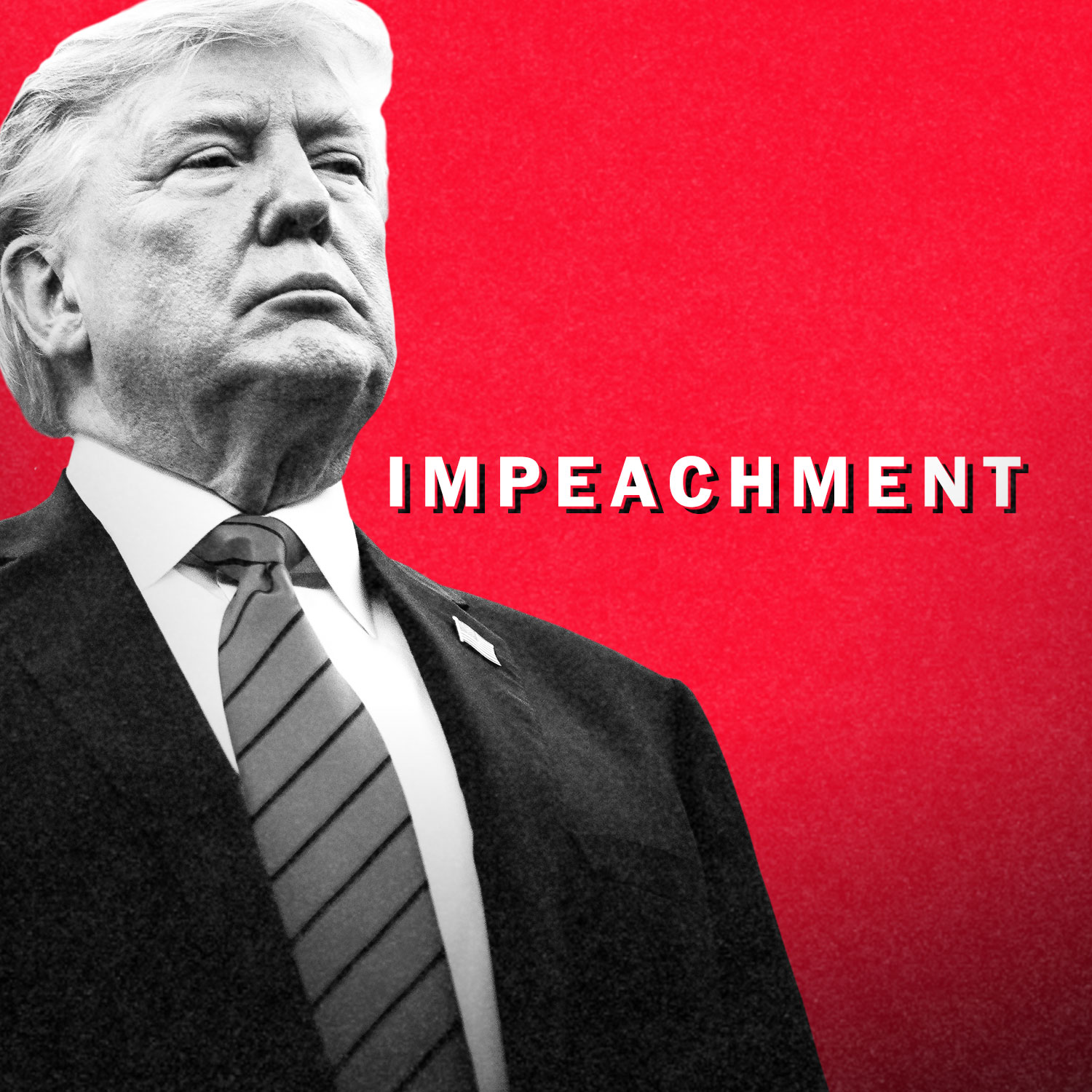
A divided Congress and a presidency on the line
President Trump is the third U.S. president in history to be impeached. Chief correspondent Dan Balz analyzes how this impeachment compares to others, what happens if an impeached president runs again and how Trump’s ability to govern could change.
After heated, long debate, the articles of impeachment move to the full House
The House Judiciary Committee voted along party lines to move the articles of impeachment to the full House. Politics reporter Colby Itkowitz breaks down what happened in the committee debate and what to expect in the House next week.
Articles of impeachment against Trump are unveiled
House Democrats announced articles on abuse of power and obstruction of Congress against President Trump in its investigation of his conduct regarding Ukraine. Reporter Mike DeBonis explains what the articles mean, why they matter and what happens next.
Five things we know now that we didn’t know last week
This week, the impeachment inquiry offered plenty of new revelations. Political reporter Amber Phillips unravels Speaker Nancy Pelosi’s news conference, the debate over the Constitution, new call logs from the president’s lawyer, and more.
The inquiry moves to Judiciary. Can the president’s legal team sit this one out?
Trump and his lawyers won’t be part of Wednesday’s hearing. Have we ever before seen a president’s legal team absent from impeachment proceedings? Reporter Paul Kane explains how past presidents used their lawyers and how Trump’s approach is different.
White House investigation reveals effort to justify Trump’s Ukraine aid decision
The White House’s review of President Trump’s decision to hold up Ukraine military aid found documents showing an extensive effort to justify the move. Reporter Carol Leonnig explains what we know so far about the White House Counsel’s findings.
After a week of hearings, what more do we know?
Key witnesses testified publicly in the House impeachment inquiry this week. Reporter Devlin Barrett unpacks complicated details, notable takeaways from the hearings and where things stand in Congress and the White House at the week’s end.
Eight people. Five hearings. Three days.
Here’s what to watch for in a week jam-packed with public hearings. Senior political reporter Aaron Blake explains why each of this week’s witnesses is being called to publicly testify and what news might emerge from the busy scene on the Hill.
An ousted ambassador tells her story to Congress
Marie Yovanovitch faced lawmakers for hours of testimony Friday. National security reporter Matt Zapotosky breaks down the key moments from the inquiry’s second public hearing. Plus, other impeachment news developments you may have missed this week.
A new inquiry phase and a new revelation: Your guide to the first public impeachment hearing
Complete with contentious moments between lawmakers and insight into facts from key witnesses, the first day of impeachment hearings was eventful. Reporter Elise Viebeck breaks down new information and major moments from the day.
What to expect when public hearings begin
Next week’s public hearings mark the beginning of the next phase in the impeachment inquiry, but what exactly does this next phase look like? How long will it last? And when might the inquiry wrap up? Congress reporter Mike DeBonis has answers.