
Shrink For The Shy Guy
640 episodes — Page 1 of 13
The 4 Ways You Override Yourself Around People
The Invisible Pressure to Not Be Yourself
Goodbye Shrink for the Shy Guy, Hello Authentic Confidence
Do You Feel Like You Belong?
The Voice That Says It Won't Work
Why You Get Anxious Before Interviews, Dates, and Presentations (It's Not What You Think)
What do job interviews, first dates, presentations, and social gatherings all have in common? They're all situations where someone could disapprove of you — and your nervous system knows it. In this episode, Dr. Aziz breaks down the single pattern running underneath all social anxiety and performance anxiety: the fear of disapproval. He explains why your brain fills uncertainty with doom predictions, why those predictions feel so convincing, and why the solution isn't about becoming more impressive — it's about building your capacity to be in the unknown. This episode is part of a series of new discoveries Dr. Aziz has been making about how our relationship with approval shapes everything — our confidence, our conversations, our careers, and our relationships. More on that in the coming episodes.
The Moment You Start Managing Yourself
In this episode of Shrink for the Shy Guy, Dr. Aziz explores what happens the moment you stop being natural in a conversation and start managing yourself instead. If you’ve ever felt yourself drift into performance mode—monitoring your words, second-guessing how you sound, and trying to control how you’re coming across—this episode will help you understand exactly why that happens. Dr. Aziz breaks down how social anxiety can turn conversations into a subtle form of self-surveillance, where your attention leaves the present moment and gets trapped in self-criticism, overthinking, and trying to “perform” the right version of yourself. You’ll discover why this pattern makes it harder to know what to say, harder to connect, and harder to feel truly seen and known by others. This episode is a powerful invitation to recognize performance mode for what it is: not your personality, but a fear response. And once you can see it clearly, you can begin to choose something different. 🎧 Tune in now to learn how to spot self-managing in real time—and take the first step back to being fully, naturally you.
The Hidden Fear of Being Yourself
What if the real reason you hold back, soften what you say, or carefully rehearse how you come across isn’t actually about confidence at all? What if, underneath it all, there’s a deeper fear—that if people saw the real you, they simply wouldn’t like you? In this episode, Dr. Aziz explores the hidden fear that quietly drives people-pleasing, overthinking, and the constant effort to present yourself the “right way.” Many people live with an unspoken belief that something about them is fundamentally not enough—like they’ve been dealt a bad hand in life. From that place, it becomes natural to compensate: improving, performing, polishing a persona, and trying to become someone who will finally be accepted. But as Dr. Aziz explains, this strategy creates a painful paradox. When approval comes, it often brings anxiety and imposter syndrome. When it doesn’t, it seems to confirm the belief that something is wrong with you. Either way, the deeper desire we all have—to feel truly seen, known, and connected—remains unfulfilled. Drawing from years of coaching and insights from his Not Nice Live workshop, Dr. Aziz reveals how this pattern forms and why it keeps people stuck in masks and performances instead of authentic connection. He shows that the real path to belonging isn’t through perfecting yourself, but through taking the courageous risk to be more real. You’ll discover why trying to be who you think others want can never create the belonging you crave—and how genuine confidence begins to grow when you allow yourself to be seen as the imperfect, evolving human you truly are. Tune in to learn how small, everyday moments of authenticity—sharing a preference, setting a boundary, speaking honestly—can begin to dismantle the fear of rejection and open the door to deeper confidence, freedom, and real connection.
Why You Keep Chasing Approval Without Realizing It
Most people don’t walk into conversations thinking they’re trying to win approval. They believe they’re simply being polite, agreeable, or easy to get along with. Yet beneath the surface, many people are unknowingly running a subtle pattern—constantly scanning others for signs that they’re doing well, saying the right thing, or being liked. In this episode, Dr. Aziz explores what he calls “approval harvesting.” This is the unconscious habit of tracking other people’s reactions—looking for smiles, laughter, nods, or praise—to determine whether you’re okay. While it may seem harmless, this pattern can quietly turn conversations, social gatherings, dating, and even workplace interactions into performances where the goal becomes getting approval rather than expressing yourself. Through relatable examples—like walking into a dinner party and monitoring every reaction—Dr. Aziz shows how this internal “approval tracker” can create social anxiety, performance pressure, and a growing disconnection from your authentic self. Over time, you may start filtering, softening, or reshaping what you say just to keep yourself in the “good column” of others’ reactions. At the root of this pattern lies a deeper equation many people unknowingly adopt: approval equals worth. When approval is present, you feel relief and validation. When it isn’t, self-doubt and anxiety surge. This dynamic can drive people-pleasing, overthinking, and a constant effort to manage how others see you. Dr. Aziz invites you to step back and observe this pattern in your own life. Instead of criticizing yourself for it, you’ll learn how to notice when approval harvesting appears—especially in uncertain social situations—and begin asking a powerful question: What would you do if your worth wasn’t on the line? Tune in to discover how awareness of this hidden pattern can be the first step toward greater confidence, authenticity, and a deeper connection with others.
Finding Ground When Everything Is Changing with Dr. Dave
It’s easy to believe that once we arrange our life correctly, the anxiety will quiet and the sense of lack will disappear. A little more money. A different role. A better version of ourselves. Then things will finally settle. This conversation explores that subtle threshold—where striving turns into infatuation, where comparison erodes self-trust, and where we begin chasing a fantasy of a life that is somehow all upside. Dr. Aziz sits down with Dr. Dave Tuck to reflect on values, identity, and the illusion that fulfillment lives somewhere outside our current experience. Together they examine the tension between growth and gratitude, ambition and alignment, and what happens when we stop trying to engineer a perfect life and instead learn to see the one we’re already in. This is not a formula for attracting more. It’s an inquiry into self-worth, clarity, and the steady ground that comes from knowing who you are. You might find yourself looking at your own life a little differently.
The Quiet Cost of Conditional Worth
Most people don’t walk around thinking, “My worth is conditional.” They just feel the tension when things aren’t going well—and the relief when they are. This episode sits with that tension. The quiet pressure to perform, to keep up, to prove something—often without realizing that your sense of value has been hooked onto outcomes, approval, or progress. When those things rise, you feel lifted. When they fall, something inside collapses. Not because anything essential changed, but because worth was never free to begin with. Dr. Aziz reflects on how conditional self-worth forms, how it hides in plain sight, and how it can quietly run an entire emotional life. This isn’t a strategy session or a mindset fix. It’s an invitation to notice what you’ve tied yourself to—and what happens when that grip loosens. You may find yourself recognizing something familiar, and feeling a little more space around it.

Why Knowing How to Speak Up Isn’t Enough
Join Dr. Aziz live for a 3-day VIRTUAL event: Not Nice LIVE > Go here for details and tickets. Most people don’t struggle to speak up because they lack communication skills. They struggle because crossing that line feels dangerous. In this episode, Dr. Aziz Gazipura explores why you may still feel stuck in passivity or half-assertiveness, even if you’ve spent years working on yourself. You understand the ideas. You know you “should” speak up. And yet, when the moment arrives, something pulls you back. Rather than offering scripts or techniques, Dr. Aziz focuses on the real breakdown point: the guilt and fear that surface just before honesty. He examines how indirectness becomes a form of self-protection, why “gentle” assertiveness often fails to create real change, and how unspoken rules about being good, kind, or acceptable quietly limit your life. This episode isn’t about becoming aggressive or finding better words. It’s about recognizing the internal code that says, “If I’m really honest, I’ll lose everything,” and understanding why that belief continues to run your behavior unless it’s directly confronted. If you already know a lot about assertiveness but haven’t been able to live it consistently, this conversation names the threshold you may have been standing at for years—and what it actually takes to cross it. --------------------------------- Many people reach a point where they realize something important: being “nice” isn’t working anymore. For years—sometimes decades—they believed that staying flexible, not rocking the boat, and avoiding discomfort was the right way to live. They told themselves they were being considerate, kind, easygoing. They avoided pressuring people, avoided conflict, avoided making anyone uncomfortable. And then slowly, quietly, the cost became undeniable. Resentment started to build. Anxiety didn’t go away. Relationships felt draining or unsatisfying. Opportunities were missed. A subtle but persistent sense of frustration crept in—often accompanied by the feeling, “I’m not really being me.” So they arrive at an insight that feels like progress: I need to speak up for myself. And that insight is progress. But it’s not the breakthrough. Because knowing that you should speak up does not automatically mean that you can—or that when you do, it will actually work. Why “Just Speak Up” Usually Fails Many people assume assertiveness is a simple behavioral skill. Learn the right words. Use the right tone. Say the thing. But assertiveness isn’t primarily about what you say. It’s about the inner stance you’re coming from when you say it. This is where things break down. Often, people move from passivity into what looks like assertiveness on the surface—but internally, they’re still trying not to upset anyone. They soften their message. They hint. They explain excessively. They bring things up indirectly, hoping the other person will “get it” without them having to actually claim what they want. So they say something like: “I just wanted to mention that you said you were going to do X, and then it didn’t happen… but it’s okay, I handled it.” Technically, they spoke up. Emotionally, they didn’t. Nothing meaningful changes—and then comes the conclusion: “See? Speaking up doesn’t work.” So they retreat back into silence, often with more resentment than before. The Passive → Gentle → Stuck Cycle This is one of the most common cycles I see: First, passivity. Then, a tentative attempt to speak up. Then, disappointment when nothing changes. Then, withdrawal. Over time, resentment accumulates—not just toward the other person, but toward yourself. Because deep down, you know you didn’t fully say what was true. What’s most painful isn’t that the other person didn’t change. It’s that real contact never happened. You weren’t fully there. The Real Barrier Isn’t the Situation People usually have a long list of reasons why they can’t be more direct: “It’s my boss.” “It’s my parent.” “It’s my partner.” “That would be mean.” “That would be selfish.” “You can’t say that in this situation.” These reasons feel convincing because they’re emotionally charged. But they all point away from the real issue. The real issue isn’t the circumstance. The real issue is that you’re operating within a very narrow internal permission structure—one designed to protect you from something that feels catastrophic. What Are You Actually Afraid Of? Imagine being fully honest in a situation where you usually hold back. Not cruel. Not attacking. Just clear. Naming the pattern. Naming the impact. Naming what does and doesn’t work for you. Most people feel immediate discomfort just imagining this. Tightness in the chest. A sinking feeling. An urge to pull back. That discomfort usually isn’t about politeness. It’s about fear and guilt. And underneath those emotions is a deeper belief: If I’m truly myself, I will lose everything. Lose love. Lose approval. Lose safety. Lose belonging. So your nervous system lea

The Nice Trap
Join Dr. Aziz LIVE for a 3-day virtual event: Not Nice LIVE > Go here for details and tickets.In this episode of Shrink for the Shy Guy, Dr. Aziz exposes one of the most insidious traps keeping people stuck in anxiety, guilt, and people-pleasing: The Nice Trap. This subtle form of self-erasure convinces you that being agreeable, self-sacrificing, and undemanding will earn you love, respect, and belonging. But in reality, it does the opposite. You feel anxious, disconnected, and unseen—because you're not showing up as you. Dr. Aziz breaks down how this trap gets wired early in life, the invisible rules that keep you playing small, and the internal “trip wires” that trigger guilt the moment you try to break free. More importantly, you’ll learn how to spot those rules… and begin rewriting them. Packed with insights, mindset shifts, and real-world strategies, this episode invites you to reclaim your boundaries, speak your truth, and finally stop trading authenticity for approval. 🎧 Ready to escape the Nice Trap? Tune in now and take your first step toward freedom. ------------------------------------ There is a trap that countless people fall into without even realizing it—and I know it well, because I lived inside it for many years. It’s sticky. It’s invisible. And even when you start trying to escape it, there are hidden trip wires that snap you right back inside. I call it the Nice Trap. Today, I want to show you exactly what this trap is, how to recognize when you’re stuck in it, and—most importantly—how to begin freeing yourself from it in a way that actually lasts. How You Know You’re in the Nice Trap You might be in the Nice Trap if any of this sounds familiar: You have a hard time saying no. When someone asks you for something, you feel compelled to say yes—even when it costs you. You struggle to ask for what you want. Disapproval or conflict feels deeply unsettling. You might soften your words, hide your true thoughts, or reshape yourself in the moment just to avoid tension. You let situations unfold that you don’t actually want because you don’t want to “make a scene.” You feel intensely uncomfortable being direct, expressing irritation, or showing anger—and if you do, you feel like you’ve done something terribly wrong. At first glance, this all looks like being a “good person.” And that’s what makes the trap so dangerous. The Story That Keeps the Trap Alive Underneath all of these behaviors is a quiet, powerful belief: If I’m agreeable, self-sacrificing, and undemanding, I’ll earn safety, love, and acceptance. If you give enough… If you don’t rock the boat… If you don’t burden anyone… Then eventually, everything will work out. You’ll be loved. You’ll belong. Life will be smooth. That’s the promise. And it’s also the lie. Because the more you abandon yourself to keep the peace, the more resentment, hunger, and desperation quietly build inside you. You start erasing yourself in exchange for belonging. And the worst part? You don’t even get real belonging in return. The Hollow Version of Connection When you’re stuck in the Nice Trap, you may technically have people in your life—friends, partners, coworkers—but something still feels off. You don’t fully relax into the connection. You don’t feel truly seen. You don’t feel known. Because you aren’t actually there. You’re playing a role. The nice one. The easygoing one. The reliable one. And people can’t deeply know you if you’re performing. This is why so many “nice” people feel lonely even when they’re not alone. Why the Trap Is So Hard to Escape The Nice Trap is confusing because parts of it look healthy. Generosity is part of real relationships. Consideration does matter. Being supportive isn’t wrong. So where’s the line? For many people stuck in the trap, the line quietly disappears. It’s always yes. Always accommodating. Always putting yourself last—unless things become so extreme that you’re forced to push back. And sometimes, it even “works” in the short term. Certain people love how giving and undemanding you are. They’re happy to receive without reciprocating. Over time, the dynamic becomes one-sided—and you feel more and more depleted. This isn’t love. It’s erosion. The Trip Wires That Pull You Back In When you start trying to escape the Nice Trap, something interesting happens. You might finally say no. You might express a need. You might set a boundary. And even if the situation goes well externally… internally, you feel awful. Guilt. Anxiety. A sense of danger. That’s a trip wire. Every time guilt appears, it means you’ve broken an internal rule—often one you didn’t even know you were living by. So the question becomes: What rule did I break? “I shouldn’t say no.” “I shouldn’t burden people.” “I shouldn’t make things harder for others.” When you slow down and investigate these rules, you often realize they’re old—learned early in life—and deeply unfair. You may hold yourself to standards you would never exp
The High Cost of Deferring Decisions
In this episode of Shrink for the Shy Guy, Dr. Aziz dives deep into one of the sneakiest traps that keep us stuck: deferring decisions. Whether it’s fear of making the wrong choice, wanting more clarity, or simply waiting for the “perfect time,” delaying decisions comes at a steep cost—and it’s often invisible until it’s too late. Dr. Aziz unpacks how avoiding decisions drains your confidence, erodes momentum, and reinforces the illusion that you're not ready or capable. He shares a radically freeing mindset shift that allows you to make powerful choices now, even if you're scared, uncertain, or don’t feel 100% “ready.” 🎧 Tired of waiting for the stars to align before you move forward in your life, career, or relationships? Tune in now and discover how making the decision—any decision—is often the most powerful step you can take. --------------------------------------------------- Most people don’t ruin their lives with one dramatic mistake. They do it quietly—by waiting. By postponing conversations. By delaying decisions. By telling themselves, “I’ll figure it out later.” And later becomes years. Today, I want to talk about something uncomfortable—but liberating if you really let it land: the cost of deferring decisions. Not just at the end of life, but right now, this year, this week. Because the goal isn’t to someday look back and feel okay about your life. The goal is to feel fully alive now. The Regret That Wakes People Up Too Late There’s a well-known body of work from hospice nurse Bronnie Ware, who spent years listening to people reflect on their lives as they were dying. One regret stood above all others: “I wish I’d lived a life true to myself, not the life others expected of me.” Let that sink in. Not “I wish I worked harder.” Not “I wish I made more money.” But I wish I’d been myself. And if that’s what people realize at the end, the real question is: How many people are already living with that regret right now—just more quietly? Whose Life Are You Actually Living? Living “your life” sounds obvious… until you really examine it. Are you living the life your parents wanted? Your partner expects? Your industry rewards? Your internalized image of a “good” or “nice” person demands? Most people don’t consciously choose someone else’s life. They drift into it. Piece by piece. Decision by decision. Or more accurately—non-decision by non-decision. And over time, you end up steering nothing… while your life still moves forward. The Trap of Endless Information We live in an age that promises certainty through information. If I just read one more book… Watch one more video… Gather a little more data… Then I’ll know what to do. But here’s the truth most people don’t want to hear: Information does not create action. At best, it creates temporary motivation. At worst, it becomes a sophisticated way to avoid deciding. Many people become incredibly informed—and quietly stuck. Why Decisions Feel So Uncomfortable The word decision literally means “to cut off.” When you decide, you eliminate options. You create consequences. You step into uncertainty. And that’s terrifying for the part of you whose job is survival, not fulfillment. So instead, you hover in “I’m not sure yet.” But here’s the uncomfortable reality: Not deciding is still a decision. If you don’t decide to leave, you decide to stay. If you don’t decide to speak up, you decide to remain silent. If you don’t decide to act, you decide to keep living exactly as you are. Action Is the Antidote to Regret There is no path in life that avoids discomfort. The only real choice is which discomfort you choose: The sharp, temporary discomfort of action Or the dull, chronic ache of regret and self-betrayal Living fully doesn’t require dramatic gestures or burning your life to the ground. It requires something much simpler—and much harder: Decide. Then act. Then do it again. Small decision. Real action. Big decision. Imperfect action. It’s not about getting it “right.” It’s about reclaiming the steering wheel. An Invitation—for Today If you’ve been waiting for certainty, confidence, or clarity before acting—this is your wake-up call. Clarity comes after movement. Confidence grows through action. So don’t overthink this. Pick one decision you’ve been deferring. Make it. Act on it—today, in some real, tangible way. That’s how aliveness returns. And that’s how regret never gets a chance to take root. Until we speak again— have the courage to be who you are, and know, on a deep level, that you’re already enough.

The Truth About Change In The New Year
🌟 In this empowering kickoff to 2026, Dr. Aziz challenges a deeply held belief: that being nice means you care more. In fact, the opposite might be true. In this episode, you’ll discover how what looks like “caring” is often fear, over-responsibility, and codependence in disguise. If you’ve been stuck in people-pleasing, constantly saying yes when you want to say no, feeling guilt when others are upset, or believing your worth is tied to keeping everyone happy—this episode is your wake-up call. Dr. Aziz breaks down the emotional trap of chronic niceness and reveals how true caring comes not from fear, but from authenticity and healthy boundaries. 🎧 Ready to stop living for others’ approval and start living as you? Tune in now and learn how to liberate yourself from the Nice Cage—once and for all. ---------------------- A couple of weeks into a new year, a quiet question tends to surface—sometimes with excitement, sometimes with dread: Is this year actually going to be different? Not in the hype-driven, “crush your goals” sense. Not in the motivational-poster version of change. But in the places that matter most. In how you feel inside. In how free you feel socially. In whether you finally stop holding back, second-guessing yourself, or feeling like you’re never quite enough—no matter how much you achieve on the outside. That’s the territory we’re stepping into here. Not weight loss. Not business optimization. Not productivity hacks. Those matter, sure—but they’re not my wheelhouse. What I help people change is something deeper: social confidence, emotional freedom, the ability to be fully yourself without fear, apology, or chronic self-monitoring. And the truth is, most people don’t fail to change because they lack desire. They fail because they’re choosing comfort over truth. Why Comfort Is the Silent Enemy of Real Change When people say they want to change—be more confident, build deeper relationships, speak up, date, lead, or finally feel like they belong—the question isn’t what they want. The real question is: Are they actually going to do the things required to get it? Most people aren’t lying to others about their intentions. They’re lying to themselves. They say they’re “working on it.”They read books.They listen to podcasts.They talk things through with therapists, coaches, or even AI. And all of that can be valuable. But here’s the hard truth I’ve seen over and over again: You can work on something for years without ever transforming it. Because working on it can still be comfortable. Talking about change is comfortable.Understanding your patterns is comfortable.Analyzing your past is comfortable. Transformation is not. The Difference Between a Challenge and a Core Challenge Some difficulties in life are seasons. Others are core challenges. A core challenge isn’t something everyone goes through in the same way. It’s a recurring pattern that stays with you for years—sometimes decades—unless something fundamentally shifts. For some people, that’s addiction.For others, chronic pain.For many professionals I work with, it’s social confidence, belonging, and self-worth. If you’ve been trying to feel more confident or connected for years—and despite effort, insight, and intention, you still feel stuck—that’s a sign you’re dealing with something core. And core challenges don’t resolve through “tending.” They resolve through new experiences. Why Insight Alone Isn’t Enough Understanding why you’re anxious doesn’t cure anxiety. Knowing where people-pleasing came from doesn’t automatically free you from it. Because the real issue underneath social anxiety and excessive niceness isn’t tactics—it’s relationship. Your relationship with yourself.Your relationship with other people.Your belief about whether you’re lovable, acceptable, and safe to be seen. That belief doesn’t change through thinking. It changes through risk. You have to risk being more real.You have to risk saying no.You have to risk being visible, honest, imperfect, and human. And when you do—with the right structure and support—something extraordinary happens: You discover that you survive.You discover that people don’t leave.You discover that you can handle discomfort. And slowly, your nervous system learns a new truth. Looking at the map doesn’t get you across the bridge. You have to walk it. Why Most People Stay Stuck (Even When They’re Trying) What I see again and again is this pattern: People avoid discomfort.Then they decide to “work on themselves.”But they choose a comfortable way to do it. And when comfort is the priority, deep change never happens. So they try again next year.And the year after that.And five years later, they’re still saying, “I’m working on it.” Eventually doubt creeps in. Maybe this can’t change.Maybe this is just who I am.Maybe I waited too long. And that doubt becomes yet another reason to retreat back into familiarity. The Truth Most People Don’t Want to Hear Here it is—clearly, h

Nice People Don't Care Too Much
Think you care too much about other people’s feelings? Think again. In this bold kickoff to 2026, Dr. Aziz pulls back the curtain on the real reason “nice people” overextend themselves, struggle to say no, and feel constantly responsible for everyone’s emotions. Spoiler alert: it’s not because they care too much—it’s because they’re trying to stay safe. Deep down, many people-pleasing behaviors are driven by fear, guilt, and the unconscious belief that your worth hinges on making others happy. In this eye-opening episode, you’ll learn: Why over-functioning and “caring” often mask codependency The hidden emotional cost of being overly responsible How niceness traps you in an outdated identity that’s not really you The essential difference between real care and fear-based appeasement Why it’s time to update your inner operating system—not just tweak your habits If you’ve ever said yes when you wanted to say no, answered texts out of anxiety, or felt guilty for simply protecting your time and energy, this episode will speak to your soul. And it will challenge you to finally liberate yourself from the nice person identity and step into the bold, authentic leader you were meant to be. Dr. Aziz also shares a powerful invitation to make 2026 the year you fully upgrade your life—starting with your confidence. Tune in, commit, and get ready to reclaim your freedom. -------------------------------------------- Why “caring” can be fear in disguise—and how to break free from the Nice Cage Most people start the new year thinking about goals: relationships, health, career, money, confidence. But underneath all of that, there’s a deeper goal. Liberation. Liberation from the old identity. Liberation from the old operating system. Liberation from social anxiety, people-pleasing, self-doubt… and the nice cage that keeps you small. And today I want to challenge one of the biggest beliefs that keeps “nice” people trapped: Nice people don’t actually care too much. That might sound surprising—because nice people often feel like they care more than everyone else. They feel guilty if someone’s upset. They say yes when they want to say no. They carry other people’s emotions like they’re responsible for them. And they tell themselves: “I care about them, so I can’t disappoint them.” “If I say no, it means I don’t care.” “If they’re struggling, who am I to refuse?” “A good person should help.” But here’s what I want you to see: When it feels like you care too much… it often isn’t caring at all. It’s something else masquerading as care. The Nice Cage: When “being good” becomes self-erasure Niceness can feel like virtue. It can feel like love. It can feel like generosity. It can feel like being a “good person.” But a lot of the time, niceness is actually a strategy—an unconscious survival strategy—to stay safe. Because underneath niceness is a fear that sounds like: “If I upset people, I’ll be rejected.” “If I disappoint them, I’ll be abandoned.” “If they’re angry with me, I’m not safe.” “If I don’t keep them happy… I’m bad.” So niceness becomes a cage: you keep trying to be acceptable, agreeable, harmless. And the cost? You don’t live your life. You live a managed version of yourself. The big misunderstanding: “Caring” vs. fear Nice people don’t actually care too much. They often have something else running the show: 1) Codependence Codependence is basically: “I’m okay if you’re okay. And if you’re not okay… I’m not okay.” So if someone is happy, you relax. If someone is disappointed, irritated, stressed, or hurt—you go into emergency mode. Your hair is on fire. “What do you need?” “How do I fix this?” “How do I make it right?” And it feels like caring. But really, it’s fear. 2) Over-responsibility This is the core belief behind niceness: “I am responsible for your emotional state.” Not that you’re responsible to feed someone like a baby— but you feel responsible for whether they’re upset. So you avoid saying no. You avoid being direct. You avoid expressing your truth. You override your own needs. Because if they’re upset… you feel like you’ve done something wrong. The “or else” feeling: the clearest sign it’s fear Here’s one of the easiest ways to tell whether something is care or fear: If it has an “or else” feeling—it’s fear. “I have to respond right now… or else.” “I have to say yes… or else.” “I have to make them happy… or else.” “I can’t disappoint them… or else.” That “or else” is not love. That “or else” is survival mode. And it’s usually not about the current situation—it’s an old pattern repeating itself. Why niceness drains your vitality Here’s the truth that many nice people don’t want to look at: You will not be fully alive in the nice operating system. At best, you can build a life that looks okay on the outside… but it doesn’t feel like your life—because you’re not being you. And eventually, the nice pattern catches up. burnout resentment being taken for granted relationships that feel one-si
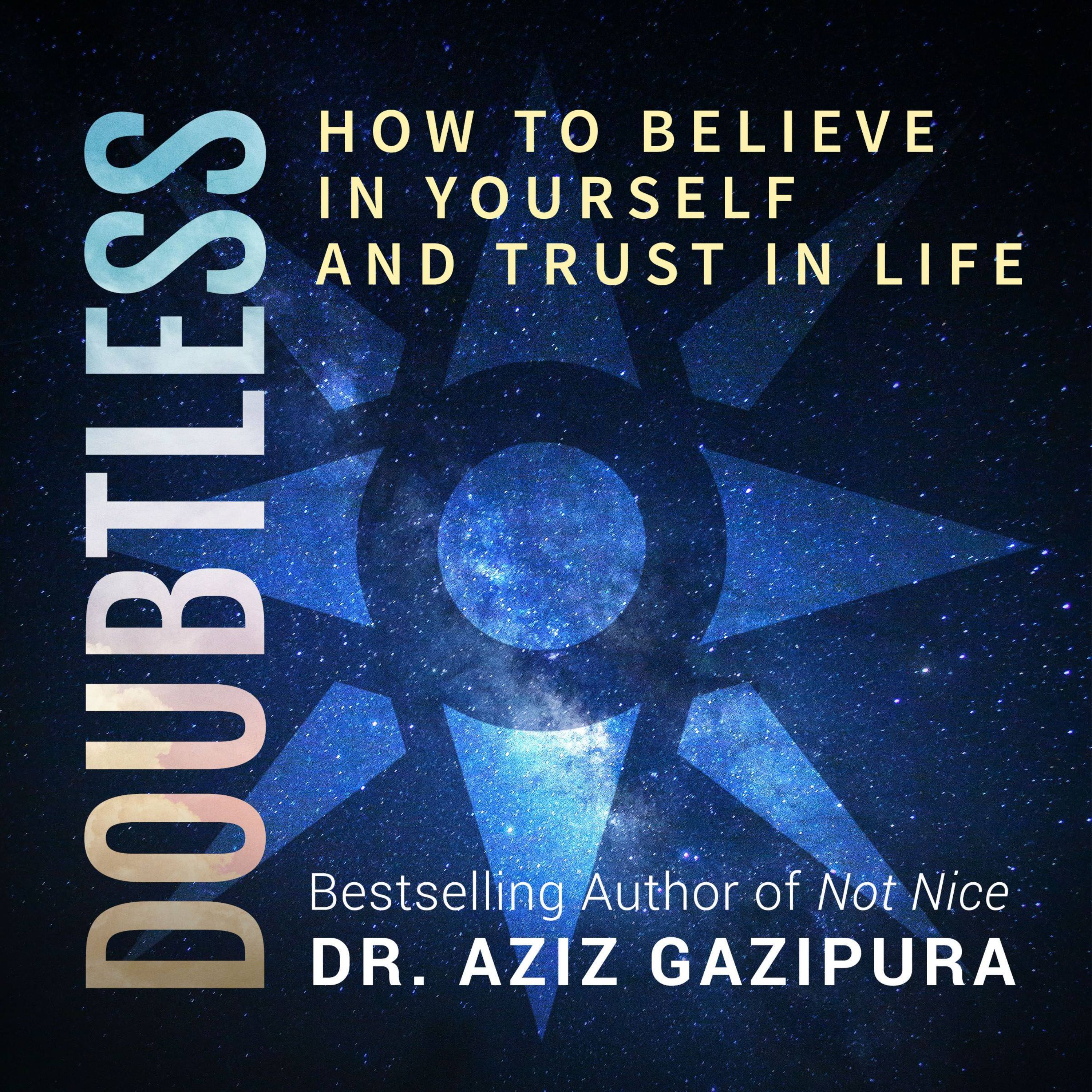
Become Doubtless - How To Believe In Yourself And Trust In Life
What if your self-doubt wasn’t something you had to live with? What if you could become truly doubtless—able to believe in yourself fully and trust life, no matter what? In today’s powerful episode, Dr. Aziz shares the origin story and key insights behind his brand new book Doubtless: How to Believe in Yourself and Trust in Life. You’ll learn how self-doubt forms, why it persists even after personal growth, and how it subtly robs you of joy, freedom, and authenticity. Dr. Aziz explores the deeper armor we all build to protect ourselves—and how that same armor becomes a cage. He introduces a new way forward: a path of liberation, where you build not just unshakable self-confidence, but a living trust in life itself. If you've ever felt like fear or inner control mechanisms are holding you back—especially after achieving outer success—this episode will speak directly to your soul. Plus, discover how to get your copy of Doubtless and join the free masterclass to start your own journey.--------------------------------------- What if the thing holding you back isn’t a lack of confidence—but a lack of trust? Most people assume that self-doubt means you don’t believe in yourself enough. And while that’s partly true, it’s only half the story. Because even when you do believe in yourself—your skills, your intelligence, your capability—you can still feel anxious, guarded, and unsure deep down. That’s where doubtlessness comes in. Being doubtless isn’t about hyping yourself up or convincing yourself you’re amazing. It’s a state of being where self-doubt no longer runs the show. Where you trust yourself and trust life enough to move forward, even when you don’t have certainty, guarantees, or perfect understanding. Self-doubt often disguises itself as being “reasonable.” It sounds cautious. Mature. Sensible. But underneath, it’s usually a protective strategy—something you learned long ago to avoid pain, rejection, or humiliation. Maybe you were laughed at when you expressed yourself. Maybe you were judged, criticized, or shut down. And somewhere along the way, you built armor. That armor may have helped you survive. But years later, it quietly becomes a cage. “Self-doubt isn’t wisdom—it’s armor that’s grown too tight.” Doubt shows up in familiar ways: questioning your instincts, dismissing your desires, postponing what matters to you, or needing to fully understand something before you allow yourself to act. It keeps you stuck in your head, trying to control outcomes, emotions, and even life itself. And control feels safer than uncertainty—until you realize how much aliveness it costs. Some of the most meaningful moments in life don’t come from certainty or logic. They come from letting yourself be moved. From trusting an inner pull you can’t fully explain. From allowing life to move through you without needing to justify every step. That’s the difference between believing in yourself and trusting life. Believing in yourself gives you courage to act. Trusting life gives you permission to let go. And both are required to truly become doubtless. Becoming doubtless isn’t a switch you flip or a quote you memorize. It’s something you cultivate over time—like building a muscle and tending a garden at once. You create the conditions. You learn to recognize how doubt hooks you. You stop obeying its rules. And gradually, something new grows: a quieter mind, a more grounded body, and a deeper sense of inner safety. From that place, authenticity becomes natural. Connection feels less forced. Decisions feel clearer. You don’t need certainty to move forward anymore—you need alignment. And when you start living this way, life begins to feel less like a battle you must win and more like a relationship you can trust. That’s the invitation of doubtlessness. Not to eliminate fear entirely—but to stop letting fear decide who you get to be. Because when doubt no longer runs your life, what opens up isn’t just confidence—it’s freedom. And that freedom allows you to finally be 100% you. Get the Book on Amazon Purchase Become Doubtless on Amazon (Kindle & Paperback):👉 https://a.co/d/5hdcSYXBook Bonuses & Resources Access bonus materials, masterclasses, and companion resources for the book: 👉 www.socialconfidencecenter.com/doubtlessbook Learn more about Dr. Aziz, his work, and coaching programs: 👉 www.socialconfidencecenter.com/

When Self-Confidence Isn't Enough
🌟 In this episode of Shrink for the Shy Guy, Dr. Aziz explores a surprising truth that almost no one talks about: self-confidence alone can only take you so far. If you’ve ever worked hard to become more confident—only to still feel anxious, overwhelmed, or like the next level of life is somehow out of reach—this conversation will hit home. Dr. Aziz breaks down what he calls the self-confidence ceiling—the invisible limit you run into once you’ve taken risks, pushed yourself, built skills, and created a good life… and yet still feel anxious, grasping, or afraid of losing what you’ve built. Through stories of his own journey and powerful metaphors (the famous red, green, and gold balls), he reveals why success can sometimes increase anxiety, and what deeper ingredient is needed to finally feel grounded, secure, and free. You’ll discover why confidence without trust eventually collapses under its own weight, and why true liberation comes from pairing “believe in yourself” with something bigger: a lived sense of trust in life itself. This subtle shift unlocked a profound transformation in Dr. Aziz’s relationships, peace, and purpose—and it’s the core of his upcoming book Doubtless. Packed with insight, humor, and honest personal stories, this episode invites you into a new phase of growth—beyond performance, beyond proving yourself, and into a deeper kind of freedom. 🎧 Ready to break past your self-confidence ceiling and step into something greater? Tune in now and learn the missing piece that makes confidence finally feel effortless, stable, and real. ------------------------ When Self-Confidence Isn’t Enough There’s a moment in your growth when you look around at your life and think: “Shouldn’t I feel better than this?” You’ve worked hard. You’ve pushed yourself. You’ve taken the risks, had the breakthroughs, improved your relationships, built your career, maybe even created a life that younger you never thought was possible. And yet… the anxiety doesn’t fully go away. It shifts. It takes on a new shape. That’s what this episode dives into—the surprising point where self-confidence stops being enough, and why so many high-functioning, self-aware people suddenly feel overwhelmed, afraid, or “on edge” right when life gets good. I call this moment the Self-Confidence Ceiling. In this episode, I share how I personally smashed into that ceiling—even after overcoming years of social anxiety, breaking free from people-pleasing, building deep relationships, and creating work I love. I thought I had “made it.” But instead of peace, I found myself more anxious than ever… not because life was bad, but because it was good. Really good. When you’ve been pulling red balls for years—rejections, setbacks, pain—you learn how to handle the struggle. But when you start pulling green balls—love, success, connection, purpose—suddenly you have something precious to lose. And that’s where fear can explode. “The better it gets, the more danger your nervous system predicts.” Maybe you’ve felt that too. That tightening in your chest when things are going well. That fear that the other shoe is about to drop. That constant scanning for what might go wrong. This isn’t a failure of confidence—this is the boundary line between self-confidence and something deeper: trust in life. For years I could talk about trust, teach trust, write about trust. But emotionally? Physically? Nervously? I didn’t trust anything. Not the good. Not the stability. Not the love. Not the blessing of a beautiful home, two little boys, my marriage, my work, my clients, my health—none of it felt safe. I was hypervigilant, checking for danger everywhere. And I had no idea why. This episode walks through the moment everything shifted—when I realized I wasn’t facing a skill problem or a mindset problem. I was facing a faith problem. Not faith in a religious sense, but a faith in life, in goodness, in the unseen forces that hold us, guide us, and love us even when our minds doubt it. It’s the journey that led to my new book, Doubtless: How to Believe in Yourself and Trust in Life, which is finally coming out next week. (We’re putting the finishing touches on it now!) And on the release week, I’ll be teaching a free live masterclass on how to stop living in fear and finally trust the good in your life. I’ll share the link as soon as it’s ready. Make sure you’re on my email list so you don’t miss it. If you’ve ever felt like your anxiety shouldn’t be this strong… if you’ve ever wondered why success still comes with fear… if you’ve ever sensed that self-confidence alone can’t lift the weight you’re carrying… this episode will speak directly to your heart. Because you’re not broken. You’re not failing. You’re simply bumping into your next breakthrough. And on the other side of that ceiling is a life of freedom, connection, gratitude, and trust that you absolutely can access. This episode is the doorway. Let’s walk through it together.

Stop Fearing Others Feelings
In this episode of Shrink for the Shy Guy, Dr. Aziz dives into one of the most subtle yet powerful patterns that drives social anxiety and people-pleasing: the fear of other people’s feelings. Ever find yourself unable to say no, worrying you’ve upset someone, or constantly trying to make sure everyone feels okay, even at your own expense? This episode exposes the hidden contract behind those patterns: the belief that you’re responsible for managing other people’s emotional states. Whether it’s guilt when someone’s sad, panic when they’re angry, or discomfort even when they admire you, this episode helps you finally break free. You’ll learn how this core fear is rooted in outdated childhood wiring and how you can begin to rewire your system so you’re no longer held hostage by others’ moods. Through powerful examples and real-life metaphors, Dr. Aziz shows you a way out of emotional over-responsibility and into a life of greater freedom, truth, and inner peace. You’re not here to manage everyone’s feelings. You’re here to live your life.” 🎧 Ready to stop walking on eggshells and reclaim your emotional freedom? Tune in now and learn how to stay centered even when others feel upset.----------------------------------------------------------- Ever feel like you’re walking through life on emotional eggshells? You say yes when you want to say no. You soften your words to avoid upsetting someone. You apologize even when you haven’t done anything wrong. If you relate to that—this message is for you. Because what’s really going on isn’t just conflict avoidance… it’s fear. Specifically, the fear of other people’s feelings. The Hidden Fear Driving Nice People Most “nice” people think their problem is caring too much. But beneath that is a quiet, anxious belief: “If they feel bad, it means I’m bad.” You might not say that out loud, but it runs the show. Someone’s disappointed in you? You feel guilt. Someone’s angry? You feel panic. Someone’s sad? You feel pressure to fix it. It’s as if their emotions automatically become your responsibility. But here’s the truth: you were never meant to manage other people’s feelings. The Unspoken Contract You Never Signed Somewhere along the way, you adopted a silent rule: “It’s my job to make sure everyone around me feels good.” This “emotional management contract” runs deep. It might have started in childhood—trying to keep peace in your family, soothe a stressed parent, or calm the tension in the room. Over time, your nervous system learned: Safety = everyone else is okay. That worked back then. But as an adult, it keeps you trapped. You become hyperaware of others’ moods, scan faces for disapproval, and feel anxious any time someone around you is upset. “You can’t live your purpose if you’re constantly managing everyone’s emotions.” How to Break the Contract Freedom begins with a radical new truth: You are not responsible for anyone else’s emotional state. That doesn’t mean you stop caring or turn cold. It means you stop trying to control how others feel. When someone is upset, you can still be kind, compassionate, and curious—without collapsing into guilt or scrambling to fix it. You might say, “I hear that this is hard for you,” while also staying grounded in your own truth. This is emotional adulthood. Two people. Two nervous systems. Each responsible for their own feelings. The Practice of Emotional Freedom Start simple. When you notice that urge to make someone feel better, pause. Take a breath and remind yourself: “They are an adult. They can manage their own emotions. I can manage mine.” That single thought reclaims your energy, your peace, and your presence. Over time, you’ll stop flinching when people are upset. You’ll stop over-apologizing. You’ll stop fearing disapproval. And you’ll start showing up as the real you, grounded, open, and free. You Can Be Loving Without Losing Yourself Being kind doesn’t mean being controlled. Being compassionate doesn’t mean being compliant. You can love deeply and hold your center. The next time someone around you feels disappointed, angry, or sad—let them. You don’t have to fix it. You just have to stay present. Because when you stop fearing others’ feelings, you finally start living your own life.

Healing The Cause Of Social Anxiety & People Pleasing
In this vulnerable and revealing episode of Shrink for the Shy Guy, Dr. Aziz returns from a life-changing couples workshop with a fresh insight into what really causes social anxiety and people-pleasing and how to heal it from the inside out. Most people try to overcome self-doubt by repeating affirmations, striving harder, or becoming their “ideal” version of themselves. But as Dr. Aziz explains, this fantasy self is actually wrapped around a much deeper wound: a core belief that we’re not enough or not lovable as we are. Drawing from powerful moments during the retreat, he unpacks how insecure attachment leads to chronic feelings of unworthiness and how our attempts to “fix” ourselves only deepen the cycle. You’ll learn how the path to lasting confidence doesn’t come from becoming more, but from reconnecting with your authentic self, one that is already whole and worthy. Using a powerful metaphor of braided ropes, Dr. Aziz helps you see the loop you might be caught in and how to step out of it for good. "Everything is changeable. 100%. It’s not about becoming someone else. It’s about coming home to who you already are." Ready to heal the root of social anxiety and step into real freedom? Tune in now and rediscover your worth. ---------------------------------------------- Have you ever wondered why you still feel not enough, no matter how much you achieve, improve, or try to please? Why confidence sometimes feels like an act, and connection like a test you can fail? What if the real issue isn’t that you’re broken but that you were never fully bonded? In this episode, I want to take you deeper to the root of social anxiety and people pleasing. Because beneath the awkward moments, the self-doubt, and the endless striving lies something much more fundamental: a missing sense of I’m okay as I am. The Real Source of “I’m Not Enough” At the heart of social anxiety isn’t fear it’s disconnection. When you were young, something subtle but powerful happened: a gap formed between the love and security you needed and what your environment could provide. It wasn’t your fault, and it doesn’t mean your parents didn’t love you. But that gap created what psychologists call insecure attachment a deep, body-level sense of I’m not safe, I’m not held, I’m not enough. “Social anxiety and people pleasing aren’t personality flaws—they’re attachment wounds trying to feel safe.” That unease in your body becomes the foundation of every “I’m not enough” story: “I’m not interesting enough.” “I’m not attractive enough.” “I’m not confident enough.” We try to fix the feeling by building a better self—a “fantasy self”—that will finally be lovable. But that striving only tightens the knot. The Fantasy Self Trap When we feel not enough, we look for clues about who we should be. Dad liked when I was smart? Be the smart one. People admire success? Chase success. Everyone loves charm? Learn to perform. Piece by piece, you build your fantasy self the polished, perfect version of you who finally earns love, approval, and belonging. But here’s the painful secret: no matter how many boxes you check, the emptiness doesn’t go away. The rope of your life twists endlessly between two strands—the blue rope of not-enoughness, and the orange rope of the fantasy self. Around and around you go… striving, achieving, collapsing. Until you realize: the problem was never you. It was never the missing strand. It was believing you needed to become someone else to be loved. The Way Out: Relearning Love The healing of social anxiety and people pleasing isn’t about becoming your fantasy self—it’s about coming home to your real self. “You don’t need to earn love. You need to experience being loved as you are.” This isn’t theory. It’s a retraining of your nervous system—a gradual, embodied relearning that you are safe, seen, and worthy exactly as you are. You don’t fix it with affirmations. You heal it through experience: letting yourself be seen, receiving care, allowing love in. That’s the work and yes, it’s vulnerable. But it’s also freedom. Coming Home to Yourself This isn’t a quick fix. It’s a practice, like learning to move your body again after years of tension. You build it by showing up, by practicing openness, by letting go of the fantasy self one thread at a time. And then one day, you wake up and realize—you don’t need to become enough. You already are. Because confidence isn’t built on pretending to be someone else. It’s born the moment you finally allow yourself to be you.
How To Keep Going When You're Discouraged
In this episode of Shrink for the Shy Guy, Dr. Aziz offers powerful insight into what to do when you feel like giving up. Whether you're trying to build confidence, face your fears, or push through challenges, there are times when progress feels slow and resistance feels overwhelming. Dr. Aziz unpacks the real reason we feel discouraged and why it’s often not about the actual results we’re getting. You'll discover how unrealistic expectations and unconscious comparisons can drain your motivation and how to shift back into momentum with self-compassion and clarity. Packed with honesty, humor, and actionable tools, this episode is a reminder that you're not broken, you’re just human. And the key to long-term change isn’t forcing yourself forward, but learning how to keep going with heart. 🎧 Feeling stuck? Tune in now and reignite your courage to keep moving forward—no matter what. ------------------------------------- Ever have one of those days where you just don’t have it in you? You’ve been working on your confidence, trying to speak up, take risks, connect more—but then something happens. You freeze in the meeting. The conversation flops. Someone says “no.” And suddenly that old voice kicks in: “See? You’ll never change.” That voice pulls you down fast. You stop taking action. You retreat. You tell yourself you’re “just busy” or “need a break.” But what’s really happening is something deeper—something every courageous human faces on the path to confidence. The Doubt Storm Whenever you stretch beyond your comfort zone, you awaken an old gravitational force I call the doubt storm. It’s that heavy pull toward discouragement, self-criticism, and hopelessness. You start circling the drain with thoughts like: “I’m never going to figure this out.” “Something’s wrong with me.” “It always ends this way.” And once that story takes over, it feels impossible to fight. But this is where real confidence begins—not in the easy wins, but in your capacity to weather the storm without giving up. “Confidence isn’t built in your victories. It’s built in the moments you refuse to quit.” 1. Be the Mountain in the Storm The most powerful thing you can do when discouragement hits isn’t to fix it—it’s to stop running from it. Imagine yourself as a mountain. The storm comes, winds howl, rain lashes against you—but the mountain doesn’t move. It stays steady. Set a timer for five minutes. Sit. Breathe. Notice what’s happening: Breath. Feel the air move in and out. Thinking. Name the thoughts: “thinking.” Feeling. Name the emotion: “sadness,” “fear,” “frustration.” Sensation. Notice where it lives in your body. Sound. Listen to the room around you. This practice grounds you. You don’t have to solve the storm—just outlast it. It always passes. 2. Recenter: How Am I Steering? Once the storm quiets, you’ll see clearly again. Now ask yourself: “How am I steering my life right now?” Most suffering doesn’t come from circumstances—it comes from how we’re relating to them. You can’t control if someone says yes or no. You can’t control the outcome of a meeting or a date. But you can control how you show up. “You can’t steer the storm, but you can steer yourself.” Choose to play the long game. Choose curiosity over desperation. Choose connection over control. 3. Keep Showing Up Your only real job is to keep showing up for your growth. Not perfectly. Not fearlessly. Just consistently. Because every time you face a setback and keep going, you’re reprogramming the story of who you are—from “someone who can’t” to “someone who persists.” You’ve Got This Confidence isn’t a straight line. It’s a spiral—up, down, forward, backward. But if you stay in the process long enough, you will win. You’ll speak freely, connect deeply, and move through life with the calm power of someone who knows their worth. So when the next storm comes, don’t panic. Be the mountain. Breathe. And remember: this is how confidence is built—one courageous choice at a time.
Boost Confidence And Kill Anxiety At The Same Time
In this episode of Shrink for the Shy Guy, Dr. Aziz reveals the secret to boosting confidence while dissolving anxiety and it’s not another breathing exercise or mindset hack. It’s a deeper shift in how you see yourself and how you approach life. Most people try to overcome fear by gritting their teeth and pushing through. But what if you could unlock a bold version of yourself that actually wants the challenge? Dr. Aziz introduces the powerful identity of the Bold Explorer a part of you that thrives on uncertainty, risk, and discovery. Whether you're working to speak up at work, approach someone you're attracted to, or just stop overthinking every social interaction, this episode gives you a new way to show up with strength, courage, and yes, more fun. Ready to activate the version of you that’s fearless, adventurous, and fully alive? Tune in now and start living like the bold explorer you were born to be. --------------------------------------------- If you’ve tried all the “calm down” hacks—meditations, breathing apps, mantras—and still find anxiety waiting for you at work, on dates, or before you speak up… this is for you. There’s a faster path than soothing your nerves in the moment: change who’s showing up. When you do, confidence rises and anxiety dissolves—without white-knuckling your way through it. “Confidence isn’t something you earn— it’s something you remember.” The One Shift: Become the Bold Explorer Anxiety spikes when the “stay-safe” part of you takes the wheel. Instead, step into a different identity: the Bold Explorer—the part of you that seeks growth, welcomes the unknown, and chooses meaningful risk over comfortable stagnation. Explorers don’t wait to “feel ready.” They move toward the edge on purpose. Try this: Before a conversation, meeting, or date, pause and say (quietly or aloud), “I’m a Bold Explorer. Let’s see what’s here.” Notice how your posture, breath, and tone shift toward grounded courage. “Boldness is always rewarded: with aliveness, with wisdom—and often with wins.” Why This Kills Anxiety (and Builds Real Confidence) Most people dip a toe outside their comfort zone, endure the fear, then retreat. That trains your body to associate growth with threat. The Explorer flips the script: discomfort becomes a signal of aliveness, not danger. When your brain interprets the moment as chosen adventure, your nervous system calms and capability expands. Two guaranteed payoffs every time you act boldly: Aliveness — You feel more awake, present, and powerful. Wisdom — You learn faster through doing than by rehearsing in your head. Make It Practical: An Explorer’s Daily Reps Name the Expedition. What’s today’s “edge”? Speaking up once in a meeting? Starting a conversation? Sending the pitch? Write it down each morning: “Today’s exploration = ___.” Use the 5% Rule. You don’t need to cliff-jump. Reveal 5% more, ask one deeper question, take one bolder step than yesterday. Anchor the Identity (Cold Shower Primer). Tomorrow morning, take a 30–60 second cold shower. Not for biohacking bragging rights, but to train your brain: I move toward what’s uncomfortable on purpose. Then carry that energy into the first bold action of your day. “Don’t wait to feel brave. Act—then let your feelings catch up.” Final Word: This Is Who You Are You’re not building a new self from scratch—you’re remembering the part of you that has always been willing to try, to learn, to live fully. When the Explorer leads, anxiety loses its grip because there’s nothing to defend—only something to discover. You can do this. Stand a little taller. Breathe deeper. Choose one bold step today. And watch how confidence rises while anxiety quietly fades into the background.
Stop This For 7 Days To Transform Your Confidence
In this episode of Shrink for the Shy Guy, Dr. Aziz issues a bold 7-day challenge that just might transform your confidence: stop apologizing. Not when you bump into someone, but the deeper, more compulsive “I’m sorry” that leaks out when you speak up, have needs, or reveal who you are. If you’ve ever found yourself saying “Sorry to bother you” or “I’m sorry, that was probably too much…”—this episode is for you. Dr. Aziz reveals why chronic apologizing isn't just a bad habit—it's a deep, unconscious signal that says “I’m not allowed to exist as I am.” You’ll learn how these little apologies sap your power, disconnect you from others, and reinforce toxic self-doubt. Packed with stories, humor, and a clear 7-day “apology fast” experiment, this conversation will help you ditch the reflex, reclaim your voice, and show up unapologetically real. Ready to stop shrinking and start owning your space? Tune in now and begin your 7-day confidence reboot.---------------------------------------------- How many times did you apologize today? If you’re like most people, it’s probably more than you realize. “I’m sorry” slips out when we bump into someone, when we speak up, when we share something personal, and when we even exist in a way that might inconvenience someone. But here’s the truth: you’re not being polite—you’re being powerless. For one week, I want to challenge you to stop apologizing unnecessarily. What happens next might shock you. The Addiction You Don’t Realize You Have Over-apologizing feels harmless—like good manners. But in reality, it’s an emotional addiction. Every “I’m sorry” is a tiny attempt to soothe discomfort. You’re trying to make sure no one’s upset, that no one disapproves, that everyone’s okay with you. It’s a self-soothing reflex, just like reaching for sugar or scrolling endlessly on your phone. It gives you a micro-hit of safety… at the cost of your power. The moment you say “sorry” when you’ve done nothing wrong, you send a subconscious message to yourself: “I’m a problem. I shouldn’t exist this way.” And you don’t just say it once—you reinforce it dozens of times a day. The Cost of Compulsive Apologizing At best, this habit makes you seem uncertain. At worst, it damages your confidence and your relationships. When you apologize for having an opinion, for asking a question, or simply for speaking up, people don’t feel more comfortable around you—they feel disconnected. It’s like you shared a genuine moment, and then poured cold water all over it. I’ve seen clients apologize for being seen: “I’m sorry, I know I’m talking too much.” “I’m sorry, I didn’t mean to bother you.” But when you say sorry for simply being human, what you’re really saying is: “I’m sorry for who I am.” And that is the one apology you must stop making—forever. The 7-Day Apology Fast Let’s make this practical. For the next seven days, go on what I call an Apology Fast. That doesn’t mean you never apologize. Real apologies—where you’ve acted outside your values or hurt someone are powerful and healing. But all the other ones? The nervous, automatic, I just want you to like me apologies? Those go. Here’s how: Notice it. Catch yourself the moment you say “sorry.” Interrupt it. Imagine the gentle but firm correction: “Ah-ah. Leave it.” (Yes, like training a puppy!) Replace it. Instead of “sorry,” say something direct and grounded. Try “thank you for your patience,” “excuse me,” or simply say nothing at all. Keep score. See if you can reduce your unnecessary apologies each day. The Real Transformation When you stop apologizing for existing, something beautiful happens: You start to take up space. You start to feel solid. You start to respect yourself. And that shift ripples outward. People listen more closely. You speak more clearly. You move through the world as someone who knows—deeply—that they belong. So, for seven days, no unnecessary “I’m sorry.” Just you unfiltered, unapologetic, and free. Because confidence doesn’t come from being perfect. It comes from finally realizing you have nothing to apologize for.
3 Keys From Conversation Master
In this episode of Shrink for the Shy Guy, Dr. Aziz shares the Top 3 Keys from the Extremely Confident Conversation Master Training—a powerful 3‑day virtual workshop designed to help you break free from self‑doubt, deepen real connections, and show up fully as yourself. Whether you attended the event or missed it, this episode distills the most transformative takeaways you can apply right now to create more ease, connection, and confidence in every conversation. Discover how to reignite your natural desire for connection, rebuild your innate capacity for authentic conversation, and dissolve the illusion that you don’t belong. Dr. Aziz reveals why connection is not optional—it’s essential—and how to overcome the hidden beliefs and fears that keep your heart closed or your confidence limited. Packed with humor, stories, and actionable insights, this episode invites you to open your heart, take bold social risks, and remember that you already belong. 🎧 Ready to unlock deeper connection and social freedom? Tune in now to Shrink for the Shy Guy and discover the 3 keys that can change how you show up in every conversation.----------------------------------------------- What if connection isn’t something you have to earn… but something you already deserve? Most people spend their whole lives trying to “get better” at talking to others—learning the right things to say, the right tone, and the right body language. But at the root, confidence in connection has nothing to do with perfect lines or tricks. It’s about how open your heart is, how much you trust yourself, and whether you believe you belong. After teaching my Supremely Confident Conversation Master workshop for the seventh time, three powerful lessons stood out that will change how you relate to everyone—from strangers to soulmates. 1. You Have to Want It You can’t create real connection if you’ve convinced yourself you don’t need it. Maybe you’ve been hurt before. Maybe you got rejected, ghosted, or left behind. Somewhere along the line, you told yourself, “I’m fine alone.” But that story isn’t strength—it’s self-protection. Connection is not optional. It’s essential. Just like your body needs water, your soul needs genuine human connection. When you shut that part of yourself down, you start to feel the symptoms: emptiness, numbness, endless scrolling, constant distraction. When you wake up to that truth, something inside reignites. That quiet hunger to feel seen, heard, and loved—it’s still there. You just have to admit it’s real. 2. Your Capacity for Connection Is Innate You don’t need to “learn” how to talk to people—you were born with the ability to connect. If you’ve ever laughed with a friend, comforted someone in pain, or told a story that lit up a room, that’s it. That’s the real you. Somewhere along the way, fear, criticism, or trauma might’ve dimmed it—but it’s still in there. When I see people go from isolated and anxious on Day 1 of my workshop to laughing and connecting effortlessly by Day 3, it’s not because they learned a few “social tricks.” It’s because they remembered who they were before fear took over. Like learning to walk again, it takes a little practice. You might wobble at first, but once you remember how natural it feels, it becomes effortless. You already have everything you need. 3. You Belong Everywhere You Go The deepest illusion of social anxiety is the belief that you don’t belong. You can be surrounded by people who welcome you—and still feel like an outsider. But belonging isn’t something others give you. It’s something you choose. When that voice says, “I don’t fit in,” challenge it. Ask, “What if I already do?” At the event, we practiced a simple phrase: “I belong at every table.” Say it until it feels less like a lie and more like a truth waiting to surface. Because when you act as if you belong, something miraculous happens—people start responding to you as if you do. You Don’t Have to Wait to Be Ready If you’ve been waiting to “feel confident” before taking action—stop waiting. Confidence doesn’t come before connection. Connection builds confidence. Take one small step today. Say hi. Ask a question. Share a story. Take a risk. You might stumble—but you’ll also start to feel alive again. Because you do belong. Everywhere you go.
The Antidote To Anxiety
In this episode of Shrink for the Shy Guy, Dr. Aziz reveals the surprising antidote to anxiety—and it’s not a breathing trick, mindset hack, or self-soothing technique. It’s something much deeper, much more powerful... and much more liberating. If you’ve ever struggled with social anxiety, performance anxiety, or general fear about future events—this episode is for you. Dr. Aziz breaks down what actually creates anxiety (hint: it’s not the situation itself) and why so many well-meaning efforts to manage or eliminate anxiety fail. You’ll discover how attachment to specific outcomes fuels fear, and how opening to all outcomes can set you free. Packed with stories, metaphors, and practical insights, this conversation invites you to stop clinging, start choosing, and reclaim your peace and personal power. 🎧 Ready to step into real freedom? Tune in now and learn how to live without fear holding you back.--------------------------------------- Do you get nervous before social events, presentations, or even small conversations? Do your palms sweat, your mind race, or your stomach knot up? What if I told you that anxiety isn’t actually in the event itself—and that realizing this could be the first step to freedom? Many people assume the fear they feel is because the situation is “scary.” Public speaking terrifies them. Approaching someone attractive feels impossible. Even something as simple as paying taxes can trigger tension. And while these experiences feel real, the truth is: anxiety isn’t in the circumstance—it’s in how you relate to it. “Pick any situation—bungee jumping, giving a presentation, meeting someone new. There’s always someone who feels terrified, and someone who feels excited. Anxiety isn’t the event—it’s in the attachment to the outcome.” The Hidden Ingredient of Anxiety So what creates anxiety? One word: attachment. It’s the intense need for things to go a certain way. The desire for approval, for everything to be perfect, for no awkward pauses or mistakes. This attachment fuels your nervous system: muscles tense, your mind spins, and panic can emerge—even before you’ve begun. Think about it. You’re anxious because you want someone to respond positively, or you need the conversation to hit a certain standard, or you fear judgment if you stumble. That clinging, that insistence that the outcome must be perfect, is the root of anxiety. “If attachment is in your cookie recipe, it’s going to taste like poop. That’s what anxiety feels like.” Letting Go Without Giving Up Here’s the liberating truth: the antidote to anxiety is letting all outcomes be okay. Open to the possibility that things might not go exactly as you planned—and that you will still be okay. This doesn’t mean being passive or careless. You still show up, do your best, and steer toward the outcomes you want. But beyond your control? It’s no longer a source of fear. Start small: identify a situation that triggers anxiety. Notice what outcome you’re attached to—and which outcomes you consider “unacceptable.” Then, in a safe, relaxed environment, imagine those outcomes unfolding—and allow yourself to feel okay if they do. This mental exposure gradually rewires your nervous system. You discover that you can show up fully, navigate uncertainty, and still thrive. Over time, anxiety dissolves—and you step into life more fully, whether that’s giving a talk, approaching someone new, or handling the unexpected with calm confidence. You Can Choose Freedom Anxiety doesn’t have to control you. Once you see it for what it is—attachment and clinging—you can begin to loosen its grip. Life becomes a playground for growth instead of a minefield of fear. “You can show up, be seen, and be okay no matter what happens. That’s freedom. That’s courage. That’s living fully.” The first step is noticing your attachment, letting go of the need for control, and practicing tolerance for uncertainty. The more you do it, the more anxiety dissolves—and the more you reclaim your life, moment by moment.
The Suprising Secret To Becoming Magnetic & Attractive
In today’s episode, we dive into a powerful truth: becoming more magnetic and attractive doesn’t require abs, money, or status—it starts with how you see yourself. If you’ve ever felt like you’re just not desirable enough, that something is wrong with you, or that others wouldn’t want to be close to the “real you,” this conversation will shift everything. Dr. Aziz shares his personal journey from years of insecurity, social anxiety, and rejection to finding genuine freedom and connection. You’ll discover why your belief that you’re not attractive is the actual block—not your looks, your personality, or your past. The secret? A willingness to let yourself be seen and known. And not just intellectually, but emotionally—fully and courageously. If you want more magnetism, more connection, and more real confidence in every area of life—from friendships to dating to your career—this episode is for you. Tune in now, and take the first step toward living life unhidden.------------------ Most people think being magnetic and attractive is about perfect abs, flawless hair, or saying all the right things. But the truth is, the biggest obstacle to your natural magnetism isn’t your appearance at all—it’s what you believe about yourself. In this post, you’ll discover why your “fantasy self” is quietly sabotaging your confidence and how you can start becoming irresistible right now, without changing who you are. The Biggest Block to Attraction (And It’s Not Your Looks) When I ask clients why they hesitate to approach someone, they’ll grimace and say, “It’s not going to go well.” Underneath that is a story: I’m not magnetic, I’m not attractive, and I’m not desirable. This story creates a trap. We tell ourselves, “I’ll finally put myself out there when I’m thinner, richer, more interesting, or more confident.” That version of you—your “fantasy self”—never gets anxious, always knows what to say, and looks amazing. Until you become that version, you stay hidden. But here’s the cost: life passes you by. You miss out on connection, love, friendships, and opportunities that are available right now. The real obstacle isn’t that people wouldn’t be drawn to you—it’s that you’re telling yourself you’re not attractive enough to try. The Real Secret to Being Magnetic: Willingness to Be Seen and Known Let me give you the great secret right now: attraction begins with a willingness to let yourself be seen and known. Being “seen and known” isn’t dumping your deepest trauma on a first date. It’s showing your aliveness—your thoughts, your feelings, your humor, your enthusiasm—in the moment. It’s being curious about someone else while allowing them to experience you. Most people try to connect without vulnerability. They hide behind a performance, hoping to look perfect enough to earn approval. That doesn’t create magnetism; it creates distance. Real magnetism is showing up as yourself—5% more real than you were yesterday. My Turning Point (And Why It Matters to You) I know this because I lived it. For over a decade, from middle school into college, I believed I was unattractive and undesirable. Even when a girl clearly showed interest—like the first time someone kissed me at a sleepover—I avoided her the next morning. My story (“she’d never really want me”) was stronger than reality. Later, I dove into pickup advice, learning how to act bold and impressive. It helped me get dates but not real relationships. Why? Because I was still hiding my true self. It wasn’t until my late 20s, when I began practicing vulnerability, that everything shifted. You don’t need to wait as long as I did. The sooner you practice letting yourself be seen and known—even a little—the sooner you become naturally magnetic. Your Action Step: Be 5% More Real This week, don’t try to overhaul your whole personality. Instead, experiment with being just 5% more real. Share a genuine thought or feeling when you’d normally stay guarded. Show a little more curiosity, warmth, or enthusiasm in your next conversation. It’s not about being perfect. It’s about gently retraining your nervous system to see that revealing yourself is safe—and often rewarding. Closing Inspiration You don’t have to wait until you’re flawless to be magnetic. You’re already more attractive than you think. All it takes is the courage to be a little more real, a little more open, and a lot more you. And if you’re excited to go deeper into these skills, stay tuned: in October I’ll be leading a live, virtual workshop called Supremely Confident Conversation Master where we’ll practice these tools together in real time. Pencil in the dates—October 10th–12th—you won’t want to miss it. Until then, remember: have the courage to be who you are. On a deep level, you’re awesome.
How To Actually Like Talking With People
Do you ever say, “I just don’t like talking to people,” or “That’s not my scene,” and leave it at that? In this episode, we dig deeper into that resistance—what’s really behind the stories we tell ourselves about not wanting to socialize. Whether it’s shyness, discomfort, or old fear masked as preference, Dr. Aziz unpacks how these beliefs can limit connection, joy, and opportunity. You'll learn how to move through that inner “I don’t wanna” voice, what it takes to build real social confidence (even if you're more introverted), and how to stop shrinking your world out of fear. If you’re ready to drop the excuses, expand your comfort zone, and experience more freedom in social situations, listen now. And if you want to go further, check out the link below to join the Supremely Confident Conversation Master workshop—happening soon.------------------ "Resistance and fear only have power if you let them control your choices." Do you dread networking events, parties, or casual social interactions? Maybe you tell yourself, “I’m not the kind of person who does this,” or “It’s just not my scene.” Over time, these stories create a version of yourself that avoids connection, missing friendships, opportunities, and growth. The good news: talking with people can be enjoyable—and even energizing—once you understand the patterns holding you back. The Hidden Block: Avoidance and Resistance Most social anxiety isn’t about the people around you—it’s about your internal response. Resistance, aversion, and fear mask themselves as judgments about the environment or other people. You might think, “Everyone’s superficial, it’s going to be boring, I don’t fit in here,” when really your fear of judgment or rejection is driving the story. Here’s the truth: naming your discomfort and recognizing it as natural is liberating. You don’t need to eliminate fear—you need to act despite it. "The truth will set you free, man. When you name your fear, that’s an act of courage." The Cold Plunge Principle: Embrace Discomfort Imagine a cold plunge: it feels awful before you step in, but exhilarating afterward. Social interactions work the same way. The initial hesitation is temporary—your mind says “don’t go,” but when you act, you experience confidence, connection, and flow. Terrible before, awesome after. That’s the reality of human interaction. The more you step into conversations, the easier and more natural they become. Over time, your nervous system rewires old patterns of avoidance. Steps to Actually Enjoy Talking With People Notice your fear: Identify what you’re avoiding. Is it judgment, rejection, or uncertainty? Connect with purpose: Ask yourself, “Why does this interaction matter?” Focus on curiosity, contribution, or connection rather than performing. Take small actions: Approach one person, start with a greeting, or ask a simple question. Each step builds confidence and reduces avoidance. You don’t have to become an extrovert. The goal is to feel comfortable in your own skin and engage as yourself. You can enjoy meaningful interactions without forcing charisma or overthinking every word. "Every time you step forward, whether it’s a hello, a conversation, or attending an event, you reclaim a piece of yourself." The Invitation Life is short, and avoidance only fuels regret. Social freedom starts with courage and intentional action. Step into the room, move toward connection, and allow yourself to be fully present. As you practice, the joy of conversation will replace fear and resistance. "You have the courage to be who you are. Trust it, embrace it, and know on a deep level that you’re awesome."
The Secret Path To End Social Anxiety
Most people try to manage their social anxiety — rehearsing what to say, overanalyzing every conversation, and worrying endlessly about what others think. But what if you didn’t have to manage it anymore? In this powerful episode, I share what it takes to eliminate social anxiety at its core. Not just coping strategies — but true liberation. You’ll discover the root cause of social anxiety, how your body unconsciously chooses fear, and how to reroute that pattern toward real confidence and connection. If you've ever wanted to go from anxious and self-conscious to bold and free, this episode is for you. Tune in now to learn how to stop avoiding and start living — and if you’re ready to go further, check the description for a link to my upcoming virtual workshop: Supremely Confident Conversation Master.---------------------- “Social freedom isn’t about never feeling nervous—it’s about never letting fear control your life.” Do you predict rejection before you even approach someone—before sending that email, making a phone call, or asking someone out on a date? Do you feel that inner bracing, that tension preparing for the “no” you fear? If so, you’re not alone—and there’s a way to change it. Understanding the Fork in the Road Imagine you’re hiking in the mountains and come to a fork in the trail. One path is treacherous, winding, and exposes you to danger—never leading to the town you’re trying to reach. The other path is rocky but leads to connection, safety, and community. Social anxiety works the same way: the “wrong” path is the one where fear dictates your actions, keeping you stuck in hesitation, self-doubt, and overthinking every interaction. The critical insight is this: social anxiety isn’t caused by other people. It’s not about their judgment, disapproval, or indifference. It’s about what you do with those perceptions—the fear, shame, and self-criticism that rise in response. Once we see rejection or judgment as dangerous, we retreat, hide, or perform, creating the very symptoms we want to avoid. The Real Problem: Patterns, Not People “Social anxiety is a pattern, not an identity. You can change the pattern and experience a different result.” Predicting rejection creates self-fulfilling prophecies. If you approach every conversation expecting judgment, your behavior shifts: hesitancy, guardedness, or over-pleasing takes over, which often leads to exactly the outcome you feared. But the good news is that this pattern is retrainable. By recognizing the automatic response to perceived threat, you can consciously choose a different path. Taking Action: Inner and Outer Strategies Inner Action: Examine your default rejection pattern. What do you tell yourself when someone says “no” or doesn’t respond as hoped? Write it down, notice it, and question it. Start creating new responses that empower rather than limit you. Outer Action: Gradually expose yourself to low-stakes rejection. Say “hi” to people in a busy area. Notice reactions—some will ignore you, some will respond. Allow yourself to experience discomfort without catastrophe. This is like exposure therapy: small, repeated steps that retrain your nervous system. The shift comes from seeing that a “no” is not a threat. It’s not the end of connection or self-worth. You’re learning to approach interactions with curiosity, courage, and authenticity, rather than fear. Moving Toward Social Freedom The ultimate goal isn’t perfection or constant approval—it’s liberation. Social freedom means you can connect, engage, and express yourself fully without being hostage to fear of rejection. You may still feel nervous sometimes—that’s human—but it won’t control your behavior. Take one small step today. Say “hi,” send that email, or make that phone call. Notice your fear, face it, and move forward anyway. Over time, this rewires your confidence and opens the door to authentic connection, lasting relationships, and meaningful opportunities. “You don’t need to wait for everyone to say yes. You need the courage to be yourself—and that is enough.”

No More Awkward Conversations
If you've ever walked away from a conversation cringing, overanalyzing what you said, or feeling disconnected and uncomfortable… this episode is for you. Dr. Aziz reveals exactly what causes those awkward moments—and how to stop them for good. You’ll learn the different types of “awkward,” why it’s not actually about what you said, and how your inner narratives (not your social skills) are often the real culprit. He’ll also guide you through powerful mindset shifts that melt away social tension and help you show up more relaxed, confident, and authentic. Plus, get a sneak peek into Supremely Confident Conversation Master, Dr. Aziz’s upcoming virtual event where you’ll not only learn tools to master conversations—you’ll practice them live with others. Whether you want to stop overthinking, deepen connections, or finally feel at ease in any interaction, this episode is the first step. 🎧 Tune in now to break free from awkwardness and experience the power of showing up as the real you.-------------------------------------------------- Have you ever left a conversation feeling embarrassed, replaying every word in your head, thinking, “Ugh, that was so awkward”? You’re not alone. Awkward conversations are painful—not just in the moment, but in the aftermath, haunting you long after the words have been said. But what if I told you that “awkward” doesn’t actually exist in the way you think it does? Redefining Awkward: It’s Not What You Think Most people use the word “awkward” as if it’s a tangible thing, like a chair or a water bottle sitting in the room. “It was awkward,” they say. But here’s the truth: awkward isn’t real. What you’re actually feeling is discomfort—anxiety, embarrassment, or self-consciousness. And the other person? They probably didn’t notice a thing. When you start labeling your interactions as awkward, you amplify your inner anxiety. Suddenly, the focus isn’t on connecting—it’s on whether you’re performing correctly, saying the “right” thing, or being judged. That’s when social anxiety takes over, and the moment you could enjoy becomes a moment you dread. Three Ways to End Awkwardness 1. Notice Your Inner Critic Much of what makes a conversation feel awkward comes from inside. That voice telling you, “They’re judging you” or “You shouldn’t say that” hijacks your focus. Begin by observing this voice without judgment—it’s separate from you. Awareness is the first step to quieting it. 2. Focus on the Interaction, Not the Outcome Awkwardness often emerges from attachment to a specific result. You want someone to like you, or to agree with you, or to be impressed. Shift your attention from what you want to happen to what’s happening in the conversation. When you engage without needing to control the outcome, the interaction naturally becomes more relaxed and authentic. 3. Build Real Connection Skills Being comfortable in conversation isn’t about memorizing lines or following a rigid formula. It’s about developing presence, confidence, and the ability to relax into the moment. When you feel grounded and self-assured, the words will come naturally. You don’t need to be perfect—you need to be human and fully present. Awkward Is Optional The good news? You can learn to experience conversations without that inner turmoil. By redefining what awkward really is, understanding the source of your discomfort, and practicing presence over performance, you can transform every social interaction into an opportunity for connection, clarity, and confidence. So next time you step into a conversation, remember: awkward isn’t real. Anxiety is just a feeling, and it doesn’t define your interactions. You can walk away from every exchange feeling lighter, freer, and more connected than ever before. You have the power to end awkwardness—and embrace conversations that are genuinely enjoyable. Start today. Your confidence—and your connections—will thank you.
Escaping The Web Of Guilt
Welcome to this week’s episode, where we dive into one of the biggest emotional traps that keeps people stuck—guilt. Whether it's around setting boundaries, saying no, or just doing what you want, guilt can silently run your life. We’ll break down what actually causes guilt (hint: it’s not just someone else’s reaction), how to spot the invisible strands of the “guilt web,” and what it really means to live free from it. If you've ever felt selfish for protecting your time or space, this episode is going to shift everything. Plus, I’ll share exciting updates about the upcoming Supremely Confident Conversation Master virtual event happening October 10–12, where we’ll not only talk about this stuff—we’ll practice it live. Ready to stop feeling bad for being honest? Listen now and learn how to step out of the guilt trap—once and for all.---------------------------------- Guilt. Oh yes, guilt. It comes up in so many areas of life—relationships, work, social obligations. In fact, it’s one of the biggest obstacles to setting boundaries. Many people get stuck not because they fear conflict, but because they fear guilt—the heavy, internal tug that fires off the moment you consider saying no. But here’s the good news: you can shift this experience and navigate your interactions without getting trapped in the web of guilt. Why I Call It the “Web of Guilt” I call it a web because that’s exactly how it feels—sticky, entangling, and hard to escape. Imagine a spider web with a bug trapped in the middle. Every strand pulls, tugging the bug in multiple directions. Guilt works the same way. There are many invisible strands—often subconscious—that keep us tied to other people’s expectations, imagined or real. But just like some insects are resistant to spiderwebs, you can learn to navigate guilt without getting stuck. It’s tempting to blame the other person. You might think: “I feel guilty because I said no, and they’re upset.” Not quite. Guilt is internal. The other person’s emotions—whether upset, disappointed, or angry—don’t automatically trigger your guilt. Here’s a quick test: imagine a random stranger demands your meal at a restaurant. Most people wouldn’t feel guilty. Why? Because you don’t believe you owe them anything, and you don’t inhabit a reality where refusing is “wrong.” In real life, the people you care about matter—but guilt still comes from your interpretation of the situation, not from their feelings. How the Guilt Machinery Works You imagine the other person is hurt or upset.Even before they respond, you anticipate disappointment or anger. You step into a “bizarro reality.”In this reality, you’re responsible for all of their discomfort. Every missed expectation feels like a moral failing. The guilt fires automatically.Your mind labels you as selfish, bad, or wrong—even if your actions are fully respectful. Sound familiar? That’s why guilt can feel so inescapable—it’s a mental construct, not a reflection of reality. Healthy reality: You communicate what you want or don’t want authentically and respectfully. They may feel disappointed, but you haven’t done harm. Insano reality: You bend over backward to avoid discomfort at all costs, sacrificing your needs endlessly. Even then, disappointment may still occur. Living in the insano reality keeps you trapped in relationships, obligations, and roles you never really wanted—all fueled by guilt. Here’s an example: A friend invites you to a run that’s longer or faster than you’re comfortable with. You check in with yourself: “Do I really want to do this?” You might respond: “Saturday won’t work for me, but how about we run together Thursday instead?” Notice what happens here: You honor your own needs You communicate respectfully You offer an alternative without over-apologizing or overexplaining Guilt might still surface—but by staying anchored in your reality, you keep control and avoid the sticky strands of the web. But here’s some exciting news—very soon you’ll be able to sign up for Supremely Confident Conversation Master. The event is October 10–12, virtual, so you can join from anywhere. I’ll talk about it more next week when the link and registration are ready, but for now, just pencil the dates in—trust me, you won’t want to miss it. There’s going to be brand-new material: new ways I teach you how to feel interesting, know that you bring value to any social interaction, and gain the skills to keep conversations going without awkwardness, worry, or running out of things to say. And of course, we’ll practice these skills live in real time, just like all my events. If you’re not on my email list yet, now’s a great time to sign up—you’ll hear about the early-bird special and get first access. Guilt is internal, layered, and often imaginary. You don’t need to absorb or fix everyone else’s feelings. By practicing self-awareness, respectful commun
Confident at Work: Speaking Up in Meetings Without Freezing
Want to speak up more confidently in meetings—whether it's a one-on-one with your boss or in front of a whole group? If you've ever stayed quiet even when you had something valuable to share, this episode is for you. We’re diving into what holds you back, how to shift the way you see yourself, and powerful tools to start showing up with boldness at work. Plus, I’ll share a special invitation to my only virtual event this year. 🎧 Hit play and let’s help you become more visible, confident, and influential in every conversation.------------------- If you struggle with speaking up in meetings, you’re not alone. Many people I work with are highly skilled, intelligent, and capable—they do great work—but when it comes to the social side of work, they retreat. They recede into the background, becoming the wallflower of the meeting. And it doesn’t matter whether it’s a one-on-one with a supervisor, a small team of two or three colleagues, or a large group of ten or twenty—this pattern shows up everywhere. For many, especially those who have a history of people-pleasing, the anxiety is subtle at first. They freeze, hesitate, or simply stay quiet. Virtual meetings can make it even easier to hide—camera off, muted, and invisible. I’ve had clients tell me that, since working with me, they started turning their cameras on during meetings, and they noticed a profound shift in how present and engaged they felt. Before, avoidance ruled their behavior. Now, with awareness and practice, they’re stepping forward. Avoidance may seem harmless, but it comes at a cost. Professionally, it can limit your growth. I can’t tell you how many people have shared with me that they were passed over for promotions—not because their work was lacking, but because they didn’t speak up. Others who spoke more, shared ideas freely, and took visible action often got ahead, even when their ideas weren’t better. This isn’t fair, but it’s reality. Social visibility matters. It also impacts your confidence and self-esteem. When you retreat, you reinforce the belief that your voice isn’t valuable. You diminish your own engagement and sense of power at work. But here’s the truth: showing up, speaking, and sharing your ideas builds confidence. It strengthens your presence. It reminds you that you have something valuable to contribute. So how do you shift this? Start by recognizing the root of your anxiety. Most often, it comes from a fear of judgment. You imagine that if you speak, someone will think you’re incompetent, awkward, or weak. That fear drives invisibility, pushing you toward the wallflower role. And that association—visibility equals danger—is deeply ingrained for many people. If you’ve ever been embarrassed, criticized, or dismissed, your mind naturally links attention with pain. But this association is wrong. Being the center of attention is not automatically dangerous or bad. You’ve been projecting your fears onto others, assuming judgment, when in reality, people are rarely as focused on you as you think. Understanding this projection is the first step in breaking the freeze. Your fear isn’t about them—it’s about the story your mind is telling. Once you recognize the story, you can start practicing presence. Begin small: contribute one idea in a meeting, answer a question, or share a brief thought. Gradually increase your participation until speaking up feels natural. Remember, visibility is a skill. Like any skill, it strengthens with practice. The more you engage, the less frightening it becomes, and the more confidence you build. Conversations—whether one-on-one, in small teams, or in large meetings—are opportunities to practice this skill. They are not threats. Each time you step forward, you prove to yourself that you can be heard, that your ideas have value, and that visibility does not equal harm. This principle applies beyond work too. Public speaking, social gatherings, even family discussions all benefit from the same practice. Every brave step you take in one arena reinforces your courage in others. If you want a focused, immersive way to accelerate this skill, consider my upcoming virtual event, Supremely Confident Conversation Mastery. Over three days, we’ll dive deep into conversation mastery, work on speaking confidently in any setting, and even explore storytelling to help you own the room. It’s a live, interactive experience—nothing compares to throwing yourself in and practicing in real time. If you’re ready to transform your confidence and your career, this is the opportunity. Remember, confidence isn’t about never feeling fear. It’s about acting despite it. Speaking up is a muscle—every time you use it, it grows stronger. The more you show up, the more natural it becomes. The wallflower in meetings can step into the room with presence, authority, and impact. And that is the work, the practice, and the gift of building real confidence.
The Rejection Fantasy: How Your Mind Destroys Confidence
If you ever feel anxious when interacting with others—whether you're sharing your thoughts, speaking up, or simply being seen—you're likely running a powerful, hidden pattern. In this episode, we’ll uncover what that pattern is, how it silently runs the show, and how to break free from it. Dr. Aziz shares a transformative insight about the story we tell ourselves—“they don’t like me”—and how this subtle but constant belief fuels anxiety, guilt, and people-pleasing. You’ll learn how to spot when this belief is activated, why it’s totally made up, and what to do to shift into a more confident, grounded state. Get ready to break free from the fear of being disliked, stop bracing for rejection, and start showing up with more authenticity and peace. Listen now and learn how to stop assuming you're being judged—and start being yourself.-------------------------------------- The pattern we’re talking about is imagining. It’s that inner feeling and the mental story that comes with it, usually subconscious, that creates anxiety in social, professional, or creative situations. You might not consciously think, “They’re going to hate me,” but your body, your nervous system, and your emotions respond as if it’s real. You feel discomfort, tension, and even dread because you’re imagining people being upset, disappointed, or disgusted with you. This pattern is incredibly common and is the root of chronic guilt, social anxiety, and discomfort around putting yourself out there. The critical thing to understand is that this anxiety is self-generated. Those images of people rejecting you, being disappointed, or hating you are largely hallucinations created by your own mind. Recognizing that you are generating this story is the first step toward liberation. Once you see it, you can start breaking the hold it has over you. There’s a part of you that Dr. Aziz calls the “safety police.” This part hates uncertainty and discomfort, so it predicts the worst-case scenario for everyone at all times. It’s trying to protect you from pain, like the rare instance of someone disliking you, by keeping you socially guarded all the time. The problem is that it overprotects. It creates the illusion that everyone might be judging or hating you, which makes life feel heavy, limiting, and anxious. You cannot control other people’s opinions, but you can cultivate internal certainty. You can know who you are, recognize your value, and be confident that you’ll be okay regardless of how others react. This is the form of certainty that frees you to take social risks without chronic anxiety. When you anchor in internal certainty, you stop needing to predict or control the reactions of everyone around you. Awareness is the key to freedom. You must catch this pattern in the moment. Notice when your mind is spinning the story that everyone dislikes you. Audit your life to see where this is happening—whether it’s emails, calls, meetings, or social interactions—and consciously step into action despite the discomfort. Ask yourself, “If I were fearless, what would I do?” Make a list of the actions that anxiety currently prevents you from taking. Then, start small. Send that email, make that call, speak up in the meeting. Remind yourself: “I bring value. I am okay either way.” This internal certainty shifts your nervous system and your experience entirely. As Dr. Aziz says, “You are making it up. Your nervous system is responding to a hallucination.” When you change this pattern, you create a whole different experience socially and in your inner confidence. The mindset you want to practice is simple but powerful: “I’ll be okay either way.” Step into action, notice the story your mind is telling, and anchor yourself in your value and resilience. That is where true confidence begins.
The 5 Words That Kill Your Confidence
Welcome to today’s powerful episode of the show — where we expose one of the most common, invisible lies holding you back from confidence, boldness, and a fully alive life. What’s the lie? Just five words: “I can’t because I’m scared.” It sounds reasonable — even factual. But what if that story is not only false… it’s also the very thing keeping you stuck? Dr. Aziz dives deep into how this belief quietly controls your behavior, limits your growth, and keeps you from taking even small steps toward what you want — whether in social situations, your career, or your relationships. You’ll discover why fear and ability are not causally linked, and how separating discomfort from impossibility is the first step to reclaiming your freedom. This isn’t about pushing you into the deep end — it’s about compassionate, consistent progress. With the right tools, mindset, and willingness to be temporarily uncomfortable, you can create extraordinary transformation. 🔥 If you're ready to challenge your limits and step into more boldness, this episode is for you. Tune in now and take the brakes off your confidence.-------------------------------- How often do you find yourself saying “yes” when you really want to say “no”? Or perhaps you quietly suppress your own needs, thinking that if you just accommodate others, everything will be fine. If you've ever struggled with this, you're not alone. In this post, we'll explore why it's so difficult to ask for what you want in your relationships and how embracing your true needs can transform your life—socially, professionally, and personally. Why Do We Struggle with Asking for What We Want? We all have wants and needs, but somehow, the act of asking for them can feel overwhelming. Maybe you're afraid of being seen as "too needy," or you worry about pushing others away. This fear often stems from a deep-seated belief that we’re not enough as we are—that our desires aren't worth voicing or that others will reject us if we express them. Take it from my own experience. In my 20s, I struggled with boundaries in romantic relationships. While I could confidently approach women and start dating, once the relationship progressed, I found myself wanting to pull away. I couldn’t figure out why, until I realized that I had a hard time navigating the balance of wanting something and expressing that need openly. In fact, the issue wasn’t my ability to connect or the person I was dating—it was my inability to articulate what I wanted or needed, especially once I was in a more intimate dynamic. The "Nice Person" Trap: How Suppressing Your Needs Hurts You Many of us fall into the “nice person” trap, a pattern where we suppress our desires to keep the peace. This behavior often originates from the belief that we aren’t lovable or worthy of attention just as we are. We may think, If I don’t ask for anything, if I’m flexible and accommodating enough, then maybe they’ll like me and want to be around me. However, this doesn’t lead to healthy relationships. The more you deny your own needs, the more resentful and disconnected you may feel over time. If you're constantly accommodating others and never speaking up for what you truly want, you might end up feeling frustrated, misunderstood, or even disconnected from your own desires. A Simple Question That Will Change Your Relationships: “What Do I Want?” The key to shifting this dynamic is simple: start asking yourself, “What do I want?” This can seem like a small question, but it holds tremendous power. Whether you're deciding what to do with a friend, negotiating in the workplace, or navigating a romantic relationship, giving yourself permission to ask what you want is the first step toward creating healthier, more fulfilling connections. Let’s take a real-life example. My wife was planning a hike with a friend, but at the last minute, her friend couldn’t keep up due to a knee injury. They ended up hanging out instead. When we reflected on it later, my wife realized that while she valued the time with her friend, what she really wanted was to go on a hike. The key here was that my wife was able to reflect on her desires and communicate them clearly, leading to a healthier way of handling future situations. The Action Step: Practicing Healthy Self-Advocacy Now, it’s your turn. Here’s the action step I encourage you to take: Ask yourself what you want in every situation—whether it’s deciding how to spend your Saturday afternoon, navigating a work challenge, or addressing an issue with a partner. It’s not about being selfish or dismissing others; it’s about becoming aware of your own needs and learning how to express them in a healthy, productive way. When you start honoring your desires, your relationships will transform, as will your sense of self-worth. So, the next time you’re in a situation where you feel uncertain or overwhelmed, ask yourself: What do I want? By starting this simple practice, you’ll gradually develop the confidence to express your needs
The Essential Skill of Asking For What You Want
Today’s episode is all about you—what you want and need in your life and in your relationships. Whether it’s with a romantic partner, a friend, a coworker, or a family member, you are constantly navigating wants, needs, and boundaries. But how do you even know what you want—let alone ask for it without guilt, fear, or discomfort? That’s exactly what we’re going to explore together. If you've ever struggled with people-pleasing, over-accommodating, or avoiding conflict, this episode will be deeply liberating. Dr. Aziz shares personal stories—from relationship challenges to parenting decisions—to reveal how easy it is to lose ourselves in the name of being “nice.” He breaks down the roots of this pattern and teaches you how to reconnect with your desires, give yourself permission to express them, and advocate for what truly matters to you. You’ll also learn the MVP question that changes everything: What do I want? When you start asking this regularly, your confidence, clarity, and sense of freedom will grow. This episode is your invitation to step out of niceness and into a more powerful, authentic version of you.--------------------------------------------------------------------------- Have you ever found yourself bending over backwards in relationships, doing everything for others, and yet feeling like you're not getting what you need? Whether it's with a romantic partner, a friend, or even at work, the challenge of asking for what you want is something we all face. But here's the truth: without skillfully advocating for yourself, you’ll continue to miss out on the connection, respect, and fulfillment you deserve. In this blog post, we’re going to dive into how to understand what you truly want in relationships, why it’s often so hard to ask for it, and how to start changing that dynamic today. What Do You Really Want? In every relationship, there are things you want and things you need. This could be in a romantic relationship, with your family, or in your work life. We all have desires—things we want to feel seen, heard, and valued. But often, due to fear of being “too demanding” or not wanting to burden others, we suppress those needs. So, how do you know the difference between a need and a want? The key is understanding that your desires are just as valid as anyone else’s, and it's okay to ask for what you want. You don’t have to be the “nice person” who always sacrifices their own needs for the sake of others. Your feelings, wants, and needs matter too. The Dangerous "Nice Person" Trap Here’s a powerful insight that comes from my own experience: I used to be a nice guy. I wanted everyone to like me, avoid conflict, and always say "yes" to everyone. In fact, I spent a lot of time in my 20s in romantic relationships where I’d show up full of excitement, but the moment things got more serious, I felt suffocated. I couldn’t figure out why I was pushing people away—until I realized that my fear of setting boundaries was the real culprit. The issue wasn’t that I didn’t like the person I was dating—it was that I didn't know how to ask for what I wanted, or even recognize what I needed in a relationship. I couldn’t express my feelings and desires in a healthy, constructive way. And so, the anxiety about disappointing others, or being rejected, took over. How the "Nice Person" Trap Impacts You This might sound familiar. Maybe you constantly say "yes" when you really want to say "no." You accommodate others, avoid conflict, and overextend yourself, only to end up feeling drained, frustrated, and misunderstood. This behavior stems from the belief that you're "not enough" as you are, and so you strive to be what others want, even at the cost of your own well-being. But here's the truth: You have the right to want things. In fact, wanting and asking for things is the foundation of healthy, balanced relationships. When you deny yourself the ability to express your desires, it leads to resentment, burnout, and confusion. What’s The Solution? It starts with asking yourself a powerful question: What do I want? This simple but profound question will help you reconnect with your true desires. Whether it’s standing up for yourself at work, expressing your needs in a friendship, or asking for more in a romantic relationship, it’s about starting with self-awareness. Here’s a small example from my own life: not too long ago, my wife and I were in a situation where we had to decide how to handle our son’s bedtime routine. He was having trouble sleeping on his own, which meant she was constantly having to lie with him in his bed. Eventually, I had to ask myself, “What do I really want here?” I realized I wanted to spend more time with my wife and not be in a constant state of tension around this issue. So, I expressed my feelings, setting boundaries while also acknowledging her needs. The conversation was challenging but ultimately brought us closer together, and our relationship grew stronger because we were both able
The Root of All Anxiety (And How To Liberate Yourself)
Do you feel stuck trying to be "nice" all the time? Always avoiding conflict, worrying what others will think, and saying yes when you mean no? In this episode, Dr. Aziz reveals the hidden cost of people-pleasing—and why it’s one of the most dangerous habits you can have. From parenting to relationships to work decisions, this pattern can quietly lead you into situations that drain your time, money, confidence, and joy. With humor and real-life examples, Dr. Aziz shows how the gentle current of niceness can pull you far off course. You’ll hear stories from his own life—including a recent run-in with a pushy salesman—that bring this dynamic to life in vivid detail. Most importantly, he helps you recognize where this pattern shows up in your world so you can start making new, empowered choices. If you’re ready to stop being the “good boy” or “good girl” and start being you—bold, real, and powerful—this episode is your invitation. Listen now and take the first step toward more confidence, freedom, and self-respect.--------------------------------------------- Welcome to another episode of Shrink for the Shy Guy, where we tackle the challenges of social anxiety, people-pleasing, and self-doubt to help you confidently show up as your true self. Today’s episode is about breaking free from the crippling grip of anxiety—specifically, how the need to control your environment can intensify your feelings of anxiety and hold you back. Why Do We Feel Anxious? Anxiety is an uncomfortable and unsettling feeling, often accompanied by thoughts of worry or fear. It's that nagging voice in your head telling you that something bad is going to happen, causing your body to feel on edge, frantic, or even panicked. Anxiety can show up anywhere—whether it’s in social situations, at work, or in personal relationships. But what if I told you that the key to reducing anxiety isn’t about finding a quick fix or a silver bullet, but about changing how you relate to the anxiety itself? The Need for Control: The Root Cause of Anxiety Here’s the truth: Anxiety often stems from the need to control. When we feel like we need something to happen a certain way—whether it’s for people to like us, to be successful, or to avoid discomfort—we trigger anxiety. We think, "If I don’t control this, something bad will happen." For example, consider the anxiety we feel about sleep. Maybe you're stressed about getting enough rest, but the more you stress about it, the harder it becomes to fall asleep. This is a perfect example of how our need to control a situation causes the anxiety itself. The more we believe that we need to control the outcome, the more anxiety we create. Stand-out Quote: "Anxiety comes from the need to control. The more you try to control something, the more anxiety you create." Shifting Your Relationship with Anxiety So, how do we break free from the grip of anxiety and control? The solution isn’t a magic pill or a one-time fix. It’s about awareness and practice. Acknowledge the need to control: The first step in breaking the cycle is recognizing when you’re trying to control something. Notice how your thoughts tell you, “I need this to go right, or else.” Sit with discomfort: Instead of avoiding discomfort or trying to control it, choose to face it. Anxiety will always be present when we try to control our emotions or outcomes. By allowing yourself to feel the discomfort without attaching a need to control it, you can start to decrease its power over you. Let go of the “or else”: Remind yourself that even if things don’t go as planned, you will be okay. By choosing to stop controlling and embracing uncertainty, you take back your power. The Long-Term Solution: Training Yourself to Think Differently The real liberation from anxiety comes when you train yourself over time to think and act differently. Just like building muscle at the gym, overcoming anxiety takes consistent practice. The more you practice letting go of the need to control, the less anxiety will dictate your actions. It’s not about never feeling anxious again. It’s about learning to respond differently to anxiety when it arises. You can train your nervous system to become more regulated, even in the face of discomfort. The more you practice this, the stronger your sense of confidence becomes. You Have the Power to Change If you’re ready to break the avoidance cycle and take control of your anxiety, the first step is acknowledging the need to control and learning how to let go. This may feel uncomfortable at first, but remember—you don’t have to do this alone. You can train yourself over time to build lasting confidence and handle life’s challenges without anxiety taking the lead. Action Step: Today, notice when you’re trying to control something. Whether it’s a conversation, your schedule, or how others perceive you, take a moment to breathe and remind yourself that it's okay not to control everything. Let go, and see what happens. Remember, the path to confiden
Breaking The Avoidance Cycle
Are you caught in the gentle current of people-pleasing? In this episode of Shrink for the Shy Guy, Dr. Aziz breaks down the hidden dangers of being “too nice”—how it shows up in everyday decisions, subtly steers your life off course, and costs you more than you realize. With real-life stories (including a surprising run-in with a John Deere salesman), Dr. Aziz shows how saying “yes” when you mean “no” drains your power—and how to reclaim it. 🎧 Listen now to stop living for others’ approval and start living as the real you. ---------------------------------------------------------- Do you feel like you're stuck in a cycle of social anxiety and avoidance? You're not alone. Many people struggle with this exact pattern, and if you're ready to break free from it, you're in the right place. In today’s blog post, we’re diving into the Avoidance Cycle—why it keeps you stuck, how it plays out in your life, and most importantly, how you can break free and build lasting confidence. Let’s uncover the truth behind this cycle and discover how you can shift from avoidance to confidence. What is the Avoidance Cycle? The avoidance cycle begins when you face discomfort. Whether it’s approaching someone you’re attracted to, speaking up in a meeting, or sending that important email you’ve been putting off, discomfort creeps in. It could be mild anxiety, fear of rejection, or dread of confrontation. In response, the brain seeks relief and takes the easy route: avoidance. But here’s the kicker—avoiding the discomfort reinforces the cycle. Instead of growing through it, you take the easier, more comfortable path, but that path leads to stagnation. Over time, the avoidance habit gets stronger, not just in big situations, but in smaller moments too. You start avoiding more and more, even when the discomfort is mild. Stand-out Quote: “Confidence cannot be built while we’re in the avoidance cycle. The key is breaking the pattern of avoidance and facing discomfort head-on.” Why Avoidance Holds You Back Avoidance seems harmless, right? After all, who doesn’t want to avoid the discomfort of awkward situations? But here’s the problem: The more you avoid, the weaker you become in dealing with discomfort. Just like if you avoid physical exercise, your body becomes weaker. Avoidance works the same way. The more you avoid social situations, challenging conversations, or opportunities to assert yourself, the more anxious and disconnected you become. This is exactly why social anxiety doesn’t just go away by waiting for the “right moment” to feel ready. You’ve got to choose discomfort. Only when you face the discomfort consistently do you start building confidence. How to Break Free from the Cycle So, what does it take to break this cycle and start building real confidence? The first step is acknowledging that you’re in the cycle. Once you realize that avoidance is keeping you stuck, you can make a conscious decision to face discomfort instead of running from it. Here are the key steps to breaking the avoidance cycle: Recognize the discomfort – Whether it’s social anxiety, fear of rejection, or self-doubt, acknowledge that these feelings are normal but not the truth about your abilities. Choose discomfort – When you’re faced with an uncomfortable situation, commit to facing it. The discomfort is temporary, but the growth and confidence you’ll gain last much longer. Practice consistently – Building confidence requires regular action. Start with small steps, like initiating a conversation or speaking up in a meeting. The more you do it, the easier it gets, and the stronger your confidence becomes. Stand-out Quote: “Confidence is a byproduct of action—the action that’s outside your comfort zone, the action that makes you feel uncomfortable or scared.” Breaking the Cycle Is Possible Here’s the truth: You have the power to break the avoidance cycle. It won’t be easy, and it won’t be instantaneous, but with consistent practice and a willingness to face discomfort, you’ll begin to feel more confident, more alive, and more capable than ever before. Remember, confidence doesn’t come from reading one book or watching one video. It comes from showing up, taking action, and choosing discomfort over and over again. An Inspiring Message of Hope If you’re ready to shift from avoidance to action, know this: change is absolutely possible. The more you practice stepping into discomfort, the more confident you’ll become. So, take that first step today. Choose discomfort. Break the cycle. Build the life you’ve always wanted—one step at a time. Action Step: What’s one uncomfortable action you can take today to challenge the avoidance cycle? Share it in the comments below, and let’s start building lasting confidence together! Until next time, remember to be who you truly are, and know deep down that you're awesome.
The Hidden Dangers of People Pleasing
Are you caught in the gentle current of people-pleasing? In this episode of Shrink for the Shy Guy, Dr. Aziz breaks down the hidden dangers of being “too nice”—how it shows up in everyday decisions, subtly steers your life off course, and costs you more than you realize. With real-life stories (including a surprising run-in with a John Deere salesman), Dr. Aziz shows how saying “yes” when you mean “no” drains your power—and how to reclaim it. 🎧 Listen now to stop living for others’ approval and start living as the real you. ------------------------------------------------------- People-pleasing—sounds harmless, right? After all, isn't it just about being a nice person, accommodating others, and making sure no one gets upset? But here's the reality: people-pleasing is a dangerous game that subtly chips away at your confidence and can lead to big, negative consequences over time. Whether it's in your personal relationships, your career, or even your finances, playing nice can backfire, leaving you feeling unfulfilled and disconnected. In today’s episode, I’m going to break down the hidden dangers of people-pleasing and share powerful insights on how to start stepping into your authentic self, without the need to please others at the expense of your own well-being. If you’ve ever found yourself overcommitting or avoiding necessary conflicts just to keep others happy, this episode is for you. The Cost of People-Pleasing We all know that one person—maybe it’s you—who just can’t say no. Whether it’s lending money to friends and family, accommodating people’s demands at work, or giving up your personal time to make someone else happy, these behaviors seem harmless at first but can lead to resentment, burnout, and feeling like you’re not truly living for yourself. A big part of this people-pleasing pattern is avoiding conflict. The idea is to keep everyone happy, even if it means sacrificing your own needs. But this constant accommodation keeps you from making decisions that are right for you. Over time, this gives rise to feelings of frustration, unfulfillment, and even emotional exhaustion. The Hidden Signs of Low Confidence People-pleasing doesn’t just affect how you feel about yourself—it also impacts how others see you. One of the first signs of low confidence is subtle body language: avoiding eye contact, slouching, or adopting a posture that makes you appear smaller. These small actions communicate a lack of self-assurance, and while they may seem harmless, they reinforce the idea that you’re not worthy of standing tall in your own life. Another hidden sign is hesitancy in your voice tone. When you’re uncertain of yourself, you might end your sentences with a rising tone, almost as if you’re asking a question instead of making a statement. This lack of certainty can make others feel uncertain about you too, undermining your confidence and credibility. The Freedom of Saying “No” What if you could embrace the power of saying “no” without guilt or fear? That’s right—by breaking free from the need to please everyone, you start to reclaim your personal power. Imagine not having to justify yourself every time you set a boundary or choose to do what’s best for you. Setting boundaries is not only healthy but necessary for building real confidence. For example, when I tell my kids they can only play on their iPad for an hour, they might protest. They may call me “mean,” but it’s my responsibility as a parent to set limits for their benefit. It’s the same in all areas of life: saying “no” when needed shows you’re taking ownership of your decisions, and that is what builds true confidence. Step into Your True Power People-pleasing may feel safe and familiar, but it ultimately holds you back from becoming the confident, authentic person you’re meant to be. The key to breaking free from this cycle is to start saying no, setting boundaries, and practicing direct communication—even when it feels uncomfortable. Your confidence will grow as you take ownership of your life, make decisions based on your values, and stop trying to please everyone around you. The more you practice being authentic, the more you will step into the powerful version of yourself that’s always been waiting to emerge. Take Action Now So, what’s the first step? Start by reflecting on the costs of people-pleasing in your life. Think about the situations where you’ve sacrificed your needs to make someone else happy. What impact has this had on you? The more you see the true cost of constantly trying to please others, the more you’ll realize that this is not the life you want to lead. Remember, saying “no” isn’t just about rejecting others—it’s about choosing yourself. And when you start making choices that honor your needs, your confidence will naturally follow. You are worthy of being your true self, and it's time to stop letting people-pleasing stand in the way of your authentic, powerful life. As always, until we speak again, may you have the courage
Confidence Lessons From 2,000 Rejections
In this empowering episode of Shrink for the Shy Guy, Dr. Aziz sits down with sales expert Colin Yearwood, who helps coaches and entrepreneurs grow their businesses by mastering the skill of sales—without manipulation or pressure. Colin shares his powerful journey from avoiding sales entirely to embracing it as a vehicle for freedom, purpose, and service. You’ll hear how he overcame the fear of rejection, stopped giving his services away for free, and discovered how sales can be one of the most selfless things you do when done with heart.Whether you’re a coach, creative, or just someone who wants to feel more empowered asking for what you want in life, this conversation will give you the tools to stop fearing sales—and start seeing it as a way to help others. Listen now and discover how changing your mindset around selling can transform your business, your confidence, and your life. ------------------------------------------------------------- In this engaging episode of Shrink for the Shy Guy, Dr. Aziz is joined by Colin Yearwood, a sales expert who helps coaches, consultants, and entrepreneurs grow their businesses by mastering the skill of sales. Colin shares his fascinating journey from hating sales to embracing it as one of the most important tools for helping others—and for creating a life of freedom and purpose. Are You Afraid of Selling? You're Not Alone For many, the thought of selling is fraught with fear and discomfort. Colin confesses that he used to despise selling, even going so far as to give away his services for free. But that changed when a mentor pushed him to confront his resistance. He learned that selling isn't about convincing or manipulating others—it's about serving and guiding people to the resources they need to improve their lives. Why Selling Can Be a Force for Good Colin explains that selling isn't about pushing products or services on people who don't need them. Instead, it’s about helping others get the solutions they’re looking for—solutions that could make a meaningful difference in their lives. He says, "Selling is one of the best things you can do if you want to make a difference in the world." Through sales, you can reframe people’s thinking, offer them clarity, and help them bridge the gap between where they are and where they want to be. The Key to Sales: Confidence and Detachment One of the core lessons Colin teaches is the importance of being unattached to the outcome of a sales conversation. He encourages people to shift from a place of neediness—where the focus is all on getting the sale—to a place of serving, where the focus is on genuinely helping the person you're talking to. This mindset shift not only makes you more confident, but it also makes the sales process more authentic and less stressful. The Real Story Behind Rejection A common fear in sales (and life) is the fear of rejection. Many people take it personally when someone says no. Colin dispels this myth by reminding us that rejection isn't about you—it's about the offer. He explains, "They’re not saying no to you. They’re saying no to the offer, not the person." This shift in perspective can make a huge difference in how you approach sales conversations and navigate the inevitable no's. What Mindset Helps You Succeed in Sales? Colin shares that his mindset going into any sales conversation is one of curiosity, empathy, and openness. Instead of focusing solely on closing the deal, he focuses on understanding the person he's talking to—what their needs are, what their challenges are, and how he can help them overcome them. This approach leads to better sales outcomes and deeper connections with potential clients. Sales Is Just Another Way to Build Connections At the heart of sales is connection. Colin points out that the best salespeople are those who approach every conversation with an open heart and a genuine interest in helping others. This means showing up authentically, being willing to listen, and not getting caught up in the fear of rejection or the need to make a sale. When you focus on connection, the sales process becomes much more natural—and far less intimidating. Takeaways: The Power of Sales and Service For anyone struggling with the fear of selling or worrying that they’re being “too pushy,” Colin’s advice is simple but profound: "Selling is about service. It's about helping people get what they need." By embracing this mindset, you can shift your approach to sales—and life—away from fear and manipulation, and towards authenticity, connection, and genuine support. Get Out of Your Own Way Colin reminds us that the key to success in sales (and life) is showing up as the best version of yourself. The more you invest in your personal growth, the more naturally your sales skills will improve. And even if you're not a natural-born salesperson, with the right mindset and the willingness to learn, you can succeed and make a meaningful impact on others. Listen Now for More Sales Wisdom This episod
Confidence Lessons From 2,000 Rejections with Colin Yearwood
In this revealing episode of Shrink for the Shy Guy, Dr. Aziz takes you deep beneath the surface of people-pleasing to uncover the root cause of "nice" behavior—and how to break free from it once and for all. Whether it’s avoiding conflict, constantly agreeing, or feeling guilty for asserting yourself, these behaviors are all symptoms of one deeper fear. Dr. Aziz shows you how to stop managing a dozen surface habits and instead zero in on the core emotional driver that keeps you stuck in patterns of approval-seeking and guilt. You’ll learn why the real path to confidence and freedom isn’t about “trying harder” to be assertive—it’s about upgrading your internal rules and learning how to handle the uncomfortable feelings you’re trying to avoid. 🎧 If you’ve ever felt trapped by niceness or frustrated by your inability to speak up, this episode is your roadmap out. Tune in now and start stepping into your bold, authentic self.----------------------------- Sales often gets a bad rap. It’s seen as manipulative, transactional, and something that “pushy” people do. But what if sales could be a tool for good? What if it was about helping others, building real connections, and empowering them to make decisions that could transform their lives? In today’s episode, I’m sitting down with Colin Yearwood, a sales expert who has helped countless coaches, consultants, and entrepreneurs navigate the world of sales with confidence and integrity. Colin’s journey into sales wasn’t a straightforward one—he was a self-described “late bloomer.” For years, he hated selling and avoided it, offering discounted work and even giving away services for free. But when he realized that in order to grow his business and help people, he had to get comfortable with selling, everything shifted. Through a combination of personal development and sales strategy, Colin transformed his mindset and his approach. Now, he sees selling as one of the most powerful tools for creating meaningful change in people’s lives. The Heart of Sales: Serving, Not Manipulating A common fear many people have when it comes to sales is that it’s manipulative. The idea of convincing someone to buy something they don’t need feels icky. But Colin explains that the problem isn’t selling—it’s how you sell. If you approach sales with the mindset of serving others, listening to their concerns, and finding the best solution for them, then you’re not manipulating, you’re helping. One of the biggest shifts Colin experienced was moving away from desperation. When you need the sale to feel worthy or successful, your energy will shift, and people will sense that. Instead, Colin encourages focusing on what’s best for the person you’re speaking with. Being unattached to the outcome of the sale frees you up to show up authentically and let the conversation unfold naturally. Stand-out Quote: “When you show up centered and focused on the other person, not on making the sale, that’s when the magic happens.” The Fear of Rejection: How to Embrace ‘No’ Sales, like dating, involves rejection. And let’s be honest—nobody likes it. But rejection doesn’t mean you’ve failed. Colin explains that a “no” from someone doesn’t mean you’re unworthy—it simply means your offer wasn’t the right fit for them at that time. The key is not to take rejection personally. When you stop seeing rejection as a reflection of your worth, it becomes easier to navigate and move forward. To get better at handling rejection, Colin recommends focusing on learning from the conversation rather than obsessing over what went wrong. After every sales call or interaction, take a moment to reflect on what went well and what could be improved. This practice allows you to build on your successes and grow from your mistakes, creating a continuous cycle of improvement and confidence. Stand-out Quote: “When you get a ‘no,’ see it as an opportunity to learn and refine your approach, not a sign of failure.” The Power of Curiosity and Energy in Sales Conversations Sales isn’t about talking someone into something they don’t need; it’s about listening to their needs, understanding their challenges, and offering a solution. Colin emphasizes the importance of curiosity. Instead of just following a script, be genuinely curious about the person you’re talking to. Ask questions that dig deeper, and truly listen to their responses. This allows you to align your offer with what they truly need. One of the most powerful things Colin does before a sales call is get himself into the right mindset. He spends time grounding himself, setting intentions, and reminding himself that the conversation is about serving, not just closing a deal. This preparation helps him show up with confidence and clarity, and it shifts the energy of the conversation. Stand-out Quote: “The more curious you are, the more connected you’ll be to the person on the other side of the conversation.” Turning Sales into a Personal Growth Journey Colin’s approach to sales is more t
Remove People-Pleasing At It's Roots
Why do you avoid conflict, over-apologize, or say “yes” when you really mean “no”? In this powerful episode, Dr. Aziz unpacks the deeper reasons behind people-pleasing and “nice” behavior—and reveals what’s really driving it. You’ll discover that these habits aren’t just random quirks—they’re part of a system designed to keep you “safe” by earning approval and avoiding disapproval. But this comes at a huge cost: your authenticity, your confidence, and your freedom. Dr. Aziz shares key signs of hidden people-pleasing and offers a compelling invitation to look at what you’re really afraid to feel. Once you understand the emotional root of these patterns, you can start breaking free—not by fixing a dozen behaviors, but by going straight to the source. 🎧 Ready to reclaim your voice and stop living by invisible rules? Listen now to start your journey toward greater confidence and true self-expression.-------------------------------------------------------- Have you ever found yourself bending over backward to please others, saying yes when you really wanted to say no, or avoiding confrontation because you’re scared of what might happen if you speak your truth? If so, you’re not alone. People-pleasing behaviors can show up in many areas of life—from romantic relationships to work and even friendships. The good news? You don’t need to fix every single behavior. Instead, we’re going to dig into what’s really at the root of these patterns and how you can change them from the inside out. The Hidden Costs of People-Pleasing We often think of people-pleasing as just being “nice,” but the truth is, there’s a huge difference between being kind and being overly accommodating to the point where it harms your emotional well-being. People-pleasing behaviors are typically driven by an intense fear of rejection, disapproval, or conflict. You might find yourself avoiding conflict at all costs, smiling when you're upset, or agreeing with everything someone says—even if you don’t believe it. Stand-out Quote: “People-pleasing isn't about kindness—it's about seeking approval to feel safe and accepted.” Some of the most common signs of people-pleasing include: Avoiding conflict: You might avoid difficult conversations or disagreeing with others because you fear their reaction. Smiling when upset: Masking your true feelings with a smile or laugh, even when you’re uncomfortable. Excessive agreeing: You nod or say “yes” to everything, even when it’s not what you truly want, just to keep the peace. These behaviors might seem harmless at first, but over time, they can lead to a sense of being disconnected from your true self. You start to feel as though you're living for others and not for yourself, which can be emotionally exhausting and even leave you feeling resentful or invisible. What’s at the Root of People-Pleasing? When you break down the people-pleasing behaviors, you’ll find one thing at the core: fear. Fear of rejection, fear of upsetting someone, fear of being judged, and ultimately, fear that you won’t be good enough. It’s the fear that if you don’t follow the unspoken rules—like always agreeing with others or avoiding conflict—you won’t be loved, accepted, or valued. But here’s the key realization: You don’t need to keep playing by these rules. The rules are simply a collection of beliefs that you’ve internalized over the years. You don’t have to keep following them if they aren’t serving you. The Power of Feeling Your Feelings One of the most effective ways to break free from people-pleasing is to stop avoiding uncomfortable feelings. When you’re constantly trying to avoid upsetting people or making them feel uncomfortable, you’re also avoiding your own discomfort. This avoidance keeps the cycle going. Instead of running from the fear of rejection or conflict, feel it. Yes, it might be uncomfortable, but here’s the game-changer: Your ability to feel and tolerate discomfort is the key to breaking free. When you can sit with those emotions and still act authentically, you’ll find that you are not only stronger but also more aligned with your true self. Stand-out Quote: “When you break the rules of people-pleasing, you’re breaking free to become your true, authentic self.” The Path to Freedom: A Practical Step Here’s your action step for today: Pick one rule you’ve been living by—maybe it’s always saying yes when you mean no, or avoiding difficult conversations—and imagine breaking that rule. Picture yourself saying “no” when you usually say yes, or speaking up when you usually stay quiet. Ask yourself: What do you fear will happen? What’s the worst-case scenario? More often than not, the fear is exaggerated, and you’ll realize that you can handle the discomfort that comes with it. Take a moment to feel that discomfort fully. It’s not as bad as it seems, and the more you practice this, the easier it becomes. Remember, breaking free from people-pleasing is a journey, not a destination. With each step, you’ll feel more empower
How To Tell If You're Too Desperate
Do you worry you're coming off as too needy—in dating, friendships, or business? In this episode of Shrink for the Shy Guy, Dr. Aziz breaks down what “neediness” really is, why it’s often just fear in disguise, and how to shift from anxious grasping to calm confidence. You’ll learn how to spot the difference between healthy desire and emotional urgency—and what to do when you feel that panicky “I need this to go right” energy. 🎧 Tune in now and discover how to feel more secure, grounded, and powerful—no matter the outcome.--------------------------------------- We’ve all experienced moments of feeling needy or desperate, whether in our romantic lives, friendships, or even at work. It’s uncomfortable, and the fear of being seen as desperate can be overwhelming. But is feeling needy always a bad thing? How can we distinguish between legitimate wants and a destructive need that can repel others? In today’s episode, we're diving deep into the question: Are you too needy? We’ll explore why you might feel desperate, how it shows up in your life, and, most importantly, how to break free from the cycle. Get ready for some powerful insights that will change the way you see your own behavior and give you the tools to navigate this tricky emotion with confidence. The Fine Line Between Wanting and Needing Have you ever felt like you absolutely needed someone or something to make you feel okay? Whether it’s a person responding to a text, a job offer coming through, or your partner’s approval, that shift from "I want" to "I need" can bring a lot of tension and anxiety. The moment you start thinking, “I need this,” you’re attaching your emotional well-being to something outside of yourself, which can lead to feelings of desperation. The key distinction here is that need often comes from a place of fear. It’s no longer just a passing desire; it’s become something that feels essential to your survival—emotionally speaking. That fear of not getting what you “need” creates a sense of urgency and tension, which can manifest in all areas of your life, from your personal relationships to your career. Stand-out Quote: “It’s not about what you want—it’s about how you’re attached to the outcome that makes all the difference.” The Real Danger of Neediness The issue with acting out neediness isn’t just that it feels uncomfortable for you—it can also push people away. Whether you’re desperately trying to make a sale or forcing a romantic connection, others can feel that desperation. No one likes to feel like they’re being used as a means to an emotional end. People can sense that kind of energy, even if it’s unspoken, and it can create resistance in the other person. As much as you may want to avoid being perceived as needy, the key is not to repress or ignore the feeling, but to understand it. It’s about getting to the root of why you feel the need for validation or approval, and ultimately learning to find that validation within yourself. The Power of Perspective and Detachment The first step in overcoming feelings of desperation is gaining perspective. Ask yourself, “What would happen if I didn’t get what I wanted?” In most cases, you’d be okay. You’d survive, and the world would keep turning. The difference lies in how much weight you put on the outcome. If you're feeling desperate, it’s crucial to step back and examine the root cause. Are you attaching your worth to someone else’s approval? Or are you relying on an external outcome to validate your emotions? By shifting your focus inward and recognizing your intrinsic value, you can begin to break free from the need for external validation. Instead of approaching the situation from a place of fear, approach it with confidence in who you are, regardless of the outcome. Practical Tips to Break Free from Desperation Here’s a powerful practice to help you navigate moments of neediness or desperation: Identify Your Emotional Urgency Take a moment to notice when you’re feeling desperate. On a scale from 1 to 10, how strongly do you feel the need for something external to happen in order for you to feel okay? Recognizing this urgency is the first step to loosening its grip on you. Create Space Around the Feeling Instead of acting on the impulse to “do something” about the situation, take a few deep breaths and allow yourself to feel the emotion fully. Give yourself the space to soften the intensity of the urgency. Shift Your Focus Reconnect with your values and your internal sense of worth. What is important to you? What do you value most in life? By focusing on what truly matters to you, rather than on the external outcome, you can release the pressure and operate from a place of strength. Embrace Freedom and Self-Worth It’s okay to feel needy at times—it’s a natural human emotion. But it’s crucial to recognize when neediness is coming from a place of fear or scarcity. When you learn to detach your emotional well-being from the external, you can build a deeper sense of confidence and
Your Personal Confidence Goldmine
In this episode, we explore a truth that can completely transform your life: when you know who you are, everything changes. Confidence deepens. Fear fades. And your decisions start coming from clarity—not self-doubt. You'll discover how most people unknowingly build their lives around trying to prove, please, or avoid. But when you shift from chasing validation to standing in who you truly are, you unlock real confidence, peace, and power. This isn’t about becoming someone else—it’s about remembering who you already are. The real you is calm, capable, and more than enough. 🎧 If you’ve ever felt like you have to earn your worth or constantly win others’ approval, this episode is for you. Tune in now and take a bold step toward freedom. ----------------------------- Are you tired of feeling anxious, disconnected, or like you’re not living up to your full potential? If so, there’s a simple but powerful solution that can help you break free from the grip of fear and self-doubt: your values. In today’s episode, I’ll show you how reconnecting to your true essence and living in alignment with your values can unlock a goldmine of confidence, resilience, and personal power. "The Fear Isn’t Coming from the Outside, It’s Coming from Inside" Many of us believe that our fear comes from external situations—like a challenging meeting, an upcoming date, or a new career opportunity. But what if the real cause of your anxiety isn’t the outside world at all? What if it’s a disconnection from yourself and your true potential? When we’re disconnected from our values—what truly matters to us—our confidence takes a hit. We become anxious, unsure, and easily influenced by external pressures. But when we reconnect to our core values, everything changes. The same circumstances no longer feel as threatening because we’re grounded in who we truly are. How to Find the Root of Your Confidence The secret to overcoming fear and anxiety isn’t in changing the world around you—it’s in aligning your actions with your values. Here’s how to get started: Identify What Truly Matters to You Your values are the compass that guides your life. It’s not about what others expect from you or what you “should” care about—it’s about what drives you at your core. For some, it’s family. For others, it’s personal growth or adventure. When you identify your core values, you gain a deeper understanding of yourself and what makes you tick. Clarify Your Top Values Your values provide a solid foundation in a constantly shifting world. Whether it’s love, contribution, achievement, or courage, knowing what matters most to you can help you make confident decisions and navigate challenges with greater ease. "The more you live by your values, the more confident you’ll feel, because your strength lies in living your truth." Align Your Actions with Your Values Living your values isn’t just a mental exercise—it’s about taking action. Each time you make a decision that aligns with your values, you reinforce your sense of self and build your confidence. This could mean taking bold steps in your career, standing up for yourself in relationships, or making time for self-care. Every action that reflects your values strengthens your resilience and reduces anxiety. Why This Matters for You Living your values is the key to unlocking your personal confidence goldmine. When you get clear on what matters to you and consistently live in alignment with those values, you build an unshakable foundation of confidence. This isn’t just about achieving goals or pleasing others—it’s about embracing who you are and living with purpose. Your Path to Confidence Starts Today The journey to lasting confidence starts with living in alignment with your values. What truly matters to you? What do you value most in life? Take a moment to identify your core values, and start living them every day. The more you do this, the more your confidence will grow. Remember, your values are your superpower. When you embrace them and live authentically, you unlock a limitless source of strength. So take that first step today, and watch how living your values transforms your life. You’ve got this—your personal confidence goldmine is waiting

Knowing Who You Are Changes Everything with Dr. Dave Tuck
In this powerful episode, Dr. Aziz is joined by Dr. Dave Tuck for a heartfelt and eye-opening conversation about identity, healing, and confidence. Together, they explore what happens when you truly know who you are—and how that clarity can radically shift your relationships, decisions, and sense of peace. You’ll hear how Dr. Tuck’s personal journey led him from people-pleasing and performance-based self-worth to a deeper connection with his true self. Through candid stories and practical wisdom, this episode invites you to question old roles and step into a more grounded, authentic version of yourself. 🎧 Ready for a breakthrough in how you see yourself and show up in the world? Tune in now.----------------------------- Change can feel overwhelming, right? Whether it’s a new job, a breakup, a move, or the beginning of a new chapter, transitions stir up uncertainty, fear, and often, confusion. But what if you could see transitions not as roadblocks, but as opportunities to grow, evolve, and become more confident in yourself? In today’s post, we’re diving into why transitions are an inevitable part of life—and how embracing them can lead to profound personal growth. Dr. Dave Tucker, a chiropractor and self-mastery coach with over 30 years of experience, offers valuable insights on how to navigate life’s transitions effectively. The Inevitable Nature of Transitions Let’s face it—change is going to happen. From our first breath to our last, we’re constantly going through transitions. Some are big—graduating, changing careers, getting married—while others are more subtle, like shifting perspectives in relationships or facing health challenges. These transitions, while often uncomfortable, are vital to our personal evolution. Stand-out Quote: "Every transition is an opportunity for growth and wisdom." – Dr. Dave Tucker The real challenge isn’t the transition itself, but our resistance to it. Most of us tend to fight change, fearing the unknown, or fearing what we might lose. But it’s important to realize that fighting change only makes the transition harder and more painful. Instead, by learning how to embrace transitions, we allow ourselves to grow stronger and more resilient. Embrace Change to Overcome Fear As Dr. Dave explains, transitions often require us to shift our identity. This could mean letting go of an old way of thinking or confronting parts of ourselves that we’ve been avoiding. But instead of retreating or avoiding the discomfort, it’s crucial to embrace it. Stand-out Quote: "Embracing change isn’t about avoiding discomfort, it’s about learning to face it with confidence." This is where many people get stuck. When change comes, they panic, thinking it’s a sign that something is wrong. They try to avoid the discomfort by holding onto old patterns or identities. But what if we stopped resisting and, instead, saw discomfort as a sign that we are evolving into the next version of ourselves? The Power of Your Identity in Transitions One of the most important aspects of navigating transitions is understanding your identity. Dr. Dave shares that our identity is made up of three core elements: values, vision, and voice. These elements help guide us through life’s transitions, ensuring we stay aligned with who we are, no matter what changes come our way. Values: What’s most important to you in life? Your values act as the compass that keeps you grounded, especially in times of uncertainty. Vision: Where do you want to go in life? Having a clear vision helps you navigate transitions with purpose, ensuring that you are working toward something meaningful. Voice: Your voice is your authentic expression. When you’re clear on who you are and what you want, speaking your truth becomes easier, even in difficult situations. Stand-out Quote: "When you’re clear about your identity, decisions become much easier, and life flows with more confidence." – Dr. Dave Tucker Take Action: Build Confidence Through Transitions Embracing change and expanding your capacity to handle discomfort is one of the most empowering things you can do for yourself. Each transition is a chance to reinforce your identity, grow in confidence, and step into your true power. So, what action can you take today to start embracing transitions in your life? Whether it’s starting a new project, having a difficult conversation, or facing a fear that’s been holding you back, remember that discomfort is a sign of growth. Final Thought: As you navigate life’s transitions, don’t fear the discomfort. Lean into it, and you’ll discover new levels of strength and confidence. The key is to embrace each change as an opportunity for growth and transformation.
This Will Totally Change How You See Confidence
In this eye-opening episode of Shrink for the Shy Guy, Dr. Aziz introduces what might be the most underrated yet transformational key to building confidence and reducing social anxiety: expanding your capacity. It might not sound glamorous, but this principle is the real “magic juice” for lasting confidence. Dr. Aziz explains that every person has an emotional and psychological threshold for discomfort—whether it’s rejection, conflict, criticism, or awkwardness—and those with social anxiety often have a lower capacity in these areas. The breakthrough? Confidence grows not by avoiding discomfort, but by intentionally leaning into it. By reframing your experiences as opportunities to expand your capacity rather than threats to avoid, you open the door to extraordinary growth. Whether it’s speaking up at work, handling rejection in dating, or saying what you really think in a group—these are not scary “failures” to avoid but moments to train your emotional muscles. Dr. Aziz shares stories from real client breakthroughs, including one man who concluded after a single awkward phone call that he should “never talk to a woman on the phone again.” Through humor and insight, Dr. Aziz reveals how easily we draw limiting conclusions and how much power we reclaim when we choose to stay in the discomfort zone just long enough to grow. 🚀 Ready to build true inner strength and shatter the limits of what you think you can handle? Tune in now and discover how to expand your capacity—and your confidence—with every step you take outside your comfort zone.-------------------------------- Do you feel anxious or uncomfortable when you’re asked to speak in front of a group, or when someone rejects you or doesn’t respond to your message? Do you find yourself holding back in social situations, worried about disapproval or judgment? If so, you’re not alone. Social anxiety and people-pleasing are patterns many people experience, but there is a powerful way out. And it’s simpler than you think: expand your capacity. The Truth About Your Capacity When I say expand your capacity, it may not sound like an exciting breakthrough at first. But trust me, it's the key to overcoming your social anxiety and living the confident, authentic life you’ve always wanted. Here’s what I mean: we all have a certain threshold for what we can handle. This can apply to physical tasks (like lifting weights) or emotional experiences (like handling rejection or failure). Stand-out Quote: "The more you expand your capacity to handle difficult situations, the less power they have over you." The problem for many people struggling with social anxiety is that their capacity for handling discomfort—like conflict, rejection, or disapproval—is very low. This leads to avoidance, which only perpetuates the cycle of anxiety. But the good news is, you can expand your capacity. It’s not set in stone, and it’s not determined by your DNA. It’s a skill you can develop. Why We Avoid Discomfort Here’s the catch: when we feel discomfort—whether it’s someone disagreeing with us or receiving rejection—we naturally want to avoid it. We’re wired to seek safety, and discomfort feels like a threat. But the more you avoid these feelings, the more they control you. The way out is to gradually expose yourself to these discomforts in manageable doses, which allows you to build emotional resilience. Stand-out Quote: "The key to overcoming social anxiety is not avoiding discomfort, but learning to face it with confidence." For example, let’s say you’re scared of conflict. You avoid confrontation, even if it’s necessary for a healthy relationship. This avoidance keeps you trapped. But when you start practicing handling conflict—starting small, like speaking up in a meeting or expressing your true feelings to a friend—you expand your capacity to tolerate discomfort. Over time, the fear that once felt paralyzing will lose its power. How to Expand Your Capacity: The Steps Start Small: Identify the areas of your life where your capacity is stretched—whether it’s speaking up for yourself, handling rejection, or dealing with conflict—and start small. Practice speaking your truth, even in low-stakes situations, like with a friend or coworker. Embrace Discomfort: Instead of running from the discomfort of being judged or disliked, lean into it. Let yourself feel uncomfortable without panicking. When you experience disapproval, remind yourself that it’s temporary. It’s just part of life, not a reflection of your worth. Challenge Your Beliefs: Often, we avoid things because we think we can’t handle them. But the truth is, you can. The more you push yourself beyond your comfort zone, the more you’ll prove to yourself that you can handle discomfort. This builds your confidence in your ability to handle anything life throws at you. The Power of Gradual Exposure I’ve seen firsthand how powerful this strategy is for my clients. Take, for example, a client who once couldn’t talk to women with
I'm Sorry
In this refreshing episode of Shrink for the Shy Guy, Dr. Aziz dives into a deceptively simple question with massive implications: “Are you apologizing too much?” Most people don’t even realize how often they say “sorry”—not just in words, but in their tone, posture, and energy. If you constantly feel responsible for other people’s reactions, discomfort, or expectations—even when you didn’t do anything wrong—you’re likely trapped in a loop of unconscious over-apologizing. And that loop isn’t just exhausting—it’s eroding your confidence and subtly reshaping your relationships. Dr. Aziz breaks down how unnecessary apologies stem from overactive guilt systems and people-pleasing conditioning, often developed in childhood. You’ll discover how to recognize the difference between healthy, empathy-based apologies and guilt-driven ones that actually weaken connection. Plus, you’ll learn a simple internal filter: before apologizing, pause and ask yourself, “Did I actually do something wrong?” Then, try this bonus lens—what would I tell a friend to do in this situation? 🚀 Ready to recalibrate your guilt and stop saying sorry for simply existing? Tune into this episode now and begin reclaiming your power, one conscious choice at a time.----------------------------------------------------------------------- Do you find yourself apologizing all the time, even when you haven't done anything wrong? Or maybe you don’t even realize you’re saying "sorry" until it’s out of your mouth. It's a common habit, especially for those of us who struggle with people-pleasing and self-criticism. But here's the question: When is it necessary to apologize, and when should you hold back? Apologies: A Natural Part of Relationships Let’s start by acknowledging that apologizing is an important part of healthy relationships. We all make mistakes. Whether it's a sharp tone, being late, or forgetting a commitment, it's natural to feel the need to apologize when our actions have hurt someone. This helps repair the rupture, rebuild trust, and show the other person that we care about their feelings. But where's the line between necessary apologies and over-apologizing? When Apologies Become a Habit For many, apologizing becomes an unconscious habit. You might say “sorry” when someone is upset, even if you haven’t actually done anything wrong. This can happen in situations like: Not meeting someone’s expectations when you never agreed to meet them in the first place. Being blamed for something that wasn’t your fault. Feeling guilty whenever someone else feels upset, as if it’s automatically your fault. This automatic response can lead to a feeling of powerlessness, as if you’re constantly trying to manage others' emotions, even when it’s not your responsibility. The Impact of Over-Apologizing Over-apologizing has a few significant consequences: Lack of Boundaries: If you're constantly apologizing, you may start to overextend yourself, saying yes to things you don't want to do or compromising your own values to avoid conflict. Unconscious Resentment: Deep down, you may start to feel resentment because you're not being true to yourself. Over-apologizing can be draining and lead to emotional burnout. Loss of Self-Respect: By constantly taking responsibility for things you didn’t do, you diminish your own sense of self-worth. You may start to believe that you’re always at fault, which erodes your confidence over time. The Power of Holding Your Ground So how can we shift out of this habit? It starts with getting clear on your boundaries and understanding that you don't always need to apologize. You don’t have to cater to every person’s expectation of you. If someone is upset because you didn’t text them back immediately, for example, it doesn’t automatically mean you have done something wrong. Try this: Instead of apologizing, acknowledge the other person's feelings. You can say, "I see that you're upset," or "I understand that this might be disappointing for you." This shows empathy without taking on unnecessary guilt. Real-Life Example: The Guilt Mechanism A client of mine was working on a contract with a friend who was also a contractor. When she noticed discrepancies in the agreement, she felt guilty for asking for changes—though it was entirely reasonable. She felt compelled to apologize, as if her request was an inconvenience. But when we looked at it from a different perspective, she realized there was no reason to apologize. She wasn’t doing anything wrong by ensuring the contract reflected what they had discussed. By switching her mindset, she was able to assert herself clearly: “I’d like to address these issues before signing.” No apology necessary. And the result? The contractor updated the contract with no issue. Recalibrating Your Guilt Mechanism When you feel the urge to apologize, take a moment to reflect. Ask yourself: "Did I actually do something wrong?" Often, you’ll find that the guilt you’re feeling is misplaced. By becoming more awa
This One Tool Will Transform Your Confidence Fast
🌟 In this powerful episode of "Shrink for the Shy Guy," Dr. Aziz reveals one of the most effective—yet underused—tools for radically boosting confidence: massive action. Unlike cautious baby steps, massive action invites you to shift into a new gear, override hesitation, and start living instead of waiting. Whether it’s in relationships, career, or everyday interactions, the avoidance cycle keeps you stuck. But when you break that pattern and flood your nervous system with bold, repeated action, transformation happens fast. Through vivid stories, including a client who skyrocketed her confidence by shifting from one public talk a month to several a week, you’ll learn that confidence isn’t built by hoping or waiting—it’s built by doing. Dr. Aziz walks you through why this works, what resistance might show up, and how to overcome it. You don’t need to be fearless. You just need to take the leap. 🚀 Ready to finally stop avoiding and start becoming the confident, bold version of you? Tune in to this episode now and discover how to unlock the key you've already been holding. Your freedom starts here.---------------------------------------------- Do you ever feel like you’re stuck in a cage of social anxiety, self-doubt, or people-pleasing? It’s an all-too-common experience. But what if I told you that the key to breaking free and radically transforming your confidence is already in your hands? In this post, we’re diving into one of the most powerful tools you can use to break free from these limitations—and why many people aren’t using it. The Secret to Confidence: Massive Action When it comes to building confidence, the tool I’m about to share might sound simple, but it’s one of the most effective principles I’ve come across in my 20+ years of personal growth and helping others. It’s based on both real-life experience and research, and it’s been proven to work. So, what’s the tool? Massive action. Sounds pretty intense, right? But here’s the thing: the key to getting out of your comfort zone and into a place of true self-assurance is by moving towards what scares you with intensity and urgency. The more we avoid the things that scare us, the stronger our anxiety and self-doubt become. The more we step into those fears, the more our confidence grows. Why We Avoid: The Cycle of Self-Doubt We all know the feeling of wanting to avoid situations that make us anxious—whether it’s speaking up in a meeting, confronting someone in a relationship, or going after a big career opportunity. When we avoid, the anxiety increases, and we lose a little bit of our sense of power. This creates a negative cycle that only deepens the fear and self-doubt. We’re trapped. The other side of the equation is approach: moving towards the things that scare us. When we push through the fear and face it, we start to see that our negative predictions about the situation—“It’s going to go horribly”—are often not true. And with each small victory, we start building a new identity for ourselves: I can do this. I am capable. Why Massive Action Is the Answer Here’s where massive action comes in. You see, sometimes gradual steps just aren’t enough to create the breakthrough you need. If you’ve been tiptoeing around your fears for months, you might need to flip the script entirely. Massive action—doing things in larger, bolder doses—is what creates momentum. For example, let’s say you’re trying to overcome public speaking anxiety. Instead of signing up for one Toastmasters event every few weeks, what if you committed to speaking in front of an audience three times a week? I know, it sounds crazy, but the intensity of this action creates a level of momentum that gradual exposure just can’t match. You’ll short-circuit your fear and push yourself to the edge of what you thought was possible. The Energy Shift: Going from Defense to Offense When you move towards your fears with massive action, you shift from defense mode—where you’re guarding yourself against discomfort and uncertainty—to offense mode, where you’re actively creating the life you want. This energetic shift is what fuels confidence, and it’s what makes you attractive to others. It’s not about pretending you’re perfect or that you’ve got it all together. It’s about owning your value, showing up fully, and knowing that you’ve got what it takes to handle whatever comes your way. The Results of Massive Action Imagine the person who walks into a room with self-assurance—not because they’re the most polished or the most put-together, but because they’ve faced their fears, taken bold action, and no longer let the “I’m not enough” feeling control their life. Here’s the thing: The key to building confidence is taking action even when you don’t feel ready. That’s when the magic happens. You begin to see that the world doesn’t revolve around your fear of being “not enough”—it revolves around the action you’re willing to take, regardless of how you feel. Your Action Step: Choose Massive Action So, w
Fear To Freedom with Amy Joy
Own Your Confidence: Be Unapologetically You!A glimpse from the latest episode of Get Your Sh*t Together Show with the special guest Dr. Aziz hosted by Amy Joy.Watch the full episode here.
But I Still Feel Like I'm Not Enough!
Welcome to today’s episode of Shrink for the Shy Guy with Dr. Aziz — and today we’re going straight into one of the most common, painful, and persistent feelings that quietly runs so many lives: 👉 “I’m not enough.” This episode is for you if you’ve ever: Felt like no matter how much you do, it’s never quite enough Believed you had to prove your worth through achievement or perfection Avoided risks, opportunities, or putting yourself out there because of self-doubt Collapsed into hopelessness or excuses just to protect yourself from trying 🎯 Dr. Aziz breaks down: Why this feeling of “not enough” is a universal part of being human Why trying to fix it through more doing never works (just ask Tony Robbins!) How to stop confusing this feeling with reality The truth about your self-worth that no accomplishment (or failure) can touch A simple mindset shift to help you show up fully — even when that insecure voice gets loud If you're ready to stop being controlled by this invisible wall of “not enough,” tune in now and take back your freedom.------------------------------------------------------------------------------------------------------------- Ever catch yourself thinking, "I'm not good enough"? It's a common thought that can keep us stuck, whether we're pursuing relationships, career opportunities, or even personal growth. This persistent feeling of inadequacy can impact your confidence and stop you from taking bold actions. In this post, I'll share how to recognize this feeling, understand it, and break free from its grip, allowing you to create a life where you feel truly empowered and worthy. Understanding the "Not Enough" Feeling First things first: you are not alone. The feeling of “not enough” is a deeply human experience, and almost everyone grapples with it at some point in their lives. Whether it’s in relationships, career, or personal achievements, the fear of not being “enough” leads to a variety of behaviors and mindsets. So, what makes this feeling so powerful? It's rooted in the fear of loss—loss of love, connection, respect, or even survival. If I’m not enough, then I’ll lose something important, like love or worthiness. The key here is recognizing that this fear is not reality. It’s simply an emotional response to uncertainty, and once we understand that, we can begin to take control. Why "Proving Enough" Doesn't Work Most of us try to fix the “not enough” feeling by doing more. We hustle, work harder, or try to accumulate external symbols of success—titles, possessions, or achievements. The goal? To prove that we are worthy. But here’s the catch: doing more doesn’t make you enough. It’s an endless cycle. You can’t hustle your way to self-worth because the feeling of not being enough is never truly satisfied by external validation. Even once you achieve one goal, the sense of inadequacy may still linger. Real confidence doesn’t come from what you do; it comes from who you are. A Powerful Shift: Own Your Value What if you could break the cycle? The real secret to overcoming the “not enough” feeling is to own your value—not based on what you’ve done, but simply because you exist. Here’s the truth: Confidence comes from within. It’s about showing up with a mindset of abundance. When you believe that you are worthy, you stop feeling like you need to prove yourself to others. You begin to approach life with a healthy mindset, knowing that you are enough as you are. “Your energy is what makes you attractive—not your appearance, not your possessions, but the way you show up in the world.” — Dr. Aziz When you stop operating from a place of scarcity (like "I’m not good enough"), you become magnetic. You attract people, opportunities, and experiences because your energy exudes self-assurance and worth. The Power of Feeling Insecure (And Letting It Pass) One of the most powerful lessons you can learn is to feel your feelings instead of trying to avoid or suppress them. The feeling of “not enough” is simply a temporary emotional experience—it doesn’t define you. When you can create space for that feeling without needing to fix it, you break free from its control. Imagine a scenario where you feel insecure. Instead of getting caught in a loop of negative self-talk or trying to do more to prove yourself, allow yourself to feel the insecurity. Name it: “This is the feeling of insecurity.” Let it pass through you without clinging to it. Over time, this practice will reduce its power over you and make you more resilient. “The more you embrace feelings of insecurity, the more you free yourself from their control.” — Dr. Aziz Final Thoughts: You Are Enough The next time you feel like you’re not enough, remember: it’s just a feeling, not a reflection of your worth. By practicing self-awareness and embracing your emotions, you can overcome this limiting belief and step into your true confidence. Take a moment today to remind yourself: You are enough.
The Freedom of Being Disliked
Welcome to today’s episode of Shrink for the Shy Guy with Dr. Aziz! We’re diving into one of the most universal — and often hidden — fears that drives social anxiety, people-pleasing, and holding back your authentic self: 👉 What if they don’t like me? Whether it shows up in your relationships, your inbox, at work, or stops you from sharing your ideas and creative work with the world — this fear can run your life if left unchecked. In this episode, you’ll discover: How fear of judgment and rejection hides behind stress, email anxiety, and overthinking Why being “thick-skinned” isn’t the answer (and what to do instead) A powerful metaphor to help you release other people’s negativity without taking it on The truth about being sensitive — and why it might actually be your superpower How to stop living in fear of upsetting others and start showing up fully you This one’s loaded with humor, honesty, and deep insights to help you finally break the spell of needing everyone to like you. Let’s get free.----------------------------------------------------- Do you ever find yourself constantly worrying about what others think? Maybe you're hesitant to speak your mind or take action, fearing rejection or judgment. If you're nodding along, you're not alone. Many of us struggle with the desire to please others and avoid conflict, but the good news is, you can break free from this cycle and become the most authentic version of yourself. The People-Pleasing Trap One of the biggest obstacles to living authentically is the fear of being disliked or upsetting others. You may find yourself bending over backward to keep the peace, saying "yes" when you want to say "no," or avoiding difficult conversations altogether. But here's the truth: this constant effort to manage others' perceptions is draining, and it doesn't bring lasting peace or fulfillment. As Dr. Aziz shares, this behavior is often rooted in a fear of being rejected or disliked. Whether it's a colleague, a family member, or a stranger, the thought of someone not approving of us can cause anxiety and paralysis. And while it’s natural to care about what others think, letting this fear control you leads to missed opportunities for growth, connection, and authenticity. "You can’t live authentically if you’re constantly adjusting yourself to fit others' expectations." — Dr. Aziz Step 1: Recognize the Fear The first step to overcoming people-pleasing is to recognize the fear that’s driving your actions. Often, this fear isn’t obvious. It may show up as anxiety about a social interaction or a sense of dread about a potential conflict. You might feel this as tightness in your chest or a racing mind, trying to predict what others will think of you. Ask yourself: What am I afraid of? Are you worried that someone will be upset with you, or that they’ll think poorly of you? Getting clear on the root of your fear is key to dismantling it. Recognize that these fears are often exaggerated and not as harmful as they may seem in your mind. Step 2: Acknowledge Your Sensitivity One powerful insight Dr. Aziz shares is the importance of acknowledging your sensitivity. It’s easy to see sensitivity as a weakness, but the truth is, it’s a superpower. It allows you to connect deeply with others and perceive emotions and nuances that others might miss. For Dr. Aziz, recognizing his own sensitivity was a turning point in his journey toward authenticity. Once he embraced this part of himself, he found it easier to connect with others on a deeper level. By seeing sensitivity as a gift, not a burden, you can stop avoiding difficult situations or suppressing your true self. "Sensitivity is not a weakness. It’s a form of responsiveness to life and a superpower if you let it be." — Dr. Aziz Step 3: Let Go of the Need for Control Here’s the hardest part: you don’t need to control other people's feelings. This realization is freeing. Often, our desire to please comes from a deep need to control how others perceive us or how they feel in any given moment. But the truth is, you cannot control others' emotions or reactions. Dr. Aziz encourages us to imagine ourselves as a vapor—soft, fluid, and not attached to any one thing. When someone gets upset with you, instead of bracing yourself and trying to protect your identity, let the feeling pass through you. "Let it move right through. There’s nothing for it to hold on to." The Action Step: Practice Letting Go Your action step today is to practice letting go of the need to control how others feel. When you encounter a situation where you're worried about someone's reaction or judgment, visualize yourself as vapor, creating space around you. Let that feeling of discomfort move through you without holding on to it. This will help you become more present in the moment and less consumed by fear. Remember, every time you choose authenticity over people-pleasing, you're building confidence. Confidence doesn’t come from pretending to be someone you’re not; it c
3 Secrets To Get Yourself To Take Action Now
Welcome to today’s episode of Shrink for the Shy Guy with Dr. Aziz! If you’ve ever felt stuck, procrastinated, or told yourself “I should…” but still didn’t follow through — this episode is for you. Dr. Aziz reveals the three powerful secrets to breaking out of avoidance and finally taking the action you know will move your life forward. Whether it’s social confidence, career growth, health habits, or daily routines — it all comes back to one key truth: Confidence is a byproduct of action. In this episode, you’ll discover: Why resistance, groaning, and procrastination are totally normal (and how to break through them) The surprising way your identity story might be keeping you stuck How to use pain as powerful leverage (yes, really!) The missing piece that makes it way easier to follow through Why pleasure in the future is the key to taking action today Dr. Aziz also shares his personal story of emotional pain, transformation, and how one pivotal night in his 20s changed everything. If you're ready to overcome avoidance and create a life that energizes and fulfills you, this episode will give you both the mindset and momentum to start now. ------------------------------------------------------------------------------------ Do you often find yourself stuck in the cycle of procrastination, avoiding tasks that you know could improve your life? Whether it's taking social risks, having difficult conversations, or simply getting things done, we all face moments when it feels impossible to take action. In this post, I’m going to reveal the three secrets to breaking free from inaction and boosting your confidence. Secret #1: Recognize the Pattern The first step in overcoming procrastination and avoidance is to recognize the cycle you’re in. It often starts with the feeling of fear—fear of failure, fear of judgment, or fear of discomfort. You know you should act, but instead, you avoid the task. You tell yourself “I should,” but you don’t follow through. This internal tension leads to resistance, and eventually, you may find yourself stuck in a negative identity—thinking of yourself as someone who just can’t follow through or is too scared to act. The first secret is to notice this pattern. Acknowledge that you’re caught in it and make the decision to do something different. The more you notice it, the more you can break free from it and start acting from a place of empowerment, not fear. "Confidence is a byproduct of action. You won’t feel confident until you take action." — Dr. Aziz Secret #2: Use Pain as Leverage Pain is one of the most powerful motivators for action. In fact, research shows that we are twice as motivated by pain as we are by pleasure. The key is to leverage pain in a constructive way. Ask yourself: What is the cost of inaction? If you keep avoiding something, where will it take you? In the case of social anxiety, it might be loneliness or missed career opportunities. By focusing on the pain of staying stuck, you can create a sense of urgency and motivate yourself to act. However, it's essential to not get lost in despair when reflecting on this pain. Instead, take ownership of the situation and realize that you can change things. When the pain of staying where you are exceeds the fear of the unknown, you’ll finally take the leap. Secret #3: Focus on the Pleasure of Action While pain can push you to act, pleasure is what will keep you going. We often resist action because we focus on the discomfort of getting started, but if you shift your focus to the benefits of taking action, you’ll find yourself motivated. For example, if you’re avoiding a workout because it feels hard to start, remind yourself of how good you’ll feel afterward—the energy, the sense of accomplishment, the pride in doing something for yourself. By training your mind to see the pleasure on the other side, you’ll feel more compelled to take action. "Are you willing to be uncomfortable now to experience the extraordinary in your life?" — Dr. Aziz Taking Action: Your Next Step Now that you know the three secrets to taking action, it’s time to put them into practice. Start by recognizing the patterns that hold you back, use pain and pleasure to motivate yourself, and take action even when it feels uncomfortable. If you want to make real progress in your life, the key is consistent action. The more you act, the more confidence you’ll build. It’s time to break free from the cycle of procrastination and start living boldly. Remember, confidence comes from doing—not waiting for the perfect moment or feeling ready. Take action today, and watch your confidence grow! You are capable of so much more than you realize. Keep going, and you'll soon be amazed at how far you can go.