
Sensible Medicine
146 episodes — Page 3 of 3

Friday Reflection 31: Senses, Memories, and Medicine
Friday Reflection 31: Senses, Memories, and MedicineMedical training introduced me to a whole menu of smells -- both diagnostic tools and reminders of times in my career. This is a public episode. If you'd like to discuss this with other subscribers or get access to bonus episodes, visit www.sensible-med.com/subscribe

Sudden cardiac death and arrhythmias in athletes
Sudden cardiac death due to ventricular rhythm disturbances are rare but highly public. It’s strange and curious because you don’t expect healthy athletes to suffer serious cardiac issues. Recently three prominent athletes have survived sudden cardiac death. Christian Erikson, a Danish soccer player, Damar Hamlin, an American football player and Bronny James, son of Lebron James. These high-profile cases have highlighted the issue of sudden cardiac death of athletes. Dr. Dorian has published extensively on this topic. We had a great conversation. I learned a lot and hope you will too. JMM Sensible Medicine is a reader-supported publication. To receive new posts and support our work, consider becoming a free or paid subscriber.Here are three pertinent articles he has published—note the first is from NEJM. Landry CH, Allan KS, Connelly KA, Cunningham K, Morrison LJ, Dorian P; Rescu Investigators. Sudden Cardiac Arrest during Participation in Competitive Sports. N Engl J Med. 2017 Nov 16;377(20):1943-1953. doi: 10.1056/NEJMoa1615710. PMID: 29141175; PMCID: PMC5726886.Weissler Snir A, Connelly KA, Goodman JM, Dorian D, Dorian P. Exercise in hypertrophic cardiomyopathy: restrict or rethink. Am J Physiol Heart Circ Physiol. 2021 May 1;320(5):H2101-H2111. doi: 10.1152/ajpheart.00850.2020. Epub 2021 Mar 26. PMID: 33769918.Weissler-Snir A, Allan K, Cunningham K, Connelly KA, Lee DS, Spears DA, Rakowski H, Dorian P. Hypertrophic Cardiomyopathy-Related Sudden Cardiac Death in Young People in Ontario. Circulation. 2019 Nov 19;140(21):1706-1716. doi: 10.1161/CIRCULATIONAHA.119.040271. Epub 2019 Oct 21. PMID: 31630535. This is a public episode. If you'd like to discuss this with other subscribers or get access to bonus episodes, visit www.sensible-med.com/subscribe

Prasad's lecture gets cancelled/ Cifu Gets COVID
This is a public episode. If you'd like to discuss this with other subscribers or get access to bonus episodes, visit www.sensible-med.com/subscribe
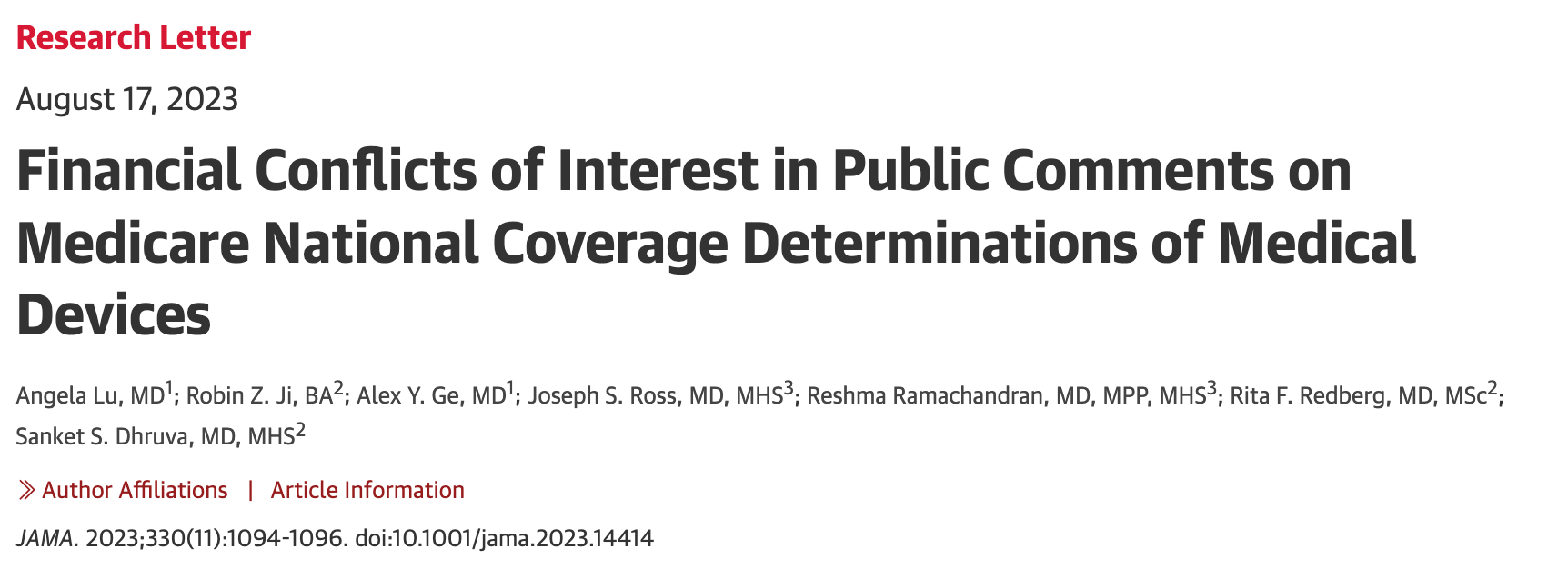
New Podcast -- Discussion with Rita Redberg and Angela Lu regarding Their Study on Conflict of Interest
Angela Lu is training to be a physician. She’s interested in public policy. As a third year medical student, she teamed up with established leaders to ask a unique question regarding public disclosure of financial relationships. When the Centers for Medicare & Medicaid Services (CMS) issues National Coverage Determinations (NCDs) for services or products, they mean business. Such decisions have huge implications. You cannot go against them. Think #HighConsequences.CMS studies the evidence and publishes a proposed decision. It then allows public comments. People care. The idea behind their study, which made it into the Journal of the American Medical Association, was to study how many commenters disclosed their financial conflicts. Dr. Lu went through more than 680 comments submitted on 4 NCDs—all of which were high cost invasive procedures. I won’t spoil the conversation, but they found a very high percentages of comments asking to expand indications for these procedures and very very low percentages of people who disclosed their relevant relationships. This study was made possible by the Open Payments database. One important note: disclosure of relationships was voluntary. Enjoy the conversation. Thanks for listening. JMM This is a public episode. If you'd like to discuss this with other subscribers or get access to bonus episodes, visit www.sensible-med.com/subscribe
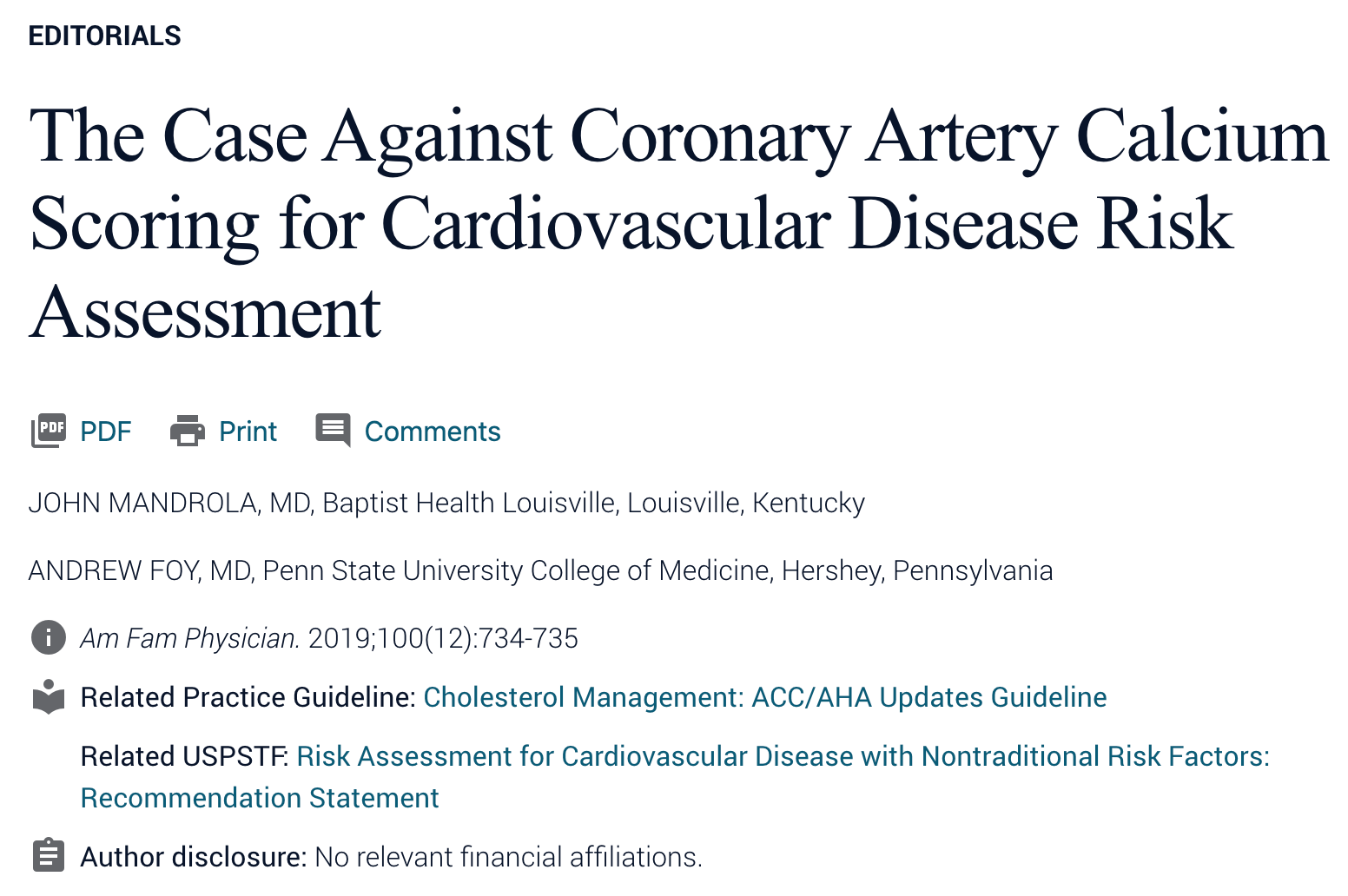
Foy and Mandrola Talk Coronary Calcium and a New Super-Exciting Approach to Medical Education
Andrew Foy rejoins the Sensible Medicine podcast. We talk first about coronary artery calcium. Andrew is an expert in this area. We have co-written our case against CAC scoring for any cause in the American Family Physician. It’s had little effect as CAC scoring is running rampant. Sensible Medicine is a reader-supported publication. To receive new posts and support our work, consider becoming a free or paid subscriber.The second part of our conversation centers on a big med-ed project Andrew is co-leading at Penn State. He calls it Argue-to-Learn. The idea is to expose pre-clinical students to the value of civil debate. Here is their paper: Student Perceptions of a New Course Using Argumentation in Medical EducationHere is a quote: The absence of argumentation (i.e., a productive exchange of opposing views aimed at improved understanding of a given issue) in medical education may leave physicians susceptible to medical marketing, and incapable of both resolving industry claims and adapting to changing paradigms.Gosh. Gosh. Double Gosh, this is an exciting effort. Listen to Andrew explain. JMM This is a public episode. If you'd like to discuss this with other subscribers or get access to bonus episodes, visit www.sensible-med.com/subscribe

Foy and Mandrola Discuss AF, AF-Ablation, Sham-controls, Evidence Translation and Heterogenous Treatment Effects
This week, I talk with Andrew Foy, who is an academic cardiologist at Penn State University in Hershey, PA. Andrew is one of the smartest voices in medicine today. We start with the REMEDIAL trial, published recently in JAMA. Ablation vs Meds. Primary endpoint—depression and anxiety. One of the main issues was the control arm—namely that there was no sham control. We referenced this useful review paper on placebo and nocebo effects in cardiology, from Brian Olshansky. Our second topic was the FRAIL AF trial. This was frail, elderly patients who had AF and were stable on Vitamin K antagonists (similar to warfarin) were randomized to remain on the VKA or switch to a direct acting oral anticoagulant. Primary endpoint—major bleeding. FRAIL AF is in Andrew’s wheelhouse as one of his primary academic areas of study is the role of multi-morbidity in translating medical evidence. He mentions a term called heterogenous treatment effects or HTE. I don’t love the term because it’s heavy into jargon. But HTE is super important for using evidence in the clinic. Andrew explains it well.Here is the editorial Andrew co-authored regarding another important trial in elderly patients who were having NSTEMI. I have written about FRAIL AF on Medscape and Sensible Medicine. We were going to talk about coronary artery calcium screening, but we had talked enough and will do a separate podcast on CAC. Sensible Medicine is a reader-supported publication. To receive new posts and support our work, consider becoming a free or paid subscriber.As always, let us know what you think. We appreciate the support. Thank you. JMM This is a public episode. If you'd like to discuss this with other subscribers or get access to bonus episodes, visit www.sensible-med.com/subscribe

Coumadin beats DOAC, ECMO fails, When RCTs needed, Bad COVID Policy
This is a public episode. If you'd like to discuss this with other subscribers or get access to bonus episodes, visit www.sensible-med.com/subscribe

Friday Reflection 29: The Totally Predictable Doctor as Patient Essay
This is a public episode. If you'd like to discuss this with other subscribers or get access to bonus episodes, visit www.sensible-med.com/subscribe

Sensible Medicine x Vaccine Curious: Tracy Beth Høeg and Christine Stabell Benn compare US & Danish COVID-19 response and child vaccination policy
Sensible MedicineSensible Medicine x Vaccine Curious Cross Podcast on the USA vs Denmark, vaccines, etc:Show notes by Dovid Y Rimmer, Tracy Beth Høeg and Christine Stabell Benn* Benn, Høeg. Regarding becoming a medical skeptic. Hoeg: anonymous blog - exercise during pregnancy. Benn: Vitamins, sex differences, and vaccines.* Differences in pandemic response between Denmark v. California - school reopening, masks.* USA recommends boosters (yearly) for Children, Denmark does not recommend vaccinating children * Benn: Op-ed recommending gradual herd immunity.* Høeg, Duriseti, Prasad NEJM letter: Observational data for Covid mortality in vaccinated + boosted population (Source the original study, raw data release in response to letter, and Prasad NEJM letter).* Chandra & Høeg reanalysis of MMWR study: Differences in Covid-19 between schools mandating masks and not mandating. MMWR did not publish reanalysis, published in Journal of Infection.* Høeg et al reanalysis of Cowger et al. in NEJM, differences between schools mandating masks and not mandating in Boston, MA.* Six Clalit Health studies from Israel published in prestigious medical journals - the studies did not release their data or analyses to the public. (What were the points they made that influenced policy decisions, where were they cited, altimetric score. i.e. note that they were effective influencing policy without transparency).* Childhood vaccination schedules: Denmark 18 doses and USA 50 doses vaccination schedules. Note: differences regarding Influenza, Hep A & B, Varicella, Meningococcal, and Covid-19 which may be added to a yearly schedule. Denmark and Sweden don’t recommend yearly influenza vaccine in non high-risk under 65. * Denmark requires benefit for children, Finland allows societal considerations such as socioeconomic component of rotavirus. Finland uses influenza vaccine. And Denmark might introduce flu vaccine to reduce the flu burden on the elderly.* Ethics of consequentialist vaccine policy.* Pandemrix Swine flu vaccine had an adverse effect event of narcolepsy (hundreds of children affected), Denmark was spared some of the consequence by limiting its recommendation to vulnerable children only.* Flu deaths approximately 2-4/million, amongst children (Norway, US).* Nordic countries were hesitant to recommend routine Covid-19 vaccination. Denmark admits it was a mistake to recommend vaccinating children (it was done for the adults and since the vaccine was leaky it made no difference, everyone got it anyway).* Norway found in their pandemic investigation 6 weeks school closure was ‘a mistake’.Key academic claims:* Benn paper on Covid-19 becoming a childhood disease.https://www.bmj.com/content/374/bmj.n1687/rr-8 * Benn: Predictably Covid-19 would be dangerous only to old, vulnerable, and those with a large viral inoculum.https://pubmed.ncbi.nlm.nih.gov/32146445/ and https://pubmed.ncbi.nlm.nih.gov/6741923/ * Benn: Non-trivial C19 Death amongst elderly, but it probably didn’t change the amount of years they lived. https://pubmed.ncbi.nlm.nih.gov/33137809/ * The greater the inoculum the more harmful the disease. Example: measles index cases v. https://pubmed.ncbi.nlm.nih.gov/6741923/ * Covid-19 harms, are rare in children. Actual risk to children prior to natural immunity and afterward (Ideally include all risks, Death, hospitalization, severe disease). https://www.ncbi.nlm.nih.gov/pmc/articles/PMC9613797/, risks of severe disease https://pubmed.ncbi.nlm.nih.gov/35962242/ * Even rare harms would outweigh the benefits of widespread childhood vaccination. https://www.bmj.com/content/374/bmj.n1687/rr-8* Amongst most viruses the 2nd infection is less pathogenic.* Harms of lockdown exceeded benefits in quality studies, some non quality studies might indicate otherwise. https://www.tandfonline.com/doi/full/10.1080/00779954.2020.1844786?src=recsys, https://www.tandfonline.com/doi/abs/10.1080/13571516.2021.1976051 * Measles index cases (Child contracts the virus at school) results in more mild disease, family transmission is more severe with 4x fold mortality. https://pubmed.ncbi.nlm.nih.gov/6741923/ This has also been shown in animal studies https://pubmed.ncbi.nlm.nih.gov/36992457/. Epidemiological studies: Secondary cases (Family transmission) for Pertussis, https://pubmed.ncbi.nlm.nih.gov/11798255/ Varicella https://pubmed.ncbi.nlm.nih.gov/15702036/ and other viruses are worse than index cases i * Hoeg: MMWR School transmission of c19 is rare: https://www.cdc.gov/mmwr/volumes/70/wr/mm7004e3.htm This is a public episode. If you'd like to discuss this with other subscribers or get access to bonus episodes, visit www.sensible-med.com/subscribe
Friday Reflection 28: Four of the Things Patients Have Taught Me
Although it is unoriginal to point out that doctors learn from our patients, here are a few lessons so powerful, so extrapolatable, that I forever associate them with an individual. This is a public episode. If you'd like to discuss this with other subscribers or get access to bonus episodes, visit www.sensible-med.com/subscribe

Mandrola & Prasad on Republicans and COVID outcomes, Journals and stenting
This is a public episode. If you'd like to discuss this with other subscribers or get access to bonus episodes, visit www.sensible-med.com/subscribe

A Conversation with Professor Robert Yeh
Here is the profile for Harvard Professor Robert (Bobby) Yeh. His most recent Circulation paper: Bringing the Credibility Revolution to Observational Research in Cardiology. We referenced a paper by Professor Miguel Hernan: The C-Word: Scientific Euphemisms Do Not Improve Causal Inference From Observational DataPaper referenced on left ventricular assist devices: Comparative Effectiveness of Percutaneous Microaxial Left Ventricular Assist Device vs Intra-Aortic Balloon Pump or No Mechanical Circulatory Support in Patients With Cardiogenic ShockSensible Medicine is a reader-supported publication. To receive new posts and support our work, consider becoming a free or paid subscriber.I learned a lot from this conversation. One of the main lessons is that no matter how well the authors avoid causal language, the intent of an observational comparison study is causal. And if that is so, the main thrust of these efforts ought to be simulate, as close as possible, a randomized clinical trial. One of my favorite parts of our chat was Bobby’s now famous explanation of immortal time bias using Cheetos. Let us know what you think. I hope to do more of these types of conversations. JMM This is a public episode. If you'd like to discuss this with other subscribers or get access to bonus episodes, visit www.sensible-med.com/subscribe
Friday Reflection 27: The Poor Historian
BW was a 66-year-old woman who presented for an urgent visit to the general medicine clinic. She reported that she had been having dizziness for the last four days. When pressed, she said it occurred intermittently, being present more than absent. She could not identify any palliative or provocative features, and when asked about associated symptoms she said that she felt “bad and scared” when it was present. The doctor encouraged her, many times, to characterize the dizziness, and she could only say that when she had it, she felt dizzy.Sensible Medicine is a reader-supported publication. If you appreciate our work, consider becoming a free or paid subscriber.Many a medical trainee has been humiliated on morning rounds after proclaiming that their presentation was wanting because the “patient was a poor historian.” Any attending worth her white coat will respond in one of the following ways:“There are no poor historians, just poor history-takers.”“You do realize, don’t you, that the patient is not the historian? You are the historian.”“Did you consider the differential diagnosis of why you were unable to obtain a useful history?”I admit that, going for pith over constructive criticism, I employ the former two more than the latter one. There is a differential diagnosis for the patient who cannot describe the history of their medical concerns.Often, the inability of a doctor to obtain a history is actually a physical exam finding – an extremely non-specific finding, but a finding nonetheless. Psychiatric disease, dementia, and delirium (whose differential diagnosis itself is practically a textbook of medicine) will render a patient unable to provide an accurate history. I can recall dozens of “poor historians'' who became Robert Caro-esque once their hypercapnea, uremia, or alcohol withdrawal was treated.There are three other reasons that obtaining reliable and informative histories might be a struggle.1. We think with languageThe first — the saddest, most troublesome, and probably most common – reason that patients are unable to provide a reliable history is because of their impaired language skills. Not only do we use language to communicate, we also use language to think. George Orwell wrote, “…if thought corrupts language, language can also corrupt thought.”[i]Those of us who failed to master language, usually through inadequate education, are unable to express their health concerns clearly. Sometimes, listening to a patient try to describe symptoms, I get the sense that the problem is more than expressive.BW was not an especially striking example of this for me, she was just one of the more recent. She also presented with a problem for which an accurate history is critical. The history of a patient's dizziness radically alters the differential diagnosis. We teach trainees that the first question to pose to a patient with dizziness is, “What do you mean, dizzy?” We tell the trainee to ask the question and then sit back and listen. More often than not, patients will describe their dizziness in a way that can be interpreted as lightheadedness, vertigo, unsteadiness, or a non-specific feeling of being unwell.[ii]As I interviewed BW, my sense was that she not only struggled to articulate what she was feeling but to figure it out herself. Beyond my frustration in having trouble caring for her, I considered the lifelong impact of leaving people educationally impoverished. Sure, we limit people’s earning potential, but we also limit their internal life and their healthcare.2. Anxiety affects how we experience symptomsVG is a patient I have seen for years, from his mid 30’s to his early 60’s. He has a few very mild chronic medical conditions and very severe anxiety disorder. He is a successful professional but struggles with intermittent episodes of health-related anxiety.Our interactions usually begin with an email or a phone call. VG will have become anxious about a new symptom. The symptom is real – joint pain, a rash, a new floater. The symptom has generated a web of worry about what it could portend. The worries are always baseless and would be amusing if they were not so clearly painful and disturbing to him.I have learned that for VG, as well as for many patients like him, these concerns require a visit. An accurate history cannot be obtained without seeing him. The anxiety clouds VG’s experience of the symptom. The knee pain becomes excruciating, the rash ubiquitous, the floater debilitating. The response to simple questions -- Is the knee pain worse coming down the stairs? Where is the rash? Do you see the floater in one or both eyes? -- become unreliable. Seeing VG, providing some reassurance, and obtaining objective physical data is imperative.3. Secondary gain“Listen to your patient; he is telling you the diagnosis” is is an Osler (or merely Oslerian) quotation. From the earliest days of our training we are taught to listen to our patients and believe what they are telling us. Our greatest sin in hist
Friday Reflection #26: General Internal Medicine in the Time of COVID
There is something valuable about learning to adapt old skills to novel situations. This is a public episode. If you'd like to discuss this with other subscribers or get access to bonus episodes, visit www.sensible-med.com/subscribe

Podcast discussion on Nutrition Science, HFpEF and the NYT article on treatment of PAD
Adam and I discuss three topics I) The MIND Trial published in NEJM. Does a special diet reduce the future risk of cognitive decline?II) HFpEF — I am speaking at a congress on heart failure with preserved ejection fraction this week, and Adam helps me out with some pointers. III) NYT published a Sunday front page story on potential overuse of procedures for peripheral artery disease. JMM This is a public episode. If you'd like to discuss this with other subscribers or get access to bonus episodes, visit www.sensible-med.com/subscribe
Friday Reflection 25: The Advice I’d Like to Give a Student Entering Medical School
Four pieces of advice nobody asked for. This is a public episode. If you'd like to discuss this with other subscribers or get access to bonus episodes, visit www.sensible-med.com/subscribe
Friday Reflection 24: I Would Rather Go Back in Time
KW was a 58-year-old man with long standing type 1 diabetes mellitus and hypertension. He came to an appointment one Friday afternoon with chest pain. The pain had been present intermittently for 10 days. It was on the left side of his chest and beneath his sternum. It did not radiate anywhere, it was not related to exertion, nor was it associated with diaphoresis or shortness of breath. It was also not positional and there were no areas of tenderness.Sensible Medicine is a reader-supported publication. If you appreciate our work, consider becoming a free or paid subscriber.When I was a kid, we often played “Would You Rather?” to pass the time during a car or bus ride. This game had remarkable staying power. When we first started playing, at about age ten, the questions were mostly things like:Would you rather eat a cicada or a cricket?As we aged, the questions progressed through the usual male adolescent fare to more profound philosophical quandaries:If you managed the Mets, would you rather pitch Seaver or Koosman?Would you rather have a Ferrari or a Porsche?Would you rather date Lauren or Lizzie?Would you rather visit the past or the future?From a professional standpoint, there is no question that my answer to the final question would be, “the past.” There are a dozen or so patients that I want a second chance at. I wonder if, knowing what I know now, would I manage things differently?[1] Would the outcomes be different? Would some of the people still be here?I should not have admitted him. For my entire career I have had a clinic scheduled on Friday afternoon. My reasoning is two-fold. First, I know that if I didn’t have patients scheduled Friday afternoon, I’d probably kick off early. Having a full schedule on Fridays assures that I stick it out to the bitter end, thus making me more productive each week. Second, most people opt not to see patients Friday afternoon so I tend to get more support as one of the few doctors working. The downside of this is that I am seeing patients when my management options are somewhat limited. Patients present with troublesome symptoms that they “just want checked out before the weekend” and I’m left either worrying about them all weekend or admitting them to the hospital where I know little will happen for the next two days. There was a lot about KW’s chest pain that was not concerning for symptomatic coronary artery disease. It was not exertional. The episodes sometimes lasted minutes and sometimes hours. It was not accompanied by shortness of breath, diaphoresis, or a feeling of impending doom. He also had had a normal stress test a couple of years before. On the other hand, KW was a middle-aged American man with chest pain and significant risk factors for coronary artery disease – hypertension and diabetes – neither of which had ever been terribly well-controlled. I made the decision that I felt was safest for him and the one that would let me sleep best all weekend; I admitted him to the hospital. I called the admitting resident; I let her know that I was (a little) worried that he had unstable angina and that I was admitting him so that he could be observed until he could get an assessment of his coronary arteries.The resident (not incorrectly) decided that if he might have unstable angina, he should be started on a blood thinner – heparin.In the end, KW did not have unstable angina, a coronary angiogram done weeks later was normal. Why did it take weeks to complete the angiogram? Because after being started on heparin, he had an intracranial hemorrhage – a bleed in his brain.I should have admitted her.PH is a woman I have written about in the past. She presented to me early in my career having lost about a third of her body weight to an undiagnosed, metastatic cancer. She did not require hospitalization. She was well hydrated and her vital signs were normal. She had walked into the office that first day and would need only a wheelchair to come and go to her last visit 6 months later. She did not require hospitalization for evaluation or treatment. There would be little we could offer her beyond the palliative care that I could direct at her home.I managed her evaluation and her care while she remained an outpatient. By the time she died, this management had included intravenous fluids, pain medications, antiemetics, and seizure medications. My memory was that what drove my effort to keep her out of the hospital was more my philosophy than her and her family’s wishes. At the time, I believed that unnecessary hospitalizations were an anathema. They wasted money, put patients at risk, and were the refuge of lazy or unskilled physicians. I do remember that PH wanted to avoid aggressive care, but I cannot remember her explicitly resisting hospitalization. I do remember her brother once asking, “Shouldn’t she be in the hospital?”From my current vantage point, my efforts to keep her out of the hospital seem, at best, ill-advised. It seems my management decisions were mo

Sensible medicine
This is a public episode. If you'd like to discuss this with other subscribers or get access to bonus episodes, visit www.sensible-med.com/subscribe
Friday Reflection 23: The Ghost Patient Panel
This ghost panel is made up of people who used to be my patients but no longer are — people who left my practice without telling me. This is a public episode. If you'd like to discuss this with other subscribers or get access to bonus episodes, visit www.sensible-med.com/subscribe

Medical Conservatism, the ELAN Trial, and Residents Striking
Links The Case for Being a Medical Conservative https://www.amjmed.com/article/S0002-9343(19)30167-6/fulltextELAN Trial https://www.nejm.org/doi/full/10.1056/NEJMoa2303048Mandrola on NYC Residents’ Strike https://www.medscape.com/viewarticle/992607 This is a public episode. If you'd like to discuss this with other subscribers or get access to bonus episodes, visit www.sensible-med.com/subscribe

Medical Evidence, Hype, Cancer Drugs, Conflict
This is a public episode. If you'd like to discuss this with other subscribers or get access to bonus episodes, visit www.sensible-med.com/subscribe
Friday Reflection 22: The Memory Binder
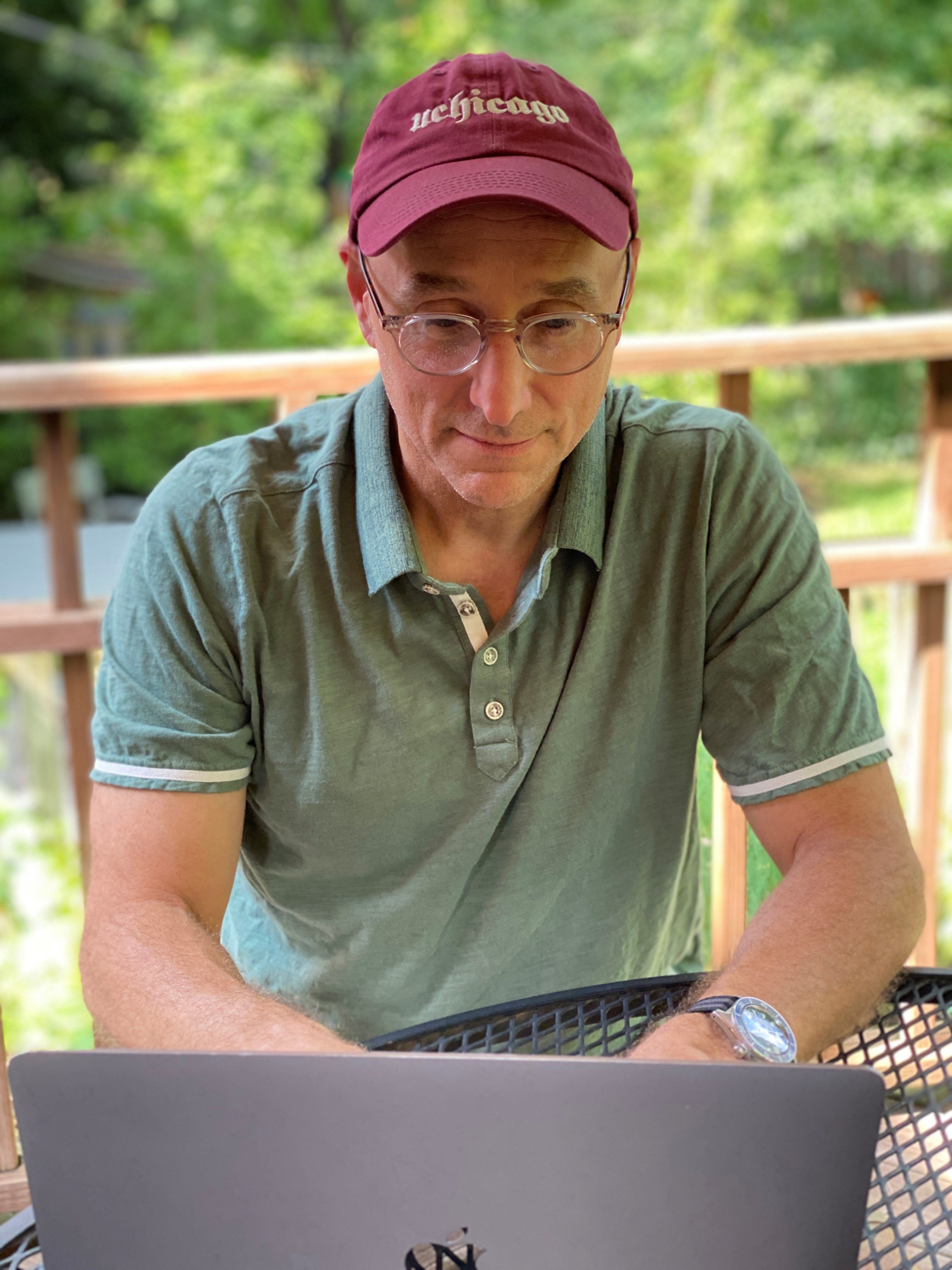
I visit the binder to pay my respects, to learn, to reminisce, and to trace the arc of my career. This is a public episode. If you'd like to discuss this with other subscribers or get access to bonus episodes, visit www.sensible-med.com/subscribe

A Heartfelt Plea to Become A Primary Care General Internist
Medicine in America will be better, more humane, and more affordable with more good, smart, dedicated primary care physicians. Be part of the solution. This is a public episode. If you'd like to discuss this with other subscribers or get access to bonus episodes, visit www.sensible-med.com/subscribe

Seeding trials/ Choosing Students
This is a public episode. If you'd like to discuss this with other subscribers or get access to bonus episodes, visit www.sensible-med.com/subscribe
Friday Reflection #21: Revealing Ignorance
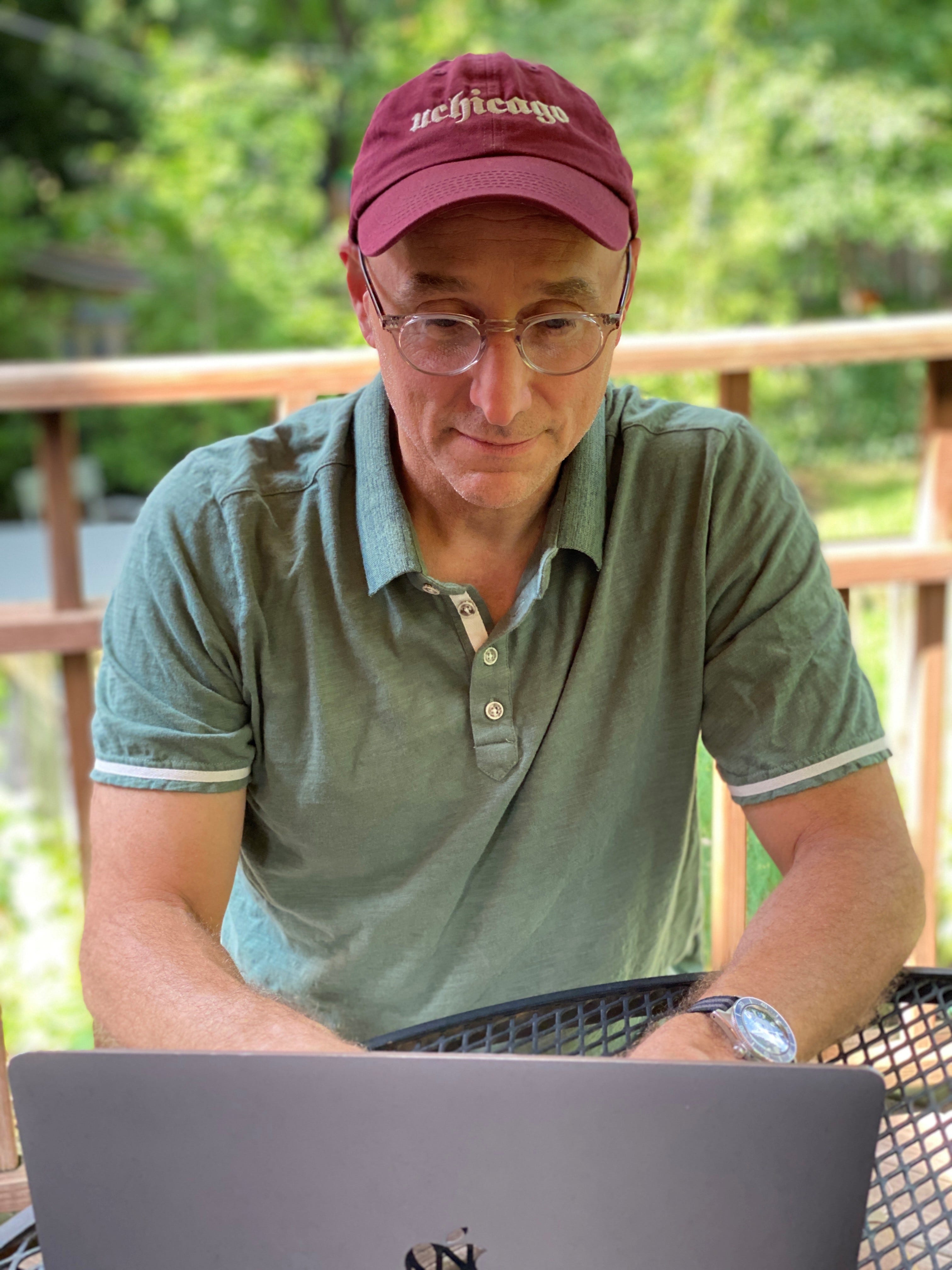
Why did it take years for me to reach a time in my career when I am comfortable admitting knowledge gaps? This is a public episode. If you'd like to discuss this with other subscribers or get access to bonus episodes, visit www.sensible-med.com/subscribe

Mandrola gives VP Health Advice
This is a public episode. If you'd like to discuss this with other subscribers or get access to bonus episodes, visit www.sensible-med.com/subscribe

Friday Reflection 20: The Clinical Set Point
When patients meet a new doctor, both patient and doctor should be aware of each other’s philosophy. This is a public episode. If you'd like to discuss this with other subscribers or get access to bonus episodes, visit www.sensible-med.com/subscribe

The Great Chat GPT debate
This is a public episode. If you'd like to discuss this with other subscribers or get access to bonus episodes, visit www.sensible-med.com/subscribe

Medical uncertainty, 7th dose, ABIM and Modules
This is a public episode. If you'd like to discuss this with other subscribers or get access to bonus episodes, visit www.sensible-med.com/subscribe

Friday Reflection 19: A Pledge That Can Be Hard to Honor
This is a public episode. If you'd like to discuss this with other subscribers or get access to bonus episodes, visit www.sensible-med.com/subscribe

RSV vaccines/ Mifepristone/ Overtreatment/ Long COVID
This is a public episode. If you'd like to discuss this with other subscribers or get access to bonus episodes, visit www.sensible-med.com/subscribe

Chat GPT - Medical Journals - Treating early disease states
Chat GPT - Medical Journals - Preventive medicine This is a public episode. If you'd like to discuss this with other subscribers or get access to bonus episodes, visit www.sensible-med.com/subscribe

Friday Reflection #18: An Homage to Mentors
This is a public episode. If you'd like to discuss this with other subscribers or get access to bonus episodes, visit www.sensible-med.com/subscribe

Friday Reflection 17: The Grace of the Dying
This is a public episode. If you'd like to discuss this with other subscribers or get access to bonus episodes, visit www.sensible-med.com/subscribe

Can you Exercise Too Much/ Shredding Trust in Public Health
Mandrola, Prasad and Hoeg are back to talk about a new exercise study— can you do too much— and then COVID19 pandemic errors. This is a public episode. If you'd like to discuss this with other subscribers or get access to bonus episodes, visit www.sensible-med.com/subscribe

4th year fellowship | Expertise| LONG Covid
This is a public episode. If you'd like to discuss this with other subscribers or get access to bonus episodes, visit www.sensible-med.com/subscribe

Friday Reflection 16: The Evolution of a Stable Practice
This is a public episode. If you'd like to discuss this with other subscribers or get access to bonus episodes, visit www.sensible-med.com/subscribe

Sensible Medicine
This is a public episode. If you'd like to discuss this with other subscribers or get access to bonus episodes, visit www.sensible-med.com/subscribe
Public health lied about Natural immunity; Conflict of interest
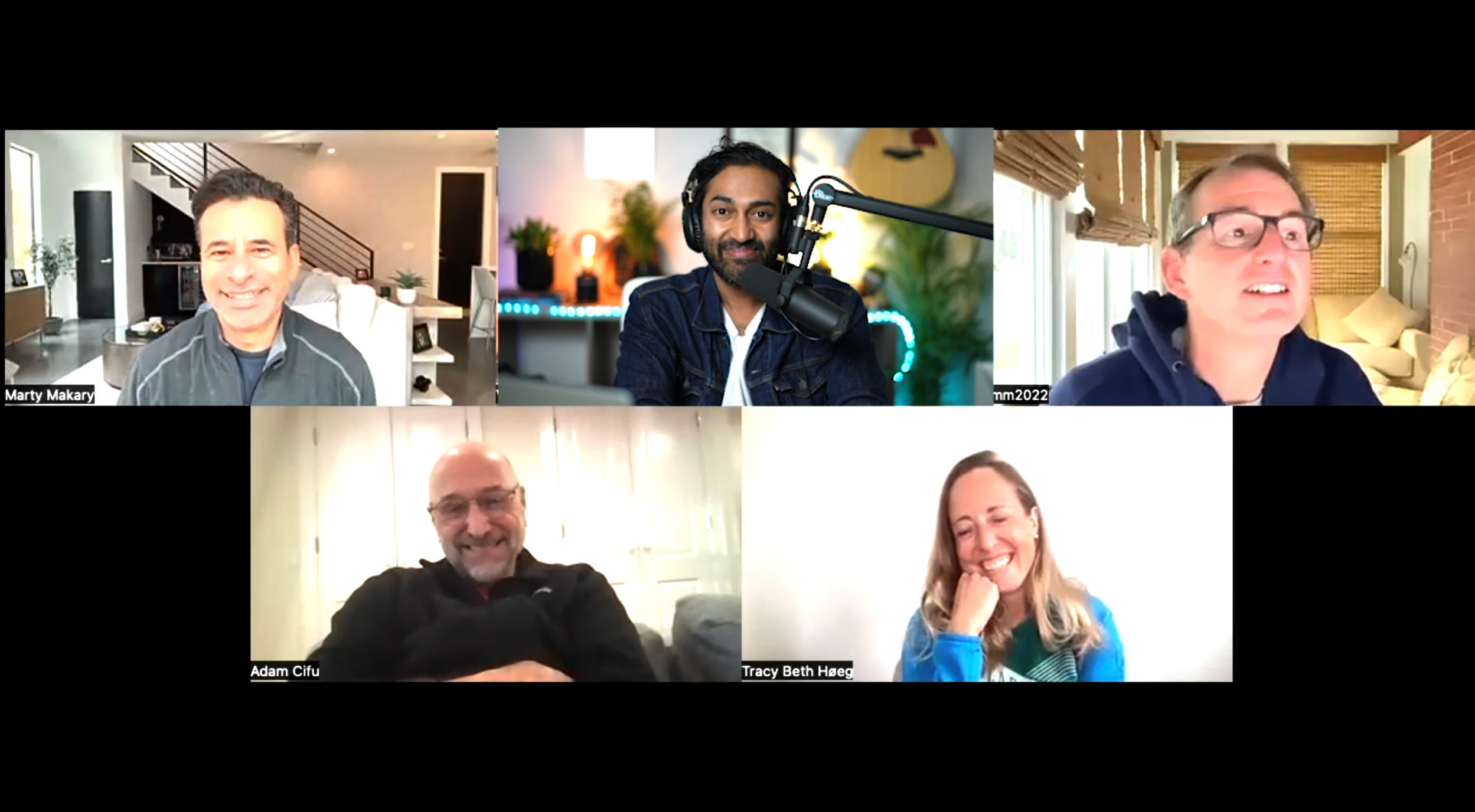
Prasad, Cifu, Mandrola, Hoeg, Makary are back for a discussion. Next week we will only have 3 guests. This is a public episode. If you'd like to discuss this with other subscribers or get access to bonus episodes, visit www.sensible-med.com/subscribe

Friday Reflection #15: Of Medicine, Baseball and Other Distractions
This is a public episode. If you'd like to discuss this with other subscribers or get access to bonus episodes, visit www.sensible-med.com/subscribe

Superbowl Edition - Sensible Medicine
Check out this all star line upCifu/ Mandrola/ Hoeg/ Foy/ Damania/ Prasad - talk about equipoise, randomization, and more This is a public episode. If you'd like to discuss this with other subscribers or get access to bonus episodes, visit www.sensible-med.com/subscribe

On Death and Its Futility
A Guest Friday Reflection: On Death and Its Futility This is a public episode. If you'd like to discuss this with other subscribers or get access to bonus episodes, visit www.sensible-med.com/subscribe

Sensible Medicine Podcast Episode 4
This is a public episode. If you'd like to discuss this with other subscribers or get access to bonus episodes, visit www.sensible-med.com/subscribe

Episode #3
This is a public episode. If you'd like to discuss this with other subscribers or get access to bonus episodes, visit www.sensible-med.com/subscribe

Episode #2 - Dropping out of USN&WR Med School Rankings
This is a public episode. If you'd like to discuss this with other subscribers or get access to bonus episodes, visit www.sensible-med.com/subscribe

Sensible Medicine the inaugural podcast episode
This is a public episode. If you'd like to discuss this with other subscribers or get access to bonus episodes, visit www.sensible-med.com/subscribe