
Sensible Medicine
146 episodes — Page 2 of 3

This Fortnight in Medicine II
This Substack is reader-supported. If you appreciate our work, consider becoming a free or paid subscriber.Clinical Validation of a Circulating Tumor DNA–Based Blood Test to Screen for Colorectal CancerIf you want a deeper dive into cancer screening, we have covered the topic a lot on Sensible Medicine. There is a video debate Vinay, John, and Adam had about colon cancer screening. We also posted two follow-up articles for that debate. Adam has written six different articles about screening.The Effect of Severe Sepsis and Septic Shock Management Bundle (SEP-1) Compliance and Implementation on Mortality Among Patients With Sepsis : A Systematic ReviewGoodhart's lawLast but not least, a link to or our “Merch Page”, so you too can sport a Sensible Medicine t-shirt. This is a public episode. If you'd like to discuss this with other subscribers or get access to bonus episodes, visit www.sensible-med.com/subscribe

This Fortnight in Medicine
We are beginning a new series today. John and Adam will discuss a couple of articles we found interesting. Please let us know your thoughts. This week:Phase 3 Trial of Semaglutide in Metabolic Dysfunction–Associated SteatohepatitisTiotropium Initiation and Dementia Risk in Chronic Obstructive Pulmonary Disease This is a public episode. If you'd like to discuss this with other subscribers or get access to bonus episodes, visit www.sensible-med.com/subscribe

Ask Us Anything
This is a long one! 83 minutes. This is the second podcast in which we answer questions from a our “ask us anything” post. We recorded this one before our most recent podcast — kind of like Abbey Road and Let it Be — so we were still graced by Vinay’s presence. In fact, we recorded it in his studio. We still have about a half dozen questions to answer; we will cover those on an upcoming podcast. Enjoy. This is a public episode. If you'd like to discuss this with other subscribers or get access to bonus episodes, visit www.sensible-med.com/subscribe

Vinay at FDA; what's next for Sensible Medicine; ask us anything answers
John and Adam discuss our hopes for Vinay’s tenure at the FDA and how we intend to keep Sensible Medicine a vibrant place on Substack, a place where we will continue to showcase a range of ideas and opinions about all things bio-medicine. We also answer some of the questions from our recent “ask us anything” post. This is a public episode. If you'd like to discuss this with other subscribers or get access to bonus episodes, visit www.sensible-med.com/subscribe

Friday Reflection 48: Linguistics, Diagnosis, and Medical Error
FH is a 66-year-old woman who comes in for an urgent visit because she has been feeling woozy for two days. She is very anxious, almost distraught, because she thinks these symptoms are the same as the ones that her sister had before she died of a hemorrhagic stroke.Sensible Medicine is a reader-supported publication. If you appreciate our work, consider becoming a free or paid subscriber.A few years ago, a team building exercise was proposed at a meeting I was attending. To say I hate team building exercises is a gross understatement. I usually run for the door when these are suggested. On this day, I was too slow. For the exercise, I sat back-to-back with a partner who looked at a picture projected onto a screen. I could not see the picture. He described the image, and I had to draw what he described. After 5 minutes, I shared my drawing, and we discussed what worked and what didn’t.Recently, I was at the Art Institute of Chicago, one of my favorite places on Earth, preparing to help lead a group of medical students around the museum. Our guide described a similar exercise while looking at a painting of a woman in mourning. Because my mind was on medicine, it struck me how similar this exercise is to what I do in clinic.All diagnostic inquiries start with a patient experiencing a symptom. The symptom is a kind of platonic truth. What can make the search for an accurate diagnosis difficult is that a doctor seldom really has access to this truth. The doctor does not see or feel the symptom. Instead, the patient is asked to translate a sensation into language. Sometimes, the patient’s linguistic abilities are inadequate for describing the symptoms. Sometimes, our language itself is not up to the task.Often there are issues working against the patient accurately describing his or her symptoms. The patient is anxious, in pain, exaggerating or minimizing symptoms, being rushed, or distracted.No one can say if a patient is poorly describing his or her symptoms; that would be like telling someone that their description of red is incorrect.FH describes her symptoms as wooziness. The doctor seeing her, Dr. S, not having a differential diagnosis for wooziness, asks her, “What do you mean woozy. FH says, “I feel floaty, foggy, out of it, off kilter.” FH is already getting a little exasperated. She is worried she might be having a fatal stroke.To make a diagnosis, a doctor must characterize the concern, translating the patient’s words into a symptom with an established differential diagnosis and an associated diagnostic approach. This is where many diagnostic errors occur. This might happen if the doctor is not listening. But it also might happen if the doctor mischaracterizes what the patient is feeling because of how the patient reports the symptom. When that happens, the doctor begins evaluating a symptom that is not actually present.The approach to the dizzy patient should begin with the doctor asking, “What do you mean dizzy?” and then just sitting quietly while the patient describes the dizziness. This question is supposed to force the patient to characterize the dizziness as vertigo, orthostasis, disequilibrium, or non-specific dizziness. When Dr. S asked, “What do you mean by woozy?” she had decided that woozy meant dizzy and proceeded as if FH had complained of dizziness.The clinical interchange has just started and already the patient has translated her symptom into language and Dr. S has translated that into a medically useful symptom.After hearing wooziness described as “floaty, foggy, out of it, off kilter,” Dr. S. had had it with open ended questions. “When you feel woozy, does it feel like the room is spinning? Or does it feel like you are going to faint, you know like when your vision grays out? Or do you feel off balance, kind of drunk.”FH answered, “Yes.”At this point, we have a patient who is terribly worried about her condition and a doctor who is likely reconsidering her decision to come to work today.In my experience, this juncture is not uncommon. A patient is having symptoms that need to be addressed. The way these symptoms are being presented linguistically is not leading the doctor to a familiar, workable symptom. Dr. S has tried to shoehorn woozy into the diagnostic rubric for dizzy and, not surprisingly, has gotten nowhere.OK, tell me exactly what you were doing when you first got woozy?” asks Dr. S.“I had just woken up. I rolled from my left side to my right to grab my phone to check the time and then I just about lost it. I mean really lost it. I was woozy AND nauseated.”Dr. S. got really lucky. Although her interpretation of woozy as dizzy failed in her first two questions, she stuck with it with one more question. She hit on a suggestive answer, something that sounds like benign, paroxysmal, positional vertigo, BPPV. She performs the Dix Hallpike Maneuver and FH screams out. She has the most striking rotatory nystagmus Dr. S has ever seen.“Are you feeling the wooziness?”“Yes, this is ex

A Conversation with Professor Jeffrey Flier Regarding Changes in NIH Funding
Professor Jeffrey Flier is a distinguished service professor and Higginson Professor of Physiology and Medicine at Harvard Medical School. He is the former dean of Harvard Medical School. We talked about the recent (and sudden) change in NIH funding. First a note on Professor Flier. He is not a normal medical school dean. He is active online. He speaks candidly, often critically. He and Vinay wrote together in STAT news during the pandemic. It was a great honor to talk with him for 47 minutes about the NIH news. Here is the Tweet that went crazy viral Friday afternoon. I had only a superficial understanding of grant funding. It turns out that every time a scientist earns an award, the institution receives extra funding known as indirect costs. The extra funds are given to support the infrastructure of the research center. Weirdly, as you will hear, some of the biggest research centers earn the highest percentages of indirect funds. The controversy stems from the sudden and massive cut in these indirect costs. It is an understatement to call the online reaction polarized. It was totally utterly hyper-polarized. Here is Elon Musk. Richard EbrightThere is absolutely no defensible basis for non-uniform indirect cost rates and absolutely no defensible basis for >=60% indirect costs. The previous system was a colossal fraud.Micheal Eisen It’s like saying you’re going to save money on a football team by cutting all the linemen.Anil Makam Whoa. Better accountability was needed where these expenses went, but this is draconian cut. Many institutions will struggle to support scientific infrastructure.C. Michael Gibson Woah…The government used to pay academic institutions 60% + on top of the costs of research grant to cover “Indirect costs.” That number just dropped to 15%. The viability of US academic medical centers & research is at risk.And of course Vinay Prasad, who also wrote Ten Things to Know about the NIH change. Good! This was the greatest slush fund ever created. It made researchers with NIH dollars invincible. Universities shielding them at all costs, even when research was fraudulent. This money was used to support initiatives, which Americans rejected, like DEI training & admin bloat.Sensible Medicine is a reader-supported publication. This is a free post but please consider becoming a paid subscriber as we aim to remain free of advertising support Here are some quotes I received via email from unnamed NIH funded researchers: A lot of the indirects go to admins who are increasingly important for grant submission process because it is unnecessarily cumbersome. I've been on 3 NIH funded grants. All from the same team. Each one was sillier than the prior.Another person—from the Southern US I submitted an R01 a few months ago and it’s difficult to navigate everything alone without admin support. The process for grant submission could be improved a lot And there should be more focus on important questions and more clinical trials.Another—from the MidwestUnless I wanted to study goofy BS, I realized my chances were hopeless. So the only other option was to stay and truly advance in the academy was to align with industry. And yet another from the MidwestThis overhead reduction is long overdue. Universities have been eating at the free buffet for a long time. They will, however, quickly figure out ways to take money away from researchers. I expect that lab space rent, personnel fees, and supply costs that the universities charge the investigators will become much higher in the coming year.Lastly, the US government wants to keep the additional indirect costs, I get that. Universities will find ways to bridge the gap by taking more money from investigators. The initial pain will be at the administrator level, but early investigators will bear the brunt of this in the coming 1-2 years. It's not a great time to be in academic medicine, esp as an investigator reliant on grants. Thank you for your support. Thank you Professor Flier. JMM This is a public episode. If you'd like to discuss this with other subscribers or get access to bonus episodes, visit www.sensible-med.com/subscribe

RFK Jr hearings/ Eulogy Values & NIH delays
We are back with a riveting discussion This is a public episode. If you'd like to discuss this with other subscribers or get access to bonus episodes, visit www.sensible-med.com/subscribe

A Conversation with Michael Easter from the TWO/PERCENT
I recently recorded a conversation with Michael Easter from the TWO/PERCENT, a Substack and podcast. Michael offers “practical, accurate, and useful health, performance, and mindset information,” and in a space where there is a lot of drive, I find him remarkably thoughtful.Our conversation is on the podcast feed. Below are my notes for our conversation with links to many of the things we discussed.Adam Cifu, MDSensible Medicine is a reader-supported publication. If you appreciate our work, consider becoming a free or paid subscriber.I am skeptical of wellness celebrities and influencers. They annoy me because they tend to pick, choose and extrapolate data to fit their agenda. Because good medical advice is mostly personal and boring, many influencers cross over to data-free sensationalism to hold an audience.Michael Easter is a rare exception. On the TWO/PERCENT he somehow manages to be a sane, thoughtful – I might even say Sensible – health personality. I got to know Michael when he invited me to be on his podcast to talk about my article on the cult of the healthy lifestyle. Before talking to him, I dove into a bunch of Michael’s work and was impressed by its quality. I should have known that a person who would invite someone who had come out against the healthy lifestyle on his show dedicated to the healthy lifestyle was someone I’d like.My Questions:For people who don’t already follow you, tell me about the 2%. Where does that come from and how to you extrapolate its meaning?* Tell me a bit about yourself, how did you end up here?* In my intro, I mentioned that I think you are a rational “health influencer.” How have you managed this?* Is it a challenge to keep things fresh while telling people to stay active, eat less, and don’t do stupid things?* How do you see the balance of educating and inspiring?I wanted to talk to you about a couple of recent posts that I thought epitomized your approach.The benefits of silence was a post about introducing silence into your life. This is something that really doesn’t need data, but you went deep into the data, and then acknowledged how aware you are of the possible confounding. (People’s whose houses are on loud streets die earlier. That might be the noise but they are also poorer and are exposed to more particulate air pollution…).* What got you interested in that topic?The downsides of blood tests and full-body MRIsThis was a discussion with Dr. Bobby Dubois about the potential benefits and harms of screening tests. I’ve written a ton about this, but I was so impressed with the clarity of the conversation and, although you guys came out pretty negative on the topic, you were honest about the potential benefits and the reasons people find these attractive.* You seem to have a lot of respect for the audience. This is a public episode. If you'd like to discuss this with other subscribers or get access to bonus episodes, visit www.sensible-med.com/subscribe

Friday Reflection 47: Patients Make the Hardest Decisions
Doctors often get credit (or blame) for having to make difficult, life-and-death decisions. But really, it is all of us, when we are patients, who make the bravest decisions that carry the highest stakes. This is a public episode. If you'd like to discuss this with other subscribers or get access to bonus episodes, visit www.sensible-med.com/subscribe

A conversation with Margaret McCartney, MD, PhD regarding evidence-based medicine and conflicts of interest
I have long followed the work of Dr. Margaret McCartney. She is a general practitioner in Glasgow, Scotland, writer, public speaker, and now PhD. She is a fierce advocate for evidence-based medicine. She holds highly skeptical views of screening for disease—which, to my surprise is quite common in the UK. Her recently finished PhD sought empirical evidence regarding declaration of conflicts of interest in the UK. Here is a link to the document. Screening for atrial fibrillation is a focus of this work. Here is a link to her PubMed listing. We had a nice conversation about all things evidence and conflicts. I learned a lot about the health system in the UK. As an added bonus, Dr. M is also an avid cyclist. As always, thank you for your support of Sensible Medicine. This support allows us to bring medical content free of industry advertising. JMM Sensible Medicine is a reader-supported publication. To receive new posts and support our work, consider becoming a free or paid subscriber. This is a public episode. If you'd like to discuss this with other subscribers or get access to bonus episodes, visit www.sensible-med.com/subscribe

UCSF hematology oncology interest group
This is a public episode. If you'd like to discuss this with other subscribers or get access to bonus episodes, visit www.sensible-med.com/subscribe

Adam Cifu Interviewed by Michael Easter on the TWO/PERCENT Substack and Podcast
I had the pleasure of being interviewed by Michael Easter. Michael is behind the TWO/PERCENT Substack where he offers “practical, accurate, and useful health, performance, and mindset information.” I’ve listened to, and read, a bunch of Michael’s content. Not only is it enjoyable but it seems, well, sensible. Our conversation was inspired by my Coming Out Against the Healthy Lifestyle post. I hope you enjoy our conversation and maybe find another substack to follow.Adam CifuSensible Medicine is a reader-supported publication. If you appreciate our work, consider becoming a free or paid subscriber.Our conversation covers:* Why Adam wrote the post and the rise of the cult of the healthy lifestyle.* The benefits, realities, and limits of adopting healthy lifestyle changes.* How the belief that all health can be improved with better diet and exercise can lead patients to wrongly believe they are responsible for all of their health issues.* Why criticism of modern medicine is on the rise.* How “medical reversal” highlights the need for evidence-based practices.* The rise of longevity and why many longevity practices often lack robust evidence.* Why personalized healthcare is essential for effective treatment.* Problems with over-medicalization.* How finding the right doctor can be a challenging process. This is a public episode. If you'd like to discuss this with other subscribers or get access to bonus episodes, visit www.sensible-med.com/subscribe

A live taping from Wash U, a Sensible Medicine discussion
This is a public episode. If you'd like to discuss this with other subscribers or get access to bonus episodes, visit www.sensible-med.com/subscribe

MAHA and Medical Conservatism
What does our philosophy have to do with RFK Jr and MAHA? This is a public episode. If you'd like to discuss this with other subscribers or get access to bonus episodes, visit www.sensible-med.com/subscribe

Systematic reviews 101
4 mistakes people make in systematic reviews This is a public episode. If you'd like to discuss this with other subscribers or get access to bonus episodes, visit www.sensible-med.com/subscribe

Ask me anything
This is a public episode. If you'd like to discuss this with other subscribers or get access to bonus episodes, visit www.sensible-med.com/subscribe

Friday Reflection 45: Patients
The woman with palpitations.The man with whom you used to joke and trade barbs who now sits silently, absent, while you talk to his wife.The woman whose depression dominates every visit; her depression being the one problem she refuses to address.The man whose joy and charisma makes every visit an absolute pleasure, despite his painful disability about which you can really do nothing.The man who never complains. Well, not never. The two times he did complain he ended up with emergent bypass surgery and a diagnosis of acute myeloid leukemia.The woman whose concerns are always uninterpretable. You wonder if the problem is your lack of cultural competence, that her language skills prevent her from articulating her problem, or maybe that her ineloquence keeps her from even knowing what she is experiencing.The woman who asks how you are doing because she recognizes that caring for her, with her dreadful prognosis, is hard.The man who, forever unsatisfied with his health, never accepts your advice, dismisses consultants, yet never misses a visit, praises you as the greatest doctor, and brags about you to his friends.The man whose world is spinning.The healthy 27 year old who is sure that her tension headaches are from a brain tumor.The man who berates the front desk staff, makes inappropriate remarks to the medical assistant, and has made racist comments to your nurse, but in the exam room – alone with you -- is the perfect gentleman.The man who laughs when you pull down his sock to examine his edema and a wad of cash and a dime bag of cocaine fall on the floor.The 75-year-old daughter who accompanies her 95-year-old mother to visits. You know that the older woman’s death will liberate and devastate the younger woman.The man who always exaggerates his symptoms because he is terrified by his own mortality and worries that he won’t be taken seriously.The woman who seemed impossible when you first met her but now brings you joy when the urgent care doctor calls and asks, “How have you taken care of this lady for 15 years?”The woman who doesn’t seem to like you and never seems to trust your opinion but, after 20 years, refers her daughter to you.The woman with six years of dyspnea and no diagnosis.The man you agree to see after he was “fired” by a colleague. His care, and your relationship with him, become an inspiring, and even rewarding challenge. He fires you after a year.The woman whose relapses, lies, and prescription forgeries angered and exhausted you for a decade now sits in a wheelchair, caregiver by her side, vacant.The woman who comes to see you for a new patient visit because her husband, your former patient, insisted that she start seeing you after he died.The man who hanged himself three weeks after he saw you. He had complained of fatigue.The man who apologizes because he sees it has been difficult for you to give him the news about his recent scan.The woman with painless jaundice.The patient who fires you, deservedly, because you made a rookie mistake.The man who brightens your day when you see him on the schedule but honestly, if you didn’t know him, you would probably move to the next train car if he got on.The patient you secretly hoped would change doctors and then, when she does, you feel bad that you failed her.The man who steps off the scale, places a thick wallet, two rings of keys, and a Glock on the exam table before getting back on the scale.The man who wrote a thank you note that he had his wife mail to you after his death.The man who fought you until the end, always wanting more treatment, even after every doctor told him we had nothing left to offer.The woman whose diagnosis you could never make, until you got a pretty good idea of it ten years after she died.The man who just has a cold. This is a public episode. If you'd like to discuss this with other subscribers or get access to bonus episodes, visit www.sensible-med.com/subscribe

Sensible medicine ask us anything part 2
This is a public episode. If you'd like to discuss this with other subscribers or get access to bonus episodes, visit www.sensible-med.com/subscribe

Ask us anything podcast
This podcast is one of three we will be posting to answer the questions that came to us in response to this post. We had a nice set of questions so we will certainly be doing it again. This is a public episode. If you'd like to discuss this with other subscribers or get access to bonus episodes, visit www.sensible-med.com/subscribe

Back to Sleep Series in Audio Format
I learned a lot from Elizabeth Fama’s multipart series on the back-to-sleep recommendation for infants. She agreed to put the entire series into an audio file. Here you go. JMM Sensible Medicine is a reader-supported publication. To receive new posts and support our work, consider becoming a free or paid subscriber. This is a public episode. If you'd like to discuss this with other subscribers or get access to bonus episodes, visit www.sensible-med.com/subscribe

Friday Reflection 44: Diagnostic Enigma
Ask general internists what they love about their field, and they are likely to talk about long-term relationships with patients and the pleasure of solving clinical puzzles. This is a public episode. If you'd like to discuss this with other subscribers or get access to bonus episodes, visit www.sensible-med.com/subscribe

How can we do better as a county hospital?
My lecture to the cancer care staff at a county hospital. This is a public episode. If you'd like to discuss this with other subscribers or get access to bonus episodes, visit www.sensible-med.com/subscribe

Friday Reflection 43: The Absence of Reassuring Counterfactuals in Clinical Medicine
Even when a decision is clear, and things turn out badly, the lack of a counterfactual allows endless second guessing. This is a public episode. If you'd like to discuss this with other subscribers or get access to bonus episodes, visit www.sensible-med.com/subscribe

What Medical School Looks For and What Medical School Should Look For
I discuss how medical students are selected, and perhaps how they should be selected. This is a public episode. If you'd like to discuss this with other subscribers or get access to bonus episodes, visit www.sensible-med.com/subscribe

The Retirement of Dr. Mark Siegler
Remarks about a model clinician. This is a public episode. If you'd like to discuss this with other subscribers or get access to bonus episodes, visit www.sensible-med.com/subscribe

Friday Reflection 42: Patient Approaches to a Doctor’s Visit
It would be foolish to argue that doctors are unaffected by how they are treated by patients. Their treatment may not affect the care they deliver and only affect how they feel at the end of the day. It is probably impossible to know. This is a public episode. If you'd like to discuss this with other subscribers or get access to bonus episodes, visit www.sensible-med.com/subscribe
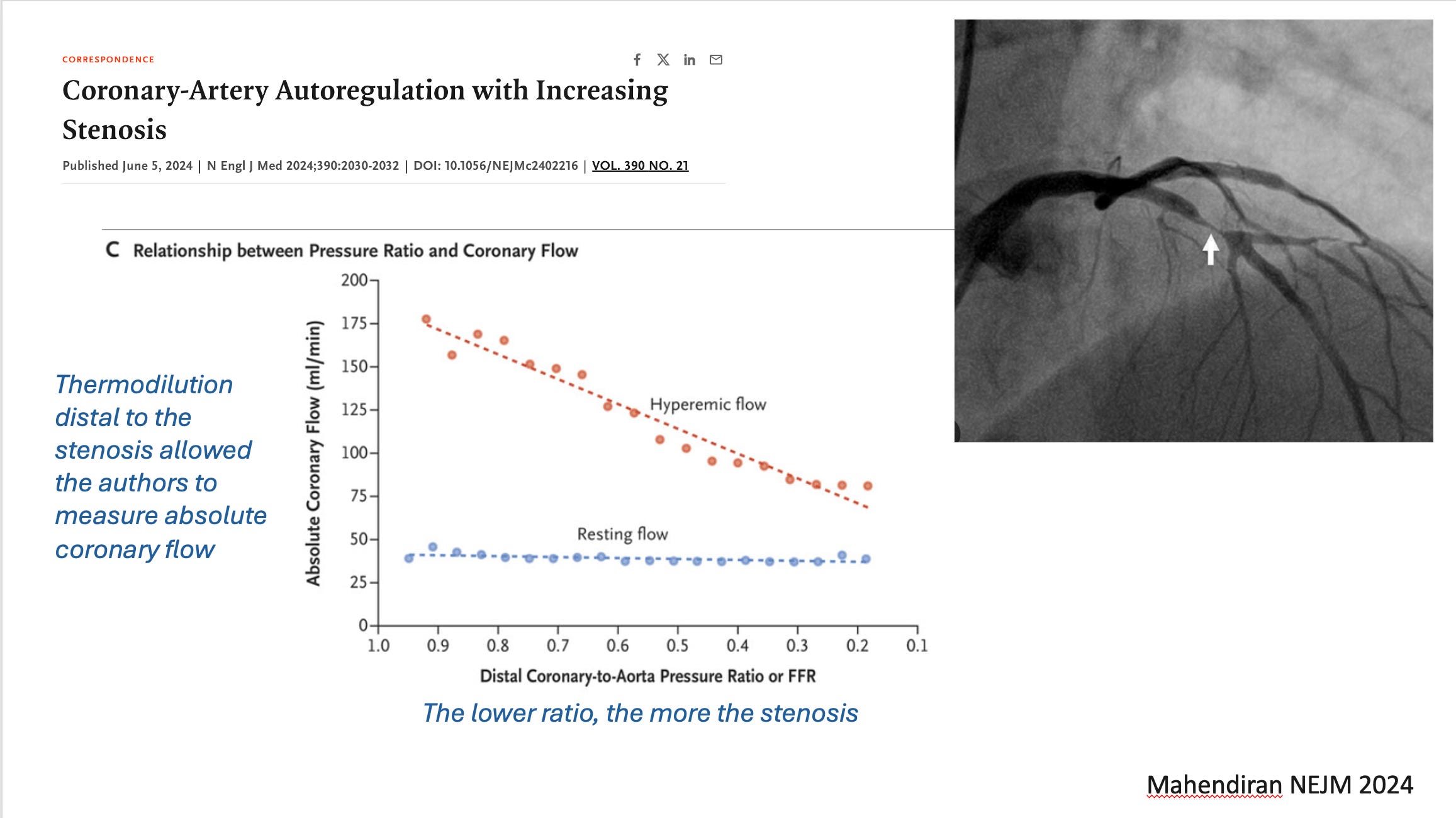
A Discussion with Professor Venk Murthy on Coronary Artery Disease
When I type the words coronary artery disease I bet that you picture angiograms with stenotic lesions—blockages in colloquial language. Indeed a high grade plaque from atherosclerosis in the inside of a coronary artery can limit flow to the heart muscle. But. But. Not as much as you think. You know why? Because there is something called the coronary microcirculation. Before blood gets to the beating heart muscle it has to go through small blood vessels. So small that you can’t see them. A study in the NEJM—on one patient—elegantly shows the ability of the microcirculation to autoregulate blood flow in the face of increasing degrees of obstruction in large coronary vessels. We’ve all seen patients who have severe flow-limiting proximal stenoses, which create little to no angina. A likely reason is the ability of the microcirculation to dilate and improve blood flow—at least at rest or minimal exertion. My friend Venk Murthy explains this elegant study. I learned a bunch and likely you will too. We refer often to this figure from the paper. It would be useful to have it handy while you listen. JMMRemember all, Sensible Medicine is a reader supported site that is free from industry advertisement. Thank you for your support. Sensible Medicine is a reader-supported publication. To receive new posts and support our work, consider becoming a free or paid subscriber. This is a public episode. If you'd like to discuss this with other subscribers or get access to bonus episodes, visit www.sensible-med.com/subscribe

Impella, Mammograms and Med School Fails Students
VP fixed the audio This is a public episode. If you'd like to discuss this with other subscribers or get access to bonus episodes, visit www.sensible-med.com/subscribe

Fear and Opioids in Academic Medicine
Regard for power implies disregard for those without power; part 3 This is a public episode. If you'd like to discuss this with other subscribers or get access to bonus episodes, visit www.sensible-med.com/subscribe
A discussion with interventional cardiologist Dr David Cohen on medical evidence, TAVR and stroke prevention
David Cohen is one of the smartest docs on Twitter. I learned a bunch talking with him. The procedure called transcatheter aortic valve implantation or TAVR is a damn miracle. In days of old, a heart surgeon would have to saw open the chest and cut out the heavily calcified immobile aortic valve and sew in a new one. I watched a case as a young doctor and came away shocked that patients survive this surgery. TAVR is even more stunning. Doctors place a valve up the aorta, across the diseased valve, and then place the new valve into the old valve. The verbs squishing or smooshing come to mind. The other unbelievable thing about TAVR is that strokes are less common than you’d think. When I first heard about TAVR, I thought: how is it not limited by all that debris going into the brain? Well, there is less debris than I would have thought. But not zero debris. In fact, there is one device on the market that forms a barrier between the aorta and the brain. We call it an embolic protection device (EPD) or cerebral embolic protection (CEP).Early studies show that the device catches debris that would have occluded blood vessels in the brain—iow, caused stroke. The pictures almost sell the device—because, obviously, catching debris has to be beneficial. But. But. There are always ‘but’s’ in Medicine. The PROTECTED TAVR trial, which compared TAVR with and without an embolic protection device failed to show a statistically significant reduction in stroke. It was a good trial, but it did not close the door for the device. For two reasons: one was that the trial was underpowered. The lower bound of the 95% confidence interval allowed for a 1.7% lower rate of stroke in the treatment arm. Neurologists feel that a 1% risk reduction in stroke is clinically important. The other reason was that a secondary endpoint of “disabling” stroke was 60% lower with the device. We needed more data. Another trial is not likely going to happen. Trials are expensive and take a long time. This is where Dr Cohen’s group comes in. They performed an observational study looking at more than 400k patients in a TAVR registry. About 13% got the device and 87% did not. This is where Sensible Medicine readers should start feeling a rash. Why? Because you know how scary it is to try and compare outcomes in two groups of patients who were not randomized. Cohen, however, tells me about a super-interesting way to approximate randomization in this comparison. It’s called an instrumental variable analysis. He explains this to me in clear terms during our conversation. I love methods so I was enthralled. But that isn’t all. The other thing is that his study, like the PROTECTED TAVR trial, came up with tantalizing close results. We discuss that as well. I loved our talk. If you like evidence, methods, and great medical stories, I think you will also like this conversation. JMMIt’s free to all. We appreciate your support for this experiment in bringing ad-free medical information to the public. Sensible Medicine is a reader-supported publication. To receive new posts and support our work, consider becoming a free or paid subscriber This is a public episode. If you'd like to discuss this with other subscribers or get access to bonus episodes, visit www.sensible-med.com/subscribe

Adam and I discuss the week's medical news
This is a public episode. If you'd like to discuss this with other subscribers or get access to bonus episodes, visit www.sensible-med.com/subscribe

Cifu, Prasad, Mandrola
A spirited discussion of craziness in medicine This is a public episode. If you'd like to discuss this with other subscribers or get access to bonus episodes, visit www.sensible-med.com/subscribe

Friday Reflection #39: What to Expect When You Are Aging
MM is 94 years old. Her only active medical issues are hypertension and vitamin D deficiency. She takes only 20 mg of lisinopril and 1000 units of vitamin D3 each day. She has no cognitive decline and gardens every day if the Chicago weather allows. Her Friday afternoon appointment is the doctor’s last of the week.Sensible Medicine is a reader-supported publication. If you appreciate our work, consider becoming a free or paid subscriber.I’ve already written a reflection on four things patients have taught me. After MM’s visit, I realized how much more there is to write on the topic. So here is a follow up with the unoriginal claim that the most valuable things I have learned from my patients are not about the practice of medicine. Though not profound, the lessons are universal. The longer I practice, and the older my patients get, the more frequently these truths are spoken.Aging is PainfulAnybody who gets to middle age knows that things don’t work like they used to. Around my house we say that any day that nothing hurts is remarkable. My patients are full of pithy phrases to make the point that aging is physically difficult.“Getting old is hard, but it beats the alternative.”“Aging is not for wimps.”“Every time I look in the mirror, I ask myself, how the hell did that happen?”People respond to their progressive disability in all manners. Some fight at every turn. Every visit, irrespective of age, is spent discussing aches, pains, and things that can no longer be accomplished. There are demands for me to make things better. I find it challenging to address the concerns, rather than dismissing them with “it’s just age,” while also letting people know that some suffering is “part of the human condition.”Other people accept frighteningly steep and acute declines. My challenge at these visits is to balance, “She’s not asking me to address the problem, so who am I to pry” with “This actually seems like something I should explore, even if she is willing to accept it.”Where there is little diversity is our ability to adjust to disability. I was taught that people rate the quality of life with a disability higher when they are living with it than when they are watching other people live with it. Thirty years of clinical experience has made this real. We should add to the saying, “There but by the grace of God go I” the addendum “but, when I end up there, I’ll be OK.” Aging is SadWhen I was an intern, I admitted an elderly woman with pneumonia. Her biggest problem was not the pneumococcus but her depression. Her mood made her miserable and the associated psychomotor retardation was going to make her post-hospital rehabilitation impossible. She was already taking an SSRI and seeing a therapist. I called her primary care doctor, a geriatrician. Like a true intern, I expected he would have an answer to her misery. His response was, “Yup, it is a sad time of life.”There is a lot to be said for the golden years: retirement, family, friends, greater financial security – but as the years go on, the psychological costs mount. Besides the physical decline, there is the constant loss. I repeatedly hear, “Everyone around me is dying.” Siblings, cousins, friends. It sometimes seems like those who are most connected suffer the most – that big family that has always provided support now provides an unending procession of funerals.People mourn their losses as well as their own mortality. You cannot ignore what is to come when your peers are dying. Those who deal with this best seem to be the people who can be honest that their grief about the loss of a friend is partly the fear and sadness that they are next.Loss is Never EasyI never felt like I had enough time with MM. Not that she needed time for me to attend to her medical problems. She was blessed with enviable genes and an outlook that combined cheer and steel. I just wanted time to hear more about her life and her experiences. I wanted to learn from her.On one unpressured Friday afternoon we chatted. I did not have another patient to see, another note to write, or another meeting to run to. Her daughter would not pick her up until 6:00 PM. I told her that I still thought about her husband, also a patient of mine, who had died about a decade earlier.She paused and then remarked. “We lived together in the same old house for more than 60 years. Every time something stops working there, I curse the damn house and I curse Charles for leaving me alone in it. He was always puttering around, fixing things. Then, of course, I think of the wonderful years we had here. I cry because I still miss him, and then I thank the house for reminding me of him.”I can’t write anything original about loss and grief and mourning. We’ve been writing about it for as long as we’ve had written language. What strikes me, though, watching so many people experiencing loss, is that it is always hard. Losing a loved one is hard. It does not matter if your father is 50 or 90. It does not matter if your mothe

A Novel Approach to AF Ablation
A few short words about our conversation: Two decades have passed and electrophysiologists have learned little about how to ablate atrial fibrillation. Now, and then, we simply ablate circles around the orifices of the pulmonary veins. This works reasonably well. But we don’t—exactly—know why it works. For instance, some patients have total elimination of AF, but when they are restudied, they have reconnection of PV activity. Observations like these suggest there is something else happening with our ablations—beyond building an electric fence around the veins.One possibility is that we are affecting the neural input to the heart. Structures called ganglionic plexi sit next to the areas we ablate. We often see heart rate increases after AF ablation. Say, from 60 to 80 bpm. That’s because ablation has reduced parasympathetic input to the heart. Sensible Medicine is a reader-supported publication. To receive new posts and support our work, consider becoming a free or paid subscriber.Piotr and his team had to suspend typical AF ablation during the pandemic. Surgeons would not provide backup. This gave them the idea of a simple approach—only in the right atrium, with one catheter, and no anesthesia. It turns out that there is often a ganglionic plexus in the upper right atrium. They found patients who had a history of vagally-mediated AF. They documented that these patients had high vagal tone. And… in these patients, simple ablation in the RA yielded a signal of benefit, a reduction of AF. Wow. It’s a small single-center study. It’s just a signal. A first mile of a marathon. But for the curious regarding AF, it is super-interesting. Many athletes and young people have vagally-mediated AF. Here is the link to the paper: Cardioneuroablation of Right Anterior Ganglionated Plexus for Treatment of Vagally Mediated Paroxysmal Atrial FibrillationHere is Piotr. He works in Rzeszów, Poland. It’s a beautiful city to visit. I once ran a marathon there. JMM This is a public episode. If you'd like to discuss this with other subscribers or get access to bonus episodes, visit www.sensible-med.com/subscribe

Video version of our podcast
We discuss the state of medical education, Harvard music video, causal language at JAMA and more This is a public episode. If you'd like to discuss this with other subscribers or get access to bonus episodes, visit www.sensible-med.com/subscribe

Cifu, Mandrola, Prasad
Video will be available to paid subscribers This is a public episode. If you'd like to discuss this with other subscribers or get access to bonus episodes, visit www.sensible-med.com/subscribe

A Discussion with Dr. Dena Zeraatkar regarding analytic flexibility in observational studies
Gosh was this a great conversation about her recent paper on specification curve analysis of nutritional observational studies. Here is Dr. Zeraatkar’s bio:Dena Zeraatkar, PhD is an Assistant Professor in the Departments of Anesthesia and Health Research Methods, Evidence, and Impact (HEI) at McMaster University. She earned her doctoral degree at McMaster University in the Health Research Methodology graduate program. Following her doctoral training, she pursued postdoctoral training at Harvard Medical School, for which she was awarded a Banting scholarship.Her research centers on evidence synthesis and evaluation—identifying and appraising research to optimally inform healthcare and public health decisions. She often works in areas in which the evidence is complex or conflicting, examples of which include nutrition and COVID-19 therapeutics. For her research, in 2023, she was awarded a Gairdner Early Career Investigator Award.First, it would help to read my comments yesterday on the paper. Dr. Zeraatkar is well-spoken, clear and she explains a complicated topic in simple terms. Her work is exactly the type we love at Sensible Medicine. Stay for her final comment. It made me so happy. Sensible Medicine is a reader-supported publication. To receive new posts and support our work, consider becoming a free or paid subscriber. This is a public episode. If you'd like to discuss this with other subscribers or get access to bonus episodes, visit www.sensible-med.com/subscribe

Friday Reflection 38: Yesterday’s Solutions; Today’s Problems
The Thomas Sowell quote, “On closer scrutiny, it turns out that many of today's problems are a result of yesterday's solutions” has been ringing in my head a lot lately. This is a public episode. If you'd like to discuss this with other subscribers or get access to bonus episodes, visit www.sensible-med.com/subscribe

Yet Another Excellent Explainer About P-Values in Randomized Trials
Gosh was I lucky to speak with Professor Erik Van Zwet from Leiden University in the Netherlands. He is the first author on a recent NEJM Evidence paper looking at more than 23,000 trials in the Cochrane Database. (I linked to an URL that should get by the paywall.) There are technical aspects of this paper. We hit on some (not a lot) of them. The gist of it though is really important when we look at evidence. Erik did an excellent job of explaining P-values, trial power, and, at the end, we discuss how this work might inform the ability of trials to replicate. This discussion also pairs well with one I had with computer scientist Ben Recht. I hope you enjoy the conversation. Please do consider subscribing or supporting our work as Sensible Medicine remains an ad-free user-supported place to learn about medical evidence. JMM Sensible Medicine is a reader-supported publication. To receive new posts and support our work, consider becoming a free or paid subscriber. This is a public episode. If you'd like to discuss this with other subscribers or get access to bonus episodes, visit www.sensible-med.com/subscribe

Friday Reflection 37: Why I Teach (acceptable and less acceptable reasons)
Why have I been committed to medical education? Some of the reasons are admirable but not terribly novel. Others are a bit hard to admit, but just as true. This is a public episode. If you'd like to discuss this with other subscribers or get access to bonus episodes, visit www.sensible-med.com/subscribe

Friday Reflection 36: Why Don’t Doctors Want to See Patients?
Friday Reflection 35: Why Don’t Doctors Want to See Patients?I was asked “Why is it that doctors don’t want to see patients?” and I could not answer the question. Fourteen months later, here is my response. This is a public episode. If you'd like to discuss this with other subscribers or get access to bonus episodes, visit www.sensible-med.com/subscribe

New Austrian Study Shows Boosters do NOT reduce COVID19 deaths in people who had COVID
This is a public episode. If you'd like to discuss this with other subscribers or get access to bonus episodes, visit www.sensible-med.com/subscribe

Math Professor Ben Recht and I Discuss P-values and Confidence Intervals
Ben Recht is a professor at UC Berkeley. You know, the place that has all those parking spaces for the Nobel laureates. He understands the innards of math. And that is exactly why he explained that doctors who use evidence don’t have to get bogged down in technicalities. I reached out to Ben to discuss a complicated but provocative statistical paper in NEJM evidence. But we mostly talk basics. Ben writes at his Substack arg min This is a public episode. If you'd like to discuss this with other subscribers or get access to bonus episodes, visit www.sensible-med.com/subscribe
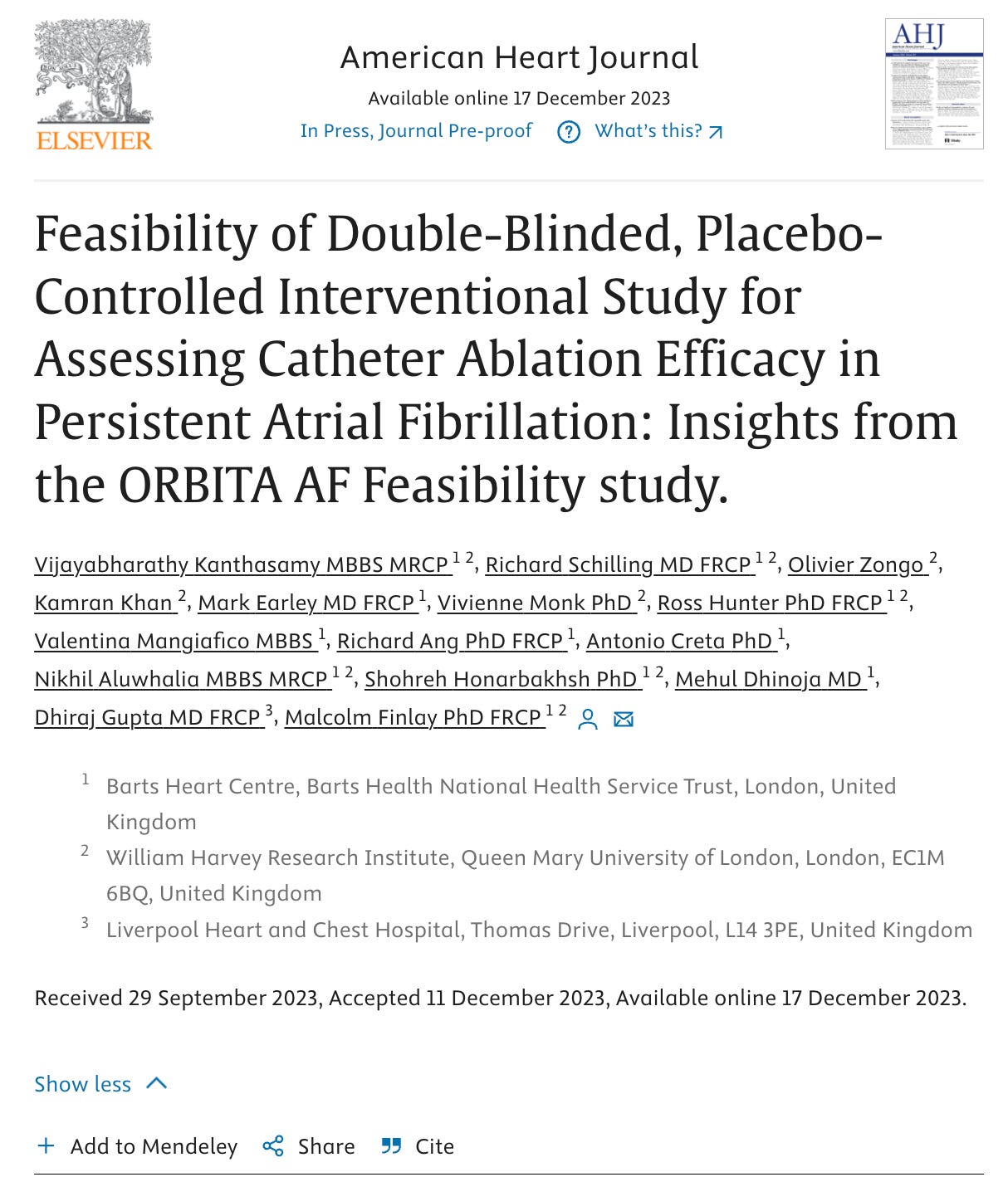
A discussion with the primary investigator of the world's first placebo-controlled AF ablation trial
As many of you know, I have long argued (unsuccessfully until now) for a placebo-controlled trial of AF ablation. One group gets the ablation; the other gets a placebo or sham procedure. This way we can sort out the placebo-resistant effect of the ablation. Finally, here is the first report of one. Dr. Malcolm Finlay is an electrophysiologist at St Bartholomew hospital in London UK and primary investigator of the study. They recently published their feasibility study for AF ablation vs placebo. The American Heart Journal published the pilot study of 20 patients. Finlay and colleagues call it the ORBITA AF trial. But it’s important to note that this was done separate from the ORBITA investigators at Imperial College. The larger study will have a different name. Here is a copy and paste:Twenty patients with PersAF (duration The primary endpoint was to evaluate the blinding of the patients. The good news is that it mostly worked. Blinding was successful in most patients. Recurrence of AF was less in the ablation vs cardioversion arm. But the numbers were too small to say much. Same with quality of life measures, which were mostly similar until 12 months. The authors concluded that This feasibility study establishes the potential for conducting a blinded, placebo-controlled trial to evaluate the efficacy of PVI versus DCCV in patients with PersAF.I hope you enjoy the conversation. This is darn exciting for the field. And I am delighted to publish this conversation on Sensible Medicine. (I also tried to include the un-edited transcript of the conversation.)Sensible Medicine is a reader-supported publication. To receive new posts and support our work, consider becoming a free or paid subscriber. This is a public episode. If you'd like to discuss this with other subscribers or get access to bonus episodes, visit www.sensible-med.com/subscribe

Mandrola and Prasad are back
This is a public episode. If you'd like to discuss this with other subscribers or get access to bonus episodes, visit www.sensible-med.com/subscribe

Mandrola and Prasad are back
This is a public episode. If you'd like to discuss this with other subscribers or get access to bonus episodes, visit www.sensible-med.com/subscribe

Friday Reflection 35: Four Who Fired Me
These patients did the right thing leaving my care. We were wrong for each other, or I had given what I had to offer (at the time) and it was not enough. That does not lessen the feeling that I failed. This is a public episode. If you'd like to discuss this with other subscribers or get access to bonus episodes, visit www.sensible-med.com/subscribe

Friday Reflection 32: The Trauma of Not Dying Alone
They say dying alone is sad. They also say we all die alone. There is trauma to not dying alone as well. This is a public episode. If you'd like to discuss this with other subscribers or get access to bonus episodes, visit www.sensible-med.com/subscribe

Soren Diederichsen on Atrial Fibrillation Screening
If you care about AF you will love this conversation. Soren has some interesting ideas about what AF is now vs what AF was in the past. Here are some links:The LOOP Study (which was non-significant). Effects of Atrial Fibrillation Screening According to N-Terminal Pro-B-Type Natriuretic Peptide: A Secondary Analysis of the Randomized LOOP StudySeverity and Etiology of Incident Stroke in Patients Screened for Atrial Fibrillation vs Usual Care and the Impact of Prior Stroke: A Post Hoc Analysis of the LOOP Randomized Clinical TrialSensible Medicine is a reader-supported publication. To receive new posts and support our work, consider becoming a free or paid subscriber.BTW: This is the kind of content we aim to bring you at Sensible Medicine. Thanks for your support. I have some great ideas for future conversations. Feel free to let me know your interests, too. This is a public episode. If you'd like to discuss this with other subscribers or get access to bonus episodes, visit www.sensible-med.com/subscribe
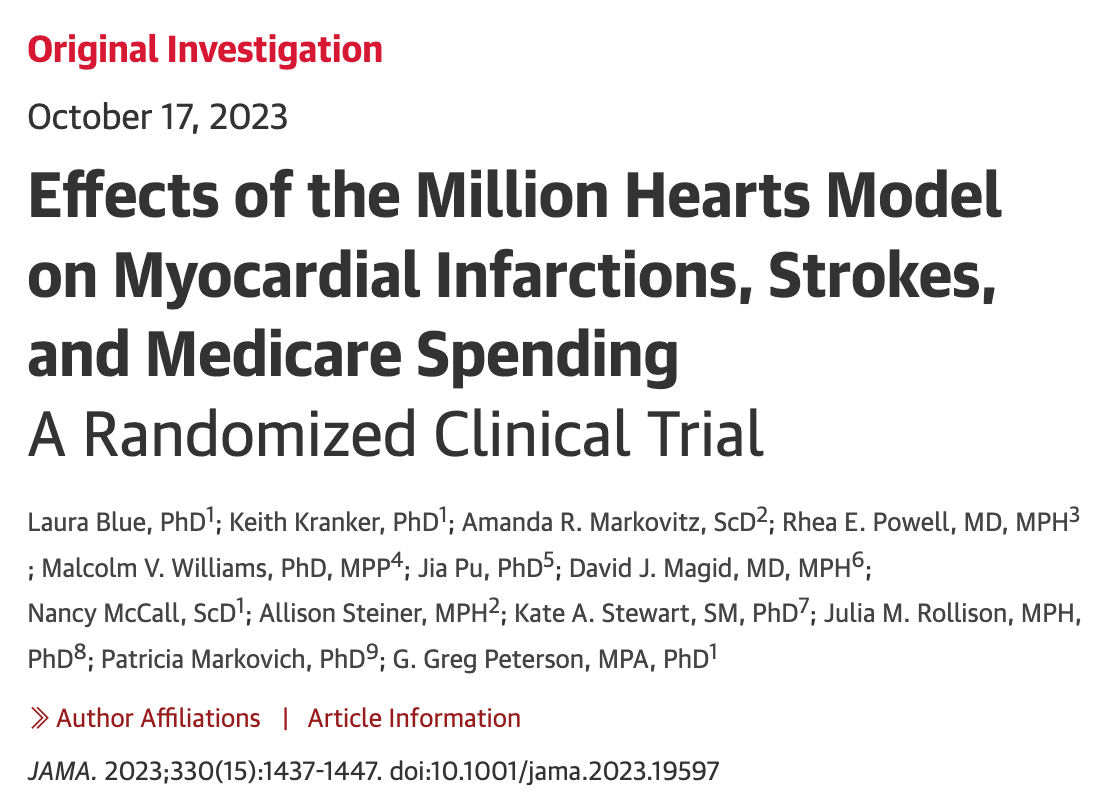
Andrew Foy has a Different Conclusion on a Big JAMA paper on CV risk reduction
The study in question is a randomized clinical trial looking at the Million Hearts Model. This model paid health care organizations to assess and reduce CV risk. Obviously, this is an important goal. Heart disease, specifically, atherosclerotic vascular disease, is a leading killer of humans. Any reduction of heart disease should have a benefit on both a person and a population. But paying health systems to do specific things is a policy intervention. Even though a policy, like this one, makes sense, policies can have benefits and potential harms. (An example is the hospital readmissions reduction program (HRRP), which penalized hospitals for excess readmissions. This resulted in a fewer readmissions but it also associated with an increase in death rates in patients with heart failure.)Both Andrew and I were happy that the nudging of Million Hearts was studied The Trial and ProgramThis was a big pragmatic cluster randomized trial that ran over 4 years. More than 300 organizations were randomly assigned 1:1 to have the Million Hearts model or standard care. There were two parts of the model. First there was $10 for every patient who had their 10-year risk calculated with a risk equation. (ACC/AHA is a simple one you can do in 15 seconds with a smartphone.) Then CMS paid each organization $0, $5, or $10 PBPM for each high-risk beneficiary with an annual risk reassessment, with monthly payment amounts dependent on mean risk score change across all of the organization’s high-risk beneficiaries reassessed.Keep in mind that the only components of the risk calculation that are modifiable are cholesterol and blood pressure. (*smoking cessation for smokers). Foy pointed out that Million Hearts was in many ways an incentive system to nudge providers, who then may nudge patients, to take more BP and cholesterol medicine. Sensible Medicine is a reader-supported publication. To receive new posts and support our work, consider becoming a free or paid subscriber.The authors chose two primary outcomes: one a MACE endpoint with MI, stroke, and TIA. The second primary was the same as the first, plus CV death. They originally planned to include only high-risk patients, but then added moderate-risk patients. This factored heavily in the results. Patients were mostly 75 year-olds, men-women split 2/3rds, 1/3rd. Outcomes were derived from claims data—which is messy when it comes to judging MIs and TIAs and specific causes of death. The Results:The first primary endpoint (MI, stroke, TIA) occurred at a rate of 14.8 per 1000 patient-years vs 17.0 per 1000 patient-years. The Hazard ratio came to 0.97 (90% CI - 0.93-1.0). The P-value was 0.09. (The authors had previously stipulated that the P threshold would be 0.10). The second primary, adding in CV death, was similar. A HR of 0.96 (90% CI 093-0.99) and a P = 0.02. These are positive results. But let’s look further. Drivers of the Results: The results were driven almost exclusively by moderate risk patients. Look at Table 3. Reductions in events rates were largest and significant statistically in the moderate-risk but not high-risk group. That is something we have emphasized here at Sensible Medicine. Even though you would think that high-risk patients have the most to gain, they also have more competing risks and perhaps more chance for treatment harm. Like so many other studies, the sweet spot for primary prevention seems to be in the moderate-risk group. Unintended Consequences: A second finding, noted by Andrew, was the highly significant increase in all-cause hospitalizations in the intervention group. These had the most significant p-values of the entire study. Other Limitations:The Million Hearts model randomization was offered to more than 500 organizations but only 342 accepted. This raises the question of generalizability. Were the 342 organizations special in some way? Another factor is that outcomes were modeled on a sample of events—not raw counts. The choice to use 90% confidence intervals rather than 95% confidence intervals and P thresholds of 0.1 rather than the more standard of 0.05 is a weakness. For instance, the first primary endpoint would have missed significance if this were evaluated in the usual fashion. I did not find a strong justification for this choice. Readers with statistical expertise, please weigh in. Our Conclusions: First, we were both happy that a policy was studied rather than just implemented because it made sense. This should serve as a model for future policy endeavors. Second, there did look to be a modest effect on reducing important outcomes. And, these were driven mostly be moderate-risk (not high-risk) patients. This argues for a heterogenous treatment effect based on co-morbidity. Third, the statistically significant increase in all-cause hospitalizations in the intervention arm suggests that more aggressive attempts at blood pressure and cholesterol levels may have risen the risk of off-target ill effects. In the end, Andrew felt lik