
Screaming in the Cloud
681 episodes — Page 3 of 14

Ep 581Generating AI Laughs with Daniel Feldman
Social media snark and rightfully criticizing industry trends? This episode of Screaming featuring Daniel Feldman must be a match made in heaven for Corey. Daniel’s wit is only matched by his engineering expertise, and his insights help us examine the current state of GenAI. This conversation breaks down how you can have fun with today’s AI tools, why product excitement can often hinder advancement, and even carries a tune with a bit of karaoke. As a bonus, Daniel indulges Corey about his signature conference attire. If you ever wanted to learn more about Mr. Quinn’s suit game, then this is the episode for you!Show Highlights:(0:00) Intro to episode(0:48) Who is Daniel Feldman(1:25) Backblaze sponsor read(1:51) Sounding off on social media(3:13) Having fun with AI(5:27) The origins of quackernews.com(6:36) Practical uses of AI(8:40) Enthusiasm vs. progress(12:30) AI’s online backlash(15:45) AI, slideshows, and karaoke(18:14) Firefly sponsor read(18:50) Tricks to prompting DALL-E(21:32) Markdown and software update naming(25:13) Exclusionary humor in tech(26:19) reInvent and Corey’s sense of fashion(28:32) Getting publicly recognized for Twitter posts(30:43) Where to find DanielAbout Daniel Feldman:Daniel Feldman is working on new projects in the service identity space. He previously was an early engineer at Scytale and deployed SPIFFE service identity at over a dozen companies. Before that, he was a principal software engineer at Veritas.Links Referenced:quakernews.comTwitter: https://x.com/d_feldmanBluesky: https://bsky.app/profile/dfeldman.bsky.socialMastodon: https://hachyderm.io/@dfeldmanSPIFFE: https://spiffe.io/Solving the Bottom Turtle: https://spiffe.io/book/SponsorsBackblaze: https://www.backblaze.com/Firefly: https://www.firefly.ai/
Ep 580Piledriving the GenAI Grift with Nikhil Suresh
While we can’t repeat the title of his blog post here, Nikhil Suresh recently gained notoriety for his scathing takedown of the hype surrounding GenAI. On the surface, it appears his anger lies with the tech, but that’s not the case. In this episode, Nikhil explains to Corey why his frustrations are targeted at a predatory bubble swindling young professionals and investors. You’ll hear their thoughts on the correlation between AI and crypto grifts, why most tech keynotes are just fluff and buzzwords, and when industry catch-all terms start to lose meaning. While GenAI may still show some promise, this week’s episode breaks down why you shouldn’t believe the hype.Show Highlights: (0:00) Intro to episode(0:41) Backblaze sponsor read(1:08) The origins of Nikhil’s viral article(4:20) The disconnect between buzzwords and work(5:26) Throwing money at AI(7:17) AI vs. craftsmanship(13:36) The rush to get AI tools out the door(16:12) The telltale signs of bad AI content(18:50) AI, crypto, and GPU grifts(20:33) The fallout of Nikhil’s blog post(22:34) Firefly sponsor read(23:10) The practicality of GenAI(26:24) GenAI presentations vs. reality(29:07) Predatory hiring practices and tech’s current barrier for entry(32:03) Sturgeon’s Law in the industry(35:22) Consequences of the hype cycle(38:48) The fantasy land of “conferenceware”(42:01) Where you can find Nikhil About Nikhil Suresh:Nikhil is one of the directors at an Australian data consultancy named Hermit Tech, though he’s probably most well-known for writing a blog titled Ludicity. Nikhil has a background in psychology and data science.Links Referenced: https://ludic.mataroa.blog/https://www.hermit-tech.com/SponsorsBackblaze: https://www.backblaze.com/Firefly: https://www.firefly.ai/
Ep 579Summer Replay - The Future of Kubernetes with Bryan Liles
Is there true value in using cloud optimization tools when they may be phased out in the near future? You may be surprised. In this Summer Replay of Screaming of the Cloud, Corey is joined by former VMware Senior Staff Engineer Bryan Liles. Since this episode was originally released, Bryan wasn’t just promoted to the Vice President of Principal Engineering at VMware, he’s also transitioned to a new role as a Senior Principal Engineer with AWS! Listen as the pair talk about the long-term viability of Kubernetes, what’s in a tech company’s name, flipping the script surrounding the discussion of diversity in the field, and why the words you use matter the most in criticism. If anything, this throwback will show the value of intention, whether in the tech industry or your everyday life. Show Highlights: (0:00) Intro to episode(0:30) Backblaze sponsor read(0:56) The struggles of setting up interview times(2:22) What Bryan does at VMware(4:14) What Kubernetes has accomplished(5:39) Corey’s qualms with Kubernetes(8:16) The shelf life of Kubernetes(10:36) Optimizing Kubernetes in the cloud(13:25) What is Project Pacific?(15:28) Firefly sponsor read(16:04) Woes of the multicloud(19:09) VMware’s branding and Tanzu(21:00) Mispronouncing company names(22:07) Punching down and diversity discourse in tech(25:18) Intentional language in company critiques(28:50) Learning lessons from getting fired(30:36) Where you can find BryanAbout Bryan LilesBryan Liles is a Senior Principal Engineer with AWS where his team oversees all of S3. When not working, Bryan builds and races cars and drones.Over the past 20 years, Bryan has worked around cloud technology and distributed systems. His approaches to technology are: simplify with fidelity and technology should give access to all.Links Referenced: https://vmware.comSponsorsBackblaze: https://www.backblaze.com/Firefly: https://www.firefly.ai/
Ep 578Summer Replay - Optimizing Cloud Spend at Airbnb with Melanie Cebula
Just because the AWS Cloud hangs above our heads, doesn’t mean your bill needs to be just as sky-high. In this Screaming in the Cloud Summer Replay, Corey is joined by Airbnb Staff Software Engineer Melanie Cebula. Her job is to ensure they keep their monthly cloud bill low, and that the cost isn’t just there for a temporary stay. Hear Melanie and Corey chat about the vital role engineers play in helping balance the company books, tricks to optimizing your organization’s cloud spending, how inexperience can have a dangerous effect on cost-cutting, and the growing pains facing today’s world of data infrastructure. We hope you enjoy this trip down memory lane (just be sure you checkout on time to avoid any fees).Show Highlights: (0:00) Intro to episode(0:27) Backblaze sponsor read(0:54) The role of a Staff Engineer(2:09) Working for a large company reliant on the cloud(3:59) Melanie’s Area of Expertise(5:58) Efficiently Managing AWS Bills(11:33) Optimizing cloud spend(14:50) The harmful hesitancy to turn things off(18:17) Inexperience and cost-saving measures(21:17) Firefly sponsor read(21:53) How to avoid snowballing cloud bills(23:40) Kubernetes and cloud billing(27:12) The perks of compounding microservices(29:19) Misconceptions about Kubernetes(31:10) Growing pains of data infrastructure(34:44) Where you can find MelanieAbout Melanie CebulaMelanie Cebula is an expert in Cloud Infrastructure, where she is recognized worldwide for explaining radically new ways of thinking about cloud efficiency and usability. She is an international keynote speaker, presenting complex technical topics to a broad range of audiences, both international and domestic. Melanie is a staff engineer at Airbnb, where she has experience building a scalable modern architecture on top of cloud-native technologies.Besides her expertise in the online world, Melanie spends her time offline on the “sharp end” of rock climbing. An adventure athlete setting new personal records in challenging conditions, she appreciates all aspects of the journey, including the triumph of reaching ever higher destinations.On and off the wall, Melanie focuses on building reliability into critical systems, and making informed decisions in difficult situations. In her personal time, Melanie hand whisks matcha tea, enjoys costuming and dancing at EDM festivals, and she is a triplet.Links Referenced:Twitter: https://twitter.com/melaniecebulaMelanie Cebula’s website: https://melaniecebula.com/SponsorsBackblaze: https://www.backblaze.com/Firefly: https://www.firefly.ai/
Ep 577Summer Replay - Ironing out the BGP Ruffles with Ivan Pepelnjak
If you need a point of contact for all things networking, then look no further than Ivan Pepelnjak. Ivan is the webinar author at ipSpace.net where he is working on making networking an approachable subject for everyone. From teaching to writing books, Ivan has been at it for a long and storied career, and as a de facto go-to for networking knowledge, you can’t beat him. In this Summer Replay of Screaming in the Cloud, Ivan and Corey discuss Ivan’s status as a CCIE Emeritus and the old days of Cisco. Ivan also levels his network engineering expertise and helps Corey answer some questions about BGP and its implementation. Ivan aptly narrows it down into “layers” that he kindly runs us through. So tune in for a Dante-esque descent into BGP, DNS and Facebook, seeing out the graybeards of tech, and more!Show Highlights: (0:00) Intro to episode(1:23) Panoptica sponsor read(2:04) The world of VaxVMS(2:39) The significance of being a CCIE emeritus(5:02) The value of certification in the modern tech world(7:37) BGP and networking(12:41) Internal vs. external BGPs(15:23) “Unfair criticisms” of BGP(17:35) Differences between BGP and DNS(23:19) Cloud growth vs. loss of networking engineers(24:57) Panoptica sponsor read(25:20) Outsourcing admin work(27:45) Breaking down the Facebook DNS outage(31:37) Disconnect at the data center(37:06) Where you can find IvanAbout Guest:Ivan Pepelnjak, CCIE#1354 Emeritus, is an independent network architect, blogger, and webinar author at ipSpace.net. He's been designing and implementing large-scale service provider and enterprise networks as well as teaching and writing books about advanced internetworking technologies since 1990.Links Referenced:ipSpace.net: https://ipspace.netOriginal Episode: https://www.lastweekinaws.com/podcast/screaming-in-the-cloud/ironing-out-the-bgp-ruffles-with-ivan-pepelnjak/SponsorPanoptica: https://www.panoptica.app/
Ep 576Summer Replay - Building and Maintaining Cultures of Innovation with Francessca Vasquez
Relishing in your company’s current successes is important, but planning for the future of your business (and the wider industry) is equally vital. In this Summer Replay of Screaming in the Cloud, we’re taking you back to the post-pandemic climate of tech with the Global Vice President of the AWS Professional Services and GenAI Innovation Center Francessca Vasquez. With 20+ years of experience under her belt and thousands of customers, she knows a thing or two about thriving in the cloud. You’ll get Francessca’s insights into why companies struggle to maintain a cutting-edge work environment, the rapid pivot to the cloud amid a global pandemic, the importance of courting different backgrounds in your organization, and why the next generation of tech workers could spur unprecedented innovation. Even though COVID is seemingly in our rearview mirror, this discussion still holds weight in today.Show Highlights: (0:00) Intro to episode(0:49) Panoptica sponsor read(1:30) Francessca’s role as AWS Vice President of Technology(2:56) Challenges of shifting company culture(5:38) Customer service and cloud adoption(9:46) The importance of legacy companies as clients(11:55) The pandemic’s role in cloud migration(14:39) Finding “untapped talent” during the pandemic(16:45) Courting people breaking into the industry(20:19) Panoptica sponsor read(20:42) Toxic gatekeeping in tech(24:29) The “real world” versus the realities of tech(26:43) Excitement for the next generation in tech(29:15) Diversity, equity, and excellence(32:20) How to communicate with your customers(40:00) Where you can find FrancesscaAbout Guest:Francessca is the leader of the AWS Technology Worldwide Commercial Operations organization. She is recognized as a thought leader of business technology cloud transformations and digital innovation, advising thousands of startups, small-midsize businesses, and enterprises. She is also the co-founder of AWS workforce transformation initiatives that inspire inclusion, diversity, and equity to foster more careers in science and technology.Links Referenced:Twitter: https://twitter.com/Francessca_V LinkedIn: https://www.linkedin.com/in/francesscavasquez/Original Episode: https://www.lastweekinaws.com/podcast/screaming-in-the-cloud/building-and-maintaining-cultures-of-innovation-with-francessca-vasquez/SponsorPanoptica: https://www.panoptica.app/
Ep 575Summer Replay - An Enterprise Level View of Cloud Architecture with Levi McCormick
When you hear a name like “Jamf,” you aren’t likely to think of cloud architecture, but for Levi McCormick, it’s his bread and butter. On this Summer Replay of Screaming in the Cloud, Corey and Levi chat about how Jamf’s business approach benefits both their clients and their development team. Levi gives his take on the relationship between software development and personal ownership, how he gamified learning for young engineers, the economic challenges presented to professionals trying to break into the cloud, and how AWS can improve its rollout of new products. Seeing as Levi McCormick is now Jamf’s Director of Engineering, those insights have seemingly paid dividends! You can check out this blast from the past (as well as Corey’s usual wit and hot takes) right now!Show Highlights(0:00) Intro to the episode(0:58) Panoptica sponsor read(1:49) Levi’s role as a Cloud Architect(2:41) The history of Jamf and the services they provide(5:58) Breaking down the cloud for customers(8:18) Services, development, and ownership(11:44) Identity and assumed roles in software engineering(14:41) The woes of mismanagement in the field(17:03) Pantoptica sponsor read(17:26) Explaining the Cloud Resume Challenge(20:11) Hesitancy to take the challenge wider(21:26) Economic barriers for young engineers(26:00) Thoughts on reInvent 2021(28:45) What’s ahead for Levi McCormick(29:33) Where you can find LeviAbout LeviLevi's passion lies in helping others learn to cloud better.Links ReferencedJamf: https://www.jamf.comTwitter: https://twitter.com/levi_mccormickOriginal Episode: https://www.lastweekinaws.com/podcast/screaming-in-the-cloud/an-enterprise-level-view-of-cloud-architecture-with-levi-mccormick/SponsorPanoptica: https://www.panoptica.app/
Ep 573Helping Each Other and Growing Together with Matt Coulter
Matt Coulter returns to share his latest endeavors as he makes a comeback in community work, especially within DevTools and serverless circles. In this episode, he and Corey discuss the significance of the Cloud Development Kit (CDK), CDK Community Day, and CDK Patterns. Matt reflects on his journey into community work and contrasts the challenges of virtual versus in-person events, highlighting Belfast's burgeoning tech scene and his aim to amplify its presence globally. Additionally, Matt discusses Teach Me AWS, his new venture designed to simplify AWS tools and foster practical problem-solving skills.Show Highlights: (0:26) What Matt’s been up to since the last time he was on the show(2:04) How Matt got started with community work(6:09) Learning about the Belfast community(9:57) How technologies are maturing and empowering users to do more(14:51) Matt’s latest endeavor, Teach Me AWS(19:25) How Teach Me AWS educates users(23:02) Big opportunities for Teach Me AWS in the day two experience(30:32) The thread that ties all of Matt’s interests and projects togetherAbout Matt:Matt is an AWS DevTools Hero, Serverless Architect, Author and conference speaker. He is focused on creating the right environment for empowered teams to rapidly deliver business value in a well-architected, sustainable and serverless-first way.You can usually find him sharing reusable, well architected, serverless patterns over at cdkpatterns.com or behind the scenes bringing CDK Day to life., Sr. Architect in Belfast. AWS DevTools Hero and @BelfAWSt_Meetup organiser loving #Serverless so I created @cdkpatterns / @cdkday. Co-Author @thecdkbook. he/him, Matt is an AWS DevTools Hero, Serverless Architect, Author and conference speaker/organiser. He is focused on creating the right environment for empowered teams to rapidly deliver business value in a well-architected, sustainable and serverless-first way.These days you can usually find him behind the scenes running the official Belfast AWS User Group and organising the Belfast AWS Community Day!!!Links Referenced:Personal Twitter: https://twitter.com/nideveloper Belfast User Group Twitter: https://x.com/BelfAWSt_UG Teach Me AWS website: https://teachmeaws.com/ SponsorPanoptica: https://www.panoptica.app/
Ep 572Summer Replay - The Evolution of DevRel with Jeremy Meiss
Developer relations have gone through quite an evolution over the years. In this reissued episode, Corey talks with Jeremy Meiss, former Director of DevRel and Community at CircleCI, about how DevRel has transitioned from a focus on conference appearances to a more strategic alignment with business objectives. Corey and Jeremy also discuss navigating career complexities during economic downturns, emphasizing the importance of maintaining relevance. They also touch on fostering open communication within organizations and the enduring value of personal interactions in professional communities.Show Highlights:(1:39) How CircleCI is using DevRel to helping clients go from developer’s laptops to production safely and sanely(6:23) What DevRel means to Jeremy and why it’s a problem that most people can’t define it(12:40) Why saying DevRel is part of product ignores much of what makes both roles unique(15:36) Combating burnout from being able to perform you’re role but not feeling connected to what the company actually does(21:30) How Jeremy sees DevRel evolvingAbout Jeremy:Jeremy is the former Director of DevRel & Community at CircleCI, formerly at Solace, Auth0, and XDA. He is active in the DevRel Community, and is a co-creator of DevOpsPartyGames.com. A lover of all things coffee, community, open source, and tech, he is also house-broken, and (generally) plays well with others.Links Referenced:LinkedIn: https://www.linkedin.com/in/jeremymeiss/ Twitter: IAmJerdog - Jeremy’s @DevOpsAms https://twitter.com/iamjerdog?lang=enSponsor:Panoptica: https://www.panoptica.app/
Ep 571Complex Tech, Public Learning, & Impostor Syndrome with Kyler Middleton
Kyler Middleton, a Senior Principal Engineer at Veradigm and co-host of the Day Two Cloud podcast, joins Corey in this Screaming in the Cloud episode to talk about how tech careers are changing and the big impact of AI on starting in tech. Kyler, who once wanted to be a librarian, tells her story of becoming a tech pro. She highlights the importance of learning and sharing what you know, especially in tech. Corey and Kyler also get into how AI is changing the game for new techies and what that means if you're starting. Kyler's take on using and teaching tech offers some really helpful tips for anyone looking to get into or move up in the tech world.Show Highlights: (00:00) - Introduction(01:49) - Kyler describes her multiple roles(03:21) - Discussion on the realities of 'Day Two' operations in cloud environments(07:38) - Insights into technical debt and the concept of 'Day Two' in DevOps (13:54) - The importance of sharing knowledge and learning in public to benefit others in the tech community(20:07) - The use and limitations of AI in professional settings(26:41) - Debate on the overreliance on AI technology in decision-making processes and its potential consequences(32:05) - Closing remarks & where listeners can connect with KylerAbout Kyler:Kyler grew up in rural Western Nebraska, fixing neighboring farmers’ computers in exchange for brownies and Rice Krispies. Then she was going to be a librarian to help people find the information they need. Then she discovered computers were a real job, and more than just a fix for her munchies, and she's now been a systems, network, call center, and security engineer, and is now a DevOps lead, and software engineer. She speaks at any conference that will have her, hosts Day Two Cloud podcast from Packet Pushers, and writes up cool projects with approachable language and pictures as part of her Medium series, Let's Do DevOps, with the intention to upskill anyone of any skill level. I have an insatiable curiosity and desire to help the folks around me succeed and grow. So - Let's Do DevOps.Links Referenced:Day Two Cloud Podcast: https://packetpushers.net/podcast/day-two-cloud/Kyler on LinkedIn: https://www.linkedin.com/in/kylermiddleton/Kyler's Blog on Medium: https://kymidd.medium.com/SponsorPanoptica: https://www.panoptica.app/
Ep 570Navigating Legal Risk and Compliance with Alex King
Alex King is a key player at the Duckbill Group as our legal counsel, as well as the founder of his own law firm, Archetype Legal. In this episode, Alex shares insights on his role in helping startups and small businesses navigate legal complexities, emphasizing the importance of risk analysis and compliance. He explains that attorneys highlight risks, allowing business leaders to make informed decisions. Alex recounts his experiences guiding clients through various legal challenges, from hiring decisions to office leases. Corey discusses the unique legal scenarios faced by the Duckbill Group and highlights the benefits of Alex's unique approach. Show Highlights: (00:00) Introduction (02:10) What Alex does for the Duckbill Group as legal counsel(02:42) The role of an attorney for startups and established businesses(07:20) Similarities and differences between what the advisers at Duckbill Group do and what Alex does as a lawyer(11:56) Alex’s ability to provide context to legal decisions that would otherwise be missing(22:07) How negotiating hiring contracts can work out if done wisely(25:09) What Alex wishes people knew to make interacting with attorneys easierAbout Alex:Alex King is an attorney and the founder of Archetype Legal PC, a law firm dedicated to helping entrepreneurs, startups, and small businesses take practical legal steps to achieve their business goals. In addition, he is a Business Advisor for Pacific Community Ventures, a nonprofit supporting small business growth and job creation in low-income communities. His experience includes corporate law, business operations, and strategic planning. Links Referenced:Website: https://www.archetypelegal.com/ Email: [email protected]: https://www.panoptica.app/

Ep 569S3's Hidden Features and Quirks with Daniel Grzelak
Corey Quinn and Daniel Grzelak take you on a journey through the wild and wonderful world of Amazon S3 in this episode. They explore the fun quirks and hidden surprises of S3, like the mysterious "Schrodinger's Objects" from incomplete uploads and the head-scratching differences between S3 bucket commands and the S3 API. Daniel and Corey break down common misunderstandings about S3 encryption and IAM policies, sharing stories of misconfigurations and security pitfalls.Show Highlights: (00:00) - Introduction(03:49) - Schrodinger's Objects(05:23) - S3 Permissions and Security(06:44) - Incomplete Multipart Uploads Causing Unexpected Billing Issues(10:28) - Historical Oddities and Unexpected Behaviors of S3(12:00) - Encryption Misconceptions(15:17) - Durability and Reliability of S3(17:49) - AWS Security and Trust(21:01) - Practical Tips for S3 Users(26:10) - Compliance Locks and Data Management(29:13) - Closing ThoughtsAbout Daniel:Daniel Grzelak is a 20-year cybersecurity industry veteran, currently working as Chief Innovation Officer at Plerion. He is no longer the CISO at Linktree nor the Head of Security at Atlassian, but he tries to stay relevant by hacking AWS and Cloud in general.Links Referenced:Personal Website: https://dagrz.com/LinkedIn: https://www.linkedin.com/in/danielgrzelak/Things you wish you didn't need to know about S3: https://blog.plerion.com/things-you-wish-you-didnt-need-to-know-about-s3/S3 Bucket Encryption Doesn't Work The Way You Think It Works: https://blog.plerion.com/s3-bucket-encryption-doesnt-work-the-way-you-think-it-works/*SponsorPanoptica: https://www.panoptica.app/
Ep 568Steering Through Open Source Waters with Madelyn Olson
This episode features Madelyn Olson, maintainer for the open-source project Valkey, to discuss the growth and impact of open-source projects in the tech industry. Corey and Madelyn explore the transformations within these projects, particularly the challenges and shifts in governance and licensing practices that affect how companies like AWS contribute to and utilize open-source software. Furthermore, Madelyn shares insights into the motivations behind Valkey, its differentiation from Redis, and the broader implications for open-source sustainability and corporate involvement.Show Highlights: (00:00) Introduction and discussion on AWS's approach to open-source(01:41) Recap of the Redis controversy and licensing changes(02:35) Madelyn's role at AWS and her work on ElastiCache and MemoryDB(04:11) The enduring relevance and importance of open source in solving global technology problems(06:15) The freedoms of open source and the broad implications for software development(08:19) The evolution of governance and project management in the Valkey project(09:53) The full transition of Madelyn's efforts from Redis to Valkey(17:27) Why Valkey was created and its future direction(24:57) The separation of duties between Madelyn's roles at AWS and the Valkey project(32:34) Closing thoughts and where to find more information on ValkeyAbout Madelyn:Madelyn Olson is a co-creator and maintainer of Valkey, a high-performance kev-value data store and Principal Engineer at Amazon Web Services (AWS). She focuses on building secure and highly reliable features, with a passion for working with open-source communities.Links Referenced:Website: https://valkey.io/ Linkedin: https://www.linkedin.com/in/madelyn-olson-valkey/GitHub: https://github.com/madolsonTwitter: https://x.com/reconditerose*SponsorPanoptica: https://www.panoptica.app/
Ep 567AI, Privacy, and User Control with Paul Harrison
In this episode, Corey Quinn is joined by Senior Security Engineering Lead at Mattermost Paul Harrison in a discussion on the often-overlooked ethical implications of artificial intelligence in technology. They discuss how the rapid adoption of AI technologies might compromise user privacy and consent, reflecting on instances where companies may prioritize innovation at the expense of these core values. Their conversation highlights Mattermost's dedication to data privacy and user control, positioning the company as a privacy-centric alternative in the tech landscape.Show Highlights: (00:00) Introduction to the episode (01:50) How companies compromise privacy in the rush to adopt AI(04:10) What is Mattermost? Paul explains the self-hostable, privacy-focused communication platform(06:00) The evolution of chat platforms and Mattermost's unique position compared to Slack(10:01) Paul elaborates on how Mattermost enables user control over data and customization(14:23) Discuss the implications of integrating AI in everyday applications and its challenges(20:35) AI’s potential risks and unintended consequences, particularly in data management and security(25:14) Paul and Corey critique tech companies’ approach to AI and data privacy(28:59) Closing remarks and where to find more information about Paul Harrison and MattermostAbout Paul:Paul Harrison is a Senior Security Engineering Lead at Mattermost, responsible for their Security Operations team. Prior to this he led Security Operations at GitLib, and several other emerging tech companies. Paul has specialized in building security operations and infrastructure security programs, enabling companies to have a secure footing as they grow. Links Referenced:Mattermost Community: https://community.mattermost.com/landing#/*SponsorPanoptica: https://www.panoptica.app/

Ep 566The Pros of On-Prem Kubernetes with Justin Garrison
Justin Garrison, Director of Developer Relations at Sidero, joins Corey to discuss Justin's experience transitioning from large companies like AWS and Disney to a more agile company like Sidero, the benefits of using simplified Linux distributions like Talos OS for running Kubernetes, and the pros of on-premises setups for certain workloads. The conversation touches upon challenges with cloud provider limitations, the impacts of computing power on both an economic and environmental scale and Corey and Justin’s frustration with businesses touting their use of AI when they’ve already abandoned those projects. Show Highlights: (00:00) - Introduction(01:09) - Justin’s Background and Career Journey(02:39) - Transition to Sidero(03:51) - Using Personal Devices for Work(08:09) - Talos Linux and Kubernetes(15:19) - Kubernetes Upgrades and On-Prem Challenges(19:21) - Building Your Own Cloud Platform(21:52) - Multi-Cloud vs. Hybrid Cloud(25:15) - Scaling and Resource Management(28:02) - Gaming and Cloud Bursting(32:46) - AI and GPU Challenges(34:54) - Balancing On-Prem and Cloud Solutions(40:49) - Final Thoughts and ContactAbout Justin:Justin is a historian living in the future. Lucky enough to play with cool technologies and hopeful enough to bring others along for the ride.Links Referenced:Justin’s Website: http://justingarrison.comJustin on Bluesky: https://bsky.app/profile/justingarrison.comJustin Garrison on LinkedIn: https://www.linkedin.com/in/justingarrison/*SponsorPanoptica: https://www.panoptica.app/
Ep 565Building Smarter Authorization Systems with Sam Scott
This episode explores the intricacies of authorization in software development with Sam Scott, CTO and co-founder of Oso. This conversation highlights the subtle yet critical differences between authentication and authorization, and why understanding these distinctions is pivotal for securing applications effectively. Sam shares his journey from a cryptography PhD to tackling real-world software security problems, emphasizing Oso's mission to streamline authorization for developers. The episode is rich with insights on how fine-grained authorization can significantly improve security posture and user experience, drawing on examples from prominent tech companies like AWS and Google Cloud. Sam also introduces Oso's innovative approach to authorization, simplifying permission management without sacrificing flexibility or control, making it an indispensable tool for developers navigating the complex landscape of modern software security.Show Highlights: (00:00) Introduction (01:49) Insights from Sam's PhD in cryptography(01:56) Understanding the difference between authentication and authorization(04:05) The real-world implications of key management and the role of authorization in security(06:02) Explaining role-based access control and its practical applications in cloud environments(10:47) The complexities of managing access controls in microservices architectures (15:37) How Oso simplifies the implementation of authorization for developers (19:21) Discussion on the importance of consistent authorization practices across internal and external applications(25:14) Sam explains the challenges and necessity of implementing user impersonation features in authorization systems(31:12) The future of authorization technologies and integrating them into business practices(35:38) Where to find more resources about Oso and get involved with their communityAbout Sam:Sam is the cofounder/CTO at Oso, working on making security and authorization more accessible for developers. Sam previously got a PhD in Cryptography and was a contributor to TLS 1.3Links referenced: Oso Website: https://www.osohq.com/Oso’s Authorization Academy: https://www.osohq.com/academy/authorization-academyOso Community: https://join-slack.osohq.com/https://oso-oss.slack.com/join/shared_invite/zt-1ygg193va-UTUiT7Gwt7DjZGgF96Ze~w#/shared-invite/email* Sponsor Oso: https://www.osohq.com/
Ep 564Uwubernetes with Kat Cosgrove
This week on Screaming in the Cloud, Corey Quinn is joined by Kat Cosgrove, Lead Open Source Advocate for Dell Technologies. Kat catches Corey up to speed on the newest version of Kubernetes that Kat was the release lead for. The two discuss its unconventional name: Uwubernetes, what goes into creating and implementing a new version of the world’s second biggest open-source project, and which of Kat’s changes will be her legacy to Kubernetes. Kat also shares how she handles running a team that essentially works for free and what her Kubernetes role will be moving forward.Show Highlights:00:00 - Introduction and Welcome00:28 - Meet Kat Cosgrove01:46 - Kubernetes Release Management Insights02:43 - Naming the Kubernetes Release: Uwubernetes06:19 - Roles and Responsibilities in Kubernetes Releases11:18 - Enhancements and Deadlines in Kubernetes Releases14:22 - Kubernetes Incentive to Upgrade & Support Policies18:26 - Running Old Versions of Kubernetes20:17 - Challenges with Using Outdated Software Versions22:15 - Best Practices for Version Releases24:36 - Release Team Cycles26:00 - Kat’s Release Legacy31:58 - Kat’s Responsibilities Post-Release33:04 - Future Plans and Contact InformationAbout Kat CosgroveKat is a Lead Open Source Advocate at Dell focused on the growth and nurturing of open source through authentic contribution. In particular, her specialties are approachable 101-level content and deep dives on the history of technology, with a focus on DevOps and cloud native. She was the Kubernetes Release Lead for 1.30 Uwubernetes, and currently serves as both a Release Team subproject owner and SIG Docs tech lead.When she’s not at a conference, she spends her time playing video games, watching horror movies, or reading science fiction, but her current hyperfixation is film photography. She lives in Scotland with her cat, Espresso, who is the real brains behind the operation and actually ghostwriting all of her tweets.Links ReferencedKubernetes: https://kubernetes.io/ Kat Cosgrove on Twitter: https://x.com/Dixie3FlatlineKat Cosgrove on LinkedIn: https://www.linkedin.com/in/katcosgrove/ Email Kat: [email protected] * Sponsor Prowler: https://prowler.com

Ep 563Slide Into The Future Of Presentations with Anthony Fu
Welcome to another episode of Screaming in the Cloud, where we're joined by Anthony Fu, a framework developer at Nuxt Labs and the creator of Slidev. Anthony has diversified the way presentations are crafted by integrating coding directly into slide development. In this episode, Corey and Anthony discuss the benefits of using markdown to craft slides, the challenges associated with traditional presentation tools like Keynote, and the open-source contributions that have propelled the development of this innovative software. Anthony also shares his inspiration for creating a tool that streamlines and enhances the presentation creation process for both developers and non-developers.Show Highlights: (00:00) Introduction (03:13) The origins of Slidev (04:47) The challenges with traditional presentation tools and the advantages of using Markdown for slides(06:04) How Slidev simplifies slide creation for presentations (07:01) Corey shares his surprise at the utility of Slidev for non-frontend developers (09:56) Addressing the challenges of aligning text and images in presentations (11:09) Anthony discusses his design philosophy for Slidev(15:14) Balancing feature requests and maintaining simplicity for Slidev(16:38) Anthony explains the importance of community contributions to Slidev (20:13) They discuss implementing new features into Slidev's evolution(24:15) Anthony’s insights into the open-source philosophy behind Slidev (27:09) Slidev's approach to redistributing sponsorships to support its dependencies through Open Collective(31:46) Corey mentions contributing to Slidev's documentation to make it more accessible(33:41) Closing remarks & where to connect with Anthony About Anthony Fu:Anthony is a fanatical open sourceror. Core team member of Vue, Nuxt, and Vite. Creator of Vitest, Slidev, VueUse, UnoCSS and Elk. Working at NuxtLabs. Links referenced:Slidev: https://sli.dev/ Slidev Github: https://github.com/slidevjs/slidevAnthony Fu’s Personal Website: https://antfu.me/Anthony Fu on LinkedIn: https://www.linkedin.com/in/antfu/?originalSubdomain=fr Anthony Fu on Twitter: https://x.com/antfu7NuxtLabs: https://nuxtlabs.com * Sponsor Prowler: https://prowler.com

Ep 562Teaching a Stanford Cloud Course with Aditya Saligrama
On this week’s episode of Screaming in the Cloud, Corey is joined by Stanford computer science student Aditya Saligrama, who recently taught a Stanford course on cloud infrastructure. Aditya shares his unique perspective on various topics, including how higher education approaches teaching computer science in a rapidly evolving landscape, why he chose cloud security to begin with instead of tacking it on at the end, and what his plans are for the rest of school and beyond. Corey and Aditya lament the lack of real-world skills taught by universities. Aditya shares with the audience just how much work goes into being an effective undergraduate-level teacher while being an undergraduate student himself. Show Highlights: (00:00) - Introduction(01:57) - Exploring CS40: cloud infrastructure and scalable application deployment(03:46) - The evolution of computer science education(05:09) - Bridging the gap between academia and industry(09:05) - Aditya's journey into security and cloud infrastructure(13:09) - The Stanford security clinic: red teaming for startups(14:09) - Internship insights and cloudflare's upcoming role(16:06) - The challenge of cloud account management for students(17:59) - Improving cloud education and accessibility(22:10) - The technical and educational challenges of CS40(29:29) - Final thoughts and where to find AdityaAbout Aditya Saligrama:Aditya Saligrama is an undergraduate and graduate student at Stanford University studying computer science, focusing on systems and security. In the Winter of 2024, Aditya taught CS 40 (Cloud Infrastructure and Scalable Application Deployment) at Stanford, the first university course ever to teach the fundamentals of deploying apps on the cloud hands-on using infrastructure as code. Aditya also leads the Applied Cyber student group at Stanford, winning first place in a national cyber defense competition in 2023 and second place in a global penetration testing competition in 2024, and advises early-stage startups on their security needs and posture through the Stanford Security Clinic. Aditya enjoys hiking, photography, and ping pong in his free time.Links referenced:Aditya’s Twitter: @saligrama_aAditya’s Website: https://saligrama.io* Sponsor Prowler: https://prowler.com
Ep 561Generative AI, Tech Innovations, & Evolving Perspectives with Randall Hunt
In this episode, we chat with Randall Hunt, the VP of Technology at Caylent, about the world of generative AI and how it's changing industries. Randall talks about his journey from being an AWS critic to leading tech projects at Caylent. He shares cool insights into the latest tech innovations, the challenges and opportunities in AI, and his vision for the future. Randall also explains how AI is used in healthcare, finance, and more, and gives advice for those interested in tech. Show Highlights: (00:00) - Introduction (00:28) - Randall talks about his job at Caylent and the projects he's working on(01:35) - Randall explains his honest and evolving perspective on Amazon Bedrock after working with it hands-on(03:35) - Randall breaks down the components and improvements of AWS Bedrock(06:08) - Improvements in AWS Bedrock's preview announcements and API functionality(08:05) - Randall's predictions on the future of generative AI models and their cost efficiency(10:00) - Randall shares practical use cases using distilled models and older GPUs(12:12) - Corey shares his experience with GPT-4 and the importance of prompt engineering(17:21) - Bedrock console features for comparing and contrasting AI models(21:02) - enterprise applications of generative AI and building reliable AI infrastructures(28:13) - Randall and Corey delve into the costs of training large AI models(36:37) - Randall talks about real-world applications of Bedrock in industries like HVAC management(39:40) - Closing thoughts and where to connect with RandallAbout Randall Hunt: Randall Hunt is a Software Engineer and Open Source Developer Advocate at Facebook. Previously of AWS, SpaceX, MongoDB, and NASA., Randall Hunt, VP of Cloud Strategy and Solutions at Caylent, is a technology leader, investor, and hands-on-keyboard coder based in Los Angeles, CA. Previously, Randall led software and developer relations teams at Facebook, SpaceX, AWS, MongoDB, and NASA. Randall spends most of his time listening to customers, building demos, writing blog posts, and mentoring junior engineers. Python and C++ are his favorite programming languages, but he begrudgingly admits that Javascript rules the world. Outside of work, Randall loves to read science fiction, advise startups, travel, and ski., Randall is the coder in the boardroom.Links referenced: Randall Hunt on LinkedIn: https://www.linkedin.com/in/ranman/Caylent: https://caylent.com/Caylent on Linkedin: https://www.linkedin.com/company/caylent/* Sponsor Prowler: https://prowler.com
Ep 560Challenges of AI in Cloud Computing with Justin Brodley
In this episode of Screaming in the Cloud, Corey Quinn reconnects with Justin Brodley, Senior Vice President of Cloud and Technology at Blackline and host of the CloudPod podcast, to discuss the ongoing changes within cloud computing, specifically the intense focus on artificial intelligence (AI) and its repercussions on traditional cloud infrastructure. Justin shares insights from his recent experience at Google Cloud Next, discussing how the AI hype is reshaping cloud service strategies. Additionally, their conversation explores the cultural and strategic shifts within Google and Microsoft, examining their impact on the broader cloud computing landscape.Show Highlights: (00:00) - Introduction (01:45) - Justin's take on Google Cloud Next (03:56) - The investor-focused nature of the recent Google Cloud Next conference(06:16) - How multi-cloud strategies are forming enterprise tech decisions(08:18) - Over-reliance on AI in critical business functions(15:08) - The lack of foundational cloud services and the risk of overemphasizing AI (19:36) - Leadership changes at Amazon and their impact on the company's direction(21:50) - Growth of Amazon's ad revenue(27:16) - The importance of cloud services in today’s tech world(30:51) - Concerns about security practices and responsiveness in cloud services(37:19) - The need for Security in user training and corporate policies(41:13) - Closing remarks and where to find JustinAbout Justin: Justin Brodley is the Senior Vice President of Cloud and Technology at Blackline and the host of the CloudPod podcast. With a strong background in building innovative DevOps teams and enhancing revenue growth through strategic compliance and innovation, Justin is adept at driving customer satisfaction and operational efficiency. He has extensive experience designing and deploying scalable systems, managing costs effectively, and implementing positive cultural changes across various sectors, including cloud computing, ITIL, infrastructure, and more. Justin is also an engaging mentor and a recognized voice in the cloud community through his podcast, found at www.thecloudpod.net. Links referenced: The CloudPod Podcast: https://www.thecloudpod.net/ Justin’s Twitter: https://twitter.com/jbrodleyJustin’s LinkedIn: https://www.linkedin.com/in/jbrodley/Sponsor Prowler: https://prowler.com

Ep 559Google’s Graveyard and Lack of Hunger with Cody Ogden
On this week’s episode of Screaming in the Cloud, Corey Quinn sits down with the incredible Cody Odgen, software developer and creator of Killed by Google. Corey and Cody discuss Google’s graveyard of products, how discontinuing offerings creates a feeling of distrust amongst your customers, and why Google lacks the hunger needed to create an amazing generative AI tool. Corey shares his take on killed products from an AWS perspective while Cody draws comparisons between late’90s Microsoft and today’s Google, suggesting a decline in quality could be on the horizon for the cloud giant.Highlights(00:00) Intro(00:36) Ad - Panoptica(01:17) The Google Graveyard: Discussing Killed Services(02:11) AWS vs. Google: Service Termination Practices(03:17) AI Overload at Google Cloud Next(05:44) The Impact of Google's Decisions on Trust and Business(11:26) The Stadia Shutdown: A Case Study in Trust Erosion(14:11) Ad - Panoptica(14:34) The Ripple Effects of Google's Service Closures(18:50) The Importance of Longevity and Trust in Tech(23:25) Comparing Cloud Giants: Google, Amazon, and Microsoft(27:54) Closing Thoughts on Corporate Responsibility and Culture(28:48) Wrapping Up and Where to Find MoreLinks:Website: Killedbygoogle.comTwitter/X: @killedbygoogle* Sponsor Prowler: https://prowler.com
Ep 558Inside Amazon’s Quest For Global Dominance With Dana Mattioli
In this Screaming in the Cloud episode, Corey welcomes Dana Mattioli, author of 'The Everything War: Amazon's Ruthless Quest to Own the World and Remake Corporate Power.' Together, they discuss the themes of her book, exploring Amazon's extensive reach and influence across multiple sectors, its profound impact on competition, and the ethical concerns surrounding its aggressive business practices. They also discuss Amazon's internal culture, intricate relationships with government entities, and strategic maneuvers within the corporate world.Show Highlights: (00:00) - Introduction (01:39) - The vast expansion of Amazon and its impact on modern society and corporate strategy(05:31) - Amazon's internal profit strategies(07:04) - Amazon's growth: Intentional strategy or opportunistic expansion?(13:51) - Amazon’s competitive and controversial tactics against startups and innovators(16:25) - Amazon's workplace culture and systemic issues leading to unethical practices(20:49) - How Amazon leverages customer data to maintain competitive advantages(25:17) - Amazon's interactions with the government and its public relations strategy(29:28) - Amazon's ethical practices and the real-world impacts (32:00) - Amazon’s use of algorithms like Project Nessie to manipulate market pricing(36:28) - Corey critiques Amazon’s internal product strategies(38:29) - Amazon’s market dominance across various sectors (40:57) - Antitrust enforcement and their effects on modern digital monopolies (44:04) - Potential critical responses from Amazon insiders about Dana’s book(45:50) - Closing thoughts and where to find DanaAbout Dana: Dana Mattioli is a Wall Street Journal reporter based in New York, focusing on Amazon's business practices, market power, and antitrust issues. She authored "The Everything War: Amazon’s Ruthless Quest to Own the World and Remake Corporate Power" and was a 2020 Pulitzer Prize finalist for her investigative work on Amazon. Dana won the 2021 Gerald Loeb Award for Beat Reporting and the WERT Prize for business journalism. Previously, she covered mergers & acquisitions, including Pfizer’s $150 billion Allergan deal and the Dow-DuPont merger, which won a Gerald Loeb Award in 2016. Dana began her career at the Journal in 2006 after graduating from American University with degrees in journalism and literature.Links referenced: Dana’s LinkedIn: https://www.linkedin.com/in/dana-mattioli-7b09779/Dana’s Twitter: https://twitter.com/DanaMattioliDana’s Book, The Everything War: Amazon's Ruthless Quest to Own the World and Remake Corporate Power: https://bookshop.org/p/books/the-everything-war-amazon-s-ruthless-quest-to-own-the-world-and-remake-corporate-power-dana-mattioli/20335592* Sponsor Prowler: https://prowler.com
Ep 557AI's Impact on the Future of Tech with Rachel Stephens
In this episode of Screaming in the Cloud, Corey Quinn is joined by Rachel Stephens, a Senior Analyst at RedMonk, for an engaging conversation about the profound impact of AI on software development. Rachel provides her expert insights on programming language trends and the shifts in the tech landscape driven by AI. They look into how AI has reshaped coding practices by automating mundane tasks and offering real-time assistance, altering how developers work. Furthermore, Corey and Rachel examine the economic and practical challenges of incorporating AI into business operations, aiming to strip away the hype and highlight AI technology’s capabilities and constraints.Show Highlights: (00:00) - Introducing Rachel Stephens, Senior Analyst at RedMonk(00:28) - The Humorous Nemesis Backstory(03:42) - AI, focusing on its broad impact and current trends in technology(04:54) - Corey discusses practical applications of AI in his work(06:00) - Rachel discusses how AI tools have revolutionized her workflow(08:12) - RedMonk's approach to tracking language rankings(10:29) - Public vs. Internal Use of Programming Languages(13:09) - Rachel and Corey discuss how AI coding assistants are improving coding consistency and efficiency(15:55) - Corey challenges the purpose of language rankings (20:51) - AI tools affecting traditional data sources like Stack Overflow (26:28) - The challenges of measuring productivity in the AI era(29:21) - The macroeconomic impacts on tech employment and the role of AI in workforce management(36:33) - Rachel and Corey share their personal uses and preferences for AI tools(39:25) - Closing Remarks and where to reach RachelAbout Rachel: Rachel Stephens is a Senior Analyst with RedMonk, a developer-focused industry analyst firm. She focuses on helping clients understand and contextualize technology adoption trends, particularly from the lens of the practitioner. Her research covers a broad range of developer and infrastructure products., Rachel Stephens is a Senior Analyst with RedMonk, a developer-focused industry analyst firm. She focuses on helping clients understand and contextualize technology adoption trends, particularly from the lens of the practitioner. Her research covers a broad range of developer and infrastructure products.Links Referenced: RedMonk: https://redmonk.com/Rachel Stephens LinkedIn: https://www.linkedin.com/in/rachelstephens/* Sponsor Prowler: https://prowler.com

Ep 556Firewalls, Zombies, and Cloud Permissions Security with Sandy Bird
On this Featured Guest episode of Screaming in the Cloud, Corey is joined by Sandy Bird, Co-Founder and CTO of Sonrai Security. The two discuss the current state of cloud permissions security, and Sandy details the company’s breakthrough Cloud Permissions Firewall which promises fast and scalable cloud least privilege all with one click. Corey and Sandy also talk about bunk AWS tools in this space, the insanely high “zombie” population in the cloud, and how Sonrai works for companies of all sizes.Highlights:(00:00) Welcome to Screaming in the Cloud with Corey Quinn(00:50) Sponsored Ad(01:32) Exploring Sonrai Security's Mission and Challenges(03:38) Introducing the Cloud Permissions Firewall Concept(05:59) Comparing Cloud Providers' Permissions Models(09:49) Sponsored Ad(10:12) Addressing the Zombie Identity Problem(16:44) Scaling Solutions for Different Company Sizes(20:10) Navigating Cloud Security Challenges(23:38) Innovative Approaches to Permission Management(25:27) Optimizing Permission Requests with Statistics(27:04) Improving Cloud Security with Permissions on Demand(35:15) Concluding Thoughts and ContactAbout Sandy: Sandy Bird is the co-founder and CTO of Sonrai Security, helping enterprises protect their data by securing cloud identities and access. Sandy was the co-founder and CTO of Q1 Labs, which was acquired by IBM in 2011. At IBM, Sandy became the CTO for the global security business and worked closely with research, development, marketing and sales to develop new and innovative solutions to help the IBM Security business grow to ~$2B in annual revenue. He is a trusted and experienced cloud security expert.Links referenced: Sonrai Security Website: https://sonrai.co/screaming-cloud Free 14-Day Trial: https://sonrai.co/screaming-trialSandy’s LinkedIn: https://www.linkedin.com/in/sandy-bird-835b5576/* Sponsor Sonrai Security: https://sonrai.co/screaming-cloud

Ep 555AWS, Venture Capital, & Global Entrepreneurship with Nancy Wang
In this episode of Screaming In The Cloud, we're joined by Nancy Wang, Venture Partner at Felicis Ventures, who discusses her exciting career shift from AWS to venture capital. Nancy shares the role of a venture partner and her focus on investing in infrastructure, platforms, and security from an operational perspective. Corey and Nancy talk about primary investment and the impact of market trend cycles on venture capital. Nancy’s work with the U.S. State Department is also highlighted in this episode, which promotes global entrepreneurship, especially for women in challenging environments.Show Highlights (00:00) - Introduction (02:00) - What a venture partner does (03:42) - Nancy shares how she differentiates herself in her role and experience (07:07) - Insights on selecting companies to invest In (09:18) - The differences between working at Amazon vs. the VC and startup world(12:09) - Investing in infrastructure and security startups(17:09) - The balance between supporting established services and investing In new (19:18) - Exploring how different sectors influence venture capital investments (23:50) - AI and current investment trends in shaping venture capital decisions(26:06) - Timing of investments, and the concept of 'entry points' for success(27:22) - Nancy shares her work with the state department (30:44) - Closing thoughts and where to find Nancy About Nancy: Nancy is a product & engineering executive, advisor, and investor with significant experience in cloud computing, cybersecurity, and SaaS. Nancy advises Fortune 10 companies on accelerating revenue growth, and she advises startups on attracting their first 100K enterprise customers. She is a Venture Partner with Felicis Ventures, where she invests in early-stage startups in cybersecurity, enterprise infrastructure, and B2B SaaS. Previously, Nancy was the Director of Product & Engineering and General Manager at Amazon Web Services, where she leads P&L, product, engineering, and design for its data protection and security businesses - and currently serves as the technical advisor to Commvault (NASDAQ: CVLT) on its Cyber Resilience Council. Prior to Amazon, she led SaaS product development at Rubrik, the fastest-growing enterprise software unicorn, and built healthdata.gov for the U.S. Department of Health and Human Services. Excited to advance more women into technical roles, Nancy is the founder & board chair of Advancing Women in Tech, a global 501(c)(3) nonprofit that has already informed and educated 35,000 Coursera learners worldwide on how to get their first, or next, tech leadership role and partners with the U.S. State Department.Links referenced: Nancy’s LinkedIn: https://www.linkedin.com/in/wangnancy/Felicis Venture’s Website: https://www.felicis.com/Sponsor:Panoptica Academy: https://panoptica.app/lastweekinaws
Ep 554Merging Vision, Community, and Technology With Anil Dash
This episode features Anil Dash, VP of Developer Experience at Fastly, who returns to the podcast to share the integration of Glitch within Fastly post-acquisition. Anil shares how Glitch has continued flourishing under Fastly's umbrella, highlighting both platforms’ seamless acquisition and mutual growth. Anil shares the technical and cultural collaboration that has allowed Glitch to maintain its identity and mission while contributing to Fastly's broader goals. The episode highlights the power of community in tech, the importance of maintaining core values in mergers and acquisitions, and the advancements both Glitch and Fastly are making in the developer space.Show Highlights: (00:00) - Introduction. (01:59) - Glitch's role within Fastly's infrastructure and services.(02:16) - Comparison of AWS and Glitch’s approach to community building.(05:40) - Anil’s ongoing enthusiasm for Glitch beyond typical post-acquisition experiences.(08:53) - Fastly’s unique capabilities and impact on the internet. (14:35) - Fastly’s technical infrastructure and its performance advantages.(20:42) - WebAssembly’s implementation and significance at Fastly.(23:59) - Comparison of Glitch and Fastly’s developer engagement and pricing models(25:18) - Ethical responsibilities and building a healthy tech ecosystem are important.(27:50) - Importance of creating lasting and sustainable technologies.(30:24) - Anil discusses Fastly's work culture and its influence on employee innovation and engagement.(34:26) - Anil discusses Glitch's thriving post-acquisition integration into Fastly.(38:26) - The critical role of Fastly's infrastructure in supporting major open-source platforms and decentralized networks.(39:26) - Closing remarks and where to find more about Anil’s work.About Anil: Anil Dash is the vice president of developer experience at Fastly, where he leads the team behind Glitch, the friendly developer community where coders have collaborated to create and share millions of web apps. Anil advises startups and nonprofits, including Medium and the Lower East Side Girls Club. An accomplished writer and artist, Dash has contributed to Wired and The Atlantic and collaborated with Lin-Manuel Miranda on one of the most popular Spotify playlists in 2018.Links referenced: Anil’s Personal Website: https://www.anildash.com/Glitch’s website: https://preview.glitch.com/Sponsor:Panoptica Academy: https://panoptica.app/lastweekinaws
Ep 553Securing Sensitive Data Against Modern Threats With Pranava Adduri
This episode of Screaming in the Cloud focuses on keeping critical data safe and organized, especially when there's a lot of it. Pranava Adduri, the CEO of Bedrock Security, shares the tools and methods Bedrock uses to help other businesses protect their essential information. They discuss how new technologies like AI can help manage vast amounts of data and ensure only the right people can access it.About Pranava:Pranava has worked in data protection and security for more than a decade. Before becoming an Entrepreneur In Residence at Greylock Partners in 2020, he was a Software Development Manager for AWS, where he worked with Fortune 500 CISOs to develop innovative products for data risk and compliance. Before that, he was a founding engineer at Rubrik, a SaaS data protection platform. Pranava graduated magna cum laude from the University of California, Berkeley with a triple-major B.S. in Computer Science, Industrial Engineering and Operations Research, and Economics, then obtained an M.S. from Berkeley in Industrial Engineering and Operations Research. Show highlights:(00:00) - Introduction (01:36) - Overview of Bedrock Security's solutions for large-scale data protection(03:04) - The importance of data classification and access control was discussed(04:47) - Exploring the limitations of current data governance (05:22) - Pranava details how data is managed in cloud environments(09:39) - Evolving strategies in data lake management and data volume growth(12:36) - Impact of generative AI on data creation and the need for retention(15:50) - Discussion on cost-effective data management solutions(23:45) - The role of AI in enhancing data security measures at Bedrock(25:42) - How customer feedback shapes Bedrock’s AI security technology(27:19) - The growing necessity for sophisticated data security systems(29:22) - Upcoming events and where to find more about Bedrock Security and PranavaLinks: Bedrock Security: https://www.bedrock.security/ Bedrock Security X/Twitter: https://twitter.com/bedrocksecBedrock Security LinkedIn: https://www.linkedin.com/company/bedrocksec/Pranava’s LinkedIn: https://www.linkedin.com/in/padduri/Pranava’s Twitter: https://twitter.com/thenava?lang=enInnovation Sandbox 2024: https://www.businesswire.com/news/home/20240402284910/en/Bedrock-Security-Named-RSA-Conference-2024-Innovation-Sandbox-FinalistSponsorPanoptica Academy: https://panoptica.app/lastweekinaws
Ep 552Behind The Tech Event Marketing Scene With Katie Reese
This episode of Screaming in the Cloud features Katie Reese, an experienced events producer at Tailscale, who walks us through the ins and outs of event marketing within the tech industry. Katie shares insights on effective swag management and event planning to create memorable experiences that drive product adoption. Additionally, Katie and Corey discuss the challenges and strategies of marketing in a post-pandemic, budget-conscious world and explore how remote-first companies have adapted to these changes.Show Highlights: 00:00 - Intro00:19 - Welcome Katie Reese, discussing life in sunny Mexico City and her work at Tailscale03:03 - How Tailscale's product-led growth feels like magic05:08 - Success stories from the Tailscale Up conference06:25 - Event strategies in the post-pandemic, budget-conscious era09:04 - The benefits of remote-first companies and changes in the event landscape10:36 - Katie's career journey and the value of networking at events14:34 - The thoughtful approach to swag and reducing event waste20:14 - How bad marketing can ruin customer interactions25:40 - Ensuring swag runs out at the right time at conferences28:10 - Discussion on ethical event practices and avoiding waste32:04 - Closing thoughts and where to find Katie onlineAbout Katie:Katie leads field events at Tailscale and, when she is not traveling, splits her time between small-town Tennessee and Mexico City because it's all about balance.Links referenced: *Tailscale: https://tailscale.com/*Katie's LinkedIn: https://www.linkedin.com/in/katie-reese/*Katie’s Twitter: https://twitter.com/katiereese317?lang=enSponsor*Panoptica Academy: https://panoptica.app/lastweekinaws
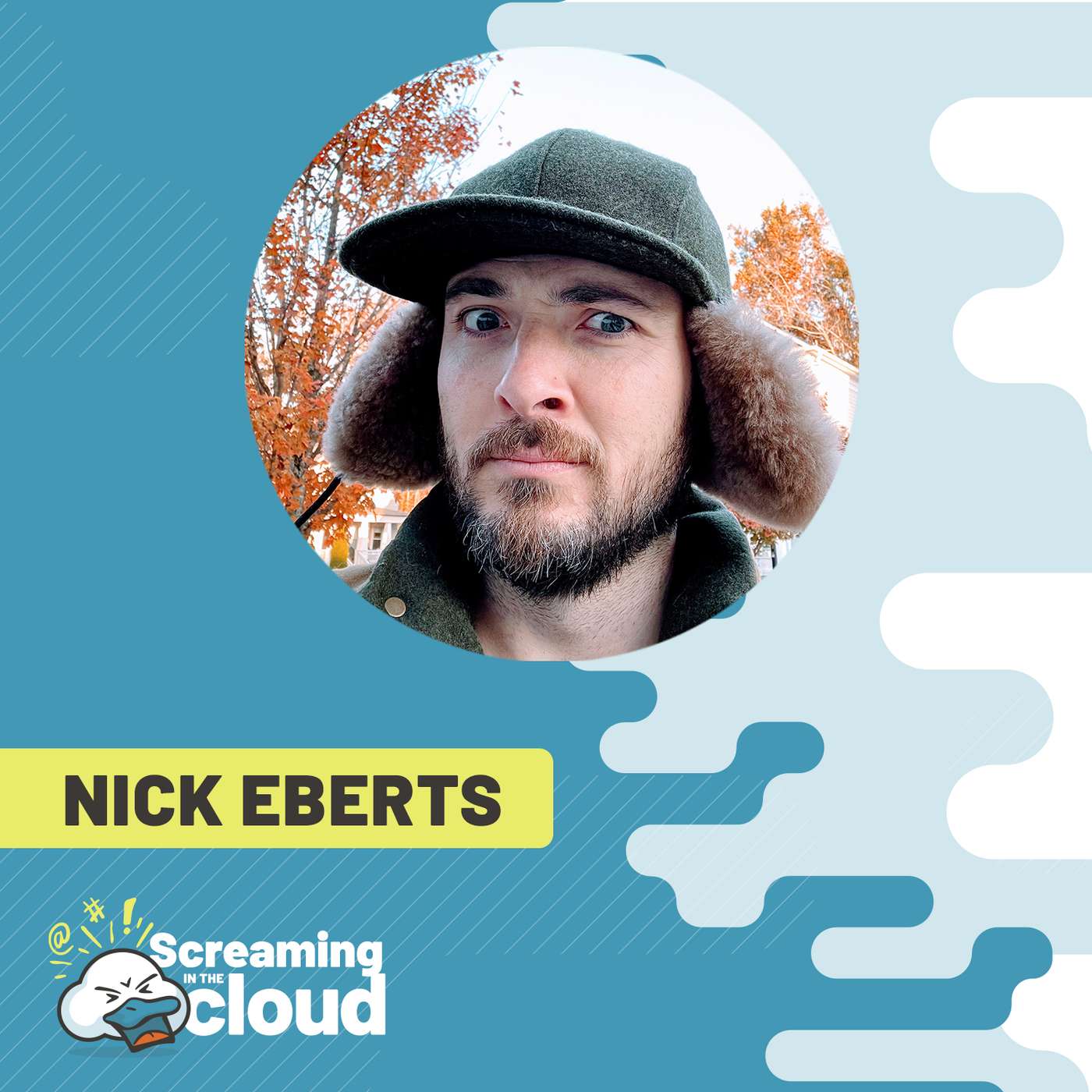
Ep 551Mastering Kubernetes for Multi-Cloud Efficiency With Nick Eberts
In this episode, Corey chats with Google's Nick Eberts about how Kubernetes helps manage applications across different cloud environments. They cover the benefits and challenges of using Kubernetes, especially in Google's cloud (GKE), and discuss its role in making applications more flexible and scalable. The conversation also touches on how Kubernetes supports a multi-cloud approach, simplifies the deployment process, and can potentially save costs while avoiding being tied down to one cloud provider. They wrap up by talking about best practices in cloud infrastructure and the future of cloud-native technologies.Show Highlights: (00:00) - Introduction to the episode(03:28) - Google Cloud's approach to egress charges and its impact on Kubernetes(04:33) - Data transfer costs and Kubernetes' verbose telemetry(07:23) - The nature of Kubernetes and its relationship with cloud-native principles. (11:14) - Challenges Nick faced managing a Kubernetes cluster in a home lab setting(13:25) - Simplifying Kubernetes with Google's Fleets(17:34) - Introduction to GKE Fleets for managing Kubernetes clusters (20:39) - Building Kubernetes-like systems for complex application portfolios (24:06) - Internal company platforms and the utility of Kubernetes for CI/CD (27:49) - Challenges and strategies of updating old systems for today's cloud environment(32:43) - The dividing line between Kubernetes and GKE from a product perspective. (35:07) - Where to find Nick (36:48) - Closing remarks About Nick:Nick is an absolute geek who would prefer to spend his time building systems, but he has succumbed to capitalism and moved into product management at Google. For the last 20 years, he has worked as a systems engineer, solution architect, and outbound product manager. He is currently the product manager for GKE Fleets & Teams, focusing on multi-cluster capabilities that streamline GCP customers' experience while building platforms on GKE. Links referenced: Duck Bill Group's website:http://www.duckbillgroup.com Nick on Twitter/X : @nicholasebertsNicholas Eberts on Instagram: https://www.instagram.com/neberts1/Nick on Linkedin: https://www.linkedin.com/in/nicholaseberts/SponsorPanoptica Academy: https://panoptica.app/lastweekinaws
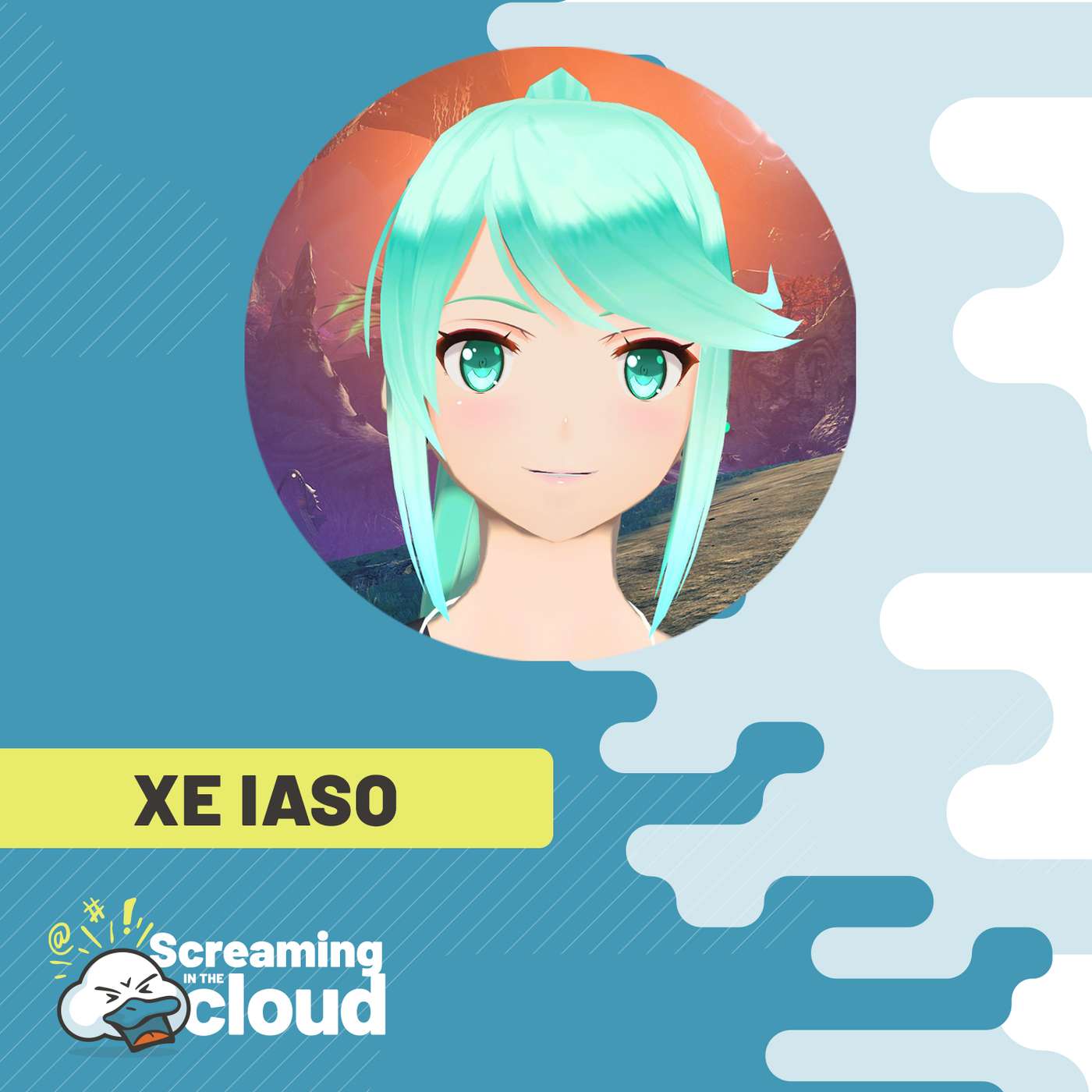
Ep 550Crafting Tech Success from Bad Ideas with Xe Iaso
Xe Iaso, the Senior Technophilosopher at Fly.io, joins Corey to explore the world of unconventional thinking in technology. They discuss the magic of embracing bad ideas as stepping stones to innovation, the simplicity and power of deploying applications globally with a single command, and the humorous yet insightful take on using old tech in new, imaginative ways. Along the way, they tackle the importance of clear communication in tech, the challenges and rewards of making technology accessible, and how to creatively navigate the tech industry's evolving landscape. Join us for an enlightening conversation that challenges the conventional path to tech success.Show Highlights: (00:00) - Intro (02:08) - The ease of deploying apps across data centers with Fly.io (04:33) - From Python to Go, Xe shares their programming journey(07:26) - Using S3 as a message queue for cross AZ data transfer(10:57) - How unconventional ideas can lead to tech breakthroughs(14:50) - The dangers of being too close to a product and the importance of a broader perspective (19:15) - The challenge of making complex tech accessible to newcomers(23:40) - Voice Coding in tech(28:33) - The pioneering tech developments driven by the adult entertainment industry(31:22) - The ethical implications and personal impacts of AI in creative fields(36:22) - Xe's multi-faceted approach to creativity and tech (38:55) - Closing remarksAbout Xe IasoI'm Xe Iaso, a technical educator, twitch streamer, vtuber, and philosopher that focuses on ways to help make technology easier to understand and do cursed things in the process. I live in Ottawa with my husband and I do developer relations professionally. I am an avid writer for my blog xeiaso.net, where I have over 400 articles. I regularly experiment with new technologies and find ways to mash them up with old technologies for my own amusement.Links referenced: Fly.io: https://fly.ioXe Iaso's Blog: https://xeiaso.net SponsorThe Duckbill Group: https://www.duckbillgroup.com/
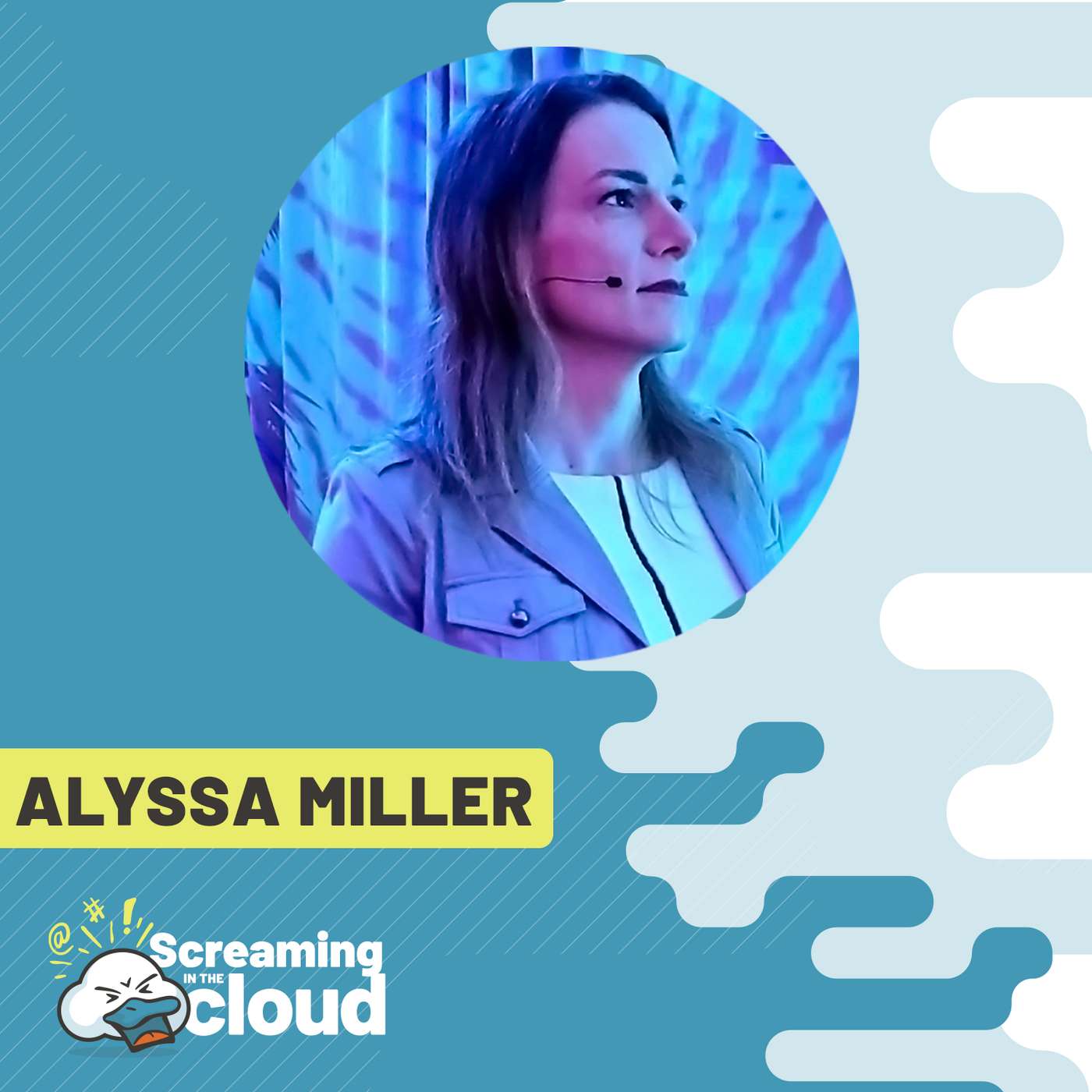
Ep 549The Intersection of AI, Security, and Cloud with Alyssa Miller
Corey sits down with Alyssa Miller, the CISO at Epic Global, for a discussion that cuts through the noise of the technology world in this episode of Screaming in The Cloud. Alyssa celebrates her personal journey to becoming a licensed pilot and invaluable insights into the current state and future of AI, cloud computing, and security. This episode ventures beyond the typical tech hype, offering a critical look at the realities of AI, the strategic considerations behind cloud computing at Epic Global, and the importance of explainability in AI within regulated industries. Additionally, Alyssa and Corey highlight the cyclical nature of tech hype, the misconceptions surrounding AI's capabilities, and the impact of startup culture on genuine innovation. Show Highlights: (00:00) Introduction(01:33) Corey celebrates Alyssa Miller getting her general aviation license.(04:10) Considerations of cloud computing at Epic Global.(06:45) The hype and reality of AI in today's tech landscape.(11:49) Alyssa on the importance of explainability in AI within regulated industries.(14:21) Debunking myths about AI surpassing human intelligence.(19:30) The cyclical nature of tech hype, exemplified by blockchain and AI.(24:58) Critique of startup culture and its influence on technology adoption.(29:01) Alyssa and Corey discuss how tech trends often fail to meet their initial hype.(31:57) Where to find Alyssa Miller online for more insights.About Alyssa:Alyssa directs the security strategy for S&P Global Ratings as Business Information Security Officer (BISO), connecting corporate security objectives to business initiatives. Additionally, she shares her message about evolving the way people think about and approach security, privacy and trust through speaking engagements at various conferences and other events. When not engaged in security research and advocacy, she is also an accomplished soccer referee, guitarist and photographer.Links referenced: Alyssa Miller’s LinkedIn Profile: https://www.linkedin.com/in/alyssam-infosec/Epic Global's Website: https://www.epiqglobal.com/en-usAlyssa’s Aviation Journey: https://www.linkedin.com/posts/alyssam-infosec_i-landed-at-ohare-kord-in-my-cherokee-activity-7079088781575811074-ZsSx?utm_source=share&utm_medium=member_desktop
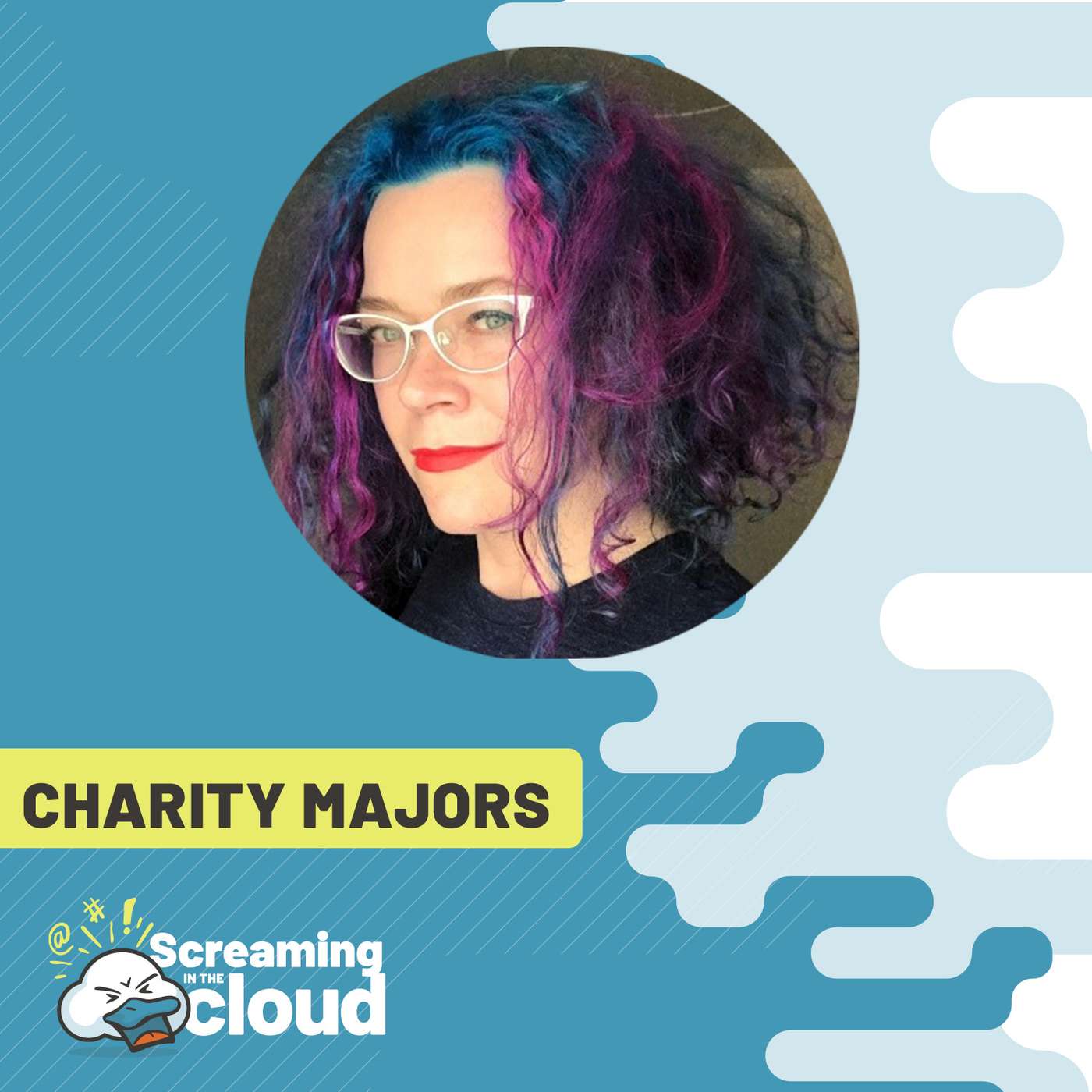
Ep 548Shifting from Observability 1.0 to 2.0 with Charity Majors
This week on Screaming in the Cloud, Corey is joined by good friend and colleague, Charity Majors. Charity is the CTO and Co-founder of Honeycomb.io, the widely popular observability platform. Corey and Charity discuss the ins and outs of observability 1.0 vs. 2.0, why you should never underestimate the power of software to get worse over time, and the hidden costs of observability that could be plaguing your monthly bill right now. The pair also shares secrets on why speeches get better the more you give them and the basic role they hope AI plays in the future of computing. Check it out!Show Highlights:(00:00 - Reuniting with Charity Majors: A Warm Welcome(03:47) - Navigating the Observability Landscape: From 1.0 to 2.0(04:19) - The Evolution of Observability and Its Impact(05:46) - The Technical and Cultural Shift to Observability 2.0(10:34) - The Log Dilemma: Balancing Cost and Utility(15:21) - The Cost Crisis in Observability(22:39) - The Future of Observability and AI's Role(26:41) - The Challenge of Modern Observability Tools(29:05) - Simplifying Observability for the Modern Developer(30:42) - Final Thoughts and Where to Find MoreAbout CharityCharity is an ops engineer and accidental startup founder at honeycomb.io. Before this she worked at Parse, Facebook, and Linden Lab on infrastructure and developer tools, and always seemed to wind up running the databases. She is the co-author of O'Reilly's Database Reliability Engineering, and loves free speech, free software, and single malt scotch.Links:https://charity.wtf/Honeycomb Blog: https://www.honeycomb.io/blogTwitter: @mipsytipsy
Ep 547The Current State of Serverless with Kristi Perreault
On this week’s episode of Screaming in the Cloud, Corey is joined by Kristi Perreault. Given Kristi’s title of AWS Serverless Hero, Corey and Kristi discuss the origins and current state of the serverless world, the similarities between AI and serverless as the tech world moves into this next era, and why she emphasizes that serverless is not always the right solution for every issue. Kristi also opens up about her role as Principal Software Engineer at Liberty Mutual, and what she enjoys most about jet setting around the globe giving speeches.Highlights:(00:00) - Introducing Kristi Perreault(00:39) - The Unconventional Path to Becoming an AWS Serverless Hero(05:05) - Exploring the Boundaries of Cloud Education(10:53) - The Challenges of Keeping Up with Rapid Tech Changes(11:51) - Redefining Serverless: Beyond the Hype(13:12) - The Evolution of Serverless and Its Impact(21:55) - Staying Grounded Amidst Technological Zealotry(27:18) - Python Development in the Cloud(29:31) - Upcoming Talks and Where to Connect with KristiAbout KristiKristi Perreault is an AWS Serverless Hero and a Principal Software Engineer at Liberty Mutual Insurance, where her focus is serverless-first cloud enablement. She has over 5 years of industry experience, holds an M.S. in Electrical & Computer Engineering, and is very passionate about promoting women in technology. She is an established speaker, appearing in over 35 conferences, podcasts, panels, and more. Kristi founded the Serverless Denver meetup, and currently co-organizes the Portsmouth, NH AWS User Group and CDK Day. Outside of work and the serverless tech space, Kristi can be found reading a good book in her tiny home, enjoying a good poke bowl, or jet setting all over the world.Links:Linkedin: https://www.linkedin.com/in/kristi-perreault/Twitter: @kperreault95AWS Portsmouth User Group: https://www.meetup.com/aws-portsmouth-user-group/AWS Usergroup Belfast: https://www.meetup.com/aws-usergroup-belfast/
Ep 546Networks and Sustainability in Computing with George Porter
George Porter, a computer science professor at the University of California, San Diego, talks to us about advanced networking and the effects of computing on the environment In this episode of Screaming in the cloud. George explores the shift towards optical networking in data centers to meet growing bandwidth needs and discusses the significant carbon footprint associated with computing, from data centers to device production. In addition to providing a look into the future of scalable, sustainable computing systems, George mentions the difficulties and benefits of incorporating cloud computing into academic research. Show Highlights:(00:00) - Introduction (03:15) - The Shift to Optical Networking(07:50) - The Efficiency of Cloud Networks(12:06) - Adaptable Networks for Different Uses(16:19) - Reducing Computing's Carbon Footprint(20:25) - Highlighting Computing's Environmental Impact Through Art(26:51) - Cloud Computing Challenges in Academia(31:18) - The benefits of cloud computing for academic research(34:14) - Closing thoughts About George:A Computer Science Professor at UC San Diego focusing on high-performance and sustainable computer systemsLinks:Center for Network Systems at UCSD: https://cns.ucsd.edu/Low Carbon Computing and Collaboration with the University of San Diego: https://c3lab.net/
Ep 545Open Source, AI, and Business Insights with AB Periasamy
Join Corey Quinn and MinIO's co-founder and CEO, AB Periasamy, for a look into MinIO's strategic approach to integrating open-source contributions with its business objectives amidst the AI evolution. They discuss the effect of AI on data management, highlight the critical role of data replication, and advocate for the adoption of cloud-native architecture. Their conversation examines the insights of data replication, mentioning its pivotal role in ensuring efficient data management and storage. Overall, a recurring theme throughout the episode is the importance of simplifying technology to catalyze a broader understanding and utilization that can remain accessible and beneficial to all.Show Highlights: (00:00) - Intro(03:40) - MinIO's evolution and commitment to simplicity and scalability.(07:25) - The significance of data replication and object storage's versatility.(12:12) - Challenges and innovations in data backup and disaster recovery.(15:21) - Launch of MinIO's Enterprise Object Store and its comprehensive features.(20:50) - Balancing open-source contributions and commercial objectives.(30:32) - AI's growing influence on data storage strategies and MinIO's role.(34:33) - The shift towards software-defined data infrastructure driven by AI and cloud technologies.(39:40) - Resources and the future of tech (43:31) - Closing thoughts About A.B Periasamy:AB Periasamy is the CEO and co-founder of MinIO. One of the leading thinkers and technologists in the open source software movement, AB was a co-founder and CTO of GlusterFS which was acquired by RedHat in 2011. Following the acquisition, he served in the office of the CTO at RedHat prior to founding MinIO in late 2015. AB is an active angel investor and serves on the board of H2O.ai and the Free Software Foundation of India. He earned his BE in Computer Science and Engineering from Annamalai University.Links:MinIO: https://min.io/Kubernetes:https://kubernetes.io/AWS (Amazon Web Services): https://aws.amazon.com/Twitter: @abperiasamy
Ep 544A Beginner's Guide to Surviving AWS re:Invent with Chris Hill
Corey Quinn is joined by HumblePod CEO Chris Hill to dissect Chris's debut experience at AWS re:Invent. Together, they tackle the challenges of attending one of the biggest conferences in the IT industry, discussing its immense reach, logistical hurdles, and invaluable insights for anyone considering attending in the future. Beyond the event itself, Chris provides an intimate glimpse into the crucial behind-the-scenes efforts involved in producing exceptional content amid the chaos of AWS re:Invent, emphasizing the importance of kindness, professionalism, and superior audio quality. Discover how partnering with an experienced podcast production team can elevate any content to new heights of polish and engagement.Full Description / Show Notes(00:00) - Introduction to the Episode(01:25) - Chris's First Impressions of AWS re:Invent(02:09) - The Surprising Scale of AWS re:Invent(04:13) - Lessons Learned and Things Chris Would Do Differently at Future AWS re:Invent Events(07:52) - Balancing Content Creation, Networking, and Professionalism Under Stress(13:42) - Chris and Corey’s Humorous Encounters with Security While Filming at AWS re:Invent(15:35) - Exploring AWS Services and Billing Surprises(21:12) - Significance of Professional Podcast Production(25:04) - Closing Thoughts & HumblePod Contact Information(26:19) - Closing ThoughtsAbout Chris:Chris Hill is a Knoxville, TN native and owner of the podcast production company, HumblePod. He helps his customers create, develop, and produce podcasts and is working with clients in Knoxville as well as startups and entrepreneurs across the United States, Silicon Valley, and the world.In addition to producing podcasts for nationally-recognized thought leaders, Chris is the co-host and producer of the award-winning Our Humble Beer Podcast. He also lectures at the University of Tennessee, where he leads non-credit courses on podcasts and marketing. He received his undergraduate degree in business at the University of Tennessee at Chattanooga where he majored in Marketing & Entrepreneurship, and he later received his MBA from King University. Chris currently serves his community as the President of the American Marketing Association in Knoxville. In his spare time, he enjoys hanging out with the local craft beer community, international travel, exploring the great outdoors, and his many creative pursuits.Links:HumblePod: https://www.humblepod.com/Twitter: https://twitter.com/HumblePod LinkedIn: https://www.linkedin.com/in/chrisdhill1/ TikTok: https://www.tiktok.com/@thechristopholiesWBTB TikTok: https://www.tiktok.com/@webuiltthisbrand HumblePod IG: https://www.instagram.com/humblepod/?hl=en
Ep 543The Nuanced Power of Headless Browsers with Joel Griffith
On this week’s episode of Screaming in the Cloud, Corey Quinn is joined by Joel Griffith. Joel is the CEO of Browserless.io, a company focused on providing headless browser automation without the pains of hosting. Corey and Joel discuss the most common use cases for headless browsers, the spectrum of web scraping ethics over the last decade, and why it’s so important to always do what you are passionate about no matter how high you climb on the corporate ladder. Joel also gives us his insight into why so many engineers come from creative backgrounds and shares his story of moving from jazz trumpet player to CEO.Full Description / Show Notes(00:00) - Intro(00:53) - Guest Introduction: Joel Griffith(02:51) - The Genesis of Browserless.io(05:21) - Use Cases of Browserless.io(07:19) -The Potential for Abuse of Web Scraping(08:37) - The Legitimate Use Cases of Web Scraping(11:17) - The Power of the Right License Type(13:55) - The Value of Open Source and Charging for Software(14:13) - The Journey to Starting a Business(24:00) - Joel’s Emphasis on Quality of Life(27:43) - Staying Focused on the Work You’re Passionate About(30:00) - Conclusion and Final ThoughtsAbout JoelMaster of puppets and the browsers they run! I'm Joel Griffith, and for over a decade I've helped run, destroy, and make manageable things related to browser automation. I've had the pleasure of working on this in big companies and small, and more recently started Browserless to bring the power of automation to teams of all sizes.Links:Github: https://github.com/joelgriffithTwitter: @browserless https://twitter.com/browserless
Ep 542The Complexities of Cloud Networking with William Collins
Corey is joined by William Collins, Alkira's head cloud architect, to discuss the obstacles and possibilities of cloud networking. They discuss the evolution, challenges, and necessity of cloud networking, highlighting why this fundamental part of cloud design often goes unrecognized yet truly deserves attention. From William's early days of cloud skepticism to the incredible influence of services such as AWS Transit Gateway, William shares his experiences and insights into how network planning can make a big difference in cloud installations in this episode of Screaming in the Cloud.Show Notes:About William Collins:William Collins is a principal cloud architect at Alkira, where he plays a pivotal role in evangelizing the company's vision, building customer relationships, and leading thought in the network, security, and automation spaces within the cloud ecosystem. With a rich background in enterprise technology across financial services and healthcare, including a significant tenure as Director of Cloud Architecture at Humana, William has made substantial contributions to cloud adoption and network modernization. Beyond his professional pursuits, William is passionate about content creation, hosting The Cloud Gambit Podcast, and teaching as a LinkedIn Learning Instructor. His expertise spans automation, cloud computing, and network engineering. An advocate for continuous learning and innovation, William's outside interests include woodworking, playing ice hockey, and guitar. While his insights are influential, they reflect his personal views and not those of his employer.Show Highlights: (00:00) Introduction(03:24) William Collins shares his initial skepticism towards cloud computing (07:28) The evolution of cloud networking(13:50) The role of upfront planning in cloud network deployment to avoid scalability and complexity issues.(21:10) The shift from complicated, manual network setups to simple, effective cloud systems .(24:13) William uses Netflix's network design as an example of how cloud networking powers seamless user experiences (27:44) The future of cloud networking and the ongoing need for innovation(30:23) Closing remarks Links:Alkira's Website: https://www.alkira.com/The Cloud Gambit Podcast: https://www.thecloudgambit.com/William Collins on X (Twitter) https://twitter.com/WCollins502AWS Transit Gateway https://aws.amazon.com/transit-gateway/William Collins on LinkedIn: https://www.linkedin.com/in/william-collins-
Ep 541The Hidden Costs of Cloud Computing with Jack Ellis
On this week’s episode of Screaming in the Cloud, Corey Quinn is joined by Jack Ellis. He is the technical co-founder of Fathom Analytics, a privacy-first alternative to Google Analytics. Corey and Jack talk in-depth about a wide variety of AWS services, which ones have a habit of subtly hiking the monthly bill, and why Jack has moved towards working with consultants instead of hiring a costly DevOps team. This episode is truly a deep dive into everything AWS and billing-related led by one of the best in the industry. Tune in.Show Highlights(00:00) - Introduction and Background(00:31) - The Birth of Fathom Analytics(03:35) - The Surprising Cost Drivers: Lambda and CloudWatch(05:27) - The New Infrastructure Plan: CloudFront and WAF Logs(08:10) - The Unexpected Costs of CloudWatch and NAT Gateways(10:37) - The Importance of Efficient Data Movement(12:54) - The Hidden Costs of S3 Versioning(14:33) - The Benefits of AWS Compute Optimizer(17:38) - The Implications of AWS's New IPv4 Address Charges(18:57) - Considering On-Premise Data Centers(21:05) - The Economics of Cloud vs On-Premise(24:05) - The Role of Consultants in Cloud Management(31:05) - The Future of Cloud Management(33:20) - Closing Thoughts and Contact InformationAbout Jack EllisTechnical co-founder of Fathom Analytics, the simple, privacy-first alternative to Google Analytics.Links:Twitter: @JackEllisWebsite: https://usefathom.com/Blog Post: An alterNAT Future: We Now Have a NAT Gateway ReplacementSponsor: Oso - osohq.com

Ep 540How Scaling Turns Rare Occurrences Into Common Ones with Jason Cohen
Today Corey Quinn is joined by Founder and Chief Innovation Officer at WP Engine, Jason Cohen. Jason breaks down the biggest issues he has seen throughout his career hosting millions of websites including why seemingly rare problems should be expected at scale, how moving on after attaining a “good enough” metric can save time and money, and what it means to be proud of your work in the world of cybersecurity. Check it out!Show Highlights(00:00) - WordPress popularity and outsourcing engineering tasks(07:28) - Web hosting and scalability(11:01) - Server reliability and quality control(14:18) - Scaling infrastructure and prioritizing customer value(26:20) - Website speed and optimization(28:17) - WordPress scalability and deployment in a cloud environment(36:14) - Customer profitability and service limitations(38:54) - Security measures for ethical decision-making(47:19) - Balancing free speech and decision-making in online content moderationAbout JasonFounder of unicorn WP Engine (200,000 customers, 1,200 employees). Previously founder of bootstrapped Smart Bear (sold 2008; re-sold in 2021 at ~$2B) and ITWatchDogs (sold 2004). Original mentor and angel investor with Austin-based Capital Factory since 2009.Written about startups for seventeen years, most recently at https://longform.asmartbear.com; Twitter: @asmartbear.Links Referenced:Personal Website: https://longform.asmartbear.com/WP Engine: https://wpengine.com/Linkedin: https://www.linkedin.com/in/jasoncohen/

Ep 539Overcoming Cloud Development Obstacles with Elad Ben-Israel
Corey Quinn talks with Elad Ben-Israel, CEO and Co-founder of Wing Cloud, about the creation of Wing, a revolutionary programming language designed to simplify cloud application development. Elad shares his experiences at AWS and the journey to developing Wing Cloud, highlighting the challenges developers face with existing cloud paradigms and how Wing aims to seamlessly integrate infrastructure and application code. The conversation goes further into Wing's open-source nature, its design philosophy focused on making cloud development more accessible, and the delicate balance between commercial interests and open-source contributions.Show highlights: (00:17) - Corey Quinn introduces Elad Ben-Israel(02:27) - Elad Ben-Israel discusses the motivation behind creating Wing,(06:28) - Elad presents Wing as a programming language designed to add an architectural dimension to cloud programming(09:45) - The demarcation between application and platform is explored(13:27) - Introduction of the "platform provider" within Wing(22:18) - The Importance of Choice in Cloud Development(31:22) - Getting started on Wing (33:14) - Closing remarks About Elad Ben-Israel: Elad has been coding since he remembers himself, which is quite a long time ago, and always had an unexplained attraction to developer tools. He created the AWS CDK when working at AWS and is now the co-founder and CEO of Wing Cloud, which is building Winglang, a programming language for the cloud.Links Referenced:Winglang.ioWinglang on GitHub - https://github.com/winglang/wingWinglang Slack Community - https://winglang.slack.com/join/shared_invite/zt-23emj8uue-ZF4ijRNtdDOLO5F7iIz~NA#/shared-invite/emailElad Ben-Israel on LinkedIn: https://www.linkedin.com/in/hackingonstuff/
Ep 538A Conversation on Cloud WAN with Kris Gillespie
Kris Gillespie, lead platform engineer for Silverflow, joins Corey Quinn on "Screaming in the Cloud" to talk about Cloud WAN's exciting new role in cloud networking. Kris explains Silverflow's journey, from the original problems with network scalability and the resolution of IP conflicts, to fully utilizing Cloud WAN for global connectivity and easier network management. Kris, who enjoys simplifying complex network architectures, discusses how Cloud WAN has enabled Silverflow to seamlessly integrate between regions and cloud providers, meeting their mission-critical needs for low latency and reliable transaction processing. Listen in to see how Cloud WAN has transformed the approach to solving fundamental network problems, demonstrating the importance for companies and engineers of knowing how to navigate the constantly evolving cloud landscape. Show Highlights: (00:00) Introduction to the show(01:57) Kris recounts the initial challenges Silverflowy and the discovery of Cloud WAN(04:15) The advantages of Cloud WAN over traditional transit gateways(08:35) Infrastructure management with OrgFormation (12:15) Insights into the use of historical and current networking technologies (21:13) challenges and implications of transitioning to IPv6(33:10) Kris highlights the real need for Cloud WAN(37:50) Closing remarksAbout KrisKris is a 28-year industry veteran. He started in '95 back in Australia on the help desk for the first ISP in the country. Since then has moved to the Netherlands, switching roles between network, systems and storage engineering. During this time has been involved in developing certifications for both IBM and (the now defunct) EMC, among others. Worked heavily in the finance/banking sector. The last 10 years has been keenly focused on the cloud space and as is the term these days, combined these skills into what's popularly coined, a "Platform Engineer"Currently works for a payments processing startup, Silverflow, as their Principal Platform Engineer, leading their Platform team and ensuring the platform can scale globally.Links Referenced:LinkedIn: https://www.linkedin.com/in/krisgillespie/blog: https://blog.viking-ops.io/
Ep 537Understanding the Future of Cloud Technology with Anthony Esper
From a systems admin to a cloud computing pioneer, Anthony Esper illustrates the dynamic landscape of cloud technology and its impact on businesses in this episode of Screaming in the Cloud. Using his vast experience and extensive expertise, Anthony shares his insights on developing the Golden VPC module, the intricacies of cloud consulting across various industries, and the pivotal role of strategic planning in cloud adoption. Tune in for practical advice and expert insights!About AnthonyAnthony Esper is a seasoned Chief Technology Officer with over two decades in technology consulting. His pioneering work includes developing self-showing real estate technology with Occupi Inc and leading over 20 AWS projects across major US corporations. Esper's expertise spans cloud computing, security, and big data, contributing to his reputation as a tech industry influencer.Show highlights: (00:00) - Introduction(01:07) - Backstory of the Golden VPC Module Creation(05:13) - The Realities of Cloud Consulting(09:52) - AWS Operational Challenges and Solutions(19:30) - Significance of Strategic Cloud Adoption(28:42) - Closing RemarksLinks Referenced:Golden VPC Module video: https://youtu.be/fHGO03piySM?si=2NAFRPCBN-VwJPCPLinkedIn: https://www.linkedin.com/in/anthony-esper-9182441
Ep 536SmugMug's Cloud Adventure with Andrew Shieh
Andrew Shieh shares the thrilling story of SmugMug’s bold leap into AWS’s cloud technology, marking it as one of the pioneering companies to harness the cloud for digital photography storage. This episode offers a unique perspective into the type of strategy and groundbreaking tech advancements that catapulted SmugMug’s success. Listen to the full episode for a masterclass in innovation and adaptation!Show highlights: (00:00) Corey introduces the show & Guest Andrew Shieh(00:54)Andrew shares the story of how SmugMug became AWS's first enterprise customer. (02:17) Discussion on the evolution of AWS's customer service(04:31) Reflections on the expansion of AWS services. (06:08) The critical role of Amazon S3 in SmugMug's operations(12:24) AWS's interest in unique customer stories and feedback (09:32) SmugMug's cloud strategy and optimization(13:50) Andrew discusses challenges and solutions in cloud adoption(17:38) Andrew shares his experiences at AWS re:Invent, offering thoughts on the conference's evolution(21:09) A look into AWS's pricing formulas and business insights (31:55) Closing thoughtsAbout AndrewAndrew "shandrew" Shieh is a multidisciplinary engineer, focused today on making the AWS cloud do what it promises to. Andrew started as an environmental engineer, focused on energy efficiency and air pollution modeling, but quickly got dragged into tech after spending most of college at the help desk of the Unix computer cluster.Andrew's current interests include sustainability, cost efficiency, and economics. Most AWS service teams are his friends and he enjoys (a bit too much) talking to his SmugMug and Flickr coworkers about AWS. He recently spoke at AWS re:Invent about how his children (9 and 11) helped to teach him the value of trivia as a means of learning backwards. He also wrote a keynote for re:Invent's pandemic year, and has rescued billions of precious photos from extinction.Links Referenced:SmugMug: https://www.smugmug.com/S3 Intelligent Tiering blog post on Duckbill Group: https://www.duckbillgroup.com/blog/s3-intelligent-tiering-what-it-takes-to-actually-break-even/Mastodon: https://hachyderm.io/@shandrewLinkedIn: https://www.linkedin.com/in/shandrew/Flickr: https://flickr.com/photos/shandrewAndrew's talk on "Learning Backwards" at re:Invent 2023: https://www.youtube.com/watch?v=od09dD7mc6k
Ep 535Exploring Advanced Cybersecurity with Michael Isbitski
Cybersecurity leader Mike Isbitski explores the intricacies of cloud-native security and vulnerability management in today's technological landscape. With over 25 years of experience, he provides valuable insights into the challenges and complexities organizations face in securing ephemeral infrastructure and machine identities in the cloud. This episode also explores the cautious adoption of AI in cybersecurity, emphasizing the need for a balanced approach that maintains operational functionality while addressing evolving security concerns.Key Points with TimestampSecurity through Obscurity (00:00:00) - Mike discusses common security practices.Cloud-Native Technology Explained (00:01:30) - Unpacking the meaning of cloud-native tech.Evolving Vulnerability Management (00:03:38) - Insights on how vulnerability management has improved.AI in Cybersecurity (00:21:20) - Discussion on the slow but growing adoption of AI in cybersecurity.Challenges of Permissions and Identity (00:29:29) - The complexities of permissions in the cloud environment.Future Trends in Cybersecurity (00:34:11) - Predictions for changes and advancements in the cybersecurity landscape.About MichaelMichael Isbitski is a former Gartner analyst, cybersecurity leader, and practitioner with more than 25 years of experience, specializing in application, cloud, and container security. Michael learned many hard lessons on the front lines of IT working on application security, vulnerability management, enterprise architecture, and systems engineering. He's guided countless organizations globally in their security initiatives as they support their businesses.Links Referenced:Sysdig: https://sysdig.com/Sysdig 2024 Cloud-Native Security and Usage Report: www.sysdig.com/SITC
Ep 534Empowering Economic Growth Through Tech Innovations with Angie Jones
Technology meets economic empowerment in this episode featuring Angie Jones, Global Vice President of Developer Relations at TBD, a Block division. Angie sheds light on the role of decentralized technologies in shaping the future of digital identity and cross-border payments. Her journey from software engineering to a leadership role in tech innovation illustrates her profound impact on the industry. This episode offers valuable insights into how technological advancements are driving economic growth and changing the financial landscape. Angie's expertise and unique perspective make this a must-listen for anyone interested in the cutting-edge intersection of technology, finance, and innovation.About AngieAngie Jones is the Global Vice President of Developer Relations for TBD, Block’s new business unit focused on decentralized technologies. She is an award-winning teacher and international keynote speaker who shares her wealth of knowledge at software companies and conferences all over the world.As a Master Inventor, Angie is known for her innovative and out-of-the-box thinking style which has resulted in 27 patented inventions in the areas of metaverses, collaboration software, social networking, smarter planet, and software development processes.Show notes:(00:25) Introduction to Angie Jones and Her Role at TBD(01:25) Angie’s Recognition in a USA Today Crossword(02:50) Career Journey and Transition into Developer Relations(06:04) Block’s Mission and Services in Economic Empowerment(10:09) Convenience vs. Decentralization in Technology(16:49) Innovations in Cross-Border Payments(25:01) Decentralized Tech Stories and Reflections on Tech Innovation(30:22) Challenging Tech Industry Norms and Global PerspectivesLinks Referenced:TBD: https://www.tbd.website/Twitter: https://twitter.com/techgirl1908LinkedIn: https://www.linkedin.com/in/angiejones/
Ep 533Mastering Tech Transitions with Ceora Ford
Join us for a fascinating talk with Ceora Ford, a Developer Advocate at Okta, as she explores the changing world of tech. Ceora shares her unique journey through different tech roles and talks about the importance of keeping technical skills sharp, even when focusing on advocacy. She also gives us a sneak peek into the exciting AI developments happening at Okta. Tune in to this episode to get a better understanding of the fast-paced tech industry and what's coming next.About CeoraCeora Ford is a Developer Advocate from Philadelphia, renowned for her expertise in making complex computer science concepts accessible to a broad audience. With a rich history of creating educational content, she has significantly contributed to the tech community, working with leading companies like CodeSandbox, DigitalOcean, egghead.io, and Apollo GraphQL. Ceora's career is marked by her unique ability to simplify technical topics, making them understandable for everyone, from students to professionals in tech-adjacent roles. Her non-traditional path into tech and her current role at Okta showcase her commitment to making the tech industry more inclusive and approachable for all. Links Referenced:Okta: https://www.okta.com/Twitter: https://twitter.com/ceeoreo_Instagram: https://www.instagram.com/ceeoreo/TikTok: https://www.tiktok.com/@ceeoreoThreads: https://www.threads.net/@ceeoreoLinkedIn: https://www.linkedin.com/in/ceora-ford/Personal website: https://ceora.dev

Ep 532Working to Live Instead of Living to Work with Jeremy Tanner
Jeremy Tanner joins Corey on Screaming in the Cloud to discuss why his career in tech is the least interesting thing about himself, and why he feels everyone should be able to say the same thing. Corey and Jeremy discuss raising kids, their antics on motorcycles, and much more throughout this episode. Jeremy reveals what truly gives his life fulfillment, meaning, and what drives him in his career. Jeremy and Corey also discuss the importance of engaging your online audience the right way.About JeremyJeremy is a motorcyclist. An advocate (Developer, Community, BBQ). Not Questlove.Links Referenced:Mastodon: https://hachyderm.io/@penguinduckbillgroup.com: https://duckbillgroup.comUses This: https://usesthis.com/

Ep 531How Snyk Gets Buy-In to Improve Security with Chen Gour Arie
Chen Gour Arie, Director of Engineering at Snyk, joins Corey on Screaming in the Cloud to discuss how his company, Enso Security, got acquired by Snyk and what drew him to Snyk’s mission as a partner. Chen expands on the challenges currently facing the security space, and shares what he feels are likely outcomes for challenges like improving compliance across value-add on security tools and the increasing scope of cybersecurity at such a relatively early phase of the industry’s development. Corey and Chen also discuss what makes Snyk so appealing to developers and why that was an important part of their growth strategy, as well as Chen’s take on recent security incidents that have hit the news. About ChenChen is the Co-founder of Enso Security (part of Snyk) - the world's 1st ASPM platform. With decades of hands-on experience in cybersecurity and software development, Chen has focused his career on building effective application security tools and practices.Links Referenced:Snyk: https://snyk.ioSnyk AppRisk: https://snyk.io/product/snyk-apprisk/TranscriptAnnouncer: Hello, and welcome to Screaming in the Cloud with your host, Chief Cloud Economist at The Duckbill Group, Corey Quinn. This weekly show features conversations with people doing interesting work in the world of cloud, thoughtful commentary on the state of the technical world, and ridiculous titles for which Corey refuses to apologize. This is Screaming in the Cloud.Corey: Welcome to Screaming in the Cloud. I’m Corey Quinn. This promoted guest episode is brought to us by our friends at Snyk, and as a part of that they have given me someone rather distinct as far as career paths and trajectories go. Chen Gour Arie is currently a director of engineering over at Snyk, but in a previous life—read as about six months or so ago—he was a co-founder of Enso Security, which got acquired. Chen, thank you for joining me.Chen: Thank you for having me, Corey.Corey: So, I guess an interesting place to begin is, what has the past couple of years been like? And let’s dive in with, what is or was Enso Security?Chen: Yeah. So, Enso started for me first as friendship because I joined the team that I was working with as a contractor for a while. There was such an excellent and interesting team with a very interesting environment. And then after a while, they asked me to join that team, and then I became part of the security team of a company called Wix.com.It’s quite a large company, web do-it-yourself kind of platform, that you can build your own website with a presentation style kind of interface, and our job was to secure that. And we formed a very, very nice friendship throughout it, but we also gained a lot of experience because you work with such a large company, and you experience many challenges, including real-time attempts to penetrate, and the complexity of social engineering at large scale. You go through a lot of things. So, this was the start. And after a couple of years, we decided that we have some interesting ideas that can do good to the community in the cybersecurity industry, and we embarked on a new journey together to start Enso.Corey: I can see why you aligned with Snyk. It sounds like a lot of what you were aimed at is very much in step with how they tend to approach things. I have a number of sponsors that I can say this about, but Snyk is a particularly fun one, in that, obviously, you folks pay me to run advertisements and featured guest episodes like this, which is appreciated, but we also pay you as a customer of Snyk because it does a lot of things that we find both incredibly useful and incredibly valuable. The thread that I’ve seen running through everything coming out of Snyk has been this concept of, I think, what some folks would say shifting left, but it comes down to the idea of flagging issues as early in the process as possible rather than trying to get someone to remember what they did three months ago, and oh, yeah, go back and address that. That alone has made it one of the best approaches to things that are truly important—and yes, I consider security to be one of those things—that I’ve seen in a while on the dev tool space.Chen: Yeah, and this has been the mission of Snyk for a very long time. And when we started Enso, our mission was to help in some additional elements of the same problem space in introducing additional tools to help drive this shift left, this democratization of the security effort around and in the organization, and resolving some of the friction that is created with the, kind of, confusing ownership of security and software development. So, this was kind of the mission of Enso. The category introduced by it and the ASPM category to bring the notion of postural security, postural management to applications. And it really is a huge fit with the journey of Snyk, and we were very excited to be approached by them to join their journey and help them do further shift left and extend on problem space on the comp