
Scouting for Growth
240 episodes — Page 2 of 5

Ep 189Gregor Gimmy: Pioneer of the Venture Client Model
On this episode of the Scouting For Growth podcast, Sabine VdL talks to Gregor Gimmy, founder of 27pilots, a company dedicated to helping companies build and scale Venture Client units, and allows them to benefit from startup innovations faster at a large scale and significantly lower cost and risk than traditional corporate venturing methods. On this episode we will explore how this Venture Client model is shaping corporate innovation, the strategic benefits it offers, and how companies can adopt this game-changing approach to stay ahead in a competitive world. KEY TAKEAWAYS When I joined BMW in 2012, I was surprised to find that it was leveraging only a small number of startups to improve its technology landscape across its value chain. I told them that CVCs were investing in 2.8 startups per year. This is not nearly enough to solve all the technology challenges we have; we need more like 100. My initial idea was not to invent a new model but to improve the current one. I was told that if they invested in 50 startups per year, they would have around 250 startups in 5 years, whose equity state we would have to manage, which is impossible. I concluded that VC isn’t scalable, but it didn’t solve BMW's problem either: accessing, adopting, and transferring cutting-edge technology quickly, because it’s about investment, not technology transfer. These are two totally different business processes. We needed to look for a new approach: becoming a Venture Client. Accelerators and CVCs are indirect models – like using a third party’s battery technology in the cars you produce – you first make the investment and then adopt the technology. The difference in the Venture Client model is cutting out the middleman. If you want to be good at somethin,g you need a dedicated unit. If you do it part-time, it will only work partly. If you make it a department, you can dedicate more time to it, secure a dedicated budget, and build a more robust KPI structure. BEST MOMENTS ‘More than getting into the world of Venture Client Modelling, I invented the world.’ ‘A Venture Client is a company that adopts startup technologies through procurement and M&A.’ ‘A corporation cannot compete against a good startup like Palantir or Oracle when they were startups.’ ‘The Venture Client model will displace Corporate Venture Capital to become the standard of corporate venturing.’ ABOUT THE GUEST As captain of the 27pilots endeavour, and the visionary behind the Venture Client model, Gregor GImmy focuses on advancing Venture Client knowledge and growing the global community through 27pilots’ corporate clients and academic allies. Gregor is deeply engaged in researching, publishing, and lecturing on the Venture Client model through leading business schools and top business engagements. Gregor is also a frequent speaker at startup-relevant conferences such as Slush, Web Summit, 4YFN, and DLD. ABOUT THE HOST Sabine VanderLinden is a corporate strategist turned entrepreneur and the CEO of Alchemy Crew Ventures. She leads venture-client labs that help Fortune 500 companies adopt and scale cutting-edge technologies from global tech ventures. A builder of accelerators, investor, and co-editor of the bestseller The INSURTECH Book, Sabine is known for asking the uncomfortable questions—about AI governance, risk, and trust. On Scouting for Growth, she decodes how real growth happens—where capital, collaboration, and courage meet. If this episode sparked your thinking, follow Sabine VanderLinden on LinkedIn, Twitter, and Instagram for more insights. And if you’re interested in sponsoring the podcast, reach out to the team at [email protected]

Ep 188Let’s Kickoff The Venture Client Series
On this episode of the Scouting For Growth podcast, Sabine VdL discusses the launch of a new series exploring the Venture Client Model, which is turning corporate innovation on its head. Instead of merely investing in startups and crossing fingers, big companies buy from startups to drive innovation – today, not years from now. Imagine a world where a major Fortune 500, an automotive manufacturer, an insurance giant, or a bank can plug in a cutting-edge startup solution as easily as adding a new app to your phone. The questions Sabine tackles include: What if your company’s next breakthrough isn’t built in-house, but bought from a startup in an early pilot? And what if being a startup’s customer is more powerful than being its investor? KEY TAKEAWAYS At its core, a venture client is a corporation that purchases and uses a startup’s solution to gain strategic benefit. No equity stakes, no controlling shares – just buying the solution early, when the startup is still a venture. The company becomes the startup’s client (often the first or an early client), providing the startup with revenue and feedback, while the corporation solves a problem with a cutting-edge product. Insurance is traditionally conservative – heavy on compliance, cautious with new tech – slow, one might say. But that’s exactly why venture clienting is so powerful here: it creates a safe sandbox for insurers to experiment with startups. Zurich has no corporate VC arm at the group level, so everything they do with startups ends up as a venture client relationship or partnership. That means all the effort goes into tangible pilots and deployments, not minority stakes in startups that might not align with the business. It’s a bold approach, but clearly paying off. Imagine car insurance: traditionally, if you buy a policy in many countries, an agent might physically inspect your car, or if you have an accident, an adjuster needs to assess damage. CamCom replaces a lot of that with a DIY solution – the customer can just take a video of the car, and the AI will spot scratches, dents, cracked windshields, you name it, and even estimate repair costs. That means faster claims, smoother policy underwriting, and less hassle. BEST MOMENTS ‘The Venture Client Model flips the usual script: instead of investing in ten startups and hoping one succeeds, you pay a startup to solve a problem and start benefiting immediately.’ ‘This isn’t just theory. It’s happening now.’ ‘The model turns the corporation into what I like to call an innovation magnet – attracting the best startups because the word is out: “This company loves to buy new tech”.’ ‘By the end of this series, you’ll know the ins and outs of the model, from big-picture strategy down to on-the-ground tips, like why having a one-page startup contract can save you months of headaches, or why “impossible” should be banished from your vocabulary.’ ABOUT THE HOST Sabine VanderLinden is a corporate strategist turned entrepreneur and the CEO of Alchemy Crew Ventures. She leads venture-client labs that help Fortune 500 companies adopt and scale cutting-edge technologies from global tech ventures. A builder of accelerators, investor, and co-editor of the bestseller The INSURTECH Book, Sabine is known for asking the uncomfortable questions—about AI governance, risk, and trust. On Scouting for Growth, she decodes how real growth happens—where capital, collaboration, and courage meet. If this episode sparked your thinking, follow Sabine VanderLinden on LinkedIn, Twitter, and Instagram for more insights. And if you’re interested in sponsoring the podcast, reach out to the team at [email protected]

Ep 187Lou Smith: Transforming Insurance with Neuron by WTW
Sabine VdL talks to Lou Smith, a true trailblazer in financial services and insurance. In today’s episode, we’ll dive into Lou’s incredible journey, explore the vision behind Neuron, and discuss the key takeaways from the latest report that insurance providers need to consider. KEY TAKEAWAYS We all have moments in life where the last thing we want to look at is our credit rating and history, but those things can affect how you access financial services in the future. Lou was part of the team that delivered the first end-to-end mortgage renewal online, began breaking down investments, and got it into the hands of the many rather than the few. Everybody says insurance is behind the rest of the financial services industry, and it’s a funny statement. It doesn’t matter. What I’m seeing in insurance over the last 5-6 years is that this conversation has circled around: what do we do? But in the last 12-18 months, I’ve seen a passion for how we now think about using digital distribution models, digital analytics, and AI, and thinking of all of those things together and delivering distribution models that start to move the industry forward. The challenge is always in leadership, culture, and change adoption. This is because it’s really difficult to step into the unknown and think it’s going to be better than what you’re doing today. You want to empower people with the data and capabilities so they can do what they’re brilliant at: focusing on the best product and position for their client. Neuron and others enable brokers to do that. You also want to attract a new generation into the brokering sector, but rather than have them focus on the admin, they should be having great conversations with clients. All the work we’re doing enables brokers to do that. BEST MOMENTS ‘When starting my career, I had a real passion for how to make the services we were offering more successful for clients and customers.’ ‘We care about the customer and making financial data accessible to you through the narratives we use.’ ‘I’d love to say this was all planned out, we didn’t call it anything or know what it looked like, we just started to bring data and technologies together to build ‘workflow, " and that’s now cool.’ ‘We want to be the easiest, most predictable and consistent broker to work with.’ ABOUT THE GUEST Louise (or Lou) Smith is a trailblazer in the financial services and insurance industries, with a career spanning leadership roles across digital transformation, data, product innovation, distribution, technology, and operations. Her journey has been marked by groundbreaking achievements, including delivering the UK's first steps into digital distribution at Barclays, leading the digital transformation of the Royal Bank of Scotland (including NatWest) during its turnaround to profitability, and becoming the first-ever Chief Digital Officer at Lloyd’s of London. Currently, Louise is at the helm of Neuron, a transformative initiative aimed at redefining the insurance and financial services landscape. Through Neuron, she is driving innovation, collaboration, and growth, focusing on creating a more connected and customer-centric industry. WTWCO LinkedIn ABOUT THE HOST Sabine VanderLinden is a corporate strategist turned entrepreneur and the CEO of Alchemy Crew Ventures. She leads venture-client labs that help Fortune 500 companies adopt and scale cutting-edge technologies from global tech ventures. A builder of accelerators, investor, and co-editor of the bestseller The INSURTECH Book, Sabine is known for asking the uncomfortable questions—about AI governance, risk, and trust. On Scouting for Growth, she decodes how real growth happens—where capital, collaboration, and courage meet. If this episode sparked your thinking, follow Sabine VanderLinden on LinkedIn, Twitter, and Instagram for more insights. And if you’re interested in sponsoring the podcast, reach out to the team at [email protected]

Ep 186James Birch: Ki Insurance’s Algorithmic Underwriting Revolution
On this episode of the Scouting For Growth podcast, Sabine VdL talks to James Birch, Director of Strategic Technology Solutions at Ki Insurance—the first fully algorithmic syndicate in the history of Lloyd’s of London. In today’s conversation, we’ll explore: James’s journey from VC to algorithmic-underwriting pioneer, what a “director of strategic technology solutions” actually does day-to-day inside a digital syndicate, the partnerships, cloud architecture and data streams that let Ki quote in seconds, the biggest trends shaping Algorithmic Underwriting 2.0—and what they mean for brokers, capacity partners and the wider market, and practical take-aways for anyone who wants to thrive as the next wave of automation rolls through speciality insurance KEY TAKEAWAYS Ki is a growth-stage business, not an incumbent; we’re trying to fight our way to win business and ultimately to grow. We have to do something different from everyone else to try to position ourselves differently and find a competitive advantage where we can. That’s something I’ve carried over from the VC space. We started out looking at what the digital model of the traditional model, where was the toil in the value chain and the broker’s work plan process and how can we simplifying it and make it more efficient using digital capabilities that we saw in the VC space, in FinTech and other financial service industries. Lloyd's of London is a heavily regulated market, so we need to abide by all the regulations that apply to any carrier or underwriter in that market. Our approach from day 1 was to engage with the regulator early, explain what we’re trying to do, be transparent, open, and honest about where the gaps are if we haven’t reached a certain level of maturity, and not overstate the algorithm. We take regulation very seriously, which has helped because Lloyds has been highly supportive of us and our growth, and has allowed us to grow alongside the market. The main cost-saving of the algorithmic underwriting for brokers is that they don’t have to have loads of brokers running around the Lloyds of London building to find 2% on a slip or something; the broker negotiates with the lead underwriter, comes onto the Ki platform for the follow-up, and then spends their time on new business and client opportunities. BEST MOMENTS ‘Any business should evolve as the market evolves and the marketing dynamics change, you’ve got to react to those and be thinking 2-5 years ahead.’ ‘We still trip up on ourselves, even now, because we sometimes try to over-complicate things.’ ‘Speak to the customer, hear their problems, understand what’s not working for them, try to make it a simple transaction for them, and then they’ll use your products.’ ‘I’m a big advocate of the partner model because if you get 2, 3, or 4 like-minded companies as partners, you can build something great together because you’re all strategically aligned.’ ABOUT THE GUEST James Birch is the Director of Strategic Technology Solutions at Ki Insurance, the market-leading algorithmic syndicate that’s redefining how Lloyd’s of London does business. Blending a venture-capital mindset with hands-on operating rigor, James has spent the past decade helping innovative companies move from bright idea to breakout scale. Passionate about demystifying insurance for the next generation, James is a sought-after speaker on topics such as data-driven risk selection, the future of algorithmic capacity, and what it really takes to scale a regulated tech business. Whether mentoring founders or road-testing the latest ML models with his engineers, he’s driven by one simple goal: use technology to make risk transfer faster, fairer, and radically more efficient. LinkedIn ABOUT THE HOST Sabine VanderLinden is a corporate strategist turned entrepreneur and the CEO of Alchemy Crew Ventures. She leads venture-client labs that help Fortune 500 companies adopt and scale cutting-edge technologies from global tech ventures. A builder of accelerators, investor, and co-editor of the bestseller The INSURTECH Book, Sabine is known for asking the uncomfortable questions—about AI governance, risk, and trust. On Scouting for Growth, she decodes how real growth happens—where capital, collaboration, and courage meet. If this episode sparked your thinking, follow Sabine VanderLinden on LinkedIn, Twitter, and Instagram for more insights. And if you’re interested in sponsoring the podcast, reach out to the team at [email protected]
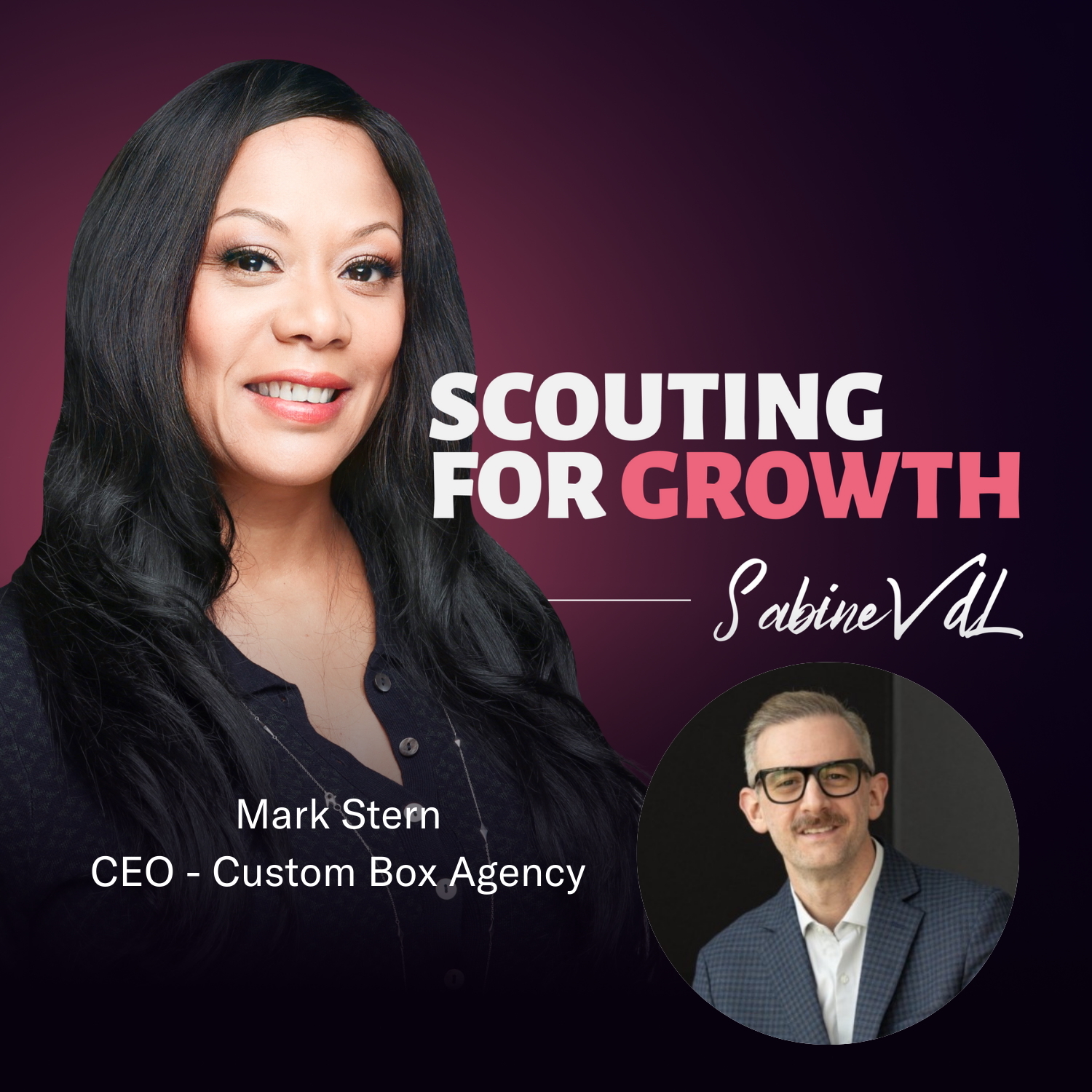
Ep 185Mark Stern: Transforming Customer Journeys with Physical-Digital Experience Design for Growth
On this episode of the Scouting For Growth podcast, Sabine VdL talks to Mark Stern, founder and CEO of Custom Box Agency, an award-winning boutique specializing in bringing digital offers to life through innovative offline ‘box experiences.’ Today, he’ll share how he made the leap from corporate to startup life, offer practical tips for integrating physical touchpoints into a digital world, and discuss the secret sauce behind building high-impact customer journeys. I can’t wait to dive into his wealth of knowledge. KEY TAKEAWAYS When I mixed physical and digital together with my publication called ‘Entrepreneur Elements’ I people started posting unboxing videos, which a digital-only product can do. Everyone who received the product became an ambassador and lots of organic traffic was being created as a result. During Covid the virtual event game became bloody red, in terms of competition, because everyone became a virtual event expert overnight. But the boxes, and how we were approaching this to get results faster, was an unknown, exciting realm which I went 100% in on and the business skyrocketed from zero to a million in the first year just by pivoting and focussing on this opportunity. What we include inside our boxes is a welcome note, a getting started guide – which, for me is the most powerful sales pieces to orient people on the journey that they’re about to start and see your universe, a journey map – a visual depiction of the recipe that’s going to get you the result, then all the tools and resources. This isn’t SWAG (Stuff Without A Goal), think of it a product development and who we can truly get into your programme and give people the incentive structure to want to take one step at a time. I love data, so I can engineer feedback loops to say, once you’ve hit a certain milestone, how can I get you to provide me with the information I need so 1, I can celebrate you, but 2, it also gives me good intel to make the product you’re making better. BEST MOMENTS ‘In the online space done beats perfect. I approach the standards of the online realm in a corporate way; the client’s either ready or not ready at all.’ ‘If you have a digital product, you have to compliment it with something physical because physical can tap into other modalities and senses that digital can’t.’ ‘It’s not about you, it’s truly about your customers and their needs.’ ‘Boxes can be a tool to take what you’re already talking about/teaching, or the service you’re providing, making it easier for people to have the breakthrough in a tangible way that a digital-only product just can’t.’ ABOUT THE GUEST Mark Stern is an accomplished serial entrepreneur and the visionary behind Custom Box Agency, an award-winning experience design firm headquartered in Austin, Texas. Leveraging his background as a top-ranked strategy consultant at Deloitte, Mark has guided major retail and lifestyle brands through transformative growth initiatives. He holds an MBA from Duke University and has been recognized as a Forbes Next 1,000 Entrepreneur, as well as featured in Joey Coleman’s bestselling book Never Lose an Employee Again. Mark’s passion for merging the physical with the digital underpins his signature approach of crafting “offline-meets-online” experiences. By moving beyond standard swag and focusing on strategic box campaigns, Mark’s team has successfully launched 100+ direct mail initiatives—boosting conversions, slashing churn, and extending customer lifetime value. As a mentor at SXSW, sought-after keynote speaker, and champion for innovative entrepreneurship, Mark remains dedicated to helping businesses of all sizes adopt experience design as a powerful lever for growth. ABOUT THE HOST Sabine VanderLinden is a corporate strategist turned entrepreneur and the CEO of Alchemy Crew Ventures. She leads venture-client labs that help Fortune 500 companies adopt and scale cutting-edge technologies from global tech ventures. A builder of accelerators, investor, and co-editor of the bestseller The INSURTECH Book, Sabine is known for asking the uncomfortable questions—about AI governance, risk, and trust. On Scouting for Growth, she decodes how real growth happens—where capital, collaboration, and courage meet. If this episode sparked your thinking, follow Sabine VanderLinden on LinkedIn, Twitter, and Instagram for more insights. And if you’re interested in sponsoring the podcast, reach out to the team at [email protected]

Ep 184Colin Hirdman: LinkedIn Growth Hacks, AI and Ethical Automation (Ethical Automation)
On this episode of the Scouting For Growth podcast, Sabine VdL talks to Colin Hirdman, the antidote to automated mediocrity. As a lifelong entrepreneur and co-founder of Monkey Island Ventures, he has spent two decades scaling SaaS tools, digital agencies, and now Rainmaker – a ‘white-glove’ service that ethically automates LinkedIn outreach to turn connections into revenue. Colin discusses Rainmaker’s ‘Authentic Engine’ framework: 10-30% connection rates, campaigns tailored to micro-audiences, and why human-driven strategies still dominate AI in B2B growth. As well as why he targets 25 people/day — and how even solo founders can replicate this, the ‘criminal justice grad’ who turned entrepreneur, accidently and sold his first startup days after college, and LinkedIn’s automation guardrails: What’s ‘ethical’ vs. what gets you banned. KEY TAKEAWAYS I’ve done a lot of growth hacking through email and LinkedIn, but I got better results through LinkedIn and ended up building out a software and process for myself. Rainmaker was born through me making it available to other businesses. But, you don’t need me or rainmaker to do any of the things we discuss on this podcast, you can do it manually. You have to be authentic on LinkedIn, both as yourself as well as the brands you represent. You should also have an educational mindset – no one wants to be sold to on LinkedIn, but almost everyone is willing to be educated – and an experimentation mindset, trying different features and functions of LinkedIn, stack the things that work and set aside the things that don’t. Understand the pains an barriers that you prospects are trying to overcome and know what it is that you can teach them. Growth hacks: LinkedIn Events – if you have a direct competitor, industry or organisation putting on a LinkedIn Event that your business solves for, if you attend that event you can see everyone else who attended that event and create a prospects list. Use people who are big in your area as proxies – use people’s open connections to see all first connections to her, second connections to you and is in your area, and begin connecting to them Building out your first connections is critical. I reach out to 15 people per day Monday-Friday during normal working hours. That gives you 500 people per month, which is below LinkedIn’s limits. Typically, you’ll get a 20% connection rate. Within 30 days of sending an invite, and they haven’t connected, withdraw the invite. It’s good hygiene, but after 3 weeks you can reach out to them again. Everything you do after that only gets better and has stronger possibilities as your audience grows. BEST MOMENTS ‘There are lots of opportunities to engage with your prospects on LinkedIn in ways that are valuable for relationship building and set you up as a thought leader.’ ‘People undervalue the value of being a first connection, when you’re a first connection you can see all kids of information about them, direct message them, and use other features and functions to engage with them.’ ‘I typically build my audience through Sales Navigator – a tool within LinkedIn that allows you to hone in on audiences..’ ‘If you’re using automation that is in any way inauthentic, it won’t work; you wouldn’t immediately set up a meeting with someone you just met. I wish people would stop; it’s lazy.’ ABOUT THE GUEST Colin Hirdman is a lifelong entrepreneur, startup advocate, and visionary behind Rainmaker, a platform revolutionizing LinkedIn’s growth strategies through its "Authentic Engine." As co-founder of Monkey Island Ventures, a venture studio launched in 2007 with childhood friends, Colin has spent nearly two decades fostering tech innovation and scaling ventures like SaaS tools, digital marketing agencies, and software development firms. His passion lies in unlocking the power of authentic relationship-building, as evidenced by Rainmaker’s mission to help founders, coaches, and sales teams expand their networks, generate leads, and close deals ethically on LinkedIn. A Minnesota native, Colin’s journey began with selling his first startup (launched just days after college) and evolved into mentoring entrepreneurs through actionable strategies like LinkedIn automation, audience targeting via Sales Navigator, and educational outreach. His philosophy blends authenticity, experimentation, and a focus on solving audience pain points—principles he shares as a board member of MNblockchain and a sought-after voice in B2B growth. When not advising startups or hosting LinkedIn livestreams, Colin champions the entrepreneurial spirit, proving that even a criminal justice graduate-turned-accidental-founder can redefine 21st-century scaling. Catch his insights on turning connections into revenue—no bots or spam required. LinkedIn ABOUT THE HOST Sabine VanderLinden is a corporate strategist turned entrepreneur and the CEO of Alchemy Crew Ventures. She leads venture-client labs that help Fortune 500 companies adopt and scale cutting

Ep 183Gia Laudi: Why B2B SaaS Leaders Must “Forget The Funnel” and Embrace Customer-Led Growth
On this episode of the Scouting For Growth podcast, Sabine VdL talks to Georgiana ‘Gia’ Laudi, a strategic advisor, keynote speaker, and co-founder of Forget The Funnel, a consultancy focused on helping B2B SaaS companies drive predictable, recurring revenue through a truly customer-led approach. In this episode, Gia and I will explore why so many companies get stuck throwing “spaghetti at the wall,” instead of researching who their best customers really are. We’ll look at the common pitfalls teams face when relying solely on funnel-based thinking—plus the steps any organization can take to cultivate a thriving, customer-centric culture. Gia will also share highlights from the remarkable work she’s done with various SaaS brands, as well as tips you can put into practice right away. KEY TAKEAWAYS Two years after drafting up a customer experience map for our company, through the lens of the customer, we grew revenue by 900%. We’d aligned the team and the company, and it facilitated more streamlined conversation, more alignment, more understanding cross-departmentally making things much easier. It gave us a tool and a shared language for operationalising around customer experience. A big reason for forgetting the funnel and leveraging a more customer-led approach is through the lens of recurring revenue businesses. Even if you don’t have a recurring revenue business model most businesses agree that customer retention, expanding existing accounts vs finding new customers contains a lot of value. This serves all kinds of businesses very well. Customer research is often equated with long, drawn-out projects that are very costly and leave you with more questions than answers. There’s a lot of resistance when we use the term ‘customer research’, we tend to use the term ‘customer insights’. We use targeted, streamlined and intentional research via ‘jobs to be done’ which reveal meaningful patterns from as little as 10-12 people which can identify what leads people to seek your business out. Not all customers are created equally, you shouldn’t try to serve every customer, narrow your focus on who really, really cares about the problem that you solve, has a high willingness to pay, deeply understands the value in what you provide and would sing your praises from the mountain tops. BEST MOMENTS ‘If you orient your operations around the customer experience it becomes easy to make all kinds of decisions.’ ‘Existing customers are worth more and are less costly to us as a business vs finding new customers.’ ‘Your relationship with your customer does not end with the purchase, it begins with the purchase.’ ‘Early stage companies should focus on one customer and do a really good job, later stage companies shouldn’t conflate all customers into a homogenous group but think of segmentation in a meaningful way so you can still provide high-converting and resonating experiences even for multiple segments.’ ABOUT THE GUEST Georgiana (“Gia”) Laudi is a strategic advisor, keynote speaker, and co-founder of Forget The Funnel, a consultancy specializing in customer-led growth for B2B SaaS companies. With over 20 years of experience in marketing and product strategy, she’s helped high-growth businesses such as Unbounce, Calendly, and Sprout Social deepen customer insights, align teams around customer value, and drive predictable, recurring revenue. As co-author of the book “Forget The Funnel,” Gia advocates a practical, step-by-step approach to uncovering why the best customers buy—and how to ensure more of them succeed post-purchase. Based in Montreal, Gia is passionate about turning real customer needs into clear messaging, frictionless onboarding, and expansion strategies that empower businesses to scale sustainably. She joins Scouting for Growth to share her journey, discuss common growth pitfalls, and offer actionable tactics any organization can use to become truly customer-led. LinkedIn ABOUT THE HOST Sabine VanderLinden is a corporate strategist turned entrepreneur and the CEO of Alchemy Crew Ventures. She leads venture-client labs that help Fortune 500 companies adopt and scale cutting-edge technologies from global tech ventures. A builder of accelerators, investor, and co-editor of the bestseller The INSURTECH Book, Sabine is known for asking the uncomfortable questions—about AI governance, risk, and trust. On Scouting for Growth, she decodes how real growth happens—where capital, collaboration, and courage meet. If this episode sparked your thinking, follow Sabine VanderLinden on LinkedIn, Twitter, and Instagram for more insights. And if you’re interested in sponsoring the podcast, reach out to the team at [email protected]

Ep 182Ron Rock: Why Ohio is the Ultimate Launchpad for International Startups
On this episode of the Scouting For Growth podcast, Sabine VdL talks to Ron Rock, former Managing Director for the Financial Services Sector at JobsOhio, now guest editor at FF News. When you think "FinTech hub," your mind might automatically jump to Silicon Valley or New York. But there’s a powerhouse in the heartland that's giving these coastal giants a run for their money: Ohio. In our conversation today, we'll unpack why Ohio – a state that puts you within a two-hour flight of 75% of the U.S. and Canadian financial services industry – might just be the strategic move your startup needs to make. KEY TAKEAWAYS Ohio has the 4th-largest financial services economy in the US, so if you’re looking for partnerships, a market, and people who’ll have a conversation with you, the operating costs will be much lower than on the coasts in New York and California. If you’re a graduate in IT, thinking about going into an IT profession, maybe it’s time to think about financial services. If you can do that kind of development, programming, or coding, there are a lot of opportunities in InsurTech and FinTech. There are a few pillars you need for growth. The first is the state's economy, which we do. Then you need the ecosystem of players – investors, large companies, startups that have found a footing- and the talent in that ecosystem as well. When we look at the talent needed to fill jobs of the future in financial services, we have to ensure curricula are up to par, including AI and low-code environments. We’re not a one-size-fits-all; we have programmes that didn’t fit earlier-stage companies. We looked at that and how we could support formally and informally, and now we have 3 innovations across the state. These provide support, whether that’s proximity to other innovators or incentives like JobsOhio's Growth Cap for early-stage companies. BEST MOMENTS London and the Midwestern states share similar mindsets and amicable relationships. We find a way to make something happen.’ ‘Startups have found footing in Ohio because of the climate we’re in; we don’t have large catastrophes or losses, so if you’re testing a new product or company, you have that in your favour.’ ‘Ohio is a microcosm of a larger market, almost like a sandbox in which you can pay before you launch.’ ‘I call myself a connector, or facilitator, it’s the core of my job. I have to know the industry, but I’ll never get deep into knowing exactly what the industry is doing. So I stay in my lane and make connections to the right individuals, listen to companies, and introduce people.’ ABOUT THE GUEST Ron Rock is a forward-thinking business management executive and Managing Director of JobsOhio’s Financial Services Sector. With over two decades of experience spanning financial services, insurance, economic development, and process improvement, Ron is renowned for creating and executing strategic growth plans that boost market share, elevate customer loyalty, and broaden service offerings. A dynamic leader, innovator, strategist, and connector, Ron bridges the gap between traditional institutions and emerging technology ventures. He regularly partners with founders, investors, and corporate stakeholders to identify opportunities for expansion into Ohio, home to the nation’s fourth-largest financial services economy. Under Ron’s guidance, JobsOhio provides tailored incentives and support, empowering promising fintech and insurtech startups to flourish while meeting the needs of major banks and insurers throughout the state. Known for his collaborative style and commitment to continuous innovation, Ron’s work centers on connecting bright ideas with meaningful partnerships, ultimately creating jobs and sparking economic growth. His deep understanding of market dynamics, coupled with his emphasis on data-driven strategy, has positioned him at the forefront of Ohio’s rise as a nationwide hub for financial technology and insurance innovation. LinkedIn ABOUT THE HOST Sabine VanderLinden is a corporate strategist turned entrepreneur and the CEO of Alchemy Crew Ventures. She leads venture-client labs that help Fortune 500 companies adopt and scale cutting-edge technologies from global tech ventures. A builder of accelerators, investor, and co-editor of the bestseller The INSURTECH Book, Sabine is known for asking the uncomfortable questions—about AI governance, risk, and trust. On Scouting for Growth, she decodes how real growth happens—where capital, collaboration, and courage meet. If this episode sparked your thinking, follow Sabine VanderLinden on LinkedIn, Twitter, and Instagram for more insights. And if you’re interested in sponsoring the podcast, reach out to the team at [email protected]

Ep 181Alon Kaufman: Unlocking the Future of Privacy Preserving Data Collaboration
On this episode of the Scouting For Growth podcast, Sabine VdL talks to Alon Kaufman, CEO and Co-Founder of Duality Technologies, a company that is revolutionising the way organisations collaborate on data while preserving privacy and security. During today’s conversation, we’ll explore the vision behind Duality Technologies, the real-world problems it is solving, and how organisations can future-proof themselves against risks by adopting privacy-preserving technologies. We’ll also dive into Alon’s inspiring journey as a technology leader and his perspective on the ethical and strategic aspects of data collaboration in the age of AI and Big Data. KEY TAKEAWAYS Combining and enhancing data sets is becoming more and more challenging in a world where privacy, security, regulations and data protection are becoming more critical. This is a good thing. What inspires us at Duality is to find a way to allow organisations to unlock the challenges around working together on data in a way that both protects the data and allows you to get the utility out of it. At the source of Duality is: How can we work on data sets without leaking or sharing the data. That’s where homomorphic encryption comes in. This allows us to work on and analyse data while it remains protected or encrypted. Two companies each have a list of customers and they both want to understand how many customers they have in intersection. The way you did this before is for company A to disclose it’s list of customers to company B which does the analysis and fins the intersection or go to a trusted third party. With duality, the two companies can use our software platform to run a computation that comes up with the intersection without either company seeing each other’s data. We all want our governments and law enforcement to be able to do their work, but we don’t want them to pull in every data point that we leave outside. Duality allows law enforcement investigations to run queries and analytics only on data that is allowed and only giving the insights that are needed. Government and healthcare – where data sets are large an sensitive – are big places where Duality has been successful. BEST MOMENTS ‘In order to get the most value out of data, the more you can bring data sets together and enhance them the better off you are.’ ‘Duality’s mission is to run AI data science analytics on data sets that cannot simply be centralised, and doing it where ethe data is while making sure the data isn’t exposed, privacy isn’t leaked or challenges of data localisation and regulation are not violated.’ ‘Companies that already know to work on their own data, and control it, can now go to the next step and do it in a collaborative way.’ ‘Insurance companies need to work together around fraud because the fraudsters utilise the fact different companies don’t talk and will attack one and then the other because they know the level of data shared between them is limited.’ ABOUT THE GUEST Alon Kaufman is the CEO and Co-Founder of Duality Technologies, a pioneering company at the forefront of data encryption and privacy technologies. With over 20 years of experience in technology leadership, Alon has a rich background spanning Big Data, Data Science, Machine Learning, and Cybersecurity. As a thought leader, Alon frequently speaks on Big Data, Cybersecurity, and Innovation. He is committed to advancing the conversation around data privacy and security. LinkedIn ABOUT THE HOST Sabine VanderLinden is a corporate strategist turned entrepreneur and the CEO of Alchemy Crew Ventures. She leads venture-client labs that help Fortune 500 companies adopt and scale cutting-edge technologies from global tech ventures. A builder of accelerators, investor, and co-editor of the bestseller The INSURTECH Book, Sabine is known for asking the uncomfortable questions—about AI governance, risk, and trust. On Scouting for Growth, she decodes how real growth happens—where capital, collaboration, and courage meet. If this episode sparked your thinking, follow Sabine VanderLinden on LinkedIn, Twitter, and Instagram for more insights. And if you’re interested in sponsoring the podcast, reach out to the team at [email protected]

Ep 180Sara Simeone: NoCodeLab Vibe Coding or Launching AI Startups with No-Code
On this episode of the Scouting For Growth podcast, Sabine VdL talks to Sara Simeone, an award-winning entrepreneur behind NoCodeLab.ai, the First Vibe Coding Launchpad that helps non-technical dreamers ship AI-powered products in just five weeks—no keyboard sorcery required. Whether you’re a Gen Z founder sketching ideas on a dorm whiteboard, an investor scouting the next scalable platform, or a corporate leader hunting for fresh growth engines, Sara’s story is your front-row seat to how Vibe Coding is about to change the way we build. KEY TAKEAWAYS Vibe coding is defined as creating something using your natural language and vibe with the code to try to understand how the product in front of you is changing as you add more prompts/features. It’s an evolution of the drag-and-drop of no-code platforms but allows you to express yourself in a clear, specific and tangible way to translate visions into products. When I stepped into the startup founder world, I realised that there was a very big problem: There are a lot of subject matter experts who had a lot of dreams, but they couldn’t make these into tangible products. A lot of accelerator programmes only teach you how to launch a product rather than create one because they take for granted that you have a technical co-founder or you can create it yourself, this excludes non-technical founders from a big portion of the entrepreneurial world. Founders don’t need to become techies, but they need a new process to make tch work for them. That’s when I realised AI can help. My goal is to give non-technical founders the creative freedom to move fast but with the discipline of the corporate world. We guide them to develop something new, that wouldn’t have been able to have been developed before. It’s now possible to create, realise and build that idea, it’s a mindset shift where we can become our own CPOs, CEOs, CMO, COOs, etc, we just need the right community around us. I want founders to be aware that they can solve their own problems and they can build something in plain English. When you’re building something, ask yourself who are the customers? What do they need? How much am I going to charge for this? Once there you can start generating technical foundations and product requirements – front/back end, database, APIs, etc in order to create that product. BEST MOMENTS ‘Vibe coding was coined in 2025, so it’s brand new, but I’d been doing it before the term was created.’ ‘AI gives us a lot of tools but we need to know how to use them.’ ‘The beauty of AI platforms is that if you see that something is going wrong you can question the code, understand what’s wrong and ask the AI to fix it for you.’ ‘With vibe coding and NoCodeLab you can build your ideas in days, weeks, or months depending on your technical expertise or background.’ ABOUT THE GUEST Sara Simeone is a multi-award-winning entrepreneur and product strategist who has spent the past two decades turning frontier technologies into real-world growth engines. Today she wears several cutting-edge hats: Founder of NoCodeLab.ai, the first vibe-driven coding accelerator for non-technical founders; CEO & Co-founder of Niftyz.io, the Web3 token-factory that lets brands transform data and IP into tradable digital assets; and lecturer in Blockchain For Business at the MedieInstitutet in Sweden. ABOUT THE HOST Sabine VanderLinden is a corporate strategist turned entrepreneur and the CEO of Alchemy Crew Ventures. She leads venture-client labs that help Fortune 500 companies adopt and scale cutting-edge technologies from global tech ventures. A builder of accelerators, investor, and co-editor of the bestseller The INSURTECH Book, Sabine is known for asking the uncomfortable questions—about AI governance, risk, and trust. On Scouting for Growth, she decodes how real growth happens—where capital, collaboration, and courage meet. If this episode sparked your thinking, follow Sabine VanderLinden on LinkedIn, Twitter, and Instagram for more insights. And if you’re interested in sponsoring the podcast, reach out to the team at [email protected]

Ep 179Ivan and Olha Pylypchuk: Unlocking the Power of Agentic AI
On this episode of the Scouting For Growth podcast, Sabine VdL talks to Ivan Pylypchuk, the CEO of Softblues, and Olha Pylypchuk, the company’s COO. In today’s discussion, we’ll explore: What Agentic AI is and why it’s poised to disrupt traditional business processes, how Ivan and Olha are leveraging multi-agent systems to solve domain-specific challenges and deliver business transformation, and the future of AI agents and their role in shaping the workplace of tomorrow. KEY TAKEAWAYS If you talk about traditional AI systems, they can handle one simple, specific task, such as image recognition, data classification, or content generation. Agentic AI is more autonomous and capable of complex decision-making across multiple steps. Our approach is focused on controlled, multi-agent systems. The biggest challenge companies face is collecting and integrating data. Often, companies have their valuable data spread across different systems and departments, like customer databases, email records, and business software. These don’t always talk to each other. To ensure an effective AI implementation, you must ensure that all this data is collected neatly and accurately. Surprisingly, some companies don’t know how their people work. When you observe their processes, you sometimes see that they miss important details about their daily operations, which can lead to significant wasted investment when we rectify these mistakes afterwards. That’s why we invest a lot of time working with and talking to the businesses about how their workflows move from point A to B. Then, we can enhance them with AI. How team members embrace this technology is very important. Even a perfect solution will fail if teams don’t use it. We create simple interfaces and make sure our systems explain their recommendations in plain language. This approach dramatically improves understanding of how AI works and builds trust. BEST MOMENTS ‘Agentic AI gives us scalability in different domains, explainability to understand what it’s doing, so we can provide the exact information that is needed across an organisation.’ ‘It’s important to start very small, on a piece of a project, so the AI can show clearly its quick results. After the goal has been demonstrated, then we scale the solution.’ ‘Our recruitment solution helps reduce time to hire by 60% and provides an increase in the quality of hires by 40%.’ ‘It gives you more time to do strategic work that brings more value to the business than managing this data.’ ABOUT THE GUEST Ivan Pylypchuk is the CEO and AI Solution Architect at Softblues, a company specializing in building multi-agent AI systems to tackle real-world business challenges. LinkedIn Olha Pylypchuk is the Co-founder and Chief Operating Officer of Softblues, where she drives operational excellence and spearheads AI-driven business automation initiatives. LinkedIn ABOUT THE HOST Sabine VanderLinden is a corporate strategist turned entrepreneur and the CEO of Alchemy Crew Ventures. She leads venture-client labs that help Fortune 500 companies adopt and scale cutting-edge technologies from global tech ventures. A builder of accelerators, investor, and co-editor of the bestseller The INSURTECH Book, Sabine is known for asking the uncomfortable questions—about AI governance, risk, and trust. On Scouting for Growth, she decodes how real growth happens—where capital, collaboration, and courage meet. If this episode sparked your thinking, follow Sabine VanderLinden on LinkedIn, Twitter, and Instagram for more insights. And if you’re interested in sponsoring the podcast, reach out to the team at [email protected]

Ep 178Areiel Wolanow On Unleashing AI, Quantum, and Emerging Tech
On this episode of the Scouting For Growth podcast, Sabine meets Areiel Wolanow, the managing director of Finserv Experts, who discusses his journey from IBM to founding FinServ Experts, emphasising the importance of focusing on business models enabled by technology rather than the technology itself. Areiel delves into the challenges and opportunities presented by artificial intelligence, responsible AI practices, and the implications of quantum computing for data security, highlighting the need for organisations to adapt their approaches to digital transformation, advocating for a migration strategy over traditional transformation methods KEY TAKEAWAYS Emerging tech should be leveraged to create new business models rather than just re-engineering existing ones. Understanding the business implications of technology is crucial for delivering value. When harnessing artificial intelligence, it's essential to identify the real underlying problems within an organisation, assess its maturity, and build self-awareness before applying maturity models and gap analyses. The EU AI Act serves as a comprehensive guideline for responsible AI use, offering risk categories and controls that can benefit companies outside the EU by providing a framework for ethical AI practices without the burden of compliance. Organisations should prepare for the future of quantum computing by ensuring their data is protected against potential vulnerabilities. This involves adopting quantum-resilient algorithms and planning for the transition well in advance. Leaders should place significant responsibility on younger team members who are more familiar with emerging technologies. Providing them with autonomy and support can lead to innovative solutions and successful business outcomes. BEST MOMENTS 'We focus not on the technology itself, but on the business models the tech enables.' 'The first thing you have to do... is to say, OK, is the proximate cause the real problem?' 'The best AI regulations out there is the EU AI Act... it actually benefits AI companies outside the EU more than it benefits within.' 'Digital transformations have two things in common. One is they're expensive, and two is they always fail.' ABOUT THE GUEST Areiel Wolanow is the managing director of Finserv Experts. He is an experienced business leader with over 25 years of experience in business transformation solutioning, sales, and execution. He served as one of IBM’s key thought leaders in blockchain, machine learning, and financial inclusion. Areiel has deep experience leading large, globally distributed teams; he has led programs of over 100 people through the full delivery life cycle, and has managed budgets in the tens of millions of dollars. In addition to his delivery experience, Areiel also serves as a senior advisor on blockchain, machine learning, and technology adoption. He has worked with central banks and financial regulators around the world and is currently serving as the insurance industry advisor for the UK Parliament’s working group on blockchain. LinkedIn ABOUT THE HOST Sabine VanderLinden is a corporate strategist turned entrepreneur and the CEO of Alchemy Crew Ventures. She leads venture-client labs that help Fortune 500 companies adopt and scale cutting-edge technologies from global tech ventures. A builder of accelerators, investor, and co-editor of the bestseller The INSURTECH Book, Sabine is known for asking the uncomfortable questions—about AI governance, risk, and trust. On Scouting for Growth, she decodes how real growth happens—where capital, collaboration, and courage meet. If this episode sparked your thinking, follow Sabine VanderLinden on LinkedIn, Twitter, and Instagram for more insights. And if you’re interested in sponsoring the podcast, reach out to the team at [email protected]
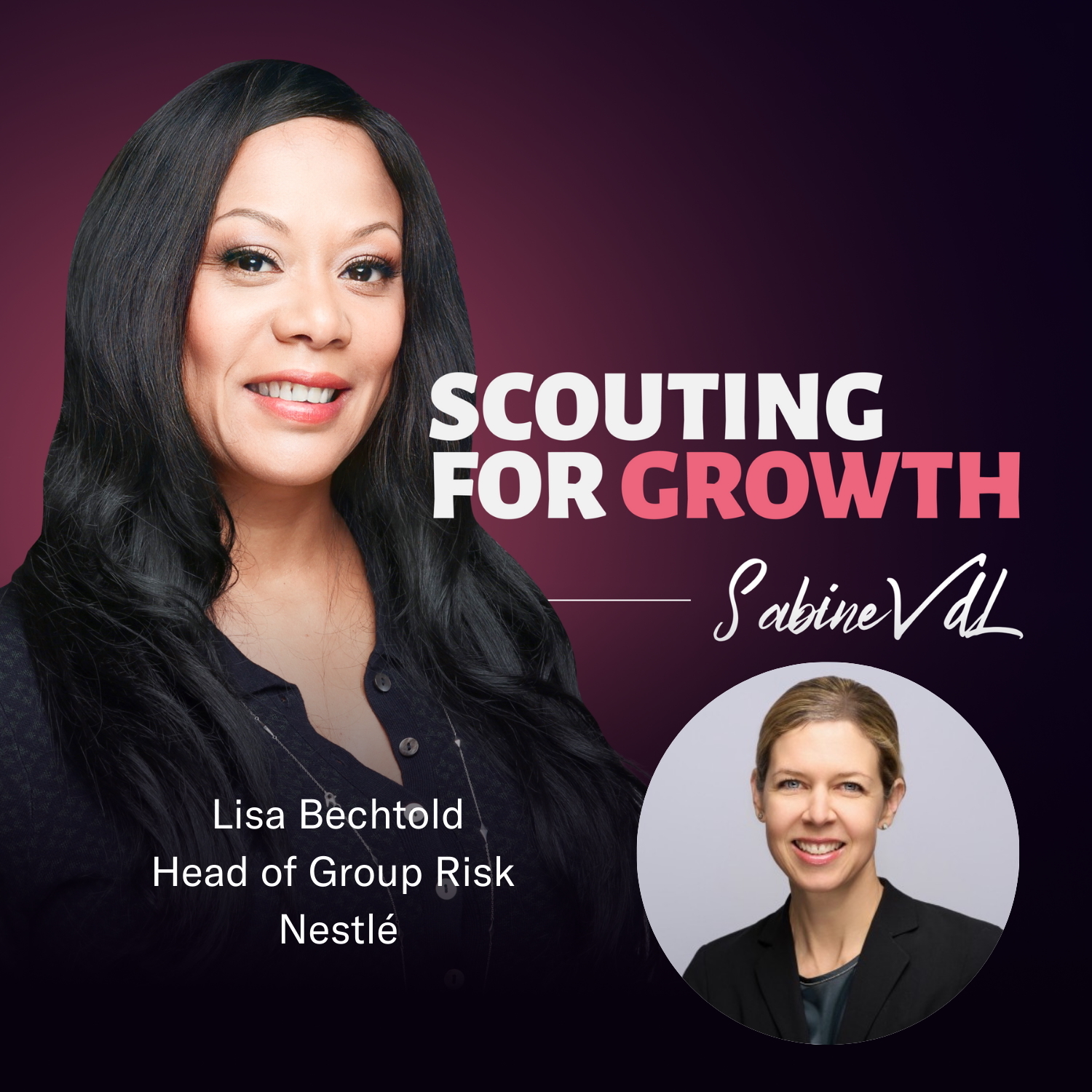
Ep 177Lisa Bechtold: From AI Governance to AI Transformation
On this episode of the Scouting For Growth podcast, Sabine VdL talks to Lisa Bechtold, a global executive and strategic leader in technology and law, who at the time served as the head of AI governance from a transformative viewpoint at Zurich Insurance Group. Lisa is now with Nestlé. In this episode, we explore the challenges and opportunities of the current AI transformation, what it takes to drive innovation in insurance while minimizing potential risks of AI, the role of digital trust and sustainability in leveraging AI for long-term growth, and how leaders can prepare their teams for the digital transformation ahead of us. KEY TAKEAWAYS AI governance is about how we use AI, which already affects all areas of our private and business lives. The acceptance and potential success of AI applications, tools, and use cases correlate with the respect of legal systems and the culture of the country or region. With the tools, systems, and platforms we’ve built at Zurich, we’ve driven and scaled AI adoption, including the reuse of solutions that have proven extremely successful. In parallel, we drive AI literacy to foster adoption and ensure AI tools are used optimally. For example, setting the right prompts is crucial for generating the most valuable output from GenAI tools. On the one hand, we invest in the education of our workforce, with a particular focus on digital upskilling and AI literacy. On the other hand, it’s crucial to allow experimentation in a safe sandbox environment so everyone can embrace technological opportunities. Insurance has always been a data-driven industry, so the adoption of AI techniques is well-founded across the insurance value chain, from risk modelling to all phases of the insurance business. Looking ahead, with the AI revolution taking place this year, both opportunities and risks will be taken to another level. Today, AI systems are beginning to autonomously interact with one another and adapt their behaviours accordingly. I expec thatt, as things increase within both the interaction of individual AI agents as well as in the creation of high-performance, multi-agent systems. Such multi-agent systems offer a multitude of business opportunities but also pose challenges, such as potential information asymmetries and miscoordination, which need to be understood and managed. BEST MOMENTS ‘The goal of deploying AI solutions must be to optimise the benefits of the technology while effectively minimising the risks.’ ‘AI governance is the foundation of being a catalyst of AI innovation and ensures high-quality outcomes and inspires trust in customers.’ ‘Today we’re focusing on the scalability and further optimisation of our AI capabilities.’ ‘Managing the complexity of multi-agent systems in a safe and lean way while optimising business value will be one of the key priorities for 2025.’ ABOUT THE GUEST Lisa Bechtold shares: As a Global Executive and Strategic Leader and Leader in Technology & Law, I have profound expertise and experience in Data, AI, Governance, Digital Risk, and Regulatory Affairs to protect corporate assets and optimise business performance. After serving as Head of AI Governance at Zurich Insurance Group, I moved to Head of Group Risk Management at Nestlé. I have pioneered and led the operationalisation of a framework for AI Quality & Safety to oversee the development and deployment of AI solutions globally. My multifaceted background positions me perfectly to provide strategic advice on data, digital solutions, and technology topics, integrating legal & risk considerations, to generate sustainable business value and digital trust as a competitive edge. LinkedIn ABOUT THE HOST Sabine VanderLinden is a corporate strategist turned entrepreneur and the CEO of Alchemy Crew Ventures. She leads venture-client labs that help Fortune 500 companies adopt and scale cutting-edge technologies from global tech ventures. A builder of accelerators, investor, and co-editor of the bestseller The INSURTECH Book, Sabine is known for asking the uncomfortable questions—about AI governance, risk, and trust. On Scouting for Growth, she decodes how real growth happens—where capital, collaboration, and courage meet. If this episode sparked your thinking, follow Sabine VanderLinden on LinkedIn, Twitter, and Instagram for more insights. And if you’re interested in sponsoring the podcast, reach out to the team at [email protected]

Ep 176Alex Schmelkin: Transforming Insurance Underwriting with GenAI and AI Agents
On this episode of the Scouting For Growth podcast, Sabine VdL talks to Alex Schmelkin, a visionary entrepreneur who's reshaping the future of insurance operations. Alex is the Founder and CEO of Sixfold, a company at the forefront of harnessing Generative AI to empower insurance underwriters with groundbreaking tools and capabilities. Today, we'll explore how Sixfold is leveraging Generative AI to transform underwriting practices, the challenges and opportunities in implementing AI at scale, and Alex's vision for the future of insurance operations. KEY TAKEAWAYS There’s close to $7 trillion of premium written around the globe every year. That equals 7% of global GDP, it’s an enormous amount of premium that’s needed for the world to function and for people and businesses to take risks. The most underserved population are the underwriters, the people making decisions day in day out on that $7 trillion worth of business trying to figure out the good and bad risks and why. There’s so little support for these unsung heroes. The typical underwriter is reading the equivalent of a novel every 2-3 days in documentation. These are not interesting fiction novels, they’re information-dense losses, statements of values of property and exposures. We’ve expected them to consume more and more but it’s information overload. Enter language models and AI, in the first time in human history we have the ability to take in a nearly limitless volume of data and help the underwriter to see through that to find the patterns without having to read every single word on every single page and free them to do the extra research at the end to find the best result for the end customer. Regulators understand that AI is here and have already embraced it. They’re not as ahead of it as we would like them to be, as an industry, and they’re not getting everything right. But by putting a few fence posts around the problem we’re trying to solve they’ve forced the conversation and the industry to respond to it and to start rolling out the way we are with some of these AI transparency partner models. The single challenge we run into everywhere is underwriter trust. The underwriters, despite being overworked, there not being enough of them, and despite it being a challenging job, are really good at what they do. The reason is they’ve been trained over the years to do everything they can to get the right answer. They’re the front line protecting insurance companies from bringing on bad risks. The hardest thing is to convince them is that AI is accurate. If they have a bad experience with AI first time they may not go back ever. BEST MOMENTS ‘I found insurance – or it found me – almost 20 years ago and I’ve never looked back, and it’s all underwriting all the time.’ ‘The biggest use of GenAI today is helping underwriters to find more accuracy, be more effective, and more transparent in their underwriting efforts.’ ‘We attempt to arm the human with a bevy of different things for those who are the less value-producing part of their jobs.’ ‘The human is so much more effective when they’re working beside a robot that helps them be more accurate and more efficient at their job.’ ABOUT THE GUEST Alex Schmelkin is the Founder and CEO of Sixfold and is at the forefront of revolutionizing how insurance underwriters operate through Generative AI—a game-changing approach that not only enhances decision-making but also streamlines processes for a more efficient future. His knack for identifying industry pain points and transforming them into innovative solutions has been the backbone of his success. With a deep-rooted belief in the power of technology to drive growth, Alex has consistently pushed the envelope, challenging norms and inspiring those around him. Beyond his entrepreneurial endeavors, Alex is a dynamic speaker who captivates audiences with insights on SaaS, customer experience, and technology ethics. His passion for responsible innovation shines through in every conversation, as he advocates for solutions that not only meet business needs but also uphold ethical standards. LinkedIn ABOUT THE HOST Sabine VanderLinden is a corporate strategist turned entrepreneur and the CEO of Alchemy Crew Ventures. She leads venture-client labs that help Fortune 500 companies adopt and scale cutting-edge technologies from global tech ventures. A builder of accelerators, investor, and co-editor of the bestseller The INSURTECH Book, Sabine is known for asking the uncomfortable questions—about AI governance, risk, and trust. On Scouting for Growth, she decodes how real growth happens—where capital, collaboration, and courage meet. If this episode sparked your thinking, follow Sabine VanderLinden on LinkedIn, Twitter, and Instagram for more insights. And if you’re interested in sponsoring the podcast, reach out to the team at [email protected]

Ep 175Anneli Scopazzi: AI-Driven Talent Management and Upskilling Strategies for High-Growth Ventures
On this episode of the Scouting For Growth podcast, Sabine VdL talks to Anneli Scopazzi, CEO and Founder of Boulevard Recruiting. With a background rooted in fast-growth startup environments, Anneli has become an authority on matching world-class talent to the right opportunities—particularly in an era brimming with AI-driven disruption. Expect a compelling conversation about how technology is changing the face of recruiting, the critical importance of upskilling and reskilling in today’s competitive market, and what early-stage ventures need to keep in mind while scaling with AI. KEY TAKEAWAYS We work with early-stage startups, starting with series B but it’s moved down to series C when the market crashed, but we now sit in series A where we’re hoping to scale with those clients for the next couple of years to be the first recruiters on the ground, working very closely with the founders. As the companies start to scale and hire internal recruiters the we’ll work very closely with them too. Covid benefitted us in vary big way as a remote company founded in Q4 2019, I was fiercely committed to working remotely, it was the number one driver of the company, the name Boulevard was chosen because it represents remote work. When Covid happened, everyone had to figure out how to work remotely and now companies are accustomed to it and how it works. AI is something that felt scary for a minute back when ChatGPT was released and there was all this appearance of fast acceleration. But, working in tech, we’ve known this has been going on for years. I wanted to be the first to adopt and work with these early tech companies, you don’t want to be the company that doesn’t survive the extinction event if you can’t work it out. In the recruiting landscape I haven’t seen any amazing AI solutions just yet. There are some things that make us more efficient, but we’re in a bit of a safe space because of the relationship focus, which is really hard to replicate with AI technology. The more exciting thing is working with the AI companies and seeing them get funded massively. It’s an exciting space to be in. BEST MOMENTS ‘I’ve loved the French language and Paris since I was very young and I didn’t want to name my business after myself. What I love about Boulevard is that it’s of French origin but it’s very recognisable around the world.’ ‘What excites me about working with early-stage startups is that you have the ability to do more than you’re qualified to do.’ ‘A lot of my personal growth has been very self-taught. That’s been very liberating and rewarding but also can be very painful at times learning through mistakes.’ ‘There’s a lot of administrative work in recruiting, in-bound applications have surged dramatically in the last couple of years globally. The recruiting tools we’re seeing are sorting through profiles faster and narrowing it down to a shorter list for the human to review.’ ABOUT THE GUEST Anneli Scopazzi is the CEO and Founder of Boulevard Recruiting, a boutique San Francisco-based agency that specializes in matching startups with world-class talent in engineering, product, and beyond. She began her career in accounting before transitioning into recruiting about seven years ago, initially stepping into a 100% commission role at a boutique agency and later being recruited to Palantir. This non-traditional path enabled Anneli to grow quickly in leadership, ultimately becoming Head of Talent at Figma, where she played a key role in tripling the company’s headcount through its Series B and C stages. In September 2019, driven by her passion for connecting people and technology, Anneli founded Boulevard Recruiting—a remote-focused firm that balances expert matching of talent with a flexible work culture for its team members. LinkedIn ABOUT THE HOST Sabine VanderLinden is a corporate strategist turned entrepreneur and the CEO of Alchemy Crew Ventures. She leads venture-client labs that help Fortune 500 companies adopt and scale cutting-edge technologies from global tech ventures. A builder of accelerators, investor, and co-editor of the bestseller The INSURTECH Book, Sabine is known for asking the uncomfortable questions—about AI governance, risk, and trust. On Scouting for Growth, she decodes how real growth happens—where capital, collaboration, and courage meet. If this episode sparked your thinking, follow Sabine VanderLinden on LinkedIn, Twitter, and Instagram for more insights. And if you’re interested in sponsoring the podcast, reach out to the team at [email protected]

Ep 174Emmanuel Djengue: Driving Tech Innovation & Sustainable Growth
On this episode of the Scouting For Growth podcast, Sabine VdL talks to Emmanuel Djengue, a dynamic professional whose passion for technology and user-focused innovation has shaped his remarkable career path. From leading tech initiatives to connecting diverse people and ideas, Emmanuel exemplifies the very spirit of relentless curiosity and strategic thinking that we celebrate on this show. We’ll be delving into his personal journey, uncovering how he transforms ambition into concrete impact, and discussing the role of collaboration and how talent can play a crucial role in fostering exponential growth as the world goes through a workforce transformation requiring reskilling and upskilling, while finding the talent for the right role across markets. KEY TAKEAWAYS Insurance is a product no one wakes up wanting to buy, but it’s super essential to society and people, especially life insurance. We need to help people understand the importance of insurance and ensure that everything we offer customers is simple, attractive, and delivered at the right time. Health insurance is also very important. How do we help people with this? I’ve studied how people think to figure out how to motivate them. If you bring this element into industry innovation, we’d be able to improve how people interact with insurance, how they care about it, and how they take care of themselves. There are 3 types of InsurTech players: Integrators – those that identify solutions and want to integrate them into what an insurance company is doing. Disruptors – They want to change everything that doesn’t work well so that it does. These require financial capability to do that, so there aren't many startups that can be disruptors. Collaborators – who want to touch base with insurers to try to improve what’s going on The difference between a great and a bad insurer is not so much in the product, efficiency, etc. It’s on the people making the company great. If I need to do more innovation, change things, and bring something different, why not help people solve this issue? The number one business problem for anyone is unsuccessful hiring. BEST MOMENTS ‘South Africa has one of the most innovative markets in life and health insurance; there are a lot of startups doing great things there.’ ‘Too many startups turn up in the market to play disruptor roles, but only 1 or 2 players can do this and win.’ ‘In insurance, David is not going to win against Goliath.’ ‘Both sides need the partnership and want the partnership to happen.’ ABOUT THE GUEST From the moment he first tinkered with a computer at a young age, Emmanuel Djengue has been captivated by the power of creativity and innovation to transform lives. His journey—marked by curiosity, resilience, and collaboration—has taken him from passion projects in his hometown to spearheading tech initiatives on a global stage. Along the way, Emmanuel developed a talent for weaving user-focused storytelling into every project, bridging technology and humanity in impactful ways. Fueled by an enduring love of problem-solving, he thrives on connecting diverse people and ideas to craft solutions that don’t just work but inspire. Whether rallying a team around a new software concept or mentoring future innovators, Emmanuel’s drive to make a positive impact is as unyielding as his imaginative spirit, promising that every new chapter of his story will be just as vibrant and compelling as the last. LinkedIn ABOUT THE HOST Sabine VanderLinden is a corporate strategist turned entrepreneur and the CEO of Alchemy Crew Ventures. She leads venture-client labs that help Fortune 500 companies adopt and scale cutting-edge technologies from global tech ventures. A builder of accelerators, investor, and co-editor of the bestseller The INSURTECH Book, Sabine is known for asking the uncomfortable questions—about AI governance, risk, and trust. On Scouting for Growth, she decodes how real growth happens—where capital, collaboration, and courage meet. If this episode sparked your thinking, follow Sabine VanderLinden on LinkedIn, Twitter, and Instagram for more insights. And if you’re interested in sponsoring the podcast, reach out to the team at [email protected]

Ep 173Anna Bojic: Disrupting Customer Engagement with Digital Wallet Technology
On this episode of the Scouting For Growth podcast, Sabine VdL talks to Anna Bojic, founder and CEO of Miss Moneypenny Technologies, which is on a mission to transform wallet apps into dynamic, customer-focused engagement tools. On this episode, Anna will share how her artistic roots inspired her approach to scaling Miss Moneypenny Technologies, especially in collaboration with leading insurance brands and more, as well as why digital wallets have become transformative assets for businesses looking to modernise their communication, streamline processes, and deliver exceptional customer experiences. KEY TAKEAWAYS My co-founder and I have something in common; that we learned a practice of critical refinement, building something up with all the ideas you have but noticing when the time has come when you have to look very intensely at it and strip away everything that isn’t essential to the core of what you intended to do, the real solution behind it and destroying everything you don’t need. We’re in a world of information overload/overwhelm, and the information has varying qualities. Some is very fleeting, and maybe we don’t need it very often, but when we need it, we really need it. It may be very small, or we may just need it for a short time. We have this information at home, but it was never presented to us in a way that would be helpful when we need it. We realised that the digital wallet could provide the capabilities for reducing the chaos, stress, and overwhelm. Companies and insurers try to use techniques that work for family members, but they don’t have that kind of pull. But they do have an amazing opportunity to build relationships that are trust- and reliability-based, and have a different tone. The wallet is the home for building these kinds of relationships. Regarding vehicle insurance, what we would have done if we’d had an accident is scribble our details on a piece of paper and take pictures of driver's licenses (which is a security concern), all while very nervous. Now you can scan the QR code of my digital insurance card. You would receive a digital accident card, which would trigger an automation in Wallet Studio, and both people would receive messages that would then pull us into the client’s processes that Zurich has. It provides us with all the information until the claim is completed. The cost savings are substantial. BEST MOMENTS ‘I have a background in fine arts, but I’ve always been a creator. I love to think deeply about problems I encounter in whichever subject matter, I just love problem-solving.’ ‘We’ve trashed 100,000s of lines of code because we suddenly understood what we should have been doing, to let go of the things that weren’t working and tackle the real solution to the problem.’ ‘Expectations of consumers have changed. 5 years ago, it was fine to wait for a week when I placed an order, now I get nervous on day 2.’ ‘Wallet Studio adds to the capabilities of what wallet technology can already do, making it scalable within a large company.’ ABOUT THE GUEST Anna Bojic is the founder and CEO of Miss Moneypenny Technologies, the no-code wallet studio, which enables Businesses to use the native digital wallet apps Apple & Google Wallet to connect and interact with users in a new, powerful way. It’s a SaaS product, Wallet Studio, a digital wallet engagement and automation suite that enables companies to transform digital wallet cards into dynamic, interactive, meaningful, and invaluable communication hubs. LinkedIn ABOUT THE HOST Sabine VanderLinden is a corporate strategist turned entrepreneur and the CEO of Alchemy Crew Ventures. She leads venture-client labs that help Fortune 500 companies adopt and scale cutting-edge technologies from global tech ventures. A builder of accelerators, investor, and co-editor of the bestseller The INSURTECH Book, Sabine is known for asking the uncomfortable questions—about AI governance, risk, and trust. On Scouting for Growth, she decodes how real growth happens—where capital, collaboration, and courage meet. If this episode sparked your thinking, follow Sabine VanderLinden on LinkedIn, Twitter, and Instagram for more insights. And if you’re interested in sponsoring the podcast, reach out to the team at [email protected]

Ep 172Danilo Raponi: Driving Insurance Innovation & Sustainability at Generali (Driving Insurance Innovation & Sustainability)
On this episode of the Scouting For Growth podcast, Sabine VdL talks to Danilo Raponi about the trends and topics from this year’s ITC London event, including AI, sustainability, new startups, and why InsurTech isn’t dead. KEY TAKEAWAYS Climate change is the biggest risk, along with misinformation and generative AI, because its misuse can amplify its spread, affecting many economies and democracies. Partnerships are essential, though it’s not always super easy, especially when we’re talking about public/private partnerships. There has to be awareness on both sides that the starting points can differ, but the goals and objectives we want to achieve are the same. For example, the public sector doesn’t always seek profit as a motive, but it may recognize that the private sector has to make money somehow. Technology can really help us with risk protection and the monitoring and detection of things like forest fires. There are fantastic startups out there with devices that detect forest fires extremely early, including devices you can place strategically where fires are likely to occur, as well as satellites. There are many materials that can now be used to rebuild houses and make them less prone to burning down. When these risk mitigations are in place, it becomes easier for insurers to provide insurance. Insurance and reinsurance are essential to make the world work. And they’ve been important in growth and innovation across the world, going back to the merchants in Venice. Attracting talent from the younger generation is important, but they need to work in a place that lives up to its values. It’s easier to attract talent in innovation because it’s all about technology, and it’s cool. But when you combine purpose with that and show the positive outcomes the products will have for other people, it becomes even easier. BEST MOMENTS ‘Generali is a 200-year-old startup, which is a fancy way of saying that we’ve always had a remarkable ability to stay ahead of the trends, innovate and be close to our customers.’ ‘We need to be humble. These are big things that no one can solve on their own.’ ‘Parametrics can be an option to be looked at in modelling and technologies around insuring the ‘uninsurable’.’ ‘There’s a growing awareness that all the issues that the world is facing are big ones, but they can also be turned into opportunities for insurance companies.’ ABOUT THE GUEST Danilo Raponi is the Group Head of Innovation at Generali, Managing Director, Board Member, Angel Investor, MBA (Bocconi), PhD (Cambridge) Danilo Raponi serves as Group Head of Innovation at Generali, one of the world’s leading insurance and financial services companies. In this capacity, he focuses on accelerating the company’s strategic and business transformation and spearheading new product development to enhance customer experience. Alongside his executive role, Danilo is a Managing Director and Board Member, helping guide strategic decision-making and long-term growth across multiple initiatives. He is also leading Generali Ventures, the VC initiative of the Generali Group, bridging corporate strategy with entrepreneurial ecosystems. Danilo holds a Master of Science summa cum laude from LUISS University in Rome, an MBA from the Bocconi School of Management, and a PhD from the University of Cambridge. These academic achievements underpin his multidisciplinary approach to innovation, enabling him to navigate complex challenges and foster impactful solutions within Generali’s global network. ABOUT THE HOST Sabine VanderLinden is a corporate strategist turned entrepreneur and the CEO of Alchemy Crew Ventures. She leads venture-client labs that help Fortune 500 companies adopt and scale cutting-edge technologies from global tech ventures. A builder of accelerators, investor, and co-editor of the bestseller The INSURTECH Book, Sabine is known for asking the uncomfortable questions—about AI governance, risk, and trust. On Scouting for Growth, she decodes how real growth happens—where capital, collaboration, and courage meet. If this episode sparked your thinking, follow Sabine VanderLinden on LinkedIn, Twitter, and Instagram for more insights. And if you’re interested in sponsoring the podcast, reach out to the team at [email protected]

Ep 171John Hewitt: How CEOs Building Their Empire
On this episode of the Scouting For Growth podcast, Sabine VdL talks to John Hewitt, a true pioneer in the tax preparation and financial services industry, having founded and scaled two companies to over $500 million in value - Jackson Hewitt Tax Service and Liberty Tax Service. Throughout his illustrious 55-year career, John has always kept his driving purpose in sight – to change lives. He takes pride in having a monumental positive impact on franchisees, employees, and customers. We'll be exploring his strategies for scaling successful empires, overcoming barriers, financing growth models, and more. KEY TAKEAWAYS One key ingredient is getting buy-in from everyone involved. You have to have a dream that’s fairly accurate, then get your employees, customers, vendors, investors, etc to buy into where you’re going. As a franchisee, you want your franchisor to deliver consistency and quality. Whoever offers the worst service in your system will determine what your brand name is worth. We call every customer and ask them how we did, which no one else does, in the franchise world, they send and email, text, or send them a survey. It’s been great for us because not only do we police our brand, but our customers also love being called and asked how we can improve our service to them. Plus, we get higher staff retention and get more referrals. Anything that’s systemic should be able to be provided by software and computers. We divide issues up into ‘tip of the iceberg’. If it’s systemic – an iceberg – we’re looking for a solution; if it’s just a one-off, we don’t build systems or use software for it. I’ve been doing it this way since 1981, making things more expeditious and consistently high-quality. Train your staff so they can go anywhere and be successful, but treat them so well that they want to stay. It comes from creating a culture and an attitude in your organisation, and the attitude starts with employees first: If you want your customers to be treated well by your employees, you have to treat your employees well, you have to listen and be loyal to your team, and build a team of people with a great attitude. You can’t teach a great attitude. BEST MOMENTS ‘There are two major parts of growth: The amount of money you spend, and the amount of money you take in; you always have to make sure they’re balanced.’ ‘I’ve been in taxes for 55 years: There are only 2 certainties in life: death and tax, it’s recession proof.’ ‘In the pet industry, we’ve seen young people in the past 10 years delay having children. Sometimes I ask if they have children and they say: “I have 2 dogs, those are my children.”’ ‘Brand loyalty is such a cool and important thing to have, which is why my company is called Loyalty Brands.’ ABOUT THE GUEST John Hewitt is a visionary entrepreneur renowned for founding two of the largest tax preparation companies in the United States - Jackson Hewitt Tax Service and Liberty Tax Service. As the pioneer behind the "Hewitt" in Jackson Hewitt, John grew the company to over 1,300 offices and $483 million in sales before selling it in 1997. Undeterred, John founded Liberty Tax in 1997 and rapidly expanded it to over 4,000 offices in the U.S. and Canada. By 2012, Liberty Tax was one of the top 100 largest retail organizations in North America. Now, John is applying his strategic prowess to investing. He helps entrepreneurs build their own empires as CEO of Loyalty Brands. Guided by ambition and faith, he continues to compete - and win - on an extraordinary level. ABOUT THE HOST Sabine VanderLinden is a corporate strategist turned entrepreneur and the CEO of Alchemy Crew Ventures. She leads venture-client labs that help Fortune 500 companies adopt and scale cutting-edge technologies from global tech ventures. A builder of accelerators, investor, and co-editor of the bestseller The INSURTECH Book, Sabine is known for asking the uncomfortable questions—about AI governance, risk, and trust. On Scouting for Growth, she decodes how real growth happens—where capital, collaboration, and courage meet. If this episode sparked your thinking, follow Sabine VanderLinden on LinkedIn, Twitter, and Instagram for more insights. And if you’re interested in sponsoring the podcast, reach out to the team at [email protected]

Ep 170Danny Nathan: Driving Innovation and Venture Growth with Apollo 21
On this episode of the Scouting For Growth podcast, Sabine VdL talks to Danny Nathan, founder of Apollo 21, an innovation and product design studio based in New York City. Learn about the transformative role of emerging technologies like AI, quantum computing, and cloud services in reshaping traditional business models. Danny discusses how Apollo 21 integrates these frontier technologies to solve complex business and operational challenges, helping clients across industries such as healthcare, finance, fitness, and more. KEY TAKEAWAYS I focus on layering together the ideals of innovation, entrepreneurship, and technology, helping companies understand what it means to build a culture of innovation, what that looks like from an operational standpoint, and how that perspective shapes how companies are structured and how they approach their work. We then leverage those thoughts to help companies create interesting new products We work with companies of all sizes, from napkin-stage founders who have an idea but haven’t figured out how to bring it to light or defined what an MVP product might look like to serve their customer needs, to large companies like Bank of America. Interestingly, the problems they’re trying to solve are not exactly dissimilar; it’s a question of scale and customer expectations today and where they want to get to tomorrow. We’ve found that large companies are not inherently set up well to support the ideals of innovation. As companies grow, they optimise for efficiency and look for ways to wring every dollar out of every penny invested. Innovation is inherently an inefficient process that requires some expenditure on experimentation and trial and error, and that’s difficult to align with the way large companies operate in terms of budgeting. One of our core values is: Crawl, walk, run. Having run startups ourselves, we’re highly aware of the benefit of starting small, understanding what you’re building, determining where the value is being delivered or not, and iterating on that over time, so we can truly build something that accomplishes a need and gives us an opportunity to figure out where we misstepped along the way. BEST MOMENTS ‘Gen AI is the elephant in the room today, you can’t help but be aware of it because of the pace it’s coming into fruition. A lot of companies aren’t ready to incorporate it into their workflows.’ ‘Start getting your data in order, understand and learning what type of structure and data you need to align to the goal you have for AI use cases in the future.’ ‘Figure out ways for your employees to begin interacting with and utilising AI to accomplish the tasks they’re doing today, so they aren’t afraid of it and how to ask the right questions of it to get beneficial responses from it.’ ‘One of the things a lot of people overlook is the level of research and understanding of your customer and their needs that should go into the process prior to building anything.’ ABOUT THE GUEST Throughout a roller-coaster career spanning acting, advertising, consulting, technology, and entrepreneurship, Danny Nathan has developed a habit of helping companies create new products and services and launch new ventures. Known variously as a product person, UX guy, designer, strategist, marketer, creative, and sometimes even "The Cleaner," Danny brings a wealth of experience to every project he undertakes. Today, Danny is the founder of Apollo 21, an innovation and product design studio based in New York City. Apollo 21 sits at the intersection of business consultancy, product design studio, and venture studio. The company helps organizations foster innovation, leverage venture-driven growth, and remove barriers to scale by building technology that solves complex business and operational challenges. ABOUT THE HOST Sabine VanderLinden is a corporate strategist turned entrepreneur and the CEO of Alchemy Crew Ventures. She leads venture-client labs that help Fortune 500 companies adopt and scale cutting-edge technologies from global tech ventures. A builder of accelerators, investor, and co-editor of the bestseller The INSURTECH Book, Sabine is known for asking the uncomfortable questions—about AI governance, risk, and trust. On Scouting for Growth, she decodes how real growth happens—where capital, collaboration, and courage meet. If this episode sparked your thinking, follow Sabine VanderLinden on LinkedIn, Twitter, and Instagram for more insights. And if you’re interested in sponsoring the podcast, reach out to the team at [email protected]

Ep 169Scott Gunther: Corporate Venture Capital, the Venture Client Model, and Driving Innovation in 2025
On this episode of the Scouting For Growth podcast, Sabine VdL talks to Scott Gunther, who is not only a corporate venture capitalist and start-up enthusiast—he’s also the secret ingredient that helps big businesses think like nimble innovators! In this episode, we’ll hear how Scott’s unique blend of strategic vision and hands-on execution has set him apart in both blue-chip boardrooms and early-stage tech circles. We’ll dive into the venture client model, explore the evolving CVC (Corporate Venture Capital) landscape through the lens of 2025, and uncover the do’s and don’ts for insurance providers and emerging Tech founders. KEY TAKEAWAYS Recently, we’ve seen some stability in CVC investment. There’s been a strong volume of deal-flow dollars pouring into startup investment. At the same time, we’re seeing corporations change their attitudes and approaches to innovation and venturing. Some have closed their CVC funds, others have changed their investment focus, some have scaled back altogether, although some are quite the opposite. We’re starting to see CVCs experiencing slower exit returns, and their financials aren’t what they were in 2021/22. In the last 2-3 years, the savvy CVCs have done 2 things well: they’ve kept their portfolio afloat and held onto their strategic assets, while also helping it grow. This will be a trend for CVCs in 2025. We don’t put anything up to our investment community until we have an exec sponsor because post-investment is when the exec sponsor comes to life, and the VC model starts to hit home. We have a dedicated post-investment team that connects the startup and the corporate. The biggest opportunities for insurers and CVCs operating in that space is understand how people use and interact with digital technologies, and how they’re affecting society. Also, customer segmentation and proposition development are different for different demographics now, and how different cohorts are researched, bought, serviced, and claimed, it’s not one size fits all. The savvy insurers know what these macro-trends are and understand how the latest technology, data, and AI trends are. This could help us get to the holy grail: The segment of one! BEST MOMENTS ‘We’re going to see more competition, things are going to happen faster and cheaper, but there’s still an uncertainty about which things we should own and which we should outsource.’ ‘I think a lot of people focus on the E and S or ESG, but not the G, but the G incorporates some of the most crucial aspects about how a company runs itself.’ ‘The more efficient and effective a company can run, the more it can have on its customers and community.’ ‘We connect the startup with the corporate to create mutual commercial value, it’s an ethos we live by.’ ABOUT THE GUEST Scott Gunther is a Corporate Venture Capitalist and start-up enthusiast with a track record of partnering with business leaders to identify strategic opportunities and guide transformational change. Drawing on years of experience designing future-state, digital-first businesses and delivering critical programs across multiple industries, he brings a rare blend of strategic vision and execution prowess to his clients and colleagues. LinkedIn Firemark Ventures ABOUT THE HOST Sabine VanderLinden is a corporate strategist turned entrepreneur and the CEO of Alchemy Crew Ventures. She leads venture-client labs that help Fortune 500 companies adopt and scale cutting-edge technologies from global tech ventures. A builder of accelerators, investor, and co-editor of the bestseller The INSURTECH Book, Sabine is known for asking the uncomfortable questions—about AI governance, risk, and trust. On Scouting for Growth, she decodes how real growth happens—where capital, collaboration, and courage meet. If this episode sparked your thinking, follow Sabine VanderLinden on LinkedIn, Twitter, and Instagram for more insights. And if you’re interested in sponsoring the podcast, reach out to the team at [email protected]

Ep 168Staci Gray: Empowering Entrepreneurs to Scale Their Businesses Through People, Processes, and Personal Transformation!
On this episode of the Scouting For Growth podcast, Sabine VdL talks to Staci Gray, Founder and CEO of Organize To Scale, whose journey is nothing short of inspirational. Imagine graduating high school at 16, diving headfirst into the entrepreneurial world, and buying your first property at 18. When her mother was diagnosed with stage four cancer, Staci leaped into action. Taking the reins of her family businesses, she transformed overwhelming challenges into streamlined successes. In just 36 months, Staci helped launch 36 syndication businesses that collectively raised over $300 million. Today, we'll dive into Staci's unique approach to scaling businesses through people and processes. We'll explore how she empowers leaders to build strong teams, streamline operations, and prepare for successful exits—all without losing their minds or their personal identities. KEY TAKEAWAYS You need to know yourself, whether you’re a visionary, an integrator, or more operationally minded. Getting that level of clarity is critical because the visionary role is externally focused, thinking 5 moves ahead, caring about customers, interested in advancement, and expansion. Whereas the integrator (COO) role is internally focused on the team, fulfillment, and operations. Sitting in both seats at the same time is fragmenting yourself, it’s important you choose which role you do and then employ the opposite of that who also buys into your vision. As a business, you should be continually adapting. The technology or the team you need at 6-figures is not the same as the one you will need at 8-figures. Your job as a leadership team, in whatever seat you’re sitting in, is to get good at pushing to the next ceiling, hitting it, and then adapting to keep your cash, tech, and trained team aligned. Those things are critical to scaling. I’m a huge advocate of scaling businesses in a way that truly creates freedom: Tim freedom, financial freedom, and geographic freedom. That’s only our ‘eyes-open freedoms’, sometimes people also sacrifice their internal freedoms; Joy, love, peace, connection, belonging to scale their businesses. I think that’s a bigger sacrifice. It’s important not attach my identity to my business; it’s not me, it’s something that I do. All building a business really is is taking an idea and turning it into a reality. It’s also people. People are doing the work, even if they’re using technology. And ideas and people sometimes create friction; we see it everywhere, and that friction can create bottlenecks. We have to be able to have conversations around what isn’t working, in a non-personal, objective way, to see how we can improve communication, workflow, accountability, processes, and documentation so the flow is smoother and we can all achieve and win by driving revenue, scale up the business, create operational efficiencies, and improve gross profit. BEST MOMENTS ‘The best integrators are ‘co-visionaries’, they can envision with you and also take the vision and sculpt it into tactics.’ ‘Stay in your lane, if you try to get in someone else’s lane it can fragment operations.’ ‘The moment I found out my Mum had stage 4 cancer was when I realised the importance of organising to scale your business before there was a crisis.’ ‘Doing whatever it takes to build your business might look different than what you think it looks like.’ ABOUT THE GUEST Staci Gray is the Founder and CEO of Organize To Scale, a company dedicated to liberating mission-driven leaders from operational chaos and empowering them to scale their businesses effectively. With a passion for organizing businesses and building strong, high-performing teams, Staci envisions a world where entrepreneurs and leaders can grow their enterprises, fuel the economy, and make a tangible impact on people's lives without sacrificing their personal well-being. ABOUT THE HOST Sabine VanderLinden is a corporate strategist turned entrepreneur and the CEO of Alchemy Crew Ventures. She leads venture-client labs that help Fortune 500 companies adopt and scale cutting-edge technologies from global tech ventures. A builder of accelerators, investor, and co-editor of the bestseller The INSURTECH Book, Sabine is known for asking the uncomfortable questions—about AI governance, risk, and trust. On Scouting for Growth, she decodes how real growth happens—where capital, collaboration, and courage meet. If this episode sparked your thinking, follow Sabine VanderLinden on LinkedIn, Twitter, and Instagram for more insights. And if you’re interested in sponsoring the podcast, reach out to the team at [email protected]

Ep 167State of the Nation in Insurance Venturing
On this episode of the Scouting For Growth podcast, Sabine VdL talks to a panel of global experts to explore the bold new frontiers shaping insurance technology in 2025 and beyond, including microinsurance in Africa, digital disruption in Latin America, the evolving tech scene in the US, Asia, Europe and the UK. KEY TAKEAWAYS AI cannot just be something we add on top of existing infrastructure, there needs to be some re-work to integrate it into existing infrastructure. Foundation for AI scalability and security (not as a bolt-on) will be a big trend. The second thing is generative AI that’s across ecosystem. There is a trend emerging and growing in InsurTech in Europe at least around emerging risks. 20% of all the deals done in 2024 were around that specific topic. Most of the startups in this area are in the pricing/underwriting part of the value chain. There is a need for these with emerging risks that didn’t exist (or weren’t as prevalent) in the past, such as climate change or electric vehicles. In Asia, especially South-East Asia, the markets are way more green field than they are in the US. Here, embedded insurance and ecosystem integration are a really big deal. As people get onto external ecosystems outside of their own they want to embed insurance in them across sectors. We don’t think insurance just in the insurance space is enough. There’s a lot of brain drain in Africa where skilled professionals are leaving the continent. But the paradox of that is that there’s a lot of influx onto the continent. The questions is: Where exactly do the opportunities lie? There’s a lot of grown happening in the emerging communities where companies are developing the mindsets and capacities to transfer risk in all kinds of insurance, not just life. BEST MOMENTS ’95-97% of the economy in Asia is driven by SMEs, and 75% of employment is in the SME sector, and it’s wildly underserved from an insurance perspective. It’s a massive opportunity.’ ‘Accessibility possibilities that the technology and maturity curve provides in emerging markets, especially, is quite exciting because it’s making insurance sustainable, affordable, and reaching more people.’ ‘The population where I live is very young, they were the first penetration for insurance here and, unlike the rest of the world, they’re deeply unconcerned about data privacy, they’re willing to trade their data access for convenience, better products and more personalisation.’ ‘Don’t only stick to the regulations timeframe, keep an eye on what entrepreneurs are building because the market can move faster than the regulations.’ ABOUT THE GUESTS Florian Graillot (covering InsurTech Europe) Hilario Itriago (covering InsurTech LATAM) Lisa Wardlaw (covering InsurTech USA) Michael Waitze (covering InsurTech Asia) Tunde Salako - Africa InsurTech (covering InsurTech Africa) ABOUT THE HOST Sabine VanderLinden is a corporate strategist turned entrepreneur and the CEO of Alchemy Crew Ventures. She leads venture-client labs that help Fortune 500 companies adopt and scale cutting-edge technologies from global tech ventures. A builder of accelerators, investor, and co-editor of the bestseller The INSURTECH Book, Sabine is known for asking the uncomfortable questions—about AI governance, risk, and trust. On Scouting for Growth, she decodes how real growth happens—where capital, collaboration, and courage meet. If this episode sparked your thinking, follow Sabine VanderLinden on LinkedIn, Twitter, and Instagram for more insights. And if you’re interested in sponsoring the podcast, reach out to the team at [email protected]

Ep 166Carolina Klint: Unveiling Key 2025 WEF Risk Insights
On this episode of the Scouting For Growth podcast, Sabine VdL talks to Carolina Klint, Managing Director and Chief Commercial Officer for Continental Europe at Marsh McLennan, who shares her views on the latest WEF report and its implications for businesses and insurers worldwide. KEY TAKEAWAYS My goal in speaking about and promoting the Report is to place the topics of risk and resilience on the agenda of world leaders, decision-makers, executives, and board members. The business world is so complex and difficult to navigate, and we have an environment now where risks are not only interconnected but also layered. So, the Global Risk Report is a great place to start making sense of this. When a company looks at the risks that have the potential to impact or execute on strategies, it’s so difficult to get it right: You’re going to go through your risks and scenario planning to pull together an ambitious risk register. Most companies have good processes for this, but in the current environment, it’s very rare to identify and prepare for the risks that will hit you. By cultivating a culture of risk awareness and resilience, and by taking a holistic view, connecting the dots between people, risk, and strategy, companies that do so have a much better opportunity to deal with whatever ends up hitting them. If you have culture and awareness, and empower your leaders and employees to manage when something hits, it’s going to lead to a much better outcome for you, regardless of the risks. We need to not just look at what’s in front of us, but look at the long-term perspective. Human beings are wired to focus on what’s in front of us, and it’s easy to forget the long-term horizon. This is where the Global Risk Report is so helpful: it looks at perceptions of current risks and the 2-year and 10-year risk horizons. BEST MOMENTS ‘We look at how we can bring more value and become more relevant to our clients by connecting people, risk, and strategy – and the WEF Global Risk Report speaks directly to that.’ ‘The business environment is very difficult to navigate, and it’s only through collaboration and looking at the business holistically that you can achieve a long-term sustainable business model.’ ‘For anyone in risk and resilience, when the Global Risk Report comes out, it’s like Christmas Day as a 5-year-old!’ ‘Everyone’s got a plan until you get punched in the face – that’s exactly the way it is in the current environment.’ ABOUT THE GUEST Carolina Klint is a recognized expert in global risk management and a key contributor to thought leadership initiatives, including the World Economic Forum’s Global Risks Report. As a Managing Director and Risk Management Leader for Continental Europe at Marsh McLennan, she works with clients across industries to anticipate, quantify, and navigate emerging threats—ranging from geopolitical and environmental disruptions to the rapid evolution of technology. LinkedIn ABOUT THE HOST Sabine VanderLinden is a corporate strategist turned entrepreneur and the CEO of Alchemy Crew Ventures. She leads venture-client labs that help Fortune 500 companies adopt and scale cutting-edge technologies from global tech ventures. A builder of accelerators, investor, and co-editor of the bestseller The INSURTECH Book, Sabine is known for asking the uncomfortable questions—about AI governance, risk, and trust. On Scouting for Growth, she decodes how real growth happens—where capital, collaboration, and courage meet. If this episode sparked your thinking, follow Sabine VanderLinden on LinkedIn, Twitter, and Instagram for more insights. And if you’re interested in sponsoring the podcast, reach out to the team at [email protected]

Ep 165Michael Lingelbach: Inside Hedra’s Agentic AI Revolution—Why Long-Form Video Is the Next Big Thing
On this episode of the Scouting For Growth podcast, Sabine VdL talks to Michael Lingelbach, CEO and co-founder of Hedra, a company specializing in long-form generative video and agentic AI solutions. In just over a year, Michael and his team have seen explosive growth and raised backing from leading tech investors, including Index Ventures and Andreessen Horowitz. From marketing and social media campaigns to corporate training videos, Hedra’s technology is revolutionizing how we produce immersive, human-like content at scale. Michael and I discuss the power of agentic AI, the ethical dimensions of automated digital creation, and how he’s charting new paths for startups, enterprises, and content creators alike. KEY TAKEAWAYS We’re still very early in ‘generative media’. Stable Diffusion came out 2 years ago for images; video models have been maturing rapidly, but right now they’re focused on small fragments of content rather than cohesive brand storytelling. Building models that can not only generate compelling dialogue performances but also incorporate consistent identities and assets is a challenging research problem, and we’re pushing on it. When people first think about generative AI, they think about increasing the volume of content, but that typically isn’t a problem. The predominant concern of most marketers now is engagement. We live in a limited attention economy, so the focus now – in my opinion – is how to make really good content that’s going to hook people. For short-form content, you’re usually trying to hook the viewer’s attention in the first 5-10 seconds as they’re scrolling through a TikTok-style feed. You want bright colours, a crazy character, or a hook like “OMG you’re not going to believe what we’re going to talk about today!” With long-form content, you’re optimising for retention. You still want the viewer to be engaged, but usually, they want information or entertainment. We think the big opportunity is making it accessible for product/social marketing managers to have access to this powerful technology to generate video and to have a workflow where they’re working together with AI to make compelling content. That doesn’t require them to outsource to an external agency. We then get rapid feedback cycles rather than drawn-out ones when you’re working with an external partner. BEST MOMENTS ‘We’re focused on bringing this technology from something that’s fun to play with to something that’s a strong part of an enterprise/brand marketing workflow.’ ‘Are you conveying information that makes the user feel like you’re conveying information that’s also usable for them? That’s the job of a content creator.’ ‘Video is the most natural form of communication; people have been talking to each other face-to-face for a long time!’ ‘Video is a massive market, and it’s growing rapidly; it’s where most advertising, marketing information, learning, and spending is shifting towards.’ ABOUT THE GUEST Michael Lingelbach is the CEO and co-founder of Hedra. While pursuing his PhD at Stanford, Michael worked closely with world-renowned AI researchers and developed a deep interest in pushing the boundaries of long-form video generation. Seeing an opportunity to combine advanced visual models with natural, human-centered dialogue, he set out to create a platform that produces fully generated video and immersive, conversational virtual avatars. Under Michael’s leadership, Hedra attracted early backing from top-tier investors, including Index Ventures and Andreessen Horowitz. Since launching publicly in 2023, the company has grown its user base to over one million registered users, earning recognition from both independent creators and major enterprises. Hedra’s generative video technology now powers cutting-edge use cases ranging from marketing and social media content to more complex interactive experiences. ABOUT THE HOST Sabine VanderLinden is a corporate strategist turned entrepreneur and the CEO of Alchemy Crew Ventures. She leads venture-client labs that help Fortune 500 companies adopt and scale cutting-edge technologies from global tech ventures. A builder of accelerators, investor, and co-editor of the bestseller The INSURTECH Book, Sabine is known for asking the uncomfortable questions—about AI governance, risk, and trust. On Scouting for Growth, she decodes how real growth happens—where capital, collaboration, and courage meet. If this episode sparked your thinking, follow Sabine VanderLinden on LinkedIn, Twitter, and Instagram for more insights. And if you’re interested in sponsoring the podcast, reach out to the team at [email protected]

Ep 164Denise Garth: Key Trends and Strategies for 2025 Shaping The Future of Insurance
On this episode of the Scouting For Growth podcast, Sabine VdL talks to Denise Garth, a globally recognized InsurTech thought leader and Chief Strategy Officer at Majesco. In our talk today, we dive into the top trends shaping insurance and InsurTech as we head toward 2025—from next-gen technology enablers to constantly evolving customer expectations. Denise will share her insights on where the industry is headed, how to stay ahead, and why a collaborative mindset is crucial. KEY TAKEAWAYS What was happening in the resilience market in 2024, from both economic and risk standpoints, has had a huge operational impact on insurance companies. As a result, as we go into 2025, the reaction of loss ratios increasing, unprofitability, high interest rates, all the economic factors are forcing us to step back and see it as a wake-up call. We’re in the midst of business model and technology driven change. We’re finally realising our decades old operational models and technology foundations no longer meet the challenges and opportunities of this fast-changing risk, technology, and customer demographics world. It’s a race to the future because there’s a growing protection gap that we must address in a different way. We’ve been on a technology ride for 10-15 years , especially in InsurTech, but the last few months have been mind blowing with the pace of change and what the technology, like GenAI and IoT can do. They can help us do risk assessments better, give better customer experience and optimise the whole operation. Cloud computing is expanding the capabilities. We’ve got to fundamentally rethink the technology and business architecture of our solutions to optimise and take advantage of not just cloud computing but all the other technologies that are going to leverage cloud. BEST MOMENTS ‘We must think about how to underwrite and assess risks differently, more importantly how do we minimise the risk. We can’t keep growing the risk and the insurance costs, people can’t afford it.’ ‘Data is the lifeblood of this industry, and we’re coming to realise that we’ve got to democratise and demonetise data because everybody needs to have it.’ ‘MGAs and full-stack insurers are trying to think how insurance is going to be done, but also, what constitutes the insurance policy.’ ‘48% of part-time workers don’t have access to life or health insurance, they want a simple way of buying insurance, and they also want the risk about themselves by having Protection as a Service based on usage.’ ABOUT THE GUEST Denise Garth is an internationally recognized InsurTech thought leader and innovator, serving as Majesco's Chief Strategy Officer. With a passion for transforming the insurance industry, Denise leads global strategy, marketing, industry relations, and innovation—helping companies navigate disruption and harness new technologies to capture growth. Her accolades are numerous, including being named among the 30 Most Powerful Women in Business: The Titans of Industry (2024) by International Business Times, an InsurTech Top 50 Influencer, and one of the Top 50 Women in SaaS. Bringing a blend of deep insurance expertise and visionary thinking, Denise’s work focuses on how today’s industry challenges can spark tomorrow’s opportunities. She has served in leadership positions around the world, developing go-to-market strategies, guiding operational transformation, and fostering collaboration across multiple continents—from Europe to Asia-Pacific. LinkedIn ABOUT THE HOST Sabine VanderLinden is a corporate strategist turned entrepreneur and the CEO of Alchemy Crew Ventures. She leads venture-client labs that help Fortune 500 companies adopt and scale cutting-edge technologies from global tech ventures. A builder of accelerators, investor, and co-editor of the bestseller The INSURTECH Book, Sabine is known for asking the uncomfortable questions—about AI governance, risk, and trust. On Scouting for Growth, she decodes how real growth happens—where capital, collaboration, and courage meet. If this episode sparked your thinking, follow Sabine VanderLinden on LinkedIn, Twitter, and Instagram for more insights. And if you’re interested in sponsoring the podcast, reach out to the team at [email protected]

Ep 163Top 2025 Technology Trends That You Need To Know
On this episode of the Scouting For Growth podcast, Sabine VdL talks about the technology trends shaping the future of insurance and finance in 2025, the big shifts, from AI wizardry to climate tech disruptors, that are revolutionizing how we manage risk, measure reward, and generally conduct business in these fast-changing industries. KEY TAKEAWAYS AI in insurance alone is predicted to jump from just over $8 billion in 2024 to potentially over $140 billion in 2034. With generative AI tools creating on-the-fly risk assessments and personalized product recommendations, the old “one-size-fits-all” insurance model is heading out the door. Soon, underwriting or credit-check processes that once took days could be done in mere minutes. With 5G, insurers can collect real-time driving data to offer usage-based policies – like getting rewarded for being a safe driver. Meanwhile, finance companies roll out mobile-first investment platforms that update your portfolio in microseconds. VR is also taking the stage, letting financial advisors or insurance agents hold “virtual meetings” with you inside immersive 3D worlds. This creates deeper engagement and a better understanding of the coverage you’re getting. As hurricanes, floods, and wildfires occur more frequently, insurance providers are analyzing climate risks like never before. Some are even adjusting policies in real-time based on environmental data, which is crucial for those living in high-risk areas. Meanwhile, finance giants are offering “green bonds” or environmentally friendly investment options. Sustainable practices aren’t just an afterthought; they’re part of corporate strategy, and regulators are stepping in to promote responsible business. “Financial Services 2.0” covers InsurTech, embedded finance, embedded insurance, blockchain, and more. This signals a future where financial services, insurance, and other industries blend into platform-based experiences. Blockchain is a game-changer here. From frictionless cross-border payments to “smart contracts” that auto-trigger claims payouts, the possibilities are endless. We’re also seeing digital currencies – from stablecoins to central bank digital currencies (CBDCs) – gain traction. BEST MOMENTS ‘Insurance is flipping from driver-centric to vehicle-centric as self-driving cars become more common. Meanwhile, in big cities, sensors track traffic to reduce congestion, meaning fewer accidents and lower claims.’ ‘Cybercrime could cost the world up to USD 10 trillion annually by 2025. For insurers, that spells an opportunity to offer robust cyber coverage, but it also means constantly updating your own defences.’ ‘AI and data-sharing help shape new solutions—but trust erodes quickly if people sense their data is being misused or if algorithms are biased. Transparency and good governance are your best friends.’ ‘Step outside the old “policy mindset” and start innovating in ways that deeply resonate with how people live, work, and move.’ ABOUT THE HOST Sabine VanderLinden is a corporate strategist turned entrepreneur and the CEO of Alchemy Crew Ventures. She leads venture-client labs that help Fortune 500 companies adopt and scale cutting-edge technologies from global tech ventures. A builder of accelerators, investor, and co-editor of the bestseller The INSURTECH Book, Sabine is known for asking the uncomfortable questions—about AI governance, risk, and trust. On Scouting for Growth, she decodes how real growth happens—where capital, collaboration, and courage meet. If this episode sparked your thinking, follow Sabine VanderLinden on LinkedIn, Twitter, and Instagram for more insights. And if you’re interested in sponsoring the podcast, reach out to the team at [email protected]

Ep 162Zaid Ammari: From Banking to Becoming a Digital PPC Pioneer
On this episode of the Scouting For Growth podcast, Sabine VdL talks to Zaid Ammari. What sets Zaid apart is his ability to transform complex data into actionable insights, empowering businesses to make smarter marketing decisions. His mantra, 'work smarter, not harder,' is reflected in his approach to managing PPC campaigns and optimising SEO strategies. In today's episode, Zaid will share his insights on how businesses can leverage paid media, navigate recent changes in Google's SEO and Ads platform, and utilise data for maximum impact. KEY TAKEAWAYS While I was working at a bank, not making much money and unable to move up the ranks, Facebook launched and became popular. I decided to withdraw my savings and set up a car marketplace. I paid a developer to make the website, then the challenge was to get traffic to it. As well as putting up physical posters, I ran some Google Ads and learned from my mistakes, which helped me learn fast! Eventually, I started looking at who I wanted on my website. I looked at time spent on the site, how many pages they look at, what they’re doing, and what keywords they’re clicking on from Google and how can I get more clicks from better keywords. The biggest challenge is managing your budget and doing long-term projections. Every time I get a client, I run projections/estimates for them on how much money they’d need to spend to make some back. First, plan long term, you can’t just run marketing for 1-3 months, you need at least a year and you need to budget for it. If my organic traffic is converting at 10% (buying a product/submitting forms/getting leads), I’d halve that and assume it’s my paid traffic conversion rate. Then I’d go into Google Ads to the free Google Keyword Planner to find the high-intent keywords (where people who click from are looking to purchase) and find the average cost-per-click to see how much money it makes sense to spend on Ads and keywords compared to what you’d expect back. BEST MOMENTS ‘Most of my learning came from watching my dollars religiously. What happened to that $50 I spent today? I had to be careful because I had a super limited budget.’ ‘If you’re not making a lot of money or selling high-ticket items from your business, it’s very challenging to do big advertising from the beginning.’ ‘The hardest clients are those that are looking for lead generation because there’s a problem with tracking if you made money from that keyword.’ ‘If you’re trying to rank on page 1 of Google, you could run a report and see what keywords you’re not ranking for on page 1 and start bidding on them. The top three positions get 50%+ of the traffic.’ ABOUT THE GUEST Zaid Ammari’s story is a testament to resilience and innovation in the digital marketing space. From his humble beginnings as a minimum-wage bank employee to becoming the founder of a leading digital agency, Zaid has carved a niche for himself as a formidable force in PPC and SEO. With over 11 years of experience, he has transformed the digital strategies of renowned brands such as Sony and the University of California, helping them not only meet but exceed their revenue goals. Website LinkedIn ABOUT THE HOST Sabine VanderLinden is a corporate strategist turned entrepreneur and the CEO of Alchemy Crew Ventures. She leads venture-client labs that help Fortune 500 companies adopt and scale cutting-edge technologies from global tech ventures. A builder of accelerators, investor, and co-editor of the bestseller The INSURTECH Book, Sabine is known for asking the uncomfortable questions—about AI governance, risk, and trust. On Scouting for Growth, she decodes how real growth happens—where capital, collaboration, and courage meet. If this episode sparked your thinking, follow Sabine VanderLinden on LinkedIn, Twitter, and Instagram for more insights. And if you’re interested in sponsoring the podcast, reach out to the team at [email protected]

Ep 161Paul Austin: How Psychedelics and Microdosing Are Revolutionising Business
On this episode of the Scouting For Growth podcast, Sabine VdL talks to Paul Austin, a pioneer in the world of psychedelics and a leading voice in leveraging these substances for intentional personal growth and enhanced leadership. Today, Paul joins us to delve into how psychedelics are revolutionizing personal transformation and professional success. We'll explore how these tools can be harnessed to navigate the complexities of leadership, spur innovation, and drive growth in both personal and entrepreneurial realms. We will delve into the implications for insurers and pharmaceutical companies. KEY TAKEAWAYS I grew up pin a place where psychedelics, cannabis and all sort of illicit substances were frowned upon. But, at the age of 16, I was introduced to cannabis, and I started to experiment with it. My parents found out and were very disappointed in me. A few years later at university I started experimenting with psylocibin and it was much more profound and life changing. It inspired me to travel abroad and became a digital nomad, experimenting with microdosing. In 2015 I started an educational platform called Third Wave, because there wasn’t a lot of great educational information on the internet about psychedelics and I wanted to help people learn about the history, recent scientific studies as well as the risks sop that they could use it safely and effectively during their work. Back then it was still highly stigmatised, there weren’t a lot of people who understood some of the benefits and risks. Simply by being a first moved, providing free educational content, starting a podcast allowed me to help steer people when they came into the space. My focus then was mostly on microdosing. In our current climate that we live in, we’re very disconnected from the natural environment and we’re seeing the negative consequences of that. When people have psychedelic experiences they feel more connected to the natural environment. Psychedelics can be used as a tool, when used with intention and responsibility, to help us wake up to the fact that how we relate to the environment is how we relate to ourselves. The wider mission is how we step into a mode of environmental regeneration and how can psychedelics help leaders to recognise this? BEST MOMENTS ‘Life is what you make of it, we’re all sort of making it up as we go along, there’s massive creative potential to live life on your own terms.’ ‘Microdosing 2-3 times a week helped me to stop drinking alcohol and find more flow and creativity in my every-day life.’ ‘When psychedelics are done with intention, responsibility, in a safe way, they can have really productive outcomes for those who choose to take or work with them.’ ‘My intention has always been to make psychedelics accessible to more people. Microdosing is like getting in the shallow end of the pool before you jump in the deep end.’ ABOUT THE GUEST Paul Austin is the founder of Third Wave, an educational platform dedicated to the responsible use of psychedelics. Paul has empowered millions to explore safe and meaningful experiences. With a focus on microdosing and intentional psychedelic use, Paul specializes in helping entrepreneurs, executives, and creatives unlock their full potential. He believes that psychedelics, when used responsibly, can enhance leadership abilities, creativity, and overall well-being. By combining scientific research with practical application, Paul guides individuals to become better communicators, recognize emerging patterns, and foster innovation in their respective fields. Psychedelic Coaching Institute ABOUT THE HOST Sabine VanderLinden is a corporate strategist turned entrepreneur and the CEO of Alchemy Crew Ventures. She leads venture-client labs that help Fortune 500 companies adopt and scale cutting-edge technologies from global tech ventures. A builder of accelerators, investor, and co-editor of the bestseller The INSURTECH Book, Sabine is known for asking the uncomfortable questions—about AI governance, risk, and trust. On Scouting for Growth, she decodes how real growth happens—where capital, collaboration, and courage meet. If this episode sparked your thinking, follow Sabine VanderLinden on LinkedIn, Twitter, and Instagram for more insights. And if you’re interested in sponsoring the podcast, reach out to the team at [email protected]

Ep 160Beate Chelette: Scaling Secrets from The Growth Architect
On this episode of the Scouting For Growth podcast, Sabine VdL talks to Beate Chelette, known as the Growth Architect, about her journey from being a broke single mom immigrant with $135,000 in debt to selling her business to Bill Gates for millions. In this episode, Beate shares her hard-won wisdom on what it really takes to pressure-test your idea, build a solid foundation, and scale your business sustainably. She reveals the most common pitfalls she sees founders making at each stage and how to avoid them. KEY TAKEAWAYS I trained to be a photographer and ended up as photo editor at Elle Magazine. I always liked working with creative, non-conforming, colourful people who had great ideas and needed somebody to help them. I later moved to LA to do something new and that would put me in charge of my own life. After an economic recession I became an entrepreneur on my own with a 6-month-old baby. It was a rough road. I went through a lengthy and expensive lawsuit, my Dad died, multiple natural disasters impacted my clients and then 9/11 happened. I had to file for bankruptcy. Then I got a letter from the White House that put me in touch with a small business administration that helped with funding for small business owners. They helped my find a bank to restructure my debt into a single loan that freed up my line of credit. Three months later I broke even and 18 months later I’m the world leader in my category. Next thing I know I’m doing a transaction with Bill Gates after his company agreed to buy my business. I became a self-made multimillionaire 18 months after the worst moment of my life. As a creative, the reality is that you’re in your creativity 30% of the time and in business 70%. Creatives want to be in the creative world because they don’t want to be in the business side of things. But the successful creative has to be creative and they have to understand business. Somebody who isn’t creative and is only in the business only has to master one skill, so the creative has two strikes against them to be successful. The idea of being a Growth Architect came from the fact that when you’re building something you’re architecting it, you’re deciding where it’s going to be, how big it will be, which way it faces for the sunset/rise, what it’s built from, who it’s for, etc. I build the blueprint so you can build your house any way you want, but I advise you every step of the way. BEST MOMENTS ‘I left Germany to find adventure and I’ve not had a boring day since.’ ‘Before you need to be right, be very careful of what you’re getting yourself into. A fight for your life could end up being a fight for nothing.’ ‘A good idea is nothing unless somebody else wants to buy it.’ ‘If you look at AI and image creation, creativity has taken a new route. It’s no longer about taking something that exists and making it look good, it’s an imaginary world and a completely different business.’ ABOUT THE GUEST Beate Chelette is the Growth Architect and Founder of The Women's Code. She equips visionaries and leaders with proven strategies, blueprints, and growth maps to improve business systems, strengthen leadership skills, and scale their impact. Beate believes success resides at the intersection of strategy and spirituality, a philosophy she infuses into her work as the Growth Architect. Her mission is to empower others to embrace strategic thinking, unlock hidden opportunities, and build sustainable business models, especially in challenging times. LinkedIn Quiz ABOUT THE HOST Sabine VanderLinden is a corporate strategist turned entrepreneur and the CEO of Alchemy Crew Ventures. She leads venture-client labs that help Fortune 500 companies adopt and scale cutting-edge technologies from global tech ventures. A builder of accelerators, investor, and co-editor of the bestseller The INSURTECH Book, Sabine is known for asking the uncomfortable questions—about AI governance, risk, and trust. On Scouting for Growth, she decodes how real growth happens—where capital, collaboration, and courage meet. If this episode sparked your thinking, follow Sabine VanderLinden on LinkedIn, Twitter, and Instagram for more insights. And if you’re interested in sponsoring the podcast, reach out to the team at [email protected]

Ep 159Marinela Profi: Harnessing Generative AI for Competitive Advantage
On this episode of the Scouting For Growth podcast, Sabine VdL talks to Marinela Profi, a leading expert in AI and the Global AI and Generative AI Marketing Strategy Lead at SAS. Marinela has a wealth of experience at the intersection of data science, artificial intelligence, and strategic marketing. At SAS, she has been instrumental in crafting global marketing strategies for cutting-edge AI solutions, helping organizations worldwide leverage AI to drive innovation, enhance productivity, and achieve operational efficiencies. Today, Marinela will share insights from the recent SAS Generative AI Global Research Report, and we will both delve into how organizations are approaching generative AI, the benefits they're seeing, and the challenges they're facing in areas like governance, compliance, and skill gaps. KEY TAKEAWAYS The SAS Generative AI Global Research Report interviewed 1600 organisations from 16 different countries from all continents so the data would be as diverse and include as many voices as possible. The results found that the top 2 players are China and the US. China leads the world with usage (83% said they have adopted the technology and are experimenting with it) while the US leads in implementation and maturity. Generative AI truly allows organisations to enhance operational efficiency while improving employees’ experience through more personalise, streamlined, accessible resources. Ultimately what generative AI is doing, at a high level, is creating a more agile, responsive and engaging workplace for employees. However, there are things we need to think about. Generative AI is not delivering the same value to all employees, from business users to business analysts, data scientists, IT people, marketers. They each see different kinds of benefits, but at the same time they need to be aware that there are different kinds if risks and they are asking themselves different kinds of questions. Having governance in place is one of the top challenges between winning and failing with generative AI. When you don’t have governance frameworks in place (and the report shows that the majority of organisations are not thinking about this), there are a lot of risks that you could incur. Ethical risks, compliance and legal issues, intellectual property risks, and security vulnerabilities. BEST MOMENTS ‘Higher adoption and implementation doesn’t necessarily equate to effective implementation and effective returns.’ ‘Banking is one of the top markets for generative AI implementation even though you may think it would face the most challenges because of being a highly regulated industry.’ ‘AI’s answers may sound convincing, but how do users ensure accuracy? By prompting more effectively.’ ‘Generative AI is being used worldwide in either sharing information that is right or creating positive engagement, or misinformation. Governance allows to make sure that we are not incurring any ethical concerns.’ ABOUT THE GUEST Marinela Profi helps organizations move from AI hype to trusted impact. As Global Market Strategy Lead for AI, GenAI, and Agentic AI at SAS, she works with enterprises in financial services, healthcare, and government to build AI systems that don’t just act fast—but act responsibly. With an MBA and a Master’s in Statistics and AI, Marinela bridges two worlds: translating complex data science into clear business strategy. Her work focuses on how agentic AI—intelligent systems that perceive, reason, and act autonomously—can deliver governed, explainable decisions instead of black-box predictions. A frequent keynote speaker at international AI and analytics events, she shares insights on the evolution from generative to agentic AI and the new frontier of AI governance, trust, and human-AI collaboration. Marinela is also an Advisory Board Member for Wake Technical Community College’s Data Science Program, helping shape future-ready curricula that connect classroom learning with real-world AI innovation. ABOUT THE HOST Sabine VanderLinden is a corporate strategist turned entrepreneur and the CEO of Alchemy Crew Ventures. She leads venture-client labs that help Fortune 500 companies adopt and scale cutting-edge technologies from global tech ventures. A builder of accelerators, investor, and co-editor of the bestseller The INSURTECH Book, Sabine is known for asking the uncomfortable questions—about AI governance, risk, and trust. On Scouting for Growth, she decodes how real growth happens—where capital, collaboration, and courage meet. If this episode sparked your thinking, follow Sabine VanderLinden on LinkedIn, Twitter, and Instagram for more insights. And if you’re interested in sponsoring the podcast, reach out to the team at [email protected]

Ep 158Adrian Mendoza: Breaking Barriers in Venture Capital by Championing Diversity in FinTech, AI, and Cybersecurity
On this episode of the Scouting For Growth podcast, Sabine VdL talks to Adrian Mendoza, founder and general partner of Mendoza Ventures, whose inspirational journey sees him go from a first-generation Mexican-American to a tech-exit success who turned it into a platform for empowering others. He’s a living embodiment of the power of perseverance and vision. On this episode, Adrian shares his insights on everything from pitfalls to how to deal with corporate life, and building a corporate innovation lab to the art of securing strategic investments. KEY TAKEAWAYS It was very rare to find an operator/founder who was also an investor in 2015, but we had a lot of experience meeting people with domain expertise who would come to us because they’d invested in us through funds. VC was a black box that would never connect to founders. We theorised there was significant potential to break that black box open and connect founders with investors who had operational and domain expertise. Venture has been very localised. When we first looked at the landscape, we realised there was an opportunity to find incredible talent that wasn’t the kids that went to Oxford or Stanford, because you’re missing out on everything in between. One of our first investments was two Latinos who were working at RSA security and left because they had an idea, they didn’t have Ivy League educations, they were domain experts. That company returned 10x to us in 5 months. For us, DE&I is not just about black, brown, and female identities, but also about age diversity, veterans, and people from rural areas. If you’re going to look at equity and inclusion, it can just be within a sub-segment because then it’s incredibly hard to find talent. We want to find talent no matter where it is and what it looks like. To achieve the best outcomes, you cannot be a passive investor; you have to help find customers and investors, mentor these individuals because they’ve never run a company with 80-100 people before, and help them find the talent and ways into mainstream financial institutions or corporates. BEST MOMENTS ‘No one looked like us, there were no women or Latinos writing venture cheques, we didn’t know that we were one of the first Latinx Venture Funds on the East Coast until individuals in private equity told us.’ There are incredible talents in corporations in rural areas of the Midwest that no one’s touching, out there having ideas and building companies. We invest in this talent because we look like that talent.’ ‘60% of California is Latino, if we’re looking at being representative of that area, then 60% of the capital should be going to Latinos. Most states are 50% women, 50% ofthe capital should be going to women.’ ‘Our references aren’t just the investors, they’re the founders that we backed and those that we’ve had exits with.’ ABOUT THE GUEST Adrian Mendoza is the founder and general partner at Mendoza Ventures, a Latinx- and woman-owned VC fund that is the first Latinx-founded VC fund on the East Coast. His firm focuses on investments in Fintech, AI, and Cybersecurity, with diversity playing an important role in their investment decisions—about 80% of their portfolio consists of startups led by immigrants, people of colour, and women. Since its founding seven years ago, Mendoza Ventures has raised two funds and had two successful exits. The firm is currently raising its third fund, a $100M fintech fund anchored by Bank of America, focused on early growth funding rounds. In 2022, Axios Magazine listed Adrian as one of the five most influential people in Boston, and the LA Times honoured Adrian as a DEI visionary as one of California’s most prominent game-changers and thought leaders in the business world today. Adrian is also a regular contributor on CNBC on the state of Venture capital in the US, and the firm has recently been covered in Forbes, Bloomberg, and The Boston Globe. Mendoza Ventures and Mendoza Impact ABOUT THE HOST Sabine VanderLinden is a corporate strategist turned entrepreneur and the CEO of Alchemy Crew Ventures. She leads venture-client labs that help Fortune 500 companies adopt and scale cutting-edge technologies from global tech ventures. A builder of accelerators, investor, and co-editor of the bestseller The INSURTECH Book, Sabine is known for asking the uncomfortable questions—about AI governance, risk, and trust. On Scouting for Growth, she decodes how real growth happens—where capital, collaboration, and courage meet. If this episode sparked your thinking, follow Sabine VanderLinden on LinkedIn, Twitter, and Instagram for more insights. And if you’re interested in sponsoring the podcast, reach out to the team at [email protected]

Ep 157Marcy Axelrod: Deciding On How We Choose To Show Up
On this episode of the Scouting For Growth podcast, Sabine VdL talks to Marcy Axelrod, a bestselling and award-winning author, TV contributor, two-time TEDx speaker, and renowned management consultant. Her latest book, "How We Choose to Show Up," has recently been honoured with the prestigious Hayakawa Book Prize. In today's conversation, we'll dive deep into the concepts from her book: The idea of "Showing Up"—the invisible system connecting us to our society, our situations, ourselves, and each other, how understanding and embracing the way we choose to show up can lead to a happier, more effective, and balanced life – whether we're parenting, coaching, playing, empowering others, or steering a global company. KEY TAKEAWAYS At 6 years old we moved from Baltimore to Boston, my older sibling wanted nothing to do with me and I needed something I wasn’t getting. There was no one making me feel felt, which is what all humans need, and rather than act out I acted in and took it out on myself, I developed a stutter which led to me losing the ability to speak. Back through time to when we lived in caves we were never just in one role. We were always individuals distinct from, but also we were always a member of a family, a tribe, and we were at the whim of the environment. My book says that we were not designed to show up as inward facing individuals, we’re designed in 3 roles: We’re a discreet self (but not separate from), we’re a situation member, and we’re defined by a society there that creates who we are, and we create it as part of the collective. The model of how we can show up is easy for anyone to intuit, I’ve just put it on paper. Level one is burned out, stressed, not engaged, you can’t show up in a meaningful way – and there are valid reasons for this that we all go through as part of life. Level 2 is just showing up, just getting stuff done – this isn’t bad, we have to be there some of the time with a narrow, deep focus that is tactical and practical. Level 3 is truly showing up. There’s a believe system behind how humans are designed to show up, and it’s an important one because it gets us back into the flow of how nature designed us. There’s nothing cultish, woo-woo, or mystical, it simply recognises you can’t have up without down, left without right, or some version of individual without there being a society collective. BEST MOMENTS ‘I became a natural and deeply driven observer of how other are showing up, and I saw that they can show up as they choose, and yet they are not choosing.’ ‘Our bodies are sensing flow systems, the skin exists because we can feel the world; temperature, pressure, motion, movement, the granularity and nuance of what we can perceive is awe inspiring.’ ‘A big part of the ‘showing up continuum’, and what it means to be a level 3, is recognising what and who we truly are.’ ‘Some people wake up at 5am and get more done before 8am than some of us do in a day, but sometimes they can burn out and stress about things. We all dance along the continuum.’ ABOUT THE GUEST Marcy Axelrod is a bestselling and award-winning author, esteemed TV contributor, and dynamic 2X TEDx speaker. With a robust career as a management consultant, she has earned recognition and accolades, including the prestigious Hayakawa Book Prize for her latest work, "How We Choose to Show Up." This groundbreaking book is the culmination of over 20 years of research, offering a revolutionary 3-D model of human thriving that has transformed the lives of thousands. Website ABOUT THE HOST Sabine VanderLinden is a corporate strategist turned entrepreneur and the CEO of Alchemy Crew Ventures. She leads venture-client labs that help Fortune 500 companies adopt and scale cutting-edge technologies from global tech ventures. A builder of accelerators, investor, and co-editor of the bestseller The INSURTECH Book, Sabine is known for asking the uncomfortable questions—about AI governance, risk, and trust. On Scouting for Growth, she decodes how real growth happens—where capital, collaboration, and courage meet. If this episode sparked your thinking, follow Sabine VanderLinden on LinkedIn, Twitter, and Instagram for more insights. And if you’re interested in sponsoring the podcast, reach out to the team at [email protected]

Ep 156Theo Lau: Unlocking Fintech Innovation and Inclusivity
On this episode of the Scouting For Growth podcast, Sabine VdL talks to Theodora (Theo) Lau, the founder of Unconventional Ventures, where she spearheads efforts to create an ecosystem that brings financial institutions, startups, and venture capitalists to meet the diverse needs of consumers, particularly older adults and gig economy workers. In today's conversation, we'll delve into the evolving landscape of fintech, exploring the challenges and opportunities that lie ahead. Theo will share her insights on fostering corporate-startup collaborations, now called Venture Clienting, leveraging technology for social good, and building a more inclusive financial ecosystem. We'll also touch on her recent work, including her books "Beyond Good" and "Metaverse Economy," which explore the future of finance and the role of technology in shaping it. KEY TAKEAWAYS The world of FinTech is about money movement and how we get people from point A to point B. You got to a bank or online lender for a loan for a house, or saving up for your children for retirement, these are both moving from A to B. There are more player in this space over the last few years using technology and “super-apps” to allow access to micro-loans, access to insurance, saving money and paying people. What gets me really excited about AI isn’t the ChatGPTs of the world, it’s how we apply it and how we can change how we do things. For example, how do we use that to help small businesses? How can we create a connection between financial institutions and the people that they serve? Those are more interesting use cases that I’d like to see more. A lot of people in the industry are very hung up on whether it is or isn’t a bank. From a consumer perspective, they simply need a means to save or do ‘x’. From their perspective they’re interfacing with an app, not a specific bank. The most important thing is that consumers are protected and not exposed to predatory measures/practices. Do I trust the entity that is giving me advice? Do I trust a faceless algorithm? How do I know they’re acting on my best interests? For it to work I need to expose all of my financial interests to this tool, which goes back to trust. BEST MOMENTS ‘With things like Apple’s savings account, why would people need a regular bank account?’ ‘We need to focus on why consumers go a specific route and have the tools to help them spend responsibly.’ ‘We all need information, and we need to be more informed on where we are from a financial well-being perspective.’ ‘It’s really hard to create an AI to be a CFO in your pocket, autopiloting your finances. We’re not there yet, but hopefully we will be.’ ABOUT THE GUEST Theodora (Theo) Lau is a dynamic public speaker, writer, and startup advisor who is dedicated to inspiring innovation and enhancing consumer financial well-being. As the founder of Unconventional Ventures, Theo focuses on building and nurturing an ecosystem that includes financial institutions, corporations, entrepreneurs, and venture capitalists, all united to address the unmet needs of consumers, particularly older adults and gig economy workers. She has a strong commitment to supporting women and minority founders and regularly mentors and advises FinTech startups. LinkedIn ABOUT THE HOST Sabine VanderLinden is a corporate strategist turned entrepreneur and the CEO of Alchemy Crew Ventures. She leads venture-client labs that help Fortune 500 companies adopt and scale cutting-edge technologies from global tech ventures. A builder of accelerators, investor, and co-editor of the bestseller The INSURTECH Book, Sabine is known for asking the uncomfortable questions—about AI governance, risk, and trust. On Scouting for Growth, she decodes how real growth happens—where capital, collaboration, and courage meet. If this episode sparked your thinking, follow Sabine VanderLinden on LinkedIn, Twitter, and Instagram for more insights. And if you’re interested in sponsoring the podcast, reach out to the team at [email protected]

Ep 155Ian Chamandy: Defining Your Unique Purpose in 7 Words
On this episode of the Scouting For Growth podcast, Sabine VdL talks to Ian Chamandy, a truly inspiring guest who has mastered the art of helping businesses and individuals unlock their unique potential. In today's conversation, we'll explore: The importance of a clear and concise purpose statement for startups seeking investment and corporate clients. How to uncover and articulate the unique value proposition that sets your business apart in a crowded market. The role of storytelling in attracting investors and fostering strong client relationships. Practical steps startups can take to align all parts of their business towards a common goal. KEY TAKEAWAYS I was originally a copywriter, and I found it all so generic, banal, and cliché-driven. I was frustrated because I wanted to get to the true authenticity of the company/brand/product/service. I asked an art director to make me a sign that says: “Is that true?” and I taped it to the wall behind my typewriter. It didn’t improve my copywriting, but it did begin a journey to get to the root of authenticity. Once you have an expression of what makes you uniquely remarkable, you can use it to define the 2 broad activities of the organisation: What is everything that it does (operations, product development, service/product delivery), and everything it says (branding, marketing, sales)? Step 1 is to find your gift; the one thing that makes you uniquely remarkable. Once you define what that is you’ve really got to the root and the true authenticity of who you are. Because you’ve articulated that you can use it as a guide for how you live, it’s a tool that helps you make decisions when faced with a problem or challenge, and how to deal with or avoid it, depending on how it aligns with your purpose. The reason organisations struggle to be clear about what makes them unique to their customer segment annoys me immensely. I believe the single most important strategic asset of any organisation is knowing what makes it uniquely remarkable. That’s your basis for differentiation, but 98% of companies around the world don’t know what that is. BEST MOMENTS ‘We define the one thing at the essence of the organisation that makes it uniquely remarkable, there’s always one thing, in 7 words or less.’ ‘My definition of purpose is: Your purpose in life is to find your gift and share it with the world.’ ‘If you dig deep enough, figure out what it is, and articulate it in a clear, concise, and compelling way, then you can live that life for your business by design, actively, intentionally, rather than having it working in the background without knowing it’s exerting its influence.’ ‘We’re so focused on short-term gains that we forget that the short-term gains happen because of our long-term planning and our understanding of who our company is.’ ABOUT THE GUEST Ian Chamandy is an author, speaker, coach, and strategist with over 20 years of experience helping organizations define their purpose and become uniquely remarkable. Through his proprietary Blueprint process, Ian has assisted more than 400 CEOs and organizations in transitioning from traditional management to purpose-driven approaches, resulting in enhanced focus, increased employee motivation and retention, and boosted sales. The Blueprint process involves identifying the one thing that makes an organization uniquely remarkable—in seven words or less—and leveraging it to design how the organization operates and communicates. This distilled purpose becomes the foundation for making a company consistently and sustainably remarkable. By knowing their root superpower, companies can align all parts of the business toward a common goal and effectively communicate their full value. ABOUT THE HOST Sabine VanderLinden is a corporate strategist turned entrepreneur and the CEO of Alchemy Crew Ventures. She leads venture-client labs that help Fortune 500 companies adopt and scale cutting-edge technologies from global tech ventures. A builder of accelerators, investor, and co-editor of the bestseller The INSURTECH Book, Sabine is known for asking the uncomfortable questions—about AI governance, risk, and trust. On Scouting for Growth, she decodes how real growth happens—where capital, collaboration, and courage meet. If this episode sparked your thinking, follow Sabine VanderLinden on LinkedIn, Twitter, and Instagram for more insights. And if you’re interested in sponsoring the podcast, reach out to the team at [email protected]

Ep 154Dawn Herndon: The Embeddable AI Revolution
On this episode of the Scouting For Growth podcast, Sabine VdL talks to Dawn Herndon, a visionary leader at the forefront of artificial intelligence innovation. With a profound passion for technology and its transformative impact on society, Dawn is spearheading IBM's efforts in embeddable AI and the groundbreaking watsonx platform. Her work is revolutionizing how organizations across industries integrate AI into their products and services, enabling real-time data processing, decision-making, and automation directly within applications and devices. Dawn will share her insights on the challenges and opportunities organizations face when integrating AI, the importance of trustworthy and responsible AI, and her vision for the future trends in our rapidly evolving landscape. KEY TAKEAWAYS I have the best job in the company, every day I get to talk about emerging technologies and right now it’s all about AI. Pert of what makes this an exciting topic is that it’s a bit unknown to people, and organisations and companies are trying to figure out what to do with AI. What excites me most about AI technology is the innovations that comes from companies take advantage of these technologies and the ability they have to leverage it to drive real and tangible outcomes for their business. These can be enhanced productivity, attracting new clients, getting to new markets, driving their products, services, and solutions into new market categories. My passion lies in helping drive that innovation with the companies that we work with by providing thought leadership or co-creating with them. Embeddable AI has evolved not only so a company can leverage NLP/speak-to-text/text-to-speech technologies in the AI space but has expanded into the production of the “what’s next platform.” IBM’s platform provides not only machine learning technology and advanced analytics but also an overall studio for organisations to incorporate large language models, train them, fine tune them, provide governance around the models, and ways for organisations to take advantage of IBM’s AI technologies to drive productivity, efficiency, and optimisation. You can’t have AI if you don’t have data. If you have large sources of data and you don’t know where it came from then you have risk and exposure. IBM believes that data should be trusted, that you should know the data and, if you’re working with our AI technology, that you own the data, we don’t use your data, you use it to accomplish the outcome you’re driving in your business. More than that, we have a keen focus on governance, risk management and compliance – AI ethics. BEST MOMENTS ‘What is your company trying to solve and how can we work together to leverage technology that helps you solve that initiative and helps you drive that outcome you’re trying to achieve?’ ‘We want to make sure it’s tangible for an organisation and we do that by using an AI assistant, which doesn’t just provide a conversational AI-based interface but integrations to back-end systems.’ ‘Once a person joins an organisation and becomes an employee, watsonx orchestrate provides that ability for a manager to take action on anything to do with employee relations, like processing a salary increase.’ ‘Productivity is an ambiguous word that can be applied to so many different situations within companies, AI can improve that productivity across your enterprise.’ ABOUT THE GUEST Dawn Herndon is an experienced global business leader with over 25 years at IBM, demonstrating expertise across functional areas, general management, and strategic partnerships. Currently serving as the IBM Vice President of EMEA Build Ecosystem and AI Partnerships, Dawn is at the forefront of the evolution of AI, focusing on embedding AI and watsonx. She spearheads the development of strategic partnerships that drive innovation and deliver value for organizations across industries and market segments. LinkedIn IBM PartnerPlus IBM Watsonx IBM Embeddable AI IBM Podcast ABOUT THE HOST Sabine VanderLinden is a corporate strategist turned entrepreneur and the CEO of Alchemy Crew Ventures. She leads venture-client labs that help Fortune 500 companies adopt and scale cutting-edge technologies from global tech ventures. A builder of accelerators, investor, and co-editor of the bestseller The INSURTECH Book, Sabine is known for asking the uncomfortable questions—about AI governance, risk, and trust. On Scouting for Growth, she decodes how real growth happens—where capital, collaboration, and courage meet. If this episode sparked your thinking, follow Sabine VanderLinden on LinkedIn, Twitter, and Instagram for more insights. And if you’re interested in sponsoring the podcast, reach out to the team at [email protected]

Ep 153Ola Jacob: Demystifying Parametric Insurance
On this episode of the Scouting For Growth podcast, Sabine VdL talks to Ola Jacob, Business Development Director for the UK & Ireland at Descartes Underwriting, a specialist Parametric Insurance MGA and Insurer. On today's episode, Ola will provide an educational deep dive into the world of parametric insurance. He'll explain what parametric insurance is, how it differs from traditional insurance, and why it is gaining traction as a data-driven solution to cover risks like natural catastrophes. Ola will share real-world examples of how parametric insurance has provided significant value to corporate clients and industries adopting this innovative approach as part of their risk management strategies. KEY TAKEAWAYS When I started in insurance, I didn’t know much about it, but when you strip it down to its bare bones, it’s about making good on your promise. That was a big draw for me because it felt altruistic. When it’s done right, and someone receives their cheque for the claim after everything has gone smoothly, it's the best feeling in the world. The stigma we get from bad experiences is what damages insurance's image. The best solutions are ones people don’t know about and that don’t get in the way, making things better. If you’re going to create a solution that helps, it should have another login or portal, something clunky that gets in people’s way; it should be cool and slick like a Rolex. Innovation can’t be done on your own, when I won the Insurance Times Technology Champion of the Year Award, it was a reflection of the whole industry and all the people I’ve met on my journey that have been open to change. I don’t think we’ve done it yet. I think there’s so much more change to be had, and I’m excited to see how we can push further. The biggest problem with parametric insurance is the name, which sounds so complicated. But it’s actually the simplest form of insurance there is. The Mantra behind all parametric policies is: When a pre-agreed parameter is met, then a pre-agreed payout is made. This forms the backbone of all parametric contracts. That differs from indemnity, which is a promise to put you back in the same condition you were in before the loss; parametric insurance is pretty much black-and-white. BEST MOMENTS ‘If you add parametric to indemnity, it could really be a game changer that could change the face of how we do insurance forever.’ ‘I’ve always wanted to come in and do something to help change insurance for the better with technology.’ ‘In parametric products, the parameters must be measurable and independent, something that’s not controllable by somebody else, like weather.’ ‘Clients recover, using parametric insurance, with 10X less limit than they’d previously because of the speed of payout. And they’d planned how they would use that payout because they already knew what they were going to get if this event happened.’ ABOUT THE GUEST When recording this podcast, Ola Jacob was the Business Development Director for the UK & Ireland at Descartes Underwriting, a specialist Parametric Insurance MGA and Insurer covering Natural Catastrophe exposure globally. He is today the Business Development Director at Global Parametrics. With over 13 years of experience in the London Market Insurance Sector, Ola has worked on UK Retail, Product Recall, Terrorism, Onshore Energy, and Parametric insurance. Ola's background in Human-Computer Interaction and Psychology has fueled his passion for developing new approaches to risk transfer and managing risk for clients. As one of the pioneers of parametric insurance, Ola helped build a distribution strategy for one of the first successful parametric solutions in the London Market. In 2024, he was named Insurance Times Technology Champion of the Year for his innovative work. LinkedIn ABOUT THE HOST Sabine VanderLinden is a corporate strategist turned entrepreneur and the CEO of Alchemy Crew Ventures. She leads venture-client labs that help Fortune 500 companies adopt and scale cutting-edge technologies from global tech ventures. A builder of accelerators, investor, and co-editor of the bestseller The INSURTECH Book, Sabine is known for asking the uncomfortable questions—about AI governance, risk, and trust. On Scouting for Growth, she decodes how real growth happens—where capital, collaboration, and courage meet. If this episode sparked your thinking, follow Sabine VanderLinden on LinkedIn, Twitter, and Instagram for more insights. And if you’re interested in sponsoring the podcast, reach out to the team at [email protected]

Ep 152Barbara Maheshwari: Scaling Success with the Remote Work Revolution
On this episode of the Scouting For Growth podcast, Sabine VdL talks to Barbara Maheshwari, CEO and co-founder of Remote Bob, a game-changing virtual assistance hub that's redefining how entrepreneurs and businesses operate in our increasingly fast-moving digital world. Barbara is not just a successful founder; she's a go-to-market consultant, a sought-after speaker, and a startup scout for ABC Accelerator. With her finger on the pulse of the future of work, Barbara has helped countless businesses navigate the complexities of remote staff augmentation and achieve remarkable growth. Today, we'll be diving deep into Barbara's expertise, exploring the trends shaping the future of work, and uncovering valuable insights for scaleup ventures. KEY TAKEAWAYS The gig economy is characterised by an increasing preference for flexible, project-based work arrangements. This trend is driven by both workers seeking more autonomy and employers looking for cost-effective, on-demand talent. The gig economy allows individuals to work on multiple projects for different clients, often remotely, which can lead to a more diversified skill set and work experience AI and automation are reshaping job roles by taking over repetitive tasks and enabling new forms of human-AI collaboration. This integration is creating opportunities for workers to engage in more complex and creative tasks, while also necessitating the development of new skills to work alongside AI technologies. The shift is expected to lead to the creation of new job categories and the transformation of existing ones The future of work is being shaped by a variety of trends that emphasise flexibility, technological integration, global collaboration, and well-being. These trends are transforming traditional work models and creating new opportunities and challenges for both employers and employees. Both the gig economy and digital nomadism are experiencing significant growth globally. The gig economy encompasses a vast and diverse workforce, while the digital nomad community is characterised by its flexibility and global mobility. These trends are reshaping the future of work, offering new opportunities and challenges for workers and employers alike. BEST MOMENTS ‘The global gig economy has seen substantial growth, with the World Bank estimating that there are approximately 435 million gig workers worldwide.’ ‘The number of gig workers has increased dramatically, with a 170% rise between 2019 and 2021. This growth is driven by various factors, including economic pressures such as inflation, which has led 63% of workers to turn to gig work.’ ‘The digital nomad community is also expanding rapidly. Estimates for 2023 indicate that there are around 40 million digital nomads globally.’ ‘Digital nomads are a diverse group, with no single generation, profession, or socio-economic class dominating. While they tend to skew young and male, one-third are female, and 54% are over the age of 38.’ ABOUT THE GUEST Barbara Maheshwari is the CEO and co-founder of Remote Bob, a virtual assistance hub that connects entrepreneurs with skilled virtual assistants. With an MBA from COTRUGLI Business School, Barbara brings a wealth of experience as a business consultant and go-to-market strategist. Her expertise lies in helping business owners solve their most pressing challenges and scale their operations efficiently. As a speaker and startup scout for ABC Accelerator, Barbara is deeply embedded in the entrepreneurial ecosystem, constantly seeking innovative solutions to the evolving landscape of work. ABOUT THE HOST Sabine VanderLinden is a corporate strategist turned entrepreneur and the CEO of Alchemy Crew Ventures. She leads venture-client labs that help Fortune 500 companies adopt and scale cutting-edge technologies from global tech ventures. A builder of accelerators, investor, and co-editor of the bestseller The INSURTECH Book, Sabine is known for asking the uncomfortable questions—about AI governance, risk, and trust. On Scouting for Growth, she decodes how real growth happens—where capital, collaboration, and courage meet. If this episode sparked your thinking, follow Sabine VanderLinden on LinkedIn, Twitter, and Instagram for more insights. And if you’re interested in sponsoring the podcast, reach out to the team at [email protected]

Ep 151Sri Ramaswamy: The Visionary Behind AI Decision Driven Claims Litigation
On this episode of the Scouting For Growth podcast, Sabine VdL talks to Sri Ramaswamy, the founder and CEO of Charlee.ai, with over 22 years of experience in advanced analytics and artificial intelligence. Sri has emerged as a formidable leader in the insurance technology landscape. But Sri's story goes beyond her professional accomplishments. As a thought leader and mentor in the InsurTech community, she is breaking barriers in our traditionally male-dominated industry, championing diversity, and inspiring the next generation of female entrepreneurs. Join us as we delve into Sri's remarkable journey, exploring the challenges she faced, the triumphs she achieved, and her unwavering vision for Charlee.ai's future and the broader tech landscape. KEY TAKEAWAYS One of the constant things I heard from claims managers was their inability to access many data points within the claim files because much of it was in unstructured formats, making financial decisions difficult for them. I wanted to create a platform not only to collect exposures easily but also to convert them into a common denominator that could be measured, predicted, and queried – long before ChatGPT. Claims processes start with a very human experience because somebody has had a loss, and you’re dealing with them in the most sensitive and vulnerable position. When you think about how the process is carried out from receiving the claim until it’s resolved, there are a lot of nuances, such as being empathetic and empirical. That is key to understanding all the problems that can arise; data lets you ask the right questions to get the details. Charlee's vision is also behind how to get to these exposures and the risk intelligence, and how this leads to avoiding attorneys from getting involved in litigation, so a better settlement can be agreed with the claimant. But it doesn’t stop there; the real vision of Charlee is to connect those data points with actuarial, underwriting, product marketing, and even your agent. All these people are stakeholders in how exposures are calculated, priced, and offered in your product. One of the biggest things we’re seeing is a lack of proper documentation. How you arrive at a financial settlement is based on the facts of laws. If you don’t document your facts of laws or ask the right questions, you’re not going to get those facts of laws based on which you need to make objective decision points, which are very important for you to present in a court during litigation. BEST MOMENTS ‘I owe my career in the technology space to data.’ ‘Claims are the promise of the insurance contract. It’s here you get to know how the exposures you priced at the beginning are performing at the end.’ ‘Some exposures that are beyond your control, like the weather and climate, but the exposures and severity behind that are huge.’ ‘Attorneys being brought into the process are third parties that nobody benefits from.’ ABOUT THE GUEST Sri Ramaswamy: Over 22+ years of experience in advanced analytics and artificial intelligence. Founder and CEO of Charlee.ai, the insurance industry's first NLP-based predictive analytics solution. What makes Charlee unique is our patented, proprietary, and pre-trained claim language model. It adds context to the predictions, provides deep, insight-based alerts, reveals patterns and prior trends, and prioritises claim lists for enhanced claim workflows. As a certified associate in risk management, I have a deep understanding of the challenges and opportunities in the P&C insurance sector, and I am passionate about leveraging unstructured data to drive financial outcomes and innovation. I have architected and launched data analytics solutions for underwriting and claims, and have patented Charlee.ai's AI, NLP, and ML-based technology that can extract and analyse data from all sources, including documents, files, third-party data, and social media. Charlee.ai helps insurers lower claim costs, manage reserves efficiently, and improve risk selection through individual claim insights and an aggregate claims analytics dashboard. I am a thought leader and speaker on operational use of unstructured data, and a mentor for the InsurTech community. I also enjoy learning about astronomy, hiking, and yoga. Read the article on Claims Litigation Management ABOUT THE HOST Sabine VanderLinden is a corporate strategist turned entrepreneur and the CEO of Alchemy Crew Ventures. She leads venture-client labs that help Fortune 500 companies adopt and scale cutting-edge technologies from global tech ventures. A builder of accelerators, investor, and co-editor of the bestseller The INSURTECH Book, Sabine is known for asking the uncomfortable questions—about AI governance, risk, and trust. On Scouting for Growth, she decodes how real growth happens—where capital, collaboration, and courage meet. If this episode sparked your thinking, follow Sabine VanderLinden on LinkedIn, Twitter, and Instagram for more insights. And if you’re intereste

Ep 150Amrit Santhirasenan: Delivering Dynamic Pricing Decision Intelligence
On this episode of the Scouting For Growth podcast, Sabine VdL talks to Amrit Santhirasenan, Co-founder and CEO of hyperexponential (hx). With a unique blend of actuarial expertise and software engineering, Amrit has spent over a decade in the Lloyd’s of London market, shaping the future of insurance analytics. We'll delve into the world of insurance pricing for complex risk decisions and explore the transformative potential of decision intelligence. Amrit will share insights on how hx Renew is revolutionising how pricing models are built and deployed, offering an unparalleled user experience. KEY TAKEAWAYS I was one of the few idiots who graduated at the time of the dot com bubble bursting in software engineering and thought it would be a bad time to be a software engineer. I found myself in insurance and I’m a huge maths nerd as well as a technology nerd, so people said I should become an actuary, and I found that I loved it. I love insurance, I’m an insurance nerd, I think insurance is a huge societal pillar; There are no rockets launched, large buildings built, planes taking off without insurance. Without the mechanisms by which we can absorb risk, we can’t take it. When we take risks we reap the rewards of those risks and society moves on. Insurance is a fascinating sector that intersects technology, mathematics and human judgement in a way that’s very unusual. You have people that are tasked with working out how risky something is. By definition, if it’s perfectly predictable, it’s not risky. You analyse risk in lots of different way with tools and techniques and it’s a wonderful place for people who love solving hard problems in a variety of different ways. The essence of ‘decision intelligence’ has been around for a really long time. It’s important to distinguish between decision intelligence as a mindset and a way of solving a problem, and the technology side. The area in which hx has been novel is in crafting a technology solution around obtaining or applying decision intelligence to the problems that you’re solving. BEST MOMENTS ‘I tell everyone who comes to work at hx that they have to love insurance: Come for the fun opportunities, stay for the insurance.’ ‘We’ve crafted the technology to take away the boring database manipulation or building algorithm container and webforms to let our clients focus on the problem they actually care about.’ ‘The past isn’t meaningfully a guide to the future for emerging risks in the same way that it has been for more established risks, like fire.’ ‘In a competitive landscape, the best thing you can do is increase the amount of information to make the decision, that’ how markets become fairer, more effective, and more efficient.’ ABOUT THE GUEST Amrit Santhirasenan is the Co-founder and CEO of hyperexponential (hx), a pioneering analytical technology firm revolutionizing decision-making within the financial sector, particularly in specialty insurance pricing. With a background as a qualified actuary and computer science graduate, Amrit brings extensive expertise in reserving and capital modelling, specialising in pricing and integrating modern techniques and technology to create practical, impactful pricing systems. Amrit remains deeply engaged with the insurance community, addressing the broader challenges of developing superior pricing solutions in an increasingly data-centric, technology-driven landscape. ABOUT THE HOST Sabine VanderLinden is a corporate strategist turned entrepreneur and the CEO of Alchemy Crew Ventures. She leads venture-client labs that help Fortune 500 companies adopt and scale cutting-edge technologies from global tech ventures. A builder of accelerators, investor, and co-editor of the bestseller The INSURTECH Book, Sabine is known for asking the uncomfortable questions—about AI governance, risk, and trust. On Scouting for Growth, she decodes how real growth happens—where capital, collaboration, and courage meet. If this episode sparked your thinking, follow Sabine VanderLinden on LinkedIn, Twitter, and Instagram for more insights. And if you’re interested in sponsoring the podcast, reach out to the team at [email protected]

Ep 149Eveline Ruehlin: Fashioning the Future Through Gen Zers’ Eyes
On this episode of the Scouting For Growth podcast, Sabine VdL talks to Eveline Ruehlin, a true visionary in the realm of fashion technology and emerging trends. As a champion of advancements in digital health, artificial intelligence, and fashion technology, she brings a unique perspective on how Gen Z is revolutionizing the fashion industry. In today's episode, Eveline will take us on a journey through the eyes of Gen Z, exploring how this tech-savvy generation is reshaping fashion trends with their sustainability-driven preferences and digital-first mindset. We'll delve into the exciting world where AI becomes a fashion statement and discuss how emerging technologies are transforming not just what we wear, but how we interact with fashion itself. KEY TAKEAWAYS AI is immolating the brain. I decided I need to be influential in both neuroscience and fashion. I’ve always been interested in smart textiles; functional textiles were always a big thing in Switzerland. When designing my own clothes with a designer from Project Runway, I saw the beautiful craft of patternmaking – an art that should never be lost. But with e-commerce, I saw the integration of technology, and my university was right at the forefront of teaching this. Especially with AI or quantum computing on the horizon, we will find many cures. AI has influenced, sped up, replaced, and helped so many doctors, especially during the pandemic. Surgeries can be performed online with a doctor in another country; the industry's digitisation is phenomenal. I was trained as a ‘nose’ while studying in Geneva; olfaction is a big deal for me, and I love how it influences your wellbeing. Digital health is picking up on that; perfumeries are working with health experts to support mental health. The senses can change a person’s well-being and attitude. BEST MOMENTS ‘In-bound social media traffic can improve how quickly you can sell and get recognition.’ ‘Brain-computer interfaces, near-eye computer interfaces, moving into spatial computing, all this is coming.’ ‘The best quality is still handmade in my opinion.’ ‘AI is trying to emulate the brain, but I don’t think it ever will because there are new studies coming out every day about consciousness, where memories are stored, etc.’ ABOUT THE GUEST Eveline Ruehlin is a dynamic, multilingual innovator at the forefront of emerging global technology. With a remarkable career as a top influencer and brand ambassador, Eveline champions advancements in digital health, artificial intelligence, fashion technology, and sustainability. Her extensive experience with international organizations equips her to deliver unparalleled value to enterprises navigating the complexities of global trade and diplomacy. Passionate about fostering a sustainable and circular economy, Eveline is a staunch advocate for smart city design and digital twin architecture. As a continuous learner, she delves into cutting-edge fields, including machine learning, blockchain, quantum computing, and cybersecurity, always with an eye on the digital transformation heralded by the 4th and 5th industrial revolutions. A fervent supporter of mentoring the next generation, Eveline is committed to sharing her knowledge, positive mindset, and leadership skills with young professionals entering the tech industry. Her personal interests in skiing, hiking, and outdoor activities mirror her professional ethos of resilience and exploration. Eveline's thought leadership extends to fashion tech, where she explores how AI and emerging technologies are reshaping the industry. She is particularly interested in how Gen Z and Gen Alpha influence fashion trends through their tech-savvy perspectives and sustainability-driven preferences. Eveline’s insights into the integration of AI as fashion statements continue to drive conversations about the intersection of technology and lifestyle. ABOUT THE HOST Sabine VanderLinden is a corporate strategist turned entrepreneur and the CEO of Alchemy Crew Ventures. She leads venture-client labs that help Fortune 500 companies adopt and scale cutting-edge technologies from global tech ventures. A builder of accelerators, investor, and co-editor of the bestseller The INSURTECH Book, Sabine is known for asking the uncomfortable questions—about AI governance, risk, and trust. On Scouting for Growth, she decodes how real growth happens—where capital, collaboration, and courage meet. If this episode sparked your thinking, follow Sabine VanderLinden on LinkedIn, Twitter, and Instagram for more insights. And if you’re interested in sponsoring the podcast, reach out to the team at [email protected]

Ep 148Emanuel Rose: From Social CEOs To Humanizing Your Growth
On this episode of the Scouting For Growth podcast, Sabine VdL talks to Emanuel Rose, CEO of Strategic eMarketing, who has led numerous successful marketing campaigns for companies through authentic storytelling and direct-response advertising. On today’s episode, Emanuel will share insights on differentiation and humanisation strategies for startups. Scaleups and captive insurance companies. We’ll explore best practices around targeting, testing messaging, and scaling for growth. We also talk about why startup founders must focus on becoming social CEOs. Emanuel will also discuss key lessons from his book on how solitude in nature can benefit mental health, leadership, and creativity. KEY TAKEAWAYS AI is a marketing tool and, like all tools, it has to be deployed correctly, aligned with the campaign's intent and the brand's focus. It’s complicated to use, but I think it’s amazing. I love it; it’s forever changed my marketing. At this point, it still takes a human to drive it, though that might change over time. As marketers, we’re taking and identifying a problem and from that we come up with a solution, which is what we’re selling, and maybe agitating it a little bit, triggering people, and offering a call to action. I like to make it as frictionless as possible, which I think has gotten lost in digital marketing. Since the internet, we’re back to pop-ups and interruptions trying to get email addresses and phone numbers. I think that’s a huge mistake that doesn’t build long-term brand value and makes everything transactional rather than client-based. The downside of AI is that there’s a lot of “spray and pray” instead of starting with your ideal client profile, finding people who fit it, understanding their needs, and developing a conversation to qualify them for your service/product and yourself to them. The relationship is what people are missing with this inauthentic rubbish. I want to encourage people to use tools that are organised around getting a lot of information from the prospects that they’re talking to, so that there is publicly known personal information from social profiles/blogs/other content they’ve written or participated in. This should be part of every AI tool you use, but then you need to do your own research. When people are interested, take a few minutes to see how that individual aligns with your ideal client profile. BEST MOMENTS ‘The difference between a client and a customer is that you care about the client and their concerns, whereas you’re just doing business with a customer, it’s just a transaction.’ ‘Interruption marketing has got to go away again because it’s counterproductive.’ ‘We’ve forgotten that our job, as a service provider, is to serve our clients.’ ‘Make sure that you talk to people. If you’re in a marketing department, get on sales calls and hear the answers for yourself, understand what the pain points are, and how you can feed better information into the model you’re using.’ ABOUT THE GUEST Emanuel Rose is an accomplished marketing expert and author based in Reno, Nevada. With over 30 years of industry experience, Emanuel specializes in direct-response advertising, content marketing, and branding strategies. As the CEO of his digital marketing agency, Strategic eMarketing, Emanuel has worked with numerous clients and helped them achieve business success through authentic storytelling. His unique approach to marketing has delivered outstanding results for many companies. Beyond his profession, Emanuel is an avid outdoorsman with a deep passion for nature. His latest book, "The 7 Principles of The Magic Rock," explores the profound connection between spending time outdoors and mental health. ABOUT THE HOST Sabine VanderLinden is a corporate strategist turned entrepreneur and the CEO of Alchemy Crew Ventures. She leads venture-client labs that help Fortune 500 companies adopt and scale cutting-edge technologies from global tech ventures. A builder of accelerators, investor, and co-editor of the bestseller The INSURTECH Book, Sabine is known for asking the uncomfortable questions—about AI governance, risk, and trust. On Scouting for Growth, she decodes how real growth happens—where capital, collaboration, and courage meet. If this episode sparked your thinking, follow Sabine VanderLinden on LinkedIn, Twitter, and Instagram for more insights. And if you’re interested in sponsoring the podcast, reach out to the team at [email protected]

Ep 147Magda Ramada: From Blockchain to Revolutionising Insurance with the Right Tech
On this episode of the Scouting For Growth podcast, Sabine VdL talks to Magda Ramada, Senior Director and InsurTech Innovation Leader at WTW's Insurance Consulting and Technology, where she spearheads the company's engagement with InsurTech startups and blockchain initiatives worldwide. With over two decades of experience, she has become a prominent voice in digital transformation, advanced analytics, and emerging risks within the insurance industry. Today, we'll be exploring Magdalena's journey in InsurTech, her views on the challenges and opportunities in the industry, and her vision for the future of insurance technology. KEY TAKEAWAYS I got into insurance and technology by chance. 10 years ago I took on a project for a large insurance company whose CEO wanted to look at lobbying risks and macro-economic risks, which I was an expert on. I felt self-conscious talking about risk to the CEO, so I studied like I’d never studied before, and it was a great experience. After that, everything I did was around insurance which led me to blockchain technology, and I realised this was going to change the way we can neutralise risks. I don’t think I’ll ever leave. Technology is an enabler. It doesn’t need to be AI-based or shiny or a startup, as long as it’s the right kind of solution to transform the industry. In insurance, the applications of technology and the needs and functionality are very different from personal lines to motor, home or pet insurance. It’s a world with a lot of complexity. What are the tools that enable me to use and analyse more data, leverage the data we already have, and how that data can travel from very different functions and allow a very different target operating model where the technical functions converge to work as one. There are a number of specialisms around that that go deep, like generative AI, natural language processing, OCR, where you become an expert in a niche and you don’t need to know insurance. The first thing you need to understand is how a technology is going to affect what you are doing. Then there’s the augmentation with everyone in the value chain (the claims handler, underwriter, customer, online customer, agent), these all need different interfaces and types of insight for the different personas to enable timely, better decision making. Not every technology will enable you to do that. BEST MOMENTS ‘Every time I had the choice of choosing insurance economics as an elective, I chose something else!’ ‘I like being on stage, it’s the closest I can get to teaching.’ ‘One of the things that makes us different from other species is our ability to imagine how things can change and be radically different. Technology can help us with that.’ ‘What is my insurer client going to need in 5 years? What is going to be critical? What is going to allow them to compete with others, to outperform and become front runners?’ ABOUT THE GUEST Magdalena Ramada Sarasola, PhD, is a trailblazer in the global InsurTech landscape. As Senior Director and InsurTech Innovation Leader at WTW's Insurance Consulting and Technology, she drives the company's engagement with InsurTech startups and blockchain initiatives worldwide. Dr Ramada Sarasola's expertise spans from microinsurance and financial inclusion to emerging markets and multinational enterprise strategies. ABOUT THE HOST Sabine VanderLinden is a corporate strategist turned entrepreneur and the CEO of Alchemy Crew Ventures. She leads venture-client labs that help Fortune 500 companies adopt and scale cutting-edge technologies from global tech ventures. A builder of accelerators, investor, and co-editor of the bestseller The INSURTECH Book, Sabine is known for asking the uncomfortable questions—about AI governance, risk, and trust. On Scouting for Growth, she decodes how real growth happens—where capital, collaboration, and courage meet. If this episode sparked your thinking, follow Sabine VanderLinden on LinkedIn, Twitter, and Instagram for more insights. And if you’re interested in sponsoring the podcast, reach out to the team at [email protected]

Ep 146Nicole Peck: Exploring ITC Vegas 2024, Climate Change and Ethical AI.
On this episode of the Scouting For Growth podcast, Sabine VdL talks to Nicole Peck, president of ITC Vegas, to dive deep into the highly anticipated ITC Vegas 2024 conference, taking place from October 15-17. In this episode, we'll explore the groundbreaking themes of ITC Vegas 2024, including tackling climate change and the ethical use of GenAI and data. We will also talk about the new ITC Vegas format, which includes the neighbourhood to create smaller communities within a larger conference setting. Nicole also shares her insights and strategies for navigating these changes and preparing for a future reshaped by innovation. KEY TAKEAWAYS I joined ITC last September, just before ITC 2023, to help guide the team to the next evolution of growth and opportunity. This event has been a rocket ship since it started, and now we’ve moved into our ‘teenage’ growth years, and we need to focus to ensure we’re delivering the best possible event for the community that we serve. This will be the 3rd year we’ve tackled climate tech. 3 years ago, we were probably too early to the party, and people weren’t ready to talk about it or use the terminology. Last year, it really picked up steam, and we’re starting to see traction on both what our audience has identified as topics of interest and on our sponsors' interest in learning more about it. We have set out to create an event this year that has evolved and is different from years passed, because we recognise we’re in a ‘growing-up’ phase where we can do more for our community. We took a hard look at the feedback from last year's event and found that it had become too big and difficult to find the right people or topics. To address this, we’ve created more neighbourhoods on the show floor and made it easier to navigate. We also changed how our content and agenda were displayed on the website with clear tagging. I’ve been in events for the majority of my career, and most have a very clear buyer/seller relationship. It’s not clear at ITC. ITC is a “supermatrix” event. We distil the people that attend our event into 3 cohorts: Industry incumbents (carriers/reinsurers), Investor community, and innovators (startups/entrepreneurs). Those 3 are constantly in flux from year to year. Industry incumbents are strongest right now, but nuances at the event speak to each of them. BEST MOMENTS ‘I was brought onto ITC to bring some of my New York City energy into the event and the team.’ ‘It’s important for me, as a parent, to leave the planet in a better place than when I lived in it.’ ‘The Founder’s House is invite-only, and where VCs can meet with the startup community.’ ‘Our objective is to facilitate as many meetings and connectionsas we can for the carriers.’ ABOUT THE GUEST Nicole Peck is an innovative business leader with more than 27 years of experience driving commercial success through strategic B2B marketing and sales initiatives. She is a results-oriented executive who combines process efficiency with a relentless focus on customer outcomes. A master of forging powerful partnerships, Nicole excels at uniting diverse stakeholders to achieve shared goals. Her leadership style is both decisive and inclusive, knowing when to lead from the front and when to immerse herself in the details. Her calm demeanour under pressure and talent for fostering collaboration make her a sought-after partner, both within her organization and externally. Her unique strength lies in her ability to activate and inspire those around her, empowering teams to excel and achieve their highest potential. Nicole serves as an advisor to event technology startups and is a respected speaker on leadership, team building, and digital innovation. Her insights into emerging event trends are widely recognized and valued. She resides in New York City with her son. Today, she is leading ITC Vegas, a global conference activating 9K delegates. ABOUT THE HOST Sabine VanderLinden is a corporate strategist turned entrepreneur and the CEO of Alchemy Crew Ventures. She leads venture-client labs that help Fortune 500 companies adopt and scale cutting-edge technologies from global tech ventures. A builder of accelerators, investor, and co-editor of the bestseller The INSURTECH Book, Sabine is known for asking the uncomfortable questions—about AI governance, risk, and trust. On Scouting for Growth, she decodes how real growth happens—where capital, collaboration, and courage meet. If this episode sparked your thinking, follow Sabine VanderLinden on LinkedIn, Twitter, and Instagram for more insights. And if you’re interested in sponsoring the podcast, reach out to the team at [email protected]

Ep 145Jeff Abbott: The Future of Everywhere Work
On this episode of the Scouting For Growth podcast, Sabine VdL talks to Jeff Abbott, former CEO of Ivanti, who, alongside his global team, brings insights to shape the future of work. As the leader of a company dedicated to providing innovative IT and security solutions, Jeff brings a wealth of experience and insight to the discussion of the evolving workplace landscape. Today, Jeff will share key findings from Ivanti's 2024 Everywhere Work Report – a comprehensive study exploring the latest trends, challenges, and opportunities in the distributed work environment. KEY TAKEAWAYS If you think about where some of the most successful platforms are, Salesforce.com has brought an amazing platform to sales and marketing, and Workday is an amazing platform for HR. CIO's and CISOs have not had that. Our quest at Avanti is to bring that platform to the global business community at large, and in this transition we're in right now, I believe it's the most important evolution in contemporary business we've seen in the last 25 years. It's going to be the basis for our economic well-being for the next 50 years, if we get this right. It makes sense for leadership teams to take active steps to dig a little deeper into this divide. With remote work becoming more prevalent, surveying your employees, I believe, is more and more important, this idea of remote leadership and keeping up with the ‘vibe’ of the company in this remote world to understand the experiences and challenges of employees and the executive suite with different mode of work. Over 90% of leaders we surveyed say that employees have the tools to be productive in a remote or hybrid work environment. But, of those employees, just 57% say they need better tools and better access, and don't have the smoothest experience from a digital culture perspective. What we're observing is that IT teams aren't fully bought into the value of DEX (digital experience platform). IT teams are less likely than leadership to say that improving the digital employee experience positively affects productivity, retention, and satisfaction. Additionally, those IT professionals don't always get to experience the benefits of the digital employee experience that they actually help power. As a result, they don't buy into it simply because they haven't had a positive experience themselves. Applying the promise of DEX should really start with IT, because they're the ones enabling it. BEST MOMENTS ‘The biggest challenge is engaging in the Everwork policy and technical adjustments in the safest and most secure way. You can't rush this. You got to get it right. Just can't wing it.’ ‘Threats from bad actors or cyber terrorists are as bad as they've ever been. It's getting worse. These days, it's a persistent threat, they don't just come and knock on the door with phishing, it's a campaign, it’s nonstop. Vigilance is so important.’ ‘Both the CIO and the CISO have to lock arms and enable IT to understand how they can truly impact productivity with the DEX platform by having transparency and visibility across the landscape of the company.’ ‘Ultimately, where we’re headed is no longer operating IT over here, security over here, we see these organisations starting to converge. That's why this platform is so important for the future.’ ABOUT THE GUEST As former CEO of Ivanti, Jeff Abbott oversaw all aspects of the company’s growth strategy and direction. Before becoming CEO of Ivanti in October 2021, Jeff was Ivanti’s President since January 2020. Jeff has over 25 years of experience working for enterprise software and services companies, including Accenture, Oracle, and Infor. Jeff holds degrees from the University of Tennessee and Georgia State University. He sits on the National Alumni Board at the University of Tennessee and has previously held board positions with the Georgia Leukemia and Lymphoma Society and the Posse Foundation. ABOUT THE HOST Sabine VanderLinden is a corporate strategist turned entrepreneur and the CEO of Alchemy Crew Ventures. She leads venture-client labs that help Fortune 500 companies adopt and scale cutting-edge technologies from global tech ventures. A builder of accelerators, investor, and co-editor of the bestseller The INSURTECH Book, Sabine is known for asking the uncomfortable questions—about AI governance, risk, and trust. On Scouting for Growth, she decodes how real growth happens—where capital, collaboration, and courage meet. If this episode sparked your thinking, follow Sabine VanderLinden on LinkedIn, Twitter, and Instagram for more insights. And if you’re interested in sponsoring the podcast, reach out to the team at [email protected]

Ep 144Nick Telson-Sillett: From Design My Night to Angel Investing… and more!
On this episode of the Scouting For Growth podcast, Sabine VdL talks to Nick Telson-Sillett, a renowned entrepreneur, angel investor, and public speaker based in London. He has an impressive track record in the startup ecosystem and has made significant contributions to the industry. Today, we will dive deep into Nick's journey as a startup founder and angel investor, and explore his latest project, Trumpet. We'll discuss his strategies for evaluating investment opportunities, his advice for aspiring entrepreneurs, and gain his insights on the current startup landscape. KEY TAKEAWAYS If you just look at the reservation market, you’d think you find an open table at a restaurant, reserve the table, etc. We drilled in a bit further and found the niche of bars that you couldn’t book into in 2012. We went to the industry and pitched the idea of an app like OpenTable that worked for bars, they and the customer base were positive about it, and we went and built the software and signed up all of the best bars in the UK because there was no other app out there that was catering to them at the time. Because we’d built such a flexible booking system for bars, there was a boom in casual dining, which didn’t exist back in the day for experiential, different types of restaurants that needed the flexibility. We then made a play for that niche. Early start-ups: Don’t get distracted. Focus is so important; everyone promises you the world, but partnerships and sponsorships only add noise. Surround yourself with the work; 3 hours in front of my laptop is more worthwhile than going to a founders' event. Becoming a founder has become a fashionable sport; people forget that being a founder is really hard work, building your business, and putting your head down. I love the start-up world. I was mentoring founders, so Angel Investing was an obvious route because I could help financially and mentor the companies I’m financially invested in. A lot of founders I’ve met aren’t investor-ready, and the first thing I say to founders is, " Have you thought about what you want out of your business? If it’s just you and you don’t need to raise money, and if £3m is life-changing to you, you can build a business worth £3m, and you hold 100% of the equity, and then you can sell it. BEST MOMENTS ‘You can’t please everyone: If you build a product and you’re at the whim of your customers, you’ll never have clarity or be able to build strategically, you’ll always be chasing your tail.’ ‘We were the first app to introduce putting your card down or paying a deposit because we found no-shows were a big problem.’ ‘Sales is going to be the new engineering, finding great sales people that know what they’re doing is tough, determine your ICP (ideal customer profile) and go after them specifically.’ ‘Learning to say no to people doesn’t have to be rude; it’s about preserving your time to drive your business forward.’ ABOUT THE GUEST Sillett is a London-based entrepreneur, investor, and public speaker. He is known for co-founding DesignMyNight, a B2C platform that attracted over 8 million views per month and a B2B platform with over 5,000 clients. DesignMyNight was acquired by The Access Group in November 2017 for $30 million. After DesignMyNight's successful exit, Nick Telson-Sillett continued his entrepreneurial journey and co-founded Trumpet, a buyer enablement software solution. He is also the founder of Horseplay Ventures, a venture arm that invests in startups, and has invested in over 55 startups as an angel investor. Nick Telson-Sillett is actively involved in the startup community and has hosted his own podcast called Pitch Deck, where startup founders pitch their businesses to him and guest angel investors/mentors. They discuss the pitch, the business itself, and the investment opportunity. YouTube ABOUT THE HOST Sabine VanderLinden is a corporate strategist turned entrepreneur and the CEO of Alchemy Crew Ventures. She leads venture-client labs that help Fortune 500 companies adopt and scale cutting-edge technologies from global tech ventures. A builder of accelerators, investor, and co-editor of the bestseller The INSURTECH Book, Sabine is known for asking the uncomfortable questions—about AI governance, risk, and trust. On Scouting for Growth, she decodes how real growth happens—where capital, collaboration, and courage meet. If this episode sparked your thinking, follow Sabine VanderLinden on LinkedIn, Twitter, and Instagram for more insights. And if you’re interested in sponsoring the podcast, reach out to the team at [email protected]

Ep 143Richard Gunn: On Hyperexponential… The Pricing Nerds!
On this episode of the Scouting For Growth podcast, Sabine VdL talks to Richard Gunn, Chief Revenue Officer at hyperexponential, who is at the forefront of revolutionising the insurance industry through advanced pricing decision intelligence and driving the adoption of hx Renew, a cutting-edge Pricing Decision Intelligence platform designed specifically for commercial insurers in Europe and beyond. On this episode we'll explore how hyperexponential is changing the pricing paradigm for insurers, the importance of advanced pricing decision intelligence in today's rapidly evolving market, and Richard's vision for the future of the insurance industry. KEY TAKEAWAYS Advanced pricing decision intelligence refers to the use of advanced algorithms, data analysis, and technology to gather, analyse, and interpret pricing data for the purpose of making informed spricing decisions. It involves monitoring and tracking the prices of products or services, analysing market trends, and understanding competitor pricing strategies Advanced pricing decision intelligence is important for businesses because it allows them to make data-driven pricing decisions, remain competitive, optimise profitability, and react In real-time. Advanced pricing decision intelligence involves the use of advanced algorithms, machine learning models, and software tools to gather, analyse, and interpret pricing data. These tools leverage technologies such as artificial intelligence (AI) and data analytics to provide deeper insights into pricing strategies and market dynamics. Some common techniques used in advanced pricing decision intelligence include: data gathering, data analysis, machine learning models, and automation. Advanced pricing decision intelligence involves the use of advanced algorithms, data analysis, and technology to gather, analyse, and interpret pricing data for the purpose of making informed pricing decisions. It is important for businesses to remain competitive, optimize profitability, and react in real-time to market dynamics and competitor actions. BEST MOMENTS ‘The benefits of advanced pricing decision intelligence include: improved decision-making, increased competitiveness, optimised profitability, and real-time insights.’ ‘hx Renew offers a value proposition to insurers by providing insurance pricing software and a pricing decision intelligence platform.’ ‘By leveraging hx Renew, insurers can eliminate the manual data collection process, saving substantial time and resources. This can result in annual savings of up to and beyond $100,000.’ ‘hx Renew provides insurance professionals with a dynamic environment for real-time rate change monitoring and decision-making. This allows insurers to transition from relying on outdated information to making informed decisions based on up-to-date data.’ ABOUT THE GUEST Richard Gunn is the Chief Revenue Officer at hyperexponential, a company known for creating hx Renew, a Pricing Decision Intelligence platform specifically designed for the insurance industry. In his role, he is responsible for driving revenue growth and ensuring the company's financial success. With a deep understanding of the insurance market and a passion for leveraging technology to solve complex problems, Richard is instrumental in helping insurance companies make informed pricing decisions through hx Renew. His leadership and strategic vision continue to propel hyperexponential, forward in the competitive insurtech landscape. ABOUT THE HOST Sabine VanderLinden is a corporate strategist turned entrepreneur and the CEO of Alchemy Crew Ventures. She leads venture-client labs that help Fortune 500 companies adopt and scale cutting-edge technologies from global tech ventures. A builder of accelerators, investor, and co-editor of the bestseller The INSURTECH Book, Sabine is known for asking the uncomfortable questions—about AI governance, risk, and trust. On Scouting for Growth, she decodes how real growth happens—where capital, collaboration, and courage meet. If this episode sparked your thinking, follow Sabine VanderLinden on LinkedIn, Twitter, and Instagram for more insights. And if you’re interested in sponsoring the podcast, reach out to the team at [email protected]

Ep 142Karrie Sullivan: Hacking the Change Curve by Adopting AI in the Workplace
In this episode, Sabine talks to Karrie Sullivan, a change management expert with a keen interest in psychology and the development and leveraging of AI. Karrie talks in depth about why AI is disrupting the world of change management and the innovation it is creating, including her work with AI personality assessment. They also discuss the broader adoption of new technology and how to recognise resilience and innovation among leaders and individuals. KEY TAKEAWAYS Self-knowledge and introspection are both key components to personal development, which is essential when trying to promote change within and outside of ourselves. Whilst parts of our core personalities may be ‘fixed’, our ability as individuals to develop and evolve is dynamic; this is where we can create the change we want to see. Karrie frequently works at the intersection of small start-ups and larger enterprises to find the right people and innovation to create the best-practice framework for all. Find the 7% of people who can turn chaos into opportunity and remain resilient under pressure. There is value in trying various new technologies and then adapting them to what suits your business; not all technology will be the right fit. BEST MOMENTS ‘We’re finding pockets of results and resilience, so we and our customers, our clients can do a really good job of adoption and transformation.” “How do we help ourselves become better humans?” “We work with those result drivers who can solve problems very fast, to adopt something new, so what they’re doing is creating best practices.” “It’s actually a very small amount of people able to manage the change.” “They want to see a culture, they believe in culture, and they’re looking for other resilient mindsets to surround themselves with.” ABOUT THE GUEST Karrie Sullivan is a seasoned expert in change management and organization design, with a keen focus on leveraging AI personality assessments to drive successful transformations. With a background in large-scale transformations, Karrie has honed her skills to specifically address change management and organization design challenges. She is adept at helping organizations adopt new technologies, such as Microsoft Copilot, by hyper-targeting adoption efforts based on employees' mindsets and resilience levels. Karrie's innovative approach to hacking the change curve has significantly reduced the time it takes for organizations to become high-performing after undergoing transformation. You can discover more about Karrie's company below. https://culminatestrategy.com/ ABOUT THE HOST Sabine VanderLinden is a corporate strategist turned entrepreneur and the CEO of Alchemy Crew Ventures. She leads venture-client labs that help Fortune 500 companies adopt and scale cutting-edge technologies from global tech ventures. A builder of accelerators, investor, and co-editor of the bestseller The INSURTECH Book, Sabine is known for asking the uncomfortable questions—about AI governance, risk, and trust. On Scouting for Growth, she decodes how real growth happens—where capital, collaboration, and courage meet. If this episode sparked your thinking, follow Sabine VanderLinden on LinkedIn, Twitter, and Instagram for more insights. And if you’re interested in sponsoring the podcast, reach out to the team at [email protected]

Ep 141Sean Languedoc: Outsourcing 2.0 to Access a Global Talent Pool (Outsourcing 2.0)
On this episode of the Scouting For Growth podcast, Sabine VdL talks to Sean Languedoc, a seasoned tech entrepreneur with over 25 years of experience building & scaling companies across borders. Sean shares lessons from scaling five companies, how Outforce.ai is transforming outsourcing, when startups should consider leveraging external teams, and his thoughts on how emerging technologies like generative AI and quantum computing are accelerating development cycles. He also offers advice for non-technical founders looking to build MVPs in a capital-efficient way. KEY TAKEAWAYS Each business started not because of a technology that I wanted to build, but because of a problem I saw in an industry that I needed to solve, & I was enabled by technology to solve it. You can’t just walk into an industry like InsurTech & disrupt it with technology, technology changes a lot faster than behaviour & infrastructure. The lesson there was if things go wrong, the agency is blamed & I’d be fired. It’s nothing to do with technology; it’s all about people. Across all businesses, you have to look at who you are disrupting & how influential they are in the decision-making process. Who wins & who loses, & who can you embrace for your winning approach & get momentum behind? BEST MOMENTS ‘Everyone will tell you you have a great idea until you ask them to pay for it, or until you understand the culture of the industry itself.’ ‘For good operators who were really interested in optimising, we got a lot of momentum, but for the companies that were horse-trading favours, not so much.’ ‘The industry standard is 39% of projects that go to outsourcing don’t work out. I’d say another 20% on top of those end up working out only because of brute force, relentless effort by the client to teach the outsourcing agency how to do it.’ ‘You can’t afford to take the risk of getting it wrong, you need to go in with data & research & get it right.’ ABOUT THE GUEST Sean Languedoc is a seasoned tech entrepreneur with over 25 years of experience building & scaling companies. He has founded five tech ventures across various domains, successfully taking two of them "south" from Canada to the US. Currently, Sean is the CEO of Outforce.ai, a company that transforms outsourcing from a daunting task into a strategic asset for venture-backed startups. Outforce.ai aims to be the catalyst that propels tech ventures to their next phase of growth by connecting them with the right engineering teams globally. Beyond his role at Outforce.ai, Sean is deeply involved in the startup ecosystem as a mentor, guiding entrepreneurs through the complex landscape. He serves as a board member at A100 & a Charter Member at C100, underscoring his commitment to fostering tech innovation and entrepreneurship in Canada & beyond. With his extensive expertise in international collaboration, recruiting, & navigating cultural nuances, Sean brings valuable insights on scaling teams, leveraging outsourcing effectively, and adapting to the rapidly evolving tech landscape. His unique perspective, shaped by building companies across borders, makes him an insightful guest to discuss growth strategies for startups and the future of work in an AI-driven world. ABOUT THE HOST Sabine VanderLinden is a corporate strategist turned entrepreneur and the CEO of Alchemy Crew Ventures. She leads venture-client labs that help Fortune 500 companies adopt and scale cutting-edge technologies from global tech ventures. A builder of accelerators, investor, and co-editor of the bestseller The INSURTECH Book, Sabine is known for asking the uncomfortable questions—about AI governance, risk, and trust. On Scouting for Growth, she decodes how real growth happens—where capital, collaboration, and courage meet. If this episode sparked your thinking, follow Sabine VanderLinden on LinkedIn, Twitter, and Instagram for more insights. And if you’re interested in sponsoring the podcast, reach out to the team at [email protected]

Ep 140Edward Brawer: Revolutionising Content Creation With AI-Powered Podcasting
On this episode of the Scouting For Growth podcast, Sabine VdL talks to Edward Brawer, co-founder and CEO of PodcastAI, a groundbreaking SaaS platform that's revolutionising the podcasting industry. In this episode, we'll explore: Edward's entrepreneurial journey and the origin of PodcastAI, how AI is transforming the podcasting landscape, the future of content creation and distribution in the digital age, strategies for entrepreneurs looking to leverage podcasting for growth, & the challenges and opportunities in the rapidly evolving podcasting market. KEY TAKEAWAYS Our previous startup was with a video platform, and we looked at what we could do with AI & the models were pretty expensive. It could take the titles of YouTube videos & it would give you new titles, which isn’t super useful. The real Aha moment for everybody was ChatGPT, because it wasn’t a technological development; it was realizing how to use it. It was at that time I realised that there was no limit to what you could build with this which led me to start PodcastAI. In February, I started playing around with AI voice models & I realised that I could create a parody of an episode of the All In Podcast. I posted it on Twitter & it was reposted by them & went viral, hitting 600,000 views. We did 6 in total & people wanted to know if it was real, if AI had produced the podcast, they asked for the code and GitHub repository. That’s when we knew we could do it & we now have a product called ‘The Magic Pod’ that creates a podcast for people who aren’t comfortable being in front of a microphone. It generates a podcast completely automatically from blog posts and news sites, in your voice. Podcasting can be as simple or complicated as you want it to be. At its simplest, you can record a Zoom session and share it. PodcastAI can level up your production quality by automating all the post-production, distribution & promotion. At the higher end, it’s more like a scripted TV show. Everybody is able to do this. A100 years ago, the percentage of the population engaged in farming was easily double digits; maybe 1% was engaged in farming because there were tractors, etc. Not everybody became unemployed; they went on to do even greater things, raised the standard of living for everyone, and earned higher wages. BEST MOMENTS ‘For most podcasters the interview is the fun part and the rest is less fun (pre- & post-production, editing, promotion & distribution, website CMS), Podcast AI makes podcasting effortless.’ ‘Magic Pod is a whole new game. You don’t even have to do the recording part, just give it a 3-minute sample of your voice, upload it into our system & it automatically goes out on the day & time you want.’ ‘Today, podcasting is a $28billion market. In 5 years it’s going to be $100billion.’ ‘You’ll have more throughput, higher quality overall outcomes of the work produced & agencies are going to be able to scale in a way they haven’t been able to; it’s going to become an enabling technology.’ ABOUT THE GUEST Edward Brawer is the co-founder and CEO of PodcastAI, a cutting-edge SaaS platform revolutionising the podcasting industry through AI-powered automation. Launched in 2023, PodcastAI offers a comprehensive suite of tools for podcast creation, post-production, & distribution. Under Edward's leadership, PodcastAI has secured venture backing, with Jason Calacanis' Launch fund as the lead investor. The platform offers innovative features such as AI-generated ad reads, fully automated podcast episodes, & comprehensive post-production services, positioning itself at the forefront of the rapidly growing podcasting market. ABOUT THE HOST Sabine VanderLinden is a corporate strategist turned entrepreneur and the CEO of Alchemy Crew Ventures. She leads venture-client labs that help Fortune 500 companies adopt and scale cutting-edge technologies from global tech ventures. A builder of accelerators, investor, and co-editor of the bestseller The INSURTECH Book, Sabine is known for asking the uncomfortable questions—about AI governance, risk, and trust. On Scouting for Growth, she decodes how real growth happens—where capital, collaboration, and courage meet. If this episode sparked your thinking, follow Sabine VanderLinden on LinkedIn, Twitter, and Instagram for more insights. And if you’re interested in sponsoring the podcast, reach out to the team at [email protected]