Who the F*!k am I? Science of Consciousness & Self-Awareness
Science Savvy · fairleycarmen9
Audio is streamed directly from the publisher (mcdn.podbean.com) as published in their RSS feed. Play Podcasts does not host this file. Rights-holders can request removal through the copyright & takedown page.
Show Notes
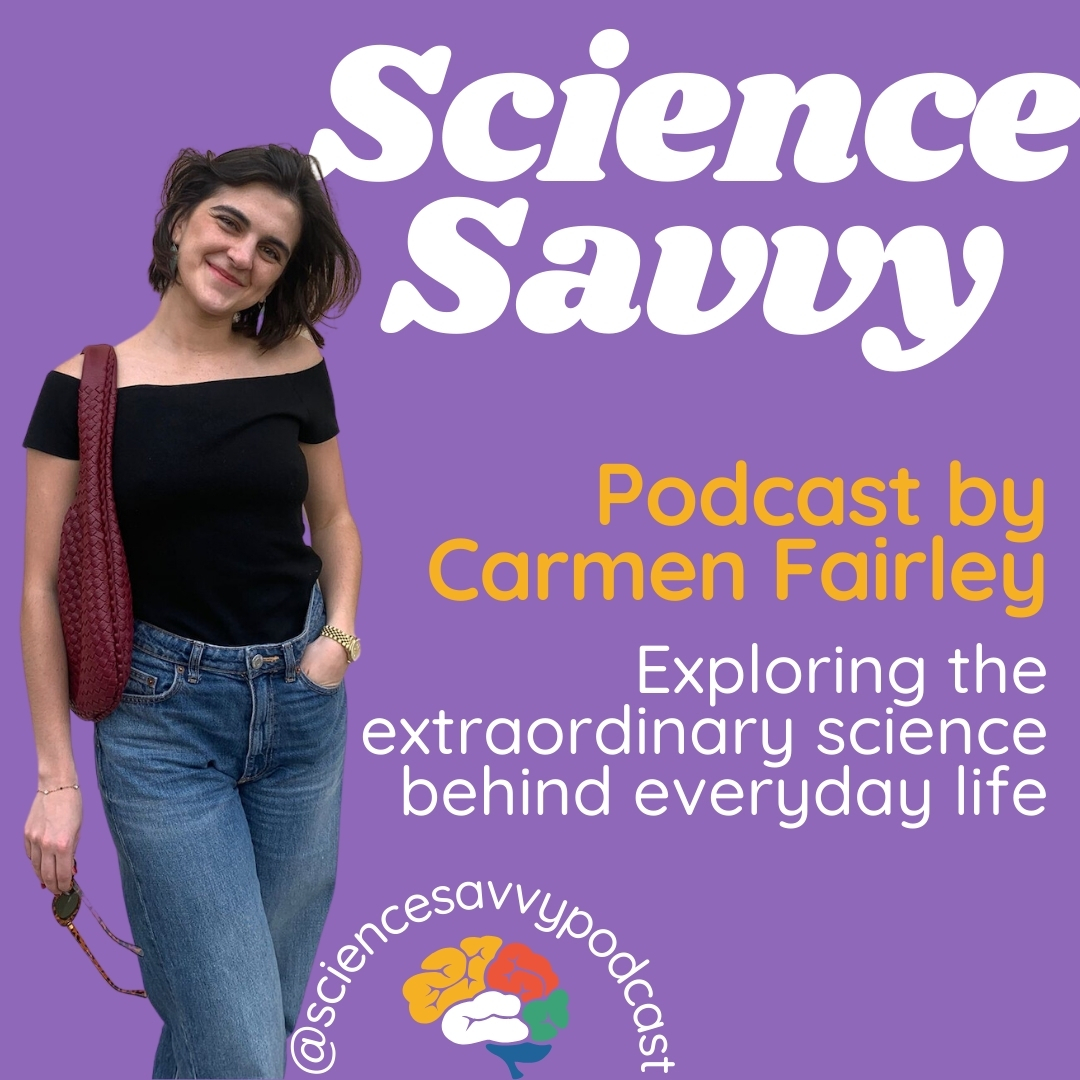
Welcome to the Consciousness episode, part of Science Savvy with Carmen. In this episode, I explore what it really means to be conscious and how self-awareness shapes who we are. With my background in pharmacology and biomedical engineering, I break down the science behind consciousness and unpack how it shows up in your daily life.
This episode covers everything from classic philosophical ideas like Descartes’ “I think, therefore I am” to modern neuroscience frameworks such as Crick’s Astonishing Hypothesis and Tononi’s information integration theory. We explore how brain chemistry, genetics, and personal experience come together to influence identity, self-esteem, and the feeling of being a self at all. Whether you’re curious about how the brain creates your sense of self or interested in the science behind awareness and emotion, this episode offers clear and engaging insights grounded in real research.
Science Savvy helps you understand the systems shaping your thoughts, health, and behavior. If you're ready to explore your body and brain with a little more clarity, you're in the right place.
Further reading and references:
Crick, F. (1994). The Astonishing Hypothesis: The Scientific Search for the Soul. Scribner.
Chalmers, D. J. (1995). Facing up to the problem of consciousness. Journal of Consciousness Studies, 2(3), 200-219.
Tononi, G. (2004). An information integration theory of consciousness. BMC Neuroscience, 5(42).
Koch, C., Massimini, M., Boly, M., & Tononi, G. (2016). Neural correlates of consciousness: progress and problems. Nature Reviews Neuroscience, 17(5), 307-321.
Northoff, G., Heinzel, A., de Greck, M., Bermpohl, F., Dobrowolny, H., & Panksepp, J. (2006). Self-referential processing in our brain. NeuroImage, 31(1), 440-457.
Lieberman, M. D., & Eisenberger, N. I. (2009). Pains and pleasures of social life. Science, 323(5916), 890-891.
Panksepp, J. (1998). Affective Neuroscience: The Foundations of Human and Animal Emotions. Oxford University Press.