
Science History Podcast
105 episodes — Page 3 of 3
S1 Ep 5Episode 5. Explorers and Extinction in Hawaii: Dan Lewis
Today we are exploring natural history investigations in the Hawaiian archipelago. My guest, Dan Lewis, is a research professor of history at Claremont Graduate University and the Dibner Senior Curator of the History of Science and Technology at the Huntington Library. Today's podcast is coincident with the publication of Dan's new book, entitled: Belonging on an Island. Birds, Extinction, and Evolution in Hawaii, published by Yale University Press.
S1 Ep 4Episode 4. Finding Pluto: Kevin Schindler and Will Grundy
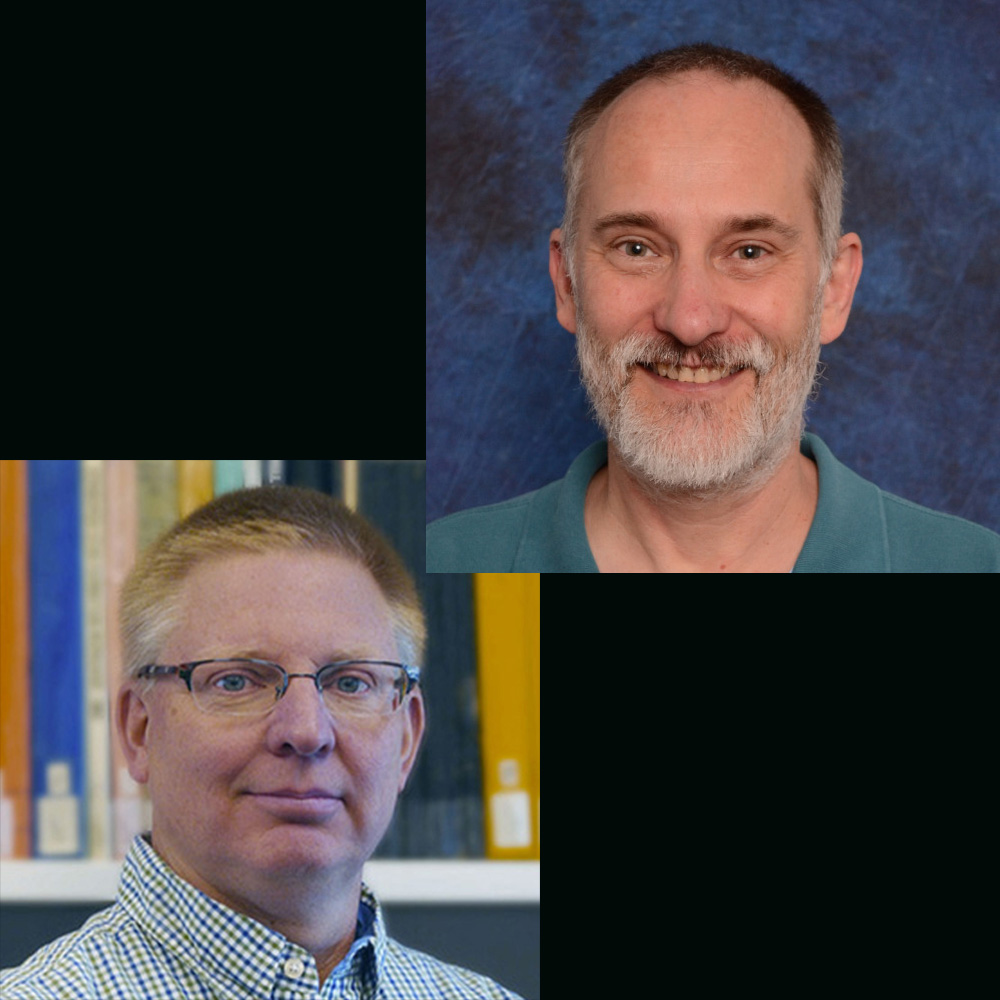
The discovery and subsequent study of Pluto has captivated the public for nearly a century. Even the question of whether Pluto should be categorized as a planet or a dwarf planet has stirred passionate debate, but the implications of discoveries related to Pluto go far beyond the identification of an icy world at the outer edge of the solar system. My guests today are Kevin Schindler and Will Grundy, both of the Lowell Observatory in Flagstaff, Arizona, where Pluto was discovered. Kevin is a historian and Will is a planetary scientist, and the release of this episode of the Science History Podcast coincides with the publication of their new book entitled, Pluto and Lowell Observatory: A History of Discovery at Flagstaff, published by the History Press.

S1 Ep 3Episode 3. U.S. Congressional Attacks on Science: Melinda Baldwin and Josh Shiode
Attacks on science and scientists have been a hallmark of the Trump administration, but such attacks emanating from the U.S. federal government are not new, nor are they restricted to one political party or one branch of government. The best known of such attacks came from Bill Proxmire, who served in the Senate as a Democrat representing the state of Wisconsin from 1957-1989. Proxmire achieved national recognition with his monthly Golden Fleece Awards, in which he mocked what he considered to be wasteful government spending. After Proxmire retired from the Senate, other members of Congress took over the job of calling out what they saw as wasteful government spending on science in their own so-called wastebooks. My first guest is Melinda Baldwin, who comments on the history of the Golden Fleece Award and subsequent wastebooks. My second guest is Josh Shiode, who comments on the history of an award designed to celebrate science - the Golden Goose Award.

S1 Ep 2Episode 2. Nuclear Weapons and the Cold War: Jose Goldemberg and Frank N. von Hippel
The possibility that world annihilation rests with the twitching fingertips of a dictator in North Korea and a narcissist in Washington motivated me to focus the second science history podcast on nuclear disarmament. As a bonus, we also discuss renewable energy, another fitting topic at a time when the United States stands alone as the only country in the world that is withdrawing from the Paris Agreement on Climate Change. My first guest is Jose Goldemberg, a physicist who has played a central role in the development of Brazilian science and policy for half a century. Jose's comments are put into the historical perspective of Cold War events by my second guest, Frank N. von Hippel, a professor and co-director of the Program on Science and Global Security at Princeton University and the Woodrow Wilson School of Public and International Affairs.

S1 Ep 1Episode 1. Endocrine Disruption: Pete Myers
My guest Pete Myers has spent the past 30 years calling media attention to findings about toxic chemicals, while the industry producing those chemicals has worked to discredit the science and scientists involved. In the 1990s, Pete helped to establish the field within toxicology known as endocrine disruption. Since then, he has relentlessly brought the findings of this field into public view. It turns out that many chemicals are toxic because they disrupt the body's normal hormonal processes, hence the term endocrine disruption. Exposure to many of these chemicals in early development can cause diseases later in life. This includes diseases that people often associate with chemical exposure, such as cancer, as well as other problems such as diabetes, obesity, and infertility. The science of endocrine disruption, and its implications for humans and wildlife, matured into its own field of study in the 1990s, and Pete Myers was, and is, in the thick of it.