
Scale To Win with Dominic Monkhouse
377 episodes — Page 2 of 8
S2 Ep 320E320 | How to Win the War on Talent & Get Through Any Crisis with Jade Green
SummaryIn this conversation, Jade Green discusses sustainable business growth through effective recruitment strategies. She emphasises the importance of understanding client needs, creating attractive job descriptions, and nurturing new hires. The discussion also covers the significance of company culture, purpose, and values in attracting and retaining top talent. Jade shares insights on the war for talent, interviewing techniques, and the ideal recruitment process, along with recommended readings for further understanding of these concepts.TakeawaysSustainable business growth requires fixing people problems.There is always a war for A-plus players in the job market.Understanding the job to be done is crucial for recruitment.Selling the opportunity to candidates is essential.Culture is caught, not taught; leaders must model desired behaviors.What you permit in your organisation, you promote.Nurturing new hires is key to their success and retention.Defining purpose, mission, and values helps attract the right talent.An attractive employer brand is vital for recruitment success.Effective interviewing techniques can reveal a candidate's true potential.Chapters(00:00) Introduction to Sustainable Business Growth(02:53) The War for Talent(05:47) Understanding Client Needs in Recruitment(09:04) The Importance of Job Descriptions(11:55) Recruitment Challenges and Solutions(15:08) Interviewing Techniques for Success(18:01) Creating an Attractive Employer Brand(20:54) Executive Recruitment Strategies(24:10) The Ideal Recruitment Process(26:54) Nurturing New Hires(30:03) Defining Purpose, Mission, and Values(32:57) The Role of Culture in Recruitment(36:10) Recommended Reading for Recruitment SuccessAbout Jade GreenAs a transformational teacher, best selling author, global speaker, and adventurer, Jade has built an international reputation as a hard-charging, rule-breaking, serial entrepreneur and high performance coach. As a certified trainer and facilitator for Mindvalley and The Genius Group (Entrepreneur Resorts/Entrepreneurs Institute/GeniusU), Jade combines world class content and methodologies with two decades of experience building businesses. Among other accolades, she has been honoured as one of StartUp Daily's Top 50 Women Entrepreneurs Under 40, received two Bronze International Stevie Awards for Women in Business, and her Search Firm, Velocity Consulting, was the very first business to receive investment from The Entourage Growth Fund.Follow Jade GreenWebsiteLinkedInInstagramFacebook YoutubeSpotifyXMentioned in this episode:Get Mind Your F**king Business
S2 Ep 319E319 | From Know-It-Alls to Learn-It-Alls with Dan Pontefract
SummaryIn this conversation, Dan Pontefract discusses his journey as a leadership strategist, focusing on the importance of emotional intelligence, culture change, and the impact of nurturing curiosity within organisations. He shares insights from his experience at TELUS, where he helped transform the corporate culture and introduced innovative programs like the TELUS MBA. The discussion emphasises the need for a unified leadership philosophy and the significance of treating employees with kindness and respect to foster a thriving workplace. In this conversation, Dominic Monkhouse reflects on the evolution of corporate culture and leadership, emphasising the importance of emotional intelligence, collaboration, and a unified purpose within organisations. He discusses the identity crises faced by companies like Starbucks and Wells Fargo, highlighting the need for leaders to foster a culture of learning and development. Dominic also shares insights from his books and recent readings, advocating for a more human-centric approach to leadership and work-life dynamics.TakeawaysEmotional intelligence is crucial for effective leadership.Organisations often promote individuals without considering their EQ.Culture change requires a unified leadership philosophy.Learned helplessness can hinder organisational growth.Leaders should focus on developing their teams.A supportive work environment fosters collaboration and innovation.Work-life balance is not always achievable; it's about blooming.The canoe metaphor illustrates the need for aligned leadership.CEOs play a significant role in shaping organisational culture.Continuous learning is essential for personal and professional growth.Chapters(00:00) Building Bridges: The Journey Begins(03:14) Leadership Strategies: Transforming Organizations(05:54) Culture Change: Lessons from TELUS(09:11) The Importance of Emotional Intelligence in Leadership(11:52) Learned Helplessness: A Barrier to Growth(14:47) Nurturing Curiosity: The Key to Engagement(18:07) Creating a Unified Culture: The TELUS Leadership Philosophy(20:53) Measuring Success: Engagement and Performance Metrics(27:04) Reflecting on Leadership and Culture(29:00) The Identity Crisis of Corporations(31:22) The Importance of Emotional Intelligence in Leadership(33:42) Collaboration and Constructive Conflict(35:59) The Shift from Know-it-alls to Learn-it-alls(39:54) The Role of Leaders in Team Development(40:50) Exploring the Books of Dominic Monkhouse(44:30) Navigating Work-Life Dynamics(46:51) Recent Reads and Inspirations(49:39) Quickfire Questions and InsightsAbout Dan PontefractDan is an award-winning author, leadership strategist, culture change expert, and renowned keynote speaker. His books and keynotes are a great starting point for transforming your team or corporate culture into a competitive advantage.His five books include WORK-LIFE BLOOM, LEAD. CARE. WIN., OPEN TO THINK, THE PURPOSE EFFECT, and FLAT ARMY. WORK-LIFE BLOOM won the 2024 Axiom Business Book Gold Medal in the Leadership Category and is one of the Thinkers50 Top New Management Books for 2024.LEAD. CARE. WIN. won the 2022 Nautilus Book Awards Silver Medal in the Leadership/Business category. It was a short-list finalist for the 2021 getAbstract International Book of the Year. OPEN TO THINK won the 2019 getAbstract International Book of the Year and the 2019 Axiom Business Book Silver Medal winner in the Leadership Category.Dan has presented at four different TED events and also writes for Forbes and Harvard Business Review. Previously as Chief Envisioner and Chief Learning...
S2 Ep 318E318 | Lessons from Bad Managers with Ben Arendt
SummaryIn this conversation, Dominic Monkhouse and Ben Arendt, author of 'How to Suck Less as a Manager: A Practical Guide to Making Your Team Less Miserable Today', discuss the challenges and nuances of effective management and leadership. They explore the importance of understanding team members, adapting to change, and fostering a culture of trust and autonomy. The discussion also touches on the impact of leadership on employee wellbeing, the significance of company values, and the lessons learned from both good and bad management experiences. Arant advocates for a more empathetic approach to leadership, encouraging managers to connect with their teams and prioritise mental health and engagement.TakeawaysManagement is about continuous improvement, not perfection.Understanding your team's personal goals can enhance motivation.Mental wellbeing is crucial for productivity and engagement.Trust and autonomy are key to effective leadership.Company values should be authentic and practiced, not just stated.Not everyone is cut out for management roles.Effective communication can resolve conflicts and improve team dynamics.Leaders should invite skepticism and differing opinions to foster innovation.Self-awareness is essential for effective management.Leadership impacts employee wellbeing significantly.Chapters(00:00) Introduction to Management Insights(03:11) The Importance of Understanding Your Team(06:00) Adapting to Change and Mental Wellbeing(08:52) Trust and Autonomy in Leadership(12:13) The Role of Values in Company Culture(15:07) Learning from Bad Management Experiences(17:48) The Transition from Individual Contributor to Manager(21:08) The Impact of Leadership on Wellbeing(23:57) Effective Communication and Conflict Resolution(27:12) Final Thoughts and RecommendationsAbout Ben ArendtBen is the author of the Amazon best-selling “How To Suck Less as a Manager: A Practical Guide to Making Your Team Less Miserable Today!” and the founder of Depth Charge Consulting. Ben’s years in the US government, CEB, and Gartner shaped his approach to serving leaders and their organizations. Through these experiences, Ben has supported hundreds of executives around the C-Suite, empowering leaders to achieve their goals, whether double-digit growth, improved employee experiences, or successful transformation.At Depth Charge, Ben's two main customer groups include: Development-focused executives looking to improve manager quality at their organizationsGTM leaders seeking to improve sales efficacy, messaging, and commercial acumen.Industry/Sector Expertise: Technology (incl/ SaaS), Energy, Retail, Manufacturing, Government, Education, Healthcare, Insurance, Financial Services, Professional Services, BioTech/Pharma, NonprofitMentioned in this episode:Get Mind Your F**king Business
S2 Ep 317E317 | The Power of Owning the Flow of Information with Ted McKenna
SummaryThe conversation explores the concept of high-performing sales behaviour and the challenges faced by sales professionals in the current market. It delves into the importance of understanding buyer indecision and the four key behaviours that help overcome it. The conversation also touches on the role of persuasion in sales, the need for sellers to adapt to changing buyer behaviours, and the potential retirement of salespeople who are not effective in their roles. In this conversation, Ted McKenna and Dominic Monkhouse discuss the importance of establishing trust and expertise in the sales process. They emphasise the need for sellers to own the flow of information and demonstrate their knowledge and experience to buyers. They also explore different profiles of business developers, with the activator profile being the most successful. Ted shares his thoughts on success, the most significant risk he's taken, and the worst business advice he's received.TakeawaysHigh-performing sales behaviour is defined as the top 20% of performers in a company, and it is important to study their behaviour to replicate their success.Buyer indecision is a common challenge in sales, and it is driven by fears such as options overload, analysis paralysis, and fear of failure.Sellers should be cautious about using persuasion techniques when buyers are indecisive, as it can backfire and make the situation worse.To help buyers overcome indecision, sellers should focus on understanding the depth of indecision, making firm recommendations, limiting excessive exploration, and managing risk.The sales profession needs to evolve and keep pace with changing buyer behaviours and preferences.There is still a need for salespeople, as buyers rely on them for guidance, assurance, and personalised recommendations. Establishing trust and expertise is crucial in the sales process.Sellers should own the flow of information and demonstrate their knowledge and experience to buyers.The activator profile is the most successful in business development.Success is measured by doing right by the people you love and finding joy in your work.Trying to be all things to all people is not effective in business.Chapters(00:00) Introduction to High-Performing Sales(02:53) Defining High Performance in Sales(06:04) The Role of Salespeople in Modern Buying(09:05) Understanding Buyer Indecision(11:48) The Jolt Effect and Overcoming Indecision(18:00) Key Behaviors of Successful Sellers(24:11) The Activator Advantage in Sales(29:56) Professional Services and Selling Dynamics(36:00) Books and Resources for Sales Professionals(41:49) Personal Insights and Closing ThoughtsAbout Ted Mckenna Ted McKenna is one of the world's leading experts in sales, business development, and customer experience and a co-author of the bestselling book The JOLT Effect: How High Performers Overcome Customer Indecision and the upcoming book The Activator Advantage: What Today's Rainmakers Do Differently (April 2025).Mentioned in this episode:Get Mind Your F**king Business
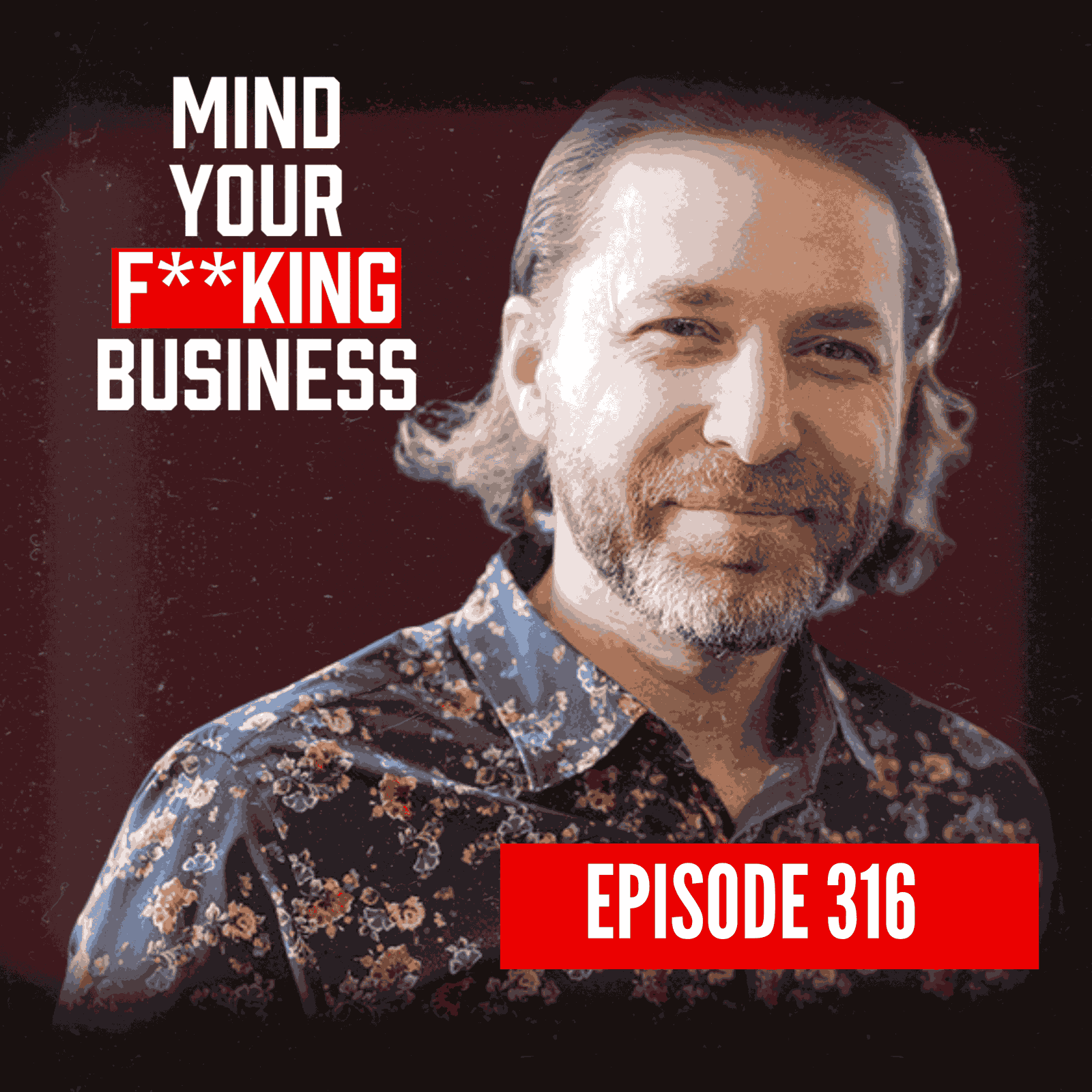
S2 Ep 316E316 | *special* Founders' Health: A New Approach to Well-Being with Dr Jack Kreindler
Physician, physiologist, researcher, explorer, serial technology entrepreneur and Founder & CEO of Well Founded Dr. Jack Kreindler shares his unique journey as both a physician and technologist, discussing the evolution of medicine through technology, the importance of teamwork in extreme environments, and the insights gained from his South Pole expedition. He emphasises the significance of gender differences in endurance and collaboration, and introduces a health program designed for founders to enhance their well-being and performance. The discussion also touches on future innovations in health and the role of technology in improving medical practices.takeawaysDr. Jack's journey began at a young age with a passion for technology.The intersection of medicine and technology is crucial for future practices.Longevity is a rebranding of preventive and lifestyle medicine.Women often outperform men in endurance and teamwork in extreme conditions.Team dynamics play a significant role in success during challenging expeditions.The South Pole expedition provided insights into human performance under stress.Founders' health is increasingly recognised as vital for business success.The six-month health program for founders is designed for maximum impact.Open sourcing the methodology allows broader access to health insights.Future innovations in health may involve AI and human collaboration.Chapters(00:00) Introduction to Dr. Jack and His Journey(03:07) The Intersection of Medicine and Technology(05:47) Exploring Longevity and Preventive Medicine(09:03) Gender Differences in Endurance and Team Dynamics11:54) Insights from the South Pole Expedition(15:12) The Importance of Teamwork in Extreme Conditions(18:06) Founders' Health Program and Its Impact(20:59) Future Directions and Innovations in HealthAbout Dr Jack KreindlerPhysician, physiologist, serial entrepreneur, public speaker, and recently the mind behind The End of Ageing TedxLondonSalon, Dr Jack Kreindler has an impressive track record. I interviewed Jack at his ‘Centre for Health and Human Performance’ lab on Harley Street, an underground physiology and sports medicine boutique with a spa-like feel – filled with bikes, cardio machines and high-spec monitoring equipment.CHHP is for those curious about their physiology – whether to optimise self-management of a chronic condition, enable elite sports performance or improve everyday functioning. I’m told the CHHP team treat the very sickest patients and athletes alike, training them to achieve their best possible physiological outcomes.Sentrian Inc., a CHHP spin-out, is one of Jack’s latest technology projects. Sentrian is a cloud-based Remote Patient Intelligence company that aims to leverage the biosensor and machine learning revolutions to detect deterioration in patients’ health, before they become acutely unwellMentioned in this episode:Get Mind Your F**king Business
S2 Ep 315E315 | The Role of Champions in Cultural Programs with Arnie Malham
Arnie Malham, founder of CJ Advertising and Legal Intake Professionals, discusses the importance of workplace culture and the value of reading in personal and professional growth. He shares his experience with building a strong culture in his own companies and the impact it had on employee satisfaction and performance. Arnie also introduces the concept of the Better Book Club, a program he developed to encourage reading and personal development within organisations. He emphasises the role of leadership in shaping culture and provides a framework for creating a positive and thriving work environment. Arnie Malham discusses the importance of creating a strong company culture and shares insights on how to build and maintain it. He emphasises the need for leaders to prioritise their team's growth and development, and to be deliberate in shaping the culture they want. Arnie suggests giving cultural programs to champions within the organisation, rather than relying solely on HR or top leadership. He also highlights the significance of celebrating milestones and creating a history of success within the company. Arnie shares his own experiences and lessons learned from running his company for 10 years and offers book recommendations for further reading on culture and leadership.takeawaysWorkplace culture reflects leadership and is crucial for employee satisfaction and performance.Reading is a valuable tool for personal and professional growth.The Better Book Club is a program that promotes reading and personal development within organisations.Leadership plays a key role in shaping and maintaining a positive work culture.A strong culture is built on core values, consistent actions, and a focus on growth and development. Leaders should prioritise the growth and development of their team members to create a strong company culture.Cultural programs should be led by champions within the organisation, rather than relying solely on HR or top leadership.Celebrating milestones and creating a history of success within the company is important for building a positive culture.Arnie shares his own experiences and lessons learned from running his company for 10 years.Book recommendations for further reading on culture and leadership include 'Double Double' by Cameron Harold, 'Uncontainable' by Kip Tindell, and 'Find Your Yellow Tux' by Jesse Cole.Chapters(01:10) Arnie's Expertise in Workplace Culture(03:13) The Better Book Club(06:25) Arnie's Background and Transition to Coaching(10:11) Target Audience and Pain Points(12:07) Arnie's Background and Introduction(19:16) Arnie's Businesses: CJ Advertising and Legal Intake Professionals(21:22) Creating a Strong Culture(25:46) Arnie's Framework for Building a Great Culture(28:08) Leadership's Role in Shaping Culture(28:46) Prioritising Growth and Development for a Strong Company Culture(30:00) The Role of Champions in Cultural Programs(36:23) The Importance of Onboarding and Checklists(41:10) Creating a Culture of Celebration and Milestones(45:20) Lessons Learned from Running a Company for 10 YearsAbout Arnie MalhamArnie Malham is an award-winning CEO/founder, 8-figure entrepreneur and best-selling author who helps progressive leaders create engaging and sustainable cultures within their organizations.With more than 20 years as a successful entrepreneur, Arnie has founded and sold multiple businesses, including his most recent sale of a prominent advertising firm producing more than $60M in annual revenue. Through employing thousands of team members across three different companies, he has implemented simple, yet effective methods to create remarkable and sustainable cultures.Arnie is an international speaker who has...
S2 Ep 314E314 | The Power of Customer-Centric OKRs with Josh Seiden & Jeff Gothelf
SummaryJosh Seiden & Jeff Gothelf join Dominic Monkhouse to talk about one of his favourite growth tools - OKRs (Objectives and Key Results)The discussion dives deep into the world of OKRs, highlighting their critical role in goal-setting and driving organisational alignment. The guests introduce their latest book, Who Does What By How Much?, which offers a fresh, customer-focused take on OKRs. They stress the importance of shifting from output-driven goals to outcome-based objectives that are tightly aligned with customer needs and behaviours. A key theme of the conversation is the delicate balance between Business as Usual (BAU) activities and the implementation of OKRs. This episode explores how OKRs should not only complement existing operations but also help steer an organisation’s strategy. They discuss the ideal timeframe for setting corporate OKRs, with an emphasis on quarterly check-ins and measurable key results that track progress throughout the year.The conversation also addresses practical challenges, such as fostering collaboration across teams and securing leadership buy-in, both of which are essential for successful OKR implementation. The speakers advise organisations to start small, gradually expand OKR adoption, and invest time and effort into their OKR process while still keeping an eye on BAU performance.In addition to their insights on OKRs, the guests share personal book recommendations and reflect on their own definitions of success, rounding out a rich discussion that not only offers practical advice but also broader perspectives on achieving meaningful outcomes in today's customer-driven world.TakeawaysOKRs should be customer-centric and focused on outcomes rather than outputs.Aligning goals with the needs and behaviours of customers leads to better products and services.Strategic goals should be set for a year, while tactical goals can be set on a quarterly or monthly basis.The conversation and alignment around OKRs should be a two-way process, involving input from all levels of the organisation.Flexibility and customisation are key in implementing OKRs, as each organisation's needs and context may vary. Set quarterly check-ins and key results that can be measured throughout the year.Prioritise customer-centric goals and focus on changing customer behaviour.Start small and gradually expand OKR implementation.Allocate time and effort to OKRs while maintaining business as usual metrics.Facilitate collaboration and foster leadership buy-in for successful OKR implementation.Continuously learn and acquire new skills to enhance personal and professional growth.Chapters(03:13) The Power of Customer-Centric OKRs(07:19) Balancing BAU and OKRs(13:53) The Role of Strategy in OKR Implementation(25:15) Setting the Timeframe for Corporate OKRs(30:40) Setting Quarterly Check-ins and Measurable Key Results(32:14) Prioritising Customer-Centric Goals for Changing Customer Behavior(41:40) Challenges of Collaboration and the Role of Leadership Buy-in(47:00) Starting Small and Gradually Expanding OKR Implementation(49:16) Allocating Time and Effort to OKRs while Maintaining Business as Usual Metrics(56:01) Continuous Learning and Personal Growth for SuccessAbout Josh SeidenJosh Seiden has been creating great technology products for more than 20 years. A UX design leader, Josh has worked in hardware and software, consumer and enterprise, mobile, web, and desktop. He was a Principal at Neo and,...
S2 Ep 313E313 | Igniting Leadership: Scaling Startups with Martin Gonzalez, Author of The Bonfire Moment
Martin Gonzalez, Principal of Organizational Leadership Development at Google, discusses the challenges and importance of people and organisational dynamics in startups. He shares insights from his book, The Bonfire Moment, and the workshops he runs for founders. The workshops focus on addressing the people factor in startups, including co-founder conflict, team culture, and building the right management team. Martin emphasises the need for founders to evolve from being chief bricklayers to chief architects as their companies grow. He also explores the question of whether founders should remain as CEOs or bring in professional CEOs. The conversation explores the challenges of scaling a startup and maintaining an entrepreneurial spirit. It discusses the importance of codifying the founder's spirit without stifling innovation and the need for continuous self-reflection and self-awareness. The workshop described in the conversation focuses on creating clarity, having tough conversations, and addressing sources of conflict within the leadership team. The conversation also touches on the role of trust in team dynamics and the potential pitfalls of overemphasising trust-building activities. Who is Martin Gonzalez Martin Gonzalez is the creator of Google’s Effective Founders Project, a global research program that decodes the factors that enable startup founders to succeed. He also works closely with Google’s engineering and research leaders on org design, leadership, and culture challenges. Martin is a frequent lecturer at Stanford, Wharton, and INSEAD, and has advised leaders across the Americas, Europe, Africa, and Asia. He studied organisational psychology and behavioural science at Columbia University and the London School of Economics.TakeawaysThe people factor is a major reason for startup failure, and founders often struggle with addressing people and organizational challenges.Founders need to evolve from being chief bricklayers to chief architects as their companies grow.Building the right team culture and management team is crucial for startup success.There is a need for more research on how founders can remain as CEOs and lead their companies through the scale-up phase. Scaling a startup while maintaining an entrepreneurial spirit is a challenge.Codifying the founder's spirit can lead to a company of rule followers and a loss of entrepreneurial spirit.Continuous self-reflection and self-awareness are essential for effective leadership.Creating clarity, having tough conversations, and addressing sources of conflict are crucial for a healthy leadership team.Trust-building activities may not always address the root causes of trust issues.Recommended books for further reading: 'The Founder's Dilemmas' and 'The Hard Thing About Hard Things'.Chapters(00:29) Selective Upgrades and Performance Outcomes(03:59) The Need to Change the World of Work(08:04) Trusting Data Over Intuition(13:07) The People Factor in Startup Failure(15:31) Founder Obsession with Product and Lack of Tools for People Dynamics(18:39) The Importance of Bullshit as a Founder(23:24) Founder CEOs and the Transition to Chief Architect(26:03) The Impact of Founder CEOs on Business Success(26:43) Maintaining an Entrepreneurial Spirit(28:08) The Challenge of Codifying the Founder's Spirit(29:49) Creating Clarity and Addressing Conflict(37:30) The Bullshit Circle and Real Talk(45:38) Learning Leadership from Cult Leaders(54:30) The Myth of External EnemiesAbout Martin GonzalezPrincipal of AI Talent Development at Google, Martin was previously a management consultant with the...
S2 Ep 312E312 | Making Dyslexia Your Entrepreneurial Superpower with Jamie Waller
SummaryThe conversation explores the topic of dyslexia and its connection to entrepreneurship. Jamie Waller, The dyslexic entrepreneur and advocate, shares his insights and experiences. He discusses the challenges faced by dyslexic individuals in the education system and society, as well as the unique strengths and traits they possess. The conversation also touches on the importance of changing the narrative around dyslexia and empowering individuals with dyslexia to pursue their goals. Waller emphasises the need for support and understanding, both in education and the business world. The conversation concludes with a discussion on Waller's upcoming adventures, including a trip to space. Jamie Waller, The Dyslexic Entrepreneur, discusses his plans to take a two-year trip around the world with his children and the challenges of balancing work and family life. He shares his experience as a serial entrepreneur and investor, highlighting the importance of curiosity and being open to new ideas. Waller also talks about his struggles with sleep due to ADHD and offers tips for managing sleep challenges. He emphasises the need for kindness in business and challenges the myth that you have to be ruthless to succeed. Waller recommends the books 'Good to Great' and 'Strength to Strength' for personal and professional development.TakeawaysDyslexia is a learning difference that affects individuals in various ways, but it is not a measure of intelligence.Dyslexic thinkers often possess unique strengths, such as explorative thinking and a strong sense of justice.Entrepreneurship can be a natural fit for dyslexic individuals due to their risk-taking mindset and ability to think outside the box.Changing the narrative around dyslexia is crucial to empower individuals and promote understanding and support.Supporting dyslexic individuals in education and the business world can lead to positive outcomes and opportunities for success. Balancing work and family life can be challenging, but it's important to make time for experiences and adventures with loved ones.Curiosity and openness to new ideas are key traits for entrepreneurs and investors.Managing sleep challenges, especially for individuals with ADHD, can be aided by supplements like GABA and creating a conducive sleep environment.Kindness is an important quality in business; success does not require ruthlessness.Planning for life after exit is crucial for entrepreneurs to maintain purpose and fulfilment.Chapters(03:25) Exploring the Connection Between Dyslexia and Entrepreneurship(08:27) Changing the Narrative: Empowering Dyslexic Individuals(10:28) Unique Strengths of Dyslexic Thinkers(19:37) Supporting Dyslexic Individuals in Education and Business(25:45) Adventures and Challenges: Dyslexia and Personal Growth(31:26) Taking a Two-Year Trip Around the World(35:00) The Curiosity and Openness of an Entrepreneur(38:03) Managing Sleep Challenges with ADHD(46:55) The Importance of Kindness in Business(52:09) Planning for Life After ExitAbout Jamie WallerJamie was born dyslexic, with ADHD, colour blind, poor and raised in Bethnal Green, East London. Jamie benefited from the supportive efforts of the Imps Motorcycle Display Team and the Prince’s Trust, both charities strive to improve the lives of underprivileged young people, and they remain dear to Jamie’s heart. Upon retiring from the Imps after eleven years of service at age sixteen, Jamie started his first business. Since then, he has launched and sold multiple businesses throughout the world demonstrating the limitless power of thinking differently as a dyslexic entrepreneur. Jamie is the Founder and past Chair of the Prince’s Trust Enterprise Network, sponsor of the
S2 Ep 311E311 | The Importance of Creating Amazing Customer Experiences with James Ashford
SummaryJames Ashford shares his entrepreneurial journey and the importance of creating amazing customer experiences. He emphasises the need for systemization and continual improvement to deliver exceptional service. Dominic Monkhouse highlights the significance of sales in business success and the fear of rejection that holds many businesses back from increasing their prices. They discuss the value of simplifying the sales process and closing deals on the spot. James also shares his experience with Go Proposal, a pricing proposal software for accountants, and how it helped streamline the sales process. James Ashford shares his experience of building and selling his software business, GoProposal, and the importance of creating a sales culture and simplifying the sales process. He emphasises the need for businesses to focus on providing a great customer experience and highlights the value of being exit-ready. James also discusses the challenges he faced after selling his business and the importance of understanding the true reason why entrepreneurs do what they do.TakeawaysCreating amazing customer experiences is crucial for business success.Systemisation and continual improvement are key to delivering exceptional service.Many businesses fear increasing their prices due to a lack of self-worth and fear of rejection.Simplifying the sales process and closing deals on the spot can lead to faster business growth.Go Proposal, pricing proposal software, helps streamline the sales process for accountants. Instead of relying solely on a sales team, focus on creating a sales culture in your business.Simplify the sales process to provide a better customer experience and increase efficiency.Be exit-ready by systemising your business, having a playbook, and extracting yourself from day-to-day operations.Understand the true reason why you do what you do as an entrepreneur and honour that passion.Surround yourself with positivity and block out negativity to maintain a positive mindset.Chapters(02:51) Creating Amazing Customer Experiences(10:04) Overcoming the Fear of Rejection and Increasing Prices(19:07) Simplifying the Sales Process for Faster Business Growth(22:50) Streamlining the Sales Process for Accountants with Go Proposal(29:17) Creating a Sales Culture and Simplifying the Sales Process(35:55) The Value of Being Exit-Ready(51:51) Understanding the True Reason Why Entrepreneurs Do What They DoMentioned in this episode:Get Mind Your F**king Business
S2 Ep 310E310 | Adapting as a Founder During Growth with Renan de Villiers
SummaryRenan de Villiers, CEO and co-founder of OSS Ventures, discusses his niche in B2B SaaS for manufacturing. He explains that manufacturing accounts for 25% of the world GDP and highlights the importance of software in factories. Renan shares his experience as a former factory director and how it led him to start a venture builder and investment firm focused on SaaS B2B for manufacturing. He emphasises the challenges of scaling executive talent in mature companies and the need for better incentive packages in the VC world. Renan also discusses the state of the economy, de-globalisation, and the future of manufacturing. The conversation explores the importance of hardware in tech companies, the challenges of scaling businesses, and the myths and realities of venture capital. It also delves into the personal journey of the guest and his sources of inspiration.takeawaysManufacturing accounts for 25% of the world GDP, making it a significant niche for B2B SaaS.Scaling executive talent is a challenge in mature companies, and better incentive packages are needed in the VC world.The US is decoupling from China, and there is a trend of reshoring and nearshoring in manufacturing.Energy and chip production are becoming increasingly important in the manufacturing industry. Hardware will play a significant role in the success of tech companies in the future.Scaling a business involves two major breaking points: transitioning from founder-led chaos to a more structured approach and managing the challenges of communication and processes as the company grows.Founders need to be willing to adapt and change as their company scales, and sometimes, that means letting go of the chaotic energy that fuelled the early stages.Ideas do matter in business, but they are nothing without execution.Success in life is measured by the impact you have on others.Recommended books: 'No Rules Rules' by Reed Hastings and 'Hunger, Famine, and Wealth' by London philosopher.Recommended podcast: 'Revenue Builder' for insights on revenue generation in B2B SaaS.Chapters(00:00) Introduction and Niche in B2B SaaS for Manufacturing(02:11) Scaling Executive Talent in Mature Companies(06:21) Challenges in Incentive Packages for VC-backed Companies(13:22) The Decoupling of the US from China(24:07) The Importance of Energy and Chip Production in Manufacturing(25:55) The Role of Hardware in Tech Companies(30:25) Scaling Challenges and Breaking Points(32:17) Adapting as a Founder During Growth(39:37) The Importance of Ideas and Execution(45:22) Measuring Success in Life(49:08) Timeless Inspiration from 'Meditations'(49:53) Debunking the Myth: Ideas Do MatterMentioned in this episode:Get Mind Your F**king Business
S2 Ep 309E309 | Is Google Doomed? with Tim Cameron-Kitchen from Exposure Ninja
SummaryTim Cameron-Kitchen, founder of Exposure Ninja, discusses the impact of AI on search and the future of Google. He highlights the emergence of Chat GPT and TikTok as potential threats to Google's dominance. Google responded by integrating AI functionality into its search engine, including Search Generative Experience (SGE) and Perspectives. Tim's agency was one of the first to figure out how to optimize for SGE. However, Google's release of AI overviews, which provide generative AI answers to user queries, received negative feedback. Tim believes that while AI can potentially disrupt search, Google is adapting to stay relevant. In this conversation, Tim Cameron-Kitchen and Dominic Monkhouse discuss the future of search engines and the role of AI in marketing and business. They explore the impact of generative AI on search engine results and the challenges faced by new search engines in competing with Google. They also discuss the use of AI in business operations, such as using AI models to analyse documents and transcripts for better decision-making. The conversation touches on the importance of video presence in remote interviews and the significance of attention to detail in online interactions. Tim shares his favourite books and podcasts for learning and offers insights into measuring success in life.TakeawaysThe emergence of Chat GPT and TikTok poses potential threats to Google's dominance in search.Google has responded by integrating AI functionality into its search engine, such as SGE and Perspectives.Exposure Ninja was one of the first agencies to optimise for SGE and share the process with others.Google's release of AI overviews, which provide generative AI answers to user queries, received negative feedback.While AI has the potential to disrupt search, Google is adapting to stay relevant. Generative AI has the potential to revolutionize search engine results, but it has not yet posed a significant threat to Google's dominance.AI models like ChatGPT and Claude can be used to analyse documents and transcripts, providing tailored and fast results for complex queries.Video presence and attention to detail are crucial in remote interviews and online interactions.Success can be measured by the balance of health, family, and business, with a focus on avoiding regret in the future.Chapters(29:57) Threats to Google's Dominance(31:49) Negative Feedback on AI Overviews(34:04) Generative AI in Search Engine Results(36:16) The Dominance of Google and the Challenges Faced by New Search Engines(39:14) AI in Business Operations: Analysing Documents and Transcripts(46:02) The Importance of Video Presence and Attention to Detail in Remote Interviews(51:12) Recommended Books and Podcasts for Learning and Inspiration(54:26) Measuring Success: Health, Family, and BusinessMentioned in this episode:Get Mind Your F**king Business
S2 Ep 308E308 | Shifting from 'Me' to 'We': The Key to Effective Leadership with Kyle McDowell
Summary🎙️ Get ready for a transformative episode of the Mind Your F**king Business podcast with Dominic Monkhouse! This week, Dominic sits down with leadership guru Kyle McDowell, author of the revolutionary book, 'Begin With We'. Dive deep into their dynamic discussion on overturning traditional corporate hierarchies and embracing a principle-based leadership style that champions collaboration and authenticity.🌟 From Kyle's own radical shift from conventional management to leading with principles to tackling the pervasive challenges of toxic work cultures, this conversation is packed with insights. They explore the seismic impact of shifting from a 'me' to a 'we' mindset, underscore the importance of genuine connections within the C-suite, and dissect the destructive nature of office gossip.💡 Plus, don't miss Kyle's breakdown of the 10 cardinal principles of leadership that could redefine your approach to team dynamics and personal accountability. Learn why embracing vulnerability and authenticity isn't just good practice—it's essential for creating a culture of excellence and trust.🔥 Tune in as they reveal how true leadership means leading by example, owning your mistakes, and stepping up to challenges head-on. This isn't just another leadership discussion; it's a call to fundamentally change how you lead. TakeawaysLeadership principles are essential for creating high-performing teams and organizations.Collaboration is crucial in the C-suite and throughout the organization.There is often a disconnect between leaders' perceptions and the reality of their teams' experiences.Toxic work environments can have a detrimental impact on individuals and the overall success of the organisation.Creating a culture of excellence requires a focus on both internal and external service. Transitioning from a 'me' to a 'we' mindset in leadership is challenging but essential for building genuine connections with team members.Leaders should lead by example and avoid negative conversations about team members in their absence.The 10 principles of leadership outlined in 'Begin With We' include leading by example, taking action, owning mistakes, and embracing challenges.Relatability, authenticity, and vulnerability are key in building trust within teams.Leaders should focus on outcomes rather than activity and be open to challenging and being challenged by team members.Attention to detail is crucial for delivering exceptional experiences and establishing a strong brand.Chapters(02:58) The Power of Leadership Principles(07:46) Collaboration in the C-suite(13:20) Bridging the Disconnect Between Leaders and Teams(21:33) Creating a Culture of Excellence(25:36) The Challenge of Transitioning to a 'We' Mindset(27:15) The Impact of Gossip and the Importance of Leading by Example(31:33) Creating a Culture of Vulnerability and Support(37:11) Focusing on Outcomes and Avoiding Busyness(38:40) Challenging and Being Challenged for Growth(39:37) The Power of Attention to DetailMentioned in this episode:Get Mind Your F**king Business
S2 Ep 307E307 | Managers are accidental, right? with John DiJulius
Dominic Monkhouse explores the importance of intentional leadership and creating a strong company culture with John DiJulius from The DiJulius GroupA recent survey of 4,500 UK workers by the Chartered Management Institute found that 82% of those in management positions are 'accidental managers', and have little training or qualifications. The problem is that to be an effective leader you need to develop a whole new set of skills and competencies. John and Dominic highlight the need for formal training for managers and the lack of training in areas such as difficult conversations and interviewing. Their conversation also delves into the concept of purpose in the workplace and the changing attitudes towards hustle culture. The recruitment process is discussed, emphasising creating a unique and engaging experience for candidates. The importance of knowing employees' aspirations and helping them achieve their goals is also emphasised. In this conversation, John DiJulius and Dominic Monkhouse discuss the importance of encouraging and believing in others to help them reach their full potential. They also talk about the power of positive thinking, the impact of personal experiences on leadership, and the value of creating a remarkable customer experience. John shares his personal journey of overcoming challenges and how he has used his experiences to inspire and motivate others. They also touch on the concept of making price irrelevant and the importance of treating customers and employees based on their individual needs.Keywordsleadership, company culture, formal training, difficult conversations, interviewing, purpose, hustle culture, recruitment process, employee aspirations, encouragement, belief, potential, positive thinking, leadership, customer experience, personal journey, challenges, price irrelevant, individual needsTakeawaysLeaders should be intentional and create a strong company culture.Managers should receive formal training, especially in areas like difficult conversations and interviewing.The concept of purpose in the workplace is important for all generations.The recruitment process should be unique and engaging to attract top talent.Knowing employees' aspirations and helping them achieve their goals is crucial for employee retention. Encouraging and believing in others can help them achieve more than they ever thought possible.Positive thinking and a strong belief in oneself can overcome challenges and lead to success.Creating a remarkable customer experience is essential for business growth and customer loyalty.Treating customers and employees based on their individual needs is more effective than treating them how you would like to be treated.Making price irrelevant by focusing on the value and experience you provide can lead to loyal customers and increased sales.Chapters(00:00) Creating an Intentional Company Culture(09:38) The Importance of Formal Training for Managers(13:16) Redefining Purpose in the Workplace(23:43) Supporting Employee Aspirations for Long-Term Retention(31:13) Unlocking Potential: The Power of Encouragement and Belief(36:45) Overcoming Personal Obstacles: A Journey of Resilience(43:28) Creating Remarkable Customer Experiences for Business Growth(49:08) Making Price Irrelevant: The Value of Customer ExperienceMentioned in this episode:Get Mind Your F**king Business
S2 Ep 306E306 | The Impact of AI on Innovation & Value Creation and the Importance of Regulation with Alex Osterwalder
SummaryThe conversation explores three main topics: business model resilience, AI, and environmental sustainability. The accessibility and democratisation of AI tools have made a significant impact on innovation and value creation. AI has the potential to propose better value propositions and even replace human managers. The integration of AI tools in consulting processes has resulted in faster results and improved efficiency. However, the development of better value propositions through the integration of different data sources is still a work in progress. In this conversation, Alex and Dominic discuss the potential of AI in innovation and business processes. They explore the idea of using AI to automate customer interviews and the impact it can have on the speed and efficiency of innovation. They also touch on the importance of environmental sustainability and the need for new business models that harmonize profit and impact. The conversation concludes with a discussion on the challenges and opportunities of AI and the importance of regulation.Keywordsbusiness model resilience, AI, environmental sustainability, accessibility, democratisation, innovation, value creation, value propositions, AI tools, consulting processes, data sources, AI, innovation, business processes, customer interviews, speed, efficiency, environmental sustainability, business models, profit, impact, regulationTakeawaysThe accessibility and democratization of AI tools have revolutionized innovation and value creation.AI has the potential to propose better value propositions and even replace human managers.The integration of AI tools in consulting processes has resulted in faster results and improved efficiency.The development of better value propositions through the integration of different data sources is still a work in progress. AI can greatly speed up the innovation process by automating tasks like customer interviews.Businesses need to embrace environmental sustainability and find new business models that harmonise profit and impact.Financial sustainability and resilient revenue models are crucial for the success of a business.Experimentation with pricing and revenue streams is essential for business growth.The rapid pace of change in AI presents both challenges and opportunities for entrepreneurs and innovators.Regulation is necessary to ensure the responsible and ethical use of AI.Chapters(02:22) The Impact of AI on Innovation and Value Creation(05:10) The Potential of AI in Proposing Value Propositions(10:42) Challenges in Developing Better Value Propositions with AI(30:30) Harmonising Profit and Impact: The Future of Business Models(37:27) Financial Sustainability and Resilient Revenue Models(42:28) Experimentation with Pricing and Revenue Streams(44:19) The Challenges and Opportunities of AIAbout Alex OsterwalderAlex Osterwalder is ranked in the top 10 on the Thinkers50 list of management thinkers worldwide. He is passionate about simplifying the complex challenges that today's leaders face. Along with Yves Pigneur, he invented the Business Model Canvas and other practical tools, which are now used by millions of practitioners around the globe.Strategyzer, the company Alex co-founded, provides technology-enabled innovation services to leading organisations, including Colgate-Palmolive, MasterCard and Merck. Alex spends most of his time advising leaders on how to scale their innovation efforts and get results. They already have the assets but lack the organisational design and innovation culture.His books include Business Model Generation, Value Proposition Design, Testing Business...
S2 Ep 305E305 | The Power of Purpose and Action Taking Control of Your Own Life with Ken Rusk
SummaryKen Rusk, the blue-collar entrepreneur, shares his insights on achieving success and living your best life. He emphasises the importance of having a clear purpose and maximising every opportunity. Ken believes that anyone can be an entrepreneur or an intrapreneur as long as they have a clear vision and take action. He also discusses the significance of creating a culture that supports individual goals and fosters entrepreneurial thinking. Ken encourages people to be specific and actionable in their goals, and he shares his method of using visual representations to create a brochure for their ideal life. Ken Rusk discusses the importance of visualising and manifesting one's goals, the value of collaboration and support in achieving success, and the benefits of financial literacy and trade skills. He also shares insights on creating a positive work culture and the impact of giving back to the community. Ken emphasises the need for individuals to take control of their own lives and make responsible choices. He encourages young people to consider trade careers and challenges the societal pressure to pursue traditional college education. Ken's new book, 'Cool Boss,' focuses on creating a positive work environment and attracting entrepreneurial thinkers.Keywordsblue-collar entrepreneur, purpose, maximising opportunities, vision, action, culture, entrepreneurial thinking, goals, specific, actionable, visual representations, visualisation, manifestation, collaboration, support, financial literacy, trade skills, work culture, giving back, self-reliance, responsible choices, trade careers, college education, positive work environment, entrepreneurial thinkersTakeawaysHaving a clear purpose and maximizing opportunities are key to achieving success and living your best life.Anyone can be an entrepreneur or an intrapreneur as long as they have a clear vision and take action.Creating a culture that supports individual goals and fosters entrepreneurial thinking is crucial for business success.Being specific and actionable in your goals is essential for making progress and achieving desired outcomes.Using visual representations can help create a clear vision and motivate individuals to work towards their ideal life. Visualize and manifest your goals to bring them into your life.Collaboration and support from peers can help in achieving success.Financial literacy and starting early with saving can lead to a secure retirement.Consider trade careers as they offer high demand and good earning potential.Create a positive work culture by recognizing and valuing employees.Giving back to the community can bring personal fulfillment and success.Take control of your own life and make responsible choices.Challenge the societal pressure to pursue traditional college education.Create a work environment that attracts entrepreneurial thinkers.Ken's new book, 'Cool Boss,' focuses on creating a positive work culture.Sound Bites"Sometimes it doesn't necessarily matter what you do for a living, as much as it does what you do with what you do for a living.""I think a blue collar entrepreneur is someone that possesses probably nine or 10 characteristics, which we all have, but they're just driven by where they want to go in their life.""Surround yourself with entrepreneurial thinking, and your company will take off way further than you can take it yourself.""If I know my favourite colour, my favourite car, my favourite house, my favourite sport, my favourite hobby, my favourite spiritual moment, my favourite vacation, why am I not putting that out into the universe?""You can't build a puzzle without the box. The box is the vision, the picture, the end, the goal,...
S2 Ep 304E304 | Deescalating Conflicts: The Power of Effective Communication with David Dye & Karin Hurt
SummaryOne of Dominic's favourite recordings yet! The conversation with Karin Hurt and David Dye explores the topic of workplace conflict and the importance of having productive conversations. They discuss the fear and discomfort associated with conflict, the need for connection, clarity, curiosity, and commitment in resolving conflicts, and the power of using specific phrases to initiate and navigate these conversations. The conversation emphasises the positive aspects of conflict and the potential for growth and innovation that can result from addressing conflicts effectively. In this conversation, David Dye and Karin Hurt discuss the importance of de-escalating conflicts in the workplace and providing strategies for effective communication. They emphasise the power of phrases like 'tell me more' and 'I'm curious' to break the cycle of conflict and create a safe space for dialogue. They also highlight the significance of acknowledging emotions and using check-ins for understanding to ensure that everyone feels heard. The conversation explores the benefits of teams that handle conflict well, such as fostering innovation and creating a united front. David and Karin share personal anecdotes and recommend books like 'Tribes' by Seth Godin and '4000 Weeks' by Oliver Burkeman.Keywordsworkplace conflict, productive conversations, connection, clarity, curiosity, commitment, phrases, conflict resolution, workplace communication, deescalating conflicts, effective dialogue, acknowledging emotions, understanding, team dynamics, innovation, collaboration, leadershipTakeawaysConflict is not inherently negative; it is a difference of perspective that can lead to innovation and problem-solving.Having productive conversations about conflicts requires connection, clarity, curiosity, and commitment.Initiating conversations about conflicts can be uncomfortable, but it is necessary for growth and improvement.Using powerful phrases, such as 'Tell me more' and 'What would a successful outcome do for you?', can facilitate productive conversations about conflicts.Conflict resolution requires understanding and addressing all parties' underlying needs and motivations. Use phrases like 'tell me more' and 'I'm curious' to deescalate conflicts and create a safe space for dialogue.Acknowledge emotions and use check-ins for understanding to ensure that everyone feels heard.Teams that handle conflict well foster innovation and have a united front.Effective communication and collaboration are essential for successful conflict resolution.Recommended books: 'Tribes' by Seth Godin and '4000 Weeks' by Oliver Burkeman.Chapters(02:59) The Need for Productive Conflict Conversations(09:04) Connection and Clarity in Conflict Resolution(13:38) Curiosity and Commitment in Addressing Conflict(16:24) Using Powerful Phrases to Navigate Conflict Conversations(24:04) Deescalating Conflicts: The Power of Effective Communication(27:27) Creating a Safe Space for Dialogue: Strategies for Conflict Resolution(29:29) The Benefits of Teams that Handle Conflict Well(31:47) Innovation and Collaboration: The Role of Conflict in Driving Change(36:37) War Stories: Examples of Conflict Resolution(42:18) The Importance of Psychological Safety and Challenging the Status Quo(46:38) Unpopular Opinions and Worst Business AdviceMentioned in this episode:Get Mind Your F**king Business
S2 Ep 303E303 | The Importance of Having the Right People in your Team with Ruth Wageman
SummaryThis conversation between Ruth Wageman and Dominic Monkhouse delves into the critical elements of crafting high-performing teams.Ruth and Dominic discuss the challenges of working with leadership teams and the need for clear purpose and interdependence.Ruth talks about the ‘Six conditions for team effectiveness’, which include the essentials of creating a real team, clarity of team purpose, and a sense of team norms and values. The conversation highlights the importance of these conditions in driving team performance and the need for leaders to continuously revisit and adapt them. The third essential for building effective teams is having the right people. This means identifying the capabilities needed to achieve the team's purpose and finding individuals who can contribute those capabilities. It's important to have a team that is small enough to allow for effective collaboration and to have a diverse range of experience and perspectives. Collaborative skills are often overlooked but are crucial for effective teamwork. It's also important to create a supportive context for the team, including a sound structure for the work, supportive norms of conduct, and an organisational context that promotes teamwork.Keywords team effectiveness, high-performing teams, leadership teams, purpose, interdependence, team norms, team values, teamwork, collaboration, purpose, capabilities, small team, diversity, supportive context, sound structure, norms of conduct, organisational contextTakeawaysCreating a high-performing team requires clear purpose and interdependence.The six conditions for team effectiveness include creating a real team, clarity of team purpose, and a sense of team norms and values.Leaders need to continuously revisit and adapt the conditions for team effectiveness.Many teams lack clarity of purpose and are not truly interdependent, which hinders their performance.Building a great team requires a focus on the unique added value the team brings to the achievement of the organisation's mission. The right people are essential for effective teamsCollaborative skills are often overlooked but crucial for teamworkA small team with diverse perspectives is idealCreating a supportive context is important for team successChapters(02:59) The Importance of Clear Purpose and Interdependence in Teams(09:57) The Six Conditions for Team Effectiveness(24:05) Creating High-Performing Teams: The Essentials and Enablers(30:06) Revisiting and Adapting the Conditions for Team Success(35:02) The Importance of Having the Right People(44:21) Creating a Sound Structure for the Team(54:39) The Role of Organisational ContextMentioned in this episode:Get Mind Your F**king Business
S2 Ep 302E302 | Nothing Good In My Life Has Ever Come Through A Funnel With Tom Schwab
In this week's episode of MYFB, Dominic Monkhouse chats with Interview Valet's Tom Schwab about engaging with your customers to build a profitable business online. They discuss the different approaches to podcasting, whether as a guest or a host, and the importance of targeting a specific audience. They also touch on the changing landscape of podcasting, including the inclusion of video and the repurposing of podcast content. Tom emphasises the value of meaningful conversations and the need to focus on quality rather than quantity. They also discuss the challenges of starting and maintaining a podcast and the benefits of being a guest on other podcasts. Tom shares insights from his upcoming book, emphasising the need for effective connections and the power of storytelling. He also highlights the importance of positioning and focusing on the right audience.Keywordspodcasting, guesting, hosting, specific audience, podcast evolution, video, repurposing content, quality over quantity, challenges, benefits, podcasting, business growth, book launch, podcast impact, measurement, marketing, relationships, sales, effectiveness, connections, storytelling, positioning, audienceTakeawaysConsider whether to be a guest or a host based on your goals and target audience.Podcasting has evolved to include video and the repurposing of content.Focus on quality conversations and meaningful engagement rather than quantity.Starting and maintaining a podcast requires commitment and consistency.Being a guest on other podcasts can provide exposure, leads, and backlinks. There are millions of podcasts in the world, but only a fraction of them are currently active.Launching a book with a podcast can be a valuable strategy, especially when each episode dives deep into a chapter of the book.Measuring the impact of being a guest on a podcast is crucial for effective marketing.Podcast interviews can lead to faster sales cycles, higher initial prices, and less churn.Quality and quantity both matter in podcasting, but it's important to focus on the right audience and prioritize effectiveness over efficiency.Building relationships and telling great stories are key to success in business and life.Positioning and targeting the right audience are essential for business growth.Choosing who you work with is just as important as choosing who you drink with.Chapters00:00 Introduction and Embarrassing Podcasting Mistakes01:12 Choosing Between Guesting and Hosting03:40 Quality over Quantity04:37 Challenges and Benefits of Starting and Maintaining a Podcast08:28 The Value of Being a Guest24:11 Launching a Book with a Podcast26:06 Measuring the Impact of Being a Guest27:56 The Power of Relationships in Sales29:22 Effectiveness vs. Efficiency in Podcasting32:07 Building Connections and Telling Great Stories34:20 The Importance of Positioning and Targeting37:42 Choosing Who You Work WithMentioned in this episode:Get Mind Your F**king Business
S2 Ep 301E301 | The Importance of Founder CEO Succession with Evgeny Shadchnev
300 episodes on Dominic's catching up with guest #1 Evgeny Shadchnev, Executive Coach and Founder & ex-CEO of Makers Academy, to talk about that all-important decision: Do you stay on as founder CEO, or do you go and what happens next?Evgeny's new book "Startup CEO Succession: a Founder's Guide to Leadership Transition" is out now SummaryThe conversation explores the topic of startup CEO succession and the importance of founders considering stepping down from their roles. The premise of Evgeny's new book is that founder-CEO succession is often the best thing for both the founder and the company. The conversation covers various aspects of CEO succession, including the need for founders to assess their fit for the role as the company grows, the different options for transitioning from CEO to another role in the company, and the challenges and benefits of employees setting their own salaries. The conversation also highlights the importance of having a clear understanding of the CEO's role and the need for open and early conversations about succession. The conversation explores the motivations and challenges of CEO succession in startups. It delves into the personal satisfaction derived from helping others and the shift in motivation when transitioning from a B2C to a B2B business model. The importance of open and early conversations about succession planning is emphasised, as well as the role of the board and the time required for a smooth transition. The conversation also touches on the impact of the COVID-19 pandemic on business operations and the need for adaptability.Keywordsstartup, CEO succession, founder, leadership transitions, stepping down, role fit, options, employee salaries, CEO role, open conversation, CEO succession, motivations, challenges, B2C to B2B, open conversations, board, transition, COVID-19TakeawaysFounder CEO succession is often the best thing for both the founder and the company.Founders should assess their fit for the CEO role as the company grows and consider transitioning to another role if necessary.There are various options for transitioning from CEO to another role in the company, such as becoming an executive chair or advisor.Employees setting their own salaries can lead to challenges in ensuring equality and can create administrative overhead.Having a clear understanding of the CEO's role is important for both founders and investors.Open and early conversations about CEO succession are crucial for a smooth transition. CEO succession in startups requires open and early conversations about the future of the business.Motivations for being a founder and CEO can evolve over time, from personal validation to making a meaningful impact on people's lives.Transitioning from a B2C to a B2B business model requires a different skill set and motivation.Succession planning should involve the founder taking charge of the process and driving it, rather than waiting for the board to initiate the conversation.CEO succession in startups takes time and should be approached with careful consideration and planning.Sound Bites"Founder-CEO succession makes sense more often than it's actually happening.""Behaviors that are genuinely helpful at the early stage get in the way after 50.""The admin overhead of employees setting their own salaries was not worth the benefits.""I wanted to create something that I could point my finger to and say, I've done it.""Our customers regularly describe their experiences as life-changing.""That's one of the reasons why I work as a coach. It's essentially about meaningful, deep one-to-one conversations."Chapters(02:55) Assessing Fit for the CEO Role as the Company
Ep 300E300 | Challenging the Traditional Sales Approach with the UK's Most Hated Sales Trainer, Benjamin Dennehy
The 300th Episode! In this landmark episode of MYFB, Dominic Monkhouse talks with the man who's been called the UK's Most Hated Sales Trainer, Benjamin Dennehy, to discuss the art of selling and the common misconceptions about sales. This podcast is sixty-minutes that will change how you see sales. Benjamin explores the importance of self-confidence, being in control, and understanding the motivations behind prospects' questions. He emphasises the need for salespeople to focus on having meaningful conversations and helping prospects discover their needs rather than pushing products or services. He also highlights the importance of hiring and training salespeople effectively and challenges the traditional sales approach of show up, throw up, and hope for the best. In this conversation, the UK's Most Hated Sales Trainer shares his unconventional approach to sales and prospecting. He emphasises the importance of getting prospects emotional and focuses on the purpose of a prospecting call. He also discusses the need for consultative selling and the importance of asking probing questions. The conversation covers topics such as the future of cold calling, the myth of 'people buy people,' and the risks and rewards of entrepreneurship.Chapters(04:00) Book Recommendations and the Misconception of Sales Books(07:19) Why the UK's Most Hated Sales Trainer is Hated(09:08) The Problem with Traditional Sales Approaches(23:19) The Art of Asking and Answering Questions in Sales(28:44) Creating Comfort and Lowering Walls in Sales Conversations(31:25) Getting Prospects Emotional: The Purpose of a Prospecting Call(33:44) Consultative Selling: Asking Probing Questions and Understanding Pain Points(35:42) The Future of Cold Calling and the Rise of AI(39:03) The Myth of 'People Buy People'(45:49) The Risks and Rewards of Entrepreneurship(50:40) Mastering a Methodology: Continuous Improvement in Sales(51:33) Critical Thinking, Communication, and Emotional Control in Sales(59:51) Knowing When to Quit and When to Persevere in BusinessMentioned in this episode:Get Mind Your F**king Business
Ep 299E299 | Mastering The Art Of Sales: Closing Big Deals with Tom Searcy
This week on Mind Your F**king Business, we have the immense pleasure of learning from Tom Searcy, a renowned expert in B2B sales strategy and the mind behind Hunt Big Sales. With a rich background in operations and a track record of aiding companies in doubling their size by targeting large accounts, Tom brings a blend of practical experience and strategic insight. Having scaled companies from under $10 million to over $100 million in annual sales, Tom’s consultancy specialises in helping businesses between $5 million and $250 million in annual sales achieve extraordinary growth. His systematic approach to sales is essential knowledge for any organisation looking to capture big contracts and drive substantial revenue. In this episode, Tom shares the different stages of his process for successful sales, emphasising the significance of alignment and accurate problem identification before crafting proposals and closing deals. We delve into the power of personalised closing statements to reassure clients and differentiate from competitors, along with the importance of leveraging customer references to build trust and overcome objections.Tom and Dominic discuss the challenges of being perceived as a risky option compared to larger competitors and how to address client fears to close deals effectively. If you struggle to stand out in this crowded marketplace, download, watch and listen to the full conversation today!On today’s podcast: Tom’s Stage-Gate Sales ProcessRemoving the sales stigmaHow to maintain your credibility during the sales processFollow Tom:Hunt Big SalesLinkedInThe Secret to Big SalesRecommended reading:The Challenger Sale100m Offers100m LeadsEnjoyed the show? Leave a ReviewMentioned in this episode:Get Mind Your F**king Business
Ep 298E298 | Revolutionising Marketing: Bringing It In-House And Leveraging AI Tech with John Readman
Is your marketing team making the most strategic decisions with their budget? Do your marketing efforts align seamlessly with the latest digital platforms? If you question whether your brand could benefit from an in-house marketing shift, today's episode of Mind Your F**king Business is essential listening.This week, we get to learn from John Readman, a marketing visionary and founder of Modo25, a company dedicated to transforming the landscape of in-house marketing teams. John brings a wealth of expertise in crafting platforms that not only enhance the efficiency of marketing budgets across diverse digital platforms like Google, Facebook, and TikTok but also streamline complex decision-making processes with the help of AI-driven insights.In this episode, John delves deep into the mechanics of successful in-house marketing, the strategic deployment of budgets, and the revolutionary impact of his technology, ASK BOSCO®. He shares invaluable advice on building robust marketing teams and discusses the transformative effect of predictive analytics in optimising ad spending across numerous channels. John also shares his dedication to philanthropy through his charity cycling initiative, Ride25, which supports an orphanage in Uganda.Whether you’re an entrepreneur eager to reclaim control of your marketing strategies or a seasoned marketer looking to innovate, this conversation will give you essential insights to revolutionise your marketing approach.Download and listen today!On today’s podcast: Cycling around the world for charityBringing marketing services in-houseThe human element in business successFollow John:Ask Bosko® Modo25LinkedInRecommended reading:The Extra MileMultipliersEnjoyed the show? Leave a ReviewMentioned in this episode:Get Mind Your F**king Business
Ep 297E297 | The Strategic Problem of Change with Martin Reeves
Martin Reeves, Chairman of the BCG Henderson Institute, delves into the nuanced world of strategy, addressing its complexities in both personal and business spheres. In an engaging discussion, he highlights the scarcity of truly exceptional strategies and underscores the necessity of evaluating success progressively over time. Through his conversation with Dominic Monkhouse, Reeves elaborates on CEOs' critical role in executing strategies and the hurdles involved in preserving an innovative culture as organisations expand. He sheds light on why keeping strategies confidential can be beneficial, the adaptability required in strategic planning, and the risks posed by complacency and an inward focus.This podcast highlights the vital role of imagination and creativity in spurring innovation and fostering organisational change. They dissect the challenges associated with implementing transformative ideas, emphasising the need to move beyond conventional procedures and navigate internal politics effectively. The power of storytelling and the ability to mobilise enthusiasm for new ideas are discussed as pivotal tools in driving change. The conversation touches on the importance of framing the right questions, the paradox of hierarchy and innovation, and the need for depoliticisation and depth of debate in business. Martin shares insights from his book 'The Imagination Machine' and recommends other books on innovation and strategy.On today’s podcast: Great strategies are rare and enduring success is hard to achieve.The role of CEOs in strategy execution is important but not the dominant factor.Secrecy in strategy is not as valuable as having robust and evolvable scripts.Complacency and internal focus can hinder innovation and change.Imagination is a crucial aspect of strategy and should be given more attention. Change is a strategic problem that requires understanding the forces of change and resistance and working on both sides of the equation.Imagination is triggered by surprise and the ability to detect anomalies and changes in the world.Selling ideas and driving change requires storytelling, galvanising energy, and making it clear why the change is in everyone's best interest.Mental models can limit creativity and innovation, and it's important to challenge existing mental models and embrace counterfactual thinking.Depoliticisation and depth of debate are crucial for effective strategy and innovation.Ambidexterity is the ability to balance the focus on running the current business with preparing for the future.Diversity is important for variation and selection, but it requires a focus on both ethical and evolutionary aspects.Curiosity drives innovation and learning, and listening is a skill that can be continuously improved.Simplicity and focus are more valuable than comprehensive and exhaustive lists of strategies and actions.The biggest myth in business is that it's mostly a financial equation when in reality, it's about serving human ends and using human means to achieve them.Follow Martin:WebsiteLinkedInYour strategy needs a strategyRecommended reading:Co-Intelligence: Living and working with AI<a href="https://www.amazon.com/Obliquity-Goals-Best-Achieved-Indirectly/dp/0143120557" rel="noopener...
Ep 296E296 | The AI Factor in Business: How to Strategise with Expert Asha Saxena
Are you ready to demystify the complex world of artificial intelligence in the workplace? Are you unsure about how AI can transform your business strategy and operational efficiency? If you're grappling with these modern challenges, then this week’s episode of Mind Your F**king Business should be the top one in your playlist.This week we dive into the world of AI with the brilliant Asha Saxena, CEO and founder of Women Leaders in Data and AI (WILDA), and an admired technology veteran with 30 years of experience. As an innovator, author, and esteemed professor at Columbia University, Asha brings a wealth of knowledge in big data, analytics, and the transformative power of AI. She articulates the necessity of a role we'll soon come to know as the Chief AI Officer – a role tasked with marrying technology with business and strategic data implementation.Asha goes beyong beyond the mere technicalities and explores the human side of tech. Her book, "The AI Factor," penned during the pandemic, aims to simplify AI concepts for business leaders and tackles the crucial issue of biases in AI models, which have far-reaching impacts on society. With Women Leaders in Data and AI, she promotes diversity in technology spheres and emphasises inclusive AI development.Whether you're the head of a company contemplating using AI in your operations or a professional eager to upscale your skill set for a future integrated with AI, this episode will give you the insights you need for your journey.On today’s podcast: The role of tech leaders addressing gender biasAI in business strategyA peek into the future of Artificial IntelligenceFollow Asha:WebsiteLinkedInThe AI FactorRecommended reading:Good To GreatGreat By ChoiceEnjoyed the show? Leave a ReviewMentioned in this episode:Get Mind Your F**king Business
Ep 295E295 | Mastering the Sales Game – Role Plays and Strategies with Simon Severino
Sales and marketing strategies can make or break your business. That's why we invited no other than TEDx speaker, advisor and business author, Simon Severino for a new episode of Mind Your F**king Business.In this episode, Simon unpacks the intricacies of coaching across multiple domains, from the sales floor to the spiritual journey, all aimed at accelerating both personal and professional growth. We'll explore the significance of clear communication within a team and why having a structured sales approach can mean the difference between closing a deal and watching it slip through your fingers.Dominic and Simon also talk about creating "flywheels" to drive business, the power of role-play in sales meetings to boost confidence, and why training is as essential in business as it is in sports.Simon also offers a treasure trove of advice for solo entrepreneurs—from establishing structured processes to reducing reliance on the founder within 90 days. He'll explain why some tech founders flounder with sales and how his strategies can turn the ship around and create a culture brimming with opportunities.Whether you're a solopreneur, a tech founder struggling with sales, or simply someone passionate about mastering the art of business, this episode is tailored for you.Download and listen today!On today’s podcast: How can solopreneurs focus on their GeniusThe Importance of role plays in sales90 days cycles to accelerate a big businessFollow Simon:WebsiteLinkedInRecommended reading:The Power Of MomentsThe Sales Acceleration FormulaEnjoyed the show? Leave a ReviewMentioned in this episode:Get Mind Your F**king Business
Ep 294E294 | Navigating Transformations in the Digital Age: Big Bet Leadership with John Rossman
Today we have a very special episode for you. It’s the first of our newly branded Mind Your F**king Business podcast. If you are a leader struggling to steer your company through the complexities of transformation in the digital age, our guest this week will bring you the answers. John Rossman, former Amazon executive, and best-selling author, joined Dominic Monkhouse for a truly enlightening conversation.Not just content with shaping Amazon's strategies, John co-authored Big Bet Leadership, a crucial playbook for leaders navigating the uncharted waters of major transformations.In a riveting conversation, John dismantles the intricacies of innovative leadership, discussing everything from the dangers of "zombie projects" to finding your company's "fish hook in the eye." With insights drawn from his extensive background and expertise, John maps out the terrain of high-stakes decision-making with the precision and acumen that only a seasoned expert can offer.Whether you're at the helm of an enterprise or simply intrigued by the mechanics of successful strategic changes, this episode will equip you with the insights to set your compass towards triumph in a hyper-digital landscape.Download and listen today!On today’s podcast: The key elements and complexities of a Big BetFinding your company’s ‘Killer Feature’Dealing with Innovation ‘zombie projects’Looking to the future of businessFollow John:LinkedInBig Bet LeadershipThe Amazon WayRecommended reading:Elon MuskHow big things get done<a...
Ep 293E293 | Embracing AI and Engineering Passion: Thriving in Tech's Evolution with Scott Chasin
Are you ready to explore the intersection of passion, leadership, and the groundbreaking world of AI in the tech industry? If you're intrigued by how AI is revolutionising the marketplace and the ways in which businesses can stay ahead of the curve, then this episode of The Melting Pot with Dominic Monkhouse is a must for you today.This week we had the pleasure of learning from Scott Chasin, Chief Technology Officer at Pax8, a leading cloud marketplace for managed service providers. Scott's extensive background in technology and cybersecurity, coupled with his transformative insights on artificial intelligence, positions him as a vanguard in the cloud commerce sector. His keen understanding of how passion drives quality within the workplace, and how it's cultivated through thoughtful leadership and a nurturing culture, makes Scott a true maven in engineering dynamic business environments.In this episode, Scott shares why he believes AI is not just evolutionary but revolutionary, and those who are not embracing it might soon find themselves out of business. He also shares the exciting journey of Pax8’s record months in operations—bucking the narrative of a global recession—and how their business model is innovatively leveraging AI to redefine the way software and hardware services are provided to small and medium-sized businesses. Scott delves into the Pax8 partner ecosystem, consisting of over 30,000 MSPs, and their strategy in utilising AI to fine-tune customer lifecycle solutions, thereby sculpting a three-sided marketplace ripe with opportunities.Moreover, Scott reflects on the resilience and adaptability required to thrive as a unicorn company, underscoring the importance of sustainable growth and conscientious execution. He also weighs in on the potential of remote work and the hybrid models that may shape the future of the workforce. Download and listen today!On today’s podcast: Embracing The AI RevolutionPax8: Passion And InnovationHow Can Leaders Develop People’s PassionHow To Hire And Retain Great PeopleFollow Scott:LinkedInPax8Recommended reading:This Is How They Tell Me The World EndsIn Plain SightEnjoyed the show? Leave a Review
Ep 292E292 | Customer Service Excellence And High Performance: The Macquarie Way with Joseph Michelli
This week we're diving deep into customer experience, leadership, and the relentless pursuit of excellence with a returning guest, Joseph Michelli. He is an organisational consultant extraordinaire and the author behind Customer Magic – The Macquarie Way, his new book out on Kindle today in the UK. Joseph shares his insights on the non-negotiable personality traits for success in technology careers, the inherent service gene, the grit to work hard, and the strategic vision to see beyond immediate gratification. He will unpack the fascinating story of Macquarie Technology Group and their bold move from outsourcing to onshoring, hiring savvy university students part-time, and creating a formidable talent pool.Macquarie’s contrarian approach has positioned them exceptionally well in the tech world. Joseph will their clever transition from legacy systems to dominating the cloud business, their diverse revenue streams, and their winning philosophy which intertwines top-tier customer service with solid profitability.A deeply insightful episode with Joseph. He never disappoints. Download and listen today to enjoy the full conversation!On today’s podcast: The Macquarie WayWhat it takes to be a great place to workA high-performing hiring processMcquarie’s contrarian approachFollow Joseph:WebsiteLinkedInX Customer Magic – The Macquarie WayRecommended reading:Think Like A HorseEnjoyed the show? Leave a Review
Ep 291E291 | Building Resilient, Profitable Evergreen Companies with Purpose with Bo Burlingham
This week on The Melting Pot, we dive into the depths of business value, purpose, and profitability with none other than the inquisitive and insightful Bo Burlingham. As a journalist and the author of excellent books including Finish Big: How Great Entrepreneurs Exit Their Companies on Top, and Small Giants: Companies That Choose to Be Great Instead of Big, Bo is no stranger to the keys to long-lasting business success.In this episode, Bo imparts wisdom gleaned from 40 years in business, shedding light on dynamic business models and discussing the principles vital for business resilience. He talks about protecting gross margins, the perils of debt, and the agility needed to adapt to industry changes.Bo also introduces us to the world of "evergreen companies" – organisations rejecting the short-termism of outside funding in favour of purpose-driven, employee-focused, and steady internal growth.This episode is a treasure trove of business acumen, discussing the qualities that make a company not just big, but genuinely great—impacting communities, forming personal connections with customers, and employing unique organisational strategies.Download and listen today! On today’s podcast: Evergreen companies and what they have in commonWhat makes a great businessSmall Giants: what makes them successful and how can they failThe Great Game Of Business: key takeaways Follow Bo: WebsiteLinkedInSmall GiantsFinish BigRecommended reading:No Man’s LandThe Great Game of Business <a...
Ep 290E290 | Redefining Business with Science and Openness: The Geek Way with Andrew McAfee
This week we're set for a riveting discussion with Andrew McAfee, a Principal Research Scientist at MIT and the ingenious author of The Geek Way. In this episode, Andrew and Dominic explore the realm of “geek companies" — organisations that defy the conventional corporate playbook through their technology-driven services and groundbreaking strategies.Andrew shared his unique perspective on why companies like Uber and Airbnb – while not traditional tech firms – epitomise the behaviours and characteristics of this new breed of business. He will explore the essential norms that set these companies apart—science, speed, ownership, and openness—and how these principles fuel high performance and break the shackles of hierarchy and deference that often hold back conventional organisations.During this insightful conversation, Dominic and Andrew dived into the birth of the agile movement, the fallacy of the "Liars’ Club," and the critical importance of autonomy and empowerment in nurturing a successful, forward-thinking workforce. Don’t miss this genuinely insightful episode where we blend the ingredients of business performance, corporate culture, and high-performing teams into a concoction that's bound to challenge your perceptions.Download and listen today! On today’s podcast: What is the Geek WayThe Core Norms of Geek CompaniesSo-Called Tech Firms: Are They Really? Lessons From Jeff Bezos and Elon MuskThe Importance of Transparency and Speed in Project Management Follow Andrew:WebsiteLinkedInTwitterThe Geek WayRecommended reading:The Knowledge MachineElon MuskHow Big Things Get Done<a...
Ep 289E289 | Unlocking The Genius Within And Unpacking Patterns To Win with Simon Bowen
Are you harnessing the untapped genius within your organisation and leading with the conviction needed to navigate through chaos? If you're questioning your leadership methods or your ability to break down complex concepts, we have an absolutely fascinating episode for you. This week we delve into the mind of Simon Bowen, a mastermind in distilling intuitive brilliance into structured know-how. Simon is celebrated for applying geometric principles to streamline and demystify dense ideas, transforming the way leaders communicate. Beyond his expertise, Simon also shares his experiences winning an extraordinary array of prizes by finding and analysing patterns, showcasing the practicality of his analytical strategies.During their conversation, Simon shared his critical views on leadership, especially during pivotal organisational growth spurts. Dominic and Simon also discussed pushing through discomfort to maintain a connection with teams, irrespective of size. Simon also uncovers the compelling art of visual storytelling, presenting a methodology that flips resistance to engagement.For anyone involved in business, sales, marketing, or simply intrigued by the mastery of influential communication, this episode promises to equip you with strategies for leadership and clarity.A quick note: to fully enjoy this episode we recommend you to watch it on YouTube. It’s a truly remarkable episode worth watching to experience and understand Simon’s insights. Download and listen today!On today’s podcast: The power of drawings to understand the worldThinking in models and patternsUnpacking the Genius: from intuitive to organisedThe different dimensions of value Follow Simon:WebsiteLinkedInRecommended reading:Go-Givers SeriesNapoleon HillOutwitting the Devil<a...
Ep 288E288 | Strategies for Sales Excellence and Building High-Performing Sales Teams with Expert Jamie Hamer
Are you leveraging the full potential of your sales team? Do you have a clear strategy for hiring and nurturing top sales talent? And, are you curious about how to infuse your sales approach with vigour and vision? If you’re grappling with these considerations, then today's episode of The Melting Pot is an essential listen for you.This week, we learned from Jamie Hamer, CEO and co-founder of Bolt Cover, a trailblazing insurance tech startup revolutionising the way insurers connect with retailers and manufacturers. Jamie isn’t just a seasoned CEO – he’s a master salesman with a passion for building high-performance sales cultures and an eye for what it takes to succeed in transactional sales environments.In this episode, Jamie uncovers the art of defining values, setting expectations, and the power of hiring through referrals. He delves into the intricate relationship between sales team dynamics and business growth stages, advocating for data-driven decision-making as outlined in his sales-focused book, The Exceptional Sales Career. Jamie’s book is not just a collection of anecdotes; it’s a testament to the strength of networking, evidenced by his lucrative investment in a US solar company. He also offers practical advice from evaluating business ideas to the nuances of introverted versus extroverted selling. Furthermore, our discussion pivots to the balance between office and remote working settings, the integration of insurance products into retail, and the tailored approach needed for sales team management.For business leaders and entrepreneurs, the insights Jamie offers on the importance of patiently refining business ideas, coupled with the practical coaching tips he shares from his tenure at Southwestern Consulting, stand out as essential guidance for those striving for excellence.Download and listen today! On today’s podcast:Connecting insurers to independent retailers and manufacturersThe keys to hiring great salespeopleHow to build high-performance sales teamsThe importance of self-talkFollow Jamie Hamer: WebsiteLinkedInThe Exceptional Sales CareerRecommended reading:The Challenger SaleThe Jolt Effect<a...
Ep 287E287 | Unveiling How Brands Connect with the Digital Native Generation with Jay Richards
Are you tapping into the mind of Generation Z effectively? Have you considered the nuances of their consumer behaviour and their impact on your brand strategy? If you find yourself second-guessing or simply curious, this week’s episode of The Melting Pot is a must-listen for you.This week, we learned from Jay Richards, the innovative entrepreneur behind the game-changing platform, Imagen Insights. Having been sought out by the NFL’s head of retail to craft a marketing campaign rich with Gen Z insights, Jay recognised a persistent challenge for brands: how to rapidly and effectively engage with this dynamic demographic. Out of this, Imagen Insights was born – connecting companies like Amazon, Google, Nike, and others with Gen Z to shape their product design, marketing strategies, and macro-level brand questions.During their conversation, we’ll learn more about Jay’s innovative '’Imagen Index', its applicability beyond the limits of social listening, and the nuanced dynamics it reveals within Gen Z's political and social engagement, particularly in the context of the ongoing U.S. election cycle. They further discuss the pandemic’s lasting impacts on youth development, the rise of zero-party data, and the integration of AI within research methodologies.For business leaders, marketers, and strategists seeking a rigorous, informed approach to engaging with Gen Z, Jay offers not only his perspective but also practical tools that eschew performativity for authenticity. Download and listen today! On today’s podcast:Understanding Gen ZThe Imagen Index The role of social listening and social mediaGen Z’s core values and political viewsUsing AI in qualitative research Follow Jay Richards: WebsiteLinkedInRecommended reading:The Psychology of MoneyHookedElon MuskSteve JobsViola Davis: Finding Me Enjoyed the show? Leave a Review
Ep 286E286 | Decoding Effective Strategy: Keys to Crafting A Unique Value Proposition with Alex Smith
Is your business strategy truly positioning you for success? Are you cutting through the noise to deliver a unique and compelling message to your customers? If you're grappling with these pivotal questions and contemplating the essence of an effective strategy, today's episode of The Melting Pot is tailored just for you.This week we learned from Alex Smith, Founder of Basic Arts and the author of No Bulsh*t Strategy: A Founder's Guide to Crafting a Strategy That Actually Works, a tour de force aimed at demystifying strategic planning and bringing it within reach of every entrepreneur. With his unorthodox approach to strategic thought, Alex challenges conventional paradigms, believing that strategy needs to be fun, engaging, and, most importantly, straightforward.During their conversation, Dominic and Alex take us on a journey through Tesla's revolutionary market model, a testament to thinking outside the box and engineering consumer perceptions. Alex also shares the importance of authenticity over mimicking competitors and how personal and team relationships outside the office can significantly enhance strategic outcomes.Whether you're an established CEO or a novice entrepreneur, this is a thought-provoking episode emphasising the role of empathy in customer relations and the importance of aligning your value proposition with market trends. Download and listen today! On today’s podcast: The truth about strategy and how it gets doneUnlocking the value of building relationships within the executive teamThe importance of talking with your customers to understand the problem you’re solvingTesla's outstanding original strategy Follow Alex: WebsiteLinkedInNewsletterNo Bullsh*t StrategyRecommended reading:Nassim Taleb’s BooksElon MuskSteve JobsEnjoyed the show? Leave a Review
Ep 285E285 | Pets, Startups, and Smarter Care: Building The Product People Want with Pavel Gertsberg
This week on The Melting Pot we learned from the CEO of Fluffy, Pavel Gertsberg. In this episode, Pavel offers us an inside look at the transformation of Fluffy from its roots as a pet insurance company to a comprehensive pet health business that's reimagining support for pet owners. With the rise of pet ownership, particularly after the pandemic, Pavel discusses the fresh challenges that new pet parents face and how Fluffy aims to ease the stress that accompanies caring for our four-legged companions. He'll share how Fluffy’s digital vet clinic and subscription model aim to revolutionise the industry by providing cost-efficient, accessible, in-house pet care.Drawing from his rich background in startups and revenue acceleration, Pavel cautions against the siren call of growth hacking in the early stages. Instead, he advocates for founders to get their hands dirty to find the elusive product-market fit before scaling. How can we develop products that resonate with our customers emotionally? Pavel will help us find the answer using the example of Airbnb’s approach. During this conversation, Dominic and Pavel will also discuss their views on the unpredictable nature of B2C businesses, the strategic advantages the UK presents for B2B enterprises, and the complexities of globalisation for financial firms.Download and listen today! On today’s podcast: An innovative approach to pet healthcareThe impact of COVID on the pet insurance industryThe importance of product market fit before scalingExploring the complexities of globalisation for financial firms Follow Pavel Gertsberg: WebsiteLinkedInFluffyRecommended reading:Paul Graham’s essays Enjoyed the show? Leave a Review
Ep 284E284 | Unveiling The Latest Economic Trends and What Makes A Hidden Champion with Hermann Simon
This week on The Melting Pot we welcomed back a special guest. We're diving into today’s international economic landscape, and the critical debates surrounding Germany's own industrial landscape with none other than the renowned pricing expert and consultant, Hermann Simon.As ever, Simon leaves us with an extremely insightful episode where he explores the provocative argument for Germany's deindustrialisation, the challenges and strategies for managing automation, and the intriguing concept of hidden champions—those mid-sized market leaders in niche sectors that silently dominate the global stage. He examines Germany's rich history of entrepreneurial internationalisation and technological innovation (both fundamental pillars in the DNA of German entrepreneurs), as Hermann shares insights on everything from the inner workings of seed-sorting machines to autonomous driving achievements.During their conversation, Simon and Dominic discuss the complexities of immigration, the need for skilled talent, and Simon's perspective on the essential balance for effective integration. Plus, insights into pricing strategies amid inflation, the significance of education and vocational training in shaping a skilled workforce, and a glimpse at the future role of AI and raw materials in industries like automotive.To top it off, Hermann imparts his wisdom on staying optimistic amid a global economy peppered with uncertainties but also ripe with opportunities. So, gear up for a thought-provoking journey through the economic, technological, and social realities that shape our world. Download and listen to learn more. On today’s podcast: Inflation and its effect on pricing strategyGermany vs UK’s economyWhy Are Hidden Champions ‘Hidden’The DNA of German entrepreneursDeindustrialisation in Germany Follow Hermann Simon: WebsiteLinkedInHidden Champions in the Chinese CenturyConfessions of the Pricing ManBeating InflationBook recommendations Elon MuskForged in Crisis Previous episodes with Hermann:<a href="https://www.monkhouseandcompany.com/podcast/how-to-better-prepare-to-combat-inflation-with-hermann-simon/" rel="noopener...
Ep 283E283 | Why 60% of Sales Evaporate and How to Stop It with Matt Dixon
Is your sales team performing at their best? Do your sales managers have the right skills for the role? Are you following the best approach when hiring new salespeople? If your answer to any if these questions is no, or even hesitation, this episode of The Melting Pot should be a compulsory listen for you today. This week we have the immense pleasure of listening to and learning from Matt Dixon, one of the world’s leading experts on sales, customer service and customer experience. Matt is also the founding partner of DCM Insights. With a background in research, he brings a distinctive approach to understanding customer buying behaviours and the strategies top salespeople employ to meet evolving needs. Matt's extensive tenure at corporate executive board and his bestselling book The Challenger Sale firmly establish him as a leading figure in sales expertise. His unique persona as a "sales anthropologist" offers valuable insights into the scientific and psychological aspects of successful selling, making him a highly sought-after thought leader in the industry. In this episode, Matt dives into the best approaches to getting top talent in your sales team and the difference between a great salesperson and a great sales manager. He also shares why coaching is for him the most important trait of a sales manager. Then, he gives his own view on paying your salespeople commission, how to help your buyer overcome their ‘fear of messing out’, challenging the status quo and making the right decision. If you are running a business, or you are in sales – even if you're not in sales and you run a company – or if you're frustrated and you want things in your business to run differently, this episode is for you. Download and listen to learn more. On today’s podcast: Mastering sales strategies to engage customers effectively.How to attract the right talent to your sales team. Why the obsession with paying commissions to sales teams?Dealing with customer indecision during the sales processEffective sales techniques to address emotional factors and drive sales. Follow Matt Dixon:LinkedInDCM InsightsThe Challenger SaleThe Effortless ExperienceThe Challenger CustomerThe Jolt EffectBook recommendations:SPIN selling<a...
Ep 282E282 | Defining A Startup Culture That Attracts And Repels with Robbie Vann-Adibé
Do you feel like you can never step away from the business? You've probably been told that as the leader, you should be involved in every decision and action to ensure success. But this approach only leads to burnout and limits the growth potential of your business, leaving you feeling overwhelmed and stuck.This week on The Melting Pot, we learned from Robbie Vann-Adibé, a seasoned entrepreneur and business leader with decades of experience in the startup world. Robbie started as a coder, learning the ropes from the ground up. His experience in the US, particularly on the West Coast, exposed him to the intricacies of building and scaling businesses. Through his involvement in companies like Illustra and Wineowners, he gained invaluable insights into the early stages of tech innovation and its impact on the market. In his conversation with Dominic, Robbie brings to light the challenges and triumphs of navigating the ever-evolving landscape of technology and business, showcasing the significance of timing and adaptation. In this episode, Robbie dives into building a strong team and effective delegation. He also emphasises the significance of finding technical and cultural fit when hiring new people and the importance of making oneself redundant as a manager by empowering the team to take over roles. He also discusses the ethical considerations in business and highlights the need for prioritising company values. If you’re a leader seeking to build a solid, cohesive team that will catapult your growth, don’t miss this fantastic conversation with Robbie. Download and listen to learn more. On today’s podcast: Mastering entrepreneurship and startup experiences for success.Unveiling the significance of cultural fit in hiring top talent.Bootstrapping versus Venture Capital funding.Cultivating a strong team and making oneself redundant for business growth.Upholding company values and ethics for sustainable success. Follow Robbie Vann-Adibé: LinkedInBook recommendations: Nexus Enjoyed the show? Leave a Review
Ep 281E281 | Justin Roff-Marsh on Maximising Your Sales Efficiency with Sales Process Engineering
If you're feeling frustrated with your current sales process, constantly hitting roadblocks, and struggling to achieve your growth targets, then you are not alone. Instead of seeing the scalable business growth you desire, you are pouring resources into outdated tactics, hoping for results that never materialise. It's time to break free from the cycle of inefficiency and disappointment and take control of your sales process. With the right strategies in place, you can transform your approach and achieve the improved efficiency and scalable business growth you've been striving for.To talk about this, we’ve invited back on the show no other than Justin Roff-Mars, a renowned figure in sales process engineering and a dear friend. In this episode, Justin emphasises the critical need for optimising sales processes to drive efficient business growth. He challenges the common misconception that solely doubling the size of the sales organisation results in doubling revenue, highlighting the importance of understanding the underlying reasons for growth. Justin’s insights on the misconception of account management, the significance of loose coupling between sales and operations, and his practical examples provide valuable guidance for businesses aiming to enhance their sales and operations processes. This conversation offers in-depth insights and practical strategies for sales executives and managers who seek to optimise their sales processes, improve efficiency, and achieve scalable business growth. Download and listen to learn more. On today’s podcast: Engineer your sales process for maximum efficiency and growth.Optimise front-of-house operations to drive sales success.Understand key business growth factors to propel your sales.Embrace the importance of loose coupling in sales strategies.Continuously learn for ongoing sales improvement and succes. Follow Justin Roff-Marsh:WebsiteLinkedInSales Process EngineeringThe MachineBook recommendations: The 22 Immutable Laws of MarketingCrossing the ChasmInside The TornadoZero to OneEnjoyed the show? <a href="https://www.monkhouseandcompany.com/rate-and-review-the-melting-pot/"...
Ep 280E280 | From Renegade Founder to Renegade Leader with Benj Miller
This week on The Melting Pot, we learned from Benj Miller, the CEO of System & Soul. Benj brings a refreshing perspective to the challenge of transitioning from a founder-centric to a collective mindset. His journey began with the realisation that the bass line in a jazz performance symbolises the essential cadence needed to provide consistency and empowerment. Having witnessed founders' struggle to elevate their best technicians into leadership roles without adequate support, Benj learned the importance of clear, candid conversations to align individual motivations with the needs of the business. As a business coach and serial entrepreneur, Benj has an extensive background in founding and managing ten successful businesses. Specialising in crafting a business operating framework based on his own entrepreneurial journey, Benj has honed his expertise in guiding senior leadership teams of stage two companies through the challenging shift from a founder-centric to a team-led approach. With a focus on developing purpose-driven cultures and fostering collective mindsets within organisations, he brings a wealth of practical insights and strategies to help leaders navigate this pivotal transformation for long-term success and sustainable growth.His unique approach incorporates the "six dimensions of compensation," acknowledging that effective leadership goes beyond financial rewards. By sharing his own experiences, Benj's storytelling captivates and inspires, demonstrating the transformative power of embracing a purpose-driven culture and nurturing a collective mindset within growing organisationsDownload and listen to learn more. On today’s podcast: Cultivate a purpose-driven culture for long-term success.Clarify expectations when hiring for organizational success.Build a successful organization with clear direction and purpose.Shift from a founder-centric mindset to a collective approach.Establish a clear destination statement for organizational alignment. Follow Benj Miller: System & SoulLinkedInSystem & Soul podcastBook recommendations: RenegadesThe Only Leaders Worth* FollowingLeadership and self deceptionFeck PerfuctionEnjoyed the show? Leave a Review
Ep 279E279 | How To Nail Product Positioning with April Dunford
Do you feel your marketing efforts are not getting you the results you need? Are you frustrated by the lack of customer engagement and differentiation in the market? But what if there's a better way to achieve clear differentiation and increased customer engagement? This week on The Melting Pot, we invited the world’s foremost authority on product positioning and author of the book Obviously Awesome and Sales Pitch, April Dunford. In this episode, April delves into the significance of effective positioning in marketing and its impact on the success or failure of tactical execution. She shares her journey of learning about positioning and the frustration she faced when existing resources did not provide a clear process for implementation, leading her to develop her own methodology. April emphasises the critical role of positioning in marketing and the need for a clear and effective process to determine and implement positioning strategies. Her insights provide valuable guidance for companies struggling with positioning and developing impactful sales pitches, highlighting the importance of understanding markets, competition, and customer value. Download and listen to learn more. On today’s podcast: Mastering the art of positioning for marketing success.Crafting compelling sales pitches that win over clients.Tailoring product value to meet customer needs effectively.Uncovering untapped niche markets through experimentation.Streamlining the process for clear and impactful positioning. Follow April Dunford: WebsiteLinkedInApril’s booksBook recommendations: The Challenger SalePositioning The Battle For Your Mind Enjoyed the show? Leave a Review
Ep 278E278 | AI and Sales: Revolutionising Go-to-Market Strategies with Paul Gilhooly
In a world of traditional market targeting, one man's journey took an unexpected turn. His quest to solve sales and marketing challenges led him to a groundbreaking discovery that changed everything. The impact was profound, revolutionising go-to-market strategies and driving unparalleled success. In this episode, we learned from Paul Gilhooly, Vice President overseeing EMEA expansion and growth at 6sense. With two decades of experience in sales, primarily within the Martech sector of the SaaS industry, Paul has gained valuable expertise in leveraging data and AI to optimise go-to-market strategies. His focus lies in navigating the transition from a lead-based model to an account-based model, aiding companies in effectively prioritising their accounts. Through his in-depth knowledge of predictive analytics, customer data platforms, and AI, Paul offers practical insights to businesses seeking to enhance their sales and marketing approaches in the current competitive market landscape. A must-listen if you’re looking to boost your sales and marketing performance. Download and listen to hear more. On today’s podcast: Unlocking the potential of AI for go-to-market success.Maximising sales impact through Account-Based Marketing and intent data insights.Streamlining sales processes with an AI-driven platform.Enhancing collaboration for improved marketing and sales synergy.Harnessing the power of AI to drive better sales outcomes. Follow Paul Gilhooly:6senseLinkedInBook recommendations: No Forms, No Spam, No Cold Calls Enjoyed the show? Leave a Review
Ep 277E277 | Creating Luxury Brands: Mastering the Art of Emotional Engagement with Massimiliano Pogliani
This week on The Melting Pot we learned from Massimiliano Pogliani, an Italian entrepreneur with an incredible experience in brand development. Throughout his career, he has helped turn Nespresso into a global brand, he has taken Vertu, a luxury Nokia product, continued its development, and sold it on to private equity. Massimiliano was also the first Chief Executive Officer at Illy Coffee who wasn’t a family member. In this episode, Massimiliano shares the playbook he used at Nespresso to turn a locally managed product into a global premium brand, how they got to the point where 50% of their sales were coming through referrals, and how they built a community that was referring and acting as ambassadors and salespeople for their product and their brand. He also talks about the cultural transformation he undertook at Illy Coffee and how he found the promoters within the company that allowed him to do it. Massimiliano shares the essential pillars of building a premium brand, focusing on product excellence, emotional engagement, and consistent brand management. His insights, drawn from his roles at Vertu and Nespresso, offer valuable lessons on exceeding customer expectations, creating a brand community, and fostering emotional attachment with consumers. His emphasis on personal connections, team management, and the development of a cohesive brand culture provides valuable insights for luxury brand managers looking to create meaningful and emotionally engaging brand experiences.A fantastic conversation about building and running three amazing businesses and brands.Download and listen to learn more.On today’s podcast: The pillars of creating a luxury brandPositioning Nespresso as a global luxury brandThe importance of living your brandChanging the culture at Illy CoffeeHow to find the promoters within the business to change your culture Follow Massimiliano Pogliani:Px3 PartnersLinkedInBook recommendations: Who Moved My CheeseOut of the Maze Enjoyed the show? Leave a Review
Ep 276E276 | Embracing Change and Shifting Consumer Behaviour with Luke Battye
Change is inevitable, but making it stick in an organisation can be a monumental challenge. Our guest on The Melting Pot this week, Luke Battye, tackles this issue head-on. As a founder and managing partner of consultancy Sprint Valley, Luke helps companies embed the Change Reflex — empowering teams not just to accept but embrace and enact change. Luke shares real examples where he applies the frameworks and behavioural science-based techniques with multinationals to help them deliver better performance and growth. One great example is the Etihad Stadium in Manchester. Luke and the team helped them improve their efficiency in serving food and drinks at halftime to their 60,000 fans by looking at how fast food chains like McDonald’s drive consumer behaviour and decision-making. He also dived into how he used peer learning and body cams to boost sales performance for field-based sales teams. Luke emphasises that enacting organisational change starts with building psychological safety through trust in leadership competency, integrity and benevolence. Download and listen to learn more. On today’s podcast: Diving into the Change ReflexUnderstanding and shifting consumer behaviourRelying on behaviour rather than opinions: the Friendship MethodThe importance of self-awareness in leadershipHelping salespeople improve performance Follow Luke Battye:The Change ReflexSprint ValleyChangeMakers AnonymousLinkedInEnjoyed the show? Leave a Review
Ep 275E275 | From 4 to 70: Scaling A Remote Organisation From Zero To $20 Million ARR with Jeannie Arthur
In the face of personal loss, Jeannie Arthur found herself searching for a new purpose. Little did she know her journey would take an unexpected turn towards scaling a remote team. With doubts and a lack of confidence, she stepped up as CEO and embarked on a rapid growth journey. But what happened next? How did this remote team achieve such unprecedented success?In this week’s episode, we learned from Jeannie Arthur, the former CEO of Qunifi and current Group Chief Transformation Officer at Dstiny. Jeannie shares her journey of joining Qunifi during the pandemic and successfully scaling the remote team from four people to 70 employees with an impressive $20 million in annual recurring revenue (ARR) in just 18 months. Her background as an engineer, management consultant, and entrepreneur in B2B SaaS businesses brings a unique perspective to the discussion. Jeannie highlights the importance of intentional communication, remote fit during hiring, and democratising culture and engagement in a remote organisation. Whether you're a CEO or COO leading a remote team, this episode is packed with practical ideas to inspire you in your own journey to success.Download and listen to learn more. On today’s podcast: Scaling a remote organisation Exploring intentional communication and engagementDemocratising culture in a remote organisationThe challenges of finding the right people for remote-fitGetting the team involved in driving engagement Follow Jeannie Arthur:DstinySedexLinkedInBook recommendations: Team TopologiesThe Effortless ExperienceScaling Customer Success Enjoyed the show? Leave a Review
Ep 274E274 | Leveraging Lean Principles for Go-To-Market Success with Matthew May & Pablo Dominguez
In a world where growth and innovation are the lifeblood of businesses, two seasoned experts unveil a secret weapon for entrepreneurs and business leaders. Matthew May and Pablo Dominguez shatter the perception that lean principles are solely for startups and scale-ups. Brace yourself for a mind-bending twist as they reveal how lean thinking can revolutionise go-to-market strategies for companies of any size. Matthew May and Pablo Dominguez are the authors of the book What a Unicorn Knows: How Leading Entrepreneurs Use Lean Principles to Drive Sustainable Growth. Matthew works for Insight Partners, a private equity VC firm in New York, where he runs the Lean Scale Up program, helping scale-ups remove obstacles to growth. With a background in strategy and a decade of experience with Toyota, Matthew brings a unique perspective to the application of lean principles. Pablo, also with Insight Partners, supports their advisory teams and has a strong focus on sales effectiveness. With over five years of experience working with portfolio companies, Pablo brings valuable insights to the table. Together, they offer practical examples and templates in their book to help businesses of all sizes drive consistent growth and innovation through lean thinking.Download and listen to learn more. On today’s podcast: Diving into the Unicorn ModelThe five foundational principles of the Unicorn ModelImproving the quote-to-cash process by removing wasteThe value of frontline employeesThe importance of leadership to foster innovation Follow Matthew May and Pablo Dominguez:Insight PartnersPablo’s LinkedInMatthew’s LinkedInWhat A Unicorn KnowsBook recommendations: GreenlightsJust Because (Chidlren’s book)In Pursuit of EleganceThe Elegant SolutionEnjoyed the show? Leave a Review
Ep 273E273 | Revolutionising Customer Service By Creating Frictionless Experiences with Bill Price
Do you want to enhance customer satisfaction and loyalty by providing seamless experiences? Wondering how to achieve this result effortlessly? This week we had a discussion that you will find inspiring. Our guest? Best-selling author, Bill Price. Bill will be unveiling the ultimate solution to create a frictionless customer experience that fosters enhanced customer satisfaction and loyalty. Best-selling author of The Best Service is No Service, and The Frictionless Organization, Bill Price is a renowned expert in customer experience and service. His journey to becoming a guru in this field began when he joined Amazon in 2006. At Amazon, Bill was relentless in his pursuit of creating a frictionless customer experience, focusing on removing any confusion or need for customers to contact the company. This philosophy led to a fourfold increase in revenue without hiring additional customer service staff. Bill's approach was centred around delivering on promises and constantly monitoring customer satisfaction through leading quality metrics. His work at Amazon and subsequent clients has helped businesses of all sizes simplify their operations and create more value for their customers. Bill's passion for putting customers first shines through in his storytelling and examples, making him a sought-after consultant and advocate for exceptional customer service. Download and listen to learn more. On today’s podcast: Changing the Customer Experience at AmazonEmbracing criticism for continuous improvementWhy you need to go beyond average metricsExamples of frictionless organisationsThe importance of understanding your customers Follow Bill Price:WebsiteLinkedInThe Best Service Is No ServiceThe Frictionless Organization Book recommendations: How The Mighty Fall Setting The Table
Ep 272E272 | Harnessing the Power of Intentional Culture Transformation with Dr Jessica Kriegel
Feeling frustrated and overwhelmed by the lack of progress in your efforts to transform your company's culture? Fear not, this week, we have an amazing guest on The Melting Pot to bring you proven strategies that can help you achieve true and intentional culture transformation, leading to tangible business results.This week, Dominic Monkhouse talked with and learned from Dr. Jessica Kriegel, Chief Scientist of Workplace Culture at Culture Partners. During their conversation, Jessica delved into the world of workplace culture and challenged the notion of generational stereotypes. Her passion for culture transformation was born out of a negative experience early in her career, which led her to research best practices for creating a positive and impactful workplace culture. In this episode, she debunks the stereotypes surrounding millennials and shares her insights on how intentional culture transformation can drive tangible business results. Jessica offers valuable advice for leaders looking to transform their organisations.Download and listen today to gain a fresh perspective on culture transformation, employee experience and learn how to achieve your desired results through intentional culture building. Download and listen to learn more. On today’s podcast: A simple way to define cultureDebunking generational stereotypesThe Culture Equation to build a culture that drives resultsCreating intentional experience to drive people’s beliefs and actionsWhy leaders need to foster positive accountability Follow Jessica Kriegel:Culture PartnersLinkedInUnfairly Labeled Book recommendations:The Oz PrincipleChange The Culture, Change The GameThe Way of the PilgrimEverything is illuminated Enjoyed the show? Leave a Review
Ep 271E271 | From Disillusioned To Visionary: The Founder's Journey with Scott Ritzheimer
Have you ever achieved some success and hired people, only to realise that managing people is not for you? Have you become a disillusioned leader?Being a founder is a wild ride - full of exhilarating highs and crushing lows. After starting a "ridiculous number" of businesses himself, Scott Ritzheimer discovered the secret entrepreneur map with seven stages that nearly every founder goes through: from dissatisfied employee to startup entrepreneur, to reluctant manager, and all the way through to becoming a visionary leader. Scott has been in the trenches and emerged with critical lessons learned that he is keen to share.In a short period of time, Scott has launched over 22,000 businesses and, whilst doing that he has seen over and over again how the patterns of failure and success repeat themselves. But when leaders get through that challenging journey, they can become visionary founders again. In his book, The Founder’s Evolution, Scott dives into the seven stages that every founder goes through and educates you how to take your leadership skills to the next level, to conquer the journey – and you can get it for FREE (see link below). Download and listen to learn more. On today’s podcast: Recognising the pattern of successThe Ever-Changing Challenges of Growing a Business: From Execution to LeadershipTransitioning from Founder to CEO: Learning to Hire and Lead Executives The Importance Of Recognising The Different Stages In Your Organisation’s ProgressionLearning How To Manage People In a Growing Business Follow Scott Ritzheimer:WebsiteLinkedInThe Secrets of a High-Demand CoachGet your FREE copy of The Founder’s Evolution Scott’s book recommendations: Predictable SuccessThe Founder’s Survival GuideRenegades Enjoyed the show? Leave a Review