Rock N Roll Archaeology
59 episodes — Page 2 of 2

S1 Ep 9Episode 9: The Medium, The Message, The Music
Welcome back Diggers to Episode Nine: The Medium, The Message, The Music. This show will contain familiar elements — storytelling, commentary, and musicology — but it is also a bit of a departure. It takes place mostly in the mid-sixties, but we’re not following a timeline or building a story: it’s more of a mosaic, a think-piece. We think the influence of psychedelic drugs — especially LSD — on rock music is critically important and very much overlooked. It’s a vital part of the overall story. We hope to make that case with this show. We will meet some rockers and there will be lots of musical examples, because that’s how we roll. But we will also meet scholars, inventors, researchers and writers: Marshall McLuhan, Albert Hofmann, Timothy Leary, Ken Kesey…and more. We will spend some time on the advances in music technology — better instruments and amps, multi-tracking and effects — and show these advances in the musical media arrive at the same time as advances in the psychedelic media. And the results of that arrival are, well, mind-blowing. We’re going “Further” with this episode, so turn on, tune in, and enjoy! Learn more about your ad choices. Visit megaphone.fm/adchoices
S1 Ep 8Episode 8: Meet The Beatles Part 2
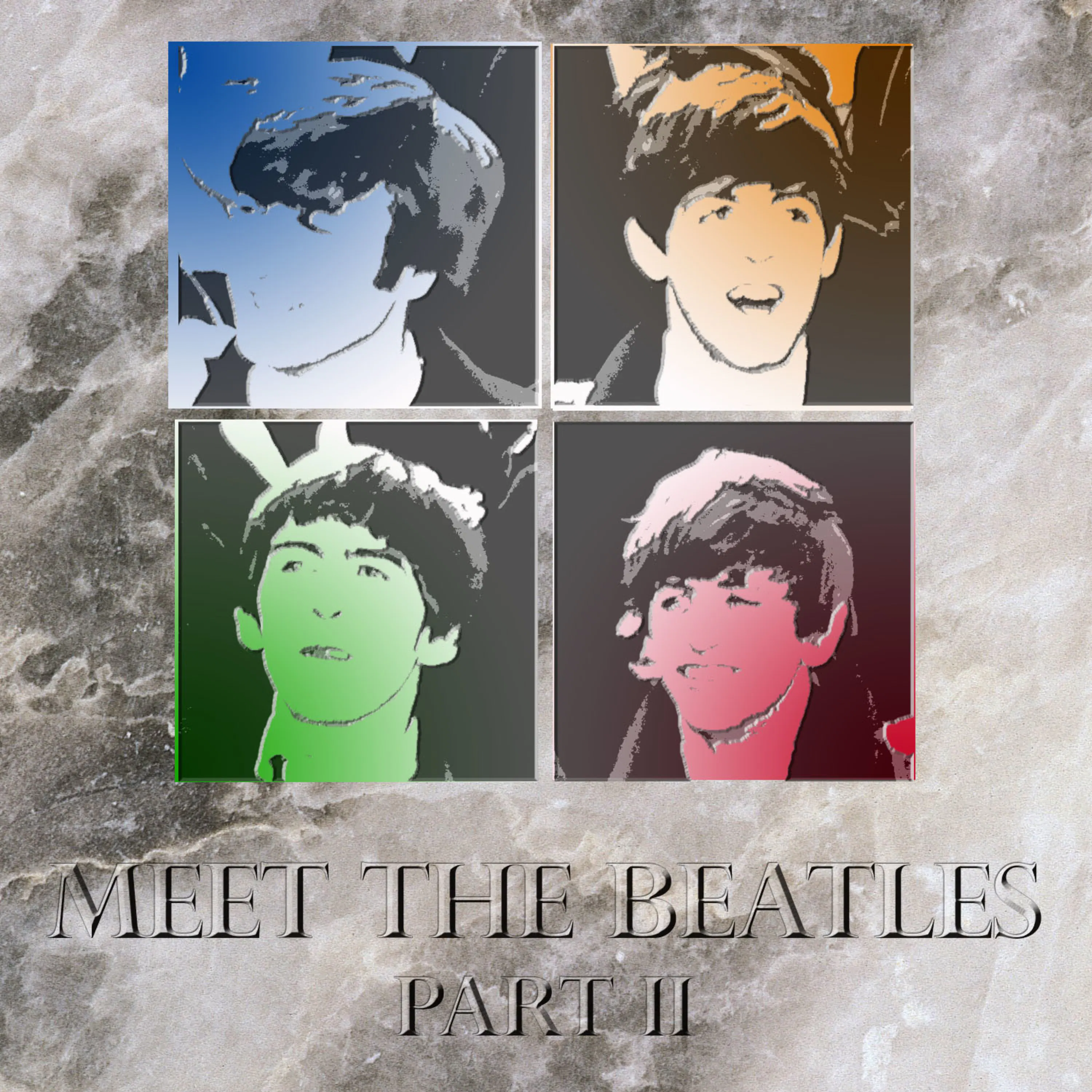
The show opens December 27th, 1961, at the Cavern Club where Pete Best calls in sick, and the boys bring in Richard Starkey - Ringo Starr to the world - to sit in on drums, his first paid gig with the Beatles. It clicks musically; the band really swings with Ringo on drums. Learn more about your ad choices. Visit megaphone.fm/adchoices

S1 Ep 7Episode 7: Meet The Beatles Part 1
Arrival: we begin the show on February 7th, 1964, in the first-class cabin aboard Pan American Airlines Flight 101 from London to New York City. It’s a raucous, party atmosphere, but John Lennon, for a moment anyway, feels alone in a crowd. A door opens, pandemonium ensues, and a new era arrives. Some housekeeping, and we move on to the Soho District, West London, and lay some foundation for today’s story—and for future discussions. Then we pull back a bit, and look at some of the political, economic, and cultural forces at play in 1950s England. We then move on to Liverpool, late 1950s, and meet John Lennon and Paul McCartney, before they was fab. Then we pull back once again, and talk about alchemy and catalysts—and about a shared bond of shared loss. One catalyst comes in the form of a person: Paul’s school chum George Harrison, the baddest young guitar-slinger in Liverpool. John, Paul and George settle in together in the spring of 1958, and begin a four-year apprenticeship that will take them from coffee-house skifflers to the “Toppermost of the Poppermost.” Then it’s off to Hamburg, fall of 1960. The Beatles work hard and play hard, and learn the basics of being a professional Rock N Roll band. We briefly meet a sad-eyed bloke who plays drums—and plays them well—in a competing band on the circuit. We will also meet two founding Beatles: Stu Sutcliffe and Pete Best, and tell some of Stu’s story, a story with a tragic ending. At the end of the second tour, the Beatles become a four piece, and acquire their signature instruments. At the end of the third Hamburg tour, they come back to Liverpool as conquering heroes. June of 1962, and John, Paul, and George stand on the brink. Departure: there is one final move, one last step to take. And the Beatles already have someone in mind. Learn more about your ad choices. Visit megaphone.fm/adchoices

S1 Ep 6Episode 6: Soul Sisters
We open in Manhattan, in the main room, the big studio at Columbia Records. It’s Fall of 1963. A big-time, high-stakes recording session for Aretha Franklin is about to get underway. Aretha is an astonishing, one-in-a-billion talent, but it’s just not clicking for her at Columbia. We spend a little time exploring why it isn’t clicking, and then we talk a little about the feminist perspective, and why we think it is called for. And we move on from Manhattan, to South Grand Avenue in Detroit; to Hitsville, USA—Motown Records. Early summer, 1964, and Berry Gordy and Smokey Robinson are worried. Motown has taken a tough hit, losing their top-selling artist, Mary Wells. These guys have no way of knowing it, but not to worry: Motown is just about to BLOW UP. And it’s the first female pop superstar, Diana Ross, who will touch off that explosion. We talk a bit about Berry, about the Motown Fun Factory, and about Diana. And we have to stop and wonder: why does a driven, ambitious man like Berry Gordy get called a visionary and a leader, but a driven and ambitious woman like Diana…well she gets called something else entirely. What’s the deal there? Then we head south, Deep South, to Muscle Shoals, Alabama, and meet the Swampers. We hear from the effusive, fast-talking Atlantic Records Exec, Jerry Wexler. When Aretha comes over to Atlantic, it’s Wex who puts her together with the Swampers. It’s a magical moment, but it does not last. While there may have been cooperation and racial harmony in the studio, outside it’s still Alabama. That state is convulsed by the civil rights movement and the angry, hateful backlash it inspires. And it’s not just the state of Alabama; it is a tense and angry nation that awaits The Fire Next Time. We close out the show with a detailed look at the anguish and the glory of Aretha Franklin and her music. A holy blend; a terrible beauty: captured and preserved forever. Learn more about your ad choices. Visit megaphone.fm/adchoices

S1 Ep 5Episode 5: The Ballad of Bob and J.R.
A quick prologue: we stop by the Country Music Hall of Fame in Nashville, where they opened up a very cool exhibit in March of 2015. Then we move on to Newport, Rhode Island, where Pete Seeger is about to introduce Johnny Cash, an established country star playing for the first time to a folk festival audience. After a rough beginning, the show goes very well. Afterwards, Johnny Cash and Bob Dylan—mutual fans—meet for the first time and begin a lifelong friendship. We then spend some time getting to know the Man in Black; we learn about the family tragedy that moved J.R. Cash to write and make music. We find out the real origins of “Folsom Prison Blues.” We leave Johnny Cash in Memphis for the meantime, and head north to Hibbing, Minnesota and check in on young Robert Allen Zimmerman. As a teen, Bobby is a leather-jacketed Rock N Roll rebel; but he takes on a new name and identity when he discovers folk music as a freshman at the University of Minnesota. He hears Woody Guthrie, decides he has to meet him, and makes his way to New York City to do just that. We use the lives and music of these two legends to tell about the events of the early Sixties in America. Bob Dylan plays before a tiny crowd in Mississippi and a huge one in Washington DC. Johnny Cash heads to the Far East on a USO tour and hears ominous rumors of new war brewing. And more. We also talk about that whole Bob Dylan: Voice of a Generation thing. We end up back where we started. It’s one year later, at Newport, summer of 1965. Bob Dylan plugs in, and Rock N Roll will never be the same. Another side of Bob Dylan? We think it’s the TRUE side of Bob Dylan. But you can draw your own conclusions. Learn more about your ad choices. Visit megaphone.fm/adchoices
S1 Ep 4Episode 04: The Change of the Guard
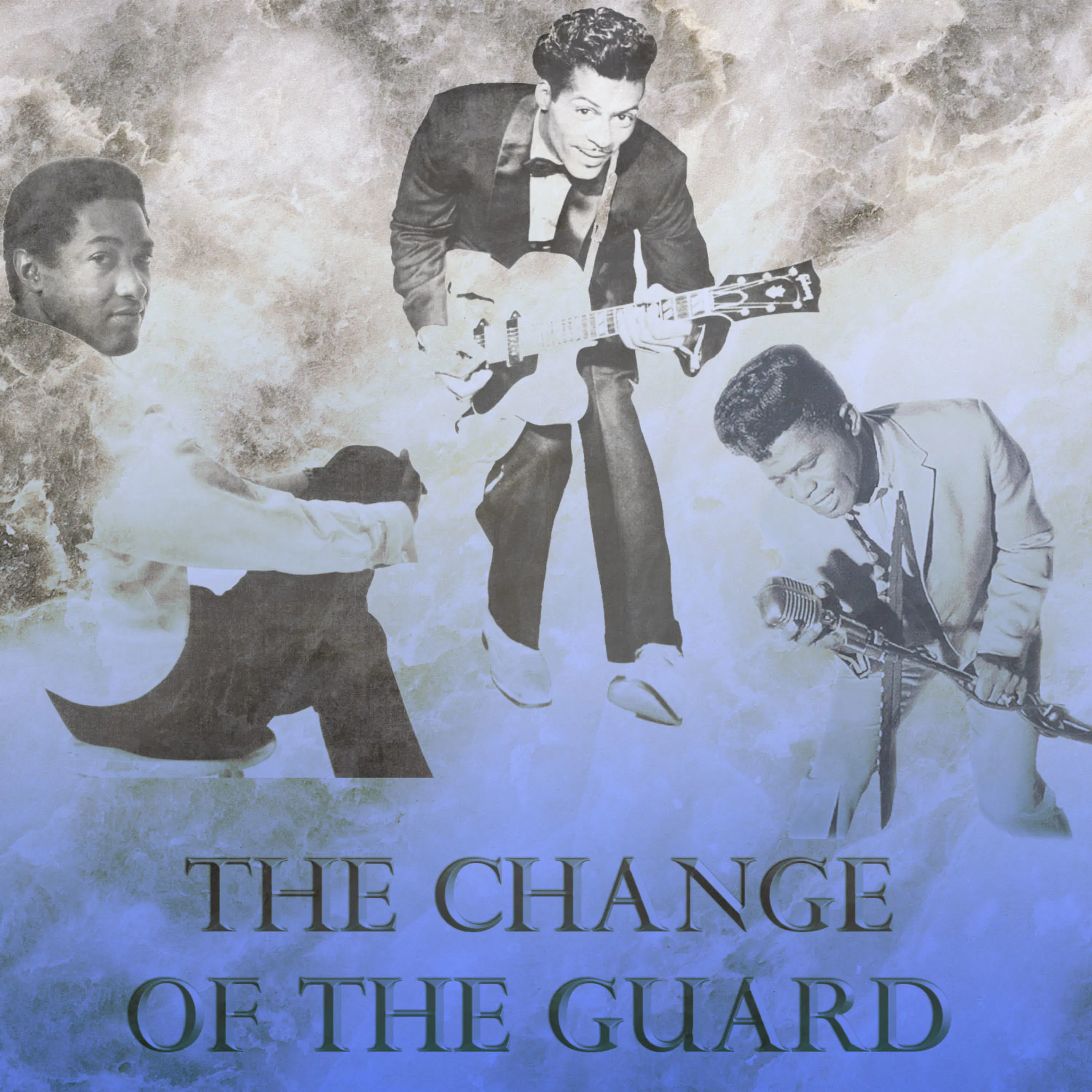
EThe Sixties are about to begin and we’re feeling the change of the guard. We briefly recap the first Golden Age of Rock N Roll: 1956 to 1959. A lot happened, and fast. Too fast to last. We skid perilously into a new decade. As we open the sixties, all the big players are offstage, and a lot of folks are saying Rock N Roll is dead. We open in a police station in St. Louis, and Chuck Berry is in big trouble with the law. We detail Chuck’s legal fight to its conclusion in early ’63. We also catch up with the disc jockey Alan Freed, who is going through some legal problems of his own—legal problems that are part of a larger story. We take a look at the state of mainstream popular music in 1960. It’s grim. But the R&B charts are looking good, lots of great songs and artists. Black America is reasserting itself musically. We will get to that…but first, Rock N Roll is about to become BIG Business. So we unpack that a little bit, and devote a big part of the show to an examination of the record industry. They were slow to catch on, but the corporate labels—The Big Six—are now in the business of Rock N Roll. We use humor to make our point, but we also have some caustic, tough things to say about the industry. Ever seen these acronyms: ASCAP and BMI? And what wondered what the heck they mean? We answer that question, and explain why it’s important. We tell a tale of two Disc Jockeys: Alan Freed and Dick Clark. That tale is a metaphor for what happens in the music business from 1960 on. For the last act, we go back to discussing great music and great musicians and we meet the Godfather of Soul: James Brown. It’s a true rags-to-riches story. Finally, we grab a cab in front of the Apollo Theater, and head down to Greenwich Village. There we will briefly meet an up-and-coming folksinger, and set the stage for Episode Five. This show is part of Pantheon Podcasts. Learn more about your ad choices. Visit megaphone.fm/adchoices

S1 Ep 3Episode 3: The Day the Music Died
We describe Rock N Roll as an “enfant terrible,” then an unruly toddler, then a hyperactive kid. When Buddy Holly breaks out in late 1957, we see Rock N Roll has stepped out into the world as a confident young adult. Our story begins on a snowy two-lane highway in rural Iowa, on February 2nd, 1959: the fateful last day of the Winter Dance Party tour. The shows are going well, but the tour is a real grind. Cold, tired, and fed up, Buddy Holly decides to charter a small plane after the show that night in Clear Lake, Iowa. We meet the Big Bopper, Ritchie Valens, and Dion DiMucci. We discuss how Ritchie Valens was the first Latino crossover artist, and his 1957 release “La Bamba” is the first Spanish-language pop hit. We then devote a good chunk of the show to Buddy Holly’s life and musical career. We emphasize his giant influence on future Rock N Roll legends, and talk about The Crickets’ groundbreaking tour of the United Kingdom in early 1958. We meet “The Killer,” Jerry Lee Lewis. Great musician and performer, but not at all a nice guy, to put it mildly. We come back to Buddy’s story: the relentless grind of touring with The Crickets, business disputes with his manager Norman Petty, his courtship of and marriage to Maria Elena Santiago. Out on the road Buddy meets Phil and Don Everly, and they become fast friends. We profile the Everly Brothers, and we ask you to hold a picture in your mind. The last chapter: a terse and tense account of the incident outside Mason City, Iowa, in the early-morning hours of February 3rd, 1959. We close with a few words about loss and friendship. This show is part of Pantheon Podcasts. Learn more about your ad choices. Visit megaphone.fm/adchoices

S1 Ep 2Episode 2: Elvis and the Rise of Television
Archaeology is the study of human activity in the past, looking at lots of different things from lots of different angles. We take that approach with Rock N Roll. We recap episode one, and open in Memphis, 1954. Sun Records owner Sam Phillips has found his elusive crossover sound—and the artist who can deliver it. Elvis breaks out; in just a few months he’s on the cusp of national stardom. We get to know Sam Phillips better; we find he shares affinity and common ground with his young star. Sam will be showing up again as we go through our story. Elvis gets his first big break on the Louisiana Hayride radio show. Young Roy Orbison and Buddy Holly see him on his first big tour, opening for the country singer Hank Snow. Elvis and Col. Tom Parker meet for the first time. We move to a detailed discussion of the rise of American television in the 1950s: technical advances, the economic and social impacts, and how it affected and was affected by the rise of Rock N Roll. We bring it back around to Bill Haley’s appearance on the Ed Sullivan Show in August of 1955. In early 1956, Elvis gets a big-time deal with RCA Records. Col. Parker buys out Sam Phillips’ management contract and the Presley/Parker business relationship is formalized—for better and for worse. The self-titled debut album is released that spring. It’s a smash; the first modern rock album and it has stood the test of time. Our storylines merge on Sept 9th 1956: Elvis makes his historic debut on the Ed Sullivan Show. We dig into some of the back story and do a little mythbusting. Then we assert something a bit controversial, which might make some Elvis fans angry. Finally, we profile two artists who are challenging Elvis, taking Rock N Roll in new directions: Chuck Berry and Little Richard. We learn the succinct definition of Rock N Roll, and spend a hungover Sunday morning in church. We close the show with a brief introduction to Buddy Holly, to set up Episode Three. Learn more about your ad choices. Visit megaphone.fm/adchoices

S1 Ep 1Episode 1: The Precursors--Redux
EWelcome to Rock N Roll Archaeology! This is a reboot of Episode One: The Precursors, originally released October 15, 2015. We updated and improved it some, and re-released it on November 4, 2020. Show Notes and Playlist Here We begin in Times Square, late summer of 1945. The war is over. First up, the Baby Boom and a newly-discovered demographic, the white American teenager. This new cohort is huge, with unprecedented economic clout. Young, restless and affluent, and they want to get beyond the timid, conformist popular culture of 1950s America. “Race Records” (an outdated term for rhythm and blues records by African American musicians) become hugely popular with white teenagers. Drawn from the well of sorrow that is the Black American experience, this music has the edge and urgency--the authenticity--these kids are seeking. We meet our first hero - the musical genius Ray Charles - and our first anti-hero, the frenetic, fatally flawed DJ Alan Freed. We shine a light on two grassroots cultural movements that became important later: the Skiffle Craze in the United Kingdom and the Beat Poets of Urban America. 1954 is an inflection point. On the musical front, Bill Haley released the first million-selling Rock N Roll record: “Rock Around The Clock.” That same year, big changes in the political landscape. The Brown v Board of Education decision; and Senator Joseph McCarthy was publically humiliated and discredited. Freedom of Association and Freedom of Expression take a step forward. Paranoid politics and systemic racism are still very much with us in America, but in 1954 it got a little easier, became a little less risky, to be yourself and express yourself. We head to the delivery room: Memphis Recording Service, where we meet the first Rock N Roll superstar, Elvis Presley, and tease Chapter Two. Hosted and Produced by Christian Swain Written By Richard Evans and Christian Swain Sound Design by Jerry Danielsen https://www.patreon.com/cw/RNRAP Learn more about your ad choices. Visit megaphone.fm/adchoices