Rock N Roll Archaeology
Digging into Music, Culture, Technology...and Rock N Roll
Pantheon Media
Show overview
Rock N Roll Archaeology has been publishing since 2015, and across the 11 years since has built a catalogue of 59 episodes, alongside 11 trailers or bonus episodes. That works out to roughly 60 hours of audio in total. Releases follow a roughly quarterly cadence, with the show now in its 2nd season.
Episodes typically run an hour to ninety minutes — most land between 31 min and 1h 14m — though episode length varies meaningfully from one episode to the next. Roughly 56% of episodes carry an explicit flag from the publisher. It is catalogued as a EN-language Music show.
There hasn’t been a new episode in the last ninety days; the most recent episode landed 7 months ago. The busiest year was 2025, with 22 episodes published. Published by Pantheon Media.
From the publisher
Rock N Roll Archaeology (RNRA) is more than a podcast; it’s an immersive, carefully researched and produced audio documentary. RNRA explores the history of Rock Music, and then goes a step further. We contextualize Rock N Roll; we place it within the cultural, political, and technological landscapes of the late 20th and early 21st centuries. With storytelling, commentary, and a dash of musicology, we explore how music, culture, and technology interact and affect each other—how they ARE each other.
Latest Episodes
View all 59 episodes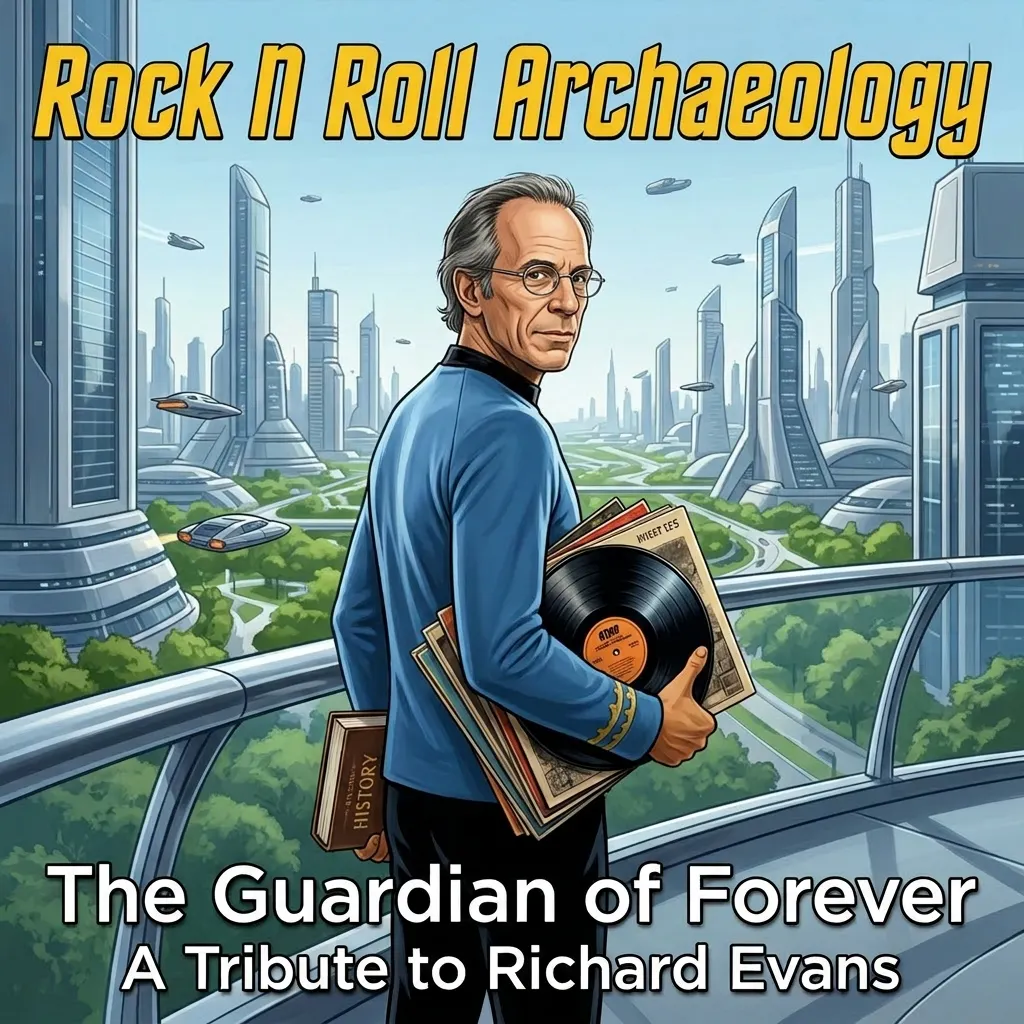
The Guardian of Forever: A Tribute to Richard Evans
"Time has resumed its shape. All is as it was before. Many such journeys are possible. Let me be your gateway." — The Guardian of Forever, Star Trek (1967)In the fall of 1975, a generation of "latchkey kids" across suburban America raced home to hijack the family television. They weren't looking for the news; they were looking for the 23rd century. For Christian Swain and the late Richard Evans, Star Trek wasn't just a space opera—it was a humanist manifesto. It taught us that the future wasn't just about technology, but about the collective power of the "common man" to do wondrous things.On January 17th, 2026, the transmission went silent. Richard Evans—the Spock to Christian’s Kirk—suffered a massive heart attack and left the stage far too soon. He was the most well-read guy in the room, a cynical bastard with a heart of gold, and the primary architect of the historical rigor that defined this show.In this special memorial episode, Christian Swain, Jerry Danielson, and Peter Ferioli step through the portal to look back at the life of the man behind the curtain. From toy cars in Naples to the "pyramid" at Hart High, and into the trenches of the Sunset Strip, we trace the archaeological dig of a friendship that lasted fifty years.We talk about the "Century of the Common Man," the influence of Rod Serling, and why baseball is the ultimate metaphor for the human condition. We aren't burying Richard Evans today; we’re praising him. Because even though the "Guardian" has called him home, the echoes of his work are still ringing loud.Long Live Rock. We need it every day.The "Guardian of Forever" PlaylistAs heard in or inspired by the episode: "Star Trek Theme" – Alexander Courage "The Twilight Zone Theme" – Bernard Herrmann / Marius Constant "This Land Is Your Land" – Woody Guthrie "Life’s Been Good" – Joe Walsh "Working Day and Night" – Michael Jackson "The Galaxy Song" – Monty Python (Eric Idle) "Working for the Weekend" – Loverboy "Tie Your Mother Down" – Queen "Mood for a Day" – Yes "Give Me Some Truth" – John Lennon "Born to Be Wild" – Steppenwolf "Fanfare for the Common Man" – Aaron Copland Learn more about your ad choices. Visit megaphone.fm/adchoices

Shorts: I'm A Believer
bonusEWe're just trying to be friendly! As a lead in to our next main episode, we're backtracking to the 60s. The Monkees were legit, and deserve to be in the Rock And Roll Hall of Fame, that's the gist of it. But we've got more of the Monkees! Like always, we'll dig a little deeper, and provide research and analysis on this singular Pop Culture phenomenon. Visit our Patreon for ad-free versions of our podcast, and more. www.rocknrollarchaeology.com Learn more about your ad choices. Visit megaphone.fm/adchoices
Special Edition: Strange Days Indeed
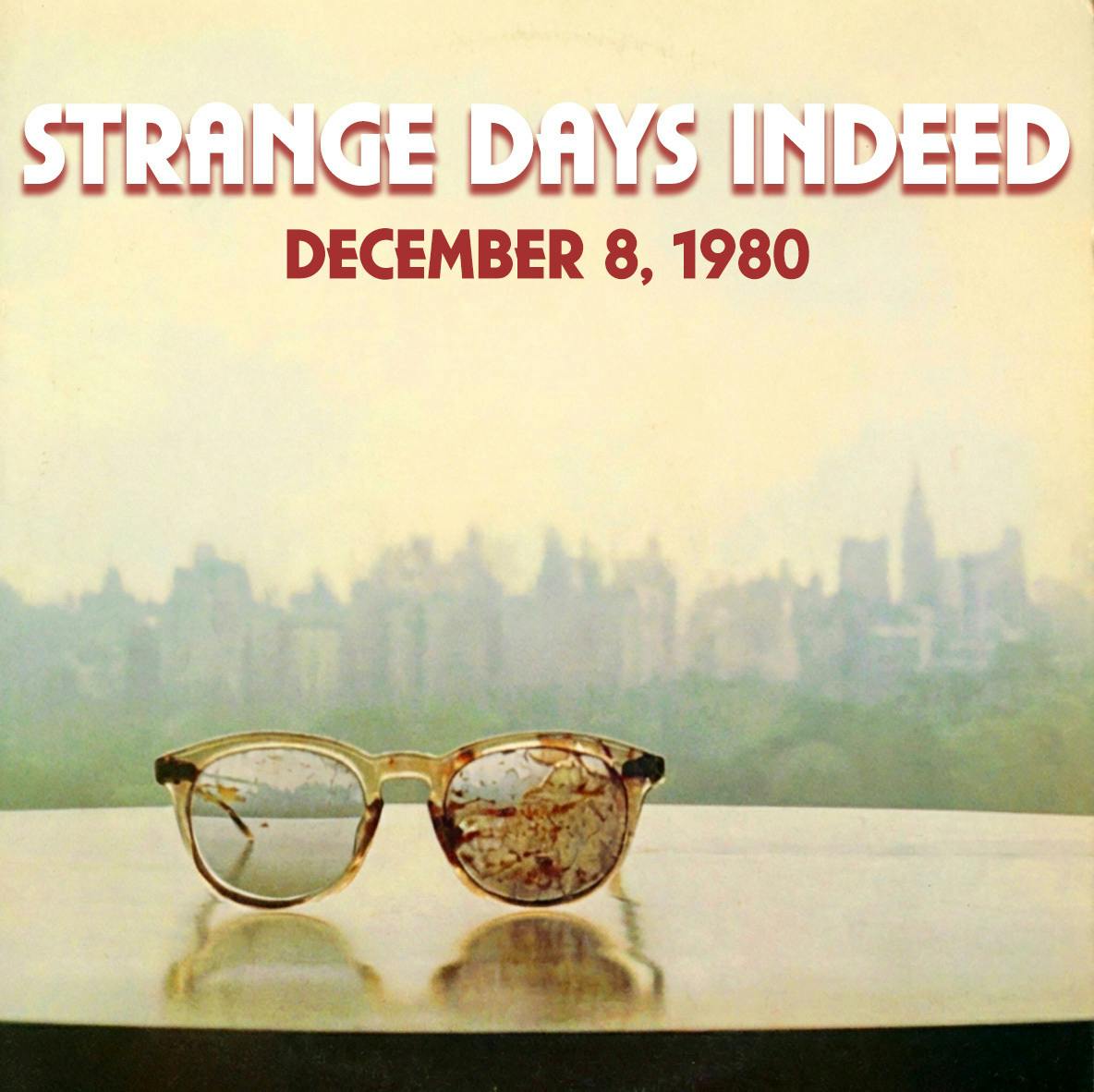
bonusEA sober, chronological narrative of the tragic final day of John Lennon on December 8, 1980. This episode tracks Lennon's last hours, his final interview, and the chilling, parallel actions of his killer, Mark Chapman, waiting outside the Dakota. We go inside the frantic rush to Roosevelt Hospital and recount the surreal, historic moment the news broke during Monday Night Football. This is the definitive, fact-based oral history of an empty, violent act that shattered a generation and a world. Learn more about your ad choices. Visit megaphone.fm/adchoices

S1 Ep 8(ICYMI) Episode 8: Meet The Beatles Part 2
EThe show opens December 27th, 1961, at the Cavern Club where Pete Best calls in sick, and the boys bring in Richard Starkey - Ringo Starr to the world - to sit in on drums, his first paid gig with the Beatles. It clicks musically; the band really swings with Ringo on drums. Learn more about your ad choices. Visit megaphone.fm/adchoices

S1 Ep 7(ICYMI) Episode 7: Meet The Beatles Part 1
EArrival: we begin the show on February 7th, 1964, in the first-class cabin aboard Pan American Airlines Flight 101 from London to New York City. It’s a raucous, party atmosphere, but John Lennon, for a moment anyway, feels alone in a crowd. A door opens, pandemonium ensues, and a new era arrives. Some housekeeping, and we move on to the Soho District, West London, and lay some foundation for today’s story—and for future discussions. Then we pull back a bit, and look at some of the political, economic, and cultural forces at play in 1950s England. We then move on to Liverpool, late 1950s, and meet John Lennon and Paul McCartney, before they was fab. Then we pull back once again, and talk about alchemy and catalysts—and about a shared bond of shared loss. One catalyst comes in the form of a person: Paul’s school chum George Harrison, the baddest young guitar-slinger in Liverpool. John, Paul and George settle in together in the spring of 1958, and begin a four-year apprenticeship that will take them from coffee-house skifflers to the “Toppermost of the Poppermost.” Then it’s off to Hamburg, fall of 1960. The Beatles work hard and play hard, and learn the basics of being a professional Rock N Roll band. We briefly meet a sad-eyed bloke who plays drums—and plays them well—in a competing band on the circuit. We will also meet two founding Beatles: Stu Sutcliffe and Pete Best, and tell some of Stu’s story, a story with a tragic ending. At the end of the second tour, the Beatles become a four piece, and acquire their signature instruments. At the end of the third Hamburg tour, they come back to Liverpool as conquering heroes. June of 1962, and John, Paul, and George stand on the brink. Departure: there is one final move, one last step to take. And the Beatles already have someone in mind. Learn more about your ad choices. Visit megaphone.fm/adchoices

Episode 29: Whatever Gets You to the Light
ESynopsis Rock N Roll Archaeology excavates the divergent paths of Elton John and John Lennon in the first half of the 1970s, a period where one man sprinted toward the brightest spotlight on Earth while the other desperately sought an escape. From Elton's star-making coronation at the Troubadour to Lennon's chaotic "Lost Weekend" in Los Angeles, their journeys collide in a New York studio with a high-stakes wager over the song "Whatever Gets You Thru the Night." This is a story of two friends, two paths, and the unforeseen consequences of getting exactly what you wish for, set against the backdrop of the post-Beatles power vacuum and the dizzying heights of 70s superstardom. Producer and Host: Christian Swain Head Writer: Richard Evans Sound Designer: Jerry Danielsen Learn more about your ad choices. Visit megaphone.fm/adchoices

Pearl Jam's Revolution: Author Salena Fragassi on 35 Years of Live Music & Legendary Shows
bonusEIn this episode of RNRA Digs Deeper, host Christian Swain sits down with veteran music journalist Selena Fragassi to excavate the history of one of modern rock's most significant acts: Pearl Jam. Delving into her beautifully crafted new book, Pearl Jam Live: 35 Years of Legendary Music and Revolutionary Shows, Salena provides a unique perspective on the band's incredible journey.The conversation explores Pearl Jam's origins, born from the ashes of Seattle's "tragedy-stricken" music scene and bands like Mother Love Bone. Fragassi discusses how the band fused the arena-rock grandeur of The Who and Led Zeppelin with the raw, DIY ethos of punk rock, creating a sound that was both monumental and deeply personal.Discover the stories behind Pearl Jam's revolutionary struggle against the corporate music machine, including their famous battle with Ticketmaster and their conscious decision to step away from music videos and mainstream promotion. Fragassi explains how this "era of no" was a survival mechanism that allowed the band to maintain its authenticity and ultimately ensured its remarkable longevity.This in-depth interview also highlights: How Eddie Vedder, an outsider from San Diego, fundamentally altered the band's DNA. [cite: 20:21] The unique, collaborative, and "beautifully incestuous" nature of the Seattle scene that fostered their growth. [cite: 13:12] The evolution of the Pearl Jam live experience, from the raw, chaotic energy of their first-ever show in 1990 to the celebrated institution it is today. [cite: 22:48-23:4, 42:44] The creation of the Ten Club and how Pearl Jam redefined the artist-fan dynamic, making them a true "band for the people." [cite: 33:21] Learn more about your ad choices. Visit megaphone.fm/adchoices

Shorts: RNRA Horror Podcast Short
bonusEExamining–and reconsidering–The Rocky Horror Picture Show. At the time, it was transgressive, outrageous; but now it seems a little bit tame. And…a bit problematic, when taken in a modern context. But it's still the ultimate midnight movie, and it's still…just a jump to the left! Songs: RHPS Cast: “There’s a Light,” from the soundtrack album RHPS Cast: “The Time Warp,” from the soundtrack album Tim Curry: “I Do The Rock,” from Fearless RHPS Cast: “Sweet Transvestite,” from the soundtrack album Frank Zappa and the Mothers: “Cheepnis,” from Roxy & Elsewhere RHPS Cast: “Science Fiction Double Feature,” from the soundtrack album RHPS Cast: “Hot Patootie - Bless My Soul,” from the soundtrack album RHPS Cast: “Rose Tint My World,” from the soundtrack album RHPS Cast: “Super Heroes,” from the soundtrack Online Resources: First, we want to give a warm and appreciative shoutout to the blogger Alex Mell-Taylor; we leaned heavily on their post for this chapter: Gently Ripping Apart ‘The Rocky Horror Picture Show’ | by Alex Mell -Taylor Here’s a link to more by Alex Mell - Taylor at Medium.com. The Rocky Horror Wiki How I learned to stop worrying and love the Rocky Horror Picture Show Rock's Back Pages: It's only a movie The 50 Best Sci Fi Movies of the 1970s Golden Age of Science Fiction Books: 11 of the Era's Most Influential Titles Tim Curry The Rocky Horror Picture Show: A Cult Classic that Challenged Sexual Mores | The Artifice Rocky Horror Picture Show – a How-To Guide for Audience Participation We Live in the World ‘Rocky Horror’ Created Written by Richard Evans and Christian Swain Produced and hosted by Christian Swain Sound Design by Jerry Danielsen Partners: Rock's Backpages Voice Actors: Drew H as Alex Mell-Taylor Learn more about your ad choices. Visit megaphone.fm/adchoices

S1 Ep 1(ICYMI) Episode 1: The Precursors--Redux
EWelcome to Rock N Roll Archaeology! This is a reboot of Episode One: The Precursors, originally released October 15, 2015. We updated and improved it some, and re-released it on November 4, 2020. Show Notes and Playlist Here We begin in Times Square, late summer of 1945. The war is over. First up, the Baby Boom and a newly-discovered demographic, the white American teenager. This new cohort is huge, with unprecedented economic clout. Young, restless and affluent, and they want to get beyond the timid, conformist popular culture of 1950s America. “Race Records” (an outdated term for rhythm and blues records by African American musicians) become hugely popular with white teenagers. Drawn from the well of sorrow that is the Black American experience, this music has the edge and urgency--the authenticity--these kids are seeking. We meet our first hero - the musical genius Ray Charles - and our first anti-hero, the frenetic, fatally flawed DJ Alan Freed. We shine a light on two grassroots cultural movements that became important later: the Skiffle Craze in the United Kingdom and the Beat Poets of Urban America. 1954 is an inflection point. On the musical front, Bill Haley released the first million-selling Rock N Roll record: “Rock Around The Clock.” That same year, big changes in the political landscape. The Brown v Board of Education decision; and Senator Joseph McCarthy was publically humiliated and discredited. Freedom of Association and Freedom of Expression take a step forward. Paranoid politics and systemic racism are still very much with us in America, but in 1954 it got a little easier, became a little less risky, to be yourself and express yourself. We head to the delivery room: Memphis Recording Service, where we meet the first Rock N Roll superstar, Elvis Presley, and tease Chapter Two. Hosted and Produced by Christian Swain Written By Richard Evans and Christian Swain Sound Design by Jerry Danielsen https://www.patreon.com/cw/RNRAP Learn more about your ad choices. Visit megaphone.fm/adchoices

Episode 27: Southbound
ERock N Roll Archaeology (RNRA) presents "Southbound," an exploration of 1970s Southern Rock. Through detailed storytelling, RNRA chronicles The Allman Brothers Band, Duane Allman's impact, and their resilience with Eat a Peach and Brothers And Sisters. The episode offers commentary on Lynyrd Skynyrd's rise, along with a feud and a flag. RNRA examines the artists, musical roots, studio successes, and tragic losses, with a look at this significant rock era and how it still resonates today. Learn more about your ad choices. Visit megaphone.fm/adchoices
Ep 27Episode 28: Songs From the Fault Line
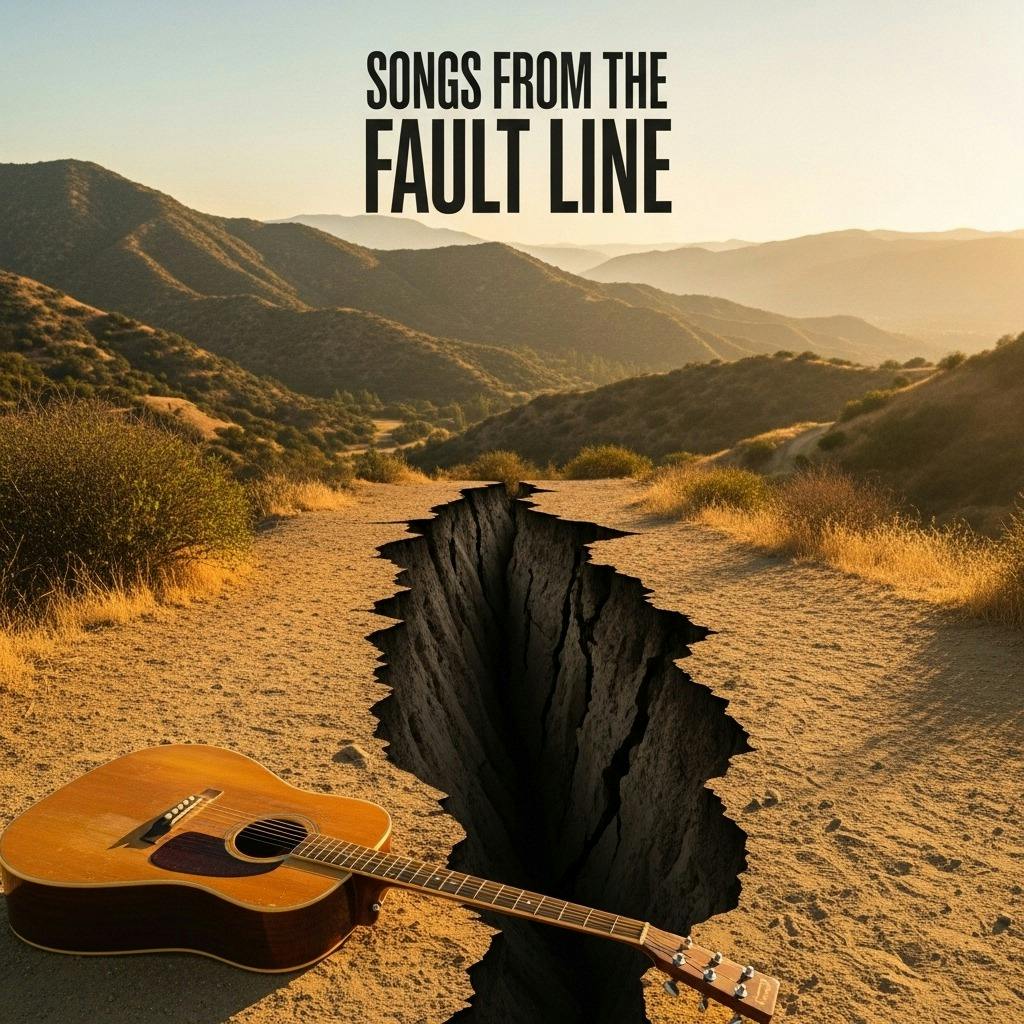
ERock N Roll Archaeology explores the 1970s LA Sound, a world of sun-drenched harmonies and seismic ambition. From a bizarre funeral pact for Gram Parsons at the Troubadour to the rise of the Eagles from Linda Ronstadt's backing band, this is the story of how a community of folk idealists, including Jackson Browne, gave birth to a billion-dollar industry. We chart the collision course between artistic collaboration and corporate rock, right on the fault line. Producer and Host: Christian Swain Head Writer: Richard Evans Sound Designer: Jerry Danielsen Learn more about your ad choices. Visit megaphone.fm/adchoices

RNRA Digs Deeper: The USA vs John Lennon
bonusEDig into the archives for a conversation about John Lennon's five-year legal battle against the U.S. government's attempt to deport him. This episode explores the politically charged atmosphere of the early 1970s, where the Nixon administration, wary of Lennon’s anti-war stance and influence over a new generation of voters, sought to silence him.We revisit a powerful interview with the late Leon Wildes, the brilliant immigration attorney who represented John and Yoko, along with his son Michael Wildes. They reveal the strategies, pressures, and ultimate triumphs of a historic legal saga that tested the foundations of American justice and established a lasting legal precedent. Guest Leon Wildes was the renowned immigration attorney who successfully represented John Lennon and Yoko Ono against the U.S. government's deportation efforts. An adjunct professor of law and a leading expert in the field, he authored the book John Lennon vs. The U.S.A., detailing the landmark case. His son, Michael Wildes, is the managing partner of Wildes & Weinberg P.C. and continues his father's influential work in immigration law. Learn more about your ad choices. Visit megaphone.fm/adchoices

S1 Ep 25Episode 25: I Know What I Like: The Rise and Fall of Prog
EProgressive Rock reached its zenith during the early 1970s, a period often celebrated as the genre's golden age. This era of Prog Rock has inspired intense opinions—both positive and negative—that rival those of any other rock movement or genre throughout music history. Fans of Progressive Rock are known for their passionate dedication. On the flip side, critics, including renowned voices like Lester Bangs, Robert Christgau, and Robert Hilburn, were notoriously dismissive of Progressive Rock. Despite their often harsh criticisms, we believe that time has proven them wrong. Our perspective has evolved, and we now view the best of 70s Progressive Rock as a genre with substantial depth and intellectual substance. The music from this era isn't just enjoyable; it’s some of the most significant work of the 20th century. Not all Prog Rock from this period hit the mark—there were certainly moments of excessive self-indulgence. However, the Prog bands and songs that have stood the test of time are truly exceptional and worth celebrating. Producer and Host: Christian Swain Head Writer: Richard Evans Sound Designer: Jerry Danielsen RockNRollArchaeology.com RNRA on Patreon RNRA on TeePublic Learn more about your ad choices. Visit megaphone.fm/adchoices

S2 Ep 19(ICYMI) Episode 19: 1969 Part 2
EWelcome back to the second half of our big chapter telling the big story of a big year in Rock. If you haven’t done so already, we highly recommend you listen to Episode 18 before you delve into this one! We tell the story of 1969 by telling the story of four concerts: The Beatles on the Roof, The Rolling Stones in Hyde Park was the first part. Part Two will take us to the peak, to the apotheosis of Woodstock...and to the abyss at Altamont. And we’ll go to some other places in between too. 1969 is the year Rock N Roll goes global, and we’ll get into that a little, and set up later discussions of great topics like Rock behind the Iron Curtain and the growing influence of Reggae and World Beat. Then we’ll take you to Woodstock, and call off the roster, with lots of great music and commentary. The first mythical Rock tour--the Rolling Stones ‘69 tour of America, is up next. That will take us to the final show of the tour, on a dark December night in California, where everything that can go wrong, will go wrong, and the consequences will be tragic. We close out with some thoughts on the year and on the decade we’ve just completed, and on what comes next. www.rocknrollarchaeology.com Learn more about your ad choices. Visit megaphone.fm/adchoices

(ICYMI) Episode 18: 1969 Part 1
EWe’re putting down a marker with this episode, and the follow-up: the highest highs and the lowest lows of the entire Rock Era occurred in 1969. It’s a year so big, we had to cut it in two, in order to serve it up properly. We start in January, with The Beatles on The Roof, a 42-minute outdoor concert that definitely warmed up the neighborhood of Mayfair, London, England. Then we catch up with their friends and rivals, The Rolling Stones. The Stones broke out HUGE in 68 and 69, the beginning of an incredible five-year run: from Beggars Banquet on through to Exile On Main Street. Peak Stones, the sweet spot for the World’s Greatest Rock N Roll Band. Brian Jones is out, Mick Taylor is in. We talk about how that happened, and how it impacted the Stones’ sound and attitude. Another influence starts seeping in: American Country Music, thanks to Keith’s new best buddy, Gram Parsons. Brian’s tragic--and still unexplained--demise changes the Hyde Park Concert from a coming-out party into a memorial service. Emotion and conviction carry the day, and Hyde Park sets a very high and hopeful bar; it’s an early example of How To Successfully Pull Off A Really Big Concert. During that “Moon-Crazy Summer” of 1969, NASA pulls off something really big. It’s the single greatest feat--so far--of human exploration: The Apollo 11 mission to the moon and back. We look at the moon landing through the Rock N Roll lens; we’ll talk about space travel, science fiction, and fantasy...in books, film, television, and most of all, in Rock Music. Then David Bowie, with his lifelong knack for being ahead of his time, said take your protein pills and put your helmet on. And we did. And in just a short time we got used to it, became a little jaded about it. That comes later. Here and now in the summer of 1969; stardust, golden, billion year old carbon...got to get ourselves back to the garden. We’ll open Part Two at Yasgur’s Farm in upstate New York, and we’ll light a candle in the rain. Head over to https://www.patreon.com/cw/RNRAP for full show notes. Learn more about your ad choices. Visit megaphone.fm/adchoices
Shorts: The Three Body Problem
EIn 1985, a group of powerful "Washington Wives" led by Tipper Gore formed the PMRC to clean up rock and roll, sparking a culture war that culminated in a dramatic Senate hearing. This episode of Rock N Roll Archaeology, "The Three-Body Problem," performs a forensic autopsy on that manufactured moral panic. We explore how the unlikely, chaotic alliance of John Denver, Dee Snider, and Frank Zappa dismantled the PMRC's case piece by piece. Learn more about your ad choices. Visit megaphone.fm/adchoices
S1 Ep 1RNRA Digs Deeper: Dennis McNally
Episode Title: The Last Great Dream: Dennis McNally on the 1960s Counterculture, the Grateful Dead, and Its Lasting LegacyEpisode Summary:What if everything you thought you knew about the 1960s hippie movement and the Summer of Love was just scratching the surface? In this deep-dive conversation, acclaimed author and Grateful Dead historian Dennis McNally joins the show to discuss his monumental book, The Last Great Dream. We go beyond the clichés of flowers and tie-dye to uncover the intellectual, political, and artistic currents that fueled the San Francisco counterculture. McNally reveals how the dream of the 60s continues to shape our modern world in surprising ways—from the food we eat to the computers we use—and offers a profound look at its triumphs, its failures, and its unfulfilled promises. Learn more about your ad choices. Visit megaphone.fm/adchoices
Shorts: Southern Rock Opera: Ghosts, Myths, and Monsters
bonusEExplore the power of myth with Drive-By Truckers' landmark album, Southern Rock Opera. This RNRA Short dissects how Patterson Hood and Mike Cooley used the legend of Lynyrd Skynyrd to confront "The Duality of the Southern Thing." Uncover the stories behind this ambitious double album, its challenging creation, and its lasting impact on Southern rock and the band's "golden era" with Jason Isbell. Host and Producer: Christian Swain Head Writer: Richard Evans Sound Designer: Jerry Danielsen Learn more about your ad choices. Visit megaphone.fm/adchoices
(ICYMI) Episode 21: Guitarmageddon
ESynopsis The fuse was lit in 1966. Jeff Beck, Jimmy Page, John Paul Jones, and Keith Moon came together to record a proto-metal classic. After the session an offhand quip from Keith Moon sticks with Jimmy Page. Then we meet The G; the imposing Peter Grant. Led Zeppelin’s fearsome tough-guy manager was a key reason why Zep dominated the rock landscape in the early 70s. Well away from Swinging London, in the grimy industrial town of Birmingham, Black Sabbath comes together. We’ll also take a look at one of the greatest Jam Bands ever, Deep Purple. Then on to probably the single saddest story in all of Rock History, the final days of Jimi Hendrix. Jimi towers over all of it, the late, lamented godfather of Heavy Rock--Rock that centers around the guitar and celebrates blazing virtuosity on that instrument. Complete show notes: file:///C:/Users/59tel/Downloads/Episode%2021%20Show%20Notes%20(1).pdf Learn more about your ad choices. Visit megaphone.fm/adchoices
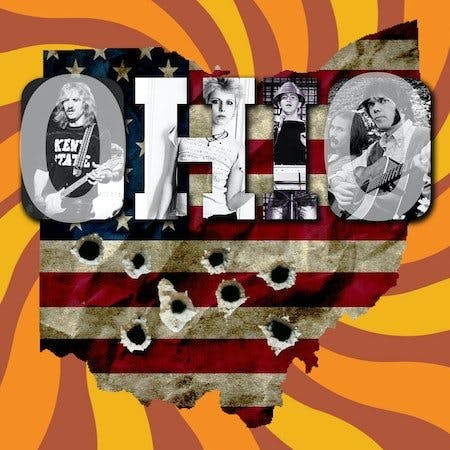
(ICYMI) Episode 20: Ohio
Rock N Roll as the First Draft Of History. We begin in the midwest college town of Kent, Ohio, in the late spring of 1970. We’ll meet three future rockers--students at Kent State University, barely out of their teens--who will be changed forever by what they witness. We’ll check in on Motown, where the fluffy pop “Sound of Young America” is still alive, but there's a big change coming, a movement towards a tougher, more topical sound. We’ll foreshadow that just a little--lots more to come in a later chapter. Rock N Roll is now Rock, and it is mainstreamed now, big and getting bigger. It set out to subvert the dominant paradigm, now it is the dominant paradigm. It can be downright paradoxical at times; defined by its own contradictions. We come back to the campus for the shattering events of May 4th. They inspire a unique musical response, something we really haven’t seen since then. Written by Richard Evans and Christian Swain Hosted and Produced by Christian Swain Sound Design by Jerry Danielsen Learn more about your ad choices. Visit megaphone.fm/adchoices