Reformed Apologist - Rational Answers for Real Questions Podcast
There is an ever increasing need to equip followers of Christ with confidence, and the tools to defend classic Christian belief systems.
A rational defence for classic Christian belief
Show overview
Reformed Apologist - Rational Answers for Real Questions Podcast launched in 2024 and has put out 12 episodes in the time since. That works out to roughly 6 hours of audio in total. Releases follow a roughly quarterly cadence.
Episodes typically run twenty to thirty-five minutes — most land between 22 min and 42 min — though episode length varies meaningfully from one episode to the next. None of the episodes are flagged explicit by the publisher. It is catalogued as a EN-language Religion & Spirituality show.
There hasn’t been a new episode in the last ninety days; the most recent episode landed 11 months ago. Published by A rational defence for classic Christian belief.
From the publisher
There is an ever increasing need to equip followers of Christ with confidence, and the tools to defend classic Christian belief systems. reformedapologist.substack.com
Latest Episodes
Is the Abrahamic Covenant Unconditional?
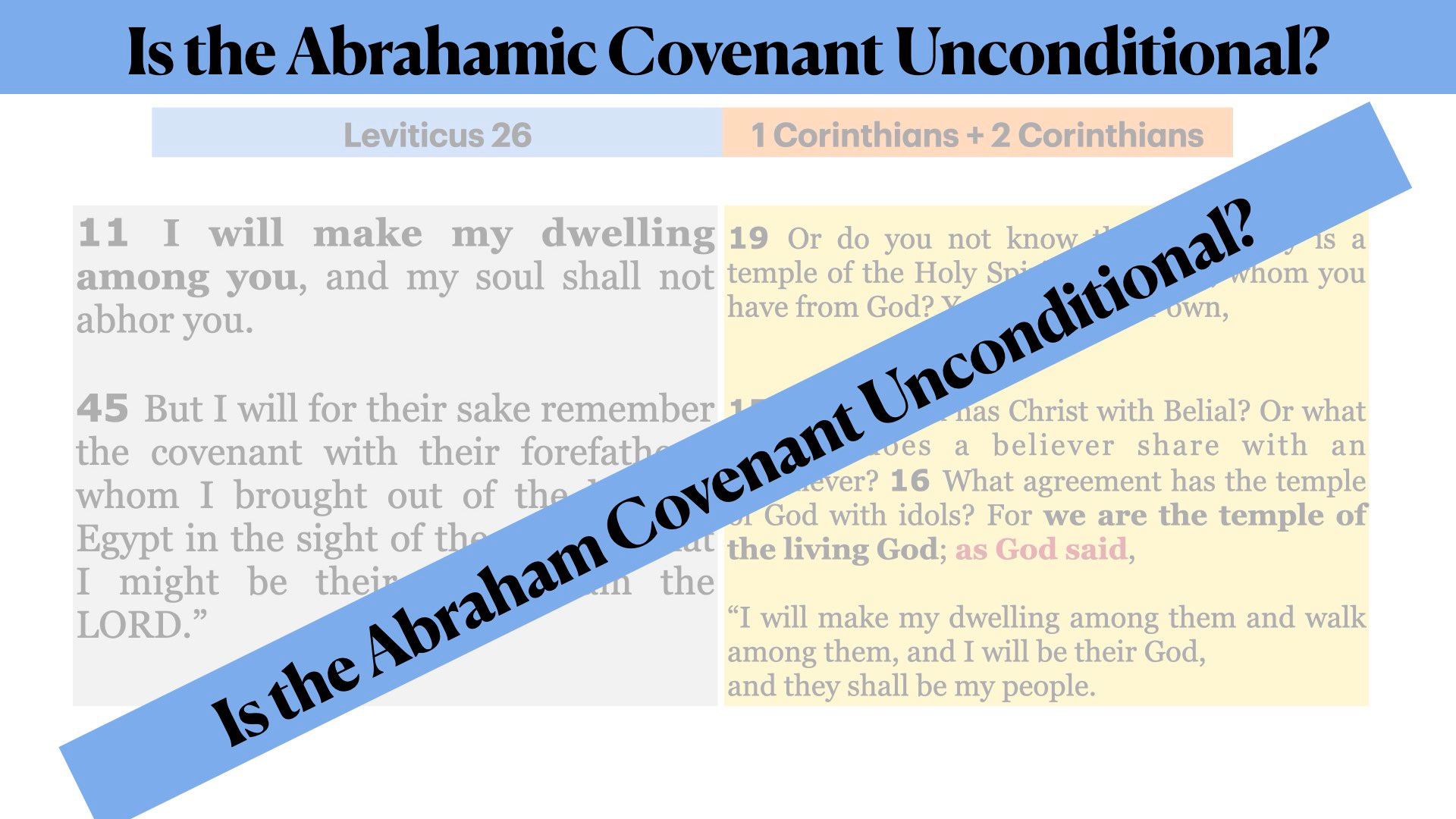
This is perhaps the most crucial question on the question of Israel and the church today. Christians are basically divided into two camps.A. The Dispensationalist who believes God has two distinct plans for the world, one for the nation of Israel -- basically national fulfillment of Old Testament prophecies and a second plan for the church -- often referred to as a “parenthesis”.B. The other group are those who believe God has one single plan of redemption for all people, both Jew and Gentile. All the promises and prophecies of the Old Testament find their ultimate consummation and fulfillment in the person and work of Christ, and his body the church, consisting of Jews and in-grafted GentilesOne of the foundational issues where this rift begins is the question on the Abrahamic Covenant and whether it was unconditional or conditional?In this episode I review all the relevant passages starting in the book of Genesis and then all throughout the five books of Moses, otherwise known as the Torah. Regardless of what you believe on this subject, my plea to you is to let your view be formed by the manifold witness of scripture on this important issue. When we finally arrive in the writings of Paul, the answer will be abundantly clear.This episode is also available on Youtube:https://www.youtube.com/watch?v=Sj7TAoZqX_MEnjoy & and God bless. This is a public episode. If you would like to discuss this with other subscribers or get access to bonus episodes, visit reformedapologist.substack.com
Why Atheism Cannot Be True
Why Atheism Cannot Be True(1) IntroductionThe Argument from Rational Certainty is a transcendental argument for the existence of God. It begins with a basic observation — not about the physical world, but about our rational experience: we possess rational certainty. (Proviso -- I know some people deny that we possess rational certainty... but I would recommend anyone attempt to deny rational certainty next time you review your payslip or go to the bank to pay your bills. Denying rational certainty is like denying reality!)From that single fact, it shows that such certainty requires an all-knowing mind to ground it. How so, I hear you say? If there is no all knowing mind, one that has defined what is objectively true and what is objectively false, then we cannot have certainty that anything at all is true or false. You are not convinced?Stay with the me..My contention is simply this: Any worldview that denies the existence of such a mind, including atheism, collapses into contradiction.The argument is structured as follows:- In part one I will introduce the argument and provides a brief overview.- In part 2 I will provide a detailed justification for each premise.- In part 3 I will summarise each justification and conclude!This argument is structured deductively. If each premise is true, the conclusion follows necessarily. The argument is as follows:- Premise 1: Rational certainty exists.- Premise 2: Rational certainty requires a necessary precondition: an all-knowing mind.- Premise 3: Any worldview that denies this necessary precondition cannot account for rational certainty without contradiction.- Premise 4: Atheism is a worldview that denies the existence of such a mind.- Premise 5: Therefore, atheism entails a contradiction: it depends on rational certainty while denying the precondition that makes rational certainty possible.- Premise 6: A worldview that entails contradiction cannot be true.- Conclusion: Therefore, atheism cannot be true and is necessarily false.(2) JustificationsPREMISE 1: Rational Certainty exists:To begin, we must define what we mean by rational certainty. Rational certainty is not the mere feeling of confidence or strong belief. It is the ontological possession of knowledge that cannot be mistaken. Notice here I am not just talking about any kind of “knowledge.” I am talking about knowledge that must be true and cannot be wrong.Rational certainty is when someone knows something in such a way that the possibility of being wrong is excluded. We might encounter rational certainty in truths like mathematics and logic. For example, that 2 plus 2 equals 4, or that a thing cannot be both itself and not itself at the same time and in the same respect. Another example is the statement “I exist.” To deny your own existence requires your existence in order to make the denial.==>> These are truths we appear to know with rational certainty. They cannot be false. Now consider someone who tries to deny that rational certainty exists. That denial faces the exact same problem as denying truth itself. If someone says “truth does not exist,” they are making a truth claim in the very act of denial.==>> They are saying it is true that truth does not exist, which is a contradiction. Likewise, the person who says “rational certainty does not exist” is attempting to make a claim that would have to be supported by rational certainty in order to be meaningful. If they are not rationally certain of the claim “rational certainty does not exist,” then it is just an arbitrary assertion with no epistemic weight.==>> But if they are rationally certain of their denial of rational certainty, then they have contradicted themselves. In other words, to meaningfully deny rational certainty is to presuppose it. Without rational certainty, there is no justification for the claim. You are simply expressing a belief, not demonstrating anything. So the only way to argue that rational certainty does not exist is to use rational certainty to do it. This is contradictory.Therefore, rational certainty is inescapable. It exists in the same way that truth exists: as a necessary precondition for thought, reasoning, and argument.==>> To deny it is to assume it. PREMISE 2: Rational Certainty requires a necessary precondition: An all-knowing mind to ground universal & necessary truthsBefore we defend this premise directly, it is important to explain the kind of reasoning being used here. This is transcendental reasoning, which is not the same as circular reasoning. Circular reasoning occurs when someone assumes the very thing they are trying to prove, without providing any external justification. It is reasoning in a circle claiming “X is true because X is true” — which offers no independent grounds for said belief.But transcendental reasoning is different. It asks a deeper question: What must be true in order for something else to be possible or actual? It does not assume the conclusion. Instead, it explores possible worlds and looks
Greed, Money, Tithing and
In this video I review some of the worst things churches teach about tithing, then I walk through the main tithing passages of both the Old and New Testament to ascertain whether the Christian believer is commanded to tithe, the outcome may shock you. Stay with the video until the end to find out all the important information that each Christian needs to know. The “doctrine of tithing” has become so embedded in the mind of the modern Evangelical, primarily because the church at large has been teaching on this subject every Sunday, much more than the actual gospel message, central to the New Testament.Believers have been deceived and indoctrinated, and fear the wrath of God on them should they even question this doctrine.Please do take the time to watch, and then follow up for yourself with all the Bible passages I quote. Take the time and read all the passages in the Bible on the subject and let the scripture teach you and “liberate” you from the ideas the modern church has quite literally “inserted” into the Bible, especially the New Testament.The church at large, today in America, quite literally takes in a trillion dollars annually and most of this goes towards Pastors big salaries, fancy cars, espense accounts, hotel costs, flights, even private jets are on the list. The poor are left to continue to suffer their poverty.Imagine what the true church could be doing with all these wasted funds, imagine just how many people pay the church rather than even paying their bills and looking after their families needs.Paul warns in the New Testament, you are worse than an infidel if you do not look after your family, yet the worst of the prosperity hucksters would have you tithe before you feed your kids. The deception runs deep, very very deep.We must shake this deception off the church, especially now when the Western world is reeling from economic depression.Please share this video with family and friends.Thanks & God bless This is a public episode. If you would like to discuss this with other subscribers or get access to bonus episodes, visit reformedapologist.substack.com
The Six Days of Creation
In this episode, I aim to demonstrate that there is no scientific reason why a Christian must surrender the belief in a literal interpretation of the early chapters of Genesis. My aim here is not to argue over the scientific details, people far more qualified than me have already done that sufficiently. Interpretation of terms and words in the Bible matters, if we assume that the term “day” in Genesis one does not mean what the plain sense suggests it means, that must therefore also inform the way we interpret many other passages in the Old Testament.Where this all gets really problematic is when it comes to the New Testament. Jesus and the authors of the New Testament clearly believed in the historic validity of the early chapters of Genesis. To this end, I provide several very strong examples of why this is so…Genesis 1-10 are the most quoted chapters of the Old Testament in the New Testament and if we surrender to the cultural pressure of today, accepting the notion of progressive creation (through the means of evolution and death mind you..) then we must also have answers to the many quotations from Genesis 1-10 by the New Testament authors.In my humble opinion, this alone providers an unsurmountable hurdle for the sincere student of scripture and this leaves one with burden of carrying a significant amount of cognitive dissonance when it comes to Christian belief — something I believe to be totally unviable as an option — or to abandon traditional views of Biblical innerancy, again something I believe to be unwarranted and unacceptable.This being one of the prime reasons why Christians abandon their Christian faith altogether, is the reason for my claim that the belief in “Theistic / Progressive Evolution” is corrosive to Christian faith. Stick around until the end of the podcast to get the full picture.You can also watch this as a video on my youtube channel:https://www.youtube.com/watch?v=5hksAdqArG4 This is a public episode. If you would like to discuss this with other subscribers or get access to bonus episodes, visit reformedapologist.substack.com
Is it Always Gods Will to Heal Everyone?
In this short video I am going to review the theological view of healing that claims it is always God's will to heal everyone. This view is most prevalent amongst preachers who claim that it is also God's will to make you wealthy. The so-called prosperty preachers must claim it is God's will to heal, else their claim it is God's will to make you wealthy -- which they claim is a part of the redemptive work of Christ on the cross -- completely falls apart!Let's watch a short clip by Prosperty Preacher Andrew WommackSummary of his claims so that we know what we are dealing with:- It is always God's will to heal all people- Jesus healed all, not some- Most people don't doubt that God has the power to heal {very true I certainly don't}- They doubt that it is God's will to heal everybody - because they are not focused on scripture (remember this is just Wommack's view)- People look at the results and they concude it must not be God's will- He quoted John 3:16 + 1 John 2:2 and drew the comparison in the following way:- If you use the same logic when it comes to salvation, as with healing, since not everyone is healed, it also cannot be God's will to save everyone- 17 times in the gospels - Jesus healed all of the sickThis is the main argument Wommack makes:"If Jesus truly represented the father, then he showed us that it is God's will every time" Not every single person who is prayed for is healed, but it is not because God does not want us healed. The bottom line is this: "if you ever doubt God wants you well, then you won't receive it"This is Wommack's get out of jail free card! If you don't have faith you won't be healed, so the "healer or his theology" is never at fault!Ok, now that we are done with summarising his views we will soon look at some of the examples of Jesus's healing. First though let's make some contra assertions:But before that let me repeat Wommack so that it sinks in: "If Jesus truly represented the father, then he showed us it is always God's will to heal"I would make the following assertions about Jesus's ministry:- Jesus indeed always healed everyone he set out to heal- Jesus did not heal every sick person in Judea, he never even went to every town in Judea so how could he have- Just because Jesus's personally healed everyone he prayed for does not mean you can, nor does it mean God will, that's faulty logicBasically, Wommack took something that is true Jesus and extrapolated that into the ministry of every Christian today, that is a bad way to do theology, as we will see.Let's turn this into a logical argument- Premise 1: Jesus healed everyone he prayed for when he was walked the earth- Premise 2: Jesus truly represented the father to us through the ministry to his disciples- Conclusion: Therefore, it is always God's will to healSometimes logical is faulty because one of the premises is false and therefore the conclusion does not follow from the premises. Sometimes both the premises are true, but the conclusion is false because it does not follow from the premisesLet me give you an example:- Premise 1: The moon is smaller than the sun- Premise 2: The moon is not made of cheese- Conclusion: Therefore, Apollo 11 went to the moonBoth premises are true, and the conclusion is true too, but the conclusion does not follow from the premises. This one is easy to see. In the argument we put together earlier based on Wommack's theology, both premises are true as well, but the conclusion does not follow from the premises.Let’s use plain logic to refute the claims by Wommack, and then we will actually look at scripture in some of Jesus's healing ministry.Example one from the New Testament:- Premise 1: People with enough faith get healed (remember I am using Wommack's theology here)- Premise 2: Paul & Timothy are two of the most faithful examples in the New Testament of people with enough faith & they could not heal all, or remained sick themselves - see (2 Tim 4:20 + 2 Cor 12:7-9 + 1 Tim 5:23)- Conclusion: Therefore, it is always God's will to heal- Premise 1 is false- Premise 2 is true- The conclusion does not follow (premise one is false see premise 2) and is therefore false!Example two from the Old Testament:- Premise 1: People with enough faith get healed (remember I am using Wommack's theology here)- Premise 2: God permits the adversary to strike Job with terrible sickness from which he does not receive healing - Conclusion: It is sometimes God's will to use sickness to test the true faith of believers- Premise 2 is true, just read the book of Job yourself- The conclusion follows from premise 2- Premise 1 is therefore falseIt is plainly false to extrapolate from Jesus's ministry to the sick that therefore God's wills to heal all/alwaysExample one from Jesus's healing ministry- "And they brought the boy to him. And when the spirit saw him, immediately it convulsed the boy, and he fell on the ground and rolled about, foaming at the mouth. And Jesus asked his father, 'How long has this been happenin
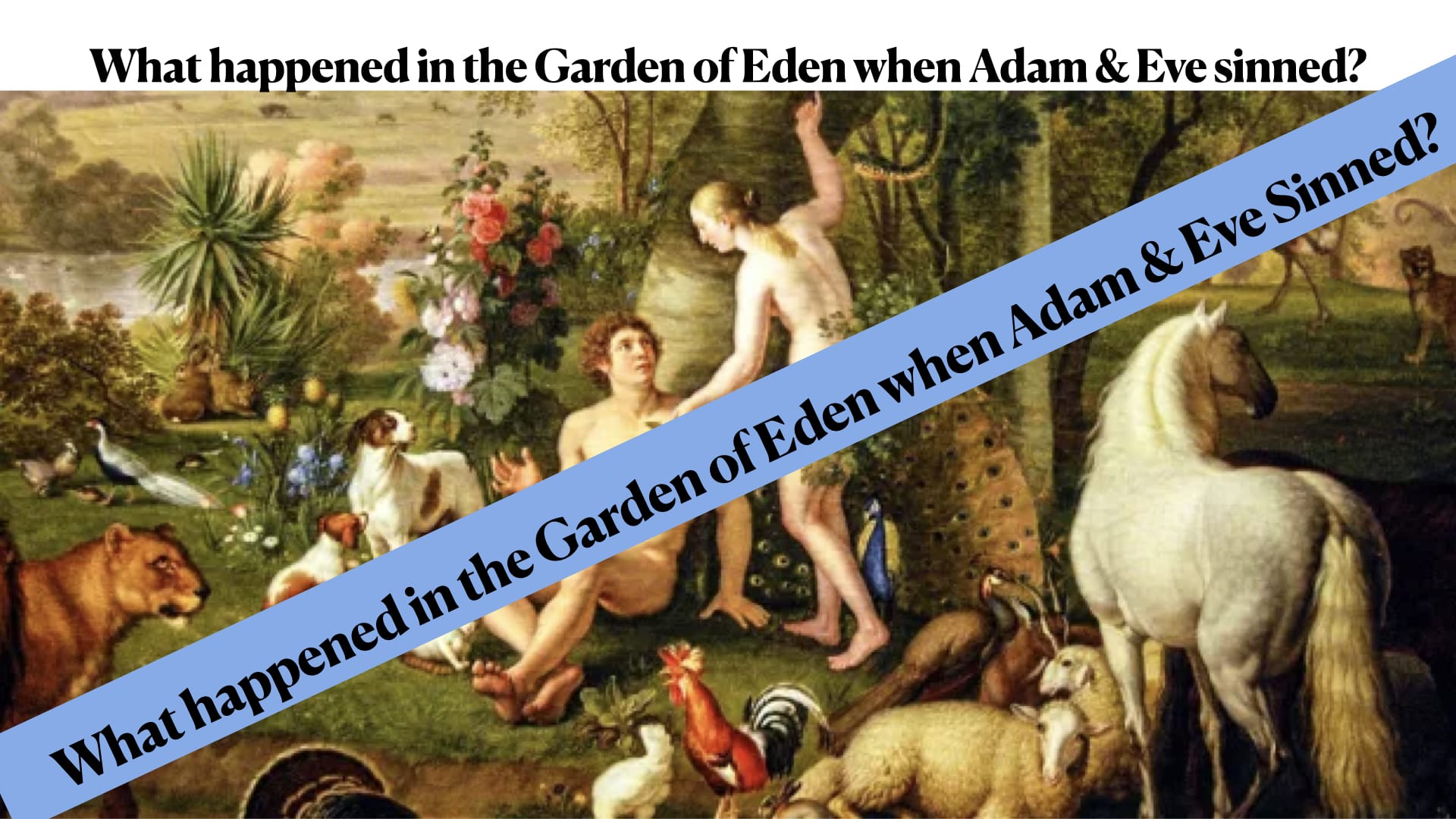
What happened at the fall?
In other words we are dealing the question: What was the sin & punishment for Adam's sin? If we misunderstand the beginning, then we are much more likely to misinterpret the rest of the Bible. Let's work through the story of the fall of humanity in the Garden of Eden. So, first up we will read the important parts of the story.Firstly there is this single -- all-important -- command God gave to Adam. (we see that in Gen 2:15-17)- "The Lord God took the man and put him in the garden of Eden to work it and keep it. And the Lord God commanded the man, saying, 'You may surely eat of every tree of the garden, but of the tree of the knowledge of good and evil you shall not eat, for in the day that you eat of it you shall surely die.'" (Gen 2:15-17)We read the Bible with all the baggage of our current Christian worldview. We can't help having all this baggage, but the wise reader will aim to set aside his baggage and try to read Bible passages as if he was reading them for the first time without any prior knowledge of the rest of the Bible. It's hard, but not impossible.One thing stands out really plainly. The punishment for sin is death. Our view of death as the punishment for sin might become a little wobbly when we realise that Adam didn't actually die on the day he and Eve at of the forbidden fruit.This has lead many to interpret that the punishment wasn't physical death but spiritual death.I recently made a vide on the topic of eschatology (= future things) called "full preterism". I was surprised at how many comments I received on that video stating that (a) Adam was mortal before the fall and (b) Therefore the death sentence in the fall narrative can only mean "spiritual death".So is the idea that the death-punishment was not physical but really only spiritual But is this really correct?Our view that the punishment for sin being spiritual death may be bolstered by the fact that Paul in the New Testament exclaims:"And you were dead in the trespasses and sins in which you once walked" (Eph 2:1-2)and also,"And you, who were dead in your trespasses and the uncircumcision of your flesh, God made alive together with him, having forgiven us all our trespasses." (Col 2:13)Does this mean we are done, the matter is settled, the punishment for sin was spiritual death? Not so fast. Maybe the answer lies in a both and and not an either or response. Firstly, the revelation that man in his state of unbelief is dead in his sins, did not come for several thousand years later. The original couple -- Adam and Eve -- did not have this knowledge at least we are not told they did. We should, I believe, read the account in the garden of eden as if we were being told it by Adam and Eve themselves.So far, the plain reading of the account in Genesis 2 is that Adam and Eve will suffer the punishment of death (real physical bodily death) when they eat the fruit of the tree of the knowledge of good and evil, and this punishment will happen on that very day.Before we go any further let's read the detailed account in chapter three (3:1-7). First the actual account of their sin."Now the serpent was more crafty than any other beast of the field that the Lord God had made. He said to the woman, 'Did God actually say, You shall not eat of any tree in the garden?' And the woman said to the serpent, 'We may eat of the fruit of the trees in the garden, but God said, ‘You shall not eat of the fruit of the tree that is in the midst of the garden, neither shall you touch it, lest you die.’ But the serpent said to the woman, 'You will not surely die. For God knows that when you eat of it your eyes will be opened, and you will be like God, knowing good and evil.' So when the woman saw that the tree was good for food, and that it was a delight to the eyes, and that the tree was to be desired to make one wise, she took of its fruit and ate, and she also gave some to her husband who was with her, and he ate. Then the eyes of both were opened, and they knew that they were naked. And they sewed fig leaves together and made themselves loincloths." (Gen 3:1-7)Setting aside for the moment the deceptive distortion of God's command by the serpent and the wrong understanding by Eve, we can certainly see a change in Adam and in Eve in their knowledge of themselves -- their eyes were opened and now they feel the shame of their sin -- but they didn't die physically on that day. This no doubt is further fuel for those who want to argue that the death they experienced was only of spiritual nature. Again we must then ask, are we done, is the argument settled in favour of spiritual death alone?What happens next should give us pause as this sets the stage for the whole story of the Bible, the story of redemption. What does God do next?Adam and Eve had made the first human attempt at sin covering. They attempted to hide their nakedness by sewing fig leaves to cover themselves. This then becomes the story of all of humanity. We somehow, intuitively know our universal hum

What did the Early Church Believe about Speaking in Tongues?
- I have made a number of presentations on the subject of "Tongues" and authored a book where I work through every passage in the Bible on this subject and ask all the hard questions. The book is available on Amazon.This presententation like all my other presentations on this subject is not about the Cessation versus Continuation argument. I am not convinced that this argument is well framed. There are those who claim that the modern sign & wonders movement predominantly in the Pentecostal community is a replica of the miracles in Christ's and his apostles ministries, they claim they have the same power to work miracles, heal the sick, prophecy the future and many other signs. An honest onlooker from the outside very quickly realises that these claims are false, people like Benny Hinn who claims to heal the sick, does not, the prophets who claim to foretell the future either make claims that are so vague they cannot be verified, or they make downright false claims and then bork at ministries like this one who challenges their claims. Then there are those who claim God stopped working miracles altogher once the canon of the Bible was completed. Humbly said both of these views are extremes that should be rejected on the evidence.My view is that miracles were never "normative" i.e. every day occurences for all people. An honest student of the Bible will find miracles throughout the Old and New Testament periods, but only when a particular chosen minister was to be authenticateddid God work the extraordinary. We see this in the miracles of Christ, and to a lesser degree in the ministry of the apostles, but already in the writings of the epistles of the New Testament we can see a fading of the miraculous, people are sick and pastoral advice is given how to handle this. The general picture given by the early church patristics is one of gradual lessening of the miraculous, over the course of the first 3-5 centuries. Nonetheless we see miracles do continue to occur throughout the history of the church, but to a far lesser degree. Miracles and the supernatural are simply not normative and one has to close ones mind and rational thinking capacity not to recognise this.My view on the topic of tongues is that in the New Testament they are always "natural, real languages" like Latin, Spanish or French.As I said I have a whole series of presentations working through every New Testament passage on this subject.Given that I hold to the protestant axiom called "Sola Scriptura", you might be wondering "why am I concerned with what the Early Church Fathers say on this topic"? 1. Sola Scriptura does not mean the Bible is the ONLY authority, but the FINAL authority.2. It is therefore really important to see what the Early Church believed, especially those who were literally only one or a few generations away from the actual apostles themselves3. If they all agree with our own interpretation of scripture then this should give us more confidence that we have not misunderstood or dare I say misinterpreted the texts under reviewThis presentation is basically me giving you readings of quotes by many early church fathers. I will give references for each quote in the presentation description so you can read up and also read all the context, which I would always recommend.I was actually surprised just how many theological giants of the early church period, the men who fought against the many christological heresies the church battled with during that period, actually took the time to comment on Acts and 1 Corinthiansand give us a window into what they believed on this important subject. The findings might surprise you.This session is may be a little "dry" because my aim here is just to bring up a line of very early church fathers and simply find out what they believed on the topic of Speaking in Tongues.I have already made a series of presentations on pretty much every single passage of scripture on this topic. I have written a book which is available on Amazon. For those who can't afford the book, or who are unsure whether investing in the price of the book is a good investment, I have actually published most the book chapter by chapter on this substack. You can read it there for free, and I hope that if you are edified by the content that you might support my work by buying a copy.For the sake of brevity I am only giving you the quotes with just enough information to be able to see what their firm beliefs were on this subject. In the presentation notes I will list all the source material where you can do your own due dilligence and readall the context of these quotes, so you know I have not taken them out of context or made them say what they did not intend.First up let's look at the 1st few centuries, AD 100-300Irenaus. c. 120-200 AD (his writings date to this time)Irenaus was the bishop of the Roman province called Gaul, now Lyons in France. He originally came from a Christian family inSmyrna where at an early age he witnessed the

Who is the Fig Tree Generation?
Who is the Fig Tree Generation?Will a "Fig Tree" Generation as asserted by Amir Tsarfati, see the return of Christ?Or perhaps the question we should really ask is: Is there a fig tree generation?In this episode, I review an often repeated assertion by those who believe in a futurist interpretation of the Olivet discourse (Mt 24, Mk13, Lk 21), that there is a “fig tree” generation that will see the return of Christ. In this instance, well-known preacher Amir Tsarfati speaks on this topic, and I pull back the veneer and demonstrate that he is being being true to the text.Here are the notes & comments from the podcast for those who prefer to read.After watching the whole video/sermon - this clip represents the central point he made. Please feel free to watch the whole sermon on Youtube for yourself.So what are the assertions he has made?He interprets the "fig tree parable" as some special event 2000 years in the future of Jesus disciples, when the nation of Israel will be restored to it's original nationhoodHe then says "You" (in the video he points at the audience) are the generation of people who according to Jesus's words "see" this special fig tree based restoration of the nation of Israel and therefore:When Jesus says "this generation" - he means the generation of people who are alive to witness the restoration of the nation of Israel and they will basically be the ones who experience the second coming of Christ.The all important question now is: Is this what Jesus actually said?To assist us in answering this question, let's first read the passage in all three renditions of the Olivet Discourse: Matthew 24, Mark 13 and Luke 21."From the fig tree learn its lesson: as soon as its branch becomes tender and puts out its leaves, you know that summer is near. So also, when you see all these things, you know that he is near, at the very gates. Truly, I say to you, this generation will not pass away until all these things take place" - Mt 24:32-34"From the fig tree learn its lesson: as soon as its branch becomes tender and puts out its leaves, you know that summer is near. So also, when you see these things taking place, you know that he is near, at the very gates. Truly, I say to you, this generation will not pass away until all these things take place" - Mk 13:28-30"Look at the fig tree, and all the trees. As soon as they come out in leaf, you see for yourselves and know that the summer is already near. So also, when you see these things taking place, you know that the kingdom of God is near. 32 Truly, I say to you, this generation will not pass away until all has taken place" - Lk 21:29-32What are then some of the important questions we must ask to ascertain what is being said?- (1) What is the parable about, i.e. what is it's central message?- (2) What was Jesus trying to say when he referred to the parable by "So also when you see"?- (3) What did Jesus mean by "all these things"? Was he referring to the parable or the events just detailed before launching into this parable?- (4) What was Jesus's audience, i.e. who was in view with the pronoun "You"?- If we can answer these four questions we can I think quite clearly demonstrate who was in view with the term "this generation".(1) What was the parable about ?- Tsarfati asserted that the parable is about the restoration of the nation of Israel. In the full sermon he states that the Fig Tree is used as representation of Israel. I would suggest he is engaging in "eisegesis" here since this parable does not say anything about the restoration of a dead tree in the long distant future, even if Israel was meant with the tree, the rest has to be quite literally imposed onto the parable.Let's break it down and also see what Jesus clearly tells us:- "From the fig tree learn its lesson" - so we are to learn a specific lesson from the tree- "As soon as its branch becomes tender and puts out its leaves, you know that summer is near"- if we read this in plain English it simply means two things:- "When the tree's branch becomes tender, it put's out its leaves"- "When it's leaves are out, we can know that summer is near"- NB: Please note here that the parallel passage in Luke's gospel mentions "and all the trees".- Given that Luke primarily wrote to a Gentile audience who may or may not know about "fig trees"the addition of "all trees" is a pretty sane give away that Jesus's isn't making any specific assertion about a Fig tree per say and therefore something specific to Israel only, but rather a straightforward and simple assertion that is true of all trees!- When trees put out their leaves, you know the summer is near!- This leads us straight into our next question:(2) What was Jesus referring to when he said "So also when you see"- The most straightforward and simple explanation is that the "so" does not refer to some special knowledge Jews may have about the restoration of the nation of Israel, but simply:- In the same way you can conclude that summer is near when you see
Is Baptism Necessary for Salvation?
Does John 3:5 Teach that Baptism is Necessary for Salvation?In the last video, we looked at the question, "Is Salvation By Grace through Faith or by Works?" and we established that whilst the New Testament calls all believers to obey and bring forth fruit meet their repentance, works are not the cause of salvation but the effect. True works of obedience accompany every true believer.* Let’s first read the verse on it’s own:* "Jesus answered, “Truly, truly, I say to you, unless one is born of water and the Spirit, he cannot enter the kingdom of God." (John 3:5)1 - If we approached this passage on it’s own:It could be pressed upon to say this:* P1 - In John 3 Jesus speaks of the need to be born of water and Spirit* P2 - If we ascertain from the context that to be born of water is in fact baptism then* C - It is necessary to be baptised in order to be saved2 - Considering the remainder of the New Testament:Affirming salvation is by grace through faith, we should approach this passage with a syllogism:* P1 - The New Testament teaches Salvation is by Grace through Faith* P2 - In John 3 Jesus speaks of the need to be born of water and Spirit* C - The birth in water and Spirit will be synonymous with the other salvific language used in the New TestamentThe question now arises whether the context of the passage affirms the first or the second argument we posited and whether the passage indeed speaks of baptism at all. I will deal with the latter question first and then the former.Does John 3 speak of baptism?At this point, it will be good to read the whole passage:* "Now there was a man of the Pharisees named Nicodemus, a ruler of the Jews. This man came to Jesus by night and said to him, 'Rabbi, we know that you are a teacher come from God, for no one can do these signs that you do unless God is with him.' Jesus answered him, 'Truly, truly, I say to you, unless one is born again he cannot see the kingdom of God.' Nicodemus said to him, 'How can a man be born when he is old? Can he enter a second time into his mother’s womb and be born?' Jesus answered, 'Truly, truly, I say to you, unless one is born of water and the Spirit, he cannot enter the kingdom of God. That which is born of the flesh is flesh, and that which is born of the Spirit is spirit. Do not marvel that I said to you, ‘You must be born again.’ The wind blows where it wishes, and you hear its sound, but you do not know where it comes from or where it goes. So it is with everyone who is born of the Spirit." (John 3:1-8)Let’s first lay out a summary of the material factsIn this passage, to help us get some clarity:* Unless one is born again, one cannot see the kingdom of God* Unless one is born of water and the Spirit, one cannot enter the kingdom of God* You must be born againThere is a lot more going on in this passage, but for the purposes of answering our question these are what I can see the material facts we must deal with.* 1. No where in the context or words of this sermon to Nicodemus is baptism mentioned. Christian baptism was instituted after the cross, yet the word was not uncommon, as can be see from the ministry of John the baptist. Jews had a tradition to baptise Gentile converts when they adopted Judaism.* 2. It seems obvious that the reason John the baptist was baptising people in the Jordan was because of their apostate state and God in effect saw them as Gentiles coming to repentance* 3. The conclusion just because the term "water" is used in the passage, that it therefore necessarily means baptism is unwarranted, unless off course there is a parallel passage that infers to be "born of water" means to "be baptised" but such a passage is entirely missing from the bible.Isn’t it more likely that Jesus was chiding Nicodemus, who was a senior pharisee and teacher of the law, of his lack of knowledge of the many prophetic foretelling passages of the coming New Covenant. Let’s look at a few to get some much needed context:* "So shall he sprinkle many nations. Kings shall shut their mouths because of him, for that which has not been told them they see, and that which they have not heard they understand." (Isa 52:15)* "I will sprinkle clean water on you, and you shall be clean from all your uncleannesses, and from all your idols I will cleanse you." (Eze 36:25)The passage in Isaiah is about Christ, "The Suffering Servant," who is said to "sprinkle many nations"—we m must remember the context of chapter 52 is 53 the famous passage that is all about Christ’s suffering death and redemptive work on the cross. The sprinkling is intimately connected with redemption.The passage in Ezekiel is the most likely passage Christ was referring to as it directly refers to the giving of the New Covenant. The very next verse says:* "And I will give you a new heart, and a new spirit I will put within you. And I will remove the heart of stone from your flesh and give you a heart of flesh." (Eze 36:26)* "And I will give them one heart, and a new spirit I will put
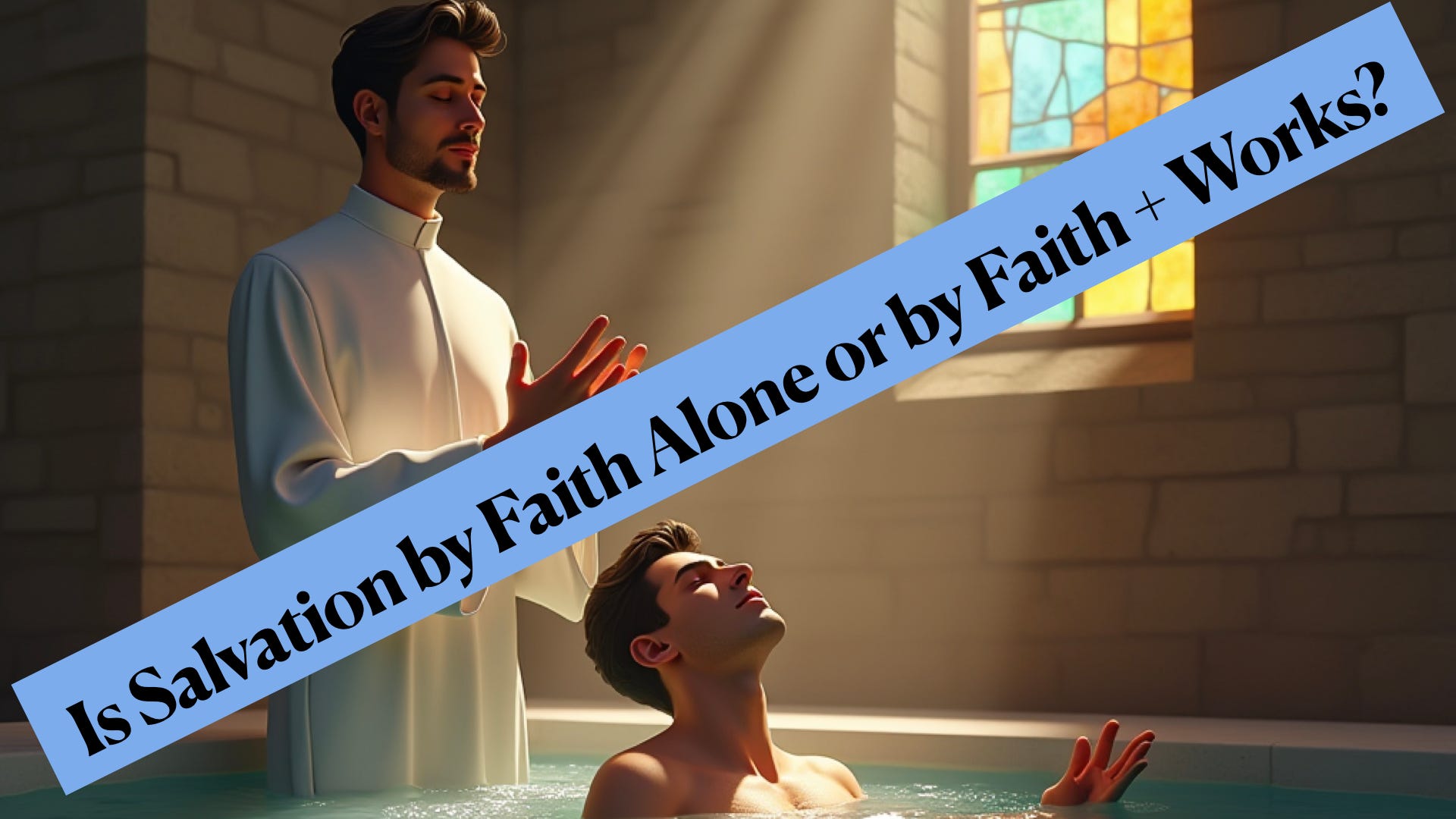
Is Salvation by Faith Alone?
Is Salvation by Faith Alone, or by Faith + Works?Salvation by faith is not an invention by New Testament authors. Salvation was always by faith. Hebrews 11 has a long list of Old Testament patriarchs that testify to this fact unequivocally.* The Old Testament prophets affirm this as seen in the prophet Habakuk* "The righteous shall live by his faith." (Hab 2:4)* And if there was any doubt what Habakuk actually meant, the apostle Paul quotes this when he explains what the gospel is:* "For in it[the gospel - see v 16] the righteousness of God is revealed from faith for faith, as it is written, 'The righteous shall live by faith.'" (Rom 1:17)* Paul quotes this same verse again to the Galatians* "Now it is evident that no one is justified before God by the law, for 'The righteous shall live by faith.'" (Gal 3:11)* And the author of the letter to the Hebrews just before launching into his list of patriarchs who all affirmed the same message* "But my righteous one shall live by faith, and if he shrinks back, my soul has no pleasure in him." (Heb 10:38)So what have we seen so far? Salvation is and always was by faith, but is this a work of grace or is the faith produced by human effort?Is salvation is by grace through faith?Let’s firstly look at a few very obvious and clear passages in the New Testament that show that true Christian salvation is by grace through faith alone in Christ alone! Time does not permit to work through every one of these verses in their context. I would encourage you to do this for yourself, so that you stand firm in what you believe.* "For by grace you have been saved through faith. And this is not your own doing; it is the gift of God, not a result of works, so that no one may boast." (Eph 2:8-9)* "Believe in the Lord Jesus, and you will be saved, you and your household." (Acts 16:31)* "For we hold that one is justified by faith apart from works of the law." (Rom 3:28)* "And to the one who does not work but believes in him who justifies the ungodly, his faith is counted as righteousness." (Rom 4:5)* "Therefore, since we have been justified by faith, we have peace with God through our Lord Jesus Christ." (Rom 5:1)* "Yet we know that a person is not justified by works of the law but through faith in Jesus Christ, so we also have believed in Christ Jesus, in order to be justified by faith in Christ and not by works of the law, because by works of the law no one will be justified." (Gal 2:16)* "So then, the law was our guardian until Christ came, in order that we might be justified by faith." (Gal 3:24)* "In him you also, when you heard the word of truth, the gospel of your salvation, and believed in him, were sealed with the promised Holy Spirit." (Eph 1:13)* "And be found in him, not having a righteousness of my own that comes from the law, but that which comes through faith in Christ, the righteousness from God that depends on faith." (Phil 3:9)* "But if it is by grace, it is no longer on the basis of works; otherwise grace would no longer be grace." (Rom 11:6)There are many more, but these alone should suffice for the honest student to realise that the reformation doctrine of "salvation by grace alone through faith alone in Christ alone" stands as a towering principle and central doctrine of protestantism. Pretty much the whole tree of all the denominations that grew out of the protestant reformation believes in this central tenet of the Christian faith.If Roman Catholics are unified in their belief in the Pope, Protestants are in principle unified in this belief in salvation by grace through faith!Taken at face value we could turn this passage into a syllogism as an argumentLet’s start with an argument that is relevant to some of the churches Paul founded:* P1 - Salvation is the gift of God* P2 - Salvation is not a result of works* P3 - Salvation is not your own doing* P4 - Actions like circumcision & keeping the sabbath are clearly works of some sort* C - Circumcision & keeping the sabbath do not contribute to salvationNow let’s turn this into an example that is more relevant to our day* P1 - Salvation is the gift of God* P2 - Salvation is not a result of works* P3 - Salvation is not your own doing* P4 - Actions like baptism are clearly works of some sort* C - Baptism does not contribute to salvationAnother example - since there are some groups who claim:One must receive the Holy Spirit with the evidence of speaking in tongues to be saved* P1 - Salvation is the gift of God* P2 - Salvation is not a result of works* P3 - Salvation is not your own doing* P4 - Actions like baptism are clearly works of some sort* C - Speaking in tongues does not contribute to salvationAnother example relating to the ongoing life of a Christian:That is relevant to many the big mega churches today* P1 - Salvation is the gift of God* P2 - Salvation is not a result of works* P3 - Salvation is not your own doing* P4 - Actions like tithing are clearly works of some sort* C - Acts of financial generosity do not co
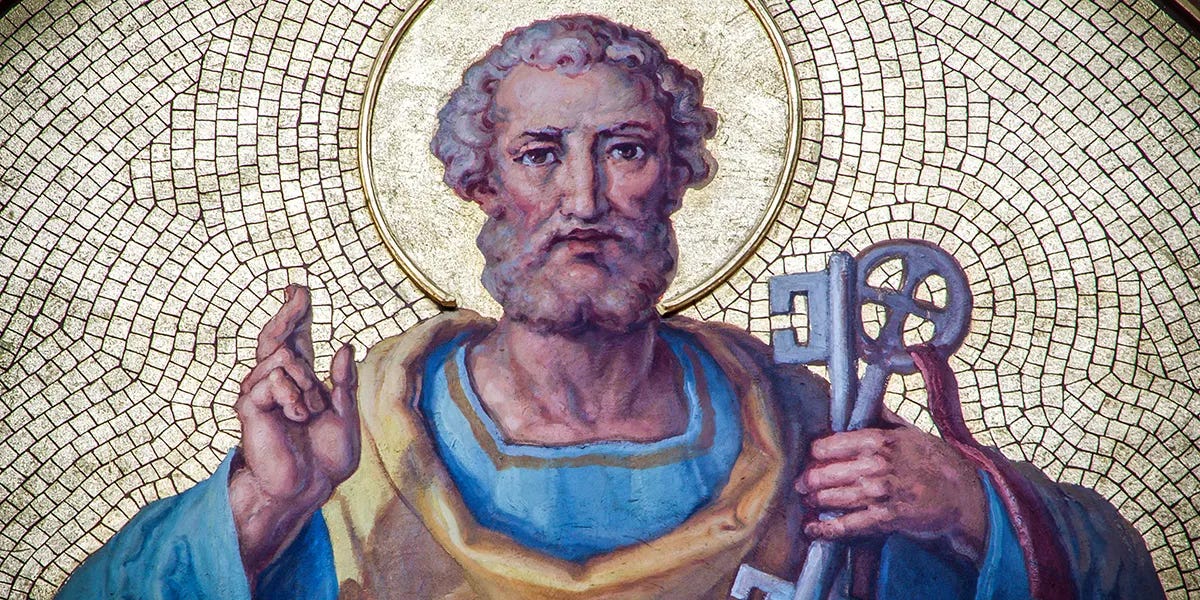
Apostolic Succession
Rome claims that the apostle Peter was the first pope. I looked at all the evidence in support of this claim in a recent podcast. The evidence was found wanting. In this podcast, I look at the Roman Catholic claim that there is such a thing as apostolic succession from Peter being the first pope all the way through to today. By this claim, the Roman Catholic church claims to be the “one true church” and thereby denies the status of a true Christian church to all other branches of Christendom. In this video, I review the evidence from the New Testament about succession in principle, what it means and what it does not. Then I review the context of several of the major statements used by Roman Catholic apologists when they claim the early church fathers also believed in apostolic succession of the supreme authority of the papacy. The early church does speak about succession but never in the way that Rome would need them to. In fact, the early church fathers writings support the protestant view of succession. Some of the writings of the early church fathers are quite convoluted in style, please bear with me as I work through them. I hope this helps you both understand the Roman Catholic view and also why it is un biblical, and hence incorrect. Please let me know what you think in the comments. This is a public episode. If you would like to discuss this with other subscribers or get access to bonus episodes, visit reformedapologist.substack.com
Was Peter the First Pope?
A critical analysis of the Biblical data and the beliefs in the early church. If the Bible nor the early church actually support the idea of the apostle Peter being a pope, let alone the first one, then the very foundation of Roman Catholicism cannot be upheld.In this podcast, I review the main arguments used by the Roman Catholic apologists, the bible passages they cite in favour and the quotes by early Church fathers they refer to, in support. The main Bible passage they quote from does not support their view, nor do early Church fathers agree with the Roman Catholic interpretation of this passage. In the next episode, I will review the issue of “apostolic succession.” These two doctrines form the basis of the notion put forward by Roman Catholics that they are the “One True Church.” If these two arguments fail, the whole tree built on them as a foundation is in danger of collapsing.If you were encouraged by the podcast, please share with your friends. You can find more content like this on my Youtube channel:https://youtube.com/@reformedapologist This is a public episode. If you would like to discuss this with other subscribers or get access to bonus episodes, visit reformedapologist.substack.com