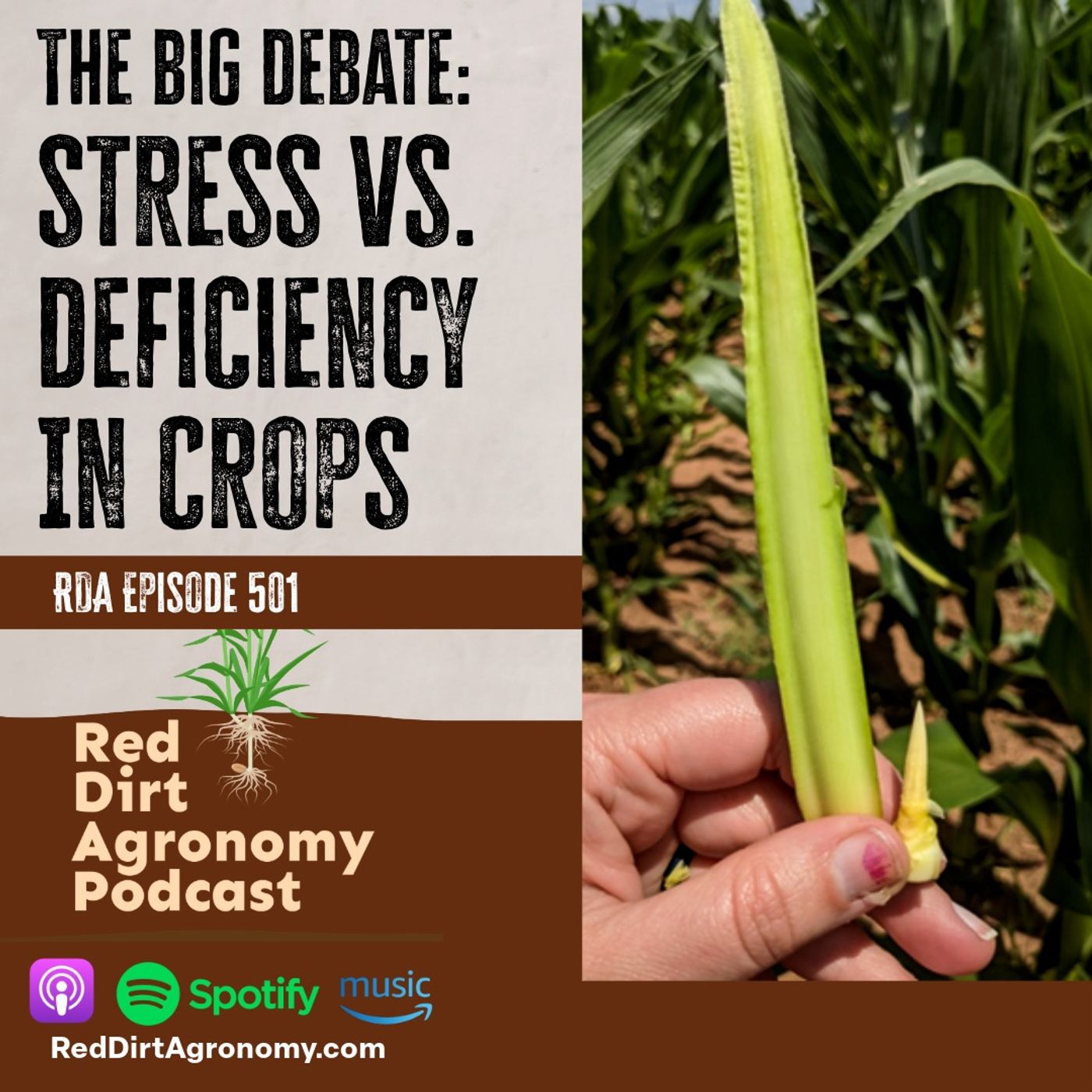
The Big Debate: Stress vs. Deficiency In Crops - RDA 501
Episode 501 kicks off Red Dirt Agronomy’s fifth season with a live, laugh-out-loud “around the table” conversation from KNID AgriFest in Enid—right next to the Oklahoma Wheat Commission’s famous cinnamon rolls. The crew shares what they’re seeing across Oklahoma: a dry stretch, unseasonably warm conditions, and some surprising reports like armyworms running in wheat and early disease confirmations (tan spot, rust, powdery mildew) in the southwest. From there, the “doctors of dirt” dig into practical management: what canola and wheat should look like right now, why green-up moisture matters, and how to think about wheat topdress timing without donating nitrogen to the wind—especially on dry soil with dew/humidity and warm, breezy days. Then the episode turns into a masterclass debate: managing the plant you don’t see (primordia), how early stress differs from true deficiency, and why the “right” decision depends on your goal (forage vs grain) and your risk tolerance (yield loss vs input cost).
Red Dirt Agronomy Podcast · Josh Lofton Ph.D., Dave Deken, Brian Arnall Ph.D.
Audio is streamed directly from the publisher (dts.podtrac.com) as published in their RSS feed. Play Podcasts does not host this file. Rights-holders can request removal through the copyright & takedown page.
Show Notes
Recorded live at KNID AgriFest in Enid from the Oklahoma Wheat Commission booth, Episode 501 launches Season 5 with a fast-paced crop check and a whole lot of agronomy banter.
Dave Deken sits down with Brian Arnall and Josh Lofton to talk January wheat realities: dry conditions, odd winter insect pressure, and early reports of wheat diseases showing up sooner than anyone wants.
They also hit canola concerns—like that purple color—and what to inspect right now (new leaves and crown health) as everyone looks ahead to green-up.
Next, it’s go-time thinking for topdress: why timing, weather, and surface conditions matter—especially when warm days, wind, and dew can increase nitrogen losses.
Then the conversation turns into a practical deep dive on plant physiology and decision-making: primordia (the “cells in waiting”), how early-season stress can differ from true deficiency, and why chasing genetic potential without respecting environmental limits can hurt ROI.
If you like your agronomy with real-world nuance (and a little friendly arguing), this one’s for you!
Top 10 takeaways
- January crop scouting can be misleading—weather swings can make fields look great or “go backwards” fast.
- Warm winter + dry stretch = unusual pest pressure, including armyworms in wheat.
- Early disease reports (tan spot, rust, powdery mildew) mean don’t assume “it’s too early.”
- For canola right now, focus on new leaves and crown—that’s your “are we okay today?” check.
- Green-up moisture is the hinge point for both wheat tillering and canola recovery.
- Topdress timing is a system problem (acres, co-op schedules) and a weather-loss problem (dew + warm + wind).
- If conditions are right to lose N (dry soil + dew/humidity + wind), waiting can be the most profitable move.
- A lot of management is about what’s happening inside the plant—primordia/cell division—before you ever see it.
- Stress can be useful; deficiency is where you start giving away yield potential—context (stage/goal) matters.
- The “right” program depends on your risk profile: protecting max yield vs protecting ROI on inputs.
Detailed timestamped rundown
00:00–01:15 — Welcome to Episode 501 + Season 5 vibes; shoutout to AgriFest and the Wheat Commission cinnamon-roll traffic.
01:16–01:55 — Introductions: Dave Deken with Dr. Brian Arnall and Dr. Josh Lofton; “we were arguing in our office earlier…”
01:46–02:10 — Recorded Jan 9, 2026 at the Oklahoma Wheat Commission booth during AgriFest in Enid.
02:10–03:05 — Cinnamon roll banter + meeting listeners at the booth.
03:07–04:20 — Crop update headline: it’s January, it hasn’t rained, it feels like June; armyworms in wheat; disease confirmations in SW OK.
05:01–06:20 — Canola check: purple color mystery; focus on new leaves + crown health “right now.”
06:35–08:10 — “Magic windows” talk: green-up moisture is critical for canola and wheat tillering.
09:03–10:30 — Rooting + grazing: planting timing affects anchoring; some fields pull easier under cattle.
10:45–12:55 — Topdress season starts early for many; best efficiency late Jan–March; avoid warm/windy/dewy days that can increase N loss (they cite “blow off 15–25%”).
13:00–16:55 — What if winter doesn’t get cold? Daylength and growth timing; discussion on how wide the N window really is.
17:00–22:10 — OSU NPK blog topic: managing “primordia” (cells-in-prep), not just what you see aboveground.
22:10–25:20 — Corn example: by V6 you’ve set rows/potential kernels; stress/deficiency can reduce grain number.
28:50–41:10 — Main debate: stress vs deficiency, “leaf deficient but not the plant,” and Liebig’s Law barrel analogy.
44:20–48:10 — Genetic vs environmental potential, realized yield; precision vs accuracy; risk aversion (yield loss vs input cost).
49:40–50:17 — Wrap + resources at reddirtagronomy.com.
RedDirtAgronomy.com