
Episode 469
#469 Commands, out of the terminal
Python Bytes · Michael Kennedy and Brian Okken
February 9, 202633m 56s
Audio is streamed directly from the publisher (pythonbytes.fm) as published in their RSS feed. Play Podcasts does not host this file. Rights-holders can request removal through the copyright & takedown page.
Show Notes
Topics covered in this episode:
- Command Book App
- uvx.sh: Install Python tools without uv or Python
- Ending 15 years of subprocess polling
- monty: A minimal, secure Python interpreter written in Rust for use by AI
- Extras
- Joke
About the show
Sponsored by us! Support our work through:
- Our courses at Talk Python Training
- The Complete pytest Course
- Patreon Supporters Connect with the hosts
- Michael: @[email protected] / @mkennedy.codes (bsky)
- Brian: @[email protected] / @brianokken.bsky.social
- Show: @[email protected] / @pythonbytes.fm (bsky) Join us on YouTube at pythonbytes.fm/live to be part of the audience. Usually Monday at 10am PT. Older video versions available there too. Finally, if you want an artisanal, hand-crafted digest of every week of the show notes in email form? Add your name and email to our friends of the show list, we'll never share it.
Michael #1: Command Book App
- New app from Michael
- Command Book App is a native macOS app for developers, data scientists, AI enthusiasts and more.
- This is a tool I've been using lately to help build Talk Python, Python Bytes, Talk Python Training, and many more applications.
- It's a bit like advanced terminal commands or complex shell aliases, but hosted outside of your terminal. This leaves the terminal there for interactive commands, exploration, short actions.
- Command Book manages commands like "tail this log while I'm developing the app", "Run the dev web server with true auto-reload", and even "Run MongoDB in Docker with exactly the settings I need"
- I'd love it if you gave it a look, shared it with your team, and send me feedback.
- Has a free version and paid version.
- Build with Swift and Swift UI
- Check it out at https://commandbookapp.com
Brian #2: uvx.sh: Install Python tools without uv or Python
- Tim Hopper
Michael #3: Ending 15 years of subprocess polling
- by Giampaolo Rodola
- The standard library's
subprocessmodule has relied on a busy-loop polling approach since the timeout parameter was added to Popen.wait() in Python 3.3, around 15 years ago - The problem with busy-polling
- CPU wake-ups: even with exponential backoff (starting at 0.1ms, capping at 40ms), the system constantly wakes up to check process status, wasting CPU cycles and draining batteries.
- Latency: there's always a gap between when a process actually terminates and when you detect it.
- Scalability: monitoring many processes simultaneously magnifies all of the above.
- + L1/L2 CPU cache invalidations
- It’s interesting to note that waiting via
poll()(orkqueue()) puts the process into the exact same sleeping state as a plaintime.sleep()call. From the kernel's perspective, both are interruptible sleeps. - Here is the merged PR for this change.
Brian #4: monty: A minimal, secure Python interpreter written in Rust for use by AI
- Samuel Colvin and others at Pydantic
- Still experimental
- “Monty avoids the cost, latency, complexity and general faff of using a full container based sandbox for running LLM generated code. “
- “Instead, it lets you safely run Python code written by an LLM embedded in your agent, with startup times measured in single digit microseconds not hundreds of milliseconds.”
Extras
Brian:
- Expertise is the art of ignoring - Kevin Renskers
- You don’t need to master the language. You need to master your slice.
- Learning everything up front is wasted effort.
- Experience changes what you pay attention to.
- I hate fish - Rands (Michael Lopp)
- Really about productivity systems
- And a nice process for dealing with email
Michael:
- Talk Python now has a CLI
- New essay: It's not vibe coding - Agentic engineering
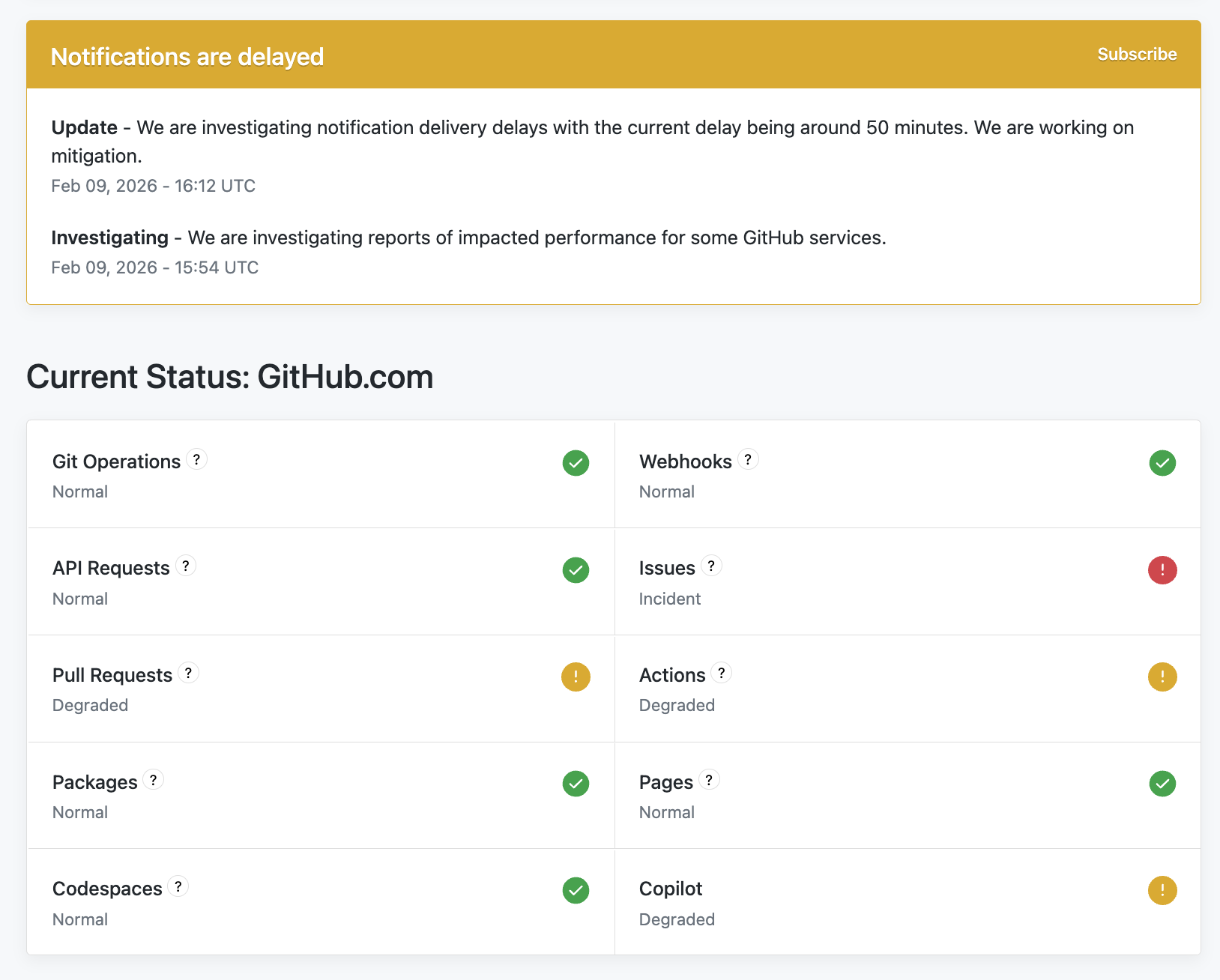
- GitHub is having a day
- Python 3.14.3 and 3.13.12 are available
- Wall Street just lost $285 billion because of 13 markdown files
Topics
pythonpycharmpython3softwareprogrammingwebweb developmentdeveloperidepodcastopen sourcenewsheadlineseducationsoftware developerdata sciencesciencecloud computing