Praise Cathedral Podcast
260 episodes — Page 2 of 6
Keep On Knockin'
Keep On Knockin'
<p>Pastor Chris Criswell teaches from Luke 18 about persistence and not giving up on your prayers to God. </p>

Cut Along The Dotted Lines
Cut Along The Dotted Lines
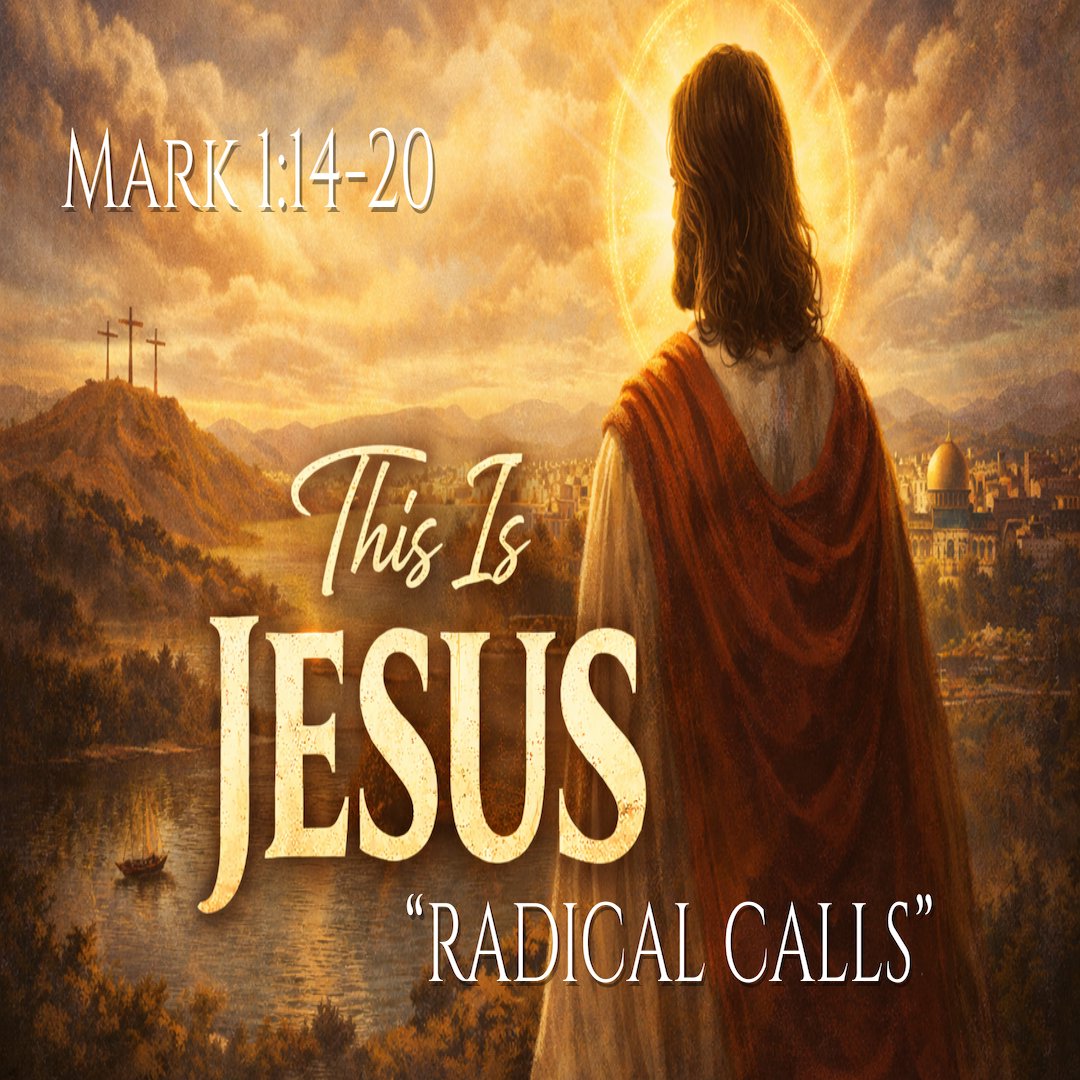
Radical Calls
Radical Calls
<p>Following Jesus is far more radical than most people realize. Christ's call isn't an invitation to add Him to your busy life - He demands to be your supreme passion above every other priority. The gospel isn't good advice about earning God's acceptance; it's good news about what Christ has already accomplished for us. When Jesus called the disciples, they immediately left everything to follow Him, understanding this wasn't casual participation but complete life reorientation. True discipleship means your love for Christ should be so intense that by comparison, everything else appears secondary.</p>
I Hope You Dance

I Hope You Dance
<p>Mark chapter 1 reveals the Trinity in perfect harmony at Jesus' baptism - the Father's voice, the Son in the water, and the Holy Spirit descending like a dove. This scene shows us the divine dance where the three persons of God eternally glorify one another in perfect unity. Originally, humanity was created to participate in this divine dance, but sin caused us to step out of rhythm by making life about ourselves instead of God. Through Jesus' perfect obedience, even unto death, He opened the path for us to re-enter this eternal dance of glory.</p>
Rescue The Time
Rescue The Time
Yes, Mary Knew (Act 2)

Yes, Mary Knew (Act 2)
<p>Mary's response to the angel's announcement wasn't immediate joy, but quiet acceptance. God strategically placed Elizabeth in Mary's life to provide the encouragement she needed. When Mary visited Elizabeth, the Holy Spirit filled Elizabeth, who proclaimed truth over Mary's calling. This encounter transformed Mary from subdued acceptance to joyful proclamation in the Magnificat. God designs our relationships as divine appointments, placing specific people in our lives to encourage us when we struggle to understand His work. True Christian community involves believers speaking truth into each other's lives and helping one another recognize God's activity.</p>
Yes, Mary Knew (Act 1)

Yes, Mary Knew (Act 1)
<p>The incarnation of Christ represents the greatest event in human history, and God's choice of Mary reveals profound truths about His character. God chose Mary not because she was extraordinary, but because she was ordinary, pure, and young enough to be open to His plans. When the angel Gabriel announced she would bear the Son of God, Mary asked honest questions before ultimately surrendering to God's will. Her response teaches us that God welcomes our questions when asked with humble hearts, but He calls us to move from questioning to surrender. The real question isn't whether Mary knew what was happening, but whether we truly understand that Jesus made Himself completely vulnerable for our sake.</p>
Let It Go

Let It Go
<p>Forgiveness is releasing someone from a debt you feel owed because of real or perceived wrongs. At the heart of Christianity lies this powerful truth that can transform our relationships, especially during challenging holiday gatherings. Jesus made clear that our request for God's forgiveness obligates us to forgive others. Forgiveness isn't a transaction with numerical limits, but a disposition of life because Christ has freely forgiven us. True forgiveness involves having compassion, canceling the debt completely, and letting the person go without conditions. Forgiveness is not an emotional act but a decision of the will that must often be made daily, and it liberates the forgiver more than the forgiven.</p>
Artificial vs. Authentic | Adorned vs. Accessorized
Artificial vs. Authentic | Adorned vs. Accessorized
<p>In a world obsessed with artificial everything, the church faces a critical question: Are we offering authentic Christianity or just dressing up our old selves with Jesus accessories? The world desperately needs believers who genuinely reflect Christ's character in daily life, not just on Sunday mornings. This requires completely putting off our old nature and putting on the new man through the Holy Spirit's power. True transformation means surrendering our right to justify old patterns by saying that's just how I am. The challenge isn't creating better church programs but becoming authentic followers who demonstrate Christ's love, truth, kindness, and forgiveness in every aspect of life.</p>
The Relentless Power Of The Gospel
<p>Life inevitably brings suffering, even for Christians, but Scripture reveals how we can find genuine joy in our darkest moments. Through the Gospel foundation of justification by faith, we discover that suffering serves three powerful purposes: it draws us closer to Christ in ways prosperity never could, expands our capacity to minister to others with authentic compassion, and builds Christ-like character through endurance. Rather than rejoicing in spite of or for our suffering, we can rejoice in our trials because God uses them to accomplish something beautiful in our lives. This hope doesn't disappoint because it's grounded in God's promises and His faithful presence with us through every difficulty.</p>
The Relentless Power Of The Gospel
Living Here, Looking There
<p>Life is challenging for believers because we're living between Eden's perfection and our eternal home with Christ. This temporary existence requires us to run a spiritual race while carrying the weight of worldly attachments. Our salvation rests entirely on Jesus Christ's finished work, not our own efforts. Like the Israelites in Babylon, we're called to live faithfully in our current circumstances while maintaining an eternal perspective. The key is fixing our eyes on Jesus, who endured suffering for the joy of presenting us to the Father. We must identify and lay aside the temporary weights that hinder our spiritual progress while bringing glory to Christ's name.</p>
Living Here, Looking There
Fire On The Moutain
<p>Israel's spiritual crisis under King Ahab and Queen Jezebel led to the dramatic showdown on Mount Carmel, where Elijah challenged 450 prophets of Baal. God answered with fire from heaven, consuming the sacrifice and revealing His power. However, Elijah's victory quickly turned to defeat when he fled from Jezebel's threats and fell into deep depression. God met Elijah in his darkest moment, providing physical care and speaking through a gentle whisper rather than dramatic displays. The story reveals how we are influenced by the voices we allow into our lives and challenges us to trust God's sovereignty even when His plans don't match our expectations.</p>
Fire On The Moutain
The God You Cannot Manage
<p>God cannot be managed, manipulated, or controlled by human preferences. The story of Israel's defeat while carrying the Ark of the Covenant reveals how religious superstition fails when we try to use God like a lucky charm. Even when corrupt priests Hophni and Phinehas carried the Ark into battle, Israel suffered devastating defeat because they attempted to force God's hand rather than obey Him. The Philistines captured the Ark, yet when they placed it beside their idol Dagon, their god fell and was broken before the true God. We often make the same mistake today, trying to put God in a box or worship our methods rather than the Master. God's presence is found through total commitment, surrendered idols, and His mercy - not through manipulation or control.</p>
The God You Cannot Manage

For Mature Audiences Only
<p>The book of Job confronts one of life's most difficult questions: Why do good people suffer? Job, a wealthy and righteous man, lost everything in a single day - his possessions, servants, and ten children. When God finally appeared to Job, He didn't provide explanations but instead asked challenging questions that revealed Job's limited understanding compared to God's infinite wisdom. Job's transformation came not through receiving answers, but through encountering God directly. His story points us toward Jesus Christ, who suffered innocently and was cut off from God so we could have eternal access to the Father.</p>
For Mature Audiences Only

Same God
<p>In this sermon, Pastor Madden explores the story of Joshua facing the walls of Jericho after Moses' death. He highlights Joshua's challenge of following Moses, one of history's greatest leaders, and facing his biggest battle without his mentor. The sermon focuses on how Joshua encounters the commander of the Lord's army (a pre-incarnate Christ) who gives him seemingly illogical battle instructions that required radical obedience.</p><p>The central message emphasizes that the same God who worked through our spiritual mentors is available to us today. The pastor stresses that God doesn't come as our assistant but as our commander, requiring complete surrender and radical obedience to His instructions, even when they don't make logical sense. When we obey God's commands, no matter how unusual they seem, He remains faithful to fulfill His promises and bring down the walls in our lives.</p>
Same God
The Struggle Is Real
<p>Jacob's life story reveals a man who struggled from birth, constantly seeking validation and taking matters into his own hands through deception. His pivotal moment came when he wrestled with God at the Jabbok River, finally realizing his true struggle wasn't with others but with God Himself. This encounter transformed Jacob as he discovered God's grace - what appears as weakness to the world is actually divine strength. His story teaches us that our own wrestling can lead to personal encounters with God that change everything, moving us beyond merely enjoying a 'God atmosphere' to experiencing transformative grace.</p>
The Struggle Is Real
Nothing is too Wonderful
<p>God often appears in our lives when we least expect it, as demonstrated in Genesis 18 when He visited Abraham during an ordinary moment. This story teaches us that God doesn't only show up during designated spiritual times but can meet us in mundane moments. Sarah's laughter at God's promise of a son reveals her doubt not just about the physical impossibility but also about the restoration of her strained relationship with Abraham. The pivotal question 'Is anything too wonderful for the Lord?' challenges us to see difficult situations not as insurmountable obstacles but as opportunities for God to display His wonder-working power in healing relationships and accomplishing the seemingly impossible.</p>
Nothing is too Wonderful
The God Who Sees Me
<p>In Genesis 16, we see Abraham and Sarah waiting ten years for God's promise of a child, leading them to take matters into their own hands by using Sarah's servant Hagar. This human solution creates a cascade of problems: Hagar becomes prideful when pregnant, Abraham shows weakness, and Sarah responds with anger, driving Hagar into the wilderness. There, Hagar encounters God who sees her personally, knows her situation, and provides direction. This powerful story reminds us that God sees us in our wilderness moments, whether caused by our choices or others', and calls us to His place of grace rather than our self-made solutions.</p>
The God Who Sees Me
Let The Blind See
Let The Blind See
<p>Spiritual blindness—whether caused by anger, fear, or sin—prevents us from perceiving God's truth and protection. In 2 Kings 6, we see how anger blinded the Syrian king to God's power, while fear blinded Elisha's servant to divine protection surrounding them. God's solution is simple yet profound: 'Lord, open his eyes that he may see.' When our spiritual vision is restored, we recognize that those with us are more than those against us. Ultimately, it's not punishment but grace that opens blind eyes, as demonstrated when Elisha showed mercy to captured enemies, and supremely through Christ's sacrifice on the cross.</p>
When You've Lost Your Edge
<p>In life, we all experience seasons where we lose our effectiveness, passion, or purpose - our 'edge.' Using the story from 2 Kings 6 about a lost axe head, we learn that losing our edge can happen in careers, relationships, and spiritual life. The path to restoration involves four key steps: stop the ineffective striving, cry out to God about your situation, identify where you lost your edge, and actively reach out to take hold of what God offers. Just as Elisha used a stick to make iron float, God uses the cross as His ultimate restoration tool, offering miraculous recovery for what seems impossibly lost.</p>
When You've Lost Your Edge
SATISFACTION
SATISFACTION
To Tell The Truth
To Tell The Truth
<p>The ninth commandment seems simple on the surface: "You shall not bear false witness against your neighbor." Yet this straightforward directive contains profound implications for how we speak to and about others. This commandment marks the first time in Scripture that God reveals how much our words matter to Him.</p>
And Then There Were Four
And Then There Were Four
Ruth: The Hand of God
Ruth: The Hand of God
It's Not Yours