Possible
160 episodes — Page 1 of 4
Can we defend against AI hacks? | Dozie Anazia
Training robots for a world they’ve never seen
Inside an AI-powered personal dashboard | Matthew Tiemann
The whole studio is one guy | Jonathan Brazeau
Making taxes fun with Pikachu and AI | Cadi Zhang
How Sougwen Chung teaches robots to pause
The artist using AI to sell brands | Joe Salvatore
The creator using AI to go viral | Will Weinbach
The film director winning awards with AI | Ben Hansford
Introducing Tokens to the Future: free tokens for builders
America's aerospace rebirth
Who's got the ball on carbon removal?
AI’s next big test: the public market
Satya Nadella on making human and token capital compound
What it takes to trust AI | Kanjun Qiu
AI’s hidden 20-year monopoly
How fast can you upskill in AI? We did a sprint to find out.
Anthropic’s push into finance
The artist AI can’t kill
Divine intervention in AI
Netflix co-founder Reed Hastings: stories, schools, superpowers
The grid(lock) slowing AI down
AI’s expanding attack surface

Should we give AI a bank account?
In this episode of Possible, Reid Hoffman and Aria Finger talk with Sean Neville, co-founder of Circle and architect of USDC, about building the financial infrastructure for an AI-driven economy. Now leading Catena Labs, Neville is working on what he calls the first AI-native bank—designed for autonomous agents that can transact, comply, and interact without humans in the loop. The conversation explores what breaks when AI tries to use today’s financial rails, why stablecoins may power machine-to-machine commerce, and why new concepts like “Know Your Agent” could become the foundation of trust in an AI financial system. For more info on the podcast and transcripts of all the episodes, visit https://www.possible.fm/podcast/
After SaaS
Is SaaS actually dead or just evolving? Reid and Aria break down why the traditional seat-based software model is under pressure as AI reshapes how products are built, priced, and delivered. They discuss how these fundamental changes have started shifting SaaS software toward customization, token-based economics, and deeply integrated AI systems. The conversation digs into what this change means for engineers, why network effects and customer relationships still matter, and how new moats will emerge as software becomes faster, cheaper, and more dynamic than ever before. For more info on the podcast and transcripts of all the episodes, visit https://www.possible.fm/podcast/

Humans secretly prefer AI writing
Reid and Aria unpack three emerging fault lines in the AI era: where real power sits in the AI stack, how AI is reshaping human creativity, and whether governments could ultimately treat AI as critical national infrastructure. Reid responds to Jensen Huang's "five-layer cake" framing of AI, arguing that while compute, infrastructure, and models carry geopolitical weight, the greatest economic value tends to emerge at the application layer. The episode then turns to a broader debate over a viral NYT experiment that pitted humans against AI writing. Reid and Aria close by examining Palantir CEO Alex Karp's warning about AI nationalization, weighing the tensions between innovation, national security, and democratic values as AI becomes foundational technology.

The AI Kept Choosing War
Reid and Aria unpack new research on AI decision-making in simulated nuclear crises—and what it reveals about the limits of machine reasoning. They explore why frontier models consistently escalated to nuclear conflict in war game scenarios, and what that says about the enduring importance of human judgment. Then Reid examines the rise of software agents that can be hired like employees, and the broader shift from hourly labor toward ownership and leverage in the AI economy. The episode closes with Reid and Aria debating AI-powered manufacturing—why automation may be the only viable path to rebuilding U.S. industrial capacity, and why embracing AI-amplified industries is essential for long-term competitiveness.
How Notion rebuilt for the age of AI
In this episode of Possible, Reid and Aria talk with Ivan Zhao, co-founder of Notion, about what happens when intelligence becomes abundant rather than scarce. Zhao shares his philosophy of treating computing as a material — like steel or steam — and why organizations must be built for human scale in an AI-driven world. From Renaissance cities to Xerox PARC, the conversation traces a shift from productivity software to cognitive infrastructure, and arrives at a clear conclusion: in an AI-powered future, human judgment, taste, and values matter most. For more info on the podcast and transcripts of all the episodes, visit https://www.possible.fm/podcast/

Network effects, AI medicine, and the fight for free speech
In this episode, Reid and Aria are live from New York as they unpack why predictions about the “death” of San Francisco and New York keep missing the mark and how network effects continue to anchor these cities as the world’s leading tech and finance hubs. Reid also shares advice for young founders choosing where to build and explains how to align your startup with the right economic network by breaking down lessons from companies like Shopify and Spotify that scaled outside Silicon Valley. The conversation then shifts to the future of AI in biotech as Reid offers an update on Manas AI and why curing disease hinges on regulation as much as technological breakthroughs. The episode closes with a candid discussion on media, political pressure, and the dangers of “pre-obeying” authority. Reid reflects on free speech, institutional courage, and what a volatile post-midterm landscape could mean for American democracy.

Does AI really save time?
In this episode, Reid and Aria examine a growing tension at the heart of the AI moment: whether these tools are actually saving time or simply accelerating the pace, volume, and expectations of work. The conversation touches on workflows across investing, engineering, legal, and management and why faster output rarely means less work. From there, Aria and Reid engage with competing essays about the AI moment, pushing back on both apocalyptic predictions of immediate white-collar collapse and dismissive claims that today’s AI are merely “tool-shaped objects.” The episode closes with a reframing of AI not as an inevitable force of gravity, but as a strategic capability that rewards those who are able to learn how to adapt more effectively as the landscape continues to shift.

Making sense of the layoff wave
In this episode, Reid and Aria unpack the growing panic around layoffs, the actual impact of AI on work, and why autonomous agents are reshaping productivity faster than most people realize. Reid points out that today’s layoffs are being erroneously blamed on AI, rather than on economic turbulence and post-COVID refactoring. The conversation then turns to the viral ClawdBot/Moltbot/OpenClaw moment and explores what it means for productivity, security, and trust when autonomous agents can not only act across email, calendars, files, and financial systems, but also interact and gather with each other. The episode closes with a pivot to politics, as Reid explains why Silicon Valley and business leaders can no longer claim neutrality in today's polarized political landscape, arguing that real leadership requires speaking up before it’s too late.

CryptoPunks creators: from art experiment to cultural movement
Before NFTs were a category and crypto was an industry, two artists released 10,000 characters into the world with no roadmap, no pitch, and no expectations. What started as an art experiment in code ended up flourishing into a movement about ownership and identity. In this episode of Possible, Reid sits down with Matt Hall and John Watkinson, co-founders of Larva Labs and creators of CryptoPunks, to trace how a small creative experiment became one of the most influential cultural phenomenons of the internet era. They reflect on what it means for art to live on-chain, why decentralization was a design choice rather than a slogan, and how digital identity became one of the most valuable real estates online. From museums and blockchains to profile pictures, permanence, the conversation explores how letting go of narrative control can allow culture and community to write the story themselves.

Reid Riffs with Parth Patil on AI-Native Startups (Part 3 of 3)
This episode is our third and final installment of a special, three-part Reid Riffs miniseries focused on what it actually means to become AI-native. In this episode, Parth shares how founders can rethink work by breaking problems into modular pieces, orchestrating AI agents in parallel, and collapsing timelines that once required entire teams days of iteration. Using real-world examples like coding agents that tackle week-long engineering challenges to reimagining how content can be localized across languages and regional markets, the conversation explores how AI enables small teams to operate with outsized leverage. Along the way, Reid and Parth discuss what separates real AI traction from “AI theater,” how founding teams are evolving, and why the most powerful AI often works best when it fades into the background, quietly amplifying human creativity and ambition. For more info on the podcast and transcripts of all the episodes, visit https://www.possible.fm/podcast/
Reid Riffs with Parth Patil on Enterprise AI Integration (Part 2 of 3)
This episode is our second installment of a special, three-part Reid Riffs miniseries focused on what it actually means to become AI-native. Instead of a news or headline-driven conversation, Reid sits down one-on-one with AI engineer and strategist, Parth Patil, for a deeper exploration of how AI is changing the way people and organizations work. In this second episode, they discuss why most enterprises are still talking about AI without truly integrating it (“AI theater”), and how the real shift begins inside everyday workflows rather than strategy decks. Together, they explore how language models and agents can reduce friction in communication and coordination, reinvent meetings, and turn unstructured information into actionable insight (with examples). They also examine how AI-powered analysis, automation, and parallelized agents are accelerating decision-making, reshaping roles, and moving work from execution toward orchestration. Parth and Reid both highlight how an open mindset and experimentation are required to collaborate effectively with these systems as AI evolves from a productivity tool into a foundational layer for thinking and leadership. Subscribe below to catch the third episode for startup founders and their early teams building AI-native companies. For more info on the podcast and transcripts of all the episodes, visit https://www.possible.fm/podcast/
Reid Riffs with Parth Patil on Individual AI Mastery (Part 1 of 3)
This is the first of a special, three-part Reid Riffs miniseries. Instead of a news-and-headline driven conversation, Reid sits down one-on-one with Parth Patil, an AI engineer and strategist, for a deeper exploration of what it actually means to become AI-native. In this first episode of the series, Parth and Reid discuss how individuals can better leverage LLMs, agents, and creative tools daily. They trace the shift from seeing AI as a productivity boost to understanding it as a meta-tool, as well as unpack techniques like role-based prompting, meta-prompting, and voice as a high-bandwidth thinking interface. Along the way, they discuss the humility required to collaborate with these systems, the move from a single copilot to orchestrating fleets of specialized agents, and how these tools are already reshaping workflows. Subscribe below to catch the second episode on how large companies can integrate AI, as well as the third episode for startup founders and their early teams building AI-native companies. For more info on the podcast and transcripts of all the episodes, visit https://www.possible.fm/podcast/ 01:07 – When ChatGPT became an “everything tool” 03:11 – Role-based prompting and meta-prompting 07:04 – Ego, humility, and the GPT-4 inflection point 10:41 – Why voice is the highest-bandwidth interface 14:15 – Choosing models and building an AI stack 18:09 – From one copilot to fleets of agents 21:11 – When agents go wrong 25:40 – Using AI as an agent, not a chatbot 28:34 – Building real systems with AI agents 32:49 – Context engineering and advanced prompting 36:03 – Becoming AI-native 40:34 – Closing
Amjad Masad on vibe coding, AI agents, and the end of boilerplate
On this episode of Possible, Reid Hoffman and Aria Finger sit down with Amjad Masad, founder and CEO of Replit, to explore how AI is fundamentally changing who gets to build software and what that means for work, creativity, and human agency. Masad traces his journey from growing up in Jordan teaching himself to code and connects it to his love of video games which helped inspire him to build a platform that turns natural language into working software. The conversation spans everything from why gaming mindsets make better builders, to how CEOs are rediscovering hands-on creation, to why “vibe coding” is the next form of literacy and why computational thinking is more important than syntax mastery. The conversation also digs into the future of AI agents, long-running autonomous workflows, and what it means to design environments for machines rather than humans. They also confront harder questions about jobs, fear, regulation, and society’s responsibility during a cognitive industrial revolution. The episode ultimately reframes AI not as a replacement for human creativity, but as a force that can return people to a more entrepreneurial, expressive, and meaningful way of life. For more info on the podcast and transcripts of all the episodes, visit https://www.possible.fm/podcast/ 01:45 – Introductions and Amjad’s background 02:07 – Growing up in Jordan, video games, and learning to build 06:19 – How gaming culture shaped Replit’s product philosophy 09:55 – Designing Replit around safety, reversibility, and exploration 13:24 – Defining vibe coding and where the term came from 15:55 – The new literacy: computational thinking and soft skills 22:09 – Getting past the blank page and learning by making 25:06 – Entrepreneurs, solopreneurs, and who Replit empowers 30:48 – Designing environments for AI agents and durable businesses 35:55 – Open source, abstraction, and “cathedrals built from bazaars” 38:25 – The future of corporate work and creative ownership 48:29 – Fear, skepticism, and cultural responsibility around AI 54:13 – Jobs, disruption, and becoming AI-native in a changing economy 01:11:12 – Rapid Fire Questions

BONUS: Conversations with Coleman: Big Tech, Politics, and Trust in Institutions
This is a bonus episode from the Conversations of Coleman podcast, featuring Reid Hoffman as the guest. Here are the show notes from that episode: My guest today is entrepreneur and LinkedIn co-founder Reid Hoffman. He’s now facing something most tech business people never imagine: being personally targeted by a sitting president’s Department of Justice. Reid and I talk through the rise of politically motivated prosecutions, the erosion of trust in institutions, and how social media and AI have accelerated our collective slide into suspicion. We get into deepfakes, vaccine skepticism, the inequality debate, and whether billionaires should exist at all. Reid also walks me through what it’s like to wait for an indictment he believes is purely retaliatory. This is a conversation about democratic guardrails, not partisan talking points—and about what happens when political power becomes personal. A big thanks to The Free Press and Conversations with Coleman podcast, available at theFP.com.

Stephen Colbert on connection, discovery, and human nature
This is a holiday special re-airing of our excellent episode with Stephen Colbert. What could we gain—and what might we lose—when technology begins to approximate the contours of human connection and presence? In this episode, Reid and Aria chat with comedian, actor, and political commentator Stephen Colbert. Best known for hosting The Colbert Report and The Late Show, Stephen combines a razor sharp satire with a sincere curiosity about the world. Together, Reid, Aria, and Stephen discuss the art of live performance, the many lessons one can learn from J.R.R. Tolkien, and the nature of creativity, humor, and imagination in the age of AI. The result is a meditation on discovery, empathy, and the bonds that make connection more than performance — but a shared act of being human.

The power of AI, from curing cancer to ballot boxes
In this special episode of Reid Riffs, Reid and Aria are joined by Pulitzer Prize–winning author, oncologist, and Manas AI cofounder Siddhartha Mukherjee for a few questions about cancer, AI, and the second edition of The Emperor of All Maladies. Reflecting back on the 15 years since its initial publication, Reid, Aria and Sid discuss how cancer prevention, early detection, and immunotherapy have fundamentally shifted while the disease continues to be a defining challenge of modern medicine. The conversation charts how AI can become a true engine of drug discovery and how Manas was built to be an AI-native biopharmaceutical company focused on developing entirely new medicines. The episode then broadens out to tackle the current cultural moment in Silicon Valley, questioning whether the Valley is entering a new Renaissance driven by more meaningful work, clearer values, and a renewed theory of human progress. The episode closes by grappling with AI’s growing persuasive power in politics and public discourse, and the responsibility to design systems that elevate truth, agency, and humanity rather than distort them.

The AI energy war is here
In this episode of Reid Riffs, Reid and Aria explain why "compute" is the new oil powering the cognitive industrial revolution. They argue that the United States must urgently expand domestic data centers and energy infrastructure to remain globally competitive. The conversation explores how rapid data center construction is transforming blue-collar labor markets, driving significant wage growth for electricians, HVAC technicians, and skilled trades while dispelling misinformation about data centers' impact on rising electricity costs. Reid warns that China's aggressive energy expansion is also widening the global competitiveness gap, underscoring the need for stable, long-term U.S. energy policy spanning nuclear, natural gas, solar, and wind. Reid and Aria also discuss how America's next era of prosperity hinges on how decisively it builds the physical backbone of AI and why keeping AI infrastructure on U.S. soil is critical for jobs, intellectual property, and national security.

R.I.P. Computer Keyboard (1964 – 2025)
In this special live episode of Possible, Reid and Aria sit down with Wispr Flow founder and CEO Tanay Kothari to explore a post-keyboard future where voice becomes the primary way humans interact with computers. From building one of the world’s first voice assistants as a child to creating a product now used the world over (with, as of publish, 70% user retention after one year and daily users at over half of the Fortune 500), Tanay shares how Wispr Flow removes the cognitive friction of typing and restores natural communication to our digital world. The conversation touches on increasing accessibility to AI, emotional tone in digital communication, and why speaking to computers may ultimately be more human than typing ever was. And shortly into the conversation, Tanay puts his tech to the test in a live demo that pits a 110-words-per-minute typist against Wispr Flow in a dramatic battle of speed and accuracy. This episode showcases what is possible in a future where technology fades into the background and nudges people to become more present in the real world. A big thanks to Sean Mendy and the Westbound Equity Partners, and David Stiepleman and the Sixth Street Partners for hosting the conversation. And a shout to Isabella Sikaffy and the Florabella Studios team, Marshall Potter and the Push Record team, and Marcus Chua and the Wispr Flow team.

AI’s Influence On The Church, Cybersecurity, and Disney
This week, Reid and Aria dive into three central AI stories that have been dominating the headlines: Pope Leo XIV issues a powerful call for moral discernment in an AI-driven world, Anthropic reveals that state-sponsored hackers used agentic AI to automate a sophisticated cyberattack, and Disney considers a radical shift as it weighs opening its IP vault to fan creators. Reid reflects on what it means when spiritual, civic, and technological institutions all step into the AI conversation and how the race between offensive and defensive AI will define the next era of security. Reid and Aria also break down what Disney's creative signals mean for IP ownership, storytelling, and the relationship between mega-studios and their audiences. The overarching question that runs through this episode: how does society stay anchored in human dignity as AI reshapes everything from faith to culture?

S4 Ep 45Our AI blindspot: incentives over intentions
Software is eating the world, but will it start eating us? On this episode of Possible, Aria Finger and Reid Hoffman sit down for an encore conversation with Aza Raskin that dives deep into how AI and engagement-driven tech are reshaping our lives, our democracies, and our sense of truth. From unpacking the present challenge around social media feeds to AI systems competing for our time, intimacy, and attention, no technology topic is out of bounds. Along the way, they also debate AI pause letters, why incentives always eat intentions, and how to design new institutional frameworks for a future where AI truly elevates human agency, compassion, and wisdom. If everything breaks humanity’s way, what becomes possible? Tune in to find out. For more info on the podcast and transcripts of all the episodes, visit https://www.possible.fm/podcast/
How we regulate AI could decide the next century
In this episode of Possible, Reid Hoffman and Aria Finger explore how AI is colliding with real-world regulation, responsibility, and even civility. As states like Utah, California, and Illinois roll out new AI laws governing everything from chatbot disclosure to bans on AI-driven therapy, Reid breaks down the logic that’s driving these policies. The conversation dives into OpenAI’s self-imposed limits on medical, legal, and financial advice, the challenge of providing access while managing liability, and why safe harbor laws could unlock life-saving potential for AI. From there, the discussion zooms out to the global stage, where China is pushing for an international AI governance body and the U.S. risks losing moral and technical leadership. Finally, Aria and Reid end on a human behavior note: a study showing AI performs better when users are rude. What does that say about how we train these models? But mostly, what does it reveal about us? From transparency to civility, what kind of intelligence do we really want to build? For more info on the podcast and transcripts of all the episodes, visit https://www.possible.fm/podcast/

Reid riffs on NVIDIA's chips, China’s AI ambitions, and the push to pause AI
This week Reid and Aria break down the global AI race from Nvidia’s $5 trillion valuation and the U.S.–China chip rivalry to what happens when AI starts reshaping industries like medicine. Reid explains why the future of innovation depends on how we deploy AI, not just how we build it, and why doctors, scientists, and creators will need to redefine their expertise in a world of intelligent tools. Later in the episode, Reid responds to new calls to “pause” AI development and shares why he believes safety and progress must advance together. The conversation ends with a look at the future of healthcare and why, in Reid’s view, AI won’t replace doctors, but doctors who use AI will replace those who don’t.
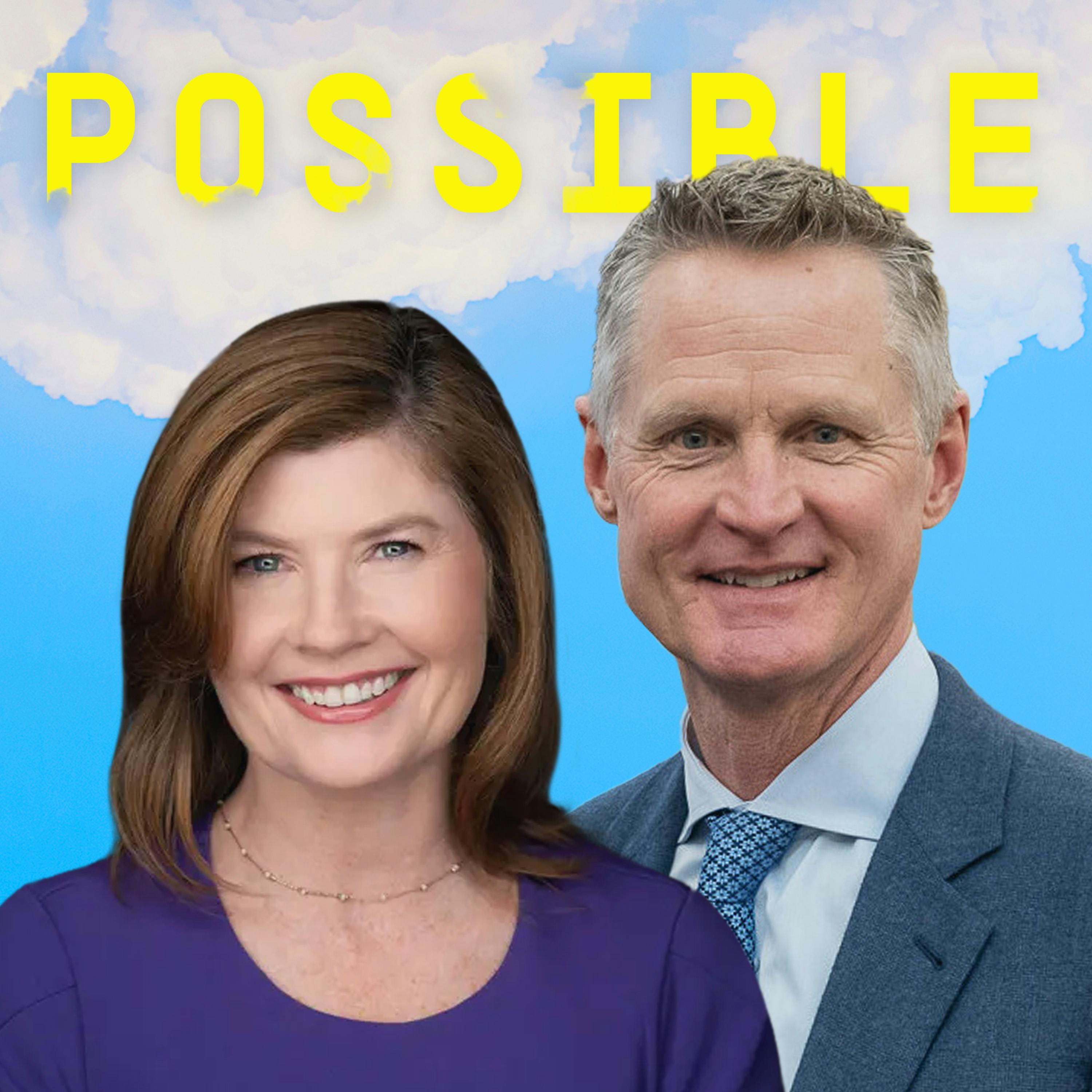
S4 Ep 42Steve Kerr and Kris Brown on Leadership, Purpose, and Innovation in Sport and Society
What does it take to turn tragedy into advocacy, and advocacy into lasting change? This week, Reid and Aria are talking to Warriors head coach Steve Kerr and Kris Brown, president of Brady, the nation’s oldest gun violence prevention organization. Together, they explore how sports, storytelling, and civic engagement can move the needle on one of America’s most polarizing issues: guns. In the first part of this episode, Steve and Kris share the personal and political roots of their partnership. They also dive into the movement for safer gun storage, smart firearm technology, and the bipartisan momentum that’s possible when we lead with empathy over fear. In the second part, the conversation turns to the future of basketball and leadership. Steve reflects on lessons from Phil Jackson and Gregg Popovich, the power of authenticity and collaboration, and how AI, analytics, and even robotics are reshaping the NBA. For more info on the podcast and transcripts of all the episodes, visit https://www.possible.fm/podcast/ Topics: 01:14 - Hellos and intros 03:28 - Collaboration is the cornerstone of Steve’s leadership philosophy 04:22 - Imposter syndrome, playing under Phil Jackson and Greg Popovich, and coaching Draymond Green 06:02 - Steve’s personal experience with gun violence and using his platform to drive change 07:17 - Lessons Kris learned from working on the Brady Bill 10:43 - Gemini explains the landmark Brady Bill and how it passed 11:48 - Origins of Steve and Brady’s partnership 16:55 - Building bipartisan support for gun violence prevention, like the Bipartisan Safer Communities Act 21:21 - Smart gun technology, gun safes, and other technological solutions 25:27 - “Shut up and dribble” comment and the pushback athletes receive when they speak up 27:29 - Social media as a tool to create cultural change 29:39 - Kris answers the last rapid-fire question and says her goodbyes 32:33 - Midroll 32:38 - Steve digs deeper into Phil Jackson and Greg Popovich’s coaching styles 34:40 - Inspiration v. comparison 35:22 - Hiring staff who bring specific strengths helps form a stronger team 36:21 - Endgame instincts as a coach 39:37 - Helping players navigate modern-age attention and public opinions on social media 42:01 - Internal leadership from players is crucial and Steph Curry as an example 44:33 - How NBA analytics have evolved 46:52 - The Warriors are planning to implement AI-powered robots into their training 47:56 - Players wear monitors that analyze their performance data 49:17 - Discoveries from players’ performance data 50:46 - Analyzing game footage with AI, facial recognition technology, and learning that Steph Curry logs the most miles ran per game in the league 52:56 - Using game footage data to learn opponents’ patterns and build game plans 54:05 - Correlating physical condition and shot success percentage for each player 56:19 - Rapid-fire questions Select mentions: Phil Jackson Greg Popovich Brady Bill Uvalde school shooting Bipartisan Safer Communities Act End Family Fire Campaign Maxwell Frost Matthew McConaughey Dan Grunfeld Lopez Twins Maverick: More than a Game by Phil Jackson and Charley Rosen Daryl Morey A Gentleman in Moscow by Amor Towles March for Our Lives Possible is an award-winning podcast that sketches out the brightest version of the future—and what it will take to get there. Most of all, it asks: what if, in the future, everything breaks humanity's way? Tune in for grounded and speculative takes on how technology—and, in particular, AI—is inspiring change and transforming the future. Hosted by Reid Hoffman and Aria Finger, each episode features an interview with an ambitious builder or deep thinker on a topic, from art to geopolitics and from healthcare to education. These conversations also showcase another kind of guest: AI. Each episode seeks to enhance and advance our discussion about what humanity could possibly get right if we leverage technology—and our collective effort—effectively.

S4 Ep 41Aza Raskin on interspecies communication, empathy, and AI’s next frontier
Can AI help us better understand animals and, if it could, what might we discover? This week’s episode was recorded live at the 2025 Masters of Scale Summit where Reid and Aria sat down with Aza Raskin, co-founder and CEO of the Earth Species Project. Aza and his team are using AI to decode the languages and cultures of non-human species. From dolphins that invent new tricks together to crows that raise each other’s young in communal “villages,” Aza reveals the startling complexity of animal communication and what it teaches us about our own. During the course of their conversation, Reid, Aria and Aza explore why recognizing the intelligence of the animal kingdom might spark a new Copernican Revolution, one that changes not just science, but who we believe ourselves as a species to be. It’s a thought provoking journey through language, empathy, and the limits of human perspective that will make you listen to the natural world a little differently. For more info on the podcast and transcripts of all the episodes, visit https://www.possible.fm/podcast/ Topics: 00:00 – Live introduction from the Masters of Scale Summit 00:58 – Aza Raskin explains the Earth Species Project and its mission 03:03 – How AI can decode animal language and culture 05:18 – Crows, whales, and dolphins—evidence of communication and community 07:32 – What we’ve missed by only “hearing the shouts” of other species 08:30 – Dolphins learning to innovate together and what it reveals about intelligence 09:57 – Elephants’ overlapping calls and the idea of “communal grammar” 12:33 – From speaking to listening: the ethics of interspecies understanding 14:23 – Names, self-awareness, and identity across dolphins, elephants, and belugas 16:05 – Animal rituals, drum languages, and AI’s early attempts at conversation 18:10 – Animal Language Processing as science’s next frontier 20:38 – The moral shift: what animals teach us about empathy, AI, and responsibility Possible is an award-winning podcast that sketches out the brightest version of the future—and what it will take to get there. Most of all, it asks: what if, in the future, everything breaks humanity's way? Tune in for grounded and speculative takes on how technology—and, in particular, AI—is inspiring change and transforming the future. Hosted by Reid Hoffman and Aria Finger, each episode features an interview with an ambitious builder or deep thinker on a topic, from art to geopolitics and from healthcare to education. These conversations also showcase another kind of guest: AI. Each episode seeks to enhance and advance our discussion about what humanity could possibly get right if we leverage technology—and our collective effort—effectively.
S4 Ep 38Reid riffs on fostering trust with founders, in boardrooms, and in AI
EIn this week's episode, Reid and Aria unpack why trust is a practical skill, not just a feeling. Reid riffs on the importance of hands-on investor-founder relationships, boardroom decisions that can make or break a company, and investor behaviors that build durable trust. They also discuss what product teams and policymakers must do to earn user confidence in an age of AI. Along the way, Reid shares personal anecdotes regarding his work with OpenAI, crisis leadership, and bridging Silicon Valley policy with the rest of the globe. For more info on the podcast and transcripts of all the episodes, visit https://www.possible.fm/podcast/

S4 Ep 39David Fajgenbaum on drug repurposing, AI, and saving his own life
How can AI really help advance medicine? Should patients and care teams be seeking second opinions from LLMs? This week, Reid and Aria sit down with physician-scientist Dr. David Fajgenbaum, who repurposes existing drugs to save lives—including his own. David shares his journey from receiving last rites as a young medical student to co-founding Every Cure, a nonprofit using AI to come up with ways existing drugs can be repurposed to treat every disease and every patient possible. On this special episode, filmed live in New York City, David, Reid, and Aria explore the circuit of hope, action, and impact that drives medical discovery; the technical and ethical challenges around accelerating AI in healthcare; “agent optimization” as the new “search engine optimization;” and what a future of faster diagnoses and treatment could look like. The result is a conversation about resilience, innovation, and unlocking cures that are already within our reach. For more info on the podcast and transcripts of all the episodes, visit https://www.possible.fm/podcast/ Topics: 3:00 - Hellos and intros 3:29 - A promise to his mother and the origin of AMF 6:23 - From grief support to medical school 9:18 - Near-death experiences and founding a research network 14:38 - What kept David going at death’s door 16:19 - Discovering a potential treatment and testing it on himself 19:42 - Why drug repurposing is a faster, cheaper complement to drug discovery 22:14 - Co-founding Every Cure and scaling discovery with AI 25:20 - Demo: Building MATRIX and how the algorithm makes predictions 28:41 - Breast cancer and Lidocaine as a case study 30:07 - Why human review is essential in AI for medicine 34:08 - Car exhaust fumes example and FDA pathways 37:31 - Reid’s surprise million-dollar donation for Every Cure compute 39:24 - What AI can unlock across healthcare 41:46 - Building an impact team to close the repurposing loop 47:32 - Improving systemic incentives for generics 54:58 - FDA approval pathways and label change challenges 57:21 - Three life-saving repurposing stories 1:02:20 - Rapid-fire questions Select mentions: Hidden Potential by Adam Grant Chasing My Cure by Dr. David Fajgenbaum Every Cure David’s TED Talk: https://youtu.be/sb34MfJjurc?si=GcVleWHZuJ9MqLgS Manas AI Possible is an award-winning podcast that sketches out the brightest version of the future—and what it will take to get there. Most of all, it asks: what if, in the future, everything breaks humanity's way? Tune in for grounded and speculative takes on how technology—and, in particular, AI—is inspiring change and transforming the future. Hosted by Reid Hoffman and Aria Finger, each episode features an interview with an ambitious builder or deep thinker on a topic, from art to geopolitics and from healthcare to education. These conversations also showcase another kind of guest: AI. Each episode seeks to enhance and advance our discussion about what humanity could possibly get right if we leverage technology—and our collective effort—effectively.

S4 Ep 38Reid riffs on Trump’s $100K visa fee, 3-day work weeks, and AI trust issues
This week, Reid and Aria dive into the debate over new $100,000 fees on H-1B visas, and discuss how immigration powers U.S. innovation and how to ensure startups aren’t shut out. They also cover developers’ mixed feelings about using AI in coding, the leap from 60% to 85% accuracy in medical AI predictions, and what it will take to bring regulators and clinicians on board. Plus, Reid shares why he’s skeptical of a three-day work week and reflects on the Trust in American Institutions Challenge, highlighting some inspiring finalists. For more info on the podcast and transcripts of all the episodes, visit https://www.possible.fm/podcast/