Possible
160 episodes — Page 3 of 4
S3 Ep 26Reid riffs on iterative development and cultural differences
What does productive collaboration between big tech developers and the rest of the world actually look like? This week, Reid gets into the value of competition, iterative development, learning mindsets, and red teaming in tech and business—in the United States and globally. For more info on the podcast and transcripts of all the episodes, visit https://www.possible.fm/podcast/

S3 Ep 25James Manyika on global AI and inclusion
How can people in all corners of the world participate in the AI revolution and unlock benefits in their own lives? James Manyika, Senior Vice President of Research, Technology & Society at Google, joins the show to discuss global access to AI and the impact on capitalism, the economy, science, and the workforce. He speaks to Google’s latest AI developments, including tools to warn people about natural disasters like floods and wildfires, along with the virtual research assistant NotebookLM. Read the transcript of this episode here: www.possible.fm/podcasts/manyika For more info on the podcast and transcripts of all the episodes, visit https://www.possible.fm/podcast/ Topics: 01:18 - Hellos and intros 02:36 - James’s career and path into AI 03:59 - UN involvement and diversity of perspectives in global AI 08:04 - Learnings from UN High-Level Advisory Body on AI 10:01 - NotebookLM demo 12:06 - Specific uses of the virtual research assistant NotebookLM 15:03 - Global positive impacts of AI 18:38 - AI and capitalism, the economy 24:10 - AI and climate change 29:17 - Humanity and AI development 32:14 - How to mitigate risks 35:02 - The rising importance of humanist disciplines 36:50 - NotebookLM rollout 39:31 - Truth and bias in the age of AI 40:58 - Rapid-fire questions Select mentions: NotebookLM - https://notebooklm.google.com/ Governing AI for Humanity, from the UN's High-level Advisory Body on AI - https://www.un.org/sites/un2.un.org/files/governing_ai_for_humanity_final_report_en.pdf Project Green Light - https://sites.research.google/greenlight/ “Applying AI to Rebuild Middle Class Jobs” by David Autor - https://www.nber.org/papers/w32140 “Accelerating Climate Action with AI” from BCG – https://web-assets.bcg.com/72/cf/b609ac3d4ac6829bae6fa88b8329/bcg-accelerating-climate-action-with-ai-nov-2023-rev.pdf Possible is an award-winning podcast that sketches out the brightest version of the future—and what it will take to get there. Most of all, it asks: what if, in the future, everything breaks humanity's way? Tune in for grounded and speculative takes on how technology—and, in particular, AI—is inspiring change and transforming the future. Hosted by Reid Hoffman and Aria Finger, each episode features an interview with an ambitious builder or deep thinker on a topic, from art to geopolitics and from healthcare to education. These conversations also showcase another kind of guest: AI. Whether it's Inflection’s Pi, OpenAI’s ChatGPT or other AI tools, each episode will use AI to enhance and advance our discussion about what humanity could possibly get right if we leverage technology—and our collective effort—effectively.

S3 Ep 24Reid riffs on the next generation of LLMs
Reid unpacks the decision to appoint Sean White as the leader of Inflection and outlines what makes him uniquely poised to take on this exciting challenge. Plus, Aria asks Reid about the future landscape of LLMs. For more info on the podcast and transcripts of all the episodes, visit https://www.possible.fm/podcast/

S3 Ep 23Sean White on Inflection and AI frontiers
How will an empathetic AI interact with humans? What if we used AI not just for its IQ, but its EQ? How do we build the trust to enable it to take agency on our behalf? This week, Reid and Aria sit down with an expert and friend, Sean White to start answering those questions. Sean White is currently the CEO of Inflection AI and is working on expanding the relationship of what AI can do for humans. Sean takes a humanist approach to new technology, and is interested in AI that can go beyond intelligence to learn empathy and take action. Sean's background is as wide-ranging as the conversation, where we discuss the influence of AI in everything from neuroscience to understanding animal languages. Plus, listen to a live test with Pi to demonstrate Pi's ability to handle a tough situation at work, with empathy. Read the transcript of this episode here. For more info on the podcast and transcripts of all the episodes, visit https://www.possible.fm/podcast/ Topics: 01:22 - Hellos and intros 3:20 - Microsoft and Inflection 6:27 - The capabilities and influence of Inflection’s Pi 11:02 - Pi in the workplace 12:10 - Pi in action 15:38 - AI isn’t a human; it is a tool 16:11 - Pi’s IQ vs EQ 17:46 - Pi’s AQ, or our ability to take action via AI 18:51 - How our lives might change in the near future with Pi 21:36 - How our skill sets will elevate 22:28 - Neuroscience and AI 25:22 - Owning your intelligence 30:14 - The wonders of Earth Species Project 34:05 - Rapid-fire questions Select mentions: Inflection: https://inflection.ai/ Spruce art collective Dr. Eddie Chang, Chang Lab, UCSF Familiarity by the Punch Brothers Dr. Hirokazu Kato, Nara Institute of Science and Technology Possible is an award-winning podcast that sketches out the brightest version of the future—and what it will take to get there. Most of all, it asks: what if, in the future, everything breaks humanity's way? Tune in for grounded and speculative takes on how technology—and, in particular, AI—is inspiring change and transforming the future. Hosted by Reid Hoffman and Aria Finger, each episode features an interview with an ambitious builder or deep thinker on a topic, from art to geopolitics and from healthcare to education. These conversations also showcase another kind of guest: AI. Whether it's Inflection’s Pi, OpenAI’s ChatGPT or other AI tools, each episode will use AI to enhance and advance our discussion about what humanity could possibly get right if we leverage technology—and our collective effort—effectively.

S3 Ep 22Reid riffs on Silicon Valley, politics, and the election
With Election Day fast approaching, Reid tackles some big questions: Is Silicon Valley leaning increasingly red? How can—and should—the government modernize voting? Is there a place for AI agents in politics? And which party is really best for business right now? For more info on the podcast and transcripts of all the episodes, visit https://www.possible.fm/podcast/

S3 Ep 21Sarah Longwell on politics, AI, and elections
EWhat’s driving some of the greatest political divisions and threats to democracy ahead of the 2024 U.S. presidential election? This week, Reid and Aria attempt to unpack this with someone who specializes in listening to American voters and translating those insights, at scale: Republican political strategist and The Bulwark co-founder/publisher Sarah Longwell. Sarah, who also hosts The Focus Group Podcast, joins the show to talk about her experience listening to everyday voters through focus groups — and her perspective on how doing so can help people better understand one another, combat misinformation, and heal some of the deepest divides in America today. She shares her perspective on Donald Trump, the upcoming election, the state of politics in Silicon Valley, AI, the future of the Republican Party, and the value of compromising. Plus, Reid tests GPT-4o’s ability to separate fact from fiction. Note: This conversation is not intended to proselytize or convert anyone. Rather, it is an attempt to learn from someone who has spent hundreds of hours talking to thousands of voters about their lives and politics. For more info on the podcast and transcripts of all the episodes, visit https://www.possible.fm/podcast/ Topics: 03:41 - Hellos and intros 04:55 - The state of politics now 06:08 - Inside the mind of an undecided voter 08:22 - What polls actually tell us 10:04 - What’s different about the political attitude right now 12:22 - How focus groups work, and what they tell us 18:08 - The benefits of qualitative research 18:52 - How can technology improve focus group research? 23:12 - How to become a better listener and persuader 28:21 - The impact and use cases of AI running focus groups 34:03 - When a human touch is necessary 36:37 - AI video-based sentiment analysis 41:05 - Sarah navigating being a lone wolf in politics 45:19 - What Sarah learned fighting for marriage equality 47:25 - How does misinformation spread and stick? 54:08 - What’s next for the Republican party? 57:42 - GPT-4o “spot the fake headline” test 01:02:57 - Rapid-fire questions Possible is an award-winning podcast that sketches out the brightest version of the future—and what it will take to get there. Most of all, it asks: what if, in the future, everything breaks humanity's way? Tune in for grounded and speculative takes on how technology—and, in particular, AI—is inspiring change and transforming the future. Hosted by Reid Hoffman and Aria Finger, each episode features an interview with an ambitious builder or deep thinker on a topic, from art to geopolitics and from healthcare to education. These conversations also showcase another kind of guest: AI. Whether it's Inflection’s Pi, OpenAI’s ChatGPT or other AI tools, each episode will use AI to enhance and advance our discussion about what humanity could possibly get right if we leverage technology—and our collective effort—effectively.
S3 Ep 20Reid riffs on his personal history with AI
Reid reflects on his early exposure to AI as an undergraduate at Stanford and on navigating the space between academia and industry. Plus, he and Aria discuss human outcomes of technology—and how human-centered technologists such as Fei-Fei Li, Mustafa Suleyman, and Kevin Scott have helped him keep those outcomes top of mind. For more info on the podcast and transcripts of all the episodes, visit https://www.possible.fm/podcast/

S3 Ep 19Daphne Koller on drug discovery and AI
How can scientists leverage AI and machine learning to more effectively research, develop, and deliver new drugs? This week, Reid and Aria talk drug development with renowned computer scientist and executive Dr. Daphne Koller, whose company, insitro, uses machine learning to improve the quality and speed of drug discovery. She addresses several ways AI and ML are already being used to redefine diseases and create better therapeutic interventions. Plus, she shares her experience transitioning from academia to industry. Read the transcript of this episode here: https://www.possible.fm/podcasts/dkoller For more info on the podcast and transcripts of all the episodes, visit https://www.possible.fm/podcast/ Topics: 00:01: Cold open 00:43: Hellos and intros 3:20: Early involvement in AI 5:00: Overview of drug discovery and its evolution over the last five years 7:50: AI and machine learning impact on biology and drug development 9:09: Pi aside defining AlphaFold 11:37: Areas of acceleration and opportunity in AI and drug discovery 17:21: Synthetic data 21:21: AI implications on therapeutic hypotheses 23:54: Personalized vs. precision medicine 27:04: Closing the data feedback loop 30:31: Exciting announcements 34:24: Privacy and data 36:41: GPT-4 story 38:48: Stuart Russell’s comments on the applications of Koller’s thesis 43:36: AI as a moving target 47:24: How can academia and industry positively impact society and humanity 51:58: insitro’s culture 54:18: - Rapid-fire questions Select mentions: Not the End of the World: How We Can Be the First Generation to build a Sustainable Planet by Hannah Ritchie Stuart Russell Possible is an award-winning podcast that sketches out the brightest version of the future—and what it will take to get there. Most of all, it asks: what if, in the future, everything breaks humanity's way? Tune in for grounded and speculative takes on how technology—and, in particular, AI—is inspiring change and transforming the future. Hosted by Reid Hoffman and Aria Finger, each episode features an interview with an ambitious builder or deep thinker on a topic, from art to geopolitics and from healthcare to education. These conversations also showcase another kind of guest: AI. Whether it's Inflection’s Pi, OpenAI’s ChatGPT or other AI tools, each episode will use AI to enhance and advance our discussion about what humanity could possibly get right if we leverage technology—and our collective effort—effectively.

S3 Ep 18Reid riffs on the future of human connectivity
This week, Reid veers toward science fiction, tackling big questions including: Is a single mentally-linked network in our future? Can and should humans create other sentient beings? Select mentions: David Brin

S3 Ep 17Nick Thompson on our AI future
What might it look like if we used AI to make democracy work better and to make society more equal? In this special live recording of Possible, Aria turns the tables on her co-host, interviewing Reid alongside Atlantic CEO Nick Thompson. They discuss AI-native generations, the future of friendship and social connections, media, data, privacy, and democracy in the age of AI. To kick off the episode, Reid’s avatar makes a cameo. Read the transcript of this episode here: https://www.possible.fm/podcasts/nthompson For more info on the podcast and transcripts of all the episodes, visit https://www.possible.fm/podcast/ Topics: 1:53 - Hellos and intros 2:15 - A question from Reid’s AI Avatar 6:24 - Defining this moment in technology 10:08 - AI, journalism, and democracy 13:32 - AI and empathy 20:17 - Why AI is exciting for young people 22:44 - How impacts the world of friendship 33:07 - AI and privacy 41:21 - Looking ahead 47:51 - Rapid-fire questions Select mentions: The Worlds I See by Fei-fei Li Earth Species Project Possible is an award-winning podcast that sketches out the brightest version of the future—and what it will take to get there. Most of all, it asks: what if, in the future, everything breaks humanity's way? Tune in for grounded and speculative takes on how technology—and, in particular, AI—is inspiring change and transforming the future. Hosted by Reid Hoffman and Aria Finger, each episode features an interview with an ambitious builder or deep thinker on a topic, from art to geopolitics and from healthcare to education. These conversations also showcase another kind of guest: AI. Whether it's Inflection’s Pi, OpenAI’s ChatGPT or other AI tools, each episode will use AI to enhance and advance our discussion about what humanity could possibly get right if we leverage technology—and our collective effort—effectively.

S3 Ep 16Reid riffs on AI regulation
This week, Aria asks Reid about government regulation of AI, including where the U.S. fits in on the global stage and how America can learn from where the early regulation of social media fell short. For more info on the podcast and transcripts of all the episodes, visit https://www.possible.fm/podcast/

S3 Ep 15Gina Raimondo on AI, government, and commerce
How can the U.S. government support the use of AI to stimulate innovation, bring healthcare to people more effectively, and educate people more equitably—all while thoughtfully navigating technology’s impact on people’s way of life? On this week’s episode, Reid and Aria sit down with U.S. Secretary of Commerce Gina Raimondo to discuss her work leading the government’s efforts to minimize the risks and maximize the benefits of AI for Americans. She gets into the federal government’s approach to AI innovation and safety, emphasizing the importance of global partnerships. Plus, she shares how the U.S. can make hardware “sexy” again—and why it matters. Read the transcript of this episode here: https://www.possible.fm/podcasts/raimondo For more info on the podcast and transcripts of all the episodes, visit https://www.possible.fm/podcast/ Topics: 3:30 - Hellos and intros 6:44 - Hopes and goals for American citizens 9:34 - America’s approach to AI compared to its approach to other digital innovations 14:15 - How the U.S. can “make building hardware sexy again” 18:21 - International cooperation on AI 21:39 - How technology leaders can contribute to private-public partnerships 24:14 - What excites Secretary Raimondo most right now 26:35 - How industry can relieve anxiety about job security in an AI-world Select mentions: AI Safety Institute CHIPS Act Regional Technology and Innovation Hubs (Tech Hubs) Possible is an award-winning podcast that sketches out the brightest version of the future—and what it will take to get there. Most of all, it asks: what if, in the future, everything breaks humanity's way? Tune in for grounded and speculative takes on how technology—and, in particular, AI—is inspiring change and transforming the future. Hosted by Reid Hoffman and Aria Finger, each episode features an interview with an ambitious builder or deep thinker on a topic, from art to geopolitics and from healthcare to education. These conversations also showcase another kind of guest: AI. Whether it's Inflection’s Pi, OpenAI’s ChatGPT or other AI tools, each episode will use AI to enhance and advance our discussion about what humanity could possibly get right if we leverage technology—and our collective effort—effectively.

S3 Ep 14Reid riffs on AI agents and investments
In this episode, Aria asks Reid about his general and AI-specific investment philosophies, including what draws him to a pitch and what raises red flags. They discuss agentic AI, robots, and hardware. For more info on the podcast and transcripts of all the episodes, visit https://www.possible.fm/podcast/

S3 Ep 13Ashton Kutcher on AI and investing
This week, Reid and Aria are joined by Ashton Kutcher. While you might know him as the actor and producer who rose to fame on That ‘70s Show, Dude, Where’s My Car, and MTV’s Punk’d, Ashton is also an accomplished venture capitalist. He is co-founder of the VC firm Sound Ventures, and he has been investing in AI for more than a decade. Ashton, Reid, and Aria discuss the future of AI software and hardware, startups, and the AI revolution’s impact on society. For more info on the podcast and transcripts of all the episodes, visit https://www.possible.fm/podcast/ Topics: 3:00 - Hellos and intros 3:56 - Ashton and Reid’s trip to the South Pole 8:20 - What’s exciting about AI for investors 13:31 - How Ashton brings AI into his daily life 19:02 - Changes to the job market in an age of AI 22:01 - How people can maintain their agency and find more time in the age of AI 26:37 - AI and talent-sourcing 30:40 - How to be a “tryer” 35:14 - Rapid-fire questions Select mentions The Anxious Generation by Jonathan Haidt Dædalus Possible is an award-winning podcast that sketches out the brightest version of the future—and what it will take to get there. Most of all, it asks: what if, in the future, everything breaks humanity's way? Tune in for grounded and speculative takes on how technology—and, in particular, AI—is inspiring change and transforming the future. Hosted by Reid Hoffman and Aria Finger, each episode features an interview with an ambitious builder or deep thinker on a topic, from art to geopolitics and from healthcare to education. These conversations also showcase another kind of guest: AI. Whether it's Inflection’s Pi, OpenAI’s ChatGPT or other AI tools, each episode will use AI to enhance and advance our discussion about what humanity could possibly get right if we leverage technology—and our collective effort—effectively.

S3 Ep 12Reid riffs on building better cities
Reid discusses what aspects of urban planning need to be reimagined. He advocates that prioritizing smart technology, clean energy, and data can vastly improve residents’ quality of life. Plus, Aria asks Reid about the potential of technologies existent and forthcoming—including self-flying cars. For more info on the podcast and transcripts of all the episodes, visit https://www.possible.fm/podcast/
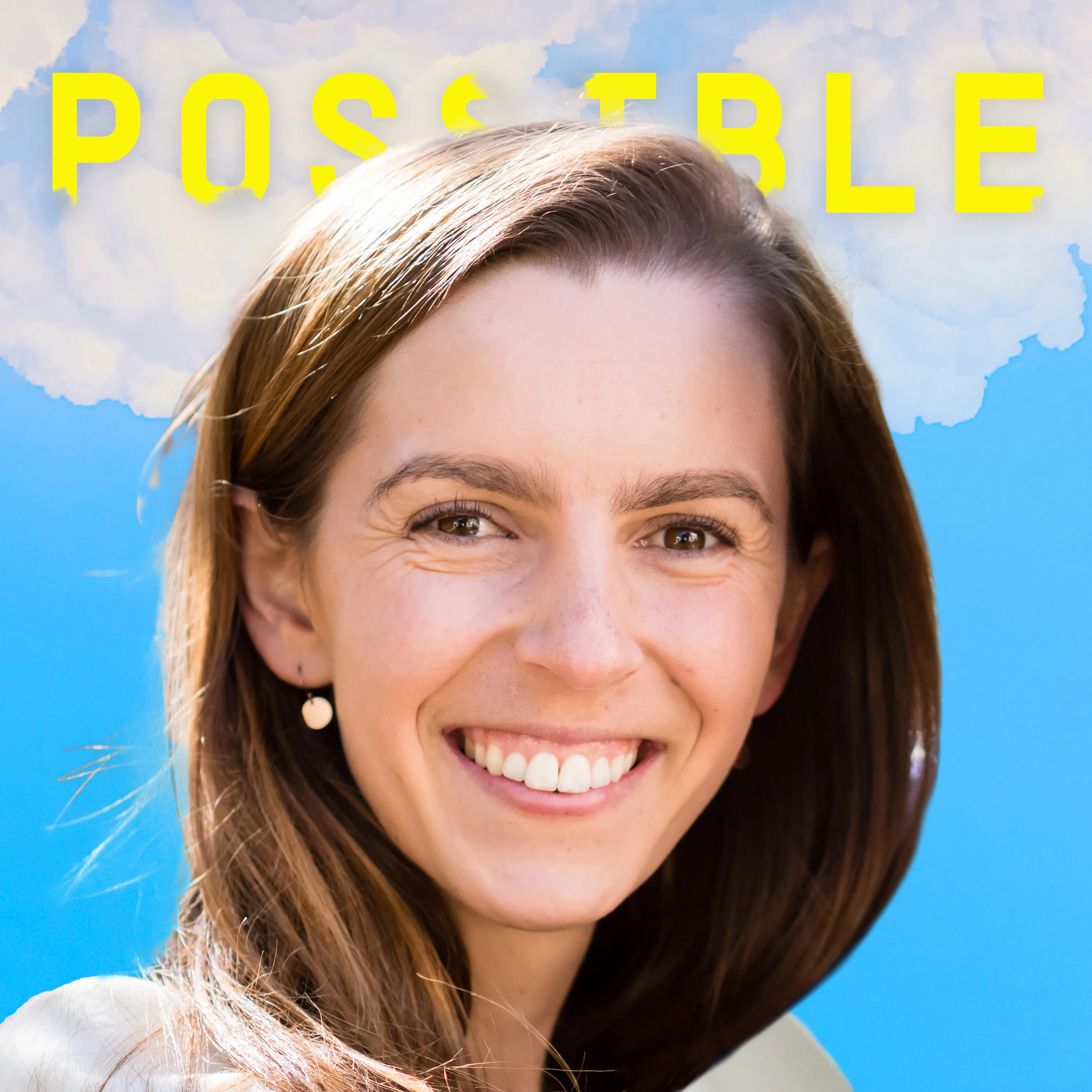
S3 Ep 11Devon Zuegel on the future of cities and community
What if we built cities focused around community, leveraging technology to actually increase human connection, health, and fulfillment? Devon Zuegel, the leader of Edge Esmeralda—a pop-up village that took place in June 2024—joins Possible to discuss how she is reimagining cities to optimize for community. In this episode, Devon, Aria, and Reid get into why designing cities with intention can impact quality of life and strengthen communities. Devon shares what she has learned from Edge Esmeralda—and what she plans to build from here. Read the transcript of this episode here. For more info on the podcast and transcripts of all the episodes, visit https://www.possible.fm/podcast/ Topics: 2:20 - Hellos and intros 4:39 - Computers are like gardens 6:25 - Fictional Cities 8:15 - Cities are the platforms we build our lives on 10:10 - City as a networks and places of opportunities 13:40- Best and worst designed cities 15:40 - AI element 19:20 - What is Edge Esmerelda? 26:00 - Devon’s learnings thus far 31:50- Scaling Cities of the Future 36:30- Intersections between technology and cities 39:10- Philosophical manifestos of cities 43:30- Devon’s thoughts on California Forever 44:10 -Rapid-fire Questions Select mentions: Edge Esmerelda ( https://www.edgeesmeralda.com/welcome) Chautauqua (https://devonzuegel.com/chautauqua-an-idea-embedded-in-a-place) Possible is an award-winning podcast that sketches out the brightest version of the future—and what it will take to get there. Most of all, it asks: what if, in the future, everything breaks humanity's way? Tune in for grounded and speculative takes on how technology—and, in particular, AI—is inspiring change and transforming the future. Hosted by Reid Hoffman and Aria Finger, each episode features an interview with an ambitious builder or deep thinker on a topic, from art to geopolitics and from healthcare to education. These conversations also showcase another kind of guest: AI. Whether it's Inflection’s Pi, OpenAI’s ChatGPT or other AI tools, each episode will use AI to enhance and advance our discussion about what humanity could possibly get right if we leverage technology—and our collective effort—effectively.

S3 Ep 10Reid riffs on California Forever and housing
Reid talks about why he invested in California Forever, the ambitious sustainable city project in Solano County, California. He contends with some of the concerns that have been raised about the initiative and states his case for the best way to fix the affordable housing crisis. The answer just might be surprisingly simple. Aria also asks Reid about exciting sustainability projects that aren’t getting the attention they deserve. For more info on the podcast and transcripts of all the episodes, visit https://www.possible.fm/podcast/

S3 Ep 9Jan Sramek on California Forever and the future of cities
What if we could build the ideal sustainable city from scratch? This week’s guest is aiming to do that, and he has unique insight into what making that dream a reality can look like. Jan Sramek is the founder of California Forever, a company aiming to build an affordable, urban community in Solano County, California. Reid—an investor in California Forever—and Aria sat down with Jan to talk about the vision for the city, where it draws inspiration from, and some of the controversy that has sprung up around the initiative since it was announced in 2023. Why build a new city rather than developing existing ones? How will this new city be connected to the surrounding community? And when might the first residents be able to move in? Read the transcript of this episode here. For more about: California Forever/East Solano Plan (https://eastsolanoplan.com/) Zipline (https://www.flyzipline.com/) Living Carbon (https://www.livingcarbon.com/) JFK speech at Rice University (https://www.rice.edu/jfk-speech) For more info on the podcast and transcripts of all the episodes, visit https://www.possible.fm/podcast/ Topics: 03:45 - Hellos and intros 04:25 - Where does Jan draw inspiration from 05:57 - Jan’s journey to real estate 08:18 - What is California Forever’s timeline? 10:44 - AI weighs in on initiatives to refresh existing cities 13:07 - Cities to look to for inspiration 14:48 - How to create economic opportunity in a new city 17:58 - The importance of local jobs 21:23 - Responding to criticism 24:30 - Most exciting developments 25:55 - Most common misconceptions 27:04 - Community feedback and climate efforts 30:53 - How to connect to public infrastructure 32:38 - How feasible is California Forever, exactly? 35:14 - Learning from past and present initiatives 39:52 - Nonprofit and government stakeholders 42:24 - Why is building from scratch greener? 45:08 - Rapid-fire questions Possible is an award-winning podcast that sketches out the brightest version of the future—and what it will take to get there. Most of all, it asks: what if, in the future, everything breaks humanity's way? Tune in for grounded and speculative takes on how technology—and, in particular, AI—is inspiring change and transforming the future. Hosted by Reid Hoffman and Aria Finger, each episode features an interview with an ambitious builder or deep thinker on a topic, from art to geopolitics and from healthcare to education. These conversations also showcase another kind of guest: AI. Whether it's Inflection’s Pi, OpenAI’s ChatGPT or other AI tools, each episode will use AI to enhance and advance our discussion about what humanity could possibly get right if we leverage technology—and our collective effort—effectively.

S3 Ep 8Reid riffs on going from idea to launch
In this episode, Aria asks Reid about the path from idea to execution—and Reid draws from LinkedIn to share his launch lessons. Plus, Reid predicts how AI will—and won’t—impact food, dining, and restaurants. For more info on the podcast and transcripts of all the episodes, visit https://www.possible.fm/podcast/

S3 Ep 7Massimo Bottura on the future of food and creativity
What role might artificial intelligence play in making the perfect meal? How will AI transform food creation—and creation more generally? Massimo Bottura—legendary Italian chef and entrepreneur—joins Possible to talk about the future of food, human creativity, and how technology factors in. Massimo, Aria, and Reid discuss the roles of joy and innovation in fine dining, technology’s potential to enhance human connection, and Food For Soul, the nonprofit Massimo and his wife Lara created to turn surplus food into incredible community meals for people in need around the world. Plus, Massimo reacts to a few AI surprises, including: Reid’s avatar speaking Italian; Pi’s predictions about restaurants of the future; and a customized copy of Reid’s book, Impromptu, that includes a personalized section for Massimo. Read the transcript of this episode here. For more info on the podcast and transcripts of all the episodes, visit https://www.possible.fm/podcast/ Topics: 3:36 - Hellos and intros 4:24 - Reid’s AI avatar has a message for Massimo 7:02 - The relationship between invention and human connection 13:14 - Joy and innovation in fine dining 20:16 - Discussing Massimo’s custom copy of Impromptu 27:32 - Massimo’s work for the next generation 31:03 - Food for Soul 38:32 - Slow Food, Fast Cars 21:46 - Pi’s thoughts on restaurants 50 years in the future 41:34 - Rapidfire Questions Select mentions: Food for Soul Slow Food, Fast Cars by Massimo Bottura and Lara Gilmore Reid’s 2023 Bologna Business School commencement speech Gastromotiva founder David Hertz Possible is an award-winning podcast that sketches out the brightest version of the future—and what it will take to get there. Most of all, it asks: what if, in the future, everything breaks humanity's way? Tune in for grounded and speculative takes on how technology—and, in particular, AI—is inspiring change and transforming the future. Hosted by Reid Hoffman and Aria Finger, each episode features an interview with an ambitious builder or deep thinker on a topic, from art to geopolitics and from healthcare to education. These conversations also showcase another kind of guest: AI. Whether it's Inflection’s Pi, OpenAI’s ChatGPT or other AI tools, each episode will use AI to enhance and advance our discussion about what humanity could possibly get right if we leverage technology—and our collective effort—effectively.

S3 Ep 6Reid riffs on coding and K-12 education
What will being a software engineer look like in the future, when the predominant coding language is English—or whatever language you speak—instead of JavaScript? In this episode, Reid reflects on his own education, including the value of studying philosophy. Plus, he shares what he’d prioritize in designing kids' classroom experiences today and gets into AI’s potential to help customize lessons to align with students’ curiosities and learning styles. For more info on the podcast and transcripts of all the episodes, visit https://www.possible.fm/podcast/

S3 Ep 5Pat Yongpradit on AI literacy and computer science education
What does AI literacy mean for students and their teachers? Code.org Chief Academic Officer Pat Yongpradit—himself a former middle school computer science teacher—joins Reid and Aria for the first-ever live-taping of Possible, recorded at the ASU+GSV Summit in San Diego. In this episode, they discuss why school-wide bans on AI are a terrible idea and what “always be learning” refers to in an age of AI. Plus, Pat unveils, for the first time publicly, Code.org’s newest tool for teachers: an AI assistant that helps computer science teachers grade assignments. Special thanks to Will Cullen, Colin Faul, Bella Willis, Braeden Rutherford, Whitney Kim, Samantha Urban Tarrant, Hadi Partovi, Debra Quazzo and Little Monster Media Company. For more info on the podcast and transcripts of all the episodes, visit https://www.possible.fm/podcast/ Topics: 2:19 - Hellos and intros 2:50 - Pat’s social mission video game homework 4:34 - Pat’s origins with teaching and computer science 6:33 - Making Microsoft Copilot as accessible as possible Code.org’s mission 8:08 - Learning concept tools for real world applications for 9:45 - What do young people need to know about AI literacy work 11:58 - What Pat is excited about with generative AI and the future 13:40 - What are the guardrails for the classroom with AI 16:45 - How does AI enhance teaching and learning 21:31 - Break 22:04 - Using Devin as a lens into the future 24:09 - Multidisciplinary ethics around coding 28:45 - What project would Aria do for Do Something through the lens of AI 34:55 - What you are most worried about when it comes to AI and education 39:09 - Code.org secret sauce and future 41:10 - Rapid-fire questions Select mentions: Cointelligence by Ethan Mollick TeachAI Stanford Accelerator for Learning Amazon Echo skit from Saturday Night Live Demo of the AI engineer Devin Bologna Business School Commencement Speech ASU+GSV Summit and AIR Show Possible is an award-winning podcast that sketches out the brightest version of the future—and what it will take to get there. Most of all, it asks: what if, in the future, everything breaks humanity's way? Tune in for grounded and speculative takes on how technology—and, in particular, AI—is inspiring change and transforming the future. Hosted by Reid Hoffman and Aria Finger, each episode features an interview with an ambitious builder or deep thinker on a topic, from art to geopolitics and from healthcare to education. These conversations also showcase another kind of guest: AI. Whether it's Inflection’s Pi, OpenAI’s ChatGPT or other AI tools, each episode will use AI to enhance and advance our discussion about what humanity could possibly get right if we leverage technology—and our collective effort—effectively.
BONUS: Reid Hoffman’s speech: Humanity’s Hegelian Golden Braid
bonusWhat should we keep in mind as we venture into this new AI era? Reid Hoffman delivers a speech, entitled Humanity’s Hegelian Golden Braid, to address this question. The speech offers six guiding maxims related to AI, humanity, and technology—and weaves through Hegel and Hofstadter, cathedrals and griffins, T.S. Elliot and Hyman Minsky, and more. This speech was originally given by Reid Hoffman in English on May 24, 2024 after accepting an honorary doctorate from the University of Perugia. It’s also been translated and delivered by REID AI (an AI version of Reid Hoffman) in nine different languages. For videos of those translated speeches delivered by REID AI, a transcript of the speech in English, and more, please visit: https://www.reidhoffman.org/perugia-speech.

S3 Ep 4Reid riffs on tech journalism and the TikTok ban
In this episode, Aria asks Reid about the roles and responsibilities of technology journalists, along with his thoughts on the TikTok ban (recorded before President Biden signed the TikTok Ban bill into law). For more info on the podcast and transcripts of all the episodes, visit https://www.possible.fm/podcast/
Feed Drop: On with Kara Swisher: Reid Hoffman talks Trump, Thiel & AI
bonusAlongside this week’s riff from Reid on tech journalism and last week’s episode with Kara Swisher, we’re bringing you a conversation between Reid and Kara that originally dropped as a March 2023 episode of “On with Kara Swisher.” This duo has known each other since the 90s, when Reid was fresh off the sale of PayPal and before he co-founded LinkedIn. On this episode, they discuss Reid’s donations to Biden and other Democrats, how his political views have impacted his friendships with Peter Thiel and Elon Musk, and why he is so bullish on AI.

S3 Ep 3Kara Swisher on AI, media, and accountability
What will the media landscape look like as tech companies, as opposed to traditional media, own increasingly more ink? And who better to offer an optimistic take on the news industry’s future than…Kara Swisher?! Reid and Aria speak with the famous—and famously direct—tech journalist, author, and podcast host about the roles and responsibilities of journalists covering rapidly developing innovations, along with those of the technologists driving advancements. They cover the OpenAI/New York Times lawsuit, disinformation, TikTok legislation, and AI’s potential to improve healthcare and climate outcomes. Plus, Kara makes the case that today’s content creators benefit from staying relatively small vs. striving for scale. Topics: 3:30 - Hellos and intros 3:54 - Technology that makes Kara optimistic 6:40 - Technology to solve climate change 8:43 - Why health-tech and climate tech inspire optimism 10:09 - State of the media landscape 15:34 - Can smaller-scale media work? 16:56 - Pi weighs in on Patrick Soon-Shiong 19:33 - How will AI impact media misinformation 22:27 - Impact of AI in politics 27:52 - Kara’s latest book 30:36 - Is AI training “stealing”? 37:28 - TikTok ban 42:51 - A question for Reid: Is TikTok worth buying? 45:43 - How to shape capitalism 51:30 - Rapid-fire questions For more info on the podcast and transcripts of all the episodes, visit https://www.possible.fm/podcast/ Select mentions: Burn Book by Kara Swisher Platformer News founder Casey Newton Letters from an American by Heather Cox Richardson Barbie, directed by Greta Gerwig Strongmen: Mussolini to the Present by Ruth Ben-Ghiat Anchor Oyster Bar What if, in the future, everything breaks humanity's way? Possible is an award-winning, weekly podcast that sketches out the brightest version of the future—and what it will take to get there. Hosts Reid Hoffman and Aria Finger explore what’s possible with forward-thinking leaders, deep thinkers, and ambitious builders across many fields, such as technology, art, education and healthcare. These conversations center on the ways technology—and, in particular, AI—is shaping the future. In episodes, AI tools such as OpenAI’s GPT-4 and Inflection’s Pi are at work, offering informational asides, prompting guests, or demoing what they can do. Lastly, between guest episodes, Aria interviews her co-host Reid on his latest takes on what’s possible if we use technology—and our collective effort—effectively.

S3 Ep 2Reid riffs on AI milestones and AI efforts abroad
Reid recounts the story of a milestone GPT-4 demo at Bill Gates’ house—and shares what series of achievements by AI would most impress and excite him next. Aria also asks Reid about the investment in technology and AI that he’d like to see be made at the domestic and international level. Lastly, Reid addresses the skepticism people have about AI—and how to best direct that skepticism to the benefit of people. For more info on the podcast and transcripts of all the episodes, visit https://www.possible.fm/podcast/

S3 Ep 1Kevin Scott on AI and humanism
What if artificial intelligence becomes so ubiquitous that, in the future, we won’t be able to imagine what life was like without it? Kevin Scott is Executive Vice President of AI and Chief Technology Officer of Microsoft. He joins the Possible Podcast to talk about AI, its impact on education, healthcare and jobs, and how AI can benefit more of us, irrespective of our geography. Kevin, Reid, and Aria discuss Kevin’s leading role in Microsoft’s OpenAI partnership, along with collective decision-making for ethical AI, how technology can empower rural communities, and what’s underlying Kevin’s humanist perspective on artificial general intelligence. Plus, Kevin reacts to some advice from Microsoft Copilot. Topics: 4:13 - Hellos and intros 5:48 - The origins of the partnership between Microsoft and OpenAI 14:34 - Kevin’s wildest hope for Microsoft/OpenAI partnership 17:32 - Making Microsoft Copilot as accessible as possible 26:43 - How technology can revitalize communities that are being left behind 34:34 - A quick break 35:42 - A humanist approach to AI 42:00 - Copilot’s suggestions for getting Copilot into more businesses’ hands 43:20 - AI and its impact on work, productivity and labor markets 51:10 - Framing Artificial General Intelligence (AGI) 57:19 - Rapid-fire Questions For more info on the podcast and transcripts of all the episodes, visit https://www.possible.fm/podcast/ Select mentions: Behind the Tech Podcast with Kevin Scott Reprogramming the American Dream by Kevin Scott Children of Memory by Adrian Tchaikovsky What if, in the future, everything breaks humanity's way? Possible is an award-winning, weekly podcast that sketches out the brightest version of the future—and what it will take to get there. Hosts Reid Hoffman and Aria Finger explore what’s possible with forward-thinking leaders, deep thinkers, and ambitious builders across many fields, such as technology, art, education and healthcare. These conversations center on the ways technology—and, in particular, AI—is shaping the future. In episodes, AI tools such as OpenAI’s GPT-4 and Inflection’s Pi are at work, offering informational asides, prompting guests, or demoing what they can do. Lastly, between guest episodes, Aria interviews her co-host Reid on his latest takes on what’s possible if we use technology—and our collective effort—effectively.
[BONUS + VIDEO] Reid interviews Reid AI, his AI avatar
bonusReid recently created an AI version of himself—REID AI—and recorded a video Q&A to see how this digital twin might challenge him in new ways. Watch the full clip here: https://youtu.be/rgD2gmwCS10 This is Reid’s latest AI experiment, following the book he co-wrote with GPT-4 (Impromptu), the podcast he co-hosted with ChatGPT (Fireside Chatbots), and, of course, Possible, in which we use AI tools like Pi and GPT-4 to prompt guests and enrich conversations. Possible returns next week, but in the meantime, we thought you might like to watch and learn more about Reid’s latest experiment with AI tools. Watch the full clip: https://youtu.be/rgD2gmwCS10 The backstory on making REID AI in Reid’s newsletter: https://www.linkedin.com/newsletters/long-reids-6953437305957232640/ Lastly, the video avatar is generated by Hour One, and its voice was created by 11ElevenLabs. Hour One - https://app.hourone.ai/home 11ElevenLabs - https://elevenlabs.io/ REID AI’s persona—the way that it formulates responses—is generated from a custom chatbot built on GPT-4 that was trained on Reid’s books, speeches, podcasts and other content that Reid has produced over the last few decades. This video is fully endorsed by Reid Hoffman.
Introducing: a new Possible
trailerThe award-winning podcast Possible is back with a new season and some new changes! As always, you can tune in every Wednesday for grounded and speculative thoughts on the future from forward-thinking leaders, deep thinkers, and ambitious builders across a range of fields: tech, art, geopolitics, healthcare, climate change, education, and more. But now, the show is on year round — that means Possible won't take a break after a dozen episodes! Plus, every other week you'll hear Reid's latest takes on AI, industries, technology, and the future. As always, AI tools like Inflection’s Pi and OpenAI’s ChatGPT will debut to enhance the discussion each week. Join us for the new season of Possible, launching Wednesday, May 1.

S2 Ep 13Reflections on AI and season two
What can we learn from the OpenAI saga? What role might AI play in the 2024 election? What’s the deal with the New York Times suing OpenAI? How will AI evolve our sense of human purpose? Reid and Aria reflect on season two of Possible and answer questions like these from a variety of sources: Listeners, Pi, ChatGPT, and each other. Read the transcript of this episode here. For more info on the podcast and transcripts of all of the episodes, visit www.possible.fm/podcast. Topics: 00:48 - Reflecting on the season 03:51 - Reid and Aria’s favorite new AI developments 06:30 - Segment: OpenAI 06:34 - What can we learn from the OpenAI saga? 10:58 - Does the nonprofit model make sense for OpenAI and beyond? 13:46 - Why was OpenAI able to get miles ahead? 16:36 - How will the lawsuits against OpenAI play out? 21:06 - Segment: Inflection 21:09 - How and why was Pi created? 24:25 - How can we create more empathy and humanity with AI? 27:45 - What are Aria’s favorite applications for AI? 29:53 - Segment: Ethical AI 29:54 - How will AI impact our social interactions? 34:09 - How do we prepare people in the workplace for AI? 37:53 - Segment: Election and governance 37:54 - What role will AI play in the election? 43:12 - Is the government equipped to regulate AI? 46:47 - What role should AI play in national security? 49:18 - Segment: Technology and the future 49:19 - What is the latest in AI hardware? 51:49 - How will AI change our sense of purpose? The award-winning Possible podcast is back with a new season that sketches out the brightest version of the future—and what it will take to get there. Most of all, it asks: what if, in the future, everything breaks humanity's way? Tune in for grounded and speculative takes on how technology—and, in particular, AI—is inspiring change and transforming the future. This season, hosts Reid Hoffman and Aria Finger are speaking with a new set of ambitious builders and deep thinkers about everything from art to geopolitics and from healthcare to education. These conversations also showcase another kind of guest: AI. Whether it's Inflection’s Pi, OpenAI’s ChatGPT or other AI tools, each episode will use AI to enhance and advance our discussion. Possible is produced by Wonder Media Network and hosted by Reid Hoffman and Aria Finger. Our showrunner is Shaun Young. Possible is produced by Edie Allard, Sara Schleede, and Paloma Moreno Jiménez. Jenny Kaplan is our executive producer and editor. Special thanks to Katie Sanders, Surya Yalamanchili, Saida Sapieva, Ian Alas, Greg Beato, and Ben Relles. And a big thanks to MacLean Fitzgerald and Little Monster Media Company.

S2 Ep 12Katherine Maher on the future of trusted information
What would it take for AI to become as trusted a source of information as Wikipedia? Katherine Maher, former CEO of the Wikimedia Foundation, joins the show to talk about the fundamental building blocks of trust behind Wikipedia. The use of AI will fundamentally reshape what information is distributed on the internet—and how. Reid, Aria, and Katherine talk about what creating and scaling positive spaces and community-driven ideas online would look like in the context of AI. Could in-text citation be a viable option for generative AI? What was Wikipedia’s response to being used as training data for AI models? Globally, the West currently appears far less optimistic about AI than the rest of the world. They discuss that cost and more. Read the transcript of this episode here. Read the Washington Post article referenced by Katherine here. Read Luis Villa’s newsletter here. Pre-order What If We Get It Right? by Ayana Elizabeth Johnson here. For more info on the podcast and transcripts of all of the episodes, visit www.possible.fm/podcast. Topics: 03:57 - Hellos and intros 06:00 - AI and governance 12:25 - How to make trust and neutrality possible in AI 15:30 - The future of Wikipedia and AI 19:28 - What can AI companies learn from Wikipedia’s model? 21:29 - Should LLMs use citations? 25:02 - The impact of the internet on trust 28:48 - How to regain trust in society 34:50 - The importance of “the loyal opposition” 36:01 - Wikipedia didn’t happen at scale 38:37 - How to make the internet a positive place for dissent 43:01 - Wikipedia and AI training 47:17 - Rapidfire questions The award-winning Possible podcast is back with a new season that sketches out the brightest version of the future—and what it will take to get there. Most of all, it asks: what if, in the future, everything breaks humanity's way? Tune in for grounded and speculative takes on how technology—and, in particular, AI—is inspiring change and transforming the future. This season, hosts Reid Hoffman and Aria Finger are speaking with a new set of ambitious builders and deep thinkers about everything from art to geopolitics and from healthcare to education. These conversations also showcase another kind of guest: AI. Whether it's Inflection’s Pi, OpenAI’s ChatGPT or other AI tools, each episode will use AI to enhance and advance our discussion. Possible is produced by Wonder Media Network and hosted by Reid Hoffman and Aria Finger. Our showrunner is Shaun Young. Possible is produced by Edie Allard, Sara Schleede, and Paloma Moreno Jiménez. Jenny Kaplan is our executive producer and editor. Special thanks to Katie Sanders, Surya Yalamanchili, Saida Sapieva, Ian Alas, Greg Beato, and Ben Relles. And a big thanks to Katherine Farrell, Jenny O'Donoghue, and Little Monster Media Company.

S2 Ep 11Kerry Washington on connection, identity and AI
How can technology change—and actually deepen—human connection? Kerry Washington is an Emmy-winning, SAG-and-Golden Globe-nominated actor. She’s also a director, and producer, and New-York-Times-bestselling author of the memoir Thicker Than Water. She joins the podcast to talk about how AI and other technology can transform our most important relationships. She, Reid, and Aria also discuss AI’s impact on the entertainment industry; her use of social media to elevate the hit TV show “Scandal;” and how a DNA test evolved her definition of family. Plus, Kerry reacts to an AI avatar of Reid, and to some Olivia-Pope-related brainstorming support from Inflection’s Pi. Read the transcript of this episode here. For more info on the podcast and transcripts of all of the episodes, visit www.possible.fm/podcast. Topics: 4:10 - Hellos and intros – travel memories 7:33 - Kerry explains the title of her memoir 9:43 - How technology transformed Kerry’s relationship with her parents 14:17 - Kerry’s found family from Scandal 16:44 - How technology made Scandal a hit 24:24 - Kerry meets Reid’s AI avatar 26:23 - Consent and compensation when using AI in Hollywood 29:58 - Why Kerry is excited about AI 32:34 - Pi’s lessons from Olivia Pope 35:35 - How AI can amplify creativity and connection 42:43 - Transparency and AI 45:38 - What a post-AI world means for a 9-year-old 48:22 - Rapid-fire questions The award-winning Possible podcast is back with a new season that sketches out the brightest version of the future—and what it will take to get there. Most of all, it asks: what if, in the future, everything breaks humanity's way? Tune in for grounded and speculative takes on how technology—and, in particular, AI—is inspiring change and transforming the future. This season, hosts Reid Hoffman and Aria Finger are speaking with a new set of ambitious builders and deep thinkers about everything from art to geopolitics and from healthcare to education. These conversations also showcase another kind of guest: AI. Whether it's Inflection’s Pi, OpenAI’s ChatGPT or other AI tools, each episode will use AI to enhance and advance our discussion. Possible is produced by Wonder Media Network and hosted by Reid Hoffman and Aria Finger. Our showrunner is Shaun Young. Possible is produced by Edie Allard, Sara Schleede, and Paloma Moreno Jiménez. Jenny Kaplan is our executive Producer and editor. Special thanks to Katie Sanders, Surya Yalamanchili, Saida Sapieva, Ian Alas, Greg Beato, Ben Relles, Rae Steward, Tamer Mokhtar, Nicole Butler, Katie Greenthal, Haley Asofsky, Braden Thole, Blair Nelson, Huy Q. Nguyen, Jon Giardiello, Hour One AI, and Little Monster Media Company.

S2 Ep 10Sal Khan on the future of K-12 education
What if every learner on the planet had access to a world-class education? This week’s guest has an impressive track record of using technology to make that dream a reality. Sal Khan is the founder and CEO of Khan Academy, an education nonprofit whose pioneering digital tools support K-12 students everywhere, along with parents, teachers, and school districts. In this episode, Sal discusses how technology widens access to education and creates more meaningful learning experiences. He also shares his experience helping train Chat-GPT and speaks to why, 15 years after launching Khan Academy, he has decided to go all in on AI. Plus, a special guest joins the podcast to demo Khan Academy’s new AI chatbot tutor, Khanmigo. Read the transcript of this episode here. For more info on the podcast and transcripts of all of the episodes, visit www.possible.fm/podcast. Topics: 5:26 - Hellos and intros 7:51 - What has changed in education technology in the past 15 years 13:24 - Khan Academy’s new AI guide, Khanmigo 18:59 - Khanmigo demonstration 21:37 - How teachers can incorporate AI into their classrooms 29:15 - AI in the classroom in North Ward, Newark, NJ 33:13 - How to make remote learning engaging 37:01 - How education technology in the U.S. compares to other countries 42:43 - How the use of AI in the classroom will expand in the future 47:28 - Rapidfire questions The award-winning Possible podcast is back with a new season that sketches out the brightest version of the future—and what it will take to get there. Most of all, it asks: what if, in the future, everything breaks humanity's way? Tune in for grounded and speculative takes on how technology—and, in particular, AI—is inspiring change and transforming the future. This season, hosts Reid Hoffman and Aria Finger are speaking with a new set of ambitious builders and deep thinkers about everything from art to geopolitics and from healthcare to education. These conversations also showcase another kind of guest: AI. Whether it's Inflection’s Pi, OpenAI’s ChatGPT or other AI tools, each episode will use AI to enhance and advance our discussion. Possible is produced by Wonder Media Network and hosted by Reid Hoffman and Aria Finger. Our showrunner is Shaun Young. Possible is produced by Edie Allard, Sara Schleede, and Paloma Moreno Jiménez. Jenny Kaplan is our executive Producer and editor. Special thanks to Katie Sanders, Surya Yalamanchili, Saida Sapieva, Ian Alas, Greg Beato, Ben Relles, Stacey Olson, and Little Monster Media Company.

S2 Ep 9Van Jones on AI, disruption and inclusion
What would it look like to build coalitions to disrupt poverty, pollution, and the prison system? This week’s guest received a $100 million grant to do just that. Van Jones is a CNN host, New-York-Times-bestselling author, and the co-founder of multiple social enterprises to address issues of criminal justice, climate change, and social equity. Aria and Reid spoke with Van about what it will take to rethink our social systems and build fair, balanced coalitions for change. How can we disrupt the profit-driven prison system? How can underserved communities better contribute their talent and resources? And how can we change our news, media, and even sci-fi comic books to reflect a better future? Read the transcript of this episode here. For more info on the podcast and transcripts of all of the episodes, visit www.possible.fm/podcast. Topics: 04:35 - Hellos, intros, and Van’s comic book ideas 09:00 - Make Wakanda Real and plans for change 12:12 - How to build a coalition for change 17:15 - How to build trust with vulnerable people 20:31 - Bringing people with power and purpose together 21:15 - Using the Bezos grant to disrupt poverty and the prison industry 27:29 - How organizations like Codepath make change 31:09 - What does addressing climate change look like 37:07 - What is the role of media for change 40:00 - How might AI change media? 42:41 - How to address political division 48:55 - Rapidfire questions The award-winning Possible podcast is back with a new season that sketches out the brightest version of the future—and what it will take to get there. Most of all, it asks: what if, in the future, everything breaks humanity's way? Tune in for grounded and speculative takes on how technology—and, in particular, AI—is inspiring change and transforming the future. This season, hosts Reid Hoffman and Aria Finger, are speaking with a new set of ambitious builders and deep thinkers about everything from art to geopolitics and from healthcare to education. These conversations also showcase another kind of guest: AI. Whether it's Inflection’s Pi, OpenAI’s ChatGPT or other AI tools, each episode will use AI to enhance and advance our discussion. Possible is produced by Wonder Media Network and hosted by Reid Hoffman and Aria Finger. Our showrunner is Shaun Young. Possible is produced by Edie Allard, Sara Schleede, and Paloma Moreno Jiménez. Jenny Kaplan is our executive producer and editor. Special thanks to Katie Sanders, Surya Yalamanchili, Saida Sapieva, Ian Alas, Greg Beato, Ben Relles, Rae Steward, Gus Alexander, Andi Lichtenfeld, Belicia Montgomery, Kalia Lydgate, Didier Morais, Chantel Muentes, Felicia Shand, and Little Monster Media Company.
S2 Ep 8Phaedra Ellis-Lamkins on the future of social welfare
What does it look like to build true access with technology? Phaedra Ellis-Lamkins, CEO and co-founder of Promise, is creating that reality. She sat down with Reid and Aria to discuss how her company is revolutionizing the way people receive welfare in its client states. By leveraging data, questioning preconceived assumptions, and focusing on eliminating bias, Promise has become a model for socially conscious business. This people-first mindset runs so deep that Promise employees personally call clients to apologize for mistakes. Phaedra also uses her high-level view of social systems and business to consider how AI could close access gaps and improve life for the most marginalized. Read the Atlantic article referenced by Phaedra here. Read the transcript of this episode here. For more info on the podcast and transcripts of all of the episodes, visit www.possible.fm/podcast. Topics: 06:24 - Hellos, intros, and a story about Prince 08:41 - How Promise resonated with investors 11:40 - What makes applying for welfare so hard? 13:54 - How Promise uses data for social good 15:40 - Why we should talk about bail reform 17:28 - Why there’s more money in enforcement than welfare 19:27 - How to work toward the ideal welfare system with technology 21:11 - Is Promise considering AI in the context of welfare reform? 25:48 - Pi weighs in on Black maternal healthcare inequity 27:03 - How can we center empathy and address bias in technology design? 33:33 - What AI companies can do to create products for more people 36:22 - How to get people onboard the movement: the Prince secret 38:36 - How to build more companies like Promise 40:25 - Rapidfire questions The award-winning Possible podcast is back with a new season that sketches out the brightest version of the future—and what it will take to get there. Most of all, it asks: what if, in the future, everything breaks humanity's way? Tune in for grounded and speculative takes on how technology—and, in particular, AI—is inspiring change and transforming the future. This season, hosts Reid Hoffman and Aria Finger, are speaking with a new set of ambitious builders and deep thinkers about everything from art to geopolitics and from healthcare to education. These conversations also showcase another kind of guest: AI. Whether it's Inflection’s Pi, OpenAI’s ChatGPT or other AI tools, each episode will use AI to enhance and advance our discussion. Possible is produced by Wonder Media Network and hosted by Reid Hoffman and Aria Finger. Our showrunner is Shaun Young. Possible is produced by Edie Allard, Sara Schleede, and Paloma Moreno Jiménez. Jenny Kaplan is our Executive Producer and Editor. Special thanks to Surya Yalamanchili, Saida Sapieva, Ian Alas, Greg Beato, Ben Relles, Pure Dalisay, Melanie Jones, and Little Monster Media Company.

S2 Ep 7Sarah Sze on the future of AI and art
How can humanities and the arts flourish as artificial intelligence continues to grow and evolve? Contemporary artist Sarah Sze joins the podcast to talk about the relationship between art and technology. Reid, Aria, and Sarah discuss her recent exhibit at the Guggenheim Museum in New York City, the relationship between the physical and the digital, and the importance of taking art off its pedestal. Plus, Sarah takes a look at AI-generated art inspired by her body of work and offers her thoughts on AI, art, and ownership. Read the transcript of this episode here. View AI-generated art in the style of Sarah Sze here. For more info on the podcast and transcripts of all of the episodes, visit www.possible.fm/podcast. Learn about Sarah’s spring 2023 Guggenheim exhibition, Timelapse, here. Topics: Intros and hellos - 4:21 9:28 - Dichotomies: physical vs. digital and chaos vs. order 11:54 - How AI impacts the intrinsic value of objects 14:54 - Does AI democratize art? 16:55 - Can AI exhibit creativity? 24:35 - Sarah reacts to AI-art inspired by her work 29:44 - How AI can enhance an artist’s work 34:56 - How Sarah incorporates the digital into her art 38:47 - What different mediums do best 41:49 - How technology has previously transformed art 44:10 - Where Sarah’s work is headed 48:31 - Rapidfire questions The award-winning Possible podcast is back with a new season that sketches out the brightest version of the future—and what it will take to get there. Most of all, it asks: what if, in the future, everything breaks humanity's way? Tune in for grounded and speculative takes on how technology—and, in particular, AI—is inspiring change and transforming the future. This season, hosts Reid Hoffman and Aria Finger, are speaking with a new set of ambitious builders and deep thinkers about everything from art to geopolitics and from healthcare to education. These conversations also showcase another kind of guest: AI. Whether it's Inflection’s Pi, OpenAI’s ChatGPT or other AI tools, each episode will use AI to enhance and advance our discussion. Possible is produced by Wonder Media Network and hosted by Reid Hoffman and Aria Finger. Our showrunner is Shaun Young. Possible is produced by Edie Allard, Sara Schleede, and Paloma Moreno Jiménez. Jenny Kaplan is our Executive Producer and Editor. Special thanks to Surya Yalamanchili, Saida Sapieva, Ian Alas, Greg Beato, Ben Relles, Christin Graham, and Little Monster Media Company.

S2 Ep 6Kim Stanley Robinson on narrative and civilization
What is the connection between the future of humanity and the future of technology? Science fiction author Kim Stanley Robinson (The Mars trilogy, Ministry for the Future) joins the podcast to speculate about how we might evolve as a civilization. Science fiction author Kim Stanley Robinson joins the podcast to speculate about how we might evolve as a civilization. His books, such as The Mars trilogy or Ministry for the Future to name a few—address issues like economic inequality, governance, and the ethical dilemmas posed by technological advancements. Reid, Aria, and Stan discuss Stan’s books and characters, how he builds his science fiction worlds, and the shifting pace of human acceleration. Plus, Stan explains the way that humans have organized themselves in the past and how AI may change how humans organize themselves in the future. Read the transcript of this episode here. Promotional image credit: Gage Skidmore. For more info on the podcast and transcripts of all of the episodes, visit www.possible.fm/podcast. Topics: 3:40 - Hellos and intros 6:00 - Stan’s story development process 9:00 - Where we are on the narrative arc of humanity 14:07 - The pace of human progress 19:35 - Science fiction and the political realm 23:54 - How humans organize themselves 29:23 - The strength of AI programmers 34:44 - How Ministry of the Future applies to the real world 43:53 - Rapidfire questions The award-winning Possible podcast is back with a new season that sketches out the brightest version of the future—and what it will take to get there. Most of all, it asks: what if, in the future, everything breaks humanity's way? Tune in for grounded and speculative takes on how technology—and, in particular, AI—is inspiring change and transforming the future. This season, hosts Reid Hoffman and Aria Finger, are speaking with a new set of ambitious builders and deep thinkers about everything from art to geopolitics and from healthcare to education. These conversations also showcase another kind of guest: AI. Whether it's Inflection’s Pi, OpenAI’s ChatGPT or other AI tools, each episode will use AI to enhance and advance our discussion. Possible is produced by Wonder Media Network and hosted by Reid Hoffman and Aria Finger. Our showrunner is Shaun Young. Possible is produced by Edie Allard, Sara Schleede, and Paloma Moreno Jiménez. Jenny Kaplan is our Executive Producer and Editor. Special thanks to Katie Sanders, Surya Yalamanchili, Saida Sapieva, Ian Alas, Greg Beato, Ben Relles, and Little Monster Media Company.

S2 Ep 5Peter Lee on the future of health and medicine
What if every doctor and every patient had an artificial intelligence copilot to help with medical decisions? Peter Lee joins the show to offer his expertise as co-author of The AI Revolution in Medicine: GPT-4 and Beyond and Corporate Vice President of Research and Incubations at Microsoft. Peter is working at the cutting edge of how to safely incorporate AI into medicine, training healthcare providers on the strengths and limitations of technology like GPT-4 in a medical setting. Reid, Aria, and Peter discuss how to regulate AI while encouraging innovation. Plus, Peter provides a fascinating live demonstration of GPT-4’s ability to listen to a patient’s symptoms and provide a second opinion, illustrating AI’s potential to bridge healthcare gaps and revolutionize care. Read the transcript of this episode here. Read Peter’s book here. For more info on the podcast and transcripts of all of the episodes, visit www.possible.fm/podcast. Topics: 03:47 - Hellos and intros 04:16 - Mapping Peter’s career 07:00 - How patients can use AI in healthcare 08:54 - Peter’s personal experience using AI in healthcare 11:35 - Demo of GPT-4 as a physician’s copilot 15:30 - How best to educate about GPT-4’s capabilities 19:33 - Demo of GPT-4’s “critical thinking” skills 26:57 - How to safely incentivize innovation 30:37 - The importance of building effective technology around AI 31:47 - Exploring “hallucinations” in AI, and other limitations 35:28 - How to best use partnerships to foster innovation 38:21 - Example of new technology using AI in healthcare 40:37 - Rapidfire questions The award-winning Possible podcast is back with a new season that sketches out the brightest version of the future—and what it will take to get there. Most of all, it asks: what if, in the future, everything breaks humanity's way? Tune in for grounded and speculative takes on how technology—and, in particular, AI—is inspiring change and transforming the future. This season, hosts Reid Hoffman and Aria Finger are speaking with a new set of ambitious builders and deep thinkers about everything from art to geopolitics, and from healthcare to education. These conversations also showcase another kind of guest: AI. Whether it's Inflection’s Pi, OpenAI’s ChatGPT, or other AI tools, each episode will use AI to enhance and advance our discussion. Possible is produced by Wonder Media Network and hosted by Reid Hoffman and Aria Finger. Our showrunner is Shaun Young. Possible is produced by Edie Allard, Sara Schleede, and Paloma Moreno Jimenez. Jenny Kaplan is our executive producer and editor. Special thanks to Katie Sanders, Surya Yalamanchili, Saida Sapieva, Ian Alas, Greg Beato, Ben Relles, Katie Zoller, Katy Halliday, Rhoades Clark, and Little Monster Media Company.
Feed Drop: Masters of Scale | Reid Hoffman confronts the AI critics
bonusHey listeners! Possible is off this week but we’re bringing you an episode from another podcast hosted by Reid called Masters of Scale. Questions in this episode include: Are AI’s harshest critics causing irreversible harm to humanity? How far should leaders lean into AI? And just what would Reid sound like speaking Chinese with a British accent? Reid Hoffman sits down with CEO of WaitWhat and longtime friend Jeff Berman to tackle these pressing questions and more. Join them in an unguarded exploration of how the AI landscape has continued to shift in the six months since Reid published Impromptu, the book he co-authored with GPT-4. Reid also gives a sneak peek into his work with Microsoft's research-only, commercially unreleased AI text-to-speech tech, and discusses why he chose not to join Elon Musk, Steve Wozniak and other tech leaders in signing an open letter warning about the existential threat of AI. This episode was produced by the team at Masters of Scale, the award-winning business podcast hosted by Reid Hoffman. In each episode of Masters of Scale, Reid joins iconic business leaders to unpack their scale journeys, delving into the moments—and mindsets—behind their success. Follow Masters of Scale: https://listen.mastersofscale.com/Possible Read a transcript of this episode: https://mastersofscale.com

S2 Ep 4Siddhartha Mukherjee on the future of disease and diagnostics
Will artificial intelligence change what it means to be human? Cancer physician, researcher, and author Siddhartha Mukherjee joins the podcast to help rethink how we understand human health—and the ways AI can help. Sid talks about using AI to emancipate patients from disease as well as enhance patient health and wellbeing. He also discusses the risks that come along with incorporating AI into the medical world and how new technologies in medicine are ushering in a “new human.” Plus, Sid and Reid pose a thought exercise: if there were five spots on a spaceship about to be sent off to restart humanity, which professions would get those seats? Read the transcript of this episode here. For more info on the podcast and transcripts of all of the episodes, visit www.possible.fm/podcast. Topics: 6:22 - Hellos and intros 8:50 - What excites Sid most about cancer research right now 13:08 - Bringing CAR T-cell therapy to India 15:48 - Reflections on AI and medicine 19:31 - Can we make something completely new in medicine with AI? 22:01 - Pi explains AlphaFold 23:35 - What risks are worth taking to accelerate science? 25:23 - The New Human 32:36 - Enhancement vs. Emancipation 39:43 - Sid’s thoughts on the meaning of humanity writ large 47:04 - Which professions should be on the spaceship that’s sent off to restart humanity? 54:18 - Rapidfire questions The award-winning Possible podcast is back with a new season that sketches out the brightest version of the future—and what it will take to get there. Most of all, it asks: what if, in the future, everything breaks humanity's way? Tune in for grounded and speculative takes on how technology—and, in particular, AI—is inspiring change and transforming the future. This season, hosts Reid Hoffman and Aria Finger, are speaking with a new set of ambitious builders and deep thinkers about everything from art to geopolitics and from healthcare to education. These conversations also showcase another kind of guest: AI. Whether it's Inflection’s Pi, OpenAI’s ChatGPT or other AI tools, each episode will use AI to enhance and advance our discussion. Possible is produced by Wonder Media Network and hosted by Reid Hoffman and Aria Finger. Our showrunner is Shaun Young. Possible is produced by Edie Allard, Sara Schleede, and Paloma Moreno Jimenez. Jenny Kaplan is our Executive Producer and Editor. Special thanks to Surya Yalamanchili, Saida Sapieva, Ian Alas, Greg Beato, Ben Relles, Yan Ma, and Little Monster Media Company.

S2 Ep 3Condoleezza Rice on the future of war and geopolitics
How will artificial intelligence reshape diplomacy and war? Renowned diplomat and former Secretary of State Condoleezza Rice joins the show to explore that question. As director of the Hoover Institution at Stanford University and a member of the board of directors of C3 AI, Dr. Rice is at the intersection of our geopolitical climate and the advancement of AI. Reid, Aria, and Dr. Rice explore the options for global collaboration in the AI space, how to legislate around AI to prioritize safety without squashing innovation, and the role AI might soon play in foreign affairs. The possibilities for AI in diplomacy are exciting. Where might it assist and amplify the work of officials and diplomats? Dr. Rice shares the story of a tense, private moment with a Russian diplomat that could make or break a war – and Inflection’s Pi chimes in for some context. Read the transcript of this episode here. For more info on the podcast and transcripts of all of the episodes, visit www.possible.fm/podcast. Topics: 06:36 - Intros and background 09:20 - Lessons from global nuclear technology agreements 13:54 - The role of the US government in AI 15:22 - Dr. Rice’s three guidelines for supporting innovation 18:53 - How should public/private partnerships work? 22:04 - AI in the military 28:43 - How to build global governance around AI 31:50 - AI in diplomacy 35:32 - Where diplomats make a difference 38:35 - China in the age of AI 40:29 - Innovations that would help the geopolitical landscape 43:04 - Rapidfire questions The award-winning Possible podcast is back with a new season that sketches out the brightest version of the future—and what it will take to get there. Most of all, it asks: what if, in the future, everything breaks humanity's way? Tune in for grounded and speculative takes on how technology—and, in particular, AI—is inspiring change and transforming the future. This season, hosts Reid Hoffman and Aria Finger, are speaking with a new set of ambitious builders and deep thinkers about everything from art to geopolitics and from healthcare to education. These conversations also showcase another kind of guest: AI. Whether it's Inflection’s Pi, OpenAI’s ChatGPT or other AI tools, each episode will use AI to enhance and advance our discussion. Possible is produced by Wonder Media Network and hosted by Reid Hoffman and Aria Finger. Our showrunner is Shaun Young. Possible is produced by Edie Allard, Sara Schleede, and Paloma Moreno Jimenez. Jenny Kaplan is our Executive Producer and Editor. Special thanks to Surya Yalamanchili, Saida Sapieva, Ian Alas, Greg Beato, Ben Relles, Eryn Witcher Tillman, and Little Monster Media Company.

S2 Ep 2Anne-Marie Slaughter on the future of the care economy
Can technology help us fulfill our potential as caring beings, as well as rational, calculating beings? Anne-Marie Slaughter is a scholar, public intellectual, and CEO of New America, a think tank that focuses on a wide range of public policy issues. She joins the podcast to talk about public interest technology, the care economy, and, ultimately, the ways technology can help make humans whole. Reid, Aria, and Anne-Marie discuss caring for our elders, the childcare crisis, and speculate on what new era humanity is entering — and how AI and other technologies are contributing to that shift. Plus, Inflection’s Pi joins to offer information on the care economy. Read the transcript of this episode here. For more info on the podcast and transcripts of all of the episodes, visit www.possible.fm/podcast. Topics: 5:49 - Hellos and intros 9:00 - How Anne-Marie has been working to amplify public interest technology 12:39 - Defining the care economy 18:33 - How business leaders can bring the care economy into their sector 21:54 - How can AI shift the care economy 26:16 - Anne-Marie talks to Inflection’s Pi 29:35 - The ways technology shifting humanity is changing 36:37 - What next epoch are we entering? 40:47 - The childcare crisis 45:44 - Reorganizing businesses and governments for a better future 48:39 - Rapidfire questions The award-winning Possible podcast is back with a new season that sketches out the brightest version of the future—and what it will take to get there. Most of all, it asks: what if, in the future, everything breaks humanity's way? Tune in for grounded and speculative takes on how technology—and, in particular, AI—is inspiring change and transforming the future. This season, hosts Reid Hoffman and Aria Finger, are speaking with a new set of ambitious builders and deep thinkers about everything from art to geopolitics and from healthcare to education. These conversations also showcase another kind of guest: AI. Whether it's Inflection’s Pi, OpenAI’s ChatGPT or other AI tools, each episode will use AI to enhance and advance our discussion. Possible is produced by Wonder Media Network and hosted by Reid Hoffman and Aria Finger. Our showrunner is Shaun Young. Possible is produced by Edie Allard, Sara Schleede, and Paloma Moreno Jimenez. Jenny Kaplan is our Executive Producer and Editor. Special thanks to Surya Yalamanchili, Saida Sapieva, Ian Alas, Greg Beato, Ben Relles, and G. Denise Barksdale at New America.

S2 Ep 1Marques Brownlee on the future of creators
What if the best technology were deployed on the biggest problems for humanity? So asked Marques Brownlee, who joined us on Possible to open the first episode of season 2. Also known by his YouTube channel name, MKBHD, Marques is a self-taught YouTube creator who has nearly 18 million subscribers and has been posting tech-focused reviews and analysis on YouTube for nearly 15 years. Marques, Aria and I talk about the ways AI enhances his work and lowers the barrier to entry for YouTube creators today. He also discusses the many arcs of technological progress, the power and promise of electric vehicles, and what makes a good piece of technology. Plus, Marques has a conversation with Inflection’s Pi. Read the transcript of this episode here. For more info on the podcast and transcripts of all of the episodes, visit www.possible.fm/podcast. Topics: 5:49 - Hellos and intros 6:58 - What problems can AI help tackle? 9:59 - Using AI as a YouTube creator 12:48 - How AI can help the next generation of creators 21:23 - Where Marques got his love for gadgets and technology 23:01 - The arc of technological progress 24:35 - The future of electronic vehicles 29:25 - Marques’ investment philosophy 34:03 - Marques talks to Pi 38:28 - Pi’s potential uses and other AI assistants 42:50 - Rapidfire questions The award-winning Possible podcast is back with a new season that sketches out the brightest version of the future—and what it will take to get there. Most of all, it asks: what if, in the future, everything breaks humanity's way? Tune in for grounded and speculative takes on how technology—and, in particular, AI—is inspiring change and transforming the future. This season, hosts Reid Hoffman and Aria Finger, are speaking with a new set of ambitious builders and deep thinkers about everything from art to geopolitics and from healthcare to education. These conversations also showcase another kind of guest: AI. Whether it's Inflection’s Pi, OpenAI’s ChatGPT or other AI tools, each episode will use AI to enhance and advance our discussion.
Introducing: Possible season two
trailerThe award-winning Possible podcast is back with a new season that sketches out the brightest version of the future—and what it will take to get there. Most of all, it asks: what if, in the future, everything breaks humanity's way? Tune in for grounded and speculative takes on how technology—and, in particular, AI—is inspiring change and transforming the future. This season, hosts Reid Hoffman and Aria Finger, are speaking with a new set of ambitious builders and deep thinkers about everything from art to geopolitics and from healthcare to education. These conversations also showcase another kind of guest: AI. Whether it's Inflection’s Pi, OpenAI’s ChatGPT or other AI tools, each episode will use AI to enhance and advance our discussion. The first episode is out this Wednesday, October 25th. Possible is produced by Wonder Media Network and hosted by Reid Hoffman and Aria Finger. Our showrunner is Shaun Young. Possible is produced by Edie Allard, Sara Schleede, and Paloma Moreno Jimenez. Jenny Kaplan is our Executive Producer and Editor.

BONUS: Reid Hoffman’s commencement speech at Bologna Business School
bonusWhat does AI mean for the leaders of tomorrow? On this bonus episode of Possible, Reid talks about the role of AI in shaping the future, the importance of beauty in technology, AI as a tool for amplification, and the responsibility of us all in using AI as a tool to benefit humankind. This speech was originally delivered by Reid Hoffman in English on September 8, 2023 at the Bologna Business School at the University of Bologna, the oldest university in the Western world. The transcript of the speech is here: https://www.reidhoffman.org/bologna-business-school-commencement-speech/ We’ve used AI—no human editing in this case to show what’s possible with the technology—to translate this speech into over 100 languages. View those versions here.

Prompt and process with Ethan Mollick [AI miniseries]
What if you could tweak the questions you ask ChatGPT and make you ten times more effective or productive? Ethan Mollick is an Associate Professor at the Wharton School of the University of Pennsylvania. He studies and teaches innovation and entrepreneurship, and also examines the effects of artificial intelligence on work and education. He’s also an insightful and leading voice in the AI space, especially on Twitter. In the final episode of our AI miniseries, Reid, Aria, and Ethan discuss how society can prepare for a future with AI and how AI enhances learning in—and beyond—the classroom. Ethan shares his specific advice for people of varying experience with AI who are looking to get more out of their interactions with ChatGPT. Read the transcript of this episode here. For more info on the podcast and transcripts of all of the episodes, visit www.possible.fm/podcast. Topics: Hellos and intros - 3:59 Changes that can make AI more exciting—and functional - 5:36 Considering more futures involving AI - 8:00 Three tiers of prompting advice - 11:42 Novel applications of AI - 15:34 What education is needed to seize AI’s potential? - 19:16 AI as a tool for reflection - 25:10 When AI falls into scripts - 26:35 AI in the classroom - 28:24 AI for lifelong learners - 38:19 The humanization of AI - 41:11 How we elevate humanity using AI - 43:39 Rapid fire questions - 47:41 Debrief with Reid and Aria - 53:47 Possible is a podcast that sketches out the brightest version of the future—and what it will take to get there. Most of all, it asks: what if, in the future, everything breaks humanity's way? In its first season, hosts Reid Hoffman and Aria Finger spoke with visionaries across many fields, from climate science to criminal justice, and from entertainment to education. For this special miniseries, they’re speaking with expert builders and skilled users of artificial intelligence. These conversations also feature another kind of guest, AI. Whether it’s Inflection’s Pi or OpenAI’s GPT-4, each episode will include an AI-generated element to spark discussion. Possible is produced by Wonder Media Network and hosted by Reid Hoffman and Aria Finger. Our showrunner is Shaun Young. Possible is produced by Edie Allard and Sara Schleede. Jenny Kaplan is our Executive Producer and Editor. Special thanks to Surya Yalamanchili, Ian Alas, Greg Beato and Ben Relles.
S1 Ep 12Socially assistive robots with Maja Matarić [AI miniseries]
What if we each had a personal “buddy” to support us? Maja Mataric is a computer scientist, roboticist and AI researcher at the University of Southern California. She pioneered the field of socially assistive robotics: the design of robots to help humans—especially vulnerable people such as kids with autism, the elderly, and people struggling with illness—navigate complicated social needs. In the second episode of our AI miniseries, Maja, Reid, and Aria discuss AI, robots and our future with both. Throughout her career, Maja has sought to understand human needs and desires in order to create the right kind of robot. How big should it be? Should it be a humanoid? Animal? Or… WALL-E? These questions lead to the nature of empathy itself—and what it means for robots to be empathetic. Maja also responds to an AI-generated story that speculates on the role that a socially assistive robot could play for a multigenerational family. Read the transcript of this episode here. Read the AI story here. For more info on the podcast and transcripts of all of the episodes, visit www.possible.fm/podcast. Topics: 03:30 - What inspired Maja to pursue robotics? 06:09 - The pop culture perception of “doomsday robots” 07:32 - What are socially assistive robots? 10:20 - How socially assistive robots can enhance our humanity 12:55 - The relationship between an assistive robot and a human 16:19 - The hardware side of AI 20:05 - How our lives would look different with robots in them 24:06 - Why physically embodied robots are important 27:42 - AI story about intergenerational family and a robot assistant 31:16 - How VR/AR can be integrated with AI 38:34 - Rapidfire questions 44:10 - Debrief with Reid and Aria Possible is a podcast that sketches out the brightest version of the future—and what it will take to get there. Most of all, it asks: what if, in the future, everything breaks humanity's way? In its first season, hosts Reid Hoffman and Aria Finger spoke with visionaries across many fields, from climate science to criminal justice, and from entertainment to education. For this special miniseries, they’re speaking with expert builders and skilled users of artificial intelligence. These conversations also feature another kind of guest, AI. Whether it’s Inflection’s Pi or OpenAI’s GPT-4, each episode will include an AI-generated element to spark discussion. Possible is produced by Wonder Media Network and hosted by Reid Hoffman and Aria Finger. Our showrunner is Shaun Young. Possible is produced by Edie Allard and Sara Schleede. Jenny Kaplan is our Executive Producer and Editor. Special thanks to Samantha Barber, Surya Yalamanchili, Ian Alas, Greg Beato and Ben Relles.
S1 Ep 11Personal intelligence with Mustafa Suleyman [AI miniseries]
It’s easy to assume that we all have kindness and care in our daily lives. But not everyone has a family member or friend to lean on during hard times. What if there was a technology that provides easy access to support and consideration? In the first episode of our miniseries about AI and the personal, Reid and Aria are joined by artificial intelligence researcher and founder Mustafa Suleyman. Mustafa co-founded and served as former head of applied AI at DeepMind. His current venture is Inflection—and his co-founder is Reid. Mustafa discusses AI in the context of other technological advancements throughout history and shares the philosophies that guide his work and life. He also talks about Inflection, and the various ways personal AI can enhance our day-to-day lives. Pi, an AI developed by Inflection, also joins the conversation. Read the transcript of this episode here. Read the exchange between Reid and Pi here. Try Inflection's Pi at https://heypi.com/ You can pre-order Mustafa's book, The Coming Wave, here. For more info on the podcast and transcripts of all of the episodes, visit www.possible.fm/podcast. Topics: 5:47 - Hellos and intros 8:04 - Mustafa’s work at DeepMind 11:04 - Philosophies and context that guide Mustafa’s work 13:52 - Mustafa’s book—and books as a type of technology 21:02 - Comparing AI and nuclear technology 24:26 - The downsides and upsides of AI 27:23 - What is Pi? 31:08 - A conversation with Pi 35:24 - Uses of Pi 37:07 - The future of personal artificial intelligence 41:36 - Rapidfire questions 46:57 - Debrief with Reid and Aria Possible is a podcast that sketches out the brightest version of the future—and what it will take to get there. Most of all, it asks: what if, in the future, everything breaks humanity's way? In its first season, hosts Reid Hoffman and Aria Finger spoke with visionaries across many fields, from climate science to criminal justice, and from entertainment to education. For this special miniseries, they’re speaking with expert builders and skilled users of artificial intelligence. These conversations also feature another kind of guest, AI. Whether it’s Inflection’s Pi or OpenAI’s GPT-4, each episode will include an AI-generated element to spark discussion. Possible is produced by Wonder Media Network and hosted by Reid Hoffman and Aria Finger. Our showrunner is Shaun Young. Possible is produced by Edie Allard and Sara Schleede. Jenny Kaplan is our Executive Producer and Editor. Special thanks to Samantha Barber, Surya Yalamanchili, Ian Alas, Greg Beato and Ben Relles.

S1 Ep 10Reflections on AI and season one
What is the future of the Possible podcast? This week, Reid and Aria wrap up the first season of the podcast with reflections on the show, its guests, and what’s been covered so far. Plus, Reid discusses his new company, Inflection; his book, Impromptu; and what’s next for Possible. Read the transcript of this episode here. Listen to Reid’s Vanderbilt commencement speech here. Read Impromptu by Reid Hoffman with GPT-4 here. Learn more about Reid’s and Mustafa’s company, Inflection, and Pi here. For more info on the podcast and transcripts of all of the episodes, visit www.possible.fm/podcast. Topics: 1:41 - Motivations for making the podcast 6:19 - Highlights from guest conversations in Season One 11:52 - The show’s special guest: GPT-4 16:15 - Reid’s new company, Inflection 19:46 - The future of the Possible podcast 22:38 - Reid’s book, Impromptu 27:29 - The value of positivity and friendship Possible is a new podcast that sketches out the brightest version of the future—and what it will take to get there. Most of all, it asks: what if, in the future, everything breaks humanity's way? Hosted by Reid Hoffman and Aria Finger, each episode features an interview with a visionary from a different field: climate science, media, criminal justice, and more. The conversation also features another kind of guest: GPT-4, OpenAI’s latest and most powerful language model to date. Each episode has a companion story, generated by GPT-4, which will serve as a jumping-off point for a hopeful, speculative discussion about what humanity could possibly get right if we leverage technology—and our collective effort—effectively. Possible is produced by Wonder Media Network and hosted by Reid Hoffman and Aria Finger. Our showrunner is Shaun Young. Possible is produced by Edie Allard and Sara Schleede. Jenny Kaplan is our Executive Producer and Editor. Special thanks to Surya Yalamanchili, Saida Sapieva, Ian Alas, Greg Beato, Ben Relles.