Podcastage
246 episodes — Page 1 of 5
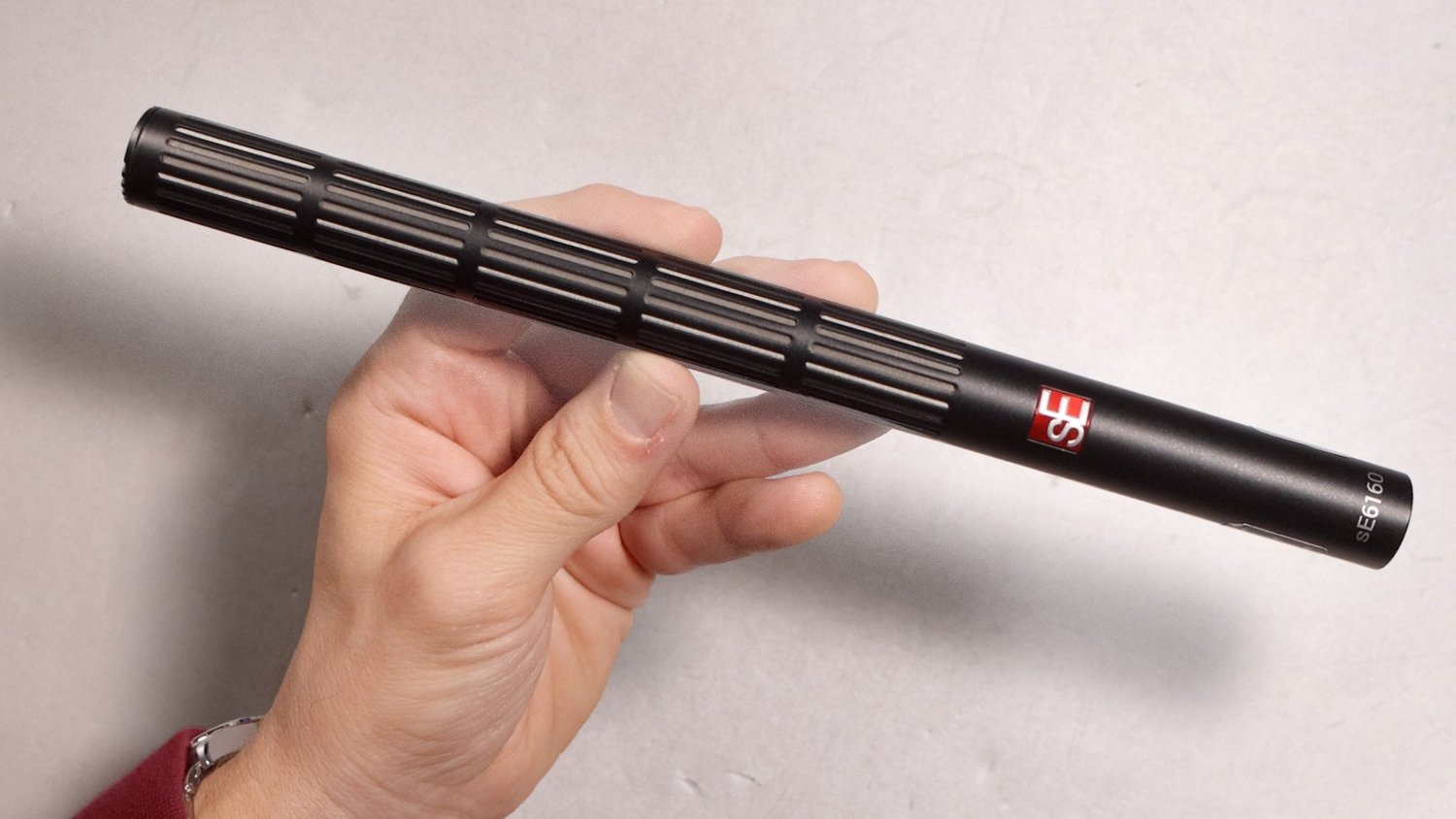
sE Electronics 6160 Shotgun Mic Review / Test
RECORDING SETTINGS:Interface: Focsurite Scarlett 18i20 4th Gen Conversion: 24-bit / 48kHzGain: 27dBBoosted in Post: +12dBSPECS:Polar Pattern: SupercardioidFreq Response : 20Hz - 20khzSensitivity: -32dBVMax SPL: 157dB (with 20dB Pad)Self Noise: 13 dB(A)Impedance: 110 OhmsBuy the sE 6160 (Affiliate Link)Sweetwater: https://sweetwater.sjv.io/6160Thomann: https://thmn.to/thoprod/619575Buy the Focusrite 18i20 4th Gen - (Affiliate Links)Amazon: https://geni.us/18i204thSweetwater: https://sweetwater.sjv.io/18i204thThomann: https://thmn.to/thoprod/596531NOTE (FULL DISCLOSURE): As an associate, I earn from qualifying purchases. For more info check my FAQ page links below.00:00 - Intro / Setup 00:22 - What’s in the Box00:45 - Build Quality / Walkthrough01:30 - Specifications01:45 - Polar Pattern Test (Tone / Rotation)02:08 - Plosive Test02:28 - Distance Test / Proximity Effect Test02:53 - Background Noise Test 03:13 - Untreated Room Test03:33 - Shock Rejection Test 03:57 - Mic Resonance Tap Test04:12 - High Pass Filter Demo05:04 - Pad Demo05:25 - Foam Windscreen Demo06:25 - Audio Technica AT875R Comparison06:48 - Audio Technica AT8035 Comparison07:14 - Deity Smic 2 Comparison07:41 - Rode NTG5 Comparison08:03 - Roge NTG3 Comparison08:30 - Sennheiser MKH416 Comparison08:59 - sE Electronics SE8 Comparison09:32 - Shure SM81 Comparison09:55 - Beyerdynamic MC930 Comparison10:19 - Neumann KM184 Comparison10:47 - Shure SM57 Comparison11:20 - Neumann U87 Ai Comparison11:51 - Music Test14:05 - Pros & Cons15:37 - Overall Thoughts17:27 - Recommendation

Beyerdynamic M130 Review / Test
Today i review the Beyerdyanmic M130, a passive figure-8 ribbon which gives you a very rich and robust low-end and a tamer treble and air frequency range. This gives you more of a classic ribbon sound if that's what you're looking for and it also works INCREDIBLY with the M160 in a mid-side pair. RECORDING SETTINGS:Interface: Focsurite Scarlett 18i20 4th Gen Conversion: 24-bit / 48kHzGain: 53dBBoosted in Post: +13dBSPECS:Polar Pattern: Figure-8 (Bidirectional)Freq Response : 40Hz - 18khzSensitivity: -57.5dBVImpedance: 200 OhmsBuy the Beyerdynamic M130 (Affiliate Link)Amazon: https://geni.us/m130Sweetwater: https://sweetwater.sjv.io/m130B&H Photo: https://bhpho.to/427adAxThomann: https://thmn.to/thoprod/573622Buy the Focusrite 18i20 4th Gen - (Affiliate Links)Amazon: https://geni.us/18i204thSweetwater: https://sweetwater.sjv.io/18i204thB&H Photo: https://bhpho.to/3DLyvHfThomann: https://thmn.to/thoprod/596531NOTE (FULL DISCLOSURE): As an associate, I earn from qualifying purchases. For more info check my FAQ page links below.00:00 - Intro / Setup 00:30 - What’s in the Box00:54 - Build Quality / Walkthrough01:16 - Specifications01:30 - Polar Pattern Test (Tone / Rotation)01:49 - (Not a) Plosive Test02:16 - Distance Test / Proximity Effect Test02:41 - Background Noise Test 02:57 - Untreated Room Test03:17 - Shock Rejection Test 03:37 - Mic Resonance Tap Test03:57 - Mid Side Setup with M130 & M16005:34 - Mid Side ASMR With Ribbon Mics!06:28 - Shure SM7b Comparison06:54 - sE Electronics VR2 Comparison07:26 - Royer R10 Comparison07:58 - Rode NTR Comparison08:33 - Beyerdynamic M160 Comparison09:07 - Shure KSM313 N/E Comparison09:39 - AEA KU5a Comparison10:13 - Shure SM57 Comparison10:47 - Neumann U87 Ai Comparison11:23 - Music Test13:00 - Adding EQ13:47 - Pros & Cons15:51 - Overall Thoughts18:53 - Recommendation21:30 - Outro - Where I've Been
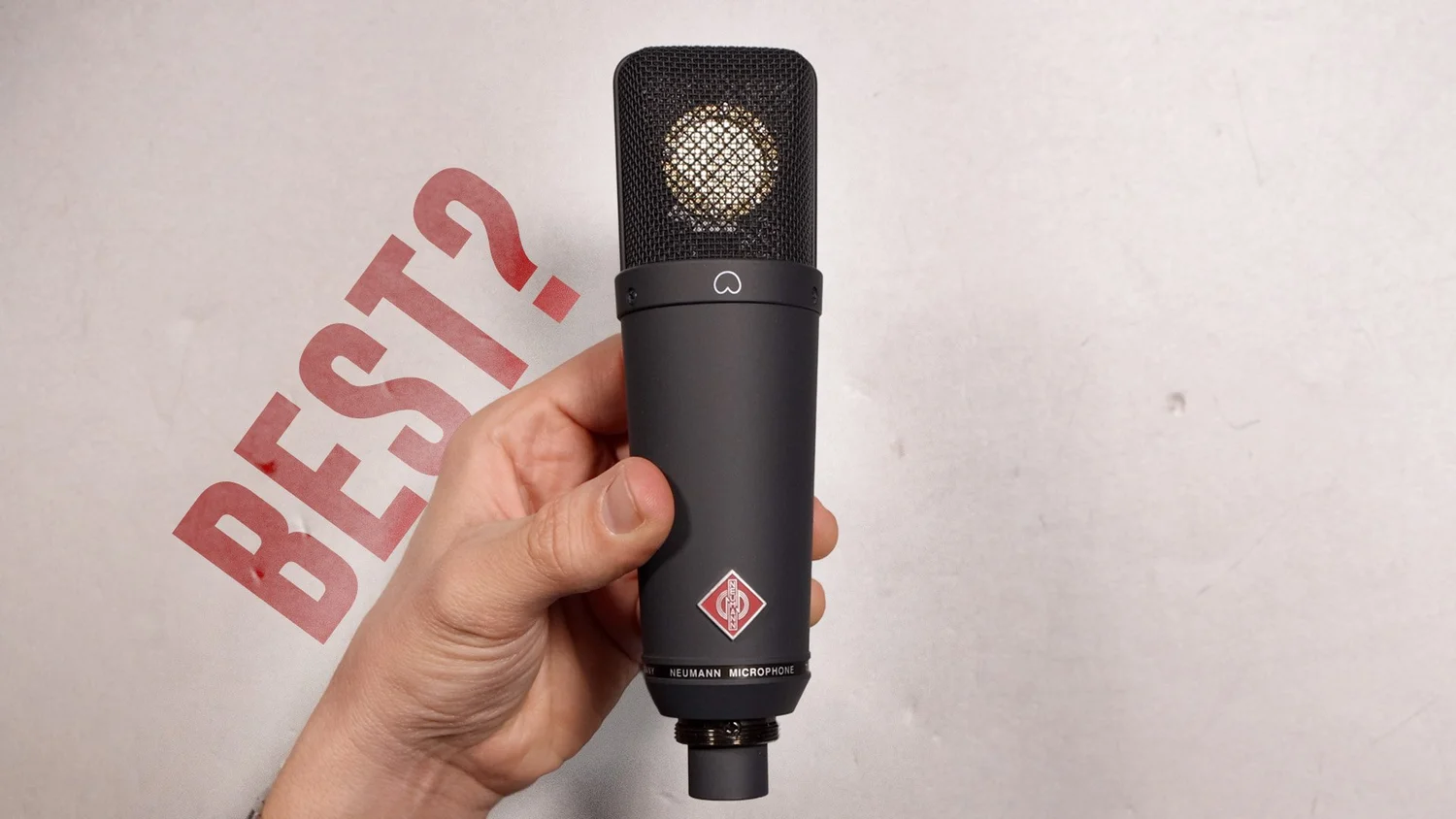
Neumann TLM193 Review / Test
Support the Channel: http://podcastage.com/supportToday i review the Neumann TLM193, a fantastic sounding neutral condenser microphone. This has a cardioid pattern, a self noise of 10dBA and a max SPL of 140dB. The sound of this is overall very neutral, with a bit of a recession in the presence and treble which helps tame some harsher frequencies without sounding too dull or dead. I found that this worked extremely well on every application I tried it on. Buy Neumann TLM193 (Affiliate Links)Amazon: https://geni.us/tlm193Sweetwater: https://sweetwater.sjv.io/tlm193B&H: https://bhpho.to/46fujf3NOTE (FULL DISCLOSURE): As an associate, I earn from qualifying purchases. For more info check my FAQ page links below.RECORDING SETTINGS:Interface: Universal Audio X8Conversion: 24-bit / 48kHzGain: 30dBBoosted in Post: +7dBSPECS:Polar Pattern: CardioidFreq Response : 20Hz - 20khzSensitivity: ~ -35dBSelf Noise: 10dBAMax SPL: 140dB (with pad engaged)Impedance: 50-ohmsTIMESTAMPS:00:00 - Intro / Setup 00:34- What’s in the Box00:53 - Build Quality / Walkthrough01:19 - Specifications01:29 - Polar Pattern Rotation Demo01:48 - Plosive Test02:06 - Distance Test / Proximity Effect Test02:29 - Background Noise Test 02:52 - Untreated Room Test03:02 - Shock Rejection Test 03:23 - Mic Resonance Tap Test03:35 - Outboard Preamp Demo04:33 - Focusrite 18i20 Demo05:33 - Audio Technica AT2020 Comparison05:52 - sE Electronics X1a Comparison06:11 - Rode NT1 5th Gen Comparison06:34 - Shure KSM32 Comparison06:59 - Neumann TLM102 Comparison07:27 - Telefunken TF11 Comparison07:53 - Neumann TLM103 Comparison08:24 - AKG C414 XLS Comparison09:00 - Austrian Audio OC818 Comparison09:33 - Lewitt Pure Tube Comparison10:11 - Neumann TLM10710:45 - Soyuz Bomblet Comparison11:16 - Neumann TLM49 Comparison11:49 - Lauten FC387 Atlantis Comparison12:25 - Gefell UMT70s Comparison12:54 - Shure SM57 Comparison13:25 - Neumann U87 Ai Comparison14:07 - Neumann U67 Reissue Comparison14:43 - Music Test16:46 - Pros & Cons18:38 - Overall Thoughts20:41 - Recommendation

Elgato Wave Neo Review / Test
Today I review and demo the Elgato Wave Neo, a relatively affordable USB condenser microphone. This offers a warmer and slightly darker sound compared to many of the other USB condenser microphones, a capacitive mute function, EQ, Deesser, Compressor, and Noise Removal plugins, as well as a digital mixer. Buy the Elgato Wave Neo (Affiliate Link)Amazon: https://geni.us/waveneoNOTE (FULL DISCLOSURE): As an associate, I earn from qualifying purchases. For more info check my FAQ page links below.RECORDING SETTINGS:Conversion: 24-bit / 48kHzComputer Input Level: 12%Boosted in Post: +9dBSPECS:Polar Pattern: CardioidFreq Response: 20Hz - 20kHzSensitivity: -23dBMax SPL: 120dBDynamic Range: 94dBA/D & D/A: 24-bit / 48 or 96khz00:00 - Intro / Price / Disclaimer 00:23 - What’s in the Box00:44 - Build Quality / Walkthrough01:22 - Specifications01:32 - Polar Pattern Test (Tone / Rotation) 01:48 - Plosive Test02:04 - Distance Test / Proximity Effect Test02:23 - Background Noise Test 02:38 - Untreated Room Test02:58 - Mic Resonance Tap Test03:12 - Shock Reiection Test03:30 - Desktop Stand Demo04:20 - Mute Button Test05:01 - Samson Go Mic Comparison05:25 - Razer Seiren V3 Mini Comparison05:51 - HyperX Solocast Comparison06:16 - Logitech Yeti Orb Comparison06:51 - Rode NT USB Mini Comparison07:26 - Neat Bumblebee II Comparison07:55 - Logitech Yeti Nano Comparison08:31 - Audio Technica AT2020 USB-X Comparison09:07 - Sennheiser Profile USB Comparison09:41 - Elgato Wave 3 Comparison10:13 - Shure SM57 Comparison10:52 - Neumann U87 Ai Comparison11:30 - Music Test13:51 - Software Walkthrough16:13 - Voice Focus Demo 18:20 - EQ Demo20:27 - De-Esser Demo21:42 - Compressor Demo23:17 - Pros & Cons 24:38 - Overall Thoughts26:00 - Recommendation

Neat Worker Bee II (vs. AT2020, P120, 990)
Today i review the Neat Worker Bee 2, a budget condenser microphone. This has no switches or filters, it simply offers a cardioid polar pattern and a slight V-shape sound profile. It has a powerful low end, slightly recessed mid section and a clear top end. It does a sub par job at plosive rejection and the shock rejection also leaves a little bit to be desired, so it would have been fantastic for this to come with a shockmount and pop filter, but at the price, I can't complain too much.RECORDING SETTINGS:Interface: Focsurite Scarlett 18i20 4th GenConversion: 24-bit / 48kHzGain: +31dBBoosted in Post: +11dBSPECS:Polar Pattern: CardioidFreq Response : 20Hz - 20khzSensitivity: ~ -34.5dBMax SPL: 145dBImpedance: 50-ohms Buy the Neat Worker Bee 2 (Affiliate Link)Amazon: https://geni.us/workbee2Buy the Focusrite 18i20 4th Gen - (Affiliate Links)Amazon: https://geni.us/18i204thSweetwater: https://sweetwater.sjv.io/18i204thB&H Photo: https://bhpho.to/3DLyvHfThomann: https://thmn.to/thoprod/596531NOTE (FULL DISCLOSURE): As an associate, I earn from qualifying purchases. For more info check my FAQ page links below.00:00 - Intro / Setup 00:28 - What’s in the Box00:53 - Build Quality / Walkthrough01:18 - Specifications01:30 - Polar Pattern Test (Tone / Rotation)01:47 - Plosive Test02:07 - Distance Test / Proximity Effect Test02:33 - Background Noise Test 02:49 - Untreated Room Test03:11 - Shock Rejection Test 03:31 - Mic Resonance Tap Test03:44 - Mic Comparison Intro04:19 - Neat Worker Bee 1 Comparison04:39 - Neat King Bee 1 Comparison05:02 - Neewer NW700 Comparison05:28 - Mackie EM91c Comparison05:55 - Tascam TM80 Comparison06:17 - MXL 990 Comparison06:43 - Audio Technica AT2020 Comparison07:09 - sE Electronics X1a Comparison07:36 - Lewitt LCT240 Comparison08:02 - AKG P120 Comparison08:27 - Shure PGA181 Comparison08:49 - Neat King Bee v2 Comparison09:16 - Rode NT1 5th Gen Comparison09:42 - Shure SM57 Comparison10:10 - Earthworks SR117 Comparison10:34 - Neumann U87Ai Comparison11:03 - Music Test12:51 - Pros & Cons14:17 - Overall Thoughts15:42 - Recommendation

Aston Apex Review / Test
Voicing 1 Comparison: https://youtu.be/00Fl2m_J-q0Today i review the Aston Apex, a handheld dynamic. This mic has two different voicings giving you different EQ curves, active electronics giving the mic a very healthy output level, and it offers a unique and robust feeling build quality. The sound is either V-shaped or upper mid focussed depending on the voicing you use. I found that it suffered in two primary areas: plosive rejection and handling noise rejection.RECORDING SETTINGS:Interface: Focsurite Scarlett 18i20 4th GenConversion: 24-bit / 48kHzGain: 40dB (+48v Phantom Power On)Boosted in Post: +10dBSPECS:Polar Pattern: CardioidFreq Response : 20Hz - 16khzSensitivity: -62dB to -50dB (depending on active/passive & switch position)Max SPL: 115dB to 147dB (depending on active/passive & switch position)Equivalent Noise Level: 5dBBuy the Aston Apex(Affiliate Link)Sweetwater: https://sweetwater.sjv.io/apexThomann: https://thmn.to/thoprod/594390Buy the Focusrite 18i20 4th Gen - (Affiliate Links)Amazon: https://geni.us/18i204thSweetwater: https://sweetwater.sjv.io/18i204thB&H Photo: https://bhpho.to/3DLyvHfThomann: https://thmn.to/thoprod/596531NOTE (FULL DISCLOSURE): As an associate, I earn from qualifying purchases. For more info check my FAQ page links below.00:00 - Intro 00:26 - What’s in the Box00:44 - Build Quality / Walkthrough01:16 - Specifications01:28 - Polar Pattern Test (Tone / Rotation)01:43 - Plosive Test02:03 - Distance Test / Proximity Effect Test02:21 - Background Noise Test 02:34 - Untreated Room Test02:54 - Shock Rejection Test 03:15 - Mic Resonance Tap Test03:31 - Handling Noise Rejection Test03:51 - Cup the Mic Test04:10 - Voicing Switch Demo (Voice 1 vs. Voice 2)05:33 - Shure SM58 Comparison05:56 - Sennheiser E835 Comparison06:21 - sE Electronics V7 Comparison06:46 - Shure Beta 58a Comparison07:13 - Audix OM3 Comparison07:42 - Mojave MA-D Comparison08:10 - Sennheiser E935 Comparison08:38 - Beyerdynamic TG V70d Comparison09:14 - Audio Technica AT2010 Comparison09:43 - Lewitt MTP350Cm Comparison10:09 - Earthworks SR117 Comparison10:33 - Neumann U87 Ai Comparison11:03 - Music Test (voicing 2) 13:03 - Pros & Cons14:41 - Overall Thoughts16:48 - Recommendation

Audix PDX520 Dynamic Mic Review / Test
Today I review the new dynamic mic from Audix PDX520 which is a broadcast dynamic, podcast dynamic, streamer dynamic, or studio dynamic, whatever you want it to be. It has a standard dynamic sensitivity, a darker and smoother sound profile with a slight focus on the mids, and two eq switches to adjust the sound (presence boost & high pass filter). Buy the Audix PDX520 (Affiliate Link)Amazon: https://geni.us/pdx520NOTE (FULL DISCLOSURE): As an associate, I earn from qualifying purchases. For more info check my FAQ page links below.RECORDING SETTINGS:Interface: Focusrite 18i20 4th GenGain: 50dBConversion: 24-bit / 48kHzBoosted in Post: +9dBSPECS:Polar Pattern: CardioidFreq Response :40Hz - 16kHzSensitivity: ~ -56dBV Max SPL: 144dBImpedance 280 ohms00:00 - Intro / Price / Disclaimer 00:30 - What’s in the Box00:45 - Build Quality / Walkthrough01:21 - Specifications01:32 - Polar Pattern Test (Tone / Rotation)01:53 - Plosive Test02:07 - Distance Test / Proximity Effect Test02:31 - Background Noise Test 02:44 - Untreated Room Test03:03 - Mic Resonance Tap Test03:17 - Shock Rejection Test03:32 - EQ Switch Demo04:45 - Intro to Comparison05:06 - Shure SM58 Comparison05:23 - sE Electronics V7 Comparison05:42 - Rode Podmic Comparison06:00 - Audio Technica AT2040 Comparison06:21 - Rode Procaster Comparison06:41 - sE Electronics Dynacaster Comparison07:05 - Universal Audio SD-1 Comparison07:33 - Aston Stealth Comparison07:57 - Audio Technica BP40 Comparison08:21 - Logitech Blue Sona C omparison08:47 - Heil PR40 Comparison09:07 - Shure SM7b Comparison09:32 - Earthworks Ethos Comparison09:57 - Electro Voice RE20 Comparsion10:21 - Shure SM57 Comparison10:47 - Neumann U87 Ai Comparison11:25 - Music Test12:45 - Pros & Cons 14:05 - Overall Thoughts|15:44 - Recommendation

Audix OM3 Review / Test
vs. 12 Mics: https://www.youtube.com/watch?v=s5L5ggn-qkEToday i review the Audix OM3, a handheld dynamic. This mic offers a bright upper mid and treble region with a tight hypercardioid polar pattern which does a good job at background noise rejection, but a less than stellar job at handling noise rejection. The microphone also has a powerful lowend which can be a little bit over powering in my opinion. RECORDING SETTINGS:Interface: Focsurite Scarlett 18i20 4th GenConversion: 24-bit / 48kHzGain: ~45dBBoosted in Post: +10dBSPECS:Polar Pattern: HypercardioidFreq Response : 50Hz - 17khzSensitivity: -56dBImpedance: 290-ohmsMax SPL: ≥144 dBBuy the Audix OM3 (Affiliate Link)Amazon: https://geni.us/aom3Sweetwater: https://sweetwater.sjv.io/aom3B&H Photo: https://bhpho.to/42b0YyAThomann: https://thmn.to/thoprod/160138Buy the Focusrite 18i20 4th Gen - (Affiliate Links)Amazon: https://geni.us/18i204thSweetwater: https://sweetwater.sjv.io/18i204thB&H Photo: https://bhpho.to/3DLyvHfThomann: https://thmn.to/thoprod/596531NOTE (FULL DISCLOSURE): As an associate, I earn from qualifying purchases. For more info check my FAQ page links below.00:00 - Nonsense00:27 - Intro 00:42 - What’s in the Box01:10 - Build Quality / Walkthrough01:35 - Specifications01:47 - Polar Pattern Test (Tone / Rotation)02:06 - Plosive Test02:30 - Distance Test / Proximity Effect Test02:56 - Background Noise Test 03:10- Untreated Room Test03:30 - Shock Rejection Test 03:48 - Mic Resonance Tap Test03:59 - Handling Noise Rejection Test04:19 - Cup the Mic Test04:42 - Behringer XM8500 Comparison05:03 - Shure SM58 Comparison05:27 - Sennheiser E835 Comparison05:50 - sE Electronics V7 Comparison06:09 - Audix OM2 Comparison06:33 - AKG D5 Comparison06:56 - Shure Beta 58a Comparison07:19 - Mojave MA-D Comparison07:43 - Sennheiser E935 Comparison08:11 - Earthworks SR117 Comparison08:40 - Shure Beta 87A Comparison09:04 - Neumann KMS105 Comparison09:34 - Neumann U87 Ai Comparison10:01 - Music Test11:43 - Pros & Cons12:48 - Overall Thoughts14:19 - Recommendation

13 Handheld Mics Compared (Audix OM3)
00:00 - Intro00:19 - Spoken Word Comparison04:19 - Plosive Test (On Grill)05:23 - Plosive Test (3" Distance)06:26 - Handling Noise Test 107:23 - Handling Noise Test 208:12 - Outro

Lewitt Connect 2 Interface Review / Walkthrough
Today I walkthrough, explain, test and review the new Lewitt Connect 2 streaming audio interface. I compare it to the Focusrite Scarlett 18i20 4th gen, test the preamps with the SM7b, demo the D.I. Instrument inputs, test the line level input capability, walk through the clipguard feature, eq settings, denoise capability, and compressor as well. This is an all around fantastic interface for someone who needs a single preamp and instrument input.Buy the Lewitt Connect 2 (Affiliate Links)Amazon: https://geni.us/connect2Sweetwater: https://sweetwater.sjv.io/connect2B&H Photo: https://bhpho.to/4kBgVGQThomann: https://thmn.to/thoprod/590334Buy the Shure SM7b (Affiliate Link)Amazon: https://geni.us/shuresm7bSweetwater: https://imp.i114863.net/sm7bB&H Photo: https://bhpho.to/3sRWmQbThomann: https://thmn.to/thoprod/129929RECORDING SETTINGS:Mic: Neumann U87 AiConversion: 24-bit / 48kHzGain: 29dBBoosted in Post: +8dBSPECS:USB: Bit Depth: 24-bit, Sampling Rate: 44.1, 48, or 96khzEIN: -129dBV (A-weighted) Gain Range: 0-72dBDynamic Range: 118dB (A)00:00 - Intro / Pricing / Disclosure 00:26 - What’s in the Box00:48 - Build Quality01:20 - Walkthrough of Interface02:24 - Specifications02:51 - Headphone Amp Discussion04:02 - Shure SM7b Mic Test (No Cloudlifter or Fethead)04:53 - Preamp Noise Test05:30 - Connect 2 vs Scarlett 4th Gen06:25 - Line In Test07:30 - Auto Gain Demo08:07 - Denoise Demo09:01 - Compressor Demo09:41 - Clipguard Demo10:20 - Clean / Warm / Vivid Demo11:42 - Mute Button Demo12:11 - D.I. Instrument Input Test14:04 - Pros & Cons17:01 - Recommendation

Shure PGA 181 Review / Test
Today i review the Shure PGA181 an affordable side address condenser. It is very straight forward with only a cardioid polar pattern and no pads or filters. This mic is more of an upper mid focused sound which gives it a punchy character. The self noise on this mic comes in at 22dBA which is kind of high, but seems relatively inline with the competition LCT240 (19dBA), AT2020 (20dBA), 770 ($20dBA), X1a (16dBA), but it is still on the higher side. RECORDING SETTINGS:Interface: Focsurite Scarlett 18i20 4th GenConversion: 24-bit / 48kHzGain: +32dBBoosted in Post: +9dBSPECS:Polar Pattern: CardioidFreq Response : 50Hz - 20khzSensitivity: -38dBMax SPL: 138dBSelf Noise: 22dBAImpedance: 120-ohmsBuy the Shure PGA181(Affiliate Link)Amazon: https://geni.us/pga181Sweetwater: https://sweetwater.sjv.io/pga181B&H Photo: https://bhpho.to/43g9RZQBuy the Focusrite 18i20 4th Gen - (Affiliate Links)Amazon: https://geni.us/18i204thSweetwater: https://sweetwater.sjv.io/18i204thB&H Photo: https://bhpho.to/3DLyvHfThomann: https://thmn.to/thoprod/596531NOTE (FULL DISCLOSURE): As an associate, I earn from qualifying purchases. 00:00 - Intro / Setup 00:24 - What’s in the Box00:41 - Build Quality / Walkthrough01:05 - Specifications01:16 - Polar Pattern Test (Tone / Rotation)01:35 - Plosive Test01:52 - Distance Test / Proximity Effect Test02:14 - Background Noise Test 02:27 - Untreated Room Test02:46 - Shock Rejection Test 03:09 - Mic Resonance Tap Test03:39 - Neewer NW700 Comparison03:51 - MXL 770 Comparison04:15 - Audio Technica AT2020 Comparison04:40 - sE Electronics X1a Comparison05:07 - Lewitt LCT240 Comparison05:37 - AKG P220 Comparison06:04 - Neat King Bee Comparison06:30 - Rode NT1 (5th Gen) Comparison06:58 - Sterling ST181 Comparison07:33 - Shure SM57 Comparison07:58 - Earthworks SR117 Comparison08:24 - Neumann U87 Ai Comparison08:50 - Music Test11:15 - Pros & Cons12:20 - Overall Thoughts14:08 - Recommendation

Neat BumbleBee II Review Test
Video & HQ Audio: https://podcastage.com/rev/bumblebee2Today I'm reviewing and demoing the Neat Bumblebee 2, a budget USB condenser mic that I got for under $30. This offers really great sound quality for the price and leans slightly V-shaped with a supportive bass and low mid section and a bit of a boost in the treble and air. You get a single cardioid pattern, a mute button, a headphone output, and a mix dial for computer playback and zero latency monitoring. At $25 or less this is a great deal. At $60 it has some fair competition but stacks up admirably against the alternatives. At $100 I don't think the value proposition is as strong.Buy the Neat Bumblebee II (Affiliate Link)Amazon: https://geni.us/bumblebee2NOTE (FULL DISCLOSURE): As an associate, I earn from qualifying purchases. For more info check my FAQ page links below.RECORDING SETTINGS:Conversion: 24-bit / 48kHzMic Level: ~12%Boosted in Post: +10dBSPECS:Polar Pattern: CardioidFreq Response: 20Hz - 20kHzSensitivity: -36dBSelf Noise: 14dBA Max SPL: 128dBA/D & D/A: 16 or 24-bit / 44.1-96khz00:00 - Intro / Price / Disclaimer 00:25 - What’s in the Box00:48 - Build Quality / Walkthrough01:46 - Specifications01:56 - Polar Pattern Test (Tone / Rotation) 02:13 - Plosive Test02:27 - Distance Test / Proximity Effect Test02:47 - Background Noise Test 03:01 - Untreated Room Test03:21 - Mic Resonance Tap Test03:35 - Desktop Stand Demo04:21 - Mute Button Test04:51 - Samson Go Mic Comparison05:16 - Razer Seiren V3 Mini Comparison05:42 - HyperX Solocast Comparison06:08 - Logitech Blue Yeti Orb Comparison06:40 - Rode NT USB Mini Comparison07:11 - Sennheiser Profile USB Comparison07:46 - Audio Technica AT2020 USB-X Comparison08:14 - Shure SM57 Comparison08:43 - Neumann U87 Ai Comparison09:14 - Music Test10:34 - Pros & Cons 12:20 - Overall Thoughts14:10 - Recommendation

Neumann TLM107 Review / Test
Support the Channel: http://podcastage.com/supportToday i review the Neumann TLM107, a multipattern condenser with two high pass filters and two pad options. It has a balanced bass and mid section and then a treble bump which gives the mic a bit of life. It does sound a touch sharp on spoken word but sounds great for the music applications I tried it in. Buy Neumann TLM107 (Affiliate Links)Amazon: https://geni.us/tlm107Sweetwater: https://sweetwater.sjv.io/tlm107B&H: https://bhpho.to/4jJ9QDFThomann: https://thmn.to/thoprod/415384 NOTE (FULL DISCLOSURE): As an associate, I earn from qualifying purchases. For more info check my FAQ page links below.RECORDING SETTINGS:Interface: Focsurite Scarlett 18i20 4th genConversion: 24-bit / 48kHzGain: 37dBBoosted in Post: +8dBSPECS:Polar Pattern: Omni, Wide Cardioid, Cardioid, Hypercardiod, Figure-8Freq Response : 20Hz - 20khzSensitivity: ~ -39dBSelf Noise: 10dBAMax SPL: 153dB (with pad engaged)Impedance: 50-ohmsTIMESTAMPS:00:00 - Intro / Setup 00:19- What’s in the Box00:40 - Build Quality / Walkthrough01:25 - Specifications01:39 - Polar Pattern Tone Demo02:37 - Polar Pattern Rotation Demo03:52 - Plosive Test04:04 - Distance Test / Proximity Effect Test04:25 - Background Noise Test 04:37 - Untreated Room Test03:58 - Shock Rejection Test 05:15 - Mic Resonance Tap Test05:29 - High Pass Filter Demo06:05 - Pad Demo06:30 - Outboard Preamp Demo07:37 - Audio Technica AT2020 Comparison07:55 - AKG P420 Comparison08:16 - Rode NT2a Comparison08:39 - sE Electronics sE4400a Comparison09:05 - Neumann TLM102 Comparison09:31 - Neumann TLM103 Comparison09:58 - AKG C414 XLII Comparison10:27 - Austrian Audio OC818 Copmarison10:57 - Neumann TLM49 Comparison11:28 - Microtech Gefell UMT70s12:00 - Shure SM57 Comparison12:26 - Neumann U87 Ai Comparison12:52 - Music Test14:12 - Pros & Cons16:02 - Overall Thoughts18:09 - Recommendation

Hyper X Quadcast 2 Review/Test
Video & HQ Audio: https://podcastage.com/rev/quad2Today I'm reivewing and demoing the Hyperx Quadcast 2, a multipattern USB condenser microphone. This thing offers a nice sound quality, a fairly intuitive operation, a capacitive mute button, and everything you need to start recording. It's a nice improvement over the gen 1 with improved sound quality, A/D and D/A converters and functionality. Today I review the Fifine AM8, a budget USB/XLR dynamic microphone that only costs around $50. As mentioned this has an XLR & USB output which can be used simultaneously, a 3.5mm headphone jack which offers computer playback and zero latency monitoring, a capacitive mute button, and RGB LIGHTS!!! Sound wise I perceive it as slightly V-shaped where the lower & higher frequencies overpower the mid frequencies, but overall it sounds pretty darn good especially considering the price. There is one flaw with this microphone which makes me only kind of recommend it, the mount which makes the microphone very floppy. Buy the Hyperx Quadcast 2 (Affiliate Link)Amazon: https://geni.us/quadcast2 NOTE (FULL DISCLOSURE): As an associate, I earn from qualifying purchases. For more info check my FAQ page links below. RECORDING SETTINGS:Conversion: 24-bit / 48kHzMic-Gain: 11:00dBComputer Input Level: 33%Boosted in Post: +7dB SPECS:Polar Pattern: Cardioid, Omni, Stereo, Bi-directionalFreq Response: 20Hz - 20kHzSensitivity: -7.5dBA/D & D/A: 16/24-bit / 44.1-96khz 00:00 - Intro / Price / Disclaimer 00:25 - What’s in the Box00:42 - Build Quality / Walkthrough01:34 - Specifications01:42 - Operation Walkthrough02:32 - Polar Pattern Test (Tone / Rotation) 02:51 - Cardioid / Omni / Stereo / Figure-8 Demo04:03 - Plosive Test04:16 - Distance Test / Proximity Effect Test04:36 - Background Noise Test 04:49 - Untreated Room Test05:09 - Mic Resonance Tap Test05:23 - Desktop Stand Demo06:02 - Mute Button Test06:18 - Does it ASMR Test?07:02 - Samson Go Mic Comparison07:26 - HyperX Solocast Comparison07:53 - HyperX Quadcast Original Comparison08:23 - Blue Yeti Comparison08:55 - Sennheiser Profile USB Comparison09:28 - Audio Technica AT2020 USB-X Comparison09:58 - Elgato Wave 3 Comparison10:30 - Rode NT-USB+ Comparison11:04 - Logitech Blue Yeti X Comparison11:39 - Shure SM57 Comparison12:12 - Neumann U87 Ai Comparison12:40 - Music Test15:04 - Pros & Cons 16:29 - Overall Thoughts17:49 - Recommendation

Focusrite Scarlett 18i20 4th Gen Comparison
Today I provide spoken word samples of the Focusrite 18i20 4th gen and compare it to the 2nd gen 18i20 as well as the Universal Audio X8 and the UA LA610 MK II preamp, and Warm Audio WA73 EQ preamp. I also explain why I chose this inteface as the device for my reviews. Buy the Focusrite 18i20 4th Gen - (Affiliate Links)Amazon: https://geni.us/18i204thSweetwater: https://sweetwater.sjv.io/18i204thB&H Photo: https://bhpho.to/3DLyvHfThomann: https://thmn.to/thoprod/596531As an Affiliate I earn from qualifying purchases. RECORDING SETTINGS:Mic: Neumann U87 AiConversion: 24-bit / 48kHzGain: 36dBBoosted in Post: +2dB00:00 - Intro / Pricing / Disclosure 01:00 - What's in the Box01:23 - Physical Differences03:10 - Spec Differences (Screenshot)03:35 - AT2020 (2nd vs. 4th) 04:25 - NT1 (2nd vs. 4th)05:20 - SM7b (2nd vs. 4th)06:16 - U87 Ai (2nd vs. 4th)07:00 - Noise Performance (2nd vs. 4th) 07:44 - Universal Audio X8 vs. Focusrite Scarlett 18i20 08:58 - Universal Audio LA610 vs. Focusrite Scarlett 18i20 09:50 - Warm Audio WA73 vs. Focusrite Scarlett 18i20 10:35 - Why I Chose the Focusrite Scarlett Interface? 12:20 - Conclusion

Podcastage's Best Music of 2024
Thanks for an amazing 2024. Simply put there weren't enough reviews to compile a good box throw video, so I figured this would be a fun way to wrap up the year. If this is dumb, let me know and we won't do it again. 00:00 - Intro 00:34 - #5. Shure 565 SD - 19 NOV 2024 01:44 - #4. Warm Audio WA47 - 22 OCT 2024 03:29 - #3. Art Tube MP - 23 JAN 2024 04:22 - #2. Shure Nexadyne- 1 OCT 2024 06:04 - #1. Peluso P414 - 7 NOV 2024 08:09 - Wrap Up

Podcastage's Favorite Gear of 2024
Video & HQ Audio: https://podcastage.com/rev/2024favToday we discuss my favorite audio gear of 2024. I share my favorite microphone that I reviewed this year, my favorite audio interface / preamp I reviewed, and my favorite new production gear that I use in my studio. I would love to hear what your favorite gear of the year is.As an affiliate I earn from qualifying purchases. Gear Discussed (Affiliate Links):Neumann BCM104: https://geni.us/bcm104Lewitt Ray: https://geni.us/lraysE Electronics X1a: https://geni.us/sex1aHeritage Audio i73 Pro: https://geni.us/i73pro2RND Portico 5017: https://geni.us/rnd5017 Videos:Neumann BCM104: https://www.youtube.com/watch?v=jC3N_hNk7hELewitt Ray: https://www.youtube.com/watch?v=ajqcxyV5wgYsE Electronics X1a: https://www.youtube.com/watch?v=PmWZJ2IebZ8Heritage Audio i73 Pro: https://www.youtube.com/watch?v=dFco7aT22jgRND Portico 5017: https://www.youtube.com/watch?v=7H8B3e_s3j4 00:00 - Intro00:23 - Favorite Mics I Reviewed03:53 - Favorite Preamp & Interface I Reviewed05:37 - Favorite Production Gear08:57 - Your Favorite Gear?09:25 - Conclusion

Sennheiser ME 2 Review / Test
Today we're looking at the Sennheiser ME 2 a relatively affordable lavalier microphone. This offers a brighter character which can be beneficial on the collar or in the center or the chest to maintain some clarity and not sound overly muddy. This mic does have a self noise of 32dBA which is high and the noise can be quite noticeable. Also, you don't get any accessories with this other than the mic clip, so if you want any kind of dead cat or windscreen, you're going to need to buy those separately. Buy the Sennheiser ME 2 (Affiliate Link)Amazon: https://geni.us/sennME2Sweetwater: https://sweetwater.sjv.io/me2iiB&H Photo: https://bhpho.to/3DfPot4Thomann: https://thmn.to/thoprod/141903NOTE (FULL DISCLOSURE): As an associate, I earn from qualifying purchases. For more info check my FAQ page links below.RECORDING SETTINGS:Input: Zoom F2Boosted in Post: +22dBSPECS:Polar Pattern: OmnidirectionalFreq Response : 50Hz - 18kHzSensitivity ~ -35dBNoise: 32dBAMax SPL: 130dBInput Voltage: 10vTIMESTAMPS:00:00 - Intro / Price / Disclaimer 00:20 - What’s in the Box00:35 - Build Quality / Walkthrough01:08 - Specifications01:16 - Polar Pattern Test (Tone / Rotation)01:33 - Plosive Test01:51 - Background Noise Test 02:05 - Untreated Room Test02:24 - Lav Mic Position Tests03:58 - Camera Internal Mic Comparison05:04 - Different Room Tests06:08 - Portable Recorder Demo06:24 - 3.5mm Interface Demo06:58 - USB Soundcard Demo07:25 - XLR Adapter Demo|07:50 - iPhone Demo08:18 - 3.5mm Computer Input Demo08:40 - Camera Mic Input Demo09:14 - Zoom LMF-2 Comparison 09:39 - Shure MVL Comparison10:05 - Rode Lavalier Go Comparison10:31 - Rode Lavalier 2 Comparison10:59 - Countryman B6 Comparison11:33 - Sanken Cos 11D Comparison12:07 - Shure TL48 Comparison12:50 - Neumann U87 Comparison13:26 - Pros & Cons 14:57 - Overall Thoughts15:46 - Recommendation
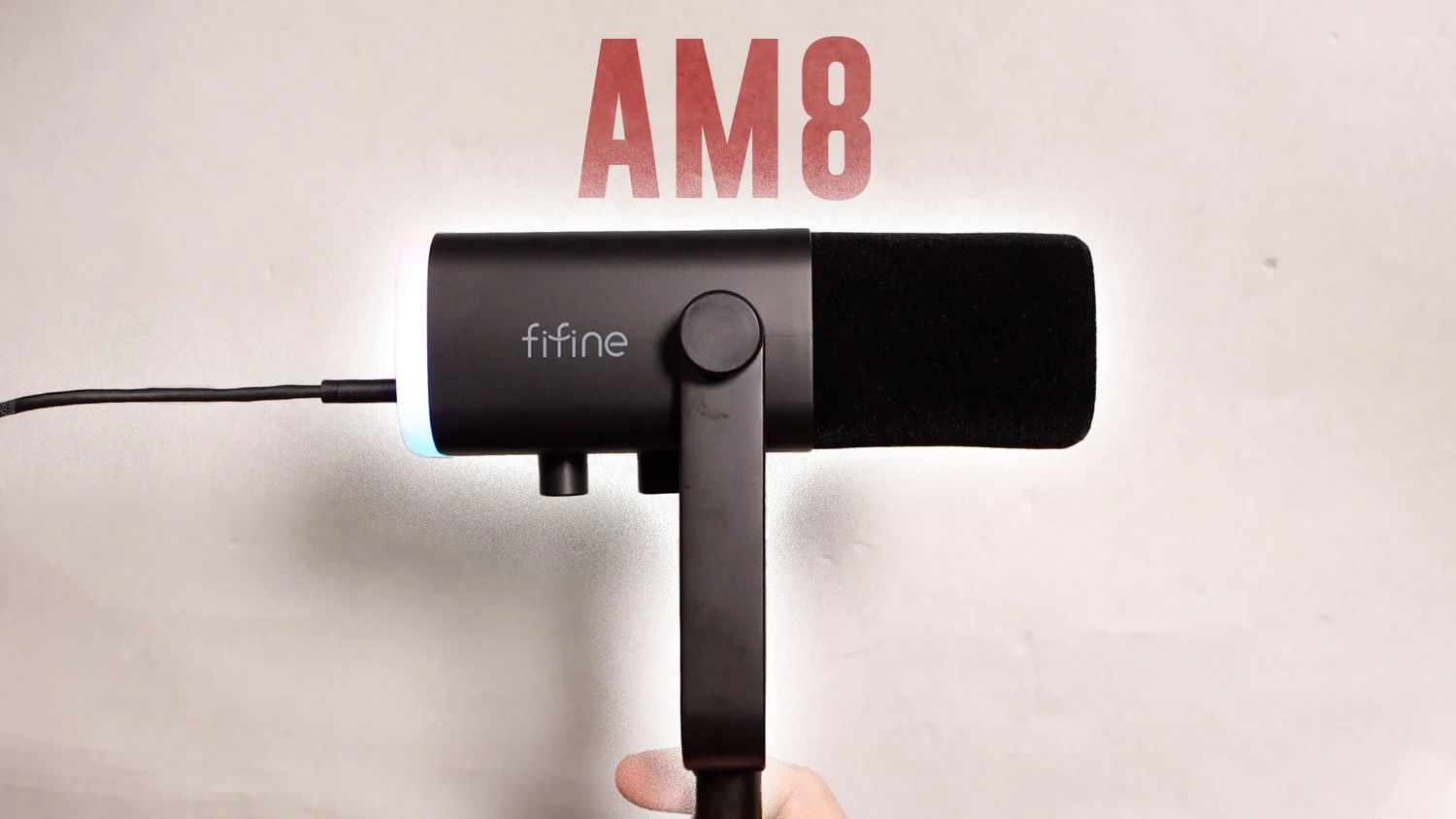
Fifine AM8 Review / Test
Video & HQ Audio: https://podcastage.com/rev/am8Today I review the Fifine AM8, a budget USB/XLR dynamic microphone that only costs around $50. As mentioned this has an XLR & USB output which can be used simultaneously, a 3.5mm headphone jack which offers computer playback and zero latency monitoring, a capacitive mute button, and RGB LIGHTS!!! Sound wise I perceive it as slightly V-shaped where the lower & higher frequencies overpower the mid frequencies, but overall it sounds pretty darn good especially considering the price. There is one flaw with this microphone which makes me only kind of recommend it, the mount which makes the microphone very floppy.Buy the Fifine AM8 (Affiliate Link)Amazon: https://geni.us/fifineam8 NOTE (FULL DISCLOSURE): As an associate, I earn from qualifying purchases. For more info check my FAQ page links below.RECORDING SETTINGS:Conversion: 16-bit / 48kHzGain: 1:30dBBoosted in Post: +6dBSPECS:Polar Pattern: CardioidFreq Response: 50Hz - 16kHzSensitivity: -50dBA/D & D/A: 16-bit / 44.1-48khz00:00 - Intro / Price / Disclaimer 00:21 - What’s in the Box00:43 - Build Quality / Walkthrough01:30 - Specifications01:45 - Polar Pattern Test (Tone / Rotation) 02:01 - Plosive Test02:14 - Distance Test / Proximity Effect Test02:23 - Background Noise Test 02:46 - Untreated Room Test03:04 - Mic Resonance Tap Test03:16 - Shock Rejection Test03:36 - Mute Button Test04:36 - Desktop Stand Demo05:29 - Samson Go Mic Comparison 05:50 - Samson Q2u Comparison06:16 - Fifine K688 Comparison06:43 - sE Electronics V7 Comparison07:12 - Shure SM58 Comparison07:38 - Audio Technica AT2040USB Comparison08:06 - Shure MV6 Comparison08:36 - Logitech Yeti GX Comparison09:05 - Shure SM7b Comparison09:33 - Neumann U87 Ai Comparison10:11 - Music Test11:45 - Pros & Cons 13:54 - Overall Thoughts15:49 - Recommendation

Shure MV6 Review / Test
Today I review the Shure MV6 which is a USB Gaming microphone that costs around $150. The big feature of this mic is the DSP (digital signal processing) which gives you the ability to adjust the microphones tone, add a noise remover, use a digital popper stopper, or add a highpass filter. It also includes auto-level in case you don't want to worry about your level. The sound of it is very upper mid, presence, and treble focused so if you dislike that sound, you're probably not going to be in love with this mic. Buy the Shure MV6 (Affiliate Link)Amazon: https://geni.us/smv6Sweetwater: https://sweetwater.sjv.io/mv6B&H: https://bhpho.to/4fIQLPwThomann: https://thmn.to/thoprod/599144NOTE (FULL DISCLOSURE): As an associate, I earn from qualifying purchases. For more info check my FAQ page links below.RECORDING SETTINGS:Conversion: 24-bit / 48kHzGain: +18.5dBBoosted in Post: +2dBFirmware: 1.1.0.10SPECS:Polar Pattern: CardioidFreq Response :50Hz - 15kHzSensitivity: -34.7 dBFSMax SPL: 128dB (USB)A/D & D/A: 24-bit / 48khz00:00 - Intro / Price / Disclaimer 00:19 - What’s in the Box00:40 - Build Quality / Walkthrough01:23 - Specifications01:37 - Polar Pattern Test (Tone / Rotation)01:52 - Plosive Test02:12 - Distance Test / Proximity Effect Test02:29 - Background Noise Test 02:53 - Untreated Room Test03:14 - Mic Resonance Tap Test03:36 - Shock Rejection Test03:53 - Mute Button Test04:05 - Desktop Stand Demo04:59 - Software Walkthrough06:17 - Dark / Bright Tone EQ Demo07:15 - Real Time Denoiser Test08:02 - Digital Popper Stopper Demo08:46 - High Pass Filter Demo09:53 - Samson Go Mic Comparison 10:22 - Fifine K688 Comparison10:46 - Samson Q2u Comparison11:16 - Shure SM58 Comparison11:46 - sE Electronics V7 Comparison12:14 - Audio Technica AT2040USB Comparison12:41 - Elgato Wave 3 Comparison13:06 - Rode Podmic USB Comparison13:41 - Shure MV7 Comparison14:17 - Shure MV7+ Comparison14:50 - Shure SM7b Comparison15:26 - Neumann U87 Ai Comparison16:09 - Music Test17:36 - Pros & Cons 19:09 - Overall Thoughts20:43 - Recommendation

Shure 565SD Review / Test
Today i review the Shure 565SD, a classic handheld dynamic. This offers acardioid pattern and a very bright treble range which gives you a clearer sound than many other handheld dynamics when you're right on top of it. At a distance I think the boost can be a bit much and sound sibilant and sharp, but for it's designed use case it makes a lot of sense. Additional Mic Tests: https://www.youtube.com/watch?v=b4Yw-Kx3W0EAdditional Guitar Sample: https://www.youtube.com/watch?v=UhE7hhZ_u78RECORDING SETTINGS:Interface: Focsurite Scarlett 18i20 2nd GenConversion: 24-bit / 48kHzGain: ~5:00Boosted in Post: +8dBSPECS:Polar Pattern: CardioidFreq Response : 50Hz - 15khzSensitivity: -56dBImpedance: 250-ohmsBuy the Shure 565 SD (Affiliate Link)Amazon: https://geni.us/565sdSweetwater: https://sweetwater.sjv.io/565sdB&H Photo: https://bhpho.to/3ZdeT6YThomann: https://thmn.to/thoprod/105758NOTE (FULL DISCLOSURE): As an associate, I earn from qualifying purchases. For more info check my FAQ page links below. 00:00 - Intro / Setup 00:21 - What’s in the Box00:36 - Build Quality / Walkthrough01:00 - Specifications01:12 - Polar Pattern Test (Tone / Rotation)01:28 - Plosive Test01:49 - Distance Test / Proximity Effect Test02:10 - Background Noise Test 02:22- Untreated Room Test02:41 - Shock Rejection Test 03:00 - Mic Resonance Tap Test03:12 - Handling Noise Rejection Test03:30 - Cup the Mic Test04:05 - Behringer XM8500 Comparison04:25 - Shure SM58 Comparison04:47 - Sennheiser E835 Comparison05:09 - sE Electronics V7 Comparison05:35 - AKG D5 Comparison05:59 - Shure Beta 58a Comparison06:20 - Mojave MA-D Comparison06:47 - Earthworks SR117 Comparison07:18 - Shure Beta 87A Comparison07:45 - Neumann KMS105 Comparison08:15 - Neumann U87 Ai Comparison08:47 - Music Test10:12 - Pros & Cons11:06 - Overall Thoughts12:48 - Recommendation

Peluso P414 Review / Test
Support the Channel: http://podcastage.com/supportToday i review the Peluso P414, a mic that is trying to emulate the sound of the original AKG C414 EB which had the same brass capsule as the AKG C12. As you'd expect, it is a very bright and airy mic that gives you a hyper detailed and shimmery top end. This thing has 4 polar patterns, two high pass filters, and 2 pads, a max SPL of 162dB and a self noise of 12dBA. RECORDING SETTINGS:Interface: Focsurite Scarlett 18i20 2nd GenConversion: 24-bit / 48kHzGain: ~1:00Boosted in Post: +6dBSPECS:Polar Pattern: Omni, Figure-8, Cardioid, Hyper-cardioidFreq Response : 20Hz - 20khzSensitivity: ~ -38dBSelf Noise: 12dBAMax SPL: 162dB (with pad engaged)Impedance: 200-ohms00:00 - Intro / Setup 00:28 - What’s in the Box00:53 - Build Quality / Walkthrough01:35 - Specifications01:48 - Polar Pattern Test (Tone / Rotation)02:47 - Plosive Test03:09 - Distance Test / Proximity Effect Test03:29 - Background Noise Test 03:43 - Untreated Room Test04:06 - Shock Rejection Test 04:25 - Mic Resonance Tap Test04:38 - Wind Screen Demo05:27 - High Pass Filter Demo05:59 - Pad Demo06:56 - Audio Technica AT2020 Comparison07:20 - AKG P420 Comparison07:43 - Lewitt LCT440 Comparison08:07 - Rode NT2a Comparison08:32 - AKG C214 Comparison09:01 - sE Electronics sE4400a Comparison09:28 - Neumann TLM103 Comparison09:56 - Austrian Audio OC81810:28 - AKG C414 XLS Comparison11:00 - AKG C414 XLII Comparison11:30 - Neumann U87 Ai Comparison11:58 - Music Test14:27 - Pros & Cons15:39 - Overall Thoughts17:30 - Recommendation

Violet Amethyst Vintage Review / Test
Today i review the Violet Mics Amethyst Vintage (which was purchased after JZ Mics acquired them). This has a cardioid polar pattern, no pad, no filters, and no external mounting included. It is a very straight forward mic that offers a low self noise of 7dBA and has a slightly brighter sound quality to it. Support the channel at https://www.podcastage.com/support RECORDING SETTINGS:Interface: Focsurite Scarlett 18i20 2nd GenConversion: 24-bit / 48kHzGain: ~12:00Boosted in Post: +6dBSPECS:Polar Pattern: CardioidFreq Response : 20Hz - 20khzSensitivity: -33.5dBSelf Noise: 7dBAMax SPL: 134dB (with pad engaged)Impedance: 50-ohms00:00 - Intro / Setup 00:30 - What’s in the Box00:44 - Build Quality / Walkthrough01:34 - Specifications01:50 - Polar Pattern Test (Tone / Rotation)02:13 - Plosive Test02:28 - Distance Test / Proximity Effect Test02:47 - Background Noise Test 02:46 - Untreated Room Test03:24 - Shock Rejection Test 03:44 - Mic Resonance Tap Test04:13 - Rode NT1 Comparison04:38 - Shure KSM32 Comparison05:05 - Soyuz 1973 Comparison05:29 - Telefunken TF11 Comparison05:56 - JZ Mics V11 Comparison06:23 - Neumann TLM103 Comparison06:55 - JZ Mics V67. Comparison07:28 - Austrian Audio OC818 Comparison08:01 - AKG C414 XLS Comparison08:40 - Neumann U87 Ai Comparison09:11 - Music Test10:43 - Pros & Cons12:01 - Overall Thoughts13:38 - Recommendation

Warm Audio WA47 Review / Test
Today I review the Warm Audio WA47, a clone of the Telefunken U47. This mic offers a relatively balanced sound with good bass extension and a nicely detailed treble and air frequency range. I found that it sounds a bit different than the Telefunken TF47 (the closest U47 style mic I have), so I'm not sure how clsoe it is to the actual U47, but ignoring the model number, I think this is a solid sound mic for music. RECORDING SETTINGS:Interface: Focsurite Scarlett 18i20 2nd Gen Conversion: 24-bit / 48kHzGain: ~12:00Boosted in Post: +8dBSPECS:Polar Pattern: Cardioid, Omni, Figure-8 + 6 More PatternsFreq Response : 20Hz - 20khzSelf Noise: 11dBAS/N Ratio: 82dBAMax SPL: 140dBImpedance: 200 OhmsBuy the Warm Audio WA47 (Affiliate Link)Amazon: https://geni.us/WA47Sweetwater: https://sweetwater.sjv.io/wa47BH Photo: https://bhpho.to/3YB3fmgThomann: https://thmn.to/thoprod/426325?partner_id=23899NOTE (FULL DISCLOSURE): As an associate, I earn from qualifying purchases. For more info check my FAQ page links below.00:00 - Intro / Setup 00:22 - What’s in the Box00:49 - Build Quality / Walkthrough01:50 - Specifications02:11 - Polar Pattern Test (Tone)02:47 - Polar Pattern Test (Rotation)03:30 - Plosive Test03:49 - Distance Test / Proximity Effect Test04:10 - Background Noise Test 04:35 - Untreated Room Test04:49 - Shock Rejection Test 05:09 - Mic Resonance Tap Test05:23 - Intro to Comparison05:37 - Audio Technica AT2020 Comparison06:03 - Warm Audio WA47 Jr Comparison06:33 - Soyuz 1973 Comparison07:09 - Warm Audio WA67 Comparison07:38 - Neumann TLM49 Comparison08:16 - Telefunken TF47 Comparison08:45 - Neumann U87 Ai Comparison09:13 - Neumann U67 Reissue Comparison09:47 - Music Test11:34 - Pros & Cons13:21 - Overall Thoughts15:47 - Recommendation16:56 - WARNING

CAD E40 Review / Test
Today i review what I would classify as a BUDGET mic, the CAD E40. This thing has an MSRP of $100, but at the time of review it's on sale for $50 and I bought mine for $30. It offers a super cardioid polar pattern, a 100hz highpass filter and a -10dB pad. The max SPL is a little on the low side at 125dB, but for spoken word applications this should not cause any problems. As far as the sound it offers a very bright sound that I think comes across unsmooth and a bit brittle, and it also can have an exaggerated bass and low mid section when you close mic. Buy the CAD E40 (Affiliate Link)Amazon: https://geni.us/cade40B&H Photo: https://bhpho.to/40693VQNOTE (FULL DISCLOSURE): As an associate, I earn from qualifying purchases. For more info check my FAQ page links below.RECORDING SETTINGS:Interface: Focsurite Scarlett 18i20 2nd GenConversion: 24-bit / 48kHzGain: ~1:00Boosted in Post: +5dBSPECS:Polar Pattern: SupercardioidFreq Response : 20Hz - 18khzSensitivity: -35dBSelf Noise: 15.8dBAHigh Pass Filter: 100Hz, 6dB/octMax SPL: 125dB (with pad engaged)Impedance: 155-ohms00:00 - Intro / Setup 00:27 - What’s in the Box00:42 - Build Quality / Walkthrough01:20 - Specifications01:32 - Polar Pattern Test (Tone / Rotation)01:50 - Plosive Test02:09 - Distance Test / Proximity Effect Test02:31 - Background Noise Test 02:46 - Untreated Room Test03:05 - Shock Rejection Test 03:24 - Mic Resonance Tap Test03:38 - High Pass Filter Demo04:04 - Pad Demo04:34 - Neewer NW700 Comparison05:00 - Blue Ember Comparison05:25 - Audio Technica AT2020 Comparison05:49 - sE Electronics X1a Comparison06:13 - Lewitt LCT240 Comparison06:40 - AKG P120 Comparison07:07 - Neat King Bee v2 Comparison07:33 - Earthworks SR117 Comparison08:34 - Neumann U87 Ai Comparison09:04 - Music Test11:05 - Pros & Cons12:12 - Overall Thoughts14:01 - Recommendation

Rode NTR Review / Test
Today i review the Rode NTR, an active figure-8 ribbon microphone which has a really healthy output so you don't have to worry about your preamp that much. This gives you a very classic sounding ribbon tone with an insanely robust bass and low mids, a slightly more neutral mid section, and then the treble and air are tame but not overly so. RECORDING SETTINGS:Interface: Focsurite Scarlett 18i20 2nd Gen Conversion: 24-bit / 48kHzGain: ~12:30Boosted in Post: +4dBSPECS:Polar Pattern: BidirectionalFreq Response : 20Hz - 20khzSensitivity: -30.5dBVMax SPL: 130dBEquivalent Noise: 15 dBAImpedance: 200 OhmsPower Requirement: +48v Phantom PowerBuy the Rode NTR (Affiliate Link)B&H Photo: https://bhpho.to/4gTx74dNOTE (FULL DISCLOSURE): As an associate, I earn from qualifying purchases. For more info check my FAQ page links below.00:00 - Intro / Setup 00:26 - What’s in the Box00:51 - Build Quality / Walkthrough01:16 - Specifications01:29 - Polar Pattern Test (Tone / Rotation)01:50 - (Not a) Plosive Test02:10 - Distance Test / Proximity Effect Test02:30 - Background Noise Test 02:47 - Untreated Room Test03:07 - Shock Rejection Test 03:26 - Mic Resonance Tap Test03:54 - Shure SM7b Comparison04:18 - sE Electronics VR2 Comparison04:40 - Royer R10 Comparison05:03 - Beyerdynamic M160 Comparison05:26 - Shure KSM313 N/E Comparison05:57 - AEA KU5a Comparison06:28 - Neumann U87 Ai Comparison07:05 - Music Test08:39 - Pros & Cons10:04 - Overall Thoughts12:27 - Recommendation

Shure Nexadyne 8/C Review / Test
Today i review the Shure Nexadyne 8/C, a handheld dynamic. The mic has a cardioid polar pattern with good off axis coloration, it has a controlled lowend and a dominant upper-mid and treble boost which allows it to sound less muddy when your lips are on the grill. However, when you're farther from the microphone the low cut and high boost can make it sound a bit unappealing. I also found that it didn't do a greatjob at handling noise rejection. Additional Guitar Sample: https://youtu.be/8Lh8u9k8exIAdditional Mic Tests: https://youtu.be/tBUI3YGK57ERECORDING SETTINGS:Interface: Focsurite Scarlett 18i20 2nd GenConversion: 24-bit / 48kHzGain: ~4:00Boosted in Post: +6dBSPECS:Polar Pattern: CardioidFreq Response : 50Hz - 20khzSensitivity: -54dBImpedance: 300-ohmsBuy the Shure Nexadyne 8/C (Affiliate Link)Amazon: https://geni.us/shure8cSweetwater: https://sweetwater.sjv.io/shure8cB&H Photo: https://bhpho.to/3N4IIQnThomann: https://thmn.to/thoprod/591049?partner_id=23899NOTE (FULL DISCLOSURE): As an associate, I earn from qualifying purchases. For more info check my FAQ page links below.00:00 - Intro / Setup 00:24 - What’s in the Box00:42 - Build Quality / Walkthrough01:14 - Specifications01:27 - Polar Pattern Test (Tone / Rotation)01:46 - Plosive Test02:08 - Distance Test / Proximity Effect Test02:28 - Background Noise Test 02:43 - Untreated Room Test03:01 - Shock Rejection Test 03:17 - Mic Resonance Tap Test03:30 - Handling Noise Rejection Test03:47 - Cup the Mic Test04:20 - Shure SM58 Comparison04:41 - Sennheiser E835 Comparison05:01 - sE Electronics V7 Comparison05:22 - Earthworks SR117 Comparison05:48 - Telefunken M80 Comparison06:12 - Electro Voice RE520 Comparison06:38 - Shure KSM8 Dualdyne Comparison07:02 - Beyerdynamic M88TG Comparison07:24 - Neumann KMS105 Comparison07:57 - Neumann U87 Ai Comparison08:40 - Music Test10:35 - Pros & Cons11:52 - Overall Thoughts13:24 - Recommendation
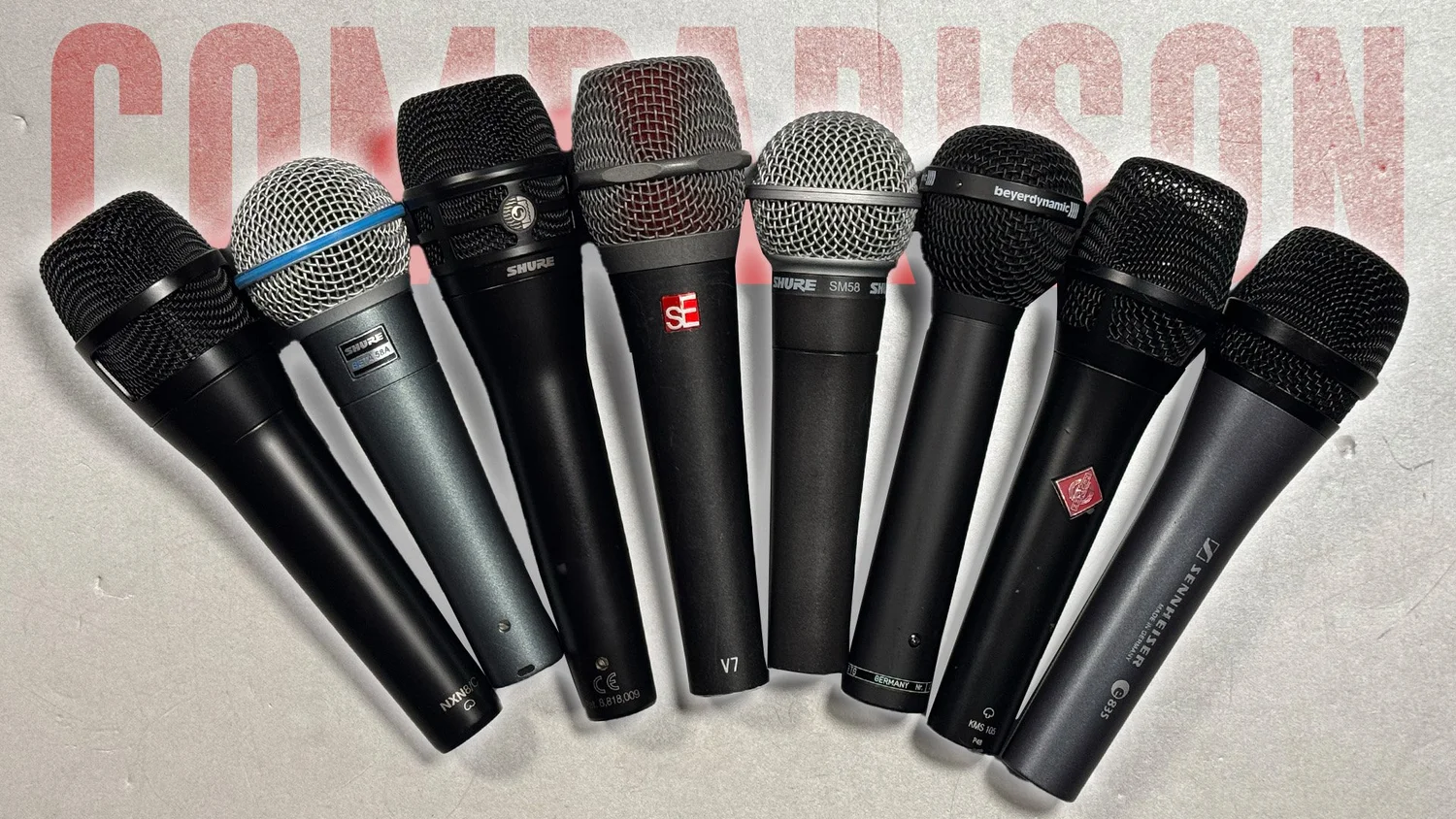
Shure Nexadyne 8C vs SM58, E835, V7, KSM105, M88, Beta 58a
Video: http://podcastage.com/rev/nxn8c-comp This is a supplemental demo to my full review of the Shure Nexadyne 8C (http://podcastage.com/rev/nxn8c). The 8C is a handheld dynamic that seems to be primarily designed for stage use where you are going to be close micing with your lips touching the grill. So I wanted to demo how that sounds compared to a number of other options.TONEI found that the tone of the mic with the lips on the grill was quite nice compared to a lot of the others. It has a more exaggerated bass roll off and a very dominant upper mid & treble boost which keeps the mic sounding less muddy and a bit brighter and more open than much of the competition. The only mic in the lot that really competed with it in that regard was the Sennheiser E835, which is another microphone that I dislike when used at any kind of distance.PLOSIVE REJECTIONWith lips on the grill, pretty much every single one of these mics performs identically so there was no winner in that regard.HANDLING NOISEI found the handling noise of this mic to be pretty bad. It doesn’t ring like a bell, but it does have a bit of a resonant frequency to it which exacerbates handling noise. Also, it may be the coating on the mic, but if you rub it with your hand it can create extremely loud sounds that will make it into the recording and sound really bad.CONCLUSIONWhen close micing with your lips on the grill, I think this sounds pretty nice. Farther away than 1-2” I think this mic starts to sound kind of bad. Also if you’re really aggressive with your hand holding of the mic, this may not be the right fit for you. For more tests and demos, check out the full review.00:00 - intro 00:17 - spoken word test 02:38 - plosive rejection test 03:43 - tap rejection test 04:13 - rub rejection test

Neumann U87 Ai vs. Neumann TLM49
Video: https://youtu.be/241Yn_IKJRAShould you get the Neumann U87 Ai or the TLM49? I don't know what you should do, I'm not your dad! But in this video I provide spoken word samples, background noise tests, distance tests, as well as electric guitar, acoustic guitar, and singing tests, and then I share my opinions. I hope this helps you understand the differences between this microphones sonically and in the spec department so that you can make a more informed decision if either of these is right for you. Recording SettingsInterface: Universal Audio X8U87 Gain: 30dB (+2.7dB in Post)TLM49 Gain: 38dB (+2dB in Post)Conversion: 24-bit / 48khzBuy the Neumann U87 Ai Affiliate Link)Sweetwater: https://sweetwater.sjv.io/u87aiB&H Photo: https://bhpho.to/3XAwJP9Thomann: https://thmn.to/thoprod/276800?partner_id=23899Amazon: https://geni.us/u87aikitBuy the Neumann TLM49 (Affiliate Link)Amazon: https://geni.us/tlm49Sweetwater: https://sweetwater.sjv.io/tlm49B&H Photo: https://bhpho.to/3zGwR7MThomann: https://thmn.to/thoprod/194633?partner_id=23899Buy the Universal Audio X8 (Affiliate Link)Amazon: https://geni.us/uax8Sweetwater: https://sweetwater.sjv.io/uax8B&H Photo: https://bhpho.to/4gALxGgThomann: https://thmn.to/thoprod/446926?partner_id=23899As an affiliate I earn from qualifying purchases.00:00 - Intro to Versus Series00:25 - Build Quality01:08 - Blind Comparison02:20 - Microphone Spoken Word Test (Price / Specs)03:32 - Polar Pattern Samples04:10 - Background Noise Tests04:36 - Distance Tests05:21 - Isolated Music Tests06:32 - Multi-Instrument Music Test09:02 - Winner & Use Case Discussion11:16 - Summary

Shure SM4 Review / Test
Today i review the Shure SM4, a new offering in the $200 price range. The mic is very straight forward with a cardioid polar pattern and no pads or switches. This is a brighter mic which controls the bass, has a neutral mid section, and then a dominant boost focused in the treble and air frequencies. I found that on some S's they could sound a bit sharp on this mic, and also the self noise is a bit high at 17dBA compared to the competition. The accessories are all nice and effective and the build quality is great.Buy the Shure SM4 (Affiliate Link)Amazon: https://geni.us/smfourSweetwater: https://sweetwater.sjv.io/sm4B&H Photo: https://bhpho.to/3XCPsuIThomann: https://www.thomannmusic.com/shure_sm4_kit.htm?offid=1&affid=2060Buy the Focusrite 2i2 (3rd Gen)- Same Performance as 18i20 (Affiliate Link)Amazon: https://geni.us/2i32rdSweetwater: https://imp.i114863.net/k6g4dB&H Photo: https://bhpho.to/42lcWDFThomann: https://www.thomann.de/intl/focusrite_scarlett_2i2_3rd_gen.htm?offid=1&affid=2060NOTE (FULL DISCLOSURE): As an associate, I earn from qualifying purchases. For more info check my FAQ page links below.RECORDING SETTINGS:Interface: Focsurite Scarlett 18i20 2nd GenConversion: 24-bit / 48kHzGain: ~2:00Boosted in Post: +6dB SPECS:Polar Pattern: CardioidFreq Response : 20Hz - 20khzSensitivity: -38dBSelf Noise: 17dBAMax SPL: 140dB - 145dBImpedance: 150-ohms00:00 - Intro / Setup 00:27 - What’s in the Box00:45 - Build Quality / Walkthrough01:08 - Specifications01:19 - Polar Pattern Test (Tone / Rotation)01:36 - Plosive Test01:51 - Distance Test / Proximity Effect Test02:15 - Background Noise Test 02:30 - Untreated Room Test02:52 - Shock Rejection Test 03:11 - Mic Resonance Tap Test03:38 - Audio Technica AT2020 Comparison03:56 - sE Electronics X1a Comparison04:15 - Earthworks SR117 Comparison04:39 - Shure PGA27 Comparison05:00 - Rode NT1 5th Gen Comparison05:25 - Lewitt LCT440 Comparison05:49 - Lauten Audio LA220 (Gen 1) Comparison06:23 - Shure SM27 Comparison06:52 - Sennheiser MK4 Comparison07:17 - Neumann U87 Ai Comparison07:48 - Music Test09:18 - Pros & Cons11:41 - Overall Thoughts13:24 - Recommendation
How Much Should You Spend on a Mic (PGOA 1.7)

Other Mic Specs to Consider Before Buying (PGOA 1.6)
00:00 - Dynamic Mic Specs (Sensitivity) 02:30 - Condenser Mic Specs (Equivalent Noise / Self Noise, Max SPL)

Different Microphone Tones (PGOA 1.5)
00:00 - Understanding Different Frequencies 01:35 - Reading a Frequency Response Graph 03:33 - Different Microphone Tone Samples 05:38 - What Tone is Right For You?
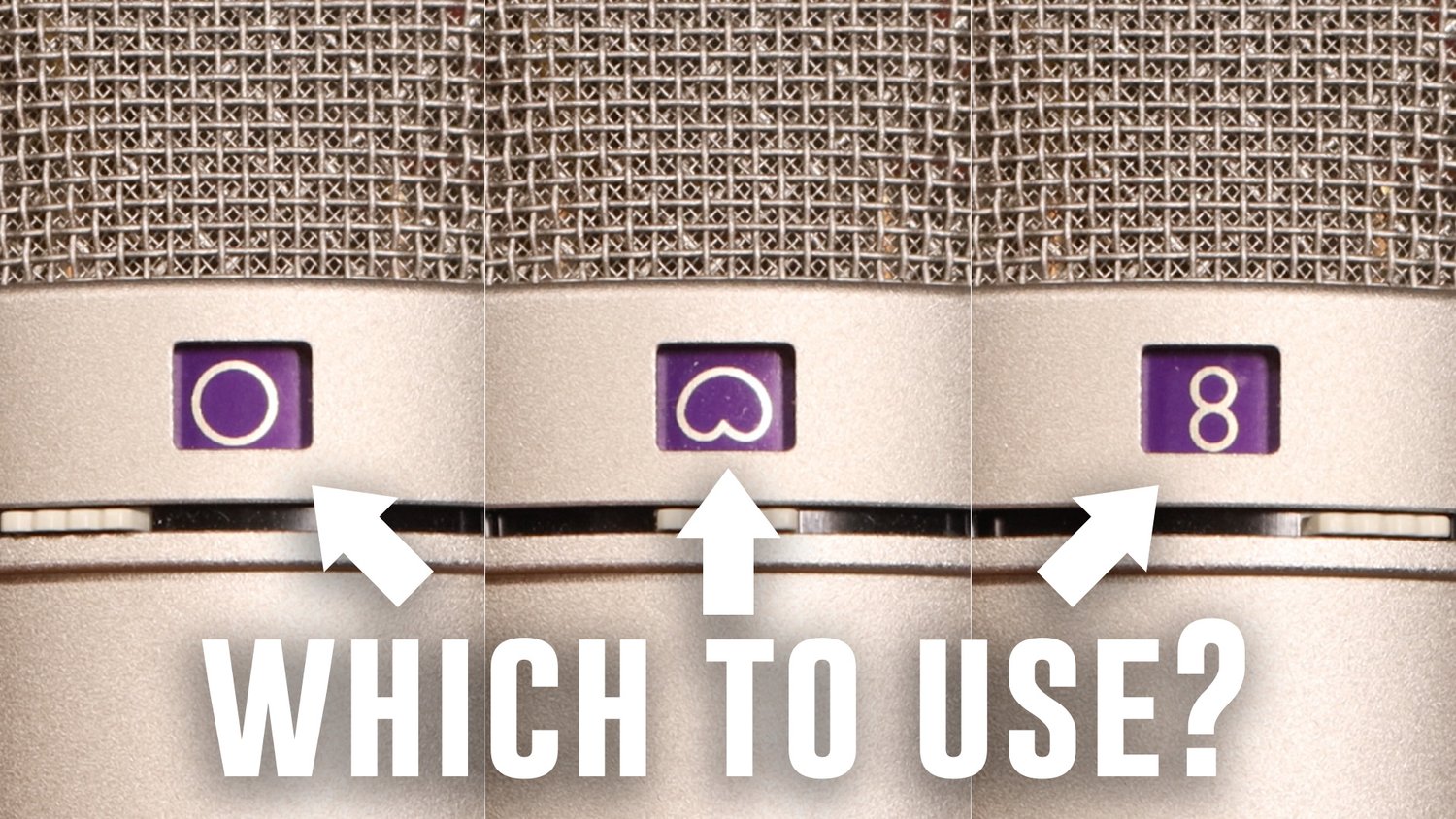
What Polar Pattern Should You Use? (PGOA 1.4)
00:00 - Intro00:18 - Demo of Polar Patterns01:27 - Discussion of Polar Patterns04:00 - Which Pattern is Right for You?Which polar pattern is the best option for your situation of online content creation. In this episode I demo cardioid, omnidirectional, and figure-8 (bidirectional) so you can hear the polar patterns and then discuss which pattern is the right option for your situation.

What Mic Type Should You Get: Studio, Lav, Headset, Shotgun? (PGOA 1.3)
Which mic type is right for your content, studio mics, large diaphragm dynamics, condensers, cavaliers, headsets, shotgun mics, in this video I discuss 4 common mic uses and share my thoughts on the best mics for those uses.
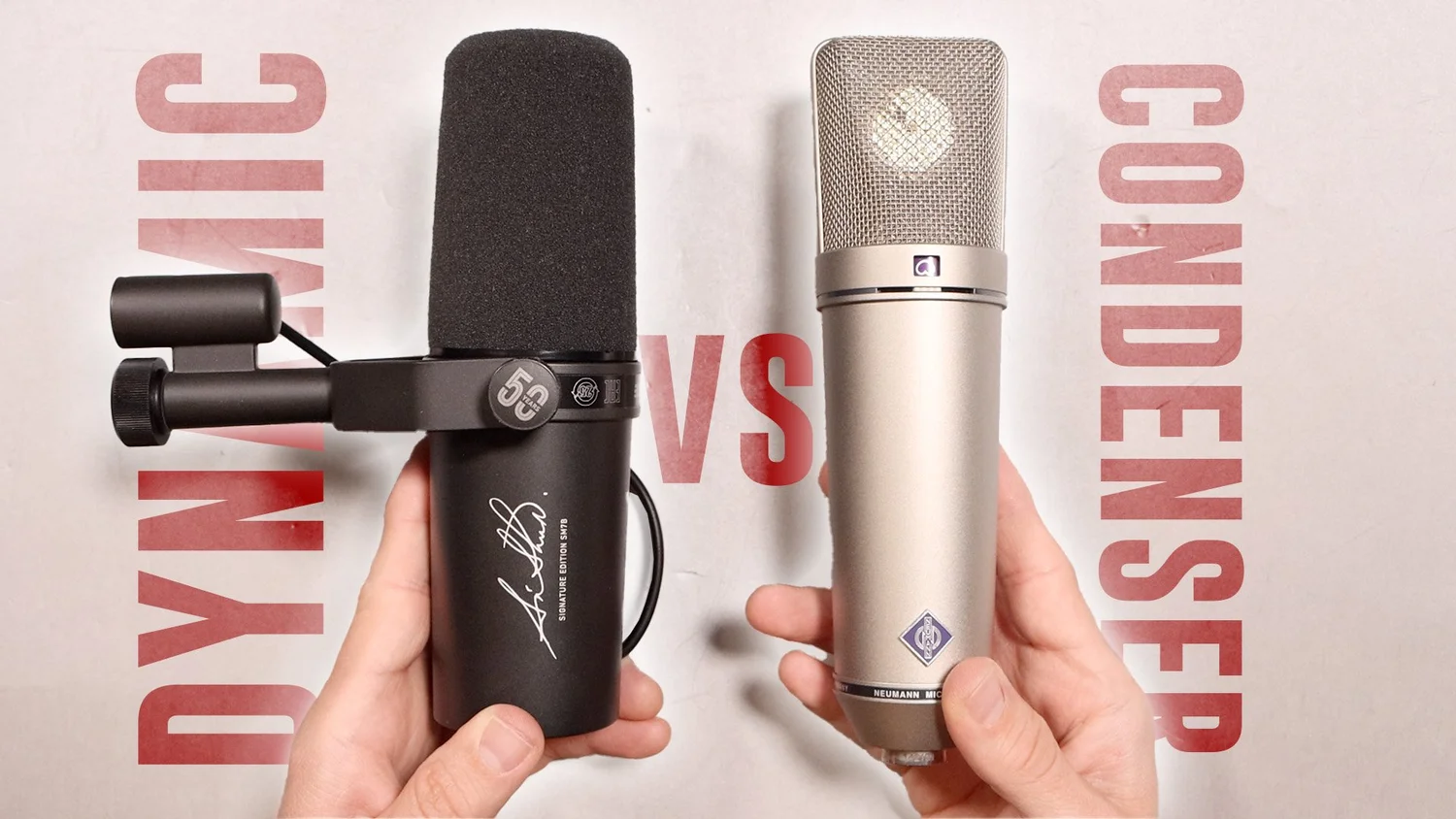
Dynamics vs. Condenser Mic: What's the Difference (PGOA 1.2)
On episode 1.2 of PGOA, I talk about the differences between Dynamic and Condenser microphones, share what I believe to be the pros and cons of each, and then spent a lot of time discussing and demoing the contentious topic of “Do dynamic mics reject more noise than condenser mics”? THE DIFFERENCESCondenser microphones are active and will require phantom power, while MOST Dynamic mics are passive and do NOT require phantom power (there are very few active dynamics that will require phantom power.)Condenser microphones also typically have a much higher sensitivity (or output a much louder signal) compared to their passive dynamic counterparts. This means that you’re not going to need to worry much about preamps available gain or noise level with condensers. Also, if you’re micing quiet sound sources at a distance, condensers would likely be the route to go.Condensers also tend to sound more natural than dynamics, because they pick up sounds that cover the entire human hearing range of 20Hz - 20kHz, while dynamics typically roll off some higher frequencies. Dynamic microphones have a simpler construction than condensers which makes them more able to be rugged. So if you’re tough on your gear, dynamics may offer a better option.Dynamic microphones do a great job at handling loud sound sources (drums, loud guitar cabinets), while some condensers have a relatively low MAX SPL which means if a sound gets too loud it will distort. DO DYNAMICS REALLY REJECT MORE BACKGROUND NOISE?It has been said for years, and I have even repeated it that “dynamic microphones do a better job at background noise rejection than condensers.” Generally I believe this still holds true, but I don’t necessarily think it comes down to the fact that they are dynamic or condenser microphones, I believe it comes down to the polar pattern and the frequency response. Additionally, because dynamics typically have a lower sensitivity (output a quieter signal) than condensers, people tend to use them closer to their mouth which will improve the signal-to-background-noise-ratio, which may also contribute to this idea that dynamics are better at background noise rejection. It’s important to point out that there will be dynamics and condensers that are great at background noise rejection while others are terrible at it. That’s why it’s essential to listen to demos of the mics you’re researching so you can identify if a mic is good or bad at this rejection.

XLR vs USB Mic: Which Should You Get? (PGOA 1.1)
On episode 2 of PGOA, I discuss the differences between XLR and USB microphones and which connection may be the best fit for your project. If you just want simple and easy to use, then USB may be the proper route to go, but if you want more versatility, control, and options, and you have the budget; XLR will serve you well.Should you get an XLR or USB Microphone? This can be simplified to a single question: Do you want a simple plug and play device (USB), or do you want a more versatile, more complex, but often times higher quality device (XLR? . But let’s explore each connection type a little closer.USB MICROPHONESPROSYou don’t have to worry about getting the right components because everything is in a single unit.Many of the affordable options are plug and play. You connect the mic, set your level, and you are done. Over the last few years, There has been quite a few USB mics that introduced DSP (digital signal processing), which allows you to add real time effects (compression, EQ, denoise) to your recording.CONSIn comparison to XLR mics, the selection is somewhat limited.You’re not able to update any component of the signal path (mic, preamp, converter, headphone amp, etc.) because everything is in a single package. Due to the digital nature of USB mics, the longevity these mics is somewhat limited compared to the completely analog counterparts. Some older USB mics have issues when trying to record multiple USB mics to the same computer.XLR MICROPHONESPROSThere is a huge variety available (compared to USB mics) which allows you to find the exact right tool for the jobI find trouble shooting simpler with XLR mics because you can isolate each component in the signal path (mic, cable, preamp, converter, headphone amp).Due to the modularity of this system, I find it much more upgradable because you can upgrade each individual component.Easier to record multiple mics to the same computer compared to USB.Can easily record XLR mics away from your computer with a portable recorder.CONSThis setup can be much more expensive than a USB setup.If you’re new to audio, it can be somewhat overwhelming and seemingly complicated compared to a USB mic setup.DO USB MICS SUCK?I have seen a lot of people argue that the audio quality you get out of USB mics is terrrible. I don’t think this is necessarily true. I think you can get pretty good quality out of a USB mic for audio published online. You just need to realize all that you’re buying when you buy a USB mic. For example: If you’re buying a $100 Blue Yeti, you may be spending $40 on the microphone, $10 on the preamp, $20 on the converter, $20 on the headphone amp, and $10 on the stand/accessories. If you’re comparing that sound quality to a $100 XLR mic that would be an unfair comparison because that XLR setup would be $100 for the mic, $10 for the cable, $150 for the audio interface (preamp, converters, headphone amp). If you compare similarly priced XLR setups to a USB mic, I think the performance is fairly comparable.I also think that there is a bit of a cap with the quality of USB mics. What I mean by that is, no one is producing a USB version of a Neumann U87 Ai or other classic studio mics. So although you can still get good quality audio out of USB mics, if you are looking for the highest quality studio sound, you’re still going to have to go the XLR route.

Why is Mic Selection Important? (PGOA 1.0)
Why does microphone selection even matter? The mic that you choose to record with is one of the biggest contributing factors to the final audio quality of your recording (your environment and proper setup are also HUGE factors but we’ll cover those later). This choice will impact the tone of your recording (i.e. is it Bright, Dark, or Neutral), how much reverb is picked up, and how much background noise is picked up (i.e. Air Conditioner, Fans, Keyboard, Annoying Neighbors). NOTE: This is the kick off episode of the new series titled PGOA (Producing Great Online Audio), where I’ll walk you through from start to finish how to get great sounding audio for your podcast, YouTube video, or stream. In this first “module” I’ll be walking through what you need to know when selecting a microphone. At the end of these 7-8 episodes you should have a firm understanding of what to look for when buying a mic for your project.PS: The reason I added “ONLINE” to the series title was to avoid potential lawsuits from those golf people.

Miktek MK300 Review / Test
Audio & Video: https://podcastage.com/rev/mk300Today i review the Miketek MK300, a relatively affordable multi pattern condenser mic with a -10dB pad and 100hz high pass filter. I would classify this mic as a bright and clear sounding mic with a pretty heavy focus on a treble and air focus while still exhibiting good bass extension. RECORDING SETTINGS:Interface: Focsurite Scarlett 18i20 2nd GenConversion: 24-bit / 48kHzGain: ~12:00Boosted in Post: +7dBSPECS:Polar Pattern: Cardioid, Figure-8, OmniFreq Response : 20Hz - 20khzSensitivity: -35dBSelf Noise: 15BMax SPL: 137dBHPF: 100Hz (12dB/oct)Buy the Miktek MK300 (Affiliate Link)Amazon: https://geni.us/mk300Sweetwater: https://sweetwater.sjv.io/mk300Buy the Focusrite 2i2 (3rd Gen)- Same Performance as 18i20 (Affiliate Link)Amazon: https://geni.us/2i32rdSweetwater: https://imp.i114863.net/k6g4dB&H Photo: https://bhpho.to/42lcWDFThomann: https://www.thomann.de/intl/focusrite_scarlett_2i2_3rd_gen.htm?offid=1&affid=2060NOTE (FULL DISCLOSURE): As an associate, I earn from qualifying purchases. For more info check my FAQ page links below.00:00 - Intro / Setup00:20 - What’s in the Box00:43 - Build Quality / Walkthrough01:11 - Specifications01:25 - Polar Pattern Test (Tone / Rotation)02:12 - Plosive Test02:23 - Distance Test / Proximity Effect Test02:40 - Background Noise Test 02:55 - Untreated Room Test03:14 - Shock Rejection Test03:33 - Mic Resonance Tap Test03:47 - High Pass Filter Test04:10 - Pad Test04:39 - Audio Technica AT2020 Comparison05:01 - sE Electronics X1a Comparison05:22 - AKG P220 Comparison05:45 - Neat King Bee v2 Comparison06:09 - Earthworks Sr117 Comparison06:39 - Rode NT1 5th Gen Comparison07:01 - Lewitt LCT440 Comparison07:23 - Neumann U87 Ai Comparison07:50 - Music Test10:06 - Pros & Cons11:18 - Overall Thoughts12:46 - Recommendation

sE Electronics X1a Review / Test
Today i review the sE Electronics X1a, a budget studio condenser microphone. This offers a cardioid polar pattern, -20dB pad, and 100hz high pass filter. The sound is more on the neutral side compared to it's direct competition with extension into the bass, neutral clear mids, and a slight bump in the treble and air frequencies. At the time of review the mic costs $100 and at this price it offers a tamer top end than it's competition. RECORDING SETTINGS:Interface: Focsurite Scarlett 18i20 2nd GenConversion: 24-bit / 48kHzGain: ~12:30Boosted in Post: +8dBSPECS:Polar Pattern: CardioidFreq Response : 20Hz - 20khzSensitivity: -34dBSelf Noise: 16BMax SPL: 150dB (with pad)Impedance: 50 OhmsBuy the sE X1a (Affiliate Link)Amazon: https://geni.us/sex1aSweetwater: https://sweetwater.sjv.io/sex1aB&H Photo: https://bhpho.to/46lDYyyThomann: https://www.thomannmusic.com/se_electronics_x1a.htm?offid=1&affid=2060Buy the Focusrite 2i2 (3rd Gen)- Same Performance as 18i20 (Affiliate Link)Amazon: https://geni.us/2i32rdSweetwater: https://imp.i114863.net/k6g4dB&H Photo: https://bhpho.to/42lcWDFThomann: https://www.thomann.de/intl/focusrite_scarlett_2i2_3rd_gen.htm?offid=1&affid=2060NOTE (FULL DISCLOSURE): As an associate, I earn from qualifying purchases. For more info check my FAQ page links below.00:00 - Intro / Setup 00:23 - What’s in the Box00:40 - Build Quality / Walkthrough01:18 - Specifications01:29 - Polar Pattern Test (Tone / Rotation)01:45 - Plosive Test01:59 - Distance Test / Proximity Effect Test02:19 - Background Noise Test 02:36 - Untreated Room Test02:55 - Shock Rejection Test 03:12 - Mic Resonance Tap Test03:28 - High Pass Filter Test03:51- Pad Test04:18 - MXL 990 Comparison04:39 - Audio Technica AT2020 Comparison04:59 - Lewitt LCT440 Comparison05:20 - Avantone CK6 Comparison05:44 - Neat King Bee v2 Comparison06:09 - Earthworks Sr117 Comparison06:36 - sE Electronics X1 Comparison06:59 - Rode NT1 5th Gen Comparison07:24 - sE Electronics sE2200a II C Comparison07:54 - sE Electronics sE4400a Comparison08:27 - Neumann U87 Ai Comparison09:01 - Music Test10:53 - Pros & Cons12:30 - Overall Thoughts13:38 - Recommendation

Heritage Audio i73 Pro 2 Review / Test
Today I walkthrough, explain, test and review the new Heirtage Audio i73 Pro 2. I compare it to the 18i20 2nd Gen, compare it to a BAE 1073, test the preamps with the SM7b, demo the D.I. Instrument inputs, and walk through the software.Buy the Heritage Audio i73 Pro 2 (Affiliate Links)Amazon: https://geni.us/i73pro2Sweetwater: https://sweetwater.sjv.io/i73pro2B&H Photo: https://bhpho.to/4bLkftdThomann: https://www.thomannmusic.com/heritage_audio_i73_pro_2.htm?offid=1&affid=2060RECORDING SETTINGS:Mic: Neumann U87 AiConversion: 32-bit / 48kHzGain: 30dBBoosted in Post: +8dBSPECS:USB: Bit Depth: 32-bit, Sampling Rate: 44.1-192khzGain: +70dB+48v Phantom Power 00:00 - Intro / Pricing / Disclosure 00:25 - What’s in the Box01:01 - Build Quality01:40 - Walkthrough of Interface03:21 - Specifications04:05 - Shure SM7b Mic Test (No Cloudlifter or Fethead)05:58 - i73 Pro 2 vs Scarlett 18i20 Gen 2 (noise floor test)07:08 - BAE 1073 vs i73 Pro07:44 - Distortion Character Comparison (WA73 & BAE 1073)09:10 - D.I. Instrument Input Test11:09 - Software Walkthrough 15:28 - EQ / Compression Plugin Demo17:21 - Pros & Cons20:28 - Recommendation

Rode Lavalier II Review / Test
Today I review the Rode Lavalier II which is Rode's more recent Lav release. It offers a good build quality and a ton of great accessories. The noise is 27dBa but for a Lav, that's not the worst. The sound when used on the collar or on your chest can be kind of muddy and low detail compared to the competition, but if you get the mic away from your body so the front of the mic faces your mouth you can get a bit more top end into your recording. Buy the Rode Lavalier II (Affiliate Link)Amazon: https://geni.us/laviiSweetwater: https://sweetwater.sjv.io/laviiB&H Photo: https://www.thomannmusic.com/rode_lavalier_ii.htm?offid=1&affid=2060NOTE (FULL DISCLOSURE): As an associate, I earn from qualifying purchases. For more info check my FAQ page links below.RECORDING SETTINGS:Input: Canon 90dComputer Level: ~30%Boosted in Post: +5dBSPECS:Polar Pattern: OmnidirectionalFreq Response : 20Hz - 20kHzSensitivity -38dBNoise: 27dBAMax SPL: 106dB (1%), 120dB (10% THD)Power Required: Plug-in Power00:00 - Intro / Price / Disclaimer 00:21 - What’s in the Box00:39 - Build Quality / Walkthrough01:07 - Specifications01:15 - Polar Pattern Test (Tone / Rotation)01:36 - Plosive Test01:53 - Lav Mic Position Tests03:08 - Background Noise Test 03:21 - Untreated Room Test03:39 - Windscreen Test04:19 - Camera Internal Mic Comparison05:01 - Different Room Tests05:54 - High Pass Filter Tests04:41 - Camera Mic Input Demo06:56 - Smart Phone Demo07:19 - Laptop Input Demo07:41 - USB Soundcard Demo08:01 - Lav Mic Audio Interface Demo08:20 - Portable Record Demo08:36 - XLR Interface Demo09:21 - Shure MVL Comparison09:41 - Rode Lavalier Go Comparison10:08 - Sennheiser ME2 Comparison10:32 - Countryman B6 Comparison11:02 - Sanken Cos 11D Comparison11:30 - Shure TL48 Comparison12:02 - Neumann U87 Comparison12:34 - Pros & Cons 14:15 - Overall Thoughts15:31 - Recommendation
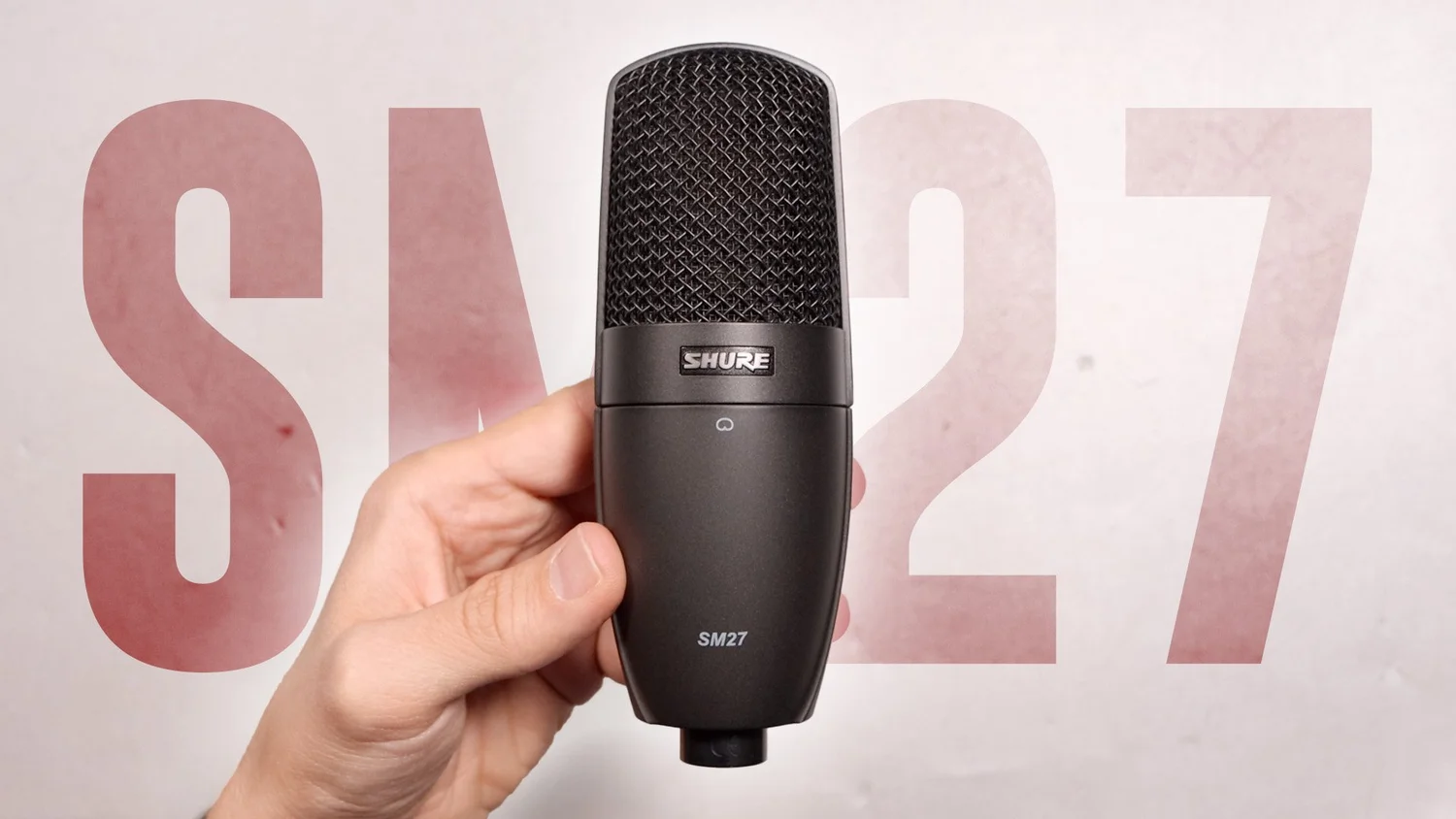
Shure SM27 Review / Test
Today i review the Shure SM27, a studio workhorse or all-purpose cardioid condenser microphone. Features wise it offers a -15dB pad and 2 high pass filters. The sound has a bit of a bump in the bass, and then a presence and treble boost, with a slight boost in the air which gives it a brighter sound. It also leans slightly on the sibliant side so for sibilant voices it may not be the best choice.Buy the Shure SM27 (Affiliate Link)Amazon: https://geni.us/ssm27B&H Photo: https://bhpho.to/4br7bZRBuy the Focusrite 2i2 (3rd Gen)- Same Performance as 18i20 (Affiliate Link)Amazon: https://geni.us/2i32rdSweetwater: https://imp.i114863.net/k6g4dB&H Photo: https://bhpho.to/42lcWDFThomann: https://www.thomann.de/intl/focusrite_scarlett_2i2_3rd_gen.htm?offid=1&affid=2060NOTE (FULL DISCLOSURE): As an associate, I earn from qualifying purchases. For more info check my FAQ page links below.RECORDING SETTINGS:Interface: Focsurite Scarlett 18i20 2nd GenConversion: 24-bit / 48kHzGain: ~1:00Boosted in Post: +10dBSPECS:Polar Pattern: CardioidFreq Response : 20Hz - 20khzSensitivity: -37dBSelf Noise: 9.5BAMax SPL: 152dB (with pad)Impedance: 150 Ohms00:00 - Intro / Setup 00:17 - What’s in the Box00:40 - Build Quality / Walkthrough01:14 - Specifications01:25 - Polar Pattern Test (Tone / Rotation)01:42 - Plosive Test01:59 - Distance Test / Proximity Effect Test02:20 - Background Noise Test 02:35 - Untreated Room Test02:55 - Shock Rejection Test 03:11 - Mic Resonance Tap Test03:24 - High Pass Filter Test03:56 - Pad Test04:34 - Audio Technica AT2020 Comparison04:56 - Neat King Bee v2 Comparison05:19 - Rode NT1 5th Gen Comparison05:44 - Lewitt LCT440 Comparison06:10 - Sennheiser MK4 Comparison06:39 - Shure KSM32 Comparison07:08 - Shure KSM44a Comparison07:39 - Neumann U87 Ai Comparison08:11 - Music Test09:47 - Pros & Cons10:58 - Overall Thoughts12:16 - Recommendation

Behringer D2 Podcast Pro Review / Test
Video & HQ Audio: https://podcastage.com/rev/d2ppToday I review the Behringer D2 Podcast Pro, an XLR and USB dynamic mic that costs about $130. This offers a headphone port, an XLR port, and a USB output. On mic you have a headphone volume control as well as a mic mute button. Conversion wise you can record up to 24-bit/96khz, but playback seems to be limited to 16-bit 48khz. I find the sound to be lacking in the low-end with a less aggressive upper frequency range which leads to a more mid focused sound. Buy the Behringer D2 (Affiliate Link)Amazon: https://geni.us/d2ppNOTE (FULL DISCLOSURE): As an associate, I earn from qualifying purchases. For more info check my FAQ page links below.RECORDING SETTINGS:Conversion: 24-bit / 48kHzLevel: ~53% (6dB)Boosted in Post: +8dBSPECS:Polar Pattern: CardioidFreq Response :50Hz - 18kHzSensitivity: -53dBV (XLR) Max SPL: 130dB (USB)A/D: 24-bit / 96khzD/A: 16-bit / 48khz00:00 - Intro / Price / Disclaimer 00:19 - What’s in the Box00:46 - Build Quality / Walkthrough01:40 - Specifications01:52 - Polar Pattern Test (Tone / Rotation)02:10 - Plosive Test02:27 - Distance Test / Proximity Effect Test02:47 - Background Noise Test 03:03 - Untreated Room Test03:22 - Mic Resonance Tap Test03:36 - Shock Rejection Test03:53 - Mute Button Test04:06 - USB vs. XLR Output05:08 - Wiring Issue05:25 - Intro to Comparison05:57 - Behringer XM8500 Comparison06:29 - Samson Q2u Comparison06:59 - Fifine K688 Comparison07:32 - Shure SM58 Comparison08:01 - sE Electronics V7 Comparison08:31 - Earthworks SR117 Comparion09:03 - Rode Podmic USB Comparison09:38 - Shure SM7b Comparison10:09 - Neumann U87 Ai Comparison10:39 - Music Test12:04 - Pros & Cons 14:29 - Overall Thoughts15:45 - Recommendation

CAD M179 Review / Test
Today i review the CAD M179, a relatively affordable multi-pattern condenser mic ranging from Omni to Cardioid to Figure 8 or anything in between. The mic gives a slightly more V-shaped sound with a high frequency boost and deep extension into the bass frequencies.RECORDING SETTINGS:Interface: Focsurite Scarlett 18i20 2nd GenConversion: 24-bit / 48kHzGain: ~12:00Boosted in Post: +7dBSPECS:Polar Pattern: Cardioid, Fig-8, Omni (anyhthing in between)Freq Response : 10Hz - 20khzSensitivity: -36dBSelf Noise: 11BAMax SPL: 143dBImpedance: 200 OhmsBuy the CAD M179 (Affiliate Link)Amazon: https://geni.us/cadm179B&H Photo: https://bhpho.to/3KDg4o9Thomann: https://www.thomannmusic.com/cad_audio_m179.htm?offid=1&affid=2060Buy the Focusrite 2i2 (3rd Gen)- Same Performance as 18i20 (Affiliate Link)Amazon: https://geni.us/2i32rdSweetwater: https://imp.i114863.net/k6g4dB&H Photo: https://bhpho.to/42lcWDFThomann: https://www.thomann.de/intl/focusrite_scarlett_2i2_3rd_gen.htm?offid=1&affid=2060NOTE (FULL DISCLOSURE): As an associate, I earn from qualifying purchases. For more info check my FAQ page links below.00:00 - Intro / Setup 00:26 - What’s in the Box00:52 - Build Quality / Walkthrough01:32 - Specifications01:46 - Polar Pattern Test (Tone / Rotation)02:47 - Plosive Test03:02 - Distance Test / Proximity Effect Test03:21 - Background Noise Test 03:36 - Untreated Room Test03:57 - Shock Rejection Test 04:18 - Mic Resonance Tap Test04:32 - High Pass Filter Test04:56 - Pad Test05:16 - Selfless Shame Promotion05:45 - Intro to Comparison06:16 - CAD E40 Comparison06:44 - Lewitt LCT240 Comparison07:16 - Earthworks SR117 Comparison07:43 - Shure PGA27 Comparison08:11 - Audio Technica AT2050 Comparison08:43 - Rode NT1 5th Gen Comparison09:10 - Sennheiser MK4 Comparison09:37 - AKG C214 Comparison10:12 - CAD E100s Comparison10:48 - Neumann U87 Ai Comparison11:23 - Music Test13:11 - Pros & Cons15:11 - Overall Thoughts17:03 - Recommendation

Ultimate 5 Mic Collection, Annoying Podcast Trends (Q&A-003)
In Q&A episode 3 I discuss my ultimate 5 microphone collection, podcast habits/trends that I find incredibly annoying, what mic and interface I'd select if I was starting over, and what band/albums inspired me to pick up a microphone. 00:00 - Ultimate 5 Microphone Collection 07:31 - Annoying Podcast Trends 10:59 - Interface & Mic to Start Over With 13:57 - What Band/Albums Inspired me to Pick Up a Mic? 16:51 - Conclusion

Zoom H1essential Review / Test
Video: https://youtu.be/KCpCjQ1_jNUSpecs: https://zoomcorp.com/en/us/handheld-recorders/handheld-recorders/h1essential/Today I walkthrough, explain, test and review the Zoom H1e. This is very similar to it's predecessors the H1 and H1n, but it introduces 32-bit floating point which means you are theoretically unable to distort your converters; although you can still distort the microphone capsules if you're recording something very loud. The mic does suffer from wind/plosive issues, handling noise rejection isn't great, and the preamps are a bit noisy. But for $100 I think it offers a pretty utilitarian device that has a lot of bang for your buck. Buy the Zoom H1e(Affiliate Links)Amazon: https://geni.us/zoomh1eSweetwater: https://sweetwater.sjv.io/h1eSpecs:Internal Mic: 90-deg XY, Sensitivity: -37dB, Max SPL: 120dB3.5mm Input Impedance: 2k-ohms,3.5mm Input power: 2.5vBit Depth: 32-bit float (SD), 16-bit (USB)Sampling Rate: 44.1/48/96khzStorage / microSDHC: 4GB-32GB, microSDXC: 64GB-1TBAs an affiliate I earn from qualifying purchases.00:00 - Intro / Pricing / Disclosure 00:23 - What’s in the Box00:36 - Build Quality / Walkthrough01:51 - Specifications02:08 - Polar Pattern Test (Tone / Rotation)02:28 - Plosive Test (Dead Cat Demo)03:04 - Distance Test / Proximity Effect Test03:26 - Background Noise Test 03:40 - Keyboard Recording Demo03:51 - Untreated Room Test04:11 - Shock Rejection Test 04:27 - Mic Resonance Tap Test04:41 - Handling Noise Rejection Demo05:08 - 32-Bit Floating Point Demo / Test05:58 - Lo Cut Filter Demo06:39 - External Mic Demo07:14 - ASMR Test07:40 - H1e vs. Original H108:58 - USB Mic Comparison09:57 - Intro to Comparison10:27 - Zoom h1 Comparison10:55 - Zoom h1n Comparison11:36 - Zoom h6 comparison12:13 - Neumann U87 Ai Comparison12:45 - Music Test14:39 - Pros & Cons17:21 - Overall Thoughts18:10 - Recommendation

Rode TF-5 Review / Test
Video: https://podcastage.com/rev/tf5Today i review the Rode TF-5, a premium small diaphragm condenser from Rode. This offers a pretty healthy bass response, clear and open mids which sound less forward than much of it's competition, and a nice amount of detail and articulation in the upper frequencies. The only downside I hear is the slightly higher self noise which sounds like it may be a bit above the advertised 14dBA.RECORDING SETTINGS:Interface: Focsurite Scarlett 18i20 2nd GenConversion: 24-bit / 48kHzGain: ~12:00Boosted in Post: +9dBSPECS:Polar Pattern: CardioidFreq Response : 30Hz - 20khzSensitivity: -29dBVSelf Noise: 14dBAMax SPL: 135dBImpedance: 63 OhmsPhantom power: +48VBuy the Rode TF-5 (Affiliate Link)Amazon: https://geni.us/rodetf5Sweetwater: https://sweetwater.sjv.io/tf5Thomann: https://www.thomannmusic.com/rode_tf_5.htm?offid=1&affid=2060Buy the Focusrite 2i2 (3rd Gen)- Same Performance as 18i20 (Affiliate Link)Amazon: https://geni.us/2i32rdSweetwater: https://imp.i114863.net/k6g4dB&H Photo: https://bhpho.to/42lcWDFThomann: https://www.thomann.de/intl/focusrite_scarlett_2i2_3rd_gen.htm?offid=1&affid=2060NOTE (FULL DISCLOSURE): As an associate, I earn from qualifying purchases. For more info check my FAQ page links below.00:00 - Intro / Setup 00:30 - What’s in the Box00:54 - Build Quality / Walkthrough01:19 - Specifications01:46 - Polar Pattern Test (Tone / Rotation)02:06 - Plosive Test02:28 - Distance Test / Proximity Effect Test02:50 - Background Noise Test 03:07 - Untreated Room Test03:26 - Underboom & Overhead Booming Test03:58 - Shock Rejection Test 04:15 - Mic Resonance Tap Test04:30 - Windscreen Tone Test05:09 - Self Noise Test06:28 - ASMR Test07:00 - Intro to Comparison07:29 - Rode M5 Comparison08:06 - Earthworks SR117 Comparison08:46 - Lewitt LCT140 Air Comparison09:21 - Sennheiser E614 Comparison09:56 - sE Electronics sE8 Comparison10:29 - Shure KSM141 Comparison11:05 - Beyerdynamic MC930 Comparison11:44 - Neumann KM184 Comparison12:23 - Neumann U87 Ai Comparison13:04 - Music Test14:57 - Pros & Cons 17:06 - Overall Thoughts19:10 - Recommendation
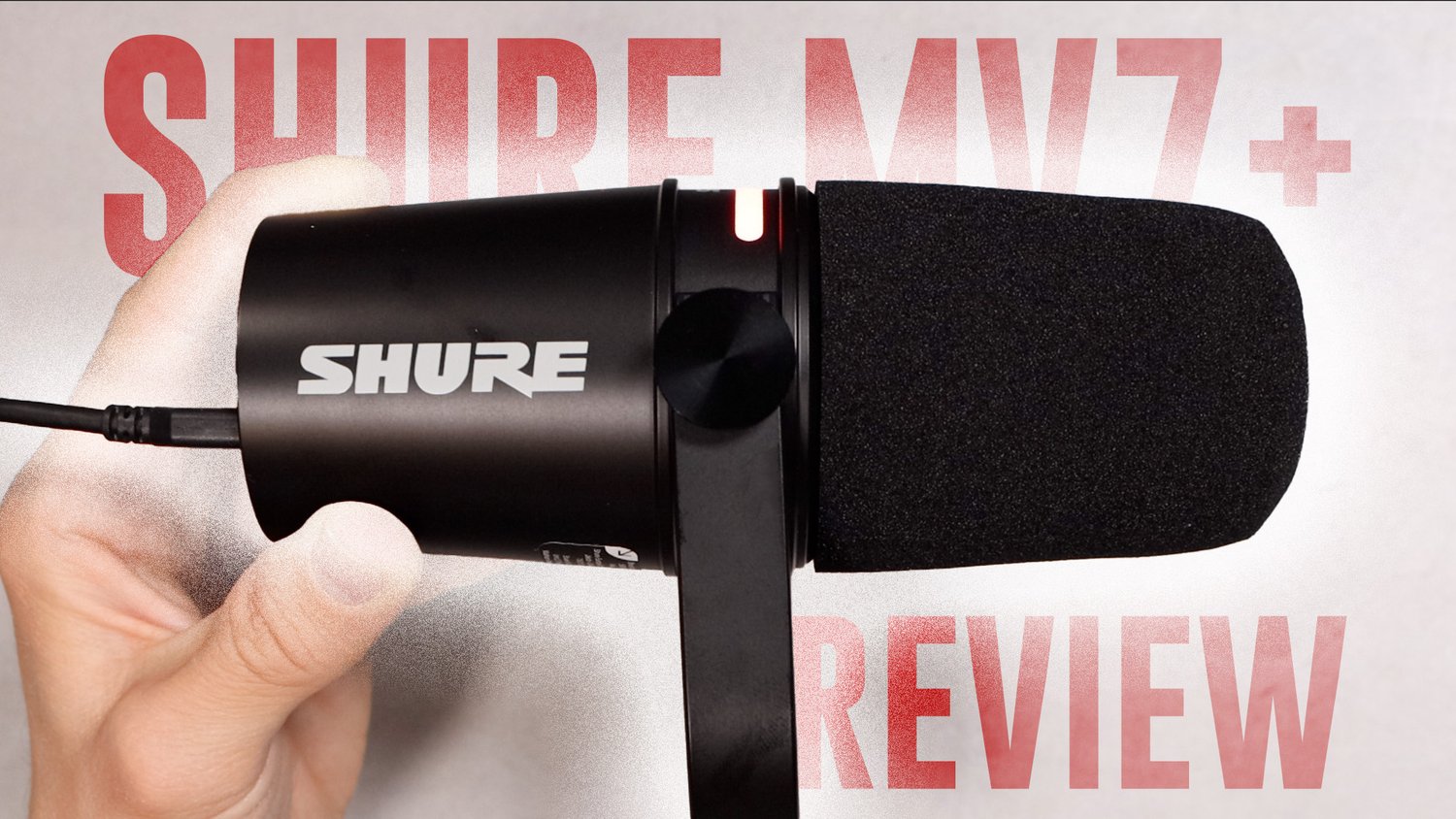
Shure MV7+ Review / Test
Video & HQ Audio: https://podcastage.com/rev/mv7plusToday I review the new Shure MV7+ an XLR & USB dynamic microphone with a lot of DSP processing available over USB. The sound of the XLR is great with a supportive lowend, somewhat mid focussed but pleasing sound, and a non-aggressive upper frequency range. Over USB the sound is a bit different with a somewhat hollow sound with congested mids and a tame top end. The DSP processing is all very nicely implemented and it stores all the settings on device so you can use this on a computer without Shure's softrware as well.Buy the Shure MV7+ (Affiliate Link)Amazon: https://geni.us/mv7plusNOTE (FULL DISCLOSURE): As an associate, I earn from qualifying purchases. For more info check my FAQ page links below.RECORDING SETTINGS:Conversion: 24-bit / 48kHzGain: -6dBBoosted in Post: +8.5dBSPECS:Polar Pattern: CardioidFreq Response :50Hz - 16kHzSensitivity: -55dBV (XLR) Max SPL: 128dB (USB)Impedance 350 ohmsBit Depth: 24Sample Rate: 48khz00:00 - Intro / Price / Disclaimer 00:21 - What’s in the Box00:42 - Build Quality / Walkthrough01:42 - Specifications01:55 - Polar Pattern Test (Tone / Rotation)02:14 - Plosive Test02:43 - Distance Test / Proximity Effect Test03:06 - Background Noise Test 03:21 - Untreated Room Test03:42 - Mic Resonance Tap Test03:56 - Shock Rejection Test04:12 - Mute Button Test04:27 - Processing Walkthrough / Demo10:39 - Demo on iPhone11:29 - Are DSP Settings Stored on Mic?12:11 - Shure MV7 vs. MV7+13:40 - USB vs. XLR Output14:12 - Intro to Comparison14:42 - Samson Q2u Comparison15:07 - Fifine K688 Comparison15:38 - Elgato Wave DX Comparison16:07 - Shure SM58 Comparison16:31 - sE Electronics V7 Comparison16:58 - Audio Technica AT2040 Comparison17:25 - sE Electronics DCM6 Comparison17:53 - Earthworks SR117 Comparion18:19 - Rode Podmic USB Comparison18:49 - Rode Procaster Comparison19:19 - Shure SM7b Comparison19:48 - Electro Voice RE20 Comparison20:17 - Neumann U87 Ai Comparison20:44 - Music Test22:21 - Pros & Cons 24:45 - Overall Thoughts26:12 - Recommendation

Lewitt Ray Review / Test
Today i review the Lewitt Ray, a microphone based on the LCT440 but with technology inside that adjusts to your distance. This means that if you move around a lot while recording it will maintain a relatively consistent level and tone. The mic leans on the brighter side of mics with tons of detail and it also has a physical mute button which is tight. RECORDING SETTINGS:Interface: Focsurite Scarlett 18i20 2nd GenConversion: 24-bit / 48kHzGain: ~3:00Boosted in Post: +6dBSPECS:Polar Pattern: CardioidFreq Response : 20Hz - 20khzSensitivity: -33dBSelf Noise: 8BAMax SPL: 131dBImpedance: 120 OhmsBuy the Lewitt Ray (Affiliate Links)Amazon: https://geni.us/lraySweetwater: https://sweetwater.sjv.io/ray Thomann: https://www.thomannmusic.com/lewitt_ray.htm?offid=1&affid=2060 Buy the Focusrite 2i2 (3rd Gen)- Same Performance as 18i20 (Affiliate Link)Amazon: https://geni.us/2i32rdSweetwater: https://imp.i114863.net/k6g4dB&H Photo: https://bhpho.to/42lcWDFThomann: https://www.thomannmusic.com/lewitt_ray.htm?offid=1&affid=2060NOTE (FULL DISCLOSURE): As an associate, I earn from qualifying purchases. For more info check my FAQ page links below.00:00 - Intro / Setup 00:25 - What’s in the Box00:51 - Build Quality / Walkthrough01:45 - Specifications02:00 - Walkthrough of AURA05:46 - Polar Pattern Test (Tone / Rotation)06:05 - Plosive Test06:20 - Distance Test / Proximity Effect Test06:40 - Background Noise Test 06:56 - Untreated Room Test07:20 - Mute Button Demo07:36 - Shock Rejection Test 07:52 - Mic Resonance Tap Test08:06 - Intro to Comparison08:24 - Lewitt Ray (w/ Aura) Sample08:57 - Audio Technica AT2020 Comparison09:20 - Lewitt LCT240 Comparison09:51 - Neat King Bee v2 Comparison10:19 - Earthworks SR117 Comparison10:50 - Rode NT1 5th Gen Comparison11:18 - Aston Origin Comparison11:50 - Lewitt LCT440 Comparison12:29 - Sennheiser MK4 Comparison13:03 - Austrian Audio OC16 Comparison12:42 - Neumann U87 Ai Comparison14:18 - Music Test16:15 - Pros & Cons18:32 - Overall Thoughts20:22 - Recommendation