
Physics World Stories Podcast
107 episodes — Page 3 of 3
Plant-inspired innovations
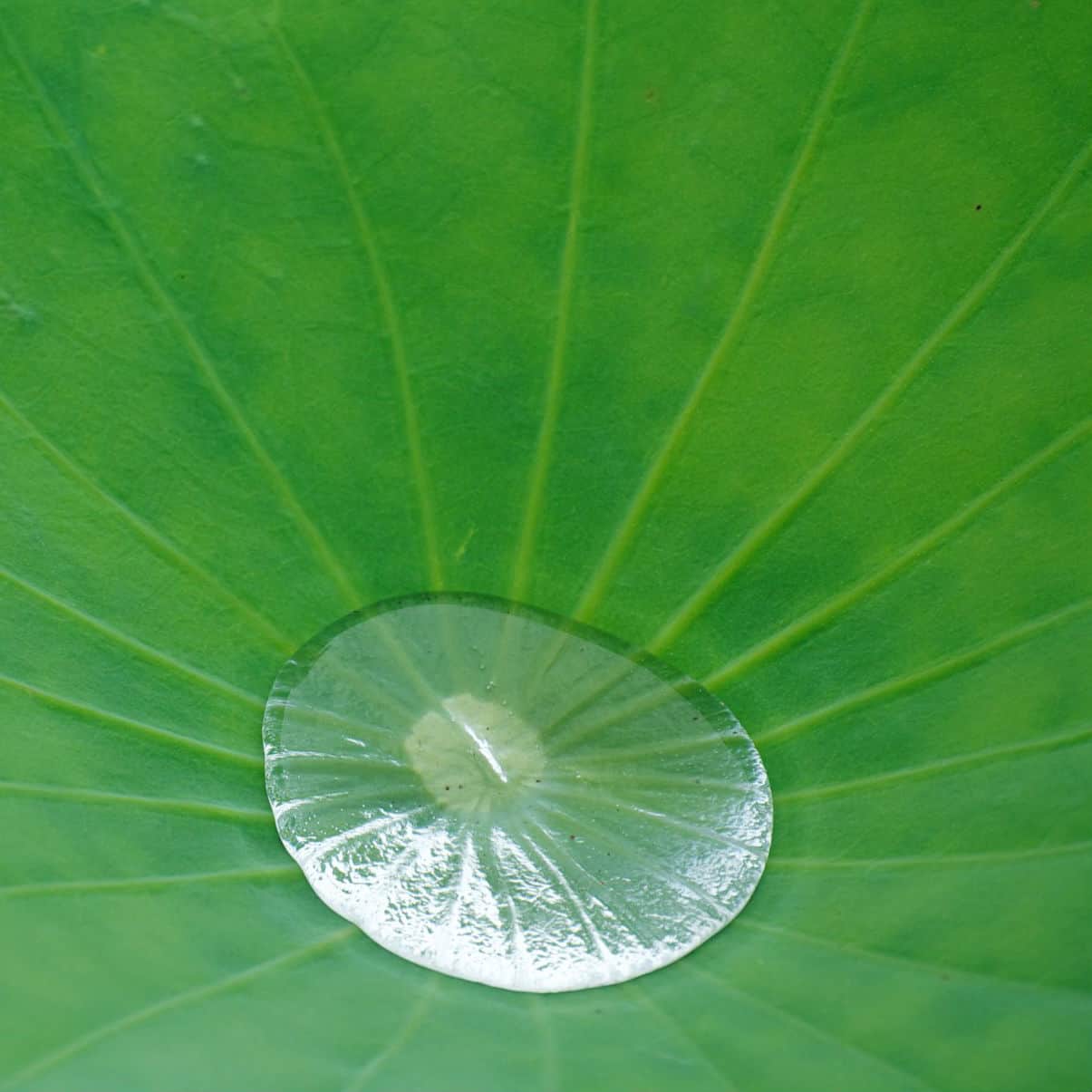
Spring has just about sprung here in the UK, as the bluebells and daffodils are emerging after a long gruelling winter. In Physics World April podcast, Andrew Glester embraces the botanical theme by looking at a selection of technological innovations inspired by plants. First up, Glester speaks with Claudia Zeiger about the idea of cleaning up oil spills using lotus leaves and a type of aquatic fern called Salvinia. Zeiger’s team at Karlsruhe Institute of Technology is interested in how these hairy-leaved species can selectively soak up oil particles while repelling water. It’s a property that could inspire more efficient clean-up operations than current approaches. Later in the episode Glester catches up with Amirkhosro Kazemi from the department of ocean and mechanical engineering at Florida Atlantic University. Kazemi’s studies the physical properties of mangroves – common in tropical and subtropical regions – which provide a natural buffer to flood waters as well as the more routine coastal erosion. Gaining a better understanding of how these shoreline trees can dissipate water and its kinetic energy could inform the design of innovative coastal defence structures. To find out about more nature-inspired research, check out the April issue of Physics World, a special edition on the physics of plants. Lotus image courtesy Houroumono (CC BY 2.0)
Artificial intelligence: is there anything to fear?
Artificial intelligence (AI) bots are going to replace our jobs. AI cars are not to be trusted, they will drive us off a cliff AI machines will inevitably conspire to kill us all. These are exaggerated versions of three fears commonly associated artificial intelligence (AI). Even the late Stephen Hawking spoke about a potential future in which humans could be superseded by advanced forms of artificial intelligence. But these concerns are not so present in the mind of Nathan Myhrvold, the former chief technology officer at Microsoft who once worked in Hawking’s theoretical physics group at the University of Cambridge. "Some fear that AI robots will supersede humans (Courtesy: iStock\/chombosan)"Some fear that AI robots will supersede humans (Courtesy: iStock/chombosan) Myhrvold is the co-founder of Intellectual Ventures, which develops and licenses intellectual property. Having also written a several tomes about modernist cooking techniques, Myhrvold does not shy away from lofty academic pursuits. Earlier this year, the Seattle-born polymath presented the annual Tacitus Lecture in London with a talk entitled “Cyber-Trade: Will AI Displace or Enhance our Work?” In our latest podcast, Andrew Glester reports from the event where he spoke to Myhrvold, who explained why he is optimistic that AI can be a force for good in the world. You will also hear clips from that lecture, a few words on the topic from Hawking himself, and a fruity anecdote from Prue Leith one of the judges from the popular TV show The Great British Bakeoff. All will be revealed!
Falcon Heavy and Humanity Star: trailblazers or space junk?
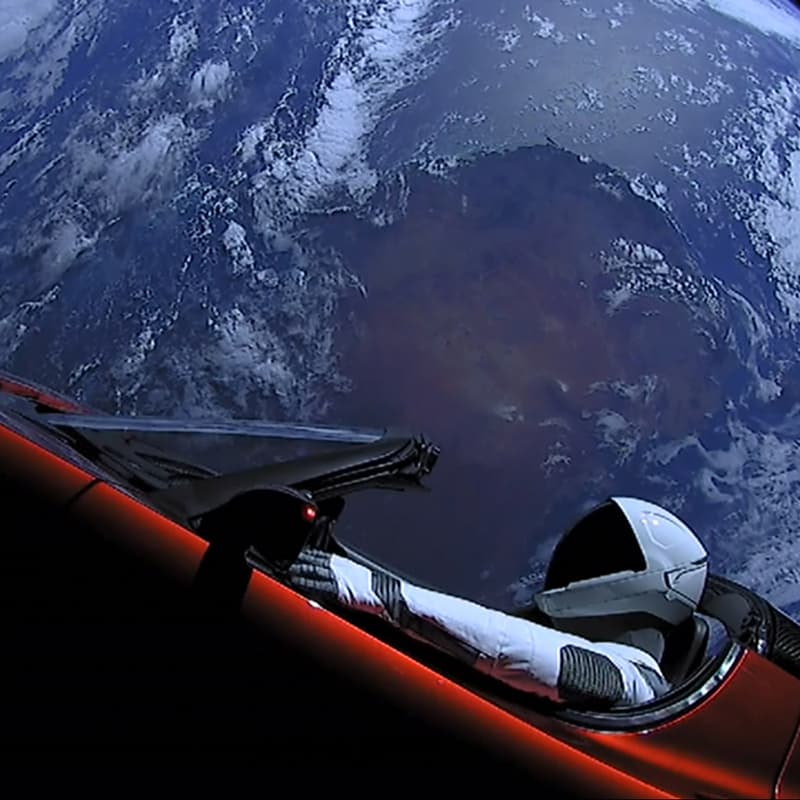
When the SpaceX Falcon Heavy made its maiden launch on 6 February, the overwhelming reaction was one of awe. Its widely reported payload – Elon Musk’s personal cherry red Tesla Roadster sportscar – added to the audaciousness of the mission and reaffirmed Musk’s rock-star status. No doubt, vast numbers of students around the globe will have had their imaginations lit up, some may even have started thinking about the exciting opportunities of a career in engineering. However, there have been a few voices of dissent. Some critics have suggested that the rocket payload is merely adding to the growing problem of space junk. Perhaps an even stronger criticism is that firing a flashy sportscar into space is a symbol of the distain the super-rich have for the many people on Earth who live in poverty. The controversy around the Falcon Heavy launch is the subject of the Physics World monthly podcast, which is presented as always by Andrew Glester. Joining Andrew in the busy café at Physics World HQ is Physics World careers editor Tushna Commissariat and special guest Tim Gregory who recently appeared on the BBC show Astronauts: Do You Have What It Takes? "Elon Musk's personal Tesla roadster being 'driven' through space by a mannequin. (Courtesy: SpaceX) "Elon Musk’s personal Tesla roadster being ‘driven’ through space by a mannequin. (Courtesy: SpaceX) Andrew and crew also discuss the recently launched Humanity Star, which has also generated some controversy in the astronomical community. Launched in January by the private company Rocket Lab, the mission’s payload is described as “a highly reflective satellite that blinks brightly across the night sky to create a shared experience for everyone on the planet.” However, some astronauts fear that this “giant disco ball” is frivolous and might even interfere with their view of the night sky. Andrew puts some of these concerns to Rocket Lab founder and CEO Peter Beck and debates the issue at length with Tushna and Tim, asking whether they see a fundamental difference in the ethos and impact of these two high-profile private launches.
Physics in 2018
Fortunately for scientific soothsayers, some developments in 2018 are entirely predictable, not least the space missions scheduled for the next 12 months. Physics World managing editor Matin Durrani introduces a few of these, starting with BepiColombo, the European Space Agency mission to Mercury, scheduled for October. He also talks about China’s Chang’e 4 mission to the far side of the Moon, as well as the two asteroid-sampling missions – Japan’s Hayabusa 2 and NASA’s OSIRIS-Rex – that will reach their targets in July and August respectively. Closer to home, Physics World will complete its own launch in the form of a new website, which will go live in the next month or so. One of the changes is that we’ll be expanding to incorporate three existing websites in the fields of environment and energy, nanotechnology and biomedical physics. Journalists James Dacey and Liz Kalaugher focus on the environmental side of things, discussing the type of coverage you can expect in that area, including climate studies, renewable energy and natural hazards. You’ll hear about the launch of a new video series for 2018 focusing on environmental challenges and the possible technology solutions. Of course, any look to the year ahead can’t avoid a mention of how science interacts with political situations around the world. Physics World journalists share their views on the continued emergence of Chinese science, the likely impacts of Brexit and whether the March for Science events in 2017 can pave the way for a more unified global movement in 2018. For a quick dip into some of the news and analysis likely to feature on the Physics World website in the coming year, look no further than this podcast.
Book of the Year 2017
Here at Physics World, we love talking about popular-science books. Indeed, we enjoy it so much that we braved the cold, not to mention a sore throat and cracked ribs (you’ll have to listen to find out more!), to share our thoughts on a few of the year’s best popular-physics books in a special edition of our podcast. As is becoming a tradition, this chat was hosted by our regular podcast presenter and producer Andrew Glester, in his garden shed, where he can often be found musing about “science fiction, science fact and everything in-between” for his own podcast the Cosmic Shed. Despite the freezing December morning, we gathered in the shed with hot drinks, blankets and a pile of books, as we discussed some of the themes that link the year’s books, on what was a somewhat out-of-the-ordinary shortlist. Congratulations to all of the shortlisted authors on their fantastic books – tune in to the podcast to hear some words from our winner. We hope that everyone will find something to appreciate on this list, and hopefully we have given you a few ideas for some excellent holiday presents. Shortlist for Physics World Book of the Year 2017 (in no particular order) Marconi: the Man Who Networked the World by Marc Raboy Hidden Figures: the Untold Story of the African American Women Who Helped Win the Space Race by Margot Lee Shetterly The Glass Universe: How the Ladies of the Harvard Observatory Took the Measure of the Stars by Dava Sobel Scale: the Universal Laws of Life and Death in Organisms, Cities and Companies by Geoffrey West Not A Scientist: How Politicians Mistake, Misrepresent and Utterly Mangle Science by Dave Levitan Inferior: How Science Got Women Wrong and the New Research That’s Rewriting the Story by Angela Saini Mapping the Heavens: the Radical Scientific Ideas That Reveal the Cosmos by Priyamvada Natarajan We Have No Idea by Jorge Cham and Daniel Whiteson The Secret Science of Superheroes edited by Ed. Mark Lorch and Andy Miah The Death of Expertise: the Campaign Against Established Knowledge and Why it Matters by Tom Nichols
Exploring the cosmos with gravitational waves
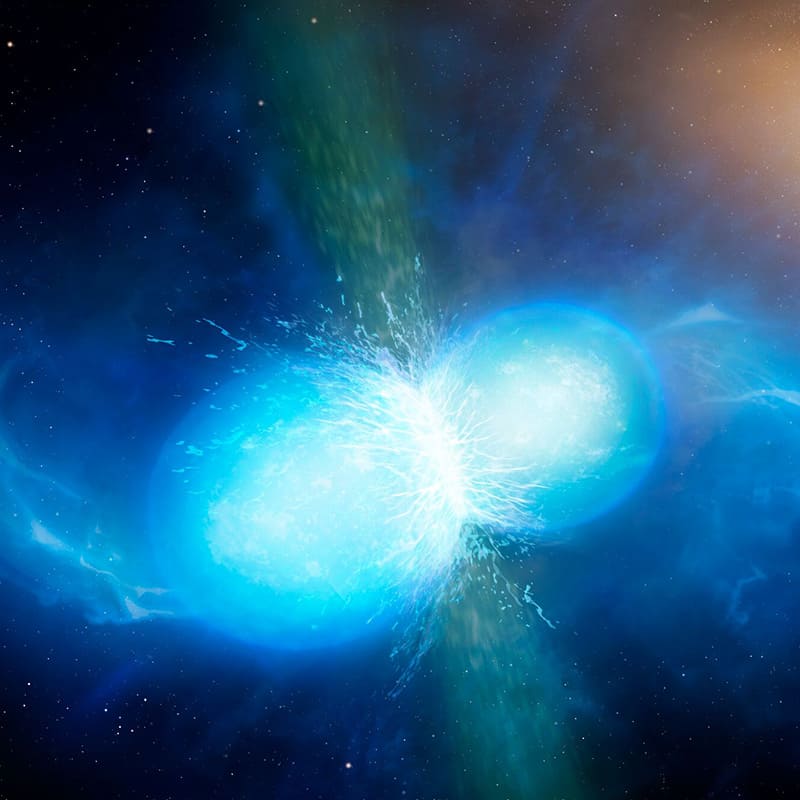
To say the past couple of years have been a whirlwind for scientists engaged in gravitational-wave research would something of a cosmic understatement. After detecting its first gravitational waves in 2015, the LIGO experiment in the US went on to announce three more detections, all of them from the merger of two black holes. One of these was also detected by the Virgo experiment in Italy. This October Rainer Weiss, Barry Barish and Kip Thorne shared the shared the Nobel Prize for Physics for their pioneering contributions to the field and to the LIGO detector itself. Less than two weeks after the Nobel announcement, astronomers gathered at the Royal Society for the announcement of arguably the most significant breakthrough of all. The merger of two neutron stars was observed by the LIGO–Virgo collaboration, while gamma rays from the same event were picked up by the Fermi Gamma-ray Space Telescope. This prompted the global astronomical community to point up to 70 different telescopes and detectors around the world, and in space, at the origin of the signals in a distant galaxy – building a detailed picture of the collision and its aftermath. Glester was at that latest announcement at the Royal Society to soak up the atmosphere and learn all about multimessenger astronomy. Among the people he met was the Astronomer Royal Martin Rees, whose CV also includes terms as president of the Royal Society and the Royal Astronomical Society. Rees hails the latest result as “sociologically very important” because it demonstrates international collaboration between teams of scientists and engineers to achieve measurements of phenomenal precision. “It illustrates how astronomy is a very broadly based international and multi-technique subject,” he says. As the editor of physicsworld.com, Hamish Johnston, pointed out shortly after the Nobel prize announcement, we should not forget that for millennia, humans could only see visible light from the cosmos. It is only during the last century that we have been able to view the universe across much more of the electromagnetic spectrum – as well as through the arrival of high-energy particles such as cosmic rays and neutrinos. Adding gravitational waves to the mix now brings a new way of seeing the heavens that could reveal astronomical events that had been beyond the view – and even beyond the imagination – of astrophysicists. For a more in-depth look at the significance of these latest discoveries, take a look at Multimessenger Astronomy by Imre Bartos of the University of Florida and Marek Kowalski of Humboldt University and DESY. Part of the Physics World Discovery series, this free-to-read ebook explores the scientific questions surrounding these new messengers and the detectors and observational techniques used to study them. It also provides an overview of current and future directions in the field. Neutron-star collision artwork courtesy of the University of Warwick and Mark Garlick
Illuminating a radio icon
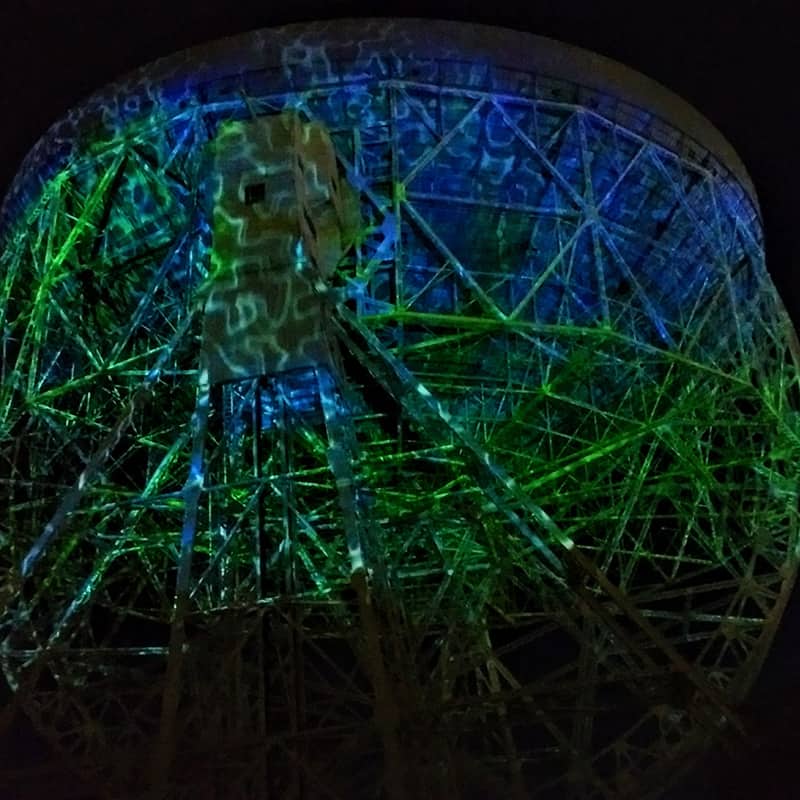
2017 marks a couple of important anniversaries for the astrophysics community at Jodrell Bank. First, it is the 60th anniversary of the first light of the Lovell Telescope, which was the largest steerable dish telescope in the world (it is still the third largest). Second, it is the 50th anniversary of the first detection of pulsars being made by Dame Jocelyn Bell Burnell who was then a PhD student at the University of Cambridge. The telescope takes its name from Sir Bernard Lovell who founded the Jodrell Bank Observatory in 1945. Over the decades, this astrophysics hub has been a valuable tool for studying various astrophysical objects and it even played a role in tracking events during the Space Race. Today it is the HQ of the Square Kilometre Array, a distributed telescope array that promises to usher in a new era in radio astronomy. In recent years, Jodrell Bank has also developed a significant science-outreach programme, including the Jodrell Bank Discovery Centre, which opened in 2011 and now attracts thousands of visitors every year. The Blue Dot Festival is an extension of this and has been graced by music acts including Elbow, Sigur Rós and the Flaming Lips. The festival also features the winning work of the COSMOS art–science project, a collaboration between Jodrell Bank, Blue Dot Festival and the arts organization Abandon Normal Devices. This year’s winning artist was Daito Manabe from Tokyo, an audiovisual artist whose specialisms include the visualization of data. Among his previous collaborators is the Icelandic popstar Björk. In this latest project, Manabe collaborated with astrophysicists at Jodrell Bank to transform pulsar data (live and archival) into sounds and images projected onto the Lovell dish. In this podcast, Glester experiences the event and discusses the project with Manabe. You can also hear what the rest of the festival-goers thought of this otherworldly experience.