
Physics World Stories Podcast
107 episodes — Page 2 of 3
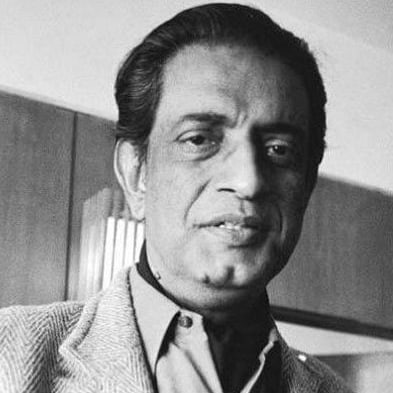
The science-fiction legacy of Satyajit Ray
A small alien creature crash lands on Earth before striking up a rapport with a boy. Sound familiar? Two decades before ET was released, Indian director Satyajit Ray wrote a script for a film that would be called The Alien, which bears striking similarities with Steven Spielberg’s Hollywood blockbuster. The movie was never made. Ray was ahead of his time in many ways. Although not primarily remembered for his science fiction, the Bengali polymath was frequently inspired by a scientific way of thinking. Ray’s legacy is revisited in this latest episode of the Physics World Stories podcast. Born in Calcutta (Kolkata) in 1921, Ray was not only a film director but also an established author, essayist, magazine editor, illustrator, calligrapher and music composer. Between 1955 and 1991, Ray directed almost 30 features, as well as short films and documentaries. Many won leading prizes at international film festivals. In 1991 he was awarded an Oscar for lifetime achievement – the only such Oscar to be bestowed on an Indian director. Ray also received an honorary doctorate from the University of Oxford, the second film director to be awarded this honour after his hero Charles Chaplin. Ray’s work is explored in this episode of Physics World Stories, presented as always by science communication specialist Andrew Glester. Joining the podcast is Andrew Robinson, author of Satyajit Ray: the Inner Eye, who reflects on Ray’s personality and creative process, having known the Indian director personally. Also featuring is Moumita Dasgupta a biophysicist at Augsburg University in the US, who credits Ray’s work – especially his writing – as an inspiration for her career in science. Discover more about Satyajit Ray’s work and the story behind The Alien in Andrew Robinson’s feature article from the August issue of Physics World.
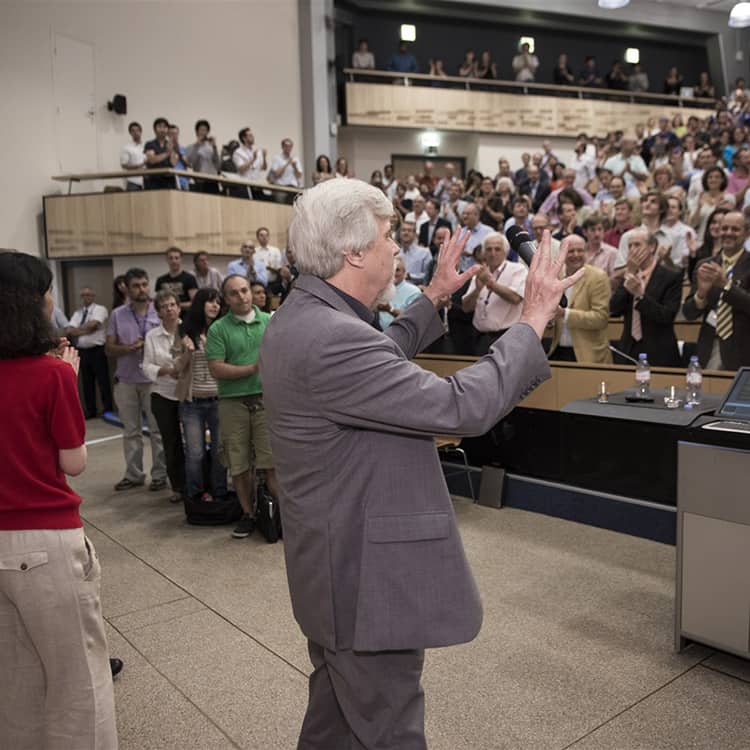
The Higgs boson discovery revisited
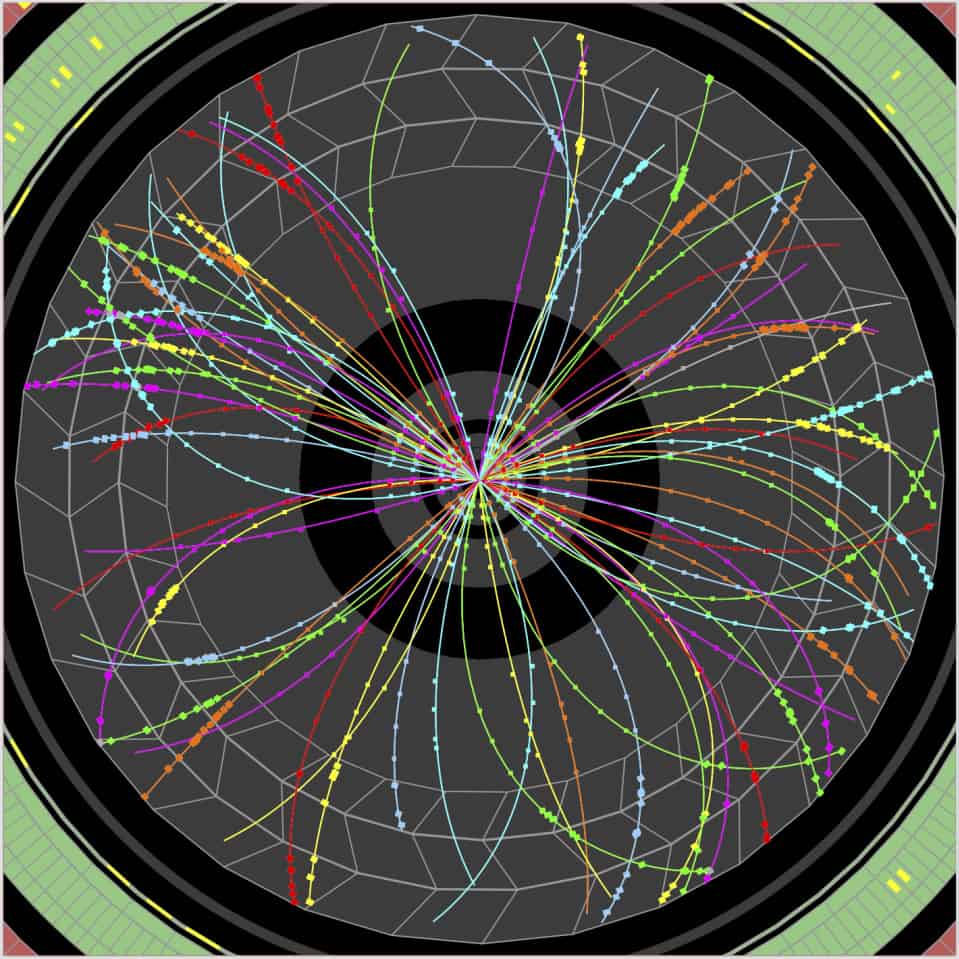
Everyone knew something big was coming. Students had camped outside CERN’s designated seminar hall overnight in the hope of grabbing one of the few unreserved seats. Finally, on the morning of 4 July 2012, the suspense was ended. Spokespeople for the large hadron collider’s two general purpose experiments, ATLAS and CMS, confirmed the rumours: both experimental teams had detected a “Higgs-like particle” and the masses were very similar. In the July episode of the Physics World Stories podcast, Andrew Glester revisits that historic day in 2012. He’s joined by two guests who were there at the particle physics lab in Geneva to live through that memorable day. Achintya Rao was a communications officer at the CMS experiment and Cristina Botta was a research scientist. Discover much more about the past, present and future of particle physics in the July issue of Physics World, a special issue to mark the 10-year anniversary of the Higgs boson discovery.

Fixing our bodies with glass
From windows and bottles, to optical fibres and solar cells, glass is an incredibly versatile material that underpins many technologies. In the June episode of the Physics World Stories podcast, Andrew Glester explores a lesser known application of glass – bioglass in healthcare. First you will hear from Julian Jones at Imperial College London, who explains how glass putty can help to heal broken bones by stimulating tissue growth. Jones has previously worked with the inventor of bioglass, Larry Hench, a materials engineer whose 1969 breakthrough was inspired by a chance conversation with an army major recently returned from the Vietnam War. Jones is currently developing “bouncy bioglass” that can stimulate bone growth while simultaneously sharing the load placed on bones – making it particularly useful for bad traumas where bones struggle to re-join. Later in the episode, Glester is joined by Martyna Michalska, a nanotechnology researcher at University College London. As part of her research, Michalska designs glass surfaces patterned with nanoscale features that can be tuned to resist unwanted bacteria. In hospital settings, surfaces could be fitted with the technology as an alternative to chemicals that bacteria can evolve to resist. Michalska is working with industrial partners and they are looking at the option of retrofitting windows and other surfaces with thin films of her nanopatterned glass. To learn more about glass-based technologies, take a look at the June issue of Physics World, a special issue inspired by the International Year of Glass (IYOG2022).
Cutting the carbon footprint of supercomputing in scientific research
Science benefits enormously from supercomputing, which enables researchers to process vast amounts of data and conduct complex simulations. But these machines can be notorious energy guzzlers, with the largest supercomputers consuming as much power as a small city. In this episode of the Physics World Stories podcast, scientists discuss how individuals can reduce the environmental impact of supercomputing without compromising research goals. Simon Portegies Zwart, an astrophysicist at Leiden University in the Netherlands, says more efficient coding is vital for making computing greener. While for mathematician and physicist Loïc Lannelongue, the first step is for computer modellers to become more aware of their environmental impacts, which vary significantly depending on the energy mix of the country hosting the supercomputer. Lannelongue, who is based at the University of Cambridge, UK, has developed Green Algorithms, an online tool that enables researchers to estimate the carbon footprint of their computing projects. Find out more on this topic in the article “The huge carbon footprint of large-scale computing“, originally published in the March issue of Physics World.
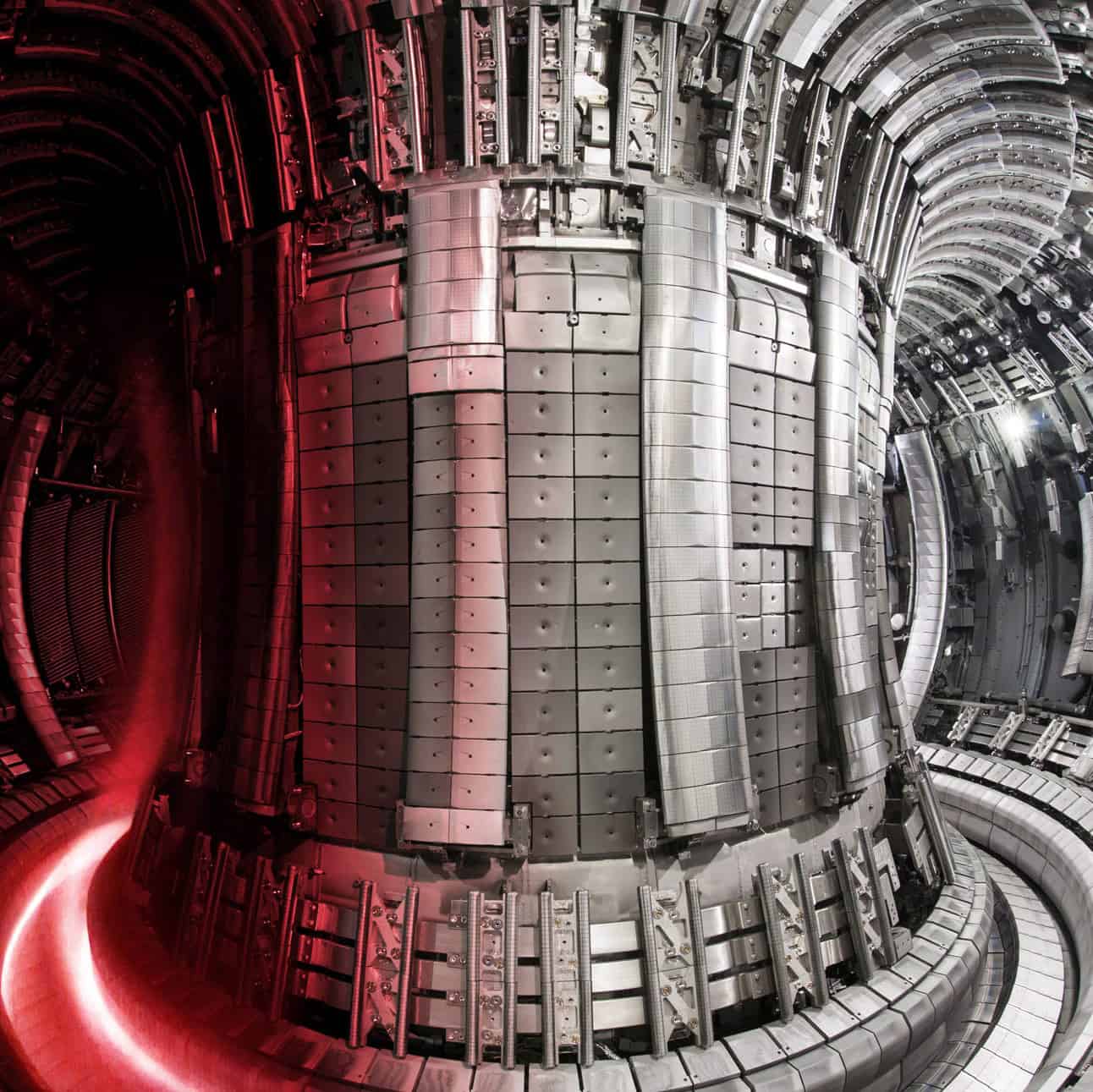
JET’s record result and the quest for fusion energy
One of longest-running physics jokes is that, despite numerous promising breakthroughs, practical nuclear fusion will forever be 30 years away. Earlier this year, there was an exciting result in the UK that suggests that – sooner or later – fusion scientists will have the last laugh. The Joint European Torus (JET) nuclear-fusion experiment based in Oxfordshire, UK, more than doubled the amount of sustained fusion energy produced in a single “shot” – smashing a previous record that JET has held since 1997. In this episode of the Physics World Stories podcast, Andrew Glester catches up with two engineers from the UK Atomic Energy Authority to learn more about this latest development. Leah Morgan, a physicist-turned-engineer explains why JET’s recent success is great news for the the ITER project – a larger experimental fusion reactor currently under construction in Cadarache, France. Later in the episode, mechanical design engineer Helena Livesey talks about the important role of robotics for accessing equipment within the extreme conditions inside a tokamak device. To hear from more scientists about the quest for practical nuclear fusion, you can also listen to this episode from Physics World’s 30th anniversary podcast series.

Music from our material world
From Vivaldi’s “The Four Seasons” concertos to the Beatles’ “Blackbird” – musicians have always been inspired by nature. Many artists have even incorporated the sounds of nature into their songs. Now, researchers at the Massachusetts Institute of Technology (MIT) are taking a more fundamental approach, exploring the music of the building blocks of life and how they interact in harmonious ways. In this episode of the Physics World Stories podcast, host Andrew Glester speaks with Markus Buehler, an MIT engineer who is translating living structures into sound – and vice versa. In one project he has created harmonies informed by the structure of spider webs, through research that could help uncover the secrets of spider silk. More recently his team translated the spike protein of the coronavirus SARS-CoV-2 into sound to visualize its vibrational properties. Find out more in this feature article by Markus Buehler and Mario Milazzo, originally published in the January 2022 issue of Physics World.
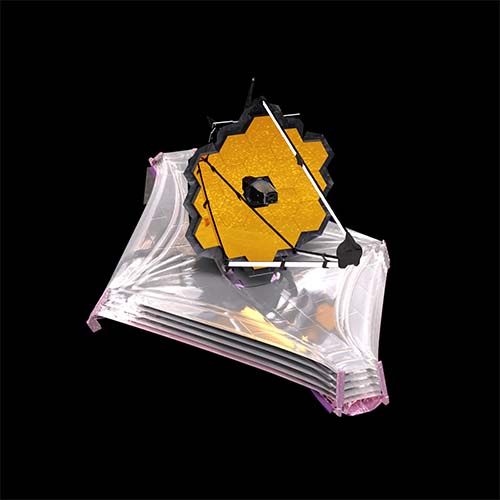
The James Webb Space Telescope launches astronomy into a new era
After decades in the making, the James Webb Space Telescope (JWST) finally launched on 25 December 2021, ushering in a new era for astronomy. On Monday the $10bn mission reached its destination, the L2 Lagrange point 1.5 million kilometres from Earth, where it will remain in orbit throughout the mission. In this episode of the Physics World Stories podcast, Andrew Glester meets JWST scientists to recall their experiences of the mission launch and the telescope’s journey so far. Now, the researchers are looking ahead with excitement to the science programme, which gets under way in June or July. Jonathan Gardner, the JWST’s deputy senior project scientist, describes the fierce competition among astronomers to win time to use the state-of-the-art telescope. Gardner’s own research in deep surveys will benefit as the JWST can peer back to some of the first galaxies to form after the Big Bang. Joining Gardner on the podcast is Stefanie Milam, the JWST’s deputy project scientist for planetary science. Milam describes how the telescope will explore the watery moons of Europa and Enceladus within our solar system, as well as investigating the atmospheres of exoplanets in search of intriguing chemical signals. Find out more about the JWST mission in this feature article by Keith Cooper, originally published in the January issue of Physics World.

Physics books that captured the imagination in 2021
In keeping with our festive tradition, the December episode of Physics World Stories is all about physics books. Host Andrew Glester is joined by Physics World’s reviews and careers editor Laura Hiscott and the magazine’s editor-in-chief Matin Durrani to discuss a handpicked selection of popular-science books reviewed in 2021. One of the year’s most memorable titles is Hawking Hawking: the Selling of a Scientific Celebrity by Charles Seife. Stephen Hawking’s status as an exceptional scientist and human being are beyond question. But Seife takes a warts-and-all look at the role self-publicity played in the British cosmologist’s public persona as the smartest scientist since Einstein. Hawking Hawking is discussed in the first part of the podcast and there is a fun quiz for you to test your knowledge of Hawking’s life. In the second part, the Physics World journalists discuss these other books and the wider talking points that they raise: Flashes of Creation: George Gamow, Fred Hoyle, and the Great Big Bang Debate by Paul Halpern Helgoland by Carlo Rovelli Shell Beach: the Search for the Final Theory by Jesper Grimstrup Science Fiction by Sherryl Vint How to Talk to a Science Denier: Conversations with Flat Earthers, Climate Deniers, and Others Who Defy Reason by Lee McIntyre
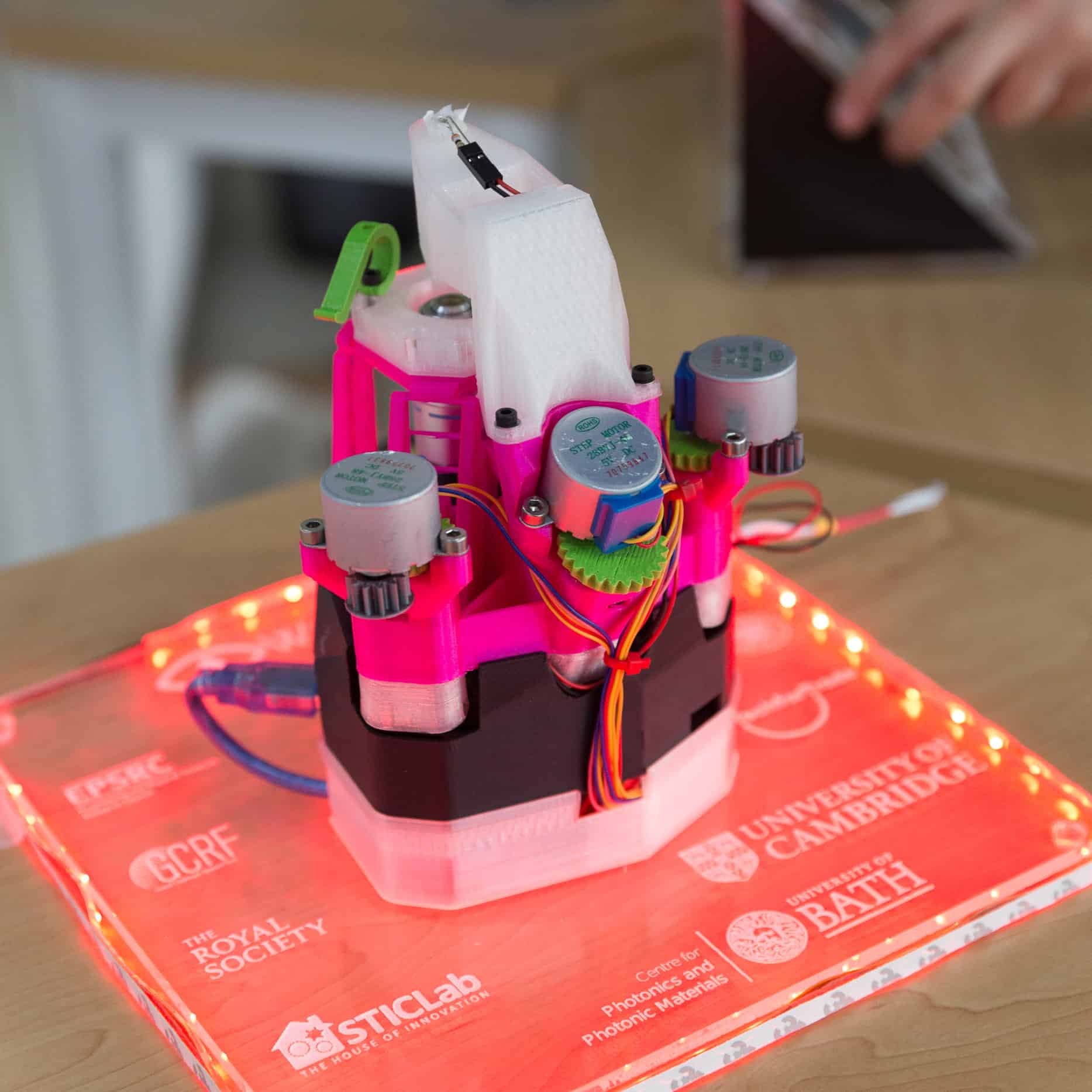
Sharing is caring: open hardware has global impact
The open hardware movement advocates the sharing of designs for material objects. For the global science community it means people can access instructions to 3D print increasingly sophisticated tools. Just as importantly, the movement is decentralizing knowledge and giving users the ability to customize scientific equipment then repair it when things go wrong. In the latest episode of Physics World Stories, Andrew Glester meets researchers at the University of Bath who are part of the open science community. First, social scientist Julieta Arancio discusses the open hardware movement’s origins and some impactful projects. Among them are: Open Science with Drones; GORGAS tracker for Malaria and Human Mobility in the Peruvian Amazon; and Mboa Lab, a makerspace community in Cameroon. Later, Richard Bowman and Julian Stirling describe the journey of developing a low-cost, laboratory-grade microscope. The OpenFlexure project, developed with the University of Cambridge and partners in Tanzania, can become an important tool in the fight against malaria.
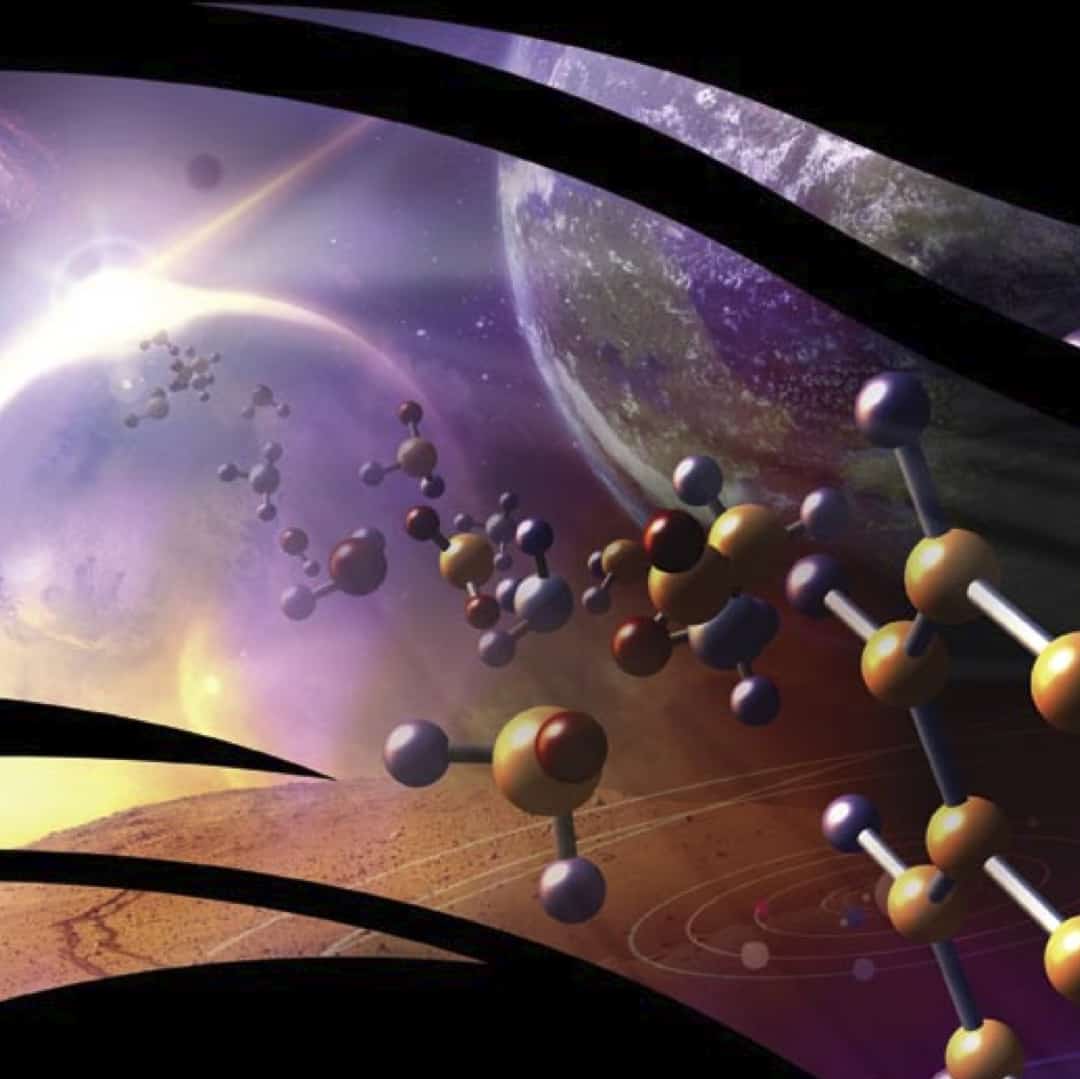
Searching for signs of alien technologies
In this episode of the Physics World Stories podcast astronomers discuss the search for signs of extraterrestrial technologies. Fingerprints might include traces of pollution in exoplanet atmospheres, lights on the night sides of planets, and even the waste heat from megastructures such as Dyson spheres. Podcast host Andrew Glester meets the following guests: Jacob Haqq Misra, senior research investigator at Blue Marble Space Institute of Science; Thomas Beatty, an astronomer at the University of Arizona who is also part of the team for the NIRCam instrument on James Web Space Telescope – scheduled to launch in December; Amedeo Balbi, an asrophysicist at the Tor Vergata University of Rome. Find out more by reading ‘Scanning the cosmos for signs of technology,’ a feature article by science writer David Appell, originally published in the December issue of Physics World.

Free and open-source software is driving physics forwards
In this episode of the Physics World Stories podcast you will hear from scientists and software engineers at the vanguard of developing free and open-source software for physics research. Guests talk about the role of open software in astronomical imaging, the search for dark matter, medical physics and other fields. Software also plays a big role in the wider open-science movement but there are ongoing debates around how to provide suitable recognition to software developers who have contributed to scientific breakthroughs. Featuring the following guests: Kirstie Whitaker, director of the Tools, Practices and Systems research programme at the Alan Turing Institute in London Tim Smith, head of collaboration, devices and applications group at CERN Katie Bouman – computer scientist at Caltech, whose algorithms helped to transform data from the Event Horizon Telescope into the first ever image of a black hole Suchita Kulkarni, a particle physicist at the University of Graz, Austria Juanjo Bazán, an astrophysicist from the Center for Energy, Environmental and Technological Research in Madrid, Spain. Find out more by reading “Standing on the shoulders of programmers: the power of free and open-source software“, originally published in the September issue of Physics World.
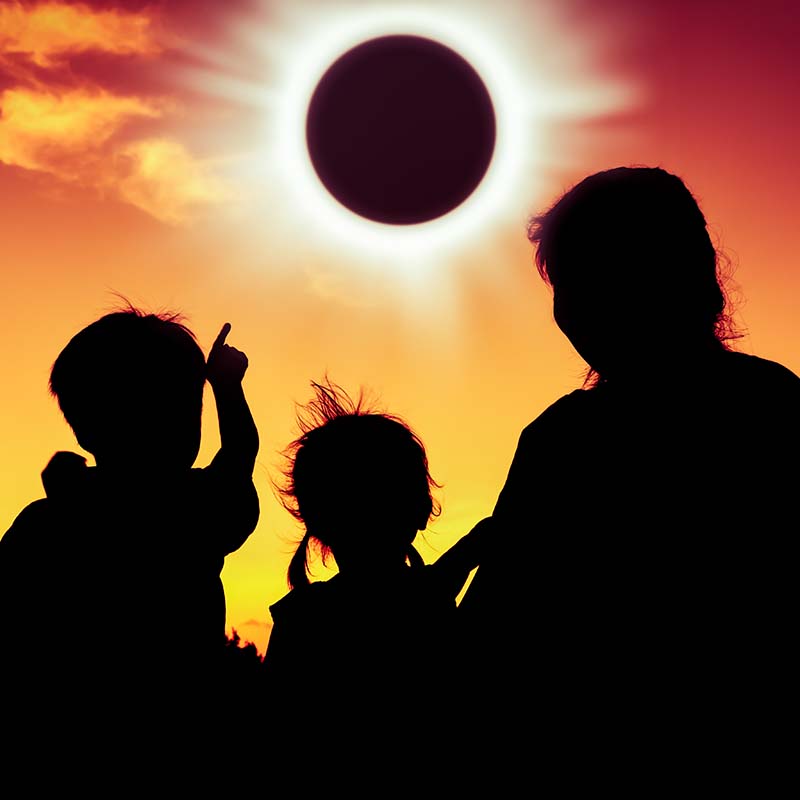
We’re all going on a geeky holiday
Why lie on a beach when you could go to Chernobyl? In the past few years there has been a steady growth in alternative tourism, which includes people going to sites of scientific interest. In this episode of the Physics World Stories podcast, Andrew Glester meets three people who are unashamedly drawn to geeky destinations. Ruth Nichol is a yoga instructor who travels the world with her husband seeking eclipses. She describes the emotional impact of witnessing totality and her trip to see the Northern Lights from a plane. Tom Scott is a radiation researcher at the University of Bristol whose work regularly takes him to Chernobyl, Ukraine, the site of the world’s worst nuclear disaster. Scott talks about his research using robotics to track radiation levels in the Chernobyl exclusion zone, which he also described in the Physics World article “Glimpsing Chernobyl’s hidden hotspots“. Over the years Scott has witnessed the rise of Chernobyl tours, which had grown to attract around 100,000 visitors annually before the COVID-19 pandemic. Finally, Glester catches up with Jeffrey Brunstrom, an experimental psychologist at the University of Bristol specializing in nutrition. As Brunstrom explains, there are tricky psychological barriers that make our post-holiday diets easier to speak about than actually stick to. Brunstrom also describes his love of the Marconi centre in Cornwall, which celebrates the Italian inventor Guglielmo Marconi who undertook groundbreaking telecommunications experiments in the region. Find out more about science-themed holidays in the August special issue of Physics World, which also has features on the physics of sandcastles and rollercoasters.
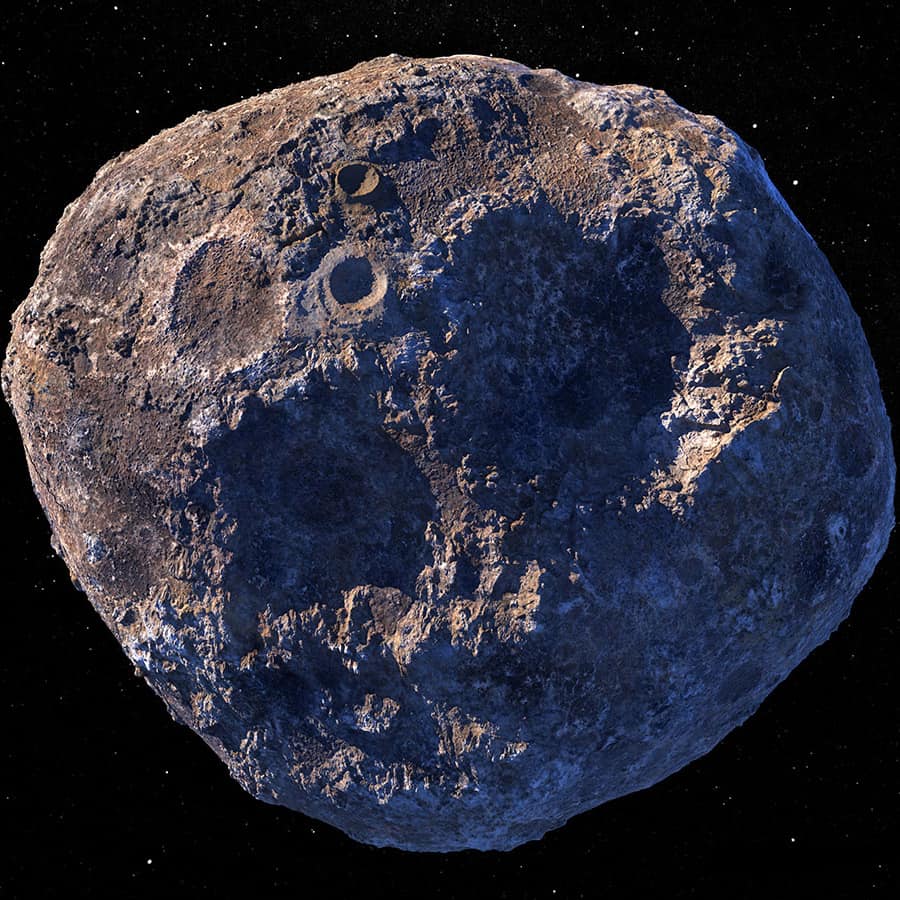
Deflecting asteroids and exploring a metal world
You could be forgiven for thinking the themes in this month’s episode of Physics World Stories have been stolen from Hollywood. Podcast host Andrew Glester profiles two upcoming NASA missions to asteroids: one that will explore an all-metal world, and the other will deliberately smash into a near-Earth asteroid. Glester’s first guest is Jim Bell from Arizona State University who is involved in the mission to the asteroid Psyche, which launches in 2022 and arrives in 2026. Located in the asteroid belt between Mars and Jupiter with an average diameter of 226 km, Psyche consists largely of metal. Astronomers speculate that the asteroid is the exposed core of an early planet that lost its rocky outer layers due to a number of violent collisions billions of years ago. Also joining the podcast is Angela Stickle from the Johns Hopkins University Applied Physics Laboratory. Stickle is a project scientist in the Double Asteroid Redirection Test (DART) mission, scheduled to launch in November aboard a SpaceX Falcon 9 rocket. Sounding like a remake of Armageddon or Deep Impact, the solar-powered DART craft will hurtle towards the binary near-Earth asteroid Didymos, before crashing into the smaller of the two bodies in late 2022. By observing the changes in the asteroid’s orbit, mission scientists are testing the feasibility of deflecting a large Earth-bound asteroid – should that perilous scenario transpire in the future.
Helgoland and the captivating origins of quantum theory
In June 1925 Werner Heisenberg retreated to Helgoland in the North Sea, a treeless island offering the 23-year-old German physicist a space to think, along with some respite from the extreme hay fever he was suffering. On that remote outpost, Heisenberg had an idea that would revolutionize physics and bring profound implications for philosophy and technology. This was an event that would kickstart quantum mechanics. "Photo of Carlo Rovelli (Courtesy: Christopher Wahl)"Carlo Rovelli. (Courtesy: Christopher Wahl) Helgoland is the title of the latest book by physicist and science writer Carlo Rovelli. It is essentially a journey through the origins of quantum physics, interwoven with narrative about Heisenberg, Dirac, Einstein and the other luminaries from the first quantum generation. Rovelli also discusses his own interpretations of the quantum world, and connects quantum theory with diverse ideas, from Buddhist thinking to the grand themes of the Russian revolution. Rovelli speaks about Helgoland in this latest episode of the Physics World Stories podcast. In a wide-ranging conversation with podcast host Andrew Glester, Rovelli discusses quantum concepts, the often overlooked role of philosophy in science, and his minimalist approach to science writing. If you enjoy this episode, make sure to also join us for the inaugural Physics World Quantum Week. Running on 14–18 June 2021, the event showcases the latest developments in quantum science and technology. It includes a series of free-to-view webinars and a curated selection of quantum articles.
The bots are not as fair-minded as they seem
Artificial intelligence (AI) technologies are designed to replicate human capabilities, and in some cases improve upon them. Lifelike robots are physical examples of AI technology, but it is the digital AI systems that already have a ubiquitous influence on our daily lives – from facial recognition software to decision-making tools used by banks, recruiters and the police. Too often, these systems can reflect preexisting social inequalities. In this episode of the Physics World Stories podcast Andrew Glester investigates the ethical issues that can plague AI and machine learning technologies. He finds out about the concepts of deep learning and neural networks, why these systems can amplify problems in society, and who are the people adversely affected by these flaws. It turns out that the physics community is part of the problem and potentially part of the solution. Directly and indirectly, physicists are involved in developing AI technology so are ideally placed to raise awareness of the issues. Featuring in the episode: Alan Winfield, a robot ethics researcher at the University of the West of England Julianna Photopoulos, a science writer based in Bristol, UK Savannah Thais, an experimental particle physicist at Princeton University, US To find out more about the issue of bias in AI systems, take a look at this feature article by Photopoulos, which is summarised in the video below.    
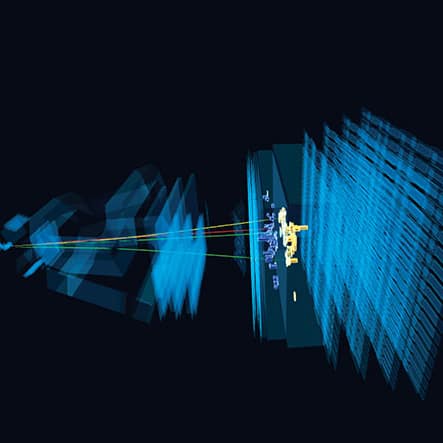
Muon mania: are we finally on the brink of new physics?
The global particle physics community has been energised by two recent results that offer tantalising glimpses of new physics beyond the Standard Model of particle physics. Researchers at CERN’s LHCb experiment have observed something unusual in the way that B mesons decay into leptons – the class of fundamental particle incorporating electrons, muons, taus and their corresponding neutrinos. Meanwhile, researchers at Fermilab may have glimpsed an unknown force at work in the way muons “wobble” in the presence of a magnetic field inside their Muon g-2 experiment. In this episode of the Physics World Stories podcast, Andrew Glester dissects these new results with the aid of particle physicists who discuss what this means for the field. Joining Glester in this episode are: Patrick Koppenburg, leader of LHCb’s user analysis software Jessica Esquivel, a physicist and data analyst at Fermilab Mark Lancaster and Rebecca Chislett, UK physicists working on the Muon g-2 experiment.
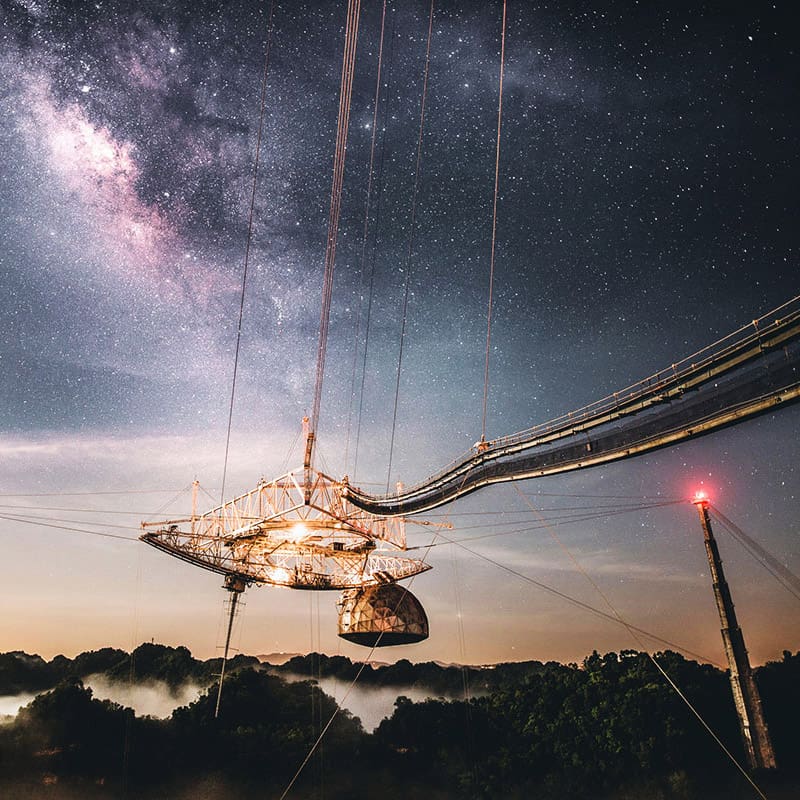
Arecibo Observatory: a scientific giant that fell to Earth
1 December 2020 was a dark day for Puerto Rico and the global astronomy community. The iconic Arecibo Observatory collapsed, with the radio telescope’s 900-tonne suspended platform crashing into the 305 m dish below. Warning signs had been there in the preceding months, but that did little to soften the shock felt by the astronomy community. In this episode of the Physics World Stories podcast, Andrew Glester speaks with astronomers about the impact of this dramatic event. Abel Méndez, a planetary astrobiologist at the University of Puerto Rico, explains why the observatory was a beacon for Puerto Rican scientists and engineers. Mourning continues but Méndez and colleagues have already submitted a white paper to the National Science Foundation with plans for a new telescope array on the same site. https://youtu.be/J-_FStTee9w Constructed in the 1960s with US funding, Arecibo was originally used for military purposes. Its powerful radar was bounced off the ionosphere to better understand the nature of the Earth’s upper atmosphere and to look for signs of incoming Soviet missiles. Seth Shostack, senior astronomer at the SETI Institute, talks to Glester about Arecibo’s origins and how scientists soon saw the potential for bouncing Arecibo’s radar off astronomical objects such as asteroids. Arecibo was the world’s largest radio dish until it was surpassed in 2016 by China’s FAST telescope. Arecibo’s size and tropical setting captured the public imagination and the observatory appeared in the films GoldenEye and Contact – the adaptation of the Carl Sagan novel. Contact’s lead protagonist is Ellie Arroway (played by Jodie Foster), partly based on SETI scientist Jill Tarter. Tarter joins the podcast recounting her experiences advising Jodie Foster on the character and role.
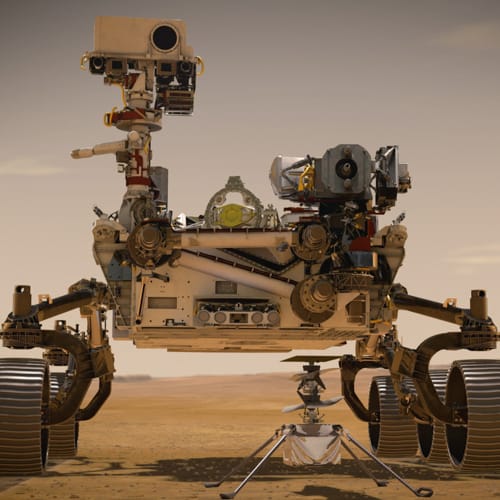
Searching for signs of past life on Mars with NASA’s Perseverance rover
February 2021 is an exciting month for Mars exploration, with three separate missions arriving at the red planet. In this episode of the Physics World Stories podcast, Andrew Glester takes a closer look at one of those missions – NASA’s Perseverance rover. Equipped with sophisticated imaging devices, Perseverance will look for signs of ancient microbial life and will help pave the way for future human missions to our neighbouring planet. Today, space exploration is an increasingly global pursuit, involving many nations and private companies, with Mars being an enticing destination. On 9 February the Emirates Mars Mission delivered the Hope probe into Martian orbit, which will provide the most complete picture yet of the planet’s atmosphere. That will be followed by China’s Tianwen-1 spacecraft, which arrives in orbit on 10 February ahead of landing a rover in May into a massive impact basin. Completing the Mars trio is NASA’s Perseverance rover, landing on 18 February – the focus of this episode. Its destination is the Jezero Crater, a 45-km-wide basin in the Martian northern hemisphere, a landform carved by a river roughly 3.5 billion years ago. The mission will collect rock and sediment samples for future return to Earth, search for signs of ancient microbial life, characterise the planet’s geology and climate, and pave the way for human exploration beyond the Moon. You will hear from Luther Beegle, the principal investigator for the rover’s SHERLOC instrument – a Raman spectroscopy device that can detect organic matter and minerals. You also hear from Kelsey Moore, a geobiologist at NASA’s Jet Propulsion Laboratory, whose research has informed the mission’s search for traces of ancient life. The podcast is sponsored by Teledyne Princeton Instruments. To learn more about how the company is changing scientific astronomy sign up to their upcoming astronomy webinar.

Life at CERN during the pandemic
In this episode of the Physics World Stories podcast, scientists and engineers from the CERN describe how the pandemic has affected the particle physics lab and the way they collaborate with colleagues. CERN’s large hadron collider (LHC) is currently in shutdown ahead of its third run scheduled for later in 2021. José Miguel Jimenez, head of CERN’s technology department, explains how engineers have adapted in order to limit the delays brought about by the pandemic. Jimenez also looks ahead to the LHC’s next long shutdown – scheduled for 2025 – when the particle accelerator will undergo a major upgrade. The transformed high-luminosity machine (HL-LHC) will generate 10 times more collisions than at present. Also in the podcast is Archana Sharma, a physicist who’s been working as a project manager on the GEM experiment at the LHC’s CMS detector. Her team has designed gas electron multipliers that will improve the muon-detection abilities of CMS in the HL-LHC era. Glester’s final guest is Sahal Yacoob of the University of Cape Town. Yacoob’s year-long sabbatical at the LHC’s ATLAS experiment coincided with the pandemic, changing the experience somewhat. As Yacoob explains, CERN researchers were accustomed to virtual communications, but he is sorely missing those informal coffee-break chats, which can lead to unexpected developments. For another personal account of CERN during the pandemic, take a look at this feature from the January 2021 issue of Physics World. Dave Barney describes how despite lockdown he has continued his important work on developing a new calorimeter for CERN’s CMS experiment – a piece of equipment that will be pivotal to the success of the HL-LHC.

The best of physics in books, TV and film in 2020
In this episode, Andrew Glester is joined by Physics World journalists to discuss some of 2020’s best physics books, along with their favourite examples of physics featuring in television and film this year. For more information about all of the media discussed, you can revisit these reviews that have appeared in Physics World during 2020. You Look Like a Thing and I Love You: How Artificial Intelligence Works and Why It’s Making the World a Weirder Place by Janelle Shane Quantum Legacies: Dispatches from an Uncertain World by David Kaiser Synchronicity: the Epic Quest to Understand the Quantum Nature of Cause and Effect by Paul Halpern The TV show Devs The Smallest Lights in the Universe: a Memoir by Sara Seager Why Trust Science? by Naomi Oreskes The film Proxima For Small Creatures Such As We: Rituals and Reflections for Finding Wonder by Sasha Sagan
Physics and LEGO: an enduring love affair
An unlimited world of structures built from precision-engineered unit parts – it is easy to see why LEGO appeals to many physicists. But in addition to the pure enjoyment, this plastic construction toy is also a great teaching tool, and it has even featured in serious science experiments. In the November episode of Physics World Stories, Andrew Glester meets physicists who have used LEGO in fun and creative ways to communicate physics. The first guest is Lewis Matherson aka @LegoPhysicsGuy, a former physics teacher who now makes physics videos aimed at students and teachers. These videos regularly incorporate LEGO to illustrate core physics concepts in GCSEs and A levels – exams typically sat by 16- and 18-year-olds in the UK. Next up is Joshua Chawner, a low-temperature-physics researcher at Lancaster University, UK. Chawner captured the imagination by subjecting LEGO pieces to the coldest temperatures on Earth, placing them inside his group’s dilution refrigerator, as documented in an award-winning video (below). Despite reaching 1.6 millidegrees above absolute zero (2000 times colder than deep space) the bricks proved to be extremely good thermal insulators, a surprising result described in Scientific Reports. https://youtu.be/zaIFZsBOeZc Last but not least is Maria Parappilly, a physics education expert at Flinders University, Australia. One of Parappilly’s successful initiatives was to create a LEGO race cars exercise for an introductory physics course that previously seen high drop-out rates. Parappilly is also the founder of the STEM Women Branching Out at Flinders University, designed to make science and other technical subjects more inclusive.
How capable are today’s quantum computers?
Media coverage of quantum computing often focuses on the long term potential for these devices to leave classical computing in the dust. But what about the rudimentary quantum systems that are already being developed and tested by technology companies? What are the latest advances in the field? And what might these systems realistically be able to achieve in the short to medium term? Andrew Glester investigates these questions in the latest episode of the Physics World Stories podcast. The episode previews Quantum 2020, a free online event running 19–22 October hosted by IOP Publishing (which also published Physics World). Tim Smith, associate director for journals product development, describes how the conference will cover the latest developments across quantum science and technology. While Claire Webber, associate director for content and engagement marketing, explains how you can participate in the event. Glester then catches up with one of the speakers at Quantum 2020 – Ryan Babbush, head of quantum algorithms at Google. In 2019 Google made headlines after asserting that its Sycamore quantum processor was the first to achieve “quantum supremacy”, whereby a quantum computer solves a problem in a significantly shorter time than a conventional computer. Although the specifics of that claim have been disputed, it was still celebrated as a key breakthrough in the field. Babbush describes some of the key goals for Google’s first generation of practical quantum computers. One of them is to realize Richard Feynman’s idea of using quantum devices to simulate physical systems that behave according to the laws of quantum physics. Such a system could be used to solve the fiendishly complex chemistry equations required to predict the properties of new materials. Another key goal is quantum cryptography, which could offer secure communication systems.
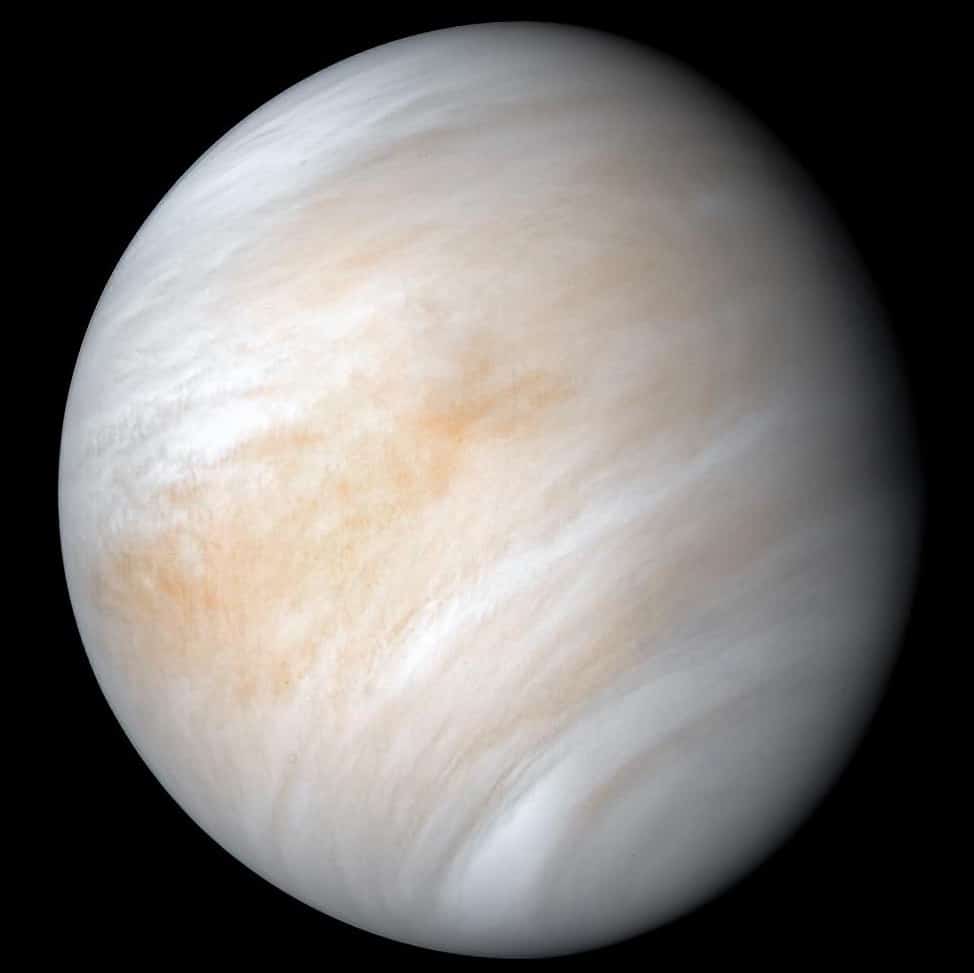
Could there really be life in the clouds of Venus?
The news last week that scientists had spotted a potential signature of life in the clouds of Venus was always likely to cause a stir. But arriving the middle of the COVID-19 pandemic – during which our everyday lives have changed significantly – the story has truly captured the public imagination. In the latest episode of the Physics World Stories podcast, Andrew Glester takes a broad view of the discovery: an inspiring example of lateral thinking, persistence and collaboration. The deduction that Venus could be harbouring life is linked with the detection of phosphine gas in the planet’s atmosphere. For terrestrial planets such as Venus and Earth the only known processes to generate phosphine in such a location are connected with metabolism. To learn more about astrobiology, Glester catches up with two members of the team behind the discovery, both based at Massachusetts Institute of Technology. Clara Sousa-Silva is a quantum astrochemist who for over a decade has studied phosphine as a potential signature for extraterrestrial life. She is joined by Sara Seager, an astronomer and planetary scientist, who among other things speaks about future missions to Venus to help resolve this mystery. As both researchers explain, the “life hypothesis” came as a last resort following a rigorous search for alternative explanations.

Autonomous cars: potential lifesavers but with new risks
Studies suggest that human error is responsible for over 90% of the 1.25 million people who die each year globally due to car accidents. Therefore, improving driver safety is one of the biggest incentives for increasing the autonomy of vehicles. But this brave new world of autonomous driving is not without its own risks – as Andrew Glester discovers in the August episode of the Physics World Stories podcast. To learn about how automated features can reduce human error, Glester catches up with Siddartha Khastgir, the head of Verification & Validation of Connected and Autonomous Vehicles at WMG, University of Warwick, UK. Khastgir describes the form that fully automated vehicles might take, and explains why it is a myth that these vehicles could provide absolute safety without human intervention. Cars today already have a degree of autonomy, such as parking-assist systems that use ultrasonic sensors. This autonomy is increasing every year, as sensors and other hardware can monitor a car’s state and create dynamic maps of its surroundings. But these systems bring a new threat – opportunities for hackers to access cars remotely. To learn about these emerging risks, Glester speaks with Simon Parkinson, a computer scientist who leads the Centre for Cyber Security at the University of Huddersfield, UK. Find out more about the cyber threat posed to autonomous vehicles in this feature by Stephen Ornes, originally published in the August edition of Physics World, a special issue on the physics of cars.
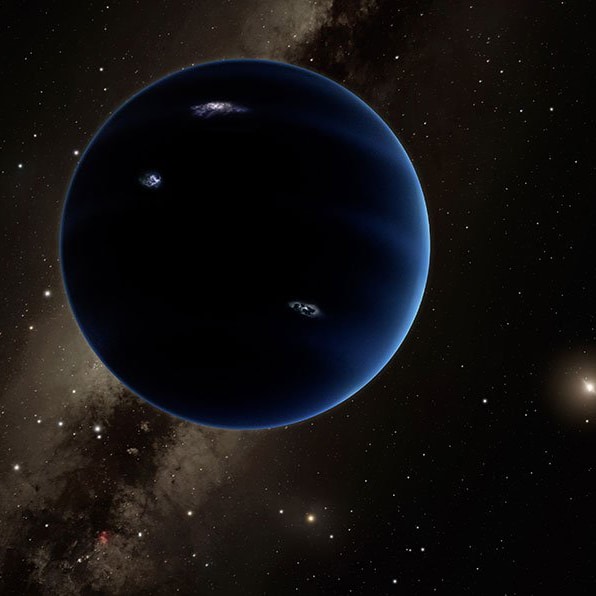
Planet Nine: is it a planet, a primordial black hole, or something else entirely?
Planet Nine is a hypothetical world in the far reaches of our solar system. Proposed in 2016 by Caltech astronomers Mike Brown and Konstantin Batygin, its existence would explain the unusual orbits of certain Kuiper belt objects (KBOs). But are we completely sure that Planet Nine in fact a planet? A paper in September 2019 suggested the gravitational effects could instead be explained by the presence of a primordial black hole smaller than your fist. To get to the bottom of this mystery, there have been recent proposals to send fleets of tiny probes to the general region of this mysterious object. In the July episode of Physics World Stories Andrew Glester gets the latest on the mystery of Planet Nine. Appearing in the podcast are Mike Brown and the University of Maryland’s Zeeve Rogoszinski, co-author of one of the mission proposals.
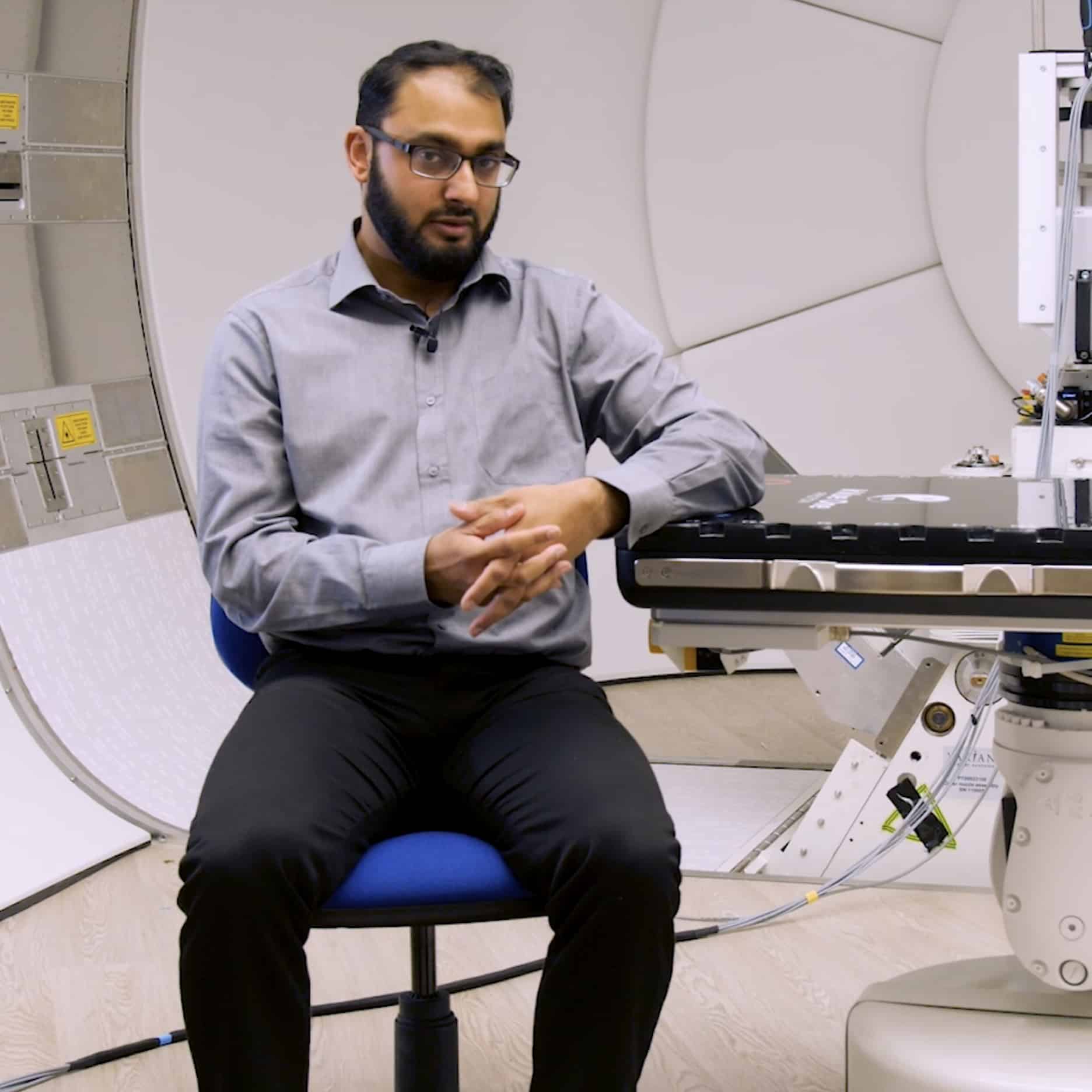
Working in medical physics: not your average career
For certain fields of physics, it can be tough to explain how the research has a direct benefit to society. That is never the case with medical physics – a career where you can apply a technical skillset to directly improve people’s everyday lives. In this episode of the Physics World Stories podcast, Andrew Glester catches up with three medical physicists from The Christie – the largest cancer hospital in Europe – to learn about their careers. Heather Williams, the principal physicist in nuclear medicine at The Christie, speaks about some of the latest developments in positron emission tomography (PET). Williams also explains how the COVID-19 pandemic has affected the working practices at the hospital, requiring some difficult decisions around risk management. Among other developments, clinical engineers have been working with industry to develop new systems to deliver oxygen to coronavirus patients. Later in the podcast, you will also hear from Patricia Amata who is studying for a PhD in ultrasound modalities. Medical ultrasound is most commonly associated with the field of obstetrics, where it is used to generate images of the foetus developing in the womb. But this non-ionising form of imaging is used across the medical spectrum – from breast scans to neurology, and often as a way of calibrating other imaging techniques. Finally, clinical scientist Imran Patel speaks about the Christie’s proton therapy centre, which has been treating patients since December 2018. Patel, who leads the proton therapy physics group, explains why proton therapy can offer benefits in certain circumstances, such as paediatric cases. Unlike photons and electrons, protons beams can deliver a radiation to a highly localized sites, minimising damage to surrounding healthy tissue. You can take a look inside the Christie’s proton therapy centre in this video produced in 2019.
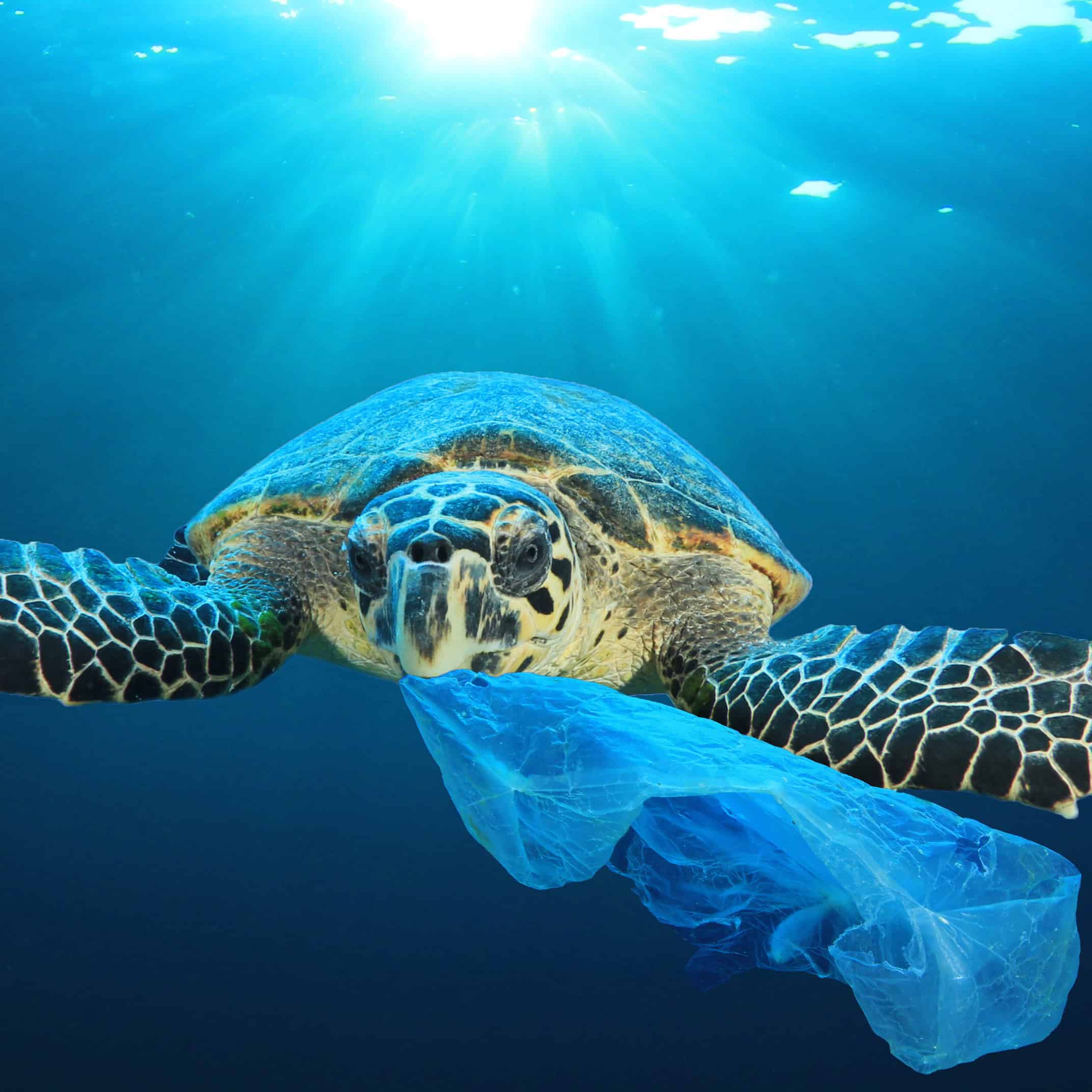
The mystery of missing marine plastic
In the May 2020 issue of Physics World, science journalist Marric Stevens wrote about the problem of the missing plastic in the world’s oceans. Although we are starting to see large amounts of plastic in the oceans, the quantity is far smaller than we expect to see – based on the quantities of plastic being released into the oceans every year. In the latest episode of the Physics World Stories podcast, Andrew Glester digs deeper into the mystery to find out where the plastic might be ending up. To learn about the threat of plastic to marine wildlife, Glester meets Lucy Quinn, a seabird ecologist with the British Antarctic Survey. Quinn was the researcher who captured public awareness of the plastics issue when she appeared in the BBC’s Blue Planet 2 showing the horrific impacts of ingested plastic on an Albatross colony in Bird Island, South Georgia. Also in the podcast, physical oceanographer Erik van Sebille outlines the extent of the missing plastics issue. He explains how his research on ocean flow at Utrecht University in the Netherlands can help to better understand where the plastics are ending up. While Alethea Mountford from Newcastle University, UK, describes how oceanographers combine physical measurements with modelling to get a handle on the issue. To find out more, read ‘The search for the missing plastic‘, a feature originally published in the May 2020 issue of Physics World – a special edition on plastic waste. This podcast is sponsored by Teledyne Hastings Instruments.

Doing physics in the time of COVID-19
Across the world, personal and professional lives have been profoundly affected during the past few months – and scientists are no exception. In this episode of the Physics World Stories podcast, we find out how physics and physicists are adapting to coronavirus-related lockdowns. Among physicists – as with many professions – there is a growing realisation that things are not about to go back to normal anytime soon. Isolation from colleagues, facilities and important conferences bring obvious disadvantages. But as you will hear in the podcast, some physicists are also finding positive outcomes from the situation. Before the lockdown, did you ever meet a researcher who didn’t complain about being time-poor? Plenty were sick of travelling to international events because they felt they had to show their face. And you name an academic didn’t have a paper they kept meaning to write but never got around to it because of things like endless faculty meetings. First up in the episode is the theoretical physicist and author Sabine Hossenfelder. Among other things during the pandemic, she has teamed up with climate physicist Tim Palmer to record a coronavirus-inspired reworking of the REM classic hit “It’s the End of the World as We Know It (And I Feel Fine)”. You will also hear from Bonnie Tsim and Rebecca Waters who both attended the recent Women in Graphene Career Development Day – an online event that reimagined various aspects of real-world conferences. Perhaps the success of this virtual event is a sign of what physics conferences will be like for the foreseeable future. For more personal accounts of the impact of the COVID-19 lockdowns, take a look at the “physics in the pandemic” series on the Physics World blog.

Tips for a rewarding career in physics
Most of the time science appears in the media – including in this podcast – the focus is on the scientific results. Rightly so, as scientific research consistently delivers inspiring breakthroughs. But this type of coverage can present an idealized version of science. Researchers are presented as dispassionate beings working together seamlessly to uncover the common truths of their discipline. In reality, scientists are people with a range of personalities and backgrounds, displaying all the usual human traits – the good and the bad. In this episode of the Physics World Stories podcast, Andrew Glester meets a selection of successful researchers to discover what it is really like to carve out a career in physics. What motivates them? What are the big challenges lying ahead for early-career researchers? What are the rules they play by? For more information and advice on this topic, see the 2020 edition of Physics World Careers. In the March issue of Physics World magazine, we also launched our new “Ask me anything” interview series, providing careers advice for physics graduates. Physics World’s Tushna Commissariat asks 10 of today’s top physicists three questions to find out about their roles and what they wish they knew when they started their careers.
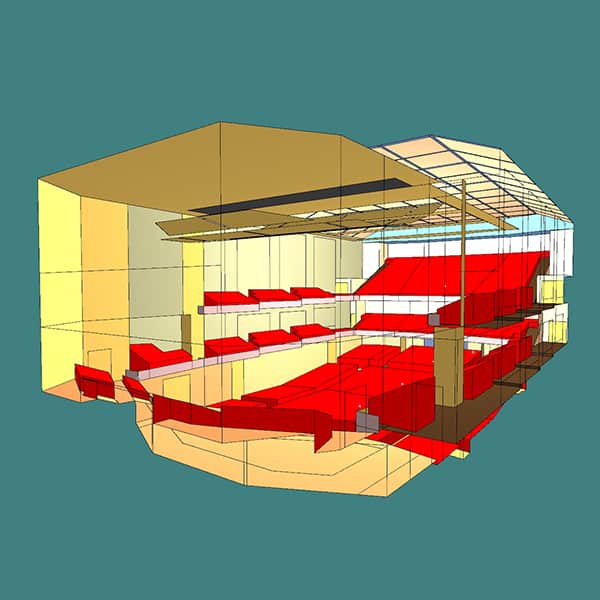
The acoustics of music and theatre venues
In the latest episode of the Physics World Stories podcast, Andrew Glester learns about the acoustic design of public spaces, through conversations with acousticians and architects. He visits the Bristol Old Vic – the oldest continuously running theatre in the English-speaking world – which has recently undergone a refurbishment. Glester also visits Manchester’s Bridgewater Hall, a place with which he has a strong personal connection, having worked there in the past. Find out more about acoustics in architecture in this article by science journalist Anna Demming, which first appeared in the February issue of Physics World.
Book of the year 2019
Well written, novel and scientifically interesting for physicists – these are the criteria we use to select our Book of the Year prize. To reveal the winner of the 2019 award and discuss the runners up, Physics World’s reviews and careers editor Tushna Commissariat joins regular host Andrew Glester for the December episode of the Physics World Stories podcast. Since 2009, Physics World has named a shortlist of its 10 best books of the year, before selecting one for its award. In recent years, it has also become a tradition to dedicate the December episode of Physics World Stories to discussing our shortlist, before revealing the winner and hearing from the author of the victorious book. As Andrew Glester notes, the only problem with this tradition is that we inevitably end up adding more books to your ever-growing Christmas reading list! In no particular order, here is the full shortlist for the 2019 Physics World book of the year: The Moon: a History for the Future by Oliver Morton As we celebrated the 50th anniversary of the Apollo Moon-landings, Oliver Morton’s book tells the story of our Moon, from its origin to its role in humanity’s history and future. The Case Against Reality: How Evolution Hid the Truth from Our Eyes by Donald D Hoffman Reality is more than meets the eye, and cognitive psychologist Donald Hoffman makes the case for why this applies to everything from evolution to optics. Fire, Ice and Physics: the Science of Game of Thrones by Rebecca C Thompson From dragons to walls of ice, everyone’s favourite fantasy TV show has more physics fun hidden within than you would have thought; and Rebecca Thompson takes readers on an epic quest. Underland: a Deep Time Journey by Robert Macfarlane From dark matter to nuclear waste, Robert Macfarlane’s Underland will take you deep within the bowels of our planet, and our relationship with these hidden worlds. The Demon in the Machine: How Hidden Webs of Information are Solving the Mystery of Life by Paul Davies What exactly is life, how and why does it emerge, and what distinguishes the living from the non-living? Paul Davies’ latest book attempts to answer some of the biggest questions that we have long pondered over. The Second Kind of Impossible: the Extraordinary Quest For A New Form of Matter by Paul J Steinhardt A rip-roaring adventure tale, featuring a mild-mannered theoretical physicist who found himself leading an expedition to the mosquito-and-bear-infested wilderness of eastern Russia in search of tiny grains of rock from outer space. Superior: the Return of Race Science by Angela Saini After her award-winning book Inferior scientifically analysed the supposed differences between the sexes, Angela Saini now tackles the difficult topic of racism, and the erroneous belief that race, a social construct, has a basis in biology. Einstein’s Unfinished Revolution: the Search for What Lies Beyond the Quantum by Lee Smolin US theoretical physicist and author Lee Smolin presents a bold “realist” formulation of quantum mechanics, in which time is fundamental, but space is emergent. The Universe Speaks in Numbers: How Modern Maths Reveals Nature’s Deepest Secrets by Graham Farmelo In his latest book, Graham Farmelo offers a bracing defence of string theory, and the power of mathematics in making progress in physics. Catching Stardust: Comets, Asteroids and the Birth of the Solar System by Natalie Starkey Natalie Starkey shares her fascination with these cosmic visitors, detailing how scientists study comets and asteroids to understand the 4.6-billion-year history of the solar system. Those of you with insatiable reading appetites should also check out this recent episode of our weekly podcast, which celebrates a decade of our book of the year award. Tushna Commissariat is joined by Physics World‘s previous reviews and careers editor Margaret Harris and the magazine’s editor-in-chief Matin Durrani. The trio discuss some of their favourite books from the 100 that made it to our shortlists this past decade, as well as chat about some pet peeves and personal favourites of science writing.
Physics and film, a match made in Hollywood
“Physics at the movies” is the theme of the November issue of Physics World magazine. In this star-studded episode of the Physics World Stories podcast, Andrew Glester interviews a trio of people who have worked on – or inspired – Hollywood sci-fi blockbusters. First up, Glester travels to MCM Comic Con in London to meet Paul Franklin, a member of the team that won the 2014 Oscar for Best Visual Effects for its work on Interstellar. Franklin is the creative director of DNEG, which has worked with director Christopher Nolan on his various other films including Inception, The Dark Knight trilogy and Dunkirk. But the conversation focuses on Interstellar and what it was like to work with science advisor Kip Thorne, a process that even led to a scientific paper about previously unseen details of black holes. Next up, Glester is in conversation with Jill Tarter, former director of the Search for Extraterrestrial Intelligence (SETI). Tarter is said to be the inspiration for Ellie Arroway, the lead character in Carl Sagan’s novel Contact, which was adapted into the 1997 blockbuster of the same name starring Jodie Foster. Tarter describes how she reentered astronomy thanks to a government scheme, and shares anecdotes about working with Foster to portray her personality on screen. Finally, Glester catches up with Andy Weir, author of the book The Martian, which was adapted into the 2015 film directed by Ridley Scott and starring Matt Damon. Weir speaks about the calculations and thought-experiments that underpinned some of the book’s plot. He admits that he never expected the story to appeal to such a wide audience and that Mark Watney – the story’s lead character – is a version of himself with all the good traits magnified. To find out more about about physics at the movies take a look at the November special issue of Physics World, which features interviews with the actors Benedict Cumberbatch and Daniel Radcliffe.
Doing physics in microgravity environments
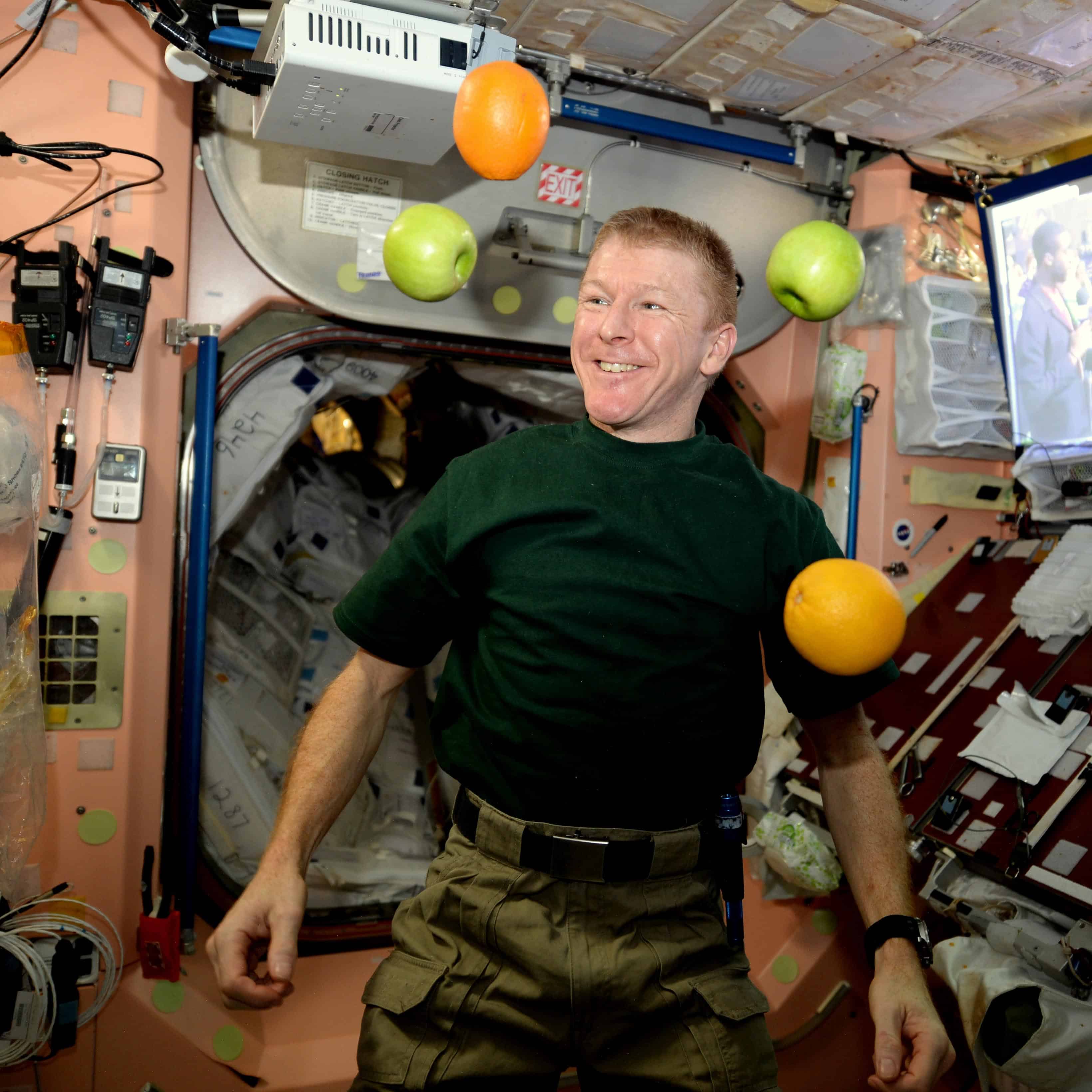
In this month’s Physics World Stories podcast, Andrew Glester discovers why microgravity environments are such interesting places to do physics experiments. Perhaps the ultimate microgravity laboratory is the international space station (ISS), where astronauts carry out experiments designed by scientists across the globe. But microgravity environments can also be created here on Earth, via parabolic flights and drop towers that can achieve microgravity conditions within the gravitational field of the Earth. In the episode, Glester travels to Swindon to meet Libby Jackson, the human exploration programme manager at the UK Space Agency. Jackson explains why removing gravity from the equation can allow researchers to probe a range of questions, not necessarily related to space science. She herself, has flown on a so-called “vomit comet” and she describes the experience of adapting to weightlessness while trying to control a science experiment. Marco Marengo, a thermal engineering research at the University of Brighton, UK, is another frequent flyer on parabolic flights. He describes some of the physics experiments he has been involved with and the process through which researchers can apply for time at these facilities. Unsurprisingly, he always finds time to have some fun while weightless in addition to doing the serious science. Within Europe, researchers requiring a microgravity environment regularly visit the ZARM drop-tower, located in Bremen, Germany. Just shy of 150m in length, this facility comprises an experimental capsule housed inside a long steel tube. In the video below, you can see Paxi – the European Space Agency’s educational mascot – falling down this drop. The ESA website has full details of how to apply to use parabolic flights, drop towers and other related facilities. https://www.youtube.com/watch?v=36637WobHZA While researchers are less likely to be making a trip themselves to the ISS, the options for sending your experiment there are expanding. Jackson explains how it is now possible to buy time on the ISS through the ICE Cubes service, which involves launching your experiment in a 10cm3 container. Companies can also pay for time on the the ISS securing the rights to any resulting intellectual property. Glester will be back with another episode of Physics World Stories next month. In the meantime you can listen to our more regular podcast Physics World Weekly. You can subscribe to both programmes on Apple podcasts or your chosen podcast provider. Support for this podcast came from Pfeiffer Vacuum.    
Driving in the present
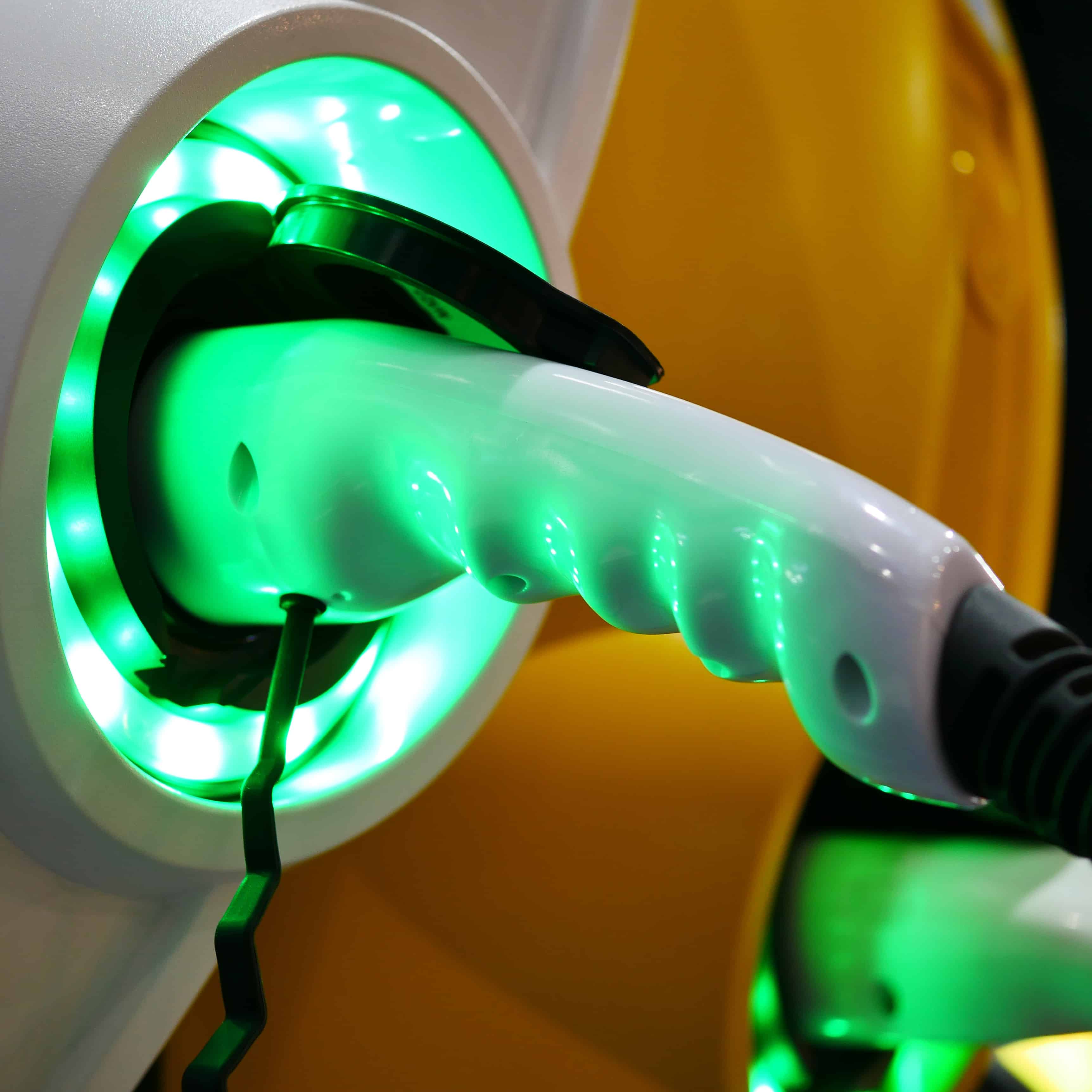
For many years, the electric car industry was viewed as a fringe sector, with some believing that cars running entirely on electricity would always remain on the margins. But electric cars are becoming mainstream much faster than anticipated. In September 2019, 7.5% of all cars sold in Europe were electric, which is double the number for the previous September. The number in the US is lower, but it is projected that 10% of all new cars sold in China will be electric by 2020. In the September episode of Physics World Stories, Andrew Glester investigates the latest technologies in electric cars and some of the developments expected in the near future. He also looks at some of the economic factors that are making electric cars a more viable choice for consumers. Entangled in the technology and economics are a number of environmental issues, including the need to find a sustainable source of metals and minerals for the batteries. On his journey through the land of electric cars, Glester meets a variety of people. Most of the interviews took place at the recent Full Charged Live event at Silverstone – home of the British Grand Prix and other high profile motor races. Actor and tech aficionado Robert Llewellyn speaks about his experiences as an early adopter of electric cars and the vast improvements in the UK’s network of charging points. Simon Moores of Benchmark Mineral Intelligence talks about the challenges in the life cycle of electric car batteries. Chris Day, technical director of Jaltek Systems, discusses the interface between electricity grids and electric cars, including the idea that vehicles can store electricity that can later be transferred back to the grid. Taking a different turn, Mihai Caleap from the University of Bristol, introduces the field of meta sonics. He explains how metamaterials can be used to filter external noises to make driving a car a more pleasant experience. Finally, Clare Jones introduces an innovative new addressing system, developed by her company what3words. By giving every location an earth a unique string of 3 words, it will help drivers (and automated cars) to precisely locate places, including charging points that can be tricky to find. Driving in the present, is a follow on to the August 2018 episode of Physics World Stories, entitled ‘Driving in the future’. That episode took a more general look at the need for more environmentally conscious transport decisions. Glester will be back with another episode of Physics World Stories next month. In the meantime you can listen to our more regular podcast Physics World Weekly. You can subscribe to both programmes on Apple podcasts or your chosen podcast provider.

Physics and the climate crisis
The UK, France, Ireland and Canada have already taken the symbolic step of declaring a climate emergency, but many believe that the actions of these and other countries do not yet match the boldness of their rhetoric. In this episode of the Physics World Stories podcast, Andrew Glester speaks to Will Cook of Extinction Rebellion – a movement that wants governments to accelerate their response to the climate crisis – about the need for politicians around the world to commit to meaningful action. Glester also explores how academics and physicists are taking steps to reduce their carbon footprint. He speaks to Anna Lewis, the sustainable labs officer at the University of Bristol – the first UK research institution to declare a climate emergency – who explains how the university plans to meet its pledge of becoming carbon neutral by 2030. Lewis point out that science labs can be some of the biggest users of energy, and Glester talks to Caroline Jarrett, technical manager for the university’s school of science, about the practical measures that researchers can take to make their labs more sustainable. Finally, Glester tackles the thorny question of air travel, not least to academic conferences, and speaks to Matthew Tulley from Solid Carbon Storage about an innovative way to offset your carbon emissions on the occasions when you do need to fly. You can find out more about efforts to make science labs and research facilities more sustainable in the article “Leading by example: going green in the lab”
50th anniversary of Apollo 11 – returning to the Moon and going beyond
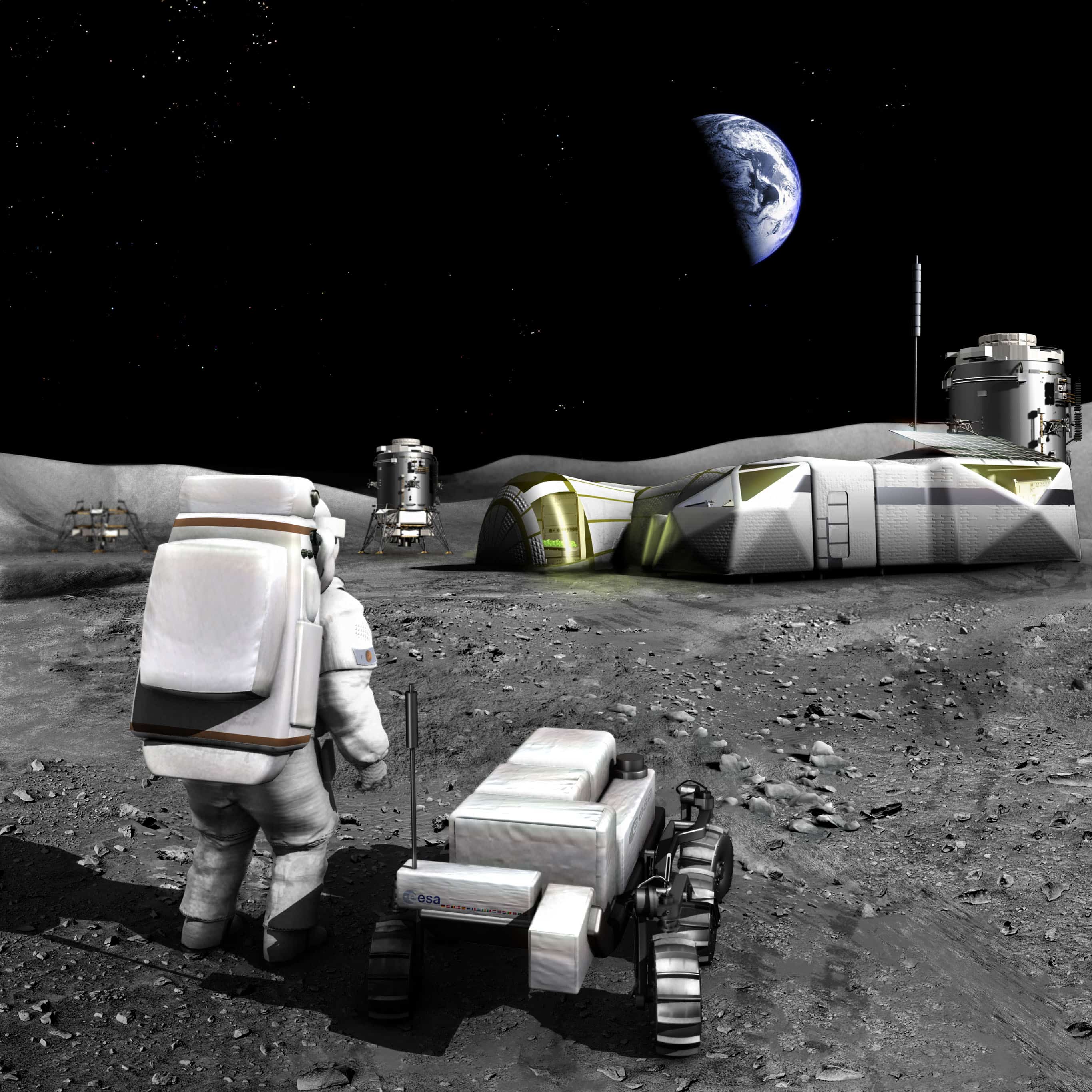
Throughout July the world has been celebrating 50 years since Apollo 11, when Neil Armstrong took those historic first steps on the Moon. In this episode of the Physics World Stories podcast, Andrew Glester looks to the future, at the prospects of returning humans to the Moon before setting our sights on Mars. Glester reports from the Blue Dot festival at the Jodrell Bank Observatory in Cheshire, UK. There, he enjoyed a lively mix of contemporary music, scientific talks, and plenty of other creative performances. In the podcast, you will also hear from: Monica Grady, professor of planetary and space science at the Open University Michaela Musilova, an astrobiologist and director of the Hawaii Space Exploration Analog and Simulation (HI-SEAS). Libby Jackson, director of human space flight at the UK Space Agency. Kerry Sanz, operations director of MDA, a company offering LiDAR mapping technologies. This podcast follows on from the June episode of Physics World Stories, which looked back at some of the lesser known stories from the Apollo era. For a comprehensive view of the Apollo legacy and future space travel, take a look at the July special issue of Physics World.
50th anniversary of Apollo 11 – hidden stories
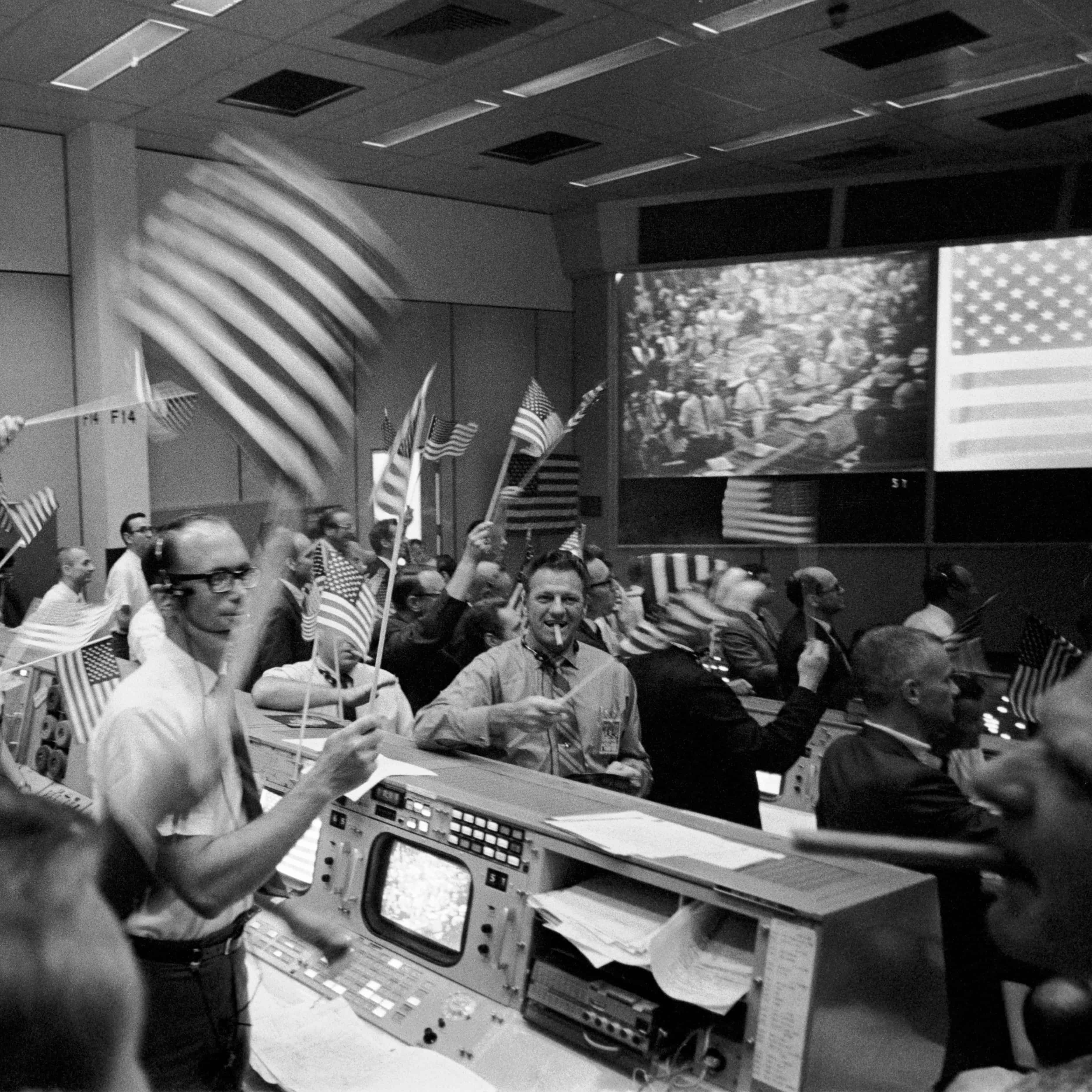
In July the world will be celebrating 50 years since Apollo 11, when Neil Armstrong took those historic first steps on the Moon. In this episode of the Physics World Stories podcast, Andrew Glester looks back at some of the lesser known stories from the Apollo era. Glester catches up with Kevin Fong, presenter of 13 Minutes to the Moon, the BBC podcast exploring the final dramatic 13-minute descent of the Apollo 11 mission, when everything came close to going badly wrong. Fong explains why the Apollo rockets’ guidance systems were so ground-breaking at the time. He also describes the extraordinary psychology of the Apollo astronauts who risked their lives in the pursuit of progress. Next up, Alan Andres speaks about Chasing the Moon, the book he co-authored with Robert Stone that has been turned into a PBS documentary. He discusses the complex dual life lived by Wernher von Braun, Nazi scientist-turned NASA rocket pioneer. Andres also explains why James Webb, the American government official who oversaw NASA from 1961 to 1968, left such a lasting legacy on the US education system. Glester also visits the Cheltenham Science Festival in the UK where he catches up with a trio of Apollo aficionados. Science presenter Dallas Campbell shares some of his favourite stories including the surprising modest origins of the US flag that was planted into the lunar surface. Astronomer Nick Howes speaks about the social value of the Apollo programme and why we need to recapture the era’s spirit of adventure. While geoscientist Louise Alexander explains why it is still worth analysing samples of lunar rock returned during the Apollo missions. Finally, you can hear an archive interview with Apollo astronaut Alan Bean, who went to the Moon on Apollo 12. Since retiring, Bean developed a passion for painting and creates works inspired by his adventures in space. This pursuit brought Bean the freedom of expression he never had as an astronaut where speed of thought and precision were among the required skills. In the July episode of Physics World Stories, Glester will look forward to some of the missions that will see humans (and machines) return to our nearest celestial neighbour. Also look out for the July issue of Physics World magazine, a special issue devoted to the 50th anniversary of Apollo 11.
The story behind the first ever black hole image
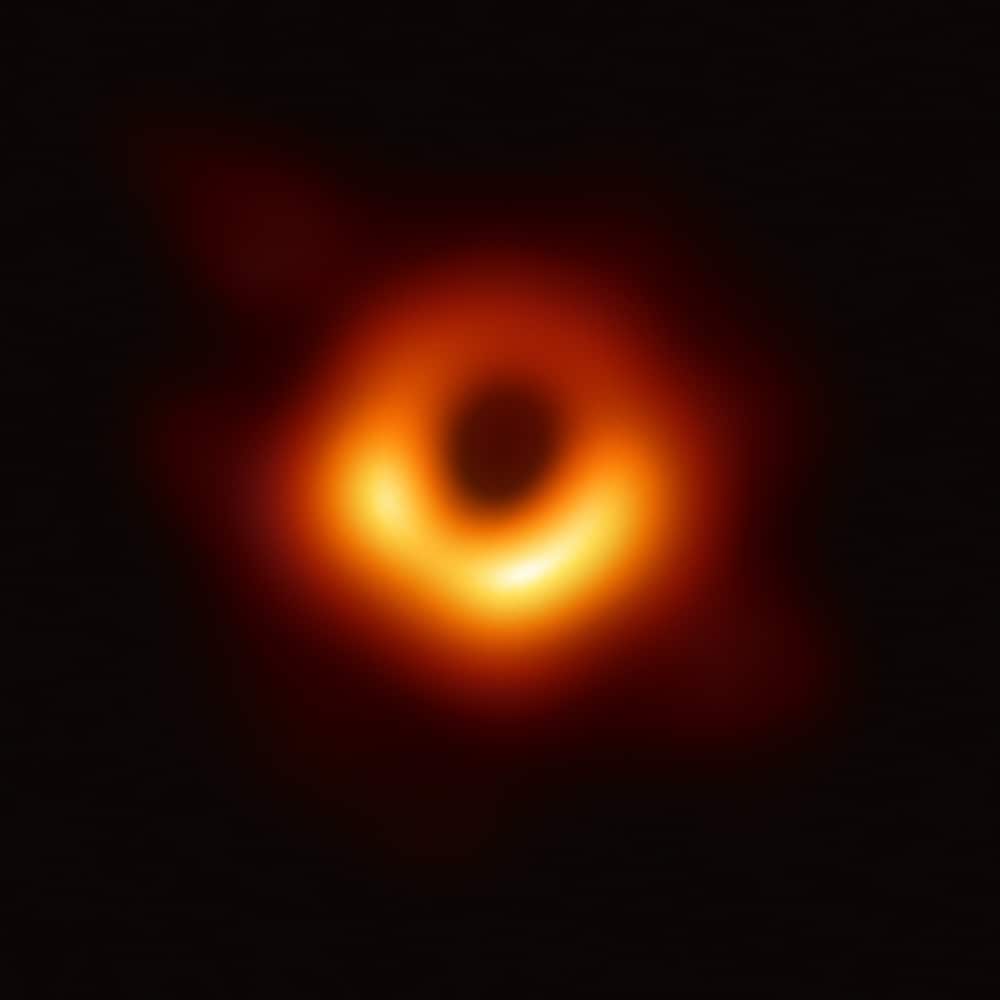
In the May edition of the Physics World Stories podcast, Andrew Glester reflects on the biggest astronomy story of the year – the first ever image of a black hole and its “shadow”. Unless you’ve been living in a black hole yourself, you will have seen the glowing donut/eye of Sauron/smiley face, which is actually the supermassive black hole at the centre of the M87 elliptical galaxy, some 55 million light-years from Earth. The image represents an incredible feat of science and engineering, produced from petabytes of data captured by the Event Horizon Telescope (EHT), a network of individual radio telescopes and telescopic arrays scattered across the globe. The EHT team reported the results in six papers in a special issue of Astrophysical Journal Letters, which is published by the Institute of Physics on behalf of the American Astronomical Society. To find out more about the story behind the discovery, Glester catches up with three scientists from the EHT team who also hold positions at Radboud University in the Netherlands. First up is Monika Mościbrodzka, a member of EHT’s data analysis team who speaks about the significance of the discovery and the future prospects for the project. “Black holes are no longer just a theory. It’s now reality”, she says. "Global networking: the Event Horizon Telescope combines the signals of eight radio telescope observatories including the Atacama Large Millimeter\/submillimeter Array (ALMA) in Chile and the South Pole Telescope (SPT) in Antarctica. (Courtesy: Akiyama <i>et al<\/i> and <i>ApJL<\/i>)"Global networking: the Event Horizon Telescope combines the signals of eight radio telescope observatories including the Atacama Large Millimeter/submillimeter Array (ALMA) in Chile and the South Pole Telescope (SPT) in Antarctica. (Courtesy: Akiyama et al and ApJL) Meanwhile, Freek Roelof explains how the group generated the image from all the raw radio wave data. He worked on data collection at the Submillimeter Telescope (SMT) on Mount Graham, Arizona. When not doing cutting edge science Roelof plays the guitar and you can hear some of his black-hole-inspired songs in the podcast. Since the publication of the image, many people have asked the question: “Why did these astronomers look all the way to the M87 galaxy, when we have a black hole – Sagittarius A* – at the centre of our own galaxy?” The reason comes down to scale. Despite being a thousand times further away, the black hole at the centre of M87 is a whopping 0.7 billion solar masses, a thousand times more massive than Sagittarius A*. But now that the EHT has proved its capability, you wouldn’t bet against the collaboration capturing an image our Sagittarius A* at some point. In the meantime, you can take a look at this virtual reality simulation based on best-fit models of observations of Sagittarius A*. Its creator, Jordy Davelaar, joins the podcast to explain how and why he created it. If you enjoy what you hear, then you can subscribe to Physics World Stories via your chosen podcast host. Also check out our other podcast Physics World Weekly, which brings you regular updates on the latest research developments in the physical sciences.
The future of the Internet
In the previous episode of the Physics World Stories podcast, Andrew Glester revisited the birth of the World Wide Web at CERN in 1989. This month, Glester looks to the future of Internet technologies, profiling some of the developments that might transform our daily lives. Glester finds out about the different ways we will connect to the Internet in the near future. Global access could be expanded thanks to WiFi provided by satellites in low-Earth orbit. Meanwhile, a more secure way of connecting to the Internet could be provided by LiFi – wireless data encoded into everyday light sources. Looking beyond the individual technologies, the concept of an Internet of Things (IoT) holds the promise of making everyday living more convenient. Devices are already on the market, such as fridges that monitor your eating habits and automatically order replenishments. In the future, these sorts of systems could become commonplace in all aspects of society. But as we move to an ever-more connected world, we also leave ourselves more vulnerable to cybercrime. To discuss security considerations, Glester catches up with ethical hacker Freaky Clown who describes the cat-and-mouse battle between the security services and cyber criminals. If you enjoy what you hear, then you can also subscribe to Physics World Stories via Apple podcasts or your chosen podcast host.
Physics World 30th anniversary podcast series – 30 years of the World Wide Web
On the 30th anniversary of the birth of the World Wide Web at CERN, the Physics World Stories podcast visits the particle-physics lab in Geneva to learn how things developed from an esoteric proposal to something that has changed the world forever. The Web is for everyone and collectively we hold the power to change it Tim Berners-Lee Physics World magazine has also recently turned 30 and we have been celebrating with a five-part podcast series exploring key developments in physics. This fifth and final episode revisits the birth of the World Wide Web at CERN in the late 1980s. In March 1989 British physicist turned computer scientist Tim Berners-Lee produced the now-famous document entitled “Information management: a proposal”. Over the past three decades, this modest origin has evolved into a globally connected web of computing systems, transforming the way we live our lives. "Andrew Glester (left) and Web pioneer Jean-François Groff. During his stay at CERN, Groff helped Tim Berners-Lee develop the World Wide Web technology."Andrew Glester (left) and Web pioneer Jean-François Groff. To mark the occasion, Physics World Stories host Andrew Glester visits CERN to meet some of the scientists who were there in the early years of the Web. Along the way he meets, Jean-François Groff (see left), François Flückiger, Ben Segal and Tim Berners-Lee’s former boss Peggy Rimmer. You will also hear from Tim Berners-Lee himself, who shares his hopes and fears for the future of the Web. The creator of the Web is amazed by the speed and extent of global change brought about by the Web. But, like the majority of us, he also fears the worrying trend for nefarious activities enabled by the Web, including misinformation and the amplified voices of those who choose to spread hate. “The Web is for everyone and collectively we hold the power to change it,” says Berners-Lee. “It won’t be easy but if we dream a little and work a lot we can get the Web we want.” The 30th anniversary of the Web is also the theme of the March special issue of Physics World magazine. You can enjoy many of that issue’s articles – along with a host of others – in a special online-only collection. The collection includes a brilliant graphic by Jess Wade, a look at the business impact of the Web, and the latest episode of the Physics World Weekly podcast in which Physics World journalists chew the fat over how on earth we got anything done before the Web came along. If you enjoy the podcast, then take a listen to the first four podcasts in the 30th anniversary series. Glester began in October by looking at the past and future of particle physics before tackling gravitational waves in November. In January he examined the prospects for nuclear fusion, then in February he looked at how high-temperature superconductivity research has evolved over the past three decades since the phenomenon was first observed. Don’t forget you can also subscribe to Physics World Stories via Apple podcasts or your chosen podcast host.
Physics World 30th anniversary podcast series – high-temperature superconductivity
Physics World has recently turned 30 and we are celebrating with a five-part podcast series exploring key areas of physics. This fourth episode in the series explores how high-temperature superconductivity research has evolved over the past three decades since the phenomenon was first observed. In the late 1980s there was a lot of hype surrounding these materials because of the many exciting applications that would follow. Among the promised spin-offs were lossless transmission lines, lossless magnetism and levitating trains. All of these applications have been demonstrated to some extent but it is also fair to say that high-temperature superconductors are not as ubiquitous as some had hoped. In this podcast, Andrew Glester picks up the story to find out more about the history of high-temperature superconductivity and its prospects for the future. He catches up with the physicists Elizabeth Blackburn from Lund University in Sweden and Stephen Hayden from the University of Bristol, UK. If you enjoy the podcast, then take a listen to the first three podcasts in the 30th anniversary series. Glester began in October by looking at the past and future of particle physics before tackling gravitational waves in November and then nuclear fusion in January. Don’t forget you can also subscribe to Physics World Stories via Apple podcasts or your chosen podcast host.
Physics World 30th anniversary podcast series – fusion energy
Physics World has recently turned 30 and we are celebrating with a 5-part series podcast series exploring key areas of physics. This third episode in the series explores the prospects for fusion energy – a carbon-free form of energy generation that may finally be on the cusp of becoming practical. For the past few decades, the running joke has been that despite the excitement, fusion energy is “always 30 years away.” In the January episode of Physics World Stories, Andrew Glester meets fusion researchers at the UK company Tokamak Energy to learn about the practical challenges and the technology that could make fusion a reality within the next 15 years. Melanie Windridge, a communication consultant (and adventurer), explains the science behind the two main approaches to achieving fusion. The first is known as inertial confinement fusion and its feasibility is being investigated at the National Ignition Facility (NIF) in the US. The alternative involves using intense magnetic fields to confine hot plasma inside a device known as a tokamak. This is the approach taken at the International Thermonuclear Experimental Reactor (ITER), an international collaboration based in southern France. In contrast to the much larger tokamak ITER tokamak, the technology being developed by Tokamak Energy could lead to a compact tokamak that can run at much higher plasma pressure. Glester visits the company in Oxfordshire to meet the company’s chief executive David Kingham, who believes this smaller-scale approach could make fusion energy more economically viable. Both Kingham and Windridge believe that practical fusion energy has become more realistic due to two key factors – the growing global consensus that we need to act on climate change coupled with the arrival of private enterprise in this space. If you enjoy the podcast, then take a listen to the first two podcasts in the 30th anniversary series. Glester began in October by looking at the past and future of particle physics. Then in November he explored gravitational waves by looking at the exciting future for multimessenger astronomy. Don’t forget you can also subscribe to Physics World Stories via the Apple podcast app or your chosen podcast host.

Physics World Book of the Year 2018
Each year since 2009, Physics World has been awarding one excellent popular-science book with the title of Book of the Year, not to mention creating a shortlist of nine other top titles from all the books we reviewed that year. We also love talking about physics books, and ever since our first such podcast in 2011, we get together each December to discuss our shortlist and reveal our winner. As is becoming a tradition, this chat was hosted by our regular podcast presenter and producer Andrew Glester, in his garden shed, where he can often be found musing about “science fiction, science fact and everything in-between” for his own podcast the Cosmic Shed. As this year’s winner is the 10th to bag our Book of the Year, we decided to catch up with some previous winners to see what they are working on today; to chat about how their books have aged; and hear what they would do differently today. Tune in to the podcast to hear 2009 winner Graham Farmelo talk about Paul Dirac and his family; find out what 2015 winner Amanda Gefter is working on today; hear what 2010 winner Anil Ananthaswamy has to say about travel and science-writing; and find out more about hippies and physics from 2012 winner David Kaiser. Of course we also discuss the various exciting books on the 2018 shortlist, and reveal our 10th winner of the Physics World Book of the Year, so tune in to the podcast to hear from a host of interesting writers and scientists. We hope that everyone will find something to appreciate on this list, and hopefully we have given you a few ideas for some excellent holiday presents. Shortlist for Physics World Book of the Year 2018 (in no particular order): Treknology: the Science of Star Trek from Tricorders to Warp Drives by Ethan Siegel Ad Astra: an Illustrated Guide to Leaving the Planet by Dallas Campbell Exact Thinking in Demented Times: the Vienna Circle and the Epic Quest for the Foundations of Science by Karl Sigmund Beyond Weird: Why Everything You Thought You Knew About Quantum Physics is Different by Philip Ball The Order of Time by Carlo Rovelli Lost in Math: How Beauty Leads Physics Astray by Sabine Hossenfelder The Dialogues: Conversations About the Nature of the Universe by Clifford V Johnson When the Uncertainty Principle Goes to 11: Or How to Explain Quantum Physics with Heavy Metal by Philip Moriarty What is Real: the Unfinished Quest for the Meaning of Quantum Physics by Adam Becker Hello World: How to be Human in the Age of the Machine by Hannah Fry  

Physics World 30th anniversary podcast series – gravitational waves
As regular readers will know, Physics World has just turned 30 and we have been celebrating the anniversary with a range of special content. This includes a 5-part series for our monthly podcast, Physics World Stories, exploring key areas in physics that evolved significantly during the past 30 years. This second episode in the series looks at gravitational waves by revisiting the celebrated first detections by the LIGO collaboration, then looking to the exciting future for multimessenger astronomy. Along the way, presenter Andrew Glester speaks with several members of the LIGO team: Mark Hannam of Cardiff University; Chris Messenger from the University of Glasgow; and Lisa Barsotti from the MIT Kavli Institute who received of a New Horizons Breakthrough prize for her work on the LIGO detectors. He catches up with Paul McNamara, a project scientist on the European Space Agency’s LISA Pathfinder mission – a precursor to the first space-based gravitational wave observatory. Glester also examines the controversy surrounding a recent analysis suggesting that LIGO has not yet discovered gravitational waves. The group at the Niels Bohr Institute in Denmark claimed in a paper on the arXiv preprint server that the positive detections could just be correlated “noise” from LIGO’s two detectors, and they have since followed up with further analyses of the LIGO data. Glester speaks with the group’s spokesperson Andrew Jackson and offers LIGO researchers the chance to respond. If you enjoy what you hear, then you take a listen to the first episode in this special podcast series, which looked at the past and future of particle physics. Don’t forget you can also subscribe to Physics World Stories via the Apple podcast app or your chosen podcast host.
Physics World 30th anniversary podcast series – particle physics
In October 1988 the first ever edition of Physics World magazine was published, so this month marks our 30th birthday. The October 2018 issue of Physics World revisits some of the key topics and issues in physics from 30 years ago, examines how they’ve developed, and contemplates their prospects for the next three decades. Particle physics, gravitational waves, optics and laser technology, fusion energy, and high-temperature superconductivity, are all reviewed. As part of the ongoing 30th anniversary celebrations we are also producing a five-part series of podcasts to look deeper into the crystal ball, exploring the future of these key fields in more detail. The episodes form part of our monthly Physics World Stories podcast series, hosted by Bristol-based science communicator Andrew Glester. Particle physics is where we start as Glester looks for hints of life beyond the Standard Model of particle physics. Sharing their thoughts are Valerie Gibson of the University of Cambridge and Derek Fox who has recently published intriguing research using data from the Antarctic Impulsive Transient Antenna (ANITA) experiment. One big difference over the coming 30 years will be the growing influence of China, which has released details for a huge particle collider that will produce over a million Higgs bosons in a seven-year period. Glester explores the plans for this the China Electron Positron Collider (CEPC) facility with Yifang Wang, Director of the Institute of High Energy Physics of Chinese Academy of Sciences and researcher Yiming Li. Glester also gets the thoughts on China’s rise as a scientific powerhouse from Dutch-born astronomer Richard de Grijs who spent a decade working at the Kavli Institute for Astronomy and Astrophysics at Peking University, before recently relocating to Australia. If you enjoy what you hear, then you can subscribe via the Apple podcast app or your chosen podcast host.
Communicating science at music festivals
As the summer draws to a close in the northern hemisphere, Andrew Glester looks back on two festivals he attended this year – the Blue Dot Festival in Cheshire and Green Man Festival in Wales. Glester meets a range of people involved in communicating science to festival audiences, often in surprising and innovative ways. He wants to know what motivates these people and what they have found to be the most effective ways of combining science with entertainment. Along the way, Glester meets the following people: Tim O’Brien, who curates the science elements of Blue Dot Festival. O’Brien talks about the festival’s origins and his personal journey in science communication from shy early-career researcher to addressing thousands from the Blue Dot stage. Jim Wild, a space physics researcher from Lancaster University, who was at Blue Dot festival to talk about space weather. Delving into the science, Wild speaks about the hazard to astronauts posed by solar radiation – something that would be especially challenging in a manned mission to Mars. The playwright Dave Windass who speaks about Pale Blue Dot, a new play he’s scripted that tackles global environmental issues and the search for more sustainable ways of living. Windass, who had not previously worked with science themes, speaks about the challenges of marrying science communication with successful storytelling. Sam Illingworth, a science communicator who is part of the Games Research Network at Manchester Metropolitan University. With a particular interest in table-top games, Illingworth believes that puzzles can lead to deep engagement in science. You will also hear recordings of some of Illingworth’s science-inspired poetry, which he delivered to audiences at Green Man festival. Maddie Foard, who runs the Solar Stage at Green Man Festival. She explains why her approach is to grab the attention first, then slip in the science almost by stealth. Will Hunter, the curator of Einstein’s Garden, a performance area at Green Man that blends a diverse range of acts relating to science and technology. Hunter describes his approach as “playful” because he wants to embrace the ethos of the festival. Anna Ploszajski, materials scientists and science communicator who was at Green Man speaking about the wonders of “smart materials”. Ploszajski, who often takes a humorous look at science and engineering, speaks about the various unexpected skills you can develop in the process of science communication. If you enjoy what you hear, then you can subscribe via the Apple podcast app or your chosen podcast host.      

Driving in the future
In the August episode of the Physics World Stories podcast Andrew Glester investigates the challenges of moving towards personal transport with a smaller carbon footprint. While flying cars powered by hydrogen are unlikely to hit mass market anytime soon, Glester instead looks at some of the realistic solutions for the present and the near future. Along the way, he gets the thoughts of various people he met at Blue Dot 2018 – a festival blending science, art and music. Francis Hill from the Centre for Alternative Energy gives her opinion on why citizens in developed countries need to reconsider their lifestyle choices. Her proposed changes include travelling less and using fewer non-renewable materials such as single-use plastics. Kevin Anderson is part of a group called Rapid Acceleration of Car Emission Reductions (RACER), which is part of the Tyndall Centre for Climate Change Research. Anderson believes that petrol-powered cars still have a role to play in the short-medium term future, but they use should be limited in urban areas. Increasingly, journeys will be made by alternative means, especially by electric bicycles (e-bikes). Michael Taylor is a PhD student at the Power Networks group based at the University of Manchester. Taylor highlights the fact that a rapid growth in use electric car will put a big strain on power networks – caused by large volumes of people recharging their vehicles at the same time. He is investigating solutions, such as smart-charging systems that respond to the level of demand. Finally, Glester meets a couple of students from Durham University’s society for electric motorsport. They are part of a team developing a new solar-powered race car to improve on existing models, which they will enter into competitions. They discuss the outlook for solar-powered and hybrid-solar cars hitting the market place.      
A quantum leap for industry
In the July edition of Physics World Stories, Andrew Glester looks at the latest developments in technologies based on quantum mechanics. While quantum computing often steals the headlines, there is a whole world of other quantum-based devices in the pipeline for a range of applications. Glester speaks first with Raphael Clifford and Ashley Montanaro at the University of Bristol about quantum computing. They are interested in the prospects of achieving “quantum supremacy” – the point at which quantum computers can outperform classical computers at specific tasks. Next, Glester hands the reigns over to Physics World’s Margaret Harris who recently attended the 2018 Photonics West conference in San Francisco. At that event, Harris caught up with Anke Lohmann, the director of ESP Central Ltd, which supports the transfer technology form academic settings to the marketplace. Lohmann gives her opinion on the quantum innovations most likely to have the most significant impacts in the coming years, among them is quantum key distribution for secure communication. Finally, Glester heads to the University of Birmingham, the site of one of the UK Quantum Technology Hubs. He is given a tour of the lab by Kai Bongs who explains how the goal is to transform scientific concepts in practical applications that are economically viable. The focus at the Birmingham hub is on developing sensors and metrology techniques. Targeted applications include gravity-mapping beneath the Earth’s surface and highly precise optical clocks.
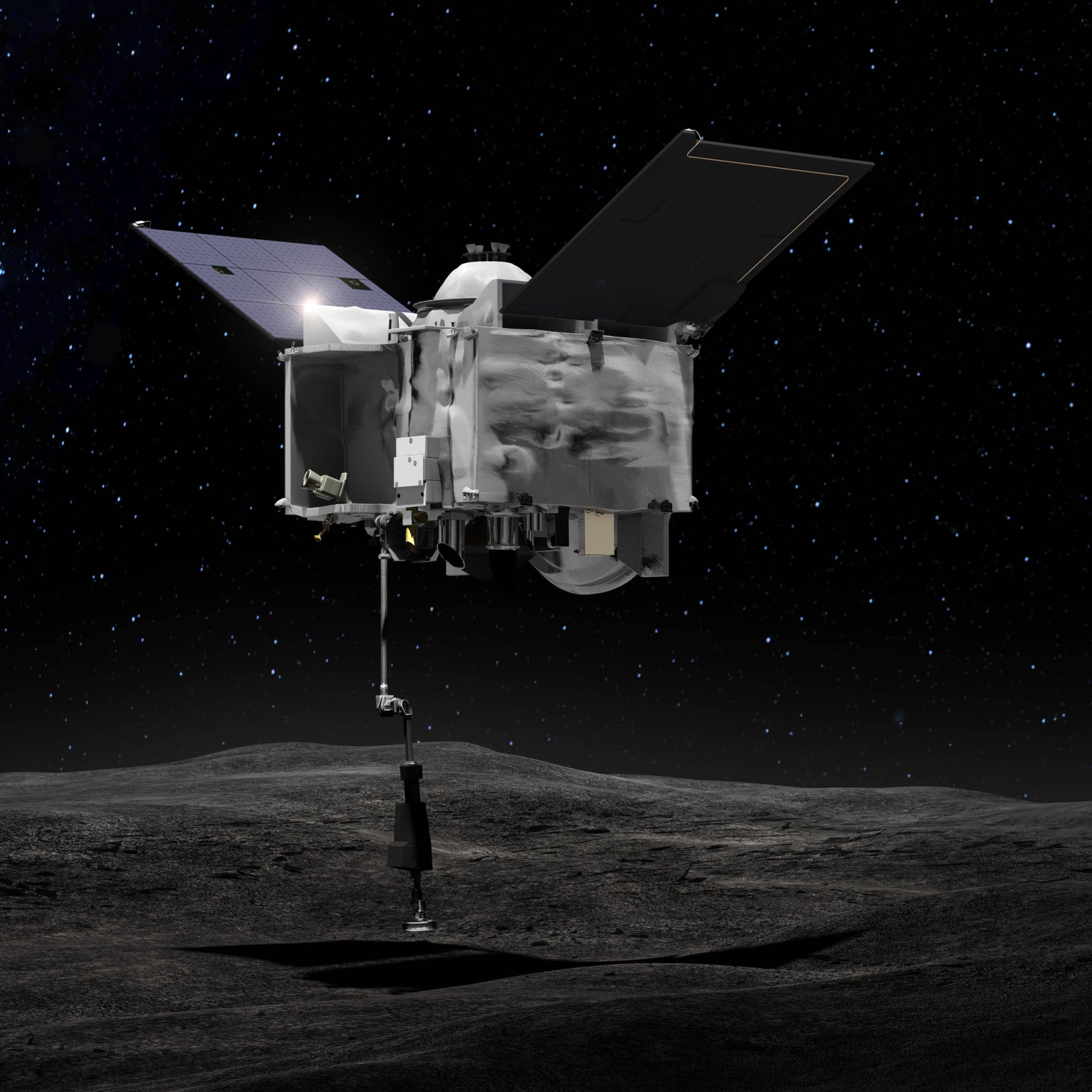
Doing business in space
In this month’s Physics World Stories podcast, Andrew Glester looks at some intriguing developments in the space industry. He is in conversation with Harvard University astrophysicist Martin Elvis about the prospects of asteroid mining moving from science fiction to reality. Later in the podcast, Glester investigates how the UK space industry might be affected by Brexit – the UK’s imminent departure from the European Union. Lucy Berthoud from the Space Universities Network explains why it is so important for the UK government to get the right deal because of what is at stake in the space sector. Finally, Glester takes a trip to Goonhilly Earth Station on the south-western tip of the UK. Goonhilly representative Kat Hickey explains why the site is such a unique place to do science and why she believes it should be chosen for the UK’s first spaceport. Look out for a special collection of articles about the space industry to be published on this site in the next week or so. Also, if you enjoyed this podcast then you can subscribe via iTunes or your podcast provider. Also check out Physics World Weekly – our news-focused podcast presented by the Physics World editorial team.  
Learning from the ozone solution
In the May episode of our Physics World Stories podcast, Andrew Glester is in conversation with the Nobel laureate Mario Molina. The Mexican researcher shared the 1995 Nobel Prize in Chemistry for his work on understanding formation and decomposition of ozone in the Earth’s atmosphere. He talks about how winning the award transformed his status as a scientist, giving him a unique platform to influence politicians. The banning of substances (mainly CFC chemicals) that deplete the ozone under the 1987 Montreal Protocol is hailed as a shining example of coordinated global action in tackling an environmental issue. Molina talks about how industries in the 1980s paid attention to the scientists at a relatively early stage, and sought alternative products and processes to CFCs. He engages with the reasons why it is harder today when dealing with the more multifaceted issue of climate change. Later in the podcast, Glester picks up the story with Lorraine Whitmarsh, a social scientist at the Tyndall Centre – a network of universities seeking sustainable responses to climate change. Whitmarsh is interested in why the general public responds to the science of climate change in particular ways. She is also interested in practical solutions for shifting to a lower carbon lifestyles and offers her top tips for reducing your carbon impact. If you enjoyed this podcast then you can subscribe via iTunes or your podcast provider. Also check out Physics World Weekly – our news-focused podcast presented by the Physics World editorial team.