
Perspectives with Neilo
95 episodes — Page 1 of 2
The Tibet-Nepal Flood - Disaster, Censorship and the Search for Answers
Neutral. Sovereign. Secure ? - Ireland's Defence Dilemma
Ukraine at War - Donnacha Ó Beacháin on Russia, Drones & Aughinish
Strategic Dependency: Ireland's Aughinish Lesson
Taiwan Strait Tensions - China's Latest Move Explained
The Washington Test - Cheng Li-wun's US Visit
Remembering Tiananmen - Wu'er Kaixi on China and Democracy
A Foggy Tale - Taiwanese Cinema Comes to Ireland
China's Global Pressure Campaign to Isolate Taiwan
The Chinese Ambassador was Wrong - Barry Ward TD Responds

The Anaconda in the Irish Chandelier - St Patrick's Day Special Re-Release
As Ireland marks Saint Patrick's Day, we’re revisiting this episode of Perspectives with Neilo: The Anaconda in the Irish Chandelier — a conversation about power, fear, and the subtle ways political influence can shape democratic behaviour. There’s a metaphor often used in diplomatic and academic circles to describe China’s influence — the anaconda in the chandelier. Everyone can see it. Everyone knows it’s there. But no one wants to acknowledge it, because naming it would mean having to act. The phrase was coined in 2002 by the American scholar Perry Link in an essay for The New York Review of Books. One of the world’s foremost experts on Chinese language, literature, and political expression, Link used the metaphor to describe the quiet but pervasive power of the Chinese Communist Party — a system that enforces obedience not only through censorship, but through fear and self-censorship. He wrote that the Chinese state’s authority doesn’t resemble a roaring tiger or a fire-breathing dragon, but a massive anaconda coiled silently overhead. It rarely moves. It doesn’t need to. Its message is implicit: you decide. And under its shadow, people — journalists, academics, politicians — instinctively adjust what they say and do, often without being told. The fear this creates isn’t dramatic or overt. It’s subtle, normalized, and deeply ingrained — a quiet calculation that becomes part of the landscape. And it is precisely that psychological control that makes the anaconda so effective. Legend tells us that St Patrick banished all the snakes from Ireland. But by the early 1990s, it appears that one very large snake had quietly found its way back into the Oireachtas — not as a myth, but as a political reality. In this episode of Perspectives with Neilo, we examine how fear of offending Beijing has shaped Irish government behaviour for decades. From Ireland’s muted response to China’s human rights abuses to its cautious stance on Tibet, Xinjiang, and Taiwan, we explore how economic pressure and political self-censorship have influenced policy, limited transparency, and raised serious questions about Ireland’s democratic resilience. This is a conversation about power, fear, and silence — and about what happens to a democracy when everyone sees the anaconda, but no one dares to say its name. Music Credits: Cinematic Piano Ambient Trailer Soundtrack by Open-Music-for-Videos via Pixabay Sound Soul (This Logo Reveal) by Diamond_Tunes via Pixabay Slow immersion by SamuelFJohanns via Pixabay Tibet by AdvGold via Pixabay Shining Bright Dusk by FreeSoundServer via Pixabay Enter the realm - no Piano by SamuelFJohanns via Pixabay Speeches: Excerpt from Closing statement by Josep Borrell Fonelles, High Representative of the Union for Foreign Affairs and Security Policy and Vice-President of the European Commission on Sept 13th, 2022, provided courtesy of the European Parliament Multimedia Centre. © European Union, 2022 – Source: EP. / Excerpts from Senator Michael McDowell's speech at Seanad Eireann, Human Rights in China: Motion, Dec 1st, 2021 provided courtesy of the Houses of the Oireachtas. © Houses of the Oireachtas, 2021. /
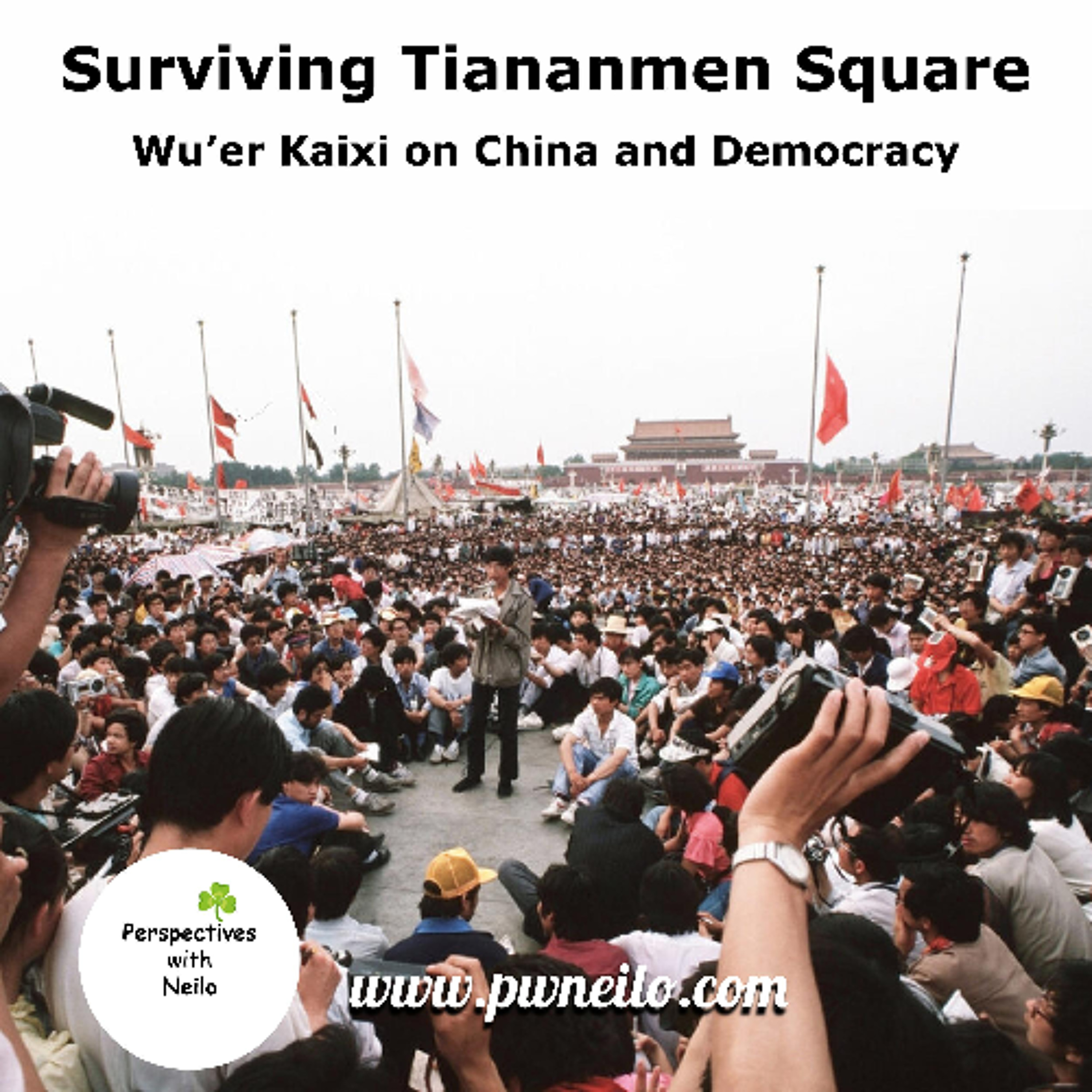
Surviving Tiananmen Square - Wu'er Kaixi on China and Democracy
In June 1989, the world watched as the Chinese government declared martial law and sent troops into Beijing to end the student-led demonstrations in Tiananmen Square. The crackdown — now known as the Tiananmen Square Massacre — remains one of the most consequential and censored events in modern Chinese history. In this episode, we sit down with Wu’er Kaixi, one of the most prominent student leaders of the 1989 Tiananmen Square protests. More than three decades later, he reflects on the events of June 1989 and their aftermath, the personal cost of defying the Chinese Communist Party and the reality of life in exile. Recorded in Taiwan in June 2025, this conversation explores the legacy of Tiananmen, the state of democracy and dissent in China today, and what Wu’er Kaixi believes the world still misunderstands about the Chinese Communist Party and the future of China. This is a firsthand account of protest, power, and political resistance — and a rare opportunity to hear directly from one of the central figures of 1989.
Was Taiwan Ever Part of China?
Was Taiwan ever part of China — or is that a modern political claim built on a selective reading of history? In this episode of Perspectives with Neilo, I'm joined by author Dr. Lee Moore to unpack the historical record behind Beijing’s claims over Taiwan. Drawing on his new book, China’s Backstory: The History Beijing Doesn’t Want You to Read, Dr. Moore challenges some of the most widely repeated narratives about identity, sovereignty, and “reunification.” We explore Taiwan’s complex past, what history really tells us about its relationship with China, and how competing interpretations of that past continue to shape politics, public opinion, and regional stability today. China's Backstory: The History Beijing Doesn't Want You to Read can be purchased at the following links - Publisher's Site: https://unsungvoicesbooks.square.site/product/china-s-backstory-the-history-beijing-doesn-t-want-you-to-read-preorder/BXJSID5U6P4RVONS7V4HSZSH Or on Amazon: https://a.co/d/1xG7T9q
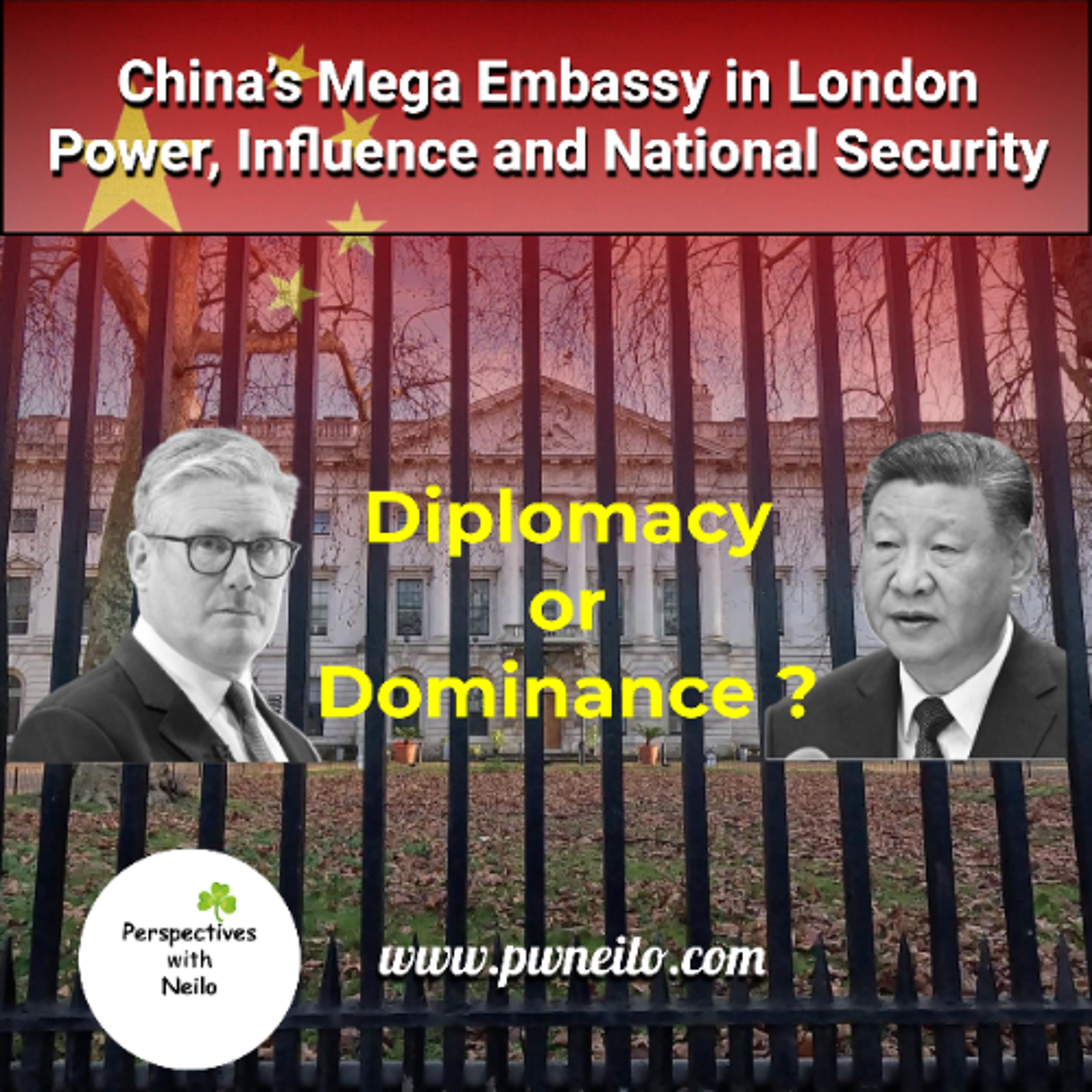
China's Mega Embassy in London - Power, Influence and National Security
China is building its largest embassy in Europe — a vast diplomatic complex beside the Tower of London. But critics warn it could become something far more controversial. In this episode of Perspectives with Neilo, we investigate China’s proposed “mega embassy” at Royal Mint Court, the political decisions that approved it, and why security experts, MPs, human rights groups, and local communities are raising alarms about espionage, surveillance, and transnational repression. We examine how the £255 million site purchase unfolded, how diplomatic status was granted, and why Prime Minister Keir Starmer’s recent approval has reignited legal challenges and public protests. Featuring voices from local politicians and community leaders, this episode explores the wider implications for UK national security, democratic accountability, and Britain’s relationship with the Chinese Communist Party. Is this diplomacy — or dominance? If you’d like to support the Royal Mint Court resident’s legal challenge, you can find their go-fund-me page here -> https://www.gofundme.com/f/stop-the-megaembassy-and-support-our-legal-challenge

The Anaconda in the Irish Chandelier
There’s a metaphor often used in diplomatic and academic circles to describe China’s influence — the anaconda in the chandelier. Everyone can see it. Everyone knows it’s there. But no one wants to acknowledge it, because naming it would mean having to act. The phrase was coined in 2002 by the American scholar Perry Link, in an essay for The New York Review of Books. One of the world’s foremost experts on Chinese language, literature, and political expression, Link used the metaphor to describe the quiet but pervasive power of the Chinese Communist Party — a system that enforces obedience not only through censorship, but through fear and self-censorship. He wrote that the Chinese state’s authority doesn’t resemble a roaring tiger or a fire-breathing dragon, but a massive anaconda coiled silently overhead. It rarely moves. It doesn’t need to. Its message is implicit: you decide. And under its shadow, people — journalists, academics, politicians — instinctively adjust what they say and do, often without being told. The fear this creates isn’t dramatic or overt. It’s subtle, normalized, and deeply ingrained — a quiet calculation that becomes part of the landscape. And it is precisely that psychological control that makes the anaconda so effective. Legend tells us that St Patrick banished all the snakes from Ireland. But by the early 1990s, it appears that one very large snake had quietly found its way back into the Oireachtas — not as a myth, but as a political reality. In this special episode of Perspectives with Neilo, we examine how fear of offending Beijing has shaped Irish government behaviour for decades. From Ireland’s muted response to China’s human rights abuses, to its cautious stance on Tibet, Xinjiang, and Taiwan, we explore how economic pressure and political self-censorship have influenced policy, limited transparency, and raised serious questions about Ireland’s democratic resilience. This is a conversation about power, fear, and silence — and about what happens to a democracy when everyone sees the anaconda, but no one dares to say its name. Music Credits: Cinematic Piano Ambient Trailer Soundtrack by Open-Music-for-Videos via Pixabay Sound Soul (This Logo Reveal) by Diamond_Tunes via Pixabay Slow immersion by SamuelFJohanns via Pixabay Tibet by AdvGold via Pixabay Shining Bright Dusk by FreeSoundServer via Pixabay Enter the realm - no Piano by SamuelFJohanns via Pixabay Speeches: Excerpt from Closing statement by Josep Borrell Fonelles, High Representative of the Union for Foreign Affairs and Security Policy and Vice-President of the European Commission on Sept 13th, 2022, provided courtesy of the European Parliament Multimedia Centre. © European Union, 2022 – Source: EP. / Excerpts from Senator Michael McDowell's speech at Seanad Eireann, Human Rights in China: Motion, Dec 1st, 2021 provided courtesy of the Houses of the Oireachtas. © Houses of the Oireachtas, 2021.
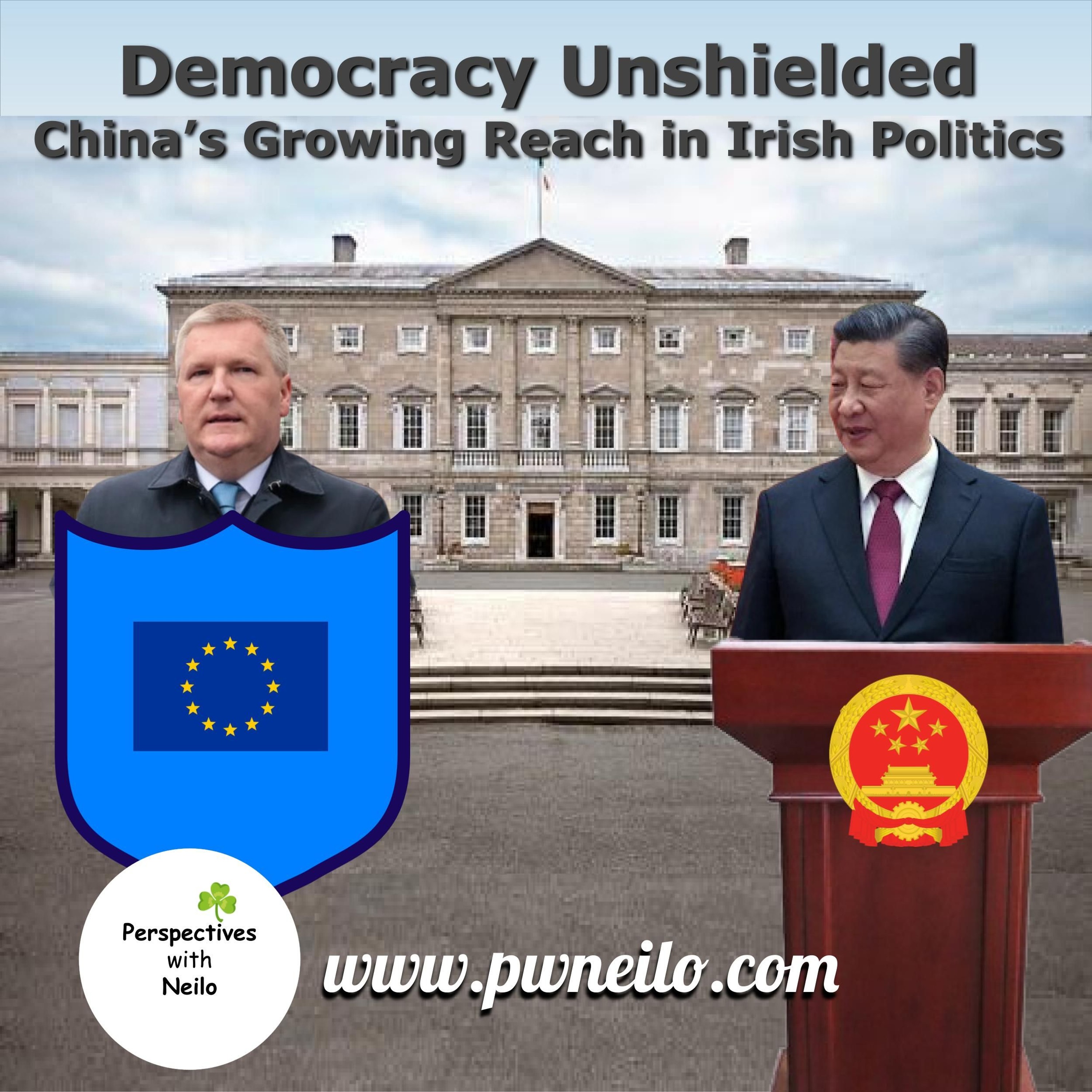
Democracy Unshielded - China's Growing Reach in Irish Politics
In this episode of Perspectives with Neilo, we investigate China’s growing political influence in Ireland and the recent meetings between Irish elected officials and members of the Chinese Communist Party. These engagements come at the very moment Ireland’s national cyber-security authority warns of state-aligned threat actors— including those linked to China and Russia—targeting Irish infrastructure, public institutions, and democratic processes. We examine who attended these meetings, why they matter, and how they align with the EU’s newly announced European Democracy Shield, designed to counter foreign interference from authoritarian regimes. In this episode, we dig into China’s growing reach in Irish politics and the uncomfortable question at the centre of it all: Is Ireland leaving its democracy unshielded? This episode is essential listening for anyone interested in Irish politics, democracy, foreign interference, China’s global strategy, and the future of European security. Credits: Audio transition: Sound Soul (This Logo Reveal) by Diamond_Tunes via Pixabay Clip of Deputy Alan Kelly's speech at the Joint Committee on Arts, Media, Communications, Culture and Sport, Nov 19th, 2025 provided courtesy of the Houses of the Oireachtas. © Houses of the Oireachtas, 2025 Clip of Comissioner Michael McGrath’s speech on the EU Democracy Shield provided courtesy of the European Parliament Multimedia Centre. © European Union, 2025 – Source: EP.
The Transparency Trap - China's Closed-Door Diplomacy and the Uyghur Crisis
Why is China holding private, closed-door meetings with democratic leaders — including in Ireland — despite growing warnings about CCP influence operations? And how does this secrecy connect to Beijing’s global effort to reshape the narrative around the Uyghur crisis? In this episode, Irish anthropologist Dr. David O’Brien joins us to share insights from his time living and researching in Xinjiang in the mid 2000's. We explore how the Chinese Communist Party uses covert diplomacy, narrative manipulation, and state-aligned “human rights” organizations like the China Federation for Human Rights Development (CFHRD) to obscure evidence of human rights abuses against Uyghur Muslims. Dr. O’Brien discusses what he witnessed on the ground, the impact of the 2022 UN Human Rights report and international sanctions, evidence of population reduction and forced sterilization, and the broader challenge China poses to universal human rights. We also examine how the United Front Work Department conducts influence operations within democratic countries — often out of public view. This episode exposes the high-stakes battle over truth, transparency, and human rights in the face of authoritarian pressure. Date of Recording: October 31st, 2025.
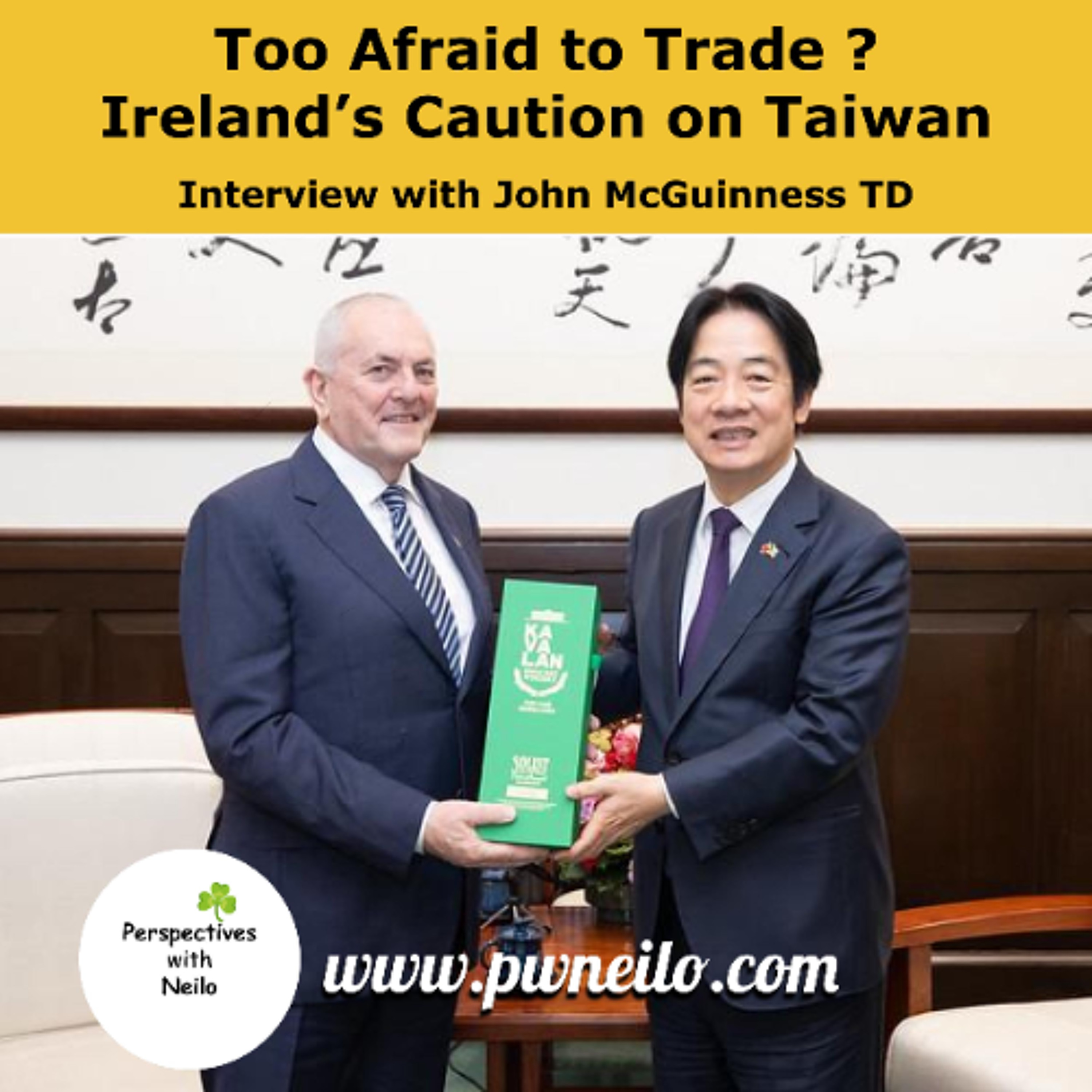
Too Afraid to Trade ? Ireland's Caution on Taiwan
As Ireland prepares to assume the EU Presidency in 2026, its cautious approach to Taiwan continues to draw attention. Why does Ireland remain an outlier among EU member states in its engagement with Taipei, and how much is that caution driven by concerns about Ireland–China relations? In this episode, we speak with John McGuinness, Leas-Cheann Comhairle, Fianna Fáil TD for Carlow–Kilkenny, and Chairman of the Ireland–Taiwan Parliamentary Friendship Association, about his recent visit to Taiwan and meeting with President William Lai. We discuss opportunities for cooperation under Ireland’s National Semiconductor Strategy, potential trade growth in the semiconductor industry, agri-food exports, and technology sectors — and whether Ireland is missing key trade opportunities with Taiwan. We also explore how China’s influence and EU foreign policy dynamics are shaping Ireland’s diplomatic balancing act between Beijing and Taipei. Date of Recording: November 7th, 2025 Thumbnail picture courtesy of the Office of the President, Republic of China, Taiwan. #Ireland, #Taiwan, #China, #EU, #ForeignPolicy, #Trade, #Semiconductors
Rare Earths, Real Pressure - China's Coercive Push on U.S.-Taiwan Policy
The Chinese Communist Party (CCP) has long pursued a multi-pronged strategy to annex Taiwan — a campaign that has intensified in recent years. From near-daily military incursions into Taiwan’s Air Defense Identification Zone (ADIZ) and territorial waters to provocative blockade exercises around the island, Beijing is steadily increasing pressure. Alongside these military threats, the CCP is waging a parallel campaign of propaganda, disinformation, and grey-zone activities — including infiltration of Taiwan’s government, military, and broader society. Now, in a new twist, reports suggest that China’s leader Xi Jinping may use upcoming trade talks with the United States to pressure President Donald Trump into publicly opposing Taiwanese independence. On the surface, this might seem far-fetched — especially with Trump often cast as the “Dealmaker-in-Chief.” So why does Beijing believe it can gain the upper hand? In this episode, we explore China’s strategic response to U.S. tariffs and examine the leverage the CCP holds in its complex relationship with Washington. We also assess how Trump-era foreign policy is shaping U.S.-Taiwan relations — and how Beijing is exploiting global uncertainty to push forward its authoritarian ambitions. . . Credits: Sound Soul (This Logo Reveal) by Diamond_Tunes via Pixabay Chinese Asian Music by SoundGalleryDT via Pixabay Translator voice by ElevenLabs.io . . #ChinaTaiwan #TaiwanStrait #TaiwanUnderThreat #ChinaThreat #USChinaRelations #IndoPacific #XiJinping #Taiwan #TaiwanIndependence #CCP #Geopolitics #TradeWar #RareEarths #Trump #ChinaLeverage #Podcast #Talk #PodcastAlert
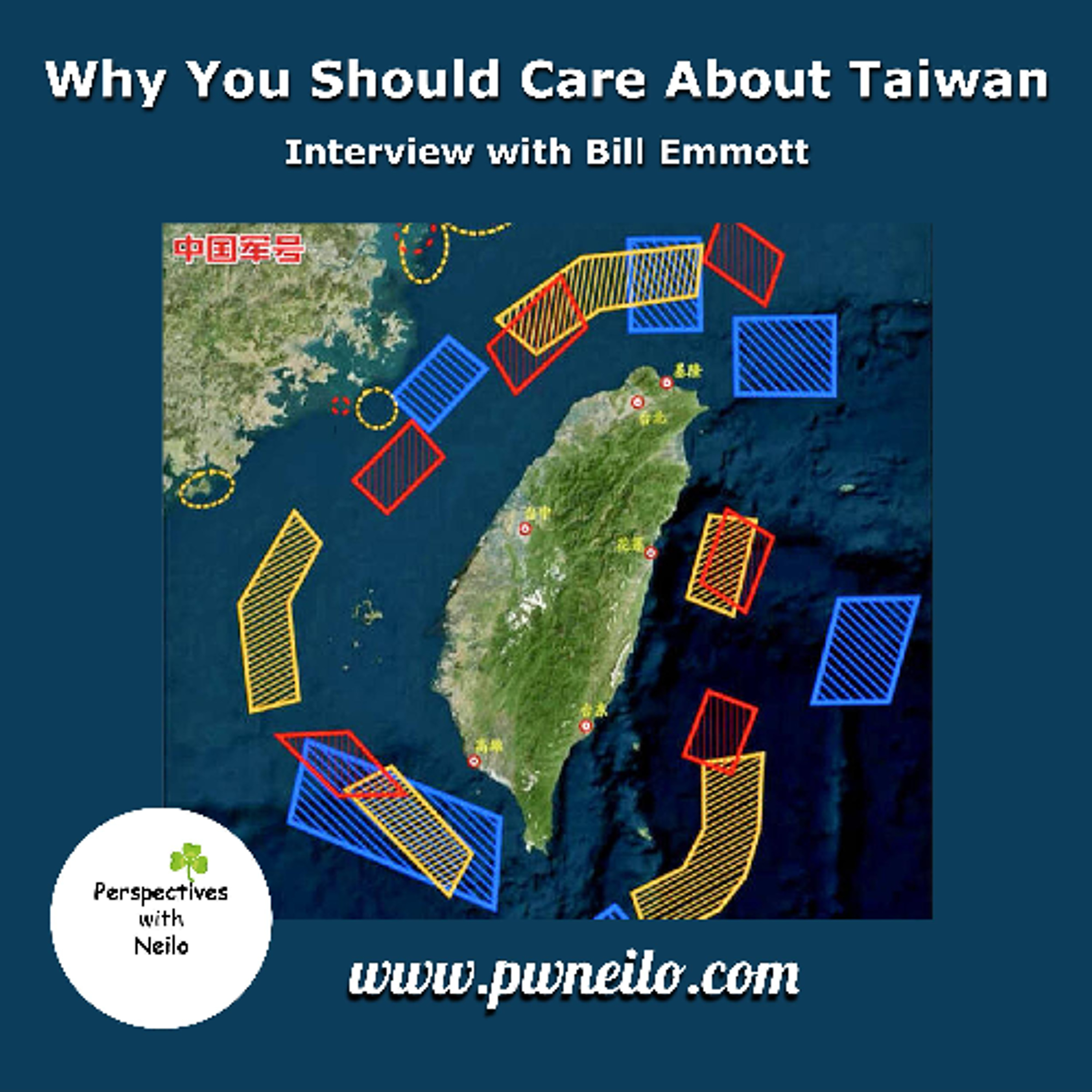
Why You Should Care About Taiwan - Interview with Bill Emmott
Our daily news feeds are dominated by active conflicts—but what about the tensions simmering just below the surface, with global stakes just as high? One of the most strategically significant, yet underreported flashpoints in the world is the Taiwan Strait—a 180km-wide body of international water separating Taiwan from mainland China. It's here that grey zone activity by the People’s Liberation Army (PLA) is escalating on a near-daily basis. In this episode of Perspectives with Neilo, we explore: The CCP’s claim on Taiwan—and why it’s historically weaker than Britain's claim on Ireland Taiwan’s democratic identity and its people’s overwhelming rejection of CCP rule The rise of grey zone warfare, military drills, and coercive tactics by China The impact of U.S. strategic ambiguity and why the U.S. might be pulled into a war with China Why Europe and the West must care about Taiwan’s future 🎙️ My guest is Bill Emmott—author of Deterrence, Diplomacy and the Risk of Conflict over Taiwan (2024), former editor-in-chief of The Economist, and one of the most respected voices in international affairs. We recorded this episode on the sidelines of the MacGill Summer School in July 2025. We dive deep into the risks of conflict, the future of U.S.-China relations, and how the world can avoid sleepwalking into a war over Taiwan. 🔗 Resources: Check out our blog at www.pwneilo.com for more information. Credits: Thumbnail map shows the locations of China’s military drills around Taiwan. The blue blocks represent war games held in 2022, the yellow and red blocks represent the “Joint Sword 2024” drills. Photo: Screen grab from the Chinese People’s Liberation Army Eastern Theater Command’s Sina Weibo account courtesy of the Taipei Times. Link in blog. Music: even darker variation by SamuelFJohanns via Pixabay Cinematic Piano Ambient Trailer Soundtrack by Open-Music-for-Videos via Pixabay #Taiwan #China #Geopolitics #TaiwanStrait #ForeignPolicy #BillEmmott #PerspectivesWithNeilo #USChinaRelations #PLA #CCP #MacGill2025 #GreyZoneWarfare #TaiwanMatters #GlobalSecurity #AsiaPacific
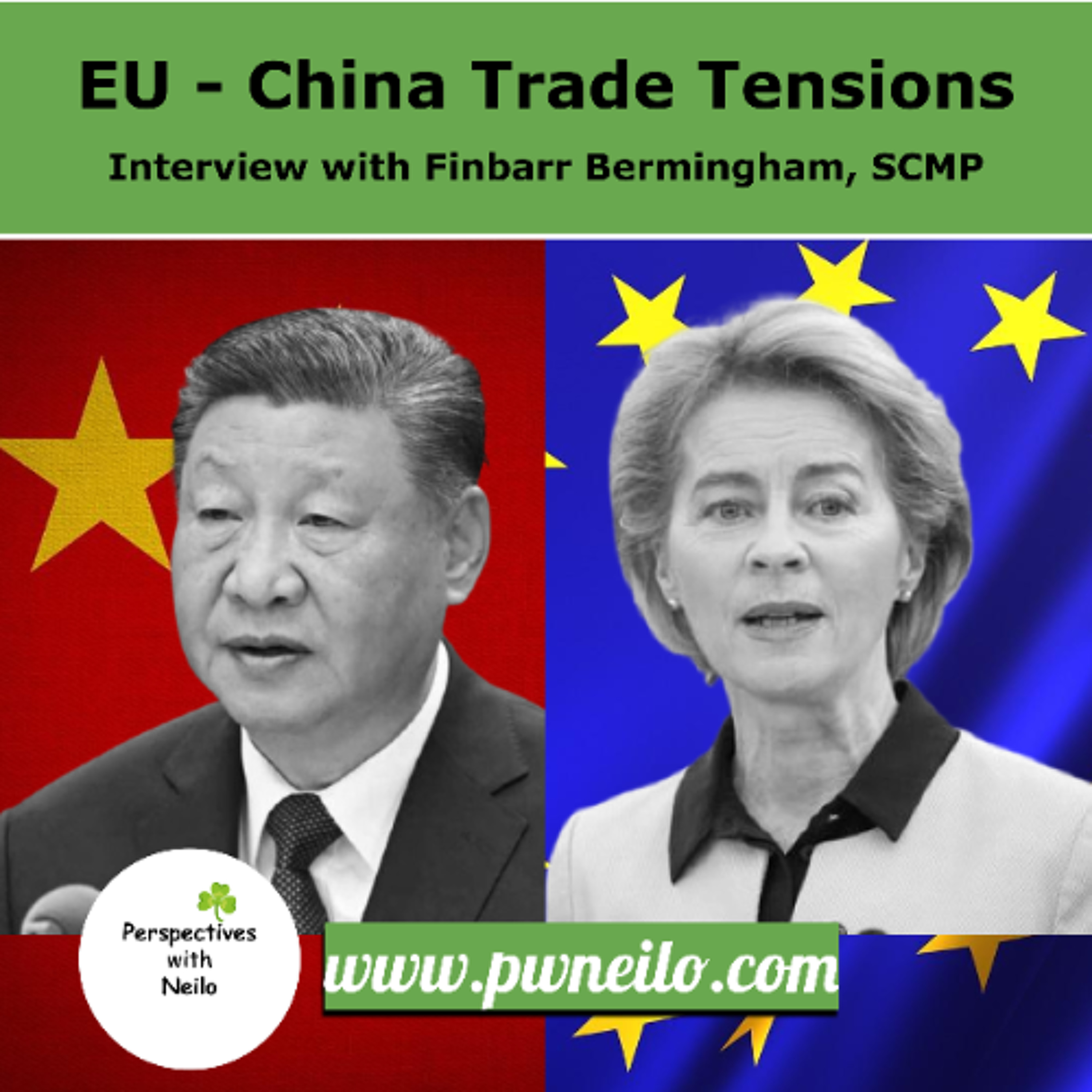
EU-China Trade Tensions - Interview with Finbarr Bermingham
The European Union’s trade deficit with China has doubled over the past decade, fuelling growing frustration in Brussels over what officials describe as a flood of low-cost Chinese products into the EU. Beijing’s continued support for Putin’s illegal invasion of Ukraine is also a major sticking point. The EU’s top diplomat, Kaja Kallas called China the “key enabler” of Putin’s war and urged Beijing to halt its support to Russia’s military-industrial base. In response, China has indicated that it does not want to see Russia lose the war. It was not surprising then that a summit in Beijing between top EU and Chinese leaders at the end of July produced few tangible results. Just ahead of the summit, I spoke with Finbarr Bermingham, Europe Correspondent for the South China Morning Post, to explore what’s really driving the tensions in EU–China trade. We discussed the growing trade imbalance and how China’s rare earth export controls and unwavering support for Russia are reshaping the relationship. . Date of Recording: Friday July 18th, 2025 . . #ChinaEU, #TradeTensions, #GeopoliticsPodcast, #RareEarths, #UkraineWar, #EUForeignPolicy, #ChinaRussia, #EUChinaSummit, #IPI, #FSR, #ForeignSubsidiesRegulation, #EU-ChinaNews, #rareearthmineralschina
Taiwan's Hot Summer - Recalls, Tariffs and Tensions
It has been a sweltering few months in Taiwan's political scene with partisanship intensifying in domestic politics, increased cross-strait tensions and unfolding US tariffs. At the end of June, I was fortunate to meet up with two of Taiwan's leading columnists and political analysts from the central city of Taichung. Courtney Donovan Smith is a staff columnist with the Taipei Times whose regular column, Donovan's Deep Dives shares in-depth analysis on everything about Taiwan's political scene and geopolitics. He is also the central Taiwan correspondent for ICRT FM Radio. Michael Turton is also a contributing columnist for the Taipei Times. His column, Notes from Central Taiwan provides incisive commentary informed by three decades of living in and writing about his adoptive country. I met up with Donovan and Michael to talk about the lead up to the Great Recall vote, President Lai's leadership, party dynamics, trade pressures and what it all means for Taiwan's future. Date of Recording, June 24th, 2025. #TaiwanPolitics, #CrossStraitTensions, #PresidentLai, #TaiwanPodcast, #USChinaTrade, #USTariffs, #TaiwanRecall, #PartisanPolitics, #EastAsiaPolitics, #TaiwanNews, #TaipeiTimes, #ICRT, #MichaelTurton, #CourtneyDonovanSmith, #NeiloPodcast, #AsiaGeopolitics
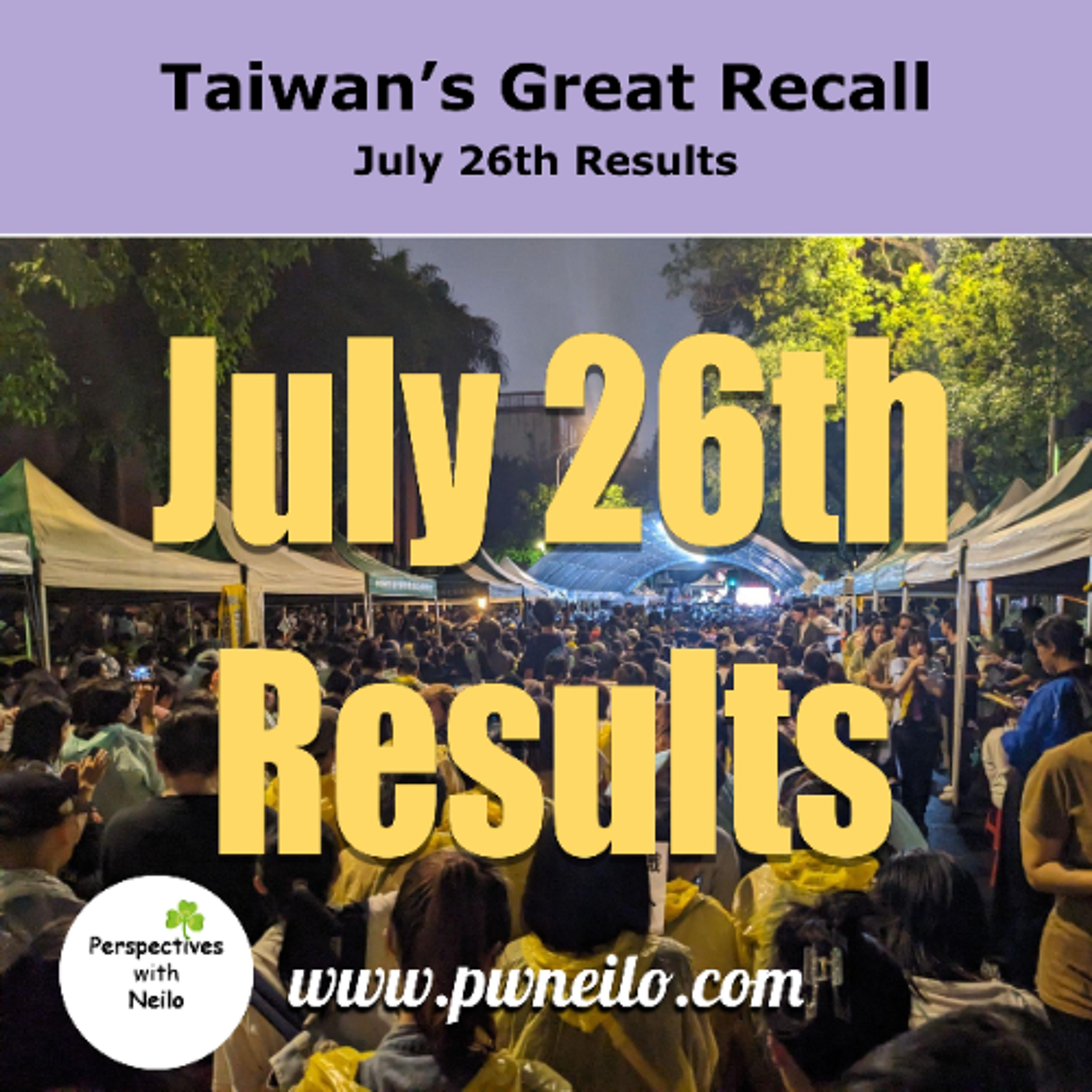
Taiwan's Great Recall - July 26th Results
On July 26th, nearly one-third of Taiwan’s electorate were eligible to vote in the first wave of what’s being called The Great Recall (大罷免) — a rarely used mechanism allowing voters to dismiss nationally elected lawmakers midterm. This marks the first time the process has been deployed on such a large scale with 24 lawmakers from the Kuomintang (KMT) or Chinese Nationalist Party on the ballot. The vote result is being closely watched as it has the potential to alter the balance of power in Taiwan’s parliament, which has seen months of political deadlock between the Democratic Progressive Party (DPP) government and the opposition KMT and their allies. In this episode we dive into the outcome of that vote. We break down the results, highlight the key takeaways, discuss the reactions and review how these results are likely to shape the remaining term of Taiwan’s current administration. #Taiwan, #GreatRecall, #KMTRecall, #DPP, #ChinaInfluence, #Taiwanelection, #RecallVote2025, #TaiwanDemocracy, #PoliticalPodcast, #Geopolitics, #ProDemocracy, #DemocracyInAsia, #TaiwanVotes, #CivicEngagement
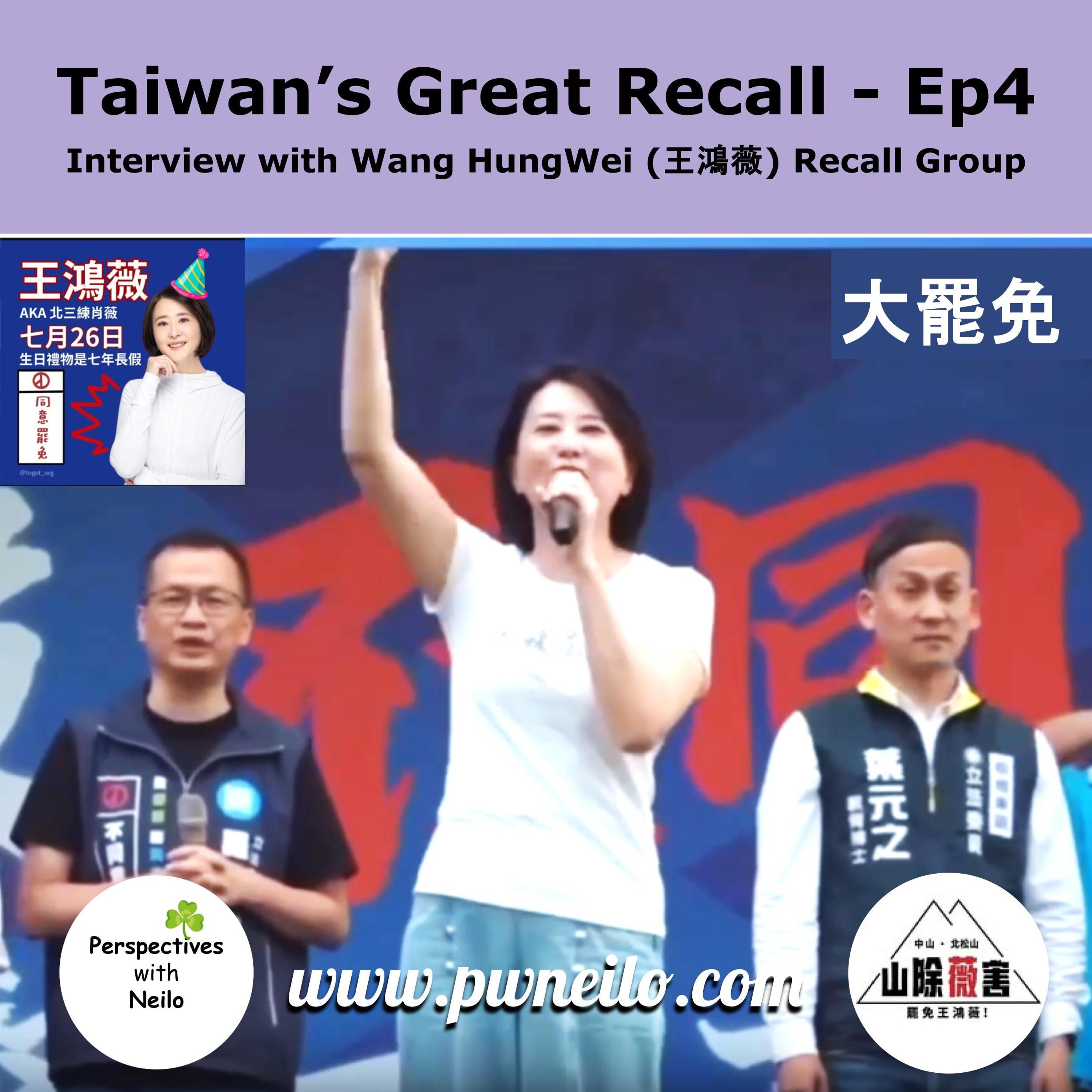
Taiwan's Great Recall - Ep4 - Interview with Wang Hung-wei Recall Group
Welcome to the fourth installment in our series on Taiwan’s Great Recall in which we aim to bring you perspectives from all sides of the debate at this important moment in Taiwan’s democratic journey. In our earlier episodes in this series, we spoke with a political scientist, a pro-recall grass roots organization and a Kuomintang or KMT (中國國民黨) representative. Feel free to go back and listen to those episodes which you can find on our blog at pwneilo.com or by searching for Perspectives with Neilo wherever you get your podcasts - and be sure to hit the Subscribe or Follow button as it would really help us a lot! As we explained in previous episodes, this unprecedented KMT recall stems from a public backlash against months of legislative gridlock, budgetary obstruction, and interference with Taiwan’s highest court—including accusations of collusion with the Chinese Communist Party. While the recall effort is mostly organized by civil society organizations, the ruling Democratic Progressive Party or DPP (民主進步黨) has recently begun to engage more visibly as the first voting day approaches. Taiwan’s President and DPP party leader Lai Ching-te (賴清德) has also been conducting a series of 10 speeches at various civic centers around Taiwan which media reports indicate is a likely effort to boost DPP turnout in the voting. Clearly, if enough KMT lawmakers can be unseated and the DPP can reclaim their seats in the follow on election, it would dramatically shift the balance of power in Taiwan’s parliament. One of the KMT candidates on the recall ballot for July 26th is Wang Hung-wei (王鴻薇). She is the deputy secretary general of the KMT legislative caucus and was last elected to the single seater District 3 in Taipei in 2024 with over 52% of the vote. Prior to becoming a national politician she was a Taipei City councillor and before that worked in Journalism. While Wang Hung-wei is no stranger to controversy, people we spoke to say they are most concerned about her close ties to China. They cite her visit to Beijing in 2024 with KMT caucus whip Fu Kun-Chi (傅崐萁) and their meeting with top CCP politburo official Wang Huning (王滬寧) - a meeting for which they were not able to obtain any readout. The reason many constituents worry about such meetings is because Wang Huning is credited with being the CCP’s leading ideologist since the 1980s and is also the leader of the organization tasked with what the CCP call the “peaceful reunification of Taiwan". At the end of June, I went along to a neighborhood gathering at a small cafe in the Songshan district of Taipei. It was organized by the Wang Hung-wei recall group. I was interested to find out more about the group, hear more about the concerns that were causing them to recall Wang Hong Wei and get their reactions to the questions and accusations from the anti-recall camp. Subscribe to Perspectives with Neilo for upcoming episodes and updates on Taiwan’s Great Recall. Follow us on Instagram and YouTube for exclusive behind-the-scenes content, short clips, and lots more. #TaiwanPolitics, #TaiwanRecall, #DemocracyInAction, #KMTRecall, #TaiwanElections, #RecallVote2025, #CivicEngagement, #TaiwanDemocracy, #perspectiveswithneilo, #politicalpodcast, #TaiwanPodcasts, #GrassRootsMovement, #ProDemocracy, #ElectoralReform, #CivilSocietyVoices, #StopCCPInfluence, #TaiwanVotes, #PeoplePower
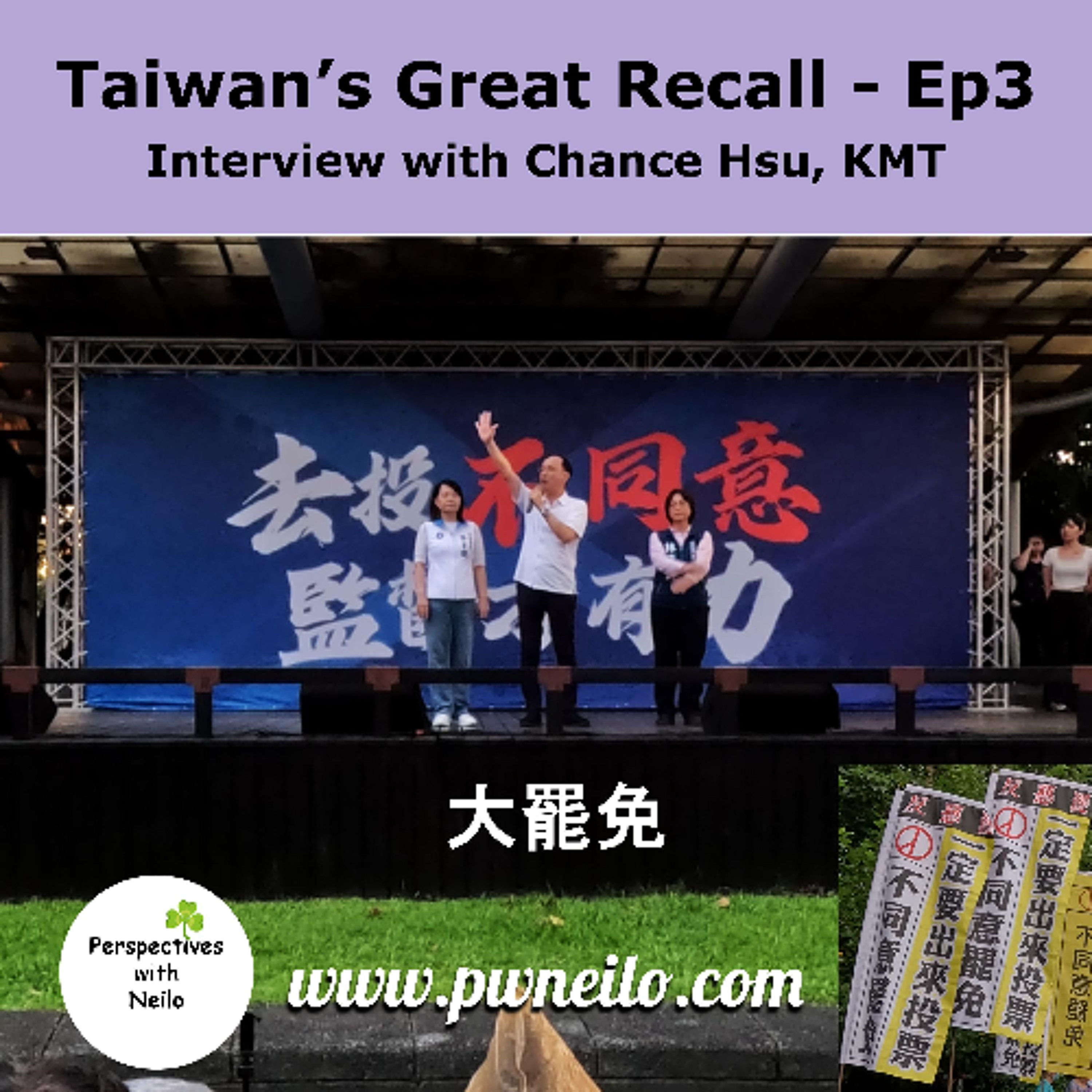
Taiwan's Great Recall - Ep3 - Interview with Chance Hsu, KMT
Welcome to the third installment in our series on Taiwan's Great Recall (大罷免) in which we aim to bring you perspectives from all sides of the debate at this important moment in Taiwan's democratic journey. As the days count down to July 26th, campaigning by both the pro and anti recall groups in Taiwan is gaining momentum. These recall campaigns are a result of a power struggle between different branches of Taiwan’s government - the Legislative Yuan which is controlled by the Chinese Nationalist Party or KMT with their smaller ally the Taiwan People’s Party, and the Executive Yuan which is controlled by the ruling Democratic Progressive Party or DPP. In the last election back in January of 2024, the KMT won 52 seats in the Legislative Yuan and combined with the 8 seats of the smaller Taiwan People’s Party as well as two independents, they command a clear majority over the DPP who currently hold 51 seats. The KMT and TPP have, according to critics, used this majority to assert and boost legislative power and have sought to block the ruling party’s agenda, freeze or cut budgets, undermine Taiwan's constitutional order and weaken efforts to bolster defense capabilities against growing Chinese military threats. Civil Society recall groups also express concerns with KMT lawmakers' frequent visits to China and meetings with senior officials in the Chinese Communist Party while the parliament was in session. They accuse the KMT of collusion with the CCP with some - like UMC founder and chip tycoon Robert Tsao going so far as to say that “Beijing wants to use the KMT to annex Taiwan” and calling the KMT - “China’s Trojan Horse” - that’s according to a report by news outlet Nikkei Asia. In this third episode in our series on Taiwan’s Great Recall, we speak with Chance Hsu (須予謙) who is the Assistant Director of International Affairs for the KMT. We sat down with him in Taipei in early July to hear the party’s official response to these recalls and understand why the KMT think they are politically motivated. We also wanted to hear the KMT’s response to the concerns raised by the different civic groups, talk about their controversial budget cuts and discuss the party’s connections with China. Date of Recording: July 1st, 2025 Post Interview Update: Taiwan’s Central Election Commission announced on July 2nd that recalls for two more KMT lawmakers will take place on August 23rd. This brings the total to 26 KMT lawmakers now facing potential removal. Subscribe to Perspectives with Neilo for upcoming episodes featuring additional content on Taiwan’s Great Recall. Follow us on Instagram and YouTube for exclusive behind-the-scenes content, short clips, and lots more. #TaiwanRecall, #TaiwanGreatRecall, #TaiwanPolitics, #KMTRecall, #TaiwanDemocracy, #DPPvsKMT, #TaiwanLegislativeYuan, #RecallMovement, #TaiwanNews, #TaiwanNow, #TaiwanPodcast, #July26Recall, #TaiwanVotes, #CCPInfluence, #RobertTsao, #TaiwanCivilSociety, #DefendTaiwan, #KMTChinaTies, #DemocracyInAsia, #CivicActivism #GeoPolitics
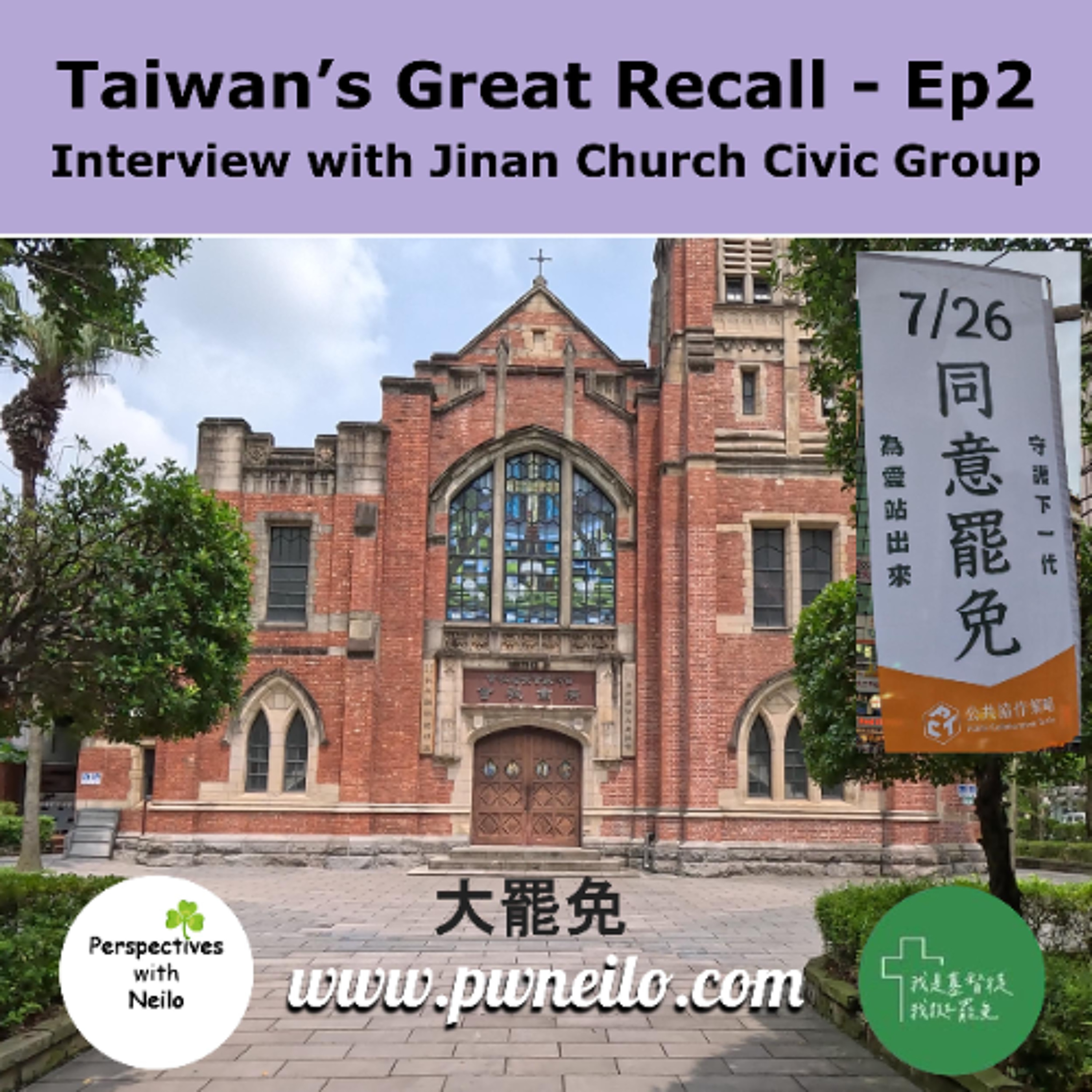
Taiwan's Great Recall - Ep2 - Interview with Jinan Church Civic Group
Welcome to the second installment in our series on Taiwan’s Great Recall in which we aim to bring you perspectives from all sides of the debate at this important moment in Taiwan’s democratic journey. As we explained in our first episode, since the last election in January of 2024, Taiwan’s parliament or Legislative Yuan has been controlled by the Chinese Nationalist Party (KMT) and their smaller ally the Taiwan People’s Party who according to opponents have sought to block the ruling party’s agenda, freeze or cut budgets, undermine Taiwan's constitutional order and weaken efforts to bolster defense capabilities against growing Chinese military threats. The KMT insist that they are seeking to strengthen and protect Taiwan’s democracy and say these recalls are politically motivated. They accuse the ruling Democratic Progressive Party (DPP) of instigating the recall campaign, of mobilizing civic groups and attempting to use recalls to eliminate the opposition. On a Friday afternoon in early June, I met up with members of Public Collaborative Tactics, a grassroots pro-recall group based at Jinan Presbyterian Church—just steps away from the Legislative Yuan in Taipei. I was really interested to find out how the group came together and what motivates their cause. I also wanted to hear their thoughts on the Chinese Nationalist Party or KMT and if they had particular concerns about the party’s behavior. I also asked if they had connections with any political parties and how they were funded - but to begin the group introduced themselves and then told me how they all came together. Subscribe to Perspectives with Neilo for upcoming episodes featuring interviews with KMT officials, protest leaders, and more. Follow us on Instagram and YouTube for exclusive behind-the-scenes content, short clips, and lots more. #TaiwanPolitics, #TaiwanGreatRecall, #DemocracyInAsia, #KMTvsDPP, #CivicActivism, #Taiwan2024, #PerspectivesWithNeilo, #PwNeiloPodcast, #TaiwanNews, #RecallMovement, #TaiwanCivicGroups, #JinanChurch, #Geopolitics
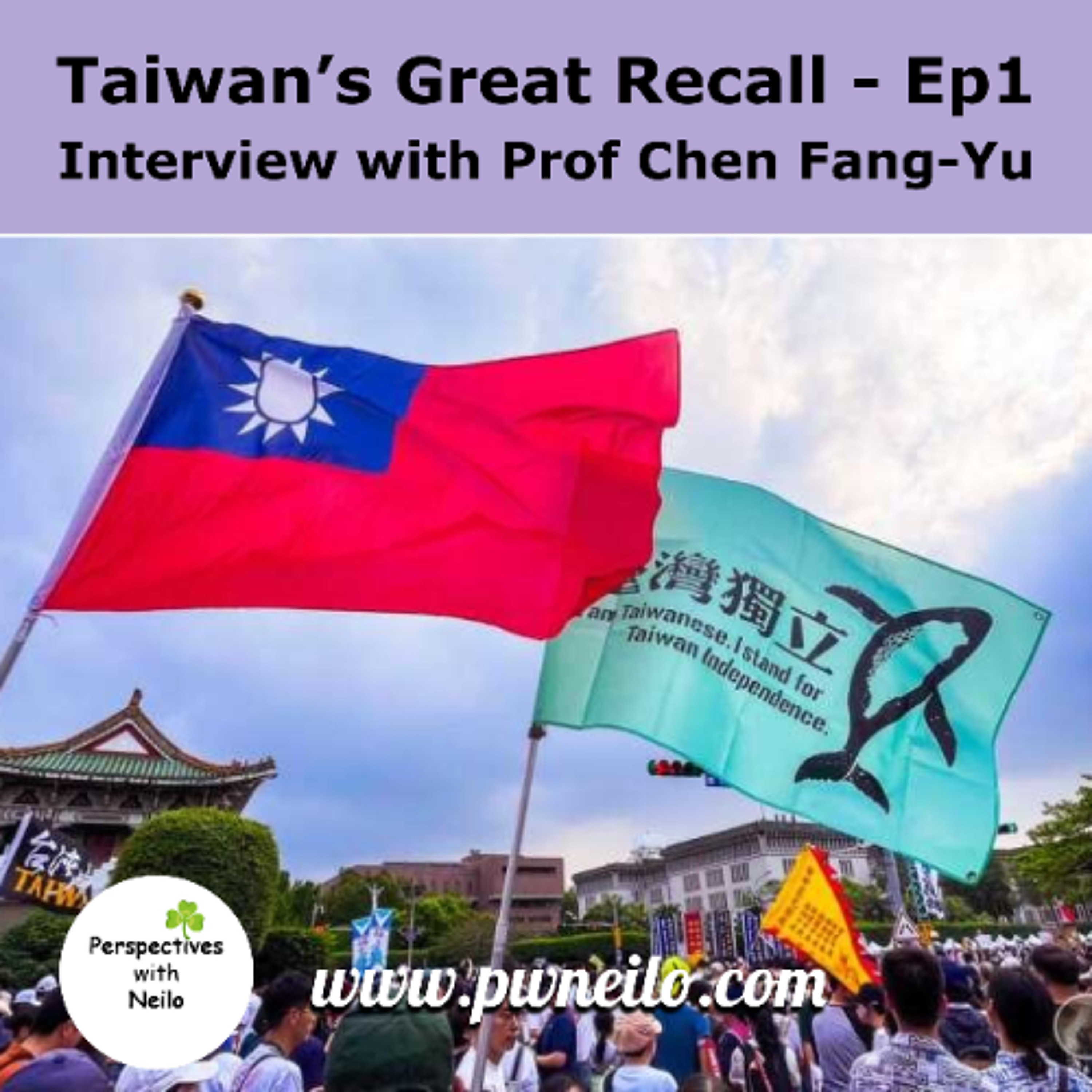
Taiwan's Great Recall - Ep1 - Interview with Prof Chen Fang-Yu
In this episode we kick off the first part in a series of podcasts on Taiwan’s Great Recall in which we aim to bring you perspectives from all sides of the debate at this important crossroads in Taiwan’s democratic journey. As we explained in our previous episode on President Lai’s first year in office, while his party, the Democratic Progressive Party (DPP) won the presidential vote in January of 2024, they failed to maintain a majority in the Legislative Yuan or parliament. As a result, the parliament has been controlled by the Chinese Nationalist Party (KMT) and their smaller ally the Taiwan People’s Party (TPP) who according to opponents have sought to block the DPP’s agenda, freeze or cut budgets, undermine Taiwan's constitutional order and weaken efforts to bolster defense capabilities against growing Chinese military threats. According to a report by Citizen Congress Watch (CCW), a Taiwanese NGO engaged in parliamentary monitoring, in the first session of the current parliament only a fraction of legislative proposals successfully passed the readings, reflecting low legislative efficiency as a result of the divisive partisan infighting that has taken precedence over advancing policies for public benefit. The KMT insist that they are seeking to strengthen and protect Taiwan’s democracy and say these recalls are politically motivated. They accuse the ruling DPP of using recalls to eliminate the opposition. However, not all of the electorate would appear to agree and a mass recall effort led by civic groups has been underway for months. On June 20th, Taiwan’s election commission announced a recall vote for 24 KMT lawmakers - that’s around one quarter of the parliament's members - all from the main opposition party. The date for the recall vote has been set for July 26th. In this first episode in our series on Taiwan’s Great Recall, we talk to Professor Chen Fang-Yu (陳方隅) from the Department of Political Science at Soochow University (東吳大學) in Taipei to understand; - The history of recall elections in Taiwan and the recall process, - What factors have led to this latest and unprecedented mass recall effort, - How Beijing's military pressure on Taiwan and relationship with individual lawmakers is influencing attitudes on the recall, - Plus much more! Photocredit: Instagram: double_lucky_ #TaiwanPolitics, #TaiwanRecall, #GreatRecall2025, #DemocracyInAsia, #TaiwanPodcast, #PodcastSeries, #PoliticsPodcast, #CrossStraitRelations, #ProtectDemocracy, #大罷免
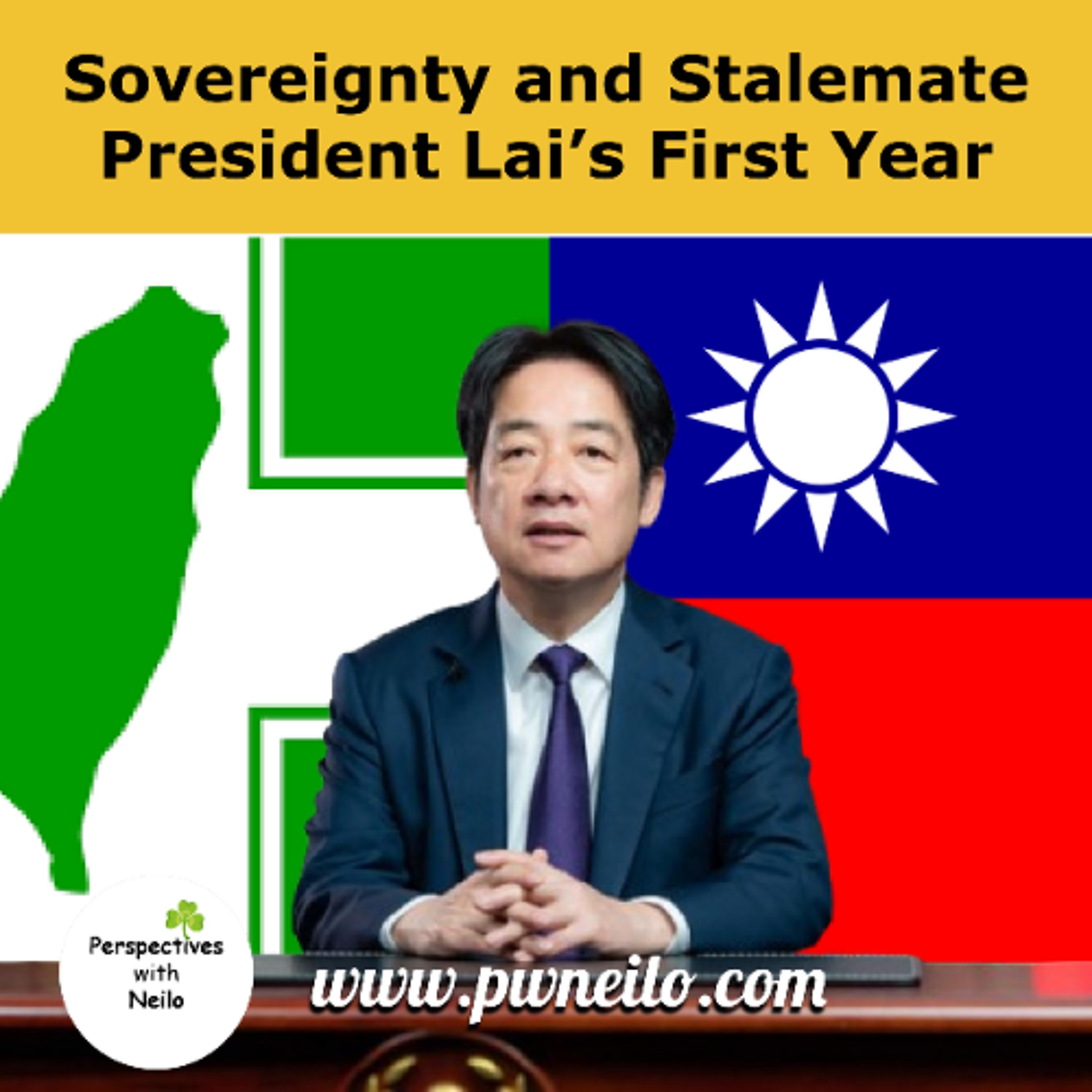
Sovereignty and Stalemate - President Lai's First Year
These are challenging times for many world leaders, and no less so for the democratically elected leader of Taiwan, Lai Ching-te (賴清德). Lai Ching-te or William Lai was inaugurated as the President of Taiwan on May 20th, 2024. He succeeded Tsai Ing-wen and his election to the presidential office marks the first time for his party, the Democratic Progressive Party (DPP)(民主進步黨) to hold this office for three consecutive terms. While the DPP won the presidential vote, they failed to maintain a majority in the Legislative Yuan or parliament. As a result, the parliament has been controlled by the Chinese Nationalist Party (中國國民黨) or Kuomintang (KMT) and their smaller ally the Taiwan People’s Party (TPP) (台灣民眾黨) who have sought to block Lai’s agenda, freeze or cut budgets including defense programs and interfere with operations of the country’s top court. While the KMT insist that they are seeking to strengthen and protect Taiwan’s democracy, the general public would not appear to agree and a mass recall effort is well underway which could unseat up to 20 KMT lawmakers and change the balance of power for Lai’s administration. This is a topic we will deal with in more detail in upcoming episodes. In the area of cross strait relations, President Lai has adopted a stronger rhetoric that characterises Taiwan as a de facto sovereign state, and has moved away from the more cautious tone of his predecessor. In a speech on March 13th, 2025, President Lai publicly characterized China as a "foreign hostile force" trying to "annex Taiwan and stamp out the Republic of China," a phrasing unprecedented for a Taiwanese president. In response Beijing has repeatedly described Lai as a dangerous "separatist" and increased Military Drills and Grey-Zone Operations around Taiwan - including conducting large-scale "blockade-style military exercises" in response to his major speeches. In this episode, I chat with William Yang, Senior Northeast Asia Analyst at the International Crisis Group — an independent, non-profit NGO dedicated to preventing and resolving deadly conflict. We dive into William’s recent article on President Lai’s first year in office, and examine how his administration has responded to mounting pressure from China. We also look at Taiwan public opinion and the challenges President Lai faces in navigating political tensions with the opposition KMT and TPP. #Taiwan #TaiwanPolitics #Geopolitics #InternationalRelations #LaiChingTe #WilliamLai #TaiwanPresident #DemocraticProgressiveParty #DPP #TaiwanSovereignty #CrossStraitRelations #ChinaTaiwan #TaiwanSovereignty #ChinaMilitaryDrills #Kuomintang #KMT #TaiwanPeoplesParty #TaiwanPolitics2025 #TaiwanRecall #TaiwanElections #TaiwanProtests #PodcastEpisode #PoliticalPodcast #AsiaPodcast #CurrentAffairsPodcast #InternationalCrisisGroup
Resist Transnational Repression, Defy Totalitarianism
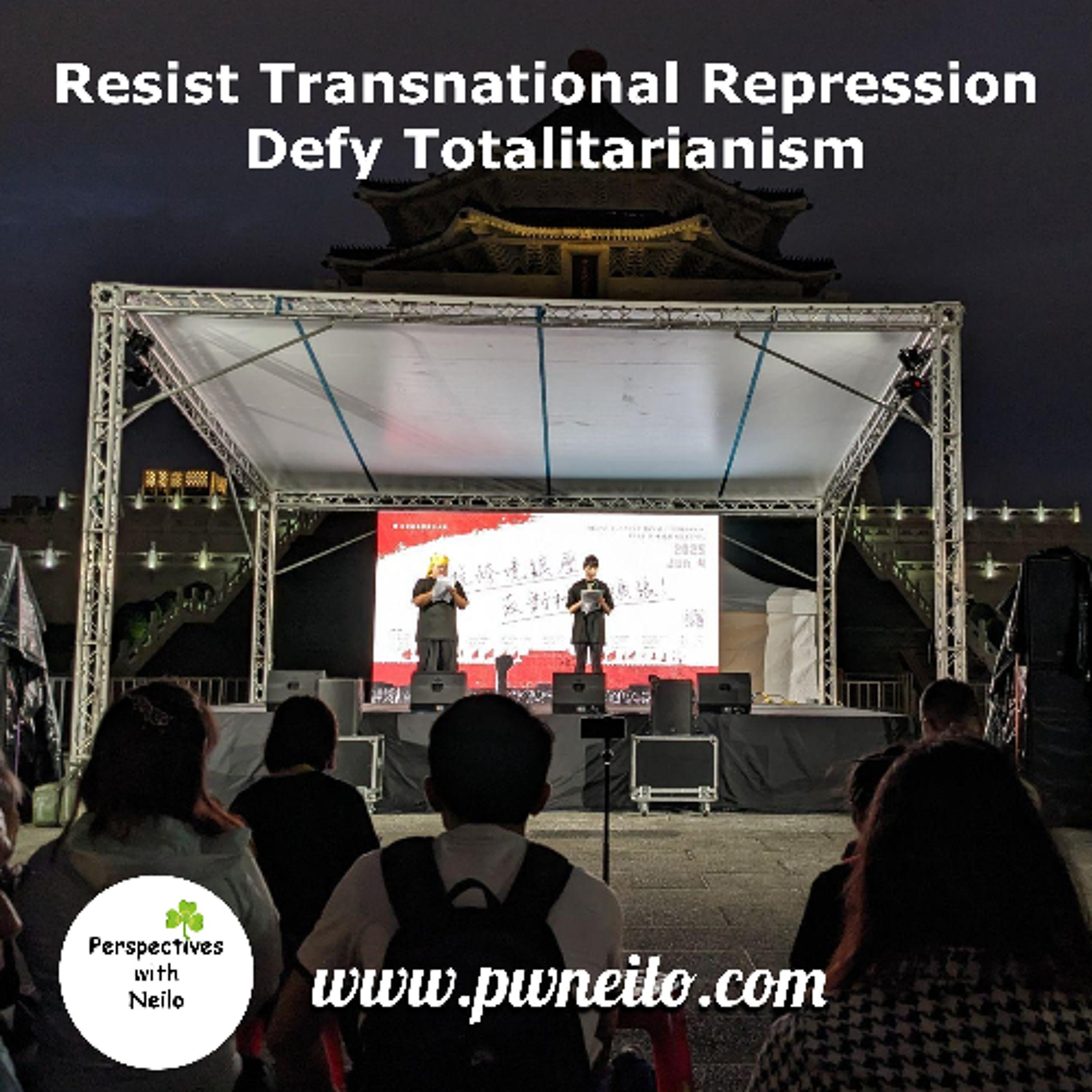
On June 4th 1989, student-led demonstrations which had been brewing across China for a few months were violently crushed by the Chinese Communist Party who declared martial law and sent their troops onto the streets of Beijing to end the protests Estimates of the death toll vary from several hundred to several thousand, with thousands more wounded. While the massacre has been downplayed and deleted from public record in China, it has been commemorated outside of China in the intervening years. Prior to 2020 the biggest Tiananmen Commemorations used to take place in Victoria Park in Hong Kong. However, after the introduction of the National Security Law on June 30th, 2020 and the subsequent CCP clamp down on democracy - any hint of remembrance has been rigorously stamped out and forbidden. In nearby Taiwan where freedom and democracy prevail, the Tiananmen Square Massacre is commemorated each year on June 4th. However, this year, even Taipei was not free from threat. A number of Taiwan’s news outlets reported that eight government offices, including the Presidential Office and Executive Yuan received bomb threats by email on the anniversary of the Tiananmen Square crackdown. The messages warned of attacks if memorial events were held. Police traced the sender’s IP address to the U.S.but it is expected the real location was masked through a VPN and searches of government buildings did not yield any suspicious devices. Despite the threats and the inclement weather, the Tiananmen commemoration still went ahead in Taipei. According to local media, about 3,000 people gathered for a candlelight vigil organized by the New School for Democracy and other human rights groups. The event took place on Democracy Boulevard outside Chiang Kai-shek Memorial Hall, with the theme "Resist Transnational Repression, Defy Totalitarianism." It featured brief speeches by human rights advocates from Taiwan, Tibet, China and Hong Kong, as well as other nations. This is our report from the event. #TiananmenSquare #TiananmenMassacre #June4thMassacre #1989Protests #BeijingMassacre #CCPViolence #TiananmenCrackdown #RememberJune4 #HumanRights #FreeSpeech #DemocracyNow #FreedomMatters #TransnationalRepression #StandWithHongKong #StandWithTaiwan #ChinaCensorship #NeverForgetTiananmen #HistoryPodcast #HumanRightsPodcast #ChinaPodcast #PoliticalPodcast #PodcastEpisode #TrueStoriesPodcast #FreedomOfSpeech
Trump Taiwan and the Ukraine Pivot
Since the start of President Trump’s second term—and especially following the unprecedented Oval Office confrontation last February between Trump, J.D. Vance, and Ukrainian President Zelensky—Washington’s policy on Ukraine has undergone a dramatic shift. While this realignment has alarmed many of America’s traditional European allies, the ripple effects have been felt far beyond Europe, including in Taiwan. Despite the absence of a formal treaty, U.S. support has long been a cornerstone of Taiwan’s security strategy in deterring invasion by China who claim Taiwan as part of its sovereign territory despite having never controlled or occupied it. In this episode, we speak with Marcin Jerzewski, Head of the European Values Center in Taipei about how Taiwan is interpreting Washington’s evolving stance on Ukraine. We explore whether President Trump’s territorial rhetoric and trade initiatives are fueling skepticism in Taiwan—and how the Chinese Communist Party is leveraging the current situation to erode Taiwan’s trust in the US. #Trump2025 #Taiwan #UkraineWar #USForeignPolicy #Geopolitics #ChinaTaiwan #IndoPacific #TaiwanStrait #PodcastEpisode #PoliticsPodcast

Computex 2025 - AI Next
Computex 2025 took place during the week of May 20th in the vibrant tech hub of Taipei, Taiwan. Widely regarded as one of the world’s premier computer and technology expos, Computex continues to set the stage for what’s next in the industry. This year’s theme, “AI Next,” highlighted the growing reach of artificial intelligence—from the cloud, to the edge, and into everyday devices and applications. There was particular focus on AI & Robotics, Next-Gen Tech and Future Mobility. Areas like Gaming, Drones, Datacenter Technology and Business Solutions also featured strongly. With over 1,400 exhibitors from 34 countries, the event featured the biggest names in tech with industry leaders taking to the stage for keynote announcements, while the exhibition halls buzzed with the unveiling of their latest products. There was also a big emphasis on Innovation and Startups with the InnoVEX 2025 startup showcase celebrating its 10th anniversary this year. In this episode, we bring you the pulse of the event. You'll hear directly from entrepreneurs and innovators shaping the future of technology. We also take a look at some of the new devices and gadgets from across the 80 thousand square meters of exhibits, sample some of the keynotes and examine why an increasing number of European companies and countries are forging strong ties with Taiwan. Music: Uplifting by Plastic3 used under license Tags: #COMPUTEX2025 , #InnoVEX2025 , #TechEvents2025 , #TaiwanTech , #COMPUTEXTaipei , #AIInnovation , #StartupShowcase , #SemiconductorTech , #TechTrends2025 , #HardwareStartup , #DeepTech , #FutureOfAI , #TechCollaboration , #SmartTech2025 , #GlobalTechHub
Friends of Steel
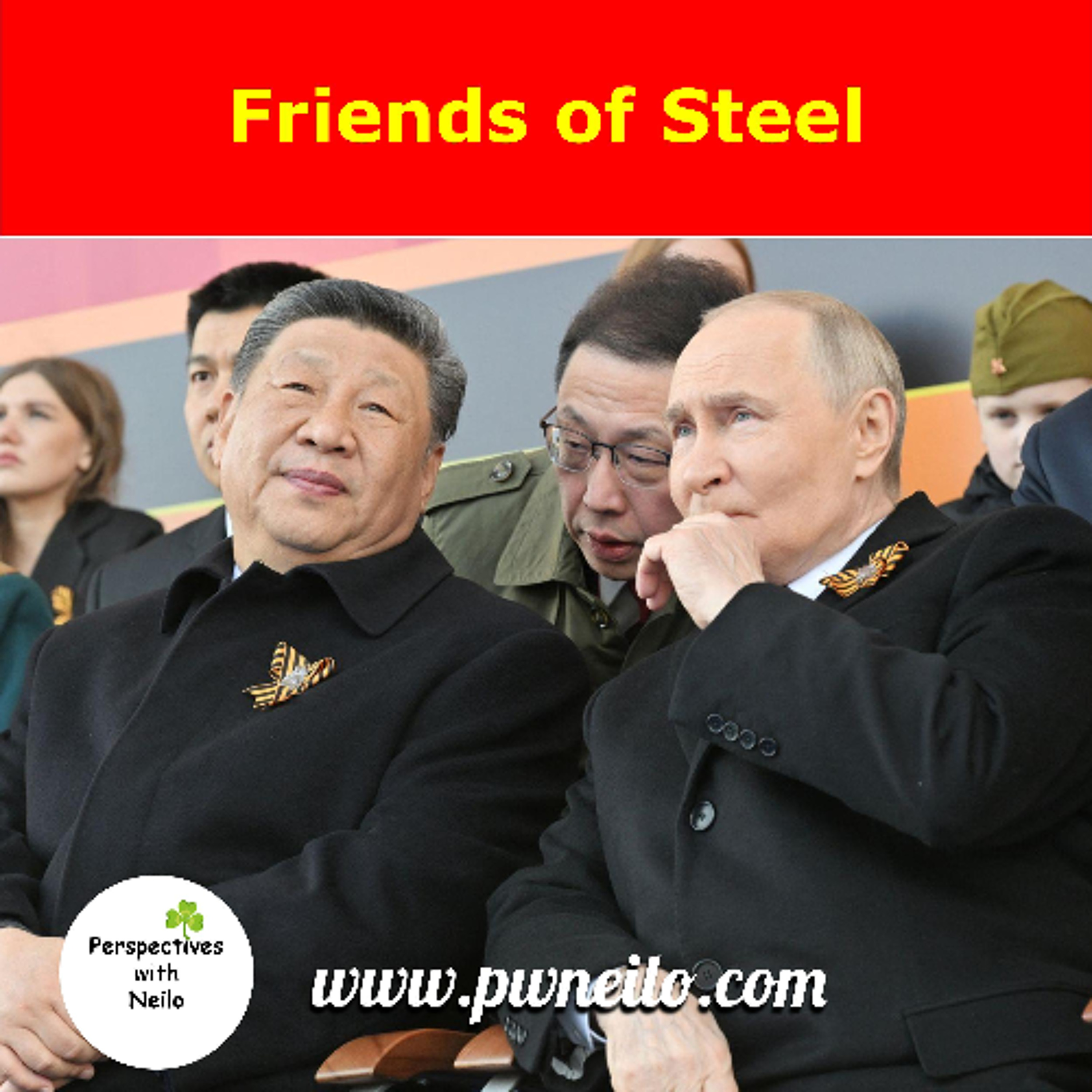
May 9th marked the 80th anniversary celebrations of the Allied victory over Nazi Germany in World War II. Russia also celebrated their version of Victory Day - an event steeped in national pride and symbolism - with a military parade in Red Square in front of an audience which included 29 visiting world leaders. As U.S. President Donald Trump seeks a deal to end Russia's war in Ukraine, the U.S. and Europe were watching closely to see if President Putin would offer a different message this year after resisting White House efforts to secure a ceasefire so far. In this episode of Perspectives with Neilo, we explore Russia's recent Victory Day celebrations. We review the increased attendance of foreign leaders at this year's military parade in Moscow as well as key moments from President Putin's speech. We also examine the growing alignment between China and Russia, including Xi Jinping's attempt to connect the Victory Day commemoration to what he calls "the 80th anniversary of Taiwan's return" to China. And finally, we unpack how this year's events are being interpreted across Europe and beyond, especially against the backdrop of the ongoing war in Ukraine and increasing international calls for a ceasefire. Music Credits: Title music: Uplifting by Plastic3 used under license Certificate number: 463851b2-7fe3-486b-aabf-64f4dea6047f/4827 Audio transition: Sound Soul (This Logo Reveal) by Diamond_Tunes via Pixabay Tags: #geopolitics, #china, #CCP, #Taiwan, #VictoryDay2025, #RussiaParade, #PutinSpeech, #RussiaChinaRelations, #UkraineWar, #WorldPolitics, #XiJinping, #TaiwanTensions, #DonaldTrump, #CeasefireCalls, #MoscowParade, #EUResponse, #InternationalRelations, #GlobalSecurity, #ColdWarEchoes, #AuthoritarianAlliance, #RedSquare2025, #MilitaryParade, #Podcast, #CurrentAffairsPodcast, #PoliticalPodcast, #GlobalNewsPodcast
A Strait Blockade is not Stable Trade
As the global economy continues to grapple with the roller coaster uncertainties of President Donald Trump's tariff war, trade relations between the world's two largest economies - the United States and China - have reached a breaking point. A series of tit-for-tat tariff escalations has pushed their economic ties to the brink, with ripple effects being felt far beyond their borders. While many smaller nations scramble to shield themselves from the fallout of this high-stakes trade conflict, China is positioning itself as a stabilizing force - seeking to capitalize on global dissatisfaction with U.S. trade policy and promote its own image as a force for stable trade in the world. But how does China's claim hold up under scrutiny ? In this episode of Perspectives with Neilo, we unpack China's performance as a global trading partner, explore its engagement with the World Trade Organization, and examine whether its claims of being a stabilizing force in global trade hold any water or just mask deeper strategic ambitions. Date of Recording: April 21st, 2025 Music Credits: Title music: Uplifting by Plastic3 used under license Certificate number: 463851b2-7fe3-486b-aabf-64f4dea6047f/4827 Audio transition: Sound Soul (This Logo Reveal) by Diamond_Tunes via Pixabay #geopolitics, #globaltrade, #china, #USChinaRelations, #Tradewar, #Trump2024, #ChinaPolitics, #worldEconomy, #CCP, #EconomicPower, #Taiwan, #Taiwanstrait, #military, #WTO, #Podcast, #Podcastrecommendations #台灣海峽, #貿易戰
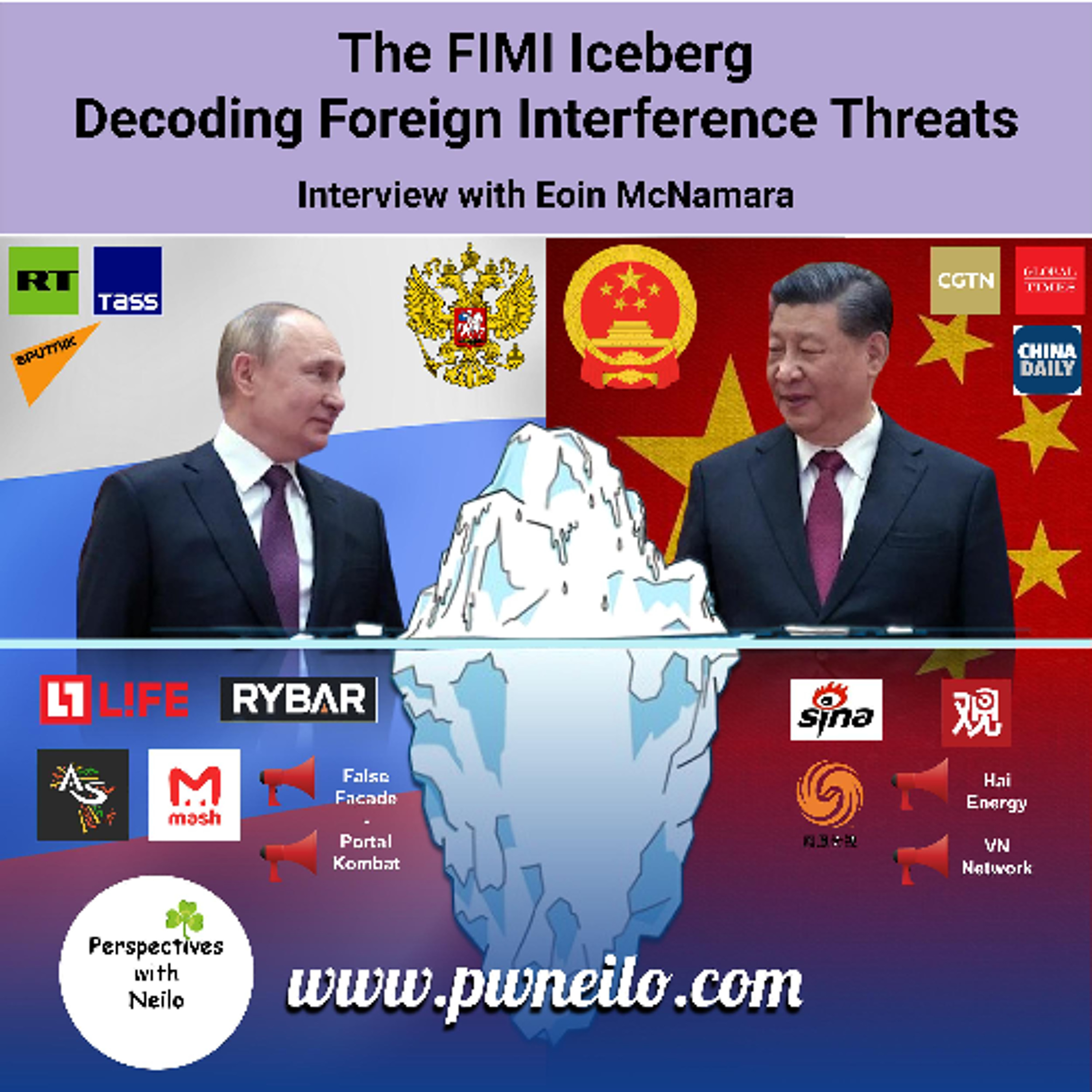
The FIMI Iceberg - Decoding Foreign Interference Threats
According to data gathered by the European External Action Service (EEAS), last year over eighty countries and over two hundred organizations were targets of attacks from Foreign Information Manipulation and Interference - or FIMI. These attacks targeted everything from major international events like the Paris Olympics, to national elections, regional conflicts and local protests. The main instigators of these influence operations were China and Russia and they use FIMI to manipulate public opinion, fuel polarization and interfere with democratic processes within the EU and worldwide. They employ a multi-layered strategy using both state and non-state actors to exert long term influence. According to the EEAS report, "their aim is to destabilize societies, damage democracies, drive wedges between different groups and undermine the EU's global standing". The EU's High Representative for Foreign Affairs and Security Policy, Kaja Kallas says "FIMI is not merely a tool for disseminating deceptive narratives. It is an integral part of military operations used by foreign states to lay the way for kinetic action on the ground," and "is a major security threat to the EU." And it would appear that no country is immune. Even a small neutral country like Ireland was mentioned thousands of times by Russian and Chinese influence networks during a monitoring period from September 2023 to September 2024 according to an in-depth study carried out by Norway's Defense Research Strategy. In this episode of Perspectives with Neilo, we chat with Eoin McNamara, Research Fellow at the Finnish Institute of International Affairs in Helsinki to unpack some of the key findings in these reports. We discuss what motives lie behind these manipulation and interference campaigns as well as some examples of recent case studies and their impact. In addition we talk about the vulnerability of western society to such interference and what democracies can do to protect their citizens from such nefarious interference in the future. Music Credits: Title music: Uplifting by Plastic3 used under Tribe of Noise license Break: Shining Bright Dusk by FreeSoundServer via Pixabay #FIMI, #InformationWarfare, #Geopolitics, #Cybersecurity, #Disinformation, #DigitalWarfare, #ForeignInterference, #Propaganda, #CyberThreats, #ElectionInterference, #ChinaInfluence, #RussiaInterference, #HybridWarfare, #ChinesePropaganda, #AuthoritarianInfluence, #EUDemocracy, #EuropeanSecurity, #EUPolitics, #EUForeignPolicy, #DefendDemocracy, #IrelandSecurity, #IrelandPolitics, #NeutralIreland, #SocialMediaManipulation, #DigitalPropoganda, #FakeNews, #CyberTactics, #Podcast, #PodcastEpisode
Scaring the Monkey - Decoding China's Response to Trump
Recently, international headlines have been dominated by US President Donald Trump's trade tariffs and his challenge to the rules-based international order. Trump has made bold threats, including seeking control of Greenland, the Panama Canal, and Gaza, while aligning with Russia and withdrawing support for Ukraine. His escalating tariff policies are raising doubts about long-standing alliances and the future of the global trading system, leaving many allies—including the EU—unsure of what comes next. Meanwhile, China's position in the global economy remains crucial. As the world's second-largest economy, how does China view these recent developments? In this episode, we speak with Alexander Davy, Research Analyst at MERICS, about: - China’s perspective on the shifting geopolitical landscape, - The potential impact of recent events on China’s relationship with the EU, - How China’s struggling domestic economy may shape its future path. #Geopolitics, #TradeTariffs, #USChinaRelations, #GlobalTrade, #DonaldTrump, #ChinaEU, #InternationalRelations, #GlobalEconomy, #ForeignPolicy, #EUPolitics, #ChinaEconomy, #GEOpoliticalLandscape, #TradeWars, #USPolitics, #ChinaPolitics
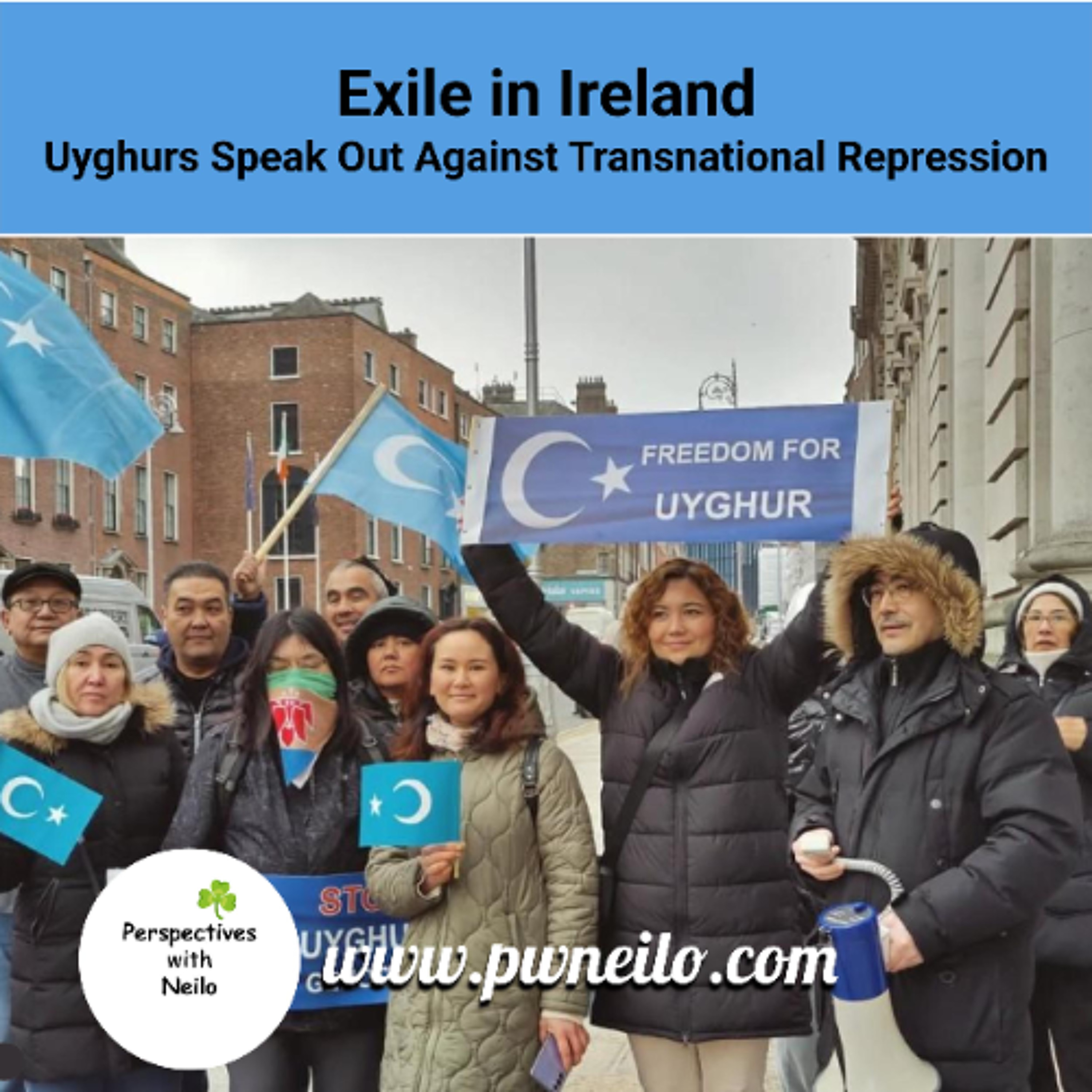
Exile in Ireland - Uyghurs Speak Out Against Transnational Repression
In mid-February, the communities of Uyghurs and Hong Kongers living in Ireland wrote an open letter to the Taoiseach Micheál Martin and Tánaiste Simon Harris highlighting concerns for their safety and drawing urgent attention to the pattern of Chinese state surveillance and harassment of members of their diaspora communities. The letter was written in advance of Chinese Foreign Minister Wang Yi's visit to Ireland and requested the Irish Government to adopt a human-rights-based approach in their discussions with Chinese officials, as well as demanding concrete actions with respect to acts of transnational repression, genocide and politically motivated imprisonment perpetrated by the People's Republic of China (PRC). We spoke to Nuria Zyden, the Director of the Irish Uyghur Cultural Association about the Uyghur community in Ireland, the pain and longing of being separated from family and what lies behind her community's concerns for their safety which she outlined in the recent letter to the Irish Government. #UyghurRights #HumanRights #TransnationalRepression #ChineseSurveillance #DiasporaVoices #GenocideAwareness #HongKongersInIreland #UyghurCommunity #PoliticalPrisoners #ChinaRepression #IrelandHumanRights #MicheálMartin #SimonHarris #WangYiVisit #UyghurCulture #PoliticalFreedom #GenocidePrevention #UyghurSolidarity #ChineseOppression #RightsForUyghurs #UN #UNHCR #OHCHR
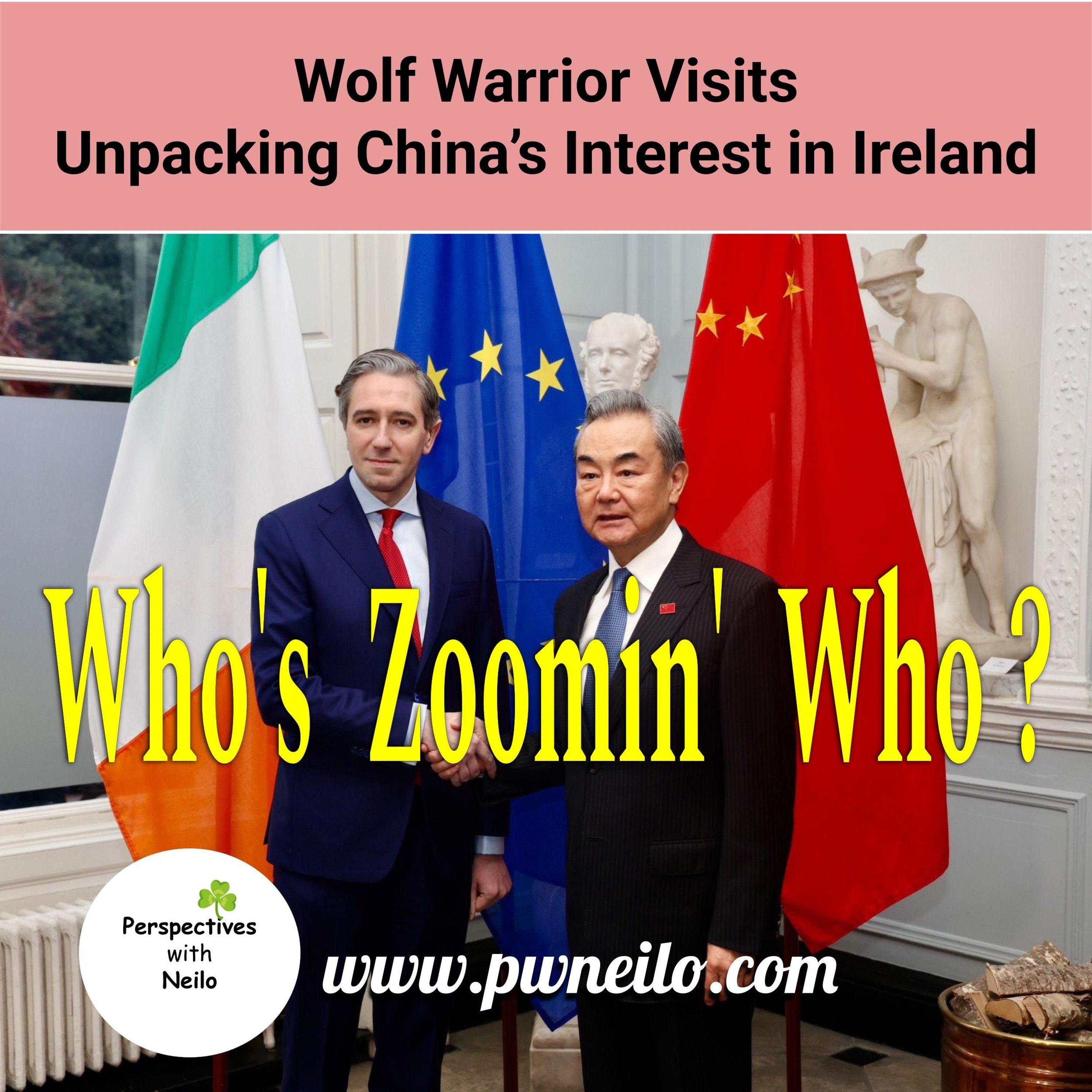
Wolf Warrior Visits - Unpacking China's Interest in Ireland
On February 16th and 17th, China’s Foreign Minister, Wang Yi visited Ireland. Mr Wang is the second senior Chinese official to visit Ireland in just over a year, following a visit by Premier Li Qiang in January of 2024. In this episode of Perspectives with Neilo, we dive deep into China’s growing interest in Ireland and how this dynamic intersects with broader EU-China relations. We examine how the rise of protectionist policies under US President Donald Trump coupled with China’s desire to reshape the international rules-based world order creates challenges for Ireland who find themselves navigating a complex geopolitical terrain. We examine the ripple effects of these global power dynamics on frontline democracies like Taiwan and Ukraine and analyze whether Ireland could become a new battleground in this struggle for global influence. Tune in to this episode of Perspectives with Neilo as we take a closer look at the circumstances surrounding the latest Chinese visit to Ireland and what factors could be prompting this uptick of interest in a turbulent geopolitical landscape. #China #Ireland #EUChinaRelations #Geopolitics #Democracy #Taiwan #Ukraine #InternationalRelations #ForeignPolicy #USChinaRelations #WolfWarriorDiplomacy #Podcast #News #Politics #WangYi #ChinaIrelandRelations
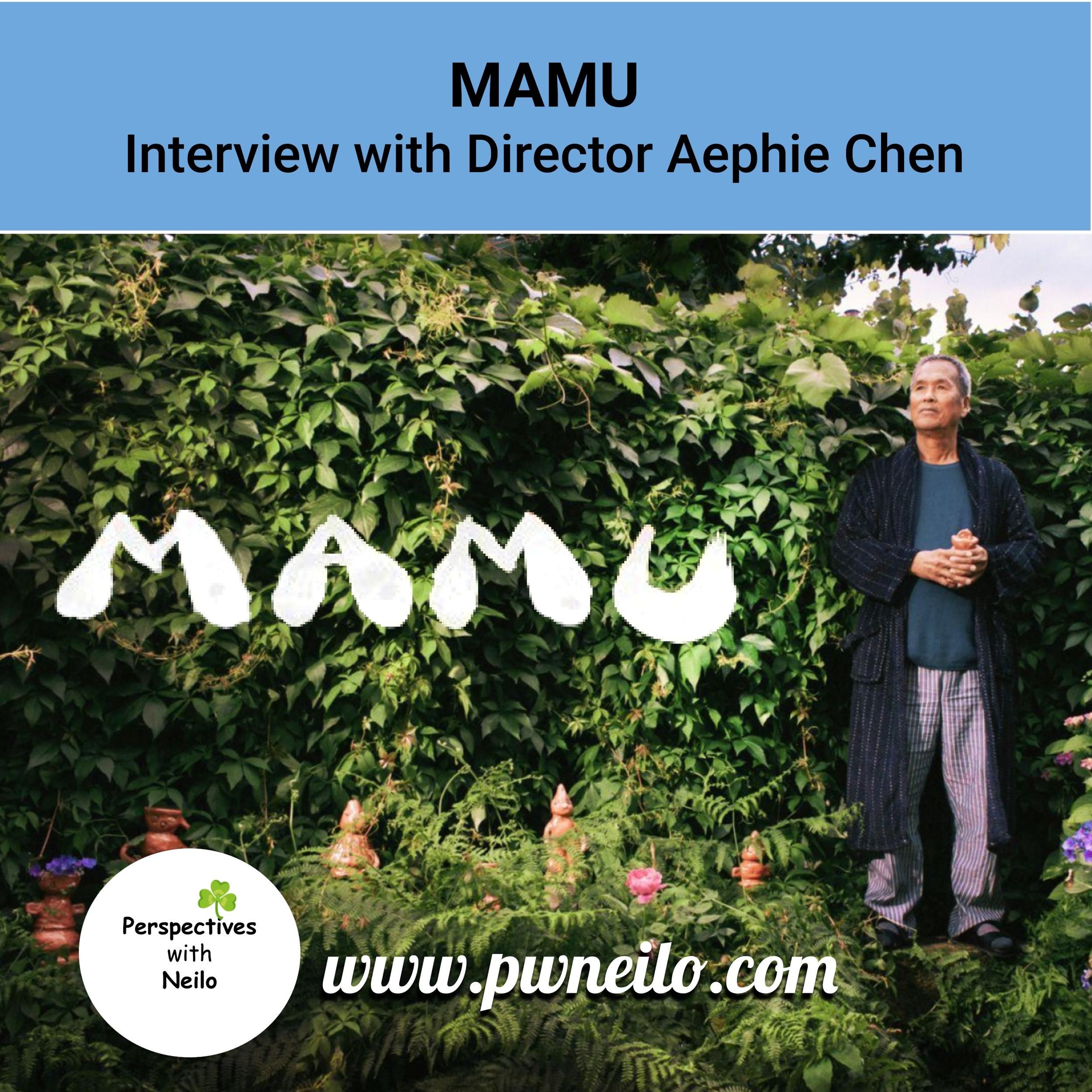
MAMU - Interview With Director Aephie Chen
In this episode of Perspectives with Neilo, we are delighted to share our recent interview with film director Aephie Chen, the brilliant mind behind the stunning film MAMU. Known for its exploration of culture, language and identity, MAMU is a deeply personal story that navigates the complexities of father-daughter relationships, the bond between people and their homelands, and the intimate challenges of caring for a loved one who is slipping away from this world. The film unfolds through the lens of a nurse caring for her ailing father in London where language no longer serves as a bridge. Instead, it is care, touch and memories that forge connections. MAMU reflects on themes of home, identity and the emotional complexities of caregiving, blending the real and surreal in a poignant way. If you are fascinated by films that explore cultural heritage, indigenous identities and the beauty of human connection, this episode is a must-listen. Hear our captivating conversation with Aephie as she shares her own story and how it inspired the film. She discusses her creative process and exploration of Taiwan's Amis indigenous culture, and how her roots influenced the narrative and aesthetics of the film, plus much more! #Taiwan #AmisCulture #FilmDirector #MAMU #AephieChen #IndigenousCulture #CulturalHeritage #TaiwanCinema #FatherDaughter #Caregiving #HumanConnection #FilmPodcast #podcast
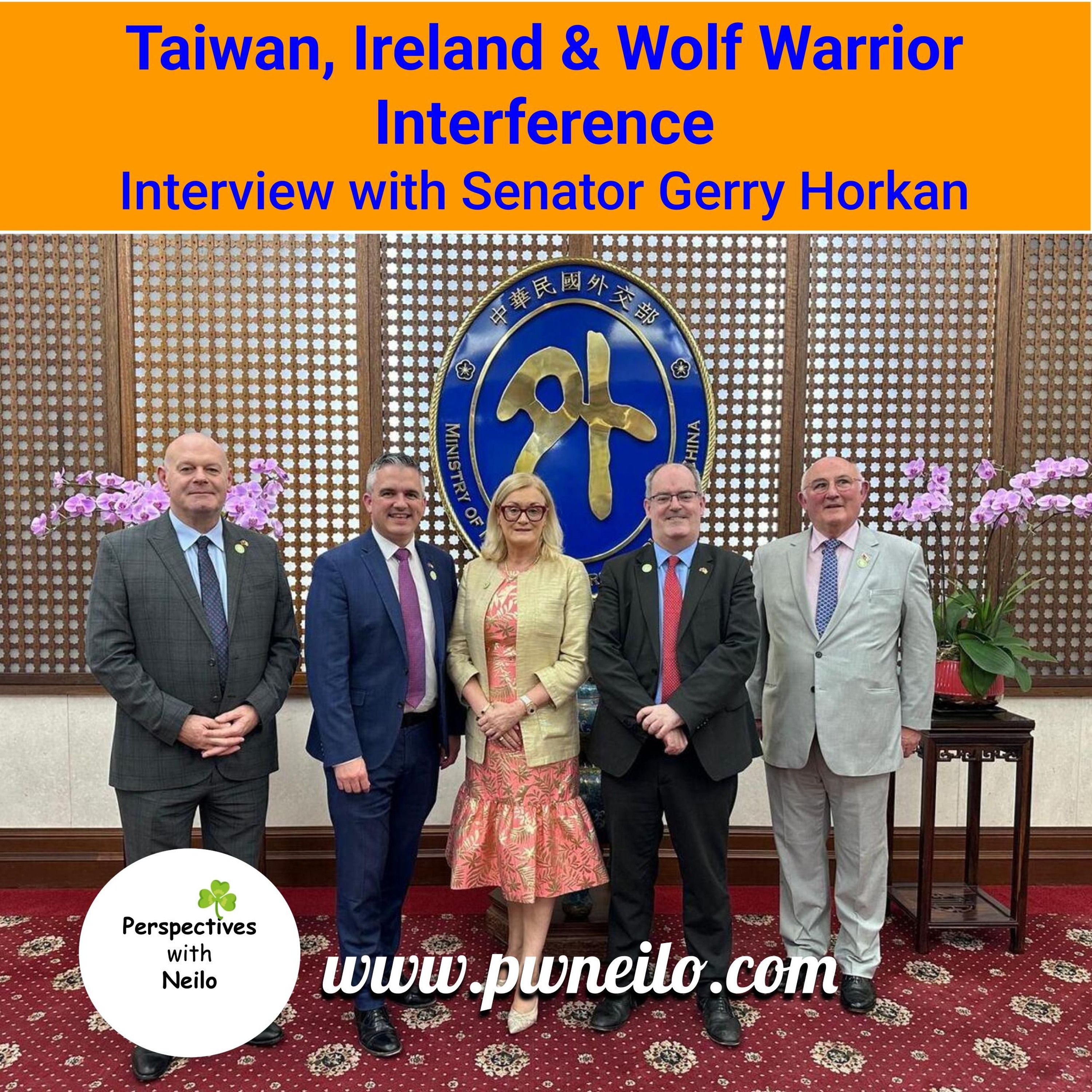
Taiwan, Ireland and Wolf Warrior Interference - Interview with Senator Gerry Horkan
In this episode of Perspectives with Neilo, we dive deep into the heart of international diplomacy and the challenges faced by democracies on the frontlines. Senator Gerry Horkan (Ireland) shares his firsthand experience and insights from his July 2024 visit to Taiwan, a democratic beacon in the Asia-Pacific region. Horkan reflects on the warm reception he received in Taiwan, as well as the reported backlash from China's Wolf Warrior diplomacy. The Chinese Ambassador to Ireland’s harsh criticisms of Horkan and his colleagues’ visit highlight the geopolitical tensions surrounding Taiwan’s sovereignty and its ongoing struggle for global recognition. As an advocate for pro-democracy values, Horkan discusses the importance of supporting Taiwan, a nation under constant threat of aggression from China. This episode shares some valuable insights for anyone interested in global democracy, foreign policy, and the delicate balance of international relations in a world increasingly under threat by authoritarian regimes. Whether you're following the situation in Taiwan, Ukraine, or other frontline democracies, this interview provides a glimpse into the global struggle for democratic ideals in an era of Wolf Warrior diplomacy. #democracy, #pro-democracy, #globaldemocracy #WolfWarrior, #WolfWarriorDiplomacy, #geopolitics, #foreignpolicy, #Taiwan, #Ukraine, #China, #Internationalrelations, #CCP, #Ireland, #IrelandTaiwanRelations

Happy Lunar New Year
In this episode we explore the traditions and customs of the Lunar New Year (also known as the Spring Festival 春節), a captivating festival rooted in ancient lunar cycles and celebrated across multiple East Asian countries. Listen in as we talk to some friends on the Taiwan stand at the Holiday World Show held recently at the RDS, Dublin about the Year of the Snake, 2025. We hear about everything from parades and fireworks, to favorite foods and the exchange of lucky red envelopes (紅包) and how communities in Taiwan and beyond ring in the Lunar New Year! Outro Music Credit: Lunar Celebration by DJARTMUSIC via Pixabay #Taiwan #LunarNewYear #YearoftheSnake #yearofsnake #snake2025 #lunarnewyear2025 #lunarnewyeardublin #culture #podcast #holidayworldshow
China Travel - Red Flags And Exit Bans
With the promise of a new year comes the anticipation of new horizons, and for many, this is the time to plan travel for the year ahead. In 2024, the Chinese Government unilaterally extended visa-free entry to citizens of 38 countries and has broadened a policy of offering visa-free entry for transit travelers who plan visits of 10 days or less. That currently applies to 54 nations. In a number of past episodes we've talked with experts about how China differs from Western liberal democracies (see below) and in this episode of Perspectives with Neilo we take a closer look at what you should know if you are thinking of travelling to the People's Republic of China (#PRC) in the year ahead. Topics covered in this episode include: ChinaTravel - brief introduction, The one-party authoritarian state (listen to China 101), Freedom, Media, Surveillance, Exit bans and the case of Irishman, Richard O'Halloran, Phone inspections, mobile payments and the Great Firewall, Propaganda awareness, How successful is China's visa-free entry so far? Flights and transiting in Hong Kong. Be sure to check your government's Travel Advice website for the latest advice for citizens of your country. Date of Recording; January 12th, 2025 See blog at www.pwneilo.com for music credits #ChinaTravel, #Beijing, #BeijingTravel, #ExitBan, #TravelAdvisory, #TravelAdvice, #RichardOHalloran, #Ireland, #China, #HongKong, #GreatWall, #GreatFirewall, #Visafree #Podcast

2024 PwNeilo Wrapped!
In this 2024 Perspectives with Neilo Wrapped!, we rewind and revisit four episodes from earlier in the year, exploring a recurring theme that connects them. In our first podcast back in January, we chatted with acclaimed journalist on contemporary China, Bethany Allen. We talked to her about her book "Beijing Rules" in which she discusses China's Authoritarian Economic Statecraft. In this revisit, we hear how the Chinese Communist Party has highly politicized the area of sister city twinning and the role of Confucius Institutes. The topic of Confucius Institutes also came up in our second interview with Alexander Dukalskis, Associate Professor in the School of Politics and International Relations at University College Dublin (UCD). Professor Dukalskis is the author of "Making the World Safe for Dictatorship" and he shared his thoughts on why he thinks Ireland needs to invest in "serious independent expertise" on China. We called this episode, Irelands Knowledge Deficit on China. We also talked about Ireland's position on Taiwan and Leo Varadkar's controversial comments after the Chinese Premier's visit to Ireland last January. Taoiseach Varadkar's comments on Taiwan back in January not only caught the attention of academics and the media, they also raised concern among Irish people living in Taiwan. Fr Sean O'Leary is an Irish missionary priest who has been living in Taiwan for two decades and I talked to him about his letter to the Irish Times in the podcast episode, The Shepherd of Dongshih. The subject of Taiwan and in particular, why Ireland does not have a trade office in Taiwan, unlike many of our EU counterparts, also came up in an interview with Ireland South MEP Billy Kelleher when we spoke to him during his EU re-election campaign back in May. Billy shared his thoughts and insights with us. I hope you enjoy this brief look back at some of the topics we covered in 2024. A big thank you to all my guests - MEP Billy Kelleher, Fr. Sean O'Leary, Professor Alexander Dukalskis and Bethany Allen. Indeed, a big thank you to all the guests who appeared on Perspectives with Neilo throughout 2024 - it would not have been possible without you! Many thanks also to all our listeners - especially those of you who have subscribed or followed us on any of the podcast platforms! Your support is what keeps us going! We would like to take this opportunity to wish you and yours a Very Happy and Peaceful Christmas. We look forward to chatting with you again in the new year! #Taiwan, #Taichung, #TaiwaneseIdentity, #Ireland, #DefendingDemocracy, #OneChina, #LeoVaradkar, #Vatican, #CatholicChurch, #ShepherdofDongshih #TaiwanIreland, #TaipeiIreland, #FiannaFail, #MEP, #EU2024, #EUElection, #EEAS, #CCP, #China, #ConfuciusInstitutes, #DefendDemocracy, #HumanRights, #Huawei, #Tiktok, #Zoom, #Prague, #Shanghai, #SisterCity, #SisterCityTwinning, #CPAFFC, #UnitedFront, #UnitedFrontWorkDepartment
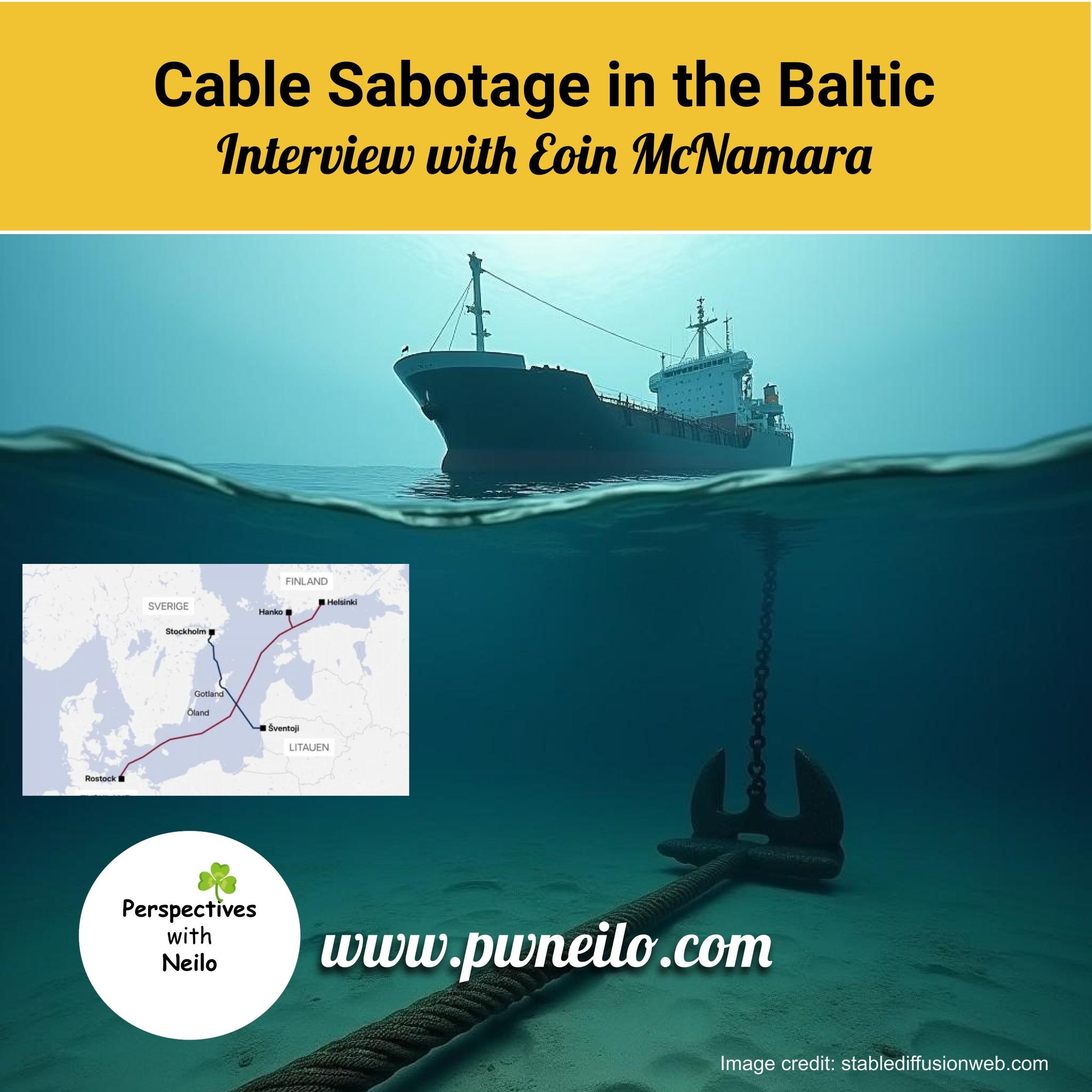
Cable Sabotage In The Baltic
Two subsea cables, one linking Finland and Germany and the other connecting Sweden and Lithuania were damaged in less than 24 hours on November 17th and 18th prompting German Defense Minister Boris Pistorius to say - he assumed it was sabotage. The suspected culprit is a Chinese registered bulk carrier - the Yi Peng 3 - which was traveling through the area after departing the Russian port of Ust Luga west of St Petersburg on November 15th. Reuters news agency have quoted Western Intelligence officials from multiple countries as saying that they are confident the Chinese ship caused the cuts to both cables but, they have expressed different views on whether these were accidents or could have been deliberate. This is not the first time a Chinese vessel has been suspected of damaging subsea infrastructure in this region and it raises concerns of a wider pattern of hybrid warfare. My guest in this episode is Eoin McNamara who is a Research Fellow at the Finnish Institute of International Affairs in Helsinki. I spoke to him about recent events, the reactions in the region and the implications for countries like Ireland and the broader EU. #Baltic, #YiPeng3, #Cablesabotage, #China, #Russia, #EU
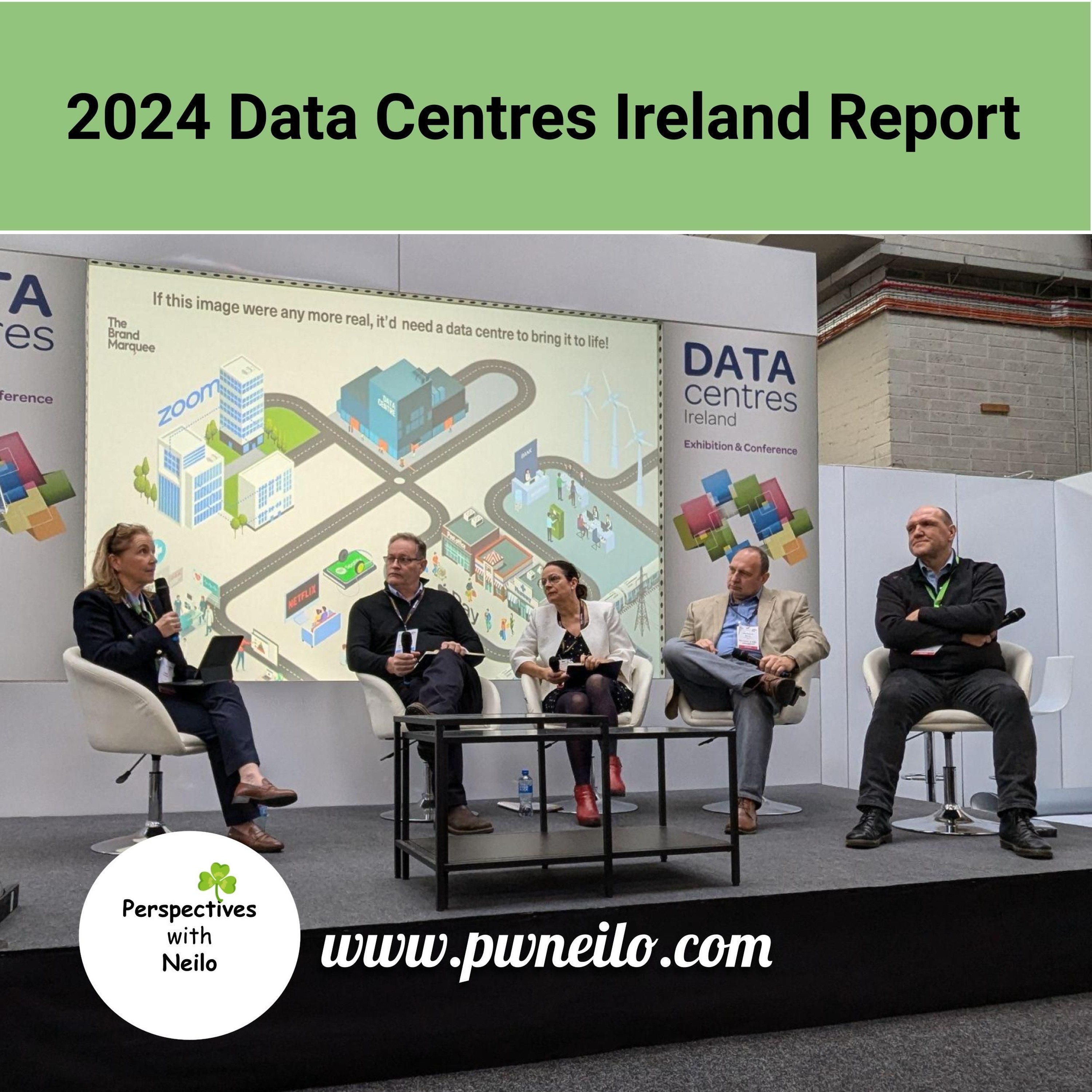
2024 Data Centres Ireland Report
Data Centres contribute significantly to Ireland's GDP. The Irish data centre market amounted to over 3 Billion Euros of investment in 2023 with key opportunities to capitalize on future growth being driven by the AI revolution. However, its a competitive industry and while Ireland may have once been the EU pioneer of data centres, planning hurdles and electricity supply issues are forcing global technology companies to reconsider Ireland's role as a data centre hub. In this episode, we report from the Data Centres Ireland Conference which took place at the RDS in Dublin in mid November. This was the 14th year of the event and it featured over 70 leaders and experts as well as 120 exhibitors showcasing the latest in data centre technology products, services and information. I am grateful to the following industry leaders and experts who graciously shared their insights with us. Garry Connolly, Founder, Host in Ireland Bobby Smith, Head of Energy Storage Ireland Dermot Costelloe, Associate Director, Fingleton White Mark Moloney, Sustainability Director, CyrusOne #Ireland, #datacenter, #datacenters, #AI, #renewables, #windpower, #solar, #netzero, #EUgreendeal, #energystorage, #energystorageireland, #datacentresireland, #EU, #EED, #CSRD, #IDA, #sustainability

Election 2024 - The Other Important Issues
Ireland's General Election will take place on Friday November 29th, 2024. Overall, 685 candidates are running across 43 constituencies for 174 seats in the next Dail or Parliament. Much of the focus and discussion so far has been on what the mainstream media have dubbed 'Auction Politics' as politicians and their parties try to better each other with promises of various benefits if elected. Examples include, free university fees, child care benefits, dropping the USC charge, reducing the VAT rate on hospitality and so on. While many of these areas are genuinely important, the relentless competition for votes between the different party candidates means that the conversation around a few core issues (cost of living, housing, healthcare) tends to dominate the media coverage at the expense of other topics. In this episode, we take a closer look at the three main party's manifestos to see what they have to say about some of the other important issues. Specifically, defending Ireland's democracy, our values and our freedoms, the role of the Media and Press freedom, as well as the party's positions on Foreign Policy, supporting Ukraine, plus their positions on Defense and Security. #GE24, #FiannaFail, #FineGael, #SinnFein, #Defenddemocracy, #AuctionPolitics, #CriticalThinking, #ETNC, #MERICS, #RSF, #Russia, #China, #Taiwan, #Vote, #Ukraine, #ForeignPolicy, #PressFreedom, #Security, #Defence, #Defense
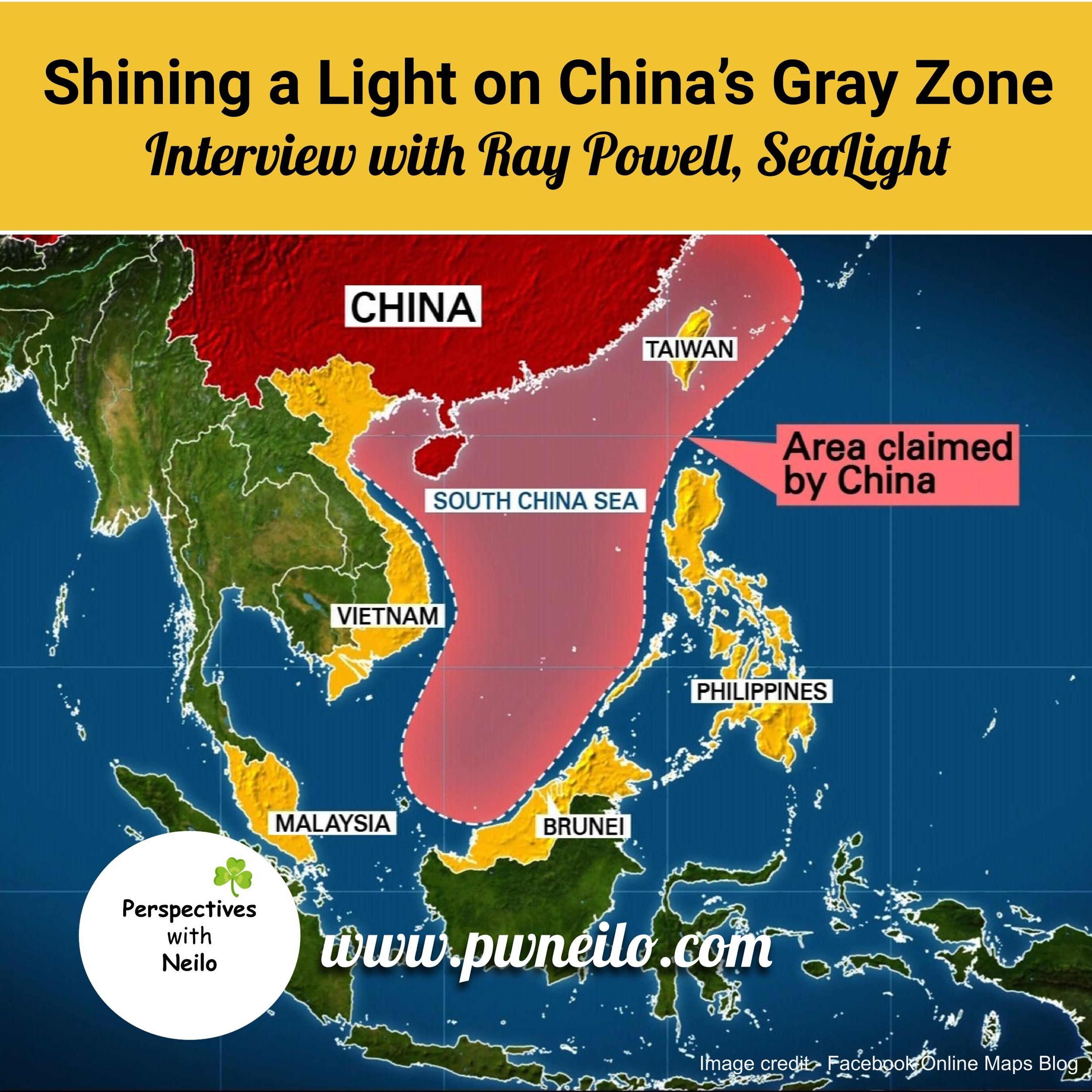
Shining A Light On China's Gray Zone
Earlier in August, we reported on China's Maritime Aggression against the Philippines in the West Philippine Sea and also on how China's aggression was uniting nations in the region. In the intervening months, this aggression has increased in frequency and severity and expanded further afield to include Vietnam and Japan. In late October, I had the pleasure of meeting Ray Powell (@GordianKnotRay) who is the Director of SeaLight, a project of the Gordian Knot Center for National Security Innovation at Stanford University in California. We spoke about the background to the current tensions, the origins and validity of China's so-called 'Nine Dash Line', the role of China's maritime militia and deep sea research ships, why what happens in the South China Sea matters to the rest of the world and much more. Image Credit: Facebook Online Maps Blog #Taiwan, #Philippines, #SouthChinaSea, #SecondThomasShoal, #China, #CCP, #ChinaCoastGuard, #SierraMadre, #SCS, #Ninedashline, #BRPSierraMadre, #UNCLOS, #CabbageTactics, #LittleBlueMen, #SouthChinaSeaDispute, #ScarboroughShoal, #SouthChinaSeaConflict, #Russianspyship, #IrishSea
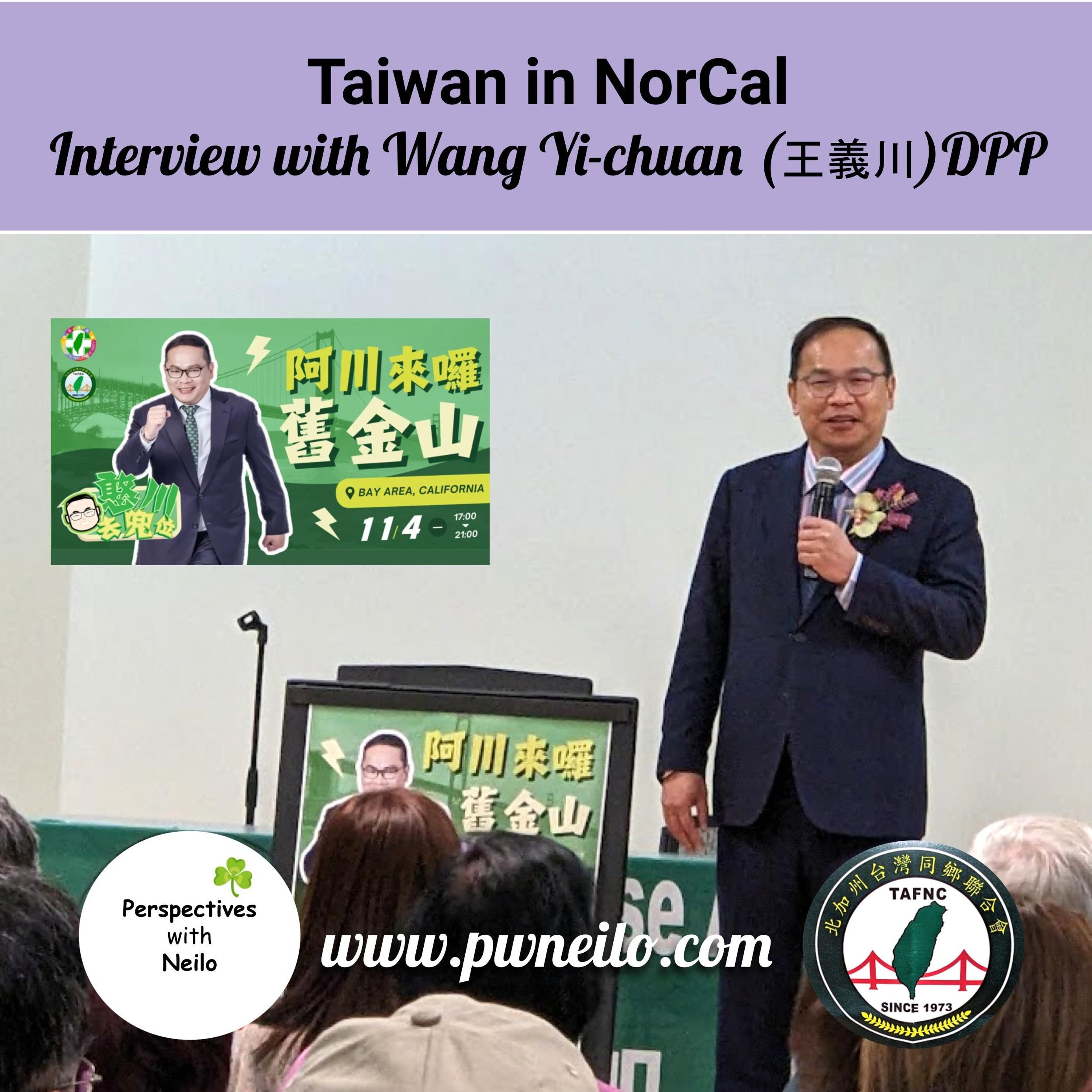
Taiwan In NorCal
Earlier in May and June of this year, we reported from Taipei on the massive street protests which became known as the Bluebird Movement. These protests were the largest Taiwan had seen in the decade since the 2014 Sunflower Movement. The protests voiced the public’s concern with new amendments to the Law governing the Legislative Yuan or parliament's power and in particular, new investigative powers including the power to subject public officials to fines or jail time if they refused to attend hearings or provide information when asked to do so by Legislators. The Democratic Progressive party or DPP subsequently took a case to Taiwan’s constitutional Court contesting these new legislative powers and in late October the court struck down most of the expanded powers sought by the KMT. In this episode we report from a Nov 4th gathering of the Taiwanese American Federation of Northern California where we spoke to a number of the attendees as well as to the special guest Wang Yi-chuan (王義川) of the Democratic Progressive Party about recent political events in Taiwan as well as how the outcome of the US presidential election may affect US-Taiwan relations moving forward. #Taiwan, #DPP, #KMT, #TPP, #TAFNC

Hydrogen Powered Data Centers
In today's digital age, data centers have become the backbone of our interconnected world. From streaming our favorite shows to conducting complex financial transactions, these high-powered facilities are the engines driving our digital revolution. But as our reliance on technology grows, so does the energy consumption of these data centers. This increasing energy consumption is driving data center operators and tech entrepreneurs to explore new ways to power these energy-hungry facilities more efficiently and sustainably. In this episode, we talk to Yuval Bachar, Founder and CEO of Edge CLoud Link. Yuval and his team are pioneering the development of off-grid sustainable hydrogen powered data centers - and they have created a proof-of-concept colocation site in Mountain View California. #Datacenters, #Datacentre, #Hydrogen, #ECL, #Greenhydrogen, #Nuclear, #SMR, #AI, #ML, #Datacentrepower #HydrogenPower #GreenDataCenters #CleanEnergy #SustainableTech #FutureOfInternet
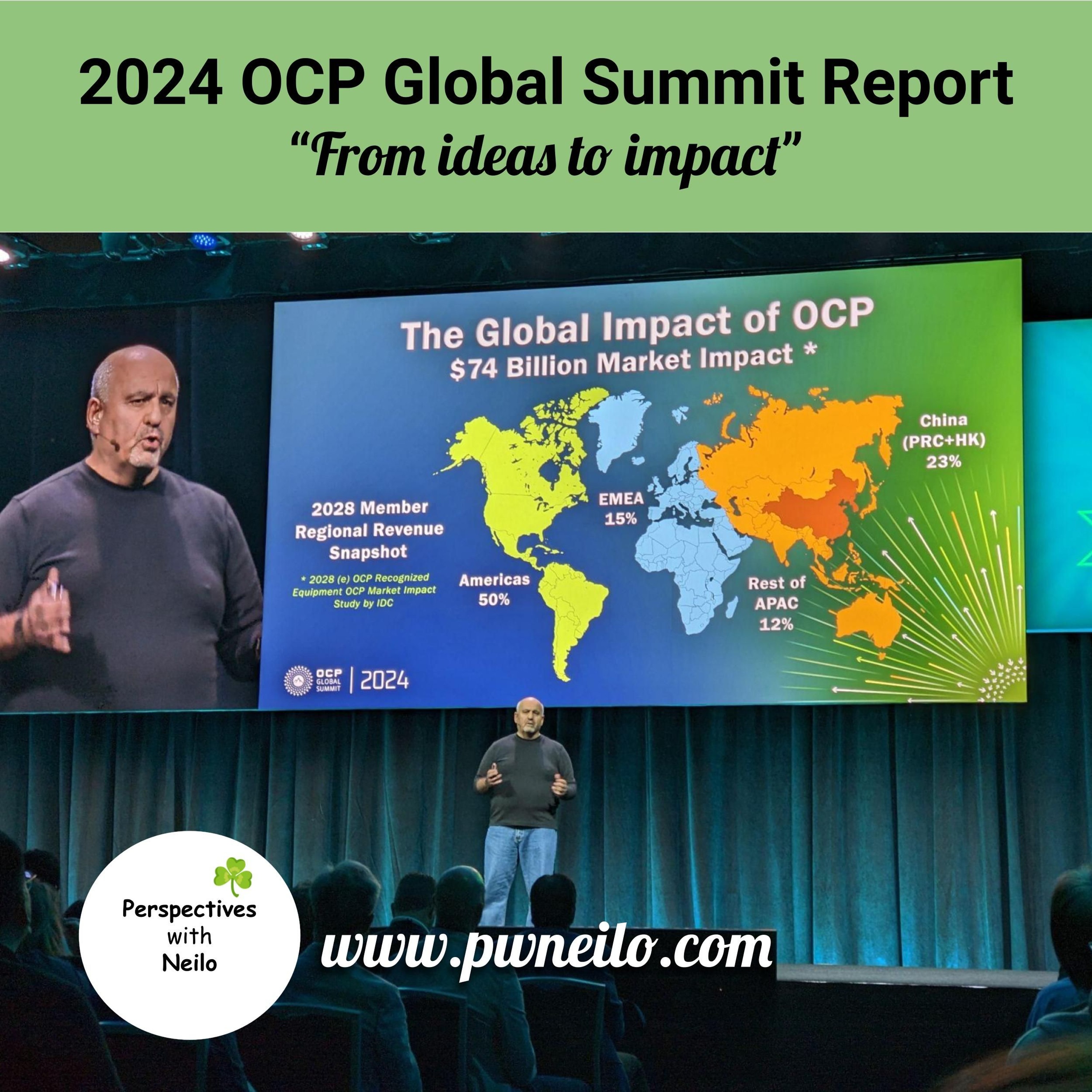
2024 OCP Global Summit Report
It's an exciting time for data centers not only because of the new technology developments in AI and ML, but also because of the parallel advancements in sustainability in the drive to net zero emissions. In this episode, we report from this year's Open Compute Global Summit in San Jose, California. The Open Compute Project (OCP) was initiated in 2011 and its mission is to apply the benefits of open source and open collaboration to data center technology and to support the growing demands on compute infrastructure. This year's summit contained many interesting topics and announcements including the Open Systems for AI strategic initiative, Sustainability (including Green Concrete), the opening of the Open Chiplet Economy in OCP Marketplace and lots more. I spoke with Rob Coyle, Director of Technical Programs at the Open Compute Project Foundation about OCP's mission and some of the exciting announcements and topics at this year's summit as well as to Andy Gill, VP of Hyperscale for Rittal about his company's products and the impact of the recent advances in AI technology. #OpenCompute, #OpenComputeProject, #AI, #datacenter, #OCP, #GreenConcrete, #NetZero
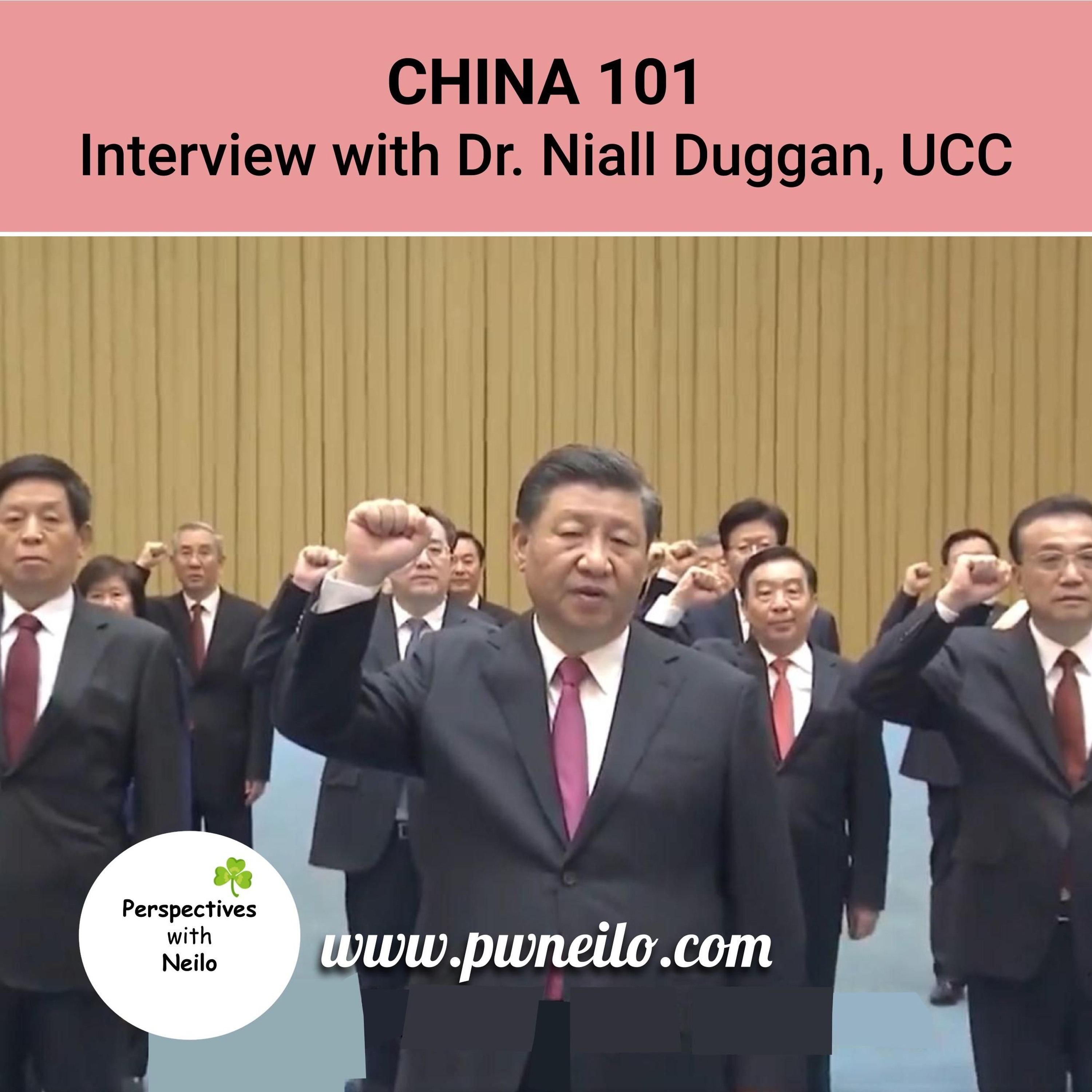
China 101 - Interview with Dr Niall Duggan UCC
Regular listeners to Perspectives with Neilo will be aware that China and the behavior of its government, the Chinese Communist Party or CCP, have been the subject of many of our past episodes, from their aggression against Taiwan and its neighbors in the South China Sea, to their questionable trade practices and the many dubious tactics they employ in their quest for global influence. In this episode, we dig a little deeper into the background and hear the perspectives of Dr. Niall Duggan, a Senior Lecturer in the Department of Government and Politics at University College Cork. We discuss the origins of the party, the political framework and institutions, and how things have changed under leader Xi Jinping, plus lots more. #China, #CCP, #PRC, #XiJinping, #Mao, #DengXiaoping, #Wholeprocessdemocracy, #Nationalcongress, #CentralCommittee, #PLA, #BeltandRoad, #onebeltoneroad