
Show overview
Perspectives with Neilo has been publishing since 2022, and across the 4 years since has built a catalogue of 95 episodes. That works out to roughly 50 hours of audio in total. Releases follow a fortnightly cadence.
Episodes typically run twenty to thirty-five minutes — most land between 23 min and 40 min — though episode length varies meaningfully from one episode to the next. None of the episodes are flagged explicit by the publisher. It is catalogued as a EN-language News show.
The show is actively publishing — the most recent episode landed 1 weeks ago, with 14 episodes already out so far this year. The busiest year was 2025, with 27 episodes published.
From the publisher
☘️Perspectives with Neilo is where we go beyond the headlines to uncover the forces shaping modern democracies — from hidden influence to the stories the media overlooks. 📕Blog at 👉 www.pwneilo.com
Latest Episodes
View all 95 episodesThe Tibet-Nepal Flood - Disaster, Censorship and the Search for Answers
Neutral. Sovereign. Secure ? - Ireland's Defence Dilemma
Ukraine at War - Donnacha Ó Beacháin on Russia, Drones & Aughinish
Strategic Dependency: Ireland's Aughinish Lesson
Taiwan Strait Tensions - China's Latest Move Explained
The Washington Test - Cheng Li-wun's US Visit
Remembering Tiananmen - Wu'er Kaixi on China and Democracy
A Foggy Tale - Taiwanese Cinema Comes to Ireland
China's Global Pressure Campaign to Isolate Taiwan
The Chinese Ambassador was Wrong - Barry Ward TD Responds

The Anaconda in the Irish Chandelier - St Patrick's Day Special Re-Release
As Ireland marks Saint Patrick's Day, we’re revisiting this episode of Perspectives with Neilo: The Anaconda in the Irish Chandelier — a conversation about power, fear, and the subtle ways political influence can shape democratic behaviour. There’s a metaphor often used in diplomatic and academic circles to describe China’s influence — the anaconda in the chandelier. Everyone can see it. Everyone knows it’s there. But no one wants to acknowledge it, because naming it would mean having to act. The phrase was coined in 2002 by the American scholar Perry Link in an essay for The New York Review of Books. One of the world’s foremost experts on Chinese language, literature, and political expression, Link used the metaphor to describe the quiet but pervasive power of the Chinese Communist Party — a system that enforces obedience not only through censorship, but through fear and self-censorship. He wrote that the Chinese state’s authority doesn’t resemble a roaring tiger or a fire-breathing dragon, but a massive anaconda coiled silently overhead. It rarely moves. It doesn’t need to. Its message is implicit: you decide. And under its shadow, people — journalists, academics, politicians — instinctively adjust what they say and do, often without being told. The fear this creates isn’t dramatic or overt. It’s subtle, normalized, and deeply ingrained — a quiet calculation that becomes part of the landscape. And it is precisely that psychological control that makes the anaconda so effective. Legend tells us that St Patrick banished all the snakes from Ireland. But by the early 1990s, it appears that one very large snake had quietly found its way back into the Oireachtas — not as a myth, but as a political reality. In this episode of Perspectives with Neilo, we examine how fear of offending Beijing has shaped Irish government behaviour for decades. From Ireland’s muted response to China’s human rights abuses to its cautious stance on Tibet, Xinjiang, and Taiwan, we explore how economic pressure and political self-censorship have influenced policy, limited transparency, and raised serious questions about Ireland’s democratic resilience. This is a conversation about power, fear, and silence — and about what happens to a democracy when everyone sees the anaconda, but no one dares to say its name. Music Credits: Cinematic Piano Ambient Trailer Soundtrack by Open-Music-for-Videos via Pixabay Sound Soul (This Logo Reveal) by Diamond_Tunes via Pixabay Slow immersion by SamuelFJohanns via Pixabay Tibet by AdvGold via Pixabay Shining Bright Dusk by FreeSoundServer via Pixabay Enter the realm - no Piano by SamuelFJohanns via Pixabay Speeches: Excerpt from Closing statement by Josep Borrell Fonelles, High Representative of the Union for Foreign Affairs and Security Policy and Vice-President of the European Commission on Sept 13th, 2022, provided courtesy of the European Parliament Multimedia Centre. © European Union, 2022 – Source: EP. / Excerpts from Senator Michael McDowell's speech at Seanad Eireann, Human Rights in China: Motion, Dec 1st, 2021 provided courtesy of the Houses of the Oireachtas. © Houses of the Oireachtas, 2021. /
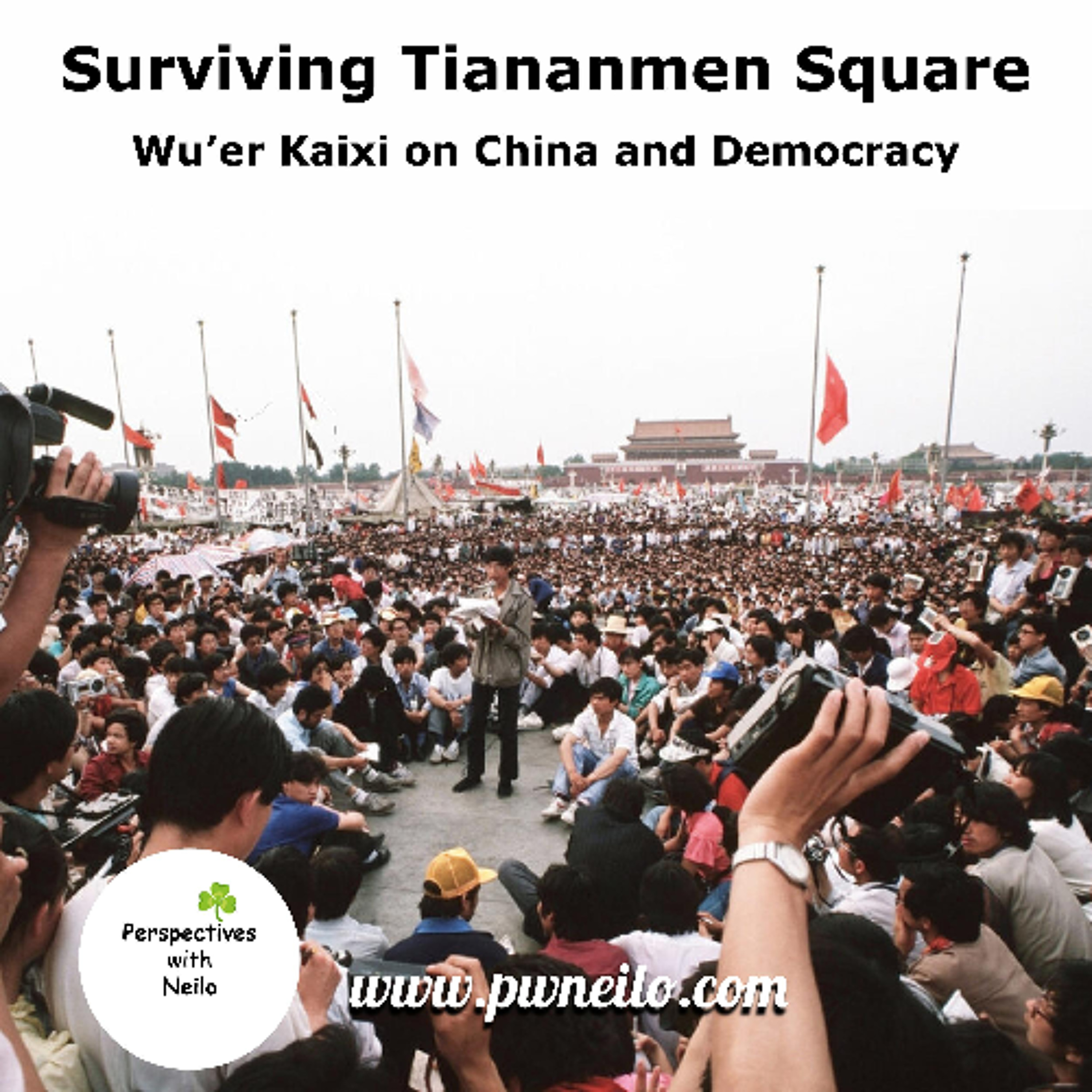
Surviving Tiananmen Square - Wu'er Kaixi on China and Democracy
In June 1989, the world watched as the Chinese government declared martial law and sent troops into Beijing to end the student-led demonstrations in Tiananmen Square. The crackdown — now known as the Tiananmen Square Massacre — remains one of the most consequential and censored events in modern Chinese history. In this episode, we sit down with Wu’er Kaixi, one of the most prominent student leaders of the 1989 Tiananmen Square protests. More than three decades later, he reflects on the events of June 1989 and their aftermath, the personal cost of defying the Chinese Communist Party and the reality of life in exile. Recorded in Taiwan in June 2025, this conversation explores the legacy of Tiananmen, the state of democracy and dissent in China today, and what Wu’er Kaixi believes the world still misunderstands about the Chinese Communist Party and the future of China. This is a firsthand account of protest, power, and political resistance — and a rare opportunity to hear directly from one of the central figures of 1989.
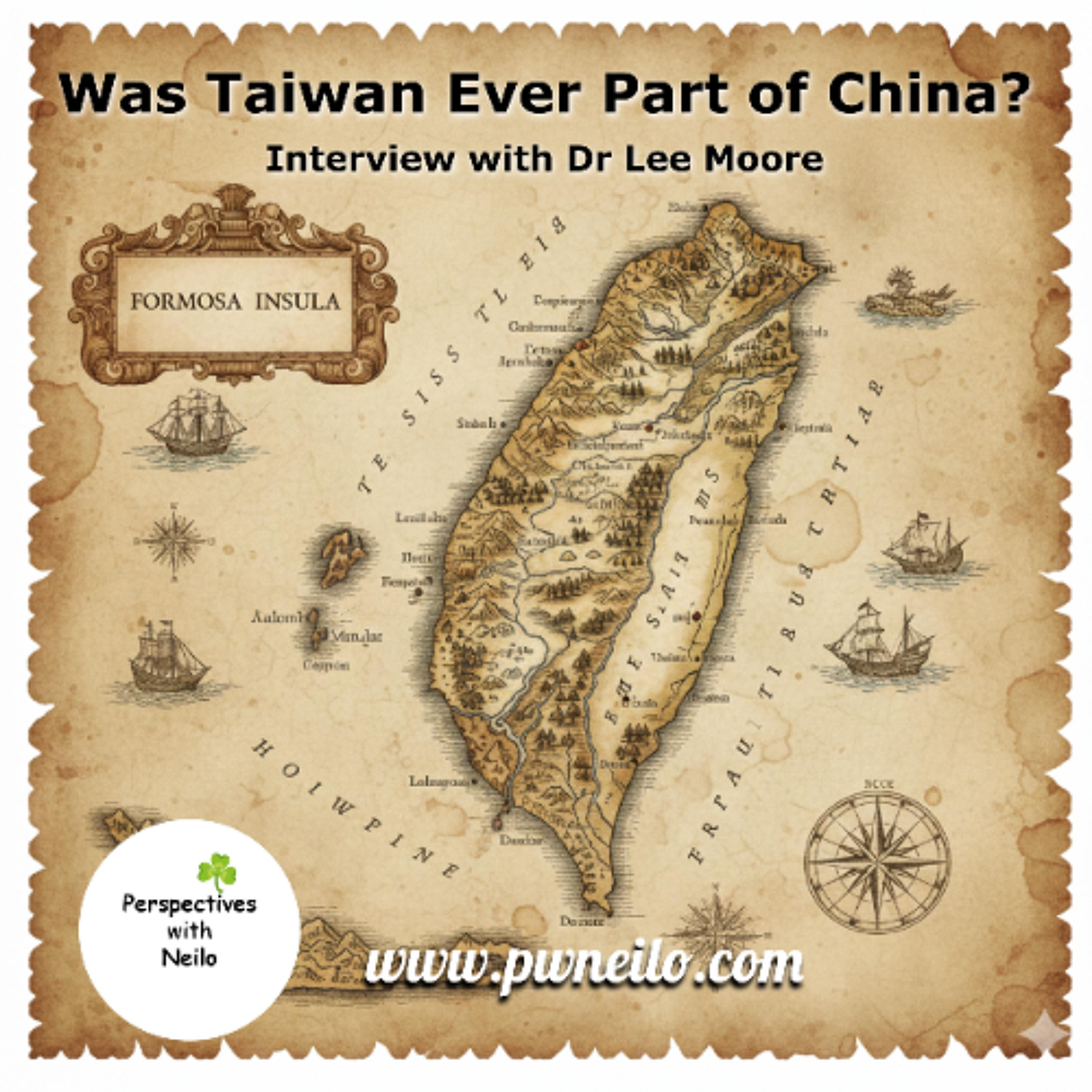
Was Taiwan Ever Part of China?
Was Taiwan ever part of China — or is that a modern political claim built on a selective reading of history? In this episode of Perspectives with Neilo, I'm joined by author Dr. Lee Moore to unpack the historical record behind Beijing’s claims over Taiwan. Drawing on his new book, China’s Backstory: The History Beijing Doesn’t Want You to Read, Dr. Moore challenges some of the most widely repeated narratives about identity, sovereignty, and “reunification.” We explore Taiwan’s complex past, what history really tells us about its relationship with China, and how competing interpretations of that past continue to shape politics, public opinion, and regional stability today. China's Backstory: The History Beijing Doesn't Want You to Read can be purchased at the following links - Publisher's Site: https://unsungvoicesbooks.square.site/product/china-s-backstory-the-history-beijing-doesn-t-want-you-to-read-preorder/BXJSID5U6P4RVONS7V4HSZSH Or on Amazon: https://a.co/d/1xG7T9q
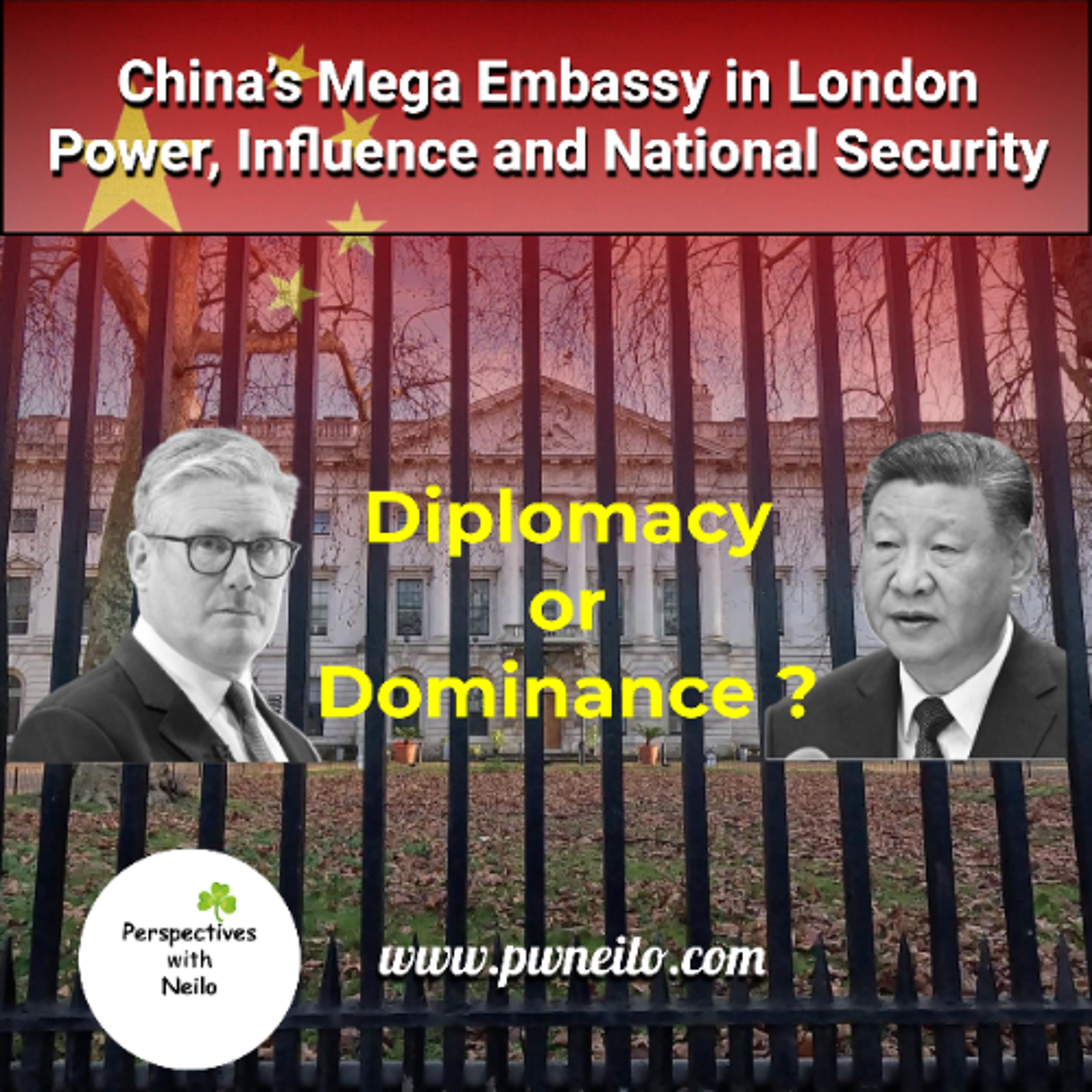
China's Mega Embassy in London - Power, Influence and National Security
China is building its largest embassy in Europe — a vast diplomatic complex beside the Tower of London. But critics warn it could become something far more controversial. In this episode of Perspectives with Neilo, we investigate China’s proposed “mega embassy” at Royal Mint Court, the political decisions that approved it, and why security experts, MPs, human rights groups, and local communities are raising alarms about espionage, surveillance, and transnational repression. We examine how the £255 million site purchase unfolded, how diplomatic status was granted, and why Prime Minister Keir Starmer’s recent approval has reignited legal challenges and public protests. Featuring voices from local politicians and community leaders, this episode explores the wider implications for UK national security, democratic accountability, and Britain’s relationship with the Chinese Communist Party. Is this diplomacy — or dominance? If you’d like to support the Royal Mint Court resident’s legal challenge, you can find their go-fund-me page here -> https://www.gofundme.com/f/stop-the-megaembassy-and-support-our-legal-challenge
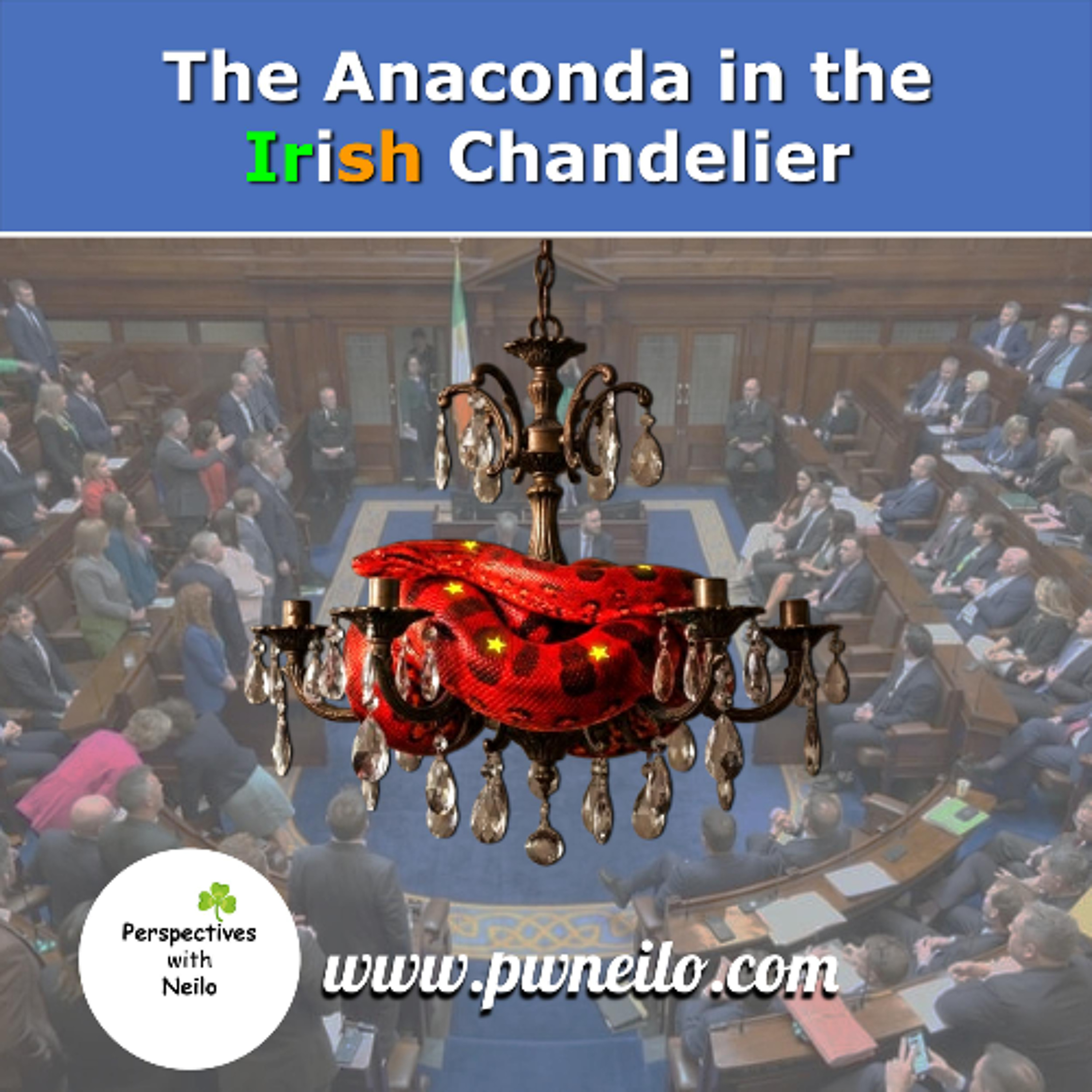
The Anaconda in the Irish Chandelier
There’s a metaphor often used in diplomatic and academic circles to describe China’s influence — the anaconda in the chandelier. Everyone can see it. Everyone knows it’s there. But no one wants to acknowledge it, because naming it would mean having to act. The phrase was coined in 2002 by the American scholar Perry Link, in an essay for The New York Review of Books. One of the world’s foremost experts on Chinese language, literature, and political expression, Link used the metaphor to describe the quiet but pervasive power of the Chinese Communist Party — a system that enforces obedience not only through censorship, but through fear and self-censorship. He wrote that the Chinese state’s authority doesn’t resemble a roaring tiger or a fire-breathing dragon, but a massive anaconda coiled silently overhead. It rarely moves. It doesn’t need to. Its message is implicit: you decide. And under its shadow, people — journalists, academics, politicians — instinctively adjust what they say and do, often without being told. The fear this creates isn’t dramatic or overt. It’s subtle, normalized, and deeply ingrained — a quiet calculation that becomes part of the landscape. And it is precisely that psychological control that makes the anaconda so effective. Legend tells us that St Patrick banished all the snakes from Ireland. But by the early 1990s, it appears that one very large snake had quietly found its way back into the Oireachtas — not as a myth, but as a political reality. In this special episode of Perspectives with Neilo, we examine how fear of offending Beijing has shaped Irish government behaviour for decades. From Ireland’s muted response to China’s human rights abuses, to its cautious stance on Tibet, Xinjiang, and Taiwan, we explore how economic pressure and political self-censorship have influenced policy, limited transparency, and raised serious questions about Ireland’s democratic resilience. This is a conversation about power, fear, and silence — and about what happens to a democracy when everyone sees the anaconda, but no one dares to say its name. Music Credits: Cinematic Piano Ambient Trailer Soundtrack by Open-Music-for-Videos via Pixabay Sound Soul (This Logo Reveal) by Diamond_Tunes via Pixabay Slow immersion by SamuelFJohanns via Pixabay Tibet by AdvGold via Pixabay Shining Bright Dusk by FreeSoundServer via Pixabay Enter the realm - no Piano by SamuelFJohanns via Pixabay Speeches: Excerpt from Closing statement by Josep Borrell Fonelles, High Representative of the Union for Foreign Affairs and Security Policy and Vice-President of the European Commission on Sept 13th, 2022, provided courtesy of the European Parliament Multimedia Centre. © European Union, 2022 – Source: EP. / Excerpts from Senator Michael McDowell's speech at Seanad Eireann, Human Rights in China: Motion, Dec 1st, 2021 provided courtesy of the Houses of the Oireachtas. © Houses of the Oireachtas, 2021.
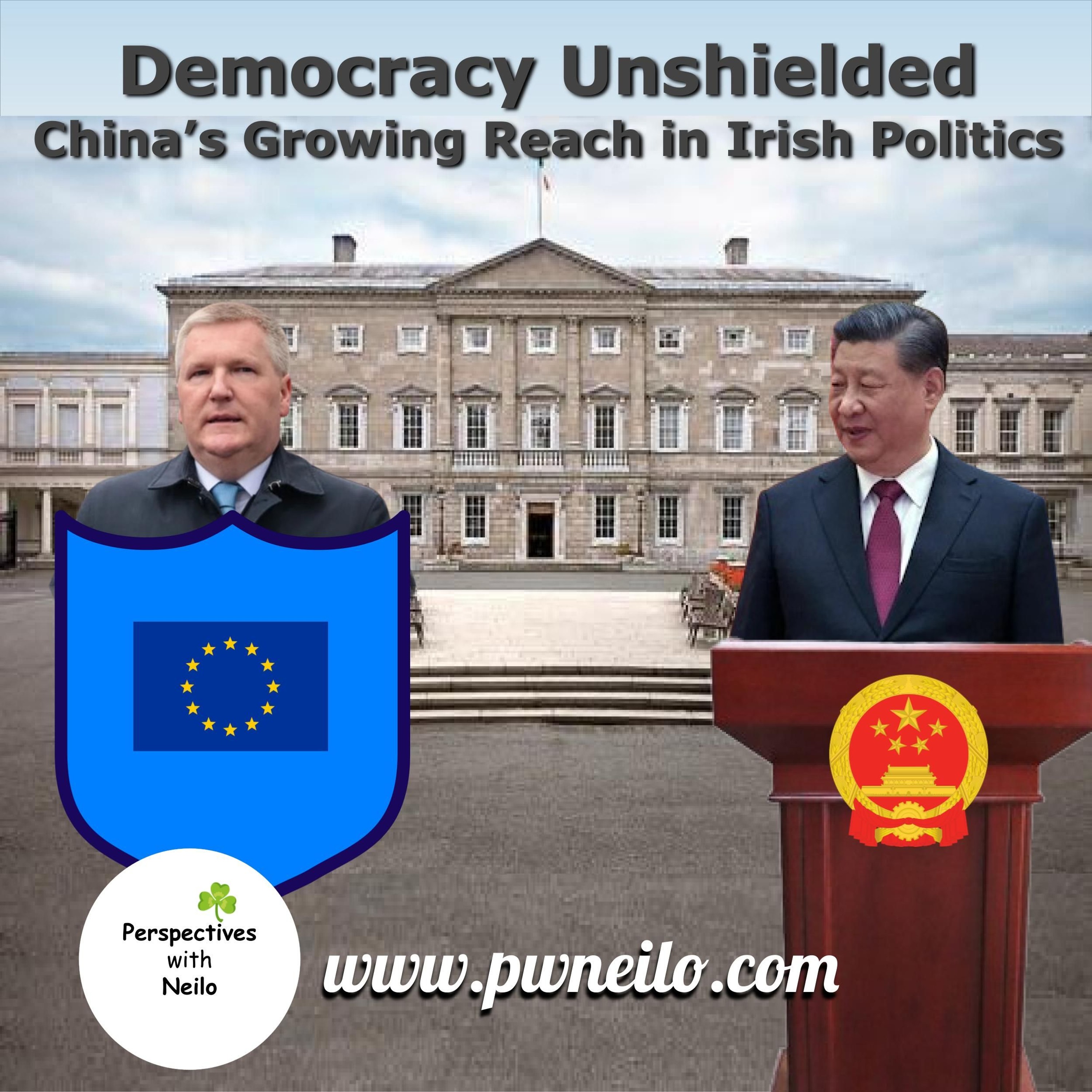
Democracy Unshielded - China's Growing Reach in Irish Politics
In this episode of Perspectives with Neilo, we investigate China’s growing political influence in Ireland and the recent meetings between Irish elected officials and members of the Chinese Communist Party. These engagements come at the very moment Ireland’s national cyber-security authority warns of state-aligned threat actors— including those linked to China and Russia—targeting Irish infrastructure, public institutions, and democratic processes. We examine who attended these meetings, why they matter, and how they align with the EU’s newly announced European Democracy Shield, designed to counter foreign interference from authoritarian regimes. In this episode, we dig into China’s growing reach in Irish politics and the uncomfortable question at the centre of it all: Is Ireland leaving its democracy unshielded? This episode is essential listening for anyone interested in Irish politics, democracy, foreign interference, China’s global strategy, and the future of European security. Credits: Audio transition: Sound Soul (This Logo Reveal) by Diamond_Tunes via Pixabay Clip of Deputy Alan Kelly's speech at the Joint Committee on Arts, Media, Communications, Culture and Sport, Nov 19th, 2025 provided courtesy of the Houses of the Oireachtas. © Houses of the Oireachtas, 2025 Clip of Comissioner Michael McGrath’s speech on the EU Democracy Shield provided courtesy of the European Parliament Multimedia Centre. © European Union, 2025 – Source: EP.
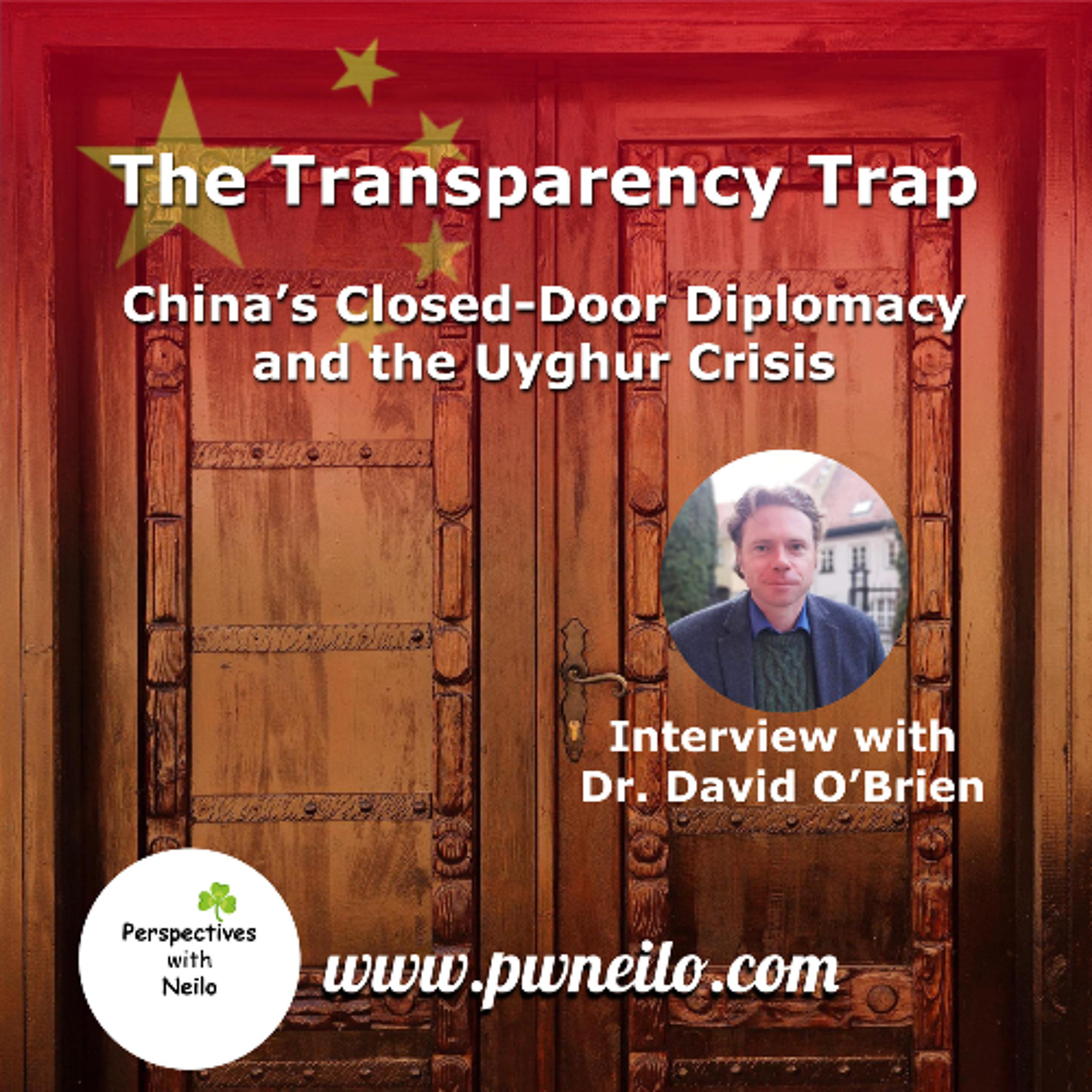
The Transparency Trap - China's Closed-Door Diplomacy and the Uyghur Crisis
Why is China holding private, closed-door meetings with democratic leaders — including in Ireland — despite growing warnings about CCP influence operations? And how does this secrecy connect to Beijing’s global effort to reshape the narrative around the Uyghur crisis? In this episode, Irish anthropologist Dr. David O’Brien joins us to share insights from his time living and researching in Xinjiang in the mid 2000's. We explore how the Chinese Communist Party uses covert diplomacy, narrative manipulation, and state-aligned “human rights” organizations like the China Federation for Human Rights Development (CFHRD) to obscure evidence of human rights abuses against Uyghur Muslims. Dr. O’Brien discusses what he witnessed on the ground, the impact of the 2022 UN Human Rights report and international sanctions, evidence of population reduction and forced sterilization, and the broader challenge China poses to universal human rights. We also examine how the United Front Work Department conducts influence operations within democratic countries — often out of public view. This episode exposes the high-stakes battle over truth, transparency, and human rights in the face of authoritarian pressure. Date of Recording: October 31st, 2025.
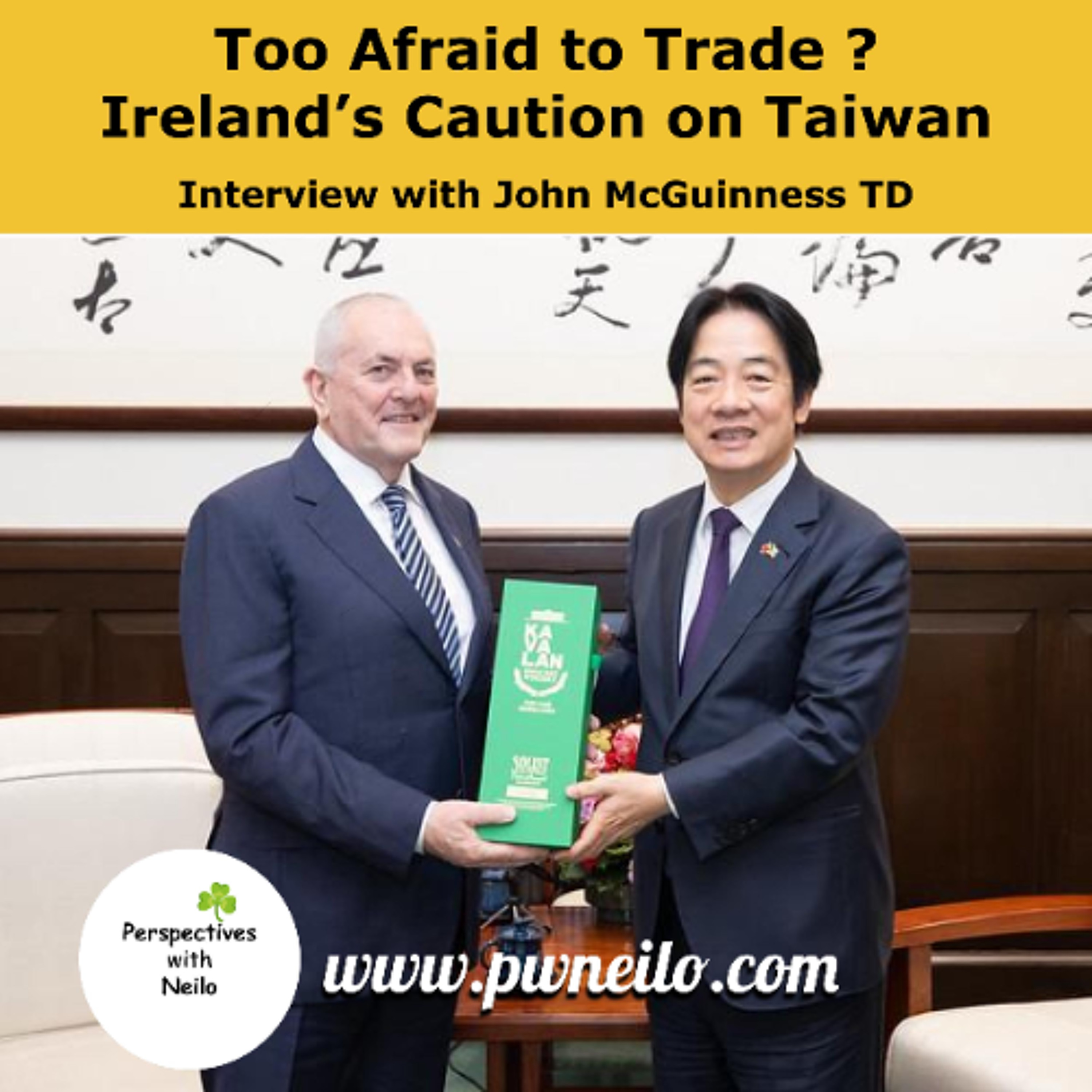
Too Afraid to Trade ? Ireland's Caution on Taiwan
As Ireland prepares to assume the EU Presidency in 2026, its cautious approach to Taiwan continues to draw attention. Why does Ireland remain an outlier among EU member states in its engagement with Taipei, and how much is that caution driven by concerns about Ireland–China relations? In this episode, we speak with John McGuinness, Leas-Cheann Comhairle, Fianna Fáil TD for Carlow–Kilkenny, and Chairman of the Ireland–Taiwan Parliamentary Friendship Association, about his recent visit to Taiwan and meeting with President William Lai. We discuss opportunities for cooperation under Ireland’s National Semiconductor Strategy, potential trade growth in the semiconductor industry, agri-food exports, and technology sectors — and whether Ireland is missing key trade opportunities with Taiwan. We also explore how China’s influence and EU foreign policy dynamics are shaping Ireland’s diplomatic balancing act between Beijing and Taipei. Date of Recording: November 7th, 2025 Thumbnail picture courtesy of the Office of the President, Republic of China, Taiwan. #Ireland, #Taiwan, #China, #EU, #ForeignPolicy, #Trade, #Semiconductors
Rare Earths, Real Pressure - China's Coercive Push on U.S.-Taiwan Policy
The Chinese Communist Party (CCP) has long pursued a multi-pronged strategy to annex Taiwan — a campaign that has intensified in recent years. From near-daily military incursions into Taiwan’s Air Defense Identification Zone (ADIZ) and territorial waters to provocative blockade exercises around the island, Beijing is steadily increasing pressure. Alongside these military threats, the CCP is waging a parallel campaign of propaganda, disinformation, and grey-zone activities — including infiltration of Taiwan’s government, military, and broader society. Now, in a new twist, reports suggest that China’s leader Xi Jinping may use upcoming trade talks with the United States to pressure President Donald Trump into publicly opposing Taiwanese independence. On the surface, this might seem far-fetched — especially with Trump often cast as the “Dealmaker-in-Chief.” So why does Beijing believe it can gain the upper hand? In this episode, we explore China’s strategic response to U.S. tariffs and examine the leverage the CCP holds in its complex relationship with Washington. We also assess how Trump-era foreign policy is shaping U.S.-Taiwan relations — and how Beijing is exploiting global uncertainty to push forward its authoritarian ambitions. . . Credits: Sound Soul (This Logo Reveal) by Diamond_Tunes via Pixabay Chinese Asian Music by SoundGalleryDT via Pixabay Translator voice by ElevenLabs.io . . #ChinaTaiwan #TaiwanStrait #TaiwanUnderThreat #ChinaThreat #USChinaRelations #IndoPacific #XiJinping #Taiwan #TaiwanIndependence #CCP #Geopolitics #TradeWar #RareEarths #Trump #ChinaLeverage #Podcast #Talk #PodcastAlert
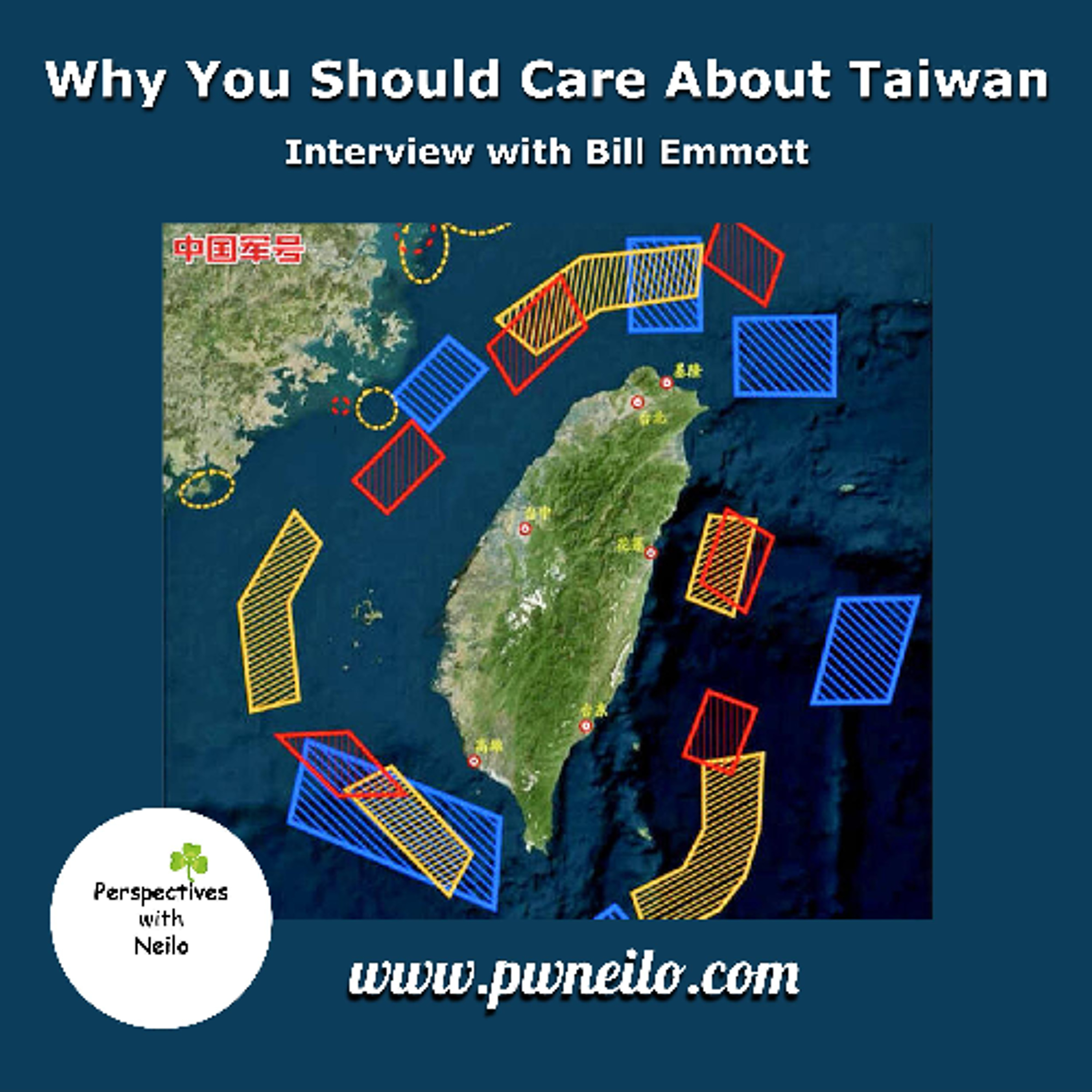
Why You Should Care About Taiwan - Interview with Bill Emmott
Our daily news feeds are dominated by active conflicts—but what about the tensions simmering just below the surface, with global stakes just as high? One of the most strategically significant, yet underreported flashpoints in the world is the Taiwan Strait—a 180km-wide body of international water separating Taiwan from mainland China. It's here that grey zone activity by the People’s Liberation Army (PLA) is escalating on a near-daily basis. In this episode of Perspectives with Neilo, we explore: The CCP’s claim on Taiwan—and why it’s historically weaker than Britain's claim on Ireland Taiwan’s democratic identity and its people’s overwhelming rejection of CCP rule The rise of grey zone warfare, military drills, and coercive tactics by China The impact of U.S. strategic ambiguity and why the U.S. might be pulled into a war with China Why Europe and the West must care about Taiwan’s future 🎙️ My guest is Bill Emmott—author of Deterrence, Diplomacy and the Risk of Conflict over Taiwan (2024), former editor-in-chief of The Economist, and one of the most respected voices in international affairs. We recorded this episode on the sidelines of the MacGill Summer School in July 2025. We dive deep into the risks of conflict, the future of U.S.-China relations, and how the world can avoid sleepwalking into a war over Taiwan. 🔗 Resources: Check out our blog at www.pwneilo.com for more information. Credits: Thumbnail map shows the locations of China’s military drills around Taiwan. The blue blocks represent war games held in 2022, the yellow and red blocks represent the “Joint Sword 2024” drills. Photo: Screen grab from the Chinese People’s Liberation Army Eastern Theater Command’s Sina Weibo account courtesy of the Taipei Times. Link in blog. Music: even darker variation by SamuelFJohanns via Pixabay Cinematic Piano Ambient Trailer Soundtrack by Open-Music-for-Videos via Pixabay #Taiwan #China #Geopolitics #TaiwanStrait #ForeignPolicy #BillEmmott #PerspectivesWithNeilo #USChinaRelations #PLA #CCP #MacGill2025 #GreyZoneWarfare #TaiwanMatters #GlobalSecurity #AsiaPacific