
People and Projects Podcast: Project Management Podcast
544 episodes — Page 10 of 11

Ep 80PPP 080 | Meeting the Deadline, Part 2 of an Interview with Tom DeMarco
The Deadline In this episode, I continue my discussion with Tom DeMarco, with insights related to his writing in books such as The Deadline. If you didn't listen to the first part of my interview with Tom, I recommend you listen to that one before continuing. In this episode, Tom addresses topics such as knowing what we don't know, dealing with jerk bosses, and what he writes and speaks about but has trouble doing himself. Make sure to stay tuned after the interview for a very transparent story from Tom about his career. Tom DeMarco Resources Want more from Tom DeMarco? Here are some recommended resources: The Deadline Peopleware: Productive Projects and Teams (Second Edition) Slack: Getting Past Burnout, Busywork, and the Myth of Total Efficiency Waltzing With Bears: Managing Risk on Software Projects Adrenaline Junkies and Template Zombies: Understanding Patterns of Project Behavior Join our Facebook Page I invite you to stop by our podcast Facebook page! "Like" it and join the discussion. Thank you for joining me for this episode of The People and Projects Podcast! Have a great week!

Ep 79PPP 079 | Meeting the Deadline, Part 1 of an Interview with Tom DeMarco
The Deadline A couple of months back I was teaching a PMP®Exam Prep workshop. One of the participants mentioned that he was reading Tom DeMarco's book entitled The Deadline: A Novel About Project Management. It's a book that I had wanted to read many times since it was originally published in the late 1990s but it never bubbled up to the top of my book list. But when this workshop participant continued to rave about the book, it ended up on my iPad Kindle Reader before the day was done. And in the coming days, I couldn't put the book down. If you're not in the software side of project management or leadership, you might not have heard of Tom DeMarco before. But if you do work on that side of the house, Tom DeMarco has likely impacted you and your job more than you know. He's been a leading thinker and practitioner in this space for decades, and in the next two episodes, you have a great opportunity to hear from this industry giant. Even if you're not in the software development arena, you'll get some practical insights from this exceptionally insightful thinker on how to deliver your projects and lead teams. More Tom DeMarco To get your copy of The Deadline, click here Join us in the next episode when Tom will address topics such as knowing what we don't know, dealing with jerk bosses, and what he writes and speaks about but has trouble doing himself. Thank you for joining me for this episode of The People and Projects Podcast! Have a great week!

Ep 781PPP 078.1 | Premium Follow-Up to the Karen Dillon Interview
I seem to be encountering a lot of favorite books these days, and the one we're talking about today is no exception. I really like How Will You Measure Your Life? Perhaps my favorite thing about the book is how it takes business practices and ideas and applies them to life. Frankly, if you haven't read much of Clayton's work or just haven't had much training in topics such as strategic planning, the book is worth the price just for the business concepts. But then applying those concepts to life is powerful. Thank you for being a premium subscriber to the People and Projects Podcast! It is a privilege to be part of your personal development strategy. Please let me know what questions you have and if there's anything I can do to help you lead and deliver. Thank you for joining me for this premium episode of The People and Projects Podcast! Have a great week!
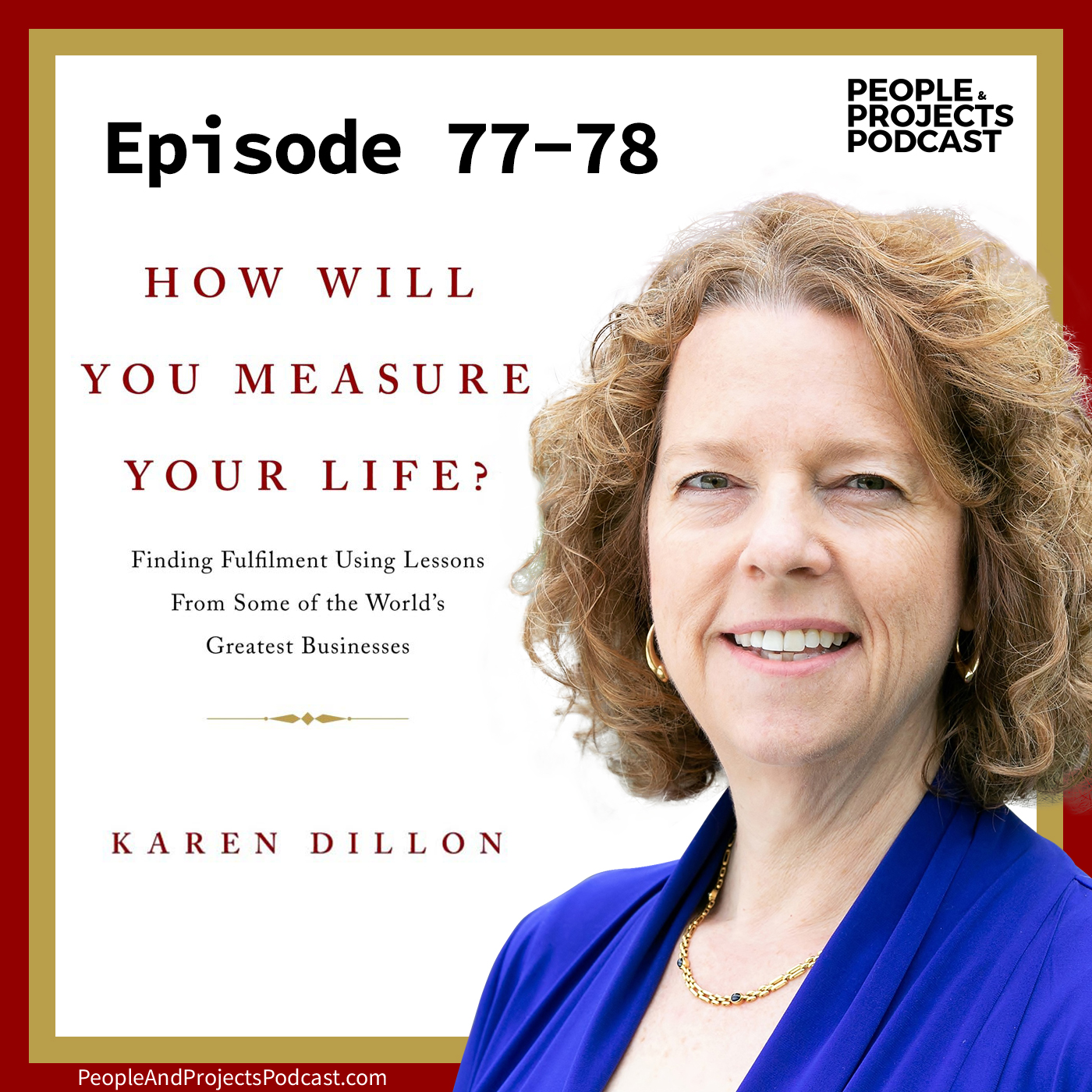
Ep 78PPP 078 | How Will You Measure Your Life, Part 2, with author Karen Dillon
How Will You Measure Your Life? In this episode, I continue my discussion with Karen Dillon about her new book entitled How Will You Measure Your Life? Karen talks about success with the important relationships in our life as well as a powerful concept they refer to as "Just This Once." Thank you for joining me for this episode of The People and Projects Podcast! Have a great week!

Ep 77PPP 077 | How Will You Measure Your Life, Part 1, with author Karen Dillon
Sara Adam: Making a Difference With Her Life I am recording this episode from Kuala Lumpur, Malaysia where I have the privilege of speaking at a conference this week. Since this is a very special destination, my wife and family have joined me on the trip, which included prior stops in London, Nairobi, and Doha. If all goes as planned, we hope to go all the way around the world as a family over the course of three weeks. While in Nairobi we had the opportunity to spend time with some very close family. And one of the real treats was spending time with my niece Sara Adam. Sara will soon be starting up her senior year at Duke, but she's not waiting until graduation to make a difference. Despite her age, Sara is building an amazingly cool clothing and accessory business that is based in Kenya. Along with her business partner Anna, they are growing a business they name Judith and James. They are developing marketable sewing skills for vulnerable women, most of whom live in the Nairobi area slums. As these skills are developed, they begin working on merchandise that will be sold in the U.S. and other countries. In turn, the proceeds from that merchandise will produce a sustainable income stream for the women. It's an inspiring model being driven by an inspiring young lady. Sara is in the process of making a remarkable difference in this world. How Will You Measure Success? How do you measure success in life? As professionals who lead projects, we know that defining measurable success criteria for projects is a very important and helpful practice. But what about life? There will be a day when you've finished your last project at work. Whether it's when you hang up your Gantt charts, so to speak, or come to the end of your life, how will you measure it? It's an intriguing question that is also the title of one of the most anticipated business books of this year. How Will You Measure Your Life? is authored by Clayton Christensen, James Allworth, and Karen Dillon. I recently had an opportunity to have a discussion with Karen and look forward to sharing that interview with you over the next two episodes. By the way, if you're a premium subscriber, your extra episode will show up in the podcast stream when the second part of my discussion with Karen goes live. For now, let's hear from Karen about her work with the book entitled, How Will You Measure Your Life? Thank you for joining me for this episode of The People and Projects Podcast! Have a great week!

Ep 761PPP 076.1 | Premium Follow-Up on the Keith Murnighan Interview
I trust you were able to take away an idea or two from the discussion with Keith Murnighan. Between his book Do Nothing!: How to Stop Overmanaging and Become a Great Leader and the forthcoming interview with the author of How Will You Measure Your Life? these are two of my favorite books in some time. In this premium episode, I call out some specific ideas from Keith's book that I got to benefit from, with the intention to help you grow in your ability to lead and deliver. There is so much from Do Nothing! that you'll find helpful to your calling of leading people and projects. I strongly encourage you to add this book to your personal or team library. And if you'd like to help develop the leaders in your organization, I invite you to contact me! Between our keynotes, workshops, and executive coaching, we can help you and your organization learn how to more effectively lead and deliver. Thank you for being a premium subscriber to the People and Projects Podcast! It is a privilege to be part of your personal development strategy. Please let me know what questions you have and if there's anything I can do to help you lead and deliver. Thank you for joining me for this premium episode of The People and Projects Podcast! Have a great week!

Ep 76PPP 076 | Do Nothing! Part 2 of interview with Keith Murnighan
Beware: Management Heresy Ahead! In this episode, I continue my discussion with Keith Murnighan about his new book entitled Do Nothing!: How to Stop Overmanaging and Become a Great Leader. Keith talks about why some long-accepted management practices might just get in the way of our team successfully delivering. And you'll find that he offers some intriguing alternatives to help you become a more effective leader. You can find the first part of the interview with Keith here. Thank you for joining me for this episode of The People and Projects Podcast! Have a great week!

Ep 75PPP 075 | Be a Better Leader: Do Nothing! An interview with Keith Murnighan
Is it possible that we make difficult situations worse by overmanaging them? Keith Murnighan responds with a resounding "Absolutely!" In the next two episodes, I talk with Keith about his new book Do Nothing!: How to Stop Overmanaging and Become a Great Leader, which hits the shelves this week. Keith will tell us how we can, perhaps surprisingly so, be more successful when we Do Nothing! Make Sure to Listen to The Rest of the Interview Join us in the next episode when Keith will talk about such heresy as ignoring performance goals and de-emphasizing profits. I trust you'll find it helpful in your quest to more effectively lead and deliver. Thank you for joining me for this episode of The People and Projects Podcast! Have a great week!
PPP 074.1 | Premium Follow-up on the Andy Crowe Interview
So have you spent some time trying to better understand agile project management? I know some of our premium subscribers are avid agile practitioners, so good for you. But for many people, it's a topic that you know you should be looking into more but have been standing on the sidelines for too long. In this premium episode I follow-up on some points from my discussion with Andy Crowe about agile project management. Thank you for being a premium subscriber to The People and Projects Podcast! Total Duration 7:48 Download the premium episode "PMI", "PMBOK, "PMP®" and "PMI-ACP" are registered marks of the Project Management Institute, Inc.

PPP 074 | How Agile Are You? An interview with author Andy Crowe, PMP, PgMP, PMI-ACP
Agile is getting plenty of attention these days and for good reasons. When done well on aligned projects, great customer value can be delivered. Many people who listen to this podcast are certified PMP's or are at least considering certification in the future. You may be aware that Project Management Institute has a relatively new agile certification: the PMI-ACP℠. One of the best new books available to help people pass the ACP exam is from Andy Crowe. You likely know Andy as the author of the popular book entitled The PMP®Exam: How to Pass on Your First Try. Andy recently released The PMI-ACP Exam: How To Pass On Your First Try. In this episode, I talk with Andy about agile, about the certification, and about project management overall. Links to Resources To learn more from Andy, check out his blog at http://www.velociteach.com/blog/. I invite you to check out his books on Amazon, including The PMP®Exam: How to Pass on Your First Try The PMI-ACP Exam: How To Pass On Your First Try Alpha Project Managers: What the Top 2% Know That Everyone Else Does Not Thank you for joining me for this episode of The People and Projects Podcast! Have a great week! Total Duration 23:54 Download episode 74 "PMI", "PMBOK, "PMP®" and "PMI-ACP" are registered marks of the Project Management Institute, Inc.

Ep 731PPP 073.1 | Premium Follow-Up to Interview with Don Kluemper
In this premium episode, I'm going to share some additional thoughts to help us personally apply this learning. I talk about why you need a social media strategy, why you need to be using social media if you're not, and why a solid understanding of personality styles is critical for those who seek to deliver projects and lead teams. Here's the freebie for you as a Premium Subscriber! Send me a link to up to 3 of your social media profiles (e.g. Facebook, LinkedIn, Twitter). I would be glad to review them and give you a free analysis from an executive coaching perspective. Just send an e-mail with the links and I'll get back to you with feedback. Thank you for being a premium subscriber to The People and Projects Podcast!

Ep 73PPP 073 | What Does Your Facebook Profile Say About You? An interview with Don Kluemper
So let me ask you... What does your Facebook profile really say about you? Or maybe you're not a Facebook person. How about LinkedIn? If a prospective employer was to scan your online presence, what conclusions would they draw? Earlier this year a study was published that indicates your life online could be saying more than you realize about your personality, your likelihood of getting hired, and even your future job performance. Since using social media sites can be part of our strategy as leaders to build and maintain relationships, it's critical that we understand whether or not our online presence is helping or hurting us. To help us better understand the study, I got a hold of Don Kluemper, the lead researcher on the study. In this interview, you'll hear from Don about what he found and his advice to help us avoid the landmines in social media. Thank you for joining me for this episode of The People and Projects Podcast! Have a great week!

How to Lead Better Project Meetings
Free Premium Episode Thank you for joining me for this premium episode of The People and Projects Podcast! Did you know that many of your colleagues invest their development by becoming a premium subscriber to this podcast? To give you a sense of the extra coaching they get each month, I'm including this premium episode into our standard free podcast feed. You can learn more about Premium Subscrptions at bit.ly/PremiumSubscribe. Use a Coupon Code by of APRIL-2012-PREM to save $30 off an annual subscription. That code is good until April 30, 2012 so don't delay! Meetings! Oh, how we love to hate meetings! In this premium video episode I share 10 keys to lead more effective project meetings. At the end you're invited to join the conversation! What are the most important lessons you've learned? Leave your response in a comment here or on our Facebook page. Thank you for subscribing to The People and Projects Podcast! Total Duration: 23:45 {youtube}MFNVKemW48E{/youtube} Download the video episode
PPP 072.1 | How to Lead Better Project Meetings
Free Premium Episode Thank you for joining me for this premium episode of The People and Projects Podcast! Did you know that many of your colleagues invest their development by becoming a premium subscriber to this podcast? To give you a sense of the extra coaching they get each month, I'm including this premium episode into our standard free podcast feed. You can learn more about Premium Subscrptions at bit.ly/PremiumSubscribe. Meetings! Oh, how we love to hate meetings! In this premium video episode I share 10 keys to lead more effective project meetings. At the end you're invited to join the conversation! What are the most important lessons you've learned? Leave your response in a comment here or on our Facebook page. Thank you for subscribing to The People and Projects Podcast! Total Duration: 23:45 {youtube}MFNVKemW48E{/youtube} Download the episode
PPP 072 | Lead Better Meetings, with Steven G. Rogelberg
There's some newly published, compelling research that has now found that--are you ready--many meetings are a waste of time! Oh, I know you might find that shocking! More likely, you might be shocked that research time had to be invested to figure that out. But in today's episode, you're going to hear from Dr. Steven G. Rogelberg who not only researches things like meetings, he's a great voice to help us make them better. Links to Resources For Steven's contact information, check out his website at http://belkcollege.uncc.edu/directory/steven-g-rogelberg. Here are some links to additional resources mentioned in the interview: Death by Meeting: A Leadership Fable...About Solving the Most Painful Problem in Business The Science and Fiction of Meetings (MIT Sloan Management Review) The Meeting (NOTE: watch out for the price!) Thank you for joining me for this episode of The People and Projects Podcast! Have a great week! Total Duration 29:31 Download episode 72
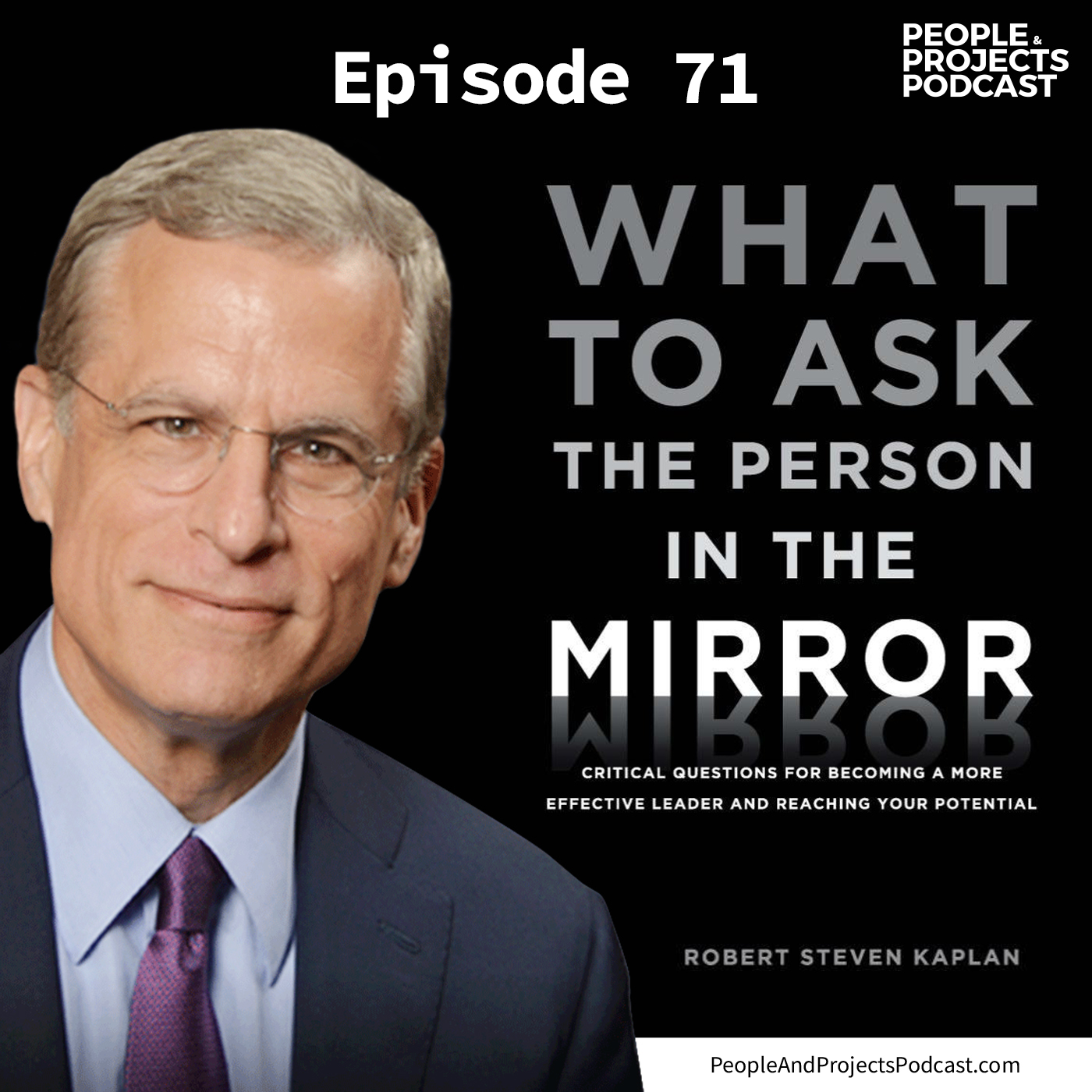
Ep 71PPP 071 | Critical Questions for Becoming a More Effective Leader and Reaching Your Potential
Another Day in the Salt Mine! One of the many things I love about my job is that I get to intersect with hundreds of organizations. As I walked into the office of one of my large financial services customers recently, I took a moment to watch the body language of the people as they walked through the doors to start their day. I've learned you can tell a lot about a company by watching the employees. Do you want to know what I saw? In words it might sound like this: "Well, it's another day. I'm going to be working on another project. Hopefully, it will be successful so I can get another promotion (which sounds a lot better than looking for another job!)." Engaging Our Teams For those who lead teams or departments or even companies, you know there are people who walk into your organization each day that just aren't as engaged as they could be. What can we do as leaders of people and projects to more effectively engage our teams? In this episode, I interview author and Harvard business professor Robert Steven Kaplan. Rob is the author of What to Ask the Person in the Mirror: Critical Questions for Becoming a More Effective Leader and Reaching Your Potential. I've learned that getting better results doesn't always come down to knowing answers. Rather, it can come from asking better questions. In this interview, you'll hear from Rob what questions can help us be more effective leaders. Join our Facebook Page Please take a minute to stop by our podcast Facebook page! I invite you to Like it and join the discussion. Thank you for joining me for this episode of The People and Projects Podcast! Have a great week!
Leadership Fast Track Program 2012
You've heard me talking about the Leadership Fast Track Program in recent episodes, right? Well, here's an easy way to learn more about it! Attached to this episode you'll find a brochure for this year's program. Check it out and let me know what questions you have! I'd love to have you in this year's program! BTW, sign up by April 15, 2012 and you save $500! Go to http://www.i-leadonline.com/LeadershipFastTrackProgram.asp to learn more!
Ep 701PPP 070.1 | Premium Follow-up on Lisa Petrilli Interview
There's a big appetite these days for advice for introverts. Lisa Petrilli's e-book shares some helpful insights. I trust you found the interview with Lisa was helpful, whether you consider yourself an introvert or if you lead a team that has one or more members. In this premium episode, I'm going to share some additional thoughts to help us personally apply this learning. Check your Premium Feed for the People Styles material that I mention in this cast. Let me know what questions you have. Thank you for being a premium subscriber to The People and Projects Podcast!
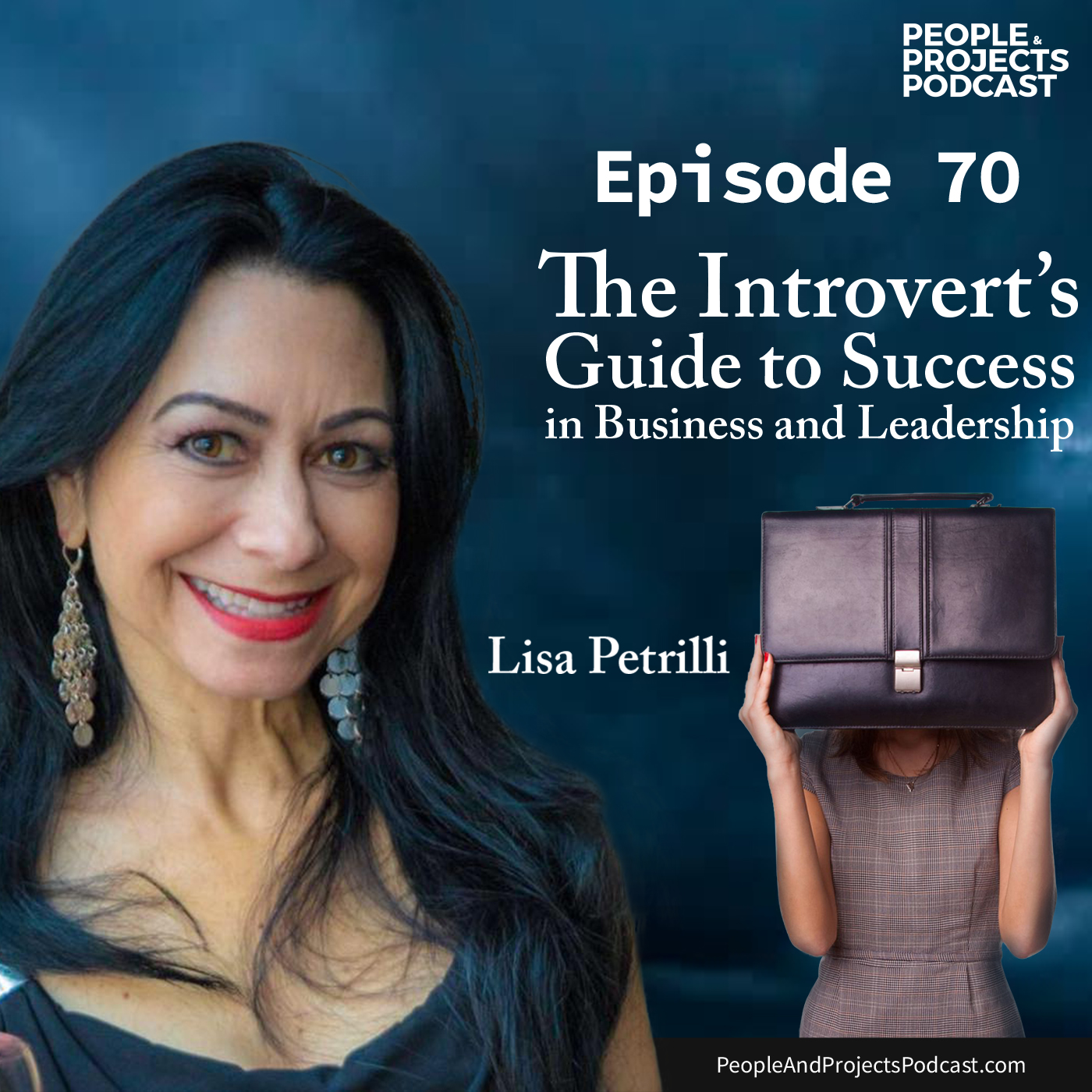
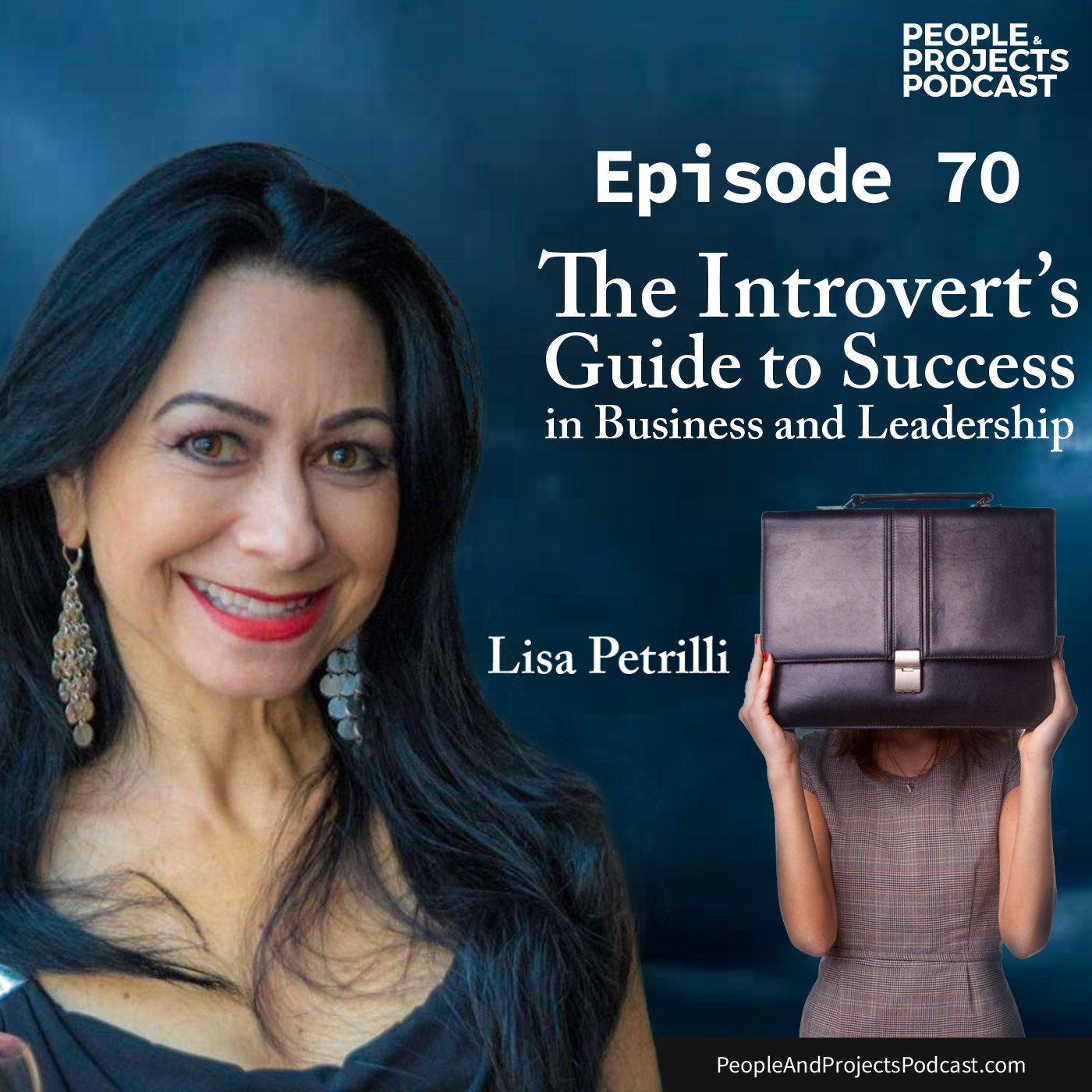
Ep 70PPP 070 | The Introvert's Guide to Success in Business and Leadership
People Don't Listen To Me Some years back I was sitting across the table from a coaching client. We were talking about what she thought was her inability to influence as effectively as she wished. In her soft-spoken manner, she said, "I just feel like people don't listen to me." I have to admit that the mischievous side of me wanted to say, "Um, what was that you said?" Now, of course, I didn't say that, but let me ask you this... Since she is quiet it's rather obvious she's an introvert, right? And it's probably fair to say that introversion is likely to hold her back from climbing the ladder, wouldn't you say? Well, how about this? The coaching client was a C-level executive in a highly successful organization. Though she very well may be an introvert, making that assessment so quickly without learning more is an easy mistake to make. Can Introverts Be Effective Project Managers? Can introverts be effective project managers and leaders? In this episode, we talk about that with Lisa Petrilli, author of The Introvert's Guide to Success in Business and Leadership. To learn more about Lisa, please visit her website at LisaPetrilli.com. P.S. BTW, if you haven't listened to my interview with Devora Zack, author of Networking for People Who Hate Networking, make sure to check it out! Thank you for joining me for this episode of The People and Projects Podcast! Have a great week!
PPP 069 | Reaching Your Goals with Dr. Heidi Grant Halvorson (Part 2)
Total Duration 24:39 Download episode 69 In this episode I continue my interview with Dr. Heidi Grant Halvorson, author of Succeed: How We Can Reach Our Goals and Nine Things Successful People Do Differently. If you happened to miss the first part of the interview, I definitely invite you to check that out as well. In this episode Heidi shares insights on the difference between Be Good and Get Better Goals. Also, she addresses some myths regarding willpower, visualization, and positive thinking: topics that are often miserably mishandled in popular self-help books. I can't tell you how much I appreciate the evidence-based insights that Heidi brings to these topics. I highly recommend your next steps include getting a copy of her Harvard Business Review e-book single entitled Nine Things Successful People Do Differently. It's a very quick read and enormously practical. It's under $4 on Amazon in a Kindle format (and if you don't have a Kindle, you can download one on your computer or other device to read it). For my premium subscribers, make sure to listen to your premium episode which includes free access to a planning worksheet to help you reach your goals this year. If you're not currently a Premium Subscriber, visit http://bit.ly/PremiumSubscribe to learn how to become one. Thank you for joining me for this episode of The People and Projects Podcast! Have a great week!
PPP 068 | Reaching Your Goals with Dr. Heidi Grant Halvorson (Part 1)
Total Duration 25:04 Download episode 68 Additional Episode My interview with Heidi is split between two episodes. Make sure to listen to the second portion where we cover additional practical insights to help us reach our goals this year. For my premium subscribers, you're extra coaching episode will be published along with the second half of the interview. Thank you for joining me for this episode of The People and Projects Podcast! Have a great week!
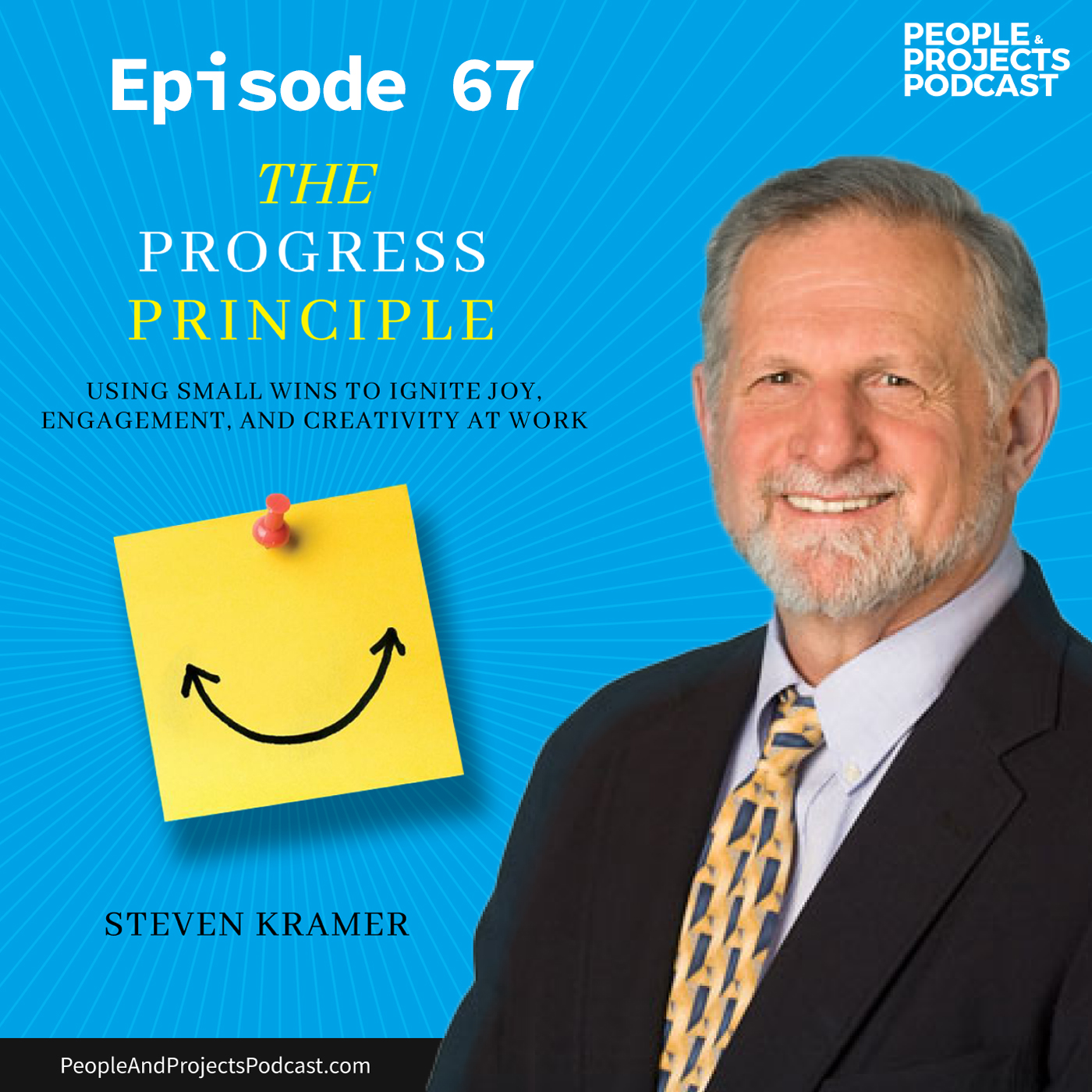
Ep 67PPP 067 | The Single Biggest Factor for Increasing Productivity, Creativity, and Commitment: The Progress Principle
The Gift That Keeps on Giving This is a season when giving gifts takes center stage for most of us. Many of us have the gift of some time off before a new year begins. And when that new year gets into full swing, what is one of the biggest gifts you can give those you lead? I'll give you a hint: it doesn't require shiny wrapping or a pretty bow. One of the best gifts to those we lead is the gift of Respect. Encouragement. Clear goals. Autonomy. The resources they need. Creating environments where people love to work is a gift that keeps on giving. And my gift to you this Christmas is an interview with the co-author of one of the most respected business books of 2011. The book is entitled The Progress Principle: Using Small Wins to Ignite Joy, Engagement, and Creativity at Work, and the author is Steven Kramer. I actually gave a copy of The Progress Principle as a Christmas gift to a close friend, and I recommend you get yourself a copy as well. Learn more about the book at their website http://www.progressprinciple.com. You may also enjoy reading the article that Steve mentions in the interview regarding managers as heroes. You can find that on HBR's website at http://blogs.hbr.org/hbsfaculty/2011/07/in-a-comment-on-our.html. Well, thank you for joining me for this episode of The People and Projects Podcast! Make sure to check out our upcoming New Year's episode with author and goal expert Heidi Grant Halvorson. For all my listeners who are celebrating Christmas and Hannakuh, have a very relaxing and joy-filled holiday! P.S. Here's a video of co-author Teresa Amabile talking about The Progress Principle at TEDx. {youtube}XD6N8bsjOEE{/youtube}
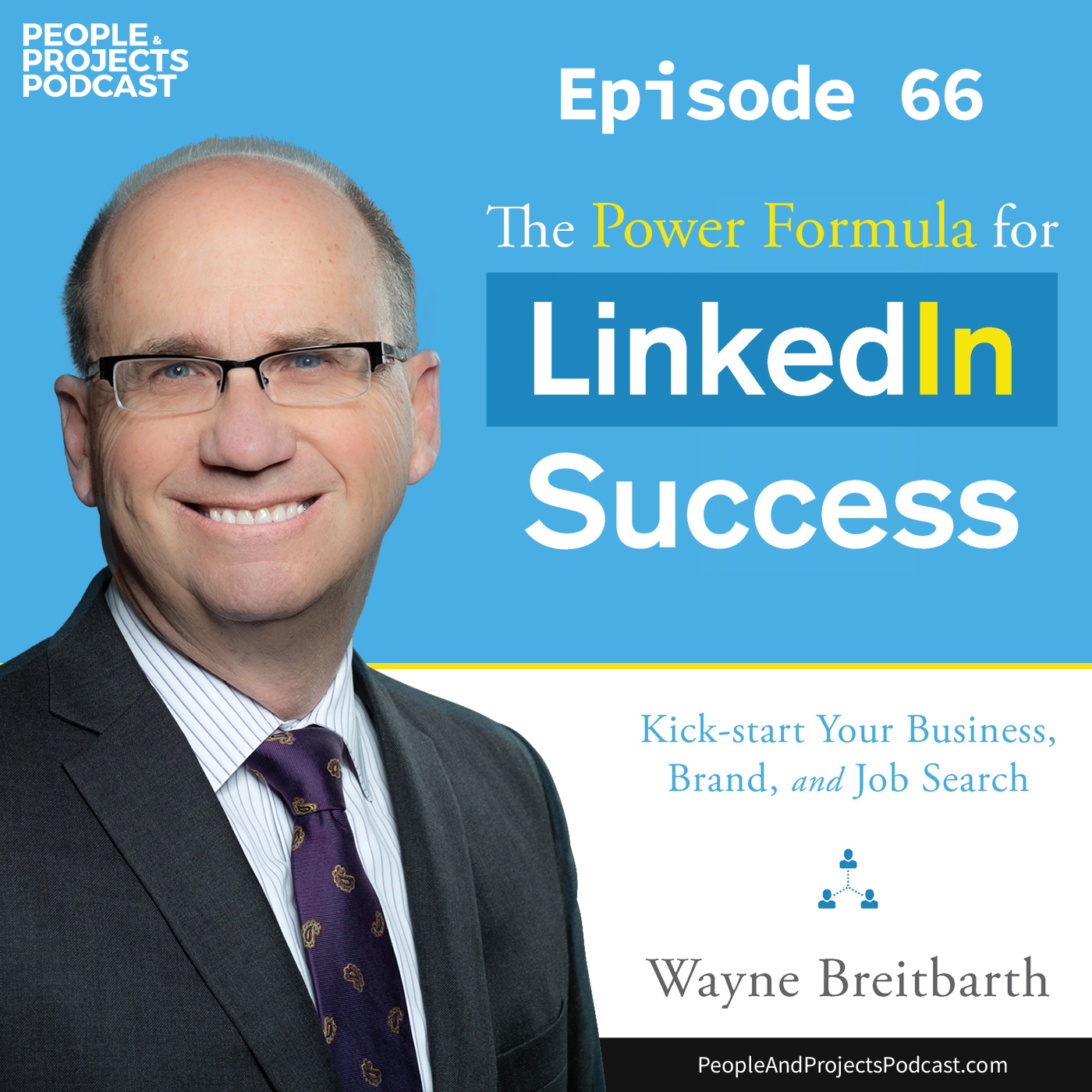
Ep 66PPP 066 | What You Need to Know About LinkedIn, with author Wayne Breitbarth
In this episode I'm going to share a conversation I had recently with Wayne Breitbarth, author of The Power Formula for Linkedin Success: Kick-start Your Business, Brand, and Job Search. Wayne is my favorite expert on LinkedIn and I know you'll enjoy his insights. You can learn more about Wayne and his book at http://www.powerformula.net/. I strongly recommend you sign-up for Wayne's free newsletter with tips and tricks. Thank you for joining me for this episode of The People and Projects Podcast! Have a great week!
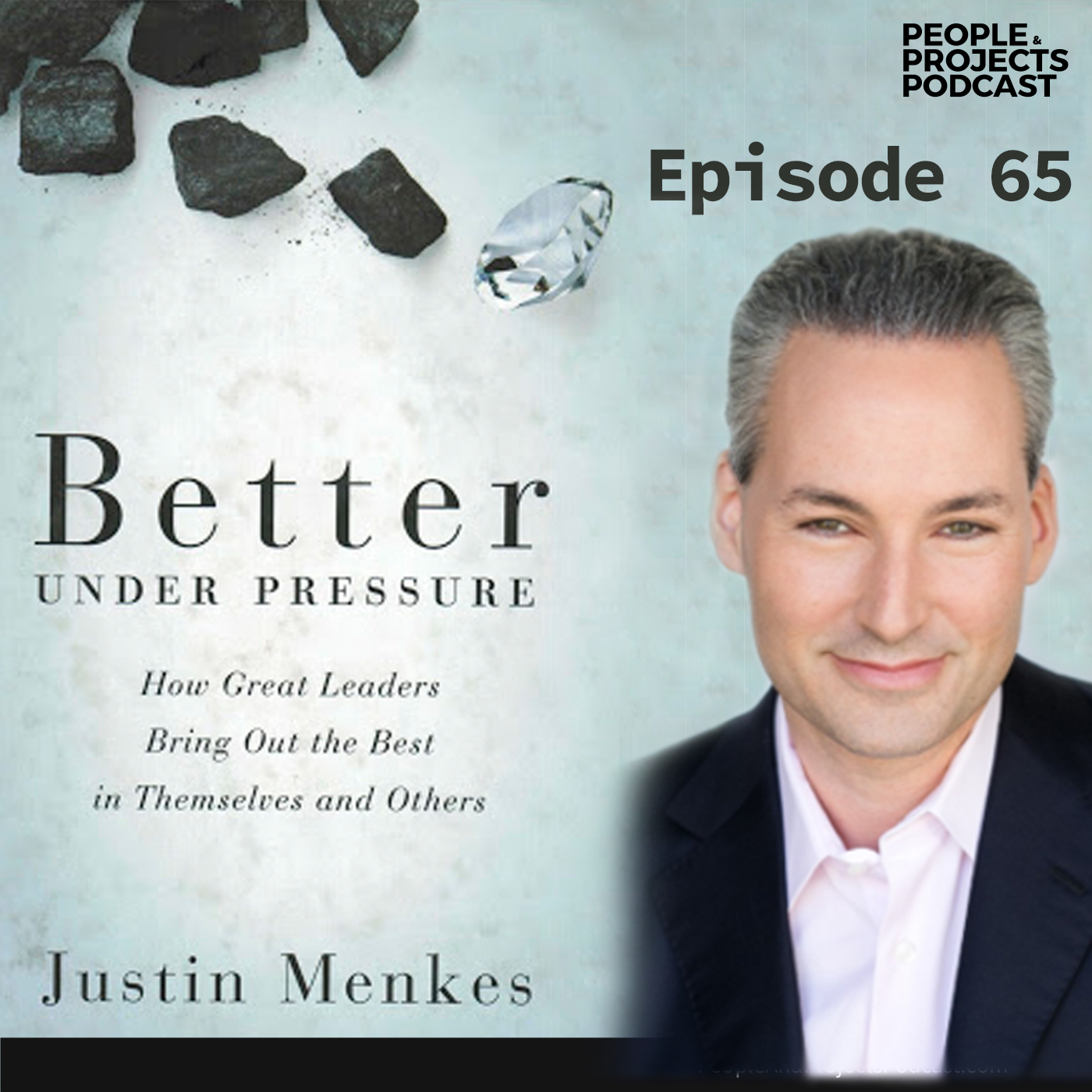
Ep 65PPP 065 | Leading Under Pressure, with Justin Menkes author of Better Under Pressure
In this episode, I talk with Justin Menkes, author of Better Under Pressure: How Great Leaders Bring Out the Best in Themselves and Others. Let's learn together from Justin as we talk about leading under pressure. You can learn more about Justin and his book at http://www.BetterUnderPressure.com. Thank you for joining me for this episode of The People and Projects Podcast! Have a great week! P.S. Here's an entertaining and informative video on how stress impacts how the brain works, from Dr. John Medina. Enjoy! {youtube}S6Xq7CMOH1k{/youtube}
PPP 064 | Find Your Focus and Master Distraction with Peter Bregman, author of 18 Minutes
Total Duration 27:37 Download episode 64 One of my favorite writers and voices on the topic of productivity is Peter Bregman. Peter recently released his newest book entitled 18 Minutes: Find Your Focus, Master Distraction, and Get the Right Things Done. I had the opportunity to spend some time with Peter recently and look forward to sharing that discussion with you in this episode. You can learn more about Peter at his website http://www.PeterBregman.com. Quick note: I'm always encouraged to hear from listeners and received this recently from Cheryl, who said, "I've been listening to your informative and inspiring podcasts and have found value in each one. I like your passion and sincerity. I benefit from the coaching delivered through your discussions with your engaging guests regarding leadership attitudes, skills and practices. I love that you call it the People and Projects podcast. My personal #1 rule is to take care of the people, and your podcasts cover the many dimensions of pursuing that objective. Thank you again for your great podcasts. I look forward to hearing more of them!" I certainly appreciate Cheryl's kind words. Her personal #1 rule is a good one, and is the heart of this podcast. If you get find these discussions valuable I invite you to take a moment and let some friends and colleagues know about The People and Projects Podcast. You can find us on the web, iTunes, and on Facebook. Speaking of Facebook, please take a minute to stop by our podcast Facebook page! I invite you to Like it and the join the discussion. Thank you for joining me for this episode of The People and Projects Podcast! Have a great week!
PPP 063 | How to Gain Credibility, Part 2 of an interview with leadership author and expert Jim Kouzes
Total Duration 20:58 Download episode 63 In our last episode I started a conversation with Jim Kouzes about their newly revised book Credibility: How Leaders Gain and Lose It, Why People Demand It. We continue that conversation in this episode, where I ask Jim for insights such as "How do you keep your credibility when being asked to support a decision you don't agree with?" You can learn more about Jim Kouzes and Barry Posner online at http://www.leadershipchallenge.com/. Thank you for joining me for this episode of The People and Projects Podcast! Have a great week!

PPP 062 | How to Gain Credibility, Part 1 of an interview with leadership author and expert Jim Kouzes
Total Duration 21:06 Download episode 62 I'm recording this episode on the road this week, delivering a keynote on leadership at a Project Management Institute Professional Development Day. Since I have leadership on the brain today, let me ask you: Think of one of the best leaders you've ever had the privilege of working with.... What was it about that person that made them such an effective leader? Though the details of your answer could be different from what others might say, chances are we would all agree that the best leader that came to mind for us shared one thing in common: credibility. Credibility is fundamental to being a leader, and in this cast I'm excited to share the first of two episodes from a conversation with Jim Kouzes. Jim, along with his co-author Barry Posner, are some of the foremost researchers and voices on leadership, including works such as their best-selling book The Leadership Challenge. In these next two episodes, I talk with Jim about their newly updated book Credibility: How Leaders Gain and Lose It, Why People Demand It. Don't miss the next cast where Jim and I talk about what to do when you're given an assignment that's over your head. How does that impact credibility? And what about when you have to execute against a decision you don't agree with? Does that mean your credibility is on the line? Jim shares his expert coaching with those questions and more so don't miss it! You can learn more about Jim Kouzes and Barry Posner online at http://www.leadershipchallenge.com/. Thank you for joining me for this episode of The People and Projects Podcast! Have a great week!
PPP 061.1 | Premium: Follow-up on the Michael Roberto interview on Filters
Total Duration 7:11 Download the premium episode (NOTE: This Premium Episode is being included in our free podcast stream this week. It gives you a sense of the extra coaching that is available each episode for our premium subscribers. Learn more about becoming a Premium Subscriber at http://bit.ly/PremiumSubscribe). There are many things I love about hosting this podcast. One of them is the opportunity to interact with the experts we interview. You probably notice that I normally include some behind the scenes cuts at the end of interviews to try and give a sense of who these people are. Most are very gracious. There's something about Michael Roberto that truly stands out though. He has great energy, a quick wit, and is everything I would have wanted in a college business professor. In this premium episode I want to highlight some points from the interview with Michael to help you put the learning into action. First, filtering isn't bad, right? We need it for efficiency. People say we need to over-communicate but, to an extreme, that can be a bad idea! If you listened to my interview with Cathy Davidson or read her book Now You See It, it's clear that we are wired up to put our attention on that which requires it. We would literally go nuts if we tried to take it all in. So filtering of information can be the equivalent of a corporate attention window: what is it that is most important. Let's focus on that. So let me ask you: how do you filter for efficiency? What do you do to make sure the most important information gets to you? From a learning perspective, I focus on a relatively small number of blogs and podcasts. I find those give me regular doses of learning without trying to read everything or attend every learning opportunity. For example, I get great value out of HBR's blog. I use CIO Magazine's "What Are You Reading" section as a starting place for new and interesting books and authors to consider as guests. I use a number of Google's filtering capabilities to give me just the news I'm most interested in. I try to surround myself with diversely interesting people who help keep me informed of their viewpoint. If you are feeling overwhelmed, you might want to think about your filtering systems today. But secondly, of course, filtering isn't always done for efficiency. And it isn't always done intentionally or for our good. As Michael says, we might by our actions and words unwittingly put pressure on those on our teams to conform to our way of thinking. We have to be careful for how we advocate for certain decisions or positions because our advocacy could cause some who know better to keep their mouths shut--to not speak up because they'll think you are not open to a contrary point of view. A key characteristic of your team must be that every member knows that if they have information or insights that can help you, they can bring it to you without fear of rejection or judgment. That doesn't mean that you will always agree with them or follow their advice. I read a case study from Michael years ago that, in effect, said that people can usually put up with decisions that you make as long as they had a fair say in the process. As long as they're heard, they can better accept what you decide. But if you explicitly or subtly make it clear that you're not open to their point of view, not to mention even giving them the opportunity, you risk making a poorly informed decision that can often surface compliance at best instead of commitment from your teams. Be careful how you may be pressuring people to conform. Third, make sure you're aware of the power and dangers of advocacy. This filter says that the information is presented in such a way as to advocate for a certain position. Information that might not reinforce the position is held back. Whether from politicians, your senior management, advertisers, a supplier, or someone on your team, keep your eyes wide open for not just what is presented but also for what is not being presented. I've learned to deal with this by asking questions, digging into the data that is presented, and watching for influence techniques such social proof. It's not that I don't trust people when they're making a pitch. But whether it's a resume, a request for something to buy, or an argument for why we should take action, there's almost always some advocacy going on. Make sure you look for dissenting or alternative points of view. Fourth, remember that sometimes it's the other person advocating. Other times it's you and me only taking in the data we want. Confirmation bias is an easy trap to fall into. Make sure to not fall in love with an approach or decision because it is ours. Cathy Davidson's collaboration by difference is her solution to this, which basically recommends we surround ourselves with diverse points of view that are intentionally looking at different aspects of what's going on. Confirmation bias can be deadly to decision-making. Beware. Fifth, and to many of the p
PPP 061 | Be a Better Problem Finder, with author Michael Roberto
Total Duration 22:23 Download episode 61 Have you ever heard this quote?"There's an inverse relationship between your level in a company and your ability to see reality." We joke about that at times when it seems like the people above us are out of touch. But why is it more difficult to see reality, the higher you get in an organization? Sometimes it's just because the people higher up are focusing on longer term issues. By virtue of their scope of responsibility, they're not in the day-to-day. But that's not always it. I was facilitating a project management workshop at a company a couple years ago discussing this very topic. A participant said it this way: "Around here, it's crap down at our level but it's fertilizer up there! It's not a problem, it's an opportunity!" Information gets filtered as it travels up and down and around an organization. What gets through and why can make all the difference between making good, informed decisions or barreling over a cliff with what we thought was an accurate map. Those of us who have the privilege of leading people and delivering projects need to understand filtering and my favorite expert for how this works is Dr. Michael Roberto. Michael's book Know What You Don't Know: How Great Leaders Prevent Problems Before They Happen continues to be one of my highly recommended books for project managers and leaders. In this episode I talk with Michael about Chapter 2 of his book: Circumvent the Gatekeepers. You can learn more about Michael and read his blog by visiting http://michael-roberto.blogspot.com/. By the way, don't miss the free Premium Episode that I'm including with this feed. Normally these extra episodes are only available for Premium Subscribers but I wanted to give you a flavor for the additional coaching you can receive with each episode when you become a Premium Subscriber. Visit http://bit.ly/PremiumSubscribe to learn more about premium subscriptions. Thank you for joining me for this episode of The People and Projects Podcast! Have a great week!
Follow-up on the Cathy Davidson Interview on Attention
Check out this quote from Daniel J. Boorstin. He said,"The greatest obstacle to discovery is not ignorance; it is the illusion of knowledge." How often have we kidded ourselves that we knew something only to get more data or evidence later that made it clear we didn't have the full story? It happens all the time. Probably more than we realize. I find a related observation when it comes to attention. We think we see the world or situations or people clearly but inevitably it's all being filtered through lenses. It could be argued that we have an illusion of observation. Have you ever seen the famous video that asks you to count the number of times a basketball is passed between a group of college students? Check it out: {youtube}vJG698U2Mvo{/youtube} Interesting, eh? Selective attention is alive and well, and for all of us who desire to lead and deliver, we need to be acutely aware of how it works. In this premium episode I want to take time to highlight some points from the interview with Cathy to help you put the learning into action. First, let's start getting our arms wrapped around Cathy's point that our schools and workplaces are often more designed for the early 20th century instead of the 21st. We may not have control of how your schooling was structured, but let's start thinking about how we best go about helping ourselves and our team learn and work going forward. How about finding ways to embrace collaborative technologies in new and interesting ways instead of making people check them at the door? For example, typical meeting protocol is to discourage people from using their laptops and cell phones during meetings. But why not encourage people to be texting and chatting during meetings, especially virtual ones? If this seems dangerous or rude or a recipe for chaos for meetings, that's OK. It's the years of conditioning that we've had! IBM has found that by actively encouraging chatting during virtual meetings, it keeps people more engaged. I've experimented with this myself and found that it can significantly change the culture of web-based meetings for the positive. In Cathy's book she lays out a strong case for how IBM uses "backchanneling" to leverage technology in meetings. Second, and related, here's a tip I learned years ago. If people are moving their attention to their laptops or other devices, it may not just be that they're rude. That's a possibility, of course, but here's my point: it just be that the meeting is boring and irrelevant. I've learned that if someone isn't paying attention when I'm facilitating, the problem may not be them: it may be me! Find ways to more fully engage people. Maybe a different venue? Maybe on Second Life! How about this? I love using Poll Everywhere to allow people to respond to a poll by texting their responses. It's an expensive tool and shows results real time. I love it! It's fun and engaging. Let's realize that asking people to check their electronics at the door causes us to miss opportunities to engage them. Third, a proven project management and leadership principle is to involve others in the planning. I've often said we need to make sure that n is greater than one! But the point brought up in the discussion with Cathy is that it shouldn't just be "in addition to me" but also "different from me." Diversity of thought is not just something to do because it's politically correct. It's just plain more effective. Cathy's organization calls it collaboration by difference. As she mentions in the interview, we often say we want diversity of thought, skills, and opinions, but then we recruit in our own image. Whether at work or in our personal lives, there is value in collaboration by difference: surrounding ourselves with people who don't just look, think, and see the same as we do. Fourth, remember that technology is here to serve us, not the other way around. If you're finding that social networking or your handheld device or some new software tool is chewing up too much of your time, the problem may not be the technology. It might just be you. We need new habits for the new technology. I've found this simple little cube timer is a handy way to block out some time to focus on one thing. When it goes off, then I can (in Tony Schwartz's terms) pulse to something else. In some situations I find it best to close my web browser or shut down my mail client. At times I completely turn off my phone. I love Cathy's idea of using a different computer for some of the more fun things, or at least get up and move as part of your switching. Make the technology work for you. It's not the enemy—we just need new habits. Finally, as much as interruptions from others is frustrating, remember what Cathy and I talked about regarding Gloria Mark's research on distractions. 44% of the distractions didn't come from others. Rather, it came from us. As Cathy said, "Heartache and heartburn are more distracting than technology!" Work on calming your own distractions. I'm finding

Ep 60PPP 060 | How The Brain Science Of Attention Changes Everything, With Cathy Davidson (Part 2)
In our last episode, you heard the first portion of my discussion with Cathy N. Davidson, author of Now You See It: How the Brain Science of Attention Will Transform the Way We Live, Work, and Learn Cathy's book is just coming out this week and has already been named one of the top 10 science books of this fall season. Is technology making it more difficult to focus? Cathy and I talk about that in this second portion of the interview. Thank you for joining me for this episode of The People and Projects Podcast! Have a great week!

Ep 59PPP 059 | How The Brain Science Of Attention Changes Everything, With Cathy Davidson (Part 1)
So let me guess.... While you're listening to this cast right now, I'm guessing you're also doing something else as well, right? Maybe driving a car or checking e-mail or working out. Or perhaps you're checking out what's going on with your Facebook friends. Hey, if you're doing that, look up The People and Projects Podcast on Facebook and Like us! Oops. Sorry. I got a bit distracted there for a moment! Anyway, there is seemingly an endless number of stimuli that are vying for your attention right now. Which do you focus on? Why? There are many great minds that are putting a lot of effort into these questions for it could reasonably be argued that time is not the scarcest resource anymore: it's attention. As we strive to focus on a world clamoring for our attention, I wanted to share one of my favorite books that is just coming out this week. It's entitled Now You See It: How the Brain Science of Attention Will Transform the Way We Live, Work, and Learn, by Cathy N. Davidson. I had the opportunity to talk with Cathy earlier this month and look forward to sharing that discussion over the course of two episodes. You can learn more about Cathy and read her blog by visiting http://www.cathydavidson.com/. Thank you for joining me for this episode of The People and Projects Podcast! Have a great week!
Follow-up on the John Baldoni Interview on Leading Up
Dee Hock is one of my management heroes. Dee founded VISA years ago and had many insights on how to be an effective leader. If you've sat through one of our leadership workshops, you might be familiar with one of my favorite Dee Hock quotes. Dee says: "If you look to lead, invest at least 40% of your time managing yourself -- your ethics, character, principles, purpose, motivation, and conduct. Invest at least 30% managing those with authority over you, and 15% managing your peers. Use the remainder to induce those you 'work for' to understand and practice the theory. I use the terms 'work for' advisedly, for if you don't understand that you should be working for your mislabeled 'subordinates,' you haven't understood anything. Lead yourself, lead your superiors, lead your peers, and free your people to do the same. All else is trivia." There's a lot to chew on in that quote, isn't there? Too often we think managing is about managing down--our so-called subordinates. Dee puts much more focus on managing ourselves and those with authority over us. You and I could argue about whether his percentages are precise, but that's not the point. I take the point as managing ourselves and those in authority over us is a big deal. We need to be intentional about it, and that's why I spent time talking with John Baldoni about the subject. In this premium episode I want to take time to stress points from the interview with John to help you put the learning into action. First, do you recall John's distinction between managing up and leading up? To me, it's mostly semantics and I'm going to use the terms synonymously. That said, there's a good point to be made here. Some people interpret managing up as sucking up. It's as if we're kissing butt to just look good to the boss, often in a deceptive or at least selfish way--perhaps at the cost of others not looking as good. We don't manage or lead up just to look good. In fact, sometimes when I do this, I'm managing up precisely because I don't want us all to look bad! I'm concerned that the decision-making process needs additional perspectives or that it would be to our mutual benefit if the boss was influenced a certain way. Where it gets sleazy is when it's about me. Isn't that a good marker, in general? Whether it's regarding conflict or negotiation or influence or giving and receiving constructive feedback or goal setting or just about any area of life: when it becomes all about me, it's a problem. So, as John mentioned, leading up is ultimately about being committed to helping the organization grow and achieve. Second, a primary skill to develop is learning to read your boss. This is so critical. Some time back I interviewed Dave Po-Chedley about his book on stakeholder relationships. Dave said we need to learn the "buying habits" of our boss. I like that term. How does he or she make decisions? Do they like a lot of detail or not? Do they want a PowerPoint deck or does that make them suspicious--they just want it drawn up on the fly on a whiteboard. Are they an outgoing, gregarious person or more quiet and analytical? Pictures or numbers? Face-to-face or via e-mail. All of these and many more are considerations to take to heart when we're trying to influence up. Becoming a student of your boss is part of Dee Hock's 30% of your time. Pay attention and learn to adjust your style accordingly. Anticipate what they want to see and how they'll likely push back. Learn their buying habits. It will make your job of selling ideas much easier. Third, I want to remind you about John's three main requirements for you to be successful: competence, credibility, and confidence. Though I'm always surprised when someone occasionally wants to argue this point, competence is not fixed. It can be developed. A hunger to learn is one of the top traits I look for in aspiring leaders. Education and experience combined with a teachable spirit can significantly develop our competence--even helping us become a true expert given enough time. Applying that competence over time can increase our credibility. As I mentioned in the interview, credibility is currency. We have to execute--we can't just talk a good game. Consistently delivering with--as John said it--"shining colors" help us develop credibility that can be banked on. And then there's confidence. Nearly every year I spend time with one or more coaching clients whose issue isn't competence or credibility. Rather, they have a confidence problem. They sell themselves too short. Competence, Credibility, and Confidence are three C's that are worth writing down and being intentional about developing. Finally, I want to recall your attention to John's leadership advice to Be Seen, Be Heard, and Be There. How visible are you to your boss? I was with a leader last week who was challenged because her boss was in a different state. It's difficult for her to build credibility in his eyes because of the distance. And yet it's important for leaders to be s
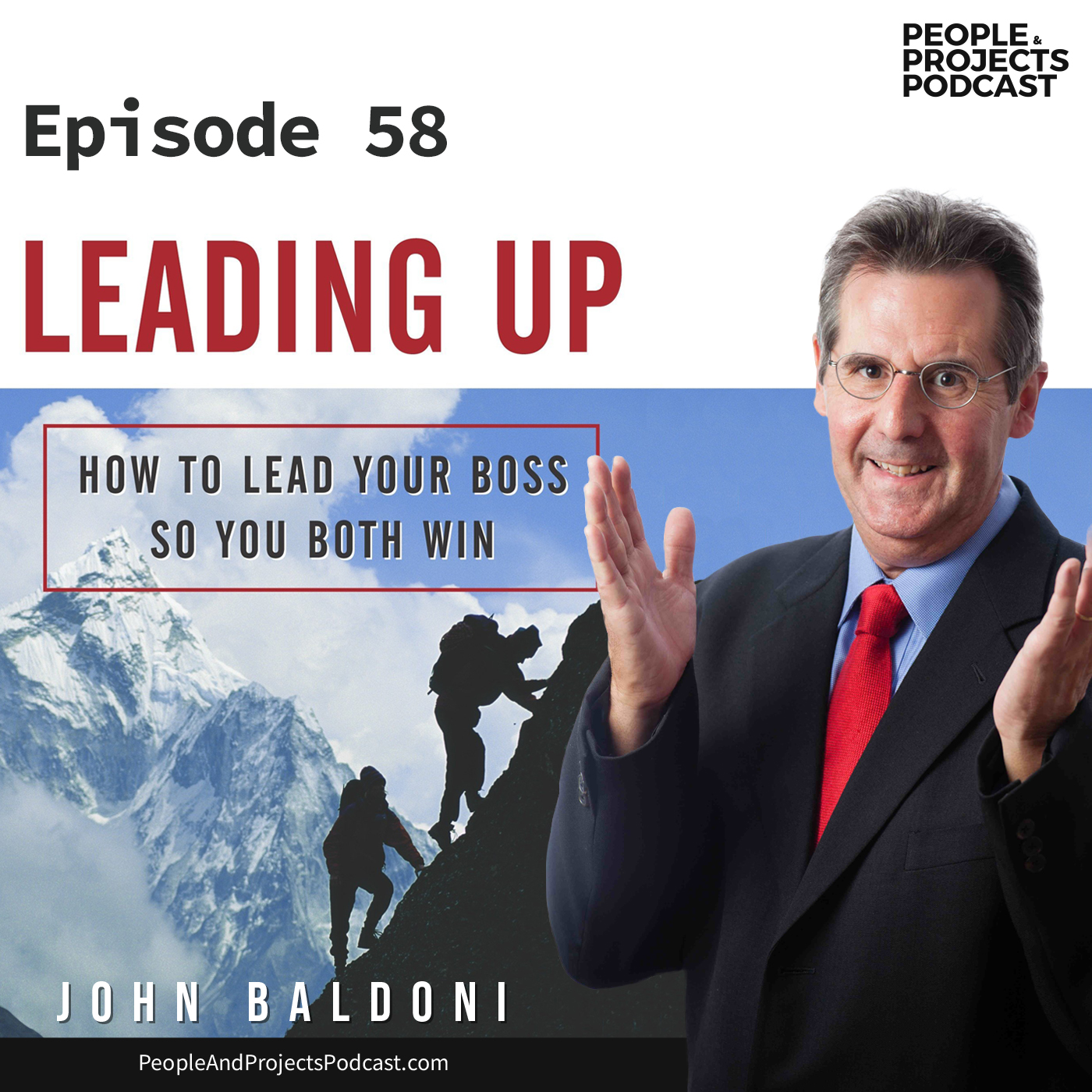
Ep 58PPP 058 | How To Lead Your Boss, With Author John Baldoni
One of the lessons that eventually becomes clear is that managing is not just managing down: leading those people who report to us. In fact, the higher I got in organizations, the more I found I needed to manage up: in many ways, to lead my boss. That's a lesson I don't remember being taught in a textbook. Whether you're a project manager, team member, or senior leader, we all have a boss, and learning to lead that boss is a key skill that must be developed. Earlier this year I had a conversation with leadership expert John Baldoni. John is the author of many books, including Leading Up: How to Lead Your Boss So You Both Win. In this episode, you'll see what John has to say about how you can more effectively lead your boss. You can learn more about John by visiting http://www.johnbaldoni.com/. John recommended you check out his previous book Lead by Example: 50 Ways Great Leaders Inspire Results. Also, I recommend you check out the other book John mentioned in the interview: Lead Your Boss: The Subtle Art of Managing Up. Thank you for joining me for this episode of The People and Projects Podcast! Have a great week!
Follow-up on the Todd C. Williams Interview
There's nothing easy about rescuing a problem project. There's a reason why they're called problem projects! Todd's book is reasonably good at outlining a framework for how to approach the problem project when you inevitably will be tasked with doing so. In this special premium edition, I want to share some coaching for you based on lessons from Todd's book. First, let me encourage you to not back away from the problem projects. I talked with Todd about that early in the discussion. Though it may not be fun, per se, there's something engaging about the problem-solving of a problem project. If you can develop a reputation of taking on the chaos, bringing it under control, and delivering the project, it really is your chance to shine. It used to drive me crazy when I'd hear people say, "It's not a problem, it's an opportunity!" Let's call it what it is: it's a problem! However, it is an opportunity as well. Remember that when you're tempted to try and dodge a recovery effort. Second, I have to ask: Do you have a project that needs to be acknowledged that it's in trouble? This is related to my discussion with Todd about the parallels with 12 step programs. According to Todd, the first step--acknowledging that we have a problem--is the biggest hurdle. He suggested that we be passionately dispassionate, which is an intriguing way of saying it. Todd suggests you stick to facts, and I agree. However, emotions are inevitably a part of the fabric of a recovery situation and being willing to attempt to understand and interpret those emotions might be helpful in uncovering the facts. When you lay facts on the table that can be backed up, you have immensely more credibility than the people who are freaking out that the sky is falling and it's someone else's fault! Third, I really liked Todd's coaching that we match the methodology with the situation. In the book Todd compares and contrasts waterfall, agile, and critical chain. I actually think that chapter is potentially one of the most helpful parts of Todd's book. Tailoring an approach to the problem--selecting the best tool for the job--is one sign of a master craftsman (and great project manager). Fourth, Todd gave some subtle coaching about how to pull the alarm, if necessary. He said it this way: "Here's what's wrong! Here's what's wrong! And here's what we can do to fix it." Notice how different that is than just "Here's what's wrong!" Come to the table with solutions, not just problems. That shows you're taking ownership and responsibility. It's just good leadership. Finally, remember your assumptions. In our project management workshops we talk about how assumption planning is vital to project planning. Todd suggested that during recovery efforts, we should see if some of our assumptions are no longer valid. Assumptions drive so much and can teach us why a project is struggling. Make sure to uncover any missing assumptions as well as validate those assumptions that have been identified. Learn from assumptions that turned out to not be true, real, or certain and you can benefit future projects. If you're heading into (or already in the midst of) a problem project, make sure to check out Todd's book: Rescue the Problem Project: A Complete Guide to Identifying, Preventing, and Recovering from Project Failure. Hey, the People and Projects Podcast is now on Facebook! I invite you to Like us at http://www.facebook.com/pages/People-and-Projects-Podcast/224005747630357 and join the discussion. Thank you for being a premium subscriber to The People and Projects Podcast! Please let me know what questions you have and if there's anything I can do to help you lead and deliver. Thank you for joining me for this premium episode of The People and Projects Podcast! Have a great week! Total Duration 4:10 Download the premium episode
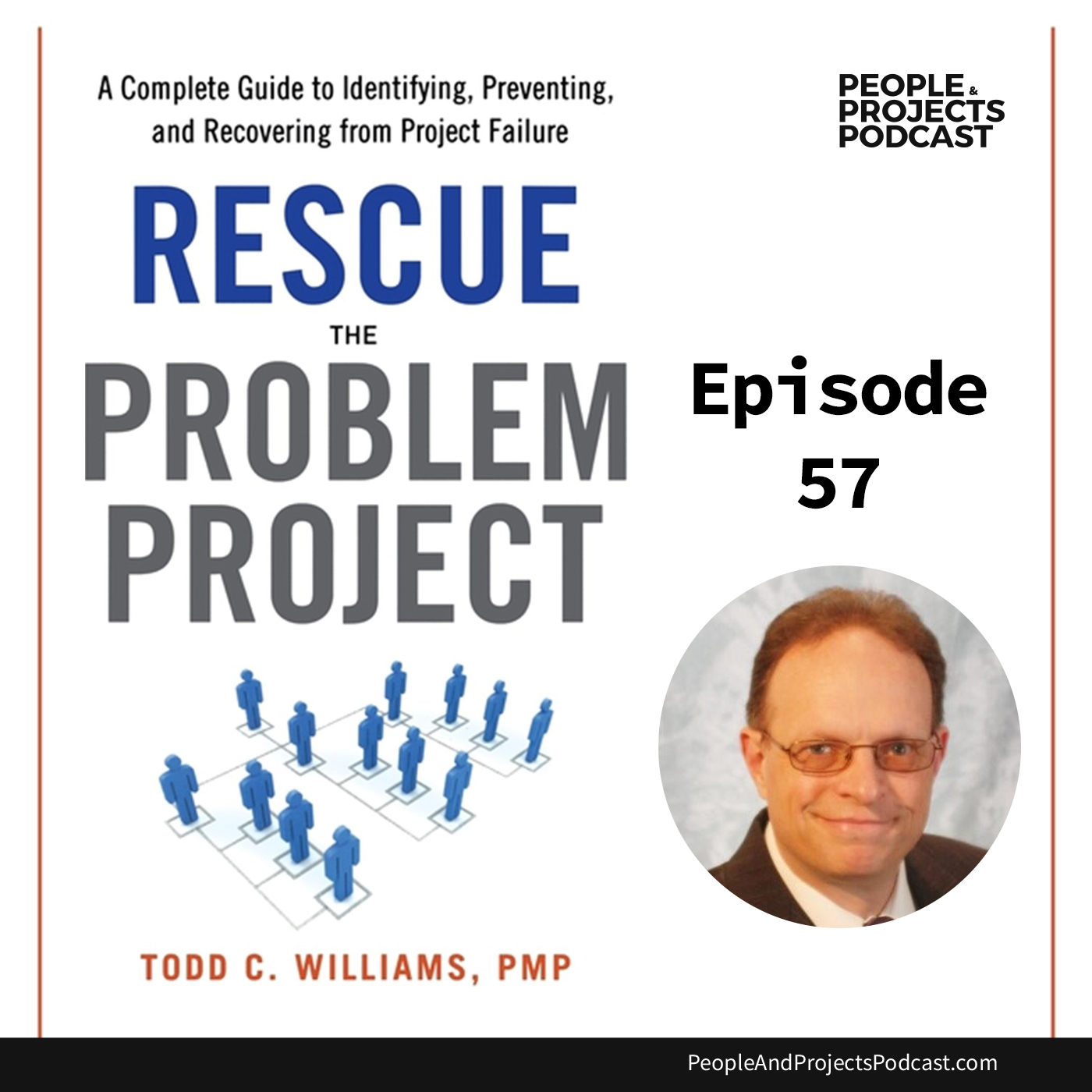
Ep 57PPP 057 | Rescuing The Problem Project, With Author Todd C. Williams, PMP
Lead projects long enough and eventually you'll have to deal with the problem project. Whether you were involved with the project from the beginning or inheriting problems from someone else, the reality is we need to be able to rescue the problem project. That's not only true--it's also the name of a new book from Todd C. Williams, PMP. In this episode, I talk with Todd about ideas and recommendations from his book Rescue the Problem Project: A Complete Guide to Identifying, Preventing, and Recovering from Project Failure. You can learn more about Todd by visiting http://ecaminc.com/. His blog Back From Red can be found at http://ecaminc.com/index.php/blog. Thank you for joining me for this episode of The People and Projects Podcast! Have a great week!

Ep 56PPP 056 | Improving Your Success Through Little Bets, With Author Peter Sims
One of the great challenges of business is how to go from idea to delivery. It's easy to talk about ideas but turning those into a finished product requires much more than talk. It can be daunting to deliver. There's the risk of failure. There's the fear of unknowns--of surprises that can create obstacles to success. Going from idea to delivery is truly challenging! Ultimately project management is about how to deliver results but leaders of projects and teams need more than just work breakdown structures and Gantt charts. One of my favorite books of this year provides great insights for all of us who seek to lead and deliver. I recently had the real privilege of spending some time with Peter Sims, author of a great new book entitled Little Bets: How Breakthrough Ideas Emerge from Small Discoveries, and look forward to sharing that discussion with you in this episode. You can learn more about Peter by visiting http://petersims.com. Thank you for joining me for this episode of The People and Projects Podcast! Have a great week!

Taking Action on Your Crazy Ideas
Ever get a crazy idea and decide to act on it? Too often I just sit on the idea instead of taking action. In late May I had a crazy idea: to produce a Father's Day Rap with some friends. Though Father's Day is in the rear view mirror, I thought I'd share yours truly making a fool of myself trying to lay down some rap tunes. After all, it's good to be humbled, isn't it? {youtube}IOwWlw5zPcc{/youtube} Regardless of your aspirations to rap or not, here's my question for you.... What's a crazy idea you've had lately but not acted on? Why not make it happen? Too often we're held back because we're afraid we will fail. I appreciated Peter Bregman's recent HBR post that recommends we don't ask, "Will I succeed?" Rather, a better question is "Is it worth the risk?" I'm not worried about succeeding as a rap artist or cinematographer. And I certainly realize there's a risk of acting so silly, publishing it on YouTube, and letting you know about it! But was it worth the risk? It was a great memory, not the least of which for my friend Bob--the oldest guy in the video--who is now in his late 80's. And we all had an enormous amount of fun. What's your crazy idea? Is it worth the risk? Treat it like a project and start working on delivering it. Whether at work or home, you might be surprised by what happens when we take action on ideas instead of just thinking about them.... Here's to a great second half of the year! Download the video episode
Taking Action on Your Crazy Ideas
Ever get a crazy idea and decide to act on it? Too often I just sit on the idea instead of taking action. In late May I had a crazy idea: to produce a Father's Day Rap with some friends. Though Father's Day is in the rear view mirror, I thought I'd share yours truly making a fool of myself trying to lay down some rap tunes. After all, it's good to be humbled, isn't it? {youtube}IOwWlw5zPcc{/youtube} Regardless of your aspirations to rap or not, here's my question for you.... What's a crazy idea you've had lately but not acted on? Why not make it happen? Too often we're held back because we're afraid we will fail. I appreciated Peter Bregman's recent HBR post that recommends we don't ask, "Will I succeed?" Rather, a better question is "Is it worth the risk?" I'm not worried about succeeding as a rap artist or cinematographer. And I certainly realize there's a risk of acting so silly, publishing it on YouTube, and letting you know about it! But was it worth the risk? It was a great memory, not the least of which for my friend Bob--the oldest guy in the video--who is now in his late 80's. And we all had an enormous amount of fun. What's your crazy idea? Is it worth the risk? Treat it like a project and start working on delivering it. Whether at work or home, you might be surprised by what happens when we take action on ideas instead of just thinking about them.... Here's to a great second half of the year! Download the episode

Follow-up on the Kerry Patterson interview
Thank you for joining us for this special premium edition of The People and Projects Podcast. Whether we're trying to change ourselves, our teams, or others around us, there's nothing particularly easy about it. Oh, there are models that are helpful and then there's basic common sense, but when all of this flies into the face of reality, making lasting change is truly challenging. I don't know if it was obvious or not from my interview with Kerry Patterson but I am very excited about their new book Change Anything. I really like that they have proven through research that willpower isn't the answer. In fact, it's a trap. Instead, there are proven strategies that each of us can customize to help us making changes that last. In this premium episode, I want to highlight a few of the points from Change Anything that I particularly resonated with and that could help you make lasting change. First, there's great wisdom in their advice about being both the scientist and the subject. The scientific method is an interestingly relevant approach for us to make change. We have a hypothesis about factors that influence our ability to change or not and we design an approach to test that out. Yet scientists do this fully expecting that the experiments won't work every time. Through experimentation, the approach gets tweaked until the results prove (or disprove) the hypothesis. In our project management classes I share a quote from one of my favorite employees over the years. His line was "The project schedule is the schedule for exactly how the project will not occur!" I love that. It's not an excuse to avoid creating a schedule. It's just an acknowledgement that the schedule won't work exactly as is. That quote is applicable to whatever you want to change. We have a strong default bias—an enormously strong tendency to snap back into what we've always done--the default. Treating our change initiative as a scientist, learning from results and tweaking our approach helps us deal with those days when we're overcome by the default bias. We're the scientist and the subject, and by doing so, we can turn a bad day into good data. Second, I greatly appreciate their advice to identify our crucial moments. Whether we're trying to stop smoking, start exercising, improve a relationship, or any other habit or situation, we don't have to white knuckle it, so to speak, 24 hours a day. In Change Anything, the authors challenge us to identify our crucial moments--those times when it is most difficult to stay on plan. For me when it comes to eating, it's when there's a bowl full of salty snacks around. I'm doomed if willpower is my only strategy. For some people in the workplace and they tend to procrastinate, their crucial moment can be when they're tempted to check e-mail instead of getting started on an important task. What are your crucial moments? Identify those and you can come up with strategies to be stronger. Third, I found great value out of their six sources of influence. Get the book to understand them all, but in this premium cast I'm going to highlight a point from their first source: Love What You Hate. Is it possible to love what you hate? If I hate dieting, it is possible to turn that into love? If somebody literally hates their spouse or someone they work with, is it possible to turn that around into a relationship of love or at least admiration? Hmmm.... Well, the authors offer a number of tactics including "Visit your default future." I love this one. We are so short-term minded. We think about now, not 20 years from now. We don't connect the dots that this behavior now, though seemingly inconsequential, could have enormous repercussions down the road. I used to work with a guy who, to be honest, was just a pain to work with. He just wasn't pleasant to work with. He got away with it most of the time because he tended to deliver results but over time he alienated many people and became less effective. Worse yet, when he was finally let go from his company, that very same attitude has made it difficult to get or keep subsequent jobs. In the last 10 years, he's been unemployed as much as he's been employed. He's living the default future of being difficult to work with. Let's say I wanted to start eating better. How bad is it to eat this luscious piece of cake in front of me? In light of today or this week or this year, it's probably no big deal. But if I've been gaining, say, 3 pounds a year, what does my default future look like? Heavy, and that can certainly lead to plenty of other problems. What does your marriage look like or your relationship with your kids look like 10 years from now if you don't change some habits? How about 20 years from now? Visiting our default future in vivid detail can help provide some motivation to change what that destination looks like. Finally, it's worth being reminded that we are significantly influenced by the people around us. That can be for the good or for the bad. In Change Anythin

Ep 55PPP 055 | Change Anything, With Best-Selling Author Kerry Patterson
So let me ask you a question: How strong is your willpower? When you want to make a change, how successful are you at not only making it but also sustaining it? Whether at work or outside, whether personally or with a group of people, learning how to effectively change is critical. And it needs to start with us individually. One of my favorite books of the year just came out. It's entitled Change Anything: The New Science of Personal Success and it is from the authors of Crucial Conversations, Crucial Confrontations, and Influencer: The Power to Change Anything. I had the real pleasure of talking with author Kerry Patterson earlier this month and look forward to sharing that interview with you in this episode. You can learn more about Kerry's organization by visiting http://www.vitalsmarts.com. Thank you for joining me for this episode of The People and Projects Podcast! Have a great week!

Ep 54PPP 054 | Become A Better Problem Solver, An Interview With Author And Management Thinker Roger L. Martin
I recorded this episode on the road this week, while in Las Vegas speaking at the Agile Development Practices and Better Software Conference. I greatly enjoy talking with people from many different companies about the challenges they face on their projects and teams. Here's a recurring them I hear from leaders who are responsible for delivering projects... "Should we ship or delay?" "Keep trying or ask for help?" "Invest in a new product or milk the existing cash cow another year?" Whether you're leading teams or projects, we're often faced with what seems like unpleasant trade-offs. It's not a matter of which option is the best. Sometimes it feels like we need to figure out which option is the least evil! Success with a project, team or even organization can come down to how effectively we lead when we're seemingly stuck between the proverbial rock and hard place. To help us navigate these situations I turned to Dr. Roger L. Martin. Roger has been named one of the top 50 management thinkers in the world and is the author of two thought-provoking books, entitled The Opposable Mind and The Design of Business. Want to be a better problem solver or improve your ability to innovate? This episode is for you! To learn more about Roger L. Martin and to get links to his articles, books, and blog, visit http://rogerlmartin.com. Thank you for joining me for this episode of The People and Projects Podcast! Have a great week!

Ep 53PPP 053 | Saving Your Good Ideas From Getting Shot Down, With John Kotter
In this episode, I continue my conversation with Professor John Kotter. If you haven't listened to the first part of this interview, make sure to check that episode out! Our focus in this cast is on John's most recent book entitled Buy-In: Saving Your Good Idea from Getting Shot Down. To learn more about John's organization, check out http://www.kotterinternational.com/. You can follow John's Harvard Business Review blog at http://blogs.hbr.org/kotter/. You know, if you were a premium subscriber to the People and Projects Podcast, you could now listen to some special coaching advice that I share after each interview with my guests. Each premium episode is designed to help you improve your ability to lead and deliver by taking the next step in applying the learning from our standard podcast episodes. Thank you for joining us for this episode of The People and Projects Podcast! Have a great week!

Ep 52PPP 052 | Leading Change, An Interview With John Kotter
When was the last time you wanted to make a change at work? Maybe it was an approach on a project or something bigger, like wanting to introduce a new way of doing projects, such as using principles from agile project management. Chances are you faced some resistance to your proposed changes. Yet one of our key responsibilities is to lead change, even when our ideas are getting shot down. Well, to give us insight on this topic, you could argue one of the best people in the world to talk to is Professor John Kotter. John's most recent book is entitled Buy-In: Saving Your Good Idea from Getting Shot Down and is a great follow-on to his classic books on change. I had the opportunity to spend some extended time talking with John earlier this year and look forward to sharing that discussion with you over the course of two episodes. For our premium subscribers, your extra coaching podcast episode will come out with the second cast. In this first cast, John and I focus on the topic of change. Enjoy the interview! To learn more about John's organization, check out http://www.kotterinternational.com/. You can follow John's Harvard Business Review blog at http://blogs.hbr.org/kotter/. By the way, my two favorite (and highly recommended) John Kotter books on change include: Leading Change The Heart of Change Join me in our next cast when John tells us more about how to avoid letting our ideas get shot down. Thank you for joining us for this episode of The People and Projects Podcast! Have a great week!

Ep 51PPP 051 | Great On The Job, With Author And Harvard Blogger Jodi Glickman
Last week I facilitated a tutorial and delivered a new keynote to over 800 people at the STAREAST conference in Orlando. It had been a while since our family had visited Florida so I had the opportunity to bring my wife and three children along, which was great! Between speaking engagements, we had the opportunity to spend time at Disney and if you've spent any time at a Disney park, chances are customer service and quality come to mind. People at Disney know how to be great on the job. They are patient with demanding customers and seemingly cool under the heat of the Florida sun. What does it take to be great on the job? As it turns out, there's a book by that name out this week by Jodi Glickman. I had the opportunity to catch up with Jodi recently and look forward to sharing that interview about her book with you this week. Learn more about Jodi's organization at http://greatonthejob.com. You can also find her HBR posts at http://blogs.hbr.org/glickman. Thank you for joining us for this episode of The People and Projects Podcast! Have a great week!

Ep 50PPP 050 | Managing Project Risks (Part 2) With Dr. David Hillson
In our last episode I began a discussion with Dr. David Hillson from the U.K. regarding risks and risk attitudes. In this episode, David and I continue that conversation with a focus on how we can help our organizations take the next step in implementing risk management practices. David recommended a couple of specific books in this discussion, including Exploiting Future Uncertainty and Managing Risk in Projects. Also, you may want to check out Dr. Hillson's newest book The Failure Files: Perspectives on Failure. Thank you for joining us for this episode of The People and Projects Podcast! Have a great week!
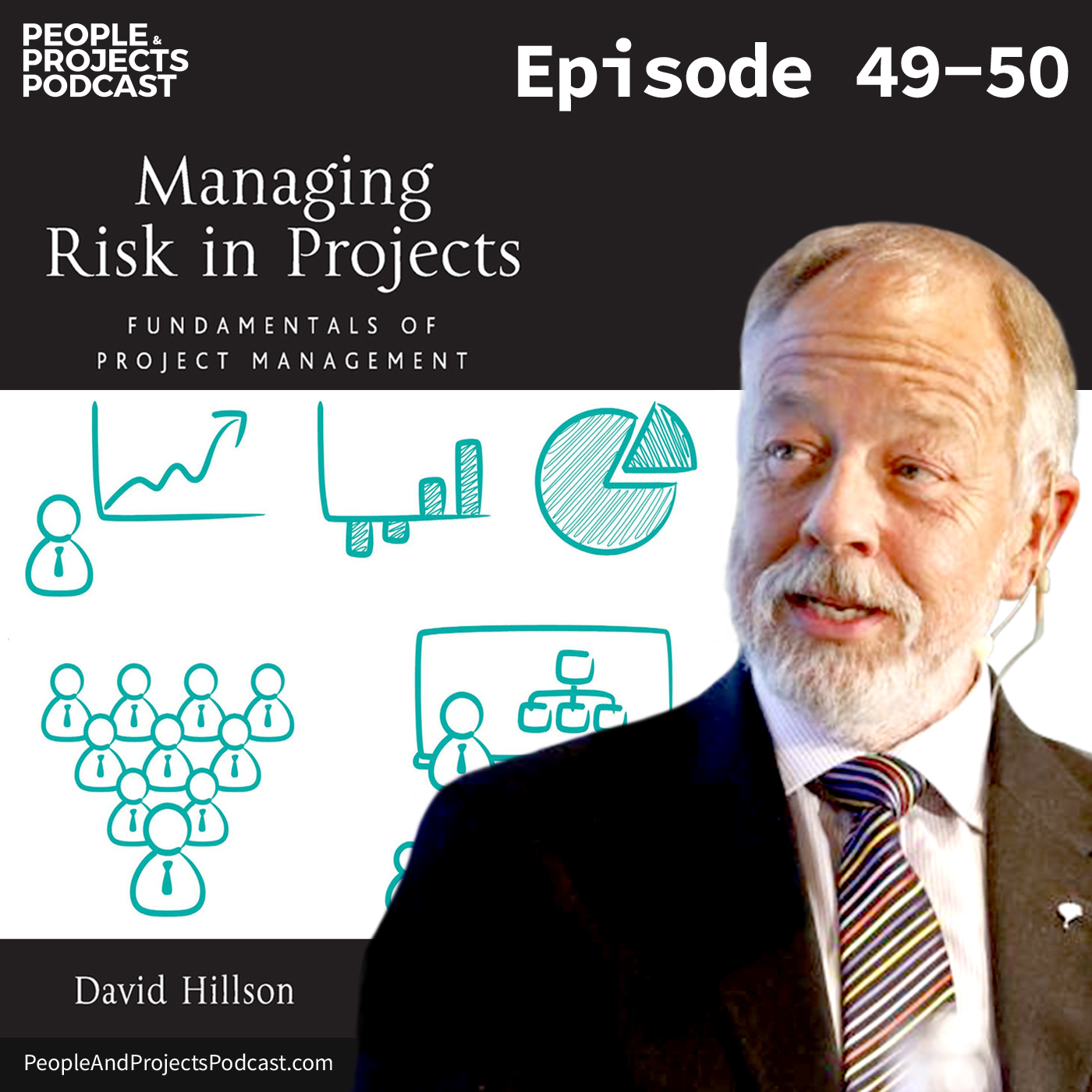
PPP 049 | Managing Project Risks (Part 1) with Dr. David Hillson
What comes to mind when you think of the term "risk"? In our workshops and keynotes regarding project management, the topic of risk inevitably is talked about, and in those discussions it's clear that one's views and attitudes about risk significantly impact how a project is managed. A problem with risk is when we lose perspective on it. For example, "I won't get out of bed today because something bad could happen." But then there's flip side as well, where we leap from the platform exclaiming, "I hope the bungee cord is attached!" Whether at work or in life, there are an endless number of things we could worry about, and I know plenty of leaders that admit they are good worriers! It's been said that one of the best antidotes for anxiety is action, and a way to move your team and project from worrying to action is risk management. To talk about this issue I went to one of the clearest and most prolific voices on the topic, Dr. David Hillson. I've split my discussion with David into two episodes and look forward to sharing this first portion with you in this episode. You can learn more about David Hillson at his website http://www.risk-doctor.com. You'll find helpful articles and links related to risk management. In the second portion of this interview, David recommends a couple specific books, including Exploiting Future Uncertainty and Managing Risk in Projects. Also, you may want to check out Dr. Hillson's newest book The Failure Files: Perspectives on Failure. Join me in the next episode where Dr. David Hillson and I talk about how to take the next step with risk management in your organization. Note: for my premium subscribers, your additional coaching episode will be published with the second portion of the interview. Thank you for joining us for this episode of The People and Projects Podcast! Have a great week!

Get 30 Free PDUs
If you're a PMP, you know that getting your 60 PDU's every three years is a requirement. Now it's actually not that difficult to get your 60, especially if you don't wait until the last month to get them! Did you know that you can rack up free PDU's just listening to The People and Projects Podcast? And the great news is that PMI has recently increased the number of Self-Directed Learning PDU's you can claim in each cycle, from 15 to 30. Make your life easier and save some money. Earn free PDU's while you listen to each episode of The People and Projects Podcast. Follow this link to find out exactly how to claim your PDUs for this podcast: http://www.peopleandprojectspodcast.com/index.php/resources-for-project-managers/earn-30-free-pdus.html By the way, here are a couple additional ideas for getting free or low cost PDU's: If you work as a project manager at least 6 months out of the year, you can claim 5 Category F PDU's each calendar year. If you volunteer with your PMI chapter or donate project management services for a community or charitable group, you can claim up Category E PDU's. You can get Category D PDU's for presenting at a conference or meeting on the topic of project management. You certainly can take classroom or e-learning courses as well. Our new Essentials of Project Management e-learning workshop is rated at 14 PDU's. Finally, you may recall an interview I had with Cornelius Fichtner regarding his PDU Podcast. Though these last two options aren't free, they are still a great value for the investment. There are countless ways to get your required PDU's. If you have any questions, please don't hesitate to contact me. Thank you for joining us for this episode of The People and Projects Podcast! Have a great week! Download episode 48

Ep 47Management: It's Not What You Think! An interview With Henry Mintzberg
If you've ever sat through one of my workshops or keynotes on leadership or project management, you've likely clued to the fact that I have a rather low tolerance for the purely academic. By that I mean ideas, models, and theories that sound great on a whiteboard but are seemingly impossible to be practically applied in the real world. When it comes to management, it's easy to find books that pontificate theory. But every once in a while you come across one that is a breath of fresh air, where the author says it how it is instead of how it should be. An example of one of those books is the latest from Professor Henry Mintzberg, entitled Management? It's Not What You Think! It's a thought-provoking, at times irreverent look at this craft we call management. To give you a taste of what you'll find in this new book, I'm excited to share a recent discussion I had with Henry in this episode. Learn more about Henry at http://www.mintzberg.com and http://www.coachingourselves.com. I am so excited to be rolling out our new Leadership Fast Track Program! Can you think of someone in your area who is a high-performing manager that the organization wants to continue to pour into? Or someone who knows the business or technical aspects of their job but could use some help developing their people skills? Or maybe it's someone who is not currently in a management role but is seen as a future leader? If that applies to you or someone you know, you have to check out the Leadership Fast Track Program! This innovative program provides workshops, leadership assessments, and one-on-one executive coaching with me. And it's all designed to minimize your time away from your work. There's an early bird discount for those who sign up before May 1, 2011. Go to http://www.i-leadonline.com/LeadershipFastTrack-2011.asp to download a free brochure. Thank you for joining us for this episode of The People and Projects Podcast! Have a great week!
Being a Student of PM, with Josh Nankivel
Hey, quick note: This episode is sponsored by the STAREAST 2011 Conference. STAREAST is the premier gathering place for software testers, developers, and managers to interact and learn how to improve software-testing practices. This year's line-up features over 100 learning and networking opportunities. Come join me for a new keynote at STAREAST this year. It's entitled "How to Win Friends and Influence People--and Deliver Quality Software". Go to http://www.sqe.com/go?SE11Kaufman and use the code AKSE and save up to $400 on registrations prior to March 4, 2011. Come join me at STAREAST! I look forward to seeing you there! So, let me ask you.... Are you a student of your profession? Conferences are a great way to invest in your learning--it's one way to remain a student. But how else do you make sure you continue to learn? Listening to this podcast is a clear way to keep growing, and each month we have more premium subscribers who get additional content that supplements these episodes with more personalized coaching. For this episode I wanted to focus on those who are in project management roles or who aspire to be there someday. There are many great resources for being a student of project management. And one of my favorite resources is pmStudent (http://learn.pmstudent.com/dap/a/?a=113). I recently had the opportunity to connect with Josh Nankivel from pmStudent and look forward to sharing that interview with you in this episode. Make sure to check out pmStudent at http://learn.pmstudent.com/dap/a/?a=113. Josh also mentioned the following sites: http://www.cottagepm.com/blog/ http://www.steppingintopm.com/ http://www.project-management-podcast.com/ http://quantmleap.com/blog/ Quick note: This month we're rolling out a new product to help those who are or aspire to be project managers. Our "Essentials of Project Management" workshop is now available in an e-learning format. This engaging new offering simplifies your ability to get expert insights in a stress-free, convenient format. And this month we're offering a special coupon code to get 50% of the normal price for the learning. Just go to http://bit.ly/EssentialsOfPM and use the coupon code ESSENTIALS-50. This offer is good until the end of March 2011. Thank you for joining us for this episode of The People and Projects Podcast! Have a great week! Download the episode