Peak Performance Leadership
444 episodes — Page 3 of 9
Ep 262The Power of Happiness: From Productivity to Profitability | Jade Green | Episode 262
When productivity spiked during 2020 many thought that this trend would continue once life returned to a sense of normalcy. However, since returning to the office many businesses are seeing lower levels of productivity and profitability from their employees who are no longer have any happiness in their lives. So how do we combat this problem? The first solution we tend to leap towards is higher pay brackets. But after a certain level of income, this simply doesn’t work anymore. We have to look deeper. Once we look past the paycheck we see engagement in work. Highly engaged employees record 23% higher profitability than those with low levels of engagement. Highly engaged employees are 87% less likely to leave their organization and we are all aware that staff turnover not only kills profits, it erodes team cohesion and therefore results. In today’s competitive job market, it’s more important than ever for leaders to focus on employee engagement and retention. CEO’s it’s time to prioritize job satisfaction in the workplace, but the question is, how? By focusing on the 7 human needs of peak performance, we can help create an engaged workforce where employees feel supported and have higher levels of job satisfaction. Internationally award-winning entrepreneur, rule breaker, and Reverse Engineering strategist. Jade supports business owners to have teams that are productive and profitable. At some stage a paycheck was enough to motivate people but in today's market you need to serve the seven human needs of your employees if you want them to be productive and profitable. When you understand these needs you can hack your company culture and elevate your success indicators across all metrics. Timestamped overview for The Power of Happiness [00:04:56] Jade's personal journey to entrepreneurship and advocating for employee happiness. [00:11:17] Founding a business on personal reputation and the importance of organizational bonds. [00:18:08] Building well-being and social connections as foundational elements for peak performance. [00:24:14] Tim Clark's four stages of psychological safety and the importance of connection and wellness. [00:32:25] Motivating personnel through significance and future vision. [00:35:44] Aligning departments towards a common future vision. [00:45:02] Building connection and understanding employee needs through effective communication. [00:49:39] Prioritizing employee well-being through coaching, redesigning work, and meaningful connections. [00:53:39] The importance of understanding and appreciating others with Five Love Languages. For the complete show notes be sure to check out our website: https://leaddontboss.com/262
Ep 261Building Resilience and Discovering Capabilities | David Lindsay | Episode 261
Welcome to this episode of the podcast, focused on personal and professional growth, leadership, and self-improvement. In this episode, we'll hear from a speaker who shares his experiences playing rugby league and arm wrestling, training in martial arts, and now using his platform to help others improve their vitality. We'll explore topics like the difference between leadership and coaching, the importance of constant change and improvement, and the power of celebrating wins, as well as the importance of personal health and fitness for high performance and success. Join us as we dive into strategies for leadership and personal growth in this episode. In the last ten years David has studied many successful teams and individual athletes, from The All Blacks (Rugby Union), to Rafael Nadal (Tennis), Ronda Rousey (MMA, UFC) and many other successful teams and individuals. They all in their own way, follow a similar structure to the "5 Step System Towards Improved Vitality in the Workplace" that David has come up with to improve workplace relations, morale and profitability of your business. David has personally used this System many times to achieve results outsiders said were never possible. Timestamped Overview [00:04:01] David shares his journey from being a small kid who played rugby league, suffered a career-ending injury, got into arm wrestling, broke his arm, became a gym manager and personal trainer but lost movement in his arm, went into martial arts, had professional cage fights and boxing matches, and now is a speaker sharing his message on improving vitality. [00:11:07] Overcoming tough times builds resilience and uncovers one's true character. Talent alone is not enough for success; hard work and training are essential. [00:14:49] Make time for what's important, or make excuses. [00:16:10] Creating positive habits for improved vitality through routines, napping for peak performance, and utilizing systems and strategies. Quality sleep, utilizing the Pomodoro technique, and being healthy and fit also contribute to improved performance. Solutions-oriented mindset is key to overcoming challenges. [00:22:54] The importance of tapping and evolving in martial arts and business, using examples of companies like McDonald's and failed companies like Nokia and Blockbuster. Failing fast, failing forward, and learning from mistakes is crucial for growth and success. [00:30:57] Celebrate wins and losses, effort and dedication. Reward what you want repeated with public recognition. Building a tight-knit team creates a productive environment. [00:36:38] Process of continuous improvement in coaching and sports teams through recap and analyzing what worked and what didn't work. Emphasis on communication and finding solutions to problems, rather than throwing blame. Similar process can be applied in the workplace. Recap is necessary as no one can play the perfect game, and constantly improving is necessary to stay ahead. [00:43:44] The evolution of technology is rapid and those who cling to the old ways will be overtaken quickly. [00:47:07] Leadership and coaching are different, but both important. The speaker emphasizes humility and not forgetting where you come from. [00:50:37] David Lindsay promotes his speaking tour, courses, and content on LinkedIn and TikTok for personal and professional improvement. Contact him via LinkedIn or email for more information. For the complete show notes be sure to check out our website; https://leaddontboss.com/261
Ep 260Leading in a distributed world: The importance of Officeverse | Bob Johansen | Episode 260
The workplace of the future — the officeverse — will disrupt many of today’s organizational models. The future officeverse will be the anytime/anyplace world of where we will work, when we will work, and how we will work. It will consist of a network of networks, with tools that will shape us in surprising ways over the next decade and beyond. The officeverse will provide a more equitable, accessible, purposeful, climate-positive future for knowledge work. While it will bring many challenges, including new concepts of sharing and managing boundaries, in the officeverse organizations will require flexibility and empowerment rather than command and control. To prepare for the potential opportunities of the wider officeverse, every office worker, organization and policy maker should imagine how the world of work will look 10 years into the future. Such “futureback” thinking — opposed to present-forward — helps us to work backward from the future and make better decisions in the present. Questions to ask, starting with, “What’s the purpose of your office and officing?” and “What are the desired outcomes you aim to achieve with your office and by your office activities?” prompt answers along a spectrum for each of seven key areas. Bob Johansen began working with IFTF in 1973 and has worked as a professional futurist for nearly 50 years. The author or co-author of 12 books and a frequent keynote speaker, he recently completed a trilogy of that details the types of leadership that will thrive in the next decade. The New Leadership Literacies focuses on essential practices of leadership, picking up where Leaders Make the Future, its more skills-oriented precursor, left off; in 2020, he published Full-Spectrum Thinking, which focuses on the need for a futureback mindset. For the complete show notes be sure to check out our website: https://leaddontboss.com/260
Ep 259Answering Your Questions - May 2023 | Episode 259
On this episode of Peak Performance Leadership, I am doing a live Q&A in a Facebook group and answering questions about effective leadership. I tackle the challenge of showing appreciation to remote workers, motivating employees to care about their job, and improving punctuality. In addition, they explore whether discipline is effective in the workplace. I talk about how the three domains of leadership: Leading Yourself, Leading Your Team, and Leading Your Organization, and how excelling in all three can make a leader successful in their role. For the complete show notes be sure to check out our website: https://leaddontboss.com/259
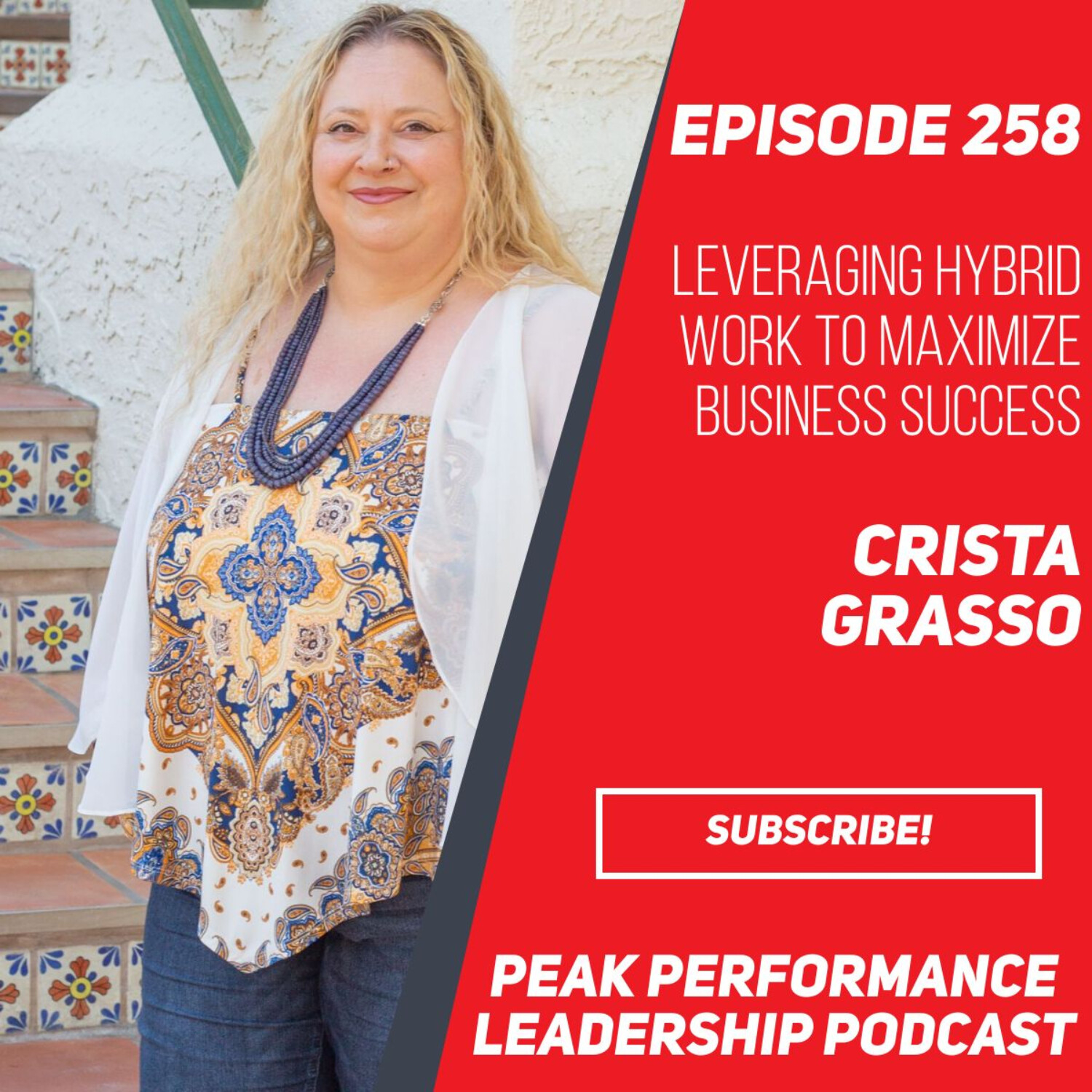
Ep 258Leveraging Hybrid Work to Maximize Business Success | Crista Grasso | Episode 258
On this episode of Peak Performance Leadership, we discuss the importance of effective planning practices and leadership strategies to improve productivity within a business or team. We explore how to effectively incorporate AI into processes, address employee concerns and trust, and build relationships among team members in both in-person and virtual settings. Our guest speaker shares the ten core areas of waste that hinder success and introduces his lean strategic planning technique as a simplified approach to planning that can be tailored to any team or company. Tune in for tips on streamlining processes, improving productivity, and seizing opportunities as a leader. All of this with the new hybrid workplace in mind. Crista Grasso is an international lean and agile business consultant to Fortune 50 multi-billion dollar businesses, strategic advisor to 6 - 8 figure small businesses and entrepreneurs, and creator of the Lean Out Method®, 90-Day Lean Out Planner, and the Lean Business Scaling SystemTM. She is also the host of the Lean Out Your Business Podcast where she shares her top strategies to simplify and scale a business. Crista has been helping businesses achieve accelerated and sustainable results and increased profitability for more than two decades. Known as the "Business Optimizer", Crista has the ability to quickly cut through the noise and focus on optimizing the core things that will make the biggest impact to grow and scale a business. She has a Bachelor of Science degree in Business and holds several lean, agile, change management, and program management certifications. For the complete description be sure to check out our website: https://leaddontboss.com/258
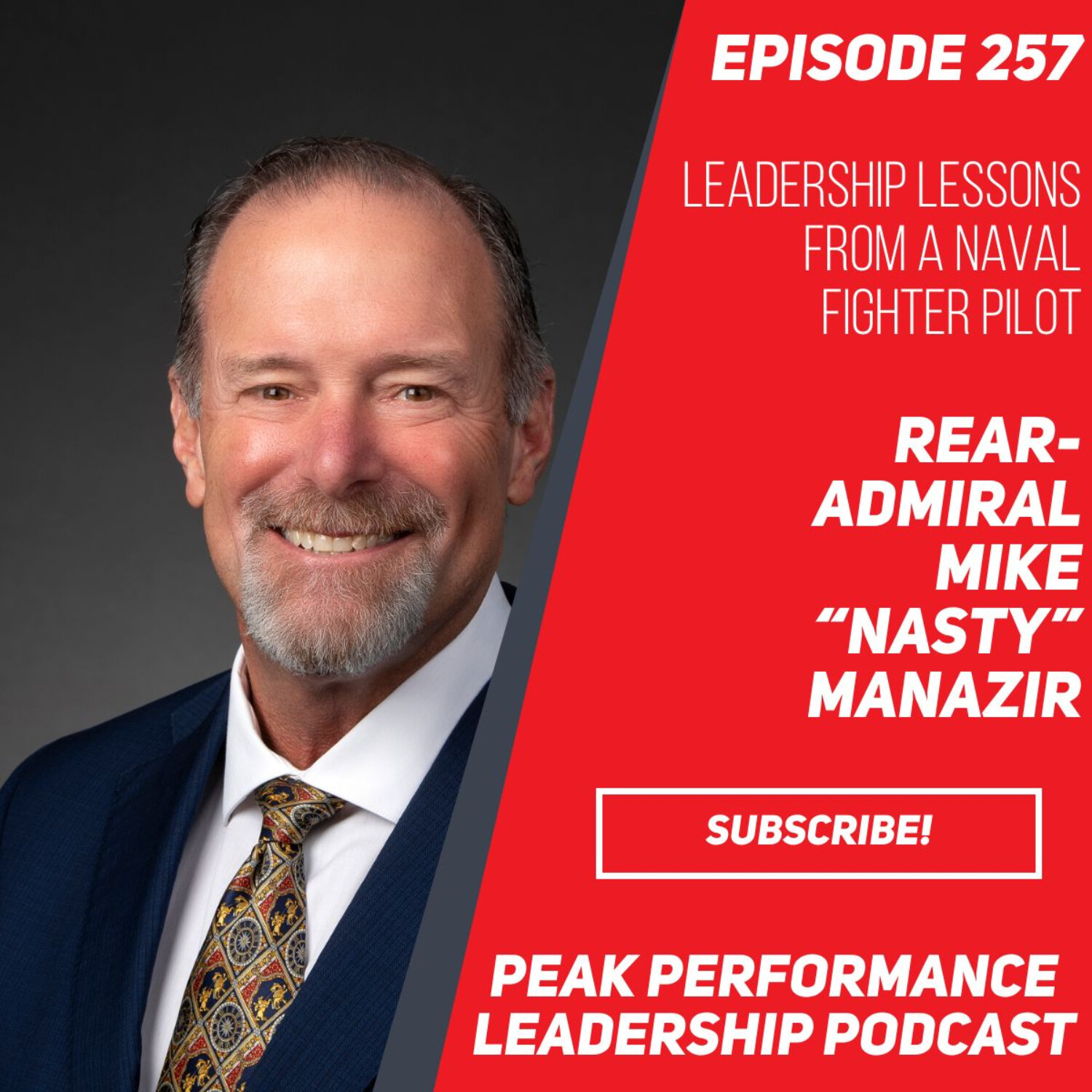
Ep 257Leadership Lessons From A Naval Fighter Pilot | Rear-Admiral Mike “Nasty” Manazir | Episode 257
Naval fighter pilots are known for their unwavering commitment to excellence, exceptional decision-making skills, and expertise. These top performers offer valuable insights that can be applied in the business world. With decades of experience in stressful situations, they have mastered ten key leadership skills: staying calm under pressure, setting expectations, delegating tasks, building trust, giving feedback, evaluating risk, adapting to change, embracing failure, encouraging innovation, and inspiring others. Despite operating in dangerous and uncertain conditions, Naval fighter pilots consistently perform at the highest level, confidently making life-altering decisions with their expertise. A former “Top Gun” fighter pilot (call sign “Nasty”), Retired Admiral Mike Manazir’s distinguished U.S. Navy career spanned 36 years and included multiple commands: VF-31 ‘Tomcatters’ F-14D squadron, USS Sacramento, USS Nimitz, and Carrier Strike Group Eight in the USS Dwight D. Eisenhower. His new and best-selling, “Learn How to Lead to Win,” features 33 powerful stories and leadership lessons based on real life events in the chaotic and risky business of operating off the decks of U.S. aircraft carriers. At its core, the book reflects Manazir’s selfless passion for developing people. Timestamped overview [00:00:46] Call signs used in fighter aviation are for communication brevity to easily identify individuals and aircraft. Call signs typically come from something an individual is known for or a play on their name. The origin of the speaker's call sign is explained in a book. [00:02:54] Speaker discusses the three major themes in their book "Learn How to Lead to Win": having a vision, dealing with failure, and being resilient. They share their own experience of having a vision to join the Naval Academy, failure in their career, and finding a new path. They encourage listeners to have a North Star and keep going towards it, even if the path is not straight or as expected. [00:09:40] Having a clear goal or "North Star" is the key to resilience and success, even when faced with setbacks like injury or failure. It's important to keep pushing forward towards that goal and not give up, even if the timeline or path changes. This mindset helped many people and companies stay afloat and thrive during the COVID pandemic. Ultimately, success is made through perseverance and determination. [00:13:58] Seize opportunities with a clear plan and team perspective. [00:14:51] Leading a high-performing team requires leading from the heart, getting to know team members, valuing their input, and establishing trust through human connection. It's important to not lead with a title and to be willing to fail and learn from it. [00:20:02] Learning from failure is necessary for high performance, but repeating failures can have serious consequences. Hard discussions and debriefs can help prevent repetition of failures. [00:22:30] Communication is key in leadership, regardless of team size and location. Effective communication involves connecting with every team member, enabling dialogue and feedback, and being present in their environment. Leaders must also seek feedback on their communication effectiveness and adjust accordingly. [00:27:46] Effective leadership requires connecting with your team as equals, rather than relying solely on your job title to motivate and inspire them. For the complete show notes be sure to check out our website: https://leaddontboss.com/257
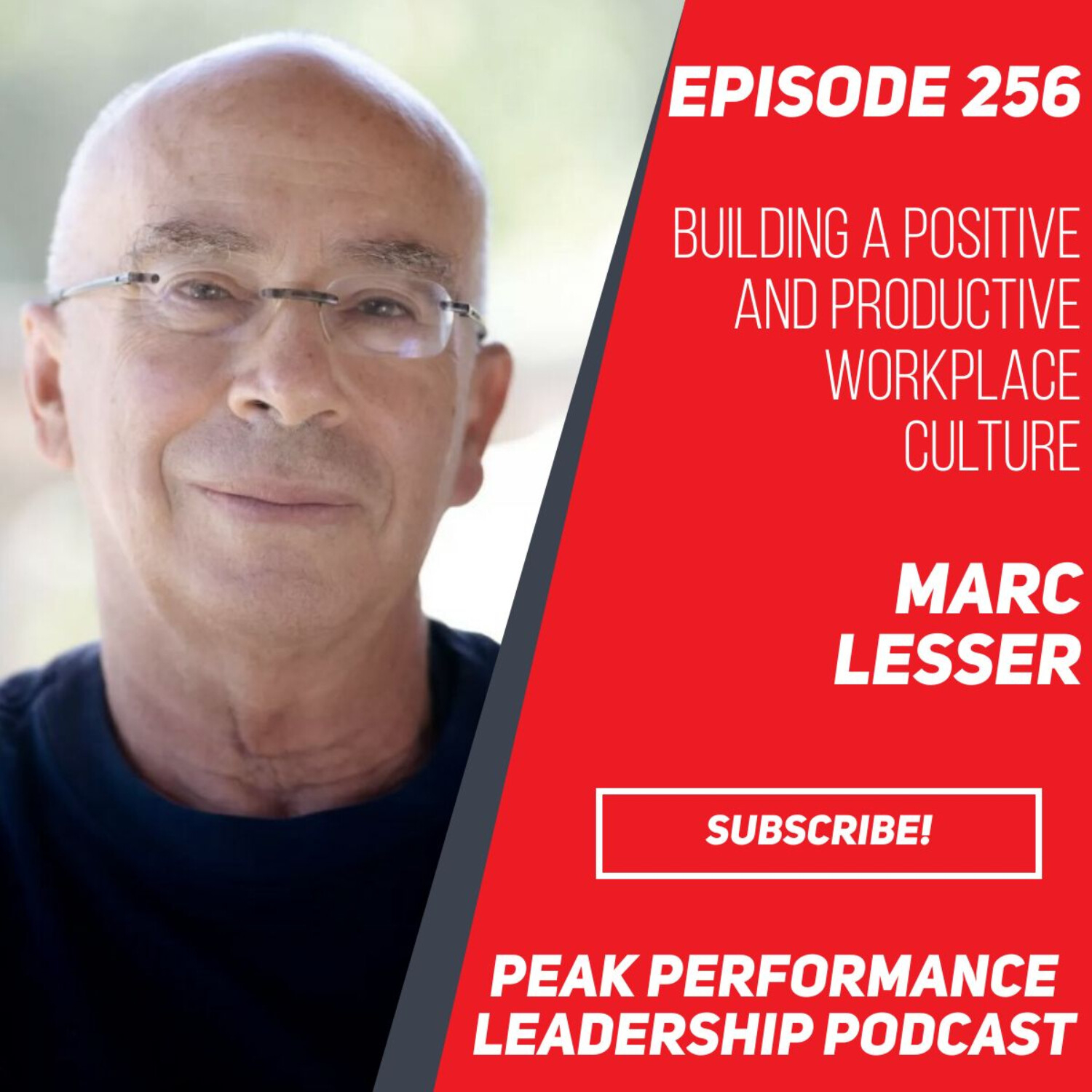
Ep 256Building a Positive and Productive Workplace Culture | Marc Lesser | Episode 256
Marc Lesser is a speaker, facilitator, workshop leader, and executive coach. He is known for his engaging, experiential presentations that integrate mindfulness and emotional intelligence practices and training. He is the author of 4 books, including Seven Practices of a Mindful Leader: Lessons from Google and a Zen Monastery Kitchen, and CEO of ZBA Associates, an executive development and leadership consulting company. His podcast Zen Bones: Ancient Wisdom for Modern Times features cutting-edge interviews, supportive tools for creating more meaningful work, and potent mindfulness practices to develop yourself, influence your organization, and change the world. Marc helped develop the world-renowned Search Inside Yourself (SIY) program within Google – a mindfulness-based emotional intelligence training for leaders which teaches the art of integrating mindfulness, emotional intelligence, and business savvy for creating great corporate cultures and a better world. He founded and was CEO of 3 companies, and has an MBA degree from New York University. Marc was a resident of the San Francisco Zen Center for 10 years, and director of Tassajara, Zen Mountain Center, the first Zen monastery in the western world. He leads Mill Valley Zen, a weekly meditation group. Timestamped overview [00:00:37] Accountability is about aligning values, aspirations, success, leadership, and trust with compassion.[00:04:14] Building great cultures by creating purpose and meaning, utilizing trust, and building character and well-being.[00:08:53] Businesses provide goods/services to serve people, allowing them to live.[00:09:59] "Asking "How are we doing?" to create healthy workplaces and effective, difficult conversations requires self-awareness and a contemplative practice to avoid blame and defense."[00:15:50] Tendency to blame when threatened; reflex to blame without conscious thought; story of accidental email; skillful creating of safe space to remove blame; blame prevents connection and solutions.[00:19:42] Teaching Google engineers self awareness through mindfulness and feedback to control emotions during times of tension.[00:25:18] Ask teammates how to make team/relationship more effective and listen.[00:27:48] Team building through conversation and improv activities.[00:31:57] Listening and self-awareness are essential leadership skills. For the complete show notes be sure to check out our website: https://leaddontboss.com/256
Ep 255The Nuances of Influence and Manipulation in Leadership | Episode 255
Leadership is not just about commanding people and getting results. It’s also about the subtle nuances of influencing and manipulating one’s followers in order to achieve desired outcomes. The ability to effectively tap into the “psychological strings” of individuals, while at the same time establishing mutual trust and respect, can vastly increase a leader’s capabilities. However, it’s important to note that such strategies must be used carefully as any misuse could lead to fallouts or even backfires. In this article, we will discuss some common methods for influence and manipulation among leaders and explore how their nuances have a significant impact on their success. On this episode of Peak Performance Leadership, we talk about the differences between influence and manipulation, inspired by a discussion in the Leader Growth Mastermind. Topics During this solo episode I touch on the following topics: Discussion on the differences between influence and manipulation Key distinctions between the two, and the impact they can have on others The importance of positive influence and how it can inspire people to be their best selves Examples of negative influence and manipulation, including personal gain and coercive tactics For the complete show notes be sure to check out our website: https://leaddontboss.com/255
Ep 254How to Develop Positive Accountability in Your Team | Dr Paige Williams | Episode 254
Accountability was once a concept associated primarily with punishment and failure. However, today it has become much more than that—it's seen as an essential part of any successful business. When practiced correctly, accountability has the power to create well-motivated teams who are actively engaged in their work and committed to success. It encourages individuals to take responsibility for their actions and practice good communication and collaboration skills. By creating an environment where everyone is held equally accountable, organizations can foster a culture of mutual respect and trust that encourages employees to thrive. "In fact, research suggests that when organisations get accountability wrong: 75% of team members see solving problems as ‘someone else’s job’,65% don’t see due dates as real commitments,80% don’t seek and offer feedback often,82% try but fail to hold others accountable (or avoid it altogether), and85% are unsure what the organisation is trying to achieve." - Dr. Paige Williams, "Own it" Dr Paige Williams is an author, researcher and PhD in Organizational Behaviour. A trusted advisor and mentor to senior leaders, she uses a potent blend of neuroscience, psychology and her own twenty-plus years of international business leadership experience to help leaders surface uncomfortable truths, see the rules they need to break in order to breakthrough and lead themselves, their teams, and their organizations to thrive. Her latest book is Own It! Honouring and Amplifying Accountability. Topics During this interview Paige and I discuss the following topics: How accountability has gotten so bad in organizations How to have the conversation about positive accountability Why language is so important in accountability How to shift the power dynamic of accountability How to empower your team to hold itself accountable How to run an accountability coaching session For the complete show notes be sure to check out our website: https://leaddontboss.com/254
Ep 253Beyond being a Servant Leader | Bob DeKoch and Phil Clampitt | Episode 253
Gallup recently reported that only 15% of employees in the U.S. are truly engaged in their workplace. Yet nearly 70% of employees say they would work harder if they felt more appreciated. Over 90% of employees surveyed believed their leadership “lacked communication skills to lead.” The gloomy stories behind sobering statistics reveal employees’ disappointment with current leadership approaches. Leaders can do better. DeKoch, with over 40 years of diverse executive leadership experience, which included 20 years leading The Boldt Company, a $1 billion construction services and real estate development company, has developed novel insights into leadership thinking and practice. Clampitt, an endowed, award-winning communication and information science professor at University of Wisconsin-Green Bay, has over 40 years of experience in university teaching, ground-breaking research, and business consulting. Topics During this interview Bob, Phil, and I discuss the following topics: How we got to the point where we are currently in terms of leadership Where they got the inspiration for their book came from How beliefs are important to being a caring leader The values which a caring leader holds Why companies don’t follow their values How middle leaders can follow their company’s values How to communicate effectively as a leader who cares
Ep 252How to Hire a 5 Star Candidate | Heenle Turner | Episode 252
It's no secret that companies today are struggling to secure top-tier talent. With the current labor shortage, competition for high-caliber candidates is at an all-time high, leaving recruiters looking for new ways to attract and retain the best of the best. However, finding and hiring 5 star candidates isn't as difficult as it may seem. With the right strategy and determination, recruiters can still identify, engage with, and hire outstanding talent — even in a competitive hiring market. By knowing exactly what kind of qualities you're looking for in a candidate and leveraging the right recruitment strategies, you can discover the stars of tomorrow and secure the perfect hire. Heenle Turner is the Vice President of Content and Consulting at the ALL IN Company, and a certified HR Professional passionate about finding creative solutions to help businesses succeed. She has provided consulting services to more than 200 businesses of varying sizes and industries. This extensive experience in sales, customer service, and people management uniquely positions her to collaborate with entrepreneurs when it comes to recruiting, hiring, and retaining 5-Star Employees: committed candidates who share the company’s values and go above and beyond to achieve results. Topics During this interview Heenle and I discuss the following topics: Why hiring vacancies are still a problem within the workplaceWhat a 5 star hiring process looks likeWhere to go to make sure we are advertising to the right peopleThe makeup of a 5 star candidateThe 11 universal qualities of a 5 star CandidateHow to properly interview a candidate For the complete show notes be sure to check out our website: https://leadddontboss.com/252
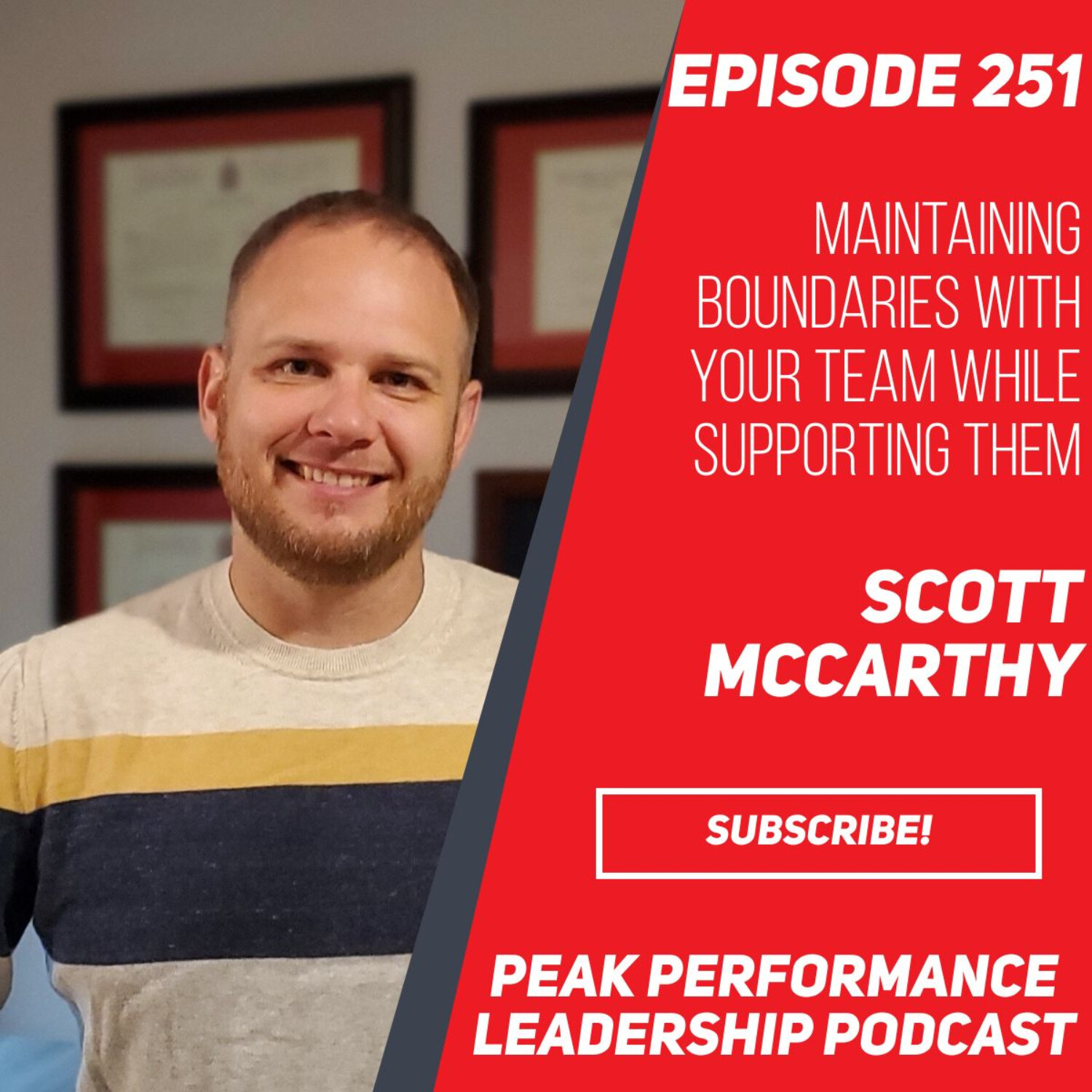
Ep 251Maintaining Boundaries with Your Team while Supporting Them
In today's work culture, it can often be difficult to maintain a balance between managing the demands of our workload and building close relationships with our team members. While strong teamwork is essential for the overall success of a business or project, personal boundaries need to be established in order to ensure goals are met in a timely and efficient manner. The following quote is from Facebook Group Member Valarie and her question revolving around just this challenge: Knowing your direct reports well without overextending yourself. Patrick Lencioni talks about anonymity leading to job misery and I agree with this. I know my large team fairly well. Recently implemented middle managers as team leads due to there not being enough of me to go around. I want to continue to foster relationships with the new employees so that I will have the same level of relational vibe that I have with most of my team. I am struggling with ways to do this as it takes a lot of time. I know it doesn’t have to; however, I am finding that once I open the door to getting to know them more, they want more and more time with me and so I am wondering about ways to provide better communication and clarity in those earlier meetings as I think I may be unintentionally creating the impression that I am available to them more often than my time allows or that I was initially available and now I’m not as available and that can be confusing and send a message I am not intending to send. For context, I’m in my 4th year of leadership and I have a team of about 20. They all reported directly to me until January so I am wondering if some of this is just the shifting that’s occurring. Thanks in advance!! Question from Valarie So lets dive into how I believe that its best for leaders to tackle this challenge with a number of tactical pieces of advice for her. For the complete show notes be sure to check out our website: https://leaddontboss.com/251
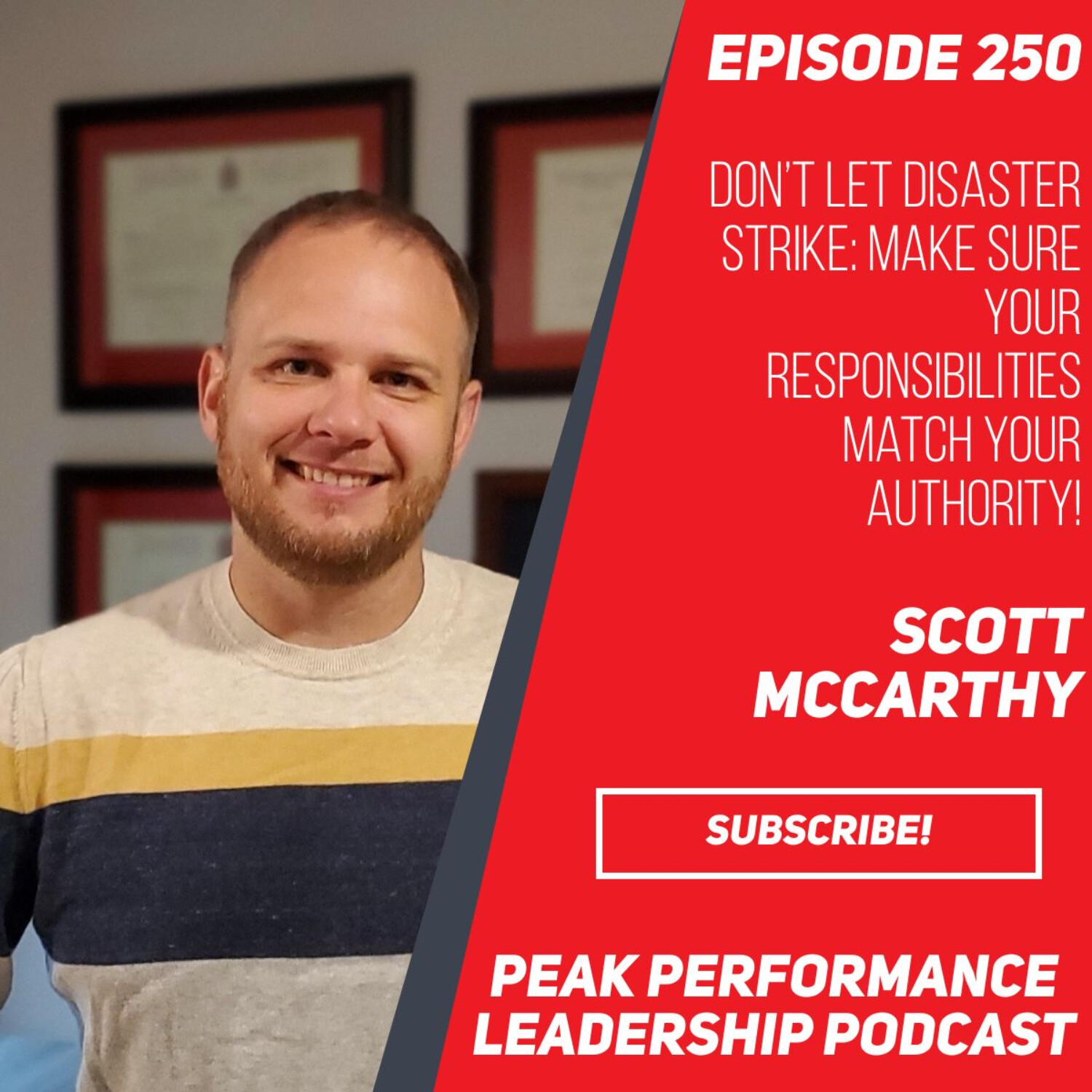
Ep 250Don’t Let Disaster Strike: Make Sure Your Responsibilities Match Your Authority!
Leadership is a tricky but essential role; it requires both an intimate understanding of the team and organization and the ability to set and maintain clear expectations. When authorities don’t match responsibilities, it can lead to confusion, tension, and even disaster. Take, for example, the case of one of our audience members, Leticia. She was charged with leading a team but lacked clear authority in certain areas – a situation that could have been avoided if her assigned responsibilities had matched her authority. Instead, she found herself at odds with team members and her supervisor. The result... shouldn't surprise you... disaster. Topics In this solo episode, I discuss the following topics: What responsibilities, authorities, and accountabilities are What happened specifically to Leticia and her story Why it happened What could have happened differently What to do if you're a superior and things are aligned What to do if you're a subordinate and things are aligned For the complete show notes be sure to check out our website: https://leaddontboss.com/250
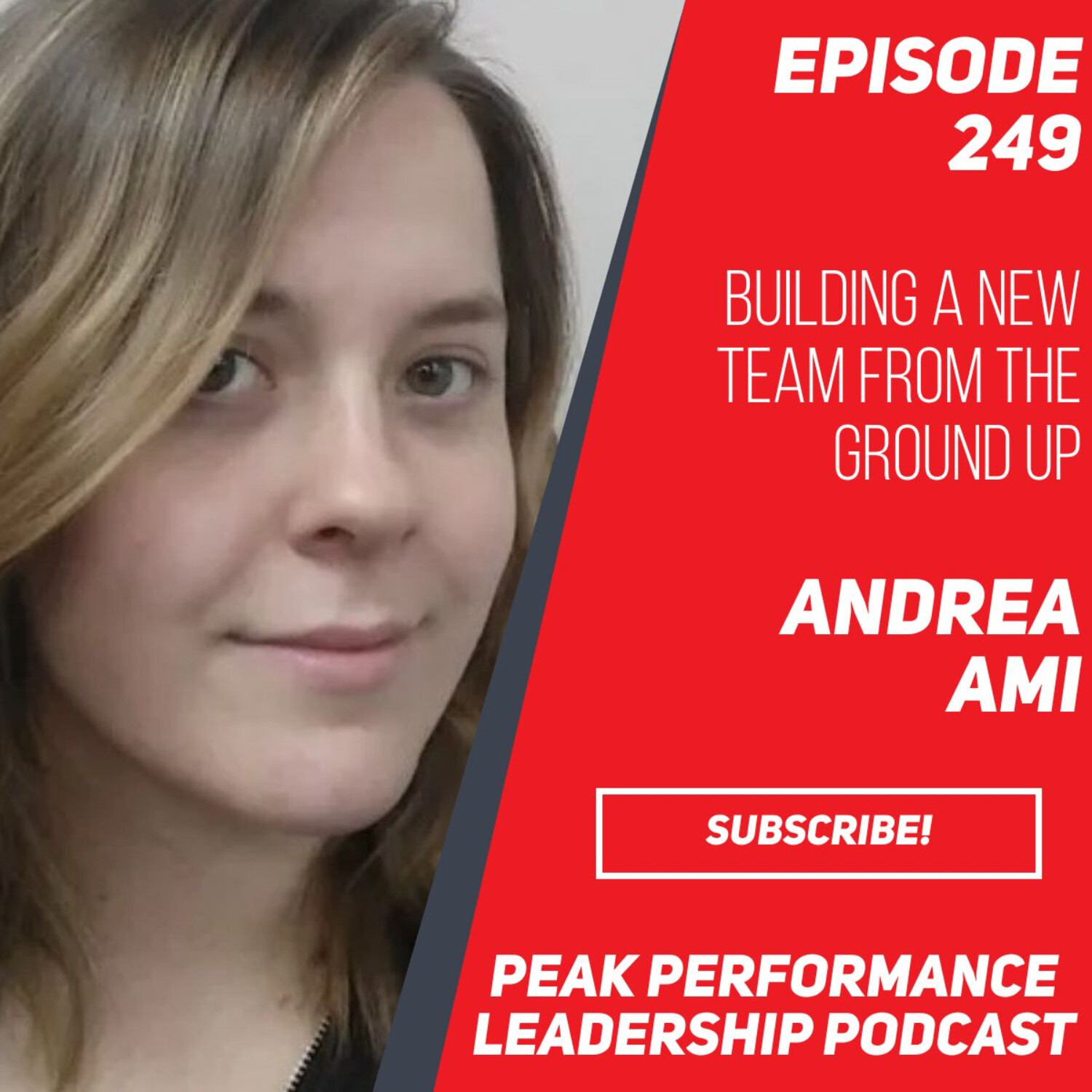
Ep 249Building a New Team from the Ground Up | Andrea Ami
Bringing together new teams of people can be challenging, especially if it requires managing disparate personalities, diverse backgrounds, and conflicting interests. However, with sustained effort, open communication, and effective problem-solving skills, successful team cohesion is within reach. Leaders need to take the time to get to know their team members individually, invest in building relationships of trust and mutual respect, motivate mild competition where appropriate, set clear goals and expectations, resolve conflict constructively, and use feedback to coach and celebrate success. When leaders put in the work to bring their teams together, the results will be well worth the effort. A registered nurse since 2011, Andrea works in a pediatric critical care unit. Discussing mental health and philosophy has always been her passion and outlet. Andrea wholeheartedly believes emotional intelligence is a valuable, yet under-taught phenomenon. After all, it helped her cope with anxiety, depression and her first burn out at the young age of 21 – two short years after working the floor as a nurse. Unaware of what she was experiencing, Andrea turned to talk therapy for help, where she was taught strategies on how to become aware of her emotions and thus, manage them. She learned how to handle the anxiety that had imprisoned her mind, and gained control over the panic attacks and depression that plagued her. Andrea’s goal is to destigmatize mental health and create a safe space through her podcast so she can help others who are currently going through their own personal struggles. She hopes to encourage self-awareness and self-love, and create an environment where mental health can be spoken about openly and truthfully, without stigma or judgment. Topics During this interview Andrea and I discuss the following topics: The challenges of bringing a new team togetherTactical actions she took to get her team gel togetherHow her team got through conflict with another teamStrategies she used to improve communication within her teamHow having a sense of psychological safety has propelled her team forward For the complete show notes be sure to check out our website: https://leaddontboss.com/249

Ep 248Cleared Hot to Lead | Lt. Col Brian Slade
The job of a combat helicopter pilot isn't just stressful - it's life-or-death. And the leaders of these highly trained forces don't take the stress lightly, but instead double down on their commitment and drive those around them to extraordinary performance. The toughest test for any leader is to stay focused under intense pressure, and yet remain humble. They’re able to lead with great clarity and precision, inspiring teams in the heat of battle. It takes poise, courage, and strength of character to do what they do - each day flying into danger with a team by their side. Brian L. Slade has held command positions in the Army and the Air Force and received the Distinguished Flying Cross, Bronze Star, and fourteen combat air medals. He attended Utah State, where he earned a BA and was commissioned as an Army Aviation second lieutenant. He’s also earned an MA in aviation instruction. Brian currently serves as a lieutenant colonel for Air Force Combat Search and Rescue. Topics During this interview Brian and I discuss the following topics: What drew him into forces especially the officer corps How he kept the mindset to stay at the top of performance How he got prepared to operate in combat zone How he took over an already established team and got it to peak performance Why leaders need to commit with courage How to combat the great resignation For the complete show notes be sure to check out our website: https://leaddontboss.com/248
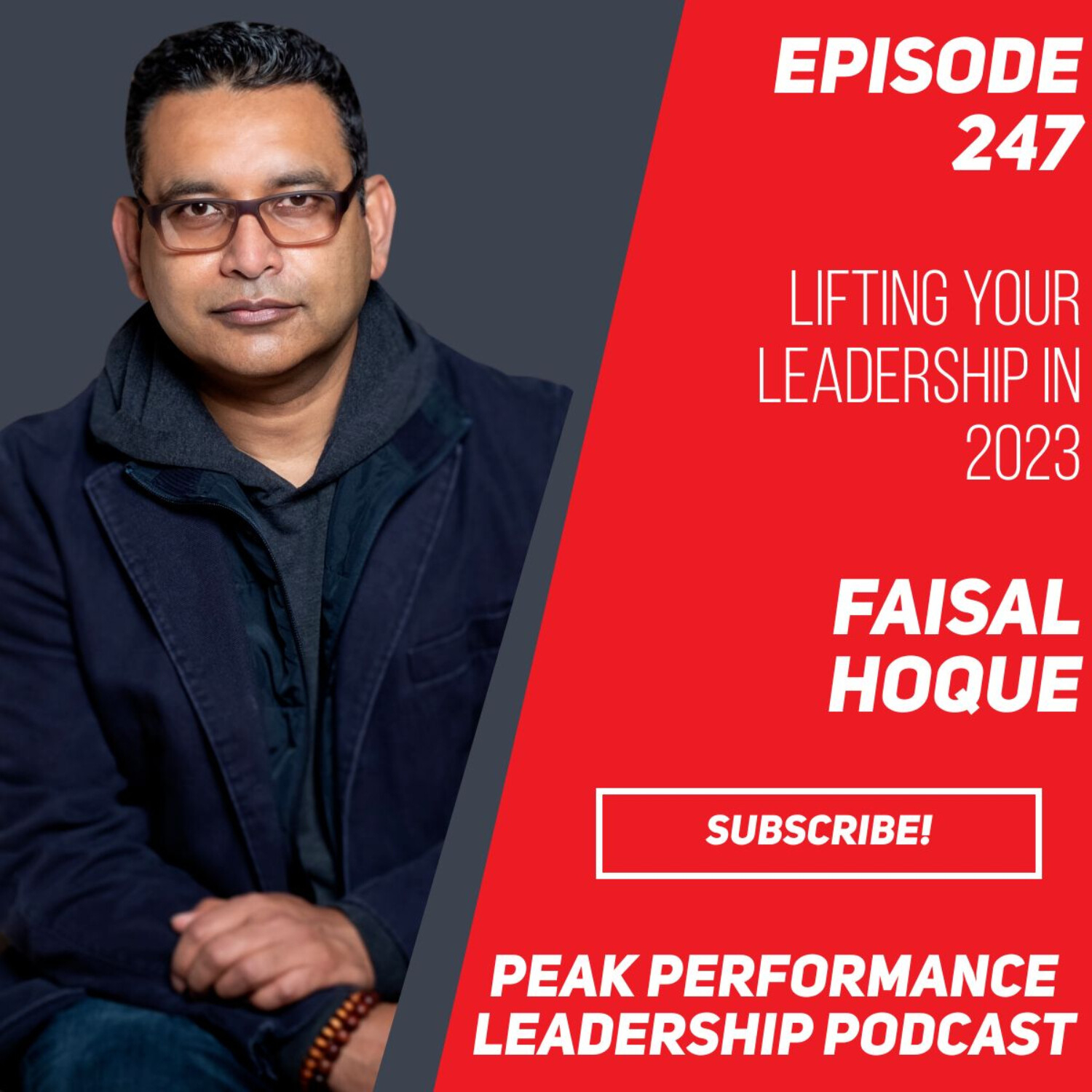
Ep 247LIFTing your Leadership in 2023 | Faisal Hoque
In a world roiled by unprecedented change, effective leadership is becoming even more essential. No single approach will provide the ultimate solution to the challenges that change poses. Rather, it will be a confluence of ideas, strategies, and actions that will prove effective in managing and making the most of sweeping change. The world that existed yesterday will be decidedly different from that of tomorrow. It will take a complete and adaptable toolkit to cope effectively with that ongoing cycle of reinvention. Faisal Hoque is an accomplished entrepreneur, senior executive, author, thought leader, public speaker, and advisor to management teams and BODs with more than 25 years of cross-industry success. He is the founder of SHADOKA, NextChapter, and other companies; they focus on enabling sustainable and transformational changes. Throughout his career, he has developed over 20 commercial business and technology platforms and worked with public and private sector giants such as US Department of Defense (DoD), GE, MasterCard, American Express, Northrop Grumman, CACI, PepsiCo, IBM, Home Depot, Netscape, Infosys, French Social Security Services, Gartner, Cambridge Technology Partners, JP Morgan Chase, CSC, and others. What sets Hoque apart is the unique position and perspective he has always maintained, which is grounded in hardcore technology with deep roots in leading-edge management science. Topics During this interview Faisal and I discuss the following topics: What trends he sees in 2023 How to combat misinformation as a leader What the 4th industrial revolution is and how to take advantage of it How use empathy as a leader in 2023 For the complete show notes be sure to check out our website: https://leaddontboss.com/247
Ep 246How to Keep the Mindset of Goal Setting and Achievement | Carla Fowler
It is not uncommon for many of us to set lofty goals and make ambitious New Year's resolutions at the start of every year. However, unfortunately, those resolutions are often doomed from the outset, as our expectations can be too difficult to live up to. Research has demonstrated that only 9% of us are actually successful in keeping their New Year’s resolutions and a staggering 81% quit before the second year even concludes. Shockingly, most people give up on their goals by February, achieving virtually nothing in the process. But it doesn’t have to be this way. If we look beyond our traditional approaches and focus tenaciously on creating a new mindset towards goal setting, then we can defy probability and establish goals that will stay with us all throughout the year. Carla Fowler, MD PhD. founded THAXA out of a passion for performance science, where the fields of strategy, productivity, and psychology intersect. Since its inception in 2013, THAXA’s scientific approach to individualized coaching has attracted a devoted client base of dozens of executives at firms ranging from large technology companies to agile startups to innovative nonprofits. Carla’s coaching methods draw upon the multidisciplinary field of performance science to generate the best ideas surrounding strategy, execution, and mindset to assist leaders in their endeavors. Over the past 10 years, she has distilled the key principles of performance into understandable concepts and a method that helps leaders incorporate these ideas into their day-to-day performance, helping them go faster and improving their results. Outside of her coaching, Carla truly enjoys sharing her key performance principles with audiences while engaging in thought provoking conversations. surrounding her passion for performance science. Topics During this interview Carla and I discuss the following topics: The mindset of goal setting The mindset of breaking big goals down into smaller ones The questions she asks when setting goals for herself and her teams How to run experiment with yourself and/or your team How to learn from your mistakes and failures to move forward in a positive direction Motivation vs discipline and how to keep going For the complete show notes be sure to check out our website: https://leaddontboss.com/246
Ep 245Dealing with the Home / Work Split
As a leader, it’s essential to recognize that people don’t leave their work issues at home nor do they leave personal issues at work. Instead, they bring these two lives together in a way some might refer to as “integrated life strategy.” Employees can’t afford to be distracted by personal worries while on the job and employees need comfort of family and friends after a rough day at work. Without the ability to let both work and home life blossom, employees often feel unhappy and unproductive. Gone are the days when people believed that work and life were two distinct identities. The truth is, they’ve become increasingly intertwined in this day and age. In fact, the most successful leaders understand that happy employees are more productive, so it’s important to create environments where workers can be their whole selves. Whether you think of it as “work-life integration” or “work-life balance,” it’s essential to create an ecosystem in which employees thrive both inside and outside of the workplace. This means allowing them to bring their home issues to work (and vice versa) while still getting the job done. It may seem like a difficult balance to strike, but with the right strategies, it’s certainly achievable. Investing in your employees’ well-being will pay dividends for years to come. For the complete show notes be sure to check out our website: https://leaddontboss.com/245
Ep 244Values Based Goal Setting for 2023
2022 is about to be in our rearview mirror and here is 2023 about to stare at us in our faces... Are you ready? Goal setting is so crucial for success in life and as a leader. Here in this episode I am discussing the framework that we use for goal setting which is a values-based methodology. This pyramid is the basis for how we go about selecting, planning, and achieving our goals. Topics In this episode I discuss the following goal setting topics: Why it's important to set goals How values play a crucial part Why planning is more important than executing How you can have a goal crushing mindset For the complete show notes be sure to check out our website: https://leaddontboss.com/244
Ep 243Leadership from the Trenches | Jonathan Audet
Many of you have said that all the world-renown coaches, authors, and speakers are great but sometimes it is hard to relate to them. Their ideas and methods are sound but do they work? You've longed to hear about a real leader, one who is there with you day-in, and day-out. A leader who is not an "expert" but rather a peer to help you understand truly what is achievable. Well today that is exactly who we have. Jonathan Audet spend over 20 years in the Canadian Army as a full-time officer and now serves in the Primary Reserve Force (part time) as a Commanding Officer while working a full-time job with the Canadian Coast Guard. He's a leader through and through and I am lucky enough to call him a friend. Topics During this interview Jonathan and I discuss the following topics: His background as a leaderWhat drove him to become a leader in the militaryWhat works in motivating others in achieving the organization’s aimHow he coaches othersLessons learned from failures as a leaderHow he’s applying his military experience to his civilian lifeThe biggest leadership challenge he’s currently facing Guest Resources Jon has no resources or anything of the kind. But as a member of the Leader Growth Mastermind, even he finds the value in said group.
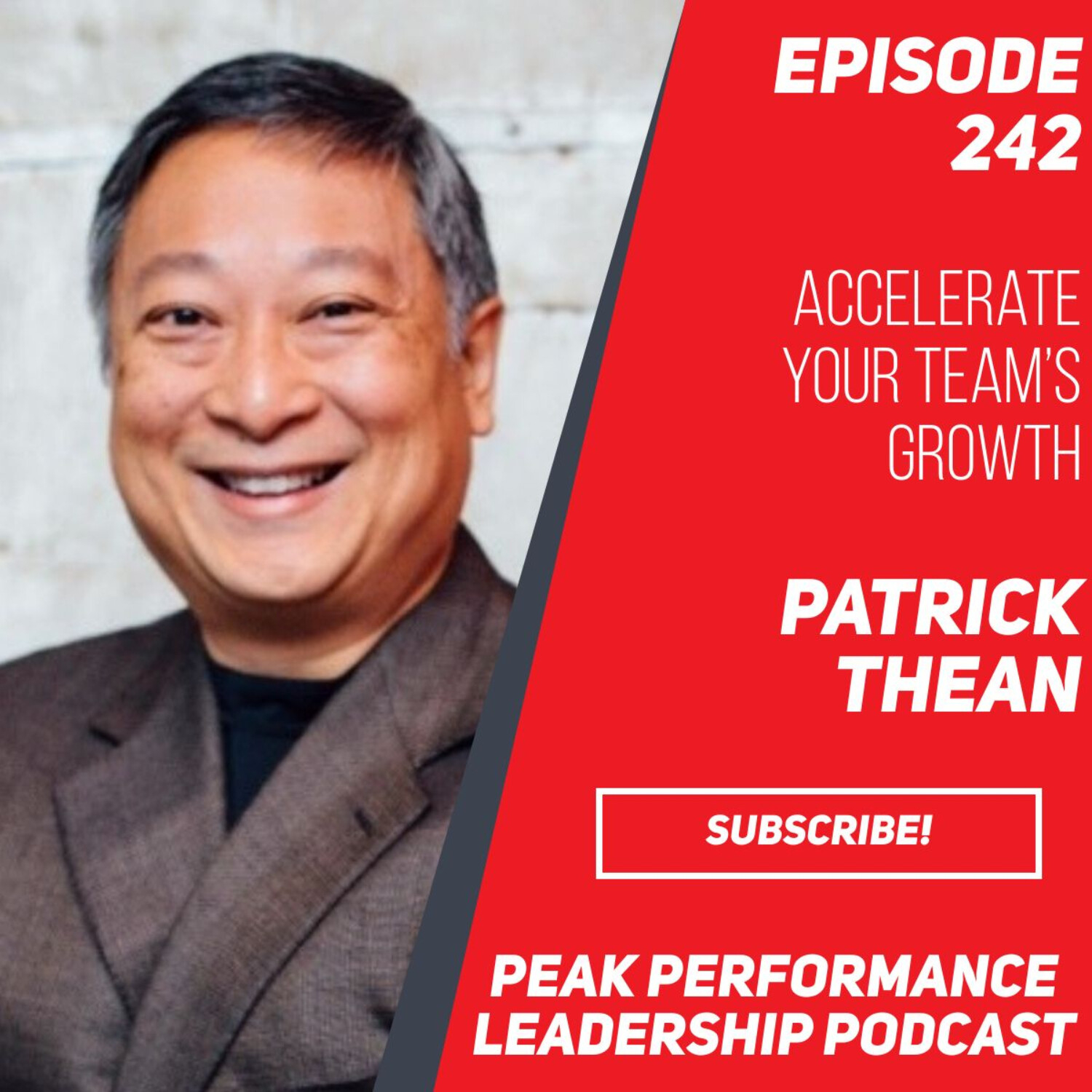
Ep 242Accelerate Your Team’s Growth | Patrick Thean
Patrick Thean is a thought leader in strategic business execution and a successful serial entrepreneur who has started and exited multiple companies. As Founder and CEO of Metasys, Inc., he grew Metasys to a ranking of 151 on the Inc. 500 list. He is best known for helping companies accelerate their growth by focusing on great execution. He is exceptional at getting executive teams and their departments focused, aligned, accountable, and executing as a team to achieve their company objectives. His clients experience breakthroughs using this approach and tools that result in drama-free, accelerated growth. These tools are also part of the curriculum for the Entrepreneur Organization’s world-renowned Entrepreneurs Master’s Program held at MIT, where Patrick served as Program Cochair for seven years. He also chairs a similar program in Malaysia: “Taipan: The Making of Asian Giants.” Currently a Cofounder and CEO of Rhythm Systems (formerly Gazelles Systems), Patrick is the creator of Rhythm Software. Patrick received his Masters of Engineering and Bachelors of Science in electrical engineering from Cornell University. He was named an Ernst and Young Entrepreneur of the Year for North Carolina in 1996. Topics During this interview Patrick and I discuss the following topics: How strong Mondays set the week for success How to setup your team achieve peak performance How to prepare yourself for the upcoming week How to establish a culture of the “gift of red” How to establish a “stop doing list” For the complete show notes be sure to check out our website: https://leaddontboss.com/242
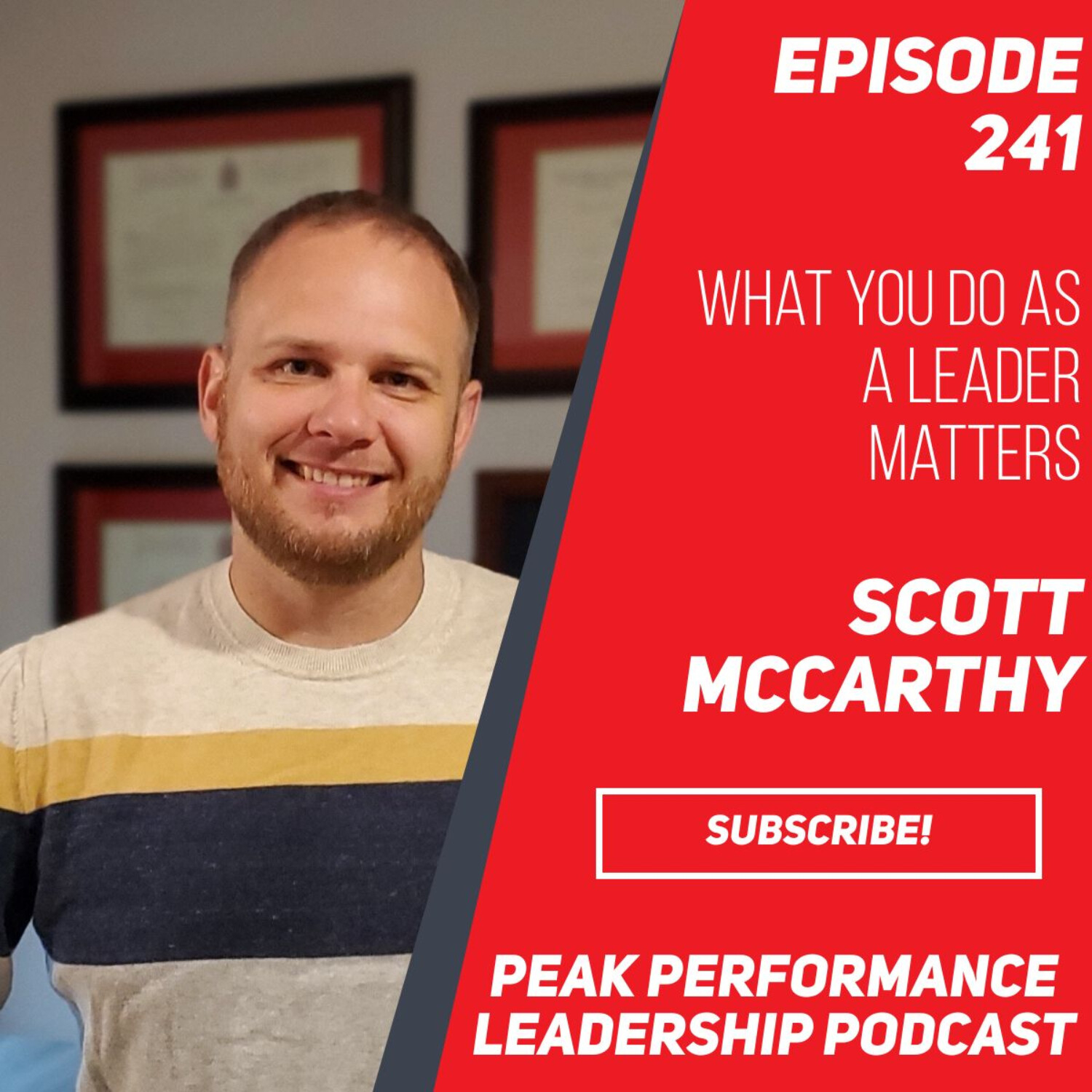
Ep 241What You Do as a Leader Matters
Recently I was on a work trip and came across a former subordinate of mine. We have an interesting past which includes, a trial, a challenge, and a reward. However, at this meeting he said something which absolutely rocked me and inspired this recording. Ultimately as leaders what we do matters to those we lead. Sometimes it is hard for us to see it or even feel it but it does matter. So when you make your decisions and think about ways forward. Remember as always. What you do as a leader matters.

Ep 240Understanding Character Based Leadership | Jennifer Allen & Stephen Virgin
Jennifer Allen started her career in the private sector in Human Resources and developed an expertise in organizational design. She joined the public service in 2007 and worked at various government departments including Transport Canada, Employment and Social Development Canada and Innovation, Science and Economic Development Canada, before joining the CRA in 2017. Throughout her career Jennifer has developed skills in inclusive design, process improvement, and change management. She is now the Assistant Director responsible for Character Leadership Development for the Agency. Jennifer holds a Honours Bachelor’s Degree in Commerce with a specialization in Human Resources. Jennifer is passionate about food, her family, and dancing! Steve Virgin joined the Canada Revenue Agency in July 2018 as the new Director for Character Leadership. He is a former senior naval officer in the Canadian Armed Forces and he joined the Public Service in 2015. During his military career he was fortunate to have a variety of leadership experiences including submarine captain, frigate command, and a variety of strategic leadership appointments in National Headquarters in plans, policy and strategic resource management. His final appointment in the Forces was as the Deputy Commander of Canada’s Special Forces Command. As an Executive employee in the Department of Defence, he was the Director of Business Management and Director of Analytics for the Defence CIO. Steve holds a Bachelor of Military Arts and Science from the Royal Military College of Canada, he is a graduate of the Canadian Forces Command College, he is a fellow of the National Defence University of the PLA Beijing, and he recently completed a Certificate in Regulatory Leadership at the University of Ottawa. Mr. Virgin is a volunteer citizenship presiding official with IRCC where he very much enjoys the opportunity to welcome new Canadians. He was invested into the Order of Military Merit in 2015 and he was awarded two meritorious service medals during his career. Topics During this interview Jennifer, Stephen, and I discuss the following topics: How they got into character leadershipWhat Character Leadership is what it is notComprises of Virtues, values, and traitsThe character leadership model aspectsThe cruciality of self-awareness in character leadershipHow to explore temperance and transcendence How to train in the areas where you are struggling For the complete show notes be sure to check out our website: https://leaddontboss.com/240
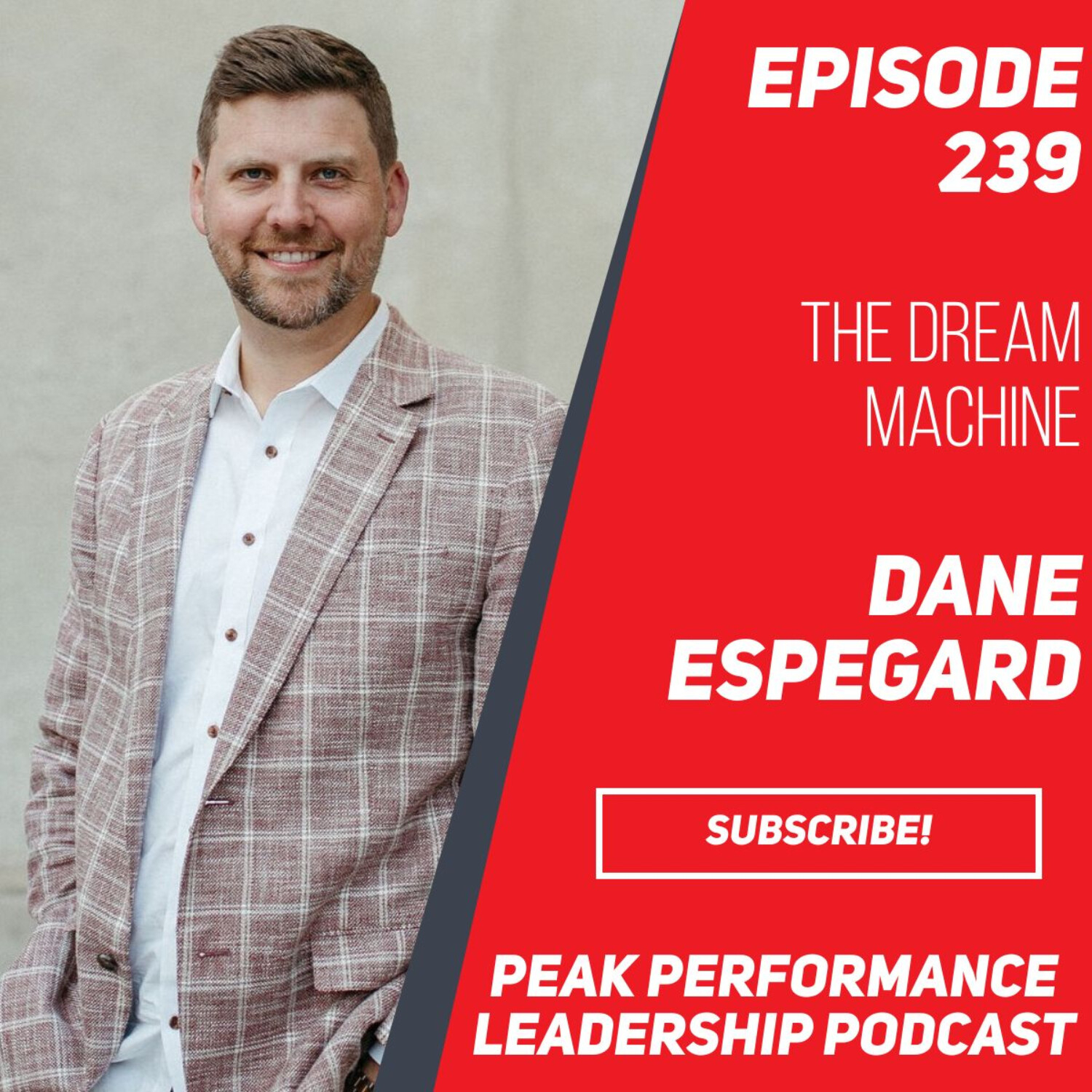
Ep 239The Dream Machine | Dane Espegard
Dane Espegard is a culture consultant who teaches, assists and executes the implementation of a Culture centered around Dream Achieving. The system is bottom-up and puts the emphasis on the development and personal lives of the team members. Dane works with companies in a very simple manner to get the culture started and leaves them with some very easy to implement steps. Dane has been public speaking and training individuals for 15+ years while implementing his system for Vector Marketing where he is a Division Manager and operating one of the top performing teams in the nation. Topics During this interview Dane and I discuss the following topics: Where the idea of tapping into people’s dreams came aboutHis ideology of growth mindsetWhat the dreams mindset isHow dreams is about a journey is not a destinationHow to enable our team members to make dreamsHow to reward our team members with their dreamsHow to “Dreamstorm” For the complete show notes, be sure to check out our website: https://leaddontboss.com/239
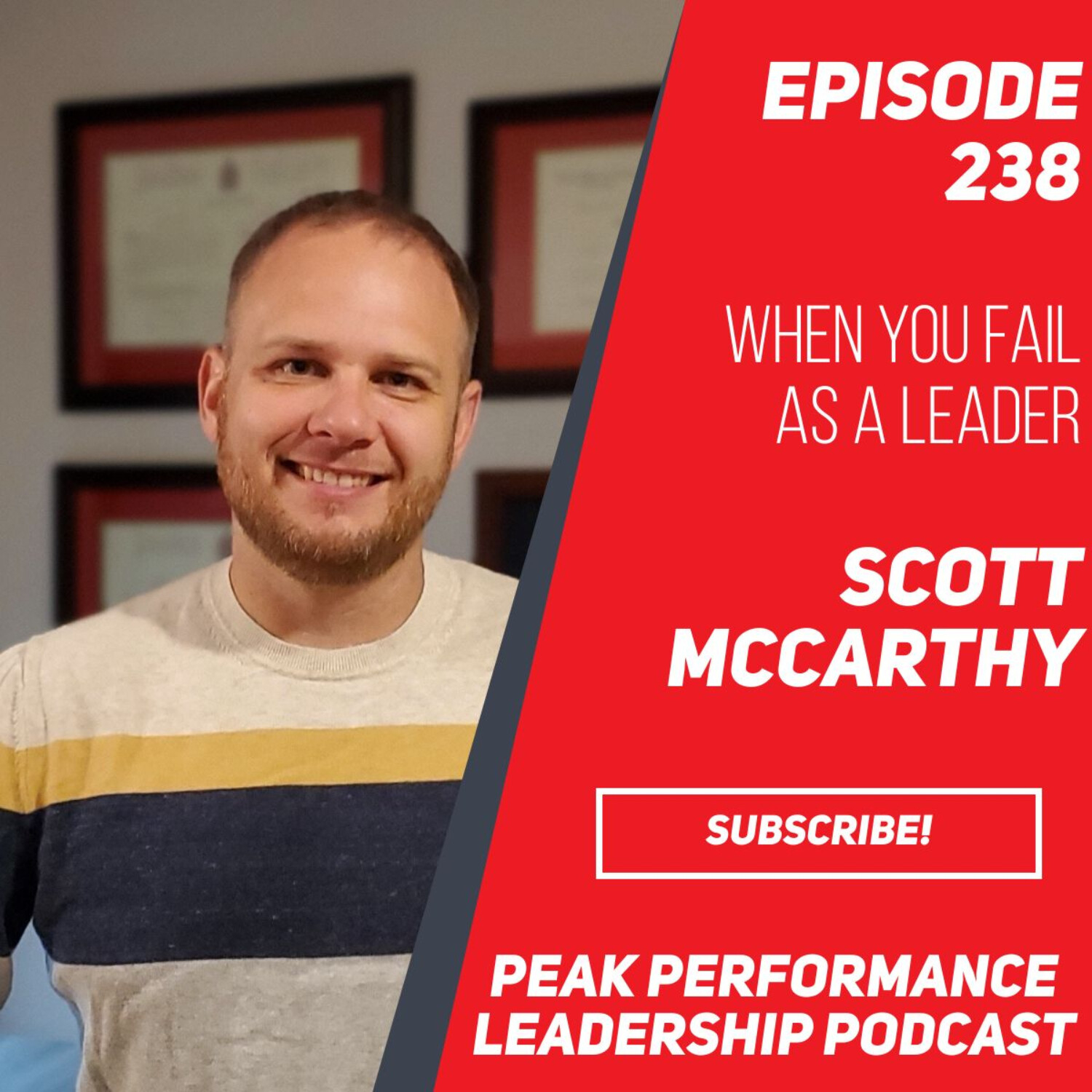
Ep 238When You Fail as a Leader
It has happened already and it'll likely happen again... You will fail as a leader. In this episode, I get real and raw about how I failed as a leader recently. But most importantly I talk about what I am going to do to overcome that failure to make sure it doesn't happen again. For that, it's not always about what we have done in the past but rather what we will do in the future. For the complete show notes check out our website: https://leaddontboss.com/238
Ep 2375 Disciplines of High-Performing Teams | Bernard Desmidt
Leaders know that high performing teams achieve better results faster and effective teams outperform effective leaders, so how do you get teams to operate as more than the sum of their parts more often? How can they achieve better outcomes working more interdependently? Bernard Desmidt is a renowned leadership coach, facilitator, and trainer. As a team coach his expertise is in in helping teams transition to become more collaborative, high performing teams so they access more of their collective capacity and capability to achieve the greatest things possible. Topics During this interview Bernard and I discuss the following topics: What the 5 different disciplines areDiscover our mandateDeclare our purposeDesign our cultureDeliver our resultsDevelop our learningHow trust, competency are utilized in these 5 disciplines.How psychological safety is required for High-Performing teamsHow to understand when one discipline is complete and when to move to anotherHow the hiring process can be utilized to ensure the integrity of the high-performing team For the complete show notes be sure to check out our website: https://leaddontboss.com/237
Ep 236Aspire to be a Leader | Reiner Lomb
Whether you are in a formal leadership role or are a rising leader, entrepreneur, or changemaker driven by a desire to use your voice to create change. The essence of leadership is creating a vision of an aspirational new future and then influencing people to change their behavior to make that vision a reality. Your inspiration to create aspirational change may come from your dissatisfaction with the status quo, joyful anticipation of an aspirational new future, or a new insight. To create such a vision and bring it into reality requires an emotional shift from hopelessness to optimism and inspiration, which then can mobilize any group - from dozens to millions. Reiner is the founder of BoomerangCoach, an executive coaching firm specializing in leadership and career development, innovation, and transformational change. Reiner’s mission is to mobilize and develop leaders to create a more sustainable and positive future for all. As an executive coach, he works with leaders and changemakers in a wide range of organizations, from start-ups and multinational companies to non-profits and local communities - all who aspire to create transformational change. Whether he’s working with corporate executives, entrepreneurs, intrapreneurs, or indigenous tribal leaders, Reiner’s clients appreciate his international business and cross-cultural leadership experience. Before becoming an executive coach, Reiner had a 30-plus year career in technology, started and developed software businesses, and led leadership development. At Hewlett-Packard, his home for 20-plus years, he launched new software product businesses and helped grow HP Software into a multi-billion dollar organization. While at HP, Reiner discovered his passion and talent in leadership development where he trained leaders in how to scale from leading one’s self, to leading others, to leading an entire organization. Topics In this episode Reiner and I discuss the following topics: How he came up with his list of 7 leadership behaviour and emotional statesEmpathyCompassionInterestOptimismInspirationTrustPositivityHow empathy is important and how to useHow to understand when we use too much empathyHow to be a compassionate leaderHow to be an "interesting" leaderThe different ways we can inspire othersHow to breed positivity in your organization For the complete show notes be sure to check out our website: https://leaddontboss.com/236
Ep 235Leader Self-Care | Chris Gooden
Chris is a Wellness Professional with 20 years of experience designing, implementing, and coordinating wellness programs and behavior change projects. His experience includes Personal Training, Strength and Conditioning, Cardiac Rehabilitation, Exercise Physiology, Teaching and Public Speaking. Chris holds a MA in Exercise Physiology from ETSU and a MBA from UAB. He is a Certified Strength and Conditioning Specialist and Personal Trainer with the NSCA, a Sports Performance Coach with USA Weightlifting and is a Certified Wellness Program Manager through the Chapman Institute. In his personal time he enjoys playing with his 3 children and spending time with his wife. Topics During this interview Chris and I discuss the following topics: How to find the time to prioritize your health and fitnessHow to start creating habits which will enable your success in health and fitnessWhy sleep is so crucial for peak performanceHow water impacts our daily livesThe importance of protein in your health and fitnessSome tips and tricks to start living a healthier lifeHow to beat the “all or nothing mentality” How to involve your team in better health and fitness lifestyle For the complete show notes be sure to check out our website: https://leaddontboss.com/235
Ep 234Combatting the "Quiet Quitting"
'Quiet quitting' isn't really quitting, but it is forcing employers to adapt. What it mean is that employees are holding the employers to account for their job descriptions. The phrase — which isn't actually intended to lead to a resignation — exploded into the popular lexicon last week when a TikTok video went viral. Topics During this episode I talk about the following topics: What "Quiet Quitting" actually isWhy it has occurredWhy "quiet quitting" is not actually a bad thingHow to help your team members not need to "quietly quit." For the complete show notes be sure to check out our website: https://leaddontboss.com/234
Ep 233How to Lead with Numbers | Dr. Selena Fisk
Whether you’re a solopreneur, a small business owner, an emerging leader or in an executive leadership role, life in the 21st century dictates that you need to know your numbers and use them to enhance your impact. Increasingly, executives and board members around the world are held personally responsible for knowing the data – meaning that this understanding helps minimize and mitigate risk not only for businesses but for individuals. Whether you’re organizing your home budget and feeding your kids, or running a multinational, multi-million-dollar organization, it is no longer sufficient to say ‘but I’m not a numbers person’ and believe that it is someone else’s job to keep track of the numbers. We all need to be data literate and able to ask the right questions at the right time. Dr Selena Fisk is a data expert and consultant who is passionate about helping others sort through the ‘numbers’ to tell the real stories and lead positive change. She fiercely advocates for a world in which we are all data-informed, not data-driven. Selena has mentored executive, senior, and middle leaders, as well as hundreds of others in data storytelling, which has positively impacted the organizations in which they work. Topics During this interview Selena and I discuss the following topics: Why people become “non-numbers” peopleHow people can get out of their fixed mindset of not being good at numbersHow to identity the right early adoptersWhat data storytelling is and how to use it effectivelyHow use data to be informed and now drivenHow to start being a “data-informed” organization For the complete show notes be sure to check out our website: https://leaddontboss.com/233
Ep 232Are You the Leader in the Arena? | Episode 232
In this episode I go solo and talk about three different types of leaders found in the world: The BossThe ImposterThe Leader I discuss these three but ask you "are you the leader in the arena?" This is an adjusted passage from Theodore Roosevelt's speech "Citizenship In A Republic" with this specific paragraph known as "The Man in the Arena." I've adjusted the paragraph to be inclusive to the female leaders here. For the complete show notes be sure to check out our website: https://leaddontboss.com/232
Ep 231Getting Past a Dysfunctional Workplace | Paul Glover
Paul is the No B.S. Workplace Development Coach who, for the last 30 years, has been assisting Leaders and their organizations to achieve their full potential. His approach is practical, hands-on, grounded in the realities of the real world of work and results oriented – all undertaken with a sense of humor and panache. He is also a "recovering trial lawyer", a Chicago Bears fanatic, an unabashed Starbucks addict, the author of WorkQuake™, a book dedicated to thriving in the Information Economy and a Member of the Forbes Coaching Council. Topics During this interview Paul and I discuss the following topics: Why a team becomes dysfunctional in the first placeWhat is holding leaders back from transitioning to a new generation of leadersHow to enable your teams to become self-organizing teamsWhy psychological safety is important for teamsHow to build relationships with your team members For the complete show notes be sure to check out our website: https://leaddontboss.com/231
Ep 230How Leadership Actually Works | US Navy SEAL Larry Yatch
Larry Yatch is an elite leadership strategist and the creator of the SEAL Success programs, a collection of skills-based training, workshops, and courses that enable high performers to find fulfillment, connect with their teams, and make a sustainable impact in their field. A graduate of the US Naval Academy and former ten-year officer in the Navy SEALs, Larry has spent nearly a decade since his retirement as a trainer and speaker, helping senior executives optimize their personal growth and leadership strategy for superior performance. In addition to numerous military honors, Larry is recognized as the go-to expert in leadership development, team performance, and project management. Topics During this interview Larry and I discuss the following topics: What brought him to be an officer in the US Navy SEALsWhy he would have not gone to officer training if he could redo thingsThe hard lessons he had to learn as junior officerHow to guide high-performing teams in the right directionHow to create leaders across all the levels of an organizationThe different types of authoritiesHow to effectively to coordinate your team into effective actionHow to ensure that you don’t burn yourself and others out in achieving success For the complete show notes be sure to check out our website: https://leaddontboss.com/230

Ep 229Work-life Balance, Looking Ahead, Dealing with High-Performers and More!
This week's podcast episode, I go and answer your questions on leading! Here are a number of questions posed to me from members of our free Facebook Group and my answers to them. Have a listen because maybe, you're in one of these situations: Members asking about work-life balanceA member believes that their supervisors are too busy fighting the close fires and not being pre-emptiveHaving to deal with a negative high-performerDealing with an underperforming, high-performer If you have situations you'd like advice on, don't be shy to reach out to me! For the complete show notes be sure to check out: https://leaddontboss.com/229
Ep 228Using Data in Decision Making | Kevin Hanegan
Kevin is a senior leader who likes to use data and analytics to transform, innovate, and continuously improve organizations to make them the best they can be. His passion is the intersection of business, technology, learning, and psychology. Kevin believes the world is constantly evolving and we should always be evolving and improving ourselves in business and in our personal life. Through many years of working in a variety of businesses and industries, Kevin has been able to leverage technology and psychology, along with data and analytics, to improve organizational performance and transform businesses into high performing organizations. Kevin frequently speaks and writes on topics of data-informed decision making, the future of learning, and growth mindset. Topics During this interview Kevin and I discuss the following topics: The good and bad about our data hunger in this day and ageHow to avoid data analysis paralysis How to use data in the decision making processDifferent biases found in data-informed decision makingHow assumptions are crucial to planning and proper data analysisThe 5 Phase process to data-informed decision makingWhere leaders fault in applying the model For the complete show notes be sure to check out our website: https://leaddontboss.com/228
Ep 227Eliminate Leader Loneliness | Nick Jonsson
Nick Jonsson is the co-founder and Managing Director of one of Asia’s premiere networking organizations, Executives’ Global Network (EGN) Singapore — a confidential peer group network providing more than 600 senior executives and business owners a safe haven to share their challenges, receive support, and learn from each other. Nick has been featured in more than 30 newspapers and magazines including a 4-page feature in the Business Times and a full page in the Straits Times, as well as on TV including Channel News Asia (CNA), and is passionate about bringing the discussion to the forefront. Nick has worked across Asia, Australia and Europe representing major international firms, and is active in charitable and fundraising organizations to give back and support his local community, along with volunteering and fundraising for the Samaritans (SOS) – a suicide prevention hotline in Singapore. Topics During this interview Nick and I discuss the following topics: How loneliness even starts for leadersHow to recognize the signs of leader loneliness How to identify when our judgment is cloudedWhat it took to begin to turn his life aroundHow support networks help you as a leader to avoid leader loneliness For the complete show notes be sure to check out our website: https://leaddontboss.com/227
Ep 226Becoming a Trusted Advisor | Bill Coletti
Bill Coletti is a reputation management, crisis communications, and professional development expert. Additionally, he is a keynote speaker, Wall Street Journal Risk & Compliance panelist, and best-selling author of Critical Moments, The New Mindset of Reputation Management. He has more than 25 years of global experience managing high-stakes crises, issues management, and media relations challenges for both Fortune 500 companies and winning global political campaigns. Bill has provided senior counsel in crisis management, corporate communications, and reputation defense to numerous clients including AT&T, Target Corporation, American Airlines, The Home Depot, Xerox, Nuclear Energy Institute, Cargill, as well as major universities and global NGOs. Previously, Bill served in the Republic of Bulgaria as Senior Advisor to the Prime Minister, Council of Ministers, and the Labor Minister. He was the first Executive Director of the American Chamber of Commerce in Bulgaria. Topics During this interview Bill and I discuss the following topics: What a trusted advisor isWhat qualities a trusted advisor should possessThree different leader typesHow to balance the use of a trusted advisorHow a leader of a smaller organization can use a trusted advisorHow to ask better and bolder questions For the complete show notes be sure to check out our website: https://leaddontboss.com/226
Ep 225Leadership is a Journey and NOT a Destination
Recently I saw an add that someone said that they would turn you from a follower to a leader in 90 days or less! I was absolutely floored, irate, and embarrassed as a coach! This ideology means that leadership is a destination. That it has a start and end point. Which, yes I will agree that at some point you started leading and at some point you'll stop leading, but that was not the meaning of this message. Rather that within a specific period of time you can become a leader and say that's all folks! I've made it so I can stop trying now. THIS IS WRONG! Through this episode, I get a little ranty, a bit fired up. It's likely different than anything you've heard from me to date. But I am passionate to say that leadership is a journey. We must continue to develop, evolve, learn and grow as leaders to remain effective. That is why, leadership is a journey and not a destination. Enjoy! For the complete show notes be sure to check out our website: https://leaddontboss.com/225
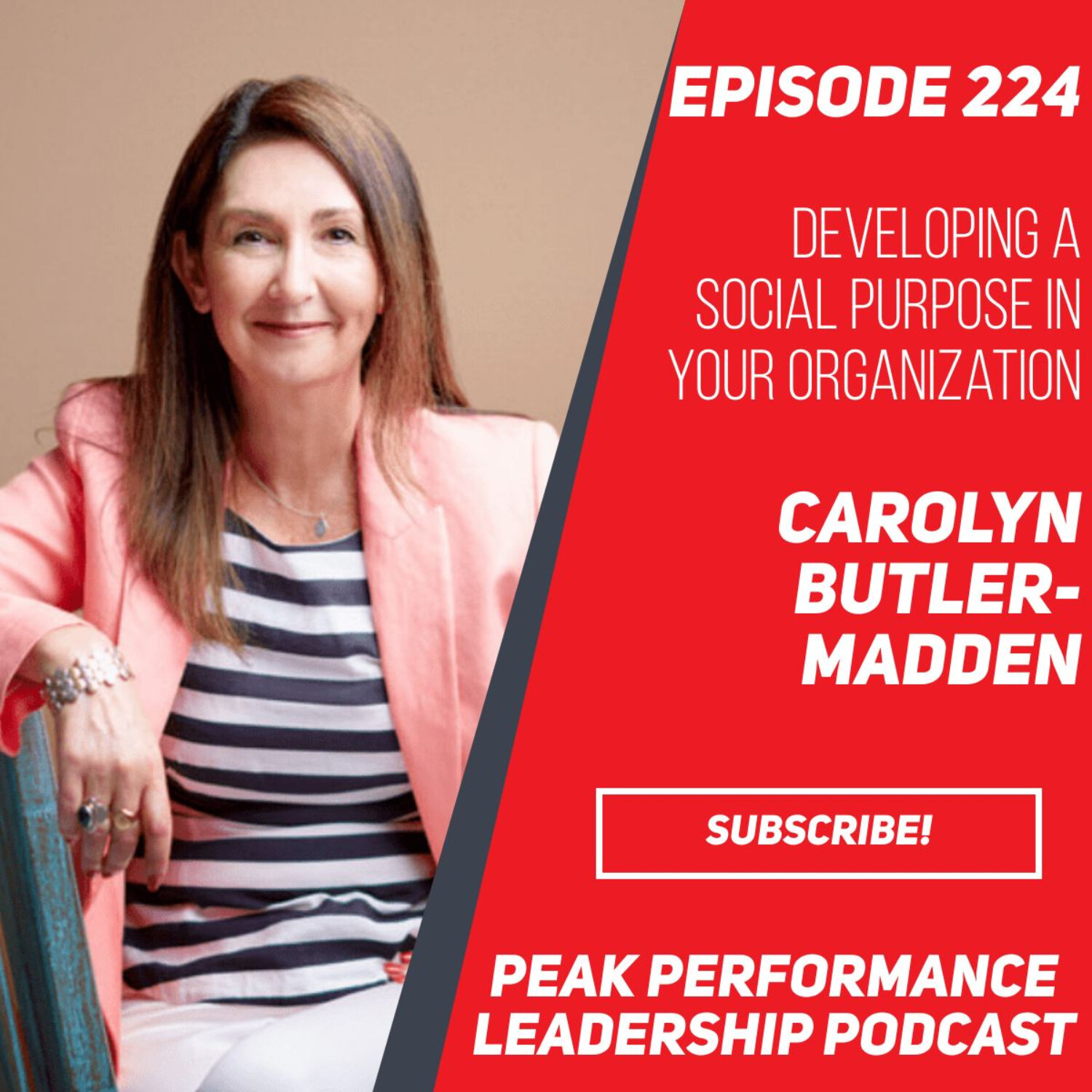
Ep 224Developing a Social Purpose in Your Organization | Carolyn Butler-Madden | Episode 224
Social purpose in business has become increasingly important for employee engagement and customer retention, yet many leaders still struggle to understand what it means for their business. So, how can defining your purpose help you grow a profitable business that people love? Sharing inspiration from organizations such as Intrepid Travel, Patagonia, Unilever and PayPal, Butler-Madden explores the intrinsic connection between the two things that drive successful purpose-led businesses: Love (of people, planet and humanity – the raw emotion behind purpose) and Money (profit and commercial success). When purpose drives profit, it offers the ability to be ambitious in the change you seek to create over the long term. Meanwhile you build a meaningful business for everyone involved; you attract invested employees, customers, and investors; and you build trust, the currency of a valued business. Carolyn Butler-Madden is inspired by a future where business is a force for good and brands drive profit through purpose. Her mission is to make social purpose a vital part of business in Australia and beyond. She does this through speaking, writing and consulting, and advising small, medium and large organizations. Her first book, Path To Purpose, was Australia’s first on cause marketing. Carolyn’s 30-year international marketing career includes 18 years as an agency owner, working with some of the world’s best brands. Topics During this interview Carolyn and I discuss the following topics: What social purpose is and how relates to organizationsWhat the Ediman Trust BarometerWhy businesses need social purposeHow trust is so crucial in businessHow to develop an organizational identityHow as a leader you can develop a social purposeHow small to medium businesses can establish a social purposeHow middle leaders can help develop social purpose in their organizations For the complete show notes be sure to check out our website: https://leaddontboss.com/224
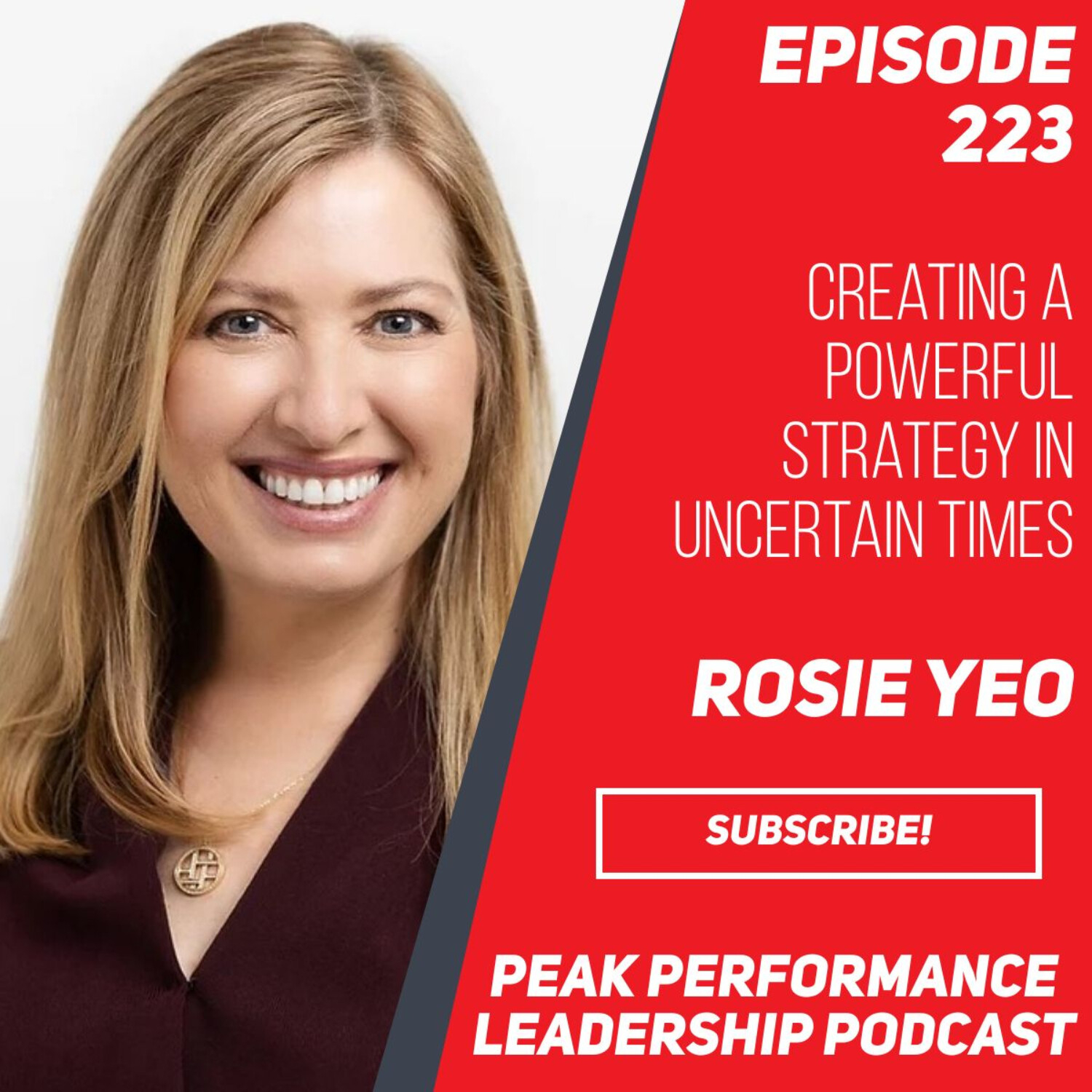
Ep 223Creating a Powerful Strategy in Uncertain Times | Rosie Yeo | Episode 223
Good leaders know that strategy is vital when it comes to organizational longevity, but it’s not always easy to come up with fresh ideas needed for success, let alone bring them to life. Uncertainty about the future, the pressure of competition and risk aversion saps confidence and enthusiasm and produces timid templates for maintaining the status quo. There’s a better way. Rosie Yeo is known as a strategy alchemist because of her skill in helping leaders and teams collectively imagine and achieve a better future. Her experience as a public affairs strategist, board director and corporate adviser provides unique insights into how organizations design and implement their big plans. Rosie designs and facilitates strategic planning in boardrooms and executive offsites, and injects energy and focus into larger meetings and complex stakeholder consultations. Topics During this interview Rosie and I discuss the following topics: Her thoughts on the saying “culture eats strategy for breakfast”How to create a powerful strategyHow to create a great strategy sessionThe 5 steps to creating a powerful strategyHow small actions can lead large strategic winsHow to empower strategic conversations with our team members For the complete show notes check out our website: https://leaddontboss.com/223
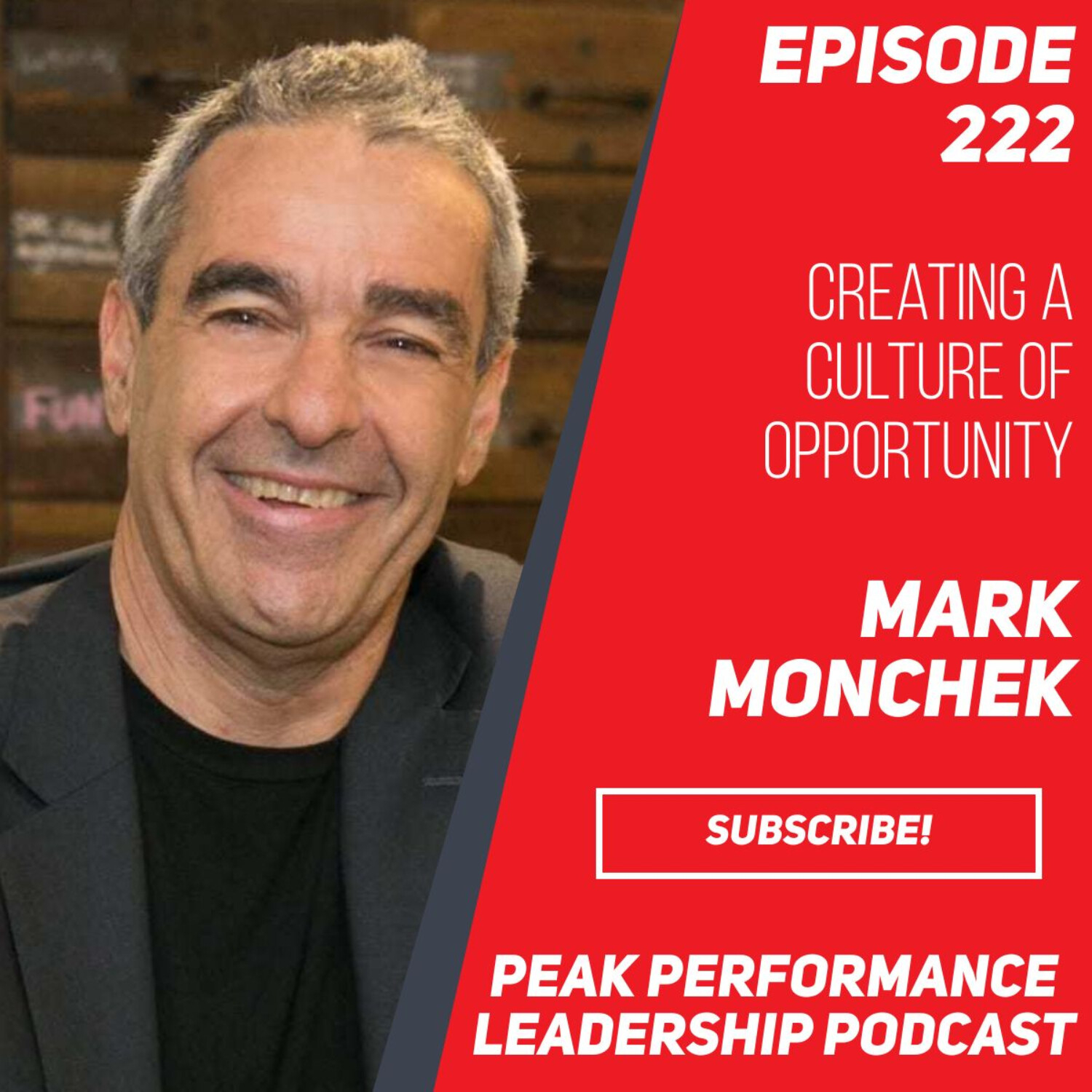
Ep 222Creating a Culture of Opportunity | Mark Monchek | Episode 222
Mark Monchek is the Founder and Chief Opportunity Officer of Opportunity Lab, a strategy consulting firm focused on helping businesses thrive through disruption. He is the author of the Amazon nonfiction bestseller "Culture of Opportunity: How to Grow Your Business in an Age of Disruption". Mark has worked with leaders from Google, Apple, JPMorgan Chase, General Electric, Goldman Sachs, Adorama, TerraCycle, Feltsberg, The New York Times, Wharton School of Business, New York University, Columbia University, NBC, Time Warner, and the United Nations. Mark has a passion for empowering conscious leaders to build great companies that make a difference in the world. Through his strategy, he discovers and develops opportunities that merge profitability with sustainable growth, creating organizations that are more conscious, making life better for their customers, employees and communities. Topics During this interview Mark and I discuss the following topics: What a culture of opportunity isHow to keep your team inspired to look opportunities during people periods of disruptionWhy disruptions are neither good nor bad they just are realityHow to make remote work, workHow to develop a culture of opportunity with teams across multiple continents How meetings kill a culture of opportunityHow to generate loyalty through meetingsHow to create a culture of opportunity in an organization For the complete show notes be sure to check out our website: https://leaddontboss.com/222
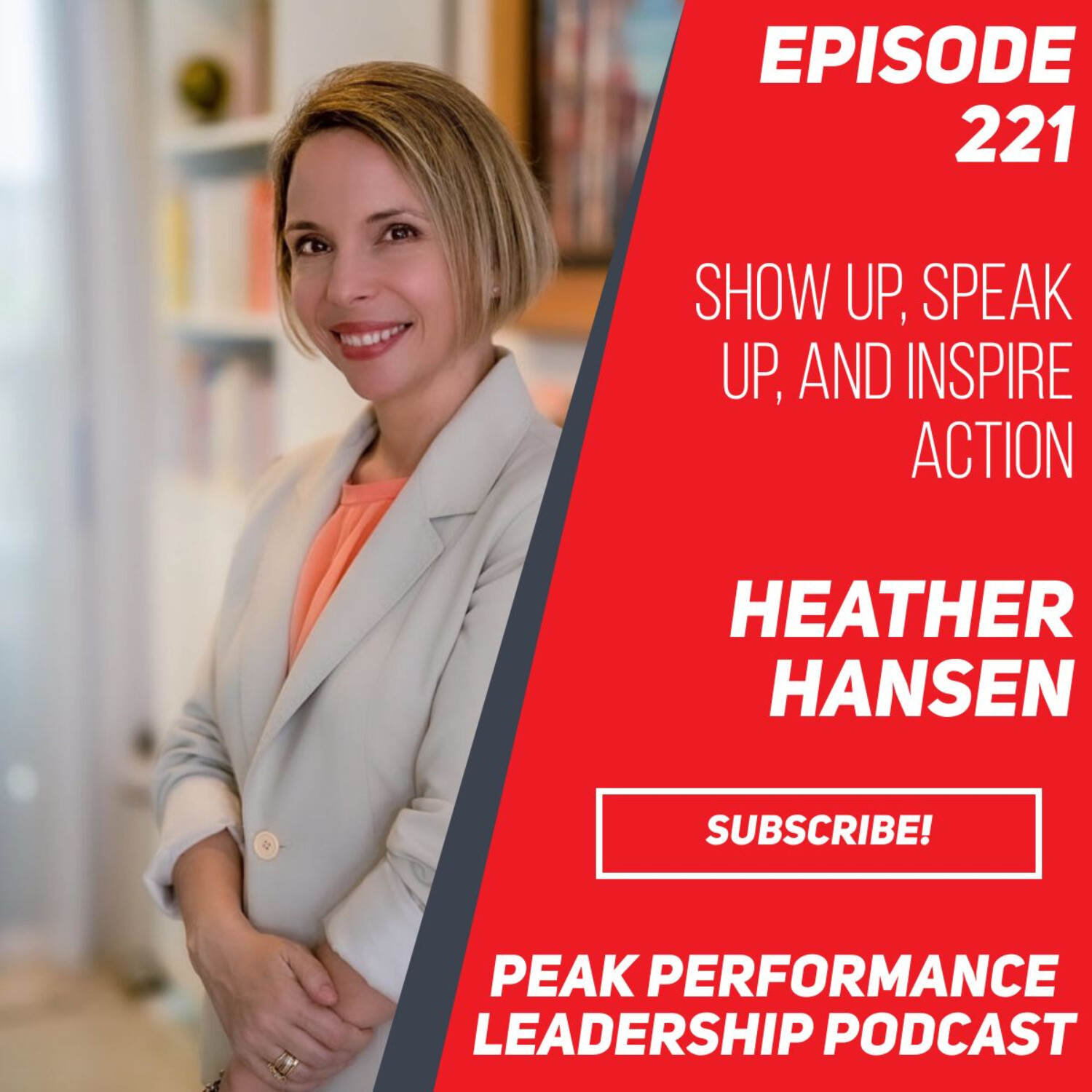
Ep 221Show up, Speak up, and Inspire Action | Heather Hansen | Episode 221
Heather is an outspoken advocate for global voices. She raises awareness around microinequities related to language and accent in international teams and helps companies build UNMUTED communication cultures where every voice is heard. Her 2018 TEDx talk titled 2 Billion Voices: How to speak bad English perfectly has had over 150,000 views and is used by university professors and English language specialists throughout the world in their own teachings. Heather’s views on global communication have been featured in national media outlets across the globe: National Public Radio (NPR) in the USA, ABC Radio National in Australia, and multiple print and radio outlets in Singapore, including The Straits Times and CNA 938 (93.8 FM). She often appears on global podcasts and webinars Topics During this interview Heather and I discuss the following topics: Why we have difficulties communicating with different cultures and groupsHow we can communicate effectively with different cultures in the workplaceHow counter the linguistic bias How to go about establishing a sense of psychological safety of cultural differencesHow to establish a culture that celebrates diversityHow to onboard new employees from diverse culturesHow leaders can inspire action For the complete show notes be sure to check out our website: https://leaddontboss.com/221
Ep 220Today's Leadership Challenges | Episode 220
In this week's episode, I go solo again and answer your challenges! I asked a question in our free Facebook Community this week "What is your current leadership struggle?" and the replies were wide ranging and deep. Lots of things to consider and many different themes. Just shows leadership is not a single line process but rather an ever evolving dance. Nonetheless I decided to provide some advice to three different members' problems live online. Here they are. Topics During this episode I respond to these three problems: "Bridging the gap between expectations and performance""Dealing with the leadership above me""Getting my people on the same page or communication barriers" For the complete show notes be sure to check out our website: https://leaddontboss.com/220
Ep 219How to Lead with Questions | Bob Tiede | Episode 219
“Leadership is not as much about knowing the right answers as it is about asking the right questions,” is Bob Tiede’s motto. But that wasn’t always the case, according to Bob; he was a “benevolent dictator,” a “serial teller” in his professional life for decades. But that all changed in 2006, when he stumbled upon a book that exhorted readers to “lead with questions” instead of “telling with kindness.” He started a blog on the topic, and after 15 posts, ran out of material. He searched for similar-minded bloggers, and to his delight, the first five he contacted all agreed to let him share their content on his own site. He soon discovered that “a leader who leads with questions will often be ten times more effective than a leader who only leads by telling!” Bob Tiede has been on the staff of Cru for 48 years. He currently serves on the U.S. Leadership Development Team and is passionate about seeing leaders grow and multiply their effectiveness. He is committed to helping leaders shift their paradigm from the pressure of having to have all the right answers to simply having a few of the right questions. In 2006, while browsing in a bookstore, he came across Leading With Questions by Michael Marquardt. He only had to peruse a few pages before declaring, “This is a keeper.” He then launched Leading With Questions—a blog with a companion ebook, Great Leaders Ask Questions—with the goal of changing forever how he and others look at leadership. Bob and his wife, Sherry, live in Plano, TX, and are blessed with 4 incredible children and 6 remarkable grandchildren. Topics During this interview Bob and I discuss the following topics: How he came to the idea of leading with questionsWhy leading with questions is more effective than leading with the answersHow to ask effective questions to inspire teams membersLeadership lessons from a US Navy Captain For the complete show notes be sure to check out our website: https://leaddontboss.com/219
Ep 218Being the Right Leader at the Right Time | Robert Jordan | Episode 218
Robert Jordan leads InterimExecs, providing access between the best interim and project executives in the world and company owners seeking brilliant leadership on demand. Robert has helped launch, grow and ultimately sell a number of fast growing companies. His first company, Online Access, put him on the Inc. 500 list of fastest growing companies. After selling Online Access, the first Internet-coverage magazine in the world, he launched InterimExecs LLC, which works with public and private companies and nonprofit organizations. He is author of How They Did It: Billion Dollar Insights from the Heart of America and author of the Nightingale Conant audio production, How They Did It: Real World Advice from Today's Most Successful Entrepreneurs. Topics During this interview Robert and I discuss the following topics: How he came to define the four different leadership stylesWhat a “fixer” is and how to be a great oneWhat a “artist” style is and how to be a great oneWhy having balance is key in leadershipHow to balance a type around these styles For the complete show notes be sure to check out our website: https://leaddontboss.com/218
Ep 217Resolving the "You vs Me" Scenario | Episode 217
It's happening again. One of your employees and you are not seeing eye-to-eye. Tension is high, there's disrespect in the air, and results are just not what they should be. You keep pointing the finger at their performance, they keep pointing the finger at your attitude towards them. Congratulations, you found yourself in the "You vs Me" scenario. A scenario where the outcome is almost guaranteed to not yield the results you want. If this situation sounds familiar, I'm (un)happy to tell you that you are not alone. In fact, it is all too common that supervisor and subordinate don't get along or see eye-to-eye. Yet, in order to achieve peak performance we need to have a respectful work relationship. Thus, this episode is all about repairing that relationship to achieve these results. Topics In this episode I cover the following topics: Why location is so crucial for repairing the relationshipHow humility will set you up for successWhy using Appreciative Inquiry will yield the results you wantWhy the "Blame Game" is one to avoid at all costsHow to map out a plan for success For the complete show notes be sure to check out our website: https://movingforwardleadership.com/217
Ep 216Getting the Results You Want | Episode 216
In the end results do matter. It matters to your company's bottom line, it matters to your team's morale, and it matters to your personal pride. But yet all too often we don't get the results we are looking for, why is that? Sometimes we need to look inwards to find out that it is us as leaders who are the cause of our own burdens. Topics In this episode I talk about: Why we are leaders cause our own problemsWhy leaving space and your door open is crucial is avoid problemsHow to ensure that you listen to your team when opinions differ For the complete show notes be sure to check out our website: https://movingforwardleadership.com/216
Ep 215Embracing Transitions as a Leader | Episode 215
The word transition often gets leaders scared. Just like changes some people run away from them while others embrace them. Transitions are not simply just changes but rather major fundamental changes. Which can truly scare people. However, in order to be successful in an ever-changing world, we need to embrace transitions and seek them out. Topics In today's episodes I talk about the following points: The difference between changes and transitionsWhy transitions are so importantHow organizations have failed transitioning in the past/currentlyTransitions I have gone through with my business and podcastA transition upcoming For the complete show notes be sure to check out our website: https://movingforwardleadership.com/215
Ep 214Leading Change from the Inside Out | Erika Andersen | Episode 214
Unless you’ve been living on another planet, the past few years have shown that we’re in a time of unimagined and unrelenting change—and we’re not very good at it. According to McKinsey & Company, an alarming 70% of all change initiatives fail, largely because we’re biologically hardwired to return to what’s worked for us before. But to create the future we hope for (and cope with the here and now), we need to embrace the very thing we’re wired to avoid, says one author-expert-thought leader. Erika Andersen is the founding partner of Proteus, a coaching, consulting, and training firm that focuses on leader readiness. Over the past 30 years, Erika has developed a reputation for creating approaches to learning and business-building that are tailored to her clients’ challenges, goals, and culture. She and her colleagues at Proteus focus uniquely on helping leaders at all levels get ready and stay ready to meet whatever the future might bring. Much of her recent work has focused on organizational visioning and strategy, executive coaching, and management and leadership development. In these capacities, she serves as a consultant and advisor to the CEOs and top executives of several corporations, including Spotify, Amazon, Revolt TV and Media, Charter/Spectrum, and the Yale School of Public Health. She also shares her insights about managing people and creating successful businesses by speaking to corporations, non-profit groups and national associations Topics During this interview Erika and I discuss the following topics: Where leaders fail leading changeThe three things that people want to know during a period of changeHow leaders can foster change from the insideThe 4 levers of changeHer 5 step model for change management For the complete show notes be sure to check out our website: https://movingforwardleadership.com/214
Ep 213We the Leader | Jeff Spahn | Episode 213
J. Jeffrey Spahn is a researcher, executive educator, entrepreneur, executive coach, storyteller and speaker. With over 20 years of experience Jeff continues to design a unique and powerful leadership practice for leaders, executives, teams and organizations. The Leading Leaders Practice is a practical approach to leadership in the 21st Century and is designed to enable leaders to mold complexity and ambiguity into innovation and performance. Disciplines and insights from business and philosophy, arts and athletics, science and spirituality enliven this practice. A degree in business from the University of Michigan and a doctorate from the University of Chicago ground his practice in sound scholarship. After more than twelve years of executive leadership Mr. Spahn taught business graduate students and conducted research on the purpose of business. During this investigation he engaged many of the top executives in the United States. In response to a publisher’s request Jeff is currently writing a book entitled The Magic of Mutual Leadership: How to Lead and Follow Simultaneously for Exponential Results. His most recent published article by the same title can be found in Developing Leaders Magazine by clicking here Other published articles include “Leading Leaders: The Art of Peak Performance”, Velocity, vol.4, No.2, 2nd Quarter 2002, “The Leading of Leaders in the Boardroom”, Directors & Boards, Winter 2003 edition, “Honest Boardroom Communication”, Director’s Monthly, November 2002 “A New Capitalist Manifesto?: Re-imagining Business in the 21st Century” Virtual Strategist Spring 2004, “Transforming (Not Overcoming) Objections’, Advisor Perspectives, November 2011, “3 Steps to Empathic Active Listening”, FPA’s Practice Management Solution., March/April 2012. Board memberships include The Chicago Moving Company, a modern dance enterprise, SCUPE, a nonprofit dedicated to developing urban leaders and the University of Michigan Ross School of Business Alumni Club of Chicago. Topics During this interview Jeff and I discuss the following topics: What does “We the Leader” meanHow to determine the best common purpose for an organizationHow to get team members onboard with the common purposeCurious conviction - what it is and how to establish itWhy you “bring a piece” and not “the whole”How to establish a team where ego is releasedHow to de escalate conflict as it arises For the complete show notes be sure to check out our website: https://movingforwardleadership.com/213