PDA Society Podcast
43 episodes
Helpful therapies for PDA adults
Accessibility for PDA pupils with The Access Hub
Parents of PDAers: Mental health & wellbeing
SEND law and your child's education
OT assessments and PDA children
Daily life in a PDA family
Finding support networks as a PDA parent
Declarative language made easy
PDA and the Biology of Sleep
Finding therapeutic support as a PDA parent
Animal therapy for children with SEND
The Hidden harm of School Behaviour Policies
Why Diagnosis Matters for PDA Adults
OT solutions for PDA
Learning to Drive
Parental Blame and PDA
Supporting Self-Care, Learning & Leisure: OT Approaches for PDA Children
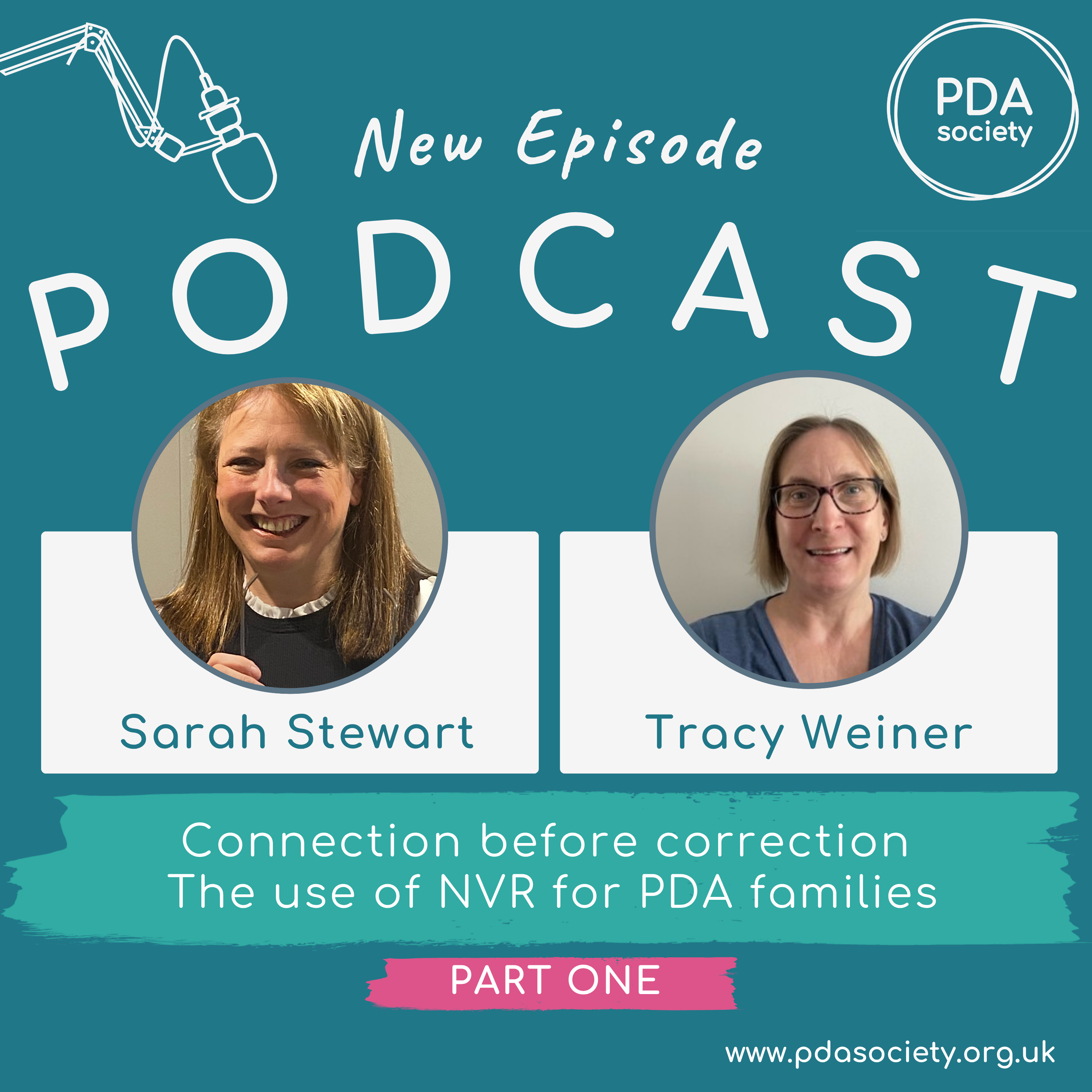
S1 Ep 23'Connection before correction' The use of NVR for PDA families.
In this episode, Sarah Stewart from the PDA Society is joined by Tracy Weiner, an NVR (Non-Violent Resistance) practitioner and parent of a PDA young person, to explore how NVR can support families experiencing high levels of distress and conflict.Tracy shares both her professional expertise and personal experience as a parent, speaking about the realities of parenting a PDA child into adolescence and adulthood. The conversation focuses on how NVR can offer an alternative approach when families are facing situations such as parental violence and aggression (PVA), where traditional strategies may no longer feel effective.Part 1 introduces the core principles of NVR, including moving away from control and consequences, and instead focusing on connection, presence and de-escalation. Tracy explains how NVR shifts the focus from trying to “fix” behaviour to strengthening relationships and reducing conflict over time.Sarah and Tracy also explore the emotional impact on parents, including fear, isolation and uncertainty, and how NVR can help rebuild confidence and stability within the family system. The discussion highlights that this approach is not about giving in, but about responding differently to create safer, more sustainable dynamics.Key Themes What NVR (Non-Violent Resistance) is and how it works Moving away from control and consequence-based approaches Strengthening connection and reducing conflict The emotional impact of high-stress family situations Rebuilding parental confidence and stabilityDeep Diver Subscriber EpisodeFor those who would like to go further, Part 2, an exclusive “Deep Diver” subscriber episode, is available through our Training Hub. You can access it here: https://training.pdasociety.org.uk/pda-podcasts/DisclaimerThe views and opinions expressed by guest speakers in this podcast are their own and do not necessarily reflect those of the PDA Society. While we aim to provide balanced and inclusive discussions, individual experiences and perspectives may vary. The PDA Society is committed to using language and terminology that reflects the preferences of PDA and autistic people, but sometimes our guests may use language and terminology which differs. Appearance on our podcast is not an endorsement of an individual, and not all of our guests will align with our position on the issues discussed.Further sources of support and information PDA Society Training Hub: https://training.pdasociety.org.uk/pda-podcasts/ PDA Society Website: https://www.pdasociety.org.uk/ PDA Society Training: https://www.pdasociety.org.uk/support-and-training/training/ PDA Society Support Service: https://www.pdasociety.org.uk/support-and-training/support/Guest links:NVR - Haim Omer explains non-violent resistance (40 min)https://www.nvruk.co.uk/
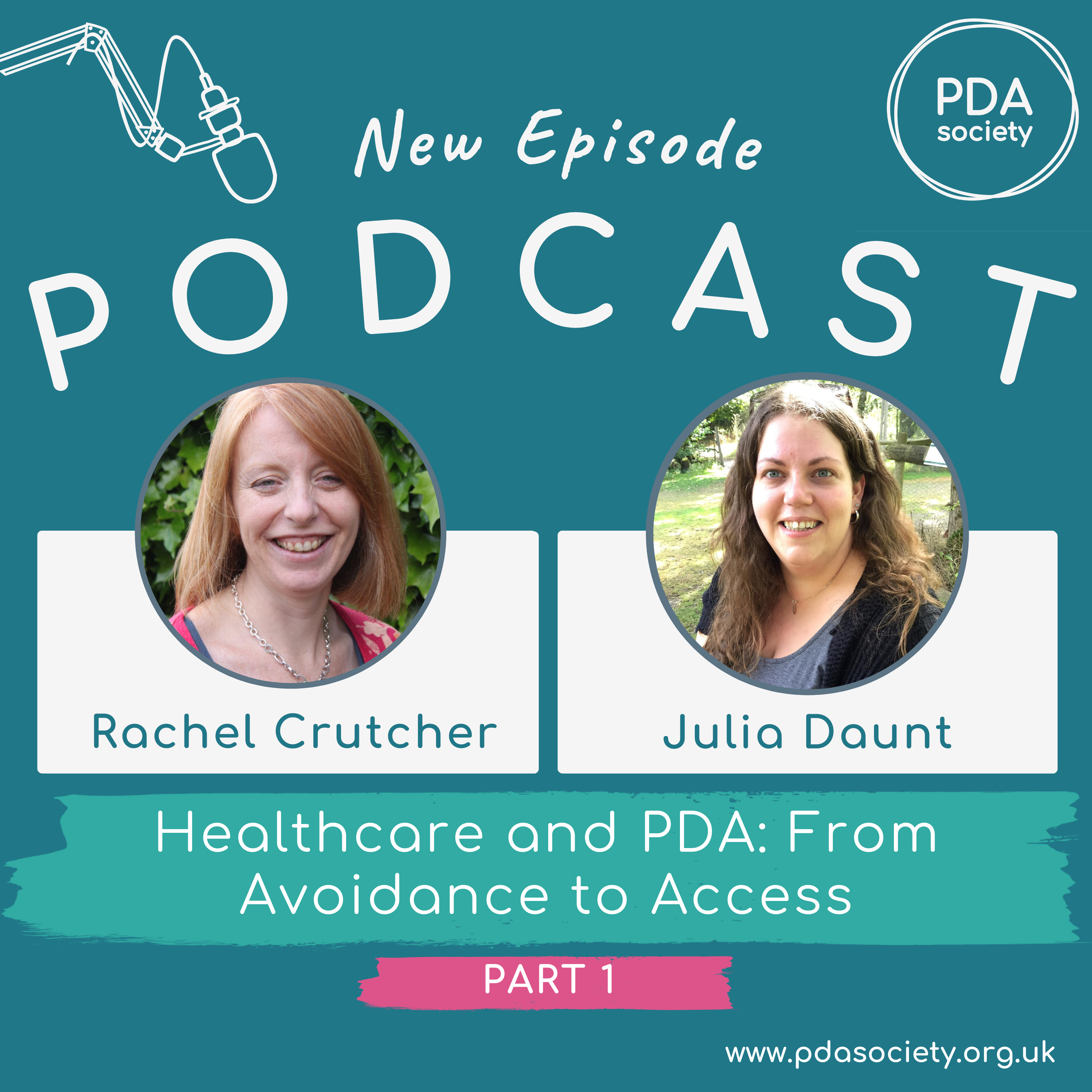
S1 Ep 22Healthcare and PDA: From Avoidance to Access
In this episode, Rachel from the PDA Society is joined by Julia Daunt, a PDA adult and trainer with the PDA Society, to explore the realities of accessing healthcare for PDAers.Julia shares her lived experience of navigating medical environments, highlighting how appointments, procedures and interactions with professionals can often feel overwhelming, unpredictable and highly demanding. The conversation explores why healthcare settings can trigger anxiety for PDAers, including loss of control, sensory challenges, unfamiliar environments and the expectation to comply quickly with instructions.Rachel and Julia discuss how these experiences can lead to avoidance, delayed care or heightened distress, even when support is urgently needed. Julia reflects on the importance of understanding how demand sensitivity shows up in medical contexts, and why what might appear as resistance is often a response to feeling unsafe or overwhelmed.Part 1 focuses on building understanding, offering insight into what healthcare feels like from a PDA perspective, and why compassionate, flexible approaches are essential for supporting access.Key Themes The challenges PDAers face when accessing healthcare Anxiety, control and unpredictability in medical settings Sensory and environmental factors affecting appointments Why avoidance and resistance can occur Understanding healthcare through a PDA lens The importance of safety, autonomy and trustDeep Diver Subscriber EpisodeFor those who would like to go further, Part 2, an exclusive “Deep Diver” subscriber episode, is available through our Training Hub.You can access it here: https://training.pdasociety.org.uk/pda-podcasts/DisclaimerThe views and opinions expressed by guest speakers in this podcast are their own and do not necessarily reflect those of the PDA Society. While we aim to provide balanced and inclusive discussions, individual experiences and perspectives may vary. The PDA Society is committed to using language and terminology that reflects the preferences of PDA and autistic people, but sometimes our guests may use language and terminology which differs. Appearance on our podcast is not an endorsement of an individual, and not all of our guests will align with our position on the issues discussed.Further sources of support and information PDA Society Training Hub: https://training.pdasociety.org.uk/pda-podcasts/ PDA Society Website: https://www.pdasociety.org.uk/ PDA Society Training: https://www.pdasociety.org.uk/support-and-training/training/ PDA Society Support Service: https://www.pdasociety.org.uk/support-and-training/support/
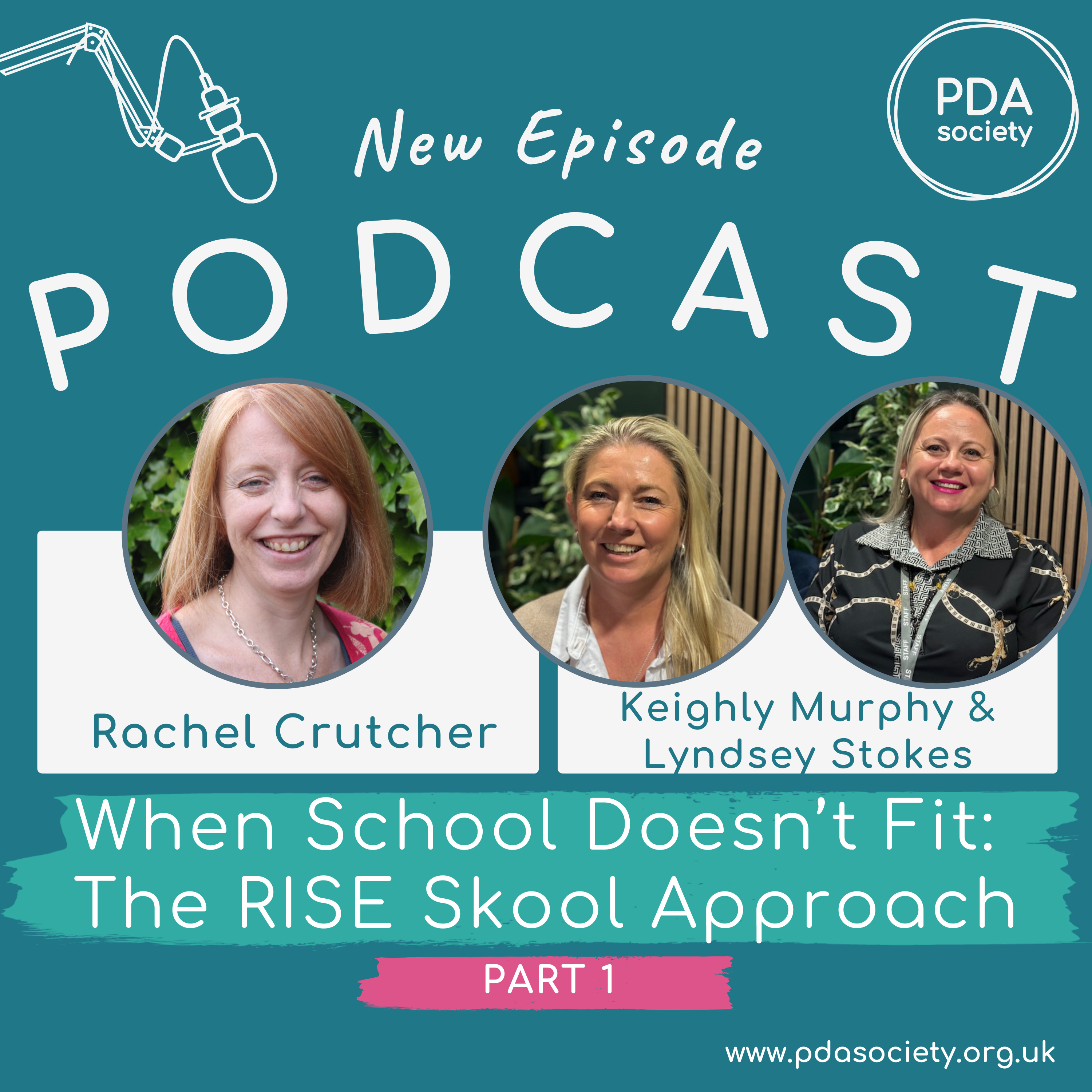
S1 Ep 21When School Doesn't Fit: The RISE Skool Approach
In this episode, Rachel from the PDA Society is joined by Lyndsey Stokes and Keighly Murphy from Rise Skool, an alternative education provision supporting neurodivergent children and young people who have struggled in mainstream settings.Together, they explore what can happen when education is rebuilt around safety, trust and emotional regulation rather than compliance and rigid expectations. Lyndsey and Keighly share how many of the young people who come to Rise Skool have experienced repeated school trauma, exclusions, anxiety or long-term disengagement.The conversation focuses on creating environments where children feel safe enough to learn. Rather than prioritising academic targets from the outset, Rise Skool centres relationship-building, predictability and co-regulation. Lyndsey and Keighly explain how reducing demands, observing communication patterns and tuning into nervous system responses helps students begin to re-engage.Part 1 explores how traditional education models can inadvertently escalate anxiety for PDA learners, and how alternative settings can shift from control to collaboration. The discussion highlights the importance of dignity, flexibility and truly listening to young people.Key Themes Why PDA learners often struggle in mainstream education The impact of school trauma and repeated exclusions Building safety before focusing on academic outcomes Relationship-led and co-regulation-based approaches Reducing demands to support re-engagement Reframing success in educationDeep Diver Subscriber EpisodeFor those who would like to go further, Part 2, an exclusive “Deep Diver” subscriber episode, is available through our Training Hub. You can access it here: https://training.pdasociety.org.uk/pda-podcasts/DisclaimerThe views and opinions expressed by guest speakers in this podcast are their own and do not necessarily reflect those of the PDA Society. While we aim to provide balanced and inclusive discussions, individual experiences and perspectives may vary. The PDA Society is committed to using language and terminology that reflects the preferences of PDA and autistic people, but sometimes our guests may use language and terminology which differs. Appearance on our podcast is not an endorsement of an individual, and not all of our guests will align with our position on the issues discussed.Further sources of support and information PDA Society Training Hub: https://training.pdasociety.org.uk/pda-podcasts/ PDA Society Website: https://www.pdasociety.org.uk/ PDA Society Training: https://www.pdasociety.org.uk/support-and-training/training/ PDA Society Support Service: https://www.pdasociety.org.uk/support-and-training/support/
S1 Ep 20Declarative Language with Linda K. Murphy
In this episode, Gemini from the PDA Society is joined by Linda Murphy, author of The Declarative Language Handbook and The Co-Regulation Handbook, to explore how declarative language can support PDA children and young people.Linda explains the difference between declarative and imperative language, and why shifting from telling and directing to wondering and noticing can reduce anxiety and defensiveness. The conversation explores how questions, commands and corrections can inadvertently increase demand sensitivity, particularly for children with a PDA profile.Gemini and Linda discuss how declarative language creates space for autonomy, supports problem-solving, and strengthens connection. Rather than giving instructions, declarative statements share observations, feelings or information, allowing the child to process and respond without feeling controlled.Part 1 focuses on understanding the principles behind declarative language, how it supports co-regulation, and why small shifts in communication can have a powerful impact in both home and school settings.Key Themes The difference between declarative and imperative language How direct instructions can increase anxiety for PDA children Supporting autonomy and problem-solving through communication The link between declarative language and co-regulation Reducing demand while maintaining connection Using language to create safety rather than complianceDeep Diver Subscriber EpisodeFor those who would like to go further, Part 2, an exclusive “Deep Diver” subscriber episode, is available through our Training Hub.You can access it here: https://training.pdasociety.org.uk/pda-podcasts/DisclaimerThe views and opinions expressed by guest speakers in this podcast are their own and do not necessarily reflect those of the PDA Society. While we aim to provide balanced and inclusive discussions, individual experiences and perspectives may vary. The PDA Society is committed to using language and terminology that reflects the preferences of PDA and autistic people, but sometimes our guests may use language and terminology which differs. Appearance on our podcast is not an endorsement of an individual, and not all of our guests will align with our position on the issues discussed.Further sources of support and information PDA Society Training Hub: https://training.pdasociety.org.uk/pda-podcasts/ PDA Society Website: https://www.pdasociety.org.uk/ PDA Society Training: https://www.pdasociety.org.uk/support-and-training/training/ PDA Society Support Service: https://www.pdasociety.org.uk/support-and-training/support/Guest links:Linda’s website: https://www.declarativelanguage.com/
S1 Ep 19Parenting as a PDAer
In this episode, Rachel from the PDA Society is joined by Riko Ryuki to explore what it is like parenting as a PDAer.Riko shares openly about raising three children, two of whom have PDA profiles, while navigating their own PDA and additional disabilities. Together, Rachel and Riko discuss how parenting can look and feel different when you also experience high demand sensitivity yourself.The conversation explores the realities of everyday family life, including adapting routines to meet individual needs, responding flexibly rather than rigidly, and understanding that even children with the same profile can require very different approaches. Riko reflects on being more child-led, matching expectations to capacity, and resisting more traditional “because I said so” parenting models.Part 1 focuses on lived experience, connection and reframing. Riko speaks about the strengths that can come from shared understanding, the moments of joy and closeness that can emerge when anxiety is managed well, and some of the misconceptions they have encountered from others about parenting differently.Key Themes Parenting with a PDA profile Being child-led and adapting to fluctuating needs Raising multiple neurodivergent children with different support requirements Misconceptions about flexible parenting approaches The strengths and connection that can come from shared neurodivergenceDeep Diver Subscriber EpisodeFor those who would like to go further, Part 2, an exclusive “Deep Diver” subscriber episode, is available through our Training Hub. You can access it here: https://training.pdasociety.org.uk/pda-podcasts/DisclaimerThe views and opinions expressed by guest speakers in this podcast are their own and do not necessarily reflect those of the PDA Society. While we aim to provide balanced and inclusive discussions, individual experiences and perspectives may vary. The PDA Society is committed to using language and terminology that reflects the preferences of PDA and autistic people, but sometimes our guests may use language and terminology which differs. Appearance on our podcast is not an endorsement of an individual, and not all of our guests will align with our position on the issues discussed.Further sources of support and information PDA Society Training Hub: https://training.pdasociety.org.uk/pda-podcasts/ PDA Society Website: https://www.pdasociety.org.uk/ PDA Society Training: https://www.pdasociety.org.uk/support-and-training/training/ PDA Society Support Service: https://www.pdasociety.org.uk/support-and-training/support/Guest’s links: YouTube: https://www.youtube.com/user/rikoryuki Facebook: https://www.facebook.com/RikosPDApage1/ Blog: https://dragonriko.wordpress.com/
S1 Ep 18Beyond 9–5: How Passive Income Creates Space for Parenting Neurodivergent Kids
In this episode, Sarah from the PDA Society is joined by Shirleyann Haig, bestselling author and Passive Income Coach, to explore how creating alternative income streams can offer greater flexibility when parenting neurodivergent children.Shirleyann shares her personal journey as a mother of two boys, one with ADHD and one autistic with a PDA profile. After a 25-year career in the pharmaceutical industry, she found herself struggling to balance the demands of corporate life with the unpredictability of school exclusions, phone calls home and the reality of parenting children with complex needs. Despite being a top performer in her company, she was made redundant due to the time she needed to take off to support her children.The conversation explores the emotional and financial impact of that experience, particularly as a single parent navigating divorce alongside school exclusions and ongoing uncertainty. Shirleyann reflects on how that moment of redundancy forced her to confront how financially fragile many families can be when relying solely on traditional employment structures.Part 1 focuses on how Shirleyann transitioned away from corporate life and became a Passive Income Coach, helping others to build income streams that do not rely on fixed hours or physical presence. She explains how passive income is not about avoiding work, but about creating systems where work done once can generate income repeatedly. For families living with unpredictability, this flexibility can reduce stress, create stability and offer space to prioritise children’s needs without sacrificing long-term financial security.*Redundancy due to being a carer is illegal. If you are struggling our support service can direct you to information about your legal rights.Key Themes The challenge of balancing corporate work with neurodivergent parenting School exclusions, unpredictability and employment instability The emotional impact of redundancy linked to caregiving Understanding passive income and how it can create flexibilityDeep Diver Subscriber EpisodeFor those who would like to go further, Part 2, an exclusive “Deep Diver” subscriber episode, is available through our Training Hub.You can access it here: https://training.pdasociety.org.uk/pda-podcasts/DisclaimerThe views and opinions expressed by guest speakers in this podcast are their own and do not necessarily reflect those of the PDA Society. While we aim to provide balanced and inclusive discussions, individual experiences and perspectives may vary. The PDA Society is committed to using language and terminology that reflects the preferences of PDA and autistic people, but sometimes our guests may use language and terminology which differs. Appearance on our podcast is not an endorsement of an individual, and not all of our guests will align with our position on the issues discussed.Further sources of support and information PDA Society Training Hub: https://training.pdasociety.org.uk/pda-podcasts/ PDA Society Training: https://www.pdasociety.org.uk/support-and-training/training/ PDA Society Support Service: https://www.pdasociety.org.uk/support-and-training/support/Guest links: Shirleyann’s Website Shirleyann Haig | Ethical Passive Income Coach & Speaker Instagram: shirleyannhaig
S1 Ep 17Making the Loo Less Stressful: Gentle Approaches for PDA and Toileting
In this episode, Rachel from the PDA Society is joined by Tabitha Poole, an occupational therapist from the charity ERIC, to explore a topic that many PDA families describe as a common challenge, toileting.Tabby shares her professional insight into why toileting can be difficult for PDA children and young people, and how these challenges are often linked to anxiety, demand sensitivity, sensory differences and the need for autonomy. Rachel and Tabby discuss common experiences such as refusal, avoidance, accidents, fear of the toilet, and the impact of shame and pressure.Part 1 focuses on understanding. It explores what might be underneath toileting difficulties, why traditional approaches can make things harder, and how reframing toileting as a nervous system and safety issue can lead to more compassionate and effective support.Key Themes Why toileting can be particularly difficult for PDA children Anxiety, demand sensitivity and the need for autonomy The role of sensory sensitivities and interoception How pressure, shame and urgency can increase distress Reframing toileting difficulties through understanding and safetyDeep Diver Subscriber EpisodeFor those who would like to go further, Part 2, an exclusive “Deep Diver” subscriber episode, is available through our Training Hub.You can access it here: https://training.pdasociety.org.uk/pda-podcasts/DisclaimerThe views and opinions expressed by guest speakers in this podcast are their own and do not necessarily reflect those of the PDA Society. While we aim to provide balanced and inclusive discussions, individual experiences and perspectives may vary. The PDA Society is committed to using language and terminology that reflects the preferences of PDA and autistic people, but sometimes our guests may use language and terminology which differs. Appearance on our podcast is not an endorsement of an individual, and not all of our guests will align with our position on the issues discussed.Further sources of support and information PDA Society Training Hub: https://training.pdasociety.org.uk/pda-podcasts/ PDA Society Website: https://www.pdasociety.org.uk/ PDA Society Training: https://www.pdasociety.org.uk/support-and-training/training/ PDA Society Support Service: https://www.pdasociety.org.uk/support-and-training/support/Guest links: @toilettimewithtabby @continencehub @eric_charity www.tabithapoole.com www.continencehub.comhttps://eric.org.uk/advice-about-bladders-bowels-and-toileting-for-children-with-additional-needs-2/https://eric.org.uk/potty-training/children-additional-needs/https://eric.org.uk/children-with-additional-needs/toileting-support-for-autistic-children/https://eric.org.uk/interoception-and-toileting/
S1 Ep 16PDA and Sleep Challenges
In this episode, Sarah Stewart from the PDA Society is joined by Laura Hellfeld, an independent nurse, sleep consultant and PDA adult, to explore why sleep difficulties are so common for PDA children and adults, and what can help.Laura brings both professional and lived experience to the conversation. She works extensively with families around daily living skills, including sleep, eating, hygiene and transitions, and she is also a parent to PDA children herself. Together, Sarah and Laura discuss how sleep challenges are often one of the most persistent and exhausting difficulties faced by PDA families.The conversation looks at why sleep can feel so hard, including the role of anxiety, nervous system regulation, demand sensitivity and sensory differences. Laura explains how traditional sleep advice often does not work for PDAers, and why approaches that rely on control, routine or external pressure can increase distress rather than improve rest.Part 1 focuses on understanding the underlying reasons behind sleep difficulties in PDA, and reframing sleep not as a behaviour problem, but as a nervous system issue that requires safety, flexibility and compassion.Key Themes Why sleep difficulties are so common for PDA children and adults The link between anxiety, nervous system regulation and sleep Why traditional sleep strategies often do not work for PDAers Reframing sleep challenges as a need for safety rather than compliance The impact of poor sleep on the whole familyDeep Diver Subscriber EpisodeFor those who would like to go further, Part 2, an exclusive “Deep Diver” subscriber episode, is available through our Training Hub.You can access it here: https://training.pdasociety.org.uk/pda-podcasts/DisclaimerThe views and opinions expressed by guest speakers in this podcast are their own and do not necessarily reflect those of the PDA Society. While we aim to provide balanced and inclusive discussions, individual experiences and perspectives may vary. The PDA Society is committed to using language and terminology that reflects the preferences of PDA and autistic people, but sometimes our guests may use language and terminology which differs. Appearance on our podcast is not an endorsement of an individual, and not all of our guests will align with our position on the issues discussed.Further sources of support and information PDA Society Training Hub: https://training.pdasociety.org.uk/pda-podcasts/ PDA Society Website: https://www.pdasociety.org.uk/ PDA Society Training: https://www.pdasociety.org.uk/support-and-training/training/ PDA Society Support Service: https://www.pdasociety.org.uk/support-and-training/support/
S1 Ep 15Supporting People with PMDD
Content warningThis episode includes discussion of suicidal thoughts. In particular, there is a brief section between 6:50 and 7:10 that listeners may wish to approach with care. Please listen in a way that feels safe and supportive for you.Premenstrual Dysphoric Disorder, is a severe form of PMS that causes significant emotional and physical symptoms during the 1-2 weeks before menstruation. Symptoms include severe mood swings, anxiety, and depression, which can negatively impact daily life, work, and relationships. Physical symptoms like bloating, headaches, and fatigue are also common.In this episode, PDA Society speaks with Kirstie McStay, Community Manager at Spectrum Gaming, about PMDD, exploring how cyclical hormonal changes can affect mood, wellbeing and daily functioning. The conversation looks at how PMDD can impact relationships, work and self-perception, particularly when symptoms shift dramatically across the month. It also highlights the importance of being believed, tracking patterns, and recognising that what can look like a sudden change in behaviour or mood may be connected to hormonal cycles and a very real health condition.Key Themes What PMDD is and how it differs from PMS Emotional and physical symptoms that can affect daily life Tracking cyclical patterns and noticing early warning signs The importance of being believed and supportedDeep Diver Subscriber EpisodeFor those who would like to go further, Part 2, an exclusive “Deep Diver” subscriber episode, is available through our Training Hub. You can access it here: https://training.pdasociety.org.uk/pda-podcasts/DisclaimerThe views and opinions expressed by guest speakers in this podcast are their own and do not necessarily reflect those of the PDA Society. While we aim to provide balanced and inclusive discussions, individual experiences and perspectives may vary. The PDA Society is committed to using language and terminology that reflects the preferences of PDA and autistic people, but sometimes our guests may use language and terminology which differs. Appearance on our podcast is not an endorsement of an individual, and not all of our guests will align with our position on the issues discussed.Further sources of support and information PDA Society Training Hub: https://training.pdasociety.org.uk/pda-podcasts/ PDA Society Training: www.pdasociety.org.uk/support-and-training/training/ PDA Society Support Service: www.pdasociety.org.uk/support-and-training/support/Guest’s links: Spectrum Gaming on trauma: www.spectrumgaming.net/resources/categories/understanding-trauma Spectrum Gaming on PMDD: www.spectrumgaming.net/post/supporting-autistic-young-people-with-pmdd Kirstie’s PMDD webinar resources: padlet.com/spectrumgaming/pmdd
S1 Ep 14PANS and PANDAS explained
In this episode, the PDA Society begins a clear and accessible exploration of PANS and PANDAS, conditions that can cause sudden and significant changes in a child or young person’s behaviour, emotional wellbeing and functioning.Although not linked with PDA, some of the presenting characteristics can be similar, making diagnosis and treatment difficult.The conversation focuses on what PANS and PANDAS are, how they may present, and why they are often misunderstood or missed. Listeners are guided through common signs, including rapid onset anxiety, changes in behaviour, emotional distress and difficulties with everyday activities. The episode highlights how confusing and frightening this experience can be for families, particularly when changes appear to happen out of the blue.Part1 lays the groundwork for understanding PANS and PANDAS, offering families and professionals a calm, compassionate starting point for recognising concerns and seeking appropriate support.Note that PANDAS in this context refers to a medical condition (Paediatric Autoimmune Neuropsychiatric Disorders Associated with Streptococcal infections). This is entirely different from the PANDA mnemonic used in PDA Society training.Key Themes What PANS and PANDAS are and how they can present Sudden changes in behaviour, anxiety and emotional wellbeing Why PANS and PANDAS are often misunderstood or overlooked The impact on families when changes feel sudden and unexplainedDeep Diver Subscriber EpisodeFor those who would like to go further, Part 2, an exclusive “Deep Diver” subscriber episode, is available through our Training Hub. You can access it here: https://training.pdasociety.org.uk/pda-podcasts/DisclaimerThe views and opinions expressed by guest speakers in this podcast are their own and do not necessarily reflect those of the PDA Society. While we aim to provide balanced and inclusive discussions, individual experiences and perspectives may vary. The PDA Society is committed to using language and terminology that reflects the preferences of PDA and autistic people, but sometimes our guests may use language and terminology which differs. Appearance on our podcast is not an endorsement of an individual, and not all of our guests will align with our position on the issues discussed.Further sources of support and information PDA Society Training Hub: https://training.pdasociety.org.uk/pda-podcasts/ PDA Society Website: https://www.pdasociety.org.uk/ PDA Society Training: https://www.pdasociety.org.uk/support-and-training/training/ PDA Society Support Service: https://www.pdasociety.org.uk/support-and-training/support/External Links: Romy's YouTube: https://www.youtube.com/@ChronicAdvocate Romy's Instagram: https://www.instagram.com/chronic.advocate/ PANS PANDAS UK: https://panspandasuk.org/
S1 Ep 13Distressed Behaviours - a PDAers Perspective
In this episode, Rachel from the PDA Society speaks with Julia Daunt, an adult PDAer, author and trainer, about the experience and meaning of distressed behaviours.Drawing on her personal insight and professional experience, Julia explains what distressed behaviours look and feel like from the inside. She discusses the difference between being in control and feeling overwhelmed, and how anxiety, sensory sensitivities and unmet needs can lead to behaviours that are often misunderstood.Rachel and Julia explore how reframing distressed behaviours through empathy and understanding can support more positive responses from families, schools and professionals. This conversation offers a powerful reminder that what looks challenging from the outside is often an expression of fear, pain or overload.Key Themes Understanding distressed behaviours from a PDA perspective The role of anxiety, fear and overwhelm in triggering behaviours The importance of empathy and curiosity in response Moving away from behaviour management towards emotional safety Recognising the difference between control and distressDeep Diver Subscriber EpisodeFor those who would like to go further, Part 2, an exclusive “Deep Diver” subscriber episode, will be available through our Training Hub. You can access it here: https://training.pdasociety.org.uk/pda-podcasts/DisclaimerThe views and opinions expressed by guest speakers in this podcast are their own and do not necessarily reflect those of the PDA Society. While we aim to provide balanced and inclusive discussions, individual experiences and perspectives may vary. The PDA Society is committed to using language and terminology that reflects the preferences of PDA and autistic people, but sometimes our guests may use language and terminology which differs. Appearance on our podcast is not an endorsement of an individual, and not all of our guests will align with our position on the issues discussed.Further sources of support and information PDA Society Training Hub: https://training.pdasociety.org.uk/pda-podcasts/ PDA Society Website: https://www.pdasociety.org.uk/ PDA Society Training: https://www.pdasociety.org.uk/support-and-training/training/ PDA Society Support Service: https://www.pdasociety.org.uk/support-and-training/support/Guests links: Facebook page: https://www.facebook.com/JuliaDauntPDA Blog: https://memyselfandpda.com/
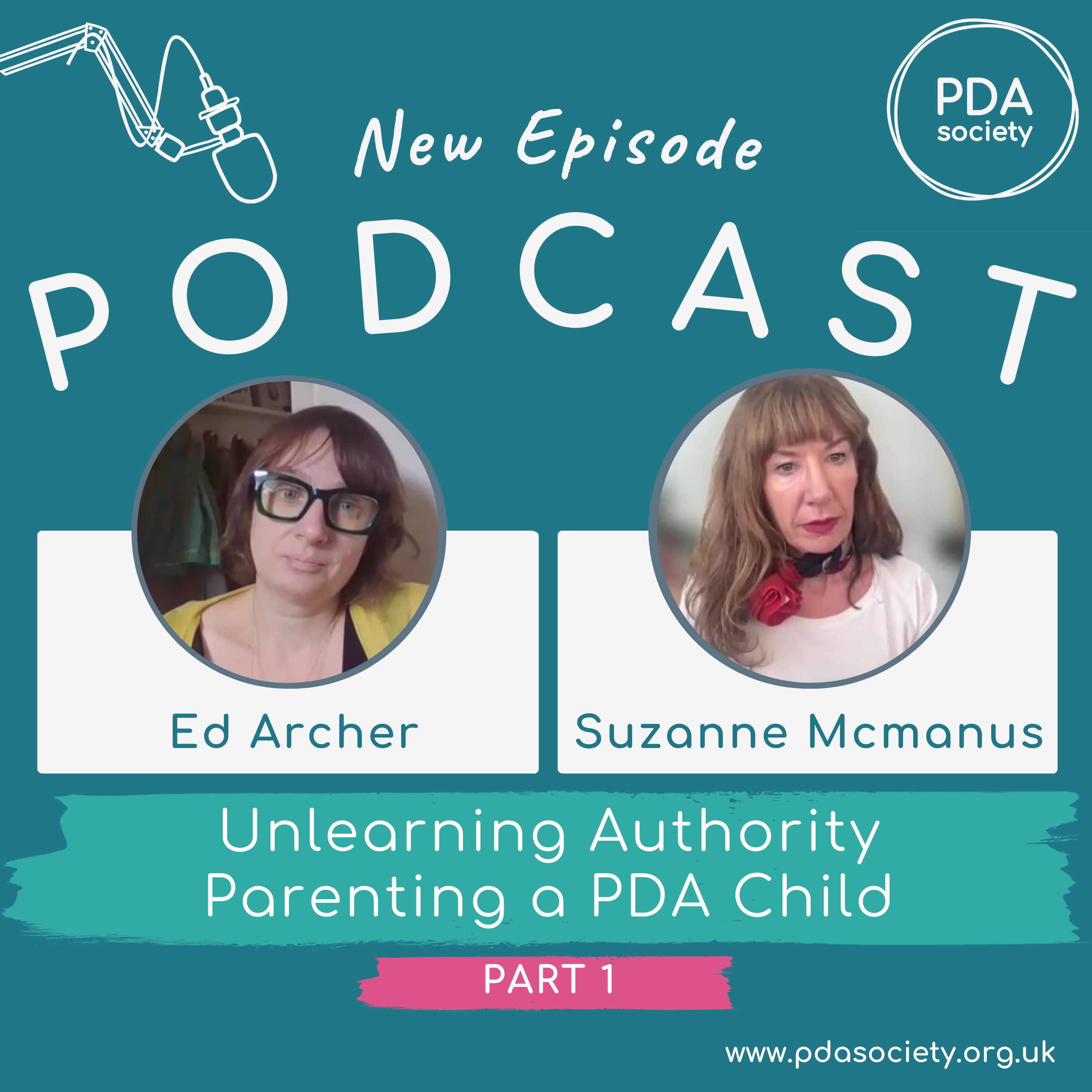
S1 Ep 12Unlearning Authority: Parenting a PDA Child
In this episode, PDA Society CEO Ed speaks with Suzanne McManus, an editorial leader and creative professional, who joins the podcast to share her personal experience as the parent of a PDA child.Suzanne reflects on the steep learning curve of parenting when traditional approaches don’t fit, and how she had to unlearn familiar ideas about authority, control and compliance. She discusses the shift from managing behaviour to understanding anxiety and autonomy, and how connection, trust and humour have become the foundations of her parenting.Through warmth and honesty, Suzanne offers reassurance to parents who may be feeling isolated or unsure, highlighting the importance of community and self-compassion along the way.Key Themes Parenting a PDA child through understanding and flexibility Letting go of traditional ideas about authority and control Replacing behaviour management with empathy and curiosity Building trust, humour and connection in family life Finding reassurance and community as a PDA parentDeep Diver Subscriber EpisodeFor those who would like to go further, Part 2, an exclusive “Deep Diver” subscriber episode, will be available through our Training Hub. You can access it here: https://training.pdasociety.org.uk/pda-podcasts/DisclaimerThe views and opinions expressed by guest speakers in this podcast are their own and do not necessarily reflect those of the PDA Society. While we aim to provide balanced and inclusive discussions, individual experiences and perspectives may vary. The PDA Society is committed to using language and terminology that reflects the preferences of PDA and autistic people, but sometimes our guests may use language and terminology which differs. Appearance on our podcast is not an endorsement of an individual, and not all of our guests will align with our position on the issues discussed.Further sources of support and information PDA Society Training Hub: https://training.pdasociety.org.uk/pda-podcasts/ PDA Society Website: https://www.pdasociety.org.uk/ PDA Society Training: https://www.pdasociety.org.uk/support-and-training/training/ PDA Society Support Service: https://www.pdasociety.org.uk/support-and-training/support/
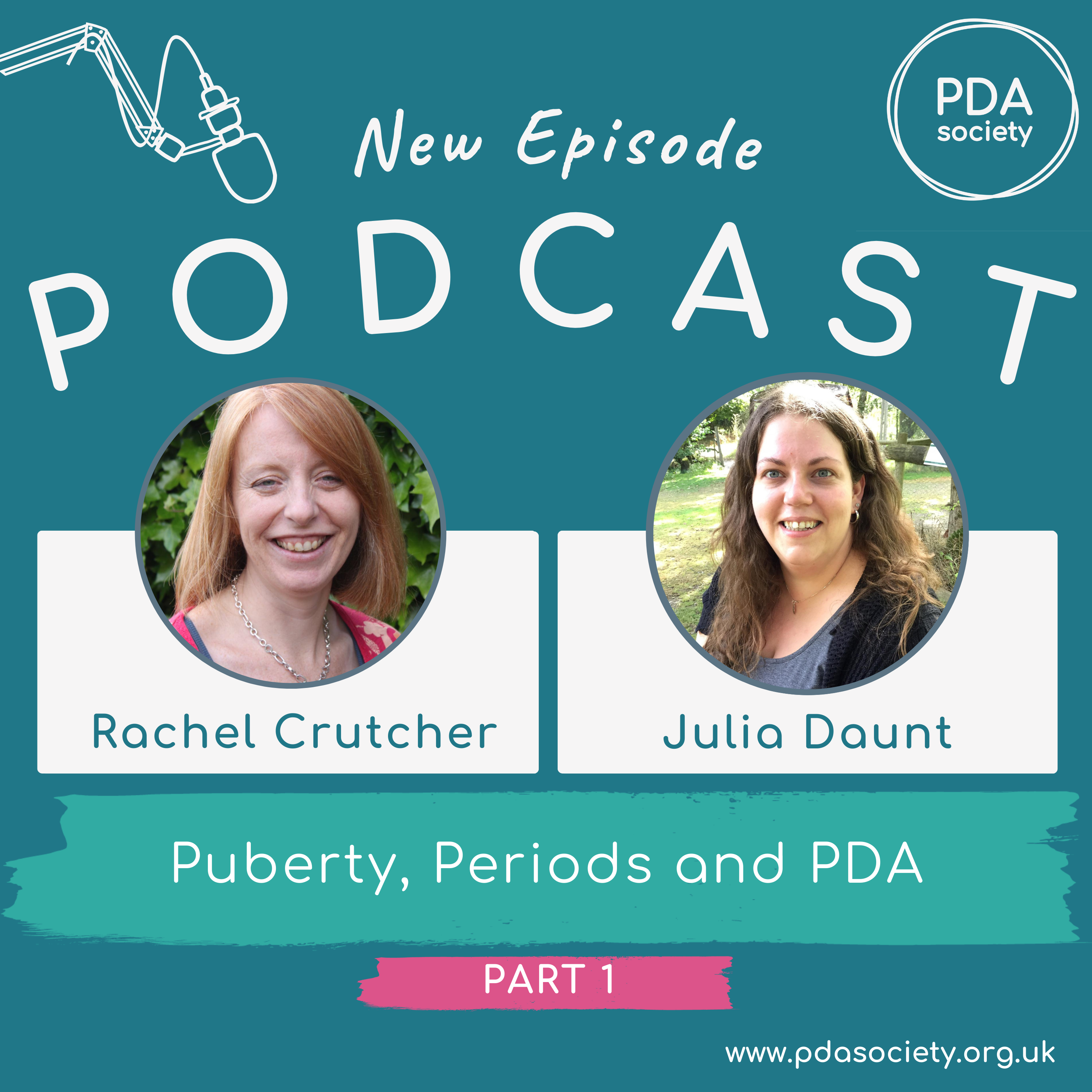
S1 Ep 11Puberty, Periods and PDA
In this episode, Rachel and guest Julia Daunt begin an open and thoughtful conversation about puberty and PDA, exploring how hormonal, physical and emotional changes can intensify anxiety and demand sensitivity during this stage of development.The discussion looks at how puberty can affect PDA profiles in ways that are often misunderstood or overlooked. Listeners are guided through common challenges including heightened emotional responses, sensory sensitivities, changes in body awareness and increasing demands around independence, social expectations and self-care.This first part focuses on building understanding. It highlights why puberty can feel particularly destabilising for PDAers, and why behaviour changes at this stage are often a sign of overwhelm rather than defiance. The episode offers reassurance to parents and carers who may feel unsure how best to support their child during this complex transition.Key Themes· Why puberty can be especially challenging for PDAers· The impact of hormonal changes on anxiety and regulation· Increased sensory sensitivity and emotional intensity· Understanding behaviour as communication during puberty· Supporting safety, trust and connection through changeDeep Diver Subscriber EpisodeFor those who would like to go further, Part 2, an exclusive “Deep Diver” subscriber episode, is available through our Training Hub. You can access it here: https://training.pdasociety.org.uk/pda-podcasts/DisclaimerThe views and opinions expressed by guest speakers in this podcast are their own and do not necessarily reflect those of the PDA Society. While we aim to provide balanced and inclusive discussions, individual experiences and perspectives may vary. The PDA Society is committed to using language and terminology that reflects the preferences of PDA and autistic people, but sometimes our guests may use language and terminology which differs. Appearance on our podcast is not an endorsement of an individual, and not all of our guests will align with our position on the issues discussed.Further sources of support and information· PDA Society Training Hub: https://training.pdasociety.org.uk/pda-podcasts/· PDA Society Website: https://www.pdasociety.org.uk/· PDA Society Training: https://www.pdasociety.org.uk/support-and-training/training/· PDA Society Support Service: https://www.pdasociety.org.uk/support-and-training/support/Guest’s links:Facebook page: https://www.facebook.com/JuliaDauntPDABlog: https://memyselfandpda.com/The books Julia mentioned in the episode are:https://amzn.eu/d/8G7bjjohttps://amzn.eu/d/2thMLw3
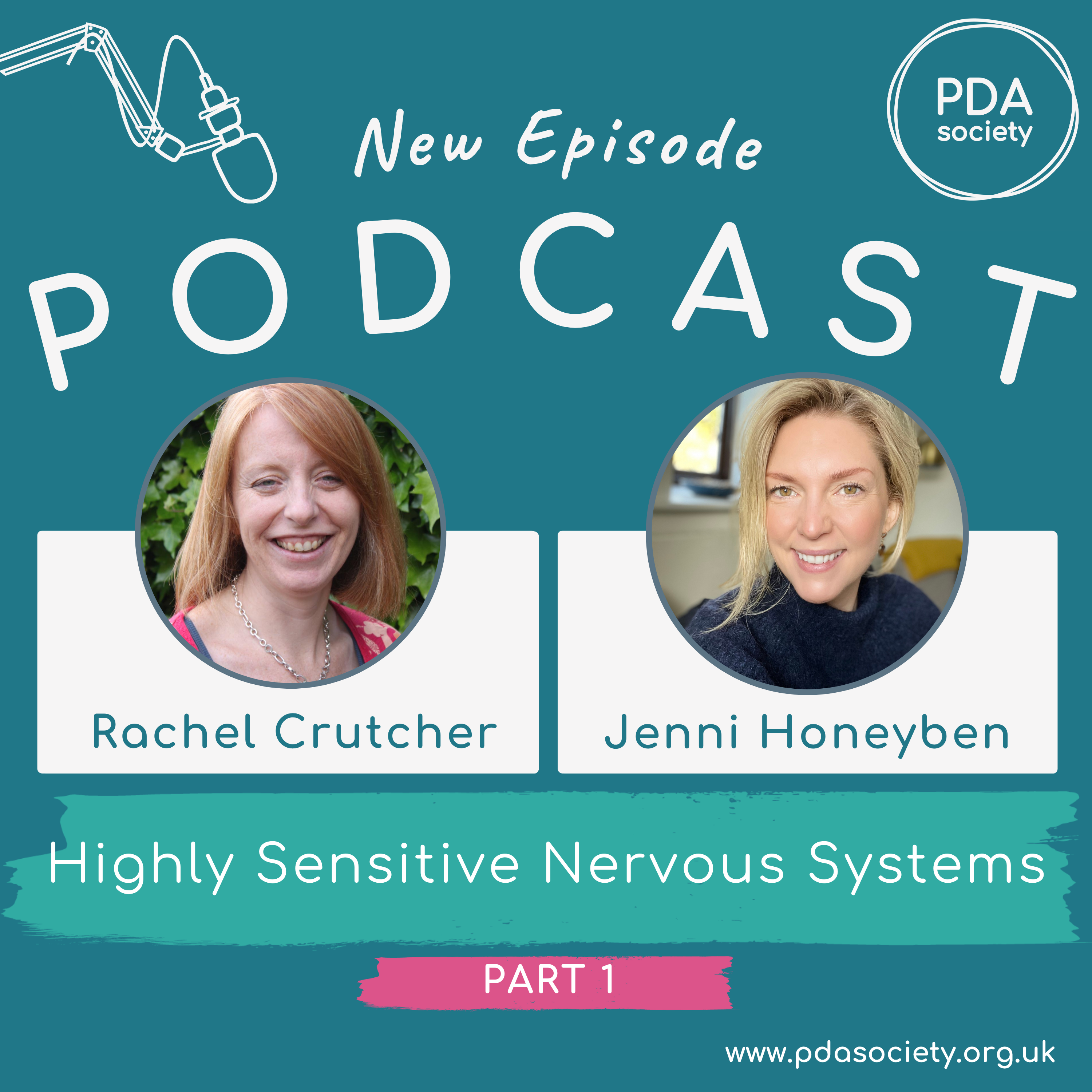
S1 Ep 10Highly Sensitive Nervous Systems
In this episode, host Rachel is joined by Jenni Honeyben, a parenting coach with specialist experience in supporting families of PDA children. Together, they explore the idea of highly sensitive nervous systems - a trait particularly relevant to PDAers.Jenni shares how heightened sensitivity affects children’s ability to cope with everyday demands, why safety and regulation are so important, and what parents and carers can do to help. Through practical examples and compassionate insight, she explains how understanding nervous system responses can reduce stress, strengthen relationships, and create calmer family environments.Topics Covered: What it means to have a highly sensitive nervous system Why this trait is particularly significant for PDA children How nervous system sensitivity influences anxiety and demand avoidance Practical ways to help children regulate and feel safe The role of co-regulation and connection in reducing stress Strategies for parents and carers to create calmer daily routines How small changes can make a big difference for family lifeDeeper Dive Subscriber Episode For those who’d like to go further, an exclusive “Deeper Dive” subscriber episode is available through our Training Hub. You can access it here: https://training.pdasociety.org.uk/pda-podcasts/Disclaimer The views and opinions expressed by guest speakers in this podcast are their own and do not necessarily reflect those of the PDA Society. While we aim to provide balanced and inclusive discussions, individual experiences and perspectives may vary. The PDA Society is committed to using language and terminology that reflects the preferences of PDA/autistic people, but sometimes our guests may use language and terminology which differs. Appearance on our podcast is not an endorsement of an individual, and not all of our guests will align with our position on the issues discussed.Further sources of support and information:PDA Society training hub: https://training.pdasociety.org.uk/pda-podcasts/PDA Society Website: https://www.pdasociety.org.uk/PDA Society Training: https://www.pdasociety.org.uk/support-and-training/training/PDA Society Support Service: https://www.pdasociety.org.uk/support-and-training/support/Guests links:Jenni Honeyben Parenting Support & Coaching - http://www.jennihoneyben.com/
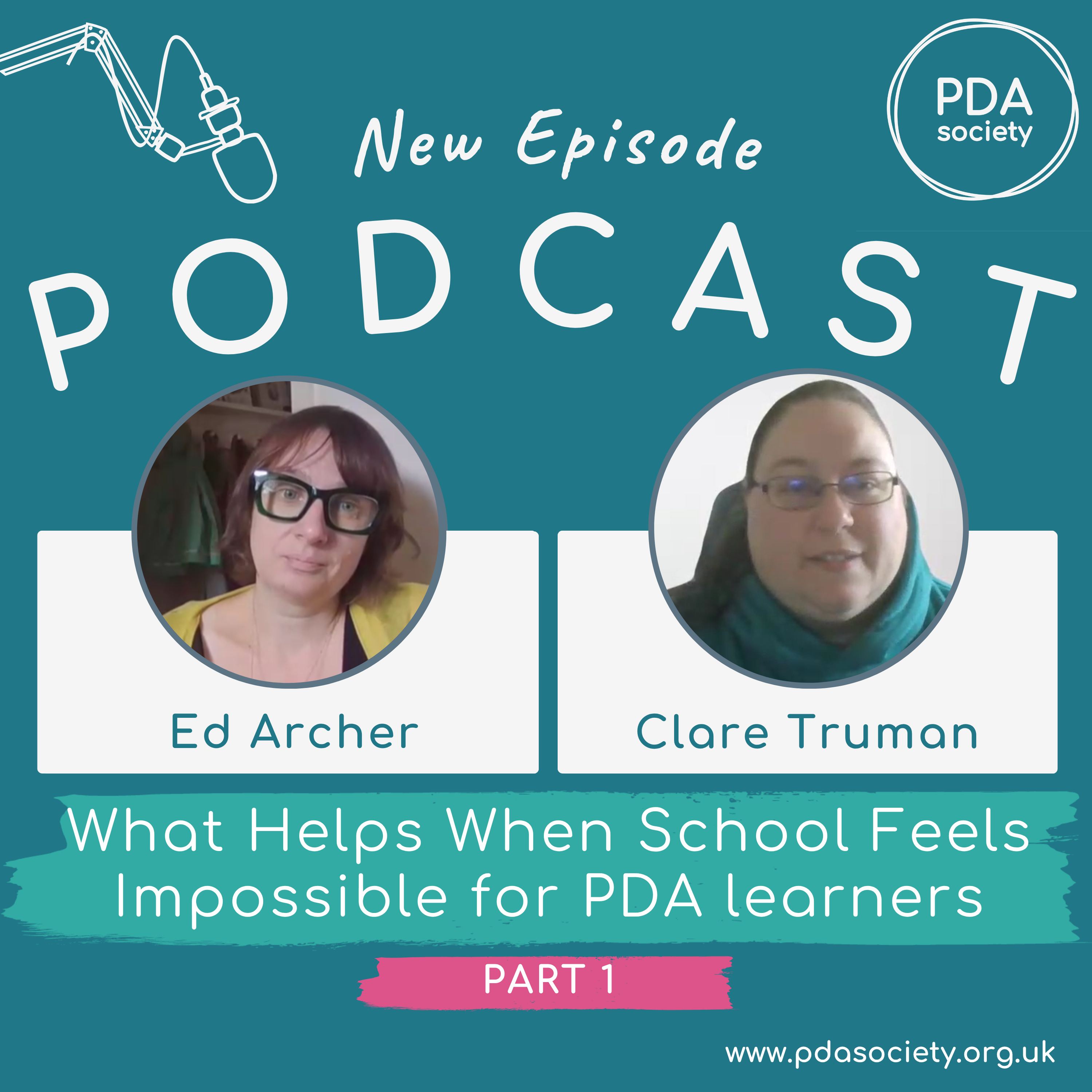
S1 Ep 9What Helps When School Feels Impossible for PDA learners
In this episode, PDA Society CEO Ed speaks with Clare Truman, educator, author and PhD researcher, about the experiences of PDA learners for whom school feels overwhelming or impossible.Drawing on her extensive background in mainstream and specialist education, Clare shares compassionate, evidence-informed insights into why traditional school settings can be so challenging for PDA children and young people. She discusses how anxiety, sensory sensitivities and social expectations interact with the demand-avoidant profile, and how reframing behaviour through an understanding lens can transform outcomes.With warmth and clarity, Clare offers practical examples of what can help, from flexible approaches to building trust and safety, to creative ways of meeting learning needs outside conventional classrooms. Whether you are a parent, educator or professional supporting PDA learners, this conversation provides both understanding and hope.Key Themes Understanding why school can feel overwhelming for PDA learners The impact of anxiety and sensory sensitivities on attendance and engagement Rethinking behaviour through curiosity and compassion The importance of safety, trust and flexibility in learning environments Supporting education beyond traditional school settingsDeep Diver Subscriber EpisodeFor those who would like to go further, Part 2, an exclusive “Deep Diver” subscriber episode, will be available through our Training Hub. You can access it here: https://training.pdasociety.org.uk/pda-podcasts/DisclaimerThe views and opinions expressed by guest speakers in this podcast are their own and do not necessarily reflect those of the PDA Society. While we aim to provide balanced and inclusive discussions, individual experiences and perspectives may vary. The PDA Society is committed to using language and terminology that reflects the preferences of PDA and autistic people, but sometimes our guests may use language and terminology which differs. Appearance on our podcast is not an endorsement of an individual, and not all of our guests will align with our position on the issues discussed.Further sources of support and information PDA Society Training Hub: https://training.pdasociety.org.uk/pda-podcasts/ PDA Society Website: https://www.pdasociety.org.uk/ PDA Society Training: https://www.pdasociety.org.uk/support-and-training/training/ PDA Society Support Service: https://www.pdasociety.org.uk/support-and-training/support/
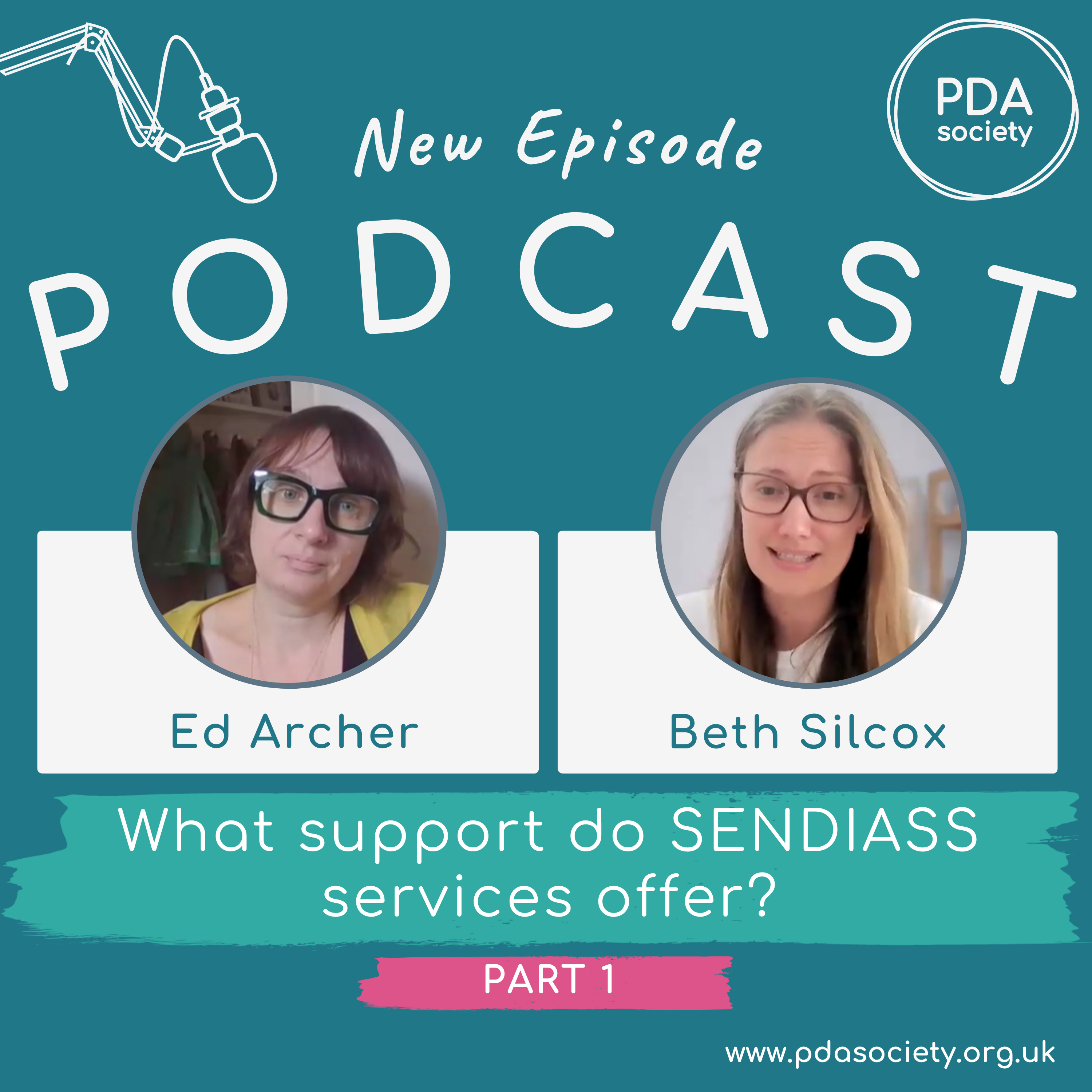
S1 Ep 8What support do SENDIASS services offer?
In this ep, CEO Ed Archer sits down with Beth Silcox, a qualified counsellor and specialist in Special Educational Needs and Disability (SEND) advice. With experience spanning therapeutic counselling, education, and family advocacy, Beth brings a powerful mix of professional knowledge and lived experience as a parent of neurodivergent children.Together, Ed and Beth explore the real-world challenges families face when navigating the SEND system – from understanding your child’s rights to finding the right kind of support. Beth breaks down the key services available to parents and carers, including local authority SENDIASS teams, and explains how families can access free, impartial guidance at every stage of their journey.Listeners will gain practical insights into: How to approach your child’s school about additional support. What to expect from your local authority’s “local offer”. The role of SENDIASS (Special Educational Needs and Disabilities Information, Advice, and Support Services). What to do if your request for an Education, Health and Care (EHC) needs assessment is declined — and how to manage the appeal process. Why combining legal understanding with empathy is crucial for empowering families.Beth’s compassionate, informed perspective helps parents feel seen, supported, and equipped to advocate for their children — while also addressing the emotional toll the process can take.Part 1 sets the scene for a deeper conversation in Part 2, where the discussion moves toward practical problem-solving, managing burnout, and sustaining hope through the SEND journey.Deeper Dive Subscriber Episode For those who’d like to go further, an exclusive “Deeper Dive” subscriber episode is available through our Training Hub. You can access it here: https://training.pdasociety.org.uk/pda-podcasts/Disclaimer The views and opinions expressed by guest speakers in this podcast are their own and do not necessarily reflect those of the PDA Society. While we aim to provide balanced and inclusive discussions, individual experiences and perspectives may vary. The PDA Society is committed to using language and terminology that reflects the preferences of PDA/autistic people, but sometimes our guests may use language and terminology which differs. Appearance on our podcast is not an endorsement of an individual, and not all of our guests will align with our position on the issues discussed.Further sources of support and information:PDA Society training hub: https://training.pdasociety.org.uk/pda-podcasts/PDA Society Website: https://www.pdasociety.org.uk/PDA Society Training: https://www.pdasociety.org.uk/support-and-training/training/PDA Society Support Service: https://www.pdasociety.org.uk/support-and-training/support/
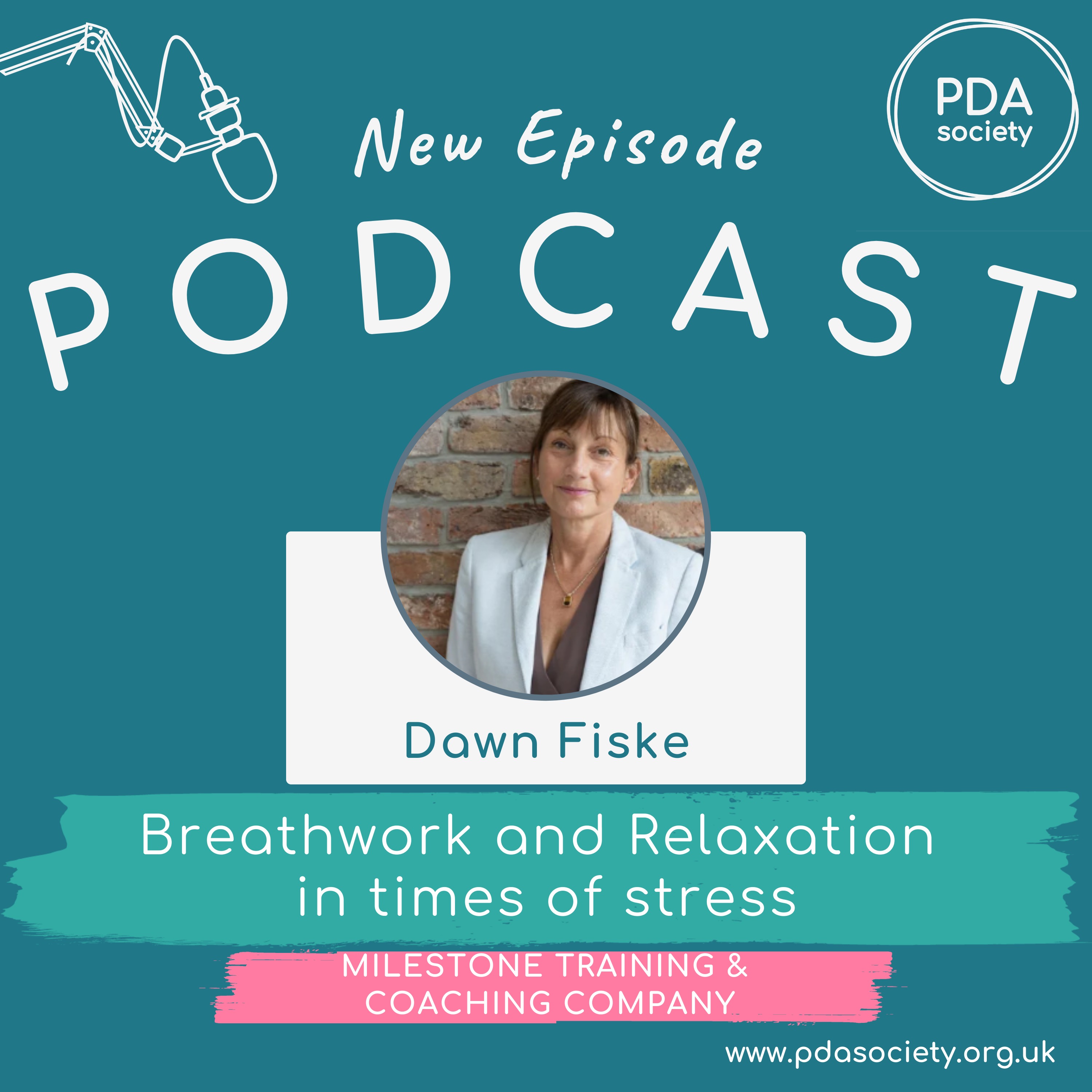
Breathwork and relaxation in times of stress
bonusAs a special bonus episode for the festive period, Dawn from Milestone Coaching joins us on the podcast to talk through relaxation and breathwork techniques to help you when times are stressful.We’ll also be releasing a ten-minute body scan meditation session on all our podcast platforms, as well as a Soundbath episode from Forgotten Forest, available for free to subscribers on our website. You can find more details here: PDA Podcasts - PDA SocietyAbout our guest:I’m Dawn, the coach and trainer at Milestone Training & Coaching Company. For me, there is nothing more rewarding than watching the incredible transformations in my clients - seeing adults and teenagers break free from self-doubt, shift their mindset, and step into their true potential drives me and is the reason I get up in the morning.I live in Axford, North Hampshire, with my husband, two sons, and two springer spaniels. I am often out running or walking in the woodlands nearby with my two Spaniels, my husband, or my few close running friends. I love nature, and staying active, healthy, and fit is very important for me.Socialising and connecting with my family and friends keeps my mental health strong, and my hunger for constantly learning new approaches in my life, and for the clients I work with, keeps me fulfilled, fresh, and very busy.Qualifications and Training Life Coaching Diploma with the Life Coaching Academy, Europe’s Leading Coaching Organisation NLP Practitioner (Neuro-Linguistic Programming) Bachelor of Science Degree in Psychology Counselling Skills & CBT Trained Acceptance Commitment Therapy (ACT) - Level 2 Samaritan Volunteer ListenerDisclaimerThe views and opinions expressed by guest speakers in this podcast are their own and do not necessarily reflect those of the PDA Society. While we aim to provide balanced and inclusive discussions, individual experiences and perspectives may vary. The PDA Society is committed to using language and terminology that reflects the preferences of PDA and autistic people, but sometimes our guests may use language and terminology which differs. Appearance on our podcast is not an endorsement of an individual, and not all of our guests will align with our position on the issues discussed.Further sources of support and information: PDA Society Training Hub: https://training.pdasociety.org.uk/pda-podcasts/ PDA Society Website: https://www.pdasociety.org.uk/ PDA Society Training: https://www.pdasociety.org.uk/support-and-training/training/ PDA Society Support Service: https://www.pdasociety.org.uk/support-and-training/support/
10 Minute Body Scan Meditation
bonusAs a special bonus episode for the festive period, the PDA Society invites you to join us for 10 minutes to pause, rest and relax with our guided ten-minute meditation.We’ve also be released an episode on Relaxation and Breathwork all our podcast platforms, as well as a Soundbath episode from Forgotten Forest, available for free to subscribers on our website. You can find more details here: PDA Podcasts - PDA SocietyDisclaimerThe views and opinions expressed by guest speakers in this podcast are their own and do not necessarily reflect those of the PDA Society. While we aim to provide balanced and inclusive discussions, individual experiences and perspectives may vary. The PDA Society is committed to using language and terminology that reflects the preferences of PDA and autistic people, but sometimes our guests may use language and terminology which differs. Appearance on our podcast is not an endorsement of an individual, and not all of our guests will align with our position on the issues discussed.Further sources of support and information PDA Society Training Hub: https://training.pdasociety.org.uk/pda-podcasts/ PDA Society Website: https://www.pdasociety.org.uk/ PDA Society Training: https://www.pdasociety.org.uk/support-and-training/training/ PDA Society Support Service: https://www.pdasociety.org.uk/support-and-training/support/
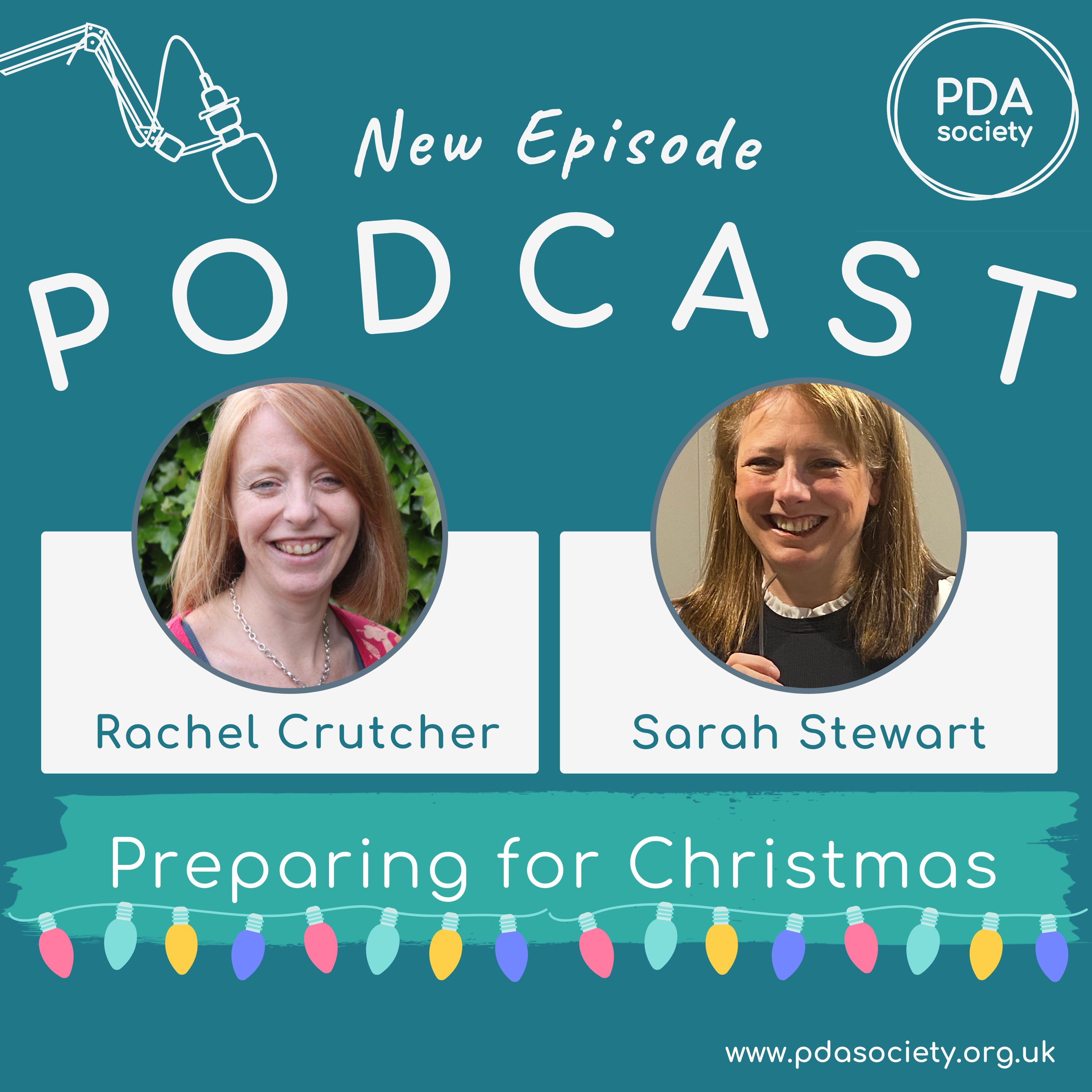
S1 Ep 7Preparing for Christmas
In this episode, Rachel and Sarah from the PDA Society begins a timely conversation about Christmas, and how the build-up can feel exciting, intense, and sometimes overwhelming for PDA children, young people, and their families.We explore why this season can bring extra demands, changes in routine, sensory overload and social expectations, all of which can increase anxiety for PDAers. We’ll talk through the early signs that Christmas is starting to feel “too much”, and how planning ahead with a low demand, relationship-led approach can help.This first part focuses on understanding what makes Christmas challenging in the first place, and how shifting expectations, simplifying plans and prioritising emotional safety can lay the groundwork for a calmer festive period.Key Themes Why Christmas can feel overwhelming for PDA learners and families The impact of increased demands, uncertainty and sensory load Noticing early signs of anxiety and overload Reducing pressure through flexible planning Prioritising emotional safety and connection over traditionDeep Diver Subscriber EpisodeFor those who would like to go further, Part 2, an exclusive “Deep Diver” subscriber episode, is available through our Training Hub. You can access it here: https://training.pdasociety.org.uk/pda-podcasts/DisclaimerThe views and opinions expressed by guest speakers in this podcast are their own and do not necessarily reflect those of the PDA Society. While we aim to provide balanced and inclusive discussions, individual experiences and perspectives may vary. The PDA Society is committed to using language and terminology that reflects the preferences of PDA and autistic people, but sometimes our guests may use language and terminology which differs. Appearance on our podcast is not an endorsement of an individual, and not all of our guests will align with our position on the issues discussed.Further sources of support and information PDA Society Training Hub: https://training.pdasociety.org.uk/pda-podcasts/ PDA Society Website: https://www.pdasociety.org.uk/ PDA Society Training: https://www.pdasociety.org.uk/support-and-training/training/ PDA Society Support Service: https://www.pdasociety.org.uk/support-and-training/support/
S1 Ep 6PDA in Adulthood: Parenting When the System Failed
In this episode, PDA Society’s Rachel speaks with Paula Webb, the parent of an adult PDAer, about what happens when PDA goes unrecognised through childhood and beyond. Together they explore how the lack of understanding and support in earlier years can have lasting effects on both the individual and their family. Through honest and heartfelt conversation, Paula shares their family’s journey – from the confusion and distress of unmet needs to the eventual realisation that PDA lay at the heart of it all. They discuss how late understanding reshaped their relationship with their now-adult child, and the process of rebuilding communication, trust and mutual understanding. This episode shines a compassionate light on the challenges faced by PDA adults whose needs were missed in childhood, and the emotional toll carried by both parents and children. It’s a powerful reminder that it’s never too late to learn, understand and reconnect.Key Themes: Growing up without recognition or diagnosis The long term impact of unmet needs The parent child relationship through adulthood Finding understanding and healing later in life Building trust after years of misunderstandingDeep Diver Subscriber EpisodeFor those who would like to go further, Part 2 – an exclusive “Deep Diver” subscriber episode – is available through our Training Hub. You can access it here: https://training.pdasociety.org.uk/pda-podcasts/DisclaimerThe views and opinions expressed by guest speakers in this podcast are their own and do not necessarily reflect those of the PDA Society. While we aim to provide balanced and inclusive discussions, individual experiences and perspectives may vary. The PDA Society is committed to using language and terminology that reflects the preferences of PDA and autistic people, but sometimes our guests may use language and terminology which differs. Appearance on our podcast is not an endorsement of an individual, and not all of our guests will align with our position on the issues discussed.Further sources of support and informationPDA Society Training Hub: https://training.pdasociety.org.uk/pda-podcasts/PDA Society Website: https://www.pdasociety.org.uk/PDA Society Training: https://www.pdasociety.org.uk/support-and-training/training/PDA Society Support Service: https://www.pdasociety.org.uk/support-and-training/support/
S1 Ep 5Autistic PDA: Insights for the Criminal Justice System
In this episode, we hear from Dr Rachel Worthington, a forensic psychologist, chartered scientist and senior lecturer at Manchester Metropolitan University. Rachel has spent years working with autistic people in forensic settings and recently led two ground breaking studies into the experiences of autistic people with a PDA profile within the criminal justice system.Rachel shares why she carried out this research, what she discovered, and what changes are needed to make criminal justice environments safer and more supportive. We explore the barriers autistic PDAers face in courts, prisons, youth justice and forensic hospitals, as well as the misunderstandings that can escalate situations and lead to further trauma.With honesty and clarity, Rachel explains the study findings - from the heightened fear response PDAers experience when demands are enforced, to the lack of training among professionals - and offers recommendations for trauma-informed practice, better understanding, and multidisciplinary support.As noted by participants in this study, aggression or violence is never acceptable and no single factor (such as Autism/PDA) causes an individual to engage in aggression or violence. Rather multiple biopsychosocial factors may contribute towards this and any assessment of the causes or contributing factors for violence and/or aggression in legal and forensic settings should be undertaken by registered health professionals with extensive training and experience of supporting both AuPDA individuals and forensic clients.Deep Diver Subscriber Episodes - For those who’d like to go further, a exclusive “Deep Diver” subscriber episodes are available through our Training Hub. You can access them here: https://training.pdasociety.org.uk/pda-podcasts/Trigger warning: This episode discusses experiences of trauma and contact with the criminal justice system, which some listeners may find distressing. If you are affected by any of the issues raised, you can reach out to our Support Service for information and guidance.Disclaimer The views and opinions expressed by guest speakers in this podcast are their own and do not necessarily reflect those of the PDA Society. While we aim to provide balanced and inclusive discussions, individual experiences and perspectives may vary. The PDA Society is committed to using language and terminology that reflects the preferences of PDA/autistic people, but sometimes our guests may use language and terminology which differs. Appearance on our podcast is not an endorsement of an individual, and not all of our guests will align with our position on the issues discussed.Further sources of support and information:PDA Society training hub: https://training.pdasociety.org.uk/pda-podcasts/PDA Society Website: https://www.pdasociety.org.uk/PDA Society Training: https://www.pdasociety.org.uk/support-and-training/training/PDA Society Support Service: https://www.pdasociety.org.uk/support-and-training/support/
S1 Ep 4PDA and Working for the Police
In this episode, our host, Rachel, speaks with Matt, a PDA adult working for the police, about navigating life and work through the lens of Pathological Demand Avoidance. From recognising his PDA traits later in life to finding strategies that make a demanding job sustainable, Matt shares what it’s really like balancing public service with a neurodivergent profile.With honesty, humour and insight, Matt reflects on the challenges of masking, managing authority, and meeting the expectations of both himself and others. He talks about the importance of self-awareness, the moments of burnout, and the adjustments that have helped him thrive within – and sometimes in spite of – the structure of policing. This episode offers a rare glimpse into PDA in the workplace and the everyday realities of working in high-pressure environments.Whether you’re PDA yourself, love someone who is, or work in a setting with strict rules and routines, this conversation will leave you with a deeper understanding of how flexibility, empathy and self-acceptance can make all the difference.Deep Diver Subscriber Episodes - For those who’d like to go further, a exclusive “Deep Diver” subscriber episodes are available through our Training Hub. You can access them here: https://training.pdasociety.org.uk/pda-podcasts/DisclaimerThe views and opinions expressed by guest speakers in this podcast are their own and do not necessarily reflect those of the PDA Society. While we aim to provide balanced and inclusive discussions, individual experiences and perspectives may vary. The PDA Society is committed to using language and terminology that reflects the preferences of PDA/autistic people, but sometimes our guests may use language and terminology which differs. Appearance on our podcast is not an endorsement of an individual, and not all of our guests will align with our position on the issues discussed.Further sources of support and information PDA Society Training Hub: https://training.pdasociety.org.uk/pda-podcasts/ PDA Society Website: https://www.pdasociety.org.uk/ PDA Society Training: https://www.pdasociety.org.uk/support-and-training/training/ PDA Society Support Service: https://www.pdasociety.org.uk/support-and-training/support/
S1 Ep 3"How I realised I was PDA" - An interview with H Arlo-Harris
In this episode, PDA Society CEO Ed speaks with H Arlo-Harris – teacher, trainer and PDA adult – about what life is really like when you’re PDA. From discovering PDA through a word cloud on our website, to navigating internal demands, sensory overwhelm and social communication, H takes us beyond labels and into lived experience.With warmth, humour and clarity, H shares how PDA impacts their daily life, relationships and work, and how they’ve shaped a life that allows them to thrive. Whether you’re PDA yourself, love someone who is, or work with PDAers, this conversation offers practical insight and compassionate understanding.Deeper Dive Subscriber Episode For those who’d like to go further, Part 2, an exclusive “Deeper Dive” subscriber episode is available through our Training Hub. You can access it here: https://training.pdasociety.org.uk/pda-podcasts/Disclaimer The views and opinions expressed by guest speakers in this podcast are their own and do not necessarily reflect those of the PDA Society. While we aim to provide balanced and inclusive discussions, individual experiences and perspectives may vary. The PDA Society is committed to using language and terminology that reflects the preferences of PDA/autistic people, but sometimes our guests may use language and terminology which differs. Appearance on our podcast is not an endorsement of an individual, and not all of our guests will align with our position on the issues discussed.Further sources of support and information:PDA Society training hub: https://training.pdasociety.org.uk/pda-podcasts/PDA Society Website: https://www.pdasociety.org.uk/PDA Society Training: https://www.pdasociety.org.uk/support-and-training/training/PDA Society Support Service: https://www.pdasociety.org.uk/support-and-training/support/
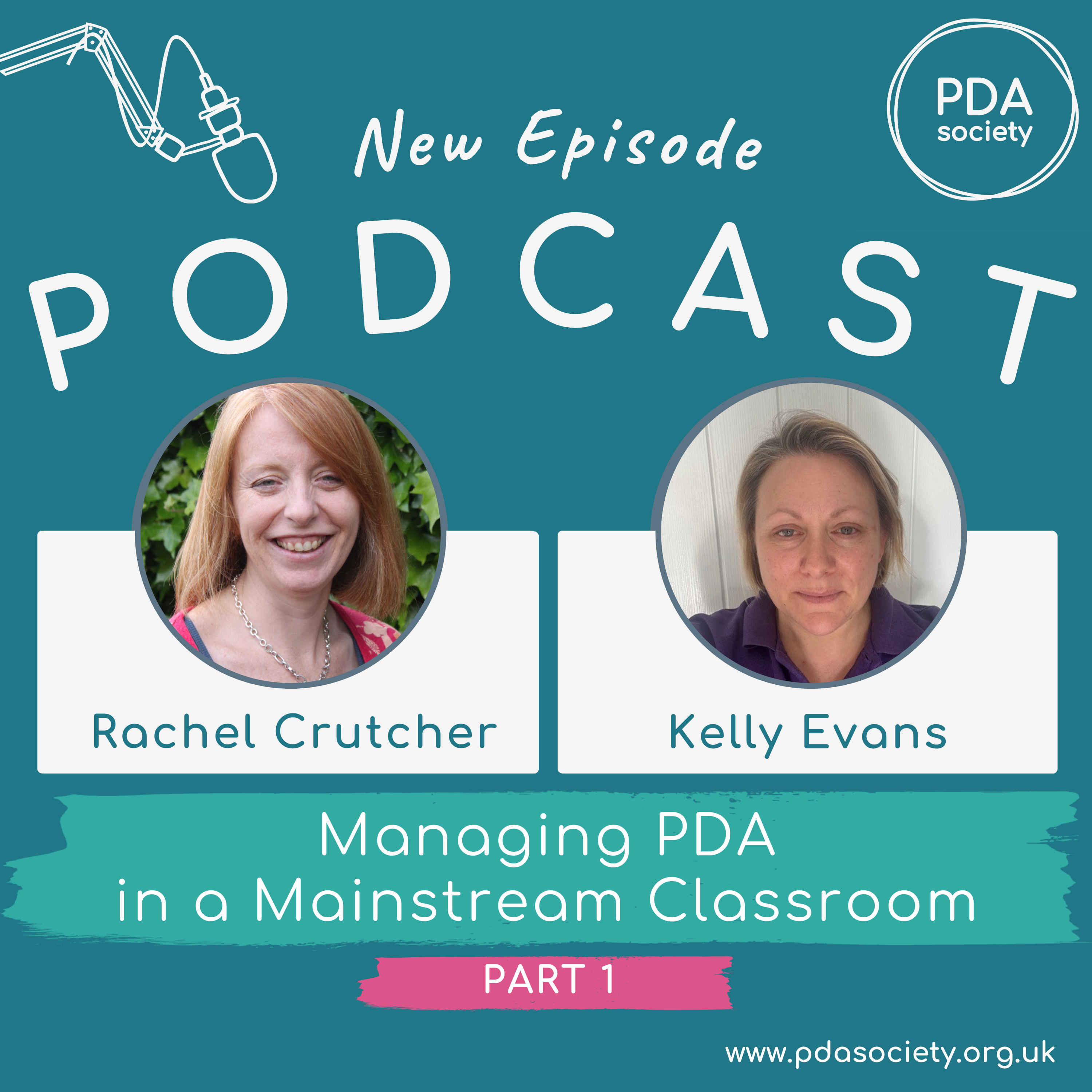
S1 Ep 2Managing PDA in a mainstream classroom
Podcast Show Notes – Managing PDA in a mainstream classroomIn this episode, host Rachel talks with guest speaker Kelly Evans about the challenges PDA children face in mainstream education. We explore why schools can be overwhelming, the importance of trust, how strong links between families and schools make a difference, and what adjustments can help PDA learners feel safe and supported.Kelly shares practical strategies around softening transitions, supporting unstructured times like playtime and lunchtime, and accommodating sensory needs in the classroom. Together, Rachel and Kelly discuss ways to promote engagement when children appear resistant to learning, and highlight what can make school a more positive experience.Deeper Dive Subscriber Episode For those who’d like to go further, Part 2, an exclusive “Deeper Dive” subscriber episode is available through our Training Hub. You can access it here: https://training.pdasociety.org.uk/pda-podcasts/Deep Diver Subscriber Episode For those who’d like to go further, an exclusive “Deep Diver” subscriber episode is available through our Training Hub. You can access it here: https://training.pdasociety.org.uk/pda-podcasts/Disclaimer The views and opinions expressed by guest speakers in this podcast are their own and do not necessarily reflect those of the PDA Society. While we aim to provide balanced and inclusive discussions, individual experiences and perspectives may vary. The PDA Society is committed to using language and terminology that reflects the preferences of PDA/autistic people, but sometimes our guests may use language and terminology which differs. Appearance on our podcast is not an endorsement of an individual, and not all of our guests will align with our position on the issues discussed.Further sources of support and information:PDA Society training hub: https://training.pdasociety.org.uk/pda-podcasts/PDA Society Website: https://www.pdasociety.org.uk/PDA Society Training: https://www.pdasociety.org.uk/support-and-training/training/PDA Society Support Service: https://www.pdasociety.org.uk/support-and-training/support/
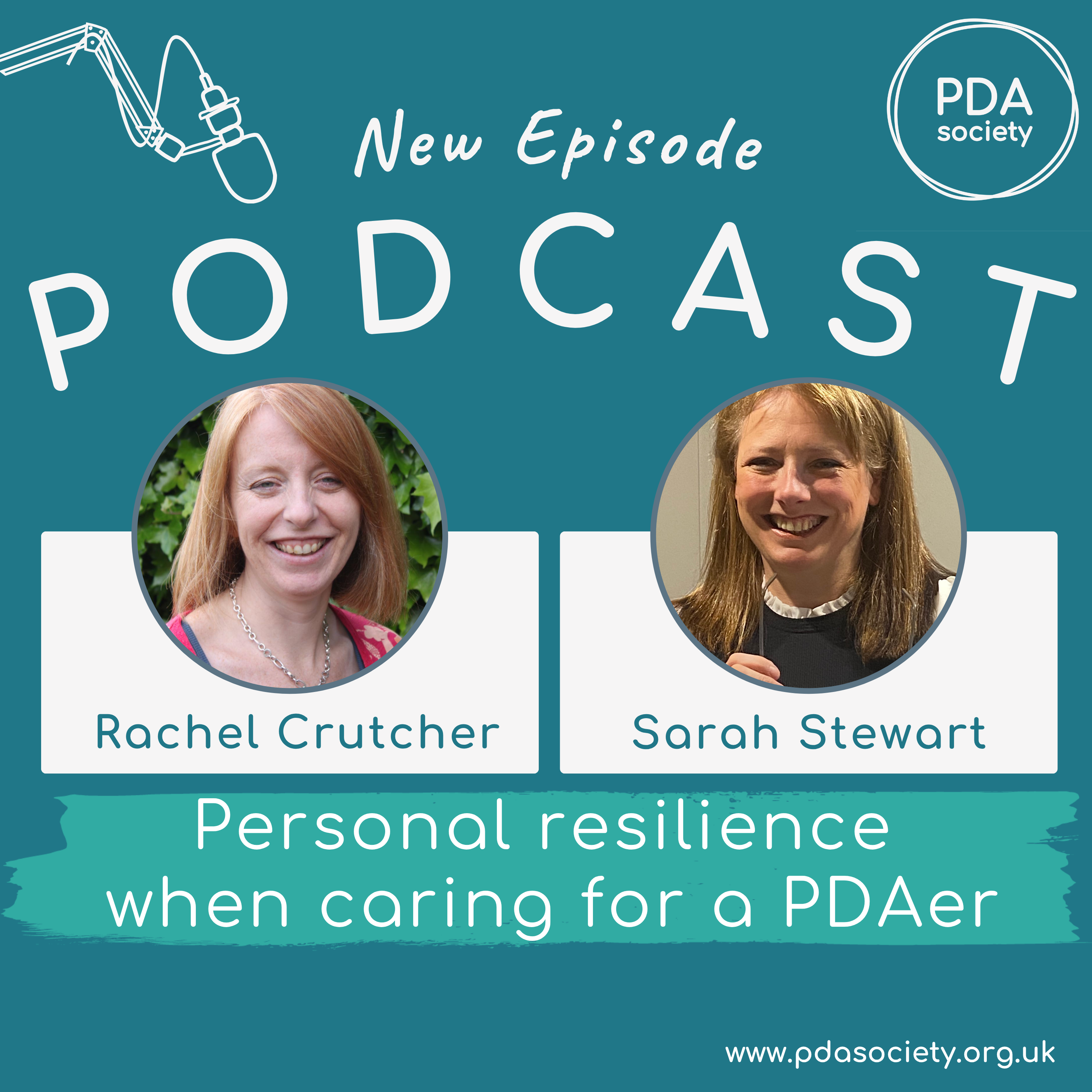
S1 Ep 1Personal Resilience When Caring for a PDAer
In this episode, Rachel Crutcher shares her experience of parenting a PDA child and how she has developed resilience along the way. We explore what resilience means, some of the research behind it, and the qualities that help it grow over time.Rachel talks about how she copes during particularly difficult moments, and how she has stayed resilient while navigating her child’s journey through healthcare and education.Deeper Dive Subscriber Episode For those who’d like to go further, Part 2, an exclusive “Deeper Dive” subscriber episode is available through our Training Hub. You can access it here: https://training.pdasociety.org.uk/pda-podcasts/Disclaimer The views and opinions expressed by guest speakers in this podcast are their own and do not necessarily reflect those of the PDA Society. While we aim to provide balanced and inclusive discussions, individual experiences and perspectives may vary. The PDA Society is committed to using language and terminology that reflects the preferences of PDA/autistic people, but sometimes our guests may use language and terminology which differs. Appearance on our podcast is not an endorsement of an individual, and not all of our guests will align with our position on the issues discussed.Further sources of support and information:PDA Society training hub: https://training.pdasociety.org.uk/pda-podcasts/PDA Society Website: https://www.pdasociety.org.uk/PDA Society Training: https://www.pdasociety.org.uk/support-and-training/training/PDA Society Support Service: https://www.pdasociety.org.uk/support-and-training/support/
PDA Society Podcast - Trailer
trailerWelcome to the PDA Society’s podcast, where we explore all things PDA to help make life easier for PDAers, their families, and everyone affected by demand avoidance. Research suggests PDA (Pathological Demand Avoidance) is a profile of autism, meaning individuals share similar strengths and challenges. A key feature of PDA is extreme demand avoidance -finding it hard or impossible to complete everyday tasks, even those they want to do. PDAers often use social strategies to manage demands, form deep connections with safe people, and experience strong emotions. Join us as we dive into PDA together!If you’d like to learn more, please visit our website for help and information on: www.pdasociety.org.uk