PLAY PODCASTS
PDA Society Podcast

PDA Society Podcast

PDA Society

35 episodesEN

Show overview

PDA Society Podcast launched in 2025 and has put out 35 episodes, alongside 3 trailers or bonus episodes in the time since. That works out to roughly 20 hours of audio in total. Releases follow a weekly cadence.

Episodes typically run twenty to thirty-five minutes — most land between 29 min and 41 min — though episode length varies meaningfully from one episode to the next. None of the episodes are flagged explicit by the publisher. It is catalogued as a EN-language Education show.

The show is actively publishing — the most recent episode landed 3 days ago, with 25 episodes already out so far this year. The busiest year was 2026, with 25 episodes published. Published by PDA Society.

Episodes
35
Running
2025–2026 · 1y
Median length
35 min
Cadence
Weekly

From the publisher

Welcome to the PDA Society’s podcast, where we explore all things PDA to help make life easier for PDAers, their families, and everyone affected by demand avoidance. Research suggests PDA (Pathological Demand Avoidance) is a profile of autism, meaning individuals share similar strengths and challenges. A key feature of PDA is extreme demand avoidance – finding it hard or impossible to complete everyday tasks, even those they want to do. PDAers often use social strategies to manage demands, form deep connections with safe people, and experience strong emotions. Join us as we dive into PDA together!If any of the issues in today’s podcast affected you or you’d like to learn more, please visit our website for help and information on: www.pdasociety.org.uk

Latest Episodes

View all 35 episodes

PDA and the Biology of Sleep

Jun 11, 202619 min

Finding therapeutic support as a PDA parent

Jun 4, 202636 min

Animal therapy for children with SEND

May 28, 202628 min

The Hidden harm of School Behaviour Policies

May 21, 202631 min

Why Diagnosis Matters for PDA Adults

May 14, 202629 min

OT solutions for PDA

Apr 30, 202641 min

Learning to Drive

Apr 27, 202628 min

Parental Blame and PDA

Apr 23, 202633 min

Supporting Self-Care, Learning & Leisure: OT Approaches for PDA Children
Apr 16, 202634 min

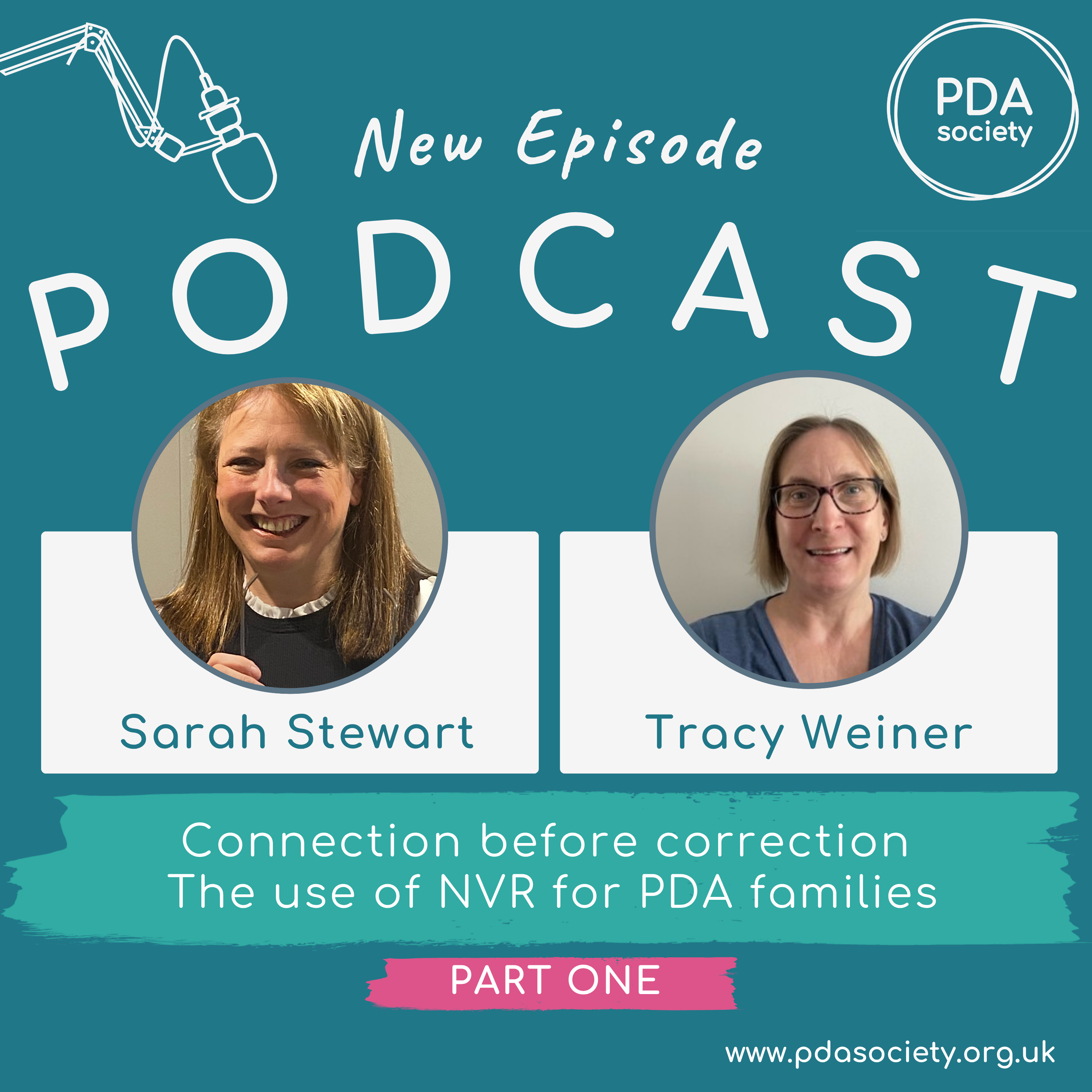
S1 Ep 23'Connection before correction' The use of NVR for PDA families.

In this episode, Sarah Stewart from the PDA Society is joined by Tracy Weiner, an NVR (Non-Violent Resistance) practitioner and parent of a PDA young person, to explore how NVR can support families experiencing high levels of distress and conflict.Tracy shares both her professional expertise and personal experience as a parent, speaking about the realities of parenting a PDA child into adolescence and adulthood. The conversation focuses on how NVR can offer an alternative approach when families are facing situations such as parental violence and aggression (PVA), where traditional strategies may no longer feel effective.Part 1 introduces the core principles of NVR, including moving away from control and consequences, and instead focusing on connection, presence and de-escalation. Tracy explains how NVR shifts the focus from trying to “fix” behaviour to strengthening relationships and reducing conflict over time.Sarah and Tracy also explore the emotional impact on parents, including fear, isolation and uncertainty, and how NVR can help rebuild confidence and stability within the family system. The discussion highlights that this approach is not about giving in, but about responding differently to create safer, more sustainable dynamics.Key Themes What NVR (Non-Violent Resistance) is and how it works Moving away from control and consequence-based approaches Strengthening connection and reducing conflict The emotional impact of high-stress family situations Rebuilding parental confidence and stabilityDeep Diver Subscriber EpisodeFor those who would like to go further, Part 2, an exclusive “Deep Diver” subscriber episode, is available through our Training Hub. You can access it here: https://training.pdasociety.org.uk/pda-podcasts/DisclaimerThe views and opinions expressed by guest speakers in this podcast are their own and do not necessarily reflect those of the PDA Society. While we aim to provide balanced and inclusive discussions, individual experiences and perspectives may vary. The PDA Society is committed to using language and terminology that reflects the preferences of PDA and autistic people, but sometimes our guests may use language and terminology which differs. Appearance on our podcast is not an endorsement of an individual, and not all of our guests will align with our position on the issues discussed.Further sources of support and information PDA Society Training Hub: https://training.pdasociety.org.uk/pda-podcasts/ PDA Society Website: https://www.pdasociety.org.uk/ PDA Society Training: https://www.pdasociety.org.uk/support-and-training/training/ PDA Society Support Service: https://www.pdasociety.org.uk/support-and-training/support/Guest links:NVR - Haim Omer explains non-violent resistance (40 min)https://www.nvruk.co.uk/
Apr 9, 202635 min

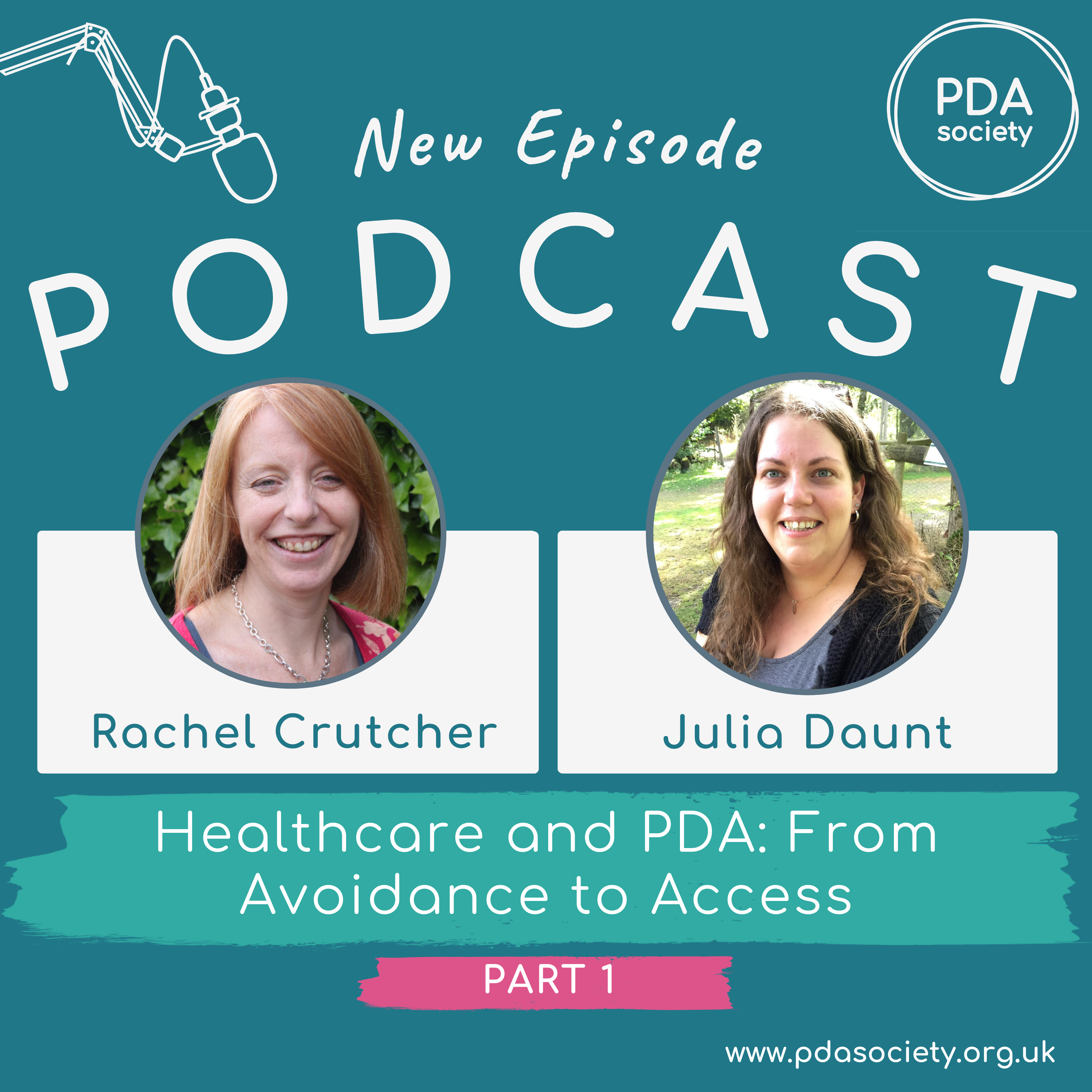
S1 Ep 22Healthcare and PDA: From Avoidance to Access

In this episode, Rachel from the PDA Society is joined by Julia Daunt, a PDA adult and trainer with the PDA Society, to explore the realities of accessing healthcare for PDAers.Julia shares her lived experience of navigating medical environments, highlighting how appointments, procedures and interactions with professionals can often feel overwhelming, unpredictable and highly demanding. The conversation explores why healthcare settings can trigger anxiety for PDAers, including loss of control, sensory challenges, unfamiliar environments and the expectation to comply quickly with instructions.Rachel and Julia discuss how these experiences can lead to avoidance, delayed care or heightened distress, even when support is urgently needed. Julia reflects on the importance of understanding how demand sensitivity shows up in medical contexts, and why what might appear as resistance is often a response to feeling unsafe or overwhelmed.Part 1 focuses on building understanding, offering insight into what healthcare feels like from a PDA perspective, and why compassionate, flexible approaches are essential for supporting access.Key Themes The challenges PDAers face when accessing healthcare Anxiety, control and unpredictability in medical settings Sensory and environmental factors affecting appointments Why avoidance and resistance can occur Understanding healthcare through a PDA lens The importance of safety, autonomy and trustDeep Diver Subscriber EpisodeFor those who would like to go further, Part 2, an exclusive “Deep Diver” subscriber episode, is available through our Training Hub.You can access it here: https://training.pdasociety.org.uk/pda-podcasts/DisclaimerThe views and opinions expressed by guest speakers in this podcast are their own and do not necessarily reflect those of the PDA Society. While we aim to provide balanced and inclusive discussions, individual experiences and perspectives may vary. The PDA Society is committed to using language and terminology that reflects the preferences of PDA and autistic people, but sometimes our guests may use language and terminology which differs. Appearance on our podcast is not an endorsement of an individual, and not all of our guests will align with our position on the issues discussed.Further sources of support and information PDA Society Training Hub: https://training.pdasociety.org.uk/pda-podcasts/ PDA Society Website: https://www.pdasociety.org.uk/ PDA Society Training: https://www.pdasociety.org.uk/support-and-training/training/ PDA Society Support Service: https://www.pdasociety.org.uk/support-and-training/support/
Apr 2, 202633 min

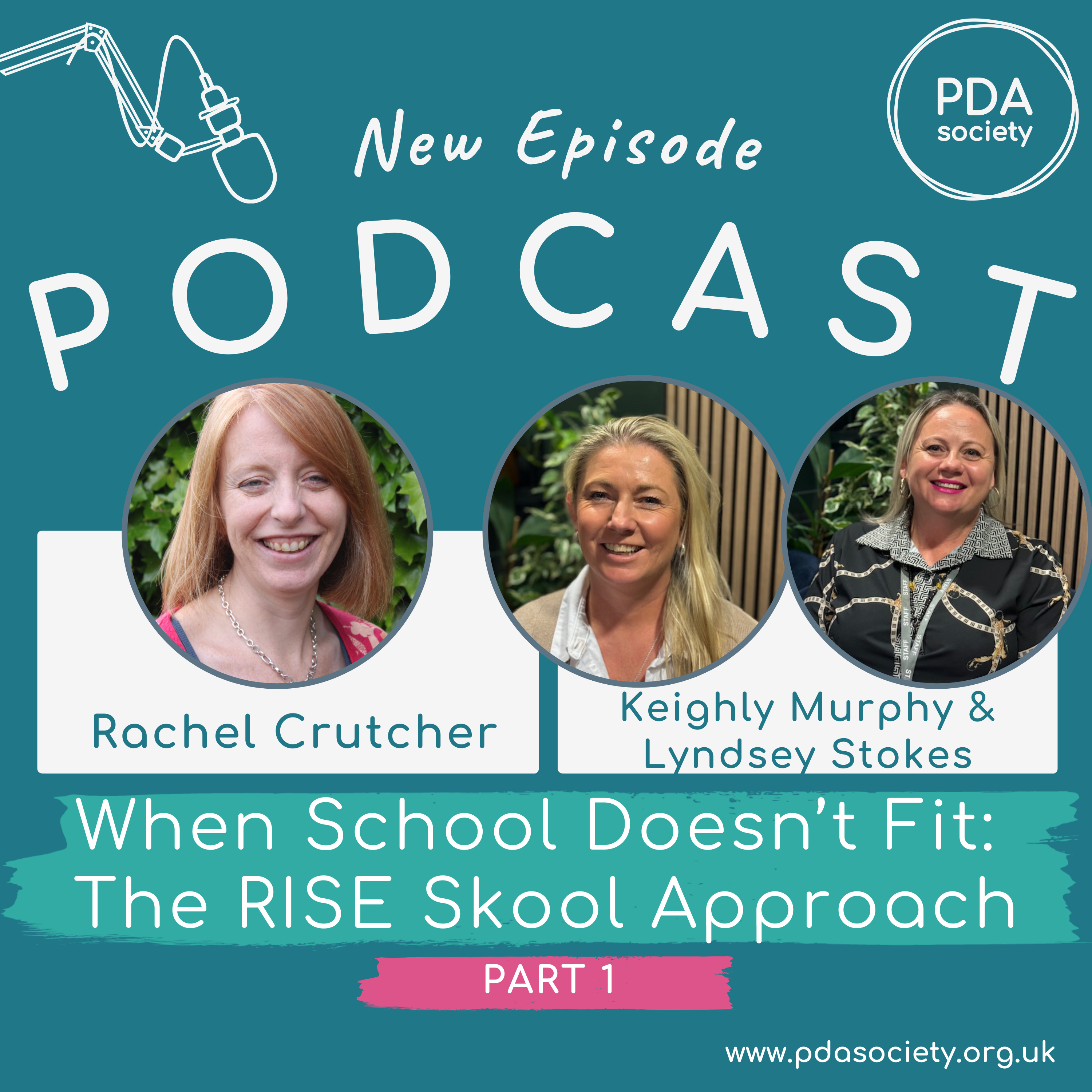
S1 Ep 21When School Doesn't Fit: The RISE Skool Approach

In this episode, Rachel from the PDA Society is joined by Lyndsey Stokes and Keighly Murphy from Rise Skool, an alternative education provision supporting neurodivergent children and young people who have struggled in mainstream settings.Together, they explore what can happen when education is rebuilt around safety, trust and emotional regulation rather than compliance and rigid expectations. Lyndsey and Keighly share how many of the young people who come to Rise Skool have experienced repeated school trauma, exclusions, anxiety or long-term disengagement.The conversation focuses on creating environments where children feel safe enough to learn. Rather than prioritising academic targets from the outset, Rise Skool centres relationship-building, predictability and co-regulation. Lyndsey and Keighly explain how reducing demands, observing communication patterns and tuning into nervous system responses helps students begin to re-engage.Part 1 explores how traditional education models can inadvertently escalate anxiety for PDA learners, and how alternative settings can shift from control to collaboration. The discussion highlights the importance of dignity, flexibility and truly listening to young people.Key Themes Why PDA learners often struggle in mainstream education The impact of school trauma and repeated exclusions Building safety before focusing on academic outcomes Relationship-led and co-regulation-based approaches Reducing demands to support re-engagement Reframing success in educationDeep Diver Subscriber EpisodeFor those who would like to go further, Part 2, an exclusive “Deep Diver” subscriber episode, is available through our Training Hub. You can access it here: https://training.pdasociety.org.uk/pda-podcasts/DisclaimerThe views and opinions expressed by guest speakers in this podcast are their own and do not necessarily reflect those of the PDA Society. While we aim to provide balanced and inclusive discussions, individual experiences and perspectives may vary. The PDA Society is committed to using language and terminology that reflects the preferences of PDA and autistic people, but sometimes our guests may use language and terminology which differs. Appearance on our podcast is not an endorsement of an individual, and not all of our guests will align with our position on the issues discussed.Further sources of support and information PDA Society Training Hub: https://training.pdasociety.org.uk/pda-podcasts/ PDA Society Website: https://www.pdasociety.org.uk/ PDA Society Training: https://www.pdasociety.org.uk/support-and-training/training/ PDA Society Support Service: https://www.pdasociety.org.uk/support-and-training/support/

Mar 26, 202637 min

S1 Ep 20Declarative Language with Linda K. Murphy

In this episode, Gemini from the PDA Society is joined by Linda Murphy, author of The Declarative Language Handbook and The Co-Regulation Handbook, to explore how declarative language can support PDA children and young people.Linda explains the difference between declarative and imperative language, and why shifting from telling and directing to wondering and noticing can reduce anxiety and defensiveness. The conversation explores how questions, commands and corrections can inadvertently increase demand sensitivity, particularly for children with a PDA profile.Gemini and Linda discuss how declarative language creates space for autonomy, supports problem-solving, and strengthens connection. Rather than giving instructions, declarative statements share observations, feelings or information, allowing the child to process and respond without feeling controlled.Part 1 focuses on understanding the principles behind declarative language, how it supports co-regulation, and why small shifts in communication can have a powerful impact in both home and school settings.Key Themes The difference between declarative and imperative language How direct instructions can increase anxiety for PDA children Supporting autonomy and problem-solving through communication The link between declarative language and co-regulation Reducing demand while maintaining connection Using language to create safety rather than complianceDeep Diver Subscriber EpisodeFor those who would like to go further, Part 2, an exclusive “Deep Diver” subscriber episode, is available through our Training Hub.You can access it here: https://training.pdasociety.org.uk/pda-podcasts/DisclaimerThe views and opinions expressed by guest speakers in this podcast are their own and do not necessarily reflect those of the PDA Society. While we aim to provide balanced and inclusive discussions, individual experiences and perspectives may vary. The PDA Society is committed to using language and terminology that reflects the preferences of PDA and autistic people, but sometimes our guests may use language and terminology which differs. Appearance on our podcast is not an endorsement of an individual, and not all of our guests will align with our position on the issues discussed.Further sources of support and information PDA Society Training Hub: https://training.pdasociety.org.uk/pda-podcasts/ PDA Society Website: https://www.pdasociety.org.uk/ PDA Society Training: https://www.pdasociety.org.uk/support-and-training/training/ PDA Society Support Service: https://www.pdasociety.org.uk/support-and-training/support/Guest links:Linda’s website: https://www.declarativelanguage.com/

Mar 19, 202634 min

S1 Ep 19Parenting as a PDAer

In this episode, Rachel from the PDA Society is joined by Riko Ryuki to explore what it is like parenting as a PDAer.Riko shares openly about raising three children, two of whom have PDA profiles, while navigating their own PDA and additional disabilities. Together, Rachel and Riko discuss how parenting can look and feel different when you also experience high demand sensitivity yourself.The conversation explores the realities of everyday family life, including adapting routines to meet individual needs, responding flexibly rather than rigidly, and understanding that even children with the same profile can require very different approaches. Riko reflects on being more child-led, matching expectations to capacity, and resisting more traditional “because I said so” parenting models.Part 1 focuses on lived experience, connection and reframing. Riko speaks about the strengths that can come from shared understanding, the moments of joy and closeness that can emerge when anxiety is managed well, and some of the misconceptions they have encountered from others about parenting differently.Key Themes Parenting with a PDA profile Being child-led and adapting to fluctuating needs Raising multiple neurodivergent children with different support requirements Misconceptions about flexible parenting approaches The strengths and connection that can come from shared neurodivergenceDeep Diver Subscriber EpisodeFor those who would like to go further, Part 2, an exclusive “Deep Diver” subscriber episode, is available through our Training Hub. You can access it here: https://training.pdasociety.org.uk/pda-podcasts/DisclaimerThe views and opinions expressed by guest speakers in this podcast are their own and do not necessarily reflect those of the PDA Society. While we aim to provide balanced and inclusive discussions, individual experiences and perspectives may vary. The PDA Society is committed to using language and terminology that reflects the preferences of PDA and autistic people, but sometimes our guests may use language and terminology which differs. Appearance on our podcast is not an endorsement of an individual, and not all of our guests will align with our position on the issues discussed.Further sources of support and information PDA Society Training Hub: https://training.pdasociety.org.uk/pda-podcasts/ PDA Society Website: https://www.pdasociety.org.uk/ PDA Society Training: https://www.pdasociety.org.uk/support-and-training/training/ PDA Society Support Service: https://www.pdasociety.org.uk/support-and-training/support/Guest’s links: YouTube: https://www.youtube.com/user/rikoryuki Facebook: https://www.facebook.com/RikosPDApage1/ Blog: https://dragonriko.wordpress.com/

Mar 17, 202626 min

S1 Ep 18Beyond 9–5: How Passive Income Creates Space for Parenting Neurodivergent Kids

In this episode, Sarah from the PDA Society is joined by Shirleyann Haig, bestselling author and Passive Income Coach, to explore how creating alternative income streams can offer greater flexibility when parenting neurodivergent children.Shirleyann shares her personal journey as a mother of two boys, one with ADHD and one autistic with a PDA profile. After a 25-year career in the pharmaceutical industry, she found herself struggling to balance the demands of corporate life with the unpredictability of school exclusions, phone calls home and the reality of parenting children with complex needs. Despite being a top performer in her company, she was made redundant due to the time she needed to take off to support her children.The conversation explores the emotional and financial impact of that experience, particularly as a single parent navigating divorce alongside school exclusions and ongoing uncertainty. Shirleyann reflects on how that moment of redundancy forced her to confront how financially fragile many families can be when relying solely on traditional employment structures.Part 1 focuses on how Shirleyann transitioned away from corporate life and became a Passive Income Coach, helping others to build income streams that do not rely on fixed hours or physical presence. She explains how passive income is not about avoiding work, but about creating systems where work done once can generate income repeatedly. For families living with unpredictability, this flexibility can reduce stress, create stability and offer space to prioritise children’s needs without sacrificing long-term financial security.*Redundancy due to being a carer is illegal. If you are struggling our support service can direct you to information about your legal rights.Key Themes The challenge of balancing corporate work with neurodivergent parenting School exclusions, unpredictability and employment instability The emotional impact of redundancy linked to caregiving Understanding passive income and how it can create flexibilityDeep Diver Subscriber EpisodeFor those who would like to go further, Part 2, an exclusive “Deep Diver” subscriber episode, is available through our Training Hub.You can access it here: https://training.pdasociety.org.uk/pda-podcasts/DisclaimerThe views and opinions expressed by guest speakers in this podcast are their own and do not necessarily reflect those of the PDA Society. While we aim to provide balanced and inclusive discussions, individual experiences and perspectives may vary. The PDA Society is committed to using language and terminology that reflects the preferences of PDA and autistic people, but sometimes our guests may use language and terminology which differs. Appearance on our podcast is not an endorsement of an individual, and not all of our guests will align with our position on the issues discussed.Further sources of support and information PDA Society Training Hub: https://training.pdasociety.org.uk/pda-podcasts/ PDA Society Training: https://www.pdasociety.org.uk/support-and-training/training/ PDA Society Support Service: https://www.pdasociety.org.uk/support-and-training/support/Guest links:  Shirleyann’s Website   Shirleyann Haig | Ethical Passive Income Coach & Speaker Instagram:  shirleyannhaig

Mar 12, 202629 min

S1 Ep 17Making the Loo Less Stressful: Gentle Approaches for PDA and Toileting

In this episode, Rachel from the PDA Society is joined by Tabitha Poole, an occupational therapist from the charity ERIC, to explore a topic that many PDA families describe as a common challenge, toileting.Tabby shares her professional insight into why toileting can be difficult for PDA children and young people, and how these challenges are often linked to anxiety, demand sensitivity, sensory differences and the need for autonomy. Rachel and Tabby discuss common experiences such as refusal, avoidance, accidents, fear of the toilet, and the impact of shame and pressure.Part 1 focuses on understanding. It explores what might be underneath toileting difficulties, why traditional approaches can make things harder, and how reframing toileting as a nervous system and safety issue can lead to more compassionate and effective support.Key Themes Why toileting can be particularly difficult for PDA children Anxiety, demand sensitivity and the need for autonomy The role of sensory sensitivities and interoception How pressure, shame and urgency can increase distress Reframing toileting difficulties through understanding and safetyDeep Diver Subscriber EpisodeFor those who would like to go further, Part 2, an exclusive “Deep Diver” subscriber episode, is available through our Training Hub.You can access it here: https://training.pdasociety.org.uk/pda-podcasts/DisclaimerThe views and opinions expressed by guest speakers in this podcast are their own and do not necessarily reflect those of the PDA Society. While we aim to provide balanced and inclusive discussions, individual experiences and perspectives may vary. The PDA Society is committed to using language and terminology that reflects the preferences of PDA and autistic people, but sometimes our guests may use language and terminology which differs. Appearance on our podcast is not an endorsement of an individual, and not all of our guests will align with our position on the issues discussed.Further sources of support and information PDA Society Training Hub: https://training.pdasociety.org.uk/pda-podcasts/ PDA Society Website: https://www.pdasociety.org.uk/ PDA Society Training: https://www.pdasociety.org.uk/support-and-training/training/ PDA Society Support Service: https://www.pdasociety.org.uk/support-and-training/support/Guest links: @toilettimewithtabby @continencehub @eric_charity www.tabithapoole.com www.continencehub.comhttps://eric.org.uk/advice-about-bladders-bowels-and-toileting-for-children-with-additional-needs-2/https://eric.org.uk/potty-training/children-additional-needs/https://eric.org.uk/children-with-additional-needs/toileting-support-for-autistic-children/https://eric.org.uk/interoception-and-toileting/

Mar 5, 202649 min

S1 Ep 16PDA and Sleep Challenges

In this episode, Sarah Stewart from the PDA Society is joined by Laura Hellfeld, an independent nurse, sleep consultant and PDA adult, to explore why sleep difficulties are so common for PDA children and adults, and what can help.Laura brings both professional and lived experience to the conversation. She works extensively with families around daily living skills, including sleep, eating, hygiene and transitions, and she is also a parent to PDA children herself. Together, Sarah and Laura discuss how sleep challenges are often one of the most persistent and exhausting difficulties faced by PDA families.The conversation looks at why sleep can feel so hard, including the role of anxiety, nervous system regulation, demand sensitivity and sensory differences. Laura explains how traditional sleep advice often does not work for PDAers, and why approaches that rely on control, routine or external pressure can increase distress rather than improve rest.Part 1 focuses on understanding the underlying reasons behind sleep difficulties in PDA, and reframing sleep not as a behaviour problem, but as a nervous system issue that requires safety, flexibility and compassion.Key Themes Why sleep difficulties are so common for PDA children and adults The link between anxiety, nervous system regulation and sleep Why traditional sleep strategies often do not work for PDAers Reframing sleep challenges as a need for safety rather than compliance The impact of poor sleep on the whole familyDeep Diver Subscriber EpisodeFor those who would like to go further, Part 2, an exclusive “Deep Diver” subscriber episode, is available through our Training Hub.You can access it here: https://training.pdasociety.org.uk/pda-podcasts/DisclaimerThe views and opinions expressed by guest speakers in this podcast are their own and do not necessarily reflect those of the PDA Society. While we aim to provide balanced and inclusive discussions, individual experiences and perspectives may vary. The PDA Society is committed to using language and terminology that reflects the preferences of PDA and autistic people, but sometimes our guests may use language and terminology which differs. Appearance on our podcast is not an endorsement of an individual, and not all of our guests will align with our position on the issues discussed.Further sources of support and information PDA Society Training Hub: https://training.pdasociety.org.uk/pda-podcasts/ PDA Society Website: https://www.pdasociety.org.uk/ PDA Society Training: https://www.pdasociety.org.uk/support-and-training/training/ PDA Society Support Service: https://www.pdasociety.org.uk/support-and-training/support/

Feb 26, 202635 min

S1 Ep 15Supporting People with PMDD

Content warningThis episode includes discussion of suicidal thoughts. In particular, there is a brief section between 6:50 and 7:10 that listeners may wish to approach with care. Please listen in a way that feels safe and supportive for you.Premenstrual Dysphoric Disorder, is a severe form of PMS that causes significant emotional and physical symptoms during the 1-2 weeks before menstruation. Symptoms include severe mood swings, anxiety, and depression, which can negatively impact daily life, work, and relationships. Physical symptoms like bloating, headaches, and fatigue are also common.In this episode, PDA Society speaks with Kirstie McStay, Community Manager at Spectrum Gaming, about PMDD, exploring how cyclical hormonal changes can affect mood, wellbeing and daily functioning. The conversation looks at how PMDD can impact relationships, work and self-perception, particularly when symptoms shift dramatically across the month. It also highlights the importance of being believed, tracking patterns, and recognising that what can look like a sudden change in behaviour or mood may be connected to hormonal cycles and a very real health condition.Key Themes What PMDD is and how it differs from PMS Emotional and physical symptoms that can affect daily life Tracking cyclical patterns and noticing early warning signs The importance of being believed and supportedDeep Diver Subscriber EpisodeFor those who would like to go further, Part 2, an exclusive “Deep Diver” subscriber episode, is available through our Training Hub. You can access it here: https://training.pdasociety.org.uk/pda-podcasts/DisclaimerThe views and opinions expressed by guest speakers in this podcast are their own and do not necessarily reflect those of the PDA Society. While we aim to provide balanced and inclusive discussions, individual experiences and perspectives may vary. The PDA Society is committed to using language and terminology that reflects the preferences of PDA and autistic people, but sometimes our guests may use language and terminology which differs. Appearance on our podcast is not an endorsement of an individual, and not all of our guests will align with our position on the issues discussed.Further sources of support and information PDA Society Training Hub: https://training.pdasociety.org.uk/pda-podcasts/ PDA Society Training: www.pdasociety.org.uk/support-and-training/training/ PDA Society Support Service: www.pdasociety.org.uk/support-and-training/support/Guest’s links: Spectrum Gaming on trauma: www.spectrumgaming.net/resources/categories/understanding-trauma Spectrum Gaming on PMDD: www.spectrumgaming.net/post/supporting-autistic-young-people-with-pmdd Kirstie’s PMDD webinar resources: padlet.com/spectrumgaming/pmdd

Feb 19, 202625 min

S1 Ep 14PANS and PANDAS explained

In this episode, the PDA Society begins a clear and accessible exploration of PANS and PANDAS, conditions that can cause sudden and significant changes in a child or young person’s behaviour, emotional wellbeing and functioning.Although not linked with PDA, some of the presenting characteristics can be similar, making diagnosis and treatment difficult.The conversation focuses on what PANS and PANDAS are, how they may present, and why they are often misunderstood or missed. Listeners are guided through common signs, including rapid onset anxiety, changes in behaviour, emotional distress and difficulties with everyday activities. The episode highlights how confusing and frightening this experience can be for families, particularly when changes appear to happen out of the blue.Part1 lays the groundwork for understanding PANS and PANDAS, offering families and professionals a calm, compassionate starting point for recognising concerns and seeking appropriate support.Note that PANDAS in this context refers to a medical condition (Paediatric Autoimmune Neuropsychiatric Disorders Associated with Streptococcal infections). This is entirely different from the PANDA mnemonic used in PDA Society training.Key Themes What PANS and PANDAS are and how they can present Sudden changes in behaviour, anxiety and emotional wellbeing Why PANS and PANDAS are often misunderstood or overlooked The impact on families when changes feel sudden and unexplainedDeep Diver Subscriber EpisodeFor those who would like to go further, Part 2, an exclusive “Deep Diver” subscriber episode, is available through our Training Hub. You can access it here: https://training.pdasociety.org.uk/pda-podcasts/DisclaimerThe views and opinions expressed by guest speakers in this podcast are their own and do not necessarily reflect those of the PDA Society. While we aim to provide balanced and inclusive discussions, individual experiences and perspectives may vary. The PDA Society is committed to using language and terminology that reflects the preferences of PDA and autistic people, but sometimes our guests may use language and terminology which differs. Appearance on our podcast is not an endorsement of an individual, and not all of our guests will align with our position on the issues discussed.Further sources of support and information PDA Society Training Hub: https://training.pdasociety.org.uk/pda-podcasts/ PDA Society Website: https://www.pdasociety.org.uk/ PDA Society Training: https://www.pdasociety.org.uk/support-and-training/training/ PDA Society Support Service: https://www.pdasociety.org.uk/support-and-training/support/External Links: Romy's YouTube: https://www.youtube.com/@ChronicAdvocate Romy's Instagram: https://www.instagram.com/chronic.advocate/ PANS PANDAS UK: https://panspandasuk.org/

Feb 12, 202624 min

S1 Ep 13Distressed Behaviours - a PDAers Perspective

In this episode, Rachel from the PDA Society speaks with Julia Daunt, an adult PDAer, author and trainer, about the experience and meaning of distressed behaviours.Drawing on her personal insight and professional experience, Julia explains what distressed behaviours look and feel like from the inside. She discusses the difference between being in control and feeling overwhelmed, and how anxiety, sensory sensitivities and unmet needs can lead to behaviours that are often misunderstood.Rachel and Julia explore how reframing distressed behaviours through empathy and understanding can support more positive responses from families, schools and professionals. This conversation offers a powerful reminder that what looks challenging from the outside is often an expression of fear, pain or overload.Key Themes Understanding distressed behaviours from a PDA perspective The role of anxiety, fear and overwhelm in triggering behaviours The importance of empathy and curiosity in response Moving away from behaviour management towards emotional safety Recognising the difference between control and distressDeep Diver Subscriber EpisodeFor those who would like to go further, Part 2, an exclusive “Deep Diver” subscriber episode, will be available through our Training Hub. You can access it here: https://training.pdasociety.org.uk/pda-podcasts/DisclaimerThe views and opinions expressed by guest speakers in this podcast are their own and do not necessarily reflect those of the PDA Society. While we aim to provide balanced and inclusive discussions, individual experiences and perspectives may vary. The PDA Society is committed to using language and terminology that reflects the preferences of PDA and autistic people, but sometimes our guests may use language and terminology which differs. Appearance on our podcast is not an endorsement of an individual, and not all of our guests will align with our position on the issues discussed.Further sources of support and information PDA Society Training Hub: https://training.pdasociety.org.uk/pda-podcasts/ PDA Society Website: https://www.pdasociety.org.uk/ PDA Society Training: https://www.pdasociety.org.uk/support-and-training/training/ PDA Society Support Service: https://www.pdasociety.org.uk/support-and-training/support/Guests links: Facebook page: https://www.facebook.com/JuliaDauntPDA Blog: https://memyselfandpda.com/

Feb 9, 202646 min