Audio is streamed directly from the publisher (media.blubrry.com) as published in their RSS feed. Play Podcasts does not host this file. Rights-holders can request removal through the copyright & takedown page.
Show Notes
Get engrossed in part 1 of a 2? part series where our hosts interview each other with some very creative questions. Much discussion ensues.
Sponsor
Kolide ensures only secure devices can access your cloud apps. It’s Zero Trust tailor-made for Okta. Book a demo today at Kolide.com/overtired.
Show Links
- Mastodon
- Mastodon/[email protected]
- Mastodon/[email protected]
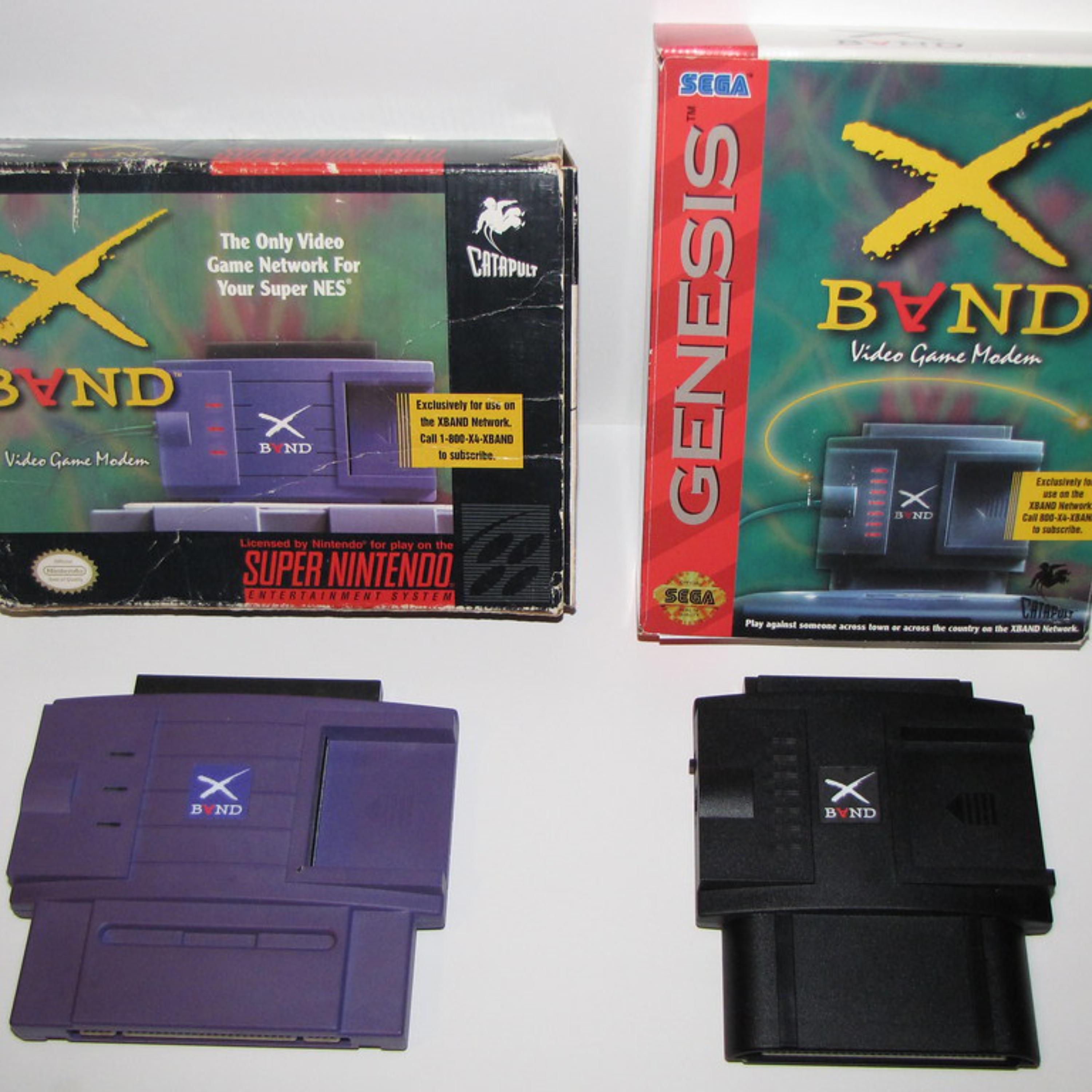
- XBAND
- Gopher
- IBM System 3
- The Clapper
- Paul Chan Breather
- Modahl
- Katharine’s showrunning article
Join the Conversation
Thanks!
You’re downloading today’s show from CacheFly’s network
BackBeat Media Podcast Network
Check out more episodes at overtiredpod.com and subscribe on Apple Podcasts, Spotify, or your favorite podcast app. Find Brett as @ttscoff, Christina as @film_girl, Jeff as @jsguntzel, and follow Overtired at @ovrtrd on Twitter.
Transcript
I Have a Question Part 1
[00:00:00] Brett:
Hello and welcome to two very special episodes of Overtired. I am here as a, this is Brett Terpstra. Hi. Hi. Hi. Um, hey. Um, so I am here with Jeff Severance Gunzel and Christina Warren, and we are going to do two episodes where each of us takes a turn, asking a kind of, we’ll say, creative open-ended interview question.
Uh, and the other two then answer. And I, I assume we’ll end up answering our own question too, because someone will say, well, yeah, but what about you? What do you think? Um, so we are going to forego the mental health corner this week. I feel like our answers will probably give you a good insight into our mental health.
[00:00:52] Jeff: now and, and past.
[00:00:54] Brett: And we have, we have some questions about apps and technologies that I think will [00:01:00] satisfy the need for a gratitude segment. Uh, so without further ado, let’s, uh, let’s get into the, the q and a time. I should before. Okay. No, let’s warm up. Let’s warm up a little.
[00:01:14] Jeff: Let’s warm up a little, do some stretches or something,
[00:01:17] Brett: Yeah. Yeah. Some jumping jacks, calisthenics, I think they call it some verbal calisthenics.
[00:01:26] Jeff: I’m good. I, I took my son to a college tour yesterday, um, as somebody who did not go to college that was super novel. It’s the second time I’ve done that. Um, we’ll do more and, uh, it’s fun. It’s fun. Kind of one of those things that makes you feel old, but in a good way.
[00:01:46] Brett: How are you, Christina?
[00:01:48] Christina: Well, I’m tired. Um, although I’m like gonna be completely awake and, and happy to do this, I, um, I had like two hours of sleep. And then I had a really weird, like, lucid dream where I [00:02:00] thought that we were recording a little bit later than we were. Um, but I also watched that, uh, that Murda family, uh, murders, uh, uh, Netflix series because of the, the Alec Murda trial that, uh, ended this week, which, uh, I like belatedly kind of became obsessed with.
And, um, so I had weird, like intermingling dreams about some of that stuff, but I’m fine.
[00:02:27] Brett: were there murders in your dream about this podcast?
[00:02:31] Christina: There were not,
[00:02:32] Brett: Okay.
[00:02:33] Christina: unfortunately, I, I, I did
[00:02:34] Brett: Yeah. That could have been
[00:02:35] Christina: not dream of kill. I mean, that would’ve been interesting for, for, for our, our conversation to focus like, yeah, I dream of killing both of you, but no, I didn’t
[00:02:41] Jeff: It was strictly a lucid admin dream.
[00:02:44] Christina: Yeah, it was, it was true. This is, I was gonna say, my lucid dreams are like the most boring things ever.
Whereas like I look at my phone and I’m texting with people and I’m like, oh, I have 30 more minutes to sleep. Like that’s literally like
[00:02:59] Brett: You [00:03:00] dream about waking up and going back to bed. All right,
[00:03:02] Christina: Basically.
[00:03:05] Jeff: That’s awesome.
[00:03:06] Brett: quick question before we roll. I have noticed that Gen Xers love the bomb, and I think my, my theory is that Gen Xers love the F-bomb more than the surrounding generations. Um, not elder millennials. Elder millennials still love the F-bomb, but you talk to younger millennials and you talk to Gen Z. Like ones that are old enough to comfortably swear.
Um, and, and it fe like I drop the F-bomb and it feels uncomfortable. It feels uncomfortable with certain types of boomer and silent generation people. There are always exceptions. There are always people who, you know, swear a lot. There have been age as old as time swearing is, but there’s something like a Gen Xer will just f this and F that and fuck you, you fucking fuck.
And like, I feel like we [00:04:00] grew up on Tarantino and it just, what do you guys think?
[00:04:05] Christina: I think you’re totally wrong. I think that like Boomer, no, I think I, I think the boomers like, might have more of an aversion to it and, and I think you can credit Gen Xs with maybe like the tarantinos and whatnot of a popularizing, some of it, although you could make the same argument that fucking Scorsese, like honestly, you know, really led to that.
And, and he’s a boomer. But I, if you listen to popular music and, and everything else, like especially hip hop music, which has been the like defining force in culture for the last. 25, 30 years. It’s definitely not Gen X. Uh, especially not the hip hop that’s out now. Like none of it is. Um, they drop the all the time.
Like TV shows now. Like especially now we’re in an era
[00:04:49] Brett: But I’m, I’m not talking about media though. I’m talking about conversations
[00:04:54] Christina: but I’m talking about people. Yeah, but I’m talking about people too. Like, because it’s in the media and [00:05:00] the media at this point, the people who are creating it, making it are not Gen Xers. Um, they’re not. So it’s like, no, I, I, I, I don’t, I don’t think so.
Like,
[00:05:09] Brett: so you think it’s all in my head?
[00:05:11] Christina: I think that people might, you might be noticing people’s reaction to you saying words, but I don’t think it has anything to do with, with the, the lack.
[00:05:21] Brett: like to make it a generational thing as a broad. Characterization. Um, and, and I know this very much relies on anecdotal evidence. Um, I’m just, I’m computing, I’m computing all the conversations I’ve had in the last year and realizing, I swear a lot, and obviously they’re like, I can’t swear on my parents.
Um, but I don’t, I don’t ascribe that to their entire generation. Um, you know, boomers do say the
[00:05:52] Jeff: I mean, it’s, uh, been a rhetorical friend to humanity
[00:05:56] Brett: Yeah.
[00:05:57] Jeff: quite some time. I, I have a very specific [00:06:00] memory from second grade. I was walking home, I was a latchkey kid and I was walking home from school with my buddy and I said, you know, I’m gonna try to stop swearing so much. You know,
[00:06:14] Brett: I remember in, I was in would’ve been I think the equivalent of third grade. uh, I was getting picked on by a bully and I called him an f n a hole. And for me that was like, I can’t believe I just said that I felt so guilty. Um, and then he made fun of me because I couldn’t actually swear. Um, so
[00:06:39] Christina: fair?
[00:06:40] Brett: that didn’t help with the bullying at all.
[00:06:42] Christina: no, that made it worse. I bet. Because he is like, you fucking nerd. You can’t even say, fuck, what the fuck. You freaking loser. You fucking loser. Yeah. Uh, I’m sure that didn’t help. I didn’t say so I, my sister taught me the curse words and I didn’t curse a lot until probably middle school.
And then I never stopped, [00:07:00] but I did like, but I also didn’t take like the Lord’s name in vain until I was like 11 or 12. And then I started saying God all the time and feeling bad about it. But then it slowly became desensitized and I was like, I don’t care.
[00:07:13] Brett: yeah, we were not allowed to say, oh my God. We had to
[00:07:17] Christina: same. Oh, same, which, which, which then like
[00:07:19] Brett: even say, geez, we couldn’t say, oh geez. Cuz that was too close to Jesus
[00:07:25] Jeff: I remember taunting, taunting my teacher in like fifth grade. I would just go, fuck without the ck. She’d be like, stop it. I’m like, I didn’t swear. I just said fuck. And I’d be like, shit. She’d be like, stop it,
[00:07:36] Brett: my girlfriend’s sister has, um, a daughter who she was trying to get out of the habit of saying, oh my God. And I don’t think it was for religious reasons, it was just because she said it so much, just like always. Oh my God. Oh my God. Oh my God. Um, but she says, she has a little bit of a speech thing and she says, oh my God.
Oh my God. And so as, as her like, kind of, [00:08:00] uh, negotiation with this, she would go, oh my God.
[00:08:05] Jeff: Just a little bit off to the side
[00:08:07] Brett: Yeah.
[00:08:07] Jeff: just to please the people in the back.
[00:08:10] Brett: All right. Um, so Jeff, do you wanna kick us off with, uh, an interview question?
[00:08:17] Jeff: Oh yeah. Okay. I’m really excited about this. I also like that we shared them with each other in advance, actually. Um, it helps. Okay, so I, here’s a question. This is, let’s start with a tech question. Okay. If you could experience, and Christina, you start, if you could experience any tech for the first time again, why?
Again,
[00:08:41] Christina: Okay. So are we talking about tech that I’ve experienced or tech that like maybe predated me or
[00:08:47] Jeff: something that it, I would say it, it’s in your lifetime. It’s something that you did yourself. Experience for the first time, but maybe you were a lot younger or maybe you just didn’t get it at that point or whatever. Or you just, it was such a nice experience, you’d like to go [00:09:00] back to it.
[00:09:01] Christina: Okay. So I think that for me it’s probably a cross between like, The internet
[00:09:12] Jeff: Hmm.
[00:09:13] Christina: or video games. Um, what’s interesting to me about the internet, and that’s I think one of video games I loved and I loved them from the minute I ever saw them, but I saw them so early that it’s hard for me to experience like what my first experience with it was, right?
Because it basically had an Nintendo from the time I was born, basically. So it’s hard for me to like, put that into a context of a world we didn’t have it. Um, whereas the internet, like the worldwide web I read about before I ever used, I read about in a magazine
[00:09:46] Brett: Pc PC world.
[00:09:48] Christina: um, for me it was actually weirdly, it was Nintendo Power.
It was, uh, because they were talking about the x uh, link or X browse. It was, it was a I’ll, I’ll, I’ll find it, but it was basically a cartridge that would [00:10:00] connect you to the worldwide web and, um, For, for the Super Nintendo, sorry, not the Nintendo 64 for the Super Nintendo. And, um, it was, uh, um, uhand, there we go.
And
[00:10:13] Brett: browser on a cartridge.
[00:10:15] Christina: it was, it was a, it was a modem is what it
[00:10:17] Brett: Oh,
[00:10:18] Christina: and it, it, it was called Expand. It was for the Genesis and the Super Nintendo. And it was a modem that would let you connect to a, not the full worldwide web, because not This was 1994 when
[00:10:31] Brett: Every, everything was corralled by like AOL and CompuServe. That in
[00:10:35] Christina: I I I was gonna say it was basically internet.
It was basically like a, what were those called? Uh, uh, uh, um, they weren’t internet service providers. They were like, um, online, um, uh, service or
[00:10:44] Brett: Yeah. Yeah.
[00:10:46] Christina: like an online service thing, kind of like a prodigy, I think Prodigy might have even, um, run, um, their, um, their system. And then the idea too was that you could potentially, Um, like, uh, online games with people and which, which in [00:11:00] that way was sort of similar to the Sega Channel, which used cable, so that was better to, to kind of stream games.
But this was, this was an actual modem,
[00:11:08] Jeff: Used cable. Like a, like what do you mean?
[00:11:10] Christina: I mean like, like cable television.
[00:11:11] Jeff: Cable television.
[00:11:12] Christina: So that’s why it was called the Sega Channel because it was a, a system where you would have a special cartridge that connected to cable tv, and then you could basically, um, stream, um, games, um, because you had access to a whole library of
[00:11:25] Jeff: neither did I. Did you have any of those
[00:11:28] Christina: Um, I had friends who had, um, a cable, uh, Sega channel. Um, and so I played that like in, in fourth or fifth grade, and you could rent Theban from Blockbuster, but it was expensive. So, but, but, but, but, but I, but I rented, it was, it was like 15 cents an hour or, or I don’t remember how much it was. It was like $3 an hour or something.
I don’t remember how much it was, but it was expensive. But you could rent it. Oh, no. So here’s what it was. It was available blockbuster video for $20, a equivalent of $40 and 2021 with additional charges based on usage. And one had a monthly fee of [00:12:00] $5 and allowed the user to connect the service up to 50 times per month with each additional connection costing 15 cents.
And the other had a monthly fee of $10 for unlimited connections. And I did rent it once I think. , but I might be inventing that in my head. But regardless, I read about, this was the first time I’d ever read about like a o l or any of these things. And I’d used Usenet, but I, that didn’t really click with me.
I didn’t really know what I was doing. And, and this was like a graphical thing and it was describing all the stuff that you could do. And my mind, just like the possibilities just unfolded before me. And so when I finally used the internet, like, and then the world wide up for the first time, like a year later, like again, like I saw everything that we’re doing now.
I didn’t know exactly how advanced it would be and I had no idea how far it would go, but like, I got it. I instantly got it and, and it was my first love and, and it remains my, my, my biggest love. And, and so [00:13:00] if I could go back and experience anything again, it would be like the worldwide web. Like that would be it.
[00:13:05] Brett: Because of the feelings it causing you, like the amazement and the Yeah.
[00:13:10] Christina: the amazement. And, and, and not only that, but like, I instantly understood. I was like, this is going to change everything. Like I, I, I just knew, I was like, the idea of, I was like, oh, you can look things up, you can create things, you can link to other things. You can have images, you can, you know, um, uh, have it as a way to tell your own stories and do your own stuff.
Like, it just instantly made sense to me. I was like, oh, this is gonna change everything. Like I, I, uh, I went to the library and I rented, uh, check out two books, one on, on modems and one on the stock market. And the librarian was such an idiot. And she was like, but not together, right? Because those things would never go together.
And I’m like, that, and at, and at that point they already had for, for, for decades. You know, it’s not the eighties,
[00:13:51] Jeff: But not together.
[00:13:52] Christina: but not together. Right. And it was like, like a year later, like the whole thing was intertwined and you had, um, uh, [00:14:00] uh, what’s the, um, e-trade and, and all of those, which, you know, became like these massive things.
So it was really, it’s so funny that she was like, oh, but not together, not modems
[00:14:08] Jeff: She’s like, I clearly global finance would not intermingle with this internet thing.
[00:14:14] Christina: and, and, and, and, and, and I was like, no separate. But then when I was reading about them, I was like, oh no, obviously these are going to be, I mean, you know, I realized the high finance had already had been, but I was like, oh, obviously individual trades are going to happen this way. And they did like almost immediately.
So I, I I, I would re-experience, uh, the worldwide web because. A, the feeling like you said B, like I just, it’s one of the few times in my life where I’ve seen something. I even got a glimpse of it, even reading about it, and I was like, oh yeah, no, this is the future. This changes everything. This makes complete sense and this is exactly what we will all be doing for the rest of our lives.
[00:14:49] Brett: Yeah,
[00:14:50] Jeff: so cool. Do you, I know this is still inside of the question, sorry, but I have to know, um, if you all remember the very first act you did on the internet, [00:15:00] like, do you remember when you logged on and you were like, this is the. Or was it something like more like you’re in college and there’s emails
[00:15:07] Brett: I think, yeah, no, I, I think email was the first thing I did.
[00:15:12] Christina: I had a Juno account.
[00:15:14] Jeff: yeah, I had a Juno account. Planted hands
[00:15:18] Brett: Yeah,
[00:15:18] Jeff: Duck. I did, um, I, uh, I made, I was with my brother the first time I went on the internet and we did film it. But unfortunately my brother and I, when we’re together, our collective IQ and our general emotional intelligence just tanks. And, and you can imagine some of the decisions we may have tried to make once we were finally on this thing where you can see anything.
Um, and uh, so that’s not
[00:15:42] Brett: with just, with just 20 minute time investment, you can download a single JPEG of a nude woman
[00:15:47] Jeff: Yeah, exactly. Exactly. I think it’s coming in, I think it’s coming in . Exactly.
[00:15:55] Brett: like, like printing it on a dot matrix printer. Um, [00:16:00] so is do I, is it
[00:16:01] Christina: You good out? Yes.
[00:16:02] Jeff: It’s your.
[00:16:03] Brett: so mine’s actually very similar, just goes back a little farther. The first time I logged and, and this, so there’s two equivalent experiences for me. One is the first time I logged into Phyto net, or no, no, no, not Phyto, um, uh, gopher from an As 400 and, and just started, uh, flipping through the equivalent of library stacks worth of information and realizing like what I had at my fingertips.
That was literally an intoxicating experience. And the other equivalent experience would’ve been the first time I logged onto a bbbs and, and felt like I was part of a community. Like I had been using computers for 10 years before that. Um, and, and me and my friends would get together and we, we would hack and write code.
Uh, but it was, it was this small group of friends and suddenly I’m on a P B S [00:17:00] that has maybe 500 users. And, and I’m communicating not simultaneously, everything’s async, but I’m communicating with 500 people and we are sharing interests and likes and, and text-based role playing games and, and, uh, sure porn, but like, it was, it was communal.
And that sense of community combined with the, what felt like limitless information, uh, like you could find anything you wanted to, uh, that first time you feel that. And I don’t know what it’s like for a kid today who literally, like, as soon as they’re old enough to hold an iPad, they have access to all of this.
I don’t know if they get that same like, oh my God, everything’s here. Um, as we did when it first became available. But that, and the reason I would wanna experience it again, is just that sense of intoxication. Uh, it like, so the, the new field, uh, the emerging [00:18:00] field of ai. Is is as big a change, like potentially as big a change, um, to the world as the internet was.
Um, but it, but it’s not intoxicating me in the same way. It’s not, I’m not getting the same chills from it,
[00:18:17] Christina: I, I’m, I’m not,
[00:18:18] Brett: getting different chills.
[00:18:19] Christina: I’m not getting the exact same shuls, but I have a similar feeling like this is obviously the future and we’re all going to be doing this and this is, this is how things are going to be. Like. I have that same feeling, but I’m, but I’m with you. Like the intoxication thing is different and Yeah, I’d be interested to know like how your kids would answer this, Jeff, because they’ve grown up always having access to the internet.
Like my generation was the first where like we were, you know, spent like our, our formative years online, but we did have a pre demarcation, like before the web and you know, like after, uh, we, we, we were, you know, young, but we were, we, we had, you know, we had that demarcation thing and, you know, [00:19:00] um, people who are, uh, younger than me don’t have as much of that, but still have some of it because wide broadband wasn’t available.
You know, people, your kid’s age and your son’s age and younger, like literally have never not, it’s not even that, they just haven’t always had the internet. They have, they’ve always had broadband
[00:19:16] Jeff: They’ve always had iPhones.
[00:19:17] Christina: had iPhones. That’s what I’m saying. Right.
[00:19:19] Jeff: Yeah. Whether it was ours or they’re ultimately
[00:19:21] Christina: Right. So, so that’s, that’s a a, a different sort of thing. You know.
[00:19:26] Jeff: Yeah. It’s interesting because they, they together, um, ha, have built a collection of old tech stepping backwards bit by bit until finally they have this like Windows 95 machine and there’s a DOS machine here. And like when you, one thing that’s, I highly recommend doing it. I’m sure it can be done in an emulator, but I did this yesterday just turning on a Windows 95 computer and reading how it talks to you.
Like, would you like to access the worldwide web? An unlimited amount of electronic communication. You know, it’s like, yeah, yeah. Click, yeah, I want to get online, [00:20:00] whatever. Just settle down. Um, and so they definitely have kind of, they almost seem to be seeking what that was like. But you know, when I think about my first time on the internet, like I had been, I have been like a hunter gatherer researcher, almost like from my youngest age.
And when I think about what it took me to find certain albums or bootlegs or magazine interviews, what it meant to be a fan, which we can talk about later, um, in pre-internet, like that was a lot of goddamn work. It’s like, it’s like grandpa went to the mine every day, you know?
[00:20:31] Brett: there was this, there was this weird thing for us too, because like we grew up in the era of 900 numbers where you would
[00:20:39] Jeff: Yes. Yes.
[00:20:41] Brett: you wanted King’s Quest advice or someone to talk you through your lonely night, you were paying 25 to 50 cents a minute to get this. And then Prodigy and CompuServe and AOL were all pay as you go services.
And every time you connected your modem, you were thinking, [00:21:00] Oh God, I gotta do this fast. I gotta, I gotta, I gotta get this done and get offline. Um, because you’re paying for every minute you’re on
[00:21:08] Christina: You, you’re, you’re paying for every minute. And, and again, like I, I, you know, because I, cause I’m just enough younger that, that it, that it was different. Like it started to be, they started off with the unlimited plans or more hours or whatnot. Um, and also modems were, were faster. Like my first, you know, modem I think was a 14 four, um, uh, modem that we had, um, connected to the laptop.
Um, and, uh, that, that I bought like an external modem or something. And, um, granted my family was a little bit later at adopting this than people who were already on this in the eighties. But the difference too is like you were, not only did you have to get on and get fast, but it was also because speeds were so much slower.
A lot of things were designed around like you downloading and getting off, right? So like a BS was that you would upload like your information, like you, like send your message or whatever, but you would, you know, download a bunch of stuff and then get offline.
[00:21:59] Brett: And then you [00:22:00] would check back the next day to get responses to your
[00:22:03] Christina: exactly. And, and well, and I, and I even remember that, you know, with my Juno account, it was because it, it wasn’t Webmail, it was like an actual application that had its own dialer that was different than like the I s P dialer, right?
So it was, it was not a, a web thing like that wasn’t until Hotmail. And so you would log in on this, on this program that had like a free, you know, dial-in number. And that was one of the advantages of Juno. It was like free email. It was like one of the first ones, but you didn’t have to have the corresponding, you know, AOL or Prodigy or whatever service.
And so you’d log into that number and you’d download your mail, um, or you’d stay connected to, you know, read other messages coming in and you’d write your stuff and you’d send it off and then, and then, you know, you, you’d disconnect and, um, but you’d have to reconnect a bunch of times to, you know, throughout the day to, to check your mail unless you, you know, were some fancy person who had like a separate phone line.
Um, and, um, so it’s a very different experience than, you know, [00:23:00] Always having access to stuff. Uh, but, but to your point, Jeff, like, yeah. For you as always being a hunter-gatherer researcher type like internet must have like blown your mind because I mean, I remember not well, but I do remember like, you know, using libraries before, like with card catalogs.
I think the public library had computerized systems, but you just think about how much research changed
[00:23:24] Jeff: oh my God. My God. Yeah. Especially someone who loves, as a researcher now looking across things like, I was showing my boys a card catalog and I’m like, this is how, this is literally how you, and they’re like, what? I’m like, yeah, it’s fucked up. It is fucked up.
[00:23:40] Christina: yeah. Yeah. I, I remember having to go to like some of the better public libraries or having to go to some of the university public libraries to access certain things and even certain databases, right? Like, I remember like, like in elementary school, like making my mom take me to the University of Georgia.
Libraries so that I could do research on certain things [00:24:00] because they had better, um, like, and I think I went to the Georgia State Library once too, but the, the u g A one was, uh, at the time was nicer and to, to, you know, go through like different research databases to be able to do something for a project because otherwise, you know, you’d have to go from like branch to branch to try to find all these books.
And they didn’t have stuff scanned in like newspaper. I mean, you know, they had microfiche, but it wasn’t like it was you. But that was still like a per branch thing.
[00:24:27] Jeff: yeah, yeah,
[00:24:28] Christina: school, I remember having to do some research and because everything wasn’t digitized, having to go to like a specific branch to the library that had every issue of like the New York Times and the Atlanta Journal Constitution and some other papers backed like the 18 hundreds and having to go through the microfiche
[00:24:45] Jeff: Micro fish.
[00:24:46] Christina: having to, um, do go to a specific branch because it wasn’t all network connected.
[00:24:53] Jeff: Right, right, right.
[00:24:55] Christina: is unfathomable. I’m like, okay, you might be still be seeing like a scanned copy of something and, and, [00:25:00] or maybe poorly ocr and I’d prefer a scan, honestly. But, um, you know, you don’t have to go to a specific library branch to do it
[00:25:08] Jeff: Mm-hmm.
[00:25:09] Christina: that’s all gone. And, and you know, that’s just 20 years ago.
[00:25:14] Jeff: Totally. Totally. Um, can I answer my own question?
[00:25:18] Christina: course.
[00:25:18] Jeff: Um, the first part’s not the answer. So my mom worked in it from, you know, the sixties or late sixties. She, when she was, you know, she’d have nightmares that she was carrying the computer cards that were all collated in order, and then she’d dropped them all and she’d wake up like sweating and screaming.
[00:25:33] Brett: my mom told me about the same nightmare.
[00:25:36] Jeff: Yeah, , which you can imagine cuz you look at like, there’s, you’re talking stacks, right?
[00:25:41] Christina: yeah. Yeah.
[00:25:42] Jeff: so, um, and in fact, just a, a quick like PC thing, like the reason we had a PC in our house is as PCs started to become more common in offices, for her to be able to get a job, she had to be able to say, I know how to use a pc.
You know, she had told me this story once too, where, uh, her office had [00:26:00] just started bringing in PCs for the first time and, and nobody had used them or used mouses or anything like that. And a woman came into her office, one of the people in the office said, I can’t get my mouse to work. Can you come in her office and, and tell me how?
And she goes in and she was holding it on the wrong plane and she was like holding it up like you’re waving at someone and moving it around in the air and it’s like, you are way ahead of your time, like
[00:26:20] Christina: super ahead of her time.
[00:26:21] Brett: That le that leads into, into one of my questions. We’ll get there though.
[00:26:25] Jeff: Okay. So anyhow, I have put, I don’t know if both you’re in Quip or not, but I’ve put pictures of my first computer, um, which is an i b M system, three room size computer. It was
[00:26:35] Christina: Oh my God,
[00:26:36] Jeff: It belonged, it belonged to the magazine distributor. Go for news. Speaking of porn, that’s how they made all our money. Um, and there is a little, you know, green and black screen in there and I used to play hangman on
[00:26:47] Brett: mm-hmm.
[00:26:48] Christina: that’s
[00:26:49] Jeff: And I would love, I would love to be able to go back and experience it for the first time, but, uh, uh, as me now , just to be able to get in there and play around, [00:27:00] play hangman, like see how much memory was in that room, , um, which I’ll put, I don’t know if we can put images in the show notes. Can we, I can
[00:27:09] Brett: uh, yeah, we can fit it in
[00:27:10] Jeff: And that printer, that’s my mom. My mom’s sitting next to that. My mom’s sitting next to that printer. Look at the size of that printer. . She’s just waiting for it to create. If you look close, it’s f it’s like financial reports. She’s just waiting for it to finish. But I assume she’s gotta stay there because you never know if it’s gonna get all jammed up.
You know what I mean?
[00:27:29] Christina: Oh, totally. Totally. And that was, that was got, I mean, I don’t even wanna think about how many tens of thousands or hundreds of thousands of dollars that printer
[00:27:35] Jeff: my God, can you imagine, can you imagine all the cook, the books for a porn dealer? Um, Anyhow, I would love to go in that computer room. It was a false floor and underneath it were all the wires and there was venting down there. I used to sit on the floor and color and I could pop open one of those things.
I mean, that whole room was the infrastructure of this one machine and all of its data . So anyway, I would love to [00:28:00] just walk into that room and, and play.
[00:28:02] Christina: Yeah.
[00:28:03] Brett: of my first apps that I ever wrote was Hangman in Basic.
[00:28:08] Jeff: Awesome,
[00:28:09] Brett: Yeah.
[00:28:10] Jeff: I love it. I love it. All right, who’s next?
[00:28:13] Brett: Um, I have a question.
[00:28:15] Christina: Yes. Go for it.
[00:28:17] Brett: All right. So I, I’m gonna pick my last question first. If you could pick, if you could imagine the perfect input device for a computer or for, for any, any platform. Uh, you know, uh, keyboard, power, glove eyes. Like glasses. Like what, what to you is the perfect input device? Uh, and how would it work in general terms?
Uh, who wants
[00:28:44] Christina: with Jeff. We’ll start with Jeff.
[00:28:46] Jeff: Okay. I love this question because the answer surprised me. I had not previously had this answer, uh, . I had not previously kind of like had this thought before. Um, so I, I’m a drummer. I, I [00:29:00] drummed almost every day from eighth grade until I was about 24. Um, touring bands like the whole thing. But I, I drummed a nonstop.
I loved it. Um, I loved how it felt. I loved how my brain worked. I loved that it was, I didn’t have anything in the like, knowledge world where, where that was nearly as effortless as drumming. Like I, I would love to be able to do certain things like computer programming, something as effortlessly as I did drumming.
Didn’t have to think.
[00:29:27] Brett: it’s like a leap motion.
[00:29:29] Jeff: So basically not, here’s, here’s the thing. I’m, I’m ta between two things. One is like, it all depends. So it would somehow, um, it would all be based on specific rhythms, like some quick thing like whether it’s like the rhythm of a fill or, you know, uh, two time signatures. You know, like my one hand’s doing one and other hand’s doing the other or something.
Cuz like I am terrible at remembering keyboard shortcuts. But if I could just be like, oh yeah, no, that’s the opening, uh, to, to immigrant song , [00:30:00] you know, just once, boom. That’s your, you know, that fa that opens my browser. Um, I would love that.
[00:30:08] Brett: I just wanna point out that, um, keyboard mice show accepts midi inputs.
[00:30:13] Jeff: Oh
[00:30:14] Brett: with like an old like rolling drum machine and a bunch of Paso
[00:30:19] Jeff: yes.
[00:30:20] Brett: have a drum input
[00:30:22] Jeff: or even I have this, I have that one of these little, um, keyboards in my closet here. Just like certain harmonies or something. Right. Like a cord.
[00:30:31] Brett: I actually, I, I played around with that a while, like having different
[00:30:34] Jeff: Of course you did
[00:30:35] Brett: Different chords. Well, because I mean, keyboard shortcuts, you’re learning chords like, like control shift, op delete, like that, like that’s a chord, that’s a two-handed chord. Uh, but yeah, like you are creating chords. So I figured I’ve got a 24 key mini keyboard in front of me.
What, you know, what could C minor do? What could, what [00:31:00] could an A seven, like, how could I, uh, like trigger just with like, just keyboard, literally like piano, keyboard chords.
[00:31:08] Christina: That’s, and that’s actually a brilliant way to maybe teach somebody music. Like somebody who like, has a, a different, like, like, like, like I, I know music primarily by ear and um, and I was able to kinda like fake it enough to, to, um, like read music, at least for, for voice stuff. Um, and, and play a little piano.
But my problem is, is that I primarily am, am a by ear person. But like that would be, I, I could learn music that way. Like, you know, kind of reverse engineering things. Like, okay, you know, this is, this is what you do to, to get like, you know, this chord will correspond with this shortcut. Like that, that would totally, that would totally be how I
[00:31:49] Brett: a very specific personality
[00:31:51] Christina: 100%. But I don’t think I’m, I mean, it would be specific. I’m, I’m, it’s niche. I’m not trying to claim this is the broad, broader poach, but, but I also don’t think that it’s quite as small as, as you would [00:32:00] think. Like I think there are a lot of people who are like, oh no, if I could see this in, you know, have this cuz you know, music is mathematical.
But like, if I could have it framed in this way versus this way, I, I think a lot of people would probably be able to understand like notation.
[00:32:16] Brett: If all those Photoshop users who had learned all the keyboard shortcuts, who, who could hit command shift option S uh, to save a JPEG without thinking twice about it, realized that those skills could translate to making music. Yeah, sure.
[00:32:32] Christina: Oh yeah. No, I, I I wonder if there’s like a high correlation between people who are really good at piano, um, or really good at starting guitar work and people who are really good at, you know, certain like ridiculous keyboard things. Like, just in terms of people who do both. Like, I wonder if there’s a, like if you have people who are, you know, do both of those things, the people who are really like, you know, people who both, um, dabble Photoshop or whatever, play music.
If the people who are really skilled at the
[00:32:57] Brett: That would be, I would be
[00:32:58] Christina: they’re good, that would be interesting to [00:33:00] look at. But that, that’s, that’s fascinating.
[00:33:02] Jeff: Yeah.
[00:33:03] Brett: I’ll get us a grant. We’ll study that
[00:33:06] Christina: I
[00:33:06] Jeff: we should get a grant. We should, we should get a bunch of
[00:33:08] Christina: Are we kidding me? Oh my God. We could have an o o Overtired Pod. Pod. The, the grant, the grant funded podcast, honestly,
[00:33:13] Jeff: We got our internet, internet history grant. We got our emerging, uh, technologies, grant. All right. Christina, what’s your, what’s your answer?
[00:33:22] Christina: Uh, I think that, and it’s so interesting what you say about the drumming because a, I wish I could drum, but I can’t do the, I can’t keep a different, um, a rhythm on one hand and the other. I’ve tried my whole life and I’ve, I can’t do that. Like, I can’t like have like a consistent like pattern,
[00:33:41] Jeff: Yeah. Yeah, yeah.
[00:33:42] Christina: 1, 1, 1 thing on one hand, one on the other.
Um, I think, I mean, mouse and keyboard is pretty great, but like touch input is also great. Like part of me thinks that what they should often minority report. Which was just a little bit [00:34:00] too ahead of its time in some ways, but dead on. And some others I think was really good because it got the touch aspect of what we were gonna see with multi-touch on the iPhone, but it was, um, rather than on a, on a, you know, physical device, it was kind of in the air
[00:34:13] Brett: in 3D space?
[00:34:15] Christina: in 3D space.
And I think that that whole concept makes tons of sense. Uh, I still do. And so I, I, I do feel like, I think kind of, as much as I love, like my mouse and keyboard, I really do think that kind of like the pinnacle of kind of a perfect input is, is touch.
[00:34:31] Brett: Here’s the thing, did you ever have a leap motion?
[00:34:36] Christina: Um, no, but I, I, I, I, I did, I did review. Yeah, I did, I did review it though. Yeah. I, I didn’t have like a, a full-time one, but
[00:34:45] Brett: I had one and I set up like I could read through all my r s s feeds, just using hand motions, uh, while I was walking on my walking desk treadmill. And I could just like,
[00:34:57] Christina: Yeah.
[00:34:58] Brett: wave to the next article. [00:35:00] Scroll up and down with two fingers. My