
Orthodox Conundrum
341 episodes — Page 4 of 7

S6 Ep 46"A Theology of Distraction": Exploring the Conundrums of Kohelet with Dr. Erica Brown (176)
Megilat Kohelet is one of the most difficult books in Tanach: it jumps back and forth between conflicting assumptions, it lacks any obvious narrative or thematic structure, and its statements sometimes seem at odds with what most people would consider standard Rabbinic theology. People didn't discover these problems today, of course; the Mishnah in Masechet Yadayim questions whether Kohelet was canonized as part of the Bible or not. Moreover, Masechet Shabbat 30b reports in the name of Rav that the Sages wanted to hide Kohelet because of its contradictions; they decided against it because its beginning and end are words of Torah - and as Rashi explains, that means that surely there must be other words of Torah in the middle. Still, the fact that they even considered this tells us that Kohelet was as mysterious to them as it is to us. We read Kohelet on Shabbat chol hamoed of Sukkot - or, in a year like this where there is no Shabbat during chol hamoed, on the first day of Sukkot in Israel, or on Shmini Atzeret outside of Israel. But going through all twelve chapters quickly in shul is not the best way to internalize the many messages of this intriguing book. For that reason, Scott was extremely gratified to welcome Dr. Erica Brown back to the podcast. Erica is the author of Kohelet and the Search for Meaning, and they discussed some of the many questions that are raised by Kohelet. It's a wide ranging and fascinating conversation that invokes Shlomo HaMelech, the Byrds, C.S. Lewis, William Blake, George Carlin, Sesame Street, and more. It will give you a new appreciation for Kohelet not only as a sacred text, but as a book that speaks directly to the deepest concerns of human beings living in the 21st century. Please listen to and share this podcast, and let us know what you think on the Orthodox Conundrum Discussion Group on Facebook (https://www.facebook.com/groups/432020081498108). Check out the Orthodox Conundrum Commentary on Substack and get your free subscription by going to https://scottkahn.substack.com/. Thanks to all of our Patreon subscribers, who have access to bonus JCH podcasts, merch, and more - we appreciate your help, and hope you really enjoy the extras! Visit the JCH Patreon site at https://www.patreon.com/jewishcoffeehouse. Check out https://jewishcoffeehouse.com/ for the Orthodox Conundrum and other great podcasts, and remember to subscribe to them on your favorite podcast provider. Also visit https://www.jchpodcasts.com/ to learn all about creating your own podcast. Music: "Happy Rock" by bensound.com

S6 Ep 45Guilt and Shame, Repentance and Redemption: A Deeper Dive into Teshuva with Elisheva Liss (175)
The ten days between Rosh Hashanah and Yom Kippur are dedicated to teshuva, commonly translated as "repentance" or "return." According to the Rambam's classic formulation, repentance consists of three elements: regret, determination not to repeat the sin in the future, and confession. In many ways it sounds relatively simple… though in practice, it's often much more difficult. Moreover, from a psychological perspective, the processes of repenting, apologizing, and forgiving are very complex. What does it mean to experience shame, and how is the regret required by Jewish law different from the paralyzing shame that psychologists discourage? Can someone truly experience shame when that person still reaps the benefits of his wrongdoing? Is apologizing to someone different from asking for forgiveness - and what, exactly, is forgiveness, anyway? Are there techniques that can make it easier for us to forgive those who have hurt us? Is it ever wrong to apologize? And what if someone is convinced that he or she is simply unredeemable? In order to discuss these issues from both religious and psychological perspectives, Scott spoke with marriage and family therapist Elisheva Liss on the podcast. Please listen to and share this podcast, and let us know what you think on the Orthodox Conundrum Discussion Group on Facebook (https://www.facebook.com/groups/432020081498108). Check out the Orthodox Conundrum Commentary on Substack and get your free subscription by going to https://scottkahn.substack.com/. Thanks to all of our Patreon subscribers, who have access to bonus JCH podcasts, merch, and more - we appreciate your help, and hope you really enjoy the extras! Visit the JCH Patreon site at https://www.patreon.com/jewishcoffeehouse. Check out https://jewishcoffeehouse.com/ for the Orthodox Conundrum and other great podcasts, and remember to subscribe to them on your favorite podcast provider. Also visit https://www.jchpodcasts.com/ to learn all about creating your own podcast. Music: "Happy Rock" by bensound.com

S6 Ep 44"It's About Holding People in their Pain": Infertility and the Orthodox Community, with Dr. Aimee Baron (174)
Rosh Hashanah is a day of judgment, but it also represents renewal, hope, confidence, and optimism as we look toward the future. This is expressed in many ways, but perhaps most obviously in the Torah reading of the first day of Rosh Hashanah, where we read that Sarah, after a lifetime of being unable to have children, gave birth to Yitzchak at the age of ninety. In the haftarah of that same day, we read the similar story of Chanah, who was barren until G-d accepted her prayer; she gave birth to Shmuel HaNavi soon thereafter. But these stories of hope, alongside other themes of Rosh Hashanah, may have the opposite effect for people who suffer from infertility. Seeing families in the synagogue, sitting around a yom tov table alongside couples who have children, and even hearing that G-d answered Sarah yet wondering, "Why hasn't He said yes to me, too?" - may be exceedingly painful. To discuss some of the issues of infertility, including how we all can develop the proper sensitivity to those who suffer from infertility, Scott was honored to speak with Dr. Aimee Baron, the founder and executive director of I Was Supposed to Have a Baby. Read "59 Things to Talk About Other Than Babies and Kids" here. Please listen to and share this podcast, and let us know what you think on the Orthodox Conundrum Discussion Group on Facebook (https://www.facebook.com/groups/432020081498108). Check out the Orthodox Conundrum Commentary on Substack and get your free subscription by going to https://scottkahn.substack.com/. If you subscribe by Thursday, September 14, you will receive a free PDF of The Laws of Tekiat Shofar. Thanks to all of our Patreon subscribers, who have access to bonus JCH podcasts, merch, and more - we appreciate your help, and hope you really enjoy the extras! Visit the JCH Patreon site at https://www.patreon.com/jewishcoffeehouse. Check out https://jewishcoffeehouse.com/ for the Orthodox Conundrum and other great podcasts, and remember to subscribe to them on your favorite podcast provider. Also visit https://www.jchpodcasts.com/ to learn all about creating your own podcast. Music: "Happy Rock" by bensound.com

When God Says No: A Pre-Selichot Conversation with Rebecca Sarchi (Special Episode)
bonusThe tefilot of the Yamim Nora'im - starting from Selichot and continuing through Rosh Hashanah and Yom Kippur - are deep and meaningful, but also long and often quite hard to understand. But that difficulty is minor compared with the theological problem of how to relate to God when our prayers go unanswered... when He seems to have abandoned us... when rather than a divine nod of approval, we feel like we are getting God's cold shoulder. This is a topic which Scott discussed over the past two weeks in his Substack, Orthodox Conundrum Commentary; it's also an issue that everyone must confront at one point or another. To that end, Scott spoke with Rebecca Sarchi, a high school principal living in Johannesburg. Right before Tisha B'Av, her son Chaim tragically passed away; despite their intense tefilot and mitzvah observance, God still said no. Rebecca decided that she wants to address what happened, and describe the ways that a person can maintain faith in the face of unthinkable tragedy. She does not provide answers; instead, she simply talks about her and her family's experience. She mentions the importance of prayer despite the possibility of God's saying no. She describes the need to cherish every moment, and to live fully in every second. She advocates going outside of yourself, and reaching out to someone else. No, none of these are answers; instead, they are lessons that can hopefully help us gain proper perspective as we enter the end of Elul, and begin the countdown to Rosh Hashanah and Yom Kippur. Please listen to and share this podcast, and let us know what you think on the Orthodox Conundrum Discussion Group on Facebook (https://www.facebook.com/groups/432020081498108). Check out the Orthodox Conundrum Commentary on Substack and get your free subscription by going to https://scottkahn.substack.com/. Thanks to all of our Patreon subscribers, who have access to bonus JCH podcasts, merch, and more - we appreciate your help, and hope you really enjoy the extras! Visit the JCH Patreon site at https://www.patreon.com/jewishcoffeehouse. Check out https://jewishcoffeehouse.com/ for the Orthodox Conundrum and other great podcasts, and remember to subscribe to them on your favorite podcast provider. Also visit https://www.jchpodcasts.com/ to learn all about creating your own podcast. Music: "Happy Rock" by bensound.com

S6 Ep 43"I Didn't Know There Could Be a Bad Rabbi": Confronting Emotional and Religious Abuse, with Rabbi Mark Dratch and Mrs. Rachel Dratch (173)
What may a teacher or kiruv professional do in order to make people frum? Do the ends of bringing people closer to Torah justify the means of manipulating them emotionally? And even if the methodology is valid in some way, does it even work? According to Scott, playing mind games in the service of religion is not just wrong, but literally abusive. It potentially causes trauma, and further cements, in both the teacher and the students, the damaging idea that the teacher has special access to spiritual truth that is denied to the student. While someone who has studied Torah hopefully has a greater knowledge of Jewish law, and while he or she may potentially possess insights into spirituality, that does not translate into genuine knowledge of the mind of G-d; in reality, those who abuse often seem to profess shallow inanities that desecrate G-d's name. Yet some abusive rabbis have become famous and popular not despite their hurtful words, but because of them. And there are others - less famous, to be sure - who may be teaching in the schools attended by our children. To learn more about this troubling phenomenon, Scott spoke with Rabbi Mark Dratch and Mrs. Rachel Dratch. Please listen to and share this podcast, and let us know what you think on the Orthodox Conundrum Discussion Group on Facebook (https://www.facebook.com/groups/432020081498108). Check out the Orthodox Conundrum Commentary on Substack and get your free subscription by going to https://scottkahn.substack.com/. Thanks to all of our Patreon subscribers, who have access to bonus JCH podcasts, merch, and more - we appreciate your help, and hope you really enjoy the extras! Visit the JCH Patreon site at https://www.patreon.com/jewishcoffeehouse. Check out https://jewishcoffeehouse.com/ for the Orthodox Conundrum and other great podcasts, and remember to subscribe to them on your favorite podcast provider. Also visit https://www.jchpodcasts.com/ to learn all about creating your own podcast. Music: "Happy Rock" by bensound.com

Should We Sympathize with Sexual Offenders? (Special Episode)
bonusEA podcast hosted by an Orthodox comedian recently featured a controversial interview with a child sex offender. In response, Rabbi Scott Kahn and Talli Rosenbaum created a panel to discuss whether there are potential benefits to learning more about people who struggle with attraction to minors and do not offend, as well as those who do. (This episode contains explicit material regarding sexual abuse that some readers may find disturbing.) Please listen to and share this podcast, and let us know what you think on the Orthodox Conundrum Discussion Group on Facebook (https://www.facebook.com/groups/432020081498108). Check out the Orthodox Conundrum Commentary on Substack and get your free subscription by going to https://scottkahn.substack.com/. Thanks to all of our Patreon subscribers, who have access to bonus JCH podcasts, merch, and more - we appreciate your help, and hope you really enjoy the extras! Visit the JCH Patreon site at https://www.patreon.com/jewishcoffeehouse. Check out https://jewishcoffeehouse.com/ for the Orthodox Conundrum and other great podcasts, and remember to subscribe to them on your favorite podcast provider. Also visit https://www.jchpodcasts.com/ to learn all about creating your own podcast. Music: "Happy Rock" by bensound.com

S6 Ep 42A Blight Unto the Nations: The Decline and Fall of the Chief Rabbinate, with Rachel Stomel (172)
Is the biggest danger to Torah coming from Israel's own rabbinic establishment? Over the past thirty-plus weeks in Israel, there has been lots of talk about the pros and cons of judicial reform, and about the ways that it should and should not be done. While that issue has taken center stage, other important legislation has also been proposed or passed which has been largely ignored... yet many of these changes will have far-reaching - and potentially detrimental - effects on the nature of religion in Israel. Some of the most recent proposed legislation further empowers the government-sponsored Rabbinate, both at the national and local levels, even as it centralizes rabbinic power more than ever before. And that's only a piece of a much bigger puzzle. Rachel Stomel of the Center for Women's Justice has wide-ranging knowledge of the Rabbinate and the consequences of state-sponsored rabbinic power, and provided needed insight into the history of the Chief Rabbinate, the reasons that the Knesset is trying to increase the Rabbinate's power, who is resisting this legislation, and the reasons that religion married to state power is dangerous to Torah Judaism. Please listen to and share this podcast, and let us know what you think on the Orthodox Conundrum Discussion Group on Facebook (https://www.facebook.com/groups/432020081498108). Check out the Orthodox Conundrum Commentary on Substack and get your free subscription by going to https://scottkahn.substack.com/. Thanks to all of our Patreon subscribers, who have access to bonus JCH podcasts, merch, and more - we appreciate your help, and hope you really enjoy the extras! Visit the JCH Patreon site at https://www.patreon.com/jewishcoffeehouse. Check out https://jewishcoffeehouse.com/ for the Orthodox Conundrum and other great podcasts, and remember to subscribe to them on your favorite podcast provider. Also visit https://www.jchpodcasts.com/ to learn all about creating your own podcast. Music: "Happy Rock" by bensound.com

S6 Ep 41Hedonism, Materialism, and Conspicuous Consumption: What Is Orthodoxy's Upper Limit? With Rabbi Jeremy Wieder (171)
In Episode 99, entitled "The Orthodox Community's Obsession with Materialism," Scott spoke with Rabbi Jeremy Wieder about lavish weddings, luxurious vacations, over-the-top camp programs, and more. But unfortunately, the topic wasn't exhausted; the problem is still here, and there are many other issues that need to be addressed. Among these are whether materialism per se is a violation of Torah, or only if that consumption is conspicuous; in what ways hedonism is inimical to spiritual growth and Torah values; if the problem is the amount we spend, or a general emphasis on lifestyle and possessions; how the high price of yeshiva tuition contributes to the problem; the issue of unethical and illegal business schemes infiltrating many Orthodox communities (and perhaps being ignored); the lessons we failed to learn from Covid; why speaking about materialism matters even if it doesn't seem that anything is changing; and much more. Please listen to and share this podcast, and let us know what you think on the Orthodox Conundrum Discussion Group on Facebook (https://www.facebook.com/groups/432020081498108). Check out the Orthodox Conundrum Commentary on Substack and get your free subscription by going to https://scottkahn.substack.com/. Thanks to all of our Patreon subscribers, who have access to bonus JCH podcasts, merch, and more - we appreciate your help, and hope you really enjoy the extras! Visit the JCH Patreon site at https://www.patreon.com/jewishcoffeehouse. Check out https://jewishcoffeehouse.com/ for the Orthodox Conundrum and other great podcasts, and remember to subscribe to them on your favorite podcast provider. Also visit https://www.jchpodcasts.com/ to learn all about creating your own podcast. Music: "Happy Rock" by bensound.com
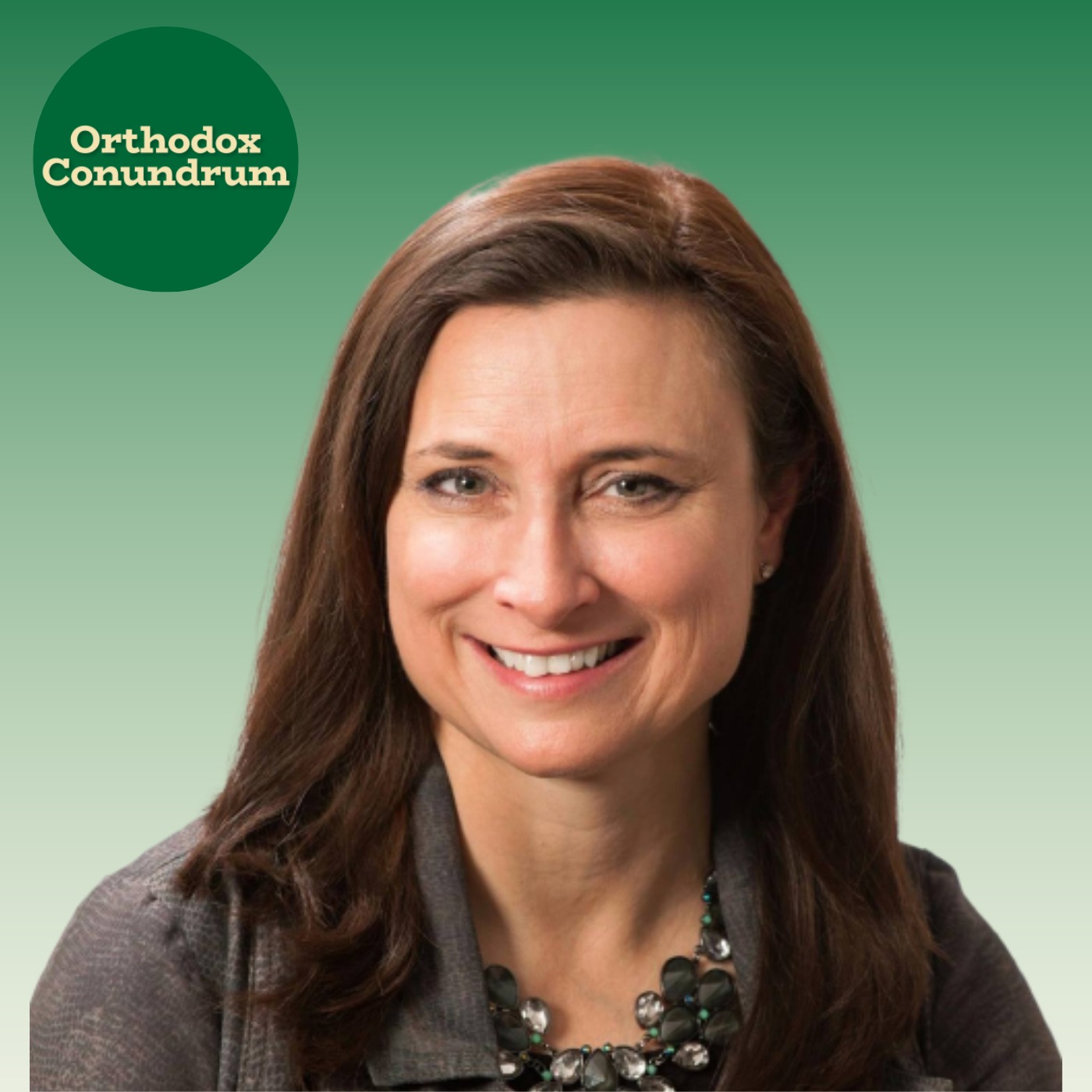
S6 Ep 40"Leadership Is Not Comfortable": Discussing Jewish Leadership, Role Models, Successes, and Failures with Dr. Erica Brown (170)
Many people are troubled by what appears to be a dearth of moral leadership in the Jewish world in general, and in the Orthodox world in particular. Of course, no one is asserting that there are no admirable leaders; rather, in addtion to these good leaders, there are too many leaders who are incompetent, cowardly, selfish, or immoral. For that reason, Scott was honored to talk with Dr. Erica Brown about whether this common impression is right, what constitutes good leadership according to Jewish sources, and how such leaders are cultivated. They discussed why there are different models of leadership in Jewish texts; some examples of leaders in Tanach including Yosef, Moshe, Rut, Esther, and Kohelet; what's often called imposter syndrome; the importance of identifying talent and whether this involves favoritism; introverted versus extroverted leadership; the problem when institutional leadership protects itself rather than the people it ostensibly represents; rabbinic scandals and those who enable bad behavior; "protexia" and nepotism; the dangers of charismatic leadership; and much more. Please listen to and share this podcast, and let us know what you think on the Orthodox Conundrum Discussion Group on Facebook (https://www.facebook.com/groups/432020081498108). Check out the Orthodox Conundrum Commentary on Substack and get your free subscription by going to https://scottkahn.substack.com/. Thanks to all of our Patreon subscribers, who have access to bonus JCH podcasts, merch, and more - we appreciate your help, and hope you really enjoy the extras! Visit the JCH Patreon site at https://www.patreon.com/jewishcoffeehouse. Check out https://jewishcoffeehouse.com/ for the Orthodox Conundrum and other great podcasts, and remember to subscribe to them on your favorite podcast provider. Also visit https://www.jchpodcasts.com/ to learn all about creating your own podcast. Music: "Happy Rock" by bensound.com

S6 Ep 39Santa Claus, Tisha B'Av, and a Necessary Corrective to Our Theology: A New View of Megillat Eicha with Rabbi Dr. Joshua Berman (169)
"What does Eichah have in common with climate change deniers, anti-vaxxers, Holocaust deniers and those that claim that the 2020 presidential elections were stolen?" Rabbi Dr. Joshua Berman sent this to Scott, who was intrigued and immediately invited him back onto this podcast to discuss what he meant. More than anything else, we need a way to relate to Megillat Eicha in a world which seems so distant from that described in the book. And even the world described in Eicha is complicated; it's often hard to make sense of exactly what is being said. There are different voices represented, and they often contradict each other, and themselves. The book seems to go back and forth between blaming the community for its own destruction, and saying that G-d went too far - and sometimes neither, just lamenting how terrible everything is. Maybe the real question is whether there is a theology of Eicha at all, or if it's a book with multiple theologies - some of which border on the heretical. Rabbi Berman developed a novel approach to Eicha, and his reading infuses it with new life. Rabbi Berman believes that Eicha was written to be performed like a play, as a dialogue between the prophet Yirmiyahu and Bat Tzion - a composite character who represents the different voices that were being expressed by the grief-stricken people after the Destruction. Rabbi Berman also sees Eicha as representing a type of therapy session between the author and the people, who need to face realities that they're refusing to acknowledge even when those realities seem blindingly obvious. And crucially, Rabbi Berman sees Eicha as a corrective to common but shallow theology - a theology that, he believes, remains something that we believe until today. Ultimately, any deep understanding of Judaism and acknowledgement of G-d's love for Israel isn't complete without the splash of cold water that Eicha provides. It would be nice to advocate a Jewish theology that ignores the difficult parts of our relationship with Hashem; but it wouldn't be honest or true. This conversation with Rabbi Berman will not only make Tisha B'Av more meaningful, but will also provide serious food for thought that we can take with us long after Tisha B'Av is over. To order Rabbi Berman's new book on Eicha, go to https://www.cambridge.org/core/books/book-of-lamentations/5CE9A9C4A6B9159F1CACAE7055C35768?fbclid=IwAR0fU0sjtMUwmMT2o6kGQBche6DL4POuNi29jYYJVfwhDLNtT1mXqy5jw6g. Please listen to and share this podcast, and let us know what you think on the Orthodox Conundrum Discussion Group on Facebook (https://www.facebook.com/groups/432020081498108). Check out the Orthodox Conundrum Commentary on Substack and get your free subscription by going to https://scottkahn.substack.com/. There's so much that we can accomplish together through this podcast! We invite you to support the Orthodox Conundrum through our Patreon site. Go to https://www.patreon.com/jewishcoffeehouse and help us to create a positive, G-d-centered, halachic, intellectually honest, self-aware, accountable and welcoming Orthodox Judaism. Check out https://jewishcoffeehouse.com/ for the Orthodox Conundrum and other great podcasts, and remember to subscribe to them on your favorite podcast provider. Also visit https://www.jchpodcasts.com/ to learn all about creating your own podcast. Music: "Happy Rock" by bensound.com

S6 Ep 38The High Price of Orthodox Life & the Dangers of Keeping Up with the Goldbergs, with Rabbi Avrohom Leventhal and Rachel Krich (168)
The high cost of living an Orthodox life is a big problem. In the United States, for example, the high cost of day school or yeshiva tuition, combined with everything from the need to purchase kosher food to buying a lulav and etrog for Sukkot, adds to a family's annual bills significantly. When we factor in the reality that standards are getting higher - semachot, for example, are very expensive, while overnight camps often have increasingly elaborate programs that in turn make the price go up - the problem is exacerbated. And then there's the issue of social or peer pressure, intentional or otherwise. More people go away for Pesach, and programs compete to offer the most luxurious amenities and best entertainment possible. Conspicuous consumption, it seems, has become - among some Orthodox Jews - not a problem that we need to address, but a desired feature that we aspire to emulate. And whether we're conscious of that fact or not, it affects everyone by raising standards and expectations. Those people who aren't able to afford the same things as others are often either left feeling "less than," or - even worse - end up spending more than they are able, and find themselves in real financial trouble. While the problems in every locale are somewhat different, this is an issue that affects many Orthodox communities, including some of those in Israel. There are many consequences of these financial, social, and psychological realities. One of them is the possibility of people falling for ponzi schemes and other get-rich-quick scams, including those that are broadly legal but still unethical; another is the need for chesed and tzedakah organizations to find new and more effective ways to help people who, in the drive to keep up and live an Orthodox life, have fallen into a deep financial hole. Two people who have a broad knowledge of these problems, and who deal with them daily, are Rachel Krich, the Executive Director of Project Ezrah, and Rabbi Avrohom Leventhal, the Executive Director of Lema'an Achai. They and Scott had a frank conversation about all of these topics and more. Please listen to and share this podcast, and let us know what you think on the Orthodox Conundrum Discussion Group on Facebook (https://www.facebook.com/groups/432020081498108). Check out the Orthodox Conundrum Commentary on Substack and get your free subscription by going to https://scottkahn.substack.com/. Thanks to all of our Patreon subscribers, who have access to bonus JCH podcasts, merch, and more - we appreciate your help, and hope you really enjoy the extras! Visit the JCH Patreon site at https://www.patreon.com/jewishcoffeehouse. Check out https://jewishcoffeehouse.com/ for the Orthodox Conundrum and other great podcasts, and remember to subscribe to them on your favorite podcast provider. Also visit https://www.jchpodcasts.com/ to learn all about creating your own podcast. To donate to Lema'an Achai, go to https://www.lemaanachai.org/en/donation.php. To donate to Project Ezrah, go to https://www.ezrah.org/donate/. Music: "Happy Rock" by bensound.com

S6 Ep 37Ascending the Temple Mount, and Finding Meaning During the Three Weeks, with Rabbi Danny Myers (167)
It's sometimes challenging to feel the aveilut, the mourning of the destruction, when the Jewish people live in a time of unparalleled prosperity, when we can visit and live in a thriving State of Israel, and when we see a beautiful city of Jerusalem filled with Jewish people from around the world. Am Yisrael still absorbs terrible blows; terrorism, the deaths of young soldiers, antisemitism and more continue to plague us. For many people, however, our day-to-day lives are comfortable enough that the destruction of a now-rebuilt city 2000 years ago feels distant from our everyday concerns. One of the ways that some people experience the lack of a Beit HaMikdash is to ascend the Temple Mount. Admittedly, the Chief Rabbinate of Israel has prohibited Jews from doing this, and the majority of great halachic authorities also say that it is not allowed. Rabbi Danny Myers, however, has a very different approach, and suggests that praying on the Temple Mount is not only allowed, but may even be an obligation. Scott discussed this contentious issue with Rabbi Myers, alongside the question of how people can find spiritual meaning during the Three Weeks when we are directed to mourn the destruction of the Temple and Jerusalem. Please listen to and share this podcast, and let us know what you think on the Orthodox Conundrum Discussion Group on Facebook (https://www.facebook.com/groups/432020081498108). Check out the Orthodox Conundrum Commentary on Substack and get your free subscription by going to https://scottkahn.substack.com/. Thanks to all of our Patreon subscribers, who have access to bonus JCH podcasts, merch, and more - we appreciate your help, and hope you really enjoy the extras! Visit the JCH Patreon site at https://www.patreon.com/jewishcoffeehouse. Check out https://jewishcoffeehouse.com/ for the Orthodox Conundrum and other great podcasts, and remember to subscribe to them on your favorite podcast provider. Also visit https://www.jchpodcasts.com/ to learn all about creating your own podcast. Music: "Happy Rock" by bensound.com

S6 Ep 36Authority Versus Autonomy in Orthodoxy Today, with Rabbi Chaim Ozer Chait (166)
One of the most important conflicts that many Orthodox Jews face in the 21st century is the clash between authority and autonomy. Orthodox society is largely based upon following the tradition that has been handed down to us, and that tradition is often seen to be largely in the possession of great scholars. Accordingly, it seems like a violation of Torah principles to ignore the directives of gedolei Torah and to do what we want instead. On the other hand, autonomy - the ability and right and even obligation to make our own decisions - is one of the most cherished values of Western society. But autonomy is not just a modern value that is necessarily in conflict with Torah thinking; in fact, autonomy is also an important Jewish value, as well. That makes the question of the clash between autonomy and authority something that we likely deal with almost every day. As Orthodox Jews, we dare not ignore the tradition and do whatever we want without regard for what anyone else says... yet many of us are loathe to sacrifice the right to think independently. This raises many questions: what is the definition of rabbinic authority? How autonomous can and should each of us be? Do I have the right to make halachic decisions on my own? What about in areas of hashkafa, or public policy? Can the gedolim insist that I act a certain way - and do I have the right to defy them? Scott asked these and many other questions to Rav Chaim Ozer Chait, and he offered some fascinating insights, as well as stories from his time studying under Rav Moshe Feinstein and others. Please listen to and share this podcast, and let us know what you think on the Orthodox Conundrum Discussion Group on Facebook (https://www.facebook.com/groups/432020081498108). Check out the Orthodox Conundrum Commentary on Substack and get your free subscription by going to https://scottkahn.substack.com/. Thanks to all of our Patreon subscribers, who have access to bonus JCH podcasts, merch, and more - we appreciate your help, and hope you really enjoy the extras! Visit the JCH Patreon site at https://www.patreon.com/jewishcoffeehouse. Check out https://jewishcoffeehouse.com/ for the Orthodox Conundrum and other great podcasts, and remember to subscribe to them on your favorite podcast provider. Also visit https://www.jchpodcasts.com/ to learn all about creating your own podcast. Music: "Happy Rock" by bensound.com

S6 Ep 35Converting to Judaism at the Hotel California: Opportunities, Risks, and Jewish Law, with Rabbi Chuck Davidson (165)
Many people give little thought to the issue of conversion, and the challenges that people who convert face. In contrast, Rabbi Chuck Davidson, a leader in establishing non-coercive Orthodox alternatives to Israel's' Chief Rabbinate for over a decade and the av beit din of an independent conversion court, has spent years researching the halachic background of conversion. In this episode, Scott and Rabbi Davidson address the debate over the halachic requirements for conversion, what is being done in the Israeli Chief Rabbinate about the 500,000 people in Israel who are sociologically Jewish but not halachically Jewish, the argument between Rav Ovadia Yosef and Rav Elyashiv about whether people whose Jewish lineage is unclear should be assumed to be Jewish or not, the social problems that many converts face, the question of which beit din - if any - provides conversions that are universally accepted, retroactive invalidation of conversion, whether a rabbinic court should be welcoming or discouraging to potential converts, and much more. Please listen to and share this podcast, and let us know what you think on the Orthodox Conundrum Discussion Group on Facebook (https://www.facebook.com/groups/432020081498108). Check out the Orthodox Conundrum Commentary on Substack and get your free subscription by going to https://scottkahn.substack.com/. Thanks to all of our Patreon subscribers, who have access to bonus JCH podcasts, merch, and more - we appreciate your help, and hope you really enjoy the extras! Visit the JCH Patreon site at https://www.patreon.com/jewishcoffeehouse. Check out https://jewishcoffeehouse.com/ for the Orthodox Conundrum and other great podcasts, and remember to subscribe to them on your favorite podcast provider. Also visit https://www.jchpodcasts.com/ to learn all about creating your own podcast. Music: "Happy Rock" by bensound.com

S6 Ep 34The YU Pride Alliance, Chassidic Schools & State-Mandated Curriculum, Funding for Jewish Schools, and More: Discussing Church and State with Michael Avi Helfand (164)
Several well-publicized events in the Orthodox world over the past year have brought the issue of the separation of church and state into sharp relief. These include Yeshiva University's refusal to recognize the YU Pride Alliance - a refusal which, one year ago, Judge Lynn Kotler of the New York County Supreme Court said was a violation of the New York City Human Rights Law; the case is currently under appeal. Another important situation is the recent uproar over the apparent refusal of numerous Chassidic schools in New York to follow curricular guidelines established by state authorities. And of course, the question of judicial reform in Israel inevitably touches on questions of how much the Israeli government can impose religious law, or provide legal exceptions to religious individuals and groups. In order to better understand some of the biggest questions surrounding church and state, Scott spoke with Professor Michael Avi Helfand. They discussed several specific situations, including the YU Pride Alliance and the chassidic school issue, to get past the often-incorrect public perception, and outline the actual legal issues in each case. They addressed whether private schools should be eligible for public funding, if this might lead to government authorities dictating educational requirements that Orthodox schools won't be able to accept, and whether the government's mandating aspects of the curriculum is necessarily tied to funding in the first place. They also touched on the philosophy behind the separation of church and state, how much of it is rooted in the Constitution and how much is based on broad interpretation, the definition of "core beliefs" and even the word "religion," and much more. Please listen to and share this podcast, and let us know what you think on the Orthodox Conundrum Discussion Group on Facebook (https://www.facebook.com/groups/432020081498108). Check out the Orthodox Conundrum Commentary on Substack and get your free subscription by going to https://scottkahn.substack.com/. Thanks to all of our Patreon subscribers, who have access to bonus JCH podcasts, merch, and more - we appreciate your help, and hope you really enjoy the extras! Visit the JCH Patreon site at https://www.patreon.com/jewishcoffeehouse. Check out https://jewishcoffeehouse.com/ for the Orthodox Conundrum and other great podcasts, and remember to subscribe to them on your favorite podcast provider. Also visit https://www.jchpodcasts.com/ to learn all about creating your own podcast. Music: "Happy Rock" by bensound.com

S6 Ep 33A Staring Contest with Hashem: Living with Disability and Faith - and Advocating for Accessibility - with Rivka Herzfeld (163)
When Rivka Herzfeld was younger, she had a feeling that her muscles were not working the way that they should. During her year in Israel after high school, things got serious enough that her research intensified - and she soon discovered that she has an extremely rare degenerative condition that has seriously impacted her ability to use her muscles effectively. Doctors don't know what to call it, so they use the inexact term "childhood-onset ALS" - and this condition has affected her life in many ways, from needing a motorized scooter in place of walking, to challenges in dating, to her inability to be hired as a teacher - a job for which she is eminently qualified. Yet Rivka maintains her self-confidence, poise, humor, and faith in G-d; she refuses to let her disability define her, even though it sometimes seems that others want to do exactly that. In this conversation, Rivka relates her personal story, and articulates some of the challenges that she faces. She and Scott talk about the ways in which the Orthodox world can develop greater sensitivity and provide increased accessibility, as well as some of the positive and negative experiences that she has had in synagogues, schools, and other institutions. And crucially, they discuss practical steps that we can take to ensure that we treat individuals with the respect they deserve, and find ways to bring all people into our communities rather than perhaps unintentionally walling them off outside. Please listen to and share this podcast, and let us know what you think on the Orthodox Conundrum Discussion Group on Facebook (https://www.facebook.com/groups/432020081498108). Check out the Orthodox Conundrum Commentary newsletter and get your free subscription by going to https://scottkahn.substack.com/. Thanks to all of our Patreon subscribers, who have access to bonus JCH podcasts, merch, and more - we appreciate your help, and hope you really enjoy the extras! Visit the JCH Patreon site at https://www.patreon.com/jewishcoffeehouse. Check out https://jewishcoffeehouse.com/ for the Orthodox Conundrum and other great podcasts, and remember to subscribe to them on your favorite podcast provider. Also visit https://www.jchpodcasts.com/ to learn all about creating your own podcast. Music: "Happy Rock" by bensound.com

S6 Ep 32Kol Isha and Orthodox Women Performers: A Panel Discussion (162)
It is forbidden to listen to the voice of a woman singing if she is not his wife. (Aruch HaShulchan 21:3) One of the issues that bothers many poeple in the Orthodox world is the halachic concept of kol isha - that is, broadly defined, the prohibition for men to listen to a woman when she is singing. The exact parameters of this halacha are debated, such as whether this includes recordings, if it applies to a woman singing by herself or to a choir as well, and much more. There are, frankly, a wide range of opinions about many issues surrounding kol isha. But we need to acknowledge, even if it goes against our sense of fairness, that the vast majority of poskim understand kol isha as a prohibition that is fully applicable today. For women who sing professionally, the halachot surrounding kol isha are unquestionably challenging, and today Scott asks three Orthodox female performers how kol isha has affected them, how they navigate the challenges it presents, whether they feel cheated because they cannot perform in mixed-gender venues, if they follow this stricture as it's traditionally understood, what kind of pushback they've received, and more - as well as other aspects of their experience as Orthodox women who sing. Join Scott and Franciska Kosman, Chanale Fellig-Harrel, and Dr. Kerry Bar-Cohn as they address this important topic. Please listen to and share this podcast, and let us know what you think on the Orthodox Conundrum Discussion Group on Facebook (https://www.facebook.com/groups/432020081498108). Check out the Orthodox Conundrum Commentary newsletter and get your free subscription by going to https://scottkahn.substack.com/. Thanks to all of our Patreon subscribers, who have access to bonus JCH podcasts, merch, and more - we appreciate your help, and hope you really enjoy the extras! Visit the JCH Patreon site at https://www.patreon.com/jewishcoffeehouse. Check out https://jewishcoffeehouse.com/ for the Orthodox Conundrum and other great podcasts, and remember to subscribe to them on your favorite podcast provider. Also visit https://www.jchpodcasts.com/ to learn all about creating your own podcast. Music: "Happy Rock" by bensound.com

S6 Ep 31Helping Frum Jews Die: What We Need to Know When It's Time to Die, with Dr. Blima Marcus (161)
In our last episode, Scott spoke with Rabbi Dr. Shlomo Brody about bringing greater awareness to issues associated with end-of-life and organ donation. This opened up an important conversation - but there's much more to say, particularly as it relates to clinical insights from people who actively work with dying patients and their families. To that end, Scott spoke with Dr. Blima Marcus, who was a guest in episode 81 of this podcast. Blimi spoke about the very serious questions regarding how Orthodox providers help frum Jews die, and the clinical, emotional, and psychological issues that are involved. It nicely complements the episode with Rabbi Brody, and also highlights a serious area of disagreement. This was a very important conversation. As difficult and perhaps unpleasant as it is to talk about end-of-life, it's crucial that we confront it honestly and forthrightly so that, when the time comes for our loved ones, we'll be informed about the issues, and prepared to implement the patient's wishes. Please listen to and share this podcast, and let us know what you think on the Orthodox Conundrum Discussion Group on Facebook (https://www.facebook.com/groups/432020081498108). Check out the Orthodox Conundrum Commentary newsletter and get your free subscription by going to https://scottkahn.substack.com/. Thanks to all of our Patreon subscribers, who have access to bonus JCH podcasts, merch, and more - we appreciate your help, and hope you really enjoy the extras! Visit the JCH Patreon site at https://www.patreon.com/jewishcoffeehouse. Check out https://jewishcoffeehouse.com/ for the Orthodox Conundrum and other great podcasts, and remember to subscribe to them on your favorite podcast provider. Also visit https://www.jchpodcasts.com/ to learn all about creating your own podcast. Music: "Happy Rock" by bensound.com

S6 Ep 30Organ Donation, Living Wills, DNR, Dementia, and More: Confronting End-of-Life Before the End of Life, with Rabbi Dr. Shlomo Brody (160)
The 49th chapter of Bereshit describes the vivid scene of Yaakov Avinu offering his final words and testament as his children, the progenitors of the twelve tribes, stand around his bed. In many ways, this represents an ideal death: confronting it with time to prepare, with nothing left unsaid, with a faithful family surrounding the person whose life is ending. Of course, very often it doesn't work that way. Frequently, there are difficult decisions that the patient, or the patient's family, needs to make. These include questions about when and in what circumstances to keep the patient alive, and when to allow death to occur. They also involve issues regarding hospice care, organ donation, do not resuscitate orders, and more. Understandably, many people are reluctant to discuss these issues before they're relevant; but waiting until they are relevant often means having no idea what to do when it's time to make these very serious decisions. Rabbi Dr. Shlomo Brody, the executive director of Ematai, is encouraging people to have these difficult conversations earlier rather than later, and to better understand the various issues at play - whether halachic, ethical, or medical. Scott was pleased to speak with him about a number of the most important and pressing end-of-life issues. Please listen to and share this podcast, and let us know what you think on the Orthodox Conundrum Discussion Group on Facebook (https://www.facebook.com/groups/432020081498108). Check out the Orthodox Conundrum Commentary newsletter and get your free subscription by going to https://scottkahn.substack.com/. Thanks to all of our Patreon subscribers, who have access to bonus JCH podcasts, merch, and more - we appreciate your help, and hope you really enjoy the extras! Visit the JCH Patreon site at https://www.patreon.com/jewishcoffeehouse. Check out https://jewishcoffeehouse.com/ for the Orthodox Conundrum and other great podcasts, and remember to subscribe to them on your favorite podcast provider. Also visit https://www.jchpodcasts.com/ to learn all about creating your own podcast. Music: "Happy Rock" by bensound.com

S6 Ep 29A Person is a Subject, not an Object: New Traditional Perspectives on Tzniut, with Bracha Poliakoff and Rabbi Anthony Manning (159)
Tzniut is triggering. That became clear when the Orthodox Conundrum Podcast released episode 145 entitled, "The Challenges of Teaching Tzniut & the Challenges of Being Tzanua, with Shayna Goldberg." That episode, in which Scott asked Shayna to focus on issues related to tzniut (modesty) and clothing, addressed some of the most pressing concerns, and the conversation generated quite a bit of discussion. Today's conversation is again about tzniut, this time about tzniut as a whole, and from the perspectives of Bracha Poliakoff and Rabbi Anthony Manning, the authors of a very well-received new book entitled, Reclaiming Dignity: A Guide to Tzniut for Men and Women. In this wide-ranging discussion, Scott spoke with his guests about some of the same issues discussed in the earlier podcast as well as some that are quite different. Among the topics are how to define tzniut, what has gone wrong in education for tzniut that so many people are turned off by the very word and the trauma some experience when it comes to tzniut, how to legitimize different approaches, the problem of weaponizing modesty in order to delegitimize others, how much of tzniut is subjective, the confusing of the terms tzniut and erva and the consequent problems, whether obsessing about modesty leads to oversexualization of women, the judgmentalism that seems to be part and parcel of typical thinking about tzniut, and much more. Please listen to and share this podcast, and let us know what you think on the Orthodox Conundrum Discussion Group on Facebook (https://www.facebook.com/groups/432020081498108). Thanks to all of our Patreon subscribers, who have access to bonus JCH podcasts, merch, and more - we appreciate your help, and hope you really enjoy the extras! Visit the JCH Patreon site at https://www.patreon.com/jewishcoffeehouse. Check out https://jewishcoffeehouse.com/ for the Orthodox Conundrum and other great podcasts, and remember to subscribe to them on your favorite podcast provider. Also visit https://www.jchpodcasts.com/ to learn all about creating your own podcast. Music: "Happy Rock" by bensound.com

S6 Ep 28Orthodox Women & Talmud Study: Setting Higher Standards and Goals, with Rabbanit Michelle Cohen Farber (158)
Last month, it was reported that due to low enrollment, the beginners and intermediate Talmud courses for women at Yeshiva University's Stern College would not be offered next year, meaning that the only remaining Talmud course would be the advanced class. We also learned that GPATS - the Graduate Program in Advanced Talmud and Tanach Studies - would only have one Talmud track instead of two, as it did in the past; and that YU was not going to hire a new teacher to replace Rav Moshe Kahn z'l, who taught Talmud at Stern and who passed away several months ago. Although Stern has subsequently reversed course and does plan to offer those Talmud classes, the controversy raised important questions about the place of Talmud in the Torah curriculum for women. Should Gemara learning be a mandatory part of the high school curriculum for girls, as it generally is for boys? Regardless of whether Talmud classes for young women should be optional or mandatory, should they be modeled on the standard yeshiva styles of learning, or should Gemara be taught differently with a different emphasis depending on gender? Was the fact that women were generally discouraged or even prohibited from learning for two millennia a necessary accommodation to reality or, in hindsight, a mistake? Are there still areas of scholarship that, for political or religious reasons, should remain the exclusive province of men? Do we need new methodologies of teaching Gemara to both boys and girls? How should a Talmud teacher address texts that likely won't resonate with that teacher's audience, such as a statement that teaching one's daughter Torah is similar to teaching her "tiflut" - that is, something trivial or even obscene? To discuss these and other questions, Scott spoke with Rabbanit Michelle Cohen Farber, the founder of Hadran, the teacher of the first online daf yomi shiur taught by a woman, and the creator of the first international Siyum HaShas for Women three years ago. Please listen to and share this podcast, and let us know what you think on the Orthodox Conundrum Discussion Group on Facebook (https://www.facebook.com/groups/432020081498108). Thanks to all of our Patreon subscribers, who have access to bonus JCH podcasts, merch, and more - we appreciate your help, and hope you really enjoy the extras! Visit the JCH Patreon site at https://www.patreon.com/jewishcoffeehouse. Check out https://jewishcoffeehouse.com/ for the Orthodox Conundrum and other great podcasts, and remember to subscribe to them on your favorite podcast provider. Also visit https://www.jchpodcasts.com/ to learn all about creating your own podcast. Music: "Happy Rock" by bensound.com

S6 Ep 27Casual Cruelty, Social Media, and Troubling Orthodox Discourse: Lashon Hara in 2023, with Rabbi Daniel Z. Feldman (157)
An important issue raised by our increased reliance on social media is the question of what it has done to the quality of our discourse: that is, the things we say, and the way we say them. It seems that too often, a willingness to engage in casual cruelty has emerged along with the social media revolution; and this has a serious effect on the way we live our lives away from our screens. And, of course, it raises many issues regarding the halachic propriety of how we write and talk. Is it a violation of Jewish law to write intemperate or mean comments on a social media post? How can we try to effect change in society without falling into a problem of lashon hara? How may someone express disagreement, and when is it right to reveal something on social media rather than hiding it? How should we relate to great scholars who also expressed disagreement by disparaging their opponents? Can a person who was wronged publicly shame his tormentor on Facebook, given that the post will be read by people who have no need to know about what happened? And the questions transcend social media alone: when and how should we reveal damaging information that is important, such as before a shidduch? How can we teach a proper type of shmirat halashon without also giving kids the message that we don't want them to tell us about things that happen to them, like G-d forbid abuse? Is there a way for a journalist to do his job and also follow the rules of lashon hara? In order to receive answers to these questions, Scott spoke to Rabbi Daniel Feldman, Rosh Yeshiva at the Rabbi Isaac Elchanan Theological Seminary at Yeshiva University. You can purchase Rabbi Feldman's book False Facts and True Rumors: Lashon Hara in Contemporary Culture here. Please listen to and share this podcast, and let us know what you think on the Orthodox Conundrum Discussion Group on Facebook (https://www.facebook.com/groups/432020081498108). Thanks to all of our Patreon subscribers, who have access to bonus JCH podcasts, merch, and more - we appreciate your help, and hope you really enjoy the extras! Visit the JCH Patreon site at https://www.patreon.com/jewishcoffeehouse. Check out https://jewishcoffeehouse.com/ for the Orthodox Conundrum and other great podcasts, and remember to subscribe to them on your favorite podcast provider. Also visit https://www.jchpodcasts.com/ to learn all about creating your own podcast. Music: "Happy Rock" by bensound.com

S6 Ep 26Don't Put All Our Eggs in the Israeli Basket: Defending & Celebrating Diaspora Jewish Communities, with Maharat Ruth Friedman (156)
In last week's episode, Episode 155, Scott spoke with Rabbi Mark Wildes of the Manhattan Jewish Experience about whether diaspora Jews have enough engagement with Israel, whether they care enough about Israel, and if they have the moral right to actively try to affect Israeli policies. They talked about whether diaspora communities have independent integrity, or if they should instead be seen as waystations on the way to encouraging all Jews to move to Israel. They addressed other issues, too, like how to increase the care that non-Israeli Jews have for Israel, whether familiarity with Israel has created a type of indifference, and more. Responses to this episode were mixed, to say the least. Some people agreed wholeheartedly and didn't see anything controversial in what they suggested; others felt that the episode was condescending, shortsighted, and misguided. One of the many comments came from Maharat Ruth Friedman. She concluded by asking, "Do you plan to interview a diaspora Jew who shares alternate views and can shed light on how the American Jewish community viewed the tragedies in Israel in the past two weeks? There is a lot to say on these questions and I think that folks would appreciate proper representation and not being talked about by others." To that end, Scott invited Maharat Friedman to present a very different viewpoint from the one he and Rabbi Wildes espoused last week. The conversation began with talking about a different way for religious Jews who live outside of Israel to view Israel and events in israel; but almost inevitably, they talked about Israeli politics and government, the Palestinian issue, and the meaning of religious Zionism for someone who has no intention of leaving the diaspora, and believes that - l'katchila, as a matter of ideal religious practice - not all Jews should move to Israel. Please listen to and share this podcast, and let us know what you think on the Orthodox Conundrum Discussion Group on Facebook (https://www.facebook.com/groups/432020081498108). Thanks to all of our Patreon subscribers, who have access to bonus JCH podcasts, merch, and more - we appreciate your help, and hope you really enjoy the extras! Visit the JCH Patreon site at https://www.patreon.com/jewishcoffeehouse. Check out https://jewishcoffeehouse.com/ for the Orthodox Conundrum and other great podcasts, and remember to subscribe to them on your favorite podcast provider. Also visit https://www.jchpodcasts.com/ to learn all about creating your own podcast. Music: "Happy Rock" by bensound.com

S6 Ep 25Do Diaspora Jews Care About Israel... Enough? (155)
With the terrible and heartbreaking news that came out of Israel over the course of Pesach - a mother and two children murdered by terrorists, a car ramming in Tel Aviv with an Italian tourist dead and others injured, plus rockets launched at Israel from Lebanon and Gaza - some have noted a disconnect between the attitudes of Jews who live in Israel, and those who live in the diaspora. The two groups sometimes seem to possess different mindsets - that is, very different ways of thinking about events like these. In particular, the heaviness that was widely experienced by Israeli Jews may have sometimes been lacking among some Jews outside of Israel. Is this assumption accurate or misplaced? Furthermore, is Israel viewed, emotionally if not intellectually, as just another Jewish community like any other? Is the proximity and ease of getting to Israel and communicating with people in Israel a double-edged sword, taking away some of the mystery and sense of holiness that people otherwise would have? Moreover, what is the place of diaspora Jewry? Is their only role to pack up and move to Israel, or is there a need for Jewish communities to thrive outside of Israel? How can we better inculcate a sense of solidarity with Jews in Israel, and with what's happening in Israel? Is the emotional gap between Israelis and those outside of Israel destined to get larger or smaller? To discuss these and other questions, Scott (who lives in Ramat Beit Shemesh) spoke with Rabbi Mark Wildes (who lives in New York). Their conversation will give you food for thought, especially as they draw upon their own life experiences to discuss the relationship between disapora Jews and Jews living in Israel. Please listen to and share this podcast, and let us know what you think on the Orthodox Conundrum Discussion Group on Facebook (https://www.facebook.com/groups/432020081498108). Thanks to all of our Patreon subscribers, who have access to bonus JCH podcasts, merch, and more - we appreciate your help, and hope you really enjoy the extras! Visit the JCH Patreon site at https://www.patreon.com/jewishcoffeehouse. Check out https://jewishcoffeehouse.com/ for the Orthodox Conundrum and other great podcasts, and remember to subscribe to them on your favorite podcast provider. Also visit https://www.jchpodcasts.com/ to learn all about creating your own podcast. Music: "Happy Rock" by bensound.com
Making Your Seder Engaging and Meaningful for Everyone (Bonus Episode)
bonusAs we approach the first night of Pesach, many people are looking for ideas that will enhance the Seder, and divrei Torah that will be meaningful to people who sit with us around the table. To that end, Scott spoke with the morning seder faculty of Yeshivat Yesodei HaTorah, the yeshiva that he directed alongside Rabbi Pesach Wolicki for eleven years. Along with Rabbi Wolicki, he was joined by Rabbi Yaakov Arram, Rabbi Yisrael Herczeg, Rabbi Adi Krohn, and Rabbi Moshe Lichtman. In this conversation, the panel offered short divrei Torah that they find meaningful, and also gave some insights into how to make the Seder engaging for people - adults and children - who might be less enthusiastic than others at the table. Please listen to and share this podcast, and let us know what you think on the Orthodox Conundrum Discussion Group on Facebook (https://www.facebook.com/groups/432020081498108). Thanks to all of our Patreon subscribers, who have access to bonus JCH podcasts, merch, and more - we appreciate your help, and hope you really enjoy the extras! Visit the JCH Patreon site at https://www.patreon.com/jewishcoffeehouse. Check out https://jewishcoffeehouse.com/ for the Orthodox Conundrum and other great podcasts, and remember to subscribe to them on your favorite podcast provider. Also visit https://www.jchpodcasts.com/ to learn all about creating your own podcast. Music: "Happy Rock" by bensound.com

S6 Ep 24Crisis in Israel, Judicial Reform, and the Future of the Jewish State: Getting the Real Story, with Haviv Rettig Gur (154)
Israel is in crisis, and Israeli society is deeply torn over the government's proposed reforms to the judiciary. However, while many people talk about what the Likud-led government is trying to do, there is less information about what is actually happening and its ramifications. With the dramatic events of this past week, when Defense Minister Yoav Gallant publicly suggested that the government needs to pause the reforms, then was fired by Prime Minister Netanyahu the next day, which then led to unprecedented protests and strikes by a huge percentage of the population, which in turn led to Netanyahu's calling for a temporary halt to the judicial reforms while both the coalition and the opposition try to work out a compromise, it became obvious that people need to know what's really going on, why these events are taking place, what they mean, and what we can expect in the near future. For that reason, Scott was honored to speak with senior analyst Haviv Rettig Gur of the Times of Israel, who offered a clear-eyed approach to explain the story in its entirety. Because events are moving at a very fast pace, we're releasing this episode the day that it was recorded. Our hope is that it will provide information and context that, very often, are lacking from public discourse. Please listen to and share this podcast, and let us know what you think on the Orthodox Conundrum Discussion Group on Facebook (https://www.facebook.com/groups/432020081498108). Thanks to all of our Patreon subscribers, who have access to bonus JCH podcasts, merch, and more - we appreciate your help, and hope you really enjoy the extras! Visit the JCH Patreon site at https://www.patreon.com/jewishcoffeehouse. Check out https://jewishcoffeehouse.com/ for the Orthodox Conundrum and other great podcasts, and remember to subscribe to them on your favorite podcast provider. Also visit https://www.jchpodcasts.com/ to learn all about creating your own podcast. Music: "Happy Rock" by bensound.com

S6 Ep 22The Anxieties of Being Orthodox... and Preventing Mental Health Crises Before They Happen, with Rabbi Dr. Eitan Eisen (152)
As Orthodox Jews, we usually find the experience of mitzvah observance and participation in the Orthodox community to be a source of great religious meaning, comfort, and fellowship; Torah Judaism is the way that Orthodox Jews interact with G-d, and that reality, alongside the communal and social aspects, has made Orthodoxy a source of pride and joy. We must also recognize that aspects of Orthodox life can be a real source of anxiety and stress. This includes the pressures associated with shmirat hamitzvot, as well as stresses that arise from the everyday requirements of following the Torah. The sense of being commanded, and the concomitant fear of shame and guilt if we fail, can be weighty. And then, of course, there are the other anxieties that are simply associated with observance - such as the very high financial cost of living an Orthodox life, and the perhaps less defensible high financial cost of living in an Orthodox community with increasingly high material standards, as well. Is there a way to deal with this anxiety, and - more to the point - how can we prevent it in the first place so that it doesn't become debilitating? How can we work on preventing other mental health crises? Is the apparently increasing number of people suffering from mental illness a result of greater awareness, or is there something going on in our communities that is exacerbating the problem? Conversely, are we sometimes guilty of relying on therapy too much? And is the assumption that we can lead perfect lives in perfect communities - and inability to accept imperfection - causing serious problems with long-term ramifications? Scott was honored to speak to Rabbi Dr. Eitan Eisen about these and other important issues relevant to Orthodoxy, anxiety, mental health, and prevention. To order Rabbi Dr. Eisen's book, Talmud on the Mind: Exploring Chazal and Practical Psychology to Lead a Better Life, go to https://kodeshpress.com/product/talmud-on-the-mind/ Please listen to and share this podcast, and let us know what you think on the Orthodox Conundrum Discussion Group on Facebook (https://www.facebook.com/groups/432020081498108). Thanks to all of our Patreon subscribers, who have access to bonus JCH podcasts, merch, and more - we appreciate your help, and hope you really enjoy the extras! Visit the JCH Patreon site at https://www.patreon.com/jewishcoffeehouse. Check out https://jewishcoffeehouse.com/ for the Orthodox Conundrum and other great podcasts, and remember to subscribe to them on your favorite podcast provider. Also visit https://www.jchpodcasts.com/ to learn all about creating your own podcast. Music: "Happy Rock" by bensound.com

S6 Ep 21"A Good Question is Better than a Not Good Answer": Finding Meaning After Staring Into the Abyss, with Ephraim Rimel (151)
Nietzsche said, "When you look long into an abyss, the abyss also looks into you." Today's episode deals with a horrible situation where someone retained his sense of meaning, faith, and belief despite staring into the abyss. Ephraim Rimel experienced just about the worst thing that a person could experience, and somehow moved forward with his belief in G-d and Torah intact. He acknowledged that his values were updated, but the same values that drove him before still drive him today. This was a very difficult discussion, and frankly it is not easy listening. Yet Ephraim's experience is a testament to belief that survived in the face of unimaginable challenges. If we are to face life honestly and boldly, we need to listen to Ephraim's story of tragedy and faith, a story that is simultaneously painful and inspiring. Please listen to and share this podcast, and let us know what you think on the Orthodox Conundrum Discussion Group on Facebook (https://www.facebook.com/groups/432020081498108). Thanks to all of our Patreon subscribers, who have access to bonus JCH podcasts, merch, and more - we appreciate your help, and hope you really enjoy the extras! Visit the JCH Patreon site at https://www.patreon.com/jewishcoffeehouse. Check out https://jewishcoffeehouse.com/ for the Orthodox Conundrum and other great podcasts, and remember to subscribe to them on your favorite podcast provider. Also visit https://www.jchpodcasts.com/ to learn all about creating your own podcast. Music: "Happy Rock" by bensound.com
Alcohol Abuse and the Orthodox Community: Do We Have a Problem? (Originally released in February, 2020)
bonusIn preparation for Purim, the Orthodox Conundrum is rereleasing an episode from 2020 with Dr. Zev Ganz, dealing with teenagers and alcohol abuse. Purim is, if not the most joyous holiday on the Jewish calendar, then certainly the most "fun." And therein lies the problem: are we teaching our children and students that having fun requires alcohol? Is teenage alcohol abuse a real danger, or is it healthy to let loose given that it's only one day a year? Is worrying about Purim drinking and the effects of kiddush clubs alarmist, or necessary? What should be done if you suspect that your kid has a problem, and how is "problem" even defined? With only a couple of days until Purim, we hope this episode gives you food for thought. Please listen to and share this podcast, and let us know what you think on the Orthodox Conundrum Discussion Group on Facebook (https://www.facebook.com/groups/432020081498108). Thanks to all of our Patreon subscribers, who have access to bonus JCH podcasts, merch, and more - we appreciate your help, and hope you really enjoy the extras! Visit the JCH Patreon site at https://www.patreon.com/jewishcoffeehouse. Check out https://jewishcoffeehouse.com/ for the Orthodox Conundrum and other great podcasts, and remember to subscribe to them on your favorite podcast provider. Also visit https://www.jchpodcasts.com/ to learn all about creating your own podcast. Music: "Happy Rock" by bensound.com
The Meaning of Amalek for Orthodox Jews Today, with Rabbi Aryeh Klapper (Originally released in March, 2022)
bonusIn preparation for Parashat Zachor, the Orthodox Conundrum is rereleasing an episode from last year with Rabbi Aryeh Klapper, dealing with questions surrounding Amalek. How should Orthodox Jews relate to the mitzvah of wiping out Amalek - a Torah law that might seem immoral? What are we remembering when we think of Amalek, and is there a message within that resonates with committed Torah Jews living in the 21st century? We hope this episode will give you food for thought as we move toward Parashat Zachor and Purim. Please listen to and share this podcast, and let us know what you think on the Orthodox Conundrum Discussion Group on Facebook. Thanks to all of our Patreon subscribers, who have access to bonus JCH podcasts, merch, and more - we appreciate your help, and hope you really enjoy the extras! Visit the JCH Patreon site at https://www.patreon.com/jewishcoffeehouse. Check out https://jewishcoffeehouse.com/ for the Orthodox Conundrum and other great podcasts, and remember to subscribe to them on your favorite podcast provider. Also visit https://www.jchpodcasts.com/ to learn all about creating your own podcast. Read an article by Rabbi Klapper about Amalek here: http://torahleadership.org/categories/beshalach_5780.pdf http://torahleadership.org/ https://moderntoraleadership.wordpress.com/ Music: "Happy Rock" by bensound.com

S6 Ep 20OTD, Datlash, and the Religious Spectrum: When Orthodox Jews Leave Orthodoxy, with Rabbi Alex Israel (150)
There's a phenomenon in the Orthodox world which is called by various names, though most commonly "Off the Derech" or OTD, and "Datlash," short for "Dati Leshe'avar" - that is, formerly religious. For a community which prides itself on continuity and on passing the tradition from one generation to the next, the idea that people leave Orthodoxy is simultaneously painful and threatening. Why did he or she leave? What didn't work? Why don't they see what I see… or perhaps, if we're being truly honest with ourselves, what do they see that I may be missing? And when the people who reject an Orthodox way of life are members of our family, the difficulties are compounded. Rabbi Alex Israel has given a lot of thought to this issue and these questions, and his insights are humane, generous, and rooted in Torah. Rabbi Israel and Scott spoke about whether the terms OTD and Datlash - and even "dati," religious - are helpful or misleading, whether the phenomenon of people moving away from Orthodoxy is becoming more common, how it may be different in Israel and in the United States, whether we should actively try to bring those who have left Orthodoxy back into the Orthodox fold, if an emphasis on dogma is partially to blame, how parents should navigate having a child who is less religious than they are, what we can learn from those who leave Orthodoxy, and more. Please listen to and share this podcast, and let us know what you think on the Orthodox Conundrum Discussion Group on Facebook (https://www.facebook.com/groups/432020081498108). The Orthodox Conundrum is looking for sponsors - either to promote your business or organization, or in someone's honor or memory . If you want to reach thousands of listeners every week, then write to us at [email protected]. Thanks to all of our Patreon subscribers, who have access to bonus JCH podcasts, merch, and more - we appreciate your help, and hope you really enjoy the extras! Visit the JCH Patreon site at https://www.patreon.com/jewishcoffeehouse. Check out https://jewishcoffeehouse.com/ for the Orthodox Conundrum and other great podcasts, and remember to subscribe to them on your favorite podcast provider. Also visit https://www.jchpodcasts.com/ to learn all about creating your own podcast. Music: "Happy Rock" by bensound.com

S6 Ep 19"Keep It, Reformulate It, or Discard It": Losing and Regaining Faith, with Rabbi Pesach Sommer (149)
It is widely assumed that Jewish law requires the acceptance of certain principles of faith - most commonly associated with the thirteen foundational principles that the Rambam wrote about in his Commentary on the Mishnah in Masechet Sanhedrin. These principles, very broadly summarized, include G-d's existence, His unity and incorporeality, the fact that G-d is the eternal first cause and that prayer must be directed to G-d alone; that prophecy exists, that Moses was the greatest prophet, that the Torah was given to Israel through Moses, and that the Torah will never be changed or exchanged; that G-d is omniscient, He rewards and punishes, that there will be a messiah and that the dead will one day be resurrected. Again: this is a broad summary, and the actual writing of Maimonides on this matter is more nuanced. Still, these are the principles of Jewish belief that everyone is supposed to assert and, according to the Rambam, not only accept as dogma but also thoroughly understand. What happens, however, when a Jewish person says that he or she cannot accept all of these thirteen principles, or even parts of them? What, for example, if someone believes that G-d communicates with humankind, but doesn't accept the literal transmission of every word of the Torah through Moses? How should a committed Jew continue observing the Torah when doubts emerge? Rabbi Pesach Sommer experienced these doubts, and it led to a crisis in faith. Crucially, his crisis took place while he was a rabbi teaching in an Orthodox school. And while the crisis for him was very real, he also was able to emerge from it with a more nuanced and, perhaps, stronger faith than before. Today Pesach tells us his story, from how he became a rabbi, to what sparked his doubts, how far down the rabbit hole of doubt he went, and what he was able to do to reinvigorate his faith so that he was able to develop a more mature and in fact deeper connection with G-d and Torah than before. The Orthodox Conundrum is looking for sponsors - either to promote your business or organization, or in someone's honor or memory . If you want to reach thousands of listeners every week, then write to us at [email protected]. Please listen to and share this podcast, and let us know what you think on the Orthodox Conundrum Discussion Group on Facebook. Thanks to all of our Patreon subscribers, who have access to bonus JCH podcasts, merch, and more - we appreciate your help, and hope you really enjoy the extras! Visit the JCH Patreon site at https://www.patreon.com/jewishcoffeehouse. Check out https://jewishcoffeehouse.com/ for the Orthodox Conundrum and other great podcasts, and remember to subscribe to them on your favorite podcast provider. Also visit https://www.jchpodcasts.com/ to learn all about creating your own podcast. Music: "Happy Rock" by bensound.com

S6 Ep 18A Vision of Separating Halacha & State, not Religion & State: A Conversation with Rabbi Aaron Leibowitz (148)
In our previous episode, Scott talked with Shoshanna Keats-Jaskoll about the challenge to faith that takes place when some rabbis betray their calling by not acting as they should. When leaders fail us, they leave wreckage in their wake - the wreckage of failed expectations, of disappointment, of crisis, and of course the practical issues like, as Shoshanna related, needing to wait years for a get and more. This episode is a type of follow-up to last week's. The Israeli Chief Rabbinate was formed with positive goals in mind, and there are some wonderful representatives of Torah Judaism who work for that institution. But as Lord Acton said in 1887, "Power tends to corrupt, and absolute power corrupts absolutely." We're certainly not there yet, but political power in the hands of the Rabbinate - which is the case in Israel in certain areas of Halacha, such as marriage, divorce, conversion, and kashrut - has led to serious problems that are themselves violations of Torah. And while presumably most rabbis in the Rabbinate have noble goals, the reality of the Rabbinate brings to mind a different aphorism: The road to hell is paved with good intentions. Rabbi Aaron Leibowitz, the founder and President of Hashgacha Pratit, decided to do something about it. You might agree with his solutions, and you might not. Some of what he suggests may sound quite radical. But either way, remember that we often witness a repeating pattern: that there's a serious problem that leadership fails to address, so someone else decides to do something - and then is condemned by the leadership that failed to act. Our response should be that if leadership wants a response or solution that it can accept, then leadership shouldn't drag its feet and wait for someone else to do something. Please listen to and share this podcast, and let us know what you think on the Orthodox Conundrum Discussion Group on Facebook https://www.facebook.com/groups/432020081498108). The Orthodox Conundrum is looking for sponsors - either to promote your business or organization, or in someone's honor or memory . If you want to reach thousands of listeners every week, then write to us at [email protected]. Thanks to all of our Patreon subscribers, who have access to bonus JCH podcasts, merch, and more - we appreciate your help, and hope you really enjoy the extras! Visit the JCH Patreon site at https://www.patreon.com/jewishcoffeehouse. Check out https://jewishcoffeehouse.com/ for the Orthodox Conundrum and other great podcasts, and remember to subscribe to them on your favorite podcast provider. Also visit https://www.jchpodcasts.com/ to learn all about creating your own podcast. Music: "Happy Rock" by bensound.com
S6 Ep 17Disappointment, Disillusionment, and Dejection: When Rabbis Let Us Down, with Shoshanna Keats-Jaskoll (147)
One of the saddest and most poignant emotions is disappointment - that is, when your illusions are shattered, when you anticipated something great, or magical, and it doesn't happen. Disappointment often means that a piece of innocence is irretrievably lost. What do we do when people we believe in, people we look up to as paragons of virtue, disappoint us? What happens to our faith when great rabbis in whom we trusted actually, like Hans Christian Andersen's emperor, have no clothes? Join Scott as he talks about disappointment and faith, particularly with regard to trust in Gedolei Torah, with Chochmat Nashim founder Shoshanna Keats-Jaskoll. Please listen to and share this podcast, and let us know what you think on the Orthodox Conundrum Discussion Group on Facebook (https://www.facebook.com/groups/432020081498108). Thanks to all of our Patreon subscribers, who have access to bonus JCH podcasts, merch, and more - we appreciate your help, and hope you really enjoy the extras! Visit the JCH Patreon site at https://www.patreon.com/jewishcoffeehouse. Check out https://jewishcoffeehouse.com/ for the Orthodox Conundrum and other great podcasts, and remember to subscribe to them on your favorite podcast provider. Also visit https://www.jchpodcasts.com/ to learn all about creating your own podcast. Music: "Happy Rock" by bensound.com
S6 Ep 16Rav Moshe Kahn ZT"L and the Future of Women's Torah Study (146)
On January 18th, Rabbi Moshe Kahn passed away at the age of 71. The tributes to him as an ideal teacher, talmid chacham, and rebbe immediately started pouring in across social media. As one of today's guests asserted, if a woman wanted to engage in serious Talmud study in New York for the past four decades, Rav Kahn was the address. The obvious love and dedication shown towards him by his students from Stern and Drisha made it clear that he was someone whom we all should know more about, and continue to learn from after his passing. Four close students of Rabbi Moshe Kahn's - Rabbanit Anne Gordon, Rabbanit Sally Mayer, Dr. Shana Strauch Schick, and Rabbanit Rachel Weber Leshaw - joined Scott on the podcast to talk about his life, his legacy, and what he meant to each of them. They discussed his derech halimud - that is, the methodology he utilized when he learned and taught Torah, whether he saw himself as a revolutionary in teaching generations of women, why it seems that many members of the Orthodox community know very little about him, as well as broader topics such as the future of women's learning, whether there should be a unique methodology in Torah learning for women that is distinct from men's derech halimud, and much more. Please listen to and share this podcast, and let us know what you think on the Orthodox Conundrum Discussion Group on Facebook. Check out the Orthodox Conundrum YouTube Channel. Thanks to all of our Patreon subscribers, who have access to bonus JCH podcasts, merch, and more - we appreciate your help, and hope you really enjoy the extras! Visit the JCH Patreon site at https://www.patreon.com/jewishcoffeehouse. Check out https://jewishcoffeehouse.com/ for the Orthodox Conundrum and other great podcasts, and remember to subscribe to them on your favorite podcast provider. Also visit https://www.jchpodcasts.com/ to learn all about creating your own podcast. Music: "Happy Rock" by bensound.com

S6 Ep 15The Challenges of Teaching Tzniut & the Challenges of Being Tzanua, with Shayna Goldberg (145)
Tzniut, or modesty, is one of the most controversial issues in the Orthodox world today. Indeed, different people see the issue of modesty through different lenses. Some wonder about how to teach students and children about tzniut so that they'll be more inclined to follow the halachot and established Orthodox customs; others ask questions from the opposite vantage point, wondering about whether tzniut is an inherently oppressive system that leads to an unhealthy body image, increases a sense of counterproductive shame, and completely ignores the need for self-expression. Some people look at tzniut as representative of a woman's role in Judaism, and others see that attitude as an unhealthy and repressive obsession. With this in mind, Scott invited Shayna Goldberg to have a difficult but necessary conversation about the challenges that surround the issue of tzniut. The topics they discuss include whether we need to redouble our efforts to emphasize that tzniut applies to men as well as to women; why it seems that many women find tzniut more challenging and repressive than other aspects of Torah Judaism; what is a healthy way to teach tzniut without turning it into an obsession; to what degree societal factors influence our perception of what is considered modest behavior; the difficulty in that women are told to downplay their sexuality, whereas this very requirement itself sexualizes them; the fact that the laws of tzniut that women are told to follow were codified by men; whether following tzniut undermines self-expression; the reality that we often use the yardstick of modesty to declare whether someone is religious; and more. To visit the Deracheha website, go to https://www.deracheha.org/. Please listen to and share this podcast, and let us know what you think on the Orthodox Conundrum Discussion Group on Facebook. Visit the Orthodox Conundrum YouTube Channel to watch the video of this podcast. Thanks to all of our Patreon subscribers, who have access to bonus JCH podcasts, merch, and more - we appreciate your help, and hope you really enjoy the extras! Visit the JCH Patreon site at https://www.patreon.com/jewishcoffeehouse. Check out https://jewishcoffeehouse.com/ for the Orthodox Conundrum and other great podcasts, and remember to subscribe to them on your favorite podcast provider. Also visit https://www.jchpodcasts.com/ to learn all about creating your own podcast. Music: "Happy Rock" by bensound.com
S6 Ep 14LGBTQ+, Jewish Law, and Compassion, with Rav Yoni Rosensweig (144)
One of the most difficult issues confronting the Orthodox world today is the question of how to welcome people who identify as LGBTQ+, while simultaneously affirming the Biblical injunction that forbids sex between two men, and the Rabbinic prohibition that forbids sex between two women. This initial question opens up a host of additional challenges, including: how do we explain a mitzvah that appears to many people to be immoral? Can we be welcoming to gay couples without undermining the Torah value that encourages the building of a family with both a mother and a father? Does Torah thought and law accept the idea of defining people based on their sexual preference? Can a gay couple adopt according to Jewish law? Should Jewish law make room for some form of gay marriage? Does it make sense for religious Jews to support pride parades? If we are going to be welcoming, does this include allowing men who identify as gay to lead the synagogue services? How can we understand a mitzvah in the Torah that seemingly commands that people permanently repress their basic sexual drives? On this episode of the Orthodox Conundrum, Scott discussed these and other questions with Rav Yoni Rosensweig. Rav Yoni has a voice that carries tremendous religious weight, as he demonstrates deep, unapologetic, and uncompromising commitment to Torah and Jewish law, while concurrently displaying real compassion and understanding of the challenges that many people face. Please listen to and share this podcast, and let us know what you think on the Orthodox Conundrum Discussion Group on Facebook. Check out this conversation on the Orthodox Conundrum YouTube channel. Thanks to all of our Patreon subscribers, who have access to bonus JCH podcasts, merch, and more - we appreciate your help, and hope you really enjoy the extras! Visit the JCH Patreon site at https://www.patreon.com/jewishcoffeehouse. Check out https://jewishcoffeehouse.com/ for the Orthodox Conundrum and other great podcasts, and remember to subscribe to them on your favorite podcast provider. Also visit https://www.jchpodcasts.com/ to learn all about creating your own podcast. Music: "Happy Rock" by bensound.com
S6 Ep 13Jewish-Muslim Dialogue: Serious Challenges and Unique Opportunities, With Rabbi Dr. Yakov Nagen (143)
Just over a month ago, the Orthodox Conundrum released an episode of this podcast entitled, Confrontation 2022: Jewish-Christian Dialogue and Its Questions, with Rabbi Pesach Wolicki. Pesach discussed why he believes that his work has value, what kind of pushback he's received, whether he's providing an opening for missionary activity, how he justifies speaking in churches, and more. Today's episode is, in some ways, a follow-up to that episode. Rabbi Dr. Yakov Nagen is one of the leading advocates of Jewish-Muslim dialogue - a discipline which offers great opportunities, at the same time that it creates new questions and serious challenges. In this conversation, Scott asked him about how he talks to Muslims about Israel, whether he avoids the question of sovereignty over the Holy Land, Jerusalem, and the Temple Mount altogether or whether he's willing to confront it with them head on, if this dialogue is truly mutual, to what degree large Islamic terrorist organizations like ISIS, al Qaeda, and Hezbollah are representative of the wider Muslim population, how he answers Muslim misconceptions about Jews, what he hopes to achieve, and much more. Given the political reality in which Israel finds itself, the success of Rabbi Nagen's work is potentially of vital importance for the future of the entire Middle East. Please listen to and share this podcast, and let us know what you think on the Orthodox Conundrum Discussion Group on Facebook. Thanks to all of our Patreon subscribers, who have access to bonus JCH podcasts, merch, and more - we appreciate your help, and hope you really enjoy the extras! Visit the JCH Patreon site at https://www.patreon.com/jewishcoffeehouse. Check out https://jewishcoffeehouse.com/ for the Orthodox Conundrum and other great podcasts, and remember to subscribe to them on your favorite podcast provider. Also visit https://www.jchpodcasts.com/ to learn all about creating your own podcast. Music: "Happy Rock" by bensound.com Photograph credit: Dida Mulder

S6 Ep 12Does Modern Orthodoxy's Attitude Toward LGBTQ+ Represent A Moral Failure? Responding to Ben Shapiro (142)
On December 12th, well-known political commentator Ben Shapiro published an article in the Jewish Press entitled "Modern Orthodoxy's Moral Failure." Its opening paragraph reads, "Modern Orthodoxy is in a state of crisis. It is in a state of crisis because its leadership has, in large measure, abandoned its central principles in favor of political expedience, surrendering long-term interests for short-term tactical maneuvering." While it's unfair to summarize a reasonably long article in just a few words, Ben Shapiro focuses on what he sees as the weak-kneed response of numerous Modern Orthodox institutions to the challenges posed by secular morality - and, in particular, the acceptance of LGBTQ+ identities as inherent and definitional. He writes, "The conflict between Jewish identity – rooted in halachic observance, a belief in the morality of the Torah, and a deep-seated sense of free will – and the secular worldview has reached its apex with the rise of the LGBTQ+ movement. That movement reduces identity to sexual desire – the most powerful feeling human beings supposedly have – and then demands that society's institutions celebrate all of its claimed identities. The movement goes even further, demanding that society's institutions celebrate identities that run directly counter to biological fact by giving credence to men identifying as women, and the like." Shapiro's article garnered significant comment in the Orthodox world, and many have wondered if his characterization of Modern Orthodoxy, as well as Orthodoxy's response to the challenges he outlines, misses the mark. Rabbi Dr. Tzvi Sinensky, who wrote a response that was published in the Jewish Press on December 21, spoke with Scott about the points with which he takes issue in Ben Shapiro's article, where he thinks that Shapiro is correct, and what practical steps are necessary to move forward from here. Please listen to and share this podcast, and let us know what you think on the Orthodox Conundrum Discussion Group on Facebook (https://www.facebook.com/groups/432020081498108). Thanks to all of our Patreon subscribers, who have access to bonus JCH podcasts, merch, and more - we appreciate your help, and hope you really enjoy the extras! Visit the JCH Patreon site at https://www.patreon.com/jewishcoffeehouse. Check out https://jewishcoffeehouse.com/ for the Orthodox Conundrum and other great podcasts, and remember to subscribe to them on your favorite podcast provider. Also visit https://www.jchpodcasts.com/ to learn all about creating your own podcast. Music: "Happy Rock" by bensound.com

S6 Ep 11Different Roles, Different Relationships, & Different Skills: Rabbinic Counseling and Psychotherapy with Rabbi Larry Rothwachs (141)
This podcast has frequently alluded to the problems that arise when rabbis mistakenly don't stay in their own lane, and end up advising people in areas that require more than the pastoral counseling they might have learned when studying for semicha. Indeed, there is reason to be concerned about the intersection between rabbinic counseling and psychotherapy, and how the professional - and the congregant or client - knows which is required in any given situation. And the answers are not always so clear cut. For that reason, Scott was honored to speak to Rabbi Larry Rothwachs, a well-regarded congregational rabbi, a licensed social worker, and the Director of Professional Rabbinics at RIETS at Yeshiva University to discuss many of the issues that arise from this potential conflict, including what mental health issues are most prevalent in the Orthodox world, the specific differences between rabbinic counseling and therapy, how to navigate conflicts that arise between a person's role as a rabbi and a therapist, the problems that result from rabbis and therapists getting involved in areas in which they are not trained, how a person should know when what is being discussed is "above his pay grade," what a therapist committed to Jewish law should do when a therapist's response to a problem may differ from what halacha would prescribe, and more. Listen to Praying On Purpose - short motivational messages and Torah insights by Rabbi Larry Rothwachs. Delivered 3x a week, these messages are crafted to inspire increased thought and enhanced awareness of the prayers that we recite, focusing on the "why," the "how" and the "what" of daily prayer. Please listen to and share this podcast, and let us know what you think on the Orthodox Conundrum Discussion Group on Facebook (https://www.facebook.com/groups/432020081498108). Thanks to all of our Patreon subscribers, who have access to bonus JCH podcasts, merch, and more - we appreciate your help, and hope you really enjoy the extras! Visit the JCH Patreon site at https://www.patreon.com/jewishcoffeehouse. Check out https://jewishcoffeehouse.com/ for the Orthodox Conundrum and other great podcasts, and remember to subscribe to them on your favorite podcast provider. Also visit https://www.jchpodcasts.com/ to learn all about creating your own podcast. Music: "Happy Rock" by bensound.com

S6 Ep 10The REAL History of Chanukah... And Why It Matters Today, with Dr. Malka Simkovich (140)
Something about Chanukah speaks to almost all of us... which highlights the fact that the message of Chanukah retains enough ambiguity that different groups can understand it in different and even contradictory ways. This ambiguity goes back to the very earliest days of the holiday's celebration while the Second Temple still stood; it's reflected in Rabbinic sources and in our liturgy, as well. And that, in turn, leads to a number of fascinating questions about what Chanukah is really about, when we look at it through an historical lens. Chazal famously ask, "Mai Chanukah" - "What is Chanukah?" - and that question still needs to be answered today. Scott welcomes Dr. Malka Simkovich to the podcast in order to address that question, and to hear her fascinating insights about what happened before, during, and after the Maccabean revolt. Dr. Simkovich discusses the story of Chanukah, whether our sources for the Chanukah story should be considered historical (and the associated question of what history meant to people living 2000 years ago), the discrepancies between the story as presented in Masechet Shabbat and in I and II Maccabees, the false binary of emphasizing the miracle of the oil versus the military victory, how early Christians saw the Hasmoneans as Christian martyrs and whether Al HaNisim was written partially in response to that appropriation, why Chazal developed an ambivalent attitude toward the Hasmonean dynasty, what historical event in 63 BCE is widely ignored but changed the course of Jewish history, the different ways that Jews in Israel and in the diaspora understood Chanukah, the concept of "Common Judaism," what mistaken message do too many people derive from Chanukah, and more. And along the way, Dr. Simkovich also offers some tantalizing ideas about whether our sacred texts are actually describing history as we understand it - and why a more relaxed attitude toward that question might be helpful for all Orthodox Jews today. Please listen to and share this podcast, and let us know what you think on the Orthodox Conundrum Discussion Group on Facebook (https://www.facebook.com/groups/432020081498108). Thanks to all of our Patreon subscribers, who have access to bonus JCH podcasts, merch, and more - we appreciate your help, and hope you really enjoy the extras! Visit the JCH Patreon site at https://www.patreon.com/jewishcoffeehouse. Check out https://jewishcoffeehouse.com/ for the Orthodox Conundrum and other great podcasts, and remember to subscribe to them on your favorite podcast provider. Also visit https://www.jchpodcasts.com/ to learn all about creating your own podcast. Music: "Happy Rock" by bensound.com
S6 Ep 9Rabbi Jonathan Sacks ZT"L (Part 2): His Thought and Philosophy (139)
On November 14th, the Orthodox Conundrum released a panel discussion dealing with Rav Jonathan Sacks zt'l's life, leadership, and legacy. Today we offer a sequel to that episode, as Scott speaks with Dr. Tanya White and Rabbi Dr. Samuel Lebens about the thought and philosophy of Rabbi Sacks. They address many important issues, including Rabbi Sacks's originality, his idea of covenant, the importance of individual responsibility, for whom he was writing, the controversy around his book The Dignity of Difference and whether he clarified or retracted its most controversial assertion, how communitarianism affected this thinking, his response to fundamentalism, whether he was a religious pluralist, how he dealt with Biblical criticism, what to do when our sense of morality and our understanding of science seem to contradict ideas in the Torah, and more. Please listen to and share this podcast, and let us know what you think on the Orthodox Conundrum Discussion Group on Facebook (https://www.facebook.com/groups/432020081498108). Thanks to all of our Patreon subscribers, who have access to bonus JCH podcasts, merch, and more - we appreciate your help, and hope you really enjoy the extras! Visit the JCH Patreon site at https://www.patreon.com/jewishcoffeehouse. Check out https://jewishcoffeehouse.com/ for the Orthodox Conundrum and other great podcasts, and remember to subscribe to them on your favorite podcast provider. Also visit https://www.jchpodcasts.com/ to learn all about creating your own podcast. Music: "Happy Rock" by bensound.com Photo by cooperniall, CC BY 2.0 , via Wikimedia Commons

S6 Ep 8Confrontation 2022: Jewish-Christian Dialogue and Its Questions, with Rabbi Pesach Wolicki (138)
Scott and his close friend Rabbi Pesach Wolicki founded a yeshiva, Yesodei HaTorah, over 18 years ago. Yesodei HaTorah was dedicated to skill building in reading Jewish texts, and helping each student develop an independent Torah philosophy. And in 2015, the yeshiva closed down when it didn't recruit enough students to keep it going. At that point, Scott moved into the podcasting sphere. Pesach, in turn, became deeply involved in Jewish-Christian dialogue. Now, seven and a half years later, Pesach probably spends more of his working day talking to Christians than to Jews - even though he lives in Israel. His career move can perhaps be seen as radical, maybe even unique. Why does he think this work is important? What is some of the pushback that he's received, and how does he answer his colleagues' objections? Is he providing a bridge that helps Chrisitians missionize Jews? What does he say about Rav Soloveitchik's prohibiting the very dialogue that he is involved in every day? Is he violating Jewish law by speaking in churches - something he does regularly? And, perhaps most crucially, what does he hope to achieve through his work? Listen to the conversation and see whether you agree. Please listen to and share this podcast, and let us know what you think on the Orthodox Conundrum Discussion Group on Facebook (https://www.facebook.com/groups/432020081498108). Thanks to all of our Patreon subscribers, who have access to bonus JCH podcasts, merch, and more - we appreciate your help, and hope you really enjoy the extras! Visit the JCH Patreon site at https://www.patreon.com/jewishcoffeehouse. Check out https://jewishcoffeehouse.com/ for the Orthodox Conundrum and other great podcasts, and remember to subscribe to them on your favorite podcast provider. Also visit https://www.jchpodcasts.com/ to learn all about creating your own podcast. Music: "Happy Rock" by bensound.com
S6 Ep 7The Chaim Walder Case, One Year Later: What Has Changed... and What Hasn't, with Shana Aaronson (137)
On November 12, 2021, Haaretz first reported that several women alleged that popular author Chaim Walder had sexually assaulted them for years, in some cases starting when they were children. Soon after, many more people came forward with similar accusations. And on December 27, 2021 Walder was found dead from a self-inflicted gunshot wound, lying next to his son's grave. This all took place approximately a year ago. Earlier that same year, in March, police opened an investigation regarding allegations of sexual misconduct on the part of Zaka founder Yehuda Meshi-Zahav. In April of last year, Meshi-Zahav tried to kill himself and fell into a coma as a result, dying about five months ago. Before these two cases emerged, there seems to have been a culture of denial in many segments of the Orthodox world. For numerous reasons, there was often reluctance to report sexual abuse to the police; religious media outlets would pretend that it simply didn't exist. And those who did report sexual abuse would sometimes be ostracized by their communities. Many people wondered if these two high profile cases would spur serious changes regarding sexual abuse in the Orthodox world. Now that some time has passed, it's important to hear whether attitudes towards sexual abuse have moved forward in a helpful direction. In order to learn more, Scott spoke to Shana Aaronson, the executive director of Magen. Please listen to and share this podcast, and let us know what you think on the Orthodox Conundrum Discussion Group on Facebook. Thanks to all of our Patreon subscribers, who have access to bonus JCH podcasts, merch, and more - we appreciate your help, and hope you really enjoy the extras! Visit the JCH Patreon site at https://www.patreon.com/jewishcoffeehouse. Check out https://jewishcoffeehouse.com/ for the Orthodox Conundrum and other great podcasts, and remember to subscribe to them on your favorite podcast provider. Also visit https://www.jchpodcasts.com/ to learn all about creating your own podcast. Music: "Happy Rock" by bensound.com
S6 Ep 6Is the Orthodox World Moving Away From Kindness? A Conversation with Rabbi Todd Berman (136)
Torah Judaism offers a vision that is kind, loving, just, and G-d-centric. Some Orthodox Jews, however, feel that the community has begun to lose its way, as too many people emphasize peripheral elements at the expense of the Torah's core values. Rabbi Todd Berman wrote about this in a well received Times of Israel blog post entitled, Choosing a Kinder, Gentler Religious Zionism, and Scott spoke to him about where our community may be going, and what we should do to effect change. They discussed some important (and controversial) issues, including the concept of Halacha as the will of G-d and what that says about religious pluralism, how to deal with troubling texts from the Bible, who gets to decide which values are core values and which are not, whether students are picking up racist and xenophobic ideas in our schools, the dereliction of duty by some rabbinic leaders, and more. Please listen to and share this podcast, and let us know what you think on the Orthodox Conundrum Discussion Group on Facebook. Thanks to all of our Patreon subscribers, who have access to bonus JCH podcasts, merch, and more - we appreciate your help, and hope you really enjoy the extras! Visit the JCH Patreon site at https://www.patreon.com/jewishcoffeehouse. Check out https://jewishcoffeehouse.com/ for the Orthodox Conundrum and other great podcasts, and remember to subscribe to them on your favorite podcast provider. Also visit https://www.jchpodcasts.com/ to learn all about creating your own podcast. Music: "Happy Rock" by bensound.com

S6 Ep 5Rabbi Jonathan Sacks ZT"L Panel Discussion (Part 1): His Life, Leadership, and Legacy (135)
Today, the 20th of Cheshvan, is the second yahrzeit of Lord Chief Rabbi Jonathan Sacks zt"l. His impact was enormous; in so many ways, his life represented a sanctification of the Divine name. While many of us are familiar with his important writings and divrei Torah, fewer know about who he was as an individual. To that end, Scott was honored to host Joanna Bennaroch, Rabbi Dr. Daniel Rose, and Rabbi Gideon Sylvester to talk about Rabbi Sacks the human being. The discussion ranged from Rabbi Sacks's original decision to become a rabbi, how he changed over time, what impact he had on British and world Jewry, the reasons for his wide influence, his relationship with the State of Israel, the people who influenced him, his development as a thinker and an orator, his legacy, and more. (This episode is Part One; in Part Two, we'll discuss Rabbi Sacks's philosophy and theology.) Please listen to and share this podcast, and let us know what you think on the Orthodox Conundrum Discussion Group on Facebook (https://www.facebook.com/groups/432020081498108). Thanks to all of our Patreon subscribers, who have access to bonus JCH podcasts, merch, and more - we appreciate your help, and hope you really enjoy the extras! Visit the JCH Patreon site at https://www.patreon.com/jewishcoffeehouse. Check out https://jewishcoffeehouse.com/ for the Orthodox Conundrum and other great podcasts, and remember to subscribe to them on your favorite podcast provider. Also visit https://www.jchpodcasts.com/ to learn all about creating your own podcast. Music: "Happy Rock" by bensound.com
S6 Ep 4The Future of Religious Zionism... Or A Dangerous Distortion? A Conversation Over Coffee About the Past and Future of Religious Zionism (134)
The Religious Zionist Party in Israel, headed by Betzalel Smotrich, has been vilified as mainstreaming racist, misogynistic, and homophobic attitudes. Yet last week, that party - or, more appropriately, the three parties that ran together under the Religious Zionist banner - won 14 seats in the Knesset. That means that the Religious Zionist Party represents percentage-wise close to 12% of the Knesset. Scott refuses to believe that all or most of the voters who voted for that party fully support some of its more objectionable ideas; he says that the correct response is not to cancel them, but to listen to them... with the hope that they will be willing to listen to the other side, as well. That doesn't mean that ideas that are outside the pale should be mainstreamed; this isn't about compromise where it offends our sense of what's right. But canceling half a million voters who represent the bulk of the Religious Zionist population isn't right, either. The best way to ensure that objectionable ideas stay outside is to talk about it with people who are amenable to listening, rather than declaring that all of their voters did something morally out of bounds. To that end, Scott sat down for coffee with Rabbi David Fine, who ran for the Knesset as a member of the Religious Zionist Party, and Daniel Goldman, a former chair of Gesher and World Bnei Akiva and who has written articles about why he strongly disagrees with the direction of the Religious Zionist Party. Together they talked honestly and forthrightly about their areas of agreement and disagreement. And while no one was converted to the other side, their conversation will hopefully provide some understanding of why they feel passionately about their respective political positions. Please listen to and share this podcast, and let us know what you think on the Orthodox Conundrum Discussion Group on Facebook (https://www.facebook.com/groups/432020081498108). Thanks to all of our Patreon subscribers, who have access to bonus JCH podcasts, merch, and more - we appreciate your help, and hope you really enjoy the extras! Visit the JCH Patreon site at https://www.patreon.com/jewishcoffeehouse. Check out https://jewishcoffeehouse.com/ for the Orthodox Conundrum and other great podcasts, and remember to subscribe to them on your favorite podcast provider. Also visit https://www.jchpodcasts.com/ to learn all about creating your own podcast. Music: "Happy Rock" by bensound.com
S6 Ep 3Building a Non-Orthodox Orthodoxy: Discovering Rav Shagar zt'l with Rabbis Zachary Truboff and Yehoshua Engelman (133)
Increasingly, members of the Religious Zionist community in Israel have discovered the thinking and writings of Rabbi Shimon Gershon Rosenberg, better known by his initials, Rav Shagar. The more they read the many books that have been released after his early passing in 2007 at the age of 57, the more they are challenged, excited, and inspired by his depth, creativity, and authentic religiosity and spiritual longing. Nevertheless, the larger English-speaking Orthodox world remains largely unfamiliar with Rav Shagar's life-changing ideas. This is a shame, as Rav Shagar, perhaps as much as any other Orthodox thinker over the past fifty years, deals directly with issues that confront Religious Zionism and Modern Orthodoxy. Whether we're looking for guidance in defining truth, challenges to faith, religious pluralism, the impact of fundamentalism, the mystical experience and so much more, Rav Shagar's voice is one that needs to carry great weight as Orthodoxy moves deeper into the 21st century. To that end, Scott coordinated a discussion about Rav Shagar with Rabbis Zachary Truboff and Yehoshua Engelman - two individuals who have intimate familiarity with Rav Shagar and his unique path in Torah. We hope that this episode inspires listeners to learn more about Rav Shagar, and to make his thinking a more central part of Orthodox discourse throughout the world. Please listen to and share this podcast, and let us know what you think on the Orthodox Conundrum Discussion Group on Facebook (https://www.facebook.com/groups/432020081498108). Thanks to all of our Patreon subscribers, who have access to bonus JCH podcasts, merch, and more - we appreciate your help, and hope you really enjoy the extras! Visit the JCH Patreon site at https://www.patreon.com/jewishcoffeehouse. Check out https://jewishcoffeehouse.com/ for the Orthodox Conundrum and other great podcasts, and remember to subscribe to them on your favorite podcast provider. Also visit https://www.jchpodcasts.com/ to learn all about creating your own podcast. Music: "Happy Rock" by bensound.com

S6 Ep 2The New World of Social Media, and What It Means for Orthodox Jews, with Dina Rabhan (132)
"The medium is the message" said philosopher Marshall McLuhan, and the idea that the way we receive information is likely more important and influential than the information itself, is now truer than ever. Because of social media, our world has changed far more than we realize. For Orthodox Jews, who have lived behind literal and symbolic walls for the past 2000 years, the change is one that may completely upend the way we understand the world at large and even the Torah itself. Some communities have responded by rejecting everything associated with the new media landscape; or at least they're trying. Others welcome it with open arms and perhaps throw all caution to the wind. On this episode, Dina Rabhan offers a broad overview of the social media landscape, and its potential dangers and genuine opportunities for people in general, and for religious Jews in particular. In a fun, informative, and important conversation that cites philosophers from Henri Nouwen ("What is most personal is most universal") to Michael Scott ("Wikipedia is the best thing ever!"), Dina provides information about what social media can offer us, and what it can and does take away. Please listen to and share this podcast, and let us know what you think on the Orthodox Conundrum Discussion Group on Facebook. Thanks to all of our Patreon subscribers, who have access to bonus JCH podcasts, merch, and more - we appreciate your help, and hope you really enjoy the extras! Visit the JCH Patreon site at https://www.patreon.com/jewishcoffeehouse. Check out https://jewishcoffeehouse.com/ for the Orthodox Conundrum and other great podcasts, and remember to subscribe to them on your favorite podcast provider. Also visit https://www.jchpodcasts.com/ to learn all about creating your own podcast. Music: "Happy Rock" by bensound.com
S6 Ep 1Jewish-Catholic Dialogue: Potential Rewards and Possible Dangers, with Dr. Malka Z. Simkovich (131)
On October 28th, 1965, as part of the Second Vatican Council, Pope Paul VI promulgated Nostra Aetate, the Declaration on the Relation of the Church with Non-Christian Religions. That event cleared the way for a potentially better relationship between Roman Catholics and Jews. Crucially, the Catholic Church also has officially rejected attempts at converting Jews to Christianity. Despite this positive start, the relationship between Jews and Catholics remains a complicated one. Many people argue that Catholics have made huge steps in the right direction that should be celebrated... though others suggest that things aren't quite so simple. Some question how much these positive steps have trickled down to Catholics in the pews. Others emphasize that Nostra Aetate was supposed to be the first of several positive moves toward dealing with the Church's history of anti-Judaism, but instead has been treated by many Catholics as the final word on the subject - thereby ignoring Catholic complicity in anti-Jewish persecution for millenia, and pretending that the process of repentance is finished. Even more troubling is the suggestion that Nostra Aetate implicitly provides absolution for the Church, saying that anti-Jewish attitudes were never part of Church doctrine, and that the Church accordingly bears no responsibility for horrible events like the Holocaust. Rav Soloveitchik famously expressed concern that Catholic overtures toward Jews could lead to attempts at converting them. And some wonder whether there is an intentional double entendre when Pope John Paul II called Jews the elder brothers of Christians… when Jews who study Sefer Bereshit know that the older brother is the brother who is rejected. To discuss the state of Jewish-Catholic dialogue in 2022, and its potentially positive ramifications as well as its potential dangers, Scott had a fascinating conversation with Dr. Malka Z. Simkovich, the Crown-Ryan Chair of Jewish Studies and the director of the Catholic-Jewish Studies program at Catholic Theological Union in Chicago. Please listen to and share this podcast, and let us know what you think on the Orthodox Conundrum Discussion Group on Facebook. Thanks to all of our Patreon subscribers, who have access to bonus JCH podcasts, merch, and more - we appreciate your help, and hope you really enjoy the extras! Visit the JCH Patreon site at https://www.patreon.com/jewishcoffeehouse. Check out https://jewishcoffeehouse.com/ for the Orthodox Conundrum and other great podcasts, and remember to subscribe to them on your favorite podcast provider. Also visit https://www.jchpodcasts.com/ to learn all about creating your own podcast. Music: "Happy Rock" by bensound.com