
Orthodox Conundrum
341 episodes — Page 2 of 7
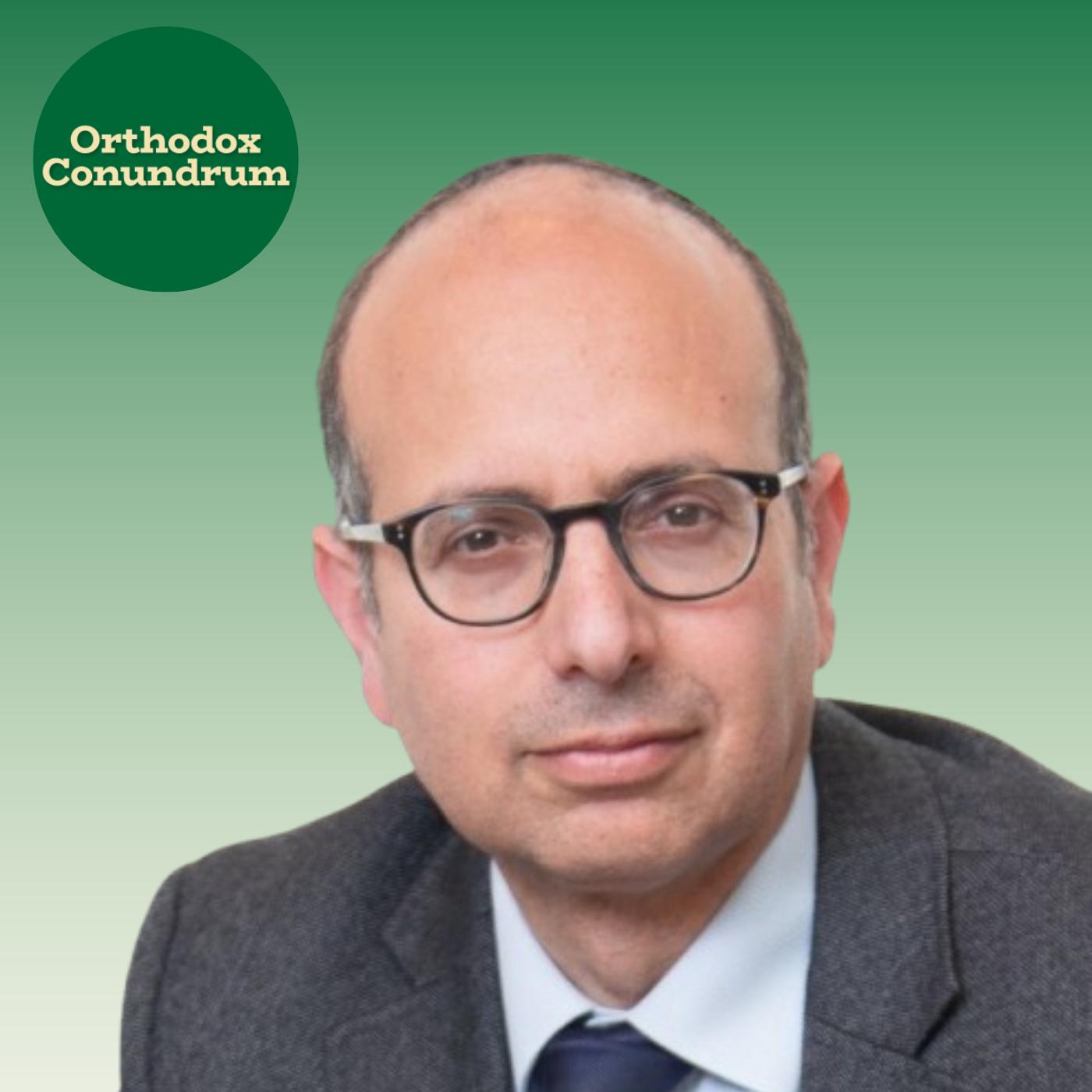
S8 Ep 43God's Loyal Opposition: Anger, Faith, and Divine Confrontation, with Rabbi Dr. Raphael Zarum (263)
Is it possible—maybe even Jewish—to be angry at God? From Abraham's challenge at Sodom to Job's cries of despair, Tanach is filled with voices that confront the Divine. But what does that mean for us today, when we struggle with personal tragedy, global antisemitism, and the ongoing pain of the seemingly endless war against Hamas? In this wide-ranging conversation on the Orthodox Conundrum, Scott Kahn speaks with Rabbi Dr. Raphael Zarum, Dean of the London School of Jewish Studies, about whether anger at God is heresy or a profound act of faith. Along the way, they discuss biblical protest, repentance, the Shoah, the morality of Israel's current war, the themes of Rosh Hashanah, contemporary crises, and whether confronting God can actually bring us closer to Him. We're excited to announce that we at Jewish Coffee House are continuing to expand the conversation by bringing you—our listeners—into the mix. Introducing JCH Q&A, an exciting new podcast where listener-submitted questions are answered in a thoughtful, honest, and engaging way. We plan to dive deep into your pressing hashkafic, political, and philosophical questions. We will address the ideas that matter, the issues that challange us, and the topics that spark real curiosity. To submit a question for our first episode, you must be a member of the JCH Podcast WhatsApp Community. (Join here.) No question is off limits, and all submissions will remain anonymous. We're looking forward to answering your questions on our first episode! Check out Orthodox Conundrum Commentary on Substack and get your free subscription by going to https://scottkahn.substack.com/. Please listen to and share this podcast, and let us know what you think on the Orthodox Conundrum Discussion Group on Facebook (https://www.facebook.com/groups/432020081498108). Thanks to all of our Patreon subscribers, who have access to bonus JCH podcasts, merch, and more - we appreciate your help, and hope you really enjoy the extras! Visit the JCH Patreon site at https://www.patreon.com/jewishcoffeehouse. Check out https://jewishcoffeehouse.com/ for the Orthodox Conundrum and other great podcasts, and remember to subscribe to them on your favorite podcast provider. Also visit https://www.jchpodcasts.com/ to learn all about creating your own podcast. Music: "Happy Rock" by bensound.com
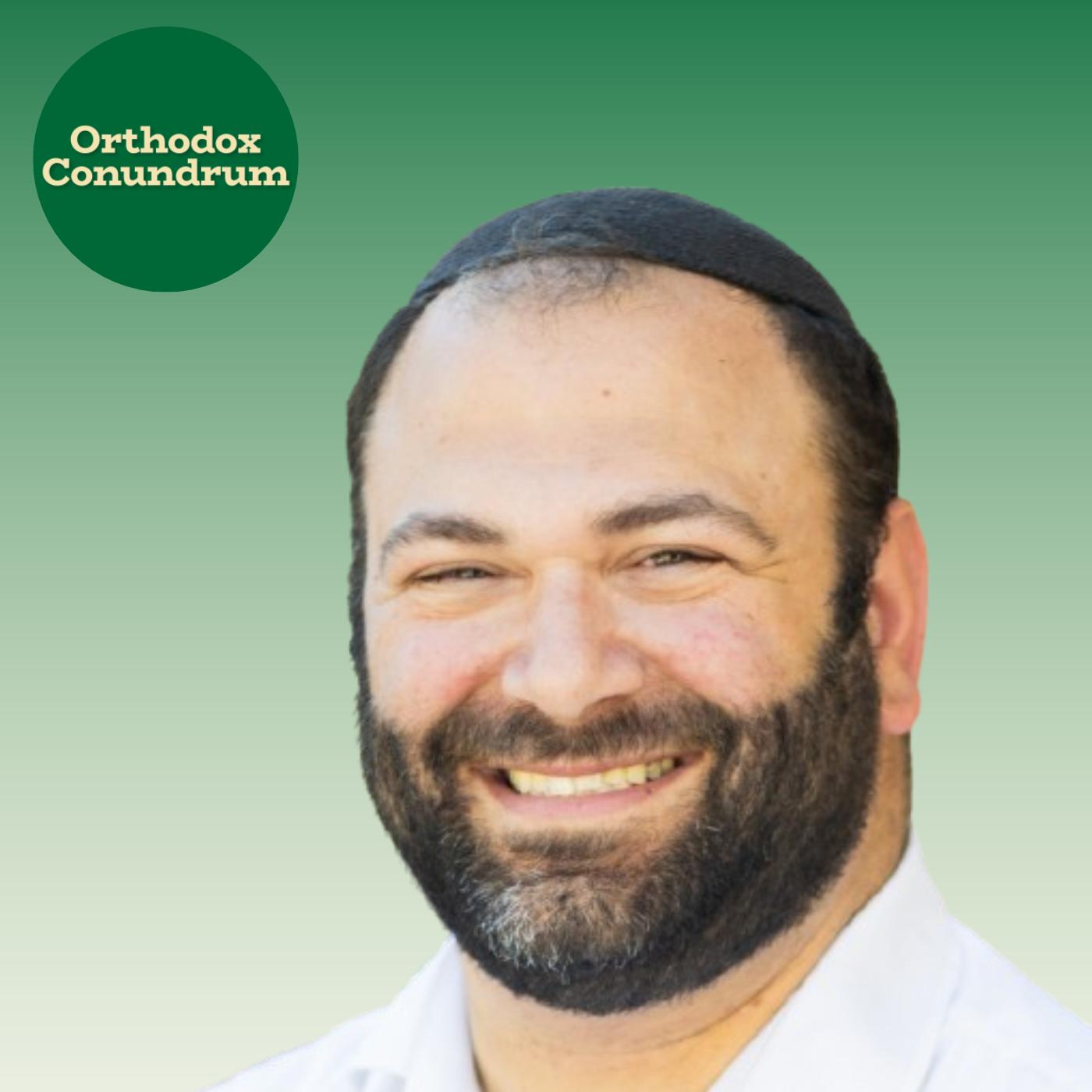
S8 Ep 42Suppressed, Rediscovered, Essential: Rav Kook's Lost Guide for Modern Faith (262)
This episode is partially a detective story, partially an analysis of daring ideas, and partially an invitation to discover new methodolgies of confronting challenges to Orthodox Judaism. Rav Kook drafted L'Nevuchei HaDor over a century ago—then the manuscript largely disappeared from view, resurfaced piecemeal, and sparked debates about redaction and "censorship." In this follow-up to our popular episode with Professor Marc Shapiro, I speak with Rabbi Aryeh Sklar, translator of the new English edition, to unpack both the history of the text (why it was sidelined, what changed between versions, and who may have been protecting whom) and the ideas that make it urgent now: how Rav Kook navigates tensions between moral intuition and Torah; his approach to challenges from writings of the ancient Near East; why heresy can refine faith; his respectful stance toward other religions; and much more. As we approach Rosh Hashanah and Yom Kippur, we ask what this early, daring Rav Kook can offer a polarized 2025 about creative teshuva, intellectual honesty, and religious confidence without fear. Check out the wonderful new podcast, Women Talking Mitzvot, co-produced by Deracheha.org and Beit Midrash Migdal Oz, with Rabbanit Shayna Goldberg and Rabbanit Dr. Yosefa Fogel Wruble. To listen, click here (Apple) or here (Spotify). Exclusive deal for Orthodox Conundrum listeners: code perplexed20 will give 20% off if they pre-order L'Nevuchei HaDor through kodeshpress.com. We're excited to announce that we at Jewish Coffee House are continuing to expand the conversation by bringing you—our listeners—into the mix. Introducing JCH Q&A, an exciting new podcast where listener-submitted questions are answered in a thoughtful, honest, and engaging way. We plan to dive deep into your pressing hashkafic, political, and philosophical questions. We will address the ideas that matter, the issues that challange us, and the topics that spark real curiosity. To submit a question for our first episode, you must be a member of the JCH Podcast WhatsApp Community. (Join here.) No question is off limits, and all submissions will remain anonymous. We're looking forward to answering your questions on our first episode! Check out Orthodox Conundrum Commentary on Substack and get your free subscription by going to https://scottkahn.substack.com/. Please listen to and share this podcast, and let us know what you think on the Orthodox Conundrum Discussion Group on Facebook (https://www.facebook.com/groups/432020081498108). Thanks to all of our Patreon subscribers, who have access to bonus JCH podcasts, merch, and more - we appreciate your help, and hope you really enjoy the extras! Visit the JCH Patreon site at https://www.patreon.com/jewishcoffeehouse. Check out https://jewishcoffeehouse.com/ for the Orthodox Conundrum and other great podcasts, and remember to subscribe to them on your favorite podcast provider. Also visit https://www.jchpodcasts.com/ to learn all about creating your own podcast. Music: "Happy Rock" by bensound.com
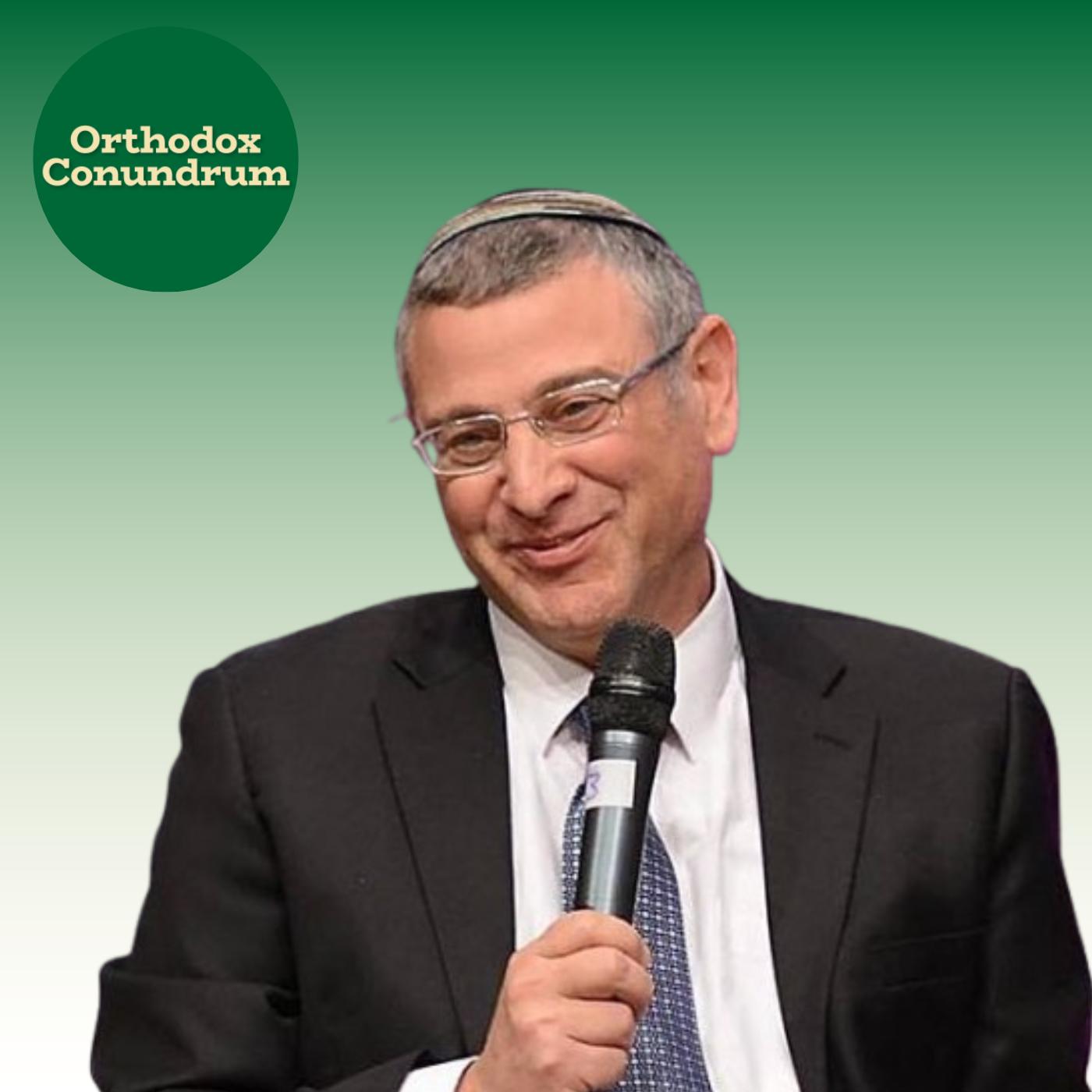
S8 Ep 41Learning Tanach Daily Through 929: Opportunities, Challenges, and Dangers, with Rabbi Benny Lau (261)
As one 929 cycle ends and the next begins, Scott talks with Rabbi Benny Lau—founder of 929—about why the project started, what it hopes to change in Jewish life, and what a shared, chapter-a-day cadence can build across communities. They also tackle the harder questions: the risks of using Tanach as a direct guidebook without the mediating lens of the Oral Tradition, how to engage ethically with challenging passages, and where pluralism meets red lines. Practical takeaways included: how beginners can start this week, and what to do when you fall behind. Whether you're all-in on 929 or cautious about it, this episode is about reading Tanach deeply—and responsibly. Check out the wonderful new podcast, Women Talking Mitzvot, co-produced by Deracheha.org and Beit Midrash Migdal Oz, with Rabbanit Shayna Goldberg and Rabbanit Dr. Yosefa Fogel Wruble. To listen, click here (Apple) or here (Spotify). We're excited to announce that we at Jewish Coffee House are continuing to expand the conversation by bringing you—our listeners—into the mix. Introducing JCH Q&A, an exciting new podcast where listener-submitted questions are answered in a thoughtful, honest, and engaging way. We plan to dive deep into your pressing hashkafic, political, and philosophical questions. We will address the ideas that matter, the issues that challange us, and the topics that spark real curiosity. To submit a question for our first episode, you must be a member of the JCH Podcast WhatsApp Community. (Join here.) No question is off limits, and all submissions will remain anonymous. We're looking forward to answering your questions on our first episode! Check out Orthodox Conundrum Commentary on Substack and get your free subscription by going to https://scottkahn.substack.com/. Please listen to and share this podcast, and let us know what you think on the Orthodox Conundrum Discussion Group on Facebook (https://www.facebook.com/groups/432020081498108). Thanks to all of our Patreon subscribers, who have access to bonus JCH podcasts, merch, and more - we appreciate your help, and hope you really enjoy the extras! Visit the JCH Patreon site at https://www.patreon.com/jewishcoffeehouse. Check out https://jewishcoffeehouse.com/ for the Orthodox Conundrum and other great podcasts, and remember to subscribe to them on your favorite podcast provider. Also visit https://www.jchpodcasts.com/ to learn all about creating your own podcast. Music: "Happy Rock" by bensound.com
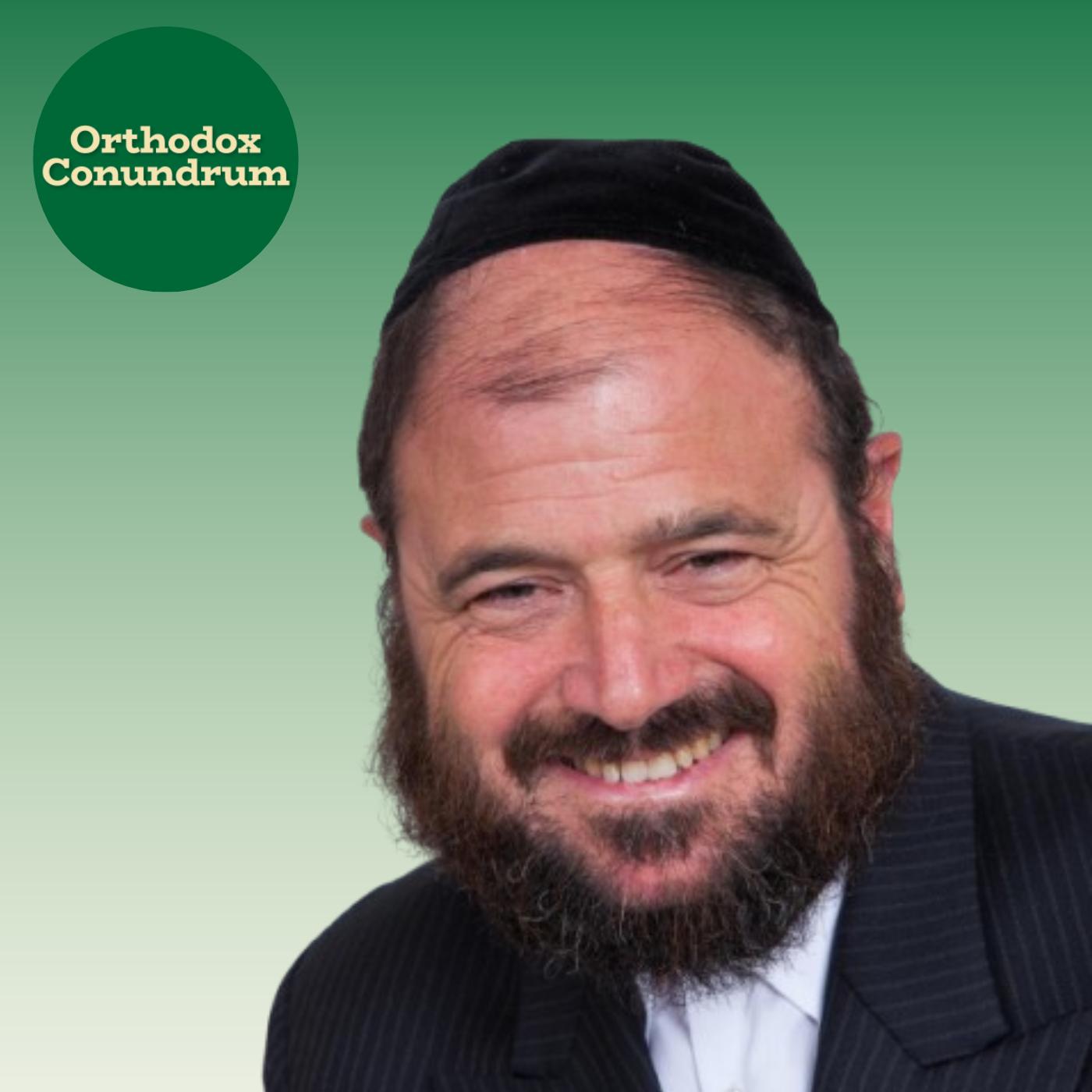
S8 Ep 40Orthodox Parents and Their LGBTQ Children, with Rabbi Yakov Horowitz (260)
When a child shares something deeply personal about his or her sexual orientation, Orthodox parents can feel love, concern, and uncertainty all at once. In this conversation, Rabbi Yakov Horowitz reflects on what he's learned working with families and communal leaders: how to approach the first conversations, which words can prevent hurt, and where halacha and mesorah guide our choices. We also consider what he's heard from senior rabbinic figures, how different communities navigate these moments, and what hope might look like over time. This is a tender, honest discussion meant to help listeners think carefully, speak gently, and consider their next steps with dignity—whatever they may be. Check out Tehillim Unveiled with Ari Levisohn and Rav Jeremy Tibbetts on Apple Podcasts or on Spotify - with a new three-part series on Tehillim 27, L'David Hashem Ori, dropping just in time for Elul! To contact Kesher Families, click here. Follow Rabbi Yakov Horowitz on Instagram - @yakovhorowitz and @brightbeginningsforum. We're excited to announce that we at Jewish Coffee House are continuing to expand the conversation by bringing you—our listeners—into the mix. Introducing JCH Q&A, an exciting new podcast where listener-submitted questions are answered in a thoughtful, honest, and engaging way. We plan to dive deep into your pressing hashkafic, political, and philosophical questions. We will address the ideas that matter, the issues that challange us, and the topics that spark real curiosity. To submit a question for our first episode, you must be a member of the JCH Podcast WhatsApp Community. (Join here.) No question is off limits, and all submissions will remain anonymous. We're looking forward to answering your questions on our first episode! Check out Orthodox Conundrum Commentary on Substack and get your free subscription by going to https://scottkahn.substack.com/. Please listen to and share this podcast, and let us know what you think on the Orthodox Conundrum Discussion Group on Facebook (https://www.facebook.com/groups/432020081498108). Thanks to all of our Patreon subscribers, who have access to bonus JCH podcasts, merch, and more - we appreciate your help, and hope you really enjoy the extras! Visit the JCH Patreon site at https://www.patreon.com/jewishcoffeehouse. Check out https://jewishcoffeehouse.com/ for the Orthodox Conundrum and other great podcasts, and remember to subscribe to them on your favorite podcast provider. Also visit https://www.jchpodcasts.com/ to learn all about creating your own podcast. Music: "Happy Rock" by bensound.com
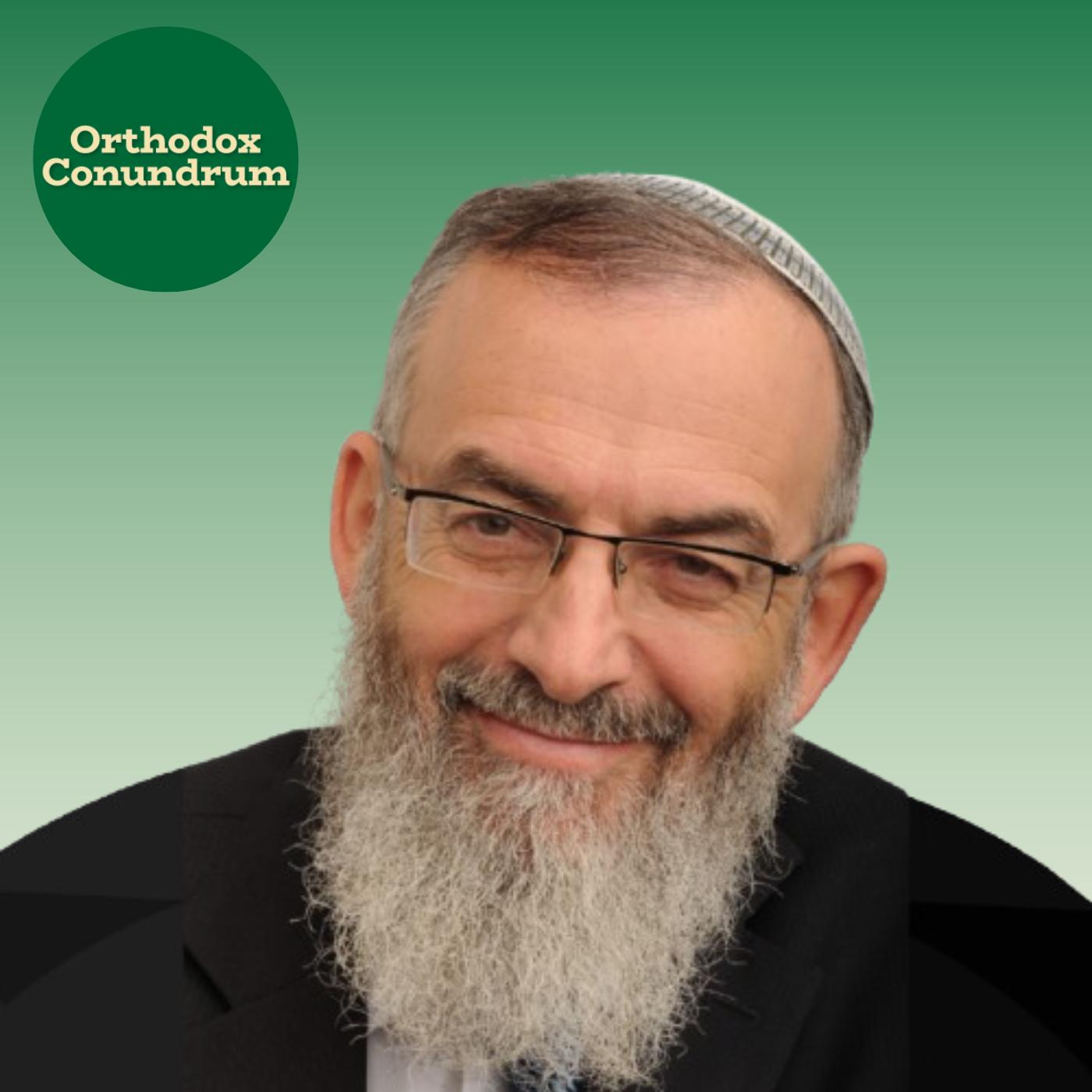
S8 Ep 39When Mitzvot Lose Their Meaning: Rabbi David Stav on Reconnecting Orthodox Youth to Jewish Law (259)
Why do so many young Modern Orthodox and National Religious Jews embrace the community but drift from halacha? In this episode of Orthodox Conundrum, Rabbi David Stav, head of Tzohar, joins Scott to confront the growing gap between identity and observance. Together they tackle the hard questions: Are we teaching halacha in ways that feel lifeless and irrelevant? Has secular society — from college to army service to technology — reshaped how youth see mitzvot? And most importantly, how can parents and educators reignite passion for Torah and halacha, showing a new generation that Jewish law is not just obligation, but a path to joy, meaning, and belonging? Check out the wonderful new podcast, Women Talking Mitzvot, co-produced by Deracheha.org and Beit Midrash Migdal Oz, with Rabbanit Shayna Goldberg and Rabbanit Dr. Yosefa Fogel Wruble. To listen, click here (Apple) or here (Spotify). We're excited to announce that we at Jewish Coffee House are continuing to expand the conversation by bringing you—our listeners—into the mix. Introducing JCH Q&A, an exciting new podcast where listener-submitted questions are answered in a thoughtful, honest, and engaging way. We plan to dive deep into your pressing hashkafic, political, and philosophical questions. We will address the ideas that matter, the issues that challange us, and the topics that spark real curiosity. To submit a question for our first episode, you must be a member of the JCH Podcast WhatsApp Community. (Join here.) No question is off limits, and all submissions will remain anonymous. We're looking forward to answering your questions on our first episode! Check out Orthodox Conundrum Commentary on Substack and get your free subscription by going to https://scottkahn.substack.com/. Please listen to and share this podcast, and let us know what you think on the Orthodox Conundrum Discussion Group on Facebook (https://www.facebook.com/groups/432020081498108). Thanks to all of our Patreon subscribers, who have access to bonus JCH podcasts, merch, and more - we appreciate your help, and hope you really enjoy the extras! Visit the JCH Patreon site at https://www.patreon.com/jewishcoffeehouse. Check out https://jewishcoffeehouse.com/ for the Orthodox Conundrum and other great podcasts, and remember to subscribe to them on your favorite podcast provider. Also visit https://www.jchpodcasts.com/ to learn all about creating your own podcast. Music: "Happy Rock" by bensound.com
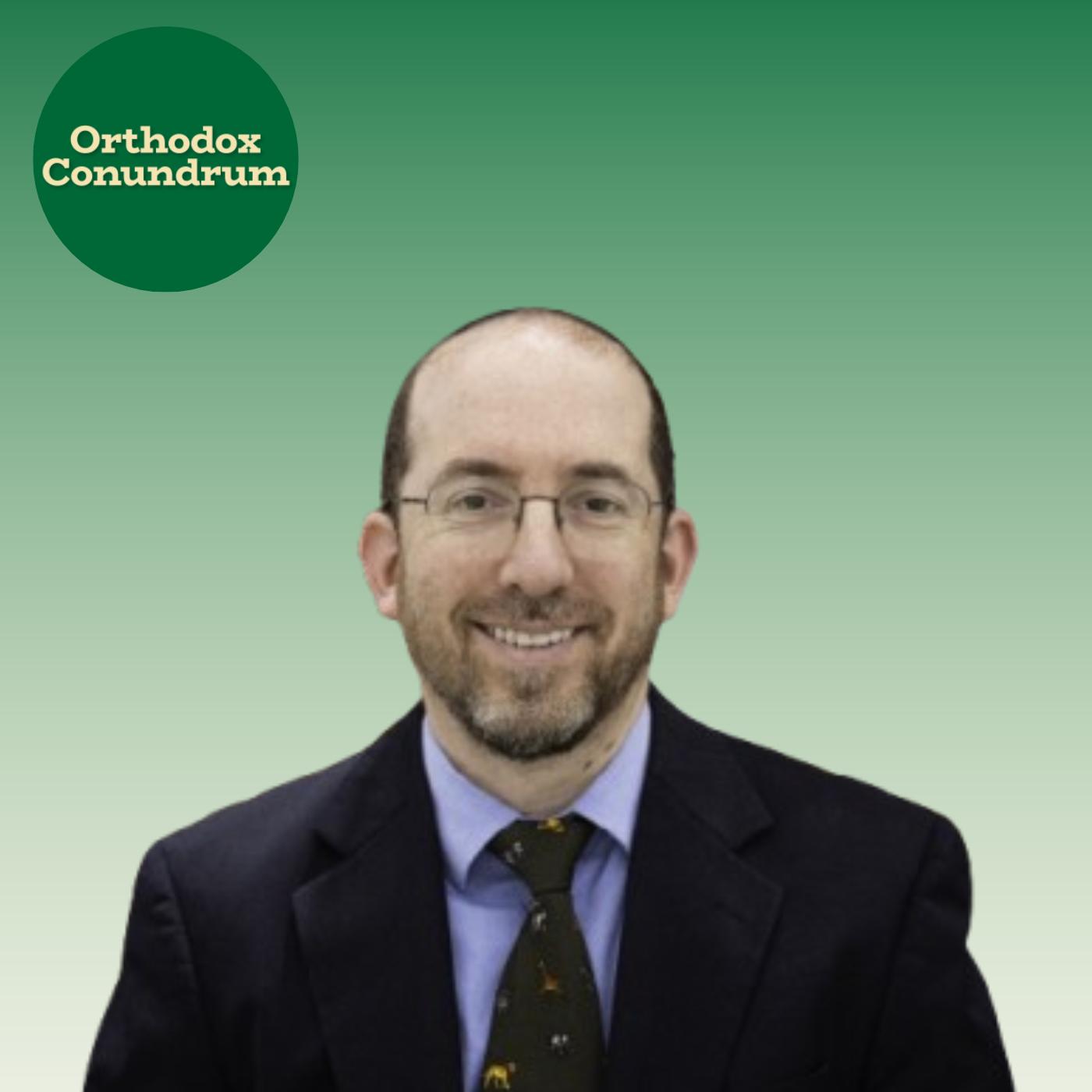
S8 Ep 38The Bible, the Beasts, and the Big Lies About Israel, with Rabbi Dr. Natan Slifkin (258)
From biblical lions to the bizarre "Zionist crocodile plot," Israel's wildlife tells a story that shatters modern anti-Israel myths. In his new book Lions of Zion, Rabbi Dr. Natan Slifkin reveals how the animals of the Land of Israel — past and present — reflect the Jewish people's deep, indigenous connection to their homeland. Scott and Rabbi Slifkin tackle false narratives about "settler colonialism," "greenwashing," and cultural appropriation, and explore how creatures like sunbirds, jackals, and even poppies have been weaponized in the propaganda war against Israel. This eye-opening conversation blends Bible, zoology, and politics to show that in Israel, even the animals have a story to tell. To order The Lions of Zion: Biblical Natural History and the Significance of Israel, click here. We're excited to announce that we at Jewish Coffee House are continuing to expand the conversation by bringing you—our listeners—into the mix. Introducing JCH Q&A, an exciting new podcast where listener-submitted questions are answered in a thoughtful, honest, and engaging way. We plan to dive deep into your pressing hashkafic, political, and philosophical questions. We will address the ideas that matter, the issues that challange us, and the topics that spark real curiosity. To submit a question for our first episode, you must be a member of the JCH Podcast WhatsApp Community. (Join here.) No question is off limits, and all submissions will remain anonymous. We're looking forward to answering your questions on our first episode! Check out Orthodox Conundrum Commentary on Substack and get your free subscription by going to https://scottkahn.substack.com/. Please listen to and share this podcast, and let us know what you think on the Orthodox Conundrum Discussion Group on Facebook (https://www.facebook.com/groups/432020081498108). Thanks to all of our Patreon subscribers, who have access to bonus JCH podcasts, merch, and more - we appreciate your help, and hope you really enjoy the extras! Visit the JCH Patreon site at https://www.patreon.com/jewishcoffeehouse. Check out https://jewishcoffeehouse.com/ for the Orthodox Conundrum and other great podcasts, and remember to subscribe to them on your favorite podcast provider. Also visit https://www.jchpodcasts.com/ to learn all about creating your own podcast. Music: "Happy Rock" by bensound.com
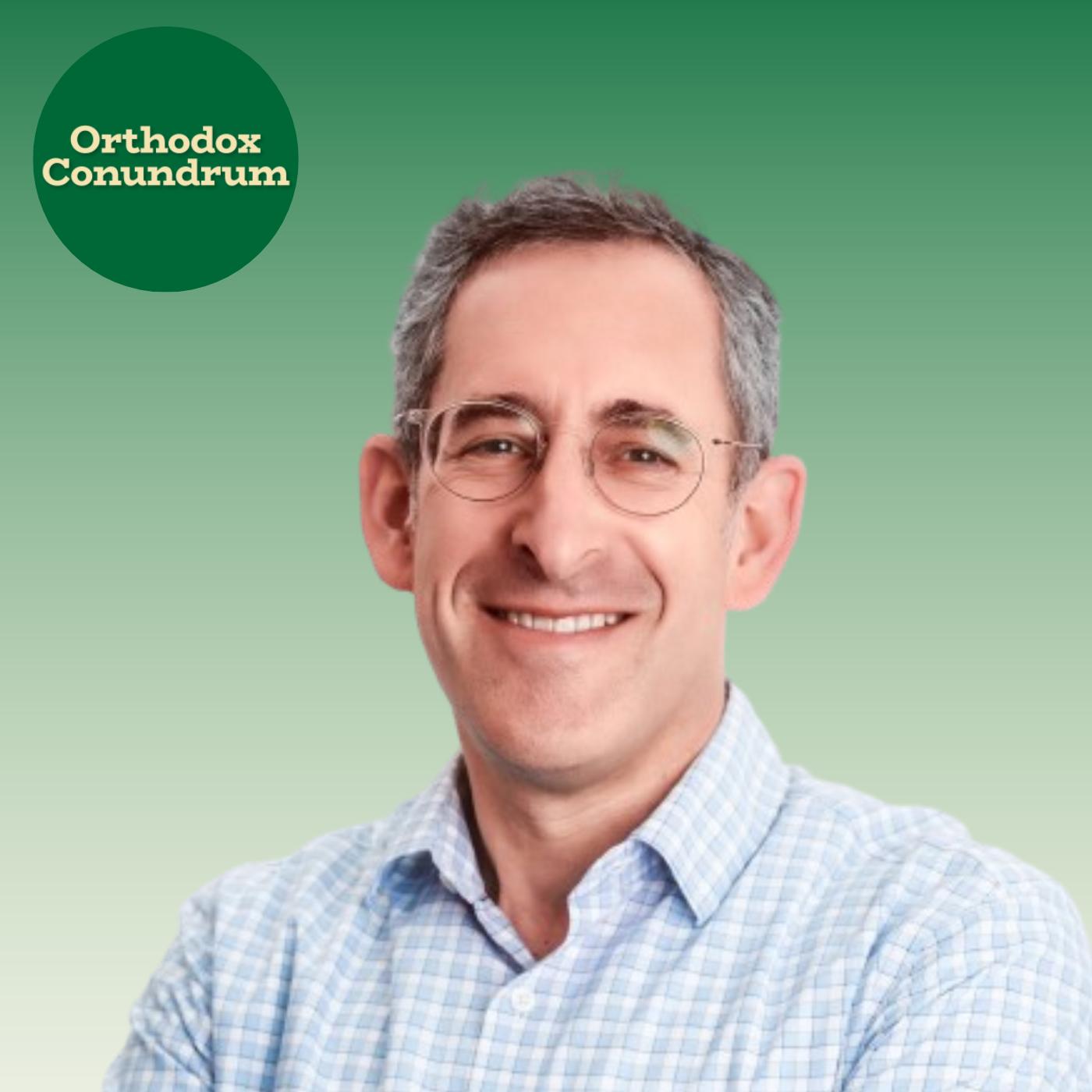
S8 Ep 37Disagreeing Like Moses: A Torah Blueprint for Conflict Resolution (257)
As we approach Tisha B'Av — a day that mourns the devastating consequences of internal strife and baseless hatred — we must ask: is there a Torah model for constructive conflict resolution? Rabbi Alex Israel joins Scott to explore a striking example in Bamidbar chapter 32, where Moses engages the tribes of Reuben and Gad in what Rabbi Jonathan Sacks called, "a model illustration of positive negotiation and conflict resolution." What does this biblical conversation teach us about how to mediate conflict, preserve unity, and build a stronger community — even when we disagree? Scott and Rabbi Israel then apply these lessons to modern conflicts that divide the Jewish people in Israel and around the world. This episode offers a timely and hopeful message: disagreement doesn't have to lead to division, and conflict can become a source of growth — if we learn to listen, negotiate, and speak with respect. Check out the Tehillim Unveiled Podcast! Their episode on Tehillim 89 is especially relevant in the days leading up to Tisha B'Av - you can find it on Spotify or Apple Podcasts. We're excited to announce that we at Jewish Coffee House are continuing to expand the conversation by bringing you—our listeners—into the mix. Introducing JCH Q&A, an exciting new podcast where listener-submitted questions are answered in a thoughtful, honest, and engaging way. We plan to dive deep into your pressing hashkafic, political, and philosophical questions. We will address the ideas that matter, the issues that challange us, and the topics that spark real curiosity. To submit a question for our first episode, you must be a member of the JCH Podcast WhatsApp Community. (Join here.) No question is off limits, and all submissions will remain anonymous. We're looking forward to answering your questions on our first episode! To read my article on Jewish Unity from last month, click here. Check out Orthodox Conundrum Commentary on Substack and get your free subscription by going to https://scottkahn.substack.com/. Please listen to and share this podcast, and let us know what you think on the Orthodox Conundrum Discussion Group on Facebook (https://www.facebook.com/groups/432020081498108). Thanks to all of our Patreon subscribers, who have access to bonus JCH podcasts, merch, and more - we appreciate your help, and hope you really enjoy the extras! Visit the JCH Patreon site at https://www.patreon.com/jewishcoffeehouse. Check out https://jewishcoffeehouse.com/ for the Orthodox Conundrum and other great podcasts, and remember to subscribe to them on your favorite podcast provider. Also visit https://www.jchpodcasts.com/ to learn all about creating your own podcast. Music: "Happy Rock" by bensound.com
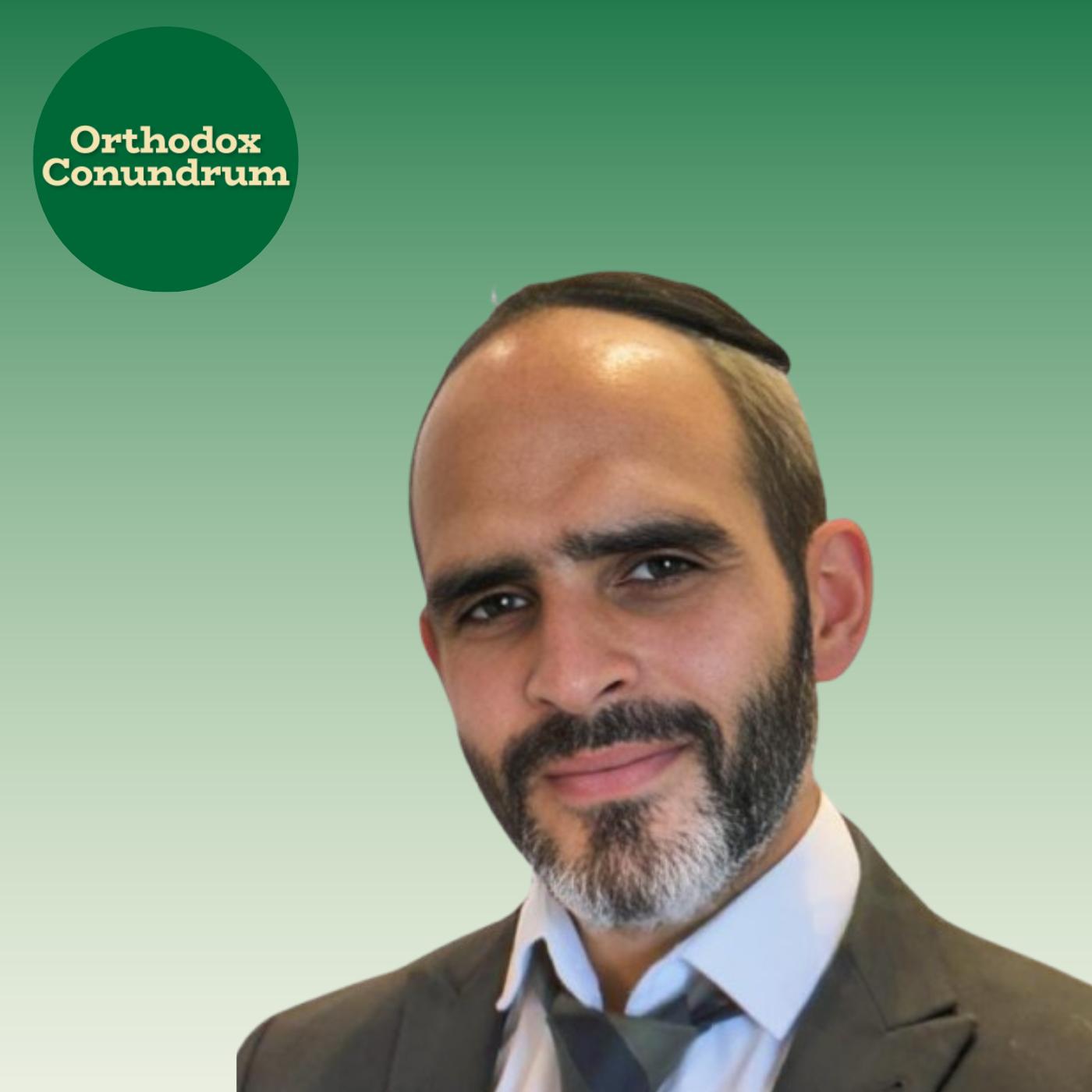
S8 Ep 36Must Every Jew Be Shomer Shabbat? A Fresh Perspective on Kiruv, with Rabbi Simi Lerner (256)
What is kiruv really about—and what should it be about? In this thought-provoking conversation, Scott speaks with Rabbi Simi Lerner, a kiruv professional who challenges conventional assumptions about Orthodox Jewish outreach. They explore the core goals of kiruv, the philosophical and ethical pitfalls it can fall into, and how to ensure it respects the dignity and autonomy of every individual. Is the point to make people religious? Should every Jew be Shomer Shabbat? What happens when outreach causes regret—or even harm? They also discuss whether kiruv professionals objectify people, the bad habit exhibited by some kiruv professionals (and the problem with having "kivurv professionals"), and how to navigate halacha with integrity in the face of complex realities. Rav Simi emphasizes that many kiruv workers do tremendous and holy work in a careful and sensitive manner... and others do not. This is a candid and essential conversation about one of the most idealistic—and sometimes problematic—projects in the Jewish world. Check out the Tehillim Unveiled Podcast! Their episode on Tehillim 89 is especially relevant in the days leading up to Tisha B'Av - you can find it on Spotify or Apple Podcasts. Links for Rav Simi Lerner: Judaism From Within Podcast Two Rabbis, Three Opinions Podcast Horeb: Philosophy of law and observances from Rav Samson Raphael Hirsch Classes on Kuzari at Yeshivat Darche Noam Check out Orthodox Conundrum Commentary on Substack and get your free subscription by going to https://scottkahn.substack.com/. Please listen to and share this podcast, and let us know what you think on the Orthodox Conundrum Discussion Group on Facebook (https://www.facebook.com/groups/432020081498108). Thanks to all of our Patreon subscribers, who have access to bonus JCH podcasts, merch, and more - we appreciate your help, and hope you really enjoy the extras! Visit the JCH Patreon site at https://www.patreon.com/jewishcoffeehouse. Check out https://jewishcoffeehouse.com/ for the Orthodox Conundrum and other great podcasts, and remember to subscribe to them on your favorite podcast provider. Also visit https://www.jchpodcasts.com/ to learn all about creating your own podcast. Music: "Happy Rock" by bensound.com
S8 Ep 35Overeating, Obesity, Ozempic, and Orthodox Jews, with Dr. Sharon Grossman (255)
Obesity is now responsible for more deaths in the United States than smoking—yet the Orthodox Jewish community rarely addresses it as either a public health emergency or a halachic concern. In this eye-opening episode, Scott speaks with Dr. Sharon Grossman to explore the medical, hashkafic, and halachic dimensions of obesity, overeating, and eating disorders. They discuss startling statistics about caloric intake on Shabbat, whether extravagant kiddushes and wedding meals reflect a violation of Torah values, and how halacha approaches issues like achilat gasa, guarding one's health, and weight loss surgery. They also tackle the other extreme—unhealthy preoccupations with appearance, the dangers of anorexia, and the rise of drugs like Ozempic. Can Judaism offer a healthy, balanced view of eating, body image, and self-care? This conversation challenges us to rethink how we relate to food, our health, and our values. Jewish Coffee House - the company of which Orthodox Conundrum Commentary is a part - has plans to grow and provide additional exceptional content… and to do that right, we need your help. Our summer intern, Nathan Shapiro, put together a survey so that we can better provide the podcasts, articles, live events, and online presentations that will speak to you. We plan to produce content that will be meaningful, stimulating, and entertaining - and we need your input so that we can create the best possible version of Jewish Coffee House. We want to hear from you. Please take this short survey today! Check out Orthodox Conundrum Commentary on Substack and get your free subscription by going to https://scottkahn.substack.com/. Please listen to and share this podcast, and let us know what you think on the Orthodox Conundrum Discussion Group on Facebook (https://www.facebook.com/groups/432020081498108). Thanks to all of our Patreon subscribers, who have access to bonus JCH podcasts, merch, and more - we appreciate your help, and hope you really enjoy the extras! Visit the JCH Patreon site at https://www.patreon.com/jewishcoffeehouse. Check out https://jewishcoffeehouse.com/ for the Orthodox Conundrum and other great podcasts, and remember to subscribe to them on your favorite podcast provider. Also visit https://www.jchpodcasts.com/ to learn all about creating your own podcast. Music: "Happy Rock" by bensound.com
S8 Ep 34Will Charedi Society Face Reality? Dayan Yehoshua Pfeffer on Work, Faith, and the Future of the Torah Community (254)
Is the Charedi community prepared to confront the demands of real life—economic, civic, and national—or has it built a worldview that prizes withdrawal over responsibility? In this provocative and thoughtful episode, Dayan Yehoshua Pfeffer joins Scott to explore what happens when religious ideology collides with practical reality. Drawing on his influential Sapir essay and other writings, Dayan Pfeffer explains how parts of Charedi society have defined religious life through a lens that minimizes human effort and places near-exclusive trust in divine outcomes—an attitude that discourages participation in Israel's workforce, civic institutions, and national service. But is this mindset sustainable in a modern state? And how do Charedi thinkers reconcile it with halachic sources, economic necessity, and lived experience? Scott and Dayan Pfeffer also delve into the social, theological, and ideological obstacles to change—particularly the way certain ideas have become "untouchable" within the community. Can Charedim pursue professional careers, engage with broader society, and still maintain fidelity to Charedi identity? Or does such a shift inevitably bring them closer to the Modern Orthodox world? This is a challenging, respectful, and essential conversation for anyone concerned about the future of Torah Judaism in Israel and throughout the world. Check out Orthodox Conundrum Commentary on Substack and get your free subscription by going to https://scottkahn.substack.com/. Please listen to and share this podcast, and let us know what you think on the Orthodox Conundrum Discussion Group on Facebook (https://www.facebook.com/groups/432020081498108). Thanks to all of our Patreon subscribers, who have access to bonus JCH podcasts, merch, and more - we appreciate your help, and hope you really enjoy the extras! Visit the JCH Patreon site at https://www.patreon.com/jewishcoffeehouse. Check out https://jewishcoffeehouse.com/ for the Orthodox Conundrum and other great podcasts, and remember to subscribe to them on your favorite podcast provider. Also visit https://www.jchpodcasts.com/ to learn all about creating your own podcast. Music: "Happy Rock" by bensound.com
S8 Ep 33Faith, Prayer, and the Impossible: Rabbi Shlomo Brody on Emunah, Miracles, Reality, and the Power of Tefillah (253)
In the wake of Israel's stunning victory over Iran—an event many have called miraculous—Jews around the world are reflecting on the nature of divine intervention and the power of prayer. Can we, and should we, pray for miracles? In this deeply thoughtful episode, Rabbi Shlomo Brody joins Scott to explore the halachic and emotional dimensions of tefillah in desperate times. What does it mean to ask for something that defies natural law? Is there a spiritual cost to praying for impossible outcomes? And how should we respond when a loved one is terminally ill—when a cure seems impossible, but giving up feels like betrayal? They also tackle a more uncomfortable question: Does excessive reliance on prayer risk becoming a substitute for human responsibility—such as voting, civic engagement, or taking necessary action in the real world? Can asking God for a miracle ever become a way of avoiding the hard work of confronting reality? This wide-ranging and nuanced conversation explores how to balance faith, hope, and the knowledge that God can do anything, with realism and the recognition that He has discouraged praying for that which is outside the realm of possibility; when to pray for mercy instead of outcomes; and how to maintain emunah without falling into magical thinking. It's essential listening for anyone grappling with what it means to live—and pray—with integrity in the face of uncertainty and crisis. Check out the Tehillim Unveiled Podcast! Their episode on Tehillim 20 is especially relevant today - you can find it on Spotify or Apple Podcasts. Check out Orthodox Conundrum Commentary on Substack and get your free subscription by going to https://scottkahn.substack.com/. Please listen to and share this podcast, and let us know what you think on the Orthodox Conundrum Discussion Group on Facebook (https://www.facebook.com/groups/432020081498108). Thanks to all of our Patreon subscribers, who have access to bonus JCH podcasts, merch, and more - we appreciate your help, and hope you really enjoy the extras! Visit the JCH Patreon site at https://www.patreon.com/jewishcoffeehouse. Check out https://jewishcoffeehouse.com/ for the Orthodox Conundrum and other great podcasts, and remember to subscribe to them on your favorite podcast provider. Also visit https://www.jchpodcasts.com/ to learn all about creating your own podcast. Music: "Happy Rock" by bensound.com

S8 Ep 32Emergency Episode: The U.S. Attacks Iran — What It Means for Israel, Hamas, and the Future of the War (252)
When the United States bombed Iran's nuclear sites this week, the Middle East—and the world—entered a new phase of conflict. In this urgent episode, Scott speaks once again with Yaakov Katz, former editor of The Jerusalem Post, about what these strikes mean for Israel's war effort, the potential consequences of regime change in Iran, the risks of escalation, and how this moment may redefine the geopolitical landscape. This is essential listening for anyone who wants to understand what's really happening beyond the headlines. Check out the Tehillim Unveiled Podcast! Their episode on Tehillim 20 is especially relevant today - you can find it on Spotify or Apple Podcasts. To preorder While Israel Slept by Yaakov Katz, click here. Check out Orthodox Conundrum Commentary on Substack and get your free subscription by going to https://scottkahn.substack.com/. Please listen to and share this podcast, and let us know what you think on the Orthodox Conundrum Discussion Group on Facebook (https://www.facebook.com/groups/432020081498108). Thanks to all of our Patreon subscribers, who have access to bonus JCH podcasts, merch, and more - we appreciate your help, and hope you really enjoy the extras! Visit the JCH Patreon site at https://www.patreon.com/jewishcoffeehouse. Check out https://jewishcoffeehouse.com/ for the Orthodox Conundrum and other great podcasts, and remember to subscribe to them on your favorite podcast provider. Also visit https://www.jchpodcasts.com/ to learn all about creating your own podcast. Music: "Happy Rock" by bensound.com

The New Face of American Antisemitism: Violence, Politics, and Denial (BONUS EPISODE)
bonusTwo Israeli embassy staffers shot in Washington. Jewish activists burned in Boulder. A mayoral candidate in New York who refused to condemn the Holocaust gaining momentum. Antisemitism in the United States is no longer hiding in the shadows — it's on the march, in broad daylight. In this urgent bonus episode of Orthodox Conundrum, Scott Kahn speaks with Rabbi Chaim Steinmetz and Andy Weiss about the troubling rise in antisemitic violence and rhetoric, the mainstreaming of hate, and how American Jews are responding — with concern, activism, and a growing sense of alarm. From Zohran Mamdani's alarming candidacy to the broader cultural shift that's making Jew-hatred acceptable again, this is a frank and timely conversation every Jew needs to hear — whether or not you live in New York. Check out Orthodox Conundrum Commentary on Substack and get your free subscription by going to https://scottkahn.substack.com/. Please listen to and share this podcast, and let us know what you think on the Orthodox Conundrum Discussion Group on Facebook (https://www.facebook.com/groups/432020081498108). Thanks to all of our Patreon subscribers, who have access to bonus JCH podcasts, merch, and more - we appreciate your help, and hope you really enjoy the extras! Visit the JCH Patreon site at https://www.patreon.com/jewishcoffeehouse. Check out https://jewishcoffeehouse.com/ for the Orthodox Conundrum and other great podcasts, and remember to subscribe to them on your favorite podcast provider. Also visit https://www.jchpodcasts.com/ to learn all about creating your own podcast. Music: "Happy Rock" by bensound.com
S8 Ep 31Unscripted Reflections: Israel, Iran, and the Challenge of Faith in Wartime (251)
In this spontaneous and unfiltered episode of Orthodox Conundrum, Scott shares heartfelt reflections on Israel's war against Iran—not from a political or military perspective, but through personal experience and the lens of faith. What does it mean to believe in Divine providence during a time of fear and uncertainty? How should we grapple with the moral and spiritual implications of war? Without a script or agenda, this episode wrestles with the difficult questions that arise when religious conviction meets the harsh realities of conflict. Check out Orthodox Conundrum Commentary on Substack and get your free subscription by going to https://scottkahn.substack.com/. Please listen to and share this podcast, and let us know what you think on the Orthodox Conundrum Discussion Group on Facebook (https://www.facebook.com/groups/432020081498108). Thanks to all of our Patreon subscribers, who have access to bonus JCH podcasts, merch, and more - we appreciate your help, and hope you really enjoy the extras! Visit the JCH Patreon site at https://www.patreon.com/jewishcoffeehouse. Check out https://jewishcoffeehouse.com/ for the Orthodox Conundrum and other great podcasts, and remember to subscribe to them on your favorite podcast provider. Also visit https://www.jchpodcasts.com/ to learn all about creating your own podcast. Music: "Happy Rock" by bensound.com

S8 Ep 30What Comes Next? Yaakov Katz on Israel's War, Netanyahu's Calculations, and the Search for an Endgame (250)
Twenty months into the war with Hamas, many Israelis and supporters abroad are asking the same urgent question: how will this end? In this in-depth episode of Orthodox Conundrum, Scott Kahn is joined by Yaakov Katz, one of Israel's most respected journalists and author of While Israel Slept, to examine whether Israel's military goals are still realistic — or even defined. They discuss the uncertain state of the war, Netanyahu's political maneuvering, the role of the Chareidi parties, international pressure, and the trust gap between the government and the public. It's a sobering but essential conversation for anyone who cares about Israel's future. To preorder While Israel Slept, click here. Check out Orthodox Conundrum Commentary on Substack and get your free subscription by going to https://scottkahn.substack.com/. Please listen to and share this podcast, and let us know what you think on the Orthodox Conundrum Discussion Group on Facebook (https://www.facebook.com/groups/432020081498108). Thanks to all of our Patreon subscribers, who have access to bonus JCH podcasts, merch, and more - we appreciate your help, and hope you really enjoy the extras! Visit the JCH Patreon site at https://www.patreon.com/jewishcoffeehouse. Check out https://jewishcoffeehouse.com/ for the Orthodox Conundrum and other great podcasts, and remember to subscribe to them on your favorite podcast provider. Also visit https://www.jchpodcasts.com/ to learn all about creating your own podcast. Music: "Happy Rock" by bensound.com
S8 Ep 29From Beit Lechem to the Royal Ball: Comparing and Contrasting the Book of Ruth and Cinderella, with Rabbi Dr. Joshua Berman (249)
Megilat Rut — the Book of Ruth — is one of the most beloved and widely read books in the Hebrew Bible. Because we read it annually on Shavuot, many people are familiar with its basic storyline. But its very familiarity can sometimes obscure its most powerful messages. In this episode, I'm joined by Rabbi Dr. Joshua Berman of Bar Ilan University, who offers a fascinating lens through which to revisit Ruth's story: the world's most popular fairytale — Cinderella. By comparing the two narratives, Rabbi Berman uncovers striking parallels and, more importantly, profound differences that highlight essential Torah values. This conversation will change how you read Megilat Rut and offer fresh insight into the values that give Jewish life depth, direction, and meaning. Listen to the Tehillim Unveiled podcast here or wherever you find your podcasts. Check out Orthodox Conundrum Commentary on Substack and get your free subscription by going to https://scottkahn.substack.com/. Please listen to and share this podcast, and let us know what you think on the Orthodox Conundrum Discussion Group on Facebook (https://www.facebook.com/groups/432020081498108). Thanks to all of our Patreon subscribers, who have access to bonus JCH podcasts, merch, and more - we appreciate your help, and hope you really enjoy the extras! Visit the JCH Patreon site at https://www.patreon.com/jewishcoffeehouse. Check out https://jewishcoffeehouse.com/ for the Orthodox Conundrum and other great podcasts, and remember to subscribe to them on your favorite podcast provider. Also visit https://www.jchpodcasts.com/ to learn all about creating your own podcast. Music: "Happy Rock" by bensound.com
S8 Ep 28Can Physics Demonstrate God's Existence? (248)
Can science be a vehicle to get closer to God? The Rambam famously answered in the affirmative. In the second of the 1000 chapters of his Mishneh Torah, Hilchot Yesodei HaTorah chapter 2, the Rambam writes, "What is the method towards loving and fearing God? At the moment that a person investigates His wondrous and massive actions and creations, and sees through them His endless and infinite wisdom, he immediately loves, praises, and extols, and desires tremendously to know the great Name. In the words of David, 'My soul thirsts for God, the living divine.' And when he thinks about these things themselves, he immediately recoils backward and is awestruck and fears, realizing that he is a small, lowly, and beclouded creature, with minimal and superficial knowledge compared to God's perfect intellect. As David said, 'When I see your heavens… what is man that You should acknowledge him?' According to these ideas I will clarify important principles of the works of the Master of the worlds so that they will be an introduction to one who understands in order to love God. As the Sages said with regard to love, from this you recognize the One who spoke and the world came into being." The Rambam then proceeds to give an introduction to the Aristotelian world view that was presumed true in his time. While we no longer accept the Rambam's science as accurate, his principle that knowledge of the universe is a vehicle to loving and fearing God remains an essential principle. What about using science to demonstrate God's existence? The Rambam, again, was willing to use philosophical arguments for this purpose; but others recoil from the concept. Many people have no interest in examining theories such as intelligent design and creationism, and find them absurd. There's a different but somewhat similar phenomenon which Professor David Shatz calls "bold concordism," where scientists attempt to demonstrate that the first chapter of Bereshit and modern physics are in complete agreement, as long as the words of the Torah are read in a literal, albeit non-obvious way. Some people find this inspiring and helpful, while others dismiss it altogether. My guests today, Rabbi Aaron Zimmer and Rabbi Dr. Elie Feder, propose something quite different. They use established scientific facts based on up-to-date physics - scientific facts, that is, which no one denies - and argue that the most logical conclusion from this science is that the universe was created by an intelligent designer. This has nothing to do with the argument of intelligent design from biology, and is not based on any verses in the Torah. It doesn't even deal with questions around divine providence or other aspects of Jewish belief. Instead, they argue that modern physics has offered a brand new and extremely compelling version of the argument from design: that the values of the constants are so unusual and so inherently unlikely, that the most obvious conclusion by far is that they were designed so that our complex universe, which includes atoms, molecules, stars, galaxies, and life, would come into existence. As they explain, almost all serious physicists were bothered by the problem of why the constants are what they are; physicists almost universally acknowledge that the reason that the constants have the values that they do is a huge mystery. Elie and Aaron only differ with most other physicists in that many others try to solve this mystery by positing the existence of a multiverse - that is, infinitely many worlds, each with different values of the constants; whereas my guests argue that this is far more unlikely than the obvious answer: that something with intelligence chose these constants for a reason. Regardless of whether you like the idea of using science to demonstrate God's existence or disagree with the enterprise, Elie and Aaron's argument demands serious attention. I'm honored to present it today, and look forward to hearing what you think. To learn more about Physics to God, to listen to the podcast, or to watch it on YouTube, click here. Check out Orthodox Conundrum Commentary on Substack and get your free subscription by going to https://scottkahn.substack.com/. Please listen to and share this podcast, and let us know what you think on the Orthodox Conundrum Discussion Group on Facebook (https://www.facebook.com/groups/432020081498108). Thanks to all of our Patreon subscribers, who have access to bonus JCH podcasts, merch, and more - we appreciate your help, and hope you really enjoy the extras! Visit the JCH Patreon site at https://www.patreon.com/jewishcoffeehouse. Check out https://jewishcoffeehouse.com/ for the Orthodox Conundrum and other great podcasts, and remember to subscribe to them on your favorite podcast provider. Also visit https://www.jchpodcasts.com/ to learn all about creating your own podcast. Music: "Happy Rock" by bensound.com
S8 Ep 27Having "The Talk": How Should Jewish Parents Talk to Kids About Sex? (Co-produced with Intimate Judaism)
EPlease note that this episode discusses sensitive topics and uses explicit language. Listener discretion is advised. Today, the Orthodox Conundrum is releasing a new episode of Intimate Judaism that my Intimate Judaism co-host, Talli Rosenbaum, and I recorded with Yonina Rubinstein, where we explore how parents can approach conversations about sexuality with sensitivity, clarity, and confidence. How can we talk to kids about sex in a way that's honest, healthy, and grounded in Jewish values? Yonina offers practical strategies for different ages and stages, explains the importance of modeling a positive attitude toward intimacy, and discusses how halacha and tradition can serve as a guide—not a barrier—to raising sexually healthy children. Whether you're a parent, educator, or just thinking ahead, this episode offers an essential roadmap for both navigating and redefining "The Talk" in a way that's both open and deeply rooted in Jewish life. This episode is being released simultaneously on Intimate Judaism and the Orthodox Conundrum. Check out Orthodox Conundrum Commentary on Substack and get your free subscription by going to https://scottkahn.substack.com/. Please listen to and share this podcast, and let us know what you think on the Orthodox Conundrum Discussion Group on Facebook (https://www.facebook.com/groups/432020081498108). Thanks to all of our Patreon subscribers, who have access to bonus JCH podcasts, merch, and more - we appreciate your help, and hope you really enjoy the extras! Visit the JCH Patreon site at https://www.patreon.com/jewishcoffeehouse. Check out https://jewishcoffeehouse.com/ for the Orthodox Conundrum and other great podcasts, and remember to subscribe to them on your favorite podcast provider. Also visit https://www.jchpodcasts.com/ to learn all about creating your own podcast. Music: "Happy Rock" by bensound.com

The Pope, the Jews, and Israel: What to Anticipate From Pope Leo XIV, with Dr. Malka Simkovich (BONUS EPISODE)
bonusLast Thursday, Cardinal Robert Prevost of Chicago became Pope Leo XIV. While Jews may believe that this shouldn't matter to us at all, this is most likely false. The pope commands the allegiance of well over a billion Roman Catholics worldwide, and his ability to help shape their opinions about the Jewish people and Israel should not be underestimated. To discuss what his election means for the Jewish people, and to review his predecessor Pope Francis's record towards Jews and the Jewish state, I was honored to speak to Dr. Malka Simkovich. Malka has an interesting vantage point, as she is not only a well-known expert in Jewish-Christian relations, but she also spent ten years as the Chair of Jewish Studies at the Catholic Theological Union, which is where the pope studied in the early 1980s. This Tuesday night, the Orthodox Conundrum Podcast will release a regular episode - co-produced with Intimate Judaism - about how parents should talk about sex and intimacy with their kids. So look for that 48 hours after this bonus episode drops. Check out Orthodox Conundrum Commentary on Substack and get your free subscription by going to https://scottkahn.substack.com/. Please listen to and share this podcast, and let us know what you think on the Orthodox Conundrum Discussion Group on Facebook (https://www.facebook.com/groups/432020081498108). Thanks to all of our Patreon subscribers, who have access to bonus JCH podcasts, merch, and more - we appreciate your help, and hope you really enjoy the extras! Visit the JCH Patreon site at https://www.patreon.com/jewishcoffeehouse. Check out https://jewishcoffeehouse.com/ for the Orthodox Conundrum and other great podcasts, and remember to subscribe to them on your favorite podcast provider. Also visit https://www.jchpodcasts.com/ to learn all about creating your own podcast. Music: "Happy Rock" by bensound.com
S8 Ep 26"You Can't Suppress the Light": The Radical Messages of Rav Kook for Orthodox Jews Today, with Professor Marc Shapiro (247)
The thought of Rav Avraham Yitzchak HaKohen Kook, who died in 1935, remains extremely influential today in religious Zionist circles. Rav Kook's ideology, particularly as interpreted by his son, Rav Tzvi Yehuda Kook, in books like Orot, has helped to set the agenda for much of the dati leumi world. Over the past couple of decades, however, additional works written by Rav Kook have been published, and some of the ideas they contain are extraordinarily fascinating and at times radical, even as they often have little to do with the Land of Israel or Zionism. These ideas, far from being dated, speak to Orthodox Jews today and often palpably address areas that concern us in 2025. Rav Kook addresses issues such as the limits of Talmud study in forming the religious character of yeshiva students, the importance of establishing a broad curriculum of both holy and secular studies in yeshivot, the possibility that following Jewish law may not be the highest form of spiritual achievement, the wisdom of the masses that at times supersedes that of scholars, the place of natural law and innate morality when it contradicts our understanding of the Torah, whether certain narratives in the Torah need to be taken literally or even may use the prevailing scientific assumptions of those who received the Torah in order to convey a deeper message, the possibility that other religions may be divinely inspired, and much more. I'm encouraged by thinkers who move boldly in directions that others are reluctant to go; the combination of absolute commitment to God, Torah, and the Jewish people alongside heroic courage and honesty is both indispensable and atypical. Both in terms of his ideas, and in his willingness to ask questions, Rav Kook embodied this commitment and courage, and can serve as a role model for Orthodox Jews today. For that reason, I was honored to speak with Professor Marc Shapiro, author of the new book Renewing the Old, Sanctifying the New: The Unique Vision of Rav Kook, to learn more about Rav Kook's ideas, and their application to the Orthodox world today. Check out Orthodox Conundrum Commentary on Substack and get your free subscription by going to https://scottkahn.substack.com/. Please listen to and share this podcast, and let us know what you think on the Orthodox Conundrum Discussion Group on Facebook (https://www.facebook.com/groups/432020081498108). Thanks to all of our Patreon subscribers, who have access to bonus JCH podcasts, merch, and more - we appreciate your help, and hope you really enjoy the extras! Visit the JCH Patreon site at https://www.patreon.com/jewishcoffeehouse. Check out https://jewishcoffeehouse.com/ for the Orthodox Conundrum and other great podcasts, and remember to subscribe to them on your favorite podcast provider. Also visit https://www.jchpodcasts.com/ to learn all about creating your own podcast. Music: "Happy Rock" by bensound.com
S8 Ep 25Inside the Real Rules of War: Colonel John Spencer vs. Media Myths About Israel and Hamas (246)
Colonel John Spencer, one of the world's leading experts on urban warfare, joins me for a wide-ranging conversation about Israel's war against Hamas. We dive deep into the realities of modern combat, the strict standards of international law, and the false accusations of "genocide" being leveled against Israel. Colonel Spencer also shares insights from his recent high-profile debate alongside Dave Smith on Piers Morgan Uncensored, where he pushed back against the misinformation dominating media narratives. We talk about the dangers of influencer-driven disinformation, the moral challenges Israel faces on the battlefield, and what the world gets wrong about the rules of war. We also discuss whether Israel is succeeding in its stated goals, and how the war can conclude without turning into an endless quagmire. No matter your stage of life, Nishmat's Summer Beit Midrash is the place for you. This program offers transformative Torah learning for women of all backgrounds, in the heart of Jerusalem. Visit nishmat.net/summer-beit-midrash to learn more. Check out Orthodox Conundrum Commentary on Substack and get your free subscription by going to https://scottkahn.substack.com/. Please listen to and share this podcast, and let us know what you think on the Orthodox Conundrum Discussion Group on Facebook (https://www.facebook.com/groups/432020081498108). Thanks to all of our Patreon subscribers, who have access to bonus JCH podcasts, merch, and more - we appreciate your help, and hope you really enjoy the extras! Visit the JCH Patreon site at https://www.patreon.com/jewishcoffeehouse. Check out https://jewishcoffeehouse.com/ for the Orthodox Conundrum and other great podcasts, and remember to subscribe to them on your favorite podcast provider. Also visit https://www.jchpodcasts.com/ to learn all about creating your own podcast. Music: "Happy Rock" by bensound.com
OTD, Datlash, and the Religious Spectrum: When Orthodox Jews Leave Orthodoxy with Rabbi Alex Israel (CLASSIC EPISODE)
bonusThe Orthodox Conundrum Podcast is off this week, and we'll be back next week with a brand new episode. In the meantime, enjoy this classic episode about Orthodox Jews who leave Orthodoxy. There's a phenomenon in the Orthodox world which is called by various names, though most commonly "Off the Derech" or OTD, and "Datlash," short for "Dati Leshe'avar" - that is, formerly religious. For a community which prides itself on continuity and on passing the tradition from one generation to the next, the idea that people leave Orthodoxy is simultaneously painful and threatening. Why did he or she leave? What didn't work? Why don't they see what I see… or perhaps, if we're being truly honest with ourselves, what do they see that I may be missing? And when the people who reject an Orthodox way of life are members of our family, the difficulties are compounded. Rabbi Alex Israel has given a lot of thought to this issue and these questions, and his insights are humane, generous, and rooted in Torah. Rabbi Israel and Scott spoke about whether the terms OTD and Datlash - and even "dati," religious - are helpful or misleading, whether the phenomenon of people moving away from Orthodoxy is becoming more common, how it may be different in Israel and in the United States, whether we should actively try to bring those who have left Orthodoxy back into the Orthodox fold, if an emphasis on dogma is partially to blame, how parents should navigate having a child who is less religious than they are, what we can learn from those who leave Orthodoxy, and more. Check out Orthodox Conundrum Commentary on Substack and get your free subscription by going to https://scottkahn.substack.com/. Please listen to and share this podcast, and let us know what you think on the Orthodox Conundrum Discussion Group on Facebook (https://www.facebook.com/groups/432020081498108). Thanks to all of our Patreon subscribers, who have access to bonus JCH podcasts, merch, and more - we appreciate your help, and hope you really enjoy the extras! Visit the JCH Patreon site at https://www.patreon.com/jewishcoffeehouse. Check out https://jewishcoffeehouse.com/ for the Orthodox Conundrum and other great podcasts, and remember to subscribe to them on your favorite podcast provider. Also visit https://www.jchpodcasts.com/ to learn all about creating your own podcast. Music: "Happy Rock" by bensound.com
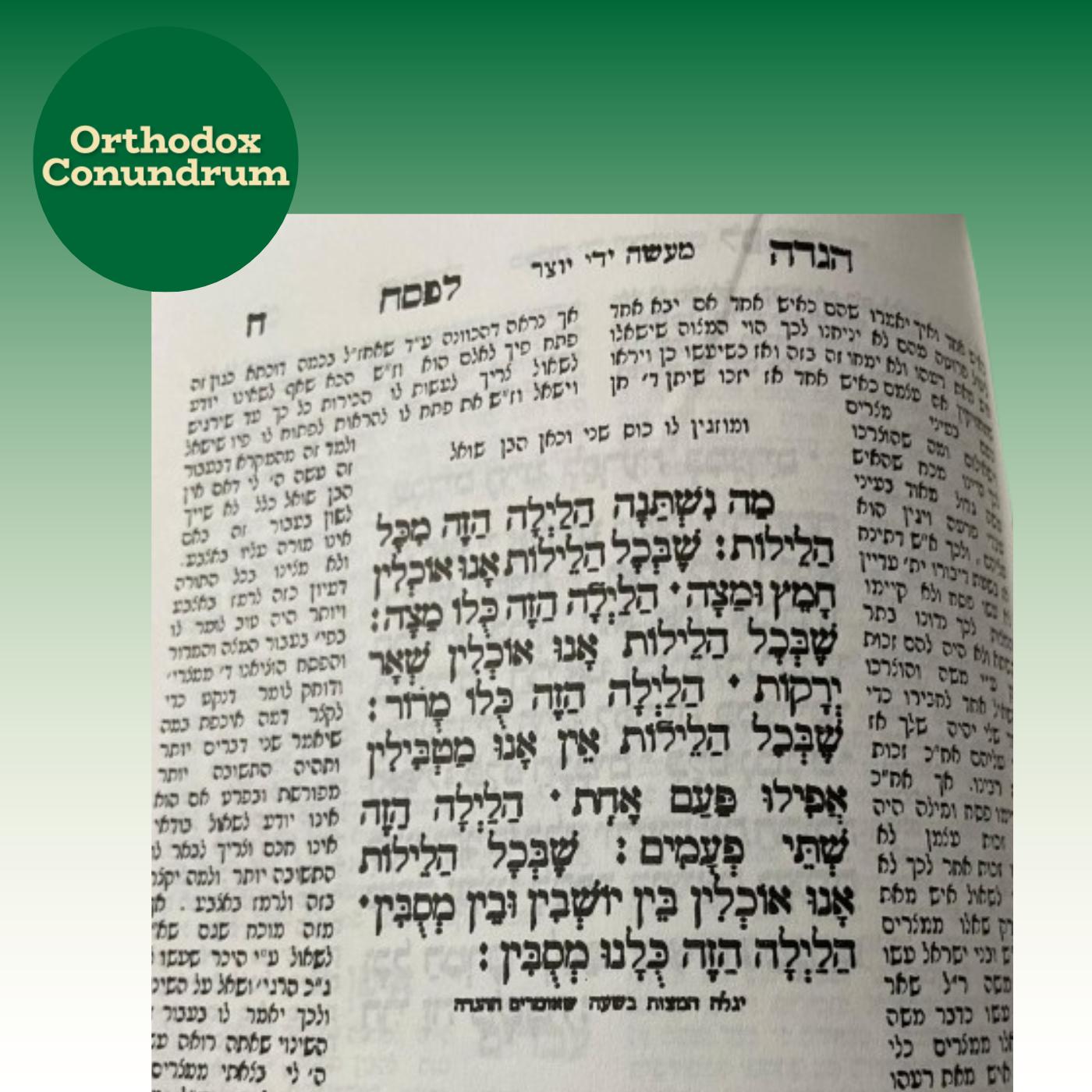
S8 Ep 24Celebrating Pesach in Challenging Times: Haggadah Insights from Eight Teachers of Torah (245)
I'm doing something a little different this week. Instead of discussing an issue in the Jewish world, I want to offer some inspirational words about the Seder as we enter the final week before the beginning of Pesach. To that end, I invited several of my podcast guests from the past year to present ideas that they find meaningful, with the hope that they will enhance your own Seder as we navigate celebrating Pesach during this challenging moment in Jewish history. In this episode, you will hear divrei Torah from Dr. Yosefa Fogel Wruble, Olivia Friedman, Rabbi Yitzchak Shurin, Rabbi Dr. Judah Goldberg, Rabbi Ben Kelsen, David Bloom, Rabbi Dr. Rafi Zarum, and Rabbi Chayim Soloveichik. You can look in the show notes that accompany this podcast to see the time signatures for each dvar Torah. I hope and expect that their words of Torah and encouragement will resonate with you, and that they will give you additional ideas to think about as we prepare for the Pesach Seder this year. Timestamps for the divrei Torah: 2:06 - Rav Kook on internal freedom (Dr. Yosefa Fogel Wruble) 4:49 - Israel as God's first born child (Dr. Yosefa Fogel Wruble) 11:12 - Ha Lachma Ana (Olivia Friedman) 19:37 - Starting with disparagement and ending with praise (Rabbi Yitzchak Shurin) 28:11 - V'hi She'amda (Rabbi Dr. Judah Goldberg) 38:12 - The Ten Plagues (Rabbi Benjamin Kelsen) 55:13 - Dayeinu (David Bloom) 1:00:24 - Pesach, Matzah, u'Maror (Rabbi Dr. Raphael Zarum) 107:23 - Miyagon l'simcha (Rabbi Chayim Soloveichik) This week's episode is sponsored by Jewish Communal Fund, where strategic philanthropy meets impact. Visit https://jcfny.org/orthodoxconundrum/ to request an information kit. Check out Orthodox Conundrum Commentary on Substack and get your free subscription by going to https://scottkahn.substack.com/. Please listen to and share this podcast, and let us know what you think on the Orthodox Conundrum Discussion Group on Facebook (https://www.facebook.com/groups/432020081498108). Thanks to all of our Patreon subscribers, who have access to bonus JCH podcasts, merch, and more - we appreciate your help, and hope you really enjoy the extras! Visit the JCH Patreon site at https://www.patreon.com/jewishcoffeehouse. Check out https://jewishcoffeehouse.com/ for the Orthodox Conundrum and other great podcasts, and remember to subscribe to them on your favorite podcast provider. Also visit https://www.jchpodcasts.com/ to learn all about creating your own podcast. Music: "Happy Rock" by bensound.com
S8 Ep 23"There Are No Shortcuts to a Healthy Jewish Education": Empowering Growth Without Guilt or Fear, with Rabbi Dr. Judah and Rabbanit Shayna Goldberg (244)
We are now less than two weeks away from the night of the Seder, which is almost certainly the most widely practiced example of Jewish education in action. And that raises the issue of how we should define healthy Jewish education in general, and how best we can achieve it. These questions are doubly important because while there are many wonderful Jewish schools, there are, unfortunately, numerous educational institutions where religious growth and educational goals are met through the use of fear, guilt, charismatic authority, manipulation, and condescension. Whether or not it "works" is irrelevant; education that relies on unhealthy approaches is damaging, unfair, and destructive. This episode with Rabbi Dr. Judah and Rabbanit Shayna Goldberg, explores fresh, student-centered approaches to Jewish learning that prioritize autonomy, personal meaning, and emotional well-being. We challenge guilt- and fear-based models, advocating for an education that nurtures curiosity and critical thinking, while emphasizing lifelong love of Torah, Jewish law, and Jewish tradition. How can we empower our children and students to take ownership of their learning while staying rooted in the values we want to impart? How do we create environments where kids feel both supported and free to make their own choices? We examine how Jewish education can inspire, uplift, and cultivate independent, engaged learners who embrace Torah Judaism without losing their sense of self. This week's episode is sponsored by Jewish Communal Fund, where strategic philanthropy meets impact. Visit https://jcfny.org/orthodoxconundrum/ to request an information kit. Check out Orthodox Conundrum Commentary on Substack and get your free subscription by going to https://scottkahn.substack.com/. Please listen to and share this podcast, and let us know what you think on the Orthodox Conundrum Discussion Group on Facebook (https://www.facebook.com/groups/432020081498108). Thanks to all of our Patreon subscribers, who have access to bonus JCH podcasts, merch, and more - we appreciate your help, and hope you really enjoy the extras! Visit the JCH Patreon site at https://www.patreon.com/jewishcoffeehouse. Check out https://jewishcoffeehouse.com/ for the Orthodox Conundrum and other great podcasts, and remember to subscribe to them on your favorite podcast provider. Also visit https://www.jchpodcasts.com/ to learn all about creating your own podcast. Music: "Happy Rock" by bensound.com

S8 Ep 22A Moral Voice for Religious Zionism: The Profound (and Profoundly Human) Thought of Rav Yehuda Amital, with Rabbi Moshe Taragin (243)
This conversation with Rabbi Moshe Taragin presents an introduction to the profound - and profoundly human - religious philosophy of Rav Yehuda Amital zt'l, the founding rosh yeshiva of Yeshivat Har Etzion. Rav Amital's ideas fill a unique niche in the Religious Zionist world today, and in many ways stand as a corrective to some of the ideology that has become dominant in the dati leumi world. His teachings grapple with some of the most pressing tensions in Jewish thought and life: universalism vs. particularism, the relationship between morality and halacha, and the relevance of Tanach as a guide to contemporary events. In this engaging discussion, Rabbi Taragin and I explore Rav Amital's vision of faith, statehood, and leadership, as well as his emphasis on joy and serenity in religious service. Rabbi Amital's unique perspective on Zionism, ethics, and spirituality continues to inspire and challenge, offering guidance for those seeking a thoughtful and compassionate approach to Judaism and the modern world. Perhaps more than ever before, we need to hear his voice loudly and clearly so that Religious Zionism can represent the positive and diverse force that it can be, rather than the sometimes narrow and shallow force that, at times, it is in danger of becoming. Tune in as we uncover the depth and relevance of Rabbi Amital's ideas, bringing his legacy to life for today's listeners. This week's episode is sponsored by Jewish Communal Fund, where strategic philanthropy meets impact. Visit https://jcfny.org/orthodoxconundrum/ to request an information kit. To purchase Rabbi Taragin's new book, To Be Holy but Human: Reflections Upon My Rebbe, HaRav Yehuda Amital, click here. Check out Orthodox Conundrum Commentary on Substack and get your free subscription by going to https://scottkahn.substack.com/. Please listen to and share this podcast, and let us know what you think on the Orthodox Conundrum Discussion Group on Facebook (https://www.facebook.com/groups/432020081498108). Thanks to all of our Patreon subscribers, who have access to bonus JCH podcasts, merch, and more - we appreciate your help, and hope you really enjoy the extras! Visit the JCH Patreon site at https://www.patreon.com/jewishcoffeehouse. Check out https://jewishcoffeehouse.com/ for the Orthodox Conundrum and other great podcasts, and remember to subscribe to them on your favorite podcast provider. Also visit https://www.jchpodcasts.com/ to learn all about creating your own podcast. Music: "Happy Rock" by bensound.com
S8 Ep 21Chutzpah - and Illegal Activity - in the Service of Dodging the Draft, with Sam Sokol (242)
When hundreds of students enthusiastically sing and dance about dodging the draft, while thousands of others protect those same students by spending more and more time in the IDF because of a manpower shortage... something has gone seriously wrong. When institutions that receive millions of shekels of government money actively undermine the State of Israel by encouraging and celebrating draft dodging... something has gone seriously wrong. When a minister in the Knesset is involved in creating a hotline that is used to tell people who have received draft notices to ignore them entirely... something has gone seriously wrong. In this episode, I spoke to Sam Sokol to learn more about the Chareidi political echelon's attempts to enshrine military exemptions into law, and how in the meantime, some Chareidi institutions are literally committing felonies in the service of discouraging military service. There is a lesson for all of us in this, too. As I assert at the end of the episode: if you are absolutely convinced of the rightness of your ideology such that you won't listen to anyone else, and when that ideology effectively becomes the most important thing in the world, not only does it become a type of idolatry, but it also can potentially lead you to actions that are immoral, unethical, and illegal. And when you have no respect for the institutions that support you, and engage with them only in order to get from them without any expectation of giving anything back, you may end up doing actions that are immoral, unethical, and illegal. In my opinion, this is a tragedy embodied by some leaders in the Chareidi world. This week's episode is sponsored by Jewish Communal Fund, where strategic philanthropy meets impact. Visit https://jcfny.org/orthodoxconundrum/ to request an information kit. Check out Orthodox Conundrum Commentary on Substack and get your free subscription by going to https://scottkahn.substack.com/. Please listen to and share this podcast, and let us know what you think on the Orthodox Conundrum Discussion Group on Facebook (https://www.facebook.com/groups/432020081498108). Thanks to all of our Patreon subscribers, who have access to bonus JCH podcasts, merch, and more - we appreciate your help, and hope you really enjoy the extras! Visit the JCH Patreon site at https://www.patreon.com/jewishcoffeehouse. Check out https://jewishcoffeehouse.com/ for the Orthodox Conundrum and other great podcasts, and remember to subscribe to them on your favorite podcast provider. Also visit https://www.jchpodcasts.com/ to learn all about creating your own podcast. Music: "Happy Rock" by bensound.com

S8 Ep 20The Mainstreaming of Meir Kahane: A Halachic, Moral, and Theological Mistake, with Rabbi Dr. Tzvi Sinensky (241)
Several recent articles have raised a troubling question: Is Rabbi Meir Kahane making a comeback? In the wake of the horrific murder of Shiri, Ariel, and Kfir Bibas, some influential pro-Israel voices have turned to Kahane's ideas, reviving a debate that many thought was long settled. In this episode, Rabbi Dr. Tzvi Sinensky and I dive deep into why this is a dangerous trend—one that must be confronted head-on from a Torah perspective. While many may be invoking Kahane's philosophy with Israel's best interests at heart, we argue that his ideas are fundamentally flawed—halachically, morally, and philosophically. We'll explore why it's crucial to openly discuss why Kahanism should not be part of the Jewish discourse, and why those who cite him must rethink their position before it spreads any further. Tune in to understand why the resurgence of Kahanist thought in certain circles is a threat to the very values we hold dear—and why we must stop it before it gains more traction. This week's episode is sponsored by Jewish Communal Fund, where strategic philanthropy meets impact. Visit https://jcfny.org/orthodoxconundrum/ to request an information kit. Check out Orthodox Conundrum Commentary on Substack and get your free subscription by going to https://scottkahn.substack.com/. Please listen to and share this podcast, and let us know what you think on the Orthodox Conundrum Discussion Group on Facebook (https://www.facebook.com/groups/432020081498108). Thanks to all of our Patreon subscribers, who have access to bonus JCH podcasts, merch, and more - we appreciate your help, and hope you really enjoy the extras! Visit the JCH Patreon site at https://www.patreon.com/jewishcoffeehouse. Check out https://jewishcoffeehouse.com/ for the Orthodox Conundrum and other great podcasts, and remember to subscribe to them on your favorite podcast provider. Also visit https://www.jchpodcasts.com/ to learn all about creating your own podcast. Music: "Happy Rock" by bensound.com

S8 Ep 19The Abuser's Tool Box: Domestic Abuse in the Orthodox Community, with Keshet Starr (240)
Domestic abuse is one of those topics that, sometimes, we simply wish would go away. It's certainly among the very worst experiences that a person can have, yet it brings forward feelings of shame and failure, such that people are often reluctant to acknowledge that they are victims. Sometimes, they can't even name it - either because they don't recognize it for what it is, or because they are embarrassed and don't want to admit it. Yet we can't ignore it, and all of us need to better recognize the warning signs and the red flags - both for those inside and outside of a relationship - and, should such warning signs exist, what we can potentially do about it. Because this is such an important (albeit disturbing) topic, I was honored to speak to Keshet Starr, the CEO of Shalom Task Force, to learn more. We talked about the distinction between domestic abuse and domestic violence, the prevalence of male to female abuse versus female to male abuse, examples of non-violent abusive behavior ("the abuser's tool box"), how can we determine when normal behavior crosses the line into emotional abuse or controlling behavior, the range and spectrum of inappropriate controlling behavior, whether the typical abuser is conscious of being an abuser, the way that an abuser often thinks of himself as "owning" his spouse, answering claims that domestic violence does not occur in Orthodox homes, how abuse takes place in ways that we cannot visibly see, the use of Jewish texts and religious ideas to justify abuse and break boundaries, warning signs and red flags, whether abuse should lead to divorce or if can it potentially be worked on (and why professionals won't offer an opinion on that question), education against abuse, the meaning of spiritual abuse, barriers to getting help, and more. To reach the Shalom Task Force's confidential hotline, go to https://shalomtaskforce.org/contact. Check out Orthodox Conundrum Commentary on Substack and get your free subscription by going to https://scottkahn.substack.com/. Please listen to and share this podcast, and let us know what you think on the Orthodox Conundrum Discussion Group on Facebook (https://www.facebook.com/groups/432020081498108). Thanks to all of our Patreon subscribers, who have access to bonus JCH podcasts, merch, and more - we appreciate your help, and hope you really enjoy the extras! Visit the JCH Patreon site at https://www.patreon.com/jewishcoffeehouse. Check out https://jewishcoffeehouse.com/ for the Orthodox Conundrum and other great podcasts, and remember to subscribe to them on your favorite podcast provider. Also visit https://www.jchpodcasts.com/ to learn all about creating your own podcast. Music: "Happy Rock" by bensound.com

S8 Ep 18The Vanishing Art of Jewish Conversation (and What To Do About It), with Dr. Yosefa Fogel Wruble (239)
The act of talking - dignified and informative conversation, where people connect on a serious level with one another - is essential to the Jewish experience. This goes back to the very creation of Adam; the Torah describes God as breathing a breath of life into Adam, after which he became a nefesh chaya - a living soul. Targum Onkelos famously translates that phrase as ruach memalela - a speaking spirit. Accordingly, the fact that man is able to converse is part of his very essence. In a similar way, the Torah is composed of not only written words, but also the Torah Sheba'al Peh - the conversation that began with Moshe Rabbeinu and has continued through the ages until today. It's not an understatement to suggest that conversation is part of the lifeblood of Judaism. Nevertheless, it sometimes seems that the art of conversation, like so many other aspects of 21st century culture, is changing in ways both good and bad. For example, the explosion of the popularity of podcasts demonstrates that people still crave stimulating conversation - but on the other hand, the people listening in are not active participants and don't add to the discussion. In many ways, it seems that deep conversations between people are overridden by the myriad distractions that keep us glued to our phones and less present when someone wants to have our full attention. In a lot of ways, conversation has, at times, become vacuous - with potentially devastating consequences for interpersonal relationships. So this episode of the podcast will be a conversation about conversations, and I was honored to speak to Dr. Yosefa Fogel Wruble to discuss a wide variety of topics related to authentic dialogue. I really got a lot out of this conversation, and it was actually quite different from many other episodes of this podcast. We dealt with many issues, from the Rambam's ideas about speech, what we learn from sitting shiva, and the changing nature of teaching Torah, to phone notifications and Spotify playlists and the Red Sox and why we each got into the world of podcasting. It was a lot of fun, it was very informative, and I think you'll enjoy listening in as much as I enjoyed participating. Check out Orthodox Conundrum Commentary on Substack and get your free subscription by going to https://scottkahn.substack.com/. Please listen to and share this podcast, and let us know what you think on the Orthodox Conundrum Discussion Group on Facebook (https://www.facebook.com/groups/432020081498108). Thanks to all of our Patreon subscribers, who have access to bonus JCH podcasts, merch, and more - we appreciate your help, and hope you really enjoy the extras! Visit the JCH Patreon site at https://www.patreon.com/jewishcoffeehouse. Check out https://jewishcoffeehouse.com/ for the Orthodox Conundrum and other great podcasts, and remember to subscribe to them on your favorite podcast provider. Also visit https://www.jchpodcasts.com/ to learn all about creating your own podcast. Music: "Happy Rock" by bensound.com

S8 Ep 17Religious Jews and Dishonesty: Tax Fraud, Zoning Violations, Downplaying Risk, and More, with Rabbi Jeremy Wieder (238)
The Torah is very clear that theft is forbidden; no one doubts that this is true. It is, accordingly, very disturbing that religious Jews as a community don't seem to be more ethical in these matters than people who don't see the Torah as their guide to life. I am not suggesting that Orthodox Jews are worse than anyone else in these matters; I cannot possibly know if that's true. It does seem, however, that Orthodox Jews as a whole are not better than any other community when it comes to honesty in business and taxes. We have heard of too many religious people who find themselves in serious legal trouble to pretend that our community actually maintains a higher ethical standard. The fact that people who learn Torah and daven with a minyan - people who are careful about Shabbat, kashrut, and taharat hamishpacha - are sometimes not nearly as careful when it comes to business law, is an embarrassment that we need to rectify. As Torah Jews, we need to be better - and for that reason, I was honored to speak to Rabbi Jeremy Wieder about some commonly disregarded halachot, including tax evasion, paying a worker in cash so he can presumably avoid paying taxes, building in violation of zoning laws without getting permission from the city, the definition of "ona'ah" - overcharging - in a market economy, pyramid schemes, downplaying risk when trying to convince someone to invest money, not declaring merchandise bought outside of Israel when entering the country, and more. We also talked about why in these matters, integrity may require going further than the letter of the law, and a possible reason that people who study Torah may try to justify that which is obviously unacceptable. Finally, we talked about the problem of religious Jews ignoring the crimes of people who give extensively to charity, or even sometimes lionizing them for their faith in God when they were in prison - while conveniently ignoring the reasons that they went to prison in the first place, or pretending that they were victims, or committed "victimless" crimes, when, in fact, this is false. Check out Orthodox Conundrum Commentary on Substack and get your free subscription by going to https://scottkahn.substack.com/. Please listen to and share this podcast, and let us know what you think on the Orthodox Conundrum Discussion Group on Facebook (https://www.facebook.com/groups/432020081498108). Thanks to all of our Patreon subscribers, who have access to bonus JCH podcasts, merch, and more - we appreciate your help, and hope you really enjoy the extras! Visit the JCH Patreon site at https://www.patreon.com/jewishcoffeehouse. Check out https://jewishcoffeehouse.com/ for the Orthodox Conundrum and other great podcasts, and remember to subscribe to them on your favorite podcast provider. Also visit https://www.jchpodcasts.com/ to learn all about creating your own podcast. Music: "Happy Rock" by bensound.com

S8 Ep 16The Ethics of Population Transfers & Prisoner Swaps, Defining "Innocent Civilians," and Other Urgent Ethical Dilemmas, with Rabbi Dr. Shlomo Brody (237)
Ever since President Trump presented his plan (or his idea, as it's unclear how planned out this really is) about resettling the Arab population of Gaza, the Jewish world has been in an uproar. Very loud voices on both sides of the issue have been talking not so much about its feasibility - many are extremely skeptical that this could ever come to fruition - but about whether it is ethical. Some insist that this is nothing less than ethnic cleansing, with all the negative implications that the term contains, while others suggest that this is completely different, and that if starting a war of aggression has no long-term negative consequences for the aggressor, then nothing will ever act as an effective deterrent to further attempts at genocide of the Jewish people. This is only one of the ethical issues that has arisen in the weeks since the ceasefire, and I was honored to speak with Rabbi Dr. Shlomo Brody to hash out some of the major ethical and moral dilemmas presented by the current situation. Along with the question of population transfer, Rabbi Brody and I also talked about leadership and the ethics of taking responsibility, the moral question of toppling a government during wartime, the propriety of exchanging Palestinian prisoners - many of whom have blood on their hands - for Israeli hostages, when it is right to start a war rather than to use diplomacy, how we can define victory in war, how we determine the innocence of civilians who support a terrorist government even if they don't participate in its atrocities directly, and much more. Check out Orthodox Conundrum Commentary on Substack and get your free subscription by going to https://scottkahn.substack.com/. Please listen to and share this podcast, and let us know what you think on the Orthodox Conundrum Discussion Group on Facebook (https://www.facebook.com/groups/432020081498108). Thanks to all of our Patreon subscribers, who have access to bonus JCH podcasts, merch, and more - we appreciate your help, and hope you really enjoy the extras! Visit the JCH Patreon site at https://www.patreon.com/jewishcoffeehouse. Check out https://jewishcoffeehouse.com/ for the Orthodox Conundrum and other great podcasts, and remember to subscribe to them on your favorite podcast provider. Also visit https://www.jchpodcasts.com/ to learn all about creating your own podcast. Music: "Happy Rock" by bensound.com
S8 Ep 15When the Doctor Becomes the Patient: A Conversation with Dr. Avi Rockoff (236)
What is it like for a doctor, who has spent his life treating patients, to become a patient himself? That was the experience of Dr. Avi Rockoff when he learned that he had a very serious form of prostate cancer, and which he chronicles in his new book, When the Doctor Becomes the Patient. He was exposed to what he terms "the medical industrial complex" from the other side of the physician's desk, and learned about some of the aspects of healthcare that he had taught for years, but from a very different perspective. I found this conversation both fascinating and important, and I have been thinking about it and discussing it with people ever since I recorded it. Avi and I talked about the common reluctance of patients to talk about their conditions with friends and family, the limits of the doctor's expertise, why it's possible that not knowing about an illness can sometimes be better that knowing about it and treating it, why offering compassion and hope are essential components of a healer's job and why that healer should not just be seen as a type of repairman, some of the positives and negatives of the way that medicine has become streamlined, differences between his experience as a patient in Boston versus his treatment in Israel, what gave him encouragement during his illness, how we should speak with friends and family who are ill, and more. Some of these topics are especially resonant to me because a very close friend of mine recently was diagnosed with cancer. Many of you may know him: Rabbi Jonathan Cohen, Harav Yehonatan Eitan hakohen ben Batsheva Bracha. Our family and the Cohens spend Purim together annually, alternating hosting the Purim seudah every year, and our friendship with Jonathan, Tzivia, and their kids is an absolute gift. Jonathan is a wonderful and caring friend to hundreds of people; I don't think I ever met anyone who is so beloved by so many different individuals in so many different places. For that reason, I want to dedicate this episode with Dr. Avi Rockoff in honor of Jonathan and with a prayer for his refuah shleima, and I ask everyone listening to please include Yehonatan Eitan ben Batsheva Bracha in your tefilot for a speedy and complete recovery. This episode of the Orthodox Conundrum is sponsored by The Eden Project by Rotem Shani, located right across from the Sheinfeld neighborhood in Beit Shemesh. For more information please contact Rina Weinberg by emailing [email protected]. Check out Orthodox Conundrum Commentary on Substack and get your free subscription by going to https://scottkahn.substack.com/. Please listen to and share this podcast, and let us know what you think on the Orthodox Conundrum Discussion Group on Facebook (https://www.facebook.com/groups/432020081498108). Thanks to all of our Patreon subscribers, who have access to bonus JCH podcasts, merch, and more - we appreciate your help, and hope you really enjoy the extras! Visit the JCH Patreon site at https://www.patreon.com/jewishcoffeehouse. Check out https://jewishcoffeehouse.com/ for the Orthodox Conundrum and other great podcasts, and remember to subscribe to them on your favorite podcast provider. Also visit https://www.jchpodcasts.com/ to learn all about creating your own podcast. Music: "Happy Rock" by bensound.com

S8 Ep 14History Repeating Itself: Diaspora-Israel Tensions in 200 BCE and 2025 CE, with Dr. Malka Z. Simkovich (235)
William Faulkner in Requiem for a Nun famously wrote, "The past is never dead. It's not even past." I repeatedly thought of that line as I read Dr. Malka Simkovich's recent book, Letters From Home: The Creation of Diaspora in Jewish Antiquity. In that book she investigates the relationship of Jews living in the Land of Israel and Jews who remained in the diaspora after the conclusion of the Babylonian Exile, when the majority of Jews chose to remain outside of Judea rather than return back to their ancestral homeland. Although this took place over 2000 years ago, in some ways I felt as though I were reading contemporary accounts of the relationship between Jews in Israel and Jews in chutz la'aretz. It reminded me of numerous interactions I have had with listeners both in and out of Israel, in response to the Orthodox Conundrum episode from two weeks ago entitled, Do You Care Enough About Israel? (And Do Israelis Care Enough About You?). There are so many ways that we have the same goals - and so many other ways that we misunderstand each other. We often misinterpret what our coreligionists believe and care about, and talk past each other regarding who is standing on the front lines of the Jewish future. After talking with Malka Simkovich, I realized that these conversations echo similar tensions from the time of the Second Temple. Strong differences of opinion and misunderstandings are, unfortunately, not a new phenomenon; they have been going on for literally thousands of years. That's why I was extremely interested to learn about how Jewish communities outside of the Land of Israel first came to be, how they defined themselves, whether they valued aliya and if they frequently visited Judea, how Jews living in the Land of Israel viewed Jews outside, and vice versa, whether Jews living in the diaspora saw Judean Jews as their religious superiors, what happened to those communities in the long run, and much more. The echoes of the present, it seems to me, are uncanny. The history here is fascinating; and the parallels to today are extremely important - both comforting and disturbing. This episode of the Orthodox Conundrum is sponsored by The Eden Project by Rotem Shani, located right across from the Sheinfeld neighborhood in Beit Shemesh. For more information please contact Rina Weinberg by emailing [email protected]. Check out Orthodox Conundrum Commentary on Substack and get your free subscription by going to https://scottkahn.substack.com/. Please listen to and share this podcast, and let us know what you think on the Orthodox Conundrum Discussion Group on Facebook (https://www.facebook.com/groups/432020081498108). Thanks to all of our Patreon subscribers, who have access to bonus JCH podcasts, merch, and more - we appreciate your help, and hope you really enjoy the extras! Visit the JCH Patreon site at https://www.patreon.com/jewishcoffeehouse. Check out https://jewishcoffeehouse.com/ for the Orthodox Conundrum and other great podcasts, and remember to subscribe to them on your favorite podcast provider. Also visit https://www.jchpodcasts.com/ to learn all about creating your own podcast. Music: "Happy Rock" by bensound.com
S8 Ep 13The Fragility of Jewish Existence Comes to Israel: Applying the Thought of Rabbi Sacks to a Post-October 7th Jewish World, with Dr. Tanya White (234)
I recorded this episode hours before the first three Israeli hostages were slated to be released, and as a ceasefire was just beginning to be implemented by Israel and Hamas. Many people have noted that while Hamas is parading throughout Gaza and claiming victory - which is an absurd inversion of reality - and while the vast majority of the world is celebrating the end of hostilities (at least for now), the population which is the most muted about it are the residents of Israel, who have extreme mixed emotions, even as the strong majority of the country support the implementation of the ceasefire. All Jews who care about Israel have no choice but to look back at the past fifteen months - and what came before it, as well - to try to get a sense of perspective, and to understand what has happened, what has changed, and what changes we will experience moving forward. And in terms of acquiring that perspective, there are few people whose words are more welcome than Rabbi Jonathan Sacks zt"l, the former Chief Rabbi of the United Kingdom. Rabbi Sacks passed away over four years ago, and we obviously cannot know what he would say about our world today. However, as today's guest, Dr. Tanya White, wrote to me, "Since October 7th I've been asked countless times, What would Rabbi Sacks say? My answer is always the same - while I can't answer definitively what he would say, I know what he did say and thus we just need to mine his books to find some answers." For that reason, I was grateful to speak to Dr. Tanya White in order to learn more about Rabbi Sacks and his thought - as well as her own - so that I would better understand how he likely would have addressed the challenges we face today, and the best and healthiest ways for us to move forward. This episode of the Orthodox Conundrum is sponsored by The Eden Project by Rotem Shani, located right across from the Sheinfeld neighborhood in Beit Shemesh. For more information please contact Rina Weinberg by emailing [email protected]. Check out Tanya's new podcast, Books and Beyond: The Rabbi Sacks Podcast, at https://rabbisacks.org/books-and-beyond-podcast/. Visit her website at https://www.tanyawhite.org/ . Check out Orthodox Conundrum Commentary on Substack and get your free subscription by going to https://scottkahn.substack.com/. Please listen to and share this podcast, and let us know what you think on the Orthodox Conundrum Discussion Group on Facebook (https://www.facebook.com/groups/432020081498108). Thanks to all of our Patreon subscribers, who have access to bonus JCH podcasts, merch, and more - we appreciate your help, and hope you really enjoy the extras! Visit the JCH Patreon site at https://www.patreon.com/jewishcoffeehouse. Check out https://jewishcoffeehouse.com/ for the Orthodox Conundrum and other great podcasts, and remember to subscribe to them on your favorite podcast provider. Also visit https://www.jchpodcasts.com/ to learn all about creating your own podcast. Music: "Happy Rock" by bensound.com

The Ceasefire: What It Means, Who Benefits, and What Must Happen Next, with Dr. Matthew Levitt (Orthodox Conundrum Special Episode)
bonusWith the news that Israel and Hamas have agreed to a ceasefire deal, Scott spoke to counterterrorism and intelligence expert Dr. Matthew Levitt to learn what the ceasefire entails, in what ways this falls short of Prime Minister Netanyahu's insistence upon total victory, how victory should be defined, why this ceasefire is happening now, whether Hamas is deterred, the the possibility of another October 7th taking place, what happens if a power vacuum forms in Gaza, the future of Palestinian statehood and Saudi normalization, and what must happen next. Two relevant and important articles by Dr. Levitt: https://www.washingtoninstitute.org/policy-analysis/war-hamas-always-wanted https://www.washingtoninstitute.org/policy-analysis/what-hamas-wants-postwar-gaza-power-fight-without-burden-governing Check out Orthodox Conundrum Commentary on Substack and get your free subscription by going to https://scottkahn.substack.com/. Please listen to and share this podcast, and let us know what you think on the Orthodox Conundrum Discussion Group on Facebook (https://www.facebook.com/groups/432020081498108). Thanks to all of our Patreon subscribers, who have access to bonus JCH podcasts, merch, and more - we appreciate your help, and hope you really enjoy the extras! Visit the JCH Patreon site at https://www.patreon.com/jewishcoffeehouse. Check out https://jewishcoffeehouse.com/ for the Orthodox Conundrum and other great podcasts, and remember to subscribe to them on your favorite podcast provider. Also visit https://www.jchpodcasts.com/ to learn all about creating your own podcast. Music: "Happy Rock" by bensound.com

S8 Ep 12Do You Care Enough About Israel? (And Do Israelis Care Enough About You?) (233)
Do Jews outside of Israel care enough about Israel? This is a loaded and perhaps unfair question. How could anyone make that determination? Nevertheless, it's something I've been grappling with for some time, and I decided to pose this question on the Orthodox Conundrum Discussion Group on Facebook. Many people commented, both on the group and in private communications. And today's episode confronts that question directly through a panel discussion with Israel-engaged individuals in both Israel and the United States. I believe that while the question was phrased somewhat provocatively, it raises an issue - the potential divide between Jews in and outside of Israel - that must be discussed. And for that reason, I was honored to host Rabbi Chaim Steinmetz, Dr. Logan Levkoff, and Shira Katz Shaulov to discuss, openly and frankly, whether Jews outside of Israel are doing all that they should to support Israel - and, by extension, whether Jews in Israel are doing what they should for Jews outside of Israel. This episode of the Orthodox Conundrum is sponsored by The Eden Project by Rotem Shani, located right across from the Sheinfeld neighborhood in Beit Shemesh. For more information please contact Rina Weinberg by emailing [email protected]. Check out Orthodox Conundrum Commentary on Substack and get your free subscription by going to https://scottkahn.substack.com/. Please listen to and share this podcast, and let us know what you think on the Orthodox Conundrum Discussion Group on Facebook (https://www.facebook.com/groups/432020081498108). Thanks to all of our Patreon subscribers, who have access to bonus JCH podcasts, merch, and more - we appreciate your help, and hope you really enjoy the extras! Visit the JCH Patreon site at https://www.patreon.com/jewishcoffeehouse. Check out https://jewishcoffeehouse.com/ for the Orthodox Conundrum and other great podcasts, and remember to subscribe to them on your favorite podcast provider. Also visit https://www.jchpodcasts.com/ to learn all about creating your own podcast. Music: "Happy Rock" by bensound.com

S8 Ep 11Downplaying Sexual Abuse, and Writing to a Judge to Request Leniency: When Good Intentions Go Very, Very Wrong (232)
This episode of the Orthodox Conundrum discusses sexual abuse and child sexual abuse material. Listener discretion is advised. Sexual abuse is a problem everywhere, and the Orthodox community is no exception. While there unquestionably is more awareness of the problem today than there was in the past, there is still a long way to go before we can be proud of our record. One of the ongoing and very upsetting issues is when people in power cover up and downplay sexual abuse perpetrated by people whom they know. While there are those who do this for sinister or selfish reasons, many rabbis, doctors, and other people in positions of authority are acting out of ignorance rather than out of malice. They genuinely think that they're doing the right thing - and they don't realize the potentially traumatic consequences of their actions. Today I will be speaking about this latter kind of coverup, and the parallel phenomenon of community leaders writing letters to judges on behalf of convicted sex offenders to request leniency in sentencing. These letters very often fully acknowledge the heinous crimes that the abuser perpetrated - but they also say the positive aspects of the abuser's life that they hope will be taken into consideration, whether it's his charitable giving, minyan attendance, doing chesed for the community, or whatever other good qualities that, the writers hope, will potentially mitigate a harsh prison sentence. Again: these writers usually mean well and are trying to do the right thing - but they likely don't understand that they're acting in ways that are potentially very damaging. This is a difficult but very important topic, and I was honored to host attorney Rahel Bayar, victims' advocate Asher Lovy, and psychologist Dr. Jeffrey Singer to discuss what's happening, why it matters, and what should be done about it moving forward. Check out Orthodox Conundrum Commentary on Substack and get your free subscription by going to https://scottkahn.substack.com/. Please listen to and share this podcast, and let us know what you think on the Orthodox Conundrum Discussion Group on Facebook (https://www.facebook.com/groups/432020081498108). Thanks to all of our Patreon subscribers, who have access to bonus JCH podcasts, merch, and more - we appreciate your help, and hope you really enjoy the extras! Visit the JCH Patreon site at https://www.patreon.com/jewishcoffeehouse. Check out https://jewishcoffeehouse.com/ for the Orthodox Conundrum and other great podcasts, and remember to subscribe to them on your favorite podcast provider. Also visit https://www.jchpodcasts.com/ to learn all about creating your own podcast. Music: "Happy Rock" by bensound.com

S8 Ep 10"The Torah is Hospitalized and in Bandages" - The Thought of Rav Shagar on Chanukah, Israel, Religious Choice, and More (Special Chanukah Episode)
We live in times in which, I believe, we in the Orthodox world need to open ourselves to new ideas and new thinking that will help enhance our love and appreciation for God and His Torah. Maybe the best example of a contemporary thinker who has opened the doors of perception while remaining fully committed to Torah, halacha, the Jewish people and the Land of Israel is Rabbi Shimon Gershon Rosenberg, colloquially known as Rav Shagar. I spoke with Rabbis Zachary Truboff and Yehoshua Engelman about Rav Shagar in episode 133, over two years ago. Today, as a special Chanukah presentation, I'm honored to speak to Rabbi Levi Morrow about Rav Shagar. Rabbi Morrow recently published Living Time: Festival Discourses for the Present Age which is an English language collection of some of Rav Shagar's essays on the Jewish holidays. Because both he and I have found that some of Rav Shagar's most impactful writing was on the subject of Chanukah, I was excited to speak to Levi about Rav Shagar's philosophy in general, and to learn from him about some of Rav Shagar's ideas regarding Chanukah. Among the topics we addressed are the difference between the human and divine viewpoints; why some people don't relate to Rav Shagar's philosophy; the importance of "choosing" to be religious, rather than being compelled by facts - and why this existential choice is essential to our religious identity; how Rav Shagar understands the concept of religious obligation; his embracing of contradiction; whether we should be critical of those who leave Judaism, or if we need to respect that choice, as well; if there a place for interfaith dialogue, or learning about other religions; whether Rav Shagar should be thought of as a "Religious Zionist" or a "religious Zionist," and what he might think about the State of Israel today; if he believed that the State of Israel has religious value, and if so, whether the State of Israel is also part of the redemption; what would he say about the reality of Israel today; and more. Of course, we also dealt with Chanukah - specially how the Shabbat candles and Chanukah candles represent two types of holiness: meaningfulness and fulfillment on the one hand, versus sacrifice without any obvious meaning on the other; the candle of the commandment along with the candle of the human soul; the ways that mitzvot contain divine light - but also that the earthy vessels of the mitzvot are even holier than the light they contain; the way that the mitzvot don't come from divine wisdom, but from His will (and what that means); what we mean when we say that God is beyond human categories; the relationship between Torah and the outside world and outside ideas; and the way that translation is a valuable method for bringing outside ideas into Torah thought. This is not a typical episode of the podcast. For those, however, who are looking for new approaches that are grounded in our sources but which also deal forthrightly with the challenges Orthodox Jews face today, it offers a different perspective that hopefully you'll find very meaningful. And perhaps most crucially, it opens up the possibility that others will also forge new Torah paths that forthrightly deal with reality as it is, not as we wish it were. Check out Orthodox Conundrum Commentary on Substack and get your free subscription by going to https://scottkahn.substack.com/. Please listen to and share this podcast, and let us know what you think on the Orthodox Conundrum Discussion Group on Facebook (https://www.facebook.com/groups/432020081498108). Thanks to all of our Patreon subscribers, who have access to bonus JCH podcasts, merch, and more - we appreciate your help, and hope you really enjoy the extras! Visit the JCH Patreon site at https://www.patreon.com/jewishcoffeehouse. Check out https://jewishcoffeehouse.com/ for the Orthodox Conundrum and other great podcasts, and remember to subscribe to them on your favorite podcast provider. Also visit https://www.jchpodcasts.com/ to learn all about creating your own podcast. Music: "Happy Rock" by bensound.com

S8 Ep 9Children Under the Radar: A Live Orthodox Conundrum Conversation (SPECIAL EPISODE)
An almost insidious problem that affects so many kids is being "under the radar"... that is, they're generally ignored in school, camp, or other social settings by the teachers or group leaders because they're doing "fine" - and I use that word advisedly. He or she is not the class genius, not the kid who asks questions, not the troublemaker, not the class clown. I'm talking about kids who likely have so much more to offer, but are never given that opportunity when the people who should inspire them don't give them much attention, because other kids are, so to speak, sucking all the air out of the room. Sometimes it's a matter of a teacher's not knowing that a student has a talent or interest that matters to him - or that the student herself doesn't know what she's capable of doing. Maybe this kid is a late bloomer, and a bit of encouragement would help some amazing abilities emerge. Perhaps the child is good at things that are not emphasized in school, like a perfectly normal kid who doesn't like Gemara, and accordingly is ignored when the natural Gemara learners get the bulk of the teacher's attention. And some kids feel safe and comfortable without attracting extra attention, and giving them extra attention might be exactly what they don't want. No matter what the reason, this is a problem that is difficult to diagnose, but can have long term negative effects. What a shame it is when our children can give so much, but don't realize it themselves because few people recognize that there's more to them than meets the eye… yet there always is. On Saturday night, December 14th, I was honored to host a live podcast panel discussion at Congregation Shomrei Torah in Fair Lawn, NJ to discuss "Children Under the Radar: Strategies for Noticing and Maximizing Varied Strengths and Abilities." It was sponsored by Larry and Nancy Bravman, and was part of their wonderful Inspired by Ilona Organization. (You can learn more by going to inspiredbyilona.com.) The panel consisted of Rabbi Binyamin Krauss, Dr. Rayzel Yaish, and Howard Blas. Check out Orthodox Conundrum Commentary on Substack and get your free subscription by going to https://scottkahn.substack.com/. Please listen to and share this podcast, and let us know what you think on the Orthodox Conundrum Discussion Group on Facebook (https://www.facebook.com/groups/432020081498108). Thanks to all of our Patreon subscribers, who have access to bonus JCH podcasts, merch, and more - we appreciate your help, and hope you really enjoy the extras! Visit the JCH Patreon site at https://www.patreon.com/jewishcoffeehouse. Check out https://jewishcoffeehouse.com/ for the Orthodox Conundrum and other great podcasts, and remember to subscribe to them on your favorite podcast provider. Also visit https://www.jchpodcasts.com/ to learn all about creating your own podcast. Music: "Happy Rock" by bensound.com

S8 Ep 8It's Time for a Jewish Middle Earth: Cultivating Imagination in Torah Teaching with Olivia Friedman (231)
Is Jewish education too focused upon a rationalist and scientific worldview, such that we sometimes don't leave enough room for the imagination? I think that this may be true for large segments of the Orthodox world, particularly among the Modern Orthodox population. While we dare not undermine the great advances that our scientific worldview has given humanity, an overemphasis on rationality can also eliminate wonder and mystery from our understanding of the universe - and that can undermine our ability to live a full and even colorful Judaism. This doesn't mean that we should deny a rationalist approach so much as it implies that we shouldn't narrow Torah and Judaism so that only one approach is considered valid. Olivia Friedman is an educator who has given significant thought to this issue, and I was pleased to discuss how Jews in general, and teachers in particular, need to help cultivate the imagination in order to help generate a fuller and richer Jewish experience. This doesn't mean to just pretend; sometimes it means to open ourselves up to the fact that we actually know much less than we think we do. In that vein, Olivia and I talked about the the difference between "happening truth" and "story truth," the possibility of taking some surprising midrashim literally, how we we can acknowledge the existence of multiple truths without falling into the trap of thinking of truth as relative, what can we learn from the movie "Wicked" about the different types of truth, why teaching midrash from kindergarten through 8th grade is essential to our kids' Jewish development (and why using only pshat creates serious educational and theological problems), whether we should we establish a hard distinction between pshat and drash, the importance of pointing out that midrash isn't just fantasy literature, but a serious genre based on very close reading - and yet why it's time for the creation of more Jewish fantasy literature along the lines of the work of J.R.R. Tolkien and C.S. Lewis, the ways that we unfortunately "shrink the world down to the size of our certainties," and more. Check out Orthodox Conundrum Commentary on Substack and get your free subscription by going to https://scottkahn.substack.com/. Please listen to and share this podcast, and let us know what you think on the Orthodox Conundrum Discussion Group on Facebook (https://www.facebook.com/groups/432020081498108). Thanks to all of our Patreon subscribers, who have access to bonus JCH podcasts, merch, and more - we appreciate your help, and hope you really enjoy the extras! Visit the JCH Patreon site at https://www.patreon.com/jewishcoffeehouse. Check out https://jewishcoffeehouse.com/ for the Orthodox Conundrum and other great podcasts, and remember to subscribe to them on your favorite podcast provider. Also visit https://www.jchpodcasts.com/ to learn all about creating your own podcast. Music: "Happy Rock" by bensound.com

S8 Ep 7Inviting God Into Partnership: Finding Resilience with Rachel Sharansky Danziger (230)
While the Jewish people, and all people of good will, continue to face deep uncertainty about what's happening in Israel and around the world - as I record this on Sunday afternoon, we are just beginning to process the end of Assad's rule in Syria and trying to figure out if it's a net positive or negative for democratic countries in general and Israel in particular - we all are in some ways looking for sources of resilience. What are the ways that we can move forward and figure out our roles, while trying to internalize a sense of hope, and without ignoring the sometimes harsh reality that surrounds us? To learn more about potential sources of resilience, I was honored to speak to Rachel Sharansky Danziger. Hers was a very personal presentation, and I was deeply moved by her deep faith and learning, as well as her obvious wisdom. We talked about three key moments on October 7th and what they taught her about how to move forward; the manner in which Torah study and teaching Torah have been spiritual and emotional anchors for her and her students; the possibility of creating our own path to help expand God's presence in the world, while simultaneously inviting God into partnership with us; the boldness of Chana and her prayer, and the message she has for us today; learning how to accept that even good choices may have negative consequences, and trying to let go of the guilt that accompanies those choices; imagining what the world can still become; and much more. Check out Orthodox Conundrum Commentary on Substack and get your free subscription by going to https://scottkahn.substack.com/. Please listen to and share this podcast, and let us know what you think on the Orthodox Conundrum Discussion Group on Facebook (https://www.facebook.com/groups/432020081498108). Thanks to all of our Patreon subscribers, who have access to bonus JCH podcasts, merch, and more - we appreciate your help, and hope you really enjoy the extras! Visit the JCH Patreon site at https://www.patreon.com/jewishcoffeehouse. Check out https://jewishcoffeehouse.com/ for the Orthodox Conundrum and other great podcasts, and remember to subscribe to them on your favorite podcast provider. Also visit https://www.jchpodcasts.com/ to learn all about creating your own podcast. Music: "Happy Rock" by bensound.com

S8 Ep 6'Tis the Season to Spend Lavishly: Confronting the New Orthodox Materialism, with Avital Chizhik-Goldschmidt and Professor Chaim Saiman (229)
"Anything is permitted, as long as it's for a mitzvah." Really? We live in a world where consumerism and materialism are not only dominant themes of everyday life, but also positive values in their own right. It's disturbing that the Orthodox Jewish community is not at all immune to this influence; in fact, many sub-communities within the Orthodox world revel in materialism to the point that any argument that an overemphasis on materialism is not in line with Torah values would likely be met with stares of incomprehension. My guests today, Professor Chaim Saiman and Avital Chizhik-Goldschmidt recognized the problem, and wrote an article about it in Tradition Journal entitled, "Materialism and the Rise of 'modern, Orthodoxy'." Their research indicated that while Orthodox materialism today is certainly manifest in its classic forms of expensive purchases and vacations, it now also appears in fully religious garb - where almost anything can be classified as "beautifying a mitzvah," whether it's an extremely expensive sheitel, a $2500 kippah, a wildly elaborate wedding - or, as we'll discuss, a million-dollar shtender that once belonged to a rabbinic giant. Among the issues that we address are the ironic 180 degree change that has taken place in parts of Lakewood and elsewhere, a new materialism associated with religious items and the "mitzvification" of new actions (thereby excusing aspects of materialism because the spending is supposedly for a mitzvah), the internal frum culture of materialism that obviates the need to step outside of that culture in order to indulge, materialism enmeshed with spirituality, whether there is a correlation between materialism, consumerism, and wealth, pressure on the middle and working class in Orthodoxy, in what ways the prosperity gospel has infiltrated Orthodox thinking, how social and print media are fueling aspiration, where materialism comes from and why it's so difficult to address, why the attempt to impose "takana weddings" failed, when going "over the top" may be justified, and more. Check out Orthodox Conundrum Commentary on Substack and get your free subscription by going to https://scottkahn.substack.com/. Please listen to and share this podcast, and let us know what you think on the Orthodox Conundrum Discussion Group on Facebook (https://www.facebook.com/groups/432020081498108). Thanks to all of our Patreon subscribers, who have access to bonus JCH podcasts, merch, and more - we appreciate your help, and hope you really enjoy the extras! Visit the JCH Patreon site at https://www.patreon.com/jewishcoffeehouse. Check out https://jewishcoffeehouse.com/ for the Orthodox Conundrum and other great podcasts, and remember to subscribe to them on your favorite podcast provider. Also visit https://www.jchpodcasts.com/ to learn all about creating your own podcast. Music: "Happy Rock" by bensound.com

S8 Ep 5Hope, Gratitude, and Faith in a Time of Anxiety, Pain, and Despair, with Dr. Erica Brown (228)
Every time I speak with Dr. Erica Brown, I come away enriched by her deep thinking and religious and emotional sensitivity. And this conversation, which delves into psychological and theological questions surrounding anxiety, hope, gratitude, and faith, may be our most memorable discussion yet. The Thanksgiving holiday takes place later this week in the United States; three days later, Erica's newest book, Morning has Broken: Faith After October 7th, will be released. Those two events, along with the continued fighting in Gaza and Lebanon and on other fronts, were the impetus for what I found to be a deeply moving conversation. We talked about how to deal with despair, finding hope in the midst of tragedy, the idea of faith deposits, how grief and pain are sometimes the price of love, learning how to acknowledge God in good times just as we sometimes question where He is when things are difficult, and the difference between optimism and hope. We also talked about having faith in people as well as God, the ways that Israelis and Jews living outside of Israel often misunderstand each other, the pitfalls of unity and why its absence can lead to anger, and much more. I'm so honored that Erica agreed to be a guest on the podcast again, and I am sure that you will find this interview to be emotionally resonant, as I did. Check out Orthodox Conundrum Commentary on Substack and get your free subscription by going to https://scottkahn.substack.com/. Please listen to and share this podcast, and let us know what you think on the Orthodox Conundrum Discussion Group on Facebook (https://www.facebook.com/groups/432020081498108). Thanks to all of our Patreon subscribers, who have access to bonus JCH podcasts, merch, and more - we appreciate your help, and hope you really enjoy the extras! Visit the JCH Patreon site at https://www.patreon.com/jewishcoffeehouse. Check out https://jewishcoffeehouse.com/ for the Orthodox Conundrum and other great podcasts, and remember to subscribe to them on your favorite podcast provider. Also visit https://www.jchpodcasts.com/ to learn all about creating your own podcast. Music: "Happy Rock" by bensound.com

S8 Ep 4"Just Because It Didn't Happen, Doesn't Mean It Isn't True": Analyzing and Appreciating Aggadah with Gila Fine (227)
There was a time not long ago when aggadah - which, broadly speaking, refers to the non-legal passages in the Talmud - was largely ignored; students studying in yeshiva would run through these texts quickly, if at all, using almost all of their mental energy and time thinking through the halachic, or legal passages of the Gemara. While that was likely a successful methodology for most Talmud students in the past, we have witnessed in the 20th and 21st centuries a renewed emphasis on aggadah; and given the fact that Talmud study is far more widespread today than it was in the past, along with an obvious thirst for greater spirituality and a deeper connection with God, this can only be considered a very positive development. At the forefront of the study of aggadah today is my guest, Gila Fine; and she offers a fascinating, compelling, and perhaps controversial view of how we should look at aggadah. Gila said that we may be the first Jews since the days of Chazal who can truly relate to the radical spirit in the aggadah. In her words, "The rabbis were extremely radical… and then, as generally happens, they lose that radical edge; those subversive elements disappear. [Postmodernism] has allowed us to reconnect to a certain radical property of rabbinic storytelling that has gone underappreciated for most of Jewish history." We discussed how aggadah is a path to knowledge of God; the way that it gives space for outsiders and people who feel burned by Jewish law; the manner in which it is radical and subversive, and offers a chance for rabbinic self-critique; how aggadah is multivocal, allowing in different ideas and positions rather than one consistent voice, and not necessarily trying to resolve that inherent tension; the way that someone learning Talmud should develop an honest relationship with the text; the difference between the way that God is presented in the Bible versus a much lonelier portrayal in the aggadah; whether aggadah should be regarded as fiction and, if so, whether that undermines its authority; and much more. Check out Orthodox Conundrum Commentary on Substack and get your free subscription by going to https://scottkahn.substack.com/. Please listen to and share this podcast, and let us know what you think on the Orthodox Conundrum Discussion Group on Facebook (https://www.facebook.com/groups/432020081498108). Thanks to all of our Patreon subscribers, who have access to bonus JCH podcasts, merch, and more - we appreciate your help, and hope you really enjoy the extras! Visit the JCH Patreon site at https://www.patreon.com/jewishcoffeehouse. Check out https://jewishcoffeehouse.com/ for the Orthodox Conundrum and other great podcasts, and remember to subscribe to them on your favorite podcast provider. Also visit https://www.jchpodcasts.com/ to learn all about creating your own podcast. Music: "Happy Rock" by bensound.com

S8 Ep 3Chareidi Political Influence in Jewish Life, and Why It Truly Matters: A Conversation with Rabbi David Stav (226)
Over the past two weeks, there has been increasing conversation in Israel among the Religious Zionist community about the continued refusal of many ultra-Orthodox Jews to consider enlisting in the Israeli army. Many of us have been discussing this issue for months or years; but it came to a head in the past couple of weeks largely because of the attempt by the Chareidi political parties in the Knesset to enshrine this exemption through legislation. The most recent attempt was the so-called Daycare Bill, which, if passed, would mean that the status of the father would not be taken into account when determining if a couple is eligible for state subsidies for daycare. This might seem like an obscure bill, but it is understood by almost everyone as a backdoor attempt to effectively legalize draft dodging by the Chareidi population by removing one of the financial disincentives to ignoring a draft notice. The question of Chareidi avoidance of the draft opens up a number of questions about Chareidi political influence on the wider Israeli public. This is obvious in numerous areas, including, most recently, the election of new chief rabbis of the State of Israel. Because the vote for the two chief rabbis is heavily influenced by political factors and by politicians, the Chareidi political parties have a huge influence on who is chief rabbi - more than any other sector - even though, ironically, their communities are largely unaffected by the rabbinate's authority. There are many other areas where Chareidi political influence is affecting the rest of Israeli society, including kashrut, personal status, marriage and divorce, and conversion. As Rabbi David Stav, the founder of Tzohar, says, the problem is not Chareidi influence; the problem is Chareidim determining the law of the land, while not being bound or affected by the consequences of those laws. This is a serious issue for Jews no matter where they reside - and I was honored to speak to Rabbi Stav about the current situation, and what needs to change. PLUS: A personal editorial comment about the recent election of Donald Trump as the 47th president of the United States. Check out Orthodox Conundrum Commentary on Substack and get your free subscription by going to https://scottkahn.substack.com/. Please listen to and share this podcast, and let us know what you think on the Orthodox Conundrum Discussion Group on Facebook (https://www.facebook.com/groups/432020081498108). Thanks to all of our Patreon subscribers, who have access to bonus JCH podcasts, merch, and more - we appreciate your help, and hope you really enjoy the extras! Visit the JCH Patreon site at https://www.patreon.com/jewishcoffeehouse. Check out https://jewishcoffeehouse.com/ for the Orthodox Conundrum and other great podcasts, and remember to subscribe to them on your favorite podcast provider. Also visit https://www.jchpodcasts.com/ to learn all about creating your own podcast. Music: "Happy Rock" by bensound.com
S8 Ep 2Why Orthodox Jews Should Vote for Trump... Why Orthodox Jews Should Vote for Harris: Two Rabbis Make Their Best Pitch (225)
With the United States presidential election only hours away, I wanted to offer a supporter of each major presidential candidate the opportunity to explain why Jews in general, and Orthodox Jews in particular, would be better off supporting either Donald Trump or Kamala Harris for president. To that end, I invited two politically involved Orthodox rabbis, Rabbi Pesach Wolicki and Rabbi Benjamin Kelsen, to explain why you should give your vote to their candidate. This is not a debate; I spoke to both of my guests separately, and tried to give each of them a fair chance to make the best case that they could. This resulted in two informative and entertaining conversations. Whether you already have a preferred candidate or not, I think that these interviews will help you better understand what voters on both sides are thinking. Rabbi Pesach Wolicki is a political commentator, podcaster, and a leading voice in the field of Jewish-Christian Relations. His columns appear regularly in the Jerusalem Post and Israel365news.com. His writings have also appeared in Newsweek, Times of Israel, and many other publications. He appears on many Christian and politically conservative shows such as American Family Radio's Middle East Report, Securing America with Frank Gaffney, the Josh Hammer show, and others. Most notably, he is a frequent guest on the Steve Bannon's Warroom, even cohosting an episode with Bannon. Rabbi Benjamin G. Kelsen is an Orthodox Rabbi and practicing attorney. Rabbi Kelsen attended Cardozo School of Law and received ordination to be a rabbi and rabbinical judge from Yeshiva University's Rabbi Isaac Elchanan Theological Seminary (RIETS). Rabbi Kelsen is involved with various Jewish communal projects and advocates on behalf of the community and Israel with the Federal and State governments. Rabbi Kelsen is frequently in communication with the White House, State Department, and other departments and agencies as well as various parts of the Israeli government. His articles have appeared in the Times of Israel and other blogs and publications. Check out Orthodox Conundrum Commentary on Substack and get your free subscription by going to https://scottkahn.substack.com/. Please listen to and share this podcast, and let us know what you think on the Orthodox Conundrum Discussion Group on Facebook (https://www.facebook.com/groups/432020081498108). Thanks to all of our Patreon subscribers, who have access to bonus JCH podcasts, merch, and more - we appreciate your help, and hope you really enjoy the extras! Visit the JCH Patreon site at https://www.patreon.com/jewishcoffeehouse. Check out https://jewishcoffeehouse.com/ for the Orthodox Conundrum and other great podcasts, and remember to subscribe to them on your favorite podcast provider. Also visit https://www.jchpodcasts.com/ to learn all about creating your own podcast. Music: "Happy Rock" by bensound.com

S8 Ep 1The Biggest Desecration of God's Name (224)
Today I'm talking about something that I've spoken about before, repeatedly, both on this podcast and on my Substack, Orthodox Conundrum Commentary: the problem of a large number of Chareidi, or ultra-Orthodox Jews, who receive army exemptions, usually (though not always) because they're learning in yeshivot. Why am I talking about this again? Haven't we dealt with this issue too many times already? No. There's more to say, and there's good reason to say it. I think that this issue represents, in a real way, the test - the Akeidat Yitzchak - of our time... and some people are simply failing this test. This is the most important issue in Orthodoxy today; so we need to talk about it extensively, and establish clear and irrefutable arguments. I hope that this podcast will contribute to that ongoing need, and that you will share it widely so that this message will be heard by those who need to hear it. Check out the Orthodox Conundrum Commentary on Substack and get your free subscription by going to https://scottkahn.substack.com/. Please listen to and share this podcast, and let us know what you think on the Orthodox Conundrum Discussion Group on Facebook (https://www.facebook.com/groups/432020081498108). Thanks to all of our Patreon subscribers, who have access to bonus JCH podcasts, merch, and more - we appreciate your help, and hope you really enjoy the extras! Visit the JCH Patreon site at https://www.patreon.com/jewishcoffeehouse. Check out https://jewishcoffeehouse.com/ for the Orthodox Conundrum and other great podcasts, and remember to subscribe to them on your favorite podcast provider. Also visit https://www.jchpodcasts.com/ to learn all about creating your own podcast. Music: "Happy Rock" by bensound.com

Biblical Criticism, Academic Bible Study, and Orthodox Judaism with Rabbi Dr. Joshua Berman (CLASSIC EPISODE)
bonusAs we complete our seventh season of the Orthodox Conundrum, we're pleased to present a classic episode from three years ago, in which Professor Joshua Berman of Bar Ilan University discusses academic Bible study, Biblical criticism, and Orthodox Judaism. It was a very interesting episode, which raised crucial questions that Orthodox Jews need to confront, as well as suggestions of how we should do so effectively. Because we soon complete the annual cycle of Torah readings and begin again in less than two weeks with parashat Bereshit, this is an excellent opportunity to revisit this crucial issue. Some of the most serious challenges to traditional Orthodox faith come from academic approaches to the Bible, including what is generally termed Biblical criticism. The Rambam formulated thirteen principles of faith; his eighth principle is succinctly (though inexactly) summarized in the well known Ani Maamin, which reads: I believe with perfect faith that the entire Torah found currently in our possession is that which was given to Moshe our teacher. And while this is far from a perfect summary of the actual words of the Rambam, it's close enough to give anyone who has familiarity with both lower and higher Biblical criticism pause. How should a religious Jew relate to academic study of theTorah and the challenges it presents? Are we forced to live with the questions, or are there compelling approaches which defend the traditional view while also being acceptable in the academy? Should a person stay away from these questions, or is the search for truth paramount, even as it may be dangerous? To answer these and other questions, Scott spoke with Rabbi Dr. Joshua Berman, Professor of Tanach at Bar Ilan University. Check out the Orthodox Conundrum Commentary on Substack and get your free subscription by going to https://scottkahn.substack.com/. Please listen to and share this podcast, and let us know what you think on the Orthodox Conundrum Discussion Group on Facebook (https://www.facebook.com/groups/432020081498108). Thanks to all of our Patreon subscribers, who have access to bonus JCH podcasts, merch, and more - we appreciate your help, and hope you really enjoy the extras! Visit the JCH Patreon site at https://www.patreon.com/jewishcoffeehouse. Check out https://jewishcoffeehouse.com/ for the Orthodox Conundrum and other great podcasts, and remember to subscribe to them on your favorite podcast provider. Also visit https://www.jchpodcasts.com/ to learn all about creating your own podcast. Music: "Happy Rock" by bensound.com

S7 Ep 47The Day That Never Ended... And What We Can Learn From It, with Rav Chayim Soloveichik (223)
"Today marks one year since one of the worst days of all of our lives, October 7th. I actually was unsure of how to record an appropriate episode; what, exactly, could I add to the conversation? What is there to say that hasn't yet been said? And how can I relate it to the season in which we find ourselves, right in between Rosh Hashanah and Yom Kippur?" Fortunately, Scott was joined by the outstanding rav of his shul in Ramat Beit Shemesh, Rav Chayim Soloveichik, who provided insights and guidance as to how to think about this first anniversary of October 7th - even though, he acknowledges, October 7th never really ended. Rav Chayim discussed what he has learned from the events of the past year, the ways in which our liturgy during the Ten Days of Repentance is more relatable than ever before, approaches to divine providence and miracles (as well as their apparent absence), how to foster unity in the Jewish people, why the obvious importance of Torah study does not exempt the Chareidi world from serving in the Israeli army, whether there is hope for peace in the future, and more. Check out the Orthodox Conundrum Commentary on Substack and get your free subscription by going to https://scottkahn.substack.com/. Please listen to and share this podcast, and let us know what you think on the Orthodox Conundrum Discussion Group on Facebook (https://www.facebook.com/groups/432020081498108). Thanks to all of our Patreon subscribers, who have access to bonus JCH podcasts, merch, and more - we appreciate your help, and hope you really enjoy the extras! Visit the JCH Patreon site at https://www.patreon.com/jewishcoffeehouse. Check out https://jewishcoffeehouse.com/ for the Orthodox Conundrum and other great podcasts, and remember to subscribe to them on your favorite podcast provider. Also visit https://www.jchpodcasts.com/ to learn all about creating your own podcast. Music: "Happy Rock" by bensound.com

S7 Ep 46Gavriel Bloom z"l: A Hero in a Land of Heroes (222)
Later this week we will celebrate Rosh Hashanah, also known as the Day of Remembrance, Yom HaZikaron. According to Chazal, Hashem (so to speak) remembers us on this day for the good… and we, too, should look at those people who set sterling examples for us over the past year, and try to learn from their deeply meaningful lives. One of those people whose life was exemplary was Gavriel Bloom, zichrono livracha. Gavriel was killed on January 8th during a mission in central Gaza. He was the second of David and Jennifer Bloom's six children. David wrote up a series of remembrances and lessons that we all can learn from Gavriel's life. This episode begins with David's reading the words that he composed. After that, David and Scott have a conversation about Gavriel. They also delve into some serious and painful social topics, such as the general ultra-Orthodox refusal to serve in the IDF, as well as other very troubling trends involving common Chareidi attitudes towards the people of Israel as a whole. Rosh Hashanah is a time to reflect on the past year - which has unquestionably been one of the most fraught and difficult years that many of us have ever experienced. We are honored that David was generous enough to share his thoughts and memories of Gavriel with us. There could not be a more meaningful way to go into this coming Rosh Hashanah. Check out the Orthodox Conundrum Commentary on Substack and get your free subscription by going to https://scottkahn.substack.com/. Please listen to and share this podcast, and let us know what you think on the Orthodox Conundrum Discussion Group on Facebook (https://www.facebook.com/groups/432020081498108). Thanks to all of our Patreon subscribers, who have access to bonus JCH podcasts, merch, and more - we appreciate your help, and hope you really enjoy the extras! Visit the JCH Patreon site at https://www.patreon.com/jewishcoffeehouse. Check out https://jewishcoffeehouse.com/ for the Orthodox Conundrum and other great podcasts, and remember to subscribe to them on your favorite podcast provider. Also visit https://www.jchpodcasts.com/ to learn all about creating your own podcast. Music: "Happy Rock" by bensound.com