Origin Story
129 episodes — Page 1 of 3
Ayn Rand: The ego has landed – Origin Story Revisited
The Battle of Cable Street – Origin Story Revisited
John Rawls – Philosopher king of the 20th Century
Origin Story Live at Union Chapel
Section 28 – Anatomy of a Moral Panic
The Duke of Buckingham – How a queer love story predicted modern politics
Origin Story live show announcement!
Starmer Revisited – Where Did It All Go Wrong?
The Luddites – Rage Against the Machine
Paranormal Investigations – Is There Anybody Out There?
Think Tanks – Part Two – The Room Where It Happens
Think Tanks – Part One – What’s the Big Idea?
Evangelicals – Part Two – Good News, Bad News
Evangelicals – Part One – Altared States
J.K. Rowling – Part Two – Transparent
J.K. Rowling – Part One – Transformation
European Union – Part Three – The Expanse
European Union – Part Two – Reality Bites
European Union – Part One – Come Together
Origin Story – Live at Bloomsbury Theatre, 15th April 2026
The General Strike – The Revolution That Wasn’t

S8 Ep 21Introvert / Extrovert – In Two Minds
The terms introvert and extrovert have never been more popular. People seem to increasingly latch onto them as a core element of their personality, clinging to the personal definition they offer with ever-greater enthusiasm. Humans love to categorise things and there is nothing they like categorising more than themselves. We trace the weird story of these terms back to Vienna, on March 3rd 1907, when the Swiss psychiatrist and psychotherapist Carl Jung first met the Austrian neurologist Sigmund Freud. What follows is a hysterical, combative and sexually charged relationship which left both men in a state of social disarray. But in his efforts to later work out what happened, Jung settled on a personality binary which proved extremely intuitive to the public at large. Are these terms meaningful? Do they have scientific validity? And what are the dangers and advantages of defining ourselves in this way? Let's find out, as we delve into the world of personality types, psychoanalysis and what might genuinely be the single most preposterous intellectual dispute in the history of ideas. • Support Origin Story on Patreon • Buy the Origin Stories books on Centrism, Fascism and Conspiracy Theory • Subscribe to Origin Story on YouTube Reading list • Peter Geyer – Extraversion – Introversion: what C.G. Jung meant and how contemporaries responded, AusAPT Biennial Conference Melbourne, Australia – October 25–27, 2012 • Carl Gustav Jung – "The Association Method", The American Journal of Psychology 1910-04: Vol 21 Iss 2 • Carl Gustav Jung – Psychological Types, Princeton University Press, 1971 • D. L. Johnson, J. S. Wiebe, S. M. Gold, N. C. Andreasen – Cerebral blood flow and personality: A positron emission tomography study, American Journal of Psychiatry, 156, 252–257 (1999). • Florencio (Jun) Kabigting, Jr - The Discovery and Evolution of the Big Five of Personality, GNOSI: An Interdisciplinary Journal of Human Theory and Praxis, Volume 4, Issue 3, June 2021 • Frank McLynn – Carl Gustav Jung: A Biography, St Martin's Press 1996. • The Invention of 'Introvert', Words Matter podcast, episode 51 Written and presented by Ian Dunt and Dorian Lynskey. Producer: Simon Williams. Music by Jade Bailey. Art by Jim Parrett. Logo by Mischa Welsh. Group Editor: Andrew Harrison. Origin Story is a Podmasters production Learn more about your ad choices. Visit podcastchoices.com/adchoices

S8 Ep 20Stephen Miller – American Fascist
Welcome to a bonus episode of Origin Story. Sometimes we profile people who are psychologically complex, who have undertaken fascinating intellectual journeys, whose sins and achievements are intertwined in ways that defy simplistic judgements. President Trump’s fiendish chief advisor Stephen Miller is not one of those people. We regret to inform you that it’s Miller Time. Currently the deputy White House chief of staff, Miller has been Trump’s most influential aide for the past decade, steering him towards ever greater extremes of nativism and authoritarianism. He’s been described as Trump’s prime minister, the shadow president, the intellectual engine behind MAGA fascism, and a real-world version of Tolkien’s Grima Wormtongue. To understand the Trump administration, you need to understand Stephen Miller. But where did he come from and why is he still here? In this episode, we explain how Miller emerged from the toxic politics of 1990s California to became an abrasive right-wing troll before he’d even graduated from middle school. At high school in Santa Monica and college in North Carolina, it was the same story: no friends but plenty of attention. On the one hand, Miller revelled in provoking the hatred of his peers. On the other, he sincerely believed that immigration was a mortal threat to America, despite being the descendant of Jewish refugees who owed their lives to American hospitality. After graduation, Miller headed to Washington, winding up as an attack dog for elf-faced xenophobe Senator Jeff Sessions and a conduit between the far right and mainstream conservatism. When Trump entered the political scene in 2015, Miller saw the ideal vehicle for his white nationalist monomania. While most Republicans opposed illegal immigration, Miller demonised legal immigration, too. The most inhumane of Trump’s policies — child separation, the Muslim ban, ICE’s reign of terror — have his fingerprints all over them. Learning from the setbacks of Trump’s first term, Miller has evolved into Washington’s most ruthless operator and arguably the most powerful unelected official in the world. Look into almost any corner of Trumpland, from January 6 to Project 2025, or Elon Musk’s political donations to Nicolas Maduro’s removal, and you’ll find Stephen Miller. How did Miller become such an enduringly powerful influence on such a fickle president? Is he, in fact, the real force behind the Trump administration’s fascist impulses? What do his obsessions owe to the long history of American nativism? Could he outlast Trump and expand his mission to transform America or has he already overreached? And does he have any redeeming features whatsoever? • See Origin Story live at the Bloomsbury Theatre on 15th April 2026: https://www.ucl.ac.uk/bloomsbury-theatre/events/2026/apr/origin-story-live • Support Origin Story on Patreon • Buy the Origin Stories books on Centrism, Fascism and Conspiracy Theory • Subscribe to Origin Story on YouTube Reading list Books and articles • Eitan Arom – ‘From Hebrew school to halls of power: Stephen Miller’s unlikely journey’, Jewish Journal (15 March 2017) • Jonathan Blitzer – ‘How Stephen Miller Single-Handedly Got the U.S. to Accept Fewer Refugees’, The New Yorker (13 October 2017) • Jonathan Blitzer – ‘How Stephen Miller Manipulates Donald Trump to Further His Immigration Obsession’, The New Yorker (21 February 2020) • Sarah Churchwell – Behold America: A History of America First and the American Dream (2018) • Nancy Cook – ‘Trump’s immigration push is Stephen Miller’s dream come true’, Politico, 31 October 2018 • McKay Coppins – ‘Trump’s Right-Hand Troll’, The Atlantic (28 May 2018) ... reading list continues on Patreon Written and presented by Ian Dunt and Dorian Lynskey. Producer: Simon Williams. Music by Jade Bailey. Art by Jim Parrett. Logo by Mischa Welsh. Group Editor: Andrew Harrison. Origin Story is a Podmasters production Learn more about your ad choices. Visit podcastchoices.com/adchoices

S8 Ep 1915-Minute Cities – How Urban Design Entered the Culture War
Welcome to another between-season bonus episode of Origin Story. This week Ian tells the story of 15-minute cities: the notion that every urban resident should live a 15-minute walk or bike ride away from all essential amenities. How did such a sensible and benign approach to urban planning give birth to a wild conspiracy theory about authoritarianism? We meet Clarence Arthur Perry, the first urban planner to protect city life from the rise of the automobile; Jane Jacobs, the urban theorist who championed mixed-use neighbourhoods in 1960s New York and prevented Robert Moses’ expressway from slicing through downtown Manhattan; and Carlos Moreno, the French-Colombian scientist who invented the 15-minute city in 2015. Paris mayor Anne Hidalgo made the policy a cornerstone of her mayoralty and a model for cities around the world. But as the pandemic melted people’s brains, Moreno’s innovation became demonised as a “war on motorists” and, worse, a “Stalinist” plot to confine citizens to their neighbourhoods — permanent lockdown. By the end of 2023, Rishi Sunak’s government was fluently speaking the language of online conspiracy theorists. What constitutes the ideal urban environment? How can planning make residents happier, healthier and safer? Why is the psychology of driving so weird? How did paranoia about 15-minute cities fuse with lockdown hysteria, anti-vax thinking, climate change denial and far-right fantasies to turn Moreno into “public enemy number one”? And will the 15-minute city prevail anyway? • See Origin Story live at the Bloomsbury Theatre on 15th April 2026: https://www.ucl.ac.uk/bloomsbury-theatre/events/2026/apr/origin-story-live • Support Origin Story on Patreon • Buy the Origin Stories books on Centrism, Fascism and Conspiracy Theory • Subscribe to Origin Story on YouTube Reading list • Anonymous – ‘City of “cells” seen created by auto era’, New York Times (4 August 2029) • Anonymous – ‘A guide to 15-minute cities: why are they so controversial?’, University of the Built Environment (2 December 2024) • Joseph Giovanni – ‘Apartment builders return to prewar design’, New York Times (13 October 1986) • Tiffany Hsu – ‘He Wanted to Unclog Cities. Now He’s “Public Enemy No. 1.”’, New York Times (28 March 2023) • Jane Jacobs – The Death and Life of Great American Cities (1961) • The Life Well Lived, Episode 32, podcast (19 August 2020) • Douglas Martin – ‘Jane Jacobs, Urban Activist, Is Dead at 89’, New York Times (25 April 2006) • Georgia Pozoukidou and Zoi Chatziyiannaki – ‘15-Minute City: Decomposing the New Urban Planning Eutopia’, MDPI (17 January 2021) • Georgia Pozoukidou and Margarita Andelidou – ‘Urban Planning in the 15-Minute City: Revisited under Sustainable and Smart City Developments until 2030’, MDPI (12 October 2022) • Pallavi Sethi – ‘The Telegraph misrepresents 15-minute cities’, LSE (2 February 2026) • Camilla Turner – ‘Labour opens door to “Stalinist” 15- minute cities across Britain’, Telegraph (24 January 2026) Written and presented by Ian Dunt and Dorian Lynskey. Producer: Simon Williams. Music by Jade Bailey. Art by Jim Parrett. Logo by Mischa Welsh. Group Editor: Andrew Harrison. Origin Story is a Podmasters production Learn more about your ad choices. Visit podcastchoices.com/adchoices

S8 Ep 17Blue Labour: We Need to Talk About Maurice
EOrigin Story is live at the Bloomsbury Theatre, London on Weds 15th April 2026 - tickets selling fast, get yours here Welcome to a between-season bonus episode of Origin Story. We’ve missed you! This one emerged from our three-parter on the history of the Labour Party and one of the burning obsessions of British politics: the faction known as Blue Labour and its ubiquitous founder Maurice Glasman. As Keir Starmer’s government continues to alienate its base in order to chase the same socially conservative voters as Reform UK, fingers are pointing at chief of staff Morgan McSweeney and his connections to Blue Labour, turning Glasman into the party’s eminence grise. But how influential is Glasman really? And where did Blue Labour come from? The story begins in 2008, when the financial crisis coincides with the death of Glasman’s mother. The jazz-loving, City-hating, chain-smoking academic and community organiser invents Blue Labour: blue as in sad and blue as in “conservative socialism”. As New Labour falls to pieces, Glasman’s maverick vision of Labour’s long history and possible future intrigues heavyweights from across the party. He’s elevated from obscurity to the House of Lords by Ed Miliband but explodes on the launchpad after some provocative statements about immigration and Europe. Amid accusations of racism, misogyny and toxic nostalgia, Blue Labour Mark 1 burns out. When Blue Labour resurfaces with a vengeance in 2025, it has been thoroughly radicalised by a decade of Brexit and right-wing populism. Having been JD Vance’s personal guest at the second inauguration of Donald Trump, Glasman is now praising MAGA while waging all-out war on immigrants, liberals and the so-called “lanyard class”. Original Blue Labourite Marc Stears calls Blue Labour Mark 2 “a clear and present danger to our politics”. How did Blue Labour lurch from the party’s soft left to its hard right? Why do so many of the people who once found Glasman’s ideas stimulating now find them horrifying? Is Blue Labour, then and now, a symptom of a party in intellectual crisis? What exactly is Glasman’s connection to Morgan McSweeney and Home Secretary Shabana Mahmood? And is the rogue peer really as significant as he, and his enemies, like to make out? Reading list Books Rowenna Davis – Tangled Up in Blue (2011) Ian Geary and Adrian Pabst – Blue Labour: Forging a New Politics (2015) Maurice Glasman, Jonathan Rutherford, Marc Stears and Stuart White – The Labour Tradition and the Politics of Paradox (2011) Maurice Glasman – Blue Labour: The Politics of the Common Good (2022) Gabriel Pogrund and Patrick Maguire – Get In: The Inside Story of Labour Under Starmer (2025) Articles • Philip Collins – ‘Maurice Glasman and the origins of Blue Labour’, Prospect (24 February 2025) • Julian Coman – ‘Maurice Glasman, architect of Blue Labour: “Labour needs to be itself again”’, The Observer (25 September 2022) • Rachel Cooke – ‘Maurice Glasman: Labour’s Trump Card’, The Observer (25 April 2025) • Ethan Croft – ‘Blue Labour is fighting for its future’, The New Statesman (26 November 2025) • Annabel Denham - Lord Glasman: ‘Shabana is like Elizabeth I – devoted to her job. She’s utterly unique’, The Telegraph (23 November 2025) • Jonathan Derbyshire – ‘Voice of the Heartlands’, The New Statesman (7 April 2011) • Maurice Glasman - Maurice Glasman: my Blue Labour vision can defeat the coalition, The Guardian (24 April 2011) • Toby Helm and Julian Coman – ‘Maurice Glasman – the peer plotting Labour’s new strategy from his flat’, The Observer (16 January 2011) • Preet Kaur Gill, ‘Labour Must Go Blue’, The Telegraph (6 January 2026) • Dan Hodges – ‘Exclusive: the end of Blue Labour’, The New Statesman (20 July 2011) ... Reading list continues on Patreon Written and presented by Ian Dunt and Dorian Lynskey. Producer: Chris Jones and Simon Williams. Music by Jade Bailey. Art by Jim Parrett. Logo by Mischa Welsh. Group Editor: Andrew Harrison. Origin Story is a Podmasters production Learn more about your ad choices. Visit podcastchoices.com/adchoices

S8 Ep 15Socialism: The Finale – What’s Left?
Welcome to the finale of Origin Story season eight: the story of socialism. Thanks to everybody who has followed our most ambitious season yet, especially those whose support has enabled us to make it. We left the narrative in 1991, with the collapse of the USSR and the so- called “end of history”. This week we’re not telling a new story but looking back on the whole season to reflect on the evolution of socialism over the last two centuries and where it might go from here. We begin by catching up with socialism since 1991, as China embraced “market socialism”, Latin America’s ‘Pink Wave’ rose and fell, and the Western left all but gave up on its dream of building a new economic model. Was the left forced to fight for small victories because the possibility of bringing down capitalism had slipped away? We then return to the beginning of the season and ask if all the most important strands of socialism, from violent revolution to utopian communes, existed in some form by the time Marx and Engels published The Communist Manifesto in 1848. Can socialism be strictly defined or is it a broad tradition encompassing multiple different visions? And how does it relate to communism, left-wing populism or social democracy? We explore some of the obstacles that repeatedly prevent socialists from achieving their goals, including factions, personality cults, cranks, authoritarians and the romance of defeat — most of which were recently illustrated by the fiasco of Your Party. Finally, we take stock of socialism’s achievements, including many of the rights we now take for granted. Has socialism been more successful as a means of critiquing and moderating capitalism than replacing it? So, what is socialism? Can one word really describe Xi Jinping, Kim Jong Un, Zarah Sultana and Zohran Mamdani? How has a creed dedicated to solidarity and collective liberation produced so much rancour and oppression? Why are “temporary” dictatorships never temporary? Is social democracy really socialism? Will we ever see another socialist revolution or will that energy be sucked up by the populist right? And is socialism’s tremendous optimism about human nature both its greatest strength and its greatest flaw? Thanks again for listening to the story of socialism. It’s been a journey. We’ll see you in 2026 for some bonus episodes while we start work on season nine. • Get 25% off our highest tier annual Patreon subscription at https://www.patreon.com/originstorypod/membership • New Origin Story merch! https://podmarket.co.uk/collections/origin-story • Head to nakedwines.co.uk/origin to get a £30 voucher and 6 top-rated wines from our sponsor Naked Wines for £39.99, delivery included. • Use code ORIGINSTORY at the link below to get an exclusive 60% off an annual Incogni plan: https://incogni.com/originstory • Support Origin Story on Patreon • See Origin Story live at the Bloomsbury Theatre on 15th April 2026: https://www.ucl.ac.uk/bloomsbury-theatre/events/2026/apr/origin-story-live • Buy the Origin Stories books on Centrism, Fascism and Conspiracy Theory • Subscribe to Origin Story on YouTube Written and presented by Ian Dunt and Dorian Lynskey. Producer: Simon Williams. Music by Jade Bailey. Art by Jim Parrett. Logo by Mischa Welsh. Group Editor: Andrew Harrison. Origin Story is a Podmasters production Learn more about your ad choices. Visit podcastchoices.com/adchoices

S8 Ep 14The Fall of the USSR – End Game
Welcome to the penultimate episode of Origin story season eight: the story of socialism. We close the book on Soviet communism with the story of how it all came crashing down — what has been called the most unexpected event of the twentieth century. Mikhail Gorbachev’s desire to change his country was a product of the secret speech in 1956 and the invasion of Czechoslovakia in 1968. As he climbed the ladder to power, he witnessed the Soviet Union flinch from reform and slide into stagnation and decline. So when he became General Secretary of the Communist Party in 1985 he sought to rejuvenate the regime with three audacious innovations: perestroika (restructuring), glasnost (openness) and democratisation. It was a punishing task. Old hardliners in the Politburo thought Gorbachev was too radical while his populist arch-rival Boris Yeltsin thought him not daring enough. Gorbachev wanted to end the Cold War and open his country to the world but he did not foresee the fall of the Berlin Wall and the disintegration of the Warsaw Pact in 1989. He certainly didn’t want the USSR itself to come undone two years later. But the desire for change that he had unleashed could not be tamed. By 1991, Gorbachev was lionised abroad and loathed at home. A failed coup attempt set off a rapid chain of events that ended not just his leadership but the Communist Party and the USSR itself. In trying to save his country, he ended up enabling its destruction. The era of world history that began in 1917 was over. Why did the Soviet Union prove impossible to reform? Did Gorbachev move too fast or too slowly? How significant was his vicious feud with Yeltsin? Did the US bungle the USSR’s transition to a capitalist democracy and misread the collapse of its rival superpower? What did this do to the hopes of socialists around the world? And how do the tumultuous events of 1985-91 still shape the world today? • Get 25% off our highest tier annual Patreon subscription at https://www.patreon.com/originstorypod/membership • New Origin Story merch! https://podmarket.co.uk/collections/origin-story • Head to nakedwines.co.uk/origin to get a £30 voucher and 6 top-rated wines from our sponsor Naked Wines for £39.99, delivery included. • Use code ORIGINSTORY at the link below to get an exclusive 60% off an annual Incogni plan: https://incogni.com/originstory • Support Origin Story on Patreon • See Origin Story live at the Bloomsbury Theatre on 15th April 2026: https://www.ucl.ac.uk/bloomsbury-theatre/events/2026/apr/origin-story-live • Buy the Origin Stories books on Centrism, Fascism and Conspiracy Theory • Subscribe to Origin Story on YouTube Reading list • Sven Beckert – Capitalism: A Global History (2025) • Francis Fukuyama – ‘The End of History?’, The National Interest (Summer 1989) • Anna Funder – Stasiland: Stories from Behind the Berlin Wall (2004) • Masha Gessen – The Future Is History: How Totalitarianism Reclaimed Russia (2017) • Mikhail Gorbachev – Perestroika: New Thinking for Our Country and the World (1987) • Leslie Holmes – Communism: A Very Short Introduction (2009) • Stephen Kotkin – Armageddon Averted: The Soviet Collapse 1970-2000 (2001) • Serhii Plokhy – The Last Empire: The Final Days of the Soviet Union (2014) • Robert Service – Comrades: Communism: A World History (2007) • Tom Stoppard – Rock’n’Roll (2006) • William Taubman – Gorbachev: His Life and Times (2017) • Mikhail Zygar – The Dark Side of the Earth: How the Soviet Union Collapsed but Remained (2025) Written and presented by Ian Dunt and Dorian Lynskey. Producer: Simon Williams. Music by Jade Bailey. Art by Jim Parrett. Logo by Mischa Welsh. Group Editor: Andrew Harrison. Origin Story is a Podmasters production Learn more about your ad choices. Visit podcastchoices.com/adchoices
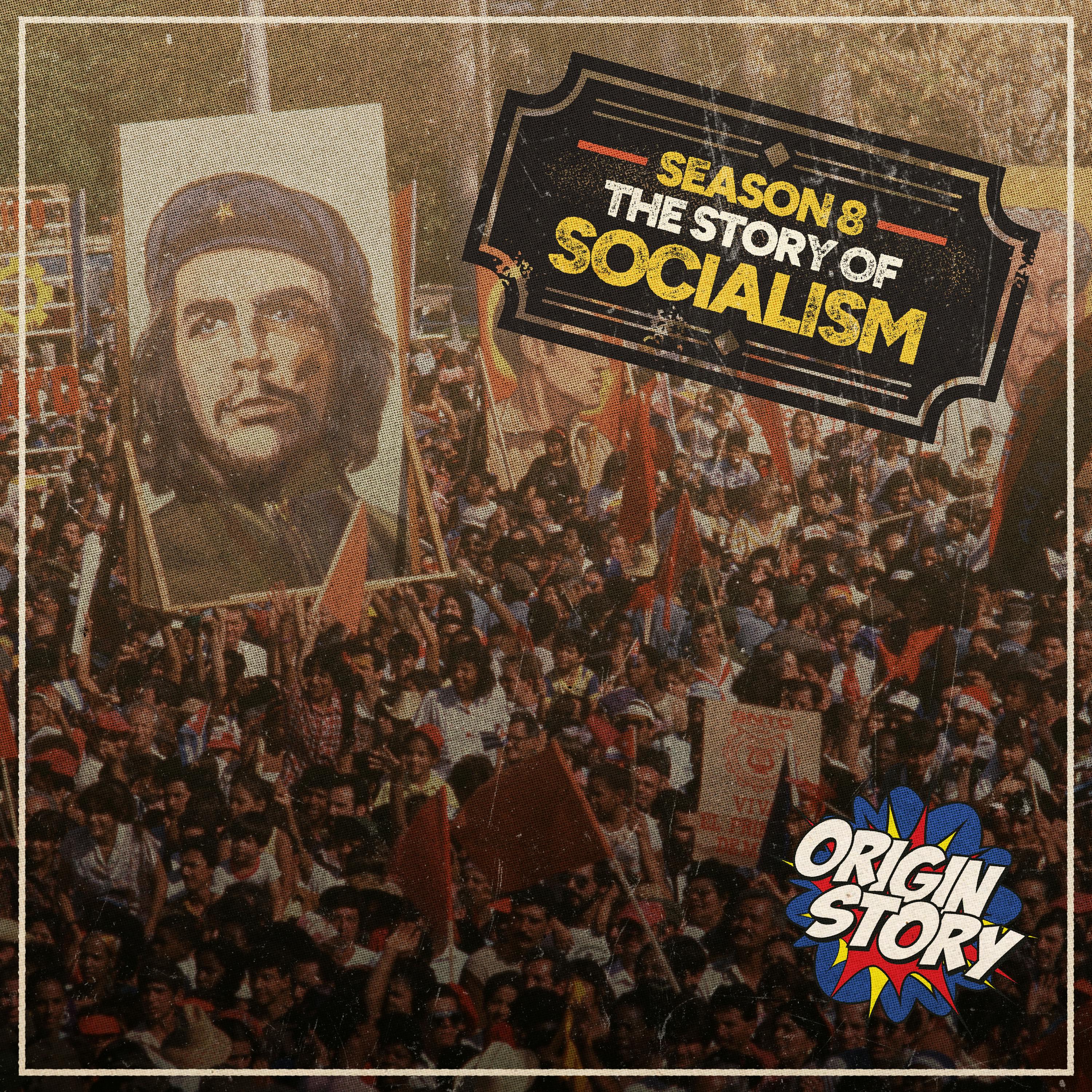
S8 Ep 13Che Guevara – Guerrilla in the Mist
Welcome back to Origin Story season eight: The Story of Socialism. This time, we take a look at hands-down the sexiest revolutionary of socialist history: Che Guevara. Born in Argentina to wealthy but unhappy parents, Ernesto Guevara travelled around Latin America during his youth until he met Fidel Castro in Mexico City. From then on his path was set, following the Cuban nationalist leader into a guerilla campaign in the Sierra Maestra and then into government. He concocted a rare form of socialism which combined Maoist peasant rebellion with pan-Latin American nationalism and Jack Kerouac’s drifter idealism. His fame lies not so much in his actions or his thoughts but his image, specifically the iconic Che photograph, taken by Alberto Korda on March 5th 1960. For decades, it has been put up in student bedrooms and raised above protest marches as an encapsulation of youthful idealism, resistance and social justice. We look at the man behind the image and find a strange, intoxicating bundle of seemingly contradictory elements: a poet executioner, a cold-hearted idealist, a sociopath bohemian, and much more besides. • Use code ORIGINSTORY at the link below to get an exclusive 60% off an annual Incogni plan: https://incogni.com/originstory • Head to nakedwines.co.uk/origin to get a £30 voucher and 6 top-rated wines from our sponsor Naked Wines for £39.99, delivery included. • Get 25% off our highest tier annual Patreon subscription at https://www.patreon.com/originstorypod/membership • New Origin Story merch! https://podmarket.co.uk/collections/origin-story • Subscribe to Origin Story on YouTube • See Origin Story live at the Bloomsbury Theatre on 15th April 2026. Reading list Jon Lee Anderson – Che Guevara, a Revolutionary Life Che Guevara – Episodes of the Cuban Revolutionary War, 1956-58 (1963) https://www.marxists.org/archive/guevara/1963/reminiscences/index.htm Che Guevara and Fidel Castro – Socialism and Man in Cuba (1965) https://www.marxists.org/archive/guevara/1965/03/man-socialism.htm Che Guevara – The Motorcycle Diaries Che Guevara – Guerrilla Warfare Mark Kurlansky – 1968: The Year That Rocked the World (2004) Michael Newman – Socialism: A Very Short Introduction (2020) Andrew Sinclair – Che Guevara (1998) FiIm club Evita, directed by Alan Parker The Motorcycle Diaries, directed by Walter Salles Che Part One and Part Two, directed by Steven Soderbergh Written and presented by Ian Dunt and Dorian Lynskey. Producer: Simon Williams. Music by Jade Bailey. Art by Jim Parrett. Logo by Mischa Welsh. Group Editor: Andrew Harrison. Origin Story is a Podmasters production www.podmasters.co.uk Learn more about your ad choices. Visit podcastchoices.com/adchoices

S8 Ep 12The New Left – Part Two – Children of the Revolution
Welcome to the second episode of the week as we conclude the story of the New Left. In part one, we explained the various groups and thinkersthat fed into the New Left’s attempts to reimagine socialism during the 1960s. It all comes to a head in 1968 with a chain reaction of youth-driven street protests and occupations: Paris, London, New York, Rome, Mexico City, Tokyo. It’s 1848 all over again, only this time its global and its televised, turning leading activists into overnight celebrities. Everywhere, though, these rebellions end in defeat and fragmentation. In its wake, figures as prominent as John Lennon convince themselves that revolution is imminent even as it becomes vanishingly improbable. The New Left splinters in the 1970s. Some “68ers” enter mainstream politics. Others turn to terrorism. A few plunge into the factional jungle of Maoist and Trotskyist sects. But many more redirect their idealism towards new liberation movements: second-wave feminism, gay rights, racial justice, Third World solidarity. We explain how the theories of the Italian Marxist Antonio Gramsci became a lodestar for the left decades after his death — a new approach to changing society. The New Left may have failed to mount a political revolt but it succeeded in redrawing the parameters of socialism beyond class struggle. The left of today is its legacy. Why did the thrilling upheavals of 1968 fall so short? What led so many people to expect a revolution? How did Gramsci become the most important socialist thinker of the modern era? Was toxic disunity inevitable? And how did the New Left ultimately succeed, despite backlashes, setbacks and self-imposed wounds, in changing the world? • Use code ORIGINSTORY at the link below to get an exclusive 60% off an annual Incogni plan: https://incogni.com/originstory • Head to nakedwines.co.uk/origin to get a £30 voucher and 6 top-rated wines from our sponsor Naked Wines for £39.99, delivery included. • Get 25% off our highest tier annual Patreon subscription at https://www.patreon.com/originstorypod/membership • New Origin Story merch! https://podmarket.co.uk/collections/origin-story • Subscribe to Origin Story on YouTube • See Origin Story live at the Bloomsbury Theatre on 15th April 2026. Reading list Histories • Andy Beckett – The Searchers: Five Rebels, Their Dream of a Different Britain, and Their Many Enemies (2024) • Bryan Burrough – Days of Rage: America’s Radical Underground, the FBI, and the Forgotten Age of Revolutionary Violence (2015) • Max Elbaum – Revolution in the Air: Sixties Radicals Turn to Lenin, Mao and Che (2002) • Todd Gitlin – The Sixties: Years of Hope, Days of Rage: Revised Edition (1993) • Vivian Gornick – The Romance of American Communism (1977) • Joachim C. Häberlen – Beauty Is in the Street: Protest and Counter-Culture in Post-War Europe (2023) • Michael Kazin – American Dreamers: How the Left Changed a Nation (2011) • Mark Kurlansky – 1968: The Year That Rocked the World (2004) • Dorian Lynskey – 33 Revolutions Per Minute: A History of Protest Songs (2011) • William L. O’Neill – The New Left: A History (2001) • Rick Perlstein – Nixonland: The Rise of a President and the Fracturing of America (2008) • Terence Renaud – New Lefts: The Making of a Radical Tradition (2021) • Sheila Rowbotham, Lynne Segal and Hilary Wainwright – Beyond the Fragments: Feminism and the Making of Socialism (1979) • Roger Simon – Gramsci’s Political Thought: An Introduction: Third Edition (2015) ... reading list continues on Patreon Written and presented by Ian Dunt and Dorian Lynskey. Producer: Simon Williams. Music by Jade Bailey. Art by Jim Parrett. Logo by Mischa Welsh. Group Editor: Andrew Harrison. Origin Story is a Podmasters production Learn more about your ad choices. Visit podcastchoices.com/adchoices

S8 Ep 11The New Left – Part One – Generation Next
Welcome back to Origin Story season eight: The Story of Socialism. This time, we’re explaining the New Left, the messy constellation of ideas and movements that came out of the discrediting of Soviet communism 70 years ago and made the left what it is today. The big bang was 1956. Nikita Khrushchev’s secret speech made Stalin’s crimes undeniable while the invasion of Hungary disgraced the new regime too. The first New Left was an intellectual effort by disillusioned British ex-communists to develop a new “socialist humanism”: neither Washington nor Moscow nor mainstream social democracy but a revival of socialism’s highest ideals in the post-war world. The New Left was reborn as an international youth movement in the 1960s as the baby boomers came of age and rallied around new issues: the civil rights movement, the Vietnam war, the end of imperialism and the hollow conformity of the affluent society. From London to Paris and Berkeley to Berlin, students were in the vanguard. “We don’t trust anybody over 30,” they joked, but we take a look at three older thinkers whose ideas shaped the movement. The Frankfurt School philosopher Herbert Marcuse diagnosed the West as rotten and called for a new alliance of outsiders — students, minorities, Third World revolutionaries — to redeem it. The radical French psychiatrist Frantz Fanon sought the decolonisation of not just countries but minds, by any means necessary. And China’s Mao Zedong, the pioneer of guerrilla warfare, positioned himself at the epicentre of the movement for global revolution, even as his own crimes at home rivalled Stalin’s. By the end of 1967, the student movement was turning from protest to resistance, with a view to overturning the whole system, but it was also beginning to splinter. The upheavals of 1968 would be the making, and the breaking, of the New Left. Was the New Left ever a coherent socialist project or just a fragile dissident coalition? How did the first New Left pave the way for the movement that swept the world? What fuelled its accelerating radicalism in the mid-60s? How did students who loathed Stalin end up venerating dictators like Mao and Ho Chi Minh? And in rejecting the fatal errors of the Old Left, did the New Left create their own? For scheduling reasons we’re releasing both parts this week — part two will be with you on Saturday. • Head to nakedwines.co.uk/origin to get a £30 voucher and 6 top-rated wines from our sponsor Naked Wines for £39.99, delivery included. • Use code ORIGINSTORY at the link below to get an exclusive 60% off an annual Incogni plan: https://incogni.com/originstory • Get 25% off our highest tier annual Patreon subscription at https://www.patreon.com/originstorypod/membership • New Origin Story merch! https://podmarket.co.uk/collections/origin-story • Subscribe to Origin Story on YouTube • See Origin Story live at the Bloomsbury Theatre on 15th April 2026. Reading list Histories • David Aaronovitch – Party Animals: My Family and Other Communists (2016) • Bryan Burrough – Days of Rage: America’s Radical Underground, the FBI, and the Forgotten Age of Revolutionary Violence (2015) • David Caute – Fanon (1970) • Max Elbaum – Revolution in the Air: Sixties Radicals Turn to Lenin, Mao and Che (2002) • Todd Gitlin – The Sixties: Years of Hope, Days of Rage: Revised Edition (1993) • Vivian Gornick – The Romance of American Communism (1977) • Joachim C. Häberlen – Beauty Is in the Street: Protest and Counter-Culture in Post-War Europe (2023) • Stuart Jeffries – Grand Hotel Abyss: The Lives of the Frankfurt School (2016) • Michael Kazin – American Dreamers: How the Left Changed a Nation (2011) ... reading list continues on Patreon Written and presented by Ian Dunt and Dorian Lynskey. Producer: Simon Williams. Music by Jade Bailey. Art by Jim Parrett. Logo by Mischa Welsh. Group Editor: Andrew Harrison. Origin Story is a Podmasters production Learn more about your ad choices. Visit podcastchoices.com/adchoices

S8 Ep 10Origin Story – Live at the Tabernacle, 13th Nov 2025
This week’s episode is an edited version of Origin Story Live at the Tabernacle in London on Thursday 13 November. The theme is political insurgents: the politicians and thinkers who are reshaping politics in 2025. In part one we profile two of the most significant intellectuals on the radical right. The Cambridge academic James Orr is senior adviser to Reform UK, friend to JD Vance and networker extraordinaire. Curtis Yarvin is a far-right blogger whose extreme views on race, democracy and “techno-monarchy” are required reading in the Trump administration. Who are they? How did they become so influential? And — yikes! — what do they actually think? In part two we take a look at two young socialist politicians who have shaken up the left this year: the next mayor of New York City, Zohran Mamdani, and the new “eco-populist” leader of the UK Green Party, Zack Polanski. How have they risen so fast? What are they proposing? And could they be the future of socialism? We also take an axe to some of the buzzphrases that are making political discourse dumber, from “optics” to the “woke right”. And we answer some questions from the audience. If you missed the show and the livestream, or if you just want to relive the “magic”, dive in. • Use code ORIGINSTORY at the link below to get an exclusive 60% off an annual Incogni plan: https://incogni.com/originstory • Head to nakedwines.co.uk/origin to get a £30 voucher and 6 top-rated wines from our sponsor Naked Wines for £39.99, delivery included. • Get 25% off our highest tier annual Patreon subscription at https://www.patreon.com/originstorypod/membership • New Origin Story merch! https://podmarket.co.uk/collections/origin-story • Subscribe to Origin Story on YouTube • See Origin Story live at the Bloomsbury Theatre on 15th April 2026. Reading list James Orr • Nafeez Ahmed – ‘Cambridge Faculty of Divinity Ignores Demands for Inquiry Into Peter Thiel’s Far-Right Influence’, Byline Times (23 December 2021) • Robert Crampton – ‘James Orr: JD Vance is just a normal guy who likes his beers’, The Times (15 August 2025) • Zoltán Kottász – ‘“No civilisation has invited invaders in and put them up in four-star hotels”: James Orr’, European Conservative (13 August 2025) • Marie Le Conte – ‘James Orr: Reform’s polished extremist’, The New World (27 October 2025) • Charles Moore – ‘Perverted liberalism has left to neo-Marxism, perverted patriotism may yet lead to neo-fascism’, Daily Telegraph (15 August 2025) • James Orr – ‘Faith, Family, Flag, Freedom’ (2023) • Radical with Amol Rajan, Britain’s New Right: Could Reform Replace the Tories? (Dr James Orr), BBC (2 August 2025) • Noah Vickers – ‘James Orr: “This New Nation That’s Emerging Is Really No Nation At All’, The House (4 September 2025) Curtis Yarvin • Sam Adler-Bell – ‘The Radical Young Intellectuals Who Want to Take Over the American Right’, The New Republic (2 December 2021) • David Brooks – ‘The Terrifying Future of the American Right’, The Atlantic (18 November 2021) • Ava Kafman – ‘Curtis Yarvin’s Plot Against America’, The New Yorker (2 June 2025) • Jemima Kelly – ‘Sunday at the garden party for Curtis Yarvin and the new, new right’, Financial Times (8 August 2025) • Matt McManus – ‘Yarvin’s Case Against Democracy’, Commonweal (27 January 2023) • David Marchese – ‘The Interview: Curtis Yarvin Says Democracy Is Done. Powerful Conservatives Are Listening’, The New York Times (18 January 2025) • Corey Pein – ‘The Moldbug Variations’, The Baffler (9 October 2017) ... reading list continues on Patreon Written and presented by Ian Dunt and Dorian Lynskey. Producer: Simon Williams. Music by Jade Bailey. Art by Jim Parrett. Logo by Mischa Welsh. Group Editor: Andrew Harrison. Origin Story is a Podmasters production Learn more about your ad choices. Visit podcastchoices.com/adchoices
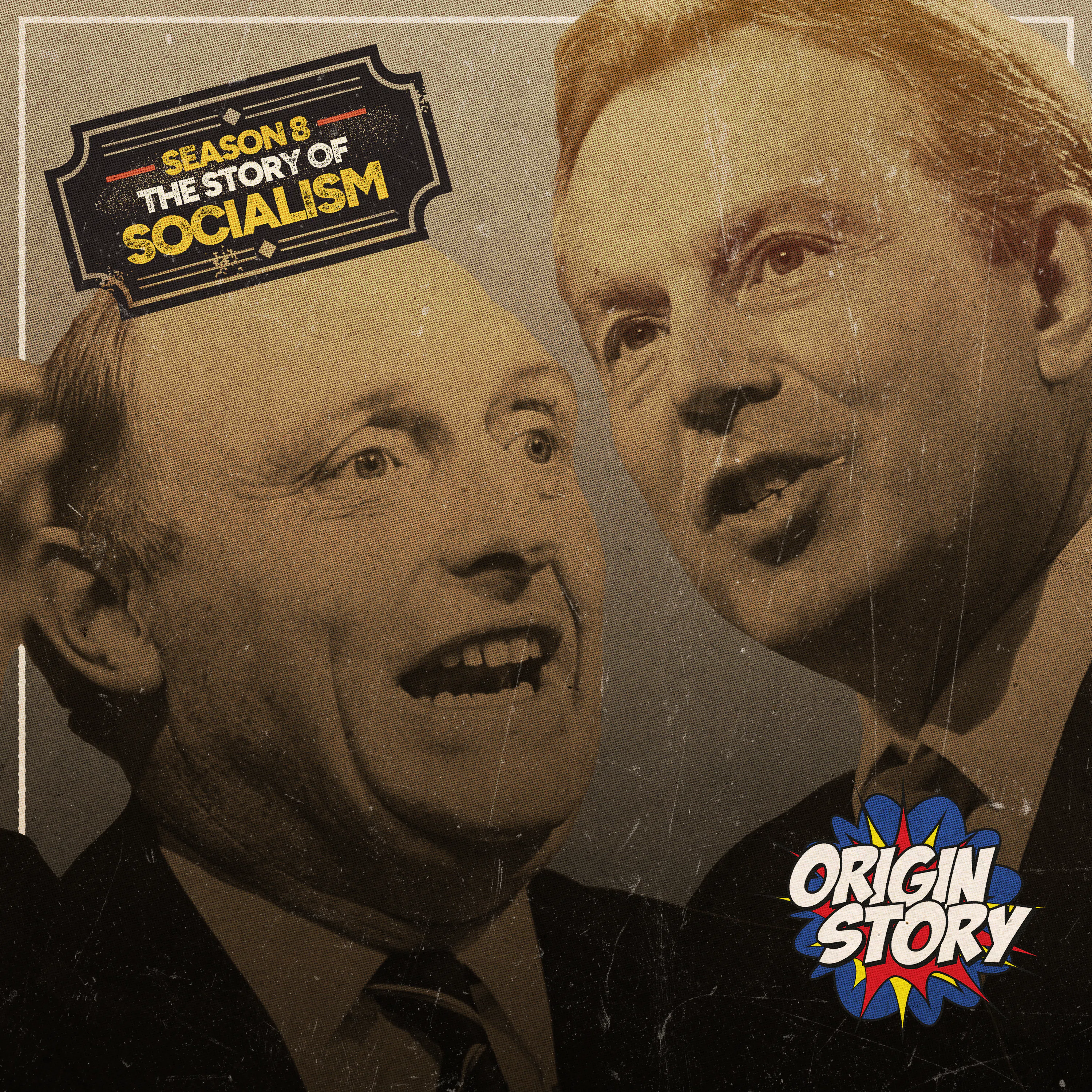
S8 Ep 9The Labour Party – Part Three – One Battle After Another
Welcome to the third and final part of the story of the Labour Party, from Keir Hardie to Keir Starmer. Margaret Thatcher’s first election victory in 1979 initiates Labour’s longest period in opposition and its deepest identity crisis: Bennites to the left, SDP defectors to the right. After Michael Foot leads Labour to its worst vote share since 1918, Neil Kinnock takes on the long and painful job of rebuilding the party in the face of Thatcherism. Following another two defeats, the task of modernisation passes to John Smith but his sudden death enables Tony Blair and Gordon Brown to go even further, determined to transform the party and erase the trauma of 1983. Labour’s spectacular 1997 landslide seems to confirm the agenda of New Labour and the nebulous political project known as the Third Way. But its many achievements are limited by its caution, duelling egos and ideological vagueness. Is Labour still a socialist party in any meaningful way or has it disowned too much of its heritage? By the time Brown becomes PM in 2007, New Labour is exhausted and rudderless. History repeats itself: another heavy defeat, another pivot to the left. When Jeremy Corbyn replaces Ed Miliband, the left is in charge for the first time in 80 years — the revenge of the Bennites — but Labour’s fortunes are hostage to the chaos of Brexit. An impressive advance in 2017 turns into a crushing humiliation in 2019. New leader Keir Starmer mounts a speedy recovery but soon finds himself desperately unpopular: accused of squandering a remarkable comeback by lacking vision and waging an unprecedented war against the left. With new challengers to the left and Nigel Farage’s Reform UK threatening to form the most right-wing government in British history, the stakes are once again existentially high. How did Thatcherism cast Labour into the wilderness? How did Neil Kinnock make the party viable again? Did Tony Blair ever develop a coherent theory of progressive politics? Could Jeremy Corbyn ever have succeeded? Why do Labour’s left and right keep making the same mistakes? What can Labour’s history tell us about Keir Starmer’s current problems? And is it still a party of democratic socialism? • Use code ORIGINSTORY at the link below to get an exclusive 60% off an annual Incogni plan: https://incogni.com/originstory • Head to nakedwines.co.uk/origin to get a £30 voucher and 6 top-rated wines from our sponsor Naked Wines for £39.99, delivery included. • Get 25% off our highest tier annual Patreon subscription at https://www.patreon.com/originstorypod/membership • New Origin Story merch! https://podmarket.co.uk/collections/origin-story • Subscribe to Origin Story on YouTube • See Origin Story live at the Bloomsbury Theatre on 15th April 2026. Reading list Histories • Andy Beckett – The Searchers: Five Rebels, Their Dream of a Different Britain, and Their Many Enemies (2024) • Jon Cruddas – A Century of Labour (2024) • Ian Dunt and Dorian Lynskey – Centrism: The Story of an Idea (2024) • Simon Hannah – A Party with Socialists in It: A History of the Labour Left: Second Edition (2022) • Owen Jones – This Land: The Struggle for the Left (2020) • David Marquand – The Progressive Dilemma: From Lloyd George to Blair: Second Edition (1999) • John O’Farrell – Things Can Only Get Better: Eighteen Miserable Years in the Life of a Labour Supporter (1998) • Gabriel Pogrund and Patrick Maguire - Left Out: The Inside Story of Labour Under Corbyn (2020) • Martin Pugh – Speak for Britain! A New History of the Labour Party (2010) • Andrew Rawnsley – Servants of the People: The Inside Story of New Labour (2001) ... Reading list continues on Patreon Written and presented by Ian Dunt and Dorian Lynskey. Producer: Simon Williams. Music by Jade Bailey. Art by Jim Parrett. Logo by Mischa Welsh. Group Editor: Andrew Harrison. Origin Story is a Podmasters production Learn more about your ad choices. Visit podcastchoices.com/adchoices
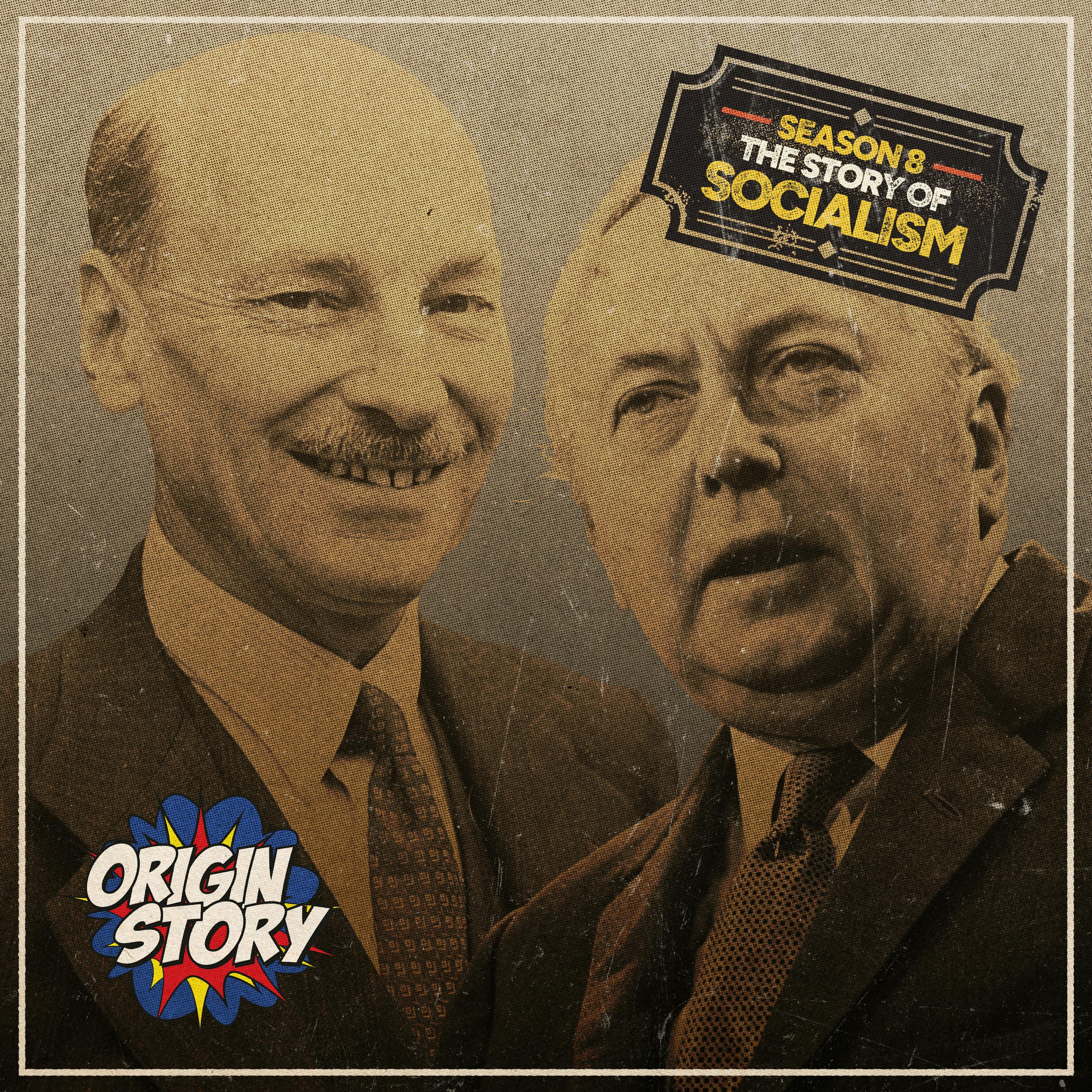
S8 Ep 8The Labour Party – Part Two – War and Peace
Welcome back to Origin Story season eight: The Story of Socialism. This week, we continue the tale of the UK Labour Party, from Keir Hardie to Keir Starmer. It’s 1940 and Clement Attlee’s Labour has joined the wartime coalition with Winston Churchill’s Tories, making it seem for the first time like a natural party of government and paving the way for its surprise 1945 landslide. Despite enormous obstacles at home and abroad, Attlee’s ageing all-stars lay the foundations of post-war Britain, from the NHS to NATO. How did they pull it off? Losing office in 1951 kicks off the wilderness years. Civil war rages between followers of the left-wing titan Nye Bevan and the revisionist Hugh Gaitskell as Labour struggles to find a purpose in a decade of growing affluence and relative consensus. A new socialism of liberty and equality battles with the old socialism of nationalisation while fresh divisions open up over Europe and the Cold War. After 13 years, the shrewd unifier Harold Wilson leads Labour back to power and Home Secretary Roy Jenkins leads a liberalising revolution in British life. But is social democracy still socialism? If 1970 is an unexpected defeat, then 1974 is an unexpected victory —and a very mixed blessing. Wilson and his successor James Callaghan preside over five years of crisis and precarity as the post-war consensus cracks and crumbles. The born-again socialist Tony Benn and the liberal Europhile Roy Jenkins represent two poles of an increasingly fractious party. When Margaret Thatcher sweeps to power in 1979, Labour returns to the wilderness and faces its worst identity crisis yet. Why was the Second World War the making of the Labour Party? Who, or what, killed the post-war consensus? How did Labour governments navigate one crisis after another? How did its theory of socialism evolve to meet a changing electorate? And why does every Labour government leave the left disappointed? • Use code ORIGINSTORY at the link below to get an exclusive 60% off an annual Incogni plan: https://incogni.com/originstory • Head to nakedwines.co.uk/origin to get a £30 voucher and 6 top-rated wines from our sponsor Naked Wines for £39.99, delivery included. • Get 25% off our highest tier annual Patreon subscription at https://www.patreon.com/originstorypod/membership • New Origin Story merch! https://podmarket.co.uk/collections/origin-story • Subscribe to Origin Story on YouTube • See Origin Story live at the Bloomsbury Theatre on 15th April 2026. Reading list Histories and Biographies • Andy Beckett – When the Lights Went Out: Britain in the Seventies (2009) • Andy Beckett – The Searchers: Five Rebels, Their Dream of a Different Britain, and Their Many Enemies (2024) • John Bew – Citizen Clem: A Biography of Attlee (2016) • John Campbell – Roy Jenkins: A Well-Rounded Life (2015) • Jon Cruddas – A Century of Labour (2024) • Ian Dunt and Dorian Lynskey – Centrism: The Story of an Idea (2024) • Michael Foot – Aneurin Bevan: A Biography: Volume Two: 1945-1960 (1966) • Simon Hannah – A Party with Socialists in It: A History of the Labour Left: Second Edition (2022) • Jam Tomorrow podcast, written and presented by Ros Taylor (2023-24) • Roy Jenkins – A Life at the Centre (1992) • David Marquand – The Progressive Dilemma: From Lloyd George to Blair: Second Edition (1999) • Ben Pimlott – Harold Wilson (1993) • Martin Pugh – Speak for Britain! A New History of the Labour Party (2010) • Steve Richards – The Prime Ministers: Reflections on Leadership from Wilson to Johnson (2019) • Steve Richards – The Prime Ministers We Never Had: Success and Failure from Butler to Corbyn (2021) ... reading list continues on Patreon Written and presented by Ian Dunt and Dorian Lynskey. Producer: Simon Williams. Music by Jade Bailey. Art by Jim Parrett. Logo by Mischa Welsh. Group Editor: Andrew Harrison. Origin Story is a Podmasters production Learn more about your ad choices. Visit podcastchoices.com/adchoices

S8 Ep 7The Labour Party – Part One – A Very British Socialism
Welcome back to Origin Story season eight: The Story of Socialism. This week, in the year of its 125th anniversary, we begin the tale of the UK Labour Party, from Keir Hardie to Keir Starmer. “The British Labour Party is an expression of the Socialist movement adapted to British conditions,” wrote Clement Attlee. But British socialism meant different things to different people. When the Labour Representation Committee was formed in 1900, its socialism was a tense alliance of Marxists and liberals, hard-nosed trade unionists and Fabian intellectuals, puritans and hedonists, pragmatists and romantics. From the start, they were arguing about everything from alcohol to war. It was the job of two remarkable Scotsmen to keep it united: the eccentric idealist Keir Hardie and the canny, charismatic Ramsay MacDonald. The social upheaval of the First World War turned Labour into a mass party which supplanted the Liberals as the main opposition to the Tories and took office for the first time in 1924. MacDonald’s minority government lasted for just over eight months but it proved that Labour could be a respectable party of government and not reckless “wild men” under the spell of Moscow. MacDonald returned to Number 10 in 1929 but his second government was capsized by the Wall Street Crash and ended two years later in rupture, betrayal and trauma. While some Labour MPs joined MacDonald’s National Government, most lost their seats, leaving the surviving leadership troika of George Lansbury, Clement Attlee and Stafford Cripps to rebuild the party amid the turmoil of the Great Depression and rising fascism. The challenge was existential. In 1935, Lansbury was felled by his untimely pacifism and Attlee took the job that nobody predicted he would hold for the next 20 years. We conclude, as tradition dictates, on the eve of the Second World War: the cataclysm that will be the making of the Labour Party. Why did British socialism break from Marx? What different traditions did Labour pull together and how did Hardie and MacDonald make them cohere? How did MacDonald go from hero to villain? Has the Labour Party always been at war with itself? And — pub quiz! — which four Labour leaders had the first name James? • Use code ORIGINSTORY at the link below to get an exclusive 60% off an annual Incogni plan: https://incogni.com/originstory • Head to nakedwines.co.uk/origin to get a £30 voucher and 6 top-rated wines from our sponsor Naked Wines for £39.99, delivery included. • Get 25% off our highest tier annual Patreon subscription at https://www.patreon.com/originstorypod/membership • New Origin Story merch! https://podmarket.co.uk/collections/origin-story • Subscribe to Origin Story on YouTube • See Origin Story live at the Bloomsbury Theatre on 15th April 2026. Reading list Histories and Biographies • John Bew – Citizen Clem: A Biography of Attlee (2016) • Jon Cruddas – A Century of Labour (2024) • Simon Hannah – A Party with Socialists in It: A History of the Labour Left: Second Edition (2022) • Bob Holman – Keir Hardie: Labour’s Greatest Hero? (2010) • David Marquand – The Progressive Dilemma: From Lloyd George to Blair: Second Edition (1999) • Henry Pelling – The Origins of the Labour Party 1880-1900: Second Edition (1965) • Martin Pugh – Speak for Britain! A New History of the Labour Party (2010) • Donald Sassoon – One Hundred Years of Socialism: The West European Left in the Twentieth Century (1996) • Andrew Thorpe – A History of the British Labour Party: Fourth Edition (2015) • David Torrance – The Wild Men: The Remarkable Story of Britain’s First Labour Government (2024) ... reading list continues on Patreon Written and presented by Ian Dunt and Dorian Lynskey. Producer: Simon Williams. Music by Jade Bailey. Art by Jim Parrett. Logo by Mischa Welsh. Group Editor: Andrew Harrison. Origin Story is a Podmasters production Learn more about your ad choices. Visit podcastchoices.com/adchoices

S8 Ep 6Lenin, Trotsky, Stalin – Part Three – Terror
• See Origin Story LIVE at The Tabernacle on Thur Nov 13. Buy tickets here. Welcome to the third and final part of the story of Lenin, Trotsky and Stalin: Terror. It’s 1929 and the age of Stalin has begun. His mission to revolutionise the Soviet economy succeeds at the price of millions of lives: kulaks are murdered en masse while Ukrainians starve in the man-made famine known as the Holodomor. In 1936 he commences the purge known as the Great Terror, which radiates out from the highest levels of the Communist Party to ravage the entire country. Nobody is safe in Stalin’s nightmare state. While communists abroad excuse or actively endorse Stalin’s atrocities, some socialists and ex-communists recognise that this is the antithesis of what socialism should be and sound the alarm. Stalin has no fiercer critic than Trotsky, but his former rival flounders in exile and meets a sticky end. The USSR’s international reputation is complicated by the rise of Nazi Germany and the Spanish Civil War. Is Stalin Hitler’s worst enemy, his gullible enabler or his unlikely friend? Turns out it’s all three. Stalin’s murderous paranoia fails him just once: he ignores warnings that Hitler will break the Nazi-Soviet Pact and launch an invasion in 1941. The war claims as many as 27 million Soviet lives. Victorious, Stalin sets about strangling hopes of post-war liberalisation and taking control of Eastern Europe — the Cold War begins. Trapped in his cult of personality and endless suspicions, he seems set to launch a new, antisemitic purge in 1953 until death mercifully intervenes. He leaves behind a powerful but traumatised country, a very long way from the hopes of 1917. How much of what the USSR became can be pinned on Stalin’s disastrous personality? What was it like to live and die under his regime? What was the relationship between economics and mass murder? How did the Second World War transform Stalin? How similar were Stalinism and Nazism, the two faces of totalitarianism? And why did so many western communists become accomplices to terror? • Use code ORIGINSTORY at the link below to get an exclusive 60% off an annual Incogni plan: https://incogni.com/originstory • Get 25% off our highest tier annual Patreon subscription at https://www.patreon.com/originstorypod/membership • New Origin Story merch! https://podmarket.co.uk/collections/origin-story • Subscribe to Origin Story on YouTube • See Origin Story live at the Bloomsbury Theatre on 15th April 2026. Reading list • Martin Amis, Koba the Dread: Laughter and the Twenty Million (2002) • Anne Applebaum, Gulag: A History (2003) • Anne Applebaum, Iron Curtain: The Crushing of Eastern Europe 1944-1956 (2012) • Anne Applebaum, Red Famine: Stalin’s War on Ukraine (2017) • Franz Borkenau, The Communist International (1938) • Robert Conquest, The Great Terror: A Reassessment: Fortieth Anniversary Edition (2008, first published 1968) • The Death of Stalin, co-written and directed by Armando Iannucci (2017) • Ian Dunt, How to Be a Liberal: The Story of Freedom and the Fight for Its Survival (2020) • Max Eastman, Reflections on the Failure of Socialism (1955) • Orlando Figes, The Whisperers: Private Life in Stalin’s Russia (2007) • Vivian Gornick, The Romance of American Communism (1977) • Christopher Hitchens, Arguably: Essays (2011) • Clive James, Cultural Amnesia: Notes in the Margin of My Time (2008) • Oleg V. Khlevniuk, Stalin: New Biography of a Dictator (2017) • Arthur Koestler, Darkness at Noon (1940) • Dorian Lynskey, The Ministry of Truth: A Biography of George Orwell’s • Nineteen Eighty-Four (2019) • Eugene Lyons, Assignment in Utopia (1938) • Mr Jones, written by Andrea Chalupa and directed by Agnieszka Holland (2019) ... Reading list continues on Patreon Written and presented by Ian Dunt and Dorian Lynskey. Producer: Simon Williams. Music by Jade Bailey. Art by Jim Parrett. Logo by Mischa Welsh. Group Editor: Andrew Harrison. Origin Story is a Podmasters production Learn more about your ad choices. Visit podcastchoices.com/adchoices
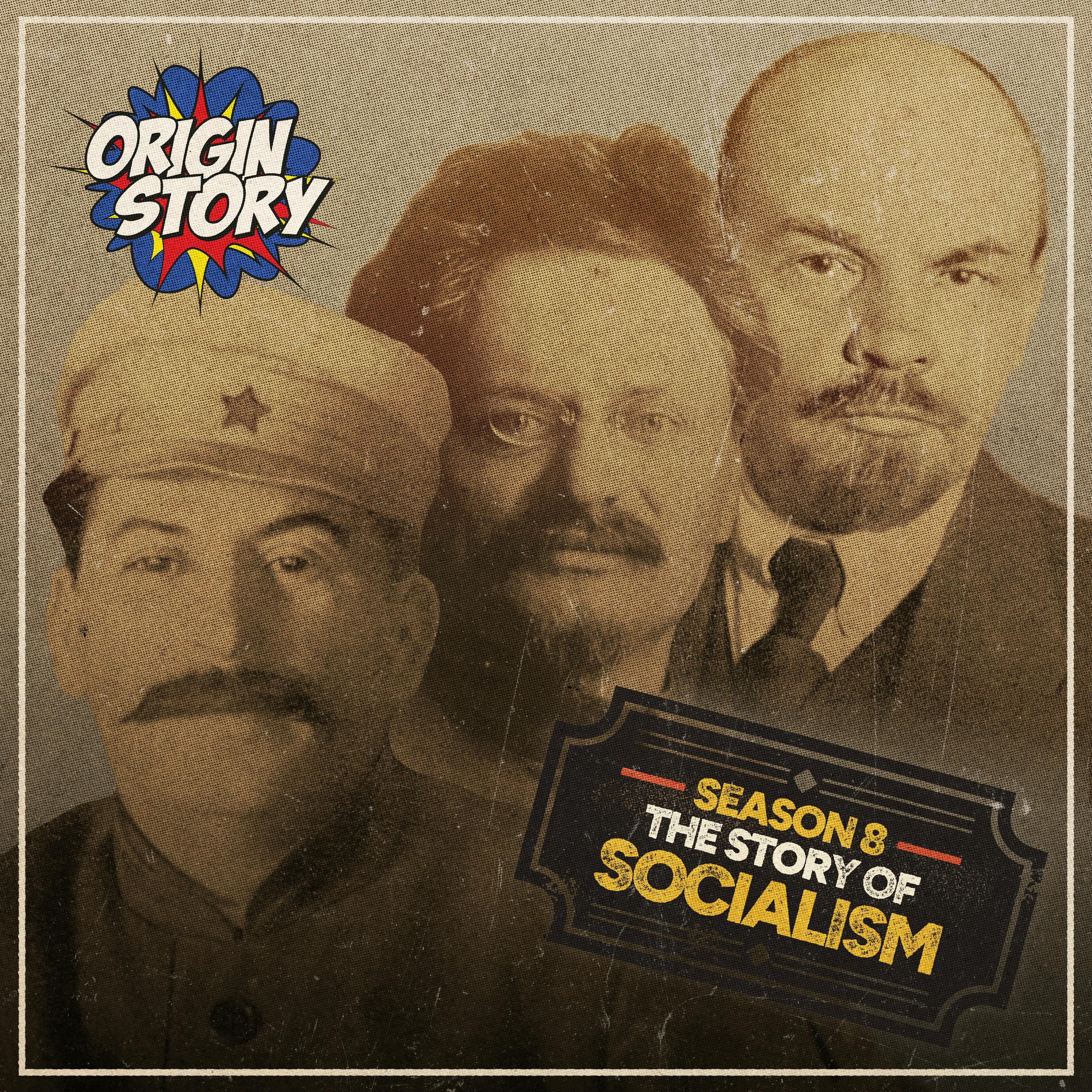
S8 Ep 5Lenin, Trotsky, Stalin – Part Two – Power
• See Origin Story LIVE at The Tabernacle, London on Thur Nov 13. Buy tickets here. Welcome back to Origin Story: The Story of Socialism as we resume the story of Lenin, Trotsky and Stalin in part two: Power. It’s 1917. The Bolsheviks have seized control of Russia, the world’s first socialist state, but they’re a small party in a very big country, besieged by enemies at home and abroad. No sooner has it extricated itself from the First World War than Russia is plunged into an existentially perilous civil war between the Reds and the Tsarist Whites and, well, everybody else. The war accelerates Russia's transformation into a dictatorship, with one-party rule, a secret police force and a ruthless disregard for human life. The suppression of the Kronstadt rebellion in 1921 confirms that the dictatorship of the proletariat will brook no dissent. Meanwhile in Germany, revolutionary hopes are crushed with the murder of German communist leaders Rosa Luxemburg and Karl Liebknecht. As other communist uprisings also fail, Trotsky’s dream of world revolution fades and Stalin’s vision of “socialism in one country” prevails. As Lenin’s health collapses, a succession battle between Stalin, Trotsky and other leading Bolsheviks begins that will last for most of the decade. It ends in 1929 with Stalin triumphant, Trotsky in exile, the dead Lenin a kind of deity, and the USSR’s age of terror ready to begin. Could the progress of the revolution have been different without the brutal chaos of the Civil War or was tyranny always part of the plan? How did Stalin outwit his rivals to take over from Lenin, and how did Trotsky blow it? Why didn’t communist revolutions succeed anywhere else but Russia? How was the new regime perceived by socialists around the world? And did Rosa Luxemburg, more than anyone, represent the humane, democratic socialism that might have been? • Use code ORIGINSTORY at the link below to get an exclusive 60% off an annual Incogni plan: https://incogni.com/originstory • Support Origin Story on Patreon • Buy the Origin Stories books on Centrism, Fascism and Conspiracy Theory • Subscribe to Origin Story on YouTube Reading list • Franz Borkenau, The Communist International (1938) • Isaac Deutscher, The Prophet Armed: Trotsky, 1879-1921 (1954) • Isaac Deutscher, The Prophet Unarmed: Trotsky, 1921-1929 (1959) • Ian Dunt, How to Be a Liberal: The Story of Freedom and the Fight for Its Survival (2020) • Max Eastman, Reflections on the Failure of Socialism (1955) • Elzbieta Ettinger, Rosa Luxemburg: A Life (1988) • Emma Goldman, My Disillusionment in Russia (1923) • Oleg V. Khlevniuk, Stalin: New Biography of a Dictator (2017) • Dorian Lynskey, The Ministry of Truth: A Biography of George Orwell’s Nineteen Eighty-Four (2019) • Reds, co-written and directed by Warren Beatty (1981) • Bertrand Russell, The Practice and Theory of Bolshevism (1920) • Robert Service, Lenin: A Biography (2000) • Robert Service, Stalin: A Biography (2004) • Robert Service, Trotsky: A Biography (2009) • Boris Souvarine, Stalin: A Critical Study of Bolshevism (1939) • Leon Trotsky, Terrorism and Communism: Against Kautsky (1920) • Dimitri Volkogonov, Lenin: A New Biography (1994) • H. G. Wells, Russia in the Shadows (1920) • Yevgeny Zamyatin, We (1921) Written and presented by Ian Dunt and Dorian Lynskey. Producer: Simon Williams. Music by Jade Bailey. Art by Jim Parrett. Logo by Mischa Welsh. Group Editor: Andrew Harrison. Origin Story is a Podmasters production Learn more about your ad choices. Visit podcastchoices.com/adchoices

S8 Ep 4Lenin, Trotsky, Stalin – Part One – Revolution
• See Origin Story LIVE at The Tabernacle, London on Thur 13 Nov. Buy tickets here. Welcome to Origin Story. The Story of Socialism is our first ever themed season and now we begin our first ever three-part story because there’s just so much to tell: Lenin, Trotsky, Stalin. Vladimir Lenin’s political journey begins in 1887 when he’s 17 and his older brother is executed for plotting to assassinate the Tsar. As Russian socialism pivots from rural agitation to Marxism, Lenin develops his own version of Marxism: violent revolution led by an elite vanguard rather than the masses, leading to a temporary dictatorship of the proletariat (details TBC). Forced to leave Russia, Lenin wages a power struggle for command of its socialist exiles in Europe, splitting the party into his own aggressive Bolsheviks and the more moderate Mensheviks. In the process, he first meets the flamboyant writer and orator Leon Trotsky and the sullen Georgian activist who will become Stalin. After the failure of Russia’s 1905 revolution, Lenin tightens his grip on the movement. In 1907, the socialists of the Second International pledge not to fight each other in a European war but the Polish-German Marxist Rosa Luxemburg predicts that nationalism will trump class solidarity when it comes to the crunch. She’s right. When the First World War begins in 1914, socialists take up arms and the Second International implodes. The war also finishes off the teetering Tsarist regime in February 1917 and a Provisional Government of liberals and socialists takes over, but it’s doomed from the start. Lenin races to Petrograd, where he reconnects with Trotsky and Stalin and convinces the Bolsheviks to stage a second revolution. In October, Petrograd revolts, the government caves in and Lenin takes charge of a vast empire of 125 million people — the world’s first socialist regime. Leninism has triumphed. The dictatorship of the proletariat can begin. What was Leninism? How did one man redefine Russian Marxism and squash his rivals? How did he see the distinction between socialism and communism? What role did the very different personalities of Trotsky and Stalin play on the road to revolution? Was it only the war that made revolution possible, let alone inevitable? Who predicted years in advance that Bolshevism would mean tyranny? And is this really want Marx wanted? Join us as we begin one of the most earth-shaking stories of the 20 th century • Use code ORIGINSTORY at the link below to get an exclusive 60% off an annual Incogni plan: https://incogni.com/originstory • Support Origin Story on Patreon • Buy the Origin Stories books on Centrism, Fascism and Conspiracy Theory • Subscribe to Origin Story on YouTube Reading list • Isaac Deutscher, The Prophet Armed: Trotsky: 1879-1921 (1954) • Ian Dunt, How to be a Liberal: The Story of Freedom and the Fight for Its Survival (2020) • Elzbieta Ettinger, Rosa Luxemburg: A Life (1988) • Oleg V Khlevniuk, Stalin: New biography of a dictator (2015) • V. I. Lenin, What Is to Be Done? (1902) • V. I. Lenin, ‘The Tasks of the Proletariat in the Present Revolution’ (aka the April Theses) (1917) • V. I. Lenin, The State and Revolution (1917) • Reds, co-written and directed by Warren Beatty (1981) • Kevin Morgan, ‘Rummaging in Trotsky’s dustbin or what does the left need with history?’ (2003) • John Reed, Ten Days That Shook the World (1919) • Robert Service, Lenin: A Biography (2000) • Robert Service, Stalin: A Biography (2004) • Robert Service, Trotsky: A Biography (2009) • Leon Trotsky, History of the Russian Revolution (1932) • Dmitri Volkogonov, Lenin: A New Biography (1994) • Edmund Wilson, To the Finland Station: A Study in the Writing and Acting of History (1940)Written and presented by Ian Dunt and Dorian Lynskey. Producer: Simon Williams. Music by Jade Bailey. Art by Jim Parrett. Logo by Mischa Welsh. Group Editor: Andrew Harrison. Origin Story is a Podmasters production Learn more about your ad choices. Visit podcastchoices.com/adchoices
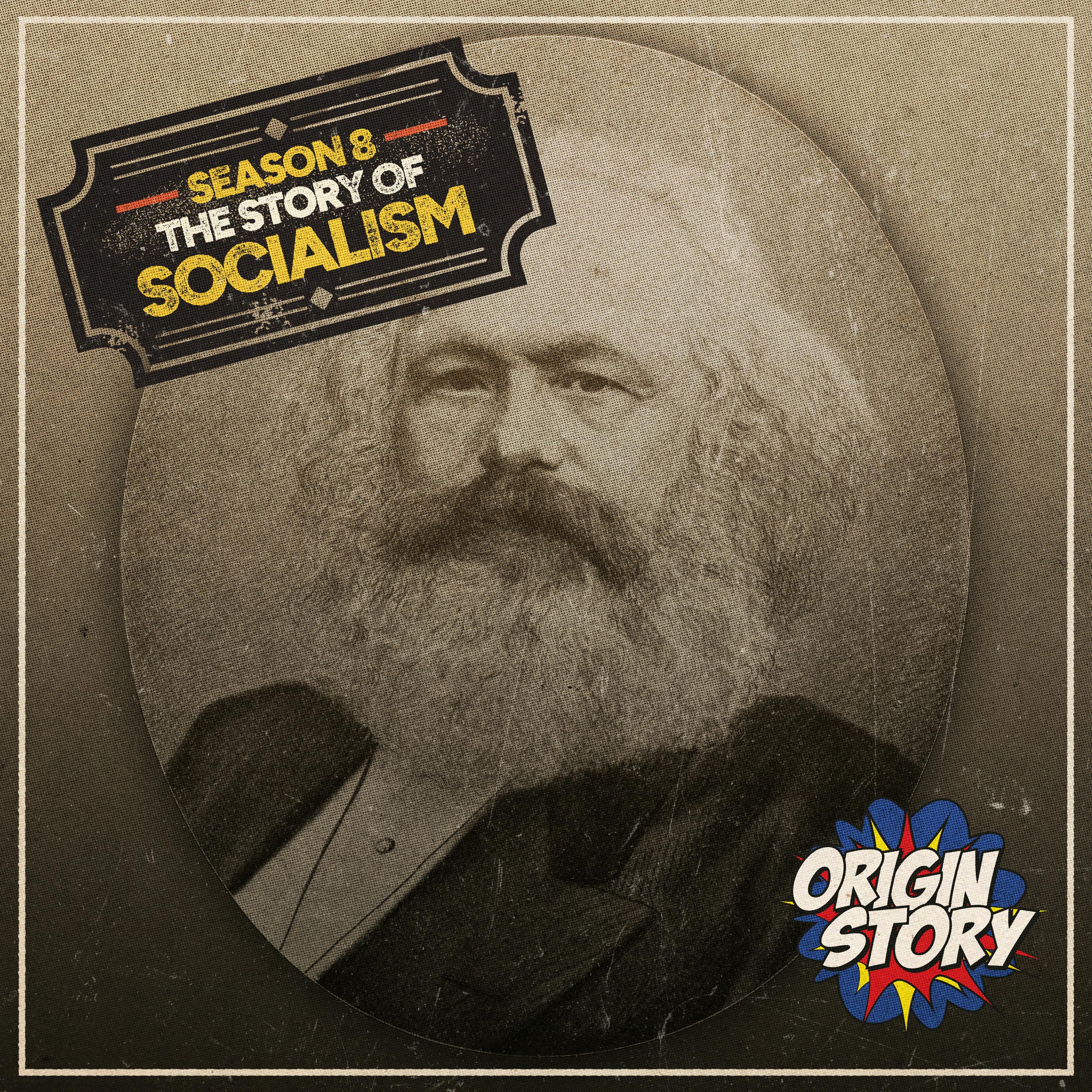
S8 Ep 3Karl Marx – Part Two – The Father
Welcome back to Season Eight: The Story of Socialism as we conclude the story of Karl Marx and the birth of Marxism. It’s 1849. In the wake of the failed revolutions in Europe, Marx and his wife Jenny arrive in London for a fresh start. But his magnum opus, Capital, is a long time coming due to chronic illness, the loss of three children and recurring money worries. The great critic of capitalism is such a disaster with finances that his friend and collaborator Friedrich Engels has to take a job at his father’s textile company in Manchester to keep the project of communism afloat. Then there are the feuds. So many feuds! Eventually, in the 1860s, a flurry of productivity bears fruit. Capital is finally finished (or volume one at least) and Marx becomes head of the International Working Men’s Association, where he wages war against rival socialists and the fearsome anarchist Mikhail Bakunin. In 1871, Marx’s response to the doomed experiment of the Paris Commune makes him famous at last — and infamous. He’s the “Red Doctor” accused of orchestrating a vast communist conspiracy that doesn’t actually exist. But then he falls quiet, retreating from political activism and writing relatively little. When he dies in 1883, there are only 11 mourners at his funeral. It is left to Engels to simplify and spread the tenets of Marxism, revolutionising European socialism. Where did Capital succeed and fail? What did he get right and wrong about capitalism and why was he so vague about the future of communism? What does Marx’s clash with Bakunin tell us about the dangerous flaws in his theory? Did Engels rewrite Marxism in the process of popularising it? And has any great writer ever been as bad with deadlines as Marx? • Use code ORIGINSTORY at the link below to get an exclusive 60% off an annual Incogni plan: https://incogni.com/originstory • Support Origin Story on Patreon • Buy the Origin Stories books on Centrism, Fascism and Conspiracy Theory • Subscribe to Origin Story on YouTube Reading list • Isaiah Berlin, Karl Marx: His Life and Environment: Fourth Edition (1978) • John Cassidy, ‘The Return of Karl Marx’, The New Yorker (1997) • Christopher Clark, Revolutionary Spring: Fighting for a New World 1848-1849 (2023)• GDH Cole: History of Socialist Thought, Volume one, The Forerunners (1953) • GDH Cole: Socialism in evolution (1938) • Friedrich Engels, Socialism: Utopian and Scientific (1880) • E. J. Hobsbawm, The Age of Revolution: 1789-1848 (1962) • E. J. Hobsbawm, The Age of Capital: 1848-1875 (1975) • Tristram Hunt, Marx’s General: The Revolutionary Life of Friedrich Engels (2009) • In Our Time: Marx, Radio 4 (2005) • In Our Time: Hegel’s Philosophy of History, Radio 4 (2022) • Karl Marx, Theses on Feuerbach (1845, published 1888) • Karl Marx and Friedrich Engels, Manifesto of the Communist Party (1848) • Karl Marx, The Eighteenth Brumaire of Louis Napoleon (1852) • Karl Marx, Preface to Contribution to a Critique of Political Economy (1859) • Karl Marx, Capital: A Critique of Political Economy (1867, 1885, 1894) • Karl Marx, The Civil War in France (1871) • Karl Marx, Critique of the Gotha Programme (1875, first published 1891) • Louis Menand, ‘Karl Marx, Yesterday and Today’, The New Yorker (2016)• Bertrand Russell, Roads to freedom: Socialism, Anarchism and Syndicalism (1918) • Peter Singer, Hegel: A Very Short Introduction (2001) • Peter Singer, Marx: A Very Short Introduction: Second Edition (2018) • Jonthan Sperber, Karl Marx: A 19th Century Life (2013) • Gareth Stedman Jones, Karl Marx: Greatness and Illusion (2016) • Robert C. Tucker, ed., The Marx-Engels Reader: Second Edition (1978) • Francis Wheen, Karl Marx (1999) • Edmund Wilson, To the Finland Station: A Study in the Writing and Acting of History (1940) Written and presented by Ian Dunt and Dorian Lynskey. Producer: Simon Williams. Music by Jade Bailey. Art by Jim Parrett. Logo by Mischa Welsh. Group Editor: Andrew Harrison. Origin Story is a Podmasters production Learn more about your ad choices. Visit podcastchoices.com/adchoices

S8 Ep 2Karl Marx – Part One – The Fighter
A spectre is haunting Origin Story — the spectre of Karl Marx. Welcome back to season eight: The Story of Socialism. Last week, we explored the various socialisms that were exciting Europe when Marx was a young man. Now we turn to the man himself, and his close friend and ally Friedrich Engels. The landslide winner of an In Our Time poll to choose the most important philosopher of all time, Marx introduced gigantic new ideas that still inform our thinking whether you’re a Marxist or not. Born in Prussia in 1818, Marx was on course to become one of many young German philosophers wrestling with the legacy of Hegel. But when he was frozen out of academia, journalism set him on a more confrontational, activist path. His extraordinary intellect was wrapped up in a spectacularly belligerent personality, addicted to vicious feuds and denunciations. He could start a fight in an empty room. As he moved from Prussia to Paris to Brussels during the 1840s, Marx went on a political journey, too: from liberal to socialist to head of the Communist League. Along the way, he built the basic framework of Marxism: the class struggle between bourgeoisie and proletariat, the value of labour, the volatile, insatiable energy of capitalism, and the dialectical progress of history. It was nothing less than a new way of understanding the world. Marx’s first phase culminated in The Communist Manifesto in 1848, the same year that revolution swept the great cities of Europe. Explaining its failure was the first task of Marx’s next phase as he left the continent for good, settled in London and embarked on the torturous process of writing his masterwork, Capital. How did Marx become a communist? What did he owe to Hegel? Why was his friendship with Engels so essential? Why was he more dedicated to waging war on his former friends than his obvious enemies? Which rival socialist called him “the tapeworm of socialism”? And what exactly is dialectical materialism anyway? “Philosophers have hitherto only interpreted the world in various ways,” Marx wrote. “The point is to change it.” This is how he began to change it. • Use code ORIGINSTORY at the link below to get an exclusive 60% off an annual Incogni plan: https://incogni.com/originstory • Support Origin Story on Patreon • Buy the Origin Stories books on Centrism, Fascism and Conspiracy Theory • Subscribe to Origin Story on YouTube Reading list • Isaiah Berlin, Karl Marx: His Life and Environment: Fourth Edition (1978) • John Cassidy, ‘The Return of Karl Marx’, The New Yorker (1997) • Christopher Clark, Revolutionary Spring: Fighting for a New World 1848-1849 (2023)• GDH Cole: History of Socialist Thought, Volume one, The Forerunners (1953) • GDH Cole: Socialism in evolution (1938) • Friedrich Engels, Socialism: Utopian and Scientific (1880) • E. J. Hobsbawm, The Age of Revolution: 1789-1848 (1962) • E. J. Hobsbawm, The Age of Capital: 1848-1875 (1975) • Tristram Hunt, Marx’s General: The Revolutionary Life of Friedrich Engels (2009) • In Our Time: Marx, Radio 4 (2005) • In Our Time: Hegel’s Philosophy of History, Radio 4 (2022) • Karl Marx, Theses on Feuerbach (1845, published 1888) • Karl Marx and Friedrich Engels, Manifesto of the Communist Party (1848) • Karl Marx, The Eighteenth Brumaire of Louis Napoleon (1852) • Karl Marx, Preface to Contribution to a Critique of Political Economy (1859) • Karl Marx, Capital: A Critique of Political Economy (1867, 1885, 1894) • Karl Marx, The Civil War in France (1871) • Karl Marx, Critique of the Gotha Programme (1875, first published 1891) • Louis Menand, ‘Karl Marx, Yesterday and Today’, The New Yorker (2016)• Bertrand Russell, Roads to freedom: Socialism, Anarchism and Syndicalism (1918) ... Reading list continues on Patreon Written and presented by Ian Dunt and Dorian Lynskey. Producer: Simon Williams. Music by Jade Bailey. Art by Jim Parrett. Logo by Mischa Welsh. Group Editor: Andrew Harrison. Origin Story is a Podmasters production Learn more about your ad choices. Visit podcastchoices.com/adchoices

S8 Ep 1The Birth of Socialism – A Better World is Possible
Welcome to season eight of Origin Story. This season we’re trying something different: one big narrative across multiple topics. It’s the story of socialism, from the earliest blueprints to the present day, Lenin to Labour, Marx to Mao, Gramsci to Gorbachev and Proudhon to Piketty. We’re talking about the evolution of a powerful idea in all its manifestations and exploring how it came to encompass both Soviet communism and European social democracy. It’s arguably the most earth-shaking political concept of the last 200 years. H.G. Wells summed up early versions of socialism as “a vast system of questionings and repudiations, political doubts, social doubts, hesitating inquiries, and experiments”. We begin in the wake of the French Revolution with the radical republican Gracchus Babeuf and his “enraged ones” calling for absolute equality. In France, the rebel aristocrat Henri de Saint-Simon imagined a progressive secular technocracy while Charles Fourier dreamt of communes in which the human spirit was liberated from drudgery and oppression. In the UK, the businessman Robert Owen modelled a new society based on cooperation and the fair exchange of labour. These so-called “utopian socialists” inspired numerous attempts to build a better world in miniature. The 1830s and 1840s produced an explosion of new words to make sense of immense social change: socialism, communism, anarchism, capitalism. Thinkers like the utopian Étienne Cabet, the anarchist Joseph Proudhon and the politician Louis Blanc introduced concepts that are with us to this day, while the scholar Lorenz von Stein was the first to ask: what is the difference between socialism and communism anyway? (We’ll come back to this.) Out on the streets, Louis Blanqui championed revolutionary violence. And in 1848, actual revolution broke out in the great cities of Europe. Soaking up all these ideas and developing their own version of communism were Karl Marx and Friedrich Engels — the subjects of our next two episodes. But even as Marxism swept Europe at the end of the century, the American journalist Edward Bellamy revived utopian socialism and made it more popular than ever. That dream refused to die. What unites all these disparate visions that called themselves socialism? How did they feed into both Marxism and the Labour Party? How did America become the world’s biggest laboratory for socialist experiments? Why did they fail? And can a change in the economic system really transform human nature? Join us as we begin the epic story of socialism. • Support Origin Story on Patreon • Subscribe to Origin Story on YouTube • Buy the Origin Stories books on Centrism, Fascism and Conspiracy Theory Reading list • Edward Bellamy, Looking Backward: 2000-1887 (1888, OUP edition 2007) • James Boyle, What Is Socialism? (1912) • Étienne Cabet, The Voyage to Icaria (1839) • G.D.H. Cole, Socialist Thought: The Forerunners 1789-1850 (1959) • G.D.H Cole: Socialism in Evolution (1938) • Friedrich Engels, Socialism: Utopian and Scientific (1880) • Leslie Holmes, Communism: A Very Short Introduction (2009) • William Morris, News from Nowhere (1890) • Michael Newman, Socialism: A Very Short Introduction (2020) • John Humphrey Noyes, History of American Socialisms (1870) • Betrand Russell: Proposed Roads to Freedom (1918) • Robert Service, Comrades: Communism: A World History (2007) • George Bernard Shaw et al, Fabian Essays in Socialism (1889) • Gareth Stedman Jones, Karl Marx: Greatness and Illusion (2016) • H.G. Wells, New Worlds for Old (1908) • Oscar Wilde, The Soul of Man Under Socialism (1891) • Lectures on Modern European Intellectual History, The Utopian Socialists: Charles Fourier Written and presented by Ian Dunt and Dorian Lynskey. Producer: Simon Williams. Music by Jade Bailey. Art by Jim Parrett. Logo by Mischa Welsh. Group Editor: Andrew Harrison. Origin Story is a Podmasters production Learn more about your ad choices. Visit podcastchoices.com/adchoices

S7 Ep 17The British Chinese – Hidden generations
British Chinese compose nearly one per cent of the British population, but they are culturally and politically ignored with precious little representation in politics or television. In this Origin Story special edition, we trace the history of the British Chinese community, from the days of Roman Britain to the present day. Along the way, we see the construction of the first Chinatown in London's Limehouse, at the height of Empire, when ports function as joining-places for the world. We witness the racism that hit Chinese communities during the wars, when fear of 'Yellow Peril' and miscegenation resulted in deportation programmes against the very people who had helped Britain in the fight against Germany. And we follow the second triumphant wave of immigration in the 20th Century, in the restaurant business, as Chinese food helps democratise the practice of eating out in Britain. We then look at the extraordinary accomplishments of the British Chinese in the modern era, particularly in education, culture and the economy. And we start to tease apart a richer, deeper story about multicultural Britain, one which is much more varied and surprising than people allow for in the barren conversation about immigration we read in the newspapers every day. Support Origin Story on Patreon: https://www.patreon.com/originstorypod Reading list • William Poole, The Letters of Shen Fuzong to Thomas Hyde, 1687-88, British Library Journal, volume 2015, article 9 • Earle Gale, Chinese pathfinders paved the way in UK hundreds of years ago, China Daily • Marc Horne, Extraordinary tale of first Chinese Scotsman, The Times • Anonymous, William Macao • Sylvia Hahn, Stanley Nadel (eds) Asian Migrants in Europe: Transcultural Connections • Gregor Benton and Edmund Terence Gomez, The Chinese in Britain, 1800–Present • Anonymous, Liverpool Chinatown History • Jody-Lan Castle, Looking for my Shanghai father, BBC.co.uk • Anonymous, London by ethnicity: Analysis, The Guardian • Emily Thomas, British Chinese people say racism against them is 'ignored', BBC.co.uk • John Hills et al, An Anatomy of Economic Inequality in the UK: Report of the National Equality Panel, Centre for Analysis of Social Exclusion, LSE. • Tze Ming Mok and Lucinda Platt, All look the same? Diversity of labour market outcomes of Chinese ethnic group populations in the UK, Journal of Ethnic and Migration Studies • Zain Mohyuddin and Sophie Stowers, Minorities Report: The Attitudes of Britain's Ethnic Minority Population, UK in a Changing Europe • Anon, Chinese ethnic group: facts and figures, Gov.uk • Anonymous, Ethnicity pay gaps, UK: 2012 to 2022, ONS• Alan Moore and Kevin O'Neill, The League of Extraordinary Gentlemen, Volume One Written and presented by Dorian Lynskey and Ian Dunt. Produced by Simon Williams. Music by Jade Bailey. Art by Jim Parrett. Logo by Mischa Welsh. Group Editor: Andrew Harrison. Origin Story is a Podmasters production Learn more about your ad choices. Visit podcastchoices.com/adchoices

S7 Ep 16Rivers of Blood – How Enoch Powell poisoned Britain
Welcome back to Origin Story. In this bonus episode Dorian tells the unnervingly relevant story of Enoch Powell’s so-called “Rivers of Blood” speech. On 20 April 1968, the Conservative MP for Wolverhampton South West delivered probably the most explosive political speech in British peacetime history, bringing into the mainstream opinions previously confined to the far right. As Keir Starmer discovered, even the faintest echo of the speech is toxic on the left, yet on the right newspaper columnists and politicians like Robert Jenrick are reviving Powell’s rhetoric with impunity. We start by examining Powell’s youth as a brilliant scholar, war hero and ardent imperialist who developed an idiosyncratic version of nationalism. As a junior minister and pioneering neoliberal in the 1950s, he barely mentioned race or immigration but he became increasingly obsessed during the 1960s, and increasingly vocal. Powell contrived his speech to have the biggest possible impact and he succeeded. While he was sacked by Tory leader Ted Heath and denounced as an evil race-baiter by the establishment (even The Beatles took a shot), he became the most popular politician in Britain almost overnight. It was the first eruption of what we now know as right-wing populism and its aftershocks extended from Rock Against Racism and no-platforming to the Great Replacement Theory and Brexit. How did one speech poison British politics? What led Powell to deliver it? What can it teach us about the timeless tricks of anti-immigrant oratory? Did he merely activate the British public’s latent racism or actively feed it? What lessons have politicians failed to learn about how to deal with anti-immigrant sentiment? And why are Britain’s elites more tolerant of overt racism in 2025 than they were in 1968? Support Origin Story on Patreon: https://www.patreon.com/originstorypod Reading list • Anonymous, ‘An Evil Speech’, The Times (22 April 1968) • Anonymous, ‘Coloured Family Attacked’, The Times (1 May 1968) • Paul Foot, The Rise of Enoch Powell (1969) • Simon Heffer, Like the Roman: The Life of Enoch Powell (1998) • Tom McTague, Between the Waves: The Hidden History of a Very British Revolution 1945-2016 (2025) • Sarfraz Manzoor, ‘Black Britain’s Darkest Hour’, The Guardian (2008) • Caroline Moorhead, ‘A Would-Be Leader Deserted by Destiny’, The Times (12 May 1975) • Enoch Powell, the ‘Rivers of Blood’ speech, 20 April 1968 • J. Enoch Powell, Freedom and Reality, edited by John Wood (1969) • Andrew Roth, Enoch Powell: Tory Tribune (1970) • Michael Savage, ‘Fifty years on, what is the legacy of Enoch Powell’s “rivers of blood” speech?’, The Observer (2018) • Douglas E. Schoen, Enoch Powell and the Powellites (1977) • Robert Shepherd, Enoch Powell (1996) • Evan Smith, No Platform: A History of Anti-Fascism, Universities and the Limits of Free Speech (2020) • Bill Smithies and Peter Fiddick, Enoch Powell on Immigration (1969)Written and presented by Dorian Lynskey and Ian Dunt. Produced by Simon Williams. Music by Jade Bailey. Art by Jim Parrett. Logo by Mischa Welsh. Group Editor: Andrew Harrison. Origin Story is a Podmasters production Learn more about your ad choices. Visit podcastchoices.com/adchoices

S7 Ep 15Shostakovich and Stalin – The Composer and the Dictator
Welcome back to Origin Story. This bonus episode is something a bit different: a story about the power of music and the music of power. Tortured genius? Stalinist stooge? Undercover dissident? Perhaps no musician better represents the competing demands of art and politics than Dmitri Shostakovich, who died 50 years ago this week. He has been called the most brilliant symphonist of his age and the most controversial composer since Wagner. Shostakovich’s career began with Lenin and ended with Brezhnev but his great antagonist was Stalin, a self-styled music buff and maestro in the art of fear. From symphony to symphony, Shostakovich danced on the edge of a knife. Sometimes he was the Soviet Union’s favourite composer, bathing in privilege and acclaim. At other times he was an “enemy of the people”, bullied into silence and terrified for his life. Nobody knew what Shostakovich’s music was really saying until the posthumous publication of his memoir Testimony made an extraordinary claim that turned all assumptions on their head. But was this just a dying man’s attempt to save his reputation and was Testimony even his words or a brilliant forgery? His admirers and detractors have been fighting the “Shostakovich wars” ever since. How did Shostakovich and contemporaries like Prokofiev manage to produce great art in a dictatorship, and what did it cost them? Why did his Leningrad Symphony transfix the world? How did he inspire the most consequential review in the history of music criticism? And can we ever truly know what his music meant or is it all in the ear of the beholder? Listen closely. Support Origin Story on Patreon: https://www.patreon.com/originstorypod Reading list • Anonymous, ‘Muddle Instead of Music’, Pravda (28 January 1936) • Anonymous, ‘Shostakovich and the Guns’, Time (20 July 1942) • Julian Barnes, The Noise of Time (2016) • James Devlin, Shostakovich (1983) • Jeremy Eichler, ‘The Composer and the Dictator’, New York Times (2004) • Laurel E. Fay, Shostakovich: A Life (2000) • Michel Krielaars, The Sound of Utopia: Musicians in the Time of Stalin (2025) • Dorian Lynskey, ‘Settling a Soviet Score’, Jewish Renaissance (Spring 2025) • Brian Morton, Shostakovich: His Life and Music (2006) • Alex Ross, The Rest Is Noise: Listening to the Twentieth Century (2007) • Nikil Saval, ‘Julian Barnes and the Shostakovich Wars’, The New Yorker (2016) • Dmitri Shostakovich, Testimony: The Memoirs of Shostakovich, as related to and edited by Solomon Volkov (1979) • Elizabeth Wilson, Shostakovich: A Life Remembered (1994) Written and presented by Dorian Lynskey and Ian Dunt. Produced by Simon Williams. Music by Jade Bailey. Art by Jim Parrett. Logo by Mischa Welsh. Group Editor: Andrew Harrison. Origin Story is a Podmasters production Learn more about your ad choices. Visit podcastchoices.com/adchoices

S7 Ep 14ICE – How Trump built an American Gestapo
EWhat is ICE? Who are these men we see gathered around students and politicians in the US, with their faces covered, wearing unmarked clothing, often throwing people into unmarked cars? Where did this organisation originate? How did it turn into what looks like a militia? And where will its loyalties lie in future if there is a threat to Trump's hold on power? This special edition of Origin Story looks into US Immigration and Customs Enforcement, a body which was once responsible for tracking undocumented immigrants who were a threat to national security, but has now metastasised into a group which seems to target all immigrants and many US citizens. We track its birth under George Bush Jr, its actions under Barack Obama and then its radicalisation and expansion under Donald Trump. Then we peer into the alarming evidence about its behaviour and its part in Trump's broader agenda, before listing the comparisons with Nazi Germany. Everything you need to know about one of modern America's most disturbing developments. Support Origin Story on Patreon: https://www.patreon.com/originstorypod Written and presented by Dorian Lynskey and Ian Dunt. Produced by Simon Williams. Music by Jade Bailey. Art by Jim Parrett. Logo by Mischa Welsh. Group Editor: Andrew Harrison. Origin Story is a Podmasters production Learn more about your ad choices. Visit podcastchoices.com/adchoices

S7 Ep 11Martin Luther King Jr. – Part Two – Owning the dream
Welcome to the grand finale of Origin Story season seven, as we conclude the remarkable story of Martin Luther King Jr. With the march from Selma to Montgomery and the passing of the Voting Rights Act, 1965 marked the zenith of the civil rights movement as a unified, effective force under King’s leadership. The decade-long fight to desegregate the South had given it strategic clarity and mainstream support. After that, things got much trickier as King switched his attention to economic injustice in cities like Chicago and came out against the war in Vietnam. Estranged from President Johnson, challenged by the young firebrands of Black Power, hounded by the FBI and horrified by the despair that fuelled urban riots, King spent the rest of his life on the back foot. In 1968, he staked everything on an ambitious Poor People’s Campaign but his movement had fragmented and public opinion had turned against him. On 4 April, he was shot dead in Memphis. The assassination simplified King into a martyr. We track the explosive unrest in the days after his death, the long struggle to make Martin Luther King Day a national holiday, and the way his philosophy has been caricatured and neutered by those who believe that civil rights have gone far enough. Finally, we unpack some of King’s most famous quotes to separate the myth from the reality. Why did the movement unravel after Selma? Did King pick the wrong battles or were the forces ranged against him too powerful to vanquish? What happens when a human being becomes a symbol? How has his message been whitewashed by the right? Does President Trump’s backlash politics prove that King was right to lose faith in white America’s willingness to reject racism? And what can today’s activists learn from King’s victories and defeats? Thanks for listening to season seven of Origin Story, and for supporting our work. We’ll be back soon with bonus episodes and Q&As. Written and presented by Dorian Lynskey and Ian Dunt. Produced by Simon Williams. Music by Jade Bailey. Art by Jim Parrett. Logo by Mischa Welsh. Group Editor: Andrew Harrison. Origin Story is a Podmasters production Learn more about your ad choices. Visit podcastchoices.com/adchoices

Martin Luther King Jr. – Part One – Eyes on the Prize
EWelcome to the final topic of Origin Story season seven: the extraordinary life and legacy of Dr Martin Luther King. By Origin Story standards, there’s an unusual moral clarity to this story — a genuinely good man up against genuine horrors — but that doesn’t make it a straightforward one. The mainstream caricature of King as a kindly, colour-blind saint is not just a simplification but a cynical misrepresentation, designed to drain his example of its power. Born in Atlanta in 1929, the son of a prominent pastor, King was a brilliant student who developed a sophisticated worldview grounded in both Christianity and philosophy. His Gandhi-inspired belief in nonviolent resistance became central to the civil rights struggle when he was thrust onto the frontlines during the Montgomery bus boycott of 1955-6 and quickly became the most admired black man in America. He was just 27. King’s new role as leader and symbol of the movement was both an honour and a burden. Abused, threatened, assaulted and jailed, he wrestled with his own feelings of inadequacy and guilt as well as the violent forces of white racism and the obsessive attention of the FBI. We follow him through his great triumphs — Montgomery, Birmingham, the March on Washington, Selma — but also his setbacks, his mistakes and his complicated relationships with presidents and fellow activists. What made this previously unknown preacher the unrivalled leader of the civil rights movement for more than 12 years? How did he develop, and evolve, his philosophy of nonviolence? Who were his loyal allies, vicious antagonists and complicated frenemies? How did he play to his strengths and transcend his weaknesses? And what gave him the strength to carry on in the face of both the American South’s barbaric racism and his own ceaseless insecurities? This is an inspiring and often surprising story of moral courage and strategic leadership pitted against terrible odds — one with vital lessons for anybody who seeks to change the world for the better. Plus! Another Origin Story playlist, featuring songs about and inspired by Martin Luther King. It’s sequenced to tell his story chronologically. Reading list • Ralph Abernathy, And the Walls Came Tumbling Down: An Autobiography (1989) • Jonathan Eig, King: The Life of Martin Luther King (2023) • Marshall Frady, Martin Luther King, Jr: A Life (2001) • Martin Luther King Jr, Stride Toward Freedom: The Montgomery Story (1958) • Martin Luther King Jr, Why We Can’t Wait (1963) • Martin Luther King Jr, Where Do We Go From Here: Chaos or Community? (1967) • Dr Martin Luther King Jr, A Testament of Hope: The Essential Writings and Speeches, edited by James Melvin Washington (1986) • Stephen B. Oates, Let the Trumpet Sound: A Life of Martin Luther King, Jr (1982) • Jason Sokol, The Heavens Might Crack: The Death and Legacy of Martin Luther King, Jr (2018) Articles • Renata Adler, ‘The Selma March’, The New Yorker (1965) • Jelani Cobb, ‘Martin Luther King, Jr.’s History Lessons’, The New Yorker (2022) • Alex Haley (uncredited), Playboy interview: Martin Luther King (1965) • Howell Raines, ‘Driven to Martyrdom’, New York Times (1986) • Kelefa Sanneh, ‘Martin Luther King, Jr., and the Perilous Power of Respectability’, The New Yorker (2023) • Time, ‘THE SOUTH: Attack on the Conscience’, Time (1957) • Time, ‘America’s Gandhi: Rev. Martin Luther King Jr.’, Time (1964) • Calvin Trillin, ‘The Struggle for Civil Rights in Mississippi’, The New Yorker (1964) Video • 60 Minutes interview with Martin Luther King (1966) • BBC Face to Face interview with Martin Luther King (1961) • Martin Luther King, ‘I Have a Dream’ speech (1963) ... Full reading list continues on Patreon Written and presented by Dorian Lynskey and Ian Dunt. Produced by Simon Williams. Music by Jade Bailey. Art by Jim Parrett. Logo by Mischa Welsh. Group Editor: Andrew Harrison. Origin Story is a Podmasters production Learn more about your ad choices. Visit podcastchoices.com/adchoices

S7 Ep 9Growth – GDP is the Magic Number
EWelcome back to Origin Story, where we’re discussing the concept of economic growth. Growth is the world’s great obsession. When it’s booming, it makes everything easier. When it stagnates or goes into reverse, everybody panics. But what exactly is it, what drives it and what does it cost us? For most of human history economic growth didn’t exist. The average person was no better off than their distant ancestors. Even when the age of growth began with the Industrial Revolution, nobody knew how to measure it or control it until the 1940s. Enter GDP, which quickly became the most important number in the world despite its creators acknowledging from the start that it was both artificial and deeply flawed. We talk about what GDP does and does not measure and how it has adapted to an increasingly complicated global economy. We meet the economists who created it (hello again, John Maynard Keynes) and those who tried to reform or replace it. Robert F Kennedy claimed in 1968 that GDP “measures everything except that which makes life worthwhile”. Is the number that rules the world really fit for purpose? Then we explore our addiction to relentless growth and ask if there is a more sustainable way to thrive: green growth, slow growth or degrowth? Preserving our natural resources without risking economic and political disaster is the great challenge of our times. Is growth essential to the survival of democracy or the cause of many of its problems? What fuelled the miraculous growth of previous eras and why isn’t it working anymore? Can advanced economies escape the low-growth trap or do we need to rethink our whole approach to growth and prosperity? Does GDP still tell us what we need to know? And are we valuing the right things? • Support Origin Story on Patreon • Get the Origin Story books on Fascism, Centrism and Conspiracy Theory Reading list • Donella H. Meadows et al., The Limits to Growth (1972) • Barry Commoner, The Closing Circle: Nature, Man & Technology (1971) • Diane Coyle, GDP: A Brief but Affectionate History (2014) • Diane Coyle, The Measure of Progress: Counting What Really Matters (2025) • Ehsan Masood, GDP: The World’s Most Powerful Formula and Why It Must Now Change (2021) • Jason Hickel, Less Is More: How Degrowth Will Save the World (2020) • John Maynard Keynes, How to Pay for the War (1940) • Kate Raworth, Doughnut Economics: Seven Ways to Think Like a 21st Century Economist (2017) • Daniel Susskind, Growth: A Reckoning (2024) Articles • John Cassidy, ‘Can We Have Prosperity Without Growth’, The New Yorker (2020) • Herman Daly, ‘The Canary Has Fallen Silent’, New York Times (1970) • Editorial, ‘Pandemic Calls for a New Approach to Growth’, Financial Times (2020) • Editorial, ‘Are there limits to economic growth? It’s time to call time on a 50 year argument’, Nature (2022) • Idrees Kahloon, ‘The World Keeps Getting Richer. Some People Are Worried’, The New Yorker (2024) • Carolyn Kormann, ‘The False Choice Between Economic Growth and Combatting Climate Change’, The New Yorker (2019) • Katy Lederer, ‘The End of G.D.P.?’, The New Yorker (2015) • David Marchese, This Pioneering Economist Says Our Obsession with Growth Must End, New York Times (2022) • Bill McKibben, ‘To Save the Planet, Should We Really Be Moving Slower?’, The New Yorker (2023) • John Merrick, ‘The prophet of the new right’, The New Statesman (2025) • Peter Passell, Marc Roberts and Leonard Ross, ‘The Limits to Growth’, New York Times (1972) Written and presented by Dorian Lynskey and Ian Dunt. Produced by Simon Williams. Music by Jade Bailey. Art by Jim Parrett. Logo by Mischa Welsh. Group Editor: Andrew Harrison. Origin Story is a Podmasters production Learn more about your ad choices. Visit podcastchoices.com/adchoices

S7 Ep 8Mars – The Next Frontier?
EWelcome to the first ever episode of Origin Story dedicated to a planet. We’re taking a long look at the place of Mars in the popular imagination, from ancient civilisations to fin de siècle Mars mania to the current techbro obsession with exploration and colonisation. Is there life on Mars? Let’s find out. The ancients associated the red planet with gods of war. With the invention of the telescope in the 17th century, astronomers began to understand Mars better and speculate about its inhabitants. Thanks to the amateur astronomer Percival Lowell, the romance of the red planet, and its alleged “canals”, became a craze in the 1890s. H.G. Wells and Edgar Rice Burroughs imagined the Martians as colonisers and colonised respectively, while luminaries like Nikola Tesla and Francis Galton hatched outlandish schemes to contact them. Science played the killjoy. Even as a new wave of Mars mania swept the post-war world, NASA probes unveiled the reality of a cold, dusty, dead planet. But their findings allowed for a new breed of romance: the possibility of actually reaching and settling on Mars. Ray Bradbury compared Mars to a mirror. What does humanity’s fascination with it say about our own dreams and fears over the centuries? How did the fictional Martian turn from a friendly pacifist into a ruthless killing machine? Why is there such a thin line between fact and fiction? Is Elon Musk’s obsession with settlement really possible or just another delusion? And why exactly do so many people want to travel to a planet that makes the least hospitable places on earth look like Center Parcs? It’s a mindboggling tale of scientific discovery and wild fantasy, with an all-star cast including Lord Tennyson, William Herschel, Thomas Edison, David Bowie and Arthur C. Clarke. Plus! Our first ever Origin Story playlist, with 23 songs about Mars. We have lift-off. • Support Origin Story on Patreon • Get the Origin Story books on Fascism, Centrism and Conspiracy Theory Reading list • Ray Bradbury, The Martian Chronicles (1950) • Albert Burneko, ‘Neither Elon Musk nor Anybody Else Will Ever Colonize Mars’ (2025) • Stuart Clark (ed.), The Book of Mars: An Anthology of Fact and Fiction (2022) • Robert Crossley, Imagining Mars: A Literary History (2011) • Marc Hartzman, The Big Book of Mars (2020) • Robert Heinlein, Stranger in a Strange Land (1961) • Walter Isaacson, Elon Musk (2023) • Nicky Jenner, 4 th Rock from the Sun: The Story of Mars (2017) • Dorian Lynskey, Everything Must Go: The Stories We Tell About the End of the World (2024) • Lord Tennyson, ‘Locksley Hall Sixty Years After’ (1886) • Walter Tevis, The Man Who Fell to Earth (1963) • Kelly and Zach Weinersmith, A City on Mars: Can We Settle Space, Should We Settle Space, and Have We Really Thought This Through? (2023) • H.G. Wells, The War of the Worlds (1898) • Robert Zubrin, The Case for Mars: The Plan to Settle the Red Planet and Why We Must (1996) Audio and video • Alternative 3, written by David Ambrose and directed by Christopher Miles (1977) • The Bunker: Why Elon Musk’s plan for life on Mars is a terrible idea (2025) • The Martian, written by Drew Goddard and directed by Ridley Scott (2015) • A Trip to Mars, directed by Ashley Miller for the Edison Company (1910) • The War of the Worlds, written and directed by Orson Welles (1938) Written and presented by Dorian Lynskey and Ian Dunt. Produced by Simon Williams. Music by Jade Bailey. Art by Jim Parrett. Logo by Mischa Welsh. Group Editor: Andrew Harrison. Origin Story is a Podmasters production Learn more about your ad choices. Visit podcastchoices.com/adchoices

S7 Ep 7Appeasement – Part Two – Betrayal
EWelcome back to Origin Story and join us as we wrap up the story of appeasement. It’s 1938. After the Anschluss, Hitler makes his bid for the Sudetenland region of Czechoslovakia and tests the moral and strategic arguments for appeasement to breaking point. While Chamberlain insists it would be madness to go to war over “a quarrel in a faraway country, between people of whom we know nothing,” opponents like Winston Churchill and Clement Attlee are equally convinced that selling out the Czechs will only encourage Hitler to go further. Desperate diplomacy culminates in the Munich Agreement but Chamberlain’s “triumph” is short-lived as opposition mounts across the country. The German invasion of Czechoslovakia in March 1939 destroys appeasement as a mainstream proposition, leaving only an uneasy alliance of fascists and pacifists. When Stalin chooses Germany over Britain and France, war is inevitable. We look at the people who still wanted to make a deal with Hitler even once the war had begun, the fall of Chamberlain and the revenge of Churchill. We debunk the revisionist case for appeasement, explore how the legacy of Munich has been used and abused to justify military intervention ever since, and ask whether history is repeating itself over Putin and Ukraine. Why did Munich’s popularity collapse so quickly? How did Chamberlain misread Hitler’s intentions so badly? What motivated the die-hard appeasers, and the historians who defend the policy even now? Are the lessons of appeasement a double-edged sword? And which of Chamberlain’s foes had the best zingers? • Support Origin Story on Patreon • Get the Origin Story books on Fascism, Centrism and Conspiracy Theory Reading list • Anonymous, ‘A New Dawn’, The Times (1 October 1938) • W.H. Auden, ‘September 1, 1939’ (1939) • Frederick T. Birchall, ‘Olympics Leave Glow of Pride in the Reich’, New York Times (16 August 1936) • Tim Bouverie, Appeasing Hitler: Chamberlain, Churchill and the Road to War (2019) • Cato (Michael Foot, Peter Howard and Frank Owen), Guilty Men (1940) • Ian Dunt and Dorian Lynskey, Fascism: The Story of an Idea (2024) • Martin Gilbert, The Roots of Appeasement (1966) • Richard Griffiths, Fellow Travellers of the Right: British Enthusiasts for Nazi Germany, 1933-9 (1980) • Cicely Hamilton, Theodore Savage: A Story of the Past or the Future (1922) • Lucy Hughes-Hallett, ‘How the appeasement of Hitler played into his hands’, New Statesman (2019) • Kazuo Ishiguro, The Remains of the Day (1989) • Ian Kershaw, Making Friends with Hitler: Lord Londonderry and Britain’s Road to War (2004)• James Levy, Appeasement and Rearmament: Britain 1936-1939 (Rowman & Littlefield, 2006) • Frank McDonough, Neville Chamberlain, Appeasement and the British Road to War (1998) • Malcolm Muggeridge, The Thirties: 1930-1940 in Great Britain (1940) • George Orwell, Facing Unpleasant Facts: 1937-1939, edited by Peter Davison (1998) • ‘Policy of His Majesty’s Government’, day three of House of Commons debate on Munich, Hansard (5 October 1938) • Martin Pugh, ‘Hurrah for the Blackshirts!’: Fascists and Fascism in Britain Between the Wars (2005) • Stephen H. Roberts, The House That Hitler Built (1937) • Viscount Rothermere, Warnings and Predictions (1939) • A.J.P. Taylor, The Origins of the Second World War (1961) • Things to Come, written by H.G. Wells and directed by William Cameron Menzies (1936) • Neville Thompson, The Anti-Appeasers (1971) • Lord Vansittart, The Mist Procession (1958) Written and presented by Dorian Lynskey and Ian Dunt. Produced by Simon Williams. Music by Jade Bailey. Art by Jim Parrett. Logo by Mischa Welsh. Group Editor: Andrew Harrison. Origin Story is a Podmasters production Learn more about your ad choices. Visit podcastchoices.com/adchoices
S7 Ep 6Appeasement – Part One – The Bitter Cup
EWelcome back to Origin Story. This week we turn to the story of the appeasement of Hitler’s Germany during the 1930s. With appeasement in the news again in relation to Ukraine, understanding the mistakes of 90 years ago is urgently necessary. How did noble impulses like optimism, fairness and the desire for peace lead to history’s most infamous foreign policy disaster? During the 15 years following the First World War, horror of conflict and a growing consensus that the Treaty of Versailles had immiserated Germany made appeasement a positive effort to ensure peace in Europe. Even Winston Churchill was on board. But the arrival of Hitler put paid to that. The question now became: how could a militarily weak Britain rein in an unpredictable dictator, not to mention Italy and Japan? And what did Hitler really want? We move from the desperate fudging of Ramsay MacDonald and Stanley Baldwin to the evangelical appeasement of Neville Chamberlain, and from crisis to crisis: Manchuria, Abyssinia, the Rhineland, the Anschluss. We meet the most fervent appeasers and their most furious opponents. As Chamberlain’s government begins to crack, Hitler sets his sights on Czechoslovakia… How did appeasement transform from a benign peace-making strategy into a moral and diplomatic disaster? Why is Chamberlain’s reputation as a weak, indecisive leader so misleading? How did Hitler manage to fool so many powerful people? When could Britain and France have stopped him in his tracks? And what combination of good intentions, bad judgements and apocalyptic delusions led to catastrophe? • Support Origin Story on Patreon • Get the Origin Story books on Fascism, Centrism and Conspiracy Theory Reading list • Anonymous, ‘A New Dawn’, The Times (1 October 1938) • W.H. Auden, ‘September 1, 1939’ (1939) • Frederick T. Birchall, ‘Olympics Leave Glow of Pride in the Reich’, New York Times (16 August 1936) • Tim Bouverie, Appeasing Hitler: Chamberlain, Churchill and the Road to War (2019) • Cato (Michael Foot, Peter Howard and Frank Owen), Guilty Men (1940) • Ian Dunt and Dorian Lynskey, Fascism: The Story of an Idea (2024) • Martin Gilbert, The Roots of Appeasement (1966) • Richard Griffiths, Fellow Travellers of the Right: British Enthusiasts for Nazi Germany, 1933-9 (1980) • Cicely Hamilton, Theodore Savage: A Story of the Past or the Future (1922) • Lucy Hughes-Hallett, ‘How the appeasement of Hitler played into his hands’, New Statesman (2019) • Kazuo Ishiguro, The Remains of the Day (1989) • Ian Kershaw, Making Friends with Hitler: Lord Londonderry and Britain’s Road to War (2004)• James Levy, Appeasement and Rearmament: Britain 1936-1939 (Rowman & Littlefield, 2006) • Frank McDonough, Neville Chamberlain, Appeasement and the British Road to War (1998) • Malcolm Muggeridge, The Thirties: 1930-1940 in Great Britain (1940) • George Orwell, Facing Unpleasant Facts: 1937-1939, edited by Peter Davison (1998) • ‘Policy of His Majesty’s Government’, day three of House of Commons debate on Munich, Hansard (5 October 1938) • Martin Pugh, ‘Hurrah for the Blackshirts!’: Fascists and Fascism in Britain Between the Wars (2005) • Stephen H. Roberts, The House That Hitler Built (1937) • Viscount Rothermere, Warnings and Predictions (1939) • A.J.P. Taylor, The Origins of the Second World War (1961) • Things to Come, written by H.G. Wells and directed by William Cameron Menzies (1936) • Neville Thompson, The Anti-Appeasers (1971) • Lord Vansittart, The Mist Procession (1958) Written and presented by Dorian Lynskey and Ian Dunt. Produced by Simon Williams. Music by Jade Bailey. Art by Jim Parrett. Logo by Mischa Welsh. Group Editor: Andrew Harrison. Origin Story is a Podmasters production Learn more about your ad choices. Visit podcastchoices.com/adchoices