Origin Story
129 episodes — Page 2 of 3

S7 Ep 5Origin Story Live at 21 Soho – Grand Theft America
EWe had a very good time at Origin Story Live at 21 Soho on Wednesday night. Thanks to everyone who showed up or watched the livestream. The theme of the show is the American inferno and how to think about it. In part one, Normalisation, we use British responses to Hitler in the 1930s to explain how normality bias prevents much of the media from facing up to the crazed extremism of Donald Trump and rip into some of the spectacularly wrong predictions of the pundit class. In part two, Complicity, we take on the politicians, commentators and voters who actively enable Trump and ask what the residents of one German town can tell us about MAGA’s fascist groupthink. But it’s not all bad news. We explore how Trumpism might fail and how Europe might emerge stronger. Learn more about your ad choices. Visit podcastchoices.com/adchoices

S7 Ep 4Partition – Part Two – Dividing Lines
EWelcome back to Origin Story, where we’re concluding the story of the partition of India and Pakistan. We resume in March 1947 with the arrival of the last viceroy of the Raj, Lord Mountbatten, and his formidable wife Edwina. They find a country on the precipice of civil war, with the Punjab consumed by ethnic violence between Hindus, Muslims and Sikhs. Nehru, Jinnah, Gandhi and the British haggle over the details of partition as the deadline draws near and tensions rise. After independence is declared on 15 August, the leaders struggle to bring peace to the new nations of India and Pakistan and avert all-out war over Kashmir. When did partition become truly inevitable? Was British incompetence to blame for the bloodshed? What, or who, brought an end to the violence? How does the legacy of partition continue to shape the subcontinent’s politics? And what can we learn about the dangers of identity-based politics today? • Support Origin Story on Patreon • Get the Origin Story books on Fascism, Centrism and Conspiracy Theory Reading list • John Bew, Citizen Clem: A Biography of Attlee (2016) • William Dalrymple, ‘The Great Divide’, The New Yorker (2015) • Patrick French, ‘The Brutal “Great Migration” That Followed India’s Independence and Partition’, Life.com (2016) • Sarvepalli Gopal, Jawaharlal Nehru: A Biography: Volume One: 1889-1947 (1975) • Sarvepalli Gopal, Jawaharlal Nehru: A Biography: Volume Two: 1947-1965 (1979) • Ramachandra Guha, Gandhi: The Years That Changed the World 1915-1948 (2018) • Gandhi, written by John Briley and directed by Richard Attenborough (1982) • Nisid Hajari, Midnight’s Furies: The Deadly Legacy of India’s Partition (2015) • Ayesha Jalal, The Sole Spokesman: Jinnah, the Muslim League and the Demand for Pakistan (1985) • George Orwell, ‘Reflections on Gandhi’, Partisan Review (1949) • Salman Rushdie, Midnight’s Children (1981) • Alex von Tunzelmann, Indian Summer: The Secret History of the End of an Empire (2007) Audio • Empire: Mahatma Gandhi (2022) • Empire: Muhammad Ali Jinnah (2022) • Empire: The Last Viceroy of India (2022) • Empire: Partition (2022) • Jawaharlal Nehru, Independence Day speech (1947) Written and presented by Dorian Lynskey and Ian Dunt. Produced by Simon Williams. Music by Jade Bailey. Art by Jim Parrett. Logo by Mischa Welsh. Group Editor: Andrew Harrison. Origin Story is a Podmasters production Learn more about your ad choices. Visit podcastchoices.com/adchoices
S7 Ep 3Partition – Part One – Before Midnight
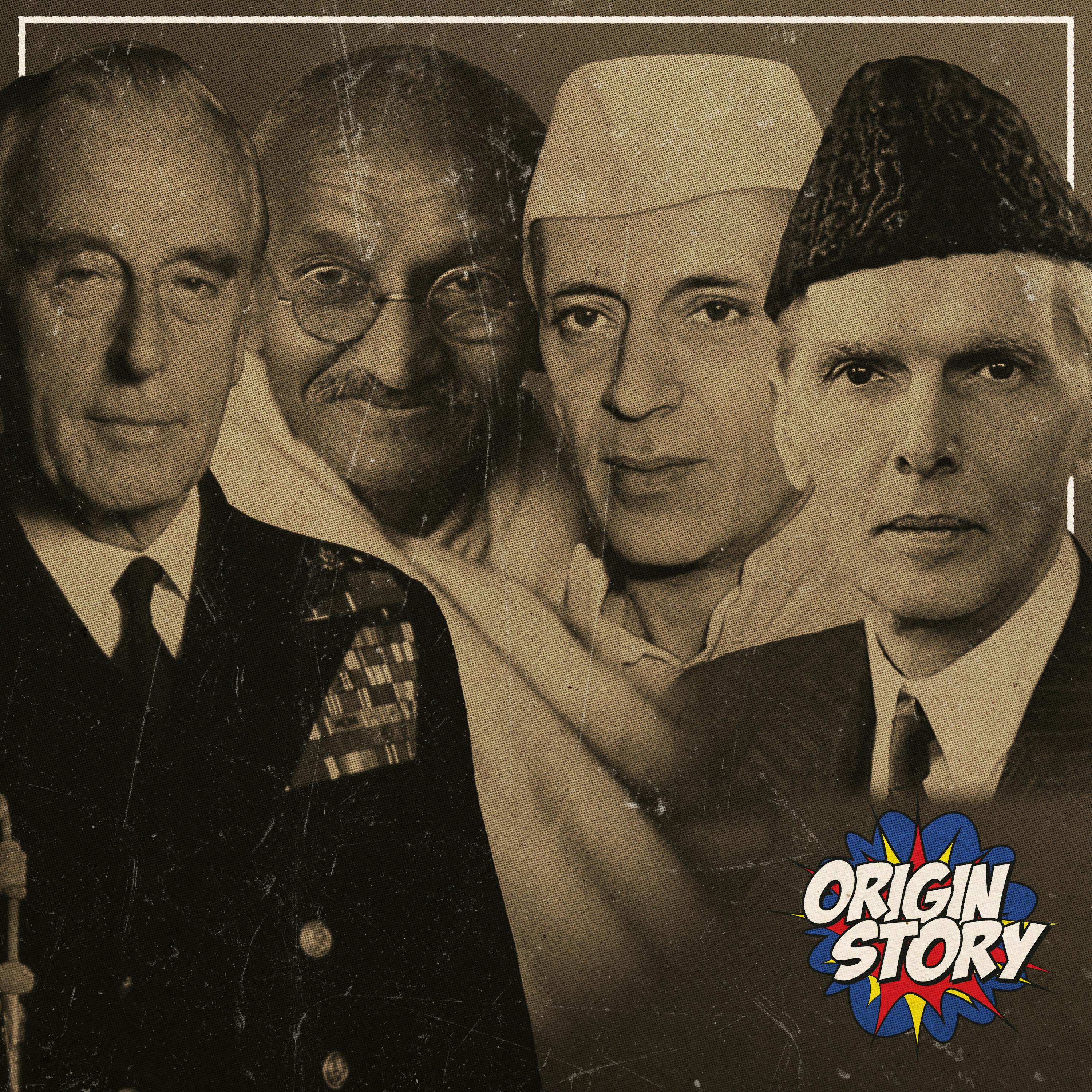
EWelcome back to Origin Story. This week we begin the immense story of the partition of India and Pakistan at midnight on 14-15 August 1947. In a stroke, 340 million people gained independence from the British Empire but a day of celebration came in the midst of horrific ethnic violence which left between 1 and 2 million people dead and more than 15 million displaced in the largest ever movement of people. Historians have argued ever since about whether this traumatic bloodshed, and partition itself, could have been avoided if different politicians had made different decisions. We start by introducing the key players in India, all of them British-educated lawyers: Mahatma Gandhi, the spiritual leader who became an international icon through his use of nonviolent protest to demand independence; Muhammad Ali Jinnah, the Muslim leader who rebounded from numerous defeats to become the father of Pakistan; and Jawaharlal Nehru, who wanted nothing more than to hold India together as a secular, multicultural state. On the British side, Clement Attlee was determined to bring the Raj to a peaceful conclusion, Winston Churchill was equally obsessed with preserving it, and viceroys Lord Linlithgow and Archibald Wavell took very different approaches to Indian nationalism. The story takes us from late Victorian London to the Amritsar massacre, and from Gandhi’s triumphant Salt March to the disaster of the Quit India campaign during the Second World War. We see Pakistan go from a utopian fantasy to a plausible reality while believers in a united India do everything they can to prevent it. And as negotiations falter, riots and pogroms begin to inflame the country. We end on the cusp of 1947 as Lord Mountbatten becomes the last viceroy and partition looks almost inevitable. To what extent did the personalities of a handful of politicians in India and Britain dictate the course of world history? How did Jinnah bring Pakistan to life? Does Gandhi deserve his saintly reputation? And why don't we like to talk about it? • Support Origin Story on Patreon • Get the Origin Story books on Fascism, Centrism and Conspiracy Theory Reading list • John Bew, Citizen Clem: A Biography of Attlee (2016) • William Dalrymple, ‘The Great Divide’, The New Yorker (2015) • Patrick French, ‘The Brutal “Great Migration” That Followed India’s Independence and Partition’, Life.com (2016) • Sarvepalli Gopal, Jawaharlal Nehru: A Biography: Volume One: 1889-1947 (1975) • Sarvepalli Gopal, Jawaharlal Nehru: A Biography: Volume Two: 1947-1965 (1979) • Ramachandra Guha, Gandhi: The Years That Changed the World 1915-1948 (2018) • Gandhi, written by John Briley and directed by Richard Attenborough (1982) • Nisid Hajari, Midnight’s Furies: The Deadly Legacy of India’s Partition (2015) • Ayesha Jalal, The Sole Spokesman: Jinnah, the Muslim League and the Demand for Pakistan (1985) • George Orwell, ‘Reflections on Gandhi’, Partisan Review (1949) • Salman Rushdie, Midnight’s Children (1981) • Alex von Tunzelmann, Indian Summer: The Secret History of the End of an Empire (2007) Audio • Empire: Mahatma Gandhi (2022) • Empire: Muhammad Ali Jinnah (2022) • Empire: The Last Viceroy of India (2022) • Empire: Partition (2022) • Jawaharlal Nehru, Independence Day speech (1947) Written and presented by Dorian Lynskey and Ian Dunt. Produced by Simon Williams. Music by Jade Bailey. Art by Jim Parrett. Logo by Mischa Welsh. Group Editor: Andrew Harrison. Origin Story is a Podmasters production Learn more about your ad choices. Visit podcastchoices.com/adchoices

S7 Ep 2Thatcherism – Part Two – Imperial phase
EIn part two of Thatcherism, Margaret Thatcher has survived a grim first term and her political and economic bets have paid off. She’s ready to wage war on everything she considers socialism: trade unions, local councils, nationalised industries, the BBC, you name it. The Britain she leads is wealthier and more dynamic yet more divided and unequal — a land bisected into winners and losers, where her beloved free-market economics rips through the families and communities she claims to value. Success has turned Thatcher into a harsh, unbending autocrat, hated by half the country and increasingly alienated from her own ministers. Her stubborn belief in her own instincts leads to catastrophic hubris over Europe and the poll tax, turning allies into assassins. On 22 November 1990, she is forced to resign as prime minister. We wrap up by discussing Thatcher’s record and legacy, both of which are far messier than her acolytes claim. Where did Thatcher succeed and fail in fundamentally changing Britain? Why did her strengths become fatal flaws? How did she sow the seeds of Brexit and Tory civil war? And what were Thatcherism’s unacknowledged contradictions? Is it just another world for neoliberalism or a far more eccentric bundle of beliefs, prejudices and mannerisms? Are her disciples in today’s Tory Party learning all the wrong lessons? Join us as we explode some myths and tell the real story of Thatcherism. • Support Origin Story on Patreon • Get the Origin Story books on Fascism, Centrism and Conspiracy Theory Reading list • Andy Beckett, Pinochet in Piccadilly: Britain and Chile’s Hidden History (2002) • Andy Beckett, When the Lights Went Out: Britain in the Seventies (2009) • Andy Beckett, Promised You a Miracle: Why 1980-82 Made Modern Britain (2015) • Brian and Maggie, written by James Graham and directed by Stephen Frears (2025) • Ronald Butt, Interview with Margaret Thatcher, Sunday Times (1981) • Conservative Central Office, ‘The Right Approach’ (1976) • Iain Dale (ed.), Memories of Margaret Thatcher (2013) • Patrick Dunleavy, ‘The lasting achievement of Thatcherism as a political project is that Britain now has three political parties of the right, instead of one’, LSE (2013) • Ian Gilmour, Dancing with Dogma: Britain Under Thatcherism (1992) • Ipsos polling on the Falklands War, Ipsos (1982) • John Harris, ‘Spare a thought for the late unlamented one nation Tory’, The Guardian (2013) • John Hoskyns and Norman Strauss, ‘Stepping Stones’ (1977) • Geoffrey Howe’s resignation speech (1990) • Geoffrey Howe, Conflict of Loyalty (1994) • The Iron Lady, written by Abi Morgan and directed by Phyllida Lloyd (2011) • Sir Keith Joseph, ‘Notes Towards the Definition of Policy’, Conservative Research Department (1975) • Kwasi Kwarteng et al, Britannia Unchained: Global Lessons for Growth and Posterity (2012) • Kenneth Minogue and Michael Biddiss (eds.), Thatcherism: Personality and Politics (1987) • Charles Moore, Margaret Thatcher: The Authorized Biography: Volume One (2013) • Mollie Panter-Downes, ‘Letter from London’, New Yorker (1982) • Robert Saunders, Yes! To Europe: The 1975 Referendum and Seventies Britain (2018) • Margaret Thatcher, ‘Speech to Conservative Party Conference’ (1975) • Margaret Thatcher, ‘Speech to Conservative Rally in Bolton’ (1979) • Margaret Thatcher, The Downing Street Years (1993) • Margaret Thatcher, The Path to Power (1995) • Phil Tinline, The Death of Consensus: 100 Years of Political Nightmares (2022) • D.R. Valentine, ‘Margaret Thatcher on History, Economics & Political Consensus’, University of Oxford (2013) • Brian Walden, Interview with Margaret Thatcher after Nigel Lawson’s resignation (1989) ... reading list continues on Patreon Written and presented by Dorian Lynskey and Ian Dunt. Produced by Simon Williams. Music by Jade Bailey. Art by Jim Parrett. Logo by Mischa Welsh. Group Editor: Andrew Harrison. Origin Story is a Podmasters production Learn more about your ad choices. Visit podcastchoices.com/adchoices
S7 Ep 1Thatcherism – Part One – Birth of a Notion
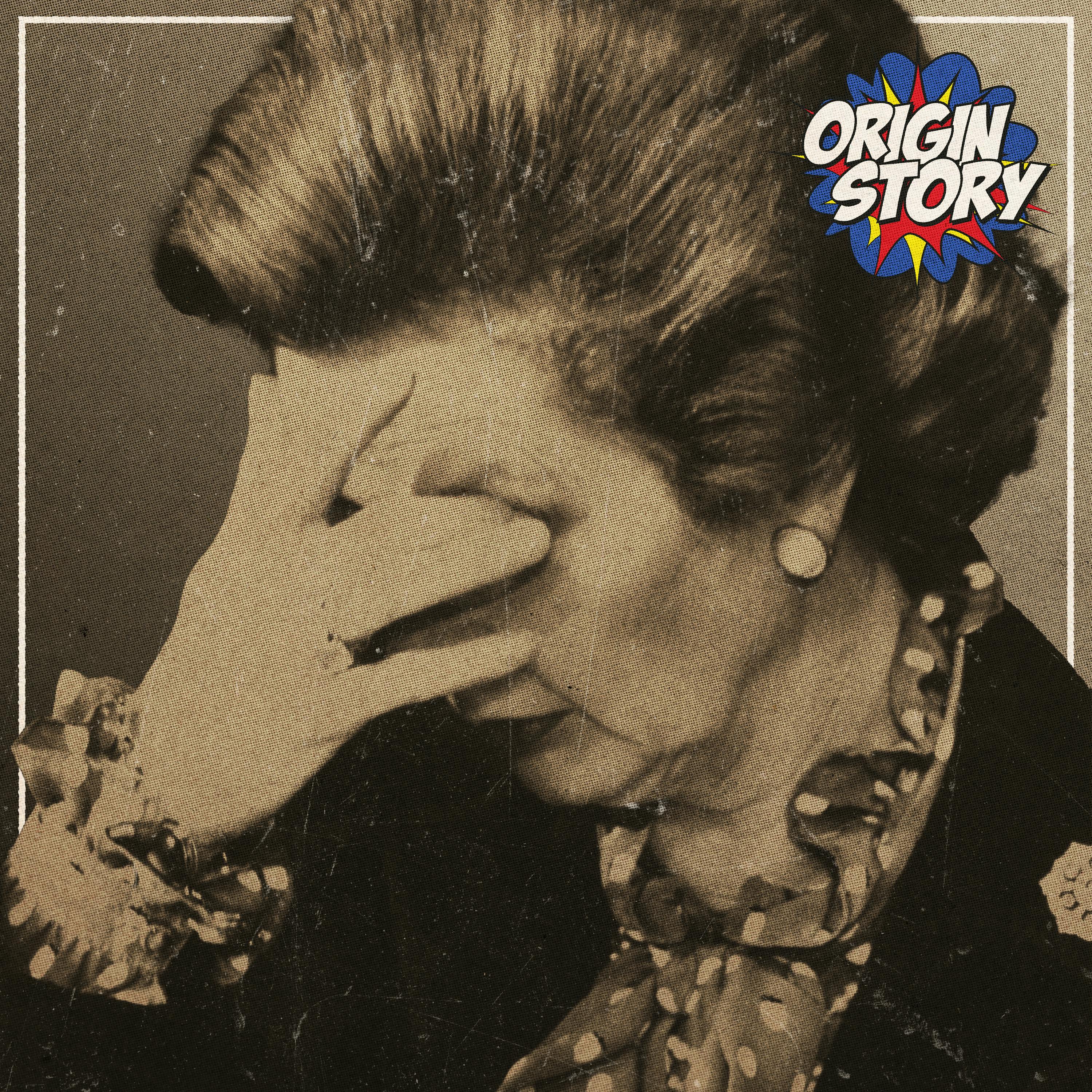
EHello and welcome to season seven of Origin Story, where Ian Dunt and Dorian Lynskey continue to explore the misunderstood ideas and people that shape our politics today. We hope you’ve enjoyed all the bonus episodes. We’re starting with a topic that’s been on our shortlist since the very beginning, and it’s a big one: Thatcherism. By that we mean Margaret Thatcher herself, born 100 years ago, and the evolution of the rather nebulous idea that bears her name. Is it a coherent ideology or the expression of a very unusual personality? In part one we follow Thatcher from her birth in Grantham in 1925 to her triumph in the Falklands War 57 years later. We investigate the influence of her father, the Methodist grocer and local celebrity Arthur Roberts; her entry into the reformist wing of the Conservative Party at Oxford University; and her journey to becoming MP for Finchley in 1959. It’s only in the 1970s that Thatcherism really takes shape. Scarred by her vilification as the “Milk Snatcher”, and repelled by Ted Heath and the post-war consensus, she follows the likes of Enoch Powell and Keith Joseph to the right, finding intellectual ideas to match her instinctive beliefs. The Thatcher who becomes Tory leader in 1975 and prime minister in 1979 is more “Cautious Margaret” than “Iron Lady”, not yet allergic to advice and compromise. She even has nice things to say about Europe. But before long, she’s the most unpopular prime minister since polling began. As her radical monetarist experiment leads to recession, mass unemployment and civil unrest, she appears doomed but once she’s defeated both the Tory “wets” and Argentina’s General Galtieri, Thatcherism is unchained. What were Thatcher’s formative influences? How did she grow to hate consensus politics and see herself as the antidote? Who were the other architects of Thatcherism? How close did she come to disaster and was it really the Falklands that saved her? And can Keir Starmer learn anything from her chaotic and unpopular first term? Next week the story continues with the 1983 election, the miners’ strike and the Thatcherite revolution, before it all goes horribly wrong for Maggie. If you’re a Patreon, you don’t have to wait: you can hear it right now. • Support Origin Story on Patreon • Get the Origin Story books on Fascism, Centrism and Conspiracy Theory Reading list • Andy Beckett, Pinochet in Piccadilly: Britain and Chile’s Hidden History (2002) • Andy Beckett, When the Lights Went Out: Britain in the Seventies (2009) • Andy Beckett, Promised You a Miracle: Why 1980-82 Made Modern Britain (2015) • Brian and Maggie, written by James Graham and directed by Stephen Frears (2025) • Ronald Butt, Interview with Margaret Thatcher, Sunday Times (1981) • Conservative Central Office, ‘The Right Approach’ (1976) • Iain Dale (ed.), Memories of Margaret Thatcher (2013) • Patrick Dunleavy, ‘The lasting achievement of Thatcherism as a political project is that Britain now has three political parties of the right, instead of one’, LSE (2013) • Ian Gilmour, Dancing with Dogma: Britain Under Thatcherism (1992) • Ipsos polling on the Falklands War, Ipsos (1982) • John Harris, ‘Spare a thought for the late unlamented one nation Tory’, The Guardian (2013) • John Hoskyns and Norman Strauss, ‘Stepping Stones’ (1977) • Geoffrey Howe’s resignation speech (1990) • Geoffrey Howe, Conflict of Loyalty (1994) • The Iron Lady, written by Abi Morgan and directed by Phyllida Lloyd (2011) • Sir Keith Joseph, ‘Notes Towards the Definition of Policy’, Conservative Research Department (1975) • Kwasi Kwarteng et al, Britannia Unchained: Global Lessons for Growth and Posterity (2012) ... reading list continues on Patreon Written and presented by Dorian Lynskey and Ian Dunt. Produced by Simon Williams. Music by Jade Bailey. Art by Jim Parrett. Logo by Mischa Welsh. Group Editor: Andrew Harrison. Origin Story is a Podmasters production Learn more about your ad choices. Visit podcastchoices.com/adchoices
S6 Ep 23Kemi Badenoch – Identity crisis
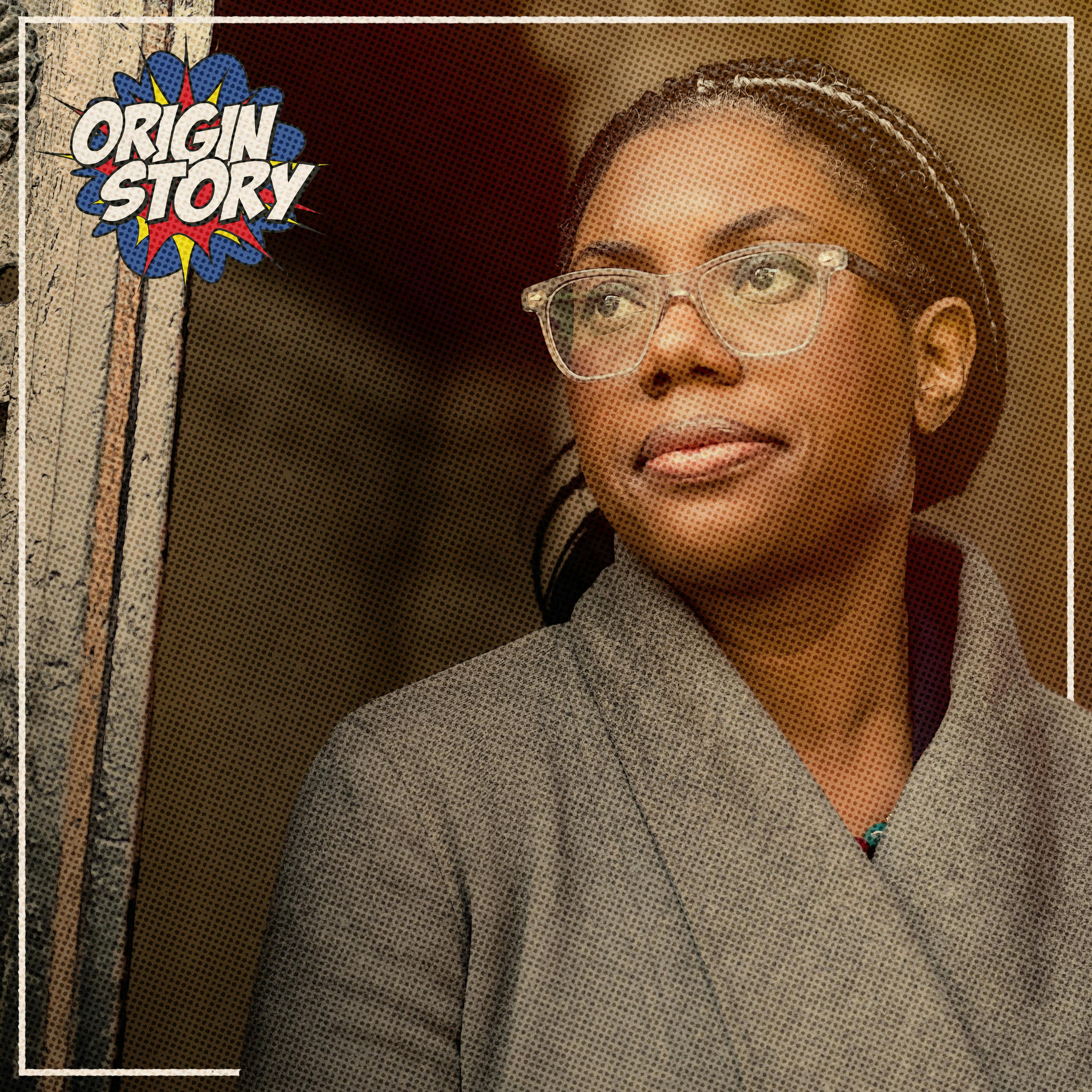
ESeason seven is almost upon us and we’ll be starting with an epic two-parter on Thatcherism, so consider this bonus episode a warm-up. We’re unravelling the unusual story of Kemi Badenoch and what her vexed leadership says about the state of the Conservative Party. As soon as Badenoch became an MP in 2017, she was tipped for big things: a black woman with a compelling backstory, a Thatcherite heart and a strong stomach for culture wars. But the messiness of her victory in last year’s leadership race illuminated MPs’ growing ambivalence about her, and her subsequent performance has only amplified those doubts. Even her allies admit that her weaknesses are more visible than her strengths. As she fights to win back right-wing voters from Reform while disdaining the moderates lost to Labour and the Liberal Democrats, are her days numbered? We start by examining Badenoch’s upbringing under military dictatorship in Nigeria, and the confusing stories she tells about it. She moves to London at the age of 16 and, after a rocky start, becomes a computer engineer. At 25, she joins the Conservative Party. At 30, she’s fighting her first election (unsuccessfully). We follow her through Coutts bank, The Spectator and the London Assembly to Westminster, where she acquires a mixed reputation. Diligent and nuanced in some areas, stubborn and lazy in others. Willing to stand up to the Brexit hardliners yet increasingly radicalised on cultural issues. Some Tory MPs hail her as the future of the right while others mutter that she is arrogant, bullying and unfriendly. And she does say some very odd things. How did Nigeria shape Badenoch’s politics? When did she start talking like a right-wing podcast? Are her prejudices more powerful than her values? Can she really revive the Tory Party or simply drive it further down a hard right cul-de-sac? Why did Michael Gove lose faith in his protégé? And if Badenoch is trying to follow Margaret Thatcher’s playbook, does her copy have half the pages missing? The story is stranger than you think. • Origin Story is live at Soho21 on the 16th of April. Tickets here • Support Origin Story on Patreon • Get the Origin Story books on Fascism, Centrism and Conspiracy Theory Reading list Articles • Aubrey Allegretti and Nicola Woolcock, ‘Kemi Badenoch: “epidemic” of children being told they’re trans’ (2023) • Richard Assheton, ‘Nigeria roots for Kemi Badenoch’s fighting spirit’ (2022) • Kemi Badenoch, maiden speech in the House of Commons (2017) • Kemi Badenoch, ‘I want to set us free by telling people the truth’, The Times (2022) • Kemi Badenoch, ‘Gagging of the brave has let gender ideologues seize control’, Sunday Times (2024) • Katy Balls and Michael Gove, ‘“I will die protecting this country’: Kemi Badenoch on where she plans to take the Tories’, The Spectator (2024) • Conservative Home, ‘Speech of the year: Kemi Badenoch on critical race theory’, Conservative Home (2020) • Rachel Cunliffe, ‘How Kemi Badenoch became the Tory front runner’, The New Statesman (2024) • Annabelle Dickson, ‘Kemi Badenoch: The Conservative Party’s next leader but one?’, Politico (2022) • Joe Murphy, ‘Kemi Badenoch: New vice chairman of the Conservatives talks about her fight to recruit a more diverse range of MPs’, Evening Standard (2018) • Parliament Square, ‘Questioning “Kemi”’s Comments’, The Critic (2024) Radio and podcasts • Political Thinking with Nick Robinson, Radio 4 (2020) • Kemi Badenoch’s Commons speech on Critical Race Theory (2020) • Profile, Radio 4 (2022) • Political Thinking with Nick Robinson, Radio 4 (2024) • Honestly with Bari Weiss: Is Kemi Badenoch the Next Margaret Thatcher? (2024) • Triggernometry with Kemi Badenoch (2025) Written and presented by Dorian Lynskey and Ian Dunt. Produced by Simon Williams. Music by Jade Bailey. Art by Jim Parrett. Logo by Mischa Welsh. Group Editor: Andrew Harrison. Origin Story is a Podmasters production Learn more about your ad choices. Visit podcastchoices.com/adchoices

S6 Ep 20The Myth of Cultural Marxism – Anatomy of a conspiracy theory
EWelcome to another Origin Story bonus episode. This week we’re discussing the conspiracy theory of Cultural Marxism. In the 1990s, cultural conservatives in America began pinning everything they hated, from feminism and gender studies departments to pop music and horror movies, on the legacy of the Frankfurt School, a group of German intellectuals who came together at Frankfurt University in 1923 and resettled in New York in 1935. The theory claims that these Teutonic eggheads, most of whom were Jewish, used critical theory and social studies to infiltrate American life and undermine “Judeo-Christian culture” from within. Hence, allegedly, political correctness and much else besides. The delusion of Cultural Marxism was made famous by Norwegian mass murderer Anders Breivik in 2011 but it is not confined to neo-Nazis. As a pseudo-intellectual justification for the anti-woke backlash, it has been cited by Jordan Peterson, Paul Dacre, Viktor Orbán, Ron DeSantis and Suella Braverman, making it perhaps the clearest bridge between the far right and “respectable” conservatism: a modern Red Scare for a cultural Cold War. Dorian takes Ian through the evolution of the theory, from post-war fascist Francis Parker Lockey via conspiracy theorist Lyndon LaRouche to the paranoid fringes of conservatism and ultimately the mainstream. Is Cultural Marxism just a rebranding of Hitler’s antisemitic obsession with “cultural bolshevism” or something more ornate? Who were the Frankfurt School and what were they really trying to do? Why do conservative politicians keep using a phrase popularised by a fascist terrorist? And what does this have to do with the Beatles or A Nightmare on Elm Street? Join us as we unravel one of the most perniciously influential conspiracy theories in the world. • Support Origin Story on Patreon • Get the Origin Story books on Fascism, Centrism and Conspiracy Theory Reading list The History of Political Correctness (1999) Moses Apostaticus, ‘Cultural Marxism Is Destroying America’, The Daily Caller (2016) Hannah Barnes, ‘The Intolerant Age’, New Statesman (2024) Bill Berkowitz, ‘“Cultural Marxism” Catching On’, Southern Poverty Law Center (2003) Paul Gottfried, Antifascism: The Course of a Crusade (2021) Martin Jay, ‘Dialectic of Counter-Enlightenment: The Frankfurt School as Scapegoat of the Lunatic Fringe’, Salmagundi (2010) Stuart Jeffries, Grand Hotel Abyss: The Lives of the Frankfurt School (2016) Stuart Jeffries, ‘Why Theodor Adorno and the Frankfurt School failed to change the world’, New Statesman (2021) William S. Lind, ‘Understanding Oklahoma’, Washington Post (1995) William S. Lind, ‘What Is Cultural Marxism?’ (undated) William S. Lind, ‘The Origins of Political Correctness’ (2000) William S. Lind (ed.), ‘“Political Correctness”: A Short History of an Ideology’ (2004) Sarah Manavis, ‘What Is Cultural Marxism? The alt-right meme in Suella Braverman’s speech in Westminster’, New Statesman (2018) Matt McManus, ‘On Marxism, Post-Marxism, and “Cultural Marxism”’, Merion West (2018) Michael Minnicino, ‘The New Dark Age: The Frankfurt School and “Political Correctness”, Fidelio (1992) Samuel Moyn, ‘The Alt-Right’s Favorite Meme Is 100 Years Old’, New York Times (2018) David Niewert, ‘The new age of chain terrorism: White far-right killers are inspiring each other sequentially’, Daily Kos (2019) Ari Paul, ‘“Cultural Marxism: The Mainstreaming of a Nazi Trope’ (2019) The Red Phoenix, ‘Debunking William S. Lind & “Cultural Marxism”’, The Red Phoenix (2011) Matthew Rose, ‘A World After Liberalism: Philosophers of the Radical Right’ (2021) ... reading list continues – full list available on Patreon Written and presented by Dorian Lynskey and Ian Dunt. Produced by Simon Williams. Music by Jade Bailey. Art by Jim Parrett. Logo by Mischa Welsh. Group Editor: Andrew Harrison. Origin Story is a Podmasters production Learn more about your ad choices. Visit podcastchoices.com/adchoices

S6 Ep 18Doctor Who – The Regeneration Game
ETravel into the furthest reaches of space and time as we investigate the history of Doctor Who. From its inception in 1963, as a longshot gamble to fill a hole in the teatime schedule, to its current status as British television’s biggest international drama, we track the story of the eccentric alien with two hearts and what the Doctor’s adventures have to say about modern Britain. Doctor Who was the brainchild of a group of outsiders and it maintains that provocative sensibility today under Russell T. Davies, with an increasingly pointed and explicit political agenda. What are its core values and ideas? How does it balance consistency with change? And how does one programme get away with promoting such a radically progressive message inside the otherwise anxious BBC? This is the story of one of the weirdest and most beloved characters in popular fiction, in all its timey-wimey goodness. Find yourself a decent spot behind the sofa and we’ll begin… Reading list John Higgs – Exterminate/Regenerate (2025) Dorian Lynskey – ‘Once Upon a Time Lord’, Empire magazine (2013) An Adventure in Space and Time, written by Mark Gatiss and directed by Terry McDonough, BBC (2013) • Support Origin Story on Patreon • Get the Origin Story books on Fascism, Centrism and Conspiracy Theory Written and presented by Dorian Lynskey and Ian Dunt. Produced by Simon Williams. Music by Jade Bailey. Art by Jim Parrett. Logo by Mischa Welsh. Group Editor: Andrew Harrison. Origin Story is a Podmasters production Learn more about your ad choices. Visit podcastchoices.com/adchoices

S6 Ep 17Trump’s inauguration: Can we call it fascism yet? – Plus exclusive audiobook excerpt
ELearn more about your ad choices. Visit podcastchoices.com/adchoices

S6 Ep 15Elon Musk and the Death of Twitter
EHappy new year, Origin Story listeners. We’ll be releasing regular bonus episodes between now and the launch of season seven in April and we’re kicking off with a sequel to the finale of season three: Elon Musk and the Death of Twitter. With jaw-dropping behind-the-scenes information from two recent books, Dorian explains how and why the richest man in the world wrecked its most influential social media platform. In October 2022 Musk bought Twitter for $44 billion and set about remaking it in his own image. He gutted the payroll, cluttered the timeline with crud, welcomed back trolls with open arms and rebranded the corpse as X. At the same time, his breakneck self-radicalisation made him the new lodestar of the international far right. In due course the “global town square” became a playground for conspiracy theorists, grifters and extremists. Musk used to agonise that the Twitter takeover was a ruinous mistake but he’s ended up with a seat in the Trump administration and more billions than ever. It’s everyone else who’s paying the price. Why was Musk so determined to own Twitter in defiance of all financial logic? What role did the platform’s eccentric founder Jack Dorsey play? Why does Musk’s professed love of free speech only cut in one direction? (Trick question.) How does all this play into his messianic delusion that he is the saviour of humanity? And can Bluesky redeem the failed experiment of social media? NOTE: This episode was recorded in December, before Musk escalated his attacks on the Labour government and his support for Germany’s AfD, but he was already dreadful beyond belief. • Support Origin Story on Patreon • Get the Origin Story books on Fascism, Centrism and Conspiracy Theory Reading list Axios – How It Happened: Elon Musk vs. Twitter (2023) Kate Conger, Mike Isaac, Ryan Mac and Tiffany Hsu – ‘Two Weeks of Chaos: Inside Elon Musk’s Takeover of Twitter’, New York Times (2023) Kate Conger and Ryan Mac – Character Limit: How Elon Musk Destroyed Twitter (2024) Sheon Han – ‘What We Lost When Twitter Became X’, New Yorker (2024) Katie Harbath – ‘Elon Musk’s Takeover’, Lawfare (2024) Walter Isaacson – Elon Musk (2024) Written and presented by Dorian Lynskey and Ian Dunt. Produced by Simon Williams. Music by Jade Bailey. Art by Jim Parrett. Logo by Mischa Welsh. Group Editor: Andrew Harrison. Origin Story is a Podmasters production Learn more about your ad choices. Visit podcastchoices.com/adchoices

S6 Ep 14The Daily Mail – Part two – Paper Tigers
E•Fill in our listener survey for a chance to win an exclusive Origin Story t-shirt. Welcome to part two of the story of the Daily Mail. We pick things up with the disastrous reign of Esmond Harmsworth and his wife Ann, aka “the Monster”. The paper loses direction, readers and money until, in 1971, Esmond’s eccentric son Vere proves his doubters wrong by relaunching the Mail as a tabloid under editor David English. English is young, brilliant and unpredictable: a charming bully with a flexible relationship to the truth. He perfects the winning formula of gravitas, fun and permanent outrage while getting so close to Margaret Thatcher that the Mail effectively becomes an arm of the Conservative campaign machine. Enter Paul Dacre in 1992 — the Mail’s most long-lasting and divisive editor. Socially awkward and writhing with prejudice, he sees himself as the vessel for the aspirations and phobias of the middle classes — the voice of the ordinary man and woman despite his giant salary, multiple homes and Etonian sons. For 26 years, he terrorises staff, persecutes minorities, intimidates politicians and rails against institutions like the EU and the BBC. (Be warned: this episode contains a record number of beeped obscenities.) We close by talking about Dacre’s toxic legacy and how his peculiar ideas about Britain continue to shape the direction of the country even under his successors. But the Mail’s circulation is plummeting and even its cursed website has lost momentum. Almost 130 years after Alfred Harmsworth founded it, why does it remain the most venomously powerful newspaper in Britain? How did the Mail reverse its decline and become what it is today? Do the editors or the readers decide its preoccupations? How did it influence both James Bond and the Beatles? What do Paul Dacre’s shoes tell us about this self-proclaimed voice of the people? And is the Mail really as plugged in as it thinks it is? Join us for the dramatic story of the newspaper that reveals Britain’s dark heart. • Get the Origin Story books on Fascism, Centrism and Conspiracy Theory Reading list Books Adrian Addison – Mail Men: The Unauthorized Story of the Daily Mail, the Paper That Divided and Conquered Britain (2017) Richard Bourne – Lords of Fleet Street: The Harmsworth Dynasty (1990) William E Carson – Northcliffe: Britain’s Man of Power (1918) Tom Clarke – My Northcliffe Diary (1931) James Curran and Jean Seaton - Power Without Responsibility: The Press and Broadcasting in Britain (1998) Nick Davies – Flat Earth News (2008) Stephen Dorril – Blackshirt: Sir Oswald Mosley and British Fascism (2006) Roy Greenslade – Press Gang: How Newspapers Make Profits from Propaganda (2003) Reginald Pound and Geoffrey Harmsworth – Northcliffe (1960) Martin Pugh – ‘Hurrah for the Blackshirts!’: Fascists and Fascism in Britain Between the Wars (2005) ... Full reading list can be found on Patreon Journalism Paul Dacre on Desert Island Discs (2004) Paul Dacre – Cudlipp Lecture (2007) Paul Dacre – Speech to the Society of Editors (2008) Lauren Collins – ‘The Mail Supremacy’, New Yorker (2012) ... Full reading list can be found on Patreon Written and presented by Dorian Lynskey and Ian Dunt. Produced by Simon Williams. Music by Jade Bailey. Art by Jim Parrett. Logo by Mischa Welsh. Group Editor: Andrew Harrison. Origin Story is a Podmasters production Learn more about your ad choices. Visit podcastchoices.com/adchoices

S6 Ep 13The Daily Mail – Part one – Barons and Blackshirts
E•Fill in our listener survey for a chance to win an exclusive Origin Story t-shirt. Welcome to the season finale of Origin Story. We put it to the vote and Patreon supporters chose the Daily Mail — the newspaper that loves to hate, and be hated. We thought this would be just one episode but the story is so juicy that it ended up as two, so we’re releasing both parts on the same day as a festive bonus. In part one we chart the rise of the Harmsworth dynasty. Alfred ‘Sunny’ Harmsworth (aka Lord Northcliffe) is a dynamic visionary whose understanding of the British public enables him to build the world’s biggest magazine empire while still in his 20s. In 1896 he launches the Daily Mail to give the newly literate and enfranchised middle classes exactly what they want: gossip, jingoism, punchy headlines and making stuff up. Snapping up venerable institutions like the Times and the Observer, Northcliffe soon owns half the market and uses it to promote his own views on issues like rearmament (good) and women’s suffrage (bad). By the First World War, he’s a formidable power-broker with the muscle to bring down a prime minister and bag himself a place in the war cabinet. But his mental health collapses and he dies in 1922, paranoid and lonely. Alfred’s brother Harold ‘Bunny’ Harmsworth is the money man who dreams of becoming the richest man in the land and almost gets there. He’s also a right-wing zealot who boasts of toppling the Labour government with the infamous Zinoviev letter and considers Stanley Baldwin’s Tories “semi-socialist”. Inevitably, he is drawn to fascism. It’s not just his support for Oswald Mosley and that notorious headline, ‘Hurrah for the Blackshirts!’ Enthralled by Mussolini and Hitler, Rothermere becomes Britain’s loudest cheerleader for fascism and appeasement. Hitler, in return, declares that the Mail is “doing an immense amount of good”. We pause the story in 1940, with Rothermere dead, his unremarkable son Esmond taking the reins and Lord Beaverbrook’s Daily Express determined to steal the Mail’s thunder. How did Northcliffe revolutionise British newspapers? Was his hatred of Germany really one of the drivers of the First World War? Which politician denounced his “diseased vanity”? And what led Rothermere to turn the Mail into a vehicle for fascist propaganda? It’s a tale of power, money, madness and extremism. • Get the Origin Story books on Fascism, Centrism and Conspiracy Theory Reading list Books Adrian Addison – Mail Men: The Unauthorized Story of the Daily Mail, the Paper That Divided and Conquered Britain (2017) Richard Bourne – Lords of Fleet Street: The Harmsworth Dynasty (1990) William E Carson – Northcliffe: Britain’s Man of Power (1918) Tom Clarke – My Northcliffe Diary (1931) James Curran and Jean Seaton - Power Without Responsibility: The Press and Broadcasting in Britain (1998) Nick Davies – Flat Earth News (2008) Stephen Dorril – Blackshirt: Sir Oswald Mosley and British Fascism (2006) Roy Greenslade – Press Gang: How Newspapers Make Profits from Propaganda (2003) Reginald Pound and Geoffrey Harmsworth – Northcliffe (1960) Martin Pugh – ‘Hurrah for the Blackshirts!’: Fascists and Fascism in Britain Between the Wars (2005) ... Full reading list can be found on Patreon Journalism Paul Dacre on Desert Island Discs (2004) Paul Dacre – Cudlipp Lecture (2007) Paul Dacre – Speech to the Society of Editors (2008) Lauren Collins – ‘The Mail Supremacy’, New Yorker (2012) ... Full reading list can be found on Patreon Written and presented by Dorian Lynskey and Ian Dunt. Produced by Simon Williams. Music by Jade Bailey. Art by Jim Parrett. Logo by Mischa Welsh. Group Editor: Andrew Harrison. Origin Story is a Podmasters production Learn more about your ad choices. Visit podcastchoices.com/adchoices

S6 Ep 12The BBC – Part two – Balancing act
EWelcome to part two of the story of the BBC. The Second World War is over, radio is booming and television is back. The BBC is stronger than ever, with new talent, new formats and new opportunities. But there are new challenges too: stormy waters over the Suez crisis and a brash new competitor in the form of ITV. Under director general Hugh Carleton Greene, the BBC plugs into the revolutionary energy of the 1960s: Radio 1, Doctor Who, Cathy Come Home, That Was the Week That Was. Meanwhile, David Attenborough’s highbrow upstart BBC2 introduces the nation to colour TV and landmark documentaries. The 70s and 80s are a golden age for ratings, from Morecambe and Wise to Live Aid to EastEnders. Yet there’s also a looming existential crisis thanks to Margaret Thatcher, who loathes the corporation as the embodiment of the bloated state and centre-left groupthink. After the defenestration of DG Alasdair Milne, John Birt gives the BBC a Thatcherite makeover that fends off the Tory assault, but at what cost? In the 21st century, the BBC has lived under the shadow of scandals, cuts and relentless salvos from the right — every blunder, from the Iraq War to Jimmy Savile, becomes another cudgel for its enemies to beat it with. Too successful and it’s accused of stifling competition. Not successful enough and it’s not worth the license fee. The crisis never ends. Yet more than nine in ten of us use it every week and would be devastated to lose it. How has the BBC lived up to the Reithian imperative to inform, educate and entertain, and why did Reith himself end up hating it? How can an organisation so powerful be so vulnerable? Is its unruly pluralism a blessing or a curse? Is it really politically biased — and if so, in which direction? And who did Mary Whitehouse personally blame for Britain’s “moral collapse”? Tune in. Reading list Patrick Barwise and Peter York – The War Against the BBC (2020) John Birt – The Harder Path: The Autobiography (2002) Bill Cotton – Double Bill: 80 Years of Entertainment (2000) Desert Island Discs with Sir Hugh Greene (1983) Simon Elmes – And Now on Radio 4: A Celebration of the World’s Best Radio Station (2007) Lionel Fielden – The Natural Bent (1960) Grace Wyndham Goldie – Facing the Nation: Television and Politics 1936-1976 (1977) David Hendy – The BBC: A People’s History (2022) Charlotte Higgins – This New Noise: The Extraordinary Birth and Troubled Life of the BBC (2015) Sam Knight – ‘Can the BBC Survive the British Government?’, New Yorker (2022) Ian McIntyre – The Expense of Glory: A Life of John Reith (1993) Eric Maschwitz – No Chip on My Shoulder (1957) Hilda Matheson – Broadcasting (1933) Joe Moran – Armchair Nation: An Intimate History of Britain in Front of the TV (2014) JCW Reith – Broadcast Over Britain (1924) JCW Reith – Into the Wind (1949) Jean Seaton – Pinkoes and Traitors: The BBC and the Nation 1974-1987 (2015) Written and presented by Dorian Lynskey and Ian Dunt. Produced by Simon Williams. Music by Jade Bailey. Art by Jim Parrett. Logo by Mischa Welsh. Group Editor: Andrew Harrison. Origin Story is a Podmasters production Learn more about your ad choices. Visit podcastchoices.com/adchoices

S6 Ep 11The BBC – Part one – Inform, educate, entertain
ESo far this season we’ve had to deal with Russell Brand and Benjamin Netanyahu, and we’ve got the Daily Mail coming up, so we all deserve a more uplifting tale. This week we commence the epic story of the British Broadcasting Corporation — the BBC. “Hullo, hullo, 2LO calling. 2LO calling. This is the British Broadcasting Company. Stand by for one minute please!” With those words, at 6pm on Tuesday 14 November 1922, the amiable wireless wizard Arthur Burrows introduced just tens of thousands of listeners to Britain’s first national broadcaster. Its founding director general, John Reith, defined its mission in three words: “Inform, educate, entertain.” When Reith and his team set up shop in Savoy Hill in 1923, the BBC’s staff numbered just 31, including the cleaner. A century later, the BBC is the world’s most popular public broadcaster and most trusted news source. It is the heart of the UK’s soft power and one of our most beloved national institutions. It is the mirror of our tastes and concerns and the background to our lives. Yet it has always been a battleground, too, tormented by newspaper barons, rival broadcasters, suspicious politicians and its own internal tensions. As 1960s director general Hugh Carleton Greene observed, it is “the universal Aunt Sally of our day”. The story begins with the utopian dreams of the wireless pioneers, and Reith’s own paternalistic idealism about the power of radio to elevate the nation. We meet such gamechanging talents as Hilda Matheson and Cecil Lewis as they develop the art of broadcasting — including one, inevitably, who becomes a fascist. In 1926, the BBC faced its first major crisis, the General Strike, and made its first sworn enemy, Winston Churchill. By 1939, the BBC had 34 million radio listeners and was pioneering the new medium of television. During the Second World War, it proved its worth as a morale-boosting, unifying force at home and an advertisement for democratic British values abroad. One French broadcaster called it “a torch in the darkness.” We end part one with the BBC preparing to enter the radically transformed post-war world and the age of television. What are the origins of the BBC’s values and structures? Who were the shellshocked misfits who got it off the ground and why did they think it would change the world? Why did the General Strike almost bring it to its knees? How did it help win the war? Oh, and what did Reith have against television? It’s a saga of bohemians, bureaucrats and bust-ups, with walk-on parts for George Orwell, HG Wells, the Bloomsbury set, JB Priestley, Ewan MacColl, Lord Haw-Haw and Mickey Mouse. And at the centre of it all is the prickly, domineering, inspirational figure of John Reith. Stand by for one minute please! Reading list Patrick Barwise and Peter York – The War Against the BBC (2020) John Birt – The Harder Path: The Autobiography (2002) Bill Cotton – Double Bill: 80 Years of Entertainment (2000) Desert Island Discs with Sir Hugh Greene (1983) Simon Elmes – And Now on Radio 4: A Celebration of the World’s Best Radio Station (2007) Lionel Fielden – The Natural Bent (1960) Grace Wyndham Goldie – Facing the Nation: Television and Politics 1936-1976 (1977) David Hendy – The BBC: A People’s History (2022) Charlotte Higgins – This New Noise: The Extraordinary Birth and Troubled Life of the BBC (2015) Sam Knight – ‘Can the BBC Survive the British Government?’, New Yorker (2022) Ian McIntyre – The Expense of Glory: A Life of John Reith (1993) ... Full reading list available on Patreon Written and presented by Dorian Lynskey and Ian Dunt. Produced by Simon Williams. Music by Jade Bailey. Art by Jim Parrett. Logo by Mischa Welsh. Group Editor: Andrew Harrison. Origin Story is a Podmasters production Learn more about your ad choices. Visit podcastchoices.com/adchoices

S6 Ep 10Benjamin Netanyahu – Part two – Divide and conquer
EThis week we complete the story of Benjamin Netanyahu, Israel’s most politically successful prime minister — and its most divisive. We pick up the story in 1996, with Netanyahu’s first term in office, clashing with both President Clinton and his hard-right coalition partners over the future of the Oslo peace process. We follow his subsequent decade in opposition, as the dwindling of hope and the misfortunes of his rivals enabled him to make yet another unlikely comeback in 2009. Apart from 18 months of political chaos, he has been in power ever since, growing more hostile towards the Palestinians and Iran and more authoritarian at home — some say Netanyahu was Trump before Trump. The Israel that suffered the blow of October 7 was outwardly strong and prosperous yet more divided, corrupt and unpopular than ever. Its conduct of the subsequent wars demonstrates the costs of Netanyahu’s self-serving machinations, his embrace of the far right and his unforgivingly bleak worldview. Even as a majority of voters want him to step down, he hangs on. Is Netanyahu just an extraordinarily canny operator or the true representative of a new Israel, a long way from its founders’ intentions? How did peace with the Palestinians go from a real possibility to a broken dream? Why does everyone from foreign leaders to members of his own cabinet have such contempt for Netanyahu? And how can Israel recover from his ruinous leadership? To understand where the country is now, you need to understand the man. • Get the Origin Story books on Fascism, Centrism and Conspiracy Theory • Get exclusive extras like supporter-only Q&A editions when you back Origin Story on Patreon. Reading List Books Neill Lochery - The Resistible Rise of Benjamin Netanyahu (Bloomsbury, 2016) Benjamin Netanyahu - A Place Among the Nations: Israel and the World (1993) Benjamin Netanyahu - Bibi: My Story (2022) Anshel Pfeffer - Bibi: The Turbulent Life and Times of Benjamin Netanyahu (2020) Ari Shavit - My Promised Land: The Triumph and Tragedy of Israel: Updated edition (2015) Avi Shlaim - The Iron Wall: Israel and the Arab World (2000) Articles David Margolick - ‘Star of Zion’, Vanity Fair (1996) David Remnick - ‘The Outsider’, New Yorker (1998) Joshua Leifer - ‘The Netanyahu doctrine’, Guardian (2023) David Remnick - ‘The Price of Netanyahu’s Ambition’, New Yorker (2024) Donald McIntyre - ‘How Netanyahu gambled with the Fate of Israel’, Tortoise (2024) John Jenkins - ‘Netanyahu’s all-out war’, New Statesman (2024) Written and presented by Dorian Lynskey and Ian Dunt. Produced by Simon Williams. Music by Jade Bailey. Art by Jim Parrett. Logo by Mischa Welsh. Group Editor: Andrew Harrison. Origin Story is a Podmasters production Learn more about your ad choices. Visit podcastchoices.com/adchoices

S6 Ep 9Benjamin Netanyahu – Part one – Making enemies
EThis week we commence the story of Benjamin Netanyahu. The 75-year-old has become Israel’s longest serving prime minister despite never winning the love of his people, his international allies or even his political colleagues. Now he is accused of prolonging Israel’s horrific wars in Gaza and Lebanon to preserve his own power and save himself from prosecution for corruption. How did the man known even to his foes as Bibi rebound from so many scandals and defeats to become the dominant force in Israeli politics, and what does that say about the country Israel has become? If you haven’t heard our two-parter on Zionism, now is a good time – Apple / Spotify – because these episodes are a kind of sequel. We begin with the influence of Bibi’s father and grandfather and the flinty, paranoid doctrine of revisionist Zionism. Netanyahu’s aggressive, ultra-conservative worldview was also shaped by his studies in the US, his combat experience in Israel’s wars of survival, and the dramatic loss of his beloved older brother Yoni during the 1976 raid on Entebbe Airport. After the revisionist party Likud ended Labor’s three-decade hegemony, he found his calling as a great communicator, bullishly promoting Israel’s interests, from television to the United Nations, throughout the 1980s. Netanyahu’s first eight years in the Knesset coincided with the First Intifada and the Oslo peace process. In a time of hope for a lasting peace between Israel and the Palestinians, he offered cynicism and fear. When peacemaking prime minister Yitzhak Rabin was assassinated in 1995, Netanyahu was blamed for stoking the far right and he seemed finished politically. Yet within a few months, he was Israel’s youngest ever prime minister. What has influenced Netanyahu’s bleak and spiky understanding of Jewish history and his role in it? How did such a widely disliked character achieve such surprising success? And how did Israel itself change during those tumultuous decades of frequent wars and elusive peace? To understand where the country is now, you need to understand the man. • Get the Origin Story books on Fascism, Centrism and Conspiracy Theory • Get exclusive extras like supporter-only Q&A editions when you back Origin Story on Patreon. Reading List Books Neill Lochery - The Resistible Rise of Benjamin Netanyahu (Bloomsbury, 2016) Benjamin Netanyahu - A Place Among the Nations: Israel and the World (1993) Benjamin Netanyahu - Bibi: My Story (2022) Anshel Pfeffer - Bibi: The Turbulent Life and Times of Benjamin Netanyahu (2020) Ari Shavit - My Promised Land: The Triumph and Tragedy of Israel: Updated edition (2015) Avi Shlaim - The Iron Wall: Israel and the Arab World (2000) Articles David Margolick - ‘Star of Zion’, Vanity Fair (1996) David Remnick - ‘The Outsider’, New Yorker (1998) Joshua Leifer - ‘The Netanyahu doctrine’, Guardian (2023) David Remnick - ‘The Price of Netanyahu’s Ambition’, New Yorker (2024) Donald McIntyre - ‘How Netanyahu gambled with the Fate of Israel’, Tortoise (2024) John Jenkins - ‘Netanyahu’s all-out war’, New Statesman (2024) Written and presented by Dorian Lynskey and Ian Dunt. Produced by Simon Williams. Music by Jade Bailey. Art by Jim Parrett. Logo by Mischa Welsh. Group Editor: Andrew Harrison. Origin Story is a Podmasters production Learn more about your ad choices. Visit podcastchoices.com/adchoices
S6 Ep 8US Post-Election Live Show – Part Two
EPart two of Ian and Dorian’s post-Presidential Election show at the Tabernacle in West London, recorded on the 7th of November. After signing books (have we mentioned there are Origin Story books out?) Dorian and Ian returned to continue the analysis of what the hell just happened. They also considered what a Trump win means for the UK and answered some excellent audience questions. • Get the Origin Story books on Fascism, Centrism and Conspiracy Theory • Get exclusive extras like supporter-only Q&A editions when you back Origin Story on Patreon. Written and presented by Dorian Lynskey and Ian Dunt. Produced by Simon Williams and Chris Jones. Music by Jade Bailey. Art by Jim Parrett. Logo by Mischa Welsh. Group Editor: Andrew Harrison. Origin Story is a Podmasters production Learn more about your ad choices. Visit podcastchoices.com/adchoices

S6 Ep 7US Post-Election Live Show – Part One
EPart one of Ian and Dorian’s post-Presidential Election show at the Tabernacle in West London, recorded on the 7th of November. The show turned into a group therapy session, after Trump won to become the first convicted felon to be elected to the highest office in America. Listen back to Dorian and Ian beginning the process of coming to terms with this world-changing outcome and its implications for global politics. • Get the Origin Story books on Fascism, Centrism and Conspiracy Theory • Get exclusive extras like supporter-only Q&A editions when you back Origin Story on Patreon. Written and presented by Dorian Lynskey and Ian Dunt. Produced by Simon Williams and Chris Jones. Music by Jade Bailey. Art by Jim Parrett. Logo by Mischa Welsh. Group Editor: Andrew Harrison. Origin Story is a Podmasters production Learn more about your ad choices. Visit podcastchoices.com/adchoices

S6 Ep 6Artificial Intelligence – Part Two – Skynet’s the limit
EThe final episode of our two-part story of Artificial Intelligence. Having looked at the emergence and development of AI in part one we now turn to the future and assess the dangers and possibilities it raises. We weigh up two arguments concerning existential risk. Some AI theorists believe the technology has the possibility of becoming sentient and then behaving against humanity's interests. Others worry that it will simply deliver disastrous outcomes on the basis of badly established requests. For instance, if you ask a highly advanced machine to create paperclips, with no additional restrictions, it might end up killing everyone in its relentless pursuit of its task. Are either of these ideas remotely believable? Are they remotely likely? Then we look at the possible repercussions of more modest outcomes. What happens when everyone on earth is equipped with their own genius machine, which can assess global corporate law in seconds, or make millions on Amazon Marketplace? Will we use it for good or ill? (Spoilers: It'll be bad) How confidently can we accept the predictions of AI theorists? Are they really right that this is all inevitable? Or is history, and technological development, far more chaotic and unpredictable than their models allow? Finally, we look at the impact on humanity as we are all suddenly enveloped in AI art. Will an AI song ever move us to tears? And if so, what does that say about who we are and what we look for in the world? Get the Origin Story books on Fascism, Centrism and Conspiracy Theory Get exclusive extras like supporter-only Q&A editions when you back Origin Story on Patreon. Reading List Books Susie Alegre - Human Rights, Robot Wrongs: Being human in the age of AI (2024) Nick Bostrom – Superintelligence: Paths, Dangers, Strategies (2014) Daniel Crevier – AI: The Tumultuous History of the Search for Artificial Intelligence (1993) Pedro Domingos - The Master Algorithm: How the quest for the ultimate learning machine will remake the world (2015) Max Fisher - The Chaos Machine: The Inside Story of How Social Media Rewired Our Minds and Our World (2022) Walter Isaacson – The Innovators: How a Group of Hackers, Geniuses and Geeks Created the Digital Revolution (2014) Dorian Lynskey – Everything Must Go: The Stories We Tell About the End of the World (2024) John Markoff - Machines of Loving Grace: The Quest for Common Ground Between Humans and Robots (2015) David G. Stork (ed.) – HAL’s Legacy: 2001’s Computer as Dream and Reality (1997) Mustafa Suleyman with Michael Bhaskar – The Coming Wave: AI, Power and Our Future (2023) Michael Woolridge – The Road to Conscious Machines: The Story of AI (2021) Articles Alan Turing – ‘Computing Machinery and Intelligence’, Mind (1950) Brad Darrach – ‘Meet Shaky, the First Electronic Person’, Life (1970) Jeremy Bernstein – ‘A.I.’, New Yorker (1981) Raffi Khatchadourian – ‘The Doomsday Invention’, New Yorker (2015) For the full reading list join our Patreon. Written and presented by Dorian Lynskey and Ian Dunt. Produced by Simon Williams. Music by Jade Bailey. Art by Jim Parrett. Logo by Mischa Welsh. Group Editor: Andrew Harrison. Origin Story is a Podmasters production Learn more about your ad choices. Visit podcastchoices.com/adchoices

S6 Ep 5Conspiracy Theory - Exclusive audiobook excerpt
EIt can seem like conspiracy theories have travelled at warp speed from the eccentric margins to the heart of modern politics. But in fact conspiracism has always been one of history’s darkest forces, from the witch hunts to the Holocaust. In this exclusive audiobook extract from the prologue to Conspiracy Theory: The Story of an Idea, Ian explains how conspiracy theories exploit the human brain’s craving for simple explanations in a chaotic and unpredictable world to spin bogus narratives of evil cliques, shadowy plots and do-or-die conflicts between Us and Them. Why are conspiracy theories so alluring, how have they shaped history and how can liberal democracy survive if its citizens no longer inhabit a shared reality? Featuring JFK, David Icke, Princess Diana and the Wu-Tang Clan, this is our introduction to a weird and wild story. You can listen to Ian and Dorian read Conspiracy Theory: The Story of an Idea, along with its sister Origin Story publications Fascism and Centrism, on Audible, Spotify or your favourite audiobook platform. Or buy the physical books on Fascism, Centrism and Conspiracy Theory. Get exclusive extras like supporter-only Q&A editions when you back Origin Story on Patreon. Learn more about your ad choices. Visit podcastchoices.com/adchoices

S6 Ep 4Artificial Intelligence – Part One – Deus ex machina
EThis week we begin the story of Artificial Intelligence. Since the launch of Chat-GPT in late 2022, we have been more excited, and anxious, about AI than ever before. It’s become a daily obsession. But the key question we are grappling with is the same as ever: can machines really ever develop human-style intelligence or merely imitate it? And what is human intelligence anyway? In part two we’ll be exploring the possible ramifications of AI, from the utopian to the dystopian and all points in between. But first, we explain how humanity’s long, ambivalent fascination with artificial life has brought us here. We start with premonitions of AI, from Mary Shelley’s Frankenstein to Isaac Asimov’s Three Laws of Robotics, and Ada Lovelace, the original AI sceptic, to Alan Turing and his famous test. Artificial Intelligence itself — the term and the field of study — began in 1956, at a summer school at Dartmouth University. While most computer scientists were working on ways for machines to partner with human intelligence — the personal computer, the internet — AI researchers dreamt of replacing it. For decades, AI development was a cycle of boom and bust. Extravagant claims attracted funding, talent and media attention, then their failure to materialise caused all three to collapse. AI became tarnished by its broken promises. But in the 21st century, the availability of vast troves of data and powerful new processors finally solved such stubborn challenges as image recognition and automatic translation, leading to the current AI gold rush. Along the way, we meet gamechanging scientists like Marvin Minsky and Geoffrey Hinton as well as landmark machines like ELIZA, the first chatbot, Shakey the robot and AlexNet, deep learning’s great leap forward. Why does the prospect of machine intelligence enthral and unnerve us? Why has AI proved so much more difficult than its pioneers imagined? How have fictional AIs like HAL and Skynet shaped the mythology of AI? And are Large Language Models like Chat-GPT just glorified autocomplete or a historic turning point in our relationship with machines? Get the Origin Story books on Fascism, Centrism and Conspiracy Theory Get exclusive extras like supporter-only Q&A editions when you back Origin Story on Patreon. Reading List Books Susie Alegre - Human Rights, Robot Wrongs: Being human in the age of AI (2024) Nick Bostrom – Superintelligence: Paths, Dangers, Strategies (2014) Daniel Crevier – AI: The Tumultuous History of the Search for Artificial Intelligence (1993) Pedro Domingos - The Master Algorithm: How the quest for the ultimate learning machine will remake the world (2015) Max Fisher - The Chaos Machine: The Inside Story of How Social Media Rewired Our Minds and Our World (2022) Walter Isaacson – The Innovators: How a Group of Hackers, Geniuses and Geeks Created the Digital Revolution (2014) Dorian Lynskey – Everything Must Go: The Stories We Tell About the End of the World (2024) John Markoff - Machines of Loving Grace: The Quest for Common Ground Between Humans and Robots (2015) David G. Stork (ed.) – HAL’s Legacy: 2001’s Computer as Dream and Reality (1997) Mustafa Suleyman with Michael Bhaskar – The Coming Wave: AI, Power and Our Future (2023) Michael Woolridge – The Road to Conscious Machines: The Story of AI (2021) Articles Alan Turing – ‘Computing Machinery and Intelligence’, Mind (1950) Brad Darrach – ‘Meet Shaky, the First Electronic Person’, Life (1970) Jeremy Bernstein – ‘A.I.’, New Yorker (1981) For the full reading list join our Patreon. Written and presented by Dorian Lynskey and Ian Dunt. Produced by Simon Williams. Music by Jade Bailey. Art by Jim Parrett. Logo by Mischa Welsh. Group Editor: Andrew Harrison. Origin Story is a Podmasters production Learn more about your ad choices. Visit podcastchoices.com/adchoices

S6 Ep 3The Suffragettes – Part Two – By any means necessary
EThis week we finish the story of the suffragettes. We pick up the narrative in 1912, when parliament’s failure to deliver women’s suffrage triggered a new phase of violent escalation. No suffragette was more extreme than Emily Wilding Davison, whose death at the hooves of the King’s horse turned a liability into a martyr. Meanwhile, the whole country was convulsed by arson and bomb plots and the Pankhursts’ autocratic leadership was alienating some of their closest allies, including members of their own family. It took the First World War to stop the “reign of terror” and ultimately give women the vote. Was violence morally justified when peaceful solutions failed? Did it hasten suffrage or threaten to derail it? What might have happened if the war had not intervened? What do the strange and divergent afterlives of the suffragettes tell us about the movement? And what can modern activists like Just Stop Oil learn from the suffragettes? Behind the sanitised, sentimentalised version of the story lies a thorny tale of the validity and efficacy of violence in a just cause, taking Edwardian Britain to the edge of chaos. Origin Story will be live at the Tabernacle in London on the 7th of November for a special post-US election show. Tickets here. Get the Origin Story books on Fascism, Centrism and Conspiracy Theory Get exclusive extras like supporter-only Q&A editions when you back Origin Story on Patreon. Reading List Diane Atkinson – Rise Up Women!: The Remarkable Lives of the Suffragettes (2018) Helen Lewis – Difficult Women: A History of Feminism in 11 Fights (2020) Joyce Marlow (editor) – Suffragettes: The Fight for Votes for Women (2015) Glenda Norquay (editor) – Voices and Votes: A Literary Anthology of the Women’s Suffrage Campaign (1995) Christabel Pankhurst – Pressing Problems of the Coming Age (1924) Christabel Pankhurst – Unshackled: The Story of How We Won the Vote (1959) Sylvia Pankhurst – The Suffragette: The History of the Women’s Militant Suffrage Movement 1905-10 (1911) Sylvia Pankhurst – The Suffragette Movement: An Intimate Account of Persons and Ideals (1931) Mary R. Richardson – Laugh a Defiance (1953) Fern Riddell – ‘Sanitising the Suffragettes’ (2018) Written and presented by Dorian Lynskey and Ian Dunt. Produced by Simon Williams. Music by Jade Bailey. Art by Jim Parrett. Logo by Mischa Welsh. Group Editor: Andrew Harrison. Origin Story is a Podmasters production Learn more about your ad choices. Visit podcastchoices.com/adchoices
S6 Ep 2The Suffragettes – Part one – Deeds not words
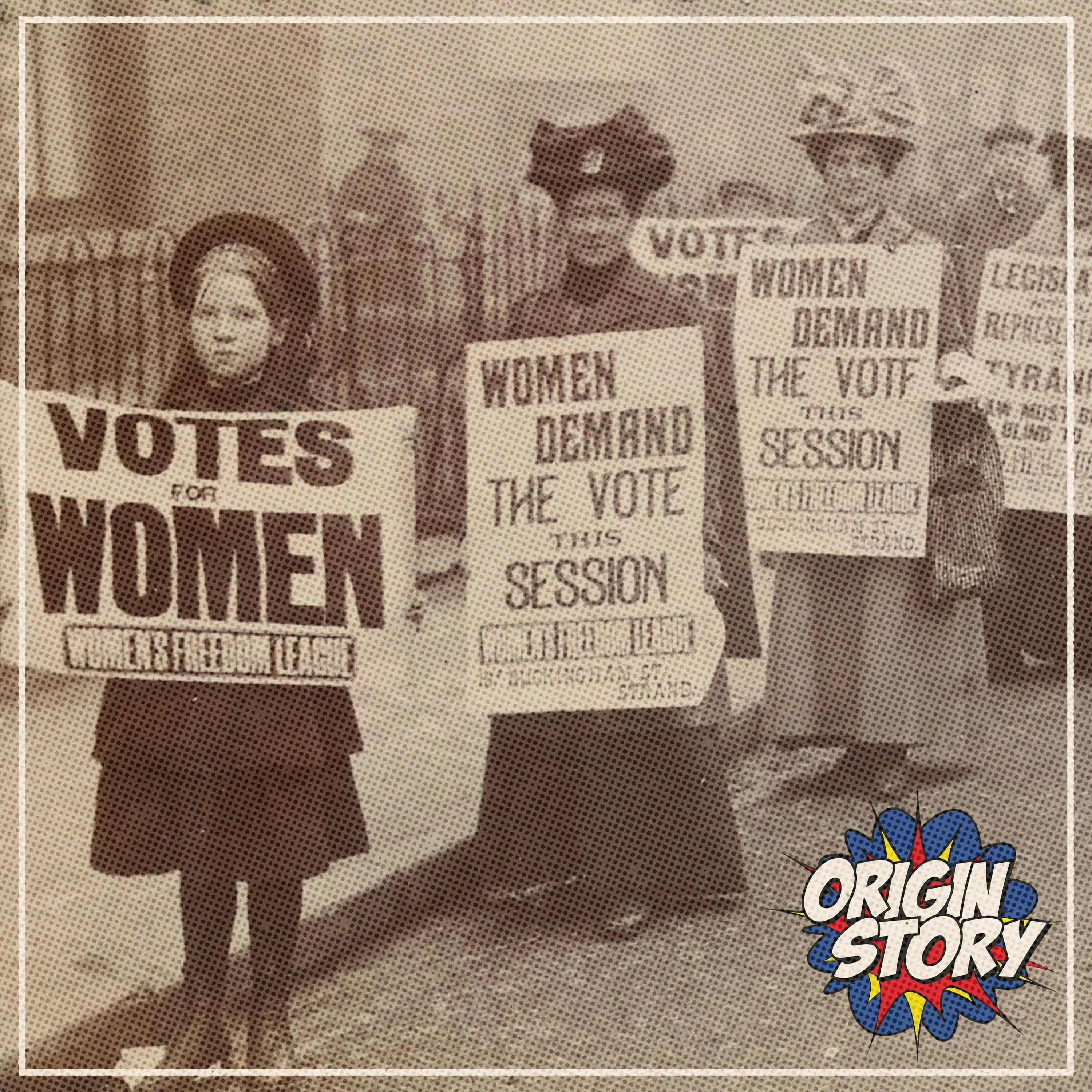
EThis week we begin the tumultuous story of the suffragettes. In 1903, Emmeline and Christabel Pankhurst founded the Women’s Social and Political Union. Sick of waiting in vain for women’s suffrage, they decided to secure it by hook or by crook. By 1906, the so-called suffragettes were the most exciting, audacious activists in the land, with their banners of purple, white and green. They then took on the might of the British state with ingenious protests and hunger strikes before agreeing to an uneasy two-year ceasefire while parliament wrestled over whether to give women the vote. We conclude part one at the end of 1911, with political failure and the dawn of a new phase of militancy. Who were the Pankhursts and their inner circle? How did they interact with Millicent Fawcett’s moderate suffragists? Why were Liberal politicians so determined to deny women the vote? And could it all have worked out very differently? It’s a fiery story of courage, conflict and missed chances, as British women found their political voice for the first time. Origin Story will be live at the Tabernacle in London on the 7th of November for a special post-US election show. Tickets here. Get the Origin Story books on Fascism, Centrism and Conspiracy Theory Get exclusive extras like supporter-only Q&A editions when you back Origin Story on Patreon. Reading List Diane Atkinson – Rise Up Women!: The Remarkable Lives of the Suffragettes (2018) Helen Lewis – Difficult Women: A History of Feminism in 11 Fights (2020) Joyce Marlow (editor) – Suffragettes: The Fight for Votes for Women (2015) Glenda Norquay (editor) – Voices and Votes: A Literary Anthology of the Women’s Suffrage Campaign (1995) Christabel Pankhurst – Pressing Problems of the Coming Age (1924) Christabel Pankhurst – Unshackled: The Story of How We Won the Vote (1959) Sylvia Pankhurst – The Suffragette: The History of the Women’s Militant Suffrage Movement 1905-10 (1911) Sylvia Pankhurst – The Suffragette Movement: An Intimate Account of Persons and Ideals (1931) Mary R. Richardson – Laugh a Defiance (1953) Fern Riddell – ‘Sanitising the Suffragettes’ (2018) Written and presented by Dorian Lynskey and Ian Dunt. Produced by Simon Williams. Music by Jade Bailey. Art by Jim Parrett. Logo by Mischa Welsh. Group Editor: Andrew Harrison. Origin Story is a Podmasters production Learn more about your ad choices. Visit podcastchoices.com/adchoices

S6 Ep 1Russell Brand – Confidence man
EWhat the hell happened to Russell Brand? Ten years ago, the comedian and actor was the loudest voice on the British left as his florid calls for spiritual and political revolution won him the support of politicians and journalists. Now he is a full-time conspiracy theorist and disgraced exile from mainstream culture, conducting prayer meetings with Jordan Peterson and flirting with Donald Trump. The fall of a celebrity is not usually Origin Story material but Brand’s transformation epitomises the political chaos of the last decade: how populism and paranoia scramble conventional notions of right and left to create a volatile third category. In the first episode of season six, Dorian and Ian reassess Brand’s extraordinary rise to fame in the 2000s in light of recent allegations of sexual misconduct and explore how British culture gave him a free pass. In 2013 Brand swapped sex and fame for a new compulsion, reinventing himself as a flamboyant agitator to great acclaim. In the void between Occupy and Corbynism, his verbose mishmash of self-help and socialism briefly made him a lion of the left. During the pandemic Brand embraced a darker shade of politics, promoting conspiracy theories about Covid-19, Ukraine and much more besides. After the allegations broke last year he went full crank, aligning himself with Robert F Kennedy Jr, Tucker Carlson and Alex Jones in the paranoid space. What does Brand’s journey to the fringes tell us about the shifting political landscape? Did he really switch sides or were the red flags flying all along? What can the left learn from its haste to turn a motormouth comedian into a radical icon? Is Brand’s latest incarnation sincere or opportunistic, and does it really matter? And which of his tomes makes for the most painful reading today: Revolution or My Booky Wook? This is a bizarre story of celebrity and conspiracy, addiction and attention, which says a great deal about where we are now. Get the Origin Story books on Fascism, Centrism and Conspiracy Theory – out 17th Oct Origin Story will be live at the Tabernacle in London on the 7th of November for a special post-US election show. Tickets here. Get exclusive extras like supporter-only Q&A editions when you back Origin Story on Patreon. Reading List Books Russell Brand - My Booky Wook (2007) Russell Brand - Revolution (2014) Anna Merlan - Republic of Lies: American Conspiracy Theorists and Their Surprising Rise to Power (2019) Naomi Klein - Doppelganger: A Trip into the Mirror World (2023) Video and audio Russell Brand at parliamentary select committee on drug addiction (2012) Newsnight debate on drug addiction with Peter Hitchens (2012) Newsnight interview with Jeremy Paxman (2013) Newsnight interview with Evan Davis (2014) Brand: A Second Coming, directed by Ondi Timoner (2015) Russell Brand: In Plain Sight: Dispatches (2023) Russell Brand podcast archive Articles Michael Kelly, ‘The Road to Paranoia’, New Yorker (1995) Piers Morgan, ‘Russell Brand’, GQ (2006) Miranda Sawyer, Brand on the run, The Guardian (2008) Russell Brand on Margaret Thatcher: “I always felt sorry for her children”, The Guardian (2013) Russell Brand on revolution: “We no longer have the luxury of tradition”, New Statesman (2013) Brian Logan, ‘Messiah Complex – review’, Guardian (2013) Mark Fisher, ‘Exiting the Vampire Castle’, Open Democracy (2013) Justin Gray, ‘The Sneaky Smarts of Russell Brand’, Vulture (2013) David Runciman, ‘Revolution by Russell Brand review’, Guardian (2014) For complete article list see Patreon Written and presented by Ian Dunt and Dorian Lynskey. Produced by Simon Williams. Music by Jade Bailey. Art by Jim Parrett. Logo by Mischa Welsh. Group Editor: Andrew Harrison. Origin Story is a Podmasters production Learn more about your ad choices. Visit podcastchoices.com/adchoices

S5 Ep 18The British Board of Film Classification – Who watches the watchers?
ESex! Violence! Censorship! These days the British Board of Film Classification rarely makes headlines but it was on the cultural frontlines throughout the 20 th century, from Herbert Asquith and the dawn of British cinema to Mary Whitehouse and “video nasties”. Through the turbulent life of one institution, Ian takes Dorian through a century of moral panics, censorship and furious debates about cinema’s influence on the life of the nation. This (literally) cinematic tale ranges from The Birth of a Nation and Nosferatu to Cannibal Holocaust and The Life of Brian, and has an unusually uplifting ending. Won’t somebody think of the children?! Origin Story will be live at the Tabernacle in London on the 7th of November for a special post-US election show. Tickets here. Get exclusive extras like supporter-only Q&A editions when you back Origin Story on Patreon. Reading List The Miracle Of The Movies by Leslie Wood, Burke Publishing 1915 Obscenity and Film Censorship: An Abridgement of the Williams Report edited by Bernard Williams The British Board of Film Censors: film censorship in Britain, 1896-1950 by James Robertson, Dover, N.H. 1985 Censoring the moving image by Phillip French Seagull Books, 2007 See no evil: Banned films and video controversy by David Kerekes, Headpress 2000 Ban The Sadist Videos: 2005 Documentary ScreenOnline: Duval, Robin Mark Kermode interview with Robin Duval: Guardian 2004 Written and presented by Ian Dunt and Dorian Lynskey. Produced by Simon Williams. Music by Jade Bailey. Art by Jim Parrett. Logo by Mischa Welsh. Group Editor: Andrew Harrison. Origin Story is a Podmasters production Learn more about your ad choices. Visit podcastchoices.com/adchoices
S5 Ep 16Emmanuel Macron – The centrist cannot hold
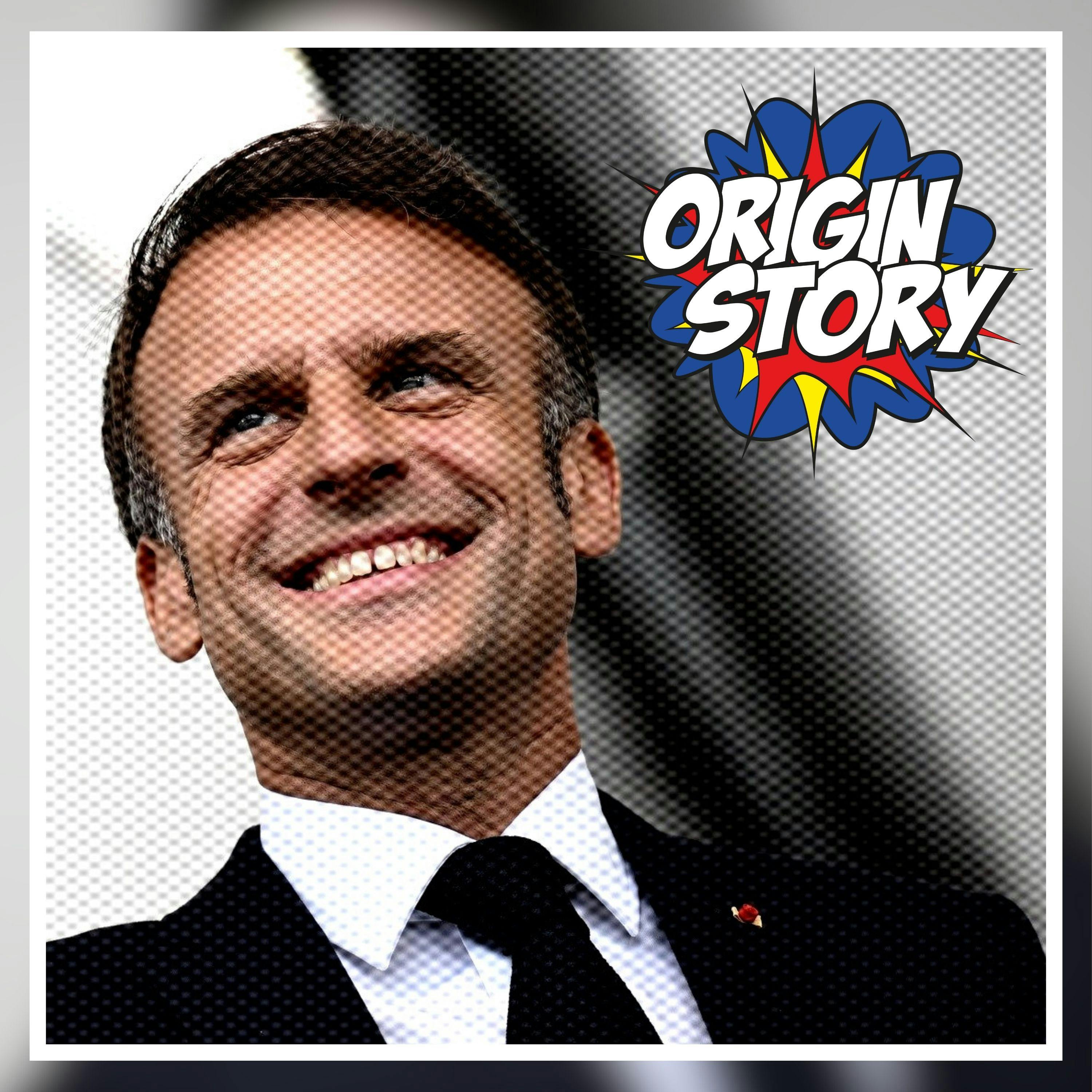
EEmmanuel Macron is one of the most fascinating and infuriating figures in 21st century politics. Seven years ago, the philosopher-statesman shredded France’s status quo by seizing the presidency at the helm of a brand new centrist party. But his achievements, at home and abroad, have not lived up to his grand visions and his summer election gamble has left him weaker than ever. Ian tells Dorian a dramatic story of idealism, ambition and hubris, explaining what Macron’s strengths and flaws reveal about the changing face of centrism, the battle with the far right and what makes French politics so very French. Sacre bleu! Origin Story will be live at the Tabernacle in London on the 7th of November for a special post-US election show. Tickets here. Get exclusive extras like supporter-only Q&A editions when you back Origin Story on Patreon. Reading List Revolution by Emmanuel Macron, Scribe 2017 Emmanuel Macron: Revolution Francais by Sophie Pedder, Bloomsbury 2018 Written and presented by Ian Dunt and Dorian Lynskey. Produced by Simon Williams. Music by Jade Bailey. Art by Jim Parrett. Logo by Mischa Welsh. Group Editor: Andrew Harrison. Origin Story is a Podmasters production Learn more about your ad choices. Visit podcastchoices.com/adchoices
S5 Ep 14Gaslighting – No, you’re not imagining it
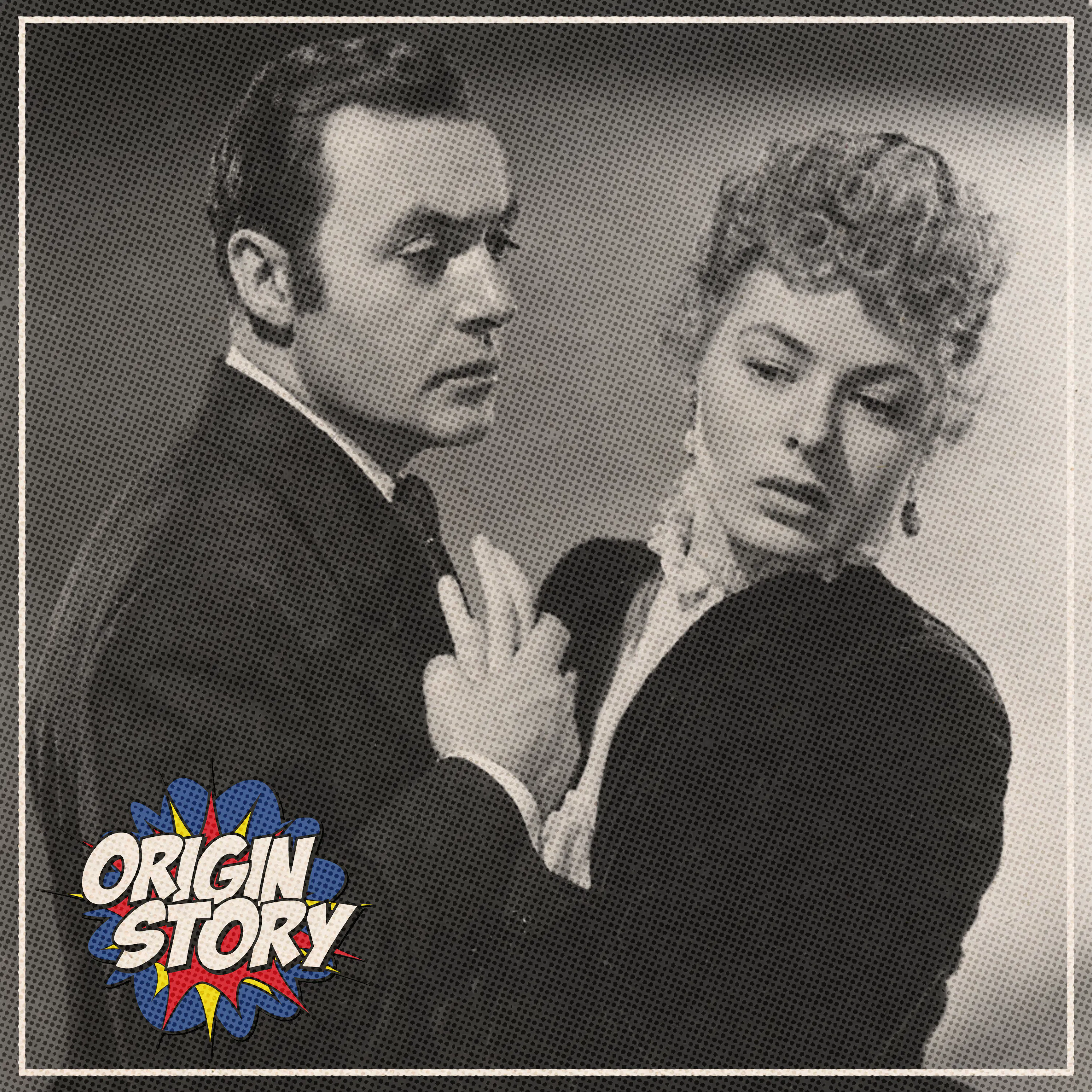
EOver the past eight years, the word “gaslighting” has transformed from an obscure term in psychiatric literature into a ubiquitous buzzword to describe the kind of deceit that makes you feel like you’re losing your mind. But are we using it correctly? What explains its sudden popularity? And is it entirely wise to import a psychological term into the world of politics? Dorian tells Ian how the title of Patrick Hamilton’s hit 1938 play Gaslight gradually became a verb and eventually went viral during Trump’s first presidential campaign in 2016. The story ranges from Ingrid Bergman and I Love Lucy to George Orwell and the Stasi before landing amid the current election dust-up between Trump and Kamala Harris. Strictly facts, no gaslighting, we promise. Get exclusive extras like supporter-only Q&A editions when you back Origin Story on Patreon. Written and presented by Ian Dunt and Dorian Lynskey. Music by Jade Bailey. Art by Jim Parrett. Logo by Mischa Welsh. Audio production by Simon Williams. Group Editor: Andrew Harrison. Origin Story is a Podmasters production Learn more about your ad choices. Visit podcastchoices.com/adchoices
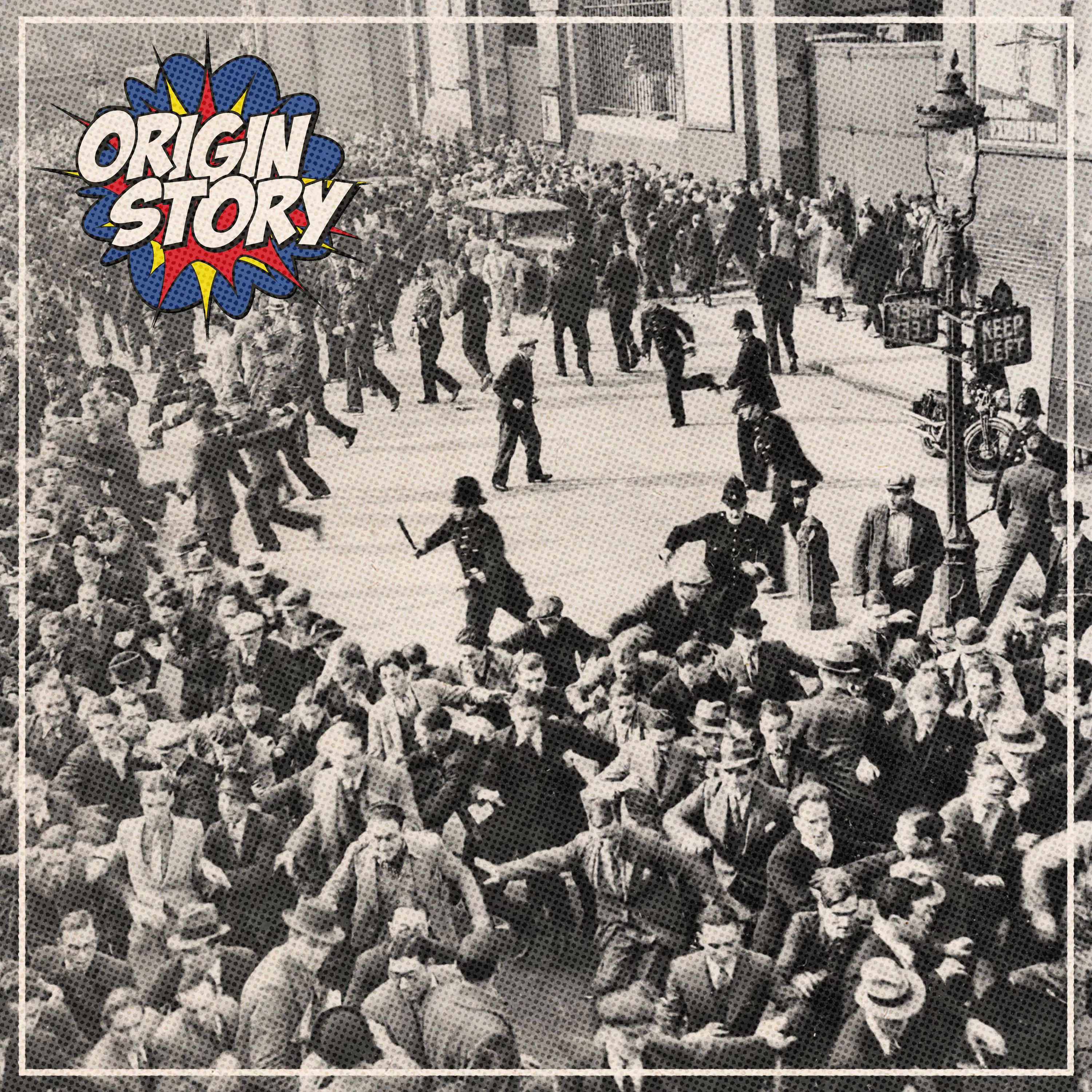
S5 Ep 12The Battle of Cable Street
EThe Battle of Cable Street on 4 October 1936 has been described as “the greatest anti-fascist victory on British soil”. It is certainly the most mythologised, most recently inspiring massive anti-fascist protests in British cities. But what actually happened that day? Who exactly was doing the battling? And did this display of working-class solidarity in London’s East End really stop Oswald Mosley’s British Union of Fascists in its tracks? Dorian tells Ian the story of that landmark Sunday and its aftermath, from the points of view of protesters, police and politicians, and finds some surprising answers. Get exclusive extras like supporter-only Q&A editions (first one coming next week) when you back Origin Story on Patreon. Written and presented by Ian Dunt and Dorian Lynskey. Music by Jade Bailey. Art by Jim Parrett. Logo by Mischa Welsh. Audio production by Simon Williams. Group Editor: Andrew Harrison. Origin Story is a Podmasters production. Learn more about your ad choices. Visit podcastchoices.com/adchoices
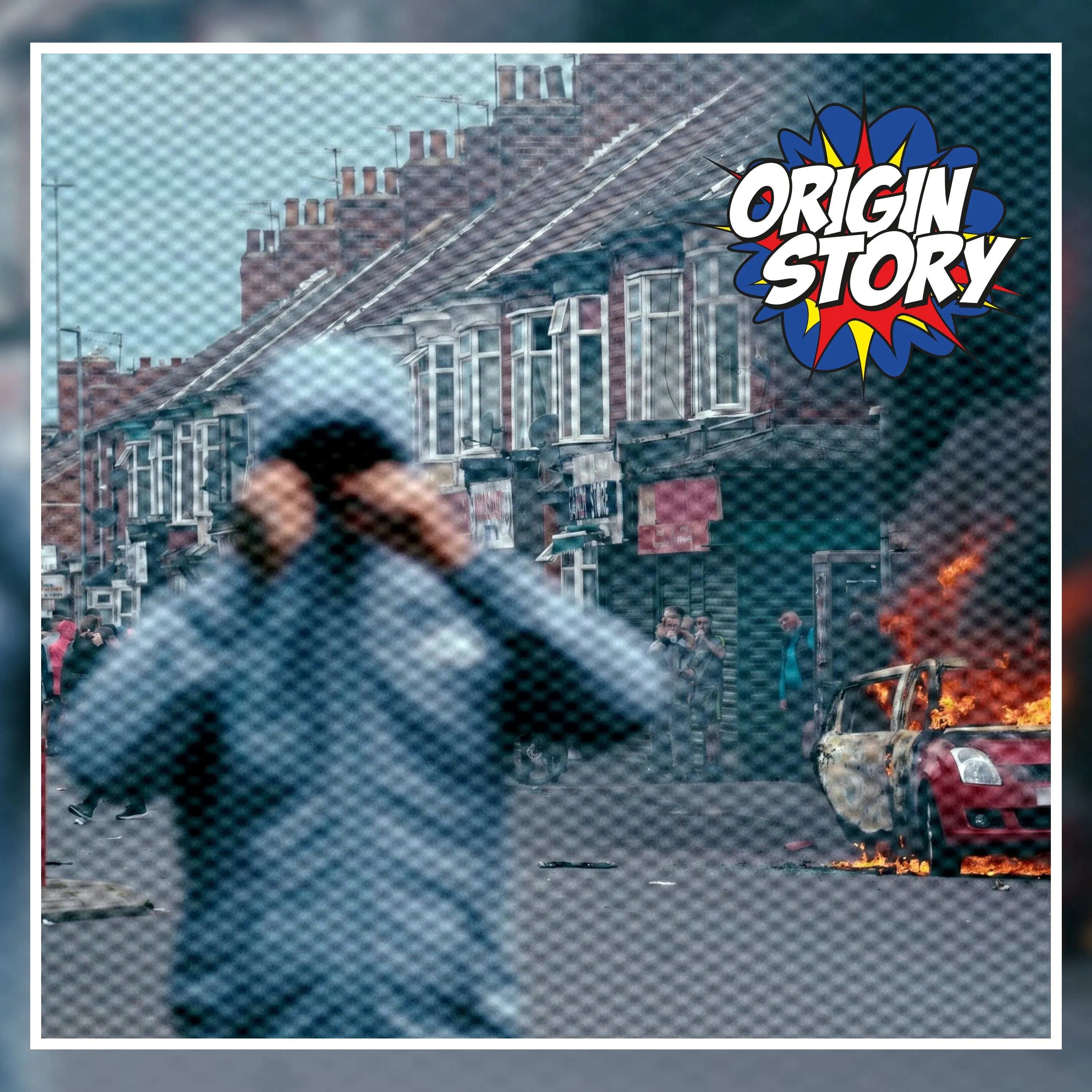
S5 Ep 11Bonus edition: Far-Right Riots
ERacist violence has inflamed several British cities this past week. Should we call the events protests, riots or pogroms? Are the participants actual fascists or ordinary citizens with “legitimate concerns”? And how did the fiction of “two-tier policing” go from extremists to broadcasters in a couple of days? Ian and Dorian analyse how the language of the far right and its mainstream enablers obscures what is really going on and ask if Britain’s worst street violence since 2011 will change anything. https://www.patreon.com/originstorypod Written and presented by Dorian Lynskey and Ian Dunt. Produced by Jade Bailey. Origin Story is a Podmasters production. Learn more about your ad choices. Visit podcastchoices.com/adchoices
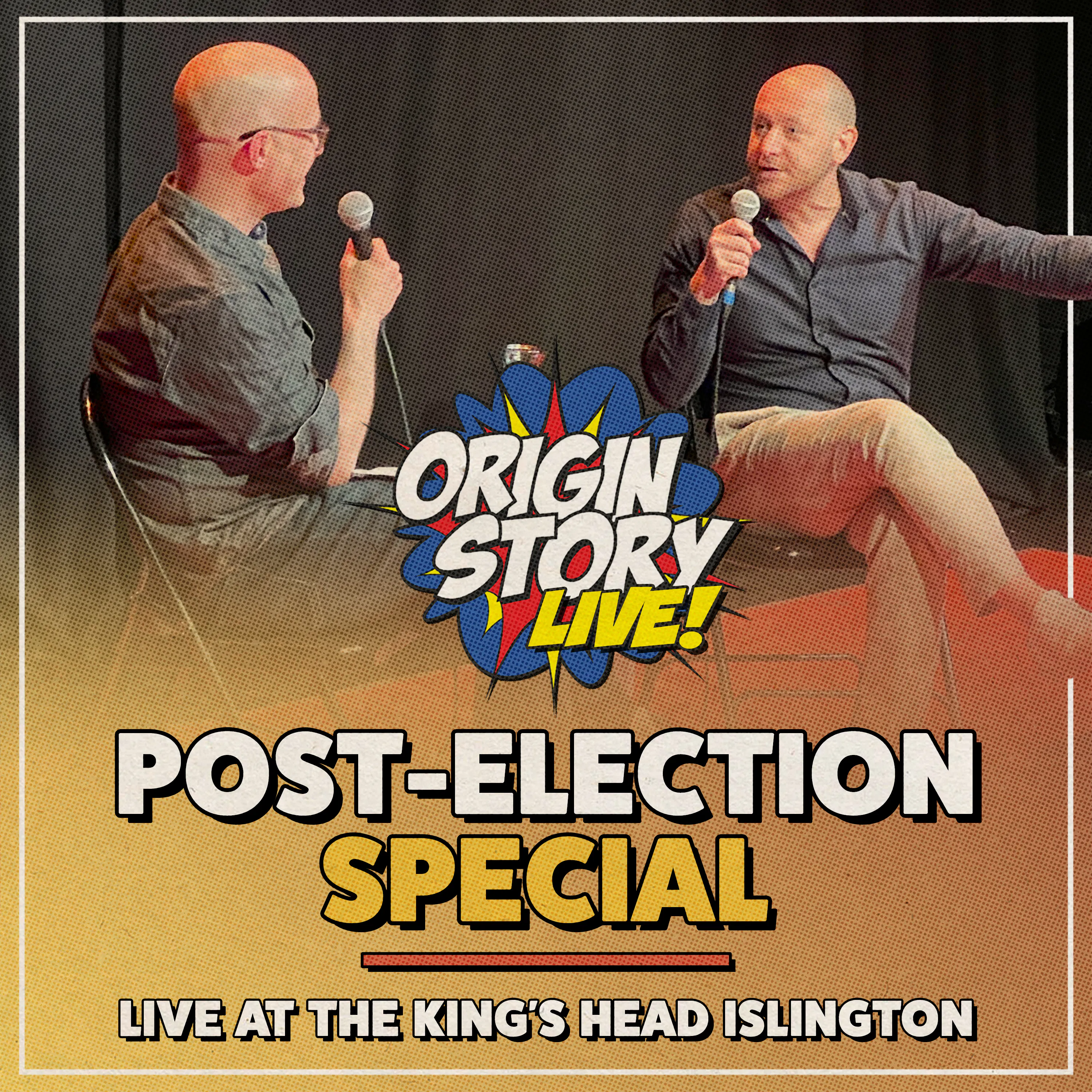
S5 Ep 10Origin Story Post-Election Special – Live in Islington
ECouldn’t make it to the Origin Story live show in London on Monday 15 July? Don’t worry, we’ve got audio for you. Listen up as Dorian and Ian take one last wallow in the glory of Election Night ’24… think about what might be in store for some of our favourite bad losers… see how the events of the campaign relate to the subjects of our past series… and of course answer your questions. Written and presented by Ian Dunt and Dorian Lynskey. Music by Jade Bailey. Art by Jim Parrett. Logo by Mischa Welsh. Audio and video by Simon Williams, Chris Jones and Kieron Leslie. Live events co-ordinator Jill Pearson. Audio production by Simon Williams. Group Editor: Andrew Harrison. Origin Story is a Podmasters production. Learn more about your ad choices. Visit podcastchoices.com/adchoices

S5 Ep 9The Rushdie Affair – Blasphemous Rumours
The final episode of season five covers the Rushdie Affair. On 14 February 1989, the Ayatollah Khomeini’s fatwa against Salman Rushdie made The Satanic Verses the most famous novel in the world — for all the wrong reasons. The controversy had far-reaching implications for free speech, international relations and the political identity of British Muslims. Although the issue seemed to have been resolved in 1998, the attempted murder of Rushdie in 2022 showed that it was far from over. Dorian and Ian tell the whole story from all angles: Rushdie’s decade in hiding, Iran’s rivalry with Saudi Arabia, community relations in Britain, divisions in the literary scene, and the conflicted responses of politicians around the world. What exactly did The Satanic Verses say that made people so angry? Which public figures were on Rushdie’s side and which ones thought he had it coming? How did Rushdie get his life back, only to almost lose it decades later? And what is the cultural and political legacy of the affair today? It is a tale of artistic freedom colliding with religious dogma and political calculations to turn a work of fiction into an international incident for the first time. Reading list Abdulrazak Gurnah, ed. – The Cambridge Companion to Salman Rushdie (2007) Christopher Hitchens – Hitch-22: A Memoir (2010) Daniel Pipes – The Rushdie Affair: The Novel, the Ayatollah, and the West (1990) Salman Rushdie – The Satanic Verses (1988) Salman Rushdie – Imaginary Homelands: Essays and Criticism 1981-1991 (1991) Salman Rushdie – Joseph Anton (2012) Salman Rushdie – Knife: Meditations After an Attempted Murder (2024) Articles John Cunningham – ‘Sentenced to the prison of the word’, The Guardian (1990) Will Lloyd – How We Gave Up on Salman Rushdie, UnHerd (2022) Dorian Lynskey – Salman Rushdie on Quichotte: “The world as I knew it seems to be coming to an end” the i (2019) Sean O’Grady – The Satanic Verses 30 Years On review, The Independent (2019) David Remnick – The Defiance of Salman Rushdie, New Yorker (2023) Salman Rushdie – The Disappeared, New Yorker (2012) Words for Salman Rushdie – New York Times (1989) Written and presented by Ian Dunt and Dorian Lynskey. Music by Jade Bailey. Art by Jim Parrett. Logo by Mischa Welsh. Audio production by Simon Williams. Group Editor: Andrew Harrison. Origin Story is a Podmasters production Learn more about your ad choices. Visit podcastchoices.com/adchoices
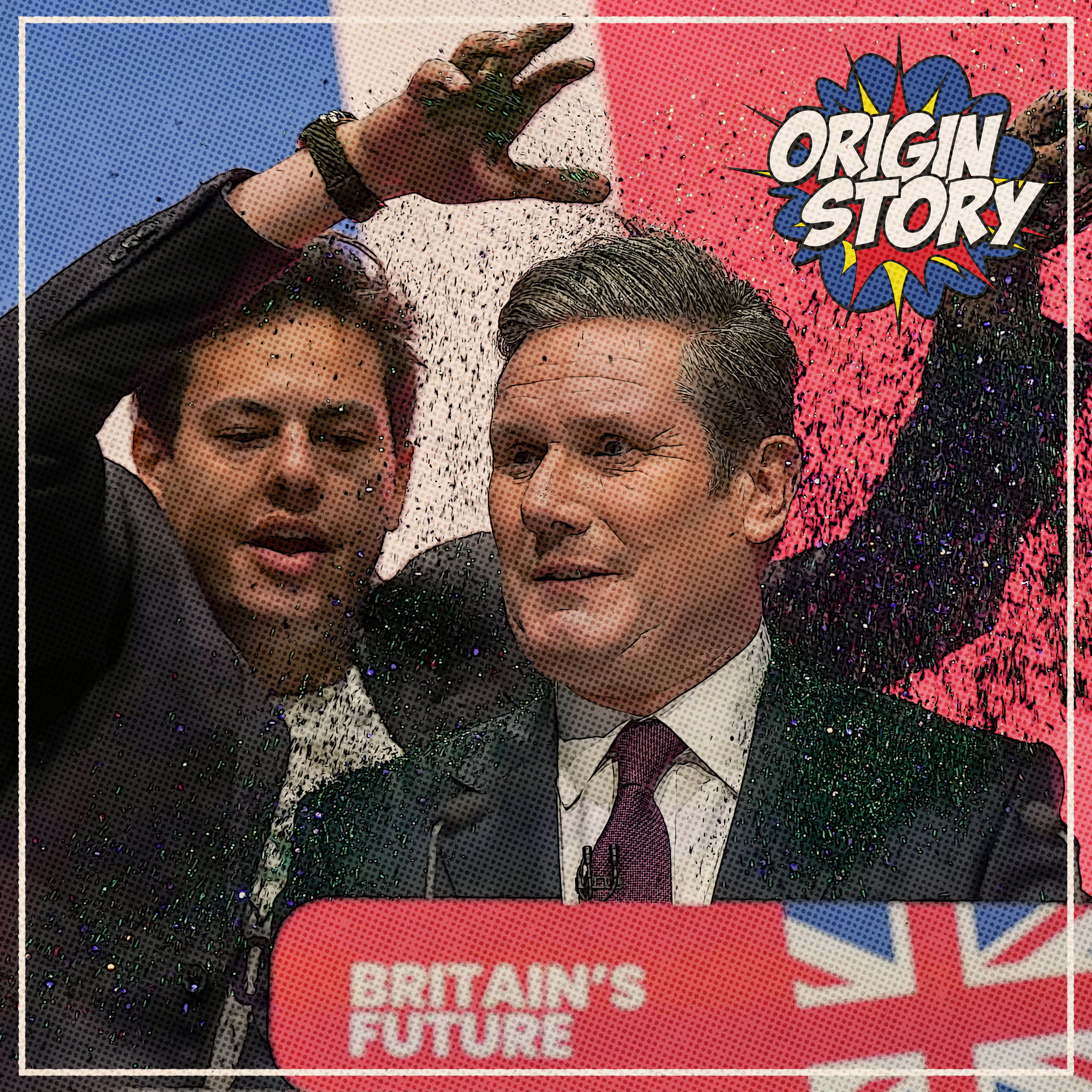
S5 Ep 8Keir Starmer – PM Dawn
EThe season five finale coincides with the general election, so we’ve decided to get very topical indeed with the story of Labour leader and likely prime minister Keir Starmer. To his admirers, he’s the master strategist who took Labour from doom to Downing Street in a single term. To his foes, he’s a ruthless liar who will stop at nothing to crush the left. To the average voter, he remains a bit of a blank slate. What kind of prime minister will he be? Ian and Dorian trace Starmer’s youthful journey from working-class Surrey socialist to indie-loving, centrist-bashing law student, explaining the legacy of a difficult childhood. He was the star human rights lawyer, at the heart of 1990s controversies from the McLibel case to policing in Northern Ireland, who became the country’s top prosecutor and then a knight of the realm. At the age of 52, he entered politics and soon found himself on the frontline of the Brexit wars, butting heads with Labour leader Jeremy Corbyn. We end with his leadership of the party and the price of victory. Why is Starmer such a closed book in public? How did he go from radical socialist to centrist dad? What went down between him and Corbyn? Was he really an arch-remainer? When did he almost throw in the towel? And what are the core values that might define his premiership? Discover all this and more in the story of our next prime minister. • Pre-order the forthcoming Origin Stories books on Centrism, Fascism and Conspiracy Theory and get 20% off using the special discount code revealed in the podcast. • Support Origin Story on Patreon Reading list Tom Baldwin - Keir Starmer: The Biography (2024) Oliver Eagleton – The Starmer Project: A Journey to the Right (2022) Gabriel Pogrund and Patrick Maguire – Left Out: The Inside Story of Labour Under Corbyn (2020) Tim Shipman – Fall Out: A Year of Political Mayhem (2017) Articles and podcasts Emily Ashton, ‘Keir Starmer Is Not Who You Think He Is’, Buzzfeed (2020) Elliott Chappell, ‘Interview with Keir Starmer’, Labour List (2020) Desert Island Discs: Sir Keir Starmer (2020) George Eaton, ‘What Is Starmerism?’, The New Statesman (2024) Charlotte Edwardes, ‘“You asked me questions I’ve never asked myself”: Keir Starmer’s most personal interview yet’ The Guardian, ‘In Praise of… Keir Starmer’, The Guardian (2009) Billy Kenber, ‘Keir Starmer: Radical who attacked Kinnock in Marxist journal’, The Times (2020) Keir Starmer, ‘Sorry, Mr Blair, but 1441 does not authorise force’, The Guardian (2003) Written and presented by Ian Dunt and Dorian Lynskey. Producer: Simon Williams. Music by Jade Bailey. Art by Jim Parrett. Logo by Mischa Welsh. Group Editor: Andrew Harrison. Origin Story is a Podmasters production Learn more about your ad choices. Visit podcastchoices.com/adchoices

S5 Ep 7Anti-vaxxers – Herd impunity
EThis episode tells the tale of the anti-vaxxers. The word has only been around since 2001 but inoculation has inspired opposition for as long as it has existed in the West. Dorian and Ian chart the life of vaccines and their opponents from the fight against smallpox in the eighteenth century to the vaccine scandals of the post-war decades. Find out why someone threw a bomb through Cotton Mather’s window, why Gandhi changed his mind, and why Leicester became the anti-vaccine capital of the world. The drama accelerates with Dr Andrew Wakefield and the MMR panic of the 2000s, which swept up everyone for Oprah Winfrey to Private Eye, caused a public health disaster and set the stage for the full-blown mania of the backlash against Covid-19 vaccines. How did a rogue British gastroenterologist launch a global movement? How did vaccine scepticism mutate into a giant conspiracy theory? Is Bill Gates really implanting 5G trackers in our blood? (No.) And what’s the best way to get an anti-vaxxer to think again? It’s a gripping story of science, journalism, paranoia, superstition and people who should know better. • Pre-order the forthcoming Origin Stories books on Centrism, Fascism and Conspiracy Theory and get 20% off using the special discount code revealed in the podcast. • Support Origin Story on Patreon Reading list • David Aaronovitch – Voodoo Histories: How Conspiracy Theory Has Shaped Modern History (2010) • Jonathan M. Berman – Anti-Vaxxers: How to Challenge a Misinformed Movement (2020) • Steve Brotherton – Suspicious Minds: Why We Believe Conspiracy Theories (2016) • Brian Deer – The Doctor Who Fooled the World: Andrew Wakefield’s War on Vaccines (2020) • Peter Furtado - Plague, Pestilence and Pandemic: Voices from History (2021) • Naomi Klein – Doppelganger (2023) • Anna Merlan – Republic of Lies: American Conspiracy Theorists and Their Surprising Rise to Power (2020) • Seth Mnookin – The Panic Virus: The True Story Behind the Vaccine-Autism Controversy (2011) • Tom Phillips and Jonn Elledge - Conspiracy: A History of Bxllocks Theories and How Not to Fall for Them (2022) • Frank M. Snowden - Epidemics and Society: From the Black Death to the Present (2019) Podcasts and articles • You’re Wrong About: The Anti-Vaccine Movement (2021) • Maintenance Phase: RFK Jr. and the Rise of the Anti-Vaxx Movement (2023) • Isaac Chotiner, ‘The Influence of the Anti-Vaccine Movement’, The New Yorker (2020) Written and presented by Ian Dunt and Dorian Lynskey. Producer: Simon Williams. Music by Jade Bailey. Art by Jim Parrett. Logo by Mischa Welsh. Group Editor: Andrew Harrison. Origin Story is a Podmasters production Learn more about your ad choices. Visit podcastchoices.com/adchoices
S5 Ep 6Genocide – Part Two – The search for justice
EThe war in Gaza has led to accusations of genocide but that word operates on two levels. It’s both a strict legal term that has to be adjudicated by the International Criminal Court and an informal expression of moral outrage. The definition has been contested ever since the word was invented by the lawyer Raphael Lemkin in 1944, in the furnace of the Holocaust. In this two-part episode Dorian and Ian tell the story of genocide as a legal and political category. What exactly does it mean? How is it different from crimes against humanity or ethnic cleansing? Why is it so hard to prove? And how did it become seen as the ultimate crime? In part two, Ian and Dorian tell the story of Lemkin’s invention of genocide and his efforts to make it an international crime. They explain how legal wrangling during the Nuremberg trials led to the 1948 Genocide Convention, and why it took so long for anybody to be charged with the crime, let alone brought to justice. Why do so many of the twentieth century’s most horrendous offences not qualify as genocide? Why did international condemnation fail to prevent genocides in Rwanda, Darfur and the former Yugoslavia? And why is the case against Israel so contentious? It’s a disturbing story but a fascinating one, raising essential questions about the rights of the individual versus the rights of the group, the limits of international law, and humankind’s capacity for justifying mass murder. • See Origin Story live at the King’s Head Theatre, London on Mon 15 July. Tickets here. • Pre-order the forthcoming Origin Stories books on Centrism, Fascism and Conspiracy Theory and get 20% off using the special discount code revealed in the podcast. • Support Origin Story on Patreon Reading list • Donald Bloxham and A. Dirk Moses (eds.) - The Oxford Handbook of Genocide Studies, 2013 • Philip Gourevitch – We Wish to Inform You That Tomorrow We Will Be Killed with Our Families, 1998 • Ben Kiernan – Blood and Soil: A World History of Genocide and Extermination from Sparta to Darfur, 2007 • Norman N. Naimark – Genocide: A World History, 2016 • Samantha Power – A Problem from Hell, 2002 • Philippe Sands – East West Street, 2016 Written and presented by Ian Dunt and Dorian Lynskey. Producer: Simon Williams. Music by Jade Bailey. Art by Jim Parrett. Logo by Mischa Welsh. Group Editor: Andrew Harrison. Origin Story is a Podmasters production Learn more about your ad choices. Visit podcastchoices.com/adchoices
S5 Ep 5Genocide – Part One – The ultimate crime
EThe war in Gaza has led to accusations of genocide but that word operates on two levels. It’s both a strict legal term that has to be adjudicated by the International Criminal Court and an informal expression of moral outrage. The definition has been contested ever since the word was invented by the lawyer Raphael Lemkin in 1944, in the furnace of the Holocaust. In this two-part episode Dorian and Ian tell the story of genocide as a legal and political category. What exactly does it mean? How is it different from crimes against humanity or ethnic cleansing? Why is it so hard to prove? And how did it become seen as the ultimate crime? In part one, Ian and Dorian chart the prehistory of genocide — the ancient desire of groups to utterly eradicate their enemies. They go from the vengeful massacres of the Old Testament and Greek myth to the destruction of Carthage and the Holy War of the Crusades. Then they enter the age of empire, from the crimes of the Conquistadors to the elimination of the Tasmanians. Modern genocide began with the slaughter of the Herero in East Africa and the Armenians in the Ottoman Empire, setting the stage for the Nazis. It’s a disturbing story but a fascinating one, raising essential questions about the rights of the individual versus the rights of the group, the difference between reckless violence and targeted destruction, and humankind’s capacity for justifying mass murder. • See Origin Story live at the King’s Head Theatre, London on Mon 15 July. Tickets here. • Pre-order the forthcoming Origin Stories books on Centrism, Fascism and Conspiracy Theory and get 20% off using the special discount code revealed in the podcast. • Support Origin Story on Patreon Reading list • Donald Bloxham and A. Dirk Moses (eds.) - The Oxford Handbook of Genocide Studies, 2013 • Philip Gourevitch – We Wish to Inform You That Tomorrow We Will Be Killed with Our Families, 1998 • Ben Kiernan – Blood and Soil: A World History of Genocide and Extermination from Sparta to Darfur, 2007 • Norman N. Naimark - Genocide: A World History, 2016 • Samantha Power – A Problem from Hell, 2002 • Philippe Sands – East West Street, 2016 Written and presented by Ian Dunt and Dorian Lynskey. Producer: Simon Williams. Music by Jade Bailey. Art by Jim Parrett. Logo by Mischa Welsh. Group Editor: Andrew Harrison. Origin Story is a Podmasters production Learn more about your ad choices. Visit podcastchoices.com/adchoices
S5 Ep 4John Stuart Mill & Harriet Taylor Mill – Part Two – Love, bravery and feminism
EBack for season five, Origin Story continues to explore the misunderstood ideas and people that shape our politics today. With Ian Dunt and Dorian Lynskey. In this two-parter Ian gets seriously into the research by mining his own book for episode ideas and comes up smiling with this tale of love, bravery and feminism. John Stuart Mill and Harriet Taylor are the mother and father of liberalism, a joint writing team who produced the most seminal books about freedom in the modern era. But while he was worshipped by those who came afterwards, she was mocked, lambasted and then erased from history. In part two, Ian and Dorian talk about the single most important liberal book ever written, track the ups and downs of the couple's tumultuous affair, and show how Mill became a woke warrior in his old age, fighting against racism and sexism and destroying his carefully-built Victorian reputation in the process. • See Origin Story live at the King’s Head Theatre, London on Mon 15 July. Tickets here. • Pre-order the forthcoming Origin Stories books on Centrism, Fascism and Conspiracy Theory and get 20% off using the special discount code revealed in the podcast. • Buy The Ministry of Truth through our affiliate bookshop and you’ll help fund Origin Story by earning us a small commission for every sale. Bookshop.org’s fees help support independent bookshops too. • Support Origin Story on Patreon Reading list Ian Dunt – How to be a Liberal (2020) (Has anyone heard of this book? Is it any good?) Jo Ellen Jacobs (ed) – The Complete Works of Harriet taylor Mill (1998) John Stuart Mill (and Harriet Taylor Mill) – On Liberty (1859) John Stuart Mill (and Harriet Taylor Mill) – The Subjection of Women (1869) John Stuart Mill and Jeremy Bentham – Utilitarianism and Other Essays (1987) Richard Reeves – John Stuart Mill: Victorian Firebrand (2007) Written and presented by Ian Dunt and Dorian Lynskey. Music by Jade Bailey. Art by Jim Parrett. Logo by Mischa Welsh. Audio production by Simon Williams. Group Editor: Andrew Harrison. Origin Story is a Podmasters production Learn more about your ad choices. Visit podcastchoices.com/adchoices

S5 Ep 3John Stuart Mill & Harriet Taylor Mill – Part One – Liberalism's original power couple
EBack for season five, Origin Story continues to explore the misunderstood ideas and people that shape our politics today. With Ian Dunt and Dorian Lynskey. In this two-parter Ian gets seriously into the research by mining his own book for episode ideas and comes up smiling with this tale of love, bravery and feminism. John Stuart Mill and Harriet Taylor are the mother and father of liberalism, a joint writing team who produced the most seminal books about freedom in the modern era. But while he was worshipped by those who came afterwards, she was mocked, lambasted and then erased from history. In part one, Ian explains Mill's devastating childhood, Taylor's cutting social commentary, their love affairs which rocked Victorian London, the evidence for her co-authorship of several key liberal books, and how they delivered some of the earliest works of British feminism. • See Origin Story live at the King’s Head Theatre, London on Mon 15 July. Tickets here. • Pre-order the forthcoming Origin Stories books on Centrism, Fascism and Conspiracy Theory and get 20% off using the special discount code revealed in the podcast. • Buy The Ministry of Truth through our affiliate bookshop and you’ll help fund Origin Story by earning us a small commission for every sale. Bookshop.org’s fees help support independent bookshops too. • Support Origin Story on Patreon Reading list Ian Dunt - How to be a Liberal (2020) (Has anyone heard of this book? Is it any good?) Jo Ellen Jacobs (ed) - The Complete Works of Harriet taylor Mill (1998) John Stuart Mill (and Harriet Taylor Mill) - On Liberty (1859) John Stuart Mill (and Harriet Taylor Mill) - The Subjection of Women (1869) John Stuart Mill and Jeremy Bentham - Utilitarianism and Other Essays (1987) Richard Reeves - John Stuart Mill: Victorian Firebrand (2007) Written and presented by Ian Dunt and Dorian Lynskey. Producer: Simon Williams. Music by Jade Bailey. Art by Jim Parrett. Logo by Mischa Welsh. Group Editor: Andrew Harrison. Origin Story is a Podmasters production Learn more about your ad choices. Visit podcastchoices.com/adchoices
S5 Ep 2George Orwell Part 2 – From Broadcasting House to Airstrip One
EBack for season five, Origin Story continues to explore the misunderstood ideas and people that shape our politics today. With Ian Dunt and Dorian Lynskey. In part two of George Orwell, Dorian picks up the story in 1941, with Orwell taking a job at the BBC. The war grinds on, and so does George, until his anti-Stalinist fairy tale Animal Farm changes everything. We’re on the road to Nineteen Eighty-Four but it is littered with obstacles: grief, madness, bombs, tuberculosis. After the war, Orwell is writing his finest essays but his life is mayhem so he escapes to the Scottish island of Jura with his baby son to write the novel that, little does he know, will make him a legend. It's the story of a writer reaching the height of his powers while everything around him seems to be falling to bits. How did a sick man on a lonely island write perhaps the most influential novel of the twentieth century? Why is his strange masterpiece so widely misunderstood? What were Orwell’s blindspots? Would he have been a good hang? And are taking the right lessons from his life and work? All this, plus Nye Bevan, HG Wells, Ernest Hemingway, Aldous Huxley and the atomic bomb. • Pre-order the forthcoming Origin Stories books on Centrism, Fascism and Conspiracy Theory and get 20% off using the special discount code revealed in the podcast. • Buy The Ministry of Truth through our affiliate bookshop and you’ll help fund Origin Story by earning us a small commission for every sale. Bookshop.org’s fees help support independent bookshops too. • Support Origin Story on Patreon Image: Peter Cushing (Winston Smith) with Yvonne Mitchell (Julia) and André Morrell (O’Brien) in the 1954 BBC production of George Orwell’s 1984. (Getty) Reading list Audrey Coppard and Bernard Crick (eds.) — Orwell Remembered (1984) Bernard Crick – George Orwell: A Life (1982) Peter Davison (ed.) — The Complete Works of George Orwell (1997-2002) Peter Davison (ed.) — The Lost Orwell (2006) Miriam Gross (ed.) — The World of George Orwell (1971) Dorian Lynskey — The Ministry of Truth: A Biography of George Orwell’s Nineteen Eighty-Four (2019 Jeffrey Meyers (ed.) — George Orwell: The Critical Heritage (1975) John Rodden — George Orwell: The Politics of Literary Reputation (1989) William Steinhoff — George Orwell and the Origins of 1984 (1975) DJ Taylor – Orwell: The Life (2003) DJ Taylor – Orwell: The New Life (2023) Sylvia Topp – Eileen: The Making of George Orwell (2020) Written and presented by Ian Dunt and Dorian Lynskey. Music by Jade Bailey. Art by Jim Parrett. Logo by Mischa Welsh. Audio production by Simon Williams. Group Editor: Andrew Harrison. Origin Story is a Podmasters production Learn more about your ad choices. Visit podcastchoices.com/adchoices
S5 Ep 1George Orwell Part 1 – From Eton to Barcelona
EBack for season five, Origin Story continues to explore the misunderstood ideas and people that shape our politics today. With Ian Dunt and Dorian Lynskey. In this opening two-parter Dorian bows to the inevitable and tells the story of the subject of his book, The Ministry of Truth. When George Orwell died on 21 January 1950, at the age of 46, the phenomenal success of his novel Nineteen Eighty-Four made it international news. The obituaries hailed him as a beacon of decency, sanity and wisdom during the darkest years of the twentieth century — “the wintry conscience of a generation” in VS Pritchett’s ringing phrase. To this day, his moral authority is claimed by people across the political spectrum. Behind the myth, Orwell was a complicated man, full of flaws and contradictions. His road to success was long, painful and ridiculously eventful. In part one, Dorian explains how Eric Blair became George Orwell, from Eton to Burma to Paris to Wigan. We then follow Orwell to the Spanish Civil War, where he is shot by fascists and hounded by Stalinists, and finally to Blitz-torn London. It’s the story of a man working out who he is, as a writer and a moral agent, in a world tumbling towards catastrophe. How did Orwell become a socialist? Why did he wind up the other socialists? Why was Spain the great turning point in his life? Are his early novels any good? And was his wife Eileen the queen of deadpan one-liners? All this and more in the return of Origin Story. • Pre-order the forthcoming Origin Stories books on Centrism, Fascism and Conspiracy Theory and get 20% off using the special discount code revealed in the podcast. • Buy The Ministry of Truth through our affiliate bookshop and you’ll help fund Origin Story by earning us a small commission for every sale. Bookshop.org’s fees help support independent bookshops too. • Support Origin Story on Patreon Reading list Audrey Coppard and Bernard Crick (eds.) — Orwell Remembered (1984) Bernard Crick – George Orwell: A Life (1982) Peter Davison (ed.) — The Complete Works of George Orwell (1997-2002) Peter Davison (ed.) — The Lost Orwell (2006) Miriam Gross (ed.) — The World of George Orwell (1971) Dorian Lynskey — The Ministry of Truth: A Biography of George Orwell’s Nineteen Eighty-Four (2019 Jeffrey Meyers (ed.) — George Orwell: The Critical Heritage (1975) John Rodden — George Orwell: The Politics of Literary Reputation (1989) William Steinhoff — George Orwell and the Origins of 1984 (1975) DJ Taylor – Orwell: The Life (2003) DJ Taylor – Orwell: The New Life (2023) Sylvia Topp – Eileen: The Making of George Orwell (2020) Written and presented by Ian Dunt and Dorian Lynskey. Music by Jade Bailey. Art by Jim Parrett. Logo by Mischa Welsh. Audio production by Simon Williams. Group Editor: Andrew Harrison. Origin Story is a Podmasters production Learn more about your ad choices. Visit podcastchoices.com/adchoices
S4 Ep 1810 Downing Street – The makeshift mansion
EWe’ve covered ideas, phrases, people and historical events. Now Origin Story profiles its first building: Number 10 Downing Street. Following Dorian’s bonus episode about the birth of end of the world fiction, based on his new book Everything Must Go, Ian goes deep on a topic from his bestselling book How Westminster Works and Why It Doesn’t. He explains how a house built on marshland by a 17th century scoundrel gradually became the prime minister’s official residence, and how its cramped, chaotic floorplan still influences how vital decisions are made. Why does tradition trump efficient governance? How do wily advisers exploit the layout to increase their influence over the PM? Is the door more important than the rest of the house put together? And is it finally time to say goodbye to Number 10? Support Origin Story on Patreon for exclusive benefits www.Patreon.com/originstorypod Written and presented by Dorian Lynskey and Ian Dunt. Music by Jade Bailey. Logo art by Mischa Welsh. Audio production by Simon Williams. Group Editor: Andrew Harrison. Origin Story is a Podmasters production Learn more about your ad choices. Visit podcastchoices.com/adchoices
S4 Ep 16The Illuminati – Top of the Plots
E• Join Ian and Dorian for Origin Story Live in London on Tue 7 May. They’ll be looking at how the Conservative Party got addicted to conspiracy theory, and more. This time: The Illuminati were a group of Enlightenment idealists who existed for just a few years in 1780s Bavaria. Or were they? The Illuminati have since been blamed for everything from the French Revolution to communism to 9/11. How did a powerless club of intellectuals become reimagined as the secret rulers of the world? And how did the myth of the Illuminati become the template for every megaconspiracy theory about plots to put humanity under the heel of a one-world government? Dorian and Ian unravel this amazing yarn, which takes in America’s Founding Fathers, British fascists, the Knights Templar, David Icke, Jay-Z and the Playboy letters page. The truth is in here. Written and presented by Ian Dunt and Dorian Lynskey. Audio production and music by Jade Bailey. Logo art by Mischa Welsh. Group Editor: Andrew Harrison. Origin Story is a Podmasters production Learn more about your ad choices. Visit podcastchoices.com/adchoices

S4 Ep 15Apocalypse How? Dorian on the birth of end of the world fiction
EFor 1800 years, Western conceptions of the end of the world were dominated by the Book of Revelation: Armageddon, the Millennium, Judgement Day. But in 1816, political upheaval, Enlightenment science and the Romantic imagination converged to give birth to a radical idea: the end of the world without God. When Lord Byron, Mary Shelley and Percy Shelley came together beside Lake Geneva that summer, a volcanic eruption was producing endless rain and apocalyptic prophecies. Drawing on his new book Everything Must Go: The Stories We Tell About the End of the World, Dorian explains how that season of confusion and gloom led to not just Frankenstein but Byron’s revolutionary poem Darkness. And how the deaths of her companions led Mary to write The Last Man, the first ever novel about a world-destroying pandemic. It’s a story of personal tragedy, temporary climate change, shocking new ideas about the past, present and future of life on earth, and the summer that kicked off two centuries (and counting) of apocalyptic fiction. Buy Everything Must Go: The Stories We Tell About the End of the World through our affiliate bookshop and you’ll help fund Origin Story by earning us a small commission for every sale. Bookshop.org’s fees help support independent bookshops too. Written and presented by Dorian Lynskey and Ian Dunt. Music by Jade Bailey. Logo art by Mischa Welsh. Audio production by Simon Williams. Group Editor: Andrew Harrison. Origin Story is a Podmasters production Learn more about your ad choices. Visit podcastchoices.com/adchoices
S4 Ep 9Effective Altruism: Morality by numbers
EIn the last episode of season four, Ian Dunt and Dorian Lynskey discuss effective altruism. Last month the US entrepreneur Sam Bankman-Fried was convicted on multiple counts of fraud and conspiracy related to the dramatic collapse of his cryptocurrency exchange FTX. Bankman-Fried was also a prominent advocate of effective altruism, a philanthropic movement based on utilitarian philosophy, and the scandal has thrown the EA community into crisis. Dorian and Ian explain how two maverick young Oxford philosophers ended up creating a multi-billion-dollar movement, explore the ideas behind it, and track its journey towards long termism: the philosophy of safeguarding the future of the human race from threats such as hostile AI. Are the principles of EA sound? Did the influx of billionaires and the obsession with existential risk knock it off course? Was Bankman-Fried a true believer who blew it or just a grifter who took the idealists for a ride? And can EA survive one of the biggest financial scandals of this century? When big ideas collide with big money and big tech, things get messy. Support Origin Story on Patreon for exclusive benefits www.Patreon.com/originstorypod Reading list Books: Carol J.Adams, Alice Crary, Lori Gruen, (eds.) — The Good it Promises, the Harm it Does: Critical Essays on Effective Alturism, (2023) Nick Bostrom and Milan M. Ćirković (eds.) — Global Catastrophic Risks (2008) Nick Bostrom — Superintelligence: Paths, Dangers, Strategies (2014) Zeke Faux — Number Go Up: Inside Crypto’s Wild Rise and Staggering Fall (2023) John Leslie — The End of the World: The Science and Ethics of Human Extinction (1996) Michael Lewis — Going Infinite: The Rise and Fall of a New Tycoon (2023) William MacAskill — Doing Good Better: Effective Altruism and How You Can Make a Difference (2015) William MacAskill — What We Owe the Future (2022) Toby Ord — The Precipice: Existential Risk and the Future of Humanity (2020) Online: Core EA Principles, Centre for Effective Altruism Peter Singer — Famine, Affluence and Morality, 1971 Peter Singer — TED talk, 2013 William MacAskill — The history of the term ‘effective altruism’, Effective Altruism Forum, 2014 Raffi Khatchadourian — The Doomsday Invention, New Yorker, 2015 Gideon-Lewis Krauss — The Reluctant Prophet of Effective Altruism, New Yorker, 2022 Charlotte Alter — Effective Altruist Leaders Were Repeatedly Warned About Sam Bankman-Fried Years Before FTX Collapsed, Time, 2023 Sophie McBain — Sam Bankman-Fried and the effective altruism delusion, New Statesman, 2023 Podcasts: 80,000 Hours: Sam Bankman-Fried, 2022 80,000 Hours: Toby Ord, 2023 Written and presented by Dorian Lynskey and Ian Dunt. Audio production by Simon Williams. Music by Jade Bailey. Logo art by Mischa Welsh. Lead Producer is Anne-Marie Luff. Group Editor: Andrew Harrison. Origin Story is a Podmasters production. Twitter Learn more about your ad choices. Visit podcastchoices.com/adchoices

S4 Ep 8Eugenics Part Two: The Murderous Science
EIn part two of the history of eugenics, Ian Dunt and Dorian Lynskey explain how the pseudo-science of “racial hygiene” seduced everyone from feminist birth-control pioneers and social democrats to the ardent white supremacists whose screeds shaped US immigration laws and influenced Hitler. Then they turn to the rise of eugenics in Germany and how it enabled the Nazis to introduce massive programs of sterilisation and extermination. After the Second World War, the name of eugenics was discredited but many of its leading thinkers and institutions kept going under the more acceptable guise of genetics. How was eugenics quietly rehabilitated by IQ fetishists and population-control advocates? Why has it become so popular in Silicon Valley? And does it even make scientific sense or is it really a pseudo-science designed to formalise bigotry? Despite its association with historic atrocities, the belief that biology is destiny and procreation is political has not gone away. Support Origin Story on Patreon for exclusive benefits including an extended version of the podcast. www.Patreon.com/originstorypod Reading list: Alison Bashford and Philippa Levine (eds) - The Oxford Handbook of the History of Eugenics (2010) Edwin Black — War Against the Weak: Eugenics and America’s Campaign to Create a Master Race (2003) Elof Axel Carlson — The Unfit: A History of a Bad Idea (2001) GK Chesterton — Eugenics and Other Evils (1922) Charles Darwin — The Descent of Man (1871) Lyndsay Andrew Farrall — The Origins and Growth of the English Eugenics Movement 1865-1925 (1969) Francis Galton – Hereditary Genius (1869) Henry H Goddard – The Kallikak Family (1912) Stephen Jay Gould — The Mismeasure of Man (1981/1996) Madison Grant – The Passing of the Great Race (1916) Philippa Levine — Eugenics: A Very Short Introduction (2017) Gina Maranto — Quest for Perfection: The Drive to Breed Better Human Beings (1996) Adam Rutherford — Control: The Dark History and Troubling Present of Eugenics (2022) Lothrop Stoddard – The Rising Tide of Color Against White World Supremacy (1920) HG Wells – Anticipations of the Reaction of Mechanical and Scientific Progress upon Human Life and Thought (1901) Online: Quinn Slobodian — ‘The rise of the new tech right’, The New Statesman (2023) Written and presented by Dorian Lynskey and Ian Dunt. Audio production by Simon Williams. Music by Jade Bailey. Logo art by Mischa Welsh. Lead Producer is Anne-Marie Luff. Group Editor: Andrew Harrison. Origin Story is a Podmasters production. Twitter Learn more about your ad choices. Visit podcastchoices.com/adchoices

S4 Ep 7Eugenics Part One: Gene Genies
EThis week, Ian Dunt and Dorian Lynskey get started on the history of eugenics, the idea of finding biological solutions to social problems. Say the word now and it calls to mind skull-measuring cranks or Nazi death camps but for decades it was a mainstream project in many parts of the world, attracting not just white supremacists and elitist snobs but liberals, socialists and feminists. Winston Churchill, HG Wells, Nikola Tesla and John Maynard Keynes all expressed an interest. How did bad science and dangerous politics become so popular? Dorian and Ian explore how Francis Galton and Herbert Spencer’s fascination with inherited characteristics was supercharged by Victorian science, from Darwin’s theory of evolution to early breakthroughs in genetics. They talk about how Galton’s voluntary “positive eugenics” led to the authoritarian “negative eugenics” of compulsory sterilisation, and how hardcore American eugenicists drew up a blueprint for Hitler. Also: the birth of scientific racism, the sinister history of IQ tests, how GK Chesterton helped save Britain from eugenics laws, and, yes, the people who thought you could identify criminals by the shape of their skulls. It’s a disturbing and complicated story which mangles your political preconceptions. Support Origin Story on Patreon for exclusive benefits. Reading list Alison Bashford and Philippa Levine (eds) - The Oxford Handbook of the History of Eugenics (2010) Edwin Black — War Against the Weak: Eugenics and America’s Campaign to Create a Master Race (2003) Elof Axel Carlson — The Unfit: A History of a Bad Idea (2001) GK Chesterton — Eugenics and Other Evils (1922) Charles Darwin — The Descent of Man (1871) Lyndsay Andrew Farrall — The Origins and Growth of the English Eugenics Movement 1865-1925 (1969) Francis Galton – Hereditary Genius (1869) Henry H Goddard – The Kallikak Family (1912) Stephen Jay Gould — The Mismeasure of Man (1981/1996) Madison Grant – The Passing of the Great Race (1916) Philippa Levine — Eugenics: A Very Short Introduction (2017) Gina Maranto — Quest for Perfection: The Drive to Breed Better Human Beings (1996) Adam Rutherford — Control: The Dark History and Troubling Present of Eugenics (2022) Lothrop Stoddard – The Rising Tide of Color Against White World Supremacy (1920) HG Wells – Anticipations of the Reaction of Mechanical and Scientific Progress upon Human Life and Thought (1901) Online: Quinn Slobodian — ‘The rise of the new tech right’, The New Statesman (2023) Written and presented by Dorian Lynskey and Ian Dunt. Audio production by Simon Williams. Music by Jade Bailey. Logo art by Mischa Welsh. Lead Producer is Anne-Marie Luff. Group Editor: Andrew Harrison. Origin Story is a Podmasters production. Follow Origin Story on X Learn more about your ad choices. Visit podcastchoices.com/adchoices
S4 Ep 6Night of the Living Allegory: The Politics of Zombies
EBorn in Haitian folklore and inadvertently reinvented by director George A. Romero, the zombie is the most flexible metaphor in horror fiction, if not all of popular culture. It can represent a war, a virus, a natural disaster, terrorism, capitalism, climate change and much more. In fact, it’s hard to tell a zombie story that isn’t political in one way or another. Ian Dunt and Dorian Lynskey follow the trail of the walking dead from the Caribbean to Night of the Living Dead and the global outbreak of zombiemania in the 21st century. What does the zombie tell us about life, death and civilisation? How can it contain so many different meanings? And why do the living dead remain uniquely disturbing after all these years? Support Origin Story on Patreon for exclusive benefits including bonus chat about how Ian and Dorian make each episode: www.Patreon.com/originstorypod Resources: Books Kyle William Bishop — American Zombie Gothic: The Rise and Fall (and Rise) of the Walking Dead in Popular Culture, 2012 Kyle William Bishop — How Zombies Conquered Popular Culture: The Multifarious Walking Dead in the 21st Century, 2015 Max Brooks — World War Z: An Oral History of the Zombie War, 2006 Greg Garrett — Living with the Living Dead: The Wisdom of the Zombie Apocalypse, 2017 Zachary Graves — Zombies: The Complete Guide to the World of the Living Dead, 2011 Peter Haining, ed. — Zombie!: Stories of the Walking Dead, 1985 Richard Matheson – I Am Legend, 1954 Kim Paffenroth — Gospel of the Living Dead: George Romero’s Visions of Hell on Earth, 2006 George Romero & Susanna Sparrow — Dawn of the Dead, 1979 Jamie Russell — Book of the Dead: The Complete History of Zombie Cinema, 2014 Colson Whitehead — Zone One, 2012 Tony Williams — The Cinema of George A. Romero: Knight of the Living Dead, 2015 Films, TV and games White Zombie, 1932 I Walked with a Zombie, 1943 The Last Man on Earth, 1964 Night of the Living Dead, 1968 Dawn of the Dead, 1978 Day of the Dead, 1985 Resident Evil, 1996 28 Days Later, 2002 Shaun of the Dead, 2004 28 Weeks Later, 2007 I Am Legend, 2007 Dead Set, 2008 The Walking Dead, 2010-22 The Last of Us, 2022 Online Doug Gross, Why we love those rotting, hungry, putrid zombies, CNN, 2009 https://edition.cnn.com/2009/SHOWBIZ/10/02/zombie.love/index.html Torie Bosch, First Eat All the Lawyers, Slate, 2011 https://slate.com/culture/2011/10/zombies-the-zombie-boom-is-inspired-by-the-economy.html Thomas Jones, Les zombies, c’est vous, London Review of Books, 2012 https://www.lrb.co.uk/the-paper/v34/n02/thomas-jones/les-zombies-c-est-vous Taffy Brodesser-Akner, Max Brooks Is Not Kidding About the Zombie Apocalypse, New York Times, 2013 https://www.nytimes.com/2013/06/23/magazine/max-brooks-is-not-kidding-about-the-zombie-apocalypse.html Interview with Alex Garland, 2015 https://www.huffpost.com/entry/interview-director-alex-g_b_7038618 Written and presented by Dorian Lynskey and Ian Dunt. Audio production by Simon Williams. Music by Jade Bailey. Logo art by Mischa Welsh. Lead Producer is Anne-Marie Luff. Group Editor: Andrew Harrison. Origin Story is a Podmasters production. https://twitter.com/OriginStorycast Learn more about your ad choices. Visit podcastchoices.com/adchoices
S4 Ep 5John Maynard Keynes Part Two: We’re all Keynesians now
EIn Part Two of John Maynard Keynes, Dorian Lynskey and Ian Dunt reconnect with Keynes in the 1930s, as he slowly pulls together his magnum opus, The General Theory of Employment, Interest and Money. This book changed everything for Keynes, and the rest of us, by establishing Keynesianism as a new way to understand both the economy and society. Ian and Dorian discuss the last decade of Keynes’ life, from the New Deal to the Second World War to the Bretton Woods conference which established the post-war order. When Keynes died suddenly in 1946, his ardent disciples had just begun remaking the world. Did Keynes save capitalism from itself? “We are all Keynesians now,” declared Time magazine in 1965, but 10 years later a global economic crisis was opening the door to the neoliberal counter-revolution, led by Friedrich Hayek and Milton Friedman. Were the Keynesians more Keynesian than Keynes himself? Should he be credited with the post-war boom and blamed for its dramatic implosion? Is the relationship between Keynesian and neoliberal visions more complex than it appears? And are Joe Biden and Keir Starmer taking us into a new age of Keynes? Reading list for both episodes Books Roger E. Backhouse and Bradley W. Bateman — Capitalist Revolutionary: John Maynard Keynes, 2011 Bradley W. Bateman, Toshiaki Hirai and Maria Cristina Marcuzzo, eds. — The Return to Keynes, 2010 Zach Carter — The Price of Peace: Money, Democracy, and the Life of John Maynard Keynes, 2020 Peter Clarke — Keynes: The Twentieth Century’s Most Influential Economist, 2010 Roy Harrod — The Life of John Maynard Keynes, 1951 John Maynard Keynes — The Essential Keynes, 2015 Robert Skidelsky — John Maynard Keynes 1883-1946: Economist, Philosopher, Statesman, 2004 Nicholas Wapshott — Keynes Hayek: The Clash That Defined Modern Economics, 2011 Online: John Maynard Keynes, ‘Economic Possibilities for our Grandchildren’, 1930 https://www.economicsnetwork.ac.uk/archive/keynes_persuasion/Economic_Possibilities_for_our_Grandchildren.htm We Are All Keynesians Now, Time, 1965 https://content.time.com/time/subscriber/article/0,33009,842353,00.html Tides of History podcast with Zach Carter https://podcasts.apple.com/bg/podcast/john-maynard-keynes-and-his-legacies-interview-with/id1257202425?i=1000476041925 Written and presented by Dorian Lynskey and Ian Dunt. Audio production by Simon Williams. Music by Jade Bailey. Logo art by Mischa Welsh. Lead Producer is Anne-Marie Luff. Group Editor: Andrew Harrison. Origin Story is a Podmasters production. https://twitter.com/OriginStorycast Learn more about your ad choices. Visit podcastchoices.com/adchoices
S4 Ep 4John Maynard Keynes Part One: The Establishment Radical
EIan Dunt and Dorian Lynskey discuss perhaps the most extraordinary individual they have encountered so far: John Maynard Keynes. The most significant economist since Adam Smith rewrote our understanding of the relationship between the state and the market. But Keynes was also a philosopher, a statesman, an aesthete and a hell of a writer: a one-man advertisement for the virtues of refusing to stay in your lane. In part one Dorian and Ian track Keynes’ remarkable life in the fifty years leading up to his game changing “general theory” in the 1930s. They talk about his gilded youth at Eton and Cambridge, his complicated friendship with the Bloomsbury Group, his sensational journalism, his rivalries with classical economists, and his rise to wealth and influence. But for all his achievements, his policy prescriptions were usually ignored, from the Treaty of Versailles to the Great Depression. His failures made him Mister Told-you-so. Why was Keynes such a remarkable figure and why wouldn’t politicians listen to him? Was he an arch-centrist in an age of extremes? Along the way we meet Virginia Woolf, Winston Churchill, Bertrand Russell, Oswald Mosley and zingers galore. Next week: the rise and fall (and rise again) of Keynesianism. Reading list for both episodes Books: Roger E. Backhouse and Bradley W. Bateman — Capitalist Revolutionary: John Maynard Keynes, 2011 Bradley W. Bateman, Toshiaki Hirai and Maria Cristina Marcuzzo, eds. — The Return to Keynes, 2010 Zach Carter — The Price of Peace: Money, Democracy, and the Life of John Maynard Keynes, 2020 Peter Clarke — Keynes: The Twentieth Century’s Most Influential Economist, 2010 Roy Harrod — The Life of John Maynard Keynes, 1951 John Maynard Keynes — The Essential Keynes, 2015 Robert Skidelsky — John Maynard Keynes 1883-1946: Economist, Philosopher, Statesman, 2004 Nicholas Wapshott — Keynes Hayek: The Clash That Defined Modern Economics, 2011 Online: John Maynard Keynes, ‘Economic Possibilities for our Grandchildren’, 1930 https://www.economicsnetwork.ac.uk/archive/keynes_persuasion/Economic_Possibilities_for_our_Grandchildren.htm We Are All Keynesians Now, Time, 1965 https://content.time.com/time/subscriber/article/0,33009,842353,00.html Tides of History podcast with Zach Carter https://podcasts.apple.com/bg/podcast/john-maynard-keynes-and-his-legacies-interview-with/id1257202425?i=1000476041925 Written and presented by Dorian Lynskey and Ian Dunt. Audio production by Simon Williams. Music by Jade Bailey. Logo art by Mischa Welsh. Lead Producer is Anne-Marie Luff. Group Editor: Andrew Harrison. Origin Story is a Podmasters production. https://twitter.com/OriginStorycast Learn more about your ad choices. Visit podcastchoices.com/adchoices

S4 Ep 3Boomers: You never had it so good
EThis week, Dorian Lynskey and Ian Dunt look at the most powerful and divisive generational cohort of them all: boomers. The people born between 1946 and 1964 have been credited, and blamed, for creating the world we live in. They’re the 60s generation, the Me generation, the Reagan generation and the Third Way generation. Where they lead, the world follows. Now that most of them have passed the age of 60, they are allegedly at war with millennials over their legacy: OK, boomer. But does it really make sense to generalise about a cohort which extends from Dolly Parton to Donald Trump, and Theresa May to Prince? And what is a generation anyway? Ian (early millennial) and Dorian (late Gen X) discuss the roots of generation theory, track the boomers’ rise to power and assess the charges that boomers and millennials throw at each other across the divide. Is the generation gap bigger than ever or a phoney war cooked up by politicians and the media? Reading list Books: Helen Andrews — Boomers: The Men and Women Who Promised Freedom and Delivered Disaster, 2020 Jennie Bristow — Baby Boomers and Generational Conflict, 2015 Bobby Duffy — The Generation Divide: Why We Can’t Agree and Why We Should, 2021 Jill Filipovic — OK Boomer, Let’s Talk: How My Generation Got Left Behind, 2020 Bruce Cannon Gibney — A Generation of Sociopaths: How the Baby Boomers Betrayed America, 2017 Landon Y Jones — Great Expectations: America and the Baby Boom Generation, 1980 Joseph Sternberg — Theft of a Decade: Baby Boomers, Millennials, and the Distortion of Our Economy, 2019 William Strauss and Neil Howe — Generations: The History of America’s Future 1584 to 2069, 1991 Jean M Twenge — Generations: The Real Differences Between Gen Z, Millennials, Gen X, Boomers, and Silent — and What They Mean for the Future, 2023 David Willetts — The Pinch: How the Baby Boomers Took Their Children's Future — And Why They Should Give It Back, 2010 Online: Karl Mannheim — ‘The Problem of Generations’, 1928 https://www.google.com/url?sa=t&rct=j&q=&esrc=s&source=web&cd=&cad=rja&uact=8&ved=2ahUKEwjln8-IiteBAxU2XUEAHcSICu4QFnoECA4QAw&url=https%3A%2F%2Fmarcuse.faculty.history.ucsb.edu%2Fclasses%2F201%2Farticles%2F27MannheimGenerations.pdf&usg=AOvVaw37Wl_dRsSZ_rDdODQ0fMbd&opi=89978449 Richard Lorber and Ernest Fladell — ‘The Generation Gap’, Life, 1968 https://books.google.co.uk/books?id=BVUEAAAAMBAJ&pg=PA81&source=gbs_toc_r&cad=2#v=onepage&q&f=false Neil Howe and William Strauss, ‘The New Generation Gap’, The Atlantic, 1992 https://www.theatlantic.com/magazine/archive/1992/12/the-new-generation-gap/536934/ Louis Menand — ‘It’s Time to Stop Talking about “Generations”’, The New Yorker, 2021 https://www.newyorker.com/magazine/2021/10/18/its-time-to-stop-talking-about-generations Justin E Smith — ‘My Generation’, Harper’s, 2023 https://harpers.org/archive/2023/09/my-generation/ Written and presented by Dorian Lynskey and Ian Dunt. Audio production by Simon Williams. Music by Jade Bailey. Logo art by Mischa Welsh. Lead Producer is Anne-Marie Luff. Group Editor: Andrew Harrison. Origin Story is a Podmasters production. https://twitter.com/OriginStorycast Learn more about your ad choices. Visit podcastchoices.com/adchoices
S4 Ep 2Jordan B Peterson Part Two: The Unravelling
EThis week, it’s part two of the riddle of Jordan B Peterson, the bestselling author and culture warrior. Ian Dunt and Dorian Lynskey dig into his two megasellers, 12 Rules for Life and Beyond Order, and try to understand why these very strange cocktails of self-help advice, comparative mythology and biological essentialism resonated with millions of readers, especially men and boys. Do his ideas add up to a coherent view of how to live? How does he reconcile mythology with zoology? What on earth is “postmodern neo-Marxism”? And what is it with Peterson and Pinocchio? Dorian and Ian discuss how the man with so many rules for life wound up at the end of his tether in a Russian hospital, and how to reconcile his books with his increasingly eccentric and extreme social media presence. Is he really an intellectual at all? Support Origin Story on Patreon for exclusive benefits: www.Patreon.com/originstorypod Reading list for both episodes: Books: Ben Burgis, Conrad Hamilton, Matthew McManus and Marion Trejo — Myth and Mayhem: A Leftist Critique of Jordan Peterson, 2020 Jordan B Peterson — Maps of Meaning: The Architecture of Belief, 1999 Jordan B Peterson — 12 Rules for Life: An Antidote to Chaos, 2018 Jordan B Peterson — Beyond Order: 12 More Rules for Life, 2021 Sandra Woien, ed. — Critical Responses to Jordan Peterson, 2022 Online: Jason McBride — ‘The Pronoun Warrior’, Toronto Life, 2017 https://torontolife.com/city/u-t-professor-sparked-vicious-battle-gender-neutral-pronouns/ David Brooks — ‘The Jordan Peterson Moment’, The New York Times, 2018 https://www.nytimes.com/2018/01/25/opinion/jordan-peterson-moment.html Dorian Lynskey — ‘How dangerous is Jordan Peterson, the rightwing professor who “hit a hornets’ nest”?’, The Guardian, 2018 https://www.theguardian.com/science/2018/feb/07/how-dangerous-is-jordan-b-peterson-the-rightwing-professor-who-hit-a-hornets-nest Kelefa Sanneh — ‘Jordan Peterson’s Gospel of Masculinity’, The New Yorker, 2018 https://www.newyorker.com/magazine/2018/03/05/jordan-petersons-gospel-of-masculinity Pankaj Mishra — ‘Jordan Peterson & Fascist Mysticism’, The New York Review of Books, 2018 https://www.nybooks.com/online/2018/03/19/jordan-peterson-and-fascist-mysticism/ Nellie Bowles — ‘Jordan Peterson, Custodian of the Patriarchy’, The New York Times, 2018 https://www.nytimes.com/2018/05/18/style/jordan-peterson-12-rules-for-life.html Vinay Menon — ‘Jordan Peterson is trying to make sense of the world — including his own strange journey’, Toronto Star, 2018 https://web.archive.org/web/20191219104703/https://www.thestar.com/news/insight/2018/03/16/jordan-peterson-is-trying-to-make-sense-of-the-world-including-his-own-strange-journey.html Bernard Schiff — ‘I was Jordan Peterson’s strongest supporter. Now I think he’s dangerous’, Toronto Star, 2018 https://web.archive.org/web/20200115120600/https:/www.thestar.com/opinion/2018/05/25/i-was-jordan-petersons-strongest-supporter-now-i-think-hes-dangerous.html Johanna Thomas-Corr — ‘Jordan Peterson, Agent of Chaos’, The New Statesman, 2021 https://www.newstatesman.com/culture/books/2023/02/jordan-peterson-agent-chaos-psychology James Marriott — ‘Beyond Order by Jordan Peterson review’, The Times, 2021 https://www.thetimes.co.uk/article/beyond-order-by-jordan-b-peterson-review-qnhtgs2zj Helen Lewis — ‘What Happened to Jordan Peterson?’, The Atlantic, 2021 https://www.theatlantic.com/magazine/archive/2021/04/what-happened-to-jordan-peterson/618082/ Written and presented by Dorian Lynskey and Ian Dunt. Audio production by Simon Williams. Music by Jade Bailey. Logo art by Mischa Welsh. Lead Producer is Anne-Marie Luff. Group Editor: Andrew Harrison. Origin Story is a Podmasters production. https://twitter.com/OriginStorycast Learn more about your ad choices. Visit podcastchoices.com/adchoices