Audio is streamed directly from the publisher (api.substack.com) as published in their RSS feed. Play Podcasts does not host this file. Rights-holders can request removal through the copyright & takedown page.
Show Notes
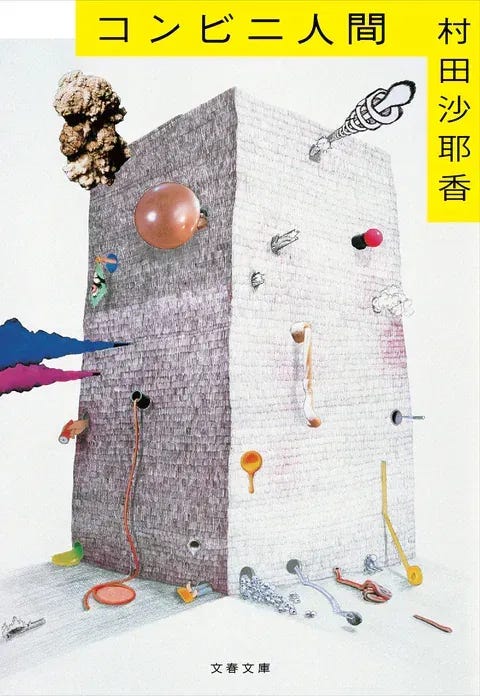
Parallel Japanese / English Translations, Notes and of Convenience Store Woman by Sayaka Murata
From page 8 of Bunshun Edition 1
原文1:
店内に散らばっている無数の音たちから情報を拾いながら、私の身体は納品されたばかりのおにぎりを並べている。朝のこの時間、売れるのはおにぎり、サンドイッチ、サラダだ。向こうではアルバイトの菅原(すがわら)さんが小さなスキャナーで検品している。私は機械が作った情報な食べ物を整然と並べていく。新商品の明太子チーズは真ん中に二例に、そこの横にはお店で一番売れているツナマヨネーズを二例に、あまり生まれないおかかのおにぎりは端っこだ。スピードが勝負なので、額はほとんど使わず、私の中に染み込んでいるルールが肉体に指示を出している。
原文2:
チャリ、という微かな小銭の音反応して振り向き、レジのほうへと視線をやる。掌やポケットの中で小銭を鳴らしている人は、煙草か新聞をさっと買うって帰ろうとしている人が多いので、お金の音には微感だ。案の定、缶コーヒーを片手を持ち、もう片方のてをポケットに突っ込んだままレジに近付いている男性がいた。素早く店内を移動してレジカウンターの中に身体を滑りこませ、客を待たせないように中に立って待機する。
原文3:
「いらっしゃいませ、おはようございます!」
軽い会釈をして、男性客が差し出した缶コーヒーを受け取る。
「あー、煙草の5番を一つ」。
ーーー
原文1の分析:
店内に散らばっている無数の音たちから情報を拾いながら、私の身体は納品されたばかりのおにぎりを並べている。
Translation: "While picking up information from the countless scattered sounds inside the store, my body is arranging freshly delivered rice balls."
Interesting Vocabulary: 散らばる means "to be scattered" or "to be dispersed.”
Sentence Structure: The て-form verb (拾いながら) is used to indicate simultaneous actions or states.
朝のこの時間、売れるのはおにぎり、サンドイッチ、サラダだ。
Translation: "At this morning time, the ones that sell are rice balls, sandwich 1, and salad."
向こうではアルバイトの菅原(すがわら)さんが小さなスキャナーで検品している。
Translation: "Over there, the part-time worker Mr. Sugawara is inspecting with a small scanner."
Interesting Vocabulary: アルバイト means "part-time job," and 検品する means "to inspect."
Sentence Structure: The sentence uses では (de wa) to indicate a contrast or shift in focus to another location.
私は機械が作った情報な食べ物を整然と並べていく。
Translation: "I neatly arrange the food made by machines, based on the information."
Interesting Vocabulary: 整然と means "neatly" or "orderly."
Sentence Structure: The sentence includes the particle な (na) to connect the noun 情報 (jōhō) with 食べ物 , indicating that the food is based on the information.
新商品の明太子チーズは真ん中に二例に、そこの横にはお店で一番売れているツナマヨネーズを二例に、あまり生まれないおかかのおにぎりは端っこだ。
Translation: "The new product Mentaiko Cheese goes in the middle, two examples, next to it, two examples of the best-selling Tuna Mayo, and the rarely made Okaka rice ball is on the edge."
Interesting Vocabulary: 明太子チーズ (mentaiko chīzu) refers to Mentaiko Cheese, ツナマヨネーズ (tsuna mayo nēzu) means "tuna mayonnaise," and おかか (okaka) refers to bonito flakes.
スピードが勝負なので、額はほとんど使わず、私の中に染み込んでいるルールが肉体に指示を出している。
Translation: "Since speed is crucial, I hardly use my mind and the rules ingrained in me direct my body."
Interesting Vocabulary: スピード (supīdo) means "speed," 染み込む (shimi komu) means "to be ingrained" or "to seep in."
—
原文2の分析:
Sentence 1: チャリ、という微かな小銭の音反応して振り向き、
Hearing the faint sound of coins, (he/she) turned around,
Vocabulary:
チャリ: Faint
小銭: Coins
音: Sound
反応する: To react
Grammar Notes:
という: Expresses the quoted sound, in this case, the "チャリ" sound.
微かな: Faint, slight
反応して: The te-form of 反応する (to react), showing the continuation of the action.
Sentence 2
レジのほうへと視線をやる。
(He/she) turned their gaze towards the cash register.
Vocabulary:
レジ: Cash register, checkout counter
視線: Gaze
Grammar:
ほうへと: Toward
視線をやる: To direct one's gaze
Sentence 3
掌やポケットの中で小銭を鳴らしている人は、煙草か新聞をさっと買うって帰ろうとしている人が多いので、お金の音には微感だ。
People who are making coins jingle in their palms or pockets are often those who are quickly buying cigarettes or newspapers and trying to head home, so the sound of money is a faint sensation.
Vocabulary:
掌: Palm (of hand)
ポケット: Pocket
小銭を鳴らす: To make coins jingle
煙草: Cigarettes
新聞: Newspaper
さっと: Quickly, swiftly
帰ろうとしている: Trying to head home
微感: Faint sensation
Grammar:
掌やポケットの中で: In the palms or pockets
って: Informal contraction of という, indicating the content of what someone is saying.
か: Or
って帰ろうとしている: Trying to head home after quickly buying cigarettes or newspapers.
ので: Because, so
には: Emphasizes the following phrase ("微感だ" in this case)
Sentence 4: 案の定、缶コーヒーを片手を持ち、もう片方のてをポケットに突っ込んだままレジに近付いている男性がいた。
案の定、缶コーヒーを片手を持ち、もう片方のてをポケットに突っ込んだままレジに近付いている男性がいた。
As expected, there was a man holding a can of coffee in one hand and keeping the other hand in his pocket, approaching the cash register.
Vocabulary:
案の定: As expected
缶コーヒー: Canned coffee
片手: One hand
もう片方の手: The other hand
ポケットに突っ込む: To put into the pocket
近付く: To approach
男性: Man
Grammar:
片手を持ち: Holding in one hand
もう片方の手をポケットに突っ込んだまま: While keeping the other hand in the pocket
に近付いている: Approaching
がいた: There was
Sentence 5: 素早く店内を移動してレジカウンターの中に身体を滑りこませ、客を待たせないように中に立って待機する。
Swiftly moving within the store, (he) slid his body into the counter at the cash register, standing inside to wait without making the customers wait.
Vocabulary:
素早く: Swiftly, quickly
店内: Inside the store
移動する: To move
レジカウンター: Cash register counter
身体: Body
滑り込む: To slide into
客: Customer
待たせる: To make someone wait
中に立つ: To stand inside
待機する: To wait
Grammar:
店内を移動して: Moving within the store
レジカウンターの中に身体を滑りこませ: Slid his body into the counter at the cash register
客を待たせないように: In a way that doesn't make the customers wait
原文3の分析:
Sentence 1: 「いらっしゃいませ、おはようございます!」
"Welcome! Good morning!"
Vocabulary:
いらっしゃいませ: A polite way of welcoming customers.
おはようございます: Good morning
Grammar:
いらっしゃいませ: Polite imperative form of いらっしゃる (to come, to go), used to welcome someone.
Sentence 2: 軽い会釈をして、男性客が差し出した缶コーヒーを受け取る。
軽い会釈をして、男性客が差し出した缶コーヒーを受け取る。
After a slight nod, I received the canned coffee offered by the male customer.
Vocabulary:
軽い: Light, slight
会釈: Nod, bow of the head
男性客: Male customer
差し出す: To offer, to extend
缶コーヒー: Canned coffee
受け取る: To receive, to accept
Grammar:
軽い会釈をして: After making a slight nod
男性客が差し出した: The male customer offered
缶コーヒーを受け取る: To receive the canned coffee
Sentence 3: 「あー、煙草の5番を一つ」。
「あー、煙草の5番を一つ」。
"Ah, one of cigarette brand number 5."
Vocabulary:
煙草: Cigarette
5番: Number 5 (in this context, a specific brand or type of cigarette)
一つ: One
Grammar:
あー: An informal exclamation, like "Ah" or "Oh"
煙草の5番を一つ: One of cigarette brand number 5
This is a public episode. If you would like to discuss this with other subscribers or get access to bonus episodes, visit onestraw.substack.com