
Nursing Mnemonics Podcast by NURSING.com (Nursing Podcast, NCLEX® Prep for nursing students)
135 episodes — Page 3 of 3

Cholinergics Crisis (SLUD)
A cholinergic crisis can occur if the body stops properly breaking down Acetylcholine. This can cause overactivity of Acetylcholine at the neuromuscular junction. Acetylcholine is part of Rest & Digest (Parasympathetic) – so we see overactive digestion and secretion.
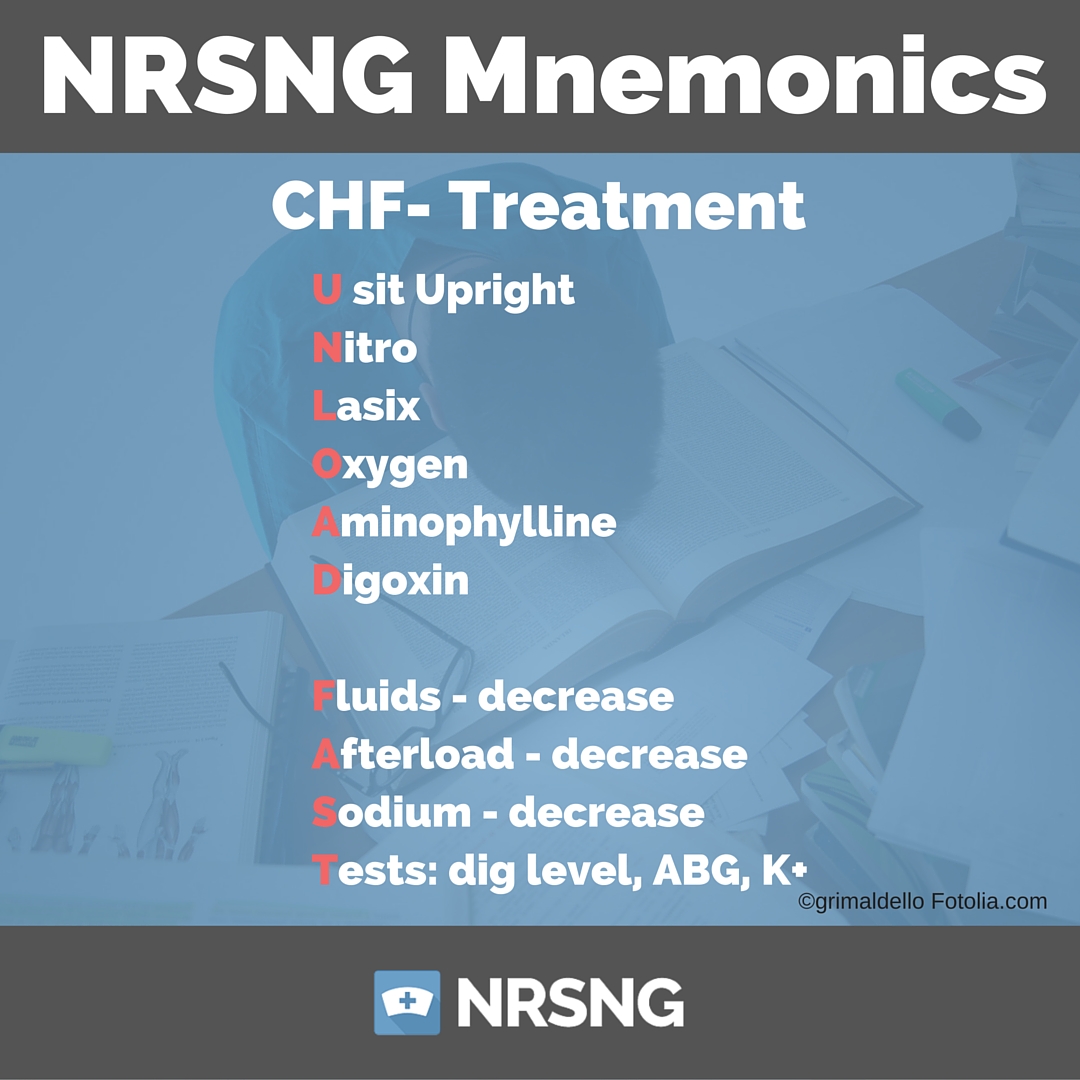
CHF (UNLOAD FAST)
These treatments used in conjunction will help in reducing the symptoms and complications associated with CHF.

Cardiac Valves Blood Flow (Toilet Paper My A--)
This simple mnemonic helps to remember the order in which blood passes through the four heart valves in sequential order.

Cancer (CAUTION UP, CANCER)
Cancer can sometimes be difficult to identify, but the earlier it is detected the better chance treatment will be effective.

Bleeding Precautions (RANDI)
If a patient is taking an anticoagulant to prevent blood clots there is increase risk for bleeding. Be careful with blades when shaving. Do not take aspirin as it interferes with blood clotting and can magnify the effect of the medication. Avoid excess needle sticks and protect the patient from injury.

Asthma (ASTHMA)
The therapeutic management for a patient with asthma. Asthma is a spasming of the airways, which causes difficulty breathing.

Appendicitis (PAINS)
Psoas sign is pain when a patient extends their thigh while lying on their side with knees extended. It indicates irritation to certain abdominal muscles. McBurney's sign is if there is deep tenderness at McBurney's point, which is located on the right side of the abdomen, one-third the distance from the anterior superior iliac spine to the navel.

Arterial Blood Gases (Rome)
First look at the pH: if it is low it is acidosis, high indicates alkalosis. Second use the ROME mnemonic to determine if you have respiratory vs. metabolic. For Metabolic look at HCO3. For Respiratory, look at pCO2. Metabolic Acidosis – pH Low, HCO3 Low. Metabolic Alkalosis – pH High, HCO3 High. Respiratory Acidosis – pH Low, pCO2 High. Respiratory Alkalosis – pH High, pCO2 Low.

Altered Mental Status (AEIOU TIPS)
There are many reasons why a patient may present with altered mental status. Neurological injury is not the only reason for AMS! Make sure you explore all possibilities.

Alzheimer (5 As)
The 5 A's of Alzhemiers Disease. These signs point to a diagnosis of Alzheimer's Type Dementia

Adrenal Gland Hormones (3 Ss)
There are three different adrenal gland hormones which can be remembered as the 3 Ss: sugar (glucocorticoids) affects glucose utilization, fat metabolism and aid in reducing inflammation. Salt (mineralcorticoids) plays a role in electrolyte regulation. Androgens are commonly referred to as sex hormones.

Vitamins (ADEK)
Vitamins A, D, E, and K are all fat soluble vitamins. Dogs get fat eating too much kibble

Steroids (6 S's)
Steroids are an effective treatment for asthma, COPD, Crohn's, Lupus and more. However,they have the potential for very serious side effects, which are indicated by the 6 S's. Steroids can be taken by mouth, via an inhaler, topically, or via injection.

Traction (TRACTION)
Nursing care and responsibilities with patients in traction

Sprains and Strains (RICE)
These four basic interventions can help to alleviate the symptoms of a sprain or a strain. A strain is excessive stretching of muscle. A sprain is excessive stretching of ligament.

Steps in the Nursing Process (AAPIE)
These are the steps of the nursing process. Gather information, determine the problem and the best approach. Implement your interventions, and then evaluate! Never skip a step!!

Steps in the Nursing Process (ADPIE)
These are the steps of the nursing process. Gather information, determine the problem and the best approach. Implement your interventions, and then evaluate! Never skip a step!!

IADLS (SCUM)
The instrumental activities of daily living are used to determine a patient's ability to carry out necessary functions for independent living. If they are unable to manage the activities below, they will likely require some sort of assistance from family or a home health agency, etc.

ECG Lead Placement (BEEP)
Use the mnemonic BEEP to remember minor bleeding precautions. Think – if the patient sees any bleeding, they'll BEEP the call light!

Canes and Walkers (COAL, WWAL)
When teaching a patient how to walk with a cane it is important to instruct them to keep the cane on the opposite side of the affected extremity.

Body Systems (MR DICE RUNS)
To remember the 10 major body systems.

ADLs (BATTED)
When assessing a patient's ability to care for him or herself at home we must assess their ability to complete activities of daily living. A patient's ability to bath, walk, and toilet on their own will help us determine the level of care they will need when they leave the hospital.

Lidocaine Toxicity (SAMS)
Lidocaine is an anesthetic that prevents painful impulses from reaching the brain. These are signs that the patient may have had too much lidocaine (like buying in bulk)

Emergency drugs (LEAN)
The above drugs work in a variety of emergency settings, they are good drugs to LEAN on. Lidocaine can be used in emergency situations for ventricular arrhythmias. Epinephrine is a vital drug in the ACLS protocol. Atropine can be given with symptomatic bradycardia. Narcan is a reversal agent for opiate overdose.

Drug Interactions (TDCI)
Coumadin and ilosone: Ilosone can increase the effects of Coumadin, increase risk for bleeding. Coumadin and Dilantin: potential for increased effects of both. Coumadin and Dilantin: Increased Coumadin metabolism (decreased effect). Theophylline and Dilantin: if taken orally they can interfere with absorption of each other and decrease medication effect.

Cholinergic, Anticholinergic (SLUDGE)
A cholinergic crisis can occur if the body stops properly breaking down Acetylcholine. This can cause overactivity of Acetylcholine at the neuromuscular junction. Acetylcholine is part of Rest & Digest (Parasympathetic) – so we see overactive digestion and secretion.

Bradycardia (IDEA)
This refers to symptomatic bradycardia and hypotension. Bradycardia and hypotension are not necessarily adverse clinical findings requiring treatment in and of themselves.

Beta blockers (1 heart, 2 lungs)
Beta 1 adrenergic receptors are mostly found in the heart. Beta 2 adrenergic receptors are found in lungs, GI tract, vascular smooth muscle, skeletal muscle, liver. Beta 1 beta blockers act primarily on the heart. Beta 2 beta blockers act primarily on the lungs.

Acidosis Alkalosis and pH
Alkalosis has a K, therefore it is Kicking the pH UP! | Acidosis has a D, therefore it is dropping the pH DOWN!

Electrolyte Location (PISO)
Potassium and sodium are the two most abundant cations in the body and have an inverse relationship in regards to intracellular and extracellular concentrations. Potassium is primarily located within the cell and sodium is primarily located outside the cell.

Hyponatremia (SALT LOSS)
Hyponatremia is decreased levels of sodium in the blood. It can be caused by inadequate sodium or excess free water which leads to lower concentration of sodium. Sodium and potassium work together to allow depolarization of muscles. Low sodium levels can limit this ability and cause muscle weakness. Sodium in the blood helps maintain the oncotic pressure. If fluid leaves the blood vessels, it can lead to decreased blood pressure.

Hypokalemia (6 L's)
Hypokalemia is LOW potassium, which starts with L. So the 6 L's can help you recognize the signs and symptoms of LOW potassium or hypokalemia
Hypercalcemia Hypocalcemia (CATS, GroansMoansBonesStonesOvertones)
The BONES store the most calcium – remember these words that rhyme with BONES to help you remember possible signs and symptoms of hypercalcemia.

Hypernatremia (FRIED, SWINE, SALT, MODEL)
Normal serum sodium levels are 134-145 mmol/L. Hypernatremia is defined as a serum sodium level exceeding 145 mmol/L. Think "fried food is salty". Hypernatremia can be caused by too much sodium in the blood, but it also is caused by too little free water in the body. You must first assess the patient's volume status before knowing how to treat appropriately. Hypernatremia signs can be very subtle, with changes in the level of consciousness typically being the earliest indicator. Sodium is closely related to blood pressure and blood volume. It is also necessary for muscle and nerve function.

Blood Types
Picture type O as a huge circle, like the universe, because they are the universal donor. They can give to everyone. However, also think of them as the "odd man out" because they can only receive type O as well. They are universally odd, able to give to all but only receive from themselves!