NucleCast
287 episodes — Page 3 of 6
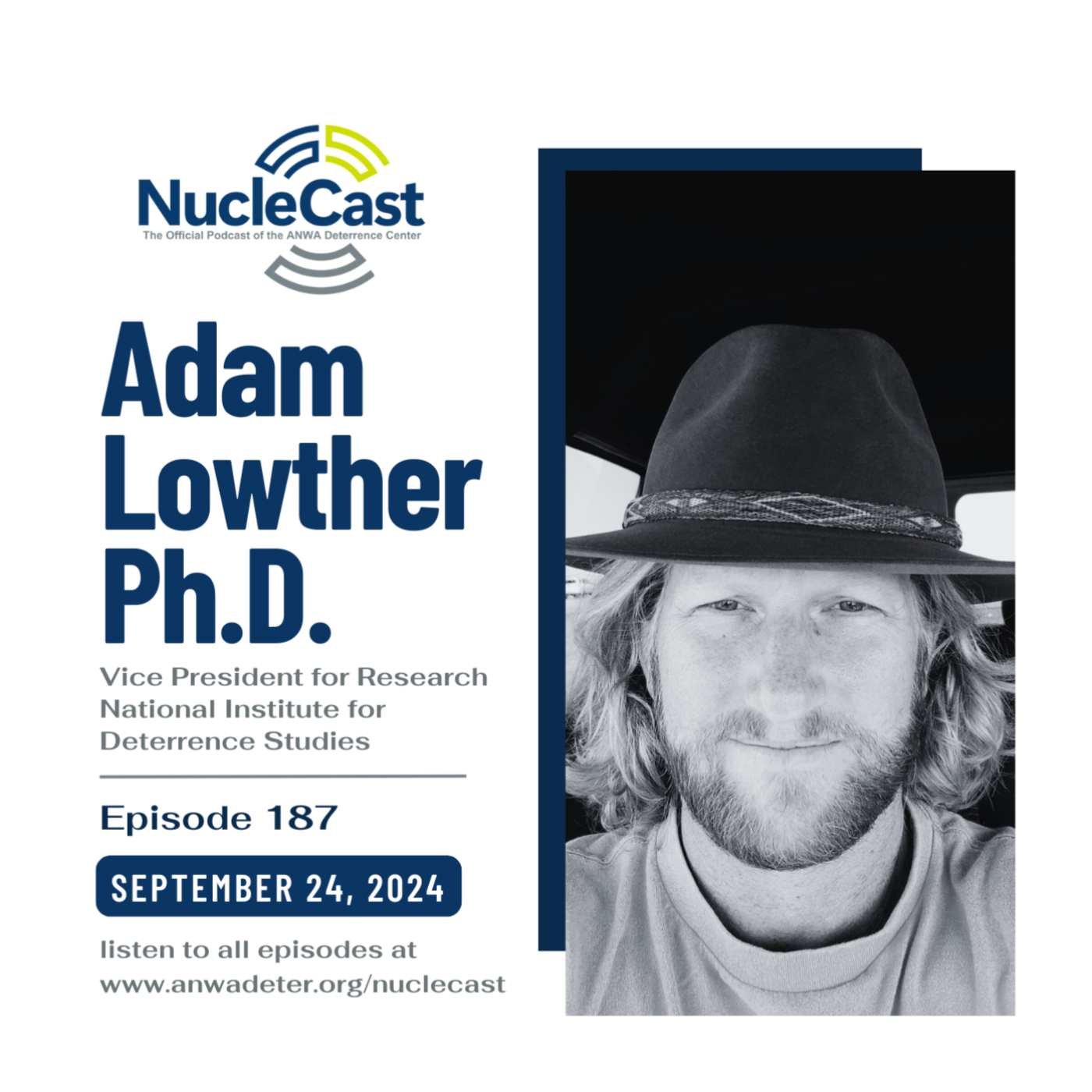
S2 Ep 187Adam Lowther, Ph.D. - The Need for Dynamic Parity
Dr. Adam Lowther joins guest host, Jim Howe, to discuss the current state of America's nuclear deterrent and proposes a new approach called Dynamic Parity. He explains that Dynamic Parity aims to create a balance of nuclear capability between the US and autocratic regimes, prevent superiority of adversaries, enhance extended deterrence, and manage the growth or decline of nuclear weapons. Lowther emphasizes the importance of transparency and clear communication to avoid ambiguity and misinterpretation. He also offers recommendations, including the need for a national debate on defense spending, prioritizing nuclear capabilities, and adhering to the Weinberger Doctrine before using force.Dr. Adam Lowther is the host of NucleCast, the official podcast of the ANWA Deterrence Center, and Vice President for Research at the National Institute for Deterrence Studies. Previously, Dr. Lowther served as the Director of Strategic Deterrence Programs at the National Strategic Research Institute at the University of Nebraska, U.S. Strategic Command's University Affiliated Research Center. Prior to joining NSRI, Dr. Lowther served as the first director of the department of multi-domain operations (MDO) at the Army Management Staff College (AMSC), was a professor at the U.S. Army’s School of Advanced Military Studies, founding director of the School of Advanced Nuclear Deterrence Studies, Kirtland AFB and director of the Center for Academic and Professional Journals at the Air Force Research Institute (AFRI), Maxwell AFB.Chapters00:00 Introduction and Overview00:31 Current State of American Nuclear Deterrent05:09 The Changing Geopolitical Landscape12:14 Introducing Dynamic Parity20:20 Importance of Transparency and Clear Communication22:44 Recommendations for a Stronger Nuclear Deterrent28:39 Three Wishes for the Topic32:06 Conclusionhttps://thinkdeterrence.com/wp-content/uploads/2024/07/Dynamic-Parity-Report.pdfSocials:Follow on Twitter at @NucleCastFollow on LinkedIn: https://linkedin.com/company/nuclecastpodcastSubscribe RSS Feed: https://rss.com/podcasts/nuclecast-podcast/Rate: https://podcasts.apple.com/us/podcast/nuclecast/id1644921278Email comments and topic/guest suggestions to [email protected]
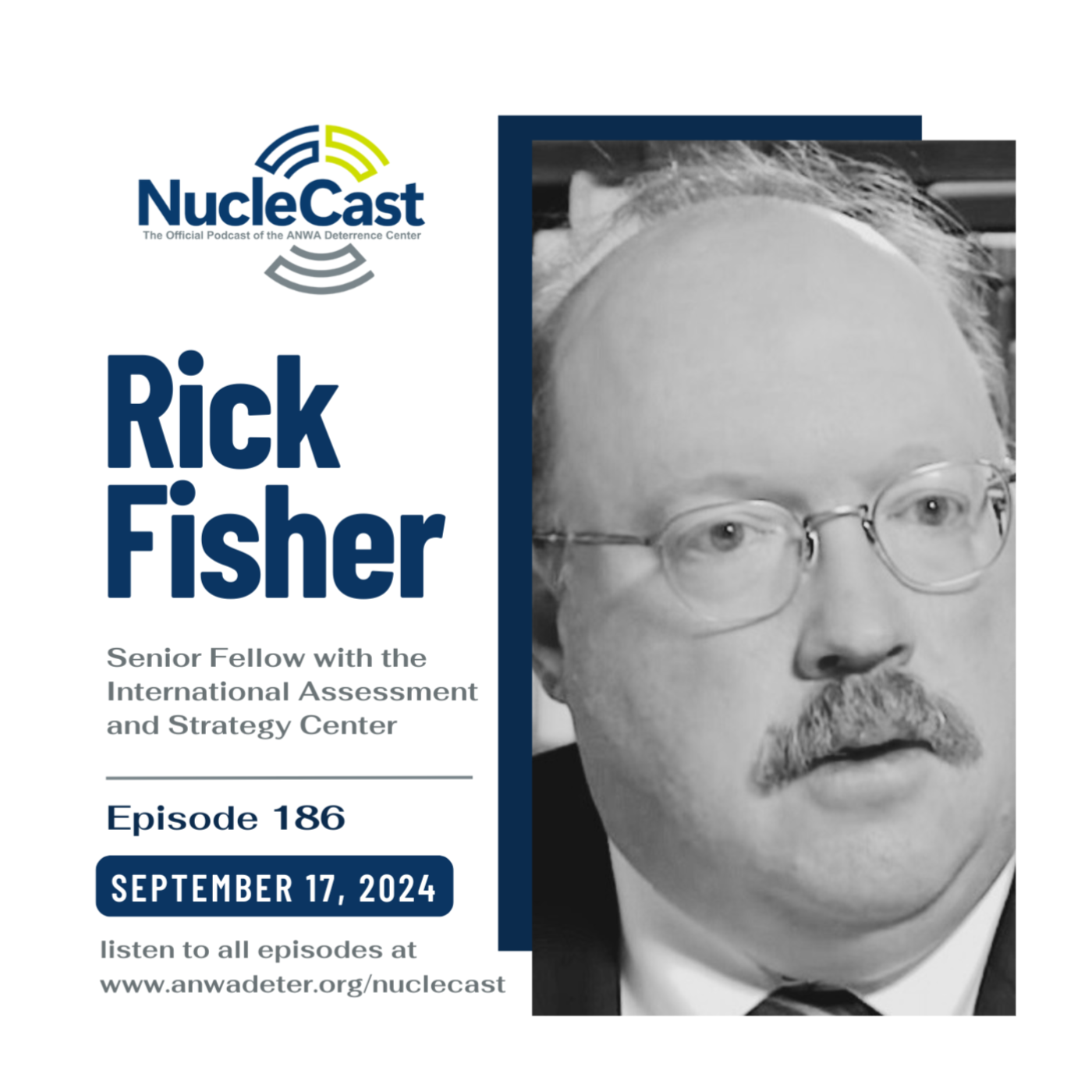
S2 Ep 186Richard Fisher: China, Russia, North Korea, and Iran, A Dangerous Alliance
In this episode of NucleCast, Rick Fisher, senior fellow with the International Assessment and Strategy Center, talks about the current state of North Korea's nuclear program. Fisher predicts that by the mid-2030s, North Korea will have the ability to conduct a catastrophic first strike against the United States. He credits the work of other experts in the field and discusses the development of North Korea's intercontinental ballistic missiles (ICBMs) and multiple independently targetable warheads (MIRVs). Fisher also highlights the close relationship between China, Russia, North Korea, and Iran in their pursuit of global hegemony and the need for the United States to strengthen its nuclear deterrent capabilities and missile defense systems.Mr. Richard D. Fisher, Jr. is a Senior Fellow with the International Assessment and Strategy Center. In 2024 he joined the Advisory Board of the Free Press Foundation and in 2016 he joined the Advisory Board of the Global Taiwan Institute and is a columnist for the Taipei Times.He previously worked with the Center for Security Policy, Jamestown Foundation China Brief, U.S. House of Representatives Republican Policy Committee, and The Heritage Foundation. He is the author of China’s Military Modernization, Building for Regional and Global Reach (Praeger, 2008, Stanford University Press, 2010, Taiwan Ministry of National Defense translation 2012) Since 1996 he has covered scores of international arms exhibits and his articles have been published in the Jane’s Intelligence Review, Jane’s Defence Weekly, Aviation Week and Space Technology, Armed Forces Journal, Far Eastern Economic Review, Asian Wall Street Journal, Defense News, The Epoch Times and The Washington Times. He has studied at Georgetown University and received a B.A. (Honors) in 1981 from Eisenhower College.Chapters00:00 Introduction and Guest Introduction02:02 North Korea's Growing Nuclear Threat06:38 North Korea's Intercontinental Ballistic Missiles08:06 Possible Collaboration with Pakistan on MIRV Capabilities11:16 The Relationship Between North Korea and Russia18:55 The Dangerous Alliance of China, Russia, North Korea, and Iran25:56 The Need to Strengthen the United States' Nuclear Deterrent32:22 Wishes for the Future36:51 ConclusionSocials:Follow on Twitter at @NucleCastFollow on LinkedIn: https://linkedin.com/company/nuclecastpodcastSubscribe RSS Feed: https://rss.com/podcasts/nuclecast-podcast/Rate: https://podcasts.apple.com/us/podcast/nuclecast/id1644921278Email comments and topic/guest suggestions to [email protected]
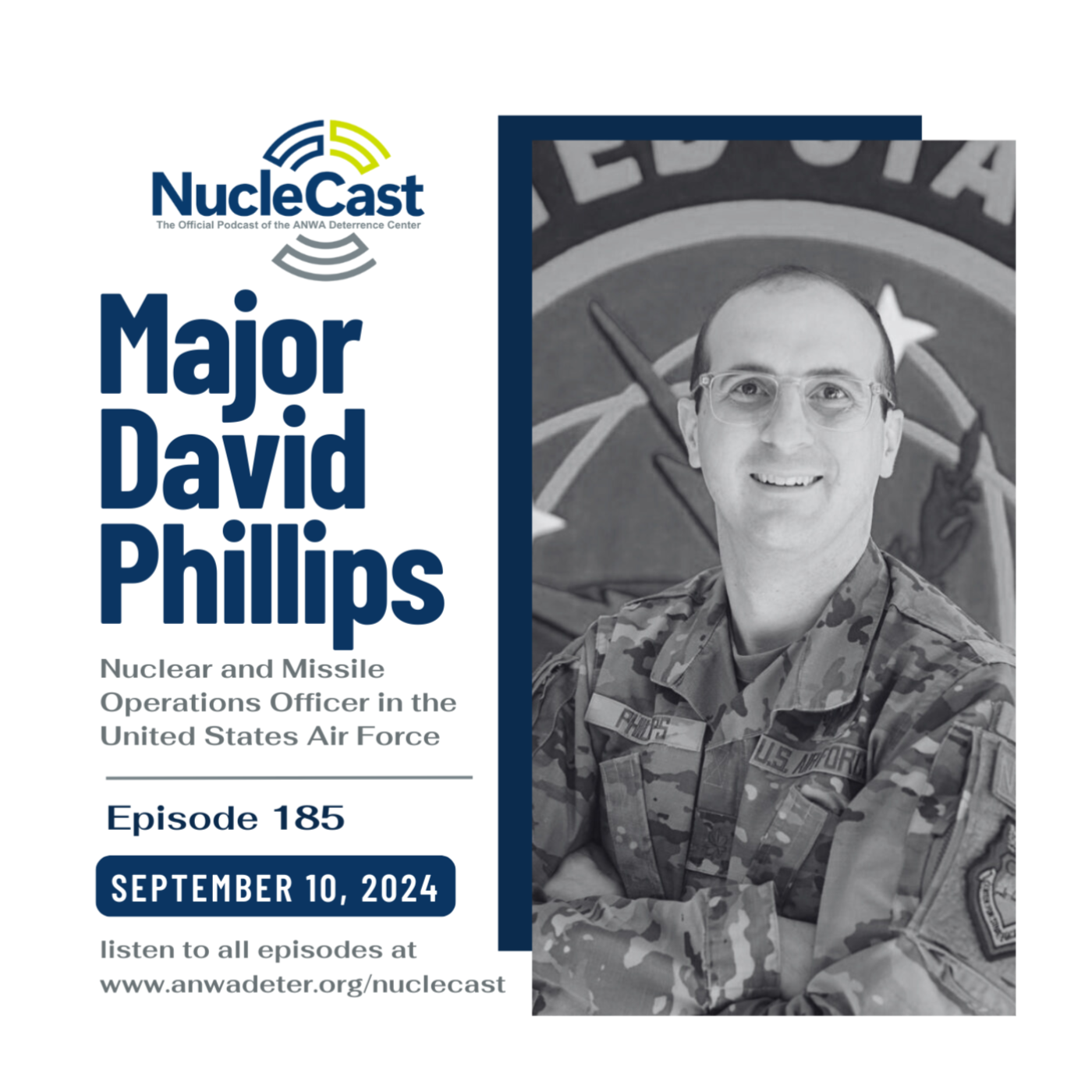
S2 Ep 185Major David Phillips - Taking Bold Action for Strategic Stability in East Asia
Major David Phillips discusses his article on the feasibility, acceptability, and suitability of redeploying non-strategic nuclear weapons to South Korea. He highlights the need for the US to re-examine its policy goal of achieving denuclearization of the Korean Peninsula and suggests that the redeployment of nuclear weapons would strengthen deterrence and assurance in the region. He emphasizes the importance of fully informed conversations among US policymakers and the need for bold action to ensure strategic stability in East Asia.Major David Phillips (Jobs) is a Nuclear and Missile Operations Officer in the United States Air Force, current student at the School of Advanced Nuclear Deterrence Studies (SANDS), member of the Center for Strategic and International Studies (CSIS) Mid-Career Cadre, and former Nuclear Scholar with the CSIS. His latest nuclear policy research, “Nuclear Redeployment: A Roadmap for Returning Nonstrategic Nuclear Weapons to the Korean Peninsula,” examines the feasibility, acceptability, and suitability of the United States returning nuclear weapons to the Republic of Korea; this research was nominated and selected for the 2024 General Larry D. Welch Deterrence Writing Award. David has over 9,000 nuclear command and control alert hours in support of our national defense and strategic deterrent across three nuclear weapon platforms. He holds a Master of Business Administration degree and Bachelor of Science degree in Biology from the University of Denver as well as a graduate certificate in Great Power Competition from the Naval Postgraduate School. (PDF) Nuclear Redeployment: A Roadmap for Returning Nonstrategic Nuclear Weapons to the Korean Peninsula (researchgate.net)Chapters00:00 Introduction and Congratulations on Winning the Larry D. Welch Writing Award02:06 Motivation Behind the Article: The Dangerous Situation on the Korean Peninsula04:18 Main Findings: Feasibility, Acceptability, and Suitability of Redeployment06:48 Costs and Affordability of the Redeployment Proposal08:49 US Policy and the Acceptability of Redeploying Nuclear Weapons11:20 Suitability of Redeployment as a Solution to Deterrence Challenges23:35 Re-examining US Policy on Denuclearization of the Korean Peninsula29:59 Taking Bold Action for Strategic Stability in East AsiaSocials:Follow on Twitter at @NucleCastFollow on LinkedIn: https://linkedin.com/company/nuclecastpodcastSubscribe RSS Feed: https://rss.com/podcasts/nuclecast-podcast/Rate: https://podcasts.apple.com/us/podcast/nuclecast/id1644921278Email comments and topic/guest suggestions to [email protected]
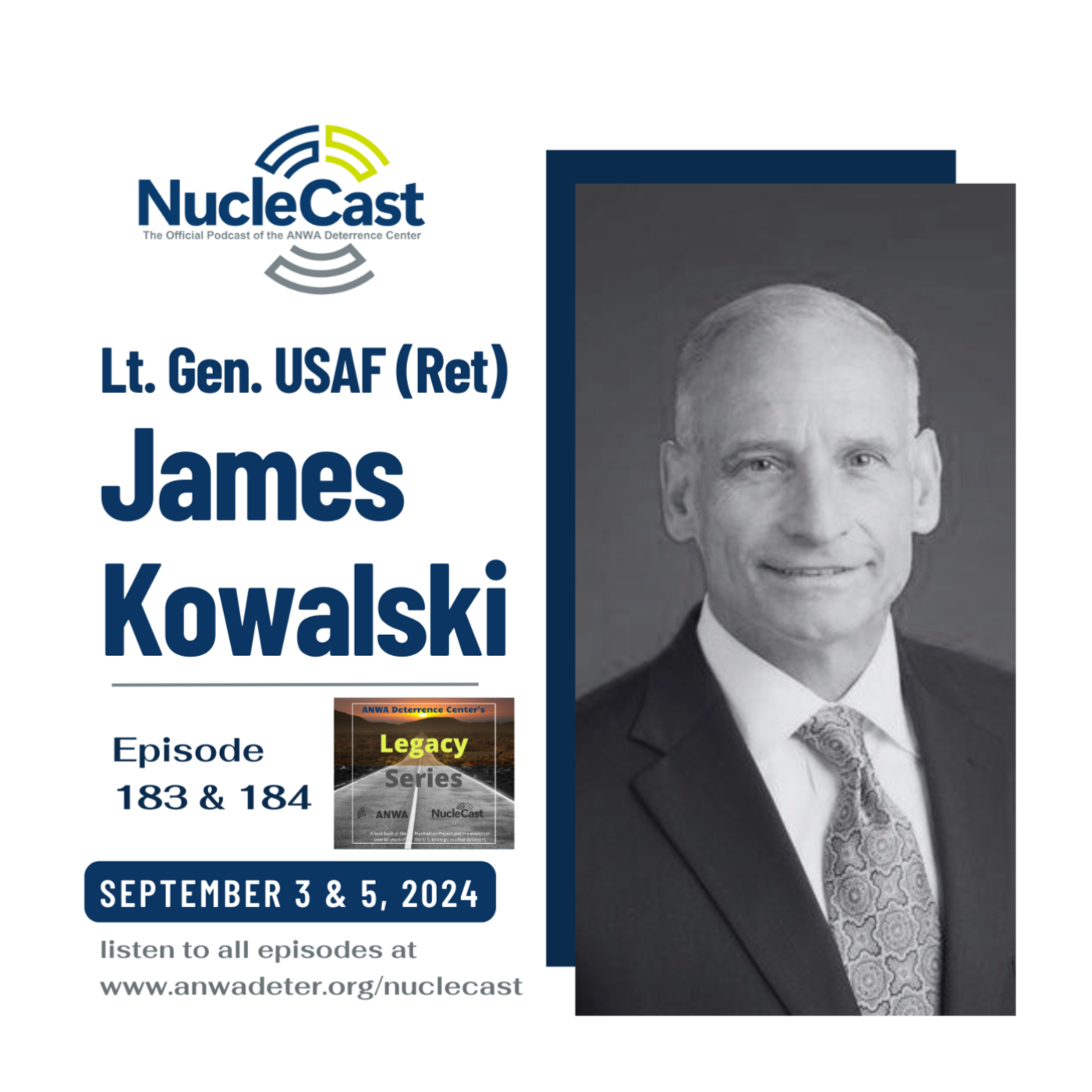
S2 Ep 184Lieutenant General James Kowalski, USAF (Ret) Part 2 - Challenges and Accomplishments of Air Force Global Strike Command
Part 2 of this history of Air Force Global Strike Command features former Commander Jim Kowalski. He discusses the challenges and accomplishments of standing up the Global Strike Command. The conversation covers topics such as basing decisions, culture change, resourcing, and the importance of maintaining a strong nuclear force. Lt. Gen. Kowalski emphasizes the need for a public awakening to the dangers posed by peer and near-peer adversaries and the importance of recognizing and honoring the mission of the nuclear force. He also shares a story about General LeMay's focus on excellence in the job. General Kowalski was commissioned in 1979 through the ROTC program at the University of Cincinnati. He held a variety of operational commands, including a bomb squadron, an operations group, a bomb wing, and an air control wing over his 35-year career. Kowalski retired from active duty on 1 September 2015.Kowalski's experience includes command of the 405th Air Expeditionary Wing in Southwest Asia where he led a combined wing of B-1Bs, E-3s and KC-135s for operation Iraqi Freedom. His previous staff assignments include Headquarters Air Combat Command, Headquarters U.S. Air Force and the Joint Chiefs of Staff.In January 2009 he led the organization and activation of the Air Force’s first new major command in 27 years and subsequently served as the second Commander of Air Force Global Strike Command. In that position he oversaw the modernization of the Air Force’s nuclear-capable bomber and missile systems and developed the strategic forces five-year plan. His last assignment was Deputy Commander of U.S. Strategic Command.A command pilot, he has over 4,600 flight hours, including 127 combat hours, in the B-1, B-52, and E-3. His decorations include the Defense Distinguished Service Medal, Bronze Star Medal, Air Medal, and Global War on Terrorism Expeditionary Medal.Following military service, Kowalski was a vice-president for the Northrop Grumman Corporation. He supported the company’s portfolio of defense systems including the B-2, B-21, and the Minuteman III and Sentinel ballistic missile systems. In 2023, he retired from Northrop Grumman and now advises on management and defense issuesChapters00:00 Introduction and Recap00:49 Stand-up of the Global Strike Command03:20 Basing Decisions and Location06:29 Challenges of Activation and Moving Personnel09:24 Structure, Authorities, and Culture Change16:24 Resourcing: Personnel and Funding Challenges19:29 Reemphasizing Nuclear Competencies and Strengths25:32 Budget Constraints and Future Challenges32:00 Wish for a Public Awakening to the DangersSocials:Follow on Twitter at @NucleCastFollow on LinkedIn: https://linkedin.com/company/nuclecastpodcastSubscribe RSS Feed: https://rss.com/podcasts/nuclecast-podcast/Rate: https://podcasts.apple.com/us/podcast/nuclecast/id1644921278Email comments and topic/guest suggestions to [email protected]
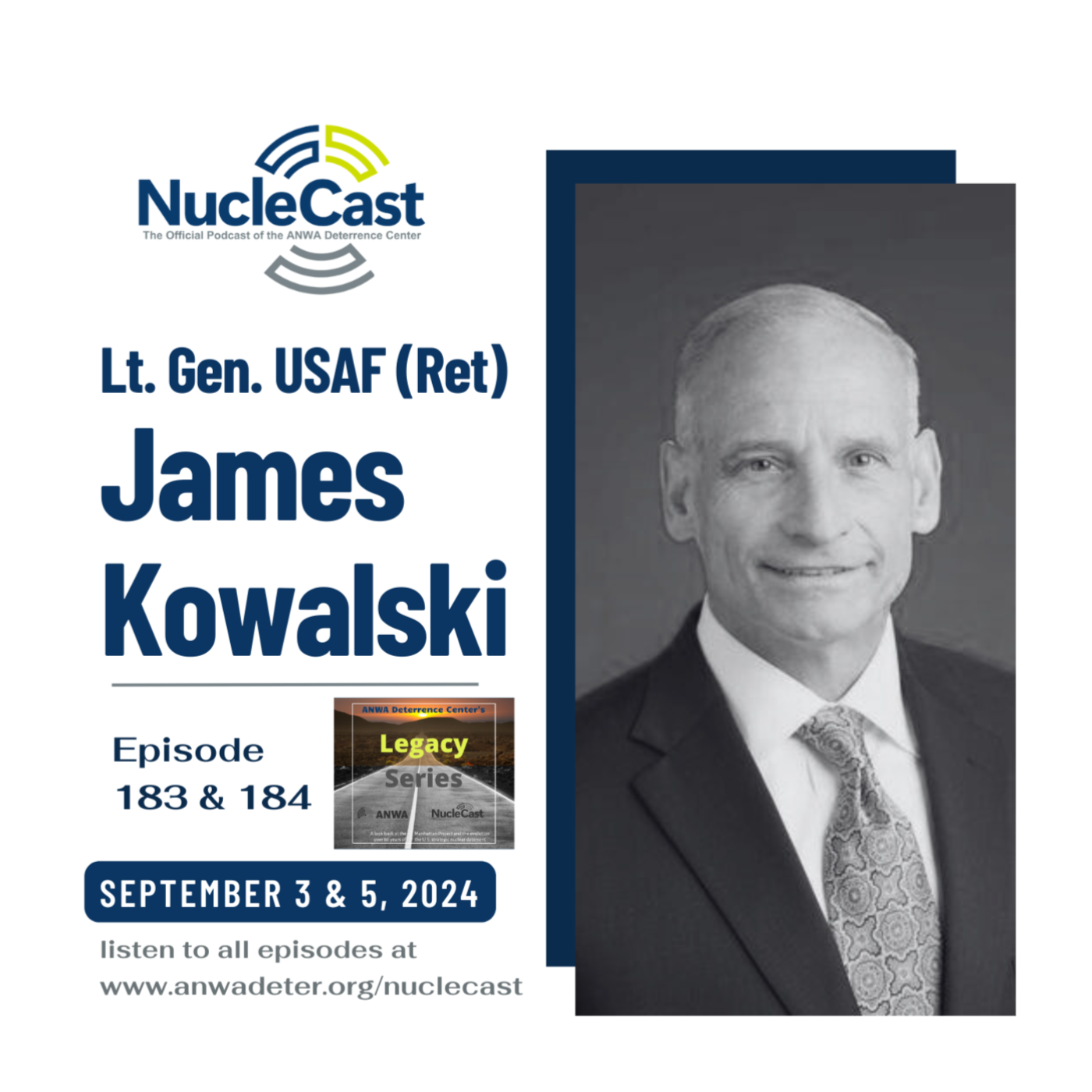
S2 Ep 183Lieutenant General James Kowalski, USAF (Ret) Part 1 - The Creation of Air Force Global Strike Command
In this Legacy Series, Lt. Gen. James Kowalski discusses the creation of Air Force Global Strike Command (AFGSC) in response to incidents that highlighted the need for improved nuclear enterprise management. The incidents included the accidental shipment of warheads and fuses, which raised concerns about operational oversight and surety processes. The stand-up of AFGSC aimed to consolidate the Air Force's nuclear enterprise and ensure a dedicated focus on nuclear deterrence. General Kowalski emphasizes the importance of maintaining a strong nuclear mission and integrating nuclear planning with conventional operations. The conversation will continue in a second episode.General Kowalski was commissioned in 1979 through the ROTC program at the University of Cincinnati. He held a variety of operational commands, including a bomb squadron, an operations group, a bomb wing, and an air control wing over his 35-year career. Kowalski retired from active duty on 1 September 2015.Kowalski's experience includes command of the 405th Air Expeditionary Wing in Southwest Asia where he led a combined wing of B-1Bs, E-3s and KC-135s for operation Iraqi Freedom. His previous staff assignments include Headquarters Air Combat Command, Headquarters U.S. Air Force and the Joint Chiefs of Staff. In January 2009 he led the organization and activation of the Air Force’s first new major command in 27 years and subsequently served as the second Commander of Air Force Global Strike Command. In that position he oversaw the modernization of the Air Force’s nuclear-capable bomber and missile systems and developed the strategic forces five-year plan. His last assignment was Deputy Commander of U.S. Strategic Command. A command pilot, he has over 4,600 flight hours, including 127 combat hours, in the B-1, B-52, and E-3. His decorations include the Defense Distinguished Service Medal, Bronze Star Medal, Air Medal, and Global War on Terrorism Expeditionary Medal.Following military service, Kowalski was a vice-president for the Northrop Grumman Corporation. He supported the company’s portfolio of defense systems including the B-2, B-21, and the Minuteman III and Sentinel ballistic missile systems. In 2023, he retired from Northrop Grumman and now advises on management and defense issues. Socials:Follow on Twitter at @NucleCastFollow on LinkedIn: https://linkedin.com/company/nuclecastpodcastSubscribe RSS Feed: https://rss.com/podcasts/nuclecast-podcast/Rate: https://podcasts.apple.com/us/podcast/nuclecast/id1644921278Email comments and topic/guest suggestions to [email protected]
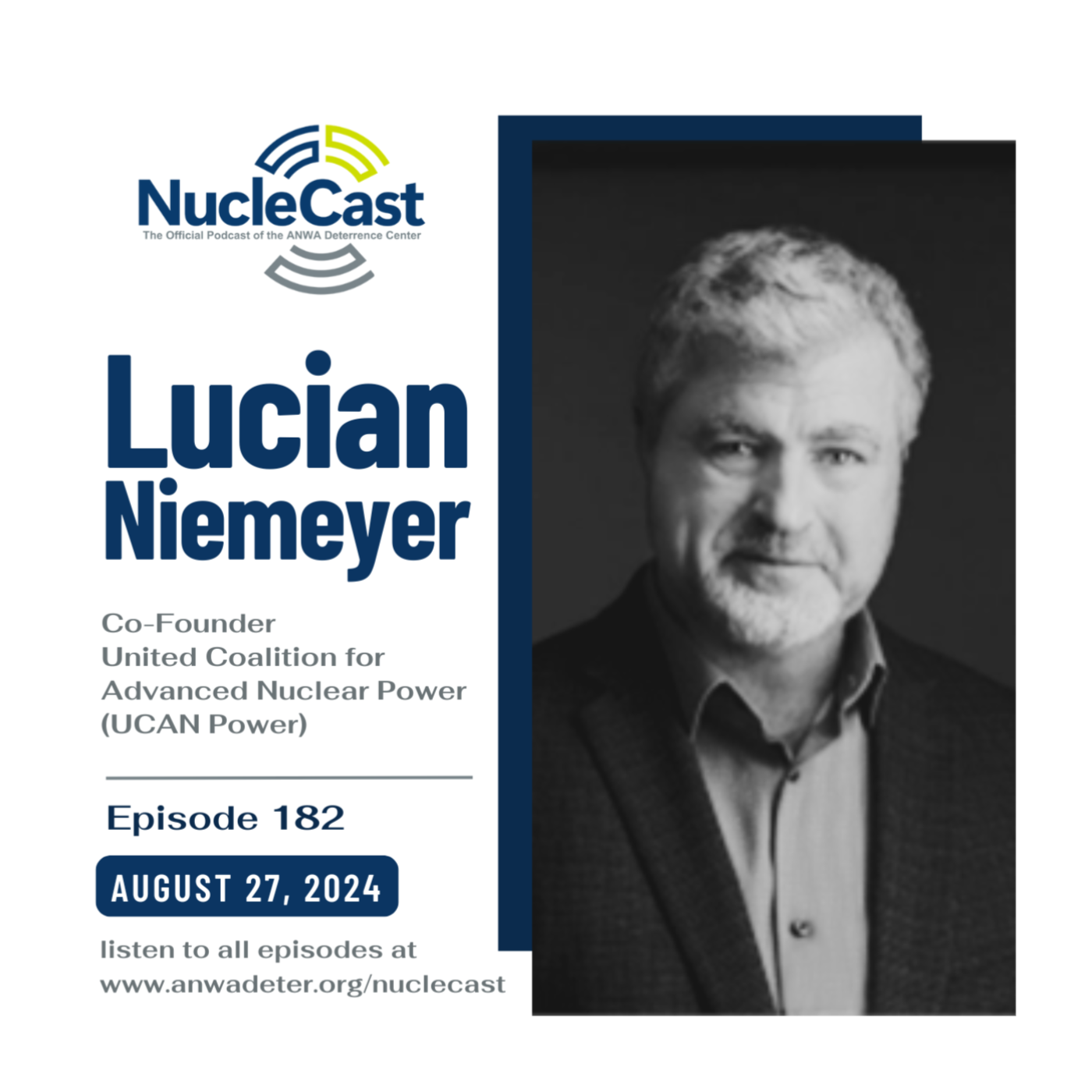
S2 Ep 182Lucian Niemeyer: Promoting Advanced Nuclear Reactor Deployment
The Honorable Lucian Niemeyer, a leading voice in the policymaking community for advanced nuclear capabilities, discusses the work of the United Coalition for Advanced Nuclear Power (UCAN Power), a non-profit entity since 2021, in promoting advanced nuclear reactor deployment. He emphasizes the importance of nuclear power for grid reliability and carbon reduction. Niemeyer also highlights the need to develop a strong civilian nuclear workforce to support national defense and restore the nuclear industrial base. He discusses the potential of microreactors for powering military installations and the importance of accelerating the regulatory process for advanced nuclear technology. He calls for prioritizing grid reliability and restoring US global leadership in nuclear power.Lucian’s national security expertise spans five decades as an Air Force and the Air National Guard Officer, Professional Staff Member on the Senate Armed Service Committee, and in the Pentagon and White House. Throughout his professional career, he has been a strong advocate for the use of clean, safe advanced nuclear power to enhance energy reliability and resiliency.Niemeyer previously was appointed by the President and served as an Assistant Secretary of Defense managing the world’s largest real property portfolio valued at a trillion dollars. He was responsible for identifying and mitigating risk to national security programs, as well as improving energy and environmental resilience through alternate power generation development and investments in the protection of natural resources. During this time, he worked extensively with the Departments of Energy and Interior to balance the need for energy independence with the sustainment of national military capabilities.He also served on the professional staff of the United States Senate Committee on Armed Service from 2003 to 2014 providing expertise and counsel on policies and programs for the energy programs supporting our Nation’s security.Chapters00:00 Introduction and Overview of UCAN Power04:00 The Role of Nuclear Power in the Nuclear Triad07:59 The Importance of a Strong Civilian Nuclear Workforce13:45 The Use of Microreactors for Military Installations17:45 Grid Reliability and the Need for Nuclear Power25:07 Energy Priorities for the Next Administration28:59 Bringing Advanced Nuclear Technology to the Nation33:10 Closing Remarks and Call to ActionSocials:Follow on Twitter at @NucleCastFollow on LinkedIn: https://linkedin.com/company/nuclecastpodcastSubscribe RSS Feed: https://rss.com/podcasts/nuclecast-podcast/Rate: https://podcasts.apple.com/us/podcast/nuclecast/id1644921278Email comments and topic/guest suggestions to [email protected]
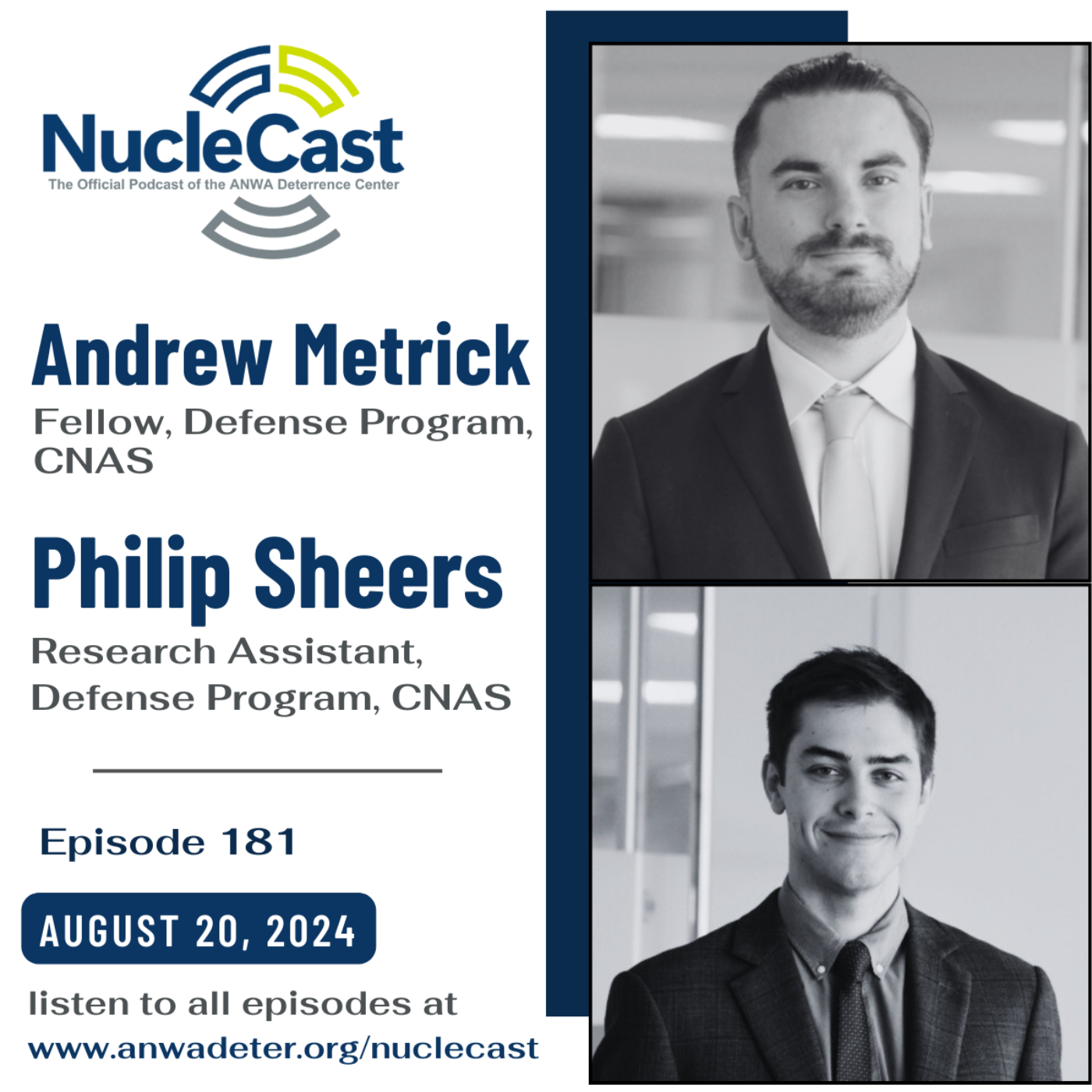
S2 Ep 181Andrew Metrick and Philip Sheers - Escalation Management in a Protracted War
Guest host, Jim Howe, interviews Andrew Metrick and Phil Shears from the Center for New American Security (CNAS) on escalation management in a protracted war with China. They discuss the implications of a potential conflict with China and the need for the US to adapt its deterrence strategies. The researchers conducted tabletop exercises to explore different scenarios and found unsettling logics that could compel the use of nuclear weapons. They also highlight the importance of alliance management and the need for the US to engage in discussions with allies like Japan and Australia.Andrew Metrick is a Fellow with Defense Program at CNAS. His research focuses on the linkages between strategic objectives and operational plans with a specific interest in understanding the implications of protracted, global conflict against peer states. In this capacity, he employs a range of qualitative and quantitative research tools to include operations research, GIS analysis, OSINT collection, and wargaming. Prior to joining CNAS, he was a campaign analyst and wargamer at Northrop Grumman. In this role, he conducted strategic and theater level analysis to quantify munitions, posture, and logistics implications of peer conflict. This analysis and the associated models received multiple awards for innovation. Early in his career, he was an Associate Fellow with the International Security Program at CSIS where he published several studies focused on maritime issues in Asia and Europe. Metrick holds a MA in security studies from Georgetown University and a BA in international affairs from the George Washington University with an academic interest in military innovation theory and technology diffusion. His writing has appeared in Proceedings, War on the Rocks, Defense One, and CIMSEC.Philip Sheers is a Research Assistant for the Defense Program. His research focuses on escalation management, protracted war, force posture, and nuclear deterrence. Sheers also supports the CNAS Gaming Lab and the CNAS Mission Brief speaker series. Prior to joining CNAS, he worked as a Risk Analyst at IPSOS Public Affairs and served as a Research Assistant to Dr. Alfred Connable. Sheers graduated from Kenyon College with a BA in International Studies and is completing his MA in Security Studies at Georgetown University’s School of Foreign Service, where he has also contributed to the Georgetown Security Studies Review.Socials:Follow on Twitter at @NucleCastFollow on LinkedIn: https://linkedin.com/company/nuclecastpodcastSubscribe RSS Feed: https://rss.com/podcasts/nuclecast-podcast/Rate: https://podcasts.apple.com/us/podcast/nuclecast/id1644921278Email comments and topic/guest suggestions to [email protected]
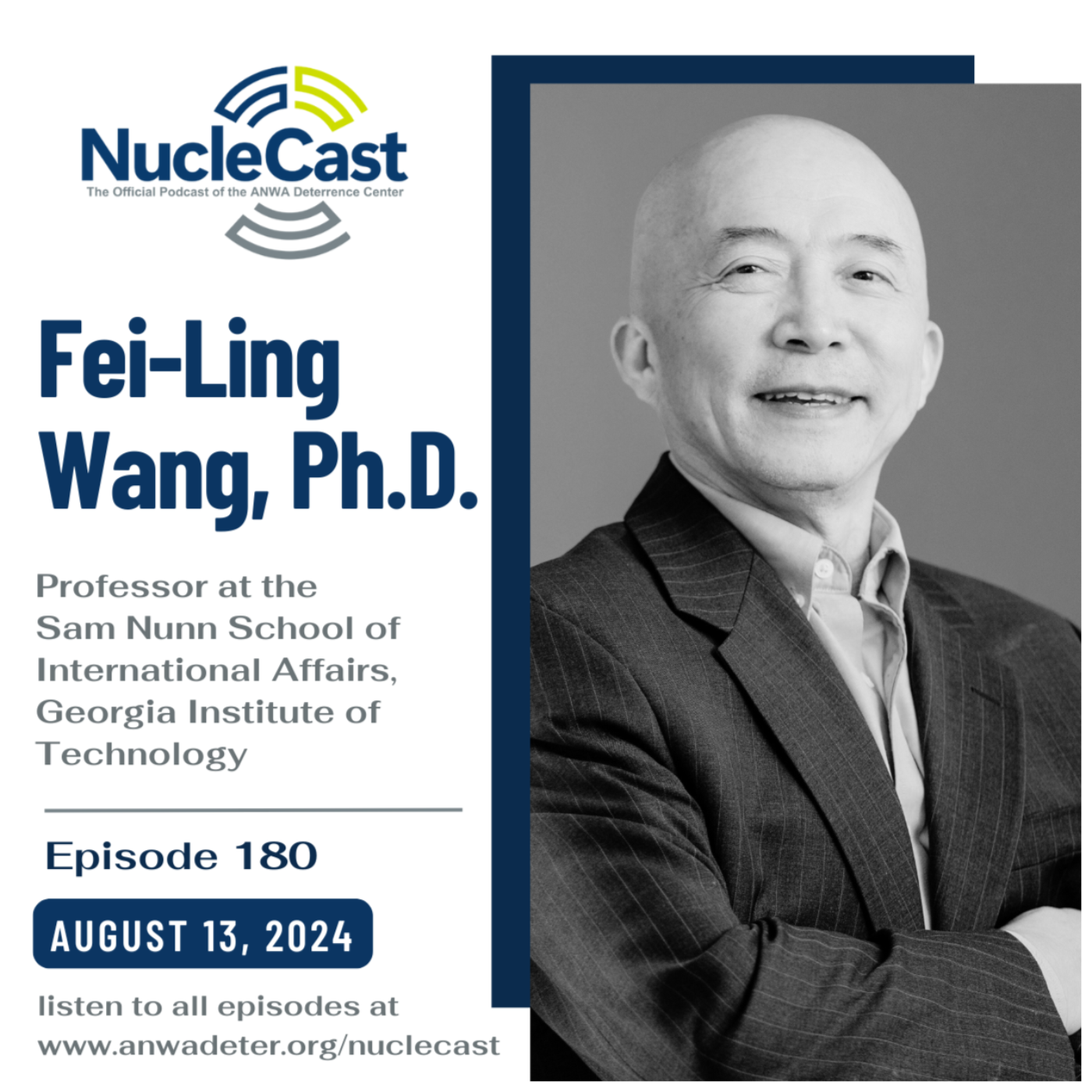
S2 Ep 180Fei-Ling Wang, Ph.D. - China Transforming the World Order
Professor Fei-Ling Wang tells NucleCast about his new book, 'The China Race: Global Competition for Alternative World Orders.' He argues that the United States and China are engaged in a global competition that goes beyond relative power and influence. The Chinese Communist Party (CCP) seeks to transform the world order into a hierarchical system with China at the top, while the United States aims to preserve the existing order based on democratic values and the rule of law. Wang emphasizes that the outcome of this competition has high stakes, as losing could result in the withering away of the American way of life and the nationhood and statehood of the US. He also highlights the importance of providing Chinese students with a comprehensive education that includes social sciences, humanities, logic, and history, in order to foster critical thinking and a better understanding of the world.Fei-Ling “Phil” Wang, Ph.D. (University of Pennsylvania), Professor at Sam Nunn School of International Affairs, Georgia Institute of Technology ([email protected]). His research interests are comparative and international political economy, U.S.-East Asian relations, and East Asia and China studies.Wang has published nine books (two co-edited) in two languages including the latest, The China Race: Global Competition for Alternative World Order (SUNY Press, 2024). He has also published dozens of book chapters and journal articles in four languages, including op-eds in newspapers like The New York Times and Christian Science Monitor.Wang taught at the U.S. Military Academy (West Point) and U.S. Air Force Academy (Colorado Springs), and held visiting and adjunct/honorary positions in institutions like European University Institute in Italy, Sciences Po in France, National Sun Yat-sen University and National Taiwan University in Taiwan, National University of Singapore, Renmin University and Anhui Normal University in China, University of Macau, University of Tokyo, and Sungkyunkwan University and Yonsei University in Korea.Wang has guest-lectured in over 50 universities worldwide and appeared in many national and international news media such as Al Jazeera, AFP, AP, BBC, CNN, The Financial Times, The New York Times, Radio China International, South China Morning Post, VOA, The Wall Street Journal, and the Xinhua News Agency. He has had numerous research grants including a Minerva Chair grant, a Fulbright Senior Scholar grant and a Hitachi Fellowship. He is a member of the Council on Foreign Relations.Socials:Follow on Twitter at @NucleCastFollow on LinkedIn: https://linkedin.com/company/nuclecastpodcastSubscribe RSS Feed: https://rss.com/podcasts/nuclecast-podcast/Rate: https://podcasts.apple.com/us/podcast/nuclecast/id1644921278Email comments and topic/guest suggestions to [email protected]
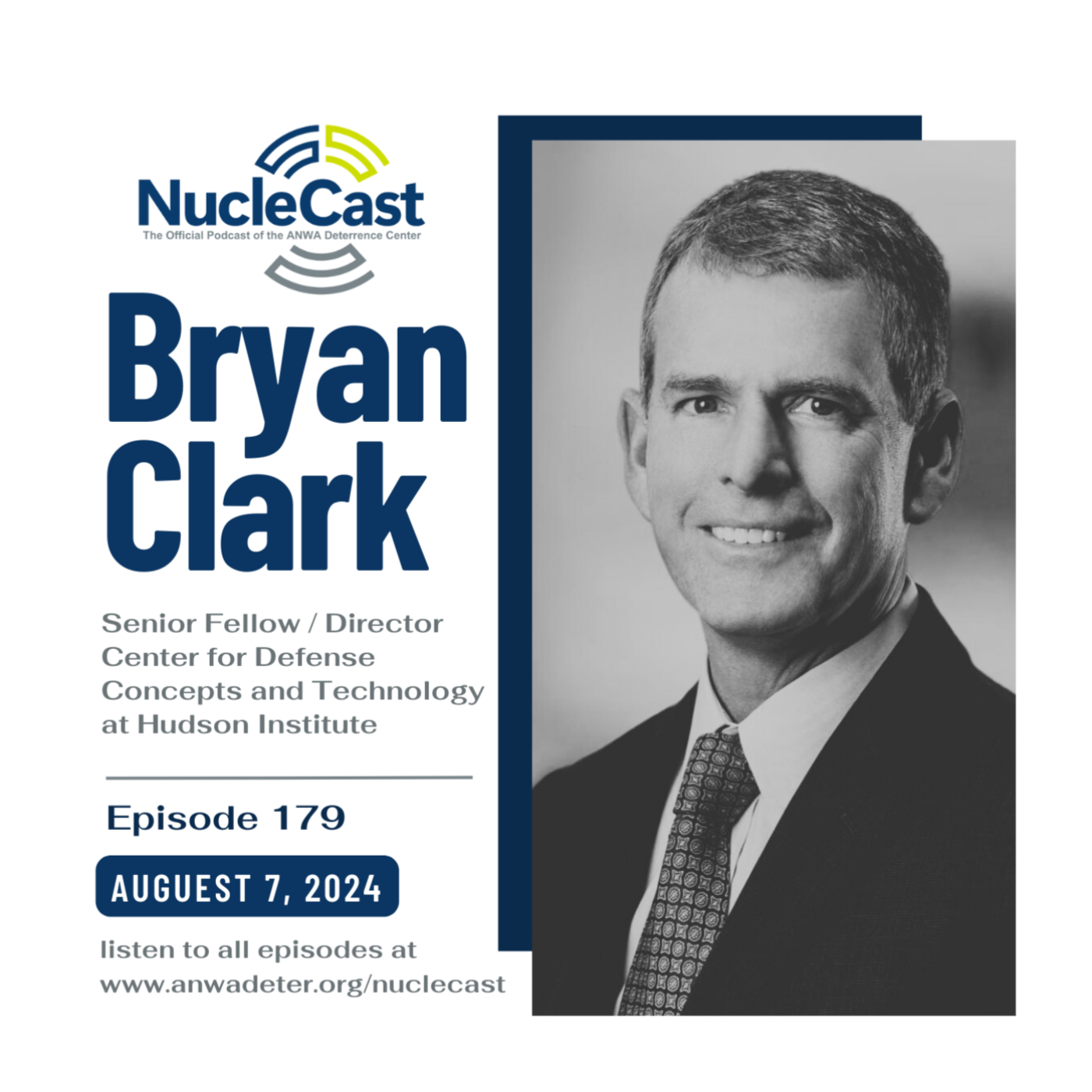
S2 Ep 179Bryan Clark - Rethinking the Approach to Deterrence: The Need for Force Design Planning
In this episode of NucleCast, Bryan Clark, a senior fellow at the Hudson Institute, talks about the challenges and implications of nuclear modernization. They discuss the growing threats from China, Russia, and other countries, and the need for the United States to rethink its approach to deterrence. They also explore the budget constraints and acquisition processes that impact nuclear modernization efforts. Clark suggests that the Department of Defense should eliminate the joint requirements process and focus on force planning and design. He also calls for a reexamination of the triad recapitalization plan and a renewed emphasis on force design within each service.Bryan Clark is a senior fellow and director of the Center for Defense Concepts and Technology at Hudson Institute. He studies naval operations, cyber and electromagnetic warfare, autonomous systems, military competitions, and wargaming. From 2013 to 2019, Mr. Clark was a senior fellow at the Center for Strategic and Budgetary Assessments (CSBA) where he led studies for the DoD Office of Net Assessment, Office of the Secretary of Defense, and Defense Advanced Research Products Agency on new technologies and the future of warfare.Prior to joining CSBA in 2013, Mr. Clark was a career enlisted and officer submariner. His last assignment was as director of the Chief of Naval Operations Commander’s Action Group, where he led development of Navy strategy and implemented new initiatives in electromagnetic spectrum operations, undersea warfare, expeditionary operations, and personnel and readiness management.Chapters00:00 Introduction and Overview02:09 Growing Threats and Implications of Nuclear Modernization09:47 Budget Constraints and Acquisition Challenges18:56 Rethinking Defense Priorities27:05 Eliminating Joint Requirements and Focusing on Force Planning29:06 Rethinking the Triad Recapitalization Plan32:22 The Importance of Force DesignSocials:Follow on Twitter at @NucleCastFollow on LinkedIn: https://linkedin.com/company/nuclecastpodcastSubscribe RSS Feed: https://rss.com/podcasts/nuclecast-podcast/Rate: https://podcasts.apple.com/us/podcast/nuclecast/id1644921278Email comments and topic/guest suggestions to [email protected]
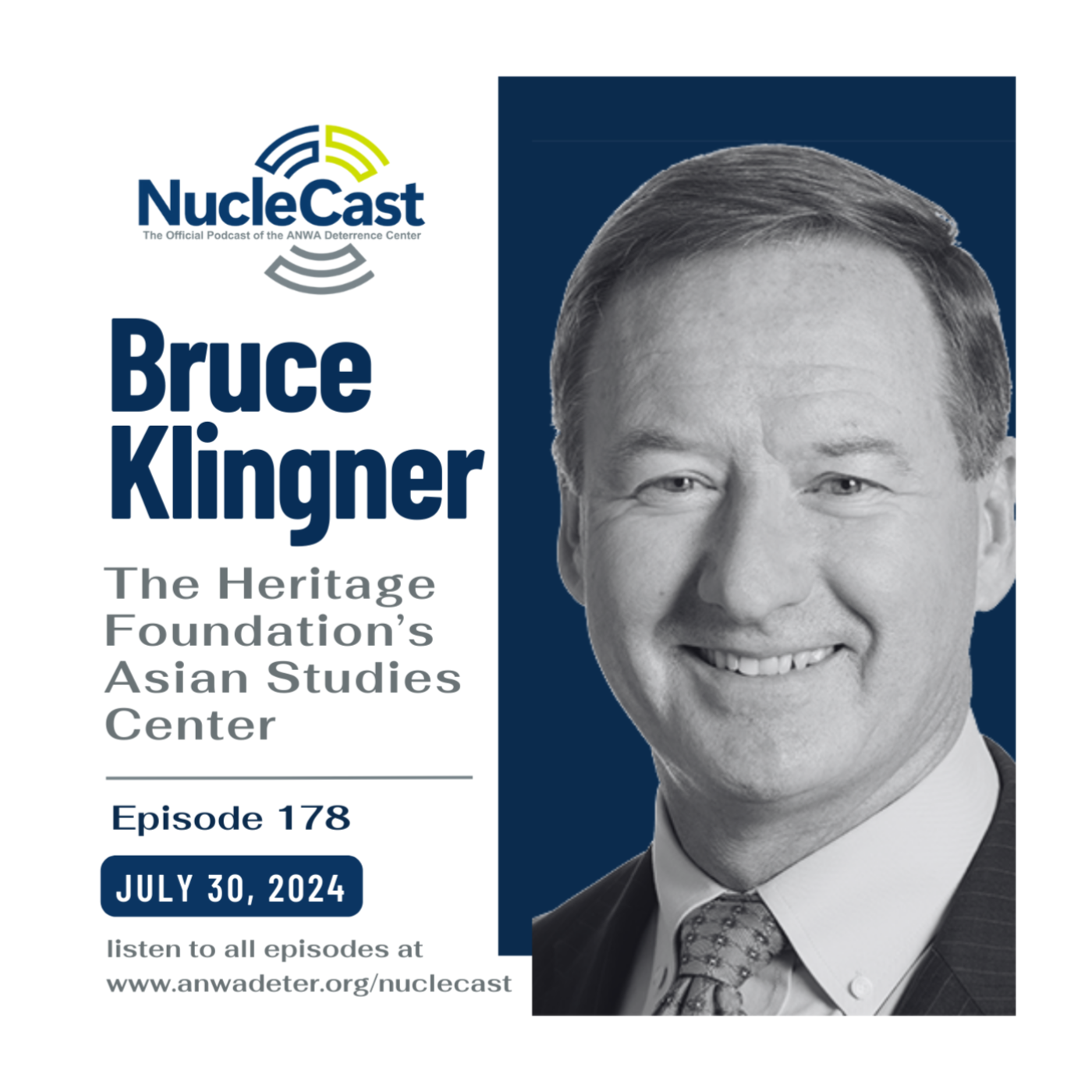
S2 Ep 178Bruce Klingner - Recent Developments in U.S.-South Korea Relations
Bruce Klingner is a Senior Fellow at the Heritage Foundation and an expert on South Korea and North Korea. He discusses the recent developments in the relationship between the United States and South Korea, including the Washington declaration and the NATO summit. He also explores the topic of South Korea's potential nuclearization and the level of understanding and education on nuclear issues. The conversation touches on the concerns of entanglement and abandonment, the impact of South Korea building its own nuclear arsenal, and the possibility of the return of U.S. nuclear weapons to the Korean Peninsula. Klingner emphasizes the importance of the U.S. affirming its commitment to its treaty obligations and maintaining current force levels on the peninsula. He also discusses the need for improved relations between South Korea and Japan, greater security cooperation in the region, and South Korea's role in addressing transgressions by China and Russia.Klingner’s analysis and writing about North Korea, South Korea and Japan, as well as related issues, are informed by his 20 years of service at the Central Intelligence Agency and the Defense Intelligence Agency. Klingner, who joined Heritage in 2007, has testified before the House Foreign Affairs Committee, the Senate Select Committee on Intelligence and the House Permanent Select Committee on Intelligence.He is a frequent commentator in U.S. and foreign media. His articles and commentary have appeared in major American and foreign publications and he is a regular guest on broadcast and cable news outlets. He is a regular contributor to the international and security sections of The Daily Signal.From 1996 to 2001, Klingner was CIA’s Deputy Division Chief for Korea, responsible for the analysis of political, military, economic and leadership issues for the president of the United States and other senior U.S. policymakers. In 1993-1994, he was the chief of CIA’s Korea branch, which analyzed military developments during a nuclear crisis with North Korea.Klingner is a distinguished graduate of the National War College, where he received a master’s degree in National Security Strategy in 2002. He also holds a master’s degree in Strategic Intelligence from the Defense Intelligence College and a bachelor’s degree in Political Science from Middlebury College in Vermont.Chapters00:00 Introduction and Background05:29 The Growing Discussion on South Korea's Nuclearization09:13 The Need for Education and Transparency on Nuclear Issues14:49 Affirming Commitment and Maintaining Force Levels18:01 Improving Relations with Japan and Increasing Security Cooperation22:24 South Korea's Role in Addressing Transgressions by China and RussiaSocials:Follow on Twitter at @NucleCastFollow on LinkedIn: https://linkedin.com/company/nuclecastpodcastSubscribe RSS Feed: https://rss.com/podcasts/nuclecast-podcast/Rate: https://podcasts.apple.com/us/podcast/nuclecast/id1644921278Email comments and topic/guest suggestions to [email protected]
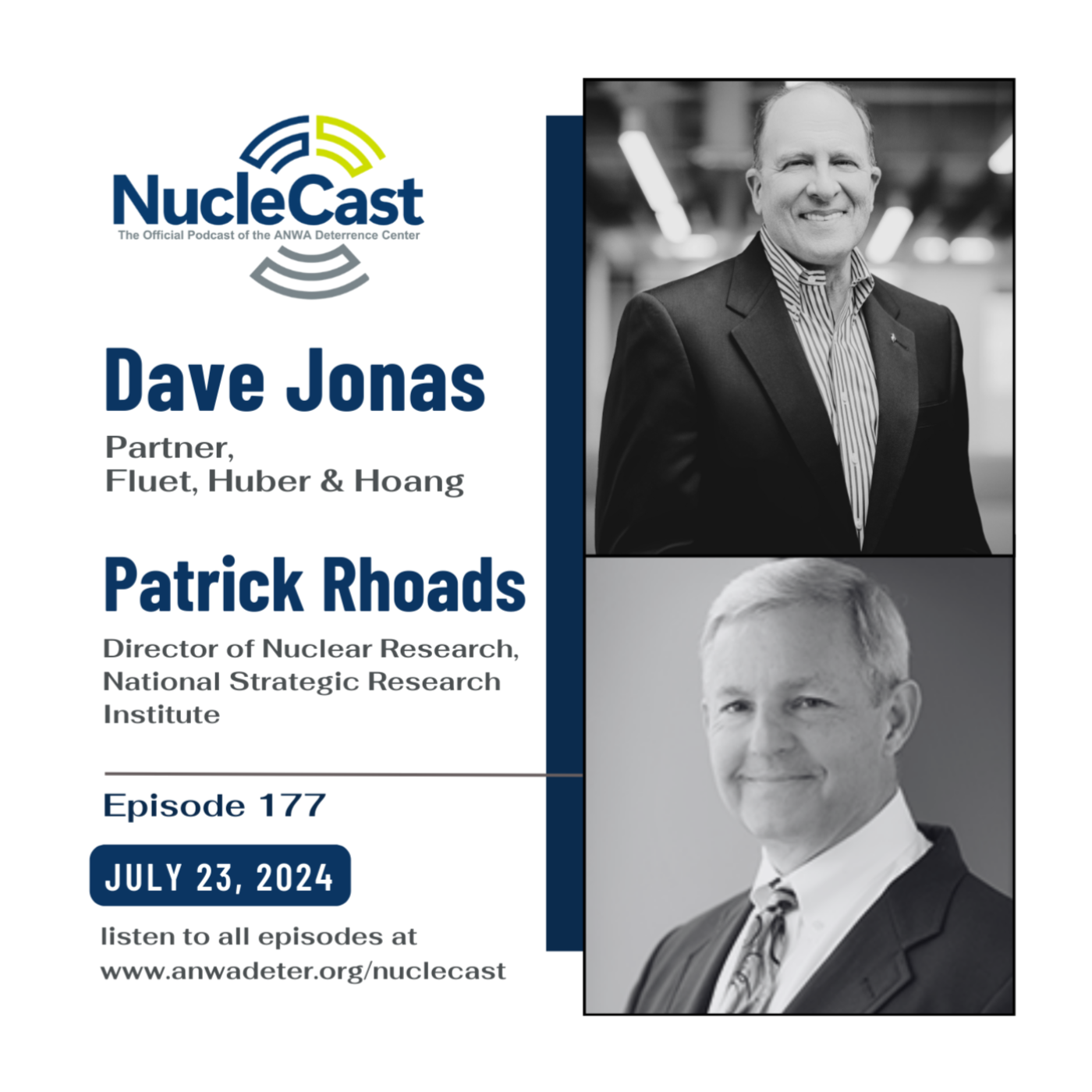
S2 Ep 177Dave Jonas and Patrick Rhoads - The Challenges of Nuclear Disarmament
In this episode of NucleCast, host Adam interviews Pat Rhoads and Dave Jonas, who have been writing a series of articles on nuclear issues. They discuss the strategic environment, the potential for nuclear disarmament, and the challenges of nuclear modernization. David S. Jonas is a partner at the law firm of Fluet, Huber & Hoang (FH+H). His practice includes corporate transactions, employment law, government contracts, trial and appellate litigation, international law, administrative/regulatory compliance and investigations. He has extensive experience in national security issues and is recognized as one of a handful of experts worldwide in nuclear nonproliferation law. He was a career member of the Senior Executive Service and served as General Counsel of the National Nuclear Security Administration (NNSA) where he negotiated numerous multilateral and bilateral international agreements to include the U.S. – India Civil Nuclear Agreement. He also served as General Counsel of the Defense Nuclear Facilities Safety Board.Prior to his civilian service, he was a career Marine Corps officer where he held a wide variety of command and staff billets. He served as nuclear nonproliferation planner for the Joint Chiefs of Staff negotiating multiple international agreements and has worked extensively with the International Atomic Energy Agency, the Conference on Disarmament, and the United Nations. He is one of the only judge advocates to have commanded two units, including a company in an infantry regiment, the 5th Marines. He argued the case of Davis v. United States, 512, U.S. 452 (1994) at the U.S. Supreme Court becoming the first judge advocate in the history of the Army, Navy, Marine Corps and Air Force to do so. He received the U.S. Court of Appeals for the Armed Forces Award for Excellence in Legal Writing and was selected as the Outstanding Career Judge Advocate in the Marine Corps. He concluded his military service as a lieutenant colonel.Patrick Rhoads had a thirty-eight-year career as an engineer with the National Nuclear Security Administration. He started with Naval Reactors as an ensign in the Navy and worked his whole career in the uses of nuclear energy for national security missions. His career included nuclear design, construction, and operations. Late in his NNSA career, he led many nuclear construction activities, including billion-dollar acquisitions, and served as the Chief of Staff in three different organizations. After retiring from NNSA in 2020, he joined the National Strategic Research Institute as the Director of Nuclear Research. NSRI is a University Affiliated Research Center, chartered by STRATCOM, whose mission is to address Weapons of Mass Destruction.Socials:Follow on Twitter at @NucleCastFollow on LinkedIn: https://linkedin.com/company/nuclecastpodcastSubscribe RSS Feed: https://rss.com/podcasts/nuclecast-podcast/Rate: https://podcasts.apple.com/us/podcast/nuclecast/id1644921278Email comments and topic/guest suggestions to [email protected]
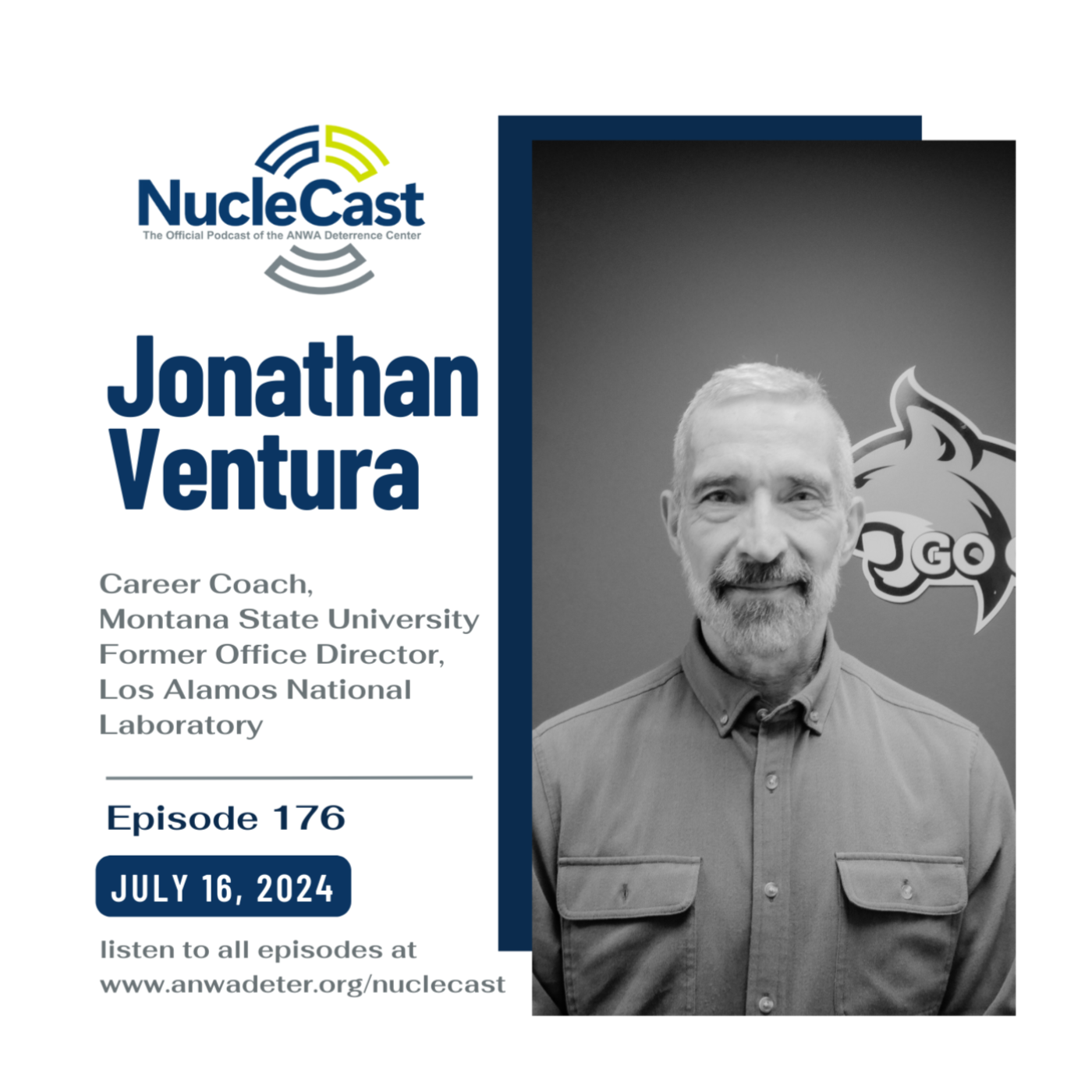
S2 Ep 176Jonathan Ventura - Unlocking Opportunities: Bringing Talent to the National Security Field
Jonathan Ventura, a career coach at Montana State University, discusses his efforts to bring talented students into the nuclear weapons complex and national security field. He emphasizes the importance of helping students understand the wide range of opportunities available to them, regardless of their academic discipline. Ventura also highlights the need for employers to communicate the importance of their mission and the benefits they offer, such as educational support. He shares the university's initiatives, including career fairs, capstone projects, and networking events, to connect students with potential employers. Ventura also expresses his wishes for increased collaboration between universities and national labs, the continued scientific excellence of the labs, and a good snow season in Montana.Mr. Ventura's 35-year career in national security has spanned several organizations including: the ANSER Corporation, the Department of Energy, Office of the Deputy Administrator for Weapons, and Los Alamos National Laboratory, Office of the Principal Associate Director Weapons Program. At the Department of Energy, he served as the Executive Officer to six Assistant Secretaries handling many of the day-to-day congressional interactions and interagency relationships. While at Los Alamos, he was the director of the Office of Nuclear and Military Affairs which oversaw many of the interactions with the Air Force Missile Wings in Montana, Wyoming and North Dakota. He also managed Los Alamos’ educational efforts at the Nation’s service academies. He served as editor of the lab’s award-winning national security magazine, National Security Science, which he helped redesign to make it more user friendly.00:00 Introduction and Background of Jonathan Ventura01:29 Helping Students Find Meaningful Work in National Security09:46 Advice for Success in Recruiting and Retaining Talent14:08 Opportunities for Students Without STEM Degrees20:07 The Need for a Network of Retired Professionals in Universities25:39 The Importance of Career Fairs and Early Preparation29:02 The Scientific Excellence of National Labs31:33 Jonathan Ventura's Three WishesSocials:Follow on Twitter at @NucleCastFollow on LinkedIn: https://linkedin.com/company/nuclecastpodcastSubscribe RSS Feed: https://rss.com/podcasts/nuclecast-podcast/Rate: https://podcasts.apple.com/us/podcast/nuclecast/id1644921278Email comments and topic/guest suggestions to [email protected]
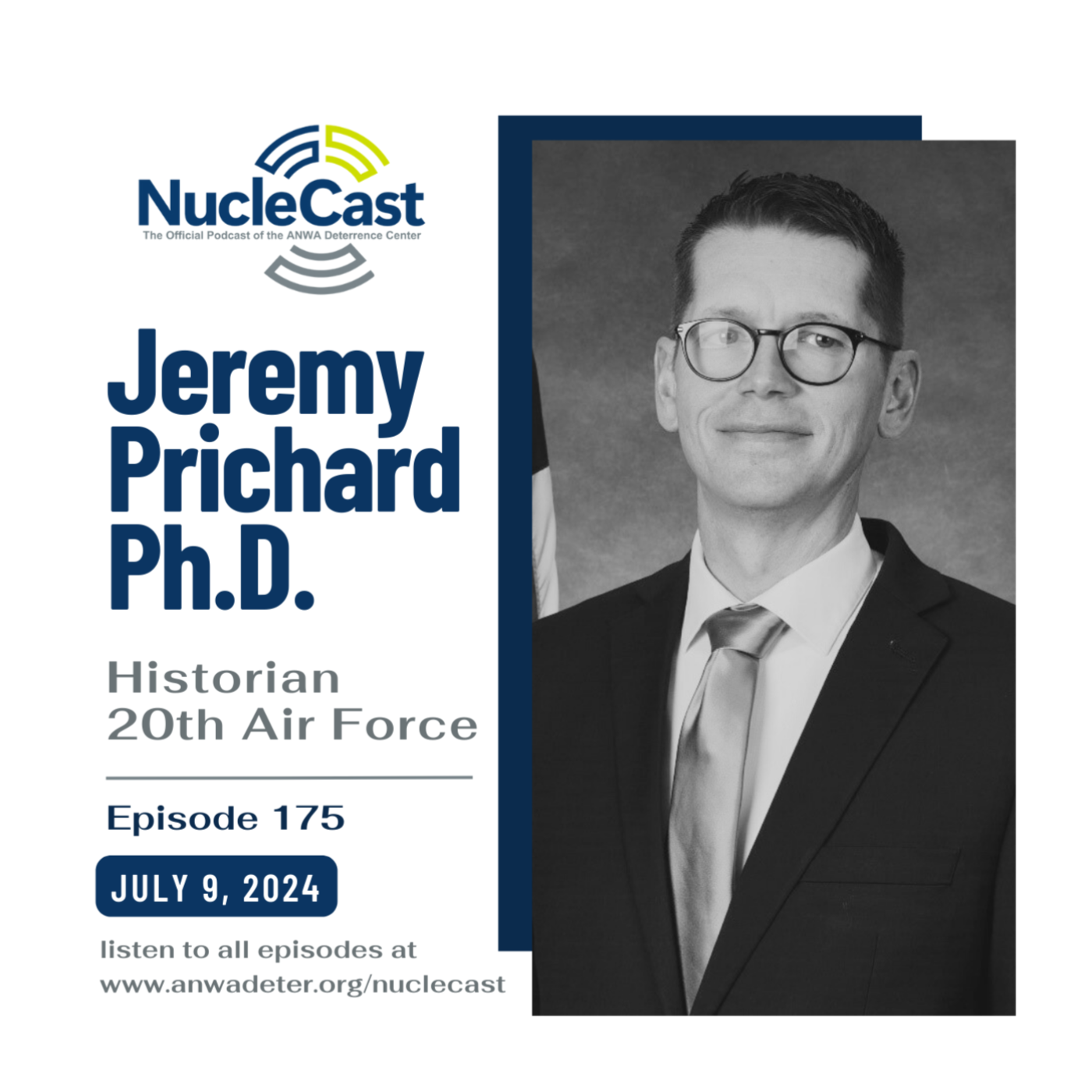
S2 Ep 175Jeremy Prichard - The History of 20th Air Force
Dr. Jeremy Prichard, the command historian at 20th Air Force, discusses the history of 20th Air Force, its origins, transition to the ICBM force, and the challenges faced in fielding the ICBMs. He also shares insights on the Minuteman 3 deployment, the Peacekeeper, and the challenges of modernizing the infrastructure for the Sentinel program.Dr. Jeremy P. Prichard is the Historian for Headquarters Twentieth Air Force, F. E. Warren Air Force Base, Wyoming. His duties include preserving and documenting the HQ’s historical record. He conducts historical research for the 20 AF commander and staff and advises on diverse historical matters.Prior to his current position, Dr. Prichard was Historian for the 19th Airlift Wing at Little Rock Air Force Base, Arkansas, performing similar responsibilities as his current role. During that time, he received assignment as Historian for the 438th Air Expeditionary Wing, Kabul, Afghanistan, producing monthly unit histories and offering guidance on standardized unit emblems. Before entering civilian public service, Dr. Prichard served four years in the US Army at Fort Hood, Texas. Following his Army enlistment, he earned his Bachelor’s, Master’s, and Doctorate of Philosophy degrees in History from the University of Kansas. His dissertation, “In Lincoln’s Shadow: The Civil War in Springfield, Illinois,” examined the political, economic, and social attitudes of the 16th US President’s community during the Sectional Crisis. Dr. Prichard’s publications focus on 19th Century American and US Air Force history. He has lectured in both military and academic settings on varied historicalChapters:00:00 Exploring the History of 20th Air Force and Its Transition to the ICBM Force19:52 Challenges and Complexities of Fielding the ICBMs35:29 The Future of 20th Air Force: Insights and WishesSocials:Follow on Twitter at @NucleCastFollow on LinkedIn: https://linkedin.com/company/nuclecastpodcastSubscribe RSS Feed: https://rss.com/podcasts/nuclecast-podcast/Rate: https://podcasts.apple.com/us/podcast/nuclecast/id1644921278Email comments and topic/guest suggestions to [email protected]
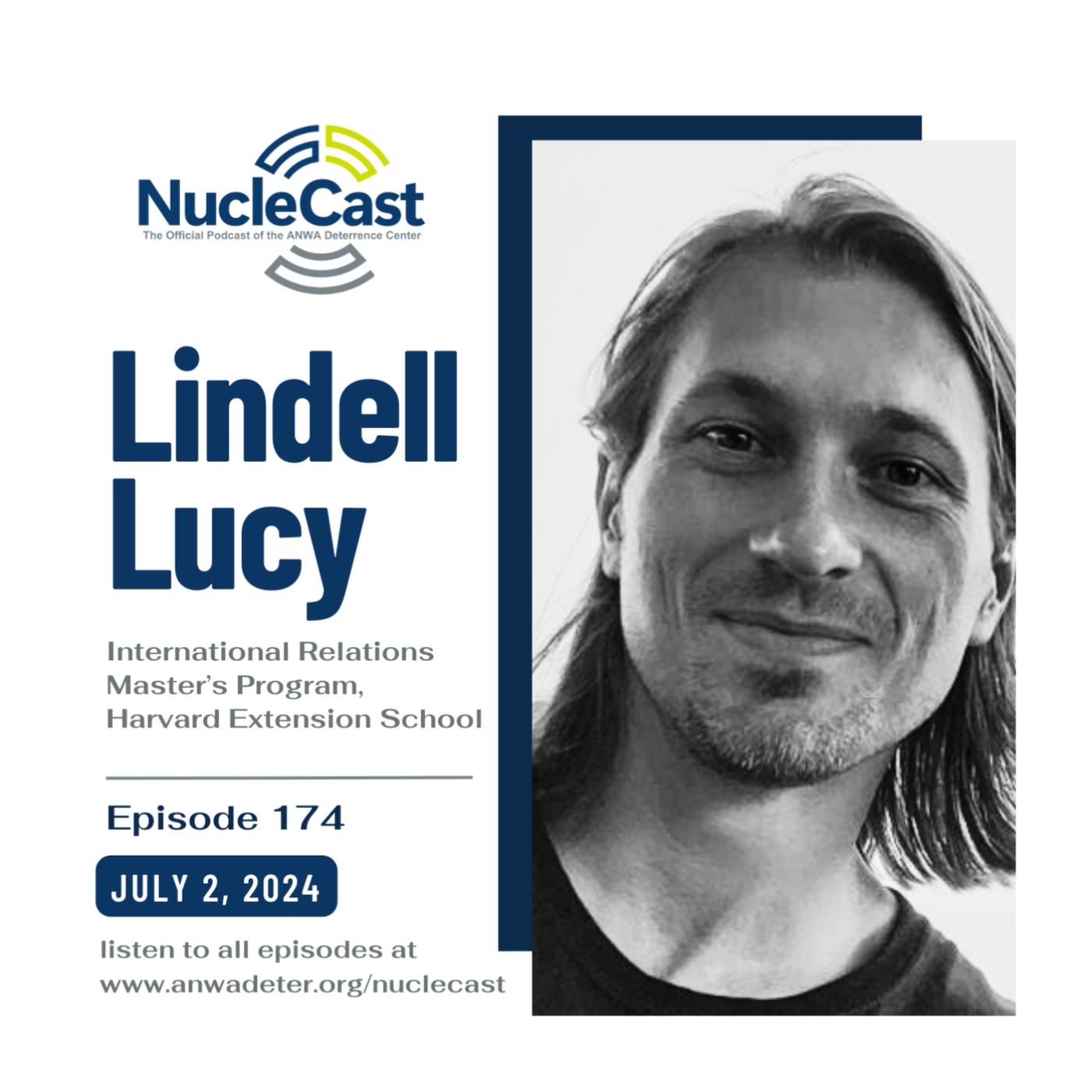
S2 Ep 174Lindell Lucy - The Journey From Teacher to Nuclear Deterrence Advocate
Lindell Lucy shares his journey from teaching history in Hawaii to becoming interested in nuclear weapons and international security, particularly in the context of Taiwan's geopolitical situation. He discusses the need for nuclear deterrence and the potential acquisition of nuclear weapons by Taiwan as a means of self-defense against China's coercive actions. Lindell also presents three wishes related to public opinion polling, US presidential debate questions, and NucleCast.Lindell Lucy is a high school teacher based in Hawaii. He holds a bachelor’s degree in philosophy from Stanford University. He is currently studying international relations in a master's degree program at the Harvard Extension School, where he just completed the coursework for a graduate certificate in nuclear deterrence. He has spent more than a decade living and traveling around East Asia. He has written numerous op-eds calling on the international community to provide uncompromising military and diplomatic support for Taiwan.Socials:Follow on Twitter at @NucleCastFollow on LinkedIn: https://linkedin.com/company/nuclecastpodcastSubscribe RSS Feed: https://rss.com/podcasts/nuclecast-podcast/Rate: https://podcasts.apple.com/us/podcast/nuclecast/id1644921278Email comments and topic/guest suggestions to [email protected]
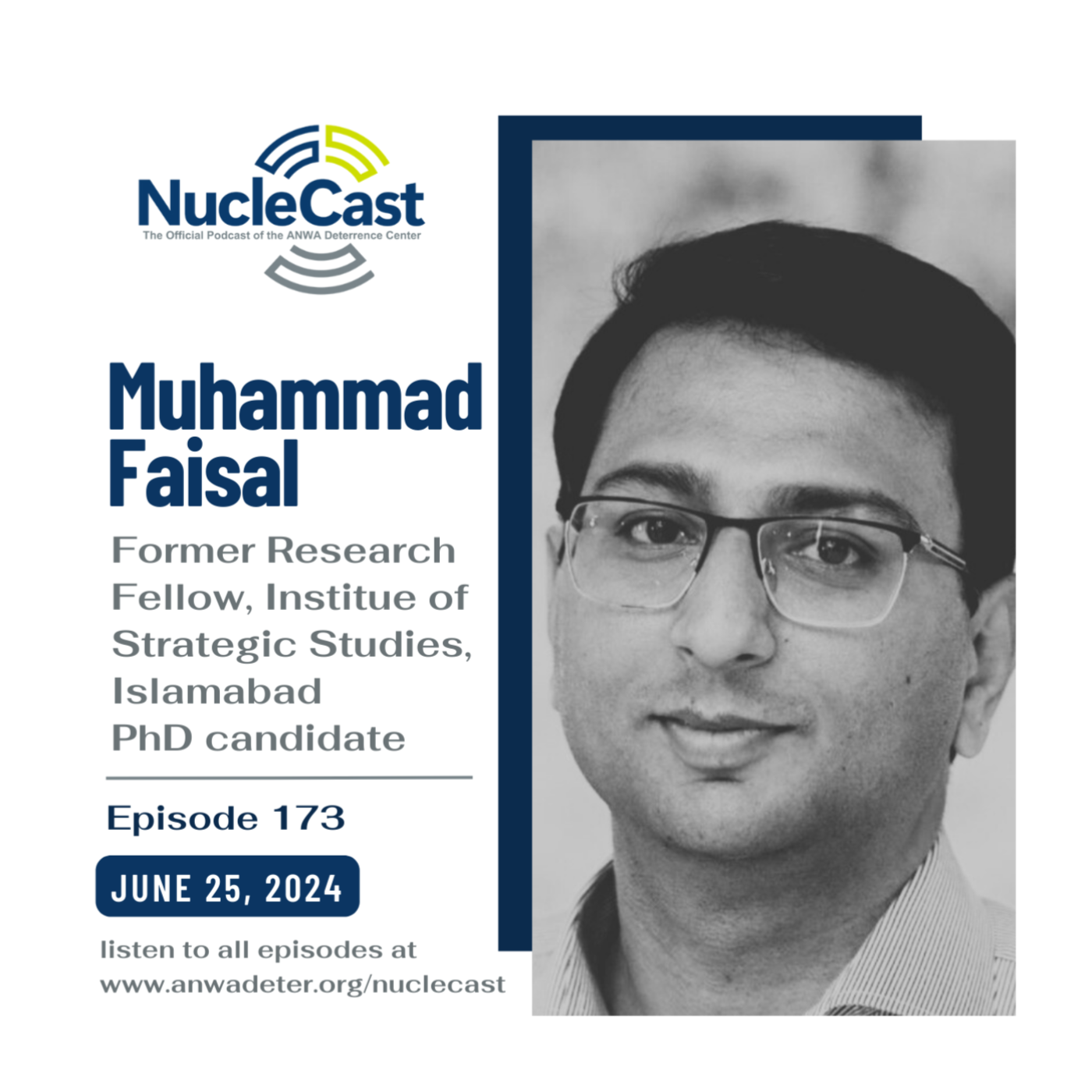
S2 Ep 173Muhammad Faisal - Pakistan's Nuclear Program
In this episode of NucleCast, Adam interviews Mohammed Faisal about Pakistan's nuclear program. Faisal provides a brief history of Pakistan's nuclear program, starting from the 1960s when Pakistan and India went to war over Kashmir. He explains that Pakistan's decision to pursue a nuclear option was driven by the perceived threat from India and the loss of East Pakistan in the 1971 war. Faisal also discusses Pakistan's current threat perception, which is primarily India-centric, and its long-term goal of maintaining and sustaining its nuclear force. The role of the United States in influencing Pakistan's nuclear program is also explored.Muhammad Faisal is a Ph.D. candidate in international relations at the University of Technology Sydney. Previously, he was Research Fellow at Institute of Strategic Studies Islamabad where his work focused on Pakistan’s regional relationships, particularly with China. He has also been visiting fellow at Center for Non-Proliferation Studies in Monterey, California and an SAV Visiting Fellow at Stimson Center. His current research focuses on Pakistan’s foreign policy as it navigates great-power competition.Chapters00:00 Introduction and Background of the Guest01:19 The History of Pakistan's Nuclear Program11:21 Pakistan's Long-Term Goals for its Nuclear Force28:01 Closing Remarks and WishesSocials:Follow on Twitter at @NucleCastFollow on LinkedIn: https://linkedin.com/company/nuclecastpodcastSubscribe RSS Feed: https://rss.com/podcasts/nuclecast-podcast/Rate: https://podcasts.apple.com/us/podcast/nuclecast/id1644921278Email comments and topic/guest suggestions to [email protected]
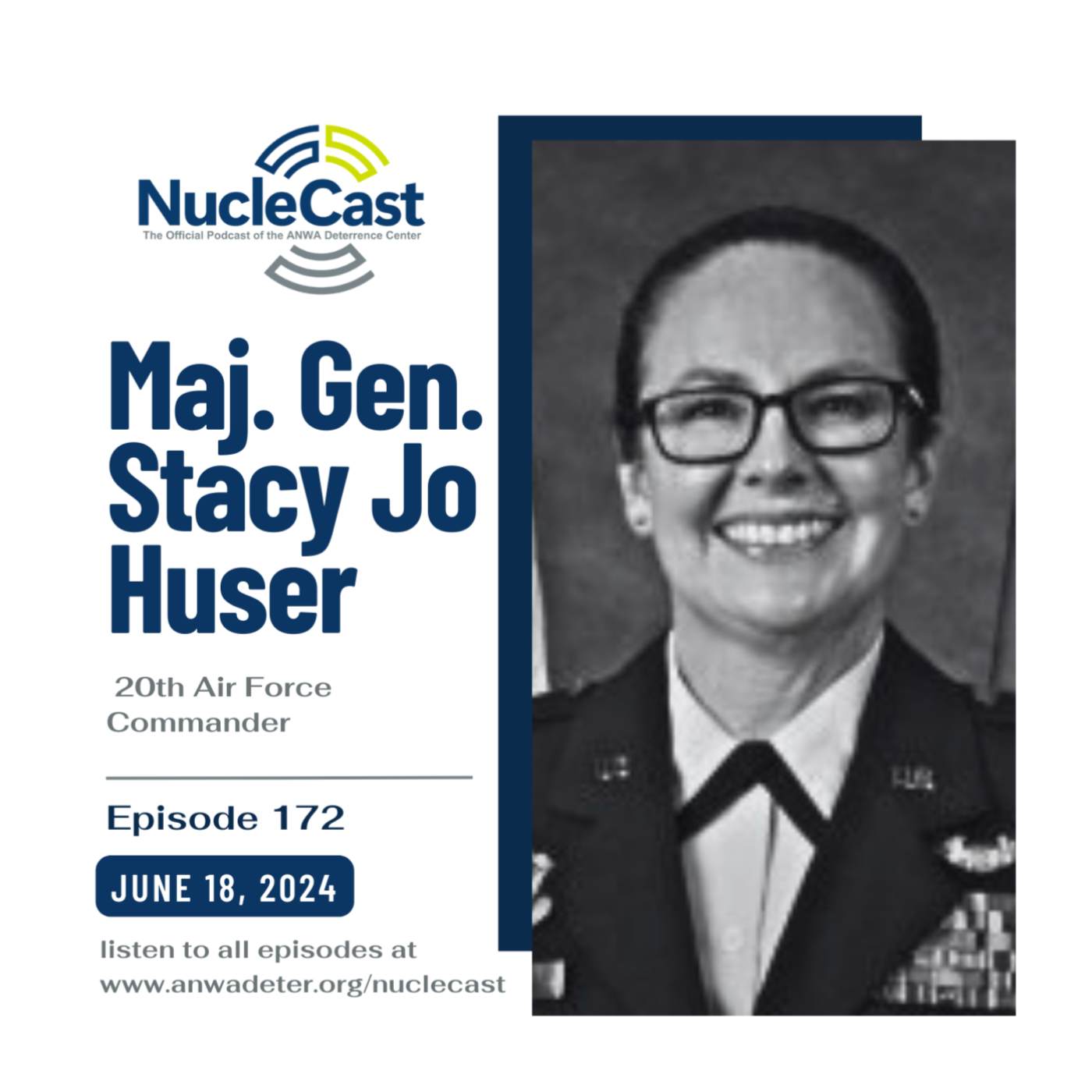
S2 Ep 172Maj. Gen. Stacy Jo Huser - 20th Air Force: Capabilities and Opportunities
In this episode of NucleCast, Adam interviews Major General Stacey Huser, the 20th Air Force Commander, about the capabilities and challenges of the ICBM leg of the nuclear triad. They discuss the history of 20th Air Force, the aging Minuteman III missiles, and the importance of maintaining and sustaining the system. They also talk about the changes in the missile career path and the opportunities for leadership in the missile community. Major General Huser emphasizes the need for proper manning and resources to ensure the operational readiness of the ICBM force.Maj. Gen. Stacy Jo Huser is responsible for more than 12,000 Airmen providing nuclear global strike and nuclear weapons sustainment for the U.S. Air Force.Maj. Gen. Huser commissioned through Officer Training School in 1996 after earning a bachelor’s degree in psychology from North Central College, Naperville, Illinois. She has extensive experience in space and missile operations. She has served as a space operations crew member, instructor and training manager, as well as an ICBM combat crew commander, evaluator, and chief of emergency war order plans. She also completed staff tours in the Secretary of the Air Force's Legislative Liaison Office and at United States Strategic Command (USSTRATCOM). Maj. Gen. Huser commanded the 625th Strategic Operations Squadron, Offutt AFB, Nebraska; the 91st Missile Operations Group, Minot AFB, North Dakota; and the 90th Missile Wing at Francis E. Warren AFB, Wyoming.Prior to her current assignment, Maj. Gen. Huser served as the Principal Assistant Deputy Administrator for Military Application, National Nuclear Security Administration, Department of Energy, Washington, D.C. In that role, she assisted the Deputy Administrator for Defense Programs to maintain the safety, security, and reliability of the nation’s nuclear weapons stockpile.Chapters00:00 Introduction and Overview of 20th Air Force03:27 The Challenges of Maintaining the Aging Minuteman III Missiles08:15 Improvements in the Missile Career Path and Leadership Opportunities16:13 Reflections on the Changes in the Past 10 Years26:17 Three Wishes for the Missile Force29:46 The Impact of Uncertain Budgets on the Missile ForceSocials:Follow on Twitter at @NucleCastFollow on LinkedIn: https://linkedin.com/company/nuclecastpodcastSubscribe RSS Feed: https://rss.com/podcasts/nuclecast-podcast/Rate: https://podcasts.apple.com/us/podcast/nuclecast/id1644921278Email comments and topic/guest suggestions to [email protected]
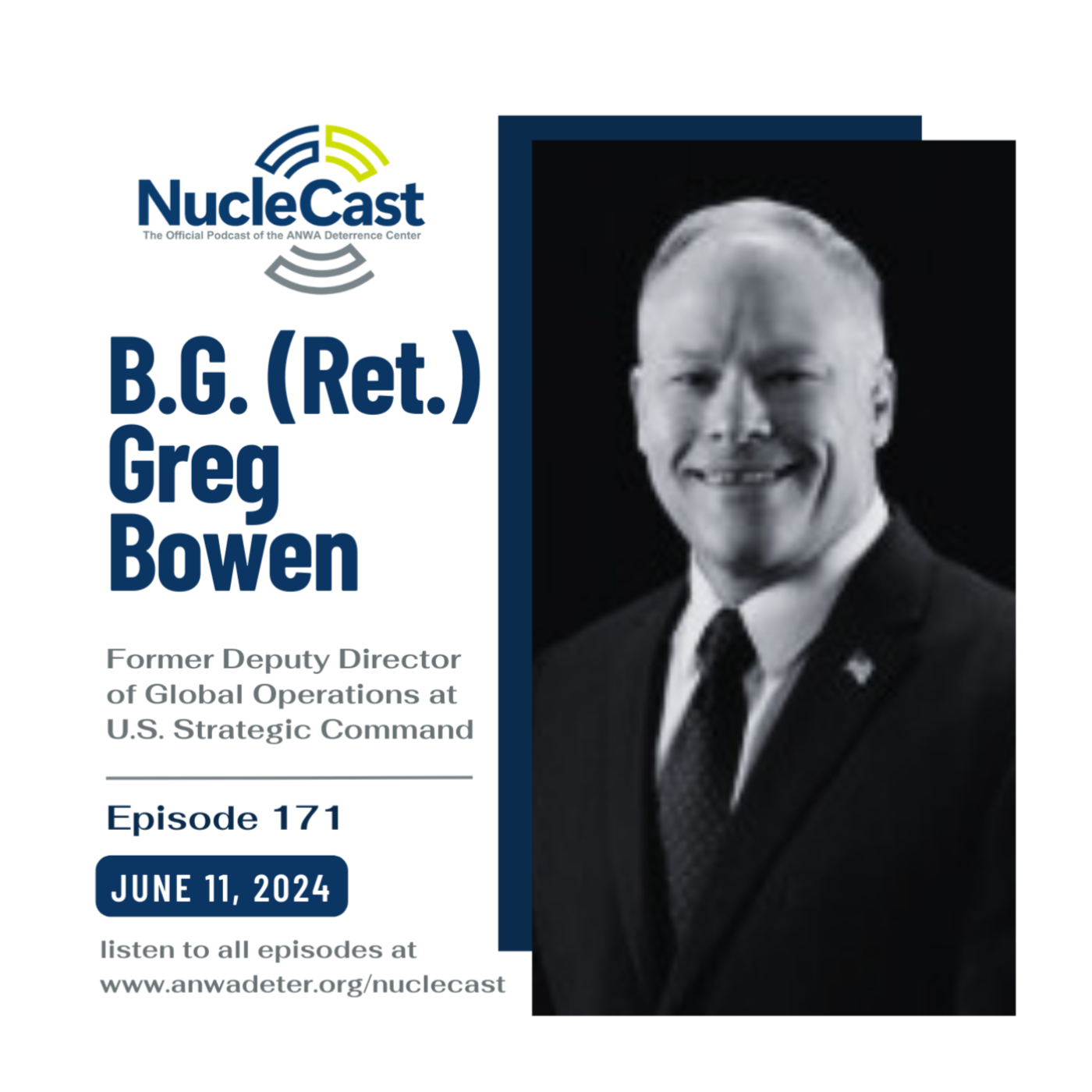
S2 Ep 171B.G. (Ret.) Gregory S. Bowen - The Importance of Hedging
In this episode of NucleCast, Adam interviews Brigadier General Retired Greg Bowen about hedging in nuclear conflicts. They discuss the importance of hedging as a strategy to quickly react to unforeseen events in a conflict. They also emphasize the need for the president to have multiple options and tools in the toolkit to deal with different scenarios. The conversation touches on the concept of the hedge, the known/unknowns in triad recapitalization, and the need for the United States to maintain a strong deterrent against authoritarian regimes.Greg’s 36-year military career culminated as the Deputy Director of Global Operations at U.S. Strategic Command, where he was responsible for Department of Defense space activities, ballistic missile defense, cyber operations, strategic deterrence, and nuclear command and control. He was part of the executive leadership team overseeing the operations of 162,000 people, billions of dollars’ worth of equipment, and our nation’s nuclear arsenal. In addition to his normal duties, Greg was certified as an Airborne Emergency Actions Officer and Designated Command Alternate; in those roles, he was one of a handful of officers certified to brief the President of the United States on nuclear response options. Greg was selected for Major General (2-star), but elected to retire from active duty to pursue other interests.Chapters00:00 Introduction and Background02:14 The Importance of Hedging08:06 The Role of Options in Nuclear Conflicts19:18 Challenges in Triad Recapitalization23:21 The Role of Deterrence Against Authoritarian Regimes32:19 Three Wishes34:20 ConclusionSocials:Follow on Twitter at @NucleCastFollow on LinkedIn: https://linkedin.com/company/nuclecastpodcastSubscribe RSS Feed: https://rss.com/podcasts/nuclecast-podcast/Rate: https://podcasts.apple.com/us/podcast/nuclecast/id1644921278Email comments and topic/guest suggestions to [email protected]
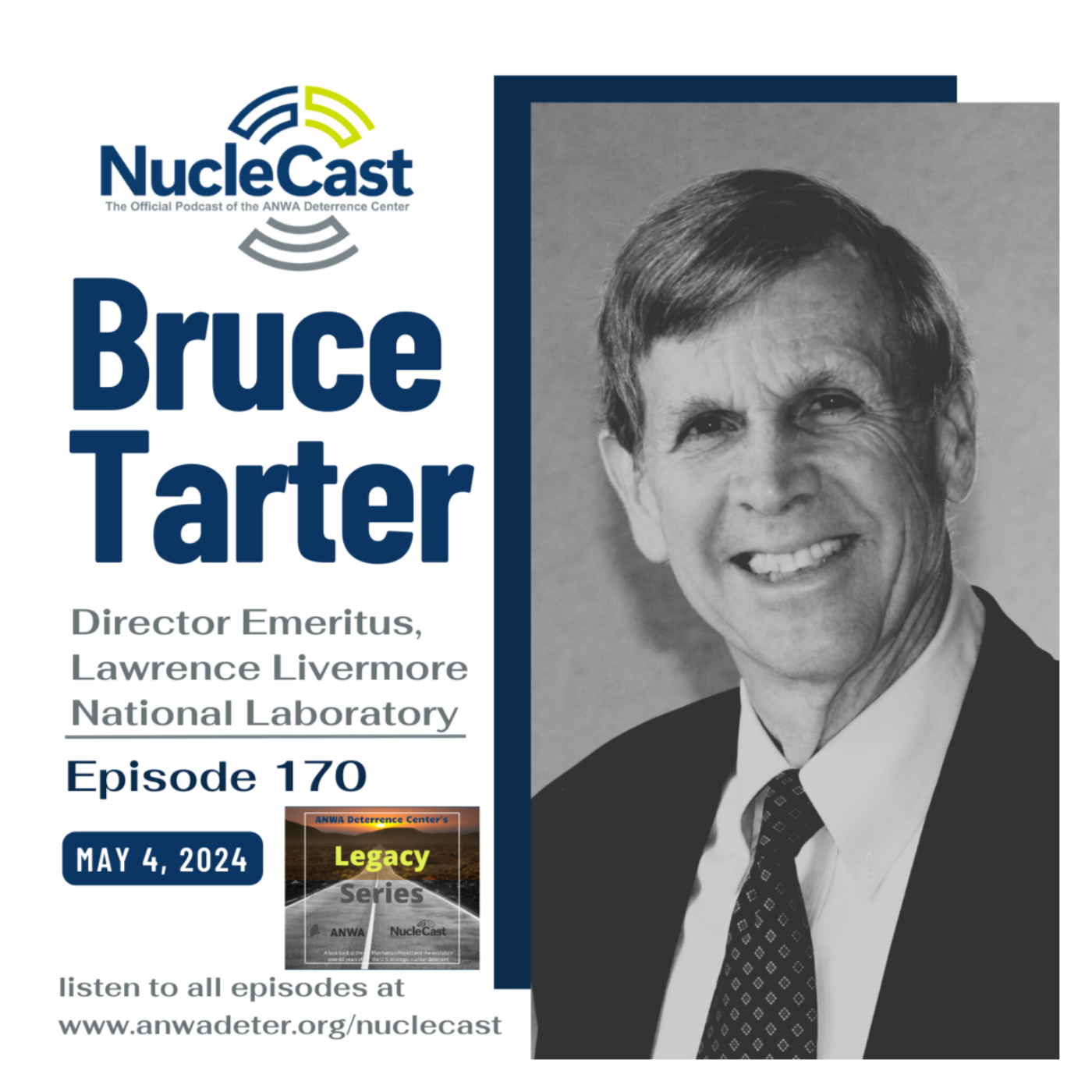
S2 Ep 170Bruce Tarter - LLNL's Technology, the Development of Nuclear Weapons, and the Era of Stockpile Stewardship
Bruce Tarter is Director Emeritus of the Lawrence Livermore National Laboratory and was the eighth director to lead the Laboratory since it was founded in 1952. This episode covers the history and influence of the lab's technology on policy and strategy, the development of nuclear weapons, and the era of stockpile stewardship. It also delves into the challenges and wishes for the future of nuclear arms control.A theoretical physicist by training and experience, Bruce began his career at the Laboratory in 1967. As Director from 1994 to 2002 he led the Laboratory in its mission to ensure national security and apply science and technology to the important problems of our time. In particular he oversaw the development of stockpile stewardship during his tenure. Tarter received a SB from MIT and a PhD from Cornell. He is a Fellow of the American Physical Society and the American Association for the Advancement of Science, and received the National Nuclear Security Administration’s Gold Medal and the Secretary of Energy’s Gold Award. He recently published “The American Lab” (Johns Hopkins University Press 2018) , a history of his Laboratory.Chapters00:00 Introduction to Lawrence Livermore National Lab and Bruce Tarter02:00 Influence of Technology on Policy and Strategy05:09 Development and Impact of Nuclear Weapons Technology16:18 The Era of Stockpile StewardshipSocials:Follow on Twitter at @NucleCastFollow on LinkedIn: https://linkedin.com/company/nuclecastpodcastSubscribe RSS Feed: https://rss.com/podcasts/nuclecast-podcast/Rate: https://podcasts.apple.com/us/podcast/nuclecast/id1644921278Email comments and topic/guest suggestions to [email protected]
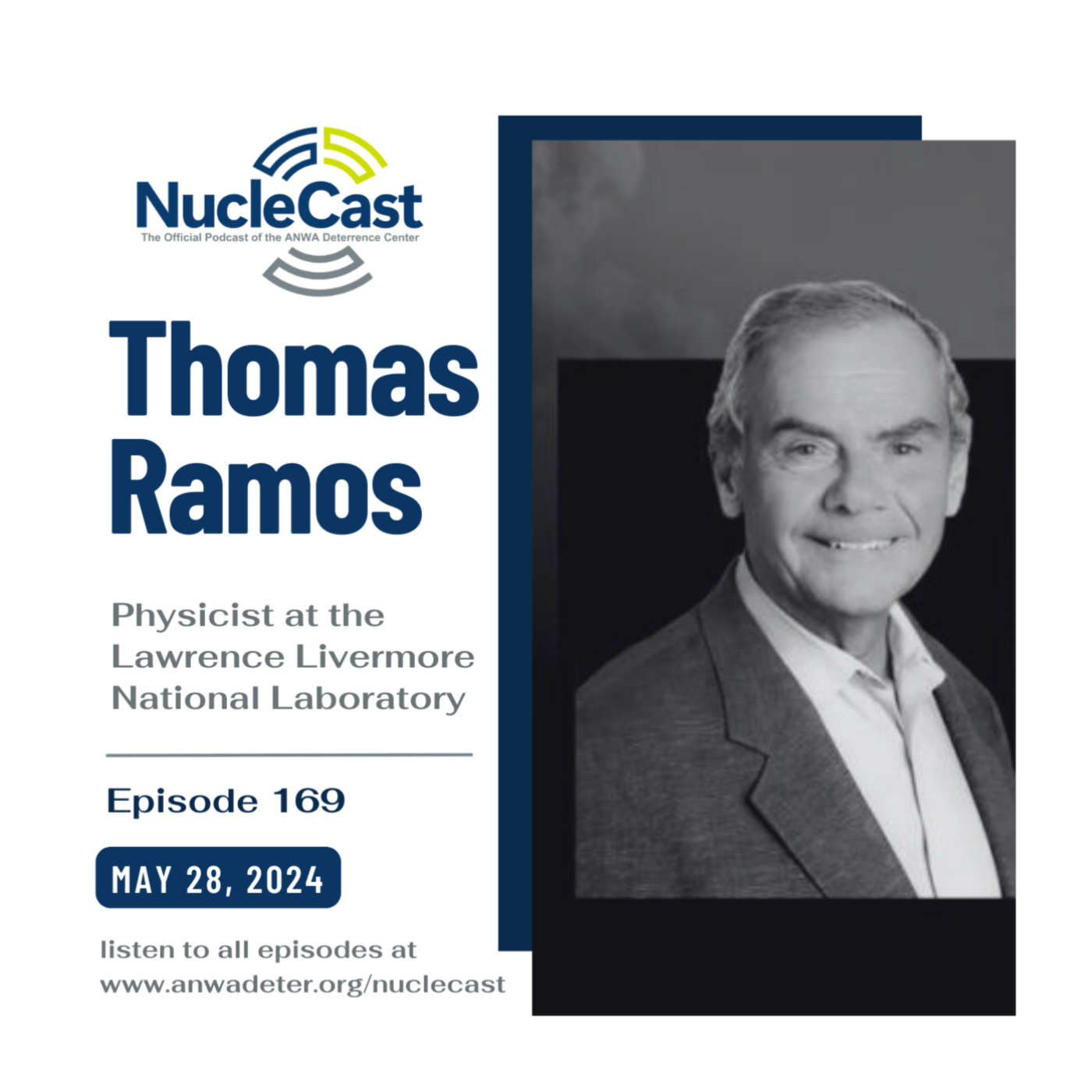
S2 Ep 169Thomas Ramos - The Importance of Capturing History to Inform Current Threats
In this episode of NucleCast, Adam interviews Tom Ramos, a physicist at Lawrence Livermore National Lab, about the relevance of the early years of the Cold War to today's national security challenges. They discuss the lessons learned from the past and how they can inform our approach to handling current threats from Russia and China. They emphasize the importance of capturing and memorializing the history of this period and the need for strong policy analysts and integrated collaboration between the military, think tanks, and scientists. They also highlight the need for a sense of urgency and recognition of the serious threats we face.For the past 40 years, Tom Ramos has been a physicist at the Lawrence Livermore National Laboratory, where he was a member of the nuclear team that developed the X-ray Laser for President Reagan’s Strategic Defense Initiative. He later supported US/USSR arms control negotiations for START and over a span of seventeen years he created and ran a program for the Department of Defense called CAPS.Ramos, who graduated from West Point, commanded combat engineers before entering MIT to earn a degree in high energy physics.His most recent venture was writing a book titled “From Berkeley to Berlin: How the Rad Lab Helped Avert Nuclear War,” which focuses on how the United States had the ability to stand up to Nikita Khrushchev, former leader of the Soviet Union, and his attempts to expand Soviet influence around the globe. The book brings individuals alive, especially those at Livermore, who played important roles in making the country safe during the Cold War.Chapters00:00 Introduction and Background02:02 Relevance of the Early Cold War to Today's Challenges06:41 Lessons from the Kennedy Era08:09 Challenges of Nuclear Superiority and Modernization11:26 The Need for Collaboration and Integration21:30 Advice for Present Leadership23:15 The Importance of History and Lessons Learned28:13 Conclusion and Three WishesSocials:Follow on Twitter at @NucleCastFollow on LinkedIn: https://linkedin.com/company/nuclecastpodcastSubscribe RSS Feed: https://rss.com/podcasts/nuclecast-podcast/Rate: https://podcasts.apple.com/us/podcast/nuclecast/id1644921278Email comments and topic/guest suggestions to [email protected]
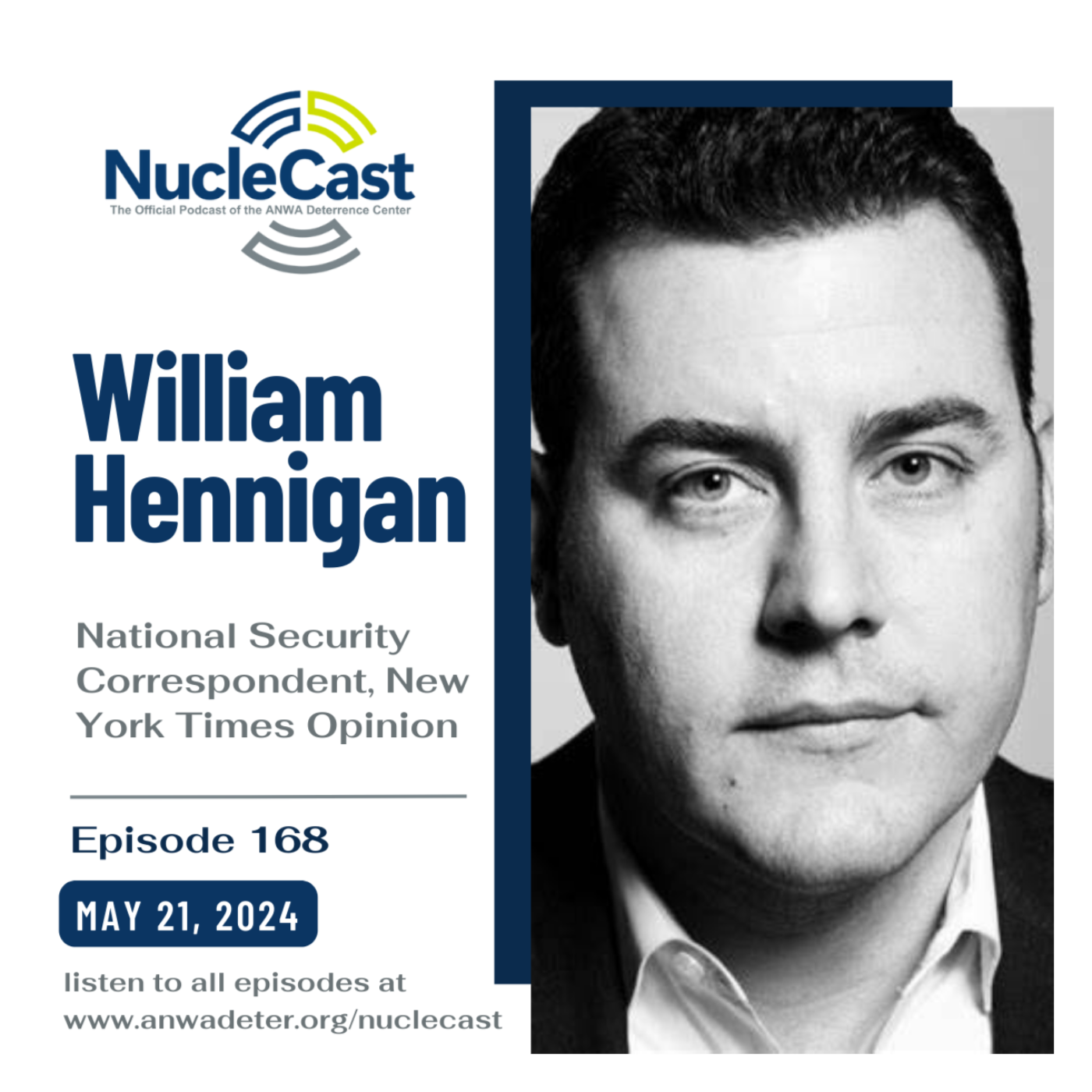
S2 Ep 168William Hennigan - Bringing Nuclear Issues to the Forefront for Everyday People
William Hennigan, national security correspondent for the New York Times Opinion Section, discusses his series of articles on nuclear issues and the motivation behind them. He highlights the convergence of events such as modernization efforts, arms control treaties, and the war in Ukraine that prompted the New York Times to focus on nuclear issues. Hennigan aims to bring these issues to the forefront and make them understandable to everyday people. He also discusses the response from the professional community and the general public. He also provides insights for the nuclear enterprise on how to better communicate their perspective to journalists.Mr. Hennigan has reported from more than two dozen countries across five continents, covering war, the arms trade, and the lives of U.S. service members.Learn more: W.J. Hennigan - The New York Times (nytimes.com)Chapters00:00 Introduction and Guest Introduction06:02 Discoveries and Highlights in Reporting12:32 Improving Communication with the Nuclear Enterprise23:42 Concerns and Trust in Journalistic Coverage28:12 Three Wishes: North Korea, China, and US ModernizationSocials:Follow on Twitter at @NucleCastFollow on LinkedIn: https://linkedin.com/company/nuclecastpodcastSubscribe RSS Feed: https://rss.com/podcasts/nuclecast-podcast/Rate: https://podcasts.apple.com/us/podcast/nuclecast/id1644921278Email comments and topic/guest suggestions to [email protected]
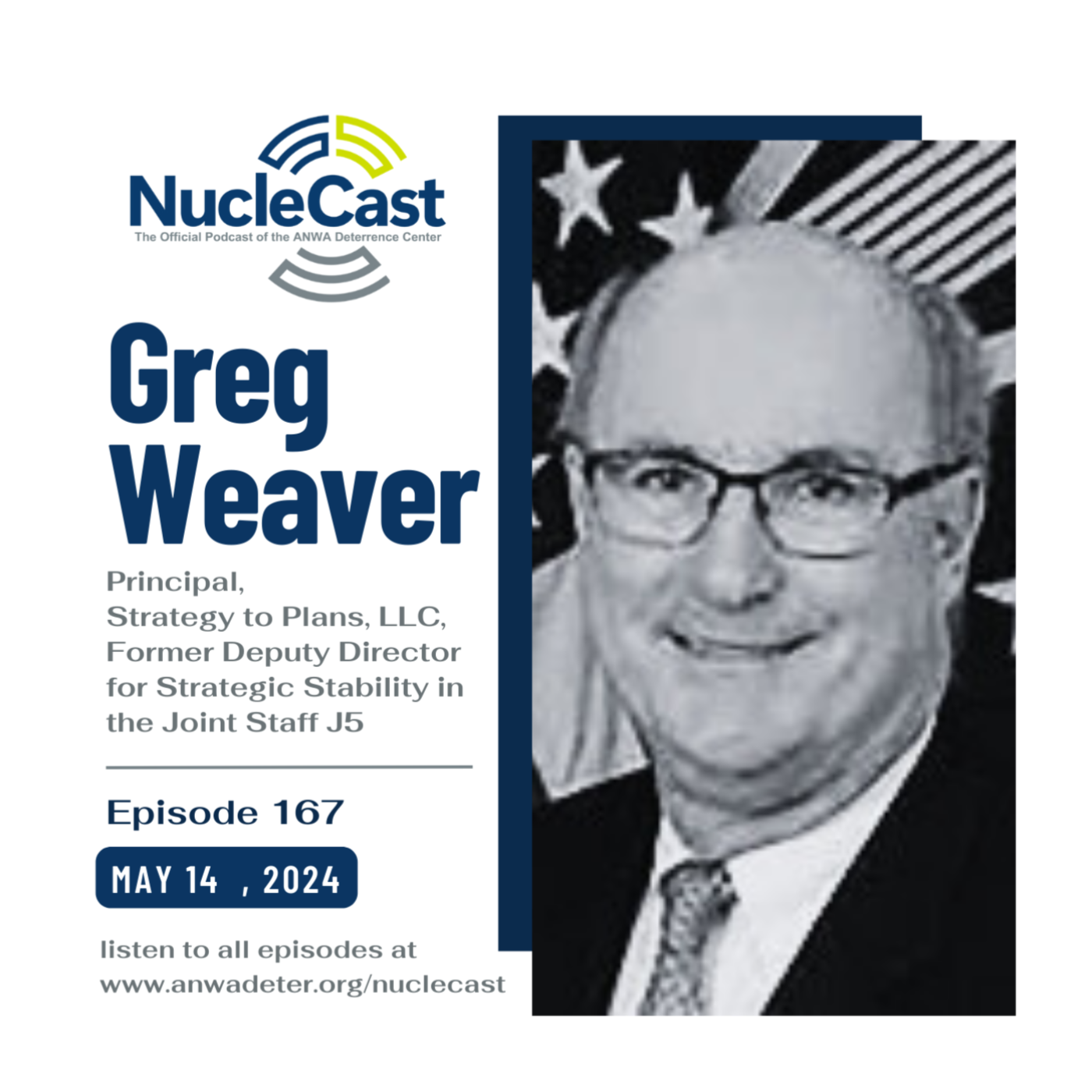
S2 Ep 167 Greg Weaver - The Need for U.S. Strategy: Rebuilding and Expansion of the US Nuclear Weapons Production Infrastructure
In this episode of NucleCast, Greg Weaver, former Deputy Director for Strategic Stability in the Joint Staff J5 and nuclear policy expert, discusses the potential use of nuclear weapons in a Taiwan conflict and the role of nuclear weapons in deterring and fighting China. Weaver emphasizes the need for the US to determine its strategy regarding nuclear weapons in the face of the two-peer problem with Russia and China. He also advocates for the rapid rebuilding and expansion of the US nuclear weapons production infrastructure and the fielding of the SLCM-N theater nuclear weapon. Weaver's three wishes include the rapid modernization of the infrastructure, the fielding of SLCM-N, and for listeners to read the Strategic Posture Commission Report.Mr. Weaver began his career working as a Congressional staffer in both the House and Senate, working for Reps. Pete Stark (D-CA) and Charles Bennett (D-FL) and Senator Carl Levin (D-MI). He spent 18 years as a Senior Analyst and Division Manager at SAIC in both San Diego, CA and Omaha, NE. While a contractor in Omaha, Mr. Weaver co-authored the Defense Department’s Deterrence Operations Joint Operating Concept and was the Director of the USSTRATCOM Strategic Deterrence Assessment Laboratory (SDAL).Mr. Weaver returned to government in 2007 at US Strategic Command, serving as a Senior Analyst (GS-15) and as the Deputy J5 (SES-1). He was appointed by President Obama to be OSD Policy’s Principal Director for Nuclear and Missile Defense Policy (SES-2) and closed out his full-time career serving over 6 years as the Deputy Director for Strategic Stability in the Joint Staff J5. In that role he was the principal nuclear, missile defense, space, cyber, and arms control policy and strategy advisor to the Chairman of the Joint Chiefs of Staff.Mr. Weaver is now the Principal at Strategy to Plans, LLC, a consulting firm he founded in 2022.Chapters00:00 Introduction and Background of Greg Weaver10:42 China's Perception of US Willingness to Use Nuclear Weapons23:26 The Importance of SLCM-N and Theater Nuclear Weapons30:22 Greg Weaver's Three WishesSocials:Follow on Twitter at @NucleCastFollow on LinkedIn: https://linkedin.com/company/nuclecastpodcastSubscribe RSS Feed: https://rss.com/podcasts/nuclecast-podcast/Rate: https://podcasts.apple.com/us/podcast/nuclecast/id1644921278Email comments and topic/guest suggestions to [email protected]
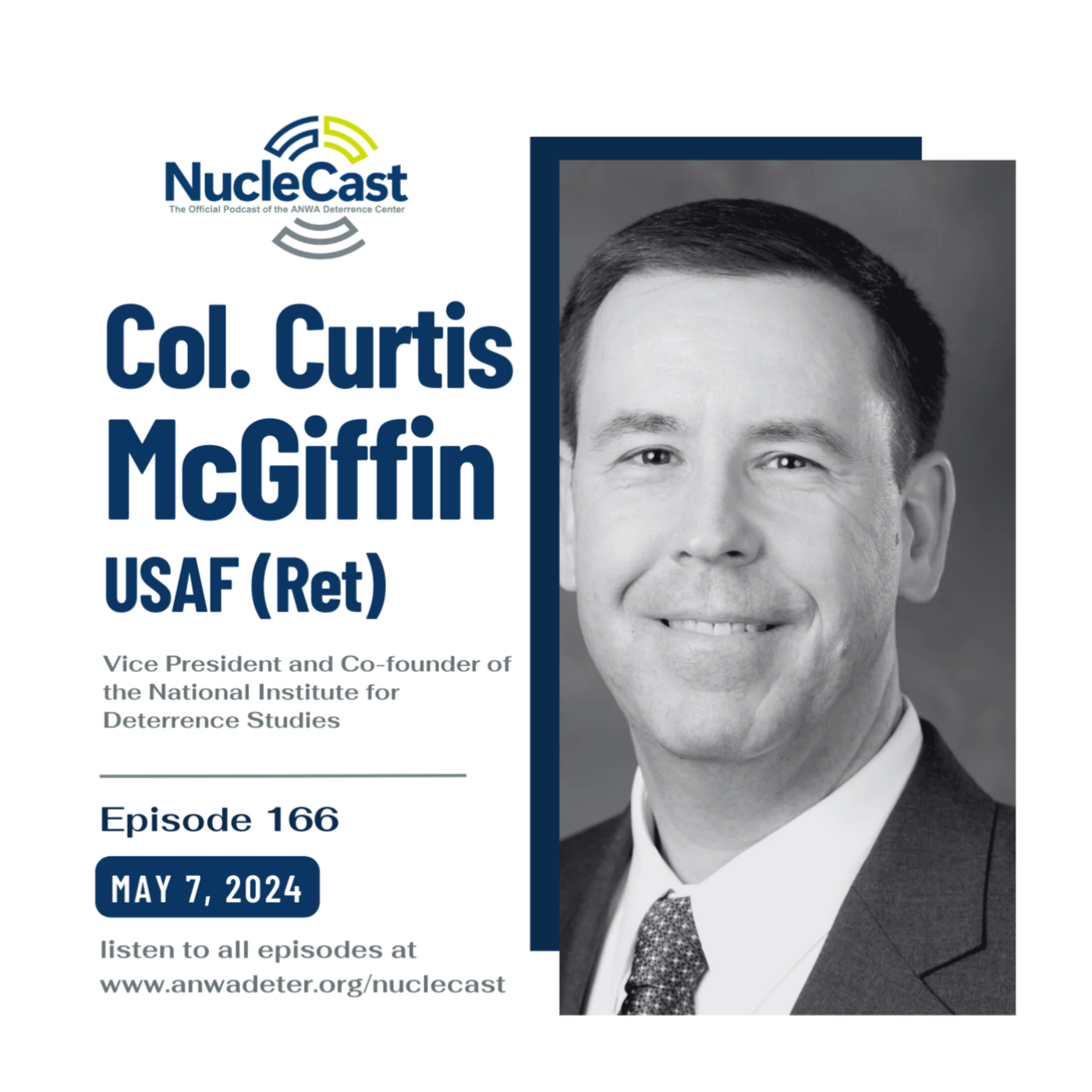
S2 Ep 166 Col. USAF (Ret.) Curtis McGiffin - Enhancing Decision-Making: AI-enabled NC3
In this episode of NucleCast, Adam and Colonel Curtis McGiffin discuss the need for an AI-enabled NC3 system with a dead hand. They argue that the current NC3 system and the decision-making process have significant problems that need to be addressed and propose using AI tools to enhance the decision-making process and improve the speed and effectiveness of the system. They also discuss the strengths and weaknesses of such a system and its importance for deterrence. The conversation highlights the need for the United States to modernize its nuclear command and control capabilities and consider new approaches to ensure the effectiveness of its deterrent.Curtis McGiffin is the Vice President for Education and Co-founder of the National Institute for Deterrence Studies. His areas of expertise are deterrence theory education, grand strategy, and strategic triad operations. He also serves on the teaching faculty of the Department of Defense and Strategic Studies at Missouri State University, where he teaches graduate and doctorate courses in deterrence theory and grand strategy. Previously, he was the Associate Dean of the School of Strategic Force Studies at the Air Force Institute of Technology, where he led a robust portfolio of USAF professional continuing education programs supporting the AF nuclear enterprise. He also was the Executive Director of the Louisiana Tech Research Institute, where he designed and developed a catalog of Nuclear Command, Control, and Communications curriculum and courses for Air Force Global Strike Command’s workforce.Colonel McGiffin retired with over 26 years of experience in the USAF as an aviator, commander, staff officer, and educator, most of which was supporting the USAF’s nuclear enterprise. Prior to his retirement from active duty, Colonel McGiffin was the Associate Dean of Faculty and Assistant Professor of Strategy and Deterrence at the National War College in Washington DC. He has served on the Joint Staff, HQ AF staff, and combatant command staff, as a squadron commander, and as the senior advisor to Iraq’s military Vice Chief of Staff. He was a Master Navigator and flight instructor with 2,750 flight hours in the E-4B, EC-135, KC-135 and T-43 aircraft. He has been awarded the Defense Superior Service Medal, a Legion of Merit, and two Aerial Achievement Medals.Chapters00:00 Introduction and Background06:16 Enhancing Decision-Making with AI Tools25:11 The Importance of Modernizing the NC3 System for DeterrenceSocials:Follow on Twitter at @NucleCastFollow on LinkedIn: https://linkedin.com/company/nuclecastpodcastSubscribe RSS Feed: https://rss.com/podcasts/nuclecast-podcast/Rate: https://podcasts.apple.com/us/podcast/nuclecast/id1644921278Email comments and topic/guest suggestions to [email protected]
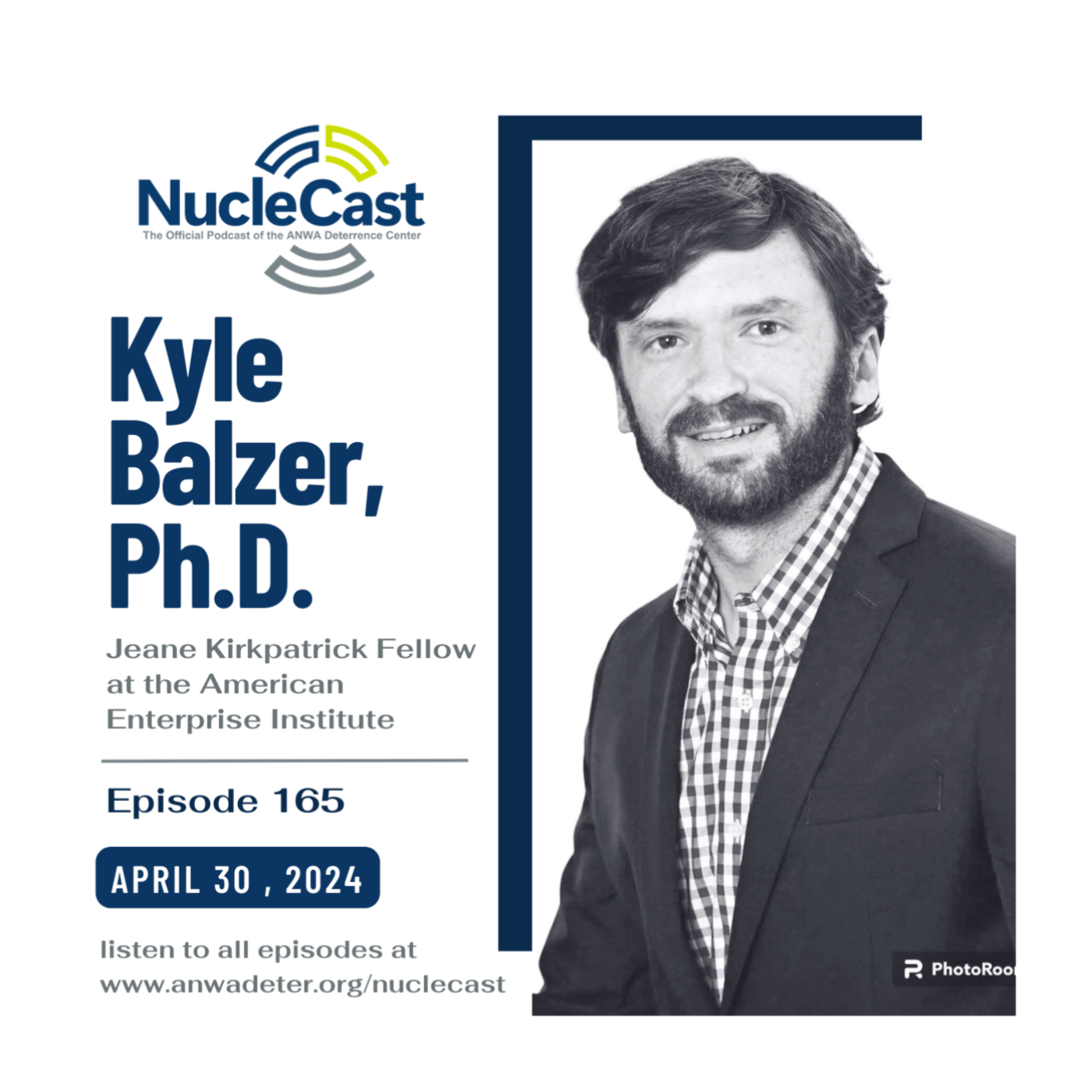
S2 Ep 165Kyle Balzer, Ph.D. - The Importance of SLCM-N in the US Nuclear Posture
In this episode of NucleCast, Dr. Kyle Balzer discusses three topics: the submarine launch cruise missile (SLCM-N), the origins of tailored deterrence, and the concept of hedging the hedge. SLCM-N is seen as a missing piece in the US nuclear posture, providing regional presence, promptness to respond, widespread deployment, and complicating adversary defense planning. Tailored deterrence, which dates back to the Cold War, involves understanding the values and priorities of adversaries to deter them effectively. Hedging, or maintaining extra warheads, is crucial in a complex and unpredictable threat environment. The conversation emphasizes the need for intelligence on adversary thinking, bipartisan support for SLCM-N, and continued debate and implementation of nuclear strategies.Kyle Balzer is a Jeane Kirkpatrick Fellow at the American Enterprise Institute, where he specializes in US nuclear strategy and policy. He is currently working on a book project, The Revivalist: James R. Schlesinger and the Rebirth of Cold War U.S. Nuclear Strategy. It examines the origins of diagnostic net assessment and competitive nuclear strategies. His work has been published in Breaking Defense, National Review Online, The Hill, The National Interest, and War on the Rocks.Kyle holds a Ph.D. in US diplomatic history from Ohio University, where he studied the relationship between American grand strategy and nuclear deterrence policy. Socials:Follow on Twitter at @NucleCastFollow on LinkedIn: https://linkedin.com/company/nuclecastpodcastSubscribe RSS Feed: https://rss.com/podcasts/nuclecast-podcast/Rate: https://podcasts.apple.com/us/podcast/nuclecast/id1644921278Email comments and topic/guest suggestions to [email protected]
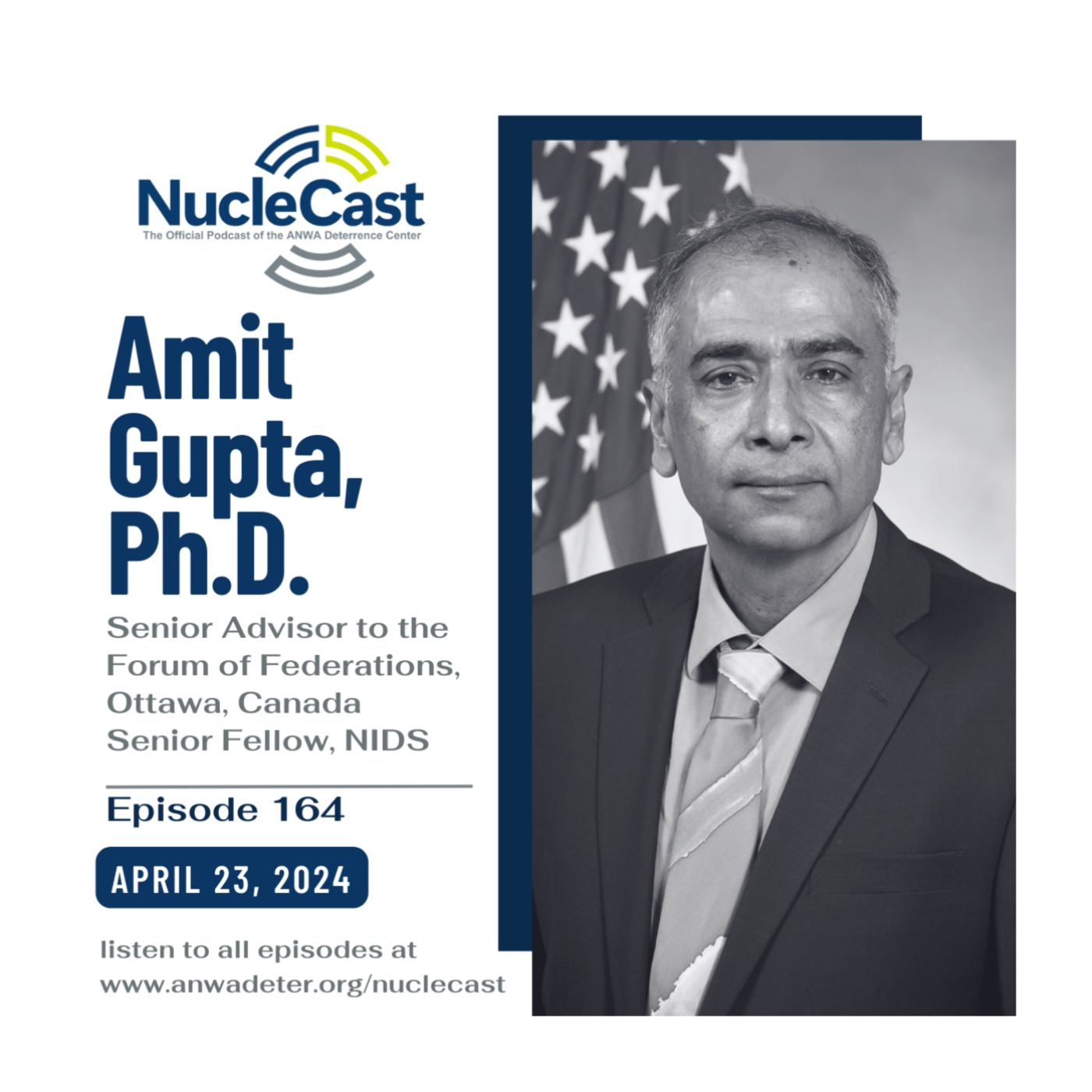
S2 Ep 164Amit Gupta, Ph.D. - Revamping Defense Production: Strengthening India's Capabilities
Dr. Amit Gupta discusses the Indian and Pakistani nuclear weapons programs and their relations with China. The Indian nuclear program was driven by the desire for autonomy and the need to showcase scientific ability. The Pakistanis pursued nuclear weapons as a deterrent against India's conventional advantage. Both countries have developed their nuclear capabilities over the years, with India having a 'no first use' policy and Pakistan adopting a more ambiguous stance. The Indian perspective on China is shaped by a history of border disputes and a desire to counter China's growing military capabilities. India seeks to build an economic partnership with the United States, revamp its defense production, and engage in dialogue with China.Amit Gupta is a Senior Advisor to the Forum of Federations, Ottawa, Canada. He has previously on the faculty of the USAF Air War College. He is the author, co-author or editor of eight books including, Building an Arsenal: The Evolution of Regional Power Force Structures (Praeger), Global Security Watch—India (Praeger), Strategic Stability in Asia, (Ashgate), and Air Forces: Next Generation (Howgate).In the realm of popular culture, he has written in academic journals and magazines on Doctor Who, Diego Maradona, The Defenders, Star Trek, international cricket, and the globalization of Sports.Socials:Follow on Twitter at @NucleCastFollow on LinkedIn: https://linkedin.com/company/nuclecastpodcastSubscribe RSS Feed: https://rss.com/podcasts/nuclecast-podcast/Rate: https://podcasts.apple.com/us/podcast/nuclecast/id1644921278Email comments and topic/guest suggestions to [email protected]
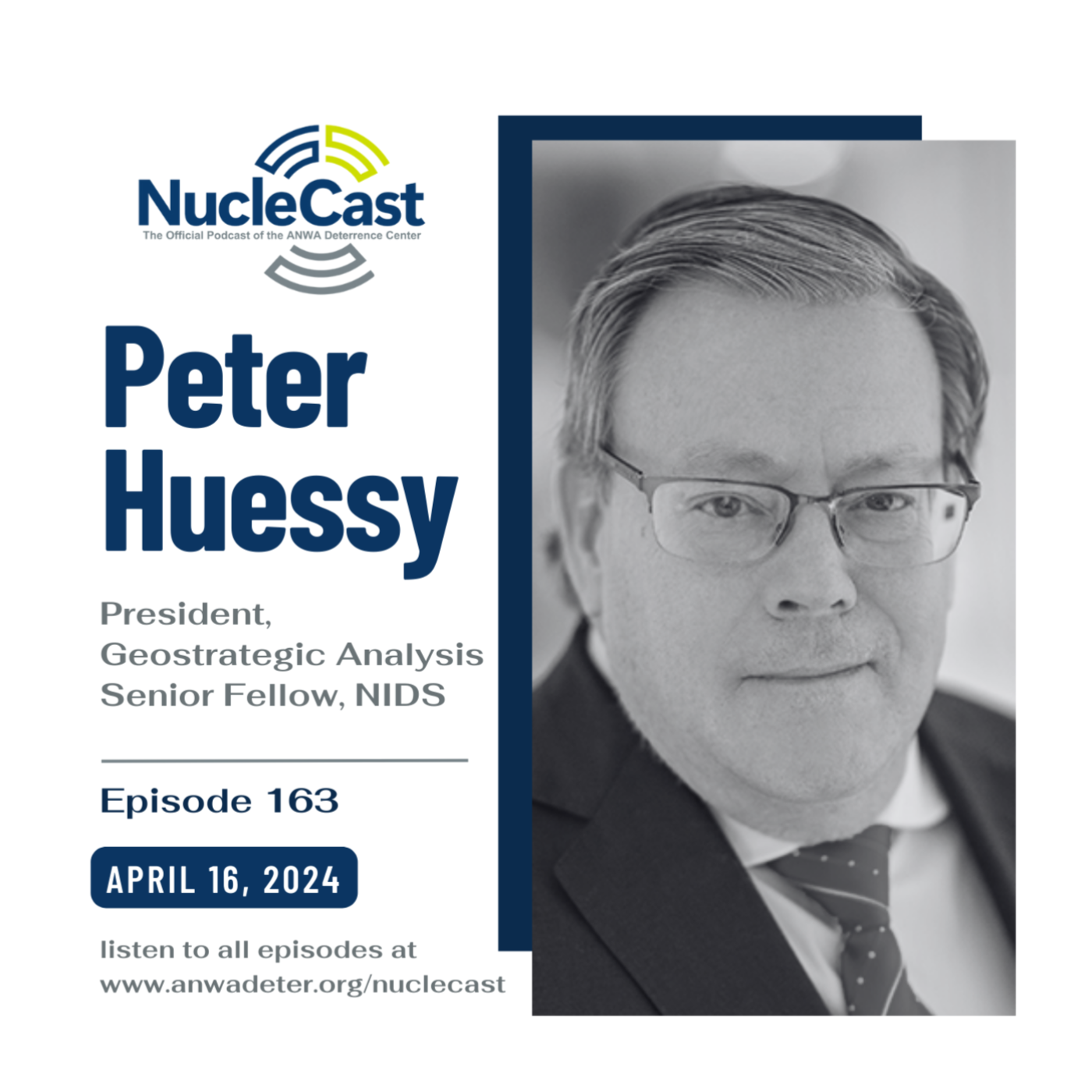
S2 Ep 163Peter Huessy - The Unrealistic Scenario in "Nuclear War: A Scenario"
In this episode of NucleCast, host Adam Lowther interviews Peter Huessy, a senior fellow at the National Institute for Deterrence Studies, about Annie Jacobsen's book 'Nuclear War, A Scenario.' They discuss the flaws in Jacobsen's arguments and mischaracterizations of American nuclear policy. Huessy points out that Jacobsen's scenario is unrealistic and rigged to lead to all-out nuclear war. He also refutes her claims about Ronald Reagan's views on nuclear weapons. The conversation highlights the importance of deterrence in maintaining peace and the dangers of advocating for nuclear disarmament.Mr. Huessy has been President of Geostrategic Analysis, a defense consulting firm he founded, since 1981. This organization is dedicated to analysis of the strategic nuclear posture of the United States and its nuclear-armed adversaries, particularly in support of ICBMs and US nuclear modernization. He was with the Hudson Institute as a Senior Fellow from December 2021-2023 while previously from 2011 was both a Consultant and Director of Strategic Deterrent Studies at the Air Force Association/Mitchell Institute. In August 2023, he joined the National Institute for Deterrence Studies as a Senior Fellow.
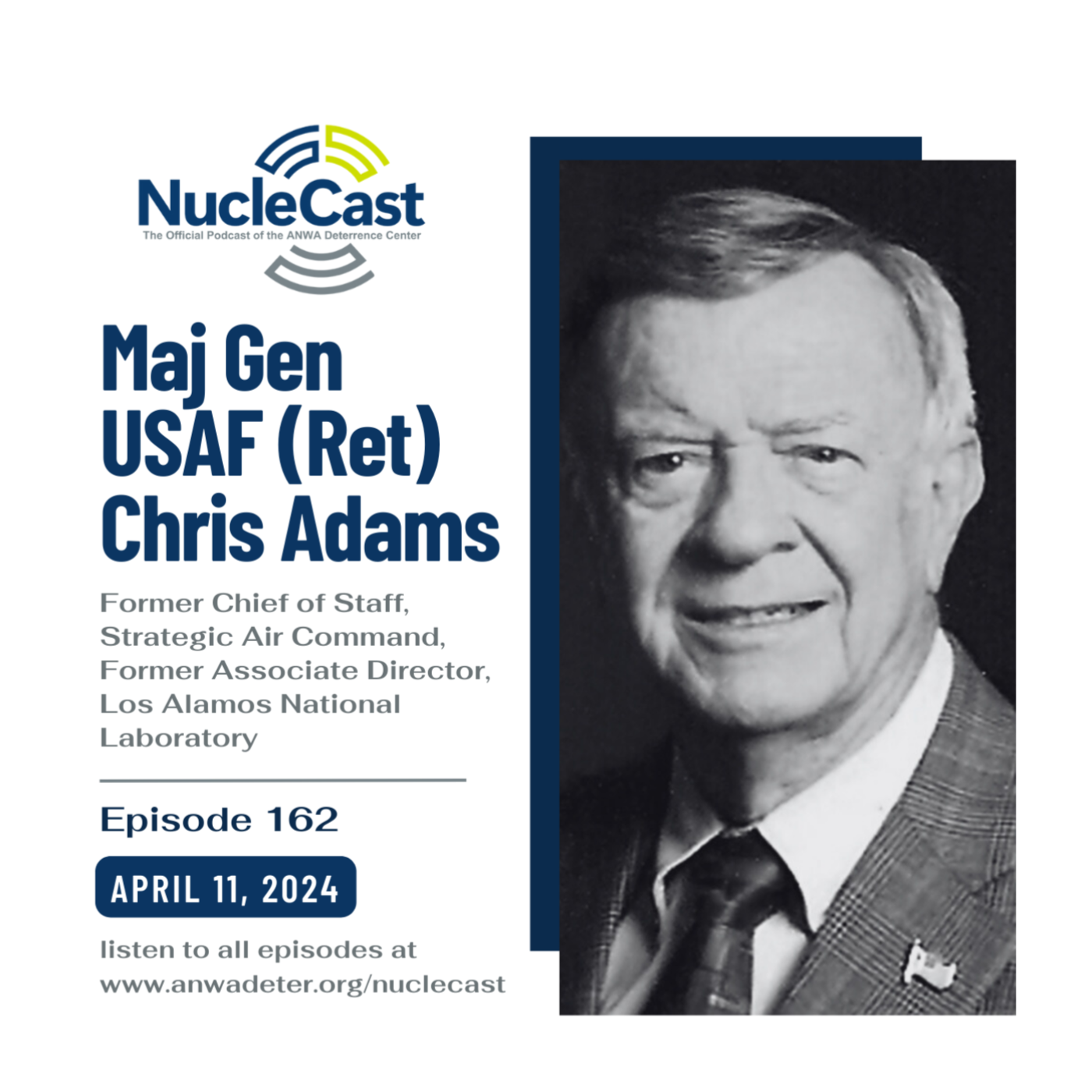
S2 Ep 162Major General Retired Chris Adams - From Old to New: The B-52/B-36
In this episode of NucleCast, Major General (Retired) Chris Adams shares his experiences flying the B-36 and B-52 aircraft and serving in the Strategic Air Command (SAC) during the Cold War. General Adams discusses the unique features of the B-36, including its three-pilot configuration and powerful engines. He also highlights the transition to flying the B-52, which he describes as a significant upgrade. General Adams then talks about his experience as a Minuteman missile crew commander and the disciplined culture of SAC. He emphasizes the importance of a strong military deterrent force, a stable society, and the preservation of the United States.Chris Adams is a retired U.S. Air Force Major General, former Chief of Staff, Strategic Air Command, former Associate Director, Los Alamos National Laboratory, industry executive, and author. He has traveled the world extensively and in particular, Russia and the former Soviet States, making some 23 extended visits there alone.His military honors include The Distinguished Service Medal, The Department of Defense Meritorious Service Medal, Two Legions of Merit, Two Air Medals for service in combat and numerous others. He was also awarded the Daughters of the American Revolution National Medal of Honor for 2011.He has been honored as a Distinguished Alumnus of Tarleton State University and Texas A&M University - Commerce, and has been listed in Who’s Who In America each year since 1982.In developing his books, Adams draws on his extraordinary knowledge and experience in strategic air operations, intelligence activities and the culture of Russia and the former Soviet Union. Each work is historically based and alludes to actual events that occurred in the former Soviet Union and the United States.
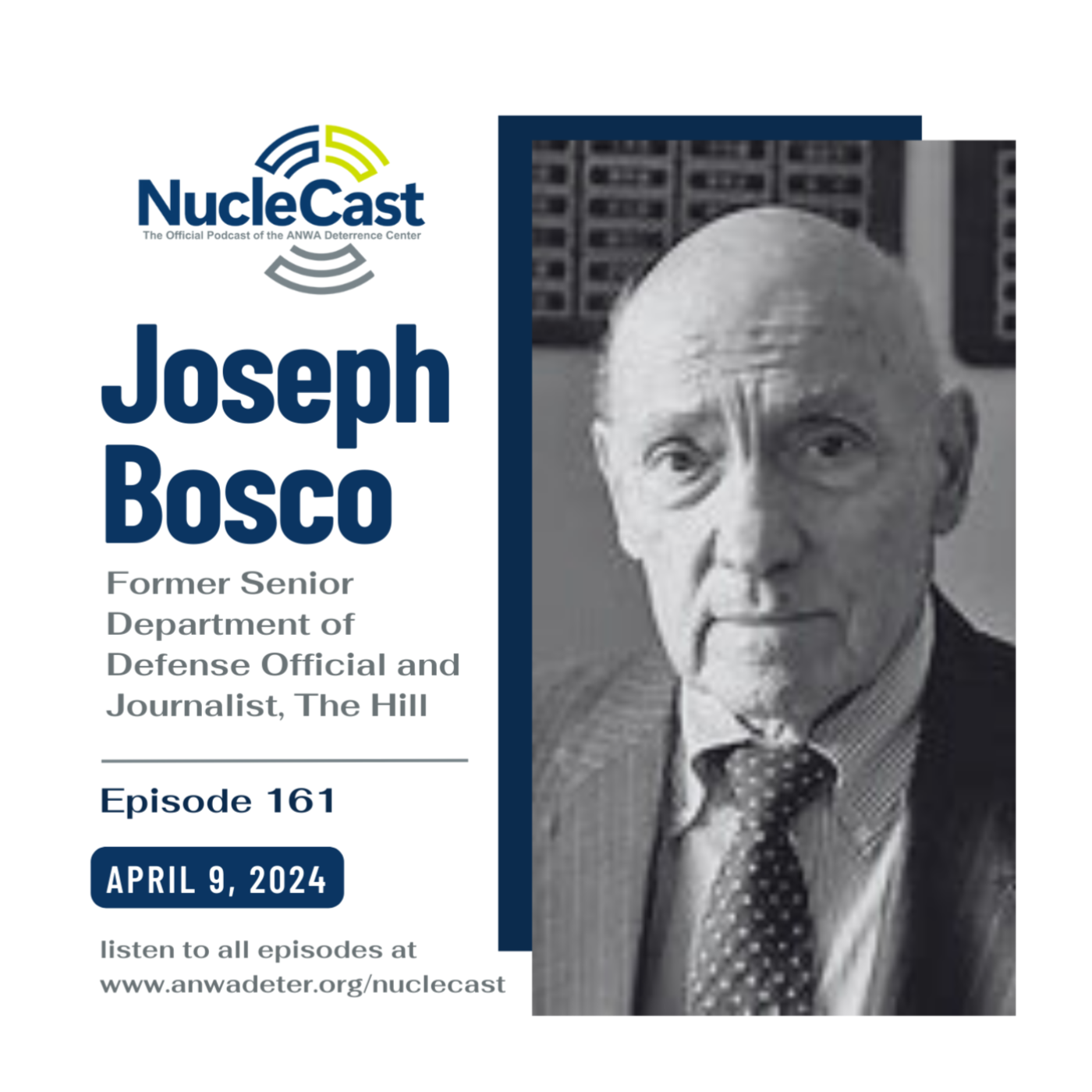
S2 Ep 161Joseph Bosco - Major Security Threats Facing the US Today
In this episode, Adam Lowther interviews Joseph Bosco, a former senior Department of Defense official, who discusses the complex challenges and decisions the US faces in a world with multiple adversaries, including Russia, China, Iran, and North Korea. Bosco emphasizes the need for strong leadership and a coordinated strategy to confront these threats. They also explore the continuous nature of war and the importance of recognizing the coordinated nature of the threats. The conversation delves into the conundrum of Taiwan and the need for strategic ambiguity in US policy. Bosco shares his wishes for an official US policy to defend Taiwan and for providing Ukraine with the weapons it needs to defend itself.Joseph A. Bosco, a national security consultant and journalist who contributes to The Hill and Newswav, retired from the Office of the Secretary of Defense (OSD) in 2010. During his seven-year tenure, he held various portfolios, including strategic communications, Muslim outreach, East Asia security affairs, Iraq and Afghanistan coalition affairs, and disaster relief and humanitarian affairs. His work spanned diverse assignments, and he played a significant role in activities related to the Association of Southeast Asian Nations (ASEAN) and the ASEAN Regional Forum, particularly focusing on the role of regional militaries in disaster relief and humanitarian efforts. Mr. Bosco has extensive experience in the Asia-Pacific region.Before his service at OSD, Joseph Bosco taught graduate seminars on China-Taiwan-U.S. relations in the Asian Studies Program at Georgetown University’s School of Foreign Service. He also organized conferences on U.S.-China-Taiwan issues. Additionally, he served as a senior fellow in the Asia-Pacific Program at the Atlantic Council of the United States. His earlier career included private practice in international law and government contracts, where he was listed in Martindale-Hubbell’s Directory of Preeminent Lawyers.
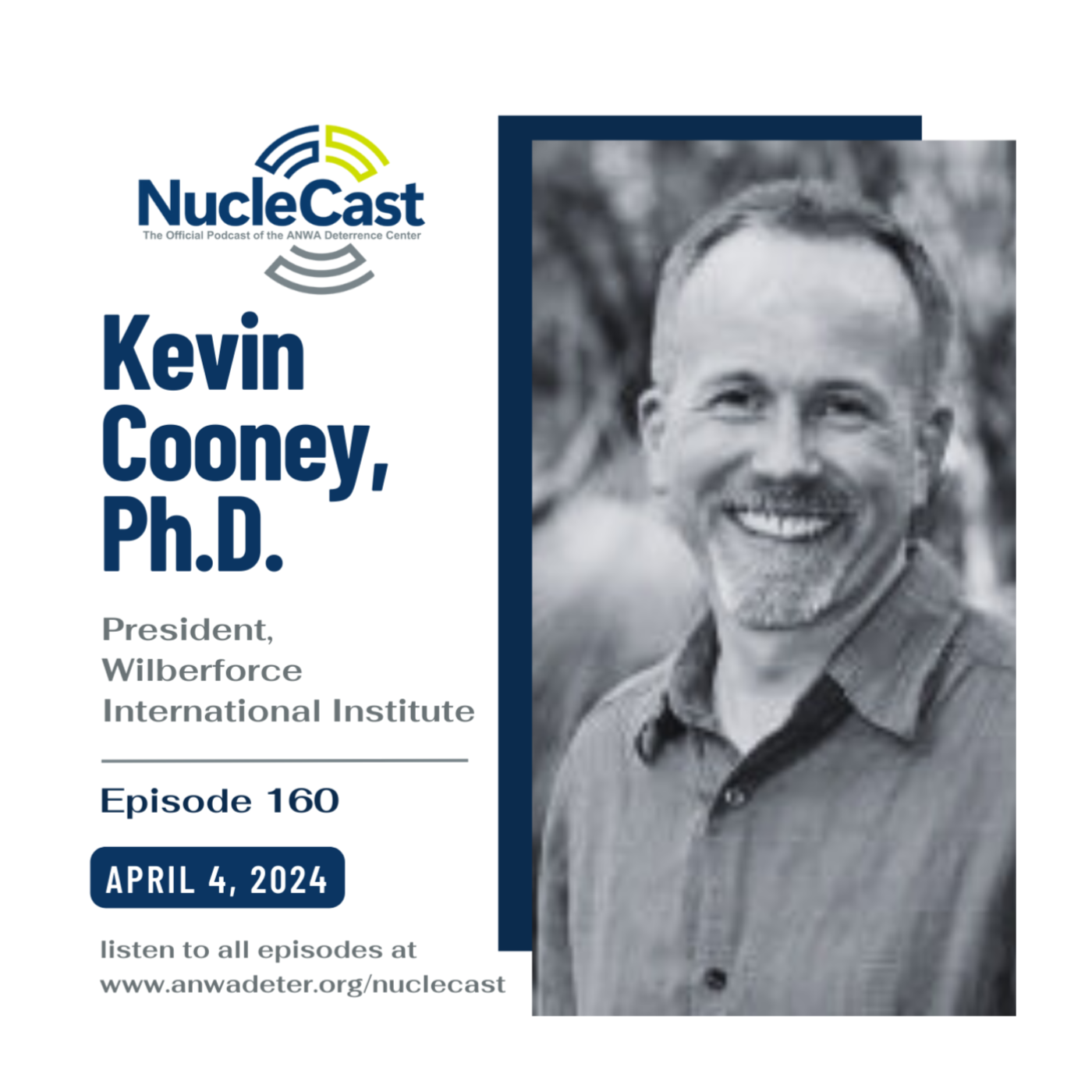
S2 Ep 160Kevin Cooney, Ph.D. - The Morality of Nuclear Weapons
In this episode, Adam and Dr. Kevin Cooney discuss the morality of nuclear weapons. They explore the concept of just war theory and its application to nuclear weapons, as well as the role of international law in regulating conflict. They delve into the historical context of the use of nuclear weapons in World War II and the ethical considerations surrounding their use. They also examine the current state of nuclear weapons and the arguments for disarmament. The conversation highlights the importance of dialogue and understanding in addressing the complex moral questions surrounding nuclear weapons.Dr. Cooney is a dedicated professional with an extensive background in security, economics, and organizational development. He is currently serving as the second President of Wilberforce International Institute, a non-profit, working with international students to bring redemptive change and human flourishing to their home cultures.Dr. Cooney is a Distinguished Affiliated Faculty at Regent University where he teaches graduate courses for the Robertson School of Government. He is also a Visiting Professor at Ritsumeikan Asia Pacific University in Beppu, Japan where he teaches courses on Violence, Cybersecurity Management, Strategy, and the Political economics of Asia. He has traveled extensively (58 countries to date) including time spent in the Middle East researching and studying terrorism. He was a tenured professor at Union University (TN) and later served the Director of the Pacific Rim Center at Northwest University where he held a dual appointment as Professor of both Business and Political Science.
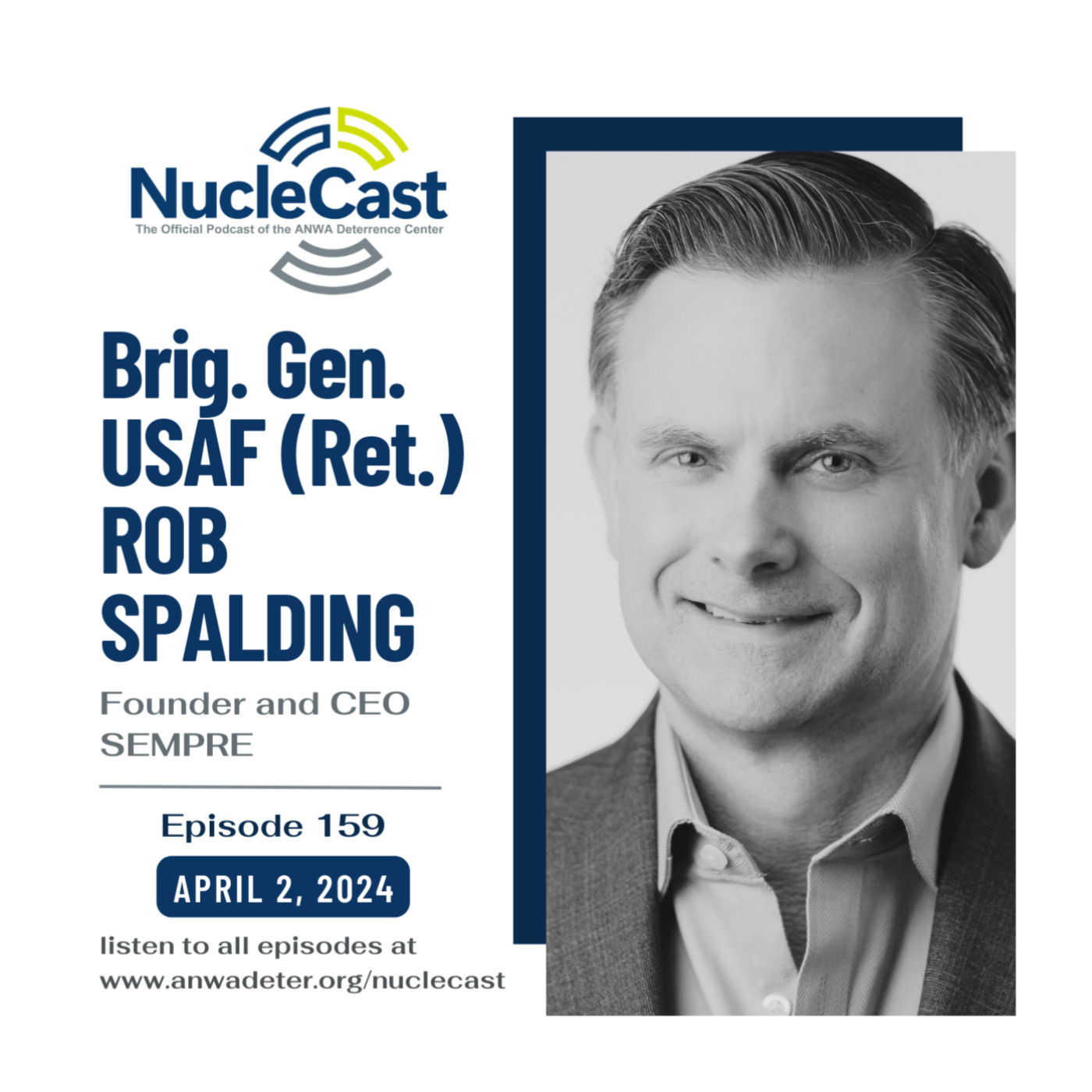
S2 Ep 159Rob Spalding, Brig Gen, USAD (Ret) - Protecting Our Most Valuable Asset, Our Data
In this episode of NucleCast, Adam interviews US Air Force Brigadier General (ret) Rob Spalding, CEO of SEMPRE, about their 5G technology and its relevance to the nuclear enterprise. They discuss the need for resilient infrastructure in the face of natural disasters and potential EMP attacks. SEMPRE's technology aims to provide communication capabilities that can withstand such events and ensure the continuity of critical services. The deployment and functionality of SEMPRE's technology are explained, highlighting its decentralized architecture and ability to extend resiliency to existing networks. The security and accessibility of the system are also addressed. The episode concludes with a discussion on the importance of protecting citizens and the potential collaboration with national carriers.Dr. Spalding is the former White House National Security Council Senior Director for Strategic Planning and served in senior positions of strategy and diplomacy within the Defense and State Departments for more than 26 years. SEMPRE is the only technology company created to protect and secure our most critical resource: data.He was the chief architect for the widely praised 2017 National Security Strategy and the Senior Director for Strategy to the President at the National Security Council. Rob’s innovation while serving in the White House has led to a reset in national security and public policy regarding telecommunications in the US as well as globally.Socials:Follow on Twitter at @NucleCastFollow on LinkedIn: https://linkedin.com/company/nuclecastpodcastSubscribe RSS Feed: https://rss.com/podcasts/nuclecast-podcast/Rate: https://podcasts.apple.com/us/podcast/nuclecast/id1644921278Email comments and topic/guest suggestions to [email protected]
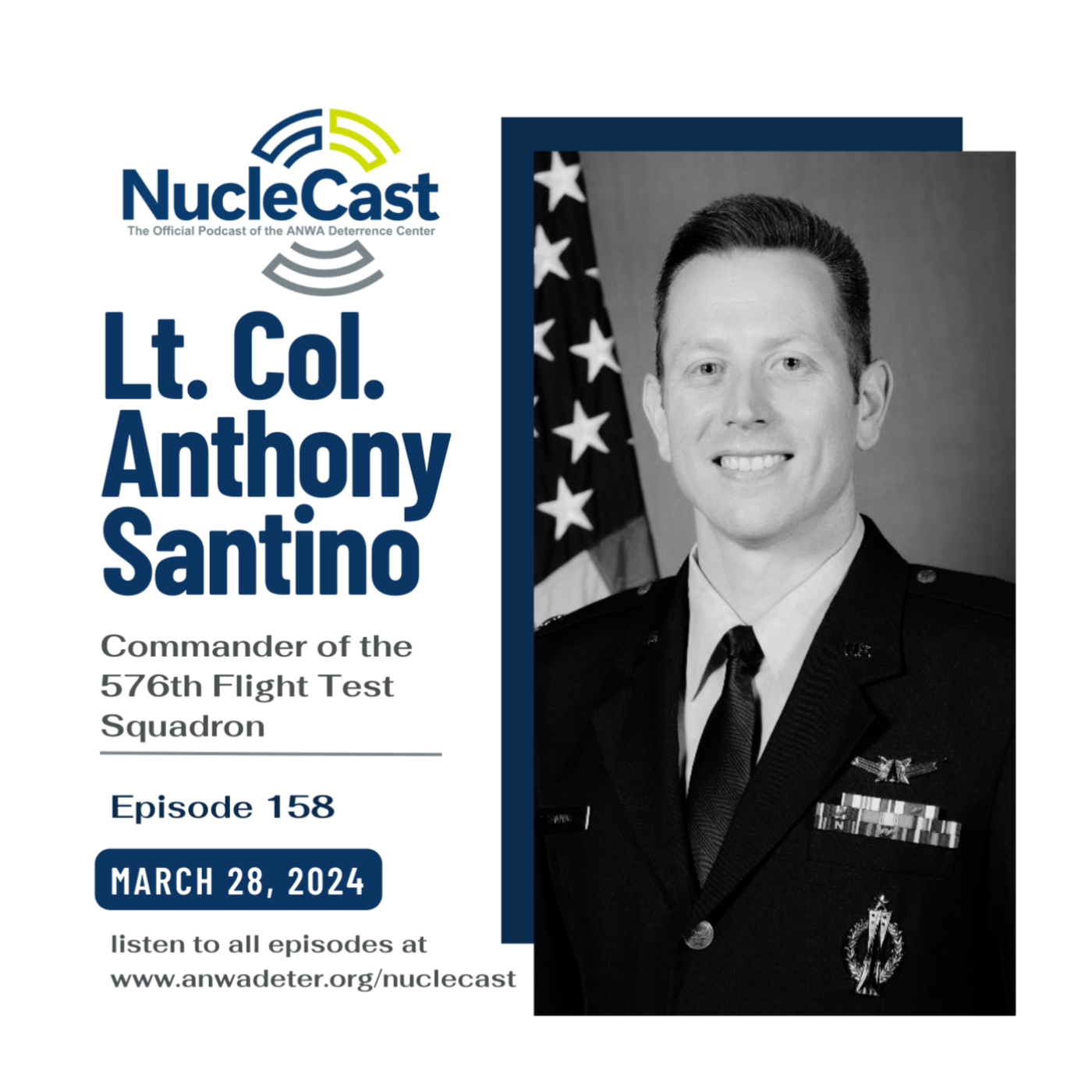
S2 Ep 158Lt. Col. Anthony Santino - The Important Mission of the 576 Flight Test Squadron
Lieutenant Colonel Anthony Santino, Commander of the 576 Flight Test Squadron, Vandenberg Space Force Base, California, discusses the importance of ICBM testing and the unique mission of his squadron. He explains the process of ICBM testing and the role it plays in ensuring the effectiveness and reliability of the weapon system. Santino also addresses the need for a new Sentinel program and the challenges of sustaining the aging Minuteman III system. He shares interesting facts about the 576 Flight Test Squadron and concludes by emphasizing the importance of predictable federal budgeting and the role of testing in maintaining deterrence.The 576th Flight Test Squadron is America’s only dedicated Intercontinental Ballistic Missile test squadron. In his role, Lt Col Santino oversees a $100 billion flight test and ground system sustainment program portfolio, and 45 personnel responsible for planning, executing, and reporting all Minuteman III and Sentinel operational test activities. Additionally, he is the principal lead for proficiency training, tactics evaluation, and mission assurance certification of squadron test team members.In his previous assignments, Lt Col Santino was a Senate Liaison Officer assigned to the Office of the Secretary of the Air Force and an Air Force Legislative Fellow assigned to the U.S. House of Representatives. He also served as the Aide-de-Camp to the Commander of United States Strategic Command.Lt Col Santino received his commission in 2007 upon graduation from the United States Air Force Academy. He is a Command Missileer and has held positions at the squadron, wing, combatant command, and Headquarters Air Force levels.Socials:Follow on Twitter at @NucleCastFollow on LinkedIn: https://linkedin.com/company/nuclecastpodcastSubscribe RSS Feed: https://rss.com/podcasts/nuclecast-podcast/Rate: https://podcasts.apple.com/us/podcast/nuclecast/id1644921278Email comments and topic/guest suggestions to [email protected]
S2 Ep 157Ken Myers - Defense Threat Reduction Agency (DTRA)
In this episode of NucleCast, Adam interviews Ken Myers, the former director of DTRA (Defense Threat Reduction Agency 2009-2016), about the agency's mission and history. As a member of the Senior Executive Service, he was the fourth and longest serving director of the agency. He oversaw an annual $3 billion budget and operated simultaneously as a defense agency, combat support agency, and a Combatant Command component safeguarding America and its allies from weapons of mass destruction. Under his leadership DTRA/SCC was awarded four Joint Meritorious Unit Awards and Ken was awarded the Secretary of Defense’s Exceptional Public Service Award.In this episode, he discusses DTRA's role as a defense agency, combat support agency, and element of the U.S. Strategic Command. He also explores DTRA's involvement in various missions, including nonproliferation, countering weapons of mass destruction, and support for the warfighter. The conversation covers the evolution of DTRA's mission, the shift of the CWMD mission from STRATCOM to SOCOM, and the role of defense support agencies in supporting the combatant commands. Myers shares his insights on the need for continued technological advancement, bipartisan support for national security, and the importance of maintaining the credibility of the U.S. nuclear weapons stock.Socials:Follow on Twitter at @NucleCastFollow on LinkedIn: https://linkedin.com/company/nuclecastpodcastSubscribe RSS Feed: https://rss.com/podcasts/nuclecast-podcast/Rate: https://podcasts.apple.com/us/podcast/nuclecast/id1644921278Email comments and topic/guest suggestions to [email protected]
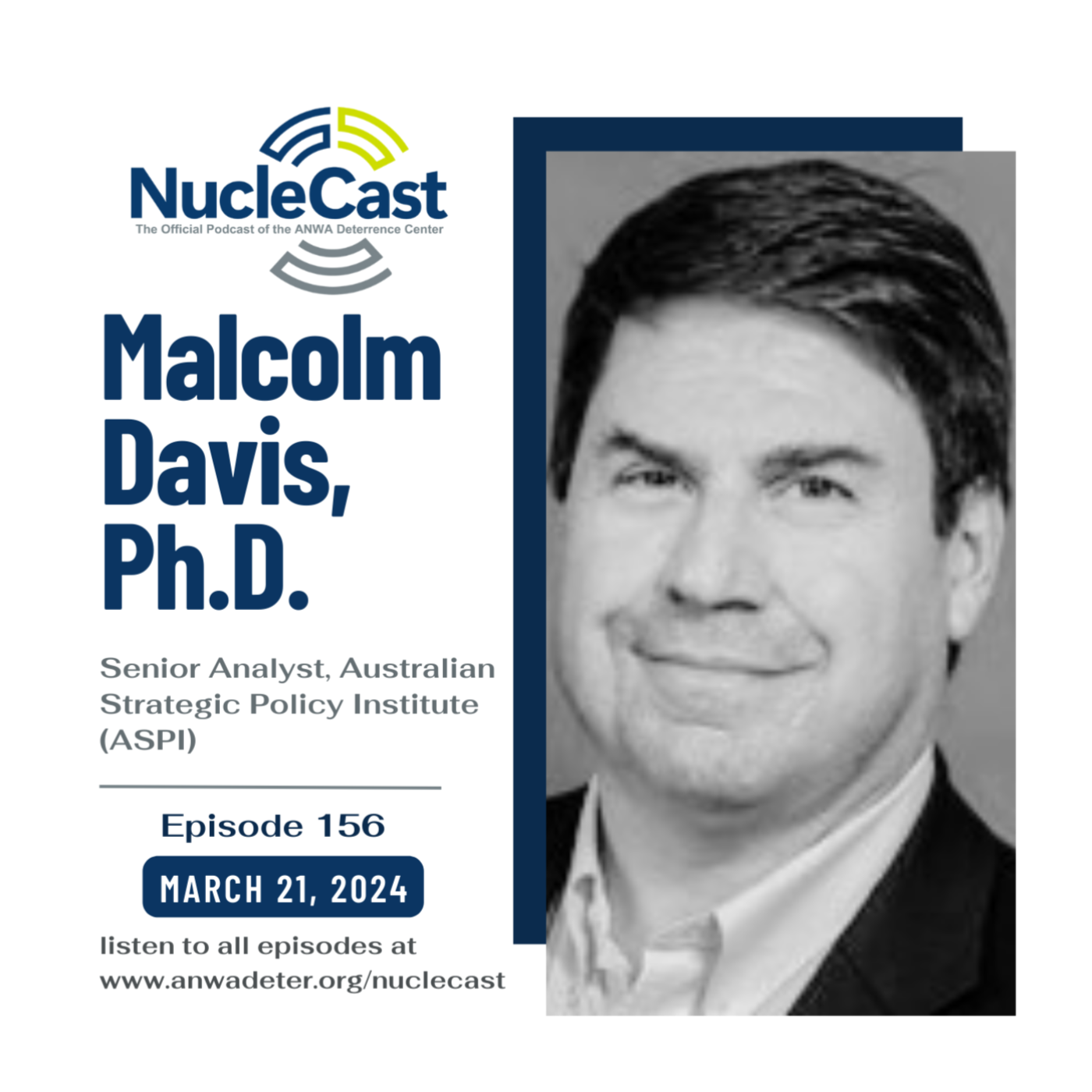
S2 Ep 156Malcolm Davis, Ph.D. - AUKUS: An Australian Perspective
Dr. Malcolm Davis discusses the Australian perspective on AUKUS, American extended deterrence, and the views of China as a potential threat. He highlights the evolving relationship between Australia and the United States, the importance of the US alliance, and the role of AUKUS in strengthening defense capabilities. Davis emphasizes the need for a realistic and balanced approach to China, recognizing its strategic ambitions and the challenges it poses to Australia's security. He also discusses concerns about US commitment and the importance of strengthening extended nuclear deterrence.Dr. Malcolm Davis joined ASPI as a Senior Analyst in Defence Strategy and Capability in January 2016. Prior to this he was a Post-Doctoral Research Fellow in China-Western Relations with the Faculty of Society and Design at Bond University from March 2012 to January 2016, and he currently retains an Honorary Assistant Professor position in the Faculty. He has worked with the Department of Defence, both in Navy Headquarters in the Strategy and Force Structure area, and with Strategic Policy Division in the Strategic Policy Guidance and Strategic External Relations and Education sections from November 2007 to March 2012. Prior to this appointment he was a Lecturer in Defence Studies with King's College London at the Joint Services Command and Staff College, in Shrivenham, UK, from June 2000 to October 2007. He holds a PhD in Strategic Studies from the University of Hull as well as two Masters degrees in Strategic Studies, including from the Australian National University’s Strategic and Defence Studies Centre. His main research focus is on defense strategy and capability development, military technology, and the future of warfare. Socials:Follow on Twitter at @NucleCastFollow on LinkedIn: https://linkedin.com/company/nuclecastpodcastSubscribe RSS Feed: https://rss.com/podcasts/nuclecast-podcast/Rate: https://podcasts.apple.com/us/podcast/nuclecast/id1644921278Email comments and topic/guest suggestions to [email protected]
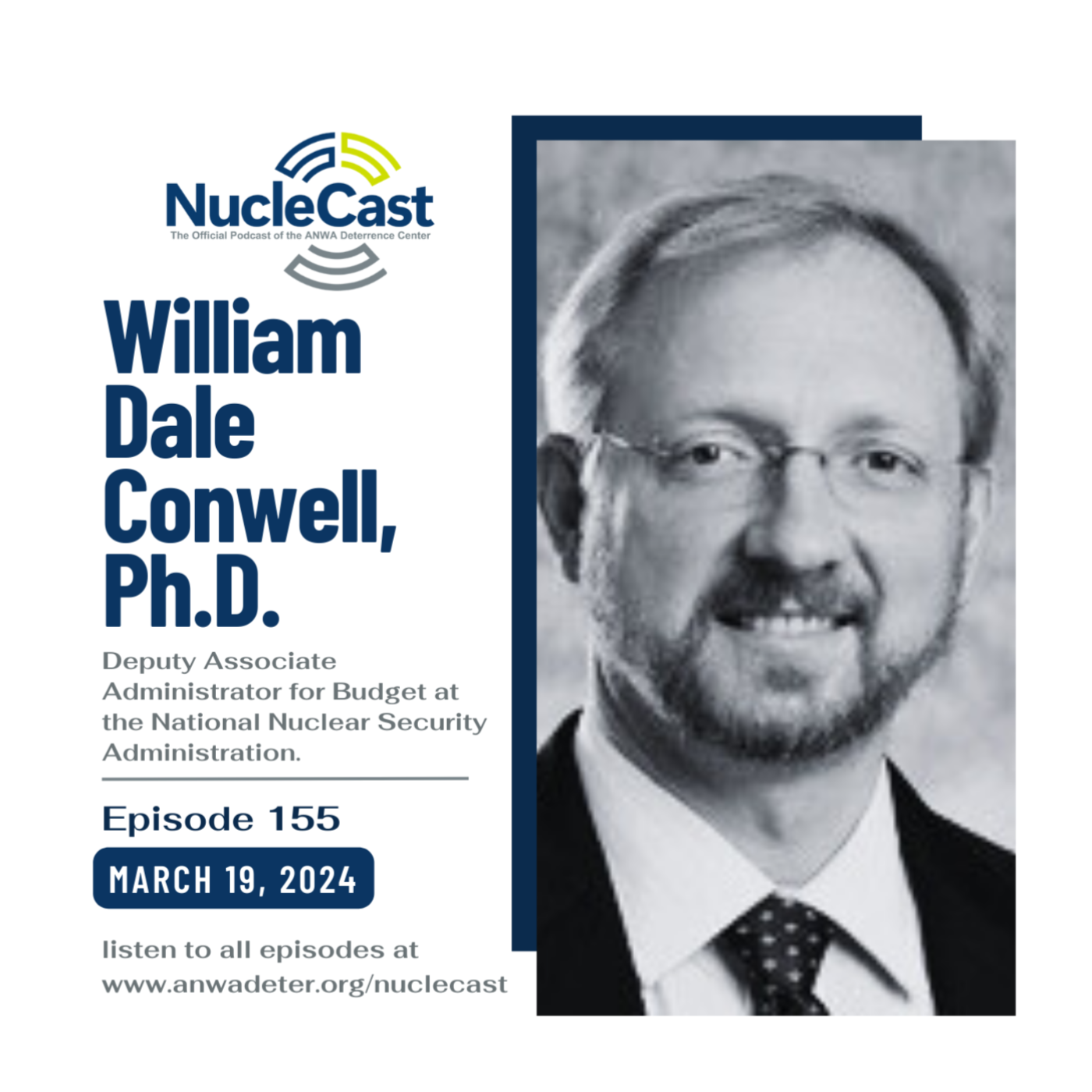
S2 Ep 155William Dale Conwell, Ph.D. - The FY 2025 Budget Overview
Dr. William Conwell, Deputy Associate Administrator for Budget at the National Nuclear Security Administration, discusses the importance of the budget and the challenges of managing the nuclear security enterprise. The budget is allocated to five major national security endeavors, including maintaining the nuclear weapons stockpile, reducing global nuclear threats, and strengthening science and technology capabilities. Modernizing the nuclear security infrastructure is a key focus. The budget is divided into four appropriations, with the largest portion allocated to weapons activities. The budgeting process involves working closely with the Nuclear Weapons Council and other agencies to determine requirements. Challenges include workforce recruitment and retention, accurate cost estimation, and managing organizational changes. Dr. Conwell is the Deputy Associate Administrator for Budget at the National Nuclear Security Administration. He is responsible for the Planning, Programming, Budget Execution, and Evaluation of NNSA’s $24 billion budget and support to the NNSA programs with cost estimating, business case analysis, and Analysis of Alternatives. His team of over 130 professionals in budget analysis, accounting standards, and general engineering and physical science are the backbone of NNSA’s efforts to maintain a safe, secure, and effective nuclear weapons stockpile; to reduce global nuclear threats; and to provide the U.S. Navy with safe, militarily-effective naval nuclear propulsion plants.Socials:Follow on Twitter at @NucleCastFollow on LinkedIn: https://linkedin.com/company/nuclecastpodcastSubscribe RSS Feed: https://rss.com/podcasts/nuclecast-podcast/Rate: https://podcasts.apple.com/us/podcast/nuclecast/id1644921278Email comments and topic/guest suggestions to [email protected]
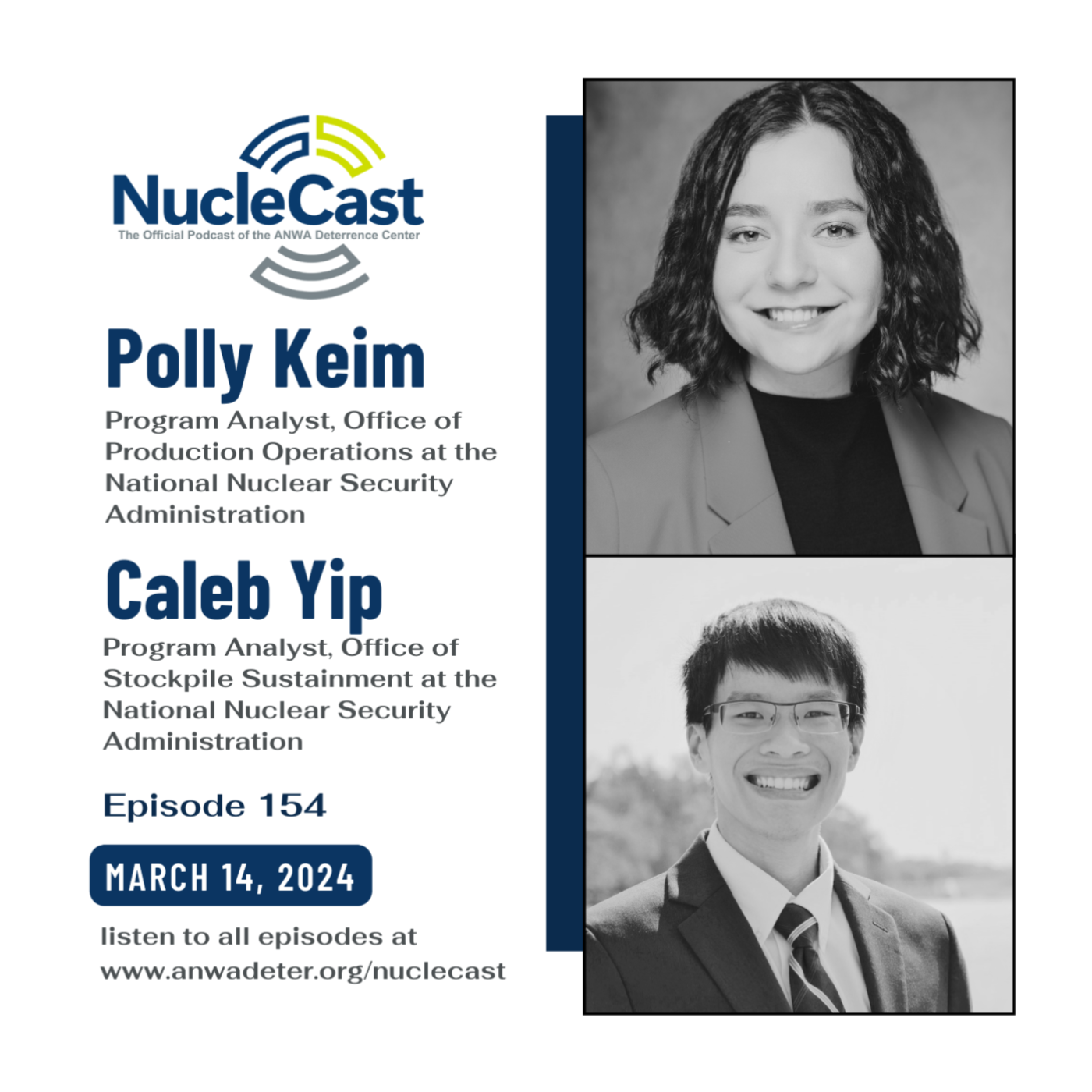
S2 Ep 154Polly Keim and Caleb Yip - NNSA Changing Perspectives and Opportunities for Young Professionals
In this episode of NucleCast, Adam interviews Polly Keim and Caleb Yip, program analysts at NNSA, to gain insights into the perspectives and experiences of young professionals in the field. The conversation covers topics such as the fellowship program, career paths, the role of non-engineering professionals, changing perspectives in NNSA, recruiting and retaining young talent, challenges faced by young workers, and the wishes of the guests for workforce development in NNSA. Paulina "Polly" Keim is an early-career nuclear weapons professional in the Office of Production Operations at the National Nuclear Security Administration (NNSA). In her role, she supports production specific multi-tail workload at seven NNSA sites. She started her career in the NNSA Graduate Fellowship Program, working in the Office of Domestic Uranium Enrichment and has since joined the Federal service. Polly is also a part of the CSIS PONI Nuclear Scholars Initiative where she is engaging with senior experts on nuclear weapons issues and researching the workforce needs of the Nuclear Security Enterprise (NSE) as it transitions from stockpile stewardship to a more responsive enterprise for the 21st century. Polly holds a Bachelor’s in Political Economy and a Masters of Public Policy from the University of Virginia (go Hoos!) In her free time, she enjoys yoga, reading, hiking, going to concerts, and playing with her cat Oppie.Caleb Yip is a program analyst with the Office of Stockpile Sustainment (NA-122) at the U.S. Department of Energy’s National Nuclear Security Administration, which works to maintain and surveil the U.S. stockpile to ensure that the Nation’s nuclear deterrent remains safe, secure, and effective. Prior to joining NNSA as a Fed, Caleb was an NNSA Graduate Fellow in the Office of Defense Programs, where he supported front-office correspondence and strategic messaging for the Deputy Administrator for Defense Programs. Caleb was a member of the CSIS Project on Nuclear Issues scholars cohort last year, and is expected to publish his paper on Russian nuclear escalation dynamics in the coming months. Caleb received his Bachelor’s in Foreign Service and Master’s in Security Studies from Georgetown University. Socials:Follow on Twitter at @NucleCastFollow on LinkedIn: https://linkedin.com/company/nuclecastpodcastSubscribe RSS Feed: https://rss.com/podcasts/nuclecast-podcast/Rate: https://podcasts.apple.com/us/podcast/nuclecast/id1644921278Email comments and topic/guest suggestions to [email protected]
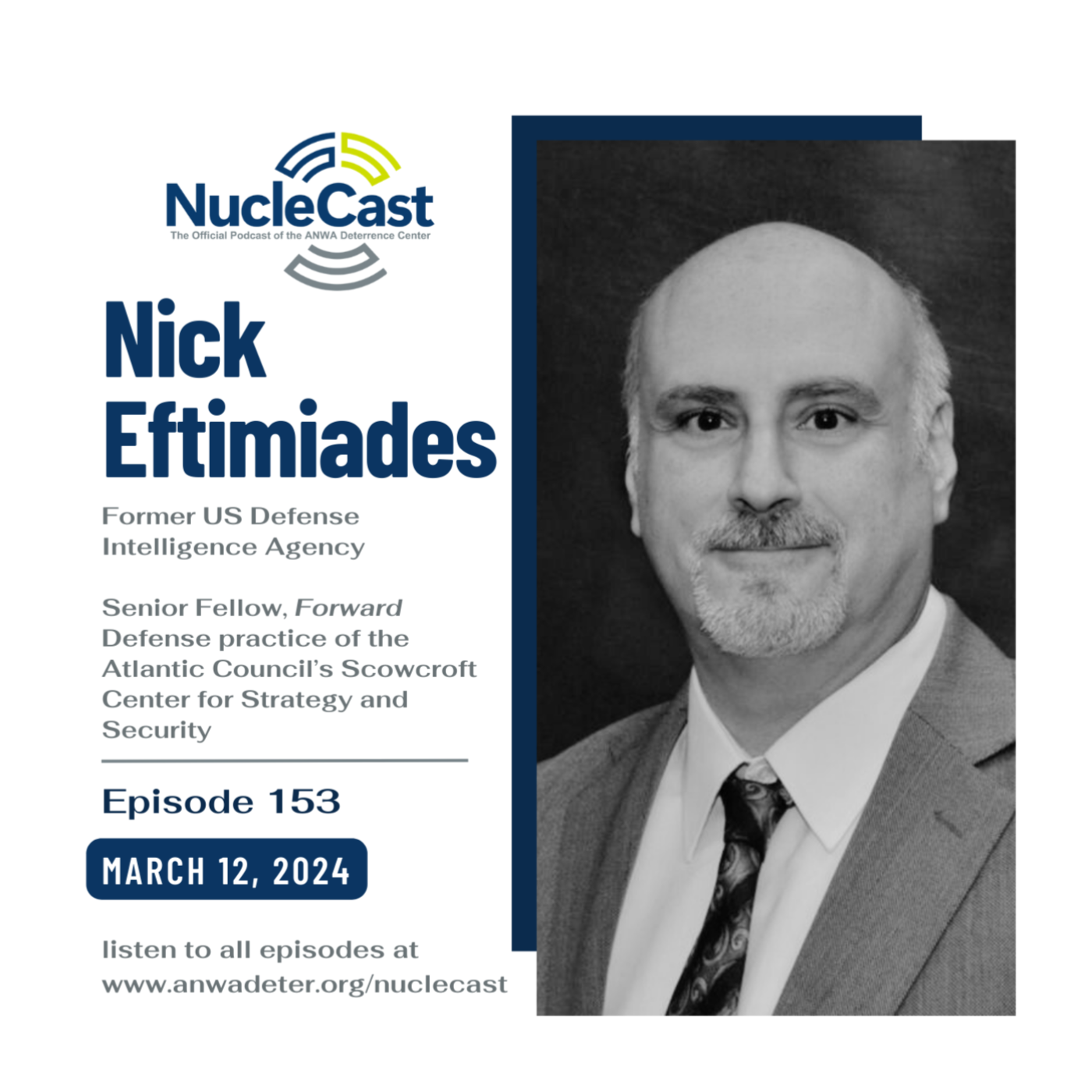
S2 Ep 153Nick Eftimiades: Chinese Espionage and the Impact on US National Security
Retired senior intelligence officer Nick Eftimiades discusses China's whole of society approach to espionage and its impact on national security. He highlights the methods used by China, such as theft of technology, trade secrets, and covert influence operations. Eftimiades explains the reasons for ignoring Chinese espionage in the past and the need for a fundamental restructuring of the approach to counter it. He emphasizes the importance of spreading awareness and education in critical infrastructure industries and the need for an integrated national response to China's activities. Eftimiades concludes by urging listeners to take the long-term security interests of the country seriously.Nicholas Eftimiades is a nonresident senior fellow at theForward Defense practice of the Atlantic Council’s Scowcroft Center for Strategy and Security. Eftimiades currently holds an appointment with the Office of the Director of National Intelligence, National Intelligence Council, and has held appointments with the Defense Science Board and the Homeland Security Advisory Council’s Subcommittee on Economic Security. He is also a professor at the Penn State University Homeland Security Programs and is a member of the graduate faculty teaching homeland security, intelligence, and national security policy. He conducts research on China’s economic espionage and emerging space threats.Eftimiades retired from a thirty-four-year government career including employment at the US Central Intelligence Agency, the Department of State, Diplomatic Security Service, and Defense Intelligence Agency. He is widely regarded for his expertise on China and national security space issues. As a subject matter expert, he has testified before congressional committees and briefed numerous senior US and foreign officials, members of Congress, and staff.Socials:Follow on Twitter at @NucleCastFollow on LinkedIn: https://linkedin.com/company/nuclecastpodcastSubscribe RSS Feed: https://rss.com/podcasts/nuclecast-podcast/Rate: https://podcasts.apple.com/us/podcast/nuclecast/id1644921278Email comments and topic/guest suggestions to [email protected]
S2 Ep 152Rebeccah Heinrichs - The Aftermath of the Strategic Posture Commission's Report
Rebecca Heinrichs discusses the aftermath of the Strategic Posture Commission's report and the lack of media coverage. She highlights the broad agreement on the threat assessment and the need for the United States to address the deteriorating threat environment. Heinrichs also discusses the interest from allies in Europe and Asia to contribute to the deterrence mission. She addresses misconceptions about arms races and escalation, emphasizing the importance of nuclear deterrence. Heinrichs argues for the affordability of nuclear defense and the need for better integration between US Strategic Command and regional combatant commands.Rebeccah L. Heinrichs is a senior fellow at Hudson Institute and the director of its Keystone Defense Initiative. She specializes in US national defense policy with a focus on strategic deterrence.Ms. Heinrichs currently serves as a commissioner on the bipartisan Strategic Posture Commission, which was created in the Fiscal Year 2022 National Defense Authorization Act. She also serves on the US Strategic Command Advisory Group and the National Independent Panel on Military Service and Readiness.She is an adjunct professor at the Institute of World Politics where she teaches nuclear deterrence theory and is also a contributing editor of Providence: A Journal of Christianity and American Foreign Policy.Ms. Heinrichs earned her MA in national security and strategic studies from the US Naval War College and graduated with highest distinction from its College of Naval Command and Staff, receiving the Director’s Award for academic excellence. She earned her BA in history and political science from Ashland University in Ohio, was an Ashbrook Scholar, and currently serves as a member of the University's Board of Trustees. She is enrolled at Missouri State University pursuing her doctorate of defense and strategic studies.Socials:Follow on Twitter at @NucleCastFollow on LinkedIn: https://linkedin.com/company/nuclecastpodcastSubscribe RSS Feed: https://rss.com/podcasts/nuclecast-podcast/Rate: https://podcasts.apple.com/us/podcast/nuclecast/id1644921278Email comments and topic/guest suggestions to [email protected]
S2 Ep 151Col (Ret) USAF Dale Hernandez - Education Efforts of Air Force Global Strike Command
Drysdale “Dale” H. Hernandez is the Chief Learning Officer (CLO) for Headquarters Air Force Global Strike Command where he serves as the Chief, Force Development Division in the Directorate of Manpower and Personnel. In this position he serves as the primary advisor to the MAJCOM Commander on all Learning Strategy issues. His A1D Division plans, develops, and directs advisory and support services for command-wide Professional Development.In this episode, Colonel retired Hernandez discusses the importance of education in Air Force Global Strike Command and the efforts made to develop and educate strikers. Global Strike Command was created in 2009 to address the atrophy of nuclear expertise in the Air Force. The command offers over 20 courses and has invested over $23 million in the development of strikers. The education programs aim to build courageous problem solvers capable of critical thinking and problem-solving. The command also focuses on leadership development and strategic stability through a credible long-range strike force.Mr. Hernandez was raised in El Paso, Texas and was commissioned in 1991 as a graduate of The University of Texas at El Paso’s Air Force ROTC program. His Masters-level education includes degrees in Human Resources Management and Administration from Webster’s University, Military Operational Arts and Science from Air University, and Strategic Studies from the Army War College. Mr. Hernandez began his professional career in 1992 as the Chief of Social Actions at Griffiss AFB, NY. His Air Force career included multiple deployments, staff positions at Headquarters Air Mobility Command, Headquarters U.S. Air Forces in Europe and U.S. Air Forces in Africa, Headquarters U.S. Air Force and The Joint Staff. He has served as the 48th Mission Support Squadron Commander at RAF Lakenheath, United Kingdom and as the 52d Mission Support Group Commander at Spangdahlem Air Base, Germany. Socials:Follow on Twitter at @NucleCastFollow on LinkedIn: https://linkedin.com/company/nuclecastpodcastSubscribe RSS Feed: https://rss.com/podcasts/nuclecast-podcast/Rate: https://podcasts.apple.com/us/podcast/nuclecast/id1644921278Email comments and topic/guest suggestions to [email protected]
S2 Ep 150Whitney Jones - Submarine Construction, Technology, and Skilled Workforce
In this episode of NucleCast, Adam Lowther interviews Whitney Jones. She is the Director, Submarine Industrial Base (SIB), a component of the Navy’s (DON) Program Executive Office, Strategic Submarines (PEO SSBN). about the workforce challenges in submarine construction. They discuss the unique challenges of building submarines, the need for skilled tradespeople, and the efforts to recruit and retain a skilled workforce. They also address the impact of high cost of living areas on workforce development and the importance of leveraging technology for workforce training. As Director of SIB, Ms. Jones is responsible for leading enterprise efforts to develop and deploy the industrial base capacity and capability required to build and sustain submarine warfighting needs. In this capacity, Ms. Jones is accountable for collaborative efforts across defense workforce, technology, infrastructure development, process change, and data analytics. Her role focuses on fostering relationships between Navy and industry to improve communications, industrial processes, and capacity planning. Before assuming the role as Director in February 2022, Ms. Jones served as Deputy, Shipbuilding Industrial Base Task Force, where she leveraged her shipbuilding acquisition and supply chain experience to coordinate cross-enterprise projects and oversee strategic communications. She also led Navy Enterprise response, engagement, and assessment of the impacts of COVID-19 on the defense industrial base, working closely with industry to mitigate the pandemic’s impact on key suppliers by maintaining defense supply chains as part of “critical infrastructure” exempt from work stoppages. Additionally, she served as the submarine enterprise lead for a Columbia (CLB) and Virginia Submarine (VCS) Industrial Base assessment with Office of Secretary of Defense (OSD) Cost Assessment Program Evaluation (CAPE). During this same time period, she implemented submarine enterprise efforts on benchmark setting workforce development pilots including Accelerated Training in Defense Manufacturing (ATDM) and the Pennsylvania Talent Pipeline Project.Socials:Follow on Twitter at @NucleCastFollow on LinkedIn: https://linkedin.com/company/nuclecastpodcastSubscribe RSS Feed: https://rss.com/podcasts/nuclecast-podcast/Rate: https://podcasts.apple.com/us/podcast/nuclecast/id1644921278Email comments and topic/guest suggestions to [email protected]
S2 Ep 149Jim Stokes - NATO’s Nuclear Policy
Jim Stokes, Director of Nuclear Policy at NATO, discusses NATO's nuclear policy and the nuclear mission in Europe. He covers various topics, including the relevance of NATO nuclear policy, the role and implications of the Nuclear Planning Group (NPG), efforts to improve the NATO deterrent, the policy issue of establishing an adversary, challenges for allies in nuclear policy, NATO's approach to the China challenge, and the challenge of unilateral disarmament. Jim Stokes became the NATO Director of Nuclear Policy in November 2023 and is responsible for developing and implementing NATO nuclear policy, organizing exercises, policy symposiums, training programs and providing policy support to the Secretary General on nuclear deterrence. Mr. Stokes chairs the Nuclear Planning Group - Staff Group.Prior to NATO, Mr. Stokes had a long career within the U.S. Department of Defense, holding positions in the Office of the Secretary of Defense, Naval Special Warfare Command, and the Office of the Chief of Naval Operations. He has earned Master’s degrees from the National War College and the University of Maryland’s School of Public Policy, as well as a B.A. from Allegheny College.Socials:Follow on Twitter at @NucleCastFollow on LinkedIn: https://linkedin.com/company/nuclecastpodcastSubscribe RSS Feed: https://rss.com/podcasts/nuclecast-podcast/Rate: https://podcasts.apple.com/us/podcast/nuclecast/id1644921278Email comments and topic/guest suggestions to [email protected]
S2 Ep 148Brig. Gen. William D. Murphy - Understanding the NC3 Enterprise
Brigadier General Bill Murphy discusses the importance of the Nuclear Command, Control, and Communications (NC3) system and their role in strategic deterrence. He explains that NC3 is a system of systems that ensures the President has command and control over nuclear forces and enables mission essential functions. General Murphy highlights the challenges of modernizing NC3 and the role of the NC3 Enterprise Center in overseeing the process. He emphasizes the importance of digital engineering and modeling in making informed decisions about future capabilities. General Murphy also calls for increased understanding and support for strategic deterrence and recognition of the work done by the men and women of the NC3 Enterprise.Brig. Gen. William D. Murphy serves as the Mobilization Assistant to the Commander, United States Strategic Command at Offutt Air Force Base, Nebraska. He is the principal advisor to the Commander on Reserve Component matters related to the Command’s diverse missions, including strategic deterrence; cyberspace operations; integrated missile defense; intelligence, surveillance, and reconnaissance; and global strike. Brig. Gen. Murphy also flies as an Airborne Emergency Action Officer conducting strategic deterrence and operations missions aboard the Looking Glass Airborne Nuclear Command Post, supporting the president and National Command Authorities. Brig. Gen. Murphy was commissioned in 1990 as a graduate of the Air Force ROTC program at University of Nebraska, Omaha. He was a Distinguished Graduate in the MMII and MMIII weapon systems and has served in numerous wing, Numbered Air Force, Air Staff, Combatant Command and Joint Staff assignments. He has served on faculty for the Reserve Component National Security Course, National Defense University and as guest lecturer for the Air Force Nuclear Fundamentals Course and Nuclear Concepts Course. He was awarded Joint Qualified Officer (Level III) in 2012. In his civilian capacity, Brig. Gen. Murphy serves as Vice President of an Independent Consulting Firm based in Omaha Neb. Prior to his current position, he served as Mobilization Assistant to the Director of Operations and Communications, Headquarters Air Force Global Strike Command, Barksdale Air Force Base, Louisiana.Socials:Follow on Twitter at @NucleCastFollow on LinkedIn: https://linkedin.com/company/nuclecastpodcastSubscribe RSS Feed: https://rss.com/podcasts/nuclecast-podcast/Rate: https://podcasts.apple.com/us/podcast/nuclecast/id1644921278Email comments and topic/guest suggestions to [email protected]
S2 Ep 147Marcus L. Lea - NNSA Workforce Recruitment and Retention for the Nuclear Security Mission
In this episode, Adam interviews Marcus Lea, the Deputy Associate Administrator for Management at the National Nuclear Security Administration (NNSA), about the importance of human capital and growing the workforce in the nuclear security field. They discuss recruitment and retention strategies, promoting the mission to potential candidates, inspiring youth to pursue STEM fields, partnerships with minority serving institutions, mentoring and guidance for students, and addressing challenges in federal hiring. Mr. Lea provides management, leadership, and day-to-day guidance in the NNSA administrative functions, including budget, NNSA Human Resources, Business Services, Audit and Internal Affairs, Learning and Career Management, and International Operations, providing guidance and assistance to the Administrator in all administrative areas. He is also responsible for developing and implementing Working Capital and related business policies, systems, procedures, and practices of the Department and the NNSA to ensure that they are responsive to the requirements for effective, efficient, and economical achievement of all programmatic goals and program objectives, and that they are fully supportive of the NNSA legislation and strategic plans.Prior to joining NNSA, Mr. Lea was Director of the National Aeronautics and Space Administration (NASA) Marshall Space Flight Center's Office of Human Capital. He led the entire scope of the Center's workforce strategy and planning, organization and leadership development, academic affairs, training and incentives, federal labor relations and employee services and operations. Prior to serving at NASA, Mr. Lea was Director for the Office of Human Capital Management at NNSA. He also served as DOE’s Deputy for the Office of Human Resources and as Director of Human Resources Operations. Before joining DOE, Mr. Lea was a Civilian Personnel Officer for the United States Air Force District of Washington. Mr. Lea began his professional career as an Allowances and Differentials Analyst for the United States Department of State and progressively served in leadership roles spanning all of the Human Resources disciplines for the Office of Personnel Management; the United States Air Force Materiel Command; the Defense Information Systems Agency; and the Federal Motor Carrier Safety Administration.Socials:Follow on Twitter at @NucleCastFollow on LinkedIn: https://linkedin.com/company/nuclecastpodcastSubscribe RSS Feed: https://rss.com/podcasts/nuclecast-podcast/Rate: https://podcasts.apple.com/us/podcast/nuclecast/id1644921278Email comments and topic/guest suggestions to [email protected]
S2 Ep 146Zachary Kallenborn - How A Nuclear Weapons Ban Threatens Humanity
In this episode, Zachary Kallenborn discusses the arguments made in his article on why a nuclear weapons ban would threaten humanity. He highlights that while nuclear weapons present an existential threat, there are other existential risks such as extreme biological weapons, planet killer asteroids, artificial intelligence, and super volcanoes. Removing nuclear weapons could potentially lead to a return of great power war, which would worsen these other risks. The breakdown of global cooperation, diversion of resources, damage to infrastructure, and potential renuclearization are some of the concerns discussed. The interdependencies between nuclear weapons and nuclear power, as well as the need for a better understanding of second and third order effects, are also emphasized.Zachary Kallenborn is an adjunct fellow (non-resident) with the Center for Strategic and International Studies, a policy fellow at the Schar School of Policy and Government, a fellow at the National Institute for Deterrence Studies, a research affiliate with the Unconventional Weapons and Technology Division of the National Consortium for the Study of Terrorism and Responses to Terrorism (START), an officially proclaimed U.S. Army "mad scientist," and a national security consultant. He has published over 50 articles on autonomous weapons, drone swarms, weapons of mass destruction, and apocalyptic terrorism in a wide range of peer-reviewed, wonky, and popular outlets, including the Brookings Institution, Foreign Policy, Slate, Defense One, War on the Rocks, the Modern War Institute at West Point, Terrorism and Political Violence, and Parameters. Journalists have written about and shared that research in the New York Times, the AP, NPR, Forbes, Popular Mechanics, Politico, al Jazeera, the Independent, Newsweek, the New Scientist, WIRED, and the BBC, among dozens of others in dozens of languages. He is on the board of advisers of the Center for Intelligence and Security Studies at the University of Akron.Article: https://thebulletin.org/2024/01/why-a-nuclear-weapons-ban-would-threaten-not-save-humanity/Socials:Follow on Twitter at @NucleCastFollow on LinkedIn: https://linkedin.com/company/nuclecastpodcastSubscribe RSS Feed: https://rss.com/podcasts/nuclecast-podcast/Rate: https://podcasts.apple.com/us/podcast/nuclecast/id1644921278Email comments and topic/guest suggestions to [email protected]
S2 Ep 145Brendan Melley - The Role of Center for the Study of Weapons of Mass Destruction
In this episode of NucleCast, host Adam Lowther interviews Brendan Melley, Director, Center for the Study of Weapons of Mass Destruction at the Institute for National Strategic Studies. Melley discusses the role of the center and its sponsors, as well as its impact on policy. They also delve into the topic of deterring the use of chemical weapons and the challenges associated with it. Melley shares his thoughts on the need for increased education on WMDs and the importance of clear declaratory statements. Finally, they discuss their wishes for the future, including increased awareness, resolution of regional conflicts, and a better understanding of the role of deterrence in preventing war.As Director, Mr. Melley oversees CSWMD’s three lines of work: research and analysis involving the role of WMD in U.S. national security policies and strategies, including strategic deterrence and the activities and programs of countering chemical, biological, radiological, and nuclear threats; direct policy support to senior Defense and other USG leaders on WMD-related matters; and WMD education within the Joint Professional Military Education system and to other academic institutions in the Department of Defense. Socials:Follow on Twitter at @NucleCastFollow on LinkedIn: https://linkedin.com/company/nuclecastpodcastSubscribe RSS Feed: https://rss.com/podcasts/nuclecast-podcast/Rate: https://podcasts.apple.com/us/podcast/nuclecast/id1644921278Email comments and topic/guest suggestions to [email protected]
S2 Ep 144USAF Col. (Ret) George Farfour - The Role of Air Force Institute of Technology (AFIT) in the Nuclear Enterprise
George Farfour, the Associate Dean of the School of Strategic Force Studies at the Air Force Institute of Technology (AFIT), focuses on the educational initiatives undertaken by the Air Force to improve the nuclear knowledge of airmen. Colonel Farfour explains the role of AFIT and its various departments in providing continuing education for airmen in nuclear and nuclear command control and communication (NC3) fields. He discusses the courses offered by AFIT and the objectives of these courses, which include providing a deeper understanding of the political and strategic aspects of nuclear weapons and fostering appreciation for the interconnectedness of the nuclear enterprise. Colonel Farfour also highlights the Academic Partnerships for Nuclear Education (APNE) program, which allows airmen to pursue academic degrees and certificates related to nuclear studies.Before retiring after 37 years of uniformed service, he was most recently the Chief, Defense Nuclear Inspections Oversight Department, Defense Threat Reduction Agency, where he was responsible to the Chairman, Joint Chiefs of Staff and the Office of the Secretary of Defense for the oversight of US Air Force and Navy nuclear inspection teams on the health and warfighting capability of the Nation’s nuclear triad. Colonel Farfour served as an Intercontinental Ballistic Missile (ICBM) Officer for most of his career, with extensive experience in nuclear war planning; national nuclear policy; conventional, nuclear, and space arms control policy, nuclear operations, nuclear weapon systems acquisition and sustainment and nuclear command, control and communications. He has also served in a variety of staff positions, including at U.S. Strategic Command, on the Air Staff at the Pentagon, and as Deputy Director of the Air Force Space Command Commander's Action Group. He served as the Chief, Nuclear Operations and Integration Division, Assistant Chief of Staff for Strategic Deterrence and Nuclear Integration, Headquarters, United States Air Force. He also served as the Vice Commander, 90th Missile Wing, Francis E. Warren AFB, Wyo. and as the Vice Commander, Air Force Nuclear Weapons Center, Kirtland AFB, NM.Socials:Follow on Twitter at @NucleCastFollow on LinkedIn: https://linkedin.com/company/nuclecastpodcastSubscribe RSS Feed: https://rss.com/podcasts/nuclecast-podcast/Rate: https://podcasts.apple.com/us/podcast/nuclecast/id1644921278Email comments and topic/guest suggestions to [email protected]
S2 Ep 143Bruce Goodwin, Ph.D. - Nuclear Weapons Technology 101
Dr. Bruce Goodwin, a retired Senior Laboratory Fellow in the Center for Global Security Research of the Lawrence Livermore National Laboratory, discusses his publication 'Nuclear Weapons Technology 101 for Policy Wonks' and the importance of understanding nuclear weapons design. He emphasizes the need for technical experts to communicate effectively with policy wonks and non-technical audiences, highlighting the importance of listening and avoiding jargon. Goodwin also discusses the challenges of sustaining a credible stockpile stewardship program and attracting the best and brightest to the nuclear field. He concludes by emphasizing the importance of nuclear deterrence in maintaining peace.From 2013 to 2016, Bruce was the Associate Director for National Security Policy Research in charge of the National Security Office (now the Office of Defense Coordination) and the Center for Global Security Research. From 2001 until 2013, he was the Principal Associate Director of the Nuclear Weapons Program at LLNL. Before that he was a nuclear weapons designer.Socials:Follow on Twitter at @NucleCastFollow on LinkedIn: https://linkedin.com/company/nuclecastpodcastSubscribe RSS Feed: https://rss.com/podcasts/nuclecast-podcast/Rate: https://podcasts.apple.com/us/podcast/nuclecast/id1644921278Email comments and topic/guest suggestions to [email protected]
S2 Ep 142The Honorable Chris Stewart - Nuclear Policy in Congress
Congressman Chris Stewart discusses his experience in Congress and the dynamics of nuclear policy. He highlights the importance of committees and the role they play in shaping policy. He explains the responsibility of different committees for nuclear forces and the challenges of advocating for the nuclear arsenal as well as the debate between defense spending and other budget priorities.Chris Stewart served Utah in Congress for over a decade and became a senior member on both the House Permanent Select Committee on Intelligence and the Appropriations Committee. He is a multiple New York Times best-selling and national award-winning author, world-record-setting Air Force pilot, and the former owner and CEO of a small business.Chris is one of ten children and grew up on a dairy farm in Cache Valley. He graduated from Utah State University, where he earned his degree in economics. Upon graduation, Chris joined the United States Air Force where he was the Distinguished Graduate (top of his class) in both Officer Training School and Undergraduate Pilot Training. He served for fourteen years as a pilot in the Air Force, flying both rescue helicopters and the B-1B bomber. He holds three world speed records, including the world’s record for the fastest non-stop flight around the world.Socials:Follow on Twitter at @NucleCastFollow on LinkedIn: https://linkedin.com/company/nuclecastpodcastSubscribe RSS Feed: https://rss.com/podcasts/nuclecast-podcast/Rate: https://podcasts.apple.com/us/podcast/nuclecast/id1644921278Email comments and topic/guest suggestions to [email protected]
S2 Ep 141Jim Howe, Ph.D. - A Historical Analysis of U.S. Nuclear Space Propulsion and Power Programs
Dr. Jim Howe, a consultant in the space industry, talks about nuclear propulsion in space. He discusses the history of nuclear propulsion, current developments, and the advantages of nuclear rockets. Dr. Howe highlights the need for continued bipartisan support and the importance of nuclear technology for domestic and terrestrial applications. He also emphasizes the potential of nuclear propulsion for space exploration and the need for high standards of accountability and performance.Dr. Howe has extensive experience in nuclear energy, national and homeland security, policymaking, and communications. He has spent the last 14 years working in the nuclear industry, where he has been deeply involved in the development and commercialization of advanced nuclear reactors and uranium enrichment technology. Jim has collaborated with numerous partners in Congress, the executive branch, trade associations, and industry, in the U.S. and internationally.Jim holds a PhD from the University of Leicester, with his dissertation titled Atomic Space: A History and Analysis of U.S. policy for the development of nuclear space propulsion and power technologies. He is a distinguished graduate of the Marine Corps War College, where he earned a masters degree in strategic studies, and has also earned graduate degrees in space studies and government. Jim is the author of Red Crew: Fighting the War on Drugs with Reagan’s Coast Guard and has had numerous articles published in defense- and space-related professional journals.Prior to his private sector experiences, Jim served as a commissioned officer in the U.S. Coast Guard, with 11 years at sea and five in command of Coast Guard cutters. He retired at the rank of Captain (O-6). Jim also served at the Department of Homeland Security and as a policy advisor to the Vice President of the United States.Socials:Follow on Twitter at @NucleCastFollow on LinkedIn: https://linkedin.com/company/nuclecastpodcastSubscribe RSS Feed: https://rss.com/podcasts/nuclecast-podcast/Rate: https://podcasts.apple.com/us/podcast/nuclecast/id1644921278Email comments and topic/guest suggestions to [email protected]
S2 Ep 140Joe Buff - Applying Actuarial Sciences to Nuclear Deterrence
In this episode of NucleCast, host Adam Lowther interviews Joe Buff, an MIT-trained mathematician and author, about applying actuarial sciences to nuclear deterrence. The conversation explores the prediction of human behavior in deterrence, the application of actuarial sciences to improve deterrence strategies, and the importance of vetting assumptions in deterrence models. Joe Buff also shares his three wishes related to the topics discussed: the need for Americans to know and care about nuclear deterrence, building the right workforce for deterrence efforts, and ensuring a smooth modernization process. The episode concludes with a comprehensive look at deterrence in the 21st century.Socials:Follow on Twitter at @NucleCastFollow on LinkedIn: https://linkedin.com/company/nuclecastpodcastSubscribe RSS Feed: https://rss.com/podcasts/nuclecast-podcast/Rate: https://podcasts.apple.com/us/podcast/nuclecast/id1644921278Email comments and topic/guest suggestions to [email protected]
S2 Ep 139Matthew Sermon - Revitalization of the Submarine Industrial Base
In this episode of NucleCast, guest Matthew Sermon, the Executive Director of the Program Executive Office Strategic Submarines, discusses the future of ballistic missile submarines. He describes the status of the future submarine program, the differences between the Ohio and Columbia class submarines, considerations for cost and schedule, challenges with the industrial base, additive manufacturing in submarine construction, addressing corrosion and coatings, and the importance of submarine construction for national security. Matt shares his three wishes for the future, including national outreach programs, workforce retention and upskilling, and the urgency and agility in transitioning to advanced manufacturing.Socials:Follow on Twitter at @NucleCastFollow on LinkedIn: https://linkedin.com/company/nuclecastpodcast Subscribe RSS Feed: https://rss.com/podcasts/nuclecast-podcast/Rate: https://podcasts.apple.com/us/podcast/nuclecast/id1644921278Email comments and topic/guest suggestions to [email protected]
S2 Ep 138Bryan Bender - Exploring Workforce Barriers in Deterrence
In this episode of NucleCast, Adam interviews Bryan Bender, VP for Communication Strategy at SMI and a contributor to Politico magazine. They explore the barriers to entry and the challenges faced by young people interested in nuclear issues. The conversation delves into the perspectives of the arms control community and the concerns they have about the collapse of arms control frameworks.Takeaways:The nuclear field lacks the brainpower needed to address complex and dangerous issues.There are divergent views on nuclear issues, with some advocating for enhancing the nuclear deterrent and others calling for arms control and disarmament.There are barriers to entry in the nuclear field, including difficulties in getting government positions and a lack of training grounds and career pathways.The arms control community is concerned about the collapse of arms control frameworks and the need to revive guardrails in the nuclear age.Increasing awareness of the importance of nuclear weapons, successful development of the replacement ICBM, and clearer heads in Moscow and Beijing are important goals for the nuclear field.Bryan Bender is an experienced journalist and communicator with an extensive network in the national security and foreign policy communities, think tanks, trade associations and the private sector.Socials: Follow on Twitter at @NucleCast Follow on LinkedIn: https://linkedin.com/company/nuclecastpodcast Subscribe RSS Feed: https://rss.com/podcasts/nuclecast-podcast/ Rate: https://podcasts.apple.com/us/podcast/nuclecast/id1644921278Email comments and topic/guest suggestions to [email protected]