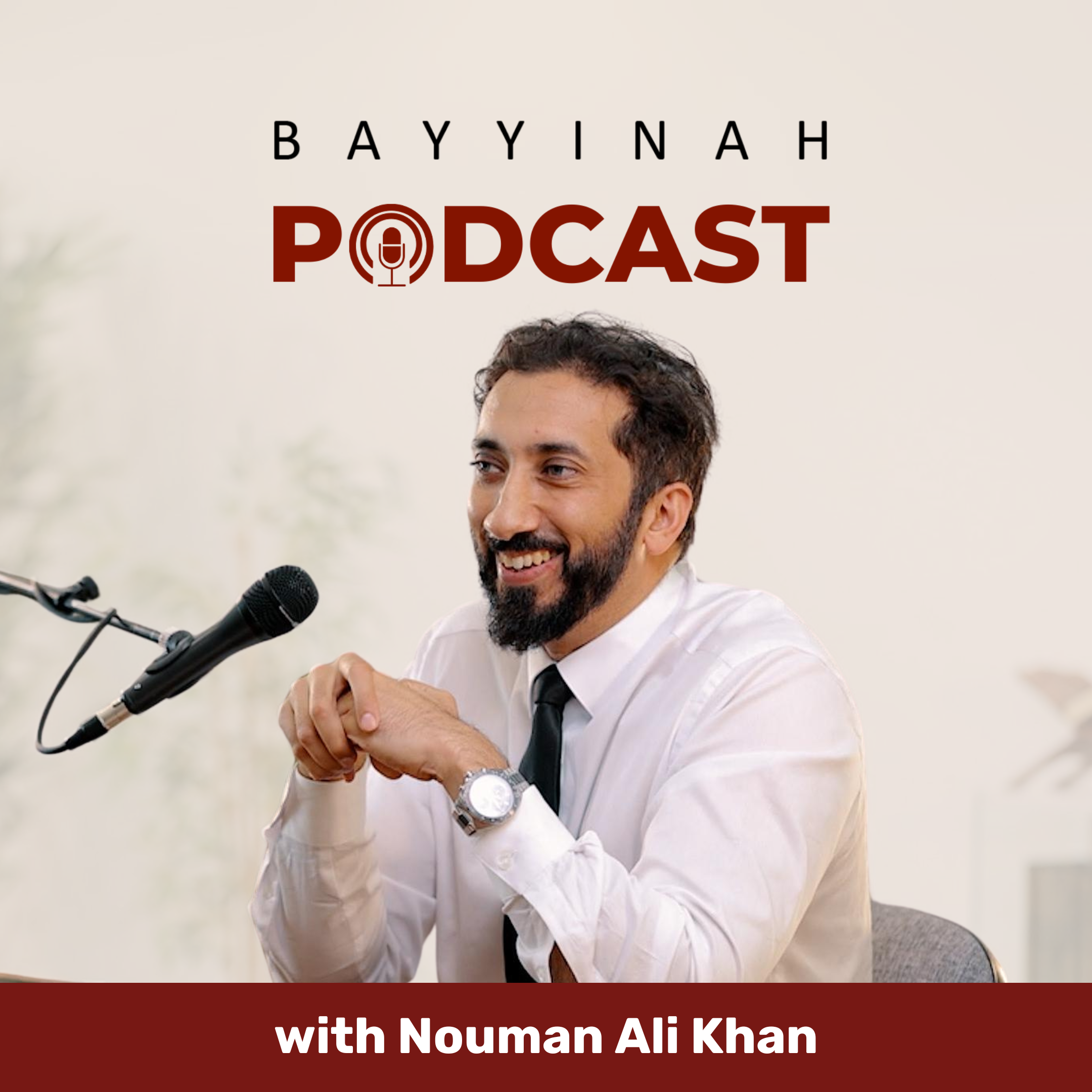
Nouman Ali Khan: Bayyinah Podcast
1,043 episodes — Page 7 of 21

S34 Ep 2626 Times You Should Never Do Business | Surah Al Jumu'ah
Download the Surah Al-Jumu'ah guided workbook at https://www.bayyinah.comIn episode twenty six of A Deeper Look Surah Al-Jumu'ah, Ustadh Nouman Ali Khan delves into the profound instructions delineated in Ayah 9, focusing on the spiritual and communal essence of the Jumu'ah prayer. He elucidates the layered meanings of hastening towards the remembrance of Allah and the significance of consciously choosing spiritual obligations over worldly transactions, especially when the call for prayer echoes. Ustadh Khan draws upon linguistic nuances to illustrate how the act of Salah beyond a ritual serves as a transformative process that softens and purifies the heart.------------------------------📚 Start your own Qur'an journey at https://www.bayyinahtv.com

S34 Ep 2525 Secrets Behind Salah Al Jumu'ah | Surah Al Jumu'ah
Download the Surah Al-Jumu'ah guided workbook at https://www.bayyinah.comIn episode twenty five of A Deeper Look Surah Al-Jumu'ah, Ustadh Nouman Ali Khan explores the essence of Salah as a means to soften and purify the heart, akin to warming oneself by a fire. He emphasizes the significance of the Jumu'ah prayer as a profound act of worship that connects us deeply with Allah and the Muslim community. Through insights into the linguistic and spiritual dimensions of Salah, Ustadh Nouman highlights the importance of approaching Jumu'ah with a heart ready for remembrance, strengthening the bonds between the individual, the community, and the divine.------------------------------📚 Start your own Qur'an journey at https://www.bayyinahtv.com

S34 Ep 2424 The Three Types of Believers | Surah Al Jumu'ah
Download the Surah Al-Jumu'ah guided workbook at https://www.bayyinah.comIn episode twenty four of of A Deeper Look: Surah Al-Jumu'ah, Ustadh Nouman Ali Khan dives into the profound significance of Jumu'ah prayer, emphasizing its role not just as a ritual, but as a powerful spiritual gathering that renews our commitment to the Quran and Islam each week. He highlights how the Jumu'ah prayer serves as a reminder to preserve both the letter and the spirit of our faith, ensuring we don't fall into the traps that previous communities did. Through the example of the Adhan, Ustadh Nouman beautifully illustrates the Quran's call to action, not merely as an announcement but as a demand for engagement and success. ------------------------------📚 Start your own Qur'an journey at https://www.bayyinahtv.com

S34 Ep 2323 Why the Quran Is Easy to Memorize | Surah Al Jumu'ah
Download the Surah Al-Jumu'ah guided workbook at https://www.bayyinah.comIn this twenty three of A Deeper Look Surah Al-Jumu'ah, Ustadh Nouman Ali Khan sheds light on how the Quran, unlike ordinary books, possesses a unique structure that enriches and guides our spiritual journey. He elaborates on the importance of understanding the Quran's approach to teaching, which aims not just to inform but to transform how we think and view the world. Highlighting the Jumu'ah prayer, Ustadh Nouman emphasizes its role as a weekly spiritual rejuvenation, helping believers maintain their inner light and stay on the path from darkness to enlightenment.------------------------------📚 Start your own Qur'an journey at https://www.bayyinahtv.com

S34 Ep 1313 Studying The Quran is Not Enough | Surah Al-Jumu'ah
Download the Surah Al-Jumu'ah guided workbook at https://www.bayyinah.comIn episode thirteen of A Deeper Look: Surah Al-Jumu'ah, Ustadh Nouman unveils the intricate process of purification that spans from the depths of individual thought to the broader fabric of society. Through his insightful exposition, he portrays the Quran not just as a spiritual beacon, but as a comprehensive manual for cleansing life's various domains. Ustadh Nouman meticulously explores how Islam provides a structured framework for personal development and societal peace, confronting and challenging cultural norms that frequently obstruct the pursuit of halal living. This episode enlightens listeners on the transformative power of Islamic teachings in achieving both individual and communal harmony.------------------------------📚 Start your own Qur'an journey at https://www.bayyinahtv.com

S34 Ep 2222 Running from the Inevitable | Surah Al Jumu'ah
Download the Surah Al-Jumu'ah guided workbook at https://www.bayyinah.comIn episode twenty two of A Deeper Look Surah Al-Jumu'ah, Ustadh Nouman Ali Khan delves into the profound message that our actions and beliefs must align in preparation for our inevitable return to Allah, who is fully aware of both the visible and hidden aspects of our lives. He underscores the concept that merely appearing religious does not equate to true faith if our hearts are not genuinely affected. This episode serves as a poignant reminder that we cannot escape death or the accountability for our actions, encouraging viewers to live lives that genuinely reflect their faith in anticipation of meeting Allah.------------------------------📚 Start your own Qur'an journey at https://www.bayyinahtv.com

S34 Ep 1212 Is The Path To Halal Easy? | Surah Al-Jumu'ah
Download the Surah Al-Jumu'ah guided workbook at https://www.bayyinah.comIn episode twelve of A Deeper Look: Surah Al-Jumu'ah, Ustadh Nouman highlights the profound journey from cleansing internal thoughts to societal transformation. He illustrates how the Quran, beyond being a spiritual guide, serves as a manual for purifying every aspect of life. From financial dealings to familial relationships, Ustadh Nouman delves into how Islam offers a blueprint for not just personal growth but societal harmony, challenging the burdens of cultural norms that often hinder the path to halal.------------------------------📚 Start your own Qur'an journey at https://www.bayyinahtv.com

S34 Ep 2121 Jealousy and Heedlessness | Surah Al Jumu'ah
Download the Surah Al-Jumu'ah guided workbook at https://www.bayyinah.comIn episode twenty one of A Deeper Look Surah Al-Jumu'ah, Ustadh Nouman Ali Khan explores the natural desires Allah has instilled in men and women, emphasizing the importance of balancing these desires to keep a pure heart and a strong connection with Allah. He discusses how men are drawn to beauty and women desire to appear beautiful, urging viewers to control these instincts with the guidance of the Quran. This episode highlights the need to prioritize our spiritual duties over worldly desires, maintaining a path aligned with Allah's teachings and reminding us of the balance between hope and fear in our relationship with Allah.------------------------------📚 Start your own Qur'an journey at https://www.bayyinahtv.com

S34 Ep 1111 To Have True Taqwa | Surah Al-Jumu'ah
Download the Surah Al-Jumu'ah guided workbook at https://www.bayyinah.comIn episode eleven of A Deeper Look: Surah Al-Jumu'ah, Ustadh Nouman Ali Khan delves into the concept of Tazkiyah, emphasizing the Quran's transformative power on believers' perspectives and the pervasive nature of divine signs. He explores purification beyond its spiritual essence, highlighting its implications for intellectual, emotional, and physical realms. This session invites listeners on a journey of comprehensive purification, guided by Quranic teachings towards achieving personal growth and societal harmony.------------------------------📚 Start your own Qur'an journey at https://www.bayyinahtv.com

S34 Ep 2020 Friends of Allah | Surah Al-Jumu'ah
Download the Surah Al-Jumu'ah guided workbook at https://www.bayyinah.comIn episode twenty of A Deeper Look Surah Al-Jumu'ah,  Ustadh Nouman Ali Khan explores the Quran's wisdom in dealing with the highs and lows of life. He shares how the Quran offers different guidance for different times in our lives, emphasizing the importance of balance. And discusses the dangers of focusing solely on the negatives or positives within religion, likening it to consuming too much sugar or facing too much negativity, both of which are harmful. He highlights how the Quran maintains a remarkable balance, teaching us to navigate through good and bad times with wisdom. This session encourages listeners to reflect on their relationship with the Quran and the importance of understanding and applying its teachings in every aspect of life.------------------------------📚 Start your own Qur'an journey at https://www.bayyinahtv.com

S34 Ep 1010 Why Didn't the Prophet ﷺ Do Tafsir? | Surah Al-Jumu'ah
Download the Surah Al-Jumu'ah guided workbook at https://www.bayyinah.comIn episode ten of A Deeper Look: Surah Al-Jumu'ah, Ustadh Nouman Ali Khan delves into the intricacies of Ayah two, focusing on the rich concept of wisdom (Hikmah) as highlighted in the Quran. He brings to light the comprehensive study of wisdom by Dr. Saqib Hussain, revealing its nuanced presentation across various fields and its unique embodiment in the Quran. ------------------------------📚 Start your own Qur'an journey at https://www.bayyinahtv.com

S34 Ep 1919 Wishing for Death | Surah Al-Jumu'ah
Download the Surah Al-Jumu'ah guided workbook at https://www.bayyinah.comIn episode nineteen of A Deeper Look Surah Al-Jumu'ah, Ustadh Nouman Ali Khan delves into the Quran's insights on life and death. He highlights the importance of not just fearing death but preparing for it by living a life aligned with Allah's guidance. He underscores Islam's balanced view: while it's crucial to remember death and its certainty, it's equally vital to appreciate life and its opportunities for good deeds and repentance. He challenges common misconceptions about desiring death and encourages a life lived in gratefulness for Allah's blessings, aiming for a balance that respects both the temporality of life and the permanence of the hereafter. This discussion urges us to reflect on our readiness for death and our engagement with the essence of our faith in our daily lives.------------------------------📚 Start your own Qur'an journey at https://www.bayyinahtv.com

S34 Ep 909 Four Steps for Self-Improvement | Surah Al-Jumu'ah
Download the Surah Al-Jumu'ah guided workbook at https://www.bayyinah.comIn episode nine of A Deeper Look: Surah Al-Jumu'ah, Ustadh Nouman Ali Khan examines Allah’s choice of the children of the Israelites as carriers of His word, discussing the challenges and pitfalls of their sense of superiority. He stresses the need for a balanced understanding of history and scriptures, advocating for integrity, humility, and inclusiveness within the Muslim community.------------------------------📚 Start your own Qur'an journey at https://www.bayyinahtv.com

S34 Ep 1818 Life, Death and Destiny | Surah Al-Jumu'ah
Download the Surah Al-Jumu'ah guided workbook at https://www.bayyinah.comIn episode eighteen of A Deeper Look Surah Al-Jumu'ah, Ustadh Nouman Ali Khan talks about a Quran verse comparing people who don't follow Allah's guidance, even though they know it, to a donkey carrying books. This means having knowledge isn't enough; we need to live by it. He also discusses how this idea is seen in Jewish texts and stresses the importance of truly understanding and practicing what the Quran teaches us. It's a reminder that simply knowing the Quran isn't enough; we must apply its teachings in our lives.------------------------------📚 Start your own Qur'an journey at https://www.bayyinahtv.com

S34 Ep 808 They Had No Excuse to Not Listen to Him | Surah Al-Jumu'ah
Download the Surah Al-Jumu'ah guided workbook at https://www.bayyinah.comIn episode eight of A Deeper Look: Surah Al-Jumu’ah, Ustadh Nouman focuses on the dynamic interaction with the audience, especially the youth, passionate about the Quran. Ustadh Nouman calls for young individuals to represent the Quran in their circles, envisioning a future where young Muslims excel professionally while deeply understanding the Quran. He stresses not only reading but also studying and reflecting on the Quran, allowing its principles to guide all life aspects. The episode advocates for forming study groups to explore the Quran thoroughly, building a community that discusses it with enthusiasm and insight, aiming to inspire a widespread passion for its guidance.------------------------------📚 Start your own Qur'an journey at https://www.bayyinahtv.com

S34 Ep 1717 Between Honor and Obligation | Surah Al-Jumu'ah
Download the Surah Al-Jumu'ah guided workbook at https://www.bayyinah.comIn episode seventeen of A Deeper Look Surah Al-Jumu'ah, Ustadh Nouman Ali Khan explains a comparison made in the Quran about people who were supposed to follow Allah's laws in the Torah but didn't. The Quran compares them to a donkey carrying books - the donkey has the books but doesn't understand them. He digs into this idea to show us how important it is to not just have religious knowledge but to really live by it. And connects this old story to our lives today, asking us to think about how well we're keeping up with what our religion teaches us. This episode makes us think about how we handle the responsibility of following God's guidance.------------------------------📚 Start your own Qur'an journey at https://www.bayyinahtv.com

S34 Ep 707 Honored by Allah | Surah Al-Jumu'ah
Download the Surah Al-Jumu'ah guided workbook at https://www.bayyinah.comIn the sixth episode of A Deeper Look: Surah Al-Jumu'ah, Ustadh Nouman into Allah's name "Al-Aziz" within Surah Al-Jumu'ah, enriching our grasp of His invincibility and might. Exploring "Al-Aziz's" linguistic roots, Ustadh Nouman connects it to unyielding strength and superior status, showing its manifestation in nature, society, and spirituality.------------------------------📚 Start your Qur'an journey at https://www.bayyinahtv.com

S34 Ep 1616 Allah's Warning to the Complacent | Surah Al-Jumu'ah
Download the Surah Al-Jumu'ah guided workbook at https://www.bayyinah.comIn episode sixteen of A Deeper Look: Surah Al-Jumu'ah, Ustadh Nouman Ali Khan discusses how the Quran teaches us to see the world from both close-up and wide-angle views. He talks about the beauty of diversity within the Muslim community and how the Quran brings us together, no matter where we're from. This episode emphasizes that the Quran is a gift from Allah meant for everyone, encouraging unity and understanding across different cultures. Khan reminds us that being a good Muslim isn't about where you're from or how you look, but about your love for Allah and His teachings. He encourages us to embrace our differences and learn from each other, building a stronger, united Muslim ummah.------------------------------📚 Start your own Qur'an journey at https://www.bayyinahtv.com

S34 Ep 606 Stop Idolizing Humans | Surah Al-Jumu'ah
Download the Surah Al-Jumu'ah guided workbook at https://www.bayyinah.comIn the sixth episode of A Deeper Look: Surah Al-Jumu'ah, Ustadh Nouman dissects the deep meanings in the initial verses, enhancing our grasp of the Surah's messages. It explores the themes of divine kingdom and power, urging contemplation on the signs and care within a kingdom and their connection to Allah's sovereignty. The session also probes the intricate bond between religion and politics, using Quranic references and modern examples to emphasize the purity of faith amidst political influence. ------------------------------📚 Start your Qur'an journey at https://www.bayyinahtv.com

S34 Ep 1515 Challenging their Spiritual Elites | Surah Al-Jumu'ah
Download the Surah Al-Jumu'ah guided workbook at https://www.bayyinah.comIn episode fifteen of A Deeper Look Surah Al-Jumu'ah, Ustadh Nouman Ali Khan delves into the transformational nature of the Quran, emphasizing its role not just as a book of laws but as a catalyst for profound personal and collective growth. Drawing from the Quranic text and historical insights, he explores the concept of purity and unity within the Muslim ummah, challenging preconceived notions of racial and cultural superiority. By highlighting Allah's mercy and wisdom in extending His message across diverse nations, he underscores the Quran's universal appeal and its capacity to enrich and unify humanity through shared knowledge and experiences.------------------------------📚 Start your own Qur'an journey at https://www.bayyinahtv.com

S34 Ep 505 Allah is Protecting You | Surah Al-Jumu'ah
Download the Surah Al-Jumu'ah guided workbook at https://www.bayyinah.comIn the fifth episode of A Deeper Look: Surah Al-Jumu'ah Ustadh Nouman examines the complex insights, focusing on Allah's omnipotence and the importance of observing His signs in our surroundings. He connects Quranic verses to worldly phenomena, from majestic mountains to human anatomy, highlighting creation as indicators of divine supremacy, encouraging deeper reflection and connection with the Creator. ------------------------------📚 Start your Qur'an journey at https://www.bayyinahtv.com

S34 Ep 1414 Oversimplifying the Quran and Sunnah | Surah Al-Jumu'ah
Download the Surah Al-Jumu'ah guided workbook at https://www.bayyinah.comIn episode Fourteen of A Deeper Look: Surah Al-Jumu'ah, Ustadh Nouman focuses on the transformative journey instigated by the Quranic teachings. He emphasizes the nuanced relationship between adherence to divine laws and the cultivation of moral excellence, illustrating how the Quran serves as more than a compendium of dos and don'ts—it's a guide to ethical living and spiritual maturation. Drawing on the historical invocation by Prophet Ibrahim (AS) for a messenger, Ustadh Nouman highlights how the emergence of Prophet Muhammad ﷺ is a testament to Allah's meticulous response to human yearning for guidance. This episode succinctly bridges the gap between the legalistic and the moral dimensions of Islam, underscoring the Quran's role in guiding believers towards both outer compliance and inner purity.------------------------------📚 Start your own Qur'an journey at https://www.bayyinahtv.com

S34 Ep 404 Surrender to Allah's Plan to Find Peace | Surah Al-Jumu'ah
Download the Surah Al-Jumu'ah guided workbook at https://www.bayyinah.comIn this episode of A Deeper Look: Surah Al-Jumu’ah, Ustadh Nouman discusses its influence on personal growth and community health. He underscores the importance of community blessings, congregational prayers, and the Sunnah in building unity and continuous learning for a dynamic, faith-centered community. ------------------------------📚 Start your Qur'an journey at https://www.bayyinahtv.com

S34 Ep 303 Navigating Life's Changes | Surah Al-Jumu'ah
Download the Surah Al-Jumu'ah guided workbook at https://www.bayyinah.comIn this episode of "A Deeper Look: Surah Al-Jumu’ah," Ustadh Nouman explores Tasbih in the Quran, illustrating how all existence, including atheists and polytheists, glorifies Allah. He addresses creation's imperfection versus the Creator's perfection and our pursuit of beauty as divine reflection. The episode also delves into the divine names, encouraging deeper understanding and spiritual connection.------------------------------📚 Start your Qur'an journey at https://www.bayyinahtv.com
S33 Ep 303. Maqamat | Maqam Nahawand | The Art of Quran Recitation
Get started now with the Maqamat challenge at https://www.maqamat.net/challenge-pag...In Episode 3, we're now moving on to a maqam that's very beloved in the eastern parts of the world especially - Maqam Nahawand.A little bit harder to perfect than the previous Maqam Sabah, Ustadh Nouman and Qari Ibrahim perform various recitation exercises to find the perfect pitch.The method used in this series for learning each maqam will consist of:1) Learning about the origins2) Humming the tone3) Reciting Al-Fatihah4) Reciting the Adhan-----------------------------------------------------------------------------------------------For a more personalized and structured approach to studying the Quran and Arabic, sign up for Bayyinah TV at www.bayyinahtv.com. To explore our latest books, upcoming events, contests and much more, sign up for our newsletter at www.bayyinah.com.

S34 Ep 202 Does Allah Ignore Bad People? | Surah Al-Jumu'ah
Download the Surah Al-Jumu'ah guided workbook at https://www.bayyinah.comIn this second episode, Ustadh Nouman Ali Khan continues his journey through Surah Al-Jumu'ah, building upon the foundations laid in the opening session.This time, he further explores the themes introduced in Surah Al-Jumu'ah, emphasizing the continuity and depth of its teachings. The discussion centers around the role of the Muslim community in living by the principles outlined in the Surah and the importance of the guidance provided by Prophet Muhammad ﷺ.He addresses the challenge of balancing worldly responsibilities with spiritual duties, aiming to make the profound messages of the Surah more accessible. He also encourages reflection and a deeper engagement with the text, seeking to enhance understanding and application of its teachings in daily life.------------------------------📚 Start your Qur'an journey at https://www.bayyinahtv.com
S33 Ep 202. Maqamat | Maqam Saba | The Art of Quran Recitation
Get started now with the Maqamat challenge at https://www.maqamat.net/challenge-pag...In this episode, Qari Ibrahim shares the first maqam with Ustadh Nouman - Maqam Saba - a tone used when expressing sadness.We learn about the origins of this maqam and its use cases in the Arab world, and thereafter Ustadh Nouman gets a lesson on how to recite with this particular maqam and learns which pitch suits him best.The method used in this series for learning each maqam will consist of:1) Learning about the origins2) Humming the tone3) Reciting Al-Fatihah4) Reciting the Adhan-----------------------------------------------------------------------------------------------For a more personalized and structured approach to studying the Quran and Arabic, sign up for Bayyinah TV at www.bayyinahtv.com. To explore our latest books, upcoming events, contests and much more, sign up for our newsletter at www.bayyinah.com.
S33 Ep 101. Maqamat | Intro to Maqamat | The Art of Quran Recitation
Begin transforming your Quran recitation; start with the Maqamat challenge at https://www.maqamat.net/challenge-pag...In this exciting and unique new series, Ustadh Nouman becomes the student and is joined by master Quran reciter, Qari Ibrahim Bakeer, who'll be teaching him the 8 different maqamat (melodic modes) of recitation.Qari Ibrahim will sharing the unique characteristics and beautiful sounds of each maqam, and training Ustadh Nouman on how to find his own perfect pitch based on his recitation voice, and which maqam suits him best.Join along in this journey, practice the recitations with us and discover the beautiful art of Quran recitation.-----------------------------------------------------------------------------------------------For a more personalized and structured approach to studying the Quran and Arabic, sign up for Bayyinah TV at www.bayyinahtv.com. To explore our latest books, upcoming events, contests and much more, sign up for our newsletter at www.bayyinah.com.

S34 Ep 101 The Secrets Behind These Ayat | Surah Al-Jumu'ah
Download the Surah Al-Jumu'ah guided workbook at https://www.bayyinah.comA Deeper Look: Surah Al-Jumu'ah In this special series, Ustadh Nouman Ali Khan delves into the insights of Surah Al-Jumu'ah from the Quran.Throughout the discussion, he draws comparisons with adjacent chapters, highlighting the seamless thematic continuity. By emphasizing the significance of declaring Allah’s perfection, he explores the pivotal role of Prophet Muhammad ﷺ in guiding the Muslim community. He also stresses the importance of maintaining a steadfast spiritual connection amidst the distractions of worldly pursuits.  His aim throughout this series is to simplify the messages behind the Surah, helping you foster a deeper understanding and engagement with the text.📚 Start your Qur'an journey at https://www.bayyinahtv.com
S33 Ep 1010. Maqamat | Closing Thoughts | The Art of Quran Recitation
Begin transforming your Quran recitation; start with the Maqamat challenge at https://www.maqamat.net/challenge-pag...In this concluding maqamat episode, Qari Ibrahim Bakeer gives us more insight into his Maqamat Institute, who he aims to support and those who'd benefit from his courses the most.Ustadh Nouman wraps up with an important message on the importance of preserving this vast heritage of Quran recitation, and why just listening to the Quran is incredibly powerful and should be done so beautifully, using Allah's beautification of His creation as an example to illustrate this.We hope you enjoyed this series and have a new found motivation to study the art of Quran recitation, both with tajweed and a few maqamat to add some emotion and purpose into your voice as you do so.-----------------------------------------------------------------------------------------------For a more personalized and structured approach to studying the Quran and Arabic, sign up for Bayyinah TV at www.bayyinahtv.com. To explore our latest books, upcoming events, contests and much more, sign up for our newsletter at www.bayyinah.com.
S32 Ep 1414. Hikmah in the Quran | Part 4/4 (Full Lecture) | Hikmah Series
Read Dr. Saqib Hussain's paper on 'Wisdom in the Quran': https://signup.bayyinahtv.com/hikmah-... Part 4 of the full 'Hikmah in the Quran' lecture, filmed over two days at the European Islamic Centre in Manchester, UK.-----------------------------------------------------------------------------------------------For a more personalized and structured approach to studying the Quran and Arabic, sign up for Bayyinah TV at www.bayyinahtv.com. To explore our latest books, upcoming events, contests and much more, sign up for our newsletter at www.bayyinah.com.
S33 Ep 909. Maqamat | Maqam Kurd | The Art of Quran Recitation
Get started now with the Maqamat challenge at https://www.maqamat.net/challenge-pag...As the final maqam to be studied in this series, Maqam Kurd also has a very widely recognised tone and probably the most famous one. It was notably made famous by the likes of Shaykh Ahmed al Ajmi in the 90s, followed by Shaykh Mishary Rashid Alafasy in the early 2000s.According to Qari Ibrahim, it's apparently also very loved by women!-----------------------------------------------------------------------------------------------For a more personalized and structured approach to studying the Quran and Arabic, sign up for Bayyinah TV at www.bayyinahtv.com. To explore our latest books, upcoming events, contests and much more, sign up for our newsletter at www.bayyinah.com.
S32 Ep 1313. Hikmah in the Quran | Part 3/4 (Full Lecture) | Hikmah Series
Read Dr. Saqib Hussain's paper on 'Wisdom in the Quran': https://signup.bayyinahtv.com/hikmah-... Part 3 of the full 'Hikmah in the Quran' lecture, filmed over two days at the European Islamic Centre in Manchester, UK.-----------------------------------------------------------------------------------------------For a more personalized and structured approach to studying the Quran and Arabic, sign up for Bayyinah TV at www.bayyinahtv.com. To explore our latest books, upcoming events, contests and much more, sign up for our newsletter at www.bayyinah.com.
S33 Ep 808. Maqamat | Maqam Rast | The Art of Quran Recitation
Get started now with the Maqamat challenge at https://www.maqamat.net/challenge-pag...Today we're exploring the sounds of Maqam Rast - the heaviest but also the largest maqam according to Qari Ibrahim. Anybody at any pitch level with their voice can recite with this maqam.This maqam is also flexible in that you can switch from this one to many of the others. For this reason it's also a staple amongst the master reciters of Quran.-----------------------------------------------------------------------------------------------For a more personalized and structured approach to studying the Quran and Arabic, sign up for Bayyinah TV at www.bayyinahtv.com. To explore our latest books, upcoming events, contests and much more, sign up for our newsletter at www.bayyinah.com.
S32 Ep 1212. Hikmah in the Quran | Part 2/4 (Full Lecture) | Hikmah Series
Read Dr. Saqib Hussain's paper on 'Wisdom in the Quran': https://signup.bayyinahtv.com/hikmah-... Part 2 of the full 'Hikmah in the Quran' lecture, filmed over two days at the European Islamic Centre in Manchester, UK.-----------------------------------------------------------------------------------------------For a more personalized and structured approach to studying the Quran and Arabic, sign up for Bayyinah TV at www.bayyinahtv.com. To explore our latest books, upcoming events, contests and much more, sign up for our newsletter at www.bayyinah.com.
S33 Ep 707. Maqamat | Maqam Hijaz | The Art of Quran Recitation
Get started now with the Maqamat challenge at https://www.maqamat.net/challenge-pag...Today we're studying Maqam Hijaz. Whilst most people may naturally think this originated from the Hejaz region, its origins are actually Turkish. Despite this, the most common place it's heard today is in fact in the Hejaz regions, most notably in Makkah and Madinah, as made famous by the Imams and mu'adhins who've masted this maqam and regularly display its heart-piercing melodious sounds during the salawat and the adhan.-----------------------------------------------------------------------------------------------For a more personalized and structured approach to studying the Quran and Arabic, sign up for Bayyinah TV at www.bayyinahtv.com. To explore our latest books, upcoming events, contests and much more, sign up for our newsletter at www.bayyinah.com.
S32 Ep 1111. Hikmah in the Quran | Part 1/4 (Full Lecture) | Hikmah Series
Read Dr. Saqib Hussain's paper on 'Wisdom in the Quran': https://signup.bayyinahtv.com/hikmah-... Part 1 of the full 'Hikmah in the Quran' lecture, filmed over two days at the European Islamic Centre in Manchester, UK.-----------------------------------------------------------------------------------------------For a more personalized and structured approach to studying the Quran and Arabic, sign up for Bayyinah TV at www.bayyinahtv.com. To explore our latest books, upcoming events, contests and much more, sign up for our newsletter at www.bayyinah.com.
S33 Ep 606. Maqamat | Maqam Seekah | The Art of Quran Recitation
Get started now with the Maqamat challenge at https://www.maqamat.net/challenge-pag...Episode 6 in this maqamat series introduced the 'happy tone' - Maqam Seekah. This just so happens to be Qari Ibrahim Bakeer's favourite maqam. This maqam should mainly be used when expressing happiness or delight when reciting the Quran, e.g. if the verses describe the beauty of Jannah.Qari Ibrahim also delights us with a beautiful demonstration of the famous Tala 'Al Badru Alayna nasheed.-----------------------------------------------------------------------------------------------For a more personalized and structured approach to studying the Quran and Arabic, sign up for Bayyinah TV at www.bayyinahtv.com. To explore our latest books, upcoming events, contests and much more, sign up for our newsletter at www.bayyinah.com.
S32 Ep 1010. Wisdom in the Quran | Hikmah in the Quran | Dhul Hijjah Series
Read Dr. Saqib Hussain's paper on 'Wisdom in the Quran': https://signup.bayyinahtv.com/hikmah-... Throughout my years of studying the Quran, I am grateful to have come across some remarkable individuals who have opened the doors for me to understand the Quran in new ways, and allowed me to take advantage of their incredible work which I then aim to present to all of you through my classes and lectures.Dr. Saqib Hussain is one such person. I benefited greatly from his pioneering study on the concept of hikmah (wisdom) in the Quran, and used it as a source of inspiration to deliver a new short series for you all which we'll be releasing over these first ten days of Dhul-Hijjah.I had the pleasure of discussing Dr. Saqib's thesis 'Wisdom in the Quran' with him in Manchester. -----------------------------------------------------------------------------------------------For a more personalized and structured approach to studying the Quran and Arabic, sign up for Bayyinah TV at www.bayyinahtv.com. To explore our latest books, upcoming events, contests and much more, sign up for our newsletter at www.bayyinah.com.
S33 Ep 505. Maqamat | Maqam Bayati | The Art of Quran Recitation
Get started now with the Maqamat challenge at https://www.maqamat.net/challenge-pag...In today's maqamat episode, we're delighted with the calm, yet heavy and powerful sounds of Maqam Bayati.After listening, Ustadh Nouman recalls that he fell in love with this tone by listening to it from a young age. This particular maqam is also reflected in the widely recognisable 'mujawwad' style of recitation.What do you think of this maqam?The method used in this series for learning each maqam will consist of:1) Learning about the origins2) Humming the tone3) Reciting Al-Fatihah4) Reciting the Adhan-----------------------------------------------------------------------------------------------For a more personalized and structured approach to studying the Quran and Arabic, sign up for Bayyinah TV at www.bayyinahtv.com. To explore our latest books, upcoming events, contests and much more, sign up for our newsletter at www.bayyinah.com.
S32 Ep 909. Law & Wisdom MUST Be Together | Hikmah in the Quran | Dhul Hijjah Series
Read Dr. Saqib Hussain's paper on 'Wisdom in the Quran': https://signup.bayyinahtv.com/hikmah-... In Episode 9 of the Hikmah in the Quran series, Ustadh Nouman Ali Khan shares the reason why the law and wisdom must be applied together, and shareS a couple of examples of drive this point home.-----------------------------------------------------------------------------------------------For a more personalized and structured approach to studying the Quran and Arabic, sign up for Bayyinah TV at www.bayyinahtv.com. To explore our latest books, upcoming events, contests and much more, sign up for our newsletter at www.bayyinah.com.
S33 Ep 404. Maqamat | Maqam Ajam | The Art of Quran Recitation
Get started now with the Maqamat challenge at https://www.maqamat.net/challenge-pag...Today, Ustadh Nouman is learning Maqam Ajam with Qari Ibrahim. in a touching personal story, Qari Ibrahim relates that his own wife embraced Islam after listening to maqamat such as Maqam Ajam.This Maqam is widely recognisable, and as such, Ustadh impresses Qari Ibrahim with his skills of tuning his voice to match the correct tone.The method used in this series for learning each maqam will consist of:1) Learning about the origins2) Humming the tone3) Reciting Al-Fatihah4) Reciting the Adhan-----------------------------------------------------------------------------------------------For a more personalized and structured approach to studying the Quran and Arabic, sign up for Bayyinah TV at www.bayyinahtv.com. To explore our latest books, upcoming events, contests and much more, sign up for our newsletter at www.bayyinah.com.
S32 Ep 808. Wisdom In Marriage & Divorce | Hikmah in the Quran | Dhul Hijjah Series
Read Dr. Saqib Hussain's paper on 'Wisdom in the Quran': https://signup.bayyinahtv.com/hikmah-... In Episode 8 of the Hikmah in the Quran series, Ustadh Nouman Ali Khan begins to explain how the Quran approaches marriage and relationships in light of wisdom. Why are there so few verses describing how to have a good marriage, whereas the verses in divorce are much more?-----------------------------------------------------------------------------------------------For a more personalized and structured approach to studying the Quran and Arabic, sign up for Bayyinah TV at www.bayyinahtv.com. To explore our latest books, upcoming events, contests and much more, sign up for our newsletter at www.bayyinah.com.
S32 Ep 707. What Does Wisdom Look Like? | Hikmah in the Quran | Dhul Hijjah Series
Read Dr. Saqib Hussain's paper on 'Wisdom in the Quran': https://signup.bayyinahtv.com/hikmah-... In Episode 7 of the Hikmah in the Quran series, Ustadh Nouman Ali Khan emphasises how wisdom can change on a case-by-case basis, and why its implication may be different for each of us depending on our own situations.-----------------------------------------------------------------------------------------------For a more personalized and structured approach to studying the Quran and Arabic, sign up for Bayyinah TV at www.bayyinahtv.com. To explore our latest books, upcoming events, contests and much more, sign up for our newsletter at www.bayyinah.com.

S32 Ep 606. Being Good To Our Parents | Hikmah in the Quran | Dhul Hijjah Series
Read Dr. Saqib Hussain's paper on 'Wisdom in the Quran': https://signup.bayyinahtv.com/hikmah-... In Episode 6 of the Hikmah in the Quran series, Ustadh Nouman Ali Khan shares the crucial differences between the law and wisdom, and exemplifies this through the concept of being good to our parents as mentioned in the Quran.-----------------------------------------------------------------------------------------------For a more personalized and structured approach to studying the Quran and Arabic, sign up for Bayyinah TV at www.bayyinahtv.com. To explore our latest books, upcoming events, contests and much more, sign up for our newsletter at www.bayyinah.com.

S31 Ep 6060. Akhri Moujza | Breaking the Walls | Urdu Series
In episode 60 of Akhri Moujza, Ustadh Nouman Ali Khan starts with the “mirror order within an Ayah” and gives the example of Ayat-Al-Kursi. He then highlights the criticizing/rating culture of the modern era and explains why we can’t study the Quran with the baggage of worldly literature, and how we should approach the Quran with the right and clear mindset.Then Ustadh Nouman shares his experience of Dora-at-Tadabbur-al-Quran in Oman. The main goal of that event was to understand, “How does this Ayah affect my heart?” Ustadh explains that there are invisible walls between the Quran and our hearts, and the need of the hour is to break those walls and become a conscious Muslim.آخری معجزہ کی اس قسط  60 میں استاد نعمان علی خان نے "آیت میں عکسی ترتیب" سے آغاز کیا اور اس موضوع کے زیرِ بحث آیۃالکرسی کی مثال دی۔ استاد نعمان نے آج کے جدید دور کے تنقیدی رواج کو نمایاں کیا اور کہا کہ ہمیں اس دنیا کے ادب اور انسانی کلام کو مدّ نظر رکھتے ہوئے قرآن کو نہیں پرکھنا چاہئے بلکہ جب بھی قرآن کو پڑھیں تو درست ذہنیت کے ساتھ پڑھیں اور اس کی آیات  پر تدبر کریں۔آخر میں استاد نے اومان کے دورہ التدبّر القرآن کے بارے میں بتایا اور کہا کہ اس کا مقصد صرف اور صرف یہ تھا کہ ہم اس بات پر تدبر کریں کہ "یہ آیت میرے دل پر کس طرح سے اثر کرتی ہے۔" استاد نعمان نے اس بات کی وضاحت کی کہ قرآن اور ہمارے دلو ں کے مابین نہ نظر آنے والی دیواریں ہیں اور اب وقت کا تقاضا یہ ہے کہ ہم ان دیواروں کہ گرائیں اور عقلی و شعوری طور پر مسلمان ہونے کا ثبوت دیں۔-----------------------------------------------------------------------------------------------For a more personalized and structured approach to studying the Quran and Arabic, sign up for Bayyinah TV at www.bayyinahtv.com. To explore our latest books, upcoming events, contests and much more, sign up for our newsletter at www.bayyinah.com.
S32 Ep 505. How Allah Describes Wisdom | Hikmah in the Quran | Dhul Hijjah Series
Read Dr. Saqib Hussain's paper on 'Wisdom in the Quran': https://signup.bayyinahtv.com/hikmah-... In Episode 5 of the Hikmah in the Quran series, Ustadh Nouman Ali Khan begins to explain what the Quran itself considers to be hikmah, compared to previous scriptures.-----------------------------------------------------------------------------------------------For a more personalized and structured approach to studying the Quran and Arabic, sign up for Bayyinah TV at www.bayyinahtv.com. To explore our latest books, upcoming events, contests and much more, sign up for our newsletter at www.bayyinah.com.

S31 Ep 5959. Akhri Moujza | How Quranic Surahs Start and End (The Connection) | Urdu Series
This week in Episode 59 of Akhri Moujza, Ustadh Nouman Ali Khan covers two topics. The first one is the “beginning and ending of a Surah”. Not to be confused with Episode 56 in which Ustadh described the connections between the ending of one surah and the beginning of the next, this time he demonstrates the remarkable comparisons between the start and the end of the same surah. The Quran shows this pattern with almost every other Surah. Ustadh gave several examples of this in this video.The second topic Ustadh covers is the “Mirror order in a subject/Surah.” Ustadh explains that this mirroring pattern is repeated within a subject and between the beginning and ending of a Surah. In the end Ustadh gives the example of the beautiful mirror order within Surah Yusuf.• Beginning and ending of An-Najm.• Beginning and ending of Al-Jaathiyah.• Beginning and ending of Al-Kahf.• Beginning and ending of Al-Ankabut.• Beginning and ending of Al-Baqarah.• Beginning and ending of Al-Qalam.• Beginning and ending of Ale-Imran.• Mirror order within a Subject.• Mirror order within a Surah.آخری معجزہ کی اس قسط 59  میں استاد نعمان علی خان نے دو موضوعات پر بحث کی ہے۔ پہلا موضوع "سورۃ کے آغاز اور اختتام میں مناسبت" کا ہے۔ اس موضوع کے زیرِ بحث استاد نے وضاحت کی ہے کہ قرآن کی سورتوں کے آغاز اور اختتام کے مابین ایک  قابلِ ذکر موازنہ دیکھنے کو ملتا ہے۔ اور ایسا صرف ایک سورۃ نہیں بلکہ کافی سورتوں کے آغاز اور اختتام پر ملتا ہے۔ استاد نے اس موضوع پر کافی مثالیں بھی پیش کی ہیں۔ دوسرا موضوع  "سورۃ /مضمون میں عکسی ترتیب" کا ہے۔ استاد نے وضاحت کی کہ یہ عکسی ترتیب ہمیں کسی ایک موضوع یا سورۃ کے آغاز اور اختتام کے مابین بھی دیکھنے کو ملتا ہے۔ آخر میں  استاد نے سورۃ یوسف میں موجود عکسی ترتیب کی خوبصورت مثال پیش کی ہے۔• سورۃ النجم کا آغاز اور اختتام۔• سورۃ الجاثیہ کا آغاز اور اختتام۔• سورۃ الکہف کا آغاز اور اختتام۔• سورۃ العنکبوت کا آغاز اور اختتام۔• سورۃ البقرہ کا آغاز اور اختتام۔• سورۃ القلم کا آغاز اور اختتام۔• سورۃ آلِ عمران کا آغاز اور اختتام۔• مضمون میں عکسی ترتیب۔• سورۃ میں عکسی ترتیب۔-----------------------------------------------------------------------------------------------For a more personalized and structured approach to studying the Quran and Arabic, sign up for Bayyinah TV at www.bayyinahtv.com. To explore our latest books, upcoming events, contests and much more, sign up for our newsletter at www.bayyinah.com.
S32 Ep 404. Wisdom Ties It All Together | Hikmah in the Quran | Dhul Hijjah Series
Read Dr. Saqib Hussain's paper on 'Wisdom in the Quran': https://signup.bayyinahtv.com/hikmah-... In Episode 4 of the Hikmah in the Quran series, Ustadh Nouman Ali Khan begins by sharing the powerful du'a of the Prophet Ibrahim (AS) which includes 'hikmah'. Ustadh explains why hikmah is like the cement that binds Islam together, and is required to find the perfect balance.-----------------------------------------------------------------------------------------------For a more personalized and structured approach to studying the Quran and Arabic, sign up for Bayyinah TV at www.bayyinahtv.com. To explore our latest books, upcoming events, contests and much more, sign up for our newsletter at www.bayyinah.com.

S31 Ep 5858. Akhri Moujza | The Interrelationship of Quranic Surahs | Urdu Series
This week on Episode 58 of Akhri Moujza, Ustadh Nouman Ali Khan discusses the unique interrelationship of Quranic Surahs. Ustadh explains the interrelationship among the first 9 and among the last 10 Surahs of the Quran. He discusses how these Surahs collectively complete a particular subject. Although these Surahs were revealed years apart, they hold such a harmony among themselves that completes a story altogether.For example, the Hidayah we asked in Al-Fatiha is discussed in detail in Surah Al-Baqarah, Ale-Imran, An-Nisa, and Al-Ma’idah. Similarly, the Dua of Prophet Abraham (PBUH) about Makkah is fulfilled in Surah Al-Fil and Surah Quraish. Furthermore, the events of war, defeating the enemy, victory of the believers, protection against internal and external sources of corruption that comes after victory, are discussed in the last 10 Surahs of the Quran. آخری معجزہ کی اس قسط  58 میں استاد نعمان علی خان نے قرآنی سورتوں کا آپسی انوکھا تعلق بیان کیا ہے۔ استاد نے قرآن کی پہلی 9 سورتوں کے مابین اور آخری 10 سورتوں کے مابین تعلق کو واضح کیا ہے۔ استاد نے بتایا کہ کس طرح یہ سورتیں مل کر ایک خاص مضمون کو تکمیل کرتی ہے۔ اگرچہ یہ سورتیں سال ہا سال کے وقفے سے نازل کی گئی پھر بھی ان میں ایسا ربط ہے جو کہ ایک مکمل قصہ بیان کرتا ہے۔ مثلاً جو ہدایت ہم نے الفاتحہ میں مانگی تھی اس کا تفصیلی ذکر سورۃ البقرہ، آلِ عمران، النساء، اور سورۃ المائدہ میں بیان کیا گیا ہے۔ اسی طرح مکّہ کے لئے کی گئی حضرت ابراہیمؑ کی دعا کی تکمیل کا پہلا حصہ سورۃ الفیل میں اور دوسرا حصہ سورۃ قریش میں ملتا ہے۔ مزید یہ کہ جنگ کے معاملات، دشمن کو شکست، مؤمنین کی فتح اور اس  فتح کے بعد آنے والی اندرونی و بیرونی کرپشن سے تحفظ کا ذکر بھی آخری دس سورتوں میں بیان کیا گیا ہے۔-----------------------------------------------------------------------------------------------For a more personalized and structured approach to studying the Quran and Arabic, sign up for Bayyinah TV at www.bayyinahtv.com. To explore our latest books, upcoming events, contests and much more, sign up for our newsletter at www.bayyinah.com.