Not Your Father’s Data Center
83 episodes — Page 1 of 2
Jerome Solatani: How Compass and Schneider Electric Are Rethinking Data Center Maintenance
David Porter: From Grid Load to Grid Asset: How Data Centers Can Support the Grid
Solar Power's Role in the Future of Digital and Energy Infrastructure
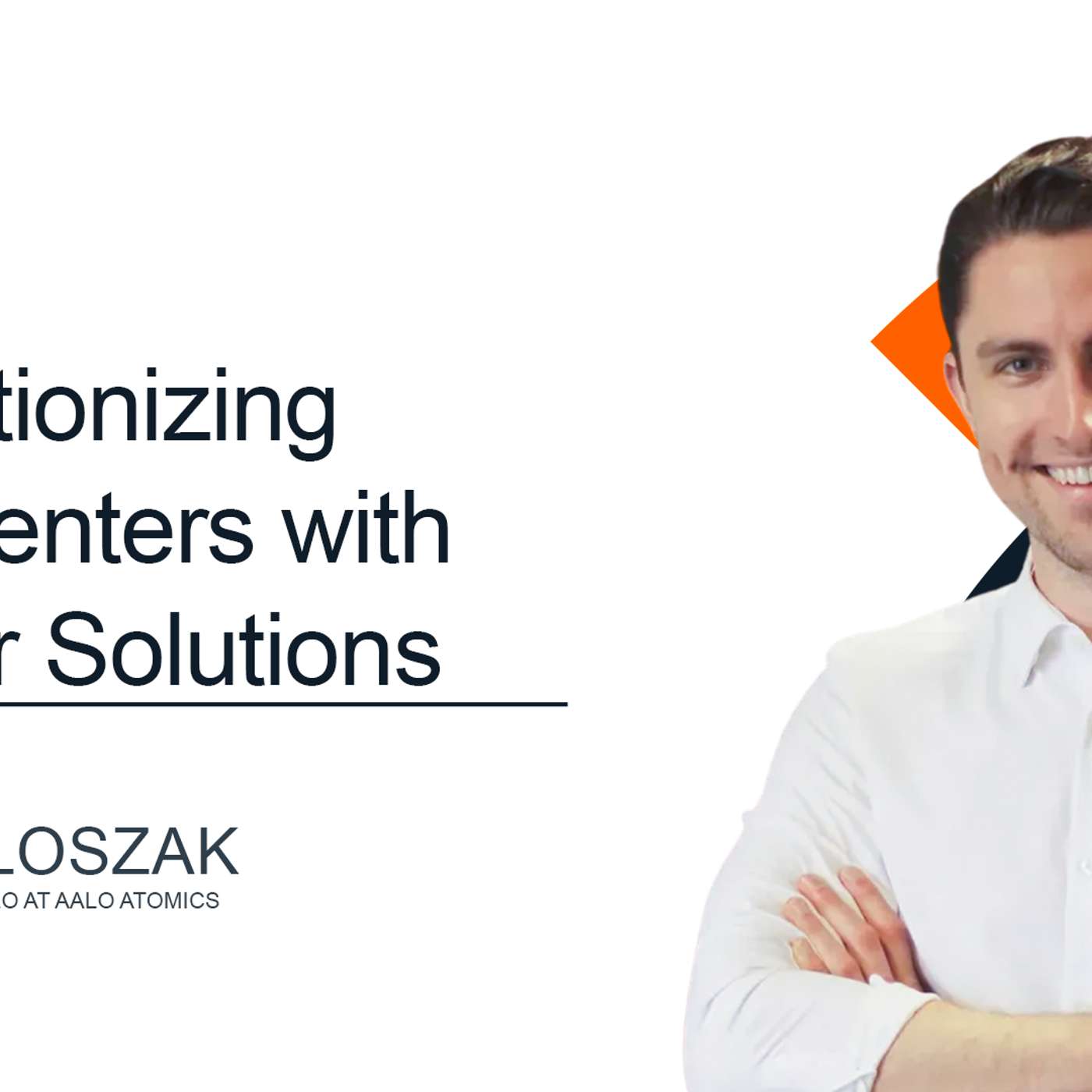
Ep 50Revolutionizing Data Centers with Nuclear Solutions
In this episode, Raymond Hawkins, Chief Revenue Officer at Compass Datacenters, sits down with Matt Loszak, co-founder and CEO of Aalo Atomics. Matt Loszak shares his personal journey from growing up with severe asthma in Ontario—an experience that inspired his fascination with nuclear energy after coal plant closures led to both cleaner air and the end of his symptoms. His career spans from nuclear engineering studies to successful tech entrepreneurship, and eventually back to his roots in the energy sector with Aalo Atomics.The discussion explores the current and future challenges of powering rapidly scaling data centers, focusing on the unprecedented demand for clean, scalable electricity. Topics include the limitations of the current grid, the viability of modular and “extra modular” reactor technologies, and the promise of vertically integrated nuclear solutions. Matt Loszak offers deep insights into Aalo’s business model, the economics of on-site power generation, and the transformative potential of fast, factory-built nuclear power for the data center industry.Timestamped Overview00:00 Intro & Matt’s Background03:55 From software to nuclear impact07:16 Engineering Leader in Nuclear Innovation11:16 Nuclear Power The Future Answer16:28 Revolutionizing SMRs Lessons from SpaceX17:19 Vertical integration to solve delays21:15 Smaller plants over gigawatt nuclear24:50 Configurable real-time power solutions28:50 Pipeline vs power grid infrastructure31:37 Energy challenges in industry operations35:27 Nuclear the big picture solution39:56 Optimal small nuclear innovation40:35 Aalo’s customer-focused design approach
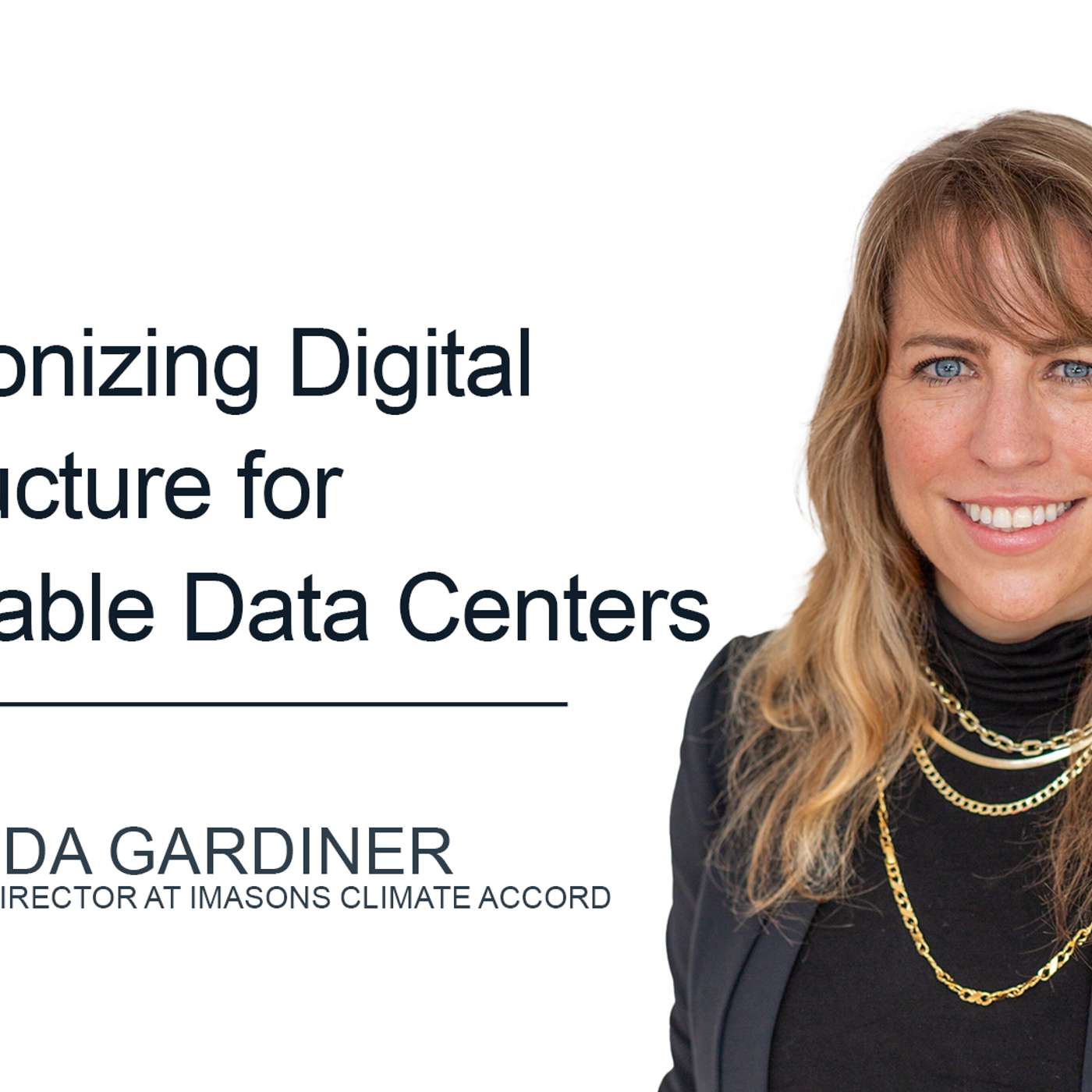
Ep 49Decarbonizing Digital Infrastructure for Sustainable Data Centers
In this episode, host Raymond Hawkins, Chief Customer Officer at Compass Datacenters, sits down with Miranda Gardiner, leader of the iMasons Climate Accord. Miranda Gardiner brings a rich international background—having lived and worked across Iowa, Germany, San Francisco, Abu Dhabi, and more—with deep expertise in sustainability, architecture, and green building initiatives. Her journey includes significant work at the U.S. Green Building Council and hands-on involvement with sustainable projects worldwide.The conversation explores the rapidly evolving role of data centers in a world increasingly focused on power demand, decarbonization, and environmental responsibility. Topics span the exponential growth in data center energy needs, nuclear and renewable energy’s place in the power mix, and the critical importance of sustainable materials and supply chains. Raymond and Miranda discuss the collaborative structure of the Climate Accord—including governing bodies and working groups—addressing how the industry is innovating toward measurable climate goals, equipment standards, and new ways to balance digital growth with planetary stewardship.Timestamped Overview00:00 Sustainable Design and Global Impact06:20 Solo hike in Austria09:48 Capturing Energy from Lightning10:49 Fortuitous Career Transition Story13:52 Collaborative Leadership in Decarbonization17:55 Strategic Alliances for Clean Energy21:50 Powering Digital Interactions at Scale23:55 Energy challenges and perceptions29:10 Industry Leaders Drive Climate Action32:07 Building a Greener Future Together33:48 Equipment and Environmental Collaboration38:03 Responsible Digital Infrastructure Insights
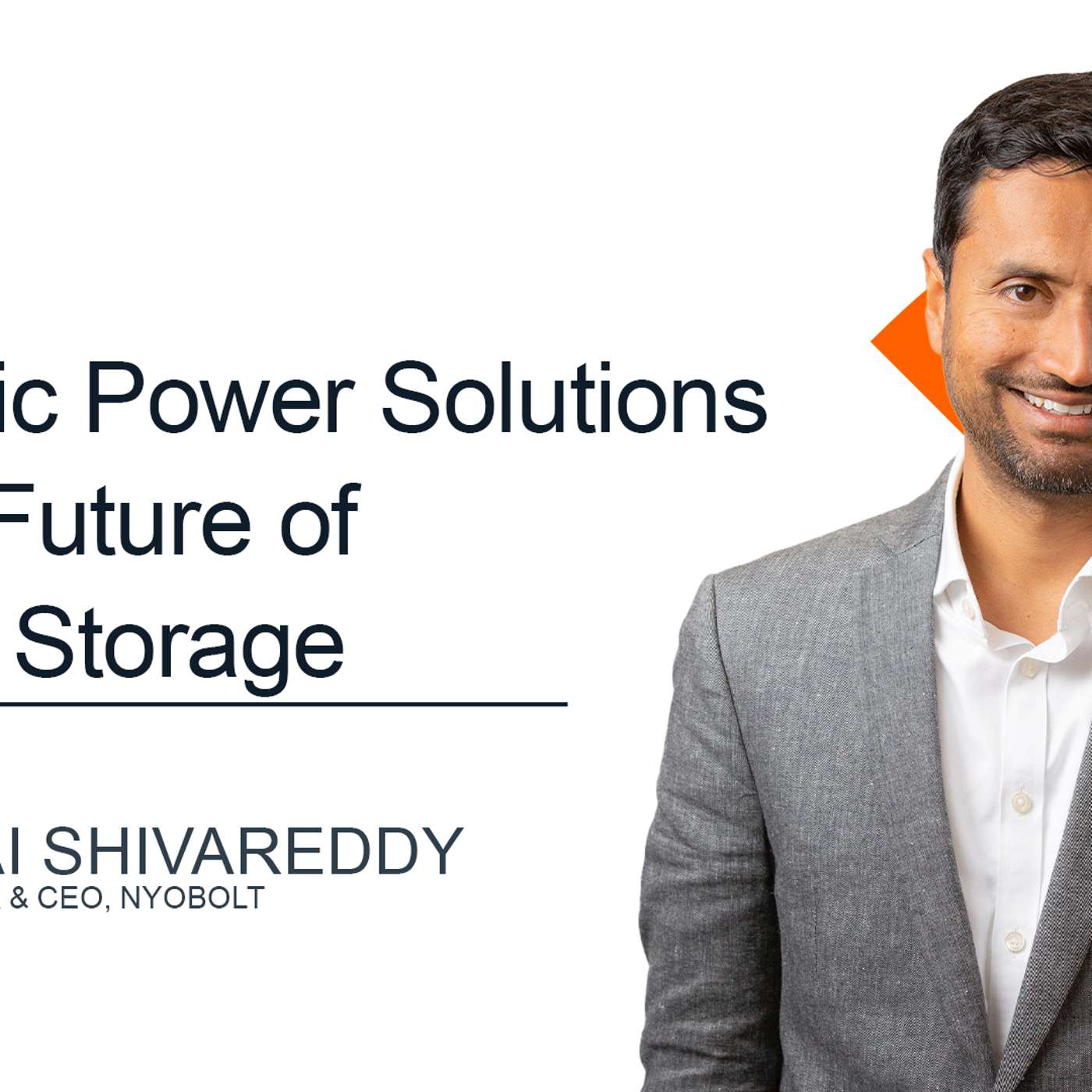
Ep 48Dynamic Power Solutions for the Future of Energy Storage
In this episode, Raymond Hawkins, host of Not Your Father's Datacenter, sits down with Dr Sai Shivareddy, CEO and founder of Niable. Dr Shivareddy shares his fascinating journey from India, through his academic pursuits in physics and nanomaterials at Cambridge, to founding Niable with a focus on revolutionary battery technology.The discussion centers around the dramatic rise in power density within data centers, the historical shift from lead acid to lithium-ion batteries, and their respective challenges—especially in the face of rapidly spiking AI and GPU workloads. Sai explains Niable’s breakthrough material, enabling batteries to recharge in minutes while maintaining safety and high power density. The pair explore the urgent industry need for new solutions to manage dynamic, unpredictable power loads and introduce Niable’s dynamic response power systems as a novel bridge between supercapacitors and batteries. The episode offers practical insights on how innovative materials science can redefine power management in the next-generation data center.Timestamped Overview00:00 Intro & Dr Shivareddy’s background 04:51 From lab to real world06:38 Data centers growing power demand10:23 Energy Storage Capacitors vs Batteries15:22 UPS vs BBU power comparison17:27 Battery stress at full capacity20:13 GPU power surge trends25:33 Voltage conversion in power systems27:56 Dynamic Power Regulation System30:17 Power System Design and Optimization34:43 Optimizing GPU power efficiency36:06 Power solutions for dynamic workloads
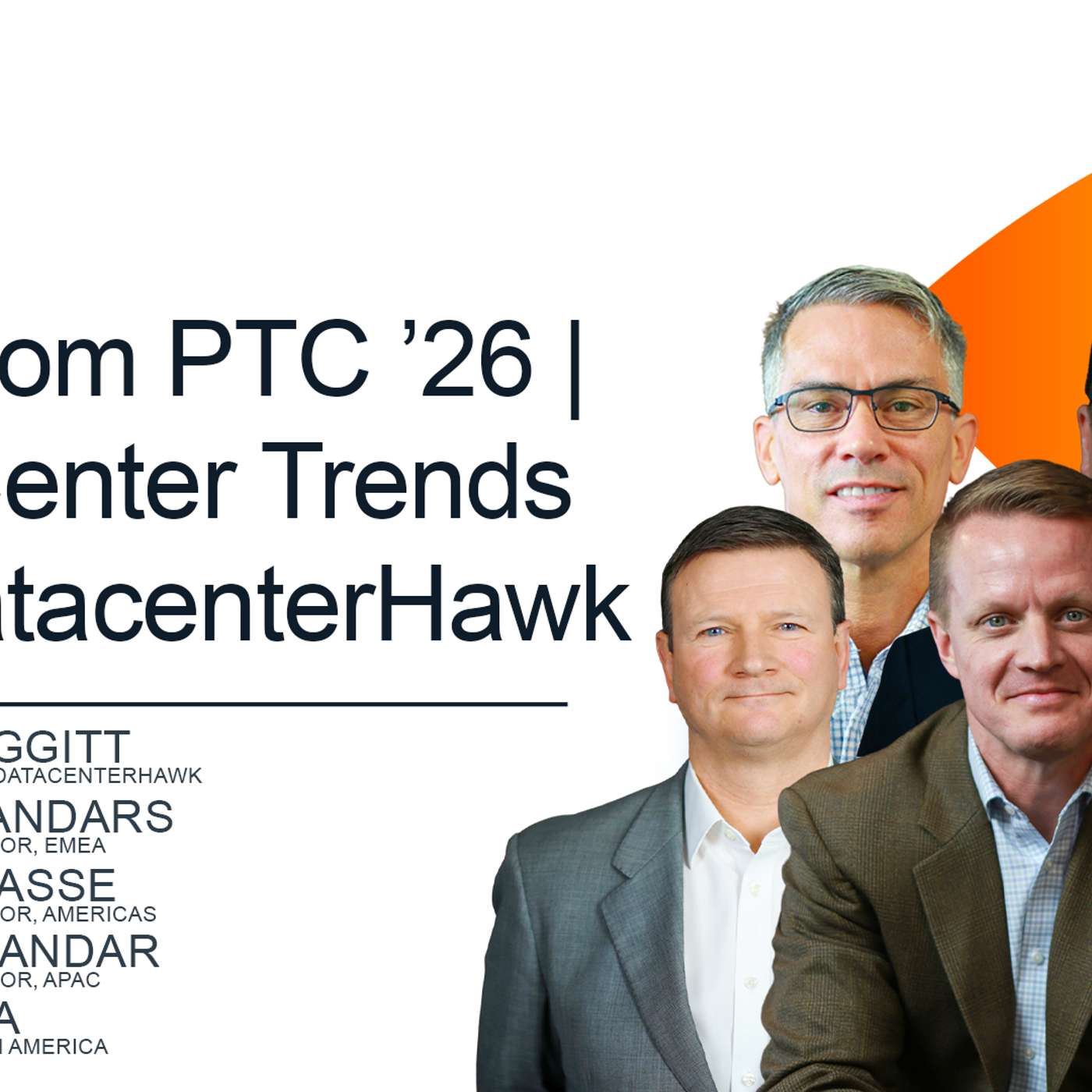
Ep 47Live From PTC ’26 | Data Center Trends with datacenterHawk
The video is an episode of "Not Your Father's Data Center" hosted by Raymond Hawkins, who is joined by David Liot, CEO and founder of Data Center Hawk, and the company's global leadership team at the PTC conference in Hawaii. Data Center Hawk is a subscription-based platform providing data and analytics on supply, demand, pricing, and trends for over 115 global data center markets on a quarterly basis.The discussion focuses on the challenges and trends in the global data center business, particularly regarding power and the impact of the AI boom, with a regional breakdown provided by the Data Center Hawk team.Key Regional Insights on Power and Trends:APAC (Asia-Pacific), led by Daddy Escandar:Power situations are unevenly distributed.Tier one markets like Japan, Singapore, and Australia face similar issues to the US, with power delivery timelines extending to 8–10 years or as fast as 1–2 years.Grid quality is also unequal, leading to the use of non-traditional power sources in tier two markets like Vietnam, the Philippines, Thailand, and India.A significant project is Google's announced 5-gigawatt data center in India, which requires massive grid upgrades in the Chennai region.AI is viewed differently across the region, and many new deployments (45-50%) are being designed as "AI ready," giving the region the luxury of time to prepare before the customers arrive.Nuclear energy is not yet popular, though SMR (Small Modular Reactor) technology is being assessed in Indonesia, the Philippines, Vietnam, and Malaysia as a fast option for energy where grid quality is poor.Latin America (LATAM), led by Steve Sass:Brazil is the largest market, accounting for 40-45% of the region. It is well-set up for power, with growth spreading from São Paulo and Rio to tier two markets.The region benefits from submarine cable capacity and interconnection, which draws development to coastal areas.Mexico faces power constraints, specifically transmission issues, in areas like Querétaro, with some large data center companies unable to sell space due to expected power delays of one or two years.Transmission is the biggest constraint.Private companies may charge high interconnection fees ($800–$1,000 KVA) for connecting to a substation in an industrial park.Argentina may see investments due to the discovery of the second-largest natural gas reserve in the south, potentially mirroring the growth in West Texas.Most countries in LATAM (Argentina, Brazil, Uruguay) have 80-95% renewable energy, primarily from hydro (50-70%).LATAM is waiting for the AI "wave" to hit, as connectivity is needed first; Chinese cloud companies are growing capacity rapidly in the region.North America, led by Ed Soja:Power constraints are regional; Texas has exploded with projects in West Texas (Abilene, Amarillo) and South Dallas, due to the adoption of natural gas as a power source.Projects are moving to tertiary, non-traditional markets due to power availability, such as P Washington, Wisconsin, and Santa Teresa, New Mexico.Large-scale gigawatt developments are still occurring, but there's a return to 20–50 megawatt deployments following a hub-and-spoke model.Natural gas is currently used in the US as a "bridging power solution" to get projects running quickly in constrained markets until utility power is available. Its adoption is shaping development locations.There is a shift toward nuclear power, with hyperscalers acquiring and talking about building reactors. The host predicts significant nuclear data center projects in the US by 2030.EMEA (Europe, Middle East, and Africa), led by David Saunders:The main challenge is finding available land and power in suitable locations.Data center operators are partnering with power companies to solve generation, transmission, and distribution challenges.Europe has a lot of planned capacity, but the timeline for power delivery is uncertain.The planning and regulatory framework is complex, and a shortage of skilled labor is also a factor.The legacy FLAP-D markets (Frankfurt, London, Amsterdam, Paris, Dublin) are slowing down, particularly Dublin due to a political moratorium. Emerging markets like Nordic and Southern Europe (Portugal, Spain, Italy, Greece) are gaining momentum.The UK government has dedicated data centers as critical national infrastructure, which could speed up the regulatory process.The Irish government recently announced that large energy users can apply to develop gas power plants to support their businesses.The Middle East is an emerging market with exceptional growth. Saudi Arabia and UAE are the two major markets, with plans for multi-gigawatt campuses. The region aims to become the AI hub connecting Asia and Europe.Outlook on the AI Boom:.David Liot (CEO, Data Center Hawk) predicts a 3-to-5-year window for the current "straight up" AI boom, constrained by supply and alternative energy pathways.The key factors to track globally are: who has the power, who has the money (for billion-dollar projects),
Ep 46Beyond Generators – Building Energy Ecosystems for Tomorrow
In this episode, Raymond Hawkins, Chief Revenue Officer at Compass Datacenters, sits down with Brad Meissner, Director of Product Management at Generac and proud Milwaukee native. Brad shares his journey from growing up as a farm kid in southeast Wisconsin to earning a mechanical engineering degree from the Milwaukee School of Engineering, and ultimately leading Generac’s industrial stationary generator line.The discussion explores Generac’s bold entrance into the data center market with the recent launch of high-capacity (2.25–3.25 MW) generator sets—addressing pressing supply chain and lead time challenges within mission-critical power. Brad delves into Generac’s evolution from primarily consumer backup power solutions into a fully-fledged energy technology company, including strategic acquisitions in smart controls and microgrid systems. The conversation also highlights Generac’s agility in manufacturing, its commitment to local production in Wisconsin, advances in monitoring and managed services, and the growing role of sustainable fuels like HVO.Timestamped Overview00:00 Intro & Brad’s Generac Career Journey04:38 Celebrating Generact at Summer Fest07:58 Evolving into an Energy Tech Company10:42 Generac's Rapid Strategic Entry14:08 Streamlining Standby Power Lead Time18:35 UK's Leading Generator Control Supplier19:44 HVO: A Versatile Fuel Alternative23:20 Exciting North American Expansion Strategy
Ep 45NVIDIA's Role in AI, Energy, and the Data Center Evolution
In this episode, Raymond Hawkins, Chief Revenue Officer at Compass Datacenters, sits down with Mark Spieler, Senior Managing Director of Global Energy Industry at NVIDIA. Mark shares his unique background, from growing up in Minnesota and working at Cray Research and Silicon Graphics, to a 13-year tenure at Halliburton across commercial, finance, and mergers and acquisitions roles, before joining NVIDIA in 2019 to lead their global energy business.The conversation explores the rising impact of AI on energy consumption, positioning data centers as the new “AI factories”—manufacturing knowledge with data and electrons as raw materials. Mark discusses Nvidia’s evolution from gaming hardware to high-performance computing and AI platforms, unlocking efficiencies and new capabilities. Key topics include energy efficiency gains in AI workloads, the future of nuclear power and SMRs for data centers, grid optimization, and the transformative economic and social potential of AI. The episode offers deep insights into the intersection of technology, energy, and the data center industry’s future.Timestamped Overview00:00 Intro & Marc’s Background03:44 Corporate Transition to SGI08:26 Career Transition: Halliburton to NVIDIA12:04 From Gaming to AI Platform Leader16:03 AI Empowering Industries, Not Replacing17:47 AI Enhancing Legal Profession Tasks22:44 AI Cost Decline and Adoption Shift23:33 Data Center Consolidation and AI Efficiency27:53 NVIDIA’s Energy Solutions Collaboration30:36 Nuclear Energy: Safe and Underappreciated34:21 How NVIDIA is Innovating Energy Solutions
Ep 44The AI Boom, Power Crunch and the Rise of Data Ecosystems
In this episode, Raymond Hawkins welcomes back Bill (Vitaly) Kleyman—CEO and founder of Apolo, industry thought leader, and data center prognosticator extraordinaire. Bill shares his personal journey, from immigrating to the U.S. as a Ukrainian refugee fleeing the Soviet Union, to becoming a leading voice in tech innovation and AI. The conversation opens with reflections on Ukraine’s ongoing conflict and its impact on Bill’s family.The discussion pivots to the explosive growth and renaissance in the data center sector, driven by surging AI demand. Raymond and Bill cover topics such as power constraints, rack density, the rise of liquid cooling, and the shift toward AI-powered solutions for enterprise and public sector challenges. Bill also explores practical AI use cases Apollo is delivering, from improved municipal services and sentiment analysis to cutting-edge applications in agriculture and finance. The episode offers an energetic, forward-looking perspective on the future of data center infrastructure and AI.Note: This conversation was recorded in June; references to the Ukraine–Russia conflict reflect the situation at that time and may not fully reflect the present moment.Timestamped Overview00:00 Intro & Bill’s Background07:10 Ukraine/Russia: Defending Against Constant Assaults12:54 Honor Ukraine's Security Guarantees14:02 Ukraine Conflict Outcome Scenarios22:23 Military Concerns Over Peace Deal25:14 Untapped Potential of Generative AI26:38 Exploring AI's Practical Applications31:26 AI & Data Centers' Power Demand33:27 Powerful Shift in Data Centers36:45 Leveling the Corporate Tech Playing Field42:09 Reaching Next-Level Data Center Efficiency45:12 AI Usecases 54:55 Scalable, Meaningful Infrastructure Partnership56:21 Democratizing AI: Expanding Possibilities
Ep 43From Inertia to Innovation: What Data Centers Need to Know About Grid Health
In this episode, Raymond Hawkins, Chief Revenue Officer at Compass Datacenters, sits down with Marc Borrett, co-founder and CEO of Reactive Technologies. Marc brings a fascinating background spanning electronics innovation, telecom engineering, and the energy sector. Having launched technology ventures from battery chargers to Star Wars toys, Marc’s journey led him from semiconductors to tackling the evolving challenges of modern power grids.The conversation explores the global energy transition, focusing on how the shift from traditional, fossil-fuel-based generation to renewables has transformed grid dynamics. Marc explains the increasing complexity of grid management, the need for real-time data, and the importance of measuring and maintaining grid stability in a world of distributed, less predictable energy sources. The dialogue delves into Reactive’s unique approach—leveraging grid physics to both communicate with and monitor assets at the grid’s edge—and how understanding grid strength and stability can shape smarter investments, operational decisions, and data center siting in an energy-constrained world.Timestamped Overview00:00 Entrepreneurial Journey in Electronics03:46 Chip Innovation Sparks NFC Revolution09:55 Energy Management for Carrefour14:27 Grid Communication Challenges Explored18:53 Power Station Grid Stabilization Explained21:43 Grid Stability in Energy Transition25:58 Optimizing Grid Signal Integration28:44 Accurate Real-Time Grid Measurement33:08 Time-of-Use Tariffs & Demand Trends34:30 U.S. Energy Demand: Duck Curve
Ep 42Evolving Data Center Cooling for AI
Today we welcome Dave Rubcich, Global Vice President of Key Accounts at Vertiv to discuss the innovative partnership in cooling between Vertiv and Compass Datacenters©. Raymond and Dave explore the evolution of data center cooling technologies from the 1980s to the present, into the transition from traditional air cooling to modern liquid cooling methods while addressing the increasing thermal demands of AI-powered data centers. They highlight the innovative Cool Face Flex solution—formerly referred to as the DH400—a hybrid unit offering unmatched flexibility in accommodating both air and liquid cooling without altering data center designs.Throughout the episode, insights into data center energy efficiency, the technological journey from Liebert to Vertiv, and the significance of adaptable cooling solutions are offered, providing listeners with a comprehensive understanding of current data center cooling trends.Timestamped Overview00:00 Intro03:38 Pivot from Engineering to Sales06:54 Liebert's Early Talent Development Program11:06 Tech Advances in Room Temperature Efficiency14:42 Optimizing HVAC Efficiency and Control17:19 Emerson's Network Power Divestment23:28 Evolution of Cooling in Computing26:54 Pumped Refrigerant Breakthrough29:33 Outdoor DSE Pump Solution31:01 Flexible Chilled Water Unit Development
Ep 41Data Center Industry Trends: What's on the Horizon from PTC '25
Host Raymond Hawkins is live from the picturesque PTC 2025 in Honolulu, Hawaii, joined by three seasoned industry experts: Martin Antunez from LATAM Entry LLC, David Liggit from datacenterHawk, and Barro Luitjes from KevlinX.Martin, the founder and CEO of LATAM Entry LLC, provides insights into the Latin American data center ecosystem, focusing on subsea cables, land developers, and fiber providers. The discussion highlights the region's fast-growing market, the substantial investments in infrastructure, and the challenges like energy tariffs and government regulation.David Liggit, founder and CEO of datacenterHawk, offers a comprehensive view of the North American data center market. The conversation explores the unprecedented growth driven by AI, emerging secondary and tertiary markets, and the importance of holistic strategies for power and community relationships.Barro Luitjes, strategy head at KevlinX, discusses the European data center landscape, emphasizing the shift to underserved regions due to regulatory constraints in traditional markets. He also talks about the importance of educating stakeholders and partnering with power providers for sustainable growth.Timestamped Overview00:00 Intro & Driving Data Center Growth LATAM04:42 Bridging US and Latin America07:42 Streamlining Deal-Making Insights09:33 Navy Influence: From Law to Finance14:59 Colombia's AI Implementation Bill Insights16:56 AI-Driven Infrastructure Expansion21:21 Regulation-Driven Market Shifts24:22 European Employment Strategy Explained28:16 Power Partnerships in Industry29:36 Energy Strategy Development in Queretaro34:34 Data Center Benefits and Opportunities37:19 Optimizing Europe's Data Center Strategy
Ep 40Beyond the Cloud: Data Centers' Economic Impact vs. Policy & Sustainability
In this discussion, Raymond Hawkins, Chief Revenue Officer at Compass Datacenters, engages with Dr. Terry Clower, a distinguished professor of public policy at George Mason University, who also serves as the director of the Center for Regional Analysis and the Stephen Fuller Institute.The conversation delves into the strategic considerations for data center siting and land use, contrasting U.S. practices with European models. Dr. Clower provides insights on the essential role of data centers in the data economy and their impact on regional development.The dialogue touches upon critical issues like power consumption and sustainability, highlighting power planning, renewable energy sources, and the potential to revitalize nuclear infrastructure. The significance of data centers in modern economic development strategies is discussed, especially their influence on local tax bases and low infrastructure strain.Overall, the discussion offers valuable perspectives on how municipalities can integrate data centers into their economies, emphasizing long-term planning and the evolving landscape of utility and energy demands.Timestamped Overview:00:00 Intro00:52 Navigated unstable job market, transitioned to logistics.04:49 Recruited to lead Center for Regional Analysis.08:28 Varied localities' attitudes impact economic development approaches.12:20 Buddy Reiser navigates data center challenges locally.15:25 All data centers need careful land allocation.17:59 Renewables insufficient; old infrastructure revived due to demand.19:43 Data centers’ demand reshaping power industry dynamics.22:51 Exploring nuclear solutions to reduce waste.26:18 Data center proximity doesn't affect property value.30:28 Adapt to data economy or face constraints.35:27 Minor adjustments can help economies grow again.37:41 Northern Virginia's electrician apprenticeships thrive, creating jobs.
Ep 39Deepening Veteran Expertise for Data Center Excellence
In this engaging episode, Raymond Hawkins, Chief Revenue Officer at Compass Datacenters, interviews Kirk Offel, CEO, and founder of Overwatch.The conversation delves into Kirk’s illustrious military background, highlighting his tenure on the USS Memphis submarine, rigorous deployments, and transition to civilian life. Kirk recounts the challenging yet rewarding experiences at sea and the unique leadership and technical skills honed through military service.Topics include the military's role in fostering discipline and the significant technological advancements veterans bring to civilian industries. Kirk shares insights on his decision to leave a traditional career to establish Overwatch, emphasizing the value of veteran-owned businesses.The discussion explores the evolving tech landscape, veterans' adaptability, and the importance of continuous learning. Raymond and Kirk also reflect on honoring Vietnam veterans, the significance of supportive communities in veteran transitions, and the inspiration behind founding the Data Center Anti Conference (DCAC).Timestamped Overview00:00 Intro01:09 Kirk’s background04:13 Military service inspires veteran entrepreneurship and community.09:36 Gen Z surpassing Baby Boomers in workforce.10:44 Military offers advanced tech training without war risks.16:32 Navy offered broader options than SEER training.18:33 Submarine community: intellectual, rigorous, challenging, competitive.20:54 Real deployments with impactful military missions.25:35 Vietnam vets deserve respect and gratitude.29:33 Lead with empathy and adaptability during transitions.30:37 Community collaboration empowers veterans for meaningful careers.34:25 Empowering veterans through community, networking, and conferences.37:59 Helping veterans is my purpose-driven mission.40:36 Kirk's invite prompts fear of workout readiness.
Ep 38Data Centers and Energy: Addressing Growing Demand and Power Constraints
In this episode, Raymond Hawkins sits down with Ed Socia, North American Insight Director for datacenterHawk. With a background in community development and sustainability from the University of Vermont, Ed transitioned from managing renewable research platforms to working with top data center teams, including a pivotal role at CBRE.The conversation explores the transformative impact of the pandemic on the data industry, driving remote work and digital transformation. Ed discusses the increased demand for data centers, fueled by technologies like AI, and the resulting power constraints in emerging markets. The dialogue transitions into the complexities of power location planning, the potential of nuclear energy for data centers, and the hurdles posed by regulatory and community acceptance.Ed and Raymond highlight the roles of utilities and tech companies in addressing power demands, emphasizing transparent development and long lead times. They also touch on tracking competitor strategies and the importance of market intelligence.
Ep 37The Road Ahead for Digital Infrastructure
Today, host Raymond Hawkins chats with Mike Netzer, VP of Sales at datacenterHawk, a professional with a diverse background, from managing pension portfolios to diving deep into the data center industry. Originating from the Northeast with stints in Idaho, Connecticut, Florida, and Texas, Mike brings a rich mix of experiences and insights to the table.The dialogue meticulously covers a range of timely topics concerning the data center industry. Mike and Raymond delve into the increasing demands on power generation driven by growing data center capacities and touch upon the economic shifts brought on by large tech deals, specifically in the realms of Artificial Intelligence (AI). The significance of viewing data centers as critical infrastructure similar to roads and water treatment facilities is comprehensively analyzed, reflecting on their indispensable role in modern societies. The discussion further explores the impact of AI on technological advancements, the potential adaptability of nuclear energy in data centers, and the broader implications of energy pricing on the industry's economic viability.
Ep 36Veteran Stories and the Mission Critical Mindset with Garett Jaco and Wayne Watson
In this Memorial Day special episode, host Raymond Hawkins holds a profound conversation with seasoned data center experts Garett Jaco, a Marine Corps veteran with a strong background in nuclear weapons security and marine security, and Wayne Watson, vice president of North American operations at Compass Datacenters, with a past in the Navy as a nuclear electrician.The dialogue dives into the intersection of military experience and data center proficiency. Tapping into their naval and military backgrounds, Watson and Jaco discuss the transferable skills that veterans bring to the industry, focusing on meticulous attention to detail and the importance of procedure adherence in handling critical equipment.The episode also explores the personal army stories, illuminating the lighter side of their service, and the conversation turns toward the serious topic of mental wellness within the industry.Thoughts on Memorial Day close the conversation, honoring war fighters' sacrifices and advocating for support and de-stigmatization of mental illness post-combat. Overall, this exchange offers a unique perspective on the untapped talent of veterans in the data center sphere and the essential correlation between military service and industry excellence.
Ep 35The Foundations of Digital Infrastructure with George Rockett
In this engaging episode, Raymond Hawkins, the Chief Revenue Officer at Compass, is joined by George Rockett, the founder of DatacenterDynamics & Co-Founder of Yotta.George shares his journey from being a humble advertising salesperson to the inception of DatacenterDynamics magazine in 1998. Their conversation unfolds to cover the evolution of enterprise data centers, the burst of the .com bubble, and the concept of zero downtime. The historical context of data centers and the early days of technology are discussed, shedding light on the industry's development and perception over time.With some fantastic analogies, the episode delves into topics such as systems thinking, integrating polymaths to address industry challenges, and the urgency for quicker action due to vast opportunities. George presents his innovative endeavor, Yotta, and stresses the unification of language and communication within the digital infrastructure industry. George’s LinkedIn: https://www.linkedin.com/in/george-rockett-b18a3b4/?originalSubdomain=uk
Ep 34Innovations in Data Center and Electrical Systems Management with Phanney Kim Brevard
In this discussion, Raymond Hawkins, Chief Revenue Officer at Compass Datacenters engages with Phanney Kim Brevard, Chief Strategy Officer and newly appointed Chief Information Officer, of ETAP-Operation Technology at Schneider Electric. The conversation delves into the complex world of data center management and electrical systems. ETAP, a hardware-agnostic software company acquired by Schneider, specializes in designing and simulating electrical systems for various industries, with a focus on energy optimization, compliance, and safety.The dialogue touches upon the significance of digital twins in modeling and simulating electrical systems, providing real-time insights and ensuring operational efficiency. The hardware-agnostic nature of Etap's solutions is emphasized, allowing connectivity with diverse power systems. The conversation also highlights the importance of a centralized platform for stakeholders in the data center value chain, ensuring a shared and accurate version of the truth. The episode concludes with a reflection on the evolving landscape of technology and the transformative impact of digital twins on electrical system management. Overall, the discussion offers valuable insights into the critical role of innovative software solutions in enhancing the safety, sustainability, and efficiency of data center operations.Phanney’s LinkedIn: https://www.linkedin.com/in/phanneykimbrevard/
Ep 33College Football Bowl Preview Picks
In this episode, Raymond dives back into the world of college football as the playoffs take center stage. Joined by esteemed guests Mike Baudendistel, Director of Sales for the Data Center sector at Bloom Energy, and Buddy Rizer, the Executive Director of Economic Development in Loudoun County, Virginia, the episode promises a lively discussion on the recent playoff selections.As the first week of December unfolds, we take a break from the tech talk to share insights on the college football landscape. From Michigan's anticipated presence to the controversies surrounding Florida State's exclusion, Raymond, Mike, and Buddy provide a unique blend of humor and expertise.Join the conversation as they break down the committee's decisions, discuss the surprises and snubs, and prophesize the outcomes of the season. Whether you're a die-hard football fan or just looking for a fun departure from the data center discussions, this episode promises some good old fashion sports banter.
Ep 32Powering the Future: Navigating Data Center Energy Consumption
In this episode, we dive into the world of data centers, and their energy consumption, with Govi Ramasamy, Executive Director & Power Generation for Data Centers at Cummins Inc. Govi is a distinguished authority in the realm of data center sustainability and energy efficiency, bringing over two decades of expertise to the table.With degrees in Mechanical and Industrial Engineering and an MBA from Northwestern University, Govi's career has been dedicated to unraveling the complex challenges posed by data center energy use. He has been at the forefront of developing innovative solutions to reduce environmental impacts while enhancing operational efficiency.Govi sheds light on the evolving landscape of data center technology. From advancements in cooling and power management to the latest trends in renewable energy integration, he discusses the dynamic strategies being employed to make data centers more sustainable.They then talk about the critical importance of optimizing data center energy consumption, particularly in the digital age. His extensive knowledge and forward-thinking ideas make this episode essential for those intrigued by the energy dynamics of data centers and their profound implications for our environment and technology-driven world.Govi’s LinkedIn: https://www.linkedin.com/in/goviramasamy/
Ep 31The Evolution of Generative AI
In this episode, Data Center and Technology Expert Bill Kleyman joins the show.After 15 years in the technology space, Bill has the chance to see quite the endless advancements. Today, he works with leaders in digital infrastructure to help build a more sustainable and inclusive future and support an ever-connected digital society. He is also a contributing editor to leading industry publications, including Data Center Frontier, Data Center Knowledge, ITPro Today, and InformationWeek.Today they discuss the evolution of generative AI, but before they get there, Bill tells the fascinating story of his journey to America, fleeing a dangerous radioactive Kiev after the Chernobyl fallout in the late 1980s. They then discuss the incredible advancements we’re seeing in generative AI, and how that can help in a myriad of ways across data centers, technology, health, and everything in between.To connect with Bill, visit his website (https://billkleyman.com/) and connect with him on LinkedIn (https://www.linkedin.com/in/billkleyman/).
Ep 30College Football Preview Show
On this episode of Not Your Father’s Datacenter, Raymond Hawkins is joined by Jerry Burum, Steve Flaig, Jimmy Fordham, and special guest Haley Hawkins for an in-depth discussion on the upcoming college football season.Discussion points include conference realignment, predictions for the upcoming college football season, who will win each major conference, and Heisman picks. Listen in as they forecast the 2023-24 college football season.
Ep 29Powering Data Center Growth: Expansion and International Reach
Today, David Liggitt joins the show to talk about data center expansion.David Liggitt is the Founder of and CEO at datacenterHawk, helping data center professionals make the best decisions possible. With over 15 years in commercial real estate and extensive experience navigating the data center industry, David understands the communication between data center providers, users, vendors, investors, and consultants.Today they discuss expansion into major markets across the US, as well as into international areas around the globe, while accommodating the need for power to run these processes. They touch on the introduction of AI into the marketplace and the future of data centers across the world.Connect with David here: https://www.linkedin.com/in/davidliggitt/
Ep 28Gaming and Education
On today’s episode, Raymond sits down with Erin Torbiak, General Manager at Addicting Games.Hailing from Alberta, Canada, Erin has had a long career as a developer and is now the general manager of the ever-popular Addicting Games website. The site is a directory of sorts full of quick, engaging games to pass the time, while Erin is also a Full-Stack Developer at TeachMe - a gamifying system to produce educational content for students.Raymond and Erin discuss the road the industry has taken and pay tribute to some of the great games that helped shape the industry where it is today, like Tetris. They look at the future of these gaming capabilities and where education sits in that pile.To learn more about Erin, head to her LinkedIn page here: https://www.linkedin.com/in/erin-torbiak-56415869/
Ep 27The Impacts of Technology in The Classroom
In this episode of Not Your Father’s Data Center, Raymond sits down with Dr Arnold Glass, Professor of Psychology at Rutgers University to discuss the impacts of technology in the classroom.With a PhD in Psychology from Stanford University, Dr Glass has been working in the cognitive neuroscience of learning field, with a focus on the science of instruction. Recently, his focus has been on the effects technology has on the learning process and ability of college students.In a fascinating discussion, Raymond and Dr Glass explore the impacts technology has on students, comparing his findings from the classroom 15 years ago to now, and how detrimental multitasking has become in college lectures.You can connect with Dr Arnold Glass on Linkedin: https://www.linkedin.com/in/arnold-glass-6134825/Or connect via his Professor page on the Rutger’s University website: https://psych.rutgers.edu/faculty-profiles-a-contacts/98-arnold-glass
Ep 26Hydrogen: The Future Green Alternative?
The increasing power consumption of data centers and the subsequent challenges of powering and cooling them have emerged as significant concerns for industry professionals. The quest for sustainability in the field is increasingly urgent, given that data centers are estimated to consume about 50 times more power than traditional offices, and the reliance on fossil fuels and hydrocarbons is unsustainable in the long term.On this episode of Not Your Father’s Data Center, host Raymond Hawkins welcomes Steven Hill, an independent datacenter analyst and writer, for an insightful discussion on this pressing issue. They delved into Hill's unique journey, from a professional photographer photographing ore carriers, cranes, and Packers games, to a leading voice in the datacenter industry. They also explored hydrogen as a potential solution to these challenges, despite its high reactivity and flammability and its low energy volume.Their discussion further unfolded into…Hill's transition from professional photography to datacenter analysisThe burgeoning focus on data center sustainabilityThe role of hydrogen as a potential fuel source in the datacenter industryThe challenges posed by increasing demand for computing power and growing data center densityDifferent types of hydrogen and their potential uses in the industryThe increasing adoption of multicore processors and virtualization in data centersThe criticism faced by the data center industry for high power consumption and the increasing demand for sustainable electricitySteven Hill is an independent datacenter analyst and writer. He has charted an unconventional career path, transitioning from professional photography to the datacenter industry, where he now applies his analytical skills to examine and write about the pressing issues facing the industry.
Ep 25The Premier 7x24 Conference for Data Center Processing Professional
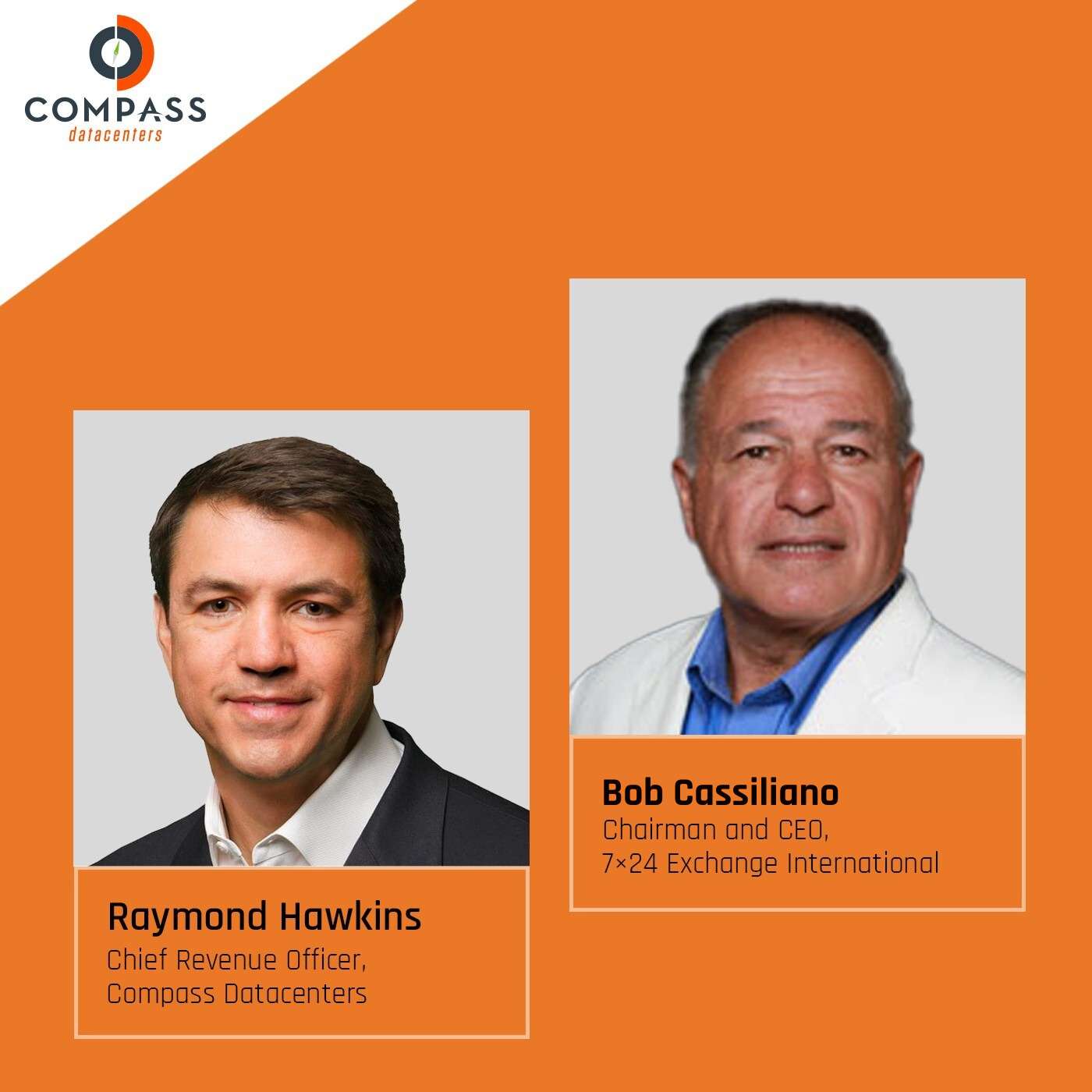
The 7×24 Exchange International is known for its conferences and helping companies and organizations from several industries, such as manufacturing and technology, collaborate and share information to improve. It’s a premier group which data center professionals can benefit from quite a bit of information. What are the advantages of the 7x24 Conference, and what does planning it entail? For an episode of Not Your Father’s Data Center podcast, host Raymond Hawkins interviewed Bob Cassiliano, Chairman and CEO of the 7×24 Exchange International — a nonprofit education forum aimed at helping companies in various sectors overcome challenges. The two talked about the creation of 7x24, its growth over the years, and changes and improvements made to its annual conferences. Hawkins and Cassiliano also went on to discuss … The earlier years of 7x24 and his background with the company The mission and goals the conferences aim to achieve What goes into strategizing and planning these conferences for success “We look towards four aspects that we think deliver the differentiation for us. The number one is the content; we always try to put together a program that is of high quality with top notch presenters. The venue where we take them, we go to four- and five-star resorts, and we do that because over the years through our evaluations it became very obvious where the attendees like to be - we also look at how the attendees are treated right …,” said Cassiliano. He added the welcoming aspect of the event is a further display of the type of hospitality they aim to offer and provide at the 7x24 conference. “The thing we are most proud of, and we really believe really differentiates us from everybody, is how guest-friendly we are. So, if you attend the conference and you bring a guest, that guest is allowed to attend our welcome reception on Sunday night, the conference keynote on Monday morning, any nighttime events that we have, as well as the Wednesday morning breakfast,” said Cassiliano. Bob Cassiliano is the Chairman and CEO of the 7×24 Exchange International. He’s been with 7x24 since 1990, which was formerly called the Uninterruptible Uptime Users Group when he joined. He became CEO in 2011 and has held the role since. Cassiliano is a graduate of New York City College of Technology where he earned a degree in electrical technology.
Ep 24The State of Tech Burnout
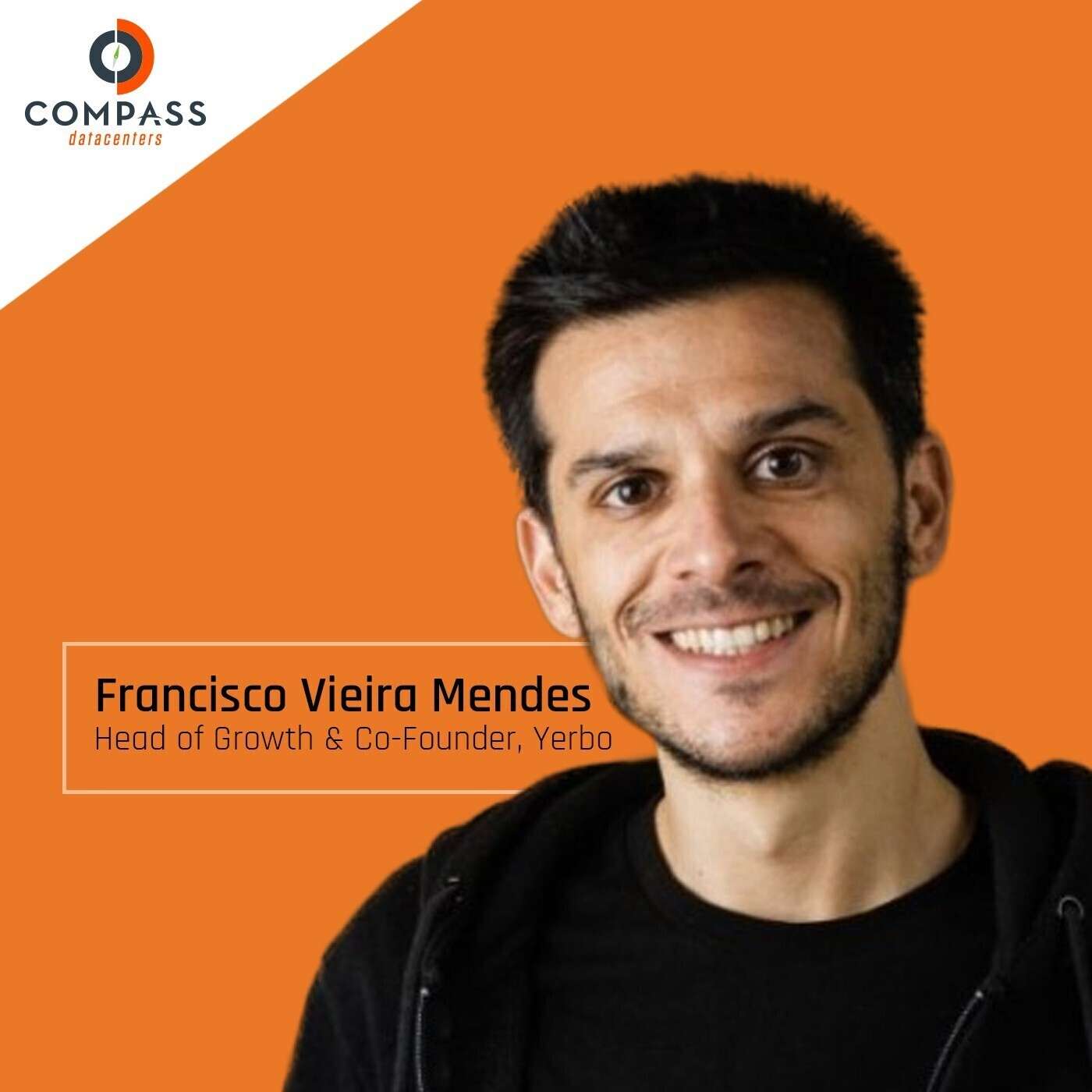
Burnout is a familiar concept in the tech field, with 40 percent of workers saying they want to quit due to stress, fatigue, and poor work-life balance. This can be especially true for startup companies, which face challenges and uncertainties that can place added stress on employees. But one company, Yerbo, is seeking to change that. On today’s episode of Not Your Father’s Data Center by Compass Datacenters, podcast host Raymond Hawkins, speaks with Francisco Vieira Mendes, Co-Founder and Head of Growth at Yerbo, about the origins of his company and what services they offer to tackle employee burnout in the tech world. Mendes explained the value Yerbo’s assessments can bring to the table to change an organization when leaders share their own results with the team. “It’s really important that those of you that are listening that are leaders of an organization or leaders within a team—even if it’s just a two-person team—it’s important that you show by example…If you show that we’re open to discuss those items, if you bring your results…that’s really important.” Mended went on to add “Because if you feel psychologically safe to be able to share that, that’s going to be very loud for your team, because your team is going to realize, ‘All right, I can share this because if you share this with me, maybe I can share this with him or her.’” Francisco Vieira Mendes is a marketing professional who has a passion for helping Latin American startups grow. He is Co-Founder and Head of Growth at Yerbo and has served in past roles such as a Class Lead for KURIOS, VP of Marketing at treble.ai, and Director of Product-Led Growth at CleverTap. Mendes earned a bachelor’s degree in Marketing from the Instituto Superior de Contabilidade e Administração do Porto and a Master’s degree in Attendance and Computer Science from Faculdade de Engenharia da Universidade do Porto.
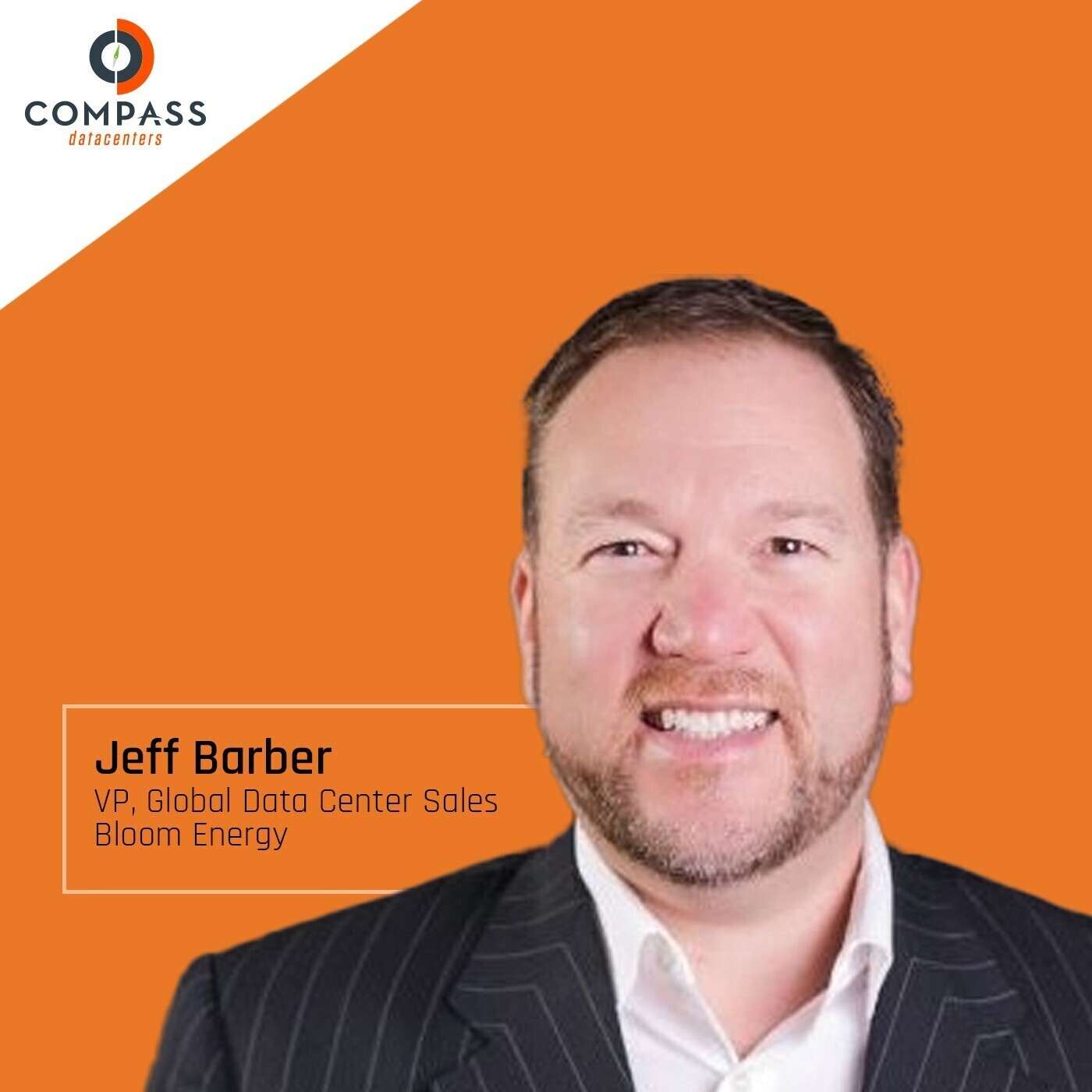
Ep 23It’s All About the Power
The phrase “energy crisis” has been tossed around frequently the past few years, and not without reason: as demand for fossil fuels skyrockets, climate change speeds up too. So while the U.S. puts legislation into place to help mitigate the climate crisis, there’s another problem in the process - our energy grid might not be able to keep up with these environmentally friendly power alternatives. What happens now? On the latest episode of Not Your Father’s Data Center Podcast, CRO and host Raymond Hawkins chats with the Vice President of Global Data Center Sales with Bloom Energy, Jeff Barber, about the energy crisis, ESG, and Bloom Energy. The two discuss: Why reducing your carbon footprint now adds time-value How Bloom Energy offers an alternative that lasts into the future What Bloom Energy is, how it generates power, and what their power-purchase agreement looks like “So, Bloom energy is solid-oxide fuel cells that are on-site, at your facility, in a micro-grid form. So this is power-generation at your facility, without the centralized grid, with the centralized grid…Bloom is intended to create energy for the facility, to be the primary energy to that facility, 24/7 365,” explained Barber, noting that these are not batteries. A California native, Barber has collected over 25 years of experience in the energy, sales, and data center industries. Though he first started working on network troubleshooting through the G-Tech Corporation as a Network Support and DEC VAX System Administrator, Barber has since held leadership positions at a number of globally recognized brands, including Hewlett-Packard, the EMC Corporation, and Oracle. Prior to joining Bloom, Barber was a Partner & EVP Sales and Business Development leader for Prime Data Centers. He is a graduate of California State University at Sacramento, with a BS in Business Administration.
Ep 21Neurodiversity, Data Labeling, and AI
In 2022, nearly 21% of persons with a disability were employed, but were much less likely to be employed than a person with no disability. For one company, however, people with disabilities are an untapped talent pool with lots of potential. Growing their data labeling and AI business, Enabled Intelligence looks to build an inclusive environment for those with neurodivergence, as they see what others might not be able to. On this episode of Not Your Father’s Data Center Podcast, CRO and host Raymond Hawkins, chats with Chief People Officer of Enabled Intelligence, Lauren Bacon Smith, about neurodiversity, data labeling, and AI. The two discuss: How tapping into the talent pool of neurodivergent people led Enabled Intelligence to success How Enabled Intelligence is growing their core business How AI modeling helps label the dataset faster “Yeah, so we actually have a data science team in-house now where we are actually creating some of our own models, so we are kind of having that full life-cycle where we have also done data curation, so clients coming to us, a lot of times have their data already, but we have the ability…to actually go out, get the data, prepare it, annotate it, and then we also are able to create and test our own models,” explained Bacon Smith. Lauren Bacon Smith holds over a decade of experience in program management, human resources, and recruitment. Starting her career in the hospitality and service industry, Bacon Smith spent eight years with Hilton Worldwide as the Senior Manager for Military Programs before joining Enabled Intelligence as the Chief People Officer to help continue fostering a culture of inclusion.
Ep 22Let’s Dance
Ep 20State of Datacenters in Nova
By providing the infrastructure required to store, process, and transport enormous amounts of data, supporting a wide range of applications and services, data centers in general play a crucial role in the digital economy. The "Data Center Capital of the World" title sometimes makes reference to Loudoun County in Virginia, which is a popular location for data centers. The county has become a desirable location for data center development due to its close proximity to Washington, D.C., its dependable power system, strong fiber-optic network, and its advantageous tax incentives. The Executive Director of Loudoun County, Virginia Economic Development, Buddy Rizer, was the guest on this edition of the "Not Your Father's Center Data Podcast," hosted by Raymond Hawkins, CEO of Compass Datacenters. According to Buddy, “Data centers allowed us to cut our tax rate to 89 cents last year, which means less pressure on homeowners to pay their loans. Additionally, we were able to construct a variety of schools, invest up to a billion dollars in road infrastructure, and extend the Washington D.C. Metro to Loudoun which in turn provides great jobs and services.” Buddy Rizer is the Executive Director for the Department of Economic Development in Loudoun County, Virginia, which was named the 2021 Economic Development Organization of the Year by the International Economic Development Council. He leads the agency responsible for encouraging growth and developing relationships with Loudoun’s business community in both the commercial and agricultural-based business sectors. During his tenure, Rizer and his team have attracted more than $40 billion in new commercial investment and more than 50 thousand new jobs.
Ep 17Data Analytics Across Industries
Jonathan Friedmann knew the semiconductor business would find its way into his life someday. Friedmann, CEO & Founder of Speedata, spoke to Raymond Hawkins about his career and his latest venture, Speedata, which provides a state-of-the-art Analytics Processing Unit to optimize big data and analytics workloads. While data growth is expanding at an exponential rate, processing speeds are lagging behind. Multiple cores on a single chip were a first-step industry solution, data centers were the next. Many data companies utilize clusters of hundreds and thousands of nodes to solve their complex processing needs. Friedmann’s Speedata solution offers a different approach. “Speedata is looking at a workload that is arguably the biggest workload in the data center today, databases and analytics,” Friedmann said, “Essentially, you have a database, and multiple industries hold their information in databases, and then they want to extract information from them. And you look at the public clouds; they are giving multiple managed services to handle that. The biggest and most important managed services in the world you find are all databases and analytics.” With the knowledge that big data is a large part of the processing need, Friedmann and Speedata designed a chip to target this specific workload, “Today, 99% of big data is processed by the CPU,” Friedmann said. That’s a large slice of the pie for Speedata to tap into and lessen the burden, “You look at what’s happening in the analytics and databases; the first revolution did not happen yet.” Data isn’t just coming from the outside. Computers are generating synthetic data, creating even more need for processing solutions. Friedmann equates what Speedata is doing as acting as plumbers. They’re building the tools and making the pipes wider so companies can better extract their data.
Ep 16Sustainability 101
Born, raised, and educated in Germany, Carsten Baumann, Solution Architect and Director of Strategic Initiatives at Schneider Electric, calls the United States his home these days. Baumann’s travels took many different routes, from a town outside of Frankfurt to the glitz of Los Angeles and now a quiet, more rural ZIP code in Colorado. But one constant remained: engineering. Baumann spoke with Raymond Hawkins about his journey and career in systems engineering. Schneider Electric does some exciting work with Compass Datacenters utilizing microgrids, something Baumann knows inside and out. As recent as five years ago, Baumann said many people in the data center world had no idea what microgrids were. A lot’s changed since then. “The definition of a microgrid has evolved, but as we understand it now, it’s something where we have a combination of distributed energy resources, like local energy generation assets we can use in case a grid goes down,” Baumann said. Baumann said microgrids solve three critical issues in the data center world. “One is greater resiliency, which we all want in a data center. Number two, which is a huge factor as well and becoming more and more prevalent and important, is sustainability,” Baumann said. “And the third one is overall, of course, cost and cost benefits. Ideally, we want to have everything. We want to be more sustainable; we have greater resiliency, and it ought to be cheaper.” Today, the education around microgrids is growing, and Baumann said potential data center customers want specifics around how microgrids can help them and the best approach they should take. “I believe site selection for data centers will expand the criteria to meet sustainability aspects,” he said. “Being able to do onsite power generation when the electricity is expensive, we may be able to produce it cheaper ourselves and more sustainable, so the carbon intensity of our own electricity is less than the carbon intensity of the electricity we buy from the utility company.”
Ep 19The Euro Market & What to Expect in the Industry in 2023
The world is in an energy crisis caused by many events affecting billions. Yet, while others are focusing on how this might affect oil & gas prices, the critical piece missing from the news is how this will involve a business that helps lift the entire market: data centers. So, what impact will the crisis have on data centers, and what is the forecast for the industry heading into 2023? On the newest episode of Not Your Father’s Data Center podcast, host Raymond Hawkins engages with returning guest Andrew Jay, Executive Director of Data Centre Solutions, Advisory, & Transaction Services EMEA CBRE. The two review… What is affecting the data center market, including the investment market, geopolitics, and the energy crisis How data centers are coping with and preparing for challenges now and into the future The future of the market, particularly the outlook for data centers into 2023 “...What we’re trying to do is very much bring the end users to the table with the public authorities and say, ‘Look, how do we sort this out together?’...,” said Jay. Jay is the Head of Data Centre Solutions with EMEA Advisory at CBRE and has been with CBRE for over 23 years. CBRE is a London-based worldwide commercial real estate services and investment company.
Ep 18Power Challenges in the DC Industry
Like most people involved with Data Centers, Andy Lawrence, Executive Director of Research at Uptime Institute, didn’t start his career that way; Lawrence’s beginning was IT. As a journalist covering all things IT, Lawrence gravitated to the economic and ecological impacts, which led to his interest in data centers. He joined ‘the Hawk’, Raymond Hawkins, to talk about his career and discuss some of the power challenges faced in the DC industry. As the head of research at Uptime, Lawrence said there’s a lot of client interest in the efficiency and efficiency of data storage facilities. “There’s obviously a lot of energy being consumed in the IT side, so I feel now there’s starting to be an awareness of how we actually start to tackle that.” With an awareness that things need to change, executive management in the IT industry is signaling to its investors a move towards carbon-neutral policies. The problem? Saying it ‘net zero’ and getting there are two different things. So, when the decree to go carbon neutral comes down from the top to the data centers, the data centers turn to Lawrence and his team at Uptime for help. If the goal is to get to carbon neutral without significant reliance on offsets, how should data centers be thought of as stewards of the energy they use? Lawrence felt there was no easy answer, but the data storage industry should work harder to promote its value to the overall IT sector. There is a misconception that data storage centers account for a much more significant percentage of overall global energy usage than they do. But there are various regions and countries where the average is much higher, and there is work to be done to reduce those numbers.
Ep 15The World of Crypto
Who doesn’t love a sequel? Raymond Hawkins sure does, and back by popular demand for another episode of fantastic industry insights, Fred Thiel, CEO of Marathon Digital Holdings, joined the Hawk to talk about all sorts of things. Top of mind was how current events are shaping the crypto community and how crypto could impact the events unfolding in Europe. The current state of affairs could provide a new test for digital currency. Thiel pointed out in past wars; displaced citizens did not have many options for moving their money. “Crypto provides a unique thing in this world where sanctions have become essentially a weapon and weaponized,” Thiel said. In the matter of the war in Ukraine, the United States and its allies have used sanctions to shut off Russian access to banks. The only other bearer asset available for many people and businesses in this scenario is Bitcoin and other cryptocurrencies. One might ask if Crypto is a solution to transferring assets, could Russia use crypto to avoid sanctions? Thiel said that the daily trading of cryptocurrency and the total market cap prevents this idea from being scalable. “As a tool for sanction evasion, Bitcoin is not a good option,” Thiel stated. Since the start of the war in Ukraine, one trend is the decoupling of the correlation between bitcoin and equities. “All of a sudden, now there was a real use case for bitcoin that was very actual and urgent, and so you started seeing bitcoin move in the opposite direction of equities. Even bitcoin-related stocks which track the price of bitcoin started moving separately. So, there were days when the Dow and the Nasdaq would go down, yet bitcoin would go up, and you saw the Nasdaq-traded, bitcoin-related stocks, Like Marathon, for example, move in lockstep with bitcoin.”
Ep 14College Football Preview
The summer of 2021 brought news of Texas and Oklahoma leaving the Big 12 for the SEC. This summer USC and UCLA rocked the landscape of college conferences once again. The schools announced they would leave the Pac-12 to join the Big Ten. The deserted conferences are shifting the narrative to expansion for survival. After the summer 21 news from Texas and Oklahoma, it’s become clear that two conferences are working to separate. Elias Ellefsen said, “I love the move for USC and UCLA. I’m a big fan of the big conferences.” West coast football in the Big Ten will certainly make waves. “It’s an interesting move. Typically I think of west coast football as high-paced. I think it will bring an interesting dynamic to the league,” said Steve Skyes. Others argued that the success of USC and UCL would make the Big Ten ‘The conference of champions.” What’s to come for the future of NCAA conferences is difficult to know. Will conferences survive, implode, or expand? Raymond Hawkins, the podcast host, said, “We’re not going to continue with five powerhouses, five conferences forever.” Kenny Nguyen pointed out the weakness of the Pac-12 in the wake of the news. “Pac 12 right now, it feels like it's bleeding a little bit. If Washington and Oregon dip, what do you have left?” questioned Nguyen. The debate continues to consider how media drives these changes and the potential of only having two to three leagues. This group's conference champion predictions favor Baylor, Ohio State, Alabama, and Utah. There’s a rich insight into specific players, coaches, and each conference. Listen to Not Your Father’s Data Center Podcast on Spotify or Apple.
Ep 13Let’s Talk Nuclear with Dr. Everett Redmond
The Hawk’s talk went nuclear again. Raymond Hawkins brought on Dr. Everett Redmond. A Senior Technical Advisor of New Reactors and Advanced Technology at the Nuclear Energy Institute, Dr. Redmond joined the show for a fascinating talk on nuclear energy and energy in general for the data center industry. Dr. Redmond studied nuclear engineering at MIT, and along with scuba diving, his passion is nuclear energy. Diving in, only some pun intended, to the world of bitcoin, Dr. Redmond said there was a tie-in between crypto and nuclear energy. “Last year, we saw a number of Bitcoin companies make agreements with reactor companies. In one case, with a new reactor vendor. They’re looking for that clean, carbon-free energy to power their mining operations, and so you’re seeing those connections.” Dr. Redmond touched on some new nuclear-related projects occurring in the United States,“There’s a company called New Scale developing a new light water, water- cooled reactor,” Dr. Redmond continued, “They’ve teamed up with UAMPS (Utah Associated Municipal Power Systems.) They plan to build an Idaho national laboratory and be operational by 2029. And then you have a couple of other companies, TerraPower and X-energy, awarded projects by the Department of Energy.” These projects will bring nuclear power to Wyoming for the first time and expand carbon-free energy production in Washington. With a blossoming of new nuclear energy projects afoot, Hawkins wanted to know the viability of data centers teaming up with nuclear power to provide carbon-free energy to data storage. Dr. Redmond was clear: nuclear energy tends to go where the need is, and often that is if there are regulatory requirements to meet carbon-neutral goals. He noted that some companies with long-range plans are looking at ways nuclear energy can be part of the equation to provide energy solutions in the future.
Ep 12A Conversation with an iMason with Dean Nelson
The hats he wears are many: Chairman & Founder of Infrastructure Masons (iMason,) CEO of Virtual Power Systems, Co-Host of The Next Wave Podcast, and Founder & CEO of a strategic advisory and consulting service for Startups, Fortune 500 companies, and Investment firms. One might call him a living legend in the data storage space. Back by popular demand, Dean Nelson joined Not Your Father’s Data Center for another tremendous conversation with host Raymond Hawkins. Nelson queued up some significant trends in the data storage space since his last visit that he was itching to discuss. “If you think about our industry, today we have 7 million data center locations,” Nelson said. “These are places that have some type of compute in them. And there’s about 104 gigawatts of capacity built. That’s capacity that could be used. From a consumption standpoint, there’s 594 terawatt-hours of consumption. If you now equate that, that’s 2.4% of the total energy draw globally. Through iMasons, we created this baseline on purpose. And what it includes is three categories. So, digital infrastructure, in general, is providers, networks, and crypto.” Breaking down these categories helps define where the energy usage is going and how Nelson and his iMasons can find new ways to maximize the consumption of that capacity. Even within the 594 terawatt-hours of consumption, Nelson said not all of that energy is consumed at once. Only roughly 67 gigawatts of the 104 gigawatts of power get consumed. That leaves at least 37 gigawatts unused around the globe. “And why is that,” Nelson asked. “That’s because of buffers and buffers, and everything else that happens from enterprise applications to cloud to data centers and everybody saving to ensure that they don’t have an issue.”
Ep 5Innovations in Generator Land with Chris Brown
How did a Texas boy, who swore up and down he’d never leave Texas for Oklahoma, wind up involved with the data storage industry in Oklahoma? Chris Brown, CTO at Uptime Institute, isn’t 100% sure himself, but spending the past 25 years in the Sooner state means something went right. And Brown said the data center life treated him well so far. “I was fortunate enough to get into some different companies in times when they were doing a lot of work and a lot of changes,” Brown said. “So, it allowed me to get thirty years of experience in about ten or fifteen years. And I’ve enjoyed working in the industry, and I look forward to many more years to come.” And with Brown’s passion for data centers limitless, he knew he eventually wanted a role where he could help other industries increase their data center capacity and knowledge. Brown’s journey led to the Uptime Institute. “Once again, most opportunities are those are surprises rather than things that are planned,” Brown said. After a stint working for Saber Company and a few other related mechanical engineering data center opportunities, a friend from his past called him up to join the Uptime Institute to help them with some engineering challenges. Over the past twelve years, Brown worked his way from consultant to CTO. “When I started at Uptime Institute, there were four people delivering the technical work, and they were all US-based,” Brown said. “Today, we have thirty-four engineers scattered across thirteen different countries and still growing. It’s definitely changed a lot. But the data center industry’s changed a lot. When I first started (in the industry), chilled water plants were the norm because the electrical power that was required to run a chill water plant was about 25% of what it would be with direct expansion.” Technological advancements in direct expansion today make that method much more affordable.
Ep 11Data Centers in Space Pt.2
Rick Ward, CTO, and Founder of Orbits Edge, described how space is becoming increasingly accessible to laypeople. “We’re getting more and more to the place where I can see myself there. And that is a big deal. You don’t have a space-bearing civilization when the only people who go up there are less numerous than Olympic gold medalists.” Ward and Raymond Hawkins, Chief Revenue Officer of Compass Data Centers, discussed this increasing accessibility in the context of data on Part Two of “Data Centers in Space” on Not Your Father’s Data Center Podcast. Orbits Edge uses high-power compute in space before sending data to Earth. Mass amounts of data are captured, but there is a bottleneck in the transportation. Ward said, “Image capture is haystack generation, compute is needle finding,” said Ward. If you can only transport a fraction of the data haystack, it needs to be the high-quality “needles.” Data is shipped to countries through bands that have varying reliabilities and throughputs. A low-orbit satellite may conduct with a ground station for a certain distance, then have a fuzzy connection for another distance, and finally have no connectivity for several kilometers until it reaches the next ground station. High, dry locations are best for ground station connectivity. “What it comes down to is intermittent connectivity of variable throughputs of various windows of connectivity,” said Ward. Data is then transported from the ground station to a data center. Some ground stations have antennas to reduce the fiber run distance. Orbits Edge satellites range from the size of a dorm mini-fridge to the size of a regular fridge and weigh about 200 kilos. Despite the small size, Ward predicted that satellite data will play an increasingly heavy role in space and research stations, crystallography, space metallurgy, and ceramics.
Ep 6Data Centers in Space Pt. 2
Rick Ward, CTO, and Founder of Orbits Edge, described how space is becoming increasingly accessible to laypeople. “We’re getting more and more to the place where I can see myself there. And that is a big deal. You don’t have a space-bearing civilization when the only people who go up there are less numerous than Olympic gold medalists.” Ward and Raymond Hawkins, Chief Revenue Officer of Compass Data Centers, discussed this increasing accessibility in the context of data on Part Two of “Data Centers in Space” on Not Your Father’s Data Center Podcast. Orbits Edge uses high-power compute in space before sending data to Earth. Mass amounts of data are captured, but there is a bottleneck in the transportation. Ward said, “Image capture is haystack generation, compute is needle finding,” said Ward. If you can only transport a fraction of the data haystack, it needs to be the high-quality “needles.” Data is shipped to countries through bands that have varying reliabilities and throughputs. A low-orbit satellite may conduct with a ground station for a certain distance, then have a fuzzy connection for another distance, and finally have no connectivity for several kilometers until it reaches the next ground station. High, dry locations are best for ground station connectivity. “What it comes down to is intermittent connectivity of variable throughputs of various windows of connectivity,” said Ward. Data is then transported from the ground station to a data center. Some ground stations have antennas to reduce the fiber run distance. Orbits Edge satellites range from the size of a dorm mini-fridge to the size of a regular fridge and weigh about 200 kilos. Despite the small size, Ward predicted that satellite data will play an increasingly heavy role in space and research stations, crystallography, space metallurgy, and ceramics.
Ep 10Let’s Bowl!
Ep 3Effect of Tech on National Security
International trade law expert reveals the difficult yet satisfying work that the CCIA performs to keep tech at consumers’ fingertips.
Ep 4Let’s Dance
Host Raymond Hawkins switches up the usual topic of data to bring listeners a lively discussion of March Madness picks.
Ep 2A Look into the Impact of COVID-19 on the Data Center Industry
The data center industry is probably not the first industry one would think of when it comes to changes from the pandemic since data is stored virtually. Tim Huffman, Vice President of CBRE, joined Host Raymond Hawkins, Chief Revenue Officer of Compass Datacenters, to discuss the surprising number of shifts that actually occurred in the industry.
Ep 1Satellites & The Cloud with Doug Mohney
Data has moved from the building filling mainframes of the 60's technology to satellite gathering machine learning and AI processing at the speed of light. Megabytes have turned into Petabytes, leaving businesses to absorb the paradigm shift of data collection. In this episode of Not Your Father's Data Center, host Raymond Hawkins and Doug Mohney, Editor-in-Chief of Space IT Bridge, look at the explosive growth of using satellites for data monitoring and collection. The intersection of space and IT technology offers an inexpensive and exponential increase in satellite data gathering capabilities. Ray and Doug explore the growth and use of satellites and assist everything from remote broadband communications to countries' infrastructure security. Businesses are collecting more data than ever before. And instead of mainframes, they're using the cloud and, in a growing number of cases, constellations of satellites for communication and tracking of transportation. As a result, there has been a shift from mainframes towards the rapidly expanding availability of satellite technology. The development of reusable rockets has assisted this shift to satellites. As a result, satellites traveling 400 miles above the earth provide capabilities and technology to deliver broadband to the entire world. "Satellite is going to help connectivity. With current satellite technology, there can be near fiber broadband technology anywhere in the world," Mohney explained. "This is promising because it allows [cloud services, technology, and communication] to developing countries."