
North Anderson Baptist Church
150 episodes — Page 2 of 3
UNSEEN: Spiritual Warfare // The Belt of Truth
<p>When Paul describes the armor of God in Ephesians 6, he begins with the belt of truth—a piece of equipment that might seem small, but was absolutely essential for a soldier. Without it, the rest of the armor could not be held together, and the soldier would be left vulnerable and unprepared. In the same way, truth is the foundation of our spiritual defense. The battlefield of this unseen war is not fought with swords or shields, but in our minds, where lies and deceptions threaten to distort our identity and shake our faith. Satan whispers doubts—about God’s goodness, about our worth, about who we are—but the truth of God’s Word secures us, steadies us, and sets us free. To “gird ourselves with truth” is to be ready for battle, anchored in what God has said, so we can stand firm when the enemy attacks.</p>
UNSEEN: Ephesians 6:10-17
<p>As we continue in our Unseen series on spiritual warfare, today we are reminded that the Christian life is not lived on neutral ground—we are in a battle. But it is a battle with an enemy who is real, cunning, and bent on our destruction. Paul tells us in Ephesians 6 that our struggle is not against flesh and blood, but against the spiritual forces of darkness. Yet even as we recognize the reality of our enemy, we do not fight in fear, because the cross has already secured our victory. Christ has triumphed, the devil’s power is limited, and we are called to stand firm in that victory, clothed in the armor of God. The question before us is this: will we fight in our own strength and stumble, or will we stand in Christ’s strength, fully surrendered to Him, and walk in the protection and power He provides?</p>
UNSEEN: A Series on Spiritual Warfare
<p>Today we begin a new series called Unseen: A Series on Spiritual Warfare, and we start with the sobering truth that every one of us is in a battle—whether we realize it or not. The Bible reminds us in Ephesians 6 that our struggle is not against flesh and blood, but against unseen spiritual forces of darkness. Too often we direct our frustration and anger toward people, when in reality the enemy at work is far greater and far more deceptive. The world seeks to normalize sin, our flesh pulls us toward it, and the devil schemes against us with lies and accusations. But the good news is this: in Christ, we do not fight for victory—we fight from victory. As we open our eyes to the unseen, may we learn to stand strong in the Lord’s strength, equipped with His armor, and ready to face the real battle we are in.</p>
Psalm 1: The Pathway To Happiness
<p>Everyone is searching for happiness, but most people are looking in places that can never truly satisfy. Psalm 1 opens the entire book of Psalms by drawing a sharp contrast between two kinds of lives—the godly and the ungodly—and it shows us that the pathway to real and lasting happiness isn’t found in chasing sin, following the crowd, or depending on circumstances. Instead, true happiness comes from a life rooted in God’s Word, delighting in His truth, and drawing strength from Him like a tree planted by streams of water. This psalm is both a warning and an invitation: a warning that the way of the ungodly leads to emptiness and ruin, but an invitation to pursue the joy, stability, and fruitfulness that only come from walking with God.</p>
Guest Speaker, Rev Jerry Wilson
Psalm 56
<p>Fear has a way of gripping our hearts, clouding our judgment, and making trust feel impossible—but Psalm 56 shows us that faith is not the absence of fear, it’s the choice to trust God in the middle of it. Written by David during one of the most dangerous and uncertain moments of his life, this psalm is raw, honest, and deeply instructive. David doesn’t hide his trembling; instead, he brings his fears straight to God, anchoring himself in God’s presence, God’s promises, and God’s care. Here, we see a roadmap for our own moments of anxiety: be honest before God, stand on the unshakable truth of His Word, and praise Him in advance for victories yet unseen. In this psalm, David invites us to live out the words we so easily say—"In God We Trust"—not just in times of peace, but especially when the battle rages around us.</p>
Psalm 32: The Blessed Life
<p>As we continue our Summer of Psalms series, today we turn to Psalm 32—a heartfelt testimony from David about what it truly means to live the blessed life. But this blessing isn’t about comfort, success, or ease. It’s about forgiveness. David opens with joy-filled words not about what he’s earned, but about what he’s received: mercy, grace, and pardon from a God who covers sin and lifts the weight of guilt. He knows firsthand the misery of hiding sin and the relief that comes through honest confession. Psalm 32 invites us to stop running, stop pretending, and come clean before the Lord—to embrace conviction not as punishment, but as a gift that leads to freedom, restoration, and joy. The blessed life begins not with perfection, but with repentance—and the God who meets us there with songs of deliverance.</p>
Psalm 145: A Faith That Sings
<p>As we continue our Summer of Psalms series, we come today to Psalm 145—a vibrant, joy-filled declaration of praise from David, whose heart overflows with worship for a God whose greatness is beyond measure. This psalm reminds us that when we truly see who God is—His majesty, mercy, and might—our faith begins to sing. Singing not only plants truth deep within our minds, but also encourages those around us and engages our hearts in worship. David calls us to lift our voices across generations, to declare God's goodness and faithfulness in every season. Whether you’re in a valley or on a mountaintop, Psalm 145 invites you to taste and see that the Lord is good—and then sing it out for the world to hear.</p>
Psalm 63: Joyfully Seek the Lord
<p>As we turn our hearts to Psalm 63, we are reminded that whether we find ourselves in a season of abundance or wandering through a dry and weary wilderness, our deepest longing and greatest joy are found in seeking the Lord. David’s words echo across the centuries: “God, you are my God; I eagerly seek you.” In every desert of life, we find that God alone satisfies our thirst, shelters us under His wings, and saves us from every enemy. Today, may we hear this wilderness cry and make it our own, lifting our hands in praise to the One whose faithful love is better than life itself.</p>
Psalm 34
<p>This morning, as we continue our Summer of Psalms series, we turn to Psalm 34—a psalm that calls us to lift our voices in every season with a song of determination, exaltation, invitation, veneration, and expectation. David’s words remind us that whether we stand on the mountaintop or walk through the valley, we have reason to bless the Lord at all times. This psalm invites us to taste and see His goodness, to fear Him with reverence, to pursue peace and righteousness, and to trust that even in our brokenness, the Lord is near and ready to redeem. May this ancient song become our song today as we magnify His name together.</p>
Psalm 55
<p>As we continue our Summer of Psalms series, today we open to Psalm 55—a raw, honest look into the heart of David as he wrestles with deep frustration, loneliness, betrayal, and anger. In this psalm, we see a man who longs to run away from his troubles, who feels crushed by the pain of broken trust, and who cries out for justice against his enemies. Yet in the midst of all this, David remembers where his true hope lies: not in escape or revenge, but in a sovereign God who hears, saves, and sustains His people. Psalm 55 invites us to bring our burdens, our wounds, and our storms to the One who can carry them, and to find peace and strength when our faith feels fragile. May this psalm guide us from frustration to faith today!</p>
Psalm 122
<p>Today, as we begin our Summer of Psalms series, we turn to Psalm 122—a song of gladness that reminds us of the deep joy found in gathering in the presence of God, in the place of God, with the people of God, while holding tightly to the promises of God. David’s words, “I was glad when they said unto me, Let us go into the house of the Lord,” echo a truth that still stirs our hearts today: worship is not just a duty but a delight. When we gather, we step into a glimpse of the heavenly city we long for, and we taste the peace and hope that come from standing together in God’s presence, praising His name, and looking forward to the fulfillment of His promises. May this psalm stir in us that same gladness today!</p>

Do Not Covet
<p>Good morning, church. Today we come to the final commandment in our series, and though it may not seem as outwardly serious as murder or theft, “Do not covet” speaks directly to the condition of our hearts. Coveting is more than just wanting—it’s an excessive, envious desire for what God has given to someone else. It’s a restless craving that not only robs us of joy, but can drive us to make destructive decisions, damage relationships, and distance ourselves from God. The story of Amnon and Tamar shows us just how far unchecked desire can go. But the good news is this: God offers us a better way. Through trusting in His provision, living with gratitude, and finding true peace in Christ, we can be freed from the grip of envy and learn to live with contentment in every circumstance.</p>
Do Not Bear False Witness
Do Not Steal
<p>Today we turn our attention to a command that many may be tempted to overlook: “Do not steal.” At first glance, this may seem like a simple directive—don’t take what isn’t yours. But as we open God’s Word, we’ll see that this command cuts far deeper than petty theft or dishonest gain. Stealing, at its core, is not just a crime against another person—it is a sin against God’s providence, a denial of His provision, and a violation of the love we owe our neighbors. Whether it’s taking, withholding, neglecting, or refusing to give, our hearts are more prone to theft than we often realize. But the gospel offers hope—even for thieves. As we’ll see in the story of Zacchaeus, when Jesus enters a life, He doesn’t just forgive sin—He transforms the sinner. Through His grace, we move from takers to givers, from greedy to generous, from clinging to what is not ours to sharing freely what we have received.</p>
Do Not Commit Adultery
<p>Today we come to a command that speaks to one of the most sacred gifts God has given humanity—the covenant of marriage. In just four words, “Do not commit adultery,” God draws a clear boundary to protect that covenant, to guard our hearts, and to uphold the sanctity of love, trust, and intimacy within marriage. But this command reaches beyond physical betrayal—it touches the very core of our thoughts, our desires, and the condition of our hearts. In a world that celebrates sexual immorality and mocks marital faithfulness, God calls His people to something higher and holier. And while the sin of adultery brings devastation to individuals, families, and souls, the good news is that there is grace for the broken. There is hope for the unfaithful. There is cleansing for the guilty. Through Jesus Christ, even the worst of sinners can be washed, restored, and made new.</p>
Do Not Murder
<p>Today, we come to one of the most well-known and universally accepted commands in all of Scripture—“Do not murder.” At first glance, it may seem straightforward, even easy to keep. But as we’ll see, this command reaches far deeper than simply refraining from physical violence. It’s rooted in the sacred truth that every human being is made in the image of God, and therefore every life is precious and worthy of protection. From the beginning of creation to the teachings of Jesus, God has made it clear that preserving life is not just a legal issue—it’s a spiritual one. Jesus exposes the heart behind this command, showing us that anger, hatred, and bitterness are seeds of the same deadly tree. So today, we’re going to look not only at what this command prohibits, but at what it calls us to—namely, a life that honors God by cherishing the lives of others.</p>
Honoring Your Parents
<p>Today, as we continue our journey through the Ten Commandments, we arrive at one that speaks directly to the heart of how God has designed human relationships to work: “Honor your father and your mother.” This command isn’t just about family dynamics—it’s about the very fabric of how authority, respect, and godliness are meant to flow through our homes and into the world. In 2 Samuel 23, David’s final words paint a beautiful picture of just authority—like sunlight breaking through the clouds or rain giving life to the earth, righteous leadership brings flourishing. The fifth commandment teaches us that authority, beginning in the home, is a gift from God—meant to bless, nourish, and guide. Honoring our parents is the foundation upon which we learn to honor others, respect God-ordained authority, and live in a way that brings life to our families, churches, and communities. Let’s lean in today and ask: What does it truly mean to honor our parents, and how do we live that out in every season of life?</p>
Remembering The Sabbath
<p>As we continue our series through the Ten Commandments, we come to a command that often feels distant in our fast-paced world: “Remember the Sabbath day, to keep it holy.” But this is not a suggestion—it’s a sacred rhythm woven into creation itself. Long before Moses received the tablets at Sinai, God modeled this pattern by resting on the seventh day—not because He needed rest, but because we do. The Sabbath is a day to remember God’s work, to rest from our own, and to rejoice in His provision. It’s not a burden but a blessing, reminding us that our worth is not found in our productivity, but in the God who created us, sustains us, and invites us to rest in Him.</p>
Name Above All Names, Exodus 20:7
No Room For Idols, Exodus 20:4-6
<p>Today, we continue our journey through the Ten Commandments by looking at God's second command: a strong and loving warning against making idols. In Exodus 20:4-6, God tells His people not to create any images or representations of Him — not because He wants to remain distant, but because no image could ever capture His true glory. It is possible to worship the right God in the wrong way, and that’s exactly what we see when Israel foolishly tried to represent God through a golden calf. God calls us to worship Him on His terms, not ours — not through what we can see or imagine, but through the living Word He has spoken. Today, we’ll explore why this matters so deeply, and how it calls us to a purer, truer worship that honors who God really is.</p>
Easter At North Anderson
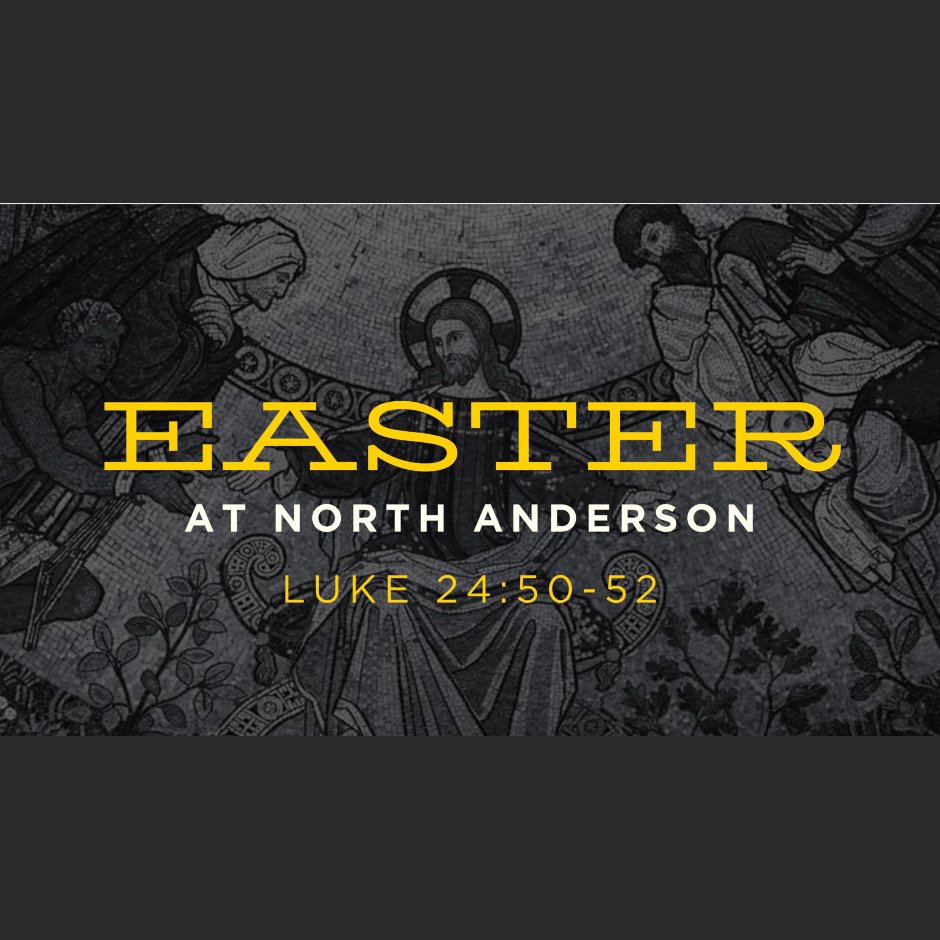
<p>Today, as we celebrate Easter, we often focus on the empty tomb — and rightfully so — but the resurrection was not the end of Jesus’ story. After rising from the dead, Jesus didn’t just linger on earth; He ascended into heaven, taking His rightful place at the Father’s side, exactly as He promised and exactly as Scripture foretold. His Ascension wasn’t an afterthought — it was the glorious completion of His earthly mission and the beginning of His heavenly reign. And the good news for us today is that Jesus isn’t distant or inactive. Right now, He is seated on the throne, His work of redemption finished, and yet His care for us continues as He intercedes for us, advocates for us, and invites us into relationship with Him. Easter isn’t just about what happened then — it’s about what’s happening right now!</p>
Good FridayService
No Other Gods, Exodus 20:1-3
<p>This morning, as we open God’s Word together, we’re beginning right where God begins — with the first and foundational commandment: “Do not have other gods besides me.” It’s no accident that this command is first on the list. Before God ever tells His people what to do or not to do, He reminds them who He is — the One who rescued them from slavery and brought them into freedom. The Ten Commandments aren’t a ladder we climb to earn God’s love; they are a response to the love and redemption we’ve already been given. And at the heart of it all is this truth: God isn’t interested in being part of your life, He demands to be the center of it. He calls for exclusive devotion — no rivals, no competition, no “and.” Today we’ll explore what it looks like to give God the place He alone deserves, and why that’s not just for His glory, but for our good.</p>
Why the Commandments Matter Today
<p>Long before God gave His people the Ten Commandments, He brought them to a mountain—not just for instruction, but for transformation. In Exodus 19:1-8, we find a powerful moment of divine revelation, where God reveals not only His laws, but His heart. These commandments were not given to restrict life, but to renew it. They are a confrontation with our sin, a mirror reflecting our need for grace, and a guide for how to live as God's holy people. The law shows us how far we fall short, but it also points us to the One who fulfills it perfectly—Jesus Christ. As we begin this series, we must ask: What does God's law reveal about Him? What does it reveal about us? And how might obedience to His commands lead to the kind of life that truly flourishes? The Ten Commandments are not just ancient rules; they are a timeless call to covenant living with a holy God.</p>

The Exiled Elect: Message 12
The Exiled Elect: Message 11
<p>Suffering is not an anomaly in the Christian life; it is an expectation. In 1 Peter 4:12-19, Peter reminds believers that trials and hardships are not random but a refining process permitted by God to strengthen our faith. Rather than being caught off guard, we are called to rejoice in suffering, knowing that we share in Christ’s own sufferings and will one day share in His glory. Suffering well requires a proper perspective—it is a test of faith, an opportunity to glorify God, and a means to entrust ourselves fully to our faithful Creator. As we endure ridicule or hardship for the name of Christ, we are blessed, for the Spirit of God rests upon us. This passage challenges us to evaluate our suffering, ensuring that it is for righteousness and not for wrongdoing, and to embrace suffering as a pathway to greater dependence on God. In the end, we can either suffer now and rejoice later, or chase temporary comfort and face eternal loss. The choice is clear: suffer well, for the glory of God.</p>
3.16 Sunday
The Exiled Elect: Message 10
<p>Suffering is a reality that every believer must face, but the question we often ask is, "Why?" In 1 Peter 4:1-6, the apostle Peter urges us to arm ourselves with the understanding that just as Christ suffered, so too will His followers. Suffering is not meaningless; rather, it serves a divine purpose in shaping us into the image of Christ. Sometimes, our suffering comes from the brokenness of the world, the attacks of the enemy, or even our own sin. Other times, it is permitted by God to sanctify us, drawing us closer to Him, refining our faith, and reorienting our priorities. When we endure hardship with a perspective rooted in Christ, we learn that God’s grace is sufficient, and our dependence on Him is our greatest strength. Through suffering, God calls us to live not for fleeting earthly desires, but for His eternal will, anchoring our hope in the One who judges righteously and redeems every pain for His glory.</p>
The Exiled Elect: Message Nine
<p>Suffering is an inevitable part of the Christian journey, especially in a world that increasingly opposes righteousness. In 1 Peter 3:13-22, the apostle Peter offers a profound challenge to believers: suffer well. This passage calls us not to fear opposition but to respond with unwavering faith, reverence, and hope. Peter reminds us that suffering for what is good is not a sign of defeat, but a mark of blessing. As we face trials, we are to sanctify Christ in our hearts, always ready to give a reason for the hope within us. Our conduct in the face of suffering becomes a powerful witness to the world around us. Anchoring this call is the ultimate example—Christ Himself—who suffered on our behalf to bring us to God. His victory over sin and death assures us that no suffering is wasted, and no trial can separate us from His love. When we suffer well, we not only imitate Christ but point others to the life-transforming hope found in Him.</p>
The Exiled Elect: Message Eight
<p>Life in exile—whether literal or spiritual—comes with trials, opposition, and moments of deep discouragement. Yet, in 1 Peter 3 and Psalm 34, we are reminded that even in the midst of trouble, God sees us, hears us, and calls us to a life of faithfulness. We are to praise Him in hardship, seek Him in our struggles, remain steadfast in righteousness, and bring our burdens before Him in trust. Today, as we explore these passages, let us be encouraged that the Lord is near to the brokenhearted and that His eyes are always on those who seek peace and pursue His ways.</p>
The Exiled Elect: Message Seven
<p>As followers of Christ, we are called to live differently—to stand firm in faith even when the world pushes us to the margins. In 1 Peter 3:8-12, the apostle Peter urges believers to embrace unity, humility, and compassion, resisting the urge to retaliate against mistreatment and instead choosing to bless others. This passage challenges us to reflect on what it means to belong to the family of God and to behave in a Christlike manner, even in the face of opposition. As we explore this message today, let us consider how we can thrive in a world that often misunderstands us, remaining faithful to our calling as God’s chosen people.</p>
The Exiled Elect: Message Six, Dr. Nathan Finn
The Exiled Elect: Message 5, A Holy Home
<p>Marriage is one of God’s greatest gifts to humanity, designed for both blessing and flourishing. Yet, when approached outside of His divine order, it can become a source of struggle and frustration. In 1 Peter 3:1-7, we see that just as God has established structures of authority for the good of society, He has also designed marriage with a clear and purposeful order. Wives are called to honor their husbands’ God-ordained leadership, not as a sign of inferiority but as a reflection of Christ’s own submission to the Father. Likewise, husbands are commanded to lead with understanding, love, and honor, recognizing their wives as coheirs of God’s grace. When both husband and wife embrace their roles as God designed, marriage becomes a beautiful testimony of His wisdom, a holy home where love, respect, and grace abound.</p>
The Exiled Elect: Message 4
<p>As strangers and exiles in this world, Peter urges us to live lives that reflect our new identity in Christ, abstaining from the sinful desires that wage war against our souls. Our conduct is not only for our own sake but also for the credibility of our witness to a watching world. By submitting to earthly authorities, we honor God, acknowledging that all authority originates from Him and is used by Him for His purposes. This submission, even in the face of injustice, glorifies God and silences the ignorance of critics. Ultimately, we follow the example of Christ, who endured suffering and entrusted Himself to the One who judges justly. His sacrifice not only redeemed us but also called us to live righteously, reflecting His love and grace in every aspect of our lives.</p>
The Exiled Elect: Message 3
<p>As followers of Christ, we are not left aimless or undefined in our identity. In 1 Peter 2:1-10, we see a profound picture of who we are and who we are becoming as God’s people. We are called to strip off the old garments of malice, deceit, and hypocrisy and to clothe ourselves with Christ, longing for the pure spiritual nourishment of His Word. As living stones, we are being built upon the cornerstone of Christ Himself, forming a spiritual house and a holy priesthood, uniquely set apart to proclaim the greatness of the One who called us out of darkness into His marvelous light. Once far from God, we are now His chosen people, redeemed and treasured for a purpose far greater than ourselves. This identity shapes our calling and strengthens our hope, reminding us that we belong to Him and are being built for His glory.</p>
The Exiled Elect: Message 2 // 1 Peter 1:13-21
<p>As followers of Christ, we are not described in Scripture as mere immigrants or tourists passing through this world. Instead, Peter uses a far more profound term: *exiles*. This word captures both the temporary nature of our earthly journey and the profound purpose God has for us while we are here. Like the exiles in Babylon whom Jeremiah urged to build, plant, and pray for their city, we too are called to engage meaningfully with the world around us, even as we fix our hope on the grace to come. Yet, this calling is no easy task. Peter reminds us that our lives must reflect the holiness of the One who has called us—an overwhelming standard that drives us to recognize our need for grace. Holiness is not something we achieve through our own efforts but a reality we live in, gifted to us through the precious blood of Christ. As exiles, our identity is secure, our purpose is clear, and our hope is unshakable.</p>

Worthy is the Lamb
The Exiled Elect: Message One // 1 Peter 1:1-12
<p>Peter’s first letter opens with a powerful reminder to believers who are both chosen by God and exiled in the world, living as temporary residents of a foreign land. Addressing his audience as the "exiled elect," Peter reassures them that their identity is anchored in God’s foreknowledge, the sanctifying work of the Spirit, and the redemptive blood of Christ. He highlights three sustaining truths for those navigating trials in a world not their home: their hope is alive through the resurrection of Jesus, their rescue is assured by God’s power, and their suffering has a refining purpose. As we explore this passage, let us be encouraged by the living hope we share, the salvation we await, and the faith that God refines for His glory.</p>
The Lord’s Supper: Matthew 26:17-30
<p>The Lord’s Supper is a profound ordinance given by Jesus on the night of His betrayal, rich with meaning and significance for His followers. Rooted in the context of the Passover, this supper redefines the covenant community of God, shifting its focus from the sacrificial lamb of Exodus to Christ, the ultimate Passover Lamb, who delivers us from sin and death. As we gather to partake in the bread and the cup, we proclaim Christ’s atoning sacrifice, share in the blessings of the Gospel, renew our commitment to one another, and anticipate His glorious return. Today, let us examine our hearts and approach the table with reverence, gratitude, and hope, remembering that this supper calls us to look back at Christ’s work, look around at His people, and look forward to His coming kingdom.</p>

Timeless Christmas: The Thrill of Hope
<p>Christmas is a season of hope, but not just any hope—a hope that thrills the soul and transforms the heart. In Isaiah 9:1-7, we find a prophetic promise that pierces through the gloom of a weary world. The birth of a child, both fully human and fully divine, brings light to those walking in darkness and ushers in a kingdom of endless peace and justice. This child, Jesus Christ, is the Wonderful Counselor, Mighty God, Eternal Father, and Prince of Peace. He is the hope of humanity, born to redeem us from sin and establish a reign of righteousness that will never end. Today, as we reflect on this timeless truth, we celebrate the thrill of hope that Christ's birth brings, both to our lives and to the world. </p>
Rejoice! Zephaniah 3
<p>Imagine a nation weighed down by the shadow of judgment, its people burdened by the consequences of idolatry and rebellion. This was Judah in the days of Zephaniah, a prophet called to warn of the coming Day of the Lord—a day of reckoning for sin and rebellion. Yet, Zephaniah’s message did not end in despair. Amidst the pronouncements of judgment, he extended a call to rejoice, declaring the promise of divine deliverance, delight, and restoration. In Zephaniah 3:14-20, we see a beautiful shift from doom to hope, from wrath to grace, as God invites His people to sing and celebrate. Why? Because the King of Israel, the Lord Himself, is in their midst. This ancient call to rejoice finds its ultimate fulfillment in Christ, whose birth, life, and promised return bring the assurance of God’s presence and salvation. As we approach Christmas, we are reminded that even in the darkest times, there is every reason to rejoice, for God is near, and His promises are sure.</p>
Missions Conference Session Two
Missions Conference Session One
Timeless: Christmas in the Old Testament (Isaiah 7)
<p>Christmas is not just a New Testament story—it is the fulfillment of God’s eternal promises revealed even in the Old Testament. In Isaiah 7, we see the Lord speaking through the prophet Isaiah to King Ahaz, offering assurance, calling for faith, and displaying extraordinary patience despite Ahaz’s rebellion. This passage introduces the powerful promise of *Immanuel—God with us,* a sign of hope that transcends time and circumstances. As we begin this Advent season, we are reminded that faith in God’s promises, even when all we have to cling to is His Word, is always enough. Through this timeless prophecy, we learn to trust God rather than our own strength and find comfort in the assurance that His plans will prevail.</p>

What Is Christian Character?
<p>Christian character is revealed in how we respond to God's work in our hearts and lives. Through the story of Jonah, the healing of the leper in Matthew 8, and the sacrificial love shown at the cross, we are reminded of God’s power to transform, heal, and redeem. This sermon invites us to reflect on key questions: *What is the position of your heart? When will you let God heal you? What has He done for you, and who are you telling?* As we explore these scriptures, we are encouraged to embrace the joy of being loved by God and to share His grace with others, letting His character shape our lives.</p>
Costly Christianity
<p>As we gather today, we are confronted by one of the most challenging teachings of Jesus—a call to costly discipleship. In Luke 14:25-28, Jesus turns to the crowds following Him and lays out the terms of what it truly means to be His disciple. His words are not easy to hear; they demand supreme affection and total allegiance, even above the closest relationships in our lives. This is not a call to casual association with Christ but to a life marked by sacrifice and surrender. As we unpack this passage, we must wrestle with a profound question: Is Jesus truly first in our lives? Have we counted the cost of following Him, and are we ready to live with Him at the center, no matter the price? Let’s explore what it means to embrace the cross and commit fully to the One who gave everything for us.</p>
Vision Sunday
<p>As we gather for Vision Sunday, we are reminded of the church’s mission as laid out in Scripture—a mission that is as simple as it is profound: to glorify God by making disciples. When Jesus appeared to His followers after the resurrection, He didn’t speak of political change or cultural influence; instead, He entrusted them with the task of being His witnesses, empowered by the Holy Spirit, in every corner of the world. This calling compels us to focus on faithfulness, knowing that God holds the timing and progress of His kingdom in His sovereign hands. Today, we’ll explore the map and the method He’s given us to fulfill this mission—by committing to meaningful membership, engaging in intentional discipleship, and fostering a culture that sends out witnesses. Let’s align our hearts with God’s vision for His church, trusting Him to grow what we faithfully plant.</p>

Diakonos: a Blessing to God’s Church
<p>Today, we turn our focus to a role in the church that holds unique importance in God’s kingdom—the role of the deacon. Though many serve the church in various ways, Scripture clearly establishes two offices: Pastor and Deacon. The calling of a deacon is one of humble service, modeled after Christ Himself and first instituted in Acts 6, where the apostles appointed men of strong character and faith to meet the needs of the growing church. As we’ll see, the office of deacon is more than just a function; it’s a calling that carries spiritual weight and blessing. By embodying qualities like a good reputation, being full of the Spirit, and possessing wisdom, deacons become essential servants who protect the unity and vitality of the church, ensuring that both practical needs and spiritual ministry flourish. Through the service of faithful deacons, the Word of God continues to spread, and the church thrives.</p>
The Sufficiency Of Christ’s Blood & The Necessity of His Sacrifice
<p>Today, we gather to reflect on the profound sufficiency of Christ's sacrifice and the essential nature of His shed blood for our salvation. In Hebrews 9, we are reminded that while the blood of animals under the Old Covenant offered temporary cleansing, it is only through Christ’s perfect, once-for-all sacrifice that our consciences are truly purified and we are freed to serve the living God. This passage brings us face-to-face with the necessity of Christ’s sacrifice—the ultimate expression of God’s love and justice. As we explore these truths, we’ll see how His sacrifice not only secured our redemption but also calls us to live sacrificially, wholly devoted to God’s purposes.</p>