Nobel Prize Conversations
157 episodes — Page 3 of 4
First reactions | Morten Meldal, Nobel Prize in Chemistry 2022 | Telephone interview
“Reality is much more complex than we, as chemists, are able to imagine” — In the call recorded just after he had heard that he had been awarded the Nobel Prize, Morten Meldal describes how he views chemistry as a way of describing reality. It’s a field that should appeal to the young, he says, since “Understanding how everything works is a very challenging but also a very rewarding experience.” And the possibilities are endless, as he tells Adam Smith: “We are only scratching the beginning of our understanding of organic chemistry.” © Nobel Prize Outreach. First reactions terms of use: https://www.nobelprize.org/ceremonies/streams-terms-of-use Hosted on Acast. See acast.com/privacy for more information.
First reactions | John Clauser, Nobel Prize in Physics 2022 | Telephone interview
“What a waste of time, now start doing some real physics!” – As a young man, John Clauser set out to topple quantum mechanics, but all his faculty thought he was crazy. “I thought it was important at the time, even though I was going to ruin my career by doing it, and in some sense I did: I’ve never been a professor!” But, as he tells Adam Smith in this joyous call recorded in the middle of the night, as Clauser is besieged by reporters, he was having fun. And, as history surely confirms, “I proved that I was a decent experimentalist!” © Nobel Prize Outreach. First reactions terms of use: https://www.nobelprize.org/ceremonies/streams-terms-of-use Hosted on Acast. See acast.com/privacy for more information.
First reactions | Anton Zeilinger, Nobel Prize in Physics 2022 | Telephone interview
“It’s probably one of the most beautiful theories ever invented.” – Anton Zeilinger conveys his love for the elegant simplicity of quantum mechanics in this call recorded shortly after the public announcement of his Nobel Prize. “With very few symbols”, he explains, “you can explain a whole lot of things from the smallest quantum particles up to the origin of the universe.” Zeilinger emphasises that the news also sends a message of huge appreciation to all the people he worked with, and ends by introducing Adam Smith to the strange and potentially useful world of quantum teleportation. © Nobel Prize Outreach. First reactions terms of use: https://www.nobelprize.org/ceremonies/streams-terms-of-use Hosted on Acast. See acast.com/privacy for more information.
First reactions | Alain Aspect, Nobel Prize in Physics 2022 | Telephone interview
“The conclusion is, yes, quantum mechanics resists all possible attacks!” — Alain Aspect was trying to find the limit of quantum mechanics, but, as he says in this call with Adam Smith, “I didn’t find it!”. Recorded just after he had received news of his Nobel Prize, this conversation captures his thoughts about the place of his work in the long history of quantum mechanics, the need for constant questioning and reflection, and how he gets his head around the weirdness of quantum entanglement. © Nobel Prize Outreach. First reactions terms of use: https://www.nobelprize.org/ceremonies/streams-terms-of-use Hosted on Acast. See acast.com/privacy for more information.
First reactions | Svante Pääbo, Nobel Prize in Physiology or Medicine 2022 | Telephone interview
“There were almost always other types of humans around.” In this telephone conversation recorded just after he had heard news of the award of his Nobel Prize, Svante Pääbo reflects on our relationship to extinct species of early hominins and how his exploration of their genetics might influence our view of ourselves and our place in nature. He also discusses what gave him the confidence to undertake the decades-long search and the influence of his mother and Nobel Prize laureate father, Sune Bergström. He tells Adam Smith that having a laureate father taught him an important lesson: “Such people are normal human beings.” © Nobel Prize Outreach. First reactions terms of use: https://www.nobelprize.org/ceremonies/streams-terms-of-use Hosted on Acast. See acast.com/privacy for more information.
Laureate origin stories: Adam Smith explores what factors make a Nobel Prize laureate
How do you make a Nobel Prize laureate? In this special bonus episode of Nobel Prize Conversations, we explore the origin stories of these remarkable individuals. This bonus episode features the Nobel Prize's Adam Smith, who shares some of his insights after speaking to more than 150 laureates. He is interviewed by the producer of Nobel Prize Conversations, Karin Svensson. Both nature and nurture play crucial parts in creating a Nobel Prize laureate. But there’s another, often-overlooked, factor that can shape their lives and careers: the element of chance. Or as Adam says, “These many, many, many pieces of luck, throughout life, come to make you what you are.” Hosted on Acast. See acast.com/privacy for more information.
Maria Ressa: Nobel Prize Conversations
"We must get up, we must work like maniacs – because time is running out." Maria Ressa speaks passionately as she discusses how authoritarians exploit social media to unravel democracy, what needs to be done to fight this and when she thinks the damage might become irreversible. 2021 Nobel Peace Prize laureate Maria Ressa is one of the founders of Rappler, an independent website for investigative journalism in the Philippines that is facing a threat of shutdown by the authorities in that country. In 2016 Rappler sounded the alarm on the social media revolution – two years later Facebook admitted responsibility for letting their platform be used as a weapon in the genocide of the Rohingyas of Myanmar. Your host is Adam Smith, chief scientific officer at Nobel Prize Outreach. Hosted on Acast. See acast.com/privacy for more information.
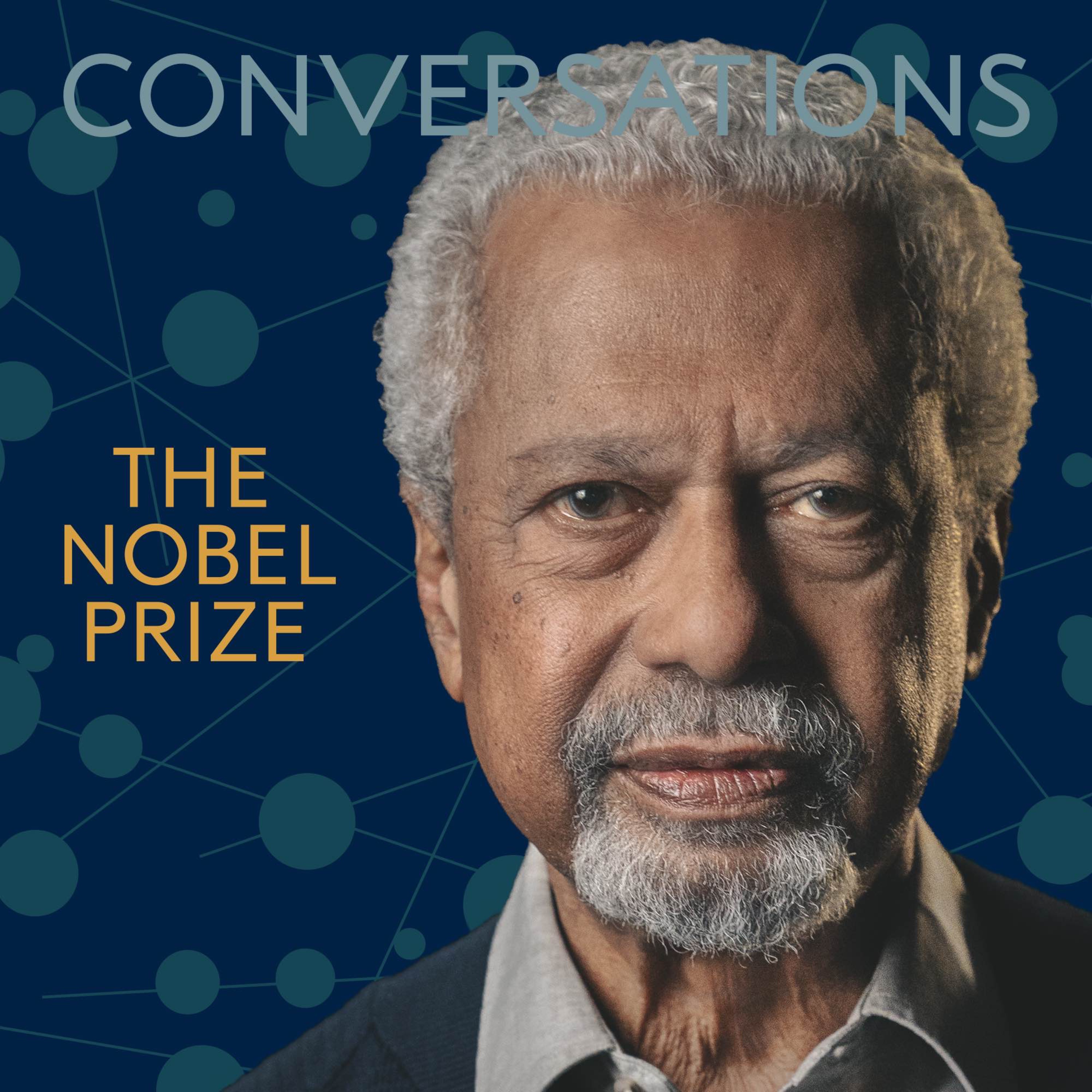
Abdulrazak Gurnah: Nobel Prize Conversations
Abdulrazak Gurnah is the author of ten novels and an emeritus professor of English and postcolonial literatures at the university of Kent. He has been hailed for his ability to convey the immigrant experience – but to him, literature is much more than just social commentry. "We also read because it gives us pleasure – sometimes completely distracts us from other things we should be doing and thinking about."In the conversation, Abdulrazak Gurnah talks about fleeing his native Zanzibar as a teenager, and feeling unwelcome after arriving in the UK. He also offers insights into his writing: how he explores thoughtful silences and lifts the small struggles that play out in otherwise mundane lives and settings. Your host is Adam Smith, Chief Scientific Officer at Nobel Prize Outreach. Hosted on Acast. See acast.com/privacy for more information.
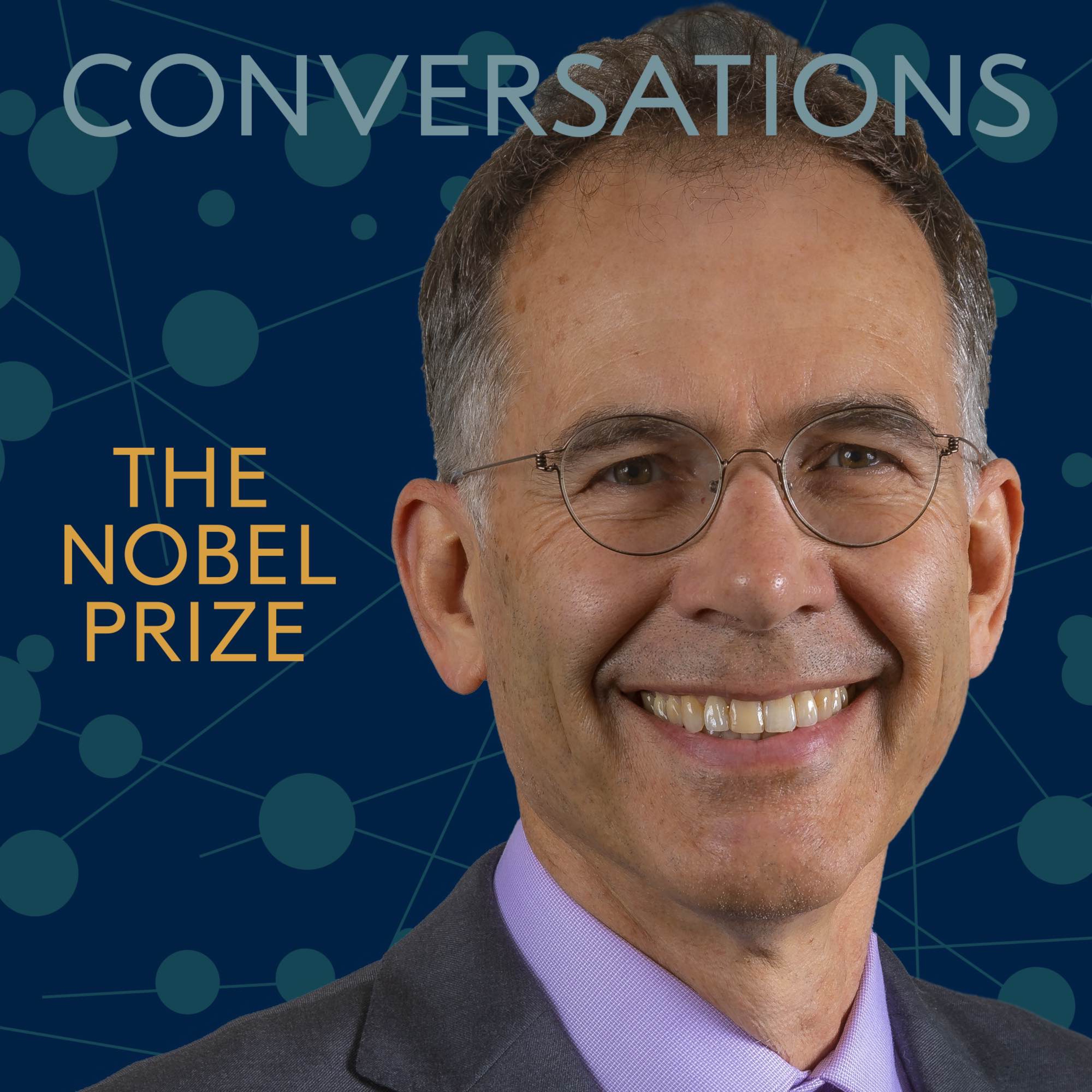
Guido Imbens: Nobel Prize Conversations
In an increasingly chaotic world, how can you learn to concentrate deeply on a single problem? Economic Sciences laureate Guido Imbens found his powers of concentration while getting lost in chess games as a child. ”For four or five hours you would just shut out the rest of the world, you would be focused on one task.”Your host is Adam Smith, Chief Scientific Officer at Nobel Prize Outreach. In this episode Guido and Adam talk about the beauty of chess, the pitfalls in talking publicly about uncertain data, and the challenge of keeping an open mind in research. But the conversation kicks off by delving into an experience they share outside of academia: parenting teenagers. Hosted on Acast. See acast.com/privacy for more information.
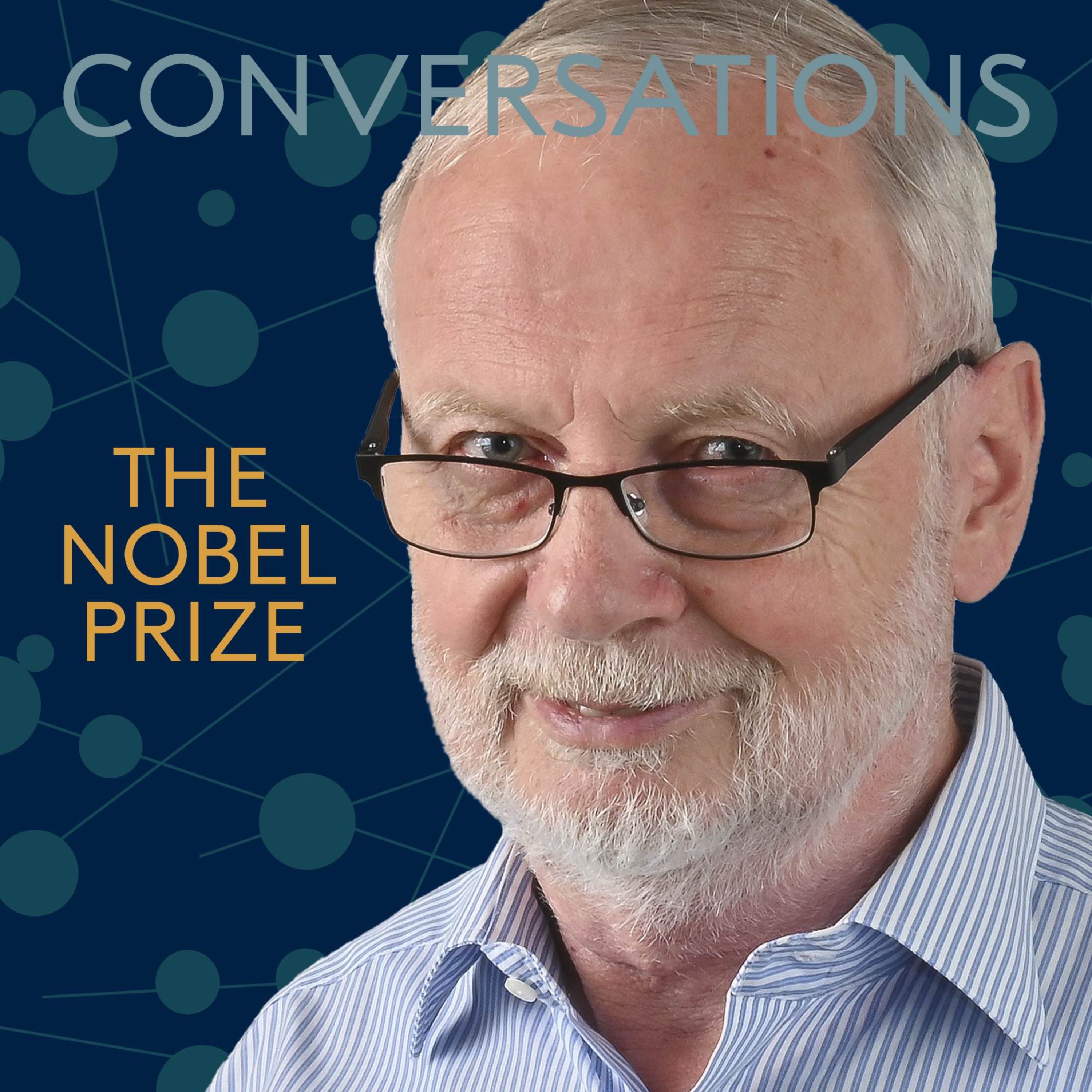
Hartmut Michel: Nobel Prize Conversations
"If somebody tells me 'this is impossible', I always think that it still might be possible – and try to find a way around." Where would the world be, without the scientists who look beyond the conventional wisdom and try to solve the unsolvable problems? Hartmut Michel speaks about his working class background, discovering his love of science – and travel – in a public library, and why he's remained true to his native Germany. Your host is Adam Smith, Chief Scientific Officer at Nobel Prize Outreach. Hosted on Acast. See acast.com/privacy for more information.
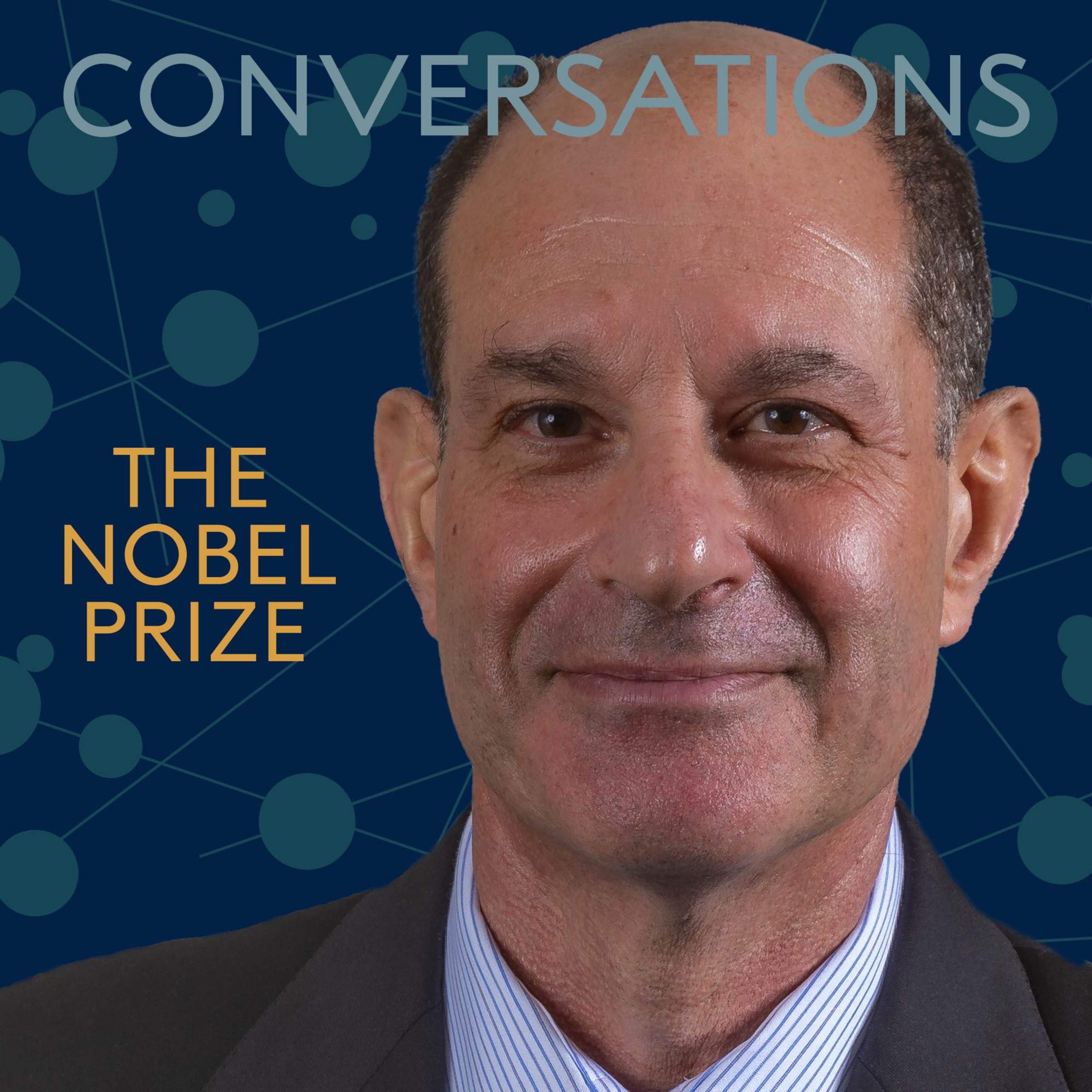
David Julius: Nobel Prize Conversations
"I didn't really like school very much. And I was always like a little bit nervous about not doing well." David Julius, the 2021 physiology or medicine laureate, talks about his journey from anxious pupil to confident researcher, the importance of diversity in science, and how his research is connected to how different species experience the world in different ways. Your host is Adam Smith, Chief Scientific Officer at Nobel Prize Outreach. Hosted on Acast. See acast.com/privacy for more information.
Benjamin List: Nobel Prize Conversations
"Try to follow your enthusiasm and do what you are really passionate about and what you really love to do.” As a child, Benjamin List thought chemists held the keys to the secrets of the universe. Luckily, by the time he learned this wasn't so, he was already hooked on doing chemistry experiments he found in books. Even today, he still feels passion for the field, and tries to surround himself with passionate researchers.Benjamin List was awarded the 2021 Nobel Prize in Chemistry together with David MacMillan, for his work in developing asymmetric organocatalysis, a tool for building new molecules, in cleaner and more efficient ways.Your host is Adam Smith, Chief Scientific Officer at Nobel Prize Outreach. Hosted on Acast. See acast.com/privacy for more information.
David Card: Nobel Prize Conversations
”An amazing number of economists have extremely paternalistic ideas. They just want to tell people what to do.” Don't worry. David Card, 2021 laureate in Economic Sciences, doesn't want to boss you around. Instead, he's made a career trying to understand the economic choices people make. He shared the prize with Josuhua Angrist and Guido Imbens for their empirical contributions to labour economics.Professor Card talks about growing up on a dairy farm, about the need for more diversity in PhD programs and his reluctance to become involved in policy-making. Your host is Adam Smith, Chief Scientific Officer at Nobel Prize Outreach. Hosted on Acast. See acast.com/privacy for more information.
Giorgio Parisi: Nobel Prize Conversations
Some people manage to retain the relentless curiosity of a child into adulthood, keeping them on a constant quest of exploration. Meet Giorgio Parisi, who tells us about his journey of curiosity, which started by learning to read numbers at the age of 3: “I was reading the number of the bus when the bus was arriving.” At an early age, he also started to read the Russian author Leo Tolstoy, as his parents’ large library encouraged reading. Parisi describes his life journey and how he ultimately decided to dedicate his life to physics as that topic made more sense to him than mathematics. In 2021 he was awarded the physics prize "for the discovery of the interplay of disorder and fluctuations in physical systems from atomic to planetary scales." He shared the prize with Syukuro Manabe and Klaus Hasselmann. Your host is Adam Smith, Chief Scientific Officer at Nobel Prize Outreach. Hosted on Acast. See acast.com/privacy for more information.
Joshua Angrist: Nobel Prize Conversations
Meet economist Joshua Angrist who believes that to be a good labour economist, you should have had some real-life job experience. In conversation with our podcast host Adam Smith, Angrist tells us about his disinterest in school and how as a teenager he was more interested in earning money and maintaining his car. His later surprising and instant connection with economics led him to dedicate his life to his research: “I never stop thinking about my work.”Angrist was awarded the 2021 prize in economic sciences and speaks about how the award has affected his life; “It was wonderful to win the Nobel Prize, but I am the same guy I was on October 10th.” Hosted on Acast. See acast.com/privacy for more information.
Ardem Patapoutian: Nobel Prize Conversations
“I think there's a little bit of romanticism in science still. I find that the dreamers are usually the ones that make it.” Practical work, like conducting experiments and gathering data, might be central to a scientist’s job. But there is also room for dreams and imagination – which can help us find the gaps in our knowledge, and dare to ask unexpected questions. Ardem Patapoutian received the 2021 Nobel Prize in physiology or medicine together with David Julius for their discoveries of receptors for temperature and touch. In this episode, Patapoutian discusses the importance teamwork and diversity in the lab, and the art of learning from experience – and from failure. Your host is Adam Smith, Chief Scientific Officer at Nobel Prize Outreach. Hosted on Acast. See acast.com/privacy for more information.
David MacMillan: Nobel Prize Conversations
In this episode, meet football fan and chemist David MacMillan. Together with podcast host Adam Smith, he speaks about the importance of storytelling and his strong belief that “science is supposed to be about having fun, it is not supposed to be about intimidating people.” MacMillan shares his journey from a family where no one had gone to university to becoming a Nobel Prize laureate. He was awarded the chemistry prize in 2021 for the development of asymmetric organocatalysis. We also hear about how his upbringing in Scotland shaped him as a scientist and why his parents insisted that he went to university. Hosted on Acast. See acast.com/privacy for more information.
Leymah Gbowee: Nobel Prize Conversations
"One minute I was a teenager and the next minute I was a woman.” – Leymah Gbowee shares her heartbreaking life story of a happy childhood cruelly interrupted by the Liberian civil war. Nobel Prize Outreach's Adam Smith is your host as Gbowee also talks about her constant and tireless struggle for women’s rights and peace in her home country. Her never-give-up attitude has been a constant in her life and work, and something she tries to instil in young people, encouraging them ”to believe that they can do whatever they put their mind to”.Leymah Gbowee shared the Nobel Peace Prize in 2011 for her peace work. Hosted on Acast. See acast.com/privacy for more information.
Klaus Hasselmann: Live 2021 Special - Nobel Prize Conversations
This special live episode features a conversation with Klaus Hasselmann, the 2021 physics laureate. Before that we will also present some highlights from this year’s announcement telephone interviews. Hear Klaus Hasselmann alongside his fellow 2021 laureates David Julius, Benjamin List, David MacMillan and Ardem Patapoutian – and relive some of the moments of disbelief, shock and excitement from the calls.From the stage of Nobel Week Dialogue in Gothenburg Sweden, podcast producer Karin Svensson reprises her guest role as host of the show, asking Adam Smith about the new crop of 2021 telephone interviews. Then, Nobel Prize Outreach’s Adam Smith takes the helm for a conversation with Klaus Hasselmann. Klaus Hasselmann received the Nobel Prize in physics for developing climate models to reliably predict global warming. He shares the prize with Syukuro Manabe and Giorgio Parisi. He is a professor emeritus of the University of Hamburg and a former director of the Max Planck institute for meteorology. Hosted on Acast. See acast.com/privacy for more information.
Paul Milgrom - Nobel Prize Conversations
”Sometimes I make a mistake during the lecture, I'll make an argument that's not quite right and not even notice it, and a student will catch me. I just love it when students do that.” – Economic sciences laureate Paul Milgrom loves being a teacher. He also loves when his students correct him and ask him hard questions that he doesn't know the answer to. In this podcast episode the Nobel Prize's Adam Smith speaks to economist Milgrom about his own school years and what type of teacher he aspires to be.Paul Milgrom shared the prize in economic sciences with his PhD advisor Robert Wilson for their research on auction theories. Hosted on Acast. See acast.com/privacy for more information.
Wole Soyinka: Nobel Prize Conversations
“I won the Nobel Prize so I built a much bigger house than I ever planned.” — Wole Soyinka envisioned a small cottage on a large plot of land as a retreat for his writing, but a phone call from Stockholm made it possible to super-size his plans with rooms for many artists to dedicate themselves to their work. Literature laureate Wole Soyinka, who only very occasionally grants interviews, speaks to the Nobel Prize's Adam Smith about his photographic memory, his creative process and the question of who he writes literature for. His home of Nigeria figures prominently in his writing, and he looks ahead to the future of his country. Wole Soyinka also tells us about his passion for space and space travel, or as he puts it, "I am a space nut!"Wole Soyinka was awarded the Nobel Prize in Literature 1986 and in 2021 he published his first novel for almost 50 years. Hosted on Acast. See acast.com/privacy for more information.
Didier Queloz: Nobel Prize Conversations
"When people think about other worlds, they think about other life." Nobel Prize Laureate Didier Queloz was a pioneering explorer of exoplanets – planets outside our own solar system – and now he finds himself at the centre of a new endeavour, the ETH Center for the Origin & Prevalence of Life. Here, scientists from a variety of disciplines will meet to challenge their limits and hopefully make some breakthroughs. "The gaps between disciplines are exploratory places," as Queloz puts it.Didier Queloz speaks to the Nobel Prize's Adam Smith about sending seasoned researchers like himself to scientific boot camp, the importance of science and science communication, and what finding ET might mean for the future of humankind.Queloz received the 2019 Nobel Prize in Physics together with Michel Mayor for their research on exoplanets. Hosted on Acast. See acast.com/privacy for more information.
Joachim Frank: Nobel Prize Conversations
“I make discoveries just because of very unique juxtapositions that I have never seen before. So there is some kind of resonance there.” – The creative and poetic chemistry laureate Joachim Frank always aspires to solve problems by looking at places no one has looked before. In this episode he describes how creative endeavours like "Poetry boxing" and photography have been essential to his successes in scientific research. He also relates how his life was shaped by his experiences growing up in the ruins of post-war Germany.Joachim Frank was awarded the chemistry prize in 2017 "for developing cryo-electron microscopy for the high-resolution structure determination of biomolecules in solution." The host of Nobel Prize Conversations is Adam Smith, Chief Scientific Officer at Nobel Prize Outreach. Hosted on Acast. See acast.com/privacy for more information.
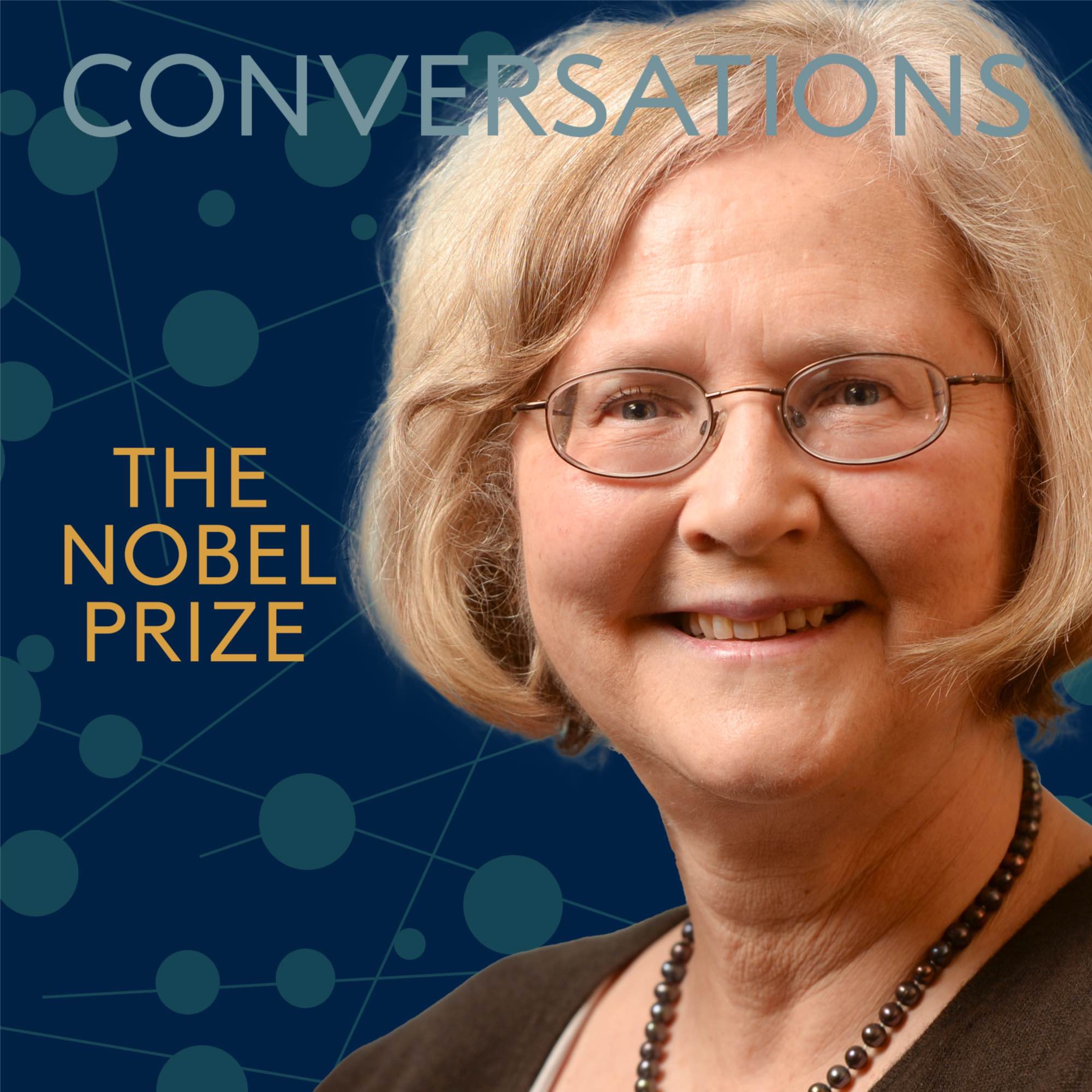
Elizabeth Blackburn: Nobel Prize Conversations
Medicine laureate Elizabeth Blackburn has strong feelings about the value of science. In this conversation with Adam Smith, she speaks openly about how society must begin to understand just how important science is in our lives. She also discusses the climate crisis and shares her experiences from a recent visit to Antartica, where she found herself reminded of the severe consequences of climate change. They also take time for an exploration of the future of science, including the future of Blackburn's own research. Elizabeth Blackburn was the 2009 Nobel Prize laureate in physiology or medicine. The host of Nobel Prize Conversations is Adam Smith, Chief Scientific Officer at Nobel Prize Outreach. Hosted on Acast. See acast.com/privacy for more information.
First reactions | Guido Imbens, prize in economic sciences 2021 | Telephone interview
“The only sad thing is there aren’t more hours in the day!” – After a busy, tiring Sunday, mountain biking with the family, Guido Imbens’ Monday morning wake-up call came a little after 2am with the news from Stockholm. “I’m sure that the adrenaline will get me through,” he says in this conversation with Adam Smith recorded shortly afterwards, with the excitement building around him: “Things have been hectic here!” He speaks about the benefits of the social side of research, the enjoyment of working with bright young minds, and the pure pleasure of just getting up and going to work. © Nobel Prize Outreach. First reactions terms of use: https://www.nobelprize.org/ceremonies/streams-terms-of-use Hosted on Acast. See acast.com/privacy for more information.
First reactions | Joshua Angrist, prize in economic sciences 2021 | Telephone interview
“I saw that my phone was flooded with text messages,” says Joshua Angrist, having slept through the calls from Stockholm. In this brief interview he describes how he therefore called the MIT Press Department to check, and discovered it was true! The conversation turns to his work on the assumed benefits of elite schooling, his working relationship with his co-Laureates and what lies behind his productive collaboration with Guido Imbens. © Nobel Prize Outreach. First reactions terms of use: https://www.nobelprize.org/ceremonies/streams-terms-of-use Hosted on Acast. See acast.com/privacy for more information.
First reactions | David Card, prize in economic sciences 2021 | Telephone interview
“I was kinda hoping I might go to sleep!” – David Card had just got his pyjamas on and was heading for bed, after a very late night arrival from a trip, when the call from Stockholm came. This interview with Adam Smith was recorded just moments later and he talks about his work on immigration, the setting of the minimum wage, and the relationship between those studies and public policy. Meanwhile his wife, Cynthia Gessele, snaps his portrait as he chats in his dressing gown, a picture Adam Smith immediately requests for nobelprize.org: “This guy wants the picture!” © Nobel Prize Outreach. First reactions terms of use: https://www.nobelprize.org/ceremonies/streams-terms-of-use Hosted on Acast. See acast.com/privacy for more information.
The call from Oslo to Maria Ressa, 2021 peace laureate
World exclusive: The call from Oslo. Hear Maria Ressa’s reaction when she hears the news from Olav Njølstad, Secretary of the Norwegian Nobel Committee, on being awarded the 2021 Nobel peace Prize just before the public announcement. "I'm speechless!"From October 4-11, don't miss our mini-season that will showcase the absolute freshest interviews with the new 2021 Nobel Prize laureates. Hosted on Acast. See acast.com/privacy for more information.
First reactions | Abdulrazak Gurnah, Nobel Prize in Literature 2021 | Telephone interview
“As if there isn’t enough to go around” – “A kind of miserliness,” is how Abdulrazak Gurnah describes the attitude of some in Europe to refugees. After all, he says, “Europeans streaming out into the world is nothing new” and he suggests those seeking succour also be seen as “talented, energetic people, who have something to give.” In this brief conversation with Adam Smith, recorded just after he had heard the news, his surprise at receiving the Nobel Prize in Literature is evident. “I was just thinking ‘I wonder who’ll get it’”, says Gurnah: “I thought it was a prank, I really did.” © Nobel Prize Outreach. First reactions terms of use: https://www.nobelprize.org/ceremonies/streams-terms-of-use Hosted on Acast. See acast.com/privacy for more information.
First reactions | David MacMillan, Nobel Prize in Chemistry 2021 | Telephone interview
“We thought it had a very low probability of success” – The best ideas in science are often the ones with the least chance of succeeding, says David MacMillan: “It’s the stuff that should never work which is where all the good stuff is!” As he tells Adam Smith in this conversation recorded on the morning of the announcement, the thrill of discovery is also open to any undergraduate embarking in organic chemistry: “the very first day they build a molecule, it has never been made in the universe before!” And as for the news of his Nobel Prize: he describes how he initially thought it was a prank, bet his co-Laureate, Benjamin List, $1000 that it wasn’t true, and went back to bed! © Nobel Prize Outreach. First reactions terms of use: https://www.nobelprize.org/ceremonies/streams-terms-of-use Hosted on Acast. See acast.com/privacy for more information.
First reactions | Benjamin List, Nobel Prize in Chemistry 2021 | Telephone interview
“Making molecules is like creating something beautiful” – Benjamin List was sitting in a café with his wife, Dr Sabine List, when the call from Stockholm came. “We looked at each other in disbelief,” he says, and jokingly asked, “Is this the call?” To his amazement, it was! In this interview with Adam Smith, recorded outside that café, he reflects on the beauty of building molecules, the importance of freedom in research and the joy of working with his team: “To work with these amazing, happy and creative people; it’s such a gift.” © Nobel Prize Outreach. First reactions terms of use: https://www.nobelprize.org/ceremonies/streams-terms-of-use Hosted on Acast. See acast.com/privacy for more information.
First reactions | Giorgio Parisi, Nobel Prize in Physics 2021 | Telephone interview
“Fundamental science is crucial.” – In this short conversation, recorded shortly after his Nobel Prize in Physics was announced, Giorgio Parisi reflects on the value of asking basic questions. But what sort of questions does he address? “My mentor, Nicola Cabibbo,” he says, “was usually saying that we should work on a problem only if work on that problem is fun!” He then talks with Adam Smith about his hopes for science funding and the need to communicate. “It’s important that the people who in the end pay the bill for science have some understanding of what science is going on.” © Nobel Prize Outreach. First reactions terms of use: https://www.nobelprize.org/ceremonies/streams-terms-of-use Hosted on Acast. See acast.com/privacy for more information.
First reactions | Syukuro Manabe, Nobel Prize in Physics 2021 | Telephone interview
“Why is this happening?” – Establishing a firm scientific basis for predicting what will happen to the climate, and in the shorter term to weather, has been the challenge that has occupied Syukuro Manabe’s entire working life. In the interview with Adam Smith, recorded amidst the happy chaos resulting from the early morning announcement of his Nobel Prize in Physics, Manabe reflects on the importance of fundamental research. As he says, “The prediction of climate change without accompanying understanding of it is no better than the prediction of a fortune teller.” © Nobel Prize Outreach. First reactions terms of use: https://www.nobelprize.org/ceremonies/streams-terms-of-use Hosted on Acast. See acast.com/privacy for more information.
First reactions | Klaus Hasselmann, Nobel Prize in Physics 2021 | Telephone interview
“We’ve been warning against climate change for about 50 years or so” – Caught entirely unawares by the call from Stockholm, Klaus Hasselmann’s surprise is evident in this brief interview with Adam Smith, recorded just minutes after the news of his Nobel Prize in Physics had been announced. “I’ll wake up tomorrow morning and find out,” he says! Pleased that the prize focuses attention on the problem, he discusses the challenges in convincing people that “something that is going to happen in 20 or 30 years is something that you have to respond to now.” © Nobel Prize Outreach. First reactions terms of use: https://www.nobelprize.org/ceremonies/streams-terms-of-use Hosted on Acast. See acast.com/privacy for more information.
First reactions | David Julius, Nobel Prize in Physiology or Medicine 2021 | Telephone interview
“The reason that we were able to do it is because we started looking at the natural world.” – Turning to some natural product pharmacology was one key to David Julius’ success in unlocking the mysteries of how we sense temperature. As he describes in this brief interview with Adam Smith, news that Stockholm was calling reached him in a rather roundabout route in the middle of the night, via a call from his sister-in-law and then a message sent to his wife, Holly Ingraham. Here, to the backdrop of making coffee to help prepare for the busy day ahead, he talks about the possibilities arising from his discoveries, what great scientists taught him about the best way to approach research, and what his mother said when she heard the news! © Nobel Prize Outreach. First reactions terms of use: https://www.nobelprize.org/ceremonies/streams-terms-of-use Hosted on Acast. See acast.com/privacy for more information.
First reactions | Ardem Patapoutian, Nobel Prize in Physiology or Medicine 2021 | Telephone interview
“In science many times it’s the things that we take for granted that are of high interest.” – As Ardem Patapoutian says, sometimes the familiar can yield the best surprises. When it comes to figuring out how our senses work, the sense of touch “was kind of the big elephant in the room.” Patapoutian had his phone on Do Not Disturb when Stockholm tried to call him but got the news, via his Dad, just in time to watch the press conference, sitting in bed with his son Luca. Adam Smith caught him there to record this brief call moments after the public announcement of his Nobel Prize in Physiology or Medicine, and he describes how finally finding the sensors that allow cells to detect pressure has opened up whole new unexpected vistas of phenomena that are governed by sensitivity to touch. As he reflects, “Nobody ever could have thought that pressure sensing is related to these processes.”© Nobel Prize Outreach.First reactions terms of use: https://www.nobelprize.org/ceremonies/streams-terms-of-use Hosted on Acast. See acast.com/privacy for more information.
Behind the scenes: Adam Smith's October interviews with the new Nobel Prize laureates
Each year in October, Adam Smith takes on the challenge of reaching the brand new Nobel Prize laureates for a telephone interview. In this bonus episode of Nobel Prize Conversations, Adam takes us behind the scenes of these calls and has collected some of his favourite moments. The host for this episode is Karin Svensson, the producer of Nobel Prize Conversations.From October 4-11, don't miss our mini-season that will showcase the absolute freshest interviews with the new 2021 Nobel Prize laureates. Hosted on Acast. See acast.com/privacy for more information.
Robert Wilson: Nobel Prize Conversations
“I guess I was halfway content with the idea that somehow I’d become an economist.” – 2020 Laureate in Economic Sciences Robert Wilson didn’t really see himself as an economist until he reached the age of 50. Hear Wilson speak about his journey to becoming an economist.In this ‘Nobel Prize Conversations’ episode, Wilson also speaks about how he received the news about his Prize in Economic Sciences and the culture shock he experienced when he started to study at Harvard University. Hosted on Acast. See acast.com/privacy for more information.
Frank Wilczek: Nobel Prize Conversations
In the newest episode of ‘Nobel Prize Conversations’, physics laureate Frank Wilczek tells us about his hope to make a mark on the world. Wilzcek recently released a new book, ‘Fundamentals: Ten Keys to Reality’, where the readers get to follow Wilzcek on a “simple yet profound exploration of reality”. In this podcast episode, he discusses his new book. Another topic that is up for discussion is how to reach scientific results and Wilzcek shares his thoughts on the matter. Hosted on Acast. See acast.com/privacy for more information.

Donna Strickland: Nobel Prize Conversations
2018 Nobel Physics Laureate Donna Strickland knew she wanted to get a PhD, even as a kid. She didn’t know what it was, but if it was the ultimate in education she was going to get it! In the newest episode of ‘Nobel Prize Conversations’ we meet Donna Strickland and talk about her childhood dream of a PhD, dealing with failure, being a woman in science and being awarded the Nobel Prize. Hosted on Acast. See acast.com/privacy for more information.

Robert Lefkowitz: Nobel Prize Conversations
“Failure is an inevitable part of doing science.” – Even as one of the best-of-the-best young doctors in the country, Robert Lefkowitz’s research career kicked off in 1968 with a demoralizing string of failures at the now-legendary NIH Associates Training Program. Together with Adam Smith, 2012 Chemistry Laureate Robert Lefkowitz shares his experience of dealing with failure. In addition, they discuss the importance of mentoring, the crucial role of collaboration in scientific development and the writing of Lefkowitz’s new memoir “A funny thing happened on the way to Stockholm”. Lefkowitz’s research training class, the class of 1968, yielded no fewer than four Nobel Prize Laureates – a track record that’s hard to fathom. Listen to this episode of Nobel Prize Conversations. Hosted on Acast. See acast.com/privacy for more information.
Roger Penrose: Nobel Prize Conversations
“I am very bad at giving up.” – Get to know one of the greatest minds of today, physicist Roger Penrose. At 89, he seems to be working more than ever and is engaged in various research projects. In an intimate conversation with the Nobel Prize’s Adam Smith, Penrose speaks about how 2020 was a year that gave him time to reflect and develop even more research ideas – until he was awarded the Nobel Prize! Black holes, magic blackboards and childhood aspirations are other topics that are up for discussion. Roger Penrose was awarded the 2020 Nobel Prize in Physics "for the discovery that black hole formation is a robust prediction of the general theory of relativity". Hosted on Acast. See acast.com/privacy for more information.
Peter Doherty: Nobel Prize Conversations
"This is the first time we have had a completely novel virus infection and we are trying to vaccinate our way out of it." In conversation with Nobel Prize’s Adam Smith, Medicine Laureate Peter Doherty speaks about how we should learn from the current corona pandemic to be better prepared for and preferably prevent future pandemics. Doherty was awarded the 1996 Nobel Prize in Physiology or Medicine for research on how the immune system recognises virus-ridden cells. Hosted on Acast. See acast.com/privacy for more information.
Paul Nurse: Nobel Prize Conversations
Known for his contagious energy and sometimes unconventional advice, Paul Nurse talks about Brexit and its effects on scientists and research, and why he has heeded the call to leadership in science – the same science that politicians say they're following. He also recalls his early years in biology as a spider hunter and why he thinks it's vital to ponder the big questions like "What is life?" Paul Nurse received the 2001 Nobel Prize in Physiology or Medicine "for discoveries of key regulators of the cell cycle", sharing the distinction with Tim Hunt and Leland Hartwell. Hosted on Acast. See acast.com/privacy for more information.
Emmanuelle Charpentier: Nobel Prize Conversations
In this episode we hear 2020 Nobel Chemistry Laureate Emmanuelle Charpentier speak about the drive you need as a researcher and what impact awards can have on a career. Her road to the Nobel Prize was a winding journey, and she recalls how science was her stability. Charpentier shared the Nobel Prize in Chemistry with Jennifer Doudna for discovering key aspects of a naturally-occuring defence mechanism in bacteria, called CRISPR/Cas9, and developing it into one of gene technology's sharpest tools. Hosted on Acast. See acast.com/privacy for more information.
Andrea Ghez: Nobel Prize Conversations
Meet astrophysicist Andrea Ghez, recipient of the 2020 Nobel Prize in Physics "for the discovery of a supermassive compact object at the centre of our galaxy." In this energy-packed conversation with Adam Smith, you can hear about prima donna galaxies, Ghez’s personal pet star, and how she overcame one of her biggest childhood fears. Hosted on Acast. See acast.com/privacy for more information.

Kip Thorne: Nobel Prize Conversations
Meet astrophysicist Kip Thorne, who was awarded the 2017 Nobel Prize in Physics "for decisive contributions to the LIGO detector and the observation of gravitational waves.". In a wide-ranging conversation with host Adam Smith they cover Albert Einstein’s importance to the field of science, whether time travel is actually possible, and what it was like to be the physics guru inside the blockbuster film ’Interstellar’. Hosted on Acast. See acast.com/privacy for more information.
Christopher Pissarides: Nobel Prize Conversations
"I was always interested in big problems, and when I see a big problem I say, 'Let’s try to solve it, let’s try to think of a solution!'" Meet Christopher Pissarides, a humble London School of Economics professor who finished his PhD in two years and was awarded the 2010 Prize in Economic Sciences. He and his co-laureates Peter Diamond and Dale Mortensen were awarded the prize for finding ways to incorporate real-world frictions into the mathematical models that describe market behaviour. Their Diamond-Mortensen-Pissarides (DMP) model is one of the most widely-used analytical tools for labour markets. Besides discussing labour markets, we speak about educational systems, how life has been affected by covid-19 and how Pissarides experienced moving from Cyprus to the UK. This the is final episode of Nobel Prize Conversations season one. We hope you have enjoyed the podcasts and we look forward to welcoming you back soon for season two. Hosted on Acast. See acast.com/privacy for more information.
Esther Duflo: Nobel Prize Conversations
Esther Duflo’s research improves our ability to fight global poverty. In just two decades, co-laureates Duflo, Banerjee and Kremer have transformed development economics with their innovative experiment-based approach, which is now a flourishing field of research. Thanks to their work we have clearer perspectives on the core problems within areas such as education and health.In this episode Adam Smith speaks to Esther Duflo about how her drive to understand and fight poverty began at an early age. They discuss the world in coronavirus times, and the fears and prejudices connected to migration. Duflo also shares her tips for managers and her best collaboration techniques.Esther Duflo received the Sveriges Riksbank Prize in Economic Sciences in Memory of Alfred Nobel 2019 together with Abhijit Banerjee and Michael Kremer for their experimental approach to alleviating global poverty. Hosted on Acast. See acast.com/privacy for more information.
Daniel Kahneman: Nobel Prize Conversations
How does it feel to be one of the most famous behavioural psychologists of our time? Daniel Kahneman says that it is perfectly fine to be famous as long as you don’t let it go to your head. From an early age, Kahneman was interested in people - his mother, both with irony and objectivity, observed and was fascinated with people in her surroundings. In this digital conversation podcast host Adam Smith speaks to Daniel Kahneman in New York on eureka moments, scientific collaborations, stereotypes and racial discrimination, and also advice: “In general I try to give as little advice as possible.” Daniel Kahneman was awarded the 2002 Sveriges Riksbank Prize in Economic Sciences in Memory of Alfred Nobel "for having integrated insights from psychological research into economic science, especially concerning human judgment and decision-making under uncertainty”. Hosted on Acast. See acast.com/privacy for more information.