
Night White Skies
108 episodes — Page 1 of 3

108 _ THE END w/ Thoughts For Tomorrow
After eight years and over 100 episodes, the Night White Skies podcast is coming to an end. The program began as a look towards architecture's future knowing that both earth's environments and our human bodies are now open for design, and that's where we'll end. The program sought to engage a diverse range of perspectives for a better picture of the scenarios currently unfolding. Guests included philosophers Timothy Morton, and Emanuelle Coccia, architectural authors such as Catherine Ingraham, Fred Scharmen, Sylvia Lavin, Rachel Armstrong, designers like Neil Denari, Rania Ghosn and El Hadi Jazairy, researchers in ethics like Sheila Jasanoff, curators including MOMO's Paola Antonelli, scientists Adam Frank, and Henry T. Greely, as well as science fiction authors James Bradley and Sherryl Vint and many, many more. A searchable achieve of all episodes is available at www.NightWhiteSkies.com and will remain available for the foreseeable future. In this final episode, I bring together some reoccurring topics and thoughts over the last eight years of conversations as a means for outlining a course forward, or at the very least, playing out a hunch on work still to be done. You can find all episodes at www.NightWhiteSkies.com Thoughts or suggestions, email me at [email protected] Instagram

107 _ Jeffrey Nesbit / Charles Waldheim_'Technical Lands'
Today's conversation is with Jeffrey Nesbit and Charles Waldheim about their book Technical Lands. It was great to have both Jeffrey and Charles back on the program. They've both been on here separately but today we're discussing their new edited book 'Technical Lands: A Critical Primer'. As they state in the book, designating land as technical is a political act and doing so entails dividing, marginalizing, and rendering portions of the Earth inaccessible. This is land that is often invisible and remote. The range of contributing authors includes architectural historians, landscape architects, anthropologists, sociologists as well as cultural and political geographers. This 'deep bench' of disciplinary practices is needed to better understand and draw out how technical lands are defined and maybe even more importantly, demonstrate why it's necessary to bring them to the foreground of our conversations. Hope you enjoy the episode and until next time... take care. Technical Lands: A Critical Primer Other episodes linked to the topic include Ep 072 Jane Hutton, 'Reciprocal Landscapes' , Ep 097 Michael Jakob, 'Faux Mountains', Ep 056 Bradley Cantrell, 'AI and Wildness' and many others. Try the websites 'search' function to find more related episodes. You can find all episodes at www.NightWhiteSkies.com Thoughts or suggestions, email me at [email protected] Instagram

106 _ Catherine Ingraham _ 'Architecture's Theory'
Today's conversation is with Catherine Ingraham and we're discussing her latest book, 'Architecture's Theory'. We each had our own experience in school when first introduced to architectural theory. Those classes were probably somewhat opaque for all of us. Even today you might read new articles and books related to theory and find yourself trying to hold onto ideas like dry sand in your hands. Over time, I've come to recognize that important concepts are often intrinsically unstable. Unlike the rest of your education up to that point which placed value on collecting and memorizing information, theory's strength really only comes into focus when it can be applied to a circumstance you're carrying with you. Theory isn't there to give you answers, but as Catherine Ingraham discusses in our conversation, theory provides us with 'methodological instruments' to question our assumptions of the governance and systems we're working within. Catherine Ingraham's book helped me to better understand this point and it was great speaking with her for the program. I hope you enjoy the conversation as much as I did! Catherine Ingraham is a Professor of Architecture in the Masters of Architecture Program at Pratt Institute, which she started and chaired for six years. Dr. Ingraham has periodically been a visiting faculty member at the GSD, Harvard University, and GSAPP, Columbia University. A former editor of Assemblage, she is the author of Architecture's Theory (2023), Architecture, Animal, Human (2006), and Architecture and the Burdens of Linearity (1998). She has received numerous fellowships and has lectured at conferences and universities worldwide. Architecture's Theory' MIT Press Architecture's Theory, Amazon Other episodes linked to the topic include Ep 043 Graham Harman, OOO 090 Emanuele Coccia, 'The Life of Plants' and many others. Try the websites 'search' function to find more related episodes. You can find all episodes at www.NightWhiteSkies.com Thoughts or suggestions, email me at [email protected] Instagram

105 _ Christopher Schaberg _ 'Adventure'
Sometimes it's only through repetition and time that insight into your actions are revealed. This might come about because aspects of those actions aren't always fully intentional. When it comes to Night White Skies, I firmly believe to be routed in architecture, but I've heard it described by others as often drifting beyond this topic. But what I've come to appreciate more and more over time is the importance of a 'hunch'. The idea that experience over time offers you the ability to see patterns and outcomes enough times that when an opportunity presents itself, you can see value within. A 'hunch' that pivoting in an unexpected direction can offer insight and opportunity. And so, when Night White Skies 'drifts' beyond architecture explicitly, I like to think it's because I'm playing a 'hunch'. This extended introduction has now of course put unnecessary attention on my guest today, so I apologize for that. But Christopher Schaberg has been on this program before so I already knew this would be a rewarding conversation. The title of Chris's latest book is 'Adventure, an Argument for Limits', and it's this title, 'Adventure' that drew my attention and what I wanted to explore more regarding architecture. Do we need more adventure in architecture and what exactly would that entail? To go on an adventure requires risks, setbacks, you might even get lost. But in return you end up somewhere physically, ideologically or emotionally elsewhere? You have changed. In this case, architecture has changed. So, what was my hunch here today? I'm not sure if it's due to architecture's disciplinary training and education or its position in various industries but architecture relies heavily on presenting ideas as the correct one! As inevitable, as the obvious solution. When thinking of the plethora of pressures facing humanity today, the architect continues the showmanship of presenting right answers and declaring which are the rights paths to follow. And I of course understand the economic reasoning for why this is at least partially necessary. No client wants to spend millions of dollars to deliver a project that 'might' work. With the shear complexity of issues today related to climate, social justice, healthcare, communication technologies, how can we so consistently claim to have right answers and paths to follow? On an adventure, it's the mishaps, wrong turns, and reflection that help us reorient not only where we thought we wanted to go but our understanding of where we started. What I find unique about adventures is how you talk about them. The way in which you retell an adventure to others, sharing experiences and knowledge learned. You include others in your adventure simply by retelling them. Adventures are somehow collective. But it increasingly feels as if architects desire to lay claim to territory as some form of demonstration of disciplinary or personal control has instead splintered the discipline into a thousand fiefdoms with no kingdom to speak of. Laying claim to territory has impinged on the ability to wander. Wandering with purpose would be nice. It always seems like a good idea to go on an adventure, but for architecture now, it seems like it might actually be necessary. Christopher Schaberg is Director of Public Scholarship at Washington University in St. Louis, and the author of nine books, including The End of Airports, Pedagogy of the Depressed, Fly-Fishing, and most recently Adventure: An Argument for Limits. Schaberg is also a founding co-editor of Object Lessons, a book series dedicated to the hidden lives of ordinary things. 'Adventure: An Argument for Limits' Other episodes linked to the topic include Ep 069 Christopher Schaberg 'Searching for the Anthropocene' Ep 100 Fred Scharmen 'Space Forces' and many others. Try the websites 'search' function to find more related episodes. You can find all episodes at www.NightWhiteSkies.com Thoughts or suggestions, email me at [email protected] Instagram

104 _ Vahid Vahdat and James Kerestes _ 'Cinematic Betwixt'
Today's conversation is with Vahid Vahdat and James Kerestes about their book 'Architecture, Film and the In-Between, Spatio Cinematic Betwixt'. Discussions about trying to give shape to an uncertain future have been a recurring topic on this program. This is in part because it seems that even the most informed people are aware of just enough to know how much they don't know. A changing climate, an evolving human body, and ubiquitous communication networks, AI, and social justice are just a few of the pressures facing us today. Such sustained change makes one wonder if the direction forward for architecture isn't making master plans or devising grand unifying theories but instead striving to ask better questions about what appears to be a prolonged period of transition. In other words, maybe the discipline should avoid once again claiming its value by retreating into its own autonomy or offering solutions to predefined problems and instead helping to curate and guide this transitional state in which so many unknowns exist before us. To better understand these environmental, technological and social transitions, architects need to be more involved in offering nimble, iterative projections that help give our future shape. But to do this, the architect likely needs to rethink our methods of working. As Dona Haraway says 'It matters what thoughts think thoughts. It matters what knowledges know knowledges. It matters what relations relate relations. It matters what worlds world worlds. It matters what stories tell stories.' And so, when thinking about architecture going forward, it's likely less about better technology, or presenting solutions, and more about reorienting our starting points, questioning our assumptions and inhabiting this state of becoming. Vahid and James's book brings together a collection of essays that look at how films imagine and represent in-betweenness. At times this in-betweenness is physical spaces within architectural structures and at other times it is evolving architectural or environmental conditions depicted through film. By looking at film the authors introduce us to terms and techniques often associated with film theory like the betwixt, the liminal and more. Vahid Vahdat is assistant professor of architecture and interior design at Washington State University. His primary research is spatial mediation, with an emphasis on virtual reality and film. James F. Kerestes is associate professor of architecture at Ball State University's College of Architecture and Planning. Architecture, Film, and the In-between: Spatio-Cinematic Betwixt Other episodes linked to the topic include Ep 043 Graham Harman 'OOO, Ep 090 Emanuele Coccia 'The Life of Plants' and many others. Try the websites 'search' function to find more related episodes. You can find all episodes at www.NightWhiteSkies.com Thoughts or suggestions, email me at [email protected] Instagram

103 _ Aleksandra Jaeschke _ 'Greening Codes'
Today's conversation is with Aleksandra Jaeschke about her book 'The Greening of America's Building Codes, Promises and Paradoxes'. There are realities we live with that are so ingrained in all aspects of our lives that we rarely think to question their origins. They are either intertwined with base economic standards or current laws and regulations and so to imagine an alternative would require not simple tweaks and updates but a fundamental restructuring of the whole system, and that's just not something many have time or even the inclination to pursue. I often think of that Fredric Jameson or Slavoj Zizek quote that 'It's easier to imagine the end of the world than the end of Capitalism.' Capitalism and climate change are so intertwined that it should come as no surprise that our relationship to nature and the environment has been shaped by an economic model of growth beyond all else. More specifically, the ways in which many in America (and I say America because this is where today's topic will be based) ...the way in which we are presented solutions and options for bettering our relationship to nature are through the purchase of better commodities. We are not incentivized to live with less or change our lifestyles, we're instructed through building codes, tax right offs and promises of energy cost savings to buy technologies for our homes and garages that will save us energy and money under the guise that this will also make a better planet. Our relationship with the environment is reminiscent of the old approach of purchasing indulgences that free us of guilt and consequences for our actions. Buy a few solar panels and continue with life as before. We can simply purchase technologies (electrical panels, EV cars etc.) that simply clip onto our existing lifestyles, no other compromises required and most importantly, no need to look further into why our lifestyles and views are shaped as they are in the first place. Aleksandra's book looks at the building codes put in place for domestic homes in California over the last 100 years and how these have shaped our relationship to the environment. When reading this book, it also indirectly draws attention to how such codes and politics have informed our perspectives and roles to climate change. Aleksandra Jaeschke is an architect and an Assistant Professor of Architecture and Sustainable Design at The University of Texas at Austin. Born and raised in Poland, she holds a Doctor of Design degree from the Harvard Graduate School of Design, and an AA Diploma from the Architectural Association in London. Her book entitled The Greening of America's Building Codes: Promises and Paradoxes was published by Princeton Architectural Press in December 2022. Aleksandra Jaeschke's The Greening of America's Building Codes Other episodes linked to the topic include Ep 008 Gretchen Bakke 'The Grid' , Ep 049 Kiel Moe's Empire, State and Building and many others. Try the websites 'search' function to find more related episodes. You can find all episodes at www.NightWhiteSkies.com Thoughts or suggestions, email me at [email protected] Instagram
102 _ Dr Laura Ferrarello _ 'Design Ethics'
Today's conversation is about the role of teaching and discussing ethics during the design process. This week's conversation is about the role of ethics during the design process. For many people, whether working in an office or academia, ethics is likely just a passing topic discussed once a year in required seminar training or 'code of conduct' handouts. But today we are discussing how ethics can play a role during the design process. As Dr Laura Ferrarello states, it is not about claiming solutions when including ethics. Instead, we discuss exploring potential outcomes to better understand where we are now. When architects look to build spaces that integrate today's technologies, politics, policies, and environmental pressures all wrapped into a place where people are expected to live and work, friction is bound to occur. Being able to see this in advance is a good thing. It tells us a lot about where we are now. Playing out potential outcomes through design helps us reorientate our understanding of where we are now and what changes might need to be made before moving forward. You might be able to say that design ethics is about outcomes over solutions. There's no shortage of opportunities for architects and designers today. Dr. Laura Ferrarello is a Senior Researcher at the École Polytechnique Fédérale de Lausanne (EPFL). Laura's research interests lie in the intersection of society, technology, and the environment. Her research focuses on designing practice and strategies that empower people in generating more ethical, responsible, and diverse innovation through interdisciplinary collaborative settings. Other episodes linked to the topic include 094 Shelia Jasanoff and 015 James Hughes Try the websites 'search' function to find more related episodes. You can find all episodes at www.NightWhiteSkies.com Thoughts or suggestions, email me at [email protected] Instagram
101 _ Jeffrey S. Nesbit _ 'Nature of Enclosure'
Today's conversation is with Jeffrey Nesbit about his book 'Nature of Enclosure'. So much of our architectural education and practice is reliant on the idea of control. Take representation for example. Without being able to quantify information about a site, materials or even people, how can we be expected to make decisions about what we ultimately build. If you can't quantify it in a representation of some sort, how can you be expected to design with it. How can you be expected to make creative and informed choices? I'm confident in saying that's the prevailing opinion. If we play this forward, there's the assumption that if an architect or landscape architect knows enough to represent it in drawing, diagram or statistics, then we can also reasonably understand the implications of those decisions. But that simply isn't the case. Either because we willfully exclude information (representations are of course by nature a kind of filter) or because our understanding of the information at hand was inherently lacking without our knowing. In this edited book by Jeffrey Nesbit called 'Nature Enclosed', he and the contributors cover many scales and facets of what enclosure has meant over the past several centuries. What I found the most interesting about the book is often the look back at the original assumptions when decisions were initially made about enclosing nature (either from us or for us). Doing so highlights just how much more influential these decisions were not only on changing the makeup of nature, but our perspectives and expectations of nature. Beyond that, such conversations help to demonstrate how we seem to continually reframe our own bodies through our changing expectations. Reframing is an ongoing practice and not one that will come exclusively through the control we exert on nature but in being reminded just how mailable we as humans are. Demonstrating control seems increasingly less likely to be the answer moving forward. But stretching and exploring our expectations and where we place value might be. Jeffrey S. Nesbit is an architect, urbanist, and founding director of the research group Grounding Design. Nesbit's research focuses on processes of urbanization, infrastructure, and the evolution of "technical lands." Currently, his research examines the 20th-century American spaceport complex at the intersection of architecture, infrastructure, and aerospace history. Nesbit has published several journal articles, book chapters, and is editor of Nature of Enclosure (Actar, 2022), co-editor of Technical Lands: A Critical Primer (Jovis, 2023), New Geographies 11 Extraterrestrial (Actar, 2019), Nesbit is Assistant Professor in History and Theory of Architecture and Urbanism at Temple University. Jeffrrey S. Nesbit's Nature of Enclosure Other episodes linked to the topic include Ep 87 Margret Grebowicz and many others. Try the websites 'search' function to find more related episodes. You can find all episodes at www.NightWhiteSkies.com Thoughts or suggestions, email me at [email protected] Instagram
100 _ Fred Scharmen _ 'Space Forces'
Today's conversation is with Fred Sharmen about his book 'Space Forces'. Sometimes what you need is a little distance to get a clearer perspective on your current situation. Doing so lets you see a larger whole which often allows you to ask questions that might otherwise go unasked. This new distance might not give you any new answers to your current situation at first but just having new questions can be enough to keep you moving. When it comes to the topic of outer space, many people question why we would put so many resources into exploring a future in space when we have so many unresolved problems and crises here on Earth. This is obviously a valid argument, and one that Fred covers, but his book also goes to great lengths to demonstrate that it's through this new perspective, this distance gained from earth that we can better understand our assumptions for how we currently live, how we currently govern and what we place value on here on earth. As Fred says, 'Living in space is a thought experiment for how we better understand how we live on Earth.' Fred Scharmen teaches architecture and urban design at Morgan State University's School of Architecture and Planning. He is the co-founder of the Working Group on Adaptive Systems, an art and design consultancy based in Baltimore, Maryland. His first book, Space Settlements was published in 2019. His writing has been published in Atlantic CityLab, Slate, Log, Volume, and Domus the Architect's Newspaper, and in the local alt-weekly Baltimore City Paper. Fred Scharmen's Space Forces, A Critical History of Life in Outer Space You can find all episodes at www.NightWhiteSkies.com Thoughts or suggestions, email me at [email protected] Instagram
099 _ Tools for Stories w/ Sava Zivkovic
Today's conversation is about the potential impact of new tools for video games on architecture. As architects, we have no shortage of external pressures we need to be aware of and engage. From climate change to new forms of communication technologies and social justice to name only three ...the list is long and at times overwhelming to think about. Many of these issues that we're looking to better understand are not new, but how we tackle them today and intertwine a few of them together probably should be. So, it would make good sense for architecture to keep an eye out for tools and techniques that might allow us to engage such pressures in novel ways. One of them that interests me in particular is video games. I've discussed this with guests in the past including author Aubrey Anable and curator Boris Magrini, but today is with film director Sava Zivkovic. Zivkovic doesn't use the software to make video games but instead movie films and this is because of the efficiency of the software with its real-time rendering. Tools that offer efficiency to a process often have a negative connotation for creativity. But in the case of the gaming software we're seeing today, I think it's opening the doors for something altogether novel for the architect. And that's social interaction with design. You might call this a storyline, an interface between people and space. I'm not sure. But today is a conversation with how a director is using these tools and it will be up to the architect to see how far we can push these opportunities. Sava Zivkovic is a director based in Belgrade, Serbia. His directing work includes critically acclaimed and award-winning short films like IRRADIATION, HUXLEY, FREIGHT, and IFCC. As a director for Axis Studios, he has created game cinematics for Dead Island 2, Diablo Immortal, Outriders, Solium Infernum, Destiny 2 and Gears of War 5. Book Title as a link by person's name You can find all episodes at www.NightWhiteSkies.com Other episodes linked to the topic include Ep 84 Aubrey Anable and Ep 88 Boris Magrini Thoughts or suggestions, email me at [email protected] Instagram
098 _ Parson & Charlesworth _ 'Catalog for the Post-Human'
This week's conversation is with Jessica Charlesworth and Tim Parsons and we are talking about their design work which explores some of the key social, ecological, and technological challenges of our time. Parsons & Charlesworth is an art and design studio that develops tangible worlds as discursive tools for critically appraising urgent issues. Co-founded by Jessica Charlesworth and Tim Parsons, the studio's investigative, research-driven, speculative approach uses installation, sculpture, designed objects, writing, photography and digital media to explore key social, ecological and technological challenges of our time, including climate change, the future of work, and the ethics of technology. Their current project, Multispecies Inc. manifests the output of a fictional group of ecologists striving to cohabit with other species with the help of advanced technologies. https://parsonscharlesworth.com/ www.nightwhiteskies.com www.seanlally.net
097 _ Michael Jakob _ 'Faux Mountains'
Today is a conversation with Michael Jakob and we're talking about his writing on Faux Mountains. These are the mounds, piles, and hills that are linked not only to architecture and landscape architecture but Land Art, Urban Design and beyond. With such a long history, this shape has been a construct that has been around for thousands of years yet continues to evolve in its cultural significance. Michael has a new book out now with the same name so be sure to have a look for that. BOOK www.NightWhiteSkies.com www.SeanLally.net
096 _ Brain Fagan _ 'Resilience'
Brain Fagan is one of the world's leading archaeological writers and an internationally recognized authority on world prehistory. He is a Distinguished Emeritus Professor of Anthropology at the University of California, Santa Barbara, and the author of several widely read books on ancient climate change. including 'The Little Ice Age' and of course 'Climate Chaos' which we'll be discussing today. www.brianfagan.com www.NightWhiteSkies.com www.SeanLally.net
095 _ Amy Brady _ 'The World as We Knew It'
Amy Brady is the author of Ice: From Mixed Drinks to Skating Rinks–a Cool History of a Hot Commodity. She is also the executive director of Orion magazine, a contributing editor for Scientific American, and coeditor of The World as We Knew It: Dispatches from a Changing Climate. Brady has made appearances on the BBC, NPR, and PBS. She holds a PhD in literature and American studies and has won writing and research awards from the National Science Foundation, the Bread Loaf Environmental Writers' Conference, and the Library of Congress. www.NightWhiteSkies.com www.SeanLally.net
094 _ Sheila Jasanoff _ 'Ethics of Invention'
Today is a conversation with Sheila Jasanoff about her book 'The Ethics of Invention' and her research and work as the Director of the STS (Science and Technology Studies) at Harvard. *** Night White Skies is a program about our design futures as both the environment and our human bodies are now open for design. www.seanlally.net Thanks to Richard Devine for Sample permission:

093 _ Adam Frank _'Alien Anthropocenes'
My conversation this week is with Astrophysicist Adam Frank is a leading expert on the final stages of evolution for stars like the sun, and his computational research group at the University of Rochester has developed advanced supercomputer tools for studying how stars form and how they die. Today we're discussing his book, 'Light of the Stars: Alien Worlds and the Fate of the Earth'. *** Night White Skies is a program about our design futures as both the environment and our human bodies are now open for design. www.seanlally.net Thanks to Richard Devine for Sample permission:

092 _ Chris Forman and Claire Asher _ 'Brave Green World'
Chris Forman is a physicist with a PhD in protein engineering, conducting research at Northwestern University into the organization of soft matter using experimental, theoretical, and computational approaches. Claire Asher is a biologist with a PhD in evolution and genetics, specializing in the behavior of ants. A widely published science writer, she has performed at the Edinburgh Fringe Festival and the Bloomsbury Theatre and appeared on BBC 4 and BBC Radio 4. *** Night White Skies is a program about our design futures as both the environment and our human bodies are now open for design. www.seanlally.net Thanks to Richard Devine for Sample permission:
091 _ Henry T. Greely _ 'CRISPR People'
Henry Greely is Professor of Law at Stanford University and Professor by courtesy of Genetics, Stanford School of Medicine; Director, Center for Law and the Biosciences; Director, Stanford Program in Neuroscience and Society; and Chair, Steering Committee of the Center for Biomedical Ethics. *** Night White Skies is a program about our design futures as both the environment and our human bodies are now open for design. www.seanlally.net Thanks to Richard Devine for Sample permission:
090 _ Emanuele Coccia _ 'The Life of Plants'
Emanuele Coccia is an Associate Professor at the École des Hautes Études en Sciences Sociales (EHESS) in Paris. He received his PhD in Florence and was formerly an Assistant Professor of History of Philosophy in Freiburg, Germany. He worked on the history of European normativity and on aesthetics. *** Night White Skies is a program about our design futures as both the environment and our human bodies are now open for design. www.SeanLally.net Substack Instagram Thanks to Richard Devine for sample permission.

089 _ Sherryl Vint _ 'Science Fiction'
Today is a conversation about science fiction with Sherryl Vint. Sherryl is Professor of Media and Cultural Studies at the University of California, Riverside, where she directs the Speculative Fictions and Cultures of Science program. *** Night White Skies is a program about our design futures as both the environment and our human bodies are now open for design. www.SeanLally.net Substack Instagram Thanks to Richard Devine for the use of several sample permission.

088 _ Boris_Magrini _ 'Radical Gaming'
This week is a conversation with curator Boris Magrini about the 'Radical Gaming' exhibition currently at the House of Electronic Arts (HEK) in Basel Switzerland. *** Night White Skies is a program about our design futures as both the environment and our human bodies are now open for design. www.SeanLally.net Substack Instagram Thanks to Richard Devine for the use of several sample permission.

087 _ Margret Grebowicz _ 'Origin Stories'
Margret Grebowicz is an environmental philosopher living in upstate New York. She is the author of four books--Mountains and Desire: Climbing vs. the End of the World, Whale Song, The National Park to Come, Why Internet Porn Matters--and is currently finishing a new short book, Rescue Me: On Dog Abundance and Social Scarcity. *** Night White Skies is a program about our design futures as both the environment and our human bodies are now open for design. www.SeanLally.net Substack Instagram Thanks to Richard Devine for sample permission.

086 _ Daniel Barber _ 'Climate Histories'
Daniel A. Barber is Associate Professor and Chair of the PhD Program in Architecture at the University of Pennsylvania. His research and teaching narrate eco-critical histories of architecture and seek pathways into the post-hydrocarbon future. We discuss on this episode his most recent book 'Modern Architecture and Climate: Design before Air Conditioning (Princeton UP, 2020)

085 _ Jackie Higgins _'Sentient'
This week is a conversation with Jackie Higgins. Jackie is a television documentary director and writer, who read zoology at Oxford University, as a student of Richard Dawkins. She made wildlife films for a decade, for BBC as well as for Channel 4, National Geographic and The Discovery Channel. She then joined the BBC's science department, researching and writing, directing and producing programs such as Tomorrow's World and Horizon. Today we're talking about her book 'Sentient'. Music samples used. Richard Devine, 'Etch n Sketch' Cinematic Laboratory, 'Eurotrack Starter Kits ep. 01

084 _ Aubrey Anable _ 'Rehearsing Our Feelings'
'Rehearsing our Feelings' When it comes to trying to plan for the future, various tools are used to help us with the process. If you have a series of appointments to attend in the coming months, you'll likely use a calendar to schedule time and place. If you plan on building a structure or a landscape, you'll likely turn to drawings to define shapes and qualities. But you could lump these two examples together (the scheduling of time and the representation of a shape) as tools that help you deliver something you know you already want. In many ways, they are both instructions to manage something you already know. We're of course aware that this isn't exactly the case. The tools we use for design have proclivities embedded within them that inform the decisions we make while using them. But maybe we're missing the whole point here when discussing how to represent the future for people. Instead of showing them examples of how it might look, (one form or shape being better than the other) we instead need to allow people to experience a future that doesn't yet exist. There are various reasons why this could be of importance. It's possible that pressures like climate change, new forms of communication, social dynamics and an evolving human body are going to be delivering a near future so different from what we know today that there is a need to rehearse potential futures now. As my guest today, Aubrey Anable has said, 'rehearsing our feelings'. Video games are a medium that allow the player to experience environments and social scenarios in ways that other representation can't. This is in part because they can often be played many times with different outcomes each time. And these varied experiences within games give players an active interaction that is spatial, has aesthetics and often social, moral contracts embedded within. This concept of 'rehearsing our feelings' is a way for people to be embedded in unknown realities that could very well help prepare us for a future that is uncertain. A future that might require difficult choices in how we live in a changing climate, how we engage ecological anxiety, or even how we might live together (wink wink). Rehearsing our feelings, our expectations and our imaginations for what the future might hold is likely going to include the strengths that video games can offer. Aubrey Anable is assistant professor of film studies at Carleton University, Canada. Anable's research is broadly concerned with film and media aesthetics in North America after 1945 with an emphasis on the ways digital computers have changed visual culture. Her book Playing with Feelings: Video Games and Affect (University of Minnesota Press, 2018) provides an account of how video games compel us to play and why they constitute a contemporary structure of feeling emerging alongside the last sixty years of computerized living. Her articles have appeared in the journals Feminist Media Histories, Afterimage, Television & New Media, and Ada. She is currently co-editing The Concise Companion to Visual Culture (Forthcoming from Wiley Blackwell). Also try...Ep. 065 _ Dr Lisa Feldman Barrett _ 'How Emotions are Made'

Ep. 083 _ Robert Markley_ 'Kim Stanley Robinson;
There is probably no bigger name in science fiction in the last 50 years than Kim Stanley Robinson. Robert Markley (who I'm speaking with today) wrote a book with that very title, 'Kim Stanley Robinson' that looks at his work. The book looks at the works including the alternate histories of The Days of Rice and Salt, the future through the Mars Trilogy, as well as books like Shaman that take place 30,000 year in the past before written language. Ultimately, the work looks at how we as a species and civilization might move forward as we come to grasp the pressures facing us today. Robert Markley is Trowbridge Professor and Head of English at the University of Illinois at Urbana-Champaign. His recent books include The Far East and the English Imagination, 1600-1730 and Dying Planet: Mars in Science and the Imagination.

Ep._082 _ Stewart Hicks / Allison Newmeyer _'Character'
What does it mean for architecture to have character? Stewart and Allison are co-founders of Design With Company, who's work is interested in concepts that are shared between architecture and literature, including: narrative fictions, type, and character. The work has earned awards such as the Architecture Record Design Vanguard Award and the Young Architect's Forum Award and has been featured in exhibitions such as the Chicago Architecture Biennial and Design Miami, as well as at the V&A Museum and Tate Modern in London. Allison has lectured at institutions like MoMA in New York, the Vancouver Museum of Art, the Art Institute of Chicago, the Graham Foundation, and universities across the country and abroad. Stewart is an Associate Professor of Architecture at the University of Illinois at Chicago, and an Associate Dean of the College of Architecture, Design, and the Arts. Mas Context 'Character' Issue
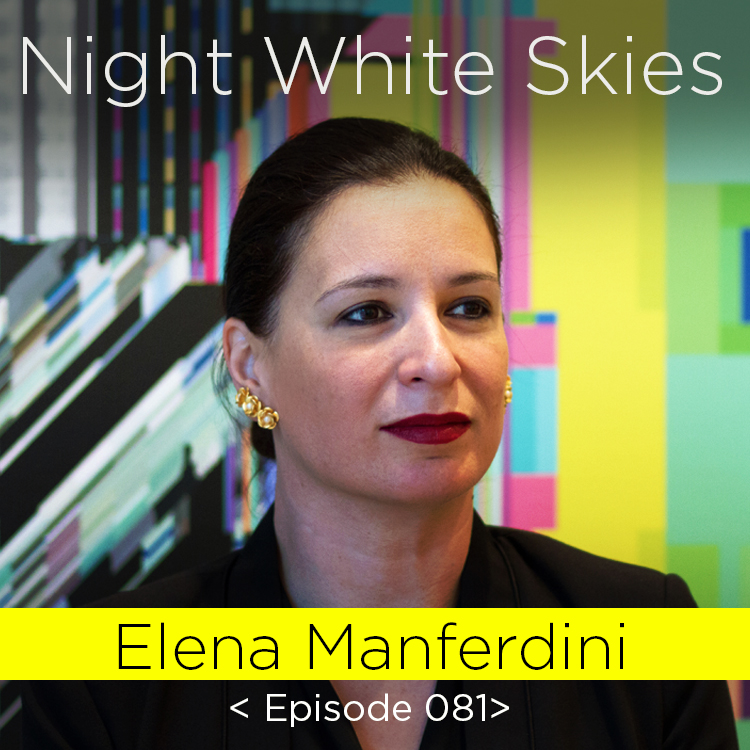
Ep. 081 _ Elena Manferdini _'Material Forms'
Elena Manferdini, principal of Atelier Manferdini. She currently teaches at the Southern California Institute of Architecture SCI-Arc where she serves as the Graduate Programs Chair.
Ep. 080 _ Amy Brady _ 'Burning Worlds'
Amy writes about arts, culture, and the environment. She is the Deputy Publisher of Guernica magazine and the Editor-in-Chief of the Chicago Review of Books, where she also writes a monthly column called "Burning Worlds." It explores how contemporary fiction addresses issues of climate change. She is also the co-editor of the anthology, House on Fire: Dispatches from a Climate-Changed World, forthcoming 2021 from Catapult. She received her PhD in English from the University of Massachusetts Amherst and has won numerous awards including from the National Science Foundation.
Ep. 079 _ Michael Benedikt _ 'Architecture Beyond Experience'
Michael Benedikt is an ACSA Distinguished Professor of Architecture at the University of Texas at Austin, where he holds the Hal Box Chair in Urbanism and teaches design studio and architectural theory. He is a graduate of the University of the Witwatersrand in South Africa and of Yale University. Although he has practiced at small scale, he is best known for his writings and lectures. Architecture Beyond Experience is his ninth book. He also edited and contributed to fourteen volumes of CENTER: Architecture and Design in America, on a wide range of topics. Some of Benedikt's writings can be found at http://www.mbenedikt.com. The event and publishing activities of the Center for American Architecture and Design can be found at http://soa.utexas.edu/caad. The ISOVIST app for OSX and Windows, written by Sam McElhinney of UCA Canterbury, can be downloaded from http://www.isovists.org.

Ep. 078 _ John May _ 'Signal, Image, Architecture'
This week is a conversation with John May and we're discussing a book he recently wrote called 'Signal, Image, Architecture. It's a short book with an objective to define the playing field today for this discussion. The book makes a clear distinction between that of a drawing, a photograph and an image. And in doing so makes it clear that those first two (drawing and photograph) are not what architects and designers are likely to be producing in school or practice anymore. Instead, we're producing images that can look like a photograph or a drawing. The distinction is important because the argument could be made that we are not taking full advantage of the proclivities of the images and therefore not engaging the tools that might best help us understand and shape our times. There are fundamental differences to the image, and it's best to understand them and how they are likely intertwined with how we engage many of the pressures surrounding us today. John May is founding partner, with Zeina Koreitem, of MILLIØNS, a Los Angeles-based design practice. John May is Assistant Professor of Architecture and Director of the Master in Design Studies Program at the Harvard University Graduate School of Design. He previously served as a visiting professor at MIT, SCI-Arc, and UCLA, and was named 2012 National Endowment for the Humanities Visiting Professor in Architecture at Rice University. He is the author of Signal, Image, Architecture and the founding co-director and co-editor (with Zeynep Çelik Alexander) of Design Technics: Archaeologies of Architectural Practice—an exploration of the philosophical and historical dimensions of contemporary design technologies.

Ep. 077 _ Holly Jean Buck _ 'After Geoengineering'
Today is a conversation with Holly Jean Buck and we're discussing her book After Geoengineering: Climate Tragedy, Repair and Restoration. I think for many of us that like to think we're working in at least the general wheelhouse of climate change, we still don't have a firm grasp of what geoengineering entails. For most of us, it's a singular black box technology that will either help our current situation or make it worse. It's often portrayed as a technology more so than as policy or even design. It's characterized as a singular action rather than as a series of discrete, temporal actions that are rather wide ranging in approach. It's also often assumed to be an already defined action waiting to be executed, which it is not. In After Geoengineering, Holly Buck brings into focus the importance of asking what we as inhabitants of Earth are looking for on the back end of these climate remediation projects? What are we working towards and who has been part of these discussions? The book and the discussion here raise questions for the need of participatory design. The book highlights the upcoming struggle in preparing for infrastructure scale projects that if successful will be temporary in some cases. How do we restructure our value systems in order to work collectively at such a global scale. Holly Jean Buck is an Assistant Professor of Environment & Sustainability at the University at Buffalo in New York. She researches how communities can be involved in the design of emerging environmental technologies, and works at the interface of geography, social science, and design. Her diverse research interests include agroecology and carbon farming, new energy technologies, artificial intelligence, and ecological restoration. She has written on climate engineering including humanitarian approaches, gender considerations, and human rights issues, and is the author of After Geoengineering: Climate Tragedy, Repair and Restoration, from Verso Books.
Ep. 076 _ James Bradley _ 'Ghost Species'
James Bradley is an author and critic. His books include the novels, Wrack, The Deep Field, The Resurrectionist and Clade, a book of poetry, Paper Nautilus and the Penguin Book of the Ocean and of course most recently Ghost Species. Today is a conversation with the author and critic James Bradley and we're discussing his recent novel Ghost Species which looks to the implications of the great upheaval occurring around climate change. But instead of focusing solely on the technological or statistical indicators that often represent change - or focusing on a cataloguing of climate catastrophes to drive home the point – the book instead follows the lives of resurrected extinct species including our own long lost relative the Neanderthal. And it's through this storyline that we as readers' begin to question our expectations for our future, we question our terminologies and disciplinary structures set up for defining everything around us through difference. As we learn the important of diversity, we are somehow simultaneously trapped in our own systems of cataloguing difference to express that diversity. James gives us a quick introduction about his book just as the episode begins so I'll leave it to him in just a moment. I really enjoyed the conversation; it was a pleasure speaking with him. Hope you enjoy it as well.

Ep. 075 _ Sylvia Lavin _ 'Postmodernization'
Today is a conversation with Sylvia Lavin and we're discussing her recent book 'Architecture Itself and Other Postmodernization Effects'. Book Sylvia Lavin is Professor of History and Theory of Architecture at Princeton University. Prior to her appointment at Princeton, Lavin was a Professor in the Department of Architecture and Urban Design at UCLA, where she was Chairperson from 1996 to 2006 and the Director of the Critical Studies M.A. and Ph.D. program from 2007 to 2017. She is the author of Form Follows Libido: Architecture and Richard Neutra in a Psychoanalytic Culture. Her most recent books include, Kissing Architecture, published by Princeton University Press in 2011 and Flash in the Pan, an AA publication from 2015. Professor Lavin is also a curator: including, Everything Loose Will Land: Art and Architecture in Los Angeles in the 1970s, was a principal component of the Pacific Standard Time series supported by the Getty Foundation and traveled from Los Angeles to New Haven and to Chicago. Her installation, Super Models, was shown at the 2018 Chicago Architecture Biennial and most recently Architecture Itself and Other Postmodernists Myths, was an exhibition at the Canadian Center for Architecture.

Ep. 074 _ Natasha Sandmeier _ 'Stranger than Fiction'
Natasha Sandmeier's work and research straddles the worlds of architecture and visualization – with a long-standing interest the role of media within the creation and production of speculative architectures and environments. She is an educator and leads the postgraduate Entertainment Studio at UCLA Architecture & Urban Design. She is an architect and founding partner of Studio OUR, and the author and editor of Little Worlds (London, 2014); a monograph of projects and essays re-examining the role of the architect within contemporary architectural culture. Links: Deep Fake of Nancy Pelosi Unreal Engine 5 launch William Gibson Article
Ep. 073 _ Jeffrey Nesbit _ 'Extraterrestrial'
Just yesterday two astronauts launched into outer space from the United States for the first time in 9 years. Interesting side note, this launch was the first time in 40 years that NASA astronauts launched in a new space craft...The Space Shuttle had been around for over thirty years. Today is a conversation with Jeffrey Nesbit and we're discussing the book 'Extraterrestrial' co edited by himself and Guy Trangos. In looking to the extraterrestrial, the book is a collection of essays from a range of disciplines about tied to the term- extraterrestrial. And as you'll here in the discussion today, the book includes an array of perspectives for how the term 'extraterrestrial' might be beneficial for exploring our own existence here on earth. As Jeffrey mentions during our discussion, extraterrestrial is more than just about that which originates 'beyond' our planet. This 'extra' along with the word 'terrestrial' also includes the heightening, exaggerating and intensifying of what we as humans or a planet might assume to be. Extraterrestrial might not be a found condition existing beyond us but something we strive to become. Becoming extraterrestrial! Now, I may have taken a bit of artistic or editorial license with that last sentence, but I like where it's going. Maybe we can all strive to be a little more extraterrestrial these days! Jeffrey S Nesbit is an architect, urbanist, and recently received his Doctor of Design degree (DDes) from Harvard University Graduate School of Design. He is a research fellow in the Office for Urbanization at Harvard and founding director of the research group Haecceitas Studio. His research focuses on processes of urbanization, infrastructure, and the evolution of "technical lands." Currently, Nesbit's research examines the 20th-century American spaceport complex at the intersection of architecture, infrastructure, and aerospace history. He has written several journal articles and book chapters on infrastructure, urbanization, and the history of technology, and is co-editor of Chasing the City: Models for Extra-Urban Investigations (Routledge, 2018), Rio de Janeiro: Urban Expansion and Environment (Routledge, 2019), and New Geographies 11 Extraterrestrial (Actar, 2019). Nesbit has taught architecture and urbanism, along with leading many design studios and theory seminars at Harvard University, Northeastern University, University of North Carolina Charlotte, and Texas Tech University. He also holds a Master of Architecture from the University of Pennsylvania and a Bachelor of Science in Architecture from Texas Tech University A big thanks you to the Graham Foundation in Chicago for supporting this program! Until next time...Take care.

Ep. _072 _ Jane Hutton _'Reciprocal Landscapes'
Jane Hutton is a landscape architect and Assistant Professor at the University of Waterloo School of Architecture. Her research looks at the extended material flows of common construction materials and their social and ecological relations. Recent publications include Reciprocal Landscapes: Stories of Material Movements (Routledge, 2019) as well as an edited volume, Landscript 5: Material Culture – Assembling and Disassembling Landscapes (Jovis, 2017), and Wood Urbanism: From the Molecular to the Territorial (Actar, 2019), co-edited with Daniel Ibanez and Kiel Moe. A big thanks you to the Graham Foundation in Chicago for supporting this program!

Ep. 071 _ Larry D. Busbea _'Responsive Environments'
Larry Busbea is Associate Professor of Art History at the University of Arizona. He is the author of Topologies: The Urban Utopia in France, 1960-1970 (MIT Press, 2007), The Responsive Environment: Design, Aesthetics, and the Human in the 1970s (University of Minnesota Press, 2020), and Proxemics and the Architecture of Social Interaction (forthcoming from Columbia Books on Architecture and the City).
Ep. 070 _ Fred Scharmen _ 'Space Settlements'
Fred Scharmen teaches architecture and urban design at Morgan State University's School of Architecture and Planning. He is the co-founder of the Working Group on Adaptive Systems, an art and design consultancy based in Baltimore, Maryland. His work as a designer and researcher is about how we imagine new spaces for future worlds, and about who is invited into them. His first book, Space Settlements—on NASA's 1970s proposal to construct large cities in space for millions of people—is out now from Columbia Books on Architecture and the City. He received his Masters Degree in Architecture from Yale University. His writing has been published in the Journal of Architectural Education, Log, CLOG, Volume, and Domus. His architectural criticism has appeared in the Architects Newspaper, Slate, CityLab, and in the local alt-weekly Baltimore City Paper.
Ep. 069 _ Christopher Schaberg _'Searching for the Anthropocene'
Christopher Schaberg is Dorothy Harrell Brown Distinguished Professor of English at Loyola University New Orleans, USA. In addition to his new book Searching for the Anthropocene: A Journey into the Environmental Humanities, he is the author of The Textual Life of Airports: Reading the Culture of Flight (2012), The End of Airports (2015), Airportness: The Nature of Flight (2017), and The Work of Literature In An Age of Post-Truth (2018). He is series co-editor (with Ian Bogost) of Bloomsbury's Object Lessons.

Ep. 068 _ Elisa Iturbe _ 'Carbon Form'
Elisa Iturbe is a critic at the Yale University School of Architecture (YSoA), where she also coordinates the dual-degree program between YSoA and the Yale School of Forestry & Environmental Studies. Her writings have been published in Log, Dearq, and Pulp, in addition to a forthcoming piece in Perspecta. Most recently she guest edited Log 47, titled Overcoming Carbon Form, an issue dedicated to redefining the relationship between architectural form and our dominant energy paradigm. She also co-wrote a book with Peter Eisenman titled Lateness, forthcoming in May 2020. In addition, she teaches studio, formal analysis, and a course on carbon form at the Cooper Union. She is cofounder of Outside Development, an architectural practice.
Ep. 067 _ Charles Waldheim _ 'Overcoming Spatial Fixity'
Today is a conversation with Charles Waldheim. Waldheim is a Canadian-American architect and urbanist. Waldheim's research examines the relations between landscape, ecology, and contemporary urbanism. He is author, editor, or co-editor of numerous books on these subjects, and his writing has been published and translated internationally. Waldheim is John E. Irving Professor at Harvard University's Graduate School of Design where he directs the School's Office for Urbanization. Waldheim is recipient of the Rome Prize Fellowship from the American Academy in Rome; the Visiting Scholar Research Fellowship at the Study Centre of the Canadian Centre for Architecture; the Cullinan Chair at Rice University; and the Sanders Fellowship at the University of Michigan Today we're talking about an article he wrote called 'Aero-Gangplank and the Avant-Gard' which appeared in LOG 46. This episode is called 'Overcoming Spatial Fixity'. I'm not sure that's the BEST title for this conversation but we begin by discussing the development of airports in the 1950's and the eventual use of gangplanks that get passengers from the terminal to the plane. This moves us to discussions of other examples within architecture that have sought to overcome fixity (from the kinetic movements of the Aero Gangplank, to Clip On's & Plug In's of Archigram and others, to the non monumental system architecture of Cedric Price's Fun Palace. I thought it was a great conversation and I hope you enjoy. A quick thanks you to the Graham Foundation in Chicago for supporting this program! Until next time...Take care.
Ep. 066 _ Jo Lindsay Walton _'Strange Economics'
Today is a conversation with Jo Lindsay Walton and we're discussing a book called 'Strange Economics' which is edited by David F. Shultz. The book consists of 23 new science fiction pieces written specifically for the book that foreground various types of economic models. Jo is a guest editor of 'Strange Economics' and wrote the afterward for the book. Jo is also co-editor (with Polina Levontin) of Vector, the critical journal of the British Science Fiction Association. Recent essays and fiction appear in Strange Economics, Science Fiction Studies, Big Echo: Critical Science Fiction, Gross Ideas: Tales of Tomorrow's Architecture, and Economic Science Fictions.
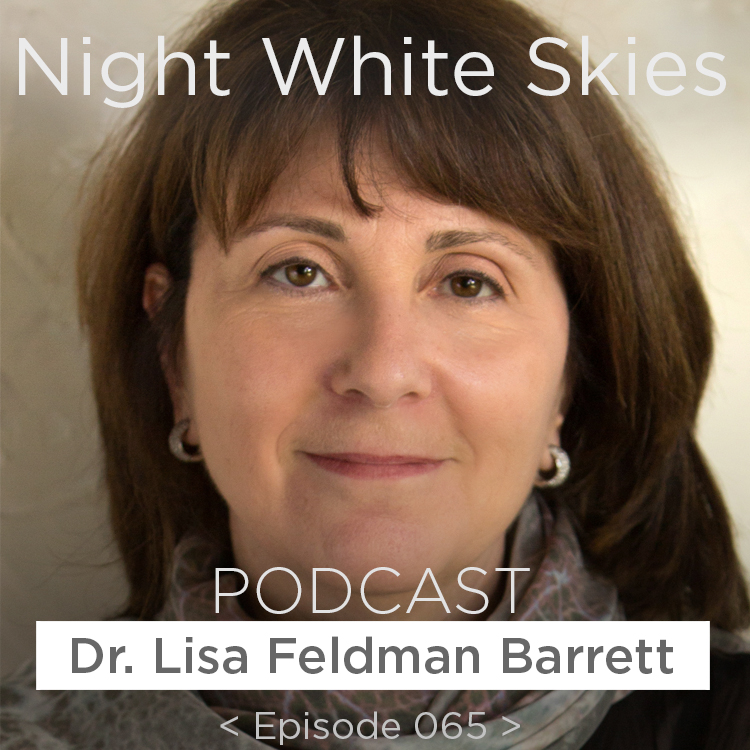
Ep. 065 _ Dr Lisa Feldman Barrett _ 'How Emotions Are Made
Lisa Feldman Barrett, PhD, is a University Distinguished Professor of Psychology at Northeastern University, with appointments at Harvard Medical School and Massachusetts General Hospital. In addition to the book How Emotions are Made: The Secret Life of the Brain, Dr. Barrett has published over 200 peer-reviewed, scientific papers appearing in Science, Nature Neuroscience, and other top journals in psychology and cognitive neuroscience
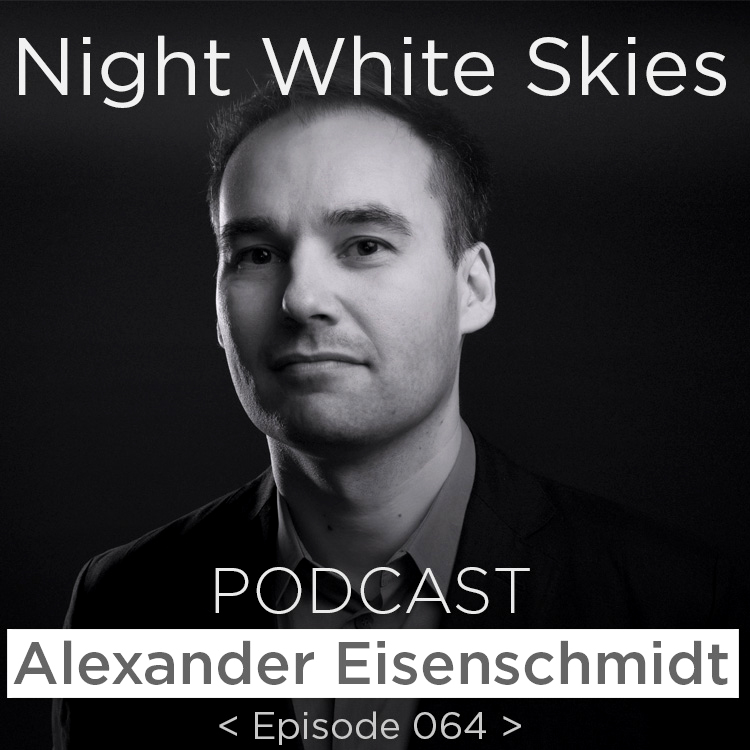
Ep. 064 _ Alexander Eisenschmidt _ 'The Good Metropolis
Alexander Eisenschmidt is the author of 'The Good Metropolis, Between Urban Formlessness and Metropolitan Architecture' Birkhauser, 2018 Alexander is a designer, theorist, and Associate Professor at the School of Architecture, University of Illinois at Chicago, where he teaches design studios and courses in history & theory.

Ep. 063 _ Nancy Y. Kiang _ 'The Color of Plants on Other Worlds'
Dr. Kiang is a biometeorologist at NASA's Goddard Institute for Space Studies, New York. She conducts research on the interaction between the biosphere and the atmosphere, focusing on life on land. Dr. Kiang also relates this work to research in astrobiology, particularly with regard to how photosynthetic activity produces signs of life at the global scale and how these may exhibit adaptations to alternative environments on extrasolar planets, resulting in other "biosignatures" that might be detected by space telescopes.
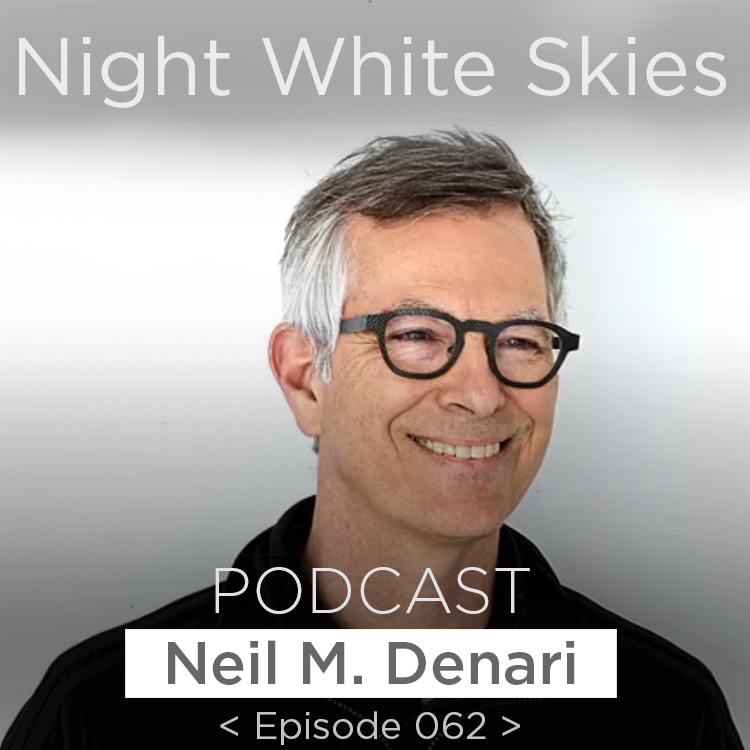
Ep. 062 _ Neil M. Denari 'Career Arcs'
Neil Denari is principal of Neil M. Denari Architects / NMDA and a Professor in the Department of Architecture and Urban Design at UCLA. With NMDA, Denari works on building projects in North America, Europe and Asia. In 2012, NMDA won first prize in the New Keelung Harbor Service Building competition. Denari lectures worldwide and has been a Visiting Professor at Harvard, Princeton, Columbia, Penn, and Rice among other schools. He is the author of Interrupted Projections (1996), Gyroscopic Horizons (1999), and MASS X (2018).
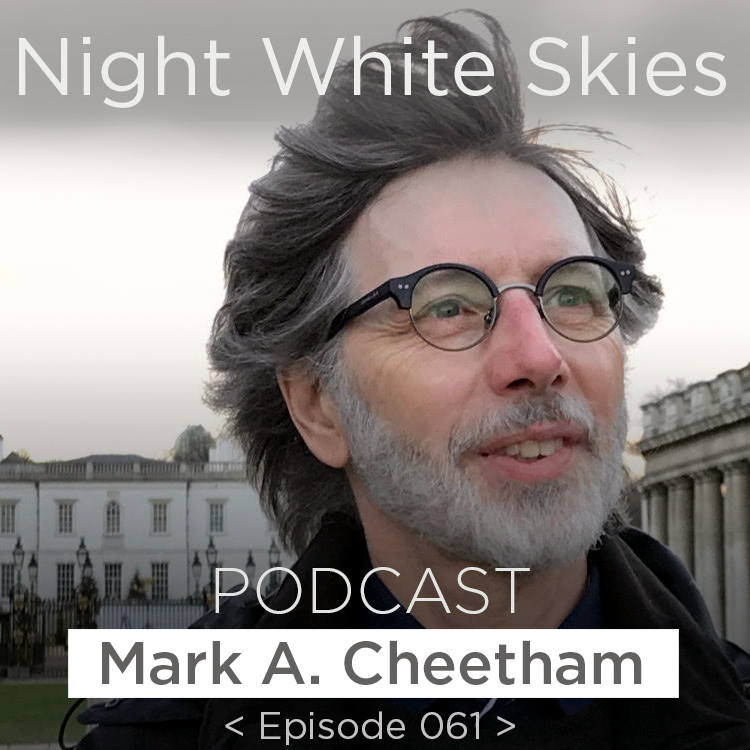
Ep. 061 _ Mark A. Cheetham _ 'Land Art-Eco Art'
This week is with Mark A. Cheetham discussing his book 'Landscape into Eco Art: Articulations of Nature since the 60's'

Ep. 060 _ Rachel Armstrong _ 'Far From Equilibrium'
This week is with Rachel Armstrong, Professor of Experimental Architecture at the Department of Architecture, Planning and Landscape, Newcastle University. Rachel Armstrong leads Metabolism research in developing artificial biology systems showing qualities of near-living systems. Armstrong is the author of the books Origamy and Invisible Ecologies.
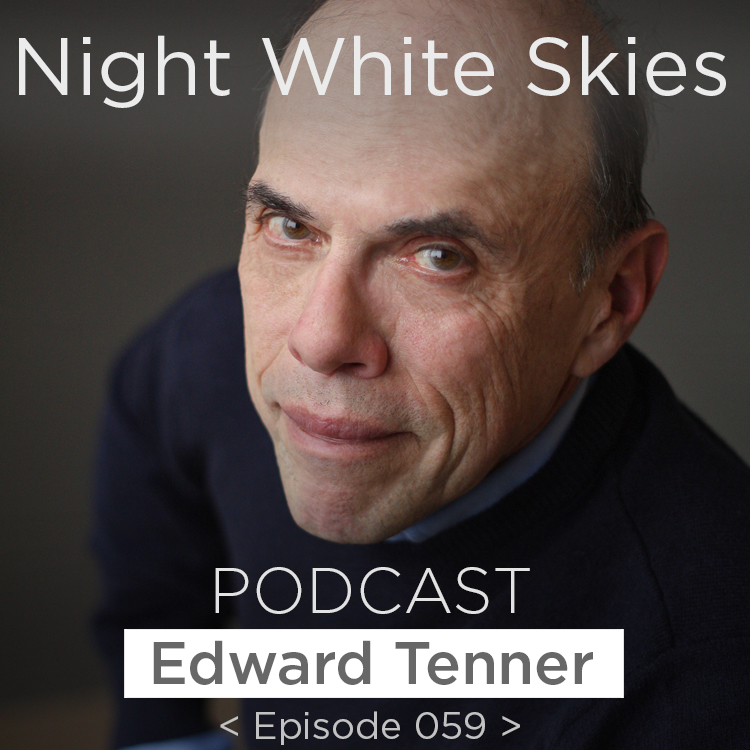
Ep. 059 _ Edward Tenner _ 'The Efficiency Paradox'
'The Efficiency Paradox: What Big Data Can't Do'. Edward Tenner is a distinguished scholar of the Smithsonian's Lemelson Center for the Study of Invention and Innovation and a visiting scholar in the Rutgers University Department of History. His essays and reviews have appeared in The New York Times, The Washington Post, The Wall Street Journal, The Atlantic, The Wilson Quarterly, and Forbes.com.