
New Books in Science, Technology, and Society
2,948 episodes — Page 26 of 59
Ep 117Jayita Sarkar, "Ploughshares and Swords: India's Nuclear Program in the Global Cold War" (Cornell UP, 2022)
In 1974, India surprised the world with “Smiling Buddha”: a secret underground nuclear test at Pokhran, Rajasthan. India called it a “peaceful nuclear explosion”—but few outside of India saw it that way. The 1974 nuclear tests became a symbol of India’s ability to help itself, especially given how the country was left out of the Nuclear Non-Proliferation Treaty, an agreement the country argued was colonial. But, as Jayita Sarkar’s Ploughshares and Swords: India’s Nuclear Program in the Global Cold War (Cornell University Press, 2022) points out, India’s nuclear program was in fact the product of Cold War tensions and international networks–including some foreign sources of nuclear knowledge and material. (An open-access version of Jay’s book can be found here) Jayita Sarkar is Senior Lecturer in Economic and Social History at the University of Glasgow and the Founding Director of the Global Decolonization Initiative. She can be followed on Twitter at @DrJSarkar, and her Linktree can be found here. In this interview, Jay and I talk about India’s nuclear program, from its very beginnings through to when India was brought back into the world’s—or, at least, the U.S.’s–nuclear good graces in 2008. You can find more reviews, excerpts, interviews, and essays at The Asian Review of Books, including its review of Ploughshares and Swords. Follow on Twitter at @BookReviewsAsia. Nicholas Gordon is an associate editor for a global magazine, and a reviewer for the Asian Review of Books. He can be found on Twitter at@nickrigordon. Learn more about your ad choices. Visit megaphone.fm/adchoices Support our show by becoming a premium member! https://newbooksnetwork.supportingcast.fm/science-technology-and-society
Ep 3Understanding Technology Bubbles
Brent Goldfarb and David Kirsch, professors of entrepreneurship and strategy at the University of Maryland's Robert H. Smith School of Business, talk about their book, Bubbles and Crashes: The Boom and Bust of Technological Innovation, with Peoples & Things host Lee Vinsel. Bubbles and Crashes puts forward a parsimonious model of how and when economic bubbles develop around new technologies. In the conversation, Goldfarb and Kirsch reflect on a variety of topics, including why it matters that Elon Musk is such a good story teller, whether we are currently in a technology bubble, and what we can do to prevent bubbles in the future. Learn more about your ad choices. Visit megaphone.fm/adchoices Support our show by becoming a premium member! https://newbooksnetwork.supportingcast.fm/science-technology-and-society
Ep 37Ciara Breathnach, "Ordinary Lives, Death, and Social Class: Dublin City Coroner's Court, 1876-1902" (Oxford UP, 2022)
Ciara Breathnach's book Ordinary Lives, Death, and Social Class: Dublin City Coroner's Court, 1876-1902 (Oxford UP, 2022) focuses on the evolution of the Dublin City Coroner's Court and on Dr Louis A. Bryne's first two years in office. Wrapping itself around the 1901 census, the study uses gender, power, and blame as analytical frameworks to examine what inquests can tell us about the impact of urban living from lifecycle and class perspectives. Coroners' inquests are a combination of eyewitness testimony, expert medico-legal language, detailed minutiae of people, places, and occupational identities pinned to a moment in time. Thus they have a simultaneous capacity to reveal histories from both above and below. Rich in geographical, socio-economic, cultural, class, and medical detail, these records collated in a liminal setting about the hour of death bear incredible witness to what has often been termed 'ordinary lives'. The subjects of Dr Byrne's court were among the poorest in Ireland and, apart from common medical causes problems linked to lower socio-economic groups, this volume covers preventable cases of workplace accidents, neglect, domestic abuse, and homicide. Roberto Mazza is currently a Visiting Lecturer at Northwestern University. He is the host of the Jerusalem Unplugged Podcast and to discuss and propose a book for interview can be reached at [email protected]. Twitter and IG: @robbyref Learn more about your ad choices. Visit megaphone.fm/adchoices Support our show by becoming a premium member! https://newbooksnetwork.supportingcast.fm/science-technology-and-society
Ep 2Poverty, Race, and Rural Sanitation
Catherine Coleman Flowers, activist, author, founder of the Center for Rural Enterprise and Environmental Justice, and MacArthur “genius prize” winner, talks about her book Waste: One Woman’s Fight Against America’s Dirty Secret with Peoples & Things host Lee Vinsel. Waste examines the brutal realities of rural sanitation issues, particularly the lack of septic tanks, and how they affect poor, often black, people. Flowers also reflects on growing up in Lowndes County, Alabama and how her family, the Civil Rights Movement, and her faith life led her to be the leader she is today. Learn more about your ad choices. Visit megaphone.fm/adchoices Support our show by becoming a premium member! https://newbooksnetwork.supportingcast.fm/science-technology-and-society
Ep 1The History of Household Technology from Open Hearth to the Microwave
Historian Ruth Schwartz Cowan talks about her book, More Work for Mother, with Peoples & Things host Lee Vinsel. The book examines the history of how Americans industrialized their homes over the past two hundred years and how supposedly labor-saving technologies led women to do increased housework. Cowan also reflects on what it was like to work as a professor as a woman and mother in the 1970s and how families have changed their relationship to technology and housework in the nearly forty years since the book was published. Learn more about your ad choices. Visit megaphone.fm/adchoices Support our show by becoming a premium member! https://newbooksnetwork.supportingcast.fm/science-technology-and-society
Ep 138Char Miller, "Natural Consequences: Intimate Essays for a Planet in Peril" (Chin Music, 2022)
A collection of 42 essays meditating on both California’s natural gifts and its natural disasters, Natural Consequences: Intimate Essays for a Planet in Peril (Chin Music, 2022) urges readers to consider their role in the environment, no matter where they live. Char Miller’s approach to his topic is intimate and immediate but also incorporates his perspective as a historian. He weaves the present dilemma of Hetch Hetchy dam in Yosemite into a reflection on the injustices wreaked upon Indigenous peoples, and a discussion of the Weeks Act of 1911 (read the essay “Upper Reaches” if you’re wondering what that is) into a tale of two environmental historians’ conferences. Organized into six sections, the book is like a meander through a broad topography, including urban areas, total wilderness, and the uneasy liminal spaces between. Throughout, Miller acknowledges his own, and our collective, role in arriving at this perilous place – and manages to strike a balance between hope and concern. His disarmingly brief essays linger after the words are gone. Rachel Pagones is an acupuncturist, educator, and author living in Cambridge, England. Long before moving to the UK, she was an Environmental Studies student at UC Santa Cruz. Learn more about your ad choices. Visit megaphone.fm/adchoices Support our show by becoming a premium member! https://newbooksnetwork.supportingcast.fm/science-technology-and-society
Ep 176Albert Glinsky, "Switched On: Bob Moog and the Synthesizer Revolution" (Oxford UP, 2022)
The Moog synthesizer ‘bent the course of music forever’ Rolling Stone declared. Bob Moog, the man who did that bending, was a lovable geek with Einstein hair and pocket protectors. He walked into history in 1964 when his homemade contraption unexpectedly became a sensation---suddenly everyone wanted a Moog. The Beatles, The Doors, The Byrds, and Stevie Wonder discovered his synthesizer, and it came to be featured in seminal film scores including Apocalypse Now and A Clockwork Orange. The Moog's game-changing sounds saturated 60's counterculture and burst into the disco party in the 70's to set off the electronic dance music movement. Bob had singlehandedly founded the synth industry and become a star in the process. But he was also going broke. Imitators copied his technology, the musicians' union accused him of replacing live players, and Japanese competitors started overtaking his work. He struggled to hang on to his inventions, his business, and his very name. Bob's story upends our notions of success and wealth, showing that the two don't always go together. In Switched On: Bob Moog and the Synthesizer Revolution (Oxford UP, 2022), author Albert Glinsky draws on exclusive access to Bob Moog's personal archives and his probing interviews with Bob's family and a multitude of associates, for this first complete biography of the man and his work. Switched On takes the reader on a roller coaster ride at turns triumphant, heart-breaking, and frequently laugh out loud absurd---a nuanced trip through the public and private worlds of this legendary inventor who altered the course of music.” Nathan Smith is a PhD Student in Music Theory at Yale University. He can be reached at [email protected]. Learn more about your ad choices. Visit megaphone.fm/adchoices Support our show by becoming a premium member! https://newbooksnetwork.supportingcast.fm/science-technology-and-society
Ep 6Mirror Image: New Technologies and the Self
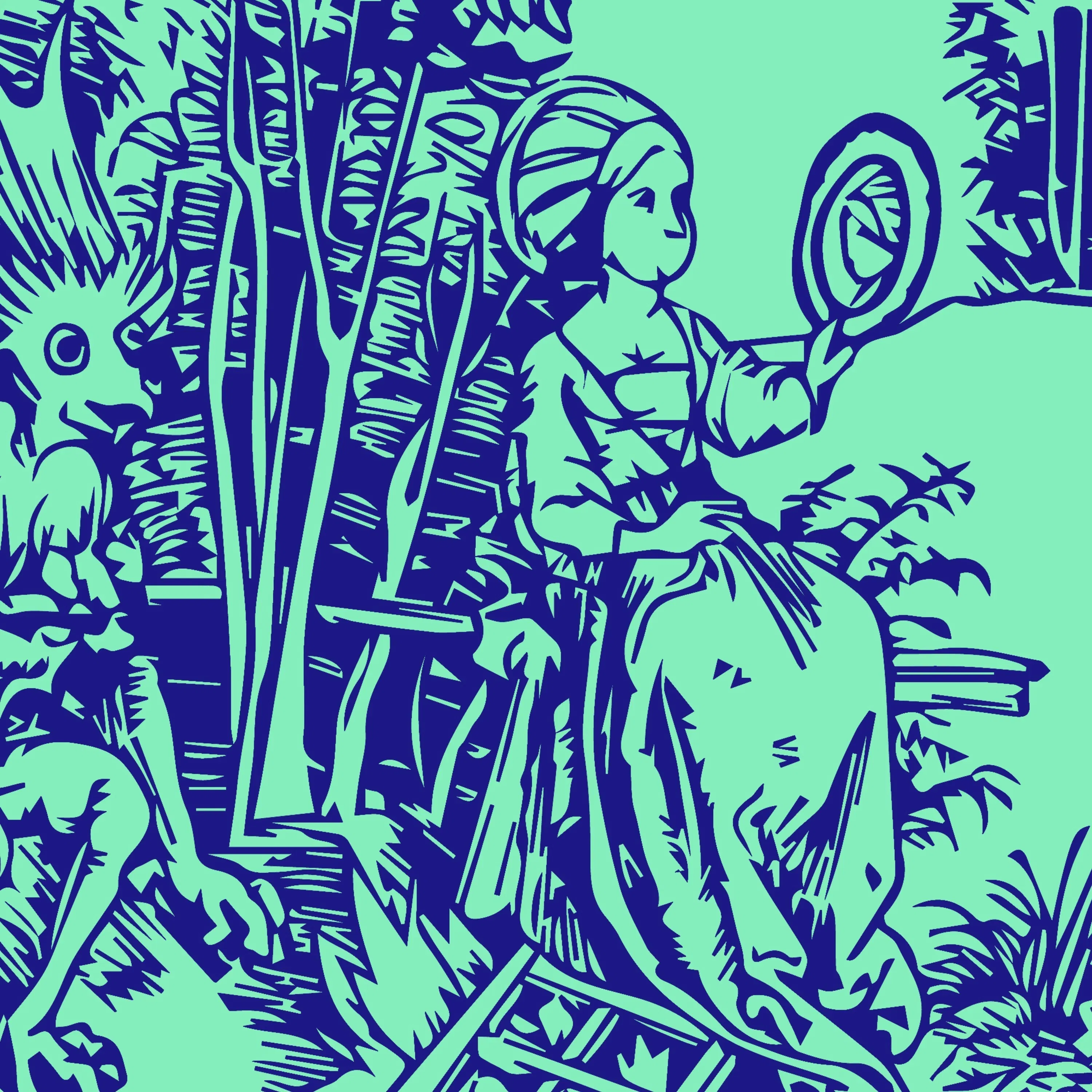
16th-century glass mirrors and 21st-century camera phones actually share a lot in common; they both are technologies that shaped new forms of the self. Guests Ian Mortimer, historian and author of Millennium: From Religion to Revolution: How Civilization Has Changed Over a Thousand Years Ilan Stavans, professor of Latin American and Latino Culture at Amherst College and author of I Love My Selfie Learn more about your ad choices. Visit megaphone.fm/adchoices Support our show by becoming a premium member! https://newbooksnetwork.supportingcast.fm/science-technology-and-society
Ep 96Lorraine Daston Rules the World (EF, JP)
Lorraine Daston, Rules: A Short History of What We Live by (Princeton UP, 2022). Historian of science Lorraine Daston's wonderful new book, Rules: A Short History of What We Live by (Princeton UP, 2022). is just out. Daston's earlier pathbreaking works include Against Nature, Classical Probability in the Enlightenment and many co-authored books, including Objectivity (with Peter Galison) which introduced the idea of historically changeable "epistemic virtues." In this Recall this Book conversation, Daston--Raine to her friends--shows that rules are never as thin (as abstract and context-free) as they pretend to be. True, we love a rule that seems to brook no exceptions: by the Renaissance, even God is no longer allowed to make exceptions in the form of miracles. Yet throughout history, Raine shows, islands of standardized stability are less stable than they seem. What may feel like oppressively general norms and standards are actually highly protected ecotopes within which thin rules can arise. Look for instance at the history of sidewalks (Raine has)! Raine, Elizabeth and John dive into the details. Implicit and explicit rules are distinguished in the case of e.g. cookbooks and monasteries--and then the gray areas in-between are explored. When students unconsciously ape their teachers, that is a tricky form of emulation--is it even possible to "follow but not ape"? Perhaps genres do this work: The Aeneid is not the Iliad and yet older writers are somehow internalized in the later ones. Mentioned in the Episode Karl Polanyi, 1944) The Great Transformation: The Political and Economic Origins of Our Time, on the embeddedness of markets in norms and rules. John Locke's Second Treatise on Government (1690) denounces the "arbitrary will of another," an early case of seeing will simply qua will is unacceptable. Arnold Davidson sees genre variation (like Milton learning from Homer) also happening in musical invention. Michael Tomasello works on children's rule-following and enforcement against violations, Johannes Huizinga's Homo Ludens (1938) with its notion of demarcated "sacred spaces of play" is a touchstone of rule-following Lorraine and John both adore. Recallable Books The Rule of Saint Benedict (516 onwards) Irma Rombauer, Joy of Cooking (1931 onwards) As Elizabeth says, it's from following the rules that joy emerges.... Walter Miller's Canticle for Liebowitz Fyodor Dostoyevsky, Notes from Underground (1864) an instance of the notion that one establishes free will by caprice or defiance against natural laws ("damnit, gentleman, sometimes 2+2=5 is a nice thing too!") Read the transcript here. Learn more about your ad choices. Visit megaphone.fm/adchoices Support our show by becoming a premium member! https://newbooksnetwork.supportingcast.fm/science-technology-and-society
Ep 234Robert M. Geraci, "Futures of Artificial Intelligence: Perspectives from India and the U.S." (Oxford UP, 2021)
Twenty-first century life is increasingly governed by artificial intelligence (AI) technologies such as machine learning, big data analysis, facial recognition, and robotics. For decades, an ideology of apocalyptic progress and cosmic transformation has accompanied the advancement of AI in the United States; that vision is intimately connected to transhumanism, the idea that humanity can transcend its limits, even mortality, using technology. By describing the arrival and reconfiguration of transhumanist ideas in India, Robert M. Geraci's book Futures of Artificial Intelligence: Perspectives from India and the U.S. (Oxford UP, 2021) reveals how the nexus of religion and technology contributes to public life and our modern self-understanding while suggesting that the apocalyptic approach to AI should be tempered by other visions. Raj Balkaran is a scholar of Sanskrit narrative texts. He teaches at the Oxford Centre for Hindu Studies and at his own virtual School of Indian Wisdom. For information see rajbalkaran.com. Learn more about your ad choices. Visit megaphone.fm/adchoices Support our show by becoming a premium member! https://newbooksnetwork.supportingcast.fm/science-technology-and-society
Ep 18Samantha Muka, "Oceans Under Glass: Tank Craft and the Sciences of the Sea" (U Chicago Press, 2022)
In Oceans Under Glass: Tank Craft and the Sciences of the Sea (University of Chicago Press, 2022), Samantha Muka, Assistant Professor of Science, Technology, and Society at Stevens Institute of Technology, dives into the unexpected world of tank crafting. Throughout the book, Muka tells the stories behind the development of various kinds of aquariums, such as photography tanks and reef tanks. She explains how the knowledge and ingenuity of a variety of actors have been contributing to furthering our knowledge of oceanic environments. The myriad of technical and technological challenges that arise when attempting to maintain aquatic species in artificial environments has been the source of at least as many experiments in tank tinkering. Focusing on aquariums as complex, situated, and constantly evolving technological devices, Muka shows how the production of knowledge about the ocean depends on interactions between communities holding different knowledge, expertise, and interests: public aquarists, academic researchers, and hobbyists. Analyzing the “craft circulation” between these three groups, the author provides us with a dynamic picture that challenges a series of assumptions on how scientific knowledge is and can be produced. More than a history and sociology of tank craft, Oceans under Glass offers a meditation on the necessity of aquariums and their artificiality not only to learn about the ocean, but also to preserve some of their biodiversity. “Imagined worlds”, as Muka puts it, aquariums should also be understood as critical places where our future relationship to the oceans, for better and for worst, is being shaped. Victor Monnin, Ph.D. is an historian of science specialized in the history of Earth sciences. He is teaching the Humanities and French language to undergraduates. Learn more about your ad choices. Visit megaphone.fm/adchoices Support our show by becoming a premium member! https://newbooksnetwork.supportingcast.fm/science-technology-and-society
Ep 46John P. Gluck, "Voracious Science and Vulnerable Animals: A Primate Scientist's Ethical Journey" (U Chicago Press, 2016)
The National Institute of Health recently announced its plan to retire the fifty remaining chimpanzees held in national research facilities and place them in sanctuaries. This significant decision comes after a lengthy process of examination and debate about the ethics of animal research. For decades, proponents of such research have argued that the discoveries and benefits for humans far outweigh the costs of the traumatic effects on the animals; but today, even the researchers themselves have come to question the practice. John P. Gluck has been one of the scientists at the forefront of the movement to end research on primates, and in Voracious Science and Vulnerable Animals: A Primate Scientist's Ethical Journey (U Chicago Press, 2016) he tells a vivid, heart-rending, personal story of how he became a vocal activist for animal protection. Gluck begins by taking us inside the laboratory of Harry F. Harlow at the University of Wisconsin, where Gluck worked as a graduate student in the 1960s. Harlow’s primate lab became famous for his behavioral experiments in maternal deprivation and social isolation of rhesus macaques. Though trained as a behavioral scientist, Gluck finds himself unable to overlook the intense psychological and physical damage these experiments wrought on the macaques. Gluck’s sobering and moving account reveals how in this and other labs, including his own, he came to grapple with the uncomfortable justifications that many researchers were offering for their work. As his sense of conflict grows, we’re right alongside him, developing a deep empathy for the often smart and always vulnerable animals used for these experiments. At a time of unprecedented recognition of the intellectual cognition and emotional intelligence of animals, Voracious Science and Vulnerable Animals is a powerful appeal for our respect and compassion for those creatures who have unwillingly dedicated their lives to science. Through the words of someone who has inflicted pain in the name of science and come to abhor it, it’s important to know what has led this far to progress and where further inroads in animal research ethics are needed. John P. Gluck is professor emeritus of psychology and a senior advisor to the president on animal research ethics and welfare at the University of New Mexico. He is also research professor of the Kennedy Institute of Ethics at Georgetown University and coauthor of The Human Use of Animals. Callie Smith is a poet and doctoral candidate in English at the University of Louisiana at Lafayette. Learn more about your ad choices. Visit megaphone.fm/adchoices Support our show by becoming a premium member! https://newbooksnetwork.supportingcast.fm/science-technology-and-society
Ep 54Why are Insects so Scary? On Insects in Films.
This episode from the Vault is a lecture by May Berenbaum about why insects are so scary. Professor Berenbaum is an American entomologist whose research focuses on the chemical interactions between herbivorous insects and their host plants. She teaches entomology at the University of Illinois, and was awarded the National Medal of Science in 2014. She is also the organizer of the annual Insect Fear Film Festival. Learn more about your ad choices. Visit megaphone.fm/adchoices Support our show by becoming a premium member! https://newbooksnetwork.supportingcast.fm/science-technology-and-society
Ep 334Donovan O. Schaefer, "Wild Experiment: Feeling Science and Secularism after Darwin" (Duke UP, 2022)
In Wild Experiment: Feeling Science and Secularism after Darwin (Duke UP, 2022), Donovan O. Schaefer challenges the conventional wisdom that feeling and thinking are separate. Drawing on science studies, philosophy, affect theory, secularism studies, psychology, and contemporary literary criticism, Schaefer reconceptualizes rationality as defined by affective processes at every level. He introduces the model of "cogency theory" to reconsider the relationship between evolutionary biology and secularism, examining mid-nineteenth-century Darwinian controversies, the 1925 Scopes Trial, and the New Atheist movement of the 2000s. Along the way, Schaefer reappraises a range of related issues, from secular architecture at Oxford to American eugenics to contemporary climate denialism. These case studies locate the intersection of thinking and feeling in the way scientific rationality balances excited discovery with anxious scrutiny, in the fascination of conspiracy theories, and in how racist feelings assume the mantle of rational objectivity. The fact that cognition is felt, Schaefer demonstrates, is both why science succeeds and why it fails. He concludes that science, secularism, atheism, and reason itself are not separate from feeling but comprehensively defined by it. This episode's host, Alison Renna, is a PhD candidate in religion and modernity at Yale University. Learn more about your ad choices. Visit megaphone.fm/adchoices Support our show by becoming a premium member! https://newbooksnetwork.supportingcast.fm/science-technology-and-society
Ep 24Paul Nelles and Rosa Salzberg, "Connected Mobilities in the Early Modern World: The Practice and Experience of Movement" (Amsterdam UP, 2022)
Paul Nelles (Carleton University) and Rosa Salzberg (University of Trento) talk about early modern culture, travel and the joys of editing their new volume, Connected Mobilities in the Early Modern World: The Practice and Experience of Movement (Amsterdam University Press, 2022). This book offers a panorama of movement, mobility, and exchange in the early modern world. While the pre-modern centuries have long been portrayed as static and self-contained, it is now acknowledged that Europe from the Middle Ages onwards saw increasing flows of people and goods. Movement also connected the continent more closely to other parts of the world. The present work challenges dominant notions of the 'fixed,' immobile nature of pre-modern cultures through study of the inter-connected material, social, and cultural dimensions of mobility. The case studies presented here chart the technologies and practices that both facilitated and impeded movement in diverse spheres of social activity such as communication, transport, politics, religion, medicine, and architecture. The chapters underscore the importance of the movement of people and objects through space and across distance to the dynamic economic, political, and cultural life of the early modern period. Jana Byars is the Academic Director of Netherlands: International Perspectives on Sexuality and Gender. Learn more about your ad choices. Visit megaphone.fm/adchoices Support our show by becoming a premium member! https://newbooksnetwork.supportingcast.fm/science-technology-and-society
Ep 4Lilie Chouliaraki and Myria Georgiou, "The Digital Border: Migration, Technology, Power" (NYU Press, 2022)
Hello, world! This is the Global Media & Communication podcast series. In this episode, our host Juan Llamas-Rodriguez discusses the book The Digital Border: Migration, Technology, Power (2022) by Dr. Lilie Chouliaraki and Dr. Myria Georgiou. You’ll hear about: What The Digital Border is about, its importance, and its implication; How the authors’ previous works helped build the foundation for writing this book collaboratively; Why and how the authors chose to focus on specific forms of media such as social media and journalism; A discussion of humanitarian securitization vis a vis entrepreneurial securitization; How to understand the theoretical shift from the “crisis of migration” to the “crisis of responsibility”; How do we contend the different temporalities of resistance as various actors produce or respond to border technologies and infrastructures; As the displacement of people are intensifying, what frameworks and toolkits can be useful for us to rethink global migration against the “crisis of imaginary” (imaginary as a representational framework that people normatively think about certain issues); What are the futures of globalization and its counter movements in Global North from the perspectives of migration and bordering; What are the areas the authors wish to further explore in the future. About the book What is the role of digital technologies is shaping migration today? How do digital infrastructures, platforms, and institutions control the flow of people at the border? And how do they also control the public narratives of migration as a “crisis”? Finally, how do migrants themselves use these same platforms to speak back and make themselves heard in the face of hardship and hostility? Taking their case studies from the biggest migration event of the twenty-first century in the West, the 2015 European migration “crisis” and its aftermath up to 2020, Lilie Chouliaraki and Myria Georgiou offer a holistic account of the digital border as an expansive assemblage of technological infrastructures (from surveillance cameras to smartphones) and media imaginaries (stories, images, social media posts) to tell the story of migration as it unfolds in Europe’s outer islands as much as its most vibrant cities. You can find this book on the NYU Press website. Authors: Lilie Chouliaraki is Professor of Media and Communications at the London School of Economics, where she also serves as the department’s Doctoral Program Director. Myria Georgiou is Professor of Media and Communications at the London School of Economics, where she also serves as Research Director. Host: Juan Llamas-Rodriguez is an assistant professor at the Annenberg School for Communication, where he researches and teaches global media cultures, digital technologies, border studies, infrastructure studies, and Latin American media. Editor & Producer: Jing Wang is Senior Research Manager at CARGC at the Annenberg School for Communication, University of Pennsylvania. Our podcast is part of the multimodal project powered by the Center for Advanced Research in Global Communication (CARGC) at the Annenberg School for Communication at the University of Pennsylvania. At CARGC, we produce and promote critical, interdisciplinary, and multimodal research on global media and communication. We aim to bridge academic scholarship and public life, bringing the very best scholarship to bear on enduring global questions and pressing contemporary issues. Learn more about your ad choices. Visit megaphone.fm/adchoices Support our show by becoming a premium member! https://newbooksnetwork.supportingcast.fm/science-technology-and-society
Ep 346Felicity M. Turner, "Proving Pregnancy: Gender, Law, and Medical Knowledge in Nineteenth-Century America" (UNC Press, 2022)
Examining infanticide cases in the United States from the late eighteenth to the late nineteenth centuries, Felicity M. Turner's Proving Pregnancy: Gender, Law, and Medical Knowledge in Nineteenth-Century America (UNC Press, 2022) documents how women—Black and white, enslaved and free—gradually lost control over reproduction to male medical and legal professionals. In the first half of the nineteenth century, community-based female knowledge played a crucial role in prosecutions for infanticide: midwives, neighbors, healers, and relatives were better acquainted with an accused woman's intimate life, the circumstances of her pregnancy, and possible motives for infanticide than any man. As the century progressed, women accused of the crime were increasingly subject to the scrutiny of white male legal and medical experts educated in institutions that reinforced prevailing ideas about the inferior mental and physical capacities of women and Black people. As Reconstruction ended, the reach of the carceral state expanded, while law and medicine simultaneously privileged federal and state regulatory power over that of local institutions. These transformations placed all women's bodies at the mercy of male doctors, judges, and juries in ways they had not been before. Reframing knowledge of the body as property, Felicity M. Turner shows how, at the very moment when the federal government expanded formal civil and political rights to formerly enslaved people, the medical profession instituted new legal regulations across the nation that restricted access to knowledge of the female body to white men. Katrina Anderson is a doctoral candidate at the University of Delaware. Learn more about your ad choices. Visit megaphone.fm/adchoices Support our show by becoming a premium member! https://newbooksnetwork.supportingcast.fm/science-technology-and-society

Ep 106Ethical AI
In this episode of High Theory, Alex Hanna talks with Nathan Kim about Ethical AI. Their conversation is part of our High Theory in STEM series, which tackles topics in science, technology, engineering, and medicine from a highly theoretical perspective. In this episode, Alex helps us think about the complicated recipes we call “artificial intelligence” and what we mean when we ask our technologies to be ethical. In the episode Alex references an article by Emily Tucker, called “Artifice and Intelligence,” (Tech Policy Press, 17 March 2022) which suggests we should stop using terms like “artificial intelligence” and an opinion piece in the Washington Post, on a similar theme, by Timnit Gebru and Margaret Mitchell, “We warned Google that people might believe AI was sentient. Now it’s happening” (17 June 2022). She also mentions a claim by Blake Lemoine that Google’s LaMDA (Language Model for Dialogue Applications) is sentient. We’ll leave that one to your googling, if not your judgment. Dr. Alex Hanna is Director of Research at the Distributed AI Research Institute (DAIR). A sociologist by training, her work centers on the data used in new computational technologies, and the ways in which these data exacerbate racial, gender, and class inequality. You can read her recent article, “AI Ethics Are in Danger. Funding Independent Research Could Help,” co-authored with Dylan Baker in the Stanford Social Innovation Review, and learn more about her work on her website. This week’s image was produced by DALL-E 2 responding to the prompt: "generate the image of an artificial intelligence entity, deciding to protect shareholder interests over public good, in the style of Van Gogh." Learn more about your ad choices. Visit megaphone.fm/adchoices Support our show by becoming a premium member! https://newbooksnetwork.supportingcast.fm/science-technology-and-society
Ep 55Seeing Truth in Picturing the Pandemic:
Professor Sarah Willen talks about her part in creating the Pandemic Journaling Project and how that has morphed into a series of visual exhibitions that emphasis how we all can work to create new histories, shape archives, and reclaim our own creativity and power. Learn more about the Seeing Truth exhibition at our website. Follow us on Twitter @WhyArguePod and on Instagram @WhyWeArguePod Learn more about your ad choices. Visit megaphone.fm/adchoices Support our show by becoming a premium member! https://newbooksnetwork.supportingcast.fm/science-technology-and-society
Ep 187Ed Cohen, "On Learning to Heal or, What Medicine Doesn't Know" (Duke UP, 2022)
At thirteen, Ed Cohen was diagnosed with Crohn’s disease—a chronic, incurable condition that nearly killed him in his early twenties. At his diagnosis, his doctors told him that the best he could hope for would be periods of remission. Unfortunately, doctors never mentioned healing as a possibility. In On Learning to Heal or, What Medicine Doesn't Know (Duke UP, 2022), Cohen draws on fifty years of living with Crohn’s to consider how Western medicine’s turn from an “art of healing” toward a “science of medicine” deeply affects both medical practitioners and their patients. He demonstrates that although medicine can now offer many seemingly miraculous therapies, medicine is not and has never been the only way to enhance healing. Exploring his own path to healing, he argues that learning to heal requires us to desire and value healing as a vital possibility. With this book, Cohen advocates reviving healing’s role for all those whose lives are touched by illness. Learn more about your ad choices. Visit megaphone.fm/adchoices Support our show by becoming a premium member! https://newbooksnetwork.supportingcast.fm/science-technology-and-society
Ep 346Luke Munn, "Automation Is a Myth" (Stanford UP, 2022)
For some, automation will usher in a labor-free utopia; for others, it signals a disastrous age-to-come. Yet whether seen as dream or nightmare, automation, argues Munn, is ultimately a fable that rests on a set of triple fictions. There is the myth of full autonomy, claiming that machines will take over production and supplant humans. But far from being self-acting, technical solutions are piecemeal; their support and maintenance reveals the immense human labor behind "autonomous" processes. There is the myth of universal automation, with technologies framed as a desituated force sweeping the globe. But this fiction ignores the social, cultural, and geographical forces that shape technologies at a local level. And, there is the myth of automating everyone, the generic figure of "the human" at the heart of automation claims. But labor is socially stratified and so automation's fallout will be highly uneven, falling heavier on some (immigrants, people of color, women) than others. In Automation Is a Myth (Stanford UP, 2022), Munn moves from machine minders in China to warehouse pickers in the United States to explore the ways that new technologies do (and don't) reconfigure labor. Combining this rich array of human stories with insights from media and cultural studies, Munn points to a more nuanced, localized, and racialized understanding of the "future of work." Morteza Hajizadeh is a Ph.D. graduate in English from the University of Auckland in New Zealand. His research interests are Cultural Studies; Critical Theory; Environmental History; Medieval (Intellectual) History; Gothic Studies; 18th and 19th Century British Literature. YouTube Channel. Twitter. Learn more about your ad choices. Visit megaphone.fm/adchoices Support our show by becoming a premium member! https://newbooksnetwork.supportingcast.fm/science-technology-and-society
Ep 266Sayan Dey, "Green Academia: Towards Eco-Friendly Education Systems" (Routledge, 2022)
Green Academia: Towards Eco-Friendly Education Systems (Routledge, 2022) can be read as a systemic long-term counter-intervention strategy against any form of impending pandemics in the post-COVID era and beyond. It argues that anti-nature and capitalistic knowledge systems have contributed to the evolution and growth of COVID-19 across the globe and emphasises the merits of reinstating nature-based and environment-friendly pedagogical and curricular infrastructures in mainstream educational institutions. The volume also explores possible ways of weaving ecology and the environment as a habitual practice of teaching and learning in an intersectional manner with Science and Technology Studies. With detailed case studies of the green schools in Bhutan and similar practices in India, Kenya, and New Zealand, the book argues for different forms of eco-friendly education systems and the possibilities of expanding these local practices to a global stage. This book will be an essential read for scholars and researchers of sociology, cultural studies, decolonial studies, education, ecology, public policy social anthropology, sustainable development, sociology of education, and political sociology. Rituparna Patgiri is an Assistant Professor of Sociology at Indraprastha College for Women, University of Delhi. She has a PhD in Sociology from Jawaharlal Nehru University (JNU), New Delhi. Her research interests lie in the areas of food, media, gender and public. She is also one of the co-founders of Doing Sociology. Patgiri can be reached at @Rituparna37 on Twitter. Learn more about your ad choices. Visit megaphone.fm/adchoices Support our show by becoming a premium member! https://newbooksnetwork.supportingcast.fm/science-technology-and-society
Ep 217Mariëlle Wijermars et al., "The Palgrave Handbook of Digital Russia Studies" (Palgrave MacMillan, 2020)
How has digitalisation changed Russian politics? How has Russia’s invasion of Ukraine changed Russia studies? What is special about Russia’s approach to algorithmic governance and internet control? Assistant Professor in Cyber-Security and Politics from Maastricht University, Mariëlle Wijermars, talks about her ongoing research on Russian politics, internet policy and platform governance. In a conversation with Joanne Kuai, Mariëlle Wijermars also talks about The Palgrave Handbook of Digital Russia Studies. This open-access handbook was published by Palgrave Macmillan in 2020 and was edited by Mariëlle together with Daria Gritsenko and Mikhail Kopotev. This handbook presents a multidisciplinary and multifaceted perspective on how the ‘digital’ is simultaneously changing Russia and the research methods scholars use to study Russia. It provides a critical update on how Russian society, politics, economy, and culture are reconfigured in the context of ubiquitous connectivity and accounts for the political and societal responses to digitalization. Dr. Mariëlle Wijermars is an Assistant Professor in Cyber-Security and Politics at Maastricht University in the Netherlands. She is currently a CORE Fellow at the Helsinki Collegium for Advanced Studies, where she researches internet freedom and the human rights’ implications of internet policy and platform governance, in particular in authoritarian states. You can connect with Mariëlle Wijermars on Twitter @Marielle_W_ and on Mastodon @[email protected]. Joanne Kuai is a PhD Candidate at Karlstad University, Sweden, with a research project on Artificial Intelligence in Chinese Newsrooms. Her research interests centre around data and AI for media, computational journalism, and the social implications of automation and algorithms. Find her on LinkedIn or on Twitter @JoanneKuai. Learn more about your ad choices. Visit megaphone.fm/adchoices Support our show by becoming a premium member! https://newbooksnetwork.supportingcast.fm/science-technology-and-society

Ep 105Neurasthenia
In this episode of High Theory, Kim talks with Saronik about neurasthenia. A disease that no longer exists, neurasthenia was a nineteenth century American epidemic of energy depletion. Thinking about this diagnosis can help us understand the social functions of medical knowledge, and how that knowledge changes over time. In the episode Kim discusses two nineteenth-century medical texts: American Nervousness: It’s Causes and Consequences (New York: Putnam, 1881) by George Miller Beard, which popularized the diagnosis, and Fat and Blood: And How to Make Them (Philadelphia: J.B. Lippincott & Co., 1877), by S. Weir Mitchell, which popularized the “rest cure” treatment. She also references three scholarly texts: Tom Lutz’s American Nervousness, 1903: An Anecdotal History (Cornell UP, 1992); Carolyn Tomas de la Pena’s The Body Electric: How Strange Machines Built the Modern American (NYU Press, 2003); and Anson Rabinbach’s The Human Motor: Energy, Fatigue, and the Origins of Modernity (UC Press, 1992). Kim Adams is one of the co-hosts of High Theory. She works as a postdoctoral fellow at the Pennsylvania State University Humanities Institute, where she is writing a book about electricity and the body in American medicine and literature. She also runs a working group on pain management as a cultural process, called Politics of the Prescription Pad. She lives in Rhode Island and has a very large dog named Tag. This week’s image is a 1907 painting titled “On the Southern Plain” by Frederic Remington. The painting shows soldiers on horseback in the American West. Remington was diagnosed with neurasthenia and treated with the “west cure” (discussed in the episode) by S. Weir Mitchell himself. Learn more about your ad choices. Visit megaphone.fm/adchoices Support our show by becoming a premium member! https://newbooksnetwork.supportingcast.fm/science-technology-and-society
Ep 93Geert Lovink, "Sad by Design: On Platform Nihilism" (Pluto Press, 2019)
Why is the internet making us so unhappy? Why is it in capital’s interests to cultivate populations that are depressed and desperate rather than driven by the same irrational exuberance that moves money? Sadness is now a design problem. The highs and lows of melancholy are coded into social media platforms. After all the clicking, browsing, swiping and liking, all we are left with is the flat and empty aftermath of time lost to the app. Sad by Design: On Platform Nihilism (Pluto Press, 2019) by Geert Lovink offers a critical analysis of the controversies which drive our online media behaviours. Lovink calls for us to embrace the engineered intimacy of social media, messenger apps and selfies because boredom is the first stage of overcoming ‘platform nihilism’. Geert Lovink speaks to Pierre d'Alancaisez about the frustrations of studying the internet as it evolves from networks to platforms, the politically-contingent notions of online 'communities', and cycles of ideological production and capture. Geert Lovink is a media theorist and internet critic who has chronicled the development of internet and network cultures as they came of age alongside him. He is the author of Zero Comments, Networks Without a Cause, Social Media Abyss, and most recently Struck on the Platform. He is the founder of the Institute of Network Cultures. Pierre d’Alancaisez is a contemporary art curator, cultural strategist, researcher. Sometime scientist, financial services professional. Learn more about your ad choices. Visit megaphone.fm/adchoices Support our show by becoming a premium member! https://newbooksnetwork.supportingcast.fm/science-technology-and-society
Ep 114John D. Wong, "Hong Kong Takes Flight: Commercial Aviation and the Making of a Global Hub, 1930s-1998" (Harvard UP, 2022)
On July 6, 1998, the last flight took off from Kai Tak International Airport, marking the end of an era for Hong Kong aviation. For decades, international flights flew over the roofs of Kowloon apartments, before landing on Kai Tak’s runway, extending out into the harbor. Kai Tak–frankly, a terrible place for one of the world’s busiest international airports–is a good symbol of the story of Hong Kong’s aviation, as told in Hong Kong Takes Flight: Commercial Aviation and the Making of a Global Hub, 1930s–1998 (Harvard University Press, 2022) by John D. Wong and published by Harvard University Press. Hong Kong’s growth as a hub for commercial aviation was often unplanned, often the result of compromise–and yet wildly successful. The city was able to carve a niche for itself, in both the declining British empire and the wider world, while also having to deal with colonial bureaucracy, geopolitics, fierce competition and an entirely new Communist government across the border. In this interview, John and I talk about Hong Kong’s history with aviation, from its very start with flying boats and puddlejumpers right through to the jumbo jet era. John D. Wong is Associate Professor at the Hong Kong Institute for the Humanities and Social Sciences and the School of Modern Languages and Cultures, The University of Hong Kong. He is also the author of Global Trade in the Nineteenth Century: The House of Houqua and the Canton System (Cambridge University Press, 2016) You can find more reviews, excerpts, interviews, and essays at The Asian Review of Books, including its review of Hong Kong Takes Flight. Follow on Twitter at @BookReviewsAsia. Nicholas Gordon is an associate editor for a global magazine, and a reviewer for the Asian Review of Books. He can be found on Twitter at@nickrigordon. Learn more about your ad choices. Visit megaphone.fm/adchoices Support our show by becoming a premium member! https://newbooksnetwork.supportingcast.fm/science-technology-and-society
Ep 91Heather Ford, "Writing the Revolution: Wikipedia and the Survival of Facts in the Digital Age" (MIT Press, 2022)
A close reading of Wikipedia's article on the Egyptian Revolution reveals the complexity inherent in establishing the facts of events as they occur and are relayed to audiences near and far. Wikipedia bills itself as an encyclopedia built on neutrality, authority, and crowd-sourced consensus. Platforms like Google and digital assistants like Siri distribute Wikipedia's facts widely, further burnishing its veneer of impartiality. But as Heather Ford demonstrates in Writing the Revolution: Wikipedia and the Survival of Facts in the Digital Age (MIT Press, 2022), the facts that appear on Wikipedia are often the result of protracted power struggles over how data are created and used, how history is written and by whom, and the very definition of facts in a digital age. In Writing the Revolution, Ford looks critically at how the Wikipedia article about the 2011 Egyptian Revolution evolved over the course of a decade, both shaping and being shaped by the Revolution as it happened. When data are published in real time, they are subject to an intense battle over their meaning across multiple fronts. Ford answers key questions about how Wikipedia's so-called consensus is arrived at; who has the power to write dominant histories and which knowledges are actively rejected; how these battles play out across the chains of circulation in which data travel; and whether history is now written by algorithms. Jen Hoyer is Technical Services and Electronic Resources Librarian at CUNY New York City College of Technology and a volunteer at Interference Archive. She is co-author of What Primary Sources Teach: Lessons for Every Classroom and The Social Movement Archive. Learn more about your ad choices. Visit megaphone.fm/adchoices Support our show by becoming a premium member! https://newbooksnetwork.supportingcast.fm/science-technology-and-society
Ep 264Jenny L. Davis, "How Artifacts Afford: The Power and Politics of Everyday Things" (MIT Press, 2020)
A conceptual update of affordance theory that introduces the mechanisms and conditions framework, providing a vocabulary and critical perspective. Technological affordances mediate between the features of a technology and the outcomes of engagement with that technology. The concept of affordances, which migrated from psychology to design with Donald Norman's influential 1988 book, How Artifacts Afford: The Power and Politics of Everyday Things (MIT Press, 2020), offers a useful analytical tool in technology studies—but, Jenny L. Davis argues in How Artifacts Afford, it is in need of a conceptual update. Davis provides just such an update, introducing the mechanisms and conditions framework, which offers both a vocabulary and necessary critical perspective for affordance analyses. The mechanisms and conditions framework shifts the question from what objects afford to how objects afford, for whom, and under what circumstances. Davis shows that through this framework, analyses can account for the power and politics of technological artifacts. She situates the framework within a critical approach that views technology as materialized action. She explains how request, demand, encourage, discourage, refuse, and allow are mechanisms of affordance, and shows how these mechanisms take shape through variable conditions—perception, dexterity, and cultural and institutional legitimacy. Putting the framework into action, Davis identifies existing methodological approaches that complement it, including critical technocultural discourse analysis (CTDA), app feature analysis, and adversarial design. In today's rapidly changing sociotechnical landscape, the stakes of affordance analyses are high. Davis's mechanisms and conditions framework offers a timely theoretical reboot, providing tools for the crucial tasks of both analysis and design. Jenny L. Davis is Associate Professor of Sociology at Australian National University. Michael O. Johnston, Ph.D. is an Assistant Professor of Sociology at William Penn University. He is the author of Community Media Representations of Place and Identity at Tug Fest: Reconstructing the Mississippi River (Lexington, 2022). His general area of study is on media representations of people and place at festivals and celebrations. He is currently working on his next book where he conducted research on an annual canoeing and kayaking event that takes place on the Upper Mississippi River. To learn more about Michael O. Johnston you can go to his website, Google Scholar, Twitter @ProfessorJohnst, or by email at [email protected]. Learn more about your ad choices. Visit megaphone.fm/adchoices Support our show by becoming a premium member! https://newbooksnetwork.supportingcast.fm/science-technology-and-society
Ep 127Renee M. P. Teate, "SQL for Data Scientists: A Beginner's Guide for Building Datasets for Analysis" (John Wiley & Sons, 2021)
Economists and other social scientists are used to working with data that comes nicely organized into a table with a series of variable names across the top and a list of observations or datapoints down the right hand side. Data also naturally falls into this format when it comes from surveys we run. But the vast amounts of data generated by businesses and by all our online activities are usually organized in different ways. In corporate settings that first step of getting the right data and putting it into a table where it can be analyzed can be as important and challenging as the subsequent analyses. SQL (Structured Query Language) has been the standard language for accessing information in databases since the 1980s. In this episode I interview Renee Teate, also known as “Data Science Renee” on Twitter, about her new book, SQL for Data Scientists: A Beginner’s Guide for Building Datasets for Analysis (Wiley, 2022). I learned about Renee from her popular blog and podcast, “Becoming a Data Scientist,” in which she talked about the paths she and others took to becoming a data scientist. While she was coming from more of an engineering background, many economists have been becoming data scientists from the other direction. They are building up their skills with databases and programming to complement their statistical and social science training, either because of new jobs in the tech sector or because of the new academic research possibilities this opens up. SQL is a crucial part of this toolkit, and this book is a great way to get started learning it. In our conversation, we also discuss her current role as a lead data scientist at higher education analytics company Heliocampus, and some of her tips for aspiring data scientists as they apply for and interview for their first jobs. Host Peter Lorentzen is the Chair of the Economics Department at the University of San Francisco, where he created a new Master’s degree in Applied Economics designed specifically to train students in a combination of economics and data science skills that equips them to succeed in the new digital economy. Learn more about your ad choices. Visit megaphone.fm/adchoices Support our show by becoming a premium member! https://newbooksnetwork.supportingcast.fm/science-technology-and-society
Ep 20Pamela H. Smith, "From Lived Experience to the Written Word: Reconstructing Practical Knowledge in the Early Modern World" (U Chicago Press, 2022)
How and why early modern European artisans began to record their knowledge. In From Lived Experience to the Written Word: Reconstructing Practical Knowledge in the Early Modern World (U Chicago Press, 2022), Pamela H. Smith considers how and why, beginning in 1400 CE, European craftspeople began to write down their making practices. Rather than simply passing along knowledge in the workshop, these literate artisans chose to publish handbooks, guides, treatises, tip sheets, graphs, and recipe books, sparking early technical writing and laying the groundwork for how we think about scientific knowledge today. Focusing on metalworking from 1400-1800 CE, Smith looks at the nature of craft knowledge and skill, studying present-day and historical practices, objects, recipes, and artisanal manuals. From these sources, she considers how we can reconstruct centuries of largely lost knowledge. In doing so, she aims not only to unearth the techniques, material processes, and embodied experience of the past but also to gain insight into the lifeworld of artisans and their understandings of matter. Please visit MS FR 640 at The Making and Knowing Project. Jana Byars is the Academic Director of Netherlands: International Perspectives on Sexuality and Gender. Learn more about your ad choices. Visit megaphone.fm/adchoices Support our show by becoming a premium member! https://newbooksnetwork.supportingcast.fm/science-technology-and-society
Ep 332Danielle Keats Citron, "The Fight for Privacy: Protecting Dignity, Identity, and Love in the Digital Age" (Norton, 2022)
The boundary that once protected our intimate lives from outside interests is an artefact of the 20th century. In the 21st, we have embraced a vast array of technology that enables constant access and surveillance of the most private aspects of our lives. From non-consensual pornography, to online extortion, to the sale of our data for profit, we are vulnerable to abuse. As Citron reveals, wherever we live, laws have failed miserably to keep up with corporate or individual violators, letting our privacy wash out with the technological tide. And the erosion of intimate privacy in particular, Citron argues, holds immense toxic power to transform our lives and our societies for the worse (and already has). With vivid examples drawn from interviews with victims, activists and lawmakers from around the world, The Fight for Privacy: Protecting Dignity, Identity, and Love in the Digital Age (Norton, 2022) reveals the threat we face and argues urgently and forcefully for a reassessment of privacy as a human right. And, as a legal scholar and expert, Danielle Citron is the perfect person to show us the way to a happier, better protected future. Jake Chanenson is a computer science Ph.D. student at the University of Chicago. Broadly, Jake is interested in topics relating to HCI, privacy, and tech policy. Previously, Jake has done some research in mixed reality, human-robot interaction, and AI ethics. Learn more about your ad choices. Visit megaphone.fm/adchoices Support our show by becoming a premium member! https://newbooksnetwork.supportingcast.fm/science-technology-and-society
Ep 116Michael Weeks, "Cattle Beet Capital: Making Industrial Agriculture in Northern Colorado" (U Nebraska Press, 2022)
In 1870 several hundred settlers arrived at a patch of land at the confluence of the South Platte and Cache la Poudre Rivers in Colorado Territory. Their planned agricultural community, which they named Greeley, was centered around small landholdings, shared irrigation, and a variety of market crops. One hundred years later, Greeley was the home of the world’s largest concentrated cattle-feeding operation, with the resources of an entire region directed toward manufacturing beef. How did that transformation happen? Cattle Beet Capital: Making Industrial Agriculture in Northern Colorado (U Nebraska Press, 2022) is animated by that question. Expanding outward from Greeley to all of northern Colorado, Cattle Beet Capital shows how the beet sugar industry came to dominate the region in the early twentieth century through a reciprocal relationship with its growers that supported a healthy and sustainable agriculture while simultaneously exploiting tens of thousands of migrant laborers. Michael Weeks shows how the state provided much of the scaffolding for the industry in the form of tariffs and research that synchronized with the agendas of industry and large farmers. The transformations that led to commercial feedlots began during the 1930s as farmers replaced crop rotations and seasonal livestock operations with densely packed cattle pens, mono-cropped corn, and the products pouring out of agro-industrial labs and factories. Using the lens of the northern Colorado region, Cattle Beet Capital illuminates the historical processes that made our modern food systems. Michael Weeks is a lecturer of history at Utah Valley University. Troy A. Hallsell is the 341st Missile Wing Historian at Malmstrom AFB. MT. The ideas expressed in this podcast do not represent the 341st Missile Wing, United States Air Force, or Department of Defense. Learn more about your ad choices. Visit megaphone.fm/adchoices Support our show by becoming a premium member! https://newbooksnetwork.supportingcast.fm/science-technology-and-society
Ep 333Kelly I. Aliano, "The Performance of Video Games: Enacting Identity, History and Culture Through Play" (McFarland, 2022)
When viewed through the context of an interactive play, a video game player fulfills the roles of both actor and spectator, watching and influencing a game's story in real time. This book presents video gaming as a virtual medium for performance, scrutinizing the ways in which a player's interaction with the narrative informs personal, historical, social and cultural understanding. Centering the author's own experiences as both video game player and performance scholar, The Performance of Video Games: Enacting Identity, History and Culture Through Play (McFarland, 2022) thoroughly applies concepts from theatre and performance studies. Chapters argue that the posthuman player position now challenges what can be contextualized as a lived experience, and how video games can change players' relationships with historical events and contemporary concerns, ultimately impacting how they develop a sense of self. Using the author's own gaming experiences as a framework, the book focuses on the intersection between player and narrative, exploring what engagement with a storyline reveals about identity and society. Rudolf Inderst is a professor of Game Design with a focus on Digital Game Studies at the IU International University of Applied Science, editor of “Game Studies Watchlist”, a weekly messenger newsletter about Game Culture and curator of @gamestudies at tiktok. Learn more about your ad choices. Visit megaphone.fm/adchoices Support our show by becoming a premium member! https://newbooksnetwork.supportingcast.fm/science-technology-and-society
Ep 43The Future of the Arms Industry: A Discussion with Pieter D. Wezeman
If you read the business pages of most newspapers, they are filled with stories about the sort of companies that people do business with – airlines, retail outlets, football clubs and the like. There tend to be far fewer stories about the arms industry - unless it’s about some scandal – generally bribes or sales to governments with poor human rights records. So today we are discussing the future of the arms industry with Pieter D. Wezeman who researches these matters at the leading institute in this area, the Stockholm International Peace Research Institute or SIPRI. Learn more about your ad choices. Visit megaphone.fm/adchoices Support our show by becoming a premium member! https://newbooksnetwork.supportingcast.fm/science-technology-and-society
Ep 186Shelley Fraser Mickle, "Borrowing Life: How Scientists, Surgeons, and a War Hero Made the First Successful Organ Transplant a Reality" (Imagine, 2020)
Performed at Boston's Peter Bent Brigham Hospital in 1954, the first successful kidney transplant was the culmination of years of grit, compassion, and the pursuit of excellence by a remarkable medical team--Nobel Prize-winning surgeon Joseph Murray, his boss and fellow surgeon Francis Moore, and British scientist and fellow Nobel laureate Peter Medawar. Drawing on the lives of these members of the Greatest Generation, Shelley Fraser Mickle's Borrowing Life: How Scientists, Surgeons, and a War Hero Made the First Successful Organ Transplant a Reality (Imagine, 2020) creates a compelling narrative that begins in wartime and tracks decades of the ups and downs, personal and professional, of these inspiring men and their achievements, which continue to benefit humankind in so many ways. Victoria Phillips is a Visiting Fellow at the London School of Economics in the Department of International History. Learn more about your ad choices. Visit megaphone.fm/adchoices Support our show by becoming a premium member! https://newbooksnetwork.supportingcast.fm/science-technology-and-society
Ep 218Matthew Hall et al., "Digital Gender-Sexual Violations: Violence, Technologies, Motivations" (Routledge, 2022)
This groundbreaking book argues that the fundamental issues around how victim-survivors of digital gender-sexual violations (DGSVs) are abused can be understood in terms of gender and sexual dynamics, constructions, positioning and logics. Digital Gender-Sexual Violations: Violence, Technologies, Motivations (Routledge, 2022) builds upon Hall and Hearn's previous work, Revenge Pornography, but has been substantially reworked to examine other forms of DGSV such as upskirting and sexual deepfakes, as well as the latest research and debates in the field. Facilitated by developments in internet and mobile technologies, the non-consensual posting of real or fake sexually explicit images of others for revenge, entertainment, homosocial status or political leverage has become a global phenomenon. Using discourse and thematic analytical approaches, this text examines digital, survey and interview data on gendered sexual violences, abuses, and violations. The words of both the perpetrators and victim-survivors are presented, showing the impact on victim-survivors and the complex ways in which phallocentric power relations and existing hegemonic masculinities are reinforced and invoked by perpetrators to position girls and women as gendered and sexualised commodities to be traded, admired, violated or abused for the needs of individual men or groups of men. Hall, Hearn, and Lewis explore their research in a broader social and political context, evaluating and suggesting changes to existing legislative frameworks, education, victim support, and practical and policy interventions against DGSV, along with wider political considerations. This is a unique resource for students, academics and researchers as well as professionals dealing with issues around digital gender-sexual violations. Iqra Shagufta Cheema writes and teaches in the areas of digital cultures, postcolonial literatures, transnational digital feminisms, gender and sexuality studies, and global south film studies. Check out their latest book: The Other #MeToos. Follow them on Twitter. Learn more about your ad choices. Visit megaphone.fm/adchoices Support our show by becoming a premium member! https://newbooksnetwork.supportingcast.fm/science-technology-and-society
Ep 53Karen Levy, "Data Driven: Truckers, Technology, and the New Workplace Surveillance" (Princeton UP, 2022)
Long-haul truckers are the backbone of the American economy, transporting goods under grueling conditions and immense economic pressure. Truckers have long valued the day-to-day independence of their work, sharing a strong occupational identity rooted in a tradition of autonomy. Yet these workers increasingly find themselves under many watchful eyes. Data Driven: Truckers, Technology, and the New Workplace Surveillance (Princeton UP, 2022) examines how digital surveillance is upending life and work on the open road, and raises crucial questions about the role of data collection in broader systems of social control. Karen Levy takes readers inside a world few ever see, painting a bracing portrait of one of the last great American frontiers. Federal regulations now require truckers to buy and install digital monitors that capture data about their locations and behaviors. Intended to address the pervasive problem of trucker fatigue by regulating the number of hours driven each day, these devices support additional surveillance by trucking firms and other companies. Traveling from industry trade shows to law offices and truck-stop bars, Levy reveals how these invasive technologies are reconfiguring industry relationships and providing new tools for managerial and legal control--and how truckers are challenging and resisting them. Data Driven contributes to an emerging conversation about how technology affects our work, institutions, and personal lives, and helps to guide our thinking about how to protect public interests and safeguard human dignity in the digital age. Learn more about your ad choices. Visit megaphone.fm/adchoices Support our show by becoming a premium member! https://newbooksnetwork.supportingcast.fm/science-technology-and-society
Ep 54Seeing Truth in Variability, Creativity, and Building Biological Collections
In this episode, scientists speak back to ideas about collection building, knowledge making, and the role of art and creativity in research. Bernard Goffinet and Eric Schultz, professors in the department of Ecology and Evolutionary Biology at the University of Connecticut, discuss their roles in building and maintaining UConn’s Biodiversity Research Collections and their vision for how scientific knowledge, data, and research will shape our future. Learn more about the Seeing Truth exhibition at our website. Follow us on Twitter @WhyArguePod and on Instagram @WhyWeArguePod Learn more about your ad choices. Visit megaphone.fm/adchoices Support our show by becoming a premium member! https://newbooksnetwork.supportingcast.fm/science-technology-and-society
Ep 16Samuel J. Redman, "Bone Rooms: From Scientific Racism to Human Prehistory in Museums" (Harvard UP, 2022)
In Bone Rooms: From Scientific Racism to Human Prehistory in Museums (Harvard University Press, 2022 for paperback edition), Samuel J. Redman, Associate Professor of History at the University of Massachusetts, uncovers the equally fascinating and disturbing history behind the vast collections of human remains assembled by medical and natural history museums since the mid-nineteenth-century across the United States. The book shows how, in the aftermaths of the Civil War, human remains, and especially those of Indigenous people, were seen as valuable specimens for the advancement of medicine, before turning into crucial pieces of evidence for scientific racism, and eventually serving as material for the study and exhibition of human prehistory. Bone Rooms charts the trouble waters of the birth and evolution of bone rooms and offers a most timely historical account, as debates around the restitution of human remains and cultural artifacts held in museums have been gaining momentum in the recent years. Behind this important past lies the profound question of how to ensure that the quest for scientific knowledge does not, even if inadvertently, erase the humanity or cultural value of what have been seen as specimens only. As Redman advocates, “Museums can serve as key spaces to attempt to come to terms with the colonial legacy attached to archaeology and anthropology, through partially redressing past wrongs while continuing the search for new knowledge.” Victor Monnin, Ph.D. is an historian of science specialized in the history of Earth sciences. He is also teaching French language and literature to undergraduates. Learn more about your ad choices. Visit megaphone.fm/adchoices Support our show by becoming a premium member! https://newbooksnetwork.supportingcast.fm/science-technology-and-society
Ep 1287Yasmine Ali, "Walk Through Fire: The Train Disaster That Changed America" (Citadel Press, 2023)
The first book to examine the rarely-acknowledged Waverly Train Disaster of 1978 - the catastrophic accident that changed America forever and led to the formation of FEMA. Coinciding with the 45th anniversary of the event, Walk Through Fire: The Train Disaster That Changed America (Citadel Press, 2023) is a tribute to the first responders, as well as an examination of the strengths and vulnerabilities in rural America. On the night of February 22, 1978, a devastating freight train derailment drastically altered Waverly, Tennessee, and its place in history. This was one of the worst train explosions of the twentieth century, killing 16 people, injuring hundreds more, and causing millions of dollars in damage. What could have been dismissed as a single community's terrible misfortune instead became the catalyst for radical change, including the formation of FEMA, much-needed reforms in emergency response training, and the creation and enforcement of national and state safety regulations. Response to the disaster reshaped American infrastructure and laid the groundwork for the future of emergency management and disaster relief . . . and yet most Americans have never heard of Waverly. Dr. Yasmine S. Ali, an award-winning medical writer and Waverly native, sets out to change this in Walk Through Fire, drawing from over a decade of meticulous research and interviews with survivors, first responders, and other firsthand accounts, including those of her own parents, first-generation Americans who were on call at the local hospital that treated the victims. Ali weaves a compelling narrative of small-town tragedy set against the broader backdrop of U.S. railroad history, rural healthcare, and other elements of American infrastructure that played a part in the creation--and the aftermath--of the Disaster. A tribute to resiliency and a call to action, Walk Through Fire tells the harrowing story of the Waverly Train Disaster from the perspectives of those who survived it, and those who still feel its impact today, illuminating how much a nation still has to learn from one small town in Tennessee. Learn more about your ad choices. Visit megaphone.fm/adchoices Support our show by becoming a premium member! https://newbooksnetwork.supportingcast.fm/science-technology-and-society
Ep 46Scott Moore, "China's Next Act: How Sustainability and Technology Are Reshaping China's Rise and the World's Future" (Oxford UP, 2022)
If the COVID-19 pandemic taught us anything, it is that the world is bound together by shared challenges—and that at the center of those challenges stands China. China's Next Act: How Sustainability and Technology Are Reshaping China's Rise and the World's Future (Oxford UP, 2022) re-envisions China’s role in the world in terms of sustainability and technology. The danger is that China’s next act will drive divergence on the rules and standards the world desperately needs in the decades ahead. This book helps foreign countries, companies, and other organizations prepare for a future shaped by sustainability, technology—and a dramatic new chapter for China and our world. Sample takeaways: China-linked political + economic risk isn’t going away and will get worse. No-regrets supply chain diversification will only make more sense over time. Environmental sustainability will become a bigger and bigger priority in the China market because of growing regulatory + consumer pressure. This is both in direct operations & larger supply chains. Data privacy, security, and surveillance will pose growing dilemmas for multi-national companies. Data governance is becoming more fragmented, and compliance and cross-border transfer more difficult. Firms need to prepare for “data de-globalization.” China is becoming a more isolated, but still large & important, innovation ecosystem. How to access & leverage this ecosystem, and the talent within it, will become a bigger challenge as China-global research collaborations, student flows, etc. shrink. China’s frothy biotech sector is cooling, but will still be a major growth driver in the years ahead. And developments in biotech will disrupt and reshape many sectors and industries via biometrics, biomaterials, etc. Dr. Scott Moore is an acclaimed authority on China, sustainability, and technology whose career has spanned the U.S. government, multi-lateral institutions, and academia. He currently teaches at the University of Pennsylvania, where he is also Director of China Programs and Strategic Initiatives. Before returning to academia, Dr. Moore worked extensively on the Paris Agreement on climate change at the U.S. Department of State and at the World Bank. He graduated from Princeton University and received his doctorate from Oxford University, where he was a Rhodes Scholar. Dong Wang is collection editor of Asian Studies books at Lived Places Publishing (New York & the UK), H-Diplo review editor, director of the Wellington Koo Institute for Modern China in World History (Germany & USA), research associate at Harvard Fairbank Center (since 2002), distinguished professor of history at Shanghai University (since 2016), a member of the Royal Institute of International Affairs, and an elected Fellow of the Royal Asiatic Society of Great Britain and Ireland. Learn more about your ad choices. Visit megaphone.fm/adchoices Support our show by becoming a premium member! https://newbooksnetwork.supportingcast.fm/science-technology-and-society
Ep 15Jacalyn Duffin, "Covid-19: A History" (McGill-Queen's UP, 2022)
For two years the COVID-19 pandemic has upended the world. The physician and medical historian Jacalyn Duffin presents a global history of the virus, with a focus on Canada. In Covid-19: A History ( McGill-Queen's UP, 2022), Duffin describes the frightening appearance of the virus and its identification by scientists in China; subsequent outbreaks on cruise ships; the relentless spread to Europe, the Americas, Africa, and elsewhere; and the immediate attempts to confront it. COVID-19 next explores the scientific history of infections generally, and the discovery of coronaviruses in particular. Taking a broad approach, the book explains the advent of tests, treatments, and vaccines, as well as the practical politics behind interventions, including quarantines, barrier technologies, lockdowns, and social and financial supports. In concluding chapters Duffin analyzes the outcome of successive waves of COVID-19 infection around the world: the toll of human suffering, the successes and failures of control measures, vaccine rollouts, and grassroots opposition to governments' attempts to limit the spread and mitigate social and economic damages. Closing with the fraught search for the origins of COVID-19, Duffin considers the implications of an "infodemic" and provides a cautionary outlook for the future. Corinne Doria is a historian specializing in the social history of medicine. She is a lecturer at the Chinese University of Hong Kong in Shenzhen and teaches Disability Studies at Sciences-Po (Paris). Her work focuses on the history of ophthalmology and visual impairment in the West. Learn more about your ad choices. Visit megaphone.fm/adchoices Support our show by becoming a premium member! https://newbooksnetwork.supportingcast.fm/science-technology-and-society
Ep 263Barbara Katz Rothman, "The Biomedical Empire: Lessons Learned from the COVID Pandemic" (Stanford UP, 2021)
We are all citizens of the Biomedical Empire, though few of us know it, and even fewer understand the extent of its power. In this book, Barbara Katz Rothman clarifies that critiques of biopower and the "medical industrial complex" have not gone far enough, and asserts that the medical industry is nothing short of an imperial power. Factors as fundamental as one's citizenship and sex identity—drivers of our access to basic goods and services—rely on approval and legitimation by biomedicine. Moreover, a vast and powerful global market has risen up around the empire, making it one of the largest economic forces in the world. In The Biomedical Empire: Lessons Learned from the COVID Pandemic (Stanford UP, 2021), Katz Rothman shows that biomedicine has the key elements of an imperial power: economic leverage, the faith of its citizens, and governmental rule. She investigates the Western colonial underpinnings of the empire and its rapid intrusion into everyday life, focusing on the realms of birth and death. This provides her with a powerful vantage point from which to critically examine the current moment, when the COVID-19 pandemic has exposed the power structures of the empire in unprecedented ways while sparking the most visible resistance it has ever seen. Barbara Katz Rothman is Professor of Sociology, at the City University of New York. She has served as President of Sociologists for Women in Society; the Society for the Study of Social Problems, and the Eastern Sociological Society. Her awards include the Jesse Bernard Award of the American Sociological Association, and an award for "Midwifing the Movement" from the Midwives Alliance of North America, and a distinguished Chair in Health Sciences from the Fulbright Association. She is the author of numerous books, most recently A Bun in the Oven: How the Food and Birth Movements Resist Industrialization (2016). Michael O. Johnston, Ph.D. is an Assistant Professor of Sociology at William Penn University. He is the author of Community Media Representations of Place and Identity at Tug Fest: Reconstructing the Mississippi River (Lexington, 2022). His general area of study is on media representations of people and place at festivals and celebrations. He is currently working on his next book where he conducted research on an annual canoeing and kayaking event that takes place on the Upper Mississippi River. To learn more about Michael O. Johnston you can go to his website, Google Scholar, Twitter @ProfessorJohnst, or by email at [email protected]. Learn more about your ad choices. Visit megaphone.fm/adchoices Support our show by becoming a premium member! https://newbooksnetwork.supportingcast.fm/science-technology-and-society
Ep 302Nancy J. Nersessian, "Interdisciplinarity in the Making: Models and Methods in Frontier Science" (MIT Press, 2022)
Based on examining physics and the practices of physicists, philosophers of science often see models in science as representational intermediaries between scientific theories and the world. But what do scientists do when they don’t yet have the models or the theories? In Interdisciplinarity in the Making: Models and Methods in Frontier Science (MIT Press, 2022), Nancy Nersessian reveals the bootstrapping creation of models in two biomedical engineering and two integrated system biology labs. Based on her cognitive ethnographic investigations, she argues that models are cognitive artifacts that are central components in distributed cognitive-cultural systems that include the scientists that create and use them. Nersessian, who is Regents’ Professor of Cognitive Science (emerita) at Georgia Institute of Technology, shows how the scientists build the epistemic infrastructure they need, along with the novel modeling practices that their cognitive artifacts enable, in order to do the science they want to do. Her teams’ investigations also led to developing award-winning curricula for science students. Carrie Figdor is professor of philosophy at the University of Iowa. Learn more about your ad choices. Visit megaphone.fm/adchoices Support our show by becoming a premium member! https://newbooksnetwork.supportingcast.fm/science-technology-and-society
Ep 336Matthew Thaler, "No Other Planet: Utopian Visions for a Climate-changed World" (Cambridge UP, 2021)
Visions of utopia – some hopeful, others fearful – have become increasingly prevalent in recent times. In No Other Planet: Utopian Visions for a Climate-changed World (Cambridge UP, 2021), Mathias Thaler examines expressions of the utopian imagination, with a focus on the pressing challenge of how to inhabit a climate-changed world. Forms of social dreaming are tracked across two domains: political theory and speculative fiction. The analysis aims to both uncover the key utopian and dystopian tendencies in contemporary debates around the Anthropocene; as well as to develop a political theory of radical transformation that avoids not only debilitating fatalism but also wishful thinking. This book juxtaposes theoretical interventions, from Bruno Latour to the members of the Dark Mountain collective, with fantasy and science fiction texts by N. K. Jemisin, Kim Stanley Robinson and Margaret Atwood, debating viable futures for a world that will look and feel very different from the one we live in right now. Louisa Hann recently attained a PhD in English and American studies from the University of Manchester, specialising in the political economy of HIV/AIDS theatres. She has published work on the memorialisation of HIV/AIDS on the contemporary stage and the use of documentary theatre as a neoliberal harm reduction tool. She is currently working on a monograph based on her doctoral thesis. You can get in touch with her at [email protected]. Learn more about your ad choices. Visit megaphone.fm/adchoices Support our show by becoming a premium member! https://newbooksnetwork.supportingcast.fm/science-technology-and-society
Ep 42The Future of AI in Work: A Discussion with Daniel Susskind
What exactly can artificial intelligence do? It’s an issue some of the professions are grappling with – on the face of it, law is an area that rests on fine human judgment – but in fact many of tasks it involves can be performed by AI and if that is true for law then presumably it is also true for many other areas too. Daniel Susskind of Oxford University discusses his book The Future of the Professions: How Technology Will Transform the World of Human Experts (Oxford UP, 2022), Owen Bennett-Jones is a freelance journalist and writer. A former BBC correspondent and presenter he has been a resident foreign correspondent in Bucharest, Geneva, Islamabad, Hanoi and Beirut. He is recently wrote a history of the Bhutto dynasty which was published by Yale University Press. Learn more about your ad choices. Visit megaphone.fm/adchoices Support our show by becoming a premium member! https://newbooksnetwork.supportingcast.fm/science-technology-and-society
Ep 3Julia Ticona, "Left to Our Own Devices: Coping with Insecure Work in a Digital Age" (Oxford UP, 2022)
Hello, world! This is the Global Media & Communication podcast series. In this episode, our host Florence Madenga discusses the book Left to Our Own Devices Coping with Insecure Work in a Digital Age (2022) by Dr. Julia Ticona. You’ll hear about: Dr. Ticona’s intellectual trajectory and how her first monograph has been transformed from a dissertation project into a book What audience the book is intended for and what critical scholarship means for the author The design of the research project and the processes and ethics of conducting research about the gig economy How the ongoing pandemic has changed or altered the way Dr. Ticona thinks about this book The core arguments and take-away points from the book around keywords such as “digital inequality,” “precarity,” “platform economy,” and “digital hustle” The global implications of a study on low-wage gig economy workers in the American labor market The question of agency in workers’ everyday life and how people survive in the global platform economy The gendered nature of labor in the gig economy and what Dr. Ticona calls “tethered care work” How we can better understand the complexity of our mediated worlds and precarious work beyond the tech companies and digital platforms About the book Over the past three decades, digital technologies like smartphones and laptops have transformed the way we work in the US. At the same time, workers at both ends of the income ladder have experienced rising levels of job insecurity and anxiety about their economic futures. In Left to Our Own Devices, Julia Ticona explores the ways that workers use their digital technologies to navigate insecure and flexible labor markets. Through 100 interviews with high and low-wage precarious workers across the US, she explores the surprisingly similar "digital hustles" they use to find work and maintain a sense of dignity and identity. Ticona then reveals how the digital hustle ultimately reproduces inequalities between workers at either end of polarized labor markets. A moving and accessible look at the intimate consequences of contemporary capitalism, Left to Our Own Devices will be of interest to sociologists, communication and media studies scholars, as well as a general audience of readers interested in digital technologies, inequality, and the future of work in the US. You can find this book on the Oxford University Press website. Author: Julia Ticona is an assistant professor at the Annenberg School for Communication, University of Pennsylvania. Host: Florence Madenga is a doctoral fellow at CARGC at the Annenberg School for Communication, University of Pennsylvania. Editor & Producer: Jing Wang is Senior Research Manager at CARGC at the Annenberg School for Communication, University of Pennsylvania. Our podcast is part of the multimodal project powered by the Center for Advanced Research in Global Communication (CARGC) at the Annenberg School for Communication at the University of Pennsylvania. At CARGC, we produce and promote critical, interdisciplinary, and multimodal research on global media and communication. We aim to bridge academic scholarship and public life, bringing the very best scholarship to bear on enduring global questions and pressing contemporary issues. Learn more about your ad choices. Visit megaphone.fm/adchoices Support our show by becoming a premium member! https://newbooksnetwork.supportingcast.fm/science-technology-and-society
Ep 341Autumn Womack, "The Matter of Black Living: The Aesthetic Experiment of Racial Data, 1880–1930" (U Chicago Press, 2022)
Autumn Womack is a professor of English and of African American Studies at Princeton University. Her new book, The Matter of Black Living: The Aesthetic Experiment of Racial Data, 1880–1930 (University of Chicago Press, 2022), addresses scholars and readers interested in literary studies, visual culture, and transformative justice in modern America. The book also transcends these areas to speak to readers in science & technology studies, in history of technology, or broadly interested in science justice. The premise of the book is that America was living through two collective experiments as it suffered the aftermath of the failed Reconstruction following the US Civil War. The first was the experiment of Black freedom and the second was the experiment of new technologies to document (Black) life at a time when standards for how to use and to read their outputs were excitingly wide-open. In the hands of Black cultural producers, the yield of these technologies was “undisciplined data,” which pointed to the possibility of true freedom not mere social reform as defined by White progressives. Readers follow writer Zora Neale Hurston working with anthropological film, WEB Dubois working with the social survey as a foundation for his urban sociology as well as for his literary novels, and other historical actors who were using documentary technologies to demonstrate the impossibility of capturing the fullness of Black sociality with those very technologies. Producing “undisciplined data,” Womack suggests, is not only a practice of the past, but the hope for greater justice in the present day. This interview was a collaborative effort among Professor Laura Stark and graduate students at Vanderbilt University in the seminar “Science & Technology Studies.” Please email Laura with any feedback on the interview or questions about how to design collaborative interview projects for the classroom. Email: [email protected]. Learn more about your ad choices. Visit megaphone.fm/adchoices Support our show by becoming a premium member! https://newbooksnetwork.supportingcast.fm/science-technology-and-society
Ep 331Dan Bouk, "Democracy's Data: The Hidden Stories in the U.S. Census and How to Read Them" (MCD, 2022)
Dan Bouk is a writer, professor, and cultural historian of quantification, or as Bouk puts it, the history all fascinating things “shrouded in the cloak of borningness.” In Bouk’s book, Democracy’s Data: The Hidden Stories in the U.S. Census and How to Read Them (2022), the author invites readers into the social life of 1940 US Census. The stories of the people who wrote the question, asked the questions, and answered them—or refused—is a lesson in how power is negotiated on the ground. Bouk shows that the census questions were—and are—not only queries but also statements about what matters, who counts, and the values and lifeways celebrated and suppressed in American democracy. The book is written with such humor, tenderness, and insight that it is worth offering friends as a gift. It received a rave review in the New York Times and will be of immediate interest to readers interested in Science & Technology Studies, American History, the data sciences, and social justice. This interview was a collaborative effort among Professor Laura Stark and graduate students at Vanderbilt University in the course, “American Medicine & the World.” Please email Laura with any feedback on the interview or questions about how to design collaborative interview projects for the classroom. Email: [email protected]. Learn more about your ad choices. Visit megaphone.fm/adchoices Support our show by becoming a premium member! https://newbooksnetwork.supportingcast.fm/science-technology-and-society
Ep 185James A. Geraghty, "Inside the Orphan Drug Revolution: The Promise of Patient-Centered Biotechnology" (Cold Springs Harbor Lab Press, 2022)
Advances in medicine have made possible better treatments for widespread, familiar human illnesses like cancer, diabetes, and heart disease. Yet there are thousands of much less common diseases, most of genetic origin, each classed as rare because it afflicts only a small number of people. These patient groups were long ignored by a pharmaceutical industry that judged them too small to provide a return on the investment needed to develop an effective remedy. Yet these orphaned diseases collectively caused misery and expense, often far greater than did more common ailments, for tens of millions of individuals and their families. Forty years ago, a revolution that transformed the prospects of patients with rare diseases was lit by three sparks. The passage of the 1983 U.S. Orphan Drug Act resulted from public pressure brought by rare disease patients, their families, and advocates. The AIDS epidemic triggered additional activism, compounded when patients with the rare disease hemophilia became HIV-positive after infusion of tainted blood products. And the third spark was the emergence in the early 1980s of biotechnology companies like Genentech, Amgen, and Biogen employing then-new genetic engineering instead of conventional approaches to pharmaceutical development. Soon after, Genzyme became the first company to develop a treatment for a rare genetic disorder, Gaucher disease, which would come to transform the industry. Jim Geraghty has been a passionate participant in the orphan drug revolution since its inception--a leader in the field as a strategy consultant, biotechnology executive, and venture entrepreneur. Inside the Orphan Drug Revolution: The Promise of Patient-Centered Biotechnology (Cold Springs Harbor Lab Press, 2022) is in part a history, with eyewitness accounts of advances as they occurred and portraits of the pioneering scientists and physicians, tireless activists, and visionary business leaders who made the revolution happen. And it tells deeply personal stories of patients and parents willing to risk new, untried therapies. But Geraghty also uses his exceptional experience and vantage point to look forward to the immense promise of the newest technologies like gene therapy and gene editing for the treatment of patients today and tomorrow. He concludes with thoughtful consideration of important questions. Why do drugs to treat orphan diseases cost so much? How can we ensure they are affordable? How can their effectiveness be responsibly assessed? And how can access to them be expanded internationally? This book graphically and poignantly illustrates how far an important healthcare revolution has come and reminds us that if not nurtured, it could end before its immense promise has been fulfilled. Learn more about your ad choices. Visit megaphone.fm/adchoices Support our show by becoming a premium member! https://newbooksnetwork.supportingcast.fm/science-technology-and-society