New Books in Policing, Incarceration, and Reform
446 episodes — Page 5 of 9
Ep 1318Kyla Sommers, "When the Smoke Cleared: The 1968 Rebellion and the Unfinished Battle for Civil Rights in the Nation's Capital" (New Press, 2023)
In April 1968, following the murder of Martin Luther King Jr., a wave of uprisings swept across America. None was more visible—or resulted in more property damage, arrests, or federal troop involvement—than in Washington, DC, where thousands took to the streets in protest against racial inequality, looting and burning businesses in the process. The nation’s capital was shaken to its foundations. When the Smoke Cleared: The 1968 Rebellion and the Unfinished Battle for Civil Rights in the Nation's Capital (The New Press, 2023) tells the story of the Washingtonians who seized the moment to rebuild a more just society, one that would protect and foster Black political and economic power. A riveting account of activism, urban reimagination, and political transformation, Kyla Sommers’s revealing and deeply researched narrative is ultimately a tale of blowback, as the Nixon administration and its allies in Congress thwarted the ambitions of DC’s reformers, opposing civil rights reforms and self-governance. And nationwide, conservative politicians used the specter of crime in the capital to roll back the civil rights movement and create the modern carceral state. A vital chapter in the struggle for racial equality, When the Smoke Cleared is an account of open wounds, paths not taken, and their unforeseen consequences—revealed here in all of their contemporary significance. Dr Kyla Sommers earned her PhD in history at George Washington University. Her writing has appeared in the Washington Post, the Washington History journal, and Demand the Impossible: Essays in History as Activism (Westphalia Books, 2018). She is former editor-in-chief of the History News Network, and works as Digital Engagement Editor at American Oversight. Catriona Gold is a PhD candidate in Geography at University College London. She is currently researching the US Passport Office's role in governing Cold War travel, and broadly interested in questions of security, surveillance and mobility. She can be reached by email, Mastodon or Twitter. Learn more about your ad choices. Visit megaphone.fm/adchoices
Ep 68Carceral Capitalism
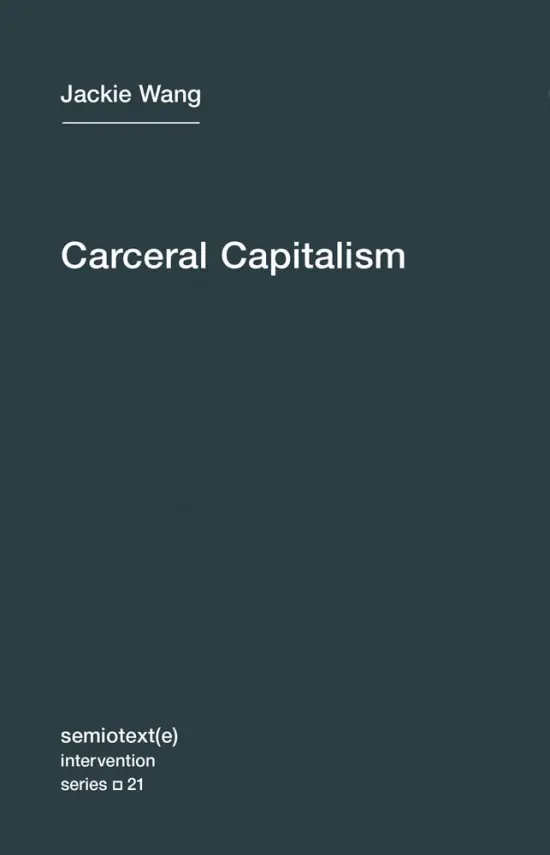
Conor Rose reads from Jackie Wang's Carceral Capitalism. This extract, taken from the opening of the book, offers insight into the Black Lives Matter movement as well as new forms of predatory policing, informed by the 2008 financial crash. In this collection of essays in Semiotext(e)'s Intervention series, Jackie Wang examines the contemporary incarceration techniques that have emerged since the 1990s. The essays illustrate various aspects of the carceral continuum, including the biopolitics of juvenile delinquency, predatory policing, the political economy of fees and fines, cybernetic governance, and algorithmic policing. Included in this volume is Wang's influential critique of liberal anti-racist politics, "Against Innocence," as well as essays on RoboCop, techno-policing, and the aesthetic problem of making invisible forms of power legible. Wang shows that the new racial capitalism begins with parasitic governance and predatory lending that extends credit only to dispossess later. Predatory lending has a decidedly spatial character and exists in many forms, including subprime mortgage loans, student loans for sham for-profit colleges, car loans, rent-to-own scams, payday loans, and bail bond loans. Parasitic governance, Wang argues, operates through five primary techniques: financial states of exception, automation, extraction and looting, confinement, and gratuitous violence. While these techniques of governance often involve physical confinement and the state-sanctioned execution of black Americans, new carceral modes have blurred the distinction between the inside and outside of prison. As technologies of control are perfected, carcerality tends to bleed into society. Learn more about your ad choices. Visit megaphone.fm/adchoices
Ep 382Cedric Johnson, "After Black Lives Matter: Policing and Anti-Capitalist Struggle" (Verso, 2023)
The historic uprising in the wake of the murder of George Floyd transformed the way Americans and the world think about race and policing. Why did it achieve so little in the way of substantive reforms? After Black Lives Matter: Policing and Anti-Capitalist Struggle (Verso, 2023) argues that the failure to leave an institutional residue was not simply due to the mercurial and reactive character of the protests. Rather, the core of the movement itself failed to locate the central racial injustice that underpins the crisis of policing: socio-economic inequality. For Johnson, the anti-capitalist and downwardly redistributive politics expressed by different Black Lives Matter elements has too often been drowned out in the flood of black wealth creation, fetishism of Jim Crow black entrepreneurship, corporate diversity initiatives, and a quixotic reparations demand. None of these political tendencies addresses the fundamental problem underlying mass incarceration. That is the turn from welfare to domestic warfare as the chief means of regulating the excluded and oppressed. Johnson sees the way forward in building popular democratic power to advance public works and public goods. Rather than abolishing police, After Black Lives Matter argues for abolishing the conditions of alienation and exploitation contemporary policing exists to manage. Omari Averette-Phillips is a graduate student in the Department of History at UC Davis. He can be reached at [email protected]. Learn more about your ad choices. Visit megaphone.fm/adchoices
Ep 1316Chad E. Pearson, "Capital's Terrorists: Klansmen, Lawmen, and Employers in the Long Nineteenth Century" (UNC Press, 2022)
During the late nineteenth and early twentieth centuries, employers, government officials, journalists, and powerful individuals deployed a variety of violent tactics to control ordinary people and workers who sought to secure power in and out of workplaces. In the face of worker resistance, employers and their allies collaborated to use a variety of extralegal repressive techniques, including whippings, kidnappings, drive-out campaigns, incarcerations, arsons, hangings, and shootings, as well as less overtly illegal tactics such as shutting down meetings, barring speakers from lecturing through blacklists, and book burning. Drawing together the various groups who engaged in this violence, Chad E. Pearson's book Capital's Terrorists: Klansmen, Lawmen, and Employers in the Long Nineteenth Century (UNC Press, 2022) shows how the original Ku Klux Klan, various Law and Order Leagues, Stockgrowers' organizations, and Citizens' Alliances engaged in violence and were driven by unambiguous economic and managerial interests. While often discussed separately, all of these groups employed similar language to smear ordinary people, including former slaves, populists, political radicals, and striking workers, as menacing an violent villains who threatened polite society - justifying their actions by insisting that they were upholding "law and order." This book thus suggests that law and order politics emerged in the campaigns of organized terror against an assortment of ordinary people across racial lines conducted by Klansmen, lawmen, vigilantes, and union busters during the late nineteenth and early twentieth centuries. Douglas Bell is a writer, teacher, and historian who lives in the Netherlands. His research interests center on American military history, American foreign policy, German history, and European Studies. Tweet him @douglasibell. Learn more about your ad choices. Visit megaphone.fm/adchoices
Ep 108Deborah Bauer, "Marianne Is Watching: Intelligence, Counterintelligence, and the Origins of the French Surveillance State" (U Nebraska Press, 2021)
In the wake of its defeat in the Franco-Prussian War (1870-71), the French Third Republic sought to rebuild its strength to avenge its defeat and secure itself as a major world power. To help achieve these ends, the first professional intelligence services were created to help secure French interests against all possible enemies - both foreign and internal. This gripping story of French intelligence during the late nineteenth century is the subject of Deborah Bauer's Marianne Is Watching: Intelligence, Counterintelligence, and the Origins of the French Surveillance State (University of Nebraska Press, 2021). Dr. Deborah Bauer is an associate professor of history at Purdue University Fort Wayne. Her research has focused primarily on the cultural, diplomatic, and military history of France and the French Empire at the end of the nineteenth and early twentieth centuries. Stephen Satkiewicz is an independent scholar whose research areas are related to Civilizational Analysis, Social Complexity, Big History, Historical Sociology, military history, War studies, International Relations, Geopolitics, as well as Russian and East European history. Learn more about your ad choices. Visit megaphone.fm/adchoices
Ep 14Zoha Waseem, "Insecure Guardians: Enforcement, Encounters and Everyday Policing in Postcolonial Karachi" (Oxford UP, 2022)
The police force is one of the most distrusted institutions in Pakistan, notorious for its corruption and brutality. In both colonial and postcolonial contexts, directives to confront security threats have empowered law enforcement agents, while the lack of adequate reform has upheld institutional weaknesses. This exploration of policing in Karachi, Pakistan’s largest city and financial capital, reveals many colonial continuities. Both civilian and military regimes continue to ensure the suppression of the policed via this institution, itself established to militarily subjugate and exploit in the interests of the ruling class. However, contemporary policing practice is not a simple product of its colonial heritage: it has also evolved to confront new challenges and political realities. Based on extensive fieldwork and around 200 interviews, this ethnographic study reveals a distinctly ‘postcolonial condition of policing’. Mutually reinforcing phenomena of militarisation and informality have been exacerbated by an insecure state that routinely conflates combatting crime, maintaining public order and ensuring national security. This is evident not only in spectacular displays of violence and malpractice, but also in police officers’ routine work. Caught in the middle of the country’s armed conflicts, their encounters with both state and society are a story of insecurity and uncertainty. Zoha Waseem an Assistant Professor in Criminology at the Department of Sociology, University of Warwick. She also Co-Coordinator for the Urban Violence Research Network (UVRN), an international platform connecting academics and researchers working on urban violence and related issues. Her research interests include policing, security/insecurity, armed violence, counterinsurgency, informality, militarisation, and migration in Pakistan, South Asia, and beyond. Deniz Yonucu is a Lecturer (Assistant Professor) in the School of Geography, Politics, and Sociology at Newcastle University. Her work focuses on counterinsurgency, policing and security, surveillance, left-wing and anti-colonial resistance, memory, racism, and emerging digital control technologies. Her book, Police, Provocation, Politics Counterinsurgency in Istanbul (Cornell University Press, 2022), presents a counterintuitive analysis of policing, focusing particular attention on the incitement of counterviolence and perpetual conflict by state security apparatus. Learn more about your ad choices. Visit megaphone.fm/adchoices
Ep 378Nicholas Guyatt, "The Hated Cage: An American Tragedy in Britain's Most Terrifying Prison" (Basic Books, 2022)
After the War of 1812, more than five thousand American sailors were marooned in Dartmoor Prison on a barren English plain; the conflict was over but they had been left to rot by their government. Although they shared a common nationality, the men were divided by race: nearly a thousand were Black, and at the behest of the white prisoners, Dartmoor became the first racially segregated prison in US history. The Hated Cage: An American Tragedy in Britain's Most Terrifying Prison (Basic Books, 2022) documents the extraordinary but separate communities these men built within the prison--and the terrible massacre of nine Americans by prison guards that destroyed these worlds. As white people in the United States debated whether they could live alongside African Americans in freedom, could Dartmoor's Black and white Americans band together in captivity? Drawing on extensive new material, The Hated Cage is a gripping account of this forgotten history. Adam McNeil is a Ph.D. Candidate in History at Rutgers, the State University of New Jersey. Learn more about your ad choices. Visit megaphone.fm/adchoices
Ep 13Cristina Mejia Visperas, "Skin Theory: Visual Culture and the Postwar Prison Laboratory" (NYU, 2022)
An abolitionist approach to STS and the history of the life sciences: this is the model that Cristina Mejia Visperas offers in her book, Skin Theory: Visual Culture and the Postwar Prison Laboratory (NYU 2022). By now, scientists’ experiments on captive men at Philadelphia’s Holmesburg Prison are well known, thanks to the brave and important testimony of former captive-subjects in books like Allen Hornblum’s Acres of Skin. Building on this documentary work, Visperas turns attention to the prison experiments’ “optical rationality,” the way of seeing images that came out of a space that was simultaneously prison and laboratory. For Visperas, skin is a scientific apparatus and a metaphor for what science makes visible—and what it leaves as a void, namely, the endurance of anti-Black racism in the US, from slavery to mass incarceration. At its core, the book asks “What is the relationship between science and the project of freedom?”—and it hopes towards a reparative bioethics that dismantles scientific racism and the prison nation that it upholds. This interview was a collaborative effort among Professor Laura Stark and graduate students at Vanderbilt University in the seminar “Critical Bioethics.” Please email Laura with any feedback on the interview or questions about how to design collaborative interview projects for the classroom. Learn more about your ad choices. Visit megaphone.fm/adchoices
Ep 195Derek Hanley, "Photos from the Front Lines: A Year on the Streets of Alameda County" (2022)
Photos from the Front Lines follows medics from Falck Alameda County ambulance during one of the most tumultuous years in recent collective memory - 2020. From a global pandemic to demonstrations to wildfires and mass vaccinations, Photos from the Front Lines provides unequalled coverage of this year and beyond from the perspective of those on the front lines every day of the crisis, with a colossal 500 original photos! The use of the term "front line" came about this year to describe personnel who were putting their lives on the line every day during the global COVID-19 pandemic, and medics were at the absolute forefront of this fight; Photos from the Front Lines takes you there with them. Learn more about your ad choices. Visit megaphone.fm/adchoices
Ep 134David Houston Jones, "Visual Culture and the Forensic: Culture, Memory, Ethics" (Routledge, 2022)
The relationship between images and truth has a complicated history. In the Western tradition, the Kantian settlement on aesthetic judgment as detached from external interests gave rise to artistic production of images that were read with epistemic authority. But the advent of modernity has at once shaken this certainty and reinforced it. No sooner than we reckoned with the singular history painting and illustrated magazines, we have landed in a mass-media world where any possible image can and does exist. And the more we are surrounded by images, the greater claims they make. Photographs are not only routinely used to convey news, they are used to establish what is and isn’t true. The crime scene photograph is now as likely to be used in a court of law as in a newspaper infographic explainer. The artifact is at once the evidentiary carrier of truth and a visualisation used to confirm it. It creates meaning and it argues for it Visual Culture and the Forensic: Culture, Memory, Ethics (Routledge, 2022) bridges practices conventionally understood as forensic, such as crime scene investigation, and the broader field of activity which the forensic now designates, for example, in performance and installation art, or photography. Such work responds to the object-oriented culture associated with the forensic and offers a reassessment of the relationship of human voice and material evidence. David Houston Jones speaks to Pierre d’Alancaisez about the evidentiary and forensic burden of art and photography, the artifice of crime imaging, the visual traces of data, and the ontology of data and objects. Angela Strassheim’s Evidence Melanie Pullen’s Crime Scenes, Hugo’s Camera The death of Alan Kurdi and Ai WeiWei’s restaging of the scene Kathryn Smith’s Incident Room: Jacoba ‘Bubbles’ Shroeder, 1949-2012 Luc Delahaye Horace Vernet Trevor Paglen’s Autonomy Cube Laura Poitras’ Citizenfour Julian Charrière’s Blue Fossil Entropic Stories, 2013 Simon Norkfolk’s When I am Laid in Earth Cory Arcangel’s Data Diaries, 2003 Interview with Eyal Weizmann and Matthew Keenan on Forensic Aesthetics and the practice of Forensic Architecture Josef Mengele’s bones used in forensic identification Forensic Architecture‘s investigations Interview with Toby Green and Thomas Fazi on The Covid Consensus. David Houston Jones is Professor of French and Visual Culture at the University of Exeter. Pierre d’Alancaisez is a contemporary art curator, cultural strategist, researcher. Sometime scientist, financial services professional. Learn more about your ad choices. Visit megaphone.fm/adchoices
Ep 365Leigh Goodmark, "Imperfect Victims: Criminalized Survivors and the Promise of Abolition Feminism" (U California Press, 2023)
Leigh Goodmark’s new book, Imperfect Victims: Criminalized Survivors and the Promise of Abolition Feminism (U California Press, 2023), uses the stories of individual criminalized survivors of gender based violence to illuminate the ways that the criminal legal system perpetuates violence against the very women, transgender people, and gender non-conforming people it claims to protect. Leigh argues that reform is not the answer to this problem, and that instead of limiting our efforts and imaginations to the pursuit of reforms that ultimately expand the reach of the criminal legal system, we should invest in abolition feminism and a world of non-carceral supports and resources like housing, healthcare, and education instead of arrest, prosecution, and incarceration. Kendall Dinniene is a fourth year English PhD student at Southern Methodist University in Dallas, Texas. Their research examines how contemporary American authors respond to anti-fatness in their work. Learn more about your ad choices. Visit megaphone.fm/adchoices
Ep 12Daniel L. Hatcher, "Injustice, Inc.: How America's Justice System Commodifies Children and the Poor" (U California Press, 2023)
Injustice, Inc.: How America's Justice System Commodifies Children and the Poor (U California Press, 2023) exposes the ways in which justice systems exploit America's history of racial and economic inequality to generate revenue on a massive scale. With searing legal analysis, Daniel L. Hatcher uncovers how courts, prosecutors, police, probation departments, and detention facilities are abandoning ethics to churn vulnerable children and adults into unconstitutional factory-like operations. Hatcher reveals stark details of revenue schemes and reflects on the systemic racialized harm of the injustice enterprise. He details how these corporatized institutions enter contracts to make money removing children from their homes, extort fines and fees, collaborate with debt collectors, seize property, incentivize arrests and evictions, enforce unpaid child labor, maximize occupancy in detention and "treatment" centers, and more. Injustice, Inc. underscores the need to unravel these predatory operations, which have escaped public scrutiny for too long. Learn more about your ad choices. Visit megaphone.fm/adchoices
Ep 8Marissa A. Harrison, "Just as Deadly: The Psychology of Female Serial Killers" (Cambridge UP, 2023)
You've heard of Ted Bundy and John Wayne Gacy. But have you heard of Amy Archer-Gilligan? Or Belle Gunness? Or Nannie Doss? Women have committed some of the most disturbing serial killings ever seen in the United States. Yet scientific inquiry, criminal profiling, and public interest have focused more on their better-known male counterparts. As a result, female serial killers have been misunderstood, overlooked, and underestimated. In this riveting account, Dr. Marissa A. Harrison draws on original scientific research, various psychological perspectives, and richly detailed case studies to illuminate the stark differences between female and male serial killers' backgrounds, motives, and crimes. She also emphasizes the countless victims of this grisly phenomenon to capture the complexity and tragedy of serial murder. Meticulously weaving data-based evidence and insight with intimate storytelling, Just as Deadly: The Psychology of Female Serial Killers (Cambridge UP, 2023) reveals how and why these women murder--and why they often get away with it. Learn more about your ad choices. Visit megaphone.fm/adchoices
Ep 639Hernán Flom, "The Informal Regulation of Criminal Markets in Latin America" (Cambridge UP, 2022)
Political Scientist Hernán Flom has written a fascinating and nuanced analysis of how the criminal drug markets operate in Argentina and Brazil. Instead of tracking the path that illegal drugs take or examining how the criminal justice system works in Latin American countries, Flom has focused, instead, on the illegal drug markets as economic and political institutions to examine how they actually operates within Brazil and Argentina. From this perspective, we learn quite a lot about market forces, civilian and police institutions, and “law and order” approaches in both these countries. The Informal Regulation of Criminal Markets in Latin America (Cambridge UP, 2022) provides a comparative analysis of the criminal markets in these two countries—Brazil and Argentina—as well as differentiating between how these markets work in larger, urban centers, and in smaller cities. This effectively teases out distinctions between how police work with or against these criminal markets, and how the local and national politicians often articulate distinct approaches to how to manage criminal enterprises. The Informal Regulation of Criminal Markets in Latin America examines patterns in the relationships between police, politicians, drug cartels, and criminal actors. These patterns are not necessarily new, but as Flom makes clear, they operate in different ways in different venues and with regard to different types of informal arrangements. In doing a cross national comparison as well as internal comparisons within country, Flom has been able to get at some distinctions that come from the colonial past that has also led to different racial configurations in these comparative urban environments. The research also measures different levels of both police and criminal violence, to gage the kinds of relationships that may be in place between these often-opposing entities. The relationship between the police, as subnational units, and politicians also figures into the various levels of police violence. The Informal Regulations of Criminal Markets in Latin America gets at the key variables that come into play in regard to police conduct and the kinds of policies that politicians are both articulating and trying to implement—often through the police. This is a multi-dimensional analysis that explores criminal markets from important and unique perspectives. Flom worked at the National Ministry of Security in Argentina during the course of this research, and he is able to bring his scholarly expertise as well as his own experience to the research and analysis, making this a particularly rich comparison across countries and urban centers within those countries. Lilly J. Goren is a professor of political science at Carroll University in Waukesha, WI. She is co-editor of The Politics of the Marvel Cinematic Universe (University Press of Kansas, 2022), as well as co-editor of the award winning book, Women and the White House: Gender, Popular Culture, and Presidential Politics (University Press of Kentucky, 2012), Email her comments at [email protected] or tweet to @gorenlj. Learn more about your ad choices. Visit megaphone.fm/adchoices
Ep 58Lerone A. Martin, "The Gospel of J. Edgar Hoover: How the FBI Aided and Abetted the Rise of White Christian Nationalism" (Princeton UP, 2023)
On a Sunday morning in 1966, a group of white evangelicals dedicated a stained glass window to J. Edgar Hoover. The FBI director was not an evangelical, but his Christian admirers anointed him as their political champion, believing he would lead America back to God. The Gospel of J. Edgar Hoover: How the FBI Aided and Abetted the Rise of White Christian Nationalism (Princeton UP, 2023) reveals how Hoover and his FBI teamed up with leading white evangelicals and Catholics to bring about a white Christian America by any means necessary. Lerone Martin draws on thousands of newly declassified FBI documents and memos to describe how, under Hoover's leadership, FBI agents attended spiritual retreats and worship services, creating an FBI religious culture that fashioned G-men into soldiers and ministers of Christian America. Martin shows how prominent figures such as Billy Graham, Fulton Sheen, and countless other ministers from across the country partnered with the FBI and laundered bureau intel in their sermons while the faithful crowned Hoover the adjudicator of true evangelical faith and allegiance. These partnerships not only solidified the political norms of modern white evangelicalism, they also contributed to the political rise of white Christian nationalism, establishing religion and race as the bedrock of the modern national security state, and setting the terms for today's domestic terrorism debates. Taking readers from the pulpits and pews of small-town America to the Oval Office, and from the grassroots to denominational boardrooms, The Gospel of J. Edgar Hoover completely transforms how we understand the FBI, white evangelicalism, and our nation's entangled history of religion and politics. Learn more about your ad choices. Visit megaphone.fm/adchoices
Ep 163Who Gets Believed? When the Truth Isn't Enough
Why are people judged on whether or not they are compelling? Why isn’t telling the truth enough? What are people really listening for when others share their truths? And how does this harm asylum seekers? Dina Nayeri joins us to share: Why our perceptions of other people’s experiences impact them and us. What makes a “credible” story, and what doesn’t. How her own stories shape her. Why it can be difficult to believe a messy truth. What she had to forgive herself for. The book Who Gets Believed. Today’s book is: Who Gets Believed by Dina Nayeri, which asks unsettling questions about lies, truths, and the difference between being believed and being dismissed. Dina Nayeri begins with asking why are honest asylum seekers dismissed as liars? She shares shocking and illuminating case studies, as the book grows into a reckoning with our culture’s views on believability. From learning the tools of persuasion and performance in her job at McKinsey to struggling to believe her troubled brother-in-law, Nayeri explores an aspect of our society that is rarely held up to the light. Who Gets Believed is a book as deeply personal as it is profound in its reflections on morals, language, literature, human psychology, and the unspoken social codes that determine how we relate to one another. Our guest is: Dina Nayeri, who is the author of novels, articles, and creative nonfiction. A former Fellow at the Columbia Institute for Ideas and Imagination in Paris, winner of the UNESCO City of Literature Paul Engle Prize, and fellow at the American Library in Paris, she has also won a National Endowment for the Arts literature grant, the O. Henry Prize, and Best American Short Stories, among other honors. Her work has been published in 20+ countries, in The Guardian, The New Yorker, Granta, and many other publications. She is a graduate of Princeton, Harvard, and the Iowa Writers Workshop. She has recently joined the permanent faculty at the University of St. Andrews. Our host is: Dr. Christina Gessler, who is a historian. Listeners to this episode may also be interested in: The American Library in Paris The Innocence Project A Teaspoon of Earth and Sea, by Dina Nayeri Refuge, by Dina Nayeri The Ungrateful Refugee, by Dina Nayeri Becoming the Writer You Already Are, by Michelle R. Boyd Welcome to The Academic Life! Join us here each week to learn from today’s experts inside and outside the academy, and embrace the broad definition of what it means to live an academic life. Learn more about your ad choices. Visit megaphone.fm/adchoices
Ep 43Lisa Hajjar, "The War in Court: Inside the Long Fight Against Torture" (U California Press, 2022)
The War in Court: Inside the Long Fight against Torture (University of California Press, 2022) by Dr. Lisa Hajjar examines how hundreds of lawyers mobilized to challenge the illegal treatment of prisoners captured in the war on terror and helped force an end to the US government's most odious policies. Told as a suspenseful, high-stakes story, The War in Court clearly outlines why challenges to the torture policy had to be waged on the legal terrain and why hundreds of lawyers joined the fight. Drawing on extensive interviews with key participants, her own experiences reporting from Guantánamo, and her deep knowledge of international law and human rights, Dr. Hajjar reveals how the ongoing fight against torture has had transformative effects on the legal landscape in the United States and on a global scale. This interview was conducted by Dr. Miranda Melcher whose doctoral work focused on post-conflict military integration, understanding treaty negotiation and implementation in civil war contexts, with qualitative analysis of the Angolan and Mozambican civil wars. Learn more about your ad choices. Visit megaphone.fm/adchoices
Ep 65Laurent Richard and Sandrine Rigaud, "Pegasus: How a Spy in Your Pocket Threatens the End of Privacy, Dignity, and Democracy" (Henry Holt, 2023)
Pegasus: How a Spy in Your Pocket Threatens the End of Privacy, Dignity, and Democracy (Henry Holt, 2023) is the inside story of a worldwide investigation, sparked by the leak which revealed that cyber-intrusion and cyber-surveillance are happening with exponentially increasing frequency, across the globe. Pegasus, it turns out, is less a law enforcement tool than a weapon for hire and not only a threat to privacy but also to democracy, as the most notorious human-rights-violating governments and autocrat-wannabes are licensing and utilizing Pegasus spyware in the most vulnerable democracies in the world. Pegasus follows the personal stories of real victims--intrepid individuals who have spoken truth to some of the most corrupt, risible powers around the globe. Laurent Richard is a Paris-based award-winning documentary filmmaker and journalist who was named the 2018 European Journalist of the Year at the Prix Europa in Berlin. He is the founder of Forbidden Stories, a network of investigative journalists devoted continuing the unfinished work of murdered reporters to ensure the work they died for is not buried with them. Sandrine Rigaud is a French investigative journalist. As editor of Forbidden Stories since 2019, she coordinated the award-winning Pegasus Project and the Cartel Project, an international investigation of assassinated Mexican journalists. Caleb Zakarin is the Assistant Editor of the New Books Network. Learn more about your ad choices. Visit megaphone.fm/adchoices
Ep 179Nicole von Germeten, "The Enlightened Patrolman: Early Law Enforcement in Mexico City" (U Nebraska Press, 2022)
When late eighteenth-century New Spanish viceregal administrators installed public lamps in the streets of central Mexico City, they illuminated the bodies of Indigenous, Afro-descended, and plebeian Spanish urbanites. The urban patrolmen, known as guarda faroleros, or “lantern guards,” maintained the streetlamps and attempted to clear the streets of plebeian sexuality, embodiment, and sociability, all while enforcing late colonial racial policies amid frequent violent resistance from the populace. In The Enlightened Patrolman: Early Law Enforcement in Mexico City (University of Nebraska Press, 2022) Nicole von Germeten guides readers through Mexico City’s efforts to envision and impose modern values as viewed through the lens of early law enforcement, an accelerated process of racialization of urban populations, and burgeoning ideas of modern masculinity. Germeten unfolds a tale of the losing struggle for elite control of the city streets. As surveillance increased and the populace resisted violently, a pause in the march toward modernity ensued. The Enlightened Patrolman presents an innovative study on the history of this very early law enforcement corps, providing new insight into the history of masculinity and race in Mexico, as well as the eighteenth-century origins of policing in the Americas. Ethan Besser Fredrick is a graduate student in Modern Latin American history seeking his PhD at the University of Minnesota. His work focuses on the Transatlantic Catholic movements in Mexico and Spain during the early 20th century. Learn more about your ad choices. Visit megaphone.fm/adchoices
Ep 10Lisa Biggs, "The Healing Stage: Black Women, Incarceration, and the Art of Transformation" (Ohio State UP, 2022)
Over the last five decades, Black women have been one of the fastest-growing segments of the global prison population, thanks to changes in policies that mandate incarceration for nonviolent offenses and criminalize what women do to survive interpersonal and state violence. In The Healing Stage: Black Women, Incarceration, and the Art of Transformation (Ohio State UP, 2022), Lisa Biggs reveals how four ensembles of currently and formerly incarcerated women and their collaborating artists use theater and performance to challenge harmful policies and popular discourses that justify locking up "bad" women. Focusing on prison-based arts programs in the US and South Africa, Biggs illustrates how Black feminist cultural traditions--theater, dance, storytelling, poetry, humor, and protest--enable women to investigate the root causes of crime and refute dominant narratives about incarcerated women. In doing so, the arts initiatives that she writes about encourage individual and collective healing, a process of repair that exceeds state definitions of rehabilitation. These case studies offer powerful examples of how the labor of incarcerated Black women artists--some of the most marginalized and vulnerable people in our society--radically extends our knowledge of prison arts programs and our understanding of what is required to resolve human conflicts and protect women's lives. Learn more about your ad choices. Visit megaphone.fm/adchoices
Ep 343James M. Deem, "The Prisoners of Breendonk: Personal Histories from a World War II Concentration Camp" (Mariner Books, 2020)
Fort Breendonk was built in the early 1900s to protect Antwerp, Belgium, from possible German invasion. Damaged at the start of World War I, it fell into disrepair . . . until the Nazis took it over after their invasion of Belgium in 1940. Never designated an official concentration camp by the SS and instead labeled a "reception" camp where prisoners were held until they were either released or transported, Breendonk was no less brutal. About 3,600 prisoners were held there--just over half of them survived. As one prisoner put it, "I would prefer to spend nineteen months at Buchenwald than nineteen days at Breendonk." In The Prisoners of Breendonk: Personal Histories from a World War II Concentration Camp (Mariner Books, 2020), , James M. Deem pieces together the story of the camp by telling the stories of its victims--Jews, communists, resistance fighters, and common criminals--for the first time in an English-language publication. Leon Nolis's haunting photography of the camp today accompanies the wide range of archival images. The story of Breendonk is one you will never forget. Learn more about your ad choices. Visit megaphone.fm/adchoices
Ep 42Eric A. Stanley, "Atmospheres of Violence: Structuring Antagonism and the Trans/Queer Ungovernable" (Duke UP, 2021)
Content note: This episode contains discussions of suicide, as well as allusions to graphic anti-LGBTQ+ and anti-Black violence Advances in LGBTQ rights in the recent past—marriage equality, the repeal of Don't Ask, Don't Tell, and the expansion of hate crimes legislation—have been accompanied by a rise in attacks against trans, queer and/or gender-nonconforming people of color. In Atmospheres of Violence: Structuring Antagonism and the Trans/Queer Ungovernable (Duke UP, 2021), theorist and organizer Eric A. Stanley shows how this seeming contradiction reveals the central role of racialized and gendered violence in the United States. Rather than suggesting that such violence is evidence of individual phobias, Stanley shows how it is a structuring antagonism in our social world. Drawing on an archive of suicide notes, AIDS activist histories, surveillance tapes, and prison interviews, they offer a theory of anti-trans/queer violence in which inclusion and recognition are forms of harm rather than remedies to it. In calling for trans/queer organizing and worldmaking beyond these forms, Stanley points to abolitionist ways of life that might offer livable futures. Dr. Eric A. Stanley is an associate professor in the Department of Gender and Women’s Studies at the University of California, Berkeley. Rine Vieth is a researcher studying how the UK Immigration and Asylum tribunals consider claims of belief, how claims of religious belief are evidenced, and the role of faith communities in asylum-seeker support. Links referenced in the episode: LGBT Books to Prisoners project Ashley Diamond fundraiser Learn more about your ad choices. Visit megaphone.fm/adchoices
Ep 303Tommie Shelby, "The Idea of Prison Abolition" (Princeton UP, 2022)
By any reasonable metric, prisons as they exist in the United States and in many other countries are normatively unacceptable. What is the proper moral response to this? Can prisons and the practices surrounding incarceration feasibly be reformed, or should the entire enterprise be abolished? If the latter, then what? If the former, what are the necessary reforms? In The Idea of Prison Abolition (Princeton UP, 2022), Tommie Shelby undertakes a systematic and critical examination of the arguments in favor of prison abolition. Although he ultimately rejects abolitionism as a philosophical position, he builds from the abolitionist program’s crucial insights a positive view of what it would take to create a prison and incarceration system that is consistent with justice. Robert Talisse is the W. Alton Jones Professor of Philosophy at Vanderbilt University. Learn more about your ad choices. Visit megaphone.fm/adchoices
Ep 46Michael Ayers Trotti, "The End of Public Execution: Race, Religion, and Punishment in the American South" (UNC Press, 2022)
Michael Ayers Trotti's The End of Public Execution: Race, Religion and Punishment in the American South (The University of North Carolina Press, 2022) documents the complex religious and cultural textures of post-Civil War executions in the U.S. South. Before 1850, all legal executions in the South were performed before crowds that could number in the thousands; the last legal public execution was in 1936. This study focuses on the shift from public executions to ones behind barriers, situating that change within our understandings of lynching and competing visions of justice and religion. Intended to shame and intimidate, public executions after the Civil War had quite a different effect on southern Black communities. Crowds typically consisting of as many Black people as white behaved like congregations before a macabre pulpit, led in prayer and song by a Black minister on the scaffold. Black criminals often proclaimed their innocence and almost always their salvation. This turned the proceedings into public, mixed-race and mixed-gender celebrations of Black religious authority and devotion. In response, southern states rewrote their laws to eliminate these crowds and this Black authority, ultimately turning to electrocutions in the bowels of state penitentiaries. In just the same era when a wave of lynchings crested around the turn of the twentieth century, states transformed the ways that the South's white-dominated governments controlled legal capital punishment, making executions into private affairs witnessed only by white people. Lane Davis is an Instructor of Religion at Huntingdon College. Find him on Twitter @TheeLaneDavis Learn more about your ad choices. Visit megaphone.fm/adchoices
Ep 337Zvi Preigerzon, "Memoirs of a Jewish Prisoner of the Gulag" (Cherry Orchard Books, 2022)
Today I talked to Alex Lahav about his edition and translation Memoirs of a Jewish Prisoner of the Gulag (Cherry Orchard Books, 2022). Zvi Preigerzon wrote memoirs about his time in the Gulag in 1958, long before Solzhenitsyn and without any knowledge of the other publications on this subject. It was one of the first eyewitness accounts of the harsh reality of Soviet Gulags. Even after the death of Stalin, when the whole Gulag system was largely disbanded, writing about them could be regarded as an act of heroism. Preigerzon attempted to document and analyze his own prison camp experience and portray the Jewish prisoners he encountered in forced labor camps. Among these people, we meet scientists, engineers, famous Jewish writers and poets, young Zionists, a devoted religious man, a horse wagon driver, a Jewish singer of folk songs, and many, many others. As Preigerzon put it, "Each one had his own story, his own soul, and his own tragedy." Learn more about your ad choices. Visit megaphone.fm/adchoices
Ep 198Brian Daldorph, "Words Is a Powerful Thing: Twenty Years of Teaching Creative Writing at Douglas County Jail" (UP of Kansas, 2021)
Brian Daldorph first entered the Douglas County Jail classroom in Lawrence, Kansas, to teach a writing class on Christmas Eve 2001. His last class at the jail for the foreseeable future was mid-March 2020, right before the COVID-19 lockdown; the virus is taking a heavy toll in confined communities like nursing homes and prisons. Words Is a Powerful Thing: Twenty Years of Teaching Creative Writing at Douglas County Jail (UP of Kansas, 2021) is Daldorph’s record of teaching at the jail for the two decades between 2001 and 2020, showing how the lives of everyone involved in the class—but especially the inmates who came to class week after week—benefited from what happened every Thursday afternoon in that jail classroom, where for two hours inmates and instructor became a circle of ink and blood, writing together, reciting their poems, telling stories, and having a few good laughs. Words Is a Powerful Thing brings into the light the works of fifty talented inmate writers whose work deserves attention. Their poetry speaks of “what really matters” to all of us and gives the reader sustained insight into the role that creativity plays in aiding survival and bringing positive change for inmates, and, in turn, for all of us. Daldorph’s account of his teaching experience not only takes the reader inside the daily life at a county jail but also sets the work done in the writing class within the larger context of inmate education in the US corrections system, where education is often one of the few lifelines available to inmates. Words Is a Powerful Thing provides a teaching guide for instructors working with incarcerated writers, offering an extensive examination of both the challenges and benefits. When Brian Daldorph decided the story of his classroom experiences and the great writing produced by the inmates deserved to be told to wider audiences, he struggled with how to bring it all together. Not long after, an inmate wrote a poem titled “Words Is a Powerful Thing,” offering Daldorph a title, concept, and purpose: to show that the poetry of inmates speaks not just to other inmates but to all of us. Carmen Gomez-Galisteo, Ph.D. is a lecturer at Centro de Educación Superior de Enseñanza e Investigación Educativa (CEIE). Learn more about your ad choices. Visit megaphone.fm/adchoices
Ep 206Lyndsie Bourgon, "Tree Thieves: Crime and Survival in North America's Woods" (Little, Brown Spark, 2022)
There's a strong chance that chair you are sitting on was made from stolen lumber. In Tree Thieves: Crime And Survival In North America's Woods (Little, Brown Spark, 2022), Lyndsie Bourgon takes us deep into the underbelly of the illegal timber market. As she traces three timber poaching cases, she introduces us to tree poachers, law enforcement, forensic wood specialists, the enigmatic residents of former logging communities, environmental activists, international timber cartels, and indigenous communities along the way. Old-growth trees are invaluable and irreplaceable for both humans and wildlife, and are the oldest living things on earth. But the morality of tree poaching is not as simple as we might think: stealing trees is a form of deeply rooted protest, and a side effect of environmental preservation and protection that doesn't include communities that have been uprooted or marginalized when park boundaries are drawn. As Bourgon discovers, failing to include working class and rural communities in the preservation of these awe-inducing ecosystems can lead to catastrophic results. Featuring excellent investigative reporting, fascinating characters, logging history, political analysis, and cutting-edge tree science, Tree Thieves takes readers on a thrilling journey into the intrigue, crime, and incredible complexity sheltered under the forest canopy. This interview was conducted by Dr. Miranda Melcher whose doctoral work focused on post-conflict military integration, understanding treaty negotiation and implementation in civil war contexts, with qualitative analysis of the Angolan and Mozambican civil wars. Learn more about your ad choices. Visit megaphone.fm/adchoices
Ep 29Deiter Reinisch, "Learning behind Bars: How IRA Prisoners Shaped the Peace Process in Ireland" (U Toronto Press, 2022)
Dieter Reinisch is a Government of Ireland Irish Research Council Fellow in the School of Political Science and Sociology, University of Galway, and an Adjunct Professor in International Relations at Webster University, Campus Vienna. He holds a PhD in History from the European University Institute in Florence). Since 2016, he serves on the editorial board of the academic, open-access journal Studi irlandesi: A Journal of Irish Studies, published by Florence University Press. In addition to his new book on republican prisoners in Ireland, he is the co-editor (with Luisa Passerini) of Performing Memory: Corporeality, Visuality, and Mobility after 1968 published with Berghahn Books, and Irish Republican Counterpublic: Armed Struggle & the Construction of a Radical Nationalist Community in Northern Ireland, co-edited with Anne Kane and published with Routledge. In this interview, he discusses his new book, Learning Behind Bars: How IRA Prisoners Shaped the Peace Process in Ireland (University of Toronto Press, 2022), which uncovers the everyday life and education of IRA prisoners during the Troubles in Northern Ireland. Learning behind Bars is an oral history of former Irish republican prisoners in the Republic of Ireland and Northern Ireland between 1971, the year internment was introduced, and 2000, when the high-security Long Kesh Detention Centre/HM Prison Maze closed. Dieter Reinisch outlines the role of politically motivated prisoners in ending armed conflicts as well as the personal and political development of these radical activists during their imprisonment. Based on extensive life-story interviews with Irish Republican Army (IRA) ex-prisoners, the book examines how political prisoners developed their intellectual positions through the interplay of political education and resistance. It sheds light on how prisoners used this experience to initiate the debates that eventually led to acceptance of the peace process in Northern Ireland. Politically relevant and instructive, Learning behind Bars illuminates the value of education, politics, and resistance in the harshest of social environments. Learning Behind Bars: How IRA Prisoners Shaped the Peace Process in Ireland is published with University of Toronto Press. Aidan Beatty is a historian at the Frederick Honors College of the University of Pittsburgh Learn more about your ad choices. Visit megaphone.fm/adchoices
Ep 144Jeffrey Bellin, "Mass Incarceration Nation: How the United States Became Addicted to Prisons and Jails and How it Can Recover" (Cambridge UP, 2022)
The United States imprisons a higher proportion of its population than any other nation. Mass Incarceration Nation offers a novel, in-the-trenches perspective to explain the factors - historical, political, and institutional - that led to the current system of mass imprisonment. Jeffrey Bellin's book Mass Incarceration Nation: How the United States Became Addicted to Prisons and Jails and How it Can Recover (Cambridge UP, 2022) examines the causes and impacts of mass incarceration on both the political and criminal justice systems. With accessible language and straightforward statistical analysis, former prosecutor turned law professor Jeffery Bellin provides a formula for reform to return to the low incarceration rates that characterized the United States prior to the 1970s. Stephen Pimpare is director of the Public Service & Nonprofit Leadership program and Faculty Fellow at the Carsey School of Public Policy at the University of New Hampshire. Learn more about your ad choices. Visit megaphone.fm/adchoices
Ep 37The Future of Money Laundering: A Discussion with Oliver Bullough
How can you hide and spend billions of dollars? Many people hoping to do that go to London which is today considered the money laundering capital of the world. It’s the place where the world’s most corrupt individuals can park their money safely. How does that work? Where else does it happen and can anything be done about it? Owen Bennett Jones discusses the business of cleaning up dirty money with a journalist and author who has covered kleptocrats and their ill gotten gains for years, Oliver Bullough. He is the author of Butler to the World: How Britain Helps the World's Worst People Launder Money, Commit Crimes, and Get Away with Anything (St. Martin's Press, 2022). Owen Bennett-Jones is a freelance journalist and writer. A former BBC correspondent and presenter he has been a resident foreign correspondent in Bucharest, Geneva, Islamabad, Hanoi and Beirut. He is recently wrote a history of the Bhutto dynasty which was published by Yale University Press. Learn more about your ad choices. Visit megaphone.fm/adchoices
Ep 1Alejandro Anaya-Muñoz and Barbara Frey, "Mexico's Human Rights Crisis" (U Pennsylvania Press, 2019)
Lawless elements are ascendant in Mexico, as evidenced by the operations of criminal cartels engaged in human and drug trafficking, often with the active support or acquiescence of government actors. The sharp increase in the number of victims of homicide, disappearances and torture over the past decade is unparalleled in the country's recent history. According to editors Alejandro Anaya-Muñoz and Barbara Frey, the war on drugs launched in 2006 by President Felipe Calderón and the corrupting influence criminal organizations have on public institutions have empowered both state and nonstate actors to operate with impunity. Impunity, they argue, is the root cause that has enabled a human-rights crisis to flourish, creating a climate of generalized violence that is carried out, condoned, or ignored by the state and precluding any hope for justice. Mexico's Human Rights Crisis (U Pennsylvania Press, 2019) offers a broad survey of the current human rights issues that plague Mexico. Essays focus on the human rights consequences that flow directly from the ongoing war on drugs in the country, including violence aimed specifically at women, and the impunity that characterizes the government's activities. Contributors address the violation of the human rights of migrants, in both Mexico and the United States, and cover the domestic and transnational elements and processes that shape the current human rights crisis, from the state of Mexico's democracy to the influence of rulings by the Inter-American Court of Human Rights on the decisions of Mexico's National Supreme Court of Justice. Given the scope, the contemporaneity, and the gravity of Mexico's human rights crisis, the recommendations made in the book by the editors and contributors to curb the violence could not be more urgent. Learn more about your ad choices. Visit megaphone.fm/adchoices
Ep 322Rachel Schreiber, "Elaine Black Yoneda: Jewish Immigration, Labor Activism, and Japanese American Exclusion and Incarceration" (Temple UP, 2021)
During World War II, Elaine Black Yoneda, the daughter of Russian Jewish immigrants, spent eight months in a concentration camp--not in Europe, but in California. She did this voluntarily and in solidarity, insisting on accompanying her husband, Karl, and their son, Tommy, when they were incarcerated at the Manzanar Relocation Center. Surprisingly, while in the camp, Elaine and Karl publicly supported the United States' decision to exclude Japanese Americans from the coast. Elaine Black Yoneda: Jewish Immigration, Labor Activism, and Japanese American Exclusion and Incarceration (Temple UP, 2021) is the first critical biography of this pioneering feminist and activist. Rachel Schreiber deftly traces Yoneda's life as she became invested in radical politics and interracial and interethnic activism. In her work for the International Labor Defense of the Communist Party, Yoneda rose to the rank of vice president. After their incarceration, Elaine and Karl became active in the campaigns to designate Manzanar a federally recognized memorial site, for redress and reparations to Japanese Americans, and in opposition to nuclear weapons. Schreiber illuminates the ways Yoneda's work challenged dominant discourses and how she reconciled the contradictory political and social forces that shaped both her life and her family's. Highlighting the dangers of anti-immigrant and anti-Asian xenophobia, Elaine Black Yoneda recounts an extraordinary life. Learn more about your ad choices. Visit megaphone.fm/adchoices
Ep 16Jennifer Lillian Lodine-Chaffey, "A Weak Woman in a Strong Battle: Women and Public Execution in Early Modern England" (U Alabama Press, 2022)
Content Warning: discussion of execution gets a bit gruesome. Jennifer Lodine-Chaffey, A Weak Woman in a Strong Battle: Women and Public Execution in Early Modern England (University of Alabama Press, 2022) provides a new perspective on the representations of women on the scaffold, focusing on how female victims and those writing about them constructed meaning from the ritual. A significant part of the execution spectacle-one used to assess the victim's proper acceptance of death and godly repentance-was the final speech offered at the foot of the gallows or before the pyre. To ensure that their words on the scaffold held value for audiences, women adopted conventionally gendered language and positioned themselves as subservient and modest. Just as important as their words, though, were the depictions of women's bodies. Drawing on a wide range of genres, from accounts of martyrdom to dramatic works, this study explores not only the words of women executed in Tudor and Stuart England, but also the ways that writers represented female bodies as markers of penitence or deviance. The reception of women's speeches, Jennifer Lodine-Chaffey argues, depended on their performances of accepted female behaviors and words as well as physical signs of interior regeneration. Indeed, when women presented themselves or were represented as behaving in stereotypically feminine and virtuous ways, they were able to offer limited critiques of their fraught positions in society. The first part of this study investigates the early modern execution, including the behavioral expectations for condemned individuals, the medieval tradition that shaped the ritual, and the gender specific ways English authorities legislated and carried out women's executions. Depictions of the female body are the focus of the second part of the book. The executed woman's body, Lodine-Chaffey contends, functioned as a text, scrutinized by witnesses and readers for markers of innocence or guilt. These signs, though, were related not just to early modern ideas about female modesty and weakness, but also to the developing martyrdom tradition, which linked bodies and behavior to inner spiritual states. While many representations of women focused on physical traits and behaviors coded as godly, other accounts highlighted the grotesque and bestial attributes of women deemed unrepentant or evil. Part Three considers the rhetorical strategies used by women and their authors, highlighting the ways that women positioned themselves as stereotypically weak in order to defuse criticism of their speeches and navigate their positions in society, even when awaiting death on the scaffold. The greater focus on the words and bodies of women facing execution during this period, Lodine-Chaffey argues, became a catalyst for a more thorough interest in and understanding of women's roles not just as criminals but as subjects. Jana Byars is the Academic Director of Netherlands: International Perspectives on Sexuality and Gender. Learn more about your ad choices. Visit megaphone.fm/adchoices
Ep 173Lucy Series, "Deprivation of Liberty in the Shadows of the Institution" (Bristol UP, 2022)
Dr Lucy Series Deprivations of Liberty in The Shadows of the Institution (Bristol University Press, 2022) is one that I have long been looking forward to reading, and it did not disappoint. Series provides a rich historical and socio-legal context to bring new understanding of the post-carceral era, and the legacies of the institutions which continue to shape the contemporary era of social care detention. She provides an in-depth analysis of the very odd legal landscape that has been imported into the British care system, to draw out the specific logics, locus and temporality of a complex social problem, for which the legal solution has produced anomalous results. Her key concern goes beyond bringing new understanding of the ways that individuals are regulated and controlled. Crucially, Series delves into what we should be aiming for. Dr Lucy Series is a lecturer in the school for policy studies at the University of Bristol. She also writes a fabulous blog, The Small Places. Learn more about your ad choices. Visit megaphone.fm/adchoices
Ep 250Deniz Yonucu, "Police, Provocation, Politics: Counterinsurgency in Istanbul" (Cornell UP, 2022)
In Police, Provocation, Politics: Counterinsurgency in Istanbul (Cornell University Press, 2022), Deniz Yonucu presents a counterintuitive analysis of contemporary policing practices, focusing particular attention on the incitement of counterviolence, perpetual conflict, and ethnosectarian discord by the state security apparatus. Situating Turkish policing within a global context and combining archival work and oral history narratives with ethnographic research, Yonucu demonstrates how counterinsurgency strategies from the Cold War and decolonial eras continue to inform contemporary urban policing in Istanbul. Shedding light on counterinsurgency's affect-and-emotion-generating divisive techniques and urban dimensions, Yonucu shows how counterinsurgent policing strategies work to intervene in the organization of political dissent in a way that both counters existing alignments among dissident populations and prevents emergent ones. Yonucu suggests that in the places where racialized and dissident populations live, provocations of counterviolence and conflict by state security agents as well as their containment of both cannot be considered disruptions of social order. Instead, they can only be conceptualized as forms of governance and policing designed to manage actual or potential rebellious populations. Deniz Yonucu is Lecturer in Sociology at the School of Geography, Politics and Sociology, Newcastle University. She is a cofounder and coconvenor of the Anthropology of Surveillance Network (ANSUR). Follow her on Twitter @denizyonucu. Caleb Zakarin is the Assistant Editor of the New Books Network (Twitter: @caleb_zakarin). Learn more about your ad choices. Visit megaphone.fm/adchoices
Ep 51P. E. Caquet, "Opium's Orphans: The 200-Year History of the War on Drugs" (Reaktion Books, 2022)
The global war on drugs began some 150 years before US President Richard Nixon launched the current chapter of America’s drug war in 1971. In Opium’s Orphans: The 200-Year History of the War on Drugs (Reaktion Books, 2022), P. E. Caquet tells the story of “how an ever-larger group of mind-altering products came to be prohibited throughout the world, for what reasons, and with what effects.” The story opens with Britain’s two Opium Wars against the Chinese. Caquet shows how policies based on the properties of opium have been applied to disparate substances. The book describes how a worldwide effort, long led by the United States, to eliminate drugs at their sources has had unplanned consequences – economic, social, and political – while falling far short of the drug war’s stated goals. Finally, Caquet describes how “the last decade has seen an increasingly direct challenge to the international drug-control system.” Opium’s Orphans is a wide-ranging account of a profoundly consequential history whose origins, rationale, and effects raise difficult questions of the limits of governmental action and the scope of human freedom. Steve Beitler’s work in the history of medicine focuses on how pain has been understood, treated, experienced, and represented. His recently published articles examined the history of opiates in American football and surveyed the history of therapeutic drugs. He can be reached at [email protected] Learn more about your ad choices. Visit megaphone.fm/adchoices
Ep 327Emerald Garner, "Finding My Voice" (Haymarket, 2022)
In this unforgetable memoir, Emerald Garner recounts her father's cruel and unjust murder, the immense pain that followed, the pressures of an exploitative media, and her difficult yet determined journey as an activist against police violence. She begins with the morning of July 17, 2014--a rare day off from work, one she had hoped to enjoy with rest and family, that quickly turned her world inside out. What follows is a personal account of the suffering Emerald and her family endured: unsympathetic camera lenses, the stares and whispers of strangers, and the inability to mourn in private. In addition to these vulnerable, personal essays, Finding My Voice (Haymarket Books, 2022) includes conversations in which Emerald found inspiration, empathy, and community: politicians, athletes, and activists like Brian Benjamin and Etan Thomas; others who had survived similarly unfathomable grief like Lora Dene King, Angelique Kearse, and Pamela Brooks; and Emerald's own family, Mrs. Esaw Garner and Eric Garner Jr. The book ends with a powerful call-to-action by author and daughter of Malcolm X, Ilyasah Shabazz. With growing calls for radical transformation and accountability, Emerald Garner's memoir is a story of family and community, and the strength it takes to survive, to stand, to speak. Learn more about your ad choices. Visit megaphone.fm/adchoices
Ep 321Mark Neocleous, "A Critical Theory of Police Power: The Fabrication of the Social Order" (Verso, 2021)
A Critical Theory of Police Power: The Fabrication of Social Order (Verso, 2021) offers a critical look at policing and the power of the state, examining the relationship between our ideas of order and wider social and political issues. First published in 2000, this new edition of Mark Neocleous' influential book features a new introduction which helpfully situates this ever-relevant text in the context of contemporary struggles over police and policing. Neocleous argues for an expanded concept of police, able to account for the range of institutions through which policing takes place. These institutions are concerned not just with the maintenance and reproduction of order, but with its very fabrication, especially the fabrication of a social order founded on wage labour. By situating the police power in relation to both capital and the state and at the heart of the politics of security, the book opens up into an understanding of the ways in which the state administers civil society and fabricates order through law and the ideology of crime. The discretionary violence of the police on the street is thereby connected to the wider administrative powers of the state, and the thud of the truncheon to the dull compulsion of economic relations. Content warning: the last 2 minutes of the interview include a brief discussion of Mark's current work on suicide. Listeners who enjoyed this interview may enjoy my recent interviews with Mark on his most recent book The Politics of Immunity, with undercover police ("Spycop") victims Helen Steel and Alison about Deep Deception, and with counterterrorism scholar Rizwaan Sabir about The Suspect. Mark Neocleous is Professor of the Critique of Political Economy at Brunel University in London, and is well-known for his work on police power and security. His recent books include The Universal Adversary: Security, Capital and 'The Enemies of All Mankind' (2016); War Power, Police Power (2014); and the newly-reissued A Critical Theory of Police Power: The Fabrication of Social Order (2021). Catriona Gold is a PhD candidate in Geography at University College London. She is currently researching the US Passport Office's role in governing Cold War travel, and broadly interested in questions of security, surveillance and mobility. She can be reached by email or on Twitter. Learn more about your ad choices. Visit megaphone.fm/adchoices
Ep 138Sarah Colvin, "Shadowland: The Story of Germany Told by Its Prisoners" (Reaktion Books, 2022)
Shadowland: The Story of Germany Told by Its Prisoners (Reaktion Books, 2022) is a history of modern Germany told not through the lives of its leaders, but its lawbreakers. As Nelson Mandela said, “a nation should not be judged by how it treats its highest citizens, but its lowest ones.” Shadowland tells the sometimes inspiring, often painful stories of Germany’s prisoners, and thereby shines new light on Germany itself. The story begins at the end of the Second World War, in a defeated country on the edge of collapse, in which orphaned and lost children are forced into homelessness, scavenging and stealing to stay alive, often laying the foundations of a so-called criminal career. While East Germany developed detention facilities for its secret police, West Germany passed prison reform laws, which erected, in the words of a prisoner, “little asbestos walls in Hell.” Shadowland is Germany as seen through the lives, experiences, triumphs, and tragedies of its lowest citizens. Sarah Colvin is the Schröder Professor of German at the University of Cambridge. She has participated in prison-based arts and education projects and is an advisory group member for the National Criminal Justice Arts Alliance. She is the author or editor of numerous books, including The Routledge Handbook of German Politics and Culture. Nicholas Misukanis is a doctoral candidate in the history department at the University of Maryland - College Park. He studies modern European and Middle Eastern history with a special emphasis on Germany and the role energy autonomy played in foreign and domestic German politics during the twentieth century. He is currently working on his dissertation which analyzes why the West German government failed to convince the public to embrace nuclear energy and the ramifications this had on German politics between 1973 and 1986. His work has been published in Commonweal, America: The Jesuit Review, The United States’ Naval Academy’s Tell Me Another and Studies on Asia. Learn more about your ad choices. Visit megaphone.fm/adchoices
Ep 65Jonas Kreienbaum, "A Sad Fiasco: Colonial Concentration Camps in Southern Africa, 1900–1908" (Berghahn Books, 2019)
Holocaust and Genocide historians have spent much time and effort recently considering the connections between the experiences and ideas of colonialism and subsequent mass atrocity violence. Jonas Kreienbaum's recent book A Sad Fiasco: Colonial Concentration Camps in Southern Africa, 1900–1908 (Berghahn Books, 2019) is an important contribution to this new direction in the field. Kreienbaum is interested in the way in which concentration camps became a widely used tactic in anti-insurgency campaigns. Exploiting extensive primary research, he compares camps in British South Africa and German South-West Africa. His work sheds new light on these specific conflicts. But he goes beyond this, cautioning against over simplistic comparisons between these camps and those of the Third Reich while recognizing the way concentration camps evolved and persisted across time. Learn more about your ad choices. Visit megaphone.fm/adchoices
Ep 50Keri Blakinger, "Corrections in Ink: A Memoir" (St. Martin's Press, 2022)
Corrections in Ink (St. Martin's Press, 2022) is an electric and unforgettable memoir about a young woman's journey-from the ice rink, to addiction and a prison sentence, to the newsroom-emerging with a fierce determination to expose the broken system she experienced. An elite, competitive figure skater growing up, Keri Blakinger poured herself into the sport, even competing at nationals. But when her skating partnership ended abruptly, her world shattered. With all the intensity she saved for the ice, she dove into self-destruction. Then, on a cold day during Keri's senior year, the police stopped her. Caught with a Tupperware container full of heroin, she was arrested and ushered into a holding cell, a county jail, and finally into state prison. There, in the cruel "upside down," Keri witnessed callous conditions and encountered women from all walks of life-women who would change Keri forever. Two years later, Keri walked out of prison sober and determined to make the most of the second chance she was given-an opportunity impacted by her privilege as a white woman. She scored a local reporting job and eventually moved to Texas, where she started covering nothing other than: prisons. Now, over her career as an award-winning journalist, she has dedicated herself to exposing the broken system as only an insider could. Not just a story about getting out and getting off drugs, this rich memoir is about finding redemption within yourself, as well as from the outside world, and the power of second chances. Keri Blakinger is a staff reporter for The Marshall Project, an online news source about the criminal justice system. Her Twitter handle is @keribla. Joel Tscherne is an Adjunct History Professor at Southern New Hampshire University. His Twitter handle is @JoelTscherne. Learn more about your ad choices. Visit megaphone.fm/adchoices
Ep 31Ethan Czuy Levine, "Rape by the Numbers: Producing and Contesting Scientific Knowledge about Sexual Violence" (Rutgers UP, 2021)
Science plays a substantial, though under-acknowledged, role in shaping popular understandings of rape. Statistical figures like “1 in 4 women have experienced completed or attempted rape” are central for raising awareness. Yet such scientific facts often become points of controversy, particularly as conservative scholars and public figures attempt to discredit feminist activists. Rape by the Numbers: Producing and Contesting Scientific Knowledge about Sexual Violence (Rutgers University Press, 2021) by Dr. Ethan Czuy Levine explores scientists’ approaches to studying rape over more than forty years in the United States and Canada. In addition to investigating how scientists come to know the scope, causes, and consequences of rape, this book delves into the politics of rape research. Scholars who study rape often face a range of social pressures and resource constraints, including some that are unique to feminized and politicized fields of inquiry. Collectively, these matters have far-reaching consequences. Scientific projects may determine who counts as a potential victim/survivor or aggressor in a range of contexts, shaping research agendas as well as state policy, anti-violence programming and services, and public perceptions. Social processes within the study of rape determine which knowledges count as credible science, and thus who may count as an expert in academic and public contexts. This interview was conducted by Dr. Miranda Melcher whose doctoral work focused on post-conflict military integration, understanding treaty negotiation and implementation in civil war contexts, with qualitative analysis of the Angolan and Mozambican civil wars. Learn more about your ad choices. Visit megaphone.fm/adchoices
Ep 119Josh Chin and Liza Lin, "Surveillance State: Inside China's Quest to Launch a New Era of Social Control" (St. Martin's Press, 2022)
As we build the AI-powered digital economy, how far do we want to go? Surveillance State: Inside China's Quest to Launch a New Era of Social Control (St. Martin's Press, 2022) explores how China’s Communist Party is harnessing new technologies in an effort to achieve an unprecedented level of social control. The authors outline the most brutal and extreme applications of these technologies to the Uighur people of western China. They contrast this with the relatively benign-seeming applications to traffic control, crime, and public order in the prosperous Han Chinese heartland, where a little loss of privacy can feel like a small price to pay. They also make clear that these developments are not isolated to China. They show how America faces similar tradeoffs between using the benefits these tools can bring for crime fighting and other goals, against the risks of losing privacy and potentially making our criminal justice system even less fair. They examine the role of US companies in selling crucial elements of the technology package to Chinese firms and government agencies and challenge their defense that they had no way of knowing how or where these technologies would be used. And they examine China’s export of surveillance technologies to other countries around the world. This book is essential reading for anyone thinking about how the digitization of the economy and our lives can benefit us or be turned against us. Authors Josh Chin and Liza Lin are award-winning journalists with the Wall Street Journal. The book grows out of years of reporting on these developments within China, as well as an extensive investigation into the roots of these trends and their connections around the world. Host Peter Lorentzen is the Chair of the Economics Department at the University of San Francisco, where he leads a new Master's program in Applied Economics focused on the digital economy. His research focus is the political economy of governance in China. Learn more about your ad choices. Visit megaphone.fm/adchoices
Ep 33This is Your Brain on Trial
Imagine reading or watching The Minority Report and thinking of that as a model for the criminal justice system. Well, plenty of forensic types are doing just that. Can you figure out if you are a criminal by scanning your brain? On this episode of Darts and Letters, guest-host Jay Cockburn and our guests explore the study of the criminal mind, from the history of madness, to spotty personality tests, to the emerging neuroscientific frontier. —————————-SUPPORT THE SHOW—————————- You can support the show for free by following or subscribing on Spotify, Apple Podcasts, or whichever app you use. This is the best way to help us out and it costs nothing so we’d really appreciate you clicking that button. If you want to do a little more we would love it if you chip in. You can find us on patreon.com/dartsandletters. Patrons get content early, and occasionally there’s bonus material on there too. ——————-ABOUT THE SHOW—————— For a full list of credits, contact information, and more, visit our about page. Learn more about your ad choices. Visit megaphone.fm/adchoices
Ep 19Jillian Peterson and James Densley, "The Violence Project: How to Stop a Mass Shooting Epidemic" (Harry N. Abrams, 2021)
Using data from the writers' groundbreaking research on mass shooters, including first-person accounts from the perpetrators themselves, The Violence Project: How to Stop a Mass Shooting Epidemic (Harry N. Abrams, 2021) charts new pathways to prevention and innovative ways to stop the social contagion of violence. Frustrated by reactionary policy conversations that never seemed to convert into meaningful action, special investigator and psychologist Jill Peterson and sociologist James Densley built The Violence Project, the first comprehensive database of mass shooters. Their goal was to establish the root causes of mass shootings and figure out how to stop them by examining hundreds of data points in the life histories of more than 170 mass shooters--from their childhood and adolescence to their mental health and motives. They've also interviewed the living perpetrators of mass shootings and people who knew them, shooting survivors, victims' families, first responders, and leading experts to gain a comprehensive firsthand understanding of the real stories behind them, rather than the sensationalized media narratives that too often prevail. For the first time, instead of offering thoughts and prayers for the victims of these crimes, Peterson and Densley share their data-driven solutions for exactly what we must do, at the individual level, in our communities, and as a country, to put an end to these tragedies that have defined our modern era. Marshall Poe is the founder and editor of the New Books Network. He can be reached at [email protected]. Learn more about your ad choices. Visit megaphone.fm/adchoices
Ep 32Pathological: The Work of Dr. Charles Smith
Dr. Charles Smith performed autopsies at the Hospital for Sick Children in Toronto, ON. The cops kept turning to him with new corpses, and he kept claiming that these deaths were the result of foul play. He was thought of as a God in his field–few people were willing to question his work. That is until a 2008 inquiry, which found evidence of errors in 20 of the 45 autopsies they reviewed. Dr. Smith’s judgements played a role in 13 wrongful convictions. On this episode, we tell one of those stories. —————————-SUPPORT THE SHOW—————————- You can support the show for free by following or subscribing on Spotify, Apple Podcasts, or whichever app you use. This is the best way to help us out and it costs nothing so we’d really appreciate you clicking that button. If you want to do a little more we would love it if you chip in. You can find us on patreon.com/dartsandletters. Patrons get content early, and occasionally there’s bonus material on there too. ——————-ABOUT THE SHOW—————— For a full list of credits, contact information, and more, visit our about page. Learn more about your ad choices. Visit megaphone.fm/adchoices
Ep 31Derailed: The Crisis of Forensic Expertise
When it comes to complex social problems, us “sensible” types turn to the experts, but what if they don’t actually know what they’re talking about? That happens to be the case with many forensic experts. Blood spatter, ballistics, hand-writing analysis, fingerprints, etc. They aren’t Gods, they aren’t magicians, they ain’t anything like what you see on CSI. In fact, they get things terribly wrong; and when they do, the consequences can be catastrophic. We’ll reveal the crisis in forensic expertise, and look for ways to fix it, featuring the American lawyer falsely arrested for the 2004 Madrid bombings because of a fingerprint. —————————-SUPPORT THE SHOW—————————- You can support the show for free by following or subscribing on Spotify, Apple Podcasts, or whichever app you use. This is the best way to help us out and it costs nothing so we’d really appreciate you clicking that button. If you want to do a little more we would love it if you chip in. You can find us on patreon.com/dartsandletters. Patrons get content early, and occasionally there’s bonus material on there too. ——————-ABOUT THE SHOW—————— For a full list of credits, contact information, and more, visit our about page. Learn more about your ad choices. Visit megaphone.fm/adchoices
Ep 112The Journal of Higher Education in Prison
Welcome to The Academic Life! In this episode you’ll hear about: How both of today’s guests became involved in higher education in prison. Why this work is personal to them. Funding and representation issues in higher education in prison. The complexities of supporting students who are incarcerated without supporting the carceral system. And a discussion of the Journal of Higher Education in Prison. Our guest is: Dr. Erin Corbett, who earned her doctorate from the University of Pennsylvania, where her dissertation examined the relationship between educational attainment level and post-release employment outcomes for formerly incarcerated people in Connecticut. While pursuing her doctorate, Erin launched a nonprofit that provides not-for-credit, postsecondary level courses in three correctional facilities in Connecticut. She has also taught in correctional facilities in Rhode Island with College Unbound, and guest lectured to incarcerated students in the Iowa through the University of Iowa Liberal Arts Beyond Bars (UI LABB) program. Erin was the Assistant Director for Applied Research at the Institute for Higher Education Policy focusing on federal policy related to the intersection of higher education policy and policy related to educational access for justice-impacted people; and she was the Director of Policy at the Katal Center for Health, Equity, and Justice before transitioning to working with SCEA full time and consulting. Our guest is: Dr. Breea Willingham, incoming Associate Professor of Criminology at UNC Wilmington. Dr. Willingham earned her Ph.D. in American Studies from the State University of New York at Buffalo. As an interdisciplinary scholar, Dr. Willingham’s research examines the intersections of race, gender, higher education, and the injustice system. She is particularly interested in examining Black women’s pathways to incarceration, their experiences with higher education in prison, and providing a platform for Black women impacted by the injustice system to tell their stories. Influenced by her experiences as a sister and aunt of two men serving life sentences, Dr. Willingham’s research also focuses on the societal ramifications of mass incarceration, especially its impact on families. Her work on incarcerated fathers and their children, Black women’s prison narratives, teaching in women’s prisons, and Black women and police violence has been published in academic journals and edited collections. In 2020, Dr. Willingham was appointed Managing Editor of the Journal for Higher Education in Prison, a peer-reviewed journal that publishes on the topics and issues in higher education in prison. Our host is: Dr. Christina Gessler, the co-creator of the Academic Life. Listeners to this episode might also be interested in: The Journal of Higher Education in Prison The Alliance for Higher Education in Prison Ear Hustle, a podcast hosted by persons who are incarcerated at San Quentin A conversation about the Emerson Prison Initiative Dr. Erin Corbett on Beyond Prisons Abolition. Feminism. Now. edited by Angela Davis et al. Punishment and Society, by Breea Willingham Privilege and Punishment, by Matthew Clair No Mercy Here, by Sarah Haley You are smart and capable, but you aren’t an island and neither are we. We reach across our mentor network to bring you experts about everything from how to finish that project, to how to take care of your beautiful mind. Here on the Academic Life channel, we embrace a broad definition of what it means to be an academic and to lead an academic life. We view education as a transformative human endeavor and are inspired by today’s knowledge-producers working inside and outside the academy. Wish we’d bring on an expert about something? DMs us on Twitter: @AcademicLifeNBN. Learn more about your ad choices. Visit megaphone.fm/adchoices
Ep 74Ronald Meester and Klaas Slooten, "Probability and Forensic Evidence: Theory, Philosophy, and Applications" (Cambridge UP, 2021)
In Probability and Forensic Evidence: Theory, Philosophy, and Applications (Cambridge UP, 2021), Ronald Meester and Klaas Slooten address the role of statistics and probability in the evaluation of forensic evidence, including both theoretical issues and applications in legal contexts. It discusses what evidence is and how it can be quantified, how it should be understood, and how it is applied (and, sometimes misapplied). Ronald Meester is Professor in probability theory at the Vrije Universiteit Amsterdam. He is co-author of the books Continuum Percolation (1996), A Natural Introduction to Probability Theory (2003), Random Networks for Communication (2008), and has written around 120 research papers on topics including percolation theory, ergodic theory, philosophy of science, and forensic probability. Klaas Slooten works as Statistician at the Netherlands Forensic Institute and at the Vrije Universiteit Amsterdam where he is Professor by special appointment. He as published around 30 articles on forensic probability and statistics. He is interested in the mathematical, legal, and philosophical evaluation of evidence. Marc Goulet is Professor in mathematics and Associate Dean in the College of Arts and Sciences at the University of Wisconsin-Eau Claire. Learn more about your ad choices. Visit megaphone.fm/adchoices
Ep 5Exiled in America: About the Lives of Registered Sex Offenders
Before Darts and Letters there was a documentary series called Cited. This is one of those documentaries. This episode is about the lives of sex offenders in the USA. The researcher in this story, Chris Drum actually went and lived with sex offenders, so it’s a fascinating insight into life with some of the most reviled people in the country. This is the last of our “ideas in strange places” theme, next week our theme is “politics of education”, and we’ll be running episodes from our catalogue with a different theme each week until we launch the new season of Darts and Letters on September 18th. —————————-SUPPORT THE SHOW—————————- You can support the show for free by following or subscribing on Spotify, Apple Podcasts, or whichever app you use. This is the best way to help us out and it costs nothing so we’d really appreciate you clicking that button. If you want to do a little more we would love if you chip in. You can find us on patreon.com/dartsandletters. Patrons get content early, and occasionally there’s bonus material on there too. ———-CREDITS———- This piece was produced by Gordon Katic and edited by Sam Fenn, as well as Alison Cooke of the CBC. Further support from Alexander B. Kim. Research advising from University of Washington Sociologist Katherine Beckett. Learn more about your ad choices. Visit megaphone.fm/adchoices