New Books in Literary Studies
2,780 episodes — Page 9 of 56
Ep 163Clive Bloom, "London Uncanny: A Gothic Guide to the Capital in Weird History and Fiction" (Bloomsbury, 2025)
From Kensington to the East End, under candlelight, gas lamp and then neon signs, London is both a bustling physical metropolis and a stirring psychic encounter. The most depraved depictions of London in fiction, film, poetry, television and theatre have irrevocably merged with the reality of its dark history, creating a phantasmagoria defined by murder, vice and the unnatural. In this panoptic look at the capital at its most eerie and macabre, Dr. Clive Bloom takes a tour of Gothic London's uncanny literature, arcane events and its infamous and imagined geographies. From David Bowie to T S Eliot, Thomas de Quincey to Aleister Crowley, the prophetess Joanna Southcott to the 'ghosts' of Abba and the worlds of Neil Gaiman and Clive Barker, these are the figures that populate a city lost in fog and blind alleys, where the dead can be raised, the living sacrificed and the clandestine thrive. Suturing together fact and fantasy, London Uncanny: A Gothic Guide to the Capital in Weird History and Fiction (Bloomsbury, 2025) presents the urban landscape of the capital as a space of wonder and madness, haunted by its past and haunting the present. Stalking through disease and degeneracy, death and murder, spiritualism, lunacy and the occult, Bloom crafts a singular, integrated concept of a London where dreams and nightmares meet. This interview was conducted by Dr. Miranda Melcher whose new book focuses on post-conflict military integration, understanding treaty negotiation and implementation in civil war contexts, with qualitative analysis of the Angolan and Mozambican civil wars. You can find Miranda’s episodes on New Books with Miranda Melcher, wherever you get your podcasts. Learn more about your ad choices. Visit megaphone.fm/adchoices Support our show by becoming a premium member! https://newbooksnetwork.supportingcast.fm/literary-studies
Ep 52The Audiobook's Century-Long Overnight Success
Today we present the first episode of a miniseries on audiobooks by getting into the history and theory of the medium. Audiobooks are having a moment—and it only took them over a century to get here. Dr. Matthew Rubery, a Harvard PhD and Professor of Modern Literature at Queen Mary University of London, pioneered the study of the audiobook, its history, and its affordances. Among his other works, Dr. Rubery is the author of The Untold Story of the Talking Book (2016, Harvard University Press). He’s also the editor of Audiobooks, Literature, and Sound Studies (2011, Routledge). Matt’s latest book is titled Reader’s Block: A History of Reading Differences (2022, Stanford University Press). In this fascinating conversation, we discuss the long history of recorded literature; the weird shame around audiobook reading and its cultural roots; the interplay between disability, neurodivergence, and alternate forms of reading; and what an audiobook criticism might look like. And for our patrons, we’ll have our What’s Good segment at the end of the show, where Matt will tell us something good to read, something good to listen to. Something good to do. You can become a patron of the show at patreon.com/phantompower. Today’s show was edited by Mack Hagood. Transcription by Katelyn Phan. Music by Graeme Gibson Learn more about your ad choices. Visit megaphone.fm/adchoices Support our show by becoming a premium member! https://newbooksnetwork.supportingcast.fm/literary-studies
Book Chat: "A Taiwanese Eco-Literature Reader" with Ian Rowen
In this episode, our host, Ti-han, invited one of her co-editors, Dr Ian Rowen, to talk about their forthcoming book publication, A Taiwanese Eco-literature Reader, soon to be published by Columbia University Press. This anthology brings together translations of nine compelling stories from Taiwan, examining Taiwan’s most vibrant literary genre and its resonance to the theme of HOME. While this podcast series has featured interviews with some of the anthology’s authors, Ian speaks from the perspective as an editor, showing why it is critical to work on translating Taiwanese eco-literature for global readers. On a personal note, Ian also reflects his own sense of belonging, and the evolving sense of HOME, and how Taiwan has played a key role in that journey. Learn more about your ad choices. Visit megaphone.fm/adchoices Support our show by becoming a premium member! https://newbooksnetwork.supportingcast.fm/literary-studies
Ep 340Amanda M. Greenwell, "The Child Gaze: Narrating Resistance in American Literature" (UP of Mississippi, 2024)
The Child Gaze: Narrating Resistance in American Literature (UP of Mississippi, 2024) theorizes the child gaze as a narrative strategy for social critique in twentieth- and twenty-first-century US literature for children and adults. Through a range of texts, including James Baldwin’s Little Man, Little Man, Mildred D. Taylor’s Roll of Thunder, Hear My Cry, Toni Morrison’s The Bluest Eye, Gene Luen Yang’s American Born Chinese, and more, Amanda M. Greenwell focuses on children and their literal acts of looking. Detailing how these acts of looking direct the reader, she posits that the sightlines of children serve as signals to renegotiate hegemonic ideologies of race, ethnicity, creed, class, and gender. In her analysis, Greenwell shows how acts of looking constitute a flexible and effective narrative strategy, capable of operating across multiple points of view, focalizations, audiences, and forms. Weaving together scholarship on the US child, visual culture studies, narrative theory, and other critical traditions, The Child Gaze explores the ways in which child acts of looking compel readers to look at and with a child character, whose gaze encourages critiques of privileged visions of national identity. Chapters investigate how child acts of looking allow texts to redraw circles of inclusion around the locus of the child gaze and mobilize childhood as a site of resistance. The powerful child gaze can thus disrupt dominant scripts of power, widening the lens through which belonging in the US can be understood. Learn more about your ad choices. Visit megaphone.fm/adchoices Support our show by becoming a premium member! https://newbooksnetwork.supportingcast.fm/literary-studies
Ep 58Writing Against the System
trailerWe kick off Season 9: TECH by talking with our very own Aarthi Vadde, the E. Blake Byrne Associate Professor of English at Duke University. Hosts and co-producers Chris Holmes and Emily Hyde ask Aarthi about the role of the novel in relation to the mass writing platforms that dominate our digital lives. Aarthi is at work on a book called We the Platform: Contemporary Literature after Web 2.0, and she explains how the novel can mark the invisible infrastructures of the internet, defamiliarize the “computational surround” of everyday life, and give us new angles on writing with and against bots. Join us to hear about the novelists and critics appearing in Season 9 of Novel Dialogue and to find out what Aarthi's students say when asked: "What would you never automate even if you could?" Mentions -Jennifer Egan: “Black Box” -Teju Cole: Small Fates, Tremor -Lauren Oyler: Fake Accounts -Stewart Home -Tom McCarthy: Satin Island -Yxta Maya Murray: Art Is Everything -Fred Benenson -Xu Bing: Book from the Ground -Rachel Cusk: Transit Naomi Alderman -R.F. Kuang: Yellowface -Sally Rooney: Beautiful World, Where Are You -Sheila Heti, “According to Alice” Learn more about your ad choices. Visit megaphone.fm/adchoices Support our show by becoming a premium member! https://newbooksnetwork.supportingcast.fm/literary-studies
Ep 620Ofra Amihay, "The People of the Book and the Camera: Photography in the Hebrew Novel" (Syracuse UP, 2022)
In The People of the Book and the Camera: Photography in the Hebrew Novel (Syracuse UP, 2022), Amihay offers a pioneering study of the unique nexus between literature and photography in the works of Hebrew authors. Exploring the use of photography--both as a textual element and through the inclusion of actual images-- Amihay shows how the presence of visual elements in a textual work of fiction has a powerful subversive function. Contemporary Hebrew authors have turned to photography as a tool to disrupt narratives and give voice to marginalized sectors in Israel, including women, immigrants, Mizrahi Israelis, LGBTQ+ individuals, second-generation Holocaust survivors, and traumatized army veterans. Amihay discusses standard novels alongside graphic novels, challenging the dominance of the written word in literature. In addition to providing a poetic analysis of imagetext pages, Amihay addresses the social and political issues authors are responding to, including gender roles, Zionism, the ethnic divide in Israel, and its Palestinian minority. In exploring these avant-garde novels and their authors, Amihay elevates their significance and calls for a more expansive definition of canonical Hebrew literature. Learn more about your ad choices. Visit megaphone.fm/adchoices Support our show by becoming a premium member! https://newbooksnetwork.supportingcast.fm/literary-studies
Ep 99Colby Gordon, "Glorious Bodies: Trans Theology and Renaissance Literature" (U Chicago Press, 2024)
Glorious Bodies: Trans Theology and Renaissance Literature (U Chicago Press, 2024) offers a prehistory of transness that recovers early modern theological resources for trans lifeworlds. In this striking contribution to trans history, Colby Gordon challenges the prevailing assumption that trans life is a byproduct of recent medical innovation by locating a cultural imaginary of transition in the religious writing of the English Renaissance. Marking a major intervention in early modern gender studies, Glorious Bodies insists that transition happened, both socially and surgically, hundreds of years before the nineteenth-century advent of sexology. Pairing literary texts by Shakespeare, Webster, Donne, and Milton with a broad range of primary sources, Gordon examines the religious tropes available to early modern subjects for imagining how gender could change. From George Herbert’s invaginated Jesus and Milton’s gestational Adam to the ungendered “glorious body” of the resurrection, early modern theology offers a rich conceptual reservoir of trans imagery. In uncovering early modern trans theology, Glorious Bodies mounts a critique of the broad consensus that secularism is a necessary precondition for trans life, while also combating contemporary transphobia and the right-wing Christian culture war seeking to criminalize transition. Developing a rehabilitative acco unt of theology’s value for positing trans lifeworlds, this book leverages premodern religion to imagine a postsecular transness in the present. Learn more about your ad choices. Visit megaphone.fm/adchoices Support our show by becoming a premium member! https://newbooksnetwork.supportingcast.fm/literary-studies
Ep 38Chance E. Bonar, "The Author in Early Christian Literature" (Cambridge UP, 2025)
While scholars of ancient Mediterranean literature have focused their efforts heavily on explaining why authors would write pseudonymously or anonymously, less time has been spent exploring why an author would write orthonymously (that is, under their own name). The Author in Early Christian Literature (Cambridge UP, 2025) explores how early Christian writers began to care deeply about 'correct' attribution of both Christian and non-Christian literature for their own apologetic purposes, as well as how scholars have overlooked the function that orthonymity plays in some early Christian texts. Orthonymity was not only a decision made by a writer regarding how to attribute one's own writings, but also how to classify other writers' texts based on proper or improper attribution. This Element urges us to examine forms of authorship that are often treated as an unexamined default, as well as to more robustly consider when, how, for whom, and for what purposes an instance of authorial attribution is deemed 'correct. New Books in Late Antiquity is Presented by Ancient Jew Review Chance Bonar is a postdoc at Tufts University. Michael Motia teaches in the classics and religious studies department at UMass Boston Learn more about your ad choices. Visit megaphone.fm/adchoices Support our show by becoming a premium member! https://newbooksnetwork.supportingcast.fm/literary-studies
Ep 156Action Without Hope
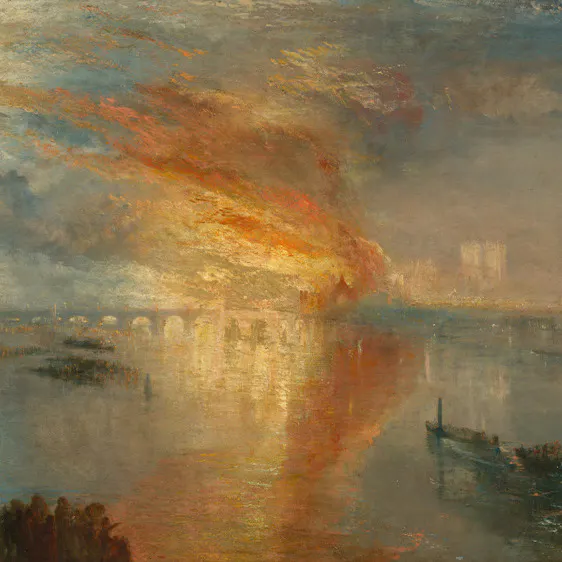
In his new book, Nathan K. Hensley describes a mood or a vibe or an intuitive response to the contemporary moment when one feels powerless in the face of collapsing societal systems. Given the entrenched nature of the present crisis, with compulsory happiness being marketed by the culture industry, how does one work within systems from which no true escape is possible? In order to uncover a prehistory of this feeling, he goes back to the nineteenth century - to artists like J.M.W. Turner and writers like Emily Bronte and Christina Rossetti who were thinking about what it means to inhabit a world omnivorously captured by capital. Nathan K. Hensley is the author of Forms of Empire: The Poetics of Victorian Sovereignty (Oxford, 2016), and co-editor, with Philip Steer, of Ecological Form: System and Aesthetics in the Age of Empire (Fordham, 2018). With Devin Garofalo, he is currently coediting a collection of essays that's forthcoming from Northwestern UP, The Barbara Johnson Collective. His new book is Action without Hope: Victorian Literature after Climate Collapse, forthcoming from Chicago UP in April 2025. He was born in Fresno, California and lives in Silver Spring, Maryland. Image: J.M.W. Turner, The Burning of the Houses of Lords and Commons, 1834-35. Public Domain. Original at the Philadelphia Museum of Art. Learn more about your ad choices. Visit megaphone.fm/adchoices Support our show by becoming a premium member! https://newbooksnetwork.supportingcast.fm/literary-studies
Ep 79Ellen Scheible, "Body Politics in Contemporary Irish Women’s Fiction: The Literary Legacy of 'Mother Ireland'" (Bloomsbury, 2025)
Exploring twentieth- and twenty-first century texts that wrestle with the Irish domestic interior as a sexualized and commodified space, Body Politics in Contemporary Irish Women’s Fiction: The Literary Legacy of 'Mother Ireland' (Bloomsbury, 2025) provides readings of the power and authority of the feminized body in Ireland. Scheible dissects the ways that 'the woman-as-symbol' remains consistent in Irish literary representations of national experience in Irish fiction and shows how this problematizes the role of women in Ireland by underscoring the oppression of sexuality and gender that characterized Irish culture during the twentieth century. Examining works by Elizabeth Bowen, Pamela Hinkson, Emma Donoghue, Tana French, Sally Rooney and James Joyce, this book demonstrates that the definition of Irish nationhood in our contemporary experience of capitalism and biopolitics is dependent on the intertwining and paradoxical tropes of a traditional, yet equally sexual, feminine identity which has been quelled by violence and reproduction. Learn more about your ad choices. Visit megaphone.fm/adchoices Support our show by becoming a premium member! https://newbooksnetwork.supportingcast.fm/literary-studies
Ep 496Douglas Field, "Walking in the Dark: James Baldwin, My Father and I" (Manchester UP, 2024)
A moving exploration of the life and work of the celebrated American writer, blending biography and memoir with literary criticism. Since James Baldwin's death in 1987, his writing - including The Fire Next Time, one of the manifestos of the Civil Rights Movement, and Giovanni's Room, a pioneering work of gay fiction - has only grown in relevance. Douglas Field was introduced to Baldwin's essays and novels by his father, who witnessed the writer's debate with William F. Buckley at Cambridge University in 1965. In Walking in the Dark: James Baldwin, My Father and I (Manchester UP, 2024), he embarks on a journey to unravel his life-long fascination and to understand why Baldwin continues to enthral us decades after his death. Tracing Baldwin's footsteps in France, the US and Switzerland, and digging into archives, Field paints an intimate portrait of the writer's life and influence. At the same time, he offers a poignant account of coming to terms with his father's Alzheimer's disease. Interweaving Baldwin's writings on family, illness, memory and place, Walking in the dark is an eloquent testament to the enduring power of great literature to illuminate our paths. Douglas Field is a writer and academic who teaches American literature at the University of Manchester. He has published two books on James Baldwin, the most recent of which is All Those Strangers: The Art and Lives of James Baldwin (2015). His work has been published in Beat Scene, the Big Issue, the Guardian and the Times Literary Supplement, where he has been a regular contributor for twenty years. He is a founding editor of James Baldwin Review. Morteza Hajizadeh is a Ph.D. graduate in English from the University of Auckland in New Zealand. His research interests are Cultural Studies; Critical Theory; Environmental History; Medieval (Intellectual) History; Gothic Studies; 18th and 19th Century British Literature. YouTube channel. Twitter. Learn more about your ad choices. Visit megaphone.fm/adchoices Support our show by becoming a premium member! https://newbooksnetwork.supportingcast.fm/literary-studies
Ep 517Karl Berglund, "Reading Audio Readers: Book Consumption in the Streaming Age" (Bloomsbury, 2024)
What is the future of reading? In Reading Audio Readers: Book Consumption in the Digital Age (Bloombury, 2024), Karl Berglund, Assistant Professor in Literature at Department of Literature and Rhetoric at Upsala University, examines the rise of audiobooks as a new mode of reading books. The analysis draws on digital humanities methods and a detailed industry case study to show who are the readers of audiobooks, how those readers engage and consume books, what sort of genres are most popular, and crucially how all of this us impacting on the publishing industry. The research also picks up on important themes of continuity and change represented by audiobooks, from ongoing issues of inequalities through to the new forms of writing practice and AI generated narrators. A richly detailed but easily accessible text, the book is essential reading for scholars across academia, as well as anyone interested in reading! Learn more about your ad choices. Visit megaphone.fm/adchoices Support our show by becoming a premium member! https://newbooksnetwork.supportingcast.fm/literary-studies
Ep 94Melissa Vise, "The Unruly Tongue: Speech and Violence in Medieval Italy" (U Pennsylvania Press, 2025)
The Unruly Tongue: Speech and Violence in Medieval Italy (University of Pennsylvania Press, 2025) by Dr. Melissa Vise, offers a new account of how the power of words changed in Western thought. Despite the association of freedom of speech with the political revolutions of the eighteenth century that ushered in the era of modern democracies, Dr. Vise locates the history of the repression of speech not in Europe’s monarchies but rather in Italy’s republics. Exploring the cultural process through which science and medicine, politics, law, literature, and theology together informed a new political ethics of speech, Dr. Vise uncovers the formation of a moral code where the regulation of the tongue became an integral component of republican values in medieval Europe. The medieval citizens of Italy’s republics understood themselves to be wholly subject to the power of words not because they lived in an age of persecution or doctrinal rigidity, but because words had furnished the grounds for their political freedom. Speech-making was the means for speaking the republic itself into existence against the opposition of aristocracy, empire, and papacy. But because words had power, they could also be deployed as weapons. Speech contained the potential for violence and presented a threat to political and social order, and thus needed to be controlled. Dr. Vise shows how the laws that governed and curtailed speech in medieval Italy represented broader cultural understandings of human susceptibility to speech. Tracing anthropologies of speech from religious to political discourse, from civic courts to ecclesiastical courts, from medical texts to the works of Dante and Boccaccio, The Unruly Tongue demonstrates that the thirteenth century marked a major shift in how people perceived the power, and the threat, of speech: a change in thinking about “what words do.” This interview was conducted by Dr. Miranda Melcher whose new book focuses on post-conflict military integration, understanding treaty negotiation and implementation in civil war contexts, with qualitative analysis of the Angolan and Mozambican civil wars. Learn more about your ad choices. Visit megaphone.fm/adchoices Support our show by becoming a premium member! https://newbooksnetwork.supportingcast.fm/literary-studies
Ep 617Ken Frieden, "Travels in Translation: Sea Tales at the Source of Jewish Fiction" (Syracuse UP, 2016)
For centuries before its "rebirth" as a spoken language, Hebrew writing was like a magical ship in a bottle that gradually changed design but never voyaged out into the world. Isolated, the ancient Hebrew ship was torpid because the language of the Bible was inadequate to represent modern life in Europe. Early modern speakers of Yiddish and German gave Hebrew the breath of life when they translated dialogues, descriptions, and thought processes from their vernaculars into Hebrew. By narrating tales of pilgrimage and adventure, Jews pulled the ship out of the bottle and sent modern Hebrew into the world. In Travels in Translation: Sea Tales at the Source of Jewish Fiction (Syracuse UP, 2016), Frieden analyzes this emergence of modern Hebrew literature after 1780, a time when Jews were moving beyond their conventional Torah- and Zion-centered worldview. Enlightened authors diverged from pilgrimage narrative traditions and appropriated travel narratives to America, the Pacific, and the Arctic. The effort to translate sea travel stories from European languages—with their nautical terms, wide horizons, and exotic occurrences—made particular demands on Hebrew writers. They had to overcome their tendency to introduce biblical phrases at every turn in order to develop a new, vivid, descriptive language. As Frieden explains through deft linguistic analysis, by 1818, a radically new travel literature in Hebrew had arisen. Authors such as Moses Mendelsohn-Frankfurt and Mendel Lefin published books that charted a new literary path through the world and in European history. Taking a fresh look at the origins of modern Jewish literature, Frieden launches a new approach to literary studies, one that lies at the intersection of translation studies and travel writing. Learn more about your ad choices. Visit megaphone.fm/adchoices Support our show by becoming a premium member! https://newbooksnetwork.supportingcast.fm/literary-studies
Ep 338Tahrir Hamdi, "Imagining Palestine: Cultures of Exile and National Identity" (Bloomsbury, 2022)
Tahrir Hamdi is a Professor of Resistance Literature at the Arab Open University in Jordan. She is the author of the award-winning Imagining Palestine and serves as an assistant editor of Arab Studies Quarterly. National identities are inherently fluid, shaped as much by collective beliefs and cultural practices as by official borders and territory. For Palestinians, whose national status remains contested, the articulation and imagination of national identity take on particular urgency. Imagining Palestine: Cultures of Exile and National Identity (Bloomsbury, 2022) examines how Palestinian intellectuals, artists, activists, and ordinary citizens envision their homeland, engaging with the works of key figures such as Edward Said, Ghassan Kanafani, Naji al-Ali, Mahmoud Darwish, Mourid Barghouti, Radwa Ashour, Suheir Hammad, and Susan Abulhawa. Drawing on decolonial and resistance concepts—particularly Palestinian sumud—Hamdi argues that the imaginative construction of Palestine is central to the Palestinian struggle. This interdisciplinary study, rooted in critical theory, postcolonial and decolonial studies, and literary analysis, offers valuable insights for students and scholars of Palestine, Middle East studies, and Arabic literature. Imagining Palestine received the Counter Current Award at the 2023 Palestine Book Awards. Bryant Scott is a professor of English and film studies at Hamad Bin Khalifa University and Texas A&M University at Qatar. Learn more about your ad choices. Visit megaphone.fm/adchoices Support our show by becoming a premium member! https://newbooksnetwork.supportingcast.fm/literary-studies
Ep 351Jennifer L. Freeman Marshall, "Ain't I an Anthropologist: Zora Neale Hurston Beyond the Literary Icon" (U Illinois Press, 2023)
Iconic as a novelist and popular cultural figure, Zora Neale Hurston remains underappreciated as an anthropologist. Is it inevitable that Hurston's literary authority should eclipse her anthropological authority? If not, what socio-cultural and institutional values and processes shape the different ways we read her work? Jennifer L. Freeman Marshall considers the polar receptions to Hurston's two areas of achievement by examining the critical response to her work across both fields. Drawing on a wide range of readings, Freeman Marshall explores Hurston's popular appeal as iconography, her elevation into the literary canon, her concurrent marginalization in anthropology despite her significant contributions, and her place within constructions of Black feminist literary traditions. Perceptive and original, Ain't I an Anthropologist (University of Illinois Press, 2023) is an overdue reassessment of Zora Neale Hurston's place in American cultural and intellectual life. Learn more about your ad choices. Visit megaphone.fm/adchoices Support our show by becoming a premium member! https://newbooksnetwork.supportingcast.fm/literary-studies
Ep 78Madalina Armie and Veronica Membrive, "Trauma, Memory and Silence of the Irish Woman in Contemporary Literature" (Routledge, 2023)
Trauma, Memory and Silence of the Irish Woman in Contemporary Literature (Routledge, 2023) studies the manifestations of female trauma through the exploration of multiple wounds, inflicted on both body and mind and the soul of Irish women from Northern Ireland and the Republic within a contemporary context, and in literary works written at the turn of the twenty-first century and beyond. These artistic manifestations connect tradition and modernity, debunk myths, break the silence with the exposure of uncomfortable realities, dismantle stereotypes and reflect reality with precision. Women’s issues and female experiences depicted in contemporary fiction may provide an explanation for past and present gender dynamics, revealing a pathway for further renegotiation of gender roles and the achievement of equilibrium and equality between sexes. These works might help to seal and heal wounds both old and new and offer solutions to the quandaries of tomorrow. Learn more about your ad choices. Visit megaphone.fm/adchoices Support our show by becoming a premium member! https://newbooksnetwork.supportingcast.fm/literary-studies
Ep 275Rachelle Bergstein, "The Genius of Judy: How Judy Blume Rewrote Childhood for All of Us" (Atria, 2024)
Everyone knows Judy Blume. Her books have garnered her fans of all ages for decades and sold tens of millions of copies. But why were people so drawn to them? And why are we still talking about them now in the 21st century? In The Genius of Judy: How Judy Blume Rewrote Childhood for All of Us (Atria, 2024), her remarkable story is revealed as never before, beginning with her as a mother of two searching for purpose outside of her home in 1960s suburban New Jersey. The books she wrote starred regular children with genuine thoughts and problems. But behind those deceptively simple tales, Blume explored the pillars of the growing women’s rights movement, in which girls and women were entitled to careers, bodily autonomy, fulfilling relationships, and even sexual pleasure. Blume wasn’t trying to be a revolutionary—she just wanted to tell honest stories—but in doing so, she created a cohesive, culture-altering vision of modern adolescence. Blume’s bravery provoked backlash, making her the country’s most-banned author in the mid-1980s. Thankfully, her works withstood those culture wars and it’s no coincidence that Blume has resurfaced as a cultural touchstone now. Young girls are still cat-called, sex education curricula are getting dismissed as pornography, and entire shelves of libraries are being banned. As we face these challenges, it’s only natural we look to Blume, the grand dame of so-called dirty books. This is the story of how a housewife became a groundbreaking artist, and how generations of empowered fans are her legacy, today more than ever. Roberto Mazza is currently a visiting scholar at the Buffett Institute for Global Affairs at Northwestern University. He is the host of the Jerusalem Unplugged Podcast and to discuss and propose a book for interview can be reached at [email protected]. Blusky and IG: @robbyref Learn more about your ad choices. Visit megaphone.fm/adchoices Support our show by becoming a premium member! https://newbooksnetwork.supportingcast.fm/literary-studies
Ep 296Tamizdat under Putin: A Discussion with Publisher Feliks Sandalov
Russia has a long history of publishers operating from abroad, producing books and periodicals for a Russian-speaking audience. One notable example is The Bell (Kolokol), published by Alexander Herzen, the Russian writer and thinker who emigrated in the mid-19th century. The waves of Russian emigration in the 20th century—beginning with those fleeing the 1917 Bolshevik Revolution—led to the creation of numerous Russian-language publishing ventures, ranging from short-lived projects to long-standing institutions. Among the most well-remembered are the YMCA Press in Paris, Posev and Grani in Germany, and Ardis Publishing, founded in the early 1970s—not by Russians, but by American literary scholars. Exiled Russian publishers not only printed the works of fellow émigré authors but also played a crucial role in tamizdat—smuggling manuscripts deemed ideologically unacceptable by the Soviet regime out of the USSR, publishing them abroad, and then covertly reintroducing them into the country for clandestine distribution. After Russia invaded Ukraine three years ago, prompting the exodus of hundreds of thousands of Russians, it was only a matter of time before new émigré publishing houses emerged. In this conversation, we speak with Feliks Sandalov, co-founder and director of StraightForward, one of the newly established Russian publishing initiatives in exile, about his work and the evolving landscape of Russian publishing abroad. Learn more about your ad choices. Visit megaphone.fm/adchoices Support our show by becoming a premium member! https://newbooksnetwork.supportingcast.fm/literary-studies
Ep 7Rebecca Janzen, "Unlawful Violence: Mexican Law and Cultural Production" (Vanderbilt UP, 2022)
Violence has only increased in Mexico since 2000: 23,000 murders were recorded in 2016, and 29,168 in 2017. The abundance of laws and constitutional amendments that have cropped up in response are mirrored in Mexico's fragmented cultural production of the same period. Contemporary Mexican literature grapples with this splintered reality through non-linear stories from multiple perspectives, often told through shifts in time. The novels, such as Jorge Volpi's Una novela criminal [A Novel Crime] (2018) and Julián Herbert's La casa del dolor ajeno [The House of the Pain of Others] (2015) take multiple perspectives and follow non-linear plotlines; other examples, such as the very short stories in ¡Basta! 100 mujeres contra la violencia de género [Enough! 100 Women against Gender-Based Violence] (2013), present perspectives from multiple authors. Few scholars compare cultural production and legal texts in situations like Mexico, where extreme violence coexists with a high number of human rights laws. Unlawful Violence: Mexican Law and Cultural Production (Vanderbilt UP, 2022) measures fictional accounts of human rights against new laws that include constitutional amendments to reform legal proceedings, laws that protect children, laws that condemn violence against women, and laws that protect migrants and Indigenous peoples. It also explores debates about these laws in the Mexican house of representatives and senate, as well as interactions between the law and the Mexican public. Learn more about your ad choices. Visit megaphone.fm/adchoices Support our show by becoming a premium member! https://newbooksnetwork.supportingcast.fm/literary-studies
Ep 1547Michael Visontay, "Noble Fragments: The Gripping Story of the Antiquarian Bookseller Who Broke Up a Gutenberg Bible" (Scribe, 2024)
One hundred years ago, Gabriel Wells, a New York bookseller, committed a crime against history. He broke up the world’s greatest book, the Gutenberg Bible, and sold it off in individual pages. In 1921, Wells’ audacity scandalized the rare-book world. The Gutenberg was the first substantial book in Europe to have been printed on a printing press. It represented the democratization of knowledge and was the Holy Grail of rare books. In Noble Fragments: The Gripping Story of the Antiquarian Bookseller Who Broke Up a Gutenberg Bible (Scribe, 2024), Michael Visontay describes how Wells’s gamble set off a chain of events that changed his family’s destiny. Interviewee: Michael Visontay is the Commissioning Editor of The Jewish Independent, and has worked as a journalist and senior editor at The Sydney Morning Herald and The Australian. Host: Schneur Zalman Newfield is an Associate Professor of Sociology and Jewish Studies at Hunter College, City University of New York, and the author of Degrees of Separation: Identity Formation While Leaving Ultra-Orthodox Judaism (Temple University Press). Visit him online at ZalmanNewfield.com. Learn more about your ad choices. Visit megaphone.fm/adchoices Support our show by becoming a premium member! https://newbooksnetwork.supportingcast.fm/literary-studies
Ep 160Waiyee Loh, "Empire of Culture: Neo-Victorian Narratives in the Global Creative Economy" (SUNY Press, 2024)
Empire of Culture: Neo-Victorian Narratives in the Global Creative Economy (SUNY Press, 2024) by Dr. Waiyee Loh brings together contemporary representations of Victorian Britain to reveal how the nation's imperial past inheres in the ways post-imperial subjects commodify and consume "culture" in the late twentieth and early twenty-first centuries. The globalization of English literature, along with British forms of dress, etiquette, and dining, in the nineteenth century presumed and produced the idea that British culture is a universal standard to which everyone should aspire. Examining neo-Victorian texts and practices from Britain, the United States, Japan, and Singapore—from A. S. Byatt's novel Possession and its Hollywood film adaptation to Japanese Lolita fashion and the Lady Victorian manga series—Dr. Loh argues that the British heritage industry thrives on the persistence of this idea. Yet this industry also competes and collaborates with the US and Japanese cultural industries, as they, too, engage with the legacy of British universalism to carve out their own empires in a global creative economy. Unique in its scope, Empire of Culture centers Britain's engagements with the US and East Asia to illuminate fresh axes of influence and appropriation, and further bring Victorian studies into contact with various sites of literary and cultural fandom. This interview was conducted by Dr. Miranda Melcher whose new book focuses on post-conflict military integration, understanding treaty negotiation and implementation in civil war contexts, with qualitative analysis of the Angolan and Mozambican civil wars. Learn more about your ad choices. Visit megaphone.fm/adchoices Support our show by becoming a premium member! https://newbooksnetwork.supportingcast.fm/literary-studies
Ep 93Kathrin Bartha-Mitchell, "Cosmological Readings of Contemporary Australian Literature: Unsettling the Anthropocene" (Routledge, 2024)
Cosmological Readings of Contemporary Australian Literature: Unsettling the Anthropocene (Routledge, 2024) presents an innovative and imaginative reading of contemporary Australian literature in the context of unprecedented ecological crisis. The Australian continent has seen significant, rapid changes to its cultures and land-use from the impact of British colonial rule, yet there is a rich history of Indigenous land-ethics and cosmological thought. By using the age-old idea of 'cosmos'--the order of the world--to foreground ideas of a good order and chaos, reciprocity and more-than-human agency, this book interrogates the Anthropocene in Australia, focusing on notions of colonisation, farming, mining, bioethics, technology, environmental justice and sovereignty. It offers 'cosmological readings' of a diverse range of authors--Indigenous and non-Indigenous--as a challenge to the Anthropocene's decline-narrative. As a result, it reactivates 'cosmos' as an ethical vision and a transculturally important counter-concept to the Anthropocene. Kathrin Bartha-Mitchell argues that the arts can help us envision radical cosmologies of being in and with the planet, and to address the very real social and environmental problems of our era. This book will be of particular interest to scholars and students of Ecocriticism, Environmental Humanities, and postcolonial, transcultural and Indigenous studies, with a primary focus on Australian, New Zealand, Oceanic and Pacific area studies. Learn more about your ad choices. Visit megaphone.fm/adchoices Support our show by becoming a premium member! https://newbooksnetwork.supportingcast.fm/literary-studies
Ep 92Wan-Chuan Kao, "White before Whiteness in the Late Middle Ages" (Manchester UP, 2024)
White before Whiteness in the Late Middle Ages (Manchester University Press, 2024) by Dr. Wan-Chuan Kao analyses premodern whiteness as operations of fragility, precarity and racialicity across bodily and nonsomatic figurations. The book argues that while whiteness participates in the history of racialisation in the late medieval West, it does not denote skin tone alone. The 'before' of whiteness, presupposing essence and teleology, is less a retro-futuristic temporisation - one that simultaneously looks backward and faces forward - than a discursive figuration of how white becomes whiteness. Fragility delineates the limits of ruling ideologies in performances of mourning as self-defence against perceived threats to subjectivity and desire; precarity registers the ruptures within normative values by foregrounding the unmarked vulnerability of the body politic and the violence of cultural aestheticisation; and racialicity attends to the politics of recognition and the technologies of enfleshment at the systemic edge of life and nonlife. This interview was conducted by Dr. Miranda Melcher whose new book focuses on post-conflict military integration, understanding treaty negotiation and implementation in civil war contexts, with qualitative analysis of the Angolan and Mozambican civil wars. Learn more about your ad choices. Visit megaphone.fm/adchoices Support our show by becoming a premium member! https://newbooksnetwork.supportingcast.fm/literary-studies
Ep 77Gregory Castle et al., "The Irish Bildungsroman" (Syracuse UP, 2025)
The classical Bildungsroman charted an idealized path of human development—the harmonization of individual desires with societal norms in the formation of a well-rounded, liberal subject. But what happens when this Enlightenment blueprint for self-cultivation runs up against the particularities of a colonial society riven by nationalism, revolution, and uneven modernization? The Irish Bildungsroman (Syracuse UP, 2025) provides the first comprehensive study of how this quintessentially bourgeois and European genre was transformed and reinvented by Irish writers from the Act of Union to the present day. Through incisive readings of over two centuries of Irish novels, the volume’s contributors illuminate the diverse narrative strategies Irish authors have employed to depict personal formation within a colonial/postcolonial nation fractured by religion, class, gender, and ethnic divisions. Carefully periodized into three major sections, the book maps the evolution of the Irish Bildungsroman across key historical junctures: the rise of cultural nationalism in the nineteenth century, the revolutionary period and emergence of the postcolonial state in the early twentieth century, and more recent waves of globalization and the reconfiguration of Irish identity. From Maria Edgeworth’s post-Union novels to Sally Rooney’s millennial fictions, The Irish Bildungsroman excavates a rich vein of self-reflexive writing that creatively reworked this genre to expose the fault lines of liberal humanism and imagine new modes of selfhood. Learn more about your ad choices. Visit megaphone.fm/adchoices Support our show by becoming a premium member! https://newbooksnetwork.supportingcast.fm/literary-studies
Ep 338Linh Thuy Nguyen, "Displacing Kinship: The Intimacies of Intergenerational Trauma in Vietnamese American Cultural Production" (Temple UP, 2024)
Nearly fifty years after the end of the war in Vietnam, American children of Vietnamese refugees continue to process the meanings of the war and its consequences through creative work. Displacing Kinship: The Intimacies of Intergenerational Trauma in Vietnamese American Cultural Production (Temple UP, 2024) examines how Vietnamese American cultural productions register lived experiences of racism in their depictions of family life and marginalization. Second-generation texts illustrate how the children of refugees from Vietnam are haunted by trauma and a violent, ever-present, but mostly unarticulated past. Linh Thủy Nguyễn’s analysis reveals that present experiences of economic insecurity and racism also shape these narratives of familial loss. Developing a theory of intergenerational trauma, Nguyễn rethinks how U.S. imperialism, the discourse of communism, and assimilation impacted families across generations. Through ethnic studies and feminist and queer-of-color critique, Displacing Kinship offers a critical approach for reading family tensions and interpersonal conflict as affective investments informed by the material, structural conditions of white supremacy and racial capitalism. She was recently featured in an interview regarding her monograph with Toward Inclusive Excellence (TIE) of Choice, apublishing unit of the Association of College and Research Libraries. The complete interview is available at www.choice360.org/tie-post/tie-talks-with-linh-thuy-nguyen/. Linh Thủy Nguyễn, PhD, is associate professor of American ethnic studies; adjunct associate professor of gender, women’s, and sexuality studies; and faculty associate in the Center for Southeast Asia and its Diasporas and the Harry Bridges Labor Center at the University of Washington. Her research explores the interpersonal and structural relationships between history, memory, race, war, migration, nation, and family. You can find more at linhthuynguyen.com. Camellia (Linh) Pham is a PhD student in Comparative Literature at Harvard. Her research explores modern Vietnamese literature, literary translation across French, Vietnamese, English, and Chinese, and the literary history of French Indochina. She can be reached at [email protected]. Learn more about your ad choices. Visit megaphone.fm/adchoices Support our show by becoming a premium member! https://newbooksnetwork.supportingcast.fm/literary-studies
Ep 612Blanche Bendahan, "Mazaltob: A Novel" (Brandeis UP, 2024)
Raised in the Judería or Jewish quarter of Tetouan, Morocco, at the turn of the 20th-century, sixteen-year-old Mazaltob finds herself betrothed to José, an uncouth man from her own community who has returned from Argentina to take a wife. Mazaltob, however, is in love with Jean, who is French, half-Jewish, and a free spirit. In this classic of North African Jewish fiction, Blanche Bendahan evokes the two compelling forces tearing Mazaltob apart in her body and soul: her loyalty to the Judería and her powerful desire to follow her own voice and find true love. Bendahan’s nuanced and moving novel is a masterly exploration of the language, religion, and quotidian customs constraining North African Jewish women on the cusp of emancipation and decolonization. Yaëlle Azagury and Frances Malino provide the first English translation of this modern coming-of-age tale, awarded a prize by the Académie Française in 1930, and analyze the ways in which Mazaltob, with its disconcerting blend of ethnographic details and modernist experimentation, is the first of its genre—that of the feminist Sephardi novel. A historical introduction, a literary analysis, and annotations elucidate historical and cultural terms for readers, supplementing the author’s original notes. Blanche Bendahan was born in Oran, Algeria on November 26, 1893, to a Jewish family of Moroccan-Spanish origin. Bendahan published her first collection of poetry, La voile sur l’eau, in 1926 and then her first novel, Mazaltob, in 1930. Yaëlle Azagury is a writer, literary scholar, and critic. She was Lecturer in French and Francophone Studies at Barnard College, and Lecturer in Discipline in the English and Comparative Literature Department at Columbia University. She is a native of Tangier, Morocco. Frances Malino is the Sophia Moses Robison Professor of Jewish Studies and History Emerita at Wellesley College. Her current project is titled Teaching Freedom: Jewish Sisters in Muslim Lands. In 2012 she was named Chevalier dans l’Ordre des Palmes académiques by the French Ministry of Education. Azagury and Malino were finalists of the 74th National Jewish Book Awards in the category of Sephardic Culture. Mentioned in the podcast: • Blanche Bendahan,“Visages de Tétouan,” Les Cahiers de L’Alliance Israélite Universelle (Paix et Droit), no. 093 (November 1955): 5. • Susan Gilson Miller, “Gender and the Poetics and Emancipation: The Alliance Israélite Universelle in Northern Morocco (1890-1912).” In Franco-Arab Encounters, edited by L. Carl Brown and Matthew Gordon (1996) • Susan Gilson Miller, “Moïse Nahon and the Invention of the Modern Maghribi Jew.” In French Mediterraneans, edited by P. Lorcin and T. Shepard (2016) • Marcel Proust, In Search of Lost Time (À la recherche du temps perdu published in seven volumes, previously translated as Remembrance of Things Past) (1913–1927) • Edward W. Said, Orientalism, 25th anniversary edition (1994) • Female teachers of the Alliance israélite universelle • Jewish figures in the literature of The Tharaud Brothers • Archives of the Alliance israélite universelle (AIU) Learn more about your ad choices. Visit megaphone.fm/adchoices Support our show by becoming a premium member! https://newbooksnetwork.supportingcast.fm/literary-studies
Ep 273Mary Flannery, "Geoffrey Chaucer: Unveiling the Merry Bard" (Reaktion Books, 2024)
For over six centuries, Chaucer has epitomized poetic greatness, though more recent treatments of The Canterbury Tales’ lively and often risqué style have made his name more synonymous with bawdy humor. But beyond his poetic achievements, Chaucer assumed various roles including those of royal attendant, soldier, customs official, justice of the peace, and more. In this book, Mary Flannery chronicles Chaucer’s life during one of the most turbulent periods of English history, illuminating how he came to be known not only as the father of English poetry but also as England’s “merry bard.” Mary Flannery is the Swiss National Science Foundation Eccellenza Professorial Fellow at the University of Bern. A regular contributor to the Times Literary Supplement, her publications include Practising Shame: Female Honour in Later Medieval England. Morteza Hajizadeh is a Ph.D. graduate in English from the University of Auckland in New Zealand. His research interests are Cultural Studies; Critical Theory; Environmental History; Medieval (Intellectual) History; Gothic Studies; 18th and 19th Century British Literature. YouTube channel. Twitter. Learn more about your ad choices. Visit megaphone.fm/adchoices Support our show by becoming a premium member! https://newbooksnetwork.supportingcast.fm/literary-studies
Ep 334Peter Ramey, "The Word-Hoard Beowulf: A Translation with Commentary" (Angelico Press, 2023)
Beowulf is the product of a profoundly religious imagination, but the significance of the poem’s Christianity has been downplayed or denied altogether. The Word-Hoard Beowulf: A Translation with Commentary (Angelico Press, 2023) is the first translation and popular commentary to take seriously the religious dimension of this venerable text. While generations of students know that Beowulf represents a confluence of Christianity and paganism, this version—informed by J. R. R. Tolkien’s theory of language as the repository of myth—opens the hood to track the poem’s inner religious workings. It brings to light the essential Old English vocabulary, incorporating into the translation the divine titles used for God, specific names for evil and nonhuman creatures, and the precise language employed for providence and fate, along with terminology for kinship and heroism. Such features are not found in any other modern English translation, including Tolkien’s, whose text was never intended for publication. The Word-Hoard Beowulf draws upon Tolkien’s ideas and commentaries, however, to render a poem whose metaphysical vision takes front and center, delivering a richly restorative version of this early medieval masterpiece. The text is preceded by an introduction detailing the poem’s religious motivations and cultural context, and is accompanied by an expansive commentary. In short, this version allows readers to perceive precisely how in Beowulf (as Tolkien puts it) “the new Scripture and the old tradition touched and ignited” to produce the earliest English epic. Peter Ramey is Associate Professor of English at Northern State University, where he teaches courses on medieval English literature, Latin, and linguistics. He has published articles on Beowulf and on Old and Middle English in Modern Philology, Philological Quarterly, and other scholarly journals, while also writing for a broader audience in his essays in Public Discourse and Front Porch Republic. Daniel Moran earned his B.A. and M.A. in English from Rutgers University and his Ph.D. in History from Drew University. The author of Creating Flannery O’Connor: Her Critics, Her Publishers, Her Readers, he teaches research and writing at Rutgers and co-hosts the podcast Fifteen-Minute Film Fanatics, found here on the New Books Network and on X. You can also find his writing about books and films on Pages and Frames. Learn more about your ad choices. Visit megaphone.fm/adchoices Support our show by becoming a premium member! https://newbooksnetwork.supportingcast.fm/literary-studies
Ep 337Tabish Khair, "Literature Against Fundamentalism" (Oxford UP, 2024)
Acclaimed novelist and academic Tabish Khair argues that literature as a distinct mode of thinking can counteract fundamentalism. Literature is a mode of thinking, stories being one of the oldest thinking 'devices' known to humankind. The ways in which literature enables us to think are distinctive and necessary, because of the relationships between its material ('language') and its subject matter ('reality'). Although present in oral literature, these relationships are exposed in their full complexity with the rise of literature as a distinct form of writing. Literature Against Fundamentalism (Oxford UP, 2024) argues that literature enables us to engage with reality in language and language in reality, where both are mutually constitutive, constantly changing, and partly elusive. Tabish Khair defines this mode of engagement as essentially an agnostic one, resistant to simple dogma. Hence, literature can provide an antidote to fundamentalism. Khair argues that reading literature as literature--and not just as material for aesthetic, sociological, political, and other theoretical discourses--is essential for humanity. In the process, he offers a radical re-definition of literature, an illuminating engagement with religion and fundamentalism, a revaluation of the relationship between the sciences and humanities, and, finally, a call to literature as in 'a call to arms'. Tabish Khair is an Indian writer, academic and journalist, born (1966) and educated in the small town of Gaya in Bihar, India. After finishing his MA from Gaya, he completed a PhD at Copenhagen University and a DPhil at Aarhus University, Denmark, where he is now an Associate Professor. He has been a visiting professor or research fellow at various universities and has received Carlsberg, Leverhulme, and other academic grants. Khair is also an internationally published novelist. Morteza Hajizadeh is a Ph.D. graduate in English from the University of Auckland in New Zealand. His research interests are Cultural Studies; Critical Theory; Environmental History; Medieval (Intellectual) History; Gothic Studies; 18th and 19th Century British Literature. YouTube channel. Twitter. Learn more about your ad choices. Visit megaphone.fm/adchoices Support our show by becoming a premium member! https://newbooksnetwork.supportingcast.fm/literary-studies
Ep 610Shay A. Pilnik, "The Ravine of Memory: Babyn Yar Between the Holocaust and the Great Patriotic War" (Purdue UP, 2025)
The Nazis and their collaborators buried over 100,000 victims at Babyn Yar, a ravine in modern-day Ukraine. Most of the individuals were Jewish, making this area one of the most infamous mass murder sites in history. The Ravine of Memory: Babyn Yar Between the Holocaust and the Great Patriotic War (Purdue UP, 2025) starts when the travesty ends, telling the story of the ravine’s memory and forgetting in Soviet literature and culture—in Russian as well as in Yiddish. This book challenges the prevailing binary conceptions of Babyn Yar as exclusively a Holocaust or a “Great Patriotic War” story. It is neither the exclusive product of Soviet censorship nor individual dissidents. Babyn Yar is more than a physical space where untold horrors took place. Symbolically, it is the ultimate meeting point of so many disparate threads of Soviet culture: the state and the artist, the Jew and the non-Jew, and the Holocaust and the Great Patriotic War. Ultimately, it is a place that reveals the frailty and courage of those who bear witness to atrocity. Learn more about your ad choices. Visit megaphone.fm/adchoices Support our show by becoming a premium member! https://newbooksnetwork.supportingcast.fm/literary-studies
Ep 266Preetha Mani, "The Idea of Indian Literature: Gender, Genre, and Comparative Method" (Northwestern UP, 2022)
Indian literature is not a corpus of texts or literary concepts from India, argues Preetha Mani, but a provocation that seeks to resolve the relationship between language and literature. In this episode, we discuss Mani’s 2022 publication, The Idea of Indian Literature: Gender, Genre, and Comparative Method, which won the MLA Aldo and Jeanne Scaglione Prize for South Asian Studies, received the ACLA René Wellek Prize Honourable Mention for best overall book in comparative literature, and was shortlisted for the MSA First Book Prize. In The Idea of Indian Literature : Gender, Genre, and Comparative Method, Mani examines the paradox that a single canon, here being Indian literature, could be written in multiple languages. Examining canonical Hindi and Tamil short stories from the crucial decades surrounding decolonization, Mani contends that Indian literature must be understood as indeterminate, propositional, and reflective of changing dynamics between local, regional, national, and global readerships. The homogenising term ‘Indian Literature’ is re-visited via an in-depth historical and literary investigation of multilingualism in pre- and post-Independent India. Dr. Preetha Mani is an Associate Professor of South Asian Literatures at Rutgers University, where she specialises in modern Hindi, Tamil, and Indian literatures. Her research interests include translation studies, feminist and postcolonial theory, and world literature. At Rutgers, Preetha is an active member of the South Asian Studies Program and Critical Translation Studies Initiative, and serves on the executive committees of the Centre for Cultural Analysis and the Institute for Research on Women. This interview was hosted by Zana Mody, an English DPhil student at the University of Oxford, who works on postcolonial Indian literature and art. X: @mody_zana Learn more about your ad choices. Visit megaphone.fm/adchoices Support our show by becoming a premium member! https://newbooksnetwork.supportingcast.fm/literary-studies

Ep 154Poetry
In this episode of High Theory, Ryan Ruby talks to us about Poetry. Our standard definition of poetry today is an institutional one, much like contemporary art: if art is what artists and museums and collectors call art, poetry is what poets and professors and publishers say is poetry. Ruby argues that this indefinable thing humans have been doing well nigh forever is better understood as a medium than a form. Poetry is a way of storing and transmitting information, a mechanism of entertainment and authority, and a speech act that attends to changes of state. In the episode, Ryan references Eric Havelock, author of The Muse Learns to Write (Yale UP, 1986), who described the Homeric poems as the encyclopedia of Bronze age Greece. He also cites Marcel Detienne’s book The Masters of Truth in Archaic Greece (trans. Janet Lloyd, Zone Books, 1996) who describes poetry as a form of “magico-religious speech.” Ryan Ruby is a writer, most recently of the book length poem Context Collapse: A Poem Containing the History of Poetry (Seven Stories Press, 2024). It got reviewed in The New York Times. He has also written a novel, titled The Zero and the One (Twelve Books, 2017), and book reviews and essays for all the fancy places: The New Yorker, Harper’s, The New York Review of Books, The New York Times, Bookforum, New Left Review, etc. He is currently at work on a nonfiction narrative book about Berlin called Ringbahn for Farrar Straus, and Giroux. The image for this episode is a still from an animation of a supercomputer simulation of a pair of neutron stars colliding, merging and forming a black hole, created at the NASA Goddard Space Flight Center. Image courtesy of the NASA Goddard Photo and Video Flickr account. This image is in the public domain. Learn more about your ad choices. Visit megaphone.fm/adchoices Support our show by becoming a premium member! https://newbooksnetwork.supportingcast.fm/literary-studies
Ep 256The World She Edited: Katharine S. White at the New Yorker
Our book is: The World She Edited: Katharine S. White at the New Yorker (Mariner Books, 2024) by Dr. Amy Reading, which is a lively and intimate biography of trailblazing and era-defining New Yorker editor Katharine S. White. White helped build the magazine’s prestigious legacy and transform the 20th century literary landscape for women. In the summer of 1925, Katharine Sergeant Angell White walked into The New Yorker’s midtown office and left with a job as an editor. The magazine was only a few months old. Over the next thirty-six years, White would transform the publication into a literary powerhouse. This exquisite biography brings to life the remarkable relationships White fostered with her writers and how these relationships nurtured an astonishing array of literary talent. She edited a young John Updike, to whom she sent seventeen rejections before a single acceptance, as well as Vladimir Nabokov, with whom she fought incessantly, urging that he drop needlessly obscure, confusing words. White’s biggest contribution, however, was her cultivation of women writers whose careers were made at The New Yorker—Janet Flanner, Mary McCarthy, Elizabeth Bishop, Jean Stafford, Nadine Gordimer, Elizabeth Taylor, Emily Hahn, Kay Boyle, and more. She cleared their mental and financial obstacles, introduced them to each other, and helped them create now classic stories and essays. She propelled these women to great literary heights and, in the process, reinvented the role of the editor, transforming the relationship to be not just a way to improve a writer’s work but also their life. Based on years of scrupulous research, acclaimed author Amy Reading creates a rare and deeply intimate portrait of a prolific editor—through both her incredible tenure at The New Yorker, and her famous marriage to E.B. White—and reveals how she transformed our understanding of literary culture and community. Our guest is: Dr. Amy Reading. Her book, The World She Edited: Katharine S. White at The New Yorker, is a finalist for the National Book Critics Circle Award for Biography. She is also the author of The Mark Inside: A Perfect Swindle, a Cunning Revenge, and a Small History of the Big Con. Her work has been supported by fellowships from the National Endowment of the Humanities and the New York Public Library, among others. She lives in upstate New York, where she serves on the board of her local independent bookstore, Buffalo Street Books. Our host is: Dr. Christina Gessler, who is the creator, producer and show host of the Academic Life podcast. She uses her PhD in history to explore what stories we tell, and what happens to those we never tell. Listeners may enjoy this playlist: Claire Myers Owens and the Banned Book Dear Miss Perkins Leaving Academia The Misadventures of A Rare Bookseller We Take Our Cities With Us Welcome to Academic Life, the podcast for your academic journey—and beyond! You can support the show by downloading or sharing episodes. Join us again to learn from more experts inside and outside the academy, and around the world. Missed any of the 240+ Academic Life episodes? Find them here. And thank you for listening! Learn more about your ad choices. Visit megaphone.fm/adchoices Support our show by becoming a premium member! https://newbooksnetwork.supportingcast.fm/literary-studies
Ep 335Peter Boxall, "The Possibility of Literature: The Novel and the Politics of Form" (Cambridge UP, 2024)
The Possibility of Literature: The Novel and the Politics of Form (Cambridge University Press, 2024) is a collection of Peter Boxall's essays over twenty years, the earliest from 1996. These essays cover a vast timespan, from the 17th century to contemporary times; a multiplicity of authors ranging from canonical, such as Cervantes, to underappreciated, such as Kelman; and various traditions, from realism to 'deathwriting'. Despite the richness of material, Boxall's penetrating and refreshing vision never loses sight of two central questions: what makes literature possible and what does literature generate? The essays are clustered into three sections, 'On Writers', 'On Literary Tradition', and 'On the Contemporary'. Exploring questions such as 'The Idea of Beauty', the nature of 'Mere Being', or the possibilities of Rereading, the author anatomises the myriad forces that shape the literary imagination. At the same time, he gives vivid critical expression to the imaginative possibilities of literature itself – those unique forms of communal life that literature makes possible in a dramatically changing world, and that lead us towards a new shared future. Peter Boxall is the Goldsmiths' Professor of English Literature at New College, University of Oxford. His publications include Don DeLillo: The Possibility of Fiction (2002), Since Beckett: Contemporary Writing in the Wake of Modernism (2009) and The Prosthetic Imagination: A History of the Novel as Artificial Life (2020). Learn more about your ad choices. Visit megaphone.fm/adchoices Support our show by becoming a premium member! https://newbooksnetwork.supportingcast.fm/literary-studies
Ep 555Xian Wang, "Gendered Memories: An Imaginary Museum for Ding Ling and Chinese Female Revolutionary Martyrs" (U Michigan Press, 2025)
Gendered Memories: An Imaginary Museum for Ding Ling and Chinese Female Revolutionary Martyrs (U Michigan Press, 2025) takes readers on a journey through the lives and legacies of Chinese female revolutionary martyrs, revealing how their sacrifices have been remembered, commemorated, and manipulated throughout history. This innovative book blends historical narratives with personal narratives, creating an “imaginary museum” where the stories of these women are brought to life. Author Xian Wang employs this imaginary museum to create a conceptual space mirroring an actual museum that juxtaposes historical narratives with countermemories of Chinese female revolutionaries, such as the prominent writer Ding Ling. Exploring Ding’s experiences with martyrdom and the commemoration of female revolutionary martyrs associated with her, the book provides a compelling argument that female revolutionary martyrdom reinforces, rather than rejects, the traditional concept of female chastity martyrdom. Narratives that challenge established gender norms, particularly those surrounding female chastity, have often been silenced or overlooked in the collective memory of these female revolutionary martyrs. By delving into these countermemories, Wang provides fresh insights into gendered violence, memories, and politics in modern Chinese literature and culture. Dr. Xian Wang is Assistant Professor of East Asian Languages and Cultures at the University of Notre Dame. Dr. Linshan Jiang is a Visiting Assistant Professor of East Asian history and culture at Colby College. Learn more about your ad choices. Visit megaphone.fm/adchoices Support our show by becoming a premium member! https://newbooksnetwork.supportingcast.fm/literary-studies
Ep 137Ruby Lowe on John Milton’s Definition of Free Speech
British poet John Milton published one of the earliest and still tremendously important defenses of free speech for our modern world. From his famous pamphlet Areopagitca (1644) to Paradise Lost (1667), Milton participated in debates regarding censorship and the right of the public to access the inner workings of Parliamentary politics. I spoke with Ruby Lowe about how today’s conception of free of speech emerged during the English Civil Wars, the intimacies between political adversaries in these debates, and how Milton’s crucial role in this media revolution informs his most seductive literary characters, including the devil, God, Adam, and Eve. Dr. Ruby Lowe is a Lecturer in the History of Ideas at Trinity College, the University of Melbourne and the John Emmerson Research Fellow at the State Library of Victoria, in Australia. Her forthcoming book is The Speech Without Doors: John Milton and the Tradition of Print Oratory. Learn more about your ad choices. Visit megaphone.fm/adchoices Support our show by becoming a premium member! https://newbooksnetwork.supportingcast.fm/literary-studies
Ep 87Jacqueline M. Burek, "Literary Variety and the Writing of History in Britain's Long Twelfth Century" (York Medieval Press, 2023)
Histories of Britain composed during the "twelfth-century renaissance" display a remarkable amount of literary variety (Latin varietas). Furthermore, British historians writing after the Norman Conquest often draw attention to the differing forms of their texts. But why would historians of this period associate literary variety with the work of history-writing? Drawing on theories of literary variety found in classical and medieval rhetoric, Literary Variety and the Writing of History in Britain's Long Twelfth Century (York Medieval Press, 2023) by Dr. Jacqueline Burek traces how British writers came to believe that varietas could help them construct comprehensive, continuous accounts of Britain's past. It shows how Latin prose historians, such as William of Malmesbury, Henry of Huntingdon, and Geoffrey of Monmouth, filled their texts with a diverse array of literary forms, which they carefully selected and ordered in accordance with their broader historiographical aims. The pronounced literary variety of these influential histories inspired some Middle English verse chroniclers, including Laȝamon and Robert Mannyng, to adopt similar principles in their vernacular poetry. By uncovering the rhetorical and historiographical theories beneath their literary variety, this book provides a new framework for interpreting the stylistic and organizational choices of medieval historians. This interview was conducted by Dr. Miranda Melcher whose new book focuses on post-conflict military integration, understanding treaty negotiation and implementation in civil war contexts, with qualitative analysis of the Angolan and Mozambican civil wars. Learn more about your ad choices. Visit megaphone.fm/adchoices Support our show by becoming a premium member! https://newbooksnetwork.supportingcast.fm/literary-studies
Ep 88Marcel Elias, "English Literature and the Crusades: Anxieties of Holy War, 1291-1453" (Cambridge UP, 2024)
The period from the Mamlūk reconquest of Acre (1291) to the Ottoman siege of Constantinople (1453) witnessed the production of a substantial corpus of Middle English crusade romances. In English Literature and the Crusades: Anxieties of Holy War, 1291–1453 (Cambridge University Press, 2024) Dr. Marcel Elias places these romances in dialogue with multifarious European writings to offer a novel account of late medieval crusade culture: as ambivalent and self-critical, animated by tensions and debates, and fraught with anxiety. These romances uphold ideals of holy war while expressing anxieties about issues as diverse as God's endorsement of the crusading enterprise, the conversion of Christians to Islam, the sinfulness of crusaders, and the morality of violence. Reinvigorating debates in medieval postcolonialism, drawing on emotion studies, and excavating a rich multilingual archive, this book is a major contribution to the cultural history of the crusades. This title is part of the Flip it Open programme and may also be available open access. Check our website Cambridge Core for details. This interview was conducted by Dr. Miranda Melcher whose new book focuses on post-conflict military integration, understanding treaty negotiation and implementation in civil war contexts, with qualitative analysis of the Angolan and Mozambican civil wars. Learn more about your ad choices. Visit megaphone.fm/adchoices Support our show by becoming a premium member! https://newbooksnetwork.supportingcast.fm/literary-studies
Ep 93Pamela Allen Brown, "The Diva's Gift to the Shakespearean Stage: Agency, Theatricality, and the Innamorata" (Oxford UP, 2021)
Pamela Allen Brown joins Jana Byars to talk about The Diva's Gift to the Shakespearean Stage (Oxford University Press, 2022), which traces the transnational connections between Shakespeare's all-male stage and the first female stars in the West. The book is the first to use Italian and English plays and other sources to explore this relationship, focusing on the gifted actress who radically altered female roles and expanded the horizons of drama just as the English were building their first paying theaters. By the time Shakespeare began to write plays, women had been acting professionally in Italian troupes for two decades, traveling across the Continent and acting in all genres, including tragicomedy and tragedy. Some women became the first truly international stars, winning royal and noble patrons and literary admirers beyond Italy, with repeat tours in France and Spain.Elizabeth and her court caught wind of the Italians' success, and soon troupes with actresses came to London to perform. Through contacts direct and indirect, English professionals grew keenly aware of the mimetic revolution wrought by the skilled diva, who expanded the innamorata and made the type more engaging, outspoken, and autonomous. Some English writers pushed back, treating the actress as a whorish threat to the all-male stage, which had long minimized female roles. Others saw a vital new model full of promise. Faced with rising demand for Italian-style plays, Lyly, Marlowe, Kyd, and Shakespeare used Italian models from scripted and improvised drama to turn out stellar female parts in the mode of the actress, altering them in significant ways while continuing to use boys to play them. Writers seized on the comici's materials and methods to piece together pastoral, comic, and tragicomic plays from mobile theatergrams - plot elements, roles, stories, speeches, and star scenes, such as cross-dressing, the mad scene, and the sung lament. Shakespeare and his peers gave new prominence to female characters, marked their passions as un-English, and devised plots that figured them as self-aware agents, not counters traded between men. Playing up the skills and charisma of the boy player, they produced stunning roles charged with the diva's prodigious theatricality and alien glamour. Rightly perceived, the diva's celebrity and her acclaimed skills posed a radical challenge that pushed English playwrights to break with the past in enormously generative and provocative ways. Learn more about your ad choices. Visit megaphone.fm/adchoices Support our show by becoming a premium member! https://newbooksnetwork.supportingcast.fm/literary-studies

Ep 153Failed Passing
Ian Fleishman develops the concept of failed passing in his new book Flamboyant Fictions, which reimagines free will in queer lives as an accidental affirmation of identity despite efforts towards adherence to standards and norms. In this, he works with his predecessors in queer theory like Judith Butler, José Muñoz, Leo Barsani, Lee Edelman and others. In our conversation, Ian also gives us a glimpse of his readings of failed passing in widely varying texts such as the works of André Gide and Jean Genet and the films of Luchino Visconti, Rainer Werner Fassbinder, Werner Schroeter, Todd Haynes, François Ozon, and Xavier Dolan, to the music and public persona of Shawn Mendes and Troye Sivan. Ian Fleishman is the inaugural Chair of the Department of Cinema & Media Studies at the University of Pennsylvania and the author of Flamboyant Fictions: The Failed Art of Passing (Northwestern 2024). His previous books are An Aesthetics of Injury: The Narrative Wound from Baudelaire to Tarantino (Northwestern 2018) and Performative Opacity in the Work of Isabelle Hupert (Edinburgh 2023), co-edited with Iggy Cortez. Image: From the cover of Flamboyant Fictions, by Monograph / Matt Avery Learn more about your ad choices. Visit megaphone.fm/adchoices Support our show by becoming a premium member! https://newbooksnetwork.supportingcast.fm/literary-studies
Ep 55Michael Rembis, "Writing Mad Lives in the Age of the Asylum" (Oxford UP, 2025)
The asylum--at once a place of refuge, incarceration, and abuse--touched the lives of many Americans living between 1830 and 1950. What began as a few scattered institutions in the mid-eighteenth century grew to 579 public and private asylums by the 1940s. About one out of every 280 Americans was an inmate in an asylum at an annual cost to taxpayers of approximately $200 million. Using the writing of former asylum inmates, as well as other sources, Writing Mad Lives in the Age of the Asylum (Oxford UP, 2025) reveals a history of madness and the asylum that has remained hidden by a focus on doctors, diagnoses, and other interventions into mad people's lives. Although those details are present in this story, its focus is the hundreds of inmates who spoke out or published pamphlets, memorials, memoirs, and articles about their experiences. They recalled physical beatings and prolonged restraint and isolation. They described what it felt like to be gawked at like animals by visitors and the hardships they faced re-entering the community. Many inmates argued that asylums were more akin to prisons than medical facilities and testified before state legislatures and the US Congress, lobbying for reforms to what became popularly known as "lunacy laws." Michael Rembis demonstrates how their stories influenced popular, legal, and medical conceptualizations of madness and the asylum at a time when most Americans seemed to be groping toward a more modern understanding of the many different forms of "insanity." The result is a clearer sense of the role of mad people and their allies in shaping one of the largest state expenditures in the nineteenth and early twentieth centuries--and, at the same time, a recovery of the social and political agency of these vibrant and dynamic "mad writers." Learn more about your ad choices. Visit megaphone.fm/adchoices Support our show by becoming a premium member! https://newbooksnetwork.supportingcast.fm/literary-studies
Ep 334Bruce Robbins, "Atrocity: A Literary History" (Stanford UP, 2025)
Mass violence did not always have a name. Like conquest, atrocity was not always seen as violating a moral norm or inviting indignation. Could the concept of atrocity even exist before people could accuse their own country of mass violence committed against the inhabitants of another country? In Atrocity: A Literary History (Stanford UP, 2025), Bruce Robbins details how, when and where the conceptual space opened to make the recognition of atrocity possible. Robbins reads Bartolomé de las Casas's account of his fellow Spaniards' atrocities, Grimmelshausen's 1668 novel Simplicissimus, Tolstoy's Hadji Murat, Kurt Vonnegut's Slaughterhouse-Five, Gabriel García Márquez's One Hundred Years of Solitude, David Mitchell's Cloud Atlas, and many other writers to examine how writers not only develop but question what representations of atrocity achieve. Critically examining the emergence of a cosmopolitan ethic, and questioning the practical wisdom offered by the indignation or its refusal in the face of atrocity, Robbins argues for the invention of atrocity as a moral achievement, however tainted its development may have been. Learn more about your ad choices. Visit megaphone.fm/adchoices Support our show by becoming a premium member! https://newbooksnetwork.supportingcast.fm/literary-studies
Ep 1542Martin D. Brown et al., "The Bondian Cold War: The Transnational Legacy of a Cultural Icon" (Routledge, 2024)
James Bond, Ian Fleming’s irrepressible and ubiquitous ‘spy,’ is often understood as a Cold Warrior, but James Bond’s Cold War diverged from the actual global conflict in subtle but significant ways. That tension between the real and fictional provides perspectives into Cold War culture transcending ideological and geopolitical divides. The Bondiverse is complex and multi-textual, including novels, films, video games, and even a comic strip, and has also inspired an array of homages, copies, and competitors. Awareness of its rich possibilities only becomes apparent through a multi-disciplinary lens. The desire to consider current trends in Bondian studies inspired a conference entitled ‘The Bondian Cold War,’ convened at Tallinn University, Estonia in June 2019. Conference participants, drawn from three continents and multiple disciplines – film studies, history, intelligence studies, and literature, as well as intelligence practitioners – offered papers on the literary and cinematic aspects of the ‘spy’, discussed fact versus fiction in the Bond canon, went in search of a global Bond, and pondered gender and sexuality across the Bondiverse. The Bondian Cold War: The Transnational Legacy of a Cultural Icon (Routledge, 2024) is suitable for students, researchers, and anyone interested in Cold War culture, makes vital contributions to understanding Bond as a global phenomenon, across traditional divisions of East and West, and beyond the end of the Cold War from which he emerged. Learn more about your ad choices. Visit megaphone.fm/adchoices Support our show by becoming a premium member! https://newbooksnetwork.supportingcast.fm/literary-studies
Ep 553Andrew Campana, "Expanding Verse: Japanese Poetry at the Edge of Media" (U California Press, 2024)
Cinepoems, tape recorder poems, protest performance poems, music video poems, internet sign language poems, and augmented reality poems: these poems might exist at the margins of conventional poetic practice, but they take center stage in Expanding Verse: Japanese Poetry at the Edge of Media (University of California Press, 2024) by Andrew Campana. Expanding Verse explores the role of experimental poetic practice in Japan from the 1920s to the present, investigating how such poems engaged in the media cultures in which they were made and how poetry allowed poets to rethinking what media was. Expanding Media is expansive, engaging, and a delight to read, even if you don’t (yet) know what a cinepoem is. This book engages with the fields of literary, media, and disability studies, all while serving as an accessible introduction to the outer edge of contemporary Japanese literature. Expanding Media should appeal to readers interested in Japanese literature, poetry more broadly, and media studies, as well as those looking for a book that will send them down rabbit holes searching for "augmented reality roses" and "pop star lobster princess." Learn more about your ad choices. Visit megaphone.fm/adchoices Support our show by becoming a premium member! https://newbooksnetwork.supportingcast.fm/literary-studies
Ep 271Ann Schmiesing, "The Brothers Grimm: A Biography" (Yale UP, 2024)
Ann Schmiesing, Ph.D. is Professor of German and Scandinavian Studies at the University of Colorado-Boulder, with research interests spanning 18th and 19th-century German and Norwegian literature and culture. In our interview we discuss her new book, The Brothers Grimm: A Biography (Yale UP, 2024), their first biography in over half a century. We talk about what led her to Germanic studies and fairy tales in particular. We discuss the revelations in her book dealing with their lives and work, their antisemitism as reflected in their correspondence and the stories they published and its long-ranging consequences. We talk about some of her favorite fairy tales and what makes them special. Learn more about your ad choices. Visit megaphone.fm/adchoices Support our show by becoming a premium member! https://newbooksnetwork.supportingcast.fm/literary-studies
Ep 84D. C. Helmuth, "Hidden Libraries: The World's Most Unusual Book Depositories" (Lonely Planet, 2024)
In Hidden Libraries: The World’s Most Unusual Book Depositories (Lonely Planet, 2024) by Diana Helmuth, discover 50 of the world's most magnificent hidden libraries - each with a unique and uplifting story to tell - featuring a foreword by librarian, bestselling author, and literary critic Nancy Pearl. Book swap your latest read in a cool 1950s style fridge in New Zealand or hike through the ethereal woodlands of Eas Mor in Scotland where a hidden library in a small log cabin awaits. Each entry shares the library's mission and impact on the local community and offers fascinating stories from its resident caretaker. From the rare to the romantic, this extraordinary guide explores our planet's hidden libraries. Nothing brings people together quite like a good book This interview was conducted by Dr. Miranda Melcher whose new book focuses on post-conflict military integration, understanding treaty negotiation and implementation in civil war contexts, with qualitative analysis of the Angolan and Mozambican civil wars. Learn more about your ad choices. Visit megaphone.fm/adchoices Support our show by becoming a premium member! https://newbooksnetwork.supportingcast.fm/literary-studies
Ep 333Alexis Wolf, "Transnational Women Writers in the Wilmot Coterie, 1798-1840" (Boydell Press, 2024)
What were two Irish sisters doing in Russia during the early years of the nineteenth century, editing the French-language memoirs of a princess who had been a close confidante of Catherine the Great? Author Alexis Wolf is in conversation with Duncan McCargo about a remarkable transnational story she has unearthed through meticulous archival research. Transnational Women Writers in the Wilmot Coterie, 1798-1840 (Boydell Press, 2024) highlights the centrality of non-canonical, middle-ranking women writers to the production of literature and culture in Britain, Ireland, Europe and Russia in the late eighteenth century. The Irish writers and editors Katherine (1773-1824) and Martha Wilmot (1775-1873) left a unique record of middle-ranking women's literary practices and experiences of travel in the late eighteenth and early nineteenth century. Their manuscripts are notable for their vivid portrayal of the era's political conflicts, capturing a flight from Ireland during the Irish Rebellion (1798), time spent in Paris during the Peace of Amiens (1801-03), and extended residences in Russia during the Napoleonic Wars. However, in their accounts of these key European events, the Wilmots' manuscripts, and published work, showcase their participation in a startling range of self-educating activities, including travel writing, biography, antiquarianism, early ethnographic observation, language acquisition, translation practices and editorial work. Taking an interdisciplinary approach, this book explores the collaborative relationships formed by women participating in cosmopolitan networks beyond the typical locations of the Grand Tour. Across their travels, the sisters met, engaged with, and learned from numerous key women of the time, including Princess Ekaterina Dashkova, Margaret King, Lady Mount Cashell and Helen Maria Williams. In this first full-length study to focus on the literary and cultural exchanges surrounding the Wilmot sisters, Wolf showcases how manuscript circulation, coterie engagement and transnational travel provided avenues for women to engage with the intellectual discourses from which they were often excluded. Alexis Wolf is an independent scholar of eighteenth and nineteenth century literature. Duncan McCargo is President's Chair in Global Affairs and a Professor of English (by courtesy) at Nanyang Technological University, Singapore. Learn more about your ad choices. Visit megaphone.fm/adchoices Support our show by becoming a premium member! https://newbooksnetwork.supportingcast.fm/literary-studies
Ep 1539Sara Burdorff, "Maternity, Monstrosity, and Heroic (Im)mortality from Homer to Shakespeare" (Amsterdam UP, 2025)
Sara Burdorff joins Jana Byars to talk about her new book, Maternity, Monstrosity and Heroic (Im)mortality from Homer to Shakespeare (Amsterdam University Press, 2025). This work uses an adaptation of monster theory to rethink the foundations of epic-heroic immortality. Rather than focusing on a specific monster or monsters, the author identifies the "belly-monstrous" as a crucial point of intersection between mothers and warriors in traditional narratives of the Trojan War. Identifying the gestating/digesting belly as the center of the Iliadic world, this groundbreaking approach disrupts androcentric readings of the Iliadic warrior and his ethos, emphasizing the crucial role of female suffering in the generation and preservation of immortal legacy. The author reconsiders ancient Greek depictions of the Trojan War and its aftermath, including Homeric epic and the tragedies of Aeschylus and Euripides, and illuminates the cohesive patterning of Shakespeare's "mother-warrior" plays, which place inherited Iliadic-belly-monstrous motifs in conversation with cultural anxieties of late Elizabethan England. With meticulous scholarship and captivating analysis, Maternity, Monstrosity, and Heroic (Im)mortality from Homer to Shakespeare redefines the relationship between mothers and warriors in the Iliadic-heroic ideal, paving the way for new interpretations of war, grief, and immortal glory in a broad range of literary and cultural contexts. Learn more about your ad choices. Visit megaphone.fm/adchoices Support our show by becoming a premium member! https://newbooksnetwork.supportingcast.fm/literary-studies
Ep 26Amanda Lagji, "Postcolonial Fiction and Colonial Time: Waiting for Now" (Edinburgh UP, 2023)
Postcolonial Fiction and Colonial Time: Waiting for Now (Edinburgh University Press, 2022) by Dr. Amanda Lagji reveals the fundamental, constitutive role of the temporal dimensions of waiting in colonial regimes of time, as well as in postcolonial framings of time, history and agency. Drawing from critical time and postcolonial studies alike, this book argues that the temporality of waiting is an essential concept to theorise the relationship between time and power in postcolonial fiction across the long twentieth century - one that illuminates the contradictory temporalities that underlie narratives of progress, modernization and development. The book contributes to the resurgence of interest in time within literary studies by demonstrating that waiting is also integral to postcolonial temporalities, from anticolonial nationalist movements for independence to forms of reconciliation after conflict. In addition to innovative readings of both classic and contemporary postcolonial novels, this study challenges the dominant narrative of the twentieth century as a time of acceleration and movement by arguing for the centrality of waiting to time-consciousness in the postcolonial world. This interview was conducted by Dr. Miranda Melcher whose new book focuses on post-conflict military integration, understanding treaty negotiation and implementation in civil war contexts, with qualitative analysis of the Angolan and Mozambican civil wars. Learn more about your ad choices. Visit megaphone.fm/adchoices Support our show by becoming a premium member! https://newbooksnetwork.supportingcast.fm/literary-studies