New Books in Communications
1,942 episodes — Page 23 of 39
Ep 455Hsin-I Cheng, "Cultivating Membership in Taiwan and Beyond: Relational Citizenship" (Lexington, 2021)
Citizenship is traditionally viewed as a legal status to be possessed. Cultivating Membership in Taiwan and Beyond: Relational Citizenship (Lexington, 2021) proposes the concept of relational citizenship to articulate the value-laden, interactive nature of belongingness. Hsin-I Cheng examines the role of relationality which produces and is a product of localized emotions. Cheng attends to particular histories and global trajectories embedded within uneven power relations. By focusing on Taiwan, a non-Western society with a tradition to adeptly attune to local experiences and those from various global influences, relational citizenship highlights the measures used to define and encourage interactions with newcomers. This book shows the multilayered communicative processes in which relations are gradually created, challenged, merged, disrupted, repaired, and solidified. Cheng further argues that this concept is not bound to nation-state geographic boundaries as relationality bleeds through national borders. Relational citizenship has the potential to move beyond the East vs. West epistemology to examine peoples’ lived realities wherein the sense of belonging is discursively accomplished, viscerally experienced, and publicly performed. Hsin-I Cheng is an associate professor in the Communication department at Santa Clara University. Her research and teaching interests focus on how multiple identities intersect and influence human interaction and relationships. She is the author of Culturing Interface: Identity, Communication, and Chinese Transnationalism (2008), and her work appears in Journal of International and Intercultural Communication, Language and Intercultural Communication, and Women & Language. Li-Ping Chen is Postdoctoral Scholar and Teaching Fellow in the East Asian Studies Center at the University of Southern California. Her research interests include literary translingualism, diaspora, and nativism in Sinophone, inter-Asian, and transpacific contexts. Learn more about your ad choices. Visit megaphone.fm/adchoices Support our show by becoming a premium member! https://newbooksnetwork.supportingcast.fm/communications
Ep 105Kelsi Matwick and Keri Matwick, "Food Discourse of Celebrity Chefs of Food Network" (Palgrave MacMillan, 2019)
Kelsi Matwick and Keri Matwick's book Food Discourse of Celebrity Chefs of Food Network (Palgrave MacMillan, 2019) explores a fascinating, yet virtually unexplored research area: the language of food used on television cooking shows. It shows how the discourse of television cooking shows on the American television channel Food Network conveys a pseudo-relationship between the celebrity chef host and viewers. Excerpts are drawn from a variety of cooking show genres (how-to, travel, reality, talk, competition), providing the data for this qualitative investigation. Richly interdisciplinary, the study draws upon discourse analysis, narrative, social semiotics, and media communication in order to analyze four key linguistic features – recipe telling, storytelling, evaluations, and humor – in connection with the themes of performance, authenticity, and expertise, essential components in the making of celebrity chefs. Given its scope, the book will be of interest to scholars of linguistics, media communication, and American popular culture. Further, in light of the international reach and influence of American television and celebrity chefs, it has a global appeal. Carrie Helms Tippen is Associate Professor of English and Assistant Dean of the School of Arts, Science, and Business at Chatham University in Pittsburgh, PA, where she teaches courses in American Literature. Learn more about your ad choices. Visit megaphone.fm/adchoices Support our show by becoming a premium member! https://newbooksnetwork.supportingcast.fm/communications
Ep 79Disintermediation
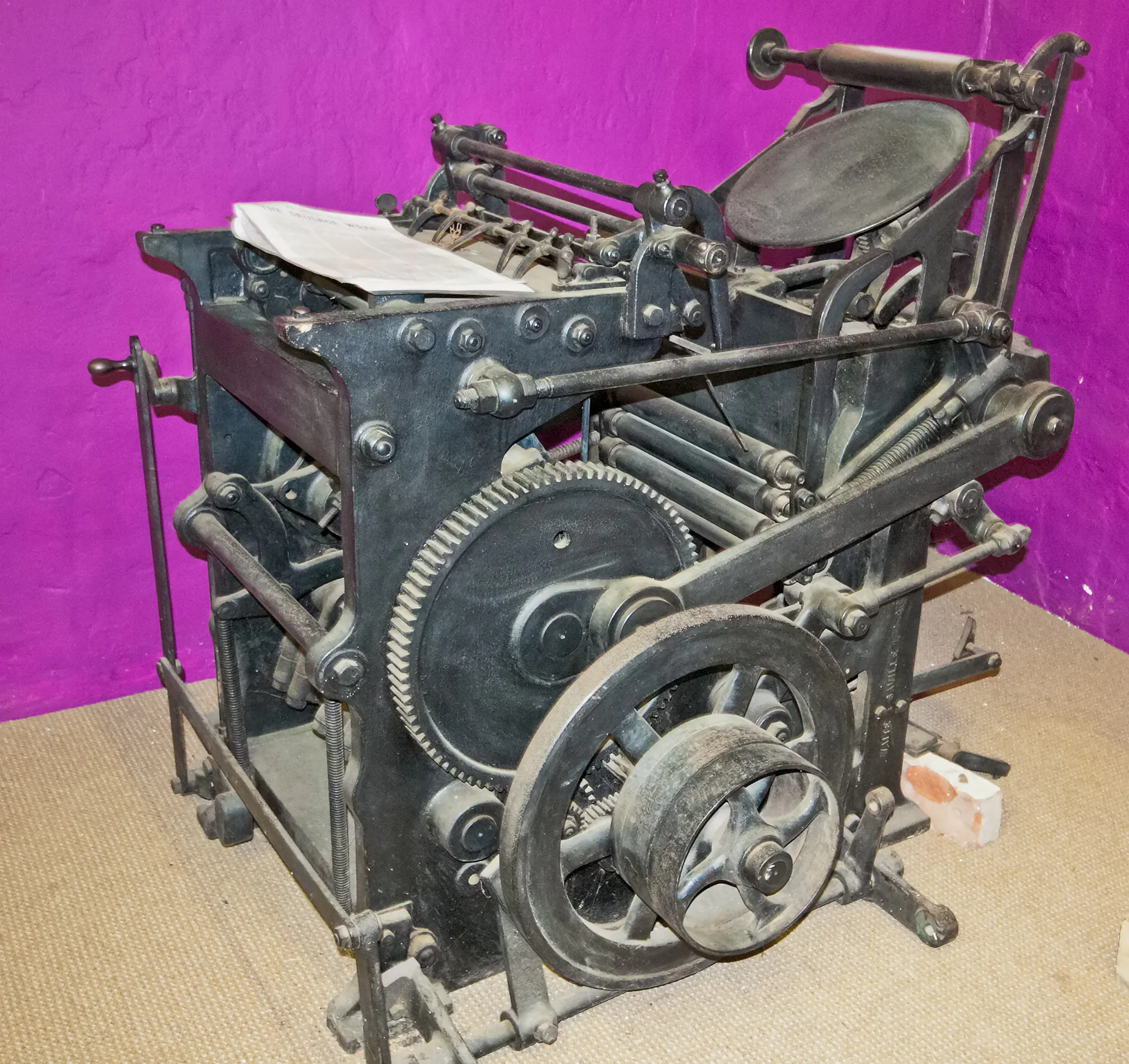
Mark McGurl talks about disintermediation, a key term for internet commerce, and his new book about fiction in the age of digital self-publication. The fantasy of disintermediation lies at the heart of utopian dreams of the internet, but it turns out that not only is the internet actually a medium, and a vast economic engine, but self-publishing is a lot of work! Mark McGurl is a professor of English at Stanford University. If you want to learn more about the effects of Amazon’s self-publishing mechanism on literature, check out his new book, Everything and Less: The Novel in the Age of Amazon (Verso, 2021). His earlier book The Program Era: Postwar Fiction and the Rise of Creative Writing (Harvard UP, 2011) takes a similarly materialist perspective on literary production, and it was sort of a thing. His first book The Novel Art: Elevations of American Fiction after Henry James (Princeton UP, 2001), blames Henry James for making American novels into art. In a good way of course. This week’s image is a photograph of a printing press held in the collections of the Fort Nonquai Eshowe museum in South Africa, posted on Wikimedia commons. Music used in promotional material: ‘Internet, the day when all humans will disappear’ by Monplaisir Learn more about your ad choices. Visit megaphone.fm/adchoices Support our show by becoming a premium member! https://newbooksnetwork.supportingcast.fm/communications
Ep 238Trevor Boffone, "TikTok Cultures in the United States" (Routledge, 2022)
Trevor Boffone's book TikTok Cultures in the United States (Routledge, 2022) examines the role of TikTok in US popular culture, paying close attention to the app’s growing body of subcultures. Featuring an array of scholars from varied disciplines and backgrounds, this book uses TikTok (sub)cultures as a point of departure from which to explore TikTok’s role in US popular culture today. Engaging with the extensive and growing scholarship on TikTok from international scholars, chapters in this book create frameworks and blueprints from which to analyse TikTok within a distinctly US context, examining topics such as gender and sexuality, feminism, race and ethnicity and wellness. Shaping TikTok as an interdisciplinary field in and of itself, this insightful and timely volume will be of great interest to students and scholars of new and digital media, social media, popular culture, communication studies, sociology of media, dance, gender studies, and performance studies. Rituparna Patgiri, PhD is an Assistant Professor of Sociology at Indraprastha College for Women, University of Delhi. She has a PhD in Sociology from Jawaharlal Nehru University (JNU), New Delhi. Her research interests lie in the areas of food, media, gender and public. She is also one of the co-founders of Doing Sociology. Patgiri can be reached at @Rituparna37 on Twitter. Learn more about your ad choices. Visit megaphone.fm/adchoices Support our show by becoming a premium member! https://newbooksnetwork.supportingcast.fm/communications
Ep 42Matt Reingold, "Reenvisioning Israel Through Political Cartoons: Visual Discourses During the 2018-2021 Electoral Crisis" (Lexington, 2022)
Reenvisioning Israel Through Political Cartoons: Visual Discourses During the 2018-2021 Electoral Crisis (Lexington Books, 2022) by Matt Reingold, published by Lexington Books as part of its Lexington Studies in Jewish Literature series, offers an incisive—and prescient, given the recent dissolution of the incumbent government—consideration of how political cartoonists in Israel broaden the conversation about the various challenges faced by the country. Organized thematically around issues that emerged at various points across the three-year period under consideration (including political mudslinging, the ultra-Orthodox community, the Coronavirus pandemic, and coverage of Benjamin Netanyahu in the right-leaning press), analysis of the cartoons complemented by interviews with many of the cartoonists whose works feature in the book, Reenvisioning Israel Through Political Cartoons moves the conversation about the Jewish State away from its typically partisan (and thus limiting) vistas. Reingold shows how with humor, satirical nous, and a sophisticated awareness of their audiences, the cartoonists’ work often cut across the traditional faultlines of Israeli society (Religious/Secular; Ashkenazi/Mizrachi; Cosmopolitan/Narrow; and of course, “Left”/”Right”), engaging with a more representative (if, of necessity, less tidy) discussion about Israel today. As Israel prepares for its fifth election in three years, following the collapse of the most broad-based coalition government in the country’s history (led, not-entirely-incidentally, by the country’s first religiously observant prime minister), Reingold’s book gives nuance and context to the conversation about Israel in Israel. Matt Reinhold has a PhD in Jewish Education. He teaches Jewish history and Jewish thought at Tanenbaum CHAT, a community Jewish high school in Toronto, Canada. Akin Ajayi (@AkinAjayi) is a writer and editor, based in Tel Aviv. Learn more about your ad choices. Visit megaphone.fm/adchoices Support our show by becoming a premium member! https://newbooksnetwork.supportingcast.fm/communications
Ep 324Jamie Susskind, "The Digital Republic: On Freedom and Democracy in the 21st Century" (Pegasus Books, 2022)
From one of the leading intellectuals of the digital age, The Digital Republic: On Freedom and Democracy in the 21st Century (Pegasus Books, 2022) is the definitive guide to the great political question of our time: how can freedom and democracy survive in a world of powerful digital technologies? A Financial Times “Book to Read” in 2022. Not long ago, the tech industry was widely admired, and the internet was regarded as a tonic for freedom and democracy. Not anymore. Every day, the headlines blaze with reports of racist algorithms, data leaks, and social media platforms festering with falsehood and hate. In The Digital Republic, acclaimed author Jamie Susskind argues that these problems are not the fault of a few bad apples at the top of the industry. They are the result of our failure to govern technology properly. The Digital Republic charts a new course. It offers a plan for the digital age: new legal standards, new public bodies and institutions, new duties on platforms, new rights and regulators, new codes of conduct for people in the tech industry. Inspired by the great political essays of the past, and steeped in the traditions of republican thought, it offers a vision of a different type of society: a digital republic in which human and technological flourishing go hand in hand. Jamie Susskind is a barrister and the author of the award-winning bestseller Future Politics: Living Together in a World Transformed by Tech (Oxford University Press, 2018), which received the Estoril Global Issues Distinguished Book Prize 2019, and was an Evening Standard and Prospect Book of the Year. He has fellowships at Harvard and Cambridge and currently lives in London. Austin Clyde is a Ph.D. candidate at the University of Chicago Department of Computer Science. He researches artificial intelligence and high-performance computing for developing new scientific methods. He is also a visiting research fellow at the Harvard Kennedy School's Science, Technology, and Society program, where my research addresses the intersection of artificial intelligence, human rights, and democracy. Learn more about your ad choices. Visit megaphone.fm/adchoices Support our show by becoming a premium member! https://newbooksnetwork.supportingcast.fm/communications
Ep 56Samuel Ulbricht, "Ethics of Computer Gaming: A Groundwork" (Palgrave MacMillan, 2022)
Today I talked to Samuel Ulbricht about his book Ethics of Computer Gaming: A Groundwork (Palgrave MacMillan, 2022). Despite the increasing number of gamers worldwide, the moral classification of computer gaming marks an as yet unsolved riddle of philosophical ethics. In view of the explosive nature of the topic in everyday life (as seen in various debates about rampages), it is obvious that a differentiated professional clarification of the phenomenon is needed: Can playing computer games be immoral? To answer this question, the author first discusses what we do at all when we play computer games: What kind of action are we talking about? The second step is a moral classification that reveals whether (and if so, why) some cases of computer gaming are morally problematic. The considerations made here provide a fundamental insight into the normative dimension of computer gaming. This book is a translation of the original German 1st edition Ethik des Computerspielens by Samuel Ulbricht in 2020. Rudolf Inderst is a professor of Game Design at the IU International University of Applied Science. Learn more about your ad choices. Visit megaphone.fm/adchoices Support our show by becoming a premium member! https://newbooksnetwork.supportingcast.fm/communications
Ep 56Samuel Ulbricht, "Ethics of Computer Gaming: A Groundwork" (Palgrave MacMillan, 2022)
Today I talked to Samuel Ulbricht about his book Ethics of Computer Gaming: A Groundwork (Palgrave MacMillan, 2022). Despite the increasing number of gamers worldwide, the moral classification of computer gaming marks an as yet unsolved riddle of philosophical ethics. In view of the explosive nature of the topic in everyday life (as seen in various debates about rampages), it is obvious that a differentiated professional clarification of the phenomenon is needed: Can playing computer games be immoral? To answer this question, the author first discusses what we do at all when we play computer games: What kind of action are we talking about? The second step is a moral classification that reveals whether (and if so, why) some cases of computer gaming are morally problematic. The considerations made here provide a fundamental insight into the normative dimension of computer gaming. This book is a translation of the original German 1st edition Ethik des Computerspielens by Samuel Ulbricht in 2020. Rudolf Inderst is a professor of Game Design at the IU International University of Applied Science. Learn more about your ad choices. Visit megaphone.fm/adchoices Support our show by becoming a premium member! https://newbooksnetwork.supportingcast.fm/communications
Ep 156Mary Wellesley, "Hidden Hands: The Lives of Manuscripts and Their Makers" (Riverrun, 2021)
Manuscripts teem with life. They are not only the stuff of history and literature, but they offer some of the only tangible evidence we have of entire lives, long receded. Hidden Hands: The Lives of Manuscripts and Their Makers (Riverrun, 2021) tells the stories of the artisans, artists, scribes and readers, patrons and collectors who made and kept the beautiful, fragile objects that have survived the ravages of fire, water and deliberate destruction to form a picture of both English culture and the wider European culture of which it is part. Without manuscripts, she shows, many historical figures would be lost to us, as well as those of lower social status, women and people of colour, their stories erased, and the remnants of their labours destroyed. From the Cuthbert Bible, to works including those by the Beowulf poet, Margery Kempe, Julian of Norwich, Sir Thomas Malory, Chaucer, the Paston Letters and Shakespeare, Mary Wellesley describes the production and preservation of these priceless objects. With an insistent emphasis on the early role of women as authors and artists and illustrated with over fifty colour plates, Hidden Hands is an important contribution to our understanding of literature and history. Morteza Hajizadeh is a Ph.D. graduate in English from the University of Auckland in New Zealand. His research interests are Cultural Studies; Critical Theory; Environmental History; Medieval (Intellectual) History; Gothic Studies; 18th and 19th Century British Literature. YouTube Channel. Twitter. Learn more about your ad choices. Visit megaphone.fm/adchoices Support our show by becoming a premium member! https://newbooksnetwork.supportingcast.fm/communications
Ep 122A. S. Hamrah, "The Earth Dies Streaming: Film Writing, 2002-2018" (N+1 Books, 2018)
The Earth Dies Streaming: Film Writing, 2002-2018 (N+1 Books, 2018) collects the best of A. S. Hamrah’s film writing for n+1, The Baffler, Bookforum, Harper’s, and other publications. Acerbic, insightful, hilarious, and damning, Hamrah’s aphoristic capsule reviews and lucid career retrospectives of filmmakers and critics have taken up the mantle of serious American film criticism—pioneered by James Agee, Robert Warshow, and Pauline Kael—and carried it into the 21st century. Taken together, these reviews and essays represent some of the best film criticism in the English language. The Earth Dies Streaming showcases a remarkable critical intelligence while offering a cultural history of the cinema of our times. In this conversation with host Annie Berke, A. S. Hamrah discusses his influences as a critic, lays out the challenges and shortcomings of film criticism today, and explains the differences between film and television. Currently the film critic for The Baffler, A. S. Hamrah was n+1’s film critic from 2008 to 2019, as well as the editor of the magazine’s film review supplement. He has worked as a movie theater projectionist, a semiotic brand analyst, a political pollster, a football cinematographer, a zine writer, and for the film director Raúl Ruiz. He lives in New York. Annie Berke is the Film Editor at the Los Angeles Review of Books and author of Their Own Best Creations: Women Writers in Postwar Television (University of California Press, 2022). Her scholarship and criticism has been published in Feminist Media Histories, Public Books, Literary Hub, and Ms. Learn more about your ad choices. Visit megaphone.fm/adchoices Support our show by becoming a premium member! https://newbooksnetwork.supportingcast.fm/communications
Ep 26Jason D. Spraitz and Kendra N. Bowen, "Institutional Sexual Abuse in the #metoo Era" (Southern Illinois UP, 2021)
In Institutional Sexual Abuse in the #metoo Era (Southern Illinois UP, 2021), editors Jason D. Spraitz and Kendra N. Bowen bring together the work of contributors in the fields of criminal justice and criminology, sociology, journalism, and communications. These chapters show #MeToo is not only a support network of victims’ voices and testimonies but also a revolutionary interrogation of policies, power imbalances, and ethical failures that resulted in decades-long cover-ups and institutions structured to ensure continued abuse. This book reveals #MeToo as so much more than a hashtag. Contributors discuss how #MeToo has altered the landscape of higher education; detail a political history of sexual abuse in the United States and the UK; discuss a recent grand jury report about religious institutions; and address the foster care and correctional systems. Hollywood instances are noted for their fear of retaliation among victims and continued accolades for alleged abusers. In sports, contributors examine the Jerry Sandusky scandal and the abuse by Larry Nassar. Advertising and journalism are scrutinized for covering the #MeToo disclosures while dealing with their own scandals. Finally, social media platforms are investigated for harassment and threats of violent victimization. Drawing on the general framework of the #MeToo Movement, contributors look at complex and very different institutions—athletics, academia, religion, politics, justice, childcare, social media, and entertainment. Contributors include revelatory case studies to ensure we hear the victims’ voices; bring to light the complicity and negligence of social institutions; and advocate for systemic solutions to institutional sexual abuse, violence, and harassment. Jeannette Cockroft is an associate professor of history and political science at Schreiner University. Learn more about your ad choices. Visit megaphone.fm/adchoices Support our show by becoming a premium member! https://newbooksnetwork.supportingcast.fm/communications

Ep 70Teletherapy
Hannah Zeavin talks about teletherapy, from Freud’s letters to suicide hotlines to therapy apps. If therapy is always mediated, teletherapy is any form of therapy in which that mediation is more clearly legible. This mediated practice is the topic of her new book The Distance Cure: A History of Teletherapy (MIT Press, 2021). Hannah is a Lecturer in the departments of English and History at UC Berkeley, where she is affiliated with the Berkeley Center for Science, Technology, Medicine, and Society, and she is a visiting fellow at Columbia University Center for the Study of Social Difference. She is currently at work on a second book project, about technology in the American family, called Mother’s Little Helpers, also with MIT Press. You can learn more about Hannah’s research and teaching on her website: zeavin.org Image: adapted from a 1912 advertisement of the Illinois Telephone and Telegraph Co. Music used in promotional material: ‘A Better Normal’ by Ian Sutherland Learn more about your ad choices. Visit megaphone.fm/adchoices Support our show by becoming a premium member! https://newbooksnetwork.supportingcast.fm/communications
Greg Hoffman, "Emotion By Design: Creative Leadership Lessons from a Life at Nike" (Twelve, 2022)
Today I talked to Greg Hoffman about his new book Emotion By Design: Creative Leadership Lessons from a Life at Nike (Twelve, 2022). For this week’s guest Greg Hoffman, the characteristics of empathy and curiosity are central to everything from finding your place in the world, to connecting with others, and building a brand that exhibits a true sense of purpose by empowering people to realize their potential. Along the way, this episode explores both the value and limits of data-driven marketing takes on the central role of smartphones today, and goes back into Hoffman’s own backstory as a mixed-race child growing up in a nearly all-white suburb of Minneapolis. In art and sports, Hoffman found his way forward. Greg Hoffman is a global brand leader, advisor, speaker, and former Nike Chief Marketing Office. He’s now the founder and principal of the brand advisory group Modern Arena as well as a branding instructor at the University of Oregon’s Lundquist School of Business and a member of the Board of Trustees at the Minneapolis College of Art and Design (MCAD). Dan Hill, PhD, is the author of nine books and leads Sensory Logic, Inc. (https://www.sensorylogic.com). His new book is Blah, Blah, Blah: A Snarky Guide to Office Lingo. To check out his related “Dan Hill’s EQ Spotlight” blog, visit https://emotionswizard.com. Learn more about your ad choices. Visit megaphone.fm/adchoices Support our show by becoming a premium member! https://newbooksnetwork.supportingcast.fm/communications
Ep 82Rachael Hutchinson and Jérémie Pelletier-Gagnon, "Japanese Role-Playing Games: Genre, Representation, and Liminality in the JRPG" (Lexington Books, 2022)
Rachael Hutchinson and Jérémie Pelletier-Gagnon's edited volume Japanese Role-Playing Games: Genre, Representation, and Liminality in the JRPG (Lexington Books, 2022) examines the origins, boundaries, and transnational effects of the genre, addressing significant formal elements as well as narrative themes, character construction, and player involvement. Contributors from Japan, Europe, North America, and Australia employ a variety of theoretical approaches to analyze popular game series and individual titles, introducing an English-speaking audience to Japanese video game scholarship while also extending postcolonial and philosophical readings to the Japanese game text. In a three-pronged approach, the collection uses these analyses to look at genre, representation, and liminality, engaging with a multitude of concepts including stereotypes, intersectionality, and the political and social effects of JRPGs on players and industry conventions. Broadly, this collection considers JRPGs as networked systems, including evolved iterations of MMORPGs and card-collecting “social games” for mobile devices. Scholars of media studies, game studies, Asian studies, and Japanese culture will find this book particularly useful. Jingyi Li is a PhD Candidate in Japanese History at the University of Arizona. She researches about early modern Japan, literati, and commercial publishing. Learn more about your ad choices. Visit megaphone.fm/adchoices Support our show by becoming a premium member! https://newbooksnetwork.supportingcast.fm/communications
Ep 152Whitney Trettien, "Cut/Copy/Paste: Fragments from the History of Bookwork" (U Minnesota Press, 2021)
Today’s guest is Whitney Trettien whose book Cut/Copy/Paste: Fragments from the History of Bookwork was published through the University of Minnesota Press in 2022. Trettien is a Professor of English at the University of Pennsylvania, and researches the history of the book spanning print and digital technologies. Cut/Copy/Paste explores makerspaces and collaboratories where paper media were cut up and reassembled into radical, bespoke publications. The book is complemented with a wide array of resources on early modern publishing available on the book’s webpage hosted by the University of Minnesota Press. John Yargo recently received his PhD in English literature from the University of Massachusetts Amherst, specializing in the environmental humanities and early modern culture. His articles have been published or are forthcoming in the Journal for Early Modern Culture Studies, Studies in Philology, and Shakespeare Studies. Learn more about your ad choices. Visit megaphone.fm/adchoices Support our show by becoming a premium member! https://newbooksnetwork.supportingcast.fm/communications
Ep 152Whitney Trettien, "Cut/Copy/Paste: Fragments from the History of Bookwork" (U Minnesota Press, 2021)
Today’s guest is Whitney Trettien whose book Cut/Copy/Paste: Fragments from the History of Bookwork was published through the University of Minnesota Press in 2022. Trettien is a Professor of English at the University of Pennsylvania, and researches the history of the book spanning print and digital technologies. Cut/Copy/Paste explores makerspaces and collaboratories where paper media were cut up and reassembled into radical, bespoke publications. The book is complemented with a wide array of resources on early modern publishing available on the book’s webpage hosted by the University of Minnesota Press. John Yargo recently received his PhD in English literature from the University of Massachusetts Amherst, specializing in the environmental humanities and early modern culture. His articles have been published or are forthcoming in the Journal for Early Modern Culture Studies, Studies in Philology, and Shakespeare Studies. Learn more about your ad choices. Visit megaphone.fm/adchoices Support our show by becoming a premium member! https://newbooksnetwork.supportingcast.fm/communications
Ep 297Mark Andrejevic, "Automated Media" (Routledge, 2019)
In this era of pervasive automation, Mark Andrejevic provides an original framework for tracing the logical trajectory of automated media and their social, political, and cultural consequences. Automated Media (Routledge, 2019) explores the cascading logic of automation, which develops from the information collection process through to data processing and, finally, automated decision making. It argues that pervasive digital monitoring combines with algorithmic decision making and machine learning to create new forms of power and control that pose challenges to democratic forms of accountability and individual autonomy alike. Andrejevic provides an overview of the implications of these developments for the fate of human experience, describing the "bias of automation" through the logics of pre-emption, operationalism, and "framelessness." Automated Media is a fascinating and groundbreaking new volume: a must-read for students and researchers of critical media studies interested in the intersections of media, technology, and the digital economy. Mark Andrejevic is Professor of Media Studies at Monash University where he heads the Automated Society Working Group in the School of Media, Film and Journalism. He is the author of Infoglut: How Too Much Information Is Changing the Way We Think and Know, iSpy: Surveillance and Power in the Interactive Era; and Reality TV: The Work of Being Watched, as well as numerous journal articles and book chapters on surveillance, popular culture, and digital media. Learn more about your ad choices. Visit megaphone.fm/adchoices Support our show by becoming a premium member! https://newbooksnetwork.supportingcast.fm/communications
Ep 17Francesco Buscemi, "Pasta, Pizza and Propaganda: A Political History of Italian Food TV" (Intellect, 2022)
The three protagonists of Pasta, Pizza and Propaganda: A Political History of Italian Food TV (Intellect, 2022) are food, television and politics. These are the three main characters that interrelate, collaborate and fight behind the scenes, while in front of the camera the writers, intellectuals and celebrity chefs talk about, prepare or taste the best Italian dishes. In Pasta, Pizza and Propaganda, Dr. Francesco Buscemi develops a political history of Italian ‘good food’ on national television, and the central role of food in Italian culture. The focus is highly original and this is a unique interdisciplinary study at the intersection between food studies, media studies and politics. The book retraces the history of Italian food television from a political point of view: the early shows of the pioneers under strict Catholic control in the 1950s and 1960s, the left-wing political twist of the 1970s, the conservative riflusso or resurgence of the 1980s, the disputed Berlusconian era and the rise of the celebrity chefs, which, for better or for worse, makes Italy similar to the other western countries. The history of Italy since the mid-1950s is retold through the lenses of food television. This lively book demonstrates that cooking spaghetti in a TV studio is a political act, and tries to uncover how it is possible that, while watching on TV how to make pizza, we become citizens. This interview was conducted by Dr. Miranda Melcher whose doctoral work focused on post-conflict military integration, understanding treaty negotiation and implementation in civil war contexts, with qualitative analysis of the Angolan and Mozambican civil wars. Learn more about your ad choices. Visit megaphone.fm/adchoices Support our show by becoming a premium member! https://newbooksnetwork.supportingcast.fm/communications
Ep 102Emily J. H. Contois and Zenia Kish, "Food Instagram: Identity, Influence, and Negotiation" (U Illinois Press, 2022)
Image by image and hashtag by hashtag, Instagram has redefined the ways we relate to food. Emily J. H. Contois and Zenia Kish edit contributions that explore the massively popular social media platform as a space for self-identification, influence, transformation, and resistance. Artists and journalists join a wide range of scholars to look at food’s connection to Instagram from vantage points as diverse as Hong Kong’s camera-centric foodie culture, the platform’s long history with feminist eateries, and the photography of Australia’s livestock producers. What emerges is a portrait of an arena where people do more than build identities and influence. Users negotiate cultural, social, and economic practices in a place that, for all its democratic potential, reinforces entrenched dynamics of power. Interdisciplinary in approach and transnational in scope, Food Instagram: Identity, Influence, and Negotiation (U Illinois Press, 2022) offers general readers and experts alike new perspectives on an important social media space and its impact on a fundamental area of our lives. The book has been dubbed by the experts in the field as “a veritable smorgasbord of perspectives on the all-pervasive and all-important nature of food on visual social media” (Tama Leaver, the co-author of Instagram: Visual Social Media Cultures) that “shows how the digital app and the kind of food representations it supports contribute to the building identities and negotiating social and economic relationships” (Fabio Parasecoli, author of Bite Me: Food in Popular Culture). It is a path-blazing, inspirational work offering a vast array of theoretical perspectives, methodological tools, and conceptual innovations. Emily Contois is Assistant Professor of Media Studies at the University of Tulsa. She holds a PhD in American studies from Brown University along with master's degrees in Gastronomy from Boston University and Public Health Nutrition from University of California, Berkeley. In addition to numerous articles, she is the author of Diners, Dudes, and Diets: How Gender and Power Collide in Food Media and Culture (2020). She serves on the board of the Association for the Study of Food and Society, H-Nutrition, and Advertising and Society Quarterly. As a public scholar, she has written for NBC News, Jezebel, and Nursing Clio and has appeared on CBS This Morning, BBC Ideas, and Ugly Delicious on Netflix. Learn more about her work at emilycontois.com or connect on social media (@emilycontois). Zenia Kish is Assistant Professor of Media Studies at the University of Tulsa. She earned her PhD in American studies at New York University and was a post- doctoral fellow at Stanford University. Her work explores global digital media, sociotechnical imaginaries of food and agriculture, and philanthrocapitalism and has been published in journals including American Quarterly, Cultural Studies, Journal of Cultural Economy, and Environment and Planning A. She is a member of the Agri-Food Technology Research (AFTeR) Project and is associate editor for the Journal of Cultural Economy, as well as serving on the boards of the Journal of Environmental Media and Communication and Race. She is writing a book on philanthropic media cultures (@ZeniaKish). Amir Sayadabdi is a Lecturer in Anthropology at Victoria University of Wellington. He is mainly interested in anthropology of food and its intersection with gender studies, migration studies, and studies of race, ethnicity, and nationalism. Learn more about your ad choices. Visit megaphone.fm/adchoices Support our show by becoming a premium member! https://newbooksnetwork.supportingcast.fm/communications
Ep 300Jonathan Crary, "Scorched Earth: Beyond the Digital Age to a Post-Capitalist World" (Verso, 2022)
In this uncompromising essay, Jonathan Crary presents the obvious but unsayable reality: our ‘digital age’ is synonymous with the disastrous terminal stage of global capitalism and its financialisation of social existence, mass impoverishment, ecocide, and military terror. Scorched Earth: Beyond the Digital Age to a Post-Capitalist World (Verso, 2022) surveys the wrecking of a living world by the internet complex and its devastation of communities and their capacities for mutual support. This polemic by the author of 24/7 dismantles the presumption that social media could be an instrument of radical change and contends that the networks and platforms of transnational corporations are intrinsically incompatible with a habitable earth or with the human interdependence needed to build egalitarian post-capitalist forms of life. Dr. Jonathan Crary is the Meyer Schapiro Professor of Modern Art and Theory at Columbia University in the Art history and Archeology Department. He is a prolific art and culture critic and is the co-founder (and co-editor) of Zone Books. Professor Crary has been the recipient of Guggenheim, Getty, Mellon, and National Endowment for the Arts Fellowships and has been a member of the Institute for Advanced Study in Princeton. In 2005, his teaching and mentoring were recognized with a Distinguished Columbia Faculty Award. Dr. Crary is also the author of Techniques of the Observer: On Vision and Modernity in the Nineteenth Century, Suspensions of Perception: Attention, Spectacle and Modern Culture (winner of the 2001 Lionel Trilling Book Award), and 24/7 (a finalist for the 2016 Terzani International Literary Prize). Cody Skahan ([email protected]) is an anthropologist by training, starting an MA program in Anthropology at the University of Iceland in August 2022 as a Leifur Eriksson Fellow. His work focuses on the intersections of queerness, environmentalisms, and tourism in Iceland. Cody has a blog here where he sometimes writes about Games User Research and will totally, 100% in the future post the podcast and other projects he is working on. Learn more about your ad choices. Visit megaphone.fm/adchoices Support our show by becoming a premium member! https://newbooksnetwork.supportingcast.fm/communications
Ep 123Robert-Jan Smits and Rachael Pells, "Plan S for Shock: Science. Shock. Solution. Speed." (Ubiquity Press, 2022)
Plan S: the open access initiative that changed the face of global research. Robert-Jan Smits and Rachael Pells's book Plan S for Shock: Science. Shock. Solution. Speed. (Ubiquity Press, 2022) tells the story of open access publishing - why it matters now, and for the future. In a world where information has never been so accessible, and answers are available at the touch of a fingertip, we are hungrier for the facts than ever before - something the Covid-19 crisis has brought to light. And yet, paywalls put in place by multi-billion dollar publishing houses are still preventing millions from accessing quality, scientific knowledge - and public trust in science is under threat. On 4 September 2018, a bold new initiative known as 'Plan S' was unveiled, kickstarting a world-wide shift in attitudes towards open access research. For the first time, funding agencies across continents joined forces to impose new rules on the publication of research, with the aim of one day making all research free and available to all. What followed was a debate of global proportions, as stakeholders asked: Who has the right to access publicly-funded research? Will it ever be possible to enforce change on a multi-billion dollar market dominated by five major players? Here, the scheme's founder, Robert-Jan Smits, makes a compelling case for Open Access, and reveals for the first time how he set about turning his controversial plan into reality - as well as some of the challenges faced along the way. In telling his story, Smits argues that the Covid-19 crisis has exposed the traditional academic publishing system as unsustainable. Galina Limorenko is a doctoral candidate in Neuroscience with a focus on biochemistry and molecular biology of neurodegenerative diseases at EPFL in Switzerland. Learn more about your ad choices. Visit megaphone.fm/adchoices Support our show by becoming a premium member! https://newbooksnetwork.supportingcast.fm/communications
Ep 237Edwin Amenta and Neal Caren, "Rough Draft of History: A Century of US Social Movements in the News" (Princeton UP, 2022)
Rough Draft of History: A Century of US Social Movements in the News (Princeton UP, 2022) offers a new view of U.S. social movement history across the twentieth century by examining how movement organizations were covered in major national newspapers. The book analyzes U.S. social movements--ranging from temperance to women's suffrage to the Tea Party and Occupy Wall Street--in a broad comparative fashion. Drawing on the full set of digitized newspapers from the twentieth-century (a task that as little as twenty years ago was considered impossible for researchers), the book offers both an institutional history of news--why the media covered what they covered, and to what effect--and also shows the influence of news coverage on a range of social movements, from the well-known to the obscure. Media coverage is a crucial component of movement visibility; news can draw the general public into battles over new issues but also shapes how movements are perceived. The authors show how a movement's structure--its organization, as well as the protest and non-protests activities it undertakes--influence its coverage, and consider too how macro-political conditions shape movement coverage. They reveal surprising gaps between contemporaneous coverage and current scholarly focus; for instance, the labor movement received the most journalistic attention of any movement of the twentieth century, but it is greatly understudied in comparison to how much it dominated the public sphere. Taking stock of news coverage across a century of movements thus illuminates movements that were influential in public discourse but have been neglected by scholars. Edwin Amenta is professor of sociology and political science at the University of California, Irvine. His books include When Movements Matter and Bold Relief (both Princeton). Twitter @EdwinAmenta Neal Caren is associate professor of sociology at the University of North Carolina, Chapel Hill. Twitter @HaphazardSoc Caleb Zakarin is the Assistant Editor of the New Books Network (Twitter: @caleb_zakarin) Learn more about your ad choices. Visit megaphone.fm/adchoices Support our show by becoming a premium member! https://newbooksnetwork.supportingcast.fm/communications
Ep 120Sara Austin, "Monstrous Youth: Transgressing the Boundaries of Childhood in the United States" (Ohio State UP, 2022)
In Monstrous Youth: Transgressing the Boundaries of Childhood in the United States (Ohio State Press, 2022), Sara Austin traces the evolution of monstrosity as it relates to youth culture from the 1950s to the present day to spotlight the symbiotic relationship between monstrosity and the bodies and identities of children and adolescents. Examining comics, films, picture books, novels, television, toys and other material culture—including Monsters, Inc. and works by Mercer Mayer, Maurice Sendak, R. L. Stine, and Stephanie Meyer—Austin tracks how the metaphor of monstrosity excludes, engulfs, and narrates difference within children’s culture. Analyzing how cultural shifts have drastically changed our perceptions of both what it means to be a monster and what it means to be a child, Austin charts how the portrayal and consumption of monsters corresponds to changes in identity categories such as race, sexuality, gender, disability, and class. In demonstrating how monstrosity is leveraged in service of political and cultural movements, such as integration, abstinence-only education, and queer rights, Austin offers insight into how monster texts continue to reflect, interpret, and shape the social discourses of identity within children’s culture. Rebekah Buchanan is an Associate Professor of English and Director of English Education at Western Illinois University. Her research focuses on feminism, activism, and literacy practices in youth culture, specifically through zines and music. Learn more about your ad choices. Visit megaphone.fm/adchoices Support our show by becoming a premium member! https://newbooksnetwork.supportingcast.fm/communications
Ep 85David L. Sloss, "Tyrants on Twitter: Protecting Democracies from Information Warfare" (Stanford UP, 2022)
When Facebook, Twitter, YouTube, and Instagram were first introduced to the public, their mission was simple: they were designed to help people become more connected to each other. Social media became a thriving digital space by giving its users the freedom to share whatever they wanted with their friends and followers. Unfortunately, these same digital tools are also easy to manipulate. As exemplified by Russia's interference in the 2016 U.S. presidential election, authoritarian states can exploit social media to interfere with democratic governance in open societies. Tyrants on Twitter: Protecting Democracies from Information Warfare (Stanford UP, 2022) is the first detailed analysis of how Chinese and Russian agents weaponize Facebook, Instagram, Twitter, and YouTube to subvert the liberal international order. In addition to examining the 2016 U.S. election, David L. Sloss explores Russia's use of foreign influence operations to threaten democracies in Europe, as well as China's use of social media and other digital tools to meddle in Western democracies and buttress autocratic rulers around the world. Sloss calls for cooperation among democratic governments to create a new transnational system for regulating social media to protect Western democracies from information warfare. Drawing on his professional experience as an arms control negotiator, he outlines a novel system of transnational governance that Western democracies can enforce by harmonizing their domestic regulations. And drawing on his academic expertise in constitutional law, he explains why that system―if implemented by legislation in the United States―would be constitutionally defensible, despite likely First Amendment objections. With its critical examination of information warfare and its proposal for practical legislative solutions to fight back, this book is essential reading in a time when disinformation campaigns threaten to undermine democracy. Morteza Hajizadeh is a Ph.D. graduate in English from the University of Auckland in New Zealand. His research interests are Cultural Studies; Critical Theory; Environmental History; Medieval (Intellectual) History; Gothic Studies; 18th and 19th Century British Literature. YouTube Channel. Twitter. Learn more about your ad choices. Visit megaphone.fm/adchoices Support our show by becoming a premium member! https://newbooksnetwork.supportingcast.fm/communications
Ep 177Andrew Simon, "Media of the Masses: Cassette Culture in Modern Egypt" (Stanford UP, 2022)
Media of the Masses: Cassette Culture in Modern Egypt (Stanford UP, 2022) investigates the social life of an everyday technology—the cassette tape—to offer a multisensory history of modern Egypt. Over the 1970s and 1980s, cassettes became a ubiquitous presence in Egyptian homes and stores. Audiocassette technology gave an opening to ordinary individuals, from singers to smugglers, to challenge state-controlled Egyptian media. Enabling an unprecedented number of people to participate in the creation of culture and circulation of content, cassette players and tapes soon informed broader cultural, political, and economic developments and defined "modern" Egyptian households. Drawing on a wide array of audio, visual, and textual sources that exist outside the Egyptian National Archives, Andrew Simon provides a new entry point into understanding everyday life and culture. Cassettes and cassette players, he demonstrates, did not simply join other twentieth century mass media, like records and radio; they were the media of the masses. Comprised of little more than magnetic reels in plastic cases, cassettes empowered cultural consumers to become cultural producers long before the advent of the Internet. Positioned at the productive crossroads of social history, cultural anthropology, and media and sound studies, Media of the Masses ultimately shows how the most ordinary things may yield the most surprising insights. Avery Weinman is a PhD student in History at the University of California, Los Angeles. She researches Jewish history in the modern Middle East and North Africa, with emphasis on Sephardi and Mizrahi radicals in British Mandatory Palestine. She can be reached at [email protected]. Learn more about your ad choices. Visit megaphone.fm/adchoices Support our show by becoming a premium member! https://newbooksnetwork.supportingcast.fm/communications
Ep 236Marc Schuilenburg, "Hysteria: Crime, Media, and Politics" (Routledge, 2021)
According to the medical world, hysteria is a thing of the past, an outdated diagnosis that has disappeared for good. Hysteria: Crime, Media, and Politics (Routledge, 2021) argues that hysteria is in fact alive and well. Hyperventilating, we rush from one incident into the next - there is hardly time for a breather. From the worldwide run on toilet paper to cope with coronavirus fears to the overheated discussions about immigration and overwrought reactions to the levels of crime and disorder around us, we live in a culture of hysteria. While hysteria is typically discussed in emotional terms - as an obstacle to be overcome - it nevertheless has very real consequences in everyday life. Irritating though this may be, hysteria needs to be taken seriously, for what it tells us about our society and way of life. That is why Marc Schuilenburg examines what hysteria is and why it is fuelled by a culture that not only abuses, but also encourages and rewards it. Written in a clear and direct style, this book will appeal to students and scholars of sociology, criminology, philosophy and all those interested in hysteria and how it permeates late modern society. Geert Slabbekoorn works as an analyst in the field of public security. In addition he has published on different aspects of dark web drug trade in Belgium. Find him on twitter, tweeting all things drug related @GeertJS. Learn more about your ad choices. Visit megaphone.fm/adchoices Support our show by becoming a premium member! https://newbooksnetwork.supportingcast.fm/communications
Ep 121Charles Elton, "Cimino: The Deer Hunter, Heaven's Gate, and the Price of a Vision" (Abrams Press, 2022)
Cimino: The Deer Hunter, Heaven's Gate, and the Price of a Vision (Abrams Press, 2022) is the first biography of critically acclaimed then critically derided filmmaker Michael Cimino--and a reevaluation of the infamous film that destroyed his career The director Michael Cimino (1939-2016) is famous for two films: the intense, powerful, and enduring Vietnam movie The Deer Hunter, which won Best Picture at the Academy Awards in 1979 and also won Cimino Best Director, and Heaven's Gate, the most notorious bomb of all time. Originally budgeted at $11 million, Cimino's sprawling western went off the rails in Montana. The picture grew longer and longer, and the budget ballooned to over $40 million. When it was finally released, Heaven's Gate failed so completely with reviewers and at the box office that it put legendary studio United Artists out of business and marked the end of Hollywood's auteur era. Or so the conventional wisdom goes. Charles Elton delves deeply into the making and aftermath of the movie and presents a surprisingly different view to that of Steven Bach, one of the executives responsible for Heaven's Gate, who wrote a scathing book about the film and solidified the widely held view that Cimino wounded the movie industry beyond repair. Elton's Cimino is a richly detailed biography that offers a revisionist history of a lightning rod filmmaker. Based on extensive interviews with Cimino's peers and collaborators and enemies and friends, most of whom have never spoken before, it unravels the enigmas and falsehoods, many perpetrated by the director himself, which surround his life, and sheds new light on his extraordinary career. This is a story of the making of art, the business of Hollywood, and the costs of ambition, both financial and personal. Joel Tscherne is an Adjunct History Professor at Southern New Hampshire University. His Twitter handle is @JoelTscherne. Learn more about your ad choices. Visit megaphone.fm/adchoices Support our show by becoming a premium member! https://newbooksnetwork.supportingcast.fm/communications
Ep 234John Wills, "Gamer Nation: Video Games and American Culture" (Johns Hopkins UP, 2019)
In 1975, design engineer Dave Nutting completed work on a new arcade machine. A version of Taito's Western Gun, a recent Japanese arcade machine, Nutting's Gun Fight depicted a classic showdown between gunfighters. Rich in Western folklore, the game seemed perfect for the American market; players easily adapted to the new technology, becoming pistol-wielding pixel cowboys. One of the first successful early arcade titles, Gun Fight helped introduce an entire nation to video-gaming and sold more than 8,000 units. In Gamer Nation: Video Games and American Culture (Johns Hopkins UP, 2019), John Wills examines how video games co-opt national landscapes, livelihoods, and legends. Arguing that video games toy with Americans' mass cultural and historical understanding, Wills show how games reprogram the American experience as a simulated reality. Blockbuster games such as Civilization, Call of Duty, and Red Dead Redemption repackage the past, refashioning history into novel and immersive digital states of America. Controversial titles such as Custer's Revenge and 08.46 recode past tragedies. Meanwhile, online worlds such as Second Life cater to a desire to inhabit alternate versions of America, while Paperboy and The Sims transform the mundane tasks of everyday suburbia into fun and addictive challenges. Working with a range of popular and influential games, from Pong, Civilization, and The Oregon Trail to Grand Theft Auto, Silent Hill, and Fortnite, Wills critically explores these gamic depictions of America. Touching on organized crime, nuclear fallout, environmental degradation, and the War on Terror, Wills uncovers a world where players casually massacre Native Americans and Cold War soldiers alike, a world where neo-colonialism, naive patriotism, disassociated violence, and racial conflict abound, and a world where the boundaries of fantasy and reality are increasingly blurred. Ultimately, Gamer Nation reveals not only how video games are a key aspect of contemporary American culture, but also how games affect how people relate to America itself. Rudolf Inderst is a professor of Game Design at the IU International University of Applied Science. Learn more about your ad choices. Visit megaphone.fm/adchoices Support our show by becoming a premium member! https://newbooksnetwork.supportingcast.fm/communications
Ep 296Louis M. Maraj, "Black or Right: Anti/Racist Campus Rhetorics" (Utah State UP, 2020)
Black or Right: Anti/Racist Campus Rhetorics (Utah State University Press, 2020) explores notions of Blackness in white institutional—particularly educational—spaces. In it, Louis M. Maraj theorizes how Black identity operates with/against ideas of difference in the age of #BlackLivesMatter. Centering Blackness in frameworks for antiracist agency through interdisciplinary Black feminist lenses, Black or Right asks how those racially signifying “diversity” in US higher education (and beyond) make meaning in the everyday. Offering four Black rhetorics as antiracist means for rhetorical reclamation—autoethnography, hashtagging, inter(con)textual reading, and reconceptualized disruption—the book uses Black feminist relationality via an African indigenous approach. Maraj examines fluid, quotidian ways Black folk engage anti/racism at historically white institutions in the United States in response to violent campus spaces, educational structures, protest movements, and policy practice. Black or Right’s experimental, creative style strives to undiscipline knowledge from academic confinement. Exercising different vantage points in each chapter—autoethnographer, digital media scholar/pedagogue, cultural rhetorician, and critical discourse analyst—Maraj challenges readers to ecologically understand shifting, multiple meanings of Blackness in knowledge-making. Black or Right’s expressive form, organization, narratives, and poetics intimately interweave with its argument that Black folk must continuously invent “otherwise” in reiterative escape from oppressive white spaces. In centering Black experiences, Black theory, and diasporic Blackness, Black or Right mobilizes generative approaches to destabilizing institutional whiteness, as opposed to reparative attempts to “fix racism,” which often paradoxically center whiteness. It will be of interest to both academic and general readers and significant for specialists in cultural rhetorics, Black studies, and critical theory. Anna E. Lindner is a doctoral candidate in the Communication Department at Wayne State University in Detroit, Michigan. On Twitter. Learn more about your ad choices. Visit megaphone.fm/adchoices Support our show by becoming a premium member! https://newbooksnetwork.supportingcast.fm/communications
Ep 65Andie Tucher, "Not Exactly Lying: Fake News and Fake Journalism in American History" (Columbia UP, 2022)
Long before the current preoccupation with “fake news,” American newspapers routinely ran stories that were not quite, strictly speaking, true. Today, a firm boundary between fact and fakery is a hallmark of journalistic practice, yet for many readers and publishers across more than three centuries, this distinction has seemed slippery or even irrelevant. We see this play in pink slime local news sites and in the proliferation of truthers claiming to do their own research because of a deep distrust in the mainstream media. In Not Exactly Lying: Fake News and Fake Journalism in American History (Columbia UP, 2022) Tucher argues that the creation of outward forms of factuality unleashed new opportunities for falsehood: News doesn’t have to be true as long as it looks true. Propaganda, disinformation, and advocacy—whether in print, on the radio, on television, or online—could be crafted to resemble the real thing. Dressed up in legitimate journalistic conventions, this “fake journalism” became inextricably bound up with right-wing politics, to the point where it has become an essential driver of political polarization. In the book and in this conversation, Tucher explores how American audiences have argued over what’s real and what’s not—and why that matters for democracy. Andie Tucher the H. Gordon Garbedian Professor and the director of the Communications Ph.D. Program at the Columbia Journalism School. Jenna Spinelle is a journalism instructor at Penn State's Donald P. Bellisario College of Communications. She's also the communications specialist for the university's McCourtney Institute for Democracy, where she hosts and produces the Democracy Works podcast. Learn more about your ad choices. Visit megaphone.fm/adchoices Support our show by becoming a premium member! https://newbooksnetwork.supportingcast.fm/communications
Ep 304Mark Anthony Neal, "Black Ephemera: The Crisis and Challenge of the Musical Archive" (NYU Press, 2022)
We are living in an era of unprecedented access to popular culture: contemporary digital infrastructure provides anyone with an internet connection access to a dizzying array of cultural objects past and present, which mingle and connect in fascinating, bizarre and sometimes troubling ways. In Black Ephemera: The Crisis and Challenge of the Musical Archive (NYU Press, 2022), Mark Anthony Neal considers the opportunities and challenges that this vast archive represents for Black American culture, with a particular focus on music and sound. He suggests that despite the profusion of what he terms ‘Black big data’ and the supposed democratisation of access this entails, the contemporary moment is characterised by a profound amnesia and an absence of attention to the dense web of connections that bind the analogue past with the digital present. Black Ephemera seeks to at once draw out and ‘mystify’ these links, by attending to recordings, historical moments and archival projects which have often been neglected in other studies of Black music. Neal’s explorations have a wide historical scope and operate simultaneously in microscopic and conjunctural registers. The book includes analyses of legendary Memphis record label Stax, the place of Aretha Franklin and Mavin Gaye’s overlooked early recordings in/as the Great American Songbook, the use of musical citation to try and combat the erasure of Black women’s experience from the historical archive, and the significance of archival ephemera to Black mourning practices from Pattie LaBelle to Kendrick Lamar. We cover a lot of music in this episode, and there’s even more in the book! A good place to start might be with two mixes made in response to Black Ephemera, which you can listen to here and here. Gummo Clare is a PhD researcher in the School of Media and Communications, University of Leeds. Learn more about your ad choices. Visit megaphone.fm/adchoices Support our show by becoming a premium member! https://newbooksnetwork.supportingcast.fm/communications
Ep 79Matthew Ricketson and Patrick Mullins, "Who Needs the ABC?: How Digital Disruption and Political Dysfunction Threaten the Australian Broadcasting Corporation's Existence" (Scribe, 2022)
Hello media fans - The ABC is Australia's public broadcaster, for TV, digital and radio. Think BBC and CBC and NPR. Who Needs the ABC?: How Digital Disruption and Political Dysfunction Threaten the Australian Broadcasting Corporation's Existence (Scribe, 2022) by Matthew Ricketson and Patrick Mullins (Scribe 2022), charts how, in its 90th year, the best-trusted news organisation in Australia arrived at its current plight: doing the most it ever has, with less than it needs, under a barrage of constant criticism. This book examines the profound changes that have swept through the Australian media, technology, and political landscapes in the past decade, and explores the tense relationship between the ABC and governments of both stripes over the last 40 years. It dispels any complacency about the ABC’s future by charting the very real threat now posed by the Liberal– National Party coalition, and the damage that it has done to the ABC while in office. Who Needs the ABC? identifies the vital role that the ABC plays in Australia today: in its award-winning journalism, in its vast array of cultural programming on television, on radio, and online, and in the comprehensive service it provides to people across the country. At a time when the truth has to vie with obfuscation and misinformation, this book offers a rejoinder to the ABC’s critics, points to solutions that will see the ABC thrive, and answers the question posed here: Who Needs the ABC? We all do. Bede Haines is a solicitor, specialising in litigation and a partner at Holding Redlich, an Australian commercial law firm. He lives in Sydney, Australia. Known to read books, ride bikes and eat cereal (often). [email protected] Learn more about your ad choices. Visit megaphone.fm/adchoices Support our show by becoming a premium member! https://newbooksnetwork.supportingcast.fm/communications
Ep 105Joshua Citarella, "Politigram and the Post-Left" (Blurb, 2021)
EThe internet’s potential to perform political miracles has been a source of both hope and disappointment for many grassroots movements. We remember that the Sanders campaign tried to master the meme to mobilise a young, eager audience. Equally, we ascribe Trump’s electoral victory in 2016 to seemingly leaderless internet misinformation.Many of such events have been the subject of academic study - but research is often slow to keep up with the rapidly changing scene. If a researcher tracing the role of the meme to the politicisation and radicalisation of online communities struggles to keep up what hope does an artist have? Joshua Citarella’s practice starts with the understanding that it is impossible to predict what the next generation of meme posters will be interested in and whether their memes will reach beyond their tiny echo chambers. What is clear is that mainstream politics, particularly the politics of the left, remains afraid of these unruly communities that can just as easily turn to the dark corners of the demonised alt-right as they are to carry the flag for Bernie. Joshua Citarella speaks to Pierre d'Alancaisez about researching internet subcultures, playing politics with the extremely online, the multiple meanings of radicalisation, strategies for subverting right-wing content, and the role of art in internet political aesthetics. Joshua Citarella is an artist, content creator, and researcher. Politigram and the Post-left is one of many projects he has released through self-publishing channels and directly to his supporters. Joshua on Instagram and Patreon 20 Interviews with meme-posters Do Not Research, and online internet culture magazine When Guys Turn 20, Joshua's video series at dis.art Do Not Research exhibition at Lower Cavity Interview with Mike Watson on The Memeing of Mark Fisher Pierre d’Alancaisez is a contemporary art curator, cultural strategist, researcher. Sometime scientist, financial services professional. Learn more about your ad choices. Visit megaphone.fm/adchoices Support our show by becoming a premium member! https://newbooksnetwork.supportingcast.fm/communications
Ep 44Reighan Gillam, "Visualizing Black Lives: Ownership and Control in Afro-Brazilian Media" (U Illinois Press, 2022)
A new generation of Afro-Brazilian media producers have emerged to challenge a mainstream that frequently excludes them. Reighan Gillam delves into the dynamic alternative media landscape developed by Afro-Brazilians in the twenty-first century. With works that confront racism and focus on Black characters, these artists and the visual media they create identify, challenge, or break with entrenched racist practices, ideologies, and structures. Gillam looks at a cross-section of media to show the ways Afro-Brazilians assert control over various means of representation in order to present a complex Black humanity. These images--so at odds with the mainstream--contribute to an anti-racist visual politics fighting to change how Brazilian media depicts Black people while highlighting the importance of media in the movement for Black inclusion. An eye-opening union of analysis and fieldwork, Visualizing Black Lives: Ownership and Control in Afro-Brazilian Media (U Illinois Press, 2022) examines the alternative and activist Black media and the people creating it in today's Brazil. Reighan Gillam is an Associate Professor in the Department of Anthropology at the University of Southern California. Alize Arıcan is a Postdoctoral Associate at Rutgers University's Center for Cultural Analysis. She is an anthropologist whose research focuses on urban renewal, futurity, care, and migration in Istanbul, Turkey. Her work has been featured in Current Anthropology, City & Society, JOTSA, Radical Housing Journal, and entanglements. You can find her on Twitter @alizearican Learn more about your ad choices. Visit megaphone.fm/adchoices Support our show by becoming a premium member! https://newbooksnetwork.supportingcast.fm/communications
Ep 84Allison Hahn, "Media Culture in Nomadic Communities" (Amsterdam UP, 2021)
In Media Culture in Nomadic Communities (Amsterdam University Press, 2021), author Allison Hahn examines the ways that new communications technologies have changed how nomadic and mobile communities engage in political advocacy, activism, and struggles for self-representation. Through a series of case studies focused on herding groups in different parts of the world, from Mongolia to Kenya to Scandinavia, Hahn examines how modern communications technologies and infrastructures are shaping nomadic communities and practices. Hahn argues that, contrary to popular belief, contemporary communications tools not only play an important role in how herding groups organize internally and for political ends, but also allow herding lifestyles to flourish and remain relevant into the 21st century. Maggie Freeman is a PhD student in the Department of Architecture at MIT. Her work focuses on histories of nomad-state relationships and uses of architecture in nomadic contexts. Learn more about your ad choices. Visit megaphone.fm/adchoices Support our show by becoming a premium member! https://newbooksnetwork.supportingcast.fm/communications
Ep 112Dustin Tahmahkera, "Cinematic Comanches: The Lone Ranger in the Media Borderlands" (U Nebraska Press, 2022)
For centuries Comanches have captivated imaginations. Yet their story in popular accounts abruptly stops in 1875, when the last free Comanches entered a reservation in southwestern Oklahoma. In Cinematic Comanches: The Lone Ranger in the Media Borderlands (U Nebraska Press, 2022), the first tribal-specific history of Comanches in film and media, Quanah Parker descendant Dustin Tahmahkera examines how Comanches represent themselves and are represented by others in recent media. Telling a story of Comanche family and extended kin and their relations to film, Tahmahkera reframes a distorted and defeated history of Comanches into a vibrant story of cinematic traditions, agency, and cultural continuity. Co-starring a long list of Comanche actors, filmmakers, consultants, critics, and subjects, Cinematic Comanches moves through the politics of tribal representation and history to highlight the production of Comanchería cinema. From early silent films and 1950s Westerns to Disney’s The Lone Ranger and the story of how Comanches captured its controversial Comanche lead Johnny Depp, Tahmahkera argues that Comanche nationhood can be strengthened through cinema. Tahmahkera’s extensive research includes interviews with elder LaDonna Harris, who adopted Depp during filming in one of the most contested films in recent Indigenous cinematic history. In the fragmented popular narrative of the rise and fall of Comanches, Cinematic Comanches calls for considering mediated contributions to the cultural resurgence of Comanches today. Joaquín Rivaya-Martínez an associate professor of History at Texas State University. Learn more about your ad choices. Visit megaphone.fm/adchoices Support our show by becoming a premium member! https://newbooksnetwork.supportingcast.fm/communications
Ep 120Ryan Watson, "Radical Documentary and Global Crises: Militant Evidence in the Digital Age" (Indiana UP, 2021)
When independent filmmakers, activists, and amateurs document the struggle for rights, representation, and revolution, they instrumentalize images by advocating for a particular outcome. Ryan Watson calls this "militant evidence." In Radical Documentary and Global Crises: Militant Evidence in the Digital Age (Indiana UP, 2021), Watson centers the discussion on extreme conflict, such as the Iraq War, the occupation of Palestine, the war in Syria, mass incarceration in the United States, and child soldier conscription in the Congo. Under these conditions, artists and activists aspire to document, archive, witness, and testify. The result is a set of practices that turn documentary media toward a commitment to feature and privilege the media made by the people living through the terror. This footage is then combined with new digitally archived images, stories, and testimonials to impact specific social and political situations. Radical Documentary and Global Crises re-orients definitions of what a documentary is, how it functions, how it circulates, and how its effect is measured, arguing that militant evidence has the power to expose, to amass, and to adjudicate. Gustavo E. Gutiérrez Suárez is PhD candidate in Social Anthropology, and BA in Social Communication. His areas of interest include Andean and Amazonian Anthropology, as well as Film poetics and aesthetics. You can follow him on Twitter vía @GustavoEGSuarez. Learn more about your ad choices. Visit megaphone.fm/adchoices Support our show by becoming a premium member! https://newbooksnetwork.supportingcast.fm/communications
Ep 75Erich Schwartzel, "Red Carpet: Hollywood, China, and the Global Battle for Cultural Supremacy" (Penguin, 2022)
From trade to technology to military might, competition between the United States and China dominates the foreign policy landscape. But this battle for global influence is also playing out in a strange and unexpected arena: the movies. The film industry, Wall Street Journal reporter Erich Schwartzel explains, is the latest battleground in the tense and complex rivalry between these two world powers. In recent decades, as China has grown into a giant of the international economy, it has become a crucial source of revenue for the American film industry. Hollywood studios are now bending over backward to make movies that will appeal to China’s citizens—and gain approval from severe Communist Party censors. At the same time, and with America’s unwitting help, China has built its own film industry into an essential arm of its plan to export its national agenda to the rest of the world. The competition between these two movie businesses is a Cold War for this century, a clash that determines whether democratic or authoritarian values will be broadcast most powerfully around the world. Red Carpet: Hollywood, China, and the Global Battle for Cultural Supremacy (Penguin, 2022) is packed with memorable characters who have—knowingly or otherwise—played key roles in this tangled industry web: not only A-list stars like Matt Damon, Angelina Jolie, and Richard Gere but also eccentric Chinese billionaires, zany expatriate filmmakers, and starlets who disappear from public life without explanation or trace. Schwartzel combines original reporting, political history, and show-biz intrigue in an exhilarating tour of global entertainment, from propaganda film sets in Beijing to the boardrooms of Hollywood studios to the living rooms in Kenya where families decide whether to watch an American or Chinese movie. Alarming, occasionally absurd, and wildly entertaining, Red Carpet will not only alter the way we watch movies but also offer essential new perspective on the power struggle of this century. Renee Garfinkel, Ph.D. is a psychologist, writer, Middle East television commentator and host of The New Books Network’s Van Leer Jerusalem Series on Ideas. Write her at [email protected] Learn more about your ad choices. Visit megaphone.fm/adchoices Support our show by becoming a premium member! https://newbooksnetwork.supportingcast.fm/communications
Ep 71Welding Technical Communication: Teaching and Learning Embodied Knowledge
Listen to this interview of Jo Mackiewicz, Professor of Rhetoric and Professional Communication at Iowa State University and editor of the Journal of Business and Technical Communication. We talk about welds that hold and about sentences that stand. Jo Mackiewicz : "Oh, I'd definitely agree that people can be motivated in what they're learning when they appreciate the art of it. I mean, for instance in welding, you need to put in a certain number of hours in order to have your mind and your body work as one in this technique — you know, you need to become the technique. And that kind of thing doesn't just happen. Your body has to do it over and over and over again for you to become an artist, or in the terms I use in the book, an expert. And those hours that you spend practising in a welding program, or in a writing program for that matter — those hours are all just building up your practice hours, building up your technique, and you keep continuing on towards true expertise." Contact Daniel at [email protected]. Learn more about your ad choices. Visit megaphone.fm/adchoices Support our show by becoming a premium member! https://newbooksnetwork.supportingcast.fm/communications
Ep 70English-Language Publishing in Asian Universities and Colleges
Hear from Professor Chris Gerteis, director of the International Publishing Initiative at Tokyo University. Avi and Chris have a fascinating discussion about the role of English language publication in universities and colleges in Asia and his work to assist faculty to publish their books with respected university publishers. Chris shares some of the unexpected hurdles in helping Japanese scholars to publish their work and how reviewers can be more open and understanding to different writing styles, formats, and tones. Avi Staiman is the founder and CEO of Academic Language Experts Learn more about your ad choices. Visit megaphone.fm/adchoices Support our show by becoming a premium member! https://newbooksnetwork.supportingcast.fm/communications
Ep 146Shara Rambarran, "Virtual Music: Sound, Music, and Image in the Digital Era" (Bloomsbury, 2021)
Virtuality has entered our lives making anything we desire possible. We are, as Gorillaz once sang, in an exciting age where 'the digital won't let [us] go…' Technology has revolutionized music, especially in the 21st century where the traditional rules and conventions of music creation, consumption, distribution, promotion, and performance have been erased and substituted with unthinkable and exciting methods in which absolutely anyone can explore, enjoy, and participate in creating and listening to music. Virtual Music: Sound, Music, and Image in the Digital Era (Bloomsbury, 2021) explores the interactive relationship of sound, music, and image, and its users (creators/musicians/performers/audience/consumers). Areas involving the historical, technological, and creative practices of virtual music are surveyed including its connection with creators, musicians, performers, audience, and consumers. Shara Rambarran looks at the fascination and innovations surrounding virtual music, and illustrates key artists (such as Grace Jones, The Weeknd), creators (such as King Tubby, Kraftwerk, MadVillain, Danger Mouse), audiovisuals in video games and performances (such as Cuphead and Gorillaz), audiences, and consumers that contribute in making this musical experience a phenomenon. Whether it is interrogating the (un)realness of performers, modified identities of artists, technological manipulation of the Internet, music industry and music production, or accessible opportunities in creativity, the book offers a fresh understanding of virtual music and appeals to readers who have an interest in this digital revolution. Shara Rambarran is Assistant Professor of Music at Bader International Study Centre, UK (Queen’s University, Canada). She co-runs the Art of Record Production conferences and is an editor on the Journal on the Art of Record Production and co-editor of The Oxford Handbook of Music and Virtuality (2016). Shara Rambarran on Twitter. Bradley Morgan is a media arts professional in Chicago and author of U2's The Joshua Tree: Planting Roots in Mythic America. He manages partnerships on behalf of CHIRP Radio 107.1 FM, serves as a co-chair of the associate board at the Gene Siskel Film Center of the School of the Art Institute of Chicago, and volunteers in the music archive at the Old Town School of Folk Music. Bradley Morgan on Twitter. Learn more about your ad choices. Visit megaphone.fm/adchoices Support our show by becoming a premium member! https://newbooksnetwork.supportingcast.fm/communications
Ep 30Joshua Neves, "Underglobalization: Beijing's Media Urbanism and the Chimera of Legitimacy" (Duke UP, 2020)
Joshua Neves’ Underglobalization: Beijing's Media Urbanism and the Chimera of Legitimacy (Duke University Press, 2020) examines the interplay of contemporary Chinese media practices with urban space, locating his analysis in political and postcolonial theory. His interdisciplinary approach, as noted in our interview, works to move past the traditional boundaries of Chinese studies and to understand the concatenation of Chinese piratical and official media practices in relation to modes of mediated citizenship as it exists across postcolonial urban spaces. Neves considers urban space in terms of planning and ruin, explores theatrical and televisual screen practices in situ in Chinese cities, and asks us to consider piracy not merely in terms of copied objects like DVDs, but rather in terms of technological intimacies and infrastructures. The book is richly illustrated, complementing Neves analytical argument with evidence of his urban methodology—an ambulatory, photographic mapping of the Beijing which allows us to accompany the scholar through his text. I hope you enjoy our conversation and excuse the faux pas with which I inadvertently opened the podcast! Julia Keblinska is a Post-Doctoral Researcher at the Center for Historical Research at the Ohio State University specializing in Chinese media history and comparative socialisms. Learn more about your ad choices. Visit megaphone.fm/adchoices Support our show by becoming a premium member! https://newbooksnetwork.supportingcast.fm/communications
Ep 147Richard Stamz and Patrick A. Roberts, "Give 'em Soul, Richard!: Race, Radio, and Rhythm and Blues in Chicago" (U Illinois Press, 2010)
Give 'em Soul, Richard!: Race, Radio, and Rhythm and Blues in Chicago (U Illinois Press, 2010) is the remarkable story of a remarkable man. Richard Stamz (1906-2007) never stopped hustling. From his birth on a Mississippi riverboat to appearances with Ma Rainey, from his connection to Governor Adlai Stevenson to his prison stint as a southside DJ fired over payola, Richard’s is the story of Twentieth-century Chicago. In a unique memoir, Prof. Patrick Roberts of Northern Illinois University repeats, explains, and interprets the life of Richard Stamz. David Hamilton Golland is professor of history and immediate past president of the faculty senate at Governors State University in Chicago's southland. @DHGolland. Learn more about your ad choices. Visit megaphone.fm/adchoices Support our show by becoming a premium member! https://newbooksnetwork.supportingcast.fm/communications
Ep 98Jennifer Keishin Armstrong, "When Women Invented Television: The Untold Story of the Female Powerhouses Who Pioneered the Way We Watch Today" (Harper, 2021)
It was the Golden Age of Radio and powerful men were making millions in advertising dollars reaching thousands of listeners every day. When television arrived, few radio moguls were interested in the upstart industry and its tiny production budgets, and expensive television sets were out of reach for most families. But four women--each an independent visionary-- saw an opportunity and carved their own paths, and in so doing invented the way we watch tv today. Irna Phillips turned real-life tragedy into daytime serials featuring female dominated casts. Gertrude Berg turned her radio show into a Jewish family comedy that spawned a play, a musical, an advice column, a line of house dresses, and other products. Hazel Scott, already a renowned musician, was the first African American to host a national evening variety program. Betty White became a daytime talk show fan favorite and one of the first women to produce, write, and star in her own show. Together, their stories chronicle a forgotten chapter in the history of television and popular culture. But as the medium became more popular--and lucrative--in the wake of World War II, the House Un-American Activities Committee arose to threaten entertainers, blacklisting many as communist sympathizers. As politics, sexism, racism, anti-Semitism, and money collided, the women who invented television found themselves fighting from the margins, as men took control. But these women were true survivors who never gave up--and thus their legacies remain with us in our television-dominated era. It's time we reclaimed their forgotten histories and the work they did to pioneer the medium that now rules our lives. Jennifer Keishin Armstrong's When Women Invented Television: The Untold Story of the Female Powerhouses Who Pioneered the Way We Watch Today (Harper, 2021) is an amazing and heartbreaking history, illustrated with photos, tells it all for the first time. Galina Limorenko is a doctoral candidate in Neuroscience with a focus on biochemistry and molecular biology of neurodegenerative diseases at EPFL in Switzerland. Learn more about your ad choices. Visit megaphone.fm/adchoices Support our show by becoming a premium member! https://newbooksnetwork.supportingcast.fm/communications
Ep 35Alexander Monea, "The Digital Closet: How the Internet Became Straight" (MIT Press, 2022)
In The Digital Closet: How the Internet Became Straight (MIT Press, 2022), Alexander Monea argues provocatively that the internet became straight by suppressing everything that is not, forcing LGBTQIA+ content into increasingly narrow channels--rendering it invisible through opaque algorithms, automated and human content moderation, warped keywords, and other strategies of digital overreach. Monea explains how the United States' thirty-year "war on porn" has brought about the over-regulation of sexual content, which, in turn, has resulted in the censorship of much nonpornographic content--including material on sex education and LGBTQIA+ activism. In this wide-ranging, enlightening account, Monea examines the cultural, technological, and political conditions that put LGBTQIA+ content into the closet. Monea looks at the anti-porn activism of the alt-right, Christian conservatives, and anti-porn feminists, who became strange bedfellows in the politics of pornography; investigates the coders, code, and moderators whose work serves to reify heteronormativity; and explores the collateral damage in the ongoing war on porn--the censorship of LGBTQ+ community resources, sex education materials, art, literature, and other content that engages with sexuality but would rarely be categorized as pornography by today's community standards. Finally, he examines the internet architectures responsible for the heteronormalization of porn: Google Safe Search and the data structures of tube sites and other porn platforms. Monea reveals the porn industry's deepest, darkest secret: porn is boring. Mainstream porn is stuck in a heteronormative filter bubble, limited to the same heteronormative tropes, tagged by the same heteronormative keywords. This heteronormativity is mirrored by the algorithms meant to filter pornographic content, increasingly filtering out all LGBTQIA+ content. Everyone suffers from this forced heteronormativity of the internet--suffering, Monea suggests, that could be alleviated by queering straightness and introducing feminism to dissipate the misogyny. Learn more about your ad choices. Visit megaphone.fm/adchoices Support our show by becoming a premium member! https://newbooksnetwork.supportingcast.fm/communications
Ep 290Chiara Bonacchi, "Heritage and Nationalism: Understanding Populism through Big Data" (UCL Press, 2022)
What are the connections between the past and modern politics? In Heritage and Nationalism: Understanding Populism through Big Data (UCL Press, 2022), Chiara Bonacchi, a Chancellor's Fellow in Heritage, Text and Data Mining and Senior Lecturer in Heritage at History, Classics & Archaeology and Edinburgh Futures Institute at University of Edinburgh, explores the uses of heritage by contemporary populist politics. Drawing on ‘big data’ sources, including Facebook and Twitter, along with a deep theoretical engagement with digital humanities and heritage, the book compares and contrasts key political events in Italy, USA, and the UK to show how the ancient world is deployed by both politicians and audiences. The book is essential reading for both humanities and political science scholars, along with anyone interested in understanding the current populist moment. The book is available open access here. Dave O'Brien is Professor of Cultural and Creative Industries, at the University of Sheffield. Learn more about your ad choices. Visit megaphone.fm/adchoices Support our show by becoming a premium member! https://newbooksnetwork.supportingcast.fm/communications

S1 Ep 96On Blogging Religion
Dr. Giulia Evolvi is the author of Blogging My Religion: Secular, Muslim, and Catholic Media Spaces in Europe, out now from Routledge. Evolvi is a Research Associate at the Centrum für Religionswissenshaftliche Studien (CERES) in Germany and she manages the Religion and Materiality Focus Group for the Käte Hamburger Kolleg project. Learn more about your ad choices. Visit megaphone.fm/adchoices Support our show by becoming a premium member! https://newbooksnetwork.supportingcast.fm/communications
Ep 120Pandemic Perspectives 12: Politicizing the COVID Pandemic
In this Pandemic Perspectives Podcast, Ideas Roadshow founder and host Howard Burton talks to Michael Berry, Director of the UCLA Center for Chinese Studies on American scapegoating, Chinese censorship and the sad story of Fang Fang's brave and influential COVID-19 memoir, Wuhan Diary. Ideas Roadshow's Pandemic Perspectives Project consists of three distinct, reinforcing elements: a documentary film (Pandemic Perspectives), book (Pandemic Perspectives: A filmmaker's journey in 10 essays) and a series of 24 detailed podcasts with many of the film's expert participants. Visit www.ideasroadshow.com for more details. Howard Burton is the founder of Ideas Roadshow and host of the Ideas Roadshow Podcast. He can be reached at [email protected]. Learn more about your ad choices. Visit megaphone.fm/adchoices Support our show by becoming a premium member! https://newbooksnetwork.supportingcast.fm/communications
Ep 83Anamik Saha, "Race, Culture and Media" (Sage, 2021)
In Race, Culture and Media (Sage, 2021), Anamik Saha provides an account of the role that media plays in both circulating and shaping ideas about race and racism in the contemporary world. Saha argues that we need to move beyond a focus on representation to engage with how media makes race. As Anamik describes in our interview, alongside providing a much-needed summary of existing work on the media, race and racism, the book also breaks new ground theoretically. By synthesising approaches from postcolonial studies, critical political economy and cultural studies, Saha puts forward an approach he calls ‘postcolonial cultural economy’, one which attends to the specific conjunctural context within which race is made and contested; the intertwined, but separate, forces of capitalism and racism; and which gives equal importance to the role that media production, texts, and consumption as forces which shape race and racisms. With case studies and key themes, ranging from the European migration ‘crisis’ of the mid-2010s to Black Twitter anchoring its analysis, this is an invaluable textbook for students and researchers working in the fields of critical media studies, cultural studies, internet studies and beyond. Gummo Clare is a PhD researcher in the School of Media and Communications, University of Leeds. Learn more about your ad choices. Visit megaphone.fm/adchoices Support our show by becoming a premium member! https://newbooksnetwork.supportingcast.fm/communications
Ep 62Roslyn Petelin, "How Writing Works: A Field Guide to Effective Writing" (Routledge, 2021)
Listen to this interview of Roslyn Petelin, Honorary Associate Professor at the University of Queensland, Australia. We talk about her book How Writing Works: A Field Guide to Effective Writing (Routledge, 2021) writing well and knowing why. Roslyn Petelin : "My book caters for all kinds of writers: student writers, creative writers, technical writers, journalistic writers, corporate writers, all of whom need to be able to write well, write successfully, for either personal or corporate credibility." Contact Daniel at [email protected]. Learn more about your ad choices. Visit megaphone.fm/adchoices Support our show by becoming a premium member! https://newbooksnetwork.supportingcast.fm/communications