
New Books in Buddhist Studies
420 episodes — Page 4 of 9
Ep 248Veena R. Howard et al., "The Bloomsbury Research Handbook of Indian Philosophy and Gender" (Bloomsbury, 2019)
'How do gender constructions transform religious experiences?' 'What is the role of bodily materiality in ethics and epistemology?' 'How does rethinking gender and sexuality force us to reconceptualise settled ontological frameworks?' The Bloomsbury Research Handbook of Indian Philosophy and Gender (Bloomsbury, 2019) provides the first research resource to Indian philosophical gender issues, exploring a variety of texts and traditions from Indian philosophy where the treatment of gender is dynamic and diverse. Organised around three central themes - the gender dynamics of enlightenment in the Hindu and Buddhist traditions; the simple binary opposition of genders in Indian traditions; the ways in which symbolic representations of gender differ from social realities in Hindu and Buddhist practice - a team of respected scholars discuss feminist readings, examinations of femininity and masculinity, as well as queer and trans identities, representations, and theories. Beginning with the Vedic tradition and ending with sections on Sri Ramakrishna and Gandhi, this wide-ranging handbook encourages fresh inquiry into classic philosophical questions. Offering critical analyses relevant to literary, cultural and religious studies, The Bloomsbury Research Handbook of Indian Philosophy and Gender opens up new ways of understanding gender and South Asian philosophy. Learn more about your ad choices. Visit megaphone.fm/adchoices Support our show by becoming a premium member! https://newbooksnetwork.supportingcast.fm/buddhist-studies
Ep 101Contemplative, Existential Psychotherapy and Dzogchen
Ken Bradford, Ph.D., has been a practitioner in the Theravada and Tibetan Buddhist traditions since 1975, and engaged in introducing meditative sensibilities and nondual wisdom streams into the experience-near practice of psychotherapy since 1988. Formerly, he was in private psychotherapy practice for 25 years, an Adjunct Professor at John F. Kennedy University and CIIS, Co-Director of Maitri Psychotherapy Institute, and a teaching associate with Jim Bugental. Bradford is a clinical psychologist, currently offering advanced training, workshops, and lectures in the United States and Europe in Contemplative-Existential oriented psychotherapy and consultation. His publications include Opening Yourself: The Psychology and Yoga of Self-liberation, The I of the Other: Mindfulness-Based Diagnosis and the Question of Sanity; Listening from the heart of silence: Nondual wisdom and psychotherapy, Vol. 2 (with John Prendergast); and articles addressing “Therapeutic Courage” & “The Play of Unconditioned Presence in Existential-Integrative Psychotherapy,” among other topics at the interface between Existential-phenomenological and Buddhist thought & practice. Learn more about your ad choices. Visit megaphone.fm/adchoices Support our show by becoming a premium member! https://newbooksnetwork.supportingcast.fm/buddhist-studies
Ep 245Rick Repetti, "Routledge Handbook on the Philosophy of Meditation" (Routledge, 2022)
Rick Repetti's Routledge Handbook on the Philosophy of Meditation (Routledge, 2022) provides a comprehensive overview and analysis of the state of the field of the philosophy of meditation and engages primarily in the philosophical assessment of the merits of meditation practices. This Handbook unites novel and original scholarship from 28 leading Asian and Western philosophers, scientists, theologians, and other scholars on the philosophical assessment of meditation. It critically assesses the conceptual and empirical validity of meditation, its philosophical implications, its legitimacy as a phenomenological research tool, its potential value as an aid to neuroscience research, its many practical benefits, and, among other considerations, its possibly misleading interpretations, applications, and consequences. Following the introduction by the editor, the Handbook's chapters are organized in six parts: - Meditation and philosophy - Meditation and epistemology - Meditation and metaphysics - Meditation and values - Meditation and phenomenology - Meditation in Greco-Roman and Judeo-Christian traditions A distinctive, timely, and invaluable reference work, it marks the emergence of a new discipline therein, the philosophy of meditation. The book will be of interest to an interdisciplinary audience in the fields of philosophy, meditation, Buddhism, Hinduism, Taoism, theology, and Asian and Western philosophy. It will serve as the textbook in any philosophy course on meditation, and as secondary reading in courses in philosophy of mind, consciousness, selfhood/personhood, metaphysics, or phenomenology, thereby helping to restore philosophy as a way of life. Learn more about your ad choices. Visit megaphone.fm/adchoices Support our show by becoming a premium member! https://newbooksnetwork.supportingcast.fm/buddhist-studies
Ep 308Monima Chadha, "Selfless Minds: A Contemporary Perspective on Vasubandhu's Metaphysics" (Oxford UP, 2022)
Buddhists are famous for their thesis that selves do not exist. But if they are right, what would that thesis mean for our apparent sense of self and for ordinary practices involving selves—or at least persons? In Selfless Minds: A Contemporary Perspective on Vasubandhu’s Metaphysics (Oxford University Press, 2022), Monima Chadha answers these questions by considering Vasubandhu’s arguments against the self. She argues that he—and Abhidharma philosophers like him—denies the existence of selves as well as persons and should take a strongly illusionist stance about our apparent senses of agency and ownership. The book also investigates how Vasubandhu ought to explain episodic memory and synchronic unity of conscious experiences without a self. Chadha weaves together philosophers from a range of traditions, drawing on contemporary and premodern interpreters of Buddhism as well as analytic philosophy, phenomenology and continental philosophy, and modern cognitive science. Malcolm Keating is Associate Professor of Philosophy at Yale-NUS College. His research focuses on Sanskrit works of philosophy in Indian traditions, in the areas of language and epistemology. He is the author of Language, Meaning, and Use in Indian Philosophy (Bloomsbury Press, 2019) and host of the podcast Sutras & Stuff. Learn more about your ad choices. Visit megaphone.fm/adchoices Support our show by becoming a premium member! https://newbooksnetwork.supportingcast.fm/buddhist-studies
Ep 243Justin W. Henry, "Ravana's Kingdom: The Ramayana and Sri Lankan History from Below" (Oxford UP, 2022)
Ravana, the demon-king antagonist from the Ramayana, the ancient Hindu epic poem, has become an unlikely cultural hero among Sinhala Buddhists over the past decade. In Ravana's Kingdom: The Ramayana and Sri Lankan History from Below (Oxford UP, 2022), Justin W. Henry delves into the historical literary reception of the epic in Sri Lanka, charting the adaptions of its themes and characters from the 14th century onwards, as many Sri Lankan Hindus and Buddhists developed a sympathetic impression of Ravana's character, and through the contemporary Ravana revival, which has resulted in the development of an alternative mythological history, depicting Ravana as king of the Sri Lanka's indigenous inhabitants, a formative figure of civilizational antiquity, and the direct ancestor of the Sinhala Buddhist people. Henry offers a careful study of the literary history of the Ramayana in Sri Lanka, employing numerous sources and archives that have until now received little to no scholarly attention, as well as the 21st century revision of a narrative of the Sri Lankan people-a narrative incubated by the general public online, facilitated by social media and by the speed of travel of information in the digital age. Ravana's Kingdom offers a glimpse into a centuries-old, living Ramayana tradition among Hindus and Buddhists in Sri Lanka-a case study of the myth-making process in the digital age. Raj Balkaran is a scholar of Sanskrit narrative texts. He teaches at the Oxford Centre for Hindu Studies and at his own virtual School of Indian Wisdom. For information see rajbalkaran.com. Learn more about your ad choices. Visit megaphone.fm/adchoices Support our show by becoming a premium member! https://newbooksnetwork.supportingcast.fm/buddhist-studies
Ep 244Andrea Acri and Peter Sharrock, "The Creative South: Buddhist and Hindu Art in Mediaeval Maritime Asia" (Iseas-Yusof Ishak Institute, 2022)
Andrea Acri and Peter Sharrock's The Creative South: Buddhist and Hindu Art in Mediaeval Maritime Asia (2 volumes; Iseas-Yusof Ishak Institute, 2022) examines the creative contribution of Maritime Asia towards shaping new paradigms in the Buddhist and Hindu art and architecture of the mediaeval Asian world. Far from being a mere southern conduit for the maritime circulation of Indic religions, in the period from ca. the 7th to the 14th century those regions transformed across mainland and island polities the rituals, icons, and architecture that embodied these religious insights with a dynamism that often eclipsed the established cultural centres in Northern India, Central Asia, and mainland China. Raj Balkaran is a scholar of Sanskrit narrative texts. He teaches at the Oxford Centre for Hindu Studies and at his own virtual School of Indian Wisdom. For information see rajbalkaran.com. Learn more about your ad choices. Visit megaphone.fm/adchoices Support our show by becoming a premium member! https://newbooksnetwork.supportingcast.fm/buddhist-studies
Ep 94Buddhist Responses to COVID: A Discussion with Venerable Soorākkulame Pemaratana
Dr Pierce Salguero sits down with Venerable Soorākkulame Pemaratana, chief abbot at the Pittsburgh Buddhist Center and a scholar of modern Buddhism in Sri Lanka. We talk about his role in adapting Buddhist practices to address social and mental health needs during the Covid-19 pandemic. We also compare Buddhist responses to Covid in Pittsburgh and Sri Lanka. Along the way, we talk about how he became a monk, the health benefits of drinking boiled coriander water, and the dire situation in his home country. Enjoy the conversation! And, if you want to hear from more experts on Buddhist medicine and related topics, subscribe to Blue Beryl for monthly episodes here. Resources: Pittsburgh Buddhist Center Donate to PBC's efforts to Help Sri Lanka PBC Recordings of Chanting PBC Livestream Other Resources on Buddhist Responses to Covid-19 Pierce Salguero is a transdisciplinary scholar of health humanities who is fascinated by historical and contemporary intersections between Buddhism, medicine, and crosscultural exchange. He has a Ph.D. in History of Medicine from the Johns Hopkins School of Medicine (2010), and teaches Asian history, medicine, and religion at Penn State University’s Abington College, located near Philadelphia. He is also the host (with Lan Li) of the Blue Beryl podcast. Subscribe to Blue Beryl here. Learn more about your ad choices. Visit megaphone.fm/adchoices Support our show by becoming a premium member! https://newbooksnetwork.supportingcast.fm/buddhist-studies
Ep 242Ute Hüsken, "Laughter, Creativity, and Perseverance: Female Agency in Buddhism and Hinduism" (Oxford UP, 2022)
In most mainstream traditions of Hinduism and Buddhism, women have for centuries largely been excluded from positions of religious and ritual leadership. However, as this volume shows, in an increasing number of late-20th-century and early-21st-century contexts, women can and do undergo monastic and priestly education; they can receive ordination/initiation as Buddhist nuns or Hindu priestesses; and they are accepted as religious and political leaders. Even though these processes still take place largely outside or at the margins of traditional religious institutions, it is clear that women are actually establishing new religious trends and currents. They are attracting followers, and they are occupying religious positions on par with men. At times women are filling a void left behind by male religious specialists who left the profession, and at times they are perceived as their rivals. In some cases, this process takes place in collaboration with male religious specialists, in others against the will of the women's male counterparts. However, in most cases we see both acceptance and resistance. Whether silently or with great fanfare, women are grasping new opportunities to occupy positions of leadership. Ute Hüsken's Laughter, Creativity, and Perseverance: Female Agency in Buddhism and Hinduism (Oxford UP, 2022) offers ten in-depth case studies analysing culturally, historically, and geographically unique situations in order to explore the historical background, contemporary trajectories, and impact of the emergence of new and powerful forms of female agency in mostly conservative Hindu and Buddhist religious traditions. Raj Balkaran is a scholar of Sanskrit narrative texts. He teaches at the Oxford Centre for Hindu Studies and at his own virtual School of Indian Wisdom. For information see rajbalkaran.com. Learn more about your ad choices. Visit megaphone.fm/adchoices Support our show by becoming a premium member! https://newbooksnetwork.supportingcast.fm/buddhist-studies
Ep 100100 Nietzsche, Wokeism, Non-Buddhist Mysticism
What does it mean to be a hundred? Perhaps Fredric Nietzsche would know. He’s in part the star of the show. Along with regular guest Glenn Wallis. We look at the ideal reader, the ideal thinker, and perhaps the ideal practitioner. We discuss his work in progress, Nietzsche NOW! A book that wonders what Nietzsche would have to say about Wokeism. We also discuss the podcast on its 100th birthday and I get asked a question or two to celebrate. Come along for a slice of Nietzschean cake and topical takes on another of Glenn’s works, Non-Buddhist Mysticism. What is a podcast in 2023? Everyone’s got one apparently. Which means the whole craze will no doubt come to a timely end soon. Then what? The reinvigoration of quality journalism, or just a slow chug on into a future of ever too much to listen to, think about, care about, bother with? Who knows. This podcast will continue as it started; navigating terrain somewhere between intelligent practice, informed discussion, critique where needed, and humanity where it can be found. Do join us for more if that suits you too. We remain at New Books Network, on itunes, Spotify, Google Podcasts and possibly elsewhere. Thank you for listening. Matthew O'Connell is a life coach and the host of the The Imperfect Buddha podcast. You can find The Imperfect Buddha on Facebook and Twitter (@imperfectbuddha). Learn more about your ad choices. Visit megaphone.fm/adchoices Support our show by becoming a premium member! https://newbooksnetwork.supportingcast.fm/buddhist-studies
Ep 115Brooke Schedneck, "Religious Tourism in Northern Thailand: Encounters with Buddhist Monks" (U Washington Press, 2021)
The city of Chiang Mai in northern Thailand has become the destination for a growing segment of the international tourism market: religious tourism. International tourists visit Buddhist temples, volunteer as English teachers, discuss Buddhism with student monks, and experiment with meditation. In her new book, Religious Tourism in Northern Thailand: Encounters with Buddhist Monks (University of Washington Press, 2021), Brooke Schedneck examines this growing phenomenon. While such interactions may constitute yet another case of the commodification of Buddhism, religious tourism in Buddhist Chiang Mai can also be seen as another way in which Thai Buddhism is adapting to a more globalized, market-oriented society. It may even constitute a new opportunity for Buddhist missionary work. Religious Tourism in Northern Thailand has been shortlisted for the EuroSEAS Humanities Book Prize for 2022. Patrick Jory teaches Southeast Asian History in the School of Historical and Philosophical Inquiry at the University of Queensland. He can be reached at: [email protected]. Learn more about your ad choices. Visit megaphone.fm/adchoices Support our show by becoming a premium member! https://newbooksnetwork.supportingcast.fm/buddhist-studies
Ep 187Mikel Burley, "A Radical Pluralist Philosophy of Religion: Cross-Cultural, Multireligious, Interdisciplinary" (Bloomsbury, 2020)
A Radical Pluralist Philosophy of Religion: Cross-Cultural, Multireligious, Interdisciplinary (Bloomsbury, 2020) is a unique introduction to studying the philosophy of religion, drawing on a wide range of cultures and literary sources in an approach that is both methodologically innovative and expansive in its cross-cultural and multi-religious scope. Employing his expertise in interdisciplinary and Wittgenstein-influenced methods, Mikel Burley draws on works of ethnography and narrative fiction, including Dostoevsky's The Brothers Karamazov and Soyinka's Death and the King's Horseman, to critically engage with existing approaches to the philosophy of religion and advocate a radical, pluralist approach. Breaking away from the standard fixation on a narrow construal of theism, topics discussed include conceptions of compassion in Buddhist ethics, cannibalism in mortuary rituals, divine possession and animal sacrifice in Hindu Goddess worship and animism in indigenous traditions. Original and engaging, Burley's synthesis of philosophical, anthropological and literary elements expands and diversifies the philosophy of religion, providing an essential introduction for anyone interested in studying the radical plurality of forms that religion takes in human life. Tiatemsu Longkumer is a Ph.D. scholar working on ‘Anthropology of Religion’ at North-Eastern Hill University, Shillong: India. Learn more about your ad choices. Visit megaphone.fm/adchoices Support our show by becoming a premium member! https://newbooksnetwork.supportingcast.fm/buddhist-studies
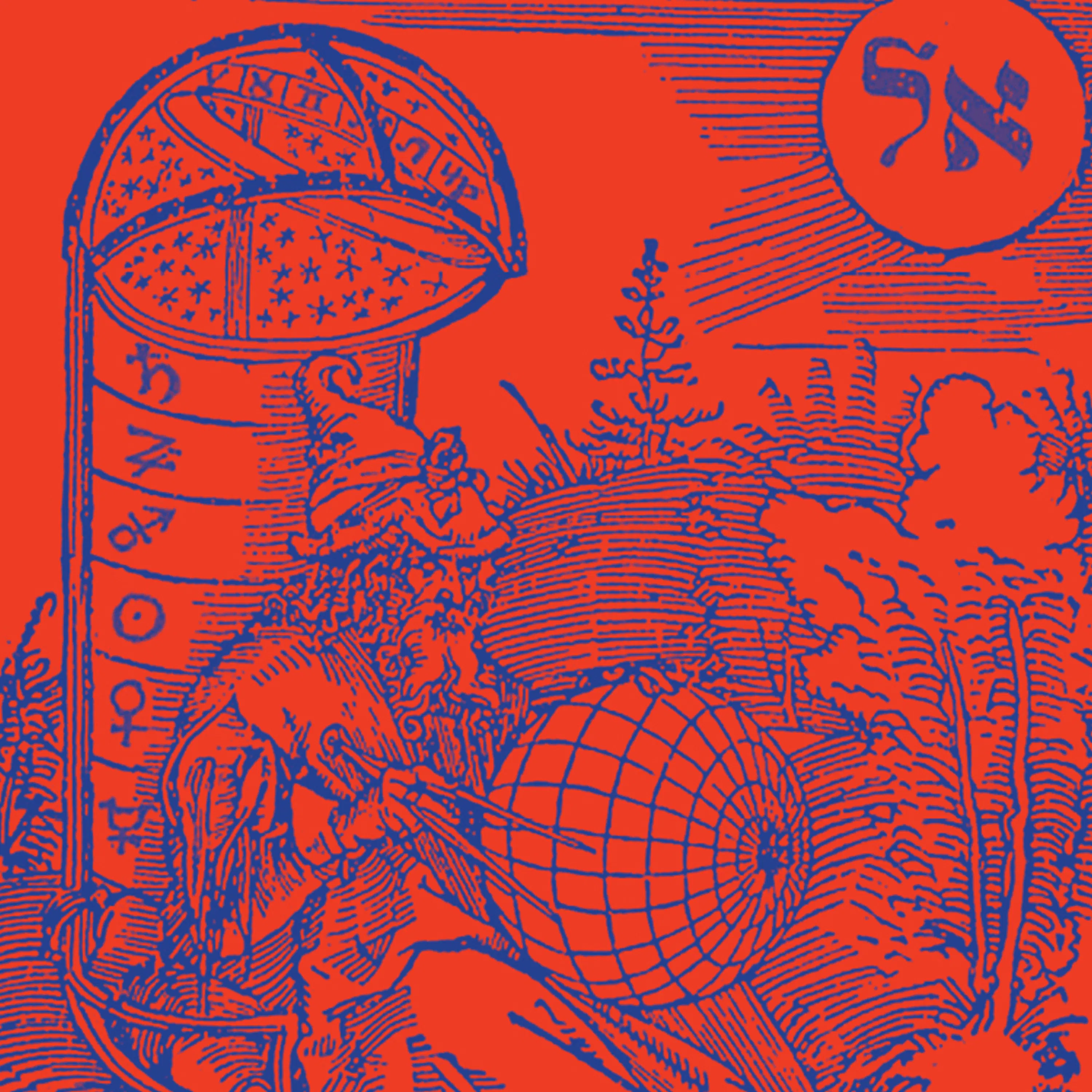
Ep 16Nothing Matters: About the Idea of "Emptiness"
Between the Buddhist doctrine of ‘emptiness,’ the Jewish idea of Ayin, and the quantum mechanical zero-point energy of a vacuum, it turns out there’s quite a lot to be said about Nothing. Guests Janet Gyatso, Professor of Buddhist Studies at Harvard Divinity School Daniel Matt, Scholar of Jewish Mysticism Learn more about your ad choices. Visit megaphone.fm/adchoices Support our show by becoming a premium member! https://newbooksnetwork.supportingcast.fm/buddhist-studies
Ep 93Zen Chaplaincy, Activism, and Scholarship
In this episode of the Blue Beryl Podcast, Pierce Salguero sits down with Wakoh Shannon Hickey, who is a Soto Zen priest, hospice chaplain, scholar, and activist. She talks about her early experiences with social violence in the 1980s, her work as a hospital chaplain, and her 2019 book Mind Cure, which is a groundbreaking social history of religion and mindfulness in the U.S. Resources: Wakoh's Academia.edu page Hickey, Mind Cure: How Meditation Became Medicine (Oxford UP, 2019) Helderman, Prescribing the Dharma: Psychotherapists, Buddhist Traditions, and Defining Religion (2019) Brown, Debating Yoga and Mindfulness in Public Schools: Reforming Secular Education or Reestablishing Religion? (2019) Purser, McMindfulness: How Mindfulness Became the New Capitalist Spirituality (2019) Find all episodes of the Blue Beryl Podcast here. Pierce Salguero is a transdisciplinary scholar of health humanities who is fascinated by historical and contemporary intersections between Buddhism, medicine, and crosscultural exchange. He has a Ph.D. in History of Medicine from the Johns Hopkins School of Medicine (2010), and teaches Asian history, medicine, and religion at Penn State University’s Abington College, located near Philadelphia. He is also the host (with Lan Li) of the Blue Beryl podcast. Subscribe to Blue Beryl here. Learn more about your ad choices. Visit megaphone.fm/adchoices Support our show by becoming a premium member! https://newbooksnetwork.supportingcast.fm/buddhist-studies
S1 Ep 9Zen Buddhism, Mardi Gras, and the Metaphysics of Eternity: Talking about Buddhist and Christian Mysticism
David Basile (who was our guest in Episode 01) returns to talk about his ten years in as a Zen Buddhist monk at the Tassajara Zen Mountain Retreat Center in California. He tells the story of how he went from being a child in a lukewarm Catholic home, to a teenage atheist, to an ardent Buddhist at the monastery—where he encountered the Benedictine mystic, David Steindl-Rast—and finally back home to the Catholic Church. He and I discuss the commonalities and significant differences between Buddhism and Christianity. David also explains the radical departure that Buddhism took from Hinduism 2500 years ago, and how all three of these faiths approach the questions of existence and eternity. Finally we consider life, death, life-after-death, and why Christians think of God as a loving Father. Learn more about your ad choices. Visit megaphone.fm/adchoices Support our show by becoming a premium member! https://newbooksnetwork.supportingcast.fm/buddhist-studies
Ep 92Buddhist Medicine in Tibet: A Discussion with Bill McGrath
In this episode, I sit down with my friend Bill McGrath, a historian of Tibetan Buddhism and medicine. He's one of the most knowledgeable people in the world on this subject, and we get deep into the weeds in an academic conversation about traditional Tibetan medicine, the category of Buddhist medicine, and Bill's perspectives on magic, religion, and science. We also reminisce about the time that Bill once used a Tibetan mantra to save the day when we ran out of gas driving home from a conference! Resources mentioned in the pod: Bill's website (ww.wmcgrath.com) Yoeli-Tlalim, ReOrienting Histories of Medicine: Encounters along the Silk Road (2022) Gerke, Taming the Poisonous: Mercury, Toxicity, and Safety in Tibetan Medical Practic (2021) Janet Gyatso's review of Pierce's 2014 book Salguero, A Global History of Buddhism and Medicine (2022) Gyatso, Being Human in a Buddhist World: An Intellectual History of Medicine in Early Modern Tibet (2017) McGrath, Knowledge and Context in Tibetan Medicine (2019) Saxer, Manufacturing Tibetan Medicine: The Creation of an Industry and the Moral Economy of Tibetanness (2013) Reassembling Tibetan Meicine (www.ratimed.net) Weber, The Protestant Ethic and the Spirit of Capitalism (1905) Pierce Salguero is a transdisciplinary scholar of health humanities who is fascinated by historical and contemporary intersections between Buddhism, medicine, and crosscultural exchange. I have a Ph.D. in History of Medicine from the Johns Hopkins School of Medicine (2010), and teach Asian history, medicine, and religion at Penn State University’s Abington College, located near Philadelphia. He is also the host (with Lan Li) of the Blue Beryl podcast. Subscribe to Blue Beryl here. Learn more about your ad choices. Visit megaphone.fm/adchoices Support our show by becoming a premium member! https://newbooksnetwork.supportingcast.fm/buddhist-studies
Ep 91Wendi L. Adamek, "Practicescapes and the Buddhists of Baoshan" (Hamburg Buddhist Studies, 2021)
How should one dwell in endtime? In this SPIDER-spun web of a book, Wendi Adamek guides readers to the visual and textual traces left by Buddhist nuns, monks, and devotees on mountainsides in Baoshan, north central China, and through them, the soteriology of Buddhism in the medieval world. The convents have vanished and the stones weathered, but the skillful work in maintaining co-constitutive relations is as palpable as ever. Thoroughly researched and artfully written, Practicescapes and the Buddhists of Baoshan (Hamburg Buddhist Studies, 2021) advances scholarship without leaving the lay reader behind. The comparative insights, theory-work, and appended transcriptions of this definitive study constitute a gift to past, present, and future travelers. This book is available open-access. Jessica Zu is an Assistant Professor in the School of Religion at USC Dornsife. She specializes in modern Chinese Yogācāra and Buddhist social philosophy. You can find her on Twitter @ JessicaZu7 or email her at [email protected]. Learn more about your ad choices. Visit megaphone.fm/adchoices Support our show by becoming a premium member! https://newbooksnetwork.supportingcast.fm/buddhist-studies
Ep 231Holly Walters, "Shaligram Pilgrimage in the Nepal Himalayas" (Amsterdam UP, 2020)
Today I talked to Holly Walters about her new book Shaligram Pilgrimage in the Nepal Himalayas (Amsterdam UP, 2020). For roughly two thousand years, the veneration of sacred fossil ammonites, called Shaligrams has been an important part of Hindu and Buddhist ritual practice throughout South Asia and among the global Diaspora. Originating from a single remote region of Himalayan Nepal, called Mustang, Shaligrams are all at once fossils, divine beings, and intimate kin with families and worshippers. Through their lives, movements, and materiality, Shaligrams then reveal fascinating new dimensions of religious practice, pilgrimage, and politics. But as social, environmental, and national conflicts in the politically-contentious region of Mustang continue to escalate, the geologic, mythic, and religious movements of Shaligrams have come to act as parallels to the mobility of people through both space and time. Shaligram mobility therefore traverses through multiple social worlds, multiple religions, and multiple nations revealing Shaligram practitioners as a distinct, alternative, community struggling for a place in a world on the edge. Learn more about your ad choices. Visit megaphone.fm/adchoices Support our show by becoming a premium member! https://newbooksnetwork.supportingcast.fm/buddhist-studies
Ep 185Richard Brian Miller, "Why Study Religion?" (Oxford UP, 2021)
Can the study of religion be justified? Scholarship in religion, especially work in "theory and method," is preoccupied with matters of research procedure and thus inarticulate about the goals that motivate scholarship in the field. For that reason, the field suffers from a crisis of rationale. Richard B. Miller identifies six prevailing methodologies in the field, and then offers an alternative framework for thinking about the purposes of the discipline. Shadowing these various methodologies, he notes, is a Weberian scientific ideal for studying religion, one that aspires to value-neutrality. This ideal fortifies a "regime of truth" that undercuts efforts to think normatively and teleologically about the field's purpose and value. Miller's alternative framework, Critical Humanism, theorizes about the ends rather than the means of humanistic scholarship. Why Study Religion? (Oxford UP, 2021) offers an account of humanistic inquiry that is held together by four values: Post-critical Reasoning, Social Criticism, Cross-cultural Fluency, and Environmental Responsibility. Ordered to such purposes, Miller argues, scholars of religion can relax their commitment to matters of methodological procedure and advocate for the value of studying religion. The future of religious studies will depend on how well it can articulate its goals as a basis for motivating scholarship in the field. David Gottlieb is the Director of Jewish Studies at the Spertus Institute for Jewish Learning and Leadership in Chicago. He is the author of Second Slayings: The Binding of Isaac and the Formation of Jewish Memory (Gorgias Press, 2019). Learn more about your ad choices. Visit megaphone.fm/adchoices Support our show by becoming a premium member! https://newbooksnetwork.supportingcast.fm/buddhist-studies
Ep 90Jingjing Li, "Comparing Husserl's Phenomenology and Chinese Yogacara in a Multicultural World: A Journey Beyond Orientalism" (Bloomsbury, 2022)
Comparing Husserl’s Phenomenology and Chinese Yogacara in a Multicultural World: A Journey Beyond Orientalism by Jingjing Li (Bloomsbury, 2022) starts its investigation with a longstanding question in the comparative studies of phenomenology and Yogacara. While phenomenology and Yogacara Buddhism are both known for their investigations of consciousness, there exists a core tension between them: phenomenology affirms the existence of essence, whereas Yogacara Buddhism argues that everything is empty of essence (svabhava). How is constructive cultural exchange possible when traditions hold such contradictory views? Answering this question and positioning both philosophical traditions in their respective intellectual and linguistic contexts, Jingjing Li argues that what Edmund Husserl means by essence differs from what Chinese Yogacarins mean by svabhava, partly because Husserl problematises the substantialist understanding of essence in European philosophy. Furthermore, she reveals that Chinese Yogacara has developed an account of self-transformation, ethics and social ontology that renders it much more than simply a Buddhist version of Husserlian phenomenology. Detailing the process of finding a middle ground between the two traditions, this book demonstrates how both can thrive together in order to overcome Orientalism. Jessica Zu is an Assistant Professor in the School of Religion at USC Dornsife. She specializes in modern Chinese Yogācāra and Buddhist social philosophy. You can find her on Twitter @JessicaZu7 or email her at [email protected]. Learn more about your ad choices. Visit megaphone.fm/adchoices Support our show by becoming a premium member! https://newbooksnetwork.supportingcast.fm/buddhist-studies
Ep 99Non-Duality: A Discussion with Peter Fenner
Peter Fenner, Ph.D, is an adapter and teacher of non-duality, and an author. His two books, Radiant Mind: Awakening Unconditioned Awareness (Sounds True, 2007) and Natural Awakening: An Advanced Guide for Sharing Nondual Awareness (Sumeru Press, 2015), draw on a dialectical method adapted from his monastic training with the Gelugpa School of Tibetan Buddhism. We discuss philosophical psychology, the Madhyamaka school of Buddhist thought, the challenge of patterns, meditation, and the relationship between the different vehicles in Buddhism. This episode features a longer introduction in order to update listeners on a slight change in direction or the podcast as well as an attempt to contextualize non-duality. Matthew O'Connell is a life coach and the host of the The Imperfect Buddha podcast. You can find The Imperfect Buddha on Facebook and Twitter (@imperfectbuddha). Learn more about your ad choices. Visit megaphone.fm/adchoices Support our show by becoming a premium member! https://newbooksnetwork.supportingcast.fm/buddhist-studies
Ep 226Maria Heim, "Words for the Heart: A Treasury of Emotions from Classical India" (Princeton UP, 2022)
Words for the Heart: A Treasury of Emotions from Classical India (Princeton UP, 2022) is a captivating treasury of emotion terms drawn from some of India’s earliest classical languages. Inspired by the traditional Indian genre of a “treasury”—a wordbook or anthology of short texts or poems—this collection features 177 jewel-like entries evoking the kinds of phenomena English speakers have variously referred to as emotions, passions, sentiments, moods, affects, and dispositions. These entries serve as beautiful literary and philosophical vignettes that convey the delightful texture of Indian thought and the sheer multiplicity of conversations about emotions in Indian texts. An indispensable reference, Words for the Heart reveals how Indian ways of interpreting human experience can challenge our assumptions about emotions and enrich our lives. Raj Balkaran is a scholar of Sanskrit narrative texts. He teaches at the Oxford Centre for Hindu Studies and at his own virtual School of Indian Wisdom. For information see rajbalkaran.com. Learn more about your ad choices. Visit megaphone.fm/adchoices Support our show by becoming a premium member! https://newbooksnetwork.supportingcast.fm/buddhist-studies
Ep 237The Future of Religious Studies: A Conversation with Russell McCutcheon
Russell McCutcheon shares his views on the academic study of religion, and the path ahead for religion graduates and the field itself. McCutcheon is a professor of religious studies at the University of Alabama and a contributor to the Religious Studies Project podcast. Raj Balkaran is a scholar of Sanskrit narrative texts. He teaches at the Oxford Centre for Hindu Studies and at his own virtual School of Indian Wisdom. For information see rajbalkaran.com. Learn more about your ad choices. Visit megaphone.fm/adchoices Support our show by becoming a premium member! https://newbooksnetwork.supportingcast.fm/buddhist-studies
Ep 300Charles Goodman, "The Tattvasaṃgraha Of Śāntarakṣita: Selected Metaphysical Chapters" (Oxford UP, 2022)
The Tattvasaṃgraha of Śāntarakṣita: Selected Metaphysical Chapters (Oxford University Press, 2022) collects excerpts from a massive encyclopedic work of the late period of Buddhism in India. Translator Charles Goodman has selected sections of this Sanskrit text which cover debates over the existence of prime matter, God, and an immaterial soul, as well as controversies around the cause and effect, karma, and Jain perspectivalism. Within these chapters, through a translation of the verses of the Tattvasaṃgraha as well as the canonical commentary the Tattvasaṃgrahapañjikā by Kamalaśila, the book showcases Buddhists debates with a wide range of interlocutors. Śānatarakṣita and Kamalaśila, from their vantage point late in the history of Indian Buddhism, collect a range of arguments against their historical opponents: Sāṃkhya, Nyāya, Mīmāṃsā, Advaita Vedānta, Jainism, and even a group of Buddhists known as the Vātsīputrīyas. The book also includes an introductory chapter by the translator which explains the sophisticated underlying epistemological framework of this massive and massively influential text. Malcolm Keating is Associate Professor of Philosophy at Yale-NUS College. His research focuses on Sanskrit works of philosophy in Indian traditions, in the areas of language and epistemology. He is the author of Language, Meaning, and Use in Indian Philosophy (Bloomsbury Press, 2019) and host of the podcast Sutras & Stuff. Learn more about your ad choices. Visit megaphone.fm/adchoices Support our show by becoming a premium member! https://newbooksnetwork.supportingcast.fm/buddhist-studies
Ep 9797 Buddhist Medicine and Buddhish
In this episode, Pierce Salguero comes on to discuss two of his books: Buddhish, A Guide to the 20 Most Important Buddhist Ideas for the Curious and Skeptical (Beacon Press, 2022) and A Global History of Buddhism and Medicine (Columbia UP, 2022). Pierce is a transdisciplinary scholar of health humanities, fascinated by historical and contemporary intersections between Buddhism, medicine, and crosscultural exchange. He has a Ph.D. in History of Medicine from the Johns Hopkins School of Medicine (2010), and teaches Asian history, medicine, and religion at Penn State University’s Abington College, near Philadelphia. The major theme in his scholarship is discovering the role of Buddhism in the global transmission and local reception of knowledge about health, disease, and the body. After graduating in 1996, he lived in Asia for four years — more than two years in Thailand, with extended stays in India, China, and Indonesia as well. During this time, he trained as a practitioner of Traditional Thai Medicine (TTM). Pierce participated in extended stays at Buddhist meditation centers and monasteries in Northeast Thailand and India, including a summer as ananāgārika (white-robed monastic resident) in a Thai Forest-tradition monastery. Matthew O'Connell is a life coach and the host of the The Imperfect Buddha podcast. You can find The Imperfect Buddha on Facebook and Twitter (@imperfectbuddha). Learn more about your ad choices. Visit megaphone.fm/adchoices Support our show by becoming a premium member! https://newbooksnetwork.supportingcast.fm/buddhist-studies
Ep 295Leah Kalmanson, "Cross-Cultural Existentialism: On the Meaning of Life in Asian and Western Thought" (Bloomsbury, 2020)
Does human existence have a meaning? If so, is that meaning found in the world outside of us, or is it something we bring to our experience? In Cross-Cultural Existentialism: On the Meaning of Life in Asian and Western Thought (Bloomsbury, 2020) Leah Kalmanson shows how East Asian philosophies challenge the dichotomy implicit in the way this question is often framed. Her book investigates Korean Buddhist meditation, Confucian ritual practices, and Yijing divination. Along the way she argues that the speculative approaches implicit in these traditions, contrary to the views of many modern European philosophers, means that metaphysical theorizing need not be in opposition to cultivating practical techniques and taking subjectivity seriously. Taking the Korean Buddhist nun Kim Iryŏp as her center point, Kalmanson traces lines of historical influence backwards to Song-dynasty Ruist (or “Confucian”) thinkers such as Zhu Xi and considers conceptual connections outwards to modern existentialists such as Georges Bataille, all the while reflecting on one of philosophy’s big questions: just what does life mean, if anything? Malcolm Keating is Associate Professor of Philosophy at Yale-NUS College. His research focuses on Sanskrit works of philosophy in Indian traditions, in the areas of language and epistemology. He is the author of Language, Meaning, and Use in Indian Philosophy (Bloomsbury Press, 2019) and host of the podcast Sutras & Stuff. Learn more about your ad choices. Visit megaphone.fm/adchoices Support our show by becoming a premium member! https://newbooksnetwork.supportingcast.fm/buddhist-studies
Ep 467Matthew W. King, "In the Forest of the Blind: The Eurasian Journey of Faxian's Record of Buddhist Kingdoms" (Columbia UP, 2022)
What would an “anti-field history” of Buddhist Studies look like? What does the social history of knowledge look like when it both includes and exceeds the West/Nonwest binary, the ethnonational subject, the secular humanist gaze, and the moral narratives and metaphysical content of modernism? Matt W. King explores these critical questions and models innovative approaches in his second monograph, In the Forest of the Blind (Columbia University Press 2022), which uses Faxian’s Record of Buddhist Kingdoms to expose “ecologies of interpretation” in both nineteenth-century European Orientalist scholarship and Inner Asian monastic cultures. Although Faxian’s The Record of Buddhist Kingdoms (Foguoji) is a fifth-century CE travelogue about the Chinese Buddhist monk’s journey into Central and South Asia, it later became the subject of Europe’s first study of “Buddhist Asia” in the nineteenth century in Jean-Pierre Abel-Rémusat’s Relation des Royaumes Bouddhiques, which was then translated from French into Mongolian by the Buryat scholar Dorji Banzarov, and then by the Mongolian monk Zava Damdin Lubsangdamdin from Mongolian into Tibetan. Tracing this fascinating history of trans-Eurasian circulation of knowledge production, King argues that “the circulatory history of Faxian’s Record is not simply about Buddhist Asia forged in Europe into other places that were not Europe,” rather, the story is organized “by a chain of site-specific and differing orientations to knowledge itself – of treatments for traces of the past, of methodology.” In six creatively organized chapters, King discusses first discusses how Faxian’s Record “orders time by means of space” in its early Chinese context, and then delves into the history of Orientalist Buddhist Studies showing how Abel-Rémusat’s “poaching” of Qing sources facilitated the disciplining of Buddhist Asia into an object of a transregional science. In Chapters 3 and 5, we see an inversion of the Orientalist gaze and learn about the reception and reinterpretation of Orientalist scholarship among the “Oriental” subjects themselves, who attempted to make sense of Buddhist history, geography, and Asia’s place and time in the world through Faxian’s Record, via Abel-Rémusat’s translation and scholarship. Here, King shows us that Abel-Rémusat’s science of Buddhist Asia was turned, or rather silenced, into chö-jung (history of the Dharma). Unlike models from world history and transcultural studies that tend to focus on movement, contact, and exchange, In the Forest of the Blind instead focuses innovatively on connected but place-bound interpreters who hardly knew of each other and “who began anew from the silence of analytical practices staged elsewhere.” As an example of an “anti-field history,” this book, in King’s words, attempts “not to look past the fetish of the subject, but to find the disciplinary implications of centerless, overlapping, and mutually incomprehensible relations of knowledge-power that are coproductive but unbeholden to any specific relation of force (such as colonizer/colonized).” The aim of the book, King explains, is “to imagine new disciplinary futures in Buddhist and Asian studies by implicating the disciplinary present in a more diverse, global, subversive, and dispersed disciplinary past that is more attentive to negative space and absence than to impact or influence.” Ending the book with a complete, annotated English translation of the Tibetan version of Faxian’s Record, which was translated from a Mongolian translation of the French translation of the Chinese original, In the Forest of the Blind provides the readers with rich notes about continuities and discrepancies across all four trans-Eurasian versions. Matthew King is an Associate Professor in Transnational Buddhism in the Department of Religious Studies at the University of California, Riverside. Learn more about your ad choices. Visit megaphone.fm/adchoices Support our show by becoming a premium member! https://newbooksnetwork.supportingcast.fm/buddhist-studies
S1 Ep 201On Tibetan Buddhist Philosophy and Gorampa Sonam Senge
Constance Kassor is an assistant professor of religious studies at Lawrence University, where she teaches courses on Buddhist thought and Asian religious traditions. Her research focuses on Tibetan Buddhist philosophy, and she is currently involved in several projects related to the Madhyamaka philosophy of the 15th-century thinker, Gorampa Sonam Senge. She is also interested in religion and comics, women and gender minorities in Buddhism, pedagogy, and digital humanities. Learn more about your ad choices. Visit megaphone.fm/adchoices Support our show by becoming a premium member! https://newbooksnetwork.supportingcast.fm/buddhist-studies
Ep 89Alison Melnick Dyer, "The Tibetan Nun Mingyur Peldrön: A Woman of Power and Privilege" (U Washington Press, 2022)
Born to a powerful family and educated at the prominent Mindröling Monastery, the Tibetan Buddhist nun and teacher Mingyur Peldrön (1699–1769) leveraged her privileged status and overcame significant adversity, including exile during a civil war, to play a central role in the reconstruction of her religious community. In The Tibetan Nun Mingyur Peldrön: A Woman of Power and Privilege (U Washington Press, 2022), Alison Melnick Dyer employs literary and historical analysis, centered on a biography written by the nun's disciple Gyurmé Ösel, to consider how privilege influences individual authority, how authoritative Buddhist women have negotiated their position in gendered contexts, and how the lives of historical Buddhist women are (and are not) memorialized by their communities. Mingyur Peldrön's story challenges the dominant paradigms of women in religious life and adds nuance to our ideas about the history of gendered engagement in religious institutions. Her example serves as a means for better understanding of how gender can be both masked and asserted in the search for authority—operations that have wider implications for religious and political developments in eighteenth-century Tibet. In its engagement with Tibetan history, this study also illuminates the relationships between the Geluk and Nyingma schools of Tibetan Buddhism from the eighteenth century, to the nonsectarian developments of the nineteenth century. The Tibetan Nun Mingyur Peldrön is available for free open-access download here. Bruno M. Shirley is a PhD candidate at Cornell University, working on Buddhism, politics, and gender in medieval Sri Lankan texts and landscapes. He is on Twitter at @brunomshirley. Learn more about your ad choices. Visit megaphone.fm/adchoices Support our show by becoming a premium member! https://newbooksnetwork.supportingcast.fm/buddhist-studies
Ep 57NBN Classic: Ronald E. Purser, "McMindfulness: How Mindfulness Became the New Capitalist Spirituality" (Repeater Books, 2019)
This episode proved remarkably popular, so we're reposting it as an NBN classic for those who missed it the first time. In his recent exposé, McMindfulness: How Mindfulness Became the New Capitalist Spirituality (Repeater Books, 2019), Ronald Purser Ph.D. takes a hard look at the mindfulness movement that has taken society by storm. Purser opens the book by questioning elements of the movement that have lead to its success: its scientific credibility, its secular façade, the prevailing discourse in society around stress, and other topics. Purser’s main concern, however, is that mindfulness is being used to reinforce the capitalist system by absolving companies of any responsibility for its negative consequences, for example work-related mental health problems, and shifting full responsibility onto the shoulders of the individual. Purser also points out how mindfulness is being used in questionable ways in schools, the US military and national governments. Purser ends the book by discussing his vision of a revolutionary, socially-minded, collective-based form of mindfulness. Full of humor and eye-opening anecdotes, McMindfulness is a thought-provoking book that forces readers to look at the mindfulness movement in a new light. Learn more about your ad choices. Visit megaphone.fm/adchoices Support our show by becoming a premium member! https://newbooksnetwork.supportingcast.fm/buddhist-studies
Ep 48NBN Classic: Ann Gleig, "American Dharma: Buddhism Beyond Modernity" (Yale UP, 2019)
This episode proved remarkably popular, so we're reposting it as an NBN classic for those who missed it the first time. In her new book, American Dharma: Buddhism Beyond Modernity (Yale University Press, 2019), Ann Gleig makes a major contribution to scholarship on American Buddhism. Gleig focuses on meditation-based convert Buddhist lineages in North America, and in particular she is interested in the generational changes underway in these groups. The first generations of convert Buddhist teachers often modernized the tradition in distinctly American ways, and now Gen X and millennial Buddhists are re-engaging with the tradition but bringing to their Buddhist practice and teaching new questions. The issues that they—and Gleig, in her study—tackle include mindfulness as a secular and commercialized practice, sex scandals, and new technologies. These Buddhists ask how their communities should address racism and social injustice, and what the goal of practice should be. Gleig sets her fine-grained ethnographic research within a larger discussion of Buddhist modernism, arguing that the convert Buddhism is better understood through the lens of post-modernity. Natasha Heller is an Associate Professor in the Department of Religious Studies at the University of Virginia. You can find her on Twitter @nheller or email her at [email protected]. Learn more about your ad choices. Visit megaphone.fm/adchoices Support our show by becoming a premium member! https://newbooksnetwork.supportingcast.fm/buddhist-studies
Ep 9595 Intercultural Buddhism and Philosophy: A Discussion with Jin Y. Park
Welcome to the new season of the Imperfect Buddha Podcast. After a well-earned and challenging summer filled with drought, war, political strife and ridiculous heat, we’re back in the saddle and raring to go with some intellectual stimulation aimed at the practicing life. Four episodes are lined up with Buddhist scholars, philosophers and practitioners. First off we have Jin Y. Park. She is Professor and Department Chair of Philosophy and Religion at the American University and also served as Founding Director of the Asian Studies Program from 2013-2020. She specializes in East Asian Buddhism, Buddhist and comparative ethics, intercultural philosophy, and modern East Asian philosophy. We touch on Derrida, non-western philosophy, Merleau-Ponty, and two fascinating figures from Korea she has carried out research on; Kim Iryop and Pak Ch’iu, philosopher-practitioners well-worth taking a look at for their unique engagement with Buddhism. Matthew O'Connell is a life coach and the host of the The Imperfect Buddha podcast. You can find The Imperfect Buddha on Facebook and Twitter (@imperfectbuddha). Learn more about your ad choices. Visit megaphone.fm/adchoices Support our show by becoming a premium member! https://newbooksnetwork.supportingcast.fm/buddhist-studies
Ep 95David Max Moerman, "The Japanese Buddhist World Map: Religious Vision and the Cartographic Imagination" (U Hawaii Press, 2021)
From the fourteenth through the nineteenth centuries Japanese monks created hundreds of maps to construct and locate their place in a Buddhist world. Expansively illustrated with multiple maps and illustrations, The Japanese Buddhist World Map: Religious Vision and the Cartographic Imagination (University of Hawai’i Press, 2021) by D. Max Moerman is the first monograph of its kind to explore the largely unknown archive of Japanese Buddhist world maps and analyze their production, reproduction, and reception. In examining these fascinating sources of visual and material culture, Moerman argues for an alternative history of Japanese Buddhism—one that compels us to recognize the role of the Buddhist geographic imaginary in a culture that encompassed multiple cartographic and cosmological world views. The contents and contexts of Japanese Buddhist world maps reveal the ambivalent and shifting position of Japan in the Buddhist world, its encounter and negotiation with foreign ideas and technologies, and the possibilities for a global history of Buddhism and science. Moerman’s visual and intellectual history traces the multiple trajectories of Japanese Buddhist world maps, beginning with the earliest extant Japanese map of the world: a painting by a fourteenth-century Japanese monk charting the cosmology and geography of India and Central Asia based on an account written by a seventh-century Chinese pilgrim-monk. He goes on to discuss the cartographic inclusion and marginal position of Japan, the culture of the copy and the power of replication in Japanese Buddhism, and the transcultural processes of engagement and response to new visions of the world produced by Iberian Christians, Chinese Buddhists, and the Japanese maritime trade. Later chapters explore the transformations in the media and messages of Buddhist cartography in the age of print culture and in intellectual debates during the eighteenth and nineteenth centuries over cosmology and epistemology and the polemics of Buddhist science. The Japanese Buddhist World Map offers a wholly innovative picture of Japanese Buddhism that acknowledges the possibility of multiple and heterogeneous modernities and alternative visions of Japan and the world. D. Max Moerman is a Professor in the Department of Asian and Middle Eastern Cultures at Barnard College of Columbia University. His research interests lie in the visual and material culture of Japanese religions. Shatrunjay Mall is a PhD candidate in the Department of History at the University of Wisconsin-Madison. He works on transnational Asian history, and his dissertation explores intellectual, political, and cultural intersections and affinities that emerged between Indian anti-colonialism and imperial Japan in the twentieth century. Learn more about your ad choices. Visit megaphone.fm/adchoices Support our show by becoming a premium member! https://newbooksnetwork.supportingcast.fm/buddhist-studies
Ep 40John Kieschnick, "Buddhist Historiography in China" (Columbia UP, 2022)
Since the early days of Buddhism in China, monastics and laity alike have expressed a profound concern with the past. In voluminous historical works, they attempted to determine as precisely as possible the dates of events in the Buddha's life, seeking to iron out discrepancies in varying accounts and pinpoint when he delivered which sermons. Buddhist writers chronicled the history of the Dharma in China as well, compiling biographies of eminent monks and nuns and detailing the rise and decline in the religion's fortunes under various rulers. They searched for evidence of karma in the historical record and drew on prophecy to explain the past. John Kieschnick provides an innovative, expansive account of how Chinese Buddhists have sought to understand their history through a Buddhist lens. Exploring a series of themes in mainstream Buddhist historiographical works from the fifth to the twentieth century, he looks not so much for what they reveal about the people and events they describe as for what they tell us about their compilers' understanding of history. Kieschnick examines how Buddhist doctrines influenced the search for the underlying principles driving history, the significance of genealogy in Buddhist writing, and the transformation of Buddhist historiography in the twentieth century. This book casts new light on the intellectual history of Chinese Buddhism and on Buddhists' understanding of the past. As I say in the interview, Buddhist Historiography in China (Columbia University Press, 2022) is one of those that you hope exists out there somewhere, and are delighted when you find out it does! This book is highly recommended not only for those with a keen interest in Buddhism and Chinese history, but also those fascinated by questions of historiography and temporarily more broadly. Lance Pursey is a postdoctoral research fellow at the University of Aberdeen where they work on the history and archaeology of the Liao dynasty. They are interested in questions of identity, and the complexities of working with different kinds of sources textually and materially. Learn more about your ad choices. Visit megaphone.fm/adchoices Support our show by becoming a premium member! https://newbooksnetwork.supportingcast.fm/buddhist-studies
S1 Ep 186On the Buddhist Life
Andrea Miller is an editor at Lion’s Roar magazine and is the author of Awakening My Heart: Essays, Articles and Interviews on the Buddhist Life, out now from Pottersfield Press. Learn more about your ad choices. Visit megaphone.fm/adchoices Support our show by becoming a premium member! https://newbooksnetwork.supportingcast.fm/buddhist-studies
Ep 93Caleb Swift Carter, "A Path Into the Mountains: Shugendō and Mount Togakushi" (U Hawaii Press, 2022)
Often represented as a tradition of ancient origins, Shugendō has retained a quality of mystery and nostalgia in the public imagination and scholars as the “original” champions of mountain asceticism. In his monograph, A Path Into the Mountains: Shugendō and Mount Togakushi (U Hawaii Press, 2022), Caleb Carter challenges this conceptualization by examining historical documents of Mount Togakushi. By focusing on themes of narratives, institution, and ritual, Carter explores how the transmission of this complex religious system at Togakushi was not a natural phenomenon, but a conscious act by a practitioner from Mount Hiko. Using a variety of textual sources including origin stories (engi) and temple records, Carter demonstrates how the practitioners of Mount Togakushi utilize storytelling, institutional support, and ritual processes to not only provide legitimacy but also establish a foundation for Shugendō at Togakushi. With discussions on Shinto and women’s exclusion (nyonin kekkai), staple topics in Japanese religions, A Path Into the Mountains offers something for those interested in not just Shugendō but also Buddhism, mountain religions, and religious history. Raditya Nuradi is a Phd candidate at Kyushu University. He works on religion and popular culture, particularly anime pilgrimages. His research explores pilgrims' experiences through space and materiality. Learn more about your ad choices. Visit megaphone.fm/adchoices Support our show by becoming a premium member! https://newbooksnetwork.supportingcast.fm/buddhist-studies

S1 Ep 175On Japanese Buddhist Art
Rachel Quist specializes in East Asian Buddhist imagery with focuses in pre-modern Japan and China. Her research centers on questions of interaction with imagery, materiality and object agency, and the accessibility of image-based practices. She has written on topics such as Buddhist reliquary design and expressivity, the didactic project underlying the hell tableau at Baodingshan, and the construction of a collective memory surrounding the Shingon monk Kōbō Daishi at the temple complex of Mount Kōya. Rachel is currently conducting research on early imperial patronage of Daigoji, a Shingon temple in Kyoto, for her dissertation. Michael Van Hartingsveldt received an undergraduate degree in English Language and Literature before teaching in South Korea in at an English immersion school. While there, he became enamored with the religious art of East Asia. He finished a Master’s degree in East Asian art and its markets from Claremont Graduate University in 2017, after which he worked for two years as an Asian Art collections specialist at the Los Angeles County Museum of Art. Michael has collaborated with the Los Angeles office of The Japan Foundation in the curation of three exhibitions and two public lecture series. He now studies at the University of Kansas. Learn more about your ad choices. Visit megaphone.fm/adchoices Support our show by becoming a premium member! https://newbooksnetwork.supportingcast.fm/buddhist-studies
Ep 122Evan Berry, "Climate Politics and the Power of Religion" (Indiana UP, 2022)
How does our faith affect how we think about and respond to climate change? Climate Politics and the Power of Religion (Indiana University Press, 2022) is an edited collection that explores the diverse ways that religion shapes climate politics at the local, national, and international levels. Drawing on case studies from across the globe, it stands at the intersection of religious studies, environment policy, and global politics. From small island nations confronting sea-level rise and intensifying tropical storms to high-elevation communities in the Andes and Himalayas wrestling with accelerating glacial melt, there is tremendous variation in the ways that societies draw on religion to understand and contend with climate change. Climate Politics and the Power of Religion offers 10 timely case studies that demonstrate how different communities render climate change within their own moral vocabularies and how such moral claims find purchase in activism and public debates about climate policy. Whether it be Hindutva policymakers in India, curanderos in Peru, or working-class people's concerns about the transgressions of petroleum extraction in Trinidad—religion affects how they all are making sense of and responding to this escalating global catastrophe. Evan Berry is an associate professor of Environmental Humanities at Arizona State University and President of the International Society for the Study of Religion, Nature, and Culture Learn more about your ad choices. Visit megaphone.fm/adchoices Support our show by becoming a premium member! https://newbooksnetwork.supportingcast.fm/buddhist-studies
S1 Ep 131On Tonglen Meditation
Lama Palden Drolma is a western teacher trained by Tibetan Buddhist masters. She the founder of Sukhasiddhi Foundation. She is a licensed psychotherapist, spiritual teacher, coach, and has studied Buddhism in the Himalayas with some of the preeminent Tibetan masters of the 20th century. She was authorized to become one of the first western lamas by Kalu Rinpoche. Learn more about your ad choices. Visit megaphone.fm/adchoices Support our show by becoming a premium member! https://newbooksnetwork.supportingcast.fm/buddhist-studies
Ep 77Robin Dunbar, "How Religion Evolved: And Why It Endures" (Oxford UP, 2022)
What is the evolutionary purpose of religion, and are some individuals more inclined than others to be religious? Our species diverged from the great apes six to eight million years ago. Since then, our propensity toward spiritual thinking and ritual emerged. How, when, and why did this occur, and how did the earliest, informal shamanic practices evolve into the world religions familiar to us today? In How Religion Evolved: And Why It Endures (Oxford UP, 2022), Robin Dunbar explores these and other questions, mining the distinctions between religions of experience--as practiced by the earliest hunter-gatherer societies--and doctrinal religions, from Judaism, Christianity, and Islam to Zoroastrianism, Hinduism, Buddhism, and their many derivatives. Examining religion's origins, social functions, its effects on the brain and body, and its place in the modern era, Dunbar offers a fascinating and far-reaching analysis of the quintessentially human impulse to reach beyond. Renee Garfinkel, Ph.D. is a psychologist, writer, Middle East television commentator and host of The New Books Network’s Van Leer Jerusalem Series on Ideas. Write her at [email protected]. Learn more about your ad choices. Visit megaphone.fm/adchoices Support our show by becoming a premium member! https://newbooksnetwork.supportingcast.fm/buddhist-studies
Ep 94Derrida Meets Nagarjuna, with Peter Salmon
In an historic event, the second Buddha himself Nagarjuna returns from the dead to team up with Jacques Derrida, non-Buddha, perhaps, to take on emptiness. They clash with identity politics. Bump into Jordan Peterson and the misses, and go for a coffee with John Gray. What you say? All of that in a single episode! Yes, dear listener. All of that in a single episode. You are called to enjoy the second part of my extended conversation with Mr Peter Salmon; awesome author of An Event, Perhaps. Added bonus: Episode features a discussion and a moment of hauntology. Pay attention so you don’t miss it…at the end. Peter’s book An Event, Perhaps: A Biography of Jacques Derrida (Verso, 2021) is currently discounted here. Matthew O'Connell is a life coach and the host of the The Imperfect Buddha podcast. You can find The Imperfect Buddha on Facebook and Twitter (@imperfectbuddha). Learn more about your ad choices. Visit megaphone.fm/adchoices Support our show by becoming a premium member! https://newbooksnetwork.supportingcast.fm/buddhist-studies
S1 Ep 119On the Four Foundations of Mindfulness
Ben Connelly is a Minneapolis-based Soto Zen teacher in the Katagiri-lineage. He offers a wide variety of secular mindfulness trainings, including for police departments, corporate settings, correctional facilities, and addiction recovery groups. He teaches at the Minnesota Zen Meditation Center and is the author of Inside the Grass Hut, Inside Vasubandhu’s Yogacara, and most recently Mindfulness and Intimacy, out now from Wisdom Publications. Learn more about your ad choices. Visit megaphone.fm/adchoices Support our show by becoming a premium member! https://newbooksnetwork.supportingcast.fm/buddhist-studies
Ep 240Brad Warner, "The Other Side of Nothing: The Zen Ethics of Time, Space, and Being" (New World Library, 2022)
In the West, Zen Buddhism has a reputation for paradoxes that defy logic. In particular, the Buddhist concept of nonduality -- the realization that everything in the universe forms a single, integrated whole -- is especially difficult to grasp. In The Other Side of Nothing: The Zen Ethics of Time, Space, and Being (New World Library, 2022), Zen teacher Brad Warner untangles the mystery and explains nonduality in plain English. To Warner, this is not just a philosophical problem: nonduality forms the bedrock of Zen ethics, and once we comprehend it, many of the perplexing aspects of Zen suddenly make sense. Drawing on decades of Zen practice, he traces the interlocking relationship between Zen metaphysics and ethics, showing how a true understanding of reality -- and the ultimate unity of all things -- instills in us a sense of responsibility for the welfare of all beings. When we realize that our feeling of separateness from others is illusory, we have no desire to harm any creature. Warner ultimately presents an expansive overview of the Zen ethos that will give beginners and experts alike a deeper understanding of one of the world's enduring spiritual traditions. Learn more about your ad choices. Visit megaphone.fm/adchoices Support our show by becoming a premium member! https://newbooksnetwork.supportingcast.fm/buddhist-studies
Ep 284Mark Siderits, "How Things Are: An Introduction to Buddhist Metaphysics" (Oxford UP, 2021)
Mark Siderits’ How Things Are: An Introduction to Buddhist Metaphysics (Oxford University Press, 2022) is a wide-ranging survey of how Buddhist philosophers think about the nature of the world. The book takes readers through topics such as the well-known claim that there is no self, in addition to issues involved in causation, consciousness, and the metaphysics of time. Siderits argues that, as mereological nihilists, Buddhists deny the existence of conventional persons as well as the more ontologically robust self. He shows how their sparse ontology makes use of causation as the central explanation for the wholes that ordinary people mistakenly take to exist. Throughout the book, Siderits makes connections between seminal analytic thinkers like Russell and Frege as well as more contemporary work in metaphysics. Written for philosophically-trained readers, the book emphasizes reconstruction of the arguments for important Buddhist metaphysical ideas, grounded in references to particular texts, thinkers, and traditions. Malcolm Keating is Assistant Professor of Philosophy at Yale-NUS College. His research focuses on Sanskrit works of philosophy in Indian traditions, in the areas of language and epistemology. He is the author of Language, Meaning, and Use in Indian Philosophy (Bloomsbury Press, 2019) and host of the podcast Sutras & Stuff. Learn more about your ad choices. Visit megaphone.fm/adchoices Support our show by becoming a premium member! https://newbooksnetwork.supportingcast.fm/buddhist-studies
Ep 134Bénédicte Brac de la Perrière and Peter A Jackson, "Spirit Possession in Buddhist Southeast Asia: Worlds Ever More Enchanted" (NIAS Press, 2022)
What is the relationship between Spirit Possession Rituals and Buddhism in mainland Southeast Asia? How has modernity transformed Spirit Possession cults in the 21st century and what has led to the efflorescence of possession rituals across Myanmar, Thailand, Cambodia and Vietnam in recent decades? Bénédicte Brac de la Perrière and Peter A. Jackson joined Terese Gagnon on the Nordic Asia Podcast handing out important insights of their new edited volume Spirit Possession in Buddhist Southeast Asia, Worlds ever More Enchanted that was published with NIAS Press in March 2022. Spirit Possession examines the upsurge of spirit cults and diverse forms of magical ritual in Buddhist Southeast Asia by exploring the interplay of neoliberal capitalism, visual media, the network cultures of the Internet, and the politics of cultural heritage and identity. Visit the NIAS Press Webshop to find the book and get your copy here. Bénédicte Brac de la Perrière is an anthropologist at the National Center of Scientific Research (CNRS) in Paris and former director of its Center for Southeast Asian Studies (CASE). She specializes on Burma-Myanmar, where she has conducted regular field research since the 1980s, and has written widely on religion and rituals. Peter A. Jackson is Emeritus Professor in Thai cultural history at the Australian National University. Over the past four decades, he has written extensively on religion, gender and sexuality in modern Thailand as well as critical approaches to Asian area studies. His ongoing research includes studying media and masculinity in Thai gay cultures and religion and ritual in Thai communities affected by HIV. The Nordic Asia Podcast is a collaboration sharing expertise on Asia across the Nordic region, brought to you by the Nordic Institute of Asian Studies (NIAS) based at the University of Copenhagen, along with our academic partners: the Centre for East Asian Studies at the University of Turku, and Asianettverket at the University of Oslo. We aim to produce timely, topical and well-edited discussions of new research and developments about Asia. About NIAS: www.nias.ku.dk Transcripts of the Nordic Asia Podcasts: http://www.nias.ku.dk/nordic-asia-podcast Learn more about your ad choices. Visit megaphone.fm/adchoices Support our show by becoming a premium member! https://newbooksnetwork.supportingcast.fm/buddhist-studies
Ep 192Karen O'Brien-Kop, "Rethinking 'Classical Yoga' and Buddhism" (Bloomsbury, 2021)
Rethinking 'Classical Yoga' and Buddhism (Bloomsbury, 2021) revisits the early systemic formation of meditation practices called 'yoga' in South Asia by employing metaphor theory. Karen O'Brien-Kop also develops an alternative way of analysing the reception history of yoga that aims to decentre the Eurocentric and imperialist enterprises of the nineteenth-century to reframe the cultural period of the 1st – 5th centuries CE using categorical markers from South Asian intellectual history. Buddhist traditions were just as concerned as Hindu traditions with meditative disciplines of yoga. This analysis demystifies early yoga-meditation as a timeless 'classical' practice and locates it in a specific material context of agrarian and urban economies. Raj Balkaran is a scholar, online educator, and life coach. For information see rajbalkaran.com. Learn more about your ad choices. Visit megaphone.fm/adchoices Support our show by becoming a premium member! https://newbooksnetwork.supportingcast.fm/buddhist-studies
S1 Ep 112On Buddhism, Adventures, and Cooking Ethics
Eric Ripert is chef and co-owner of Le Bernardin on 7th Avenue in Manhattan’s Theater District, author of the autobiography 32 Yolks: From My Mother’s Table to Working the Line from Random House, numerous cookbooks, and host of the television series AVEC Eric. Learn more about your ad choices. Visit megaphone.fm/adchoices Support our show by becoming a premium member! https://newbooksnetwork.supportingcast.fm/buddhist-studies
Ep 17The Future of Religion: A Conversation with Robin Dunbar
Of the many differences between the West and the rest of the world the issue of religiosity is one of the most striking. In the West ever fewer people belong to a religion – the number for the UK is now around 50% - and in the US around a third of people are religiously unaffiliated. But elsewhere in the world religions are growing – and in the world as a whole nearly 90% of people are religious. Robin Dunbar – Professor of Evolutionary Biology at Oxford University has been thinking about the reason for religion’s appeal for his book How Religion Evolved and Why it Endures (Oxford UP, 2022). Owen Bennett-Jones is a freelance journalist and writer. A former BBC correspondent and presenter he has been a resident foreign correspondent in Bucharest, Geneva, Islamabad, Hanoi and Beirut. He is recently wrote a history of the Bhutto dynasty which was published by Yale University Press. Learn more about your ad choices. Visit megaphone.fm/adchoices Support our show by becoming a premium member! https://newbooksnetwork.supportingcast.fm/buddhist-studies
S1 Ep 109On Buddhism Beyond Modernity
Dr. Ann Gleig is associate professor of religious studies at the University of Central Florida. She is co-editor of Homegrown Gurus: From Hinduism in America to American Hinduism and has published widely on contemporary Buddhism. She is the author of American Dharma: Buddhism Beyond Modernity, from Yale University Press. Learn more about your ad choices. Visit megaphone.fm/adchoices Support our show by becoming a premium member! https://newbooksnetwork.supportingcast.fm/buddhist-studies

S1 Ep 108On Koans
Corey Ichigen Hess is an ordained Zen monk and body therapist. He lived a monastic life for many years at Sogenji Zen Monastery in Okayama, Japan. He teaches meditation classes and works with individual clients doing private embodiment process coaching sessions, Sourcepoint Therapy, Structural Integration, and Biodynamic Craniosacral therapy at his home on Whidbey Island in Langley, Washington. Learn more about your ad choices. Visit megaphone.fm/adchoices Support our show by becoming a premium member! https://newbooksnetwork.supportingcast.fm/buddhist-studies
Ep 189Roger R. Jackson, "Rebirth: A Guide to Mind, Karma, and Cosmos in the Buddhist World" (Shambhala, 2022)
Although Buddhism is one of the religious traditions best known for asserting rebirth, the history and scope of Buddhist approaches to the idea has not received comprehensive treatment—until now. This first-ever guide to ideas and practices surrounding rebirth in Buddhism covers the historical context for the Buddha’s teachings on the topic, explains what Buddhists believe is actually reborn and where, surveys rebirth-related practices in multiple Buddhist cultures, and considers whether all Buddhist traditions agree about what happens after death. Roger R. Jackson's book Rebirth: A Guide to Mind, Karma, and Cosmos in the Buddhist World (Shambhala, 2022)is, in short, the first truly comprehensive overview of rebirth across the major Buddhist traditions, written by a leading scholar and teacher of Buddhism. Raj Balkaran is a scholar, online educator, and life coach. For information see rajbalkaran.com. Learn more about your ad choices. Visit megaphone.fm/adchoices Support our show by becoming a premium member! https://newbooksnetwork.supportingcast.fm/buddhist-studies